An easier-care landscape starts with deciding which jobs you want to reduce. Less mowing, fewer pots to water or simpler pruning are different goals, and the same garden will not suit every climate, soil or household. The photographs here offer arrangements to adapt rather than universal planting recipes.
Look at the shape of the beds, access for maintenance and how much space the plants have to grow. Gravel, mulch and groundcover still need attention, and new planting needs establishment care. Choose locally appropriate, non-invasive plants for your conditions before borrowing a garden’s colors or leaf shapes.
PART 01
Make the planting areas manageable
IDEA 01 / 18
Repeat a Small Palette Across Broad Beds
 SaveSupport Non AI Creator
Image credit: Project: Gravel and Green (via Houzz)
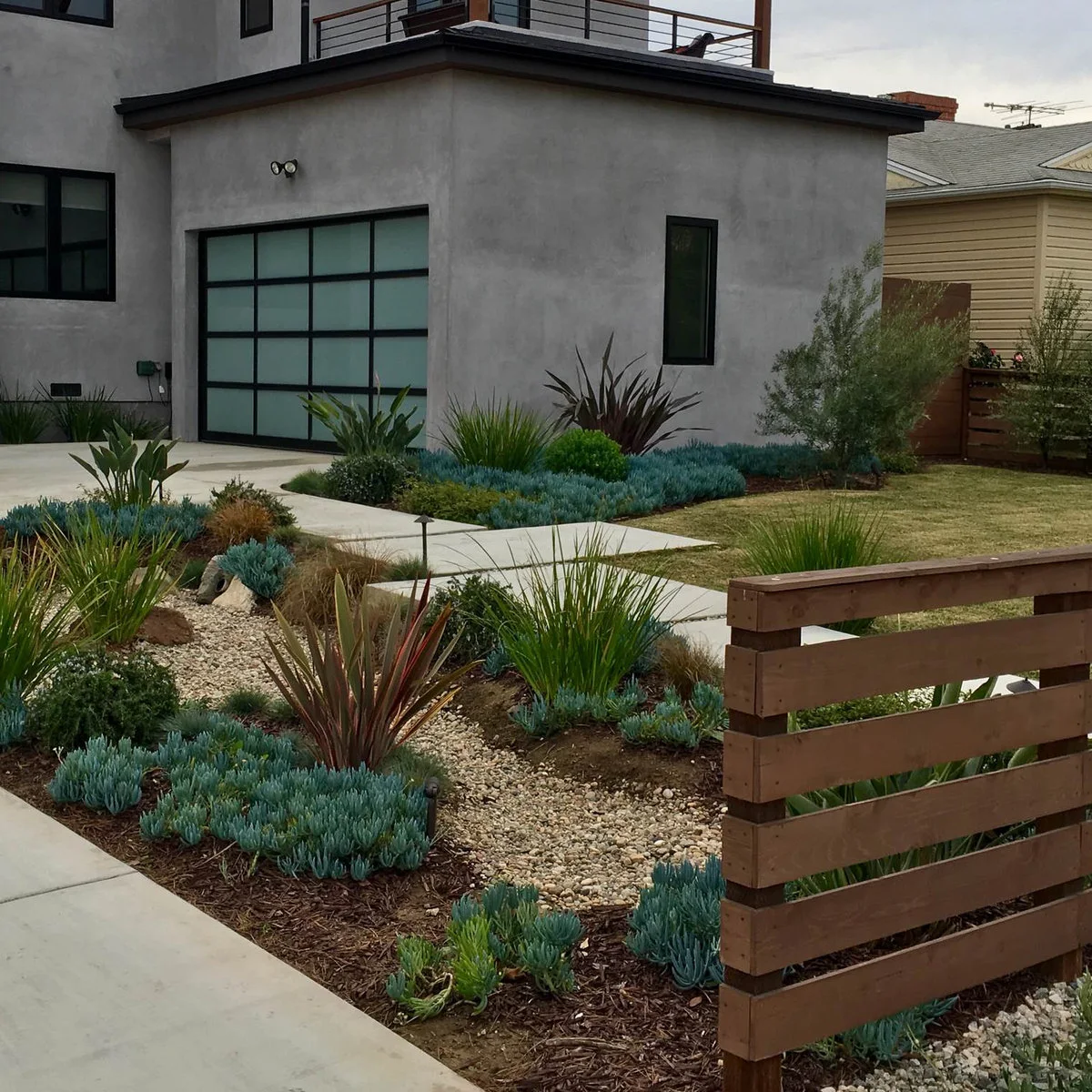
Repeated blue-green planting connects beds on both sides of the front walk. Upright foliage supplies a few taller accents rather than a different shrub in every gap. The small lawn has a straightforward shape, while gravel and mulch define separate areas around the plants.
Choose repeated plants only after checking their mature size and local suitability. A limited palette can simplify care, but repeating the wrong plant repeats its problems too. Keep the lawn edge accessible to your mowing equipment and leave enough room for the foliage to mature without spilling across the main route. For a warm-region comparison, these South Florida landscaping ideas show a different planting palette; select plants for your own local conditions. Adding water changes the care routine: these small garden waterfall ideas explain why cleaning and equipment access belong in the initial plan.
IDEA 02 / 18
Use Mulched Beds Around a Few Structural Plants
 SaveSupport Non AI Creator
Image credit: Project: Legacy Landscape (via Houzz)
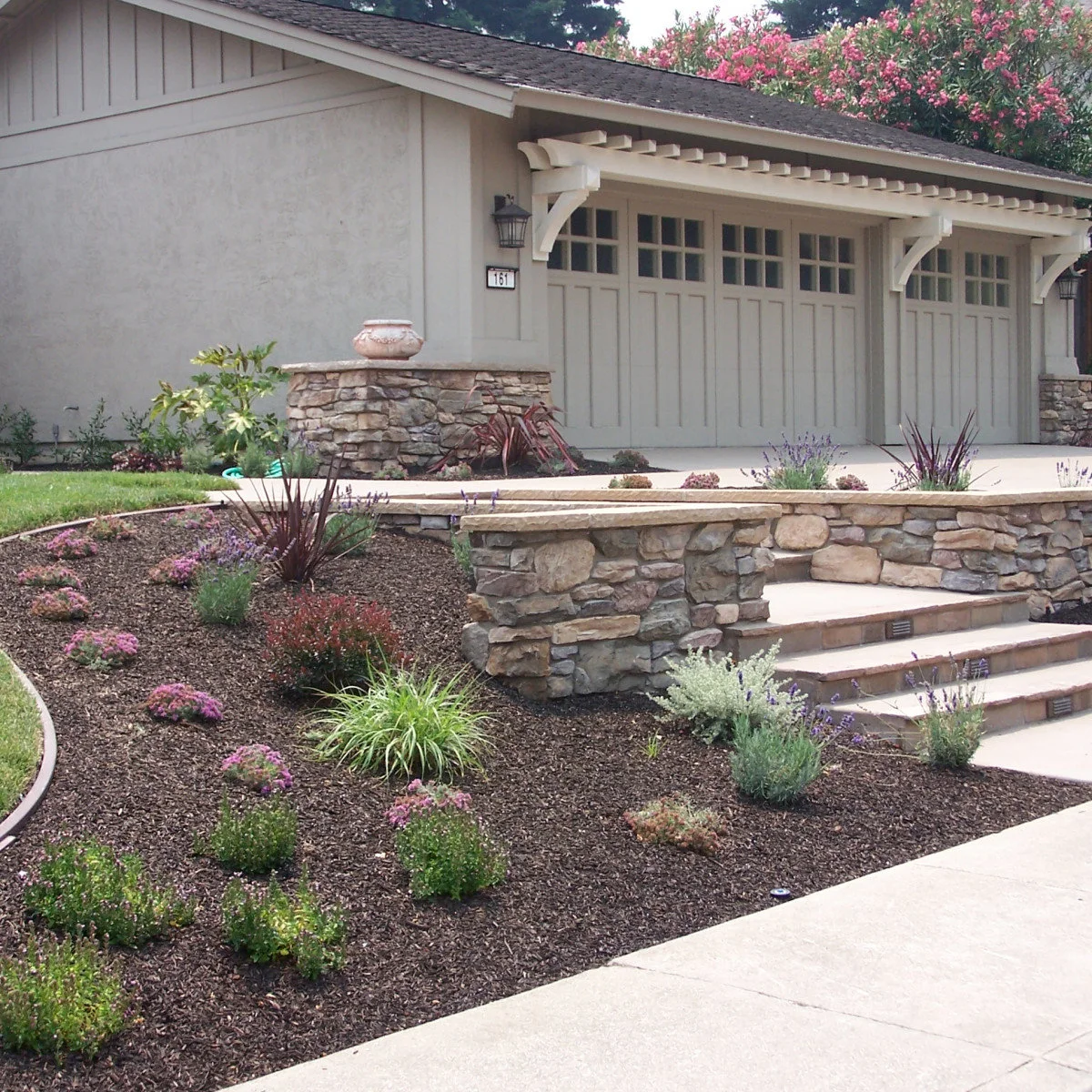
The broad mulch surface makes the individual plant groups easy to read. Upright foliage and low flowers provide different heights without a dense mixed border. The stone-faced steps form a clear route through the planting rather than requiring people to cut across the soil.
Allow for future growth rather than filling every open patch immediately. Suitable mulch can help reduce exposed soil, but keep it clear of plant crowns and inspect for weeds. Check access to step lights and drainage before planting close to the edges, and avoid letting mature foliage narrow the stair route.
IDEA 03 / 18
Keep the Front Walk Easy to Follow
 SaveSupport Non AI Creator
Image credit: Project: Jill Davis Design (via Houzz)
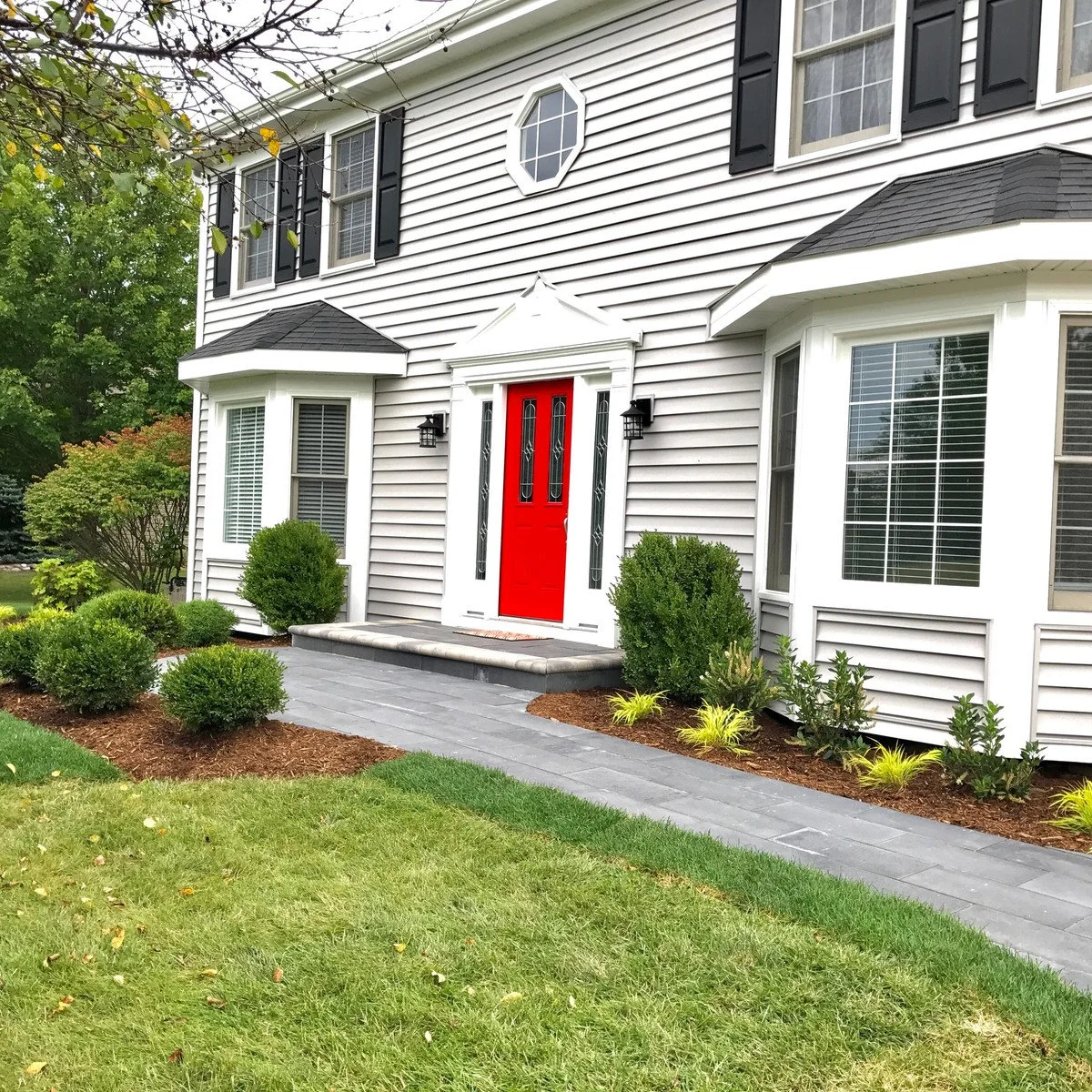
A clear paved route leads to the red door, with planting kept in defined beds at either side. Rounded shrubs repeat beneath the windows, while smaller yellow-green plants add a lighter edge. The simple arrangement leaves the entrance visible and the path easy to understand.
These driveway landscaping ideas offer other ways to separate planting from everyday access. Choose shrubs that fit below windows at maturity rather than relying on frequent trimming. Leave space for a hose or maintenance tools without blocking the route, and keep mulch from washing onto the paving after heavy rain.
IDEA 04 / 18
Repeat Contrasting Leaf Shapes Along One Border
 SaveSupport Non AI Creator
Image credit: Project: Marc Mason Landscape Services (via Houzz)
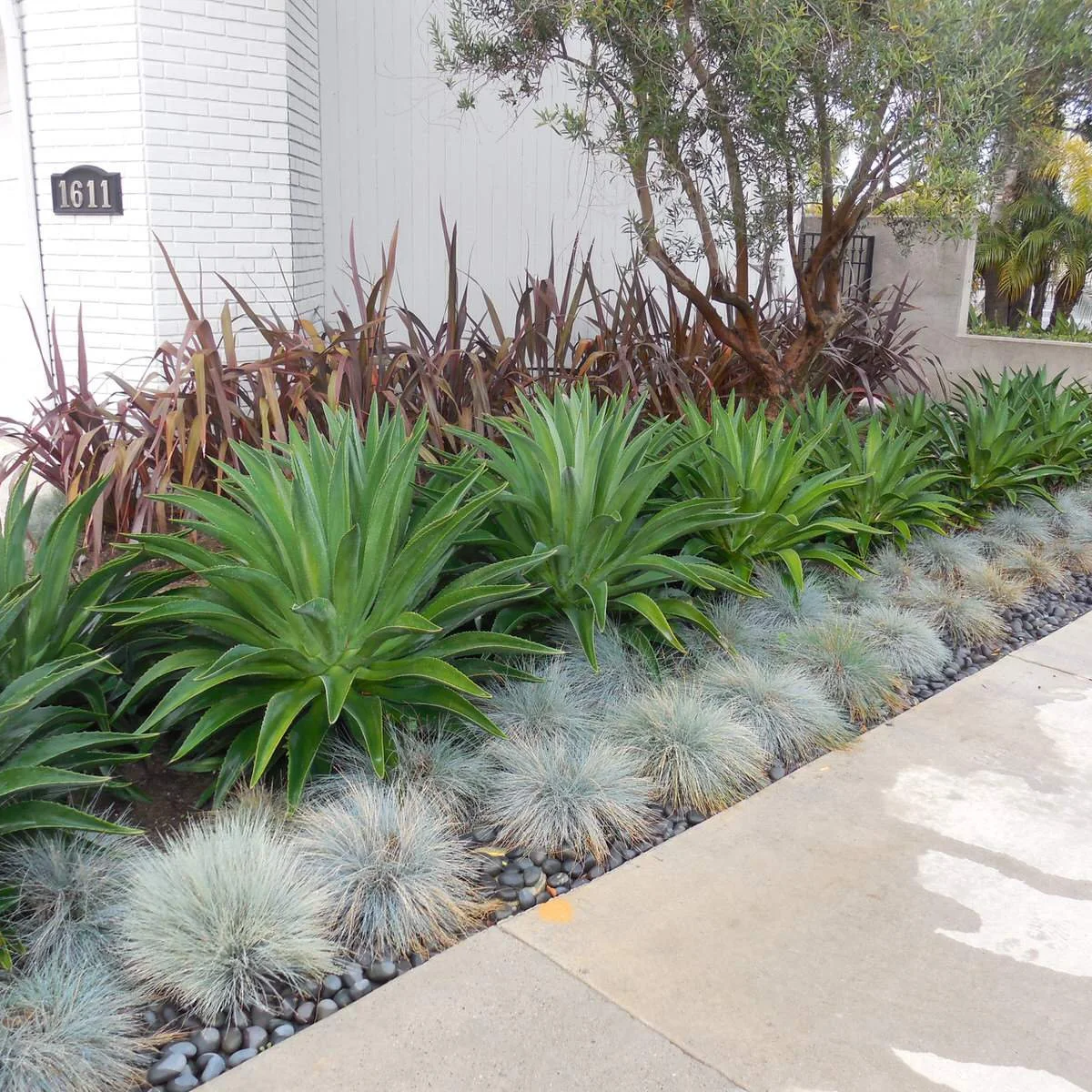
Large green rosettes form the middle layer, backed by upright purple foliage and edged with pale grass-like tufts. The repetition gives the border a clear pattern without many flowering plants. A narrow stone strip separates the foliage from the pavement along the front.
Select locally suitable plants with similar care needs rather than copying the exact palette into an unsuitable climate. Keep sharp or stiff leaves well away from people and pets using the path. Allow for mature spread so the border does not depend on constant cutting simply to remain within its allotted width.
IDEA 05 / 18
Choose Naturally Compact Shapes Where Possible
 SaveSupport Non AI Creator
Image credit: Project: Jill Davis Design (via Houzz)
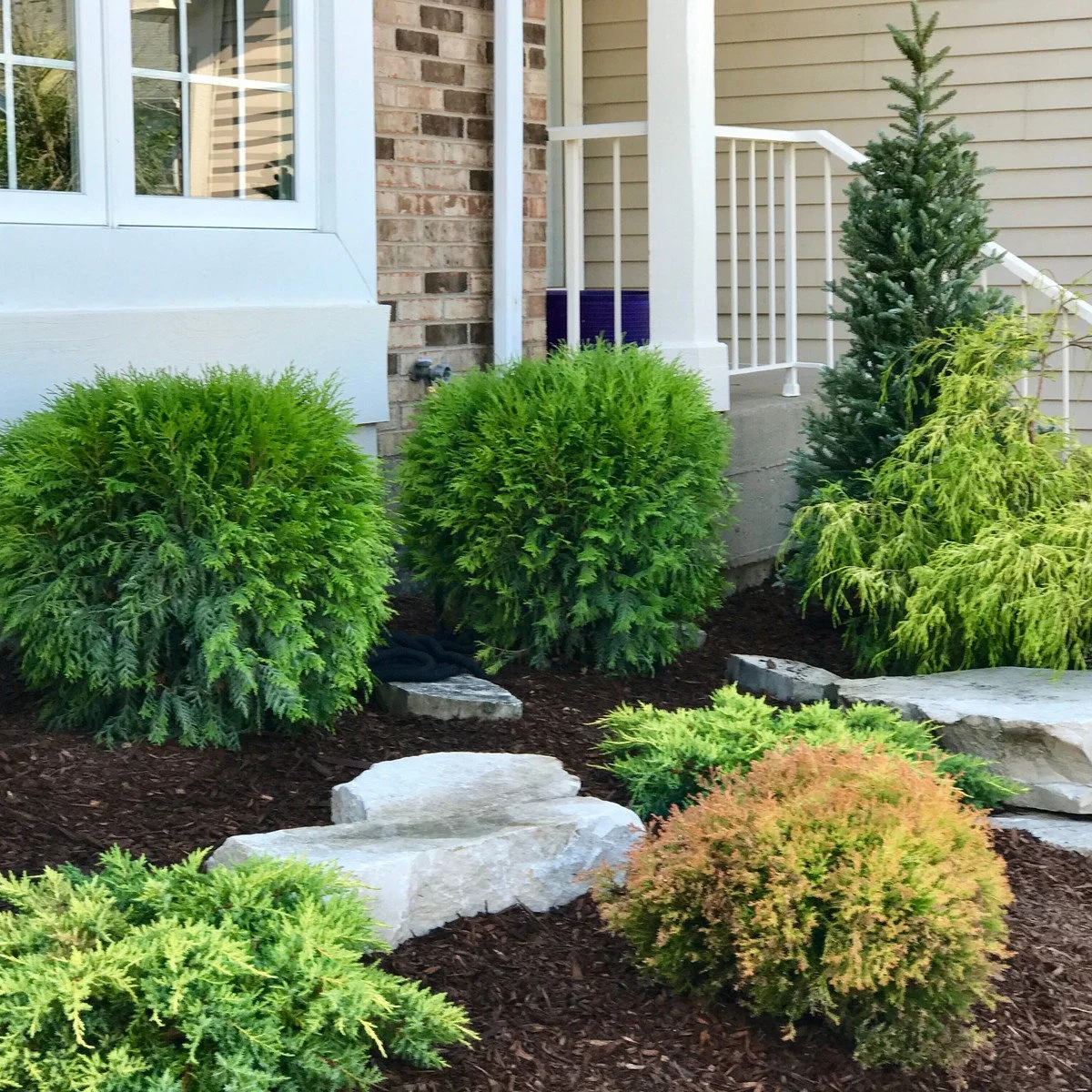
Rounded green plants and a taller narrow evergreen give the bed structure even without a large display of flowers. Pale rocks interrupt the dark mulch, providing contrast without needing another planted layer. The different foliage textures supply most of the detail beside the porch.
Ask whether the rounded shape is natural for the chosen variety or maintained through repeated clipping. That distinction matters more to upkeep than the tidy photograph. Check mature height and width, keep access to the porch open and avoid placing plants so close to the house that they require continual pruning.
PART 02
Keep routes and edges clear
IDEA 06 / 18
Give Yourself a Route Through the Planting
 SaveSupport Non AI Creator
Image credit: Project: Legacy Landscape (via Houzz)
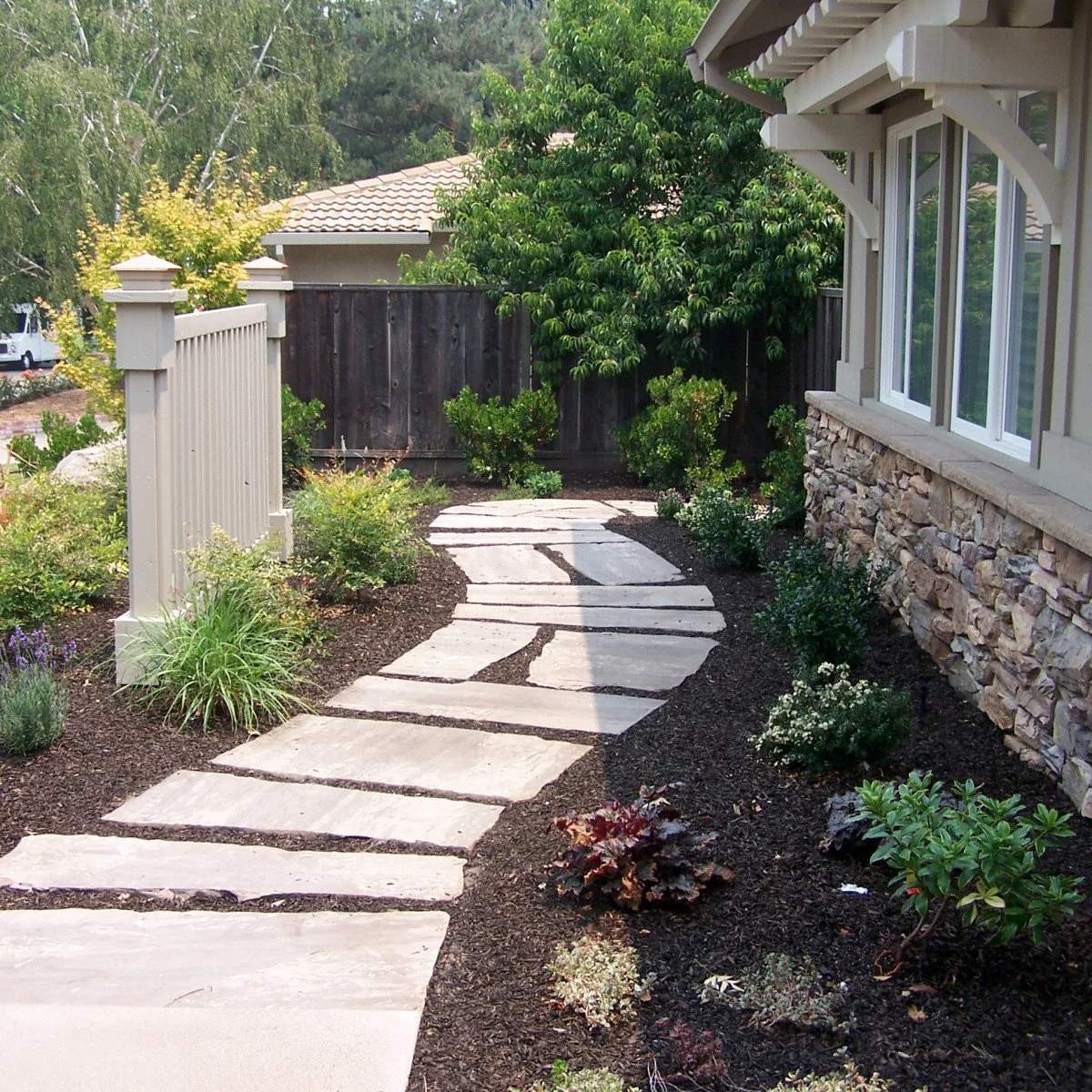
Broad pale slabs create a visible route through the garden bed, linking the house side with the front area. Plants remain grouped on either side rather than occupying the path itself. Dark mulch connects the groups and keeps the arrangement visually quieter between flowering periods.
Set out the route for a comfortable natural stride and the equipment you need to carry. Check levels, stable footing and drainage with the installer rather than leaving awkward gaps to negotiate. Keep plants back from the edges at their mature size, and remove seedlings from joints before they become difficult to pull.
IDEA 07 / 18
Make a Useful Sitting Area Instead of Another Lawn Patch
 SaveSupport Non AI Creator
Image credit: Project: Santa Barbara Home Design (via Houzz)
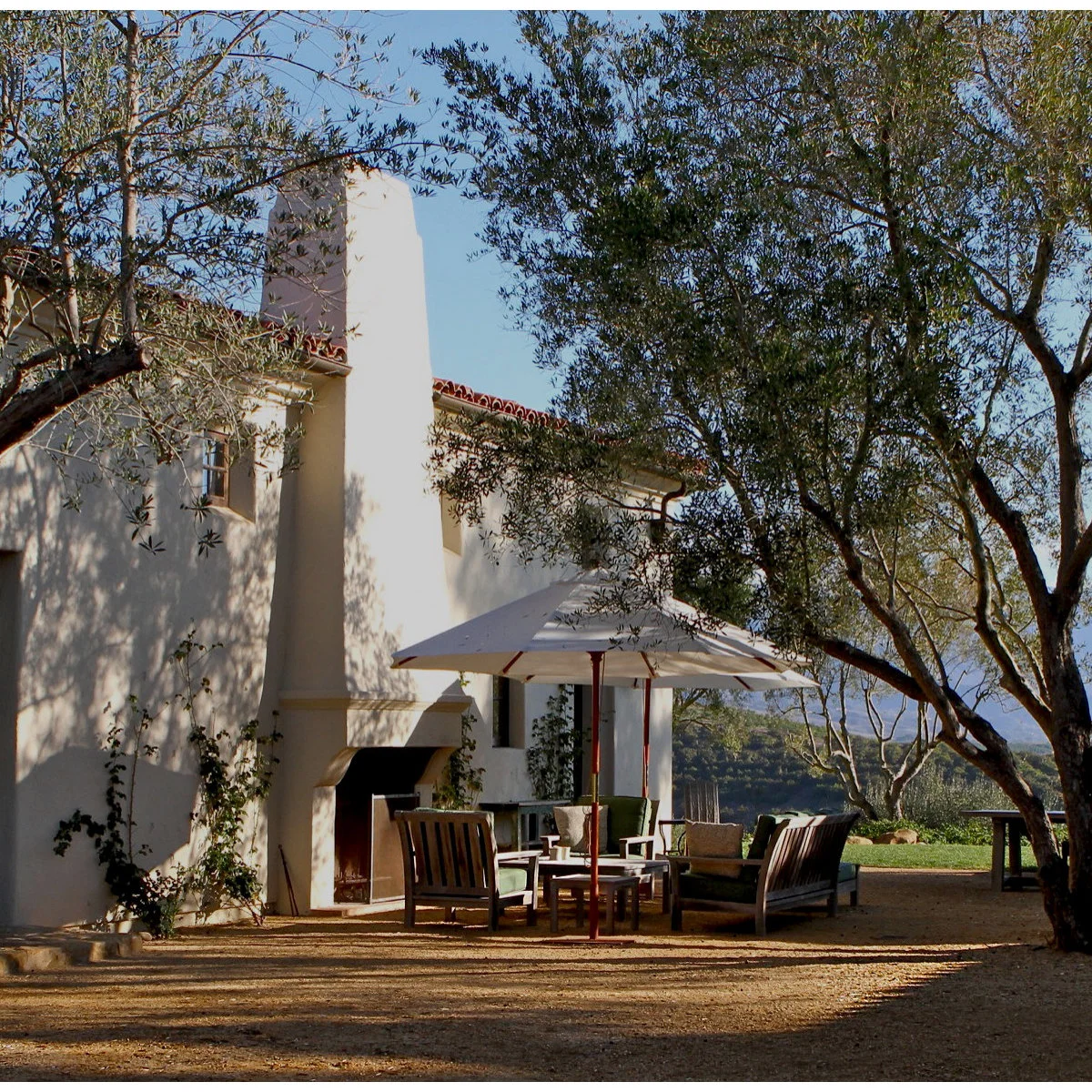
The sitting area occupies a broad fine-textured surface beneath established trees. Chairs and an umbrella give the space an everyday purpose without adding another patch of lawn to mow. The pale wall and outdoor fireplace keep the furniture grouping connected to the house.
Choose a surface that supports the furniture steadily and suits access needs. Fallen leaves will still need collecting, especially beneath trees, and weeds can appear as organic matter accumulates. Protect existing roots when changing ground surfaces, and have any fire feature located and used according to its actual requirements.
IDEA 08 / 18
Organize a Slope into Accessible Planting Areas
 SaveSupport Non AI Creator
Image credit: Project: California Smartscape (via Houzz)
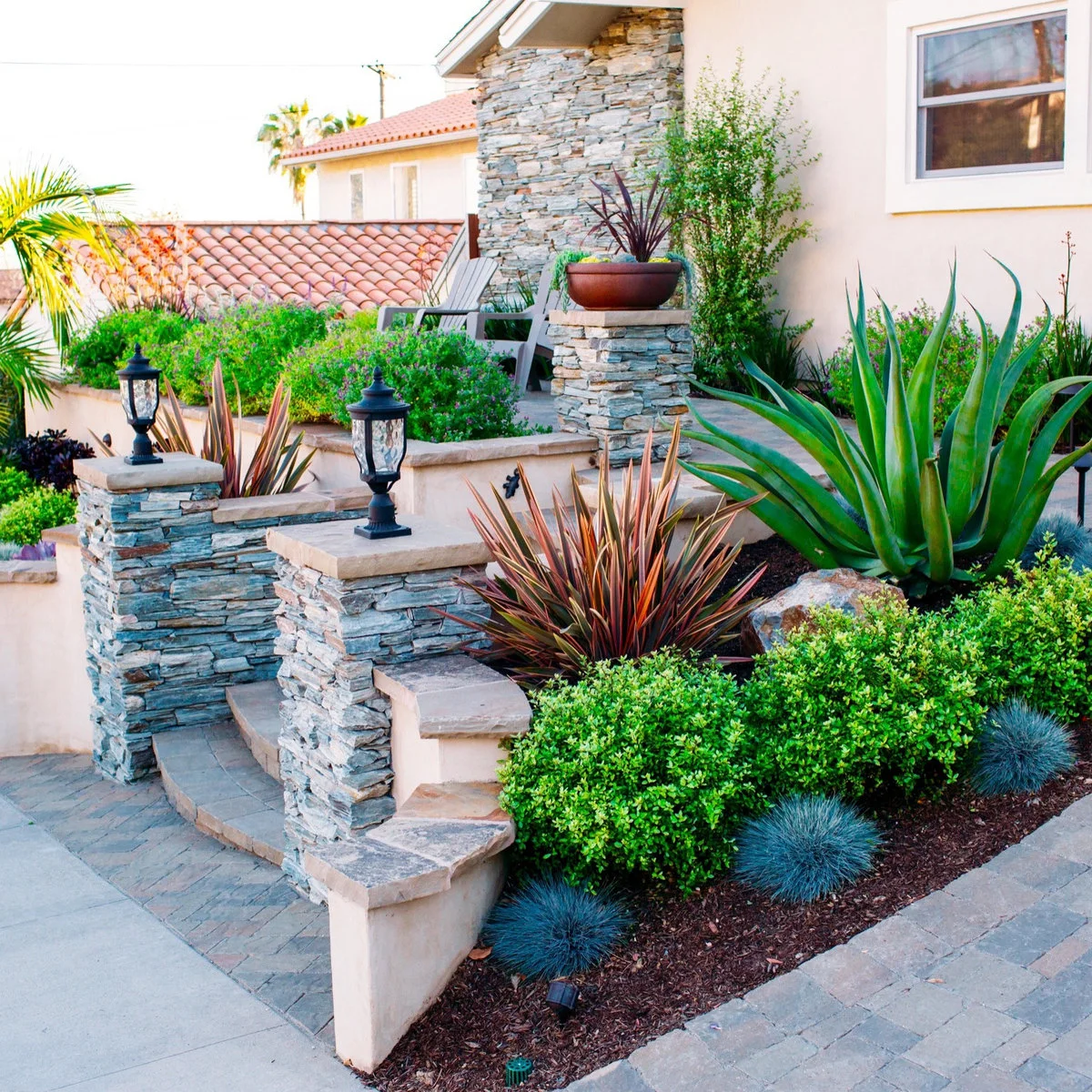
Steps divide the front garden into smaller planting areas rather than leaving one continuous slope. Rounded shrubs provide a repeated middle layer, with upright leaves and larger rosettes used as accents. The pale wall caps and steps make the changes of level easy to see.
These retaining wall ideas show other ways to organize planted levels. Have structural and drainage needs assessed for the actual site before changing a slope. Choose plants that remain manageable from accessible positions, and avoid selections that will require difficult pruning while standing on steps or reaching over a wall.
IDEA 09 / 18
Keep One Lawn Shape Simple
 SaveSupport Non AI Creator
Image credit: Project: FHL (Fair Haven Landscaping) (via Houzz)
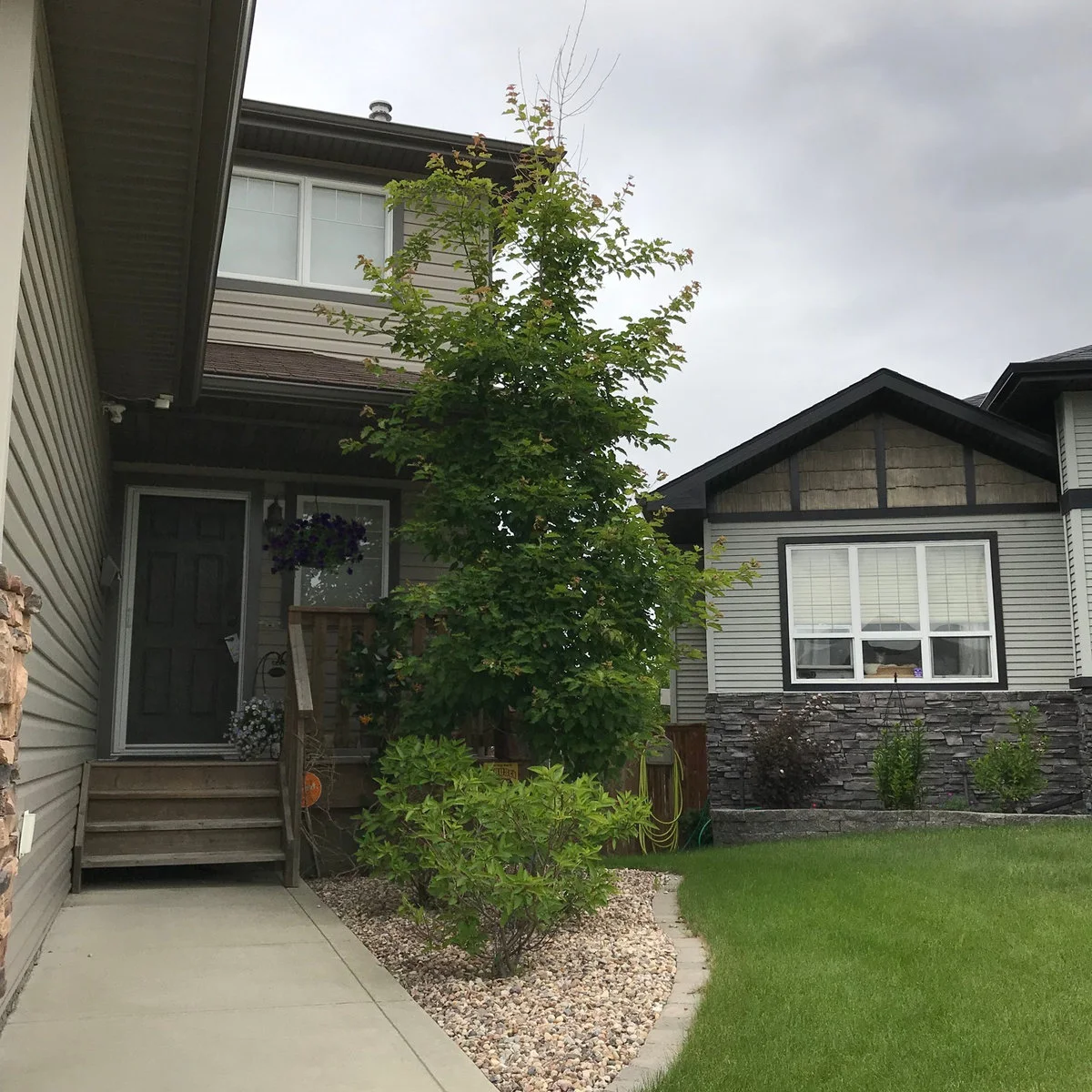
The lawn remains one straightforward area beside the entrance walk, while a curved gravel bed holds a few larger plants. The tall tree and rounded shrub supply different heights without several small planted islands. A defined edge separates the grass from the stone-covered soil.
A simpler lawn outline can be easier to mow than many tight curves and isolated patches. Test whether your mower can follow the actual edge comfortably. Gravel still needs occasional weeding and debris removal, and the tree’s mature canopy and roots must suit its distance from the house and path.
PART 03
Use foliage and surface texture
IDEA 10 / 18
Use Groundcover to Connect Separate Plant Groups
 SaveSupport Non AI Creator
Image credit: Project: Bosler Earth Design (via Houzz)
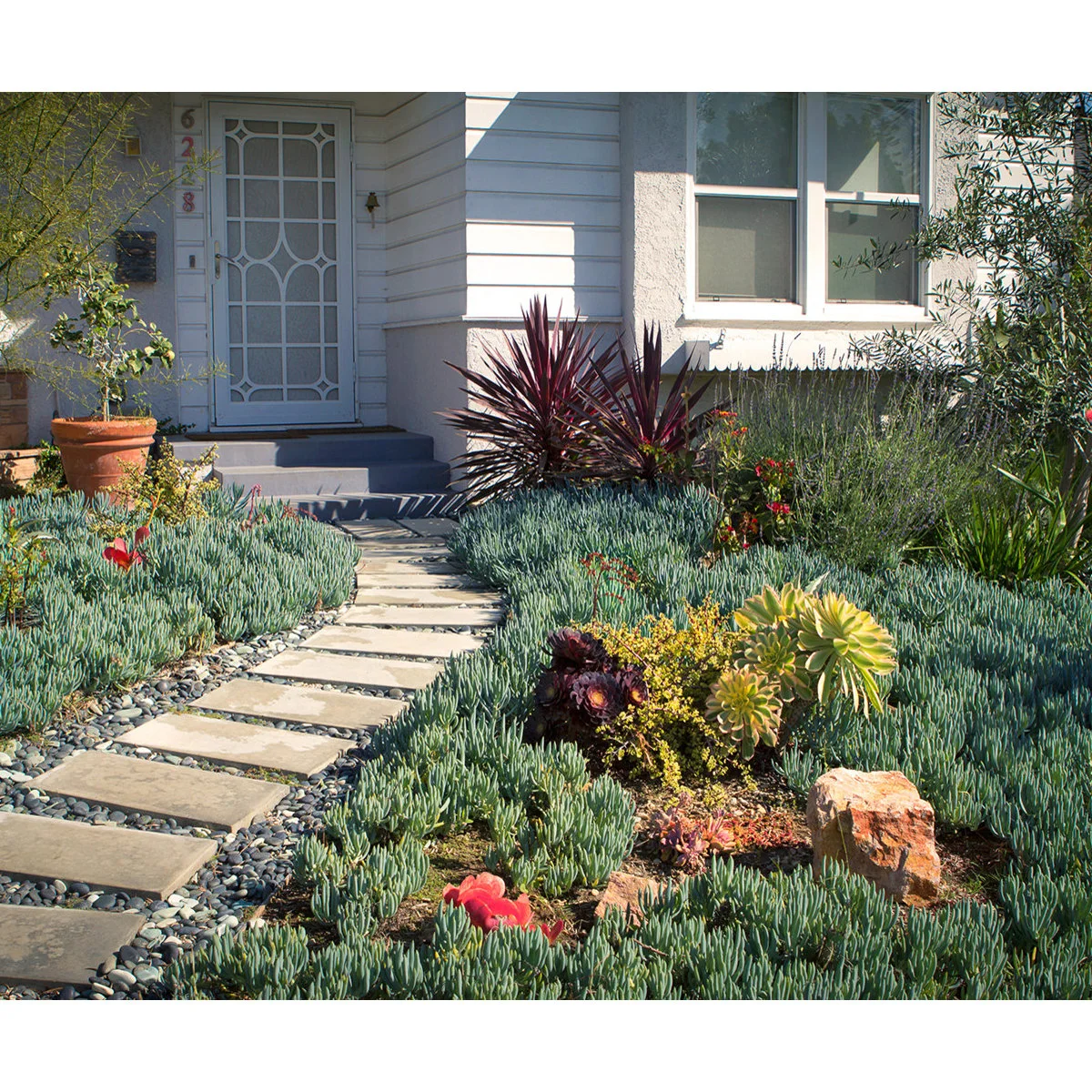
Dense blue-green groundcover forms a repeated base beneath the larger foliage plants. Broad stepping slabs keep a route visible through the planting. Burgundy upright leaves and yellow-green rosettes add contrast, while the low layer visually connects the garden instead of leaving many unrelated patches.
Choose a non-invasive groundcover suited to your local soil and light, and plan to care for it while it establishes. Check how it spreads and how you will keep the slabs accessible. Do not assume a low-growing plant tolerates regular foot traffic simply because it looks like a soft carpet beside the path.
IDEA 11 / 18
Use a Stone Channel as Part of a Larger Plan
 SaveSupport Non AI Creator
Image credit: Project: California Smartscape (via Houzz)
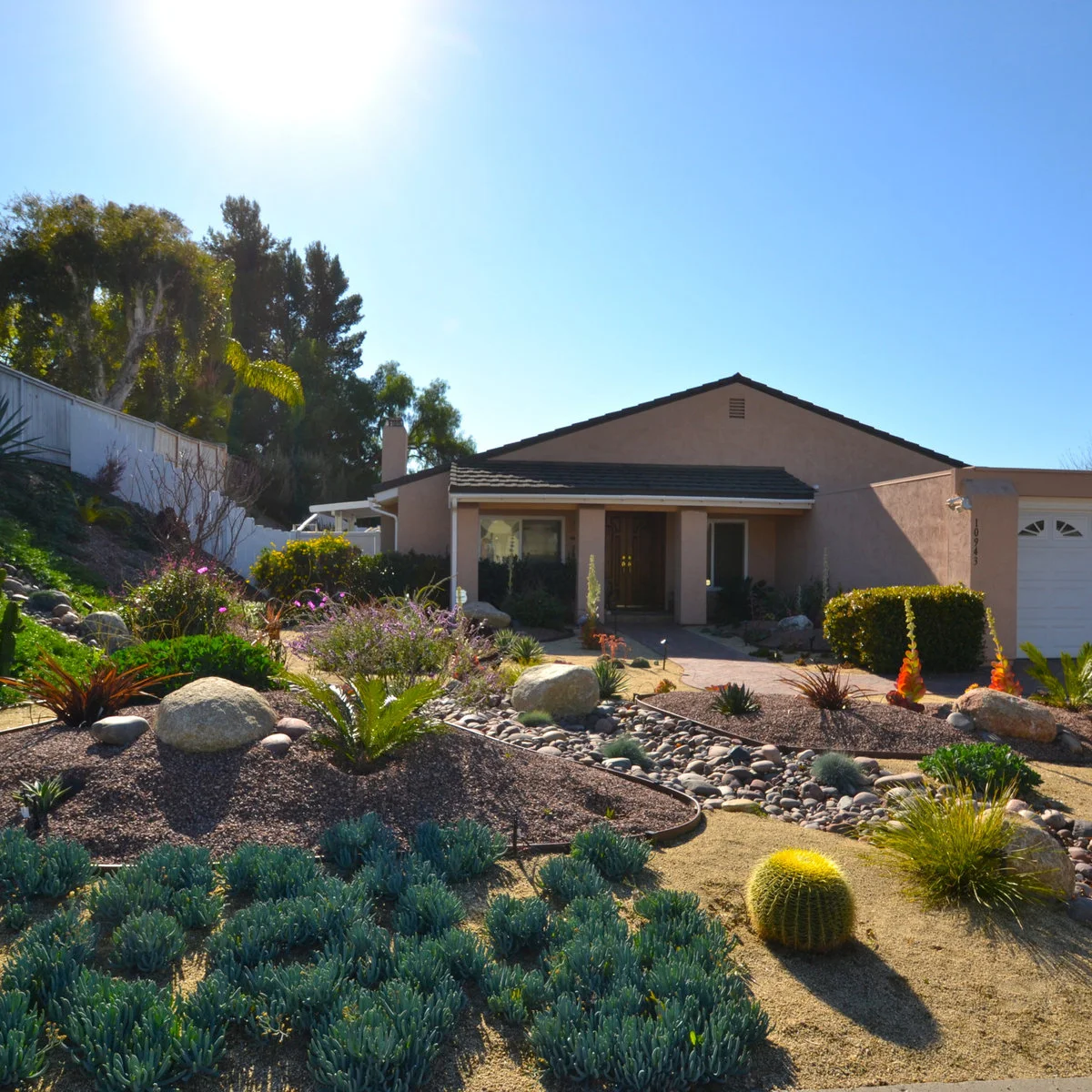
A broad stone channel winds between curved planted beds, with larger boulders marking changes in direction. Repeated gravel surfaces leave the sculptural plants room to stand apart. The arrangement replaces a continuous lawn with distinct materials and plant groups across the front garden.
These river rock landscaping ideas explore other ways to use rounded stones in a planted setting. A decorative channel is not proof of working drainage, so have runoff managed for the site. Keep access for removing leaves and weeds, and consider how the stone will affect future planting changes before covering a large area.
IDEA 12 / 18
Use Foliage Instead of Chasing Constant Flowers
 SaveSupport Non AI Creator
Image credit: Project: Laura Frost; Home and Garden Designer (via Houzz)
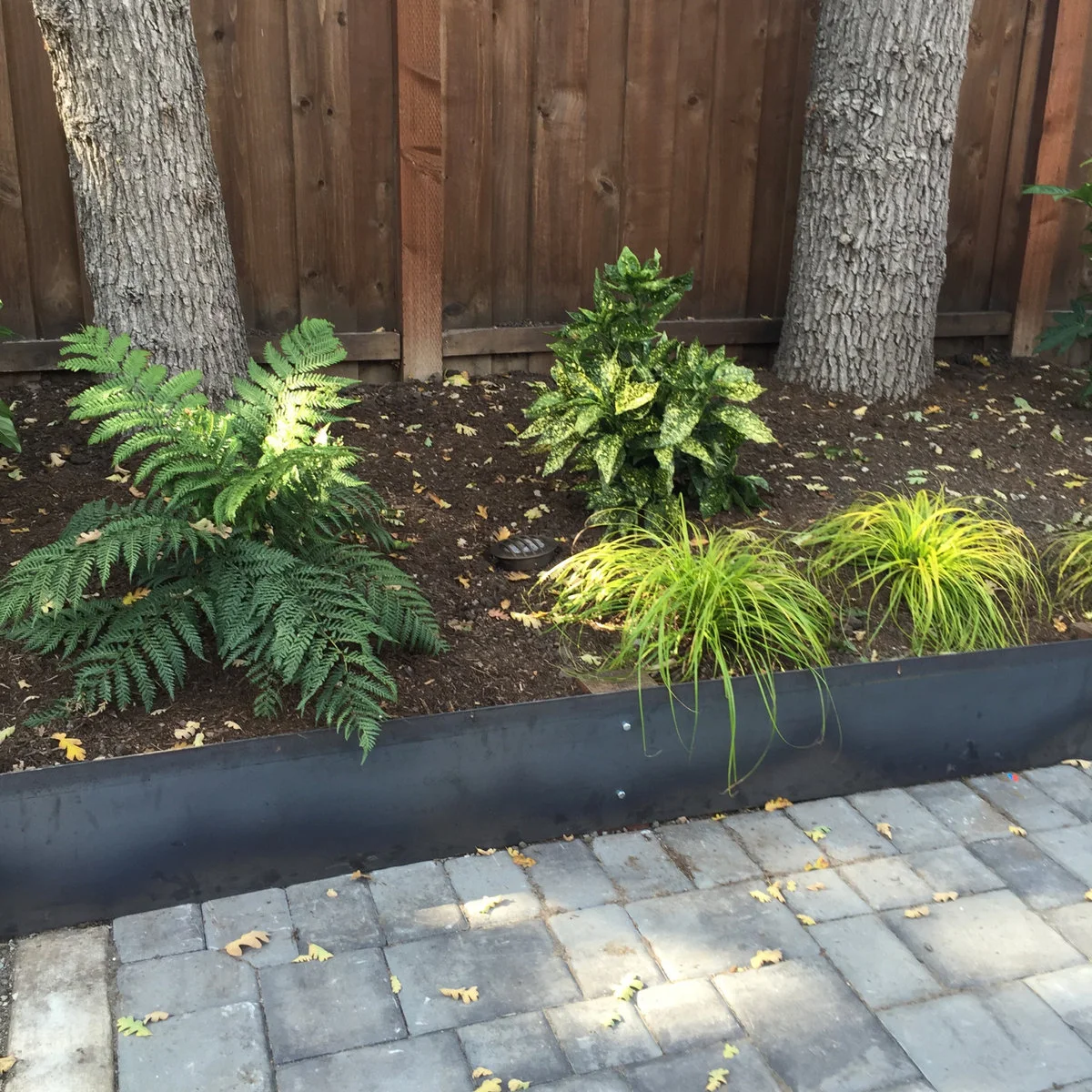
Contrasting leaf shapes supply the color in this shaded bed: broad variegated leaves, finely divided ferns and bright arching tufts. Dark mulch connects them beneath the trees. A simple metal edge gives the adjacent paved route a clear line without a decorative flower border.
Match plants to the actual shade, root competition and soil moisture rather than assuming every shade plant needs the same conditions. Keep mulch away from tree trunks and avoid disturbing established roots. The paved edge makes access simpler, but fallen leaves and spreading foliage will still need periodic attention.
IDEA 13 / 18
Limit a Small Gravel Bed to a Few Flowering Groups
 SaveSupport Non AI Creator
Image credit: Project: Moss Yaw Design studio (via Houzz)
Several purple-flowering plants repeat across a simple gravel bed, with pale paving creating a quieter background. The silver-green leaves remain part of the arrangement between the flower spikes. Using one main visual group keeps a small entrance bed from feeling crowded with unrelated plants.
Choose the exact plant for your local conditions, including winter temperatures, drainage and sunlight. Check its pruning and replacement needs before buying a repeated group. Gravel is a surface treatment rather than a promise of no weeds, and accumulated leaves should be removed before they form a layer that supports unwanted seedlings.
IDEA 14 / 18
Give Larger Plants Their Own Space
 SaveSupport Non AI Creator
Image credit: Project: Jill Davis Design (via Houzz)
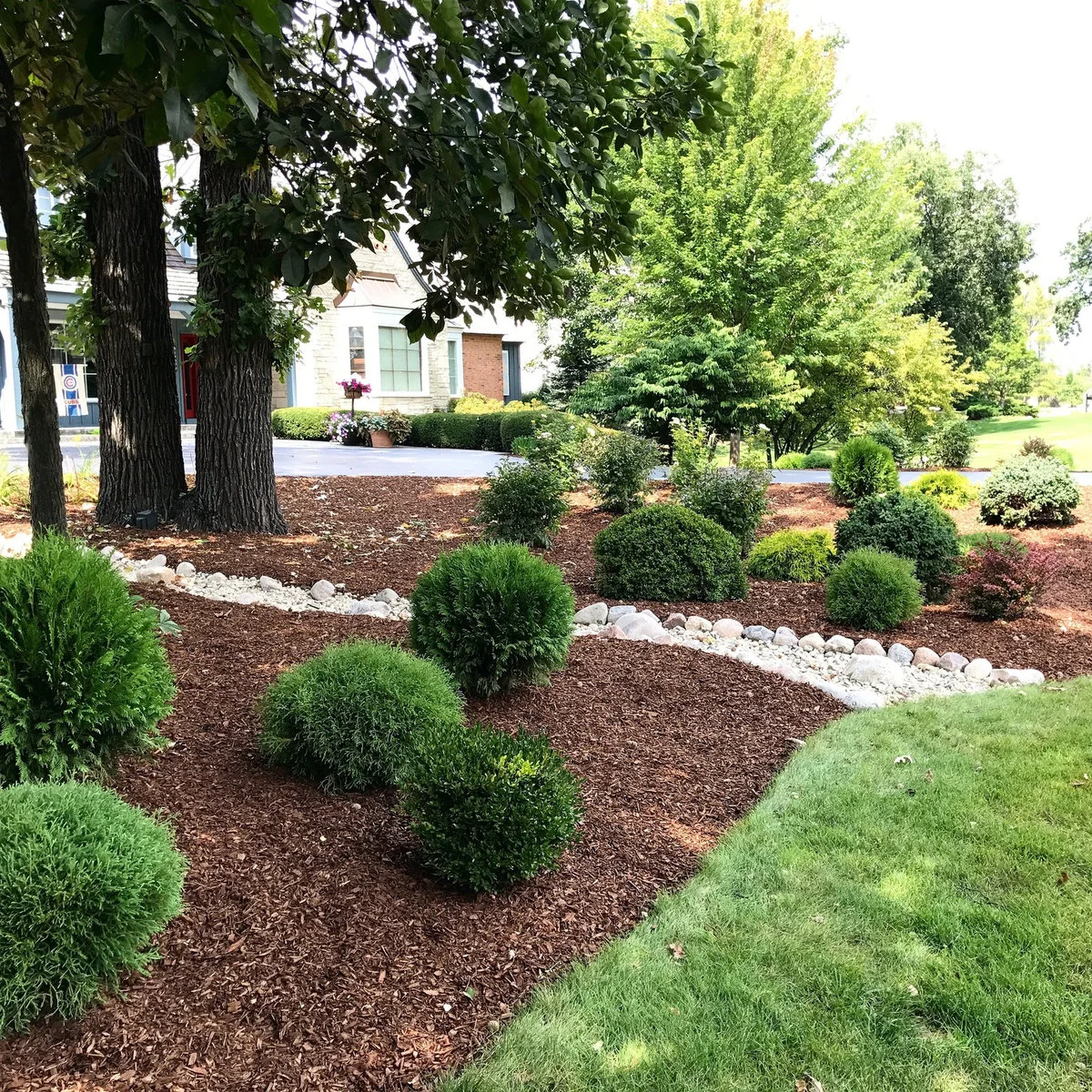
The shrubs stand in separate groups across a broad mulched bed, with varied rounded and conical outlines. A pale stone channel provides a second visual line beneath the mature trees. The lawn meets the bed in one broad curve rather than weaving around every individual plant.
Base spacing on mature dimensions rather than the size of nursery pots. A plant allowed to keep its natural shape may need less repeated trimming than one squeezed into a small gap. Keep the curved lawn edge easy to follow and preserve access for inspecting the tree bases and removing unwanted growth.
PART 04
Design around a realistic routine
IDEA 15 / 18
Use a Container Only Where It Adds Something Useful
 SaveSupport Non AI Creator
Image credit: Project: Bountiful Botanicals, Inc. (via Houzz)
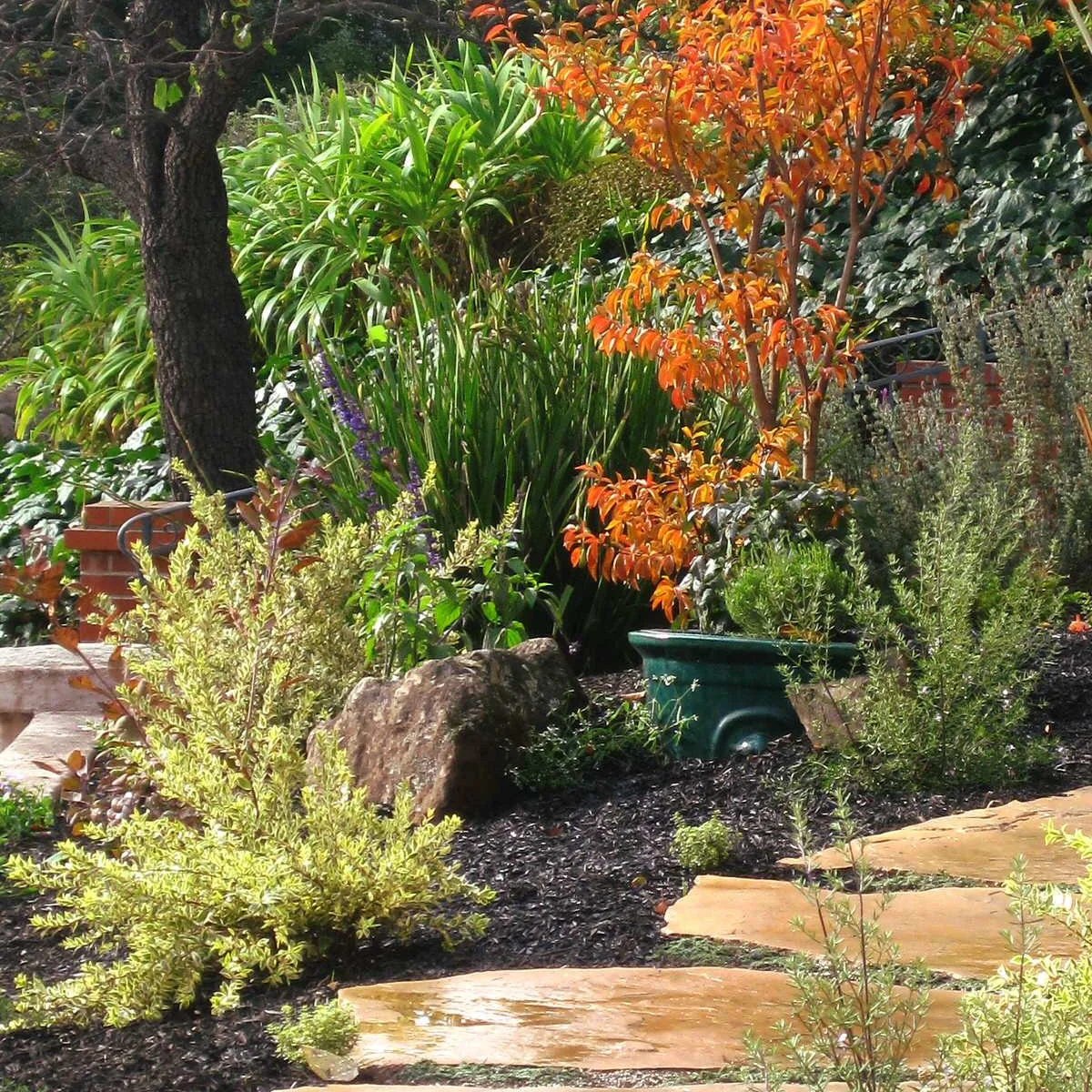
One green glazed container gives the mixed bed a focal point without turning the whole garden into a collection of pots. Broad stepping stones lead through the lower planting. Dark mulch and a few larger rocks connect the different leaf shapes around the container.
A container usually has a separate watering and root-space routine, so keep only as many as you want to maintain. Place it where you can reach it without trampling plants and where drainage will not damage the path. Use the surrounding bed for repeated planting rather than adding more pots to fill every gap.
IDEA 16 / 18
Allow a Full Border Without Losing the Path
 SaveSupport Non AI Creator
Image credit: Project: Dear Garden Associates, Inc. (via Houzz)
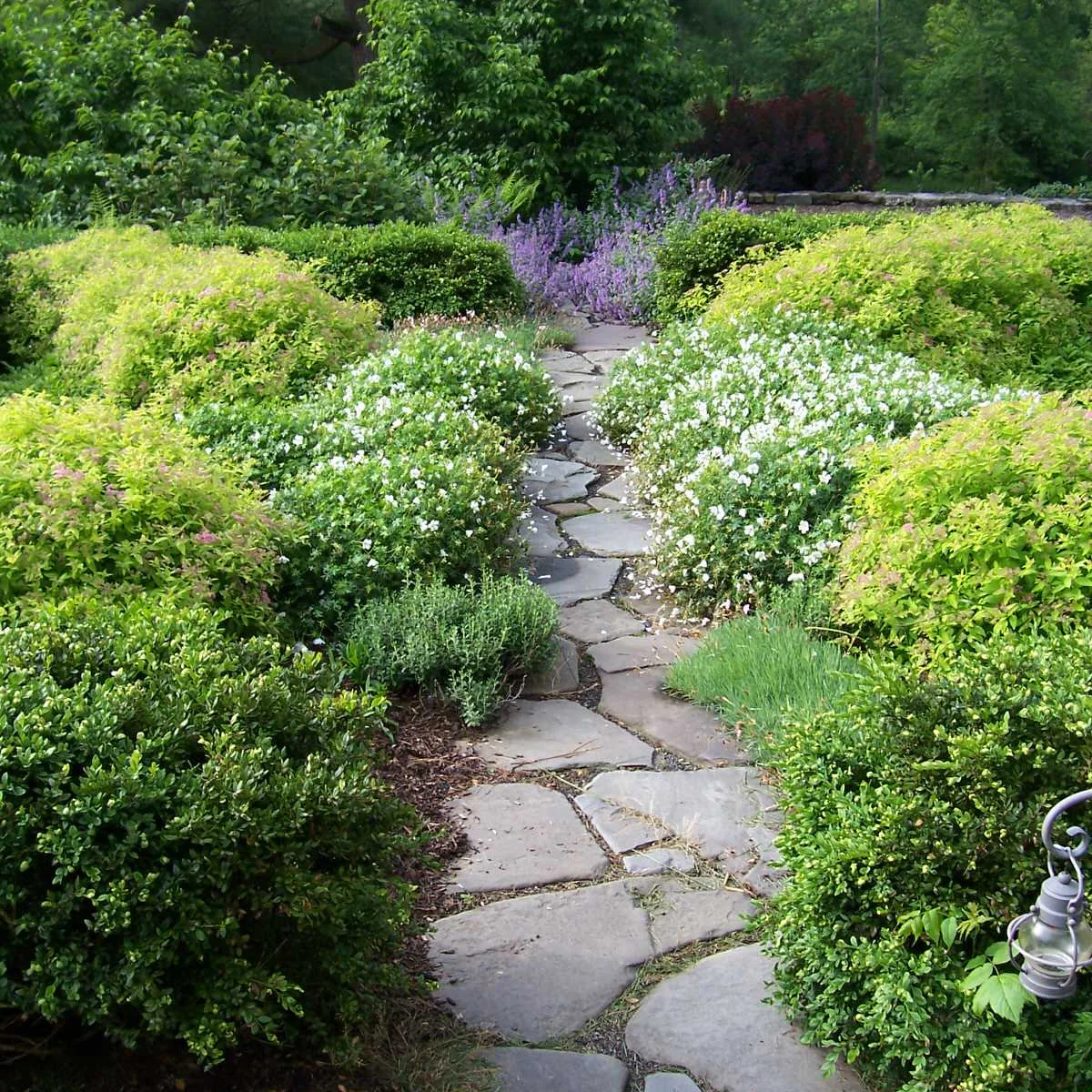
Dense planting creates a full garden around the stone path, with repeated low shrubs giving the softer flowers a framework. White blooms brighten the edges and taller purple flowers mark the far end. The path remains visible, although the planting reaches close to its sides.
This approach suits someone willing to manage the path edges, rather than a household wanting no pruning or deadheading. Choose plants whose mature spread leaves the route comfortable, and make the path wide enough for its actual use. Remove unwanted seedlings early instead of allowing the joints and edges to become difficult to clear.
IDEA 17 / 18
Group Tree Bases into One Bed
 SaveSupport Non AI Creator
Image credit: Project: Jill Davis Design (via Houzz)
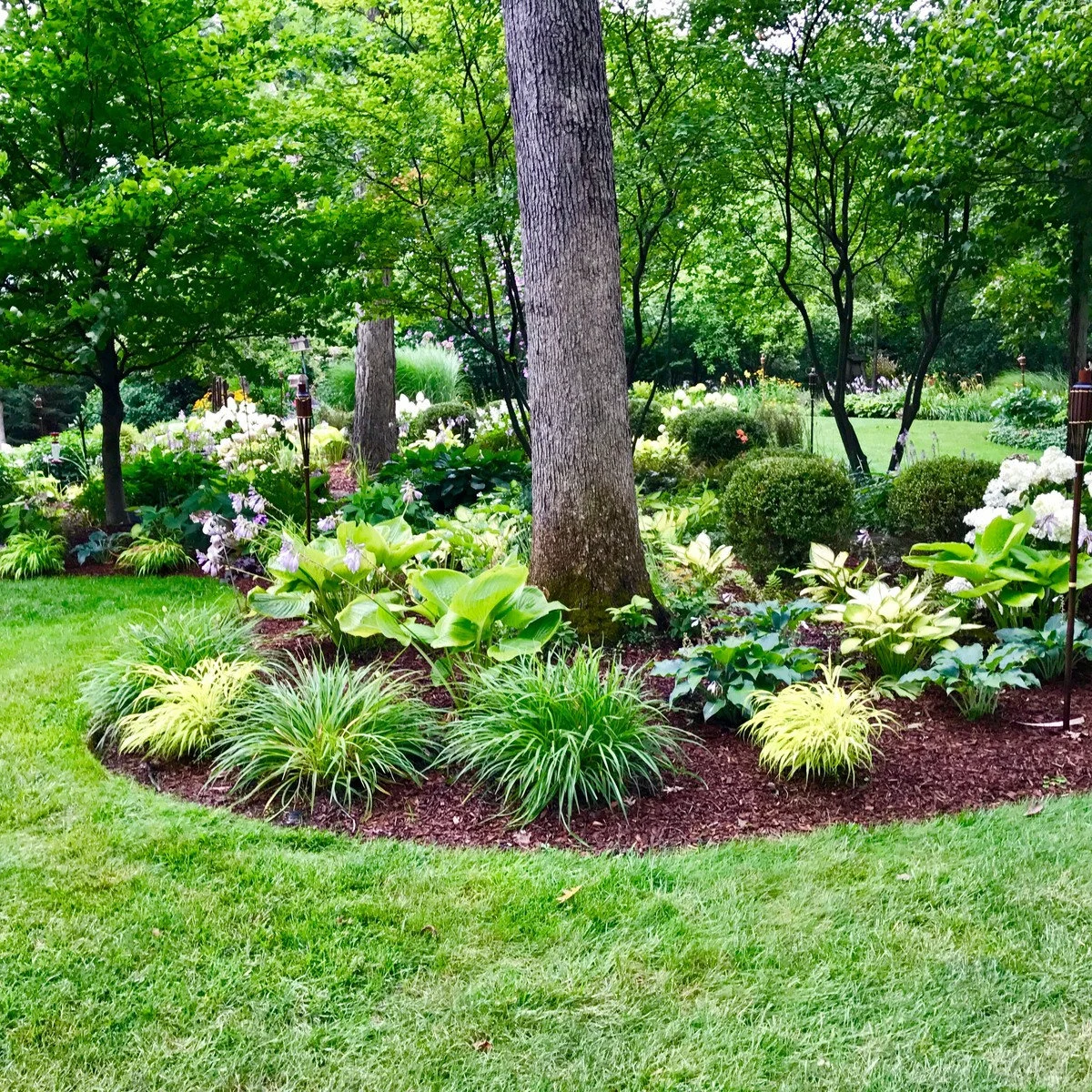
Several tree bases sit within one planted bed instead of separate small circles in the lawn. Broad leaves and arching foliage fill the spaces between them. The curved boundary gives the mower one larger edge to follow while keeping the tree trunks away from direct mowing routes.
Avoid raising soil against trunks or digging heavily through established roots when creating a bed. Choose plants that can share the actual light and moisture conditions beneath the canopy. Keep mulch clear of the trunks, and allow room for leaf collection and occasional inspection rather than planting every accessible space densely.
IDEA 18 / 18
Keep a Small Sitting Spot Within Reach
 SaveSupport Non AI Creator
Image credit: Project: Jill Davis Design (via Houzz)
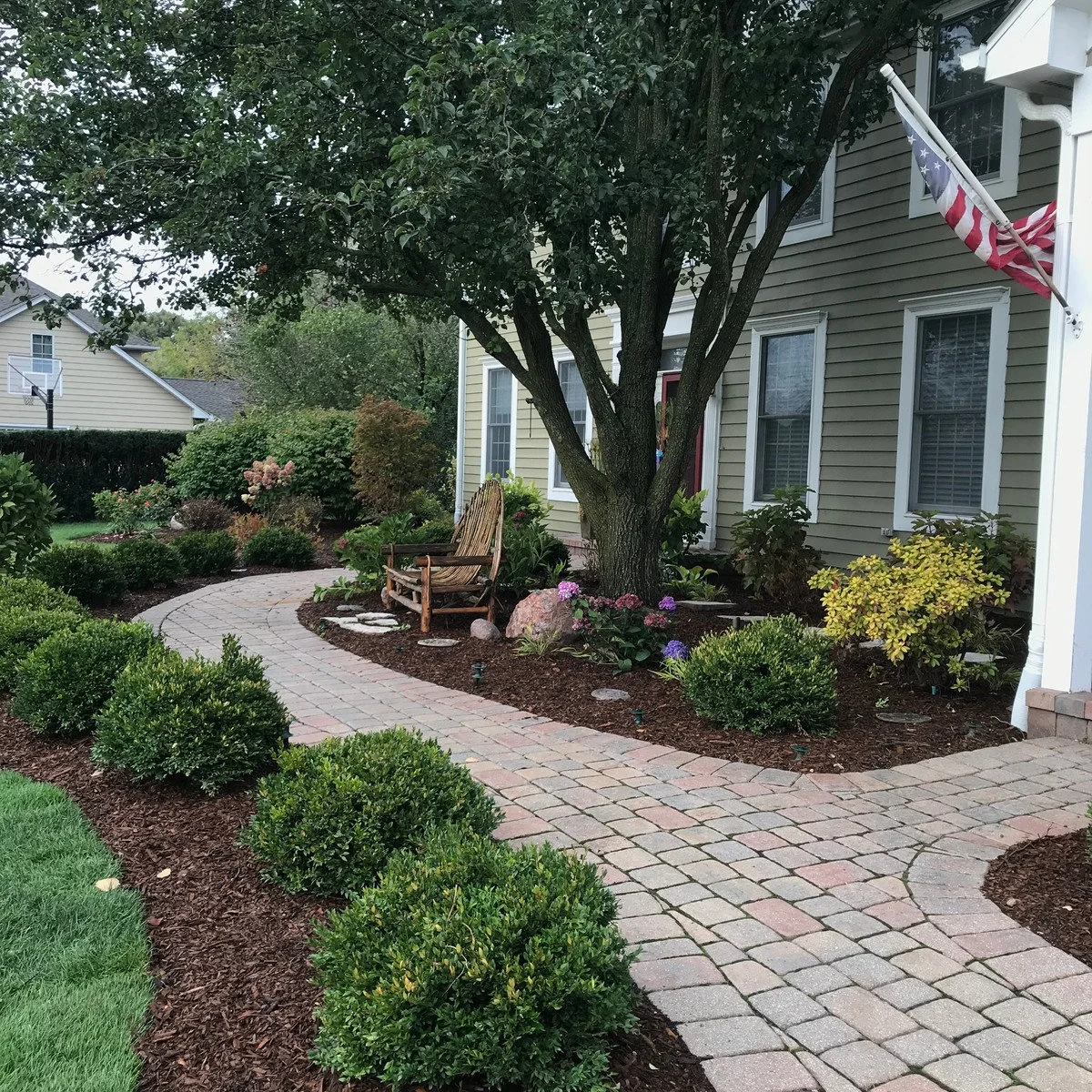
The wood chair gives the planted area a place to pause without adding a separate patio. A curved paved walk stays clear beside it, and small stepping stones provide another route through the mulch. Grouped shrubs and flowers keep the chair connected with the garden rather than isolated on the lawn.
Choose furniture that you are comfortable maintaining outdoors and place it on a stable surface suitable for use. Keep the approach easy to walk and clear of plant growth. A sitting spot can be simple, but it still needs access for sweeping leaves, checking nearby roots and caring for the plants around it.
BRING IT ALL TOGETHER
Choose the jobs you are willing to keep
List the regular tasks in your current garden before buying materials. Broad, accessible beds and plants that fit their mature space can be more useful than replacing every living surface with paving. Start with one area and compare its upkeep through normal use before repeating the approach elsewhere.
Match plants to local light, soil, drainage and climate, and ask about their mature size and maintenance. Keep mulch clear of trunks and plant crowns, provide access to irrigation and drainage components, and remove weeds before they become established. Low maintenance should mean a routine you can manage, not a garden that receives no care.