A small garden waterfall works best when its scale suits the surrounding space. A short cascade, a narrow stream or a wall-mounted sheet of water can provide a focal point without taking over the whole yard. These photographed examples show different arrangements to discuss with an installer or adapt to a suitable kit.
Decide where you will see and hear the water before choosing its height or shape. Leave room for the reservoir, pump access, cleaning and safe circulation. These are visual ideas rather than construction plans: lining, foundations, electrical work and any barriers need to be appropriate for the site and equipment.
PART 01
Keep the feature compact and readable
IDEA 01 / 15
Use Two Short Drops as One Focal Point
 SaveSupport Non AI Creator
Image credit: Project: Alderwood Landscape Architecture and Construction (via Houzz)
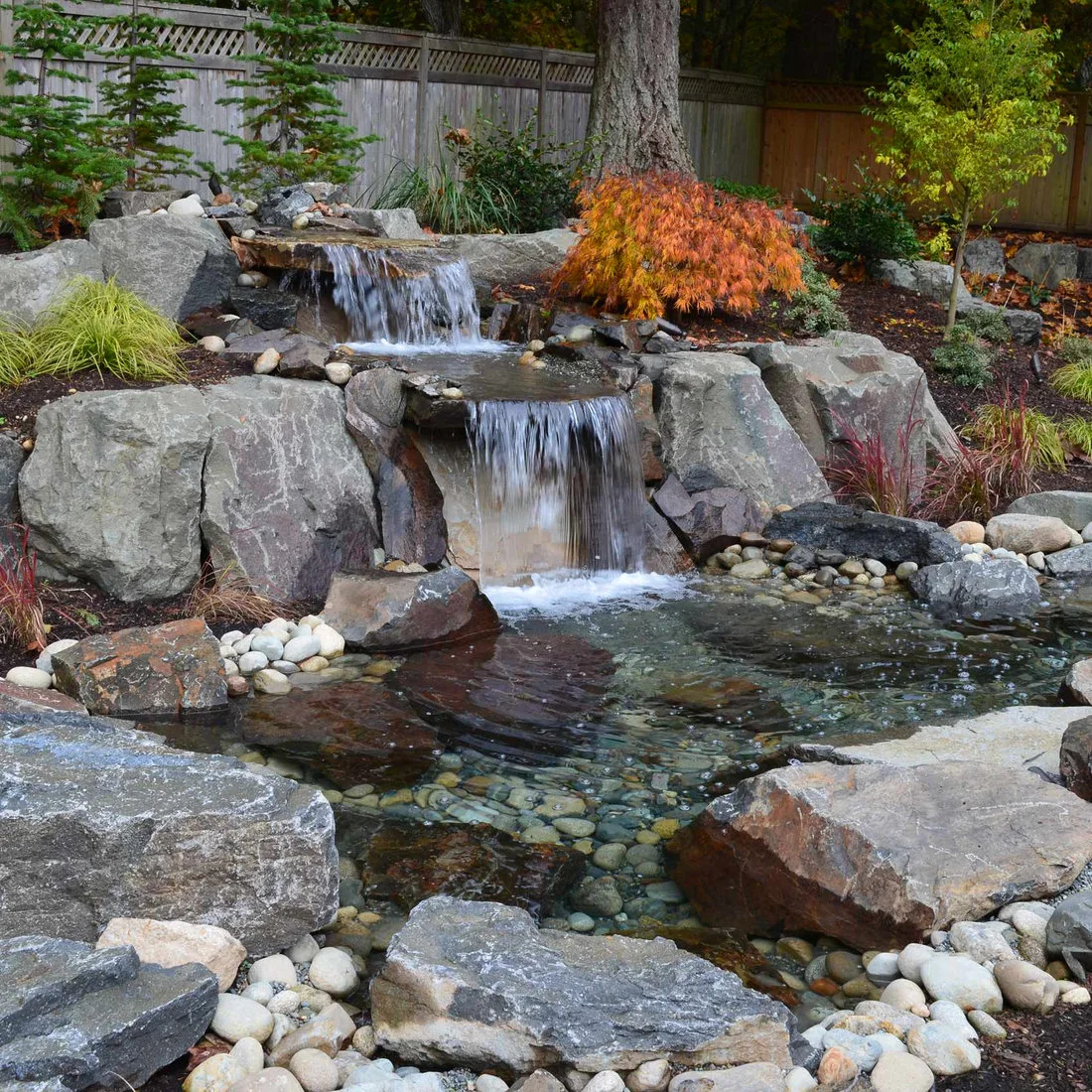
Two broad drops give this feature a clear center without a very tall rock tower. Large gray boulders frame the moving water, while smaller pale pebbles soften the edges. The orange leaves behind provide a color contrast without hiding the cascade itself.
Keep the surrounding planting lower where the water needs to remain visible from your sitting place. Have the rocks and lining installed as a stable system rather than copying their apparent balance. Leave a route for removing leaves and reaching equipment, especially where trees overhang a small receiving pool. If the garden has a change in level, review these retaining wall ideas before deciding how water and supported ground will meet.
IDEA 02 / 15
Let a Narrow Cascade Follow a Change in Level
 SaveSupport Non AI Creator
Image credit: Project: Outdoor Makeover & Living Spaces (via Houzz)
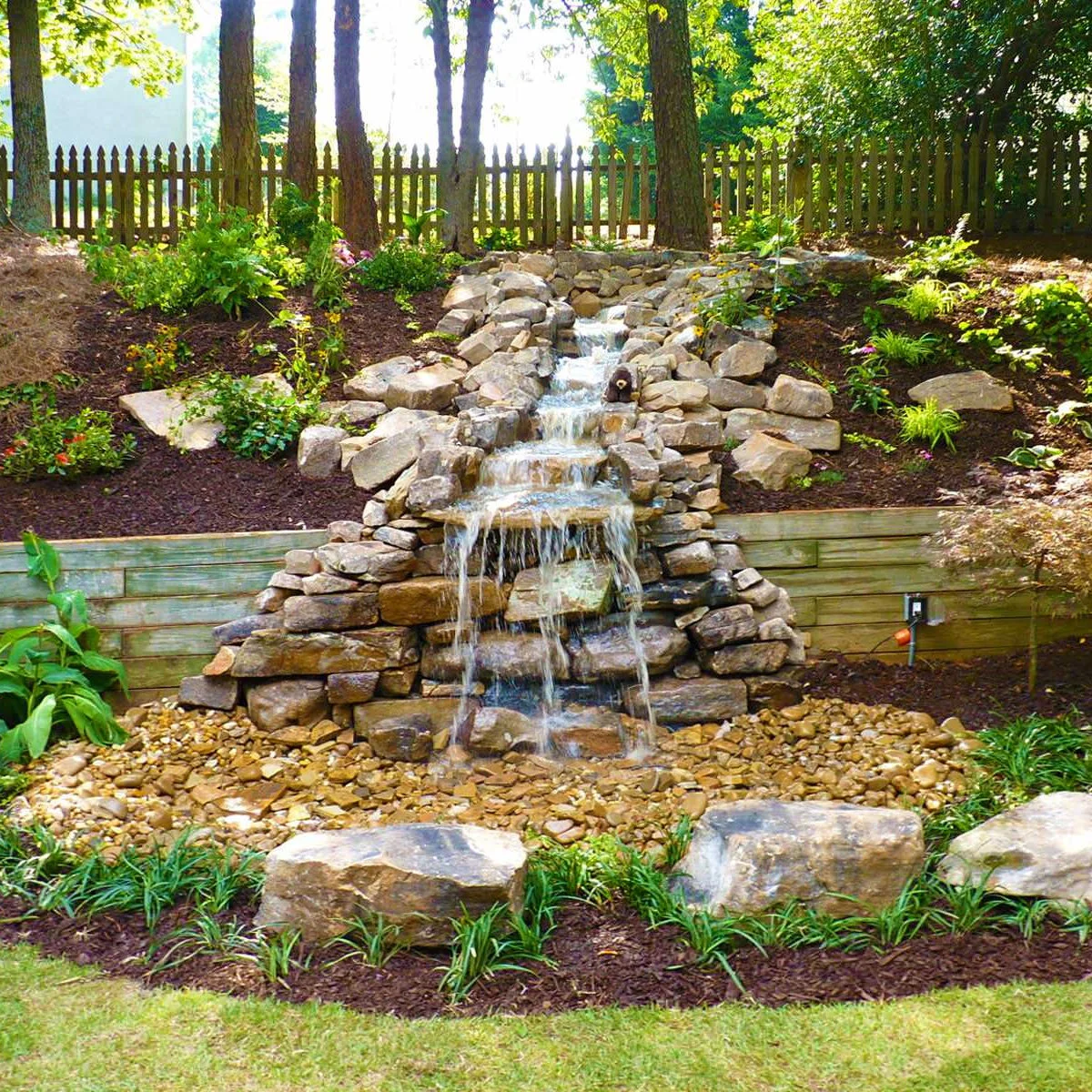
The water follows a narrow line down the bank instead of spreading across its full width. Several short steps lead to a stronger final drop above the pebble-covered base. The surrounding mulch and planting leave the cascade visually separate from the rest of the slope.
Treat the slope, retaining structure and water system as connected planning decisions. Do not cut through an existing wall without assessing its construction and drainage. Keep water contained within the designed lining, and provide access to the lower reservoir without requiring someone to climb across wet rocks to reach it.
IDEA 03 / 15
Use a Corner Feature Without Losing Service Access
 SaveSupport Non AI Creator
Image credit: Project: C.E. Pontz Sons (via Houzz)
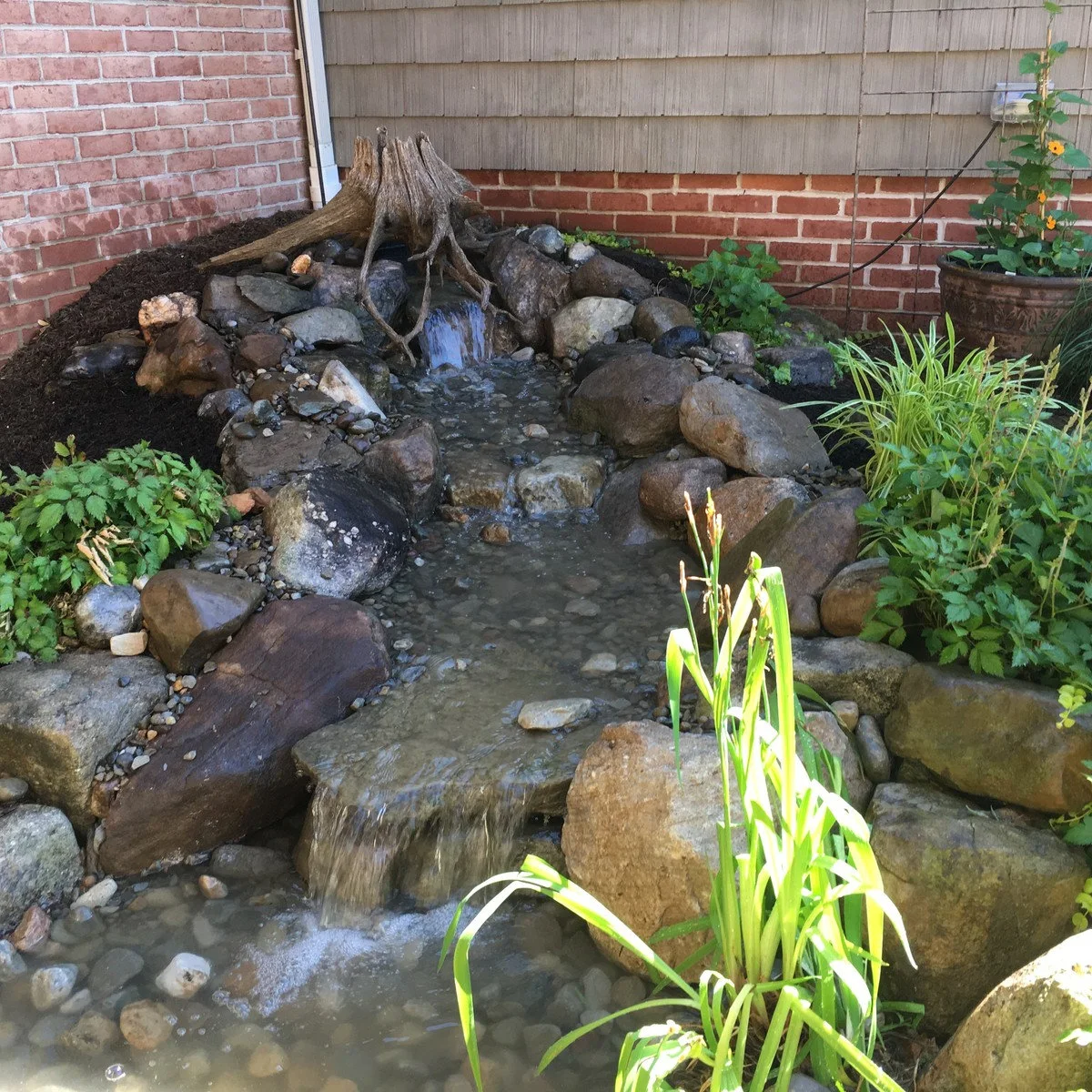
A weathered stump gives the top of the small cascade a distinctive shape, with the water stepping down between rounded rocks. The shallow visible run leads toward the foreground. Planting softens the edges while the brick corner makes the feature’s compact footprint easy to understand.
A position beside a building needs particular attention to lining, drainage and foundations; the photograph is not proof that the same placement suits another home. Leave access to walls and downpipes, and avoid directing runoff toward them. Choose decorative wood only if it is suitable for the system and can be maintained without dismantling the whole feature.
IDEA 04 / 15
Keep the Lower Basin Visually Simple
 SaveSupport Non AI Creator
Image credit: Project: C.E. Pontz Sons (via Houzz)
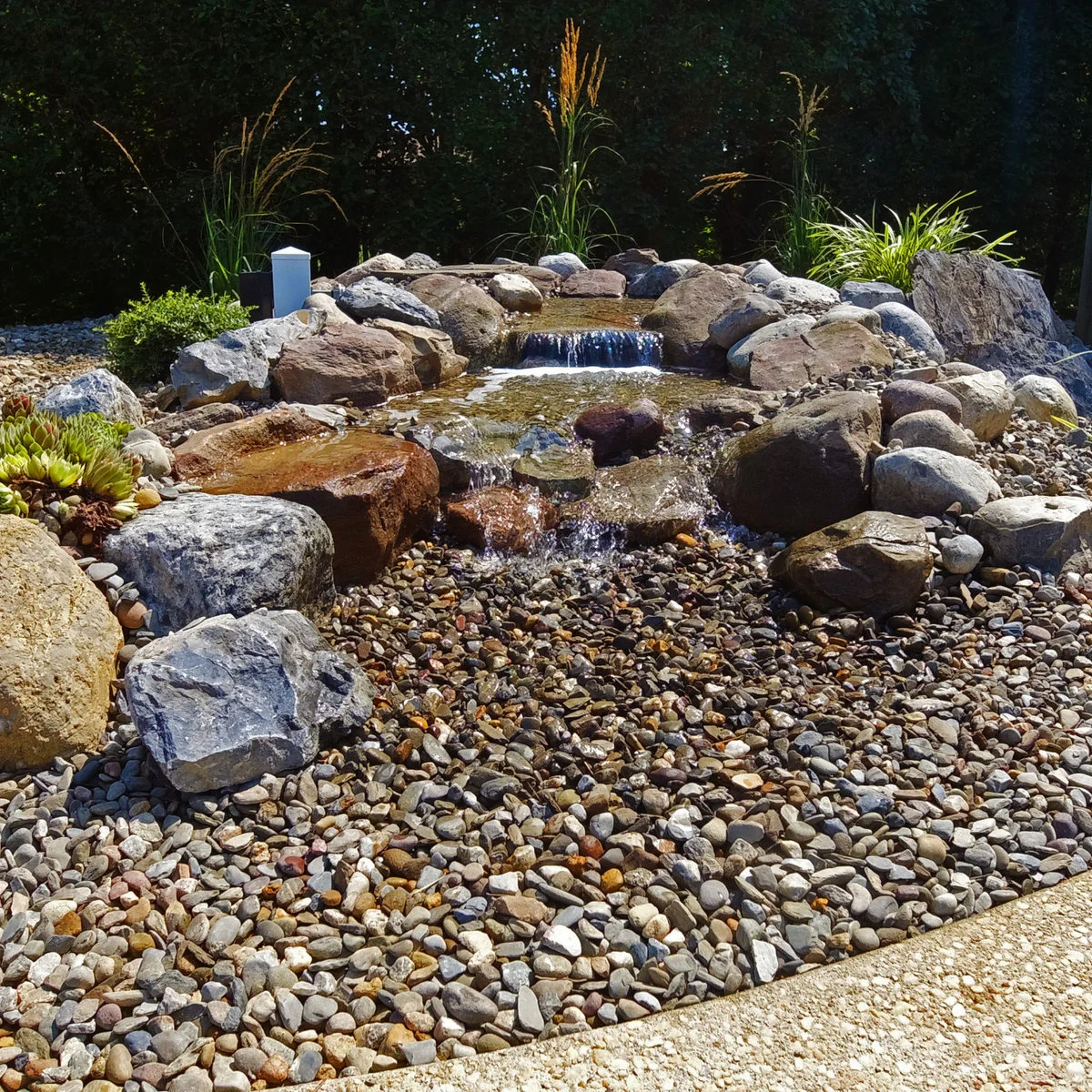
The short cascade sits at the back of a broad pebble-covered area, with a few larger rocks marking its outline. Sparse upright planting gives the water a simple backdrop. The arrangement concentrates the height in one place rather than building a tall mound across the whole bed.
These river rock landscaping ideas show other ways to organize rounded stones around planting. Confirm how the lower reservoir will be reached and cleaned before covering it decoratively. Keep a clear edge beside the path so loose stones do not spread into the walking area or conceal where the stable surface ends.
PART 02
Connect the water with its setting
IDEA 05 / 15
Fit a Low Cascade into a Planted Pocket
 SaveSupport Non AI Creator
Image credit: Project: Sublime Water Gardens (via Houzz)
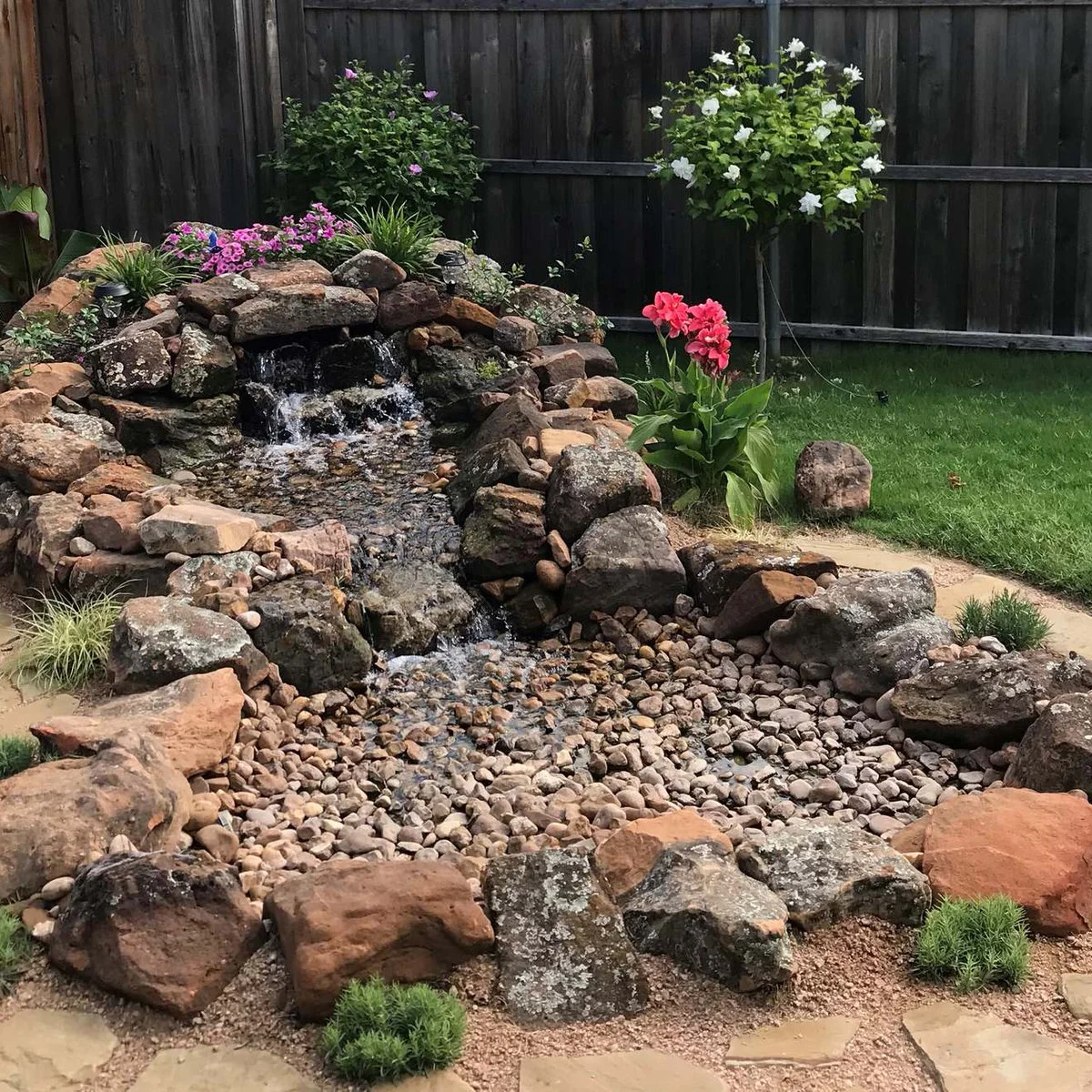
A low shelf of rocks creates the main fall, with smaller drops leading into the gravel-covered foreground. Red and pink flowers give the surrounding bed color without blocking the water. The dark fence acts as a quiet background behind the compact arrangement.
Keep plants far enough from the water route that growth and fallen flowers can be managed easily. Choose locally suitable plants rather than assuming every flowering border plant tolerates splashing. Leave room at the lawn edge for normal maintenance, and check that soil or mulch cannot readily wash into the feature.
IDEA 06 / 15
Place the Waterfall Where You Actually Sit
 SaveSupport Non AI Creator
Image credit: Project: Paradise Restored Landscaping & Exterior Design (via Houzz)
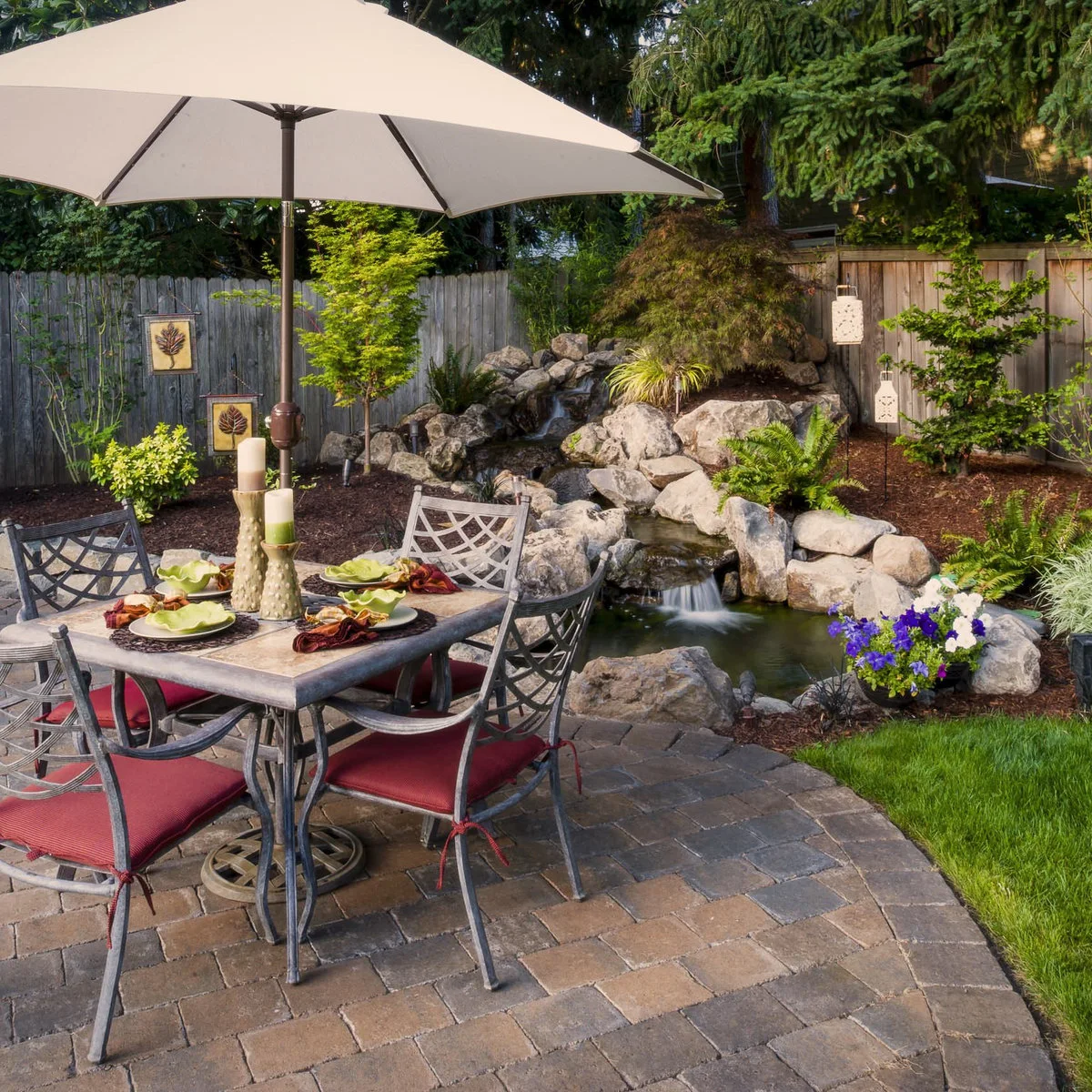
The dining area sits close enough to the waterfall for the water to be part of the view. A short cascade steps between rocks into a small receiving pond. The paved edge separates the table and chairs from the planted area rather than mixing furniture directly into the rocks.
Allow room for occupied chairs to move without bringing people close to the water’s edge. Plan a stable dry route around the dining area and assess the water feature’s safety for your household. Keep service access separate from the seating layout so cleaning the pump does not mean moving every piece of furniture.
IDEA 07 / 15
Vary the Drops Along a Short Run
 SaveSupport Non AI Creator
Image credit: Project: Island Garden Features (via Houzz)
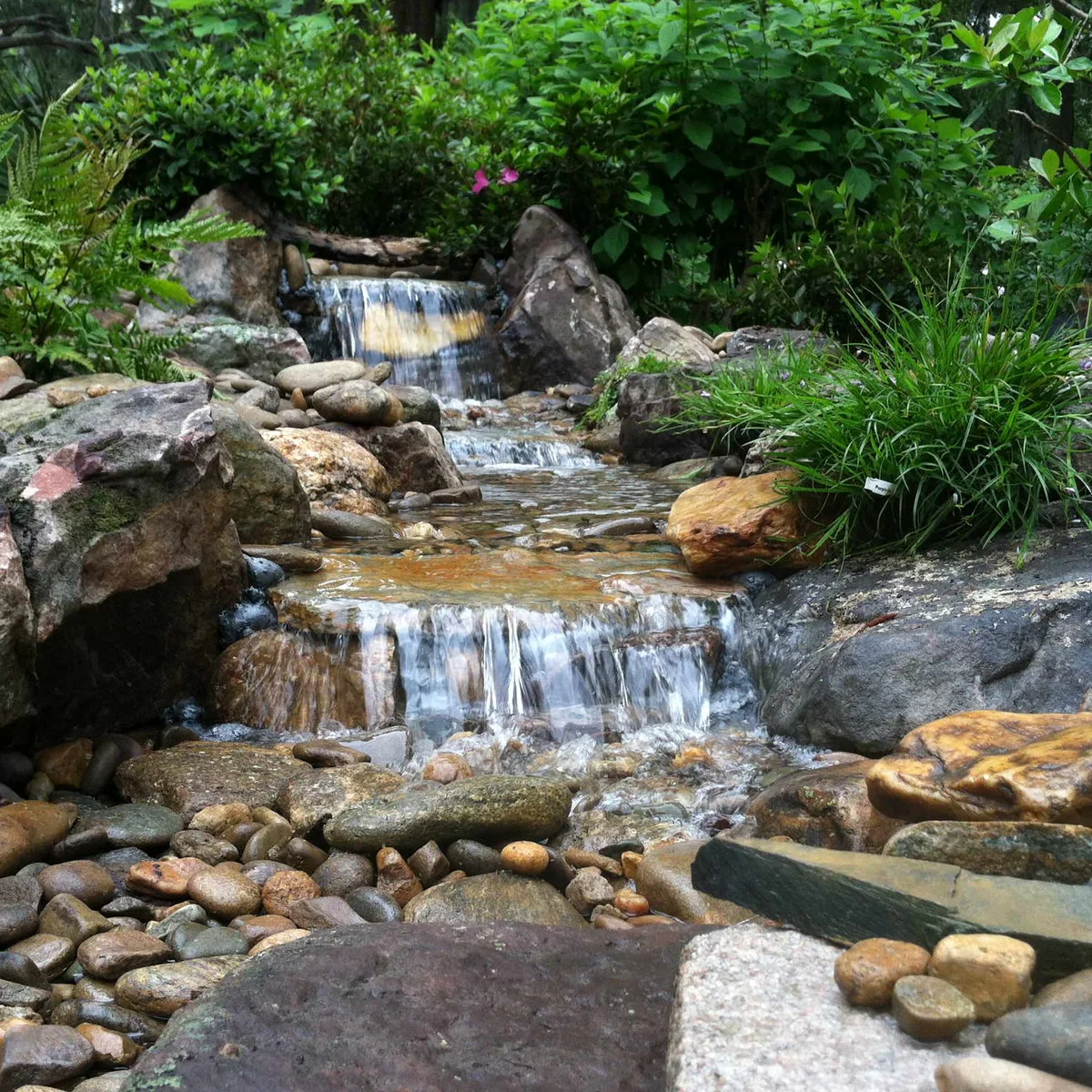
Several small ledges break the water into a sequence along this short run. Warm-toned stones and rounded pebbles keep the surfaces varied, while leafy plants soften the outer edges. The moving water remains visible between the larger rocks rather than disappearing behind dense foliage.
Choose the flow and ledge arrangement with the installer so the sound and splash suit the nearby seating and paths. Leave enough room to remove debris from the small intermediate pools. Keep plants outside the main flow route unless they are specifically chosen and installed for that part of the system.
IDEA 08 / 15
Run a Slender Cascade Beside Garden Steps
 SaveSupport Non AI Creator
Image credit: Project: H2O Designs (via Houzz)
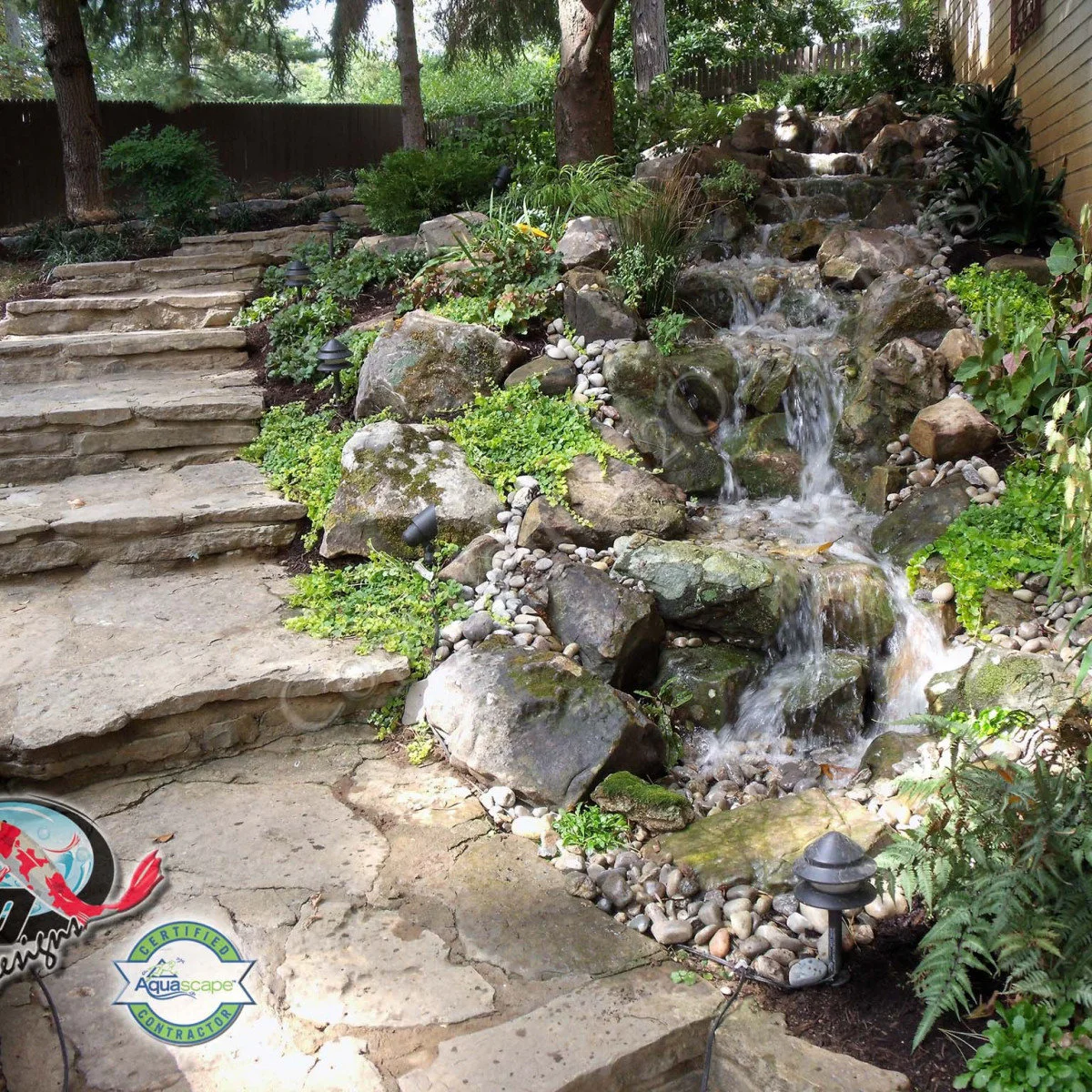
The narrow cascade follows the same change in level as the garden steps. Larger rocks define its sides, while small plants fill the gaps beyond the water route. The steps remain a separate surface rather than serving as stepping stones through the feature.
These retaining wall ideas can help you think about the surrounding levels before adding water. Have the stair route and supporting ground assessed together with the feature. Keep splash away from walking surfaces and preserve access to the side of the cascade, rather than making the wet rocks the only way to reach its upper section.
PART 03
Let planting frame the water
IDEA 09 / 15
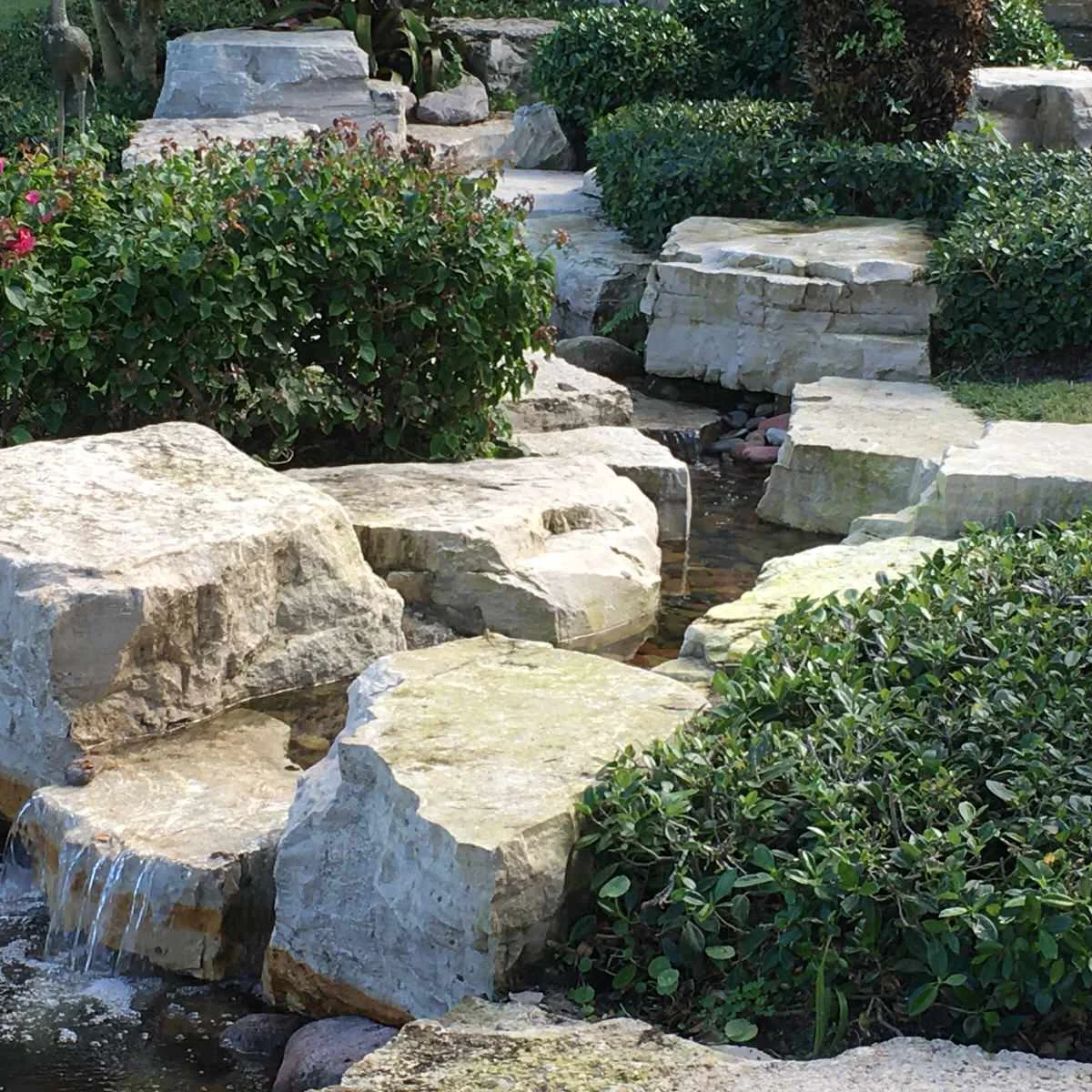
Use Broad Pale Rocks to Define a Narrow Water Route
 SaveSupport Non AI Creator
Image credit: Project: Matthew Giampietro Garden Design (via Houzz)
Broad pale rocks create the strongest shapes around this narrow stream. Small drops fit between them, giving the water a route through the planting without a large exposed pond in the foreground. Rounded shrubs soften the outer edge and repeat the rocks’ lower forms.
Avoid making the border so dense that you cannot inspect the water route. Leave space to remove debris and check the lining at the edges. The apparent weight of the rocks needs proper support beneath it; ask how the installation will remain stable and serviceable before deciding on a similar arrangement.
IDEA 10 / 15
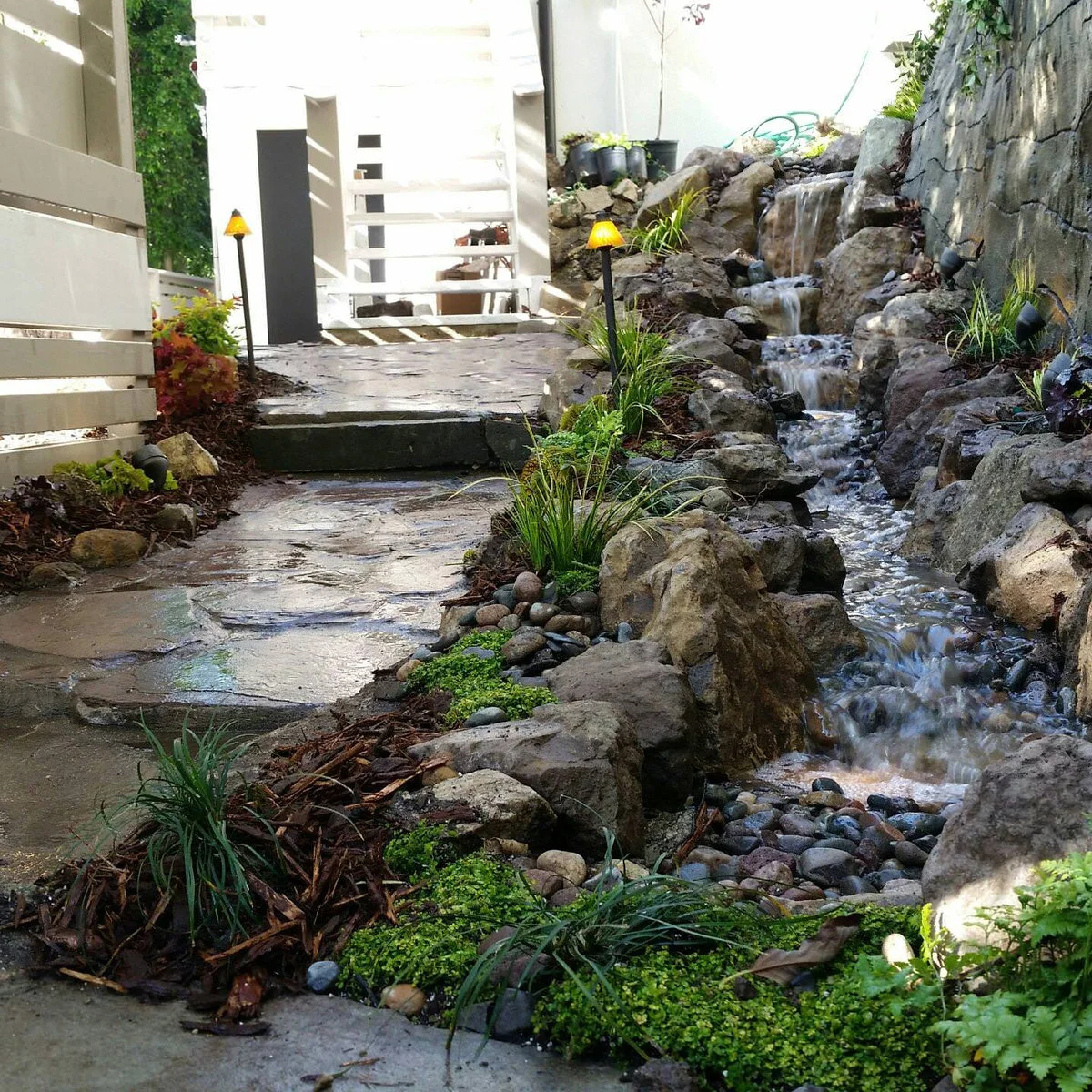
Use a Side Passage for a Slender Water Feature
 SaveSupport Non AI Creator
Image credit: Project: Mystic Water Gardens (via Houzz)
The water occupies a slim strip beside the wall, leaving the adjacent paved passage distinct. Several small drops create movement along the length without a wide lower pond. Young plants and small lights sit among the outer rocks, with the white fencing providing a bright background.
Keep the passage wide enough for its real purpose, including maintenance equipment and household access. Check splash and drainage along the paving and leave access to the wall. Place lighting and electrical components according to their intended use, with installation advice appropriate to an outdoor water feature.
IDEA 11 / 15
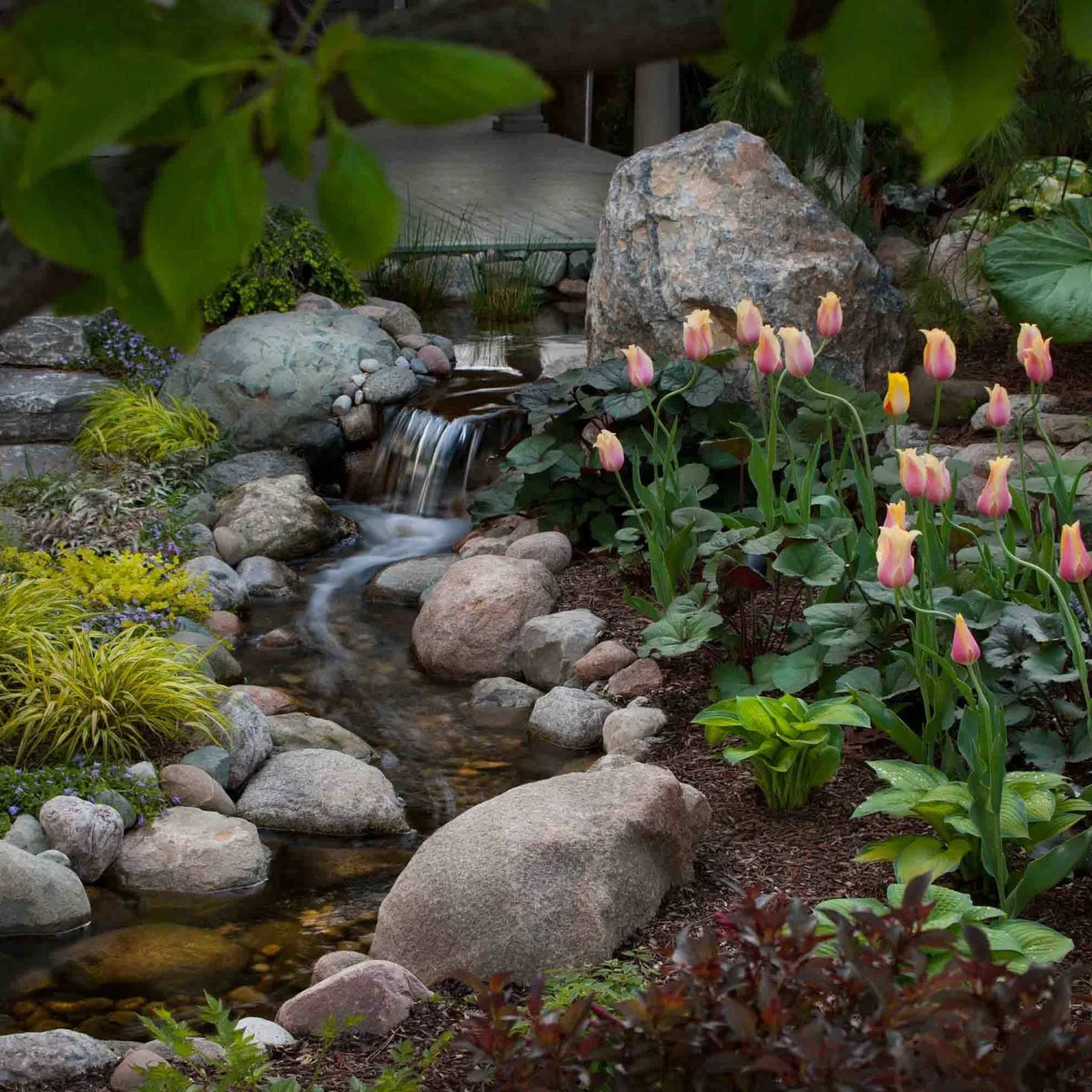
Let a Small Stream Bend Through the Planting
 SaveSupport Non AI Creator
Image credit: Project: Daryl Toby - AguaFina Gardens International (via Houzz)
The stream bends between rounded stones rather than running in a straight line. A larger upright boulder gives it a focal point, while flowers and low foliage soften the planted bank. The short drops remain visible within the curve and connect the upper and lower sections.
Use the curve to suit the available space rather than extending the stream simply to add length. Leave access to both banks where practical and keep vigorous growth from covering the ledges. Choose the surrounding plants for local conditions, and remember that flowering displays will change while the underlying rock arrangement remains.
IDEA 12 / 15
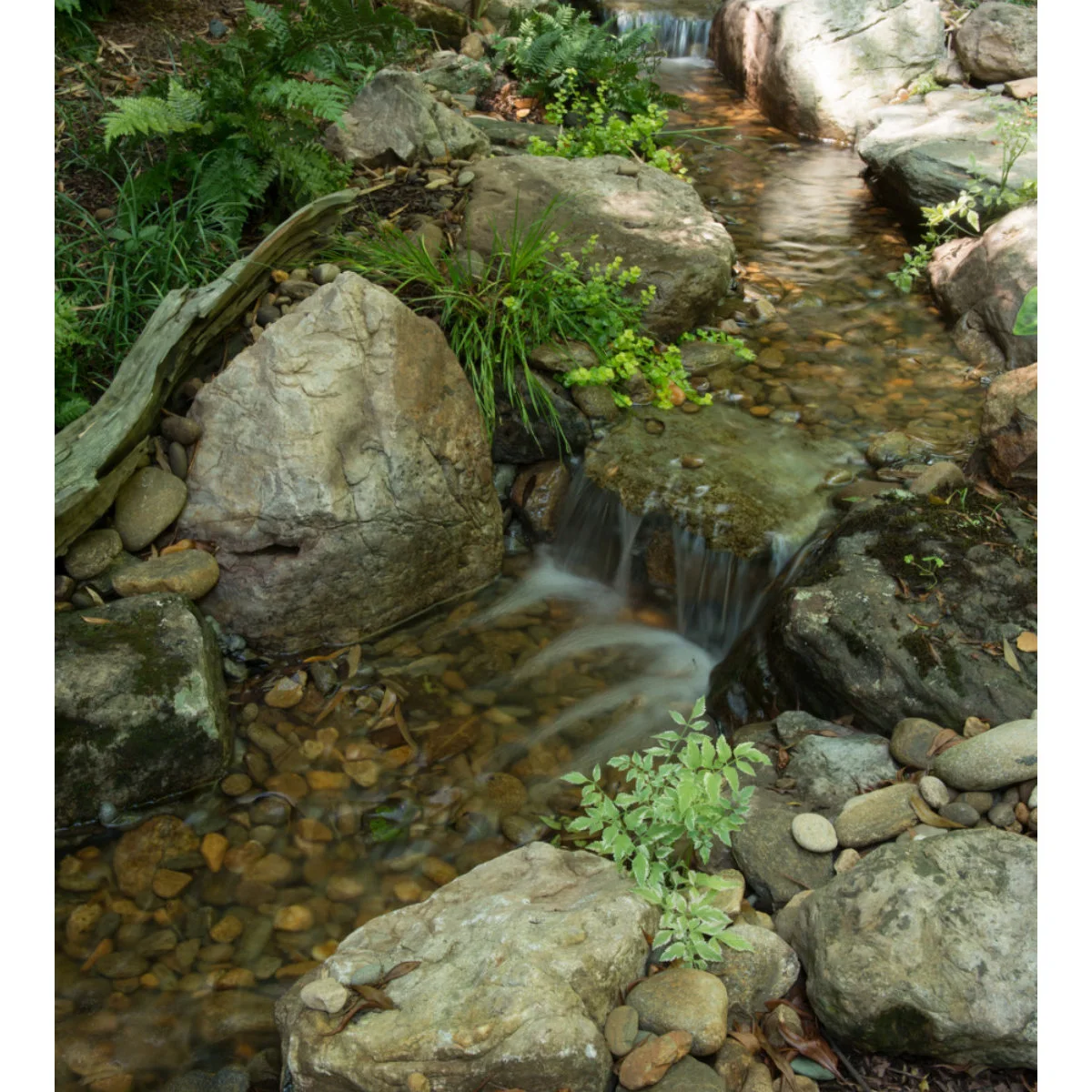
Keep a Close View Interesting with Mixed Stone Sizes
 SaveSupport Non AI Creator
Image credit: Project: Island Garden Features (via Houzz)
A broad spill stone creates one small drop within a narrow rocky run. Rounded pebbles collect in the quieter water, with larger rocks and a piece of wood giving the banks a less uniform outline. Fern-like foliage softens the background without hiding the water’s surface.
Use a close-view feature where people can enjoy its detail from a safe dry position. Have decorative wood and stone checked for suitability, and leave access to remove trapped leaves. Do not treat the visible pebbles as a substitute for the concealed lining, support and equipment that keep the system working.
PART 04
Choose the detail that makes it yours
IDEA 13 / 15
Keep the Water Feature Smaller Than the Sitting Area
 SaveSupport Non AI Creator
Image credit: Project: FallingWater Scapes (via Houzz)
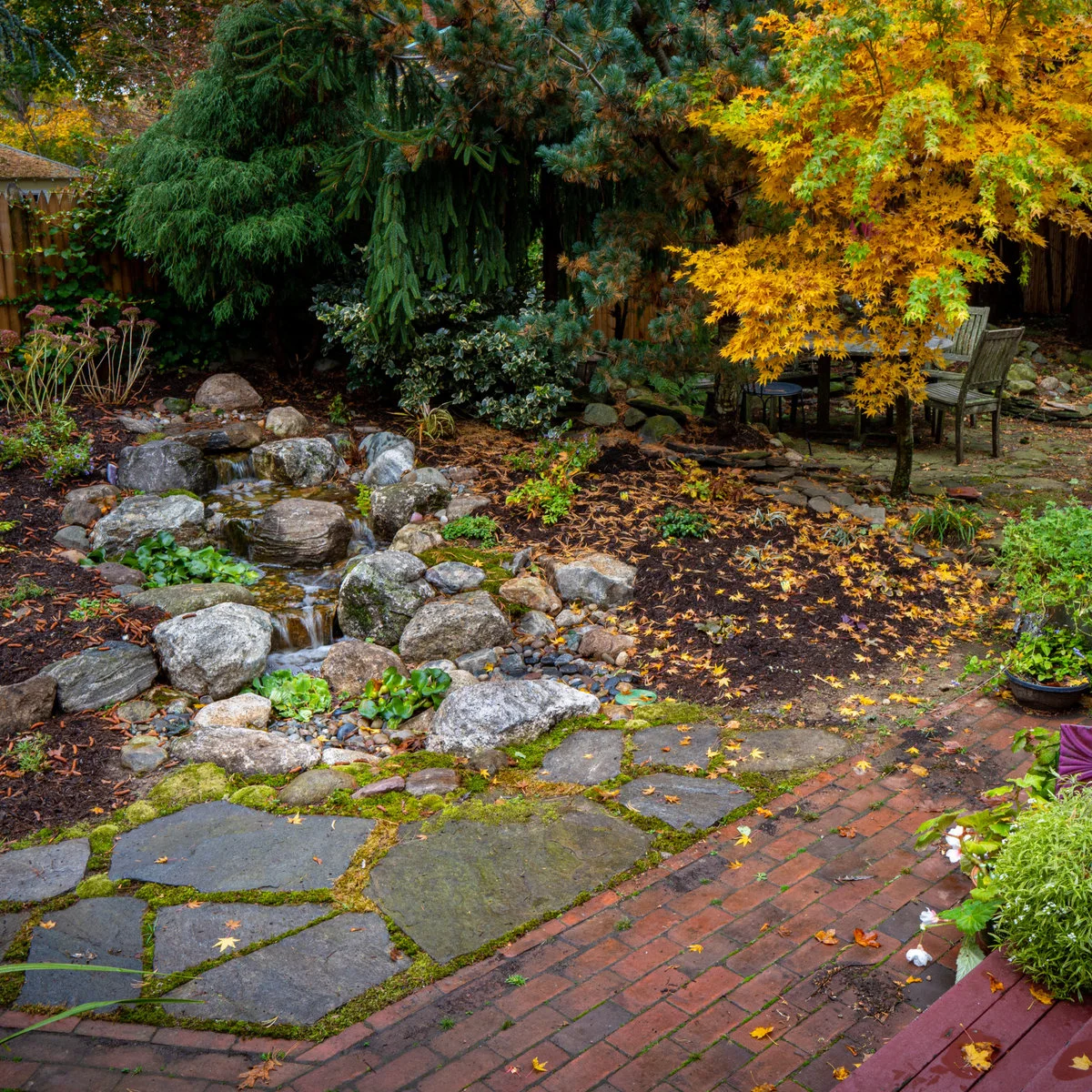
The small brook occupies one planted pocket beside the wider paved route and dining area. Several low drops give it movement without making the whole garden a water feature. Trees and shrubs provide the enclosure, leaving the table as a separate place to gather.
These small cottage garden ideas offer other ways to combine a sitting place with a full planted setting. Keep a comfortable route around the feature and plan for regular leaf removal beneath trees. Choose the water feature’s footprint after allowing for the furniture, rather than reducing the seating area to fit a larger cascade.
IDEA 14 / 15
Use a Planted Backdrop Instead of a Tall Rock Tower
 SaveSupport Non AI Creator
Image credit: Project: FallingWater Scapes (via Houzz)
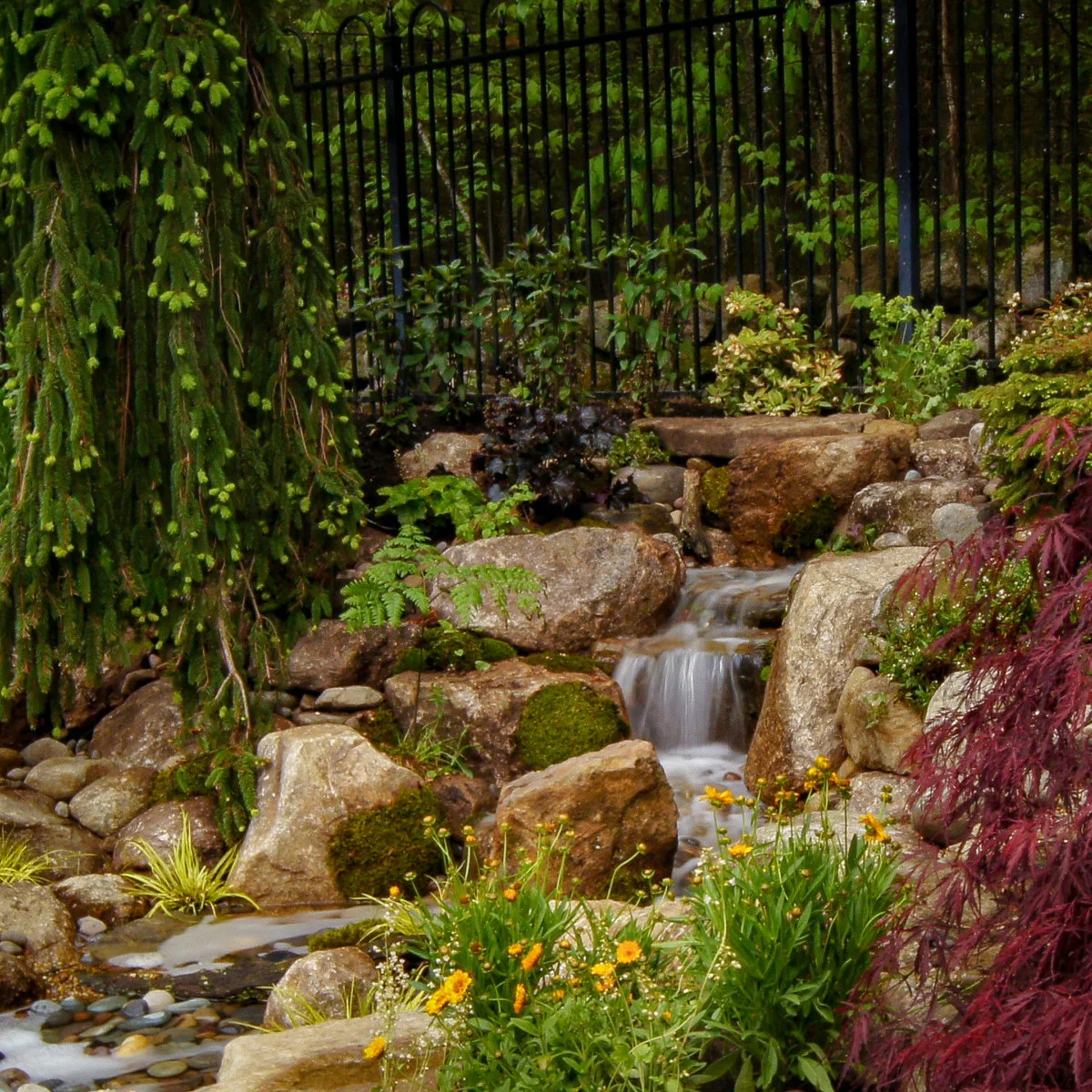
Low rock ledges provide the water’s movement, while the surrounding trees and flowers supply most of the height. Mossy surfaces and smaller plants connect the rocks to the planted bed. The black fence remains visible behind the garden without becoming its main feature.
Let the planting create enclosure if a tall constructed waterfall would overwhelm the space. Keep growth manageable around the water and do not assume moss will establish in unsuitable conditions. Leave room to inspect the back and sides of the feature, including any parts that become less visible as foliage fills out.
IDEA 15 / 15
Choose a Wall Cascade for a More Formal Patio
 SaveSupport Non AI Creator
Image credit: Project: Blue Thumb (via Houzz)
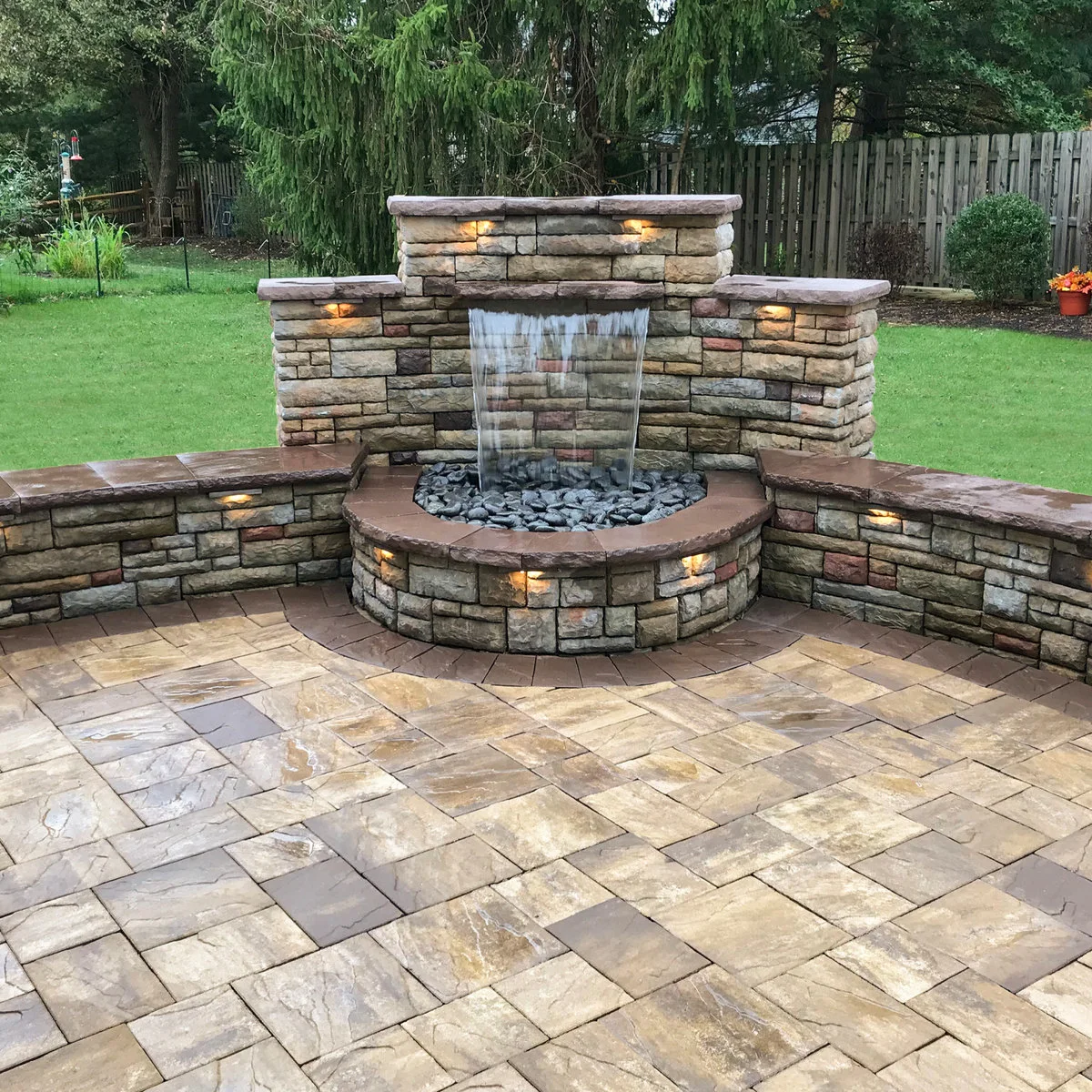
One broad sheet of water falls from the center of the stepped wall into a stone-covered semicircular base. Matching low walls continue on either side, linking the feature to the patio. Small lights emphasize the masonry outline rather than adding separate decorative objects around the basin.
Check the complete reservoir and service footprint before selecting a wall cascade for a small patio. The receiving area must be designed for the actual flow and splash, with appropriate access for care. Keep the walking surface separate from wet areas, and treat the wall’s support and electrical installation as part of the design from the start.
BRING IT ALL TOGETHER
Make space for the parts you do not see
Mark out the complete footprint before committing to a feature, including its reservoir and service access. View it from the house and the place where you normally sit. A low cascade that is easy to enjoy can be more useful than a tall feature squeezed into a corner you rarely visit.
Ask the installer or manufacturer how the pump, filter and water level will be maintained, and how the system should be shut down in your climate. Keep paths separate from splash and have electrical requirements assessed appropriately. Even a pondless arrangement needs care and a household-specific safety assessment; stones over a reservoir do not make it maintenance-free or automatically safe.