A driveway needs room for vehicles before it needs another flower bed. Mark the turning area, opening doors and the route to the house first. Then use planting and edging to make that necessary hard surface feel connected to the garden.
These photographed approaches range from compact parking areas to long country drives. Borrow the scale and arrangement that suit your property, rather than copying a large entrance into a small front yard. Choose plants for your local conditions and their mature spread.
PART 01
Make the edges work harder
IDEA 01 / 20
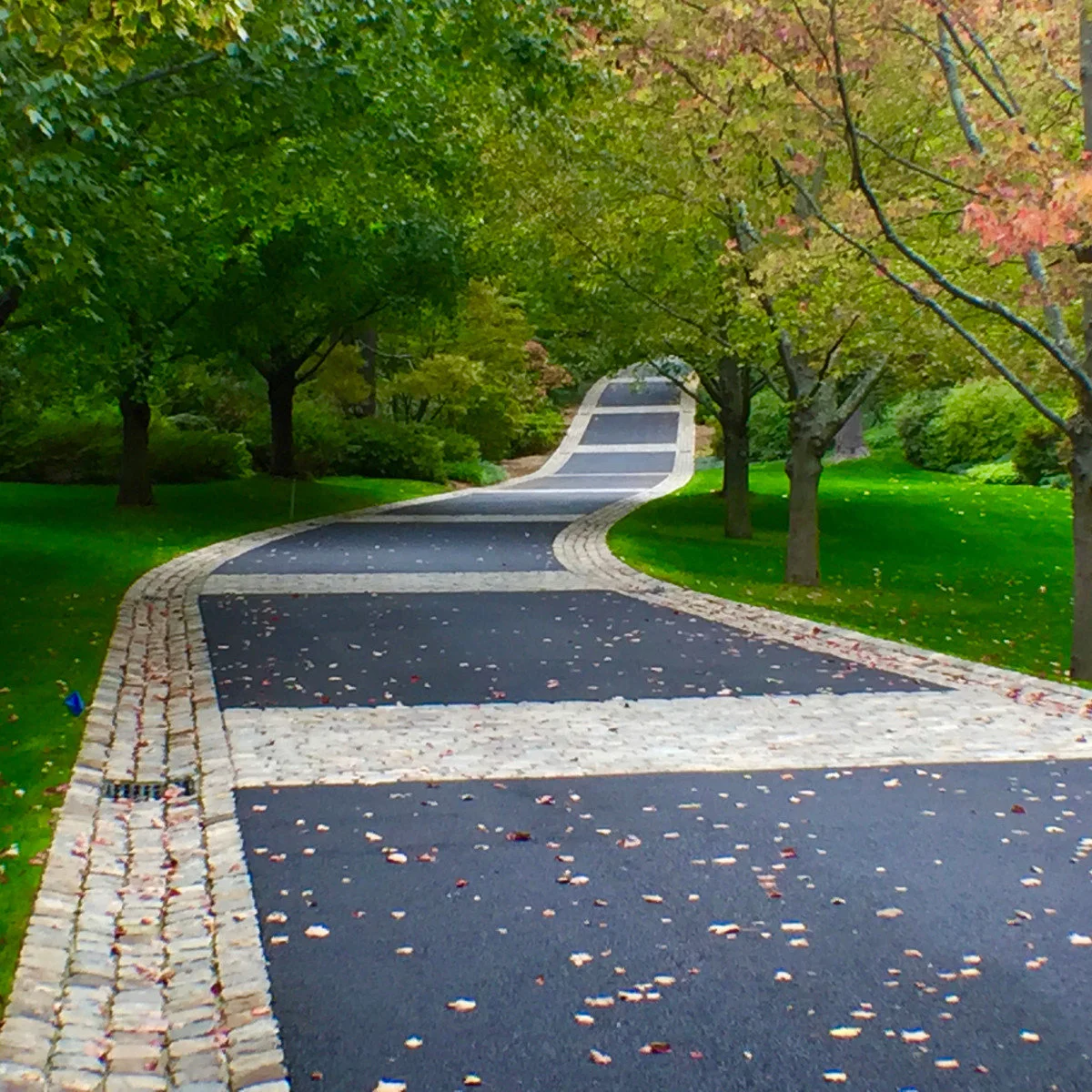
Frame a Winding Drive with a Consistent Border
 SaveSupport Non AI Creator
Image credit: Project: Stone Farm (via Houzz)
Pale blocks trace both sides of the winding drive and cross the dark surface at intervals. The repeated outline makes each bend easier to read among the trees. Lawn stays on one side while mixed planting follows the other, giving the approach variety without changing its basic edge.
Set the vehicle route before deciding where borders should run. Check the widest vehicle that regularly visits, including its turning needs. Keep edging details suitable for vehicle loads, and ask an installer to resolve levels and drainage rather than treating decorative cross bands as a simple surface addition.
IDEA 02 / 20
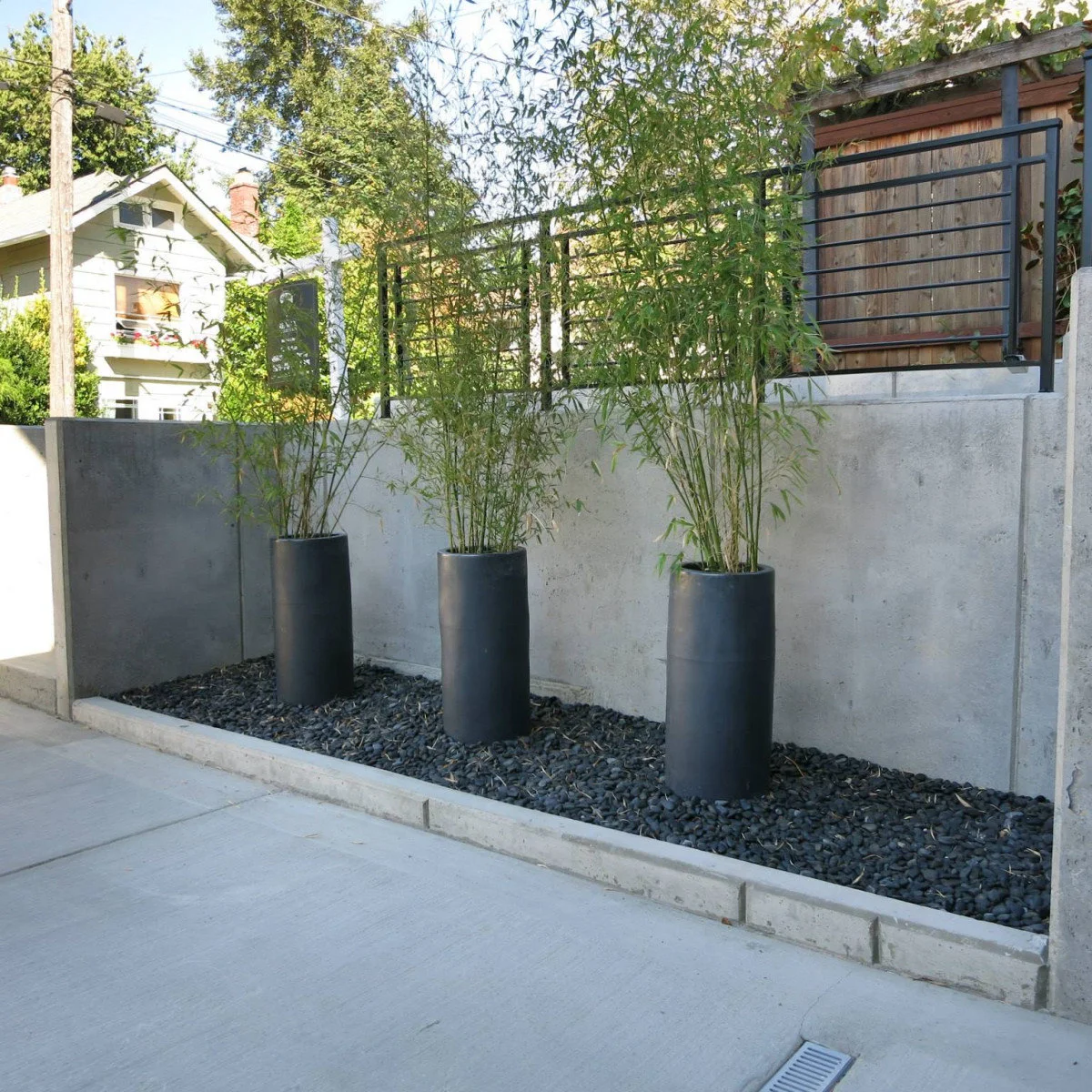
Use Containers Along a Constrained Boundary
 SaveSupport Non AI Creator
Source: www.houzz.com
Three tall containers bring foliage to a narrow strip beside the concrete drive. Their dark finish relates to the metal railing above the retaining wall. Loose stone covers the strip beneath, keeping the planted boundary visually separate from the broad parking surface.
Place pots outside the space needed for car doors and mirrors. Check their stability when fully planted and make sure drainage water has a suitable route. Tall planting can provide screening, but its mature spread still needs to fit without leaning into the vehicle lane.
IDEA 03 / 20
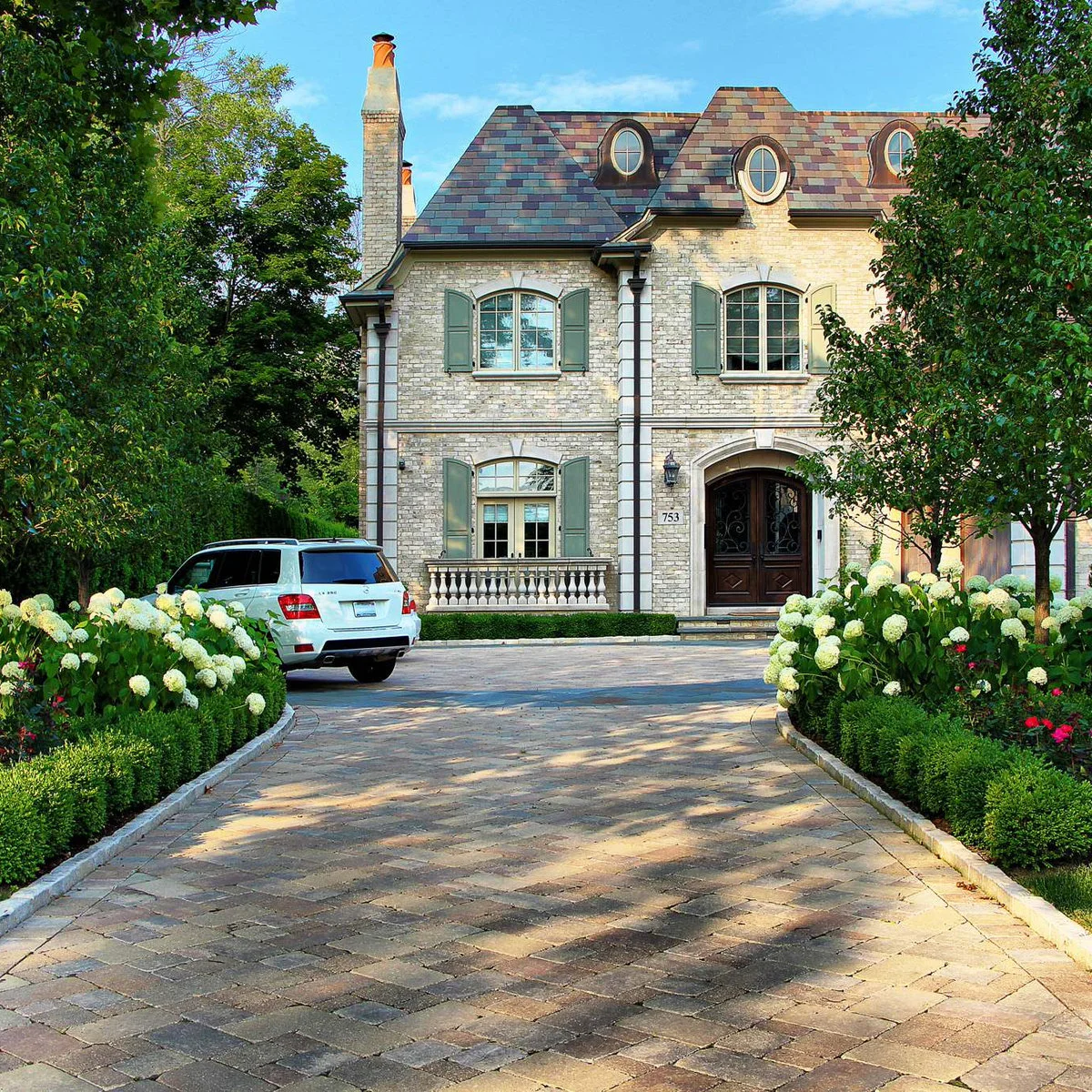
Layer Flowers Behind a Low Hedge
 SaveSupport Non AI Creator
Image credit: Project: Arrow. Land + Structures (via Houzz)
Low clipped hedges establish a crisp line beside the paving, with taller white flowers behind them. The planting rises in layers toward the house rather than starting with a tall screen at the drive edge. Trees soften the upper part of the view without obscuring the entrance completely.
Allow enough bed depth for both layers at maturity. A narrow strip may only support one well-chosen row, which is preferable to plants competing for space. Keep the hedge trimmed back from the curb and avoid blocking views where the driveway meets a sidewalk or road.
IDEA 04 / 20
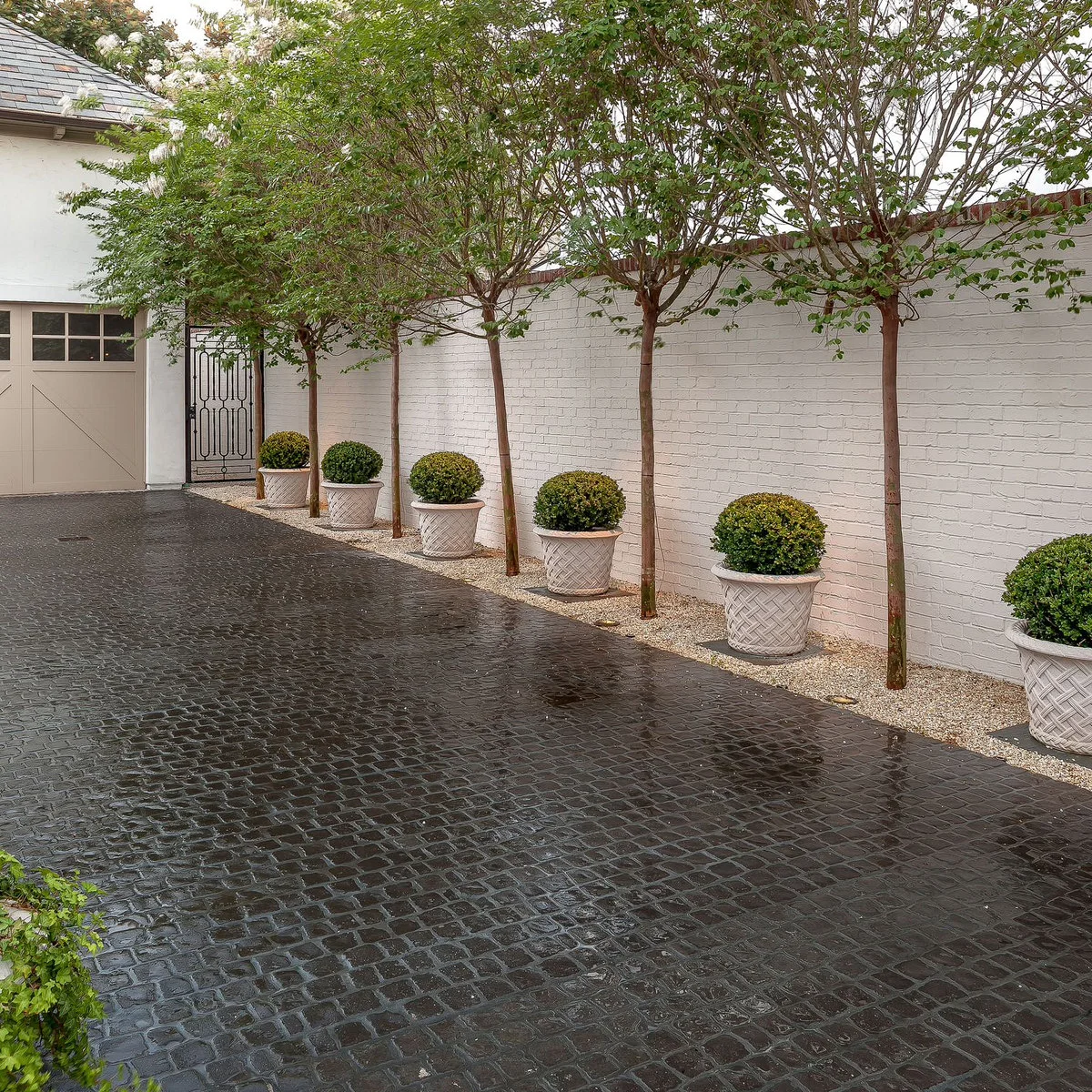
Repeat Trees and Pots Along a Garage Wall
 SaveSupport Non AI Creator
Image credit: Project: Exterior Worlds Landscaping & Design (via Houzz)
A repeated sequence of small trees and pale pots gives the long garage wall a garden-like rhythm. Light gravel separates the trunks and containers from the dark paving. The slim planting zone makes the wall interesting while keeping most of the courtyard available for movement.
Check tree suitability with a local nursery before planting beside walls and paving. Mature root systems and canopies matter more than the neat shape of a young specimen. Leave access to the garage and any side gate, and account for leaves falling onto the parking surface.
IDEA 05 / 20
Let Two Wheel Tracks Curve Through Lawn
 SaveSupport Non AI Creator
Image credit: Project: Martin Hoffmann (via Houzz)
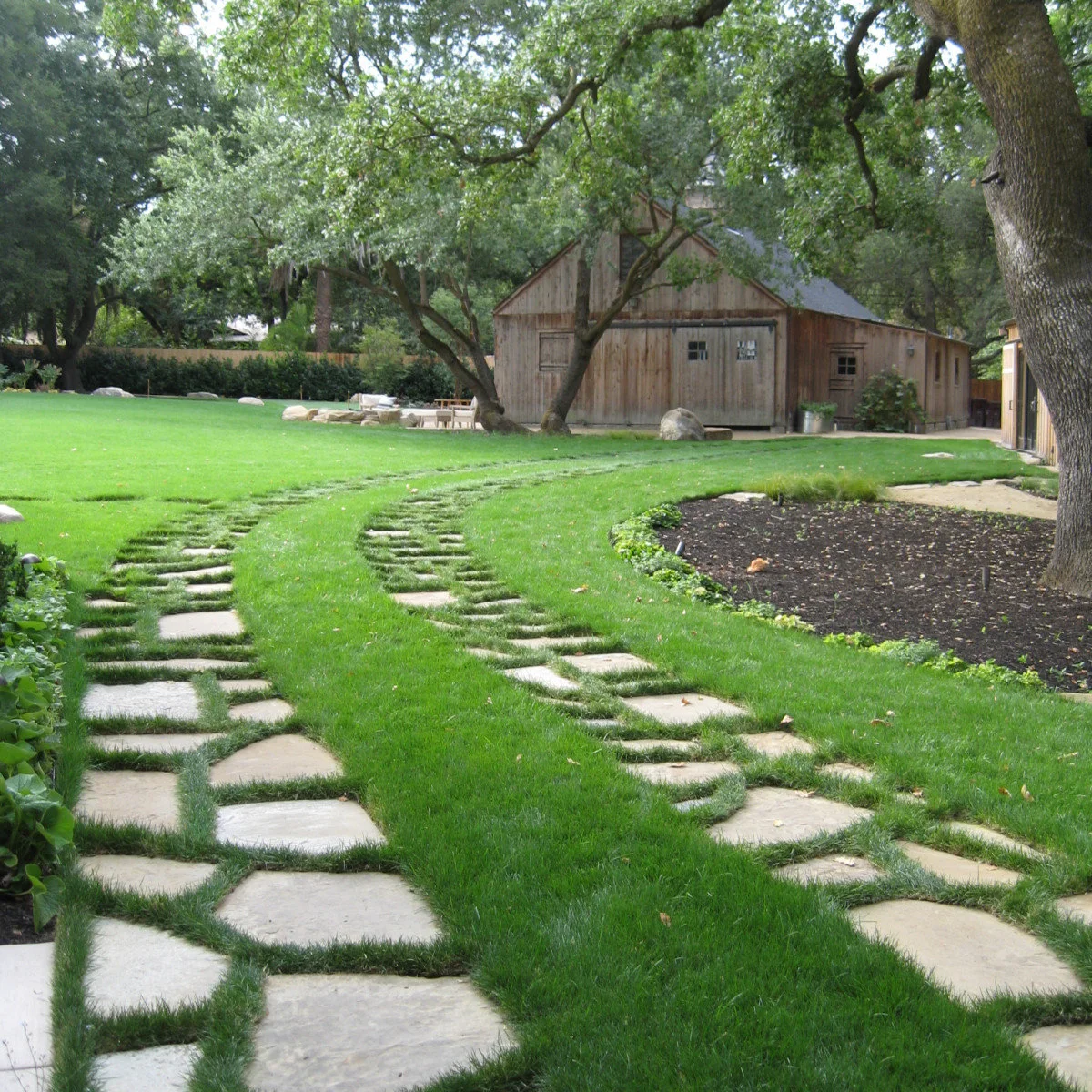
Two lines of pale slabs curve across the lawn toward the timber building. Grass grows between the slabs and continues through the middle of the route. The arrangement makes the vehicle approach feel like part of the lawn rather than a continuous paved strip.
Wheel-track layouts need careful planning around actual vehicle widths and turning movements. Have the base and paving designed for traffic, and consider how frequently the grass will be driven over. This approach also requires mowing around the slabs, so include that extra maintenance in your decision.
PART 02
Give the entrance a clear shape
IDEA 06 / 20
Shape a Planted Island Inside a Turning Circle
 SaveSupport Non AI Creator
Image credit: Project: Astro Masonry (via Houzz)
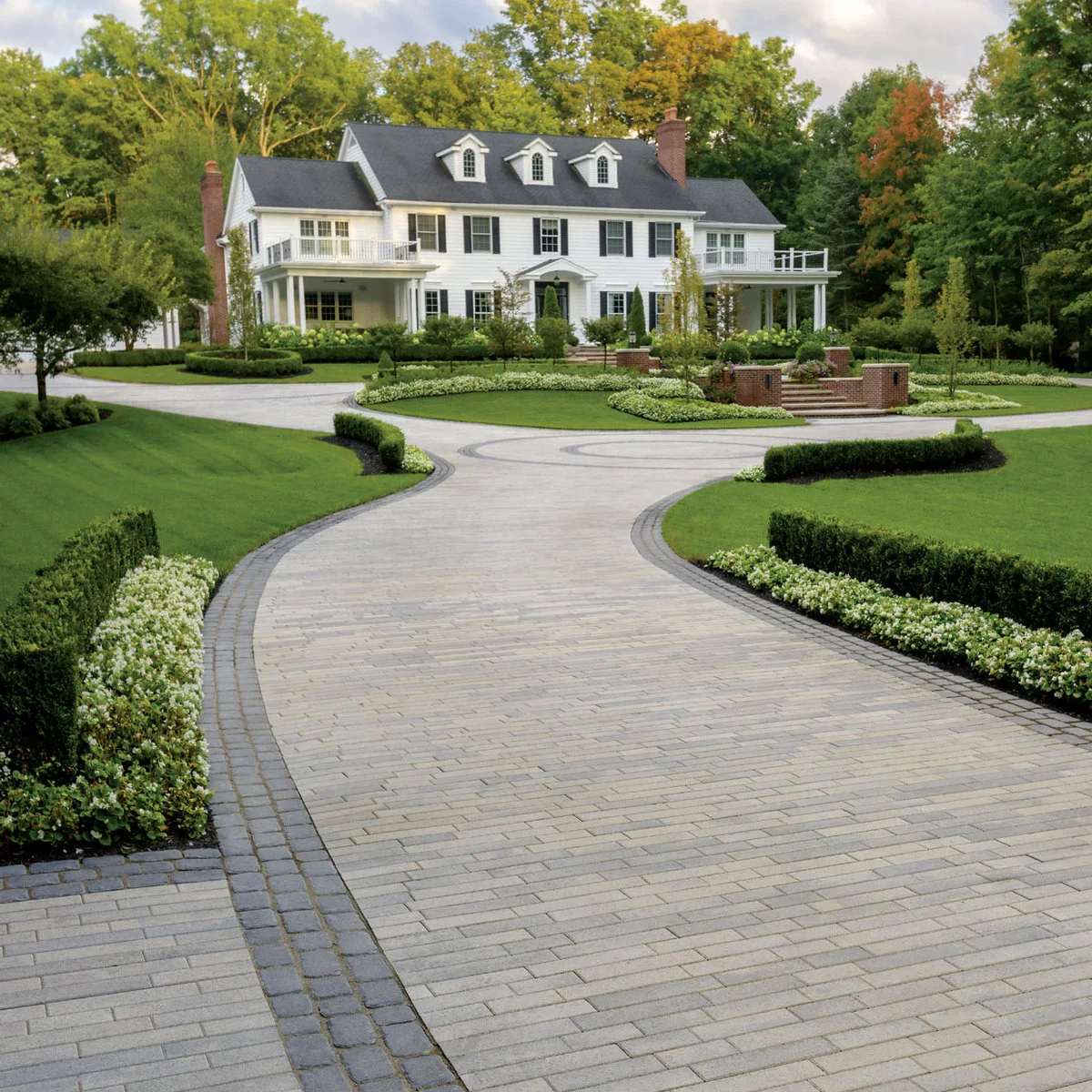
The drive curves around an island of lawn, low hedges and pale flowers, leaving the house entrance visible beyond it. A raised pedestrian approach gives the center a clear purpose. The circular paving detail echoes the turning shape instead of adding an unrelated pattern.
A planted island only works when vehicles can pass around it comfortably. Test turning and stopping space before committing to its size. Keep the edge planting low enough to see pedestrians, and avoid placing loose decorations where they could be struck during a tight maneuver.
IDEA 07 / 20
Use a Raised Bed Beside a Sloping Drive
 SaveSupport Non AI Creator
Image credit: Project: Reikow Landscape Design (via Houzz)
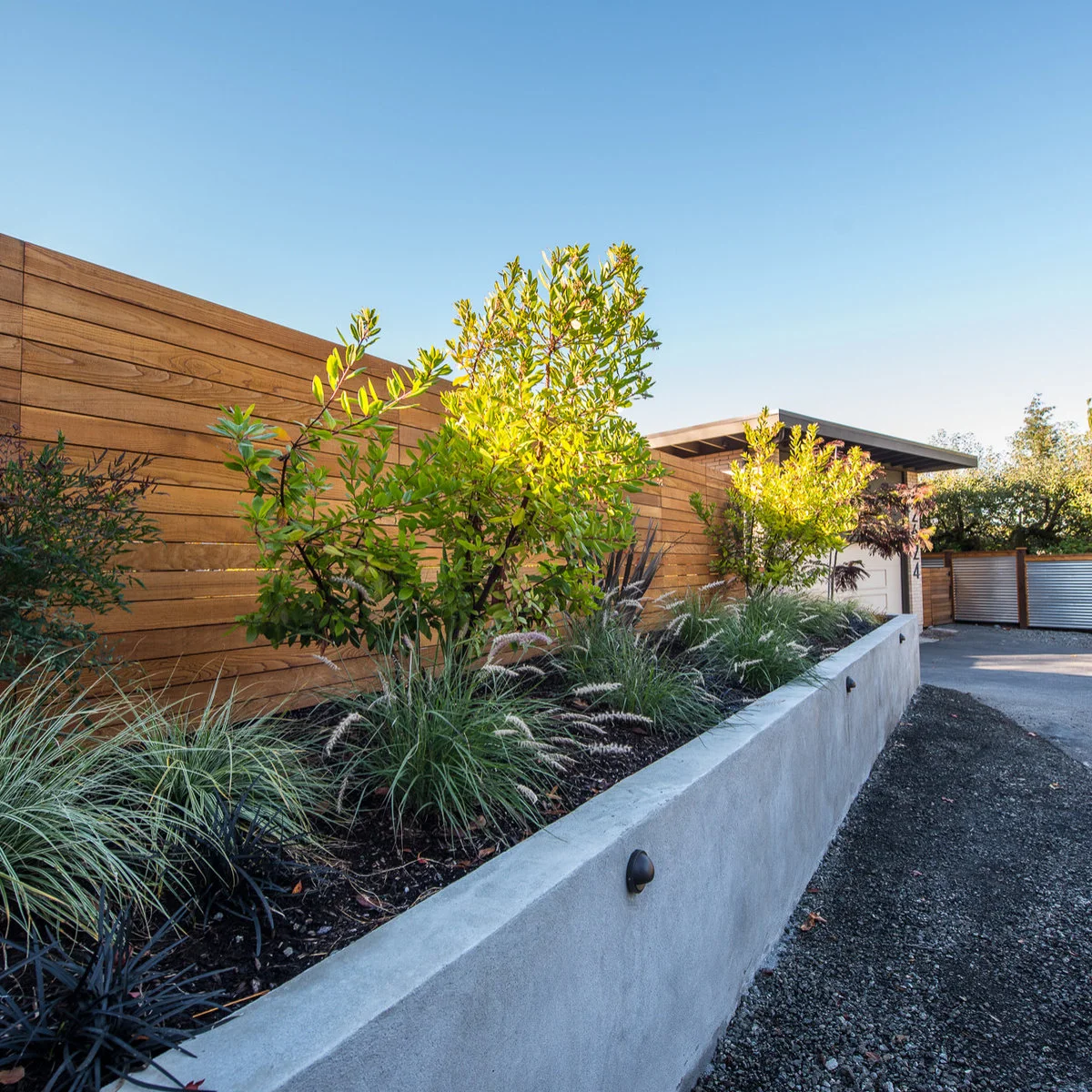
A pale retaining edge contains the planting along the sloping drive. Grassy foliage and taller shrubs soften the horizontal wood boundary above it. Small fittings punctuate the outer face of the wall, adding detail without occupying the narrow ground area beside the vehicle route.
Retaining work needs proper site assessment rather than a decorative sketch alone. Keep soil and irrigation separate from the driving surface, and choose plants whose leaves will remain within the bed. Check that any lighting is aimed along the route without shining directly into approaching drivers’ eyes.
IDEA 08 / 20
Keep the Curve Open Under Mature Trees
 SaveSupport Non AI Creator
Image credit: Project: Goldberg & Rodler, Inc. (via Houzz)
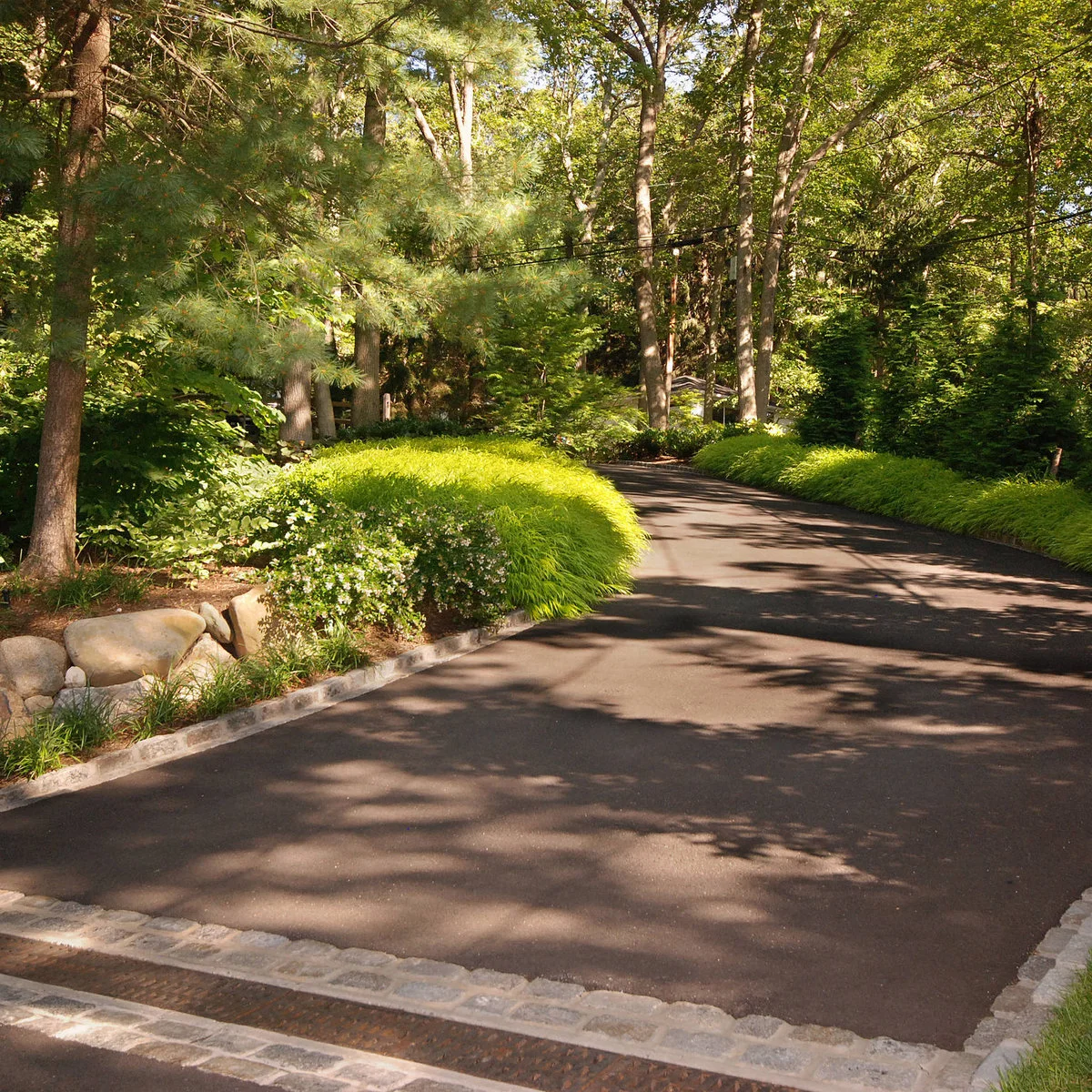
Low planting follows the inside of the bend beneath established trees. The taller trunks stay behind the planted edge, leaving the dark driving surface visually open. Pale stones and flowers introduce contrast at ground level while preserving the wooded character of the approach.
Work around established roots with an arborist when changing a drive. Avoid assuming that a shallow new border is harmless beneath a mature tree. Choose planting suited to the actual shade and moisture, and keep the inside of the bend low enough to maintain useful sightlines.
IDEA 09 / 20
Mark the Arrival with Planted Stone Piers
 SaveSupport Non AI Creator
Image credit: Project: Artemis Landscape Architects, Inc. (via Houzz)
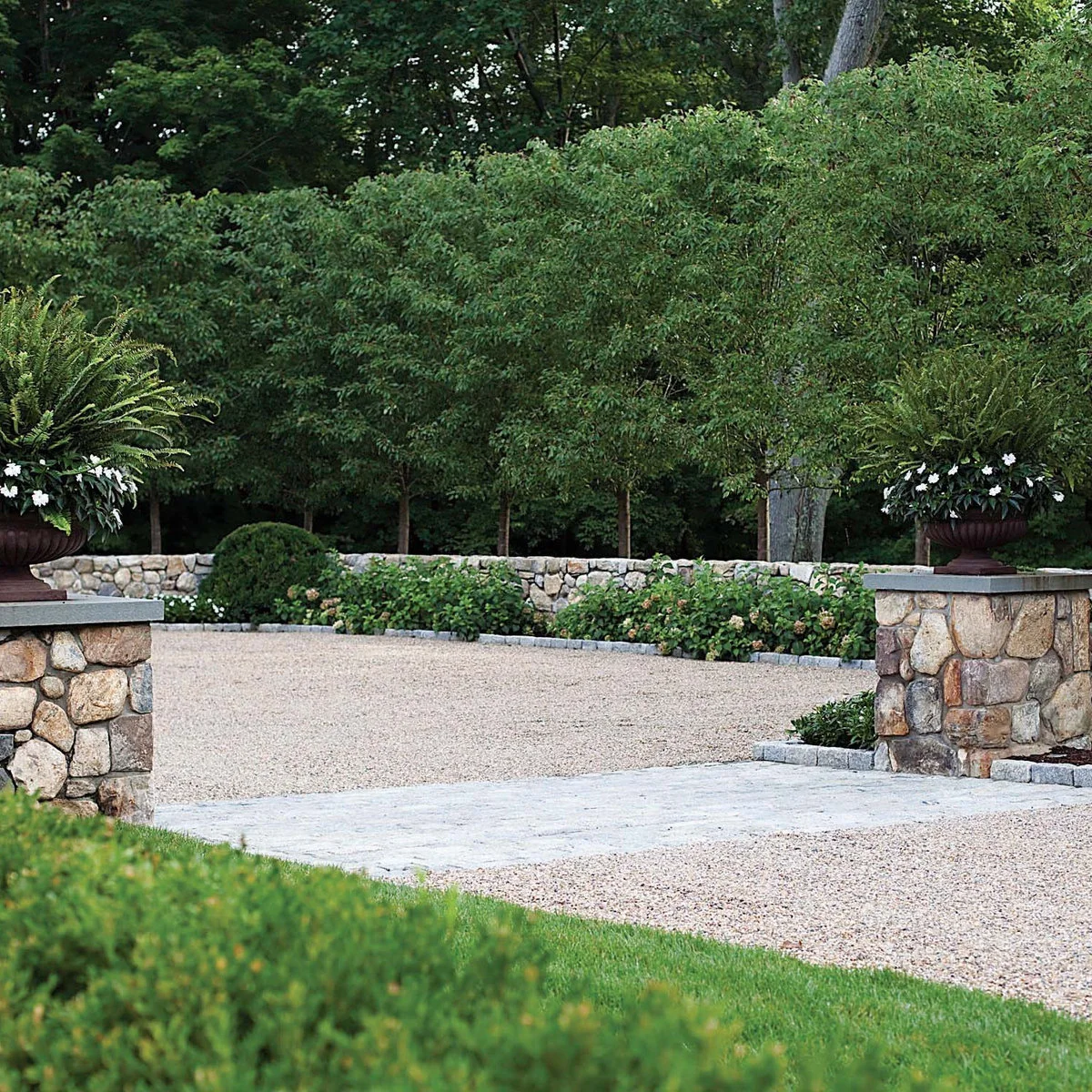
Planted urns sit on stone piers at the entrance to the gravel court. A short paved band connects the two sides, giving the transition a clear visual threshold. The low wall and clipped planting beyond keep the entrance framed without forming a continuous high barrier.
Position piers outside the turning envelope of vehicles and leave room for delivery access. Large containers need secure placement and practical watering access. Repeat one planting combination on both sides for balance, then keep trailing growth away from any gate hardware or signs that must remain visible.
IDEA 10 / 20
Connect Parking to the Front Steps
 SaveSupport Non AI Creator
Image credit: Project: LaurelRock (via Houzz)
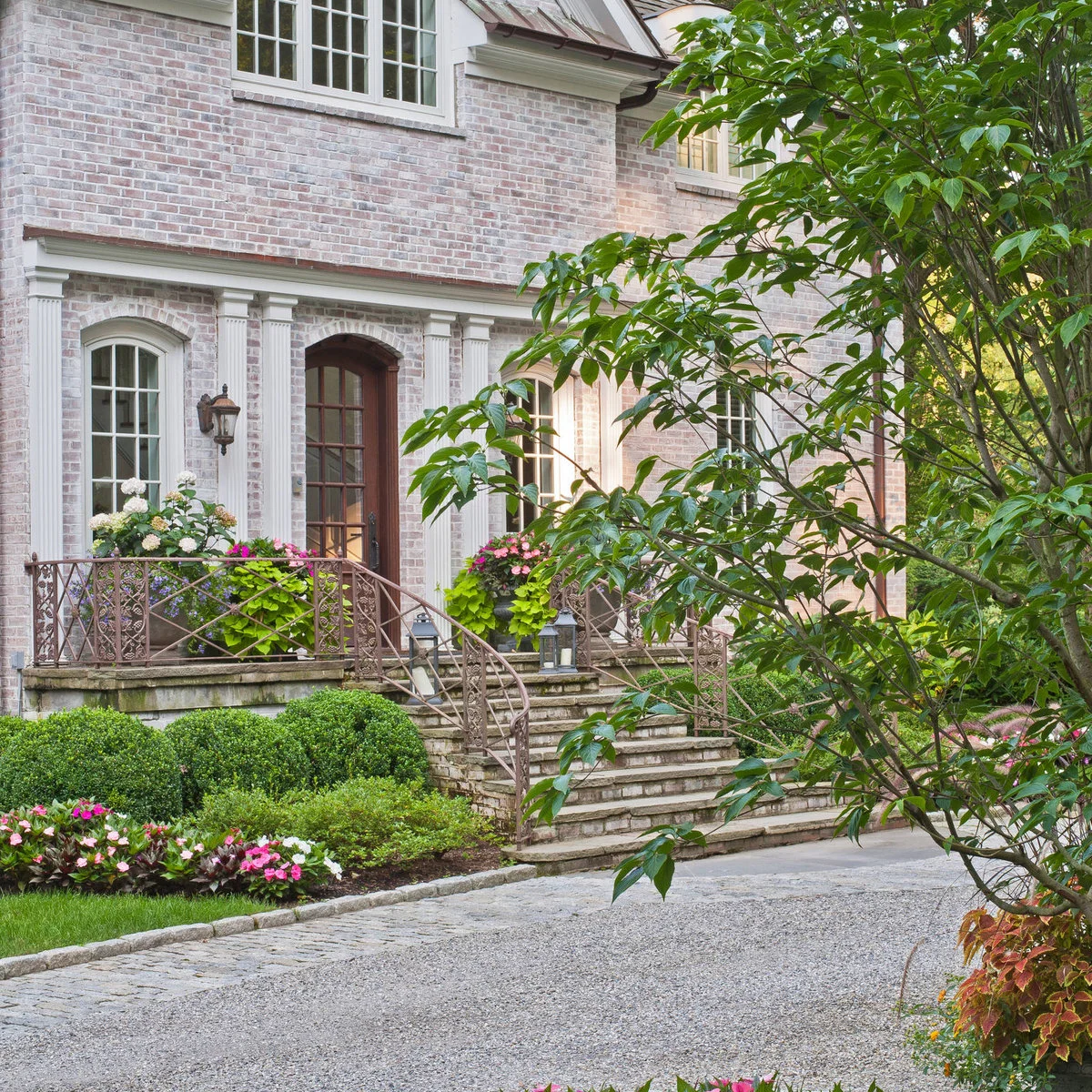
A paved strip separates the gravel court from the broad steps, creating a clear arrival point. Rounded shrubs sit beside the stair rather than across it. Large planted containers decorate the porch above, bringing color closer to the door while leaving the lower approach open.
Plan the walk from a parked car to the steps as carefully as the drive itself. A stable pedestrian route is especially useful when carrying bags or wearing narrow shoes. Keep planting back from handrails and step edges, and choose containers that do not reduce the usable landing.
PART 03
Balance planting with vehicle access
IDEA 11 / 20
Soften a Ribbon Drive with Flowering Borders
 SaveSupport Non AI Creator
Image credit: Project: Arcadia Studio (via Houzz)
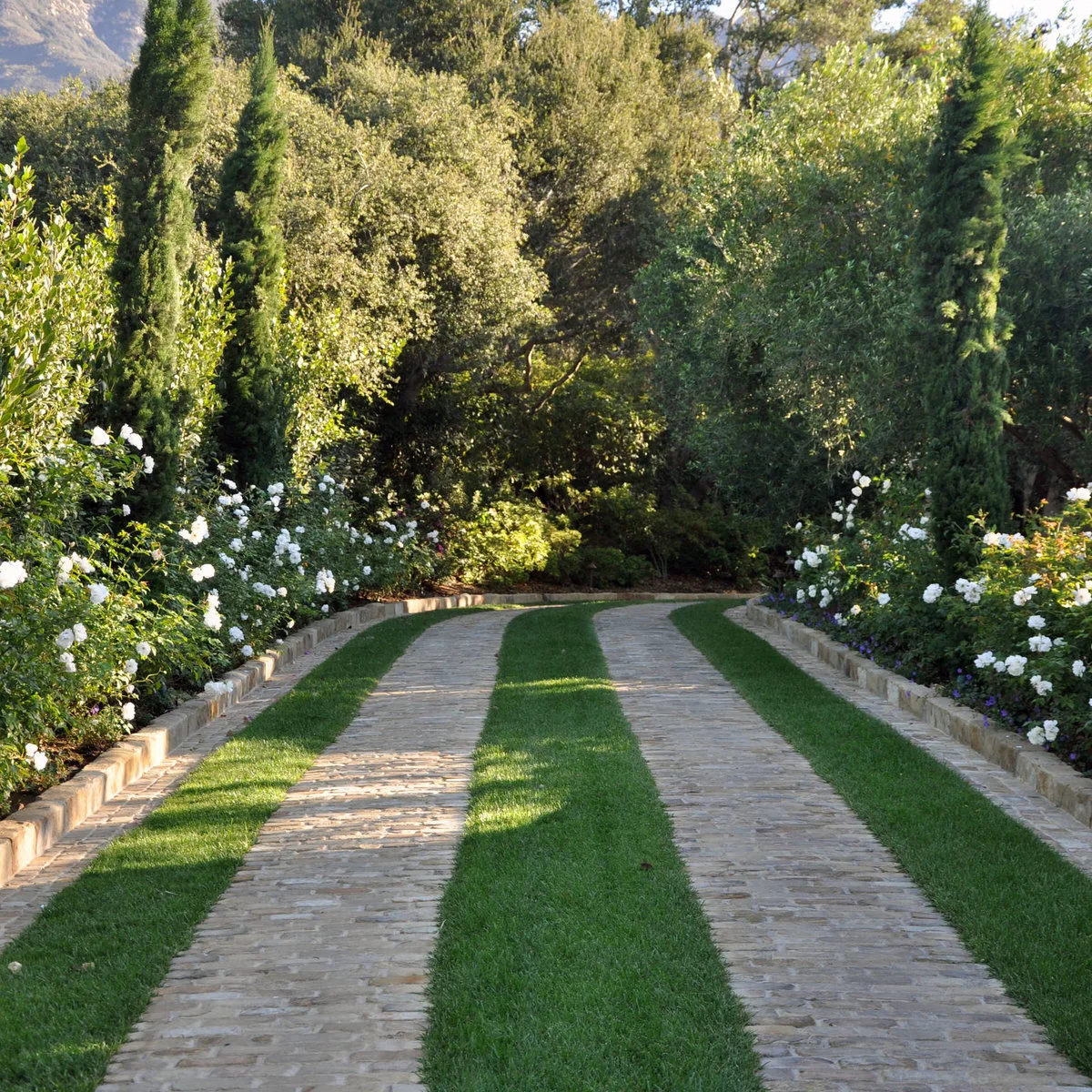
The twin paved tracks curve between flowering borders, with a broad strip of grass through the middle. Low edging separates the pale paving from the planting. Taller trees form a green background, allowing the repeated white flowers to stand out beside the route.
Use the mature width of each plant when setting the border back from vehicles. Flowers should not need constant trimming simply to keep mirrors clear. If you like this softer approach, small cottage garden ideas offer planting arrangements to adapt outside the actual driving and parking area.
IDEA 12 / 20
Repeat Rounded Shrubs Around a Broad Curve
 SaveSupport Non AI Creator
Image credit: Project: Oakmore Green Ltd (via Houzz)
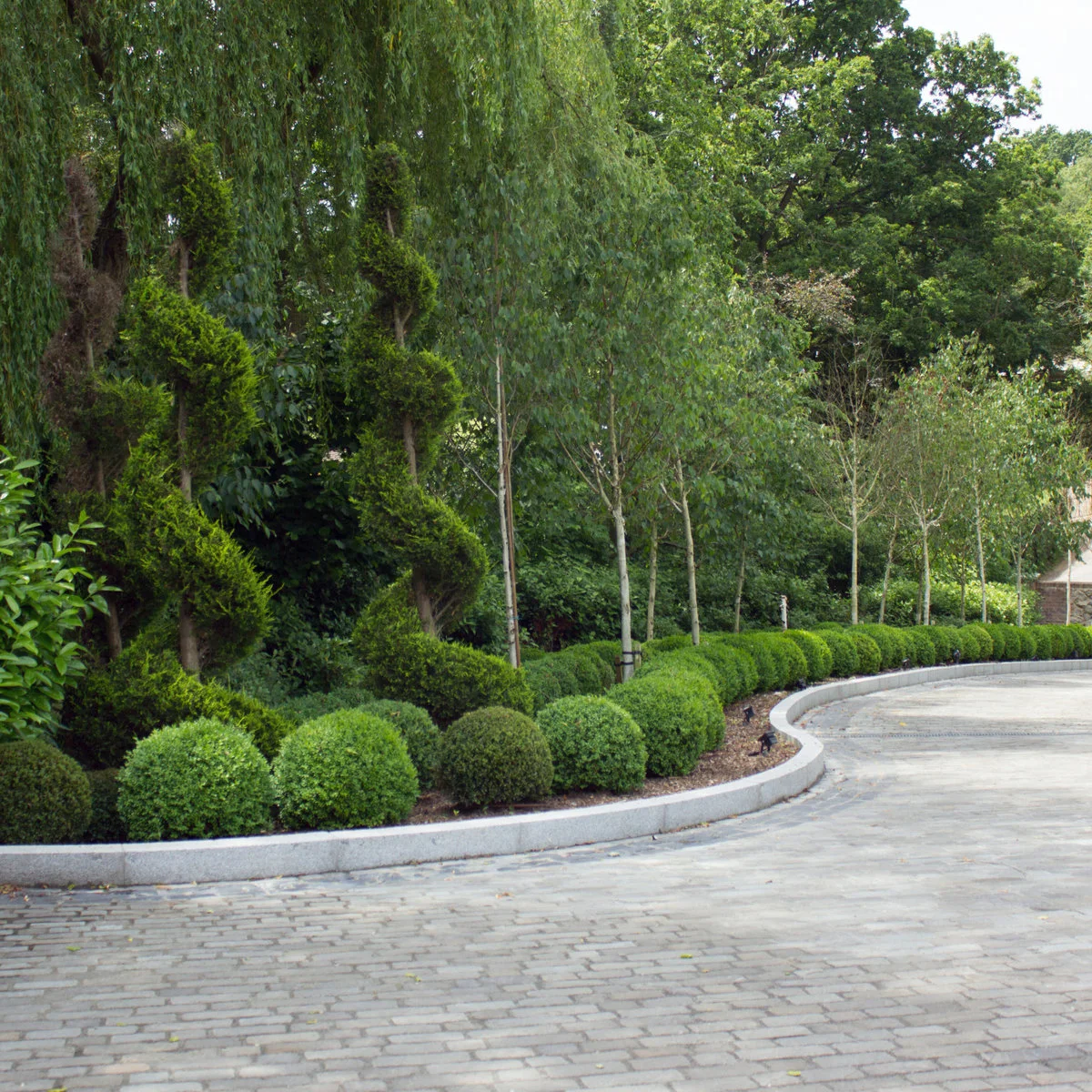
Rounded shrubs repeat along the curve, with slender trees rising behind them. The low curb gives the pale paving a consistent outline. Most of the visual weight stays behind that curb, so the drive remains a simple continuous surface rather than competing with many small decorative elements.
Repetition is easiest to maintain when plants suit the site without intensive clipping. Leave sufficient spacing for mature growth and access to prune from inside the bed. Avoid a high screen near the road entrance, where seeing people and traffic matters more than creating a perfectly enclosed border.
IDEA 13 / 20
Use Large Stones as Anchors in a Broad Border
 SaveSupport Non AI Creator
Image credit: Project: Centrum Architects (via Houzz)
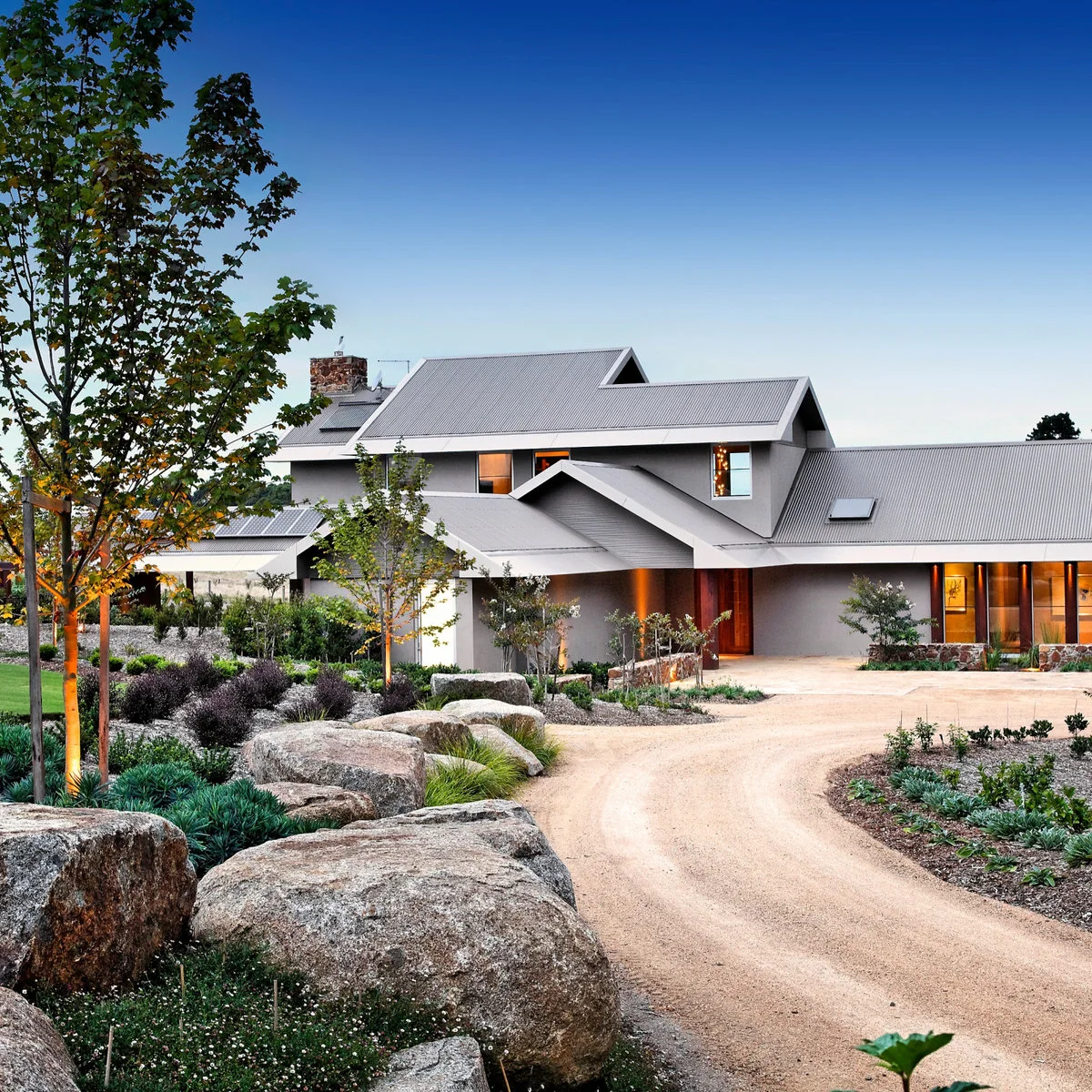
Large stones anchor the planting beside the sweeping drive, with low foliage filling the spaces between them. Young trees add height without creating a solid wall of greenery. The wide planted area balances the broad hard surface and visually connects the house with its setting.
Keep rocks outside the vehicle clearance area and arrange them before smaller planting goes in. Their scale should relate to the available bed rather than shrinking the useful drive. River rock landscaping ideas can help with smaller stone details, while large pieces need safe handling and suitable placement.
IDEA 14 / 20
Create a Garden Island Beside a Sloping Approach
 SaveSupport Non AI Creator
Image credit: Project: Kate Paterson Garden Design (via Houzz)
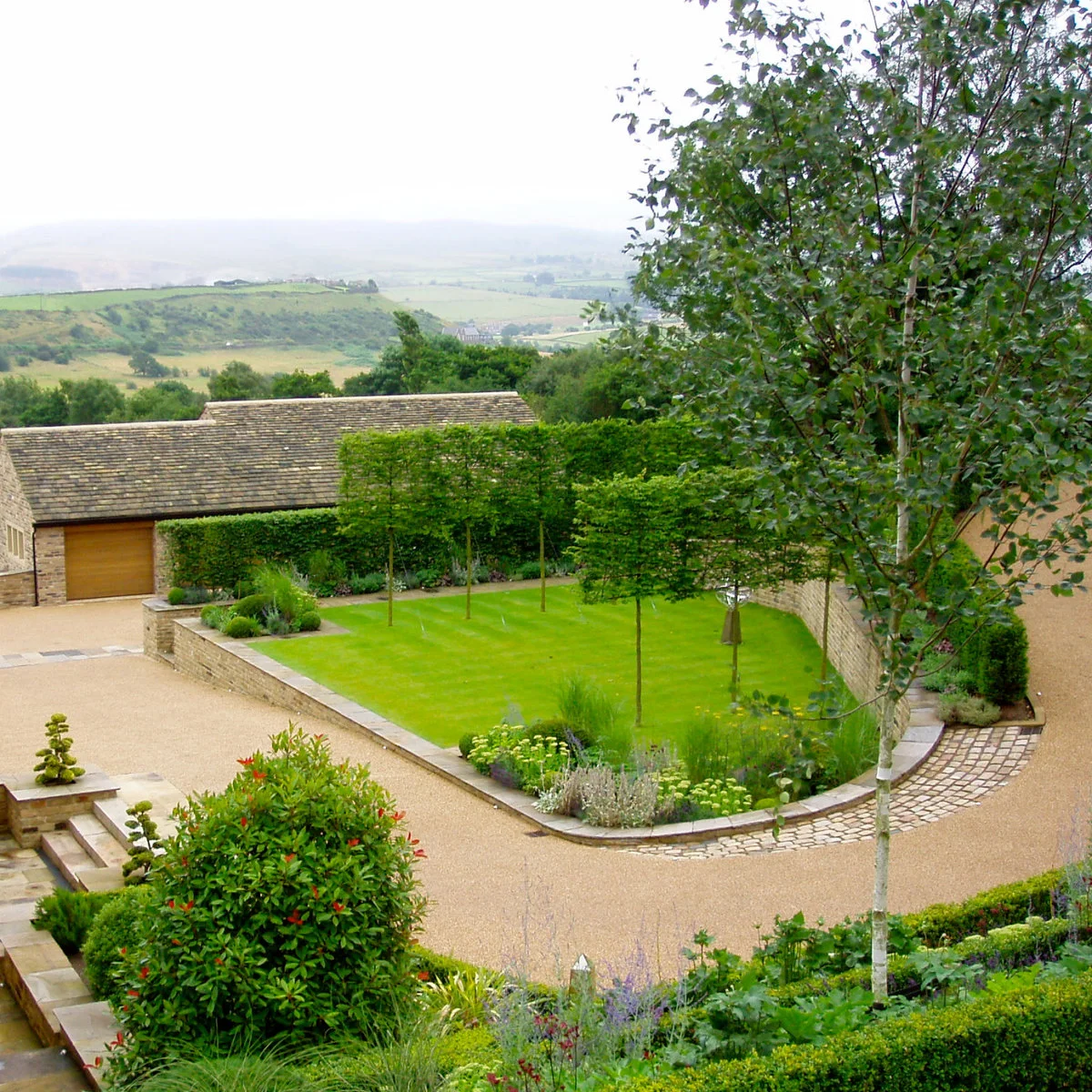
A raised lawn island sits within the curving approach, contained by a low stone wall. Small trees give the lawn structure, while planting fills the lower corners. The level change turns the central area into a clear garden feature instead of a leftover strip between paved routes.
Decide how you will mow and reach the island before enclosing it with a wall. Include a practical maintenance route and avoid trapping awkward strips of lawn behind planting. Changes in ground level and drainage should be resolved with the driveway layout, especially on a sloping site.
IDEA 15 / 20
Keep a Long Lawn Edge Simple
 SaveSupport Non AI Creator
Image credit: Project: Nicholas Bray Landscapes (via Houzz)
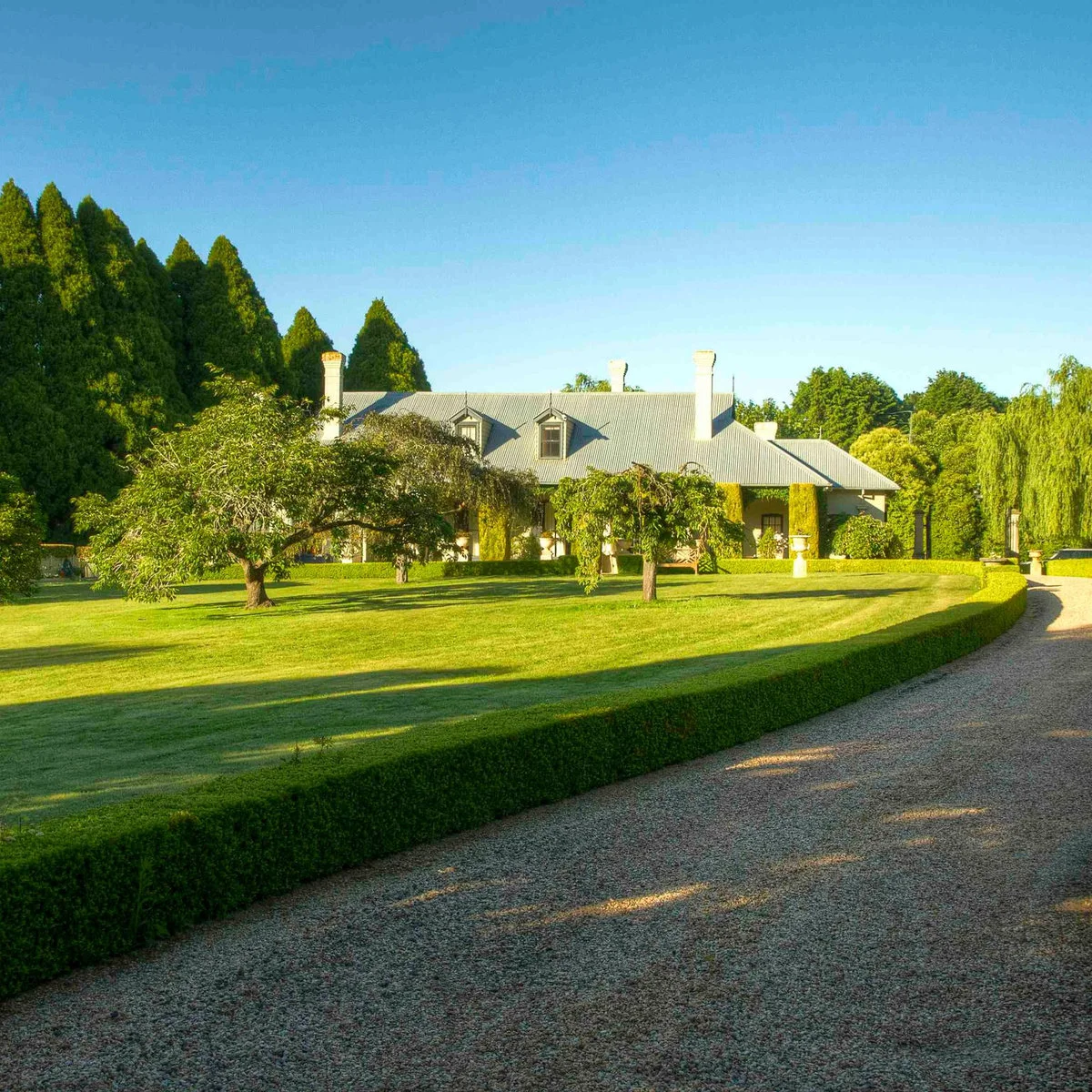
A low hedge follows the curve of the gravel drive, defining the lawn without interrupting the open view toward the house. Individual trees stand farther back within the grass. The limited range of shapes gives a long approach a calm outline that is easy to understand.
A hedge requires room to clip it and collect trimmings without standing in traffic. Set it back from the gravel edge so fallen material can be cleared easily. Where space is tighter, a single low border may be more manageable than trying to reproduce both lawn trees and a hedge.
PART 04
Connect the drive to the house
IDEA 16 / 20
Align a Straight Drive with the Entrance
 SaveSupport Non AI Creator
Image credit: Project: Barnes Walker Ltd - Landscape Architects (via Houzz)
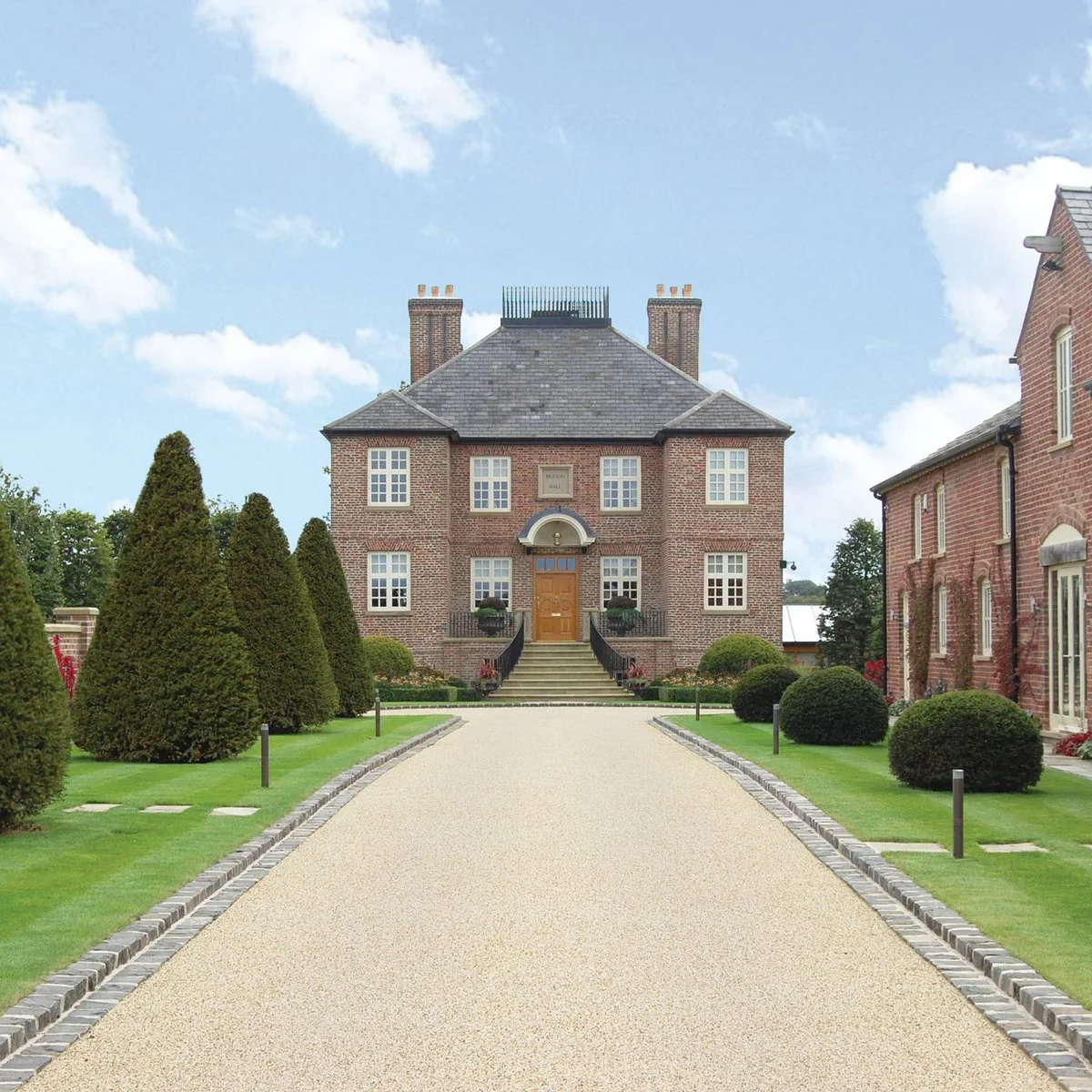
The straight drive lines up with the front steps, giving the approach a strong central view. Pale edging blocks distinguish the surface from the lawn. Taller clipped trees sit to one side, while slim lighting posts repeat along the route without introducing large ornamental objects.
Do not let a formal alignment dictate where vehicles must stop or turn. Provide a workable arrival space before the steps and keep the pedestrian route clear. Use exterior fittings suited to the location, with light levels and positioning chosen for visibility rather than brightness alone.
IDEA 17 / 20
Match a Vehicle Gate to the Garden Boundary
 SaveSupport Non AI Creator
Image credit: Project: Living Style Landscapes (via Houzz)
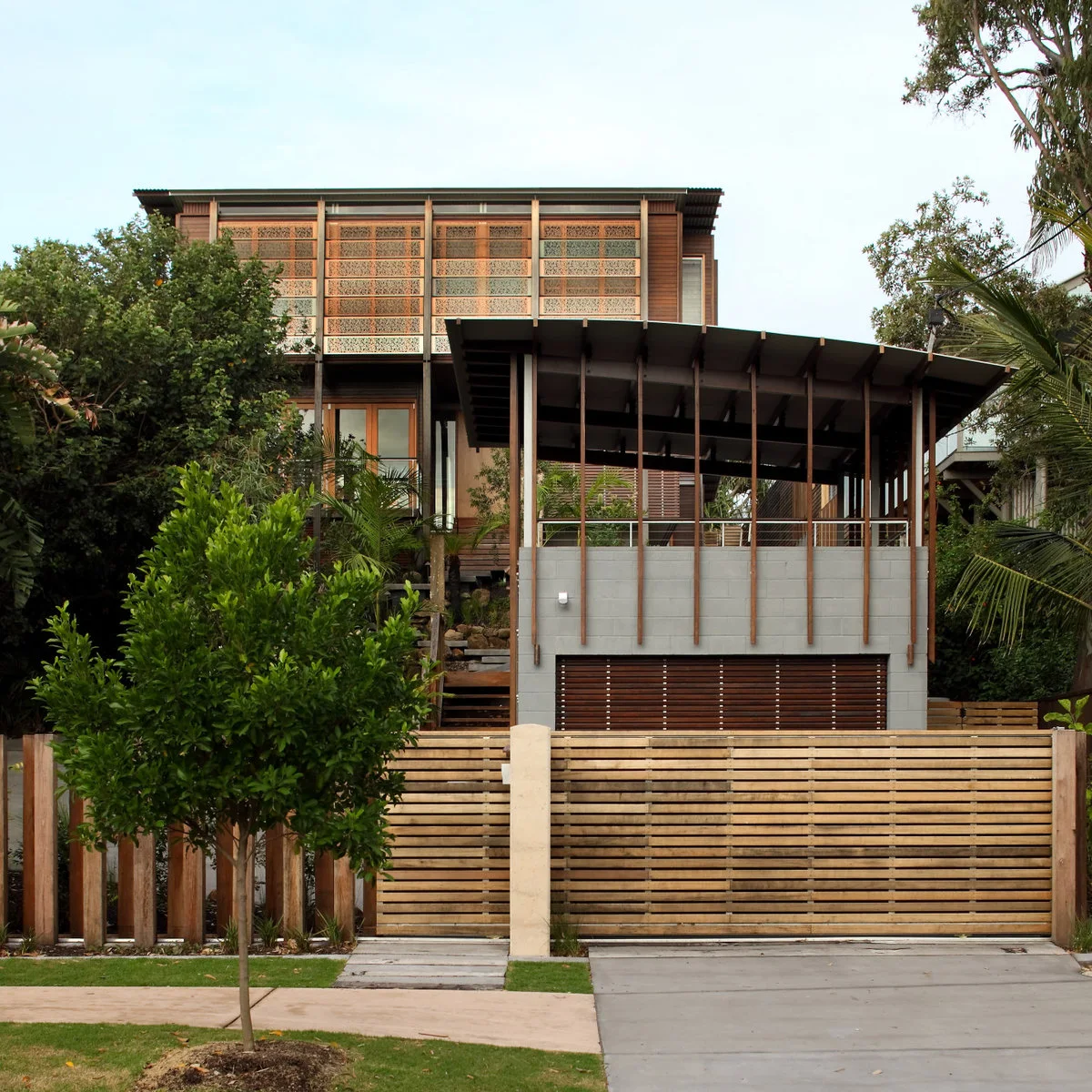
Horizontal timber slats link the vehicle gate with the rest of the boundary. A separate pedestrian gate provides an obvious walking entrance beside the drive. The tree and narrow planted strip soften the frontage, while the concrete vehicle route remains clear in front of the large opening.
Check the full opening movement of a gate before planting near it. Keep branches, pots and groundcover out of moving hardware and the area where cars wait. A separate walking route can reduce conflicts at the entrance, but its position should match the route people actually take to the house.
IDEA 18 / 20
Balance a Gravel Court with a Narrow Green Border
 SaveSupport Non AI Creator
Image credit: Project: Snug Architects (via Houzz)
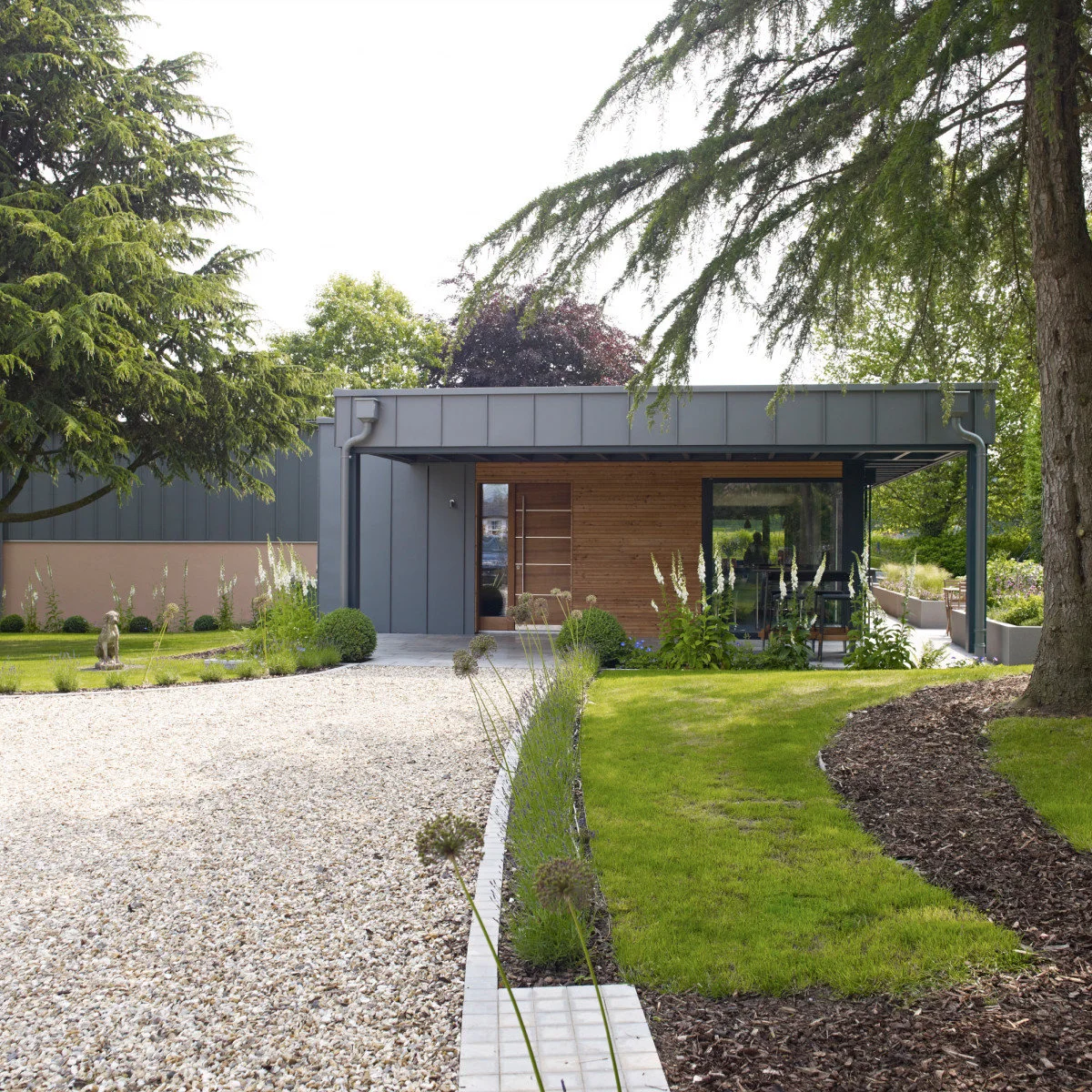
A straight pale border creates a clear line between the gravel court and a narrow planting strip. Lawn continues beyond the planting, keeping the entrance open. Rounded shrubs nearer the house provide a second scale of greenery without filling the entire gravel area with beds.
Define where gravel should stop before selecting the planting. A suitable edge helps keep loose material out of the lawn and makes maintenance more predictable. Leave enough bed width to weed comfortably, and resist adding fragile plants where tires or opening car doors will regularly reach them.
IDEA 19 / 20
Separate the Walking Route with Stone and Slabs
 SaveSupport Non AI Creator
Image credit: Project: Austral Masonry (via Houzz)
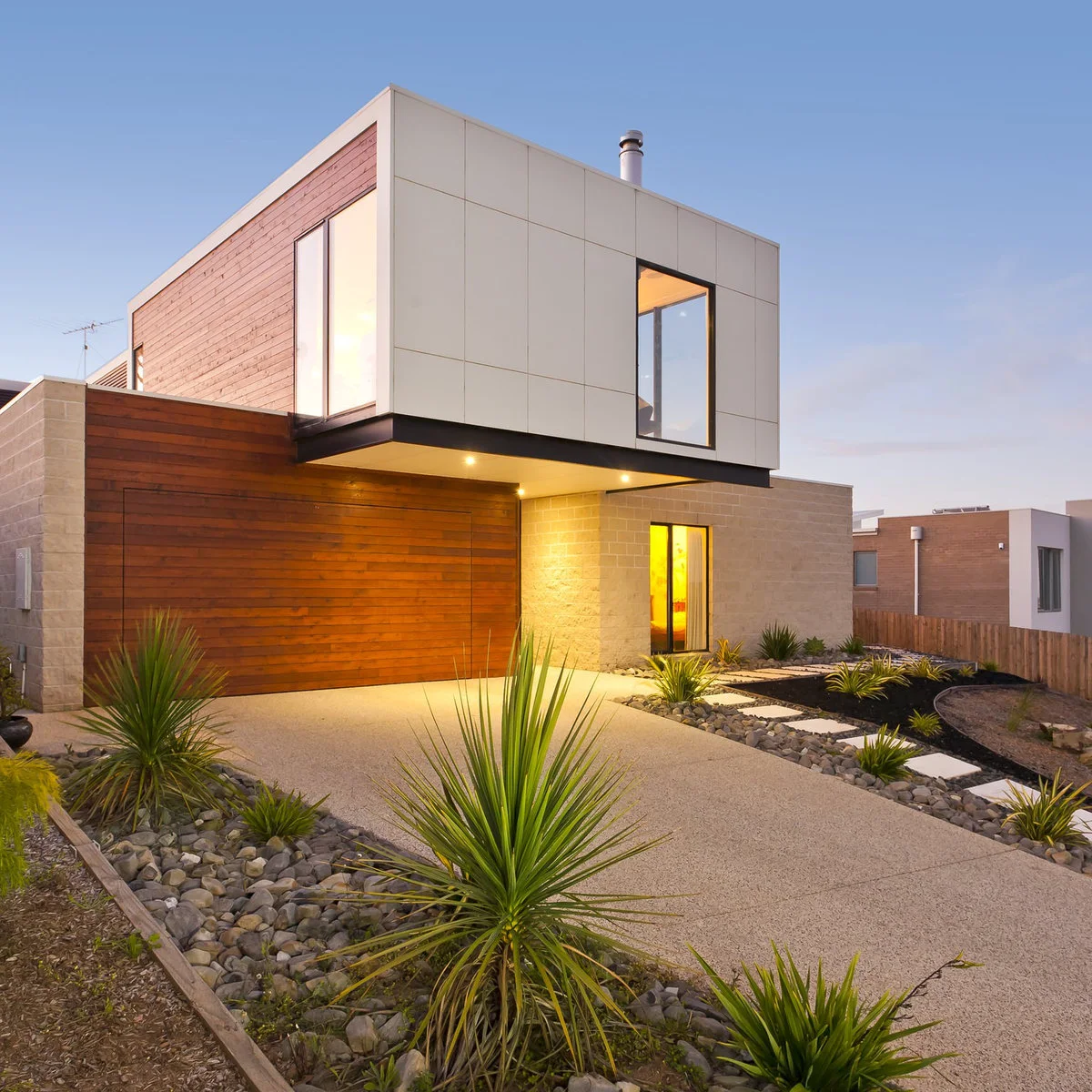
The broad concrete drive leads directly to the garage, while a separate slab path heads toward the front door. Rounded stones and pointed foliage distinguish the two routes. The planting stays mainly at the sides, giving the hard surface a clear purpose rather than breaking it into decorative obstacles.
Keep sharp or stiff foliage away from places where people step out of cars. Choose the path surface for a stable everyday walk, and check that loose stones cannot migrate onto it. Backyard walkway ideas offer more pedestrian-route details to adapt beside a driveway when the site allows.
IDEA 20 / 20
Contrast a Mown Arrival Edge with Taller Planting
 SaveSupport Non AI Creator
Image credit: Project: Rupert Cordle Town & Country (via Houzz)
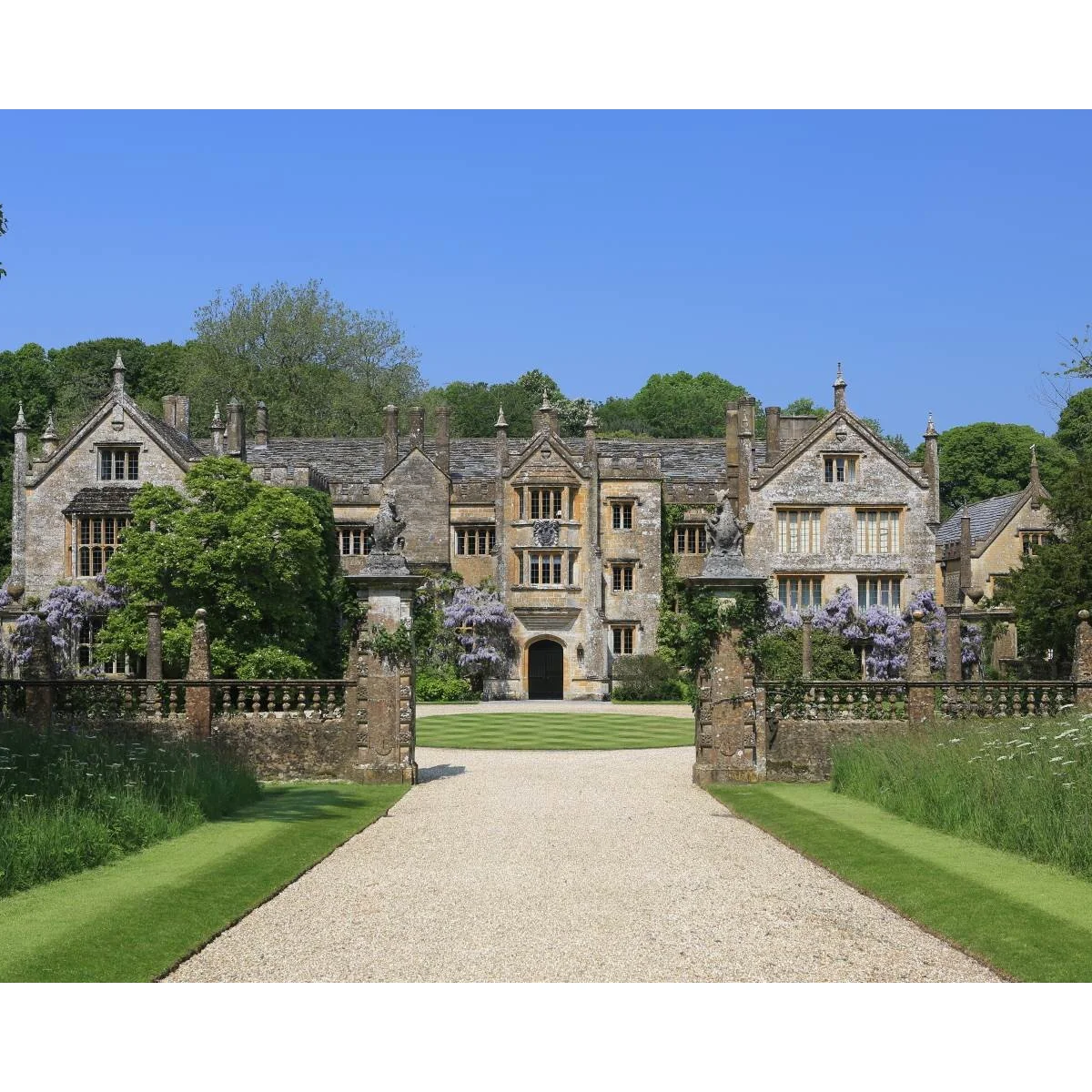
Short lawn edges trace the gravel approach through the stone entrance, with taller, looser planting farther from the route. The contrast makes the arrival legible without clipping every part of the garden. The planted background also softens the large stone building beyond the drive.
Keep the immediate driving and walking edges easy to see, then allow a looser planting style where it will not affect access. Taller growth still needs a maintenance plan. Check sightlines from a seated driver’s position rather than judging the entrance only while standing in the garden.
BRING IT ALL TOGETHER
Start with the space vehicles actually need
Mark the drive, parking positions and walking route before making beds larger. Planting can frame an approach beautifully, but it should not depend on constant pruning to keep the entrance usable.
Resolve levels, drainage and vehicle-rated surfaces with an appropriate installer. Then choose a small number of locally suitable plants and repeat them where their mature size fits the available space.