A backyard walkway earns its place when it follows a journey you actually make: from the door to a seat, through a side passage or toward the shed. Decide where that journey starts and ends before choosing the paving. A beautiful surface becomes frustrating if it takes a detour around the place you need to reach.
The photographs below show continuous paths, stepping stones and softer grass routes. Consider who will use yours, what they carry and how the ground behaves after rain. Wheels, mobility aids and frequent deliveries generally call for a firmer, more continuous surface than widely spaced stones or loose gravel can provide.
PART 01
Give the route a clear direction
IDEA 01 / 20
Give Brick a Strong Direction
 SaveSupport Non AI Creator
Image credit: CHRIS EVERARD
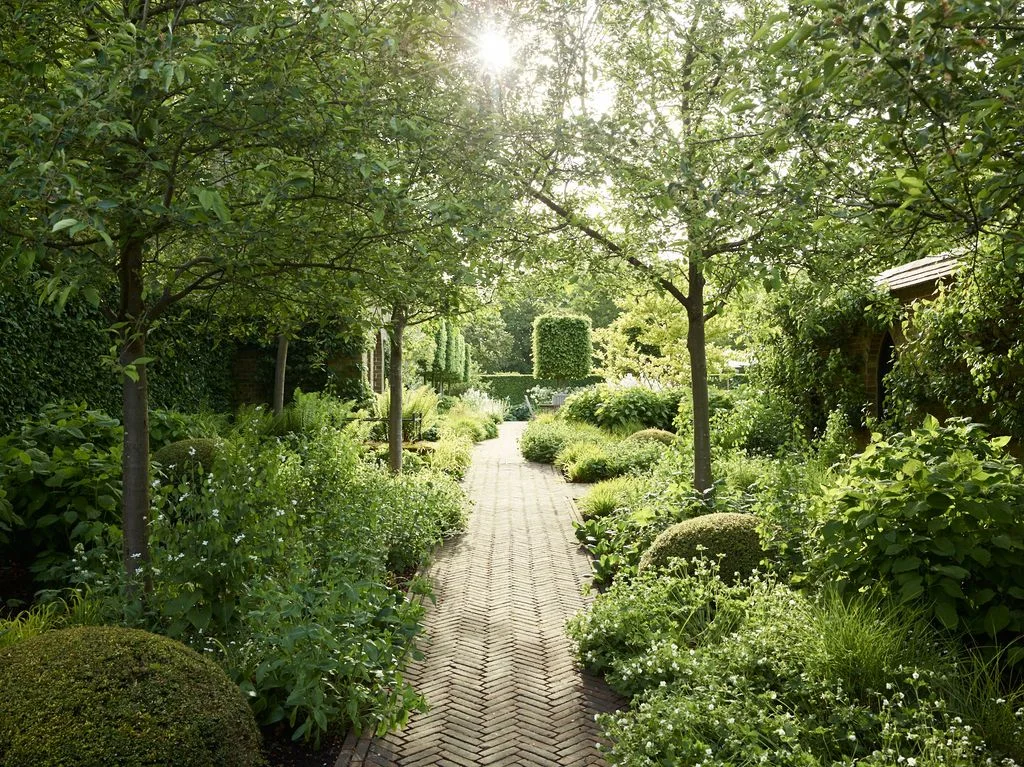
The brick path creates a long, continuous line between generous planted borders. Its herringbone pattern adds detail underfoot while the straight outer edges keep the route easy to read. A bench at the far end gives the walk a destination rather than an unexplained stopping point.
Set out the route with a hose or string before committing to the surface. Check that two people can pass where needed and that a loaded garden cart can turn at the end. Specify exterior paving suited to your climate, with a properly prepared base and drainage.
IDEA 02 / 20
Use a Cross Path to Divide Small Beds
 SaveSupport Non AI Creator
Image credit: Andreas Von Einsiede
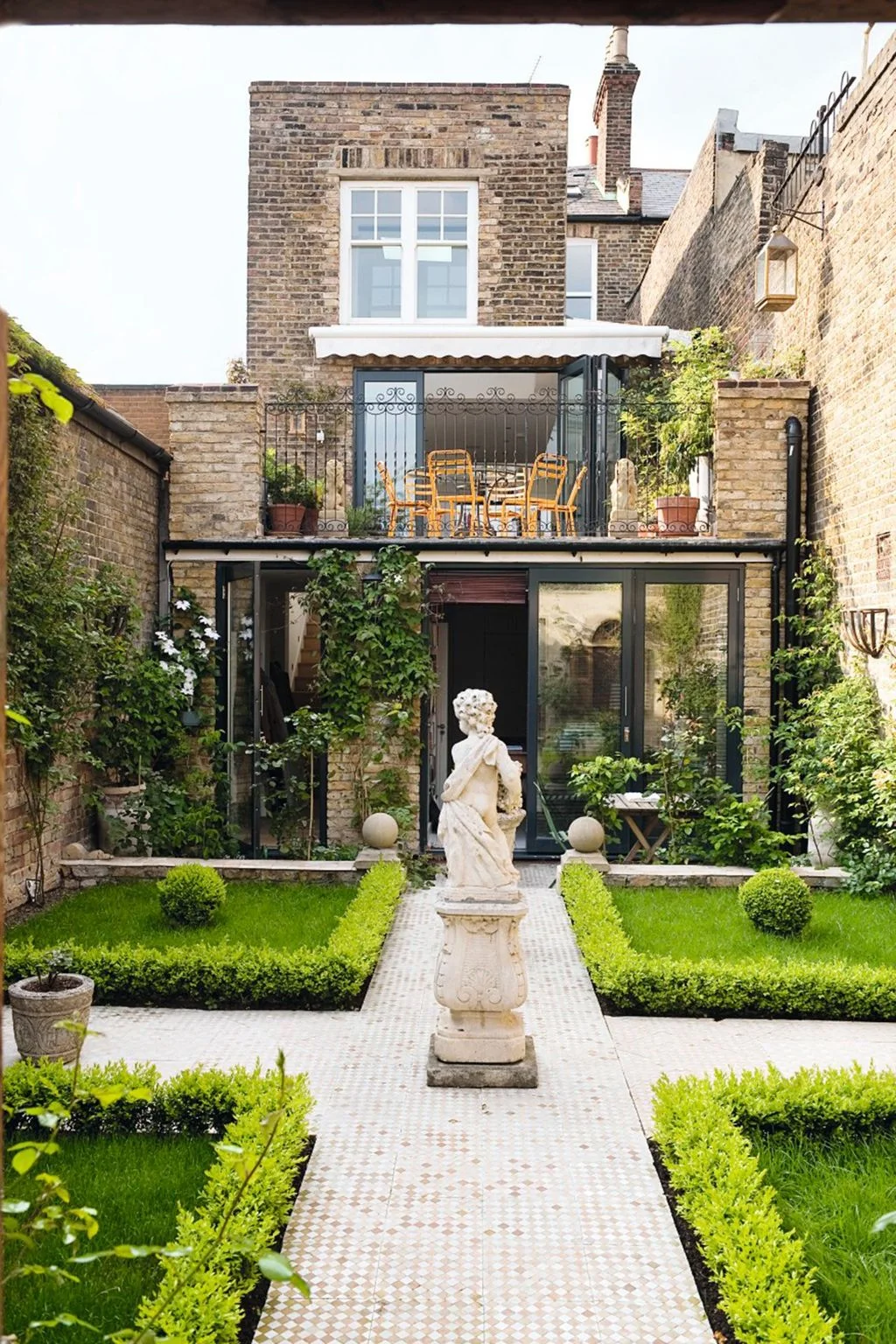
A cross-shaped path separates compact lawns and clipped planting into clear sections. The patterned surface leads toward a central sculpture, giving the small enclosed garden a strong focal point. Low hedges define the beds without hiding the route or making the junction feel cramped.
A central crossing works best when every branch leads somewhere useful. Avoid dividing a small yard into awkward leftover patches just to achieve symmetry. Plan bed access for trimming and weeding, and check that the paving pattern remains legible when outdoor furniture is in place.
IDEA 03 / 20
Let Flowers Soften a Continuous Surface
 SaveSupport Non AI Creator
Image credit: Rachel Warne
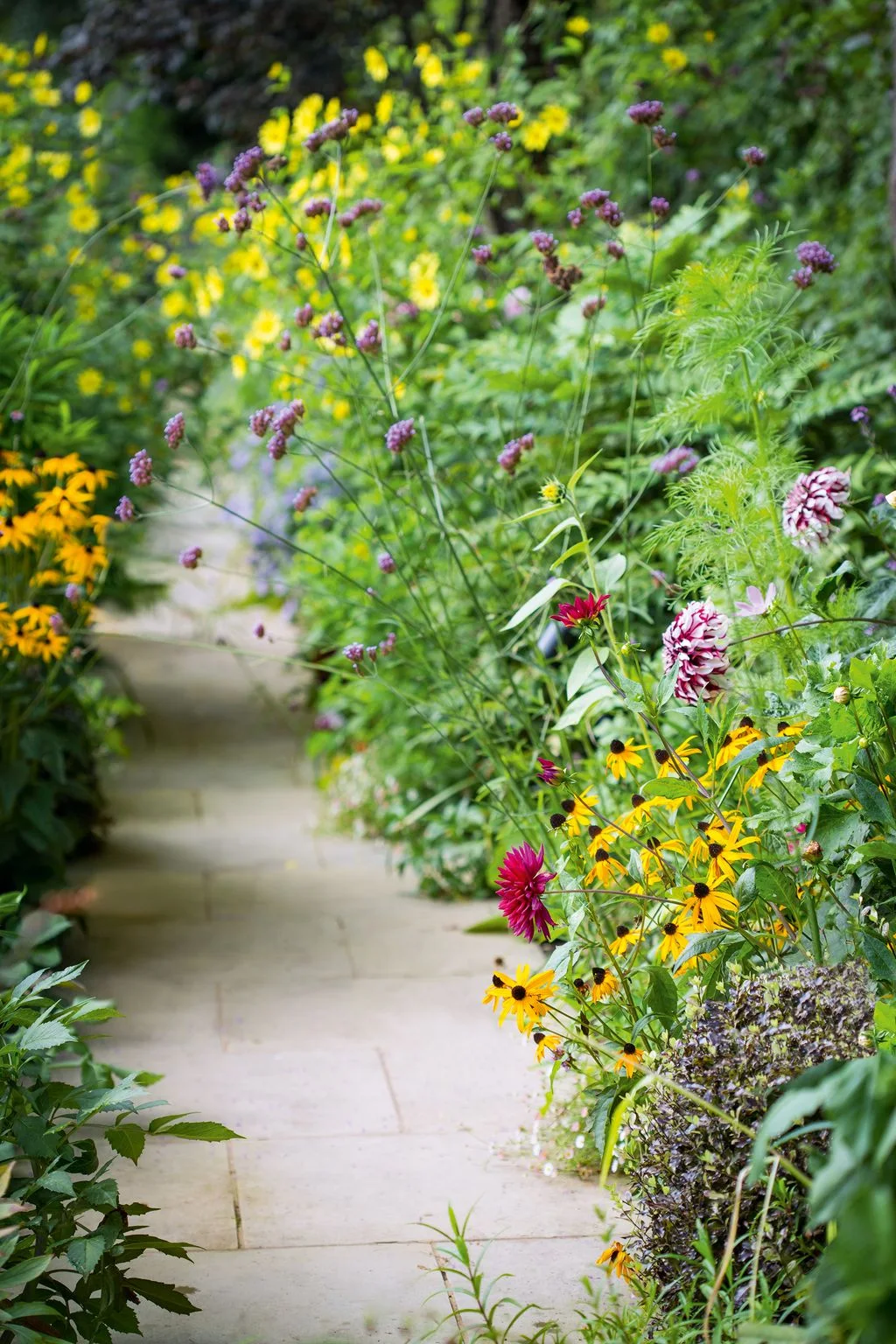
The pale path stays clearly visible through colorful, densely planted borders. Flowers lean toward the edge, softening the hard surface without replacing it. The gentle turn lets the planting unfold gradually, making the route feel part of the garden rather than a separate strip of paving.
Allow for mature growth when setting the bed line. Leave the main walking width clear, especially where wet foliage might brush clothing or hide an uneven edge. Choose plants that tolerate the available sun and soil, then cut back stems that begin to obstruct the route.
IDEA 04 / 20
Break Up Gravel With a Repeating Pattern
 SaveSupport Non AI Creator
Image credit: Lucas Allen
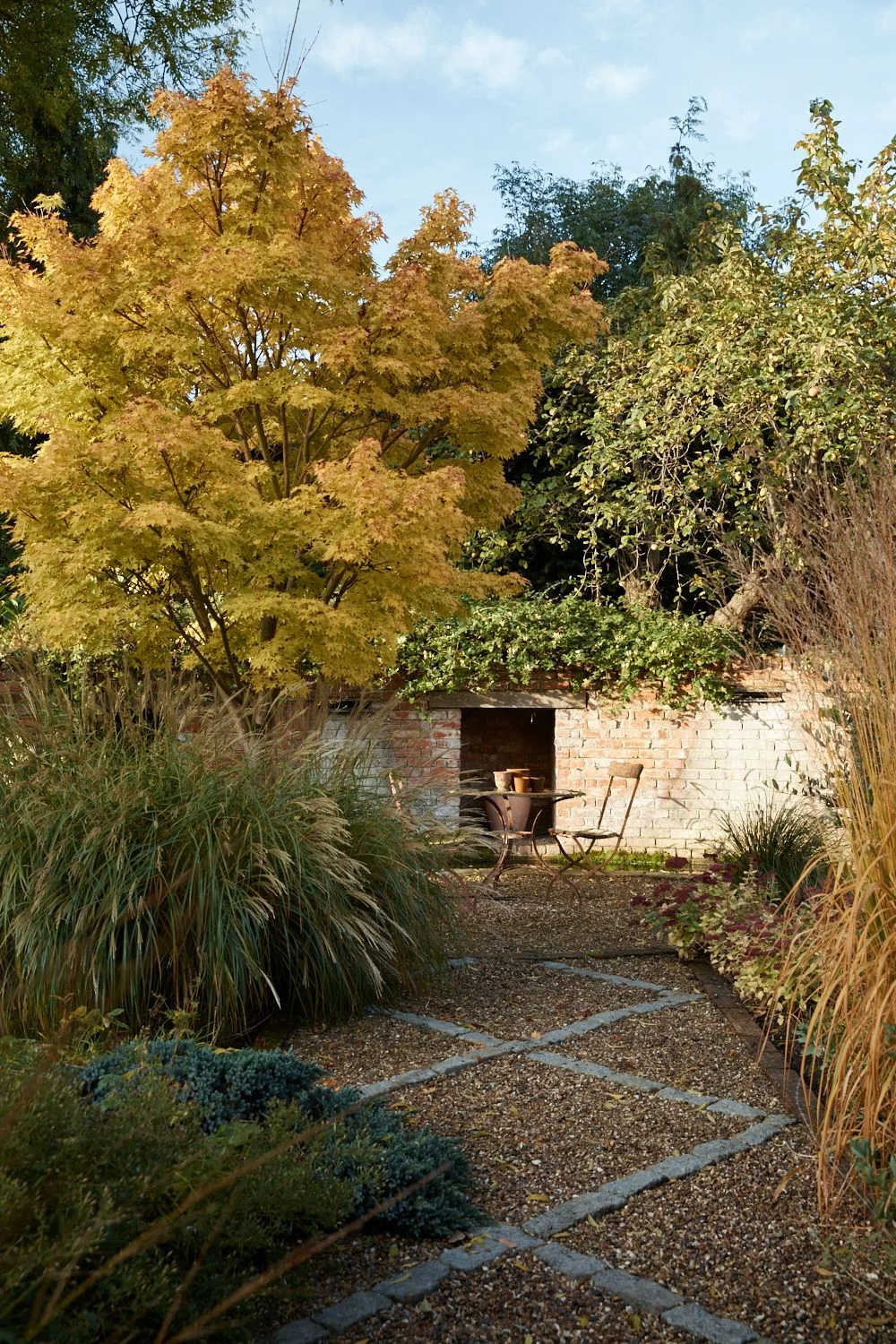
Narrow stone strips divide this gravel area into a repeating diamond pattern. The geometry gives the otherwise loose surface definition, while the small table and chairs show how a route can broaden into a stopping place. Brick walls and planting provide a sheltered backdrop.
Keep decorative strips level with the surrounding surface so they do not become trip edges. Gravel needs containment and periodic raking, especially near chair legs and doorways. If the space must carry wheels regularly, compare a suitable bound or continuous surface before copying loose gravel.
IDEA 05 / 20
Frame a Straight Route With Low Hedges
 SaveSupport Non AI Creator
Image credit: CHRIS EVERARD
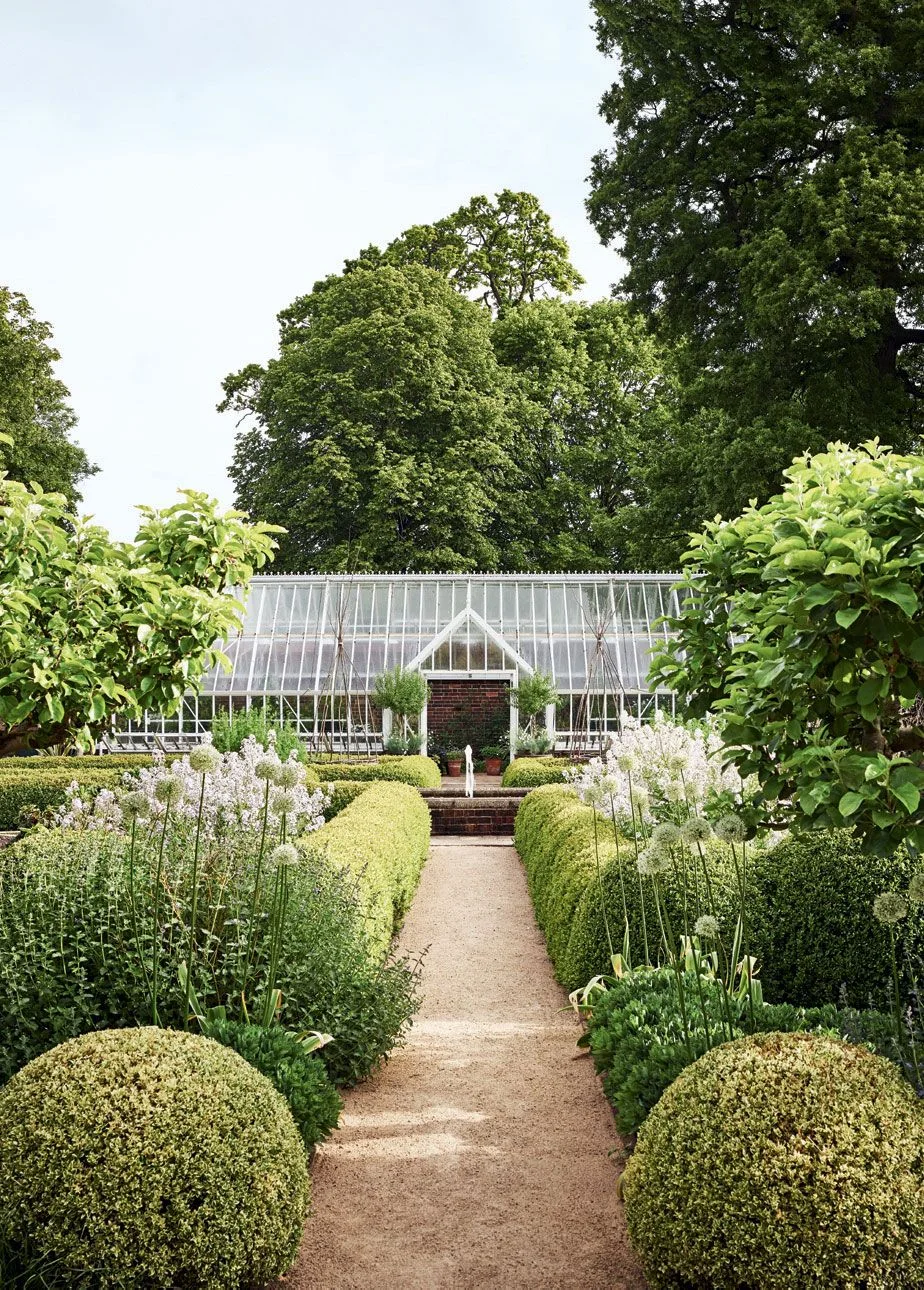
Low clipped hedges give this straight gravel path a crisp outline. Taller flowers add a softer layer behind them, while the greenhouse anchors the far end. The idea can work on a shorter route too: repeat the low edging and give the eye a clear destination.
Choose an edging plant suited to the local conditions and the amount of clipping you can maintain. Leave space between planting and the usable path for mature growth. A border that looks neat at installation can become a narrow obstacle if its eventual width is ignored.
PART 02
Let planting shape the journey
IDEA 06 / 20
Keep the Walking Line Beside the Lounge
 SaveSupport Non AI Creator
Image credit: Eva Nemeth
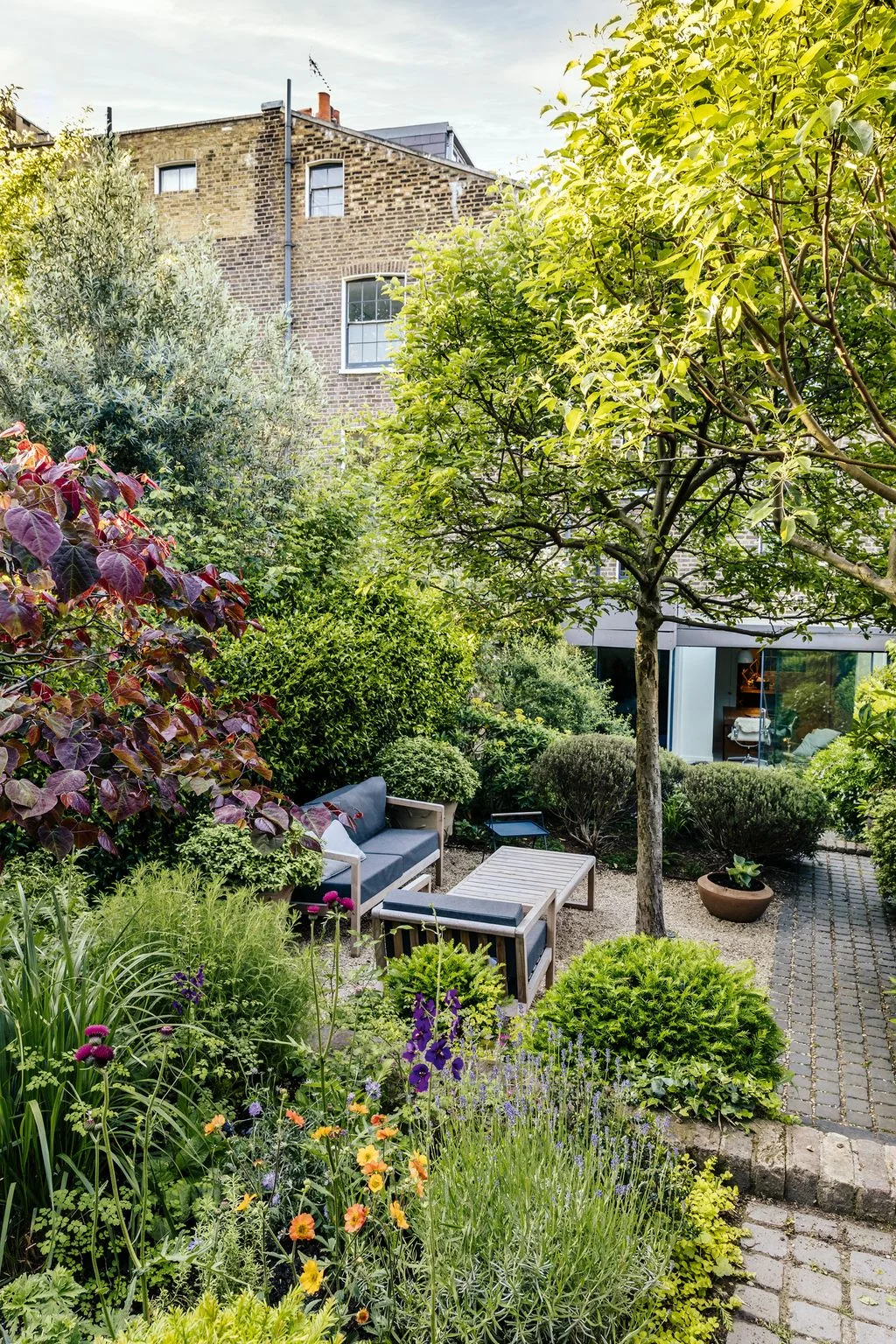
The route runs beside the outdoor sofa rather than cutting through the seating arrangement. Planting and the change in ground surface distinguish the lounge from the passage. This makes the small garden easier to share: someone can move through while others remain seated.
Mark out furniture with its cushions and tables in their normal positions before deciding the path width. Include room to stand up and carry a tray past the seating. Small balcony ideas offer more examples of arranging compact outdoor furniture around a clear circulation route.
IDEA 07 / 20
Make a Curving Lawn Path Deliberate
 SaveSupport Non AI Creator
Image credit: Rachel Warne
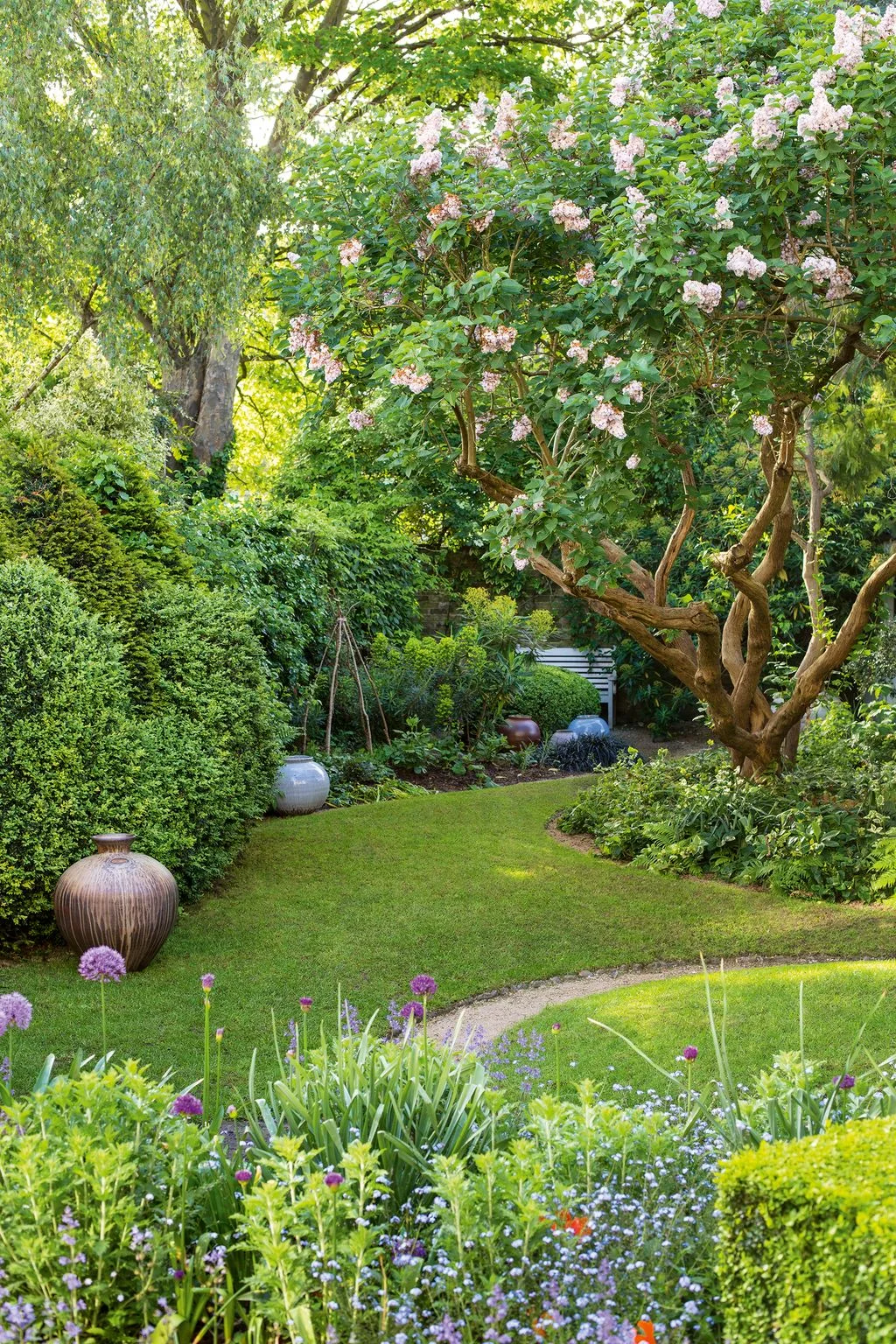
The grass curves around a flowering tree, with large pots marking the turn. A bench beyond gives the route a reason to continue. Because there is no hard paving, the path remains visually connected to the lawn and the informal planting around it.
A grass route needs enough light and recovery time to withstand foot traffic. It can become muddy in frequently used or shaded areas, so reserve this approach for conditions that suit turf. Make curves broad enough for your mower and keep pots out of the cutting line.
IDEA 08 / 20
Lead the Walk Toward a Colored Gate
 SaveSupport Non AI Creator
Source: www.houseandgarden.co.uk
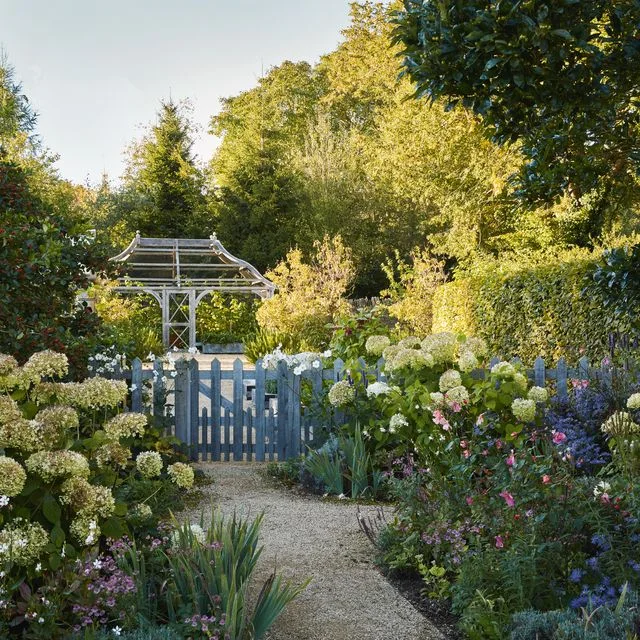
The blue gate catches the eye beyond the gravel curve, while the white arch frames its position. Flowers fill both sides without hiding the entrance. The path gains interest from that gradual reveal, rather than needing several different paving materials along its length.
Keep the final approach wide and firm enough to operate the gate without stepping into a bed. Check its opening arc before planting nearby. Use a curve where it avoids an obstacle or improves the journey; an exaggerated bend can become an inconvenient detour on a small plot.
IDEA 09 / 20
Carry the Path Into a Patio
 SaveSupport Non AI Creator
Source: www.houseandgarden.co.uk
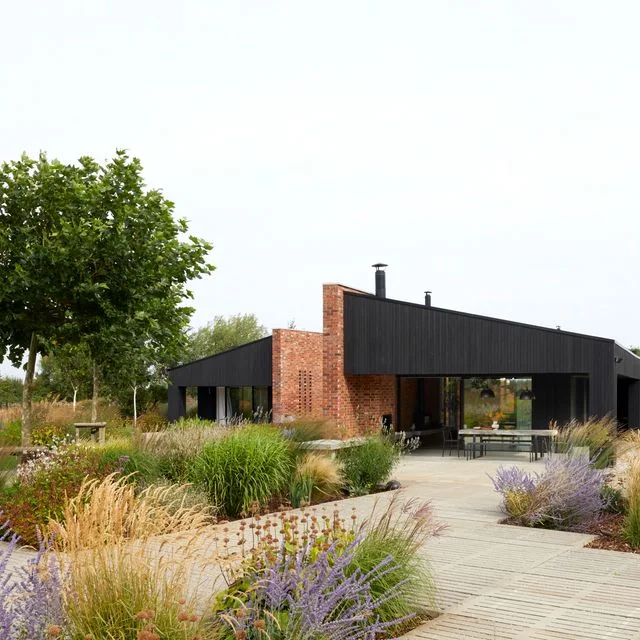
The pale surface continues from the planted approach into the dining terrace, joining the journey and destination. Beds interrupt the broad expanse near the house, with low flowers and grasses softening the transition. The continuous route remains visible even where the seating area becomes wider.
Using one paving family can make a garden feel more connected, but the surface still needs to suit shade, rain and everyday cleaning. Decide drainage and thresholds before selecting the finish. Leave enough space around a dining table for occupied chairs and people walking past.
IDEA 10 / 20
Curve Small Slabs Around Established Planting
 SaveSupport Non AI Creator
Source: www.houzz.com.au
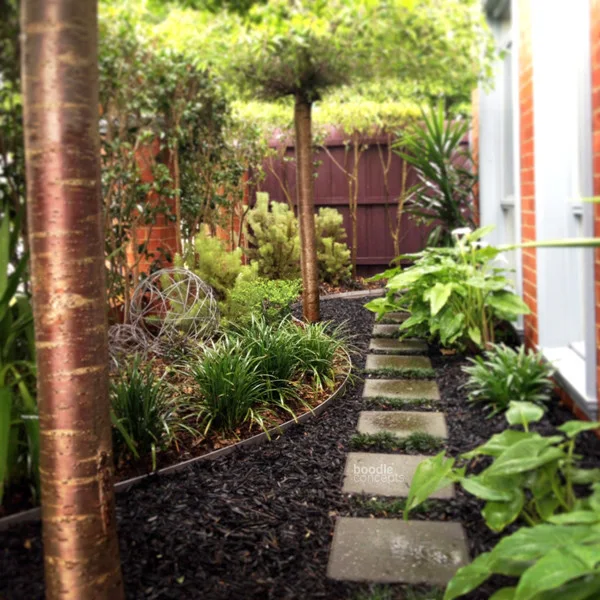
A sequence of modest rectangular slabs bends around tree trunks and leafy beds. Dark loose ground cover makes the pale stepping surfaces stand out. The route stays close to the house while the planting occupies the deeper pockets beside it, avoiding a rigid central division.
Lay out the slabs at a comfortable walking pace before fixing them in place. Each stone needs a stable, level setting rather than simply resting on loose material. For advice on combining pale slabs with rounded aggregate, compare the river rock landscaping ideas and their maintenance tradeoffs.
PART 03
Choose stepping stones with purpose
IDEA 11 / 20
Let Low Ground Cover Fill the Joints
 SaveSupport Non AI Creator
Source: www.houzz.com.au
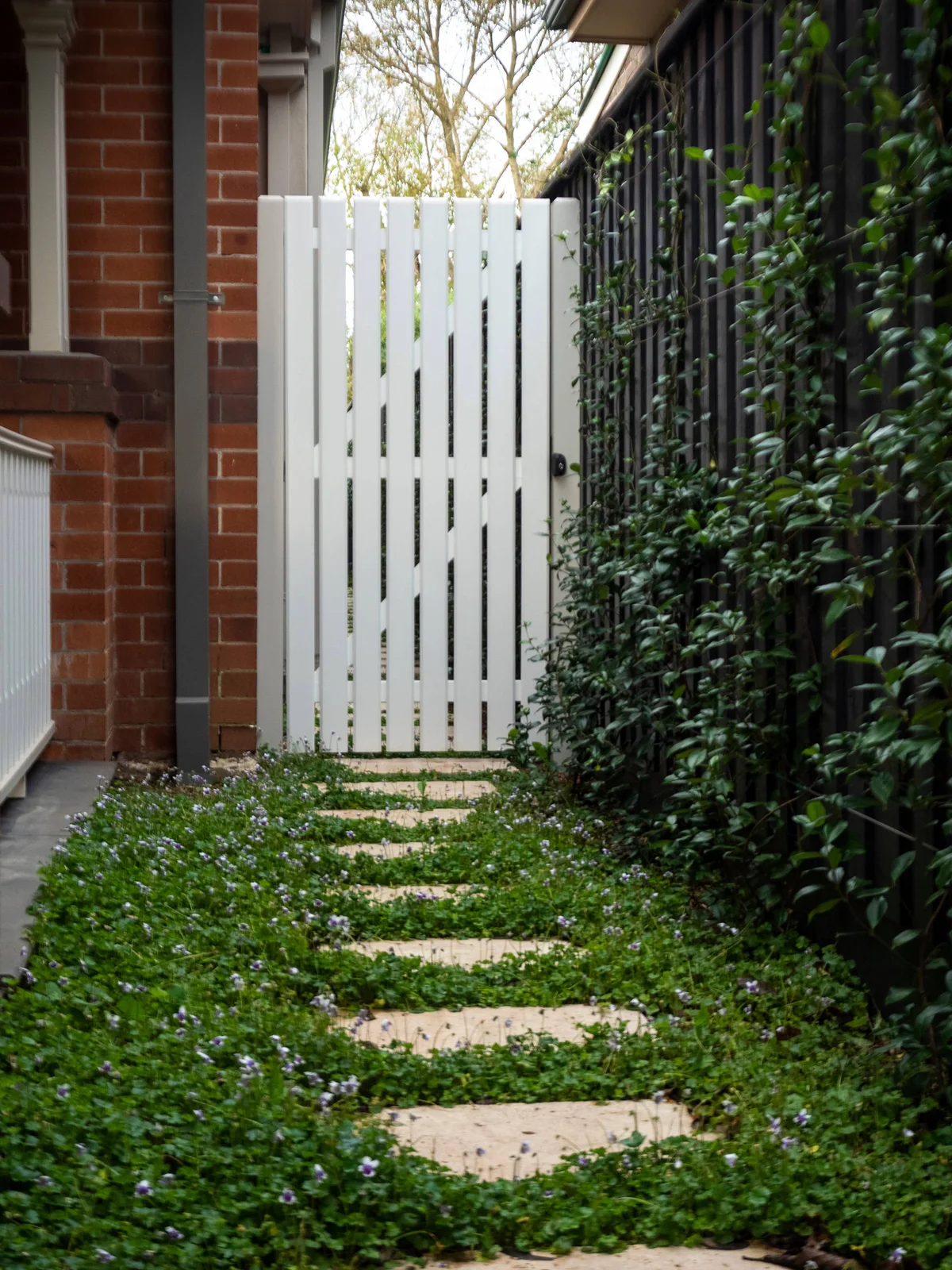
Low flowering ground cover fills the spaces between broad rectangular slabs. A planted wall on one side adds height, while the white gate supplies a clear endpoint. The pale stepping surfaces remain readable against the green carpet instead of disappearing into a busy pattern.
Choose ground cover for the site and its expected foot traffic, rather than appearance alone. Keep the slab tops clear and check them after watering or rain. This arrangement needs occasional trimming; it is a planted path to maintain, not a surface that stays unchanged without attention.
IDEA 12 / 20
Use Irregular Stones in a Shaded Side Yard
 SaveSupport Non AI Creator
Source: www.houzz.com.au
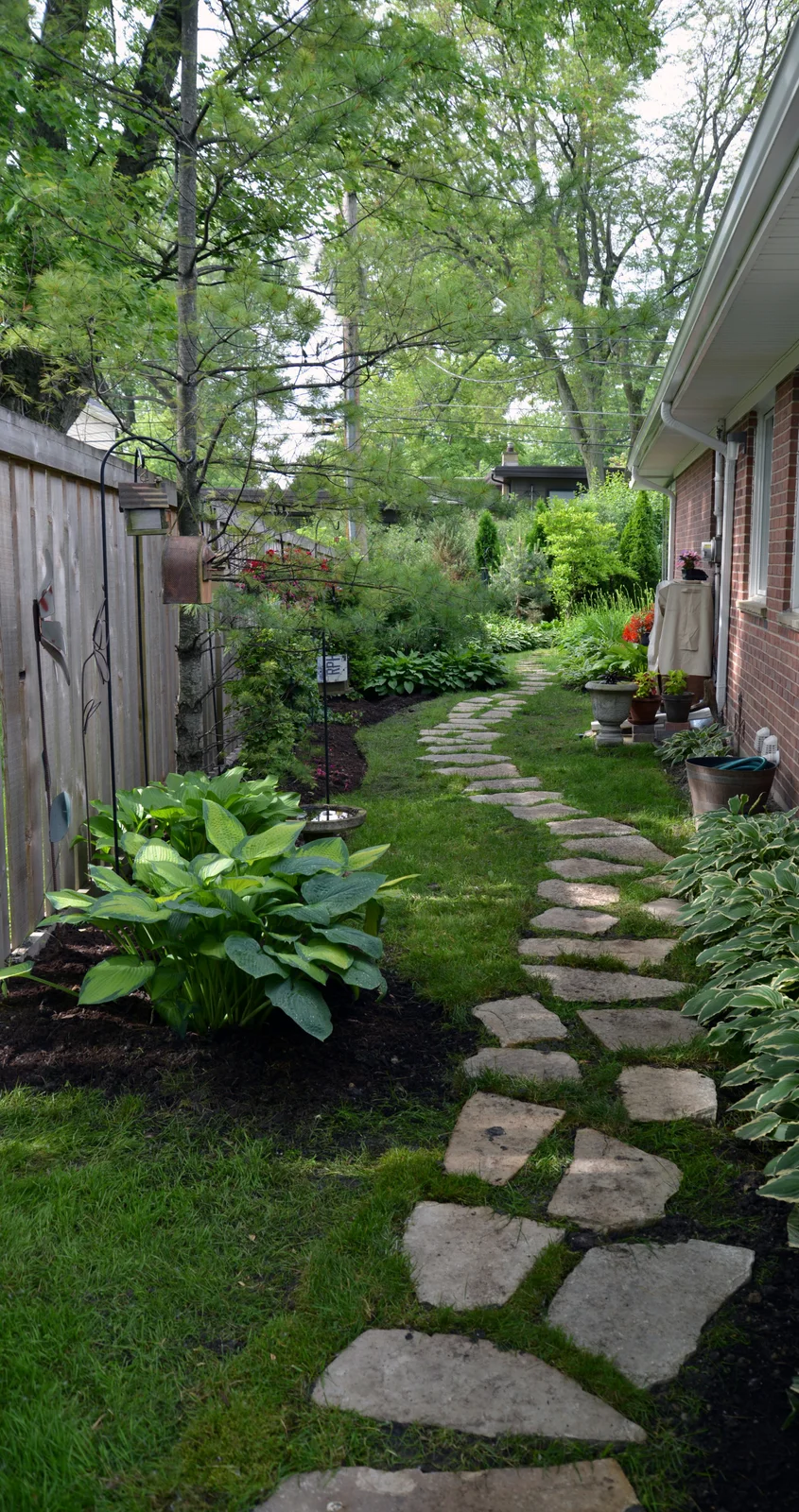
Irregular stones form a gently bending route through this planted side yard. Broad leaves soften the fence while the house keeps the other edge straight. The varied stone shapes suit the informal beds, but the continuous sequence still tells visitors where to walk.
Choose substantial stepping surfaces that comfortably take a whole foot, and set them securely at a consistent level. Shaded grass may struggle under repeated use, so watch for worn patches. Keep hoses and containers off the route, particularly where foliage already narrows the passage.
IDEA 13 / 20
Give the Gate a Proper Landing
 SaveSupport Non AI Creator
Source: www.houzz.com.au
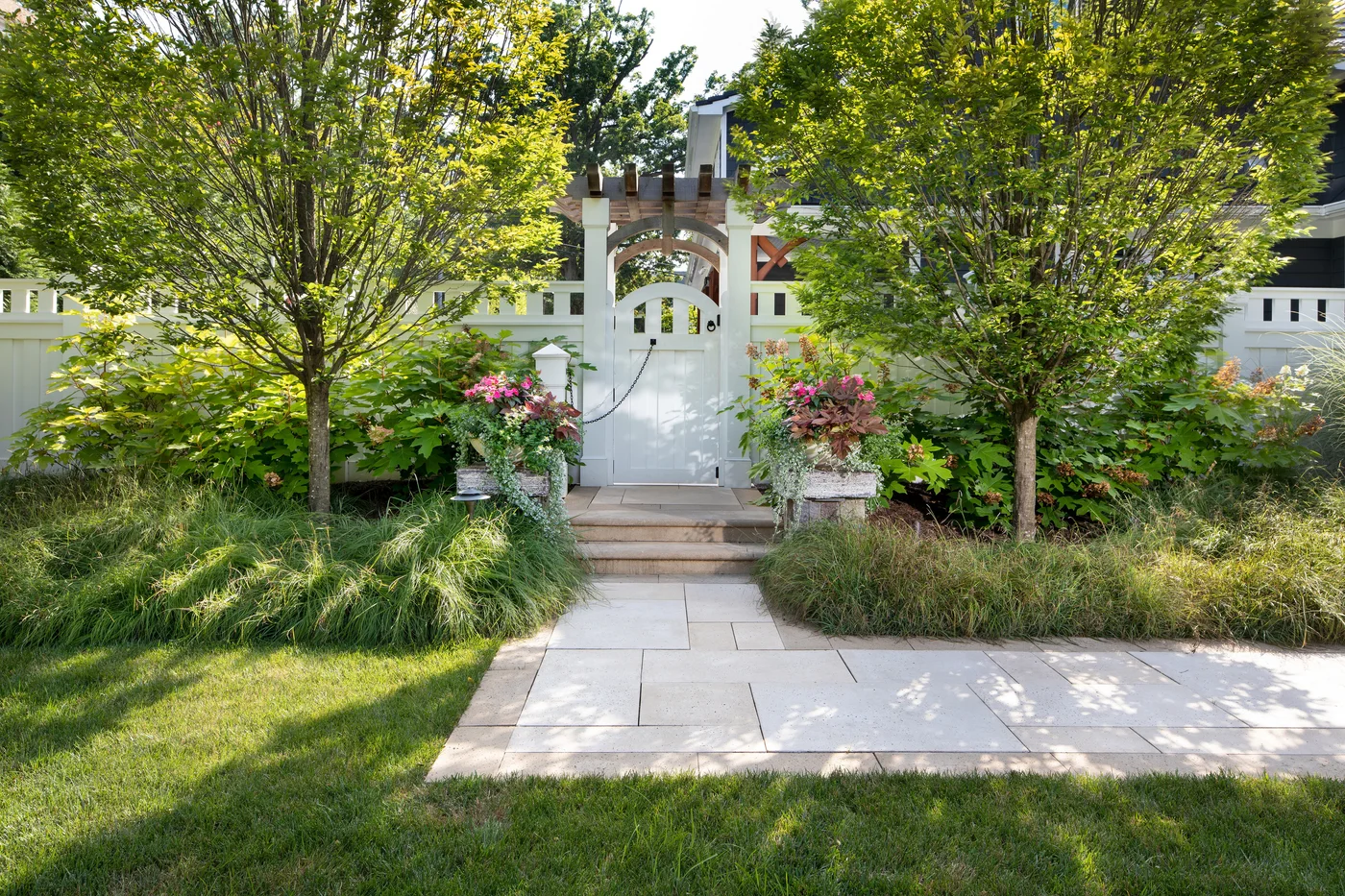
The paving broadens before the steps and gate, creating a clear landing within the lawn. Matching pots mark the entrance without sitting in the middle of the route. Trees frame the opening, turning an ordinary boundary crossing into a recognizable garden destination.
Plan the landing around the gate swing and the space needed to pause with bags or tools. Changes in level deserve clear visibility and appropriate handrail assessment. Keep planters far enough back that their eventual foliage does not conceal the step edge or obstruct the latch.
IDEA 14 / 20
Contrast Oval Steppers With Dark Pebbles
 SaveSupport Non AI Creator
Source: www.houzz.com.au
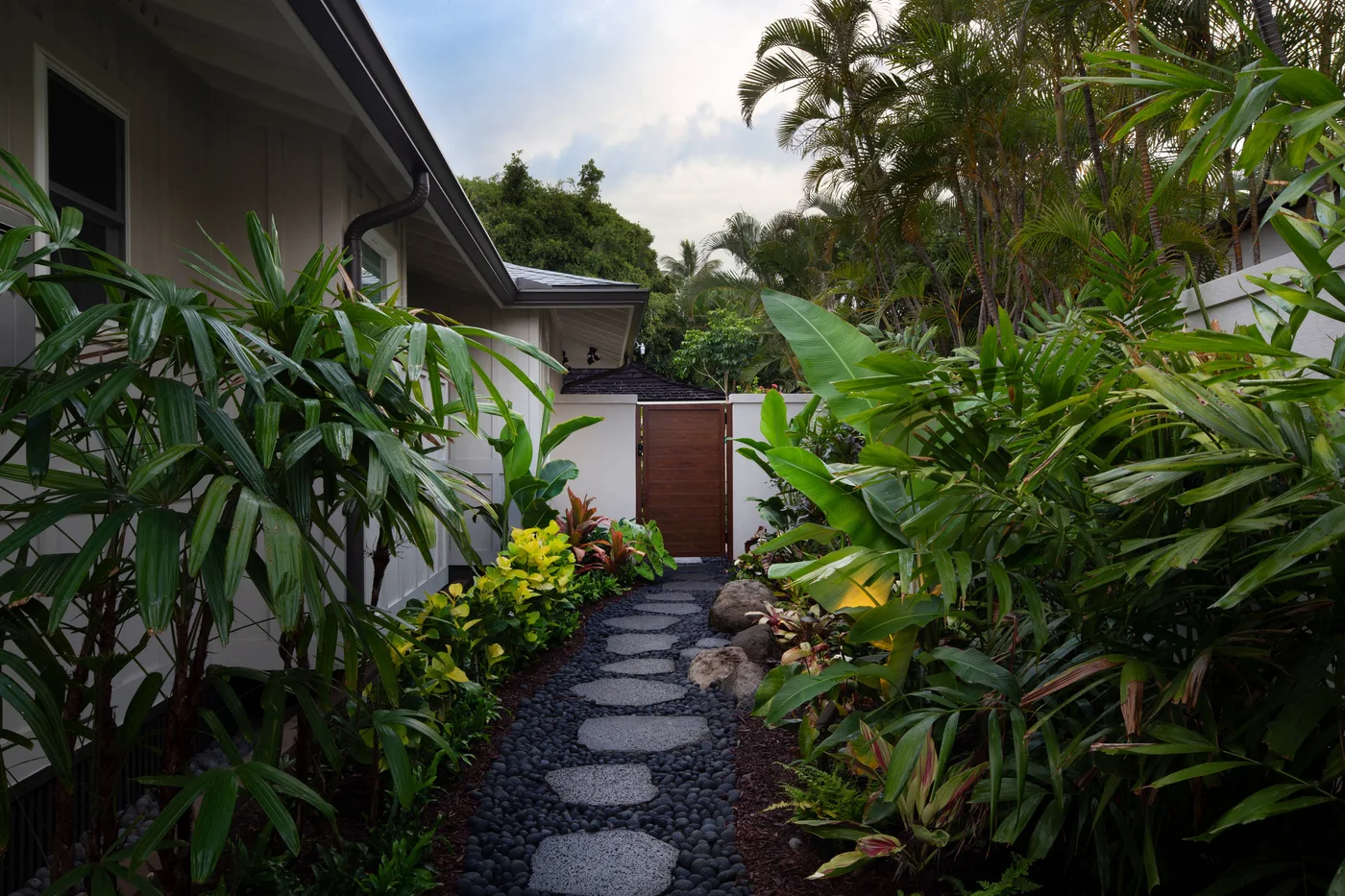
Pale oval stepping surfaces stand out against the dark rounded pebbles. Broad leaves fill the narrow passage on both sides, giving the route a strong planted setting. The restrained contrast makes the stones easy to follow even though the surrounding foliage is varied.
Keep the stepping surfaces large, stable and comfortably spaced, and stop loose pebbles migrating across them. Deep rounded aggregate can shift underfoot, so it is better treated as surrounding fill than the primary walking surface. Allow access to trim foliage before it hangs across the path.
IDEA 15 / 20
Use Broad Pale Stones in a Green Courtyard
 SaveSupport Non AI Creator
Source: www.houzz.com.au
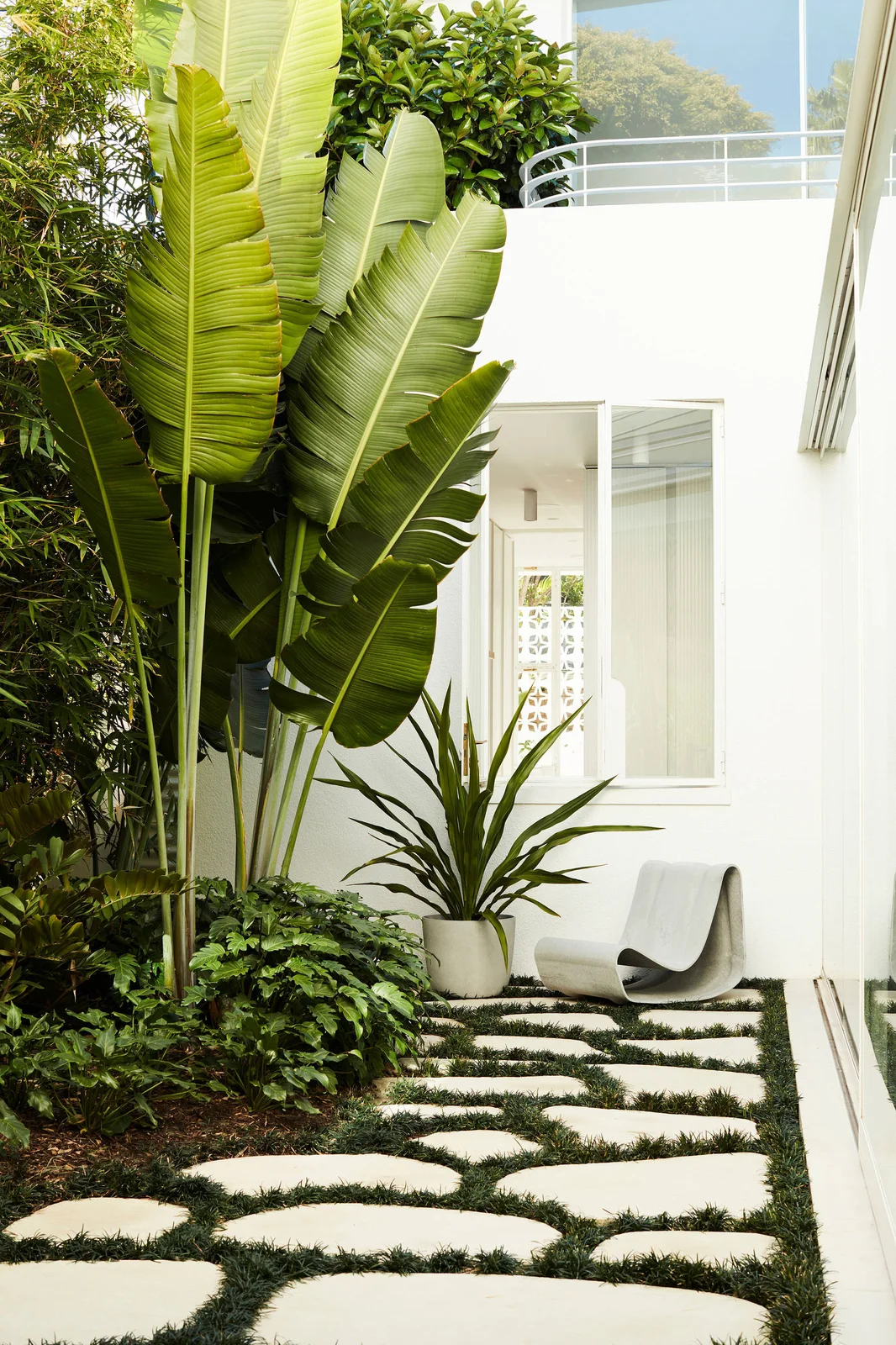
Broad pale slabs create a strong route through dark low planting. Large leaves rise to one side, while a sculptural chair gives the path a quiet endpoint beside the white wall. The generous stepping surfaces make a clearer statement than many tiny stones would in this compact space.
Check the actual walking line before arranging decorative gaps. A route that looks flowing from above can feel awkward if each footfall has to be aimed. Leave room around the chair to sit and stand, and choose joint planting that will not quickly cover the slab edges.
PART 04
Connect the places you use
IDEA 16 / 20
Keep a Route Clear Beside the Play Space
 SaveSupport Non AI Creator
Source: www.houzz.com.au
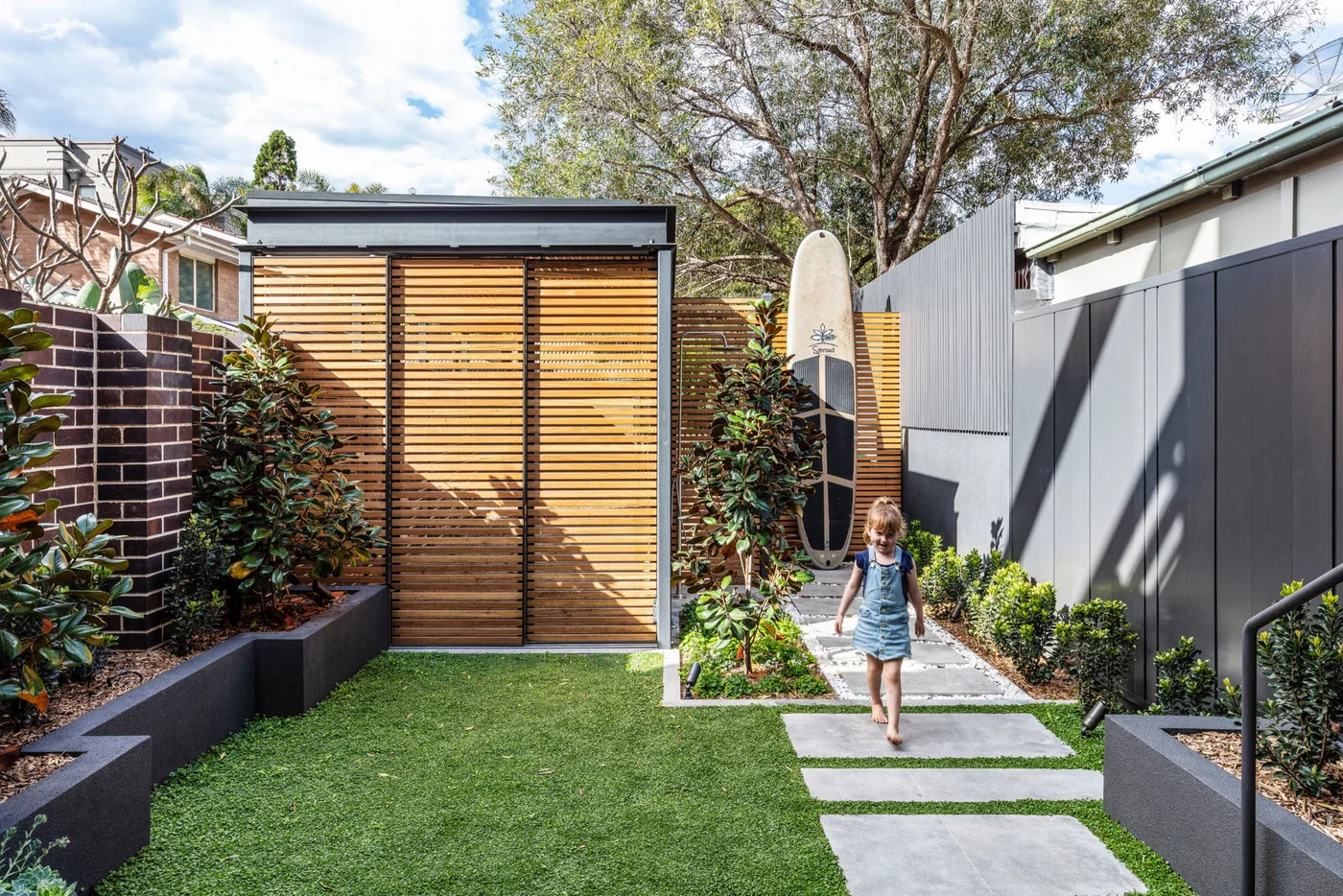
Large rectangular slabs follow one side of the lawn toward a timber-screened structure. Raised beds keep most planting outside the circulation line, leaving a simple grass area in the middle. The limited material palette gives this small family yard a clear, uncluttered layout.
Test the route with the equipment you actually carry between the house and storage. Flush, stable surfaces are especially useful where children run across the garden. Avoid copying wide gaps automatically: a more continuous surface may be preferable for little feet, wheels or reduced mobility.
IDEA 17 / 20
Take the Walk to a Tree Bench
 SaveSupport Non AI Creator
Source: www.houzz.com.au
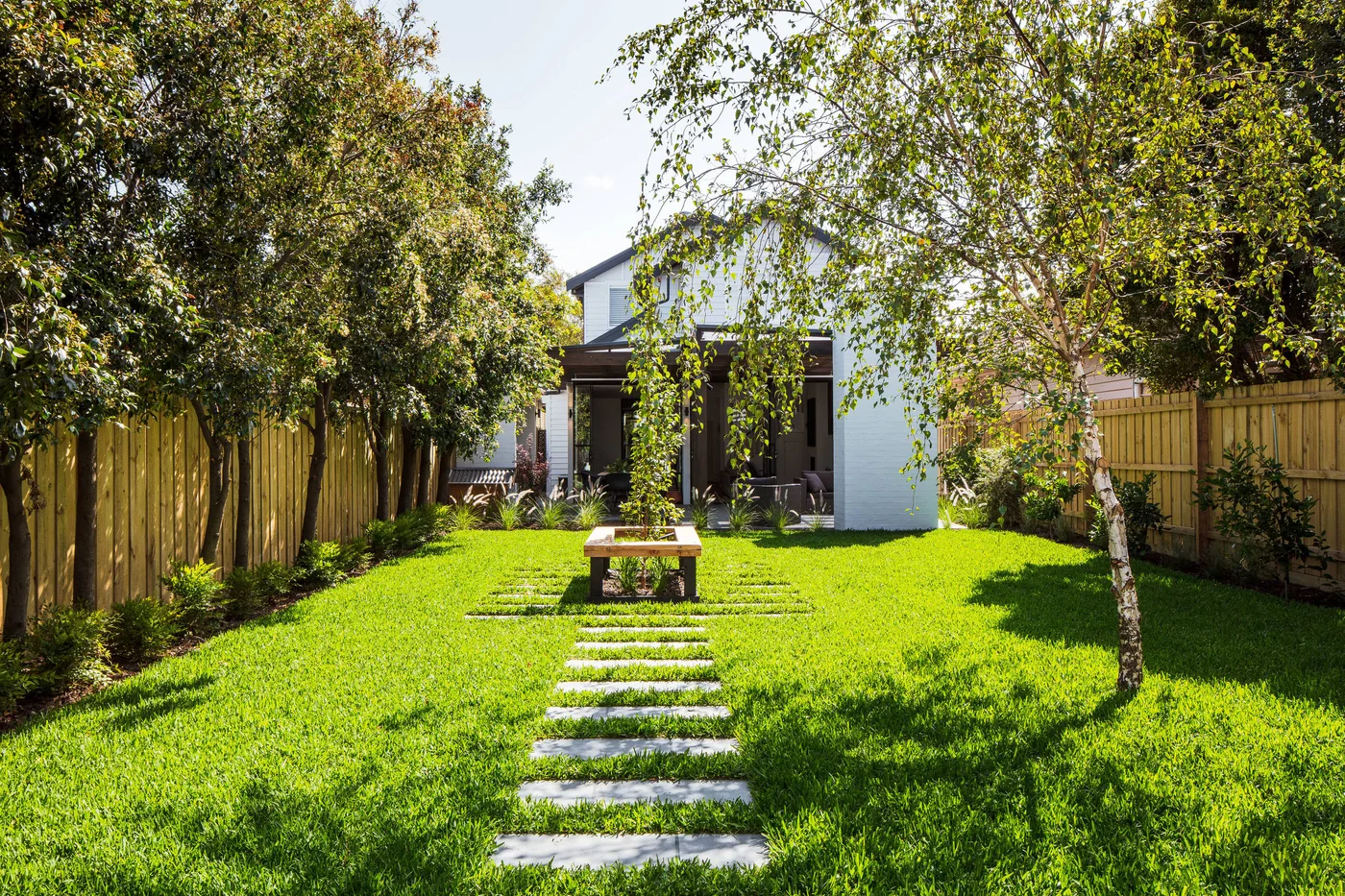
A line of narrow pale slabs crosses the lawn toward a bench surrounding the tree. The path creates a destination in the center without paving the entire yard. Planting stays mainly at the boundaries, preserving an open view between the house and the seat.
Protect an established tree’s roots when planning the path and bench; get appropriate advice before excavating nearby. Allow for trunk growth and keep construction independent where needed. Set lawn steppers flush enough for maintenance, and plan how grass will be trimmed around the bench supports.
IDEA 18 / 20
Turn a Timber Walk Through Deep Planting
 SaveSupport Non AI Creator
Source: www.houzz.com.au
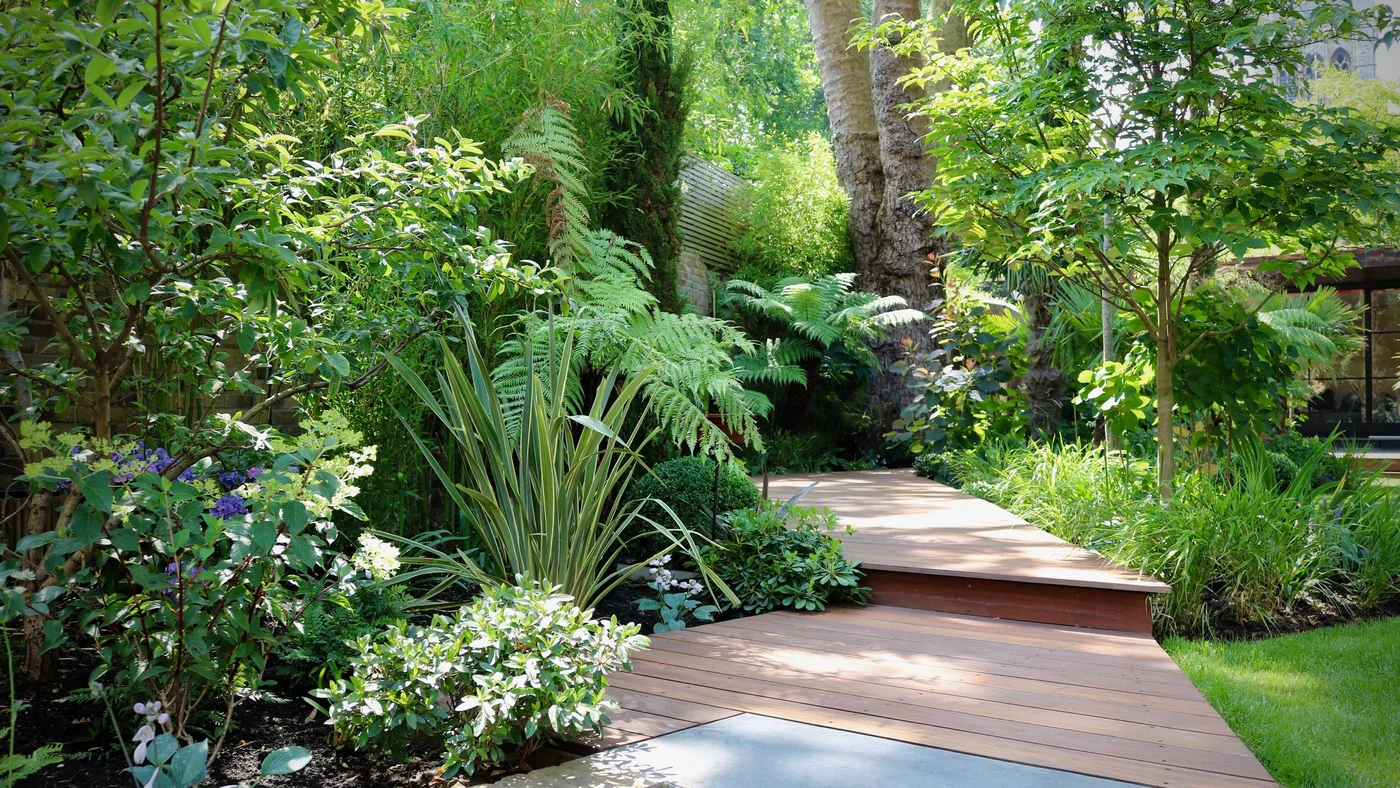
The timber walkway turns through dense planting and rises by a single visible step. Fern-like foliage and narrow leaves soften the edges while leaving the boards readable. The change in direction creates a gradual journey rather than a direct view of everything at once.
Timber needs a structural base, an appropriate exterior specification and a maintenance plan for the conditions. Keep the step visible, particularly where shadows and fallen leaves collect. Check whether a step-free alternative is needed before committing to this arrangement, and address algae where damp shade makes boards slippery.
IDEA 19 / 20
Use Small Lights to Mark a Planted Edge
 SaveSupport Non AI Creator
Source: www.houzz.com.au
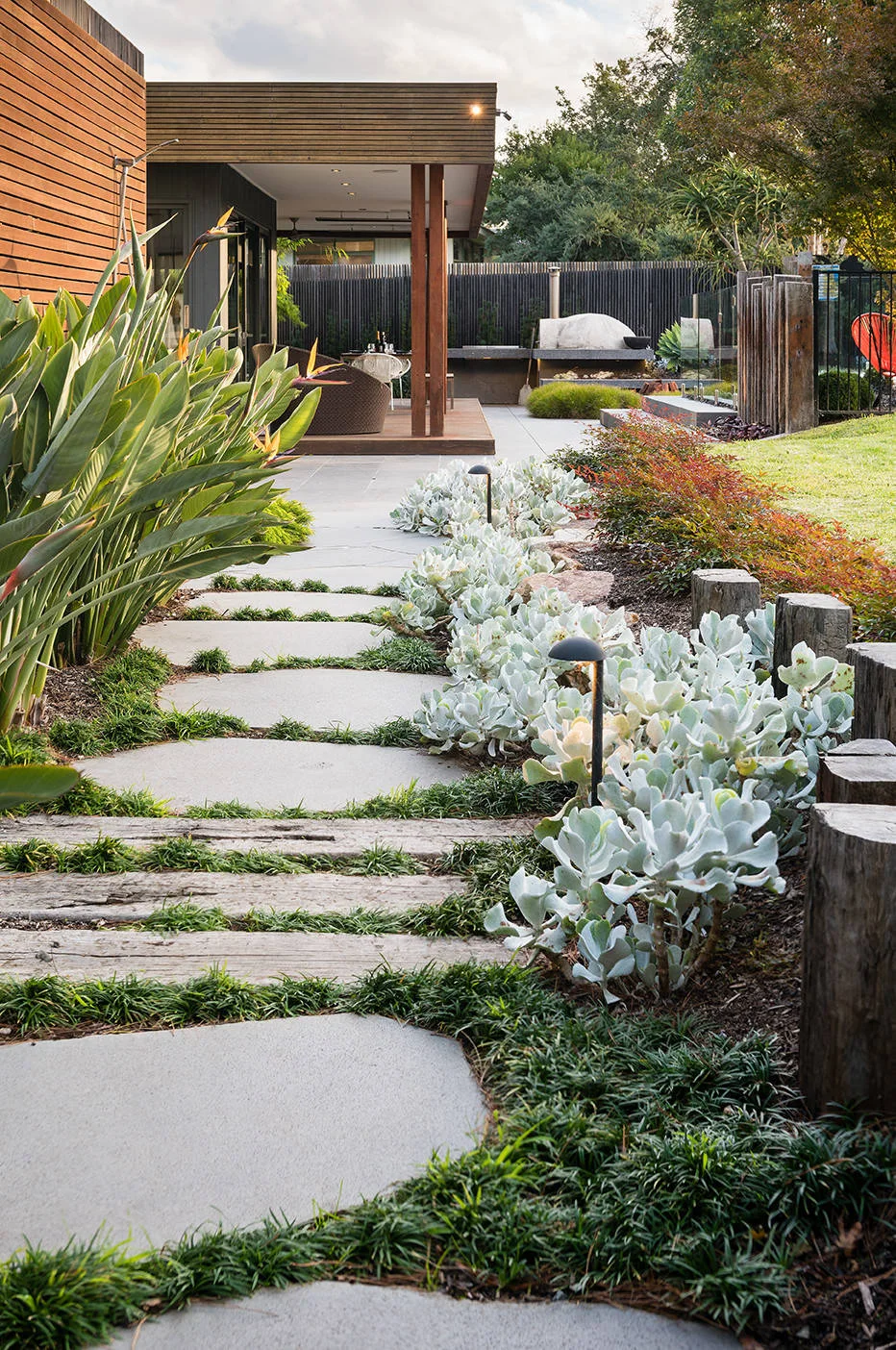
Low lights sit beside the path rather than on its walking surface. Pale stepping stones, silver foliage and darker grass-like joints create a layered edge leading toward the covered patio. The route remains distinct even though the surrounding planting has a relaxed, spreading form.
Use lighting to reveal the route and changes in level without shining into seated eyes or neighboring windows. Keep fittings clear of mower and foot traffic, with installation appropriate to outdoor conditions. Trim plants before they cover the lights or hide the edges of the stepping surfaces.
IDEA 20 / 20
Frame a Cobble Path With a Garden Arch
 SaveSupport Non AI Creator
Source: www.houzz.com.au
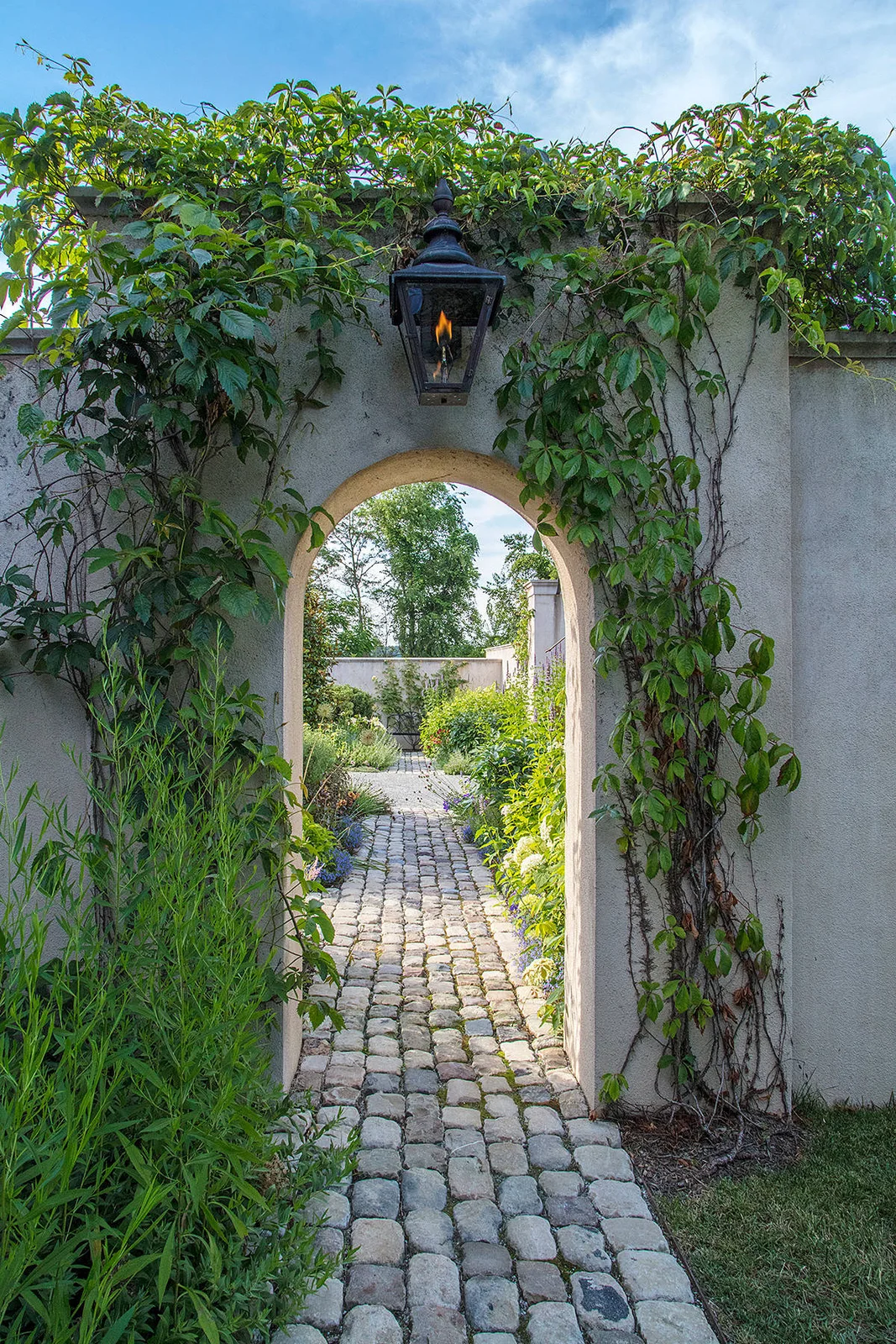
A planted arch frames the cobbled route and the small table beyond. The wall creates a distinct threshold, while green growth softens its outline. Small paving units give the path texture, making the opening feel like an invitation to another part of the garden.
Textured cobbles can be uneven underfoot, so compare the finish with the needs of the people using the path. Keep climbing growth away from the clear opening and nearby lighting. A garden arch works best when it preserves useful width instead of becoming a narrow decorative obstacle.
BRING IT ALL TOGETHER
Choose the daily route before the surface
Start with the walk you make most often and make that route comfortable in ordinary weather. A continuous, well-drained path may serve a busy side yard better than decorative stepping stones, while a quieter garden route can accommodate more planting and softer edges.
Set out furniture, gates and beds before finalizing the paving. Then match the finish to the soil, climate, upkeep and people using the garden. The best walkway feels obvious to follow and leaves enough room for the plants to mature without taking over.