A small balcony works best when its furniture supports one clear purpose. A comfortable reading chair and a place for a drink may earn more use than a full dining set squeezed beside the door. Start by measuring the opening, checking the route outside and deciding how many people actually need a seat.
These balconies show different ways to use narrow floors, end walls and sheltered corners. Choose outdoor-rated furnishings and planting suited to the exposure. Before adding heavy pots, fixed screens, suspended seating or anything attached to a railing, check the building’s requirements and the suitability of the proposed installation.
PART 01
Seating that fits the footprint
IDEA 01 / 20
Place Two Chairs at Opposite Ends
 SaveSupport Non AI Creator
Image credit: Project: Quadrant Homes (via Houzz)
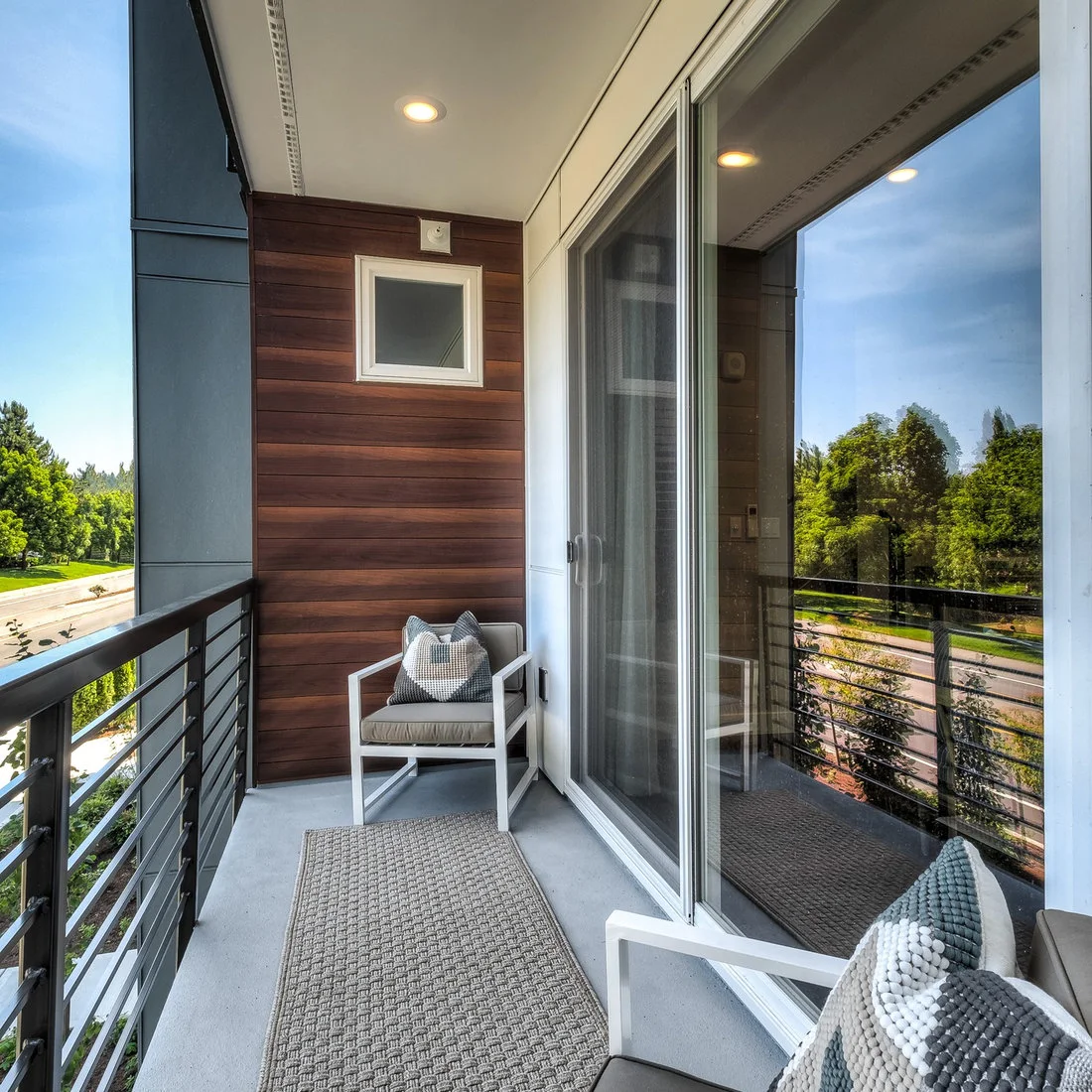
Two pale chairs occupy opposite ends of this narrow balcony, leaving the middle comparatively open. A slim rug follows the long floor, and gray cushions repeat the dark railing. The sliding doors avoid an outward door swing, helping the seating arrangement remain simple.
Measure the clear passage after allowing for chair arms and anyone’s legs. A narrow runner should lie flat and leave drainage unobstructed. If your balcony has a hinged door, mark its full movement first; the same pair of chairs may need a different position. For more sheltered, open and enclosed layouts, compare these apartment balcony ideas before choosing a seating set.
IDEA 02 / 20
Keep Corner Seating Against the Solid Wall
 SaveSupport Non AI Creator
Image credit: Project: The Habitat Collective (via Houzz)
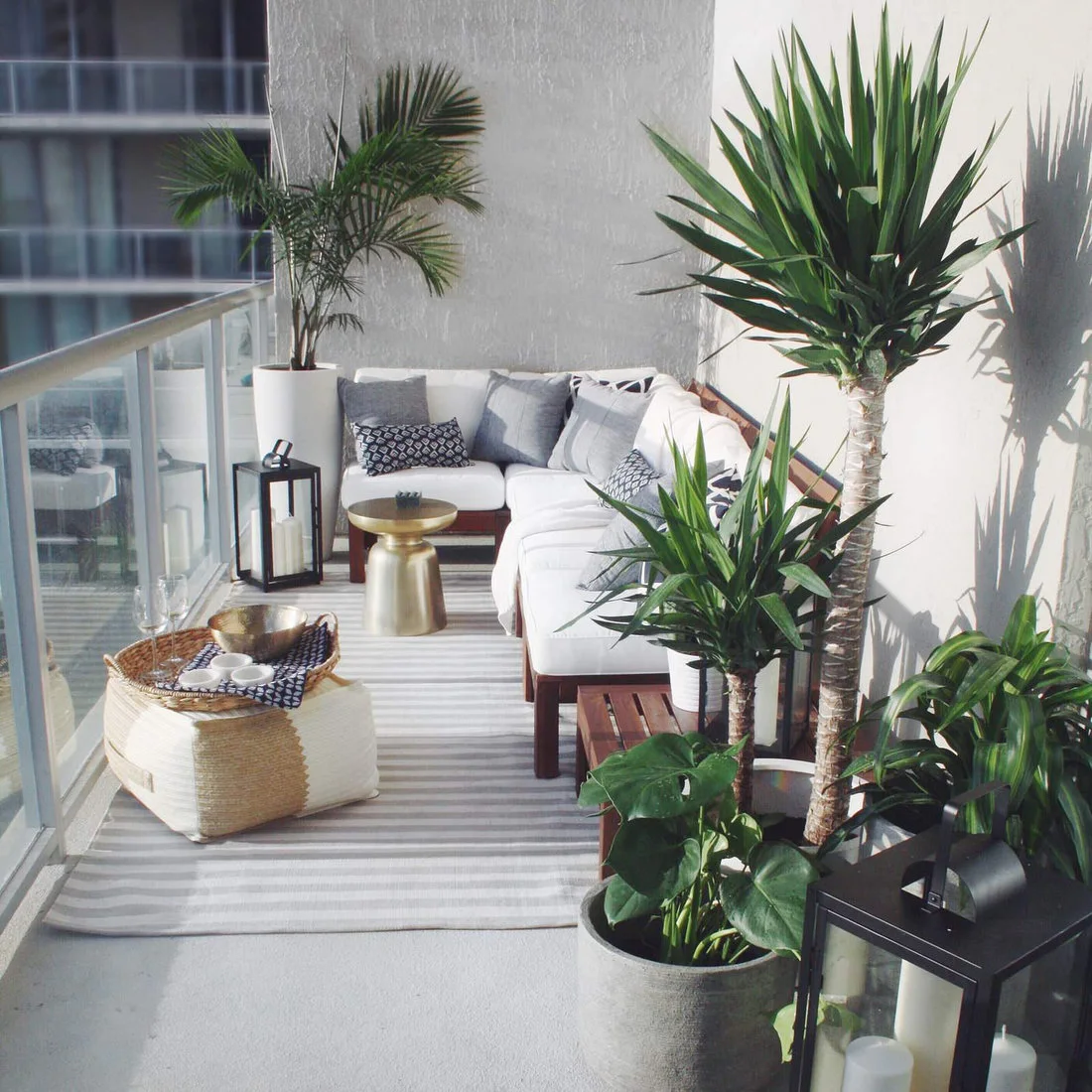
Corner seating follows the solid wall and the far end, concentrating the largest furniture in one continuous shape. A striped rug and small round tables give the pale cushions definition. Tall plants add height at the edges rather than forming a line across the center.
Check the actual depth of each seat before ordering a corner unit. Some outdoor sofas consume more floor than their photographs suggest. Use movable side tables where possible, and leave enough room to reach planters, clean the wall and remove cushions when rain is expected.
IDEA 03 / 20
Let Cushions Carry the Pattern
 SaveSupport Non AI Creator
Image credit: Project: SummerHill Homes (via Houzz)
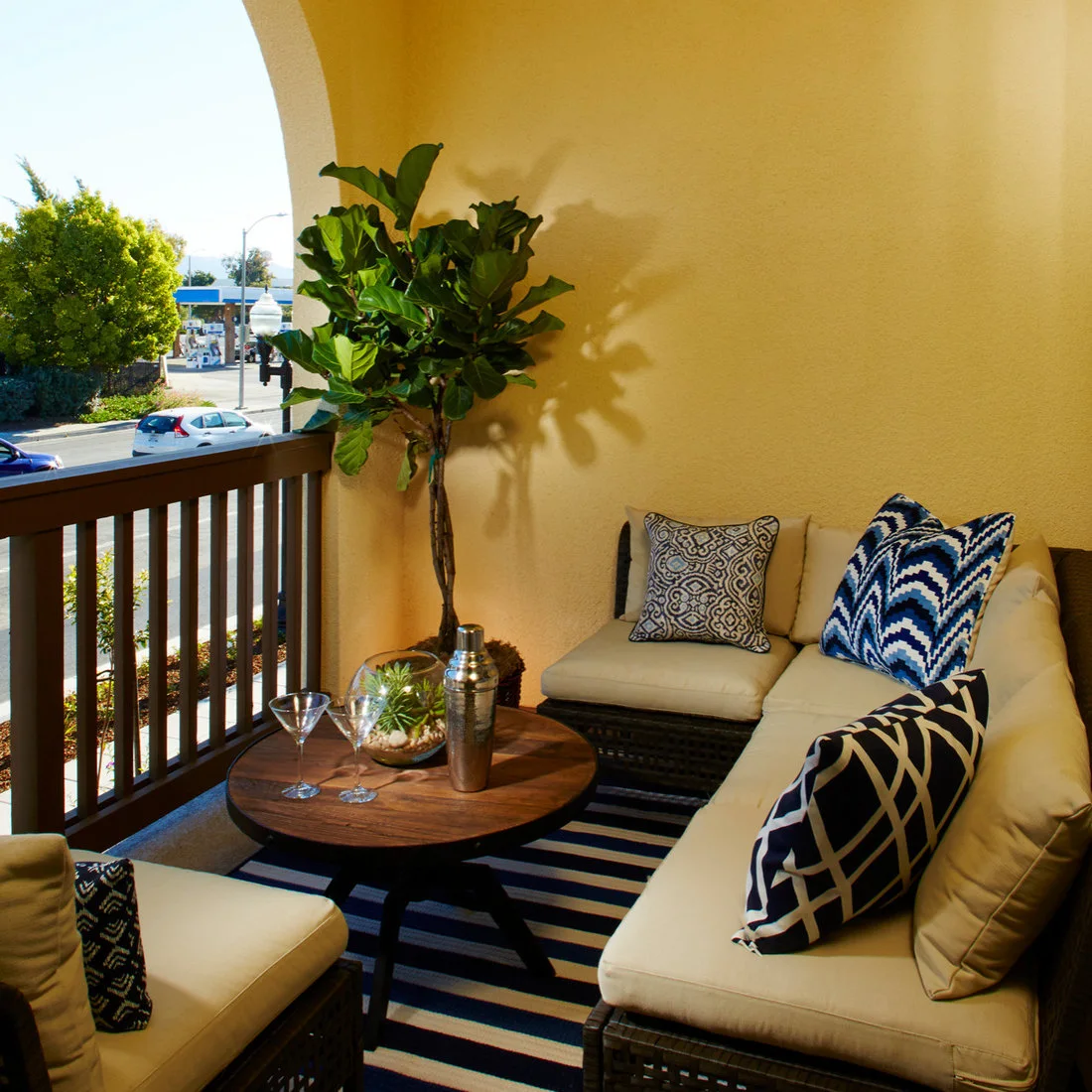
Blue patterned cushions and a striped rug bring most of the pattern to this sheltered seating area. The cream upholstery and warm wall keep the larger surfaces quieter. A round table serves the corner sofa without adding sharp projecting corners along the narrow side.
Limit the larger patterns to a few washable pieces so the balcony remains easy to refresh. Check fabric care and drying instructions rather than assuming shelter prevents moisture. Choose a table you can comfortably reach from the seats without filling the route back indoors.
IDEA 04 / 20
Use the End Wall for a Small Plant Display
 SaveSupport Non AI Creator
Source: www.houzz.com
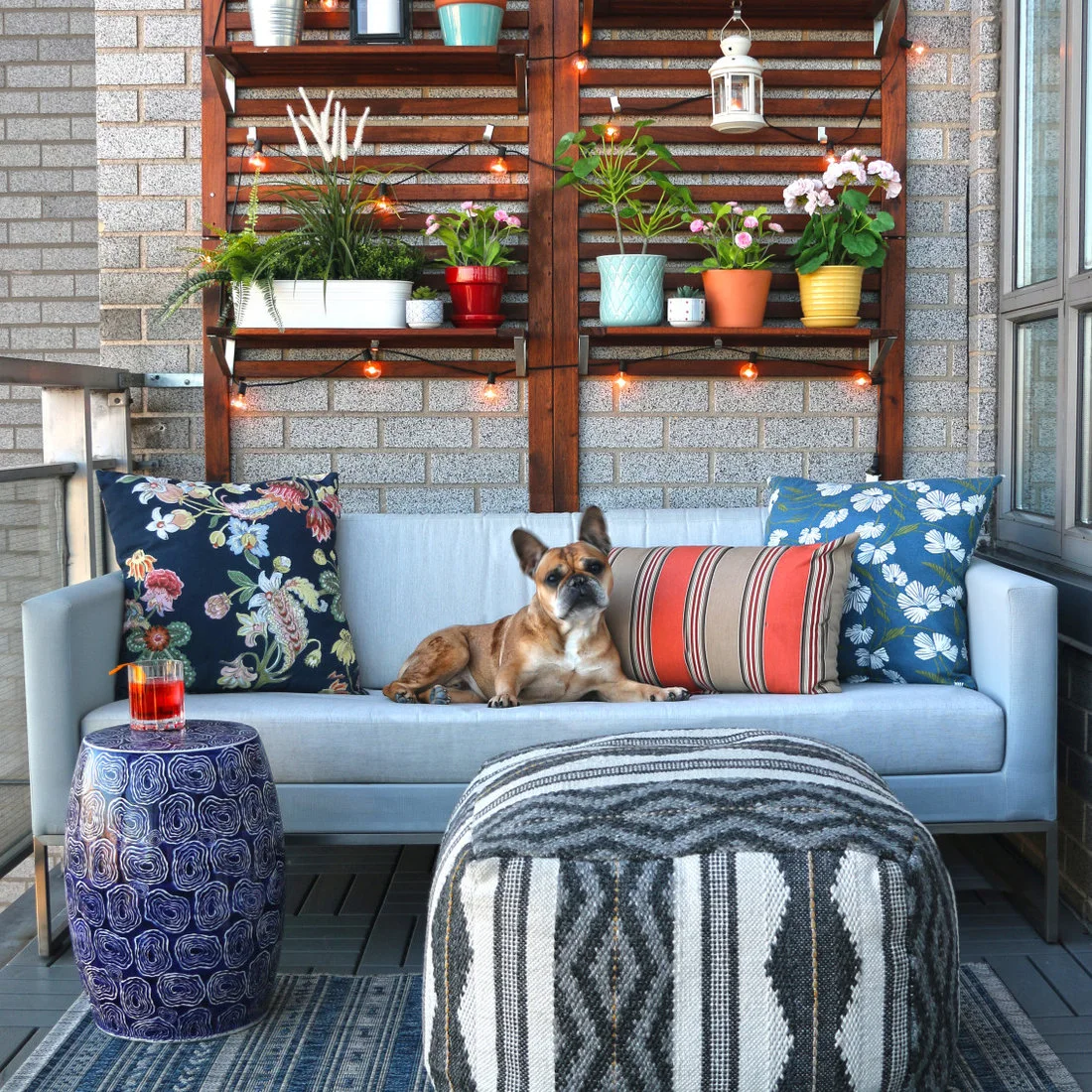
Timber panels and shelves place the plant display above the sofa, leaving the main floor for seating. Colorful pots echo the patterned cushions and small blue side table. The photographed dog also makes the sofa’s role as an everyday lounging spot easy to understand.
Secure shelves to a suitable approved surface and keep heavy pots away from positions above people’s heads. Use pet-appropriate planting and check that furniture cannot become a climbing step beside the railing. Leave space to water without dripping onto cushions or neighboring balconies.
IDEA 05 / 20
Choose a Small Table Over a Full Coffee Table
 SaveSupport Non AI Creator
Image credit: Project: Eleven Interiors (via Houzz)
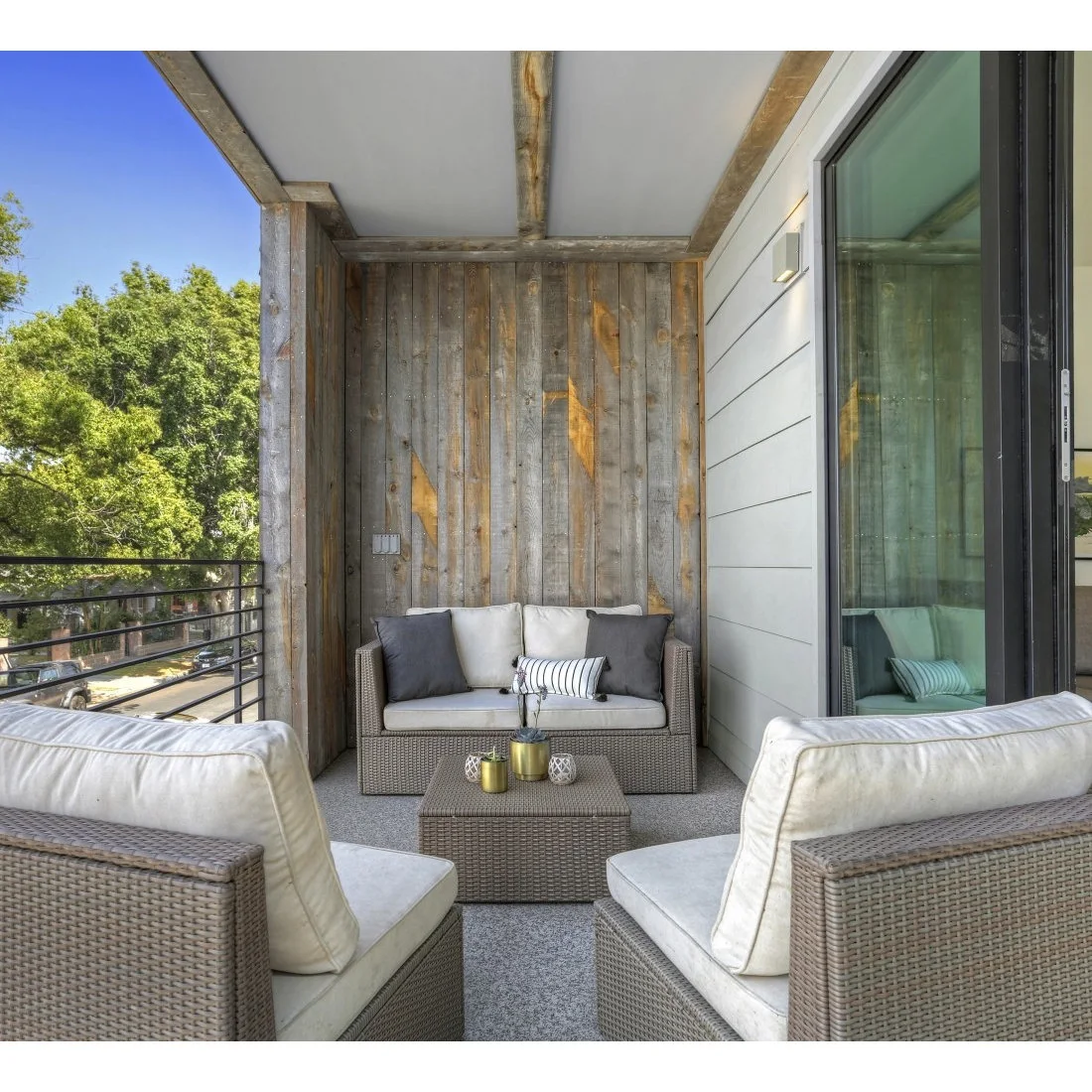
A low woven table sits between the loveseat and two chairs, keeping the center focused on drinks rather than dining. Pale cushions and gray frames connect the pieces. The timber end wall gives the seating group a backdrop without needing a separate freestanding divider.
A compact table can make a conversation layout practical, but test the space with seats occupied. Leave enough room to stand and carry a tray through. For smaller footprints, remove one chair before shrinking every piece into furniture that is uncomfortable to sit on.
PART 02
Color and personality in a small space
IDEA 06 / 20
Make One Bright Bench the Focal Point
 SaveSupport Non AI Creator
Source: www.houzz.com
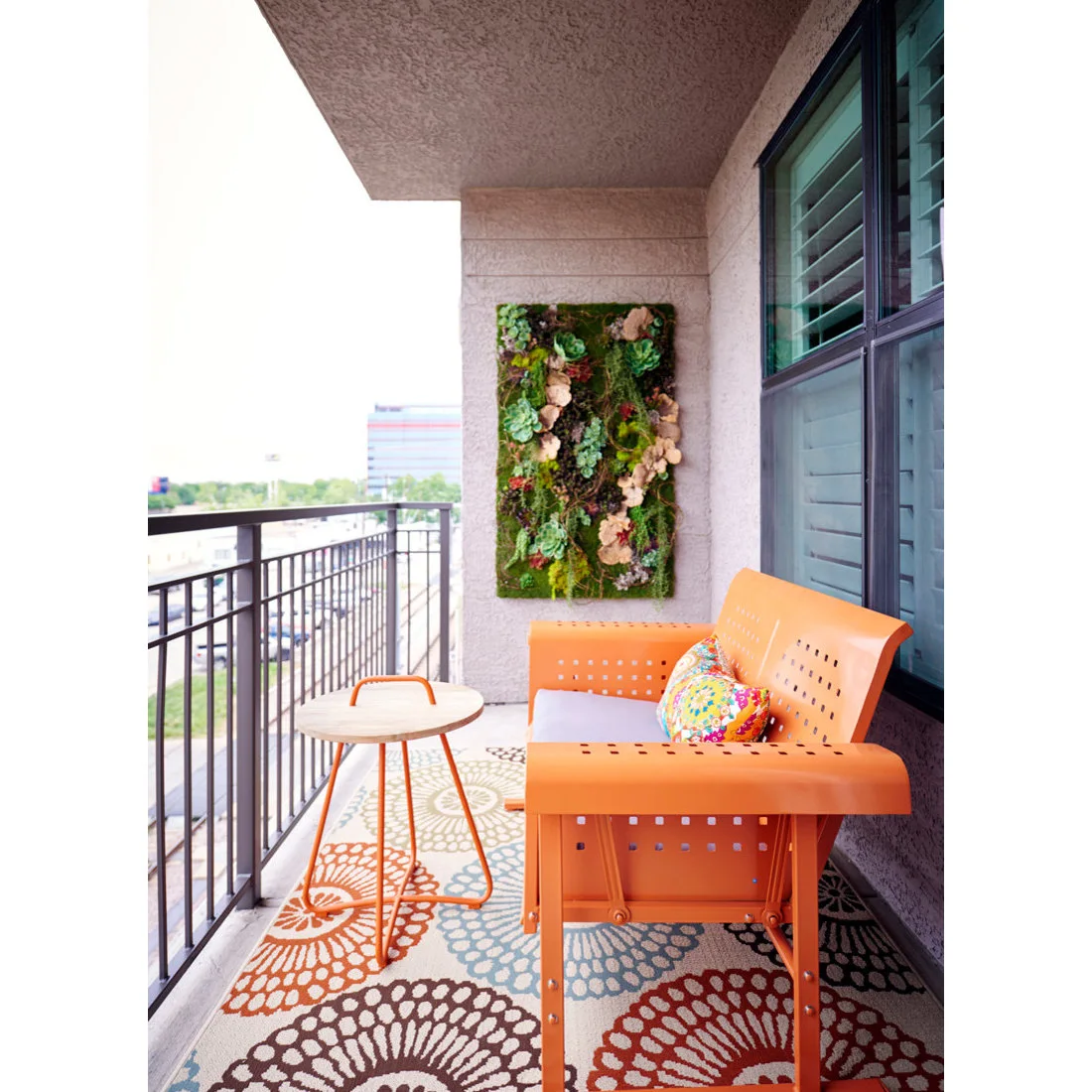
The orange bench supplies a single strong color against the pale wall and black railing. A slim-legged round table leaves more of the floral rug visible, while the wall display adds greenery at eye level. The furniture follows the balcony’s length rather than crossing it.
Start with the bench dimensions and keep the table easy to move for cleaning or access. Choose a weather-suitable wall display with a verified mounting method. If you like the effect of apartment living room ideas, borrow their restrained furniture grouping rather than bringing indoor upholstery outside.
IDEA 07 / 20
Give a Swing Its Own Clear Zone
 SaveSupport Non AI Creator
Source: www.houzz.com
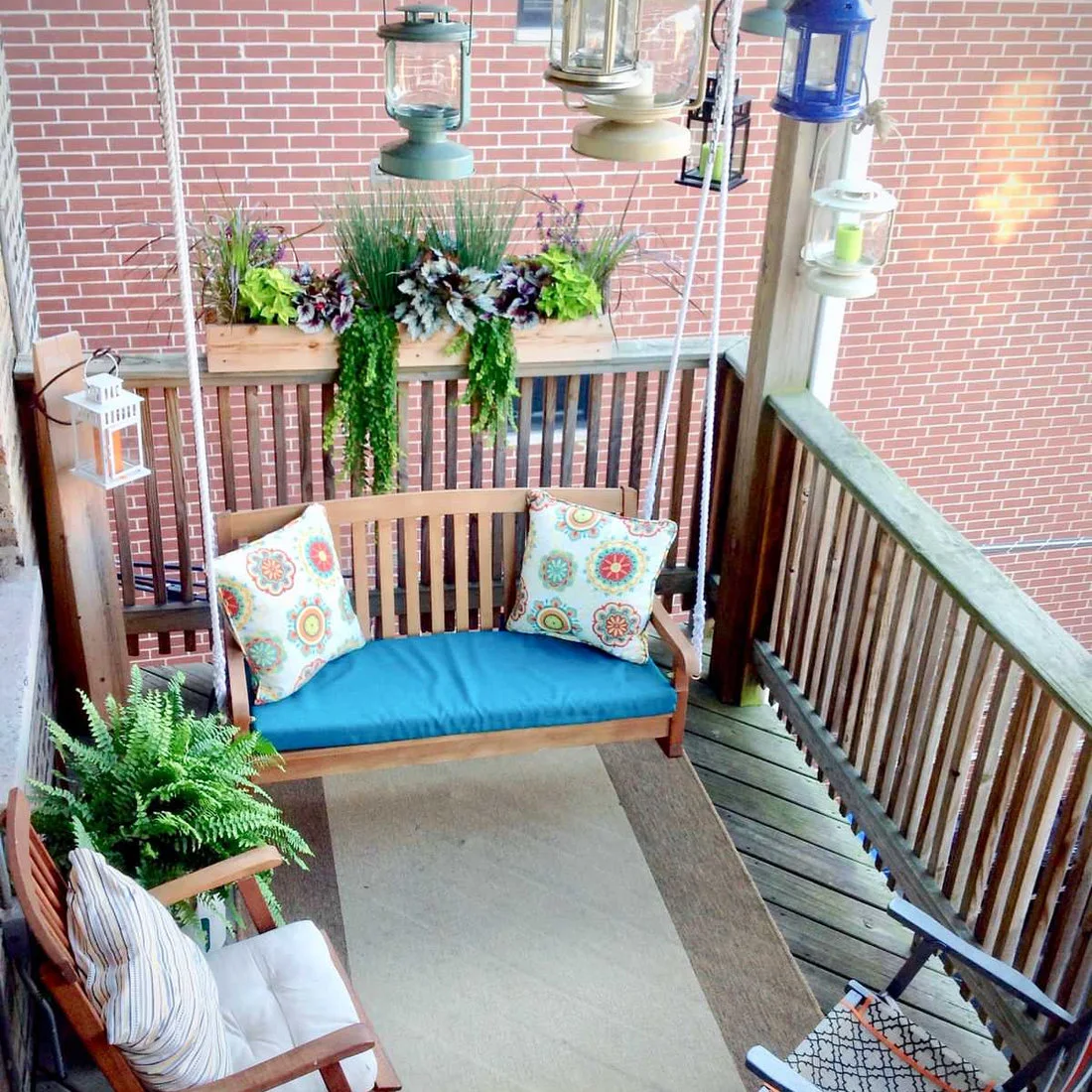
The blue-cushioned swing occupies the far end, with planters and hanging lanterns supplying color above it. A simple rug marks the floor beneath. The remaining chairs sit along the side, showing how several smaller pieces can quickly use up the available movement space.
A swing needs a verified structural fixing and room for its full movement, not just its resting position. If those conditions cannot be confirmed, use a stationary bench instead. Keep suspended decorations out of the swing path and choose battery lights where open flames would be unsuitable.
IDEA 08 / 20
Divide a Long Narrow Balcony Into Two Uses
 SaveSupport Non AI Creator
Image credit: Project: Material Differences (via Houzz)
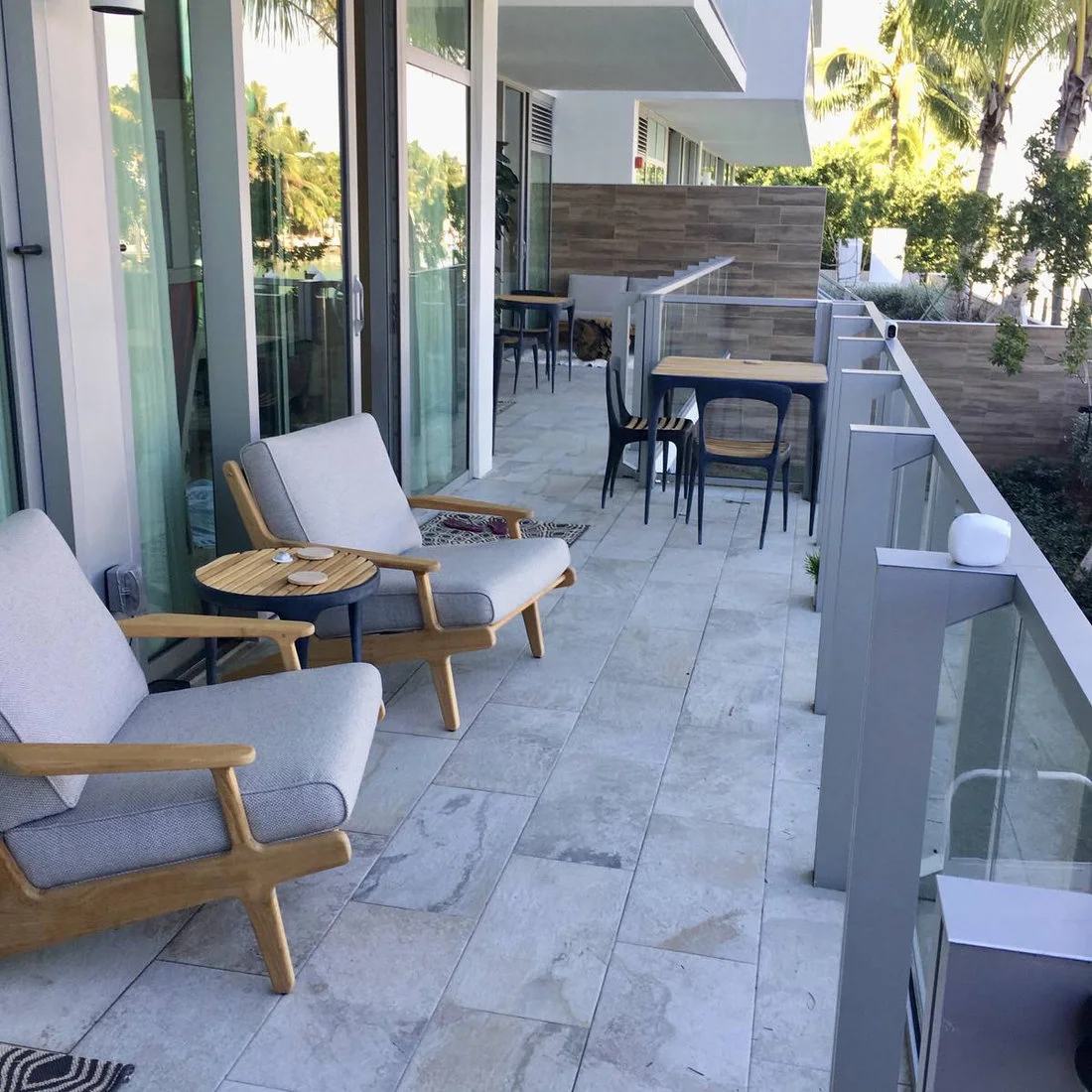
Two cushioned chairs make a resting area near the sliding doors, while a table and chairs occupy the far section. Similar pale floor tiles connect the two zones. The furniture stays to the side so the long balcony still has a recognizable route through it.
Use more than one zone only when the clear passage genuinely allows it. Try the dining chairs pulled out before deciding the layout works. A small balcony used by two people may be more comfortable with one good seating group and a folding table stored elsewhere.
IDEA 09 / 20
Keep a Reading Corner to One Chair
 SaveSupport Non AI Creator
Image credit: Project: Rockefeller Partners Architects (via Houzz)
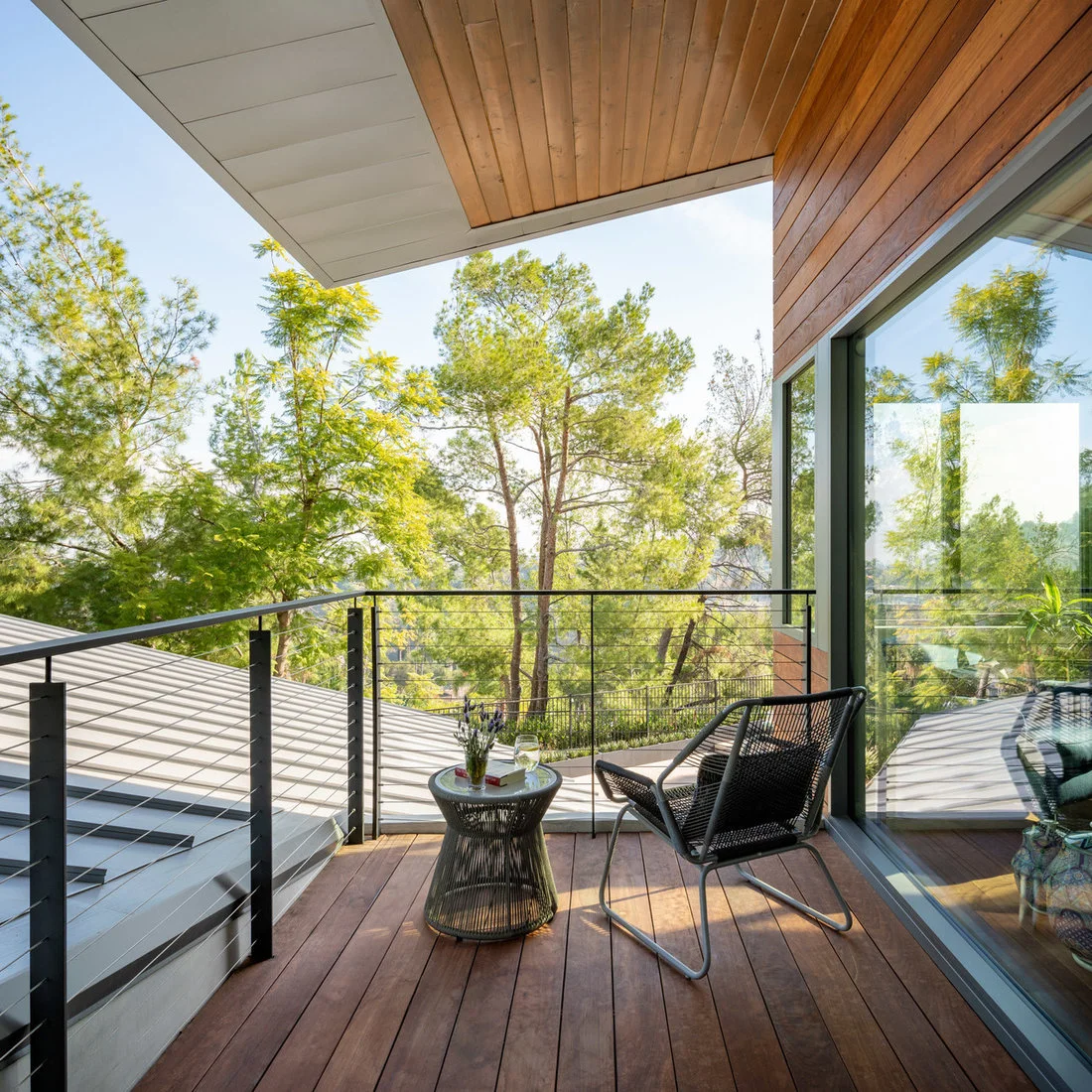
One woven chair and a small round table make this corner useful without furnishing the whole balcony. The chair’s open back keeps the view visible, and the timber floor and ceiling add warmth. Most of the space between the door and railing remains clear.
Choose a chair for the way you sit, including enough support for reading or a long cup of coffee. Check glare and exposure at the time you will use the balcony. A small washable cushion can add comfort without creating a large collection of textiles to store.
IDEA 10 / 20
Use a Bistro Table for Two
 SaveSupport Non AI Creator
Image credit: Project: SummerHill Homes (via Houzz)
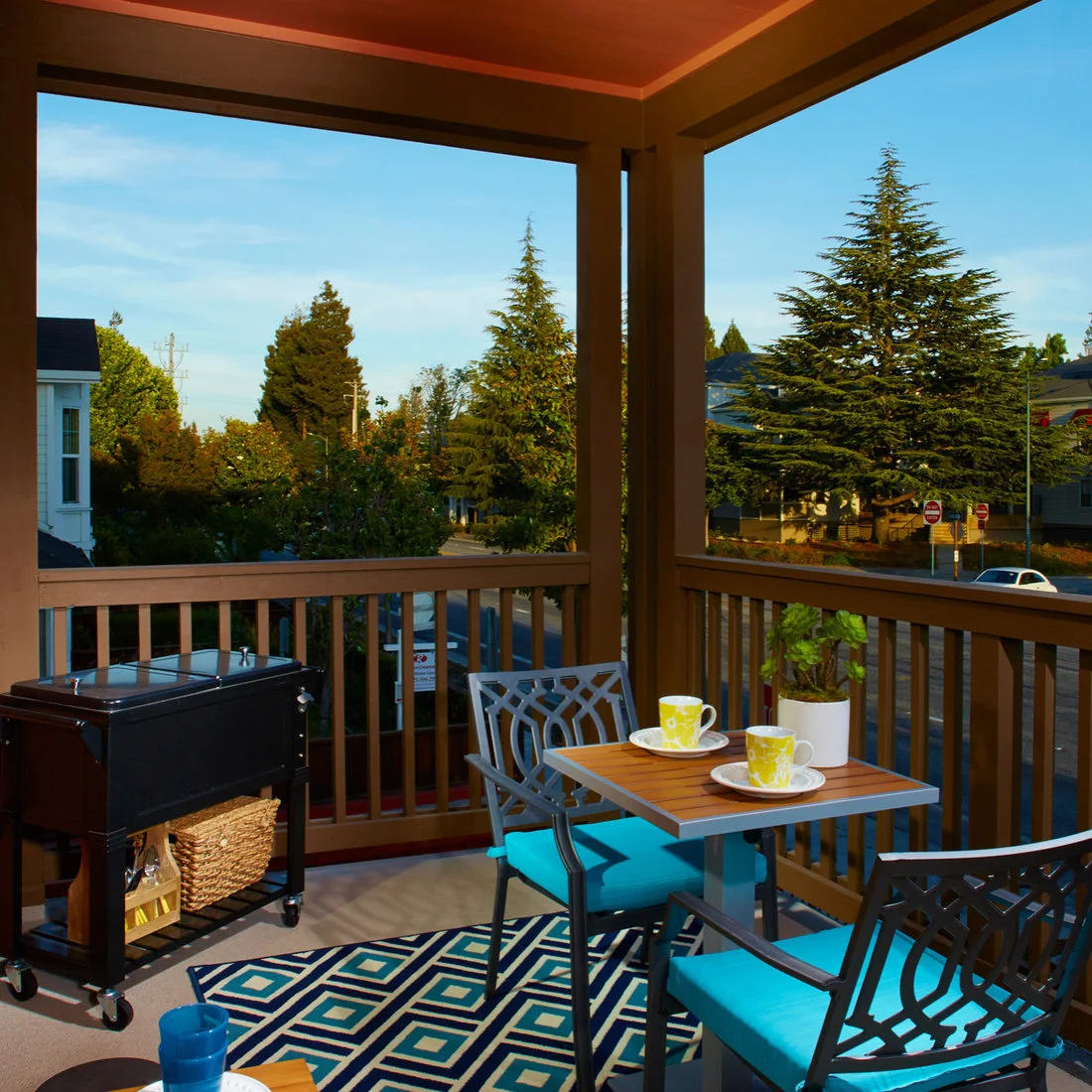
A compact square table and two chairs give this balcony a definite dining purpose. Blue cushions repeat the rug’s color, while the cart provides a separate serving surface at the side. The tabletop stays relatively small instead of competing with the surrounding view.
Test chair pull-out space and the route around the cart before buying both pieces. A serving cart is helpful only if it can remain safely parked and still be reached. For occasional meals, a small folding table may provide the same function with less permanent floor space.
PART 03
Greenery without losing the walkway
IDEA 11 / 20
Repeat One Accent Color Across Separate Seats
 SaveSupport Non AI Creator
Image credit: Project: Teass \ Warren Architects (via Houzz)
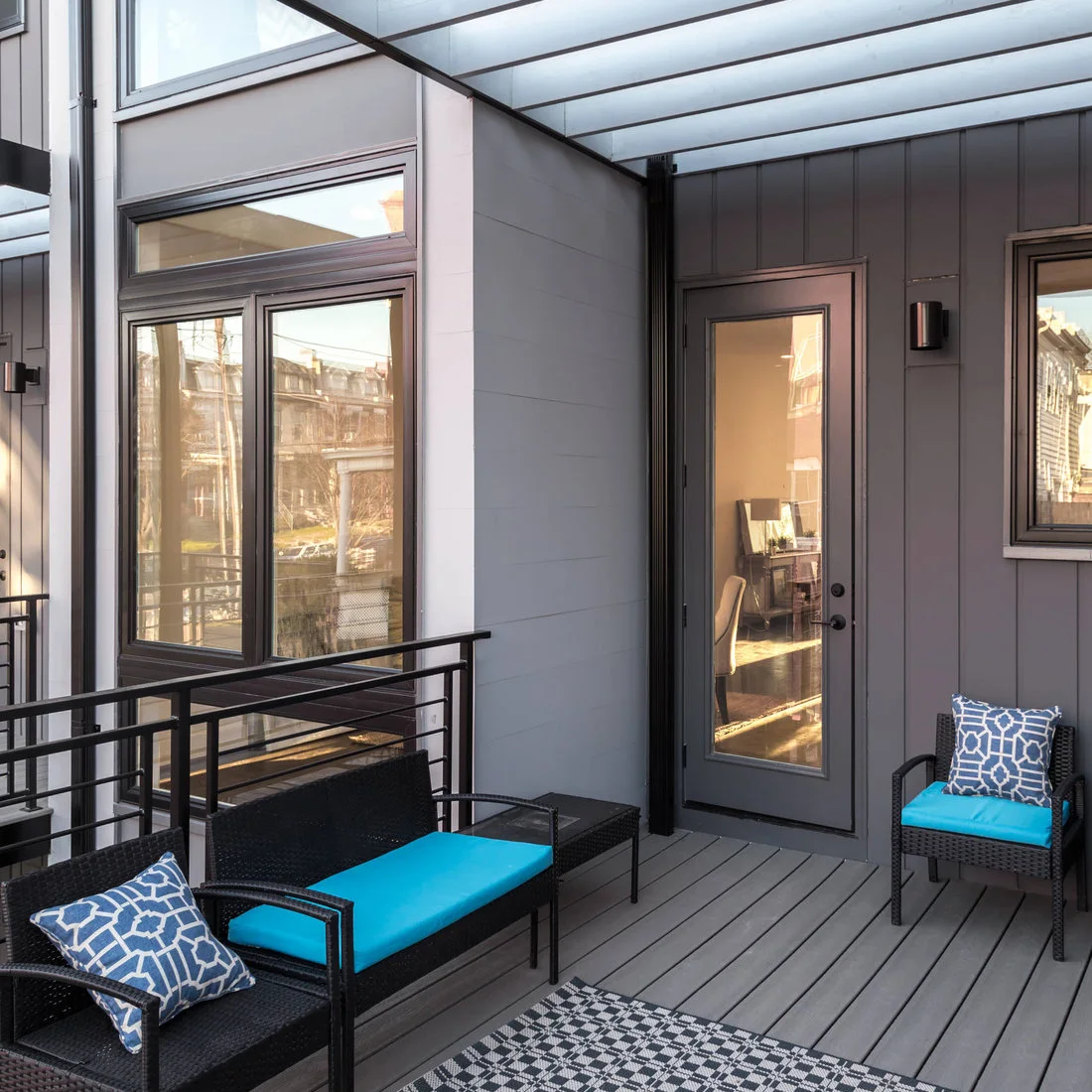
Turquoise cushions connect the dark loveseat and separate chair, while the gray siding and floor provide a consistent background. The furniture sits near the railing and side wall rather than filling the doorway. A low side table keeps a useful surface beside the main seat.
Repeating one cushion color can make mismatched furniture feel more settled. Keep enough open floor to reach every chair without stepping over a rug corner. Confirm that the rug and cushions are suitable for the actual exposure, especially where a translucent roof still allows wind-driven rain.
IDEA 12 / 20
Use Two Different Planter Heights in One Corner
 SaveSupport Non AI Creator
Source: www.houzz.com
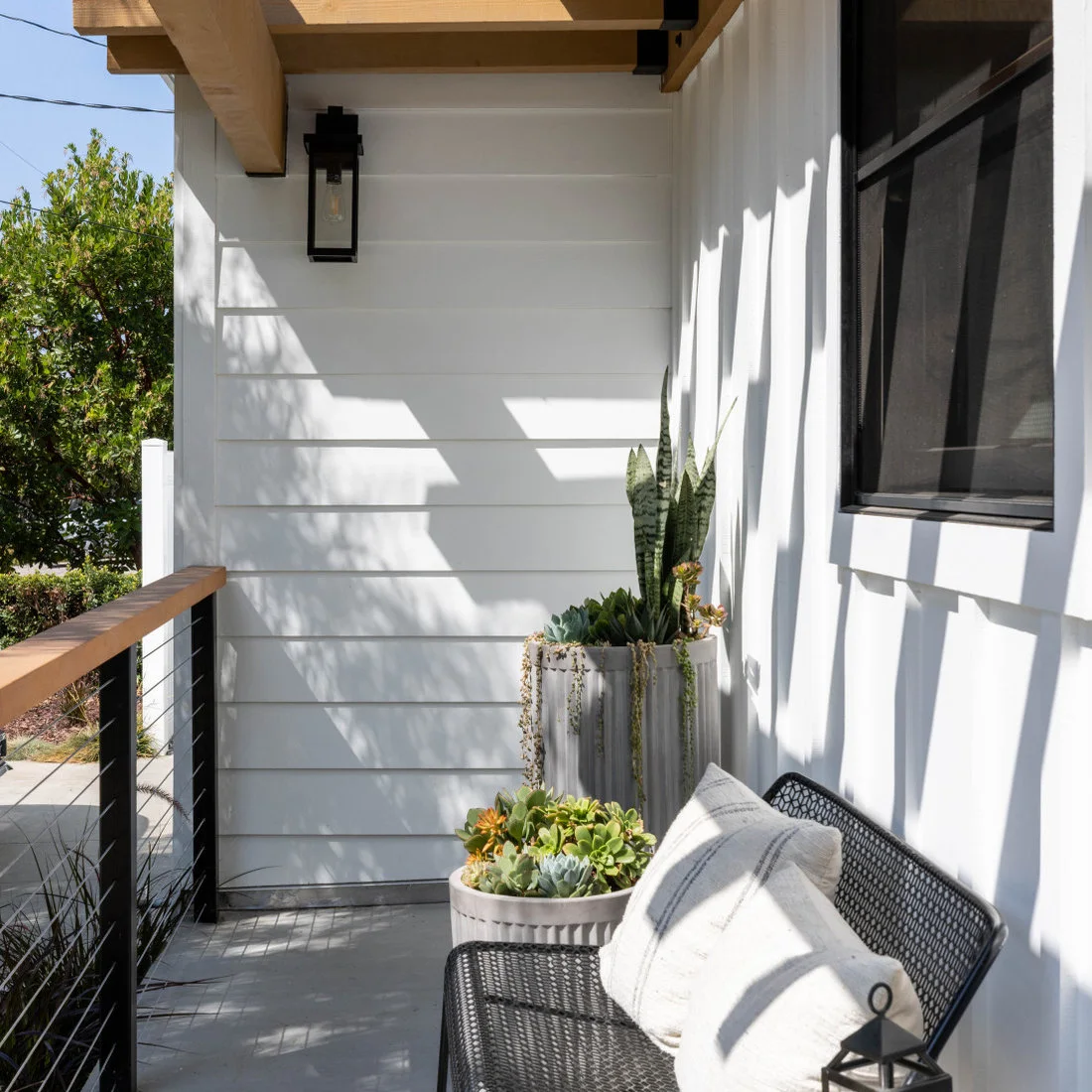
Two pale planters put greenery at different heights beside a single dark chair. The larger upright leaves draw attention to the end wall, while the lower pot softens the floor. White siding and a restrained cushion keep the corner from becoming visually crowded.
Choose container sizes around mature plant growth and the space needed to tend them. Keep heavy planters away from the balcony edge and confirm allowable loads before adding substantial soil. A small grouping is easier to water and clean around than many pots scattered along the passage.
IDEA 13 / 20
Keep a Small Table Between Open-Framed Chairs
 SaveSupport Non AI Creator
Image credit: Project: ae design (via Houzz)
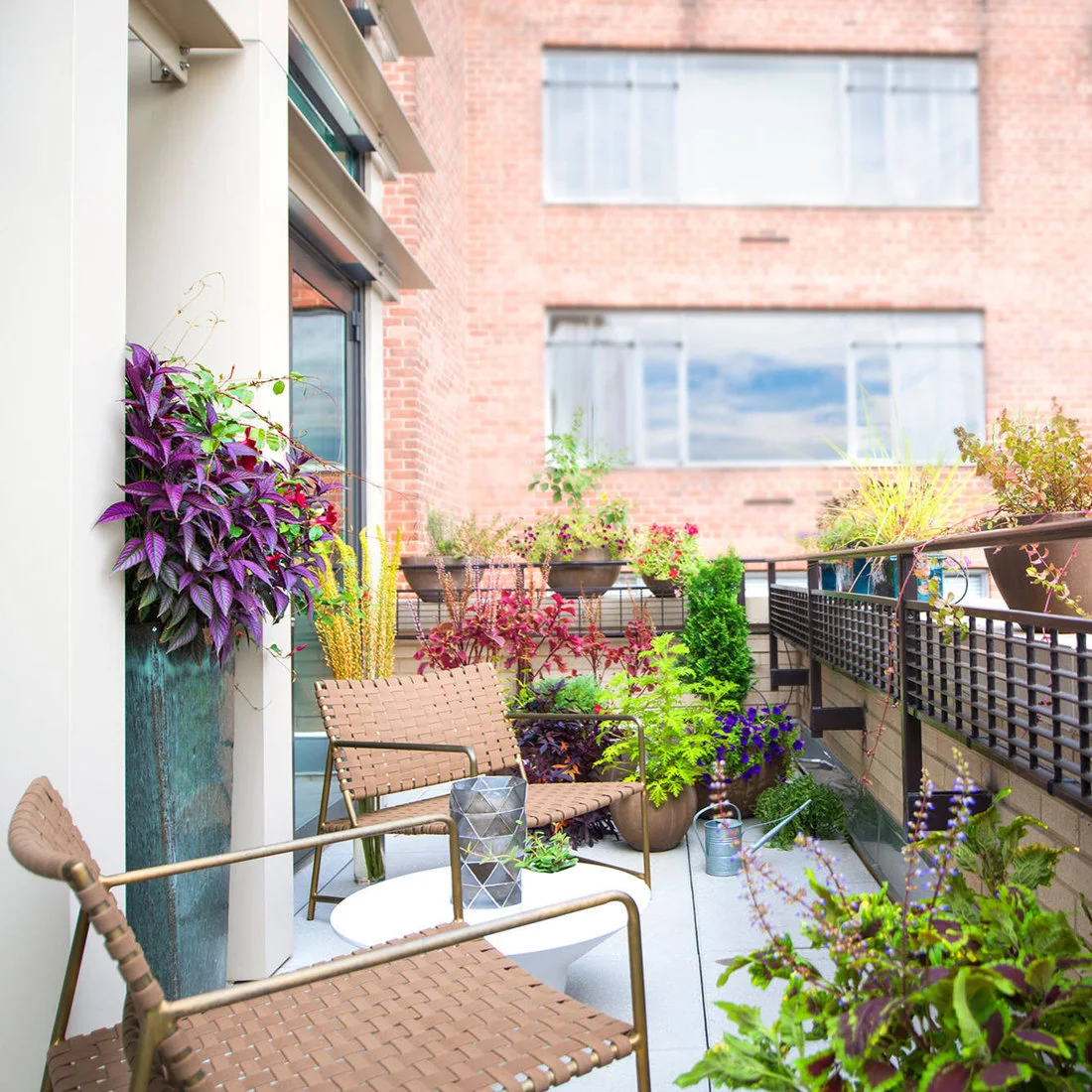
Open-framed woven chairs leave the surrounding plants visible, while a small white table gives the pair a shared surface. The taller planter sits against the wall, with smaller containers following the railing. Purple foliage supplies color without adding several new furniture finishes.
Group plants by their light and watering needs rather than arranging pots by appearance alone. Leave a reachable route for watering and clearing fallen leaves. If the balcony is narrow, use fewer containers with stronger shapes instead of squeezing a pot into every available gap.
IDEA 14 / 20
Bring Planting Up to Seated Eye Level
 SaveSupport Non AI Creator
Image credit: Project: LDa Architecture & Interiors (via Houzz)
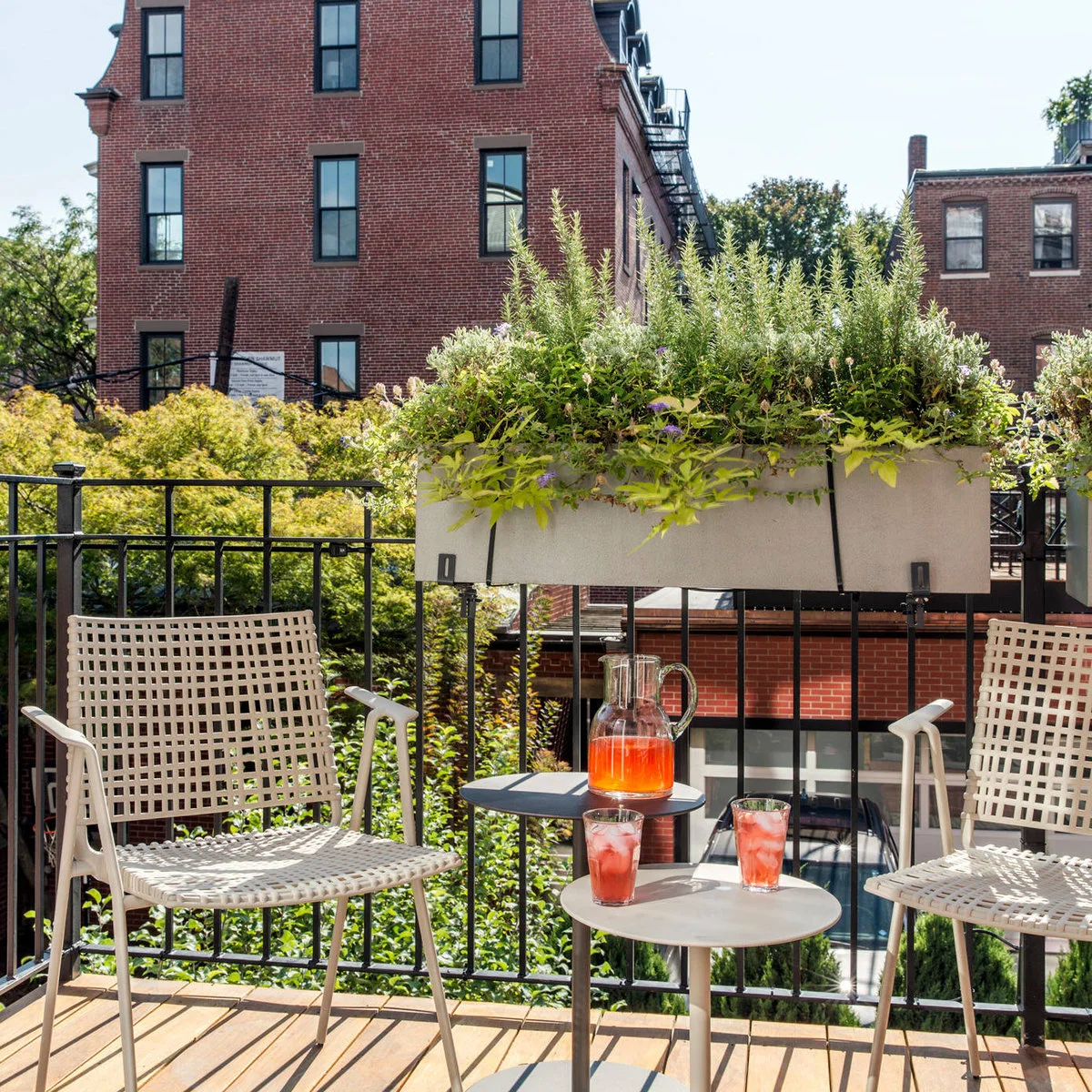
The long planter places a mix of upright and trailing foliage directly behind the chairs. Two small tables create separate places for drinks without a large central piece. The pale furniture stands out against the brick building beyond, helping the planted seating area feel distinct.
A railing planter needs a mounting system approved for the railing, the fully watered weight and local wind exposure. Keep it securely within the permitted area. Similar planting can sit on a suitable floor stand if attachments are restricted, provided the stand does not create a climbing hazard.
IDEA 15 / 20
Choose a Narrow Shared Table Between Two Chairs
 SaveSupport Non AI Creator
Image credit: Project: Infinite Home (via Houzz)
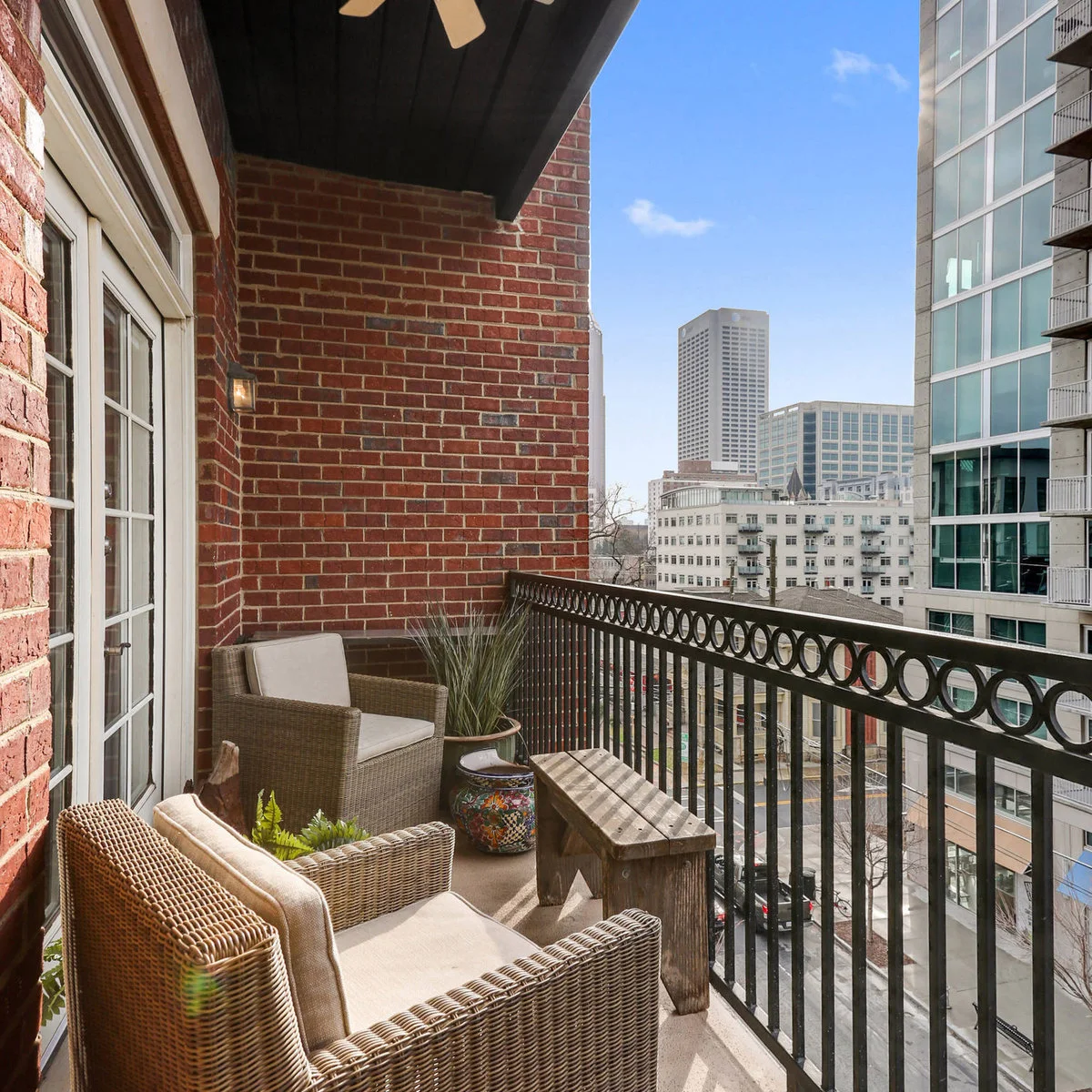
A narrow wooden table fits between the two armchairs, leaving the opposite side of the balcony clearer. Warm woven textures sit comfortably against the brick wall, while a single decorative stool adds a smaller surface beyond. The arrangement does not depend on a large rug.
Measure the table width with both chair arms included, and keep a clear route to the door. Outdoor finishes need periodic care even on a covered balcony. If your furniture is deep, a side table beside one chair may work better than a long piece between the seats.
PART 04
Details that make it easier to use
IDEA 16 / 20
Group Three Pots Instead of Filling the Perimeter
 SaveSupport Non AI Creator
Image credit: Project: Sills Landscape Design (via Houzz)
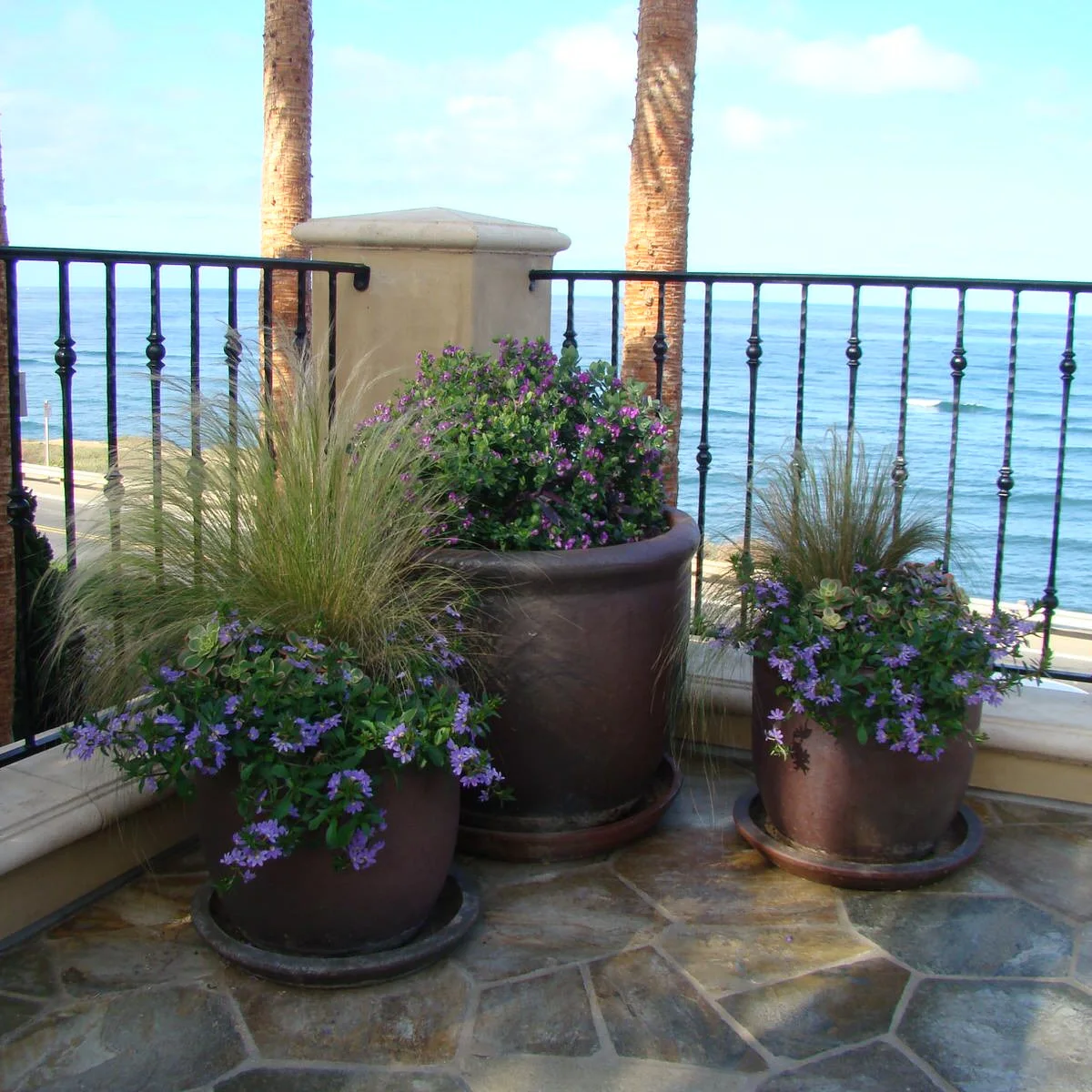
Three dark pots form one concentrated planting group, with the tallest container at the back and lower foliage spreading to either side. Purple flowers repeat across the arrangement. Keeping the pots together makes their scale feel deliberate rather than scattering small objects across the floor.
Plan for the weight of containers, growing medium and water before selecting large pots. Check that saucers will not hold persistent standing water or block drainage. In windy positions, choose suitable plants and stable containers, and keep everything safely inside the balcony’s protected boundary.
IDEA 17 / 20
Use One Strong Chair Color in a Sheltered Corner
 SaveSupport Non AI Creator
Image credit: Project: Aline Architecture inc. (via Houzz)
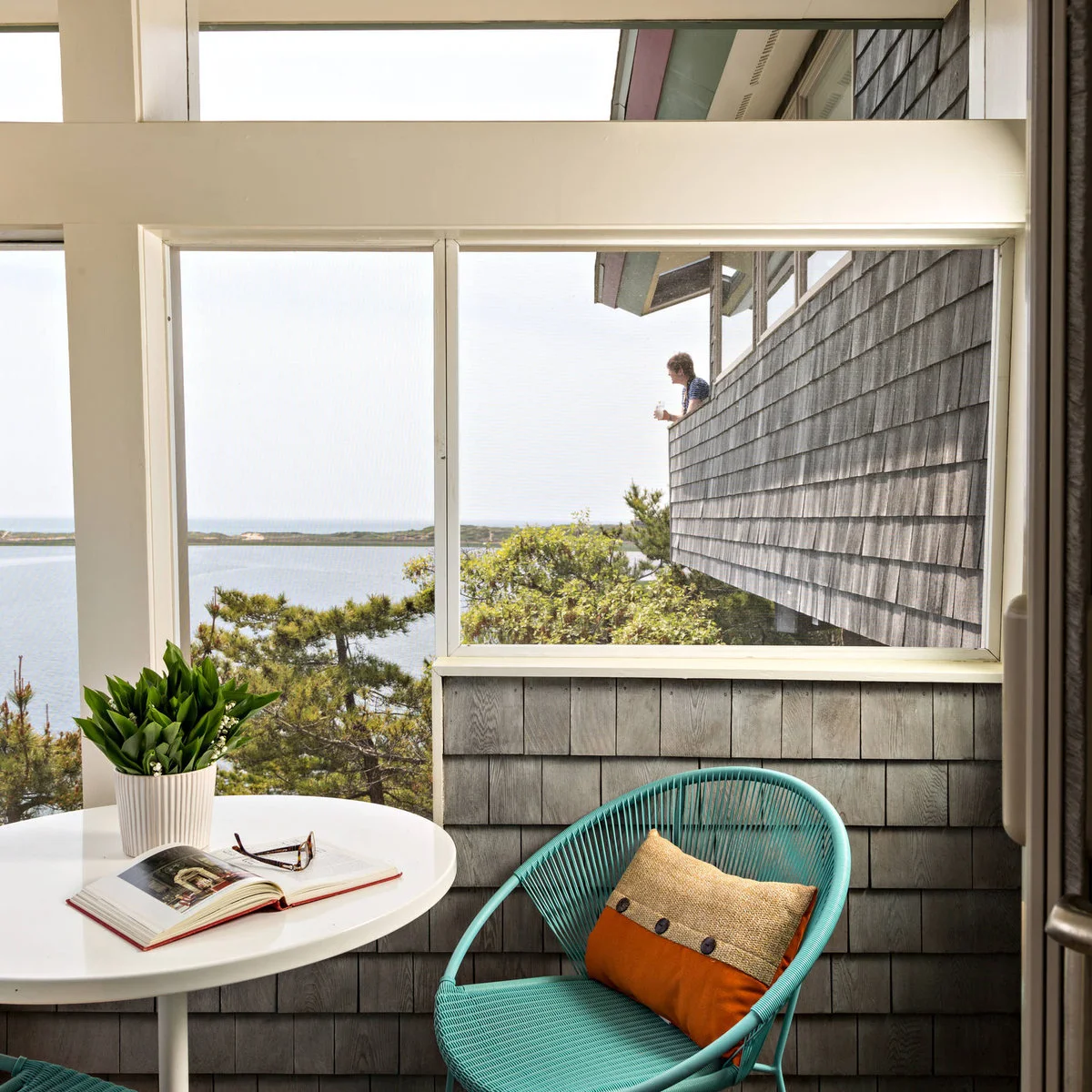
The turquoise chair supplies a clear color accent against pale framing and gray shingles. A simple white table provides room for a book and plant without adding another busy finish. The screened enclosure makes the corner feel sheltered while keeping the outward view visible.
Take the furniture proportion and color relationship from this example rather than assuming every balcony can be screened. Any enclosure needs building approval and an appropriate installation. Choose a table size that leaves room to sit down comfortably, and bring books and delicate objects inside after use.
IDEA 18 / 20
Leave One End Open Around a Pair of Chairs
 SaveSupport Non AI Creator
Image credit: Project: Traci Connell Interiors (via Houzz)
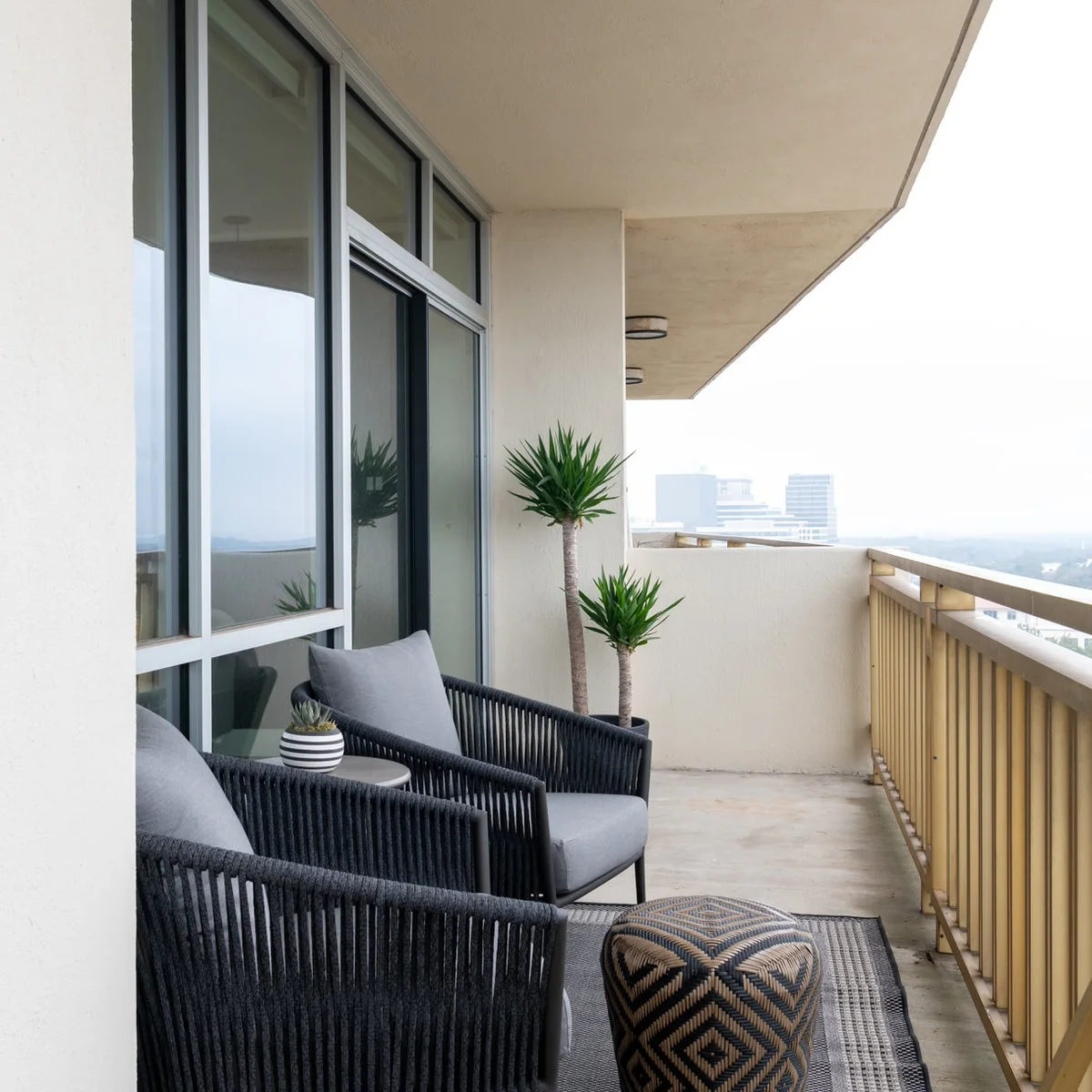
The two corded chairs sit along the wall, with a small table between them and a patterned pouf in front. A tall potted plant defines the far end. Much of the pale floor remains visible, giving the narrow balcony a calmer appearance than a wall-to-wall furniture arrangement.
Choose a movable footrest only if it can be set aside without obstructing the door. Keep loose textiles secure when the balcony is unattended. The same approach works with a single chair: prioritize a comfortable seat, a drink surface and enough clear space to turn around.
IDEA 19 / 20
Concentrate a Leafy Retreat at the End
 SaveSupport Non AI Creator
Image credit: Project: Arciform (via Houzz)
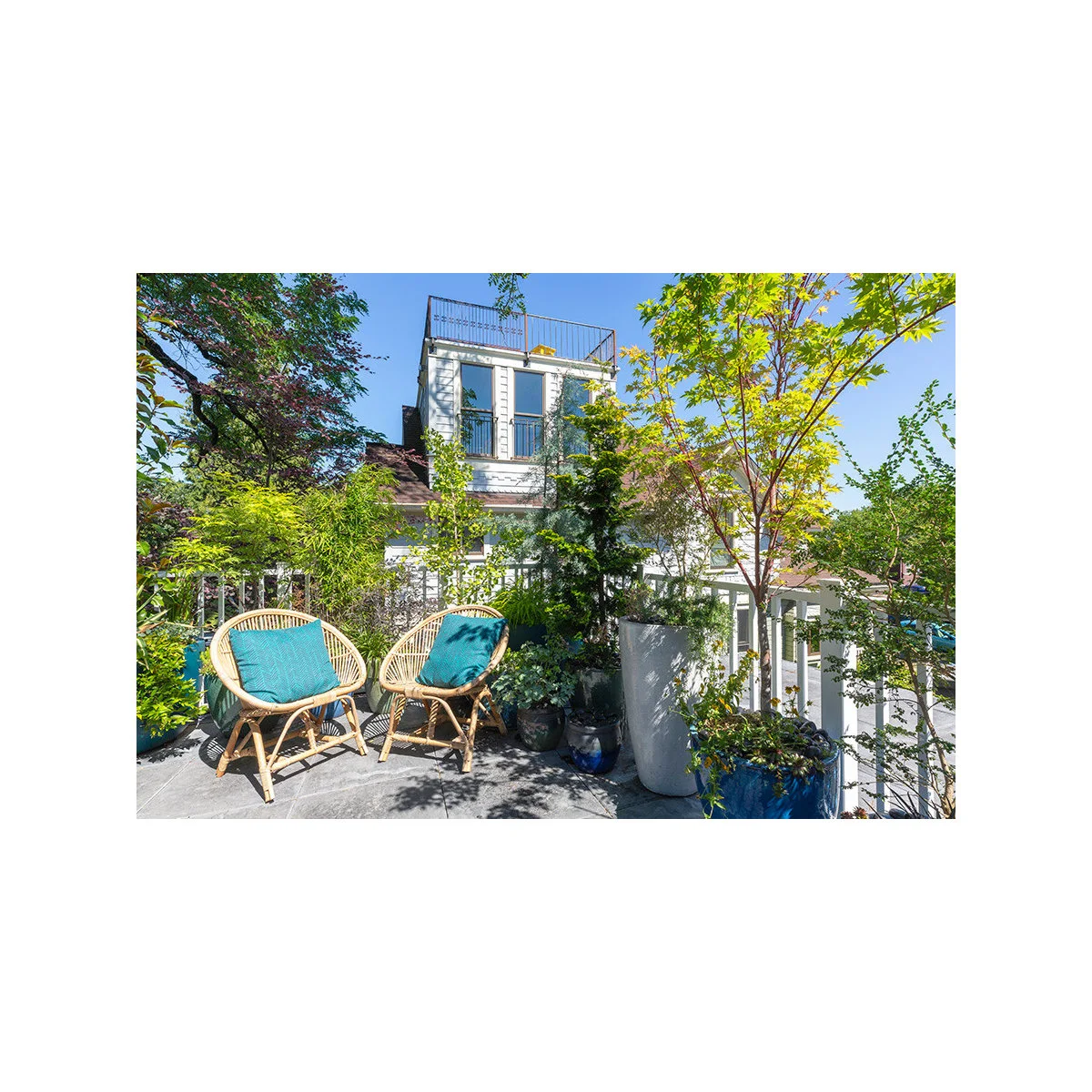
Two round-backed chairs occupy the far corner, surrounded by leafy planters that give the seating a garden-like backdrop. Turquoise cushions separate the chairs from the foliage. The planting is concentrated near the perimeter rather than broken into many tiny pots between the seats.
Tall containers and small trees need a load and wind assessment before placement on a balcony. Check their mature spread so leaves do not block the door or neighboring property. If weight is a constraint, fewer lighter containers and lower planting can create a similar sense of enclosure.
IDEA 20 / 20
Keep the Door Area Bright and Unobstructed
 SaveSupport Non AI Creator
Image credit: Project: Pillar Homes (via Houzz)
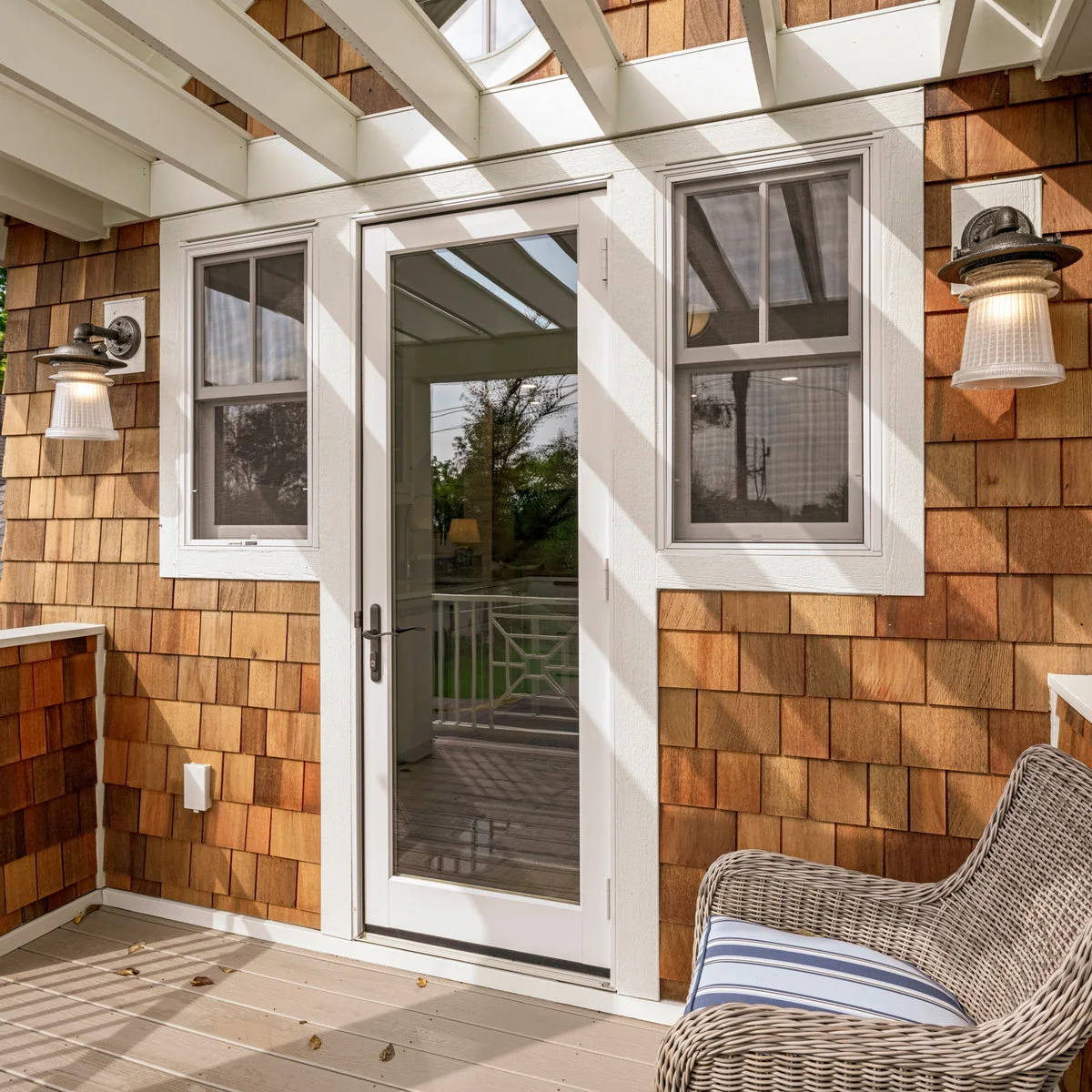
The woven chair sits to one side of the glass door, leaving the entrance easy to identify. White trim and pale overhead framing brighten the timber-clad corner, while a striped cushion adds a modest pattern. The arrangement gives attention to the threshold rather than treating it as leftover space.
Open the door fully when testing furniture positions, and check that the chair remains easy to reach. Keep drains and door tracks clear of leaves. For another small covered arrival area, farmhouse porch ideas offer useful seating and lighting combinations to adapt with outdoor-suitable materials.
BRING IT ALL TOGETHER
Make the balcony fit the way you spend time
Choose the activity first, then fit the furniture around it. Reading may need one comfortable chair; breakfast for two needs a table and enough room to pull out both seats. Mark those footprints on the floor before shopping, including the space used by open doors and anyone carrying a tray.
Finish with a manageable amount of planting and soft furnishings. Check outdoor suitability, storage and drying needs, along with the building’s rules for loads and attachments. A balcony that is easy to step onto and maintain is more likely to become part of your ordinary day.