A useful nightstand puts a light, a glass of water and the things you reach for within easy range. Start with those habits before deciding how much space should go to decorative objects.
These bedside arrangements show different ways to combine drawers, shelves, lighting and personal details. Use the photographs for ideas, then test the height and reach beside your own mattress before choosing a piece.
PART 01
Make Everyday Items Easy to Reach
IDEA 01 / 20
Combine a Drawer with an Open Shelf
 SaveSupport Non AI Creator
Image credit: Project: Amber Interiors (via Houzz)
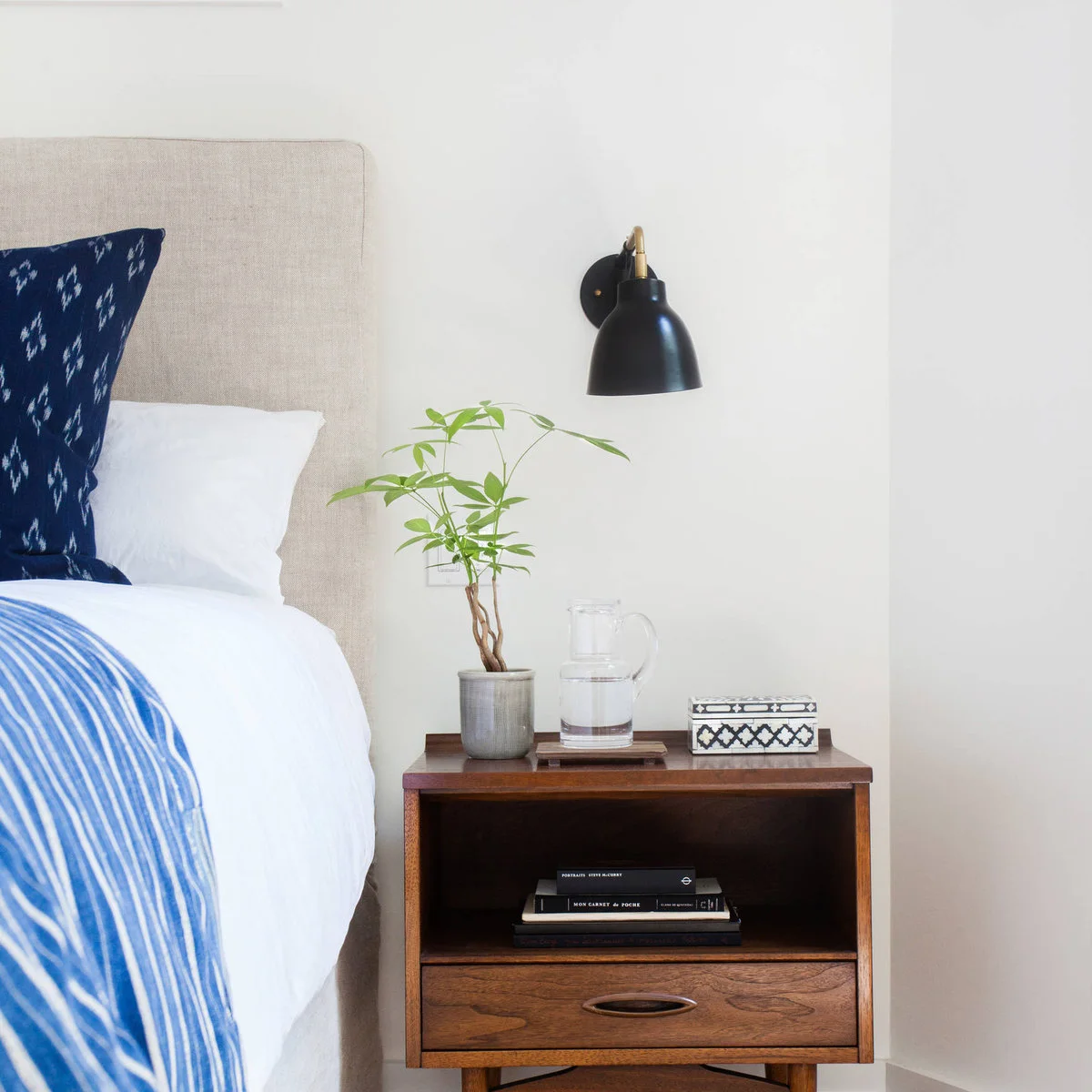
A wood-toned nightstand places a drawer below an open shelf, keeping books visible but small items out of sight. The black wall light leaves more of the top available for a water pitcher and a small container. Blue textiles bring color to the otherwise pale bedside.
Check that you can open the drawer without pulling the duvet aside every time. Use the shelf for the book you are reading rather than an expanding pile. Place water on a suitable tray or coaster, and leave a clear patch of tabletop for glasses or a phone. Compare wall sconce ideas to plan the reading light’s reach and switch position while leaving the tabletop available for everyday items.
IDEA 02 / 20
Move the Light Above the Table
 SaveSupport Non AI Creator
Image credit: Project: Marissa Cramer Interiors (via Houzz)
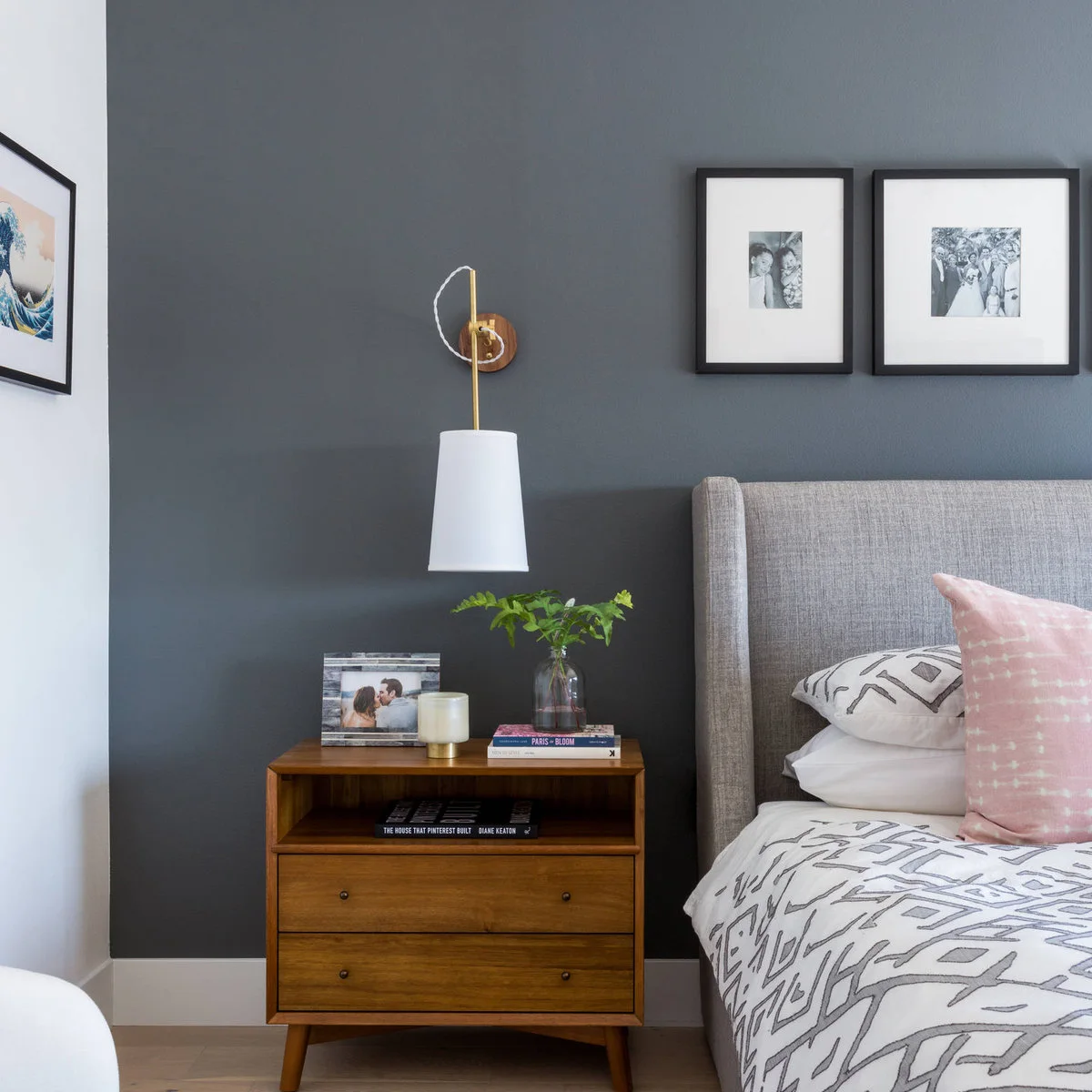
A wall-mounted light hangs above this wood-toned nightstand, leaving the top free of a lamp base. Two drawers provide enclosed storage and a shallow open compartment keeps a book close. Personal photographs connect the bedside arrangement to the framed pictures higher on the wall.
Position the switch and shade for the person using the bed, testing reach while lying down. Keep the hanging fitting clear of pillows and moving arms. Use the drawers to reduce tabletop clutter so the light-free surface remains useful instead of becoming another place to display everything.
IDEA 03 / 20
Choose an Adjustable Reading Lamp
 SaveSupport Non AI Creator
Image credit: Project: Nathalie Priem Photography (via Houzz)
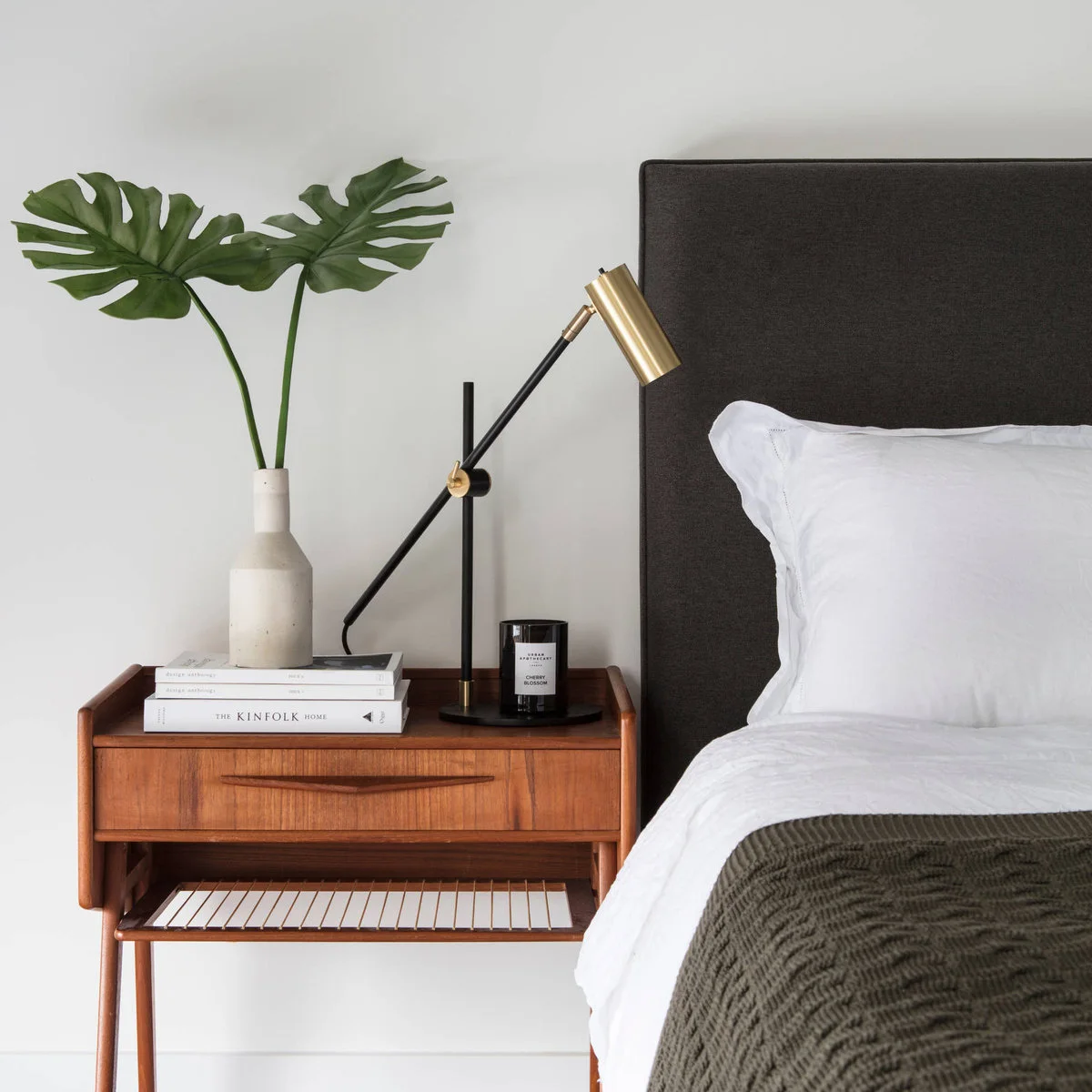
An adjustable black-and-gold lamp stands on this wood-toned nightstand beside a dark upholstered headboard. The drawer keeps small possessions enclosed, while a slatted shelf leaves the lower part open. A small stack of books and a tall vase give the surface different levels.
Test the lamp’s reach and beam from your reading position before deciding where it belongs. Keep the base stable and the shade clear of bedding. Move a tall vase farther from the bed if it interferes with the lamp arm or makes reaching the drawer awkward.
IDEA 04 / 20
Float a Drawer Above the Floor
 SaveSupport Non AI Creator
Image credit: Project: Gingerwood (via Houzz)
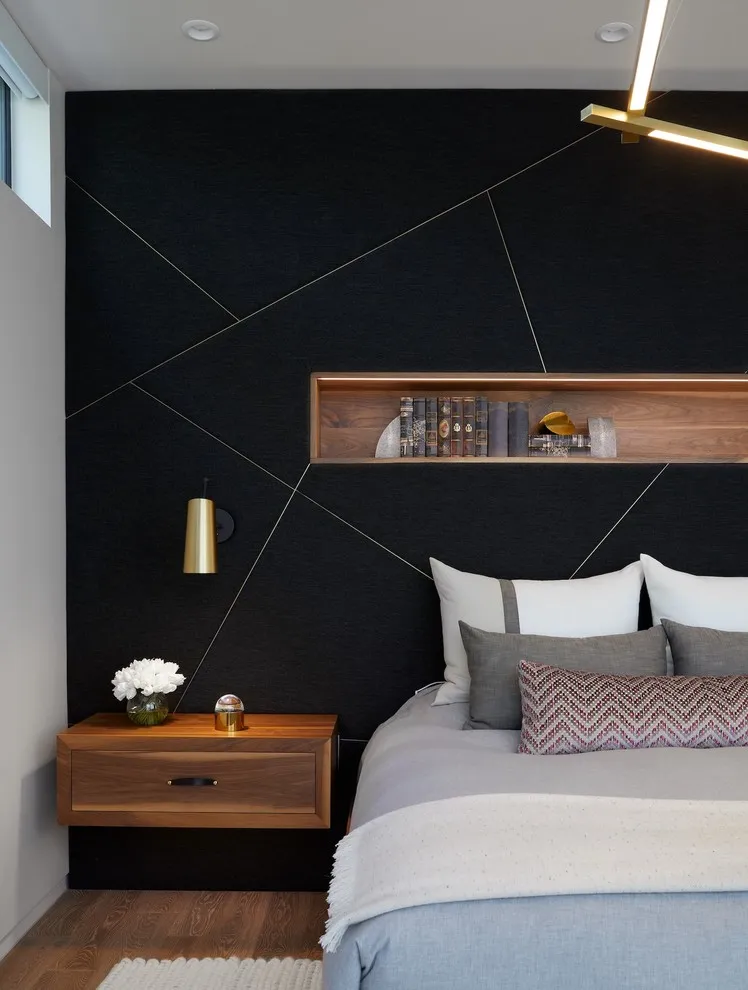
A floating drawer introduces a warm wood tone against this dark bedroom wall. The open floor underneath keeps the bedside visually light, while a reading light sits above the tabletop. A separate recessed shelf higher on the wall holds books without requiring a tall nightstand.
Have the drawer fixed for the wall type and intended load; a floating piece should not be used as a support for getting out of bed. Plan power access before installation. Keep the top for reachable essentials, and avoid choosing the height solely to align with decorative lines on the wall.
IDEA 05 / 20
Use Small Drawers for Small Belongings
 SaveSupport Non AI Creator
Image credit: Project: Tina Ramchandani Creative (via Houzz)
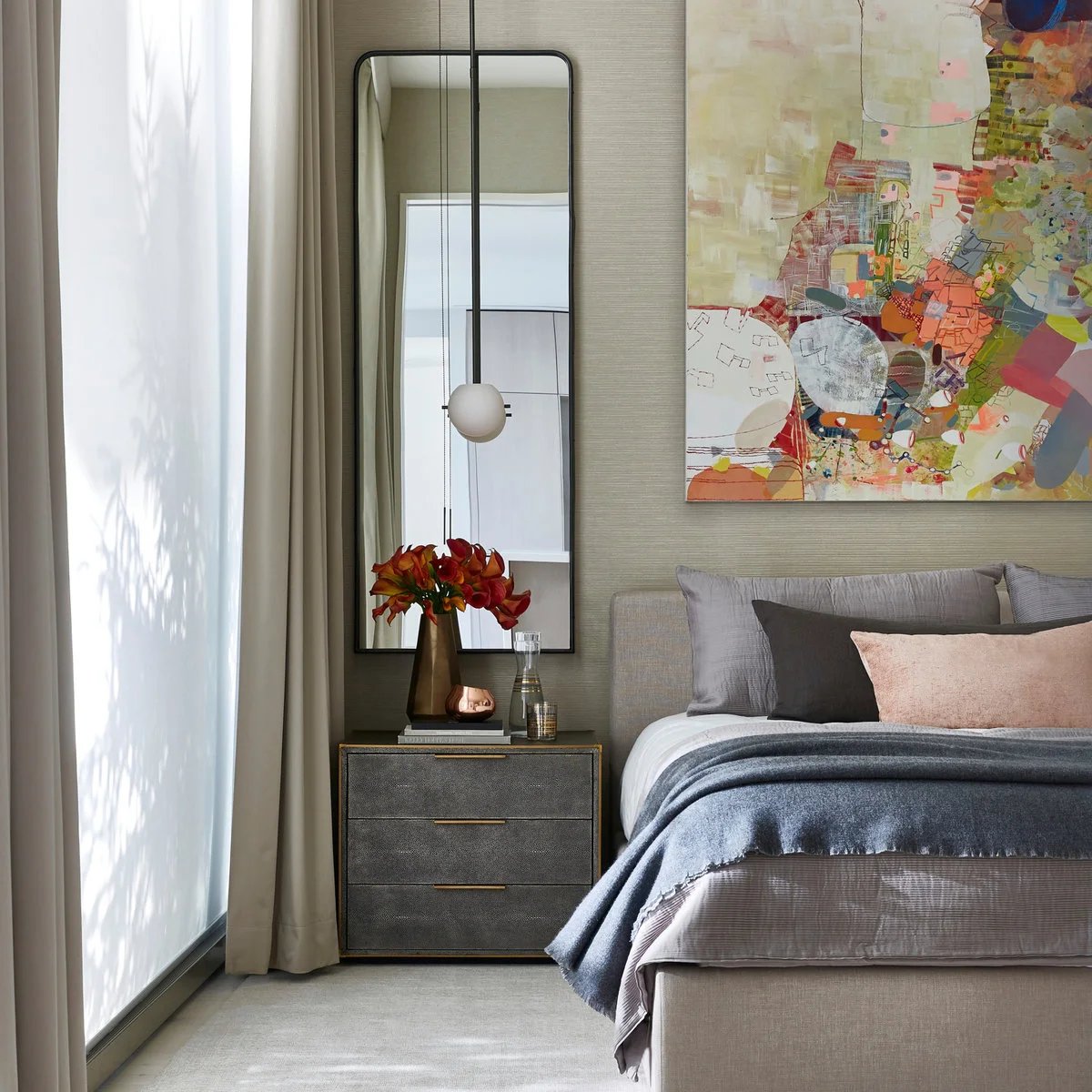
Three shallow drawers provide enclosed storage beside this upholstered bed. Slim gold-colored handles repeat the warm tones of the vase and pendant details. A tall narrow mirror adds height behind the nightstand, while the hanging globe light leaves the surface available for personal objects.
Check the drawer interior rather than assuming three drawers offer more useful storage than one deeper compartment. Small dividers can separate glasses, chargers and other loose items. Secure the mirror appropriately, and keep the pendant away from the curtain path and the edge where someone sits on the bed.
PART 02
Choose the Right Storage
IDEA 06 / 20
Give Open Shelves Matching Storage Boxes
 SaveSupport Non AI Creator
Source: houzz.com
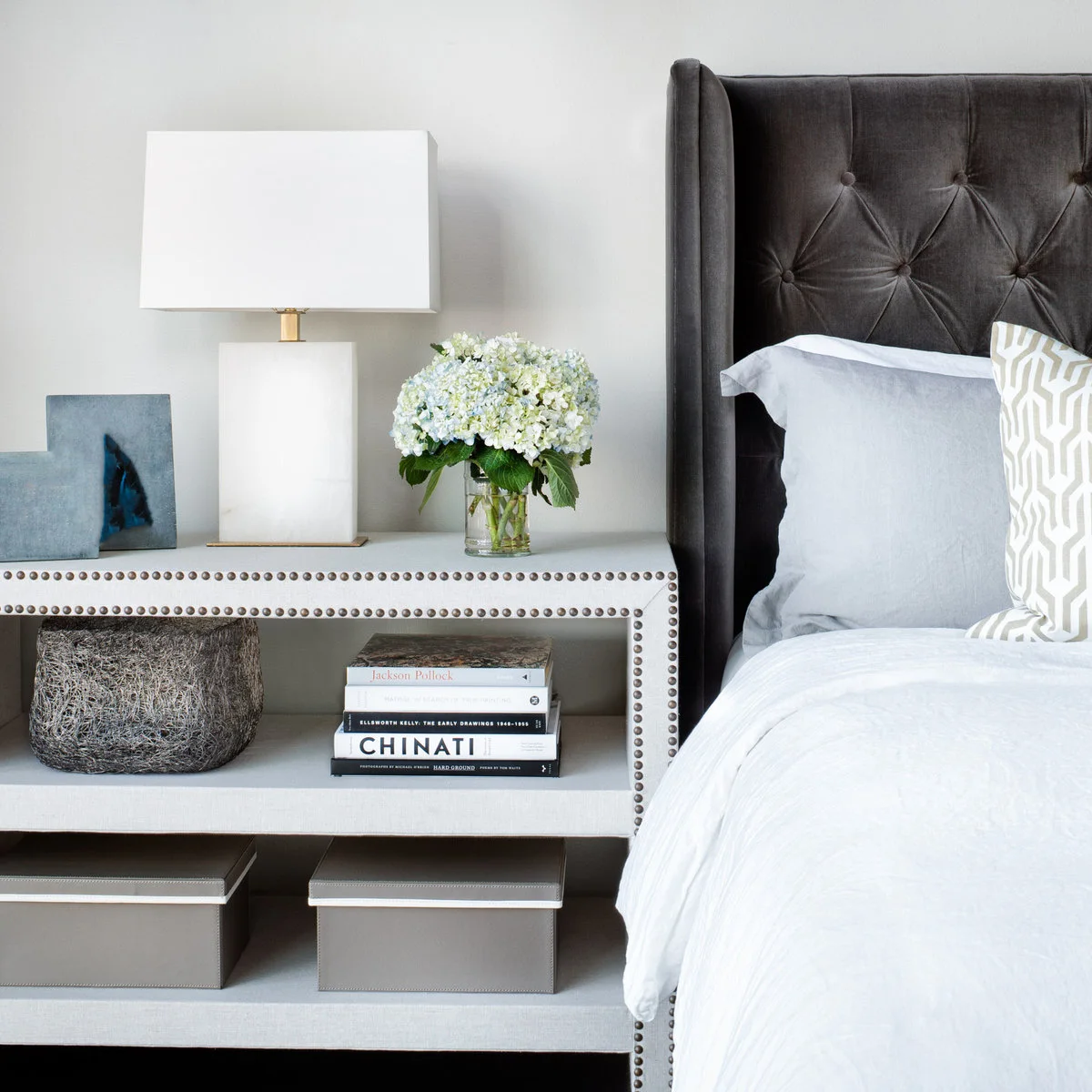
Two matching lidded boxes keep the lower shelf of this open nightstand orderly. Books occupy the middle level, leaving the top for a lamp and flowers. Nailhead edging connects the bedside furniture with the detailed upholstered headboard without requiring a solid bank of drawers.
Use boxes for items you do not need to reach in the dark. Frequently used things belong closer to the mattress level, where you can find them without bending down. Open shelves need regular dusting, so avoid stacking containers so tightly that cleaning requires dismantling the whole arrangement.
IDEA 07 / 20
Let a Simple Frame Show the Wall
 SaveSupport Non AI Creator
Image credit: Project: Niche Interiors (via Houzz)
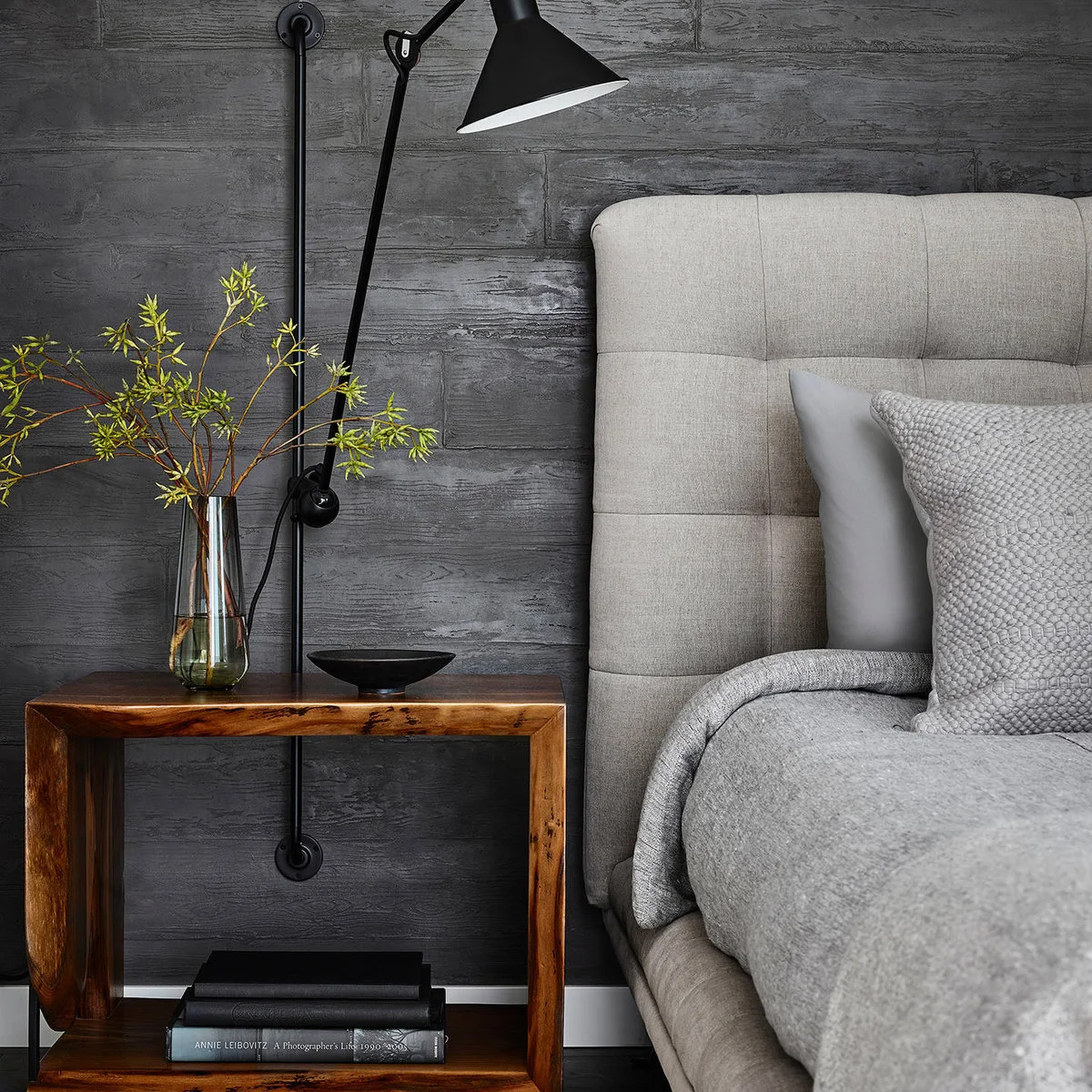
A simple rectangular wood-toned table leaves the textured gray wall visible through its open center. A low stack of books uses the bottom level, while the wall-mounted reading light frees the top. The contrast between the warm frame and cool wall provides most of the bedside detail.
Choose an open frame when you can keep its contents manageable. It offers little concealment, so cables and loose packaging will remain visible. Check the shelf height against your cleaning tools, and keep a water vase stable and clear of the light switch and any electrical connections.
IDEA 08 / 20
Introduce Color with a Small Painted Table
 SaveSupport Non AI Creator
Image credit: Project: JMA INTERIOR DESIGN (via Houzz)
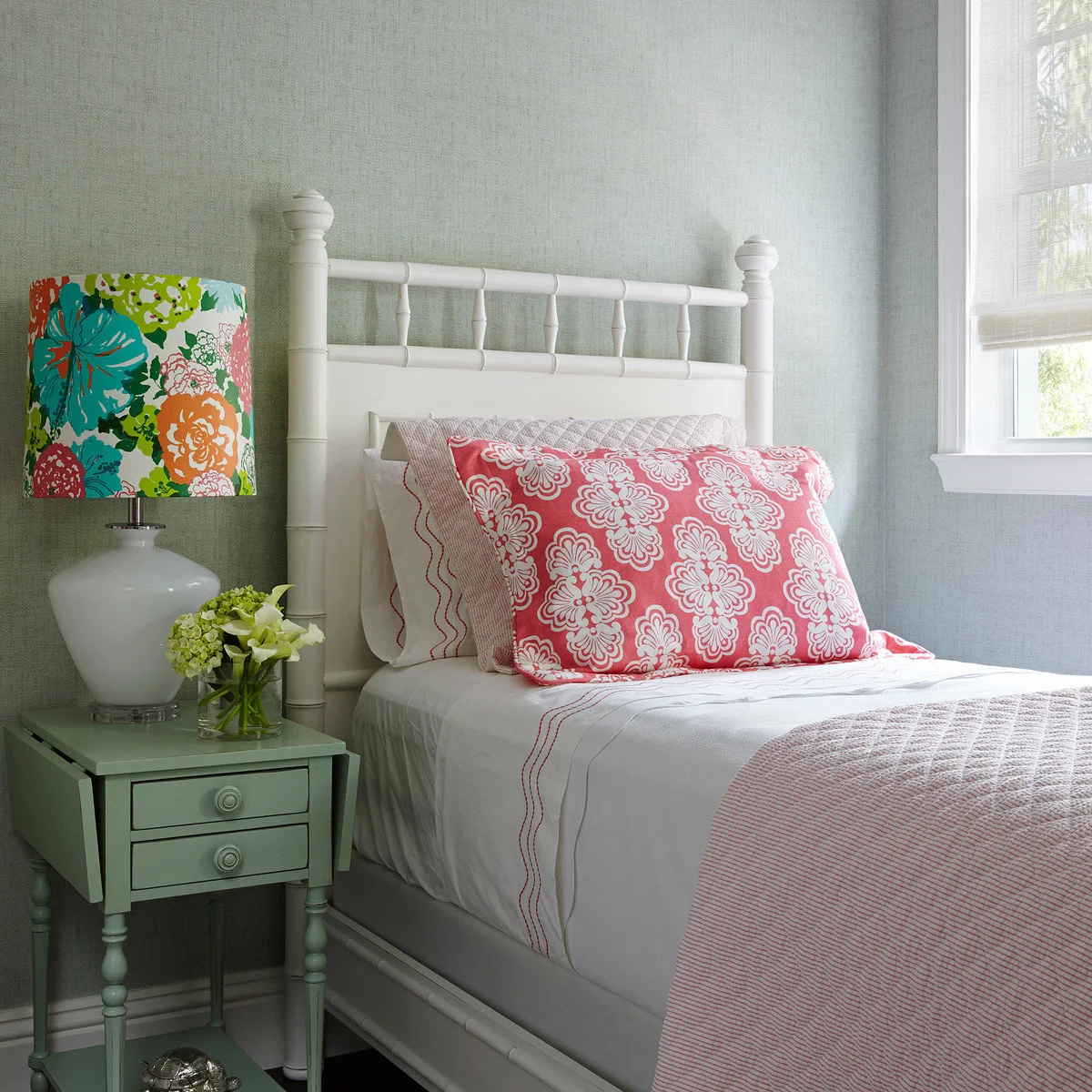
A mint-green nightstand adds a gentle color below the brighter floral lamp shade. Two drawers keep the narrow table useful for small items, while turned legs echo the white bed frame. The compact piece brings detail to the bedside without requiring a large chest of drawers.
A small painted table can be easier to change than a full wall or bed frame. Check the finish is sound and easy to clean before using it beside drinking water. Keep the lamp shade within the table’s footprint where possible so it does not catch someone entering or leaving the bed.
IDEA 09 / 20
Use Mirrored Fronts with a Colorful Wall
 SaveSupport Non AI Creator
Image credit: Project: Brett Design (via Houzz)
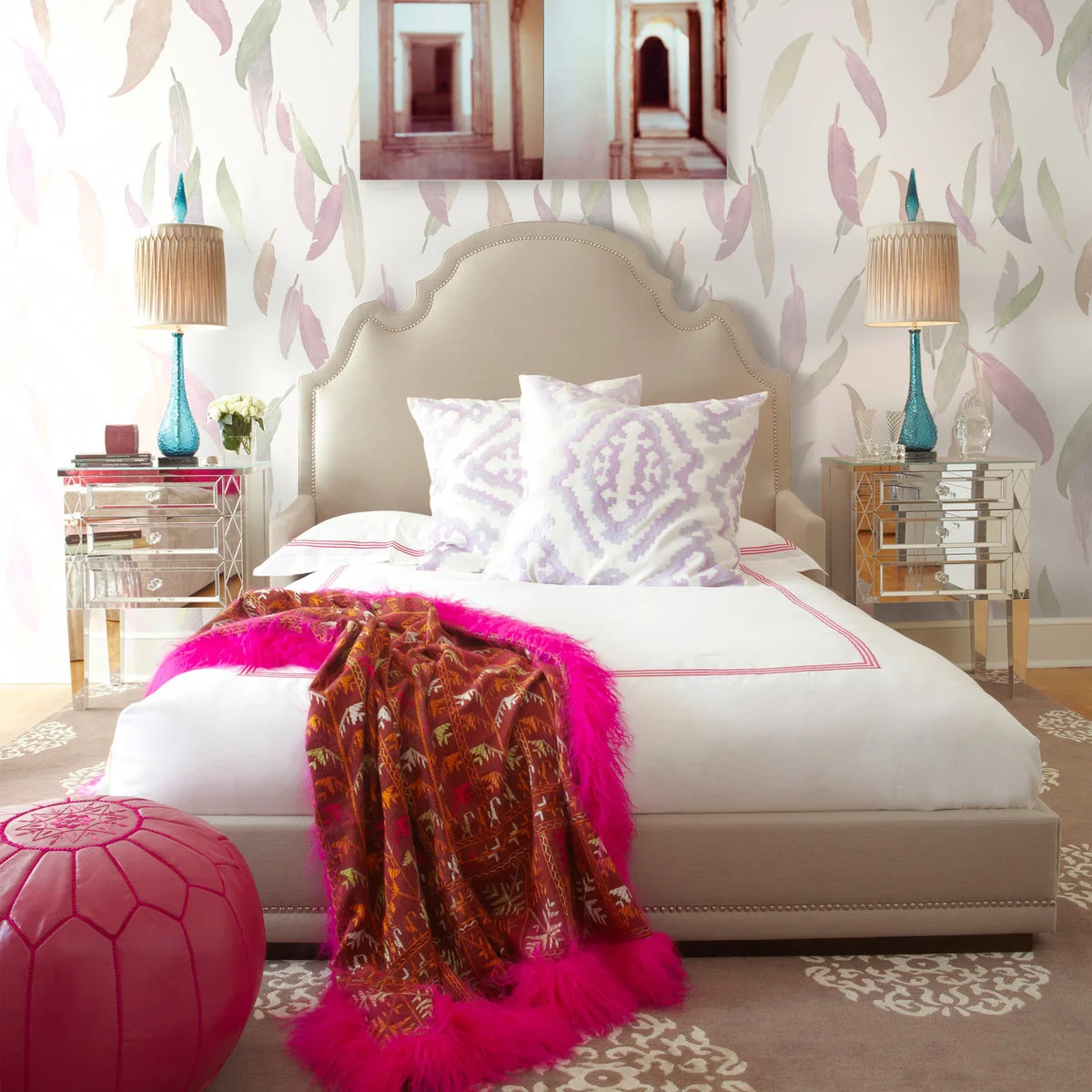
Mirrored drawer fronts reflect light and surrounding colors beside this pale bed. Turquoise lamps rise above the small chests, adding a clear repeated accent against the feather-patterned wall. The matching furniture gives the colorful room a sense of order without making the bedside surfaces solid and dark.
Mirrored fronts show fingerprints and reflect anything left nearby, so consider the everyday cleaning involved. Check that drawer pulls are comfortable and that edges are in good condition. Keep the tops restrained when the wall already carries a large pattern, leaving space for the items used each night.
IDEA 10 / 20
Choose Two Drawers for a Compact Bedside
 SaveSupport Non AI Creator
Image credit: Project: Regan Baker Design Inc. (via Houzz)
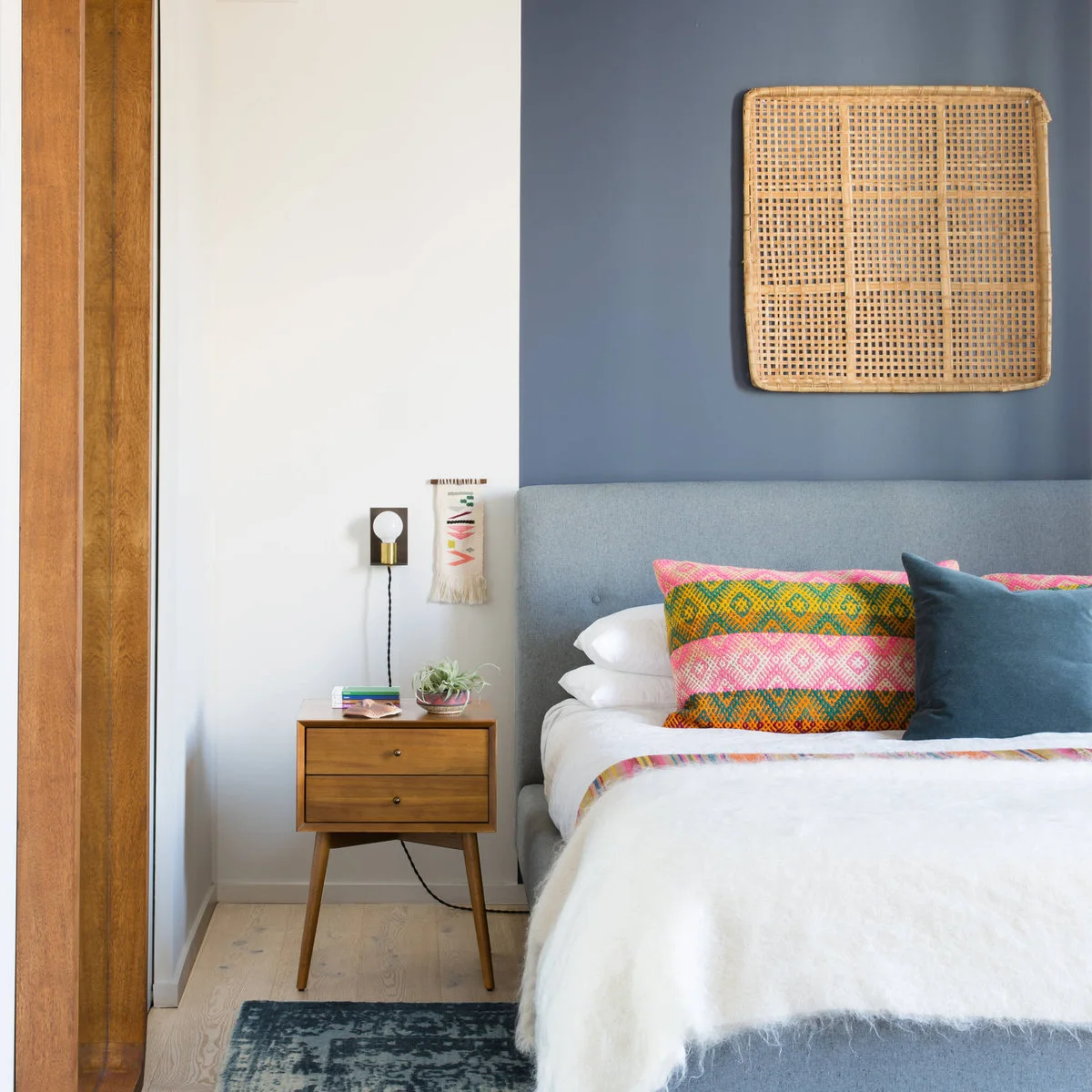
Two drawers make this small wood-toned nightstand useful without stretching far into the narrow bedside space. A wall-mounted bulb leaves the top free for a small book stack and plant. Blue upholstery and colorful cushions keep the simple furniture from feeling bare.
Check the whole footprint, including splayed legs, rather than measuring only the tabletop. Secure the piece as required and keep power cords out of the walking route. A compact table works best when you choose its contents carefully instead of expecting it to hold everything a large dresser would.
PART 03
Fit the Shape to the Space
IDEA 11 / 20
Use a Lower Shelf Beneath a Floating Drawer
 SaveSupport Non AI Creator
Image credit: Project: Capomastro Group (via Houzz)
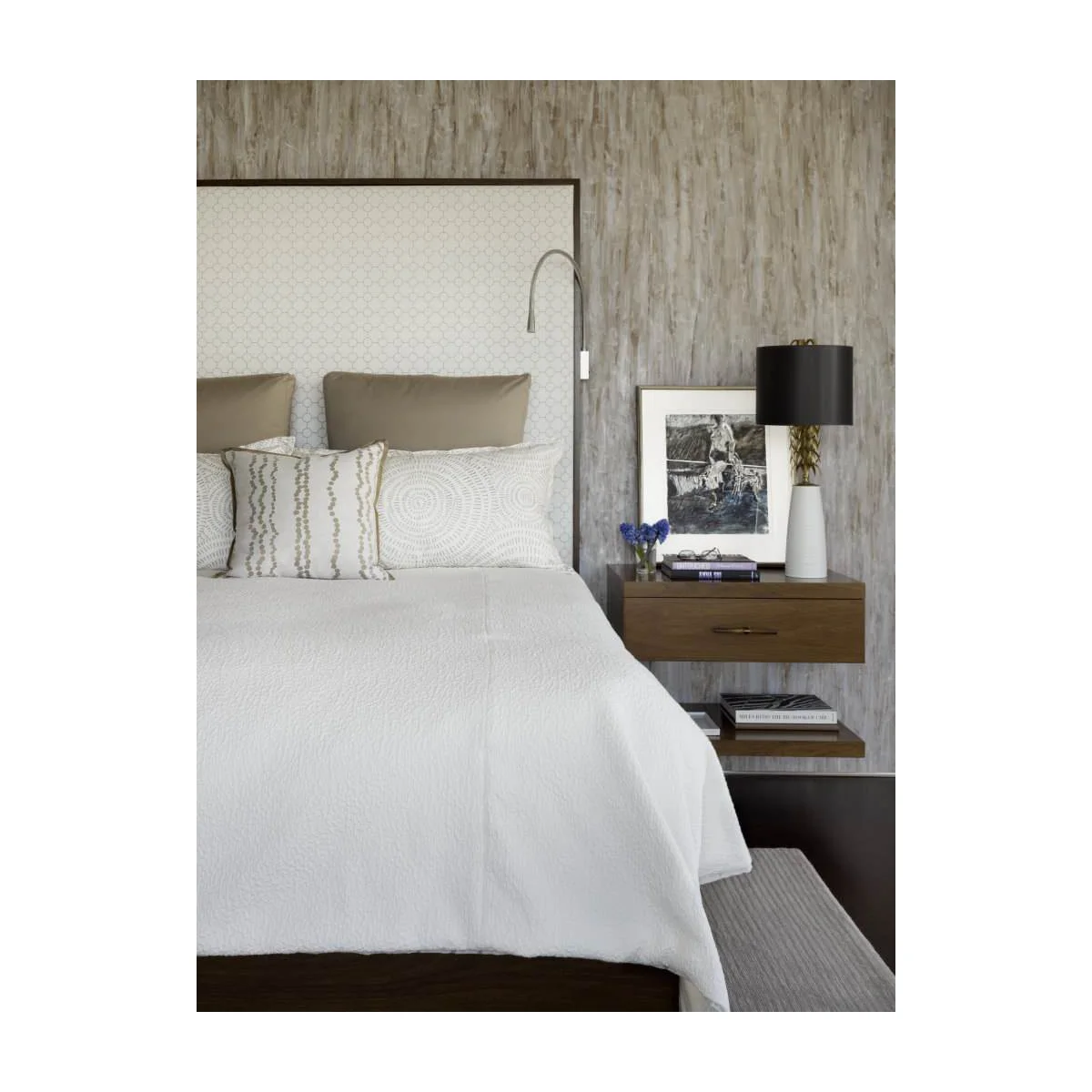
A single drawer appears to float beside the bed, with a separate wood-toned shelf below it for books. The gap between the two keeps the wallpaper visible. A tall lamp and leaning picture add height without requiring the storage itself to rise above the mattress.
Check wall fixing requirements for both pieces, including the weight of books on the shelf. Leave enough space to clean between them and keep connections accessible. Choose the drawer height around bedside reach, then place the lower shelf where it will not catch your feet when getting out of bed.
IDEA 12 / 20
Use a Decorative Wall Bracket as a Small Perch
 SaveSupport Non AI Creator
Image credit: Project: LAURA MILLER Interior Design (via Houzz)
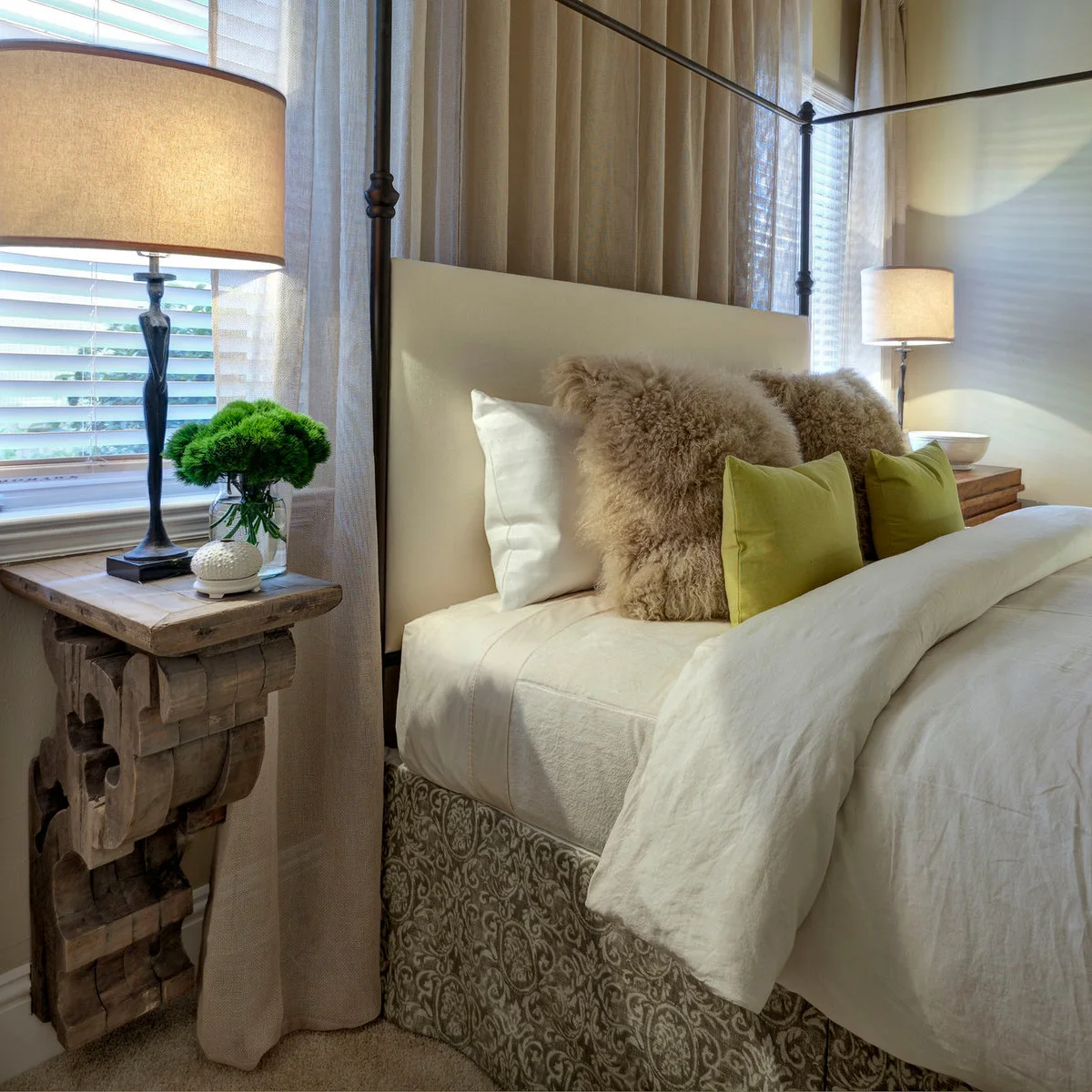
A carved wood-toned bracket supports a small bedside ledge in this room. The open space below keeps the piece visually light, while its substantial texture relates to the bed’s dark frame. A lamp and a few small objects use most of the available top.
Treat this as a compact perch rather than a substitute for enclosed storage. Confirm secure fixing and a suitable load rating before using a heavy lamp. Keep its projection clear of your shoulder and knees, and choose another option if you need reachable storage for many everyday items.
IDEA 13 / 20
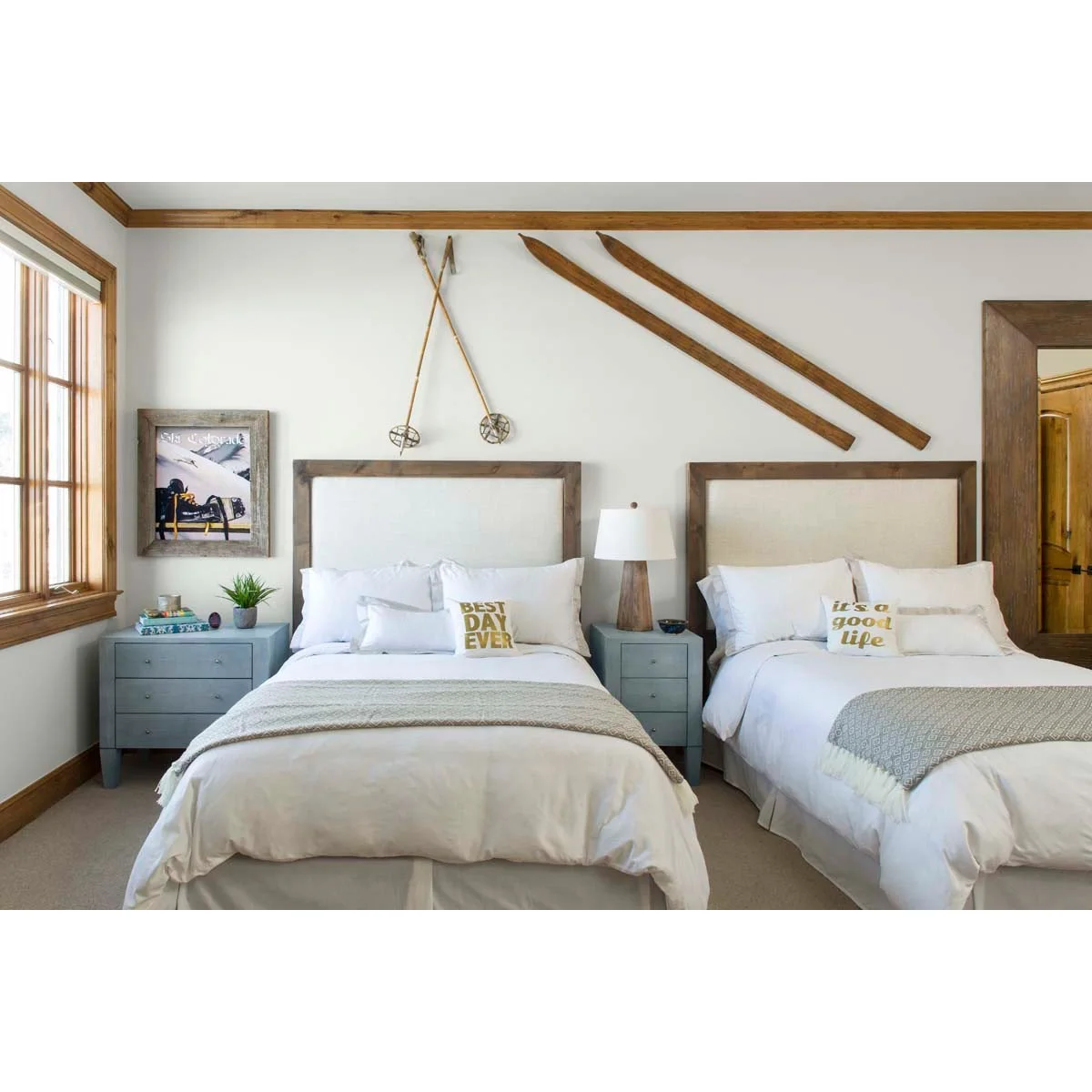
Share a Nightstand Between Twin Beds
 SaveSupport Non AI Creator
Image credit: Project: LKW Design Associates (via Houzz)
A narrow blue chest sits between the two beds, giving them a shared bedside surface. A lamp occupies the center, while a separate matching chest at the outer side provides additional storage. The painted fronts add a soft color alongside the room’s warm wood trim.
If a table is shared, make sure both sleepers can reach the light and have a place for water or glasses. Avoid filling the entire top with a large lamp base. Check drawers can open without hitting either bed, and divide storage clearly if guests will use the room together.
IDEA 14 / 20
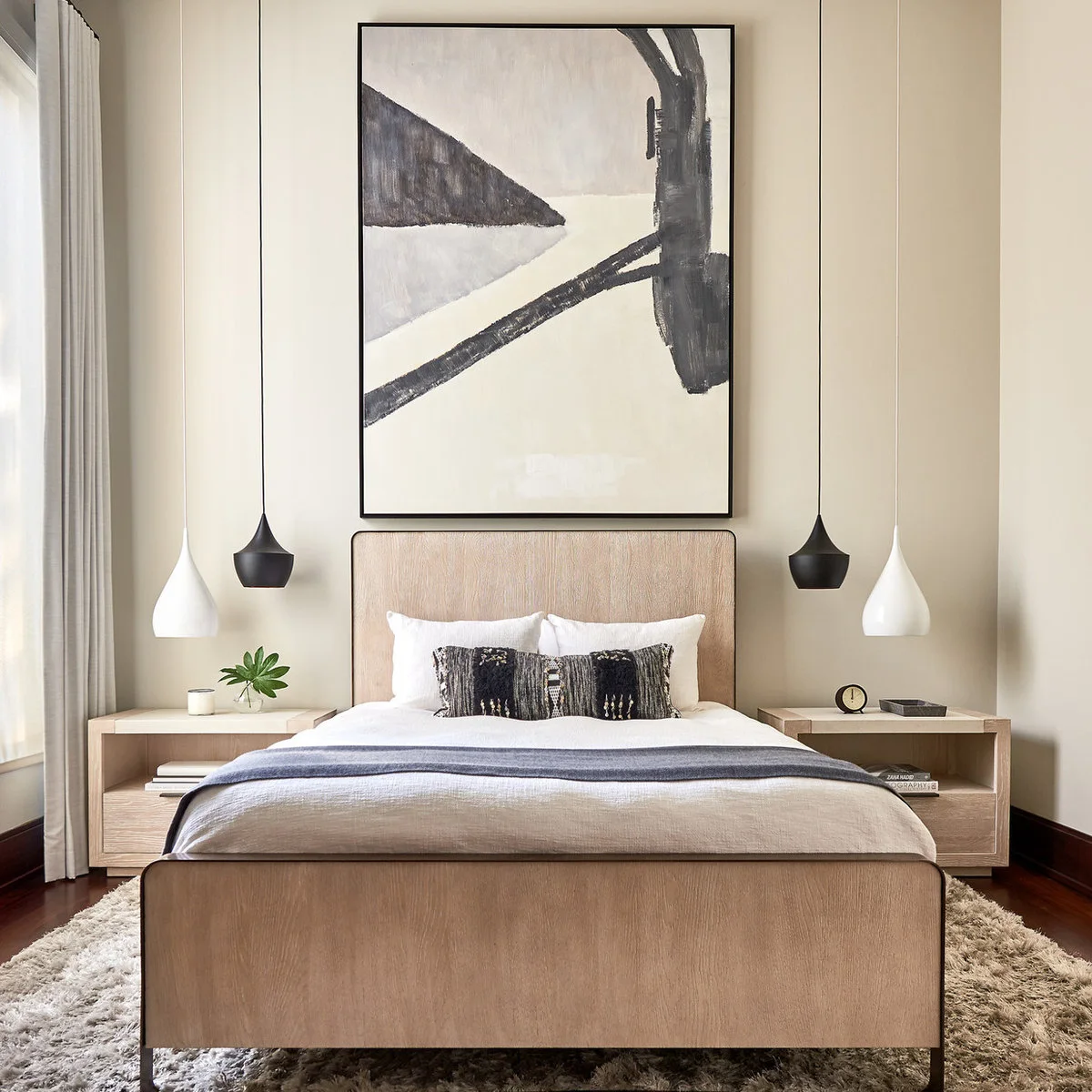
Use Pendants Above Low Nightstands
 SaveSupport Non AI Creator
Image credit: Project: Artistic Interior Design/Amy N. Lee, ASID (via Houzz)
Low wood-toned nightstands flank this pale bed, each combining a drawer with an open shelf. Paired black-and-white pendants provide lighting from above, keeping the tops mostly clear. The repeated light and dark shapes relate to the large artwork without adding complicated furniture fronts.
Plan pendant position and switch access before installation, testing them from both sitting and lying positions. Keep the fittings outside the path of a moving head or pillow. Use the open shelf for a few frequently handled items, with small loose belongings contained in the drawer below.
IDEA 15 / 20
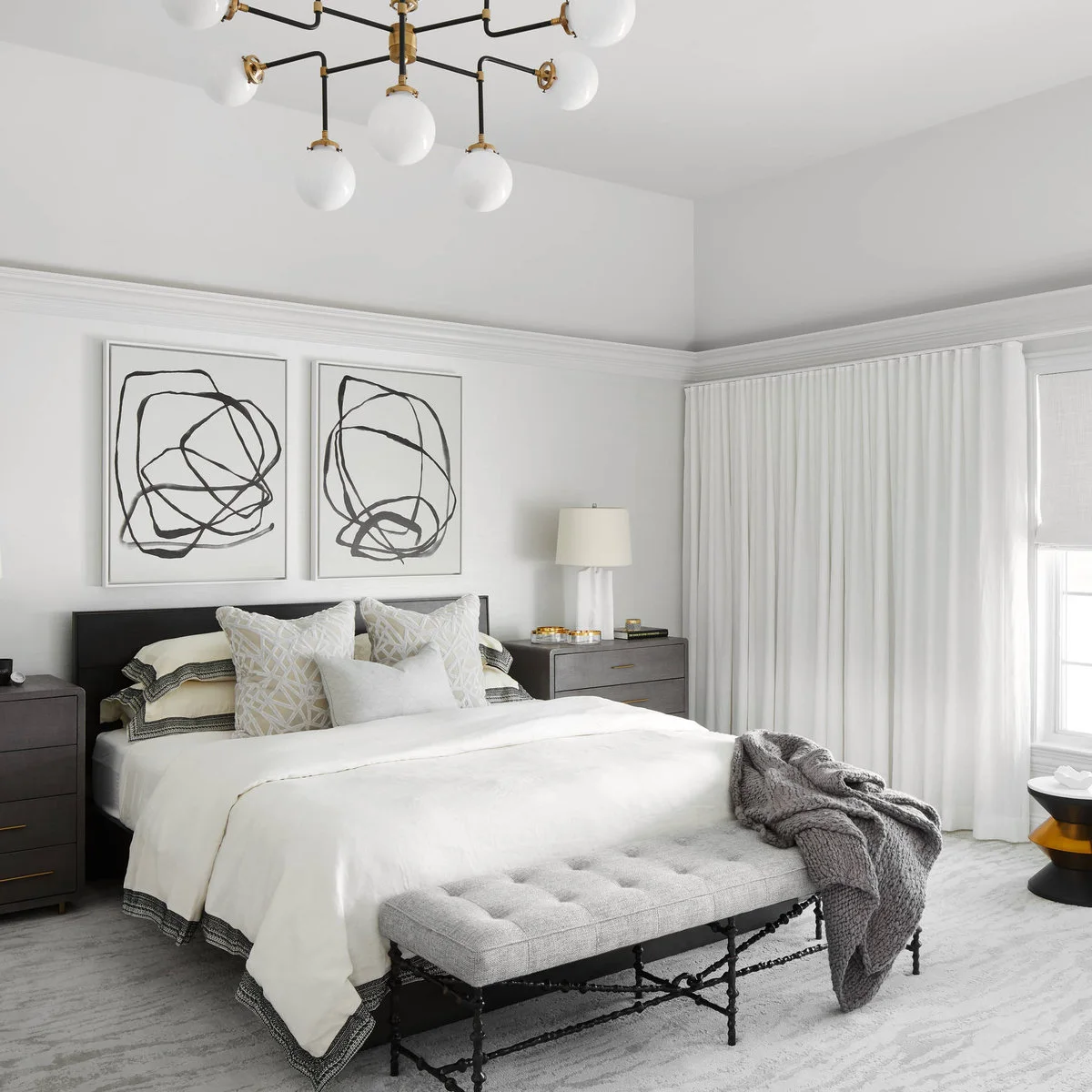
Use Larger Chests When Storage Is Needed
 SaveSupport Non AI Creator
Image credit: Project: EDYTA & CO. INTERIOR DESIGN (via Houzz)
Larger dark chests give this bedroom more enclosed storage than small bedside tables would. Their plain drawer fronts provide a quiet base for the lamps and framed pictures above. White bedding and curtains balance the darker furniture, while the bench supplies a separate place to sit.
Choose a chest only if the room can spare its width and drawer-opening space. Check the top is comfortable to reach from bed rather than assuming a dresser works as a nightstand. Secure the furniture according to its instructions, and keep the upper drawer reserved for things used at bedtime.
PART 04
Finish the Bedside Thoughtfully
IDEA 16 / 20
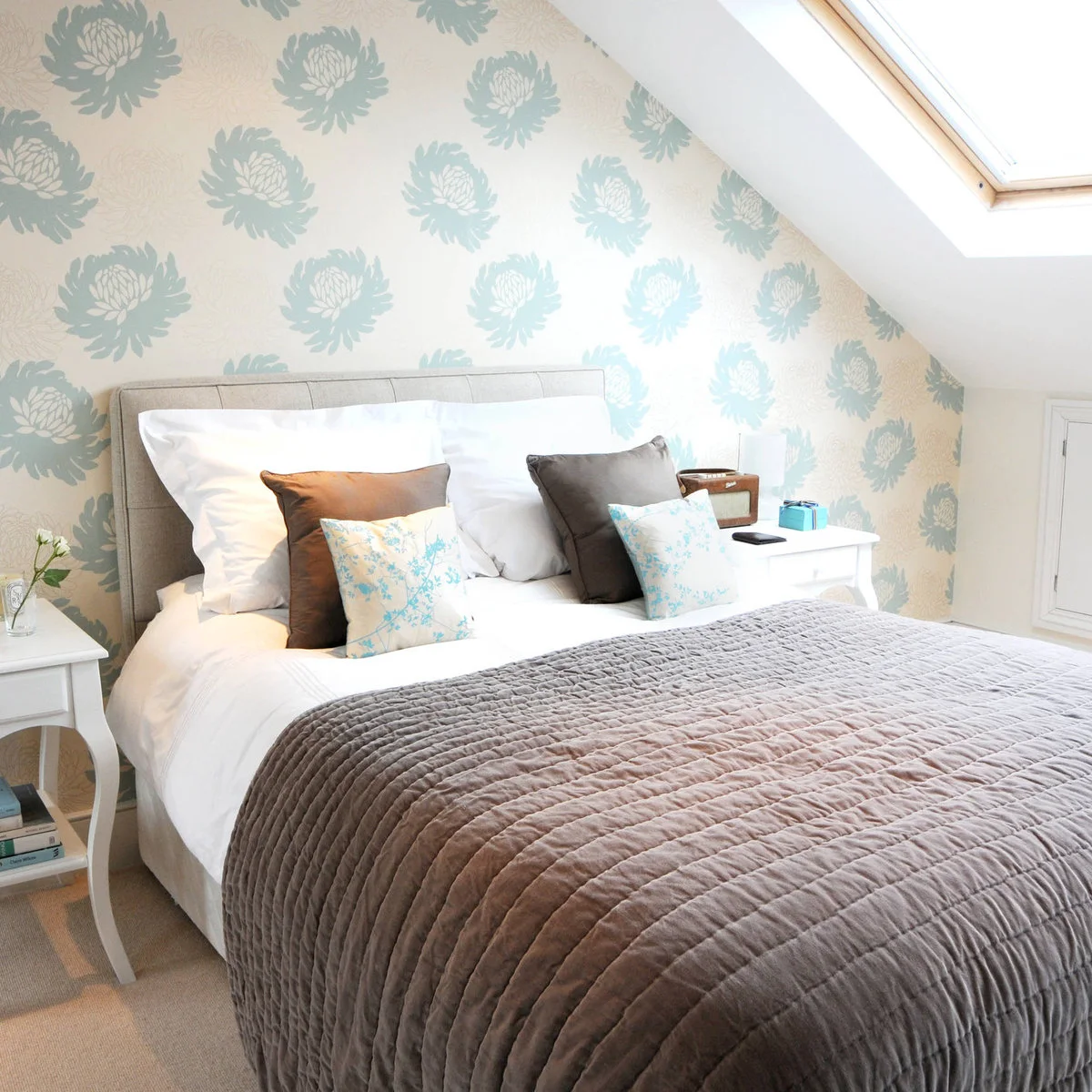
Keep a Table Light Against Patterned Wallpaper
 SaveSupport Non AI Creator
Image credit: Project: pinkgreen Interiors (via Houzz)
A white table with curved legs sits against the floral wallpaper, letting the larger wall pattern remain the main feature. Its lower shelf holds a few books, while a small vase uses the top. The pale finish connects it to the bedding and nearby sloping ceiling.
A simple table can work when you need only a few essentials and already have storage elsewhere. Check that its curves and projecting legs leave a comfortable route beside the mattress. Keep the lower shelf lightly filled, and use a separate reachable light rather than relying on decoration to make the bedside useful.
IDEA 17 / 20
Match Small Tables to a Simple Room
 SaveSupport Non AI Creator
Image credit: Project: Breathe Design Studio (via Houzz)
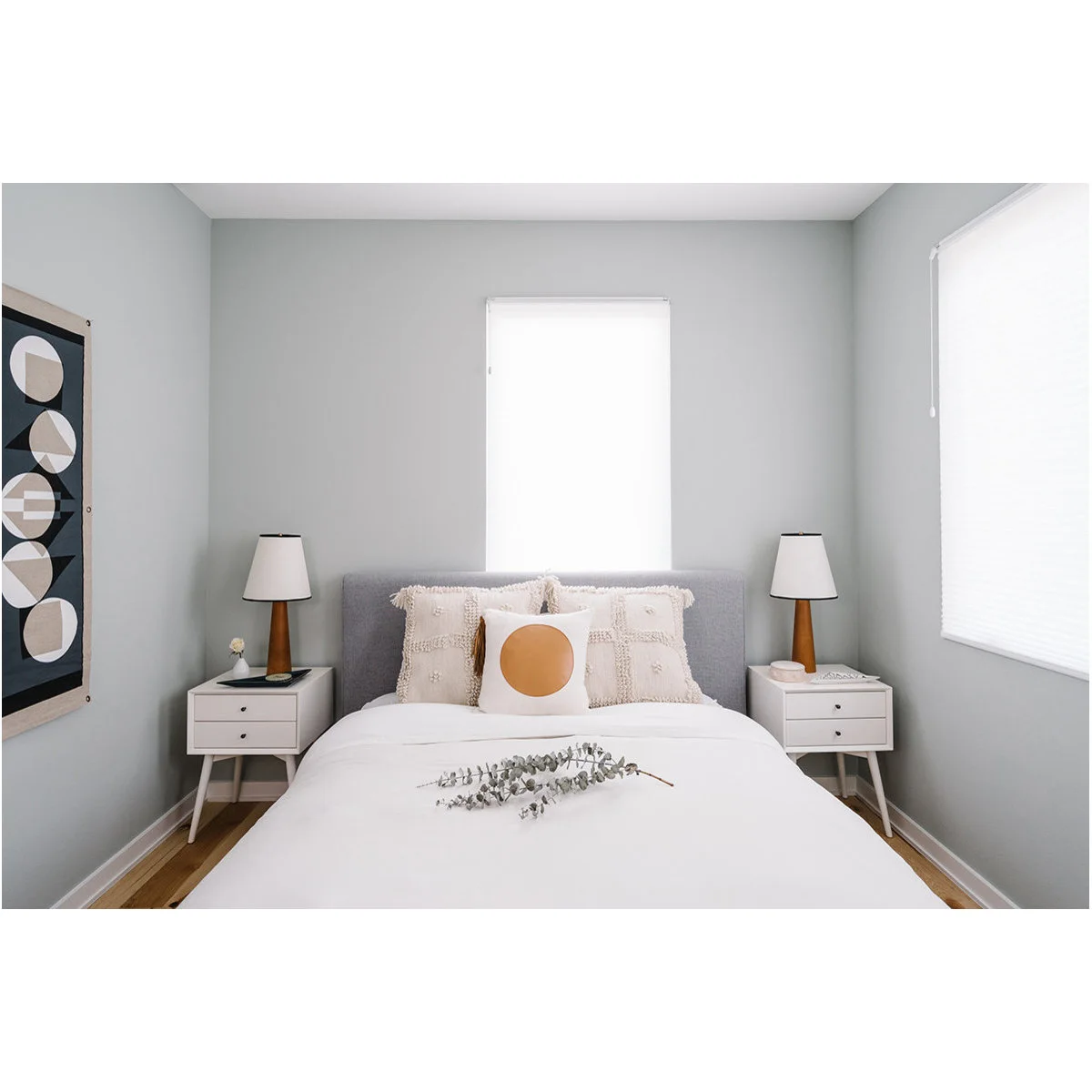
Small white nightstands sit neatly on either side of this bed, their tapered legs leaving the floor visible. Matching lamps provide a warm wood-toned accent against the gray walls. The tabletop arrangements stay simple, keeping the furniture’s everyday purpose clearer than a heavily styled display would.
Measure the space remaining beside the bed after accounting for curtains and baseboards. Compact drawers can hold essentials but need enough room to open fully. Keep lamp switches easy to find and leave a clear spot for each sleeper’s belongings rather than using symmetry as the only guide.
IDEA 18 / 20
Choose Blue Chests for a Pale Room
 SaveSupport Non AI Creator
Image credit: Project: The Anderson Studio of Architecture & Design (via Houzz)
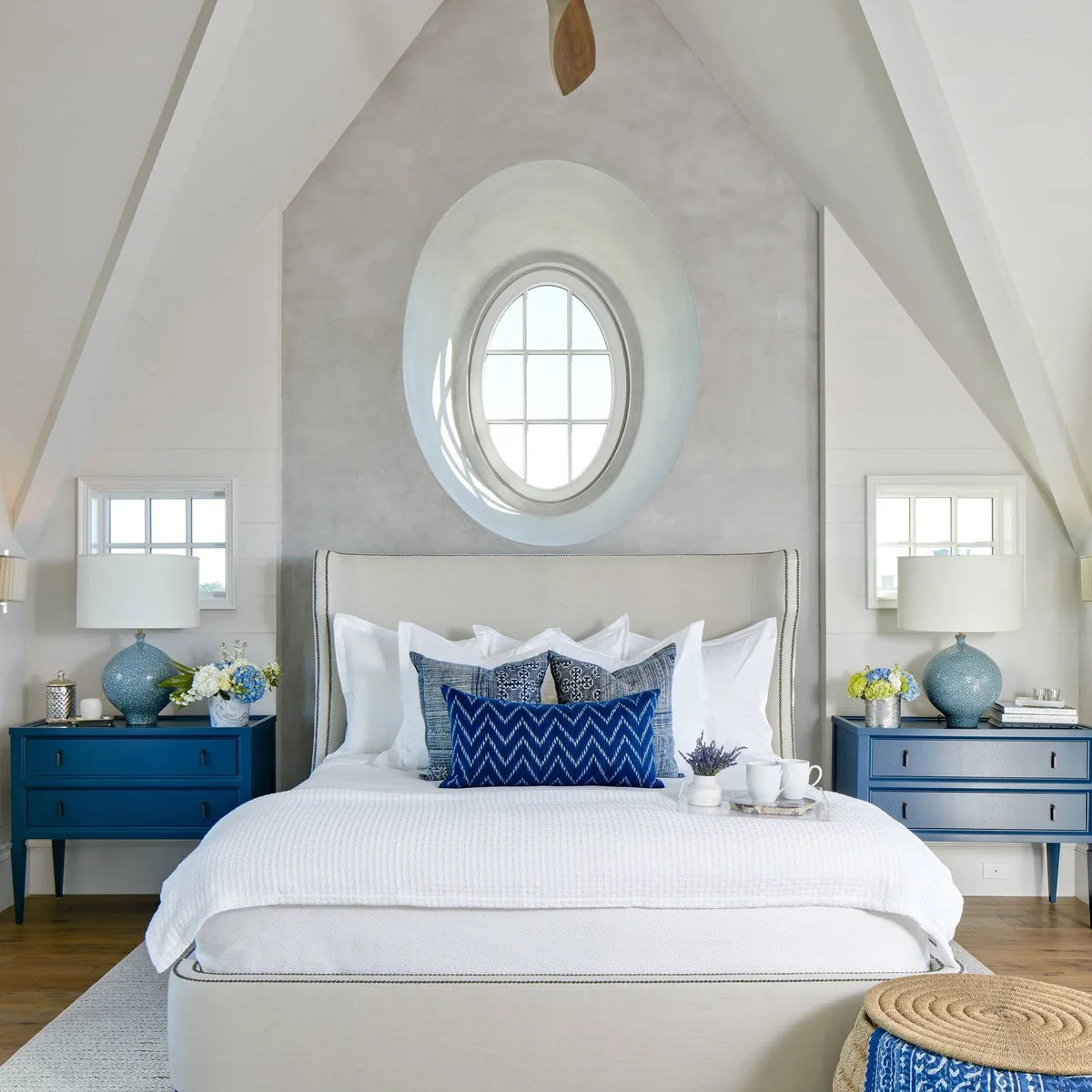
Blue chests provide a strong horizontal accent on both sides of this pale bed. Their two broad drawers offer enclosed storage, while matching blue lamps connect the furniture to the patterned cushions. The pale walls and angled ceiling leave the color concentrated around the bed.
Try the blue paint alongside your actual textiles before committing to a pair of chests. Broad drawers need room to open without brushing the bed frame. Keep flowers and books to a manageable amount so the surfaces still accommodate the things you reach for during the night.
IDEA 19 / 20
Use a Chest to Support a Personal Display
 SaveSupport Non AI Creator
Image credit: Project: K Interiors (via Houzz)
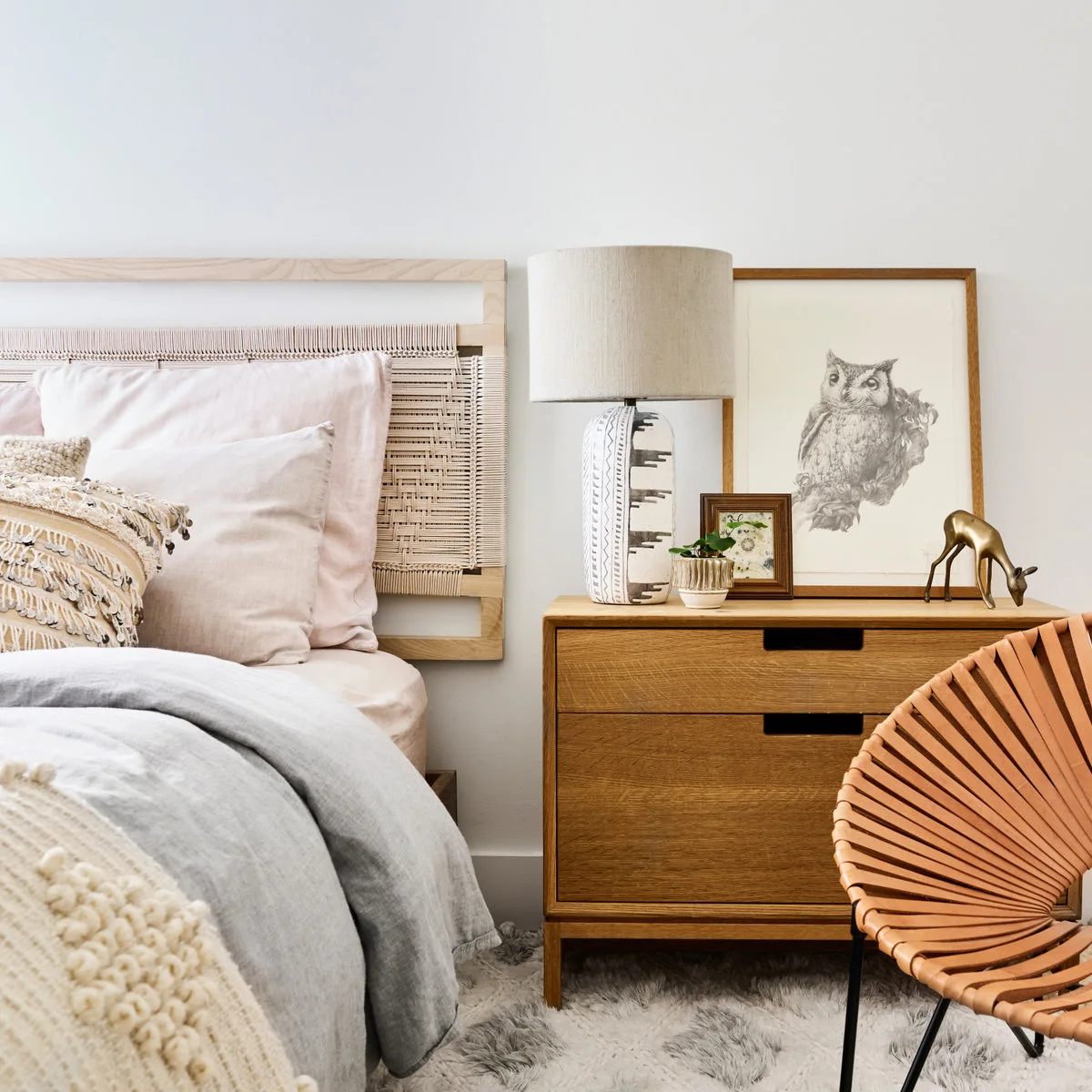
A wood-toned chest provides a broad top for a lamp, owl print and smaller personal objects. The woven headboard and pale textiles repeat its warmth without matching its exact finish. Two large drawers keep the storage enclosed, allowing the top to act as a small display.
Secure leaning artwork where it could be knocked and keep the lamp base stable. Leave room for practical bedside items before arranging the display. A chair placed nearby should not prevent the drawers from opening or turn the bedside into a narrow gap that is awkward to clean.
IDEA 20 / 20
Balance a Detailed Lamp with a Plain Table
 SaveSupport Non AI Creator
Image credit: Project: Casabella Interiors (via Houzz)
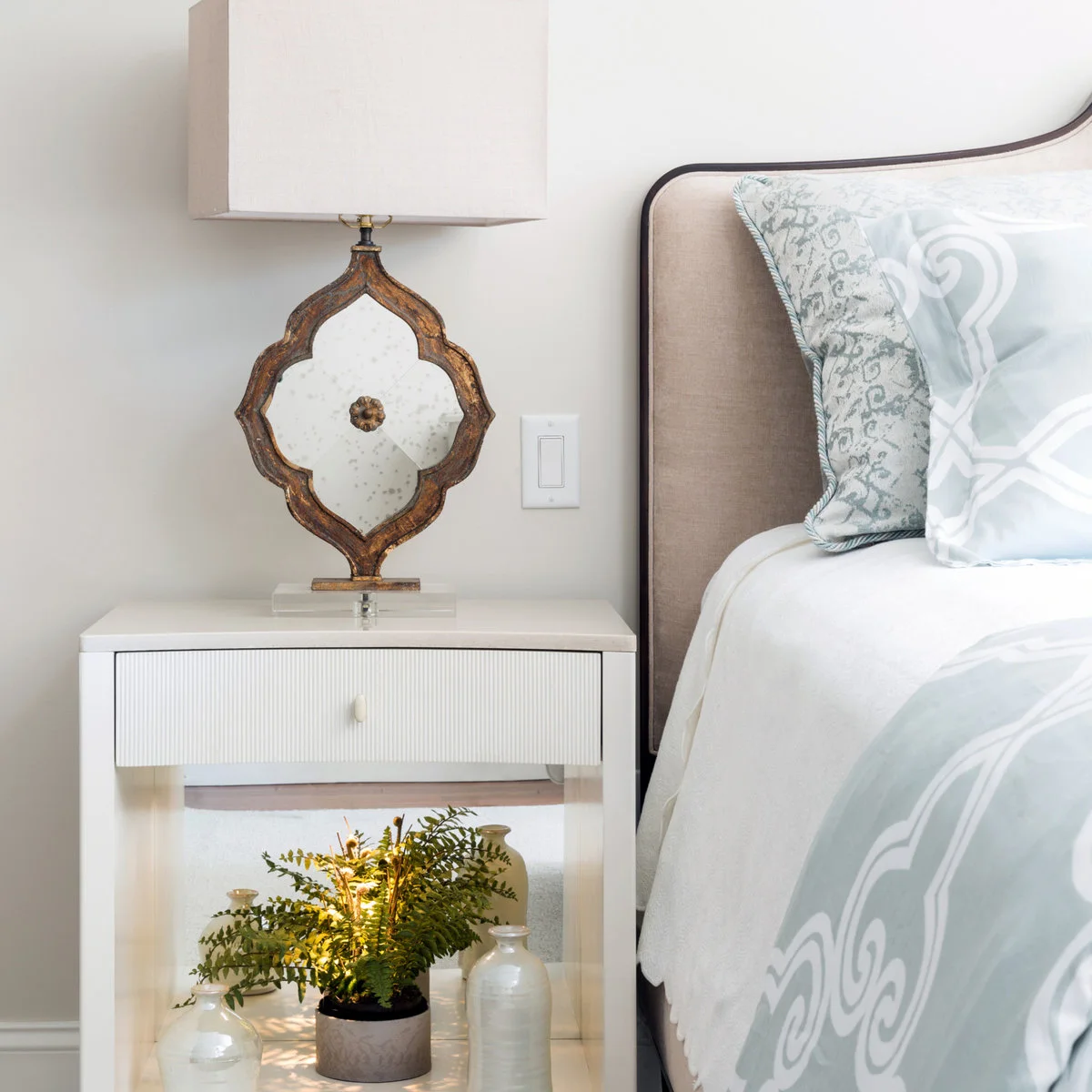
A white nightstand with one finely ribbed drawer gives the decorative lamp a quiet base. The open lower section repeats the table’s pale finish, while soft blue bedding keeps the surrounding colors gentle. The lamp supplies most of the detail rather than another patterned cabinet front.
Check how much surface the lamp occupies before choosing decorative objects for the remaining space. Keep the open section easy to clean instead of filling it with fragile things. If you need enclosed storage for more than a few essentials, choose deeper or additional drawers rather than relying on the display space below.
BRING IT ALL TOGETHER
Make Room for What You Reach For
Choose a nightstand with enough usable surface and storage for your habits. Test it beside the mattress, with a drawer open and the lamp in place, before deciding that its size is right.
Keep the final arrangement easy to live with. One personal object and a useful light can be enough when they leave room for water, reading glasses and a book.