A coastal bedroom can suggest the shore through pale surfaces, blue or green accents and a few textured pieces without filling the room with nautical ornaments. Comfortable bedding, useful bedside storage and window coverings that suit your privacy still need to come first.
These rooms include warmer pink and coral palettes as well as familiar blue and white. Look at the furniture, textiles and clear space around each bed, then borrow a few details that suit your own room rather than trying to reproduce a holiday setting exactly.
PART 01
Build a relaxed coastal color palette
IDEA 01 / 19
Soften a wooden headboard with pale pink bedding
 SaveSupport Non AI Creator
Image credit: Future PLC
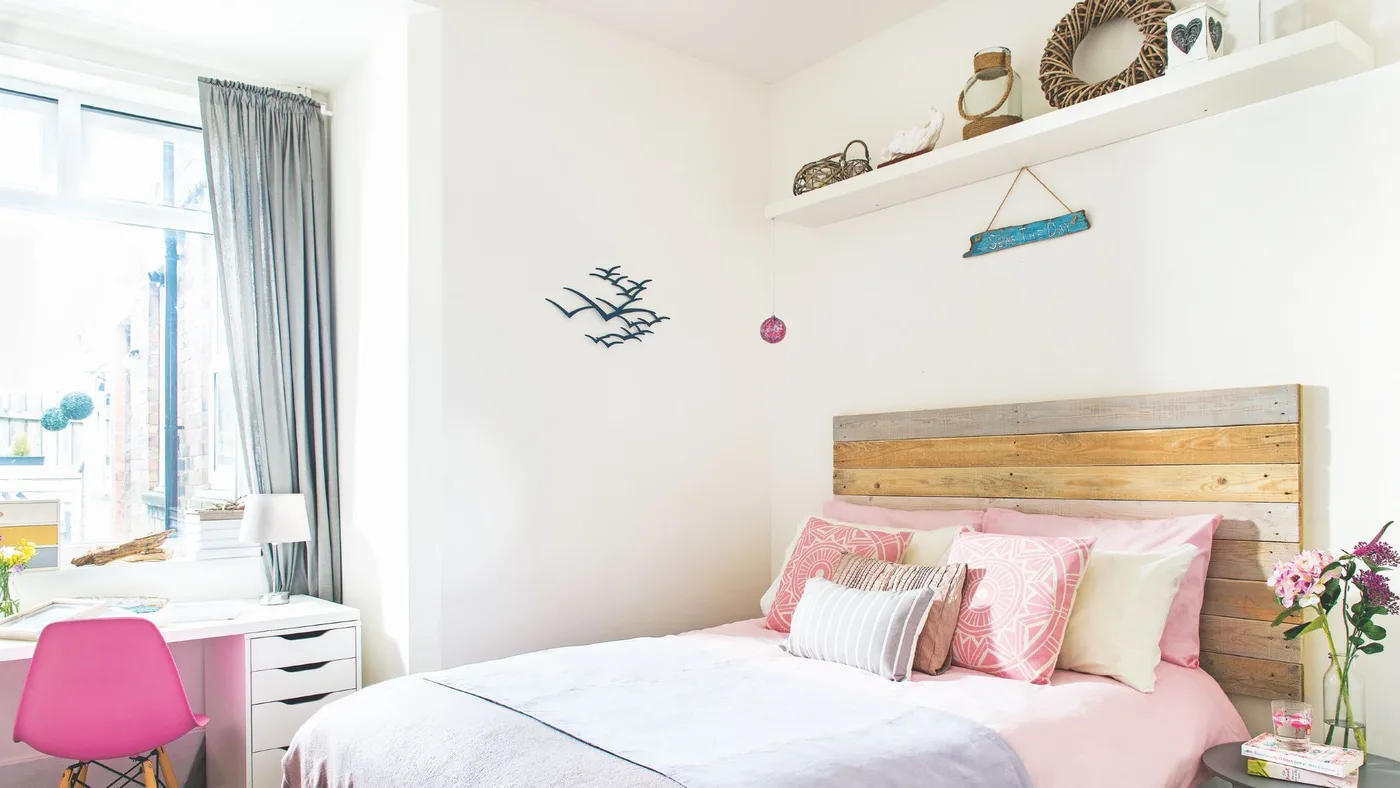
The horizontal wooden headboard introduces a weathered-looking texture against the white wall. Pale pink bedding gives the room a warmer version of a coastal palette, while small nautical ornaments and a narrow shelf provide more direct seaside details. The window-side desk adds an everyday function rather than making the room solely a decorative retreat.
Keep a few coastal objects that you enjoy rather than covering every wall with themed pieces. A shelf above a bed needs secure fixing and carefully placed objects that cannot fall. Check that the desk chair can move without blocking the bed, and choose wooden surfaces with a finish comfortable to touch and clean.
IDEA 02 / 19
Give blue upholstery a pale paneled backdrop
 SaveSupport Non AI Creator
Image credit: KING Living
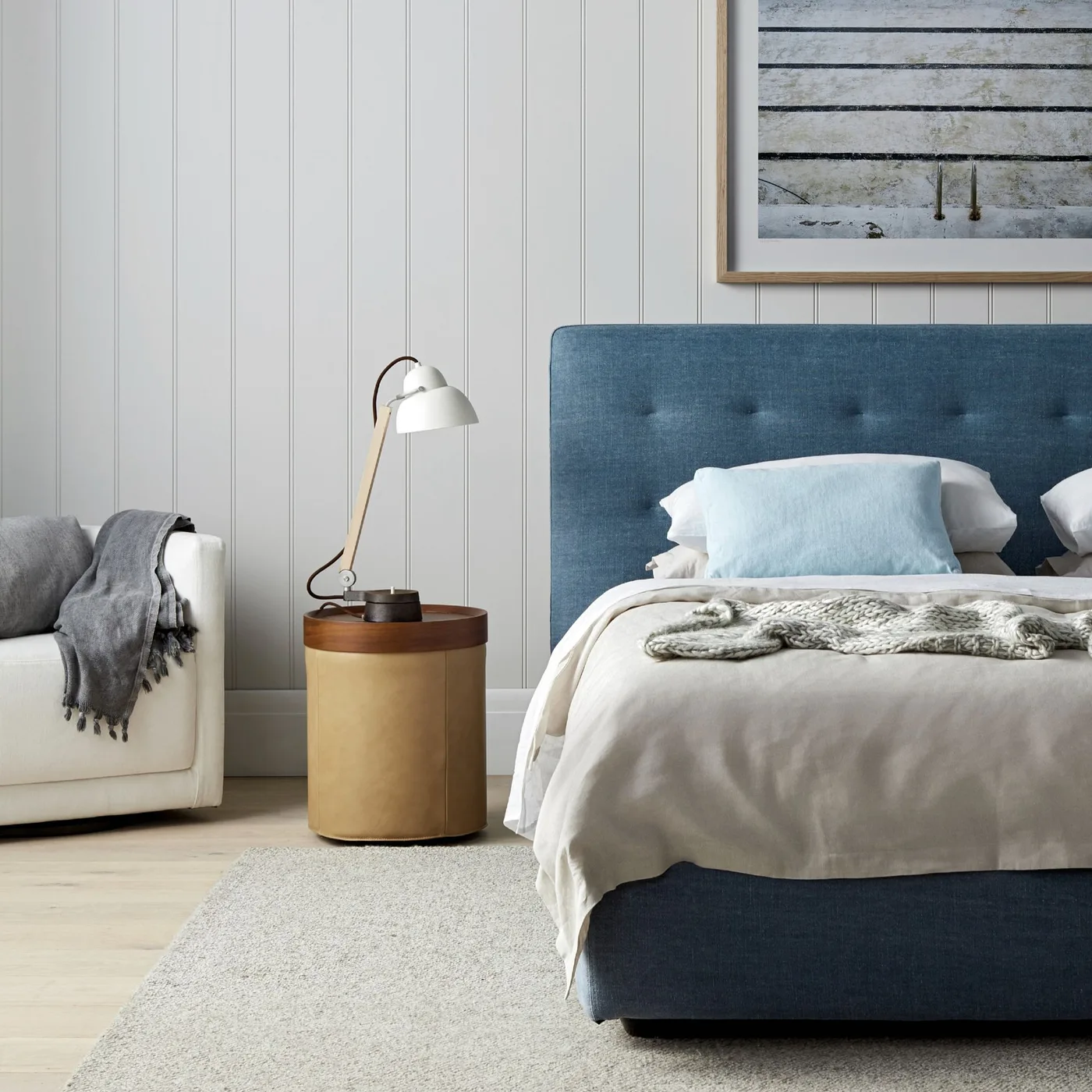
The blue upholstered bed provides a clear color against the pale vertical paneling. A round warm-toned bedside table adds a softer outline beside it, while pale bedding and a textured throw keep the sleeping area light. The framed picture and modest bedside lamp supply detail without needing a large collection of seaside accessories.
A blue bed can carry the coastal feeling while other finishes stay quiet. Compare upholstery samples with your actual wall color and floor before ordering. Check the bedside table's height and usable top once the lamp is placed, and choose fabrics with care requirements that suit regular bedroom use rather than occasional display.
IDEA 03 / 19
Use soft aqua around a darker upholstered bed
 SaveSupport Non AI Creator
Image credit: Future PLC
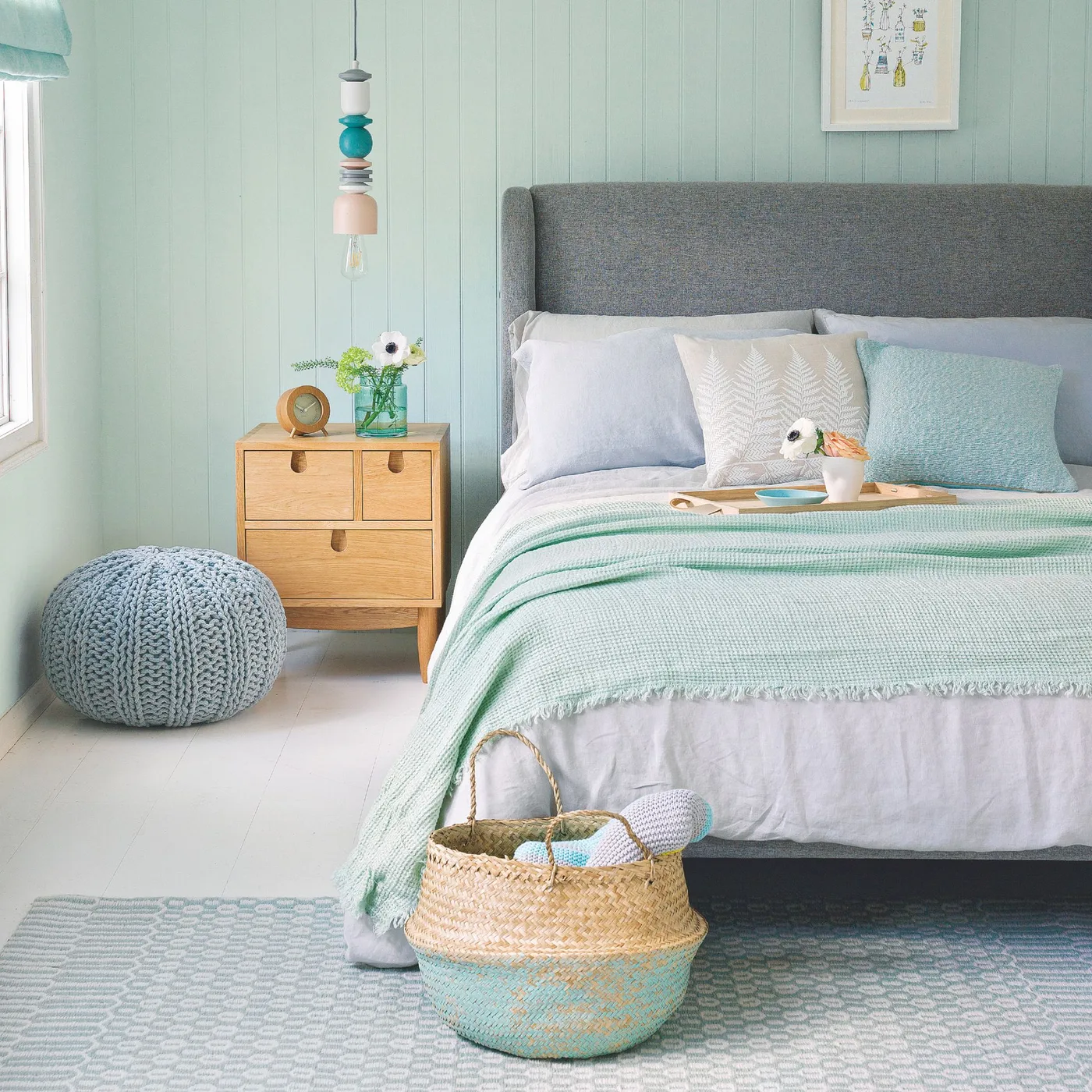
Soft aqua paneling gives the gray upholstered bed a lighter surrounding color. Pale bedding and an aqua throw repeat that gentle palette, while the wooden bedside cabinet adds warmth. A knitted footstool and woven basket introduce texture below the bed, showing how a coastal room can feel comfortable without relying on blue alone.
Test aqua in both daylight and evening light because it can appear greener or bluer beside other finishes. Keep the basket and footstool where they serve a purpose without blocking the route around the bed. Use accessible drawer storage for daily essentials, and select throws and cushion covers that are practical to wash.
IDEA 04 / 19
Try coral walls with a quieter gray bed
 SaveSupport Non AI Creator
Image credit: Furniture and Choice
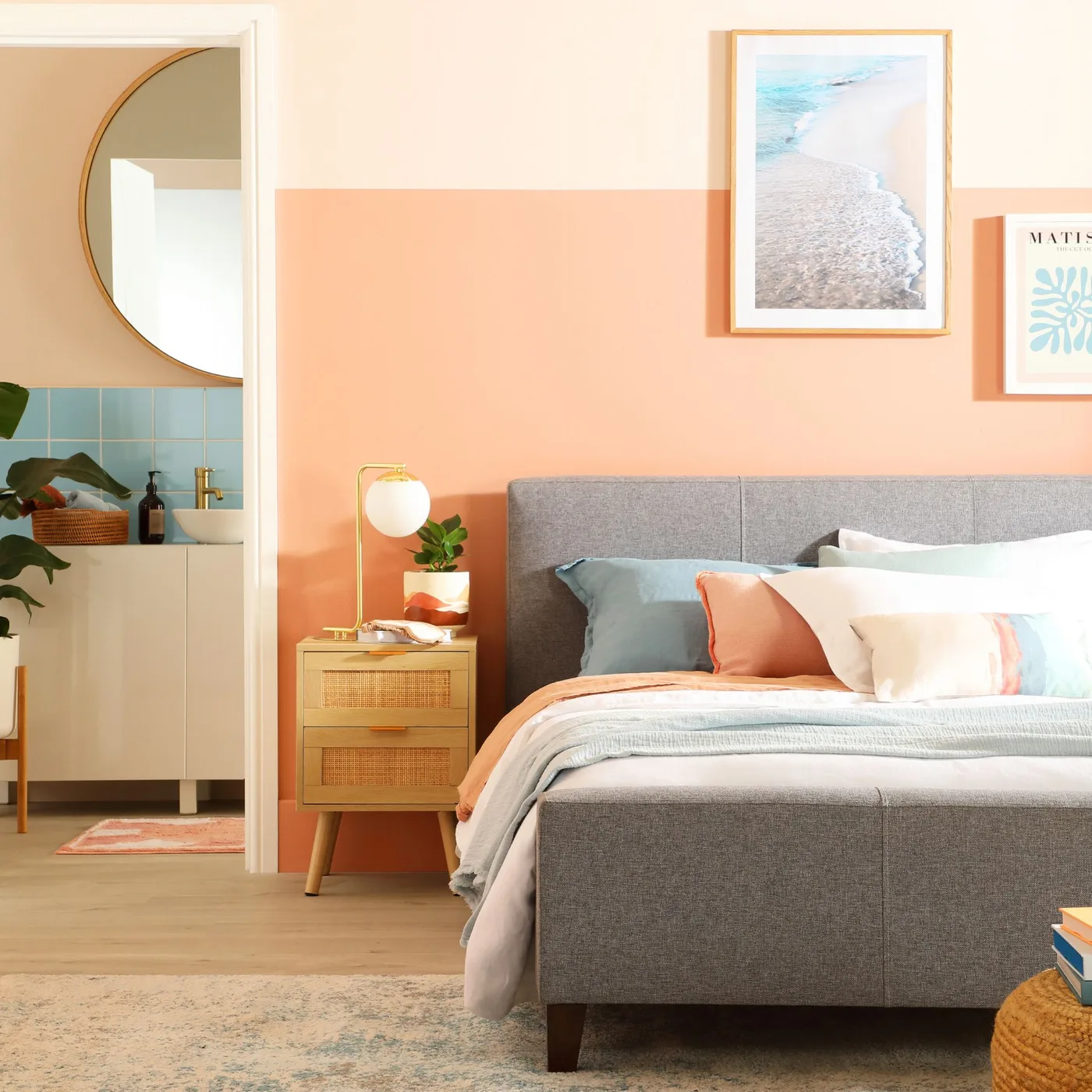
Coral paint gives the lower wall a warm band behind the gray upholstered bed. Pale blue bedding accents and the shoreline photograph provide cooler notes, while a simple wooden bedside cabinet keeps the furniture relaxed. The two-tone wall leaves the upper area pale, balancing the stronger color without making the whole bedroom feel enclosed.
A lower wall color can introduce warmth without committing every surface to coral. Mark its height in relation to the headboard and bedside furniture before painting. Compare the shade with existing bedding, and keep useful bedside surface space after the lamp is placed rather than filling the small cabinet with decorative accessories.
IDEA 05 / 19
Add a green accent to a blue bedside corner
 SaveSupport Non AI Creator
Image credit: Future PLC
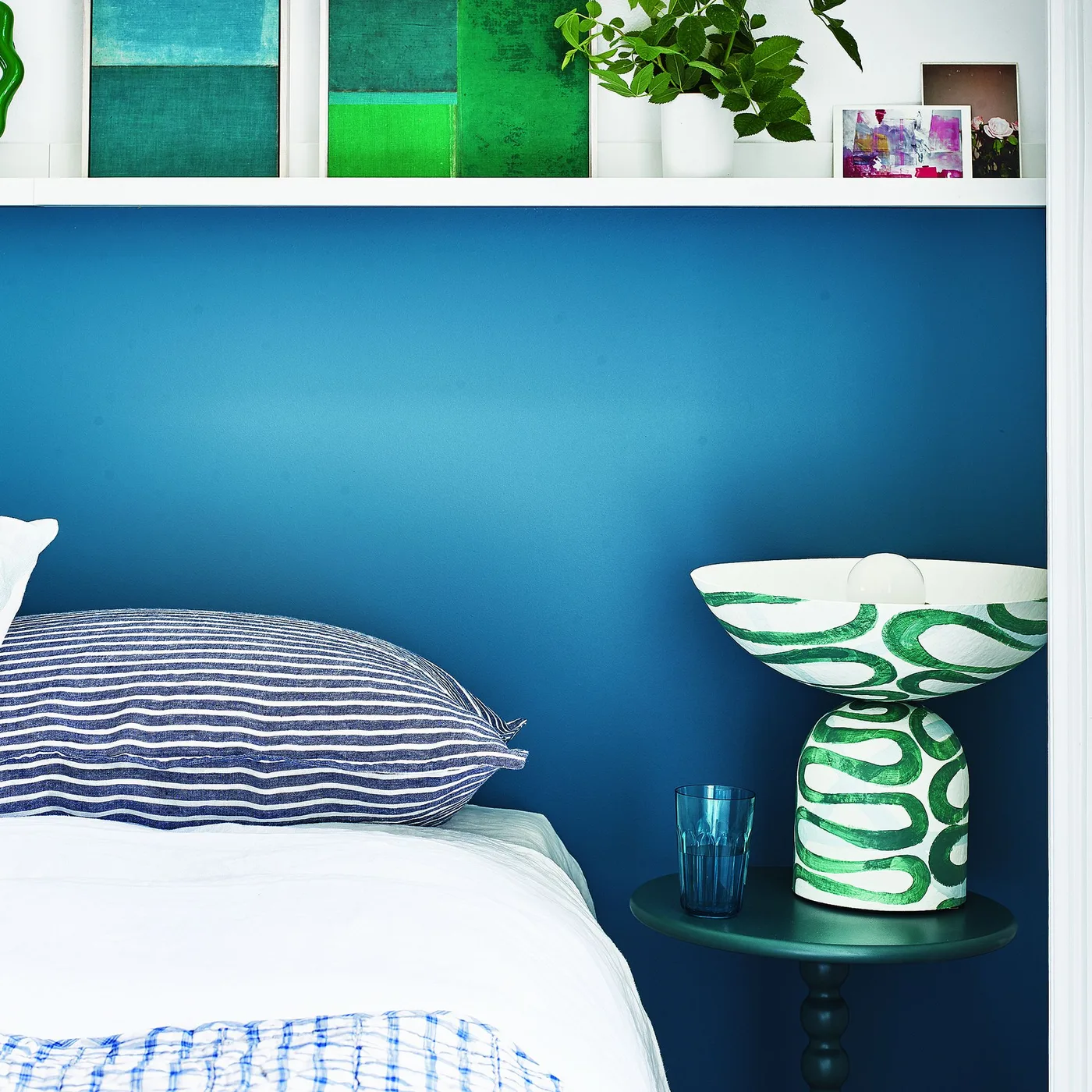
A deep blue wall provides a clear background for the white shelf and striped pillow. Green abstract pictures and a green-and-white bowl bring a brighter accent to the compact bedside corner. The combination suggests a more colorful coastal palette while leaving the bedding mostly pale and the main furniture outlines straightforward.
Treat a bright accent as one considered addition rather than a reason to introduce several unrelated colors. Keep a bedside table useful for what you need at night, even if that means displaying the bowl elsewhere. Secure shelf objects properly and avoid heavy pieces above the sleeping area where they could be knocked or fall.
PART 02
Use stripes and nautical details selectively
IDEA 06 / 19
Use nautical graphic details in a shared bedroom
 SaveSupport Non AI Creator
Image credit: Industville
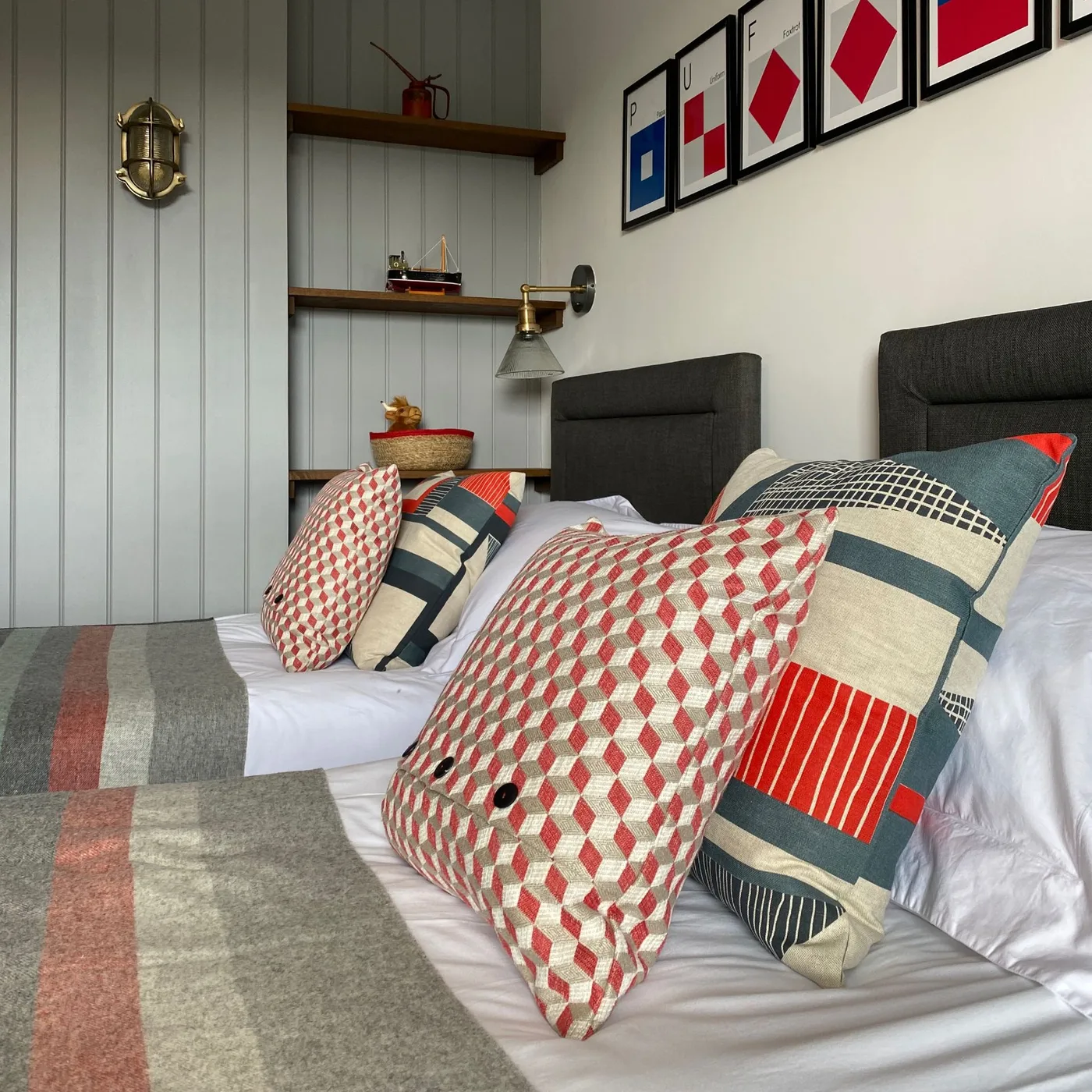
Two dark headboards sit below a row of nautical flag pictures, giving the shared bedroom a direct seaside reference. Gray paneling and small wall lights keep the background orderly, while red-and-blue cushions add livelier pattern at the pillows. The repeated beds help the different graphic details feel connected rather than scattered across the room.
A shared room benefits from useful light and a place for essentials at each bed. Keep decorative cushions easy to put away when the beds are in use. Fix pictures securely, and check the routes between the beds and storage so the repeated furniture arrangement remains comfortable rather than simply looking symmetrical.
IDEA 07 / 19
Keep balcony light visible through a pale room
 SaveSupport Non AI Creator
Image credit: Future PLC
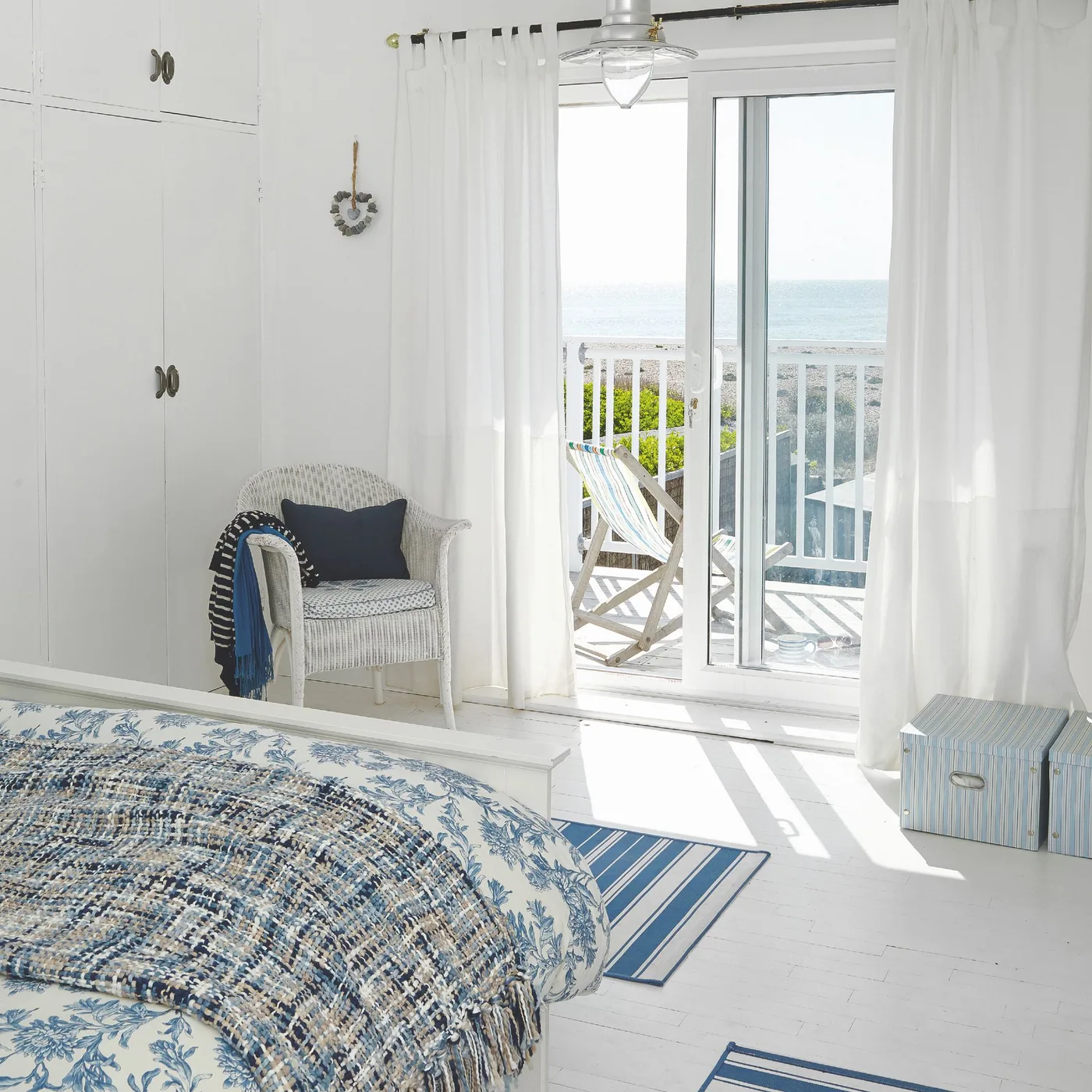
White furniture and walls keep the bedroom bright around the glazed balcony doors. Blue patterned bedding and striped rugs add the coastal color, with a white woven chair providing a small sitting spot near the view. Pale curtains soften the opening while leaving the broad daylight and outdoor scene as the room's main features.
Keep a balcony doorway easy to reach and open rather than placing a chair in its operating space. Choose window coverings for privacy as well as appearance, and consider how the bedding colors look in evening light. Use rugs that remain secure underfoot, with edges clear of doors and the main route around the bed.
IDEA 08 / 19
Warm navy paneling with wood and blush fabric
 SaveSupport Non AI Creator
Image credit: Future PLC
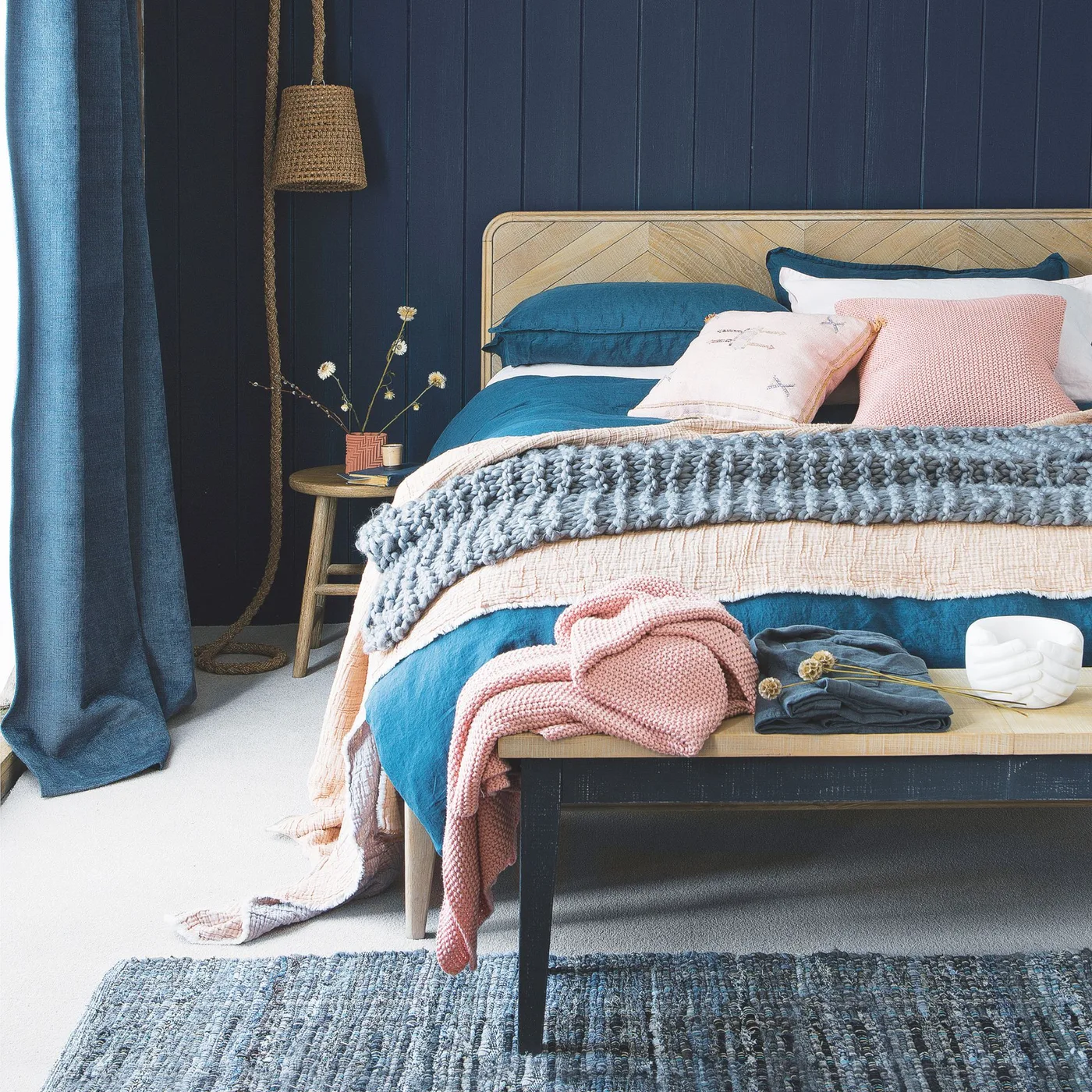
Navy paneling gives the pale wooden headboard a strong backdrop. Blue and blush bedding soften the contrast, while a woven pendant adds another warm texture beside the darker wall. The wooden bench and chunky throw bring layers to the foot of the bed without changing the room's clear blue-centered coastal palette.
Dark paneling works best when the room still has useful light and lighter surfaces nearby. Test navy against the bedding and existing floor before choosing it. Keep the bench clear of the walking route and use lighting suited to reading as well as decoration; textured shades can soften light but may not illuminate every task.
IDEA 09 / 19
Combine wave-like wallpaper with restrained bedside storage
 SaveSupport Non AI Creator
Image credit: Future PLC
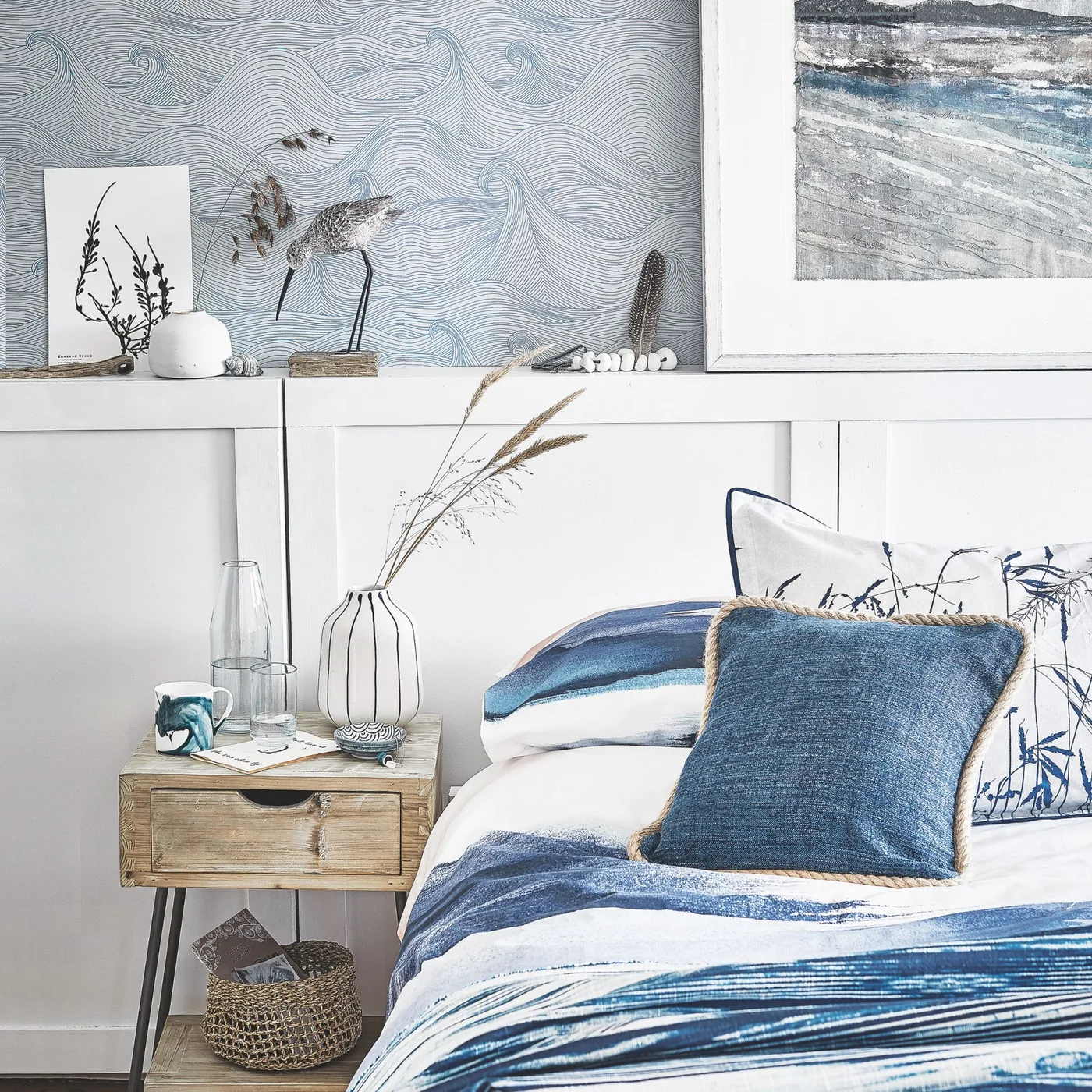
Wave-like lines in the wallpaper provide a subtle seaside pattern above the white paneling. Blue-and-white bedding repeats the coastal color below, with a small wooden bedside drawer adding a warmer furniture surface. A bird ornament and framed pictures make the theme more direct, while the pale wall keeps the separate details distinguishable.
Choose the wall pattern first, then limit smaller ornaments so the bedside area remains useful. Check how the wallpaper repeat looks beside the headboard before ordering. Secure framed pieces on the ledge, and keep glassware or delicate displays away from the part of the table most likely to be reached for in the dark.
IDEA 10 / 19
Let blue stripes carry the seaside theme
 SaveSupport Non AI Creator
Image credit: Future PLC
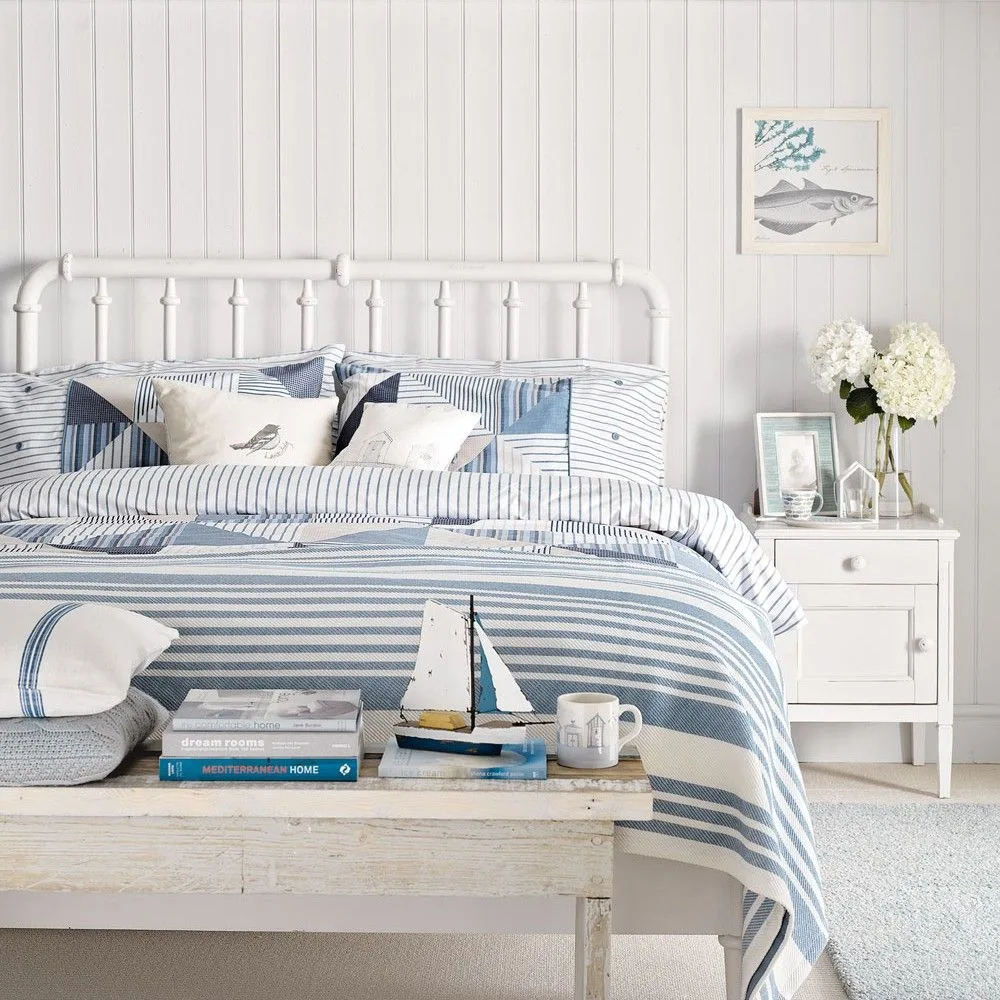
Blue stripes give the white bed and paneled wall a familiar coastal rhythm. Small nautical pictures and a model boat add more literal details, while the pale wooden bench supplies a useful surface at the foot. The largely white background leaves the stripes clear, so the room does not need several additional strong colors to feel coastal.
Stripes can provide enough theme on their own if you prefer fewer ornaments. Compare their width with other patterned fabrics before layering bedding. Keep a bench only where it leaves a comfortable route past the footboard, and move decorative objects aside when the surface is needed for sitting or putting on shoes.
PART 03
Bring warmth through textured furniture
IDEA 11 / 19
Use weathered-looking wood within a softer palette
 SaveSupport Non AI Creator
Image credit: Future PLC
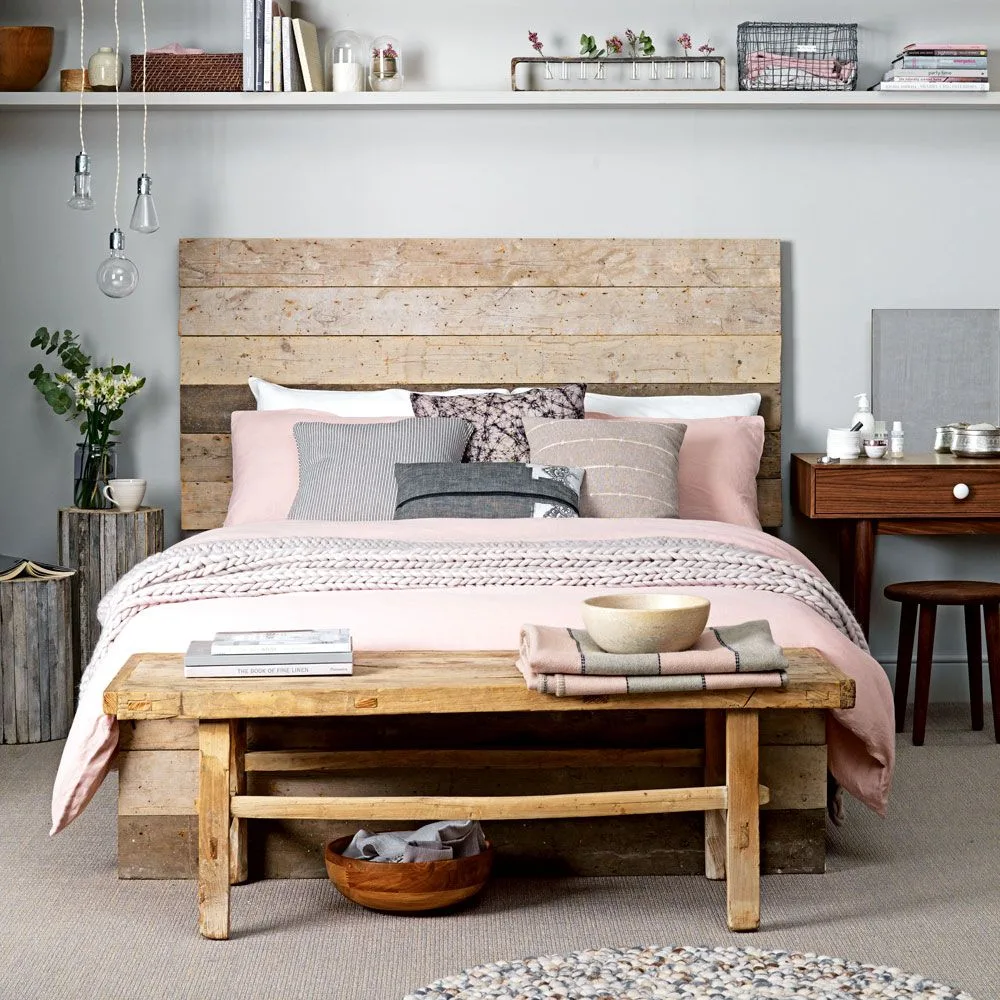
The broad wooden headboard and bench give this gray room its warmer, textured surfaces. Pale pink bedding softens the arrangement, with small objects on the narrow shelf adding detail above the bed. The result offers a quieter coastal interpretation through wood tones and gentle color rather than a large collection of anchors or shells.
A textured wooden piece needs a finish that is comfortable to touch and easy enough to dust. Check the bench's practical use and leave space to pass it when bedding hangs over the foot. Secure the upper shelf and its contents carefully, and keep the bedside surface available for ordinary nightly use.
IDEA 12 / 19
Pair blue paneling with a woven headboard
 SaveSupport Non AI Creator
Image credit: Future PLC
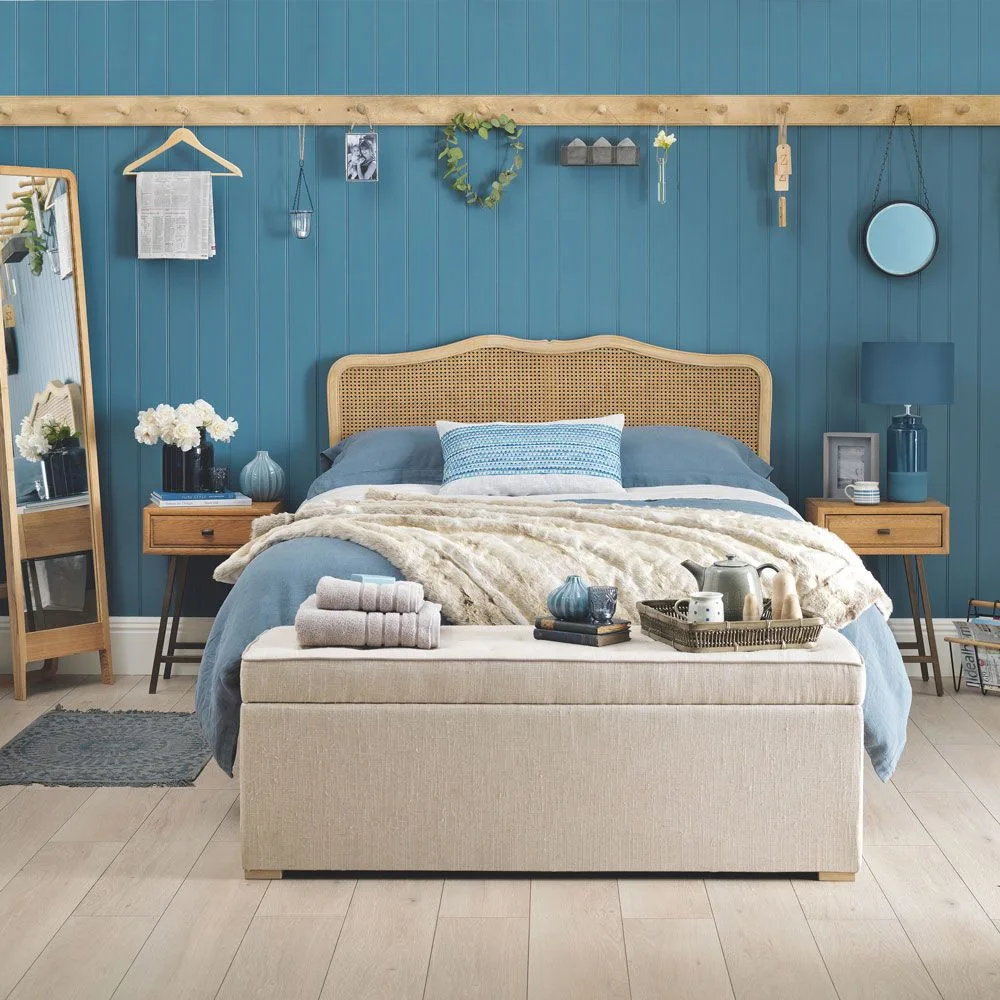
Blue vertical paneling gives the woven headboard a clear coastal backdrop. Wooden bedside drawers add matching warmth, while the pale upholstered bench makes the foot of the bed softer. A horizontal wooden rail and small round mirror provide another line across the wall, keeping the decorative details connected to the bed's central arrangement.
Use wall decoration selectively so useful lamps and storage remain easy to access. Check the bench's cleaning requirements before choosing pale upholstery for a frequently handled surface. Fix mirrors and rails securely, and keep loose cords or hanging pieces away from places where they could catch on bedding or obstruct movement.
IDEA 13 / 19
Bring coastal blue to the floor as well as bedding
 SaveSupport Non AI Creator
Image credit: Future PLC/David Brittain
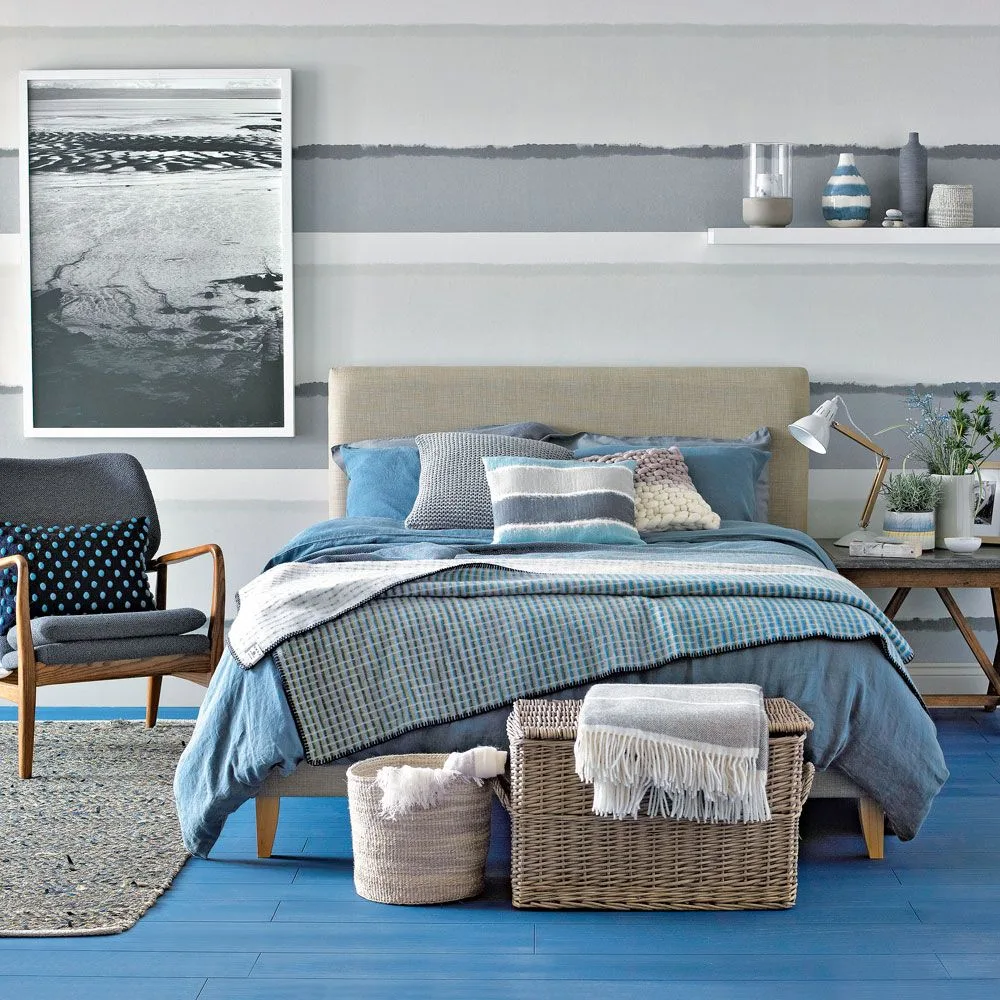
Blue painted floorboards give the room a strong coastal base beneath softer blue bedding. Gray-and-white horizontal wall bands add another broad pattern, while the pale headboard separates the bed from the wall. Baskets provide textured storage near the foot, and a framed shoreline picture connects the colors with a more direct seaside reference.
A painted floor is a larger commitment than a throw, so check the surface preparation and finish appropriate to its actual material. Think about wear, cleaning and furniture movement before deciding on color. Keep baskets where they can be reached without narrowing the bed's access, and avoid making every blue surface an exact match.
IDEA 14 / 19
Use a neutral fish motif with warm wooden furniture
 SaveSupport Non AI Creator
Image credit: Future PLC/ David Brittain
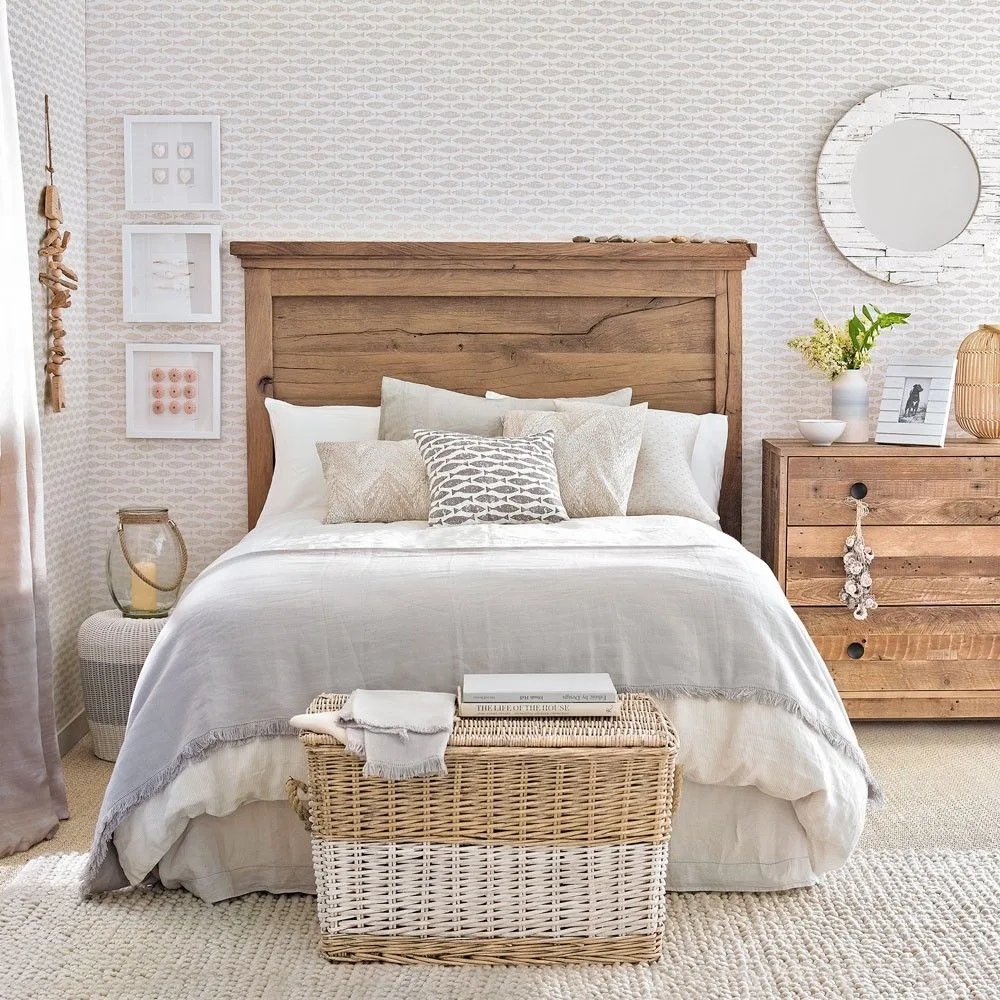
A small fish motif gives the pale wallpaper a subtle coastal reference. The wooden bed and drawer chest bring warmth to the neutral palette, with a round pale mirror and woven chest adding other textured shapes. Mostly light bedding keeps the room calm, allowing the pattern to suggest the shore without depending on a blue wall.
A smaller motif can be easy to live with when its repeat suits the wall size. View several repeats beside the furniture rather than judging one tiny sample. Check drawer access around the bed and keep the woven chest useful for actual storage, with a clear route past it and an easy way to lift its lid.
IDEA 15 / 19
Let a pale wooden bed frame stand against blue textiles
 SaveSupport Non AI Creator
Image credit: Future PLC/ James Merrell
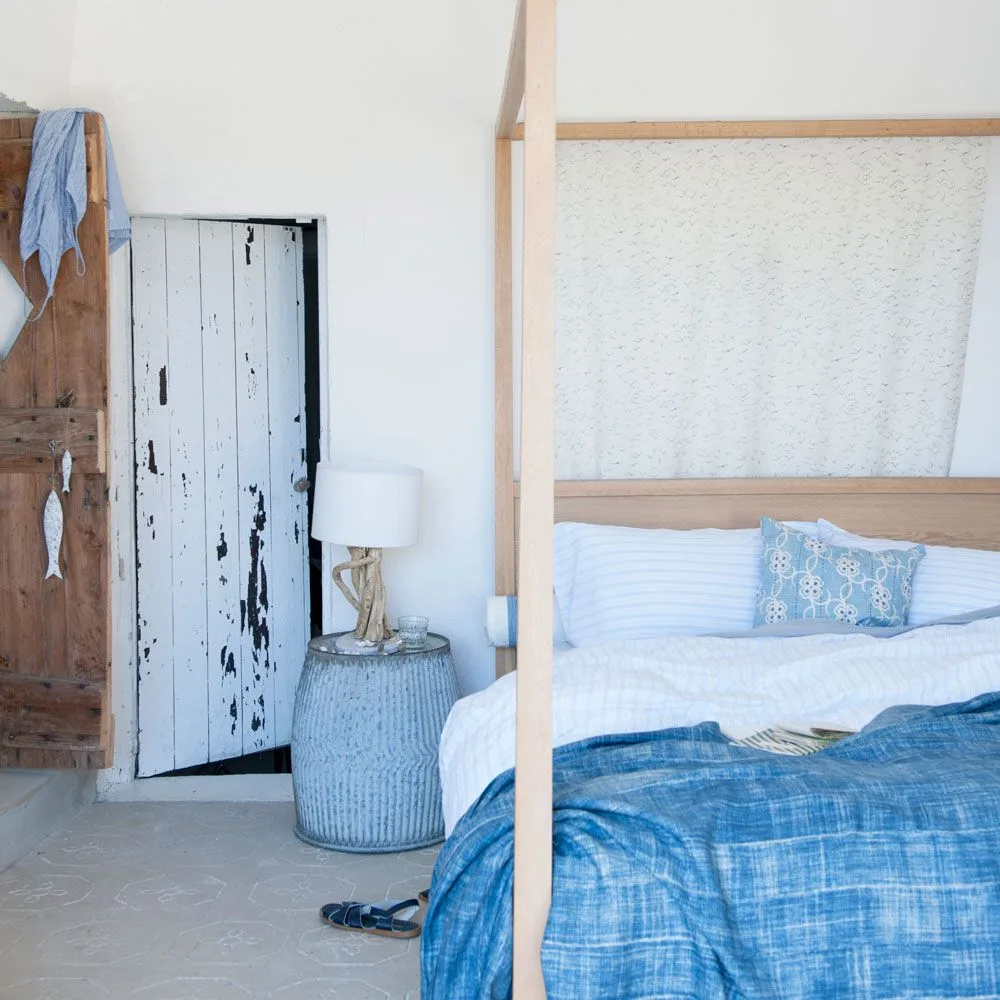
The pale wooden bed frame brings a clean warm outline to the white room. Blue bedding and the rounded bedside table provide the main coastal color, while the distressed-looking painted door adds a more weathered visual detail. The relatively quiet walls leave those few furniture and fabric choices easy to see without additional themed displays.
A post bed needs enough space for its frame as well as the mattress, especially near doors and narrow passages. Check bedside table height and reach from the actual bed. Keep distressed finishes clean and sound rather than assuming wear is harmless, and select bedding textures for the washing and care they will need.
PART 04
Keep the room comfortable and useful
IDEA 16 / 19
Keep nautical pictures small beside blue-and-white bedding
 SaveSupport Non AI Creator
Image credit: Future PLC/ Simon Scarboro
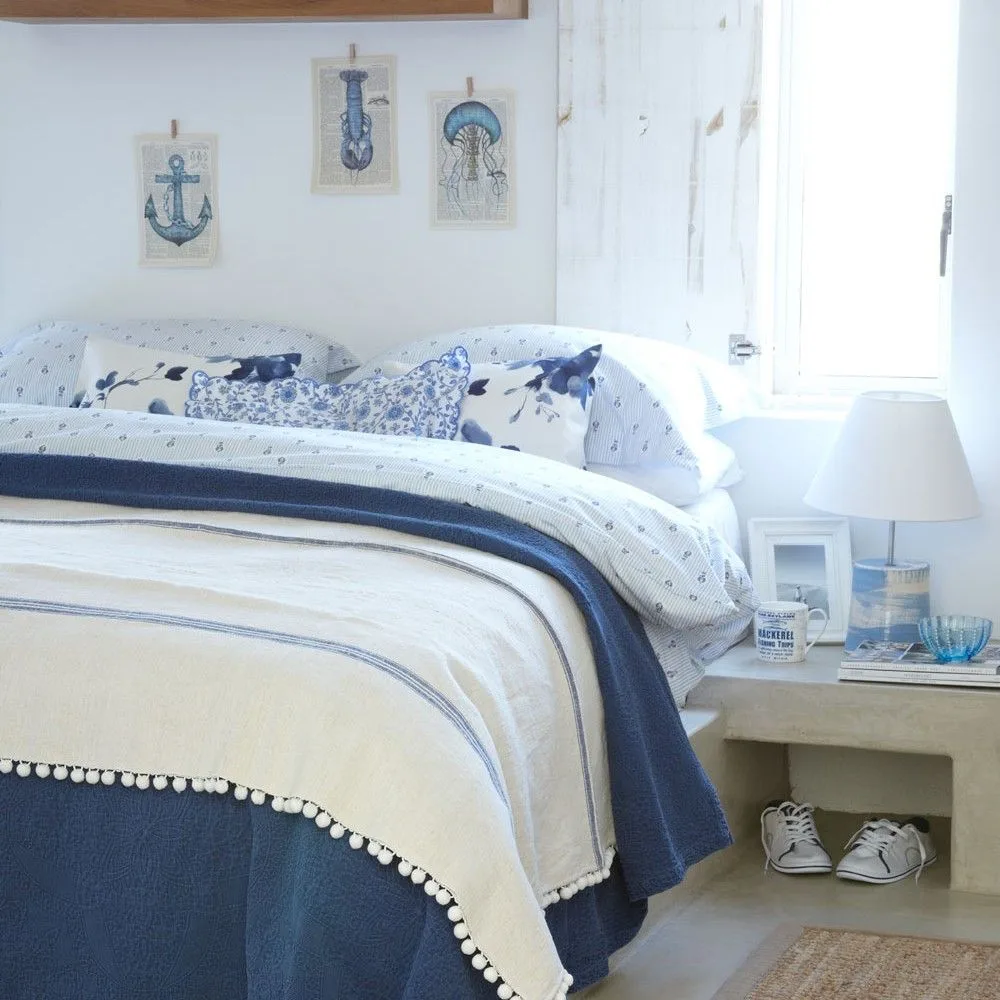
Blue-and-white bedding introduces most of the pattern in the bright room, with small nautical pictures repeating the seaside theme above the pillows. A pale bedside table offers an open lower shelf, keeping the furniture light beside the bed. The simple lamp and largely white wall leave the textiles and pictures as the clearest decorative choices.
Use small themed pictures where they remain readable rather than scattering them across every wall. Check that the bedside table holds the essentials without its lamp occupying the whole top. Keep the lower shelf organized for real use, and choose bedding layers that are comfortable and straightforward to wash rather than adding pattern for its own sake.
IDEA 17 / 19
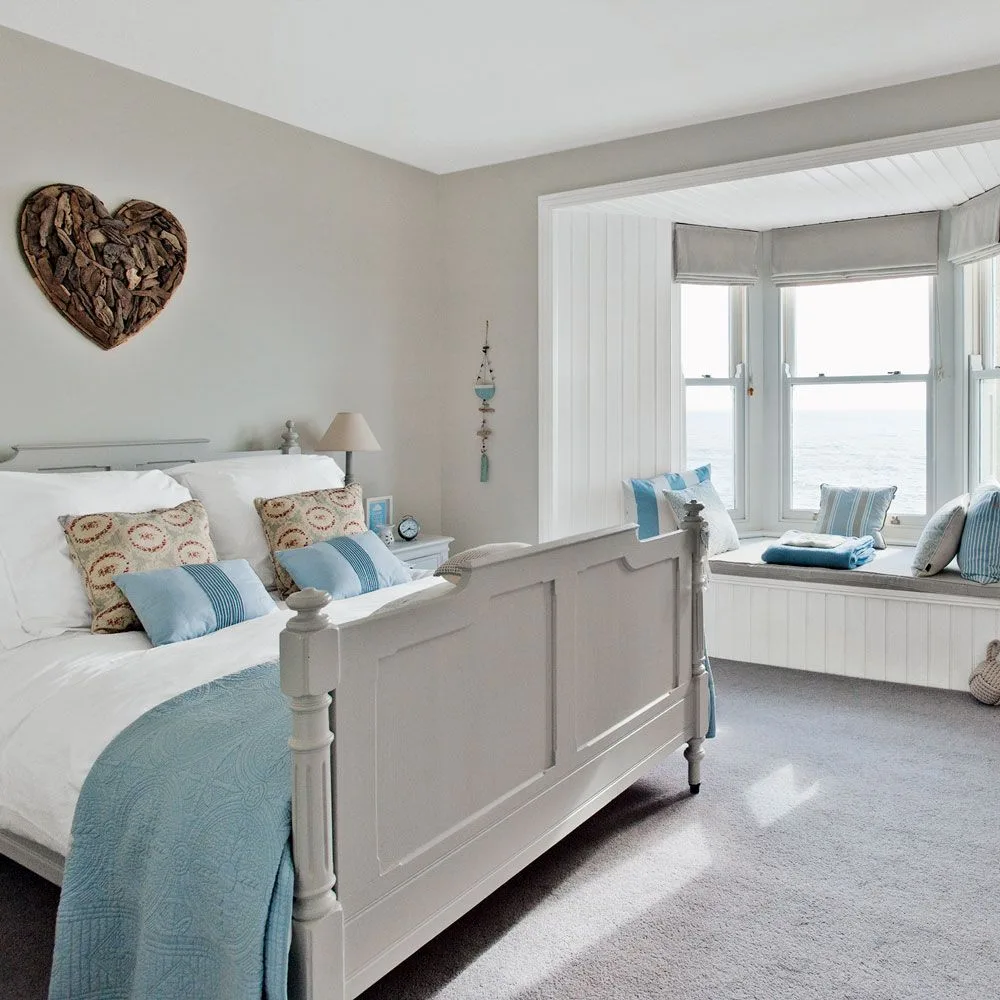
Make a bay window seat part of a quiet coastal room
 SaveSupport Non AI Creator
Image credit: Fututre PLC/ Polly Eltes
A paneled bay-window seat gives the pale gray bedroom a useful place to pause beside the view. Blue bedding accents repeat in the seat cushions, while the white wooden bed keeps the larger furniture light. A few small wall details suggest a coastal theme, but the window, seating and restrained color provide most of the room's character.
Keep a window seat accessible without making the route around the bed too tight. Choose cushions with covers that suit regular cleaning, and leave window handles and blinds easy to operate. Check the bed's footboard against the available floor space, particularly if adding a built-in seat reduces the remaining passage width.
IDEA 18 / 19
Use coral curtains around an open-framed bed
 SaveSupport Non AI Creator
Image credit: Photo: Robert Peterson, Rustic White Photography. From: Brian Patrick Flynn
Coral curtains and bedding bring a warm coastal color to the white room. The open bed frame gives the furniture a lighter outline, with wooden bedside drawers and a round wooden wall decoration adding texture. Pale lamps and smaller patterned cushions keep the brighter fabric connected to a quieter surrounding palette rather than competing with another strong wall color.
A strong curtain color can change how the room feels throughout the day, so compare fabric samples beside the bedding and in window light. Keep the bedside drawers accessible around the open frame. Secure substantial wall decoration appropriately, and leave enough pale fabric or wall area that the coral remains a considered accent rather than covering every surface.
IDEA 19 / 19
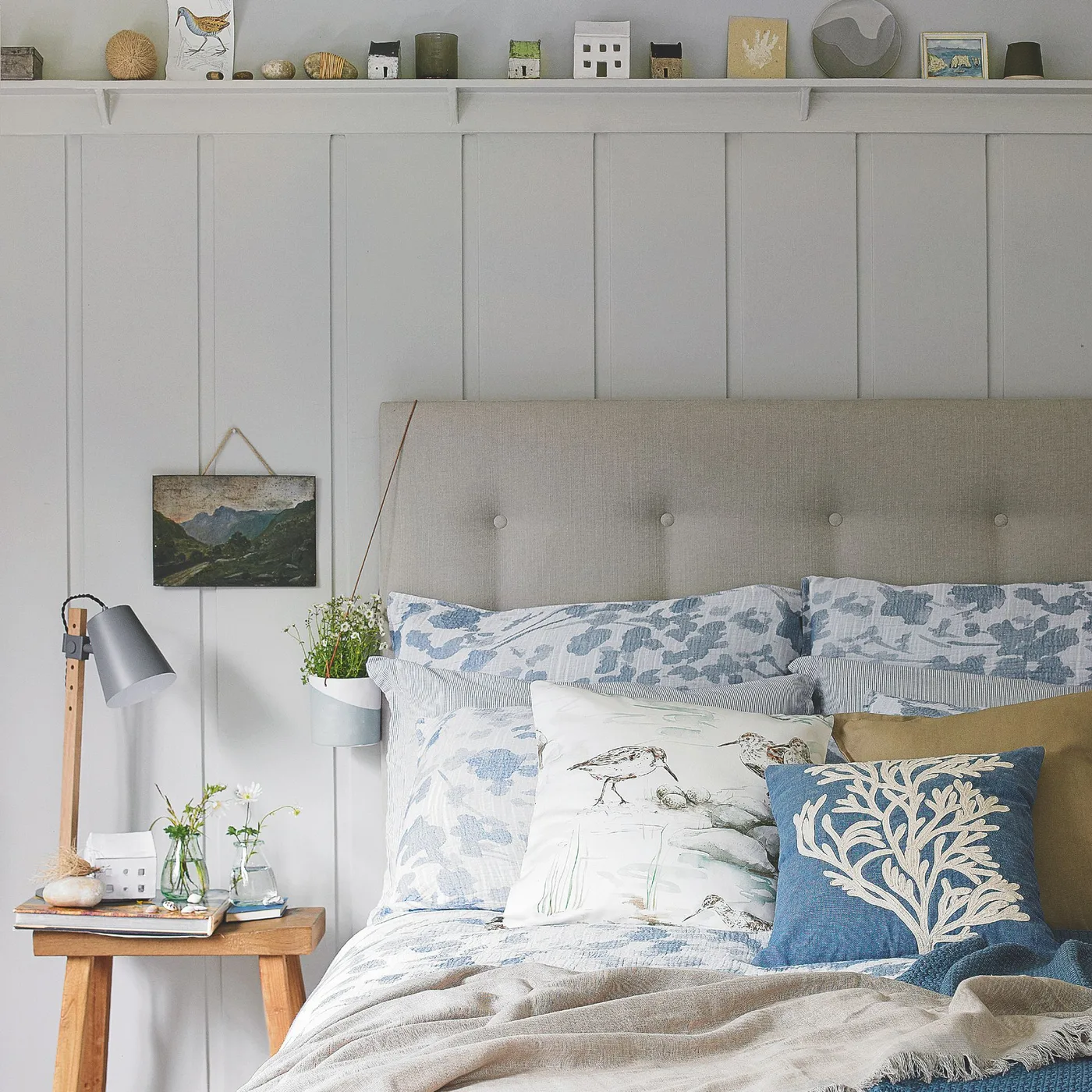
Layer blue botanical fabric against pale gray paneling
 SaveSupport Non AI Creator
Image credit: Future PLC
Pale gray paneling and the upholstered headboard create a quiet background for blue botanical bedding. A few nautical cushions make the seaside reference more direct, while a wooden bedside stool adds a warmer surface beside the mattress. The restrained wall color helps the different fabric motifs remain readable without another large pattern behind them.
Choose a main bedding pattern before adding smaller themed cushions, and keep the extras easy to store when the bed is used. Check whether a stool offers the stable, reachable surface you need at night. Use secure shelf fixings above the bed and avoid loose decorative objects where they could fall into the sleeping area.
BRING IT ALL TOGETHER
Borrow the coastal palette that suits your room
Blue and white are one option, but soft aqua, pale pink and coral can also suggest a relaxed seaside setting. Choose a few colors and textures that work with the furniture and daylight you already have.
Keep the room useful beneath the theme. Accessible bedside storage, comfortable bedding and clear routes around the bed will do more for everyday rest than adding another nautical ornament.