Sage green brings a muted gray-green color into a bedroom without requiring every surface to match. It can sit beside warm timber, soften dark furniture or provide a quieter background for pink, white and patterned fabrics. The balance depends on the light and the finishes already in the room.
These photographs show warmer and cooler versions of the palette through walls, storage, curtains and smaller features. Use them to compare proportions and combinations, then test real samples at home. A photographed color cannot identify an exact paint shade or predict how it will look under your lamps.
PART 01
Balance sage with timber and warmer accents
IDEA 01 / 15
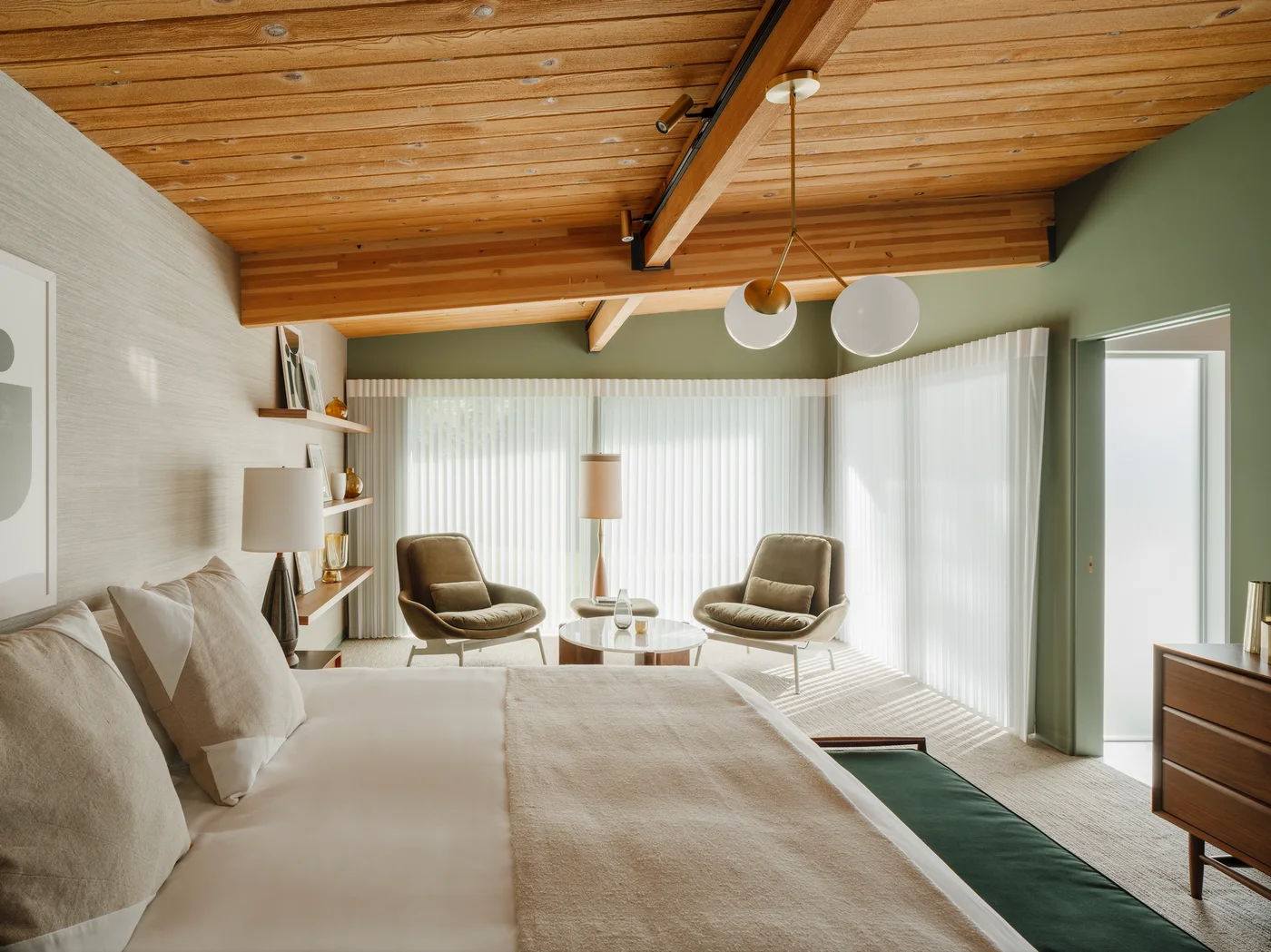
Balance Sage Walls with a Warm Timber Ceiling
 SaveSupport Non AI Creator
Image credit: Lance Gerber. Design: Michelle Boudreau Design
Muted green appears around the windows rather than covering every large surface. The timber ceiling supplies the strongest warmth, while pale bedding and window coverings soften the contrast. Two olive-toned chairs beside a small table extend the green palette into a sitting position without matching the darker bench at the bed’s foot.
Put your paint sample beside the room’s existing timber before buying several new fabrics. A green that looks gray on a small card can appear warmer against honey-colored boards. Leave the largest textiles comparatively simple if the ceiling already has strong grain, and check how the wall color changes when the window coverings are closed.
IDEA 02 / 15
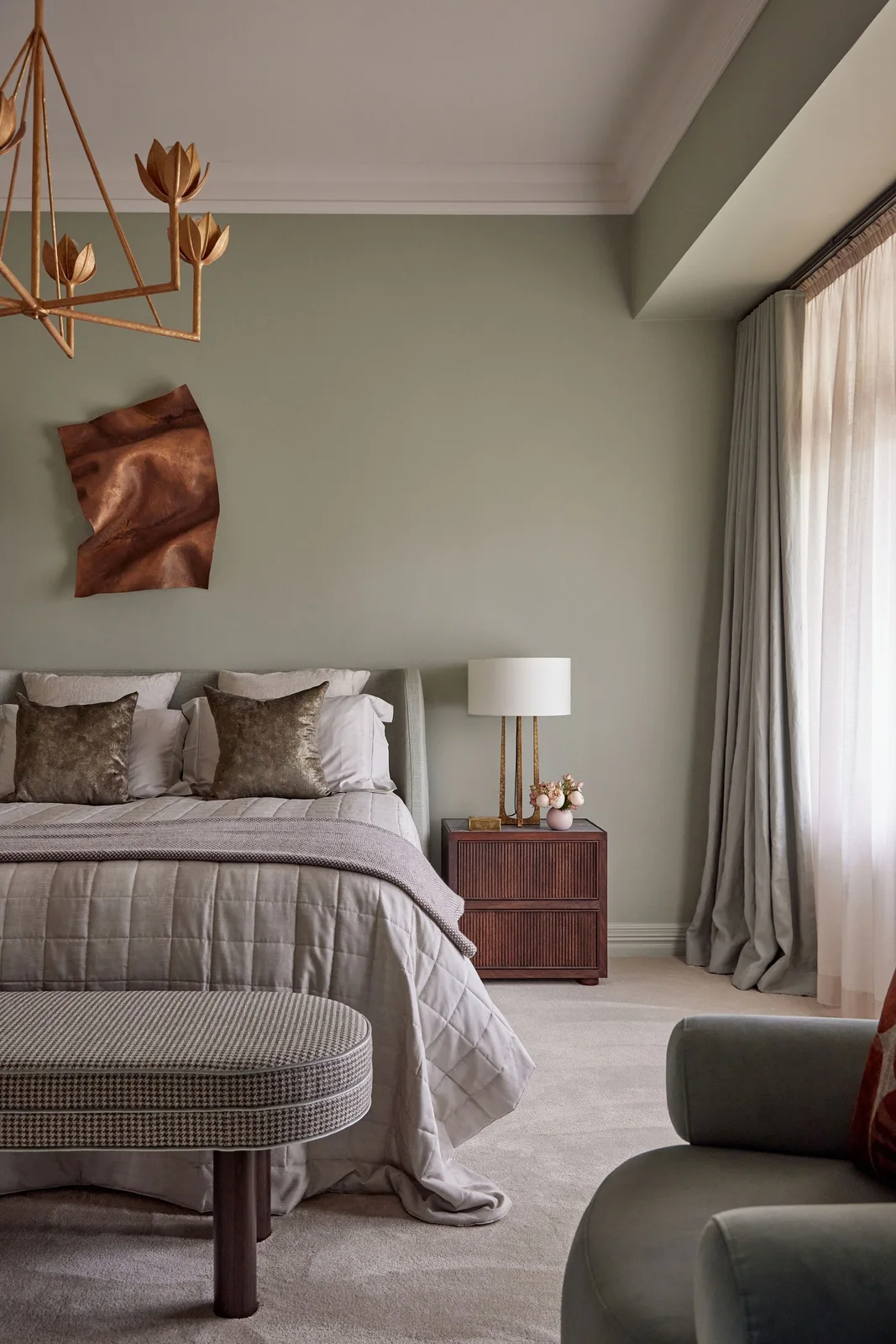
Let Warm Metal Stand Out Against Sage
 SaveSupport Non AI Creator
Image credit: Lana Landsberry. Styling: by Maria Papantoniou. Design: Sally Taylor
A sculptural metal artwork provides a warm focal point against the muted sage wall. Gray bedding and curtains stay close in tone, leaving the artwork and lamp base more prominent. The ribbed bedside chest introduces another texture at a smaller scale, while the pale ceiling keeps the upper part of the room lighter.
Choose one main metal finish when the room already contains several textured fabrics. Compare the wall paint with the gray bedding in daylight and under the bedside lamp, since green and gray can shift against each other. Check the artwork’s weight and fixing requirements before placing a substantial piece above a bed.
IDEA 03 / 15
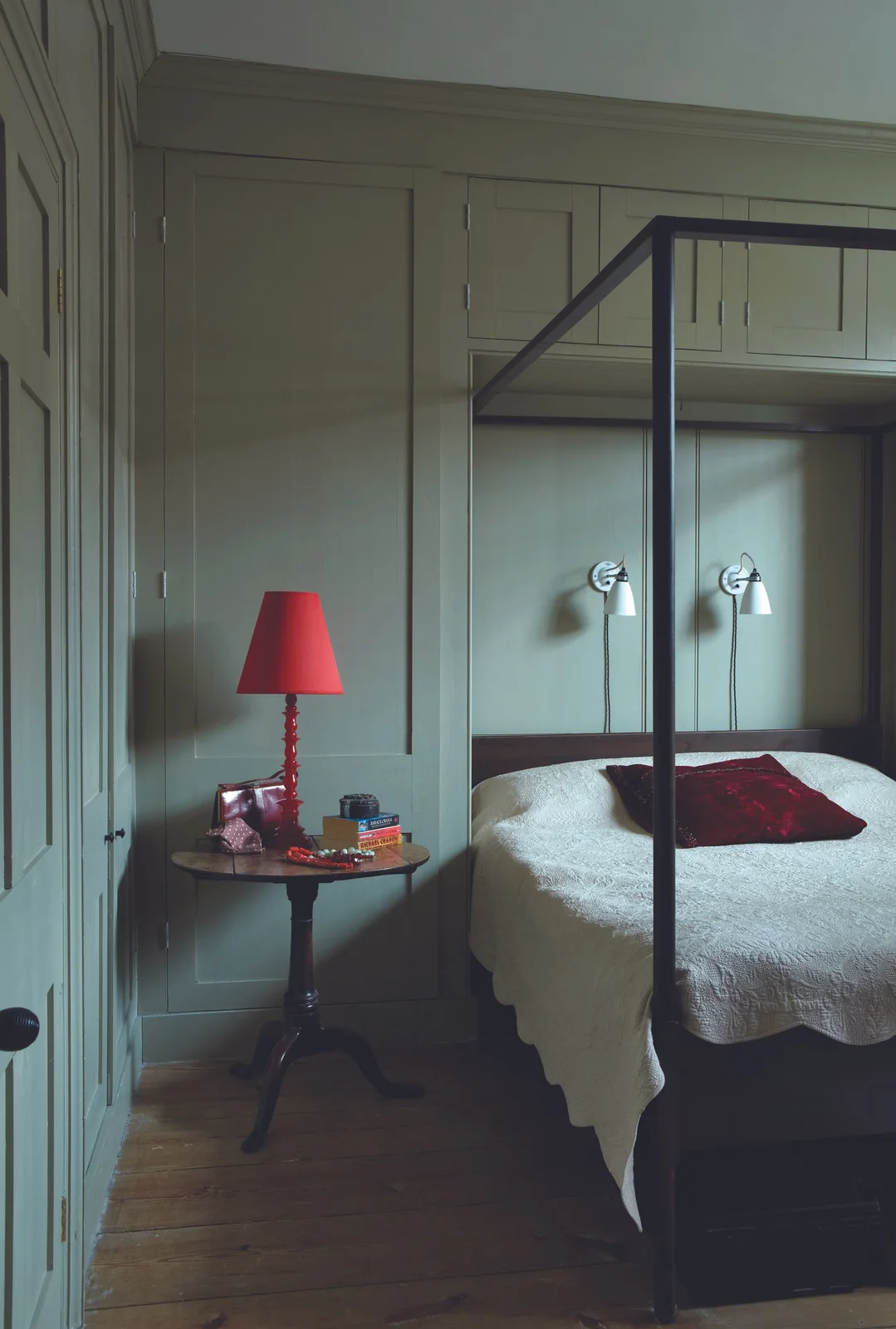
Add a Small Red Accent to Paneled Sage
 SaveSupport Non AI Creator
Image credit: Farrow & Ball
Gray-sage paneling gives the wall several layers of outline without needing a contrasting paint on every molding. The dark four-poster bed creates a stronger frame in front, while a red lamp and deep red cushion supply concentrated warmth. A pale textured bedcover separates those darker details from the timber floor.
Try a red accent in one removable item before committing to more upholstery or curtains. The green works as a broad background here, so a small warm color has plenty of impact. Check the bedposts against wall lamps and door movement, and choose a paint finish that suits the paneling and its existing coating.
IDEA 04 / 15
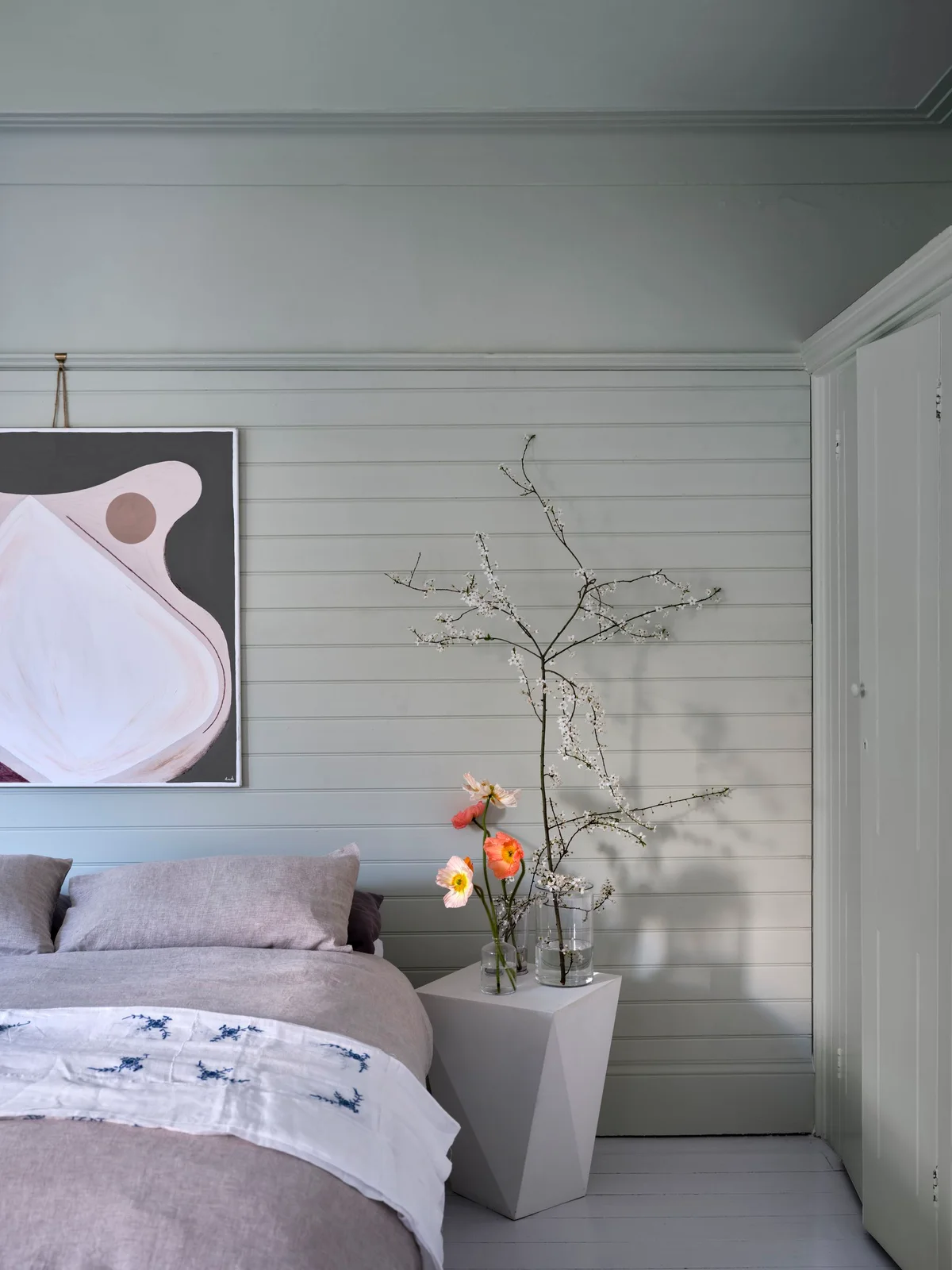
Pair Gray-Sage Boards with Soft Pink Bedding
 SaveSupport Non AI Creator
Image credit: Farrow & Ball
Horizontal boards give the sage-gray wall fine lines that continue behind the bed and bedside table. Soft pink bedding and the abstract artwork introduce warmth without a sharp color break. The angular pale table has a simpler surface, allowing the wall texture and the loose flowering branches to remain distinct.
Compare pink fabric samples directly against the painted boards; a peachy blush will behave differently from a cooler dusty rose. Keep bedside arrangements low and stable enough for daily use, even when tall branches look appealing in a photograph. Include a reachable lamp or wall light instead of letting decorative vases occupy the whole surface.
PART 02
Use sage around windows, ceilings and storage
IDEA 05 / 15
Bring Sage into a Bedroom Sitting Corner
 SaveSupport Non AI Creator
Image credit: Lauren Miller. Design: Sabrina Albanese
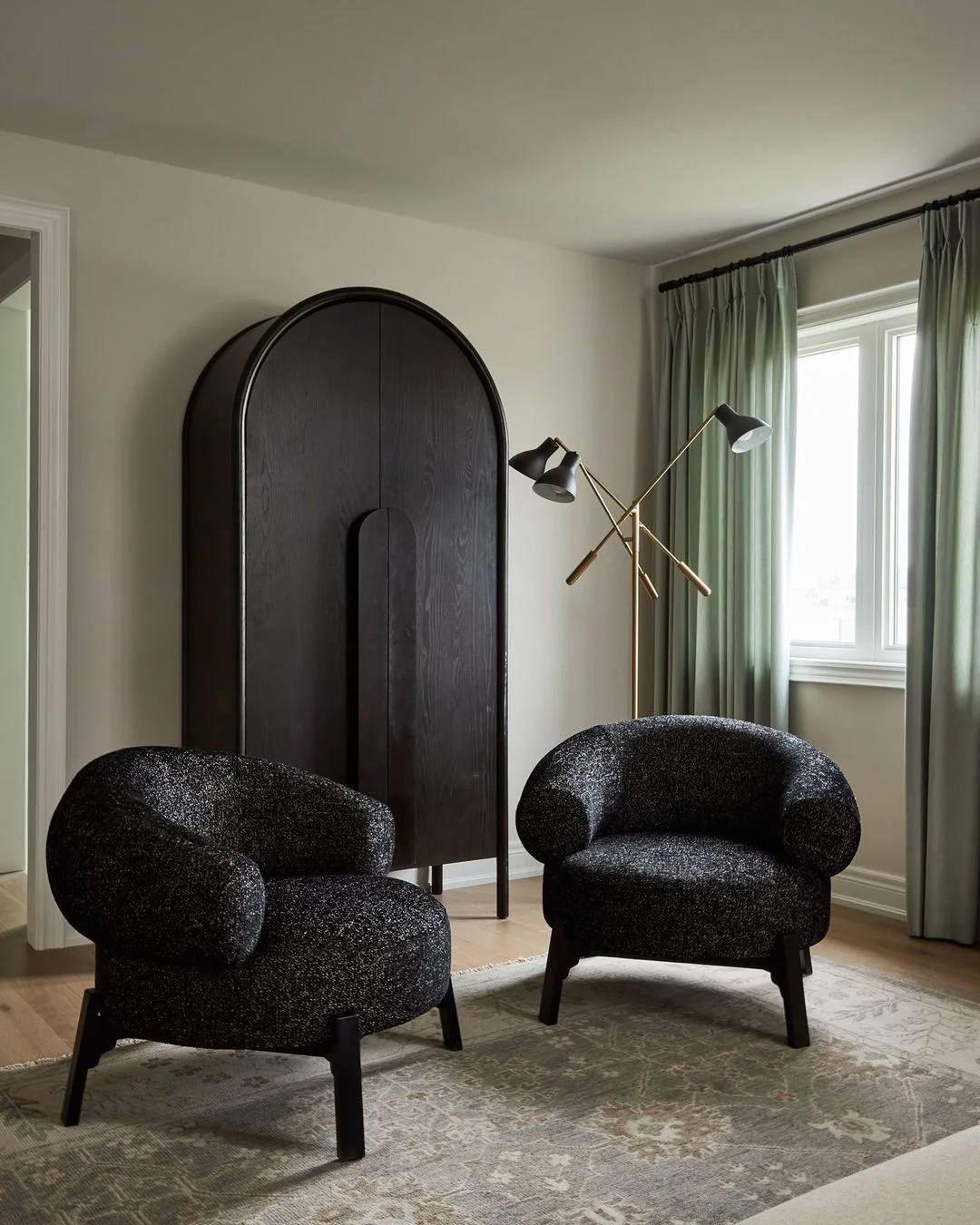
Pale sage curtains introduce green into this sitting corner without a strongly colored wall. Two rounded dark chairs repeat the arched outline of the tall cupboard, while their textured upholstery contrasts with the smoother drapes. The patterned rug provides a quieter bridge between the dark furniture and pale floor.
Use a curtain sample at full drop to judge how much color it adds when gathered and closed. Keep the sitting area useful by allowing room to reach the cupboard and adjust the lamp. This is a way to test sage within a bedroom gradually, especially when repainting or replacing the bed is unnecessary.
IDEA 06 / 15
Paint Moldings Sage and Keep the Ceiling Deeper
 SaveSupport Non AI Creator
Image credit: Ryan Mcdonald. Design: Jen Talbot Design
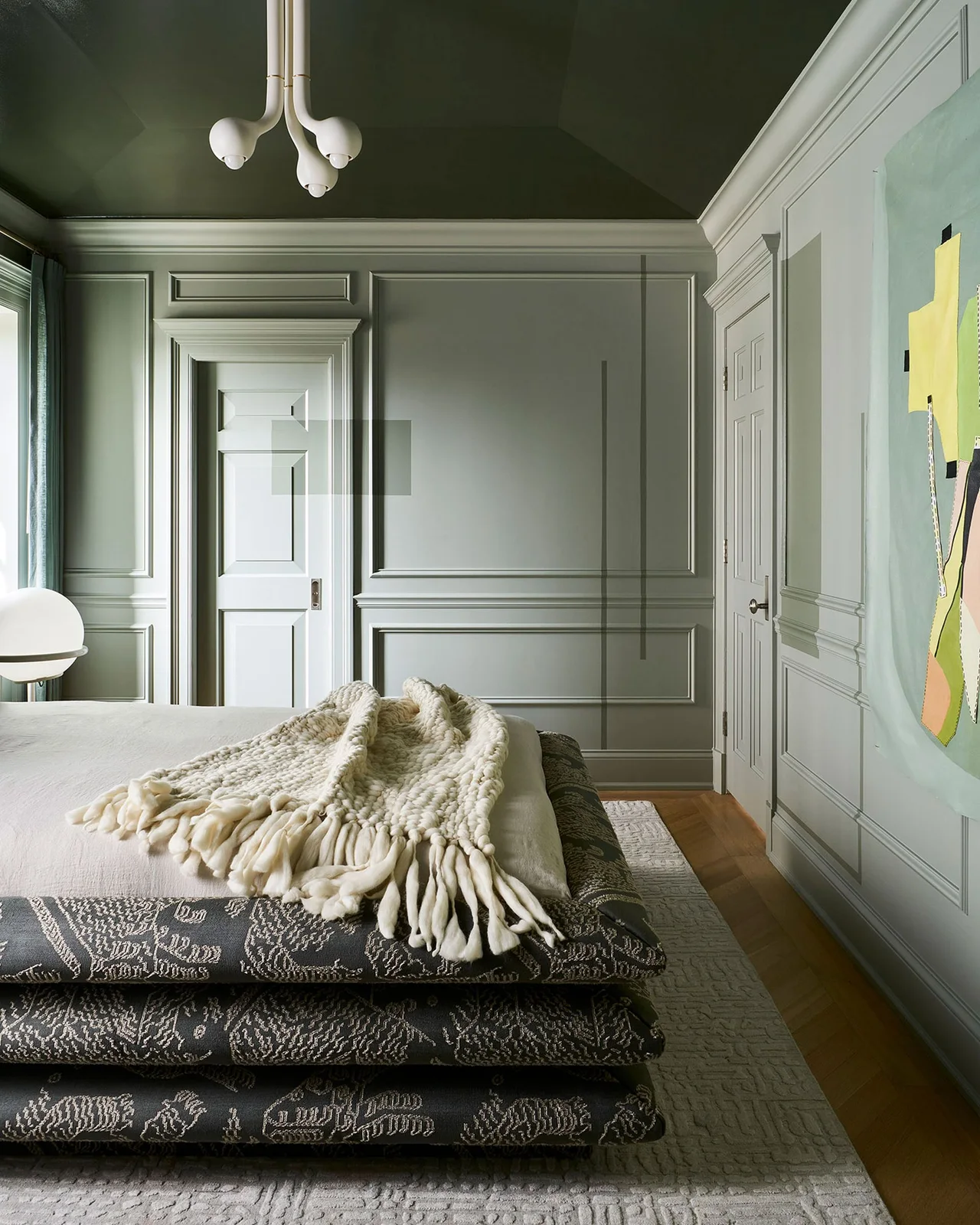
Sage covers the paneling, moldings and door, connecting several architectural shapes through one color. The deeper green ceiling creates a separate plane overhead. A patterned upholstered bed, chunky pale throw and small bright areas in the artwork add texture and color without changing that continuous wall treatment.
Test ceiling and wall samples together rather than selecting the deeper shade in isolation. Evening lighting may make the contrast much stronger than daylight does. Keep track of the products needed for plaster, timber and existing finishes; a matching color does not mean every surface should receive the same type of coating.
IDEA 07 / 15
Match Wardrobes to Sage Walls
 SaveSupport Non AI Creator
Image credit: Ben Waterhouse. Design: ALL & NXTHING
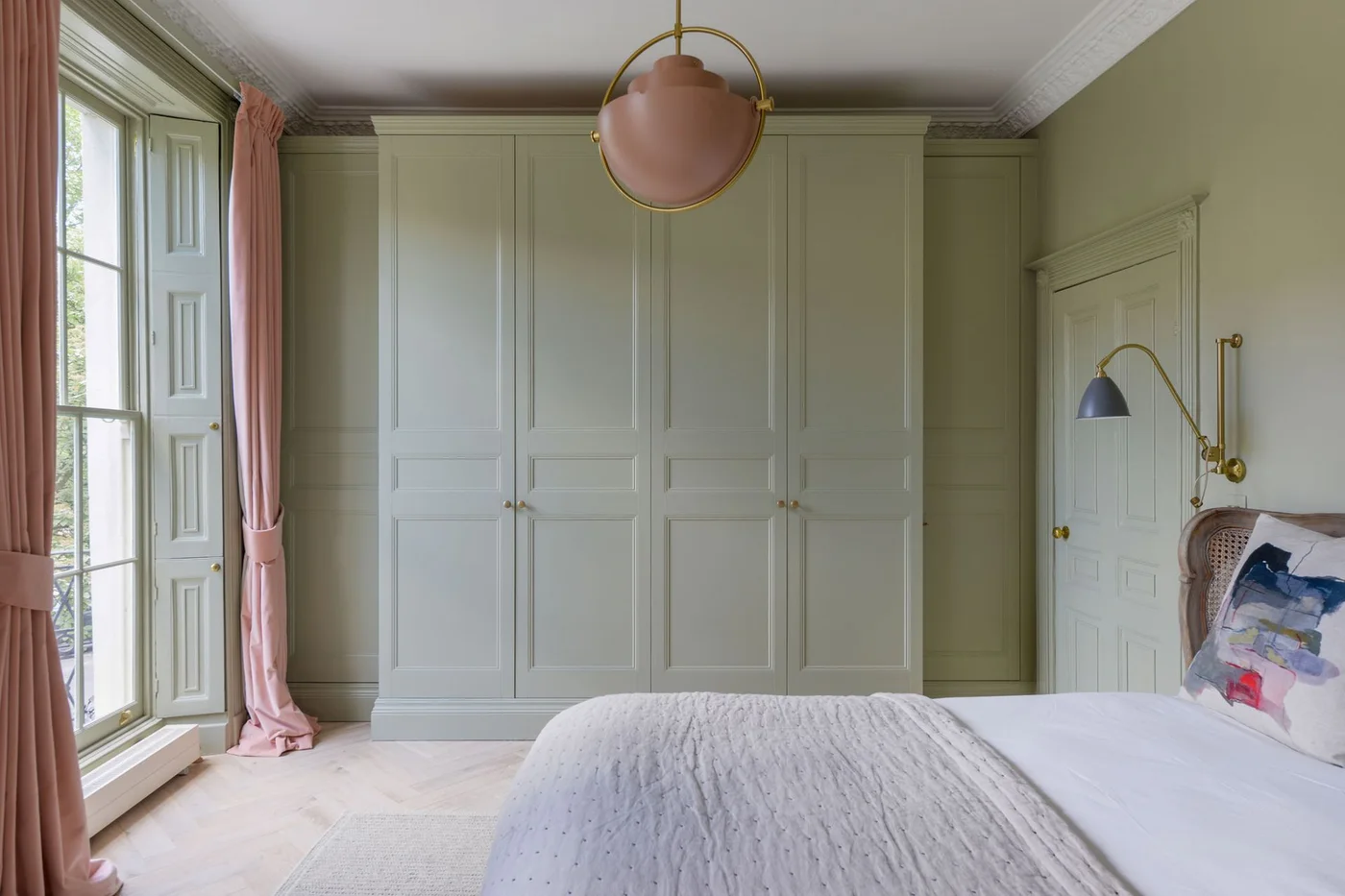
The fitted wardrobes use the same pale green family as the walls, making their large doors part of the room’s architecture. Pink curtains add a warm vertical accent beside the windows. Fine handles and the pendant introduce smaller metallic details, while pale bedding leaves the cupboard outlines clearly visible.
Order cabinet and wall samples together because different finishes can alter the apparent color even when they share a name. Plan wardrobe openings around the bed and curtains before choosing full-height doors. Our walk-in closet ideas show more ways to divide hanging space and drawers when the storage layout needs as much attention as the paint.
IDEA 08 / 15
Use Plain Sage Doors for Quieter Storage
 SaveSupport Non AI Creator
Image credit: Beth Evans. Stylist: Jessica Jung. Design: ALL Design Studio
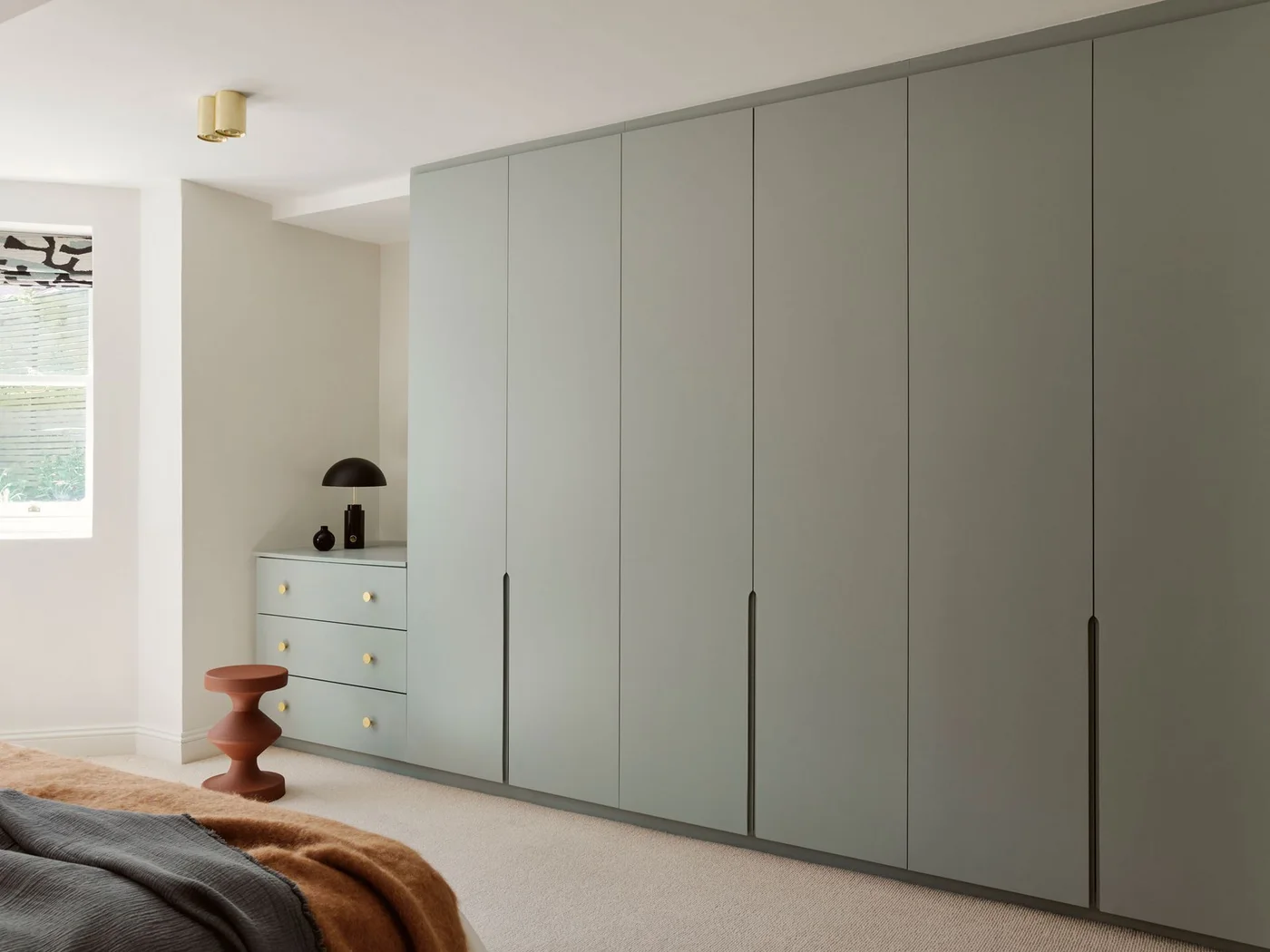
Tall sage-gray doors provide a quiet storage wall beside a shorter matching drawer unit. The recessed handles keep the fronts comparatively uninterrupted, with small warm-toned knobs defining the drawers separately. A rust-colored stool introduces a stronger shape and color against the pale carpet and simpler bedding in the foreground.
Check handle positions at a comfortable height before ordering recessed details that cannot easily move later. Keep the lower drawer accessible with the stool in use, and compare the cabinet color with the carpet under evening light. Choose a durable finish suited to frequent hand contact rather than relying on the muted color to hide marks.
PART 03
Give the bed a considered background
IDEA 09 / 15
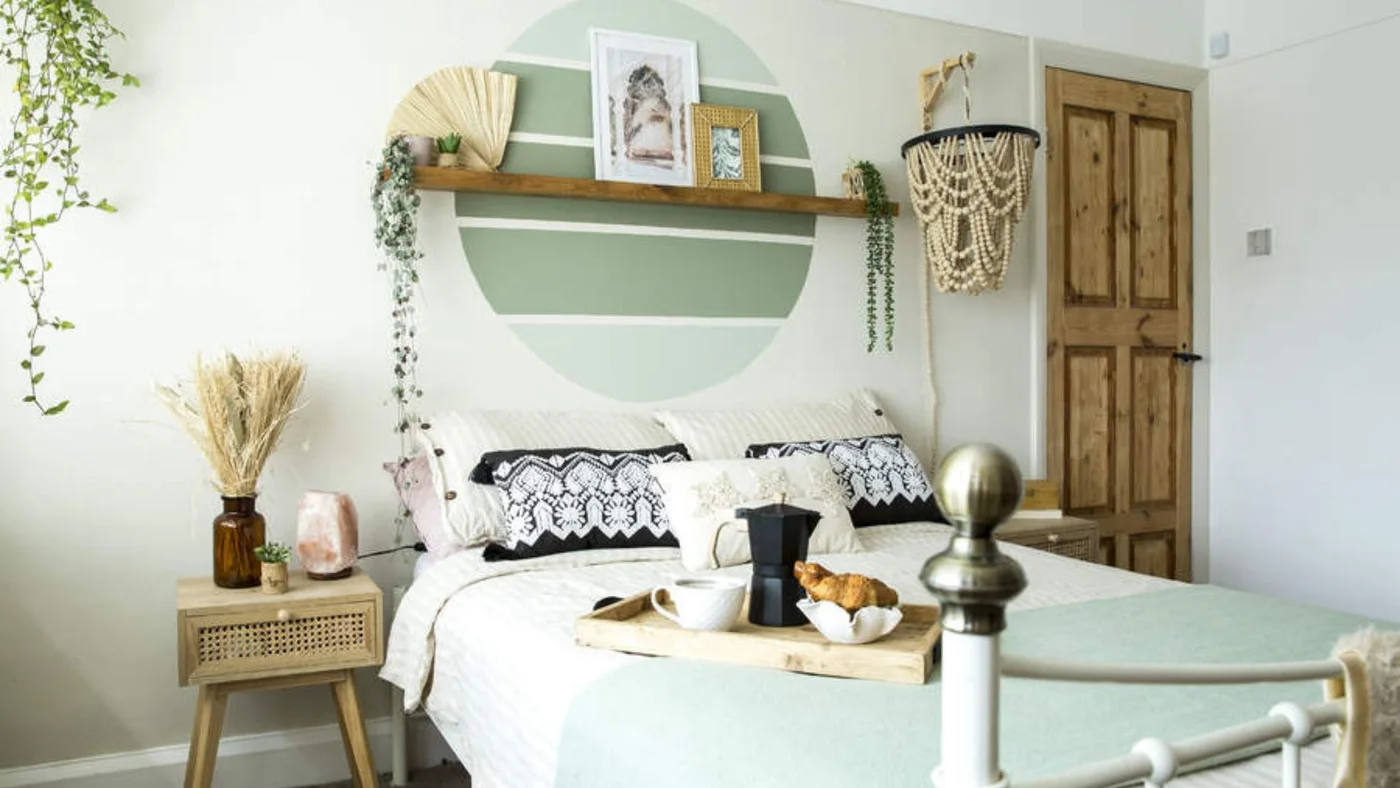
Paint a Small Sage Feature Behind the Bed
 SaveSupport Non AI Creator
Image credit: Future PLC/Lizzie Orme Photography Ltd
A large circle divided into pale green bands creates a focal point above the white metal bed. The surrounding wall stays light, so the small painted area carries the color without enclosing the whole room. Timber furniture, woven details and darker patterned cushions give the arrangement several warmer and stronger accents.
Mark the circle and shelf position before painting so the shapes work around the actual bed height. Secure the shelf and framed objects appropriately, keeping heavy or unstable displays away from the sleeping position. Limit additional wall decorations nearby; the bands already supply a clear pattern even though their colors are restrained.
IDEA 10 / 15
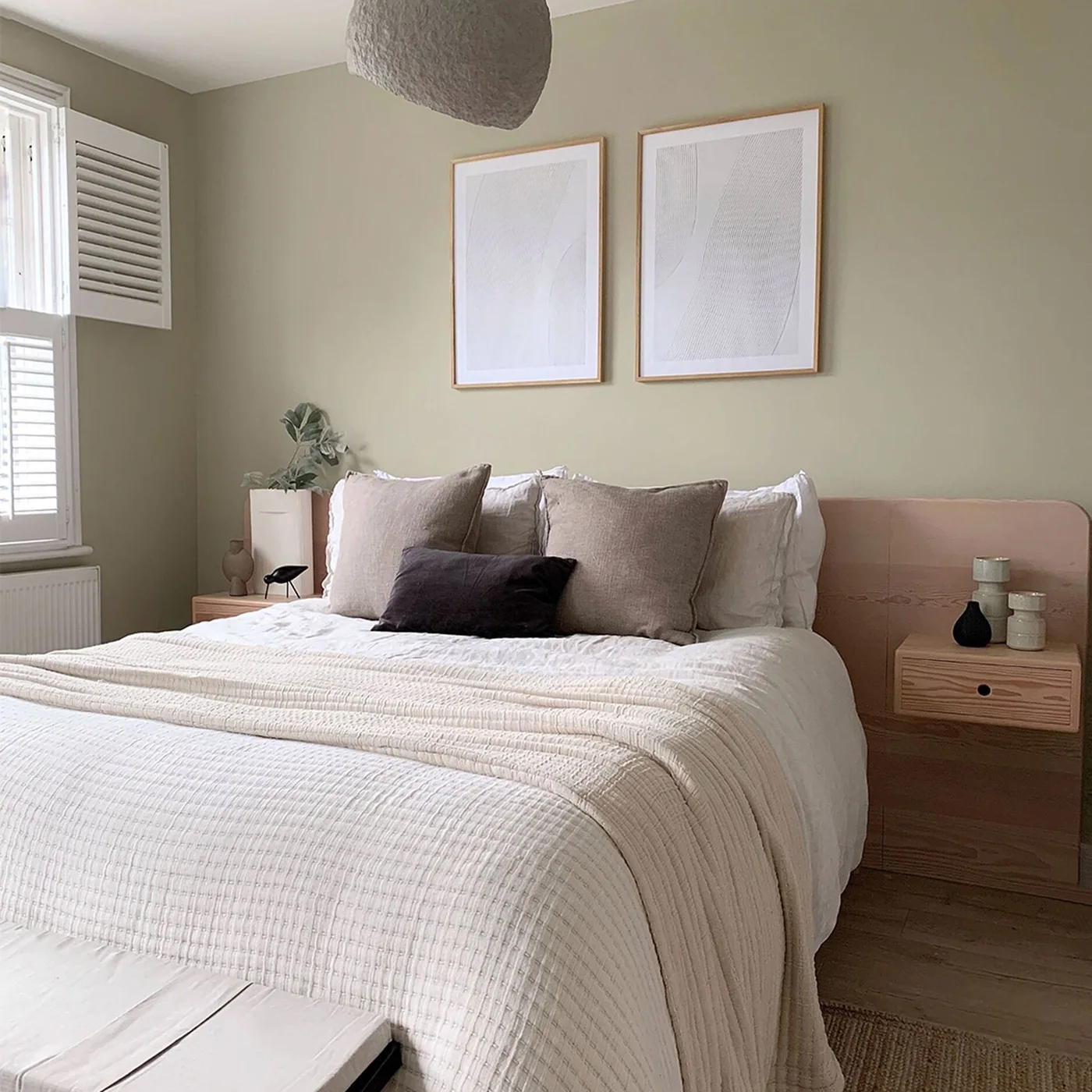
Keep Sage Simple Beside a Timber Headboard
 SaveSupport Non AI Creator
Image credit: @hello_haus for COAT paints
Soft sage walls provide a plain background for the headboard and bedside drawers. Their pale timber introduces gentle grain, while white bedding and taupe cushions keep the palette close in tone. Two pale framed works repeat the headboard’s width more quietly than a large dark picture would.
Choose the paint alongside the timber finish and the largest neutral fabric, since each affects whether the green appears cooler or warmer. Leave useful space around floating bedside drawers for access and cleaning. Keep additional cushions manageable if the room needs to be reset quickly each morning rather than maintained as a decorative display.
IDEA 11 / 15
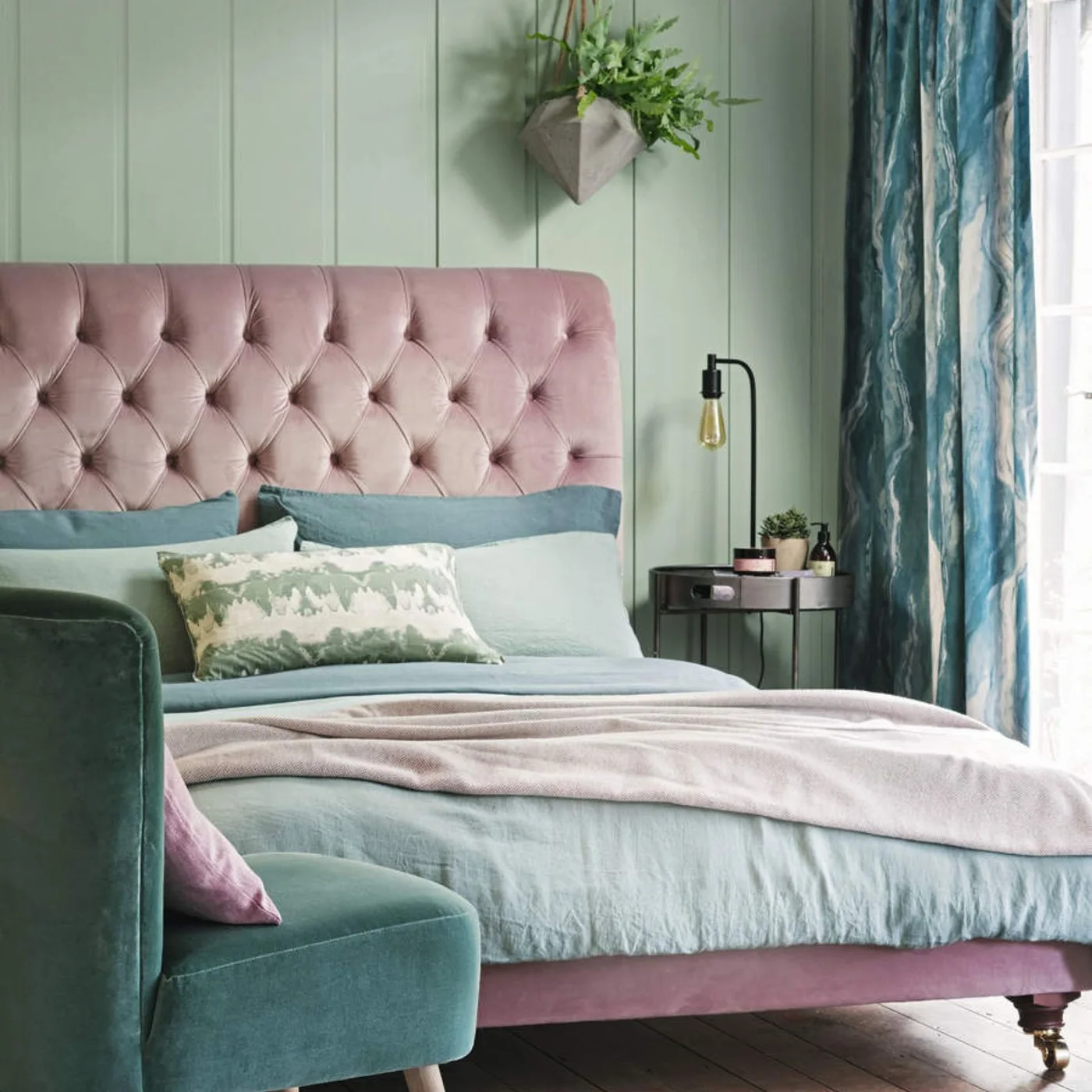
Use Sage Paneling Behind a Pink Bed
 SaveSupport Non AI Creator
Image credit: Future PLC/Dominic Blackmore
Pale sage vertical boards create a quieter background for the pink tufted headboard. Blue-green bedding and curtains introduce cooler layers without covering every surface in one green. A slim dark bedside lamp adds a clear outline, giving the softer upholstery and wall colors a useful point of contrast.
Pick one patterned fabric to connect the different pastel colors, then keep the remaining textiles less busy. Check the bed upholstery against the wall sample before choosing curtain fabric; two pale colors can still compete if their undertones differ. Use our bedrooms with paneling for more ways to place the boards around windows, beds and furniture.
PART 04
Finish with fabrics, pattern and existing furniture
IDEA 12 / 15
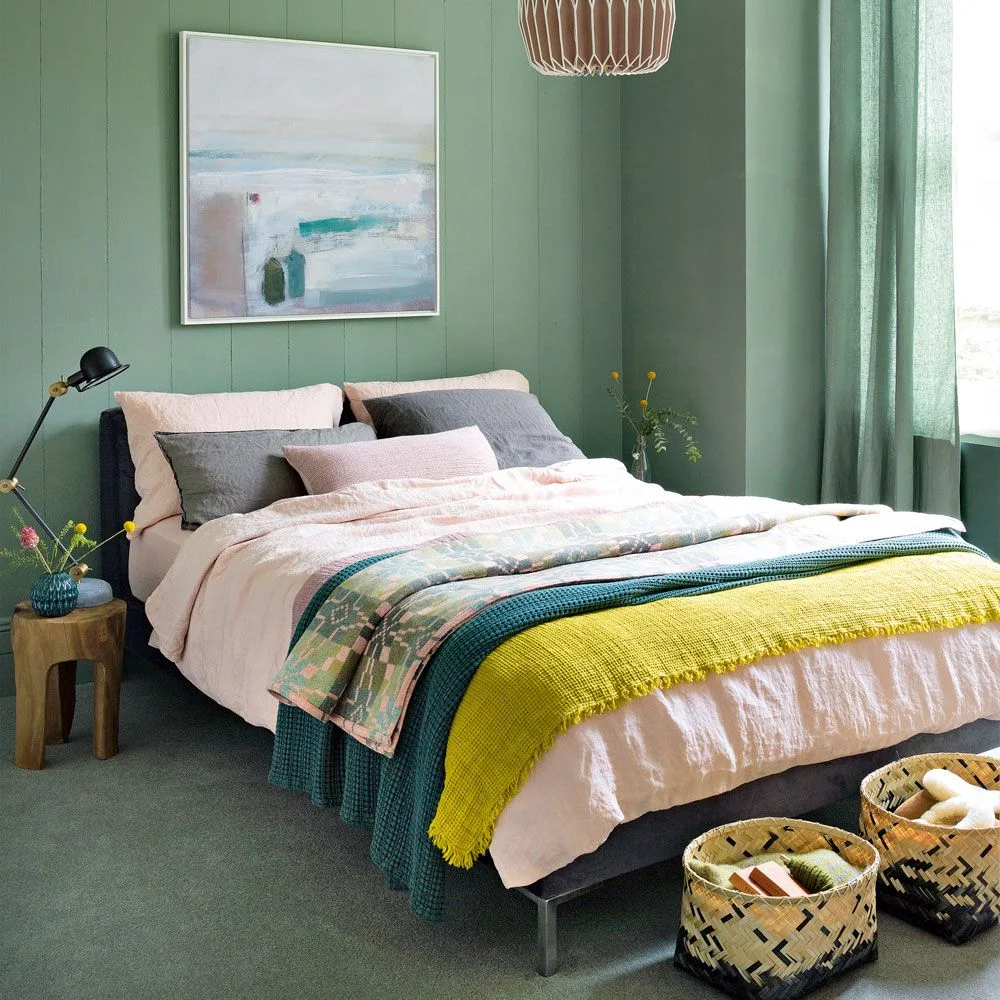
Add Stronger Colors in Removable Layers
 SaveSupport Non AI Creator
Image credit: Future PLC/Simon Whitmore
Sage-green boards and matching curtains give the room a continuous background. The bed carries the stronger colors through a yellow throw, a deeper teal layer and softer pink bedding. Pale artwork and a timber bedside stool keep the wall arrangement lighter than the concentrated textiles below.
Build this kind of layered palette gradually, starting with the bedding you use most often. Removable throws make it easier to adjust the balance than changing the wall color again. Keep baskets off the main walking route and choose washable layers where practical, since several decorative textiles add both storage needs and laundry.
IDEA 13 / 15
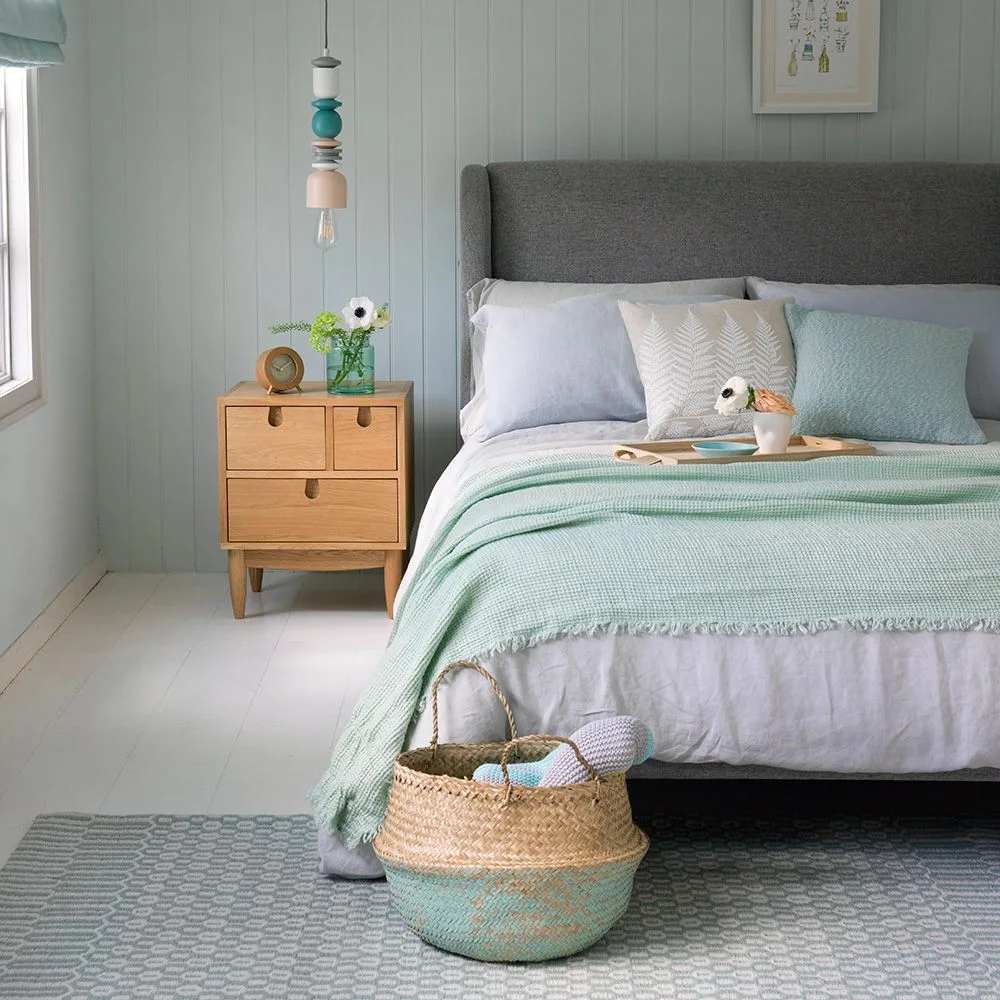
Choose a Cooler Sage with Gray Upholstery
 SaveSupport Non AI Creator
Image credit: Future PLC/Simon Whitmore
The wall boards show a cool gray-green shade behind a darker gray upholstered headboard. Pale bedding and a soft green throw repeat that cooler palette at different strengths. The timber bedside chest adds warmth, while the small pendant introduces color in a much smaller area than another painted wall would.
Check a cooler sage in the room’s least sunny corner before painting every wall. If it appears too blue beside your bedding, compare a warmer green sample rather than trying to correct it with many yellow accessories. Plan a reachable light switch and a useful bedside surface around the bed’s actual height and width.
IDEA 14 / 15
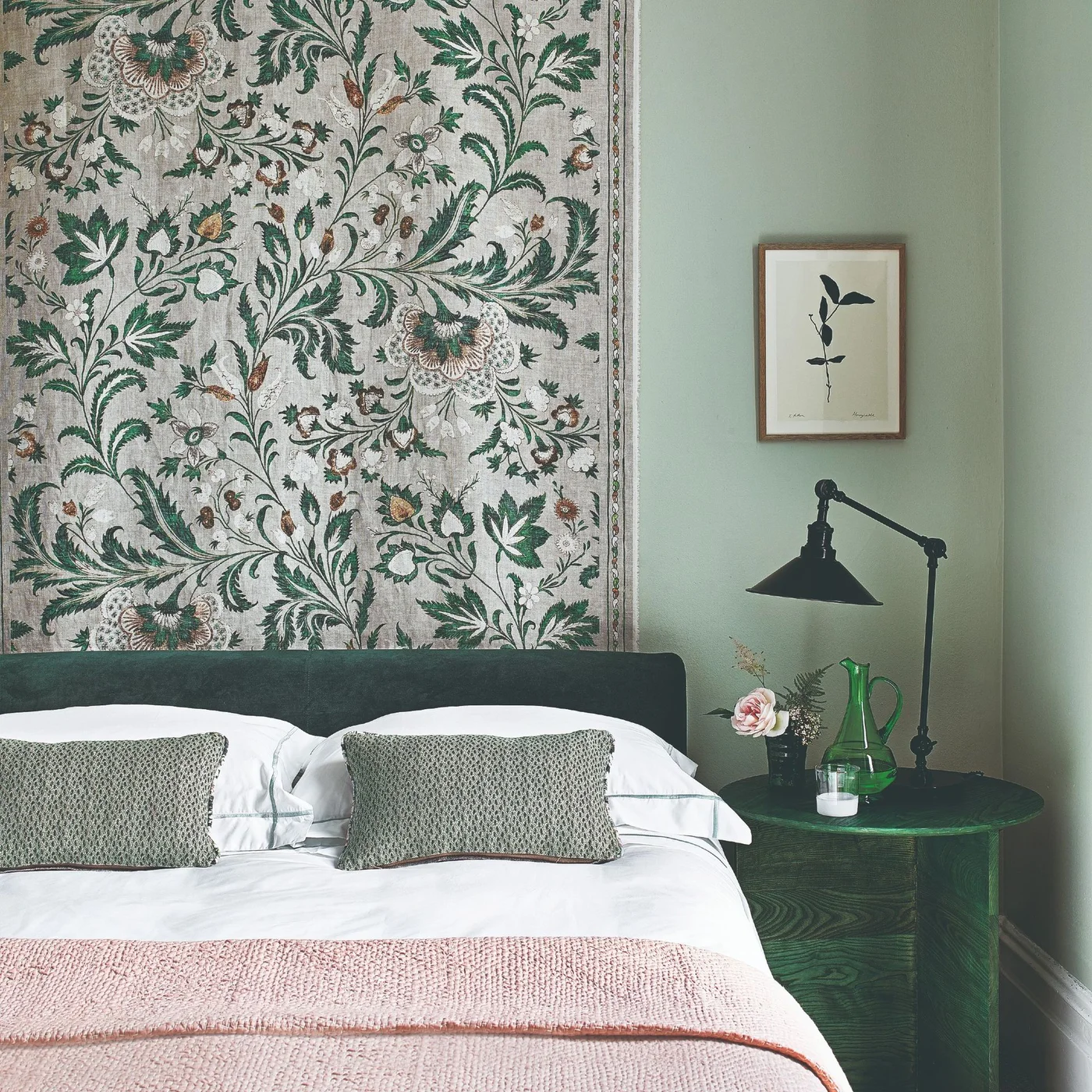
Use a Botanical Hanging with Plain Sage Walls
 SaveSupport Non AI Creator
Image credit: Future PLC/Polly Wreford
Sage walls provide a plain frame around the botanical hanging above the bed. Its dark green leaves connect with the headboard and bedside table, while white bedding keeps the center lighter. A black adjustable lamp has a clear outline against the green wall without needing a large patterned shade.
Take one restrained color from a botanical fabric when choosing the surrounding wall paint instead of matching its darkest leaves. Check the hanging’s fixing and keep it secure above the bed. Leave the lamp adjustment and daily bedside space usable; a decorative jug or flower arrangement should not prevent a book or glass from having a stable place.
IDEA 15 / 15
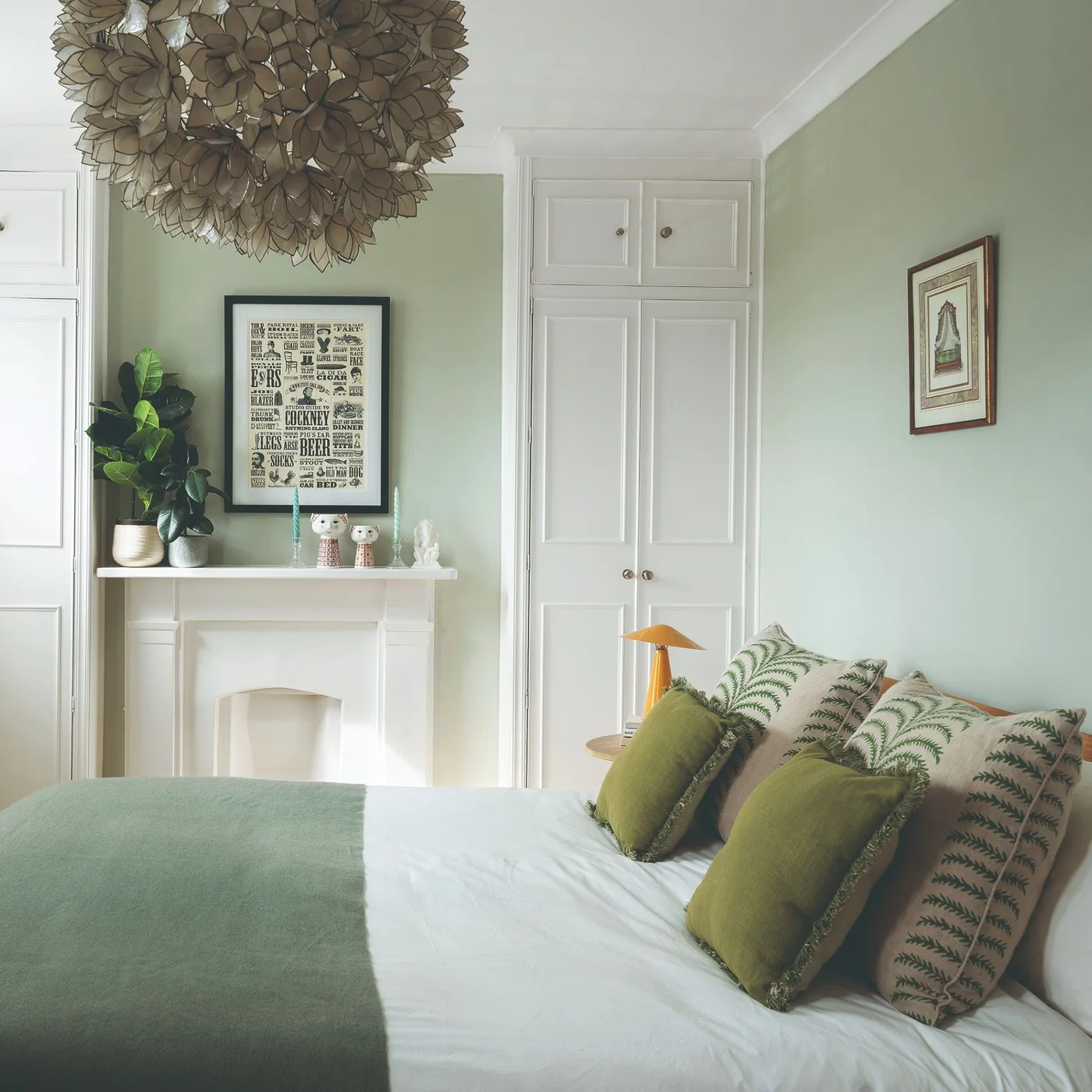
Keep Existing White Cupboards Against Sage
 SaveSupport Non AI Creator
Image credit: Future PLC
Light sage walls fill the spaces between white fitted cupboards and a white fireplace. Fern-patterned cushions and a green throw repeat the color within the bedding, while the large ceiling light supplies a separate sculptural detail. Keeping the storage white makes its outlines distinct rather than blending every fitting into the wall.
Try painting the surrounding walls before replacing serviceable white storage. Check the green against the existing cupboard finish and any fixed flooring, then use bedding to connect them. Keep cupboard doors and the bed accessible, and confirm the fireplace’s status and requirements before treating its mantel or opening as a place for decorative objects.
BRING IT ALL TOGETHER
Choose the green beside the things you will keep
Compare a large painted sample with the bed, flooring, curtains and timber before settling on a sage. Look at it in morning light and with evening lamps switched on. Decide whether the wall should be the main color or a quieter background for stronger upholstery and accessories.
Build the remaining palette in a few useful layers. A curtain, throw or small painted feature can test the idea before a larger commitment. Keep bedside surfaces, wardrobe access and lighting practical, and choose finishes and fabrics whose care requirements fit everyday use.