A bedroom bench should make getting dressed, setting down a bag or folding a blanket easier. Its footprint matters as much as its appearance, particularly along the route between the bed and the door.
These rooms show different seat shapes, textures and placements. Check the space in your own room before choosing a style, and do not assume an upholstered bench contains storage unless its construction confirms it.
PART 01
Choose a Useful Shape
IDEA 01 / 20
Choose a Simple Upholstered Block
 SaveSupport Non AI Creator
Source: www.houzz.com
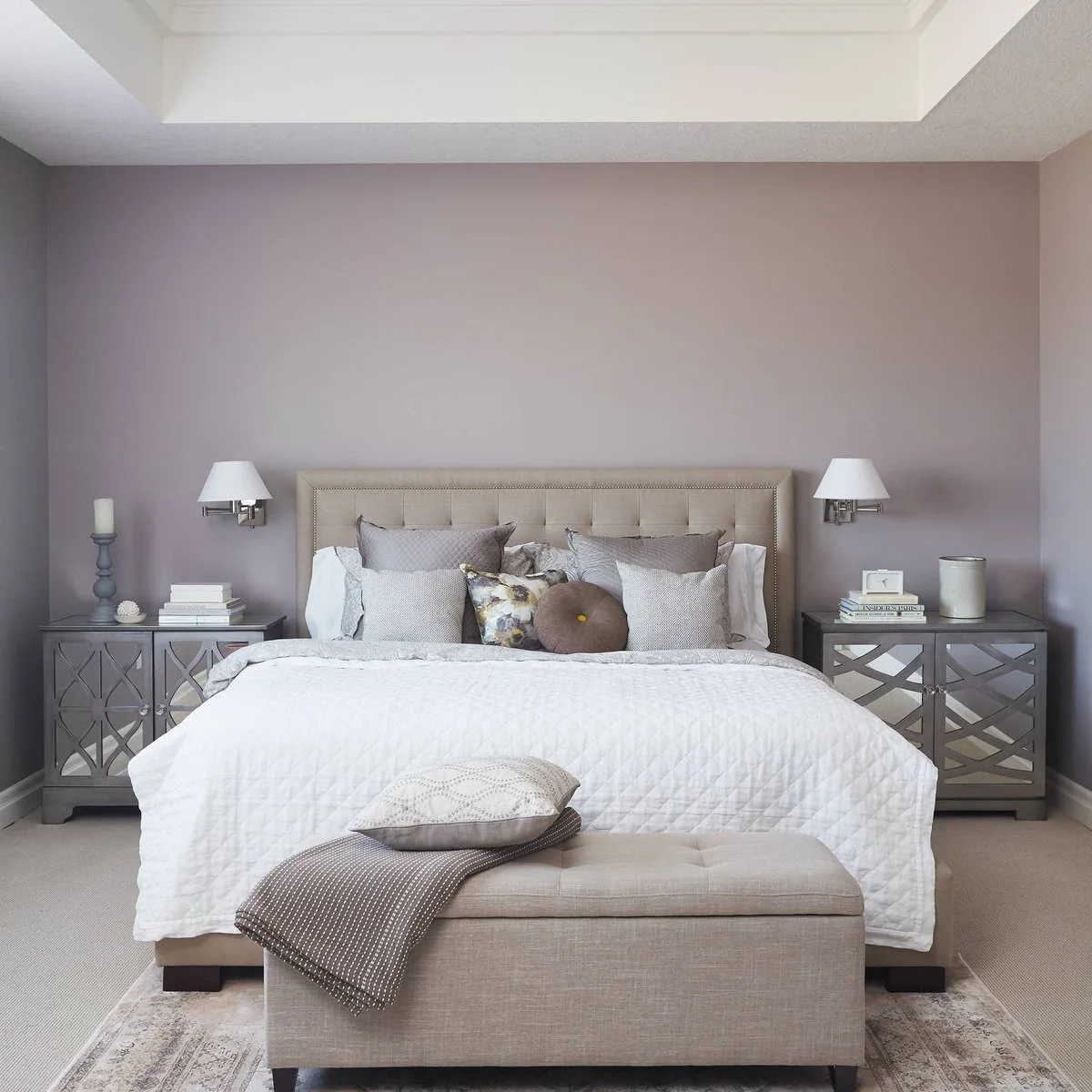
A simple upholstered block sits at the foot of this bed, repeating the pale tones of the headboard and bedding. Short dark feet keep it slightly above the rug. The plain sides balance the patterned mirrored nightstands without adding another detailed furniture frame to the room.
Choose the seat height by trying the movement of sitting down and standing up, not by matching the mattress. Keep enough room to walk around the bench with bedding hanging naturally. If you need storage, confirm the lid or drawers explicitly; a solid upholstered shape does not establish what is inside.
IDEA 02 / 20
Use an Open Wooden Frame
 SaveSupport Non AI Creator
Image credit: Project: Jennifer Robin Interiors (via Houzz)
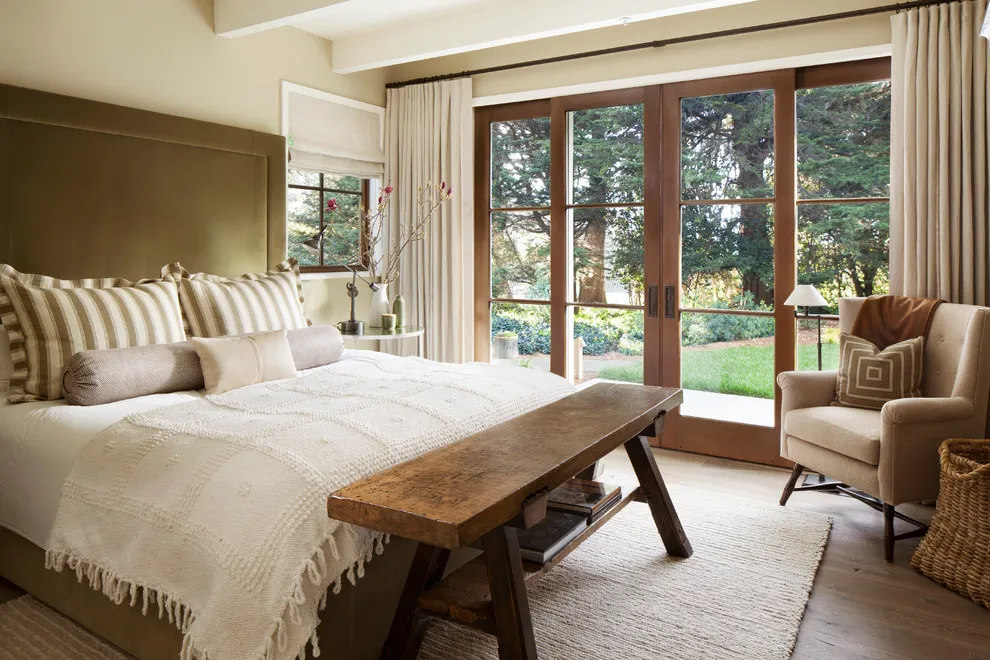
A long wood-toned bench introduces a firmer line against the soft white bedding. Its open base and splayed legs leave the floor visible, while a lower shelf holds a few books. The bench also connects visually with the dark frames of the nearby glazed doors.
Check that projecting legs do not extend into the route you use at night. Keep the lower shelf to a small number of items so it remains easy to clean beneath. A hard seat suits brief use, but a securely fitted cushion may be more comfortable if you plan to sit there regularly.
IDEA 03 / 20
Make the Bench the Bright Accent
 SaveSupport Non AI Creator
Image credit: Project: Nifelle Design - Fine Interiors (via Houzz)
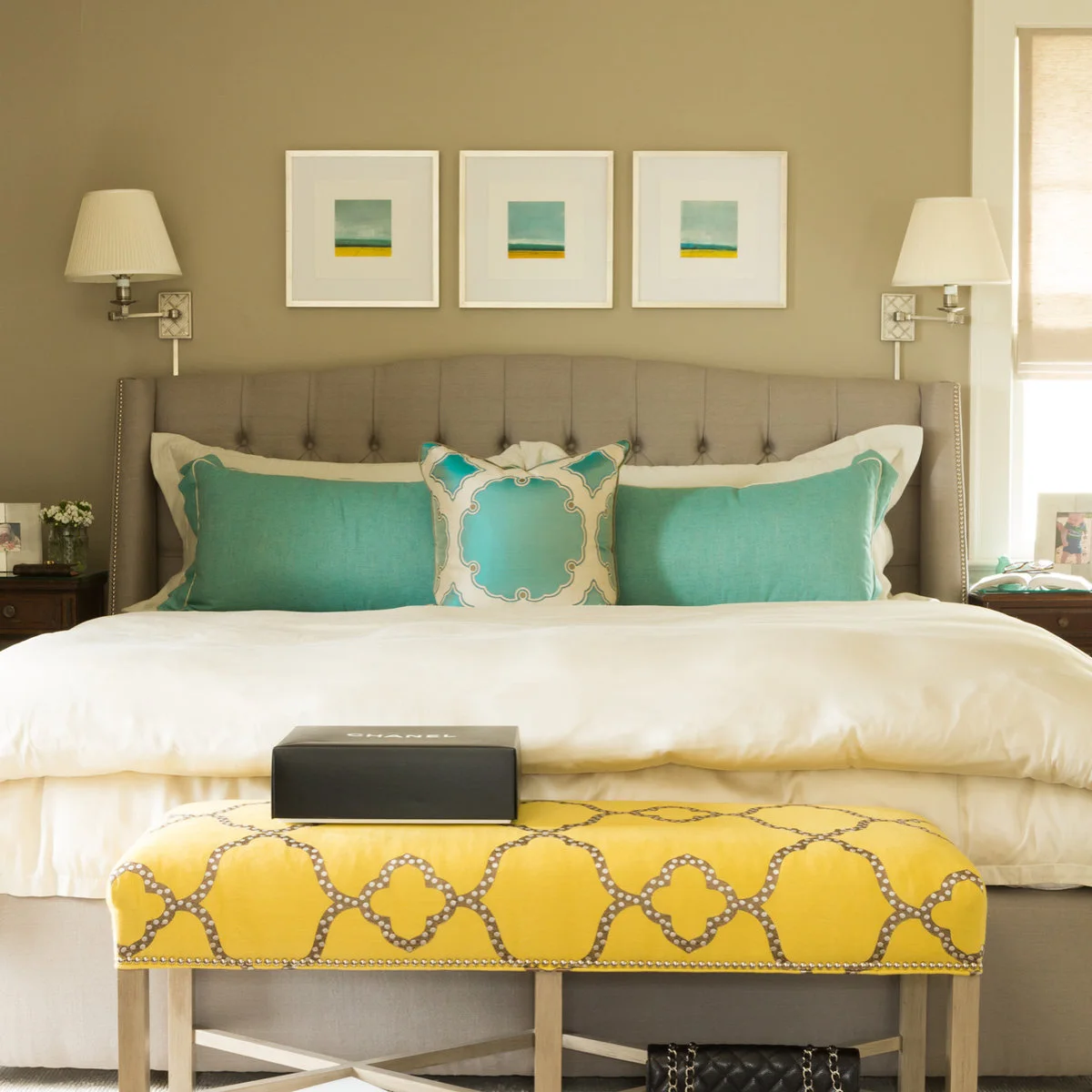
A yellow seat brings a bright accent to this otherwise pale bedroom. Its looping pattern contrasts with the simpler bed linen, while turquoise cushions provide a second color higher in the room. The bench’s open frame stops the saturated fabric from reading as a heavy block.
Choose one prominent pattern rather than adding equally busy prints to every surface. View a fabric sample alongside your bedding and wall color before upholstering. Keep the bench useful for sitting by limiting decorative objects on top, especially if it is your main place to put on shoes.
IDEA 04 / 20
Echo a Color from the Bed Linen
 SaveSupport Non AI Creator
Source: houzz.com
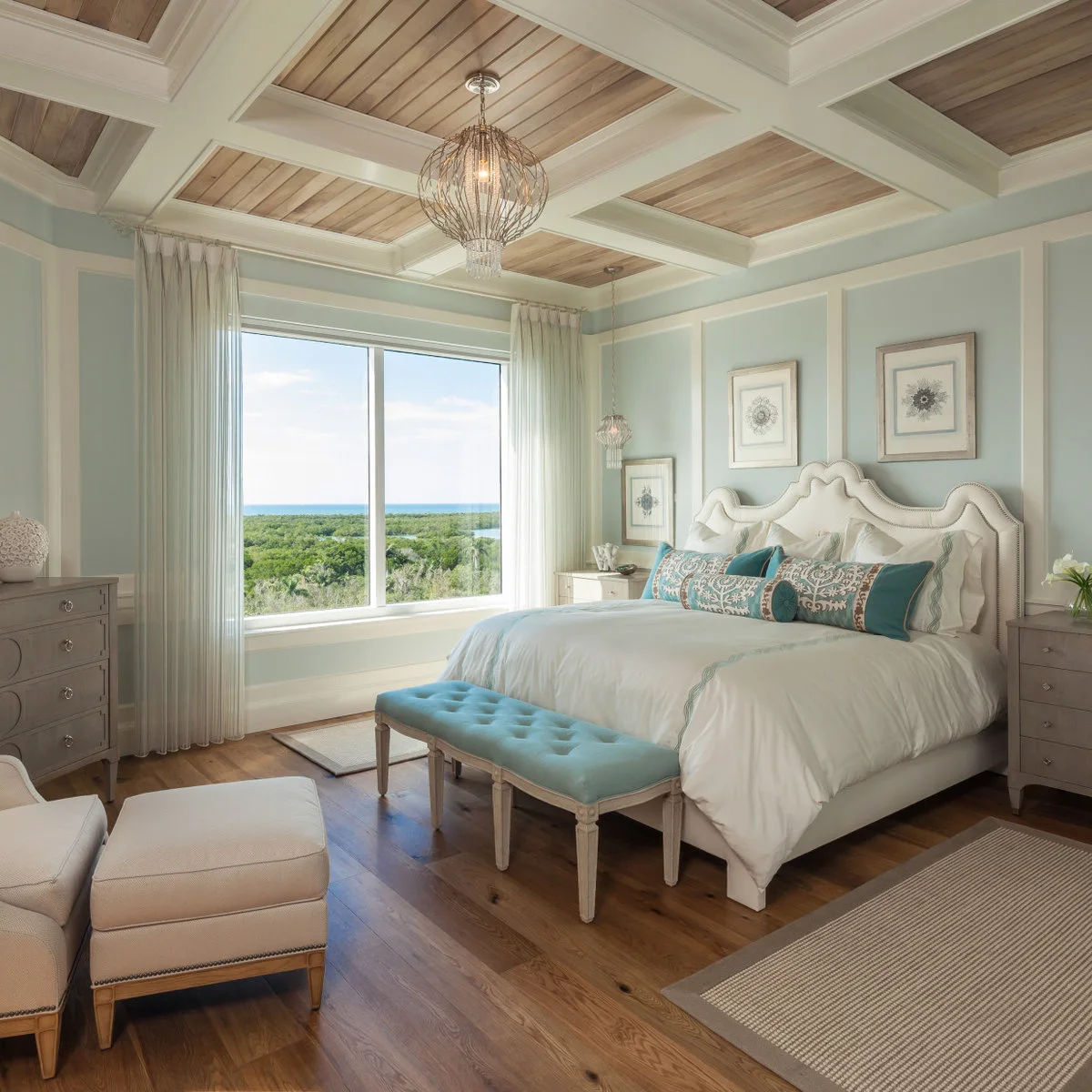
The turquoise tufted seat repeats the stronger blue accents in the bed cushions. Pale legs connect it to the light headboard and room trim. With floor visible underneath, the bench adds a place to sit without competing with the broad window or detailed ceiling.
Pull a color from an existing textile if you want a bench to feel connected without buying a matching set. Tufting creates small recesses that need vacuuming, so consider a simpler seat if easy cleaning matters most. Check the route to the window and adjacent chair with the bench in place.
IDEA 05 / 20
Lighten a Dark Bed with a Slim Pale Seat
 SaveSupport Non AI Creator
Image credit: Project: Andrew Sherman Photography (via Houzz)
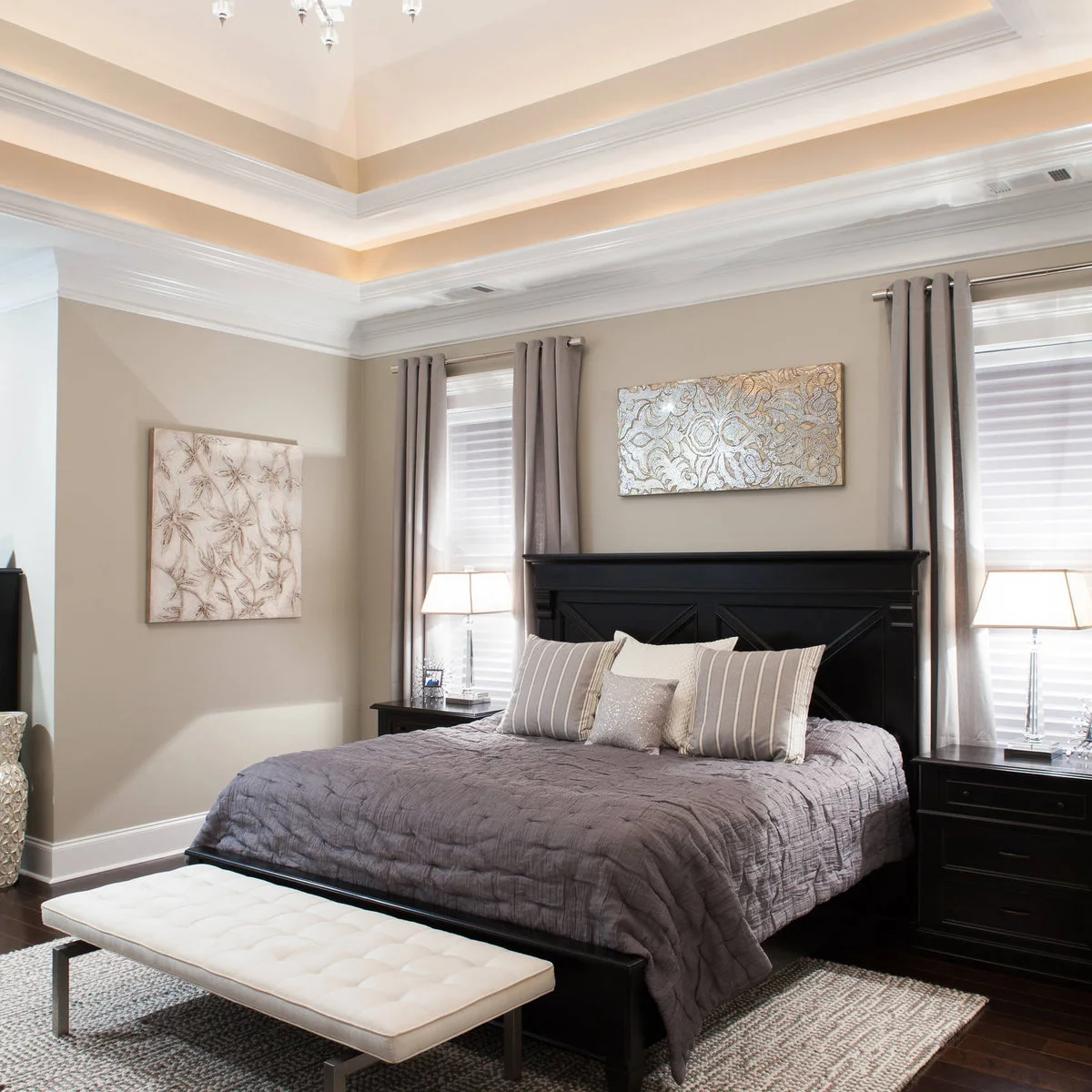
A slim white bench contrasts with the dark headboard, footboard and nightstands in this bedroom. Its thin legs keep the shape open against the rug. The pale seat brings a lighter strip across the foot of the bed without introducing another large upholstered piece.
Check a lightweight-looking bench for stability before buying, particularly if you will use it while dressing. Keep its corners inside a comfortable walking route rather than matching the bed’s full width automatically. Choose upholstery you can maintain, since pale seats show everyday marks more readily.
PART 02
Connect the Bench to the Bed
IDEA 06 / 20
Keep a Slatted Bench Visually Open
 SaveSupport Non AI Creator
Image credit: Project: Oglesby Greene Architects (via Houzz)
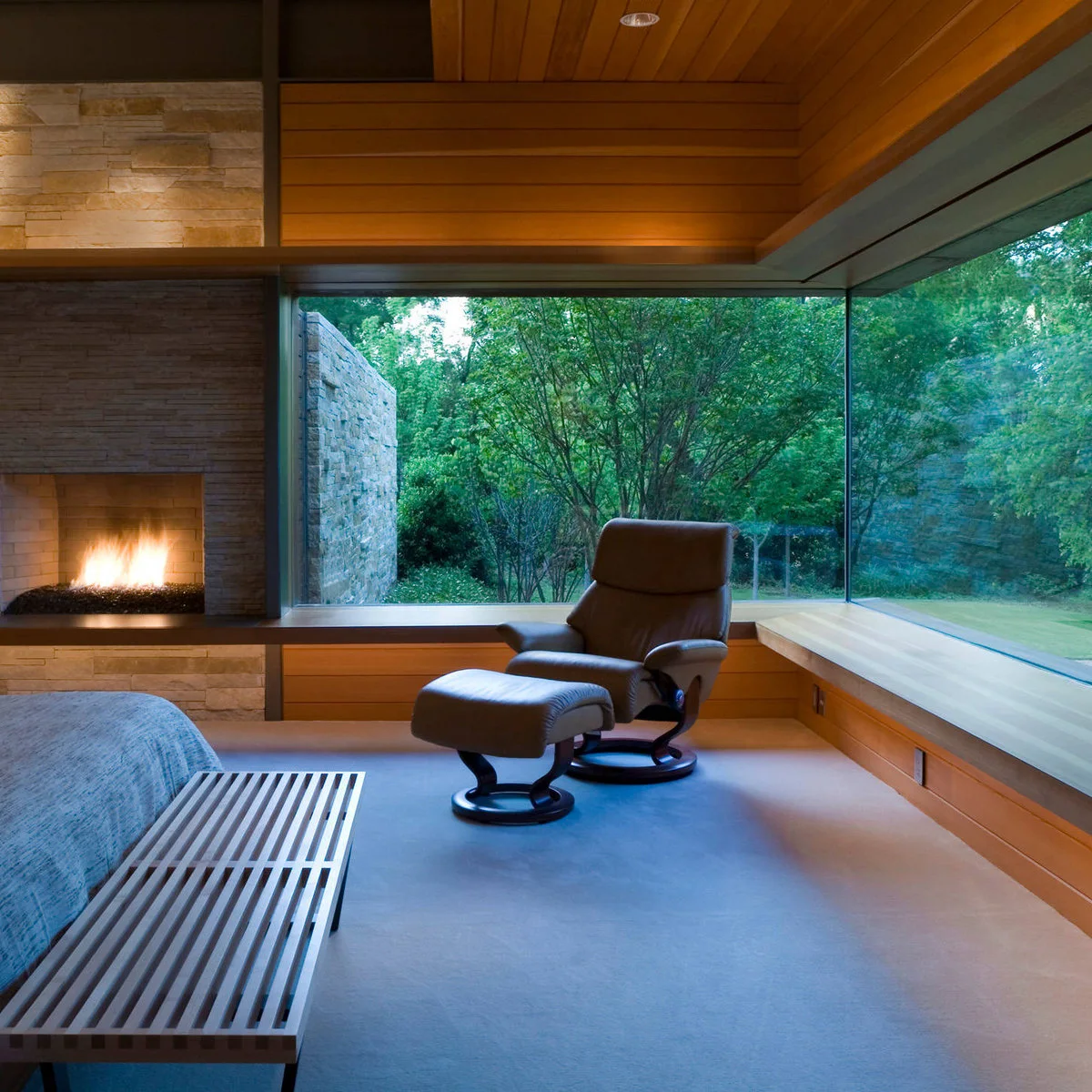
A slatted seat runs across the foot of the bed in this bedroom, with an open base that keeps the floor visible. Its parallel lines relate to the surrounding timber details. The nearby lounge chair provides softer seating, leaving the bench to serve shorter everyday tasks.
Use a slatted bench for brief sitting or a folded blanket rather than a collection of small loose objects. Check the gaps and edges against clothing that could catch. A separate chair may be more comfortable for reading, allowing the bench to stay narrow and keep the route around the bed open.
IDEA 07 / 20
Coordinate Tufting Without Matching Every Detail
 SaveSupport Non AI Creator
Image credit: Project: The Blue Moon Trading Company (via Houzz)
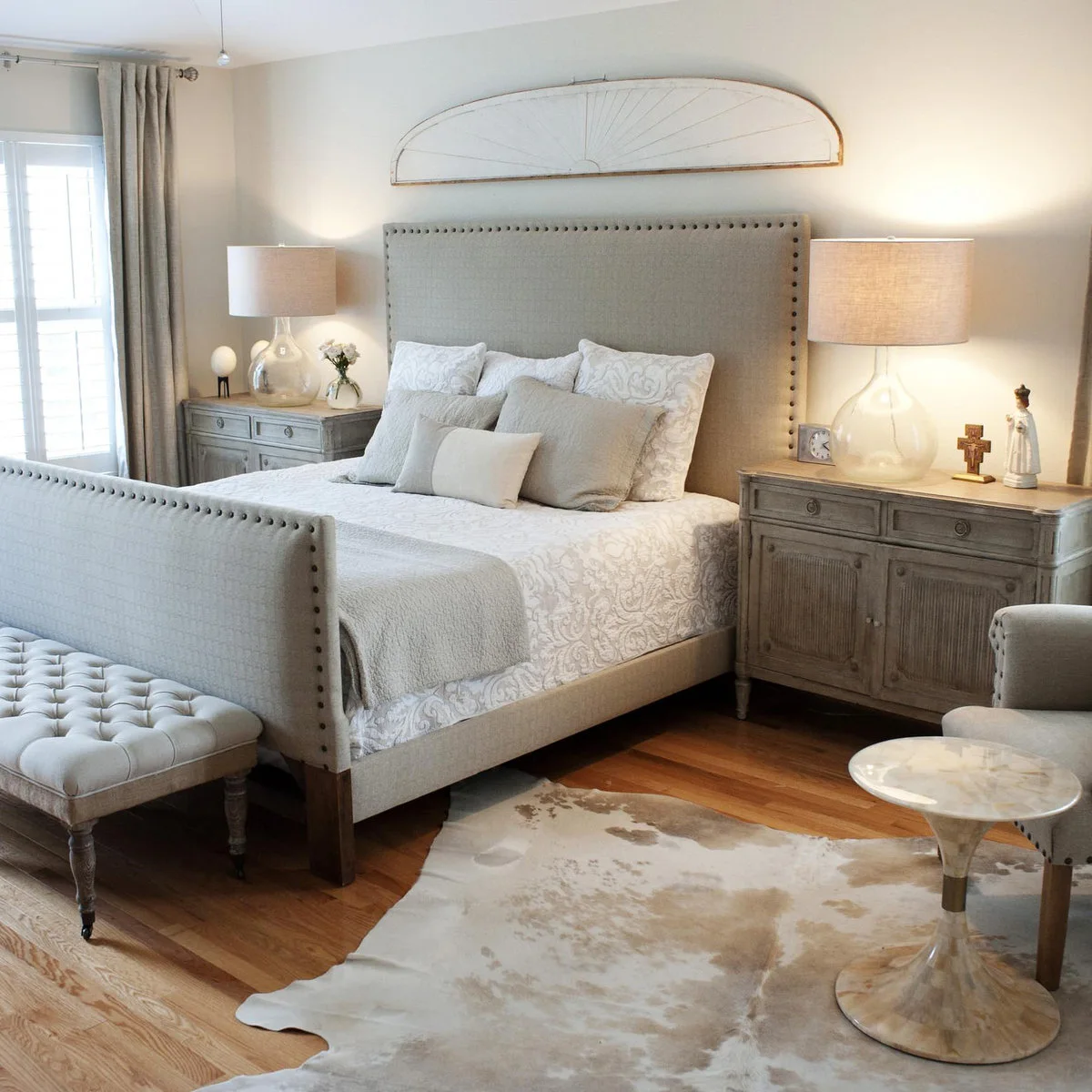
A pale buttoned bench sits in front of this bed’s tall upholstered footboard. Their related tones make them feel coordinated, while turned legs distinguish the bench from the bed’s simpler lower frame. The room uses similar soft colors across the nightstands, lamps and bedding.
Leave room to make the bed and lift the duvet without trapping it behind the bench. Matching upholstery is optional; a related shade can be more forgiving when fabrics age differently. Keep the bench lower than the footboard if you want the bed’s outline to remain visible from the doorway.
IDEA 08 / 20
Repeat a Dark Frame Below Pale Upholstery
 SaveSupport Non AI Creator
Image credit: Project: Taste Design Inc (via Houzz)
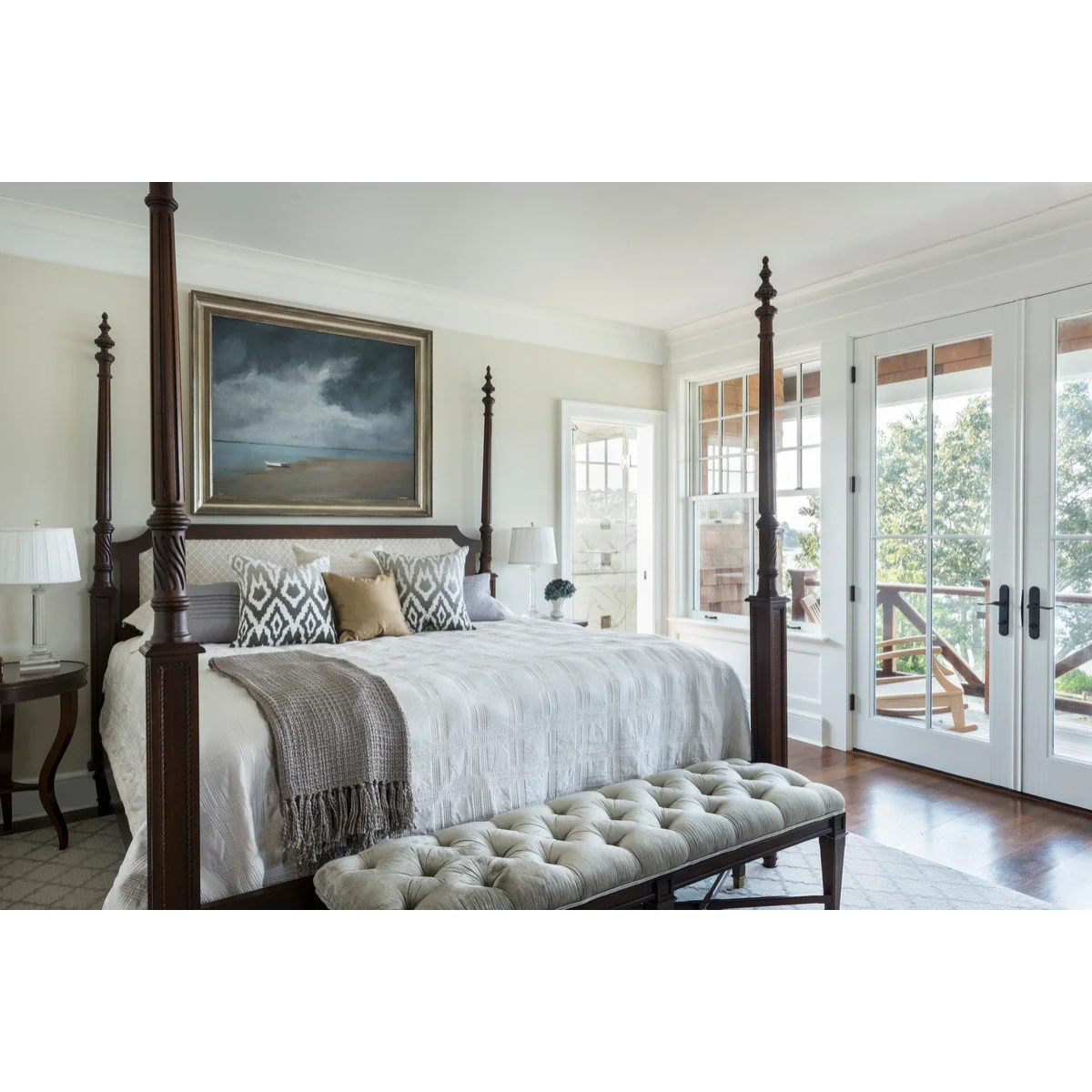
Dark turned legs connect this long bench to the four-poster bed, while the tufted seat repeats the light bedding. The open frame keeps the repeated dark tones from becoming one heavy shape. Glazed doors beside the bed leave a clear view of the surrounding floor.
Measure the walking route to those doors rather than judging clearance from a photograph. A long bench needs support appropriate to its span and intended users. Check the feet sit firmly on the floor or rug, and avoid placing part of the frame on an uneven folded rug edge.
IDEA 09 / 20
Use a Window Bench Instead of a Foot Bench
 SaveSupport Non AI Creator
Image credit: Project: Patina Home Design (via Houzz)
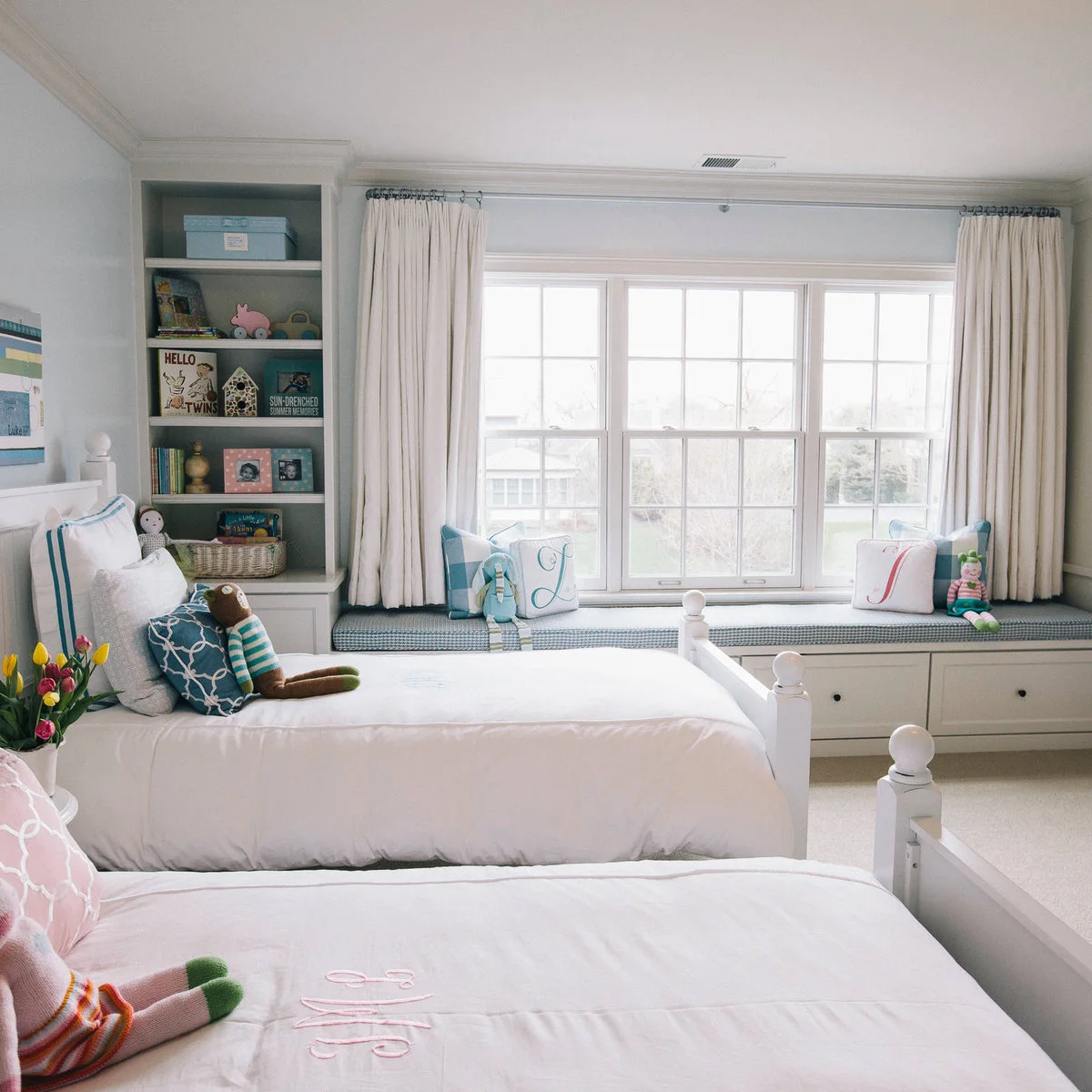
A long cushioned window seat provides the extra sitting place in this twin bedroom, leaving the ends of the beds open. Drawers beneath the seat make the window wall useful for storage. A tall bookcase at one side keeps books close to the seating area.
Consider the window wall when a foot-of-bed bench would crowd the room. Keep the window operable, follow window-safety guidance and choose safe cordless treatments where children use the space. Drawers need enough floor space to open, so check the bed positions before committing to built-in storage.
IDEA 10 / 20
Choose Raised Ends for Occasional Lounging
 SaveSupport Non AI Creator
Source: houzz.com
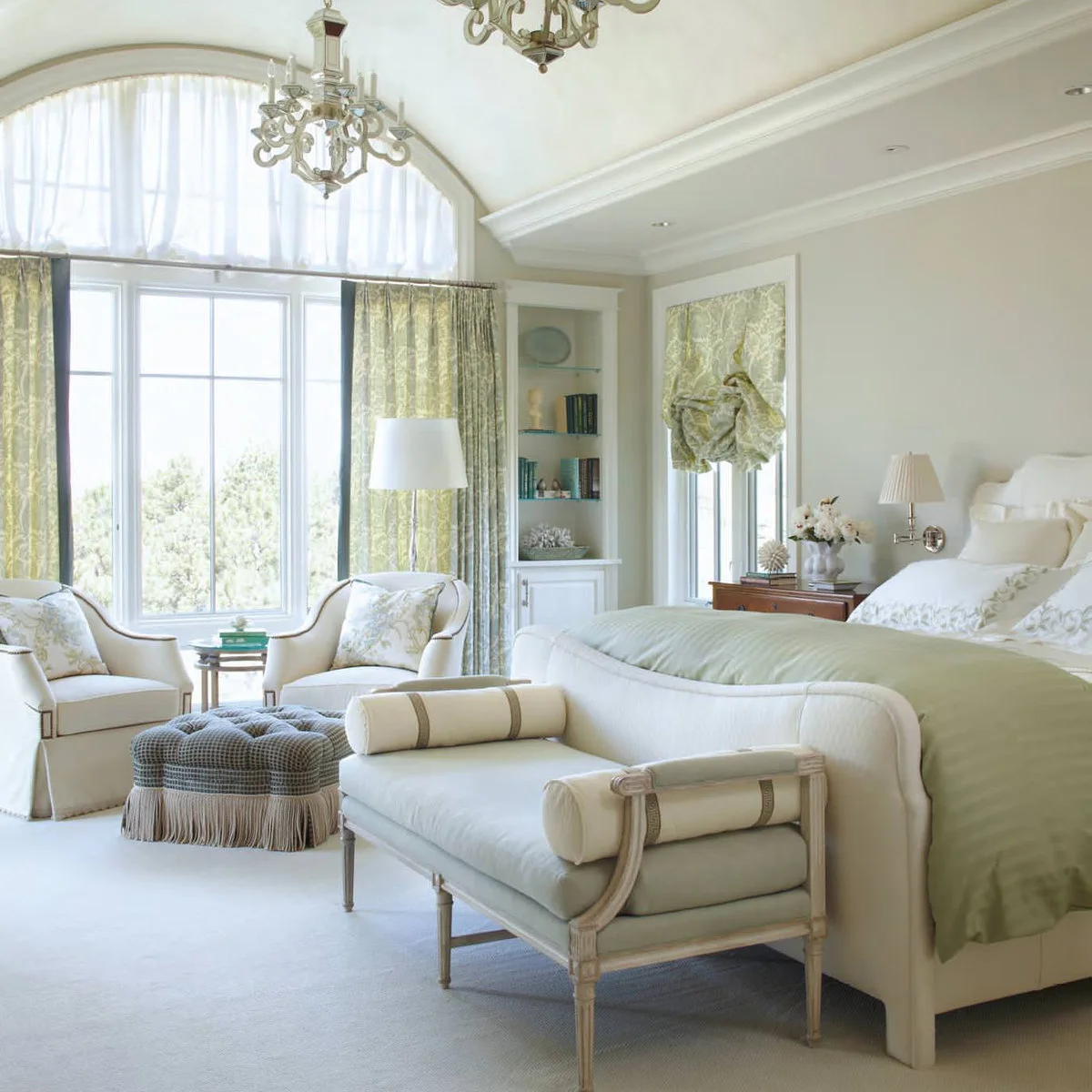
Curved raised ends and bolster cushions give this bench a more lounge-like shape than a flat seat. The pale upholstery repeats the bedding, while its open legs preserve some floor space visually. The bench sits in a room that also includes chairs by the window.
Raised ends reduce the usable sitting length, so test the seat rather than judging only the overall width. A deeper bench also takes more floor than a narrow perch. If the room already has comfortable chairs, decide whether the extra bulk serves a purpose before adding another substantial upholstered piece.
PART 03
Bring in Texture and Color
IDEA 11 / 20
Pair a Detailed Base with a Simple Seat
 SaveSupport Non AI Creator
Image credit: Project: Dillon Kyle Architects (DKA) (via Houzz)
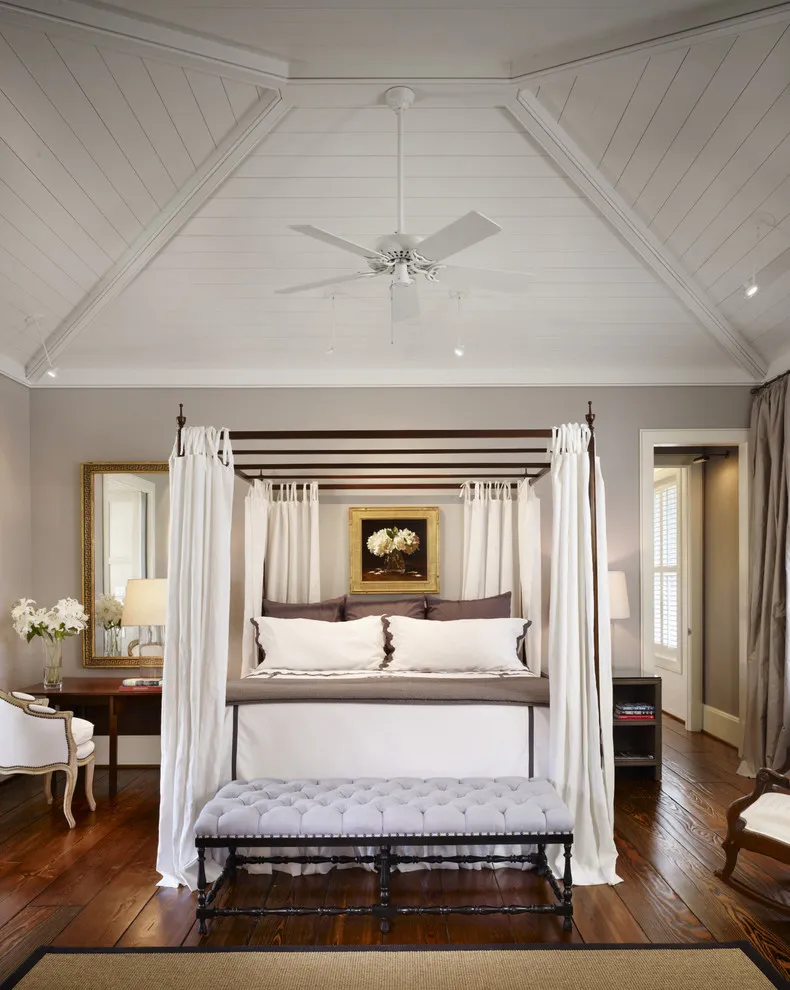
The dark turned base of this bench relates to the canopy frame, while the pale tufted seat connects to the white curtains and bedding. The open stretchers add detail below the cushion without filling the whole foot of the bed with a solid storage unit.
Keep the decorative base easy to reach for dusting, particularly where stretchers meet the legs. Check that loose bed curtains cannot catch on the bench corners or trail beneath its feet. Use a plain throw if you want another layer without covering the details that made the bench appealing.
IDEA 12 / 20
Add a Soft Textured Seat to a Quiet Room
 SaveSupport Non AI Creator
Image credit: Project: Amy Hill Designs (via Houzz)
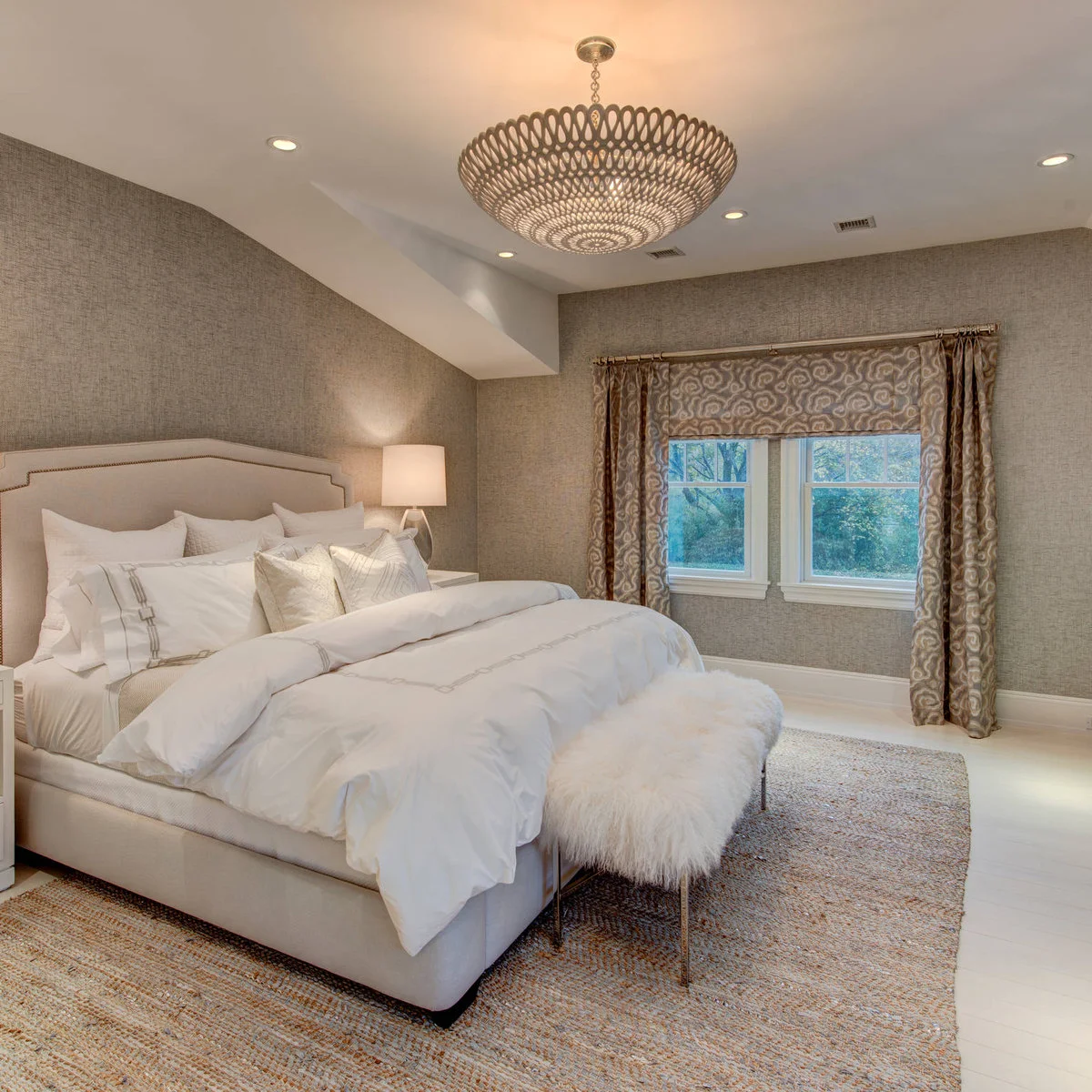
A white shaggy seat adds a loose texture to the room’s otherwise tailored bedding and patterned curtains. Slim legs keep the bench looking light at the foot of the bed. Its pale color connects it to the bed linen while the surrounding wall finish supplies a quieter contrast.
Check the care instructions for the actual upholstery rather than assuming its fiber or origin from appearance. Long pile can trap lint and may flatten with frequent sitting. Choose a texture you can maintain, and keep shoes or bags with sharp fittings off the surface.
IDEA 13 / 20
Use Bolsters to Repeat the Room’s Blue
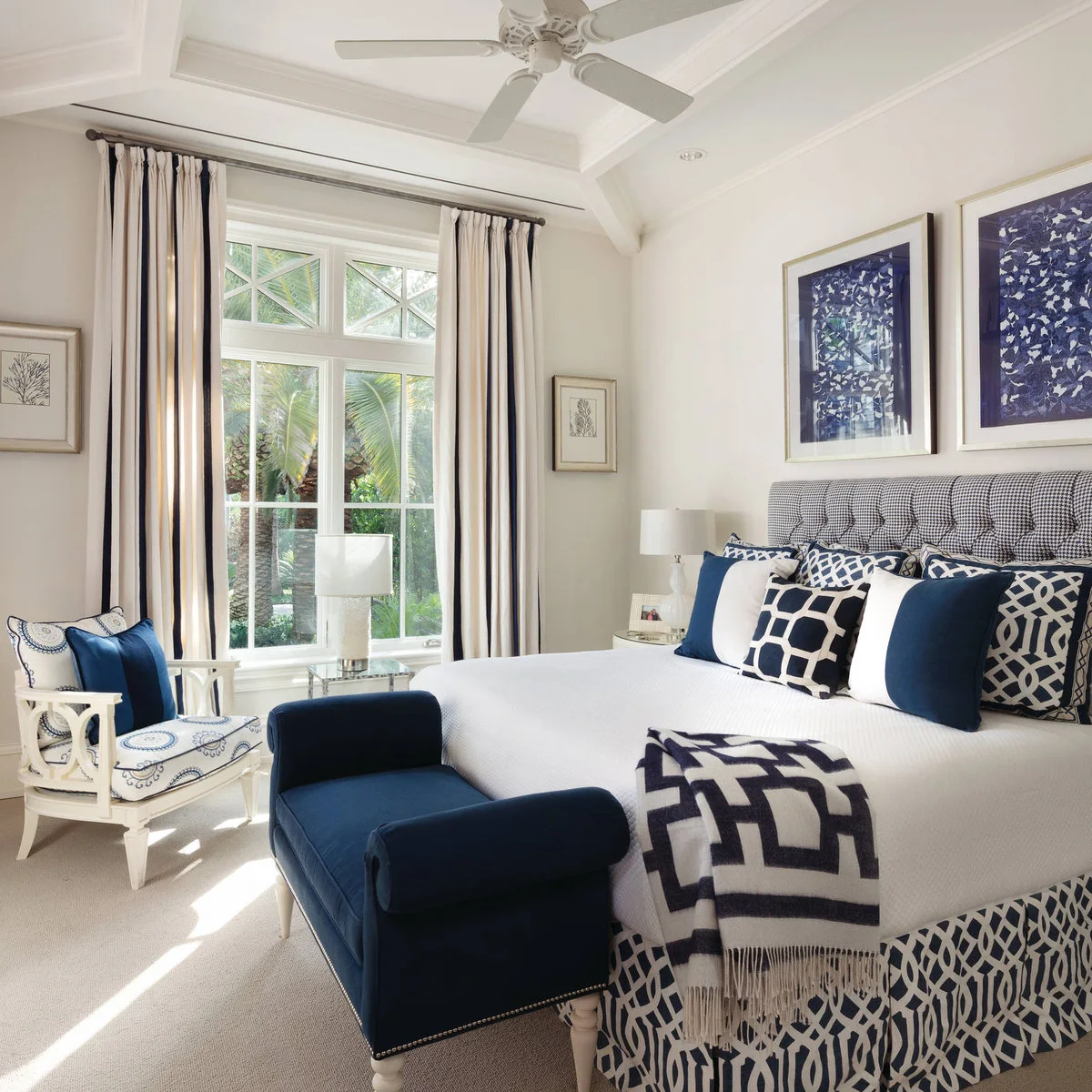 SaveSupport Non AI Creator
Image credit: Project: HOME & DESIGN MAGAZINE NAPLES (via Houzz)
Navy upholstery gives this bench a strong outline against the pale floor and bedding. Rolled bolster ends repeat the deeper blue cushions on the bed, while light legs relate to the nearby chair. The repeated color links the separate furniture pieces without making them identical.
Keep the seat long enough for its intended use after accounting for the bolsters. If the cushions are loose, give them a place to stay when someone sits down. Repeating one color works best when some neighboring surfaces remain plain, especially in a room with several geometric textiles.
IDEA 14 / 20
Let the Bench Carry the Main Pattern
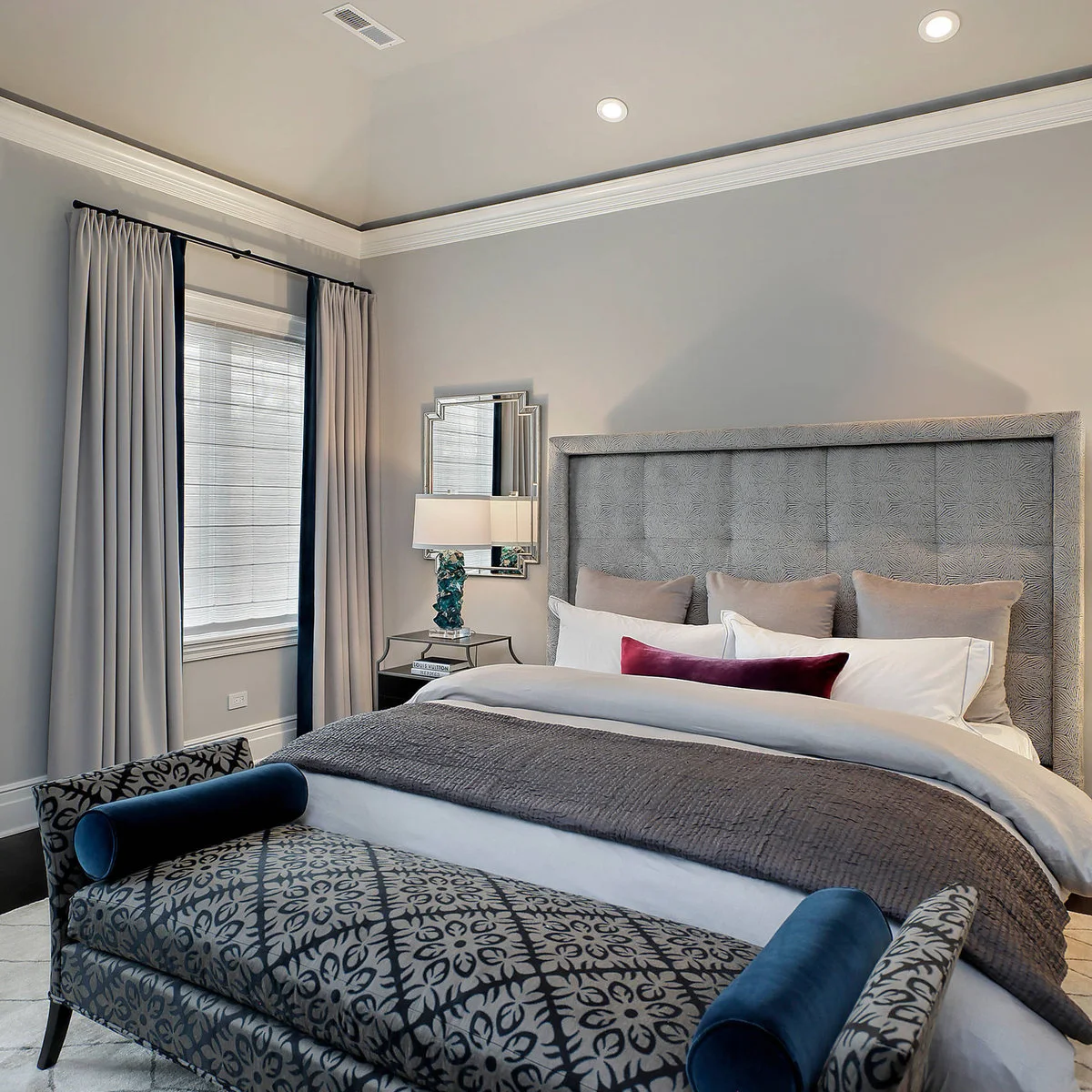 SaveSupport Non AI Creator
Source: www.houzz.com
The bench’s blue-and-gray pattern brings a stronger print to the lower half of this room. Dark blue bolsters emphasize its ends, while the bed linen stays comparatively simple. The different fabric scale keeps the bench distinct from the fine pattern on the tall headboard.
Compare pattern sizes before combining upholstered pieces. Two prints of nearly the same scale can look busier than one bold print beside a quieter texture. Check cleaning guidance and seam placement on the seat, since this is where bags, clothing and regular sitting will put the most wear.
IDEA 15 / 20
Contrast Soft Bedding with a Thick Wooden Seat
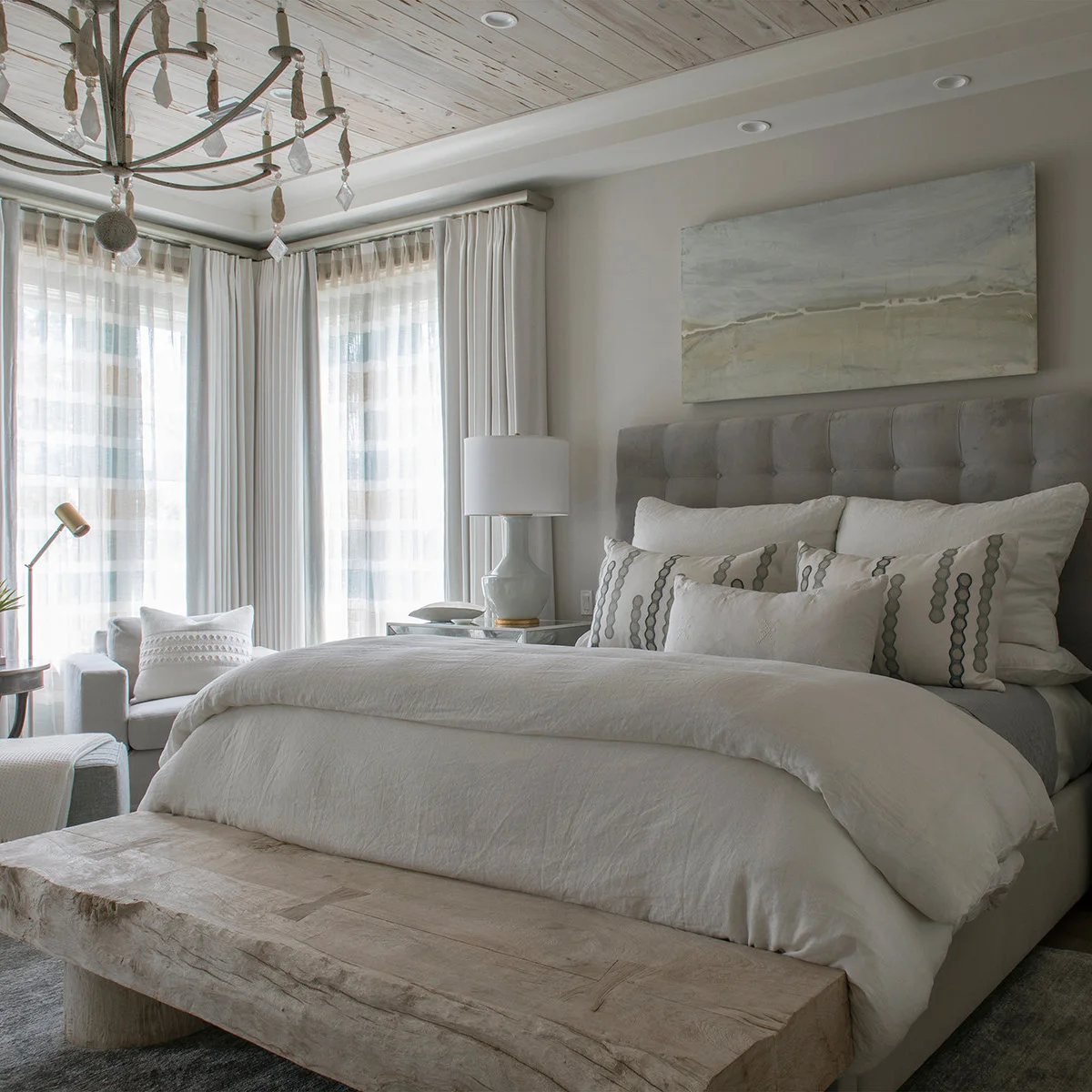 SaveSupport Non AI Creator
Image credit: Project: Geoff Chick & Associates (via Houzz)
A thick wood-toned seat gives this pale bedroom a firmer, more tactile line. Rounded supports soften its substantial shape, while the gray rug separates it from the floor. The mostly white bedding allows the bench’s surface and outline to provide the main contrast.
Check the seat edges for smoothness and clothing snags before using a rustic-looking piece daily. A substantial bench can be difficult to move for cleaning, so test its position first. Use suitable felt protection under the supports where needed, and avoid finishes that transfer color onto light fabrics.
PART 04
Make the Placement Practical
IDEA 16 / 20
Repeat a Dark Bed Frame in the Bench Legs
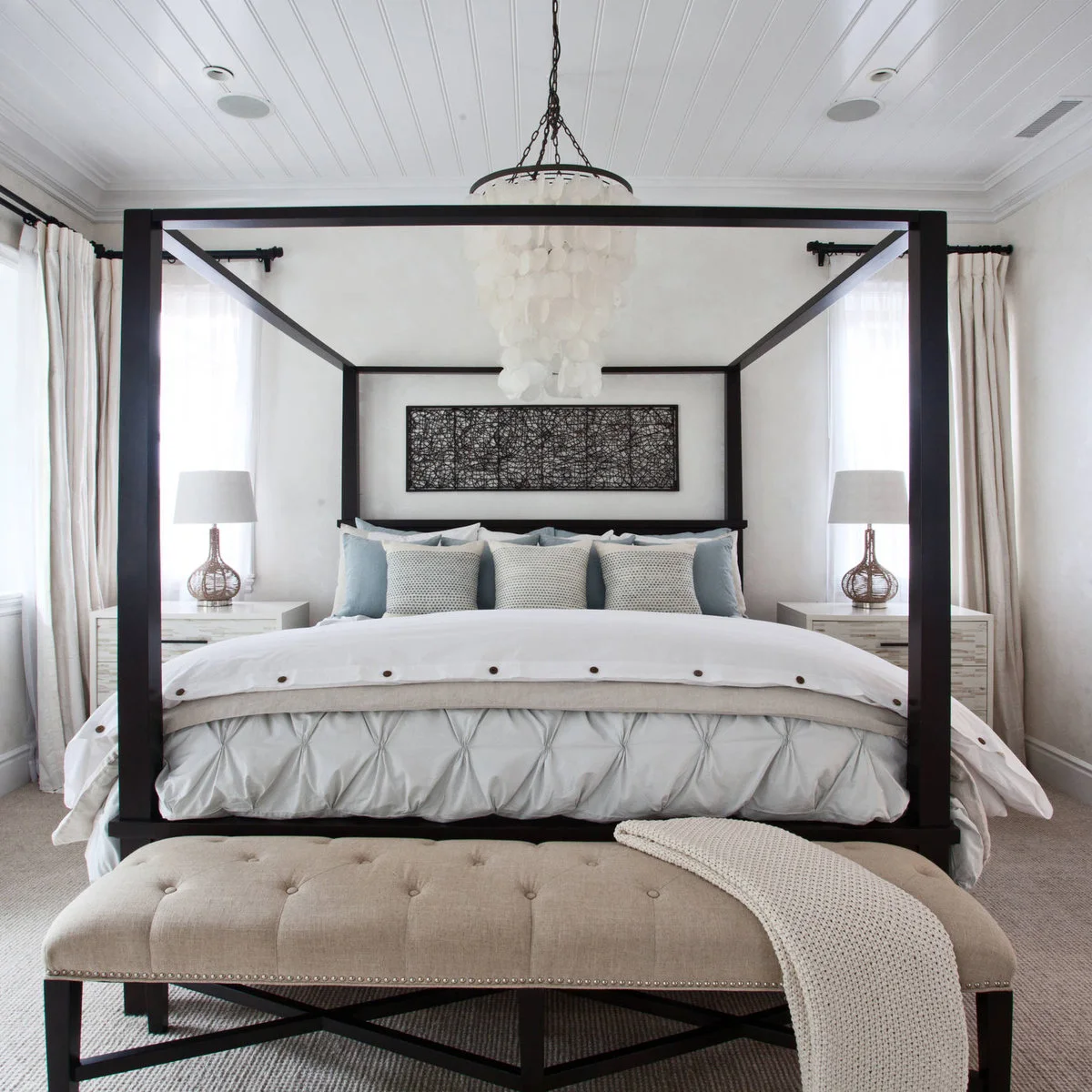 SaveSupport Non AI Creator
Image credit: Project: Lindye Galloway Interiors (via Houzz)
Black legs and crossed stretchers repeat the outline of the dark canopy bed. Beige upholstery links the bench to the bedding, with a pale knitted throw adding a softer layer. The repeated dark frame gives the room structure while leaving the seat itself comparatively quiet.
Check that the cross braces do not interfere with your feet when sitting down. Keep the throw folded where it will not trail across the walking route. A coordinated base is enough to connect the furniture; the bench and headboard do not need identical upholstery to belong together.
IDEA 17 / 20
Choose a Narrow Bench for a Framed Bed
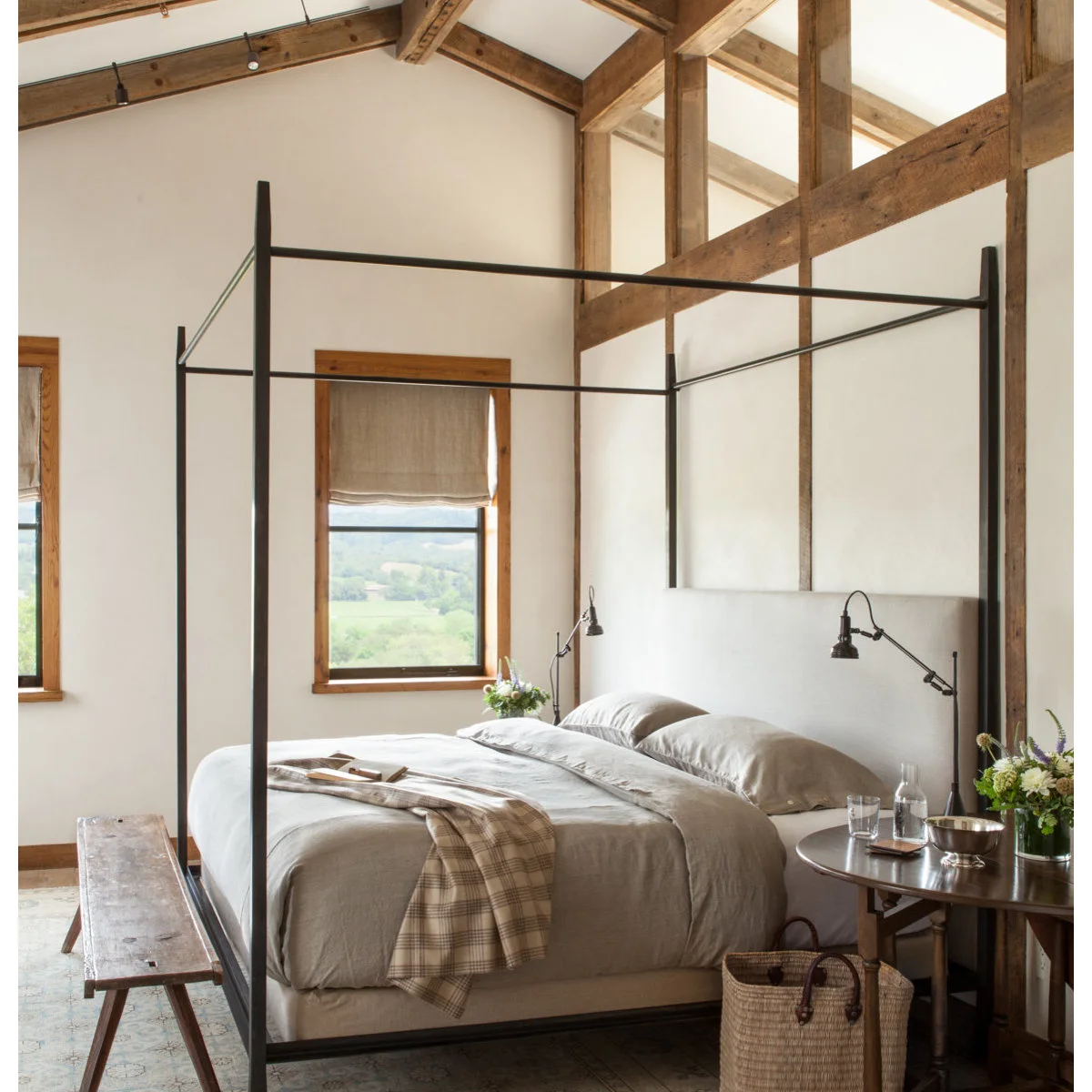 SaveSupport Non AI Creator
Image credit: Project: Jute Interior Design (via Houzz)
A narrow wooden bench sits inside the visual width of the dark four-poster bed. Its simple plank seat echoes the exposed beams without adding another tall element. The open legs make the bench feel like a useful perch rather than a second large piece of bedroom furniture.
A narrow seat is useful when you want somewhere to set down clothing but need to preserve the route around the bed. Test stability and the comfort of the seat depth. Check that the bench ends do not catch the duvet, and leave enough room to make the bed without moving it daily.
IDEA 18 / 20
Keep the Bench Shorter Than the Bed
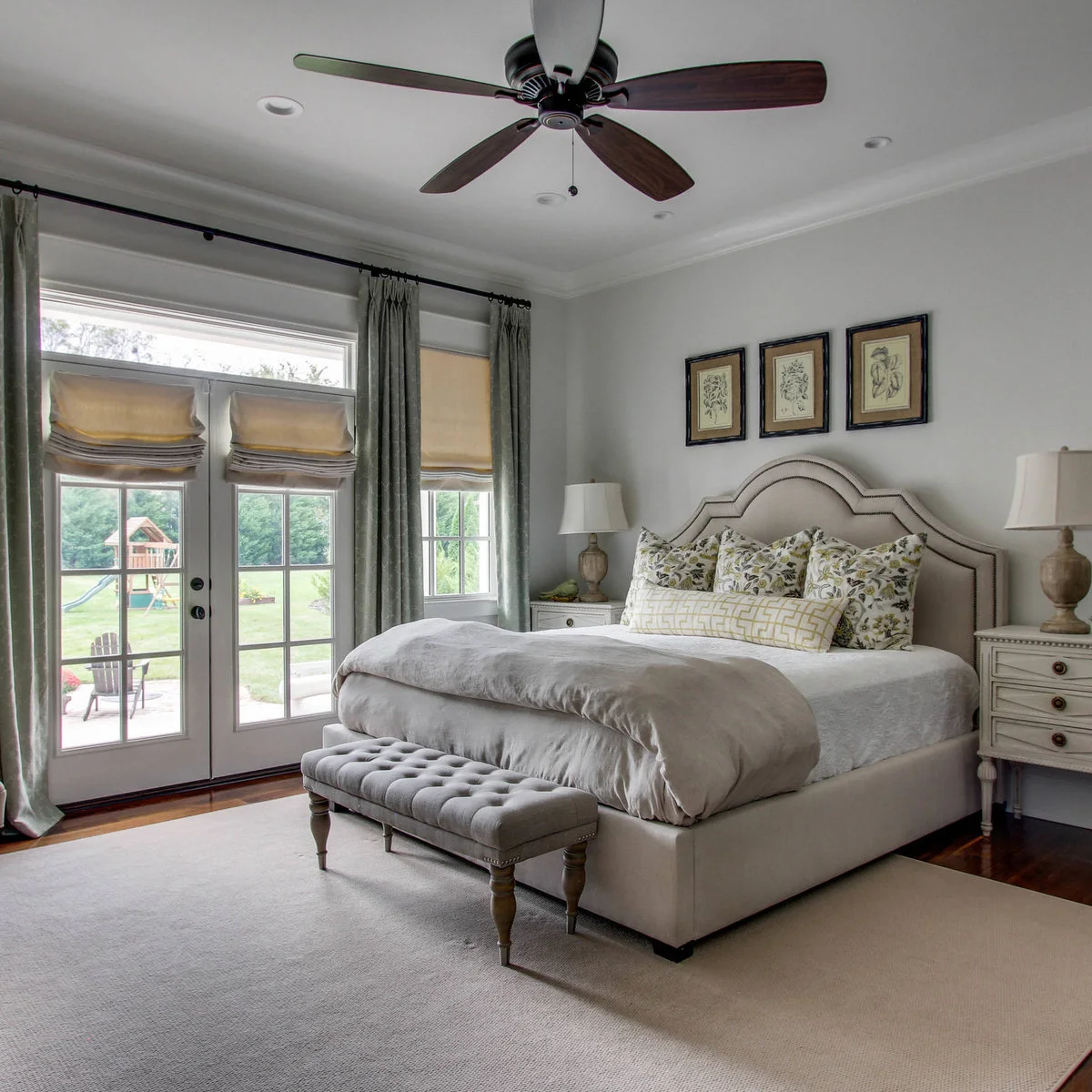 SaveSupport Non AI Creator
Image credit: Project: Cristi Holcombe Interiors, LLC (via Houzz)
This gray tufted bench leaves generous space visible on either side of the bed. Its compact length gives the room a sitting place without stretching across the whole footboard. Turned legs connect with the traditional shapes of the headboard, nightstands and bedside lamps.
A shorter bench can be easier to pass in a room with doors near the bed. Tape out its complete footprint, including legs, before buying. Keep it centered where practical, but prioritize the clearest route to the doorway over perfect symmetry if the room’s layout requires a slight adjustment.
IDEA 19 / 20
Choose a Lower Shelf for a Few Essentials
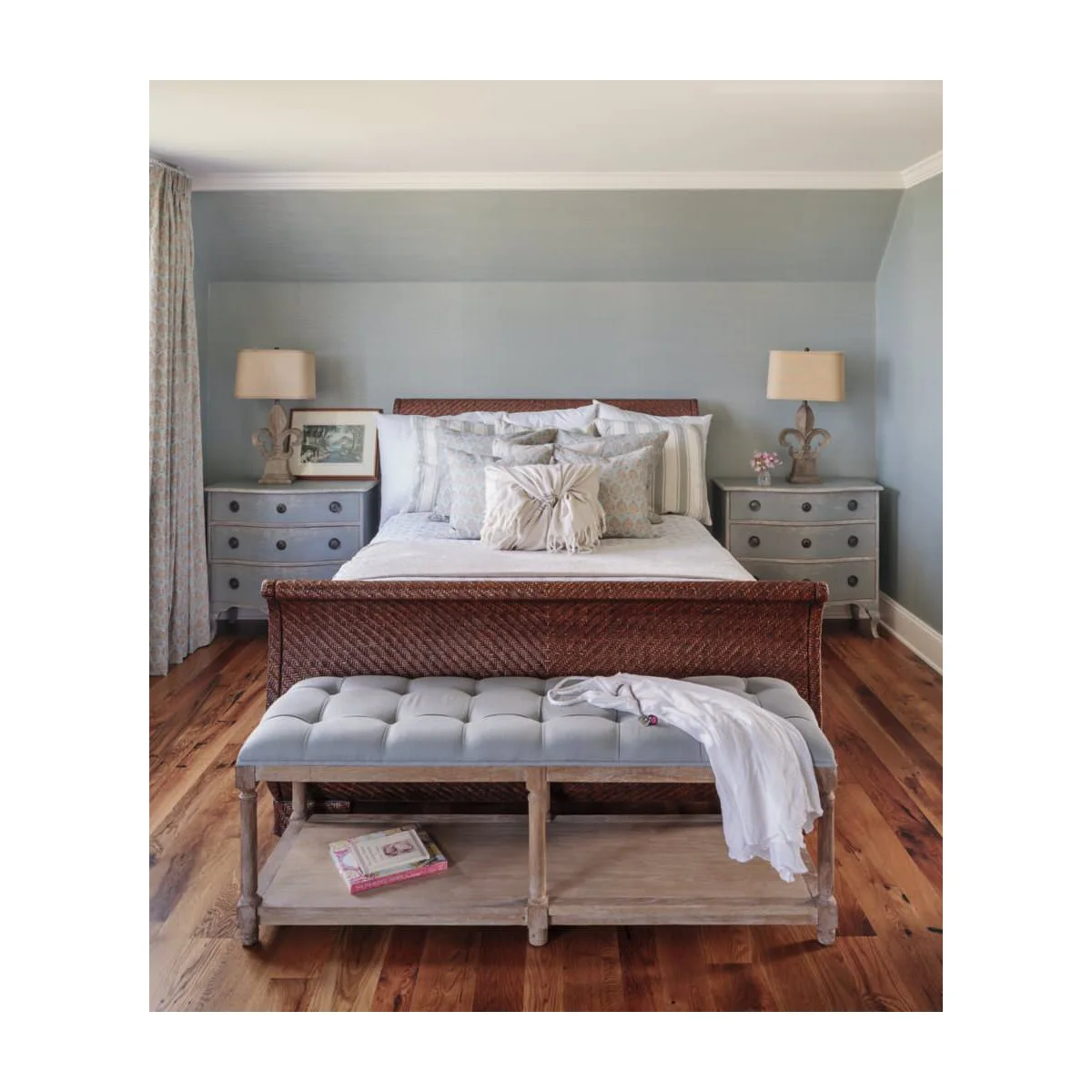 SaveSupport Non AI Creator
Image credit: Project: Graham Architects (via Houzz)
A wooden lower shelf gives this pale upholstered bench a second useful surface. A single book keeps the shelf’s purpose visible without filling it. The light frame contrasts with the darker woven bed, while matching nightstands and lamps keep the surrounding room balanced.
Use the shelf for a small number of folded items or books you actually want nearby. Avoid making it permanent shoe storage if dust will collect beside clean bedding. Check the shelf height for your vacuum or cleaning tool, since a low shelf can make the floor underneath harder to reach.
IDEA 20 / 20
Use One Long Seat with Simple Bolster Ends
 SaveSupport Non AI Creator
Image credit: Project: Andrea Lecusay Interiors, Inc. (via Houzz)
A long pale seat spans much of the bed’s width, with cylindrical cushions marking its ends. The dark legs provide a light contrast against the carpet. Mirrored nightstands and tall mirrors add detail higher in the room, allowing the bench fabric to remain simple.
Measure the usable seat between the end cushions if more than one person will sit there. Check that the bench does not block the route to the glazed doors or make drawer access awkward. Keep the top mostly clear so its daily purpose survives beyond the initial styling.
BRING IT ALL TOGETHER
Give the Bench a Daily Job
Choose the bench around what you want to do there, whether that is dressing, folding a blanket or setting down a guest’s bag. The most useful option may be a narrow wooden seat or a window bench rather than a large upholstered piece.
Keep the route around the bed comfortable and leave the seat usable. A bench covered in permanent decorative objects quickly loses the function that justified its floor space.