A small bedroom needs more than a light paint color. The bed, storage, lighting and route to the door all have to work together. Start with the furniture you use every day, then add decorative details that do not make those basic tasks harder.
These 20 ideas show different solutions for narrow gaps, awkward recesses and sloping walls. Some use fitted furniture; others need only a smaller table, a wall light or fewer layers of bedding. Compare the practical tradeoffs with your own room before copying a complete arrangement.
PART 01
Give color and textiles a clear job
IDEA 01 / 20
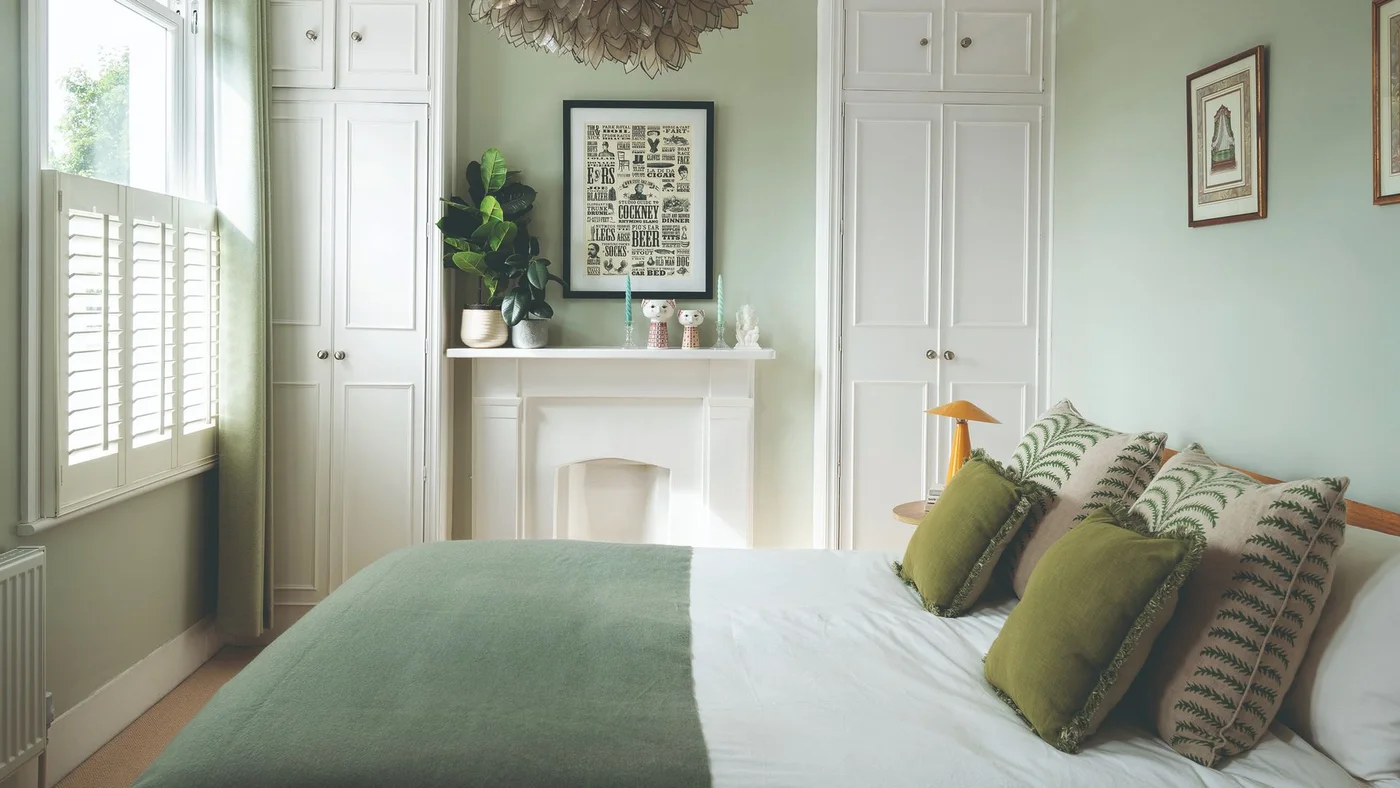
Build Storage Around an Existing Fireplace
 SaveSupport Non AI Creator
Image credit: Future PLC/David Giles
Tall cupboards occupy the narrow spaces beside this fireplace, keeping the middle of the wall visible. Their white fronts relate to the mantel and window shutters, while green bedding connects to the pale walls. The arrangement shows how storage can follow existing architecture rather than becoming a separate bulky piece beside the bed.
Measure the depth and door swing of both cupboards before ordering a bed. Check how you will reach shelves and clean beside the fireplace. Our sage green bedroom ideas explore similar soft palettes. If a fireplace is operational, any neighboring cabinetry must respect its required clearances and the advice of an appropriate installer. For more compact desks, bed frames and clothing storage, compare our small bedroom ideas for men and adapt the colors to your own taste. If a separate desk still will not fit, compare loft bed ideas and check whether the room and intended user suit raised sleeping.
IDEA 02 / 20
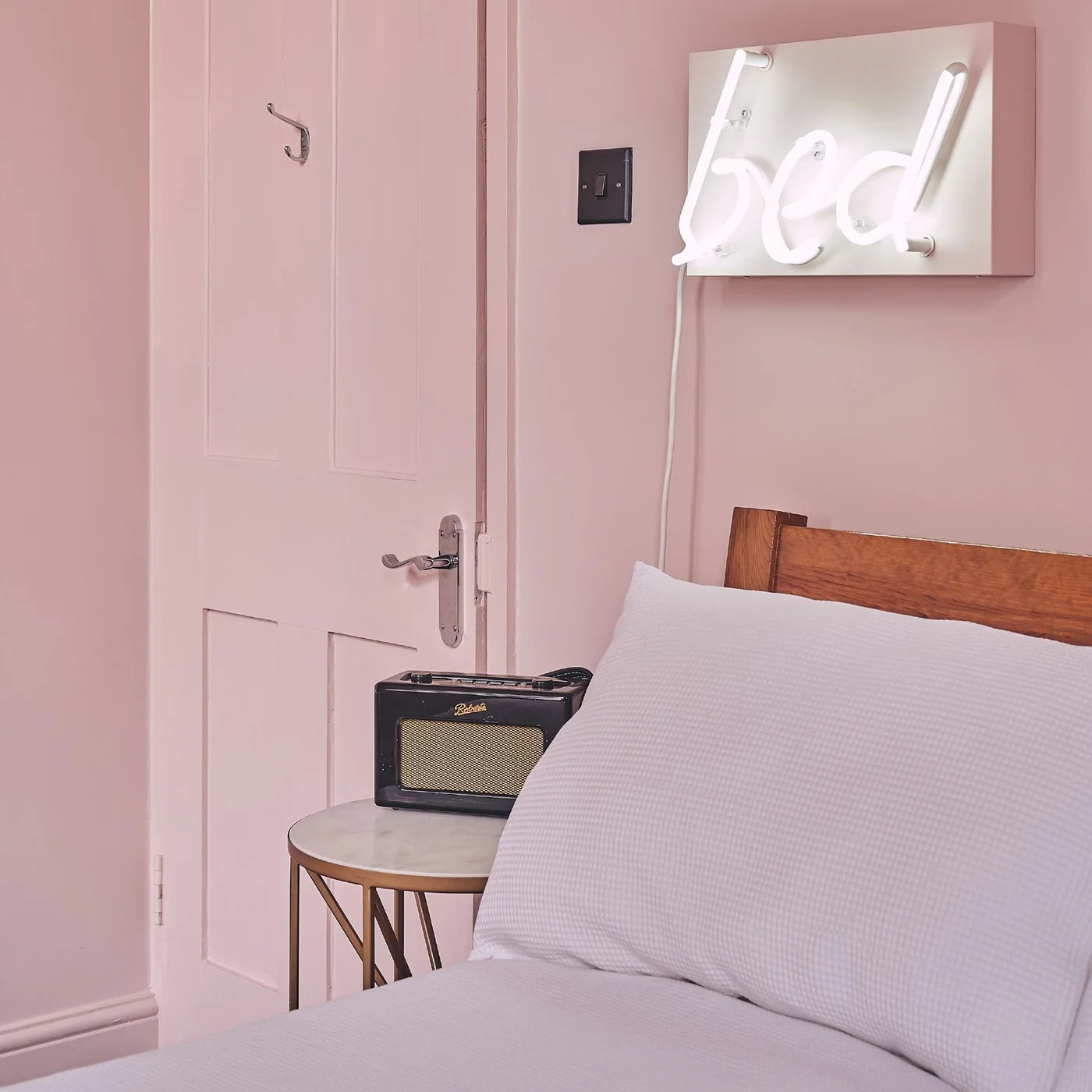
Continue Soft Pink Across the Door
 SaveSupport Non AI Creator
Image credit: Future PLC/Richard Kiely
Painting the door pink connects it to the surrounding wall, reducing the number of separate outlines beside the bed. A small round table provides a landing place in the narrow gap without adding a large cabinet front. White bedding keeps the immediate sleeping area simple, with the wall sign providing one playful accent above.
Test the door through its full swing with a cardboard outline of the proposed bedside table in place. Decorative lighting should not replace a useful reading light, and its cable needs a secure route away from bedding. Choose a finish suitable for the door and trim rather than assuming the wall paint will tolerate frequent handling.
IDEA 03 / 20
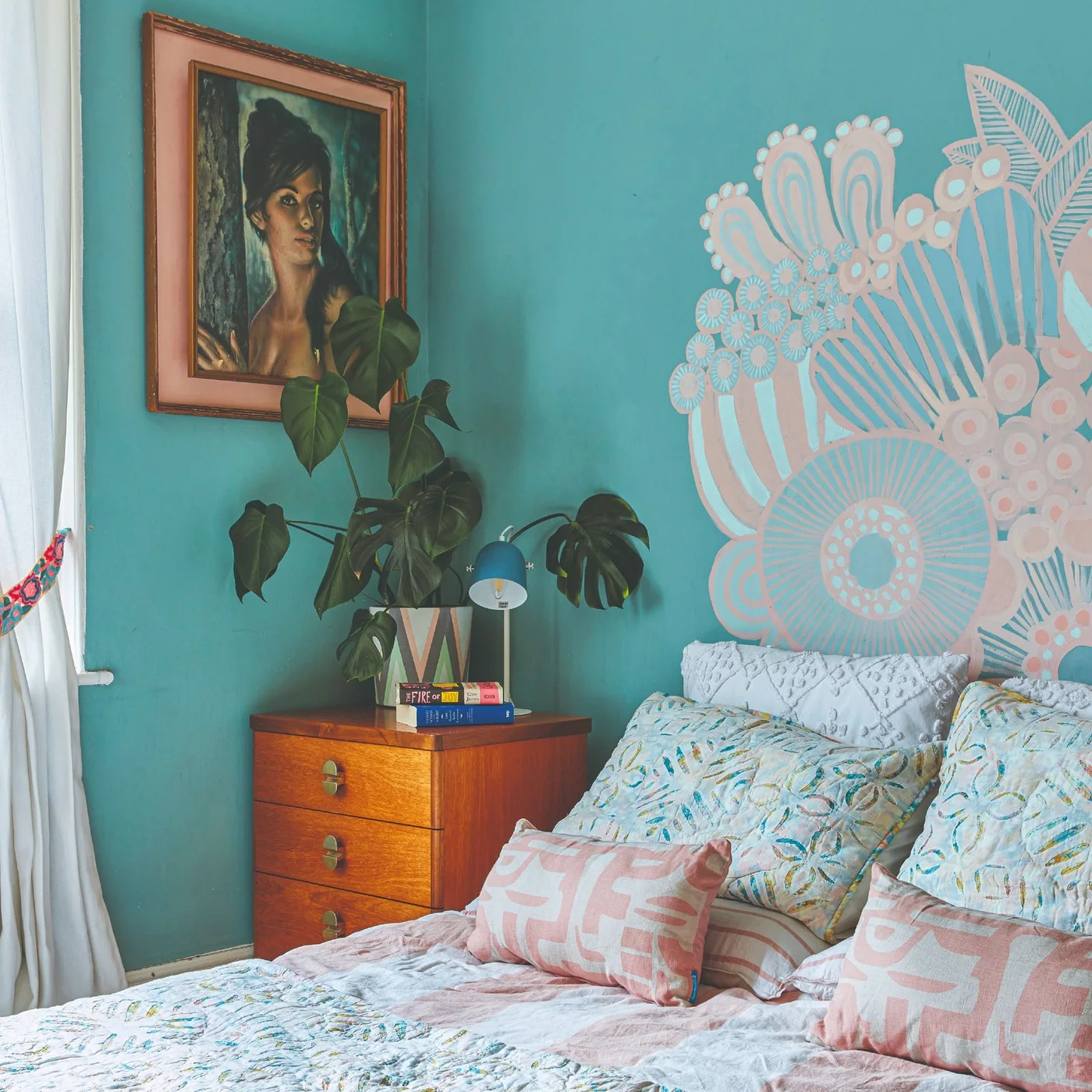
Paint a Headboard Effect Directly on the Wall
 SaveSupport Non AI Creator
Image credit: Future PLC/Kasia Fiszer
A pale painted motif provides a headboard-like outline without projecting into the room. Turquoise walls make its fine details visible, while the wood chest supplies useful bedside drawers. Patterned bedding picks up the softer colors in the mural, allowing the wall and textiles to feel related rather than like separate decorative statements.
Mark the mattress and pillow heights before laying out a painted motif so its important details are not hidden. Leave access to sockets and keep bedside drawers usable from the bed. A larger plant may suit the picture, but choose one whose mature spread will not crowd the curtains or your route around the furniture.
IDEA 04 / 20
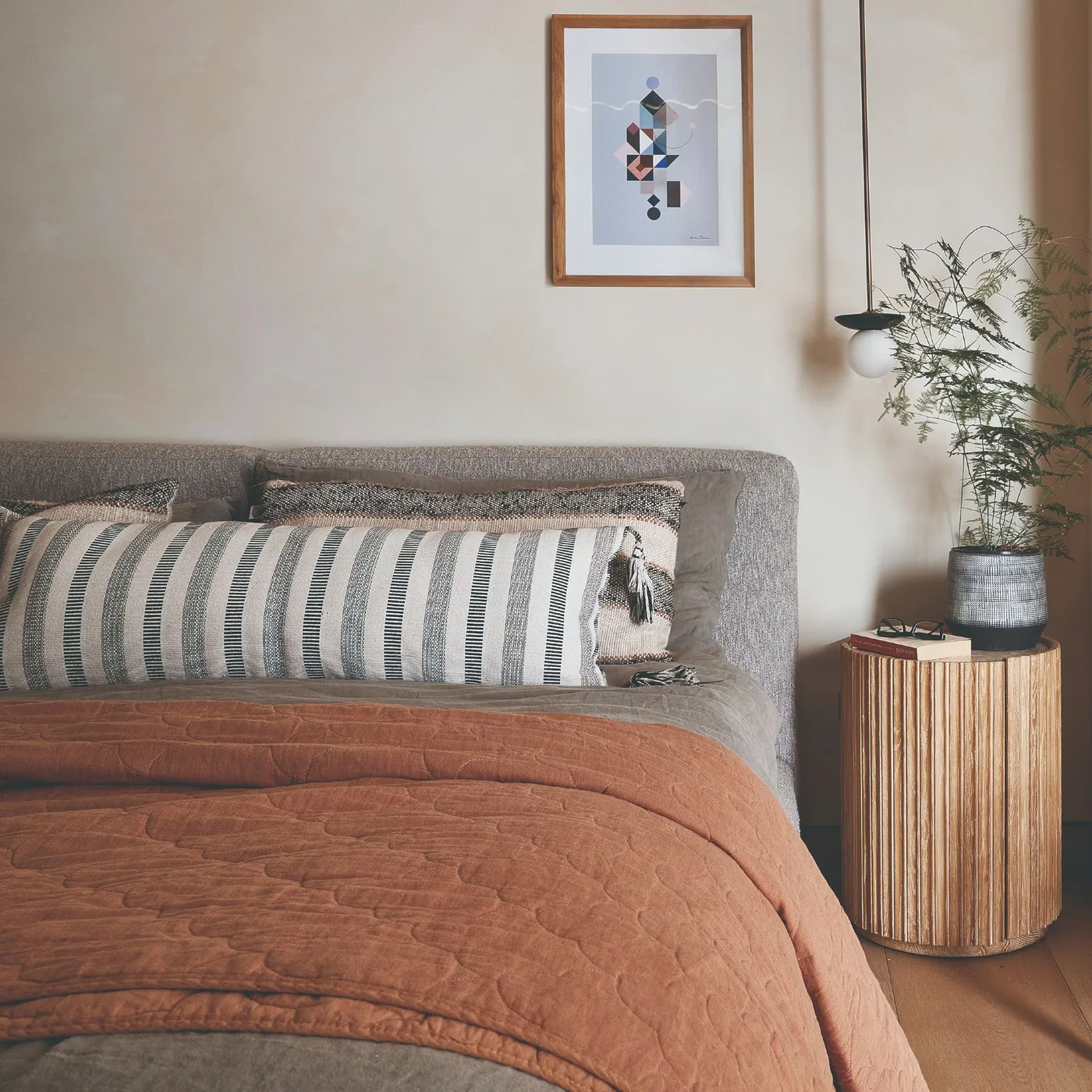
Use One Long Cushion Instead of Several Layers
 SaveSupport Non AI Creator
Image credit: Future PLC/Darren Chung
A single long striped cushion provides pattern across this bed without a large collection of smaller pillows. Rust bedding warms the gray upholstery, while the ribbed table adds texture at one side. The hanging globe keeps a lamp base off the tabletop, leaving a modest surface for a book and another small object.
Plan where decorative cushions will go at bedtime; in a small room, fewer pieces are often easier to manage. Check the pendant position while sitting up and while making the bed. Leave enough table surface for essentials, and use a protective container beneath any plant rather than putting a damp pot directly on the wood.
IDEA 05 / 20
Choose One Curved Shape as the Focal Point
 SaveSupport Non AI Creator
Image credit: Future/Bee Holmes
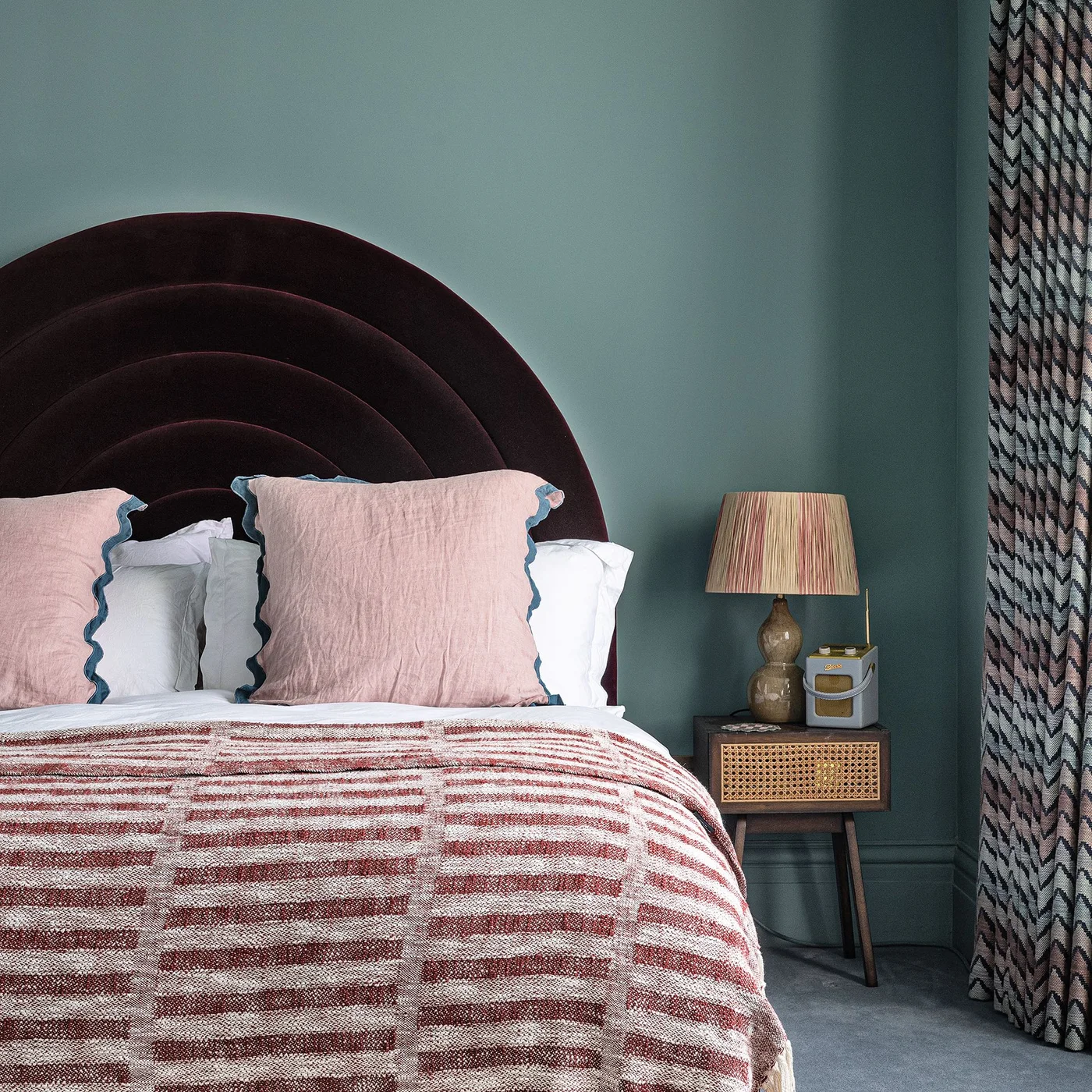
The rounded headboard gives this compact bedside scene a strong outline, so the wall does not need extra artwork above it. Pink pillows soften the dark upholstery, while a small cabinet offers a drawer and a lamp surface. Repeated curves in the headboard and lamp base keep the different patterns connected.
Check the overall headboard width rather than relying on the mattress size listed with it. Its sides should not swallow the space intended for a table or light switch. Our dark blue bedroom ideas offer more deep-color combinations. Keep a reading lamp within easy reach and compare the fabric care requirements before choosing pale cushions.
IDEA 06 / 20
Repeat Curtain Color in the Bedding
 SaveSupport Non AI Creator
Image credit: Future PLC/Dominic Blackmore
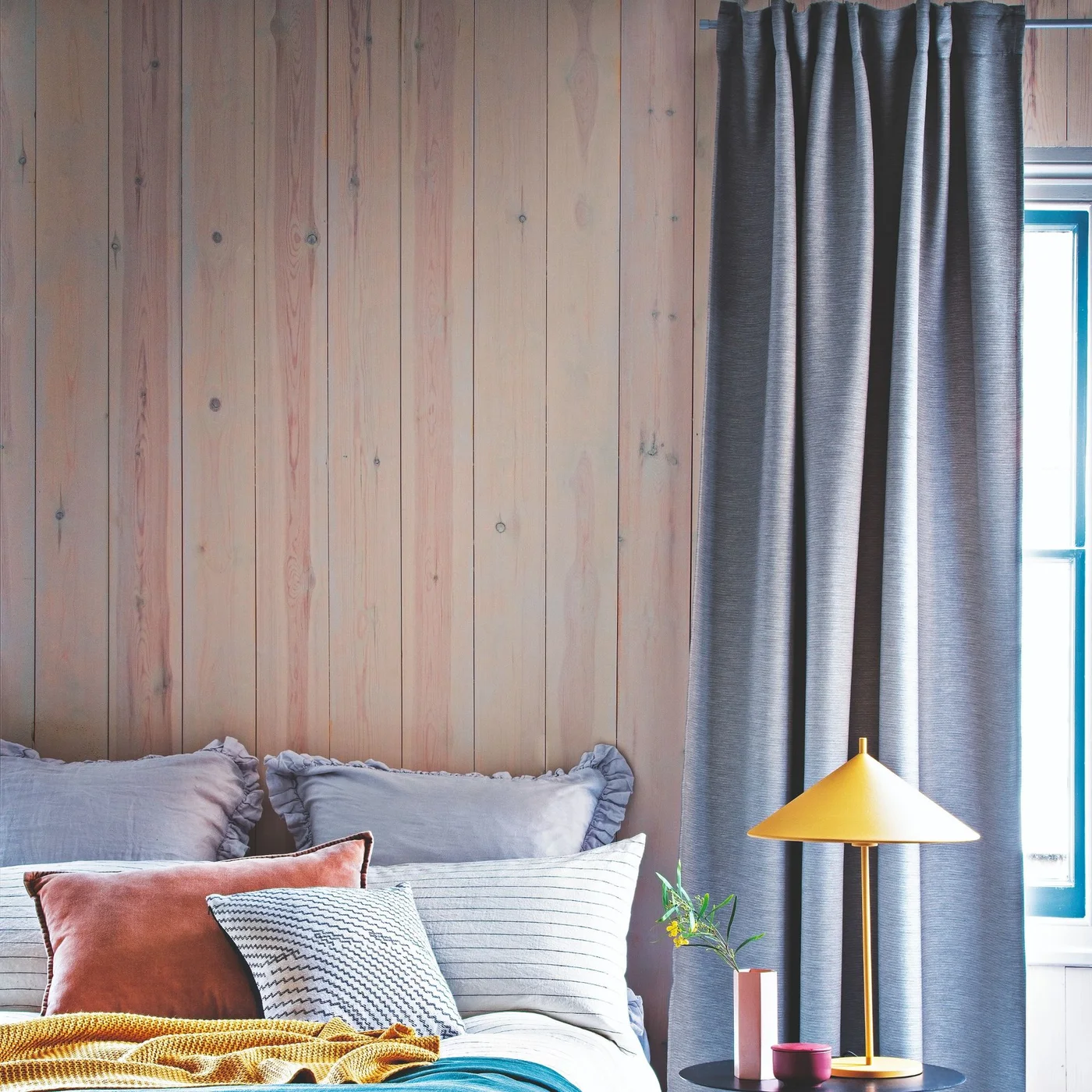
Gray curtains relate closely to the pillows, allowing the stronger yellow and coral accents to remain small. Vertical wood boards bring warmth and a consistent background behind the bed. The bedside lamp supplies a clear color focal point, while a narrow vase takes up little of the small table beside it.
Allow the curtains to open without collecting behind a table or rubbing the bedding. Check the pole position and curtain stack before choosing their width. Use a lamp shade that directs useful light where you read; a striking color alone will not make the bedside arrangement comfortable at night. Keep flower water away from electrical fittings.
PART 02
Make bedside space work harder
IDEA 07 / 20
Replace Bedside Cabinets with Small Wall Shelves
 SaveSupport Non AI Creator
Image credit: Future PLC/Douglas Gibb
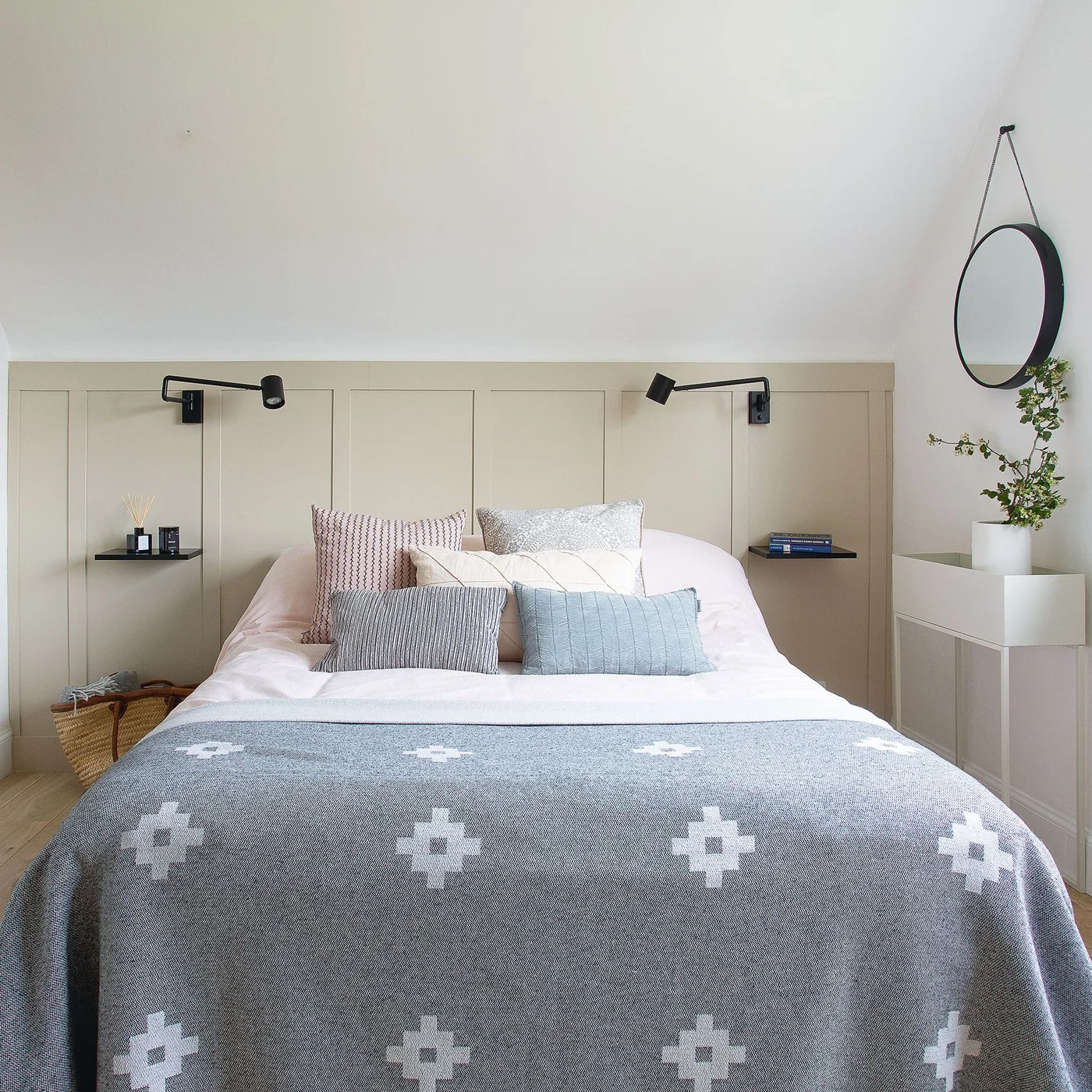
Small shelves provide a place for a book or essentials while leaving the floor beneath them open. The black lights repeat their color and bring illumination closer to each side of the bed. Pale paneling creates one continuous backdrop, keeping the bed and its narrow bedside arrangements from looking like unrelated pieces.
Fit shelves at a height you can reach from the mattress and use fixings appropriate to the wall and expected load. Keep projecting corners clear of your shoulder when getting up. Wall lights also need planned wiring or a tidy plug-in route. A separate slim drawer unit can hold items that would overwhelm these small ledges.
IDEA 08 / 20
Put Small Accessories on the Back of the Door
 SaveSupport Non AI Creator
Image credit: Future
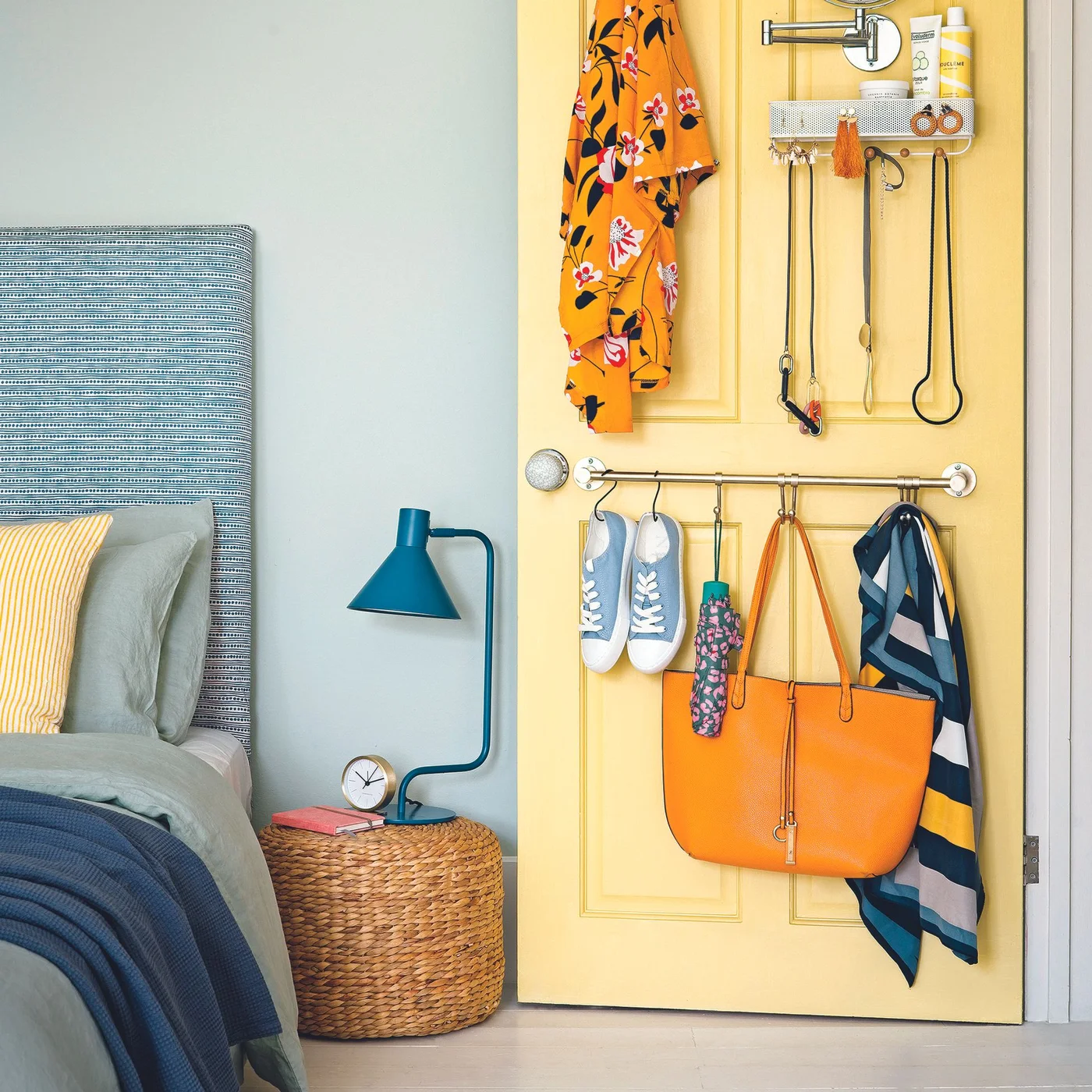
The back of the door becomes an organized surface for small accessories instead of leaving them scattered across the bedside area. Yellow paint makes the storage feel intentional, while the blue lamp and bedding balance the warm color. The cylindrical table uses a compact footprint beside the bed without another rectangular cabinet.
Check that the door can still open fully and that loaded hooks will not hit the wall or furniture. Use fixings suited to the door construction; hollow doors may need a different solution from solid ones. Limit hanging weight and keep frequently used items low enough to reach without pulling on other objects.
IDEA 09 / 20
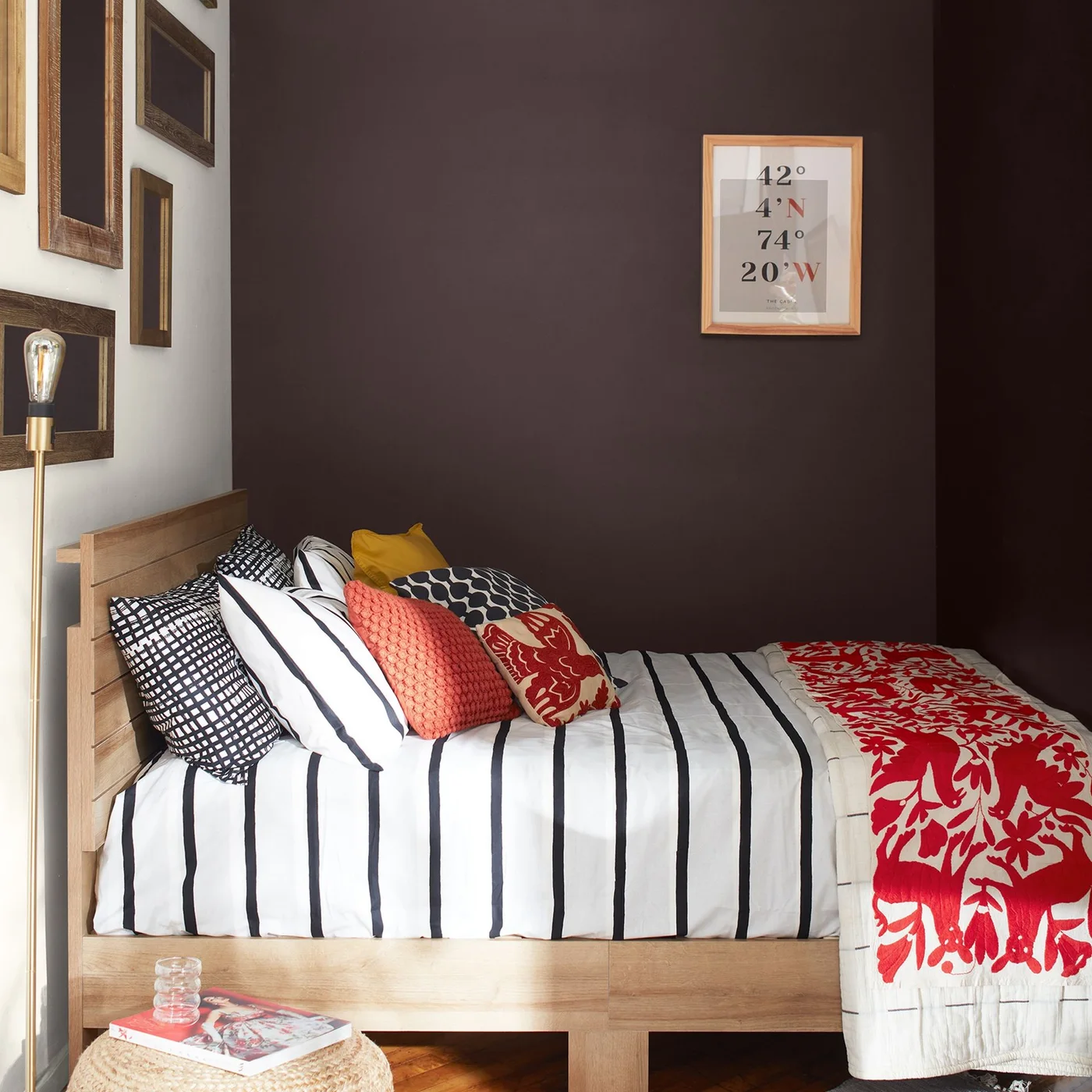
Treat a Narrow Bed as a Daybed
 SaveSupport Non AI Creator
Image credit: Benjamin Moore
Positioning the bed along the wall leaves its open side available for sitting as well as sleeping. Striped bedding and a red patterned throw give it a deliberate daybed character, while the dark plum wall forms a strong backdrop. A small round table at the open side provides a landing place without a wide bedside cabinet.
Check whether the arrangement suits everyone using the bed; a wall-side sleeper has less direct access. Leave enough room to make the bed and reach any storage below. Keep a clear route to the door, and choose a lamp position that works for reading without placing the cable where feet will catch it.
IDEA 10 / 20
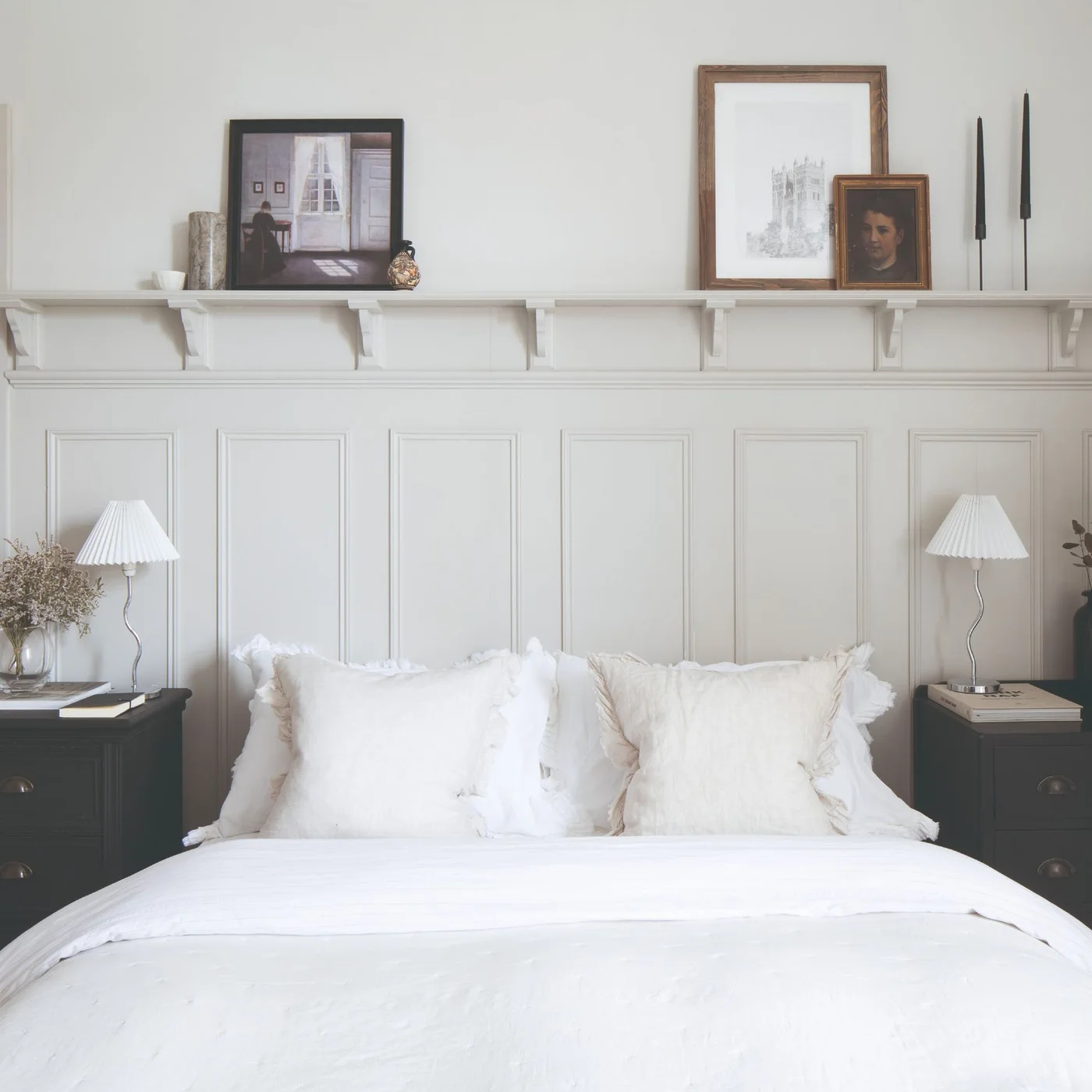
Use Symmetry to Organize a Small Bed Wall
 SaveSupport Non AI Creator
Image credit: Future PLC/James French
Matching lamps and drawer tables give the bed wall a clear center. White paneling and bedding reduce visual breaks, while the dark furniture outlines each side. A narrow ledge holds a few pictures above the paneling, using the wall for decoration rather than filling the tops of the bedside tables with frames.
Keep the two sides useful rather than forcing identical objects where people have different needs. Confirm drawer access and light-switch reach from each side. Secure anything placed on a ledge above a bed appropriately; avoid heavy or unstable displays. Our bedrooms with paneling collection shows other ways to give a plain wall structure.
IDEA 11 / 20
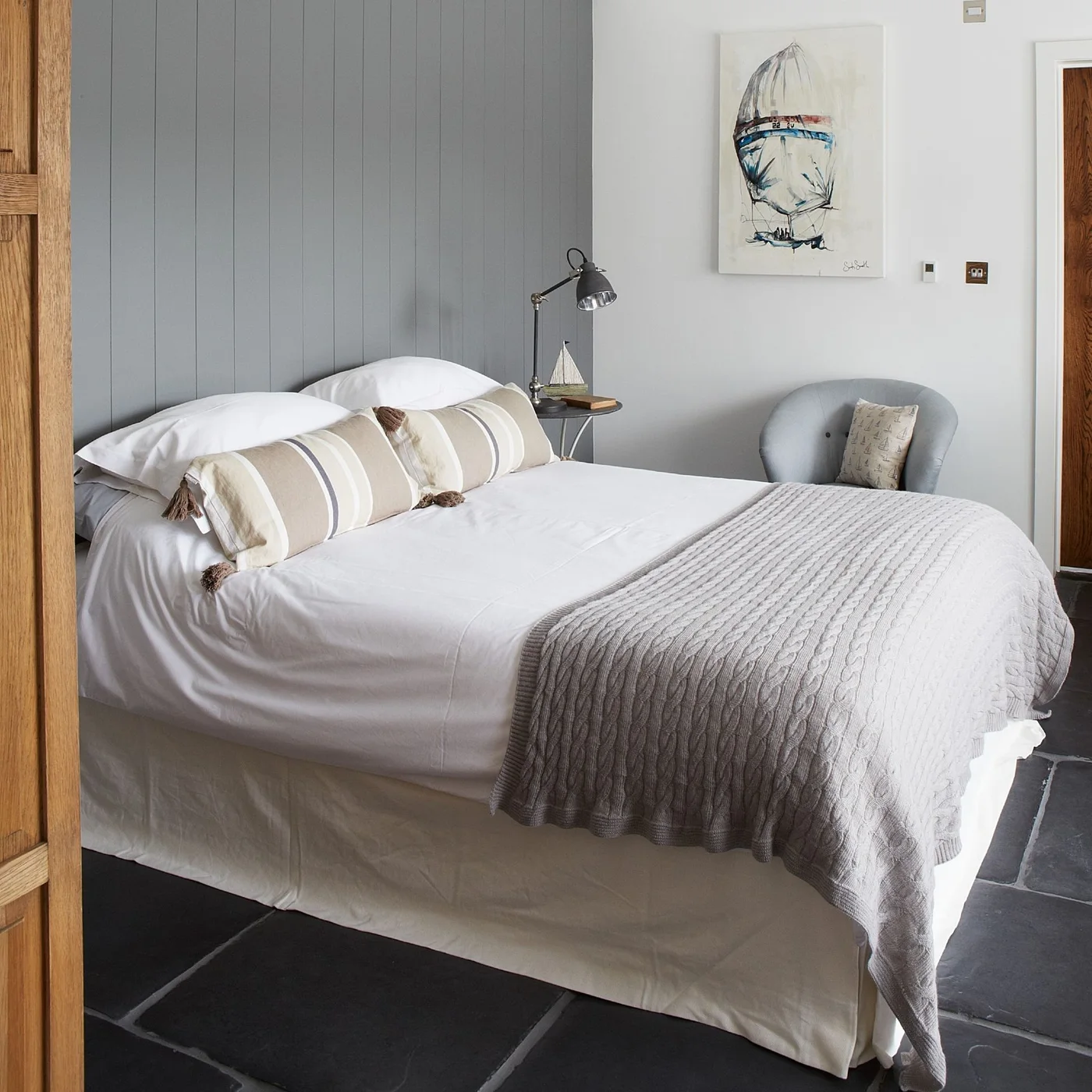
Give the Bed a Tailored Valance
 SaveSupport Non AI Creator
Image credit: Future PLC/Brent Darby
A tailored white valance gives this bed a consistent outline from mattress to floor. Gray paneling and a knitted throw bring texture without a crowded pattern, while a small round table occupies the bedside gap. The compact chair creates a separate place to sit, provided the room still has a practical circulation route.
Check the valance drop against the actual bed base and floor so it does not drag or catch when cleaning. If storage is underneath, choose a treatment that can be moved easily. Include the chair in your measured layout before buying it; an occasional seat is helpful only if it does not block drawers or the door.
IDEA 12 / 20
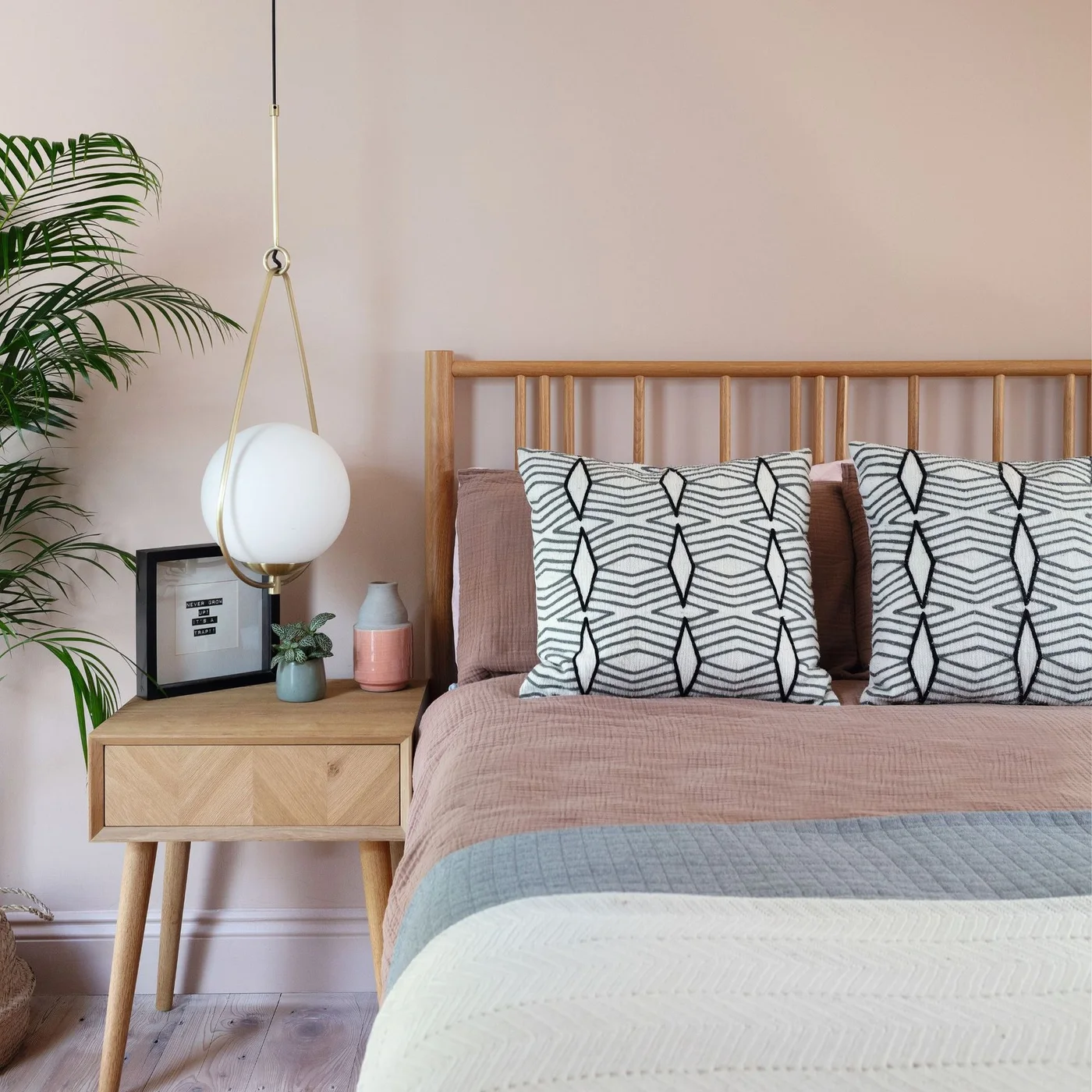
Hang a Bedside Globe Above a Drawer Table
 SaveSupport Non AI Creator
Image credit: Future PLC / Nathalie Priem
A hanging globe supplies a rounded accent above the small drawer table, freeing the tabletop from a lamp base. The wood table and spindle headboard share a light visual character, while black-and-white pillows provide the main pattern. Pink on the wall and bedding keeps the rest of the arrangement relatively quiet.
Test the pendant height from a seated position and make sure it will not be knocked when reaching for the drawer. Plan suitable electrical installation rather than adapting a decorative cord casually. Keep the tabletop practical: one or two small pieces are easier to move for cleaning than a collection crowded around the light.
IDEA 13 / 20
Choose a Bedside Stand with a Small Footprint
 SaveSupport Non AI Creator
Image credit: Future PLC/Jon Day
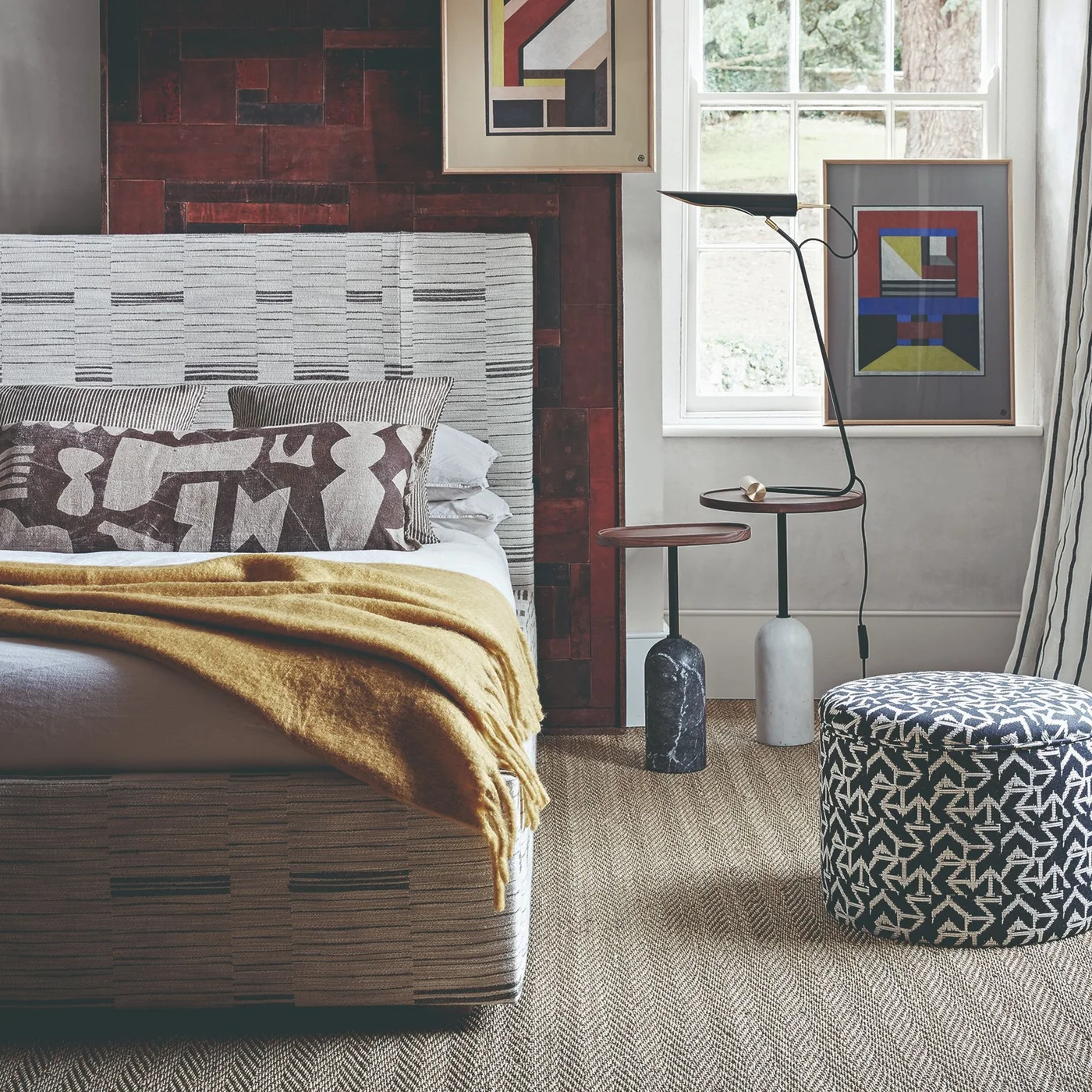
The two-level stand offers small landing surfaces without the width of a chest. Its slim outline allows the nearby patterned bed and stool to retain their own shapes. A narrow lamp reaches over the bedside area, while geometric artwork introduces color in the vertical space beside the window rather than on another piece of furniture.
Check stability before choosing a tiny stand for drinks or a lamp. The base needs enough weight and a level surface, and the upper tray should be within easy reach. A decorative stool may serve occasional seating, but move it out of the walking route at night instead of allowing it to become a clothes pile.
IDEA 14 / 20
Fit a Bedside Ledge to the Essentials
 SaveSupport Non AI Creator
Image credit: Future PLC/Simon Whitmore
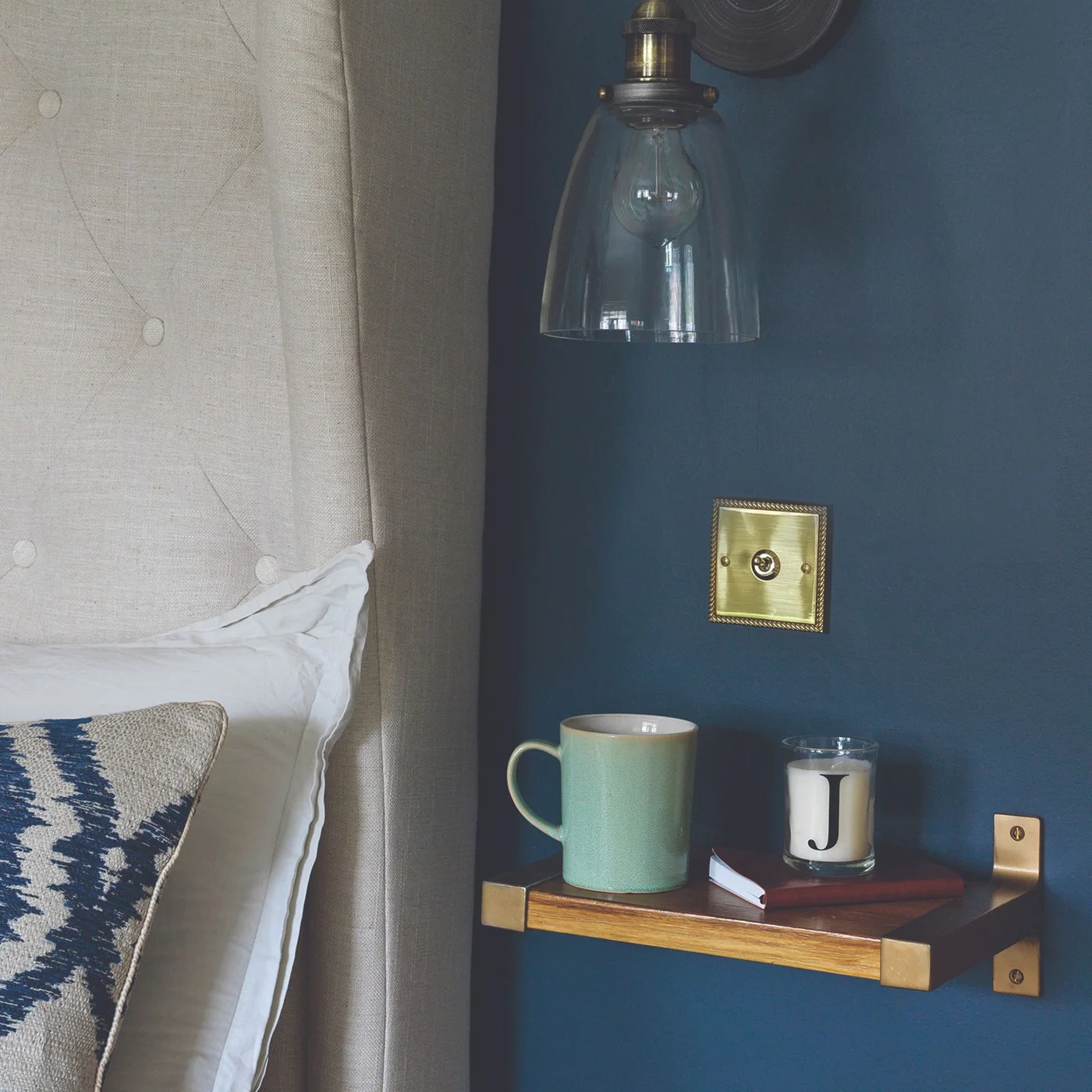
This small shelf accommodates a few bedtime essentials without a freestanding table. Gold-colored brackets echo the switch plate, making practical fittings part of the arrangement. The deep blue wall gives the pale headboard and glass light a clear outline, while the exposed floor below the shelf remains available for cleaning.
Measure what you actually need beside the bed before specifying the shelf depth. Use suitable wall fixings and position the edge where it will not catch your arm. A candle can remain decorative; do not light it near bedding or under a low fitting. Leave enough room to remove a mug without knocking neighboring objects.
PART 03
Work with recesses and sloping walls
IDEA 15 / 20
Place a Full-Length Mirror in an Awkward Recess
 SaveSupport Non AI Creator
Image credit: Future PLC/David Giles Photography Ltd
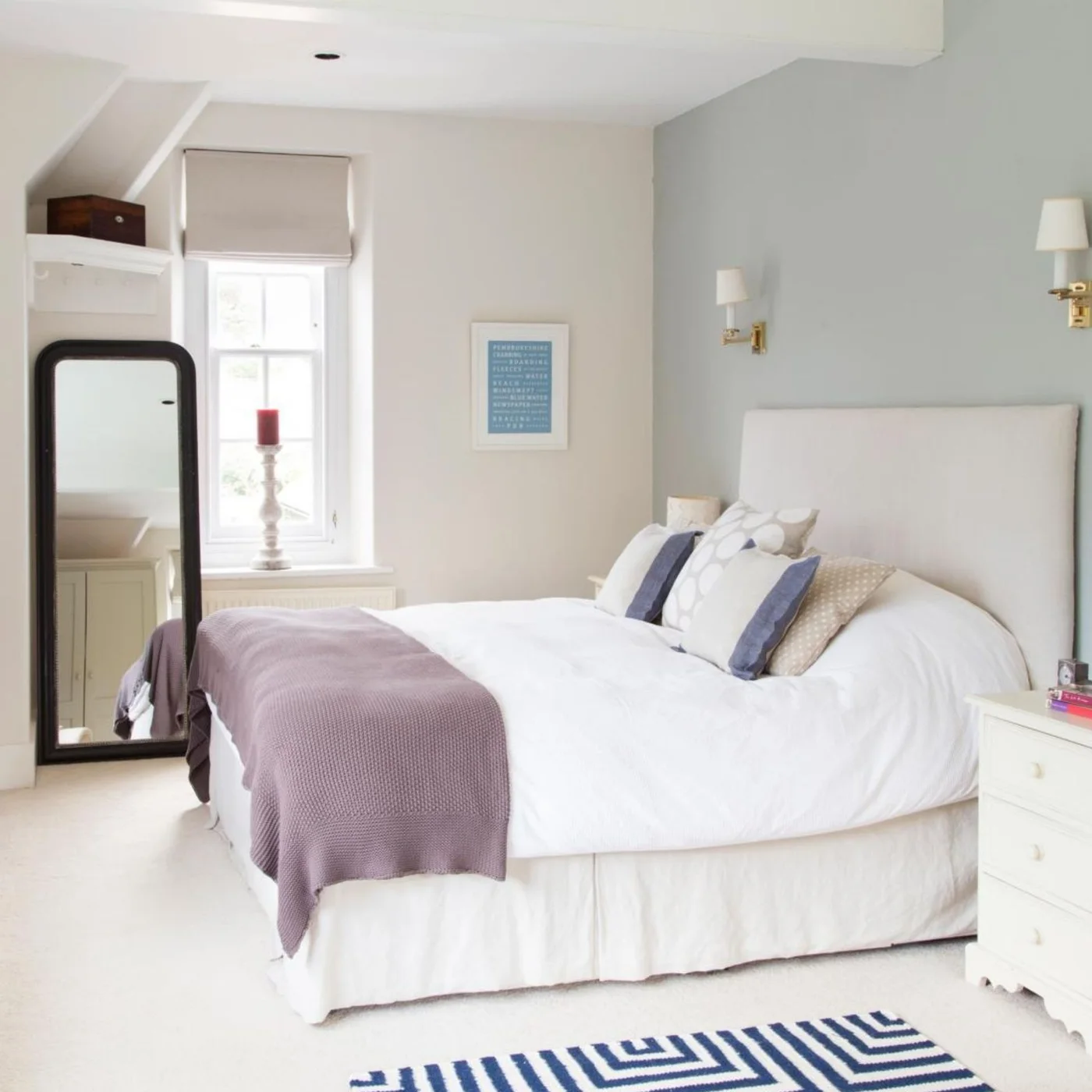
The tall mirror uses the narrow recess beside the window, adding a dressing function without another large item across the room. Paired wall lights leave the bedside tops available, while white bedding relates to the pale walls. A muted throw and patterned cushions add color in the most easily changed part of the scheme.
Secure a full-length mirror according to its mounting instructions instead of relying on a casual lean. Check that its position does not block heating, window access or a door. Our cozy guest bedroom ideas include more flexible finishing touches. Leave enough space to step back from the mirror and use it comfortably.
IDEA 16 / 20
Carry a Single Color onto a Sloping Ceiling
 SaveSupport Non AI Creator
Image credit: Future PLC/Lizzie Orme
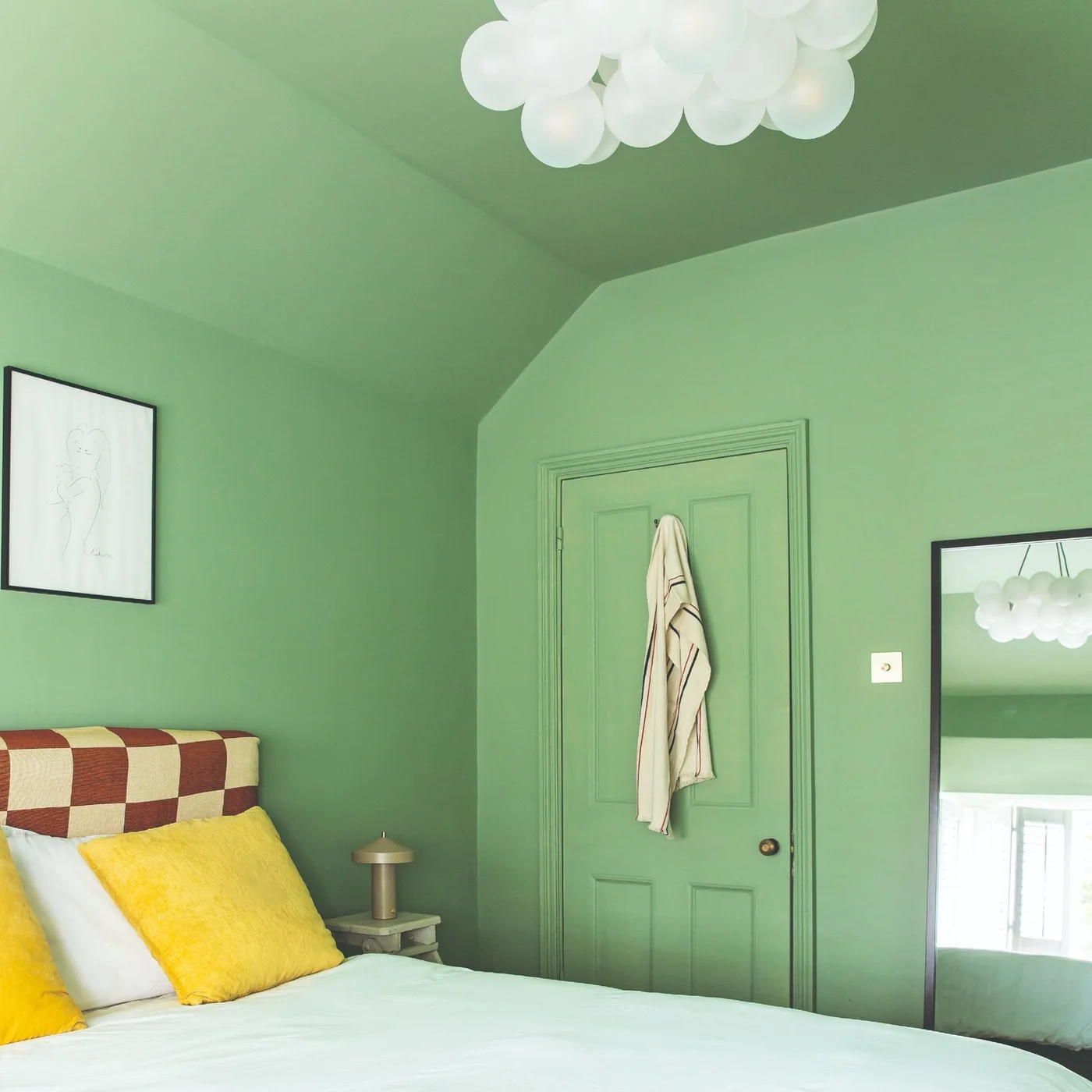
Green continues across the wall, door and sloping ceiling, making their junctions less abrupt. A checked headboard and yellow pillows introduce distinct shapes against that broad colored background. The tall mirror repeats the room and its globe-like ceiling light, while a small bedside stand keeps the corner from becoming overfurnished.
View a large paint sample on the slope as well as the vertical wall; different light angles can change the apparent shade. Use suitable finishes for trim and doors. Check headroom beside the bed, and secure the mirror properly. One strong wall color still benefits from adequate task lighting and an uncluttered route out of the room.
IDEA 17 / 20
Hide a Dressing Station Inside Fitted Storage
 SaveSupport Non AI Creator
Image credit: Future PLC/Anna Stathaki
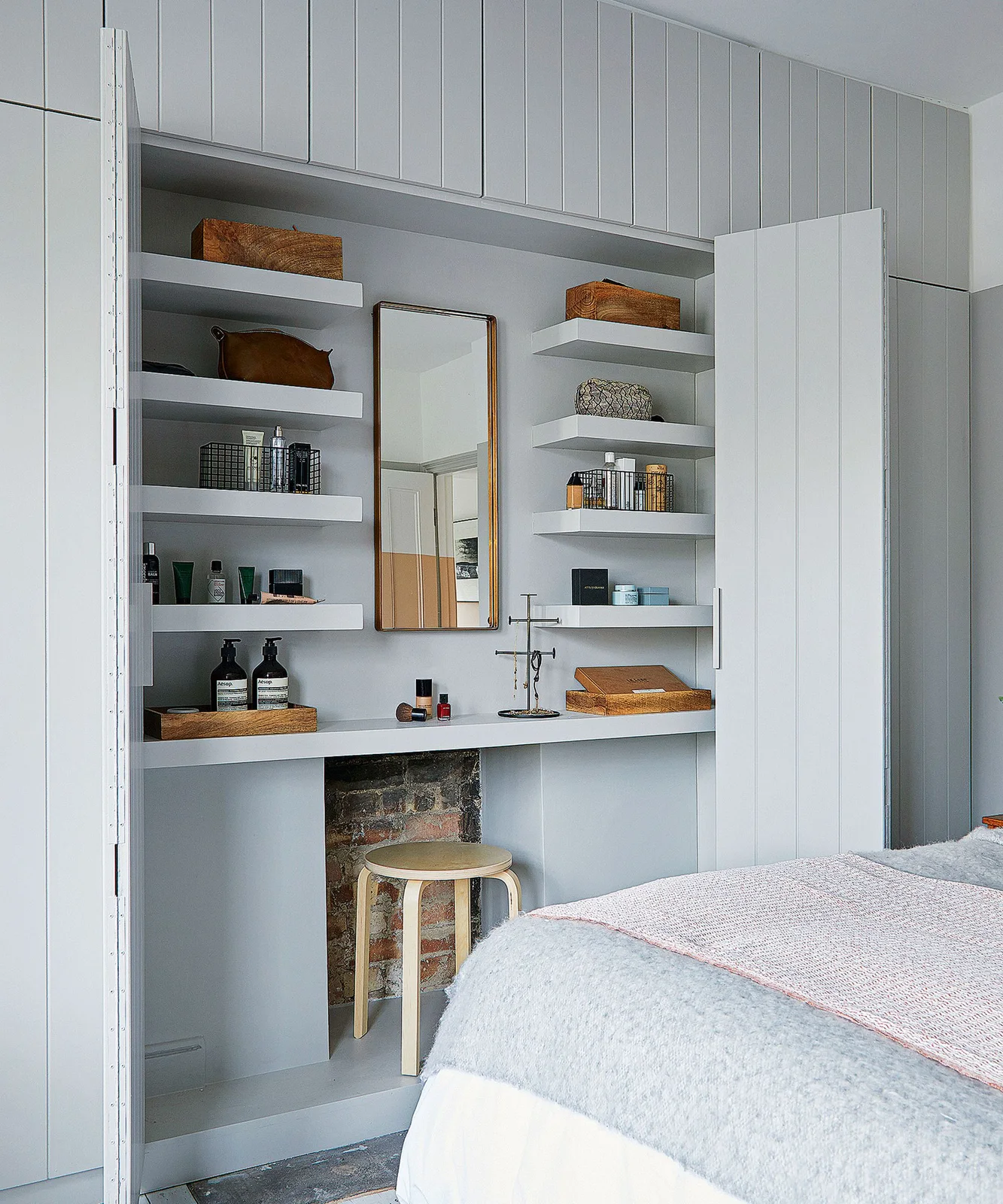
A dressing station sits within the fitted storage rather than requiring a separate vanity elsewhere. Shallow shelves flank the tall mirror, keeping small bottles and bags off the main counter. The stool can tuck underneath, allowing the station to close away when not in use and giving the bedroom a quieter wall of fronts.
Measure the stool height, knee space and door opening together, including the gap between the storage and bed. Keep the shelves shallow enough that bottles can be reached without knocking the front row. If heated styling tools will be used, plan suitable power access, ventilation and a safe heat-resistant place to set them down.
PART 04
Plan storage around the bed
IDEA 18 / 20
Organize a Narrow Bed Nook Above the Window
 SaveSupport Non AI Creator
Image credit: Future PLC/Dominic Blackmore
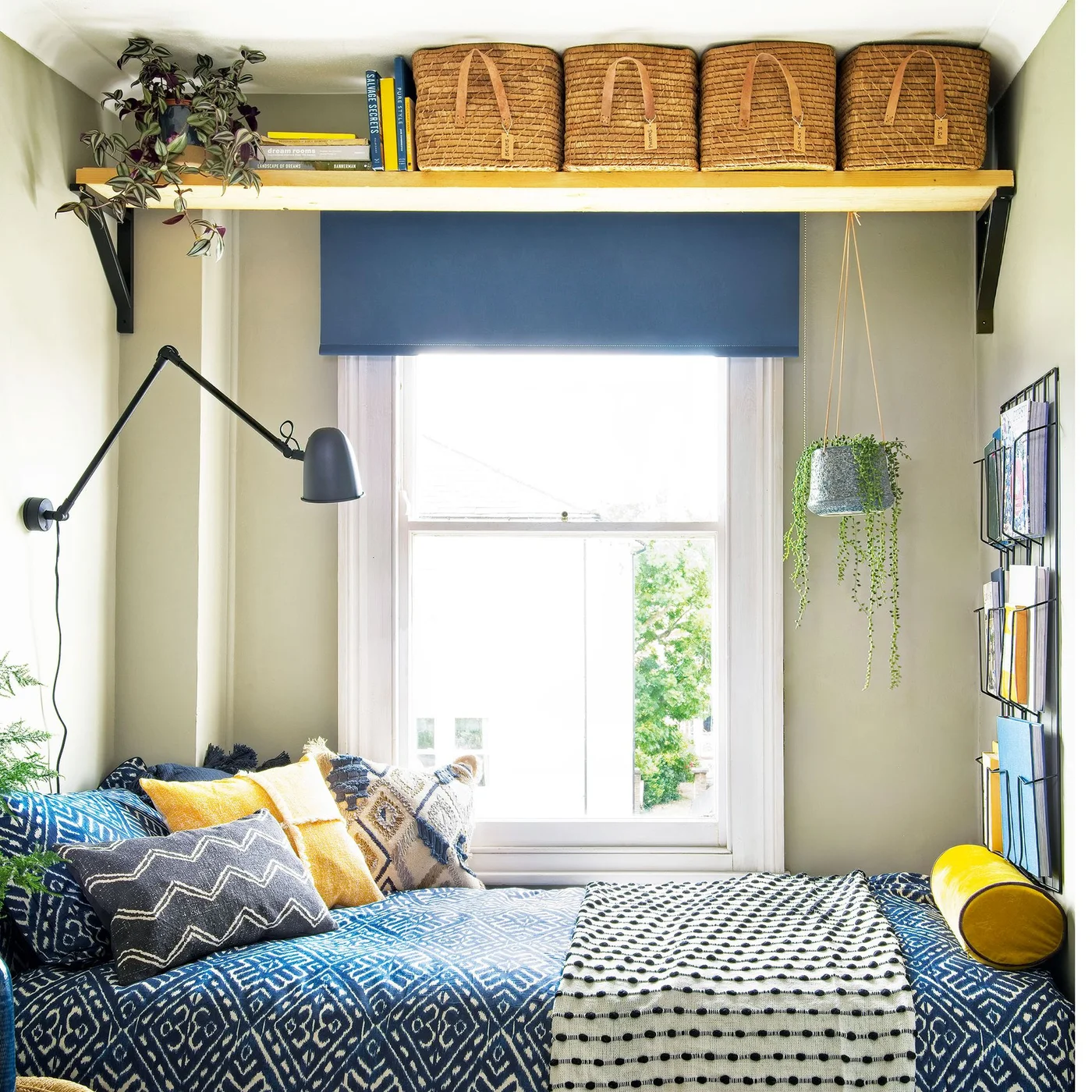
The bed fits into a narrow nook, with the wall light and slim wire racks keeping useful items off the mattress. Matching baskets provide a consistent line above the window, while blue bedding and blind tie the space together. Yellow accents add contrast without requiring another large piece of furniture in the confined area.
High storage is best reserved for light items that are not needed every night, with secure shelf fixings and a practical way to reach them. Keep window access and any required escape route clear. Choose child-safe window coverings where relevant, and do not let a hanging plant or its container enter the sleeping area.
IDEA 19 / 20
Choose a Single Bed When It Improves the Layout
 SaveSupport Non AI Creator
Image credit: Future PLC
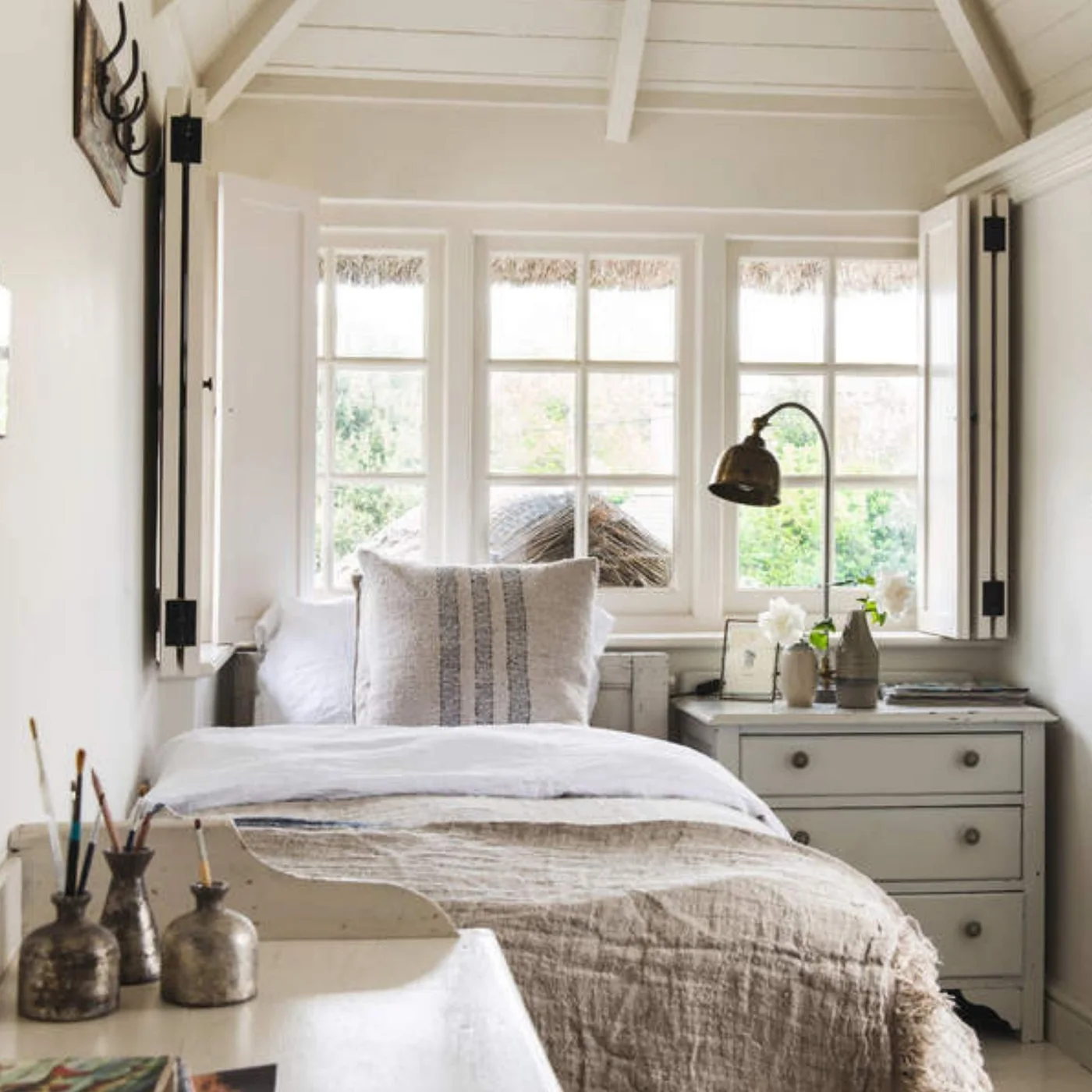
A single bed leaves enough room for a drawer chest and a narrow desk in this small bedroom. Pale finishes relate to the window frames and bedding, while the dark lamp and hinges add definition. The layout gives sleeping, storage and a work surface distinct places instead of letting a larger bed absorb nearly the entire floor.
Choose the bed size around the actual users and their needs rather than the largest frame that can enter the room. Check window operation, heating and the space for a chair at the desk. Keep the bedding from covering nearby fittings, and leave a clear route from the bed to the doorway even when a drawer is open.
IDEA 20 / 20
Fit Shelving to a Sloping End Wall
 SaveSupport Non AI Creator
Image credit: Future PLC/James French
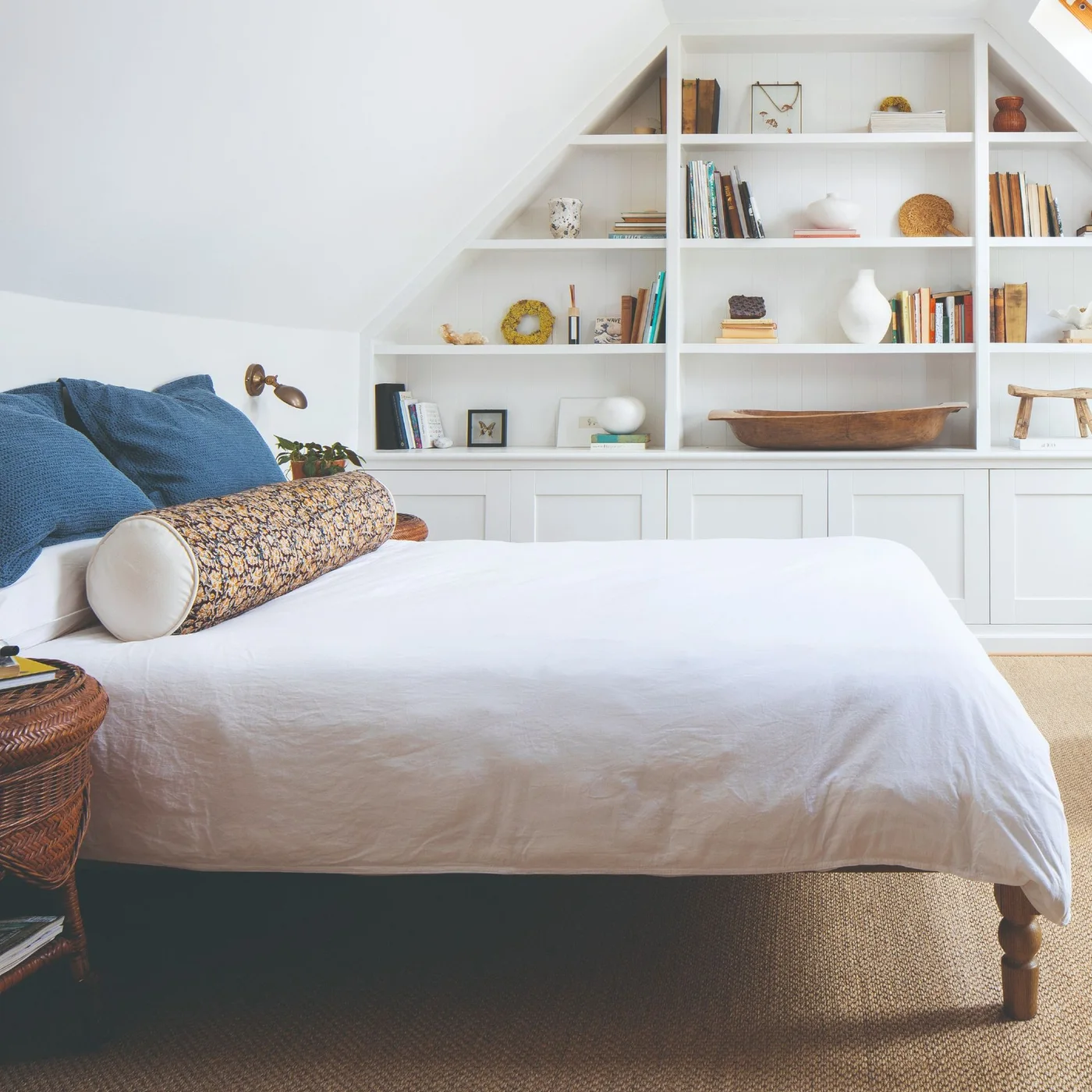
Built-in shelving follows the attic slope, turning an awkward end wall into storage with both open and closed sections. White paint relates to the ceiling and bedding, while books and vessels introduce modest patches of color. The bed remains the main horizontal shape, with a small woven table providing a softer texture beside it.
Measure the usable headroom and access before filling a low attic wall with cupboards. Keep heavy items low, confirm shelf loading and secure objects appropriately near a bed. Closed lower storage can take less attractive belongings, while a few open sections are easier to maintain than shelves packed tightly all the way to the roof line.
BRING IT ALL TOGETHER
Measure the everyday movements first
Draw the bed, door swings, drawers and chair positions before choosing decorative furniture. Leave space for the actions you repeat: getting dressed, making the bed, opening a window and reaching a light. A smaller bedside shelf or a single well-chosen chair can be more useful than a complete matching furniture set.
Use paint, bedding and a limited number of wall pieces to add personality once the layout works. Check fixings, cables, shelf loads and access for cleaning. Photos can suggest an arrangement, but the final dimensions and installation need to suit the actual room and the people who sleep there.