The space above a bed does not need to be filled from edge to edge. A single picture, a small group or a sculptural piece can give the bed a clear backdrop. Choose the arrangement with the headboard, bedside lighting and sitting headroom in mind.
Plan the decoration with the bed at its final height, including the mattress and pillows. Use suitable wall fixings for each piece and get help with unfamiliar wall construction or heavy objects. These photographs show compositions to borrow, rather than installation details to assume.
PART 01
Give one piece enough space
IDEA 01 / 20
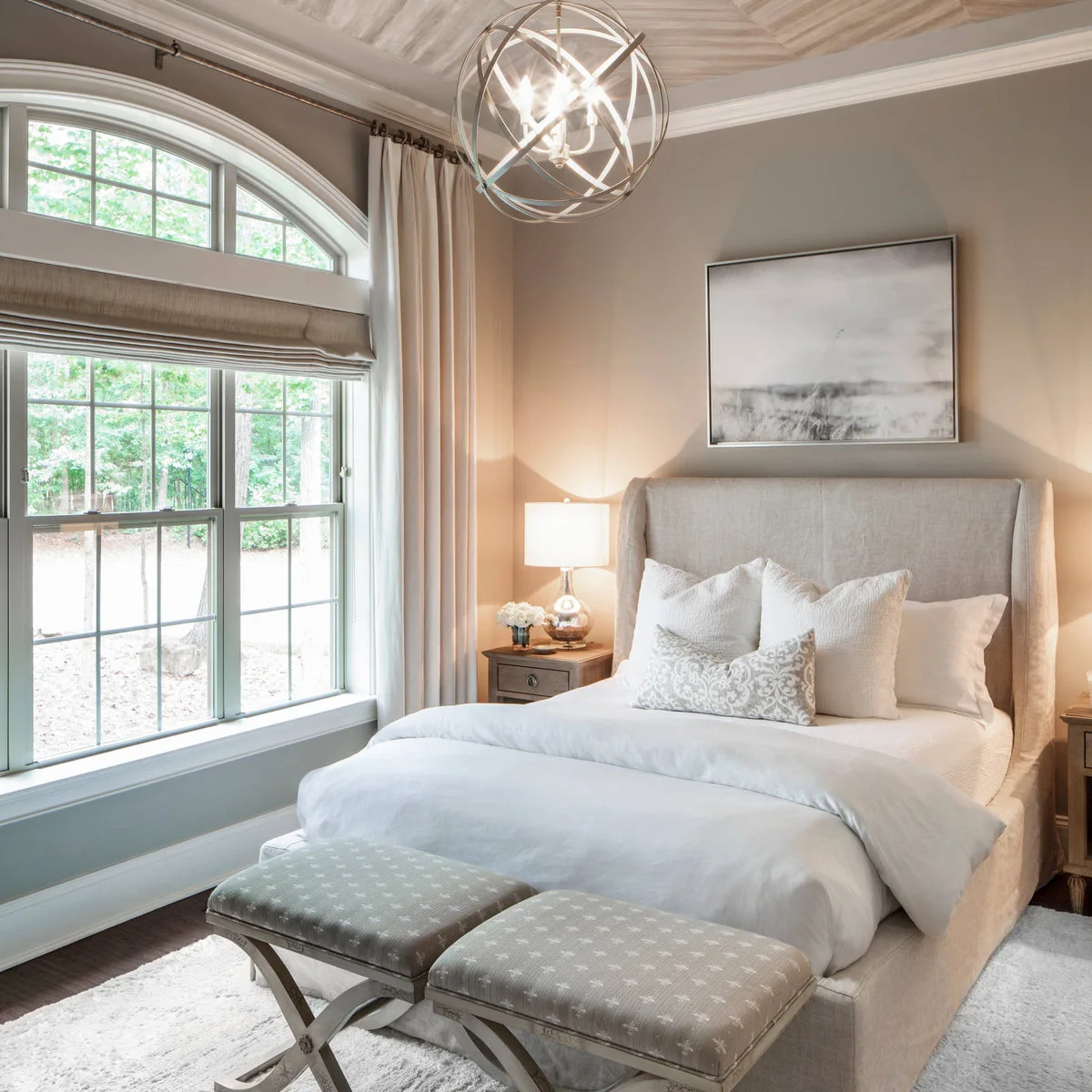
Keep a Quiet Landscape Above Pale Upholstery
 SaveSupport Non AI Creator
Image credit: Project: Artistic Interior Design/Amy N. Lee, ASID (via Houzz)
A pale landscape sits above the upholstered headboard, carrying the room’s gray tones without introducing a strong new color. Its simple frame leaves the image’s soft edges visible. The large arched window and long curtains remain the room’s most prominent architectural features.
Hold a paper template above the headboard before hanging the picture, checking it from the doorway and while seated in bed. Leave enough clearance to sit up comfortably. For a similarly restrained room, these relaxing bedroom paint colors offer quieter backgrounds for pale artwork. For a larger feature in place of framed art, compare these bedroom wallpaper accent wall ideas before choosing the wall finish.
IDEA 02 / 20
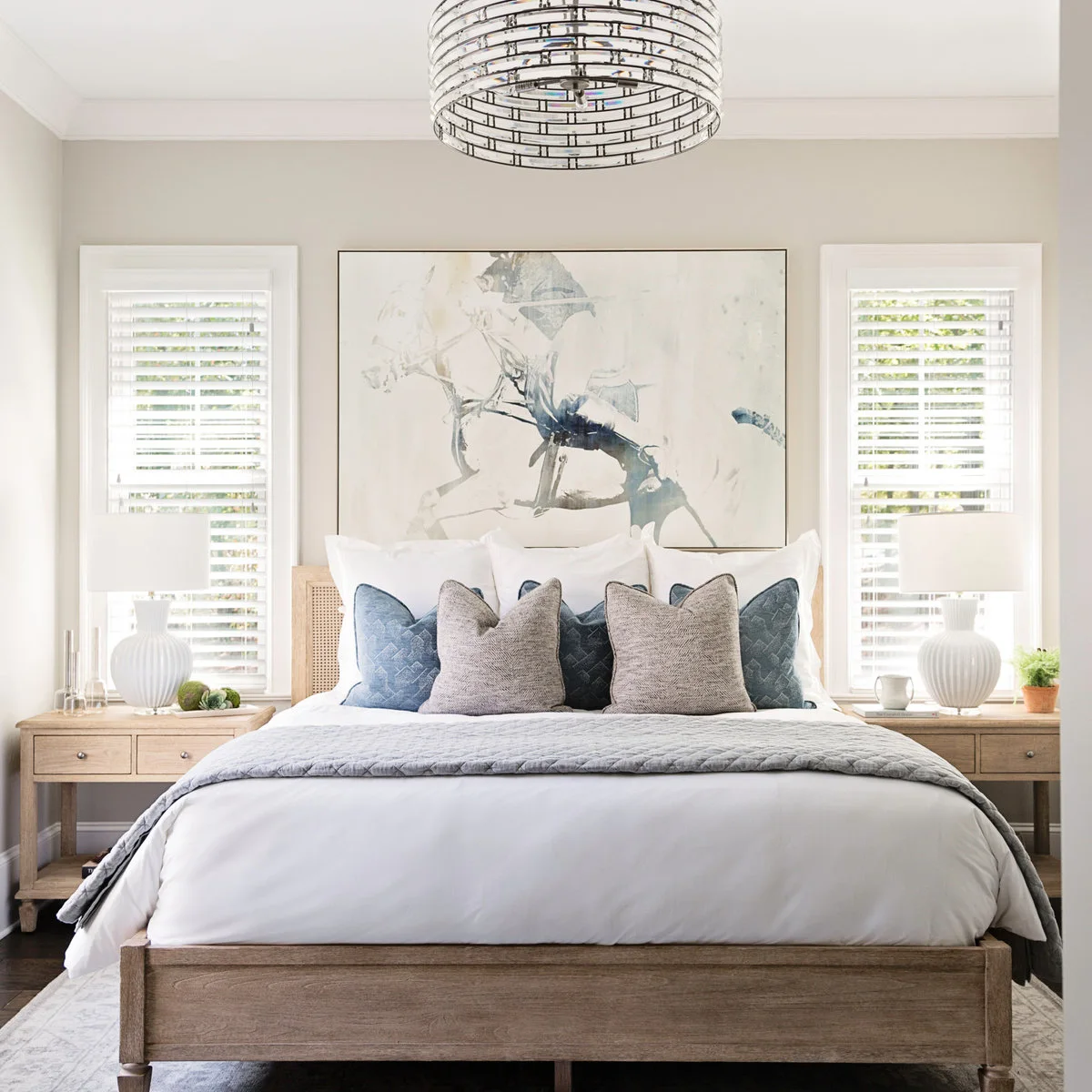
Use a Large Drawing Between Two Windows
 SaveSupport Non AI Creator
Image credit: Project: Ashley Martin Home (via Houzz)
A broad drawing occupies the wall between the shuttered windows, with blue-gray marks repeated in the pillows and cover. Its slim dark frame gives the pale image an edge. Matching lamps keep the window arrangement balanced without adding more art beside the central picture.
Measure the wall between the window trim, then compare the picture with the headboard below it. Check where shutters and bedside lamps move before making holes. A large image can work in this gap when its key details remain visible above the normal height of the pillows.
IDEA 03 / 20
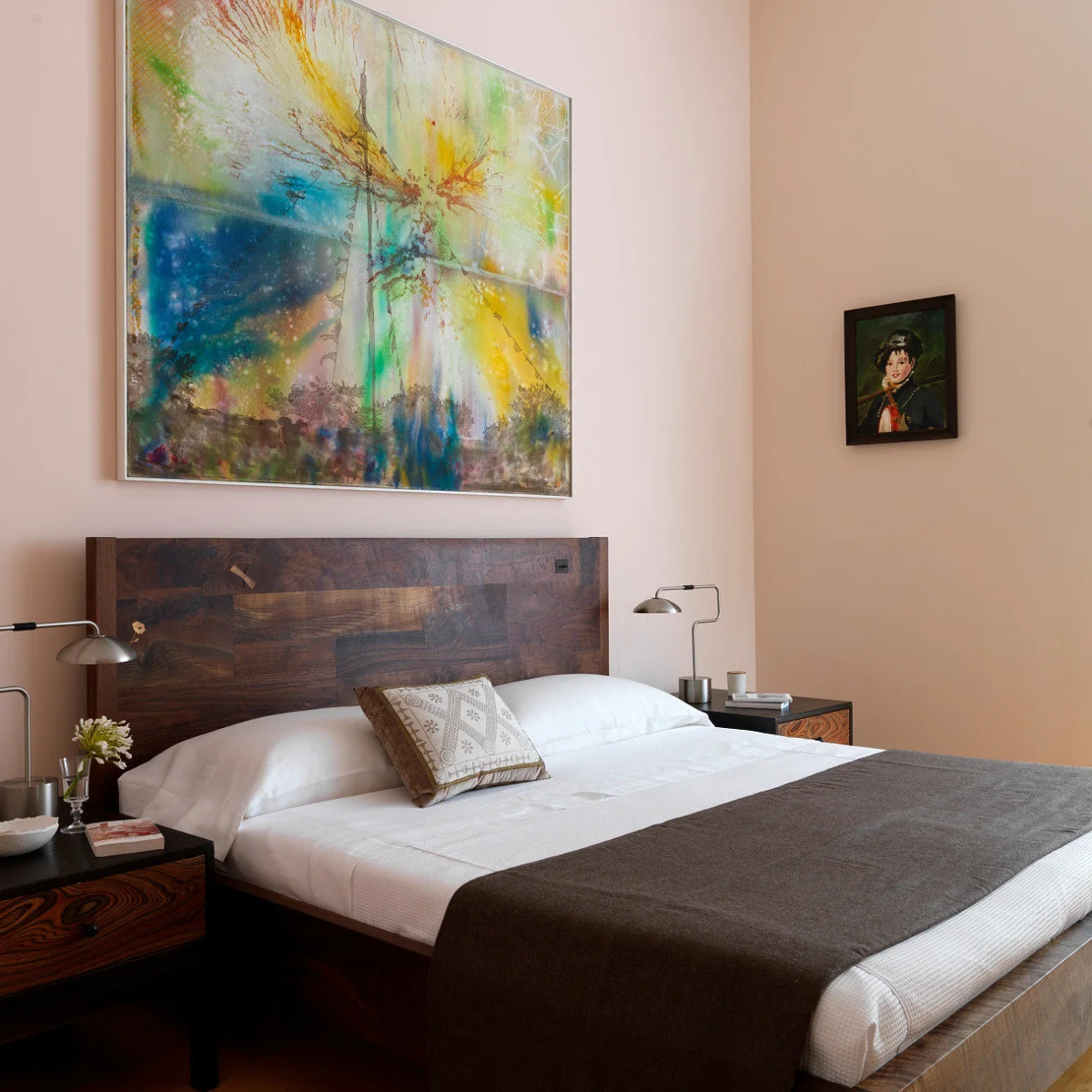
Let a Colorful Painting Lead the Bedding
 SaveSupport Non AI Creator
Source: www.houzz.com
Blue, yellow and green spread across the painting above the wood headboard, supplying most of the room’s bright color. The pale pink wall softens its edges. White bedding and a brown cover keep the lower half quieter, while a small portrait occupies the side wall.
Choose which colors to repeat before buying new cushions or throws. One or two small references are usually enough when the painting already has a wide palette. Keep the frame securely mounted, and leave a visible gap above the headboard so the image does not appear to rest on the bed.
IDEA 04 / 20
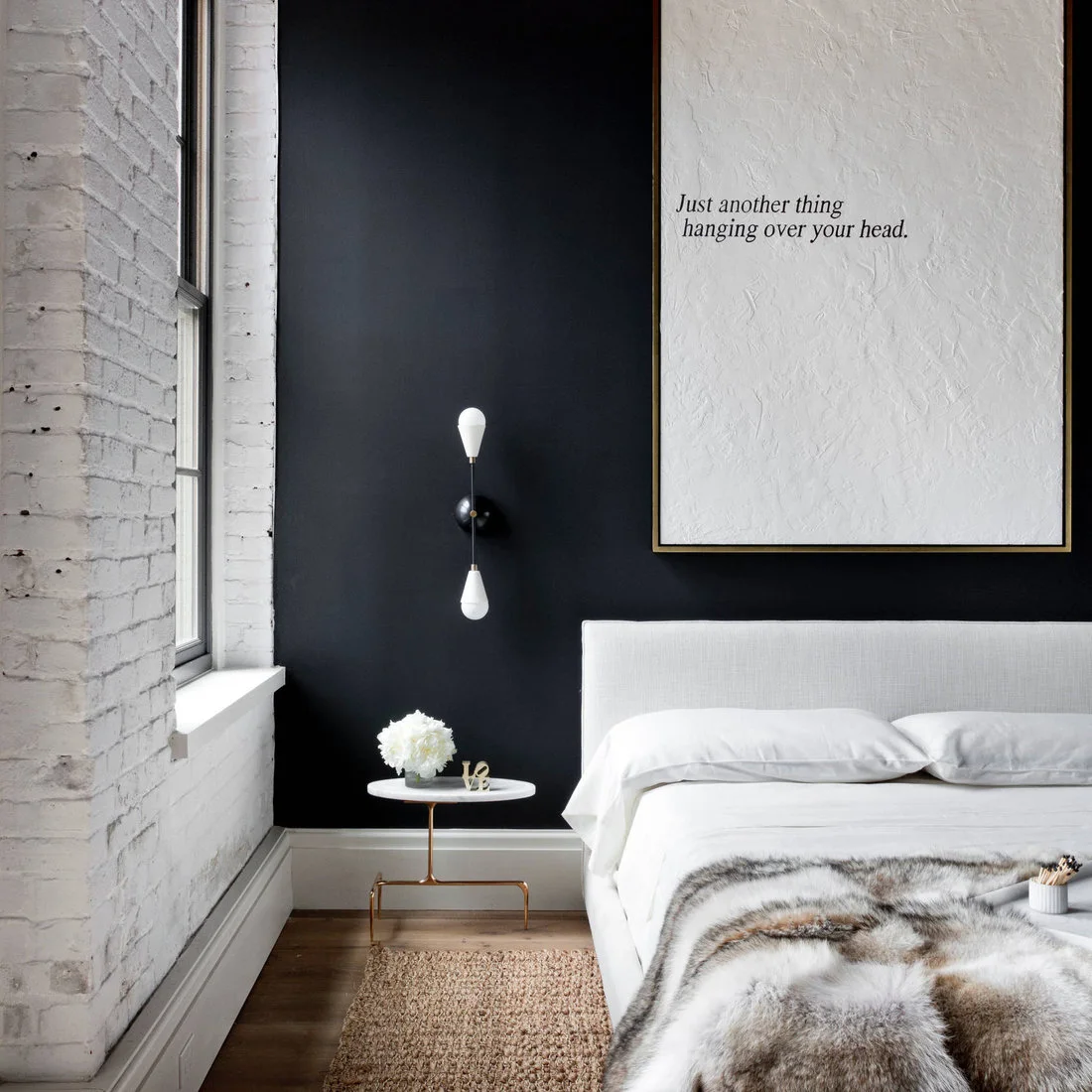
Give Typography Plenty of Blank Space
 SaveSupport Non AI Creator
Image credit: Project: Tamara Magel Studio (via Houzz)
A small line of lettering sits within a much larger pale artwork, using empty space as part of the composition. The black wall makes the frame and white bed stand out. Simple bedside lighting leaves the lettering as the room’s main graphic detail.
Choose wording you would still enjoy seeing every day, then judge its size from the doorway rather than close up. A large frame does not need large lettering to have presence. Check reflections and reading comfort under evening lighting before settling on the final position.
IDEA 05 / 20
Use a Wide Mount Around a Small Portrait
 SaveSupport Non AI Creator
Image credit: Project: Kia Designs (via Houzz)
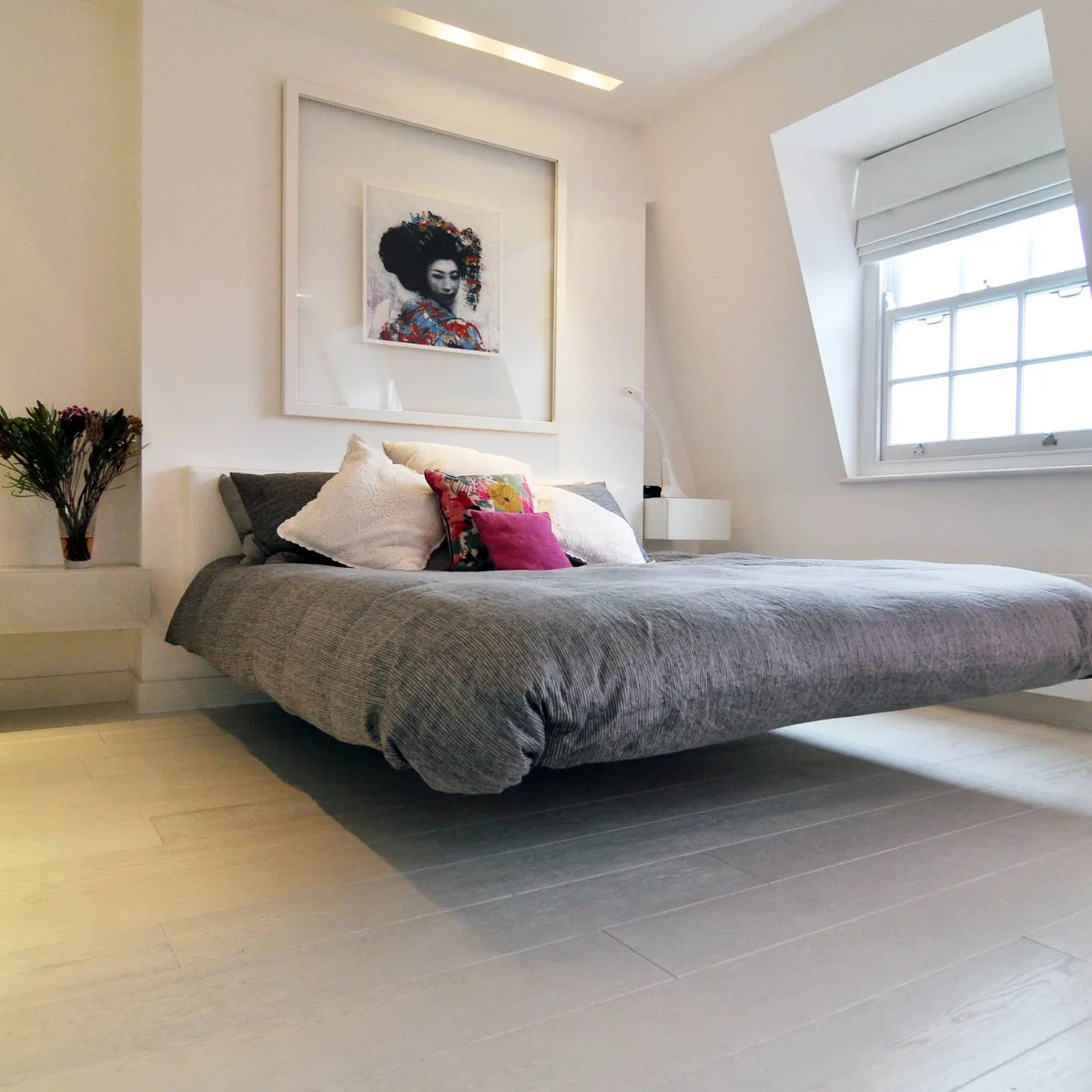
A broad white mount gives the small portrait enough presence above the gray bed. Color in the picture reappears in the pink and floral cushions, while the surrounding wall stays pale. The sloping window reveal remains separate from the framed image, keeping the compact room legible.
A generous mount can help a smaller work suit a larger wall without enlarging the artwork itself. Check the complete framed size before ordering. For rooms with roof angles, compare these attic bedroom ideas so the bed and picture both fit the usable wall and headroom.
PART 02
Arrange pictures as a group
IDEA 06 / 20
Keep a Row of Three Low and Simple
 SaveSupport Non AI Creator
Image credit: Project: Chango (via Houzz)
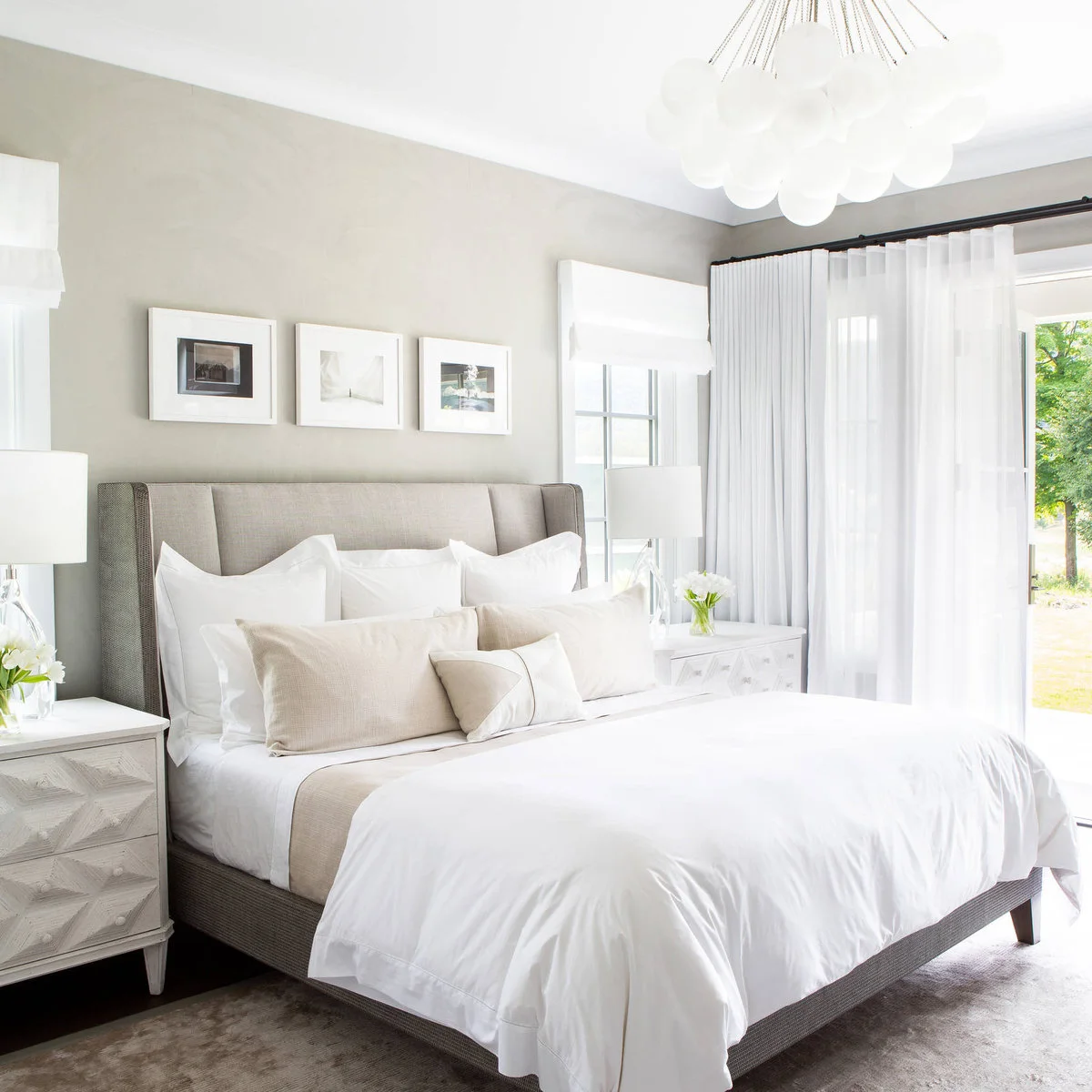
Three modest pictures form a short horizontal row above the headboard, with white frames that blend into the room’s pale palette. The winged sides of the bed provide the stronger outline. Sheer curtains and light bedding let the arrangement stay understated rather than becoming a dense gallery.
Treat the three frames as one group when centering them over the bed. Use consistent gaps and a shared lower or upper line, then check the total width against the headboard. Choose images with enough visible contrast that they do not disappear completely in a bright room.
IDEA 07 / 20
Build a Grid Around a Shared Frame Style
 SaveSupport Non AI Creator
Image credit: Project: Robert Brown Interior Design (via Houzz)
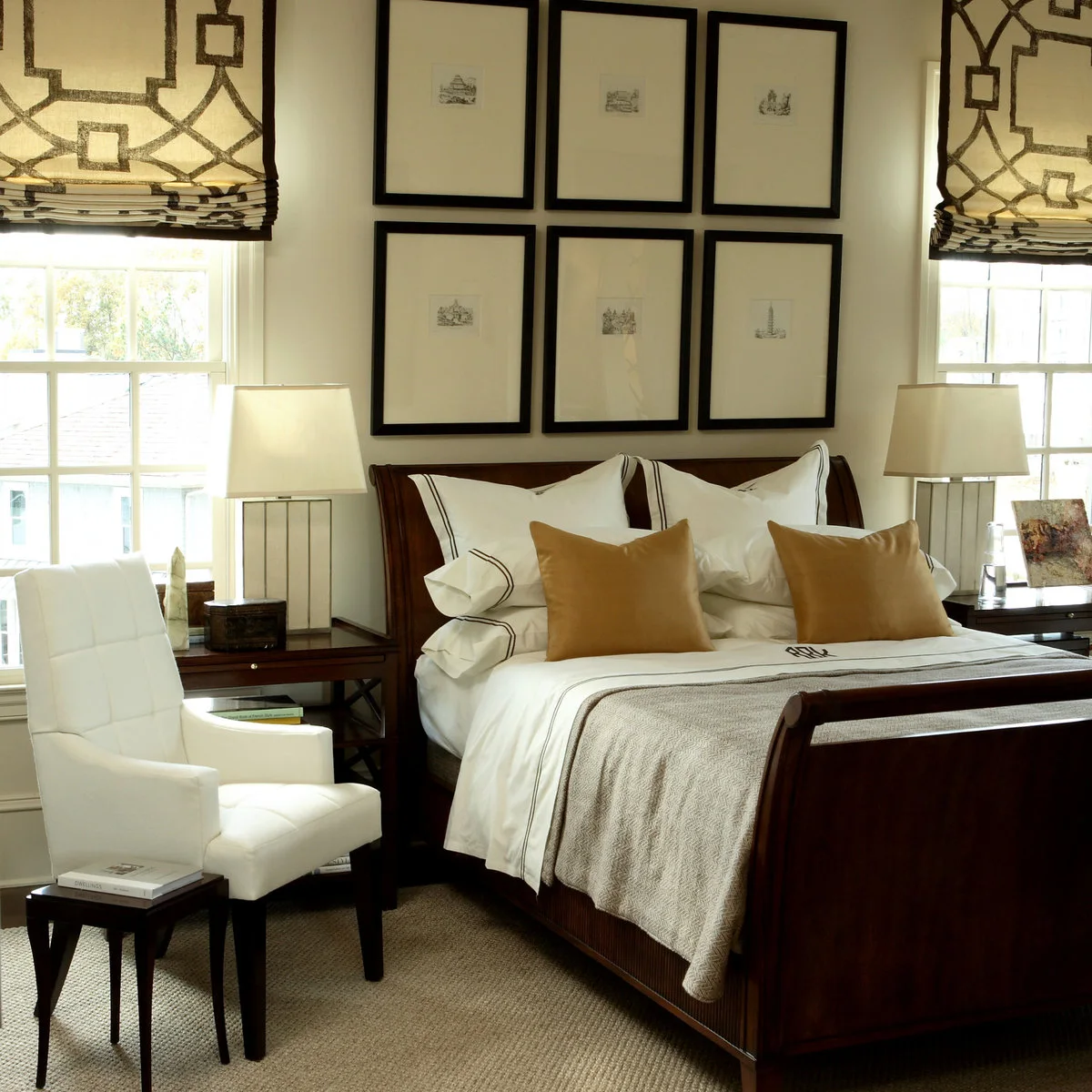
Six black frames create a clear grid, with broad pale mounts surrounding small drawings. Their dark outlines relate to the wood bed and the pattern on the blinds. Matching table lamps sit below the group, making the display feel connected to the whole sleeping arrangement.
Make a full paper layout before drilling, including the spaces between the frames. A grid makes uneven gaps easy to notice, so measure from common reference lines. Keep the lower row outside sitting headroom, and use fixings suitable for each frame rather than assuming a small drawing means a light object.
IDEA 08 / 20
Carry the Painting Colors into Three Pillows
 SaveSupport Non AI Creator
Image credit: Project: Zogheib, Necessary Luxury (via Houzz)
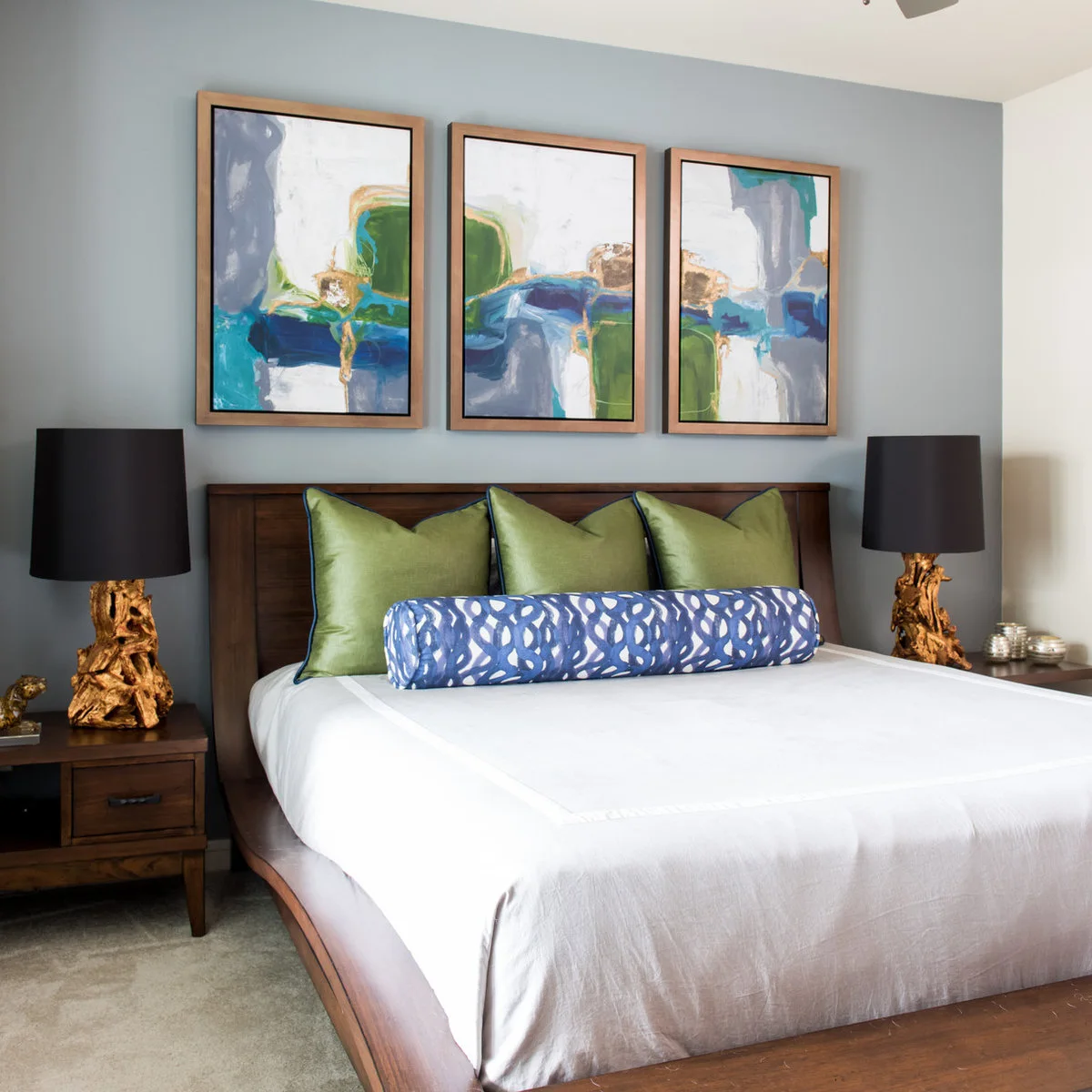
Three abstract pictures share blue, green and pale areas, with wood frames linking them to the bed below. Green pillows and a blue patterned bolster bring those colors onto the bedding. Black lampshades form a quiet border around the brighter group.
Choose a limited number of colors from the pictures for the bedding, leaving some of the artwork’s tones unmatched. This keeps the connection from feeling too literal. Check the full width of all three frames and their gaps before deciding whether the group fits comfortably between the lamps.
IDEA 09 / 20
Balance a Dark Headboard with Pale Paired Art
 SaveSupport Non AI Creator
Image credit: Project: Tailored Space Interiors - Interior Design (via Houzz)
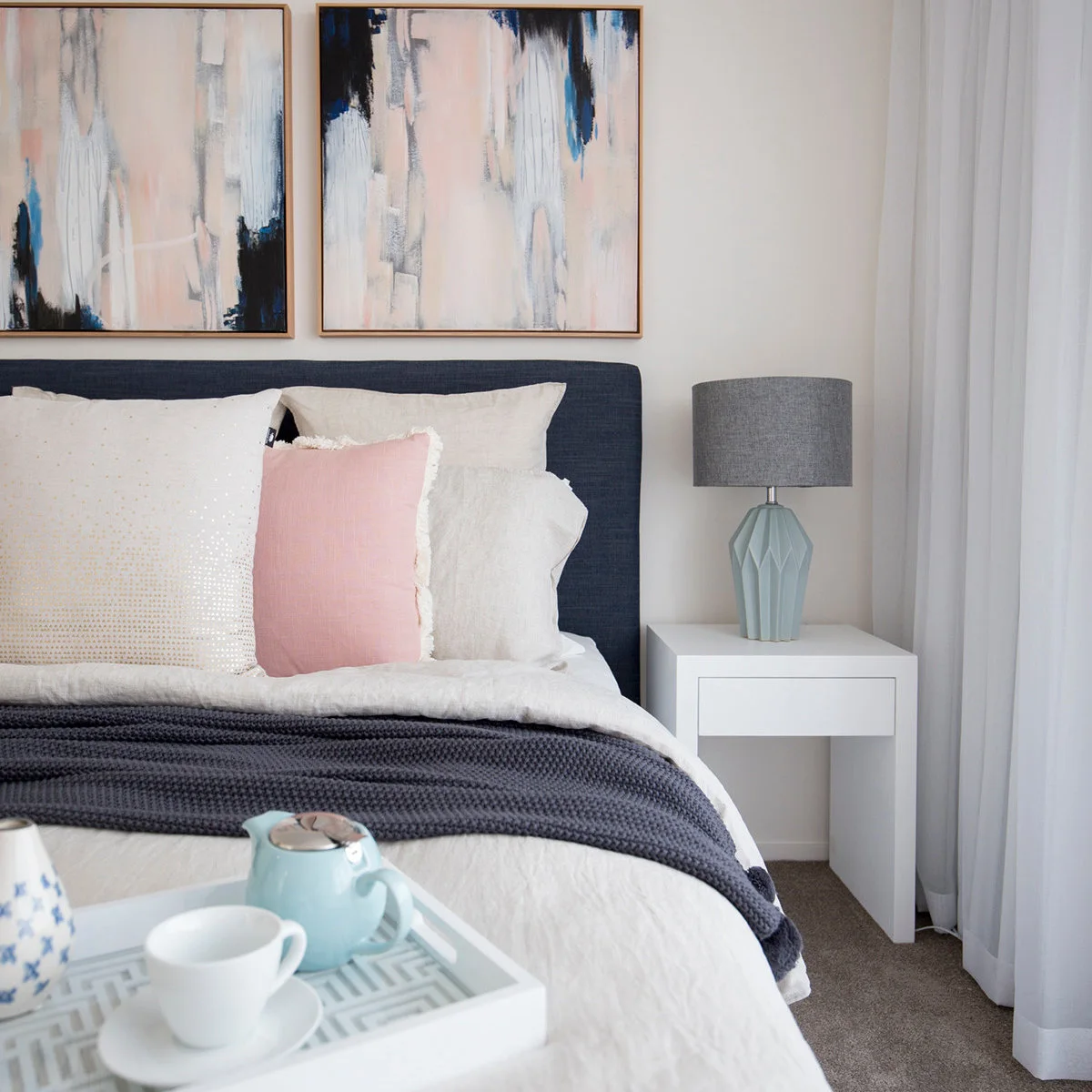
Two pale paintings soften the navy headboard, with darker blue marks connecting the art to the bed. A pink cushion repeats the warmer color while white bedding keeps the arrangement bright. Matching frame edges give the pair a consistent outline against the plain wall.
Hang the pair as a single composition rather than centering each one separately on a pillow. Check that both remain visible above your normal bedding arrangement. If you want to extend the palette beyond this wall, compare these blue bedroom ideas before adding more dark furniture.
IDEA 10 / 20
Use Line Drawings with Textured Bedding
 SaveSupport Non AI Creator
Image credit: Project: Rosanna Parker Interiors (via Houzz)
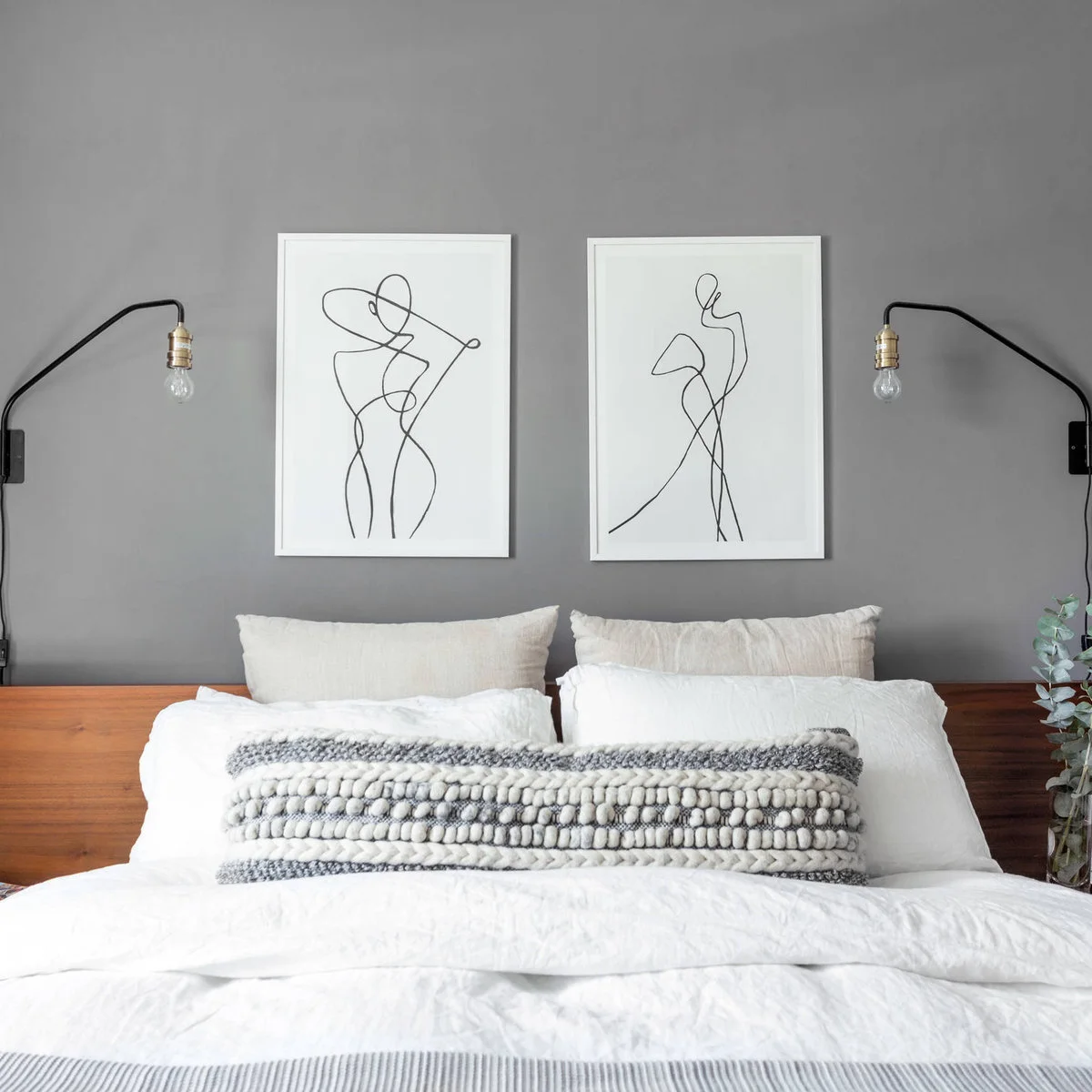
Simple black line drawings leave plenty of white space above the bed, contrasting with the thick woven texture of the long cushion. White frames stand out against the gray wall. The curved bedside lights repeat the drawings’ flowing lines without adding another patterned surface.
Keep the pair at the same height and choose a gap that looks intentional over the headboard. Check the lamps’ adjustable reach so neither arm crosses a frame awkwardly. Plain drawings can support highly textured bedding, but the wall still needs enough open space around the group.
PART 03
Match the room’s proportions
IDEA 11 / 20
Choose a Panoramic Image for a Wide Arrangement
 SaveSupport Non AI Creator
Image credit: Project: Andrea Lecusay Interiors, Inc. (via Houzz)
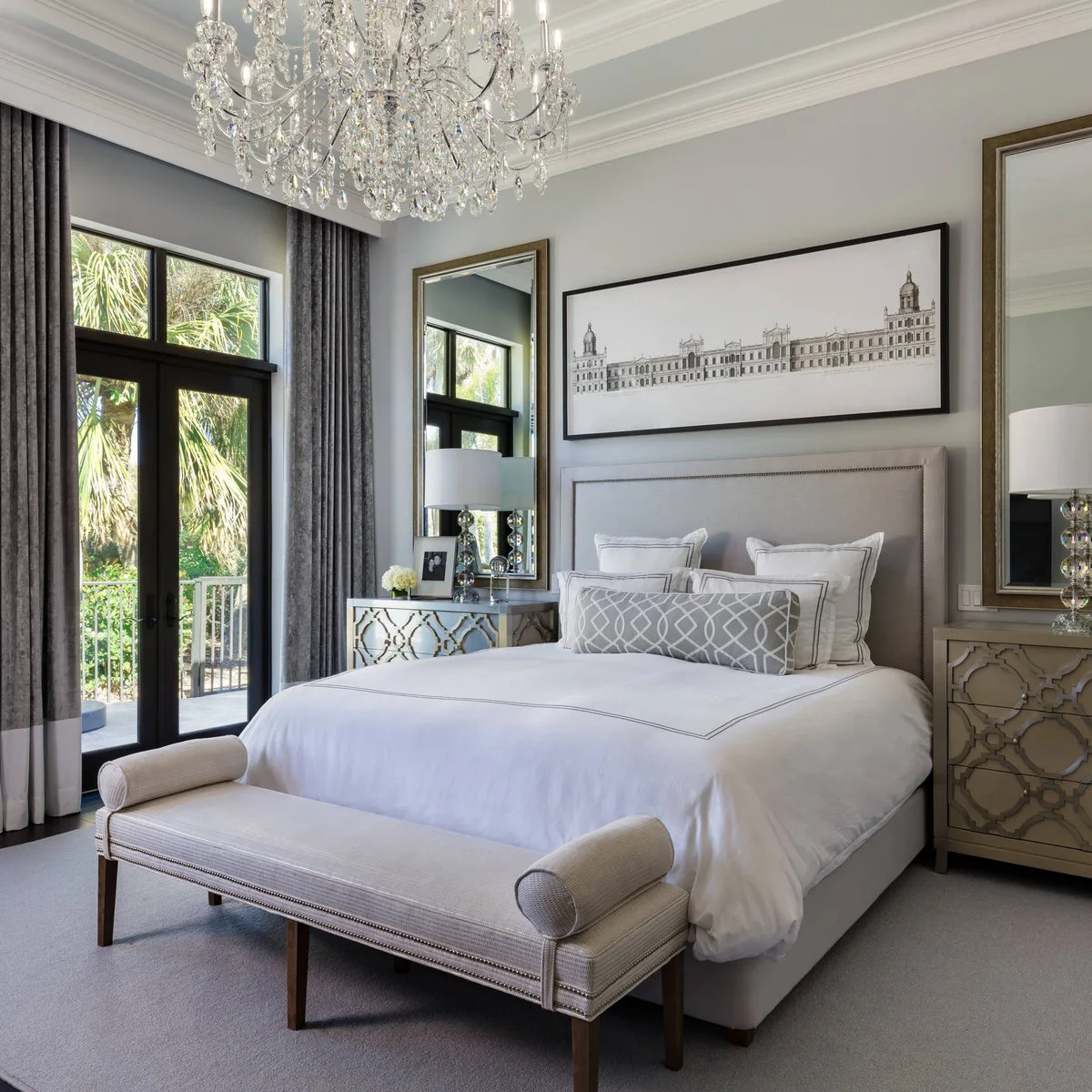
The architectural drawing stretches horizontally above the headboard, echoing the bed’s broad outline. Tall mirrors on both sides extend the overall arrangement upward. Pale upholstery and white bedding keep the drawing’s fine dark lines visible without introducing a second strong pattern.
Use the headboard as the main centering reference while accounting for mirrors and lamps around it. A panoramic picture works best when there is room for its full outline to read clearly. Check that the frame is securely supported and that bedside reflections do not distract from the image.
IDEA 12 / 20
Let a Tall Canvas Suit a Tall Wall
 SaveSupport Non AI Creator
Image credit: Project: Artistic Interior Design/Amy N. Lee, ASID (via Houzz)
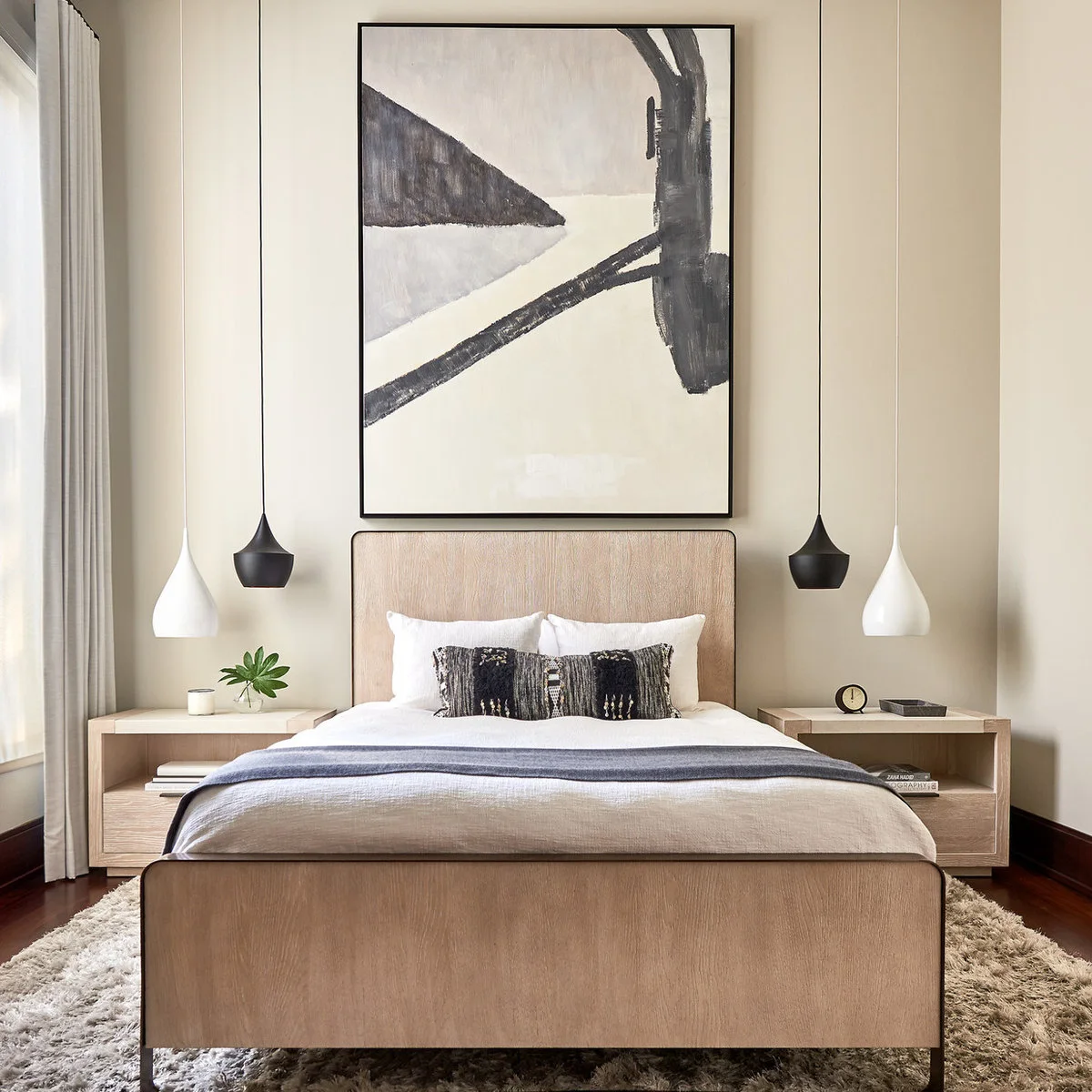
A tall abstract painting occupies the height above the bed instead of spreading across the whole wall. Its dark marks connect with the smaller black pendants, while the pale ground relates to the upholstery. The bedside tables remain low and simple beneath the strong vertical composition.
Measure the available height above the headboard before choosing a vertical work. Leave enough wall around its edges to distinguish the frame from nearby lights. Check the arrangement from the foot of the bed; a tall piece should feel balanced with the furniture rather than merely filling an empty column.
IDEA 13 / 20
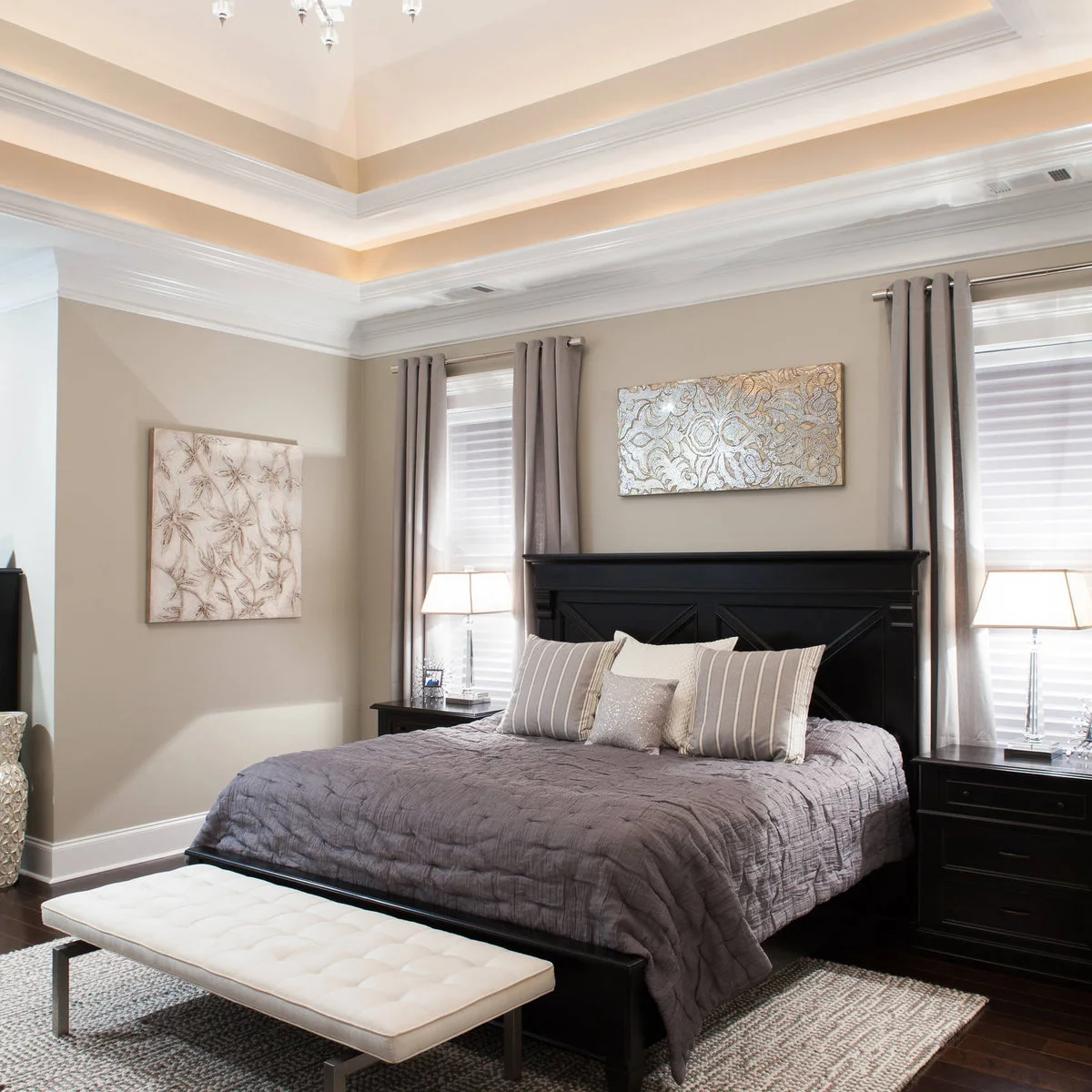
Use a Shallow Horizontal Piece Between Curtains
 SaveSupport Non AI Creator
Image credit: Project: Andrew Sherman Photography (via Houzz)
A shallow horizontal artwork fits above the dark headboard between the two curtained windows. Its pale scrolling details contrast with the bed’s strong outline. The taller picture on the side wall adds variety without forcing another large frame into the narrow space behind the pillows.
Use the exposed wall between curtains as your real width limit, including the fabric when it is gathered open. A compact piece can be more comfortable than a large one squeezed against window fittings. Keep the lower edge above sitting headroom and confirm its mounting method for your wall.
IDEA 14 / 20
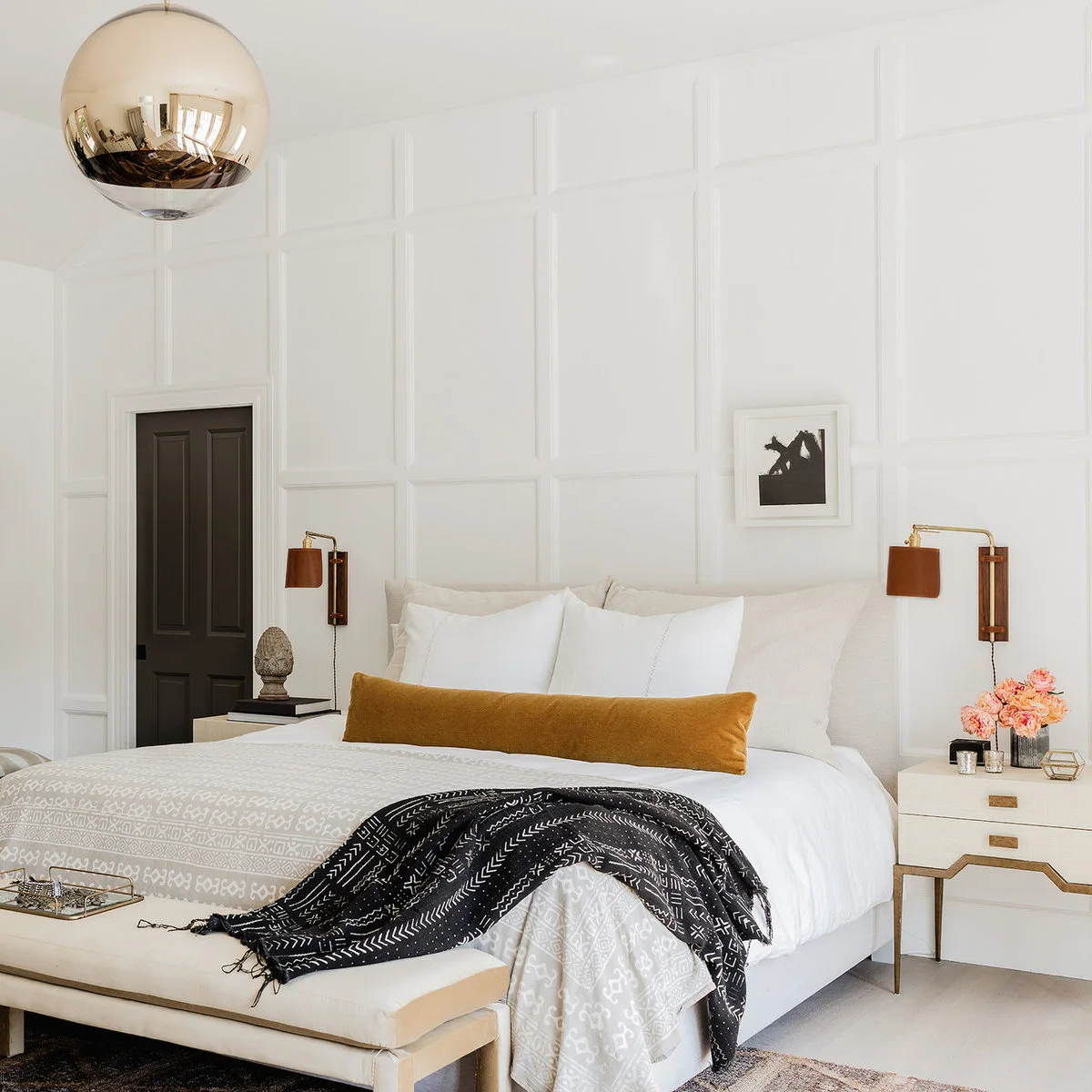
Let a Small Off-Center Picture Feel Deliberate
 SaveSupport Non AI Creator
Image credit: Project: Lisa Tharp Design (via Houzz)
A small picture sits off-center within the white wall’s panel lines, leaving much of the surface open. Matching bedside lights give the sleeping area its broader balance. Warm brown shades and a long mustard cushion provide color without requiring a large central artwork.
Use a paper template to test an off-center position before making holes. The surrounding lights and furniture should make the placement feel intentional rather than accidental. A small picture can suit a quiet room, especially when the wall already has enough detail from molding or panel lines.
IDEA 15 / 20
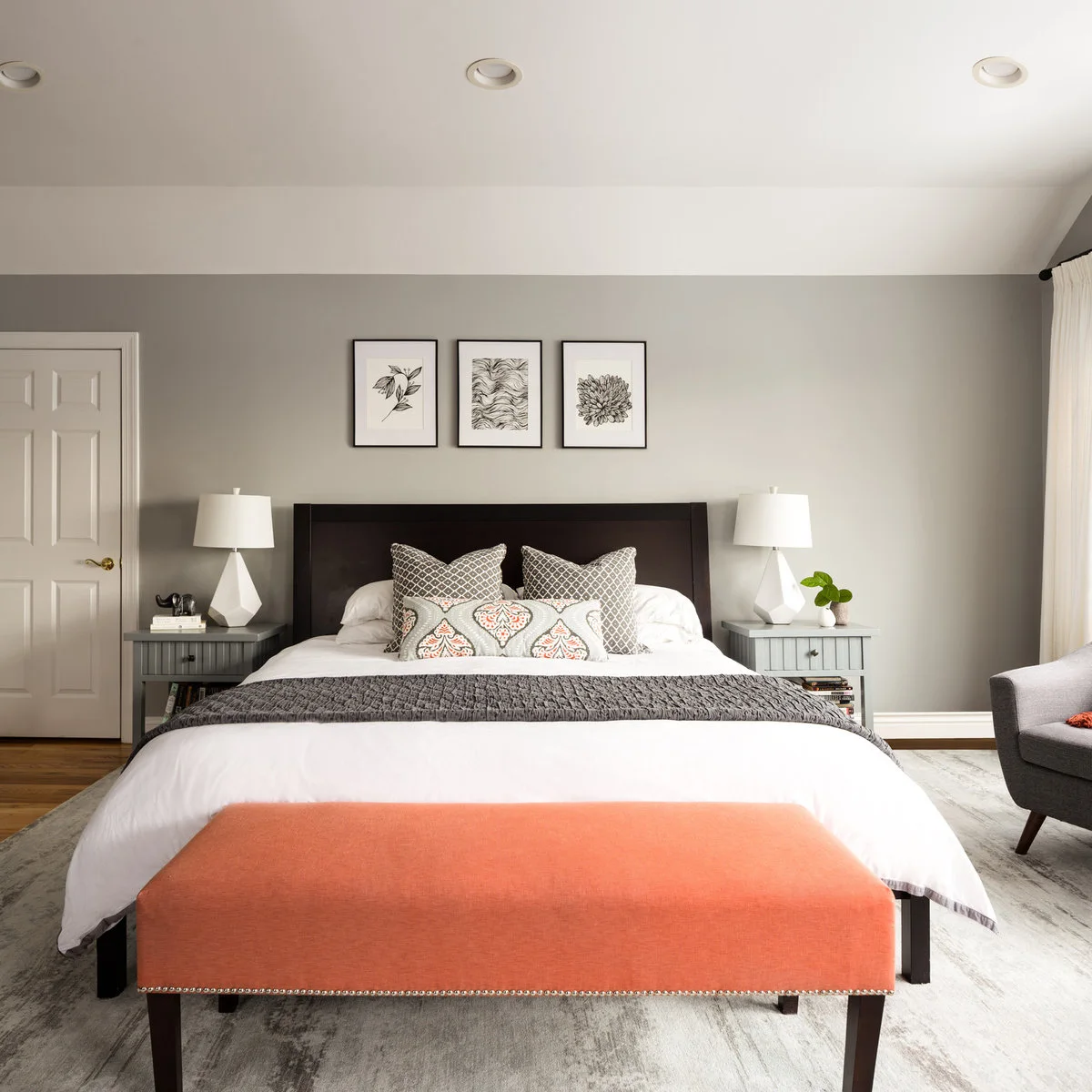
Leave Breathing Space Around a Small Botanical Set
 SaveSupport Non AI Creator
Image credit: Project: Christina Byers Design (via Houzz)
A small set of three prints occupies only the central part of the wall, leaving generous space on both sides. Black frames connect with the dark headboard, while white mounts relate to the lamps and bedding. The orange bench supplies a separate accent below the artwork.
Resist enlarging the group just to fill the entire wall. Test the spacing at full scale and check that the set reads as one feature from the entrance. Keep neighboring accessories modest so the small pictures are easy to notice without having to compete with several other displays.
PART 04
Add character through texture and contrast
IDEA 16 / 20
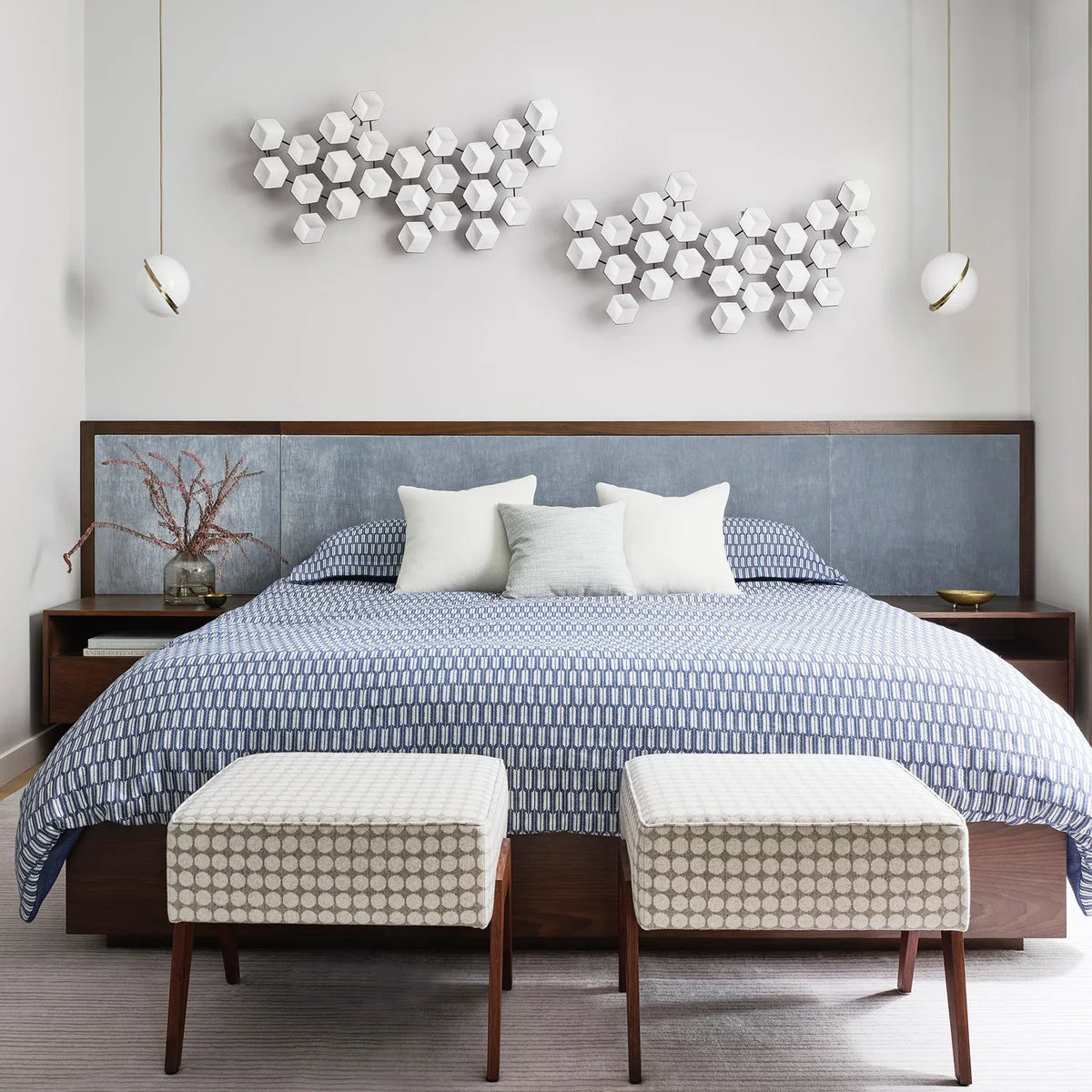
Use Two Sculptural Groups as One Composition
 SaveSupport Non AI Creator
Source: www.houzz.com
Two clusters of faceted white shapes spread across the wall at slightly different heights. Their dark connecting framework gives them definition against the pale background. A broad blue-gray headboard anchors the composition, while the small pendants leave the central wall open for the ornaments.
Check the complete assembled weight and fixing requirements before choosing sculptural pieces above a bed. Keep projecting parts outside comfortable sitting headroom. Plan the two clusters together, leaving a clear relationship between them so they read as one arrangement rather than unrelated decorations.
IDEA 17 / 20
Choose an Open Branch-Like Wall Sculpture
 SaveSupport Non AI Creator
Image credit: Project: Hilary Walker (via Houzz)
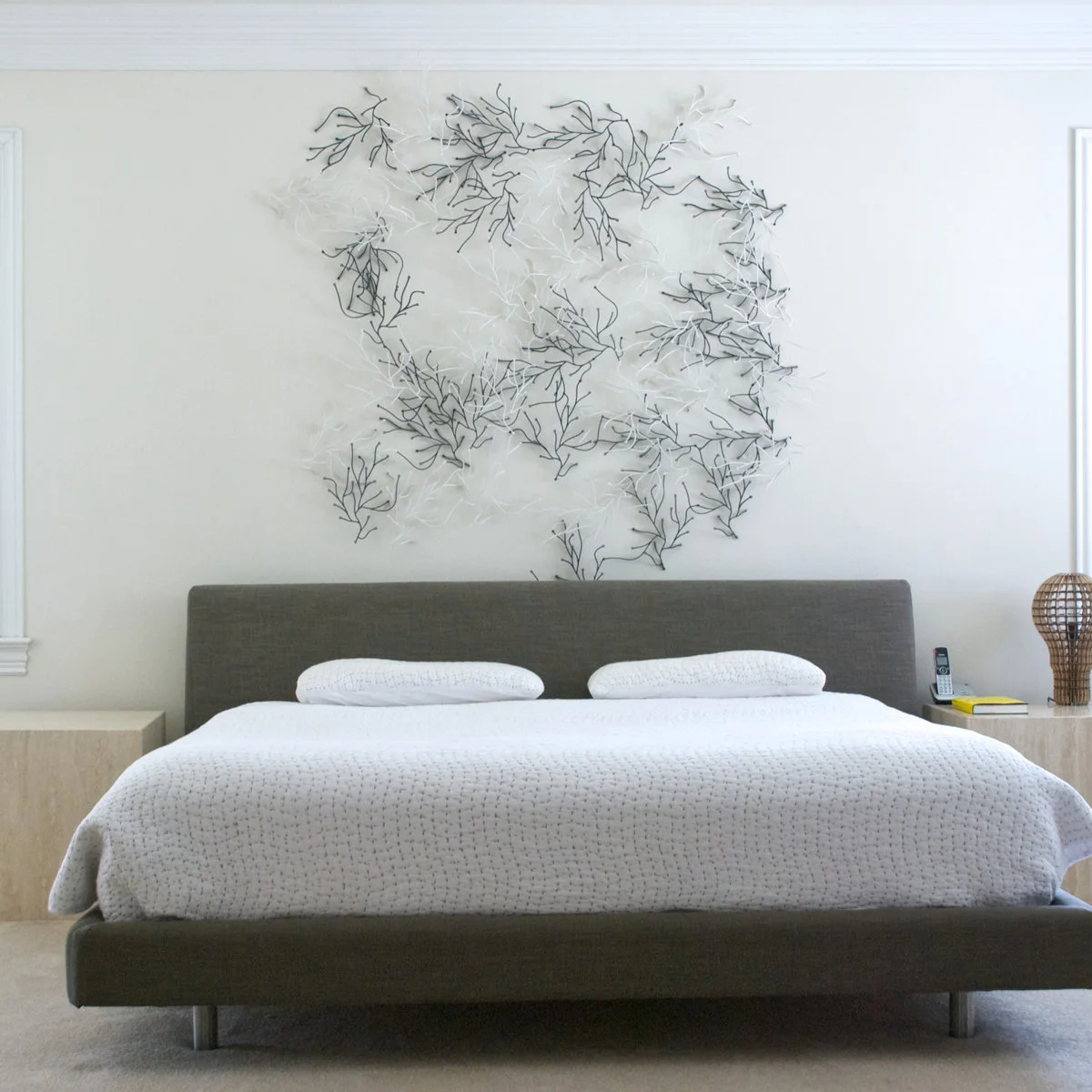
An open network of pale and dark branch-like forms gives the wall texture while allowing its background to show through. The wide gray headboard supplies a calmer shape below. Plain white bedding keeps the room’s attention on the airy sculpture rather than additional prints.
Inspect how a three-dimensional piece projects from the wall and how it will be cleaned. Use suitable supports and keep it beyond the area where someone sits up. Open forms can cast noticeable shadows, so test the intended position with bedside lights on as well as in daylight.
IDEA 18 / 20
Keep a Picture Distinct from a Textured Wall
 SaveSupport Non AI Creator
Image credit: Project: Cantoni (via Houzz)
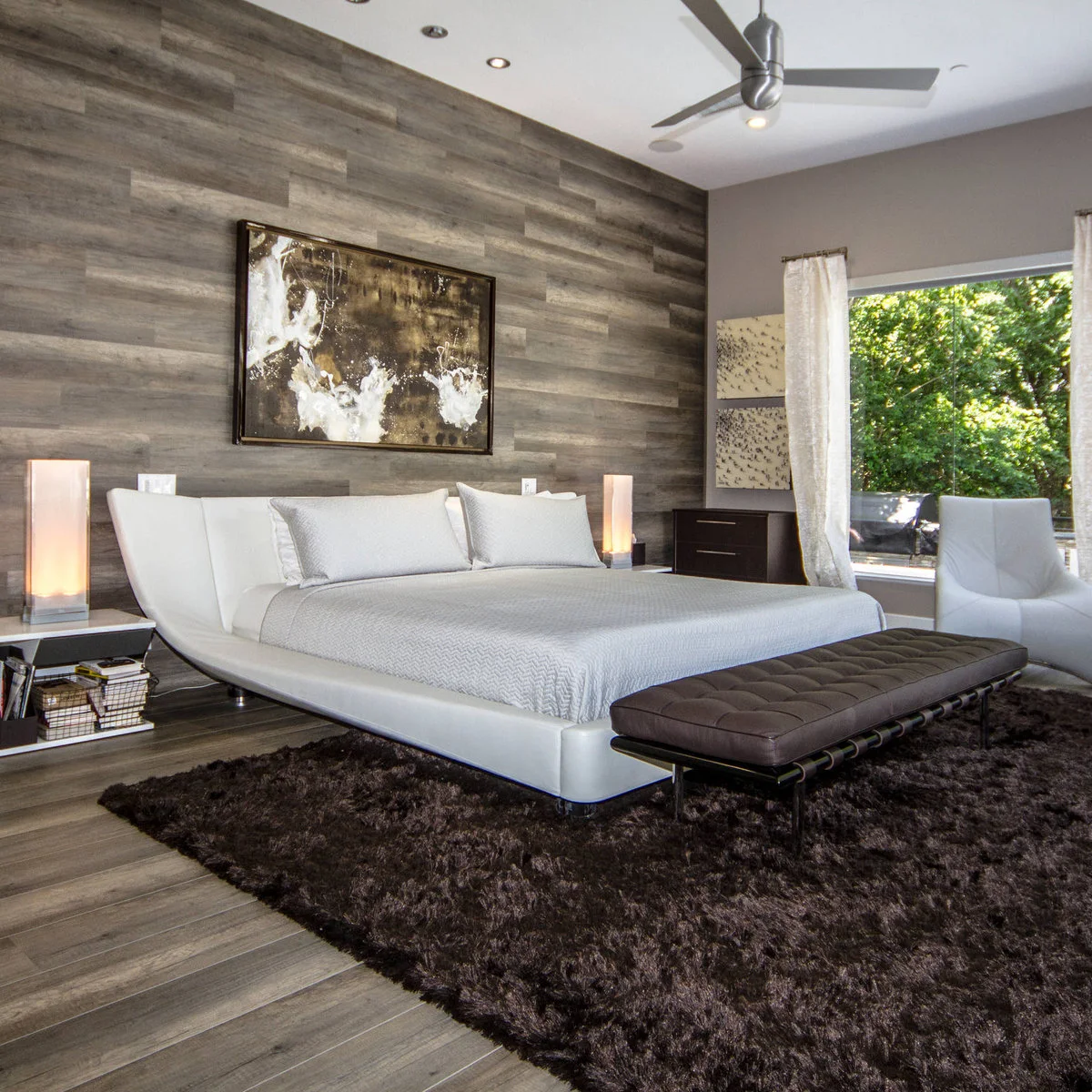
A framed abstract picture sits over the horizontal boarded wall, with pale marks separating it from the darker background. The white curved bed adds a softer shape below. Tall bedside lamps and a dark bench provide structure without covering more of the textured wall.
Choose a frame or image edge that remains visible against the wall’s texture. Locate suitable structural fixing points rather than relying on a decorative surface alone. If the background already has a strong pattern, a single picture is often easier to read than several small frames scattered across it.
IDEA 19 / 20
Repeat an Artwork’s Color in Smaller Accents
 SaveSupport Non AI Creator
Image credit: Project: DANE AUSTIN INTERIOR DESIGN Boston & Cambridge (via Houzz)
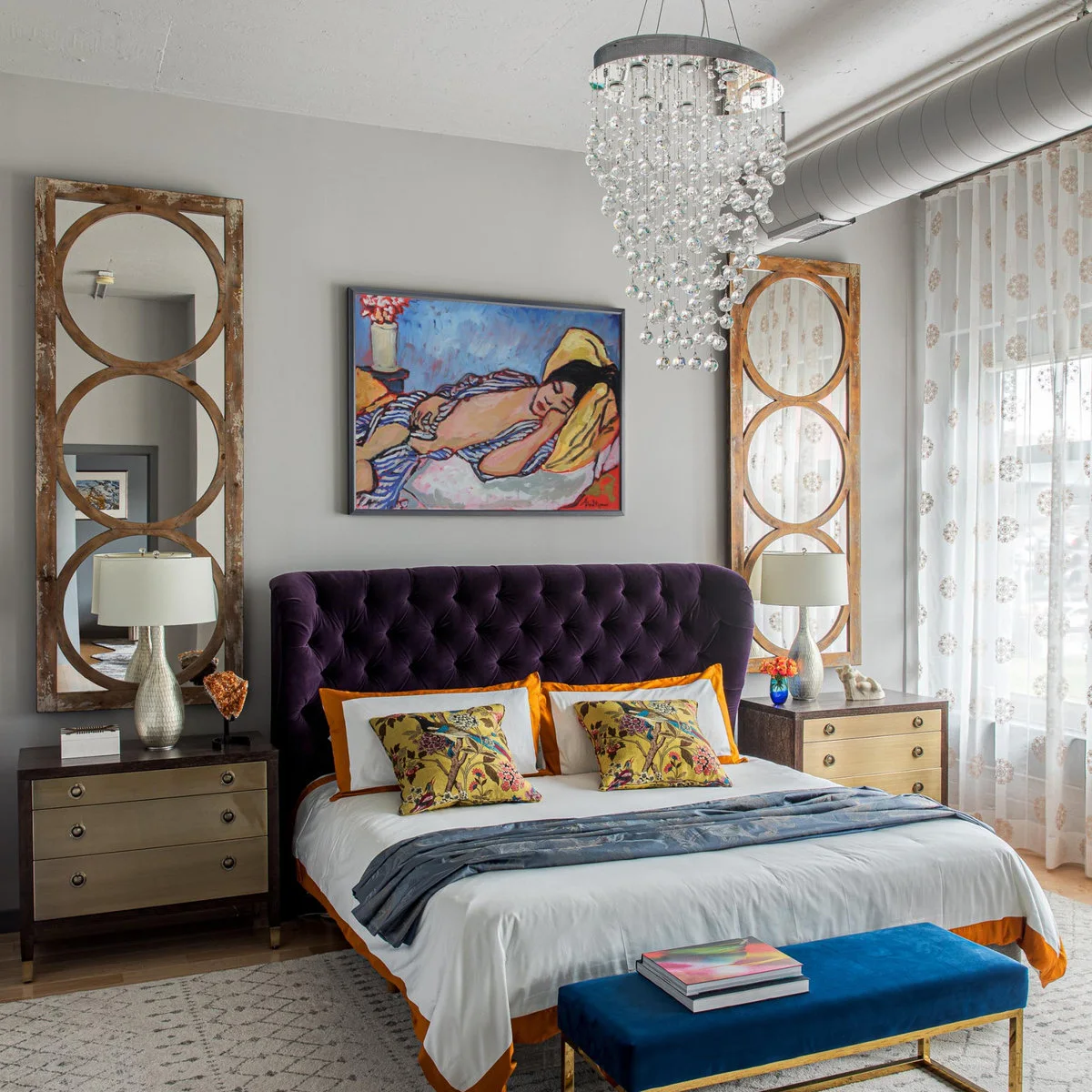
The painting brings blue, yellow and warm pink into the room above the purple headboard. Those colors reappear in the patterned cushions and bright bench. Tall mirrors frame the central image, keeping the overall arrangement orderly even though several saturated colors are present.
Choose artwork you want to live with before selecting matching accessories. Keep some bedding plain so the picture and tufted headboard remain distinct. Check reflections from both sides of the bed, and secure mirrors and artwork according to their individual weights and the wall construction.
IDEA 20 / 20
Align Two Photographic Horizons
 SaveSupport Non AI Creator
Image credit: Project: Lewis Birks, LLC (via Houzz)
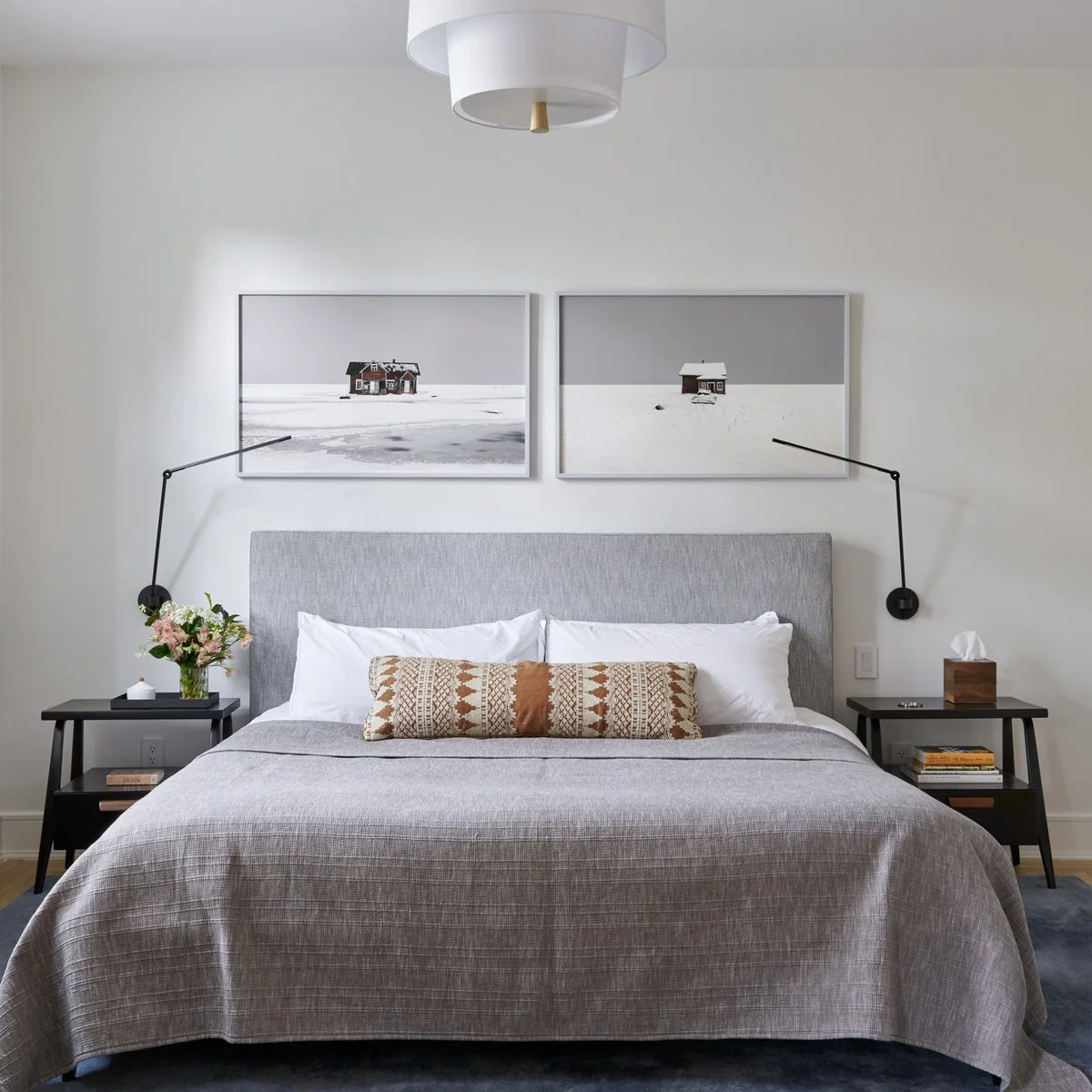
Two photographs of small buildings in snow share a similar horizon and pale background, forming a calm pair above the gray headboard. Their white frames blend into the wall. Slim black reading lights add contrast at the edges without interrupting the pictures’ simple shapes.
Choose a pair whose horizons or main shapes work together rather than two images that happen to be the same size. Align the frames carefully and check the adjustable lamps through their full range. Keep useful reading light separate from any light intended mainly to highlight the photographs.
BRING IT ALL TOGETHER
Start with the headboard and one clear arrangement
Choose the total width and height of the display before selecting individual pieces. Paper templates help you compare a single picture, a pair and a small group without making unnecessary holes in the wall.
Leave comfortable sitting clearance and plan the mounting for each object’s weight and your wall construction. If a piece cannot be installed securely above the bed, enjoy it on a different wall and keep the sleeping area simpler.