A bedroom wallpaper accent wall works best when its pattern fits the furniture in front of it. Start with the headboard, windows and bedside lights, then decide how much of the design will remain visible once the room is furnished.
These rooms show how one patterned wall can carry the decoration while the other surfaces stay quieter. Compare the scale of the print with your own room, order a sample and check it in daylight and under your bedside lighting before committing.
PART 01
Choose the right pattern scale
IDEA 01 / 20
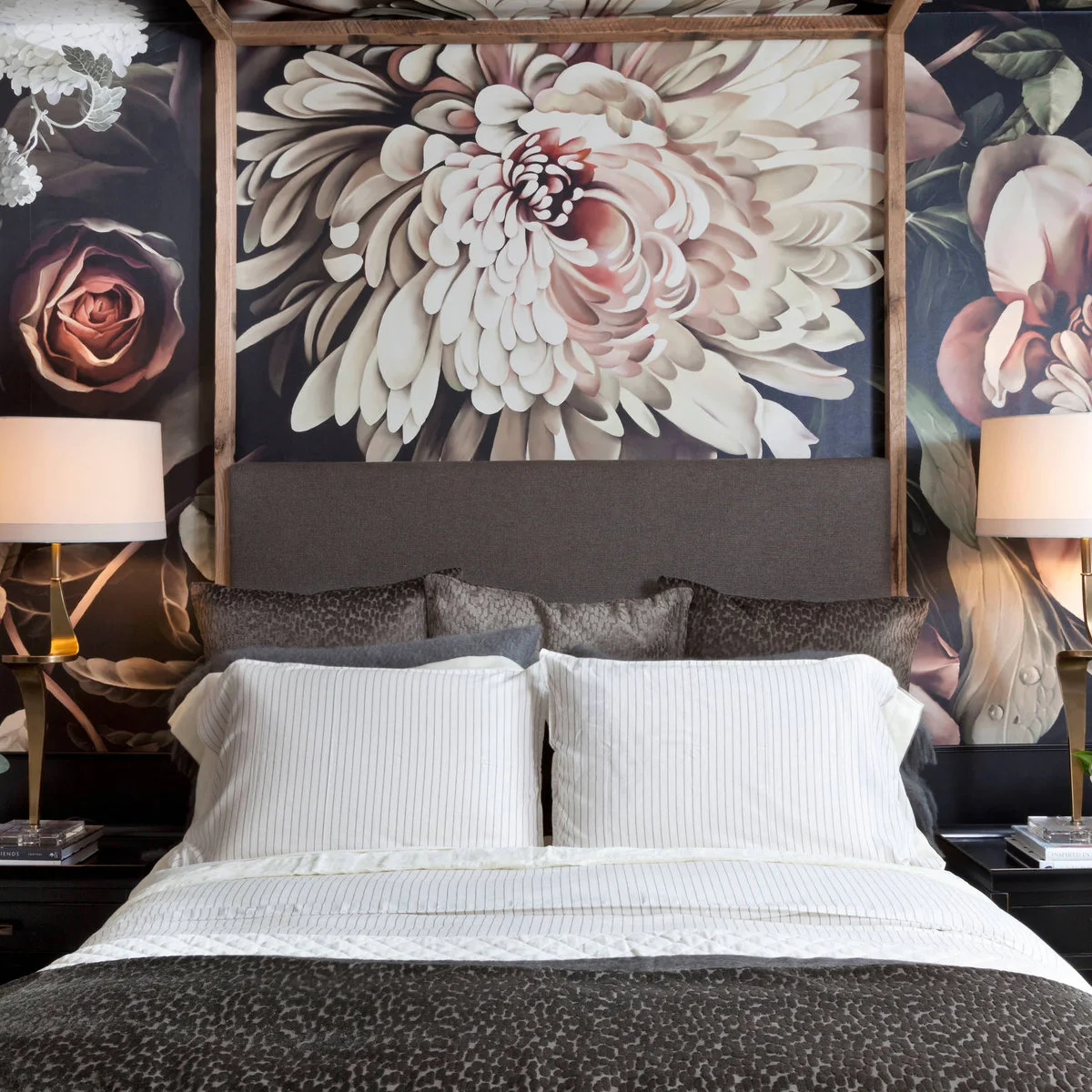
Let One Oversized Flower Frame the Bed
 SaveSupport Non AI Creator
Image credit: Project: Post 31 Interiors (via Houzz)
One pale flower dominates the wall above the gray headboard, with smaller blooms extending behind the bedside lamps. The wooden canopy supplies a simple outline over the mural. White pillows and a mostly neutral cover leave the flower’s layered petals clearly visible.
Map the mural panels against the bed before ordering, including the height of your headboard and pillows. A beautiful central bloom can disappear behind furniture if the placement is wrong. Keep additional wall art off this surface so the large image has room to work. If you prefer a plain painted wall, these above-bed decor ideas explore framed art and smaller arrangements instead.
IDEA 02 / 20
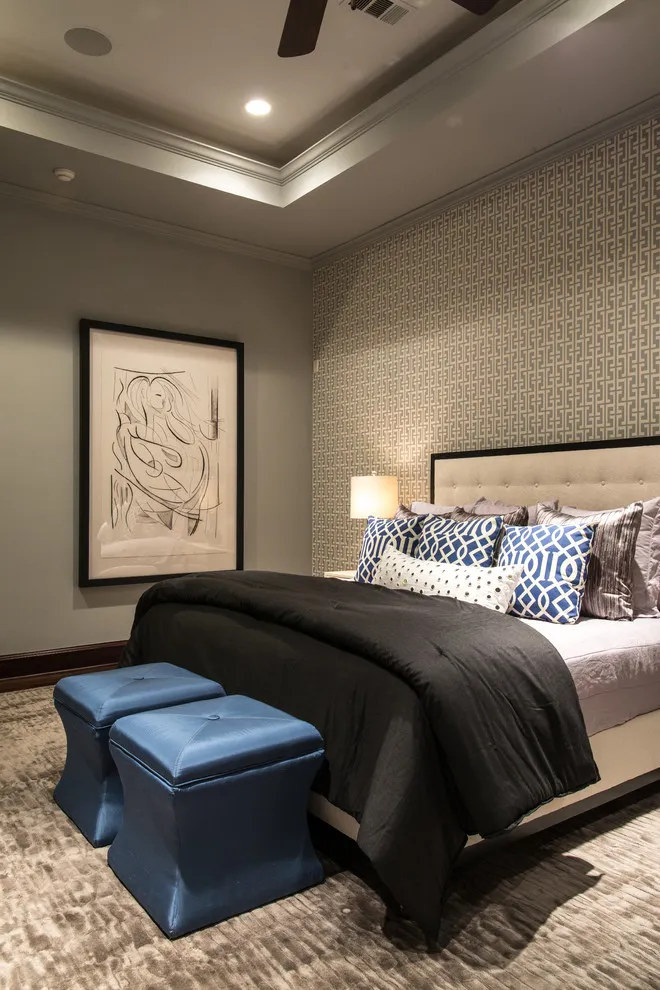
Balance a Small Repeat with a Plain Headboard
 SaveSupport Non AI Creator
Image credit: Project: Monarch & Maker (via Houzz)
The fine geometric repeat covers the headboard wall without becoming a single oversized picture. A pale upholstered headboard separates the patterned surface from the layered pillows. Blue stools and blue cushions provide concentrated color, while the neighboring wall carries a larger framed drawing.
Hold a full sample beside your bedding rather than choosing from a small screen image. Dense repeats can look busier close to the pillow than from the doorway. Pair them with a plain headboard, and leave enough unpatterned fabric between the wall and smaller decorative cushions.
IDEA 03 / 20
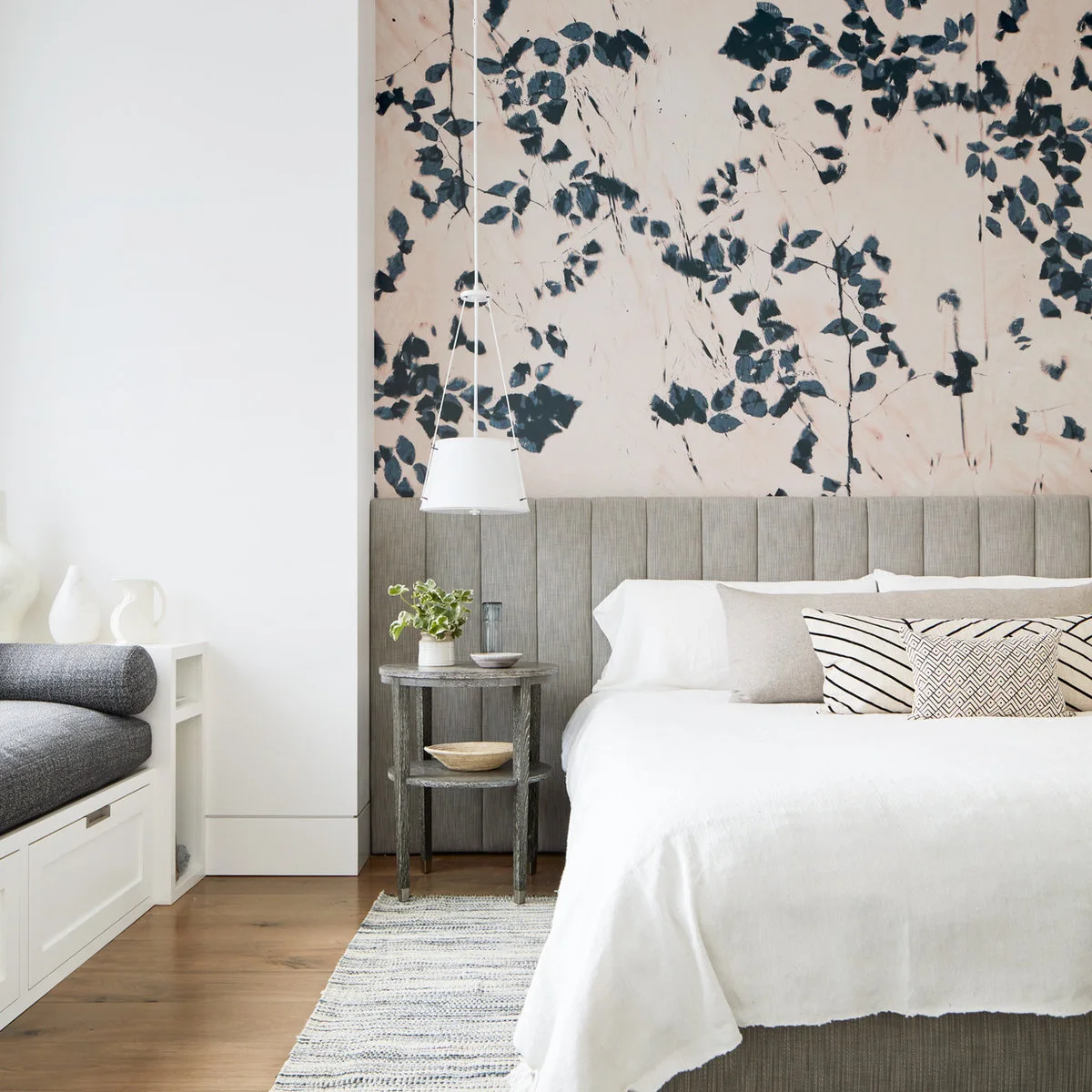
Keep Botanical Pattern Above a Tall Headboard
 SaveSupport Non AI Creator
Image credit: Project: TOTAL CONCEPTS (via Houzz)
Dark leaf shapes spread across the pale upper wall, while a tall gray headboard creates a quiet band below. The white pendant and bedding keep the arrangement light. A round bedside table adds a smaller shape beneath the broad vertical panels of the headboard.
Measure how much wallpaper will show above your finished bed, not just above the bare frame. A taller headboard needs a pattern that remains legible in that exposed strip. Fit any wall wiring before hanging the paper so later electrical work does not damage the new finish.
IDEA 04 / 20
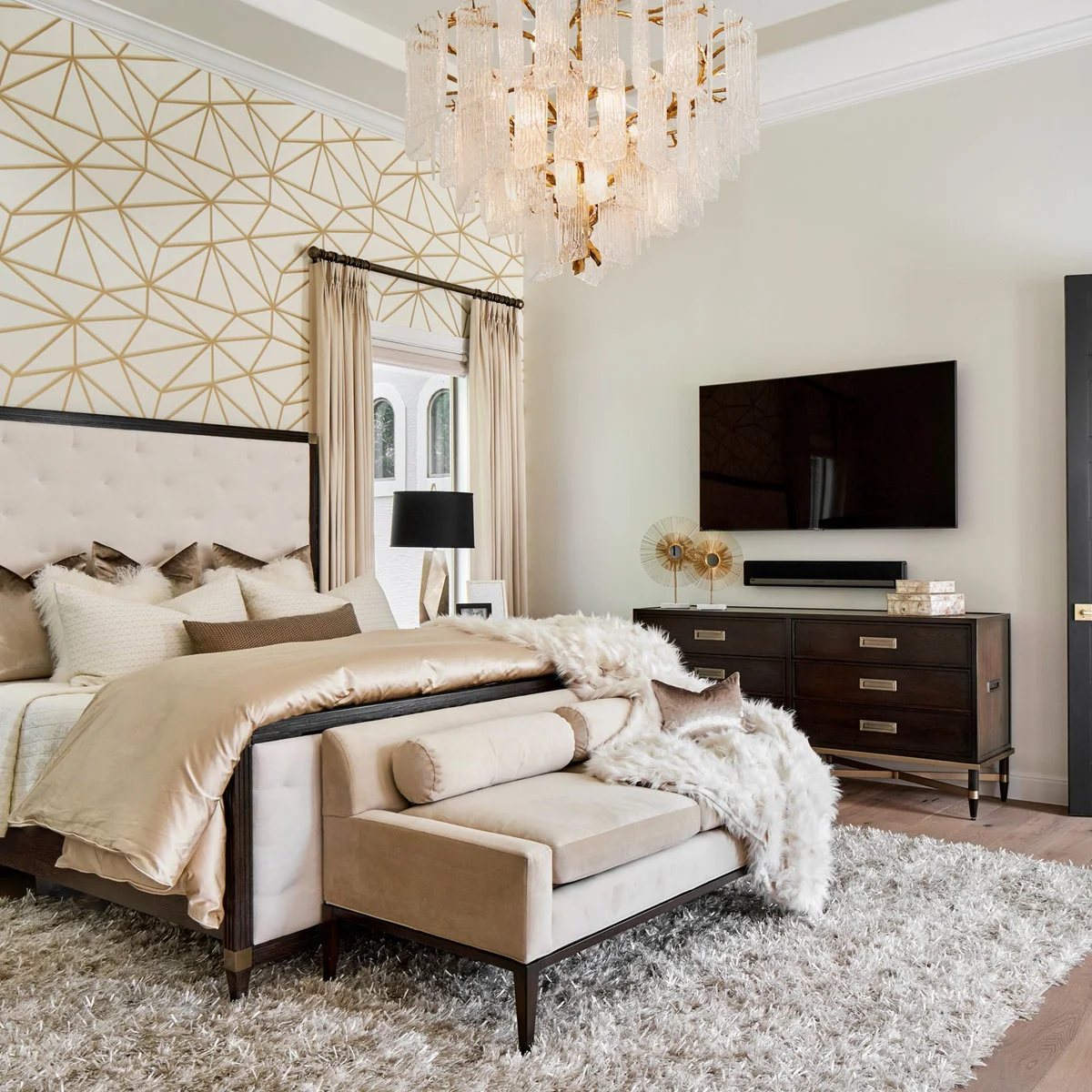
Use Angular Lines with Soft Upholstery
 SaveSupport Non AI Creator
Image credit: Project: Paper Moon Painting (via Houzz)
Fine gold-colored lines form irregular triangles across the white wall and continue around the window. Soft upholstery, cream bedding and curtains balance those sharp angles. The neighboring television wall stays plain, keeping the patterned surface associated with the bed rather than every part of the room.
Compare the paper with curtain fabric and metal finishes together, because similar warm tones can still clash. Plan seams around the window before cutting. Order according to the maker’s repeat and matching instructions; narrow scraps are not always usable where the pattern needs to continue.
IDEA 05 / 20
Repeat Geometric Shapes at Different Sizes
 SaveSupport Non AI Creator
Image credit: Project: Heather Garrett Design (via Houzz)
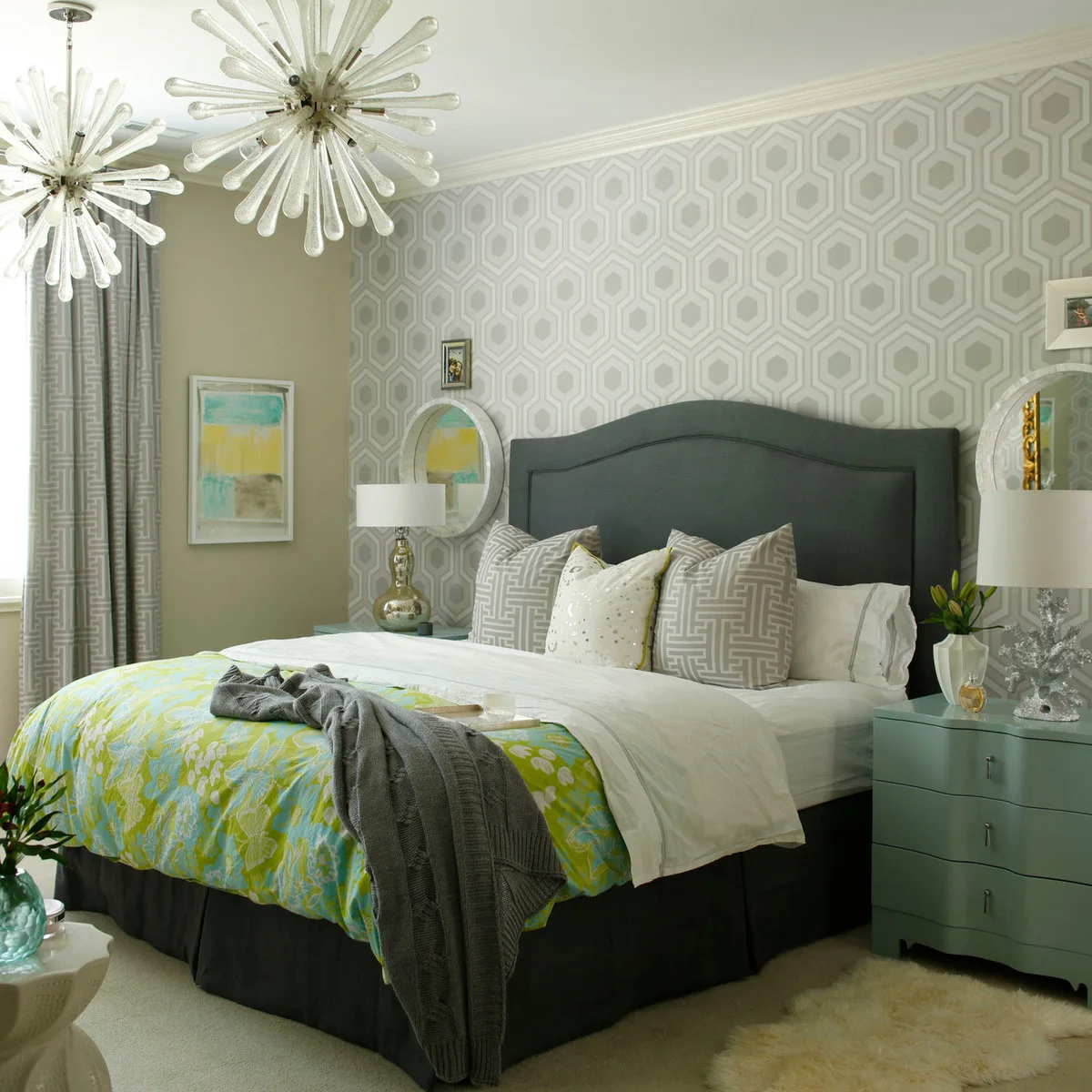
Large pale hexagons cover the wall behind the bed, while smaller angular patterns appear on the cushions and curtains. The dark curved headboard interrupts the repeated straight lines. Turquoise drawer chests and a bright cover add color without making the wallpaper itself more saturated.
Choose one dominant pattern scale and use smaller supporting prints sparingly. Lay the fabric samples beside the wallpaper before buying, then step back to see whether the room still has clear resting areas. Plain sheets are useful when the wall, curtains and cushions all carry patterns.
PART 02
Connect the wall with the room
IDEA 06 / 20
Echo a Dark Paper in the Shelf Backs
 SaveSupport Non AI Creator
Image credit: Project: JWT Associates (via Houzz)
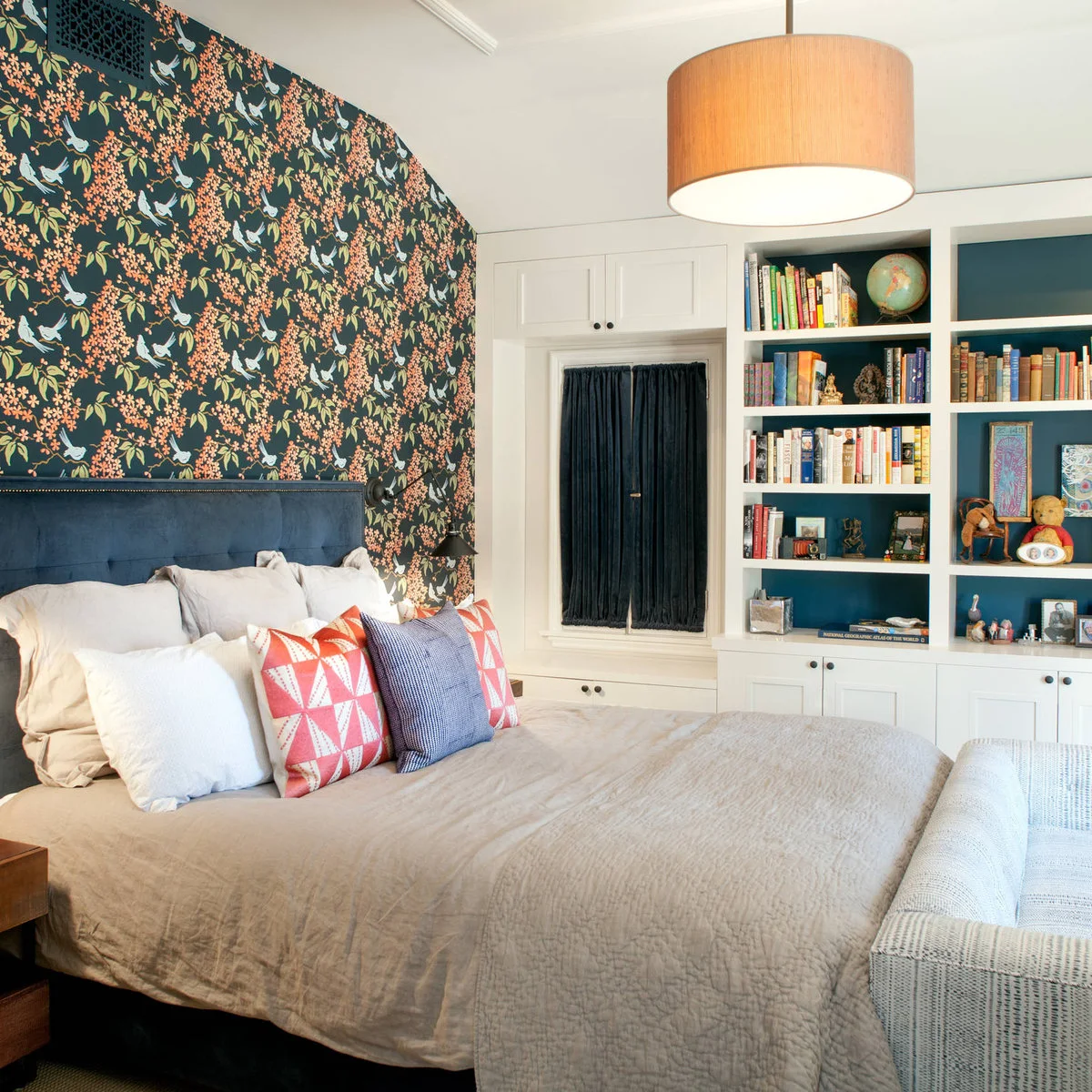
Birds and flowering branches fill the dark headboard wall, with blue repeated in the bed and the backs of the white bookshelves. The shelving remains visually connected without needing more wallpaper. Mostly pale bedding gives the busy print a broad, quiet area beneath it.
Take a color from the wallpaper into one nearby surface rather than covering the whole room in print. For more ways to use this palette, compare these blue bedroom ideas. Check paint samples against the actual paper, because a close match can look different beside daylight and warm lamps.
IDEA 07 / 20
Combine a Blue Ground with Warm Details
 SaveSupport Non AI Creator
Image credit: Project: Olamar Interiors (via Houzz)
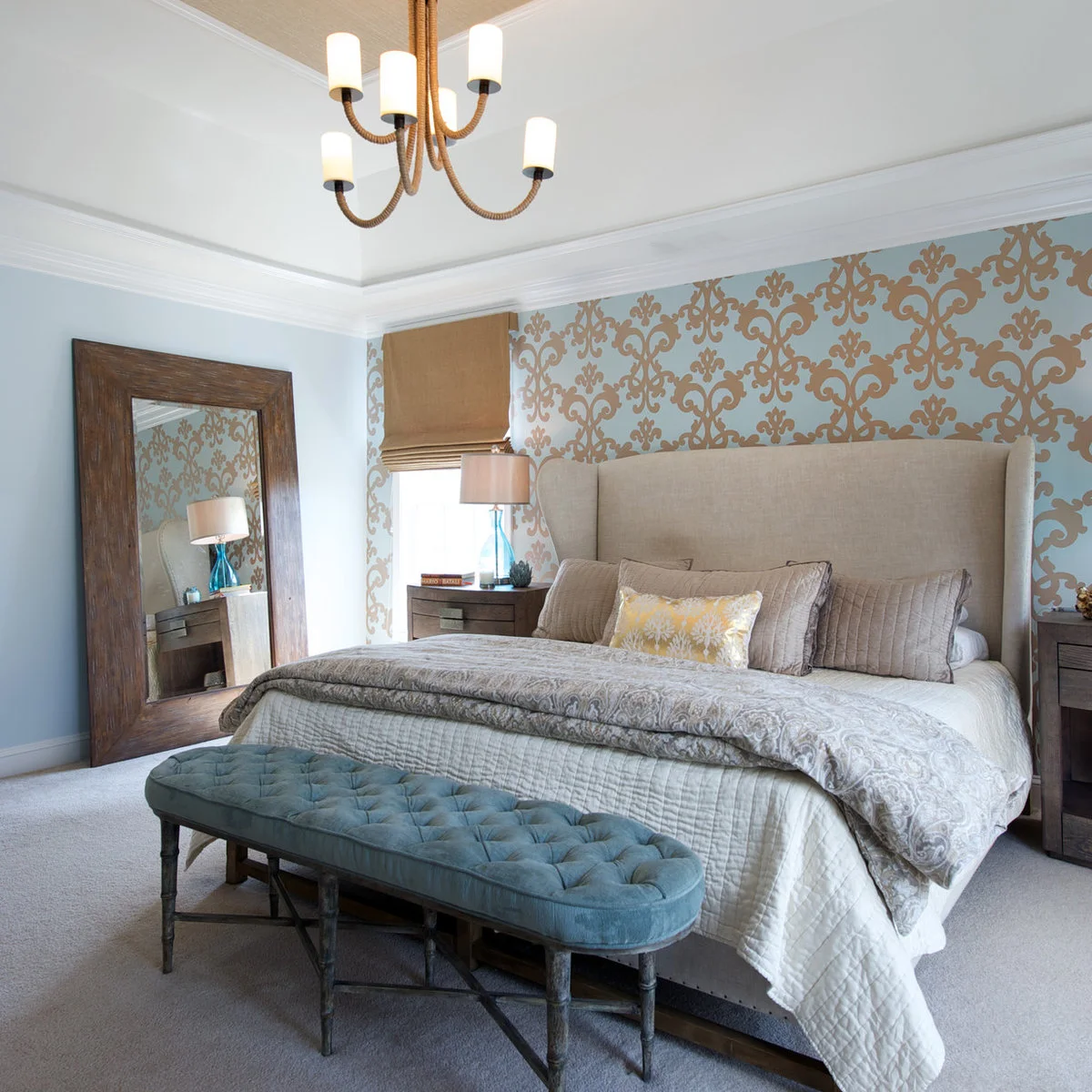
The blue ground links the wallpaper with the neighboring painted wall, while its warm scrolling pattern relates to the window blind and wooden furniture. A tall pale headboard keeps the center calm. Blue lamps and the upholstered bench repeat the cooler color at lower levels.
Use the wallpaper sample to choose the wall paint before ordering large quantities of either. A shared background color makes the corner transition less abrupt. Keep the bedding simpler than the scrollwork, especially when you already have a decorative light fitting and a substantial framed mirror nearby.
IDEA 08 / 20
Give Gray Trellis a Small Yellow Accent
 SaveSupport Non AI Creator
Image credit: Project: THE SISTERS AND COMPANY – DECORATING DEN INTERIORS (via Houzz)
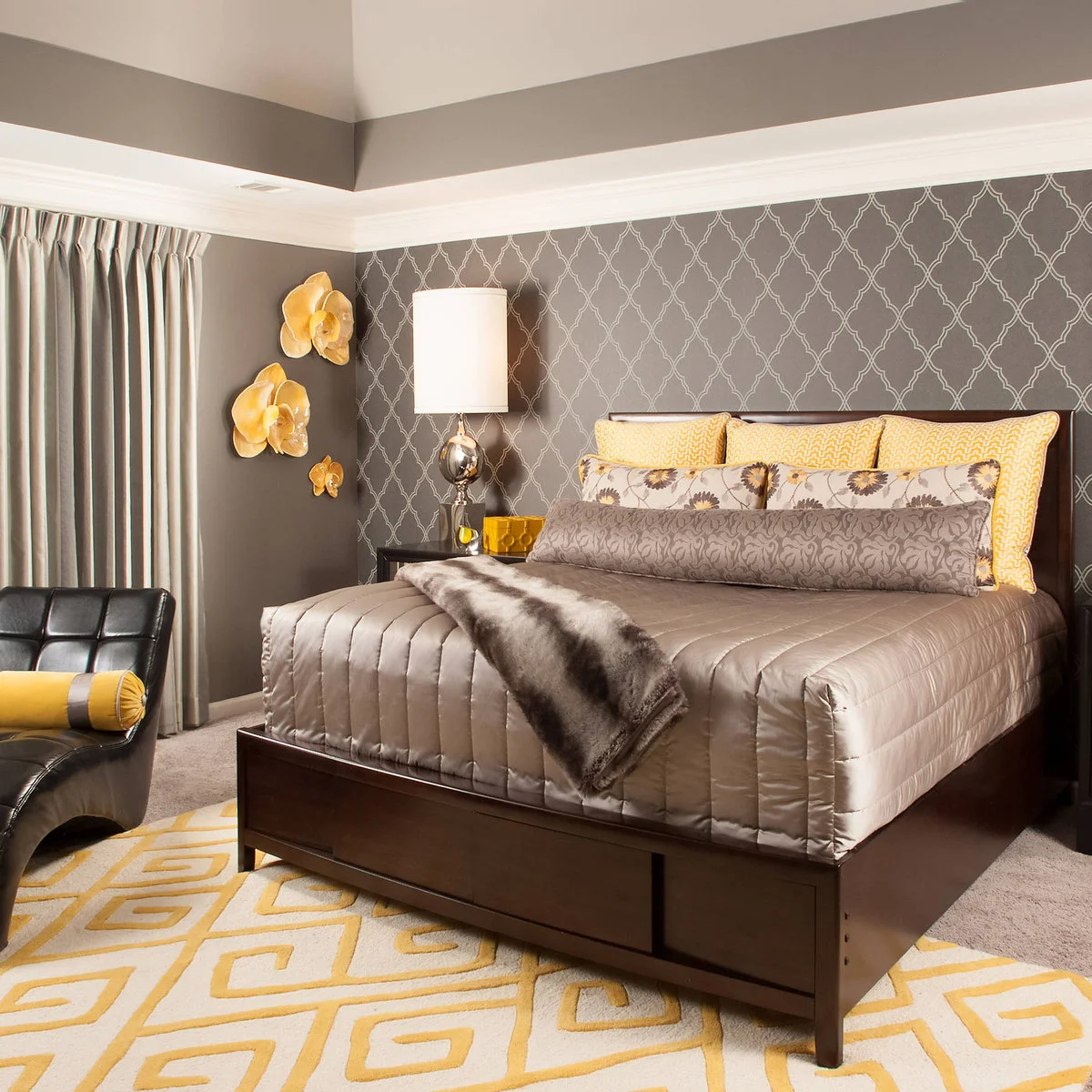
White trellis lines sit against a gray ground, creating a measured background for the dark wood bed. Yellow pillows and the rug brighten the lower half of the room. The adjacent gray wall stays plain, letting its three yellow wall flowers remain easy to see.
Limit the accent color to a few replaceable pieces if you want flexibility later. Check the wallpaper against existing gray curtains before installation; warm and cool grays can pull apart. A plain bedcover helps separate the wall’s trellis from the larger pattern on the floor.
IDEA 09 / 20
Pick Accessories from a Pale Floral Mural
 SaveSupport Non AI Creator
Image credit: Project: Creative Group Interiors (via Houzz)
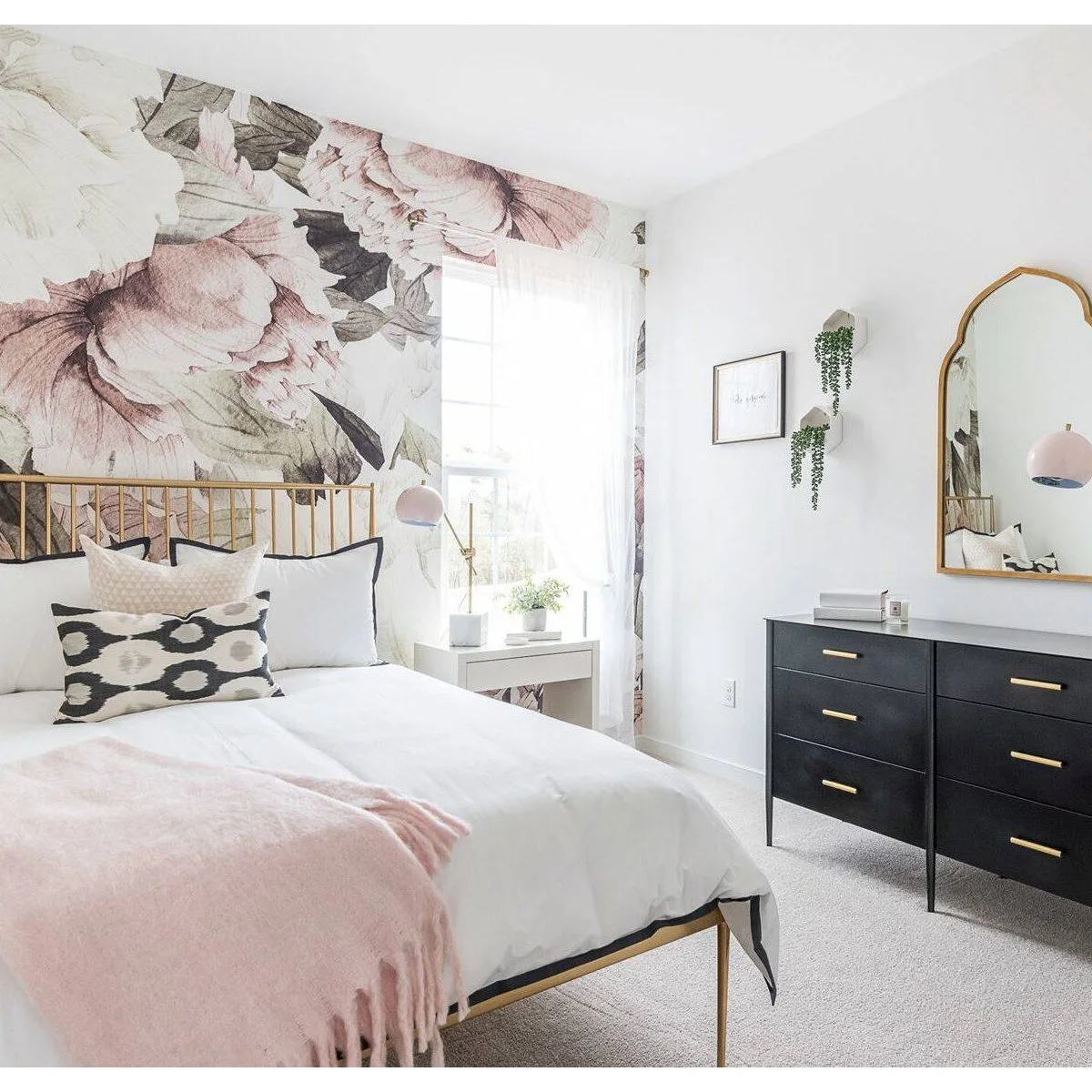
Large pale pink petals spread behind the slim metal headboard, with gray leaves adding definition to the light wall. Pink lamps and a soft throw repeat the flower color. The black dresser and dark pillow outlines prevent the pale arrangement from losing all contrast.
Choose the mural first, then select a small number of accessories from its colors. Check that lamps and curtain fittings do not hide the details you most want to see. Keep opposite walls simple; the mural already supplies the room’s main picture and does not require matching floral art.
IDEA 10 / 20
Choose Texture When You Do Not Want a Motif
 SaveSupport Non AI Creator
Image credit: Project: Sage Market + Design (via Houzz)
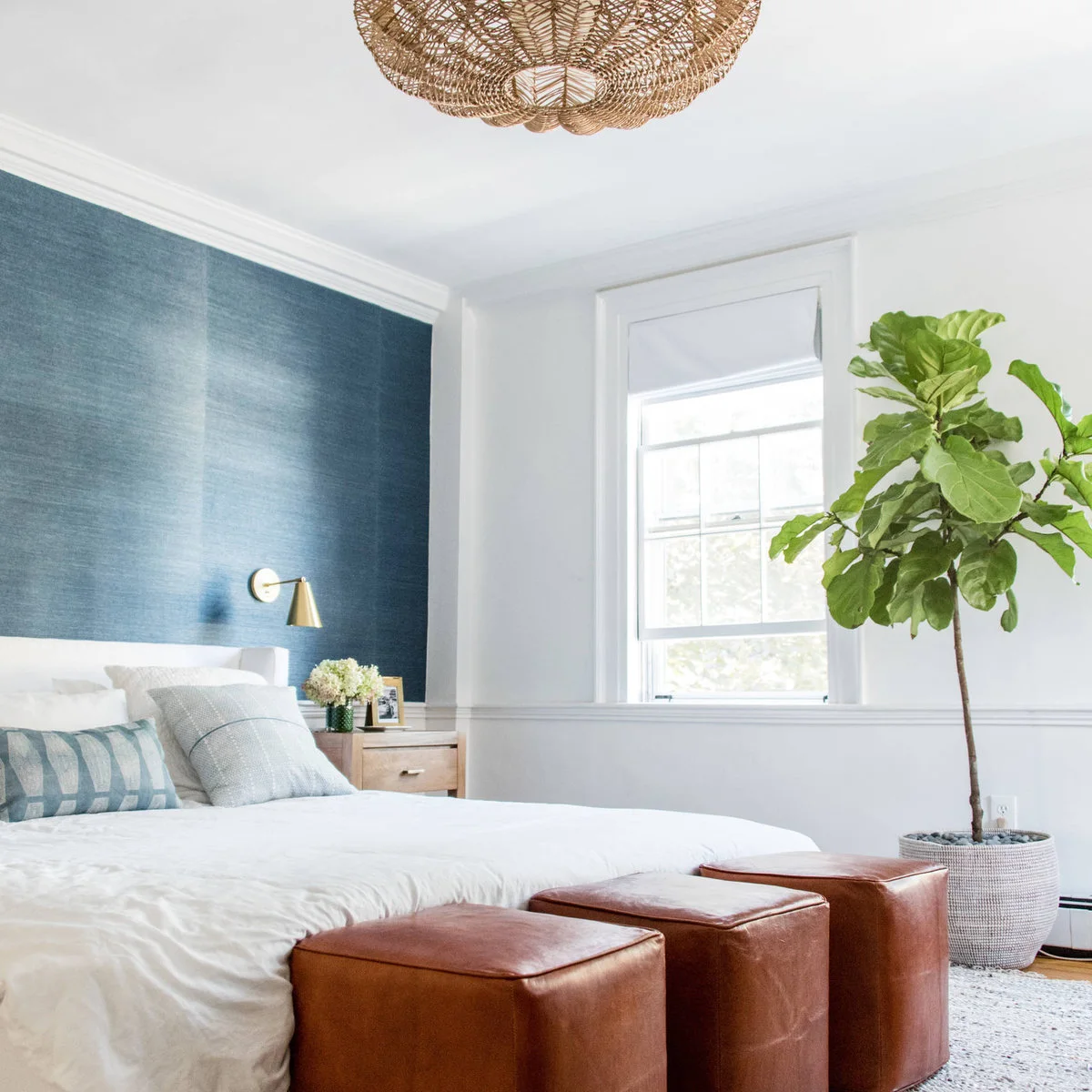
The blue wall introduces a fine horizontal texture instead of a floral or geometric motif. White bedding and trim make the color distinct, while brown stools warm the foot of the bed. A small wall light leaves most of the textured surface open.
Inspect a physical sample to understand both texture and cleaning instructions; appearance alone does not identify the fiber or coating. Visible seams may be part of the finished effect. Compare this quieter approach with blue bedroom wallpaper that uses a more obvious pattern before deciding what suits your room.
PART 03
Work around the room’s features
IDEA 11 / 20
Let Wallpaper Continue Around Small Windows
 SaveSupport Non AI Creator
Image credit: Project: Paper Moon Painting (via Houzz)
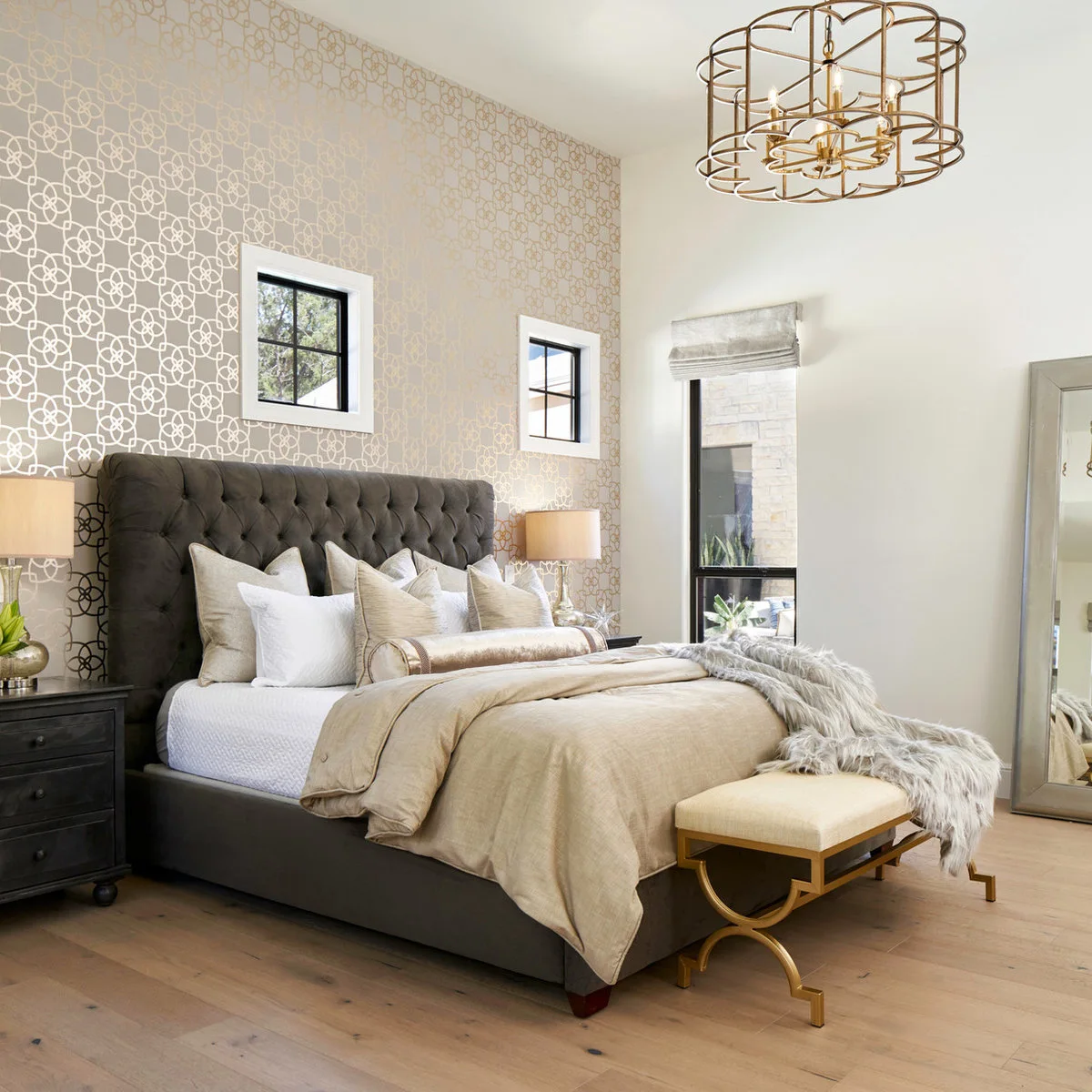
The looping pattern continues around two high windows, turning the whole headboard wall into one surface. White frames provide crisp edges through the print. The gray bed and pale bedding sit below the windows, while gold-colored details repeat the warmth of the wall’s lines.
Draw the windows and headboard on a simple elevation before choosing the starting point for the paper. You want the visible sections to look balanced rather than leaving awkward slivers at the corners. Keep window controls accessible, and allow for curtains or blinds if the room needs more darkness.
IDEA 12 / 20
Run Chevron Up to the Ceiling Line
 SaveSupport Non AI Creator
Image credit: Project: Lindye Galloway Interiors (via Houzz)
The pale chevron pattern stops at the bedroom’s high ceiling line, giving the headboard wall texture without covering the white roof. A black canopy traces a second outline in front of it. Light upholstery and broad windows keep the large room from feeling visually crowded.
Check the direction of the repeat before ordering, particularly if the wall rises above a standard ceiling height. Compare the scale with the canopy frame so the two sets of lines feel deliberate. For a room under roof slopes, these attic bedroom ideas offer more furniture-placement options.
IDEA 13 / 20
Use the Full Height of a Narrow Wall
 SaveSupport Non AI Creator
Source: www.houzz.com
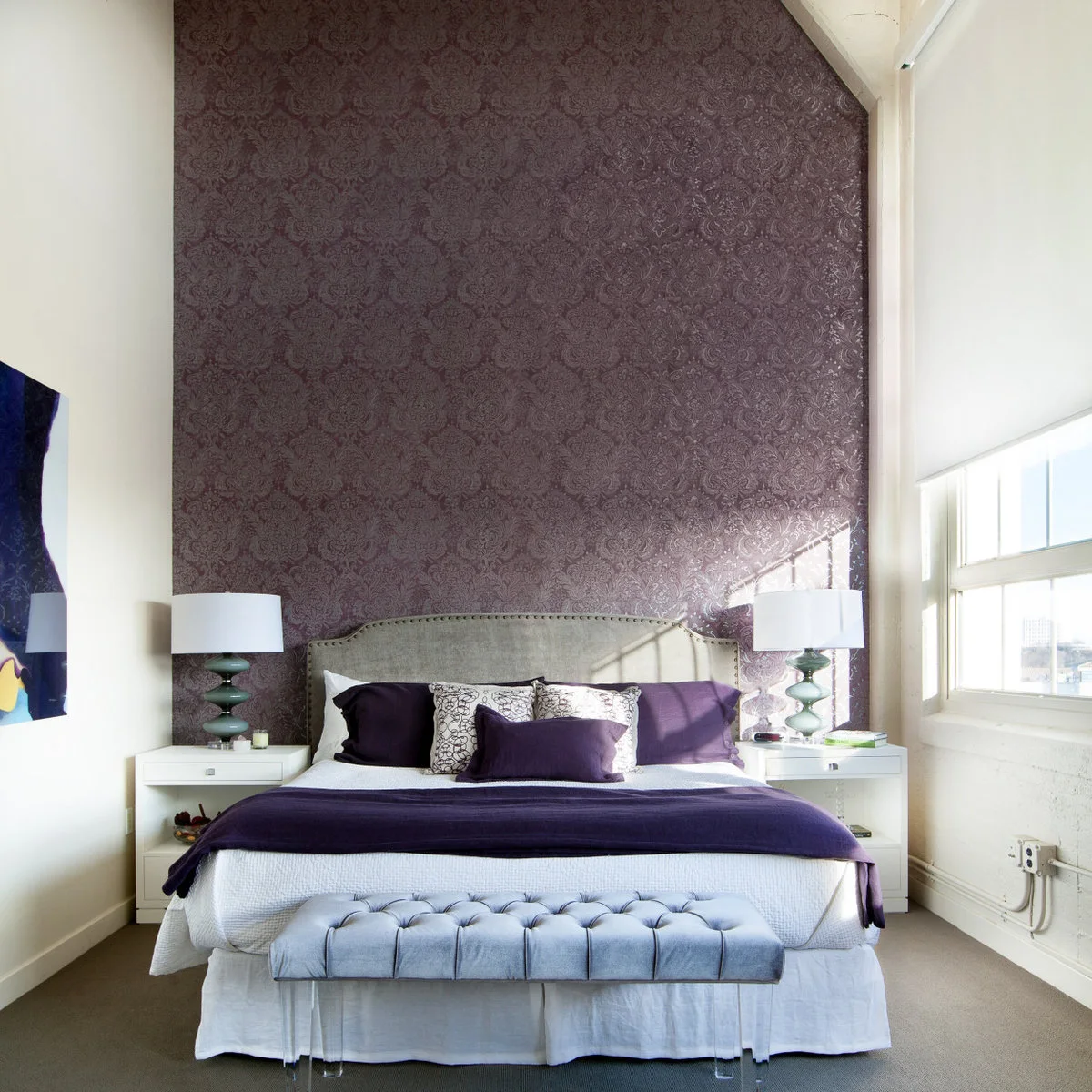
The patterned purple wall rises well above the bed, drawing attention to the room’s height. Purple bedding repeats the color at a lower level, while pale bedside tables and lamps keep the arrangement balanced. The surrounding side walls remain light and unpatterned.
A tall wall can require more drops and more repeat allowance than its width suggests. Confirm the full measurements before ordering. Sample the darker paper in evening light as well as daylight, and choose reading lamps for useful illumination rather than expecting the wallpaper’s sheen to brighten the room.
IDEA 14 / 20
Place a Trailing Pattern Between Shutters
 SaveSupport Non AI Creator
Source: www.houzz.com
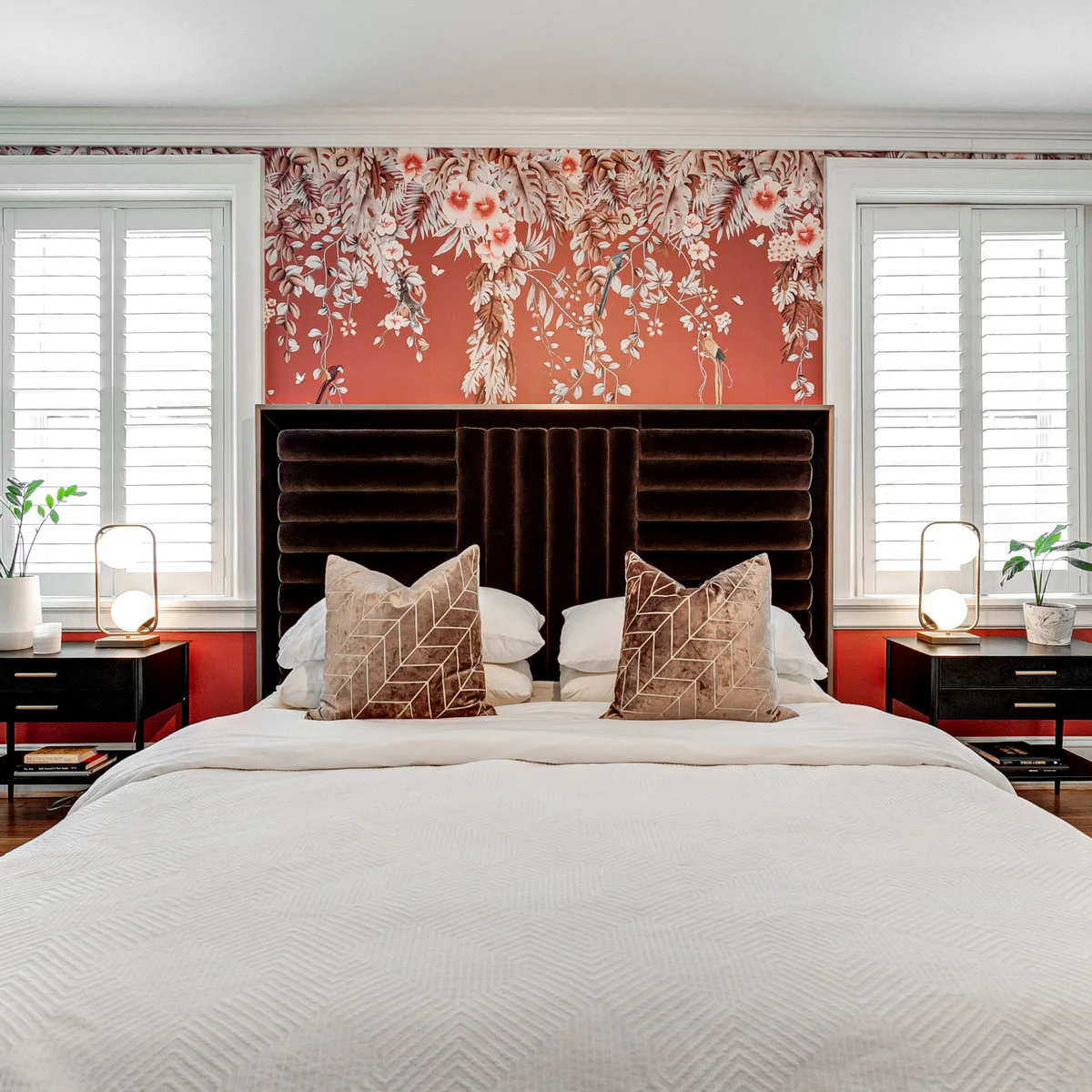
Trailing pale flowers occupy the strip above the dark headboard, with coral visible between the two shuttered windows. White shutters and bedding create clear borders around the stronger color. Matching bedside tables and lamps make the patterned section feel centered on the bed.
Set out the repeat with the bed and both windows in mind, not just the widest empty area of wall. Check that the flowers remain visible once pillows are in place. Leave shutters free to open fully, and do not let nearby lamps obstruct the window hardware.
IDEA 15 / 20
Frame a Floral Panel with Mirrors
 SaveSupport Non AI Creator
Image credit: Project: Studio Dean (via Houzz)
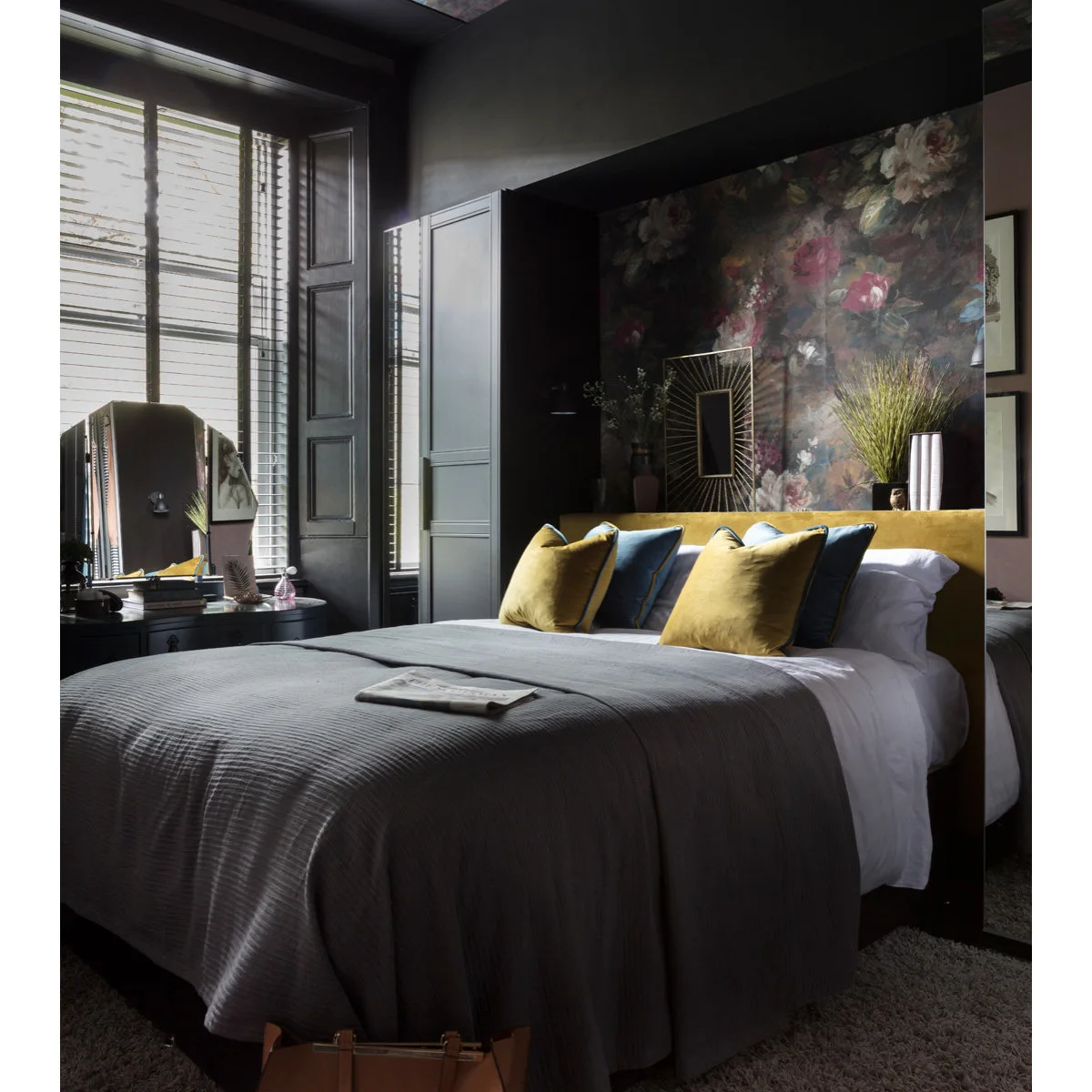
The dark floral panel sits within a recessed section above the mustard headboard. Narrow mirrors border it, reflecting parts of the room rather than extending the printed design. Charcoal surroundings make the mustard cushions and the flowers’ brighter details more noticeable.
Use the natural limits of an alcove to define where wallpaper starts and stops. Position reflective panels only after checking what they will show from the bed. If the surrounding paint is dark, test the paper beside that color so its quieter details do not disappear at night.
PART 04
Give the bedroom a personal character
IDEA 16 / 20
Leave Air Around Delicate Branches
 SaveSupport Non AI Creator
Image credit: Project: Shelley Morris Interiors (via Houzz)
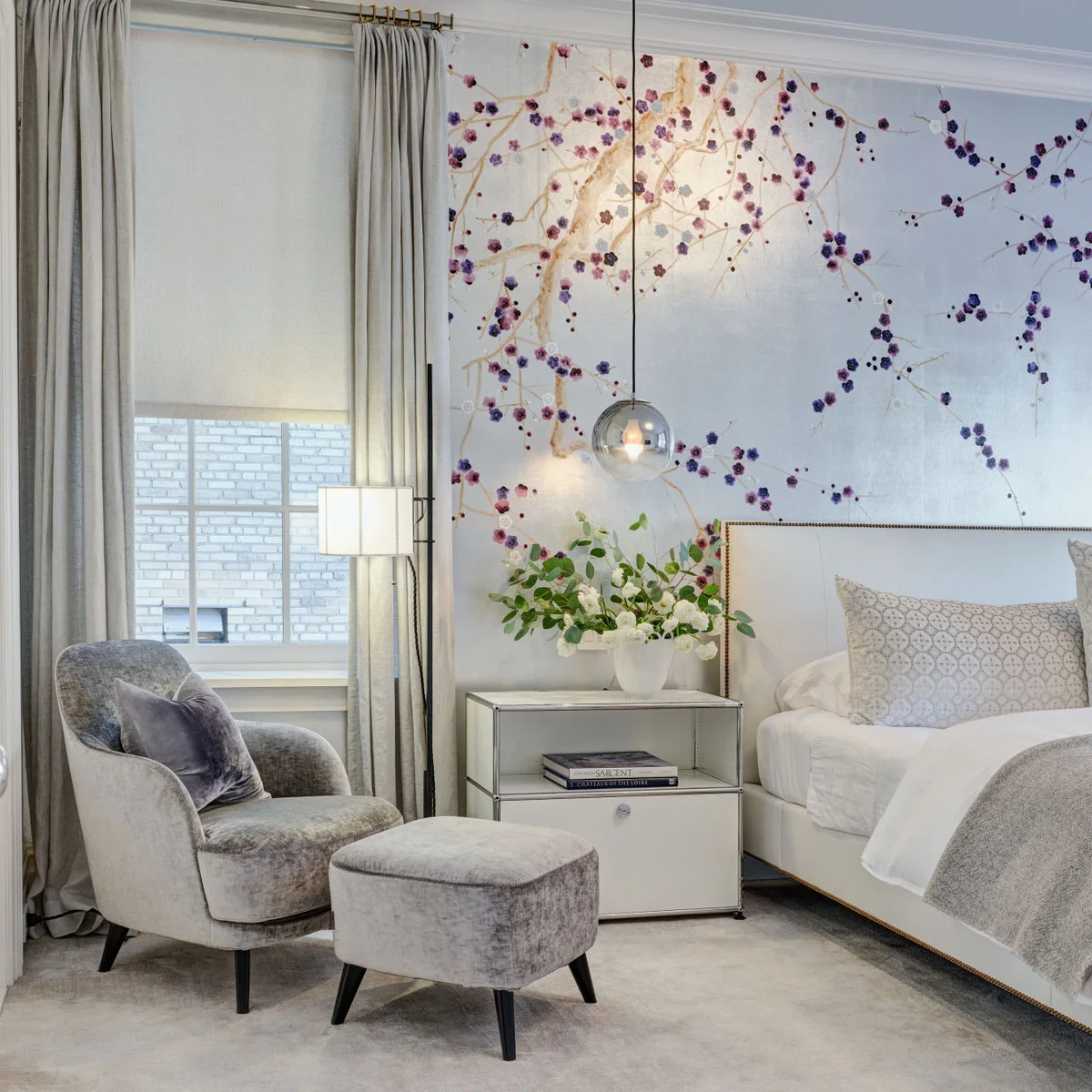
Small purple blossoms spread across a pale ground with plenty of open space between the branches. A low white headboard leaves more of the image visible. Gray curtains and a chair repeat the room’s soft neutrals, while the pendant remains a compact feature in front of the wall.
Choose a branch arrangement that still reads well behind your own headboard and bedside lighting. A mural layout may need more precise positioning than a repeat pattern. Keep extra decoration modest, and compare nearby paint with these relaxing bedroom paint colors if you want the side walls to stay quiet.
IDEA 17 / 20
Keep a Strong Ornamental Print on One Wall
 SaveSupport Non AI Creator
Image credit: Project: Tanya Capaldo Designs (via Houzz)
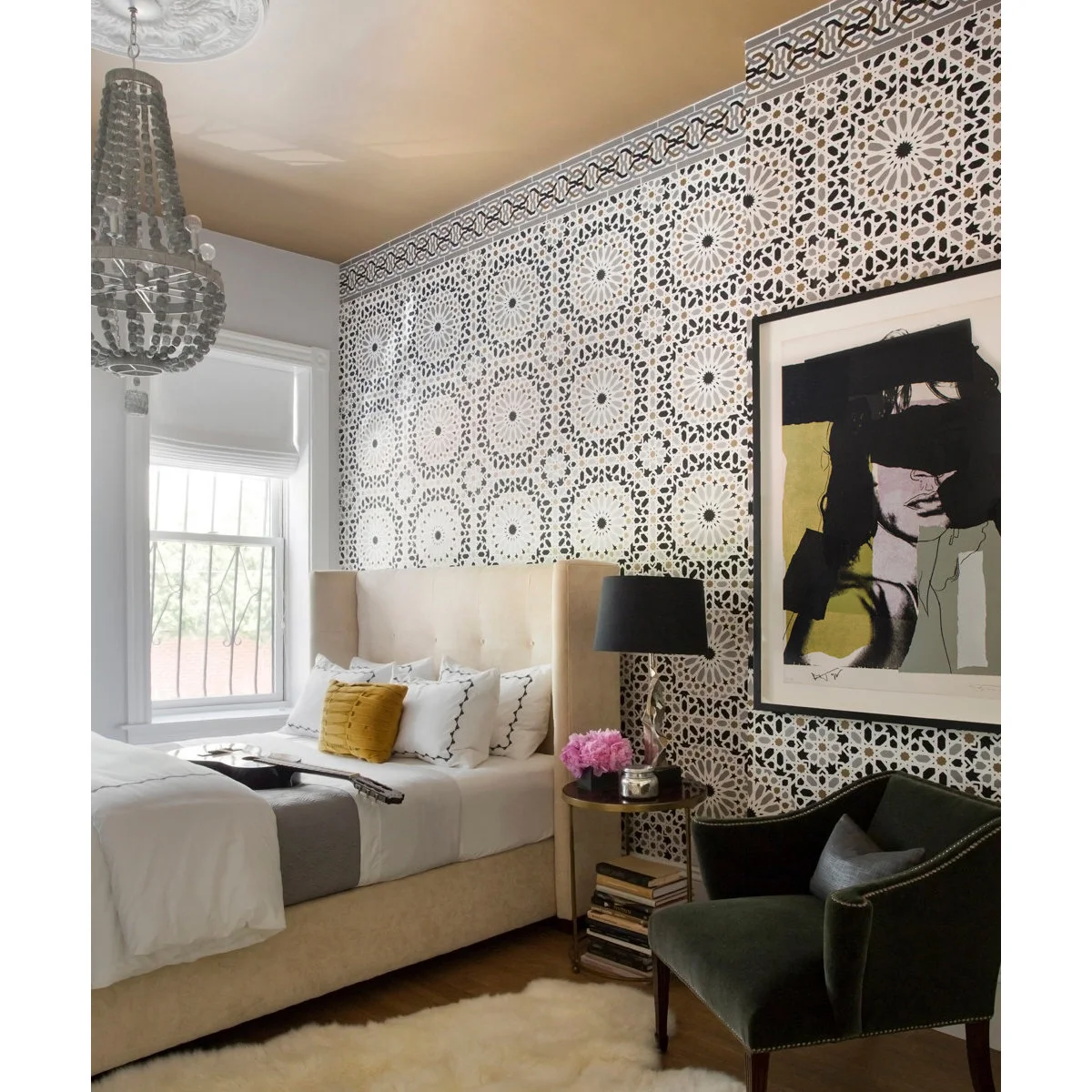
The intricate black-and-white print fills the wall behind the bed and a large framed portrait. Its repeated circles contrast with the plain upholstered headboard. White bedding provides breathing space, while a yellow cushion and dark green chair introduce smaller areas of color.
A strong print can support a large picture, but test the combination before making holes. Hold the frame against a full wallpaper sample to see whether its outline remains clear. Avoid adding several small artworks that compete with the intricate pattern and create many separate points of attention.
IDEA 18 / 20
Choose Branches in a Single Warm Color
 SaveSupport Non AI Creator
Image credit: Project: Camilla Molders Design (via Houzz)
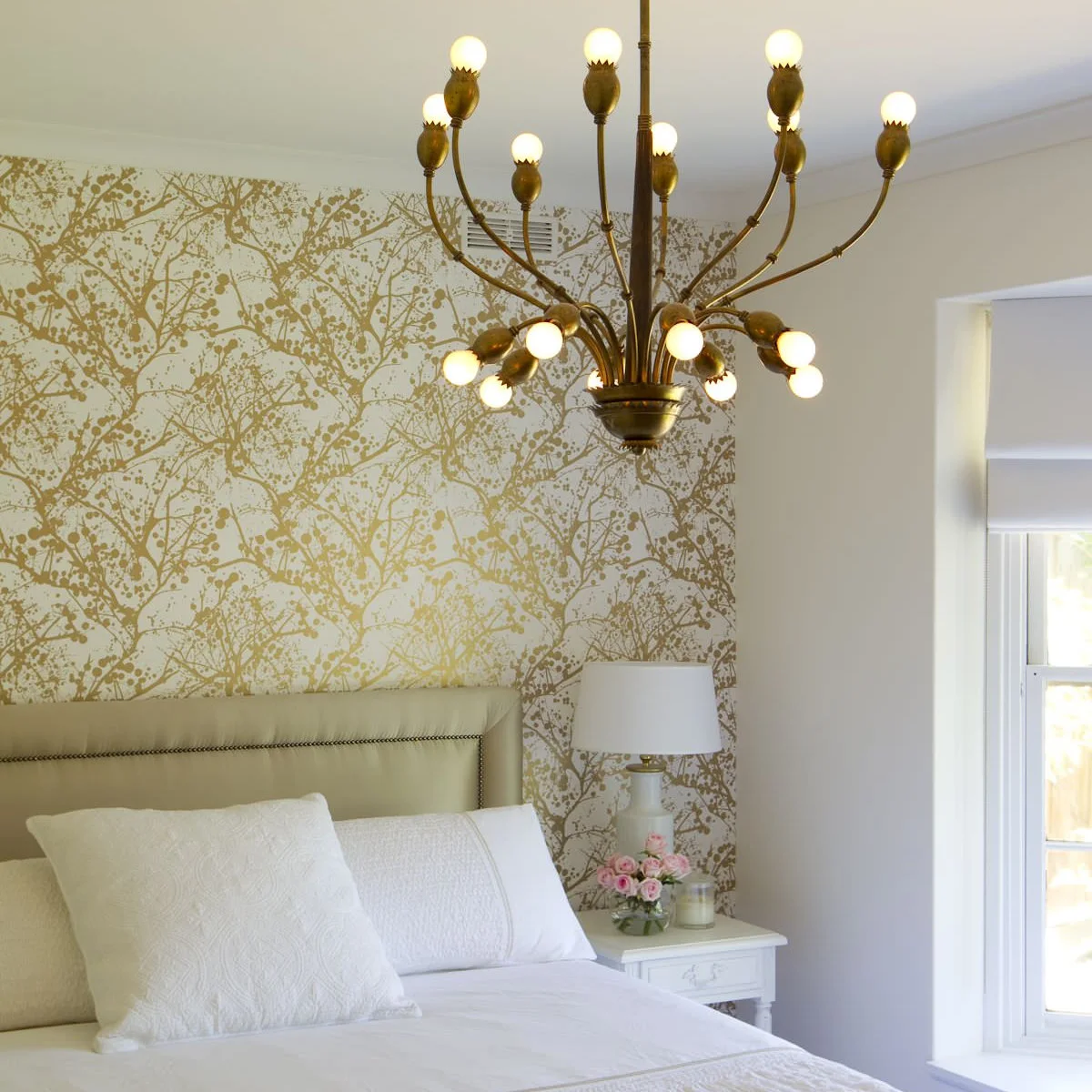
Branches in one warm color cover the pale wall, with the light fitting echoing their spreading form. White bedding and a simple upholstered headboard leave the tree-like print easy to read. A small bedside bouquet supplies color without needing another strongly patterned fabric.
Check whether the wallcovering changes appearance when light hits it from the side. A reflective finish may look very different behind a lamp than beside the window. Keep the nearby wall paint compatible with the paper’s background so the accent wall feels connected at the corner.
IDEA 19 / 20
Give a Guest Room a Printed Library Wall
 SaveSupport Non AI Creator
Image credit: Project: User (via Houzz)
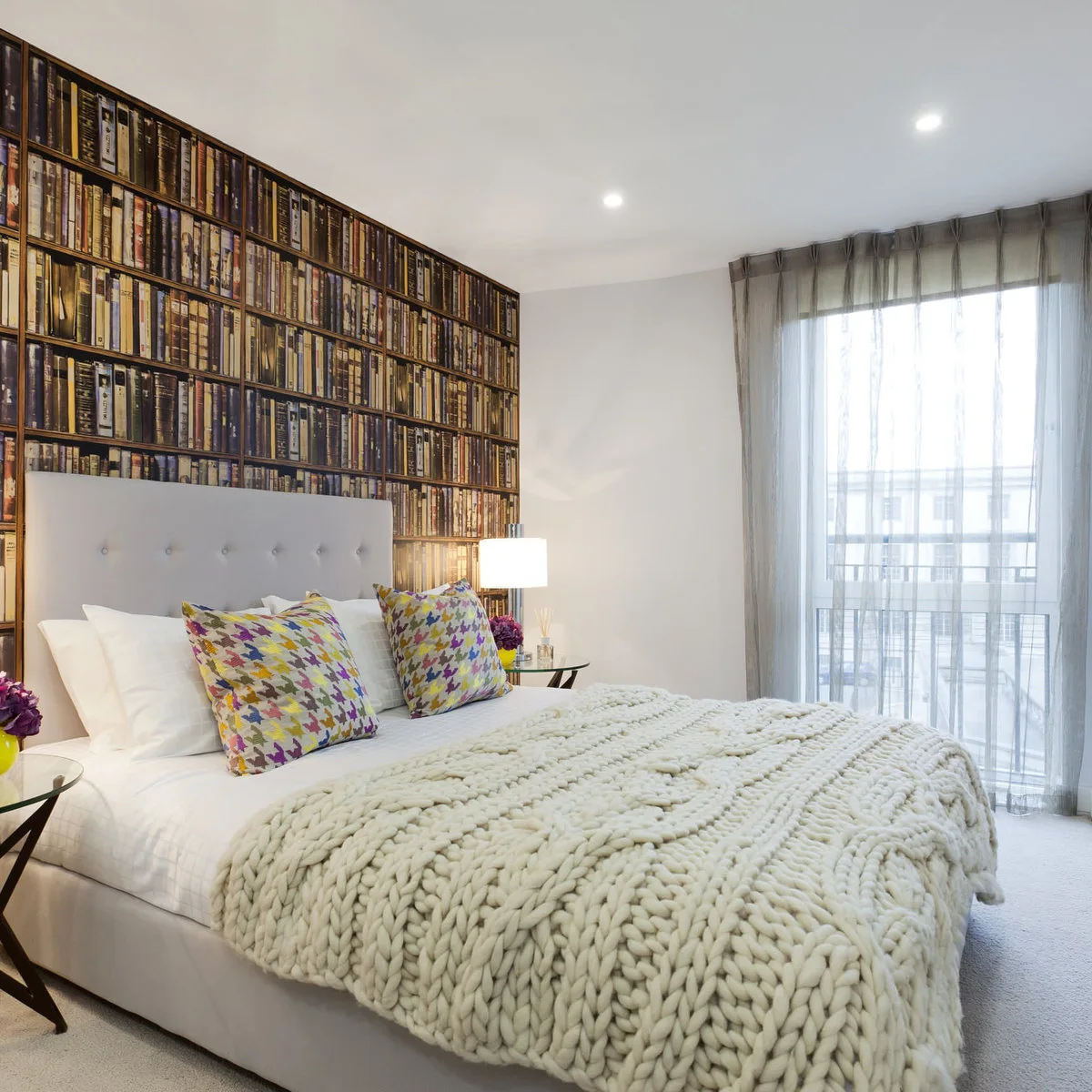
Rows of printed books turn the headboard wall into a library-like backdrop without adding physical shelves above the bed. The pale gray headboard separates the print from the pillows. White bedding and a chunky throw keep the lower half of the room quieter than the wall.
Check a large sample for convincing detail and a scale that suits the room. Printed books are decoration, so plan actual storage elsewhere rather than treating the wall as a practical solution. Keep bedside surfaces uncluttered to stop the combination from looking like a busy shop display.
IDEA 20 / 20
Use a Light Ground for a Playful Repeat
 SaveSupport Non AI Creator
Image credit: Project: Furnished by Anna (via Houzz)
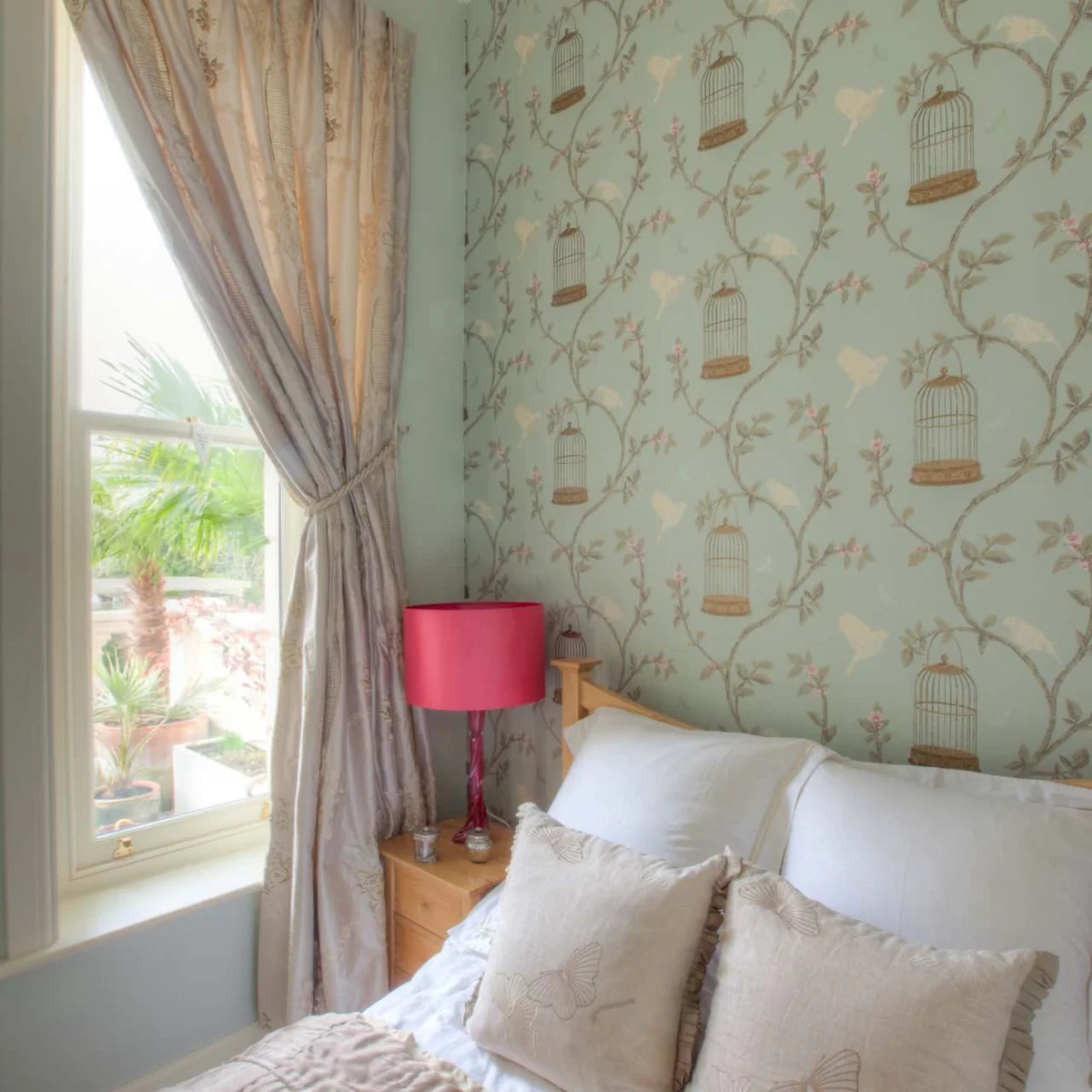
Birdcages and branching stems repeat across a pale green ground, giving the small bedside area a playful character. Plain white pillows leave the wall visible above the wooden bed. A bright pink lamp adds one concentrated accent beside the softer curtain fabric.
Place the sample next to existing curtains before choosing this kind of detailed repeat. Two delicate patterns can work together when their colors are close, but one should remain quieter. Confirm the product’s cleaning guidance before fitting it behind a bed where pillows and hands may regularly touch the surface.
BRING IT ALL TOGETHER
Plan the wall with the finished bed in place
The best pattern is the one you can still enjoy after adding the headboard, pillows, lamps and curtains. Measure those elements first, then use a sample or panel plan to check which details will remain exposed.
Keep the installation instructions, batch information and a spare piece of paper after fitting. Follow the maker’s cleaning guidance, and check future furniture changes against the layout before drilling new fixings through the finished surface.