Blue can be a backdrop, a furniture color or just the thread connecting your bedding and curtains. Decide which surface should carry the strongest shade before buying smaller accessories; a pale room with a blue bed needs a different balance from a room with blue walls.
These bedrooms show several ways to combine blue with white, wood, pink and yellow. Look at the amount of daylight, the scale of the patterns and the space around each bed, then borrow the arrangement that fits the furniture you already own.
PART 01
Start with a lighter backdrop
IDEA 01 / 20
Keep Pale Blue Clear Against White
 SaveSupport Non AI Creator
Image credit: Project: Visbeen Architects (via Houzz)
The pale blue-gray walls sit between a bright white ceiling and a cream upholstered bed. Because the ceiling and door frames stay white, the room has distinct edges even though the overall palette is very light and the bedding is almost entirely neutral.
Test a pale blue beside your existing cream fabrics before painting. Some combinations make the cream look yellow or the blue look gray. View a large sample in daylight and with your evening lamps, then choose curtains that still provide the privacy you need. If you are still choosing the wall shade, compare a few quieter paint colors beside the same cream fabric.
IDEA 02 / 20
Bring Warm Wood Into a Soft Blue Room
 SaveSupport Non AI Creator
Image credit: Future/Alecia Neo
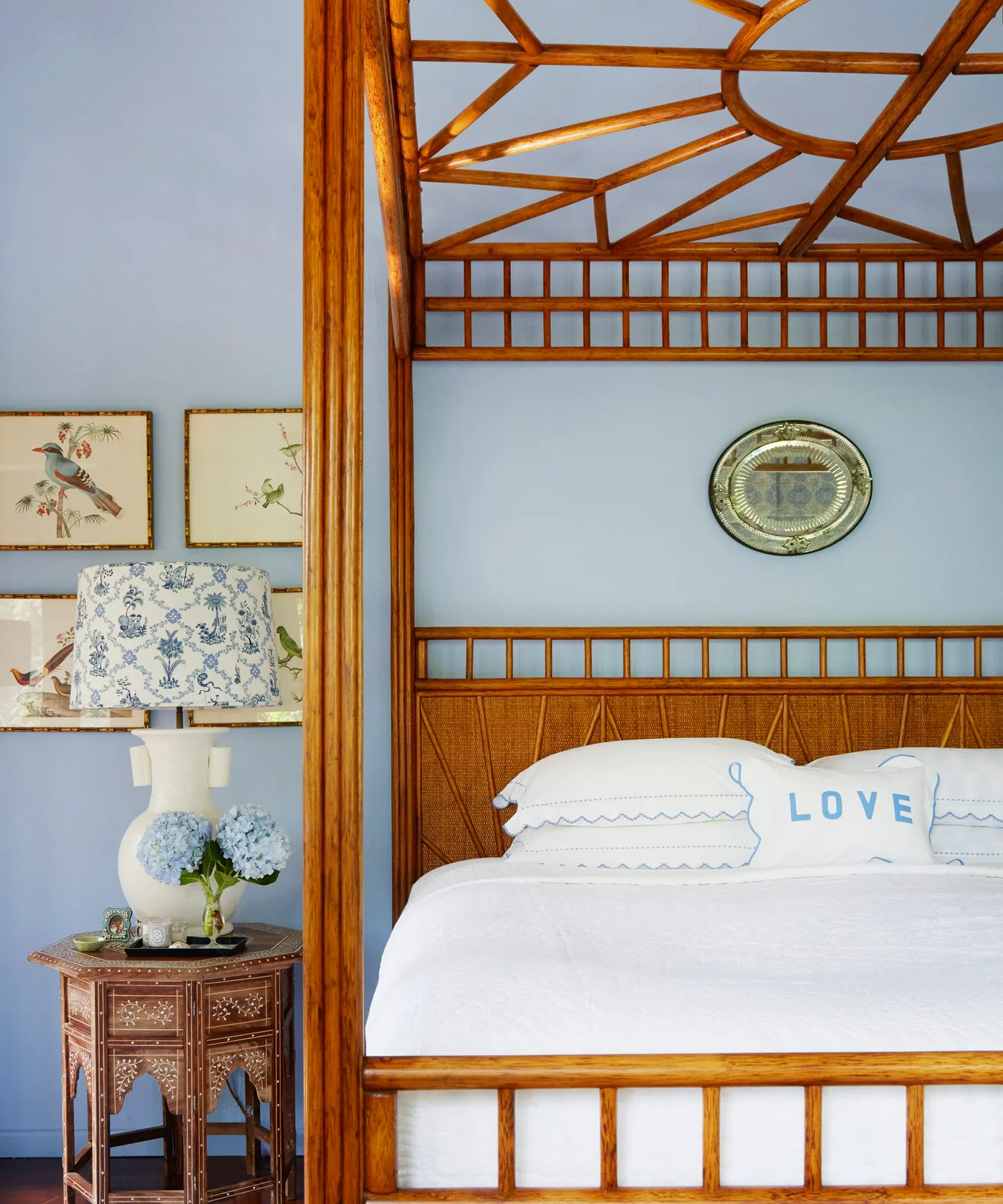
A warm wooden four-poster gives these soft blue walls a substantial partner. The bird pictures, patterned lampshade and blue borders on the white bedding add small repeated details, while the open structure of the canopy leaves the wall color visible through it.
Check the height and visual weight of a canopy before choosing one. An open frame can work with light walls, but hanging fabric around every side would change the balance. Repeat the wood tone in one bedside piece rather than matching every item exactly.
IDEA 03 / 20
Use a Simple Coastal Color Recipe
 SaveSupport Non AI Creator
Image credit: Project: LA Dwelling Inc (via Houzz)
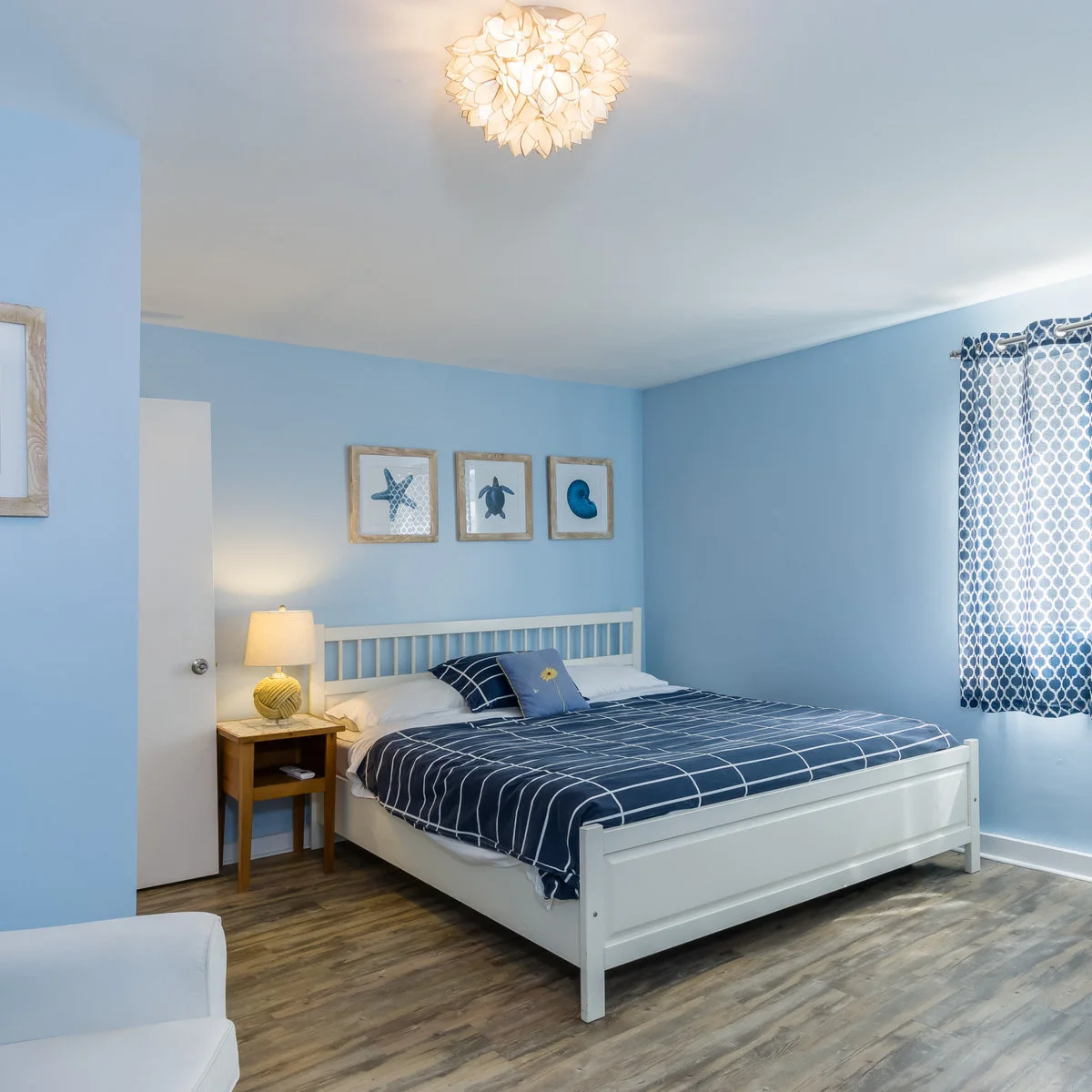
Light blue walls and a white slatted bed create a straightforward base for the blue checked duvet. Three small sea-life pictures establish a coastal theme without covering the room in motifs, and the patterned curtain repeats the same blue-and-white relationship at the window.
Choose one recognizable motif and let ordinary stripes, checks or plain textiles do the rest. Before ordering curtains, compare their blue with the duvet in the same light. They can differ in depth, but noticeably different undertones may make the pairing feel accidental.
IDEA 04 / 20
Let Personal Pictures Break Up Slate Blue
 SaveSupport Non AI Creator
Image credit: Project: Fine House Photography (via Houzz)
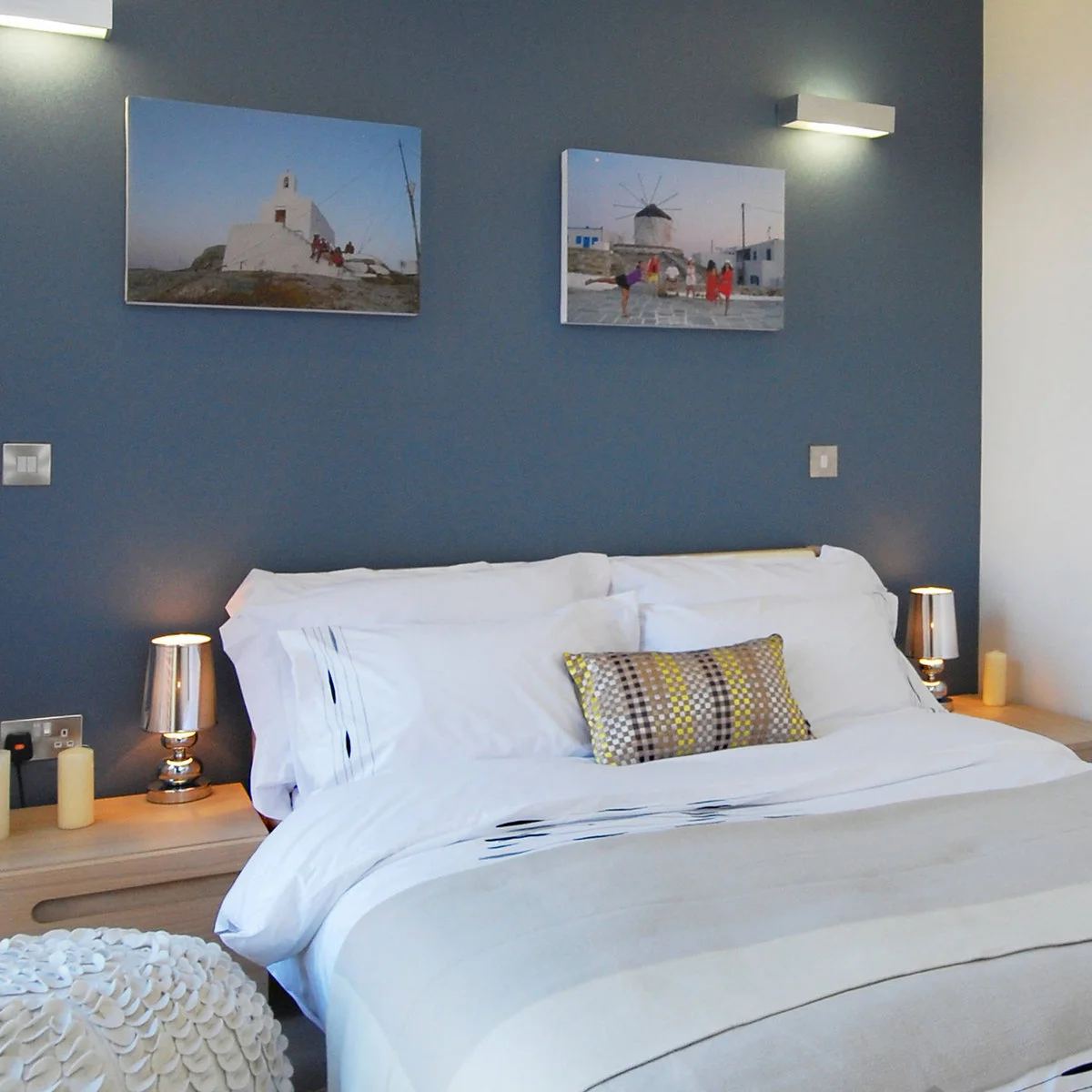
Two travel photographs bring lighter rectangles onto the slate blue wall above the bed. White pillows and bedding occupy most of the lower view, while small bedside lamps and a patterned cushion introduce reflective surfaces and a modest yellow accent without another large color block.
Use photographs you want to see every day and size the arrangement around the bed rather than the entire wall. Keep picture lights and reading lights on separate controls where possible, so displaying the artwork does not require lighting the whole sleeping area.
IDEA 05 / 20
Paint Storage to Follow the Walls
 SaveSupport Non AI Creator
Image credit: Project: Alexander White (via Houzz)
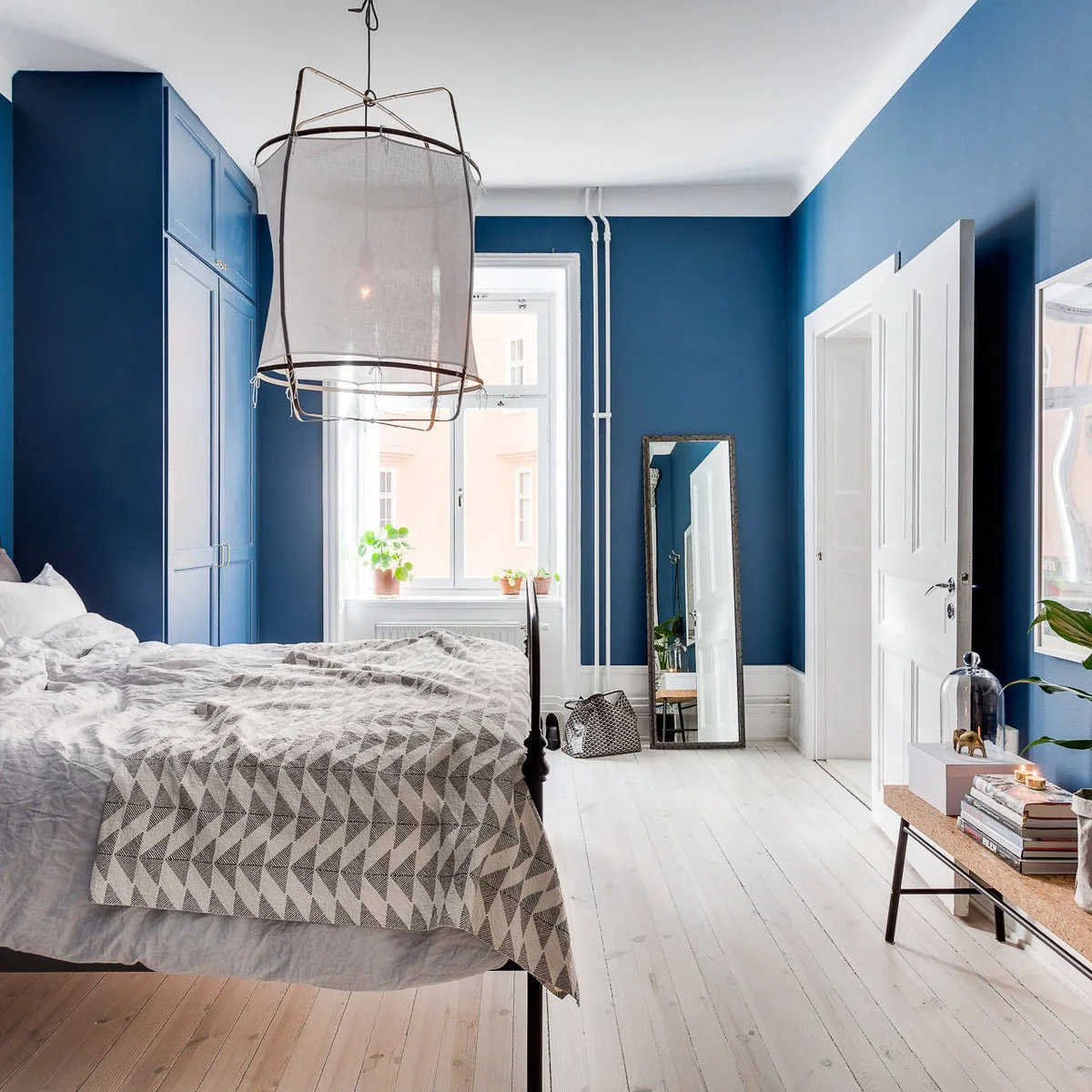
The tall cabinets take on the same blue as the walls, so their height becomes part of the room rather than a separate white block. White floorboards, doors and window trim give the blue a crisp outline, with gray patterned bedding staying quieter in the foreground.
Coordinate wall and cabinet colors using finishes suited to each surface; the same color name can still look different in another sheen. Leave enough room for cabinet doors to open beside the bed, and secure a tall mirror instead of relying on a casual lean.
PART 02
Give the bed a clear role
IDEA 06 / 20
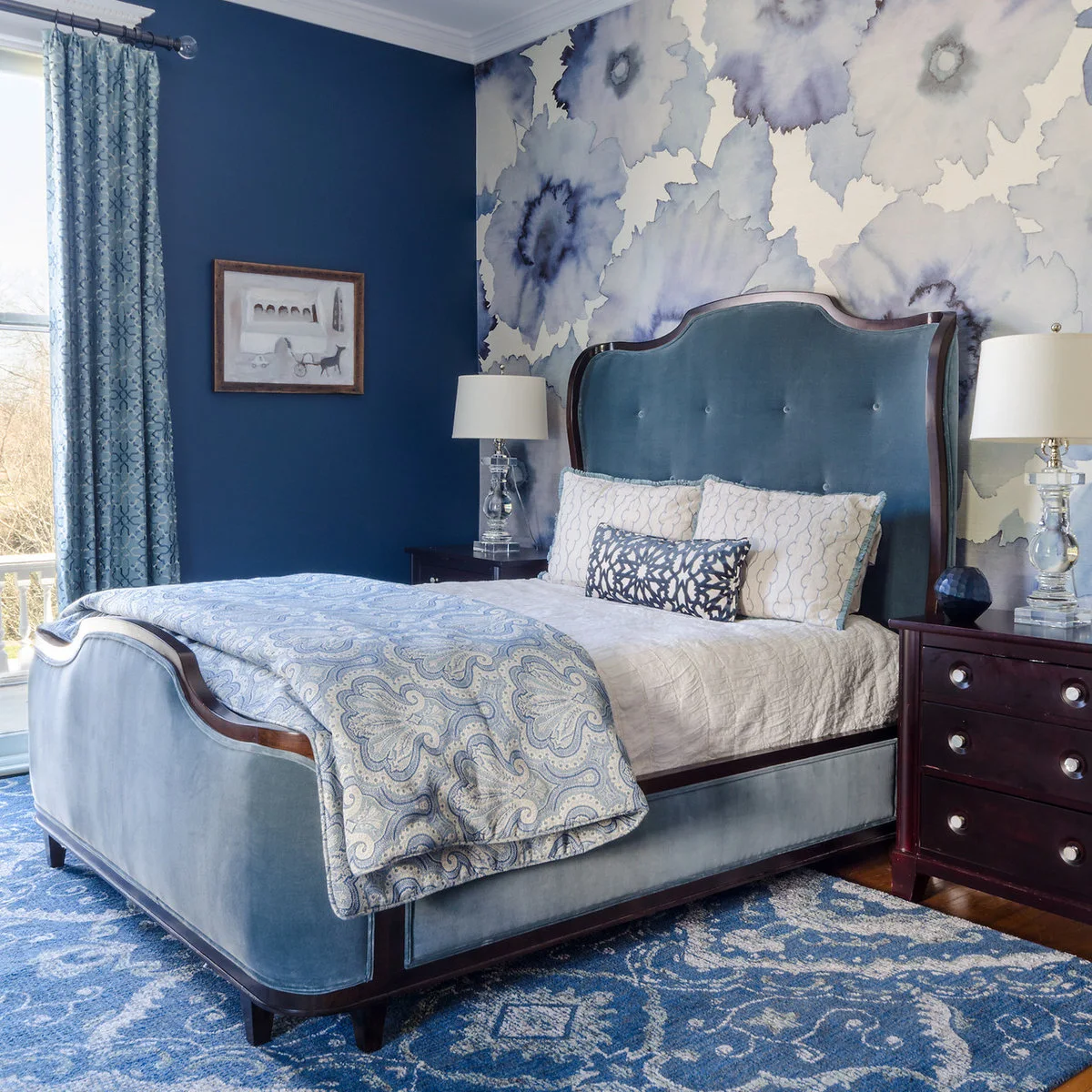
Make a Blue Bed the Main Color Block
 SaveSupport Non AI Creator
Image credit: Project: Barden's Decorating, Inc. (via Houzz)
The blue upholstered sleigh bed carries color from its high headboard down to the curved foot. Floral wallpaper and patterned curtains surround it, but their lighter backgrounds prevent the furniture from disappearing into a uniformly dark envelope. A wooden bedside chest adds another warm surface.
A footboard takes up more visual and physical room than an open-ended bed. Measure the walking route around it before committing, especially opposite a dresser. If the frame is already bold, keep everyday bedding fairly simple so changing the bed remains easy.
IDEA 07 / 20
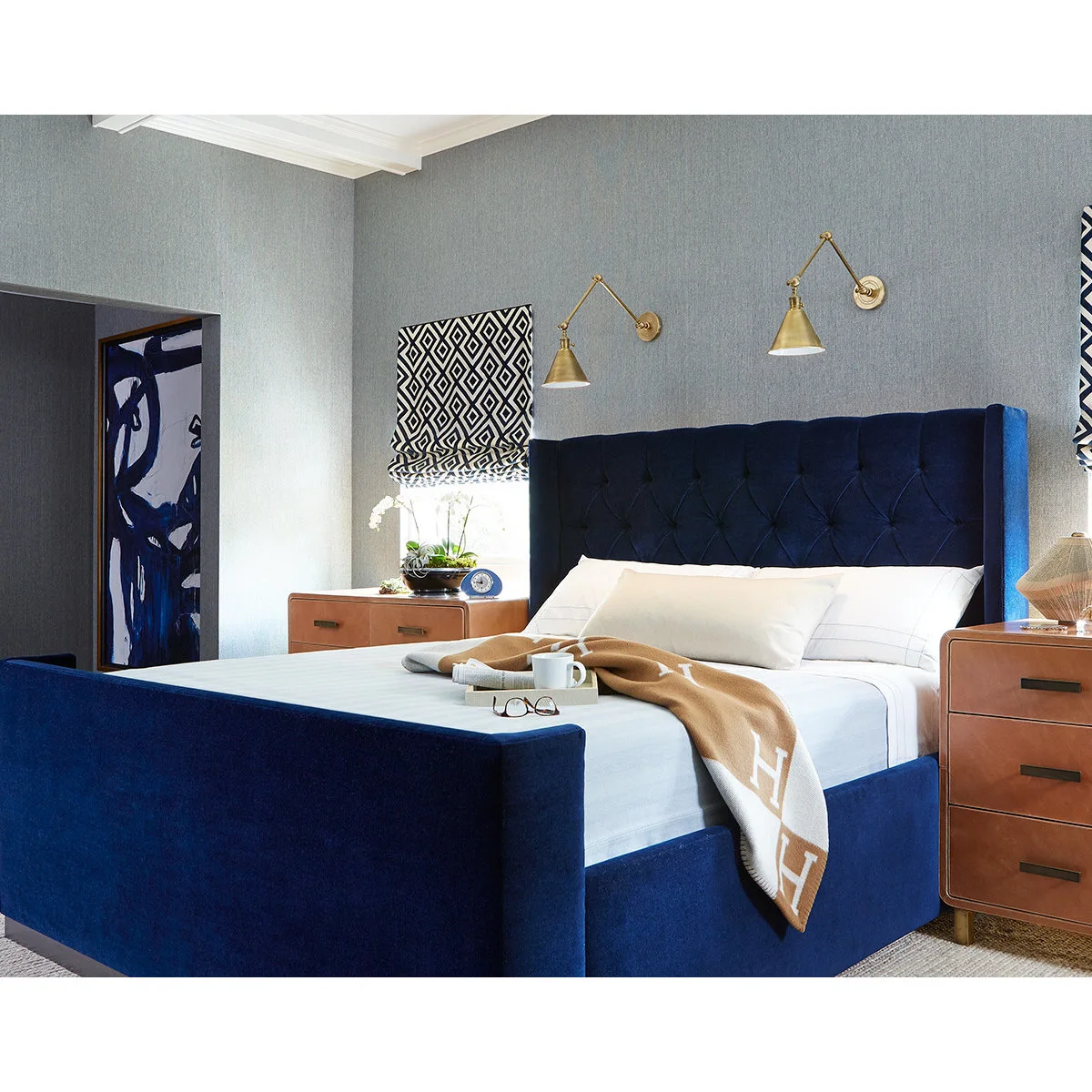
Pair Blue Upholstery with Caramel Furniture
 SaveSupport Non AI Creator
Image credit: Project: Tribe Design Group (via Houzz)
The blue bed is the strongest color here, framed by pale walls and caramel-colored bedside chests. Brass wall lamps continue that warmth higher up, while black-and-white window patterns add contrast without competing with the upholstered headboard and substantial footboard.
Bring samples of blue fabric and the existing wood finish together before choosing a bed. A warm companion can make the palette feel more balanced, but several unrelated orange-brown finishes may become distracting. Check upholstery cleaning instructions wherever pillows and hands will regularly touch it.
IDEA 08 / 20
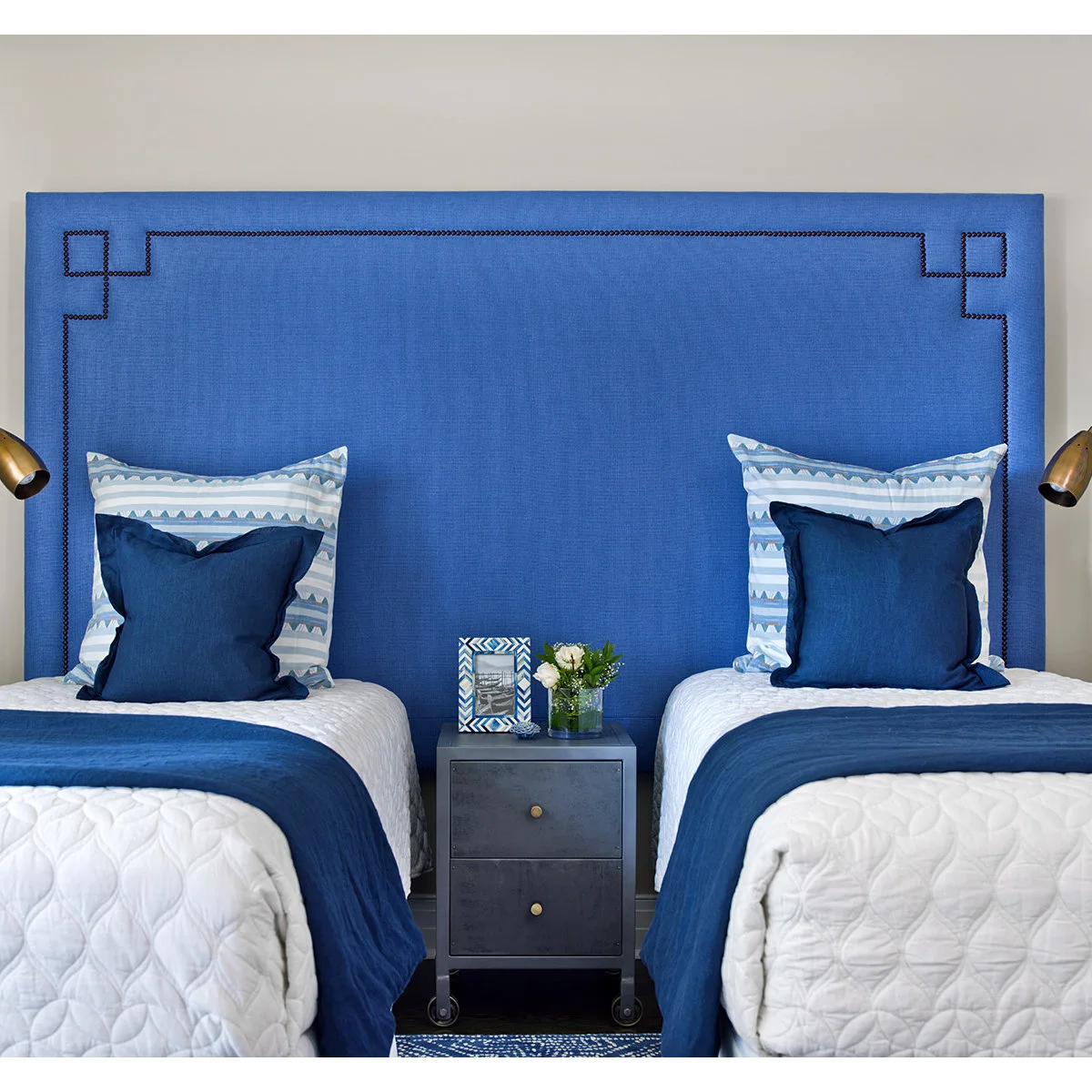
Unify Twin Beds with One Blue Backdrop
 SaveSupport Non AI Creator
Image credit: Project: Kate Taylor Interiors (via Houzz)
One broad blue upholstered backdrop links the twin beds into a single arrangement. Matching white quilts, blue throws and layered pillows reinforce that connection, while the small central chest provides a clear divide and a shared surface for a picture and flowers.
Plan the center surface around how two people will actually use it. Each sleeper still needs reachable lighting and somewhere for essentials. A wide shared headboard should be secured appropriately, and any decorative trim should be checked for snagging when bedding is changed.
IDEA 09 / 20
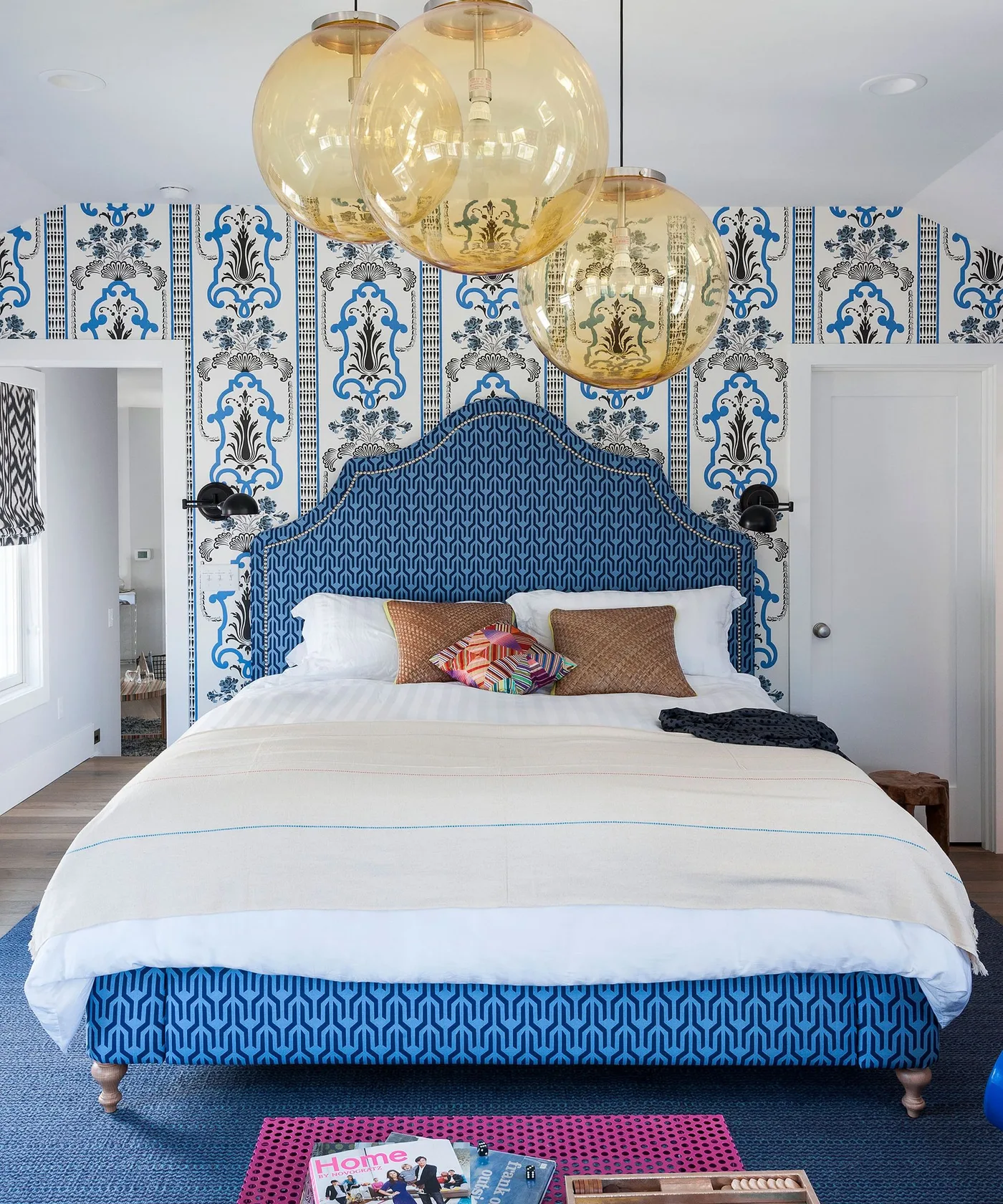
Repeat Blue Across Different Patterns
 SaveSupport Non AI Creator
Image credit: Future / Matthew Williams
The upholstered bed and wallpaper both use blue, but their shapes differ: the bed has a rounded geometric pattern and the wall has a more vertical graphic rhythm. White bedding makes a pause between them, while amber globe pendants introduce a warmer color at either side.
Compare pattern size as well as color when layering two bold surfaces. One should read more clearly from the doorway, with the other providing texture closer up. Keep pendant fittings and cables outside the space where you sit up or reach for pillows.
IDEA 10 / 20
Give a Four-Poster a Patterned Blue Setting
 SaveSupport Non AI Creator
Image credit: Future/Chris Everard
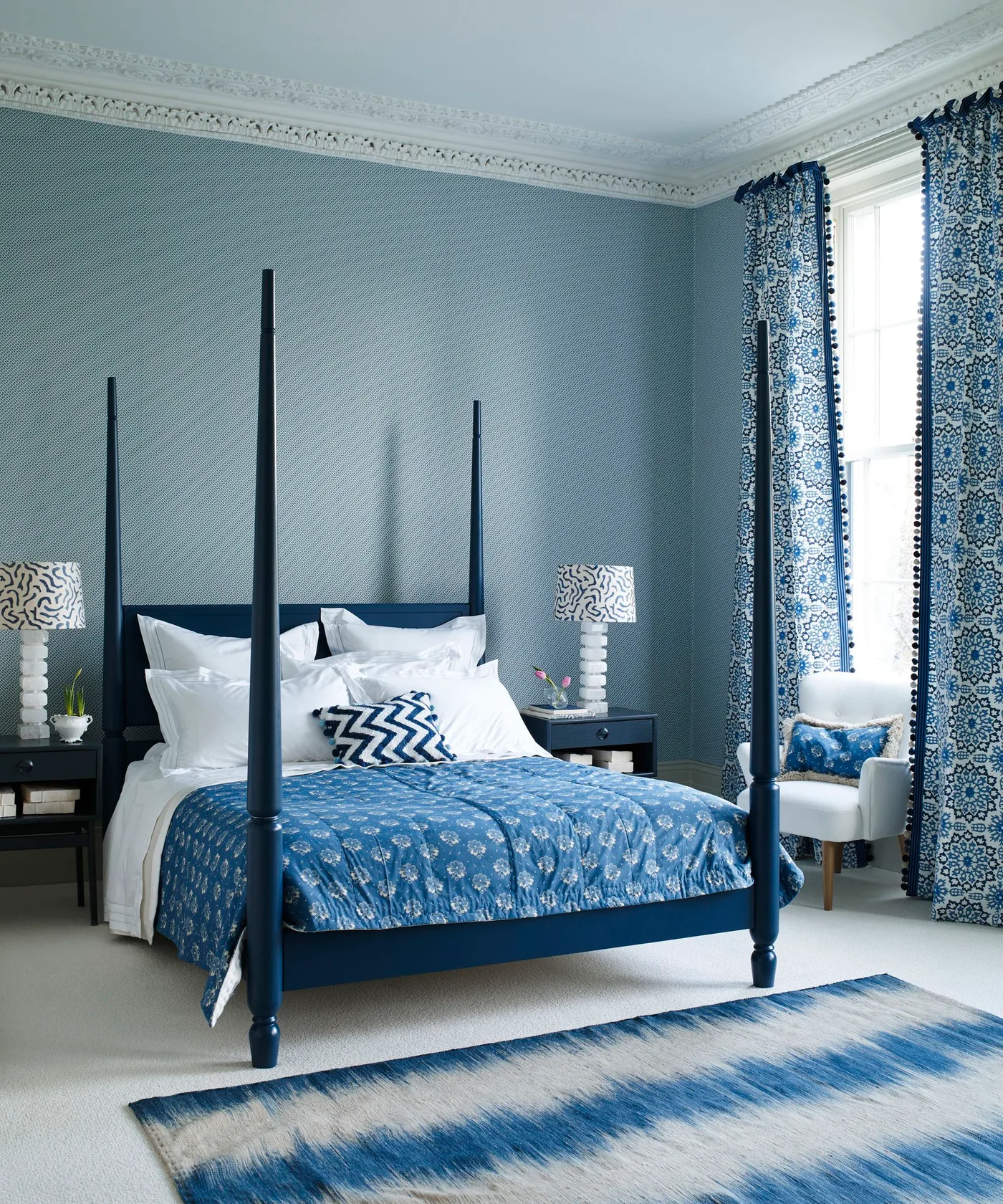
The dark blue four-poster outlines the bed against a patterned blue backdrop. White bedding creates a broad light area inside that frame, while the floral throw and curtains repeat the color in softer shapes. The pale chair offers another place for the eye to rest.
When the room already has several blue patterns, choose one large plain surface before adding another print. White bedding is an easy option, but it needs a washing routine that suits everyday use. Check that the bed posts will not obstruct curtain movement or bedside lighting.
PART 03
Layer patterns and companion colors
IDEA 11 / 20
Use Pink to Lift Blue and White
 SaveSupport Non AI Creator
Image credit: Future
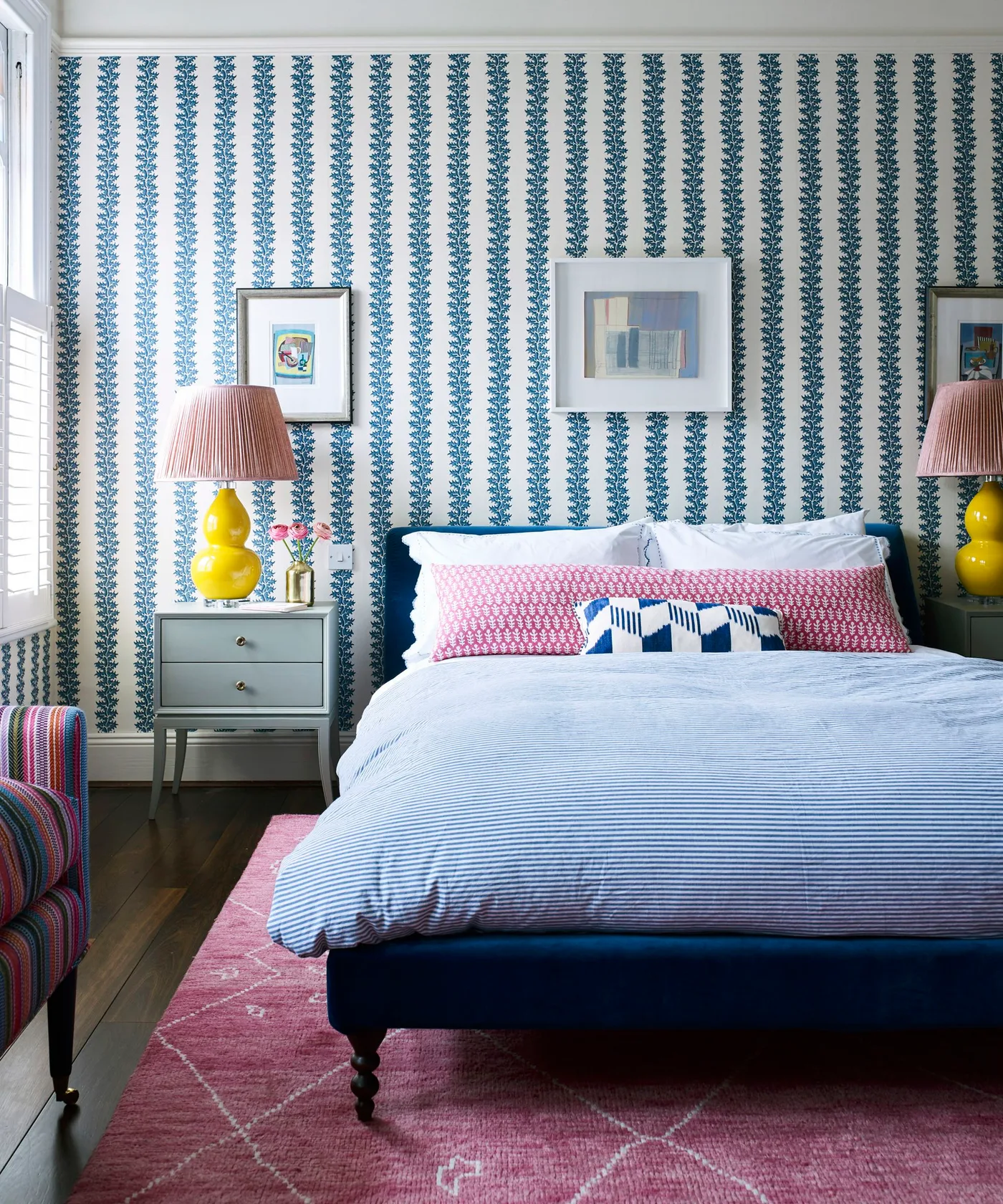
Blue appears in the upholstered bed, the narrow bedding stripes and the delicate wall pattern. Pink lampshades and a rug bring warmth to that cool foundation, while a patterned pink cushion keeps the accent close to the bed rather than isolated at the edges.
Start with one pink item you can move around, then judge how much more the room needs. A large rug changes the palette more than a small cushion. Compare colors in natural light first, because a colored lampshade can alter how nearby blues appear when illuminated.
IDEA 12 / 20
Add Mustard to a Blue-Teal Backdrop
 SaveSupport Non AI Creator
Image credit: Project: La Redoute (via Houzz)
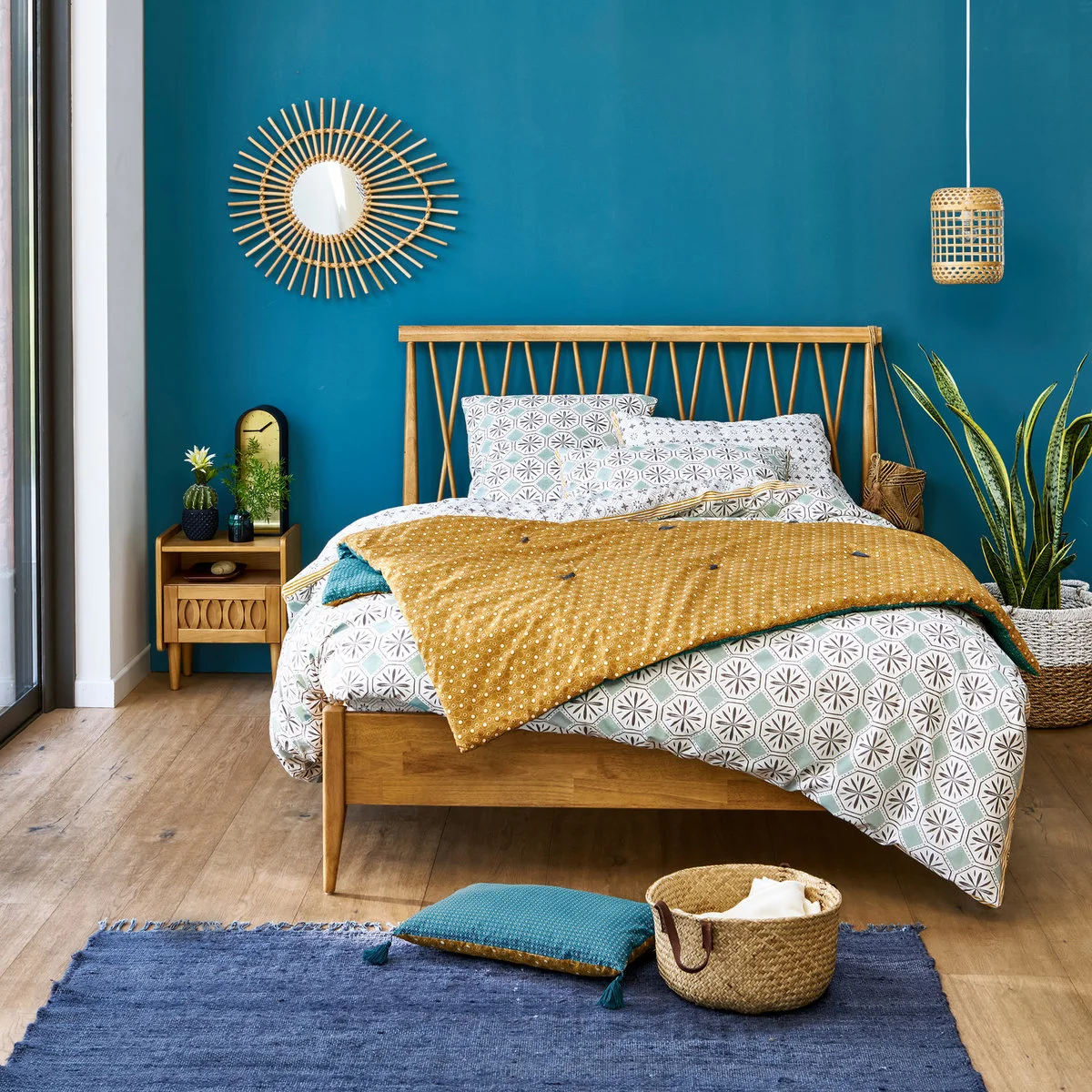
A saturated blue-teal wall frames the warm wooden bed and makes the mustard quilt stand out. White patterned bedding keeps the center lively without adding another large dark surface. A woven pendant, small mirror and basket repeat warm textures at different heights around the bed.
Let the wall and quilt be the two main colors, then limit smaller accessories to related tones. Keep a basket outside the walking route and leave breathing space around a hanging light. A strongly colored throw is also easier to replace than a large upholstered frame.
IDEA 13 / 20
Mix Blue Paneling with Flowers and Yellow
 SaveSupport Non AI Creator
Image credit: Project: Sofa.com (via Houzz)
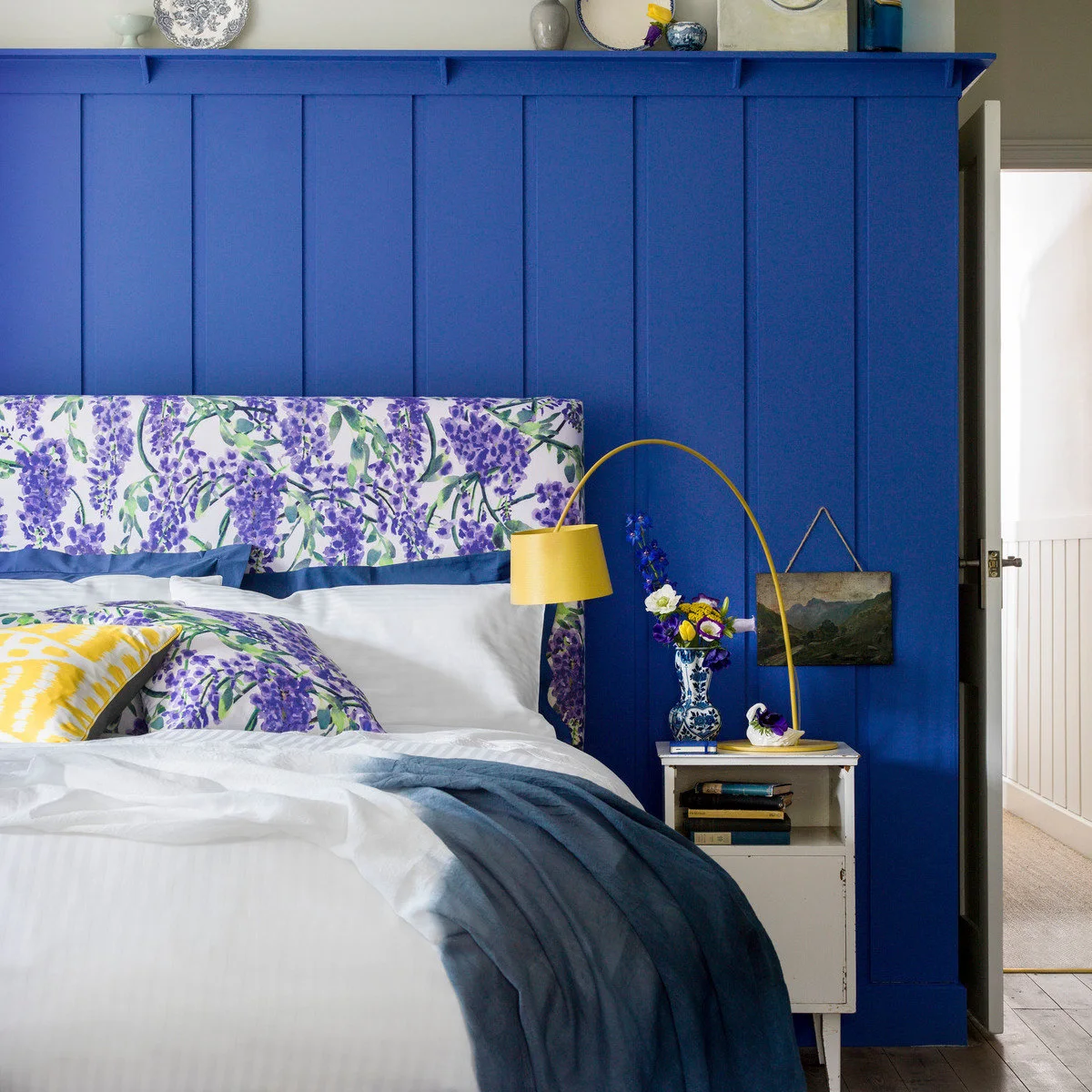
The blue paneling creates a strong vertical background for a floral headboard in white, purple and green. A yellow lamp and cushion offer a bright contrast, while white bedding prevents the flowers and paneled wall from merging into one continuous patterned area.
Choose the floral fabric first if you want to repeat one of its colors elsewhere. Keep everyday objects below the lamp shade so the bedside table remains useful. Decorative plates on a high ledge need secure positioning, especially anywhere they could fall toward the bed.
IDEA 14 / 20
Balance Blue Pattern with Black Outlines
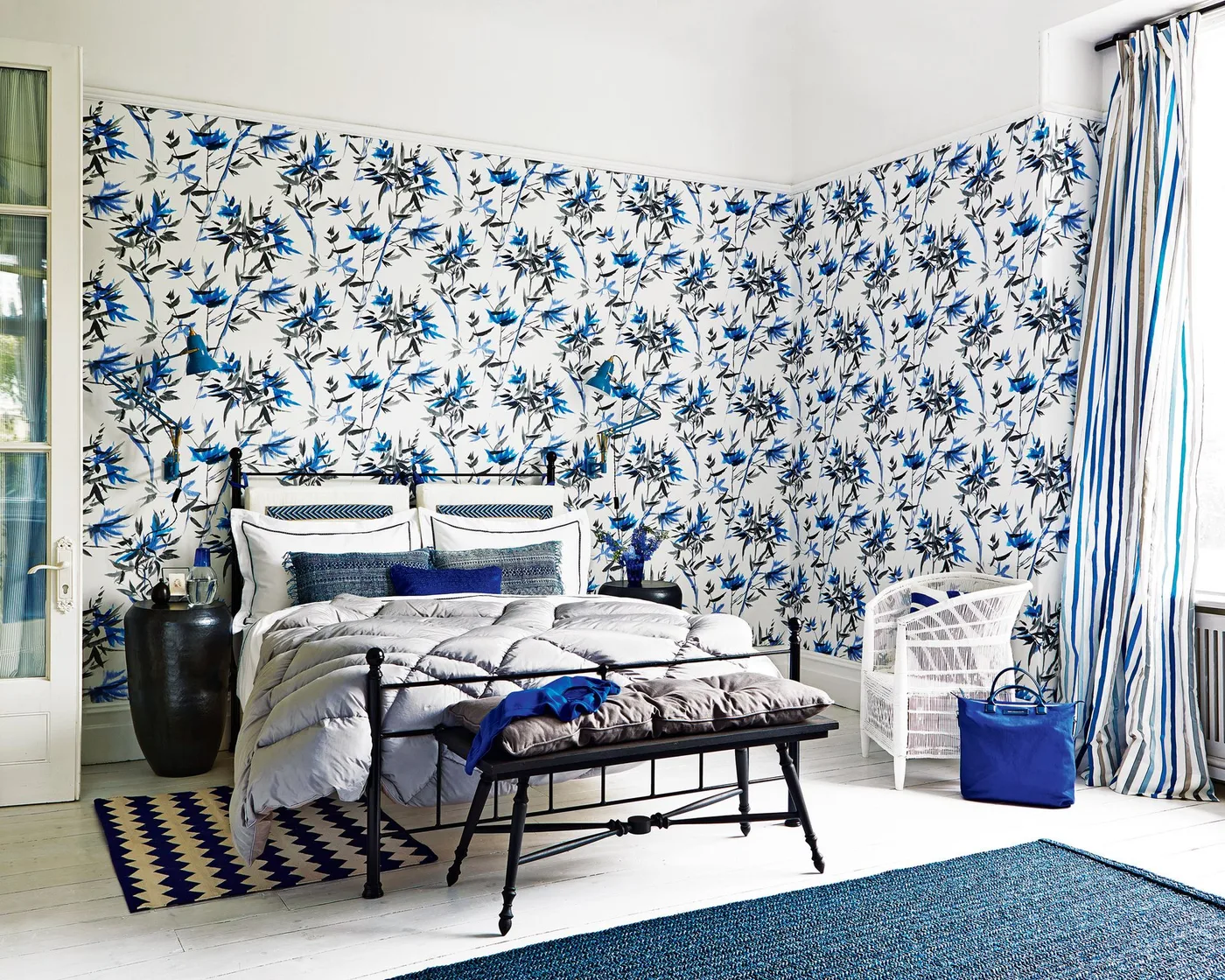 SaveSupport Non AI Creator
Image credit: Future/Jan Baldwin
A black metal bed and matching bench give this blue-and-white room a clear outline. Botanical wallpaper occupies the lower wall area, and the curtains introduce a more vertical pattern. The light floor and upper wall keep the darker furniture from dominating the whole view.
Use black in a few deliberate outlines rather than adding many small dark objects. With patterned curtains and walls, plain pillowcases make a useful break. Leave enough space at the foot of the bed to use the bench without squeezing past it on every trip.
IDEA 15 / 20
Give Twin Beds a Blue-and-White Rhythm
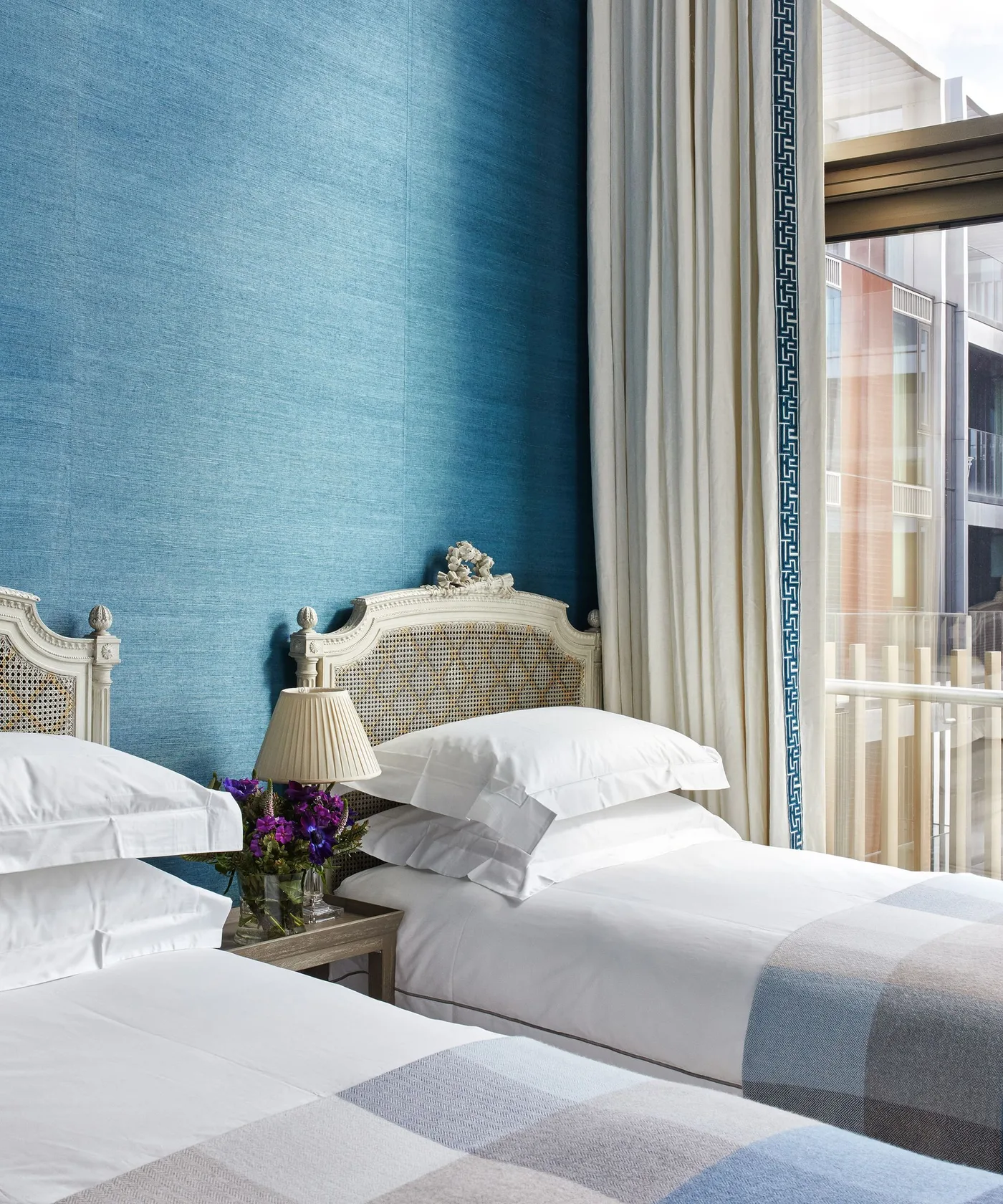 SaveSupport Non AI Creator
Image credit: Future/Davide Lovatti
The two white woven headboards stand clearly against the blue wall, with white bedding repeating their lightness below. Checked throws add a smaller pattern, and the blue border on the curtains carries the wall color toward the window without making the fabric uniformly dark.
Matching beds do not require identical accessories everywhere, but repeating the large surfaces helps the room feel organized. Check whether both sleepers can reach a light comfortably. Leave enough clearance around the central furniture to make each bed without pulling the arrangement apart.
PART 04
Connect the whole room
IDEA 16 / 20
Repeat a Geometric Border Below Blue Panels
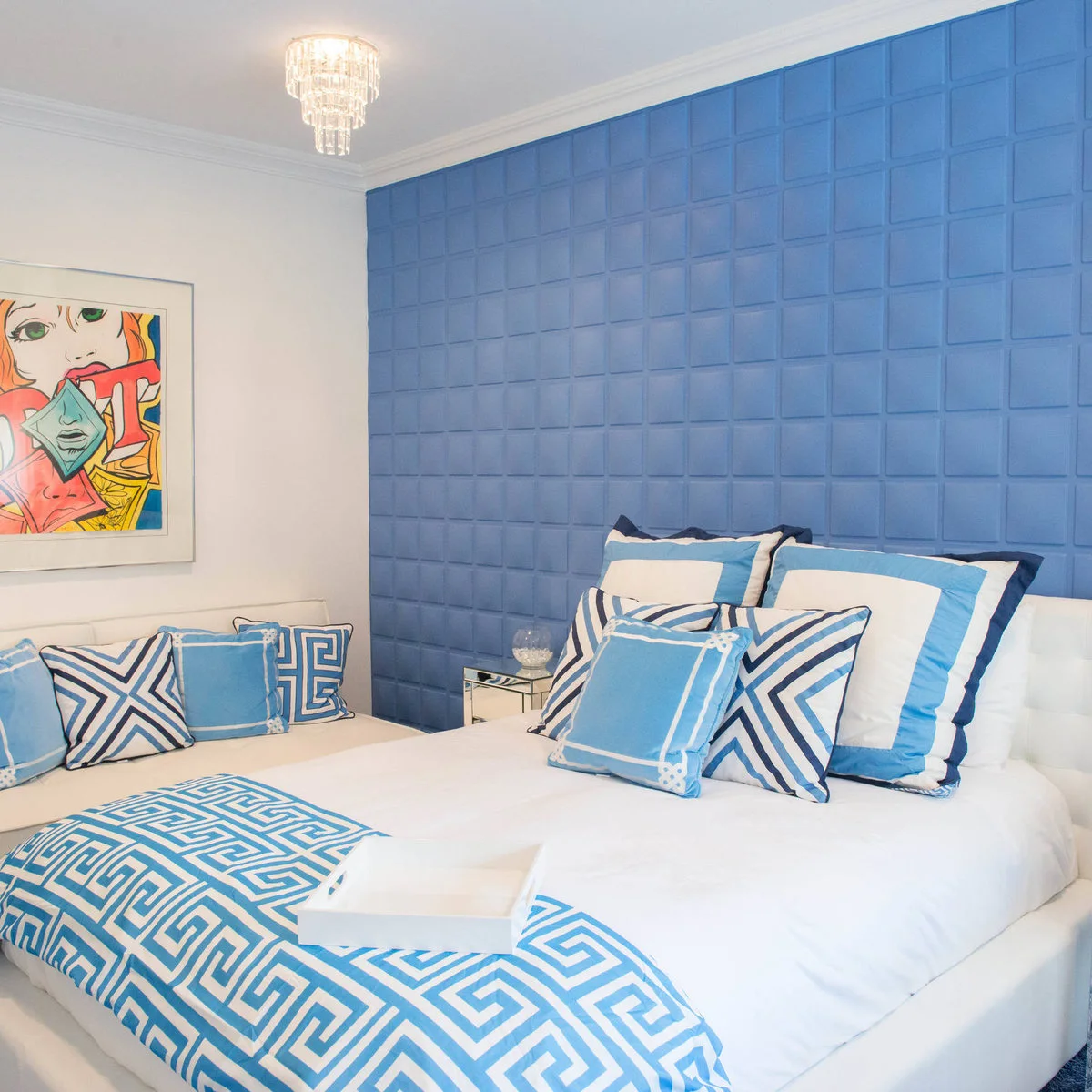 SaveSupport Non AI Creator
Image credit: Project: In Two Design (via Houzz)
Blue square panels establish a regular rhythm behind the white bed. The blue-and-white border on the bedding picks up that geometry on a smaller scale, and the plain white bench leaves a calm gap between the more detailed bed and the rest of the room.
Use one repeated geometric language rather than combining several unrelated bold borders. Before installing panel molding, map the bed and bedside positions onto the wall so awkward partial squares do not fall at the edges. A taped layout is easier to adjust than fixed trim.
IDEA 17 / 20
Carry Blue Up to the Ceiling
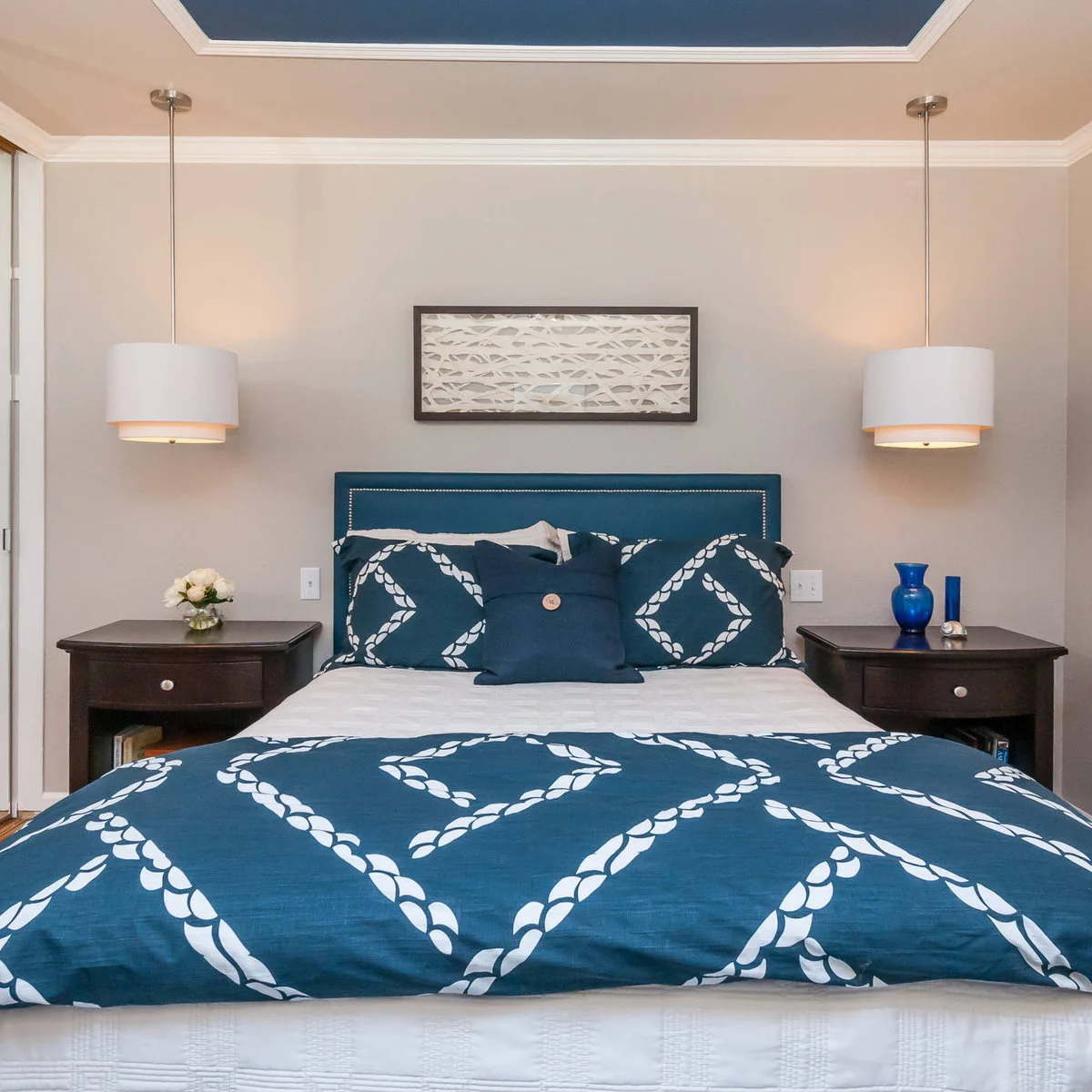 SaveSupport Non AI Creator
Image credit: Project: Anna Jacoby Interiors (via Houzz)
The blue ceiling inset carries the color above the bed, while a white border separates it from the walls. The blue bedspread repeats the shade below with a looping white pattern. Dark wooden bedside tables anchor the arrangement without requiring another blue furniture purchase.
Look at the ceiling in both daylight and lamplight before extending the wall palette overhead. A pale surrounding border can help define the change. Keep bedside lighting useful for reading; the decorative effect of a colored ceiling should not be the room’s only source of atmosphere.
IDEA 18 / 20
Let a Blue Quilt Anchor a Tall White Ceiling
 SaveSupport Non AI Creator
Image credit: Project: Teale Architecture (via Houzz)
The white boarded ceiling is the largest light surface in this bedroom, while the blue quilt and pillows keep the color concentrated around the bed. Woven shades bring warmth to the windows, and the blue rug repeats the bedding color across the floor.
Use washable textiles to test how much blue you enjoy before making permanent changes. With several bedding layers, choose weights that suit the season and storage space you have. Check rug placement from the doorway and keep the edges clear of the route around the bed.
IDEA 19 / 20
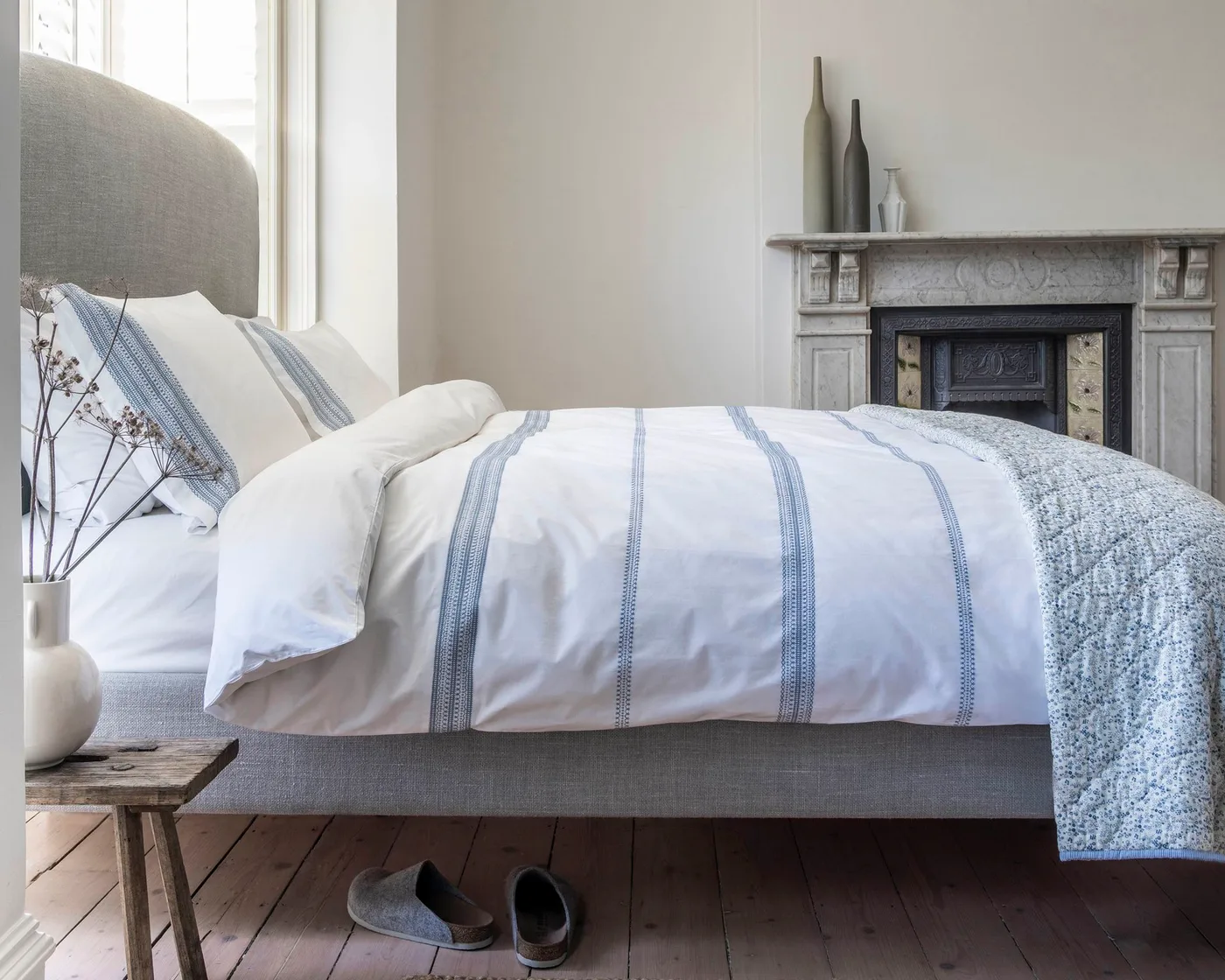
Try Blue Embroidery Before Painting
 SaveSupport Non AI Creator
Image credit: The Cotswold Company
Blue is concentrated in the embroidered lines and floral throw rather than across the walls. The pale upholstered headboard and fireplace surround keep the larger surfaces neutral, so the bed reads as the colorful center without changing the room’s existing architectural features.
This is a useful approach when you want a reversible update. Pick a throw with enough blue to register from across the room, then use one smaller repeated detail. Check care labels before combining delicate embroidered bedding with items that need a different washing routine.
IDEA 20 / 20
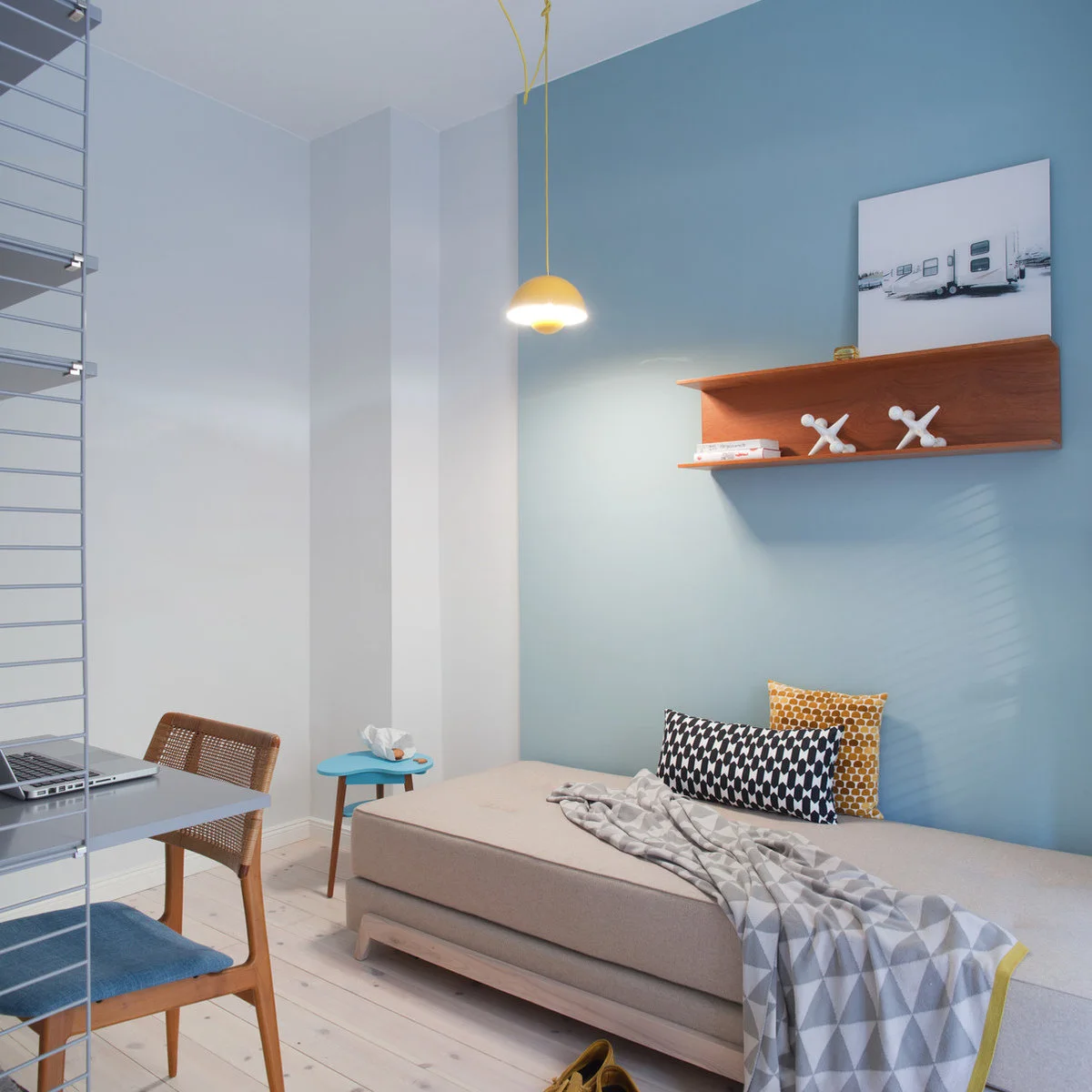
Use Pale Blue to Define a Daybed Corner
 SaveSupport Non AI Creator
Image credit: Project: VINTAGENCY (via Houzz)
The pale blue wall gives the daybed a distinct setting inside a compact room that also contains a desk. A yellow pendant and cushion warm the blue, while the neutral mattress cover keeps the sleeping surface visually simple. The wooden shelf adds a horizontal line above it.
For a room used for both work and sleep, keep the daybed easy to clear at night. Limit decorative pillows to what you can store conveniently. Place shelves and lighting outside the area where someone sits up, and make sure the desk chair can move without blocking the bed.
BRING IT ALL TOGETHER
Choose where your blue should live
Begin with the surface you want to notice first: walls, bed frame or bedding. Add one warm companion such as wood, caramel, mustard or soft pink, then repeat blue in a smaller detail across the room.
Check the palette against your daylight and existing furniture before buying a matching set. Comfortable access, reachable lighting and washable everyday bedding matter as much as the finished color combination.