The best shrubs for the front of a house fit the space after they have grown. A plant that looks tidy in its nursery pot can eventually cover a window, narrow the walk or make painting the siding difficult. These photographs show ways to arrange shrubs around real entrances, with attention to the space between plants as well as their shape.
Use the arrangements as starting points, rather than a planting list for every climate. Check each plant’s mature height and spread, local suitability, sunlight, soil and water needs before buying. Flowering plants, clipped hedges and upright evergreens ask for different kinds of care; choose the routine you will be able to keep.
PART 01
Start with the house and growing space
IDEA 01 / 20
Frame the Door Without Hiding the Windows
 SaveSupport Non AI Creator
Image credit: Project: DeRosa Builders LLC (via Houzz)
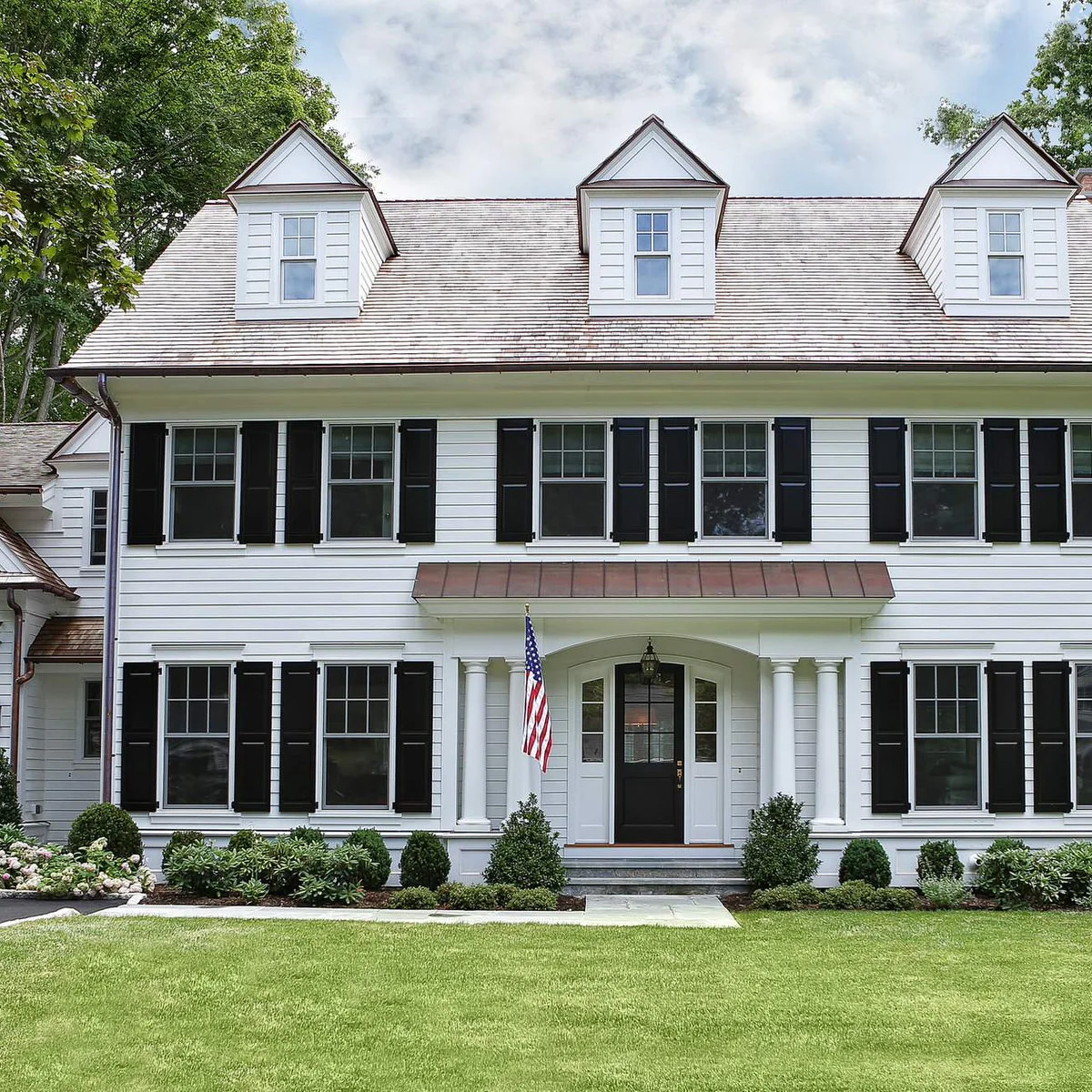
Dark upright shrubs emphasize the central doorway, while the lower planting lets the white facade and black shutters remain visible. The tallest shapes sit close to the entrance rather than forming an uninterrupted wall of greenery across the ground-floor windows. Lighter flowers soften the planting on the left.
Borrow the height hierarchy before borrowing particular plants. Check how wide an upright evergreen becomes as well as how tall it grows, and leave a working route behind the border. A narrow-looking nursery specimen can still become too broad for the space beside a door. For the spaces between these taller anchors, compare front-yard garden ideas that keep the entrance visible through lower planting.
IDEA 02 / 20
Give New Shrubs Room to Fill Out
 SaveSupport Non AI Creator
Image credit: Project: MainStay Landscape Inc. (via Houzz)
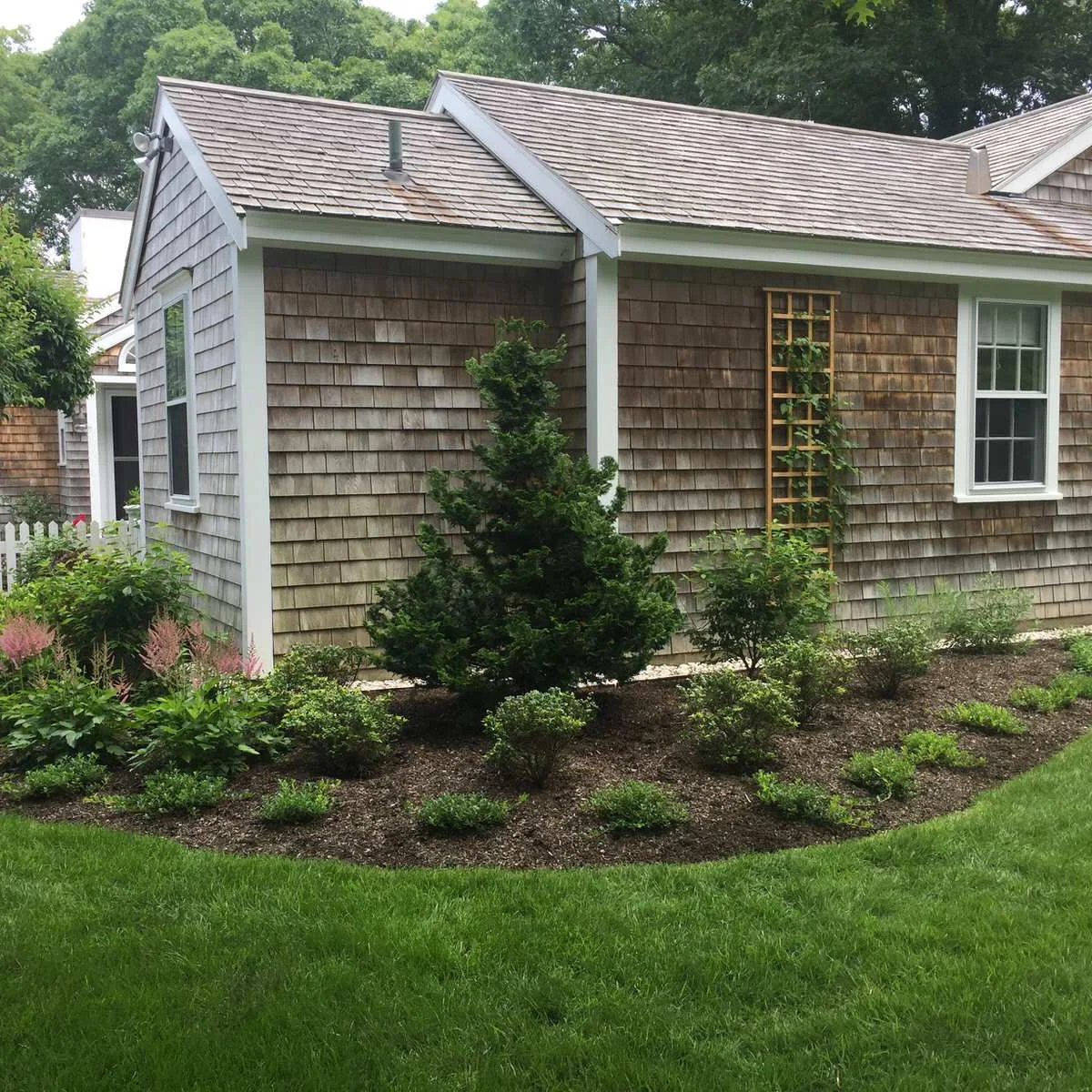
Individual shrubs remain clearly separated in this newly planted bed. Their small size reveals the base of the gray shingle house, and a taller evergreen adds an accent without requiring every plant to reach the same height. The light strip beside the wall makes the building edge easy to see.
Resist filling every gap with another shrub for an instantly mature effect. Plan around the expected spread of the plants and use a measured planting plan to check the arrangement. Our low-maintenance landscaping ideas offer more ways to simplify beds without assuming that new planting needs no care.
IDEA 03 / 20
Use Small Shrubs to Soften a Long Facade
 SaveSupport Non AI Creator
Image credit: Project: First Choice Home Builders (via Houzz)
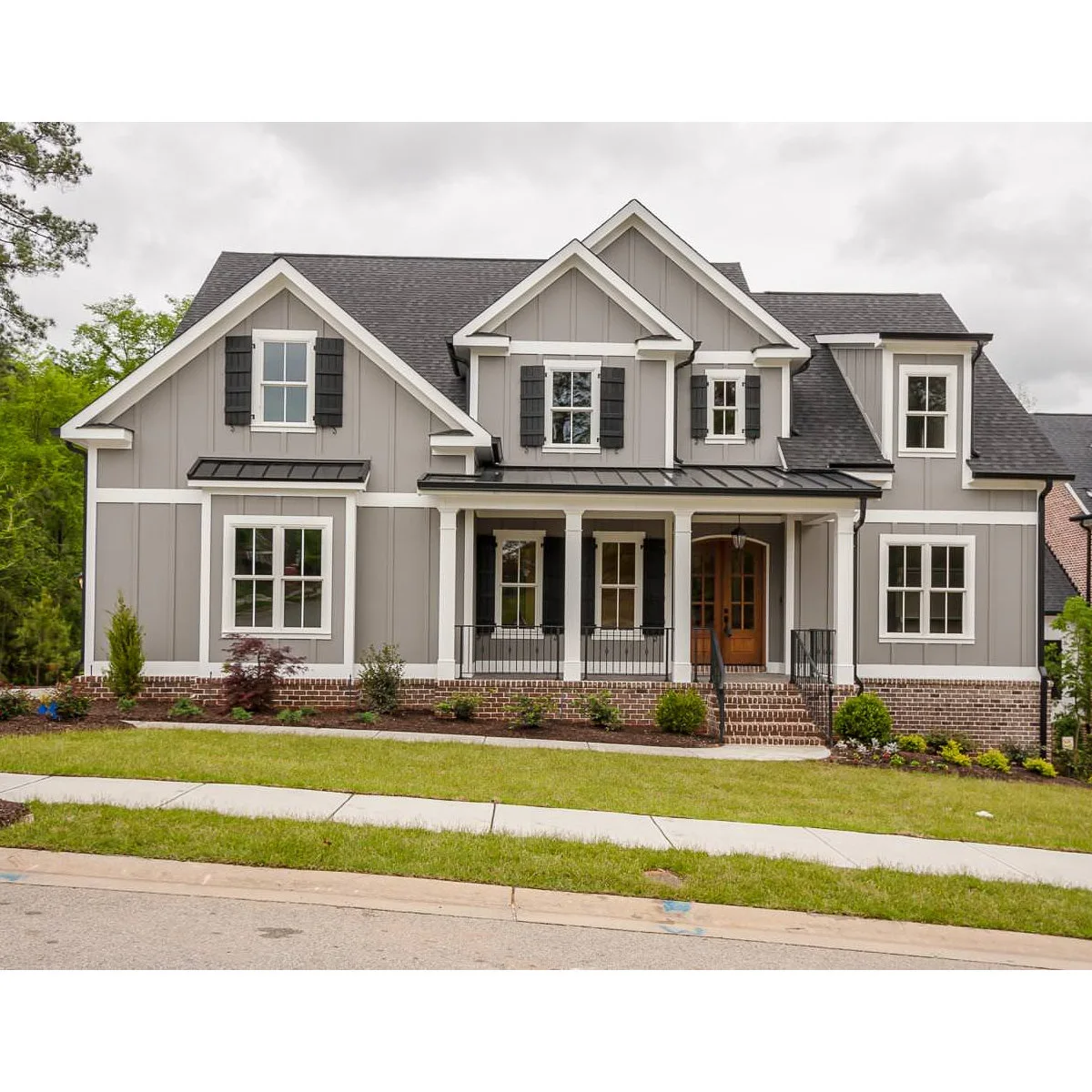
A few rounded shrubs sit near the steps of this broad gray house, with smaller plants continuing along the foundation. The restrained planting leaves the porch railings, brick base and ground-floor windows visible. It softens the long elevation without turning the entire front into a deep screen.
For a similar result, choose compact plants that can stay within the available bed at maturity. Do not assume frequent shearing will make any large shrub suitable. Leave room for reaching the porch and inspecting the wall, especially where a narrow bed already limits access.
IDEA 04 / 20
Keep the Front Steps Open
 SaveSupport Non AI Creator
Image credit: Project: Hugh Jefferson Randolph Architects (via Houzz)
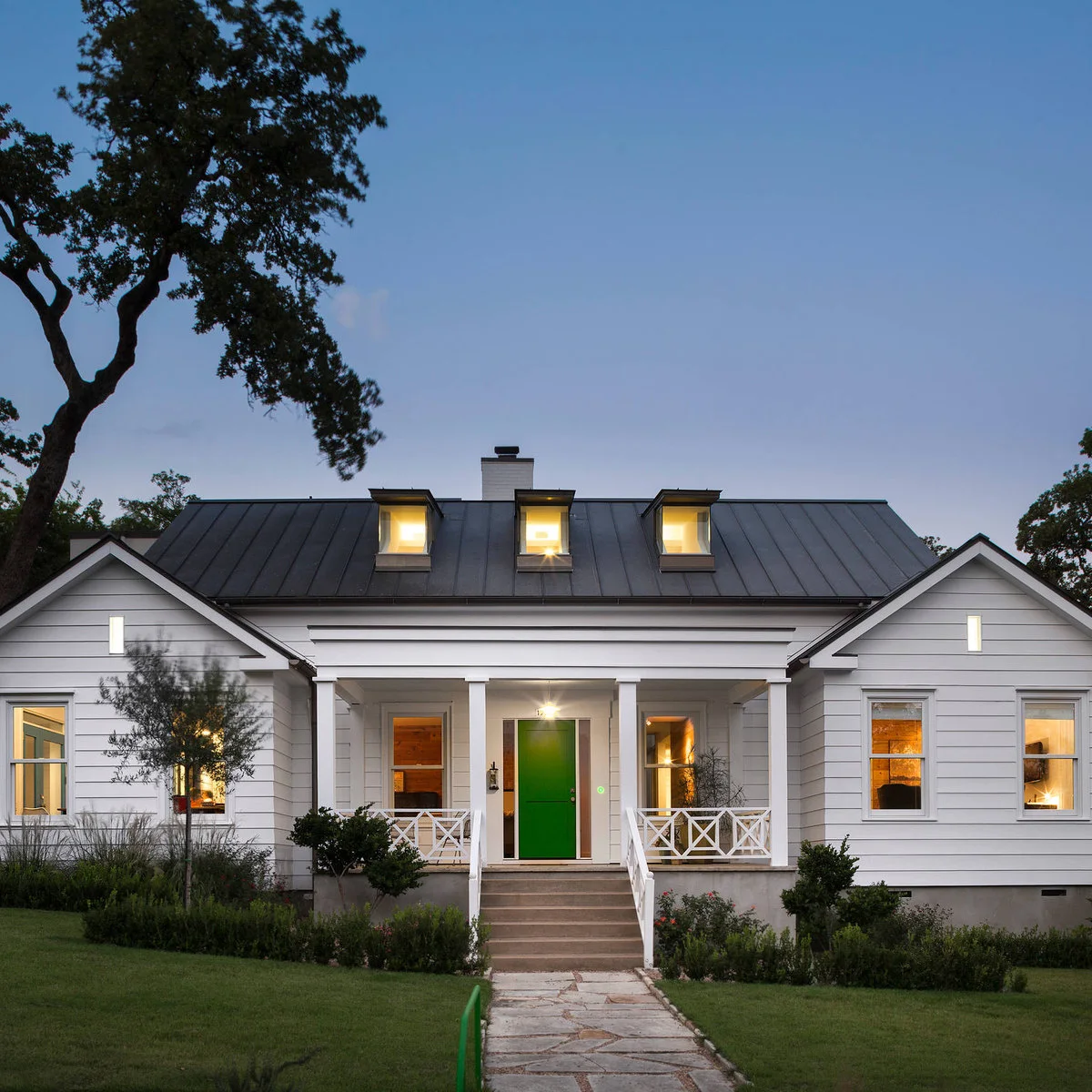
Low planting sits to either side of the broad approach to this green front door. The white porch railing and open stairway remain prominent, while darker leaves soften the base of the house. Taller growth is kept away from the main line of travel to the entrance.
Decide on the usable width of the approach before marking out shrub positions. Allow for branches leaning into the route as they grow, and avoid plants that need continual clipping beside frequently used steps. Keep the house number, handrails and any path lighting easy to see.
IDEA 05 / 20
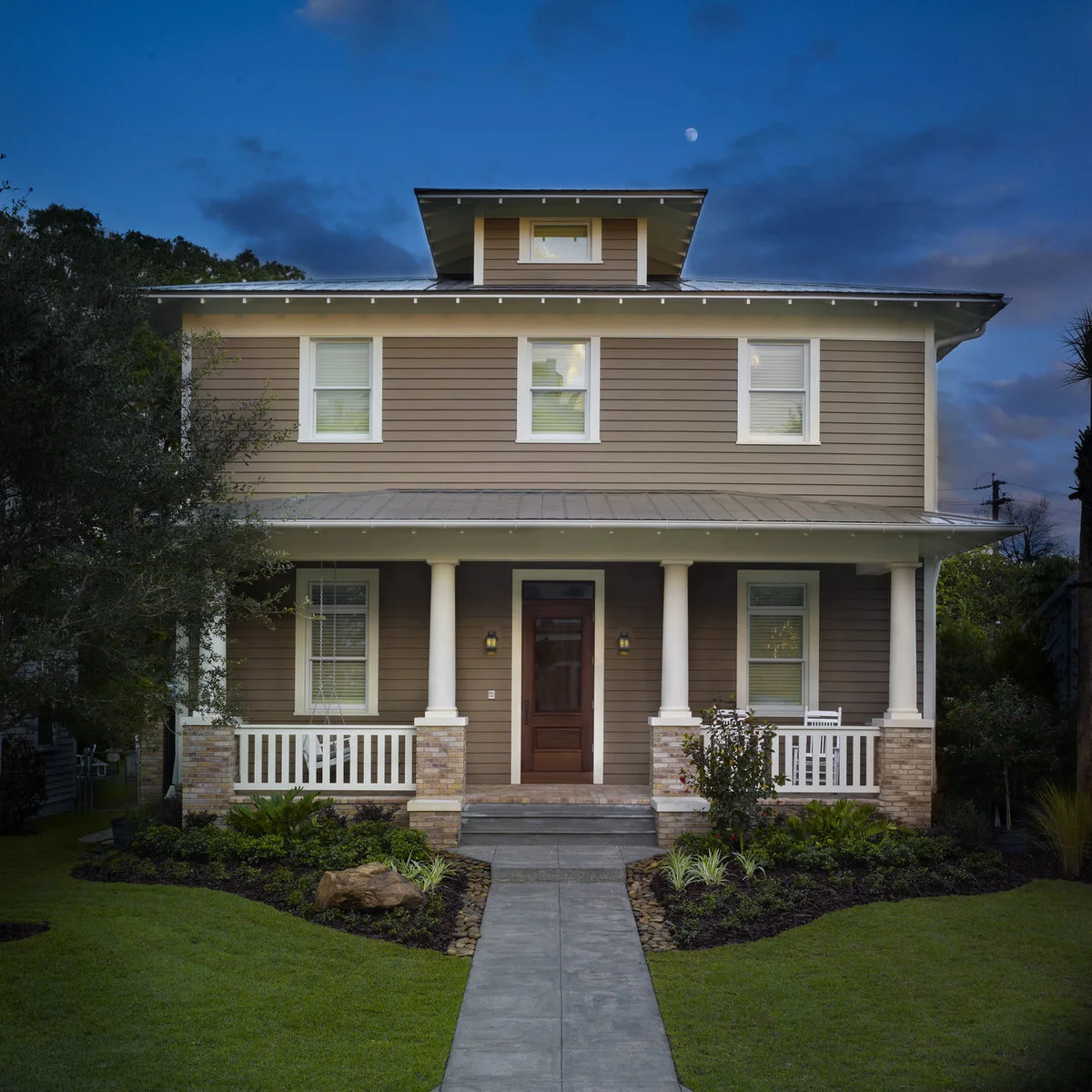
Keep Young Borders Below the Porch
 SaveSupport Non AI Creator
Image credit: Project: Alvarez Homes (via Houzz)
Small rounded shrubs and tufts of narrow foliage sit below the railings of this front porch. The dark bed contrasts with the pale walkway and stones, so the planting reads clearly even before it becomes dense. The entrance and steps stay visible across the front lawn.
A new border does not need a tall back row everywhere. Start with the lowest window and the view from the street when setting your height limit. Check that edging and nearby stones leave space for plant growth and routine care instead of trapping stems in a tight pocket.
PART 02
Make the entrance easy to read
IDEA 06 / 20
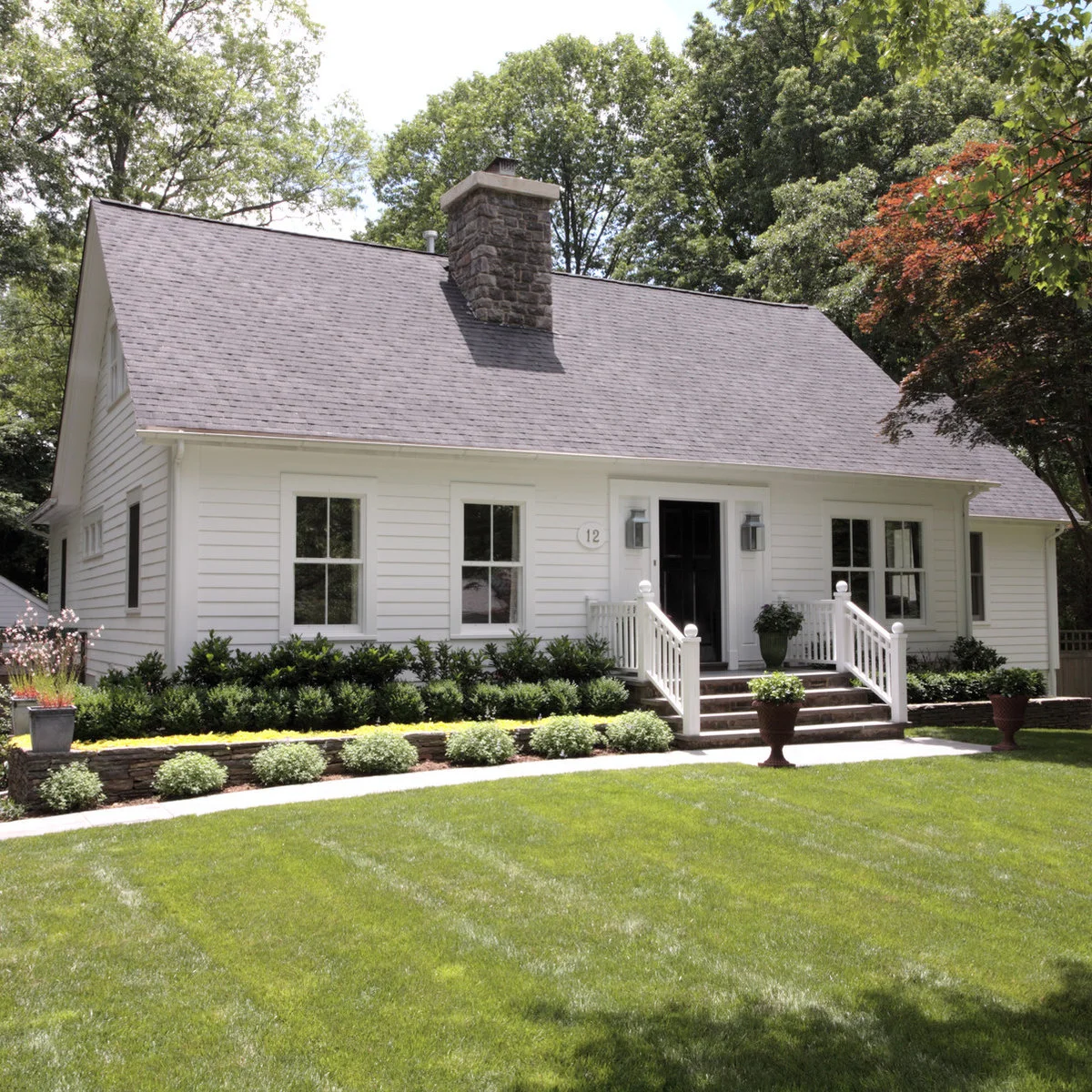
Layer Rounded Shapes Beneath the Windows
 SaveSupport Non AI Creator
Image credit: Project: Janet B. Siegel, Architect (via Houzz)
Darker shrubs form a background beneath the windows, while smaller pale-green rounds step forward toward the brick edge. The repeated shapes give the bed a calm rhythm, and the central approach remains open. Differences in foliage tone make the layers visible without relying on flowers.
Choose the back and front rows together, using their mature dimensions to check that one will not swallow the other. Leave sufficient bed depth for both layers. In a shallow foundation strip, one well-chosen row can work better than squeezing in a layered arrangement that needs constant reduction.
IDEA 07 / 20
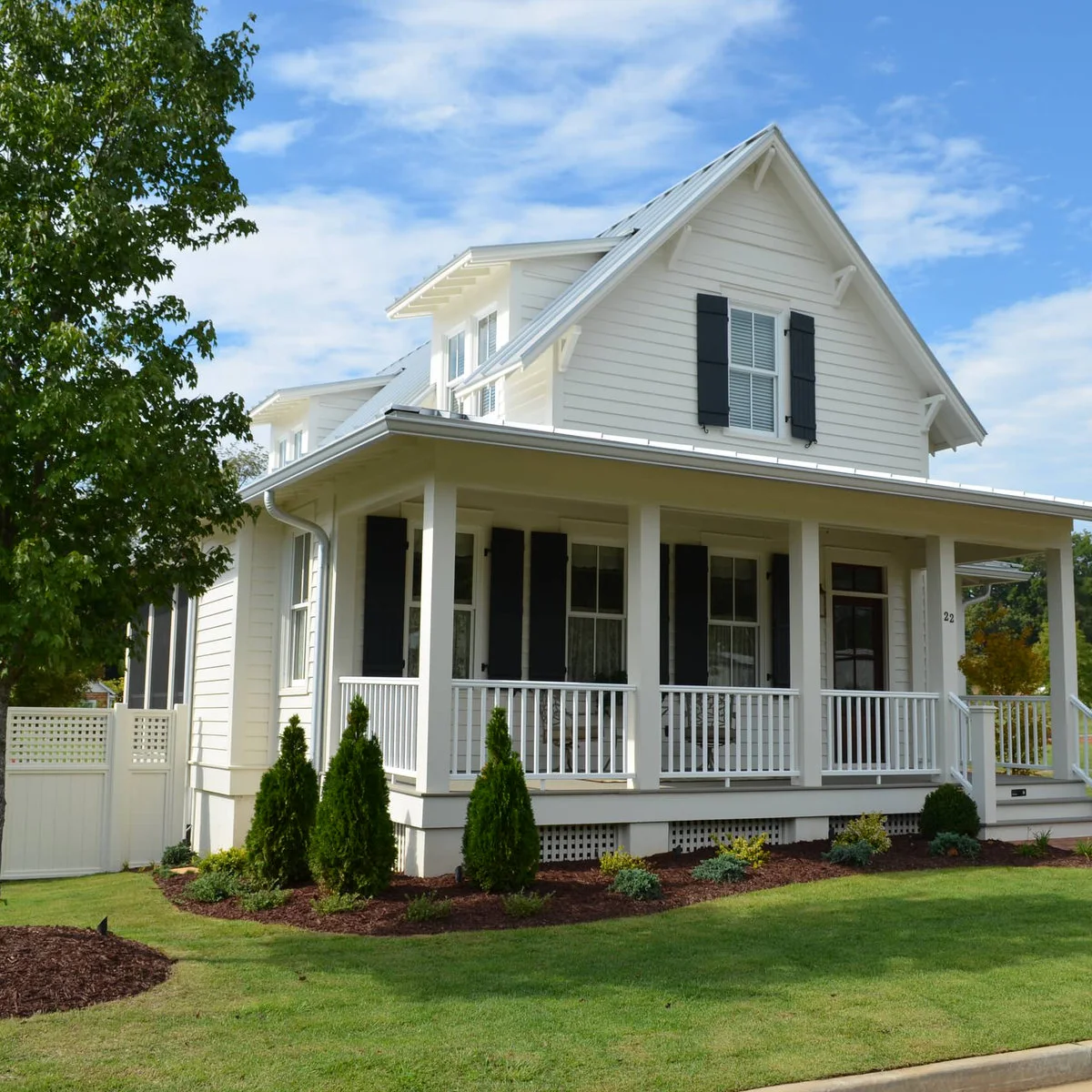
Repeat Upright Forms Along a Porch
 SaveSupport Non AI Creator
Image credit: Project: John Bynum Custom Homes, Inc. (via Houzz)
Conical evergreens repeat below this white wraparound porch, echoing the rhythm of its posts. Open mulch between the plants keeps each shape distinct and reveals the lattice behind them. The regular spacing suits the long porch, where a scattered mixture could make the elevation harder to read.
Match the eventual width to the distance between plants and the porch itself. Ask whether the chosen cultivar holds a narrow outline naturally or needs regular shaping. Keep enough clearance to maintain the lattice, and avoid placing a dense evergreen directly over a vent or access panel.
IDEA 08 / 20
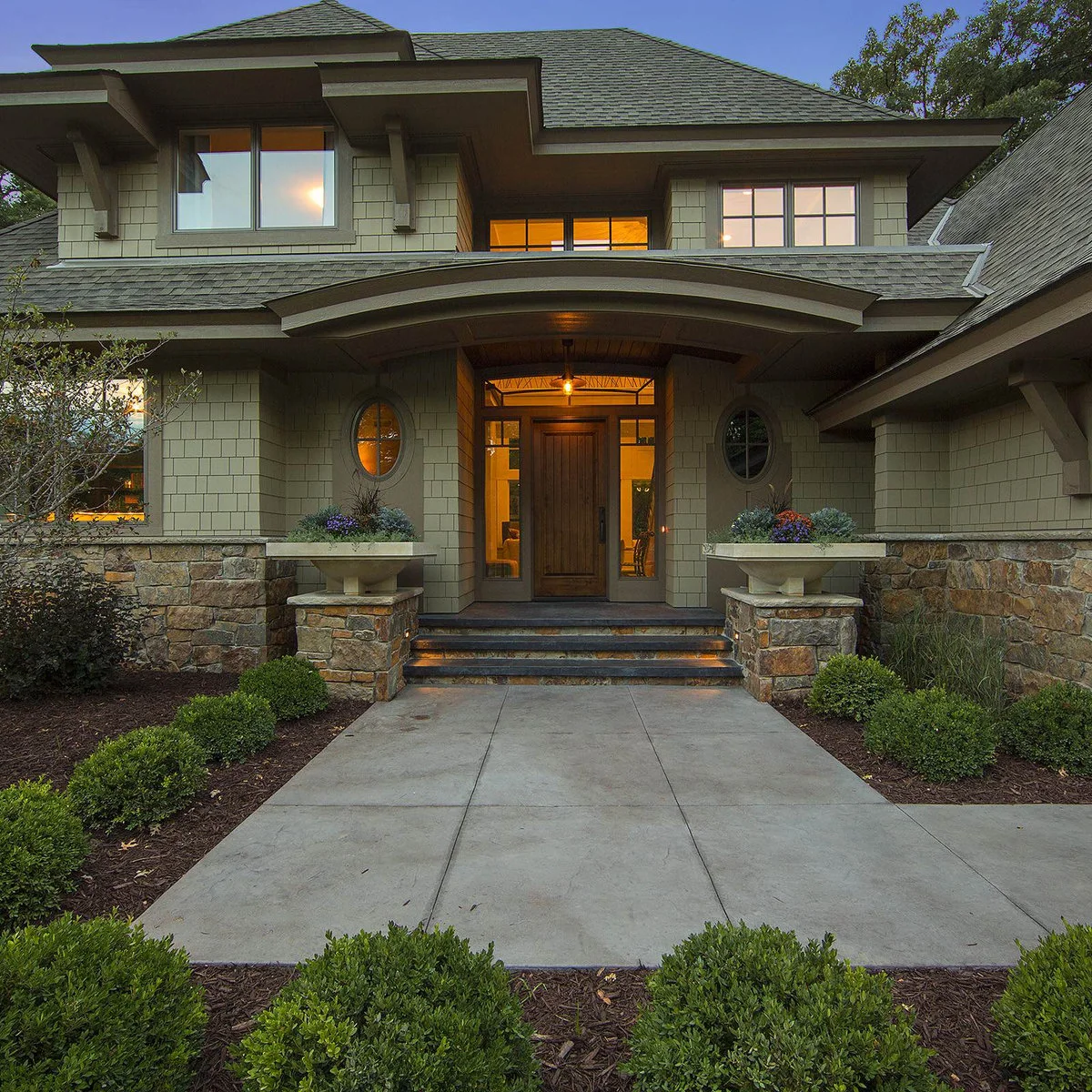
Set the Border Back from the Arrival Path
 SaveSupport Non AI Creator
Image credit: Project: SKD Architects (via Houzz)
Low rounded shrubs run beside the broad walkway to this green Craftsman entrance. Their modest height allows the stone columns and front door to remain the main features. The lawn-facing curve softens the straight approach without making the planting spill across the walking surface.
Keep the border’s eventual edge outside the usable path, rather than spacing plants according to their current pot size. Rounded shrubs can be effective here, but their mature spread still matters. Leave access to the sides of the columns so cleaning and small repairs remain practical.
IDEA 09 / 20
Use Low Shrubs Beside a Small Front Sitting Area
 SaveSupport Non AI Creator
Image credit: Project: Scott Becker | Architect (via Houzz)
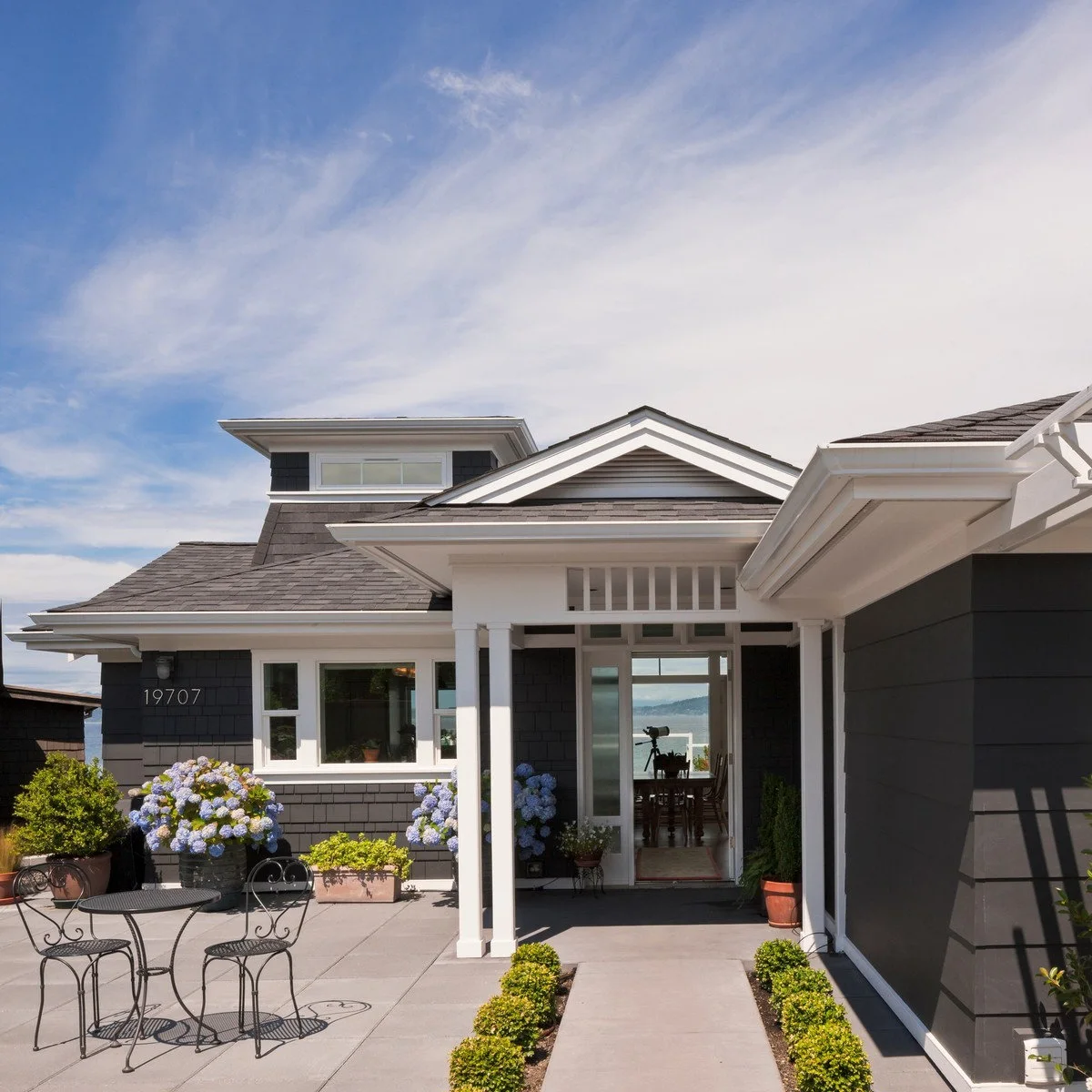
A low line of bright-green shrubs marks the edge of the approach to this small front sitting area. Blue-flowered pots bring color closer to the doorway, while the planted border stays comparatively simple. The combination distinguishes the permanent framework from movable accents near the chairs.
Use shrubs to define the route without making the seating feel fenced in. Keep enough room to pull out chairs and carry bags to the door. If the same bed reaches the drive, continue the scale and spacing through your driveway landscaping rather than abruptly switching to much larger plants.
IDEA 10 / 20
Keep a Formal Hedge Below the Window
 SaveSupport Non AI Creator
Image credit: Project: Cornerstone Construction Services (via Houzz)
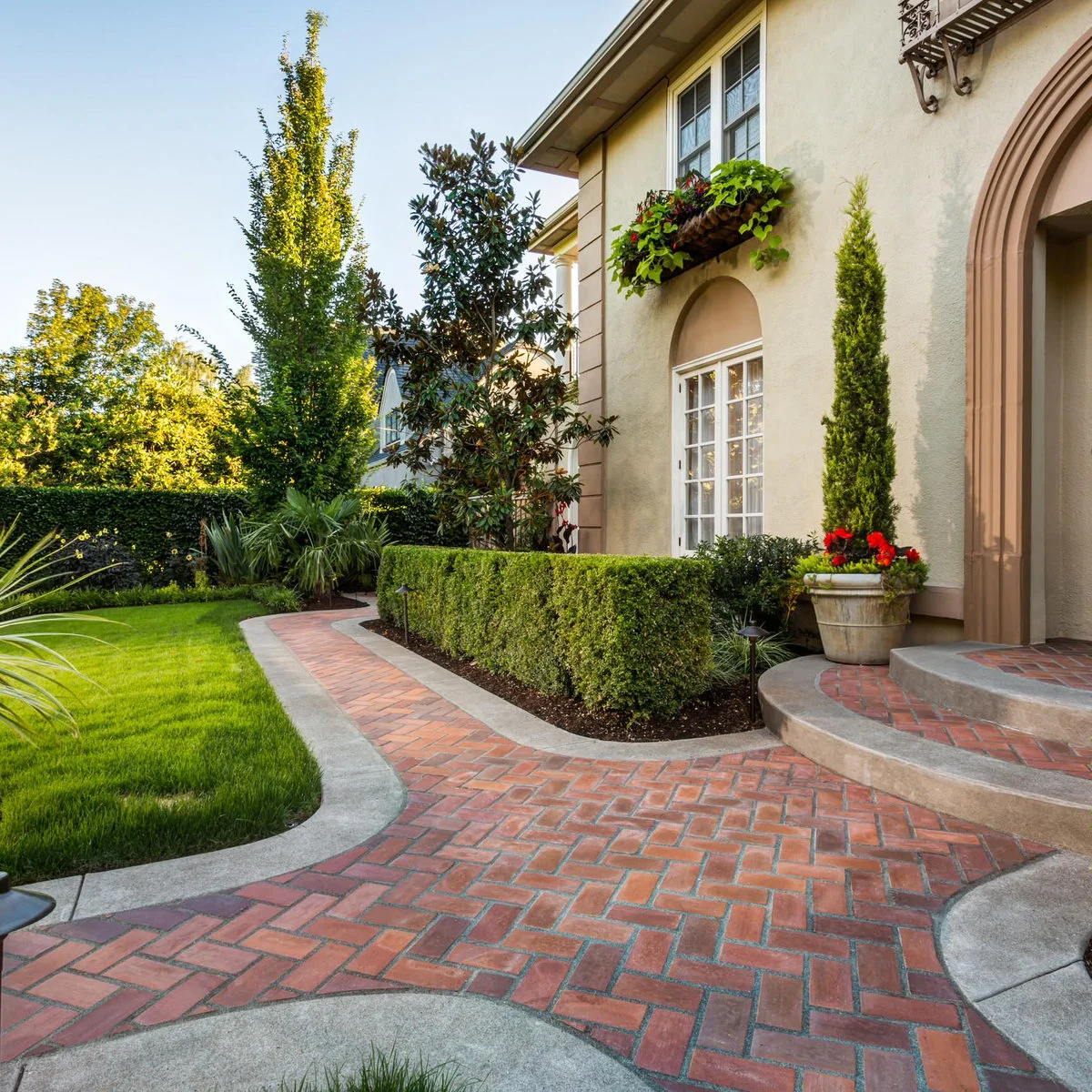
A neatly clipped hedge follows the wall beneath this tall window, leaving the glass and its flower box visible. The brick walk curves around the planting, and an upright evergreen in a pot marks the doorway. Straight foliage edges contrast with the softer lawn and curved route.
This precise outline brings a recurring trimming commitment. Choose a shrub suited to clipping and to the light at the wall, then allow maintenance space on both sides. Avoid pushing its finished edge against the path, where fresh growth would quickly reduce the useful walking width.
PART 03
Choose a manageable amount of structure
IDEA 11 / 20
Balance a Mature Porch with Broad Shrub Groups
 SaveSupport Non AI Creator
Image credit: Project: Wingren Landscape (via Houzz)
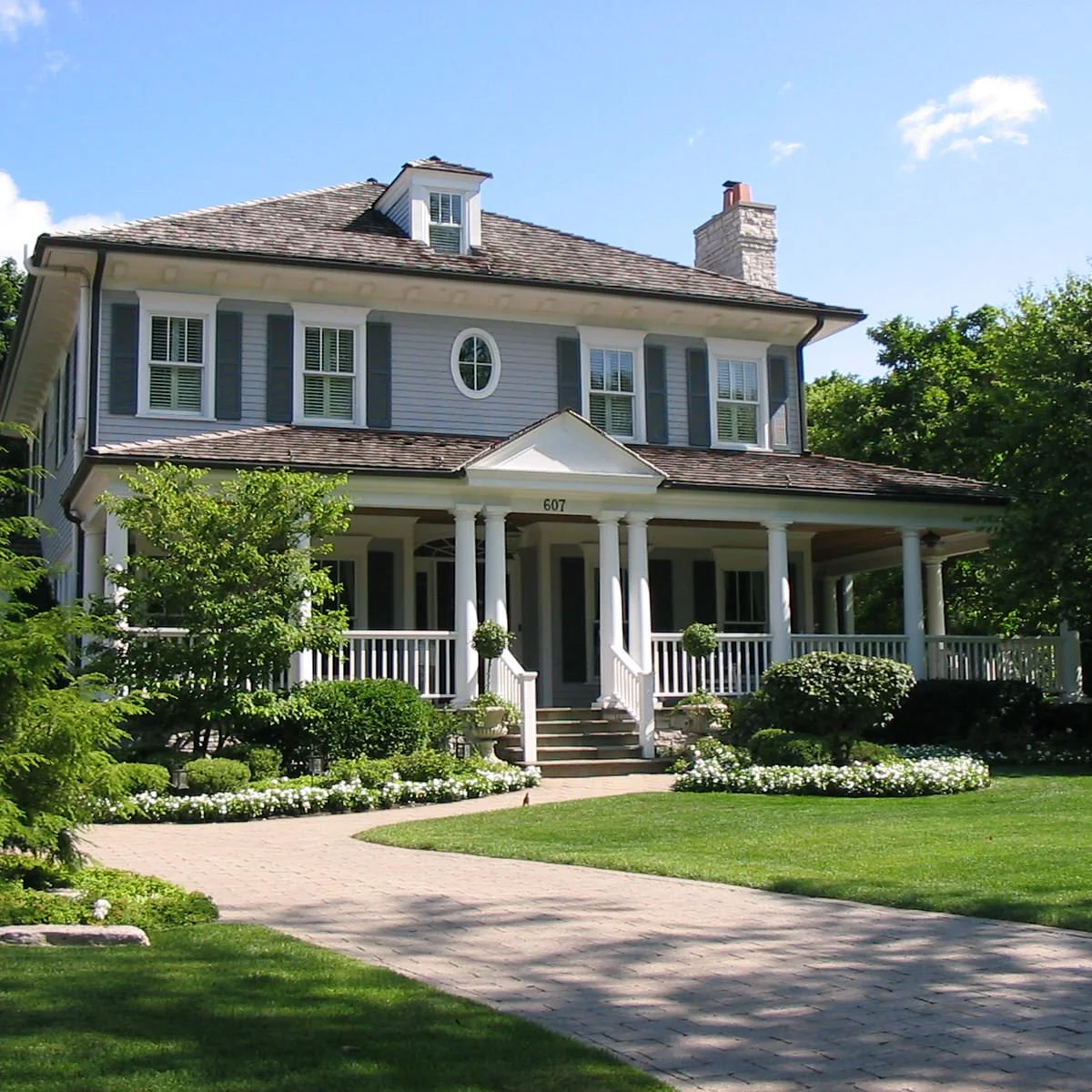
Broad rounded shrubs anchor the base of this white-railed porch, with a smaller clipped row and white flowers nearer the walk. Their mass balances the size of the house. The open space beside the steps prevents the planting from concealing the route to the front door.
A mature-looking border requires more than buying large plants. Check whether you have enough bed depth for the eventual spread and for care behind it. If your windows sit lower than those shown here, reduce the planting height instead of copying the same proportions unquestioningly.
IDEA 12 / 20
Echo a Formal Entrance with Paired Shapes
 SaveSupport Non AI Creator
Image credit: Project: Smoketree Landscape (via Houzz)
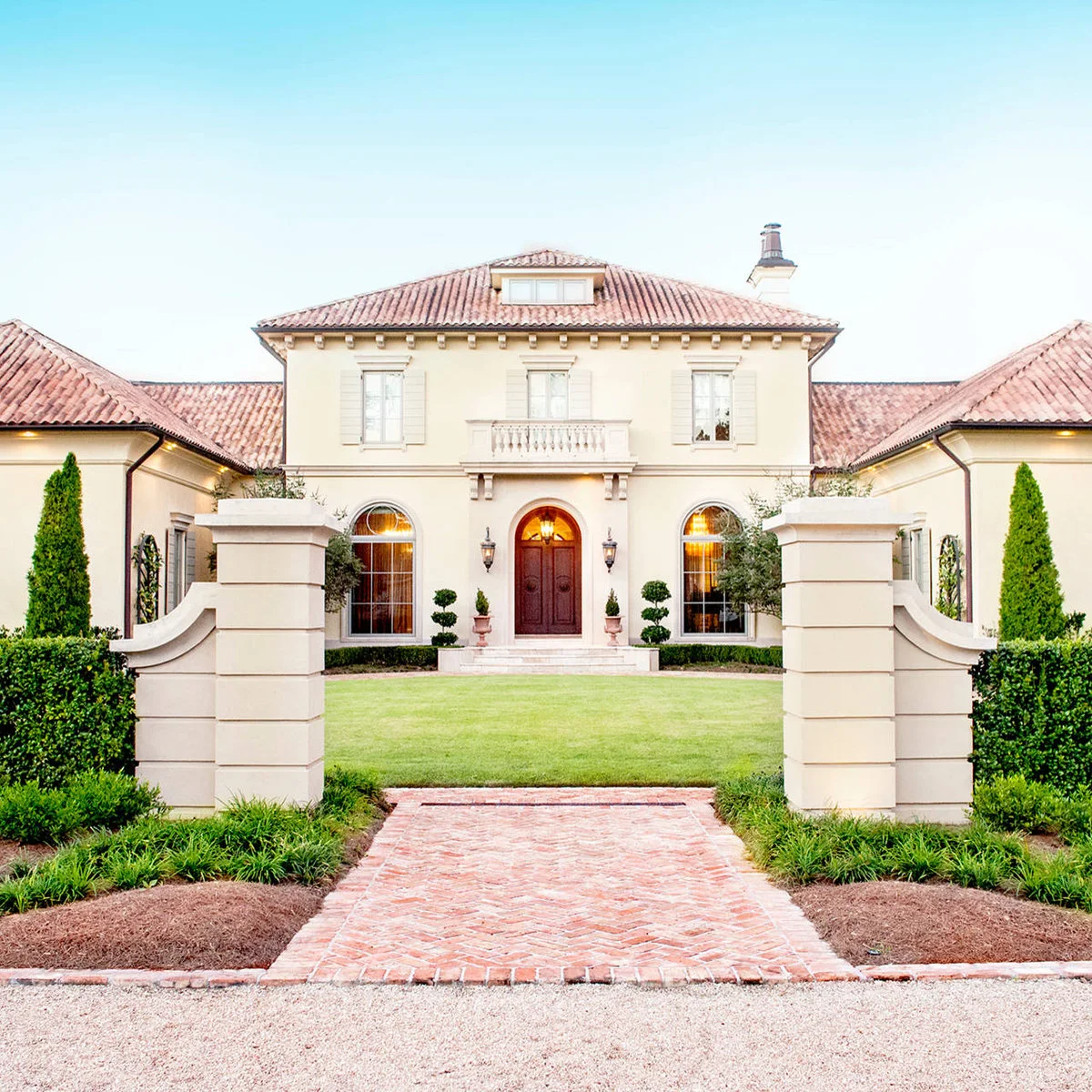
Paired sculpted shrubs emphasize the arched front door, while narrow clipped hedges continue beneath the tall windows. Larger upright forms stand farther out near the courtyard boundary. The planting repeats the symmetry of the building without occupying the central lawn or the direct approach.
Use this degree of formality only if you enjoy its upkeep or can arrange regular help. Matching plants need similar light and growing conditions to stay balanced. If one side of your entrance is much shadier, a less symmetrical arrangement may be easier to maintain successfully.
IDEA 13 / 20
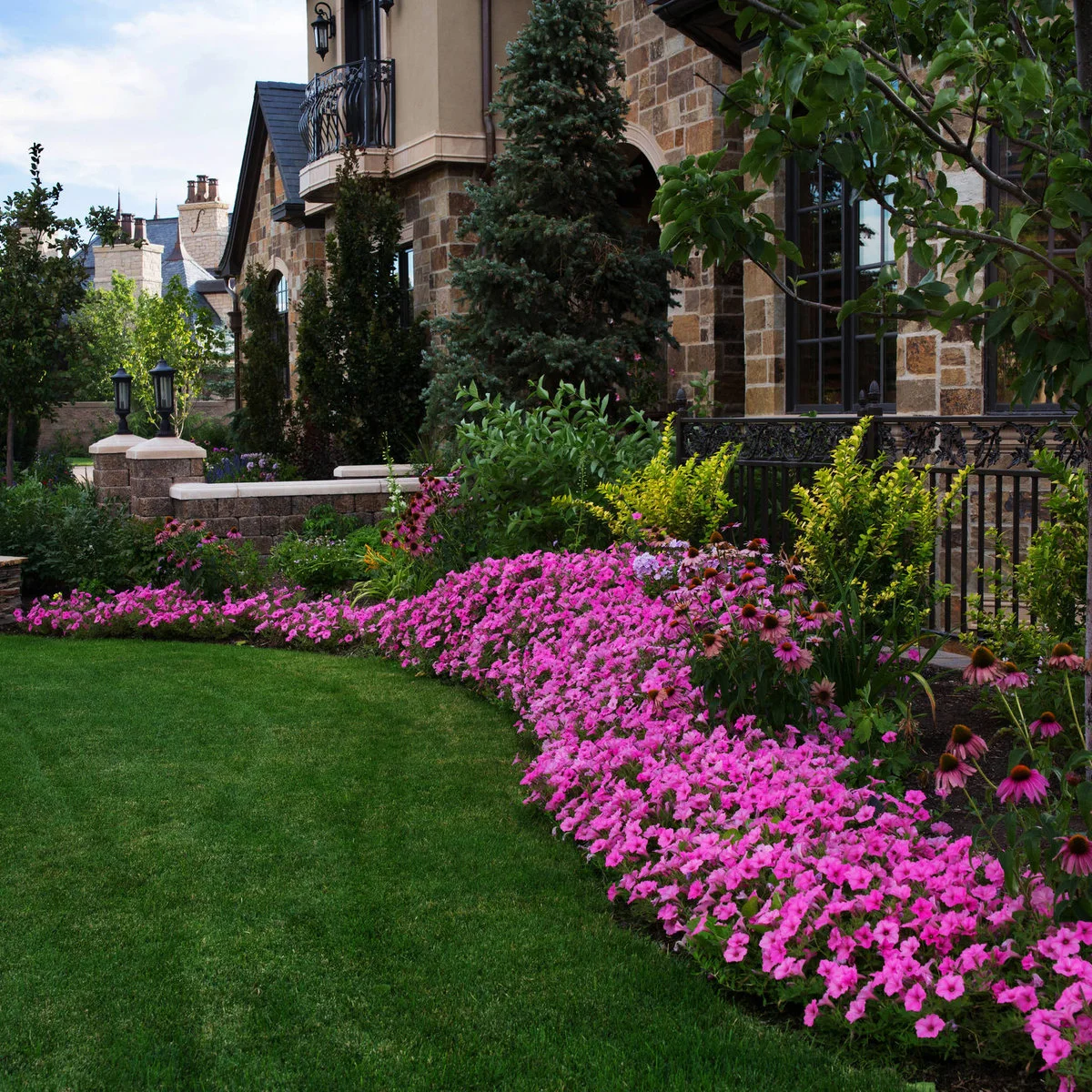
Put Flower Color in Front of Green Structure
 SaveSupport Non AI Creator
Image credit: Project: Platinum Landscape & Pools (via Houzz)
Pink flowers follow the curved lawn edge in front of yellow-green shrubs and taller dark evergreens. Each layer has a different texture, so the border has depth even where foliage is mainly green. The stone house and iron railing provide a firm backdrop for the loose flowers.
Choose the shrubs for their outline and foliage as well as any bloom. Then add locally suitable flowers without crowding the woody plants at their bases. A narrow strip of seasonal color may need renewal, watering and deadheading even when the shrub framework stays in place.
IDEA 14 / 20
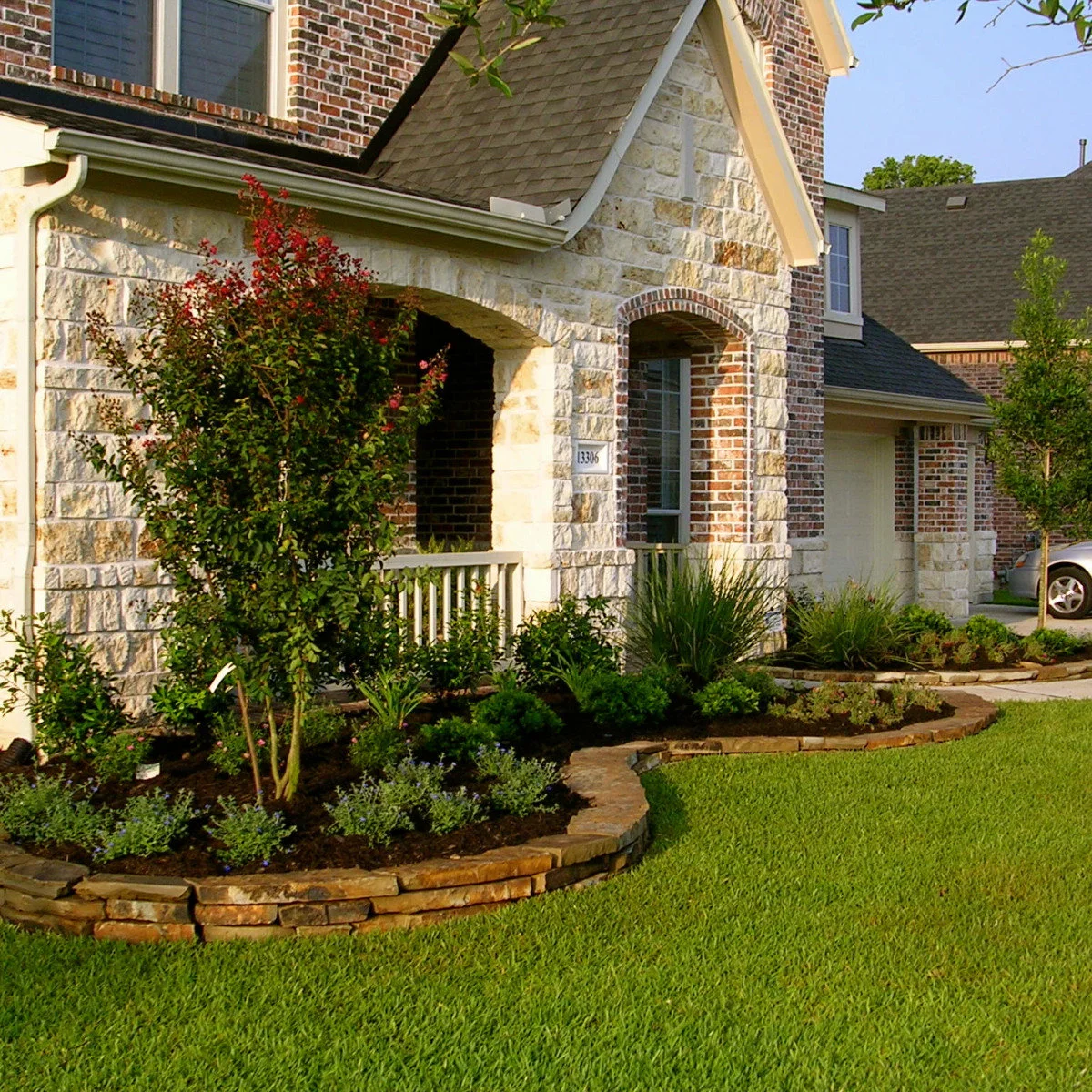
Contrast Fine Foliage with Rounded Shrubs
 SaveSupport Non AI Creator
Image credit: Project: Fox Landscaping (via Houzz)
Small rounded shrubs repeat through this curved front bed, interrupted by upright narrow foliage and a taller plant near the porch. The different leaf shapes keep the arrangement interesting without hiding the stone-and-brick facade. A defined edge separates the planted soil from the lawn.
Use contrasting textures selectively, with enough repetition to connect the bed from one end to the other. Check that all the plants suit the same watering routine and exposure. Keep larger woody plants away from the narrowest part of the porch approach, where their branches could become an obstacle.
IDEA 15 / 20
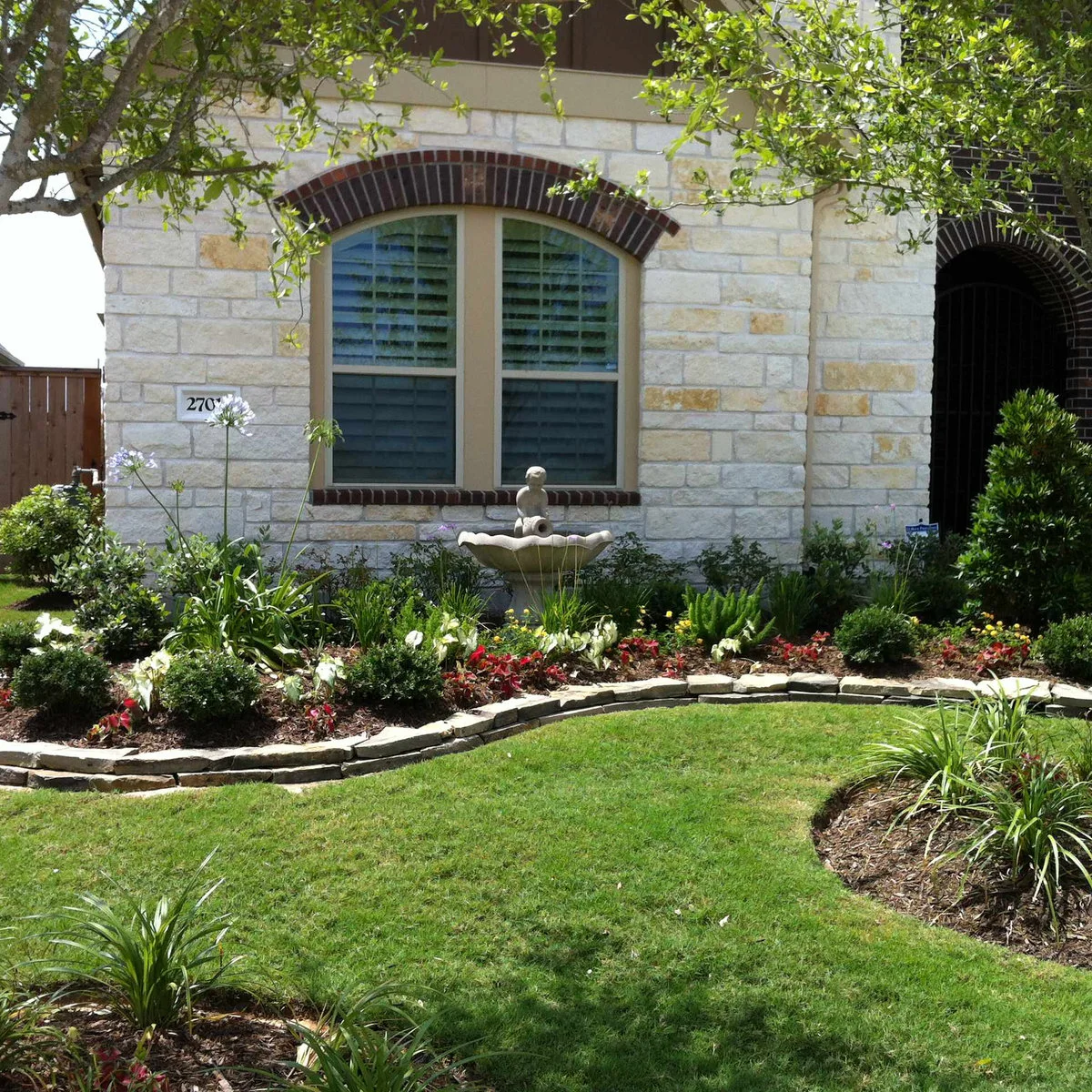
Let a Small Feature Sit Above Low Planting
 SaveSupport Non AI Creator
Image credit: Project: Greenmark Environmental (via Houzz)
A small fountain sits below this arched window, with low shrubs and colorful bedding arranged around it. Taller dark foliage marks the right side near the entrance. The planting stays low enough for the feature and the window to remain distinct instead of disappearing into a dense hedge.
When adding a feature within a shrub bed, plan how you will reach it for cleaning before planting. Leave the necessary servicing route clear as foliage grows, and avoid directing spray onto the wall. Choose shrubs for the actual light and moisture conditions around the feature.
PART 04
Build depth without crowding the walk
IDEA 16 / 20
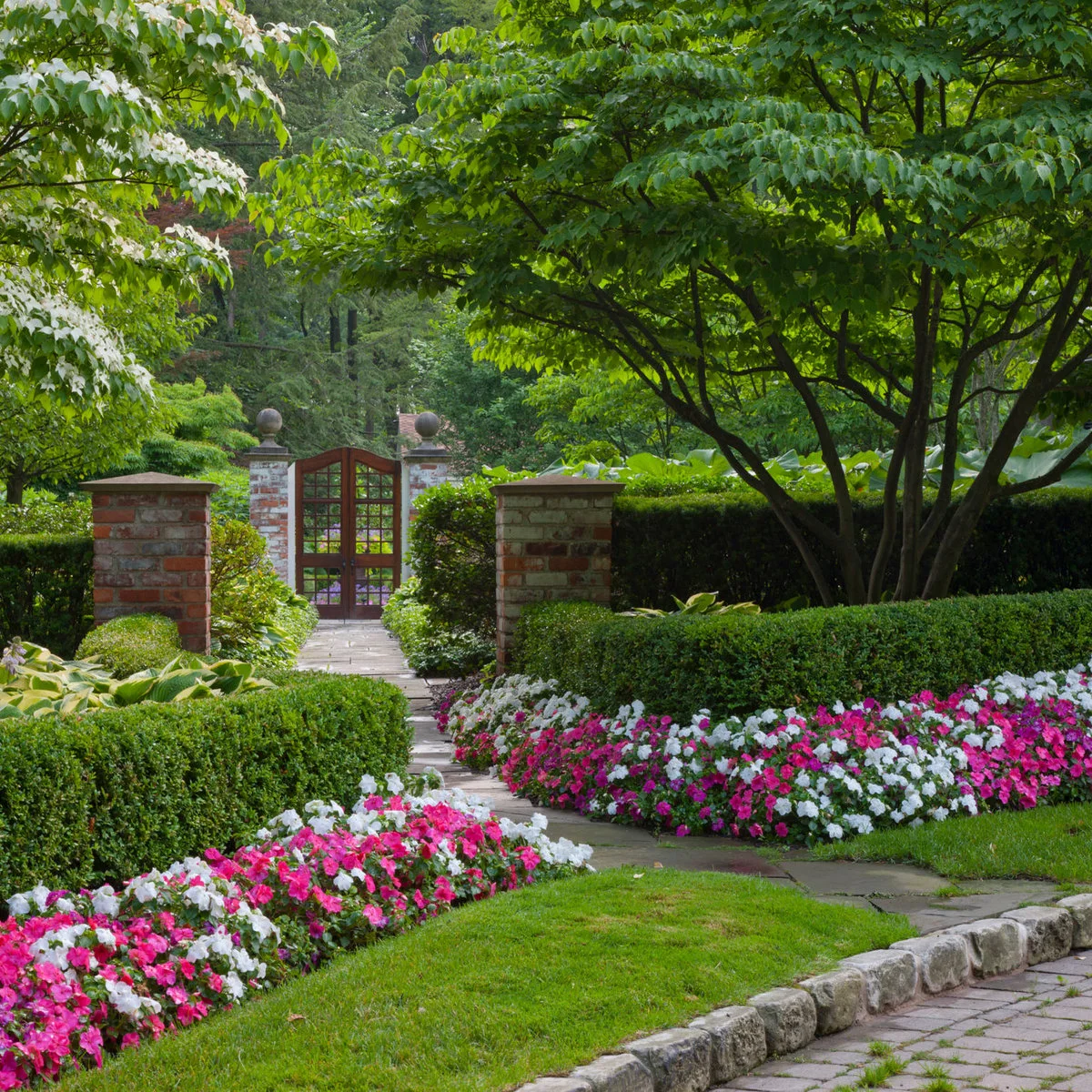
Carry the Shrub Border Out to the Gate
 SaveSupport Non AI Creator
Image credit: Project: Zaremba & Company (via Houzz)
Clipped hedges lead the eye toward the gate in this planted entrance garden. Shorter sections turn around the path, while taller foliage provides enclosure farther back. White and pink flowers soften the edges, keeping the formal shrub shapes from feeling like a solid green barrier.
A low front-yard fence or gate works best when its opening stays easy to use. Set shrubs back far enough for the gate to swing and for two people to pass comfortably where needed. Check local visibility requirements near a street before extending a hedge toward the boundary.
IDEA 17 / 20
Leave the Landing Clear Beside Flowering Shrubs
 SaveSupport Non AI Creator
Image credit: Project: Grow Landscapes (via Houzz)
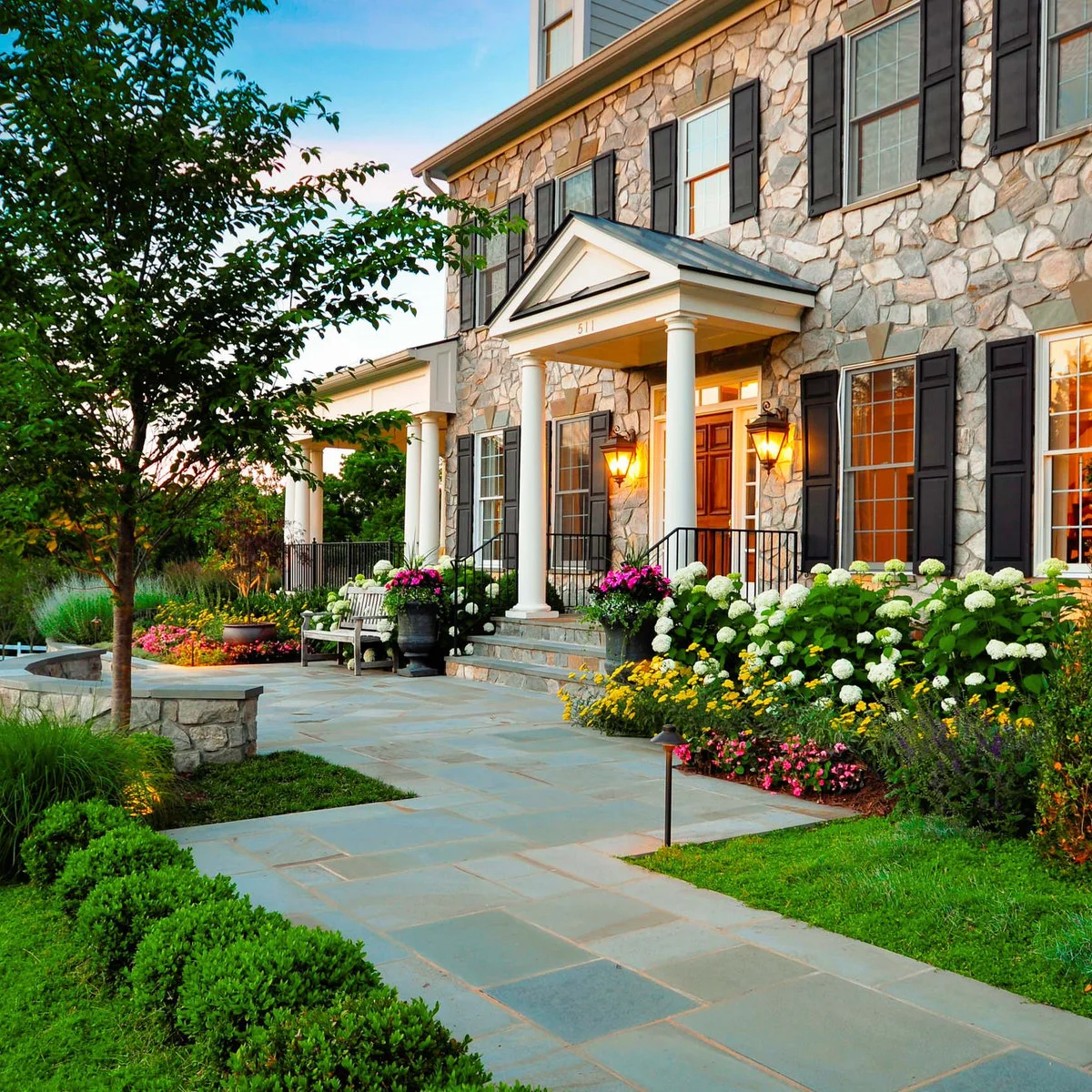
Large white flower clusters sit against the stone facade, while lower yellow and pink flowers meet the broad paved landing. Smaller clipped shrubs appear closer to the lawn. The arrangement allows flowering shrubs to become a feature without filling the space immediately in front of the steps.
Plan for the full width of flowering branches, including their tendency to lean outward after rain. Keep them away from handrails and the main walking line. Research pruning for the exact shrub before cutting: the wrong timing can remove flower buds rather than simply tidy the shape.
IDEA 18 / 20
Use Shrub Shapes to Mark Changes in Level
 SaveSupport Non AI Creator
Image credit: Project: Midwest Block & Brick (via Houzz)
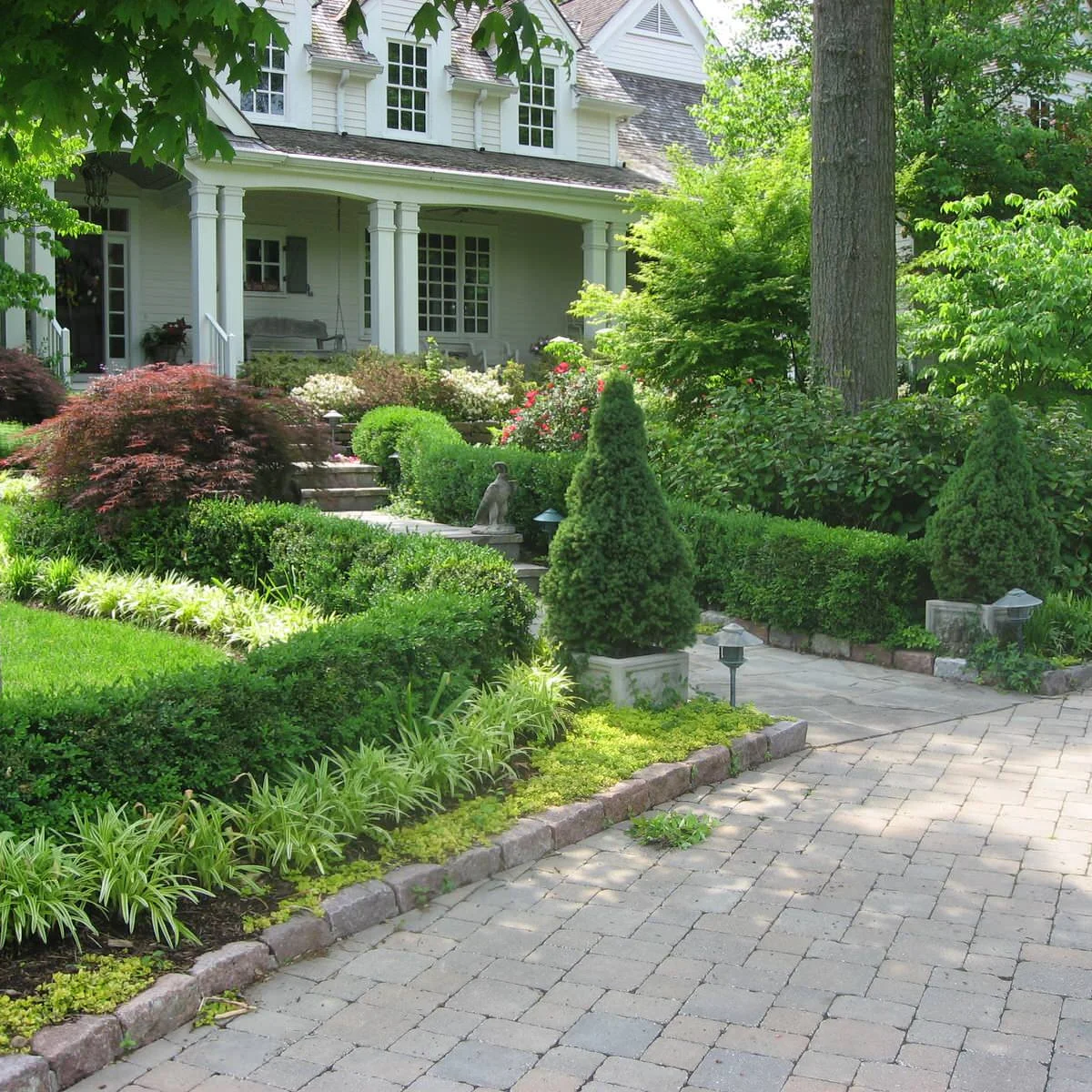
Conical evergreens mark the approach to steps in this layered front garden, while lower clipped hedges follow the route. Light-green ground planting softens the stone edging. The different heights help separate the walking surface from the planted areas without blocking the view of the porch above.
Keep the edges of every tread visible and allow clear access to any handrail. Choose plants that will not spill heavily over changes in level, and leave room to remove fallen leaves. The planting can frame the steps, but it should never be relied on as a guard or barrier.
IDEA 19 / 20
Mix Dark Leaves with Blue-Green Evergreens
 SaveSupport Non AI Creator
Image credit: Project: Peter Marino (via Houzz)
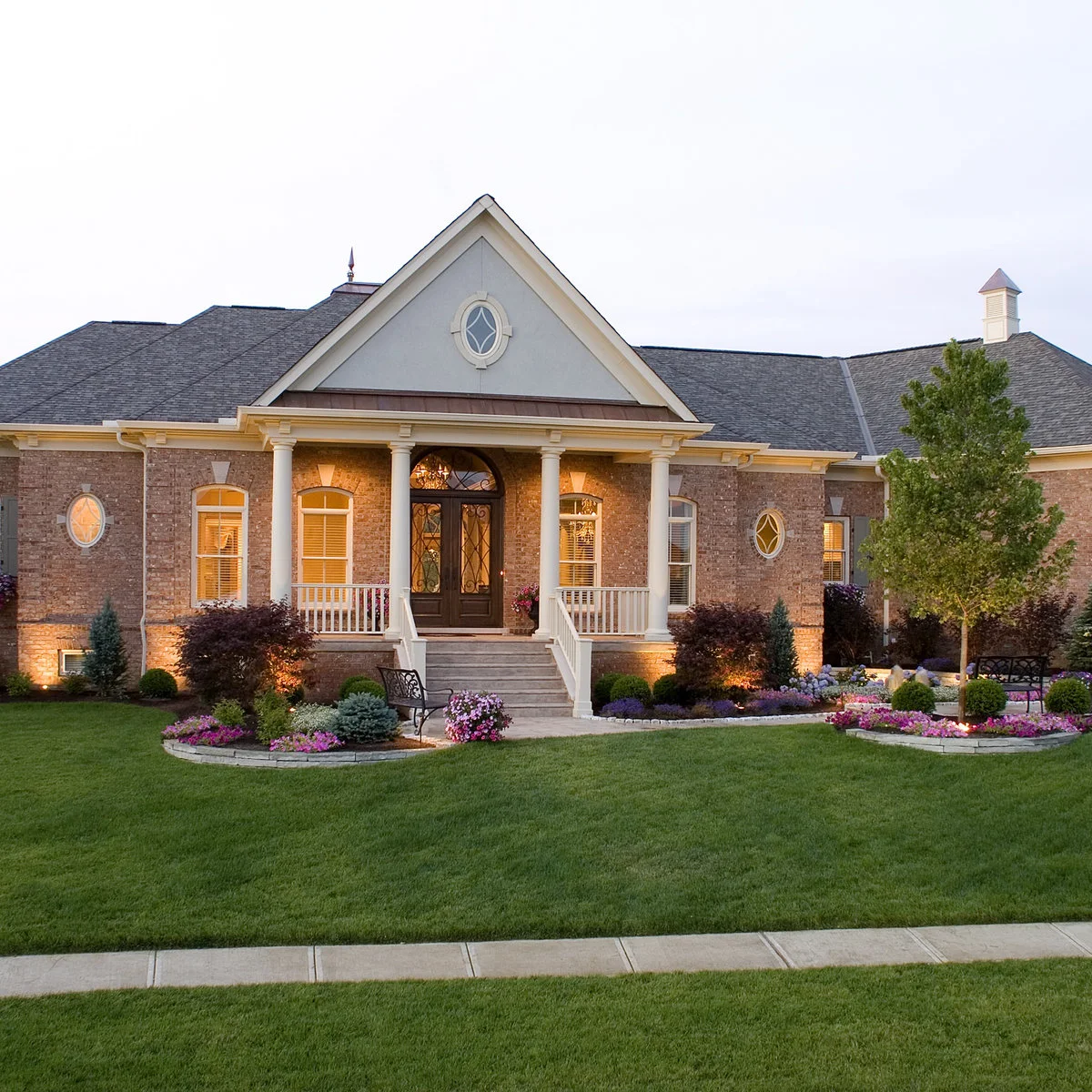
Burgundy foliage and blue-green evergreens bring contrast to this brick entrance, with smaller rounded plants near the lawn. The planting is grouped beside the approach rather than spread evenly across every open surface. Evening lighting picks out the facade while the shrub shapes remain readable.
Check foliage colors in your own light before buying a full border; shade and seasonal changes can alter their appearance. Choose plants that suit the site independently of the desired palette. Leave lights and their wiring accessible, and make sure future growth will not hide the steps or door.
IDEA 20 / 20
Let Flowering Shrubs Form the Background
 SaveSupport Non AI Creator
Image credit: Project: McCullough's Landscape & Nursery (via Houzz)
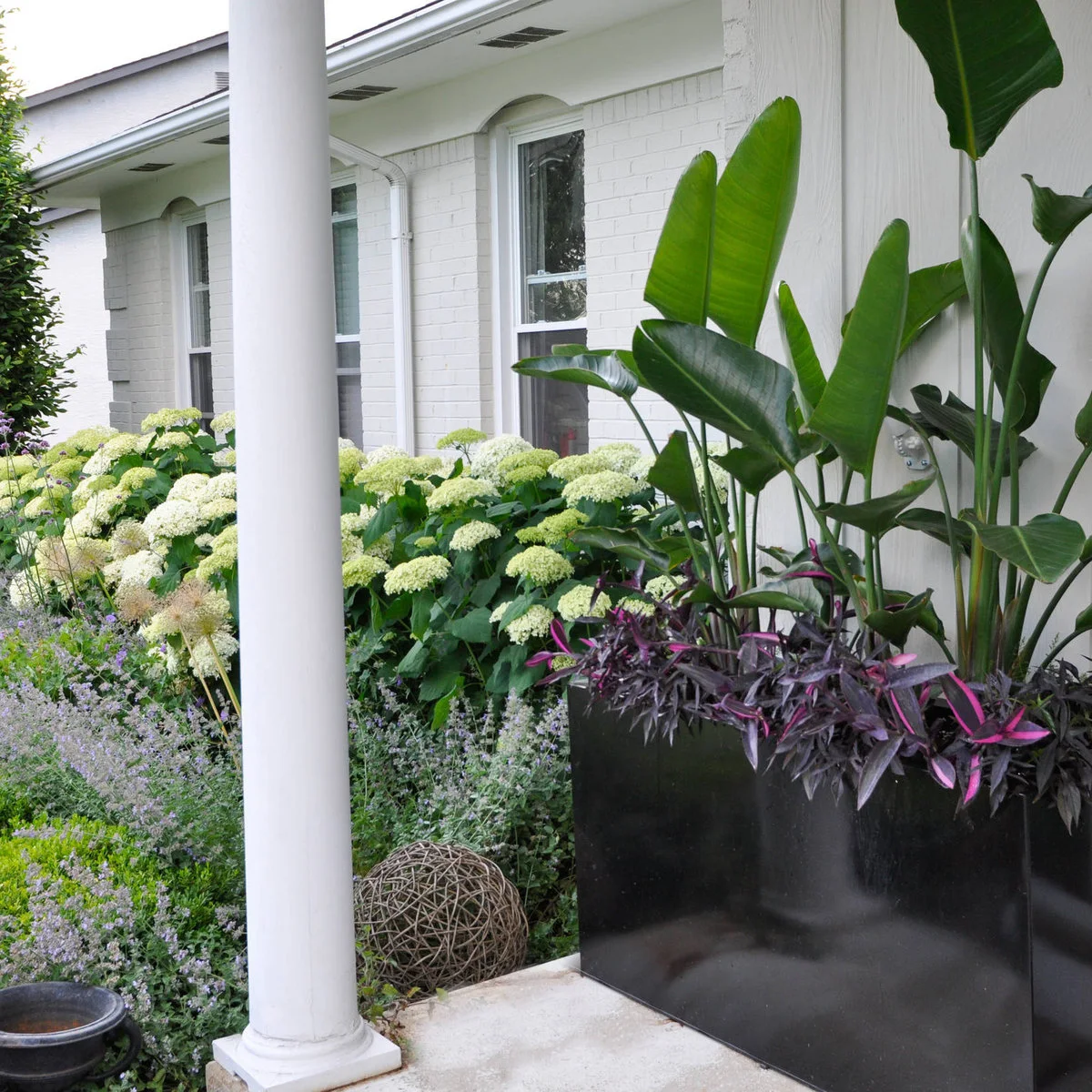
White-flowered shrubs make a soft background against this white brick porch, with a large dark container in front. The container’s broad leaves and trailing purple flowers sit separately from the planted shrub border. That distinction lets the porch have a changing foreground without replacing its whole framework.
Leave enough room to reach both the planted shrubs and the container for watering and cleaning. Avoid crowding the pot against woody stems, and choose the shrubs for their mature size rather than their temporary flowering display. The container can change with your needs while the bed establishes.
BRING IT ALL TOGETHER
Buy for the space you have at maturity
Measure the planting area before choosing shrubs, including the route you need to reach windows, meters, drains and the wall. Mark the expected mature spread on the ground. A smaller cultivar that fits naturally is often a better choice than a vigorous plant that needs repeated cutting to stay within bounds.
Check local growing advice for your exact plants, including invasiveness and pruning needs. Prepare the site for its actual drainage and soil, locate utilities before digging, and keep mulch away from stems. Establishment watering and occasional inspection remain necessary even in a restrained, mostly green border.