A front yard garden has to welcome visitors while leaving space for the less decorative parts of daily life: walking to the door, opening windows and tending plants. Start with those routes, then decide where flowers, shrubs or a small lawn will earn their space.
These photographed gardens show different ways to balance planting with a clear entrance. Use the arrangements as starting points rather than plant lists: your light, climate, soil and available maintenance time should guide the species you choose.
PART 01
Make the approach easy to follow
IDEA 01 / 20
Frame the Entrance with Layered Flower Beds
 SaveSupport Non AI Creator
Image credit: Project: Grow Landscapes (via Houzz)
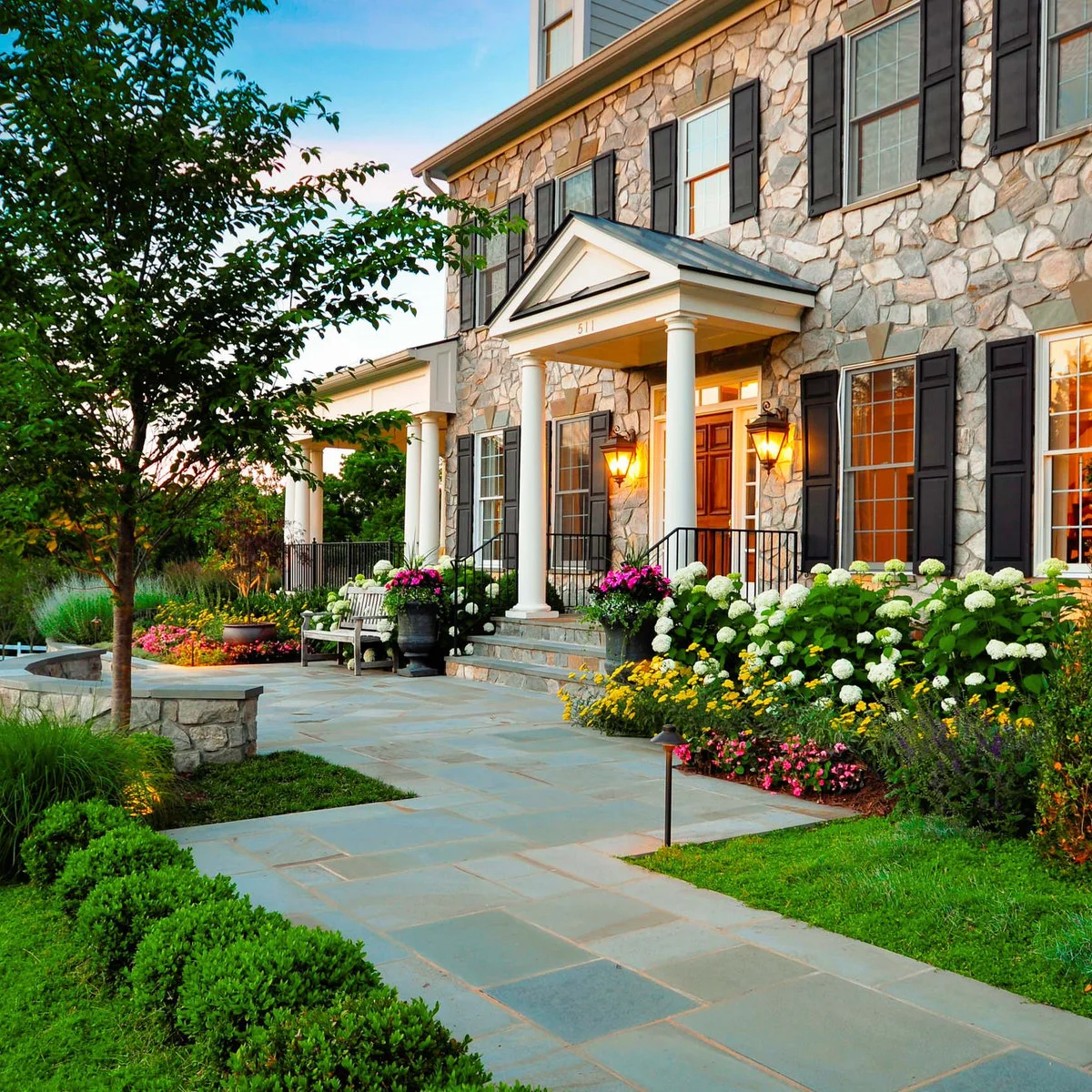
A generous pale walkway makes the entrance immediately recognizable against this stone facade. White flower heads sit above lower patches of yellow and pink, with taller greenery adding depth behind them. The planting decorates the approach without needing to occupy its whole width.
Keep the main route comfortable when plants reach their mature spread, not only when newly installed. Place taller growth where it will not hide the door or signage. Repeat a few colors on both sides to connect the beds without requiring an exact mirror image. Use a clearly defined flower-bed edging detail to keep the planted borders distinct from the main entrance route. Choose shrubs for the front of the house by mature size before filling the remaining border with flowers.
IDEA 02 / 20
Let a Narrow Garden Path Feel Immersed in Plants
 SaveSupport Non AI Creator
Image credit: Project: Bethesda Garden Design llc (via Houzz)
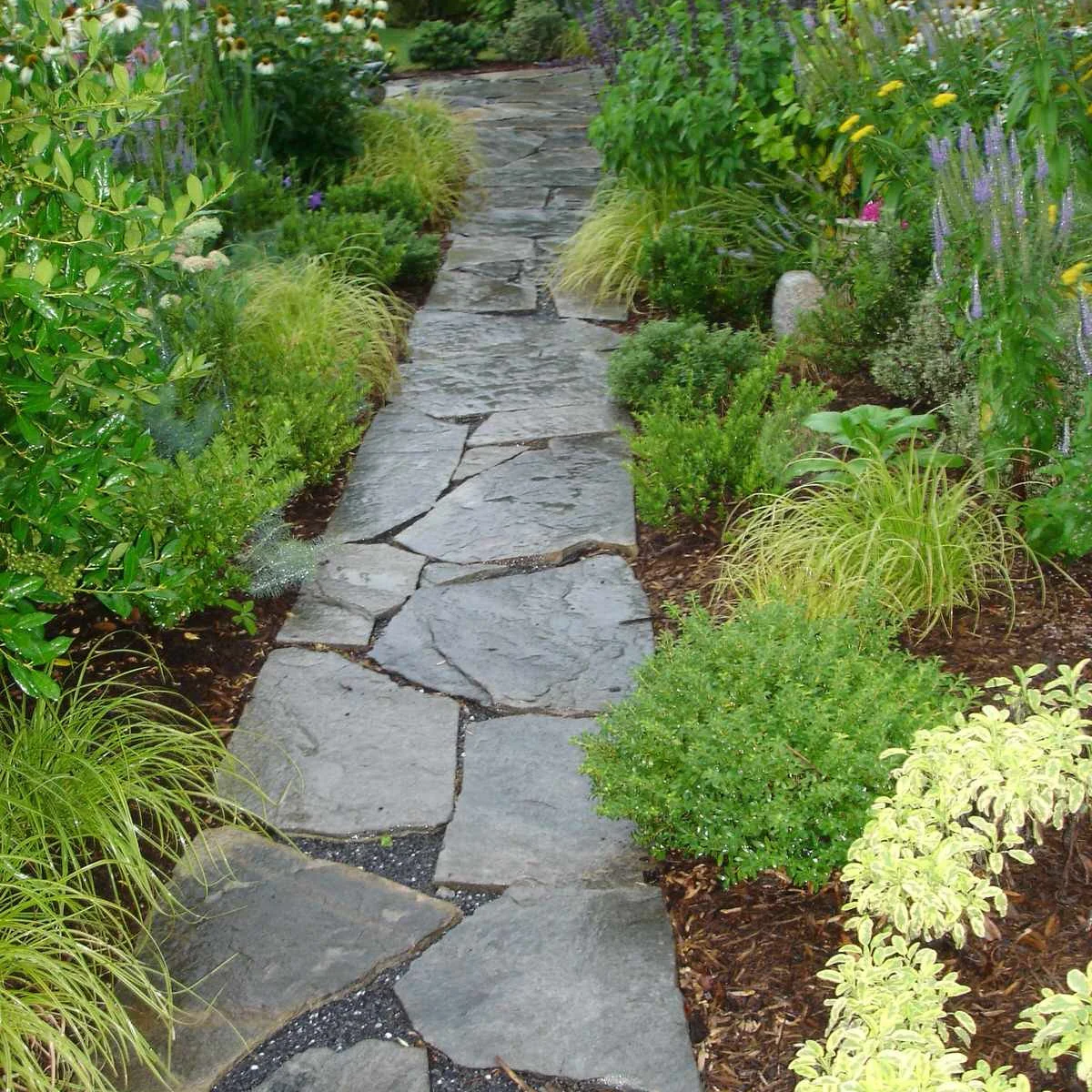
The irregular stone path runs through planting that varies in leaf size, height and flower color. Fine yellow-green foliage lightens one side, while broader leaves create a darker background. The narrow opening feels like a garden walk rather than a strip of paving beside a bare bed.
Use this immersive effect on a secondary or comfortably sized approach, keeping plants back from the actual walking surface. Check how the route feels after rain and when carrying bags. Avoid thorny or rigid growth where it could catch clothing, and retain access for trimming the edges.
IDEA 03 / 20
Break Up a Curbside Bed with Rounded Stones
 SaveSupport Non AI Creator
Image credit: Project: Michael Muro Garden Design (via Houzz)
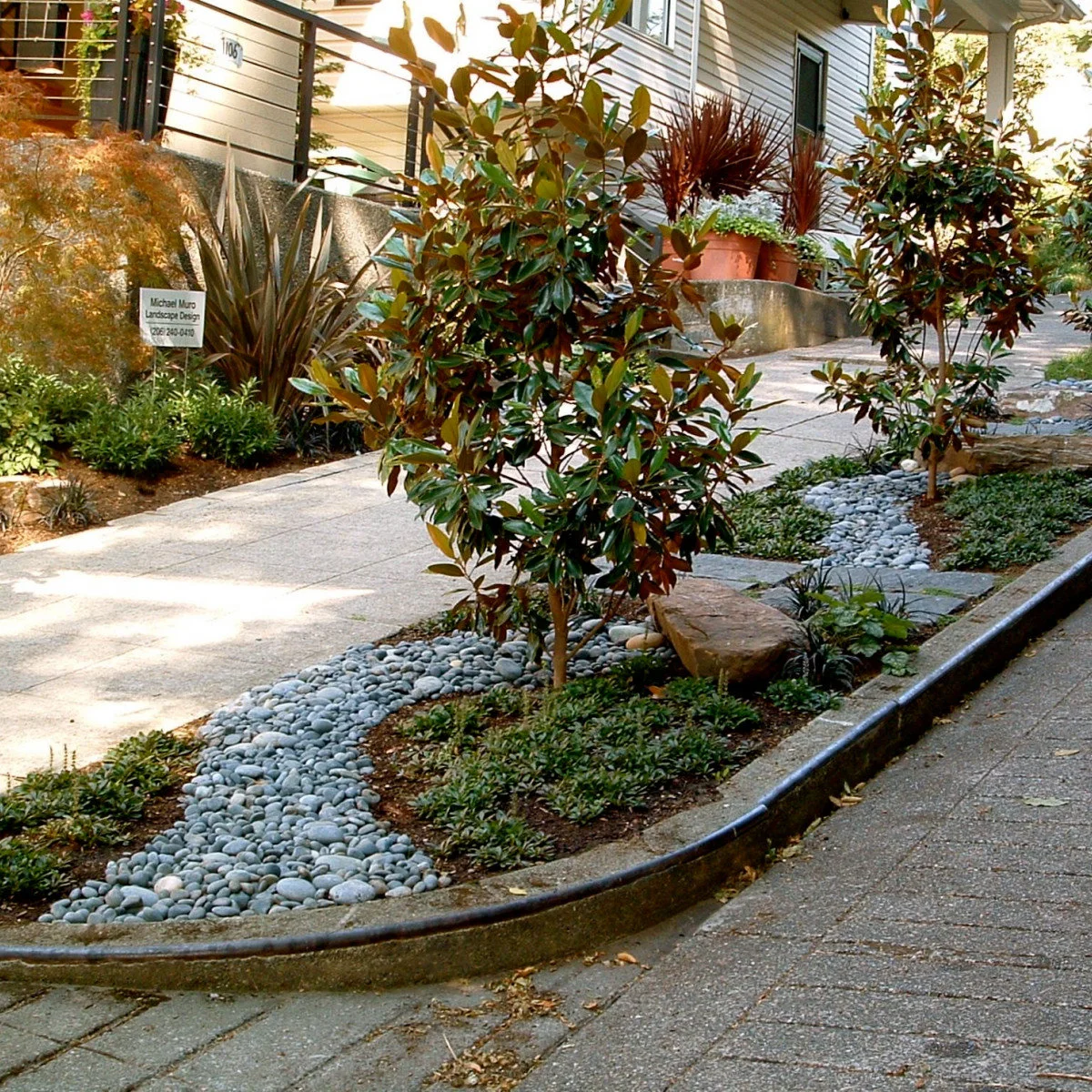
A pale ribbon of rounded stones separates groups of low planting beneath the small trees. Its curve gives the narrow curbside space a recognizable pattern, even where flowers are limited. The stones also bring a different texture beside the smooth foliage and nearby pavement.
Our river rock landscaping ideas show other ways to combine stone and planting. Treat this photograph as an arrangement reference, not proof of drainage performance. Check utility access, local planting-strip rules and sightlines before changing a curbside bed, and leave space to maintain the trees.
IDEA 04 / 20
Make a Gateway Part of the Garden
 SaveSupport Non AI Creator
Image credit: Project: BORDEN Landscape Design (via Houzz)
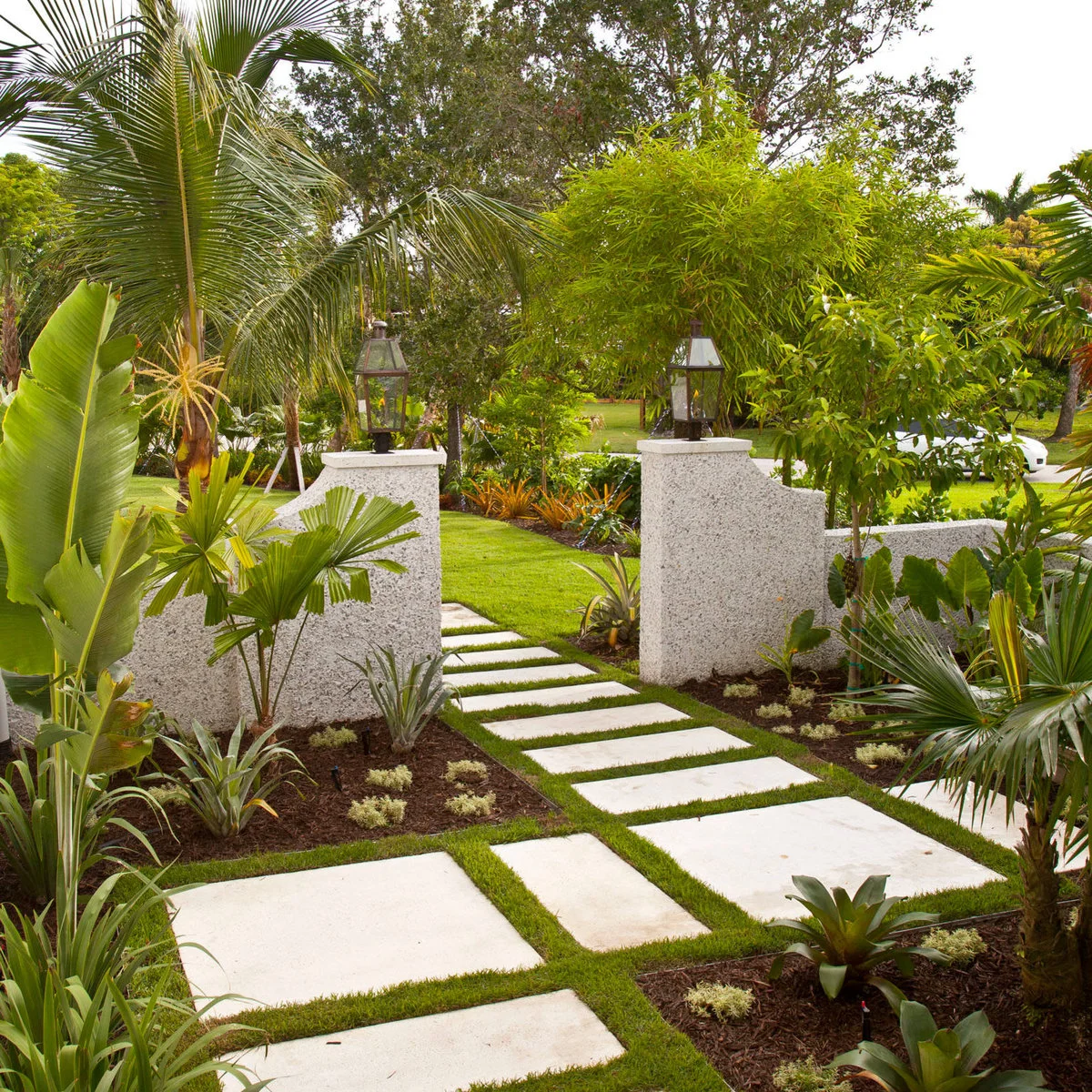
The white gateway gives this entrance a clear destination, with broad leaves and palms softening the edges. Pale rectangular paving and green joints continue the contrast underfoot. The gate pillars remain visible above the planting, helping the arrival point read clearly from either side.
Choose plants appropriate to your climate rather than copying a tropical appearance with unsuitable species. Keep leaves clear of the gate swing and lanterns. Consider how joints will be maintained and whether a more continuous surface would better suit wheelchairs, strollers or frequent deliveries at your own entrance.
IDEA 05 / 20
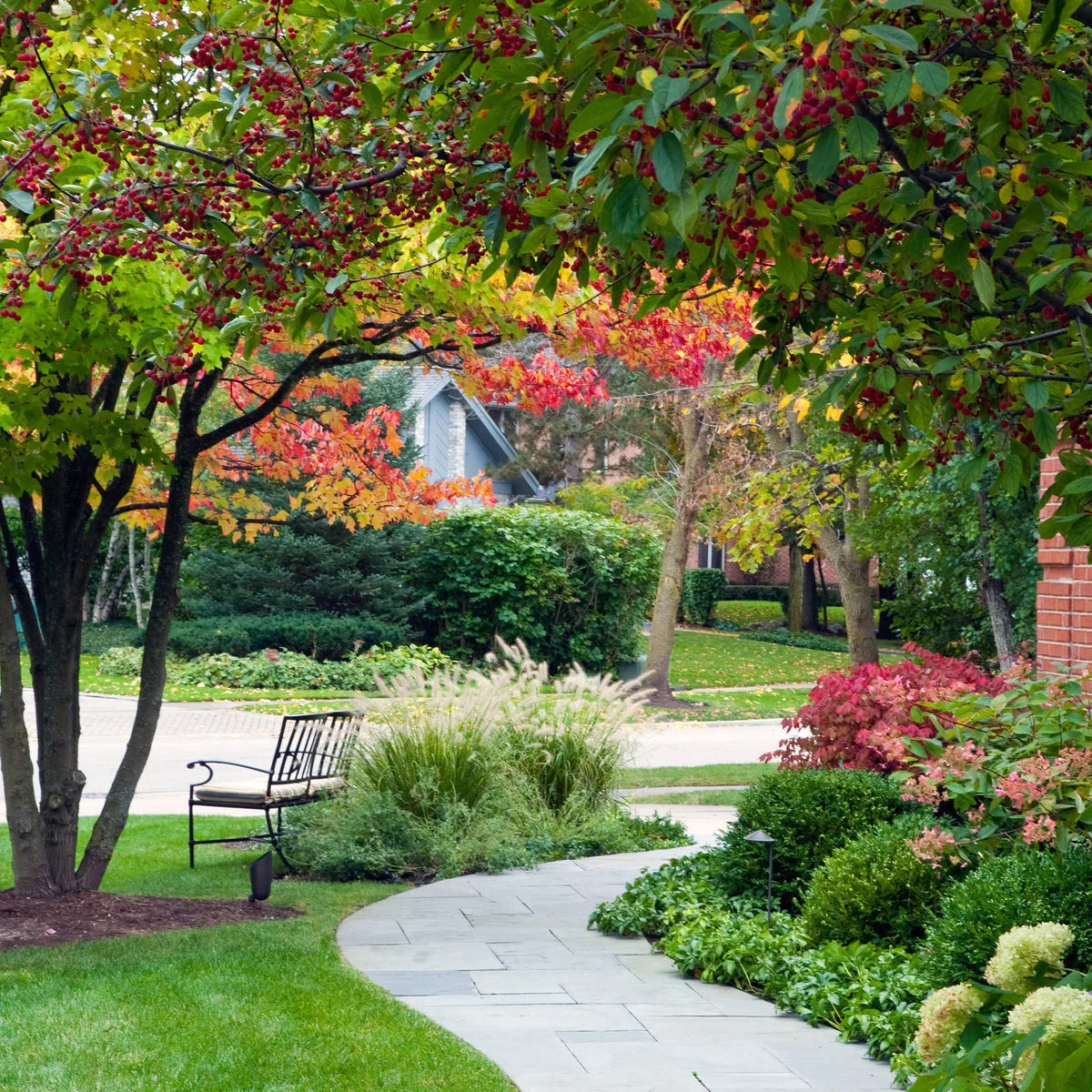
Give a Front Garden Somewhere to Pause
 SaveSupport Non AI Creator
Image credit: Project: NLH Landscape Architects (via Houzz)
The bench occupies a planted pocket beside the curved path rather than blocking the approach. Feathery grass adds height near the seat, and lower clipped shrubs keep the path edge distinct. The tree overhead gives the sitting area a stronger sense of place within the front garden.
Position a seat where you will actually enjoy sitting, considering street exposure, shade and the view toward the door. Leave enough space for feet and for someone to walk past. Check the mature spread of nearby planting so the bench remains reachable without pushing through branches.
PART 02
Give the planting a clear shape
IDEA 06 / 20
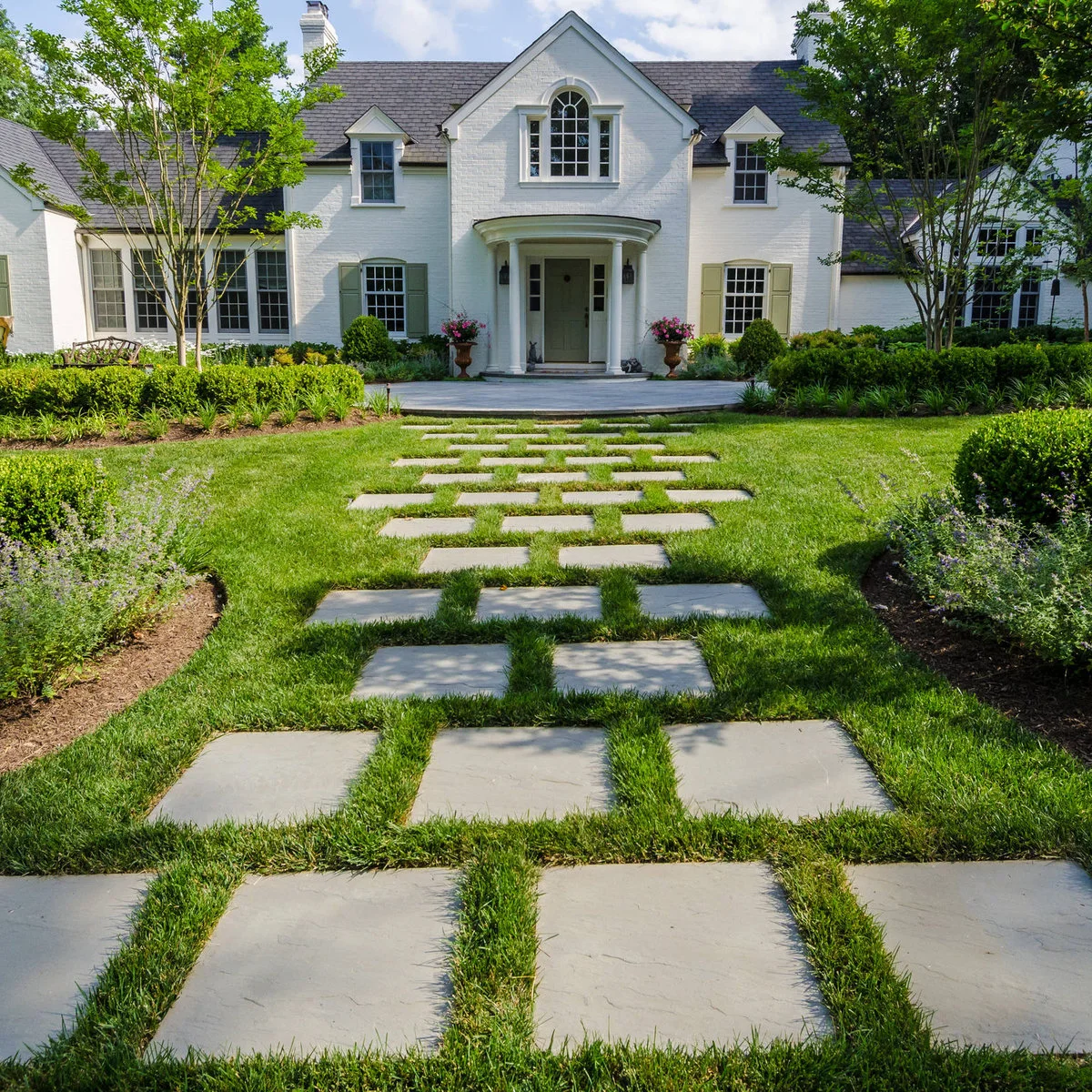
Use a Straight Approach to Emphasize the Door
 SaveSupport Non AI Creator
Image credit: Project: McHale Landscape Design, Inc. (via Houzz)
A straight sequence of pale pavers points toward the central portico, reinforcing the house's symmetry. Grass remains visible between the slabs, while lower beds sit beside the approach. The broad entrance pad provides a more continuous surface close to the front steps.
Consider accessibility before copying widely separated slabs on the main entrance route. Gaps and changes in level can make walking harder, particularly with mobility aids. Use the strong alignment as inspiration, but choose a stable, appropriately detailed surface and keep grass or groundcover from obscuring its edges.
IDEA 07 / 20
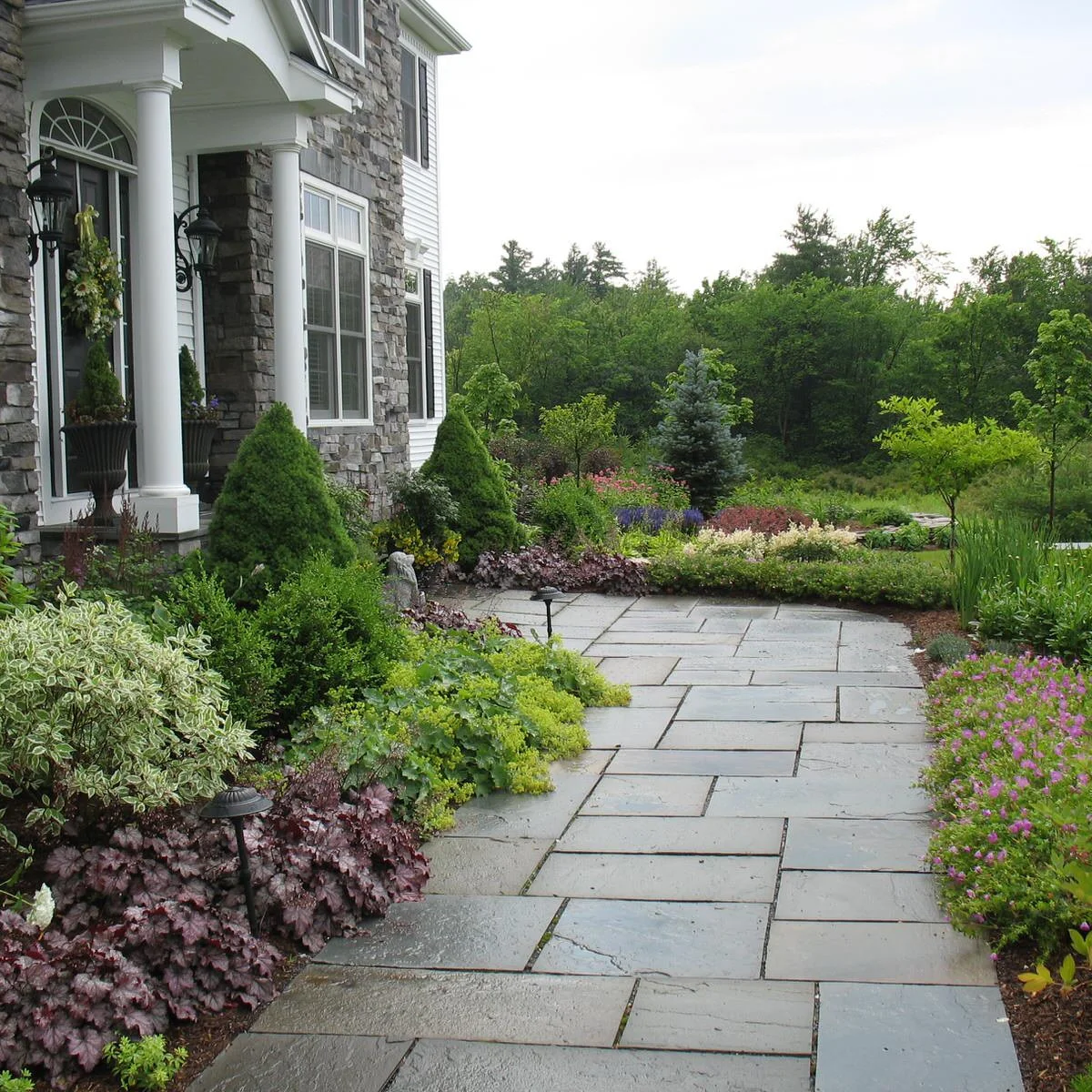
Build Color with Leaves as Well as Flowers
 SaveSupport Non AI Creator
Image credit: Project: Linden L.A.N.D. Group (via Houzz)
Different leaf colors carry much of the interest along this curved approach. Purple and lime-green patches stand against broader variegated leaves, with pink flowers adding smaller accents. Taller upright planting closer to the house gives the border another level without hiding the entrance.
Group foliage contrasts in readable patches rather than scattering one of everything along the path. Check each plant's eventual size and light requirements before combining them. Leave a practical margin beside the paving so broad leaves can develop without turning the approach into a place that needs constant clipping.
IDEA 08 / 20
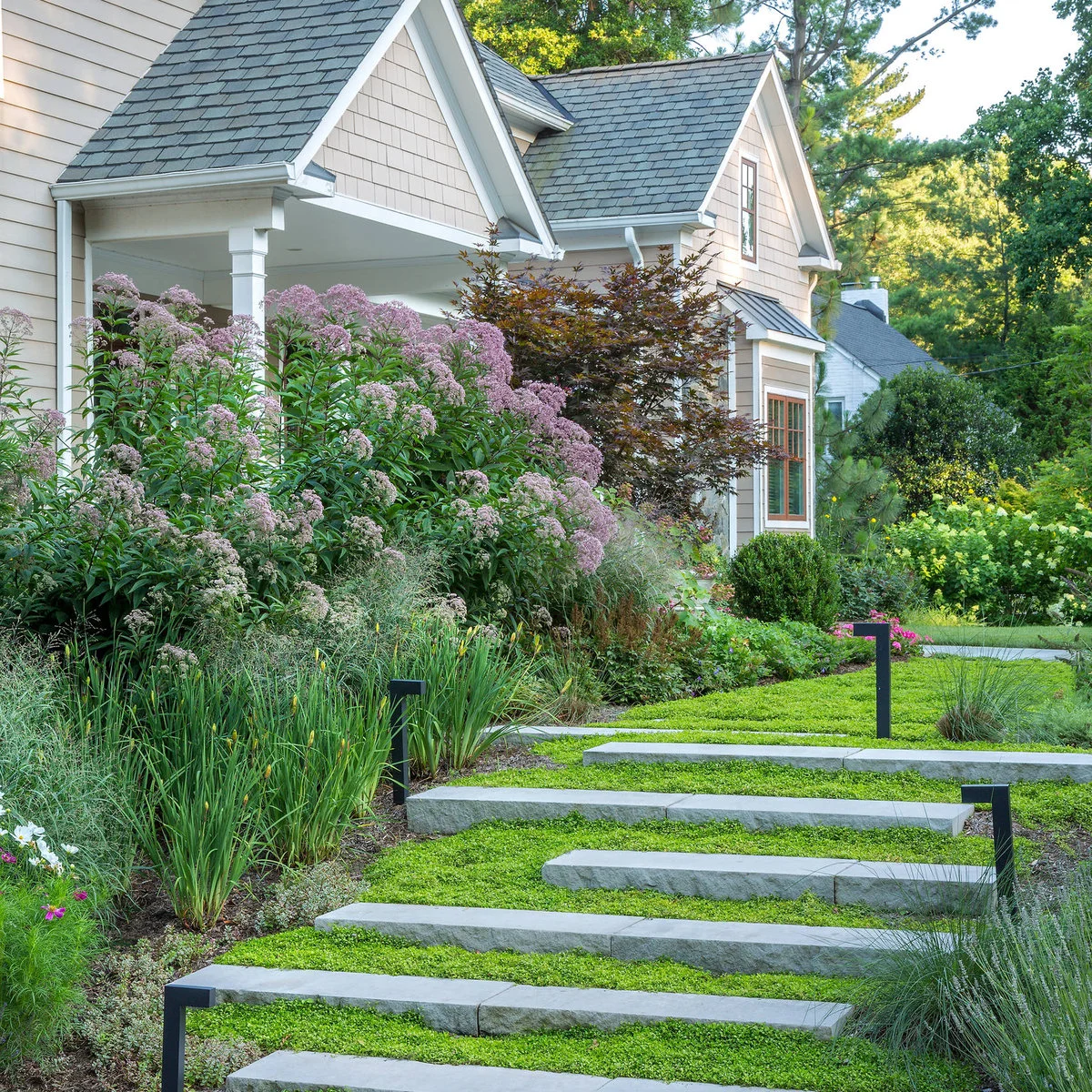
Plant Beside Steps Rather Than Across Them
 SaveSupport Non AI Creator
Image credit: Project: Scott Brinitzer Design Associates (via Houzz)
Pink flowers rise beside these stone steps, adding vertical movement without covering the treads. Fine-leaved grass softens the higher planting, and lower green growth fills the spaces along the slope. The contrast makes the stair route visible within a heavily planted entrance garden.
Keep every tread, edge and required handrail clear as the planting grows. Sloping entrances need careful attention to footing, drainage and appropriate construction; a photograph cannot establish those details. Select plants that can be maintained from safe positions rather than requiring you to balance on the steps to prune.
IDEA 09 / 20
Pair Bold Leaves with a Simple Paver Walk
 SaveSupport Non AI Creator
Image credit: Project: Lifescape Custom Landscaping, Inc. (via Houzz)
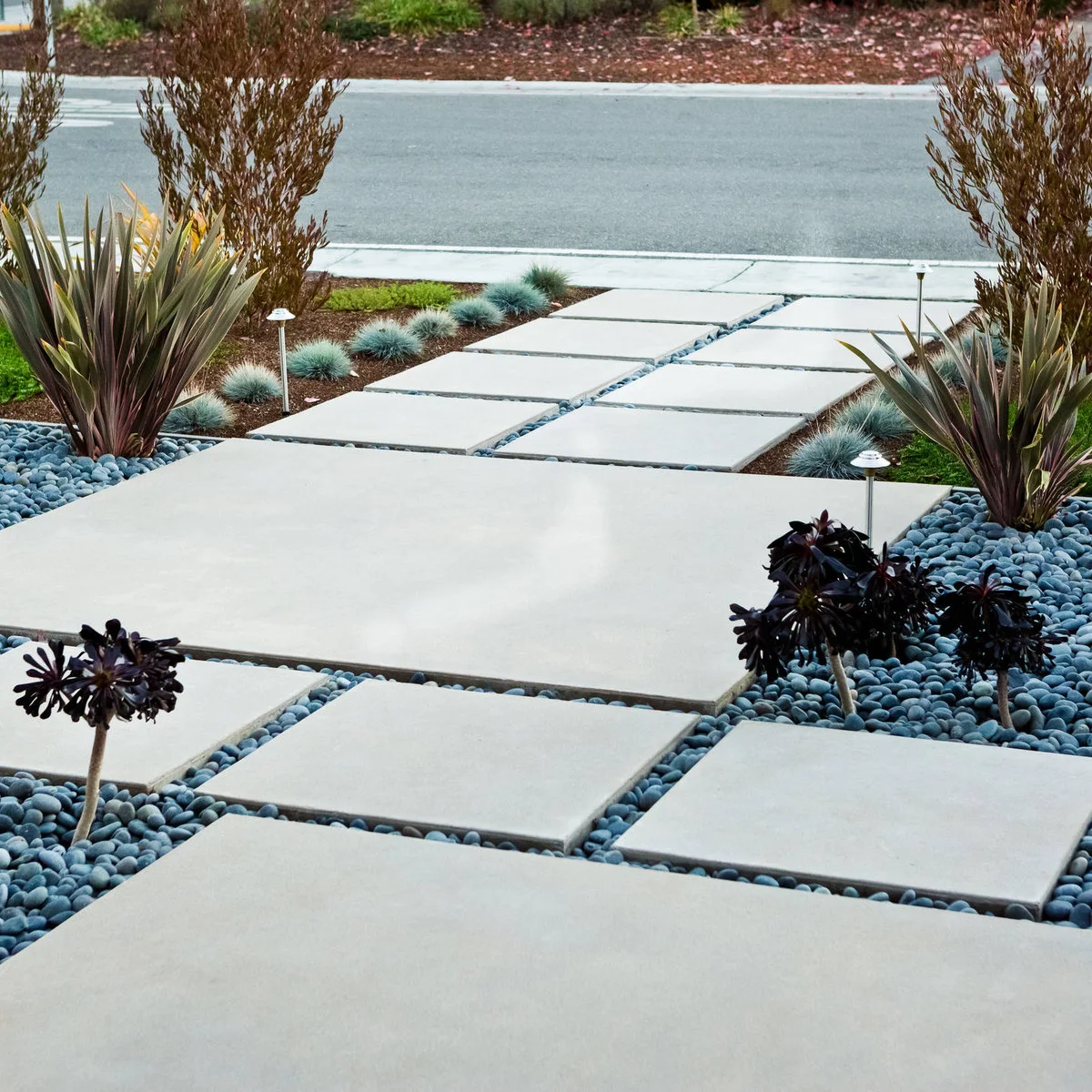
The simple geometry of the broad pavers provides a calm background for the strongly shaped leaves beside them. Burgundy spikes contrast with smaller blue-gray tufts and yellow-green foliage. A limited selection of distinct forms makes the planting readable without relying on a continuous band of flowers.
Choose bold plants for their mature width as well as their color. Rigid or sharp leaf tips need generous separation from walking routes. Check joint maintenance and accessibility before repeating the pebble gaps, and do not assume that a spiky plant is suitable for your rainfall or winter conditions.
IDEA 10 / 20
Anchor a Boundary Bed with Evergreen Shapes
 SaveSupport Non AI Creator
Image credit: David Winger
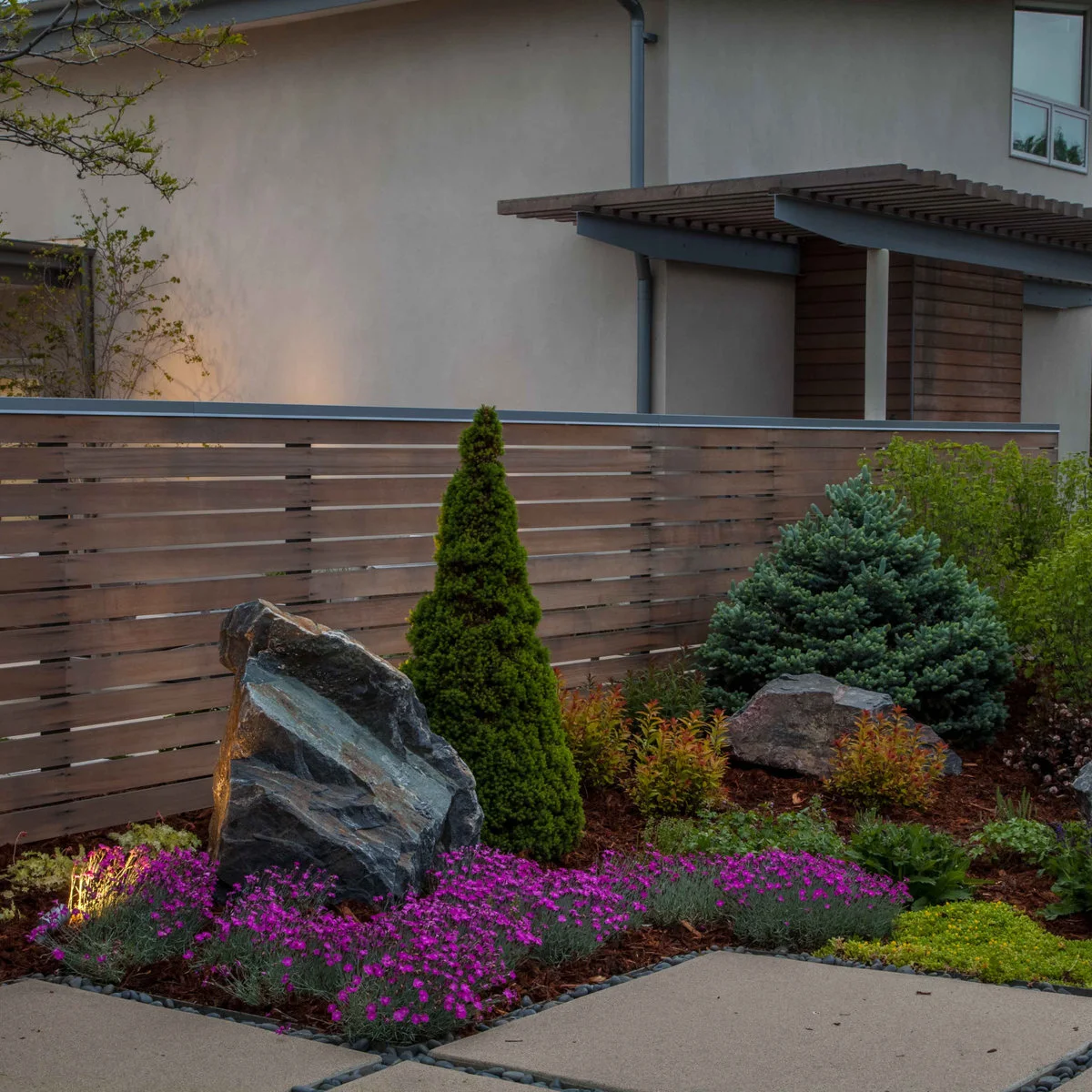
Contrasting evergreen shapes give this boundary bed its structure: a tall cone rises above a broad rounded shrub, with rocks and low pink flowers below. The horizontal fence stays visible behind them, providing a restrained backdrop for the different silhouettes and textures.
Our front-of-house shrub ideas offer more examples of balancing plant shapes near a building or boundary. Check mature height, root space and pruning needs before choosing a prominent evergreen. Avoid crowding the fence immediately; access for repairs and plant care still matters once the bed fills out.
PART 03
Add character beside the house
IDEA 11 / 20
Frame the Door with a Flowering Arch
 SaveSupport Non AI Creator
Image credit: Project: Wadia Associates (via Houzz)
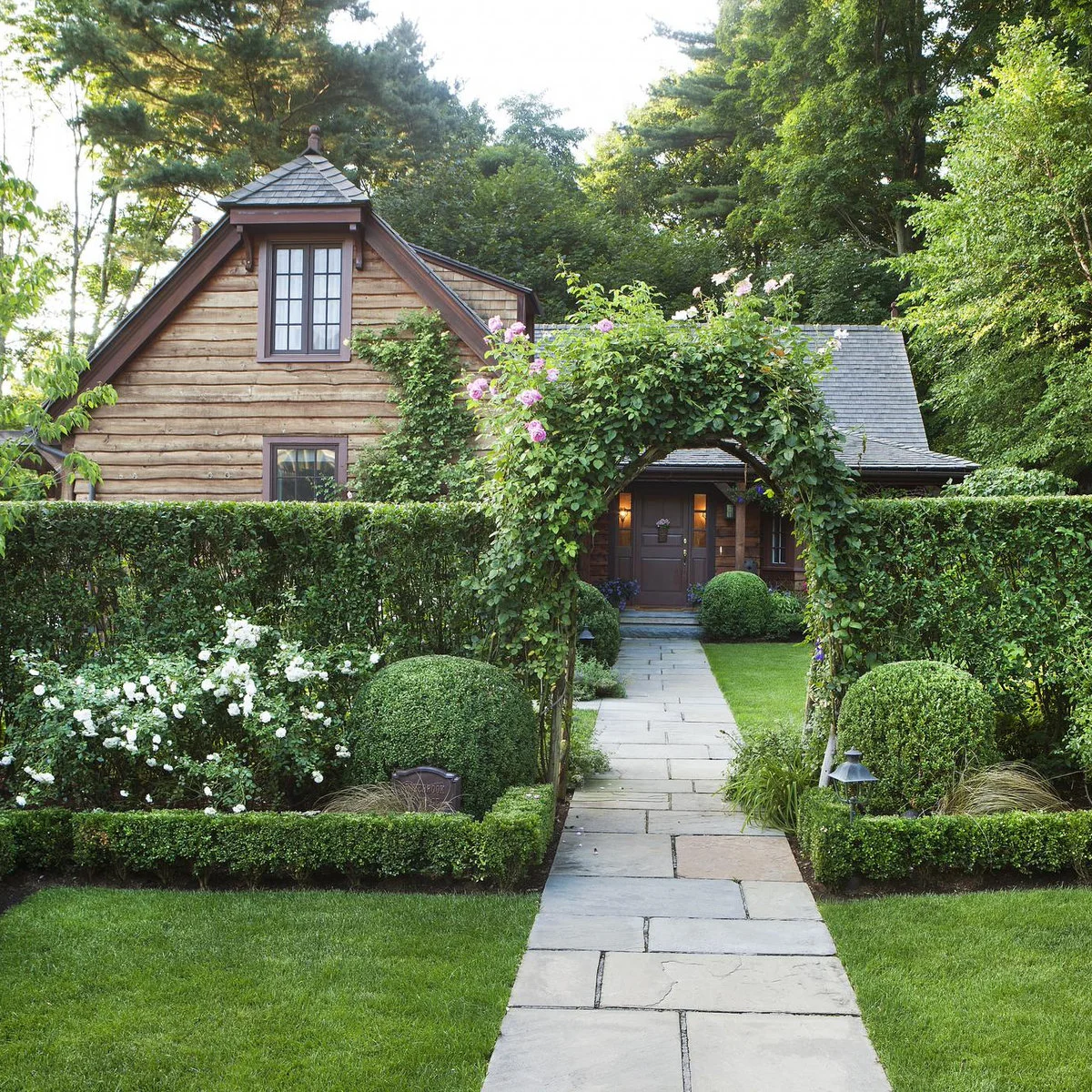
The flowering arch makes the doorway feel like the end of a garden route. Clipped greenery around it creates a darker frame, while the pale straight path and small lawn keep the approach uncomplicated. Rounded shrubs and white flowers repeat the softer forms closer to the ground.
Choose a support suitable for the mature weight and growth of the climber, with secure installation. Keep enough headroom and width after growth spreads over the arch. Plan how you will tie in, prune and remove dead stems without blocking the only entrance for long periods.
IDEA 12 / 20
Replace a Broad Lawn with a Flower-Filled Entrance
 SaveSupport Non AI Creator
Image credit: Project: David Morello Garden Enterprises, Inc. (via Houzz)
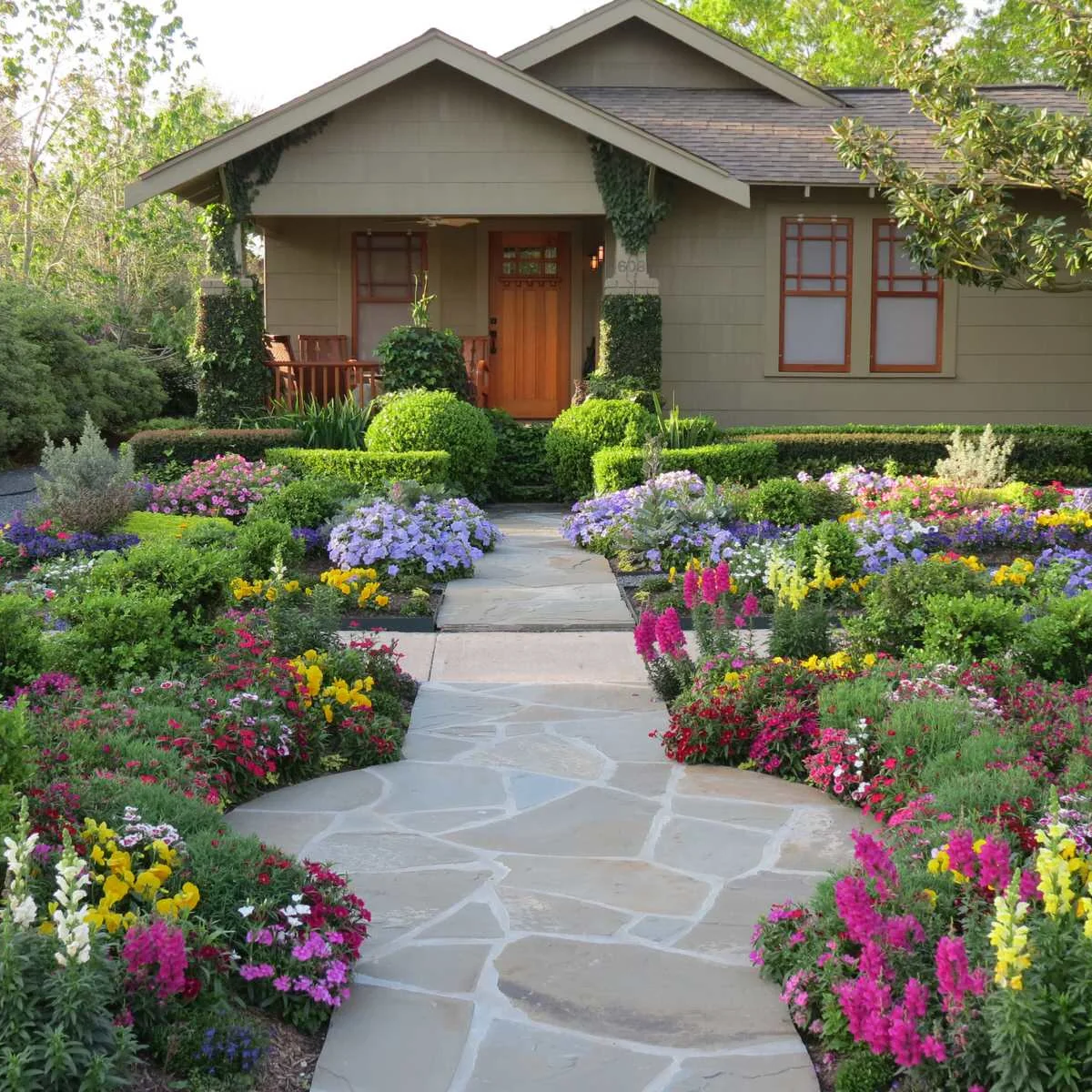
Flowers occupy much of the space between the bungalow and its front boundary, creating a rich foreground for the porch. Low clipped hedges give the mixed planting a more deliberate outline. The central path remains visible, preventing the abundant flowers from making the entrance difficult to read.
Explore our small cottage garden ideas for more ways to organize generous planting in limited space. Repeat reliable plants rather than buying every variety at once. Leave room to weed, divide and replace them, and make sure the main route stays open when taller flowers lean after rain.
IDEA 13 / 20
Curve the Path Around Established Planting
 SaveSupport Non AI Creator
Image credit: Project: Horizon Landscape Company (via Houzz)
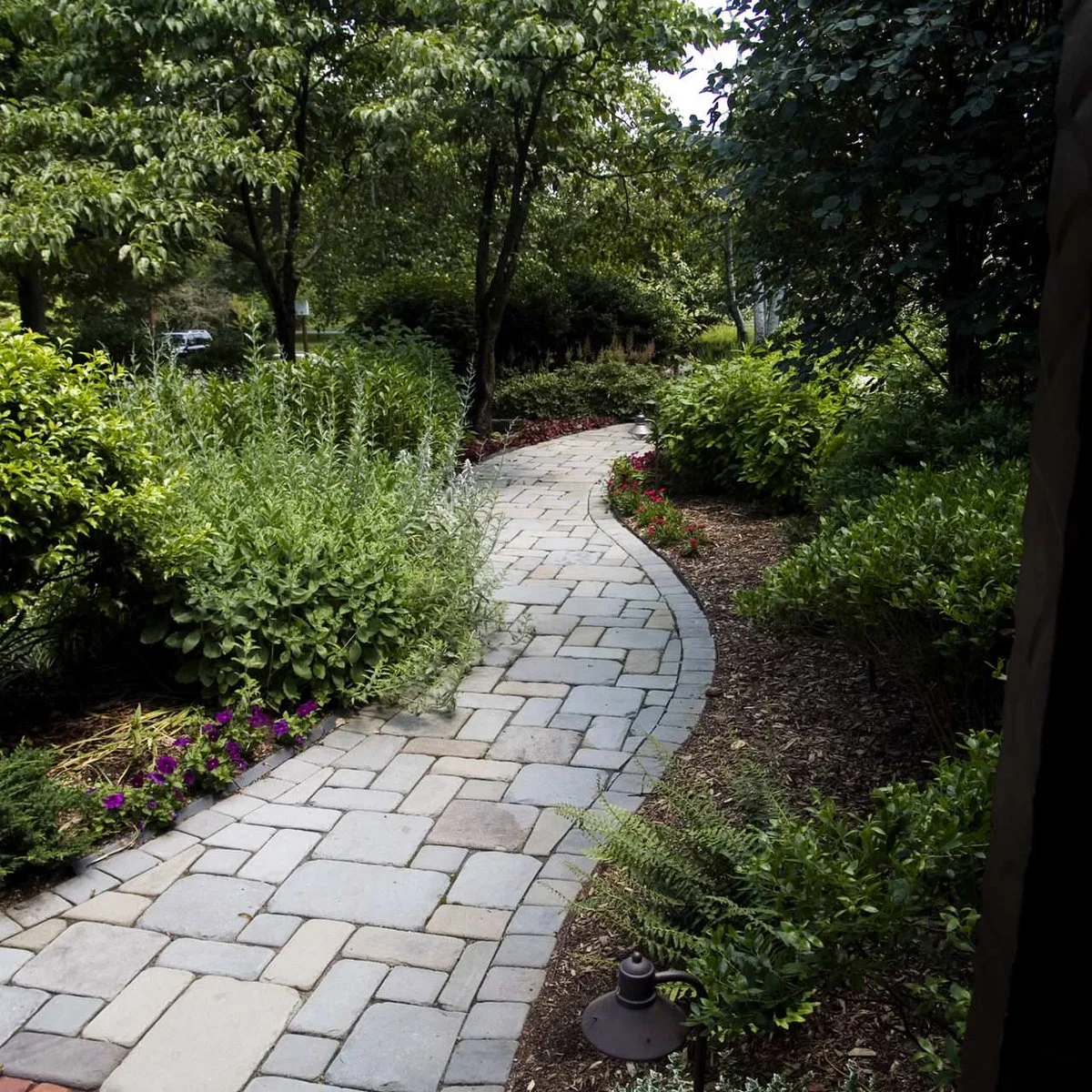
The path bends through the garden instead of cutting a straight line across it. A mature tree gives the space height, while lower shrubs and mulched areas keep the ground layer quieter. The curve reveals the approach gradually without needing a separate decorative focal point at every turn.
Plan the bend around how people naturally move, avoiding a detour that encourages shortcuts through the bed. Protect existing trees when changing paving or ground levels; seek appropriate advice around their roots. Keep planting low enough near turns for the route and other people to remain visible.
IDEA 14 / 20
Organize an Enclosed Front Garden with Low Hedges
 SaveSupport Non AI Creator
Image credit: Project: NSPJ Architects (via Houzz)
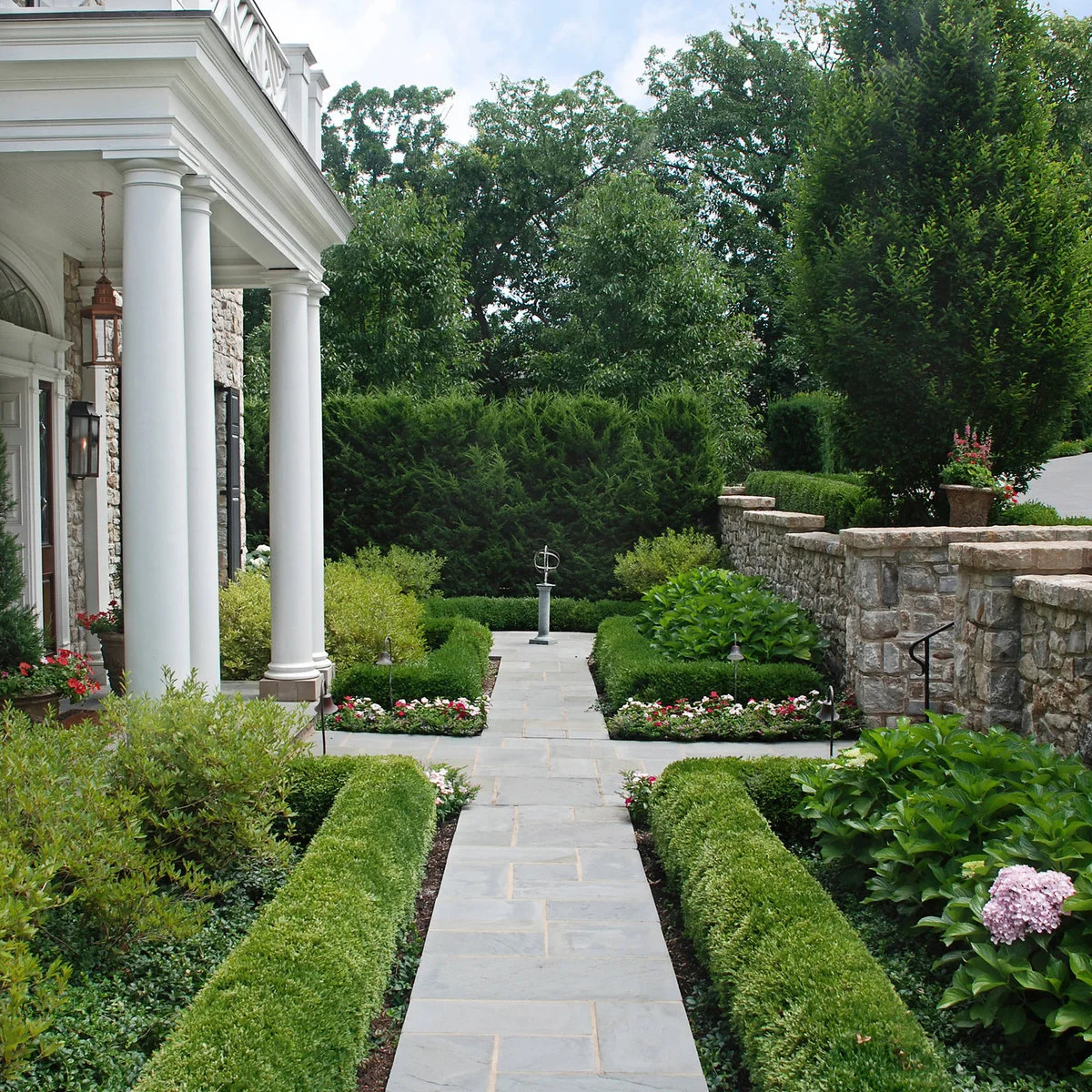
Low hedges divide this enclosed front garden into clear planted compartments. Stone paths connect the spaces, while pink and white flowers soften the geometric outlines. The surrounding wall and house already provide height, allowing the garden's internal boundaries to stay relatively low.
Use clipped divisions only where their upkeep fits your routine. Check that each bed remains reachable for planting and weeding without stepping over hedges. In a smaller space, simplify the number of compartments and prioritize a direct, comfortable route to the door over an elaborate pattern.
IDEA 15 / 20
Mix Rounded Mounds with Strong Leaf Shapes
 SaveSupport Non AI Creator
Image credit: Project: June Scott Design (via Houzz)
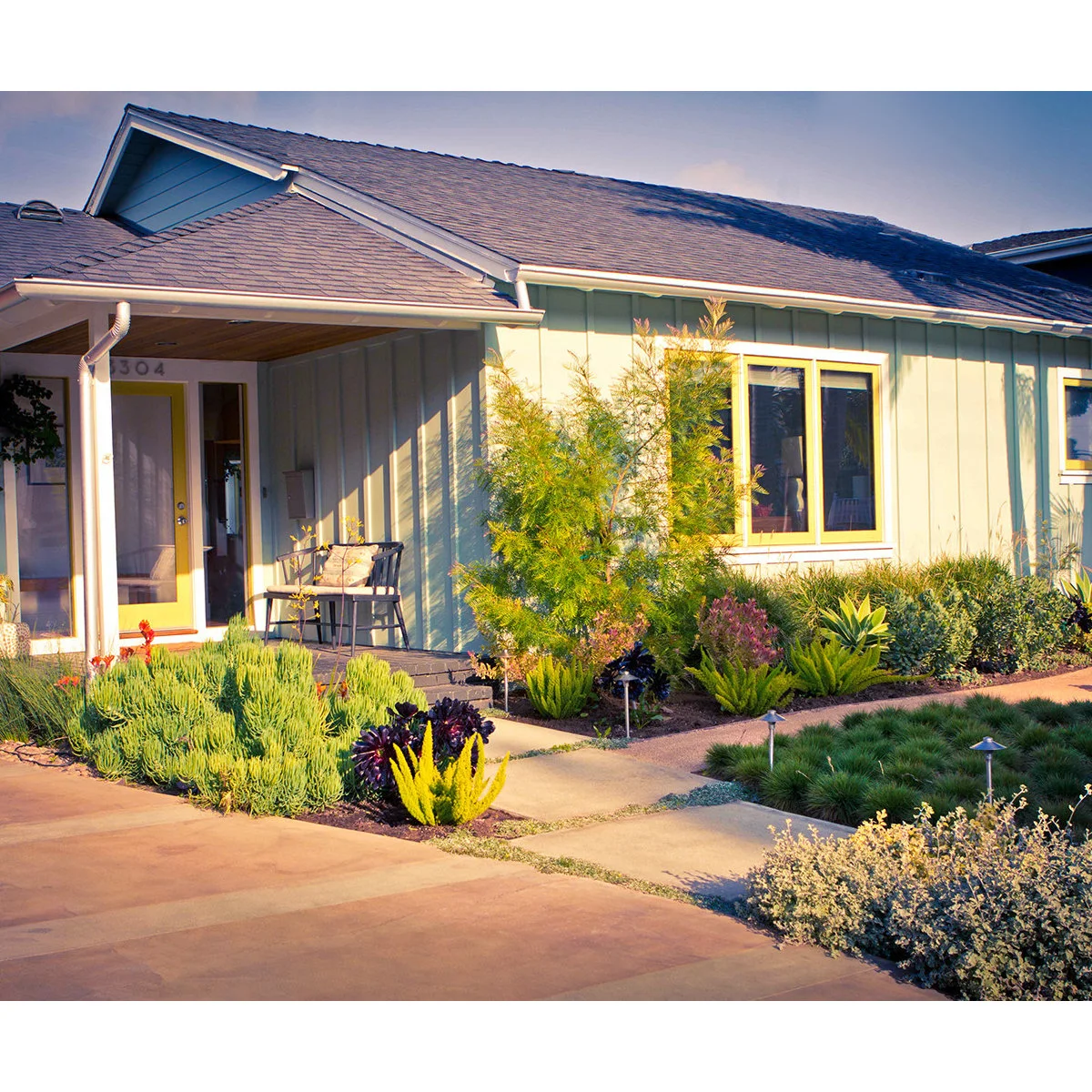
Rounded mounds of fine foliage soften the ground in front of this green-and-yellow house. Dark rosette-shaped plants provide stronger outlines between them, while taller branching greenery connects the bed with the facade. The varied leaf shapes create interest even where flowers are not the main feature.
Choose species for your own climate, soil and exposure; similar-looking plants can have very different care needs. Leave room around sharply pointed leaves and avoid placing them against the entrance route. Check eventual height near windows so today's compact planting does not become tomorrow's view-blocking maintenance problem.
PART 04
Balance flowers, structure and usable space
IDEA 16 / 20
Connect Window Boxes with the Bed Below
 SaveSupport Non AI Creator
Image credit: Project: Mom's Design Build (via Houzz)
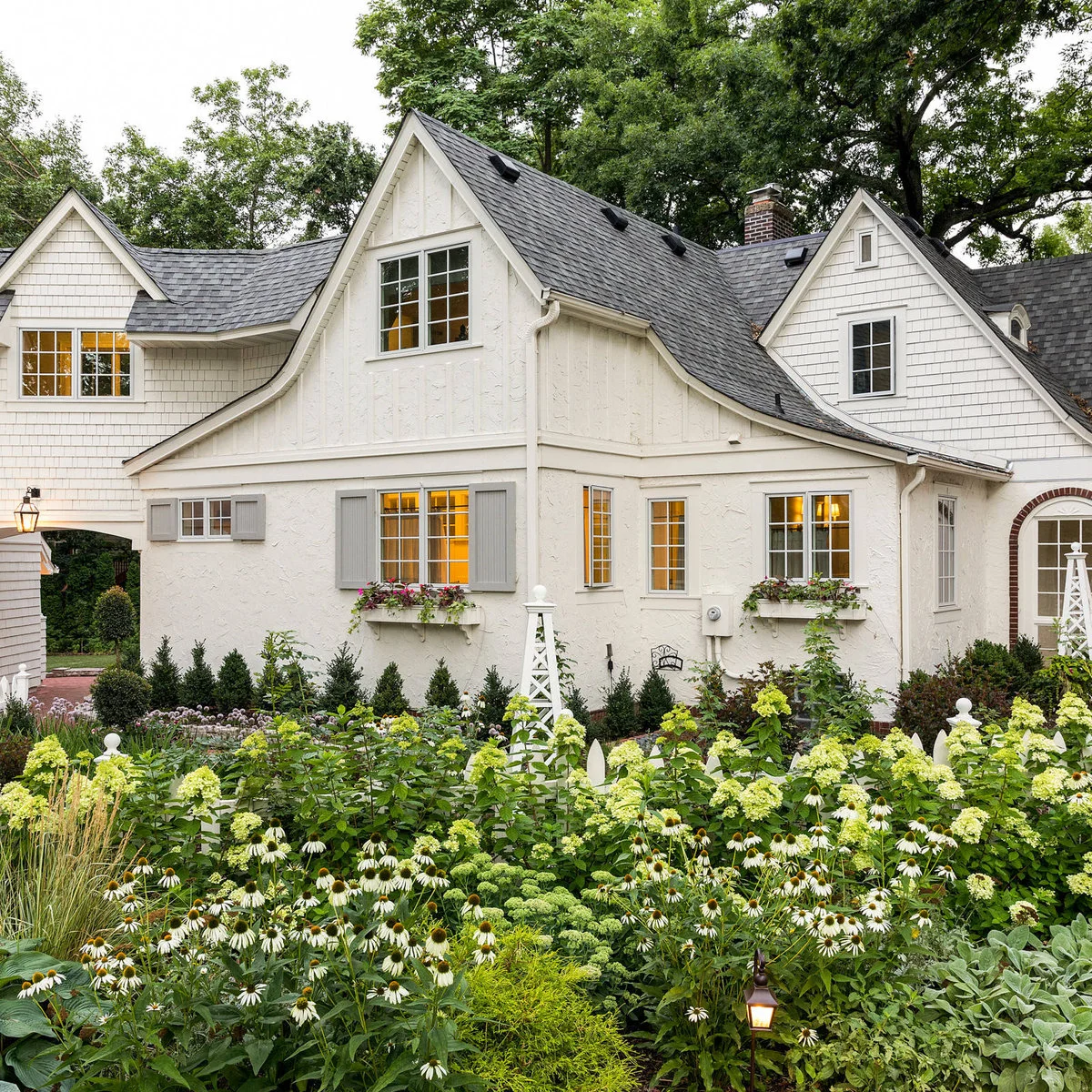
The white window boxes carry flowers up onto the facade, connecting the house with the dense border below. Pale trellises repeat that color at another height. Broad leaves, white flower heads and silvery foliage create several layers without requiring a separate bright color in every gap.
Choose window boxes and fixings appropriate to their loaded weight, and plan watering without repeatedly soaking the wall. Keep a route through or beside the lower planting for maintenance. Repeat colors between boxes and beds, but let the plants differ according to their actual light and root-space conditions.
IDEA 17 / 20
Keep a Small Lawn within a Larger Planted Border
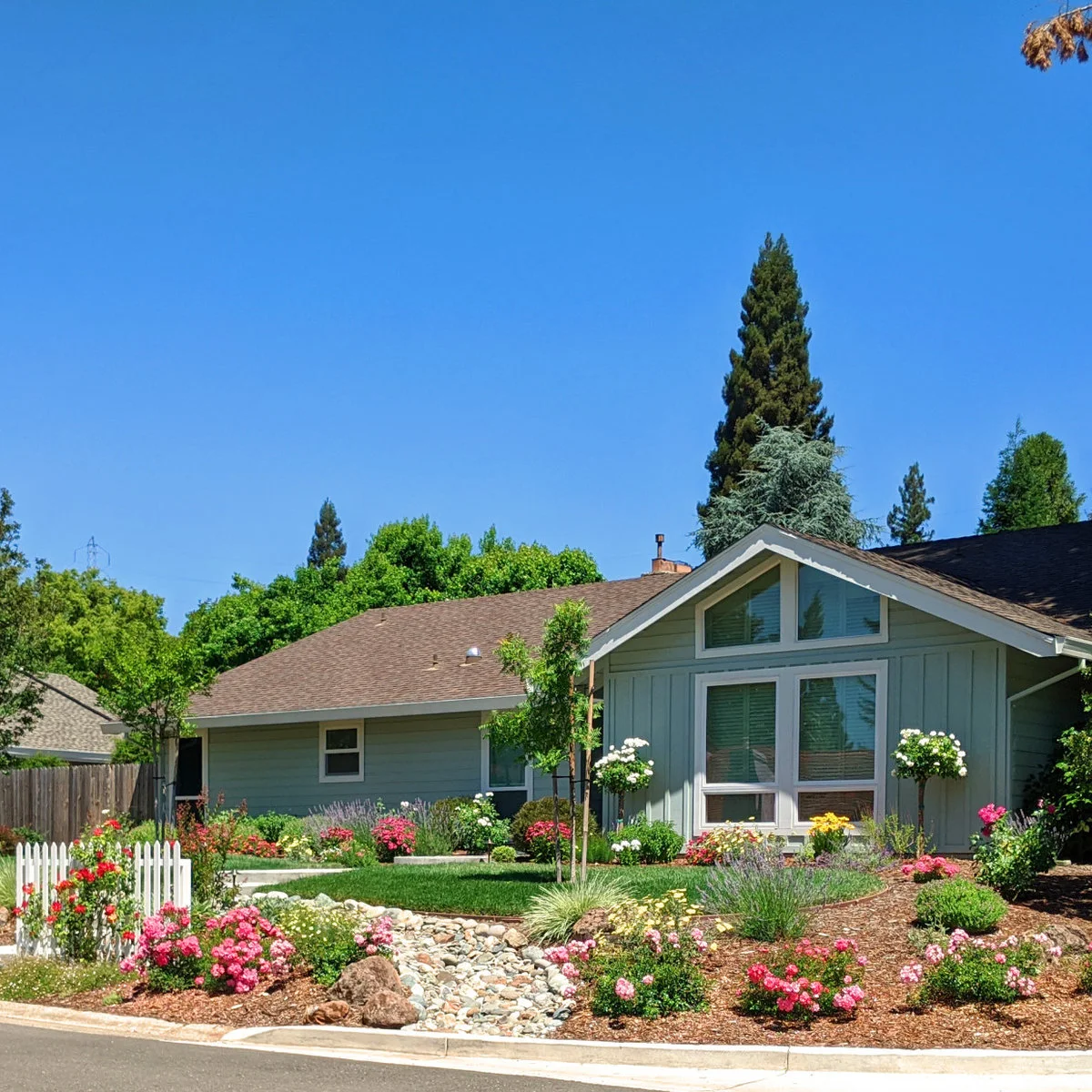 SaveSupport Non AI Creator
Image credit: Project: AJM Landscape Design Studio (via Houzz)
A small lawn provides a quiet center within the colorful border in front of this bungalow. The white picket section marks part of the street edge without enclosing every view. Flowers, low shrubs and rounded stones give the perimeter detail while the grass remains a simple open shape.
Keep the lawn large and accessible enough to maintain with the equipment you use. Avoid creating thin strips of grass between expanding beds and fences. Treat the stone feature as a visual reference; any drainage role needs site-specific assessment rather than being assumed from its appearance.
IDEA 18 / 20
Use a Formal Pattern in a Flower Garden
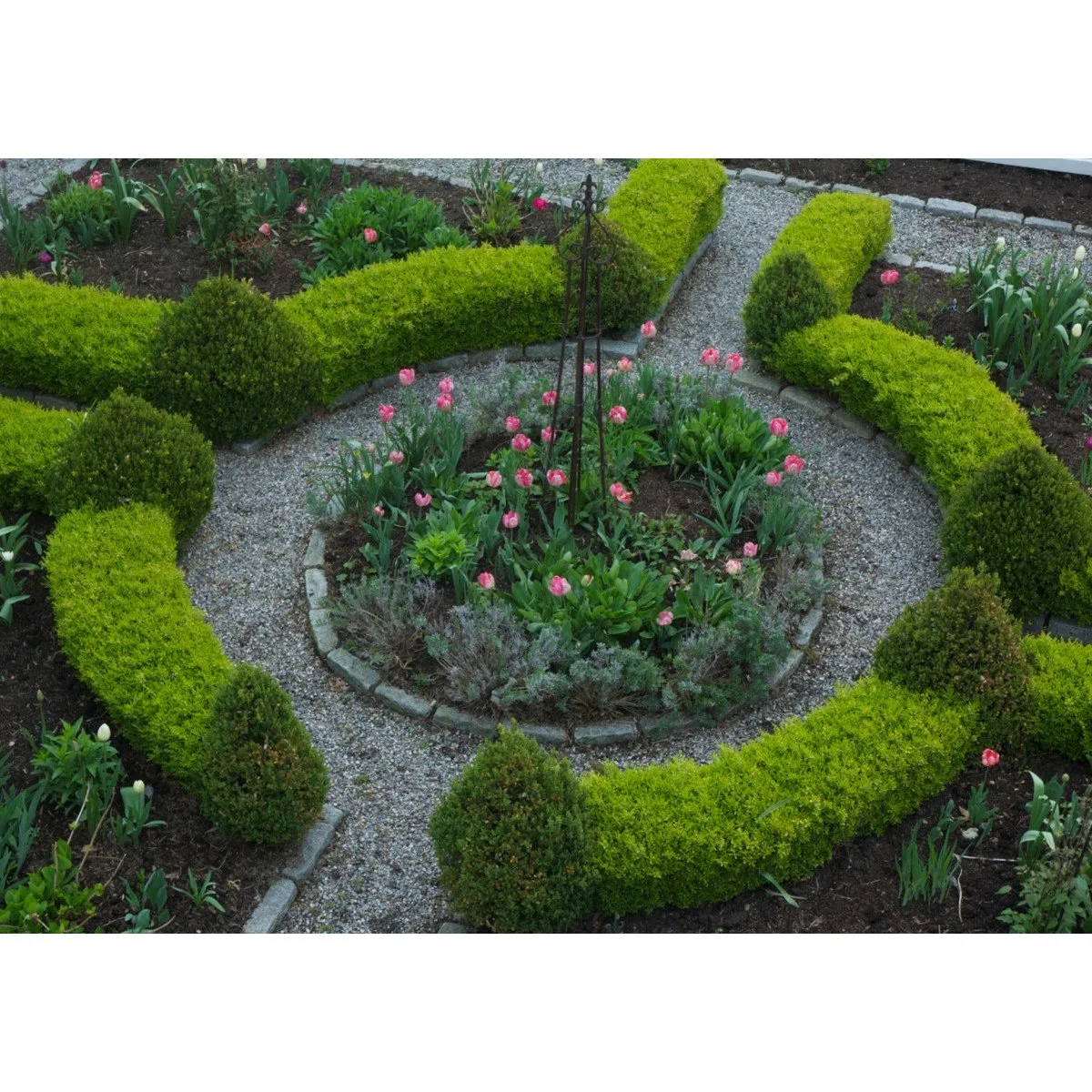 SaveSupport Non AI Creator
Image credit: Project: MJ McCabe-Garden Design (via Houzz)
The low hedge pattern gives this flower garden a strong framework when viewed from above. Gravel routes separate the planted sections, with a circular center and metal obelisk establishing a focal point. Yellow-green edging provides contrast against the darker soil and flowering plants within the compartments.
Scale a formal pattern to the space and to the views you actually have from the house or street. Keep paths wide enough for comfortable maintenance and avoid compartments too deep to reach. Consider the time needed for clipping before committing to many short hedge runs and corners.
IDEA 19 / 20
Give a Birdbath a Planted Backdrop
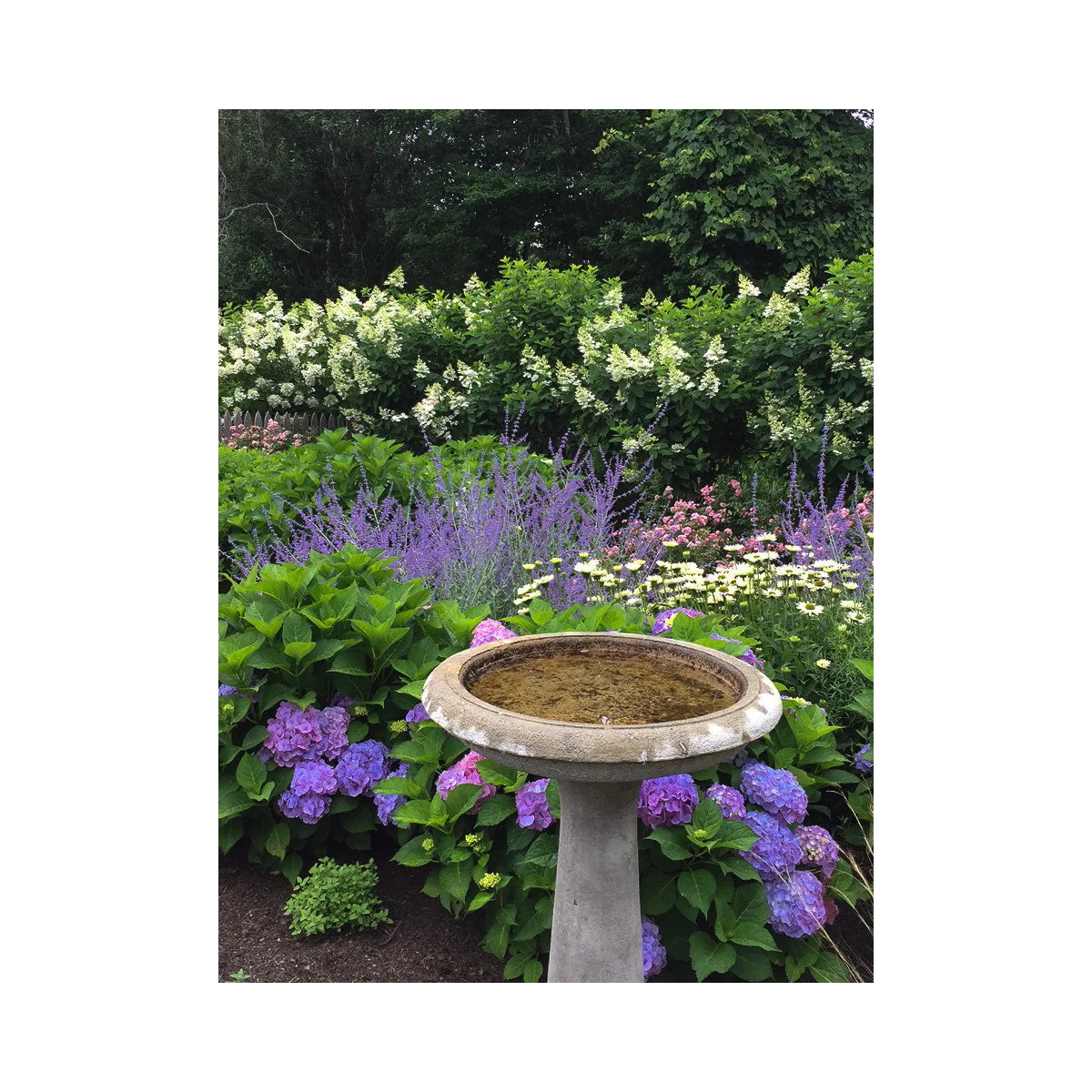 SaveSupport Non AI Creator
Image credit: Project: Minglewood, LLC (via Houzz)
The birdbath offers a clear solid shape among the surrounding flowers. Purple blooms sit around its base, while white daisies and taller white flower heads create a layered background. Its simple bowl remains visible because it rises above the nearest broad leaves rather than disappearing at ground level.
Choose a stable position with space to reach the bowl for regular emptying and cleaning. Do not let dense growth make maintenance awkward or leave the feature hidden from the house. Keep access separate from delicate plants so routine care does not require trampling the surrounding border.
IDEA 20 / 20
Turn Part of the Front Yard into a Small Retreat
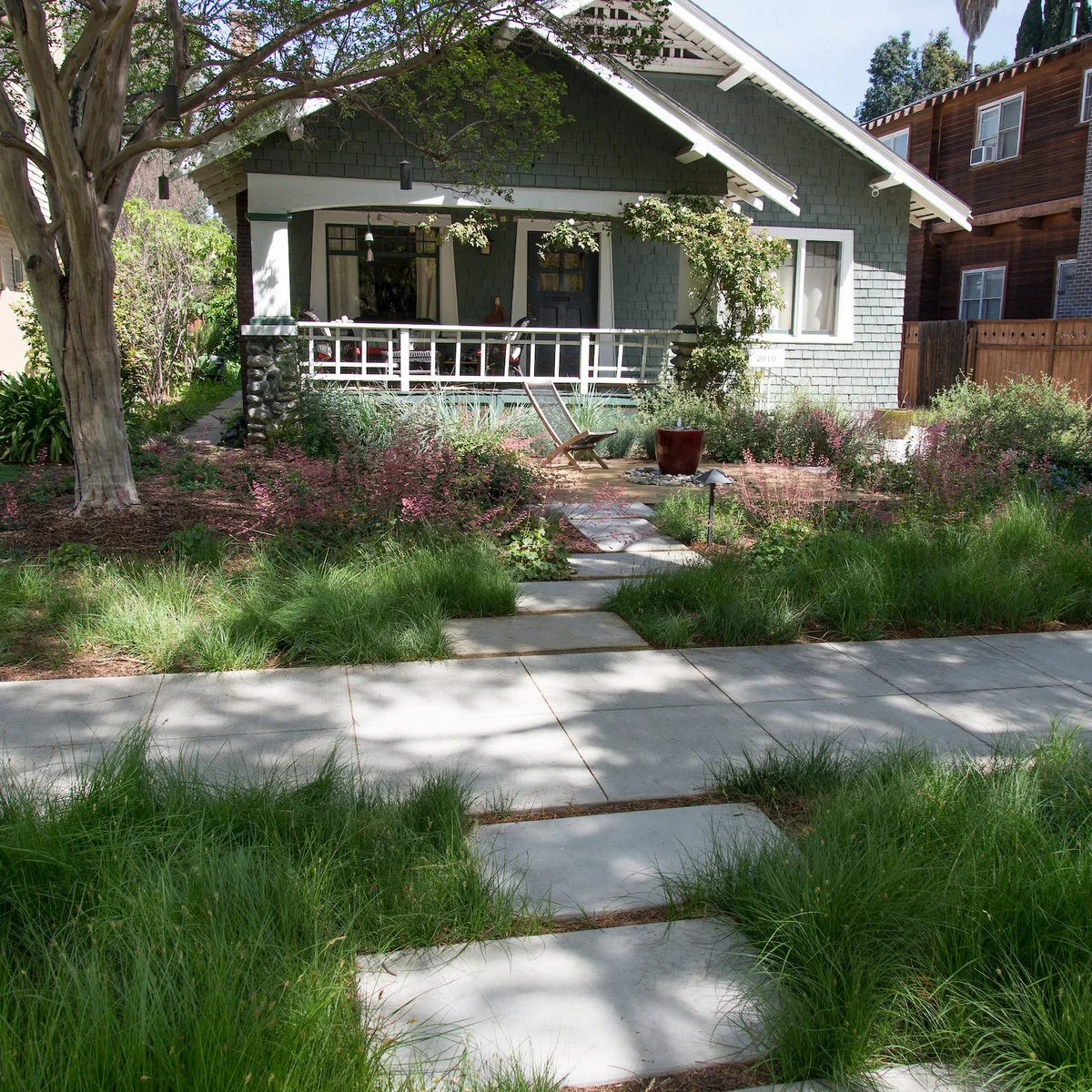 SaveSupport Non AI Creator
Image credit: Project: June Scott Design (via Houzz)
Fine grassy planting softens the route to this craftsman porch, with airy flowering stems adding height above it. A wood chair sits beside a large pot near the house. The small sitting area gives the front yard a purpose beyond being a view from the sidewalk.
Set aside a stable space for the chair and a clear route around it before filling the garden with plants. Choose species suited to the site's light and climate, and allow their mature spread. Keep path lights, stems and leaves from narrowing the practical walking line through the softer planting.
BRING IT ALL TOGETHER
Plan the route before buying plants
Watch how people approach your house and keep that route generous and easy to recognize. Check mature plant spread beside steps, paths and windows. A beautiful border becomes frustrating if it constantly leans across the entrance or hides the place visitors need to turn.
Choose a manageable number of plants suited to the conditions you actually have. Repeat them in groups, leave room to maintain the bed and decide how its edge will meet the lawn or paving. Allow for irrigation, pruning and replacement rather than planning only for the photograph.