Rustic fireplaces draw character from surfaces you can see clearly: rough stone edges, varied brickwork, timber grain and simpler shapes around the opening. Some work within an entirely country-style room; others contribute one textured feature to a pale, more contemporary setting. Neither approach requires adding ornaments to every ledge.
These photographs show different settings, including a bedroom, porches and a patio, alongside a clearly identified decorative fireplace. Use their color and arrangement ideas while planning the actual installation separately. Appliance suitability, flue condition, structural support and clearances depend on the property and cannot be established from a styled room.
PART 01
Balance stone texture with the surrounding room
IDEA 01 / 18
Frame a Simple Arch with Rough Stone
 SaveSupport Non AI Creator
Image credit: Matthew Williams
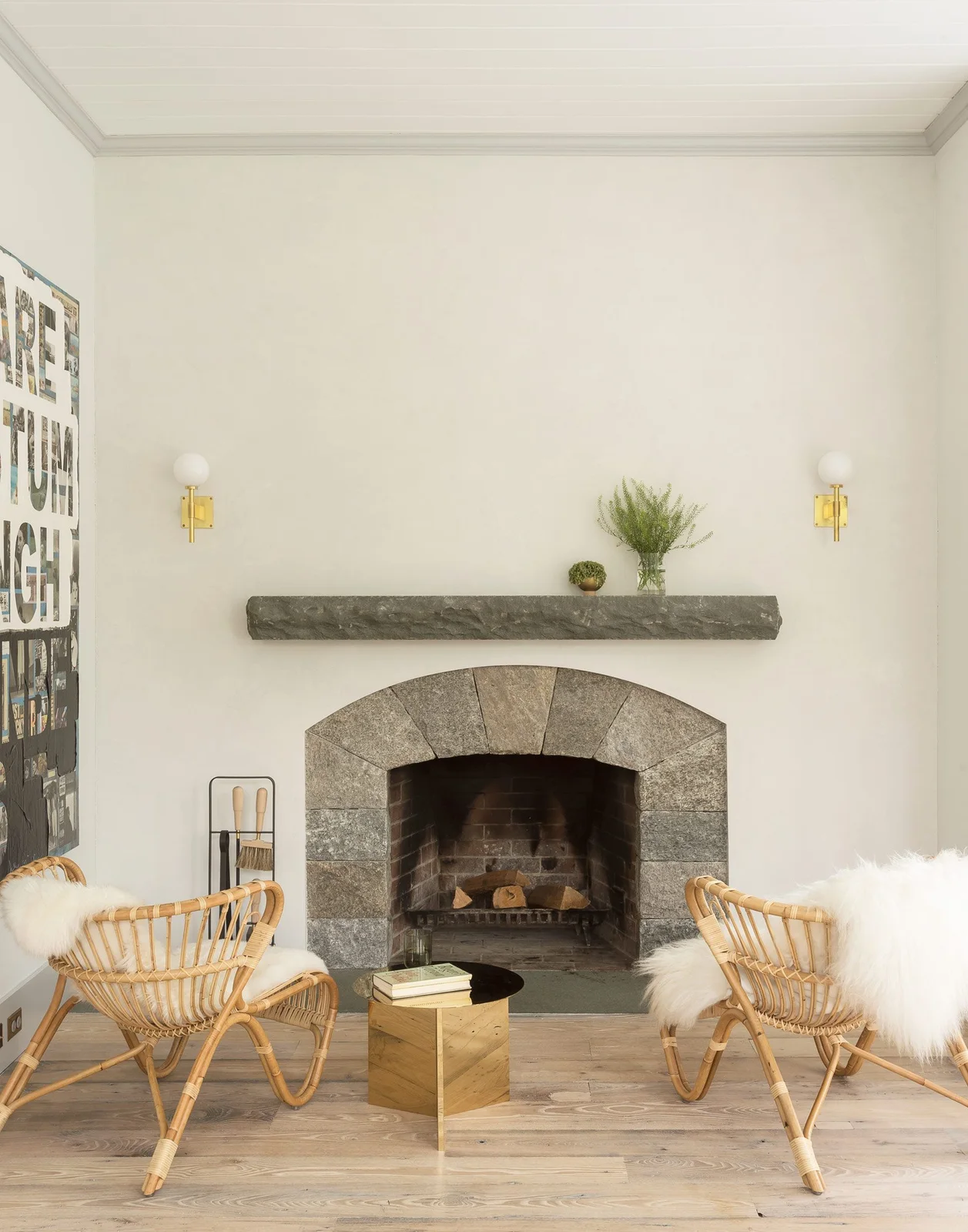
The gray stone arch gives this fireplace a strong outline without covering the whole chimney wall. A separate rough-edged mantel repeats its texture above, while the pale wall leaves both shapes easy to see. Woven chairs and a small reflective table bring a lighter furniture outline into the foreground.
Compare the surround’s proportions with the opening and remaining wall before choosing a similar shape. Stone weight, support and fireplace suitability need assessment beyond appearance. Pull chairs, soft throws and tables outside the required clearances before lighting a fire, and choose a cleaning method appropriate to the actual stone rather than its color.
IDEA 02 / 18
Keep a Textured Surround Visually Quiet
 SaveSupport Non AI Creator
Image credit: Kevin Scott
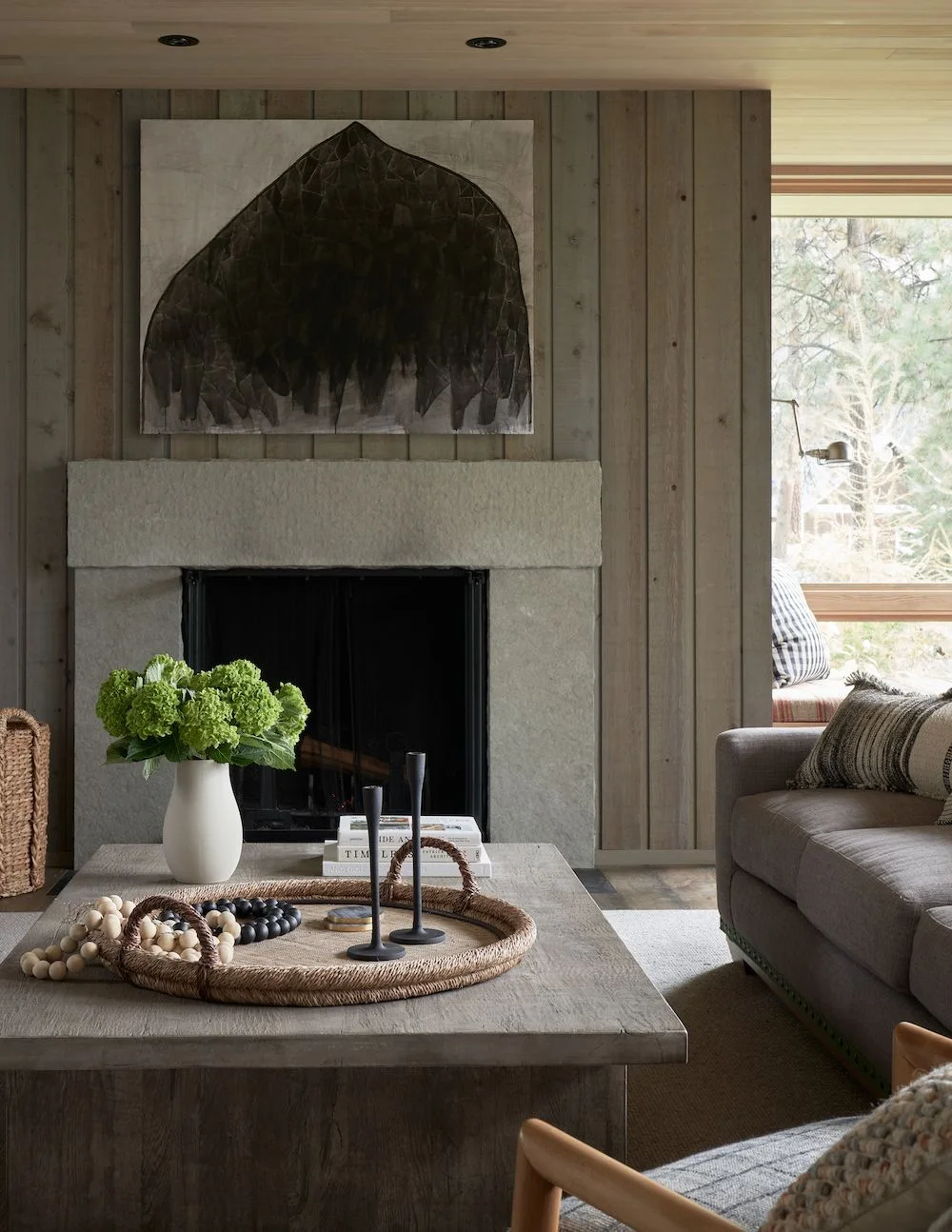
A plain rectangular shape allows the surround’s fine texture to show without competing with elaborate trim. Vertical timber boards continue the rustic character around it. The low table and woven tray repeat muted timber and fiber tones, while the darker opening gives the room a clear focal point.
Use large finish samples beside the existing boards and floor so small color differences are visible before installation. Our stone fireplace ideas compare other ways to balance a surround with its setting. Keep the ledge and hearth accessible for maintenance, and check fixing and clearance requirements before hanging artwork above an active fire.
IDEA 03 / 18
Pair Pale Rough Stone with a Straight Timber Mantel
 SaveSupport Non AI Creator
Image credit: Karyn Milet
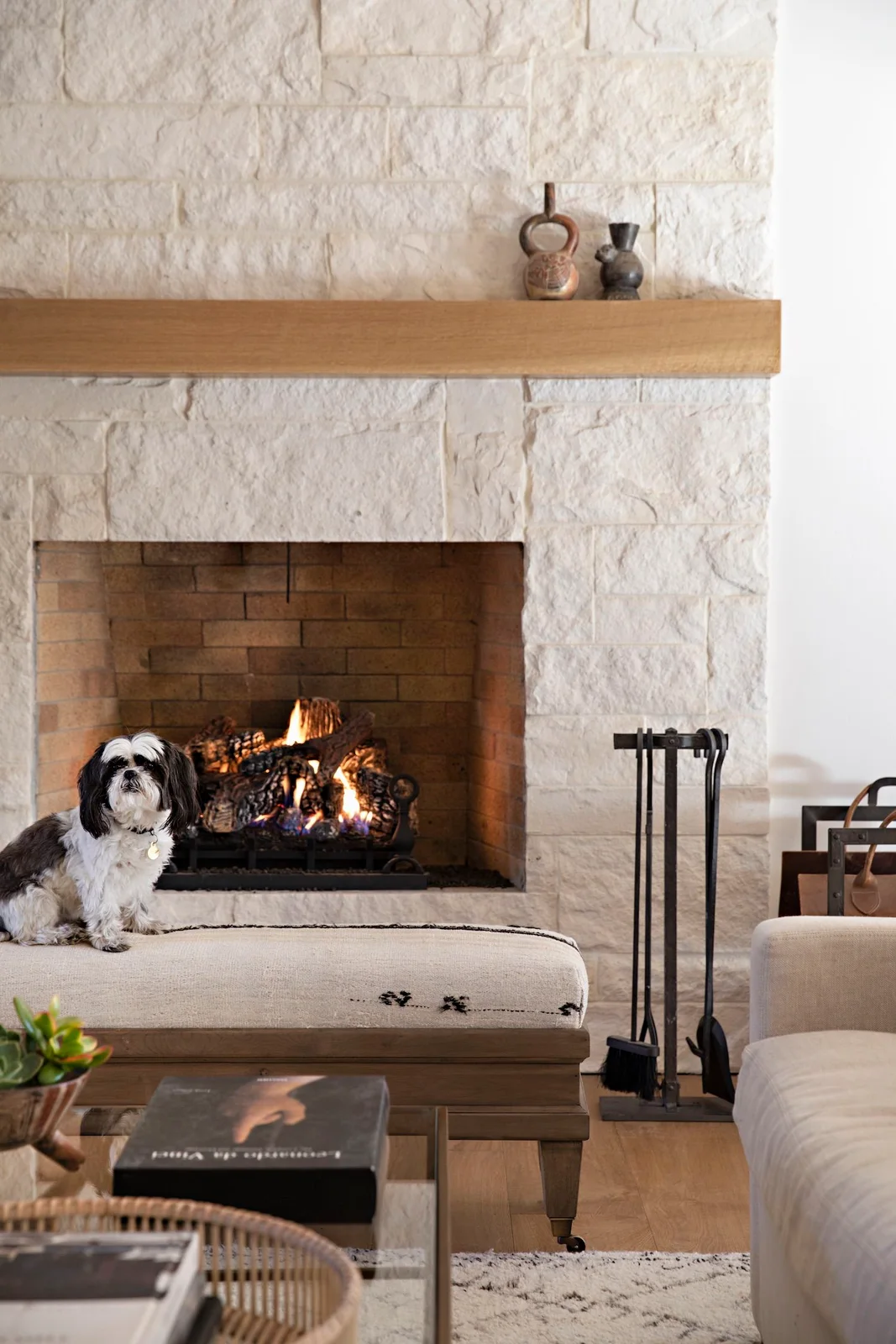
Pale irregular stone gives this fireplace depth, while the straight timber mantel keeps its outline simple. The warmer brick within the opening adds a second texture. Small vessels leave much of the mantel uncovered, allowing the difference between the timber and rough wall to remain the main detail.
The bench and dog are staged immediately beside an active fire; do not copy that proximity. Keep pets and upholstery well clear and use appropriate protection for the fireplace. Before adding a timber mantel, have its position and support checked for the specific installation, then follow the stone supplier’s cleaning guidance.
IDEA 04 / 18
Carry Stone Texture into a Bright Porch
 SaveSupport Non AI Creator
Source: www.livingetc.com
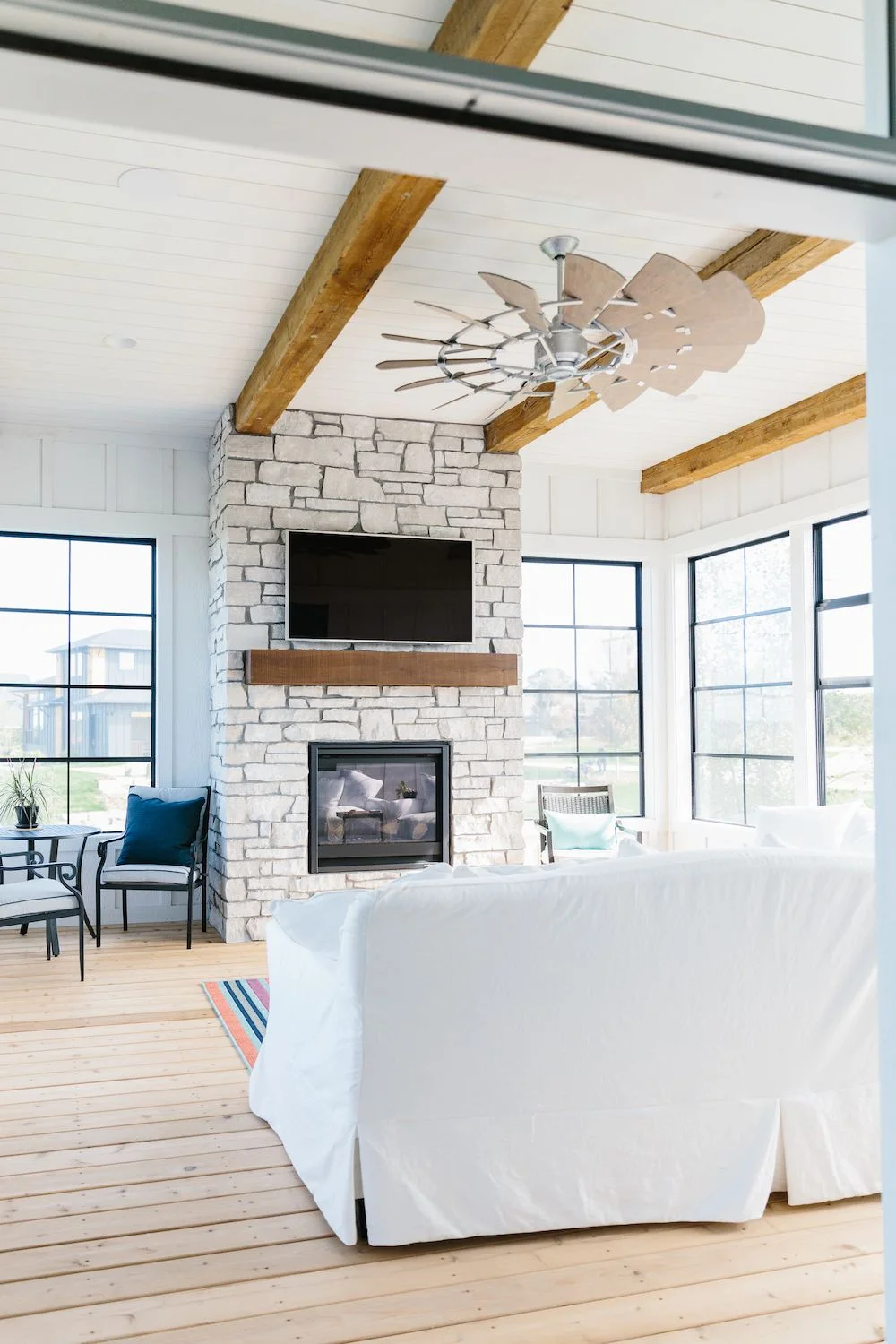
Pale stone blocks carry the fireplace up toward the boarded ceiling, while a timber mantel connects with the exposed beams. Dark window frames repeat the firebox outline around the porch. Simple chairs and a white sofa leave most of the stone visible rather than surrounding it with tall furniture.
A porch installation needs an appliance and finishes suitable for the enclosure and exposure; an indoor-looking photograph cannot establish those ratings. Check the television’s heat limits, mounting and viewing height separately. Keep seating and fabrics outside required clearances and make sure access for servicing remains practical as the room is furnished.
IDEA 05 / 18
Use Subtle Texture within a Pale Palette
 SaveSupport Non AI Creator
Image credit: Marie Flanigan
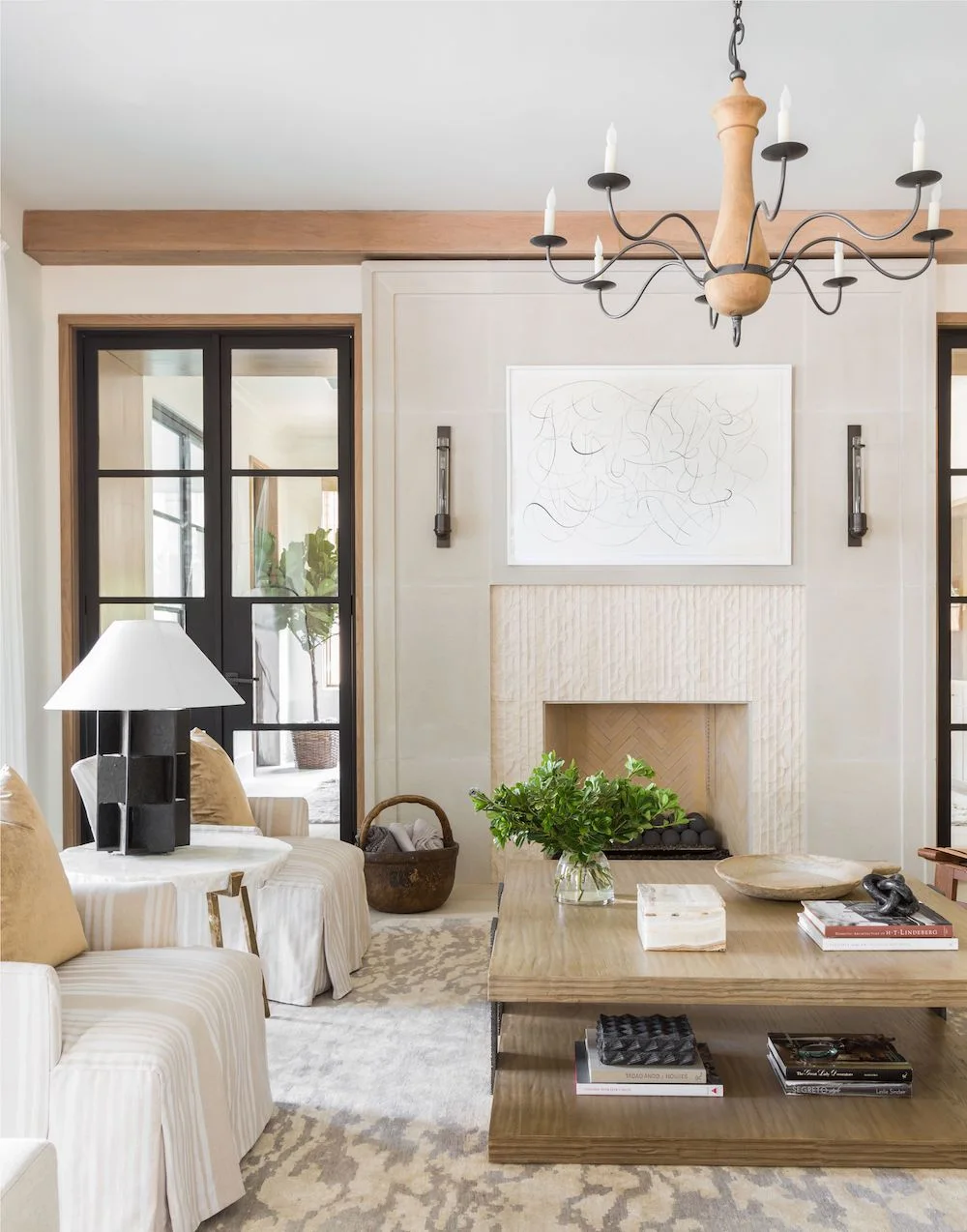
Fine vertical texture gives this pale surround detail without a deeply projecting mantel. The broad panel above continues its outline toward the timber beam. Pale upholstery and a timber table keep the room softly layered, while dark window frames and wall lights introduce a few stronger edges.
Take finish samples into the room at different times of day; a lightly textured surface can look flatter under diffuse light. Ask about maintenance before choosing grooves near soot or dust. Keep the opening and any vents unobstructed, and confirm whether nearby baskets and soft furnishings need moving before the appliance is used.
PART 02
Use timber and brick to define the focal point
IDEA 06 / 18
Set a Rough Timber Mantel against a Smooth Wall
 SaveSupport Non AI Creator
Image credit: Photo: Jennifer Boomer/Verbatim Photo A. From: Fixer Upper and New Chapter for Family of Four
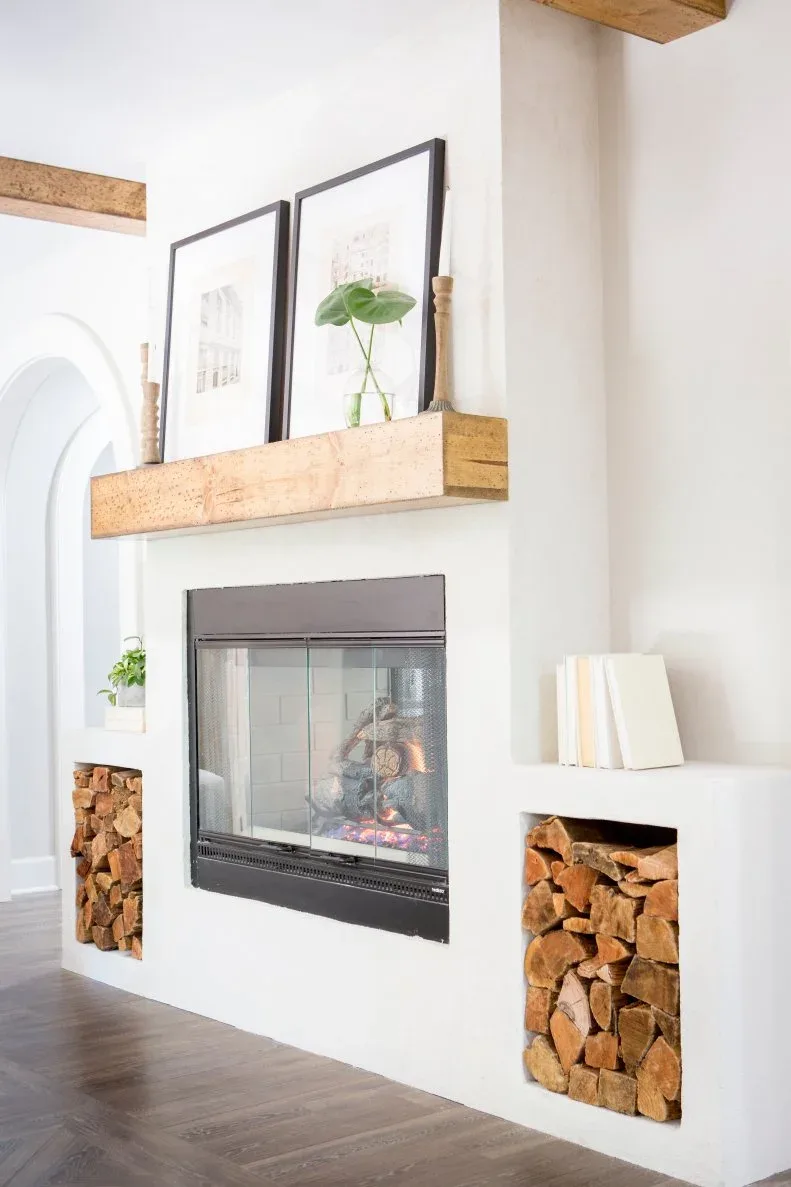
The smooth white wall makes the timber mantel’s irregular markings more visible. Recessed side storage adds texture lower down without extending a cabinet into the room. Dark trim around the glass-front opening provides another horizontal line, keeping the fireplace recognizable within the otherwise pale wall.
Confirm the appliance’s instructions before placing logs, books or decorations in adjacent recesses; a storage niche is not automatically safe for every fire. Have a heavy mantel properly supported and positioned for the required clearances. Leave controls, vents and cleaning access available rather than designing solely around the front view.
IDEA 07 / 18
Keep Weathered Timber Distinct from the Inner Border
 SaveSupport Non AI Creator
Image credit: Photo: Tessa Neustadt. From: Blackband Design
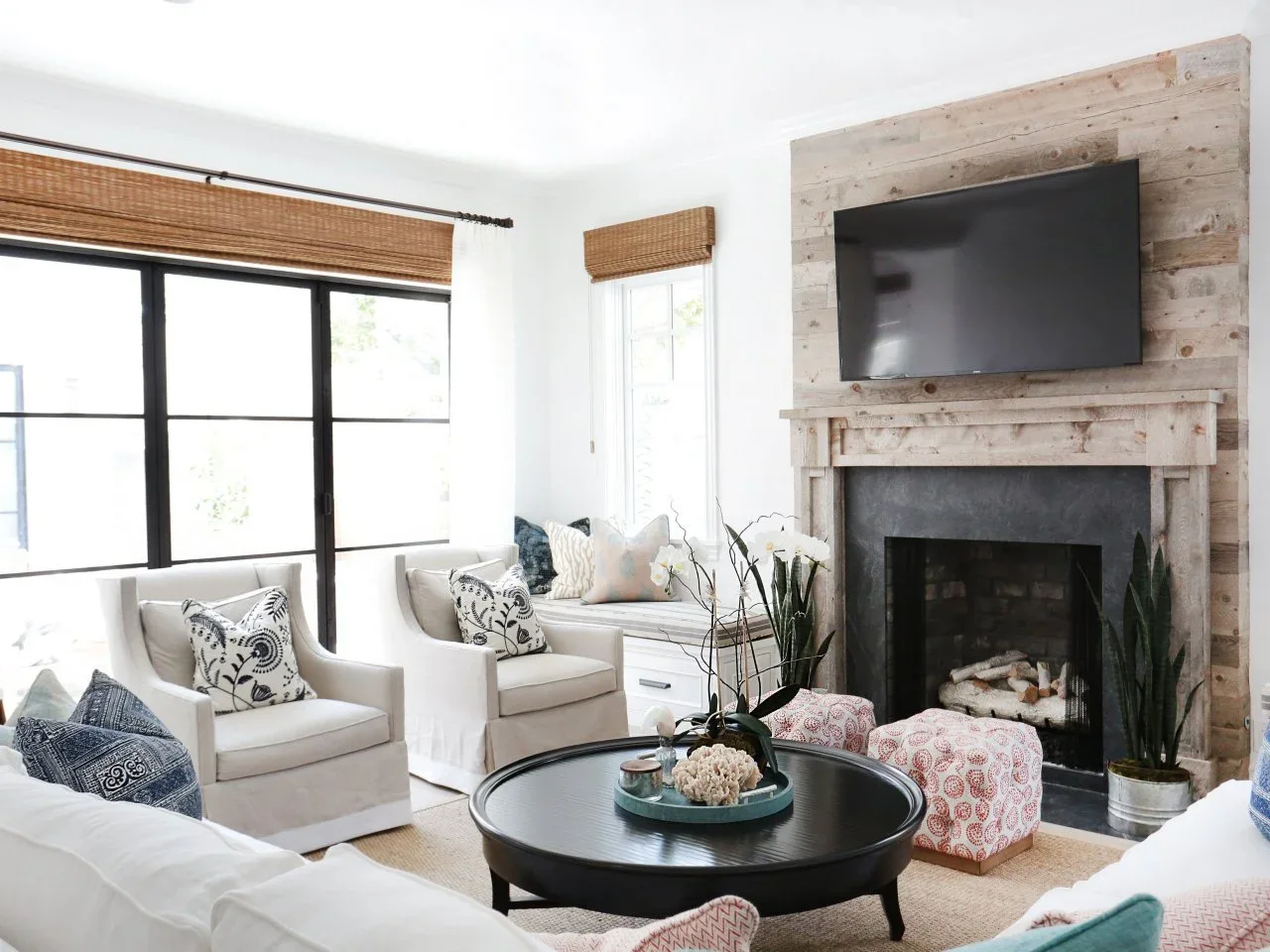
Horizontal weathered boards create a rustic outer layer around the darker inner fireplace border. Woven window shades repeat the timber’s softer color, connecting the feature with the rest of the room. Pale chairs and a low black table let the surround remain the largest textured surface in the view.
Combustible cladding needs the correct separation from the appliance, including any concealed parts of the assembly. Confirm this before adding boards to an existing chimney wall. Check screen temperature limits and viewing comfort, then move stools, plants and other objects away from the opening according to the installation requirements.
IDEA 08 / 18
Let Exposed Brick Define a Retained Feature
 SaveSupport Non AI Creator
Image credit: From: Fixer Upper
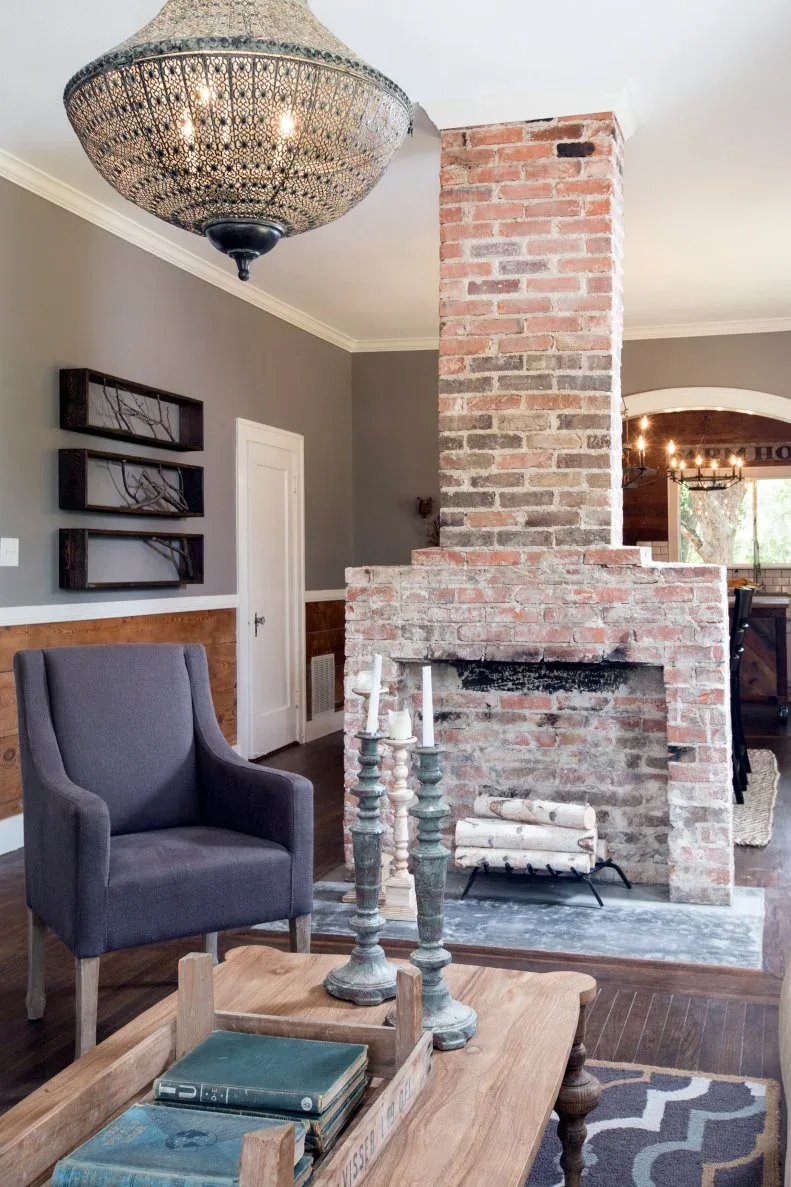
Mixed brick colors and a visibly used opening give this retained feature its character. Gray paint on the adjacent wall creates a quieter background, while timber paneling in the next room connects with the warmer bricks. The tall chimney remains distinct without needing a decorative outer surround.
Have existing masonry, the flue and any intended appliance assessed before treating a retained fireplace as usable. Surface appearance cannot establish condition. The photographed candles and logs are decorative staging, so plan any future operation separately and leave space for the required hearth protection, cleaning and routine inspection.
IDEA 09 / 18
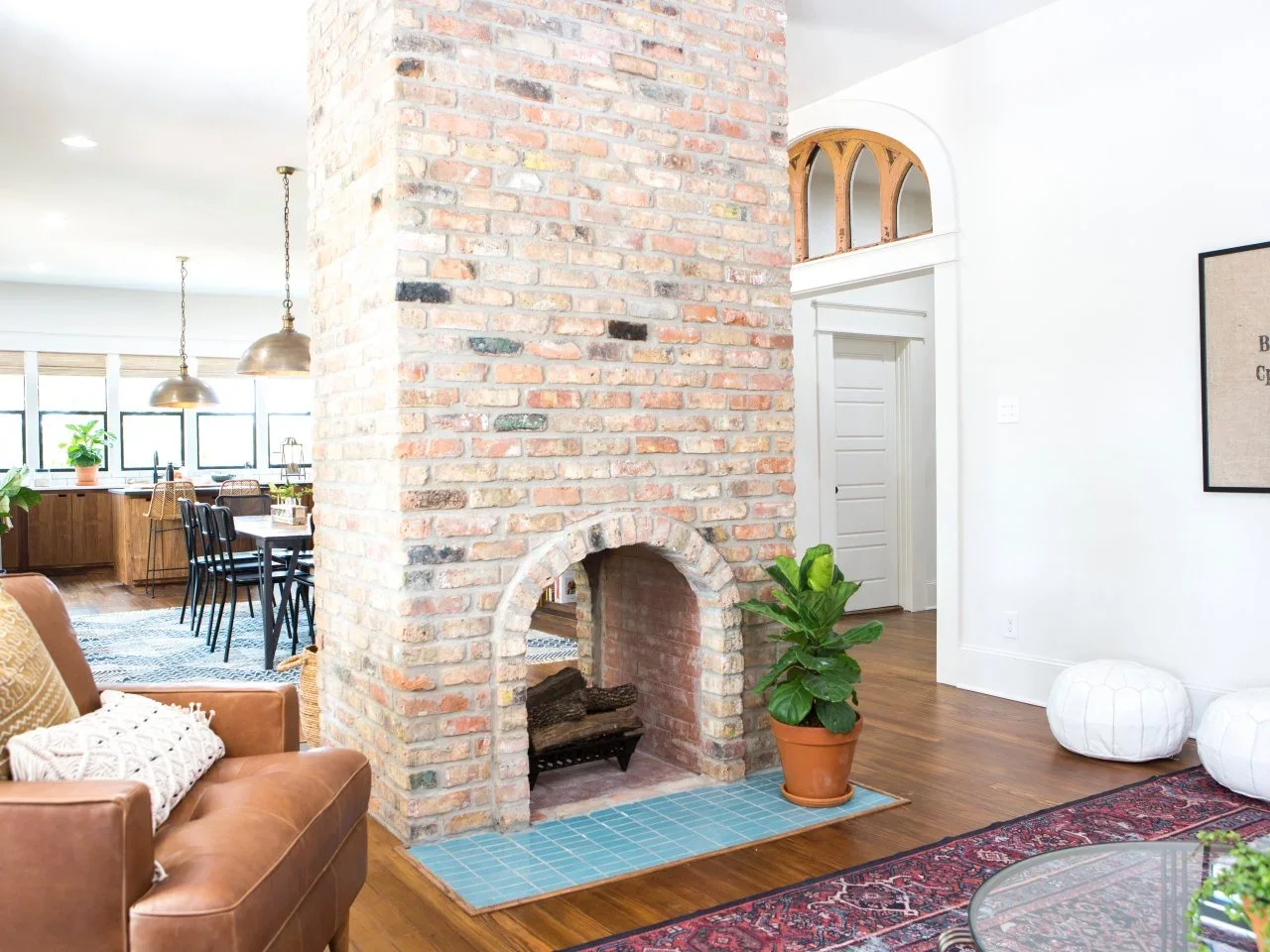
Keep a Brick Divider as a Decorative Focal Point
 SaveSupport Non AI Creator
Image credit: Photo: Jennifer Boomer/Verbatim Photo Agency. From: Fixer Upper
The arched opening and mixed brick colors make this divider interesting from more than one side. Blue tiles add a clear color change at floor level, while the tan sofa repeats the warmer brick tones. The open view connects the rooms without requiring their furniture to match.
The source presents this fireplace as nonfunctional, so treat it as a decorative example rather than a working-fire plan. Keep the tiled edge visible enough to avoid a trip point and protect the masonry when moving furniture. For shared-room layouts, our open-plan kitchen living room ideas offer other ways to define separate activities without a full wall.
IDEA 10 / 18
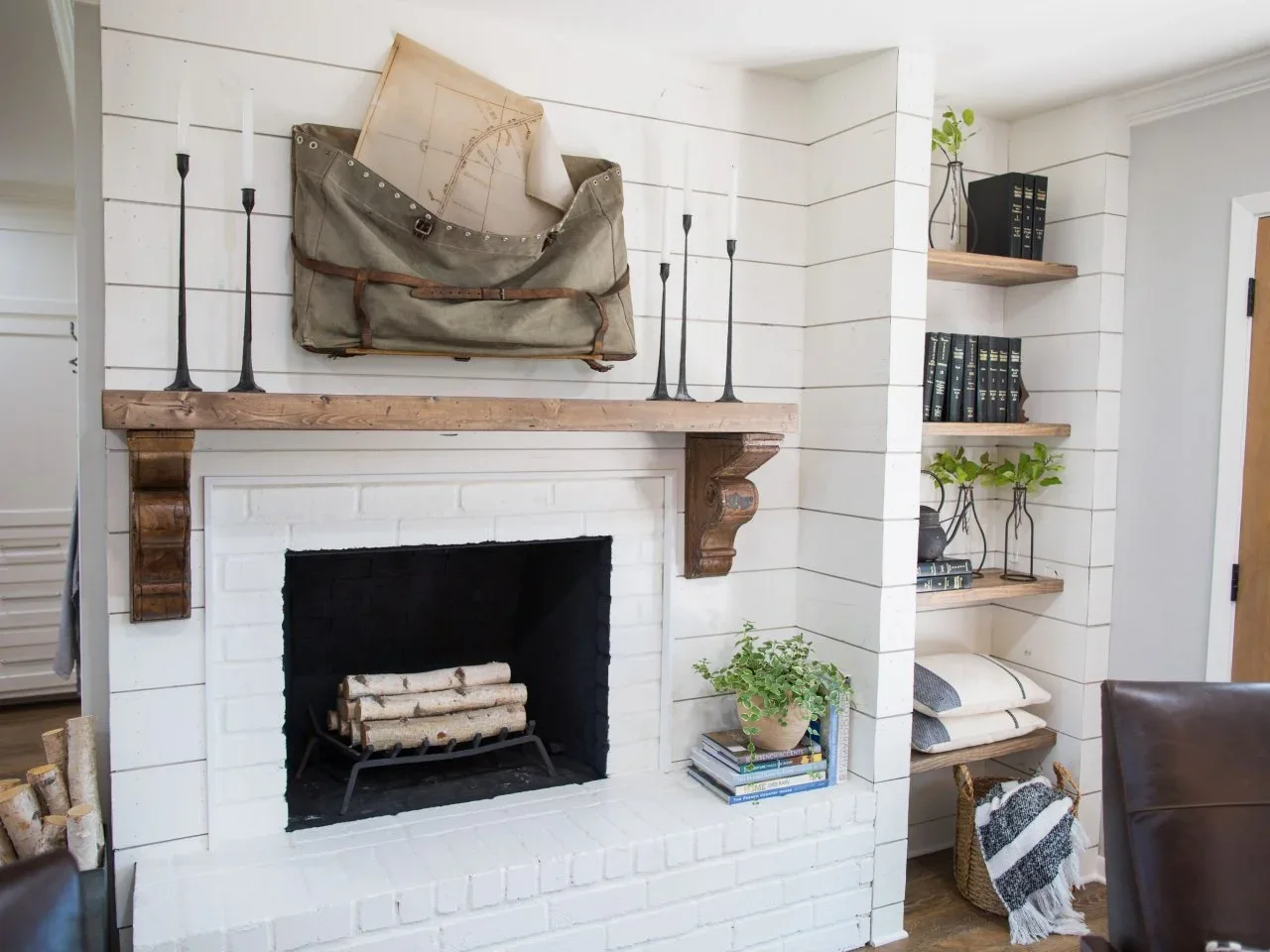
Use Timber Corbels to Add Character to White Brick
 SaveSupport Non AI Creator
Image credit: Photo: Rachel Whyte. From: Fixer Upper
Carved timber brackets make the mantel more expressive than a plain floating shelf. White brick and horizontal wall boards keep the surrounding surfaces related, while timber shelves repeat the mantel color at one side. The black opening gives the pale wall a strong center without another large dark cabinet.
Check the condition, support and placement of old or new corbels before using them under a heavy mantel. The shelf decorations and nearby soft storage are staged, so check their positions against any working appliance’s requirements. Avoid assuming white paint is suitable for the firebox itself; finishes need to match the surface and expected heat.
PART 03
Consider the scale and outline of the surround
IDEA 11 / 18
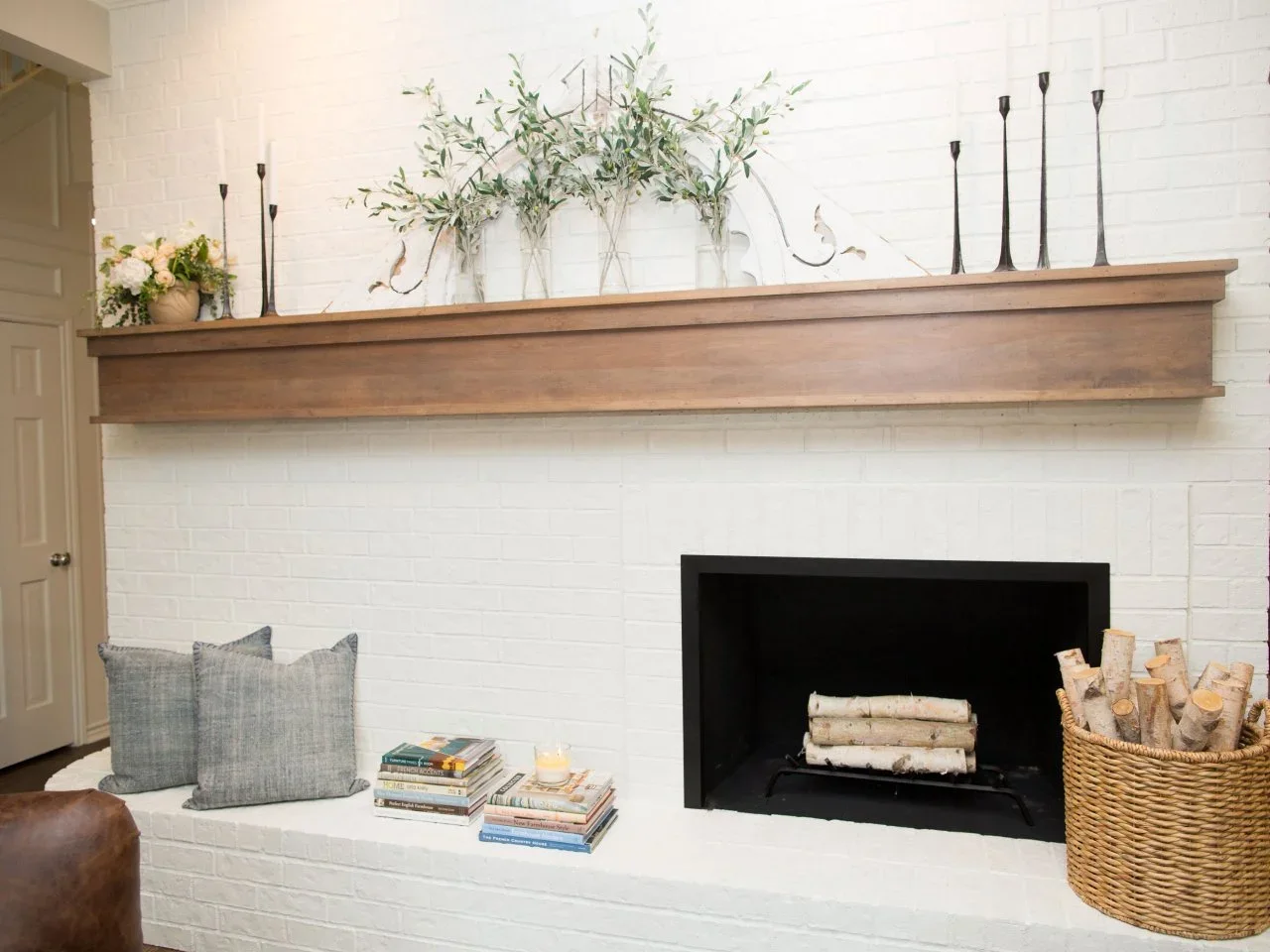
Give a Wide Brick Wall One Continuous Mantel
 SaveSupport Non AI Creator
Image credit: Photo: Rachel Whyte. From: Fixer Upper
A continuous timber mantel brings a horizontal line across this wide brick wall. White paint leaves the brick pattern visible while reducing its color variation. Slender dark candlesticks and clear vases keep the display relatively open, leaving much of the mantel’s warm timber face exposed.
Assess masonry condition and the intended finish before painting a fireplace wall; preparation and heat exposure matter more than simply choosing white. The books, cushion and log basket belong to the staged view and must be relocated as required before use. Keep the broad hearth clear and check that a long mantel is supported throughout its span.
IDEA 12 / 18
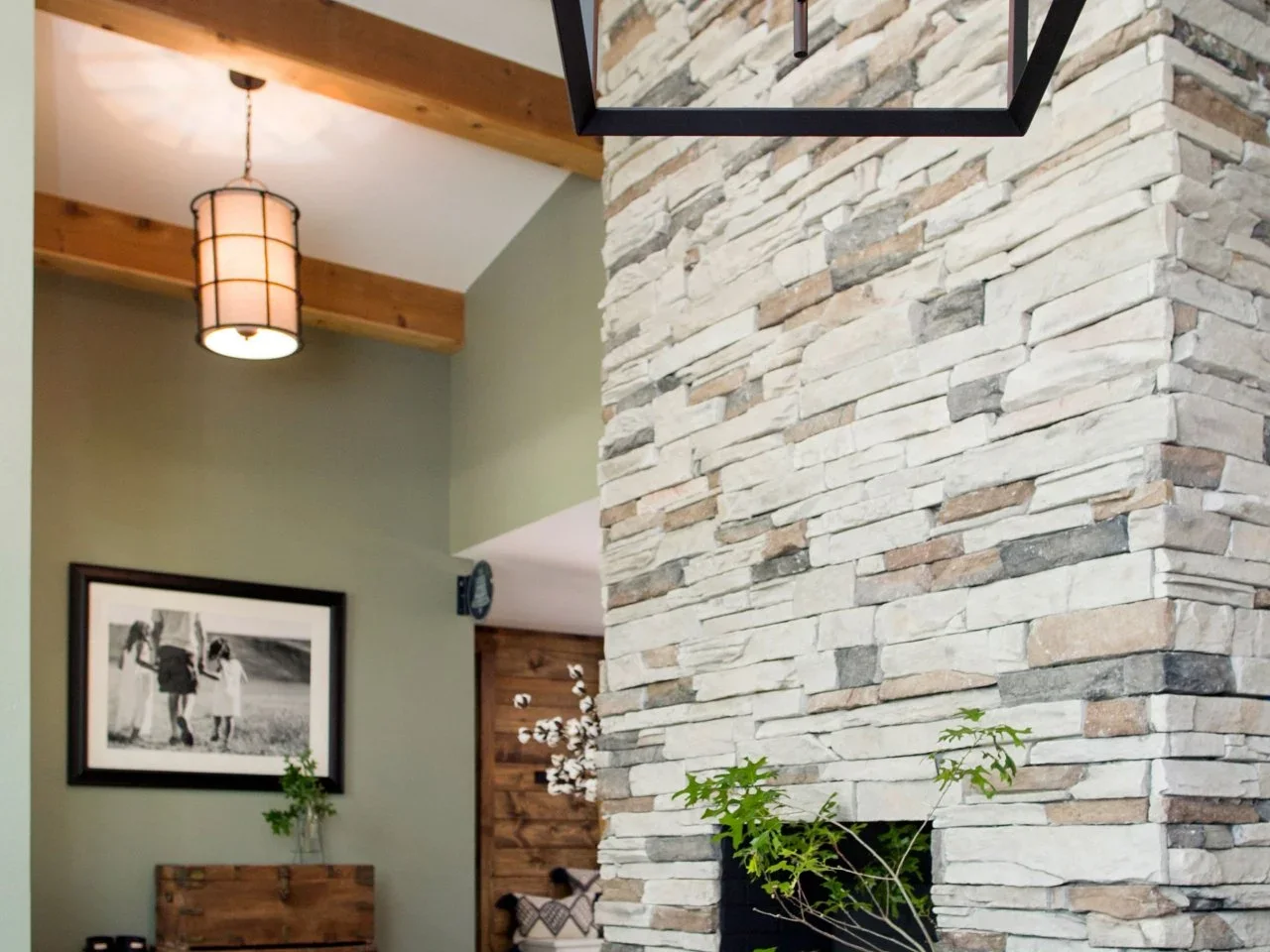
Let Stacked Stone Continue toward the Beams
 SaveSupport Non AI Creator
Image credit: Photo: Rachel Whyte. From: Fixer Upper
Long, narrow stone pieces form a layered face that continues above the fire opening. Timber beams and the large dark lantern add different shapes around that texture. The adjacent sage-colored wall creates a quieter area, allowing the stone column to remain prominent without covering every wall in the room.
Review a representative mix of stone pieces before installation so the color range and corner treatment are clear. Confirm weight, substrate and appliance suitability with the installer. Keep the hearth available for use and servicing, and place flowers or other decorations where they will not obstruct the opening or required clearances.
IDEA 13 / 18
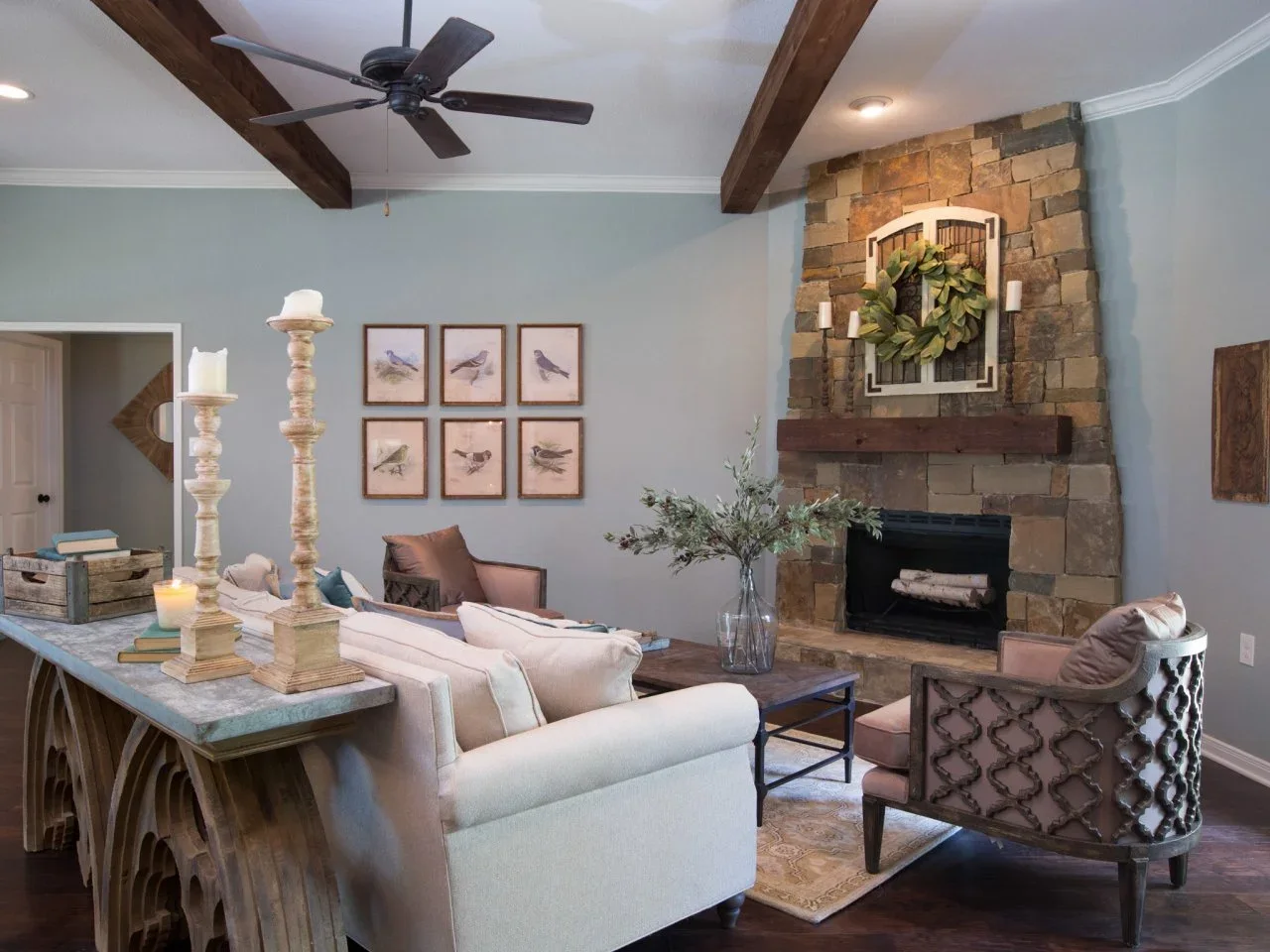
Connect Mixed Stone with Blue Walls
 SaveSupport Non AI Creator
Image credit: From: Fixer Upper
Pale blue walls contrast with the warm brown and gray blocks around this fireplace. A substantial dark mantel repeats the ceiling-beam color, connecting the focal point with the room above it. Bird pictures and individual chairs keep the surrounding setting more domestic than a fully stone-clad room.
Compare wall paint with the full stone sample range instead of matching one small piece. Keep any decorative foliage and candles appropriate to the mantel position and move them where heat requires. Arrange chairs around comfortable conversation while preserving the appliance’s clearances; a styled photograph cannot verify the distance needed for another installation.
IDEA 14 / 18
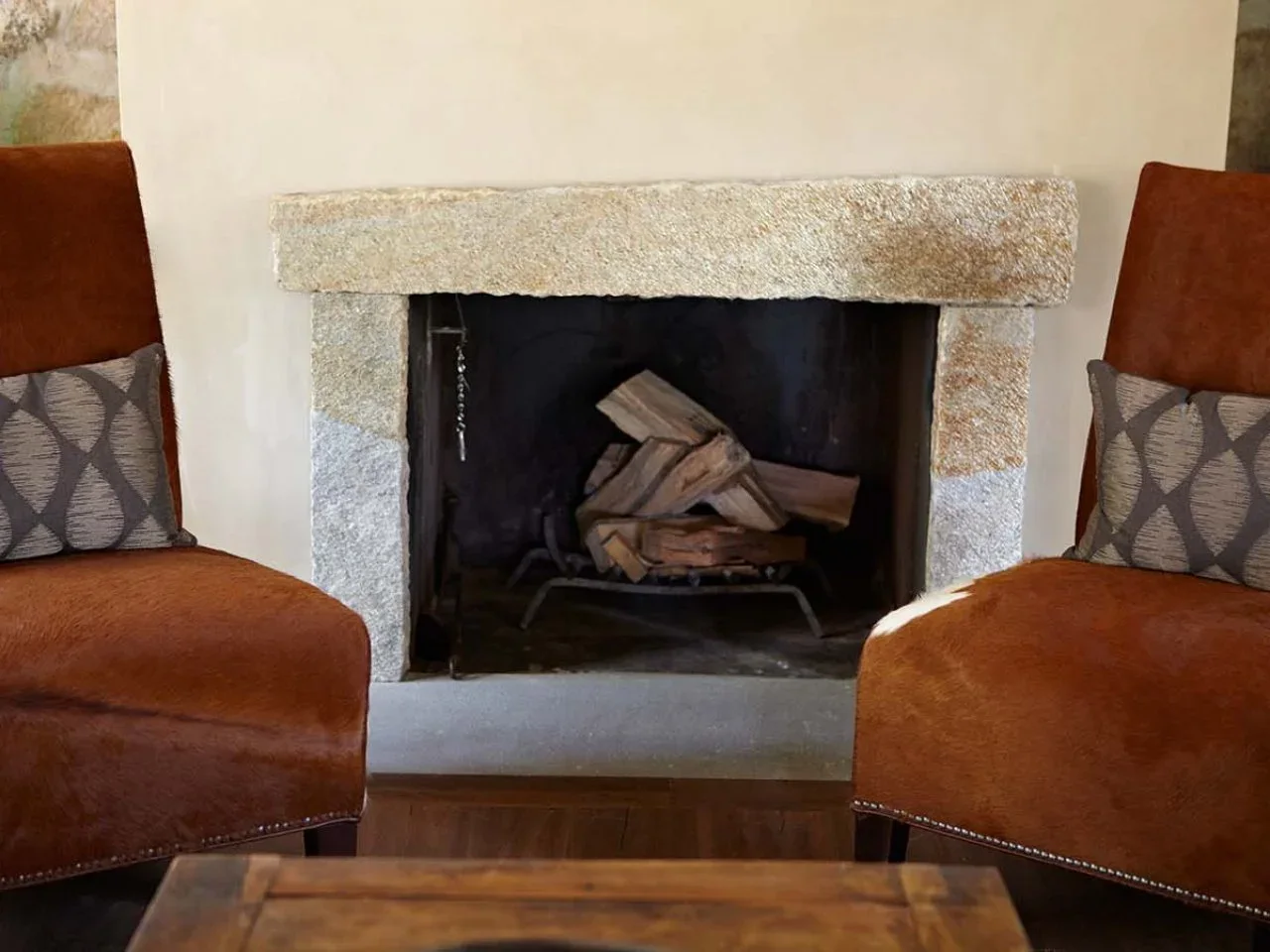
Allow an Irregular Stone Header to Stay Simple
 SaveSupport Non AI Creator
Image credit: Photo: Kelly and Co Design. From: Kelly and Co. Design
The header’s uneven edge gives this surround character without a carved pattern or separate shelf. Its pale color contrasts with the dark opening and warm rust chairs. Leaving the wall above plain makes the slightly irregular stone shape easy to see, with few other objects competing around it.
Have stone components and their support assessed before fitting a surround of this kind, particularly where individual pieces are substantial. Check the hearth projection and move upholstered chairs beyond the clearances needed for actual use. Use a suitable stone-cleaning method and avoid assuming an irregular surface can tolerate abrasive tools or acidic products.
PART 04
Adapt the idea to the room and its daily use
IDEA 15 / 18
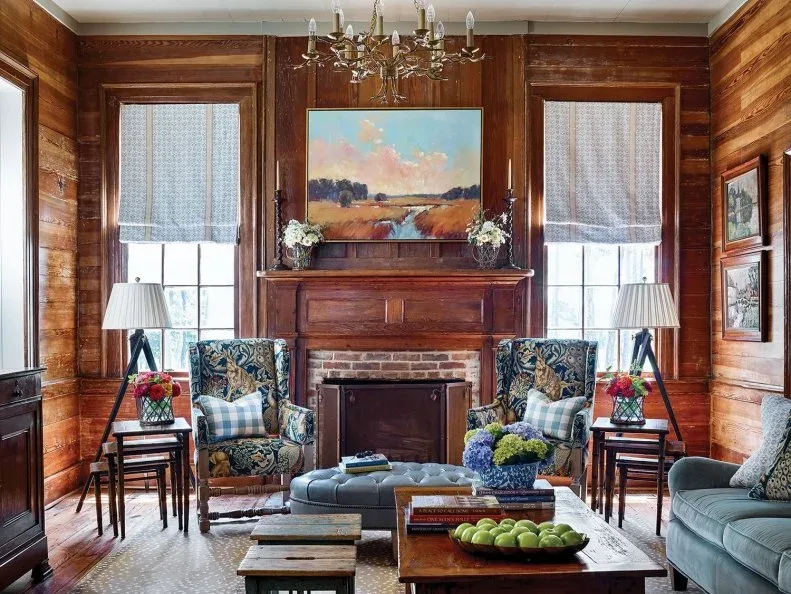
Repeat Timber Paneling in the Mantel
 SaveSupport Non AI Creator
Image credit: Photo: Emily Followill. From: James Farmer
Timber paneling continues into the mantel, making the fireplace part of the room’s larger wall treatment. A smaller brick border distinguishes the opening within that warm color. Patterned chairs, checked cushions and a landscape painting add a collected country character without changing the fireplace’s main outline.
Assess existing paneling and any proposed changes with the fireplace installation in mind, including concealed combustible materials. Keep the mantel details modest enough to dust and inspect. Test patterned upholstery beside the timber in the actual light, then position chairs and lamps so they remain practical and outside the required heat clearances.
IDEA 16 / 18
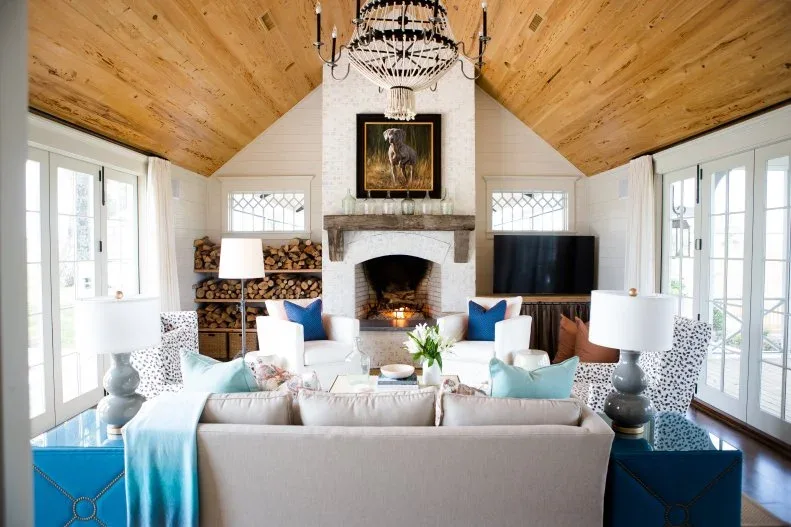
Balance a Timber Ceiling with a Pale Fireplace
 SaveSupport Non AI Creator
Image credit: Photo: Ashley Gilbreath. From: Ashley Gilbreath
The pale chimney face balances the large timber ceiling rather than repeating its darker finish from floor to roof. A thick timber mantel ties the two surfaces together. Log shelves and a lower television cabinet occupy different spaces beside the fireplace, keeping the screen off the central chimney face.
Check the log-storage position against the fireplace requirements before planning built-ins, and allow enough space to load or remove fuel cleanly. Secure artwork and confirm the mantel’s support. Consider glare from the surrounding windows when placing a separate television, and keep the main walking route clear of side tables and lamp cords.
IDEA 17 / 18
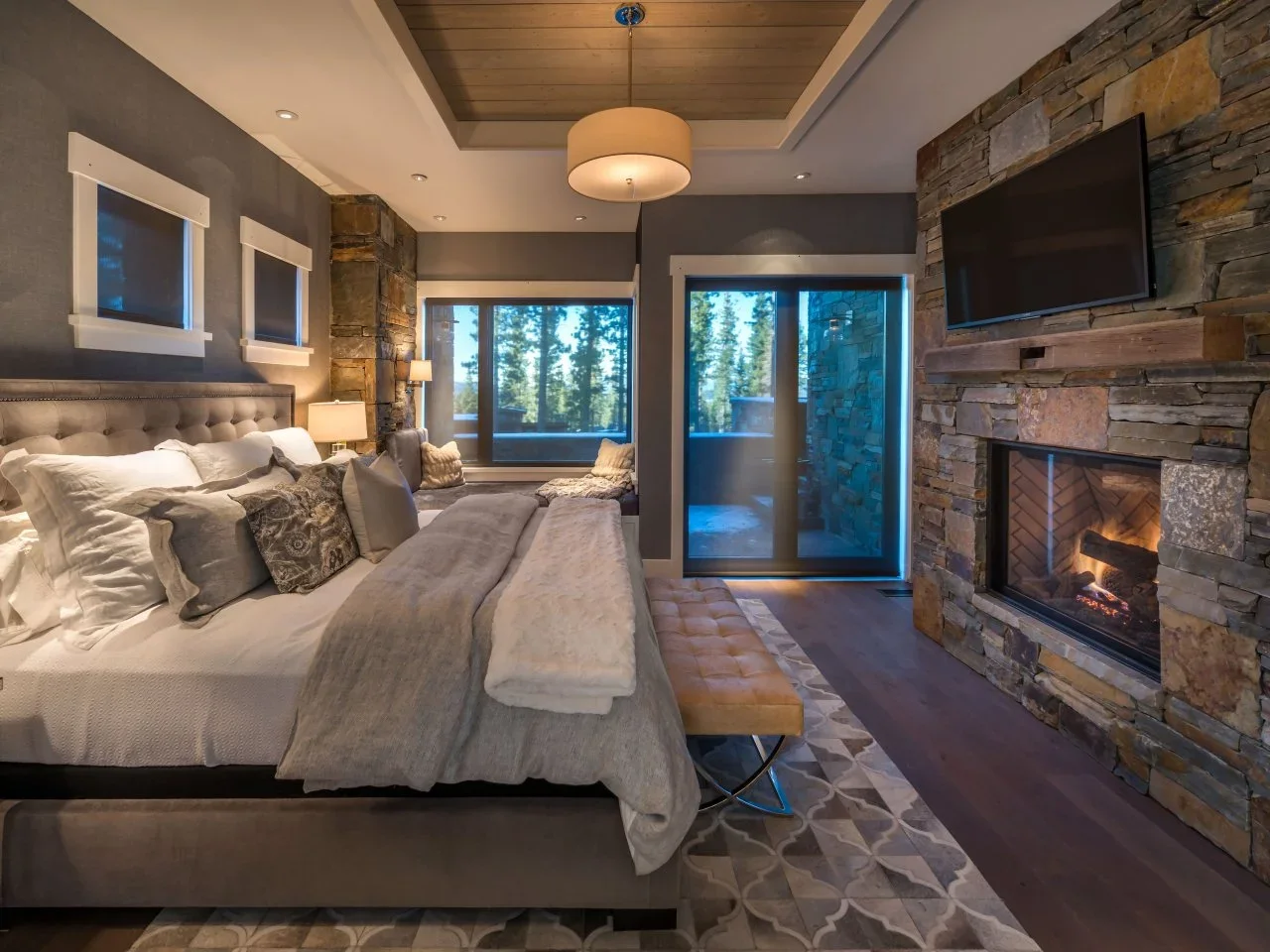
Use Layered Stone in a Bedroom with Restraint
 SaveSupport Non AI Creator
Image credit: Photo: Vance Fox
Layered stone gives the bedroom fireplace depth while the gray walls and pale bedding keep the rest of the room calmer. A timber mantel introduces a strong horizontal line beneath the television. Repeating stone near the far window connects the fireplace with another part of the room without cladding every surface.
A bedroom fireplace needs an installation approved for that room and the specific appliance; the photograph is not evidence of compliance. Preserve the required separation from the bed, bench, rug and bedding. Check heat limits and viewing height for the screen, and make controls and service access convenient without moving heavy bedroom furniture.
IDEA 18 / 18
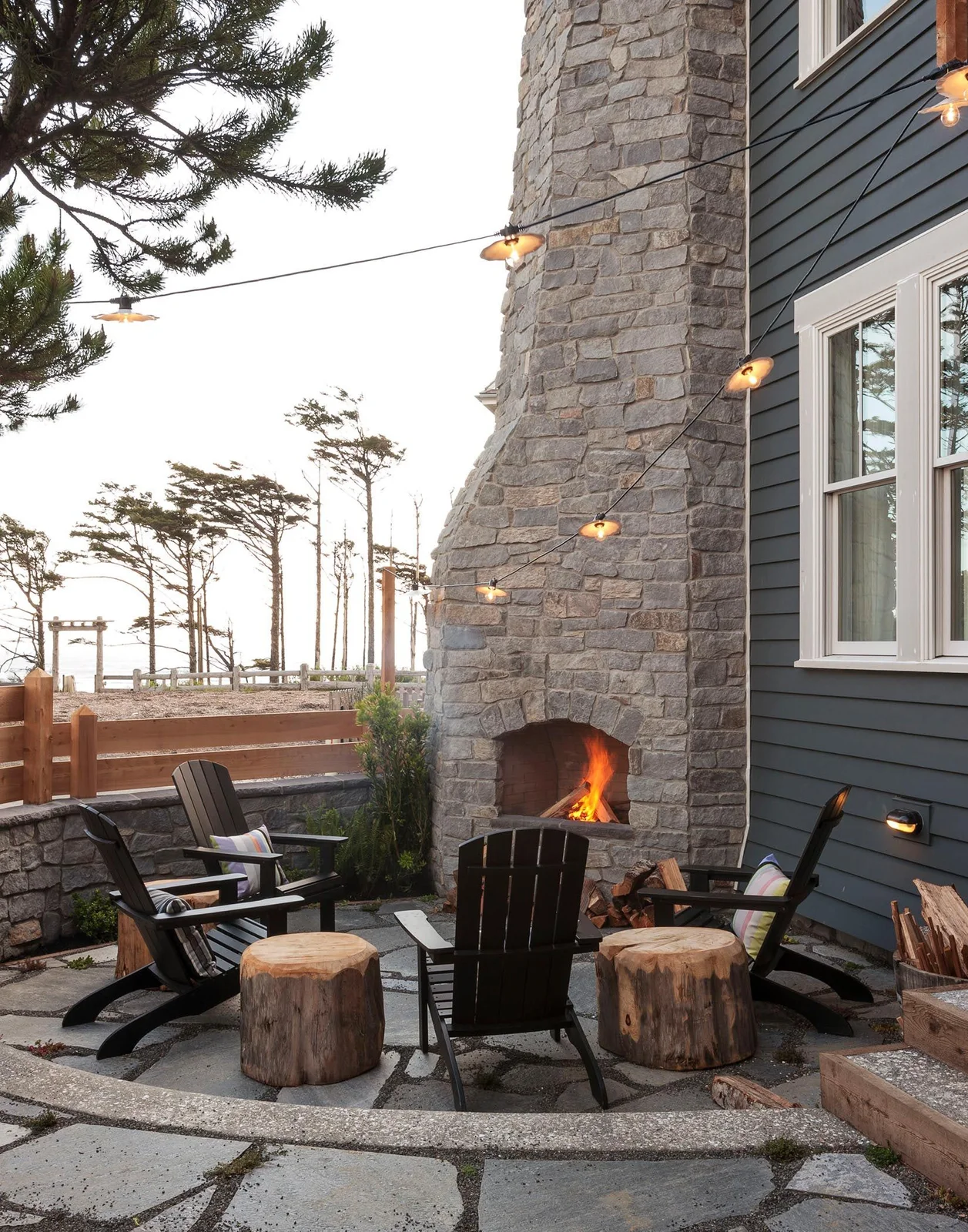
Carry a Rustic Stone Fireplace onto the Patio
 SaveSupport Non AI Creator
Image credit: Matthew Williams
The tall stone chimney creates a focal point beside the house, with a tapered upper shape above the arched fire opening. Dark timber chairs and stump tables repeat the rustic character at a smaller scale. The open patio setting gives this example a different role from an indoor sitting-room fireplace.
Plan an outdoor fireplace around local requirements, suitable construction and the surrounding building before arranging seating. Keep chairs, stump tables, stored wood, plants and lighting cables beyond the required clearances. Check wind exposure and smoke movement with the relevant professional; a photograph cannot establish safe placement or the permissions needed at another property.
BRING IT ALL TOGETHER
Plan the working fireplace before its decoration
Choose the intended use first, including whether the fireplace will remain decorative. Have existing construction and any proposed appliance assessed appropriately before changing a surround or adding timber. Then compare finish samples, furniture positions and cleaning access in the actual room rather than relying on the photograph’s apparent scale.
Keep the strongest texture where you want attention and let nearby surfaces stay simpler if the room already contains beams, patterned fabrics or irregular masonry. Make decorations easy to remove, preserve all required clearances and choose maintenance methods for the confirmed material. A practical fireplace should remain accessible after the room is furnished.