A stone fireplace can be a compact carved surround or a broad textured wall. The color, piece size and finish change its relationship to the room: fine stacked pieces create many small lines, while broad marble or granite surfaces emphasize their overall shape. Start with the fireplace installation and the architecture you already have.
These photographs compare textured stone, carved limestone, veined marble and simpler surrounds in living spaces and bedrooms. Use their visible details to plan colors and furniture, then check the actual material, fixing, care and fireplace requirements. Decorative staging does not establish suitable clearances for an active fire.
PART 01
Choose the outline and neighboring colors
IDEA 01 / 15
Connect Dark Marble to Nearby Storage
 SaveSupport Non AI Creator
Image credit: Sharps
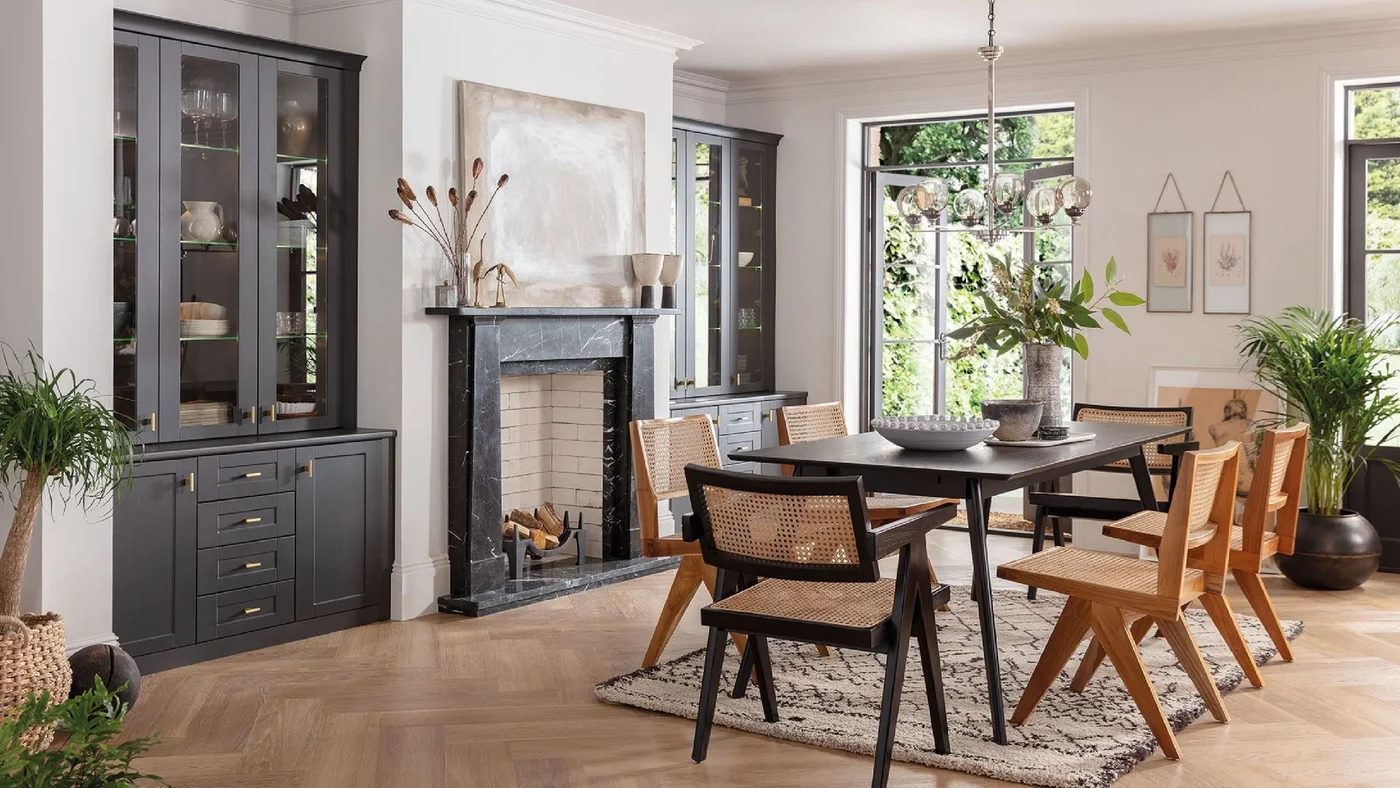
Dark marble gives the fireplace a clear outline between the glass-front storage units. Their similar dark finish connects the three vertical elements, while pale walls and warm flooring leave them distinct from the rest of the dining room. Woven chair backs introduce a softer texture without hiding the stone’s fine veining.
Compare a broad marble sample with the cabinet finish before choosing this much dark contrast. Keep the dining route and chair movement clear of the hearth, including the positions of pulled-out seats. Confirm the surround’s construction and care requirements separately from its appearance, and keep mantel displays secure and outside required fireplace clearances.
IDEA 02 / 15
Give Veined Stone a Plain Wall Background
 SaveSupport Non AI Creator
Image credit: Renaissance London
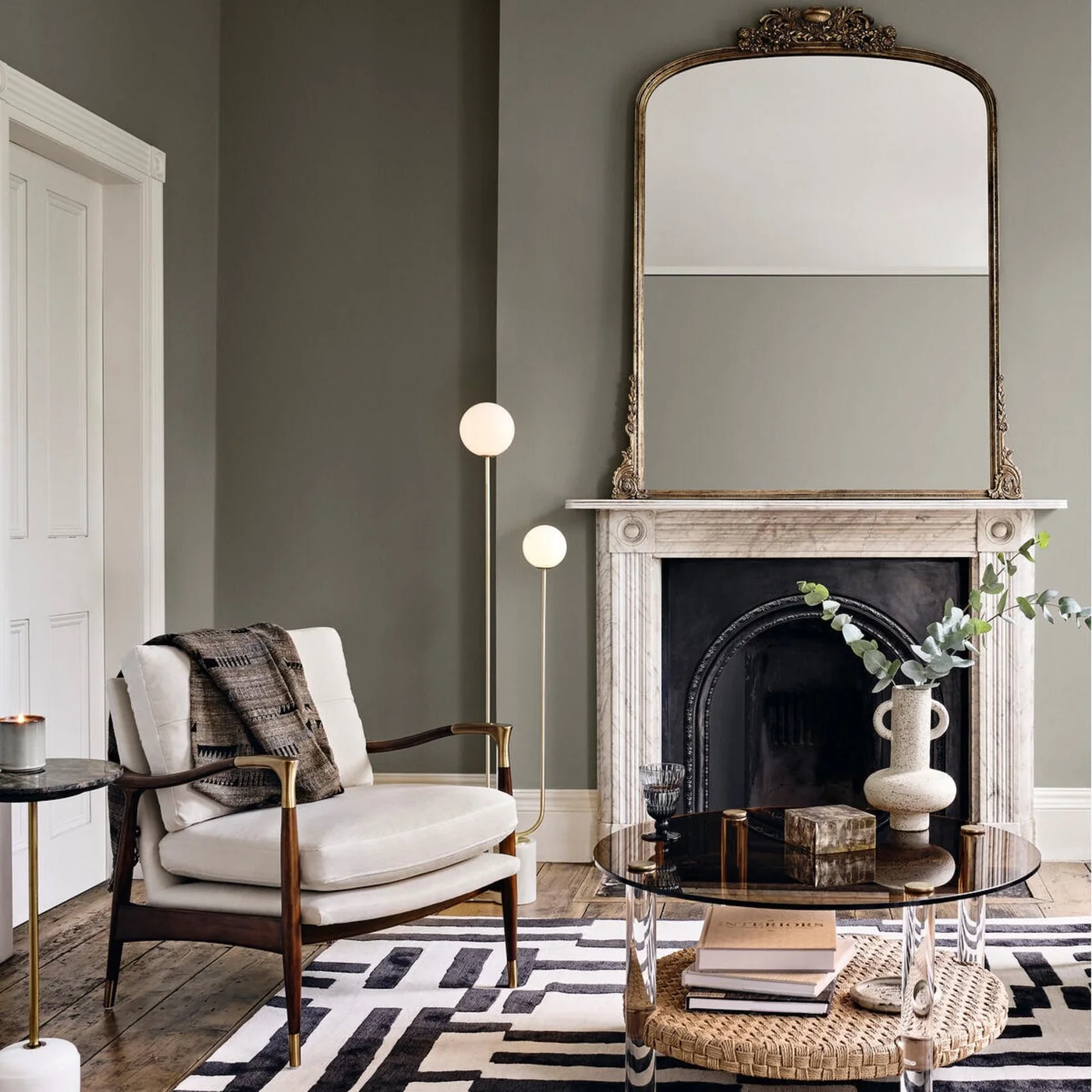
The pale marble surround shows fine veining against a muted green wall. A tall arched mirror repeats the fireplace’s vertical emphasis without copying its rectangular outline. The chair and low glass table have simpler shapes, allowing the carved edges and circular details of the stone to remain easy to see.
Choose the wall color alongside the stone’s background and veining rather than matching only one line in a small sample. Check the mirror’s fixing and weight before placing it above the mantel. Leave room for access and cleaning around the surround, and use products recommended for the actual stone and its finish.
IDEA 03 / 15
Let a Stone Chimney Breast Lead a Beamed Room
 SaveSupport Non AI Creator
Image credit: Future PLC / Mark Bolton
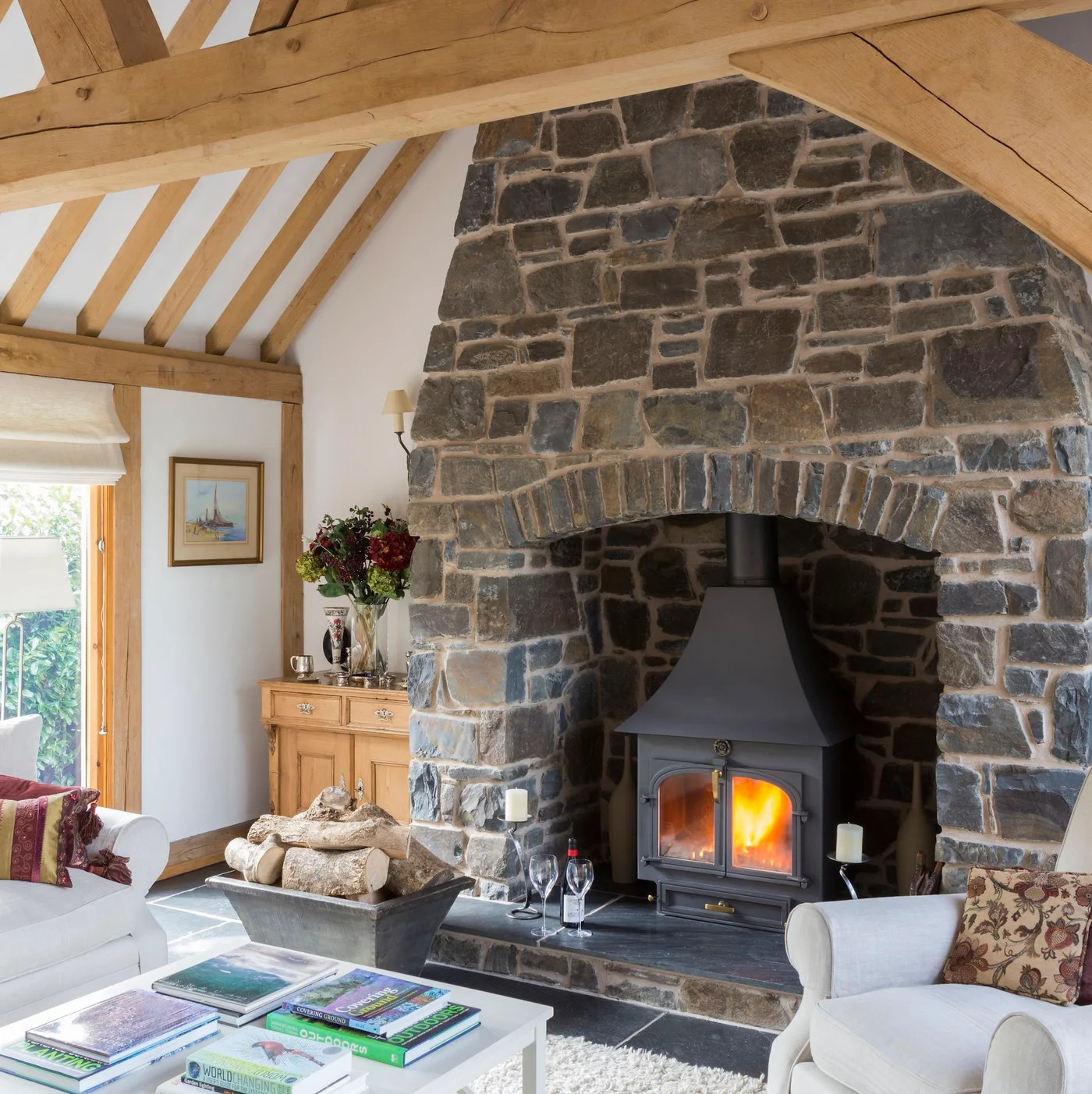
Dark stone blocks extend up the chimney breast beneath the timber roof structure. The varied sizes and visible mortar create a broader texture than the smooth white walls beside it. A dark stove sits within the arched opening, while pale upholstered furniture keeps the surrounding seating area lighter than the stone feature.
Plan the stove and chimney requirements before treating the opening as a decorative project. Have the installation assessed appropriately, including ventilation, flue arrangements and clearances. Keep upholstered seats, stored logs and accessories clear of the required area; the photographed arrangement can suggest color and texture without establishing a safe layout for your own appliance.
IDEA 04 / 15
Pair Fine Stacked Stone with a Broad Timber Mantel
 SaveSupport Non AI Creator
Image credit: Photo: Audrey Hall. From: Locati Architects
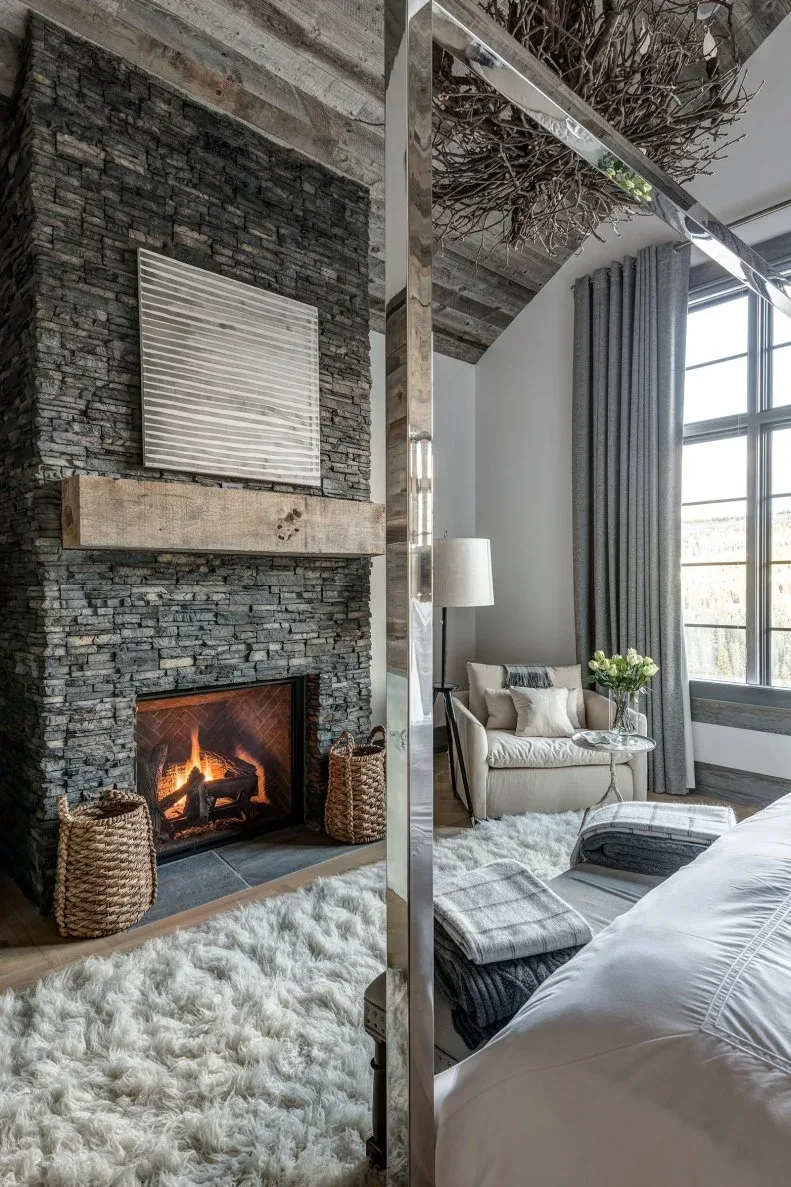
Fine gray stone pieces cover the fireplace wall, creating many small horizontal edges beneath the broad timber mantel. Pale upholstery and simpler walls soften the darker texture nearby. The mantel’s larger uninterrupted shape gives the stacked surface a clear break, while the adjacent window keeps the stone visible in changing daylight.
Compare the stone from the doorway as well as close up, since fine pieces can read as a darker overall field at a distance. Keep baskets, textiles and other combustible objects outside the fireplace’s required clearances. Check access for cleaning the textured surface and maintenance of the fireplace before choosing the wall treatment.
PART 02
Balance stone scale with timber and seating
IDEA 05 / 15
Make Carved Limestone Clear Against a Colored Wall
 SaveSupport Non AI Creator
Image credit: Photo: Emily Minton Redfield. From: Duet Design Group
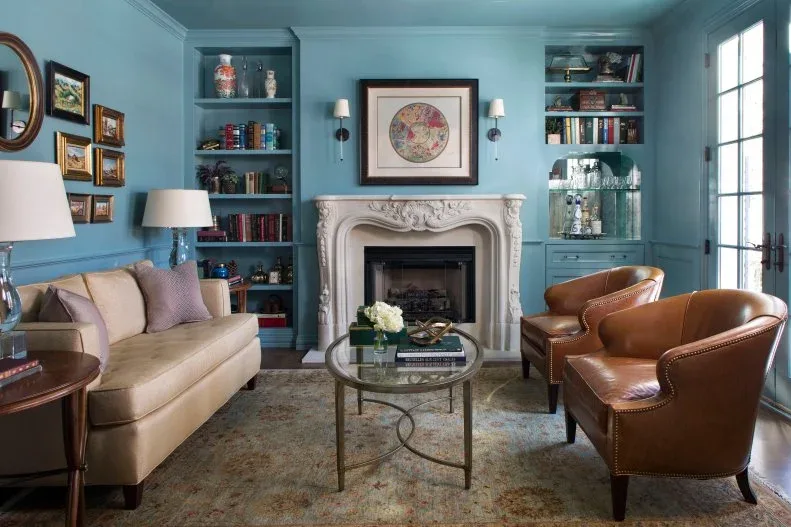
Pale carved limestone contrasts with the blue walls and built-in storage. The surround’s curved details remain clear because the neighboring shelves use straighter lines. A tan sofa and brown chairs add warmer surfaces within the blue room, while a glass table leaves the lower part of the fireplace visible.
Use the surround as the detailed feature when choosing the nearby shelving and artwork. A restrained shelf arrangement can stop small objects from competing with the carving. Confirm appropriate cleaning methods for the limestone and its finish, and check fireplace access and furniture clearance before adopting the compact seating arrangement.
IDEA 06 / 15
Use Irregular Stones Beneath Weathered Timber
 SaveSupport Non AI Creator
Image credit: Photo: Troy Thies. From: Martha O'Hara Interiors
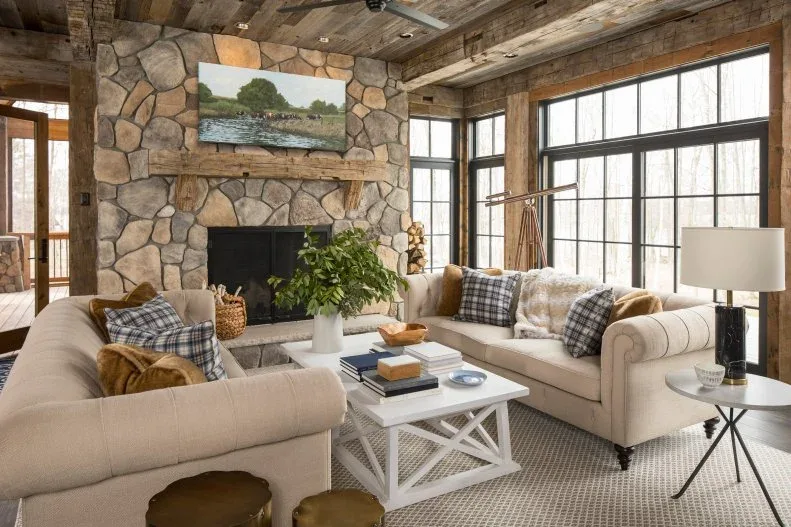
Irregular stones vary in size and tone around the dark fireplace opening. Weathered timber appears on the mantel, ceiling and window surrounds, creating a warm framework for the stone. Pale sofas and a simple white table provide quieter surfaces between the textured architecture and the smaller plaid patterns in the cushions.
Compare several stone pieces together to understand their color range before coordinating paint and upholstery. Keep the furniture arrangement comfortable without crowding the hearth. Our rustic living room ideas show other ways to balance textured architecture with simpler seating, helping you decide which smaller patterns and accessories the room actually needs.
IDEA 07 / 15
Balance a Tall Pale Fireplace with Timber Beams
 SaveSupport Non AI Creator
Image credit: Photo: Casey Dunn. From: Furman and Keil Architects
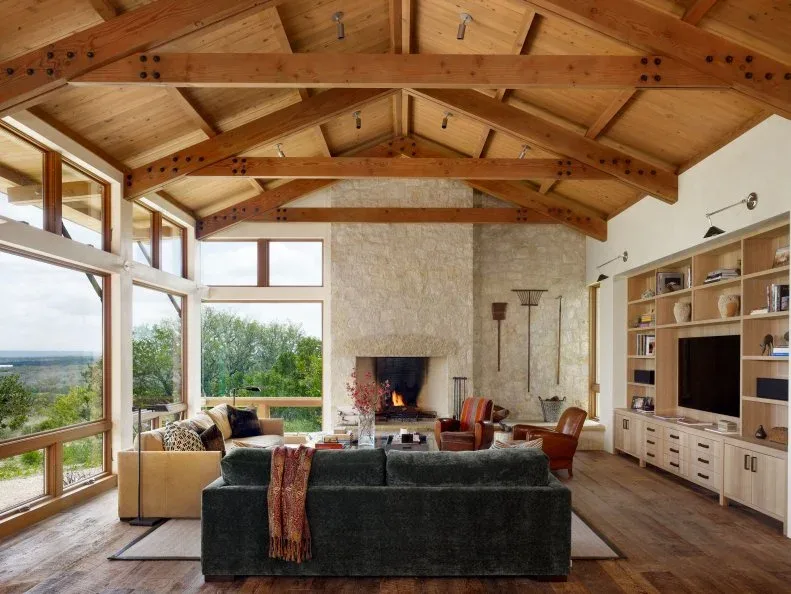
Pale stone rises toward the roof beneath the warm timber beams, giving this room a broad textured end wall. Large windows and lighter shelving keep the fireplace from becoming the only substantial feature. Darker seating gathers in front, separated from the wall by the hearth area and the room’s main conversation space.
Consider the fireplace from the opposite side of a tall room before choosing the stone scale. The visible joints and surface texture can change how solid the wall feels. Plan lighting and maintenance access with its height, and keep decorations and seating outside the clearances required for the particular fireplace installation.
IDEA 08 / 15
Keep a Warm Stone Wall Simple Beside Glass
 SaveSupport Non AI Creator
Image credit: Photo: Ciro Coelho. From: NMA Architects
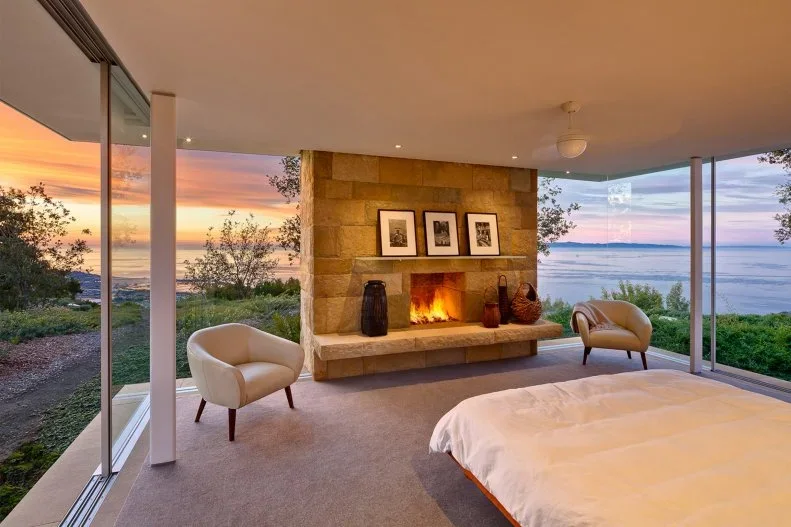
Warm stone blocks give the fireplace a substantial center between the broad glass walls. Their varied tones contrast with the plain ceiling and pale rounded chairs. A projecting hearth repeats the stone below, while the thinner mantel line gives framed pieces a more restrained horizontal position above the opening.
View warm stone samples under both daylight and the lamps you intend to use; the room’s changing light can alter their apparent color. Check the hearth projection against the walking route and cleaning access. Keep decorative vessels clear of the fire’s required zone, and choose the installation around the room’s actual ventilation and construction.
PART 03
Plan broader walls and bedroom arrangements
IDEA 09 / 15
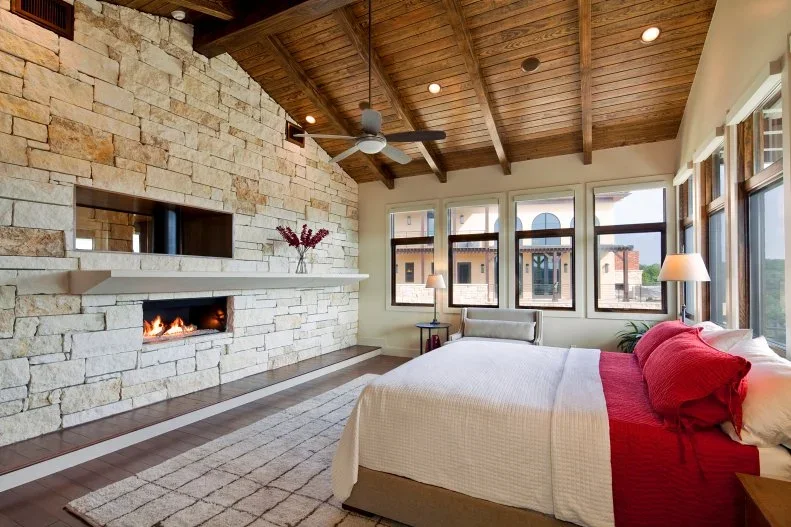
Extend the Stone Across a Bedroom Wall
 SaveSupport Non AI Creator
Image credit: Photo: Jenkins Custom Homes Design+Build. From: Jenkins Design Build
Pale stone extends across the bedroom wall rather than remaining a narrow frame around the fire. A long pale mantel separates the darker horizontal opening from a recessed area above it. The timber ceiling adds warmth, while simple bedding and concentrated pink cushions keep the furnishings from competing with the broad stone texture.
Plan the full wall treatment with the room’s windows, outlets and any recess before choosing a stone layout. Check support and fixing requirements with the installer, including how the edges meet other surfaces. Keep bedding and curtains outside required clearances, and leave the hearth route accessible instead of adding more furniture against the feature wall.
IDEA 10 / 15
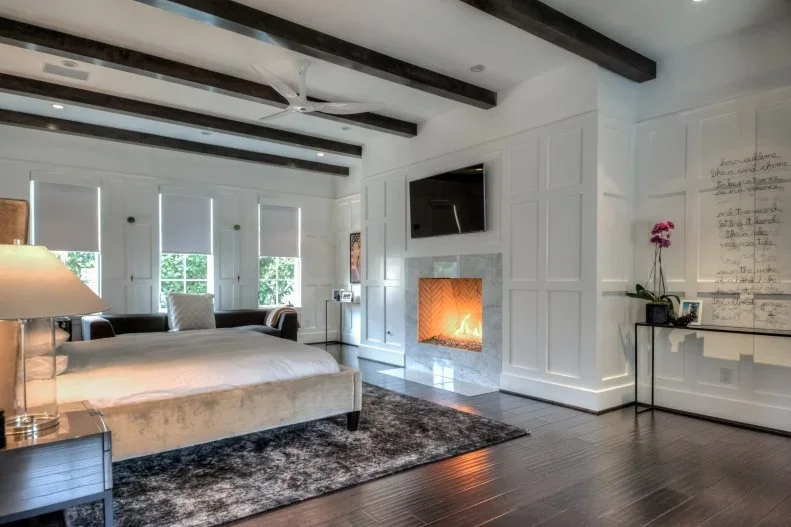
Frame Marble with White Wall Paneling
 SaveSupport Non AI Creator
Image credit: Photo: Patrick Bertolino. From: Mirador Group
Pale marble forms a compact surround within a larger white paneled wall. Its softer veining contrasts with the paneling’s straight grid and the darker timber beams overhead. The fireplace interior adds a separate herringbone detail, while broad plain bedding and muted furniture leave the architectural surfaces as the stronger patterns.
Coordinate the panel sizes around the fireplace opening before installation so their edges meet deliberately. Confirm all combustible trim positions against the fireplace requirements rather than copying their apparent distance in a photo. Keep the marble sample beside the proposed wall paint, and check its finish and cleaning instructions before choosing the final white palette.
IDEA 11 / 15
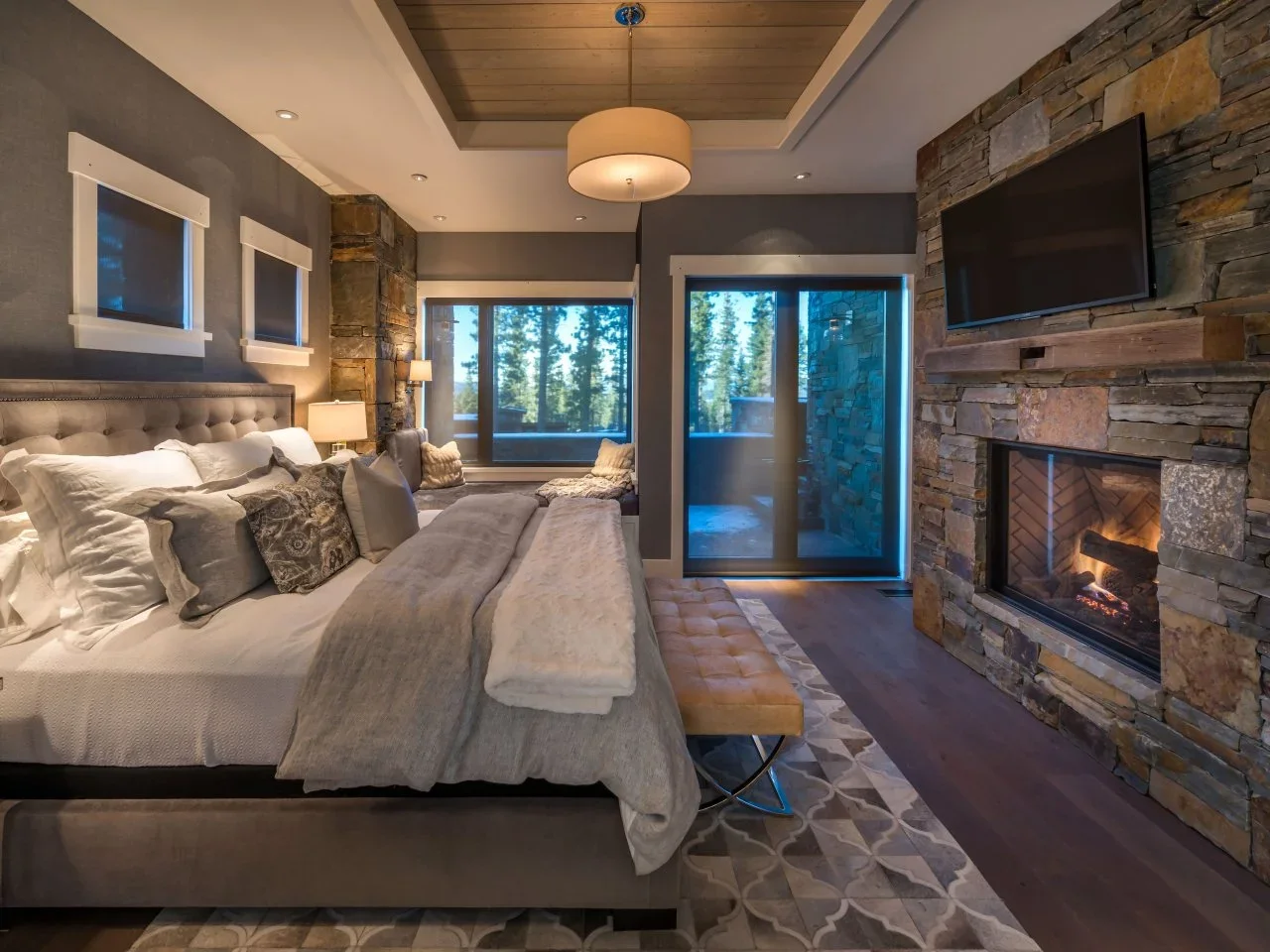
Mix Broad Blocks with Narrow Stone Layers
 SaveSupport Non AI Creator
Image credit: Photo: Vance Fox
Broad stone blocks and narrower stacked pieces create a varied fireplace wall in this bedroom. A timber mantel connects with the warmer fragments, while gray walls and pale bedding pick up its quieter tones. The dark fireplace frame remains distinct within the texture, giving the opening a clear edge below the shelf.
Look at a larger stone layout before choosing a mixed pattern, since the proportions of wide and narrow pieces affect the result. Keep nearby textiles simpler if the wall has strong variation. Plan any screen position and cable access with heat exposure in mind, checking both appliance instructions rather than assuming a mantel alone protects electronics.
PART 04
Compare simpler stone textures
IDEA 12 / 15
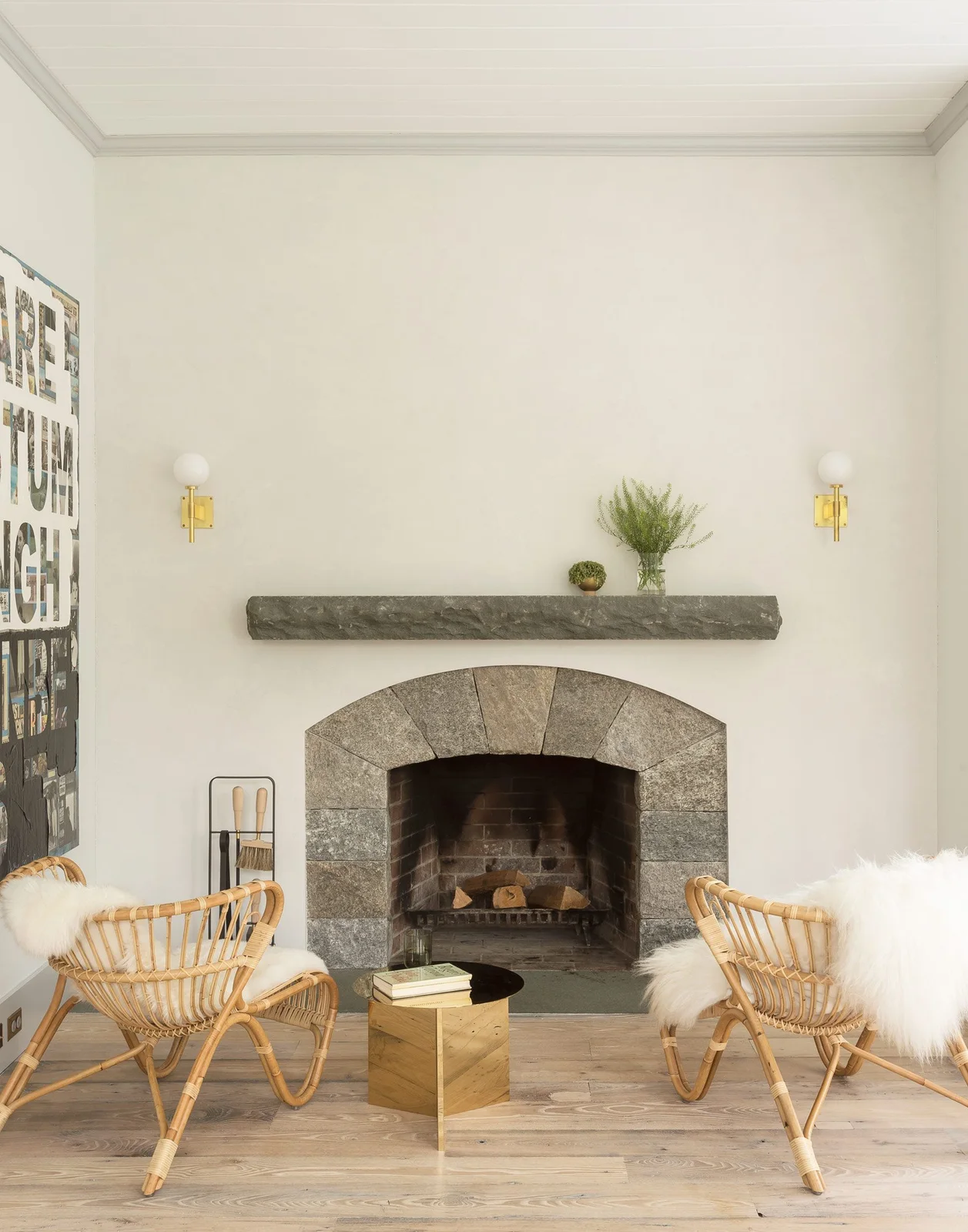
Use a Stone Arch with a Separate Mantel
 SaveSupport Non AI Creator
Image credit: Matthew Williams
A gray stone arch gives the fireplace opening a clear shape, while a separate rough-edged mantel creates a horizontal line above. Plain pale walls leave space around both details. Open woven chairs and a small table add lighter furniture shapes nearby, keeping the stone visible without another large cabinet or patterned wall.
Check the arch proportions against the actual firebox and hearth before choosing the surround. Keep the mantel depth and fixing appropriate to the installation, and avoid loading it with objects simply because its surface looks substantial. Position chairs and soft coverings outside required clearances when the fireplace is in use.
IDEA 13 / 15
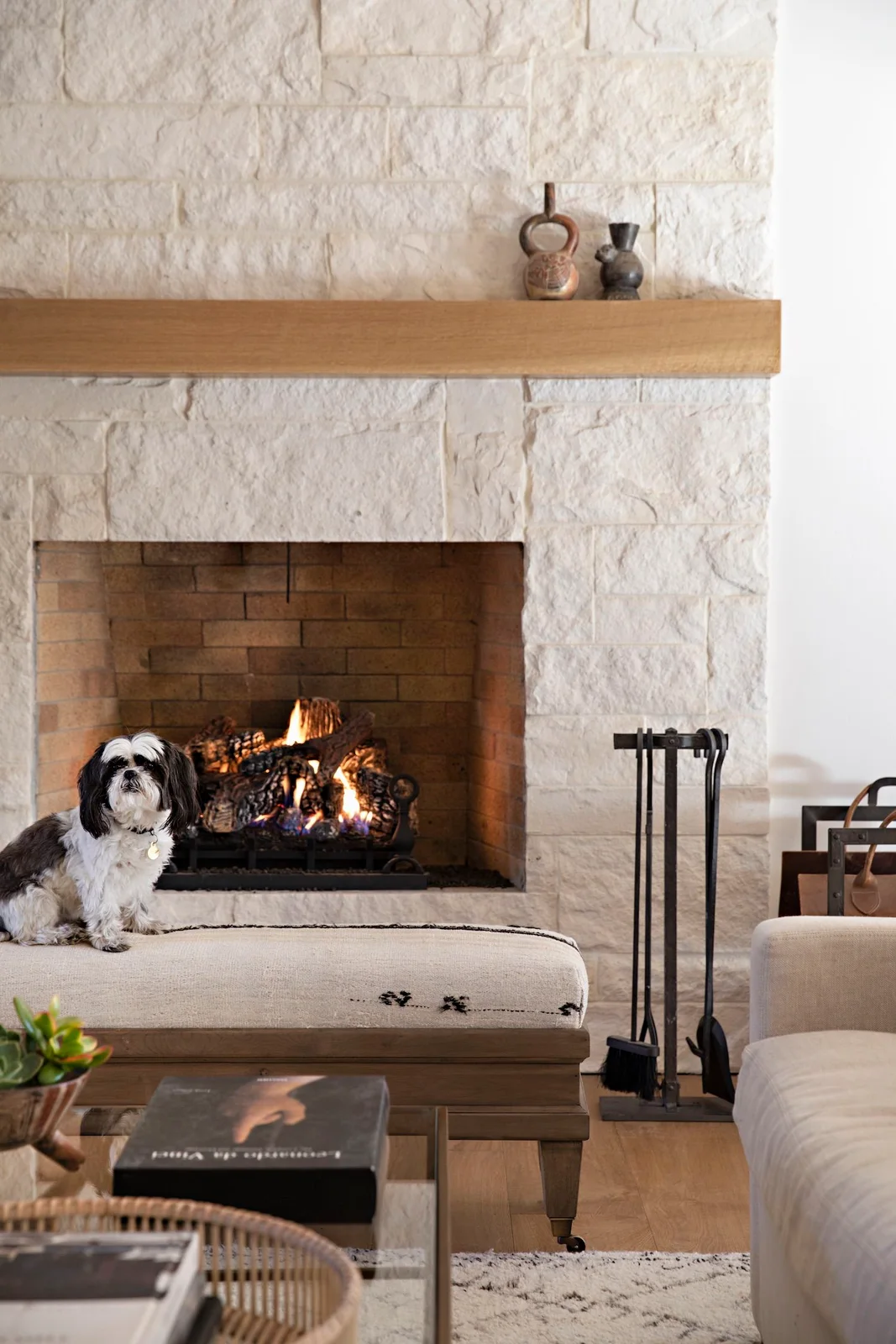
Contrast Rough Pale Stone with a Smooth Timber Shelf
 SaveSupport Non AI Creator
Image credit: Karyn Milet
Rough pale stone gives this fireplace a textured face beside a smooth timber shelf. The larger light-colored pieces keep their uneven edges visible without a strong dark mortar grid. Neutral seating repeats the pale background, allowing the warm shelf and dark firebox to provide the main contrast in the arrangement.
Compare the texture with the mantel finish before deciding how many other rustic details to add. In use, move the foreground upholstered ottoman and any pet resting place away from the fireplace, keeping combustible objects outside required clearances. Choose a stone-cleaning method suited to its actual surface, including the recessed edges between pieces.
IDEA 14 / 15
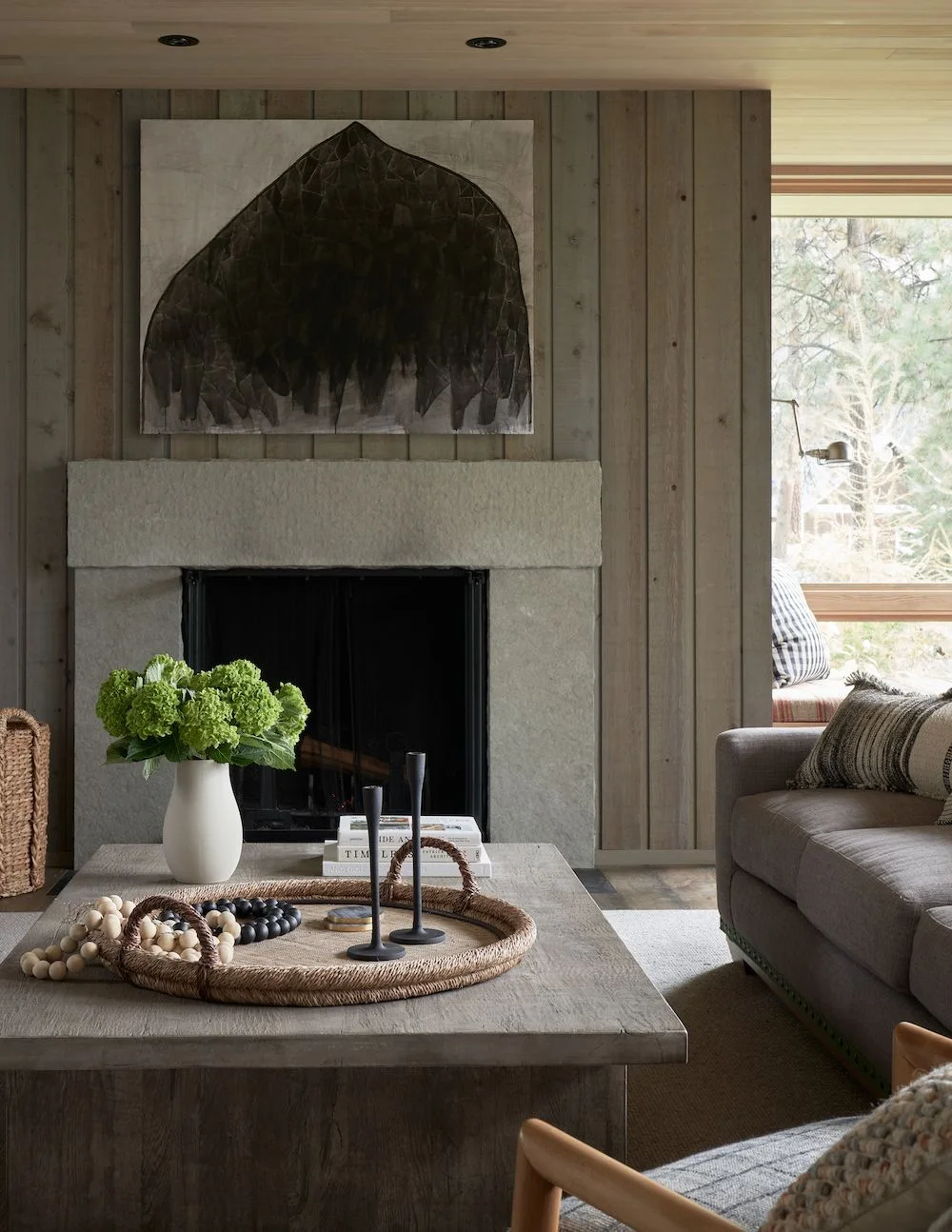
Choose a Plain Granite Surround beside Timber Panels
 SaveSupport Non AI Creator
Image credit: Kevin Scott
Broad gray granite pieces make a comparatively plain surround within the vertical timber paneling. Their rougher face adds texture without the many smaller joints of stacked stone. Dark artwork and a black firebox supply stronger shapes above and below, while the low timber table repeats warmth elsewhere in the seating area.
Compare the stone texture with the timber grain before adding another patterned surface. A simple surround can still feel substantial when its pieces are broad. Check the paneling’s position against installation clearances, and leave the hearth accessible for maintenance rather than treating the photographed coffee-table position as a required part of the arrangement.
IDEA 15 / 15
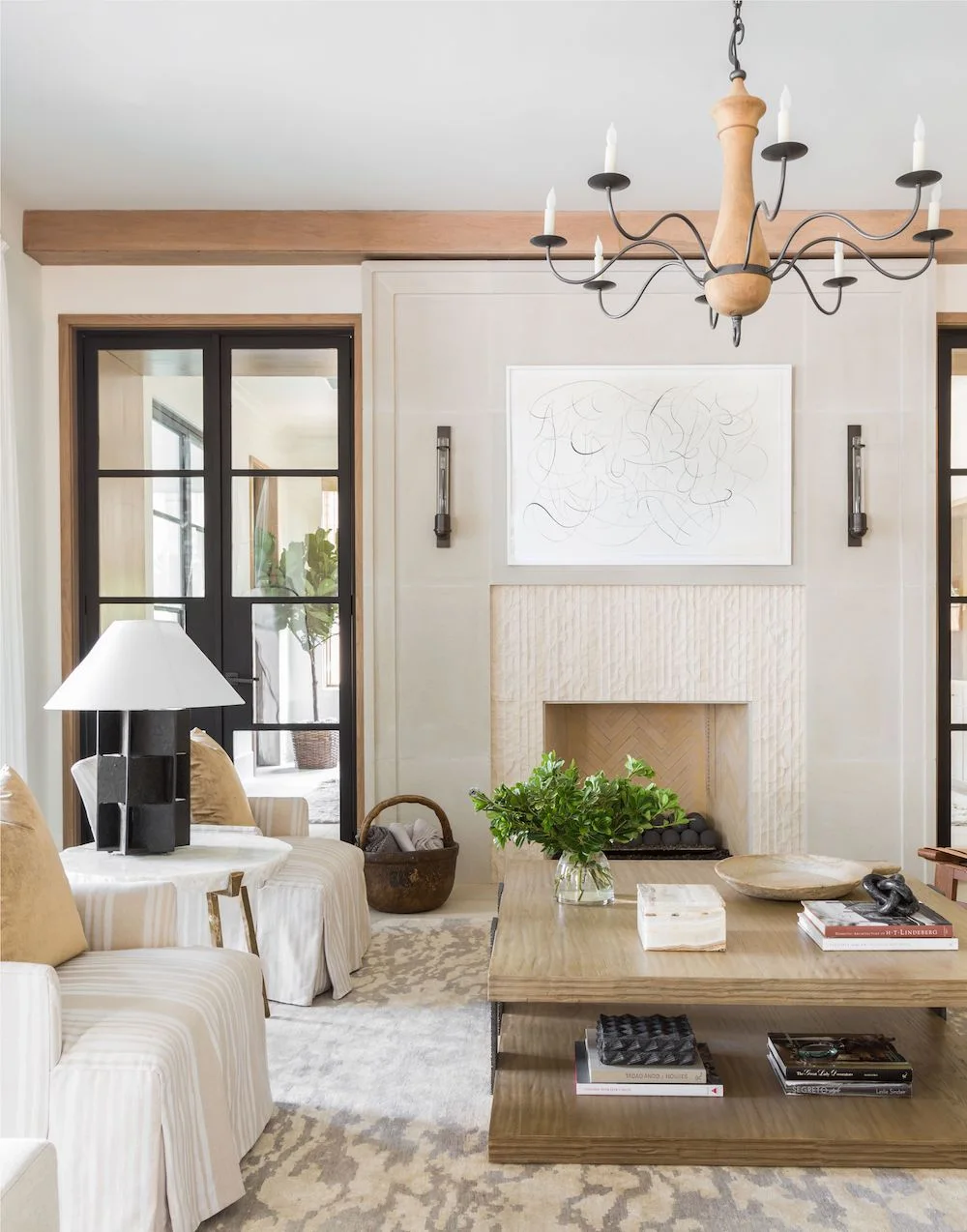
Add Fine Texture to a Pale Limestone Surround
 SaveSupport Non AI Creator
Image credit: Marie Flanigan
Fine vertical texture gives the pale limestone surround a quieter pattern than irregular stacked pieces. Light artwork and walls keep the composition restrained, while dark-framed doors create contrast on either side. The broad timber table and beam provide warm horizontal lines against the surround’s smaller vertical detail.
View a textured sample from several angles so you can judge how much shadow its grooves create. Confirm a suitable cleaning method for the stone and finish before choosing it. Our modern fireplace ideas compare other restrained surrounds, helping you decide whether the room needs a textured face, pronounced veining or a simpler smooth surface.
BRING IT ALL TOGETHER
Plan the fireplace before the decorative arrangement
Compare the stone with the largest nearby surfaces, including wall paint, timber and flooring. Choose the scale and texture before adding small mantel objects or further patterns. Leave enough plain space for the stone’s own variation to remain visible, and keep access for cleaning and maintenance in the layout.
Use the fireplace’s installation instructions and appropriate professional advice to establish the construction and clearances. Keep furniture, textiles, stored fuel and decorative objects out of the required area. Confirm care methods for the actual stone and finish, and have heating equipment and chimneys maintained appropriately rather than relying on how an arrangement looks in a photograph.