A neutral sitting room can be warm and personal without filling it with strong color. Cream upholstery, gray walls, timber, woven storage and darker furniture outlines each bring something different. The useful starting point is the balance between those surfaces, the furniture you need and the way daylight changes across the room.
These real-room photographs show relaxed corners, more formal seating groups and smaller storage details. A few include muted or brighter accents, while the larger surfaces remain restrained. Use them to compare texture, upkeep and furniture placement rather than expecting every beige or white sample to work in every home.
PART 01
Build a varied neutral palette
IDEA 01 / 20
Balance a Pale Sectional with a Dark Console
 SaveSupport Non AI Creator
Image credit: Future PLC/Dominic Blackmore
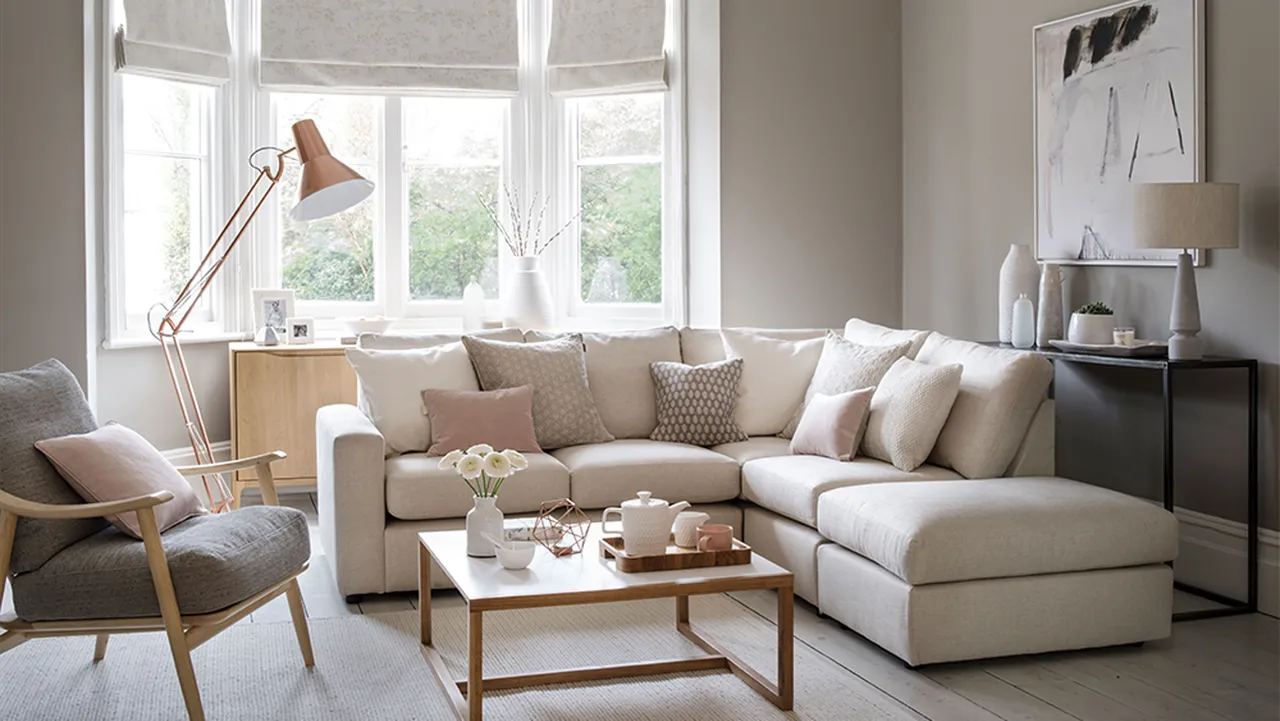
The cream sectional follows the corner, leaving a timber-framed chair to complete the group without another bulky sofa. A black console gives the pale walls and upholstery a firmer outline. Small pink cushions and the warm metal floor lamp add variation while the largest surfaces stay quiet.
Check the chaise against the route into the room, including access to the window and radiator. A pale coffee table can work well here, but its finish still needs to suit drinks and daily use. Look at upholstery samples beside the existing floor rather than choosing every pale surface separately.
IDEA 02 / 20
Warm Beige with a Few Burnt-Orange Accents
 SaveSupport Non AI Creator
Image credit: Future PLC/Simon Whitmore
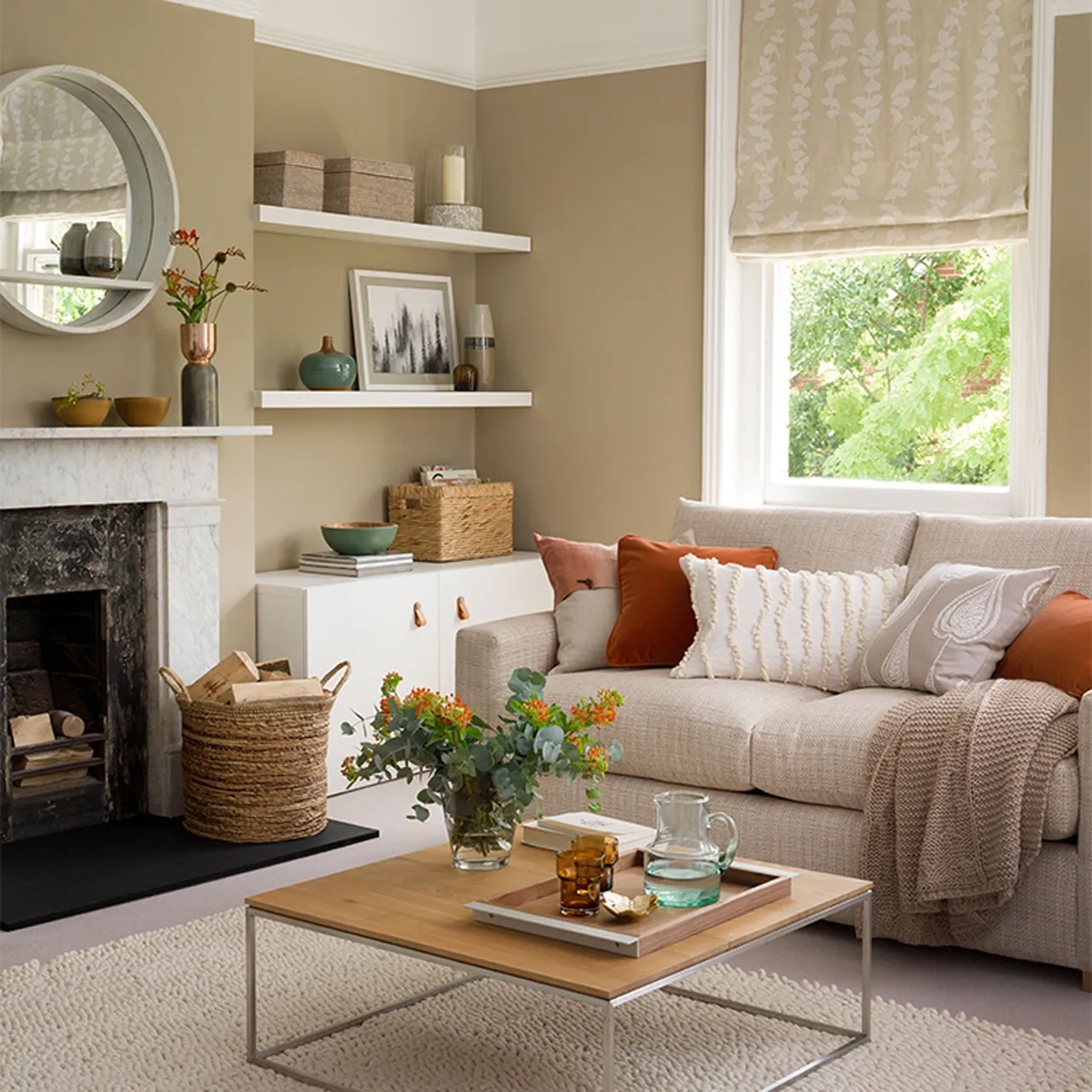
Orange cushions and small flowers warm the beige sofa without turning the whole room orange. White alcove shelves and lower cupboards provide a lighter frame, while the timber coffee table repeats the woven basket tones. The mixture makes the quiet wall color feel intentional rather than unfinished.
Try one accent in removable cushions before buying larger colored furniture. Keep shelf space available for useful belongings, and leave gaps between decorative objects so cleaning stays manageable. The basket beside the fireplace is a styling detail; keep combustible storage clear of any working fire according to its installation requirements.
IDEA 03 / 20
Let Relaxed Upholstery Contrast with a Worn Table
 SaveSupport Non AI Creator
Image credit: Future/James Merrell
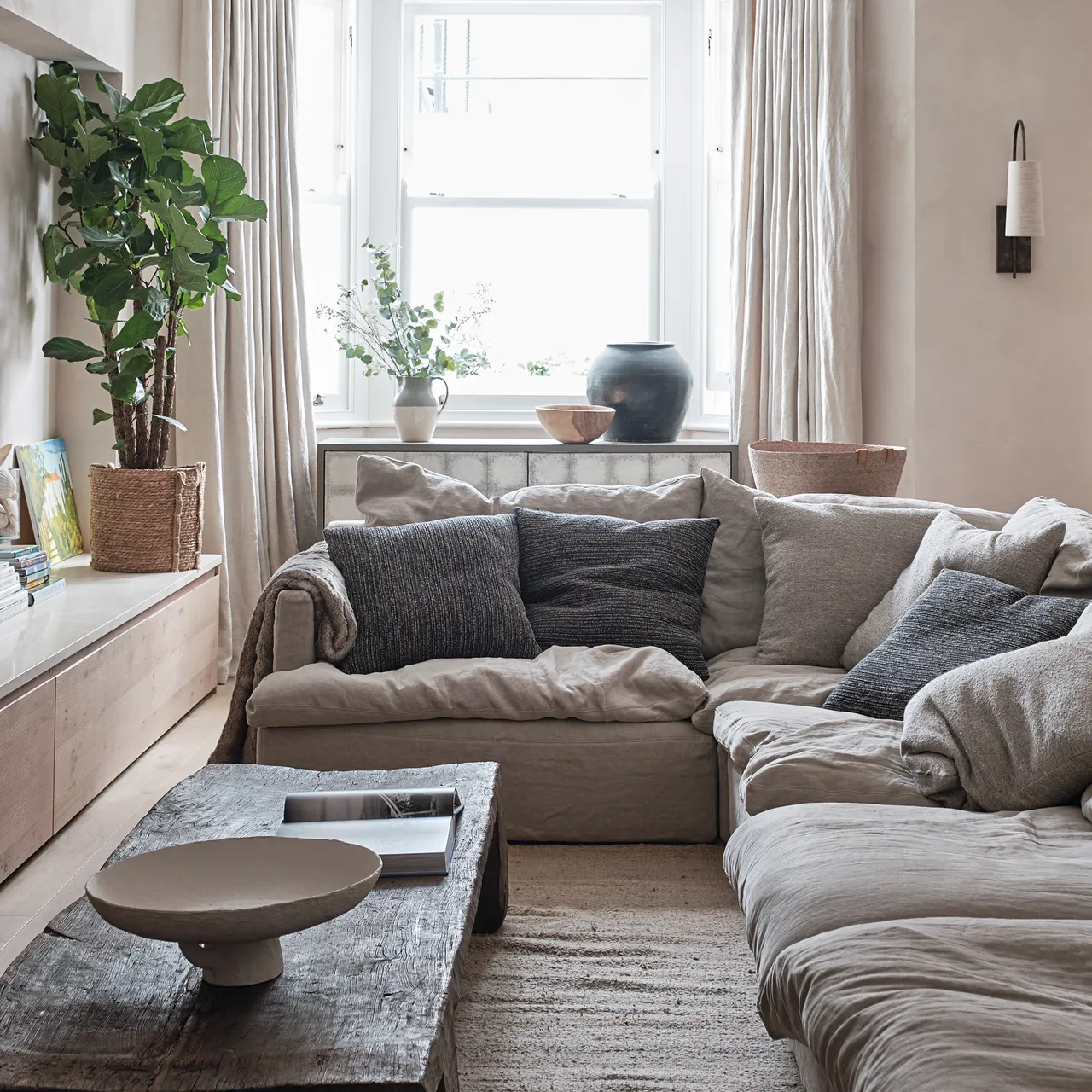
The softly creased sofa contrasts with the darker, heavily textured coffee table. Pale curtains and a quiet rug keep attention on that difference in surface rather than on a strong color scheme. Larger pottery on the window ledge gives the room a few substantial shapes instead of many tiny accessories.
Choose upholstery for how you want to maintain it: a relaxed appearance still needs appropriate cleaning and regular cushion care. Check whether covers are removable and how they may be washed before buying. A rough table also needs inspection for splinters and stability, particularly where children will use the room.
IDEA 04 / 20
Use Different Textures within a Pale Palette
 SaveSupport Non AI Creator
Image credit: Future/Lizzie Orme
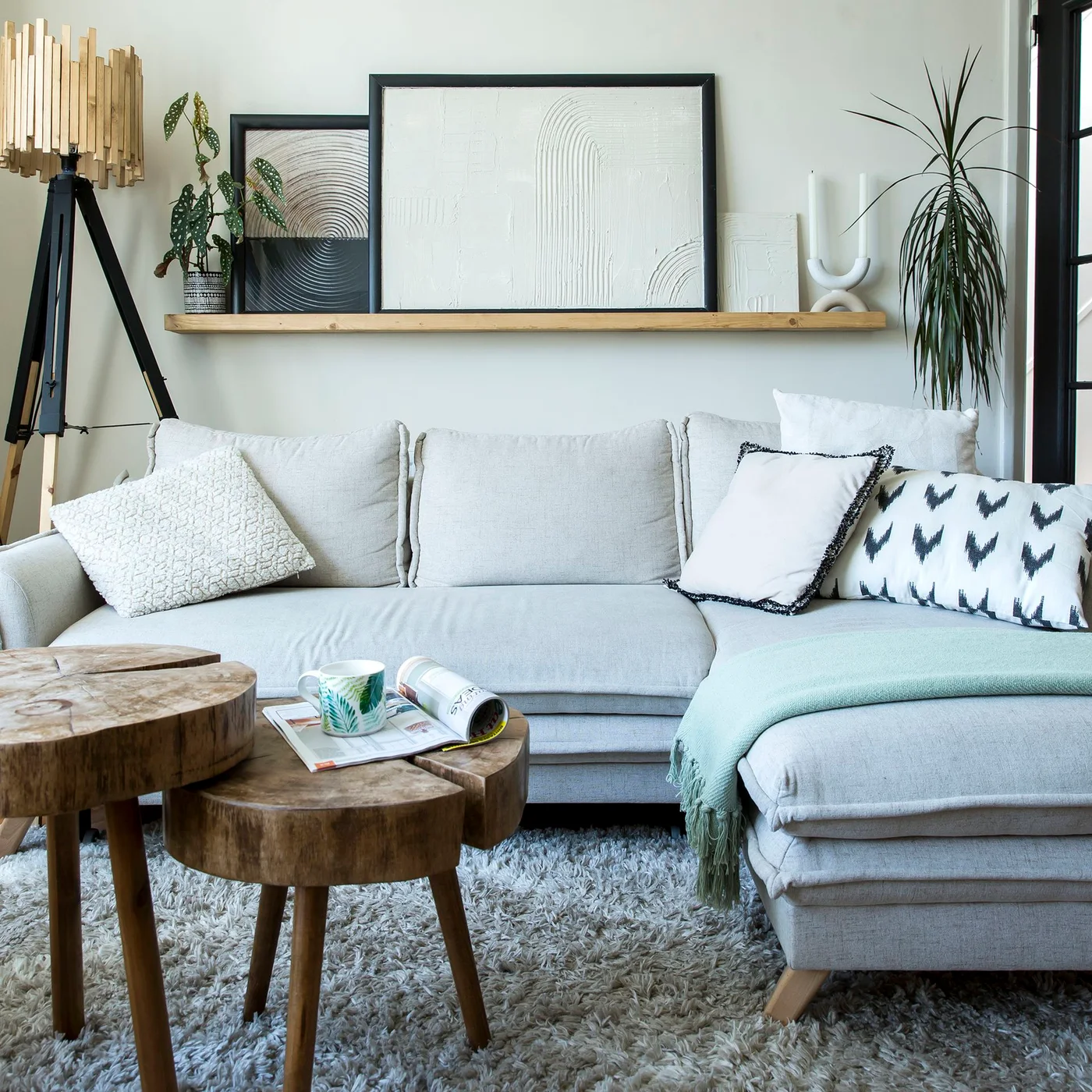
White textured artwork, a soft rug and patterned cushions supply detail without a large change in color. Two round timber tables bring warmer tones into the foreground, echoed by the floor lamp. The pale mint throw is a small accent, leaving the sofa and walls to establish the neutral base.
Vary the surface texture before adding more ornaments: woven cushions, smooth table tops and raised artwork already create contrast. Secure the shelf and frames appropriately above seating. If you use two tables, check their heights and leg positions together so moving one does not make the other awkward to reach.
IDEA 05 / 20
Make Alcove Storage Part of the Room
 SaveSupport Non AI Creator
Image credit: Future
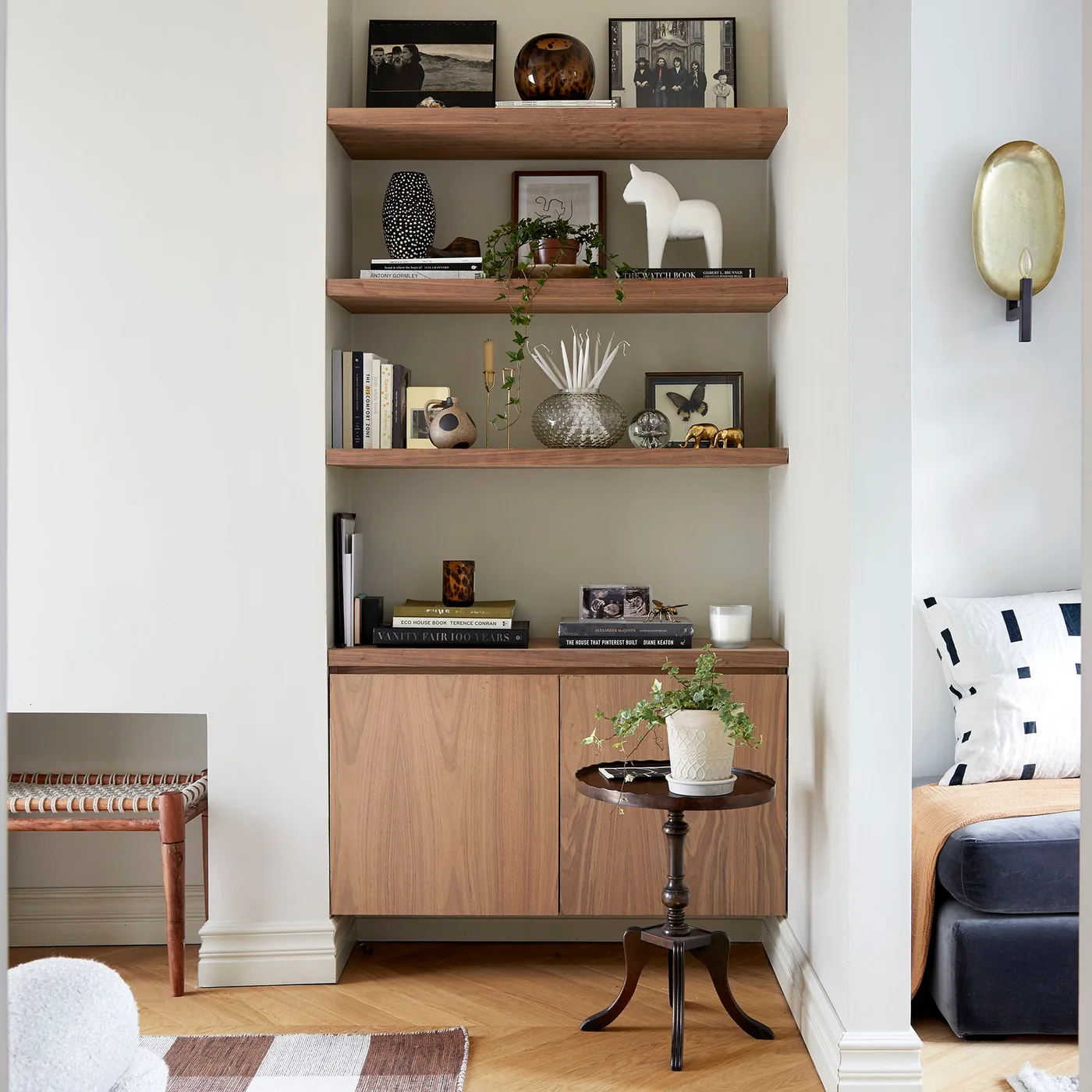
Timber shelves warm this pale alcove, while a cupboard below conceals items that do not need to be displayed. Dark picture frames, books and a small side table add contrast at several heights. The close view shows how storage can contribute to the room even when the sofa stays simple.
Measure the objects you actually store before setting shelf spacing, and confirm the wall fixings can support the intended load. Leave room to lift books out and wipe the surfaces. Our sofa table behind couch ideas offer other ways to add a useful surface where an alcove is unavailable.
PART 02
Bring texture into everyday seating
IDEA 06 / 20
Pair Tan Seating with a Gray Patterned Rug
 SaveSupport Non AI Creator
Image credit: Photo: Gilles Mingasson
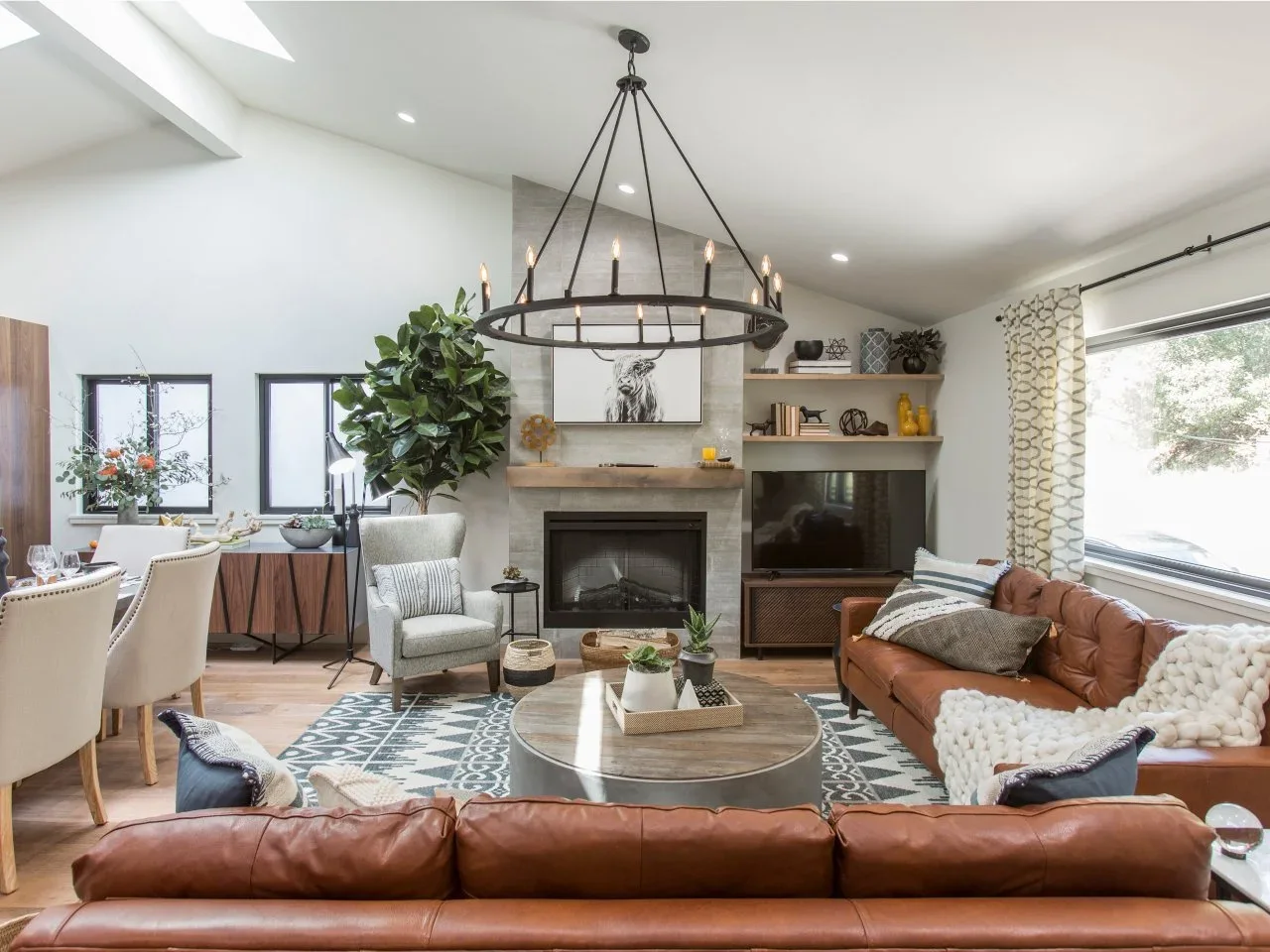
Tan seating brings warmth to the gray fireplace and pale walls, while a patterned gray-blue rug gathers the furniture into one group. The round coffee table softens the repeated rectangles of the windows and cabinet. Small yellow objects remain accents rather than competing with the larger neutral surfaces.
Set out the whole seating group before choosing the rug size, checking where the front legs will sit and how people pass the table. Match maintenance to the actual upholstery specification rather than assuming all tan finishes clean alike. Keep the chair, baskets and textiles outside the fireplace’s required clearances.
IDEA 07 / 20
Mix Cream Upholstery with Timber Storage
 SaveSupport Non AI Creator
Image credit: Photo: Rick Mattson. From: Jasmine Roth
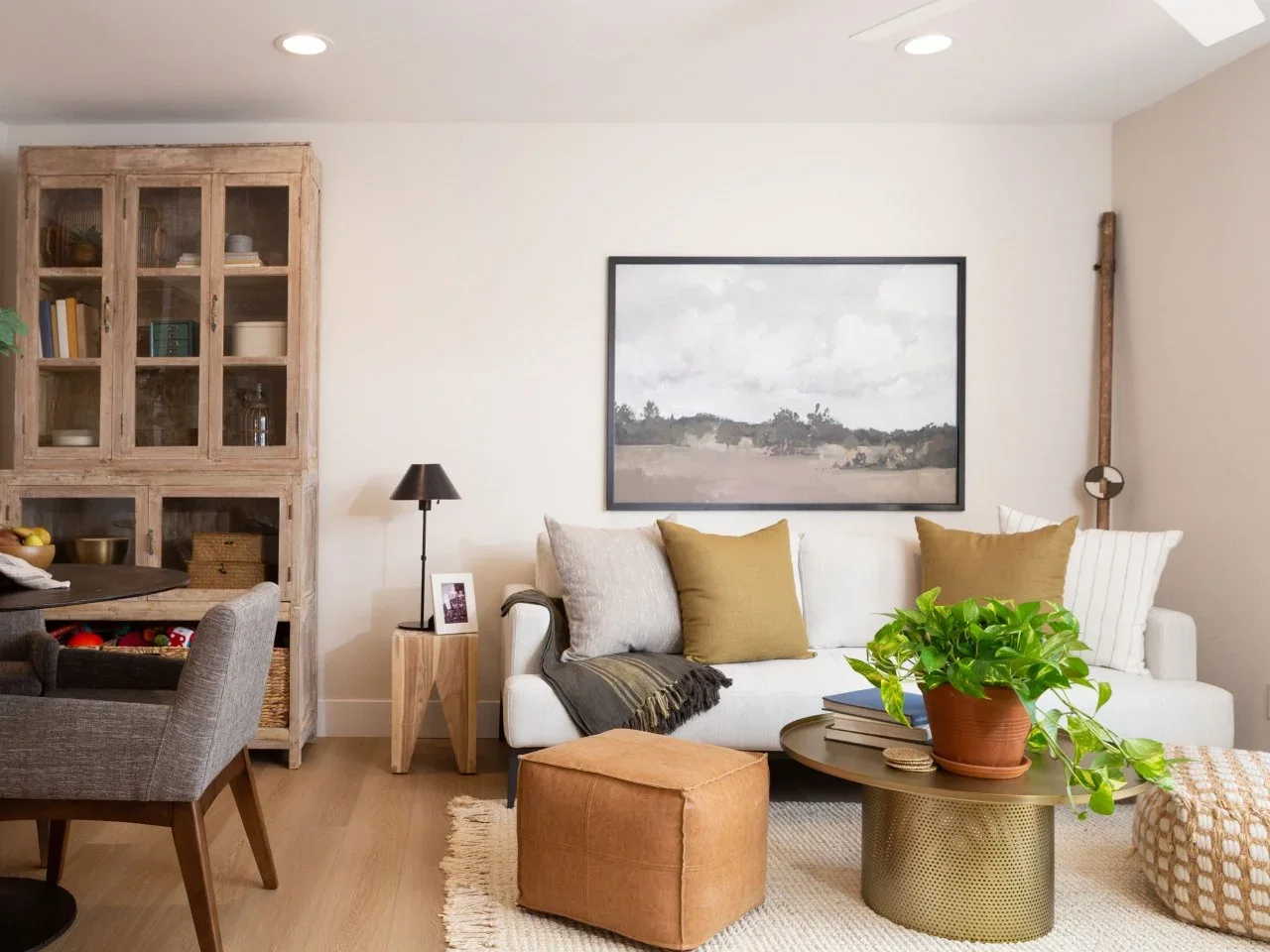
The cream sofa sits against a pale wall, with a tall timber cabinet adding a darker vertical shape nearby. A tan cube ottoman and perforated round table introduce different textures at floor level. Muted green cushions and plants stay secondary to the room’s cream, brown and gray foundation.
Choose cabinet storage around the balance of things you want visible and things you want hidden. Glass doors still need cleaning and do not conceal crowded shelves. Check the ottoman’s permitted use before treating it as a seat, and keep its usual resting position clear of the route around the coffee table.
IDEA 08 / 20
Use Baskets to Soften a Sofa Back
 SaveSupport Non AI Creator
Image credit: From: Jasmine Roth
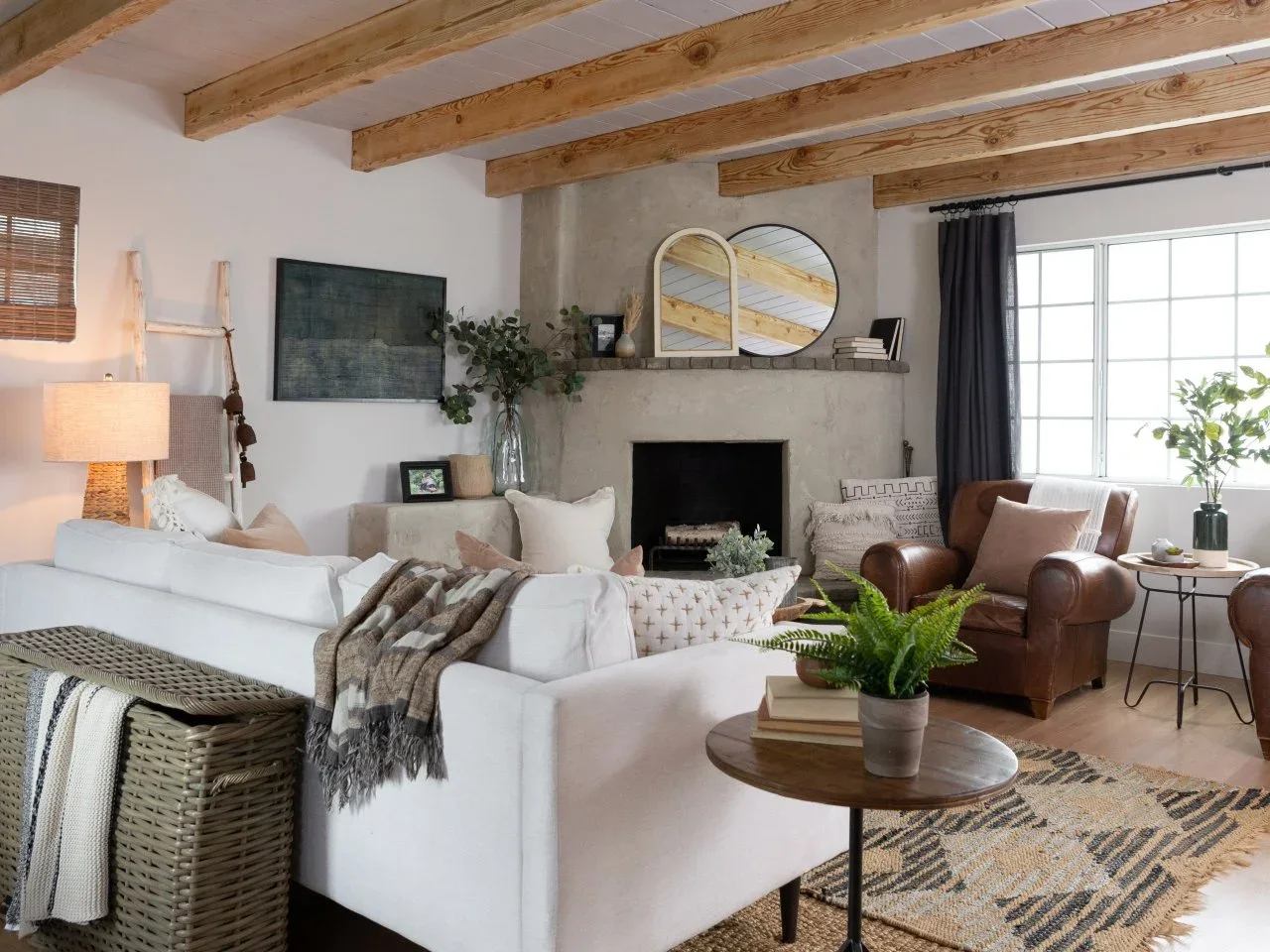
A large woven basket introduces texture behind the white sofa and provides a place for throws. Timber beams, brown chairs and a patterned rug add warmth around the pale fireplace. The sofa back becomes part of the view, so its cushions and nearby side table help it feel considered from both sides.
Keep blanket storage within reach without placing a large basket in a narrow walking route. A freestanding sofa also needs a practical place for drinks and a lamp; check those positions from each seat. Fireplace clearance takes priority over the photograph’s furniture arrangement, especially when adding soft throws or baskets.
IDEA 09 / 20
Layer Rugs beneath a Simple Seating Group
 SaveSupport Non AI Creator
Image credit: Photo: Gilles Mingasson/Getty Images. From: Jasmine Roth
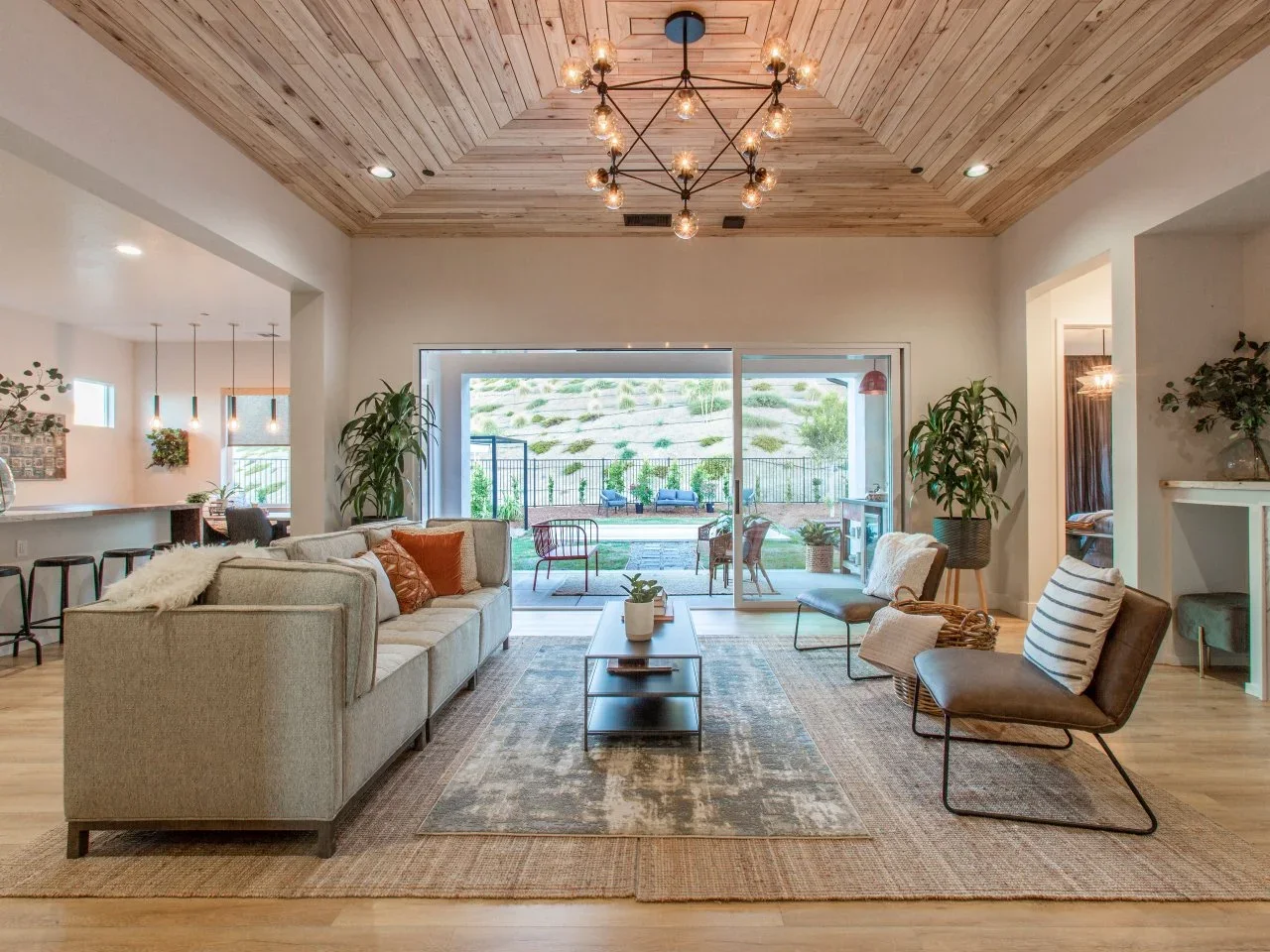
A smaller patterned rug lies over a larger textured one, defining the coffee-table area within the broad room. Gray upholstery and brown chairs connect with the timber ceiling without matching its tone exactly. A narrow black coffee table keeps the middle open toward the garden doors.
Check that both rugs lie flat and remain stable together, particularly at the edges people cross. Layering adds texture but also adds thickness and another surface to clean. Keep the route to the doors outside the table and chair positions, and check the chair legs do not catch an overlapping rug edge.
IDEA 10 / 20
Keep a Traditional Sofa Light with Simple Neighbors
 SaveSupport Non AI Creator
Image credit: Photo: Casey McMurray. From: Keith Bynum, Evan Thomas and Bargain Block
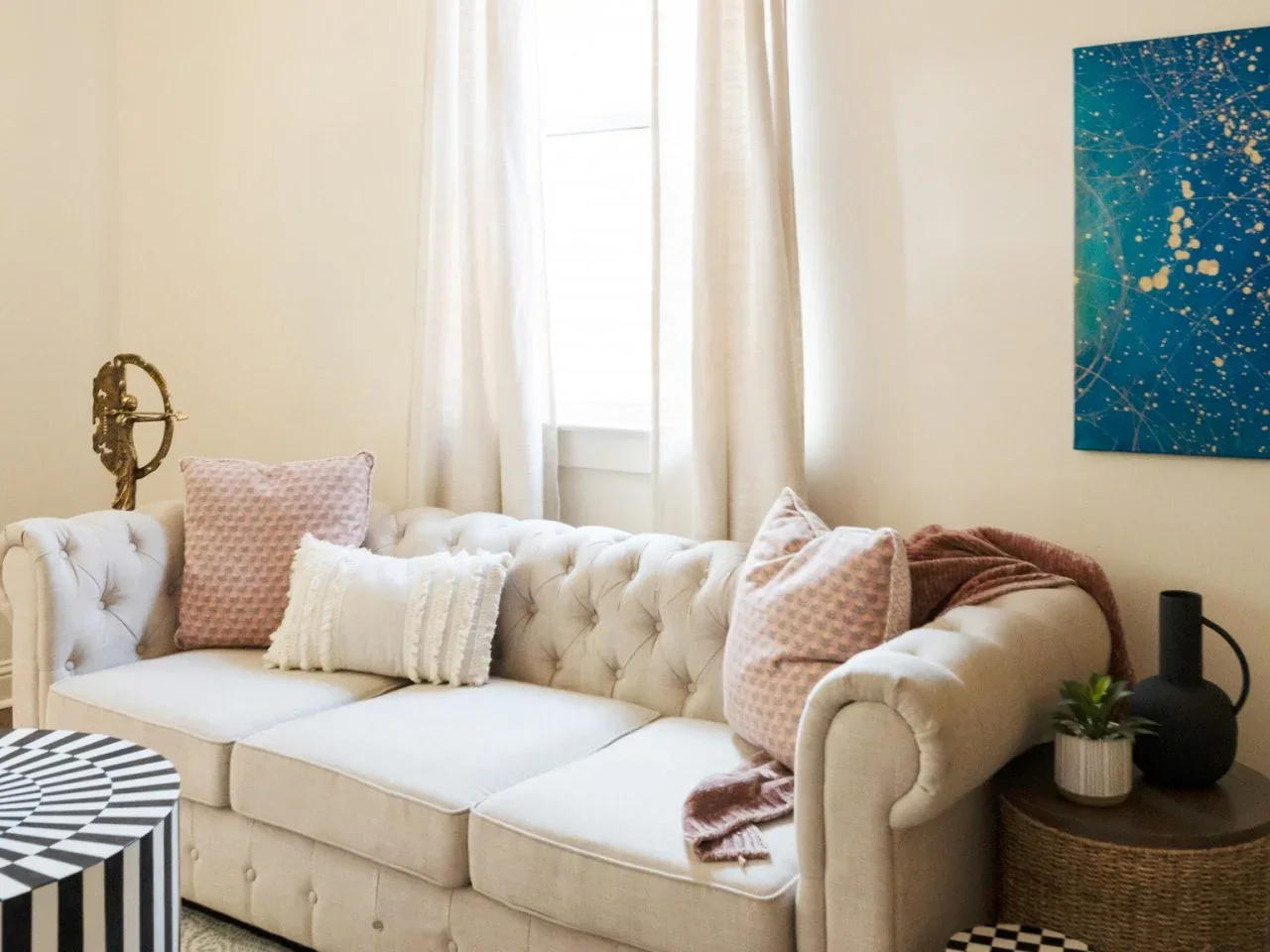
The buttoned sofa has a detailed outline, so the plain wall and light curtains give it space. Pink cushions add a gentle change of color, while the black-and-white table introduces a sharper pattern. A woven side table balances that graphic detail with a quieter, textured surface.
When the sofa already has deep buttoning, test patterned textiles in small amounts before covering every seat. Check how easily crumbs and dust can be removed from the upholstery folds. Keep at least one practical side surface mostly free, rather than filling every tabletop with objects that need moving for a drink.
PART 03
Work with fireplaces and different furniture shapes
IDEA 11 / 20
Let a Stone Fireplace Supply the Color Variation
 SaveSupport Non AI Creator
Image credit: Photo: Anders Krusberg. From: Nate Berkus and Jeremiah Brent
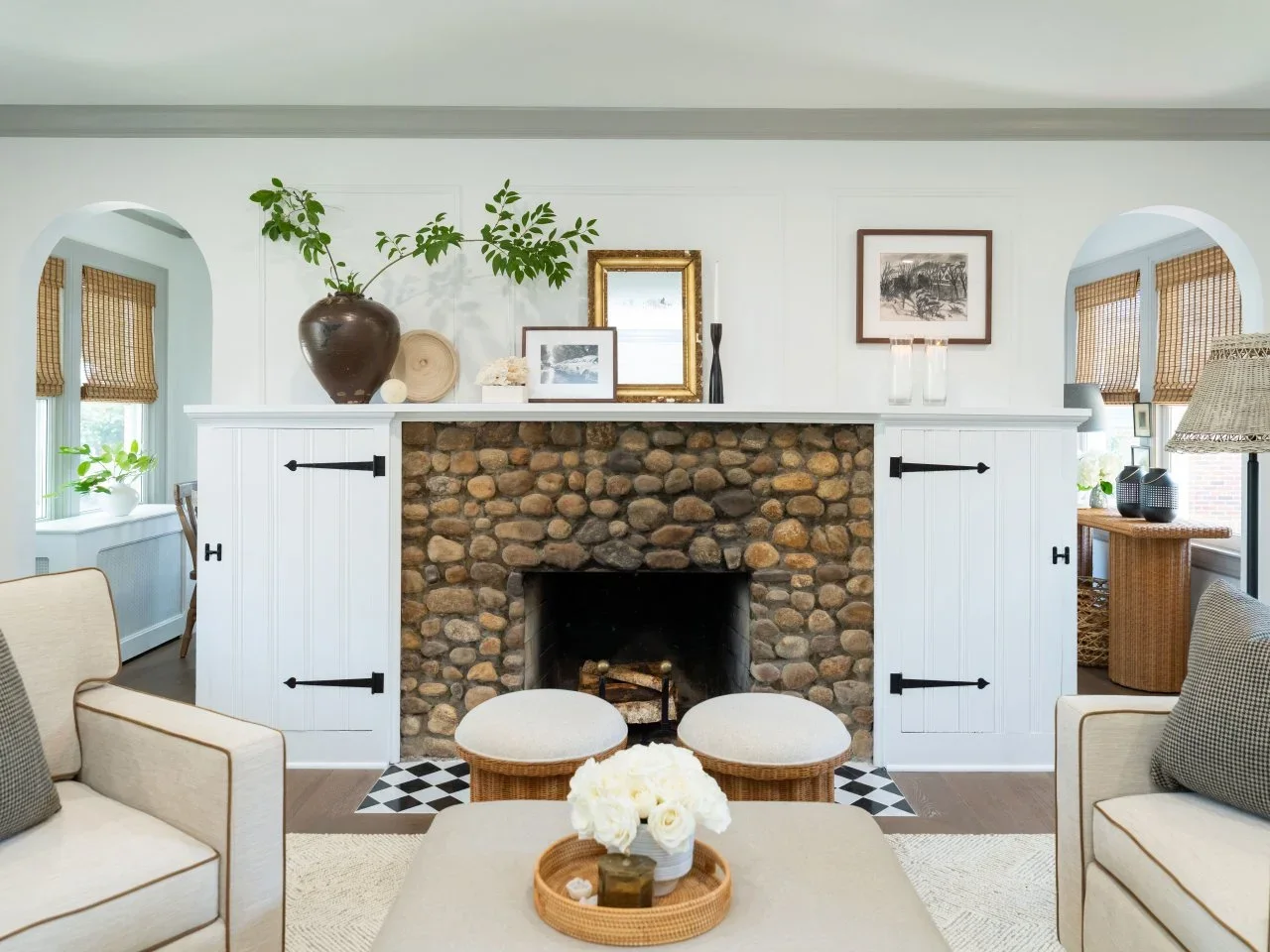
Rounded stones supply brown, gray and ochre tones within an otherwise pale sitting area. White cupboard fronts keep that variety contained, while woven stools and a matching tray repeat its warmer notes. The armchairs use a restrained outline, leaving the fireplace as the room’s most textured surface.
Take samples from several tones in existing stone rather than trying to match one isolated patch. Choose nearby upholstery with a simple weave if you want the masonry to stay prominent. Move stools and other combustible furnishings beyond the required fire clearances before using the fireplace, regardless of their staged position here.
IDEA 12 / 20
Lighten Brick while Keeping Its Texture Visible
 SaveSupport Non AI Creator
Image credit: From: Egypt Sherrod and Flipping Virgins
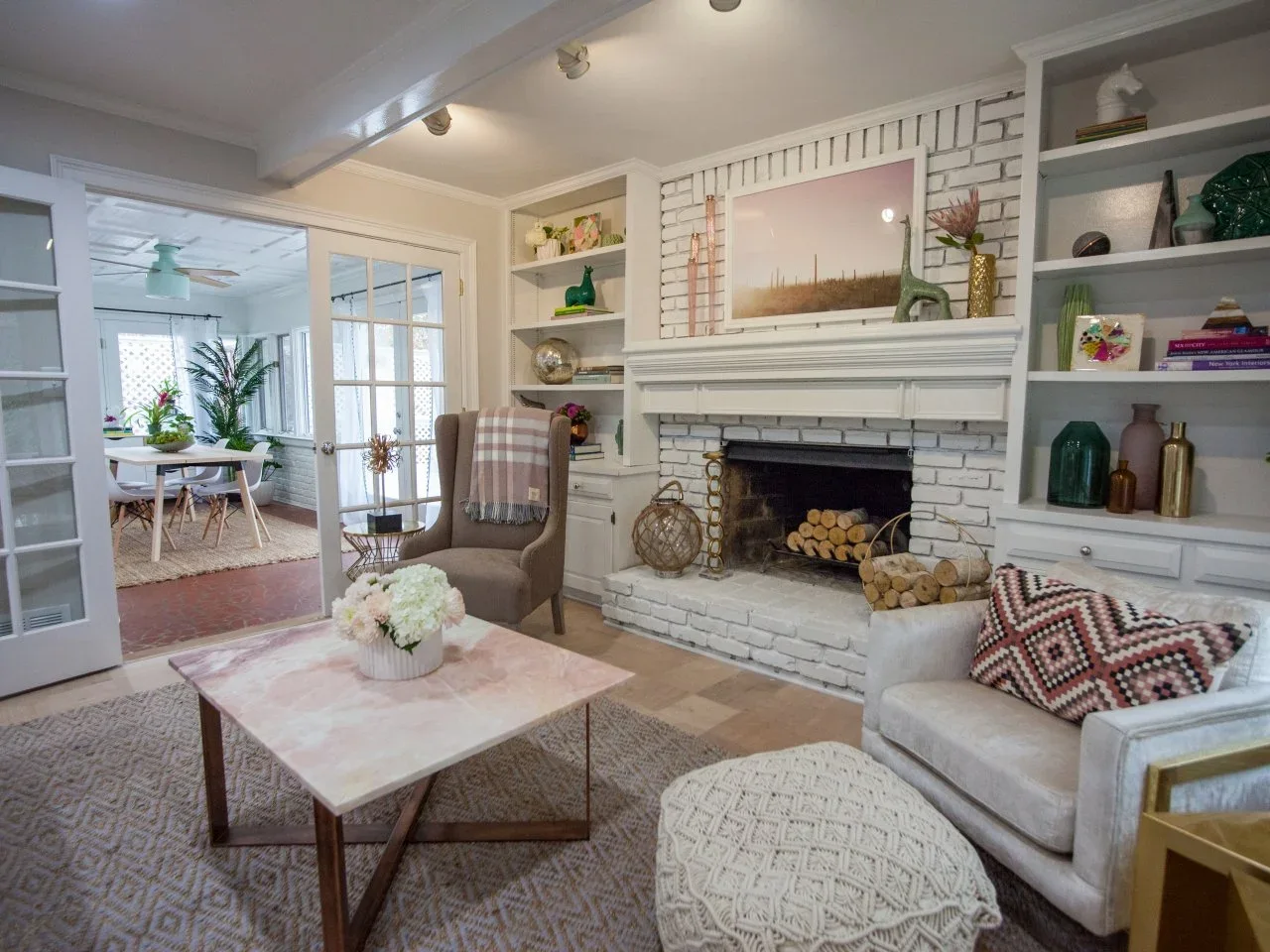
The light finish unifies the brick fireplace and surrounding storage, but the brick joints still provide texture. A taupe wing chair and pale seat keep the larger furniture quiet. Pink and green objects appear mainly in cushions, artwork and shelves, making them easier to adjust than the main pieces.
Assess the condition and suitability of existing masonry before changing its finish, particularly around a working fire. A small sample helps reveal how mortar lines and old repairs will look. Keep everyday shelves useful as well as decorative, and choose a coffee-table position that leaves access to the adjacent glazed doors.
IDEA 13 / 20
Combine Different Chair Shapes in One Quiet Palette
 SaveSupport Non AI Creator
Image credit: Photo: Michael W. Eaton ©. From: Egypt Sherrod
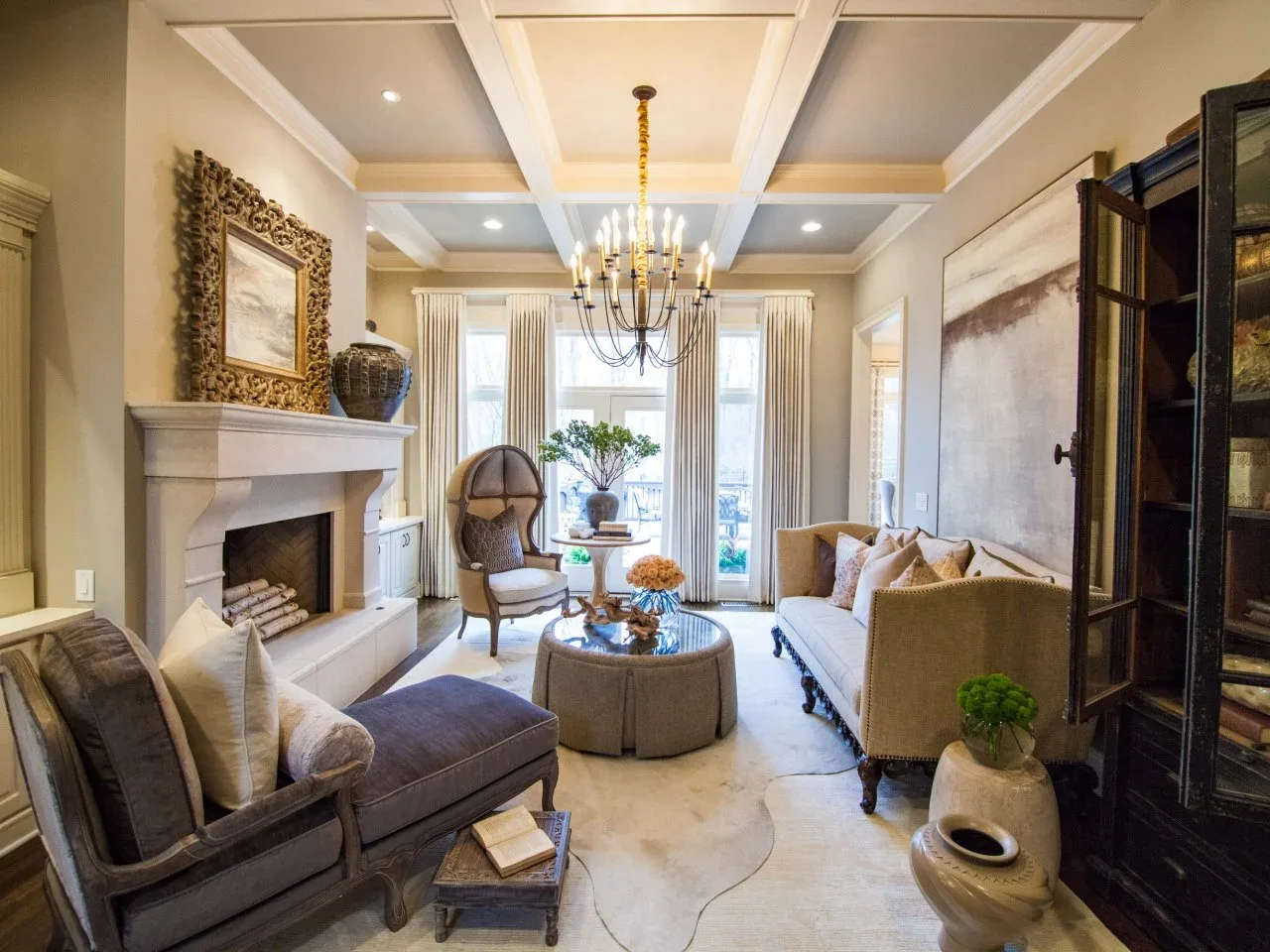
Different seating shapes bring variety to this room without requiring a bright palette. The darker upholstered bench balances the pale sofa, while a rounded high-back chair adds height near the window. A round ottoman sits between them, with the ceiling detailing and curtains giving the room a more formal frame.
Check seat height and comfort together before mixing several furniture types; attractive shapes may not suit the same activities. Leave usable space around the ottoman and provide a stable drinks surface nearby. Keep tall cabinets securely fixed and allow their doors to open without forcing someone to move a chair.
IDEA 14 / 20
Frame White Seating with Dark Lines
 SaveSupport Non AI Creator
Image credit: Photo: Dennys Ilic. From: Jonathan Scott and Drew Scott
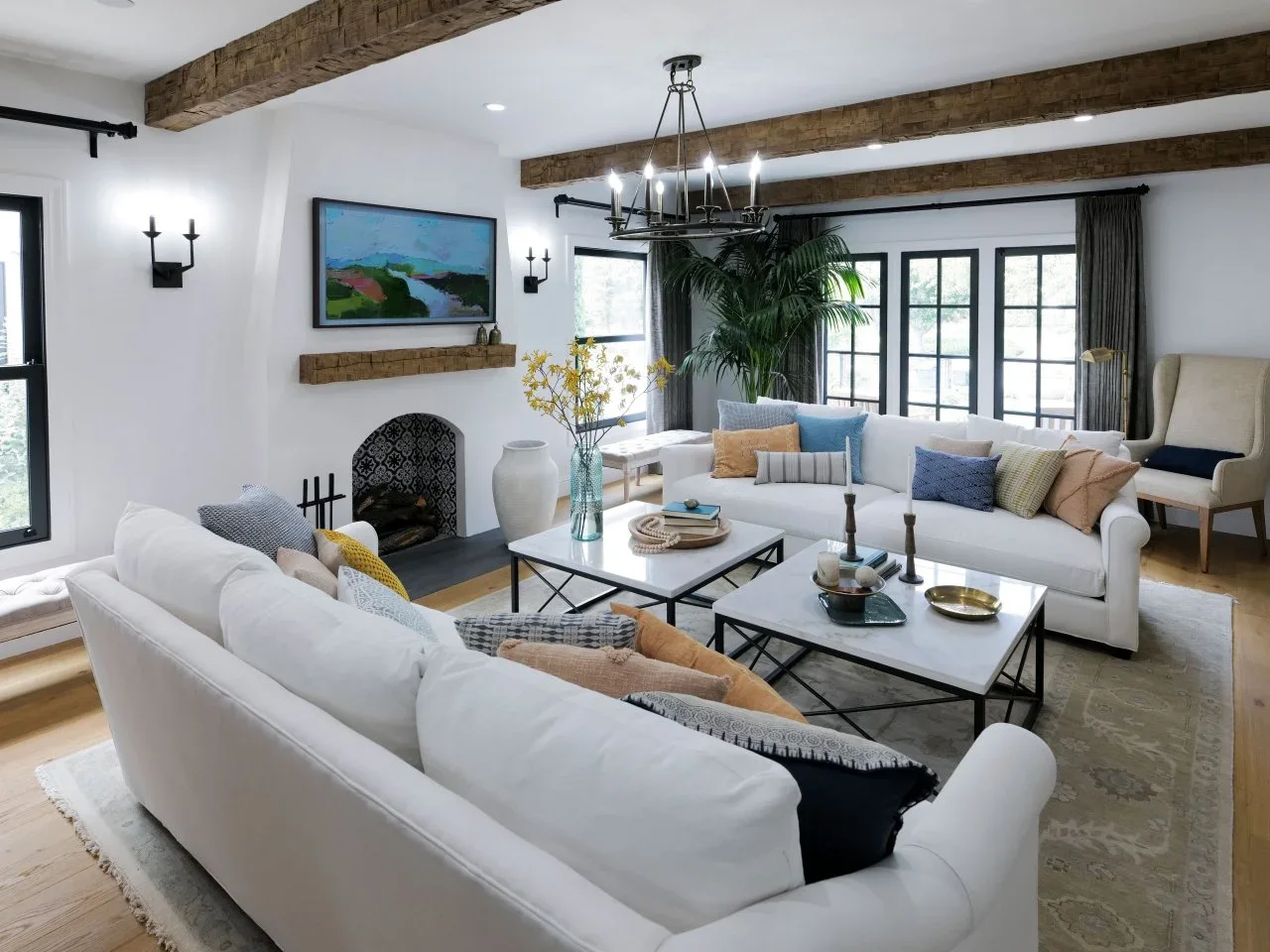
Dark window frames, table bases and a chandelier outline the room around its white sofas. Timber beams and warm flooring prevent those contrasts from feeling stark. Small colored cushions and artwork are contained accents, while the paired tables repeat the shape of the larger seating arrangement.
Two smaller tables can be easier to arrange than one oversized piece, but test the gap between them and the path around both. Ask about upholstery cleaning before committing to broad white seating. Check any fireplace installation independently, keeping sofa ends, throws and decorative objects beyond its specified clearances.
IDEA 15 / 20
Use Charcoal to Anchor Cream Chairs
 SaveSupport Non AI Creator
Image credit: Photo: Cineflix Productions Inc. ©. From: Jonathan Scott, Drew Scott and Property Brothers
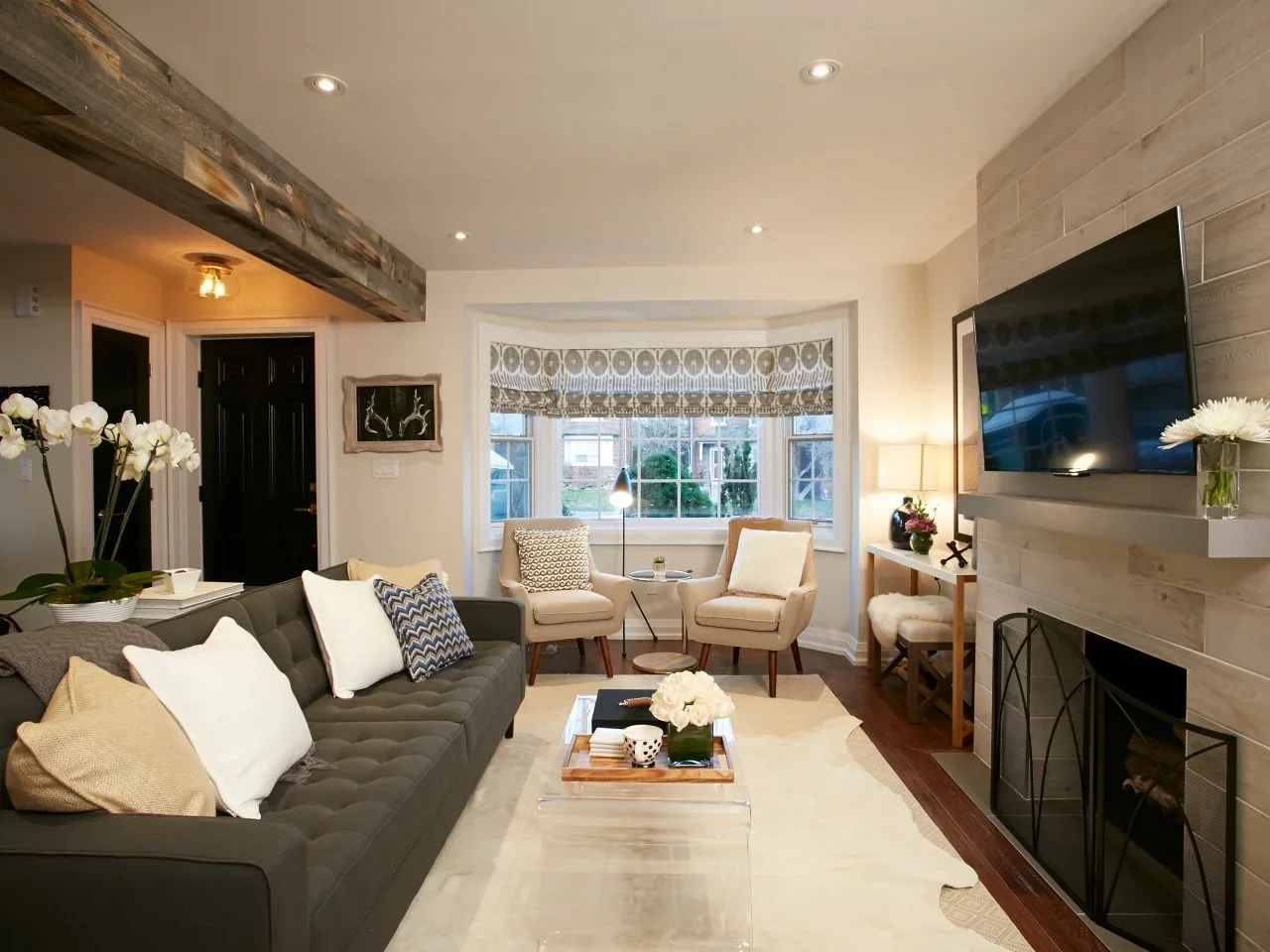
The charcoal sofa gives this room a darker anchor opposite the pale fireplace wall. Cream chairs in the bay create another sitting position without adding a new strong color. A light coffee table and rug connect the furniture, while the timber beam supplies a warmer line above it.
Choose darker upholstery around the amount of daylight and the maintenance it will receive; dust and pet hair can show as clearly as spills on some fabrics. Check the television height from a seated position before copying a fireplace arrangement. Keep the bay chairs accessible without narrowing the main path beside the sofa.
PART 04
Make pale rooms useful and personal
IDEA 16 / 20
Make Media Storage Blend with Pale Walls
 SaveSupport Non AI Creator
Image credit: Photo: Dennys Ilic. From: Jonathan Scott and Drew Scott
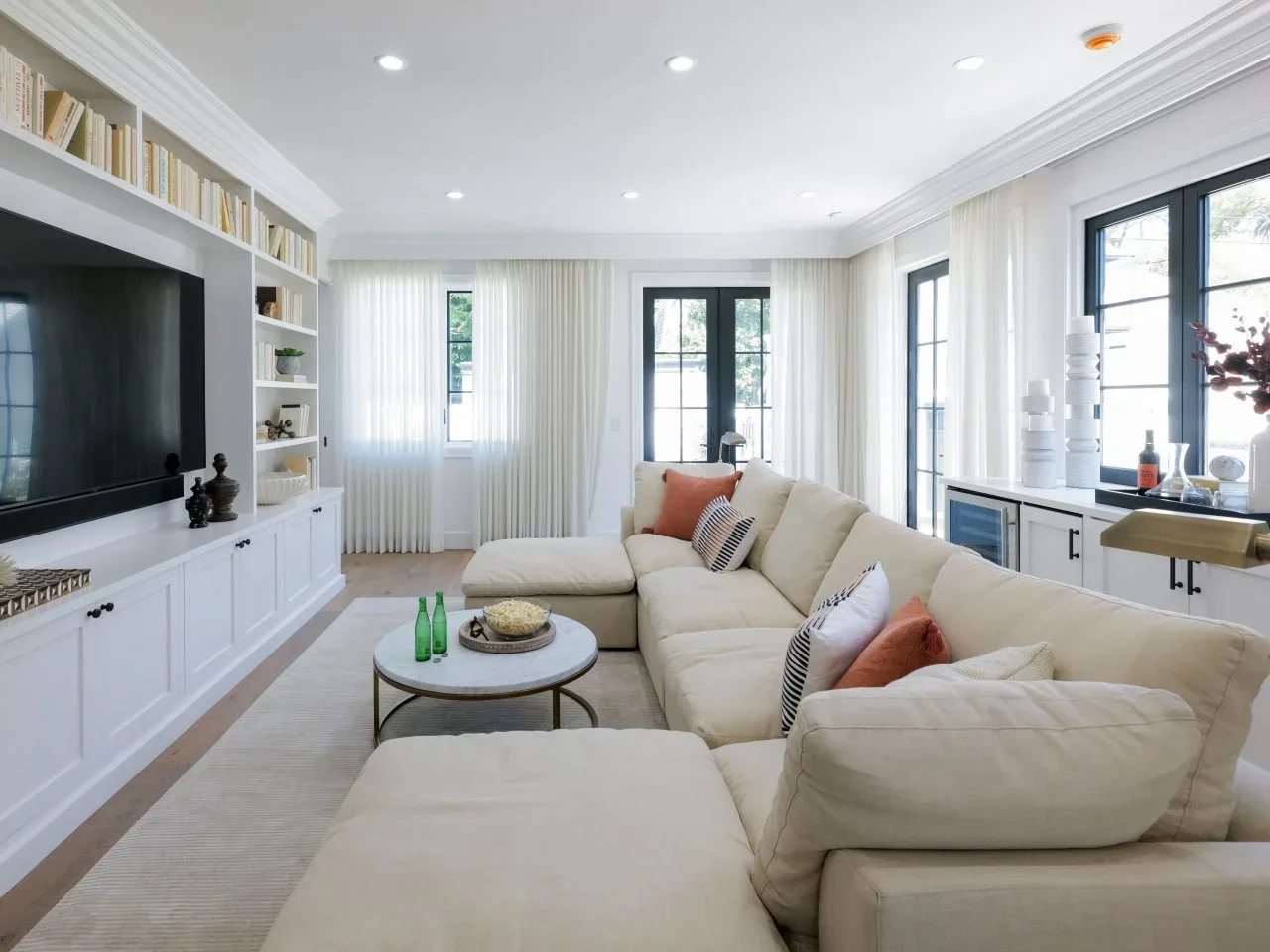
White built-in storage surrounds the television and continues the pale wall color, reducing the number of competing outlines. The cream sectional supplies a softer foreground, with dark window frames providing contrast. A round coffee table and a few warm-colored cushions keep the narrow room from feeling entirely rectangular.
Plan media storage around ventilation, sockets and the equipment you own rather than shelf styling alone. Check glare on the screen at the times you watch it most. Keep enough space to reach lower cupboards, and avoid choosing a deep sectional that leaves only a tight passage to the doors.
IDEA 17 / 20
Bring Warmth through Woven Chairs and Flooring
 SaveSupport Non AI Creator
Image credit: Photo: Tom Griscom/Big Table Media. From: Jenny Marrs and Dave Marrs
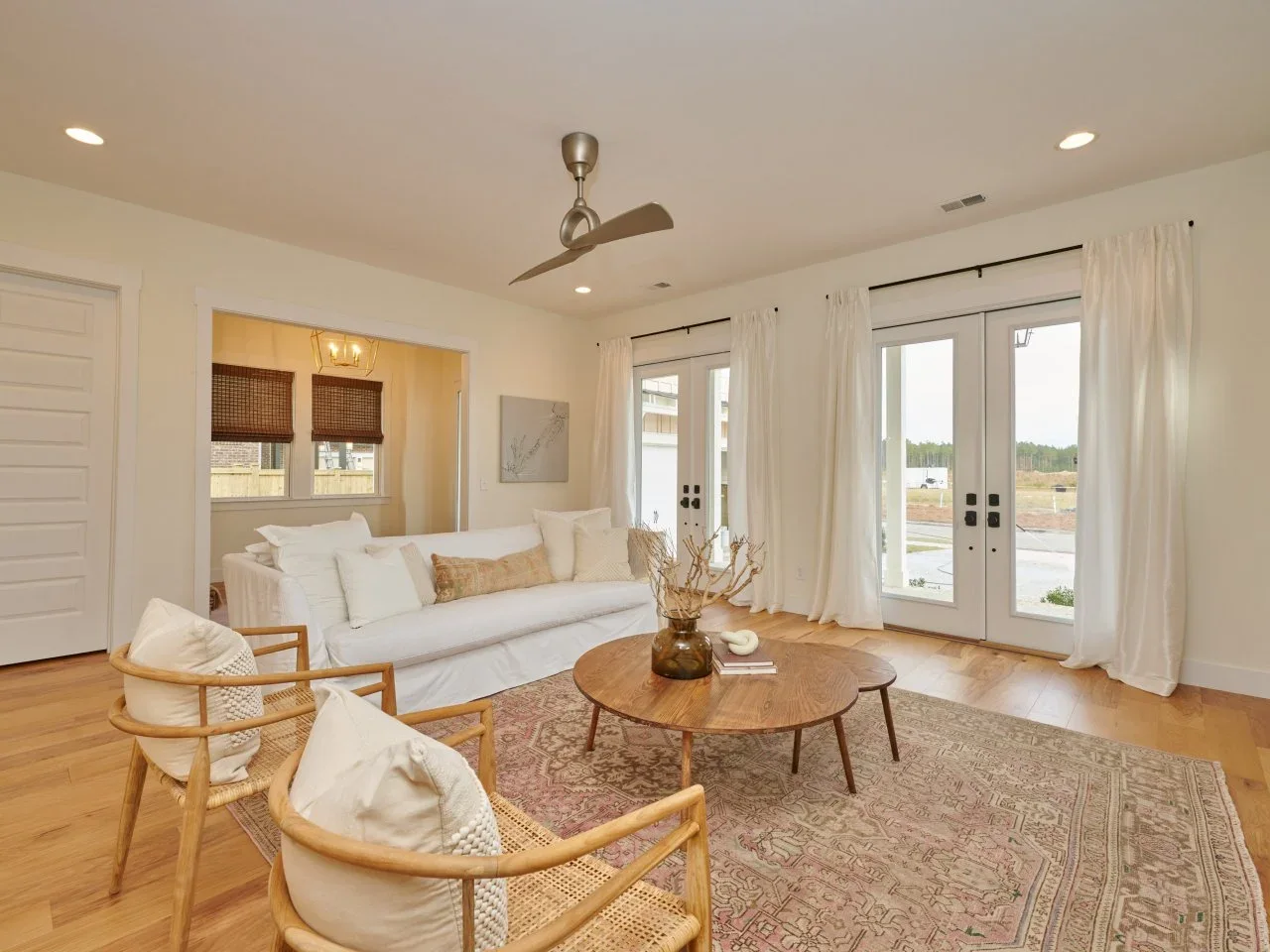
White upholstery and curtains form the lightest layer, while woven chairs and timber flooring bring warmth around them. Round tables repeat the softer lines of the chair frames. A faded patterned rug adds detail without a sharp boundary, allowing the doors and windows to remain a clear part of the room.
Test woven seating for comfort and consider whether loose cushions stay in place during everyday use. Check the construction and cleaning advice rather than assuming every natural-looking seat behaves alike. Keep curtain hems clear of door operation, and choose rug edges that stay flat where people walk toward the glazing.
IDEA 18 / 20
Use a Muted Sofa beside Broad Windows
 SaveSupport Non AI Creator
Image credit: Photo: Shawn G. Henry
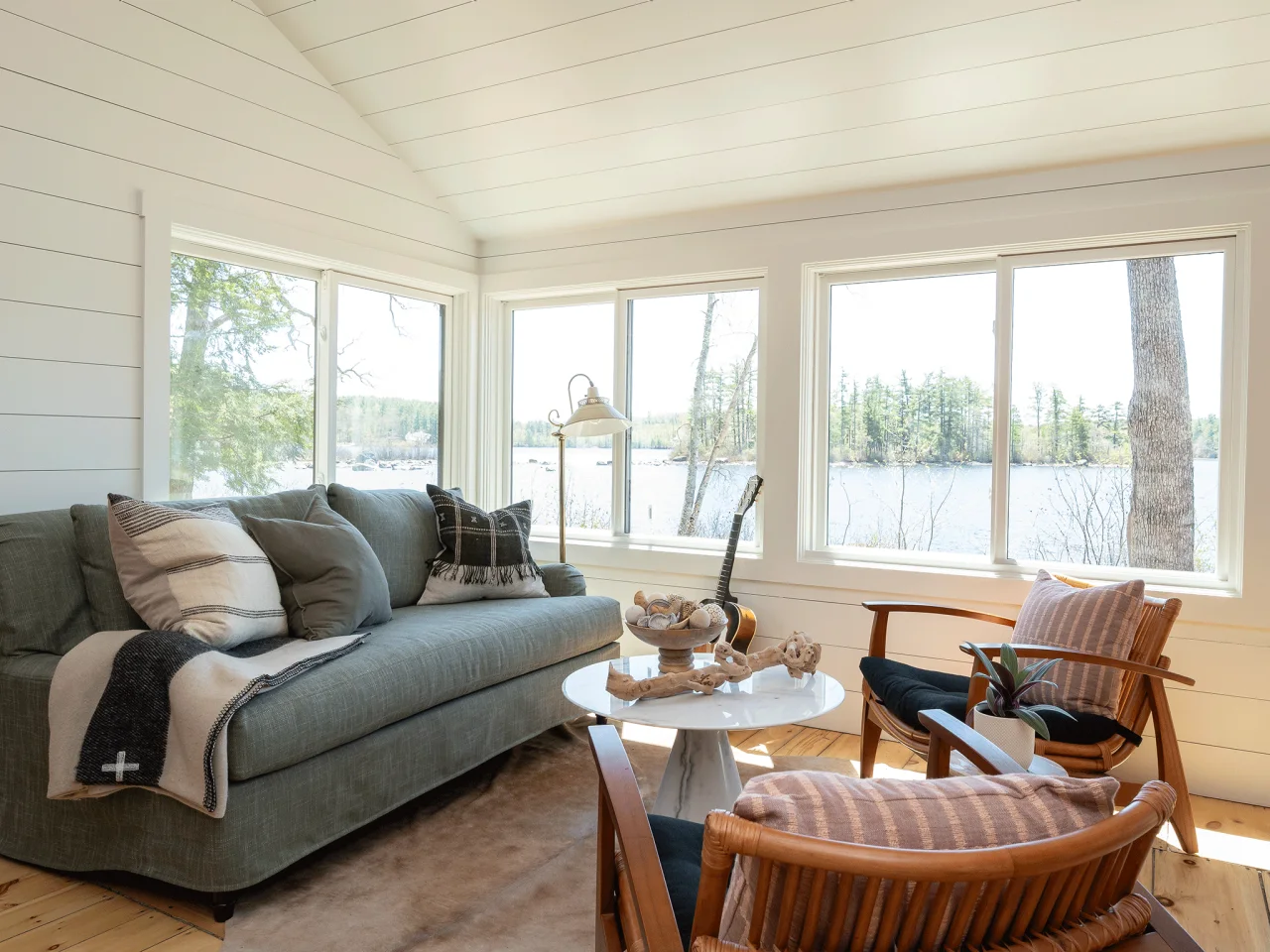
The muted sofa introduces a gentle gray-green note against pale wall boards and broad windows. Timber chairs repeat the warmth of the floor, while a small white table lightens the center. Patterned cushions provide detail at seat level, keeping the view and the room’s simple surfaces prominent.
A muted colored sofa can sit comfortably within a mostly neutral room when the surrounding surfaces stay restrained. Compare the fabric with daylight from the actual windows, then check its care and fading guidance. Leave window access clear and place tall plants or lamps where they do not block the view from a seated position.
IDEA 19 / 20
Add Family Pictures beside a Warm Timber Focal Point
 SaveSupport Non AI Creator
Image credit: Photo: Peter Wynn Thompson. From: Alison Victoria and Windy City Rehab
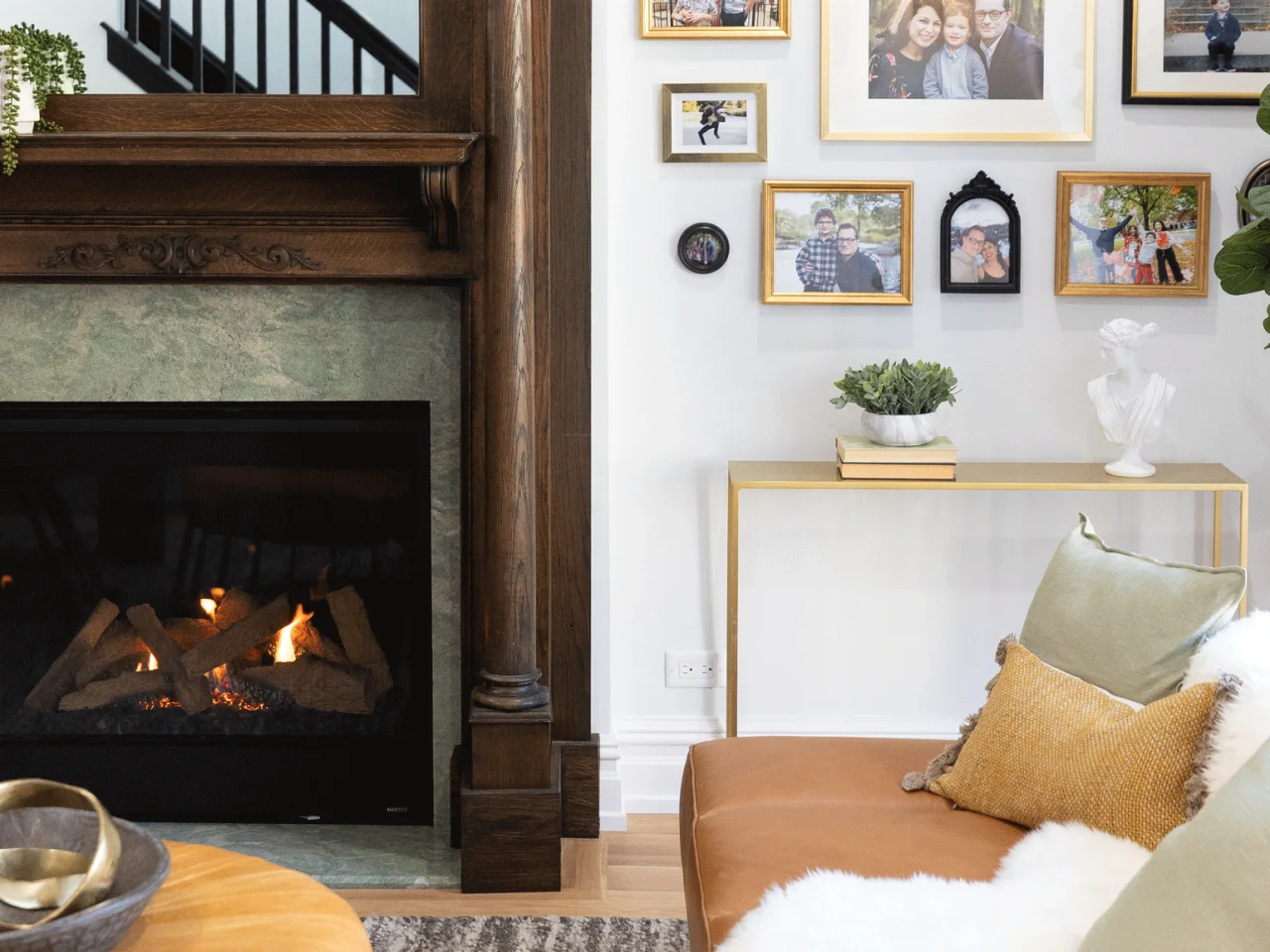
Dark carved timber and a tan sofa provide warmth, while a pale wall allows family photographs to stand out. Mixed frame shapes add character without covering every surface with ornaments. A narrow console beneath the photographs gives the display a base while keeping most of the floor visible.
Arrange a picture group on paper before drilling, checking how its bottom edge relates to the furniture. Secure frames and any tall mirror appropriately, and keep the console useful rather than crowded. This close view also shows an active fireplace: establish the required clearance from upholstery and tables before copying any nearby placement.
IDEA 20 / 20
Keep Repeated Seating Light around Timber Details
 SaveSupport Non AI Creator
Image credit: Photo: Mark Hill
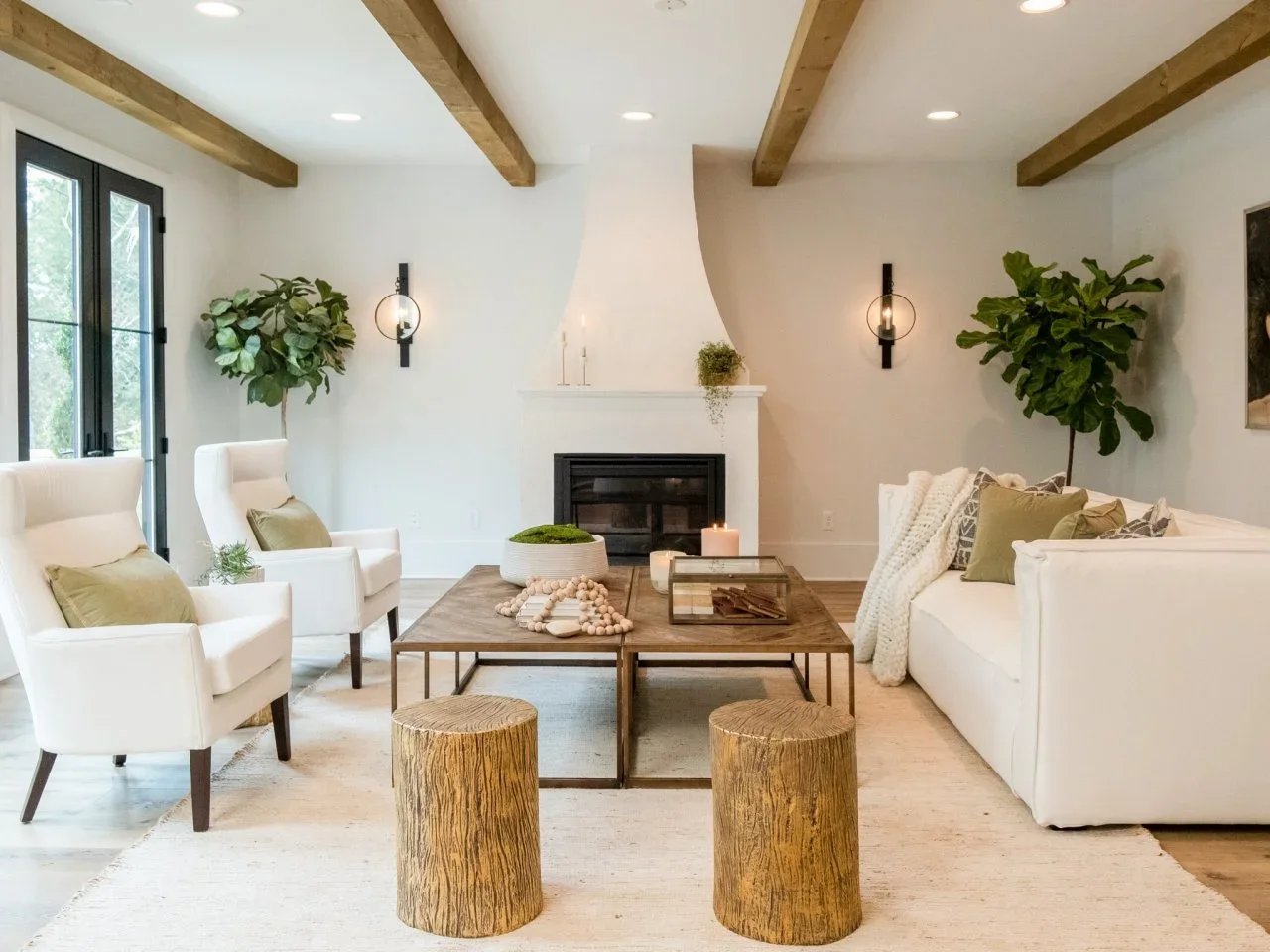
White upholstery repeats across the sofa and chairs, allowing timber beams, table tops and small stools to supply the warmer detail. Black frames at the doors and fireplace sharpen the pale backdrop. Green cushions and plants introduce accents without changing the room’s larger cream-and-brown balance.
Repeating upholstery color can connect different furniture shapes, but check samples together because whites vary noticeably. Test the paired tables and stools in their normal positions so the center does not become crowded. Leave practical surfaces for drinks and keep candles and soft furnishings away from any working fire.
BRING IT ALL TOGETHER
Choose the largest surfaces together
Compare wall samples, sofa fabric, flooring and the main rug in the room before ordering. Look at them in daylight and under the lights you actually use. A neutral scheme benefits from differences in tone and texture, but those differences need to feel deliberate when the pieces sit beside one another.
Plan routes, storage and cleaning as carefully as the color palette. Keep enough clear surfaces for everyday use, secure shelves and tall furniture correctly, and treat any fireplace clearances as an installation requirement. Add personal photographs, books and a few accents once the main furniture works comfortably.