Kitchen curtains need to work around splashes, opening windows and people moving between the table and the garden. The most useful choice depends on where the fabric hangs, rather than a single rule for the whole room.
These photographs show short treatments beside sinks and longer panels in adjoining eating areas. Compare how much glass remains uncovered, then choose a fabric and fitting you can maintain comfortably in your own kitchen.
PART 01
Keep Sink Windows Practical
IDEA 01 / 20
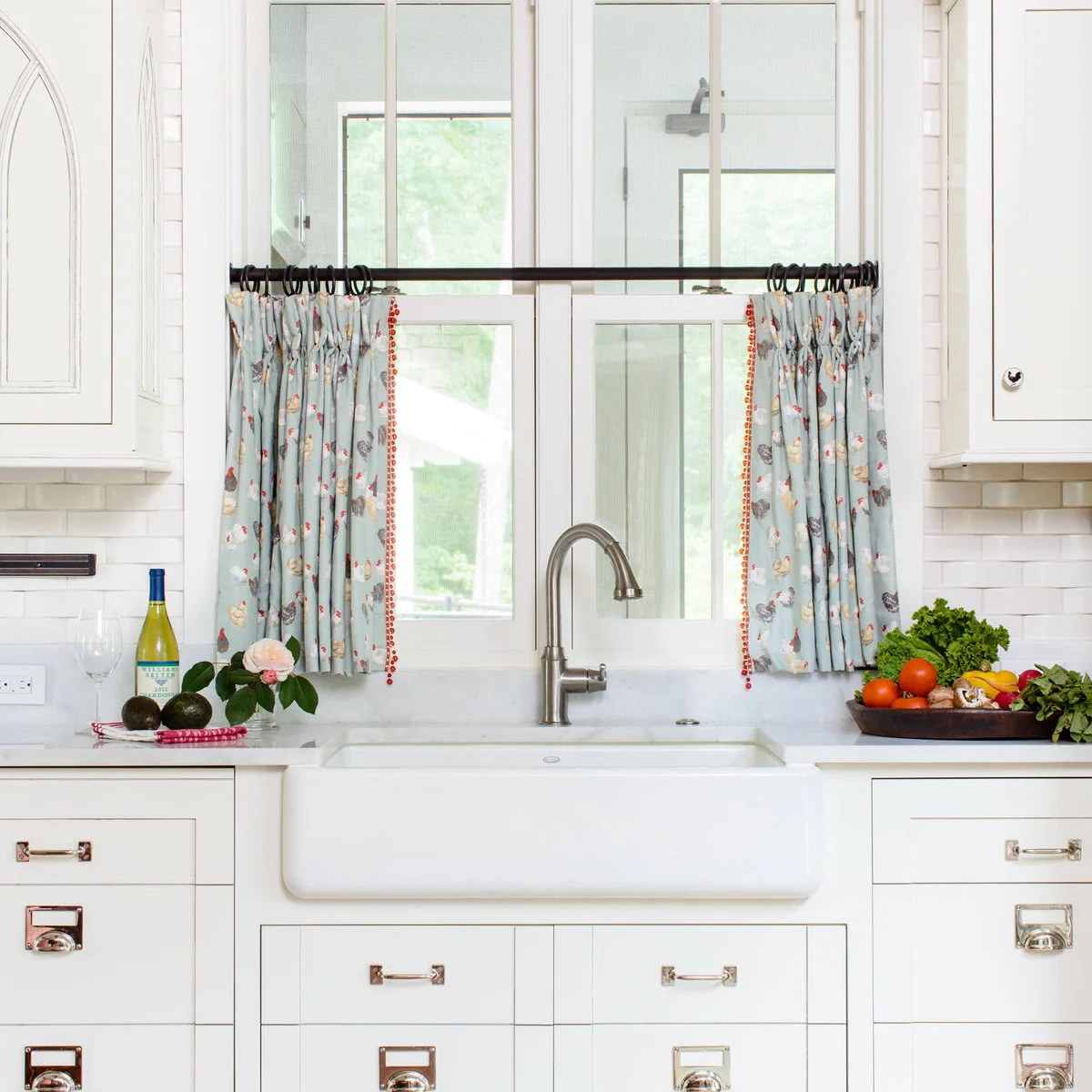
Frame the Sink with Floral Café Panels
 SaveSupport Non AI Creator
Image credit: Project: Todd Richesin Interiors (via Houzz)
Pale blue floral panels gather at the sides of this sink window, leaving its center open above the faucet. Red edging gives the soft print a definite outline against white cabinets and tile. The short length adds fabric without bringing it down across the sink basin.
Choose a washable fabric and test the hem position with the faucet running and the window open. Curtains beside a sink still catch spray even when they look safely tucked away. Keep enough space at each side for the panels to stack without covering handles.
IDEA 02 / 20
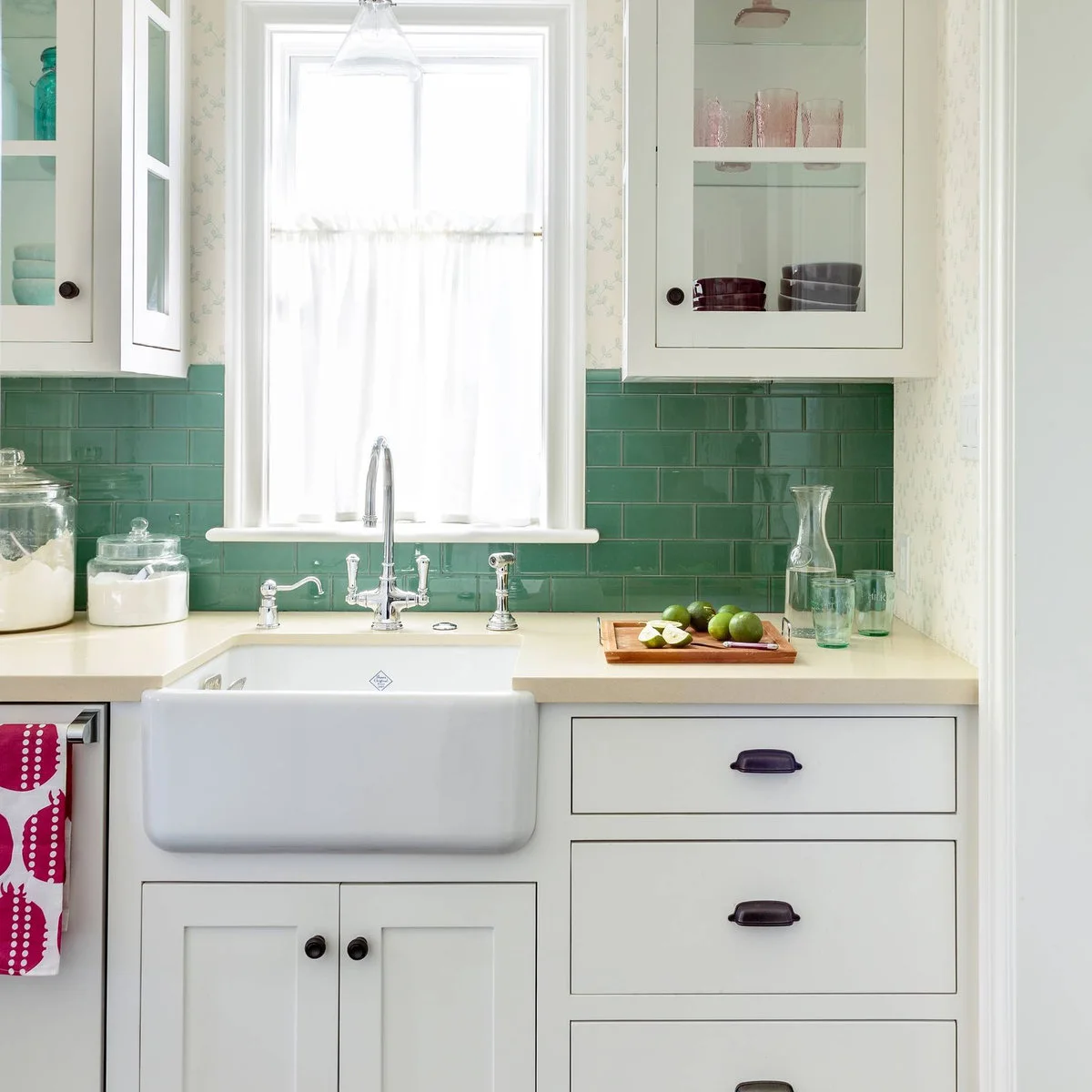
Let a White Café Curtain Soften Green Tile
 SaveSupport Non AI Creator
Image credit: Project: Alison Kandler Interior Design (via Houzz)
A simple white café curtain softens the window above this farmhouse sink while leaving the green tiles as the strongest color. Glass-front cabinets frame the opening, and the fabric covers the lower window rather than filling the entire recess. The arrangement keeps the upper glass bright.
Test privacy from outside after dark before relying on a light white fabric. A café curtain may diffuse the view without fully concealing it when the kitchen is lit. Keep the hem clear of the tap and let the fabric dry completely after any splashes.
IDEA 03 / 20
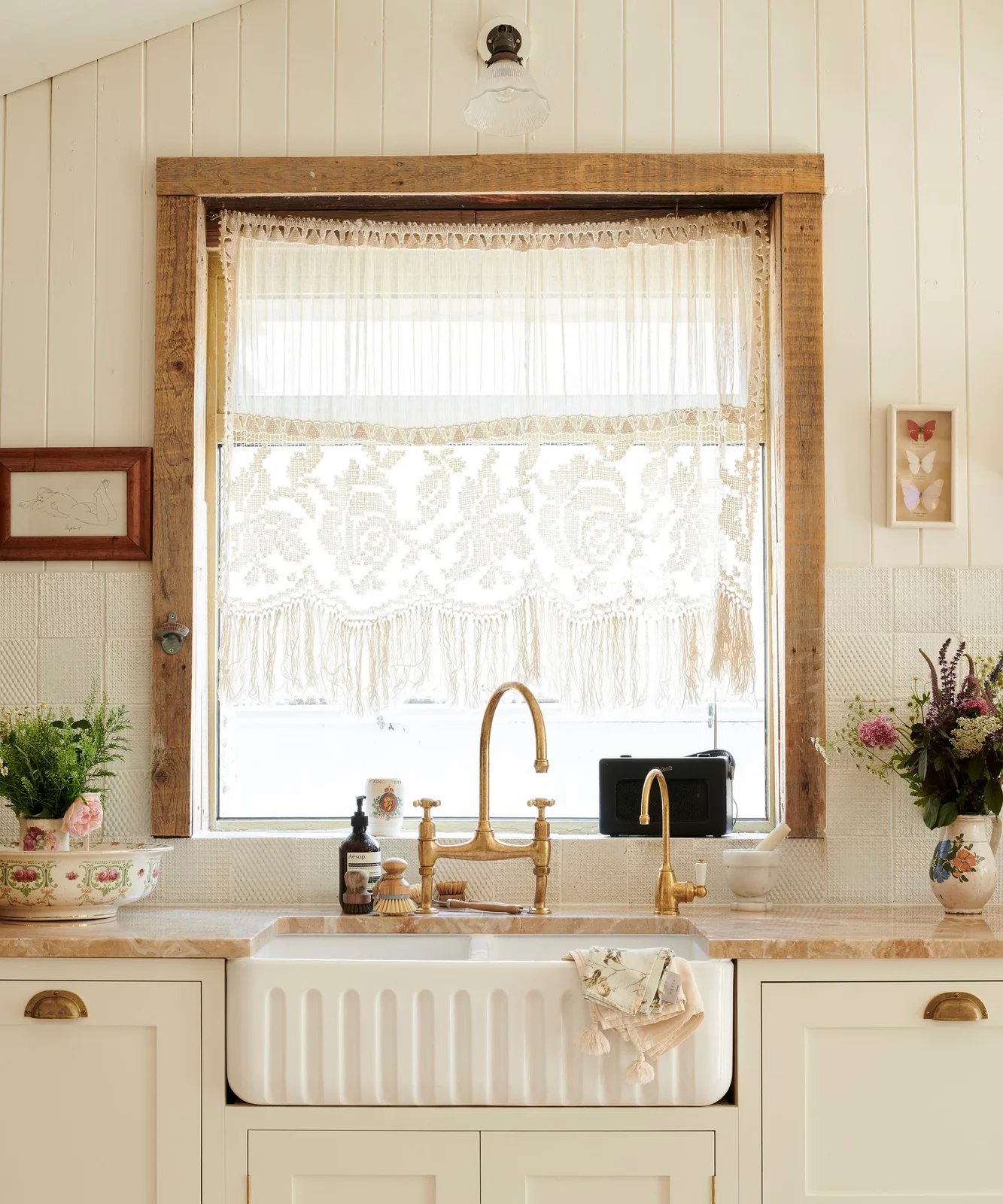
Use Lace High Above the Faucet
 SaveSupport Non AI Creator
Image credit: DeVol
A short lace curtain gathers across the upper portion of this wood-framed kitchen window. Its patterned edge brings detail to the opening while leaving the sink area below visually clear. The pale fabric sits comfortably beside the cream kitchen and warm-colored metal faucet.
Use this approach when decoration matters more than screening the lower glass. Check the fabric care instructions before choosing lace near cooking steam, since delicate patterns can collect dust and residue. Leave the window latch accessible so ventilation does not require handling the curtain every time.
IDEA 04 / 20
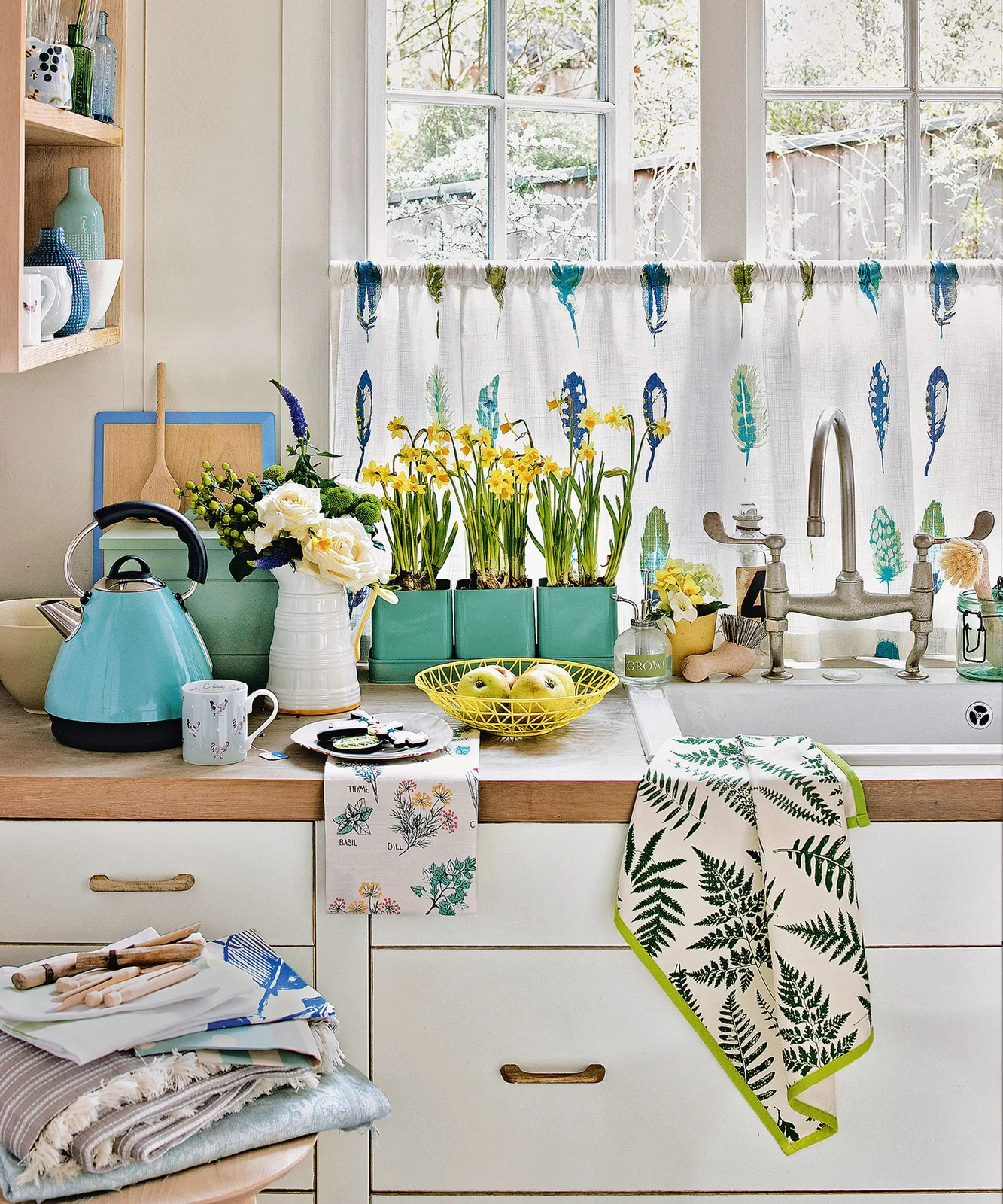
Bring a Feather Print to a Small Window
 SaveSupport Non AI Creator
Image credit: David Brittain
Blue and green feather shapes give this small sink window a lively café curtain. The print introduces color around the glass without requiring painted cabinetry, while the gathered fabric keeps the treatment informal. Flowers and countertop objects repeat the sense of a busy, personal kitchen.
Keep the fabric separate from kettles, wet dishes and food preparation. A patterned curtain can hide minor marks visually, but it still needs regular washing. Reduce the number of objects beside the sink if they make it harder to move the panels or clean the sill.
IDEA 05 / 20
Repeat Short Curtains Across Separate Windows
 SaveSupport Non AI Creator
Image credit: Project: Herlong Architects (via Houzz)
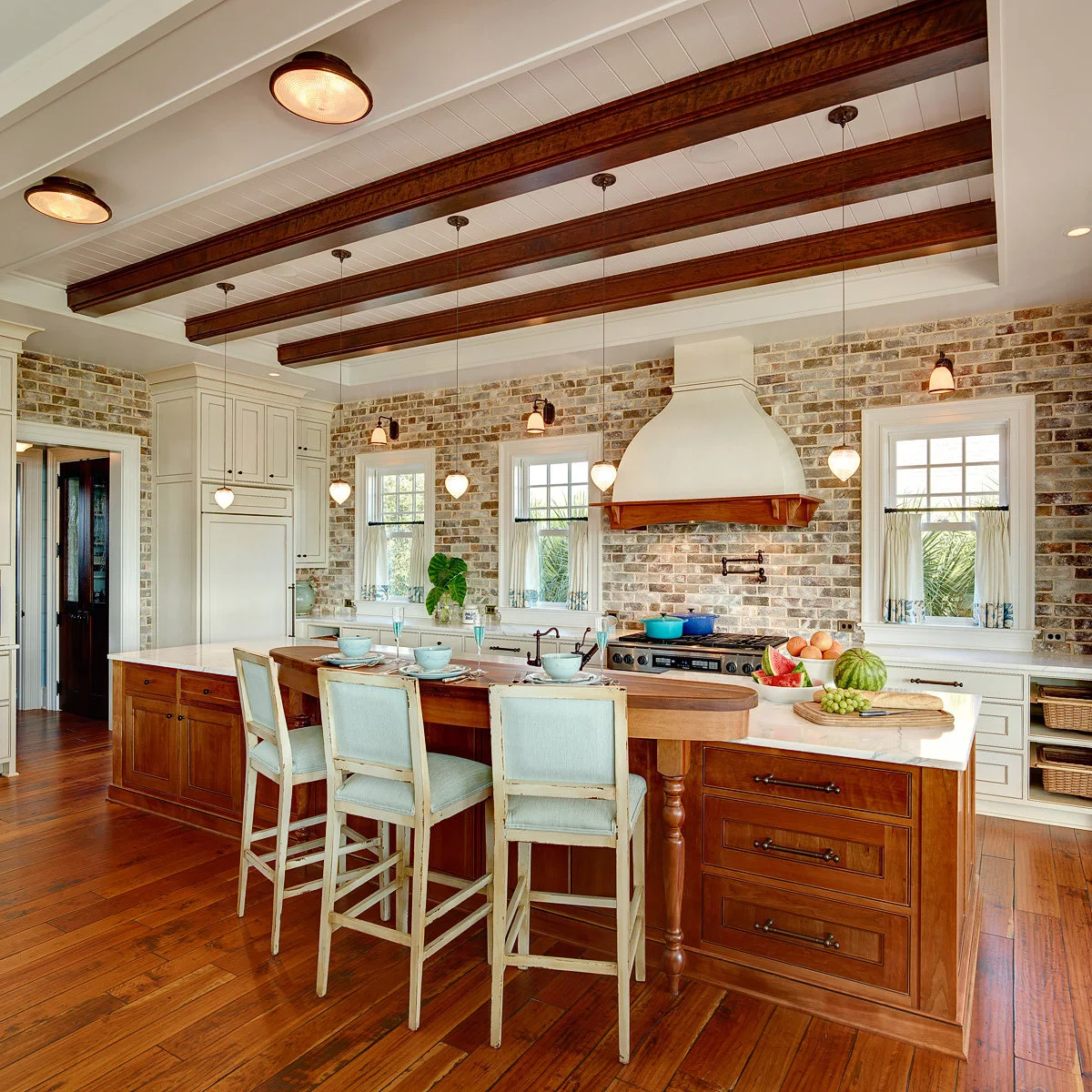
Three separate windows use matching café curtains in this brick-walled kitchen. Their white upper fabric keeps the treatment quiet, while blue patterned hems connect with the pale blue stools. Repeating a short length gives the long wall consistency without concealing the character of the brickwork.
Set each rod to a consistent visual line, checking the actual window frames before drilling. Keep fabric outside the cooking appliance clearance area and follow the appliance instructions rather than copying spacing from a photograph. Wash the panels together so their color and shrinkage remain consistent.
PART 02
Bring Pattern Above the Counter
IDEA 06 / 20
Repeat a Floral Treatment at the Sink and Nook
 SaveSupport Non AI Creator
Image credit: Project: Southern Living (via Houzz)
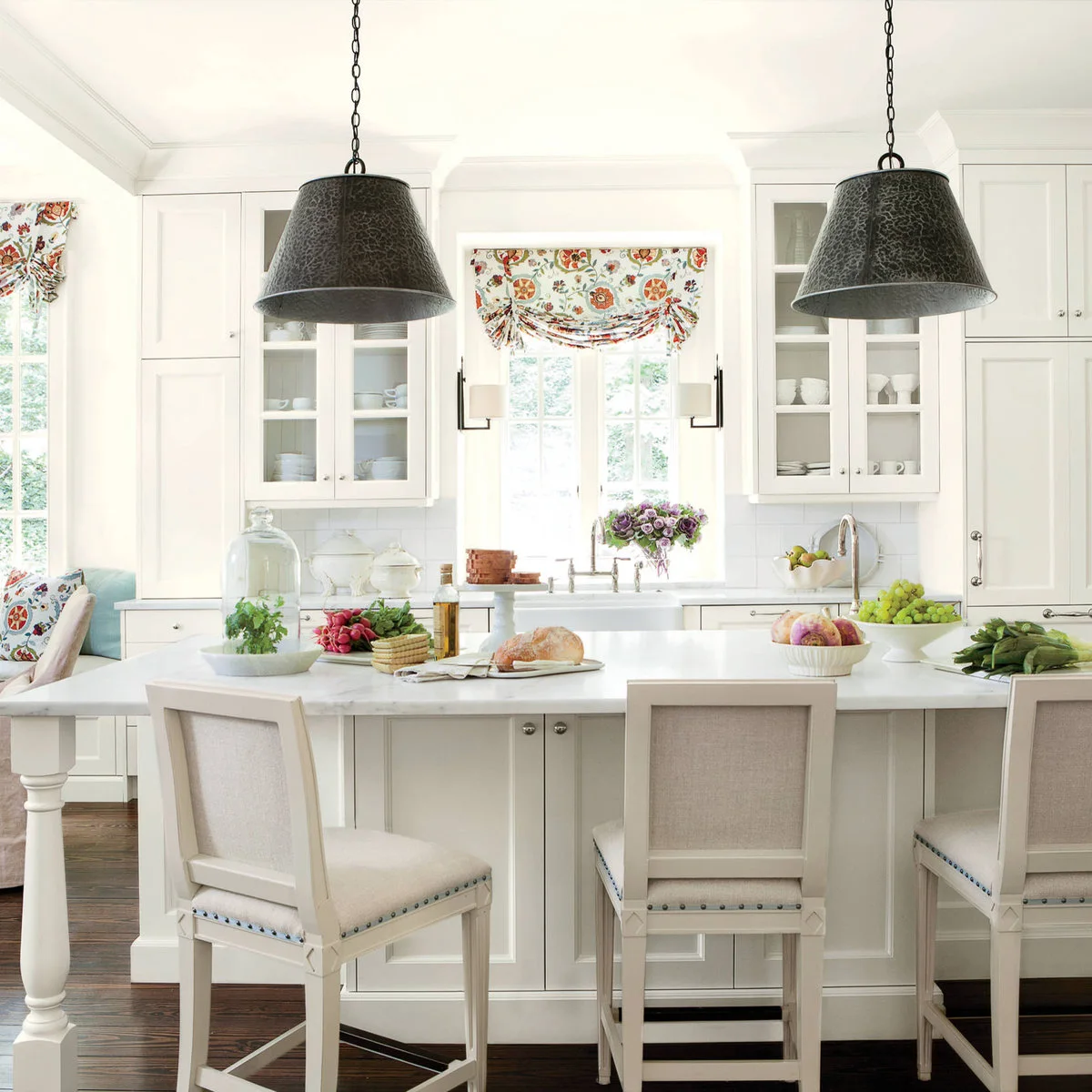
Floral fabric appears at more than one window in this white kitchen, connecting the sink with the adjoining nook. The gathered treatment adds a softer outline than the cabinet doors and black hanging lights. Most of the glass stays exposed beneath the patterned fabric.
Repeat the fabric when the windows are visible together, but adjust each treatment to its task. A sink window needs splash clearance, while a seating window may need more privacy. Confirm whether the chosen style is fixed or operable before expecting it to control afternoon glare.
IDEA 07 / 20
Add a Coral Print Above Corner Windows
 SaveSupport Non AI Creator
Image credit: Project: Donna Elle Design (via Houzz)
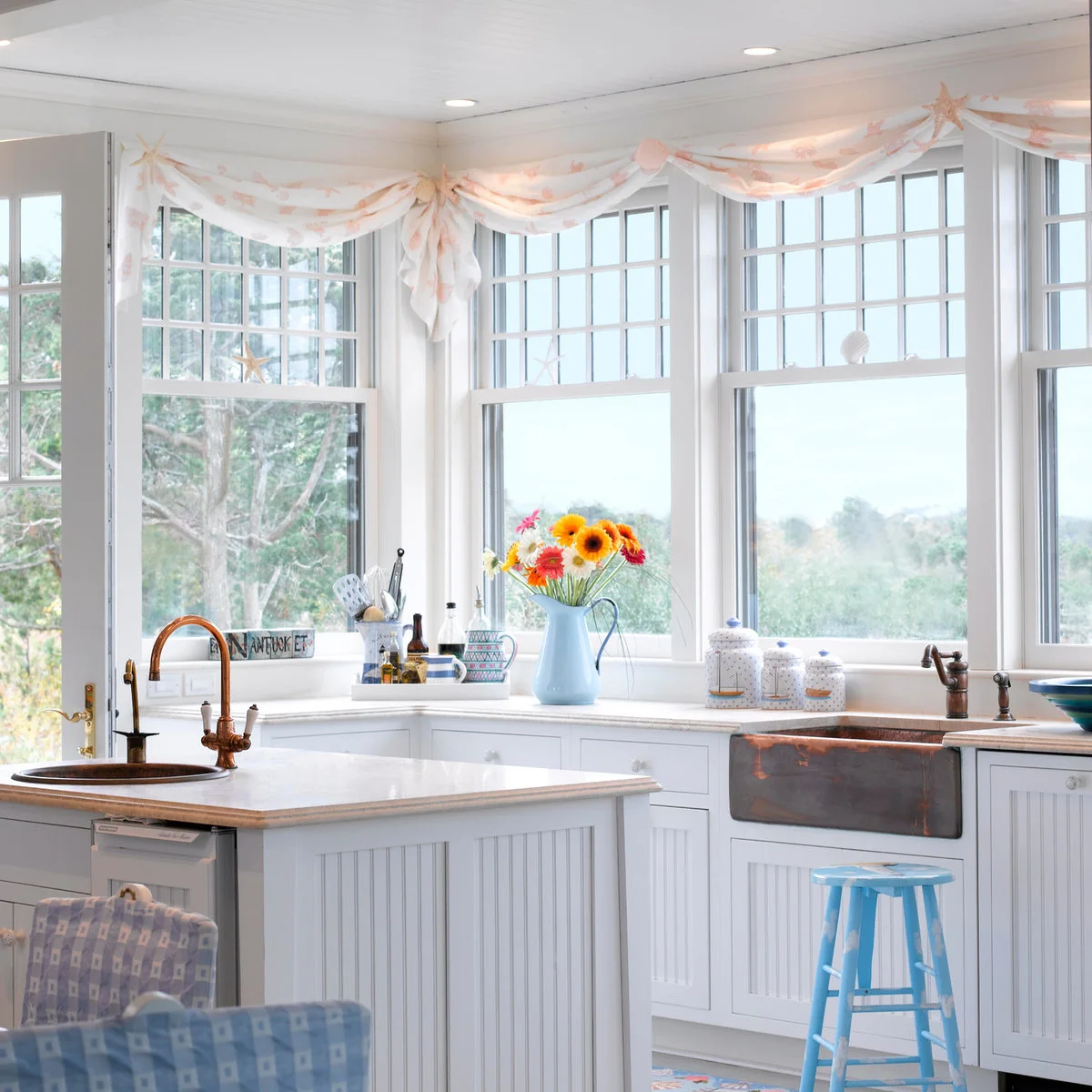
Pink coral-pattern fabric follows the corner windows in this pale kitchen. The shaped lower edge creates a gentle break above the glass, while the light cabinetry and small decorative objects maintain an airy setting. Color is concentrated near the window tops instead of spreading across every surface.
Treat a shaped valance as decoration unless a separate covering provides privacy. Make sure its lowest points leave opening sections and latches usable. Choose a fabric that can tolerate the room’s cleaning routine, and avoid adding trailing trims where they could touch wet countertops.
IDEA 08 / 20
Use a Bright Print Above White Cabinets
 SaveSupport Non AI Creator
Image credit: Project: Beaulieu Cabinetry, Inc. (via Houzz)
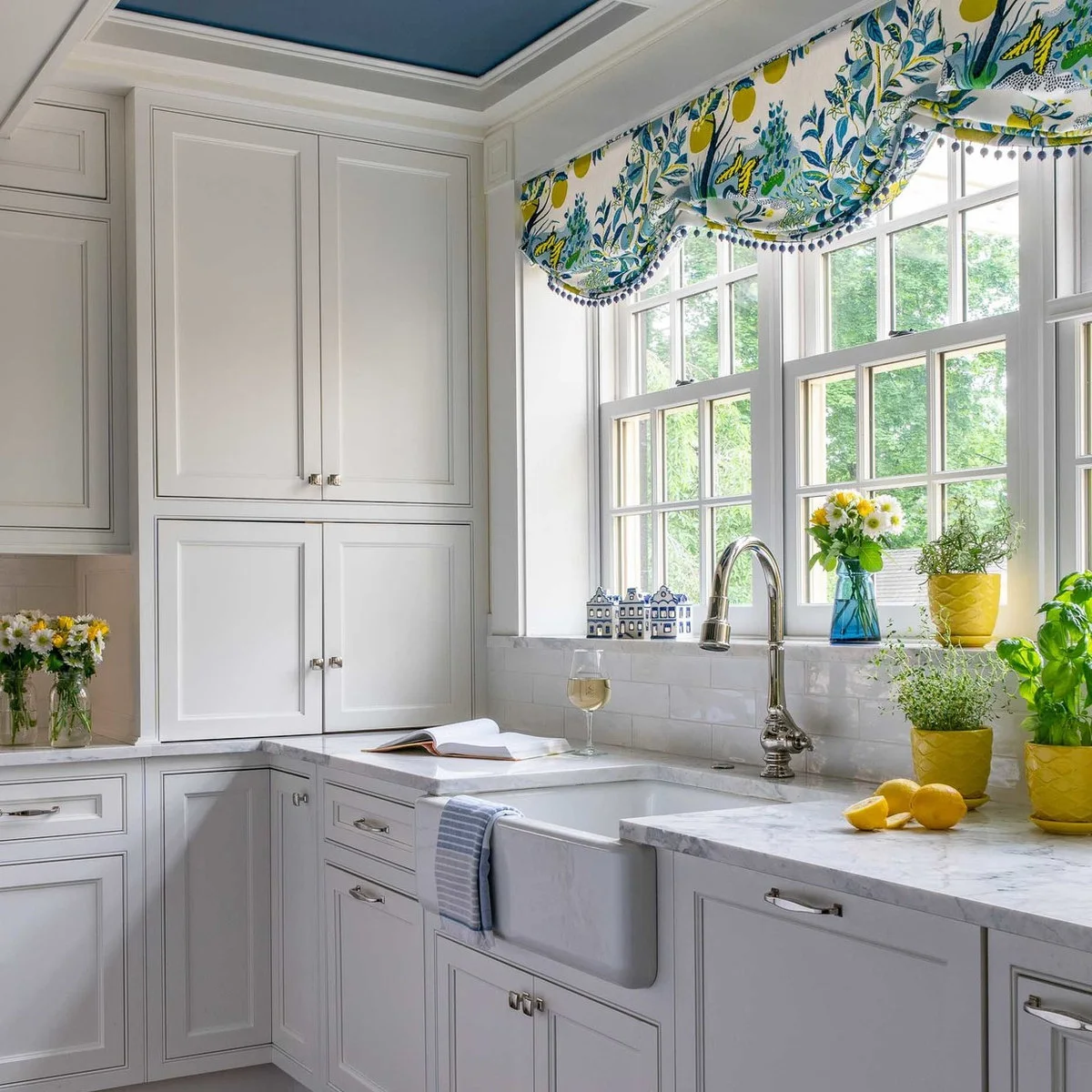
Blue, green and yellow shapes make the fabric above this sink window a focal point. The curved lower edge and small hanging trim contrast with the straight white cabinet doors. Yellow containers and a blue vase echo the print without requiring the cabinetry itself to become colorful.
Pull one or two colors from the fabric for movable kitchen accessories, leaving the rest of the counter useful. Check how the trim will be cleaned before ordering it. A simpler edge is easier to maintain if the window sits where steam and cooking residue accumulate.
IDEA 09 / 20
Keep a Leaf Pattern Inside the Recess
 SaveSupport Non AI Creator
Image credit: Project: Tami Smight Interiors (via Houzz)
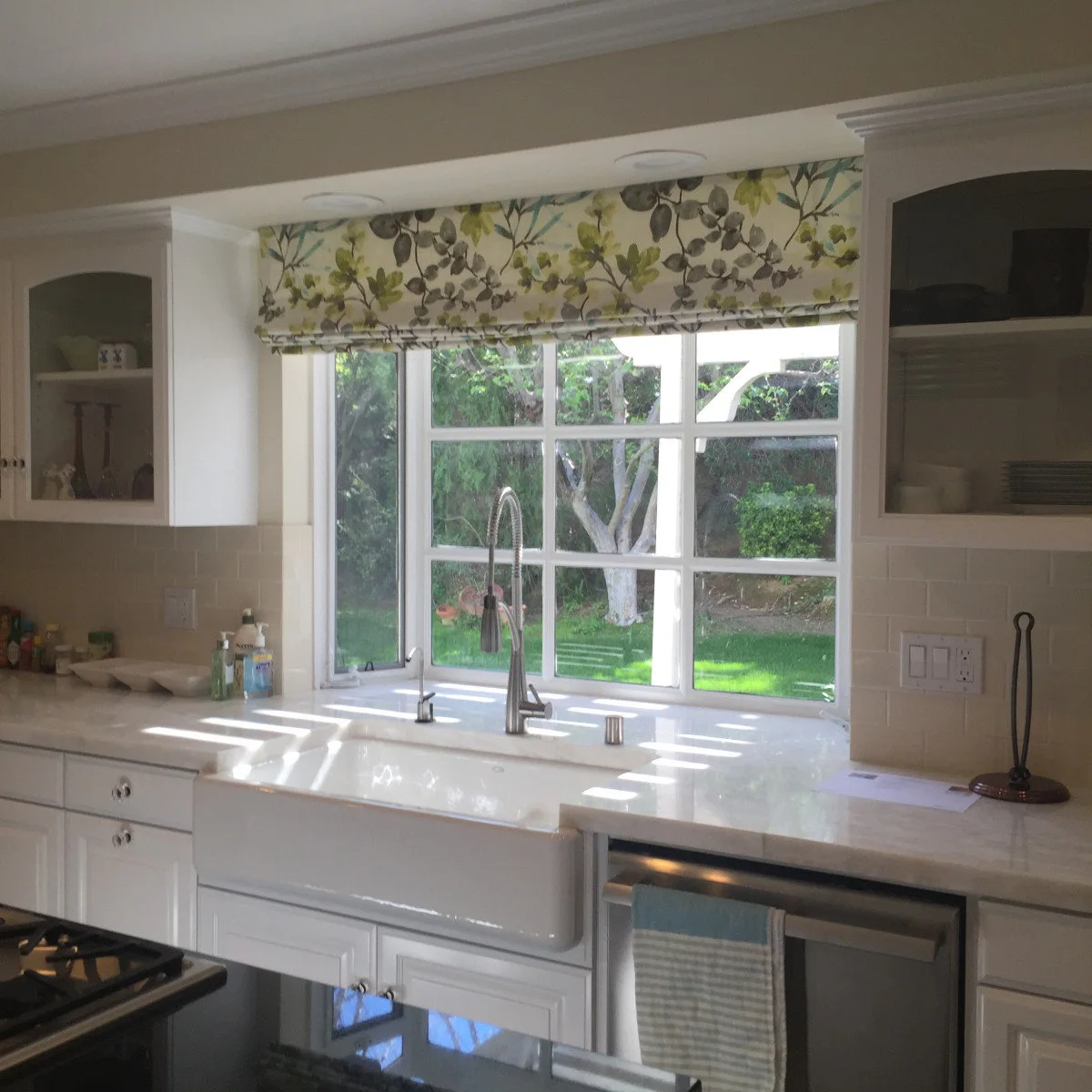
A leaf-pattern fabric shade fits within the recessed sink-window area, between white cabinets. Its green and gray shapes connect with the garden view while the gathered lower folds add softness. Keeping the treatment contained prevents long panels from competing with the counter on either side.
Choose an operable fabric shade if you need adjustable coverage rather than the decorative effect of a fixed valance. Check its stacked depth and the window’s opening path together. Specify a suitable cordless system where available, and keep the lower fabric clear of splashing water.
IDEA 10 / 20
Coordinate a Sink Shade with Dining Curtains
 SaveSupport Non AI Creator
Image credit: Project: GEORGE Interior Design (via Houzz)
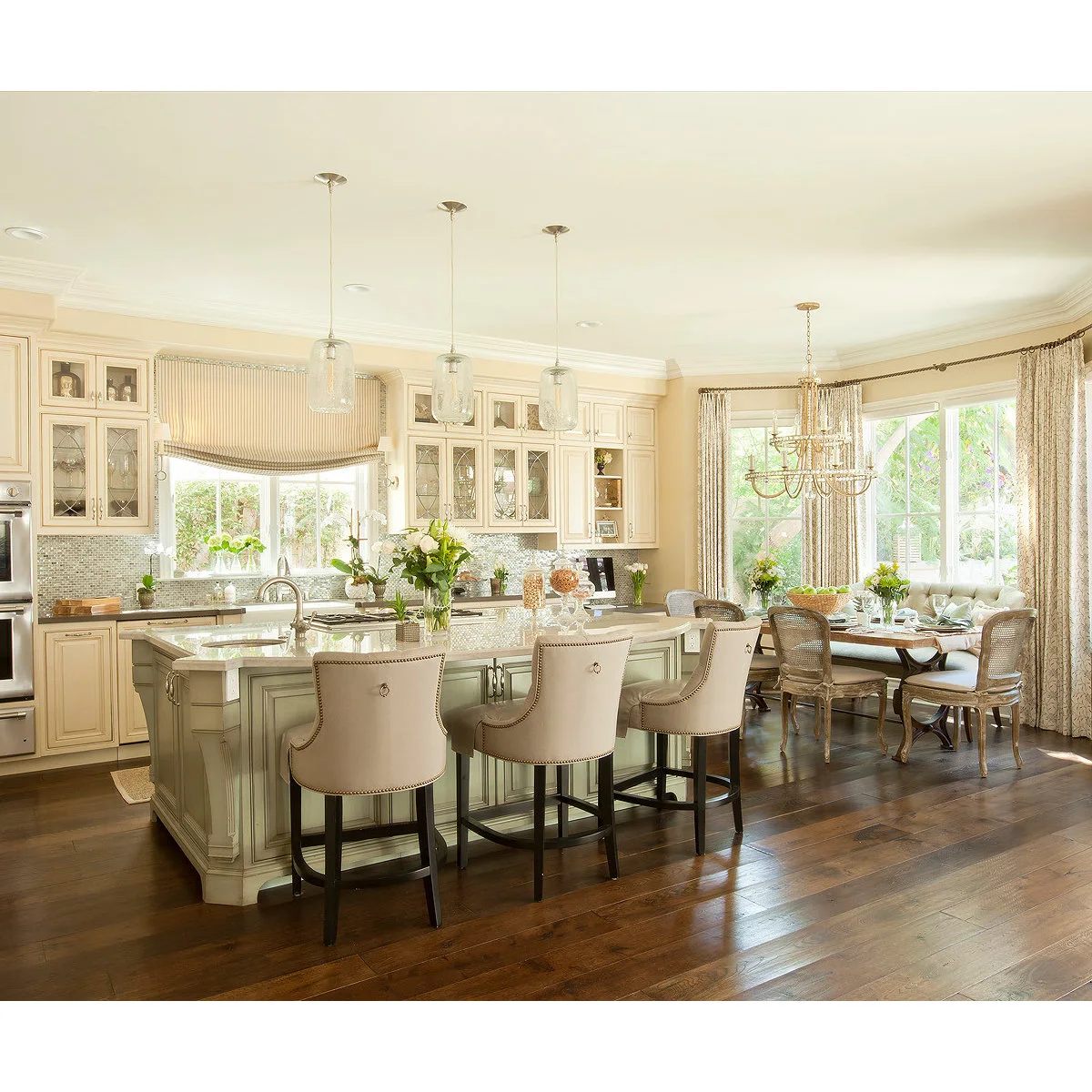
A striped fabric treatment above the sink sits alongside patterned curtains in the dining bay of this cream kitchen. The two treatments share a pale palette, so their different shapes feel connected. Short fabric suits the working counter, while longer panels soften the eating area.
Use related colors rather than forcing every window into the same curtain length. Compare samples in both locations because light can change their appearance. If you also have white kitchen cabinets, check that the fabric’s undertone works beside them in daylight and under evening lighting.
PART 03
Frame Doors and Open Kitchen Areas
IDEA 11 / 20
Put a Strong Print Around Garden Doors
 SaveSupport Non AI Creator
Image credit: Davide Lovatti
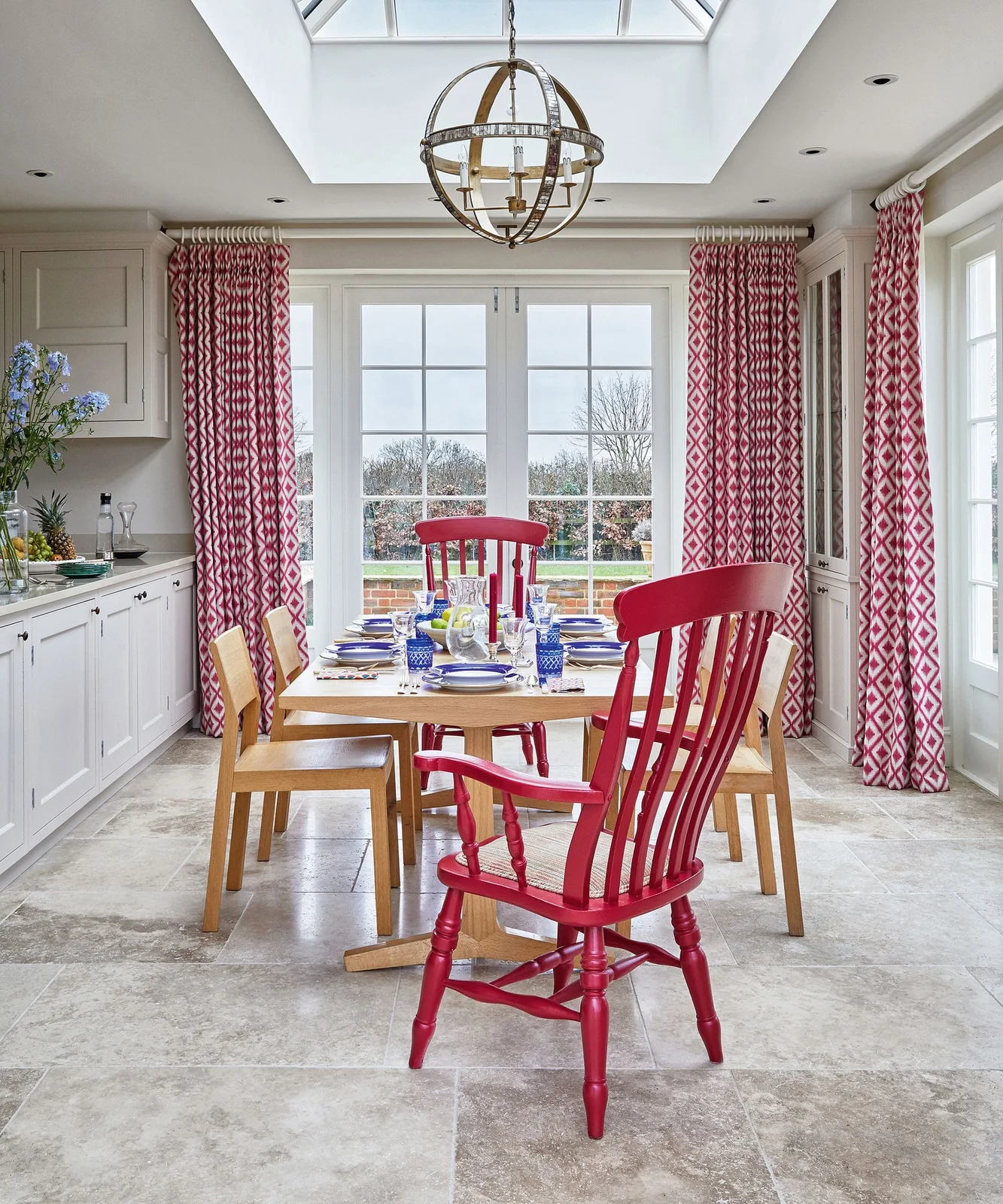
Red and white geometric panels frame the glass doors beside this kitchen dining area. Red chairs reinforce the fabric color, while the pale cabinetry visible at the side keeps the room from feeling uniformly patterned. The curtain sits around the exit rather than across the working counter.
Allow enough rod width for the panels to park beyond the moving doors. Keep the hem off the walking surface where people carry meals outside. A bold print works best when you can see it gathered as well as spread out, so inspect a generously sized fabric sample.
IDEA 12 / 20
Soften Corner Glass with White Sheers
 SaveSupport Non AI Creator
Image credit: Olivia Stutz Design/Jonathan Hokklo
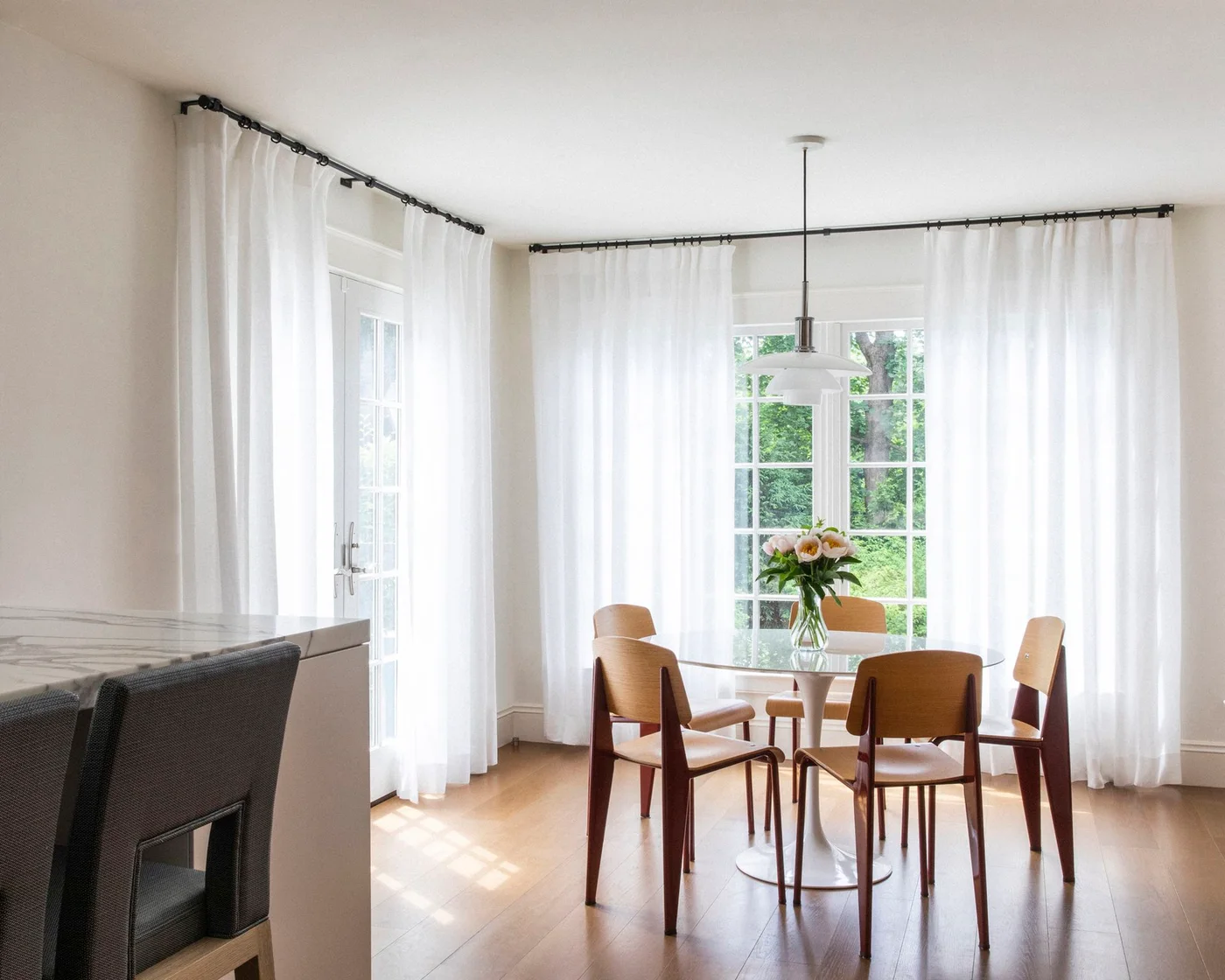
White sheers soften the corner glazing beside this round dining table and kitchen peninsula. Their light folds allow the window grid and outside view to remain visible. The wood chairs add warmth, while the unobtrusive curtain color lets the eating area feel connected to the kitchen.
Sheers are useful for softening daylight but do not guarantee privacy after dark. Check the view from outside with the lights on. Arrange the corner fitting so panels can move without catching each other, and keep loose fabric away from chairs as they are pulled out.
IDEA 13 / 20
Use Color Blocks Beside an Eating Area
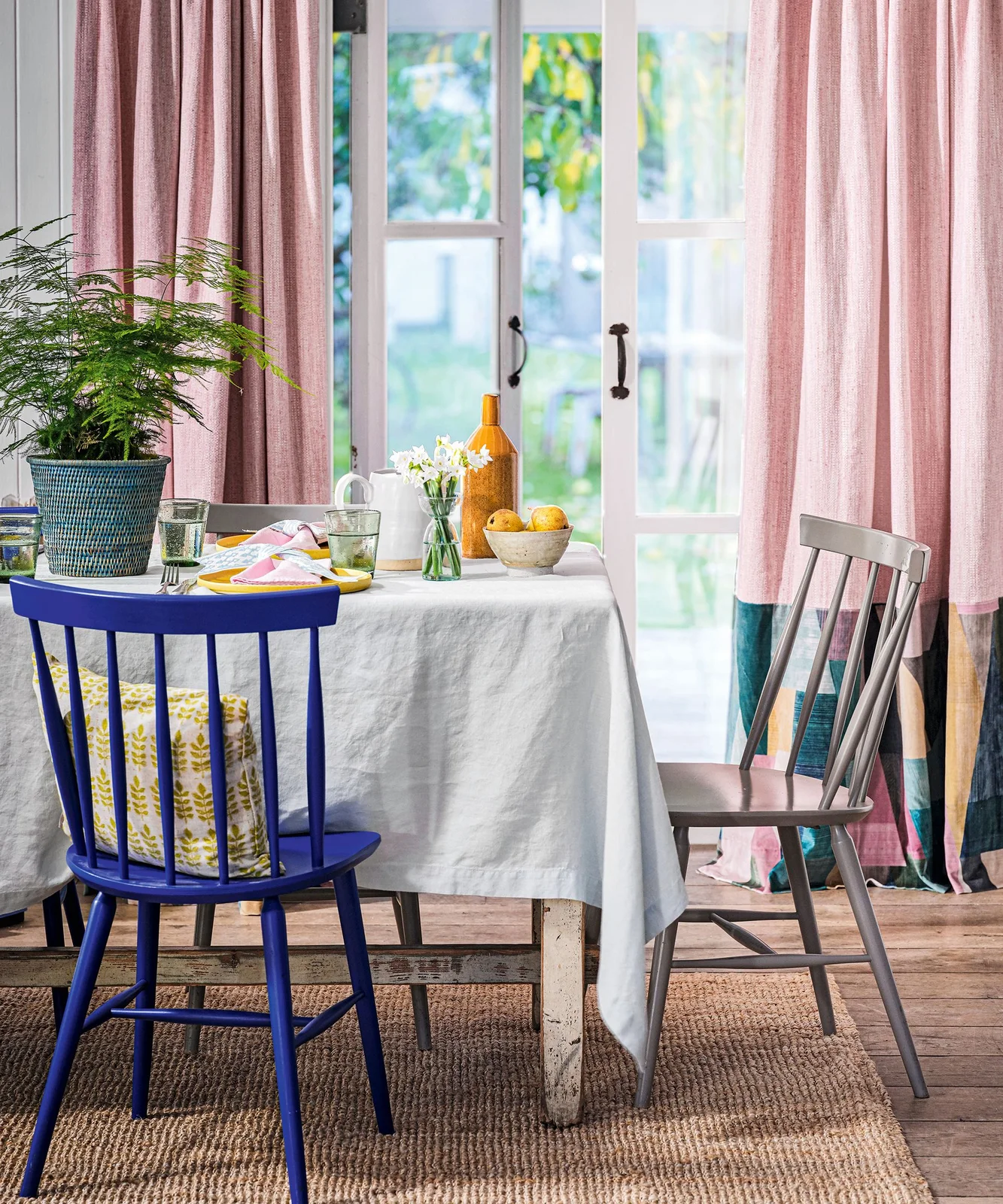 SaveSupport Non AI Creator
Image credit: Future
Pink curtains with dark teal lower sections introduce a clear color division beside this eating area. Small mustard accents add another note without covering the whole curtain. The glass table and mixed chair colors let the fabric carry much of the room’s visual interest.
Decide where the color change will fall when the panels hang at their final height. A band can look quite different once the table and chairs obscure the lower fabric. Check washability and colorfastness together, particularly when contrasting colors are sewn into the same panel.
IDEA 14 / 20
Keep Neutral Door Curtains Clear of the Floor
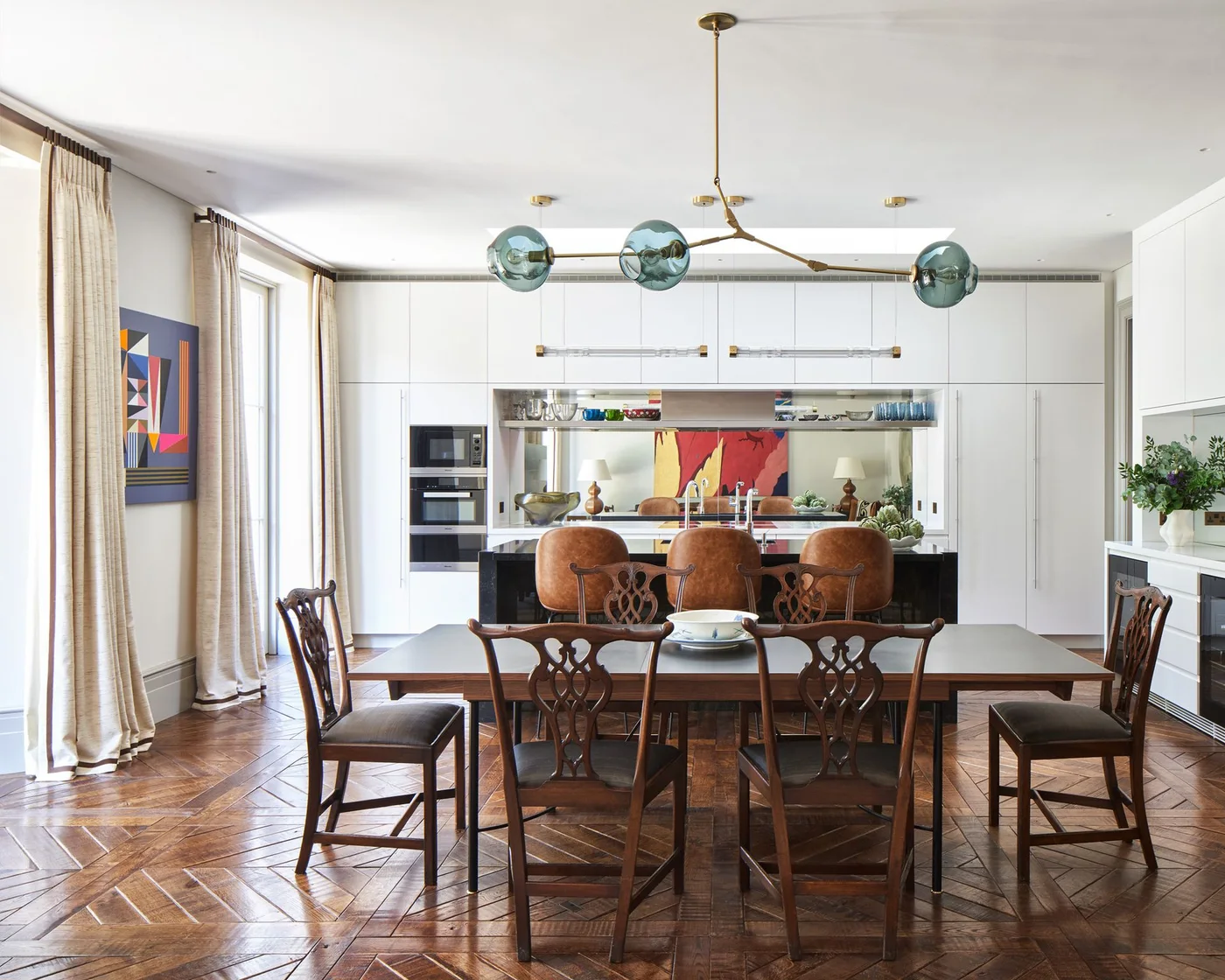 SaveSupport Non AI Creator
Image credit: Davide Lovatti
Beige panels frame the glazed doors beside this light kitchen and dining area. Narrow dark stripes near the lower edge add definition without creating a busy full-height pattern. The quiet fabric provides a soft border around the garden view while the pale kitchen remains visually connected.
Use a practical finished length where the door is used frequently. Fabric that pools on the floor catches dirt and can obstruct someone carrying dishes. Check the stack position against door handles, and choose a fitting that lets the entire exit open without dragging the curtain aside by hand.
IDEA 15 / 20
Soften Glass Doors Beside Industrial Finishes
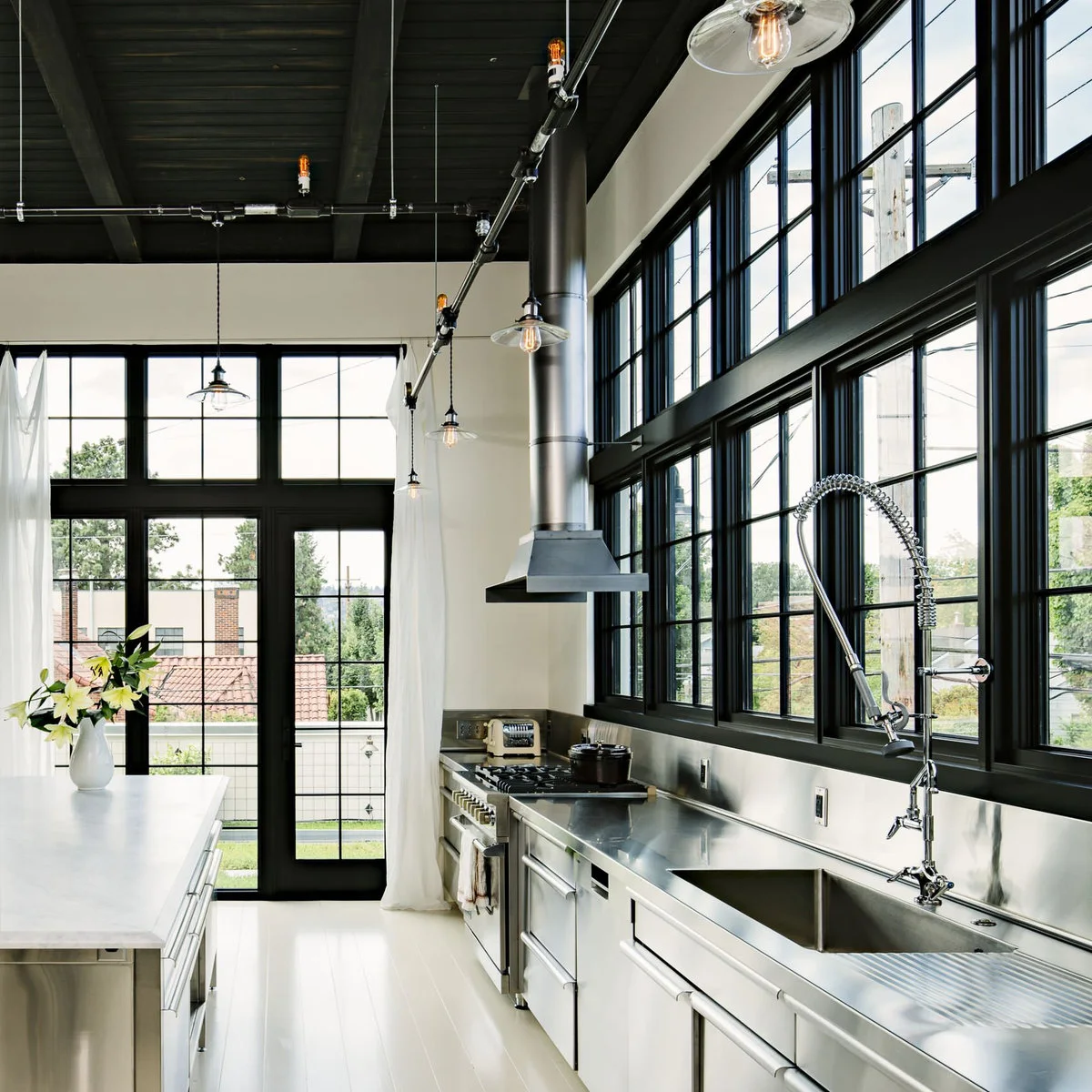 SaveSupport Non AI Creator
Image credit: Project: Emerick Architects (via Houzz)
White panels soften the black-framed glazed doors at the end of this kitchen. Their folds contrast with the exposed ceiling, metal-colored work surfaces and large sink faucet. The working windows remain uncovered, concentrating the soft fabric around the doorway where it is more useful.
Leave the cooking and washing areas free of loose fabric, and check all appliance clearances before fitting a door curtain nearby. Park the panels securely when the doors are open to a breeze. A simple washable panel is easier to maintain than layered trims in a hardworking kitchen.
PART 04
Connect the Kitchen and Eating Area
IDEA 16 / 20
Give Cooking and Dining Windows Different Jobs
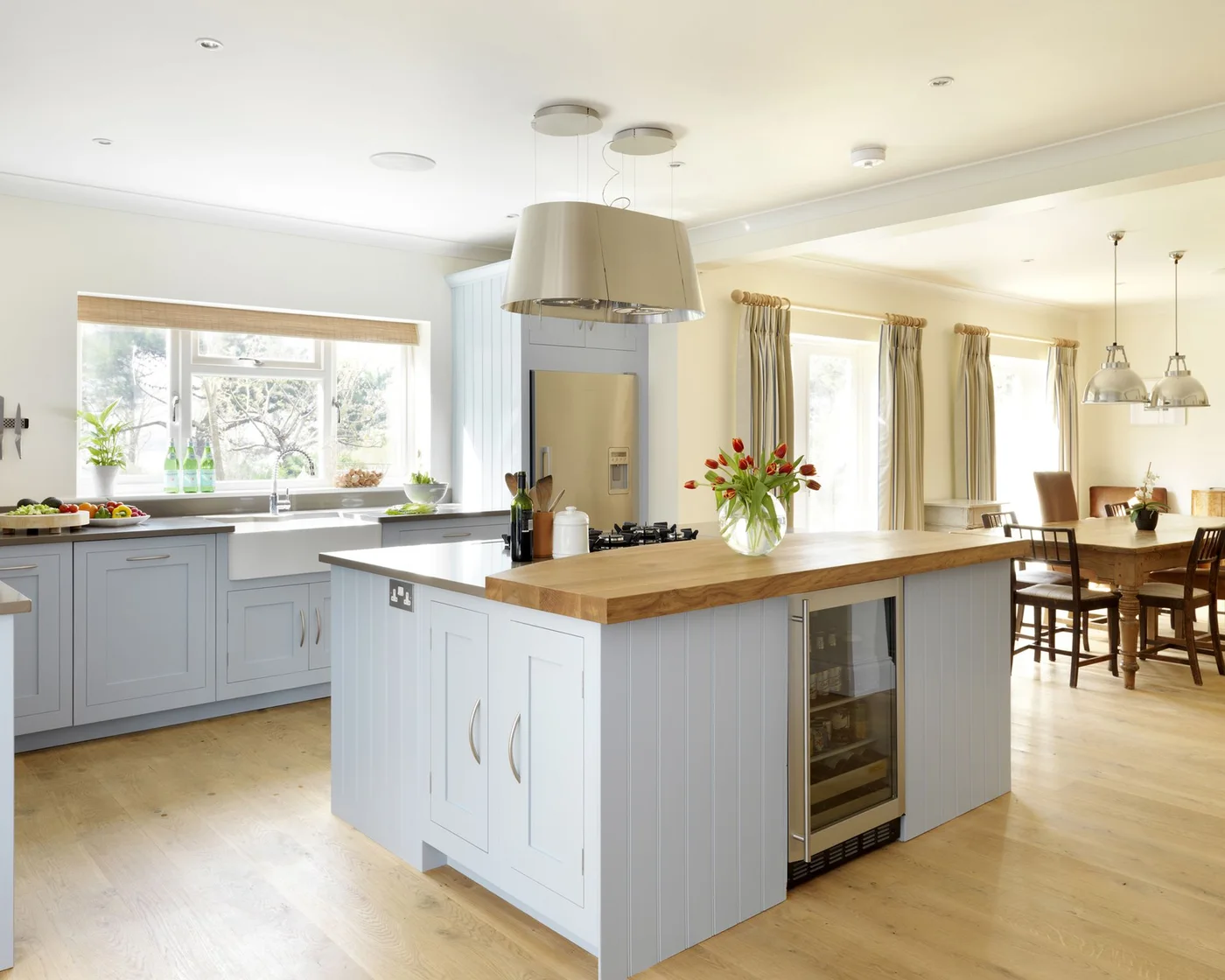 SaveSupport Non AI Creator
Image credit: Harvey Jones
This blue kitchen combines compact fabric treatments at the sink windows with long pale panels around the dining area. The change in length suits the different activities without making the windows unrelated. A wood-topped island provides a warm link between the colored cabinets and softer fabrics.
Start with the privacy and glare problem at each window. The sink may need clear operating space while the table benefits from a fuller curtain. Keep the palette related, then measure each opening separately rather than assuming one ready-made length will work throughout the room.
IDEA 17 / 20
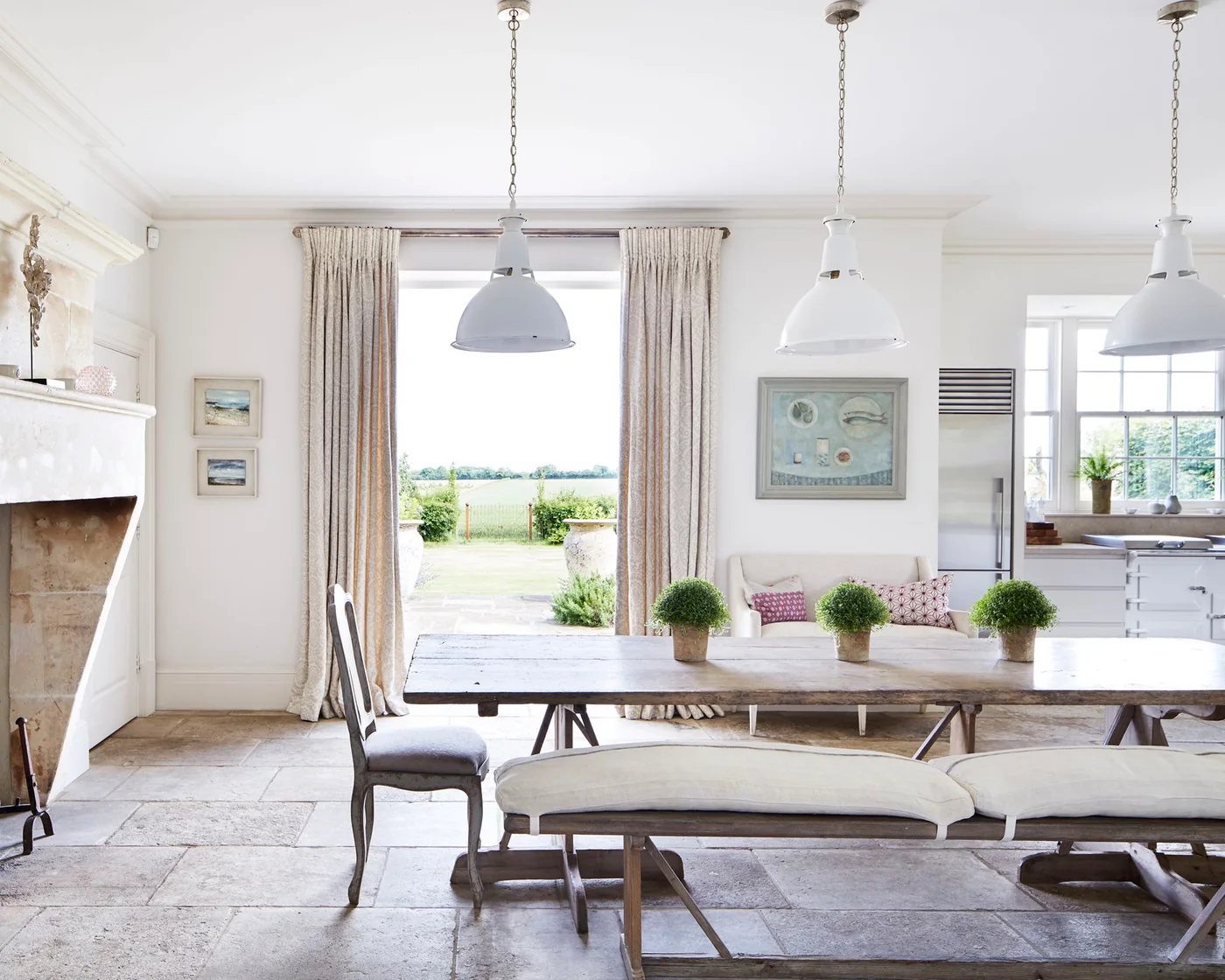
Pair Quiet Pattern with a Wood Dining Table
 SaveSupport Non AI Creator
Image credit: Alicia Taylor
Cream curtains with a fine pattern frame the garden doors beside this wood dining table. The pale fabric sits comfortably with the white kitchen beyond, and the bench cushion adds another soft surface. The restrained print lets the outdoor view and furniture shape stay easy to read.
Use a small pattern when you want detail without making the eating area feel busy. Check that the fabric remains attractive when tightly gathered at the door edges. Keep the bench and chairs far enough forward that their backs do not rub the panels each time someone gets up.
IDEA 18 / 20
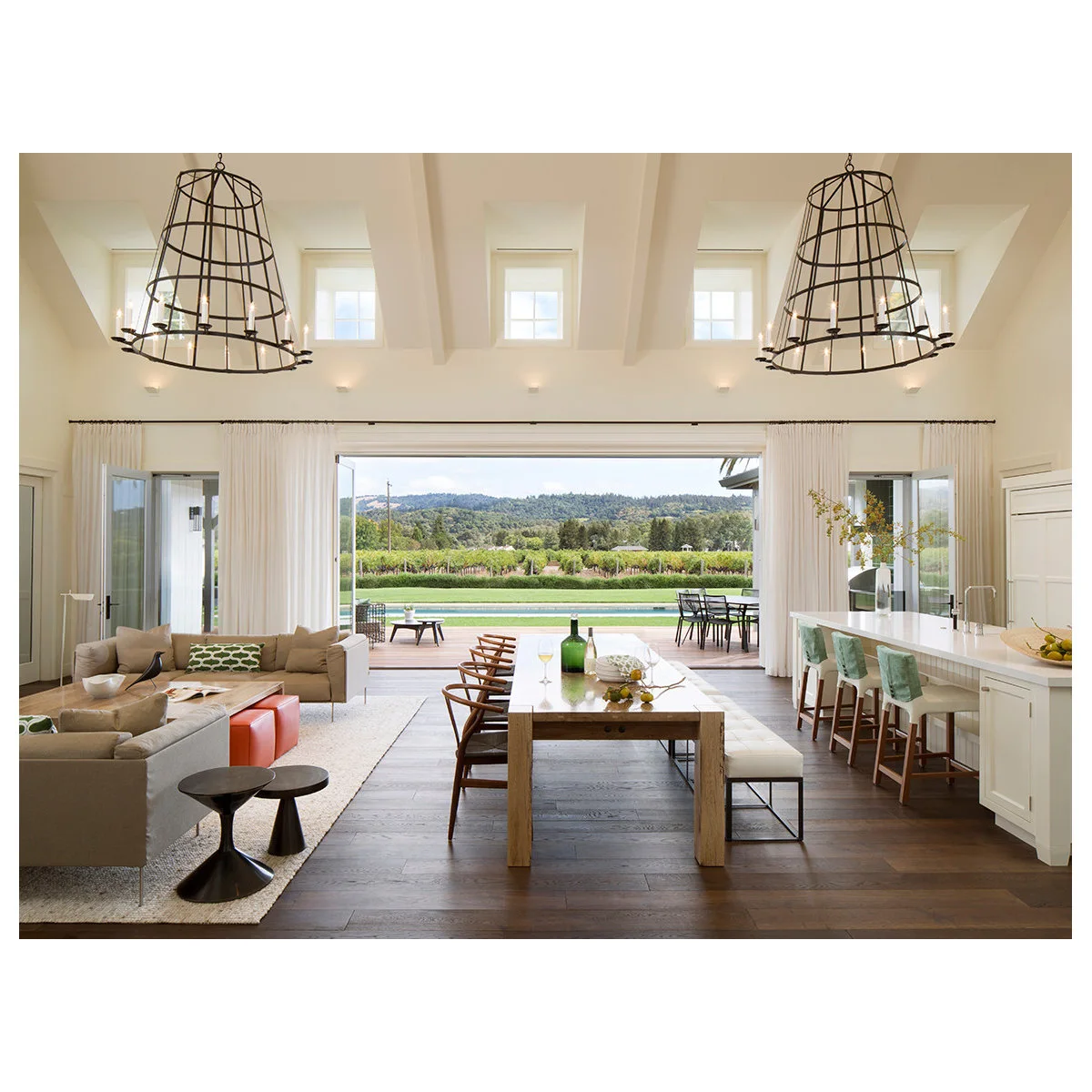
Use One Curtain Line Across a Wide Opening
 SaveSupport Non AI Creator
Image credit: Project: TOTAL CONCEPTS (via Houzz)
A long curtain line ties together the glazed openings in this open kitchen, dining and sitting area. White panels stack at the sides and between openings, leaving a broad outdoor view. Their pale color relates to the kitchen island and high ceiling without competing with the large hanging lights.
Plan support for the full span rather than treating a wide opening as a standard window. Check panel travel, bracket positions and door movement before ordering fabric. Split the curtain into manageable sections if necessary, so everyday use and eventual cleaning do not become unnecessarily difficult.
IDEA 19 / 20
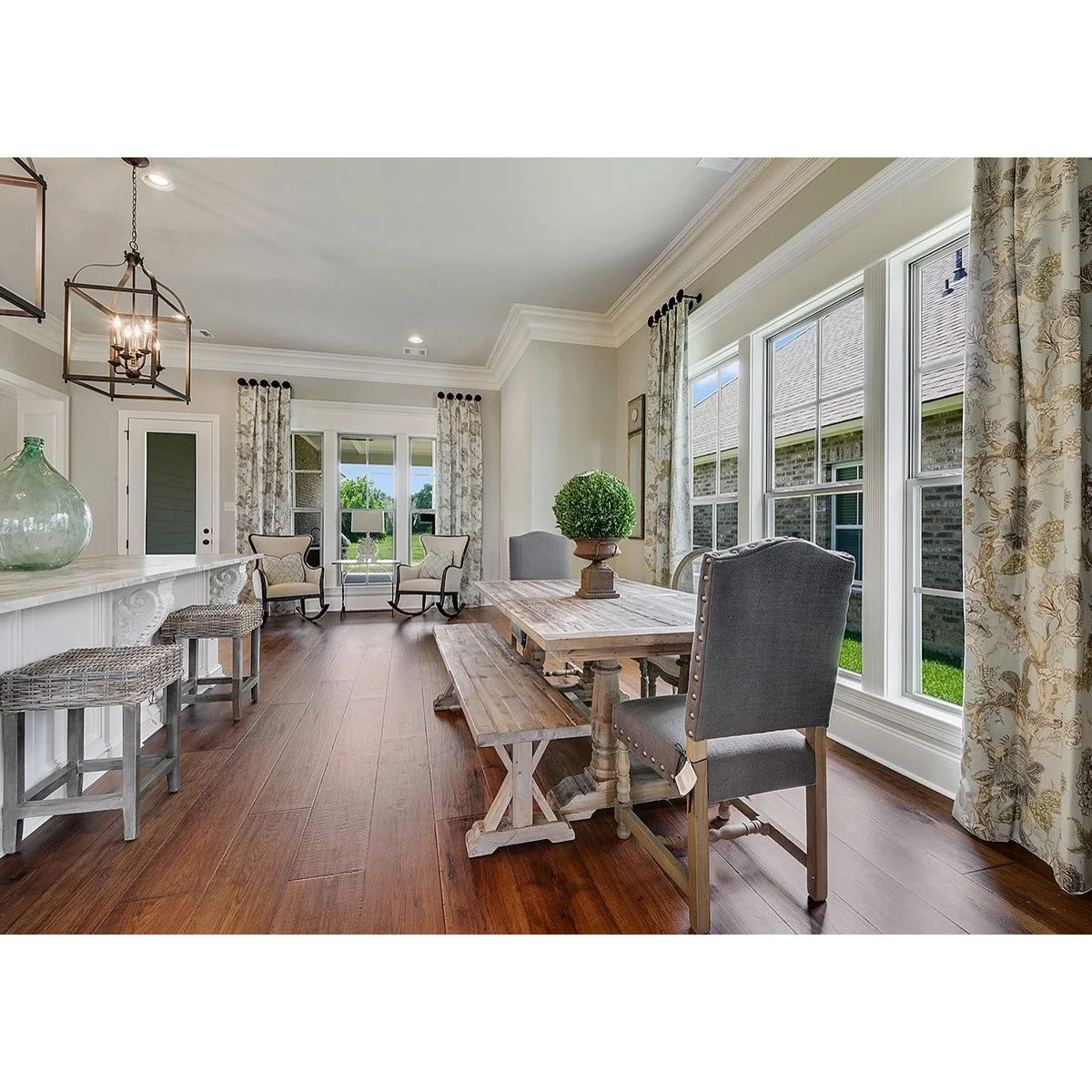
Frame a Kitchen Table with Botanical Panels
 SaveSupport Non AI Creator
Image credit: Project: The Front Door / Dwayne Carruth (via Houzz)
Botanical panels frame the windows beside a wood table and bench, with a kitchen breakfast counter along the opposite side. The print adds softness around the eating area while the long floorboards emphasize its length. Neutral upholstered chairs keep the fabric from being the only repeated detail.
Match curtain fullness to the space available behind the chairs. Too much fabric can become compressed against furniture and awkward to clean. For a narrow kitchen eating area, leave a clear route between counter stools and table seating before deciding how far the curtain projects into the room.
IDEA 20 / 20
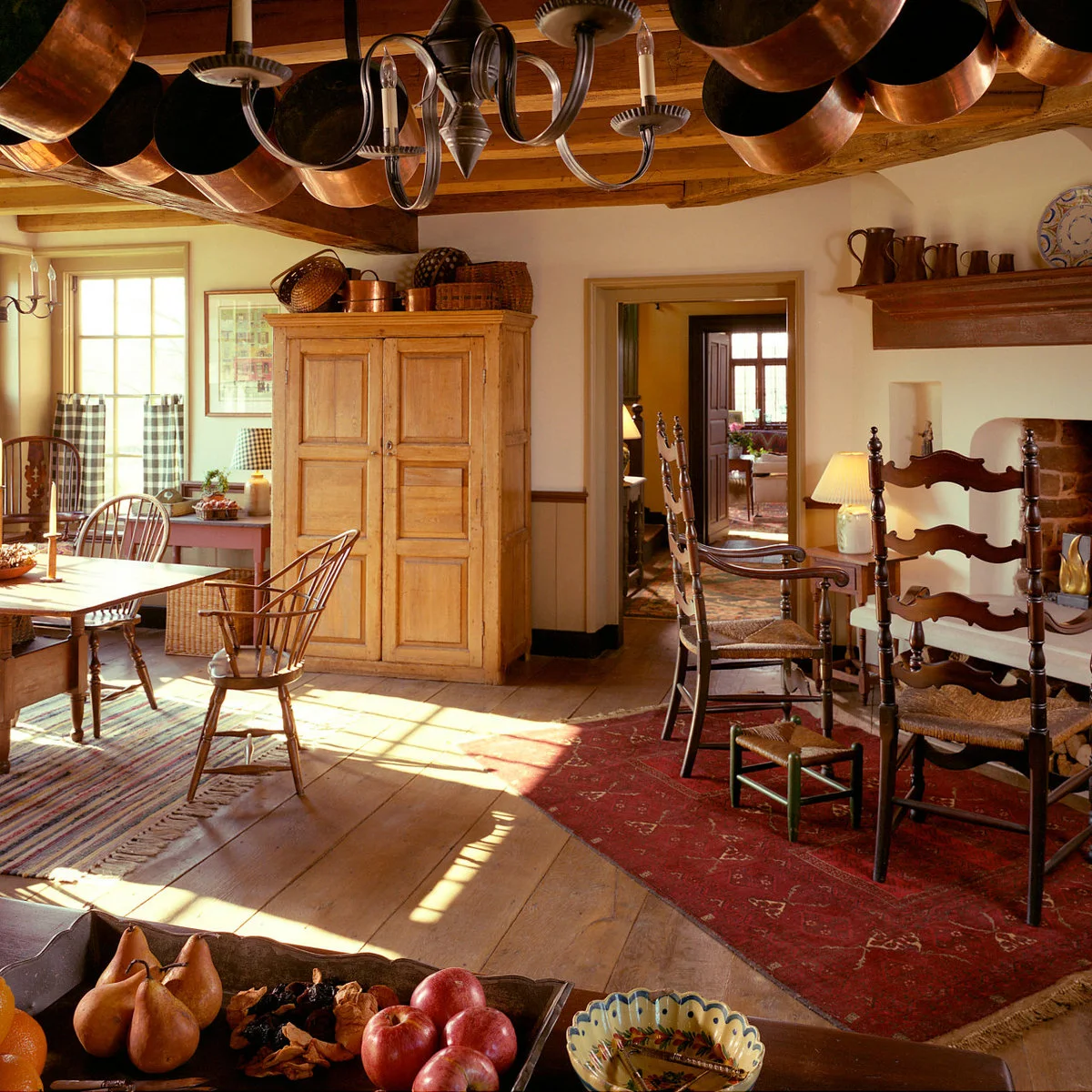
Bring Checks to a Country Kitchen Eating Corner
 SaveSupport Non AI Creator
Image credit: Project: John Milner Architects, Inc. (via Houzz)
Checked café curtains mark the small eating corner of this country kitchen. Their simple repeat sits alongside wood furniture, hanging pans and layered rugs without adding another large decorative motif. Covering only the lower window leaves sunlight reaching the upper glass and surrounding walls.
Use a check when you want a clear pattern that remains readable in a small panel. Confirm the rod height while seated as well as standing, because privacy needs change at the table. Keep hanging cookware and loose fabric well separated, and avoid adding more countertop clutter around the window.
BRING IT ALL TOGETHER
Choose the Treatment Around the Task
Measure the moving parts first: window handles, opening doors, chair backs and nearby taps. Then decide whether the fabric needs to screen the glass, soften the light or simply add color.
Short washable treatments often suit working counters, while longer panels can work around a separate table or door. Test privacy in the evening and choose fittings that make both opening and cleaning straightforward.