A cubicle has to work within shared office rules, existing partitions and the equipment you use every day. Start with the space around your keyboard and chair, then choose a few changes that make the enclosure feel more personal without making it harder to use.
These photographed workspaces show different approaches to color, pictures, lighting and storage. Ask about permitted attachments, electrical items and plants before making changes. Some offices allow fabric covers and framed art; others need a much lighter touch. Keep shared views and circulation in mind as you plan.
PART 01
Bring color to the partitions
IDEA 01 / 15
Repeat One Accent Color Around the Cubicle
 SaveSupport Non AI Creator
Source: www.homedit.com
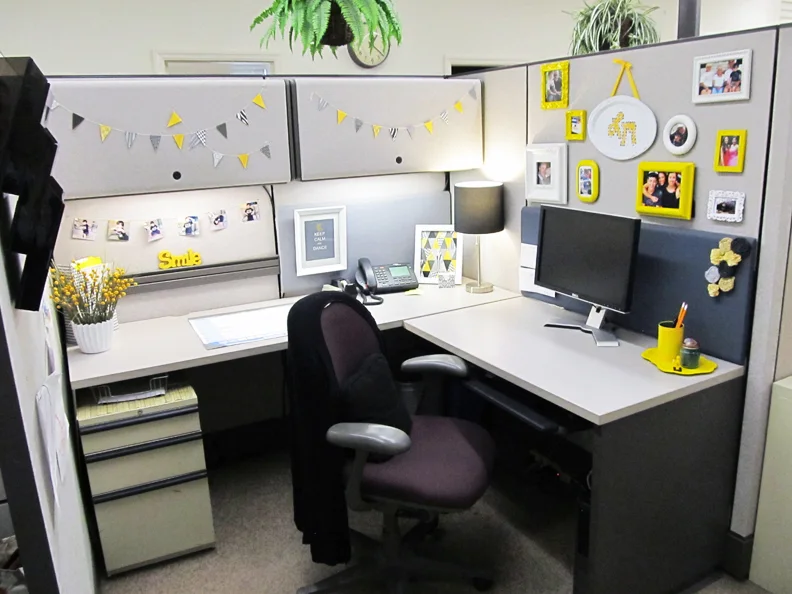
Yellow appears in the frames, desk accessories and short garland, giving the gray partitions a consistent accent. A line of small photographs uses the narrow strip beneath the overhead storage. Most of the desk remains clear, so the decoration stays behind the main work area.
Choose one accent you can repeat in a few useful objects before buying more accessories. Keep anything attached to cabinet doors light and clear of hinges. Leave the monitor positions and chair movement unchanged unless you are also reviewing how comfortably the workspace functions.
IDEA 02 / 15
Cover the Lower Panels with a Strong Color
 SaveSupport Non AI Creator
Source: www.gothityourself.com
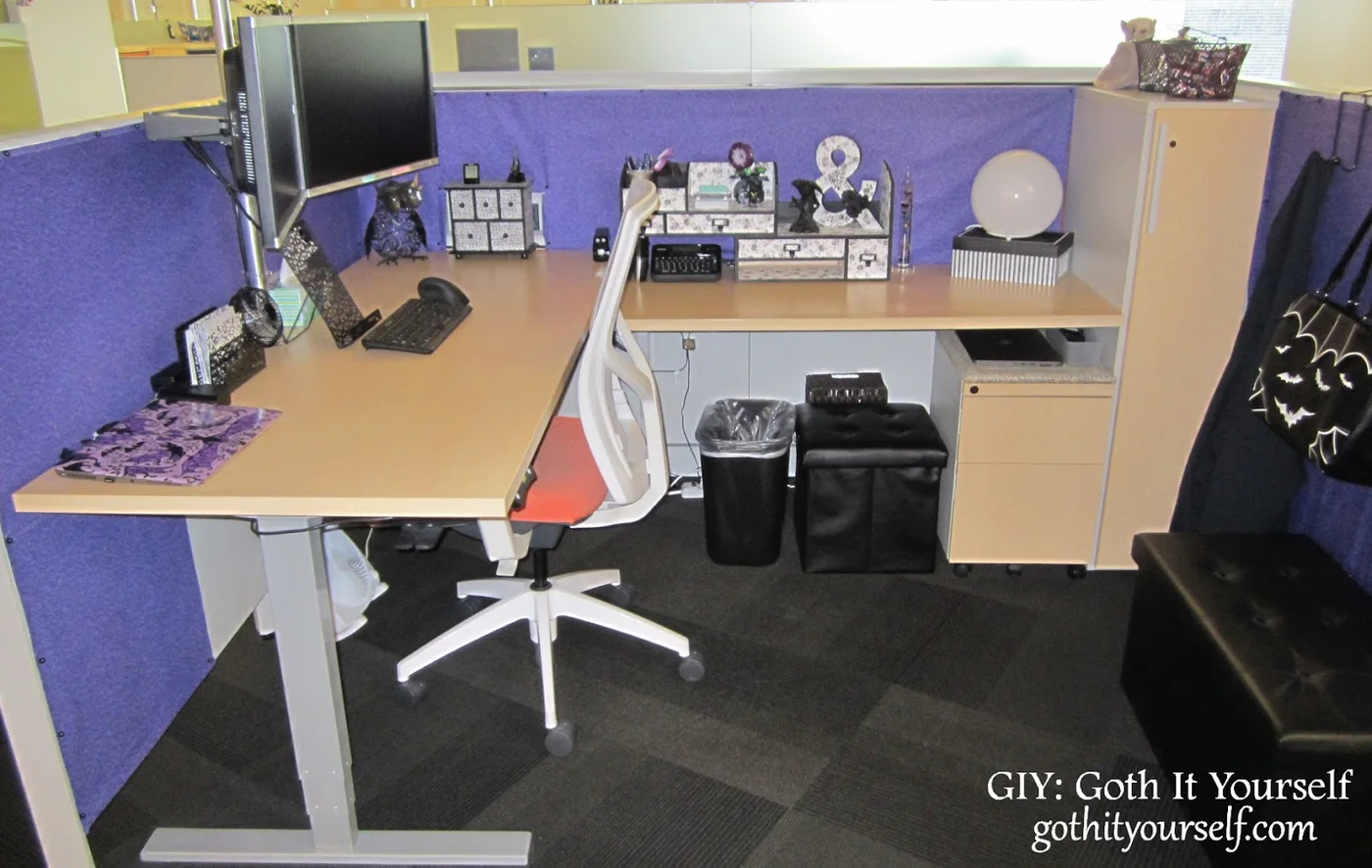
Purple fabric changes the lower panels while the upper divider sections remain uncovered. The black and white accessories give the bright background a more consistent finish. Storage sits along the far edge of the desk, leaving the corner near the chair available for working.
Check your office rules and the panel manufacturer’s guidance before covering any surface. Test an approved attachment method in an inconspicuous area and avoid obstructing vents, power access or partition fittings. Measure each panel separately rather than assuming every section has the same usable width.
IDEA 03 / 15
Connect a Patterned Panel with the Lamp
 SaveSupport Non AI Creator
Source: www.homedit.com
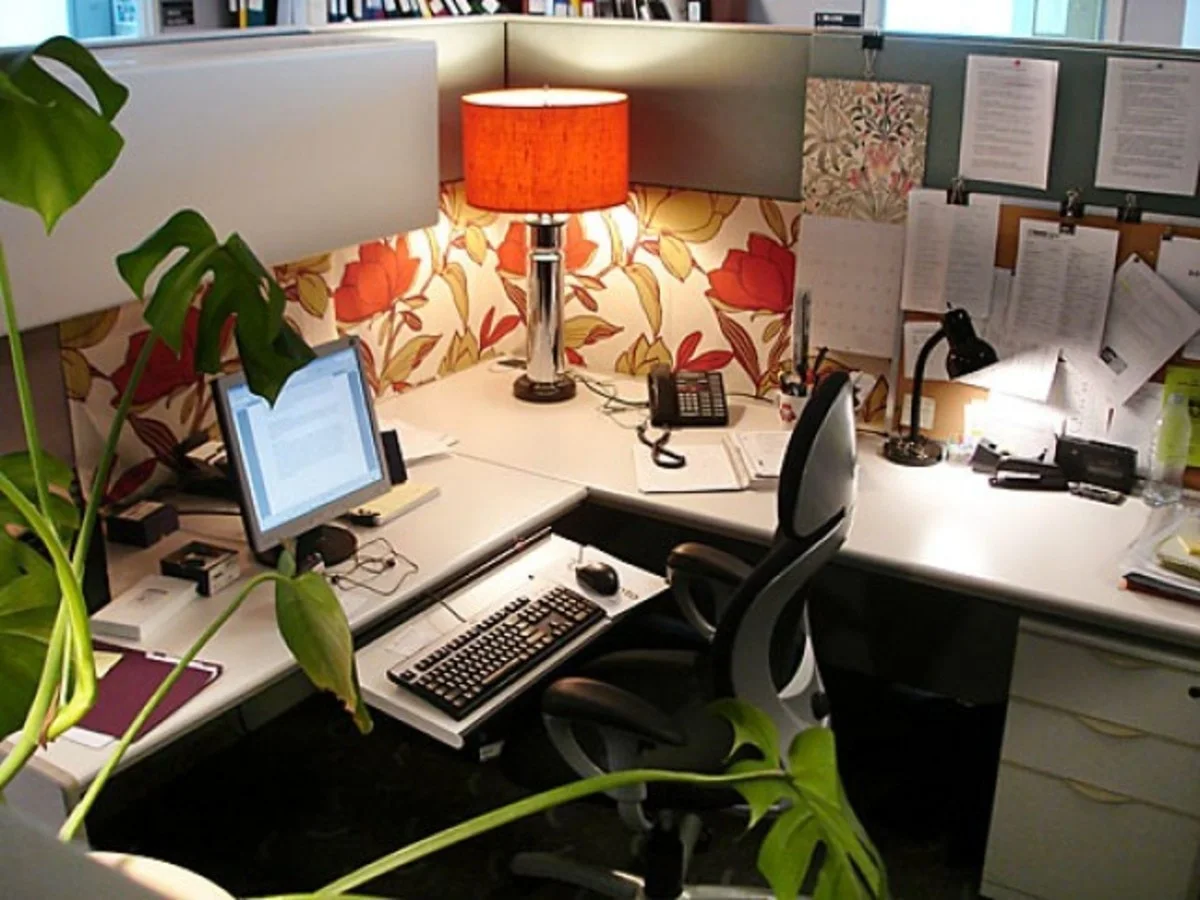
The orange lamp shade repeats the color in the floral panel covering, making the desk feel considered even with everyday paperwork nearby. The pattern sits below the plain upper panels. A separate black task lamp provides a more focused fixture beside the document area.
Use one patterned section first if your cubicle already has a lot of posted information. Check that any permitted lamp stays clear of papers and does not reflect in the monitor. Keep large leaves out of neighboring workspaces and choose a plant only when the available light suits it.
IDEA 04 / 15
Use Deep Blue as a Background for Photos
 SaveSupport Non AI Creator
Source: www.homedit.com
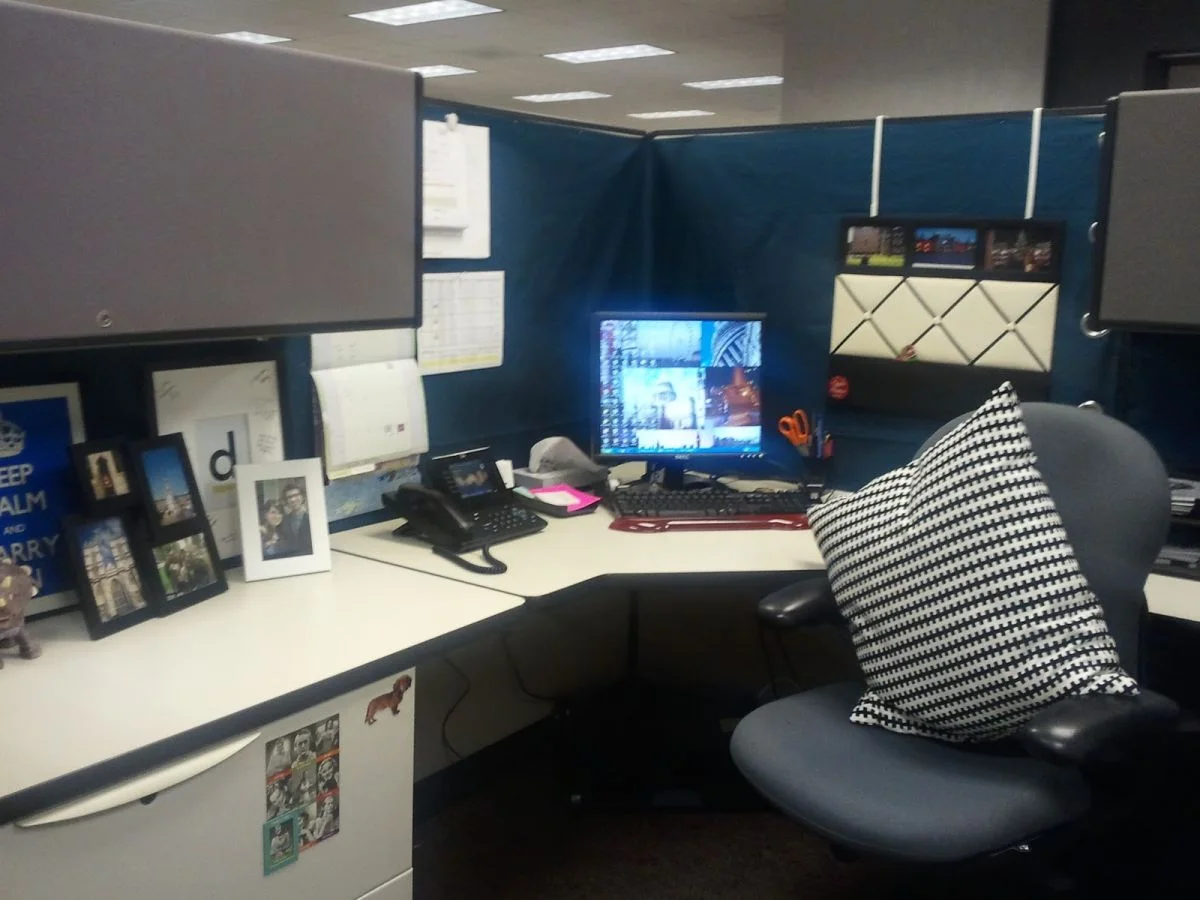
Deep blue panel covers make the pale desk and framed photographs stand out. The black and white cushion repeats the contrast of the small memo board behind the monitor. Family pictures are concentrated along one side, leaving the working corner less crowded.
A dark background can help a mixed collection look more settled, but avoid covering every remaining inch with paper. Choose a cushion that still lets you sit comfortably and use the chair’s adjustments. Test your arrangement during a normal workday before adding another decorative layer.
PART 02
Give pictures a clear place
IDEA 05 / 15
Separate Two Patterns with an Existing Shelf
 SaveSupport Non AI Creator
Source: www.craftcore.ca
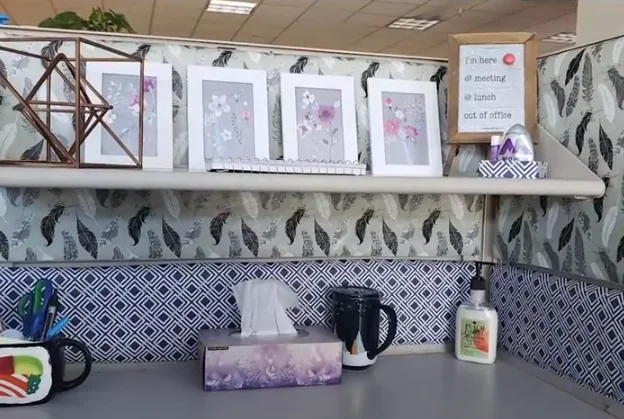
The shelf separates a larger feather pattern above from a denser blue geometric pattern below. Small white frames repeat across the shelf, giving the two patterns a common visual link. The desktop stays comparatively simple, with a mug and a few everyday supplies.
If you combine patterns, keep their colors related and their scale noticeably different. Use only an approved removable covering for the partition surface. Leave space around shelf fittings, and choose lightweight objects that will remain stable when the desk or adjoining panels are bumped.
IDEA 06 / 15
Frame the Things That Matter to You
 SaveSupport Non AI Creator
Source: www.homedit.com
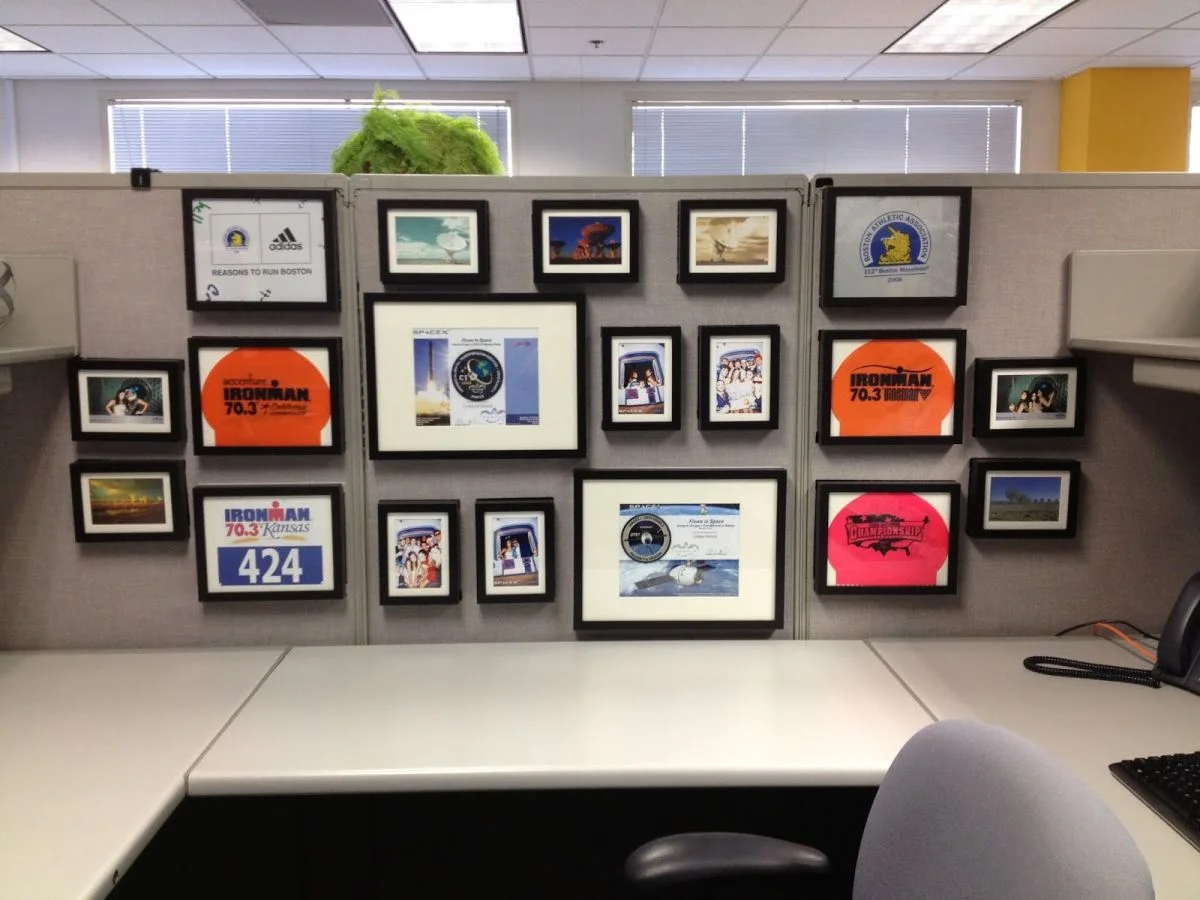
A collection of race mementos, photographs and small pictures fills the gray panels without relying on bright paint or fabric. Matching black frames connect pieces with different shapes and subjects. The clear desktop below gives the dense arrangement enough breathing room.
Lay the collection out at desk level before deciding where each piece belongs. Confirm the partition can support the proposed weight and use an attachment approved for that system. Keep important work notices separate so they remain easy to find among the personal photographs.
IDEA 07 / 15
Hang a Small Photo Group from the Top Rail
 SaveSupport Non AI Creator
Source: randiwithani.com
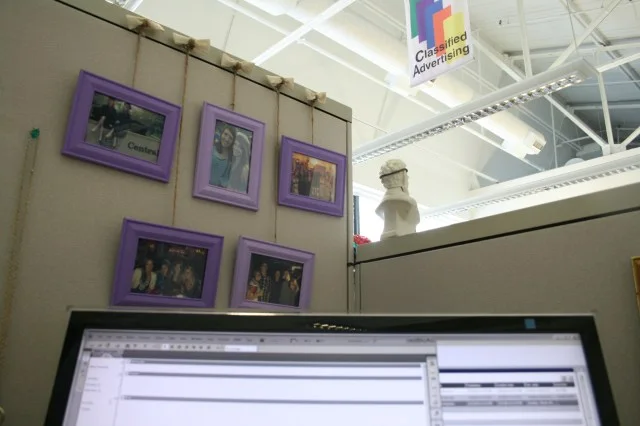
Purple frames form a compact photo group above the monitor, with twine leading up to small bows along the partition rail. The repeated frame color makes the photographs feel like a set. The display uses vertical space rather than taking up the desktop.
Check that the top rail can accept hooks and the total weight before hanging frames. Use secure fittings appropriate to the partition, and keep cords short enough that frames cannot swing into equipment. Lightweight prints may be a better choice where glazed frames are not permitted.
IDEA 08 / 15
Balance a Picture Gallery with a Plain Desk
 SaveSupport Non AI Creator
Source: www.homedit.com
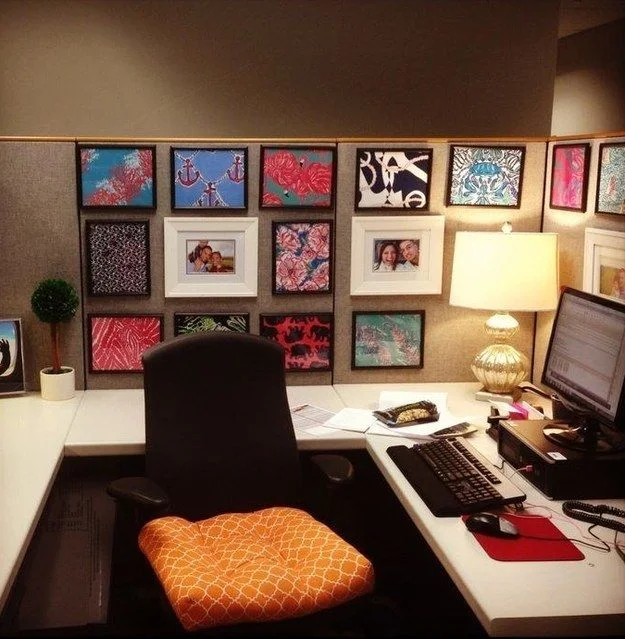
Colorful patterns alternate with personal photographs in this gallery, while a pale desk and plain lamp shade keep the lower area quieter. The orange cushion introduces another strong color below the frames. Black outlines connect most of the smaller pictures across the panels.
Keep the arrangement away from areas where you regularly post changing work information. Before filling all the panels, sit at the monitor and check whether the pictures feel distracting in your peripheral view. Use secure lightweight frames and leave the chair’s controls accessible beneath any cushion.
PART 03
Use the space above the desk
IDEA 09 / 15
Put Several Paper Patterns in One Wide Frame
 SaveSupport Non AI Creator
Source: tixeertne.wordpress.com
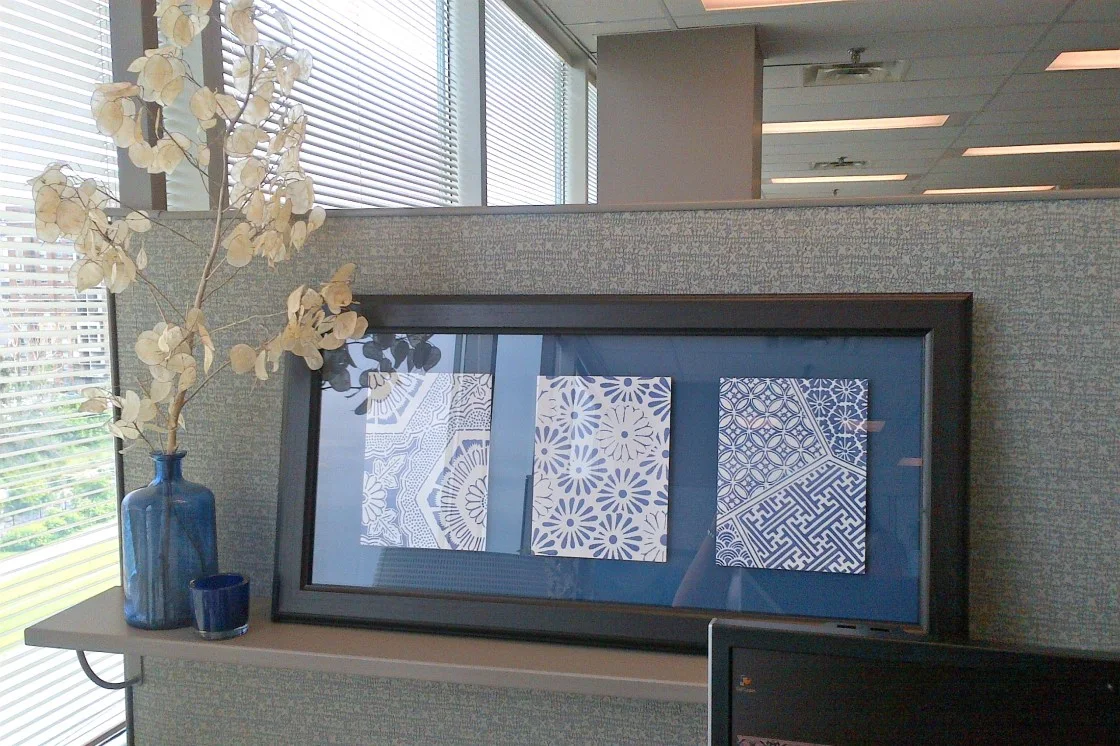
Three different blue and white patterns share one wide frame, making a single feature from small pieces of paper. The dark frame and blue backing hold the collection together. A narrow vase adds height at one end without filling the whole shelf.
One larger frame can be easier to arrange than several loose prints, provided the shelf is suitable for it. Confirm its depth, stability and load rating before leaning artwork there. Keep fragile pieces away from the edge and leave access to any fittings behind the display.
IDEA 10 / 15
Use the Shelf for Lightweight Rounded Shapes
 SaveSupport Non AI Creator
Source: www.homedit.com
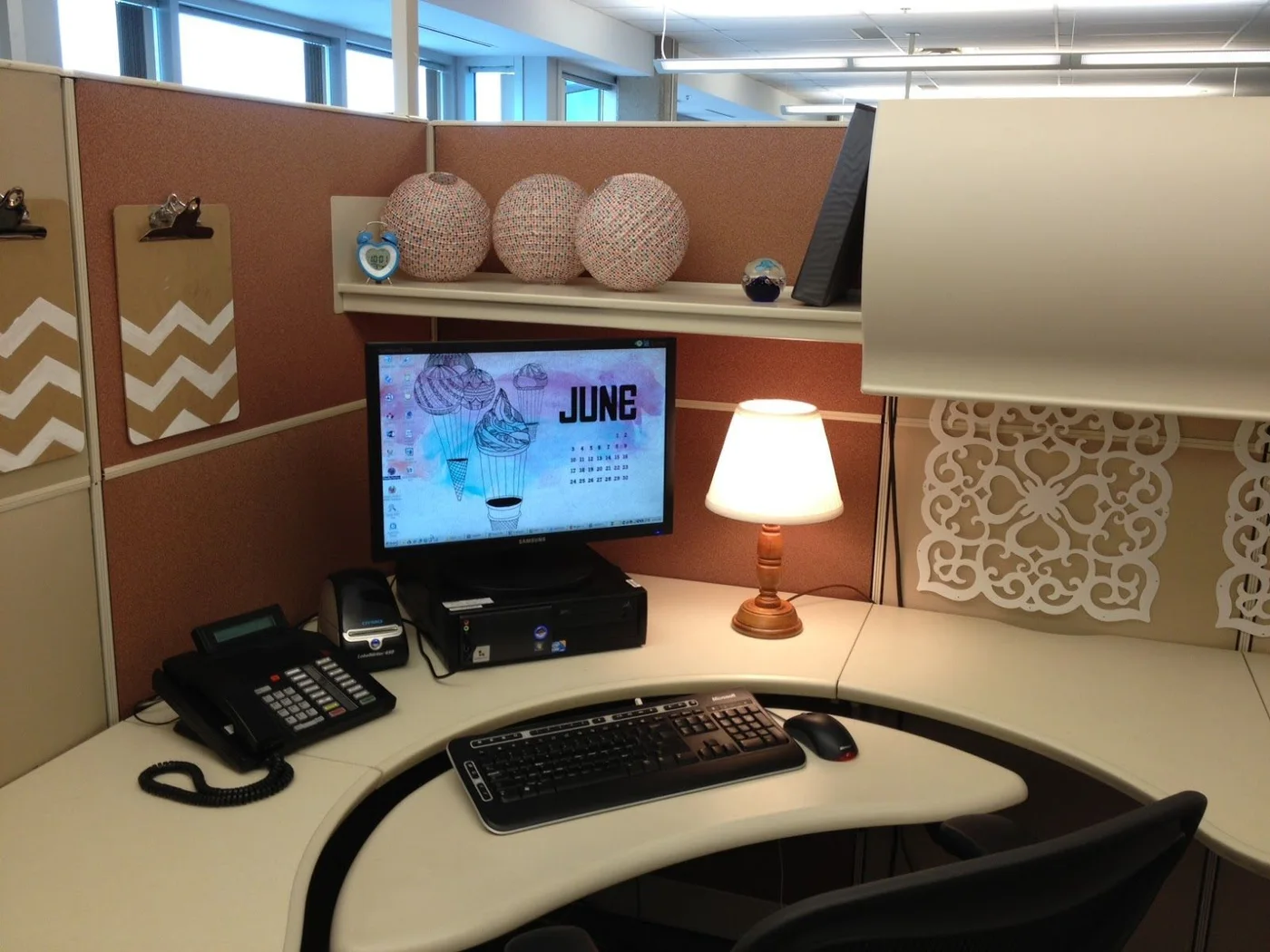
Three round paper decorations soften the straight lines of the shelf, screen and overhead storage. Chevron clipboards bring another pattern to the side panel, while the small shaded lamp adds a familiar shape at desk level. The keyboard remains on its separate working surface.
Choose stable lightweight decorations and keep them away from heat sources and ventilation openings. Do not let a shelf display interfere with the cabinet doors above it. If the arrangement feels busy, remove one patterned accessory before adding another color or object.
IDEA 11 / 15
Move Everyday Stationery onto the Panel
 SaveSupport Non AI Creator
Source: www.homedit.com
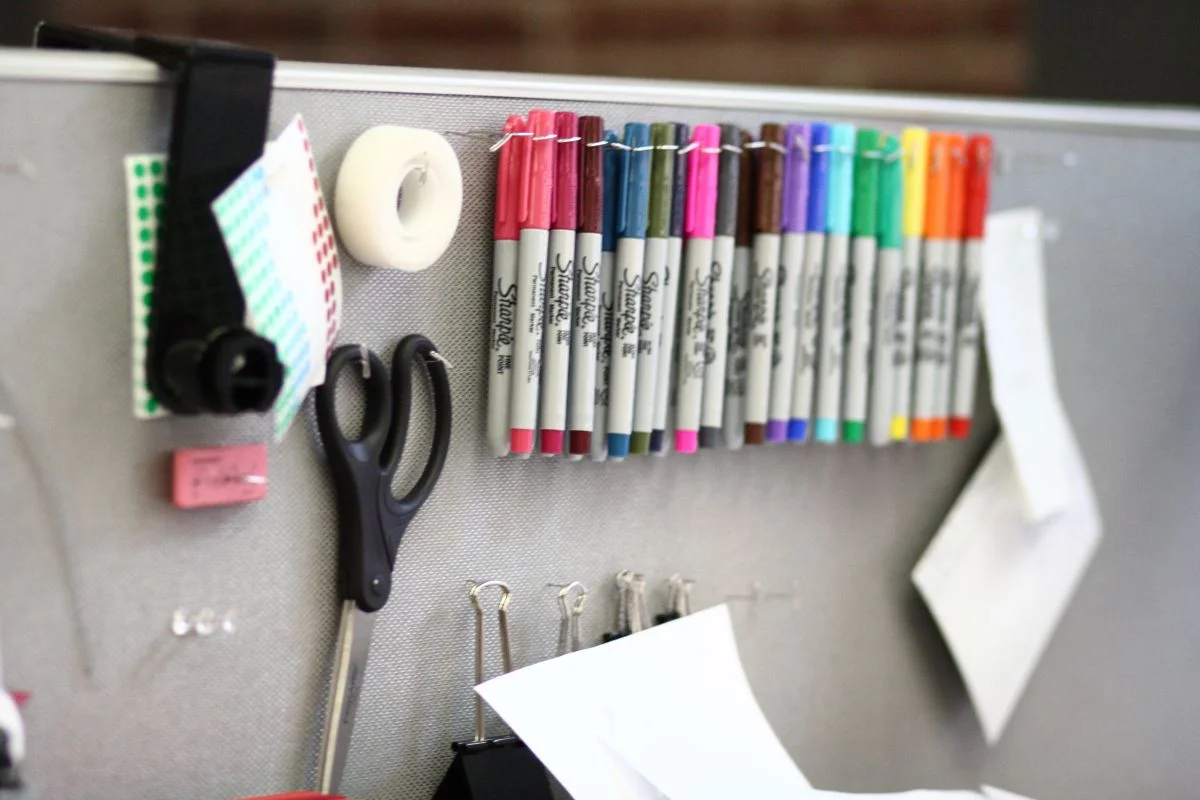
Rows of markers turn an everyday supply into a color display, while scissors, tape and binder clips sit nearby. The arrangement keeps these small items visible rather than loose across the desk. It uses a relatively narrow patch of panel for several different tools.
Check which holders and fasteners your partition permits before copying the arrangement. Keep scissors secure with the blades closed, and avoid loading pins or hooks beyond their rating. Put the supplies you use most often within comfortable reach rather than arranging them purely by appearance.
PART 04
Make practical details feel personal
IDEA 12 / 15
Coordinate the Small Storage Pieces
 SaveSupport Non AI Creator
Source: www.gothityourself.com
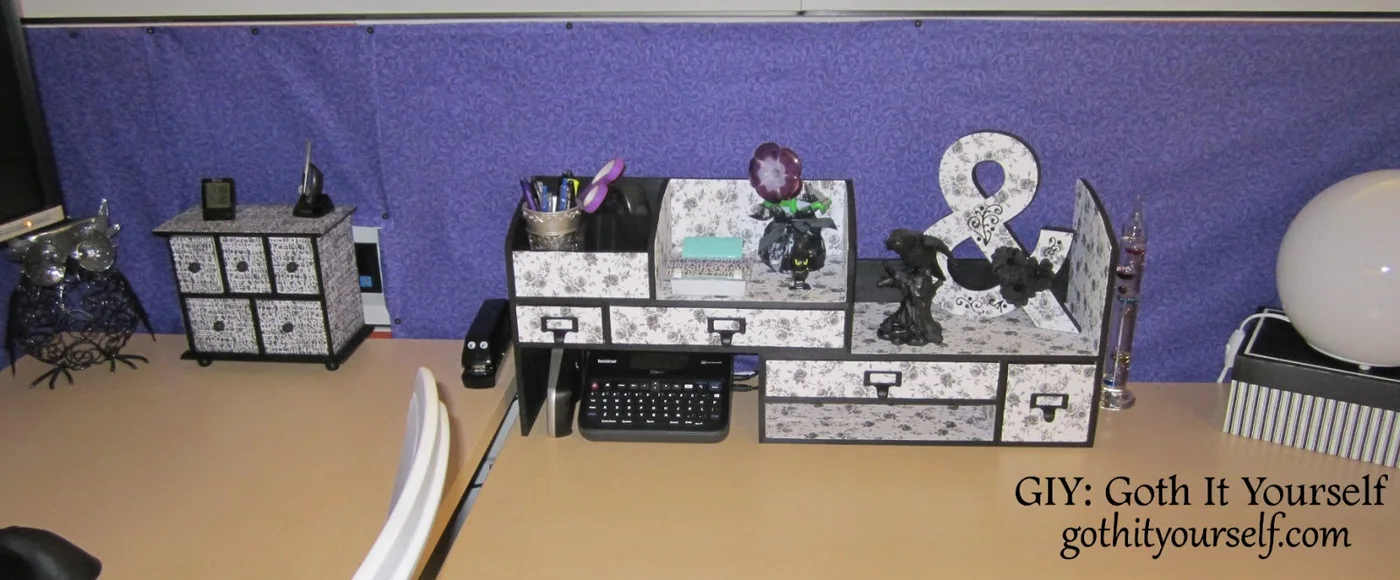
Black and white patterns connect the small drawers, open organizers and pen cup along this desk. Different compartments accommodate supplies of different sizes, while the label maker has its own space beneath the raised section. Purple panels give the monochrome pieces a stronger backdrop.
Sort your supplies before choosing the number of drawers you need. Shallow compartments suit clips and small tools, while taller openings can hold notebooks upright. Keep frequently used items at the front and leave enough clear surface that the storage does not push your keyboard toward the edge.
IDEA 13 / 15
Give Files and a Plant a Shared Color
 SaveSupport Non AI Creator
Source: tixeertne.wordpress.com
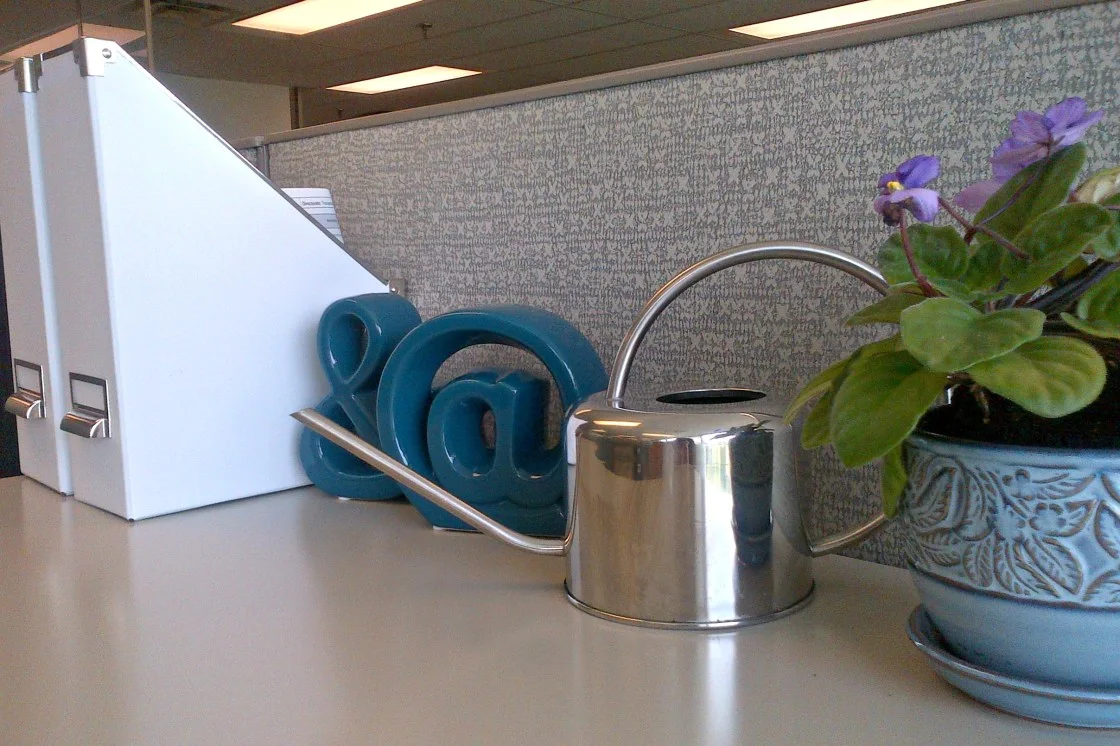
White files keep paperwork upright, while the blue symbols and patterned plant pot supply a consistent accent. The metal watering can sits between the practical storage and the plant. Gray partitions behind the cabinet remain largely visible, keeping the group from filling the enclosure.
Choose files that stand securely and label them so the display remains useful after the first week. Match the plant to the actual light and use a watertight saucer. Water away from documents and electrical equipment, then return the pot only after excess water has drained. These office ideas with greenery offer more ways to position plants around a working desk.
IDEA 14 / 15
Keep a Bright Accent Useful as Well as Decorative
 SaveSupport Non AI Creator
Source: www.homedit.com
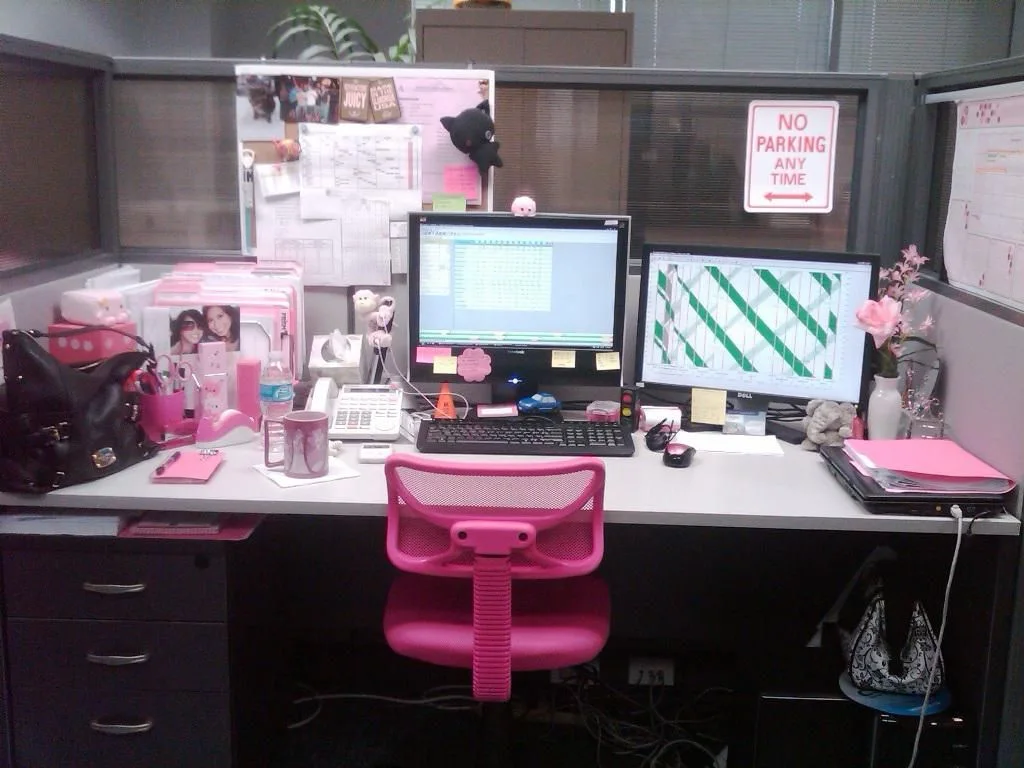
Pink appears in the chair, file holders and desk accessories rather than just in decorative objects. The gray partitions give the strong accent a neutral surround. A notice board collects much of the paperwork above the desk, although a few smaller notes remain around the monitors.
Choose one place for current notices and remove expired sheets regularly. Clear the area beneath the desk so bags and trailing cables do not restrict the chair. When replacing accessories, prioritize the items you already use instead of adding extra containers simply to repeat the color.
IDEA 15 / 15
Make a Busy Workstation Easier to Read
 SaveSupport Non AI Creator
Image credit: After the transformation!
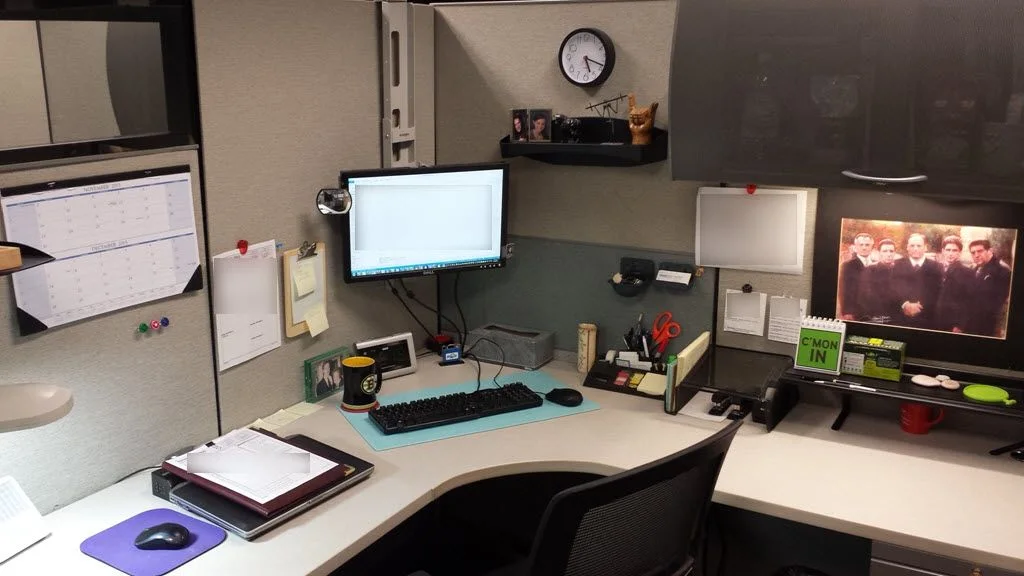
The pale blue mat defines the main keyboard area, while a raised side screen leaves room underneath for smaller items. A wall calendar and clipped papers keep information off part of the desktop. A compact shelf holds personal objects above the main working area.
Start with your normal screen and document positions, then organize accessories around them. Keep the space under a riser accessible for cleaning and use a support rated for the equipment. Choose only a few personal objects where the workstation already has many functional pieces. For a compact setup at home, these small desk ideas apply the same principle of keeping the working surface usable.
BRING IT ALL TOGETHER
Start with one change you can maintain
Clear the working surface first, then decide whether color, storage or a small picture display would make the biggest difference. A cubicle can feel personal with only a few additions when they are placed where you actually see and use them.
Check the arrangement after a full week at work. Remove anything that makes cleaning, reaching documents or moving the chair awkward. Keep attachments reversible and approved so the space remains easy to use and simple to hand back.