Greenery works best in a home office when it fits around the work you actually do. A plant that blocks a monitor, traps the chair or makes watering awkward can become a nuisance, however attractive the photograph looks. Start with the available daylight and the space needed for your equipment.
These offices use floor pots, desktop plants, trailing greenery and occasional cut foliage in different ways. Look at the position and scale of each arrangement, then choose plants for your own conditions. The care needs of the actual plant matter more than matching a pot or leaf shape exactly.
PART 01
Use the Window Area Without Blocking It
IDEA 01 / 20
Group Plants Beside the Window at Different Heights
 SaveSupport Non AI Creator
Image credit: JYSK
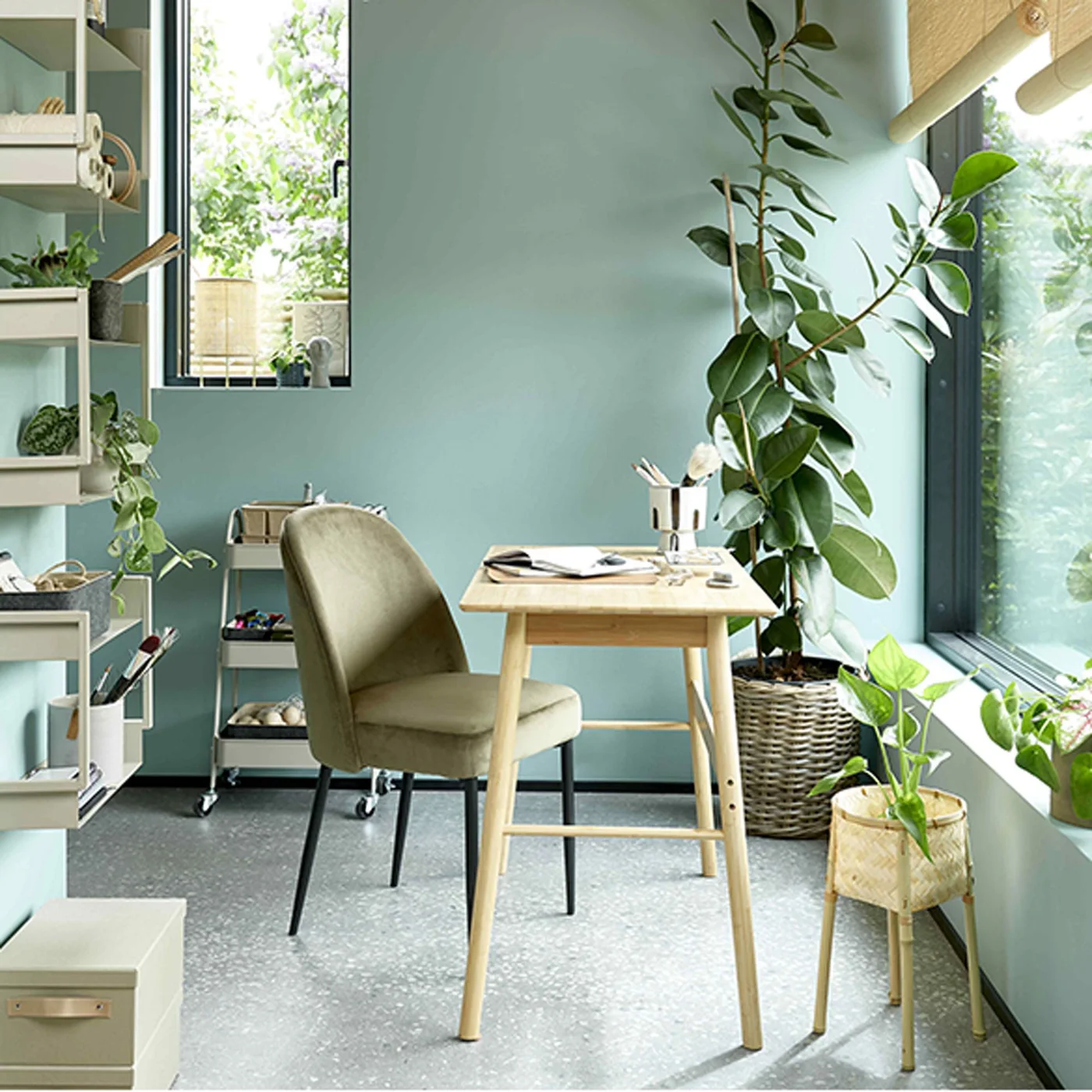
The largest leaves sit beside the window, while smaller pots occupy a low stand and the shelves to the left. This spreads greenery through the work area without covering the writing surface. The green upholstered chair repeats the foliage color, connecting the practical furniture with the planting.
Choose each plant for the light at its actual position; the shelf and floor may receive very different amounts. Use a waterproof liner inside a decorative basket and empty collected water after watering. Keep the window handle reachable, allowing space for leaves to grow without being trapped by the blind.
IDEA 02 / 20
Frame a Writing Desk With Floor Plants
 SaveSupport Non AI Creator
Image credit: Photo: Robert Peterson, Rustic White. From: Brian Patrick Flynn
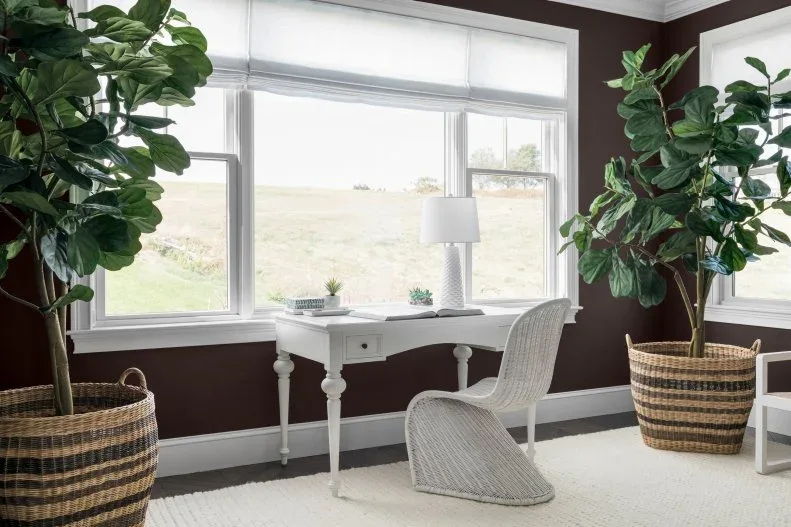
Two tall plants give the window desk a clear boundary, almost like the sides of a larger piece of furniture. Their striped baskets sit below the desktop, leaving its pale surface open. Smaller pots on the sill repeat the greenery without introducing another tall object behind the chair.
Measure the spread of the foliage as well as the pot before choosing this arrangement. Leave room to pull out the chair and open the window. Check inner pots and liners separately from decorative baskets, and move plants to a suitable watering area rather than soaking the floor around the desk.
IDEA 03 / 20
Balance a Detailed Desk With Broad Foliage
 SaveSupport Non AI Creator
Image credit: Graham & Green
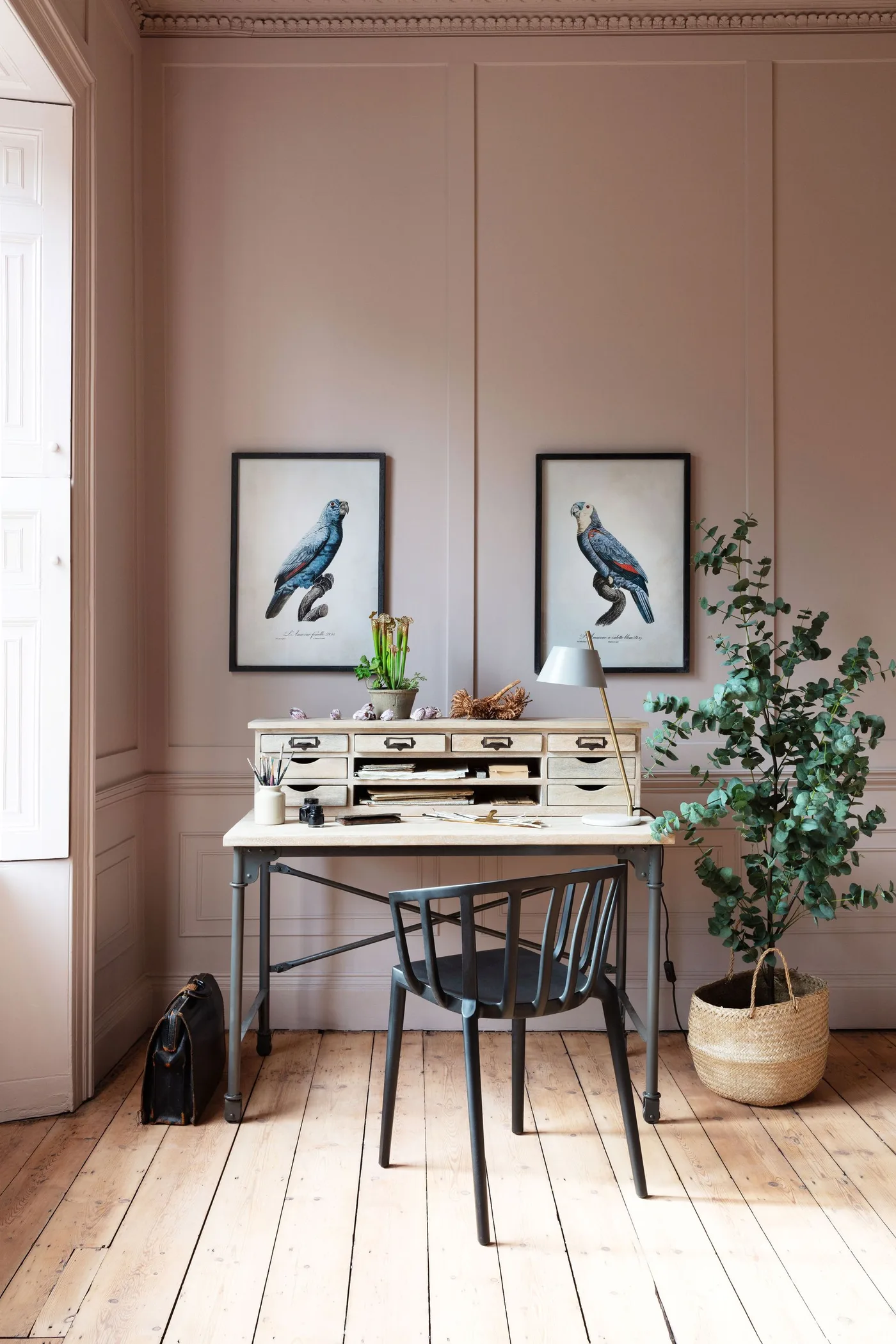
The desk already has plenty of small drawers and decorative detail, so the broad floor leaves provide a useful change of scale. A much smaller foliage arrangement sits between the framed bird pictures. Pink walls give both groups a clear background without needing extra ornaments across the desktop.
Leave a gap between the floor pot and the drawers so both remain easy to use. Inspect leaves regularly where they sit close to furniture, and remove fallen debris before it gathers behind the basket. For more layered fabrics and collected furniture, our boho office ideas offer related arrangements without requiring more desktop plants.
IDEA 04 / 20
Bring Greenery Into the Visitor Seating Area
 SaveSupport Non AI Creator
Image credit: Photo: Tomas Espinoza. From: Brian Patrick Flynn
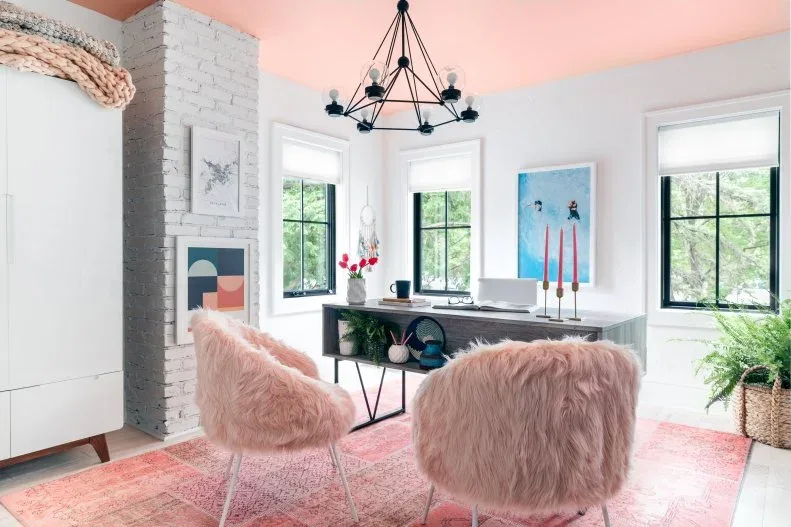
The most noticeable greenery sits beside the pink visitor chair rather than in the middle of the desk. Another small arrangement occupies an open compartment below the worktop. These lower positions soften the furniture outlines while the windows and pink ceiling remain the room’s larger visual features.
Do not assume an under-desk position will provide enough light for a living plant. Check the plant’s requirements and move it if that compartment is too dark. Keep foliage away from feet and chair legs, and use a removable waterproof container wherever watering could mark the cabinet interior or rug.
IDEA 05 / 20
Give a Dark Office a Window-Side Plant
 SaveSupport Non AI Creator
Image credit: Marie Flanigan Interiors / Photography Julie Soefer
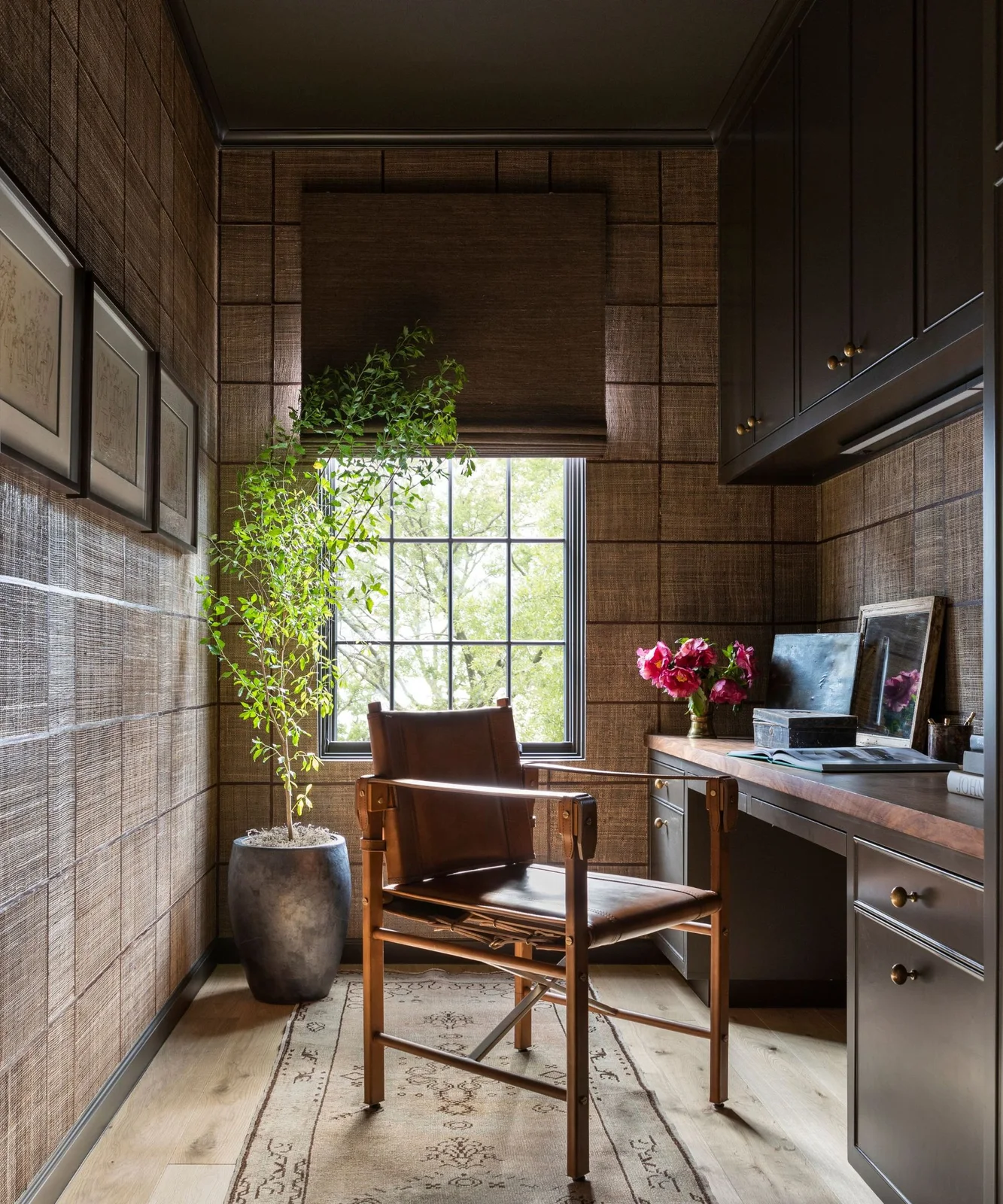
The slender plant rises beside the window instead of occupying the center of the dark desktop. Its open outline leaves much of the wall and glass visible. Pink flowers add a separate, lower accent on the desk, showing how a larger floor plant and a small temporary arrangement can share the room.
Dark paint does not establish whether a room suits a particular plant. Assess the daylight where the pot will stand, including seasonal changes and any blinds. Keep branches clear of the chair and cupboard doors, and place flowers where a knocked vase cannot send water toward equipment or stored paperwork.
PART 02
Keep Room for Everyday Work
IDEA 06 / 20
Use One Dense Pot as a Desktop Accent
 SaveSupport Non AI Creator
Image credit: Photo: Jared Kuzia Photography. From: Kristina Crestin
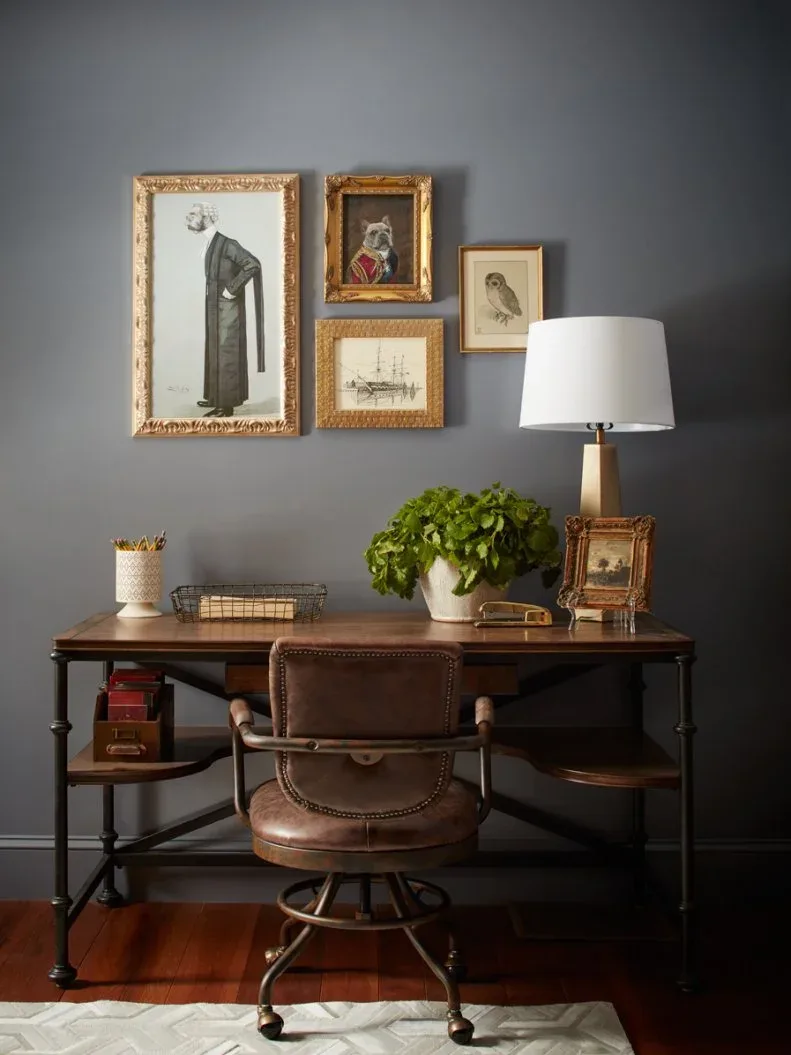
A single bushy plant provides a softer outline beside the lamp and the tightly arranged picture frames. The light pot makes that small patch of foliage visible against the dark desk. Because the rest of the tabletop stays relatively restrained, the plant does not compete with several unrelated accessories.
Start with the space needed for your keyboard, notebook and forearms, then reserve a corner for the pot. Remove it from the desk when watering and check the container for leaks before returning it. Keep the lamp far enough away that leaves cannot rest on a bulb or warm shade.
IDEA 07 / 20
Let the Largest Plant Stay Off the Desk
 SaveSupport Non AI Creator
Image credit: Photo: Mackenzie Merrill Photography. From: Amy Leferink
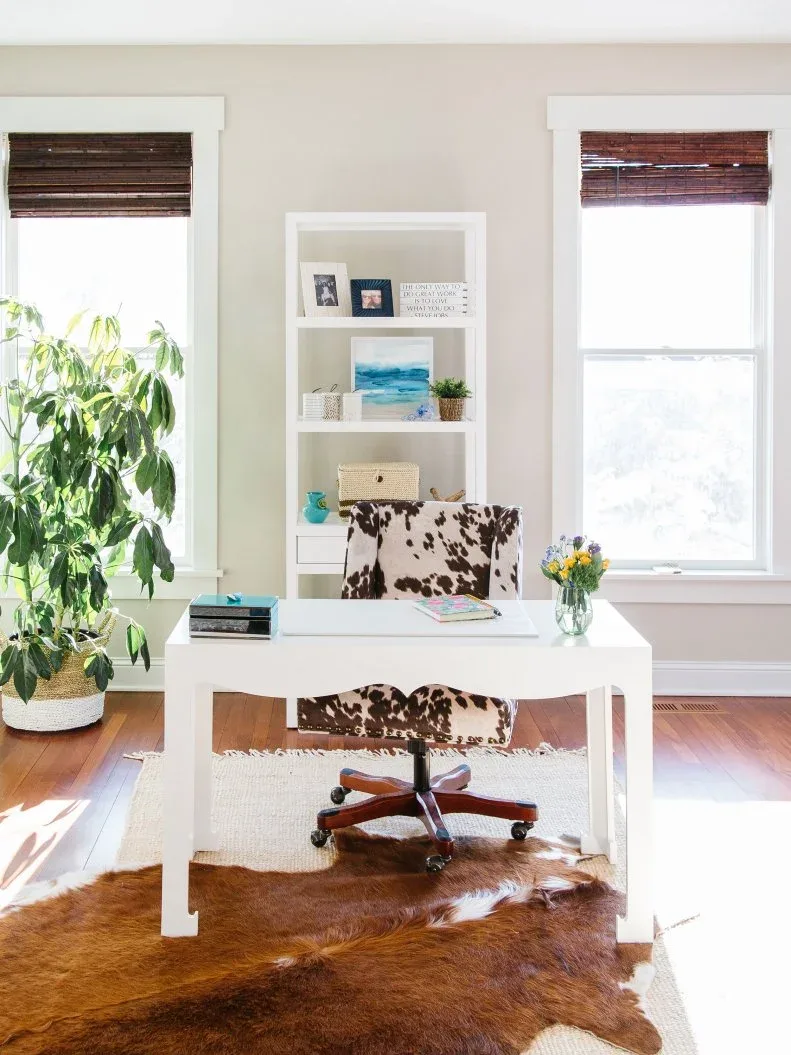
The large floor plant uses the bright left corner, leaving the curved desk free for the computer and a flower arrangement. A smaller plant on the bookcase carries green into the middle of the room. The varying heights keep the planting from becoming a continuous screen across the windows.
Test the full route of a rolling chair before deciding where the floor pot belongs. Leave enough clearance to reach the blinds without brushing foliage against the desk. If you are planning a compact layout, our small home office ideas can help prioritize usable desk space before adding large decorative containers.
IDEA 08 / 20
Use a Pale Pot Against Dark Shelving
 SaveSupport Non AI Creator
Image credit: Photo: Kyle J. Caldwell
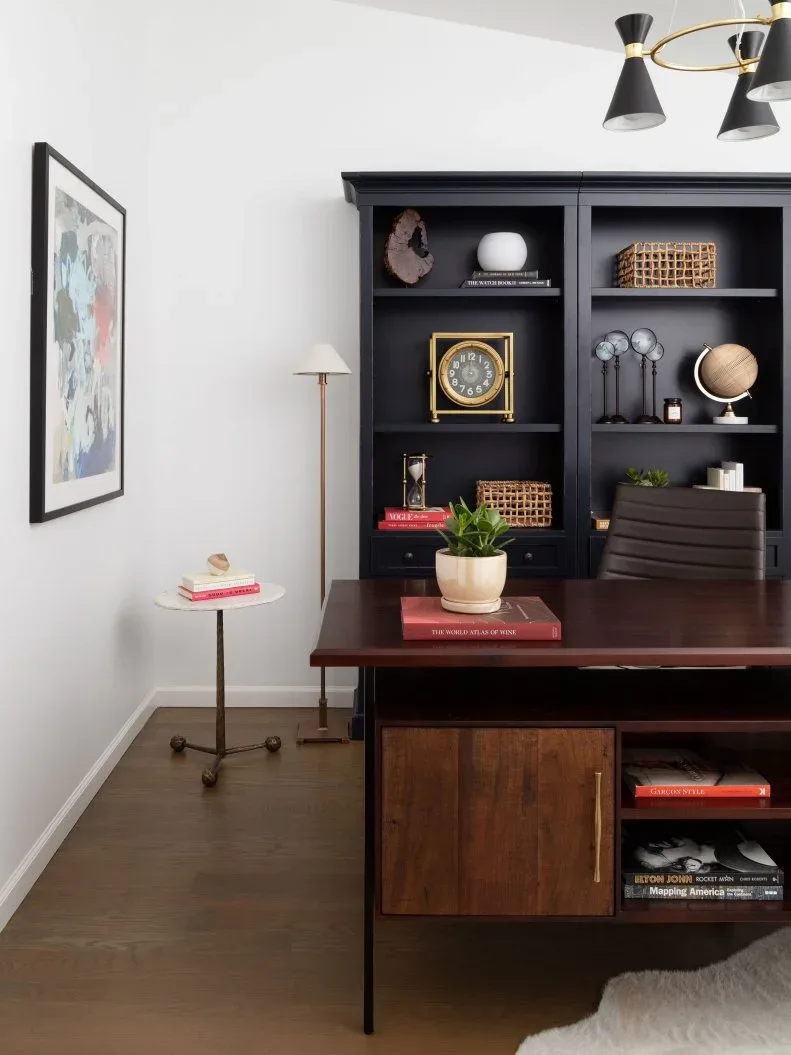
The pale container gives the plant a clear edge against the darker furniture, so even a modest amount of foliage stands out. Its position beside the books connects it with the surrounding shelves. The red volume beneath it creates an extra color accent without adding another large object to the desk.
For daily use, protect books from both drainage and damp on the outside of a pot. A separate waterproof tray or dedicated stand is easier to check than a valuable book used as a riser. Water the plant elsewhere, let it drain, and return it only when the container is dry underneath.
IDEA 09 / 20
Spread Greenery Between the Shelf and Desk
 SaveSupport Non AI Creator
Image credit: Photo: Stephanie Studer
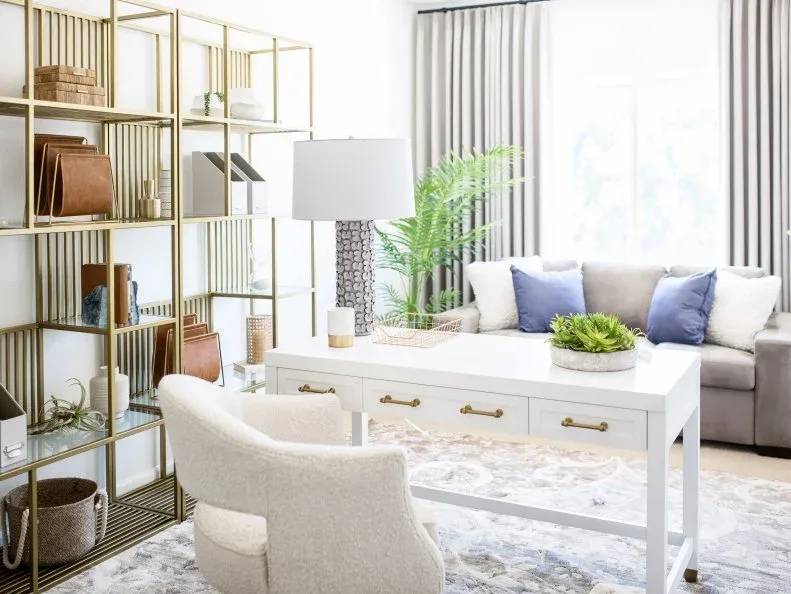
Small pots on the open bookcase, a low desktop arrangement and a taller plant near the window distribute greenery across the office. Each occupies a different height, so the desk does not need a large central pot. The low bowl leaves a clearer sightline toward the room beyond.
A shared display does not mean every plant needs the same watering routine. Identify each one before grouping them, and keep individual care instructions accessible. Choose separate inner pots where possible so you can remove one plant without disturbing the rest, and protect the shelf below from drips.
IDEA 10 / 20
Direct Trailing Growth Away From the Screen
 SaveSupport Non AI Creator
Image credit: Future PLC/Tim Young
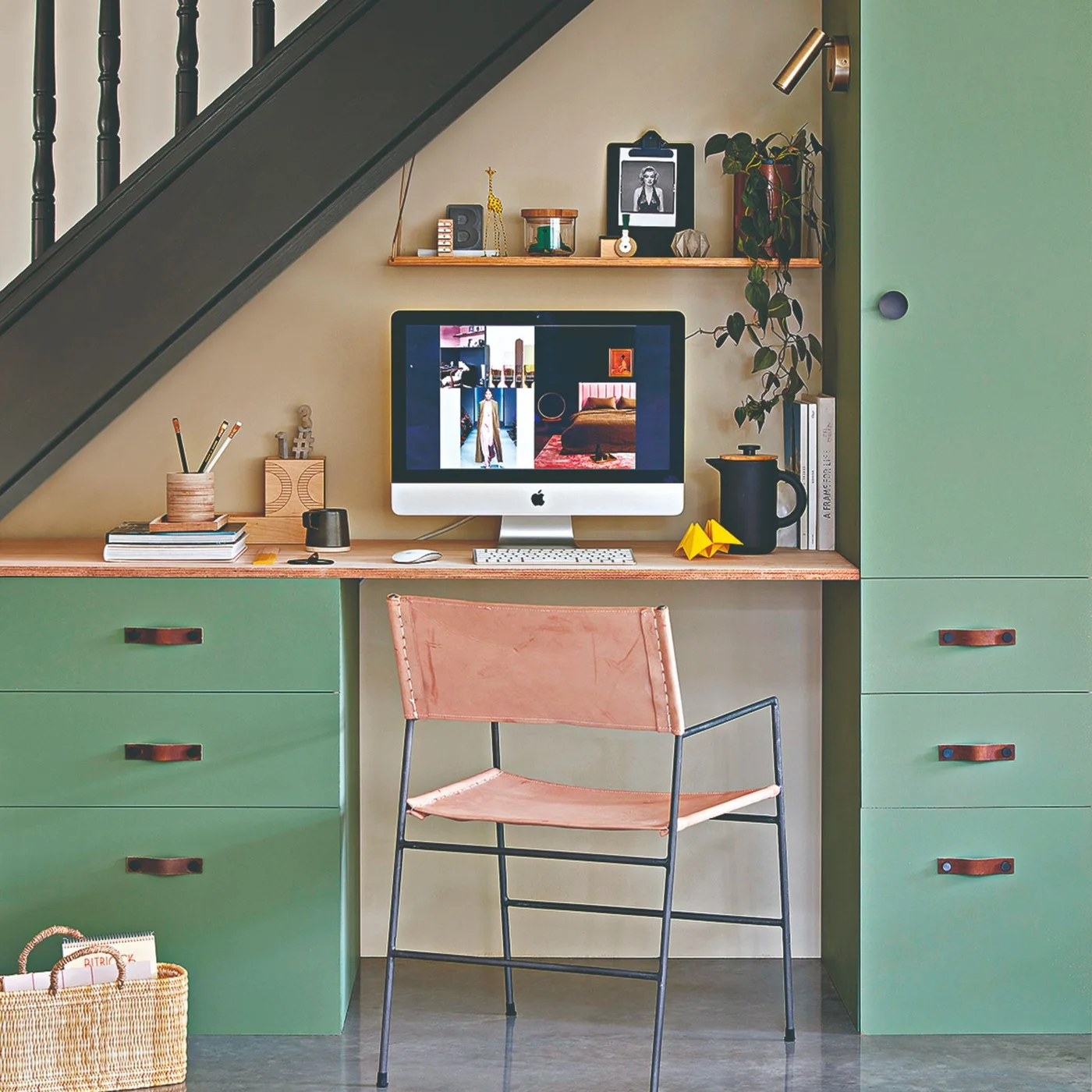
The trailing plant uses the higher shelf at the side of the workstation, bringing green into an area where floor space is limited. Its loose stems soften the straight green cabinetry. Keeping the main pot above the work surface leaves more room for the monitor and everyday desk equipment.
Guide or trim growth before it crosses the display, blocks a vent or catches on a moving chair. Take the pot down for watering rather than reaching over electronics. In an under-stair office, check both standing headroom and safe access to the shelf; a difficult watering position quickly becomes an inconvenient one.
PART 03
Bring Greenery Above the Worktop
IDEA 11 / 20
Combine a Memo Grid With Removable Pots
 SaveSupport Non AI Creator
Image credit: Future PLC/Dominic Blackmore
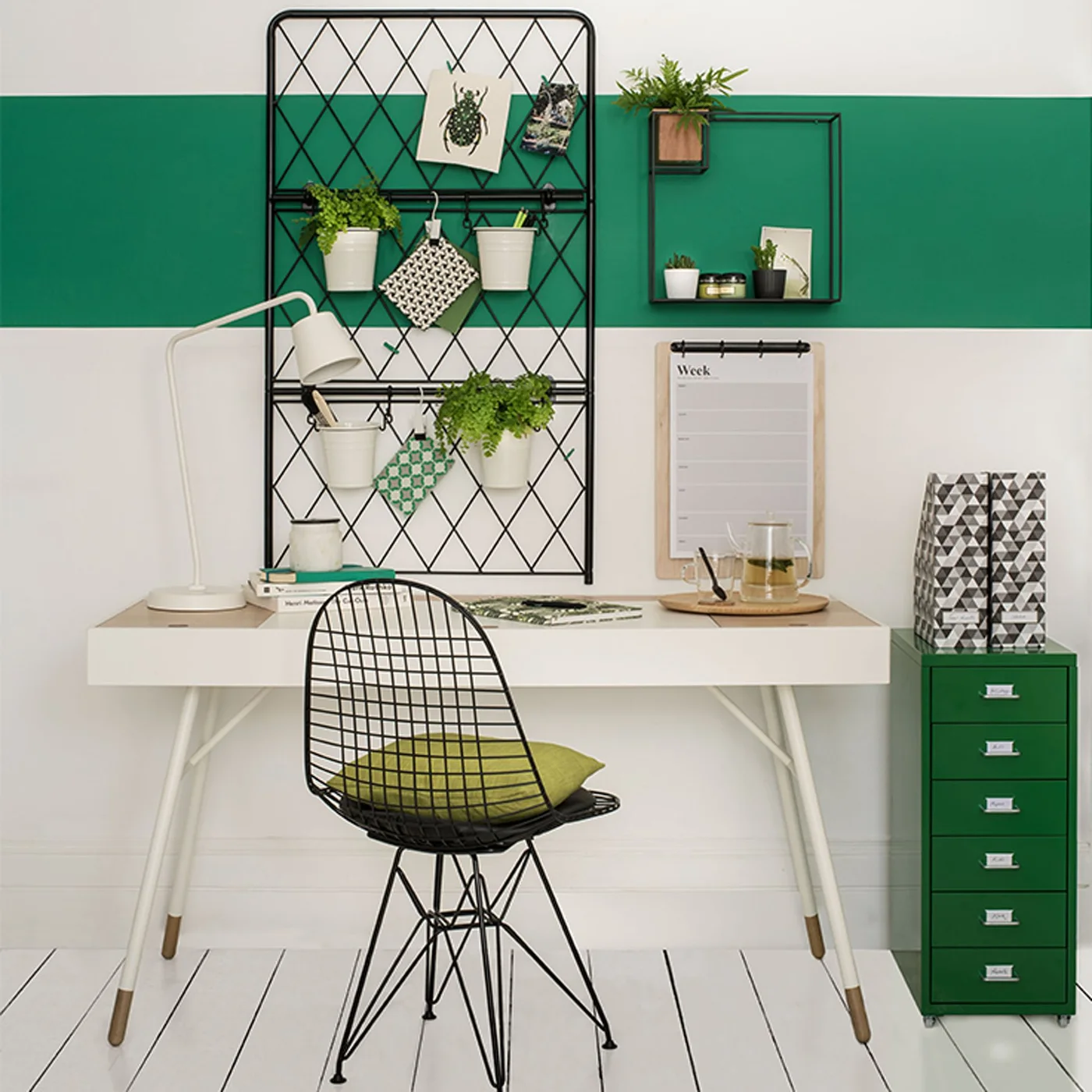
Small pots share the black grid with stationery and notes, turning the wall above the desk into useful storage as well as decoration. The green stripe and drawers connect the scattered foliage. Because the pots hang individually, the arrangement can change without covering the whole wall with shelves.
Choose a support and fixings rated for the combined weight of the containers, plants and wet growing medium. Use pots that can be lifted away for watering, with no uncontrolled drainage over the desktop. Keep heavier containers low enough to handle comfortably, and leave notes accessible without moving stems out of the way.
IDEA 12 / 20
Use Cut Leaves When a Whole Plant Is Too Wide
 SaveSupport Non AI Creator
Image credit: Pooky
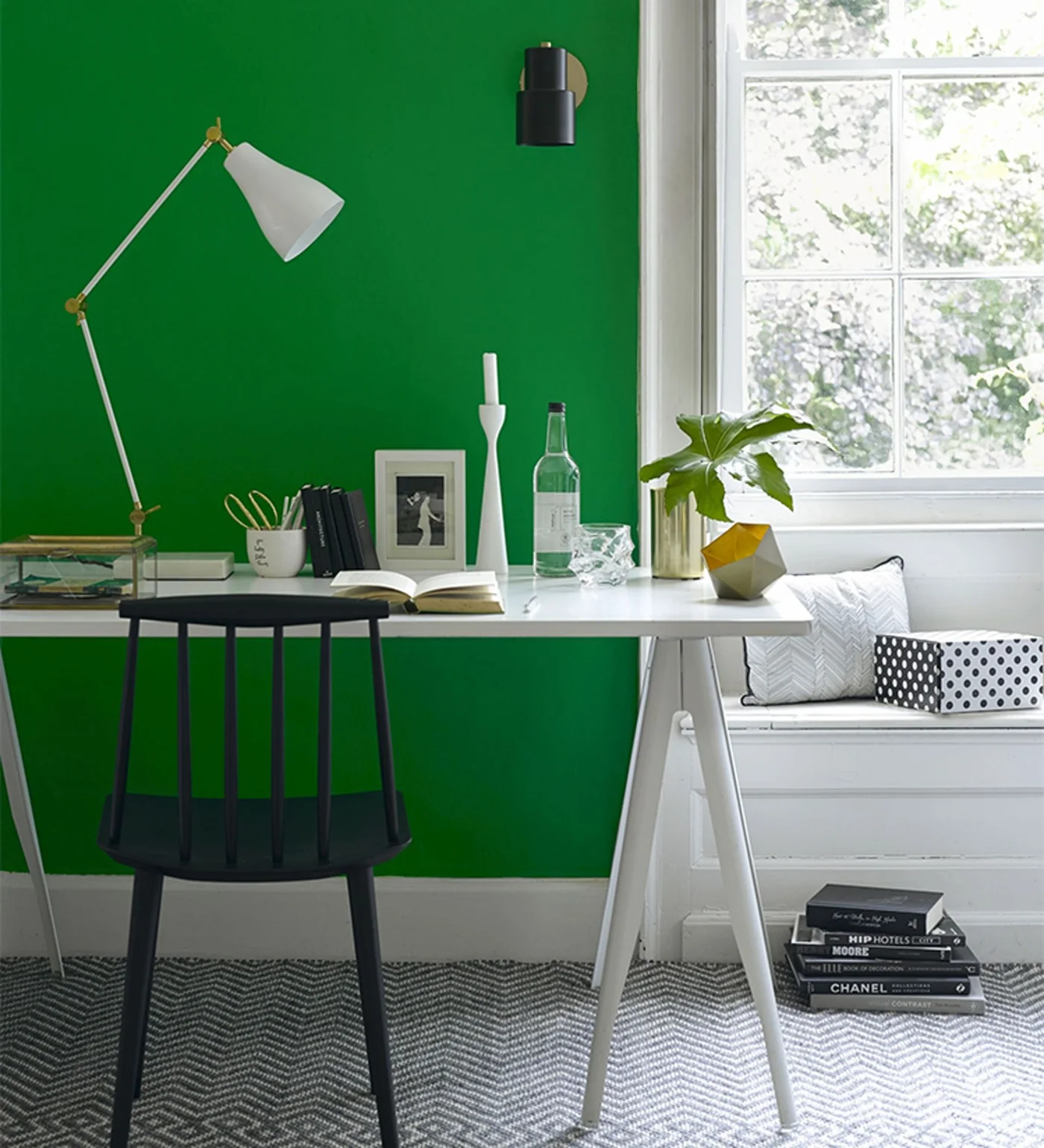
A small vase of broad leaves supplies the main foliage on this desk. The vivid green wall makes the arrangement feel larger, while the open book still has room at the center. This is a useful alternative when a full plant and its spreading pot would crowd a narrow worktop.
Treat cut foliage as a temporary arrangement rather than giving it houseplant watering advice. Keep the vessel stable and protect the desk from condensation or spills. Replace water and remove deteriorating stems as needed; a small, easy-to-clean vase is usually more manageable than a heavy arrangement beside a computer.
IDEA 13 / 20
Pair Potted Greenery With a Botanical Wall
 SaveSupport Non AI Creator
Image credit: Little Greene
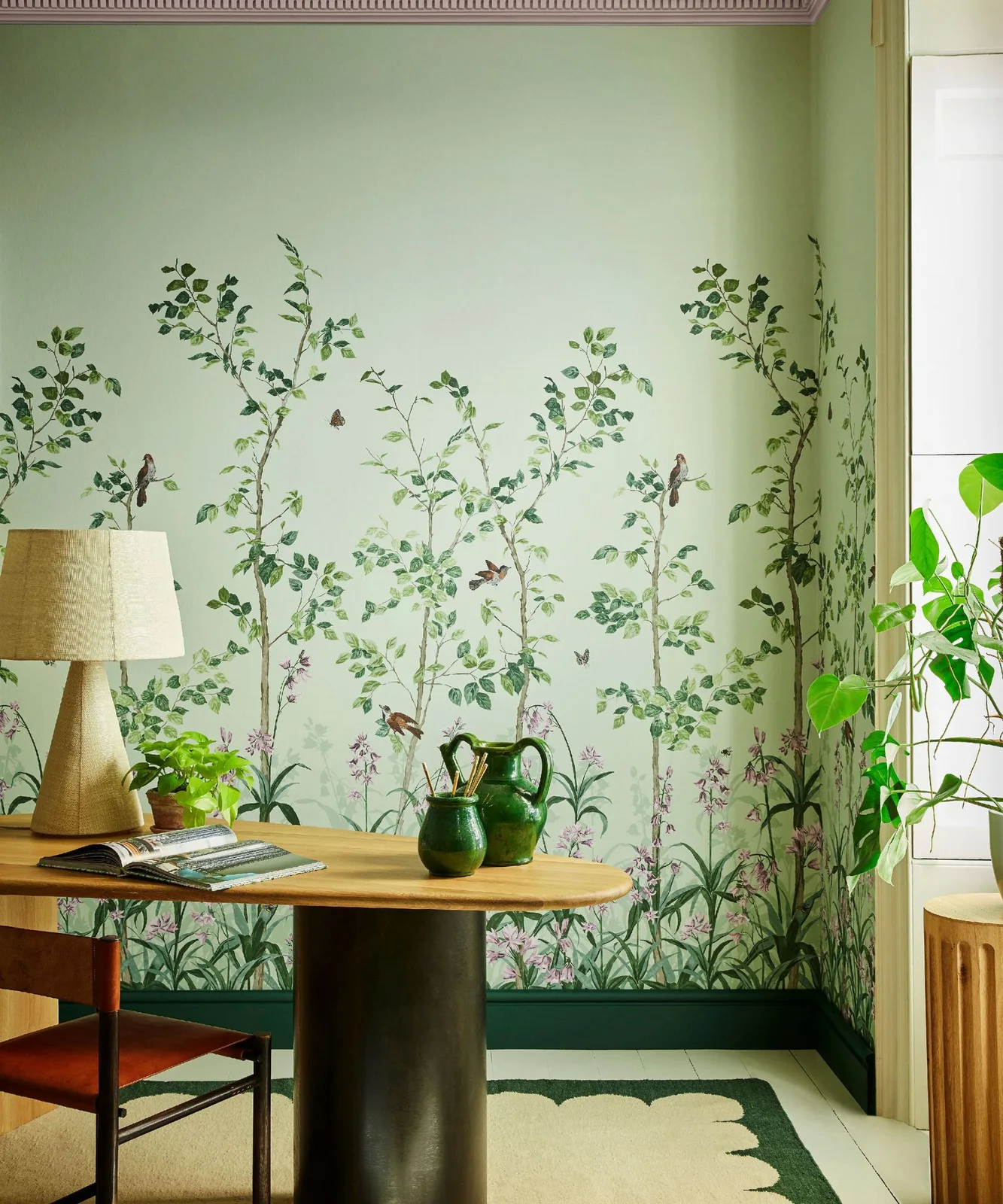
The mural supplies a broad botanical backdrop, while the small desktop plant and larger window-side foliage add depth in front of it. The rounded desk edge and green ceramic vessels repeat the softer shapes. Printed leaves and actual plant arrangements play different roles here, even though their colors connect.
Choose plants for the available light rather than for a match with the wallpaper illustration. Keep the desk pot compact enough to move when you need the surface. If you want a similarly strong background, our green office ideas explore wall colors and furniture combinations alongside smaller decorative details.
IDEA 14 / 20
Put a Trailing Plant on the Tallest Shelf
 SaveSupport Non AI Creator
Image credit: Shelved
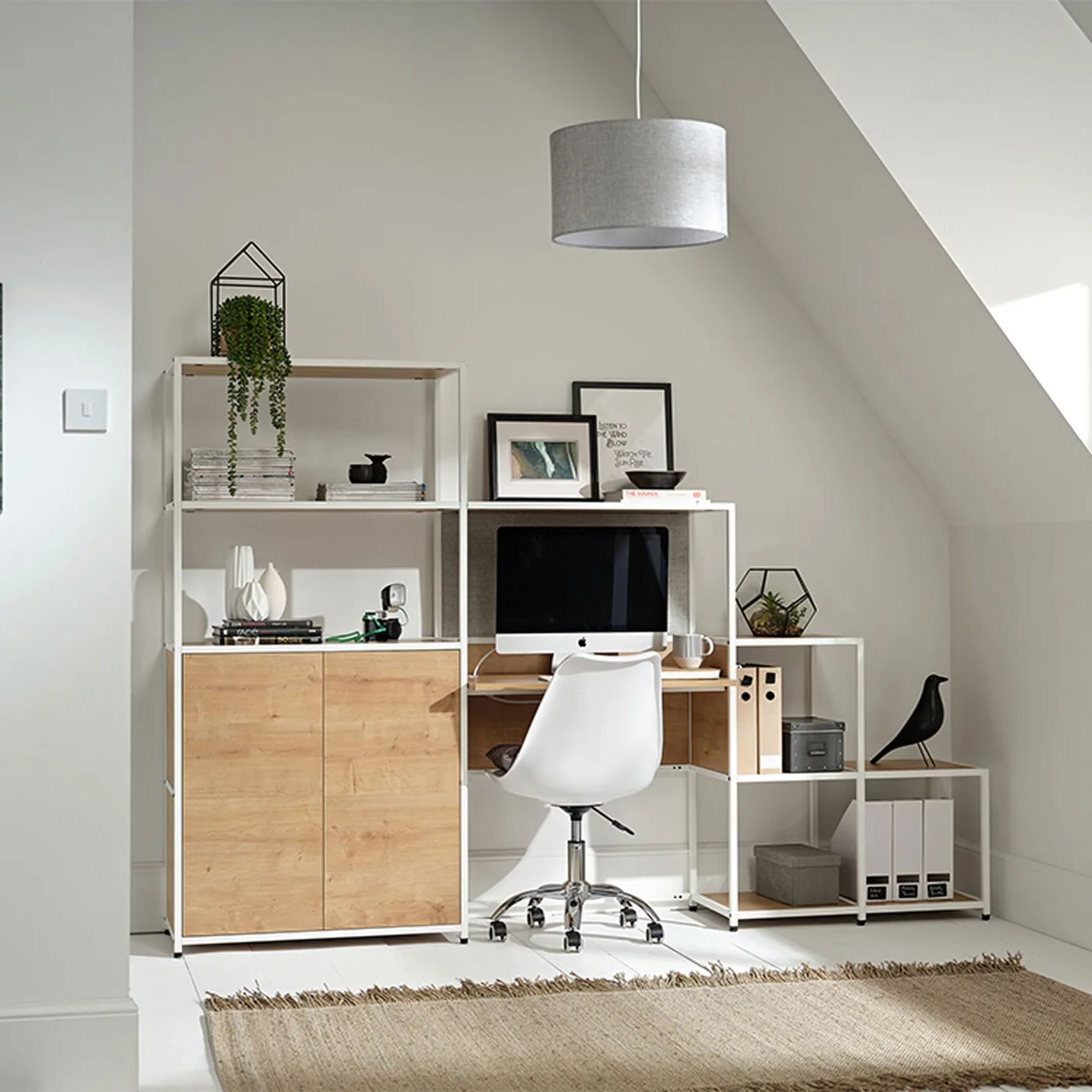
The trailing plant marks the highest part of the stepped storage, drawing attention to the room’s usable height. A smaller glass container sits on a lower section, where it does not interrupt the monitor. The rest of the shelving remains available for files and books instead of becoming a plant stand.
Keep trailing stems clear of shelf doors and the computer, and check that the upper pot can be lifted down safely. A glass container needs care suited to its actual planting and drainage; do not assume every enclosed arrangement is self-sustaining. Protect the books below and inspect surfaces regularly for moisture.
IDEA 15 / 20
Keep the Desk Plant Beside the Stationery
 SaveSupport Non AI Creator
Image credit: Future PLC
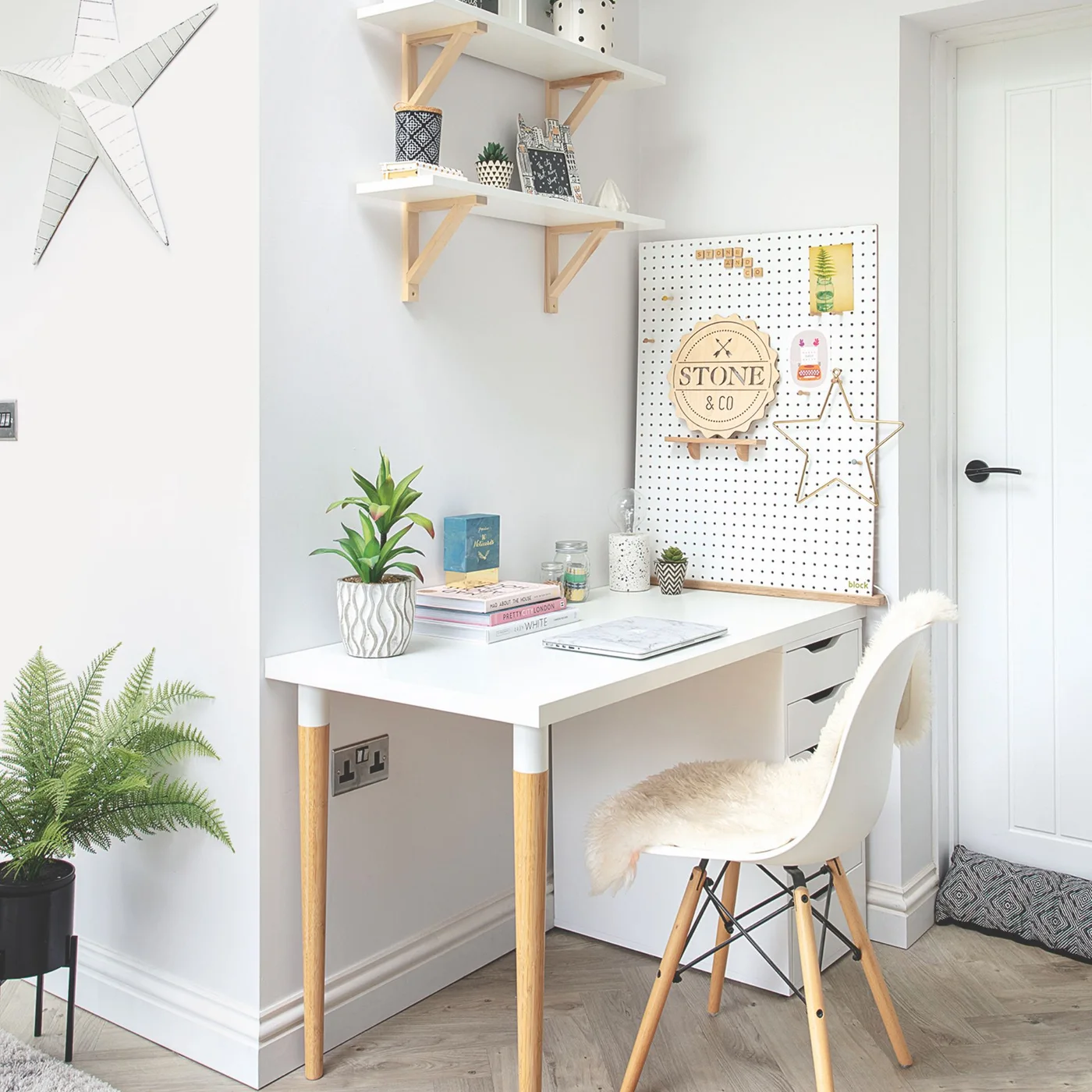
The upright desktop plant sits beside the books and stationery, leaving the central writing area clear. Small pots on the shelves repeat the greenery higher up, while the floor stand adds a lower group. White furniture and walls make each leaf shape readable without a complicated color scheme.
Keep the desktop pot on a protective base and separate it from loose paper. Check how far the floor foliage reaches toward the chair before adding a stand. Use the shelves for plants you can reach easily; high containers that require balancing on furniture make ordinary care unnecessarily awkward.
PART 04
Make Plant Care Fit the Layout
IDEA 16 / 20
Leave Equipment Access Clear Around Desk Plants
 SaveSupport Non AI Creator
Image credit: Future PLC
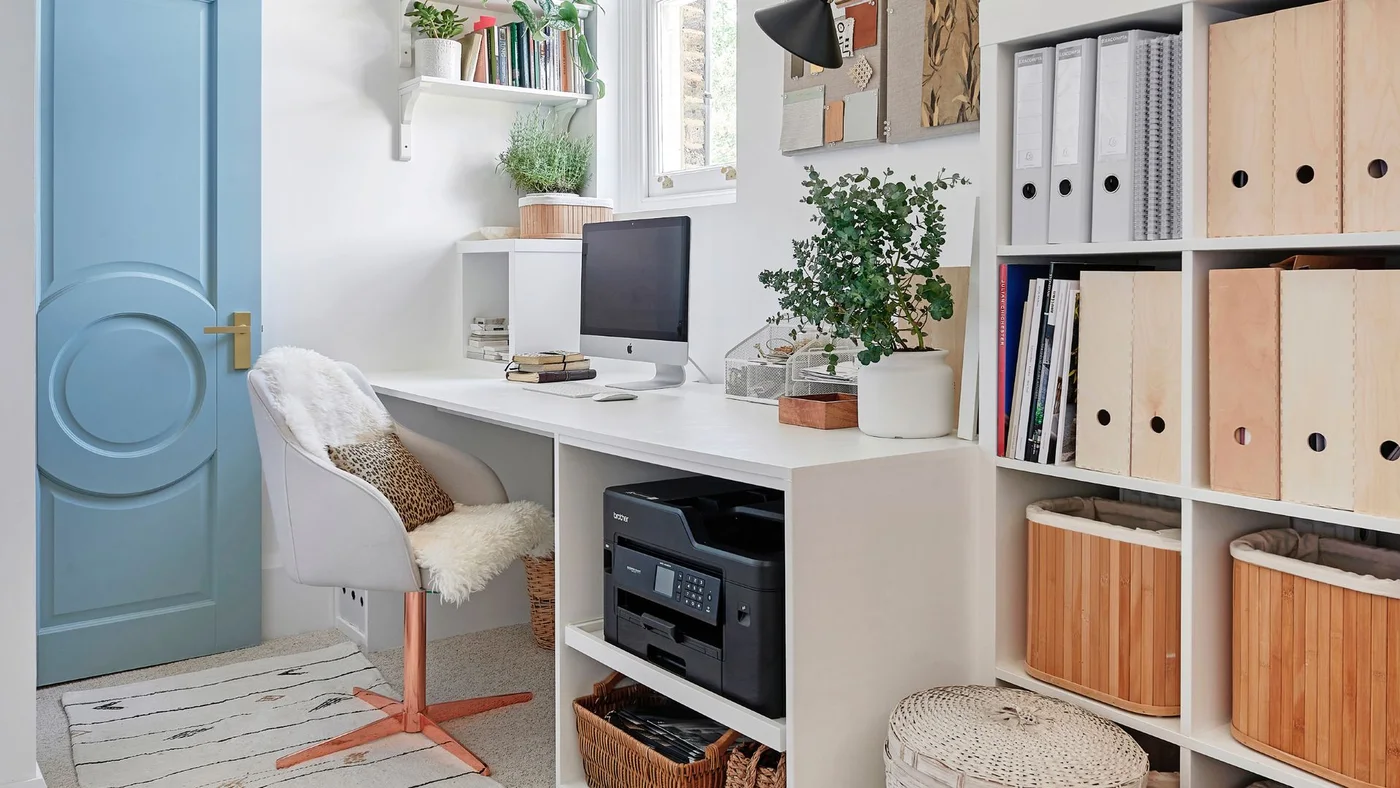
The largest desk plant occupies the right end beside the file storage, while smaller pots use the window sill and upper shelf. That distribution leaves a clear central position for the computer. The printer remains in an open compartment below, making the relationship between greenery and equipment especially important.
Keep watering away from the printer, sockets and paper storage, even when the pot itself appears watertight. Leave ventilation openings and service access unobstructed. Check the mature spread before buying a desk plant; a compact plant today may eventually hide part of the screen or make the files harder to reach.
IDEA 17 / 20
Reserve the Desk Return for a Leafy Accent
 SaveSupport Non AI Creator
Image credit: Future PLC/Anna Stathaki
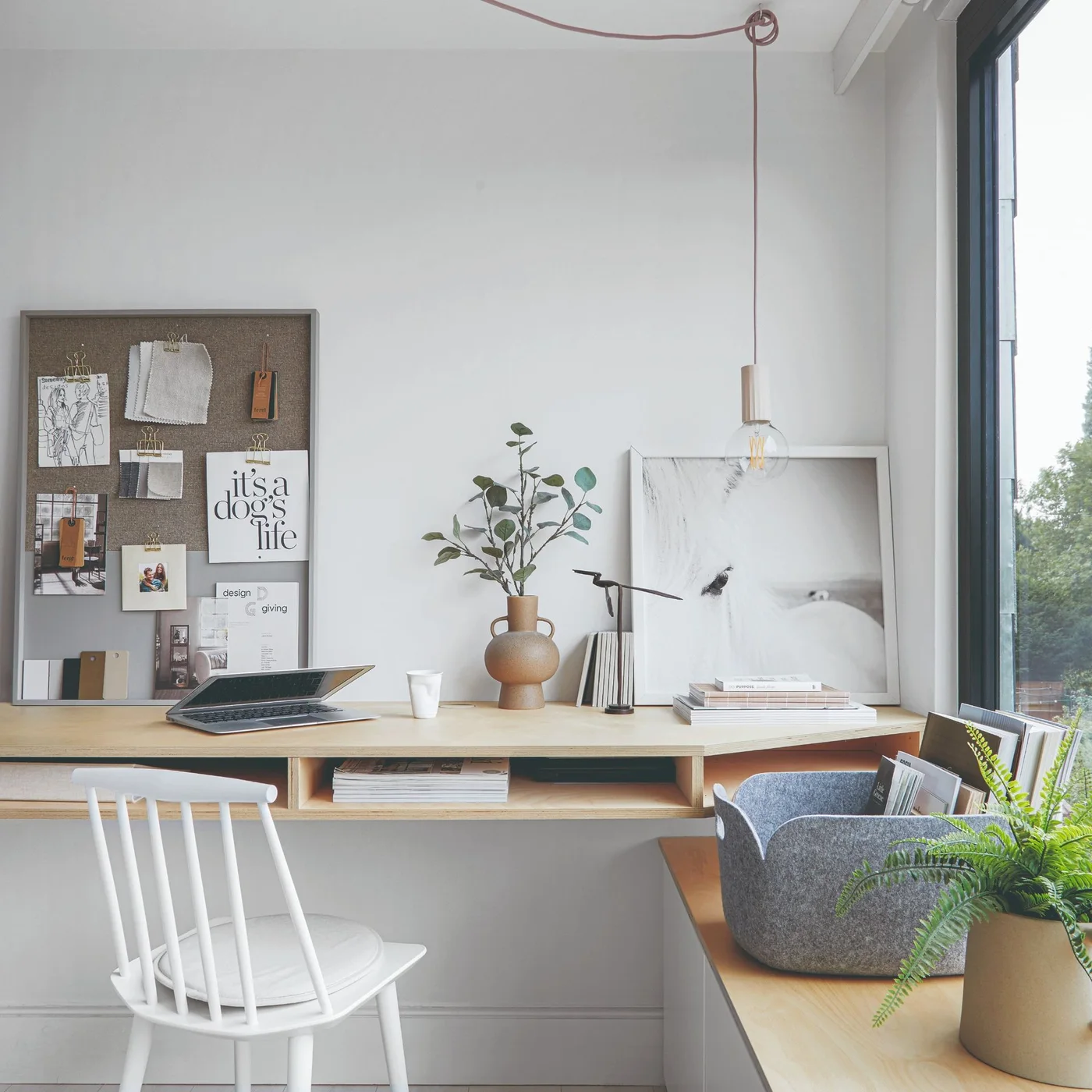
The leafy pot occupies the window-side return, leaving a separate stretch of desktop for the laptop and noticeboard. Cut stems add a taller, lighter outline farther back. Using the corner this way gives the greenery a defined position without turning the entire long surface into a display shelf.
Decide how much clear worktop you need before assigning the return to plants. Leave space to lift the pot without catching nearby papers or a lamp cord. Use a waterproof base, and move living plants to a suitable place for watering instead of relying on the desk finish to tolerate spills.
IDEA 18 / 20
Hang Two Small Pots Beside a Memo Board
 SaveSupport Non AI Creator
Image credit: Future PLC / Simon Whitmore
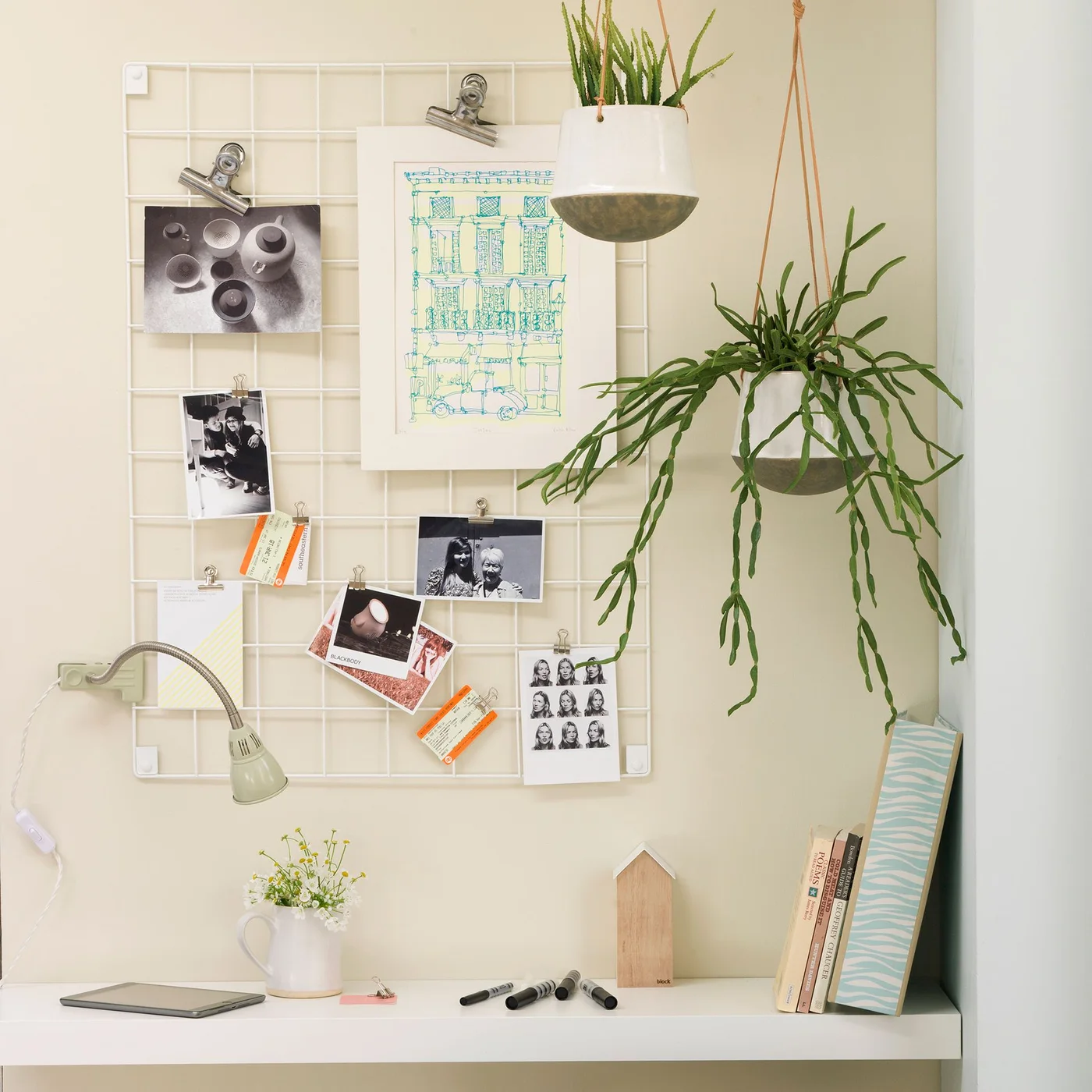
The paired hanging pots put greenery at different heights beside the memo board. One arrangement stays upright while the other trails toward the desk, making the pair varied without using mismatched containers. The slim work surface remains available for writing and a few small objects rather than supporting the plant pots.
Use suitable ceiling fixings and hangers rated for the full wet weight, following the product instructions. Place the pots where you can remove them safely for watering. Keep the trailing stems away from the lamp and papers, and shorten or redirect growth before it begins to interfere with the work surface.
IDEA 19 / 20
Turn a Bright Window Corner Into a Plant Group
 SaveSupport Non AI Creator
Image credit: Future PLC/Mary Wadsworth
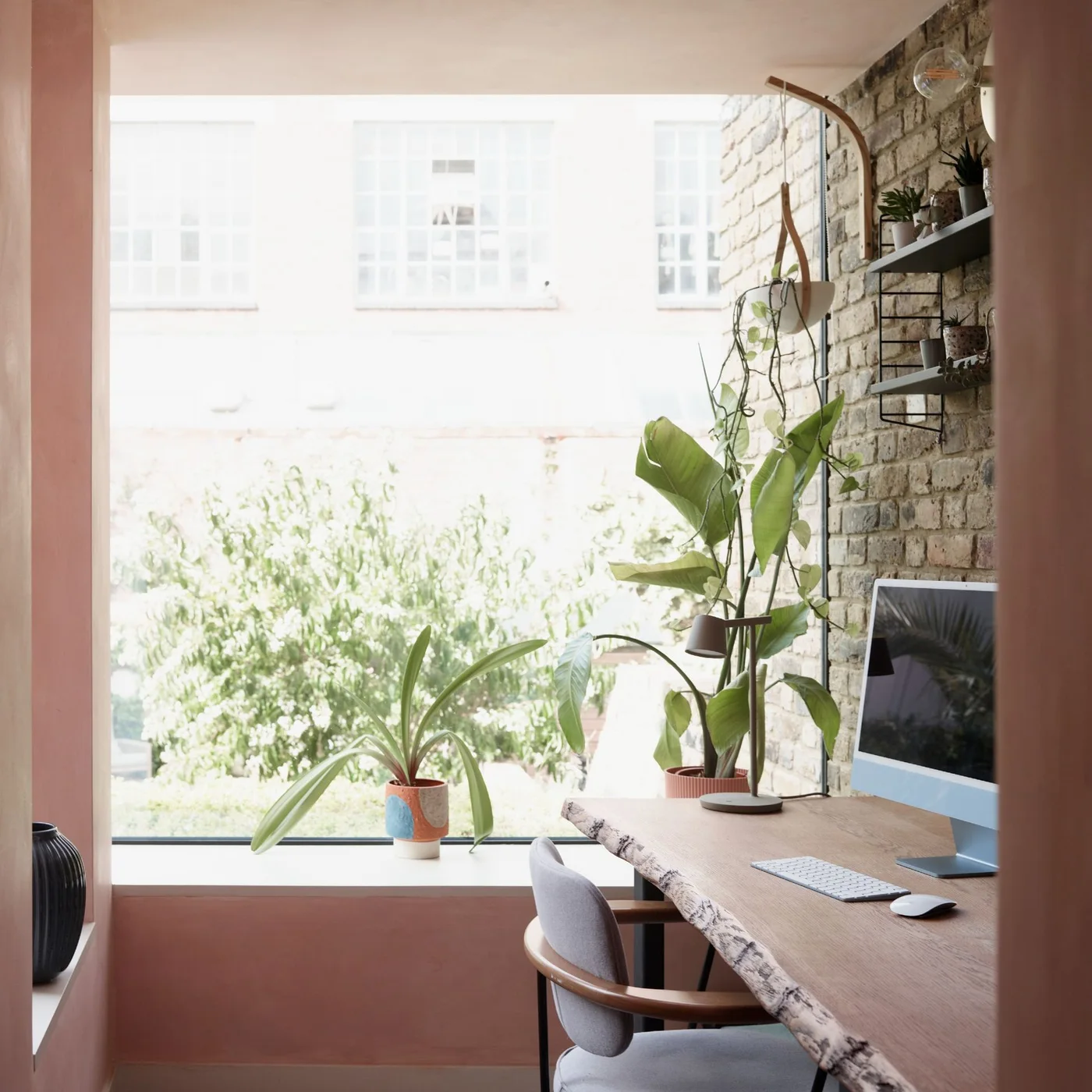
Plants occupy several levels around the bright corner: the sill, the floor beside the desk and the shelves against the brick. Their different leaf sizes break up the hard wall and worktop edges. The computer still has its own end of the desk rather than sitting inside a dense cluster of pots.
Watch how the light changes across the sill and shelves before deciding which plants belong in each position. Leave room for the window to open and keep taller leaves from shading smaller plants unnecessarily. Check the shelf pots for drips, especially where a monitor or lamp sits directly below them.
IDEA 20 / 20
Frame a Desk With Two Different Leaf Shapes
 SaveSupport Non AI Creator
Image credit: Fenwick & Tilbrook
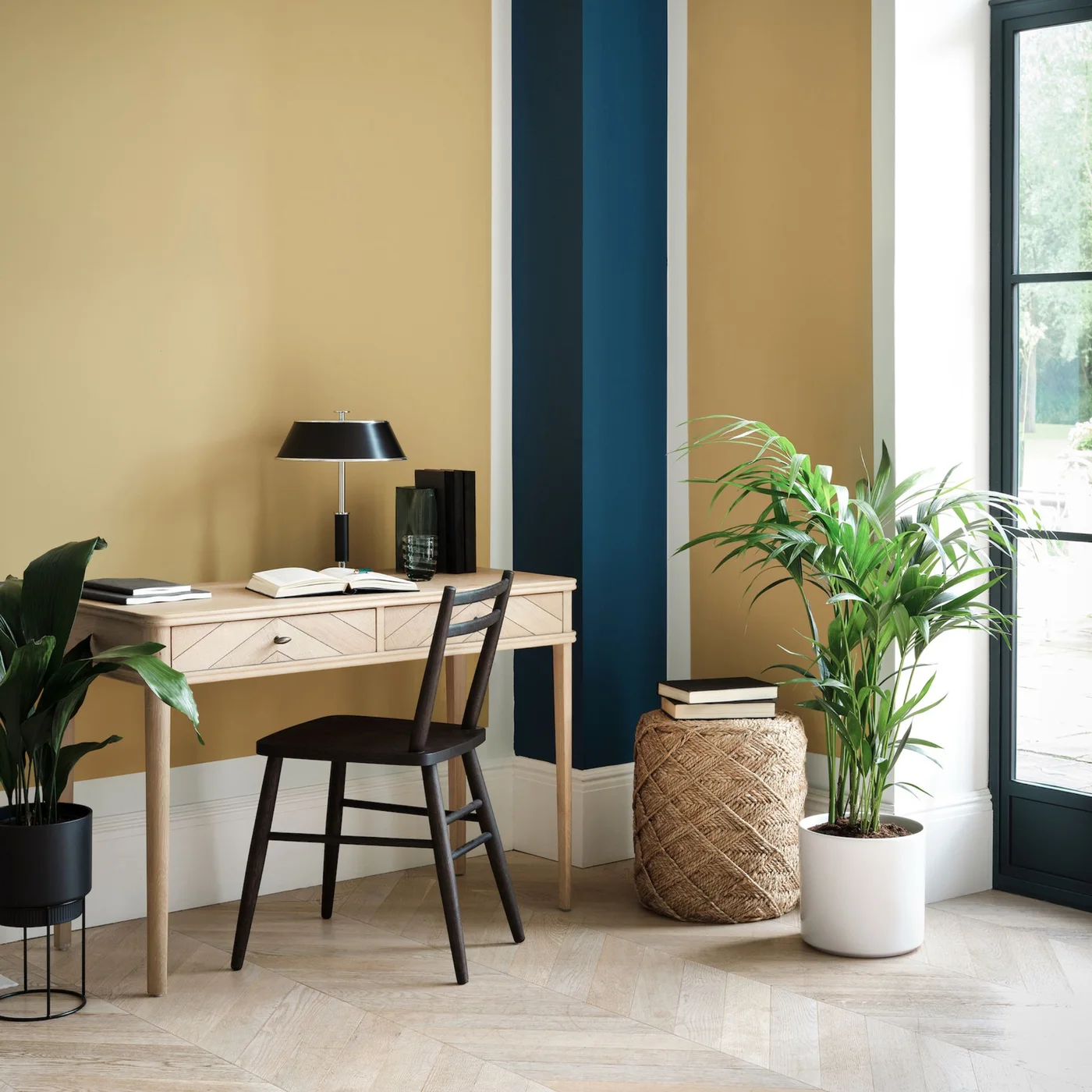
The two floor plants frame the desk while leaving its small surface available for reading and a lamp. Broad leaves on one side balance a more feathery outline on the other. A woven stool fills the gap beside the larger pot, adding a useful surface without another leafy arrangement on top.
Keep the door route and chair movement clear before adding a stool or wide plant pot. Check that each plant suits its own position; being in the same room does not guarantee equal light. Protect the floor beneath the containers, and leave enough room to turn or remove them for routine care.
BRING IT ALL TOGETHER
Choose the Position Before the Plant
Map the window light, chair movement and equipment positions before bringing home large pots. Keep a clear working area, and allow for the spread of leaves as well as the footprint of the container. A few well-placed plants are easier to live with than an overcrowded desk.
Build watering access into the arrangement from the start. Removable inner pots, appropriate protective bases and reachable shelves make care more practical. Cut foliage can also provide a small green accent where a long-term living plant would be difficult to accommodate.