A small desk needs enough room for the task, not just a narrow footprint. A laptop used for short sessions asks less of the surface than a monitor, separate keyboard and paperwork. List the equipment you keep out, then measure the chair space and the route around it before choosing a desk.
These photographs focus on compact work surfaces, from shallow freestanding desks to fitted alcoves. They show useful storage and lighting details as well as the desk itself. Do not copy a photographed chair or surface depth automatically: test the height, reach and legroom with the equipment you actually use.
PART 01
Fit a Desk into an Existing Gap
IDEA 01 / 20
Fit a Single Desk into a Narrow Recess
 SaveSupport Non AI Creator
Image credit: Project: Wolfe Rizor Interiors (via Houzz)
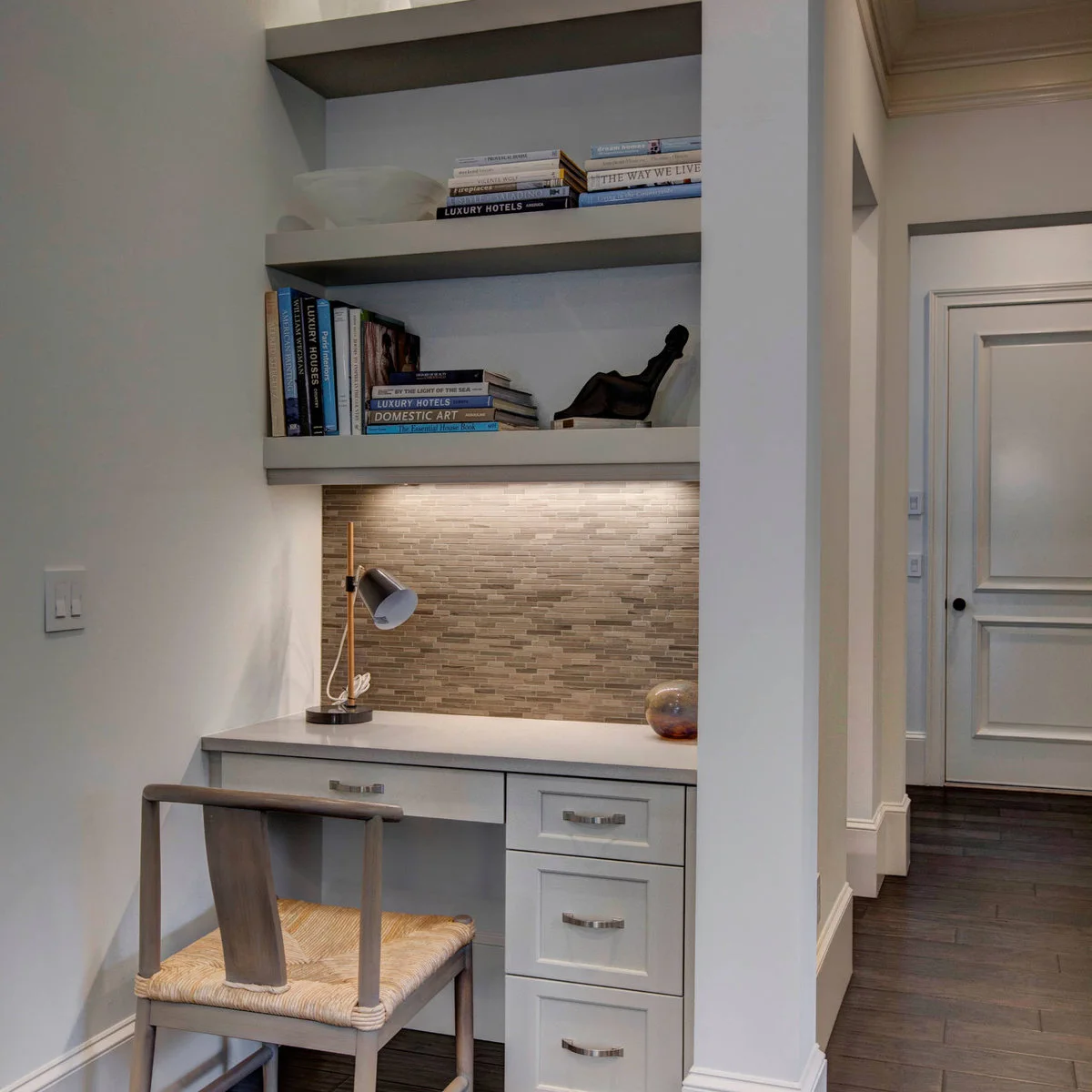
This gray desk fills a narrow recess without projecting far into the adjoining space. Drawers sit on the right, leaving a single seating opening on the left. Light beneath the lowest shelf brightens the textured wall, while a small adjustable lamp adds light closer to the work surface.
Measure the usable knee opening after allowing for the drawers, not just the overall recess width. Sit with a keyboard or notebook in place to check the working height. Small home office ideas can help you plan the surrounding room once the desk itself fits comfortably.
IDEA 02 / 20
Use a Wall-Mounted Surface beside Existing Shelves
 SaveSupport Non AI Creator
Image credit: Project: Twelve Chairs Interiors (via Houzz)
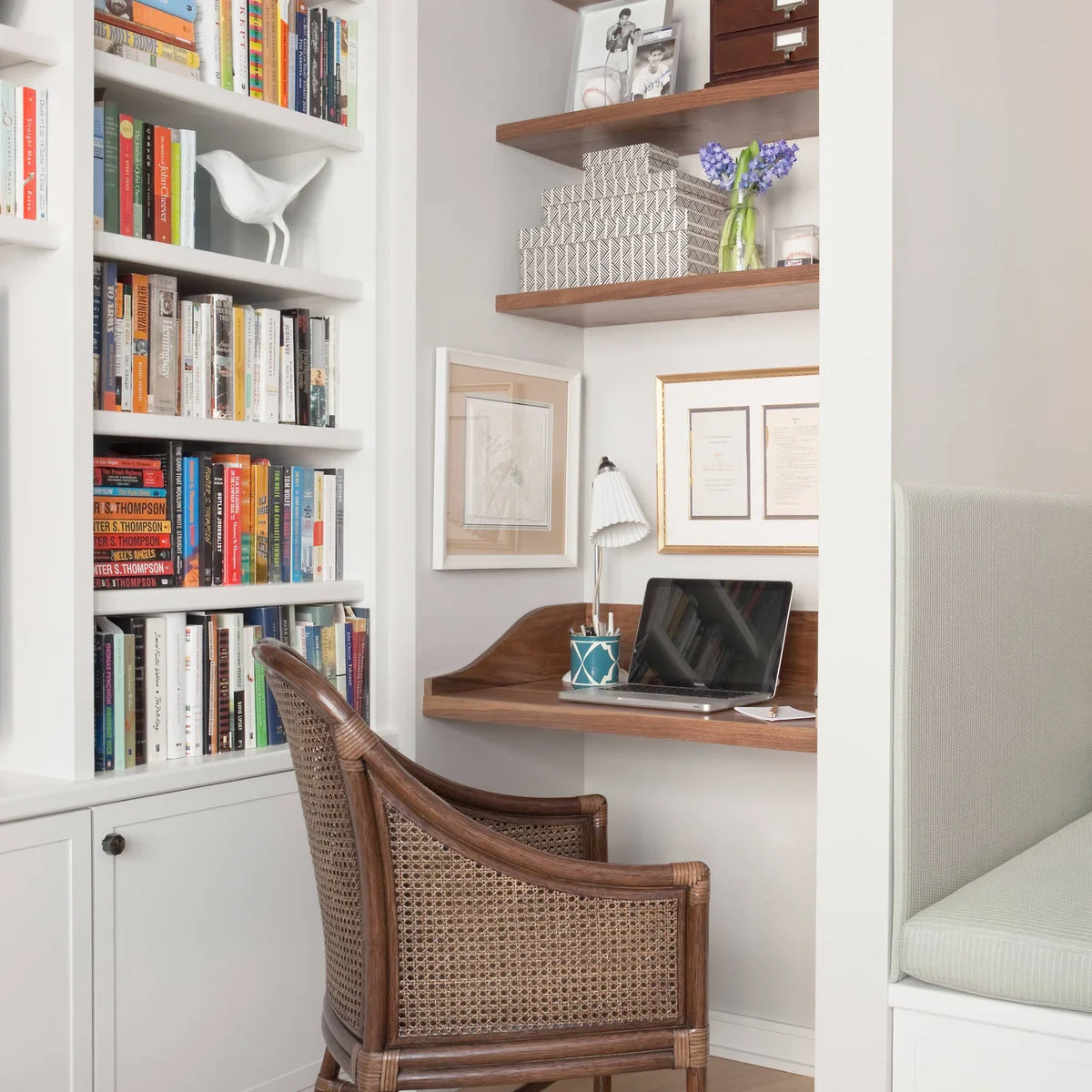
A compact wood surface occupies the gap beside these bookshelves, with open shelves above for boxes and personal objects. Its raised, curved back edge separates the desktop from the wall. The woven-back chair adds texture without another storage unit beneath the working area.
A wall-mounted desk needs fixings and support suitable for the wall and expected load. Confirm that with an installer rather than treating it like an ordinary display shelf. Keep the usable surface deep enough for your device, and check whether the chair arms can move beneath the front edge.
IDEA 03 / 20
Borrow an Under-Stair Corner for a Compact Return
 SaveSupport Non AI Creator
Image credit: Project: Hugh Jefferson Randolph Architects (via Houzz)
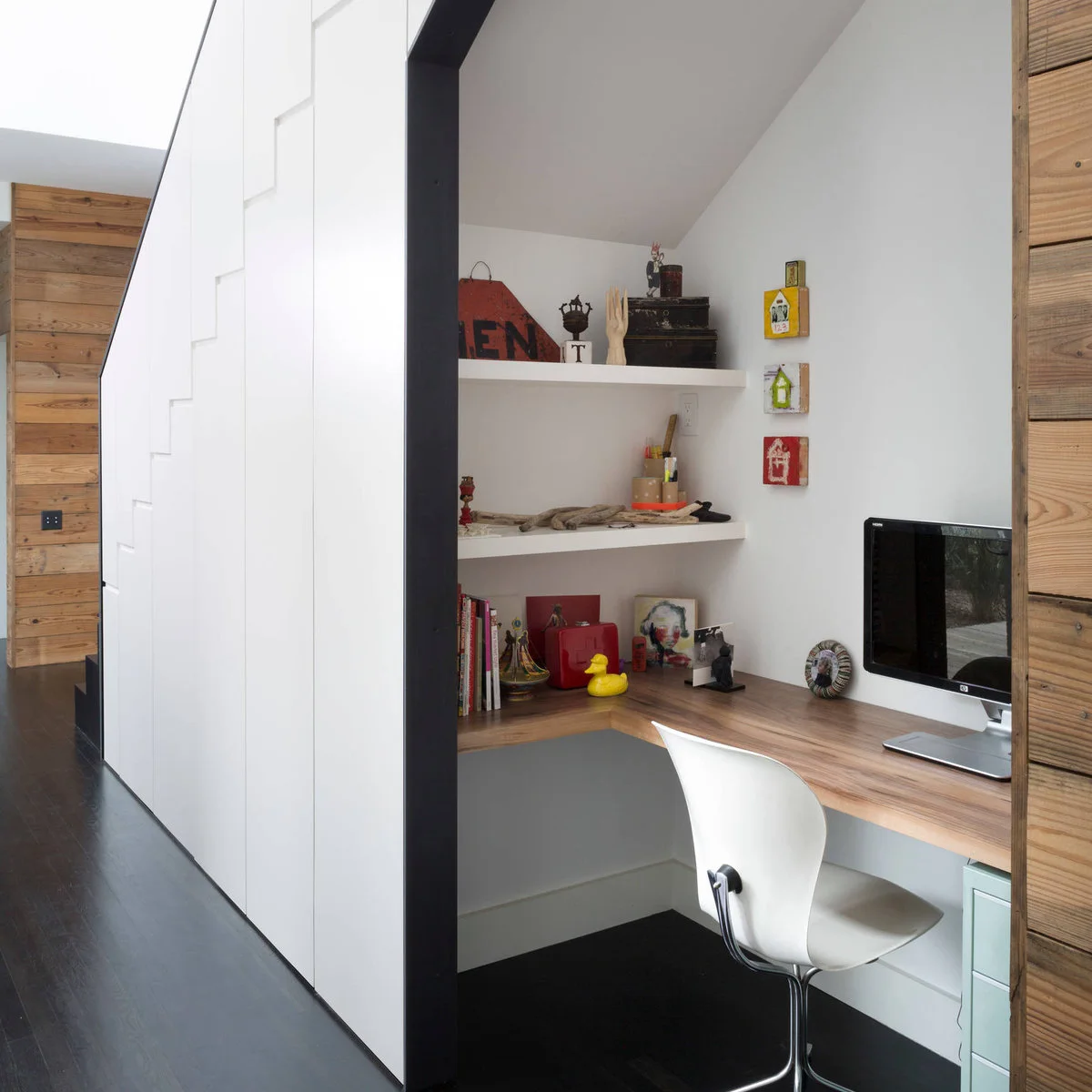
The wood worktop turns into the corner beneath the stair slope, creating a short return beside the monitor. Two white shelves use the wall above the lower part of the desk. The chair occupies the higher side of the recess, where there is more room to sit upright.
Check headroom while sitting down and standing up, including the movement of the chair. Use the lower return for storage or occasional tasks rather than forcing your main screen beneath the slope. Keep any nearby circulation or required access clear before committing to permanent fitted furniture.
IDEA 04 / 20
Put the Chair under the Highest Part of a Slope
 SaveSupport Non AI Creator
Image credit: Project: Rock Paper Hammer (via Houzz)
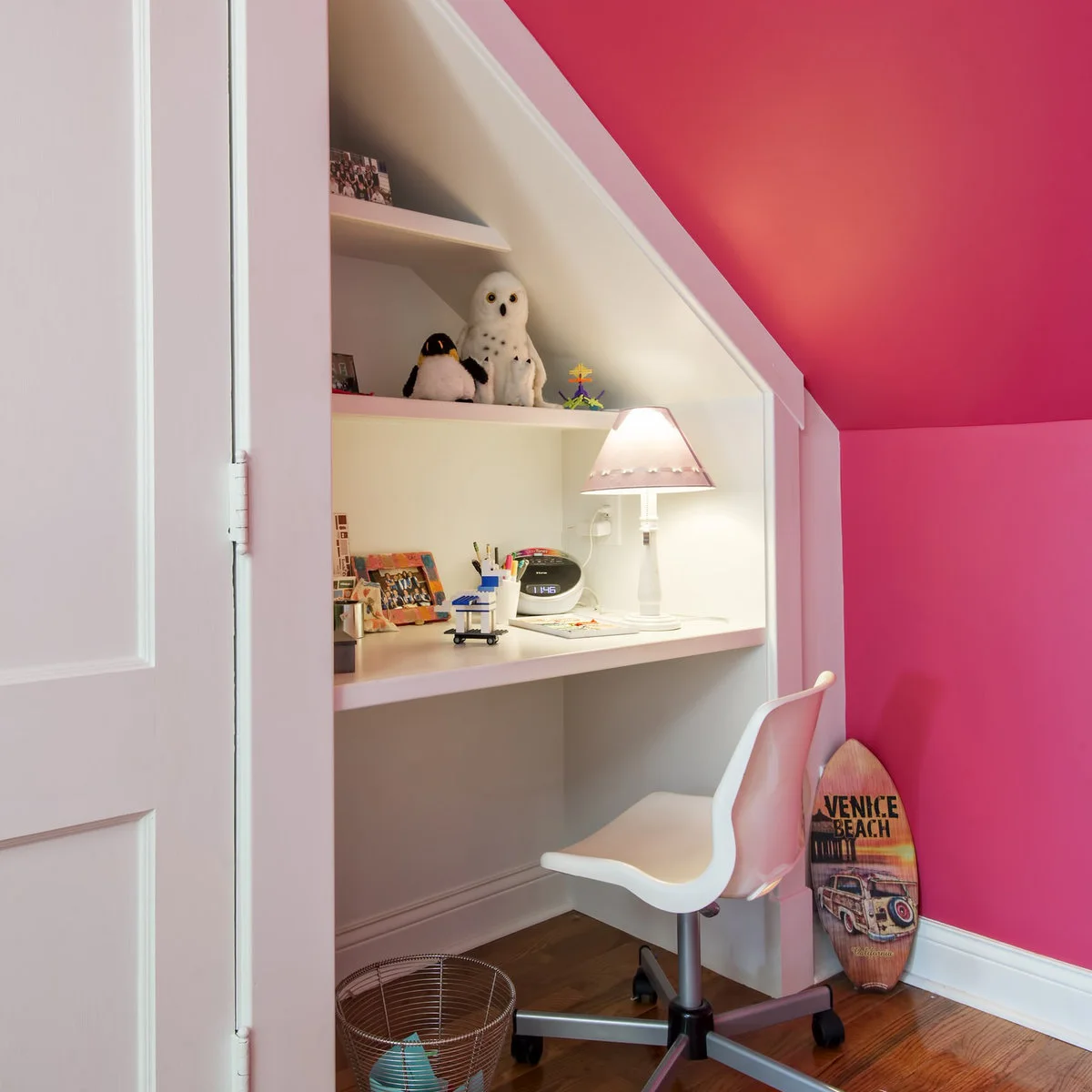
A white desk and two shelves fit beneath the sloping ceiling, with a pink wall giving the corner a strong edge. The chair sits toward the taller part of the opening. A small lamp and a few supplies occupy the surface without filling its whole width.
Test the chair position with the seat adjusted to a comfortable height. Headroom, knee space and the room needed to turn matter more than how neatly the desk fits the outline of the wall. Keep the lowest shelf above your normal working reach so it does not crowd the surface.
IDEA 05 / 20
Choose a Freestanding Desk for an Awkward Gap
 SaveSupport Non AI Creator
Image credit: Project: Niosi Design (via Houzz)
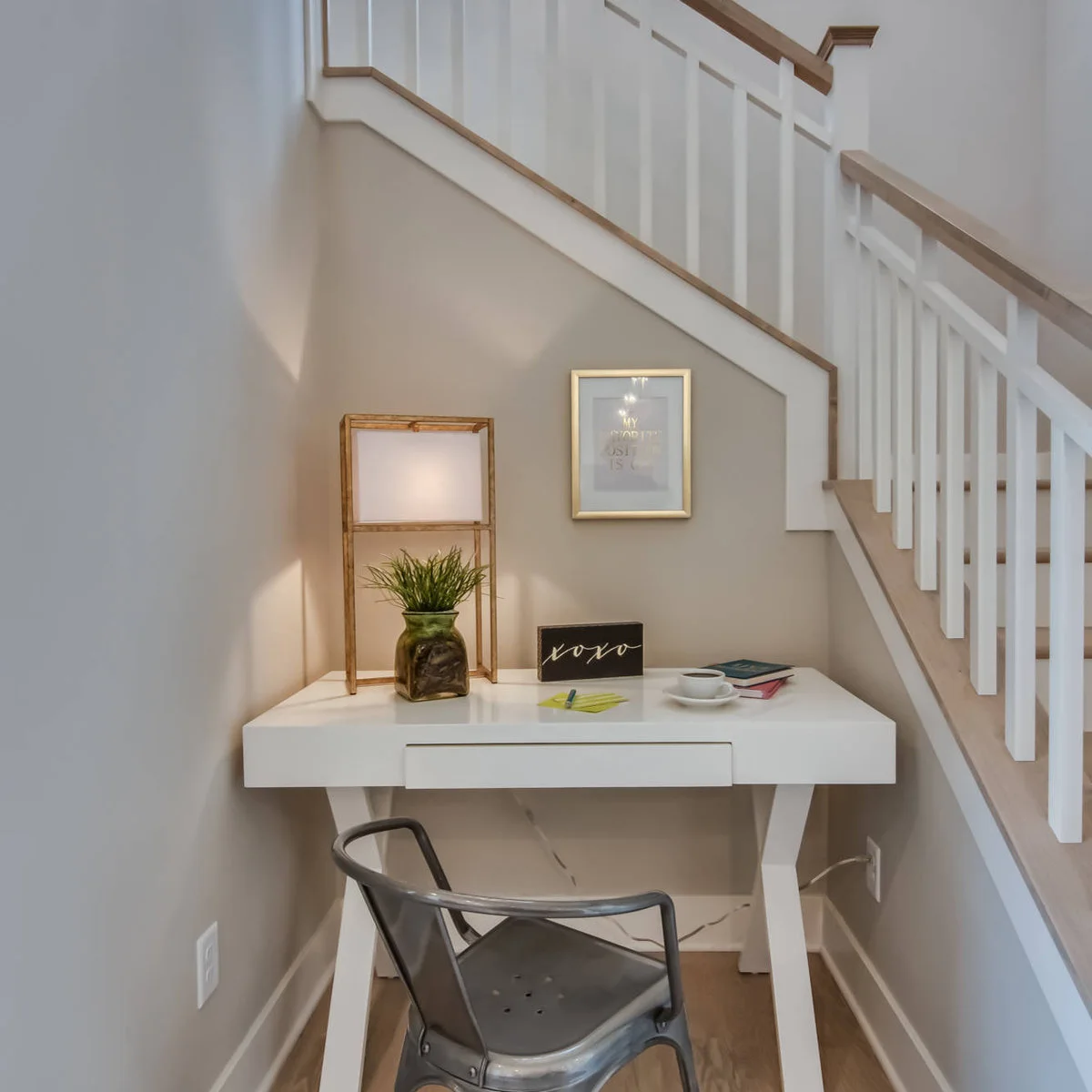
A small white desk sits beneath the staircase rather than filling the space with fitted cabinetry. Its angled legs leave the floor visible, while a single drawer provides modest storage. The metal chair and tall lamp give the little corner a defined working position.
A freestanding desk is easier to replace or move when your needs change. Measure where its legs meet the floor as well as the top, especially in a tapered space. Check the drawer against your thighs and route the lamp cable close to the wall instead of across the chair’s movement.
PART 02
Add Storage without Losing Legroom
IDEA 06 / 20
Move Storage above an Open-Leg Desk
 SaveSupport Non AI Creator
Image credit: Project: Studio Revolution (via Houzz)
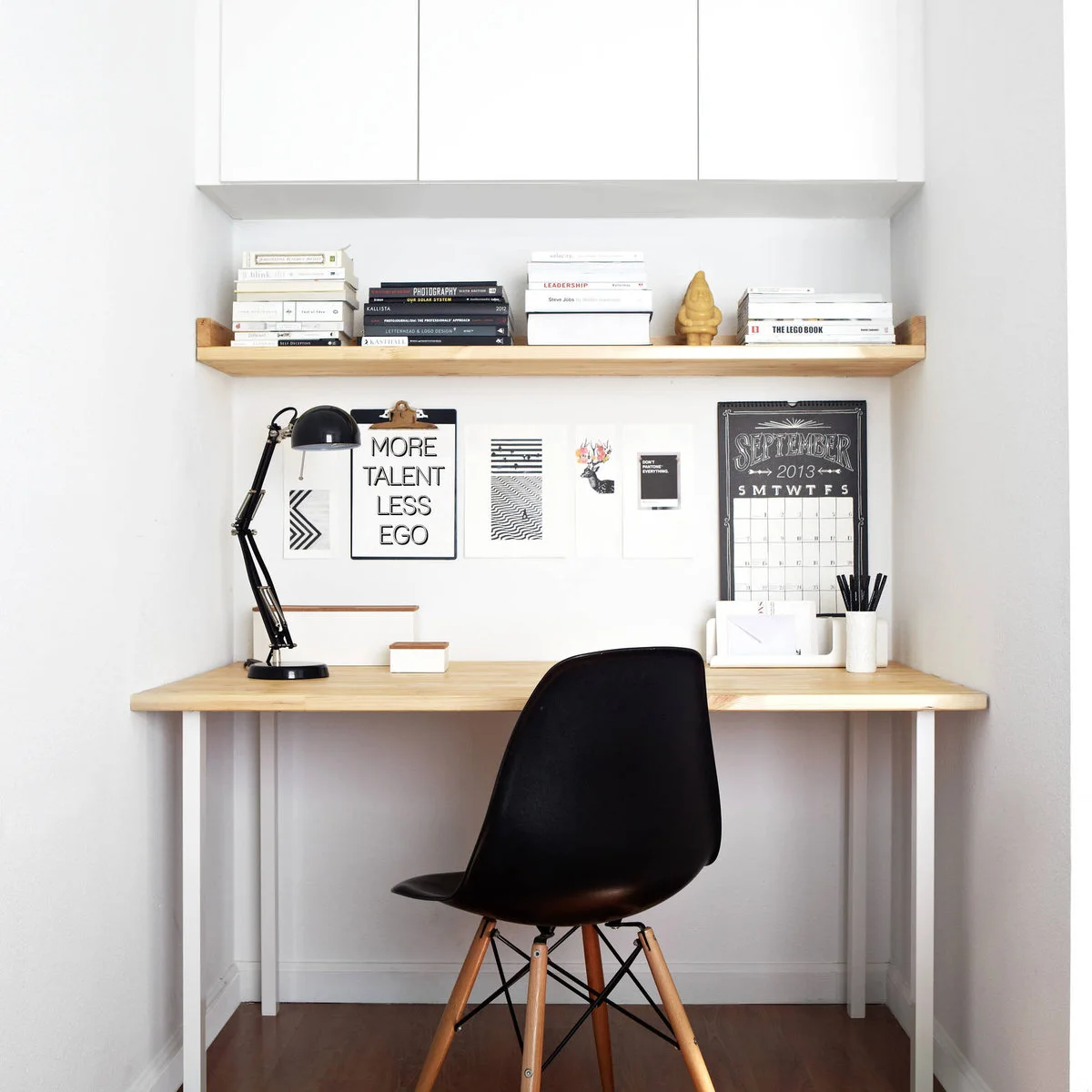
White wall cabinets and a wood shelf provide storage above this simple desk. The open base leaves the seated area free of drawer units, while a black adjustable lamp lights one side. Small paper holders stay against the wall, preserving a clear strip of work surface.
Store frequently used items on the lower shelf and reserve higher cabinets for things you reach less often. Check cabinet doors when open and choose secure fixings for their loaded weight. An open base is helpful only if you keep bags and loose boxes from gradually occupying the space beneath it.
IDEA 07 / 20
Use Shallow Drawers for Small Everyday Supplies
 SaveSupport Non AI Creator
Image credit: Project: Clean Design (via Houzz)
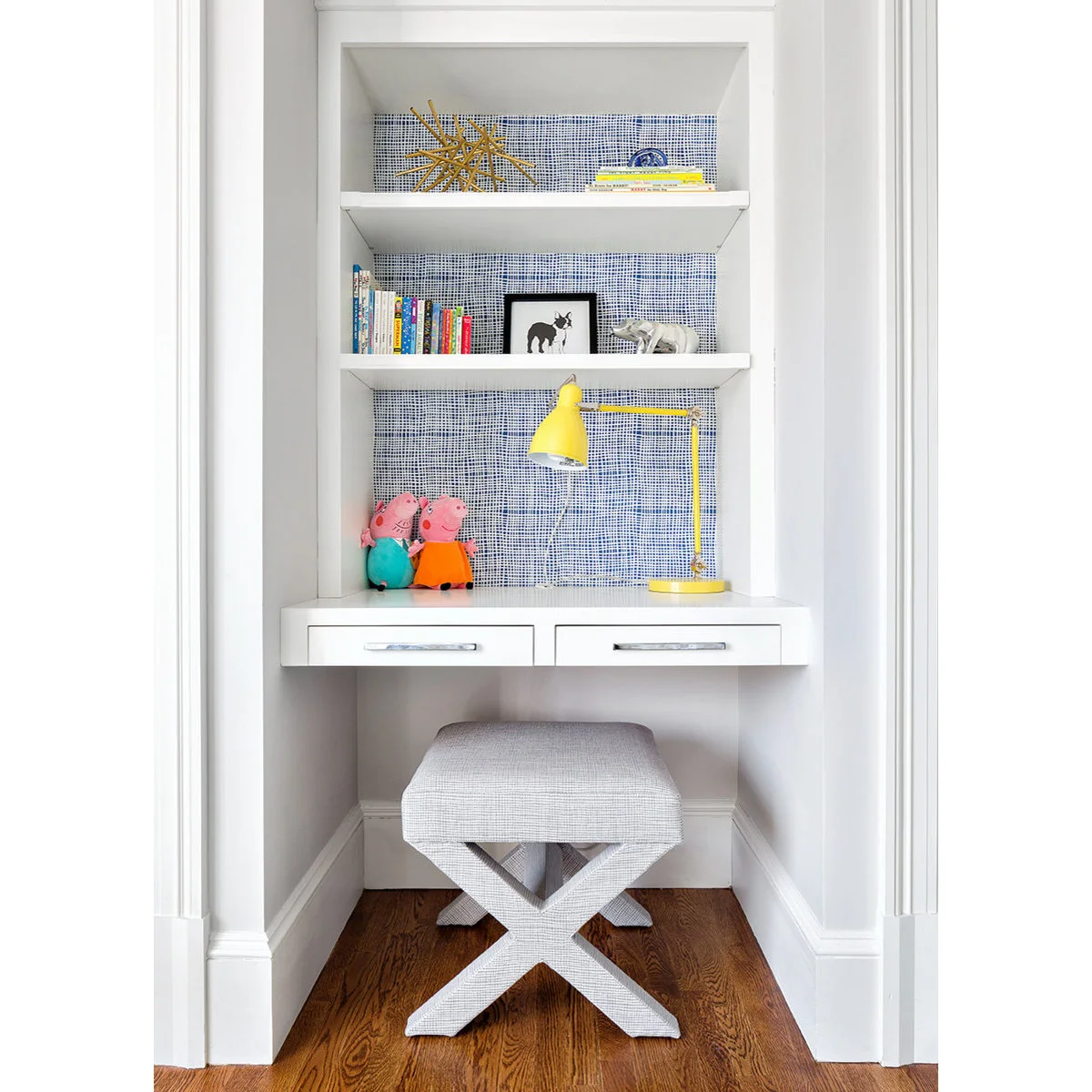
Two shallow drawers sit beneath this compact white desktop, with open shelves above a patterned blue backing. A yellow lamp provides a bright accent and focused light. The stool tucks into the opening, keeping the small recess visually clear when the surface is not in use.
Shallow drawers can hold stationery without the bulk of a floor-standing cabinet, but check how far their underside reduces knee clearance. A stool may suit brief tasks; for longer work, test a supportive chair. Match the seating to your routine rather than choosing it only because it disappears beneath the desk.
IDEA 08 / 20
Keep the Middle Open between Small Drawer Units
 SaveSupport Non AI Creator
Image credit: Project: SVK Interior Design (via Houzz)
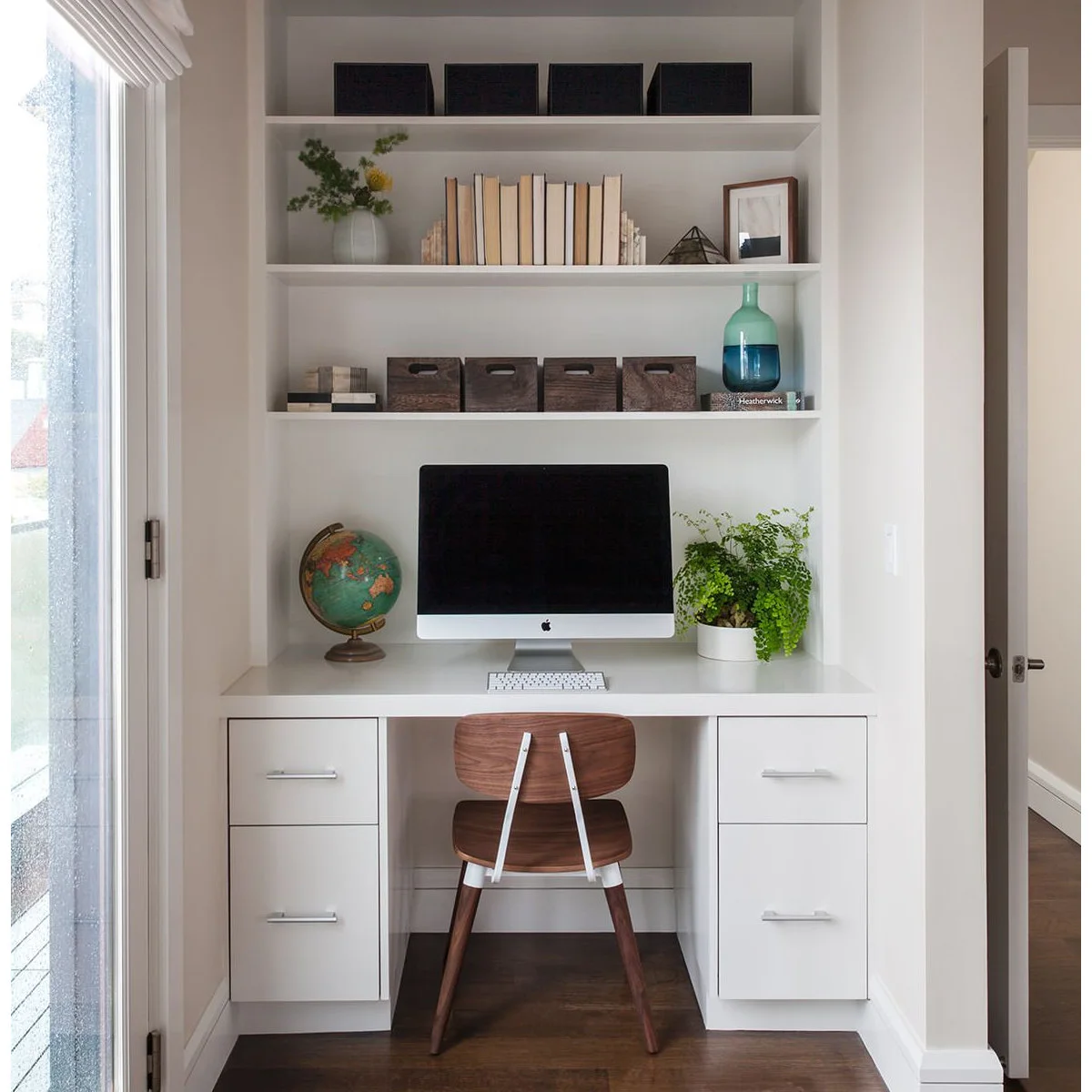
A central opening gives this desk a clear seated position between two small drawer units. Open shelves hold books and containers above the monitor. The simple white finish connects the surface and storage, while the wood chair adds a warmer contrast.
Measure the space between drawer units before choosing a chair, including any arms or wheels. If the opening is too narrow for comfortable movement, keep storage on one side instead. Sort supplies by what you actually use so a compact desk does not need more drawers than its width can support.
IDEA 09 / 20
Choose One Drawer Pedestal Instead of Two
 SaveSupport Non AI Creator
Image credit: Project: Michael K Chen Architecture (via Houzz)
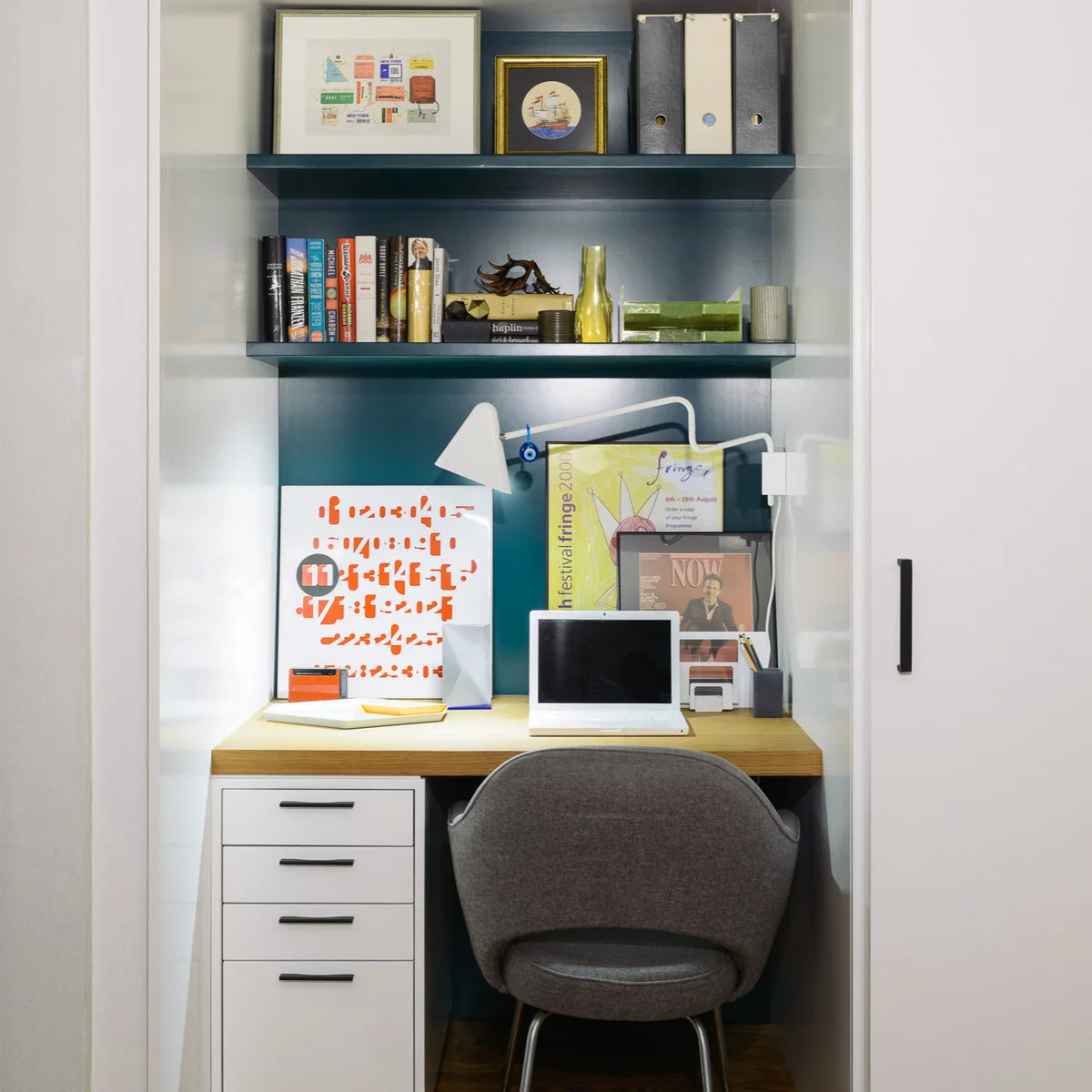
A single drawer pedestal supports the left side of this wood desk, leaving the other side open for the chair. Dark shelf backing makes the white storage stand out. A wall-mounted lamp reaches over the work area without placing another base beside the laptop.
One pedestal can provide useful storage while preserving more legroom than a symmetrical pair. Check that the remaining support is stable and suitable for the desktop. Keep the most-used drawer near your natural reach, and avoid filling the open side with a bin or bag that prevents the chair from turning.
IDEA 10 / 20
Keep Papers in a Slot beneath the Desktop
 SaveSupport Non AI Creator
Source: houzz.com
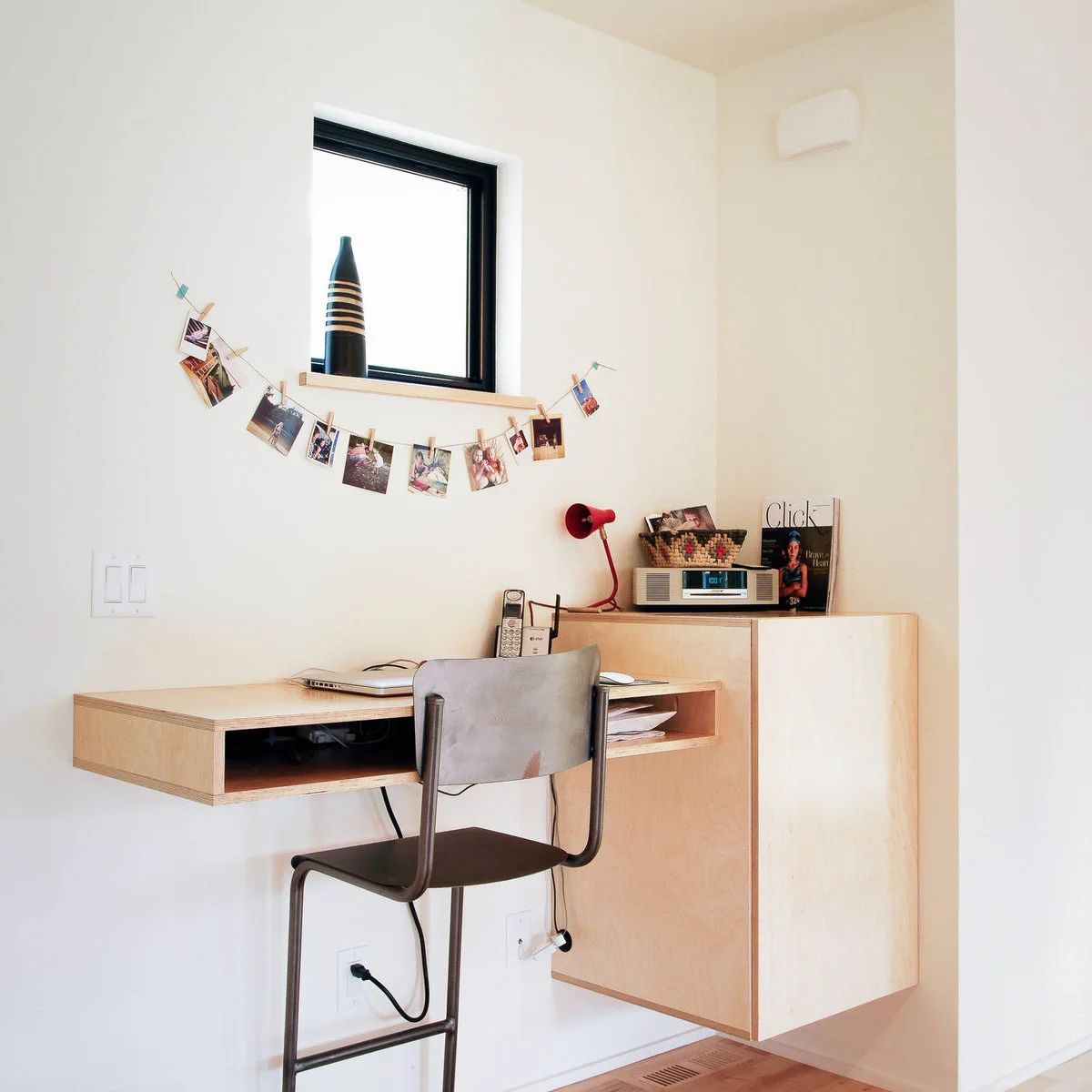
A thin open slot beneath the worktop holds papers in this wall-mounted wood desk. The adjoining cabinet provides a separate storage volume, while the area under the chair remains open. A small red lamp and a few personal photographs give the compact corner character.
An open paper slot makes current work easy to reach, but it can become a place for forgotten piles. Keep only active papers there and clear it regularly. Plan cable support beneath the surface so loose leads do not hang into your legs or get caught when the chair moves.
PART 03
Make a Small Surface Easier to Use
IDEA 11 / 20
Use an Adjustable Lamp on a Small Surface
 SaveSupport Non AI Creator
Image credit: Project: Barbara Dalton Interiors (via Houzz)
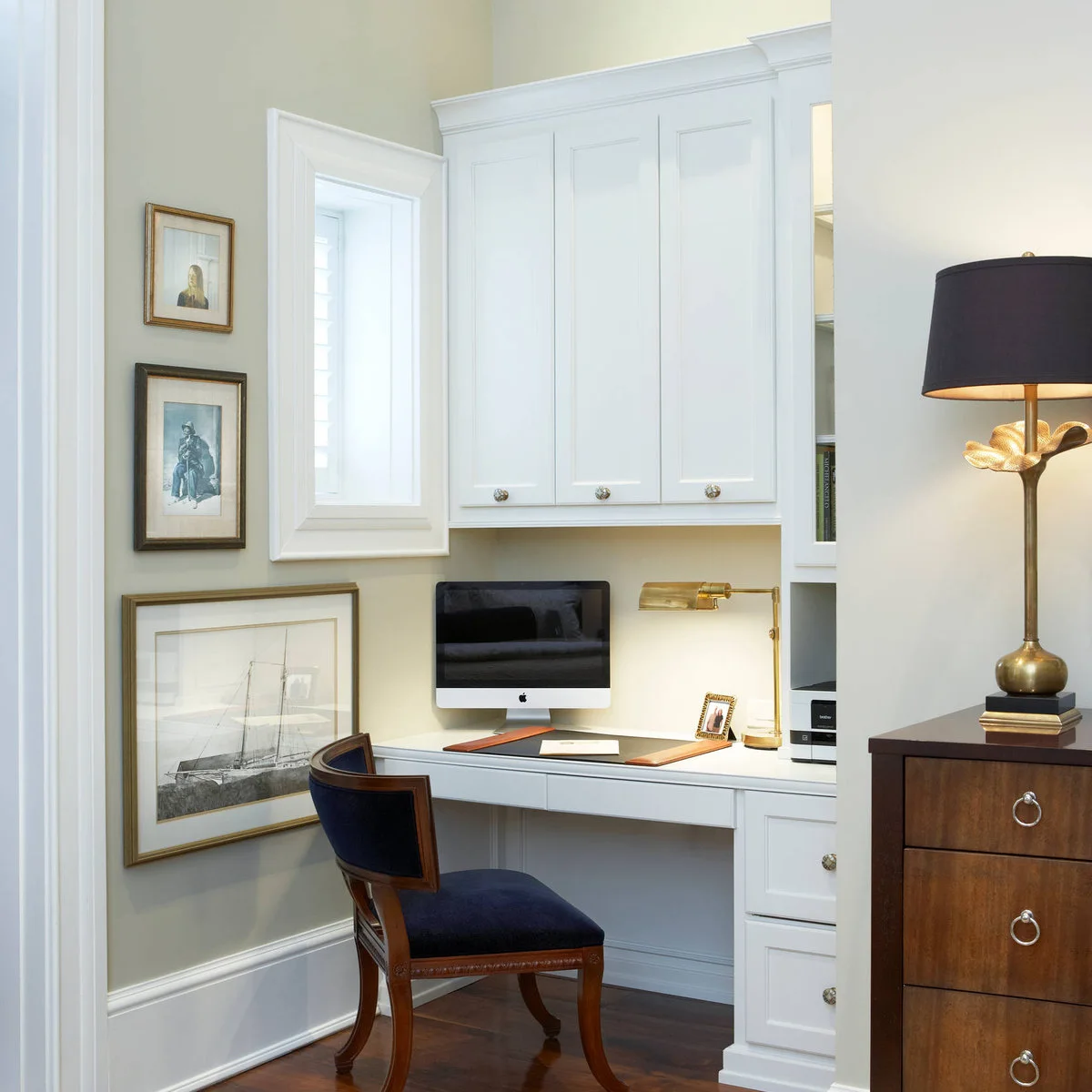
An adjustable lamp sits beside the monitor on this white desk, directing light toward the writing area. Paneled cabinets provide storage above, and a dark chair keeps the seating position distinct. Framed pictures occupy the side wall without using more of the desktop.
Choose a lamp with a base that fits the surface and an arm that reaches your task without touching the screen. Check reflections and shadows while seated. If the desk serves several activities, leave enough free area to open a notebook rather than surrounding the monitor with permanent decorations.
IDEA 12 / 20
Check Reflections before Choosing a Glass Top
 SaveSupport Non AI Creator
Image credit: Project: Henarise Pty Ltd (via Houzz)
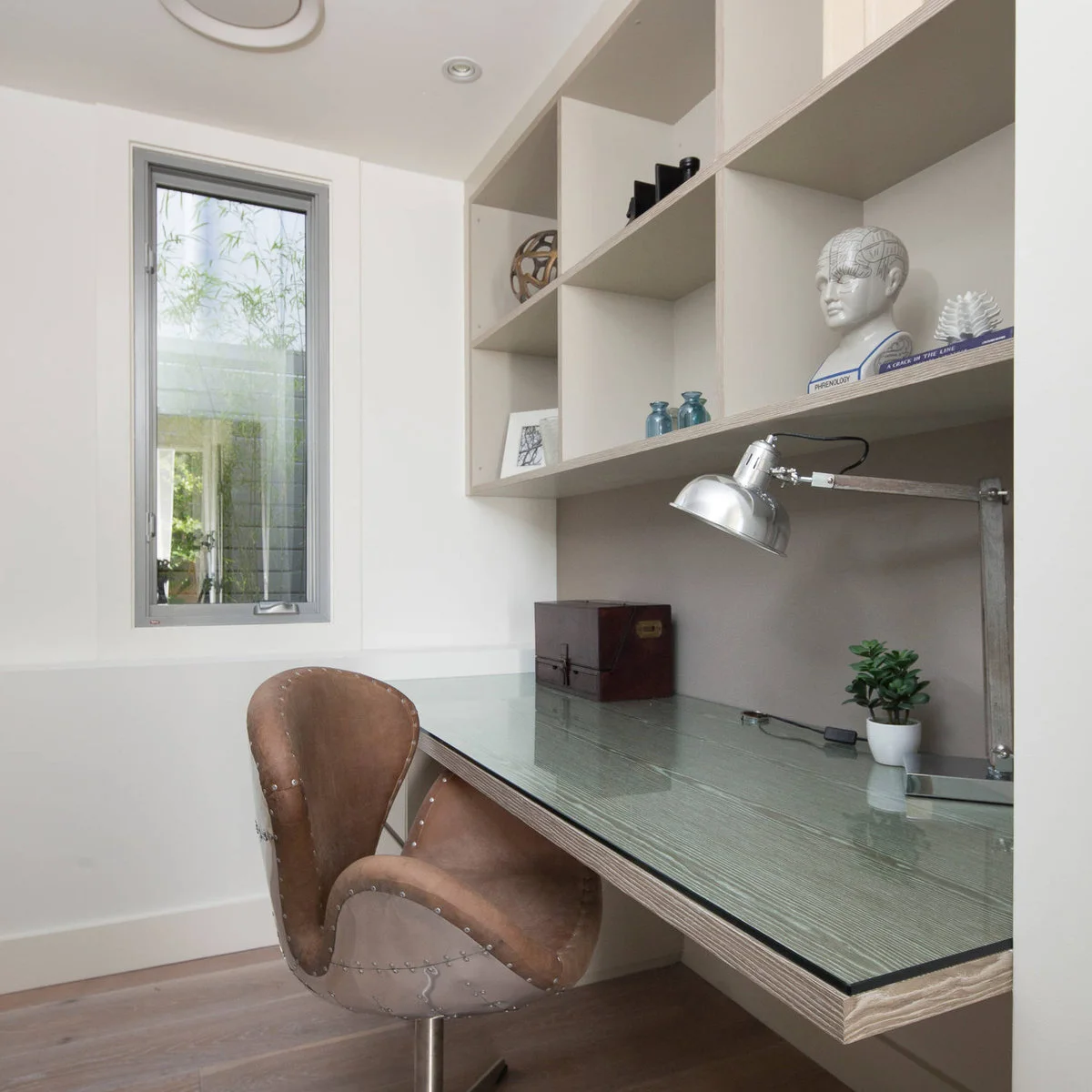
A glass-covered desktop reflects light beneath the open shelving in this small workspace. An adjustable metal lamp reaches across from the right, while the brown chair adds a curved shape beside the straight shelf lines. Most of the surface remains clear for a notebook or laptop.
Glass can make a small surface feel lighter, but fingerprints and reflections are part of the tradeoff. Test the lamp angle and screen position before settling the arrangement. Choose stable, suitable edges and supports, and use a desk mat if writing directly on the smooth surface feels uncomfortable.
IDEA 13 / 20
Mount the Task Light to Free a Corner of the Desk
 SaveSupport Non AI Creator
Source: www.houzz.com
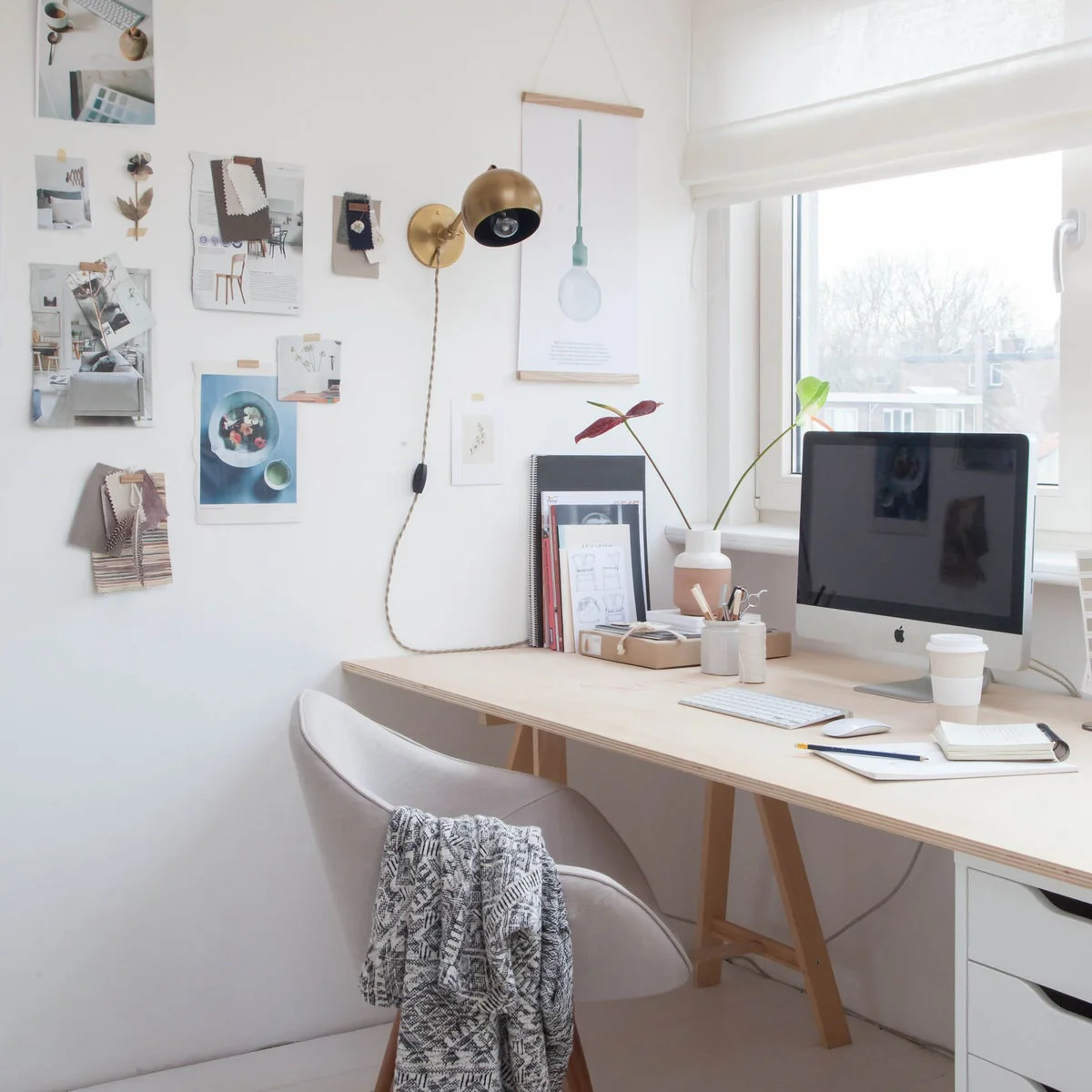
A wall-mounted lamp leaves this pale wood desktop free of a lamp base. The monitor sits near the window, with stationery grouped toward the side. A few papers and fabric samples occupy the adjacent wall, adding a useful reference area above the surface.
Place the light for the actual task and your writing hand rather than centering it purely for appearance. Route the cord against the wall and keep it away from the chair. If glare changes through the day, adjust the blind and screen together before adding brighter lighting.
IDEA 14 / 20
Keep a Shallow Desk Simple beneath Bookshelves
 SaveSupport Non AI Creator
Image credit: Project: Mast & Co. Builders (via Houzz)
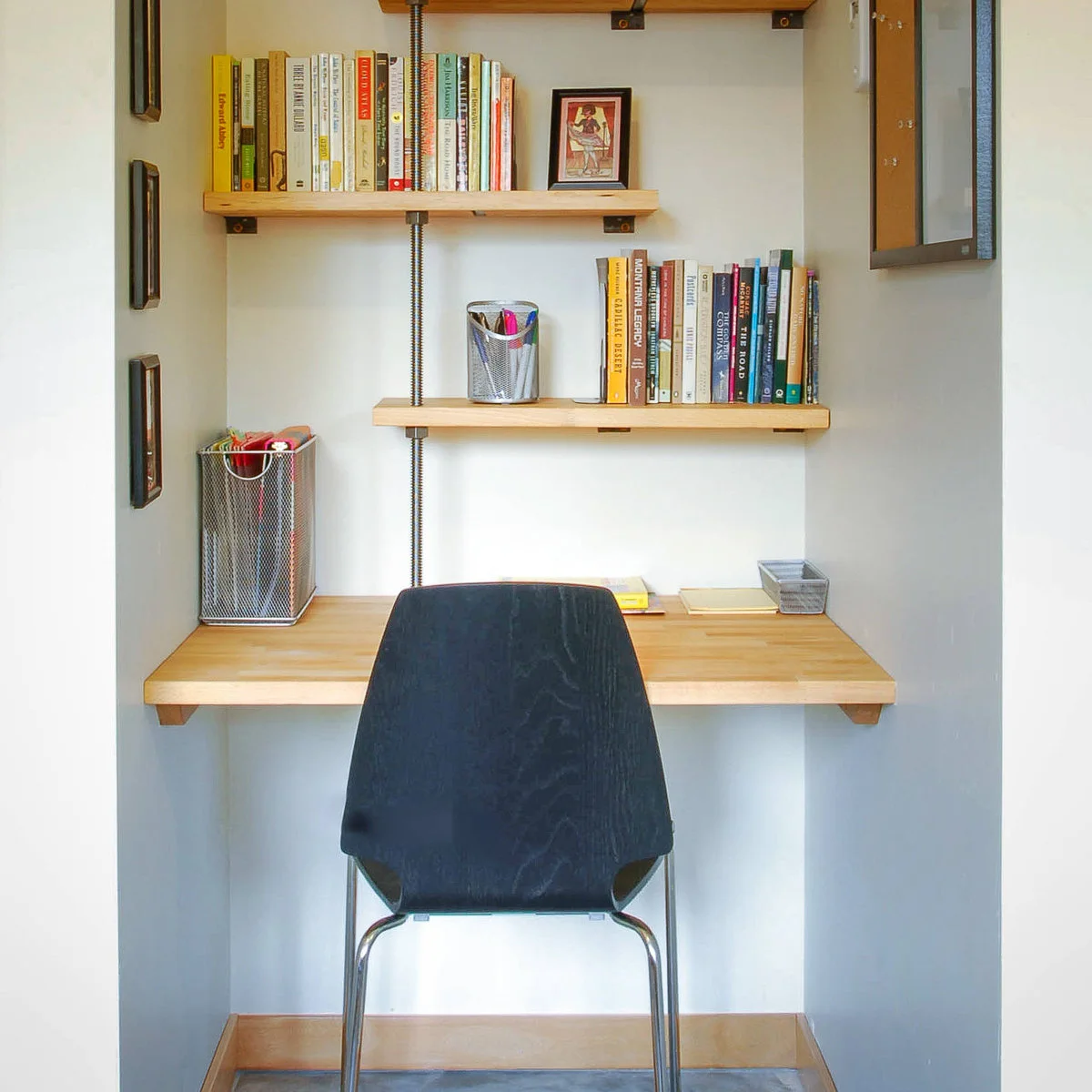
A shallow wood desk spans this small recess, with staggered bookshelves above and a dark chair in front. Mesh holders group papers and pens at the edges. The open space beneath the surface makes the compact station feel less crowded than a full cabinet base.
A shallow desk can suit handwriting or a small device, but it may not leave enough distance for a large monitor. Lay out your equipment at full size before fitting one. Keep book storage secure and avoid positioning heavy items where they could fall directly onto the seated area.
IDEA 15 / 20
Leave the Window Area Clear above the Work Surface
 SaveSupport Non AI Creator
Image credit: Project: Cummings Architecture + Interiors (via Houzz)
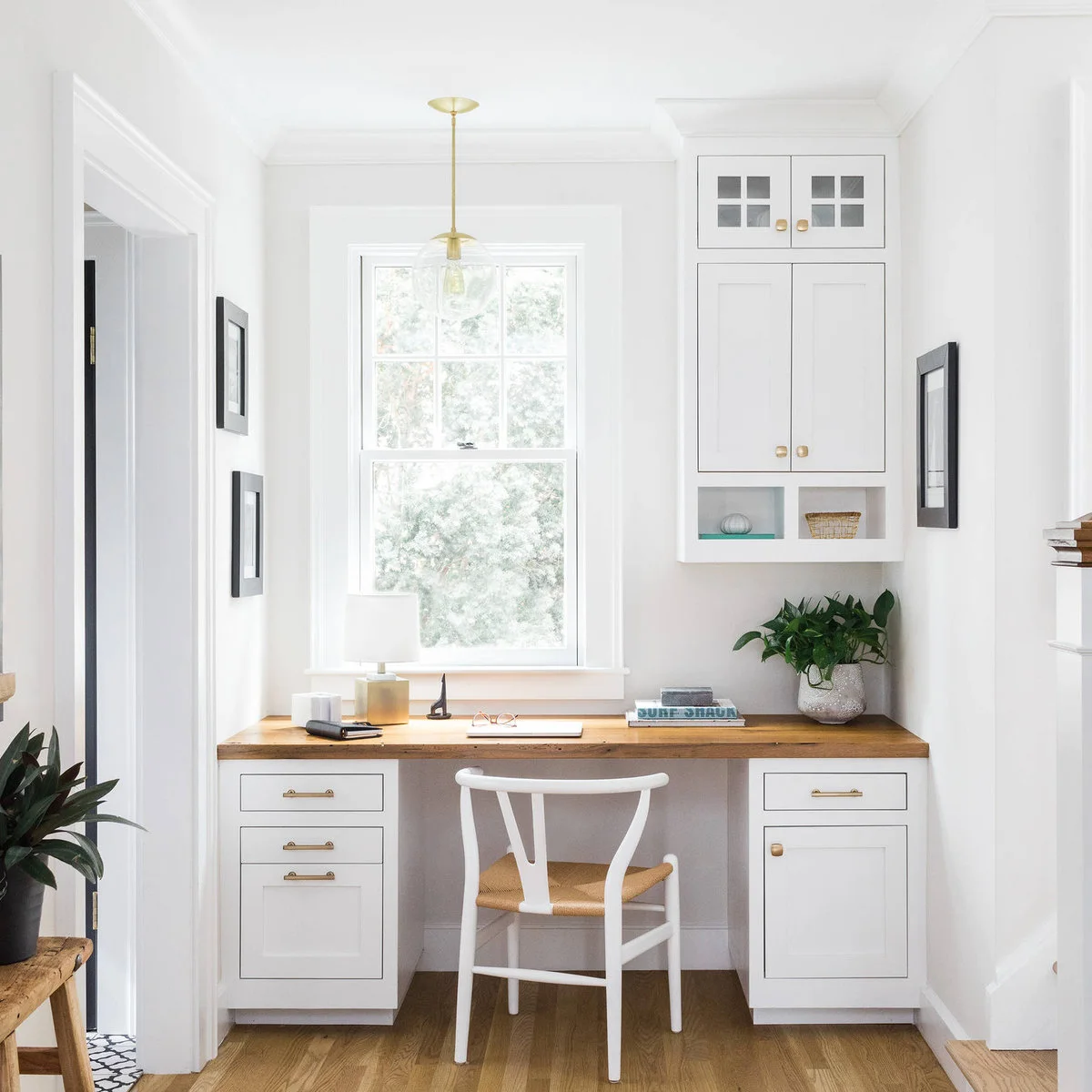
The seated opening lines up with the window above this wood-topped desk. Storage sits to either side, including a tall wall cabinet on the right, while the middle stays comparatively clear. A small lamp and a few objects occupy the outer edges of the worktop.
Check whether facing the window makes the screen difficult to read at different times of day. Keep window handles, ventilation and any required access usable. A compact desk does not benefit from a view if the chair cannot move comfortably or the window cannot be opened without shifting equipment.
PART 04
Choose Details That Suit Daily Work
IDEA 16 / 20
Make a Landing Desk Part of the Circulation Plan
 SaveSupport Non AI Creator
Image credit: Project: McDonald Remodeling (via Houzz)
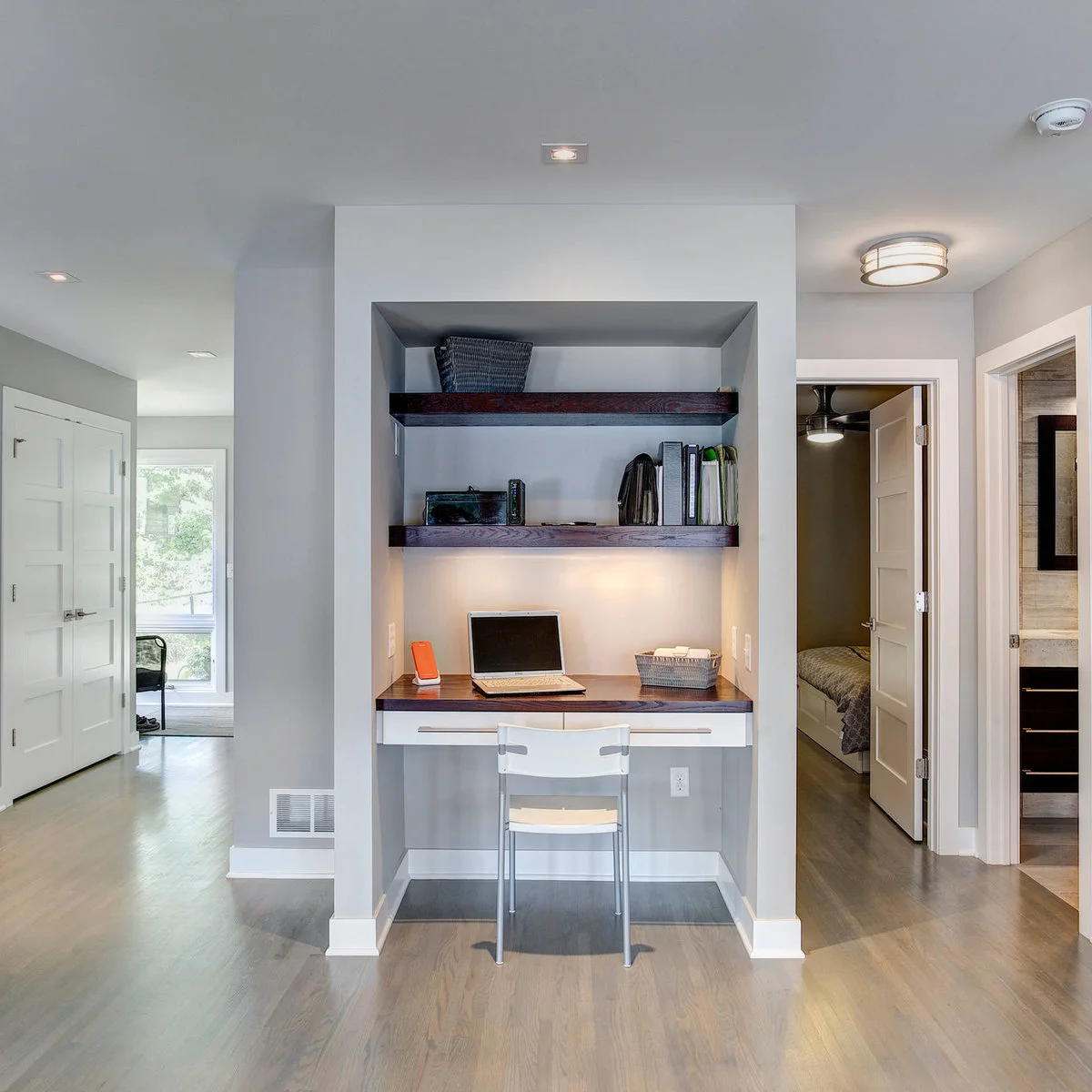
A small recessed work surface sits between several doorways, with a laptop centered beneath two wood shelves. The shallow drawer keeps storage close to the desktop. The chair fits mostly within the recess, helping distinguish the working position from the surrounding floor.
Test the route when someone is seated, not only when the chair is pushed in. A landing or passage desk should never block required circulation or emergency access. Keep calls and noisy tasks in mind too: a neatly fitted surface in a busy location may still be better for occasional work.
IDEA 17 / 20
Try a Small Writing Desk before Ordering Built-Ins
 SaveSupport Non AI Creator
Image credit: Project: JWT Associates (via Houzz)
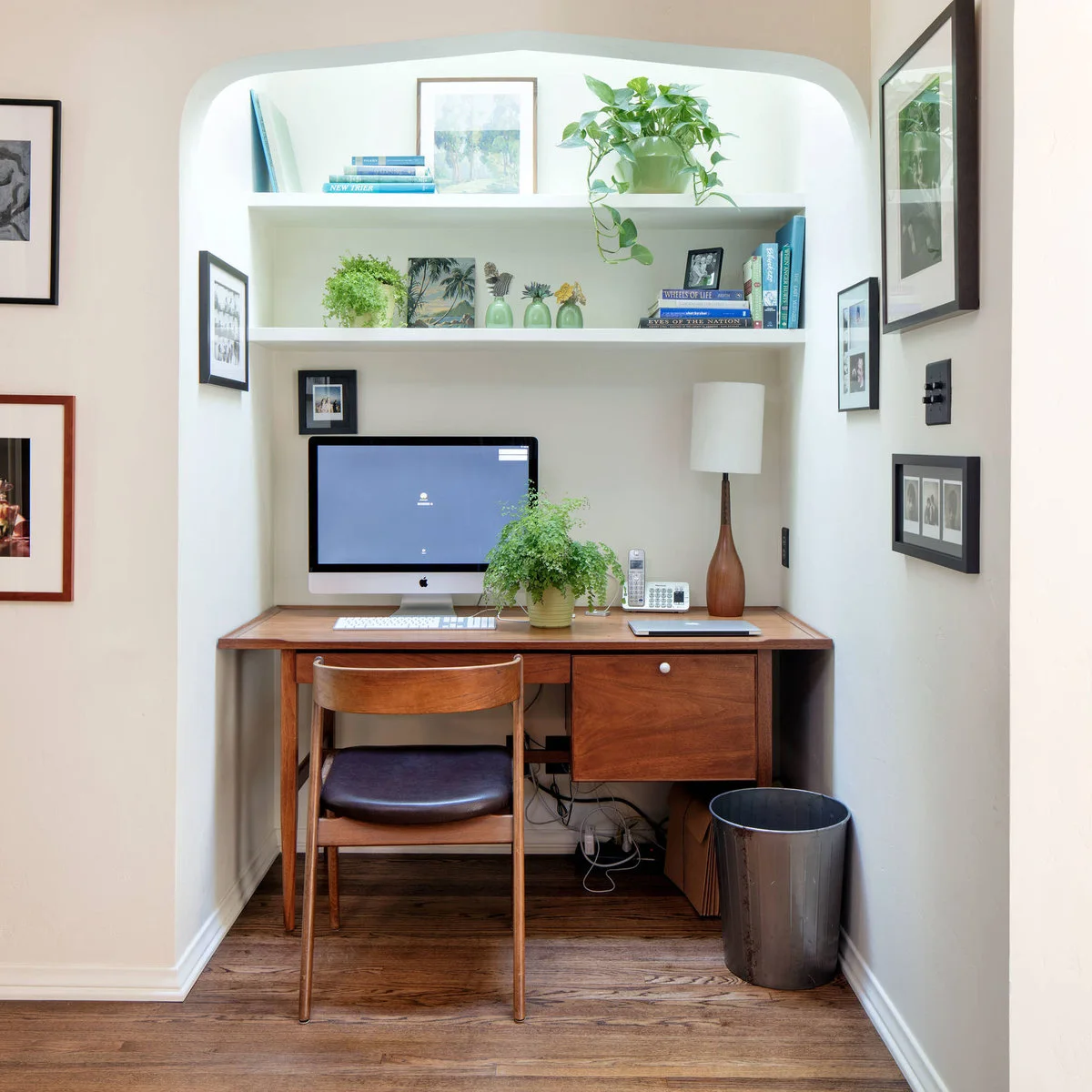
A freestanding wood writing desk fits beneath the curved top of this alcove. White shelves use the space above, while a monitor and lamp occupy the desktop. The desk’s single larger drawer sits to one side, leaving the chair opening clear.
A small writing desk lets you test a location before committing to fitted cabinetry. Measure the chair opening and worktop height carefully, and plan where equipment cables will go. Keep plants away from electrical items when watering, and use storage elsewhere if adding boxes under the desk would compromise legroom.
IDEA 18 / 20
Use Built-In Light beneath a Low Shelf
 SaveSupport Non AI Creator
Image credit: Project: Distinctive Kitchen Interiors (via Houzz)
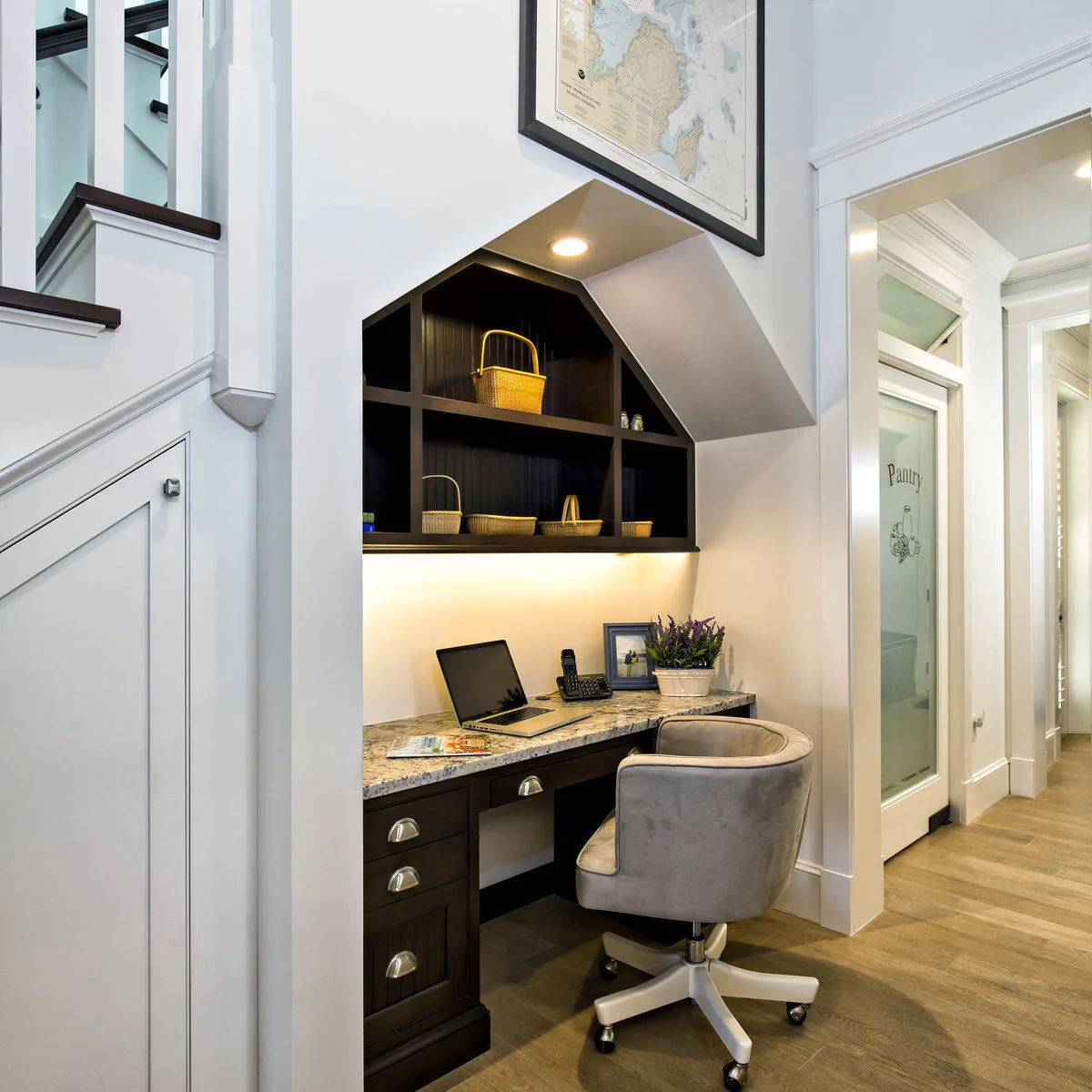
Light beneath the dark shelf brightens this small desk under the stairs. The pale patterned worktop contrasts with the darker drawers and backing, making the working surface easy to distinguish. A gray swivel chair occupies the opening near the taller side of the recess.
Fit lighting so its source does not shine directly into your eyes while seated. Check the lowest part of the slope and the shelf edge as you turn or stand. A small work surface can borrow storage above, but it still needs a comfortable clear zone for your head and hands.
IDEA 19 / 20
Keep Current Papers in Small Desktop Cubbies
 SaveSupport Non AI Creator
Image credit: Project: Erica Broberg Smith Architect PLLC (via Houzz)
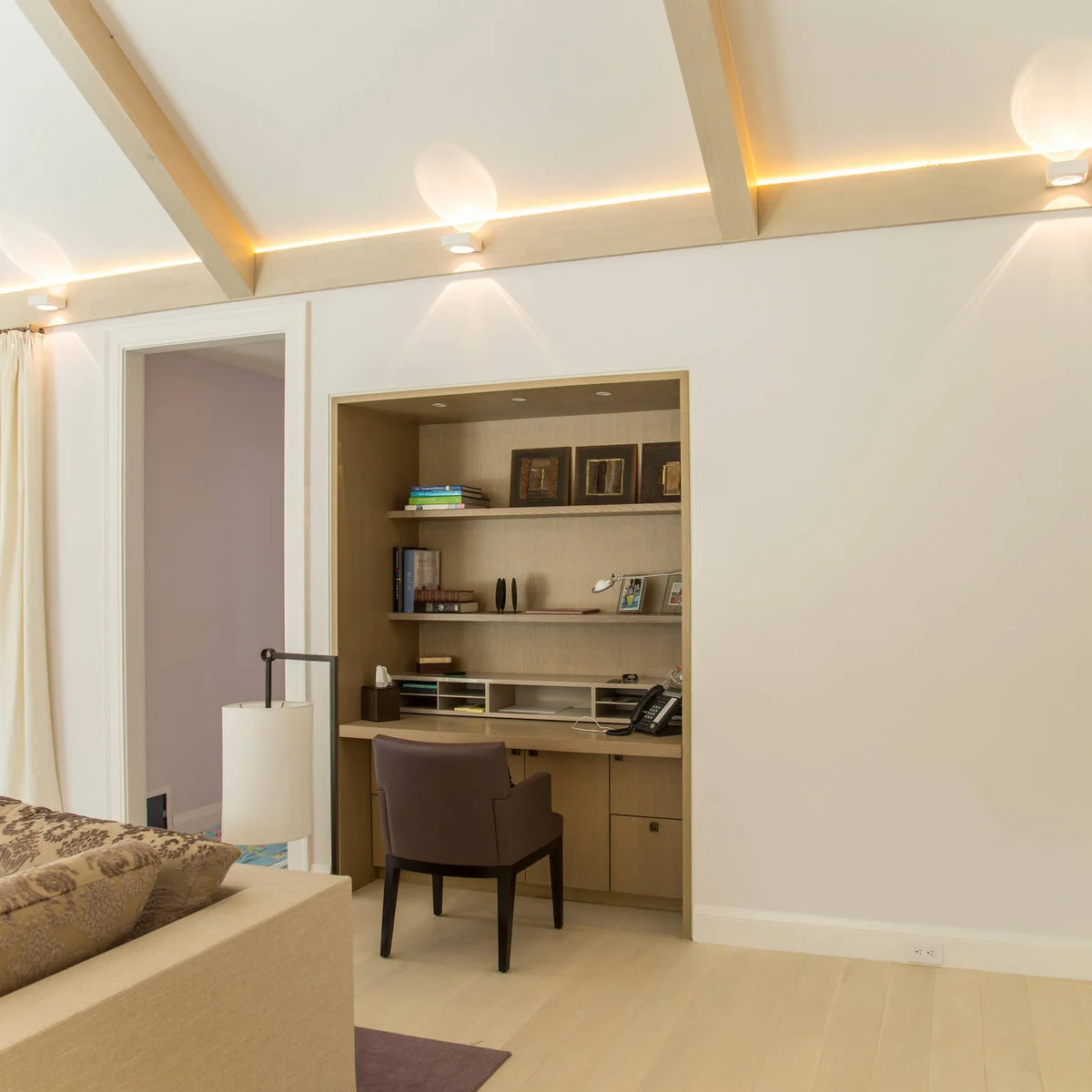
Shallow cubbies line the back of this recessed desk, giving current papers a defined place below the shelves. A telephone sits at one end and a brown chair marks the seated position. The recess keeps the station separate from the sofa beside it without adding another room.
Use paper cubbies for active categories, such as items to read or forms to return, rather than indefinite storage. Check that their depth leaves a useful strip of desktop in front. Cozy home office ideas can help make a shared living-space workstation feel comfortable without surrounding it with extra furniture.
IDEA 20 / 20
Use Trays to Keep a Small Desk Ready for Work
 SaveSupport Non AI Creator
Image credit: Project: Michael K Chen Architecture (via Houzz)
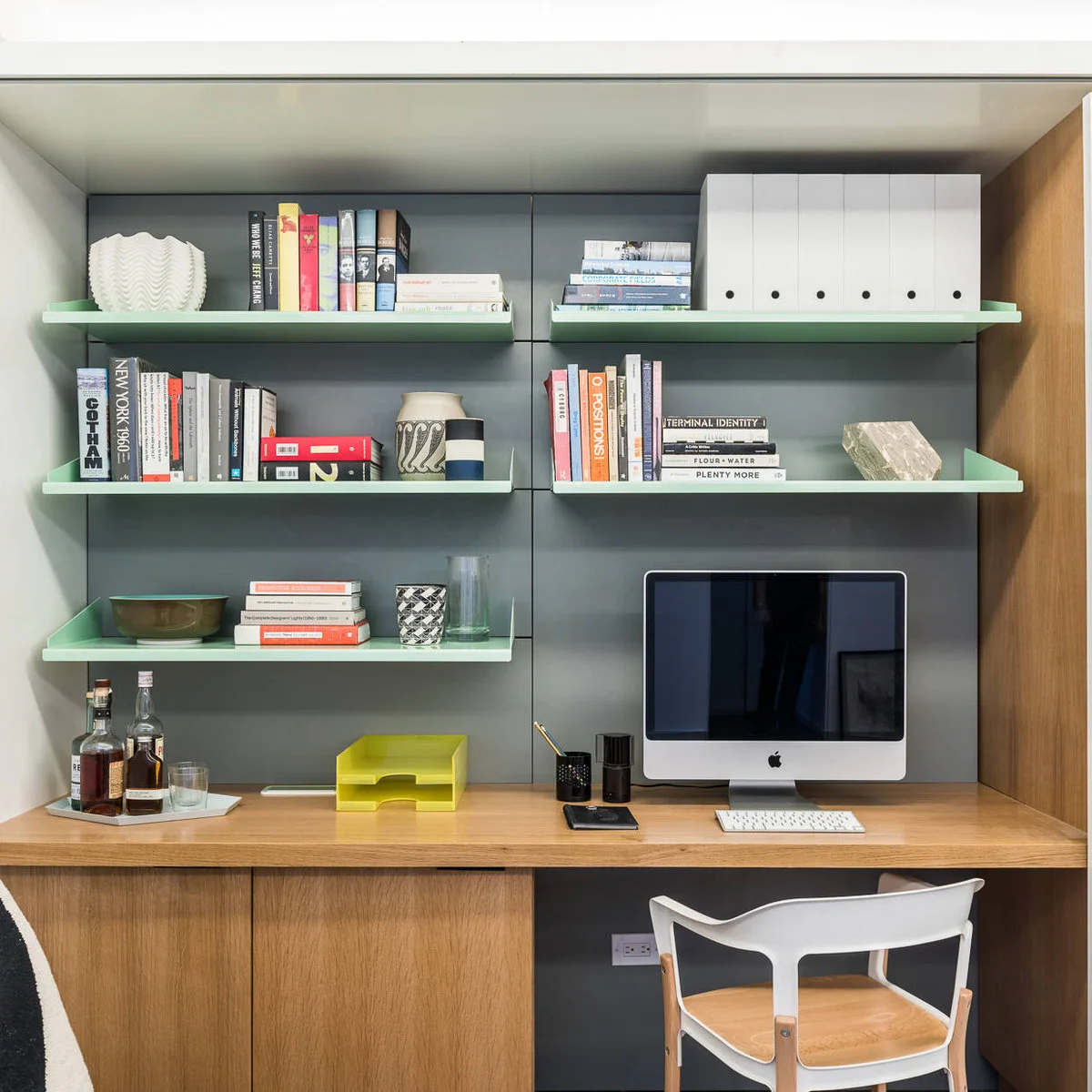
Yellow paper trays group loose items to one side of the monitor on this wood desk. Green shelves add storage above the surface, while books and files stay largely off the working area. The chair opening occupies one side of the fitted base instead of the full width.
Choose trays around the papers and supplies you need, leaving enough space for your keyboard, mouse and a notebook. Keep drinks on a separate stable surface rather than copying every styled object shown. A short clearing routine is often more useful than adding another organizer to an already crowded desk.
BRING IT ALL TOGETHER
Choose the Smallest Desk That Still Works
Measure your equipment, seating position and storage needs together. The right compact desk leaves room for your legs, supports the tasks you do and does not interrupt access around it. A narrow top is not a space saving success if it forces your keyboard, papers or chair into an uncomfortable position.
Start with a usable surface, suitable seating and practical light. Add storage only for the items that need to stay close. Keeping the desk easy to clear helps a small corner remain useful as your work changes, without turning the surrounding room into an extension of the desktop.