A cozy home office should feel welcoming without making work awkward. Warm surfaces, a comfortable chair and lighting you can adjust often matter more than extra decoration. Start with the tasks you need to do, then choose the softer details around a useful desk and accessible storage.
These photographed rooms show several approaches, from pale built-in corners to darker studies with wood furniture. Compare the proportions and placement rather than copying every object. Keep space for your actual equipment, test the chair at the desk, and leave clear routes to doors, windows and cupboards.
PART 01
Bring Warmth to the Working Area
IDEA 01 / 20
Start with Wood and a Simple Window Shade
 SaveSupport Non AI Creator
Image credit: Project: Jute Interior Design (via Houzz)
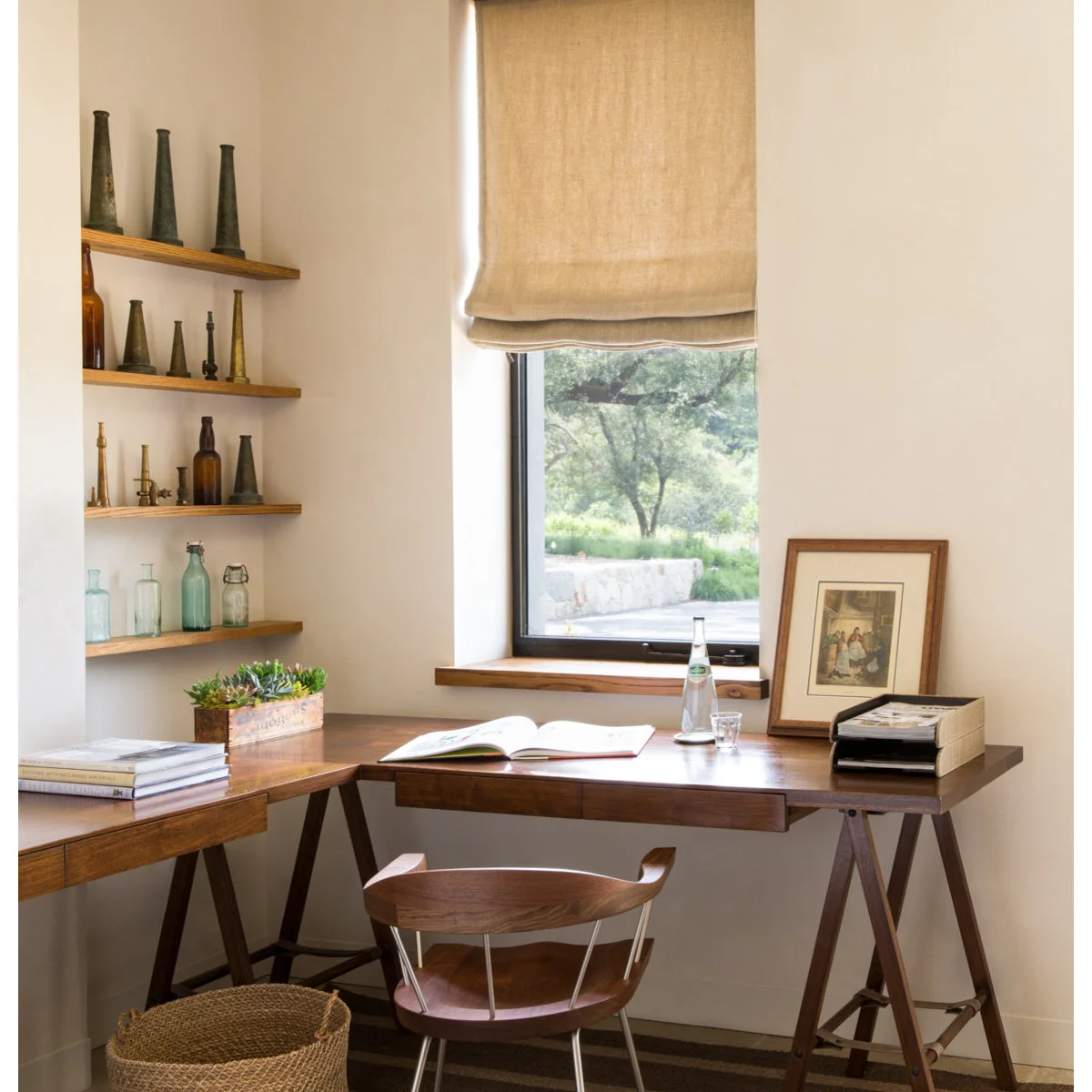
Wood trestle desks meet beneath a tall window in this pale office corner. A fabric shade softens the window, while a woven-seat chair and floor basket add texture near the working area. The desk surface holds a few useful pieces rather than a large collection of decorations.
Test the chair against the desk height before choosing it for appearance alone. Leave enough clear surface for your keyboard, notebook or other daily tools. Keep frequently used papers in one accessible organizer, and reserve the small shelves for a limited collection that you can dust without rearranging the whole room. Compare these home desk ideas if you need a larger return, shared work surface or a separate place for paperwork.
IDEA 02 / 20
Pair a Wood Desk with a Deep Gray Wall
 SaveSupport Non AI Creator
Image credit: Project: Angela Ballard (via Houzz)
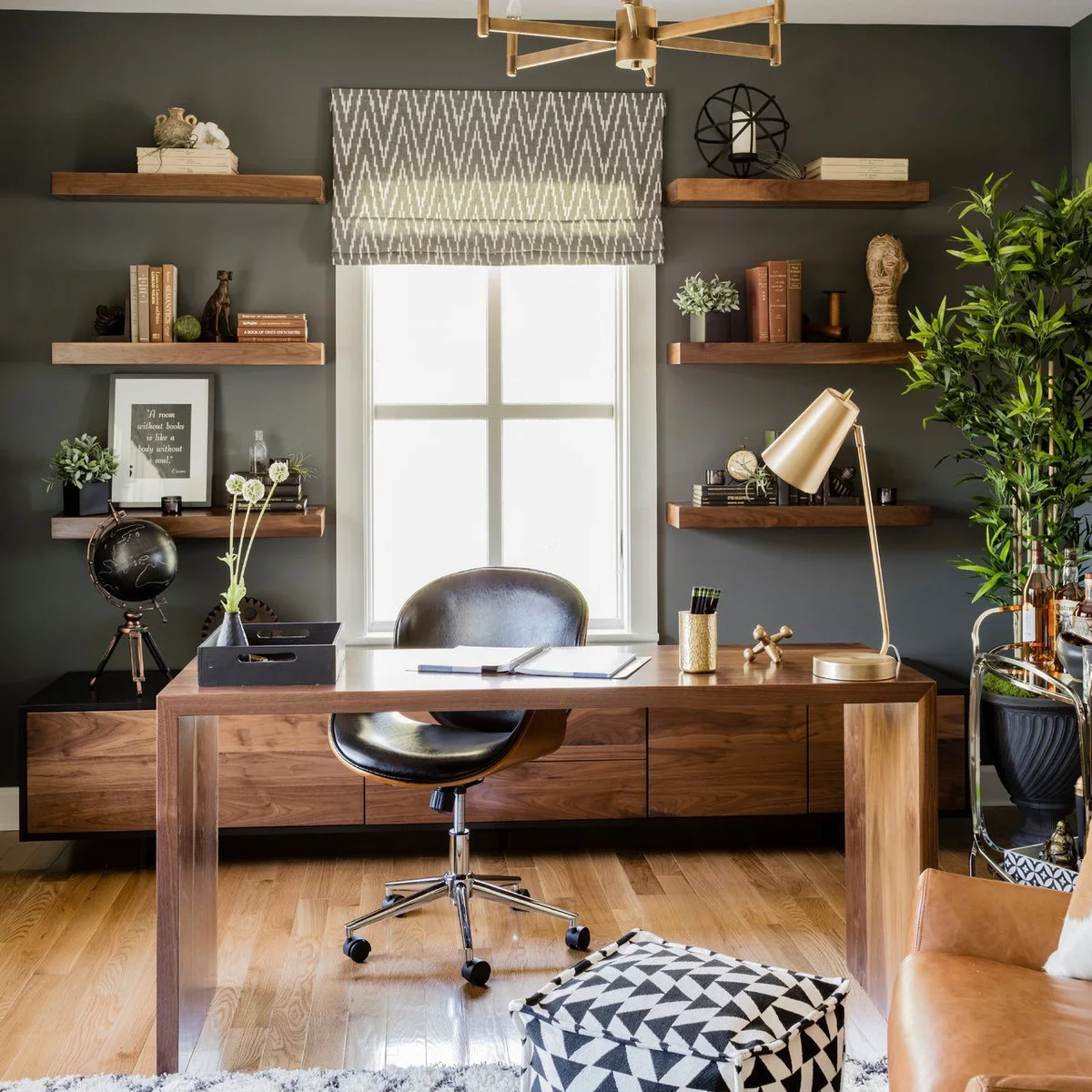
A wood desk stands in front of a deep gray wall with matching floating shelves. A gold-toned task lamp and the pale window opening break up the darker background. The chair and low storage keep the arrangement relatively simple, allowing the wood grain to supply much of the room’s warmth.
Compare the wall color with a sample of the desk finish before painting. Keep adjustable lighting available for work instead of depending on the window behind the chair. If you add a rug, check that the chair can move over it easily and that its edges do not obstruct the route around the desk.
IDEA 03 / 20
Keep a Wood Ceiling above Dark Cabinetry
 SaveSupport Non AI Creator
Image credit: Project: Magleby Construction (via Houzz)
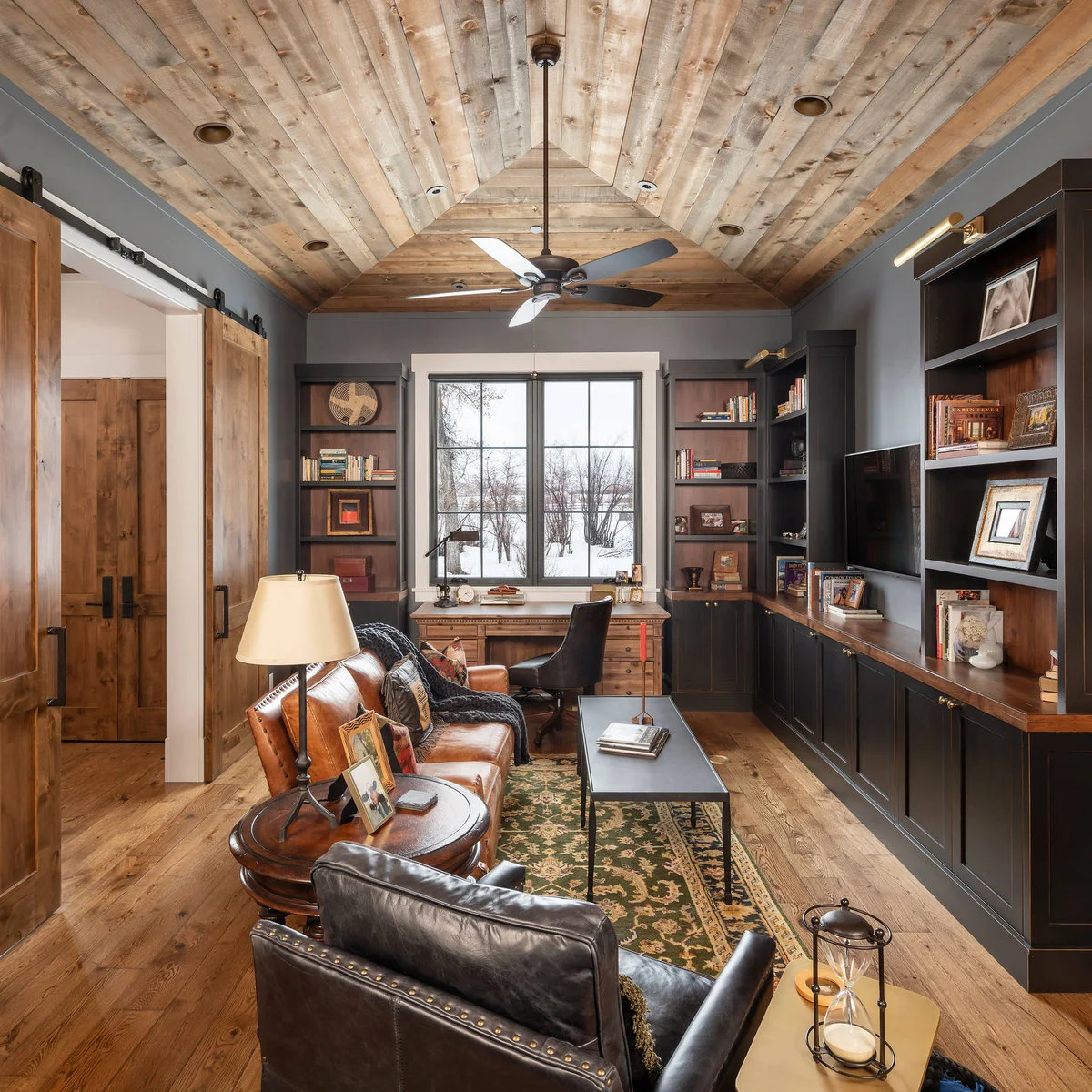
A pale wood ceiling runs above dark cabinetry and a wood desk at the far window. A brown sofa and patterned rug create a separate sitting area, while table and desk lamps add smaller light sources. The room repeats wood in several places without making every furniture surface identical.
Decide which wood surfaces already belong in the room before buying more. Choose additional finishes that relate without needing an exact match. Keep the sofa only if the desk chair and storage doors remain easy to use; cozy home offices need usable floor space as much as they need a comfortable place to pause.
IDEA 04 / 20
Let a Book Collection Warm a Wood-Lined Study
 SaveSupport Non AI Creator
Image credit: Project: Paul Kelley Architecture (via Houzz)
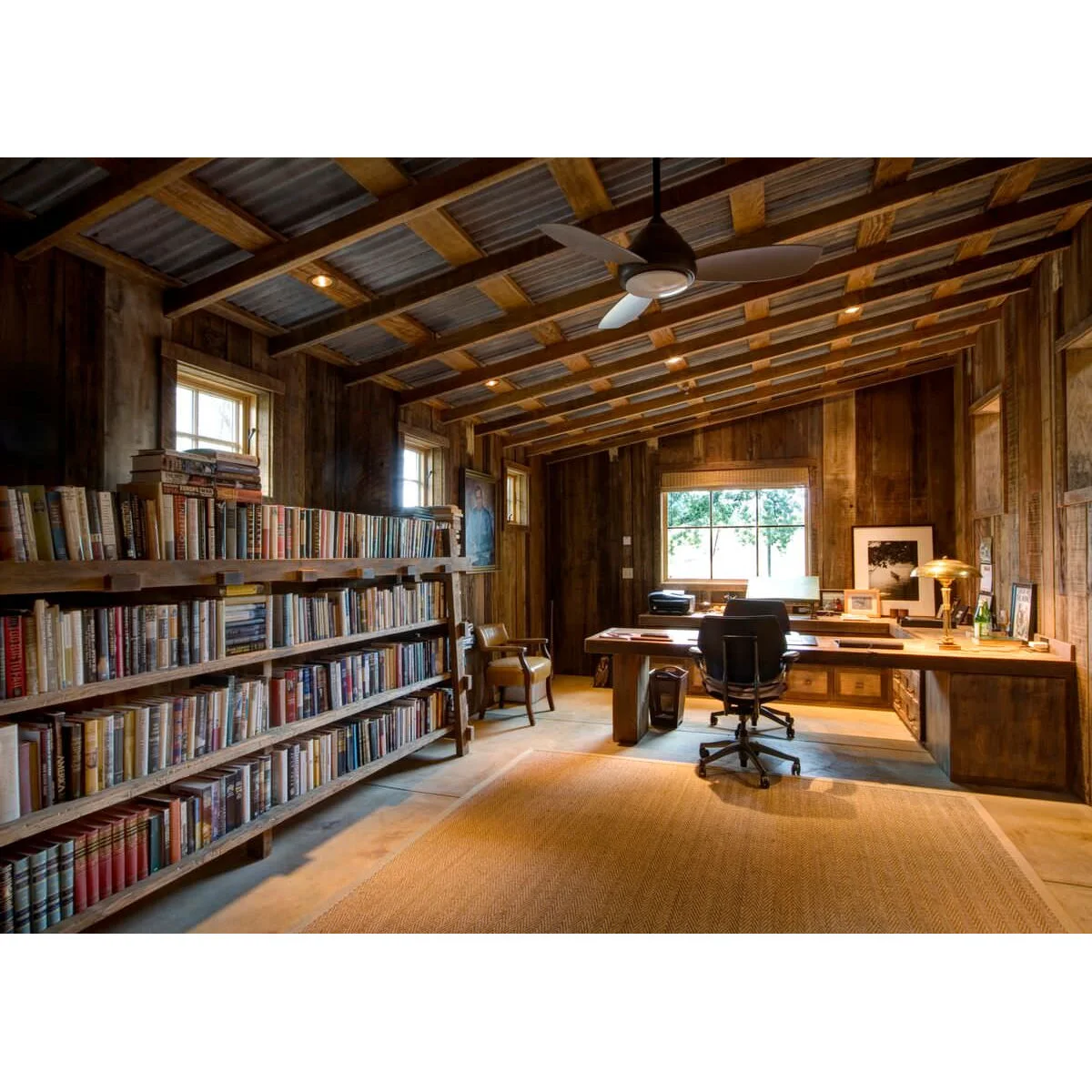
A long low bookcase fills one side of this wood-lined study, with the desk positioned near the far window. The pale rug separates the working area from the darker boards. Books supply a varied pattern along the wall, allowing the desk itself to remain comparatively uncluttered.
Store the books you reach for most at comfortable heights, with less-used volumes elsewhere. Check shelf capacity before filling a long run with heavy books. Add a focused desk light for evening work and keep the chair route clear of stacked papers, so the room remains practical despite its collected library character.
IDEA 05 / 20
Use a Wood Backing to Define a Shared Desk
 SaveSupport Non AI Creator
Image credit: Project: Vita Design Group (via Houzz)
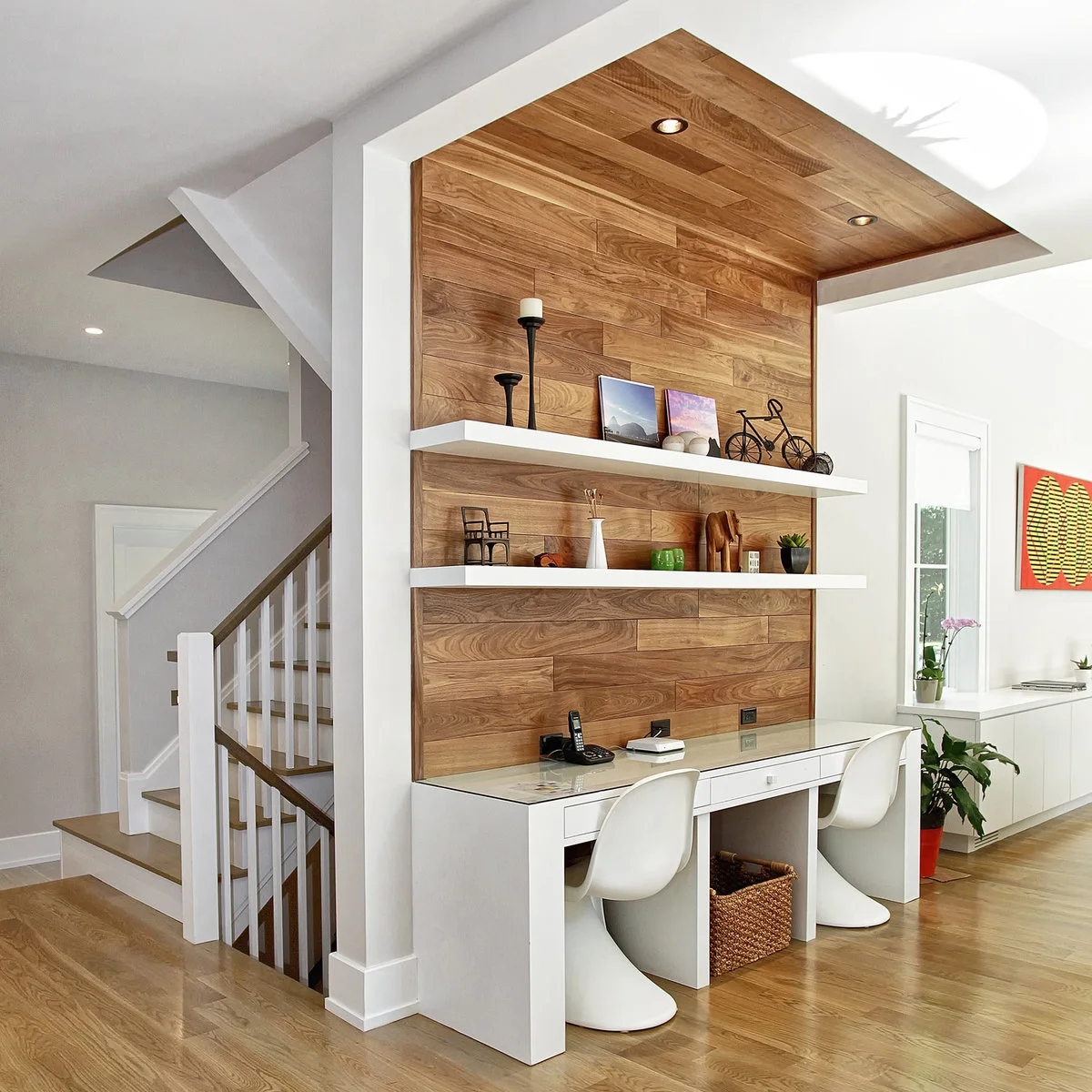
A wood backing continues over the recessed ceiling above this shared white desk. Two white chairs sit below simple shelves, while a basket occupies the space between them. The wood supplies a concentrated warm surface, separating the work area from the adjoining stairs and pale room.
Allocate a real working width to each person before deciding that a long desk can serve two. Include the equipment and chargers both users need, keeping cables out of the shared leg space. Wall paneling ideas offer related ways to use one defined surface without covering every wall in the room.
PART 02
Add Softness without Crowding the Desk
IDEA 06 / 20
Repeat a Soft Blue in Seating and Walls
 SaveSupport Non AI Creator
Image credit: Project: Lily Mae Design (via Houzz)
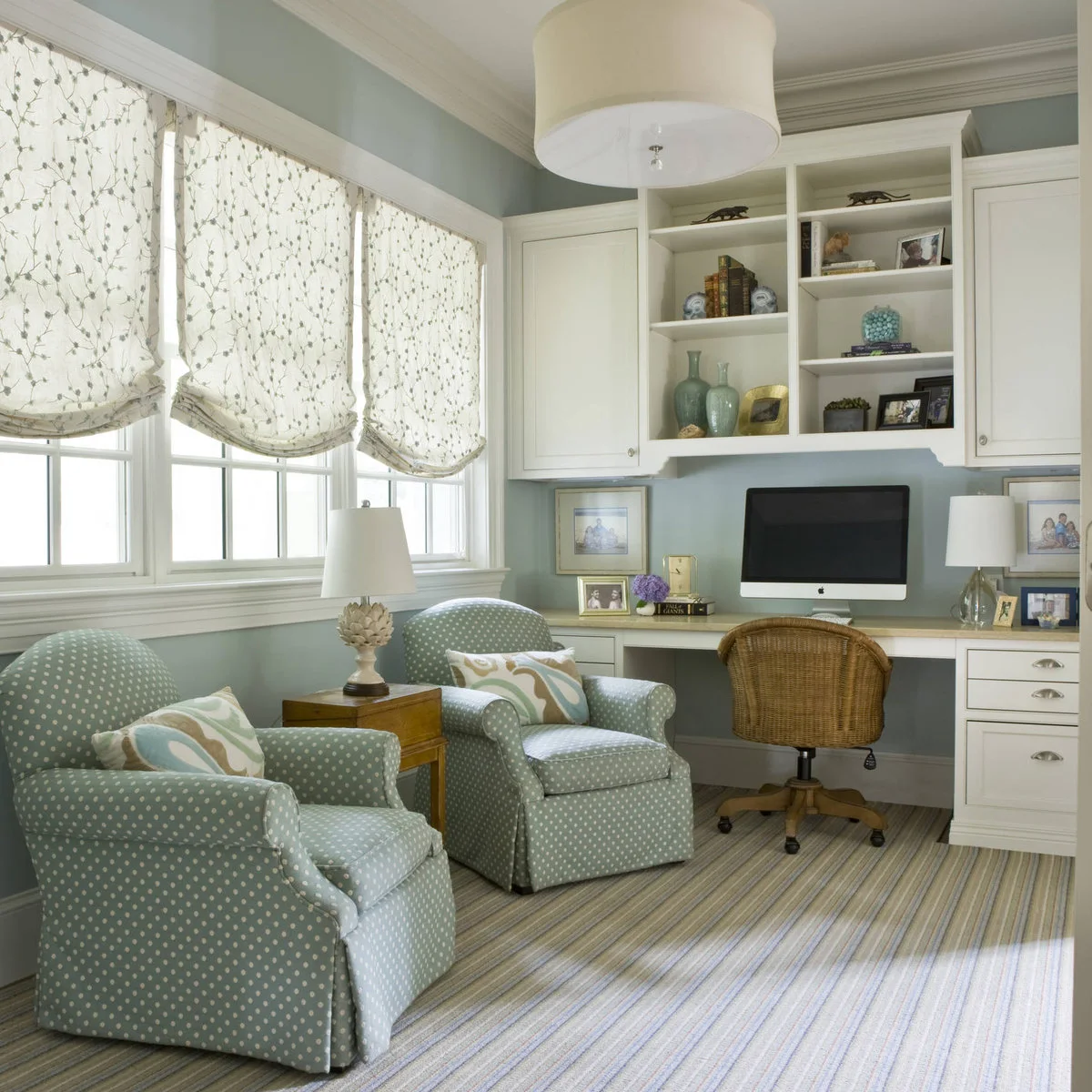
Soft blue walls connect the desk area with two patterned armchairs near the windows. White built-in storage keeps the edges light, while fabric shades repeat a smaller pattern above. A wood table between the chairs adds warmth without needing another large piece beside the working position.
Use the sitting area for reading or a pause away from the screen, with a chair suited to your desk for regular work. Keep enough space between both areas to move comfortably. Choose washable or serviceable upholstery according to daily use, especially if this office doubles as a family sitting room.
IDEA 07 / 20
Add a Cushioned Bench beneath the Window
 SaveSupport Non AI Creator
Image credit: Project: Reynolds Architecture- Design & Construction (via Houzz)
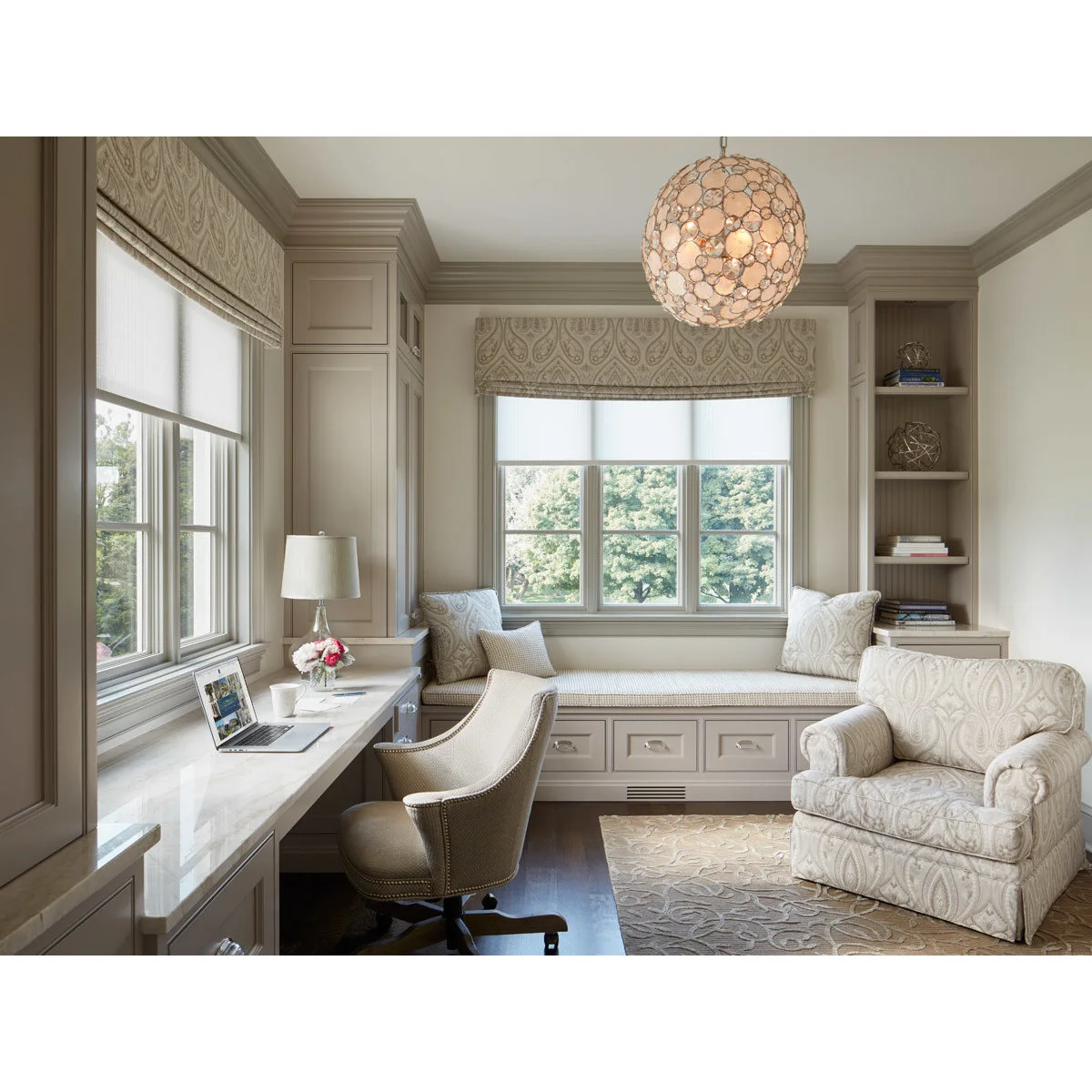
A long desk runs beneath one window, with a cushioned bench under the window opposite. Pale upholstery, patterned shades and a separate armchair make the office feel like a furnished room rather than a desk surrounded by storage. Drawers beneath the bench add a second practical purpose to the seat.
Check that the desk chair can pull back without catching the armchair or rug. Keep bench cushions easy to remove when the drawers need access. Choose the number of extra seats around how you use the room; one comfortable reading place may be enough if the office is narrower than this example.
IDEA 08 / 20
Give a Compact Desk a Daybed Companion
 SaveSupport Non AI Creator
Image credit: Project: Anjali Pollack Design (via Houzz)
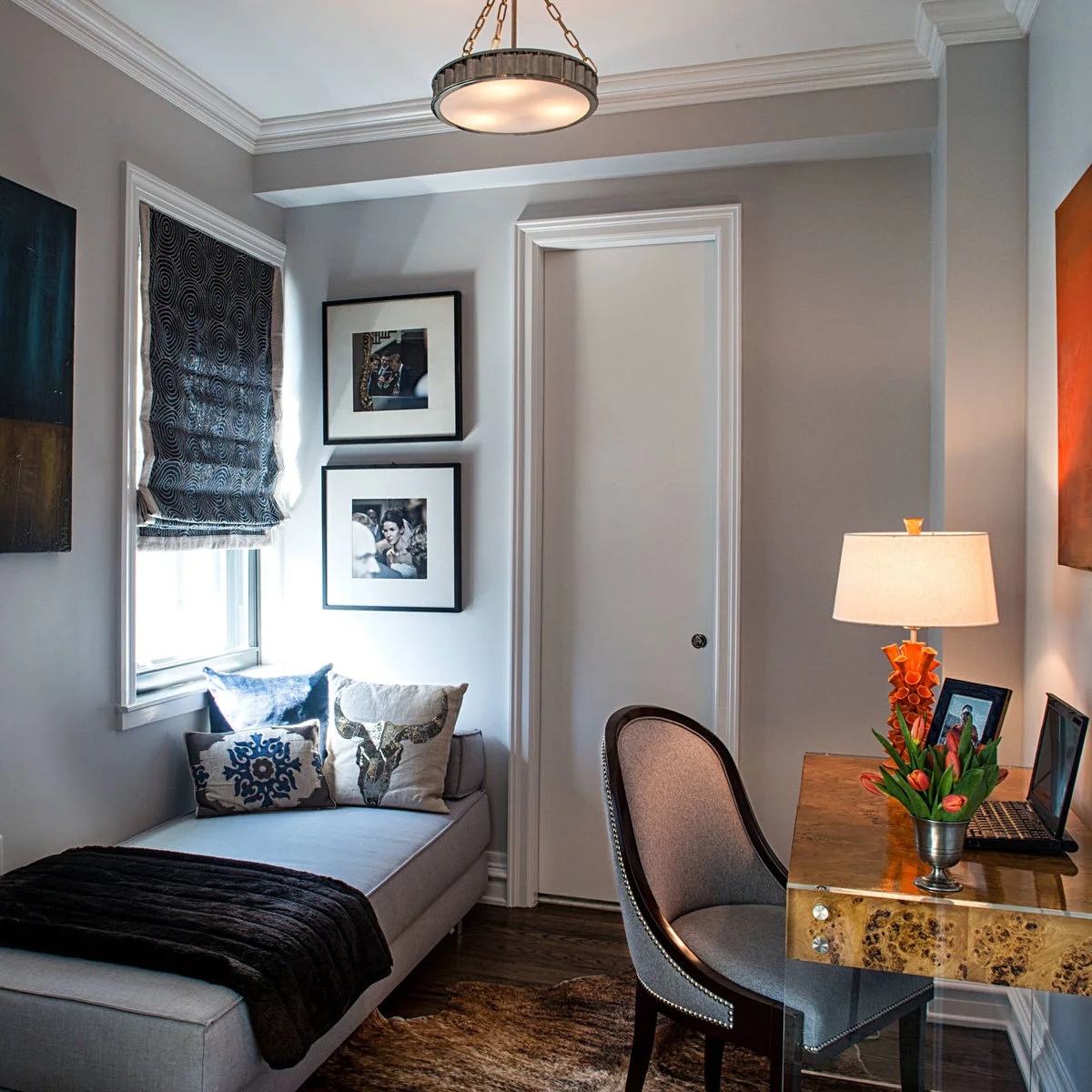
A pale daybed occupies the window side of this compact gray office, with a wood desk opposite. An orange lamp adds a warm accent near the laptop. The darker throw and patterned cushions define the daybed without introducing a large second furniture color into the small room.
Measure the desk-chair clearance before choosing the depth of a daybed. Keep the lamp and laptop enough room by limiting the decorative objects on the worktop. If this is also a guest room, plan where everyday work supplies will go when the bed is used rather than shifting them onto the floor.
IDEA 09 / 20
Use Curtains to Give a Nook Its Own Boundary
 SaveSupport Non AI Creator
Image credit: Project: Carolyn Reyes (via Houzz)
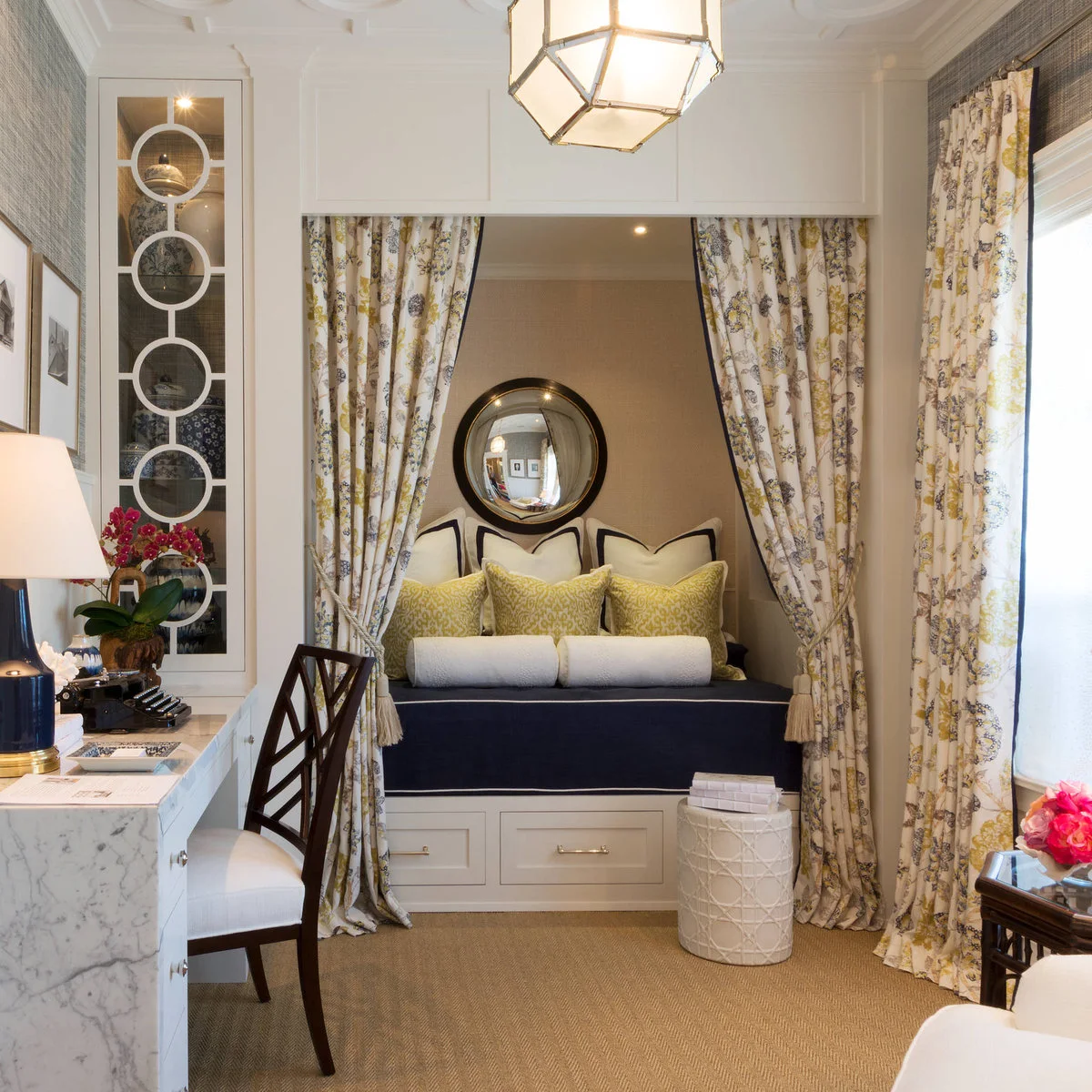
Patterned curtains frame a navy upholstered nook beside a small writing desk. Yellow cushions repeat colors from the fabric, while the pale desk and storage keep the work area lighter. The curtains give the seating its own outline without requiring another solid partition across the room.
Keep curtain movement clear of the desk and floor route, and choose a fabric you can maintain. Use the desk for the tasks its size supports rather than assuming a writing table will accommodate a large workstation. Reserve a clear section for working, storing decorative pieces elsewhere when they compete with daily equipment.
IDEA 10 / 20
Put Shared Desks around a Comfortable Center
 SaveSupport Non AI Creator
Image credit: Project: Johnston Home Interior Design (via Houzz)
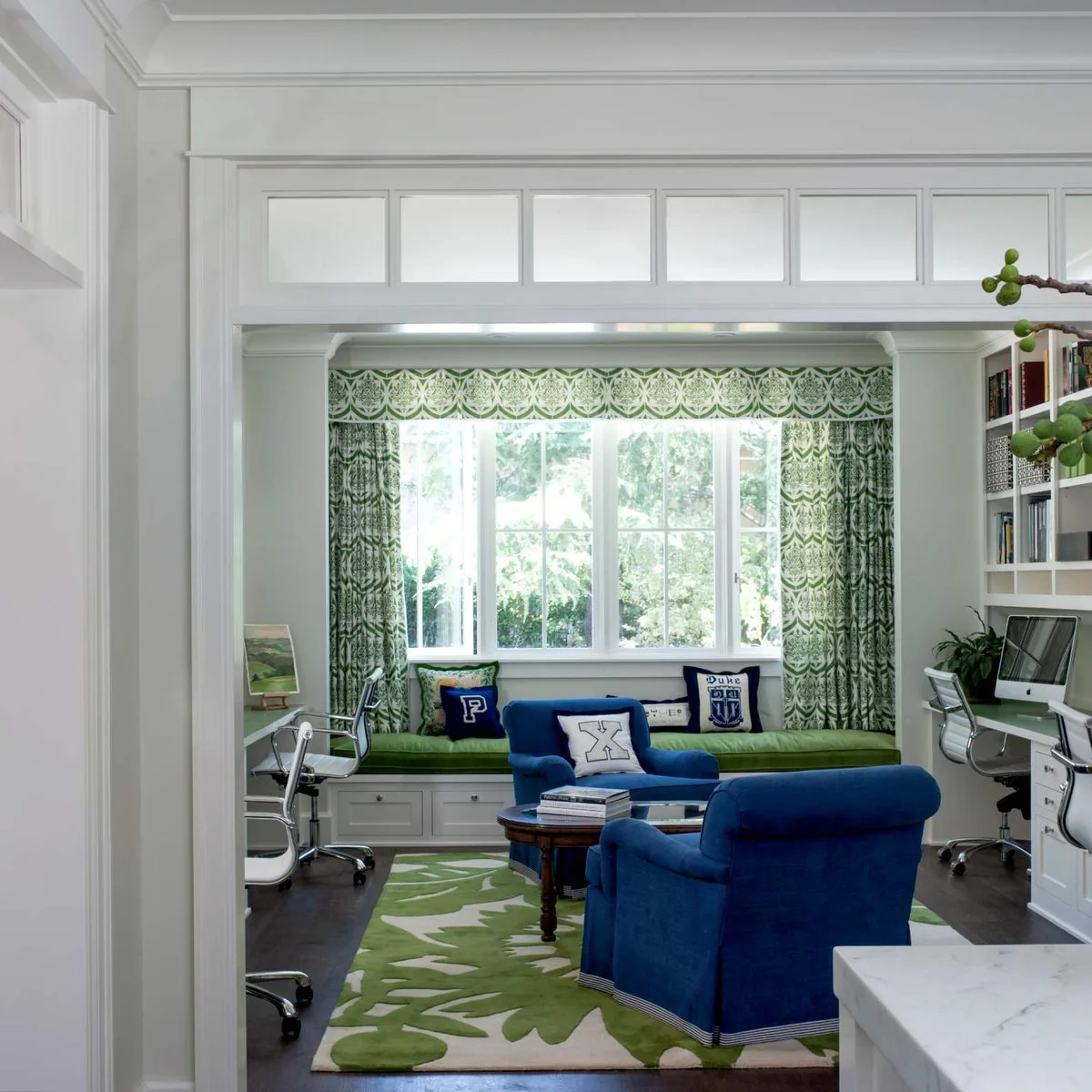
Desks line the sides of this office, leaving two blue armchairs and a small table in the middle. Green fabric on the window seat repeats the curtains and rug. The central seating gives the room a place for conversation while the workstations retain their own edges against the walls.
Check the shared circulation with every desk chair occupied. Keep the central seating group smaller if it narrows access to drawers or makes it difficult to pass behind someone working. Agree on storage and lighting needs for each user before choosing matching furniture, since a shared room may need different equipment at each position.
PART 03
Make Storage Part of the Comfortable Room
IDEA 11 / 20
Keep a Small Desk beside Familiar Books
 SaveSupport Non AI Creator
Image credit: Project: Twelve Chairs Interiors (via Houzz)
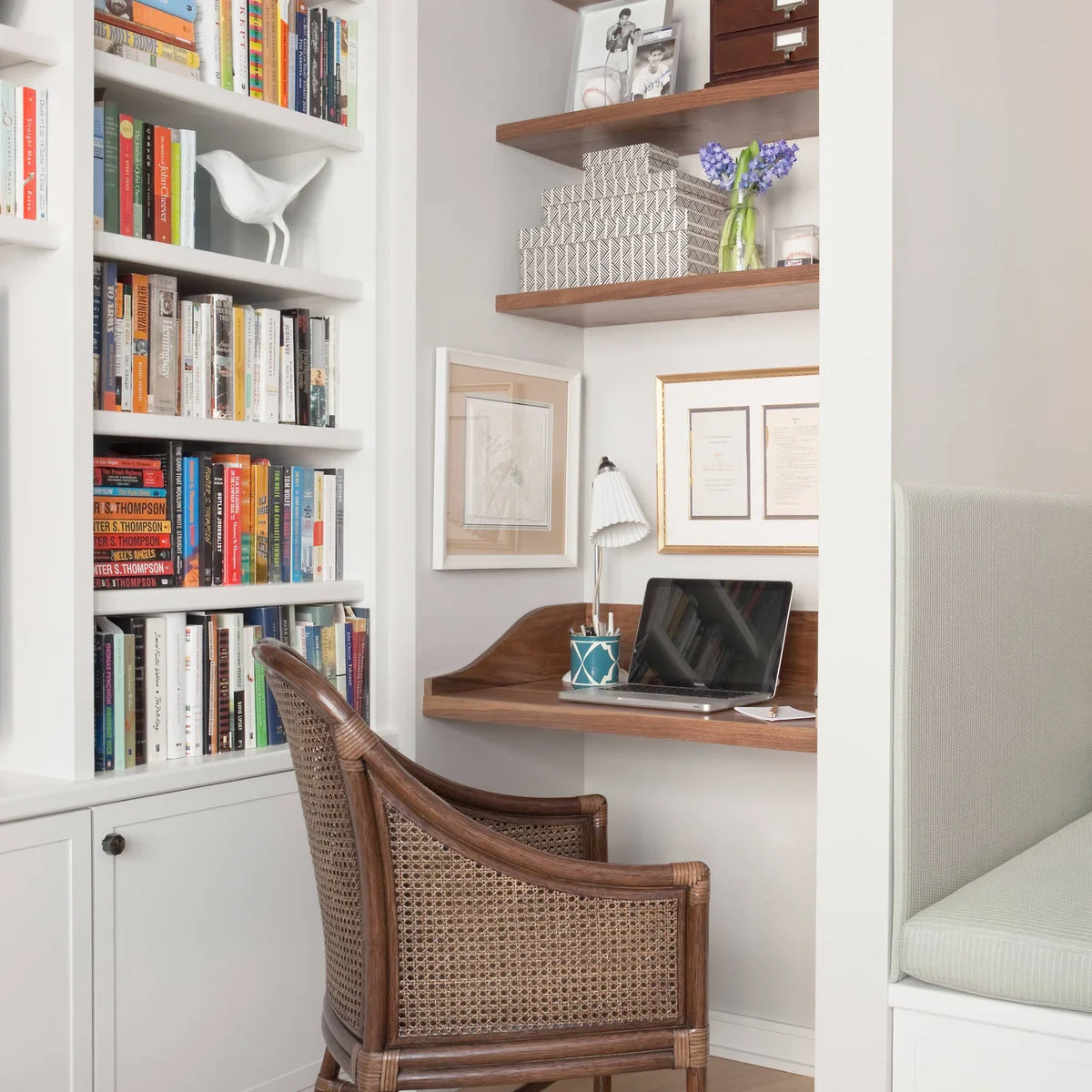
A compact wood desk sits beside tall white bookshelves, with a woven chair adding texture in the foreground. Floating shelves hold boxes and personal pictures above the laptop. The book collection brings color to the pale nook, so the desktop does not need additional ornaments to feel personal.
Keep the chair’s arms clear of the desktop and check that it can tuck in without catching the surrounding cabinetry. Use labeled boxes for supplies that do not suit open display. Small home office ideas can help you compare similar corners when the available space has to work around existing shelves or a window seat.
IDEA 12 / 20
Use Colorful Boxes to Calm an Open-Shelf Corner
 SaveSupport Non AI Creator
Image credit: Project: Kathryn J. LeMaster Art & Design (via Houzz)
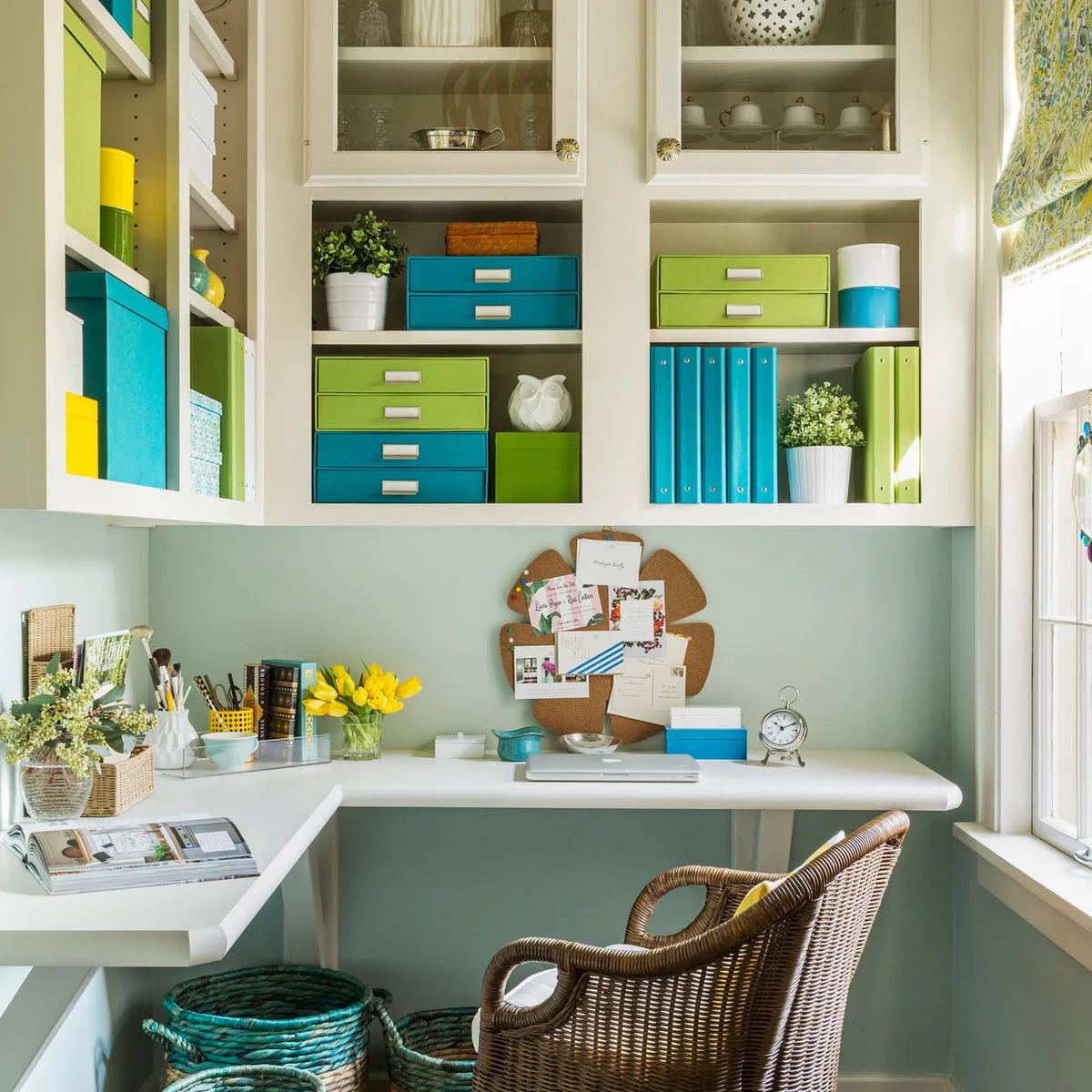
Turquoise and lime boxes turn open shelves into a coordinated storage area above a pale mint desk corner. White cabinetry separates the bright blocks of color, while the woven chair and baskets add a softer texture below. A small pinboard keeps loose notes off the main working surface.
Choose boxes around the papers and tools you own rather than buying a matching set first. Leave frequently used supplies within reach and store heavier items lower down. Keep the pinboard edited so reminders stay visible, and reserve enough open desk space for the actual work rather than using the whole corner for display.
IDEA 13 / 20
Balance Closed Cupboards with One Open Bookcase
 SaveSupport Non AI Creator
Image credit: Project: Orren Pickell Building Group (via Houzz)
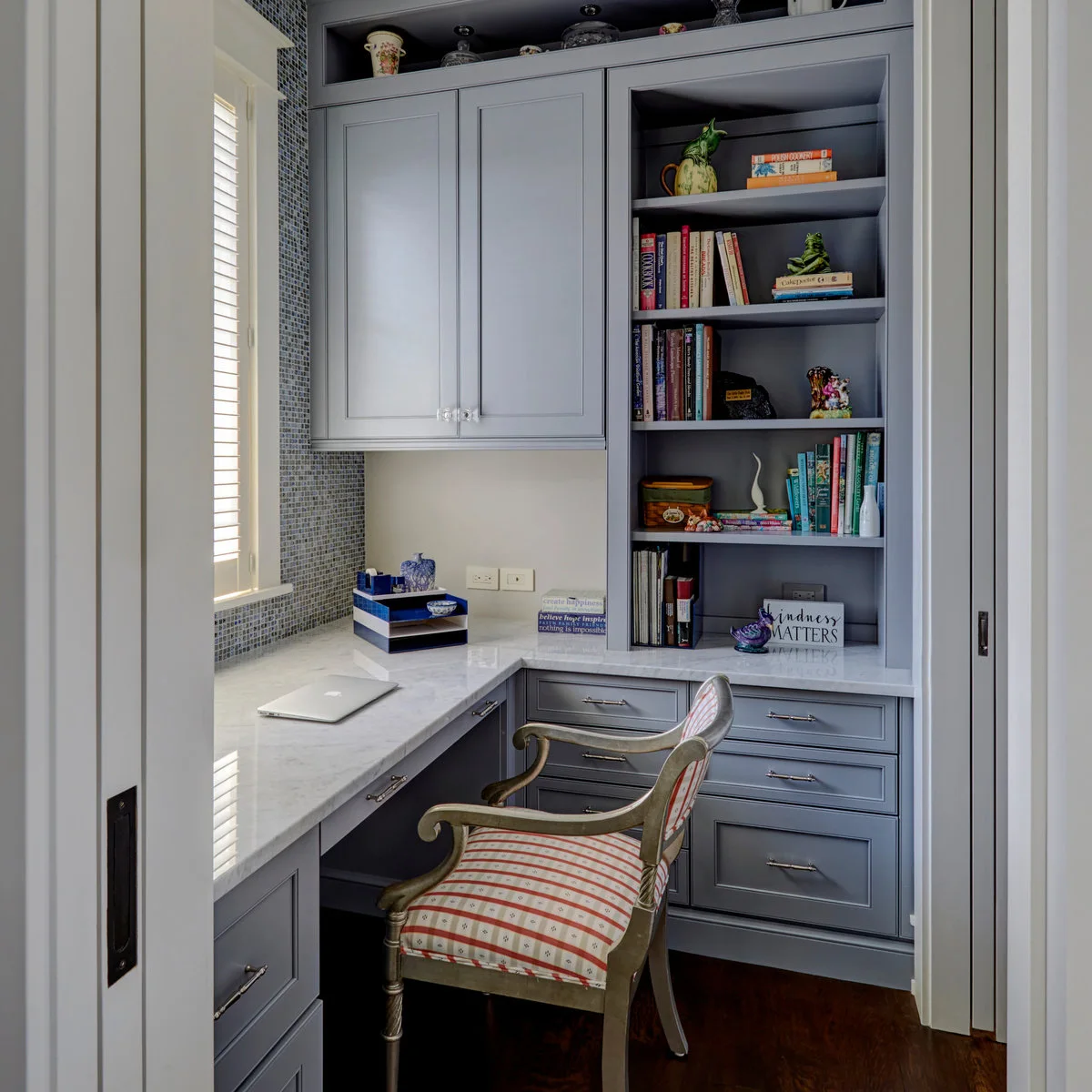
A closed upper cupboard balances the open bookcase in this small gray office. The pale desk wraps the corner, while a striped upholstered chair adds a softer pattern to the fitted cabinetry. Books and a few personal objects give the open section character without requiring every cupboard to have glass doors.
Put less attractive supplies in the closed section and keep the open shelves for books you use or objects you enjoy seeing. Check that the chair fits beneath the desk and clears the drawer handles. Plan a comfortable working position first, using the return surface for supplies rather than crowding the main leg space.
IDEA 14 / 20
Use a Warm Counter with White Storage
 SaveSupport Non AI Creator
Image credit: Project: Yunker Associates Architecture (via Houzz)
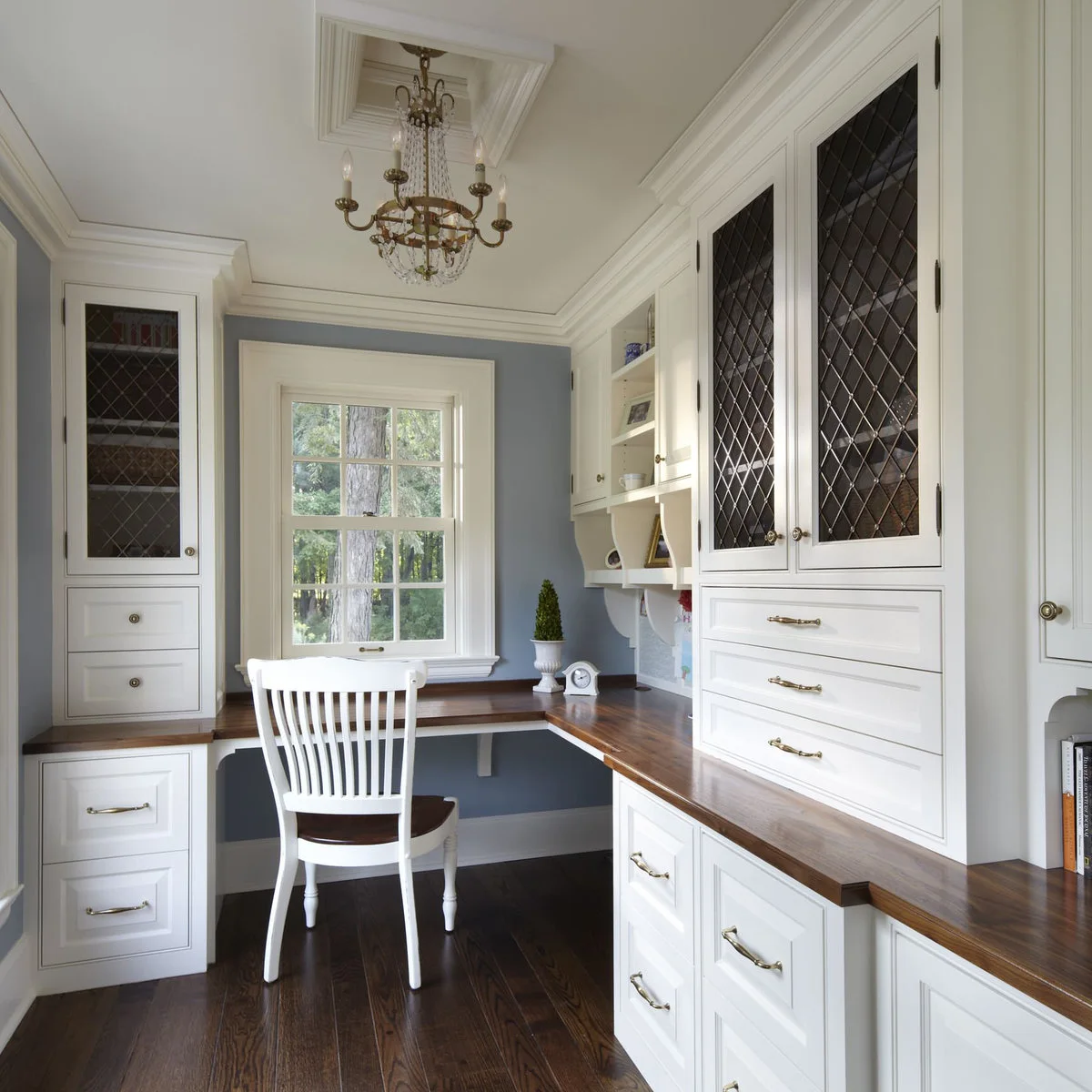
A warm wood counter runs beneath white storage in this narrow office. Pale blue walls soften the space around the window, with glass-front cupboards giving the taller cabinetry more visual variation. The white chair repeats the cabinets rather than adding another strong color to the small working area.
Check the available leg space beneath the window before extending storage across adjoining walls. Keep everyday papers in the lower drawers, leaving the higher cupboards for lighter or less-used items. Choose a chair by how it works at the counter, and change it if the decorative shape limits comfortable movement during regular use.
IDEA 15 / 20
Make a Warm Wall Color Work with Organized Storage
 SaveSupport Non AI Creator
Image credit: Project: Marcia Butler Interior Design Inc (via Houzz)
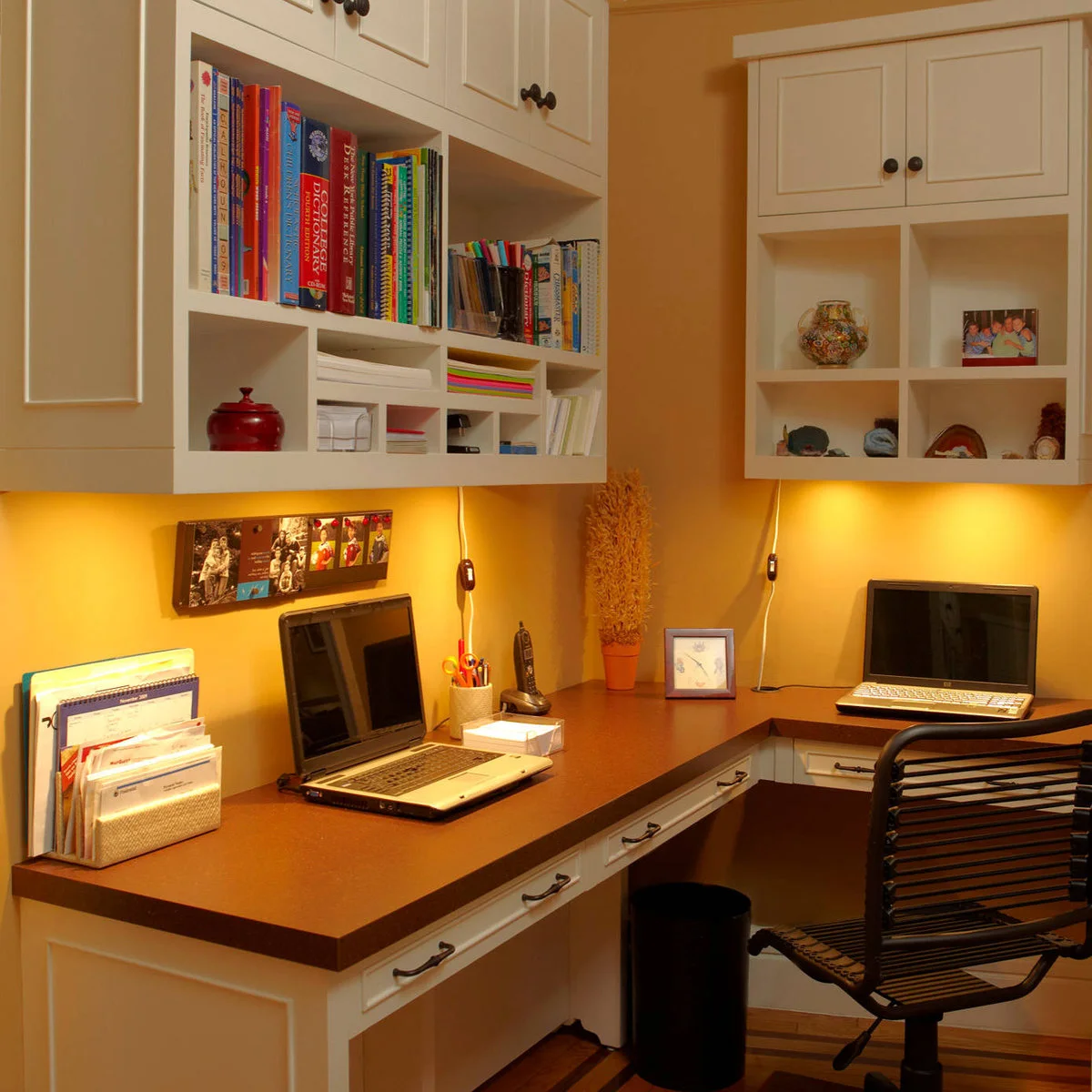
Yellow walls surround white cabinets and wood-toned worktops in this office corner. Under-cabinet lights illuminate the surfaces below, while open compartments hold books, paper and small personal objects. The warm wall color connects both desk runs, giving the fitted storage a less formal setting.
Test the paint under your intended desk lighting before covering the whole corner. Keep the two working surfaces useful by grouping paper and charging equipment rather than spreading them along every edge. Check the position of cords and switches so the extra lighting remains easy to operate without reaching behind screens or storage boxes.
PART 04
Use Smaller Corners Thoughtfully
IDEA 16 / 20
Move the Lamp to the Wall above a Simple Desk
 SaveSupport Non AI Creator
Source: www.houzz.com
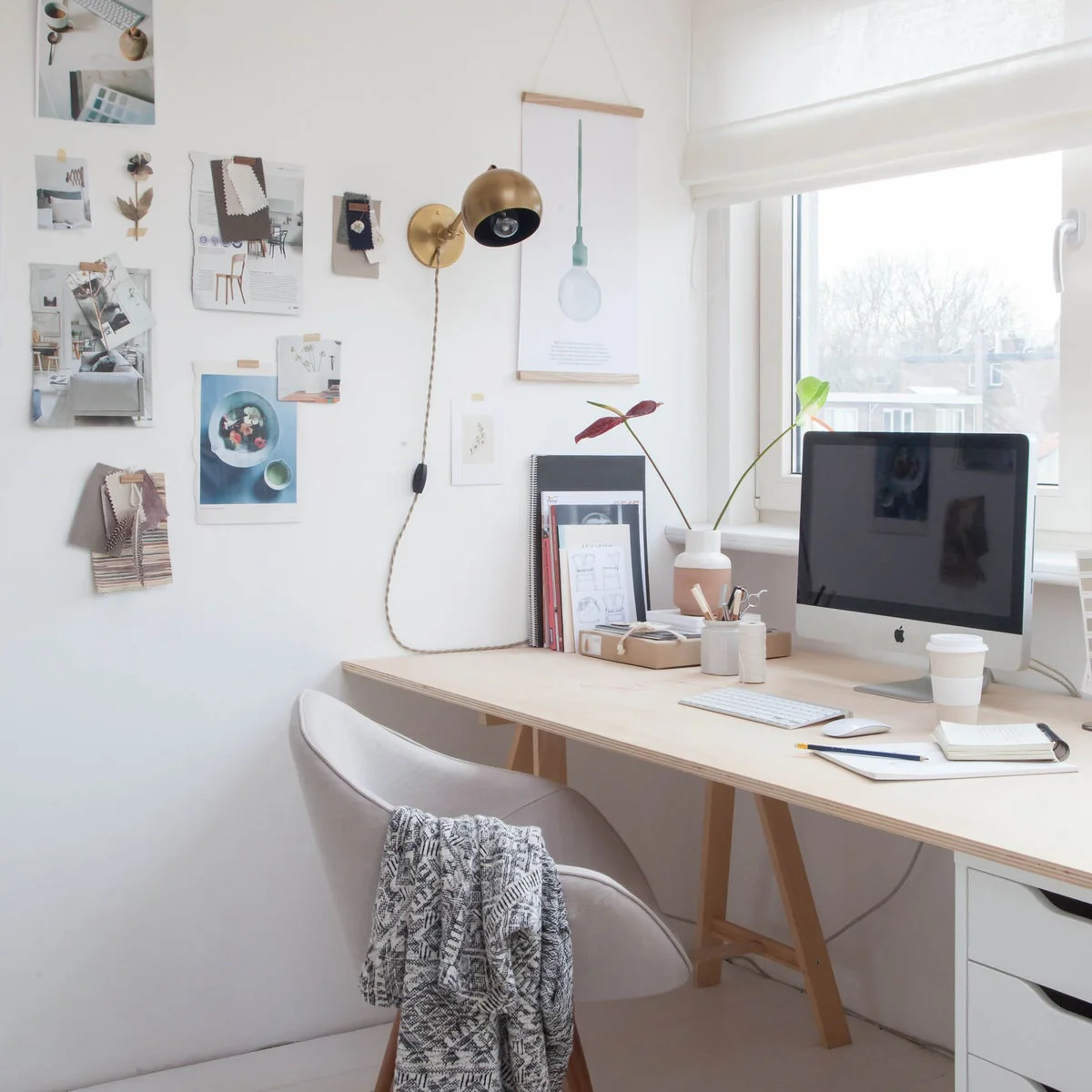
A wall-mounted lamp leaves more surface available on this simple trestle desk. An upholstered chair and a folded throw soften the pale room, while pinned pictures add a personal working display. The small plant and stationery grouping stay to the side of the keyboard and notebook area.
Place the lamp according to the tasks you do and check for glare on the screen before fixing it permanently. Keep its cord neatly routed rather than leaving it across the chair path. Use the wall display for current references or favorite pictures, replacing items as needed instead of continually increasing the number of papers.
IDEA 17 / 20
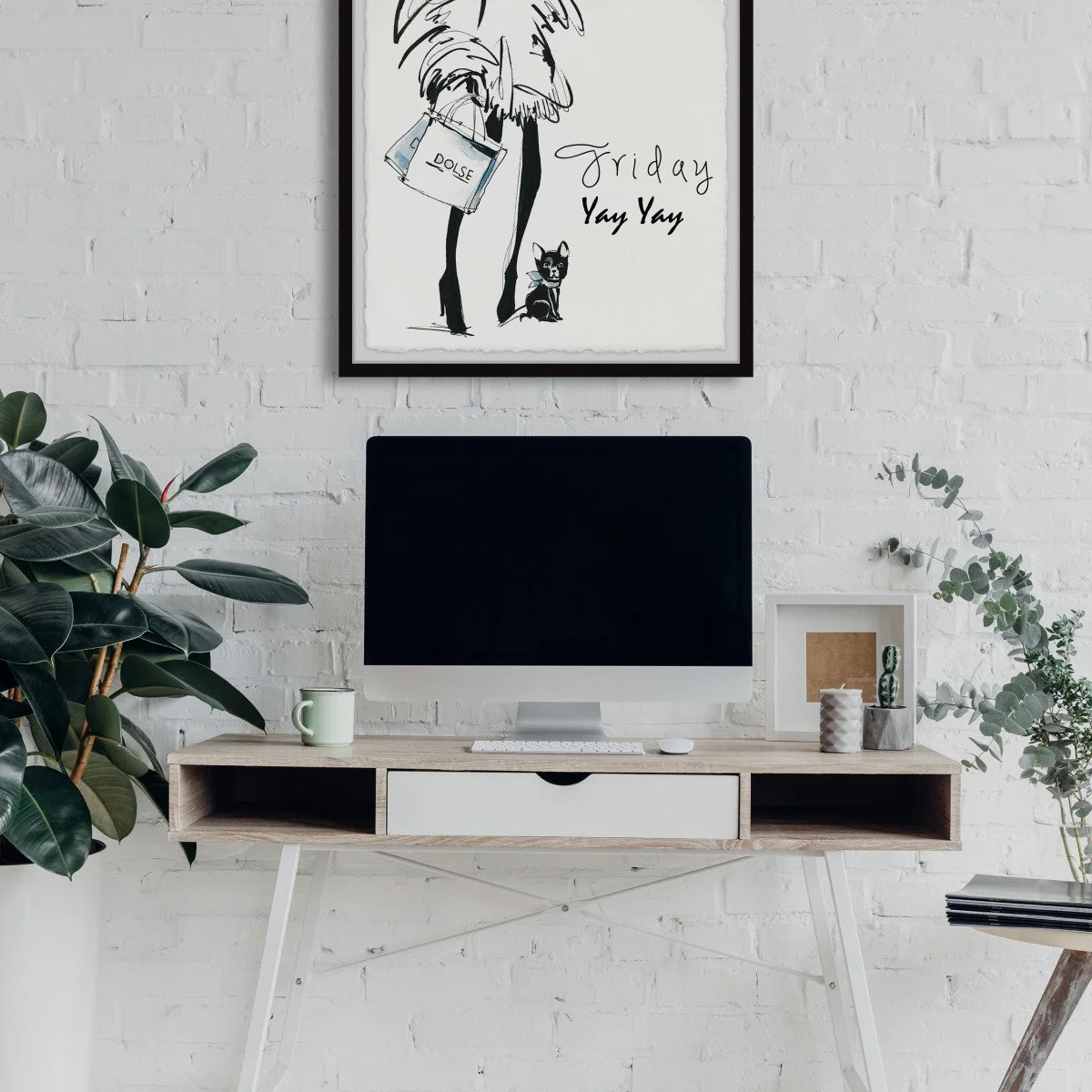
Add Greenery beside a Small Freestanding Desk
 SaveSupport Non AI Creator
Image credit: Project: Marmont Hill (via Houzz)
A small wood-and-white desk stands against a white brick wall, with a large leafy plant beside it. The central drawer and open cubbies give the furniture practical storage without a tall cupboard. A framed picture above and smaller objects to the side make the workstation feel part of a lived-in room.
Leave enough space for the plant without narrowing the chair position. Choose plants according to the actual light and your care routine, protecting furniture from water. Office ideas with greenery offer more examples of keeping plants beside the work area while preserving a clear surface for everyday equipment.
IDEA 18 / 20
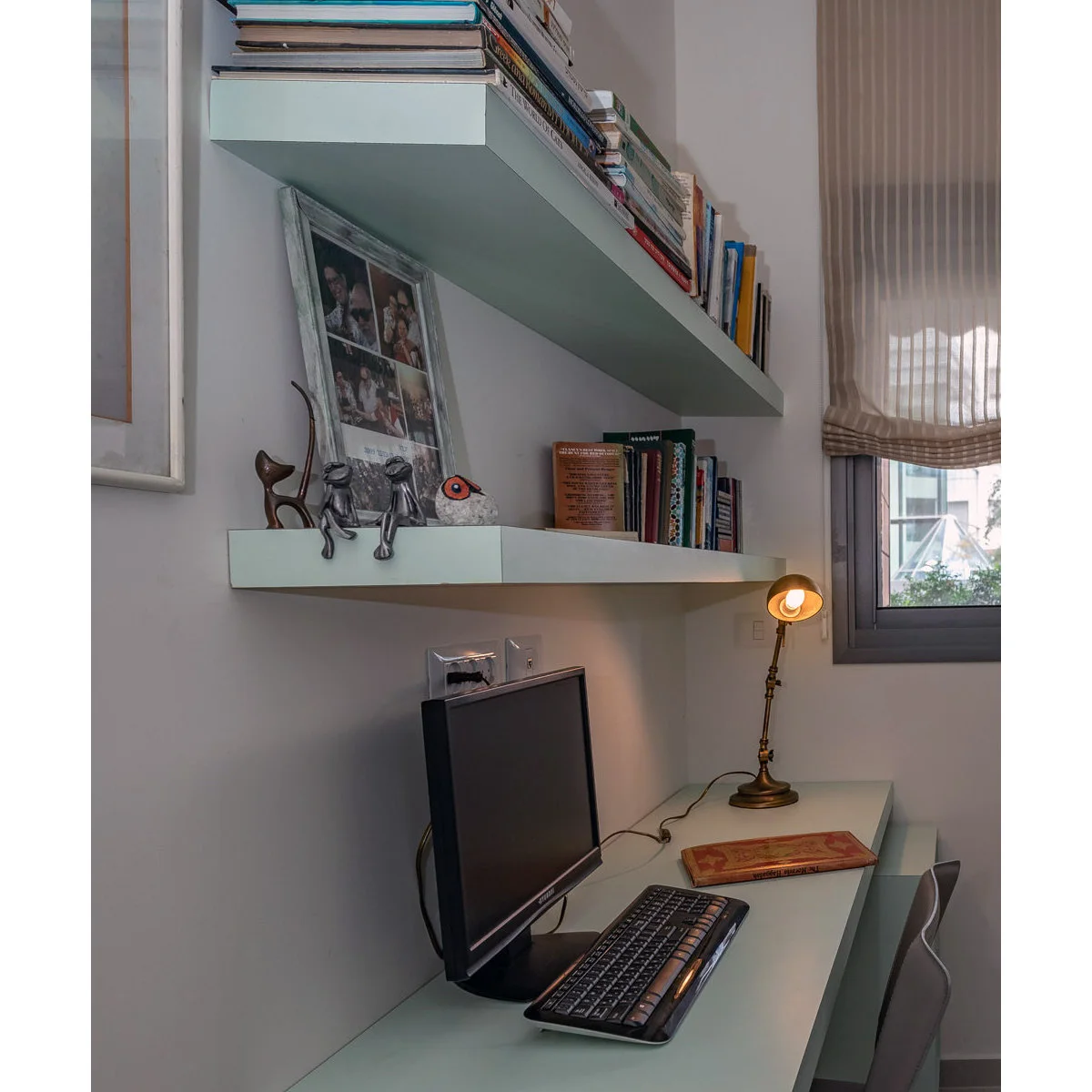
Warm a Compact Worktop with a Focused Lamp
 SaveSupport Non AI Creator
Image credit: Project: DH design (via Houzz)
A small metal lamp adds a warm pool of light to this compact worktop. Two shelves carry books and personal pieces above the screen, while a fabric shade softens the window at the end. The arrangement shows how a narrow desk can feel more welcoming through light and familiar objects.
Check the shelf depth and fixings against the weight of the books before copying the arrangement. Keep the lower shelf high enough for the equipment you use, allowing space to change the screen later. Limit the desktop to working essentials so the lamp and decorations do not squeeze out the keyboard and writing area.
IDEA 19 / 20
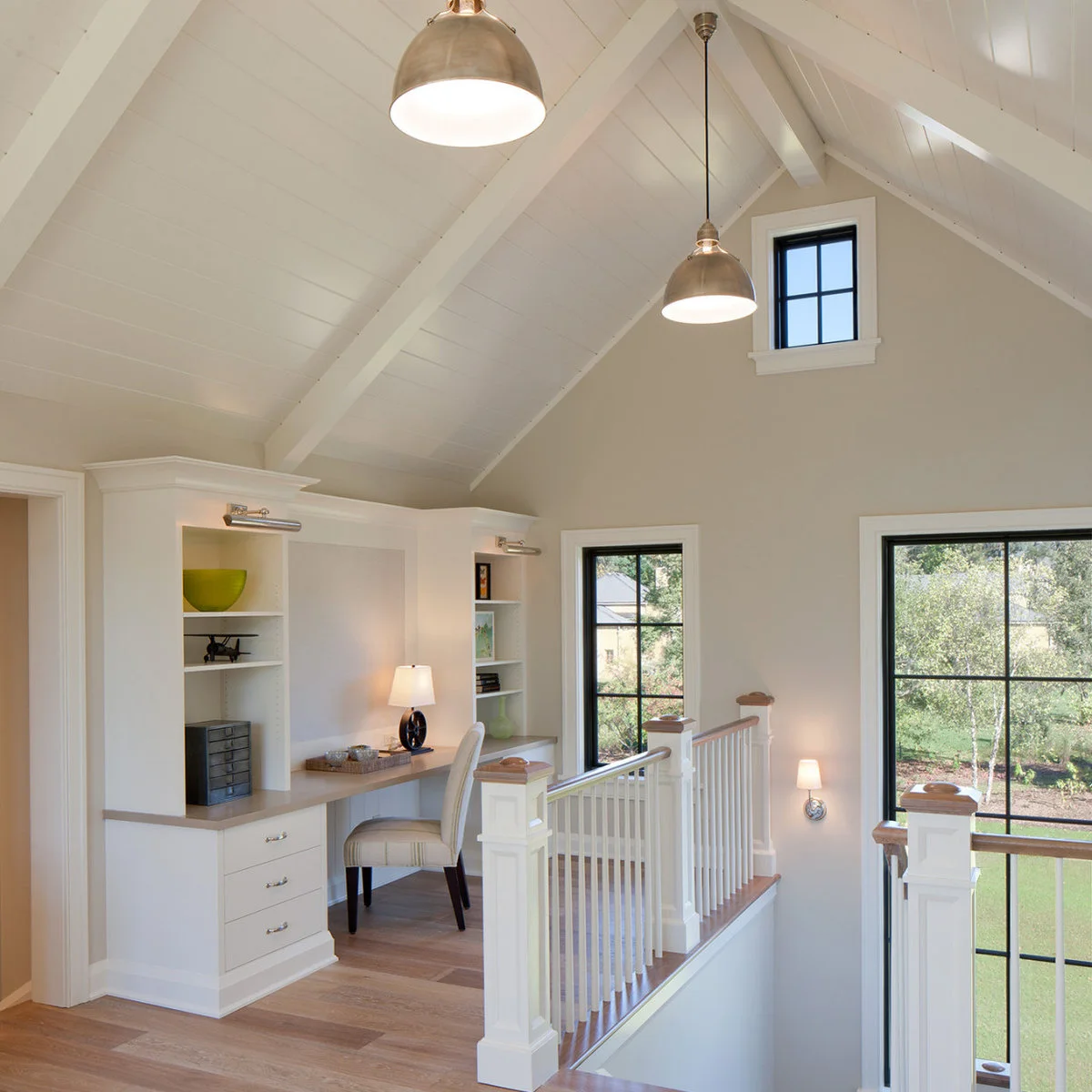
Give a Landing Desk a Defined Place
 SaveSupport Non AI Creator
Image credit: Project: Scott Christopher Homes (via Houzz)
A pale built-in desk sits within its own shelving unit on this landing. A small lamp and upholstered chair make the working position feel furnished, while the surrounding white railing and vaulted ceiling leave the larger circulation space visible. The desk occupies an edge rather than the center of the landing.
Keep the route to the stairs completely clear, including the space needed when the chair is pulled out. Consider whether household noise suits the work you do before choosing an open landing. Use closed drawers for private papers and everyday supplies so the area remains easy to tidy when it also serves as circulation.
IDEA 20 / 20
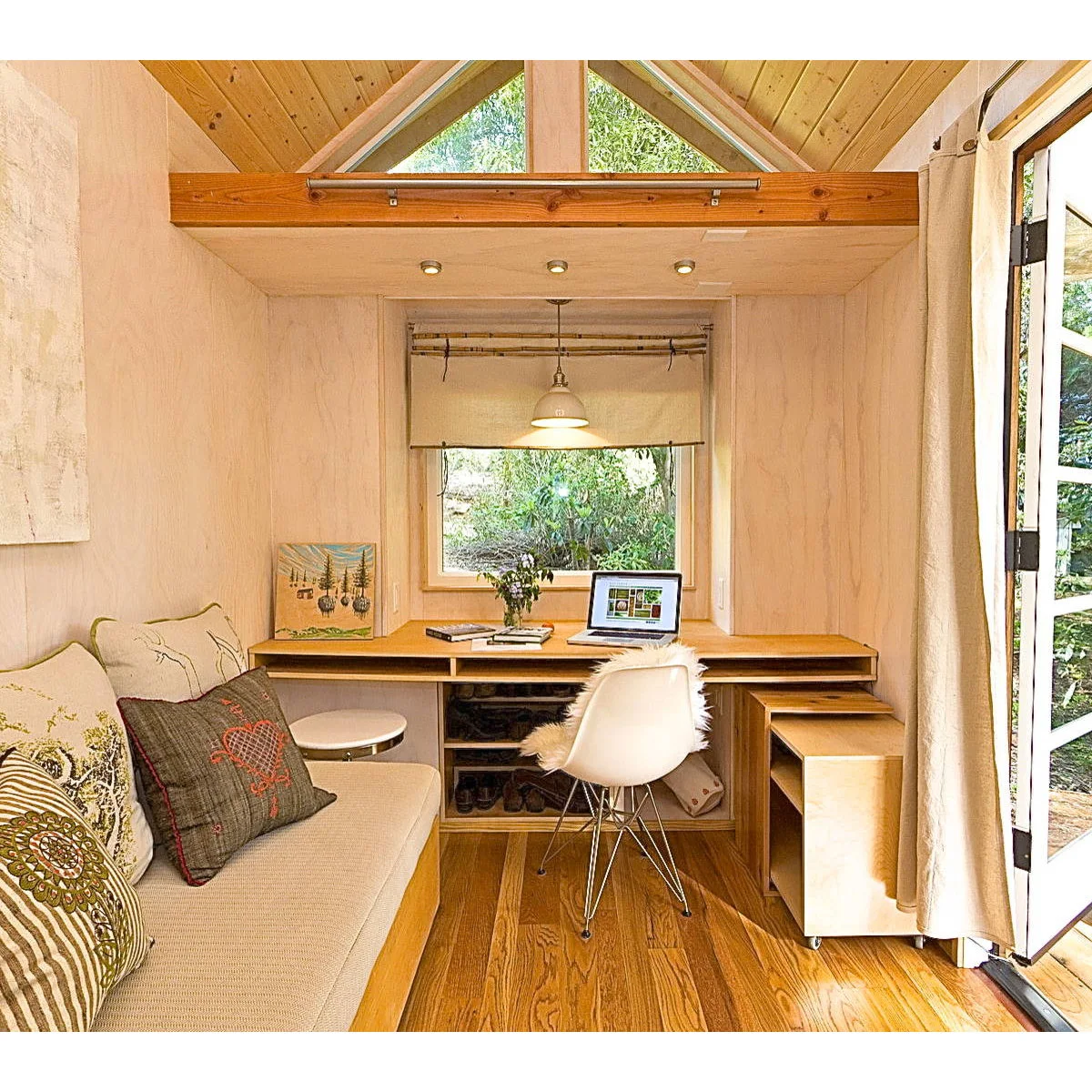
Use a Separate Seat in a Small Garden Office
 SaveSupport Non AI Creator
Image credit: Project: Sol Haus Design (via Houzz)
A fitted desk spans the far wall of this small wood-lined garden office. A sofa bench runs along one side, with a mobile storage unit beneath the counter at the other. Light enters through the window and glazed doors, while pale cushions soften the extensive wood surfaces.
Choose the desk and seating proportions around usable floor space, not just the width of each wall. Keep door movement and the route to the chair clear. Before fitting out an outbuilding, check its suitability for year-round use, including power, weather protection and the practical needs of the equipment you intend to bring outside.
BRING IT ALL TOGETHER
Keep Comfort Connected to the Way You Work
Choose a desk and chair that work together before adding the room’s softer layers. Use lighting, color and a few familiar objects to make the space welcoming. Keep storage organized around your daily tasks, leaving enough clear worktop to use the equipment you already own.
Add a reading chair or bench only when it earns the floor space. Check the room with drawers open and the desk chair pulled out, then simplify anything that obstructs movement. A cozy office should be easy to return to at the start of work and straightforward to tidy when the day ends.