Brown bedrooms can feel light, richly colored or somewhere between the two. The difference comes from where you place the brown: across the walls, in substantial wooden furniture, or through curtains and bedding against a pale background.
Start with the finishes you are keeping, then choose a brown that works beside them. These rooms show ways to combine cocoa, reddish wood, caramel and softer brown-gray tones without requiring every piece of furniture to match.
PART 01
Give brown walls a lighter partner
IDEA 01 / 20
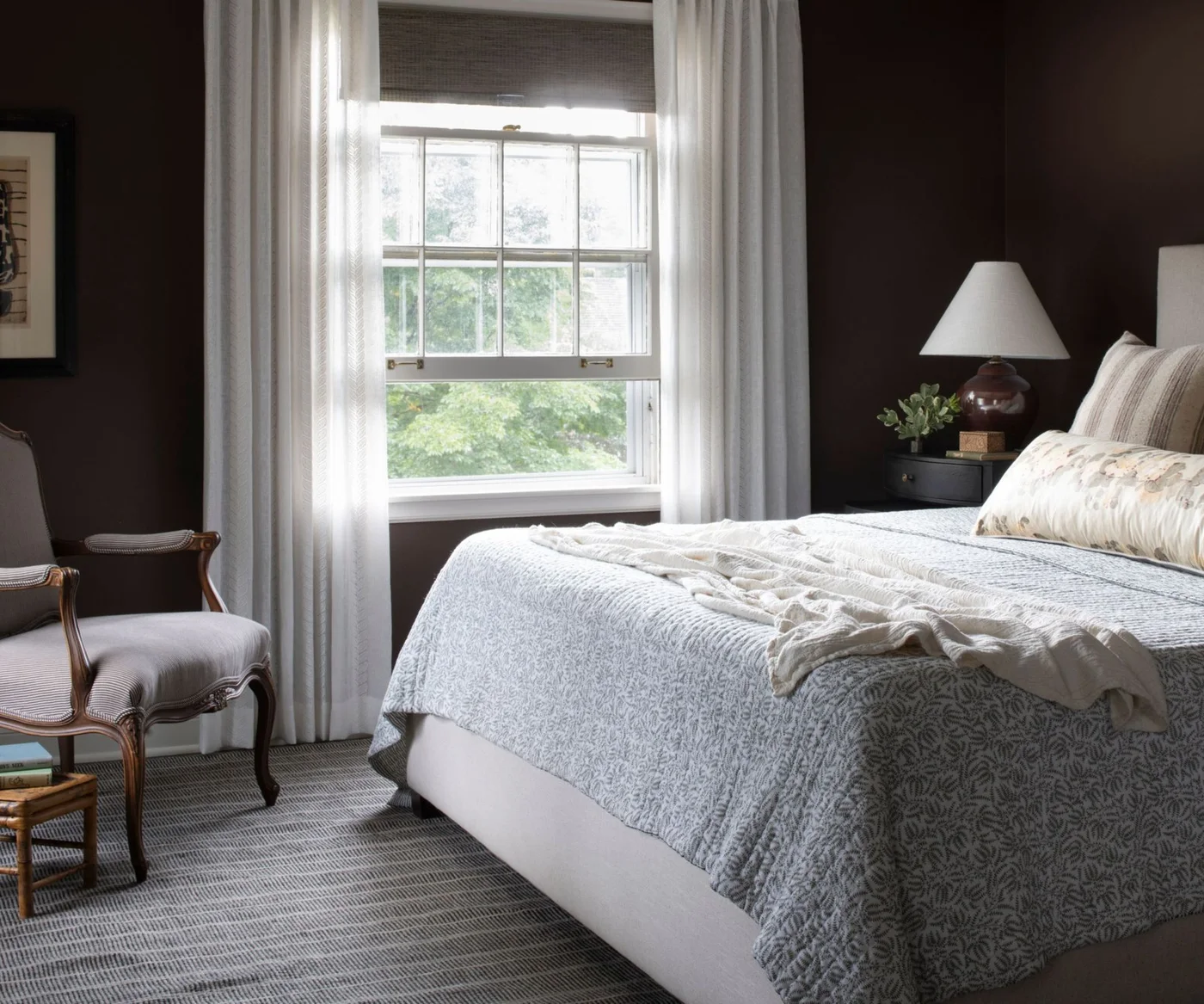
Frame Chocolate Walls with White Curtains
 SaveSupport Non AI Creator
Image credit: Heather Peterson Design / Photography Scott Admunson
Chocolate walls give this bedroom depth, but the white curtains keep the window clearly defined. Pale patterned bedding fills most of the foreground, and a wooden armchair introduces another brown tone without making every furnishing dark. The small bedside lamp repeats the wall color more softly.
Choose curtain fabric for privacy as well as appearance; a light sheer alone may not be enough at night. Put paint samples next to your headboard and bedding before committing. A rich wall color usually needs less decorative clutter to feel like a finished feature. In a roof room, plan the furniture around the roof slopes before committing to a darker wall.
IDEA 02 / 20
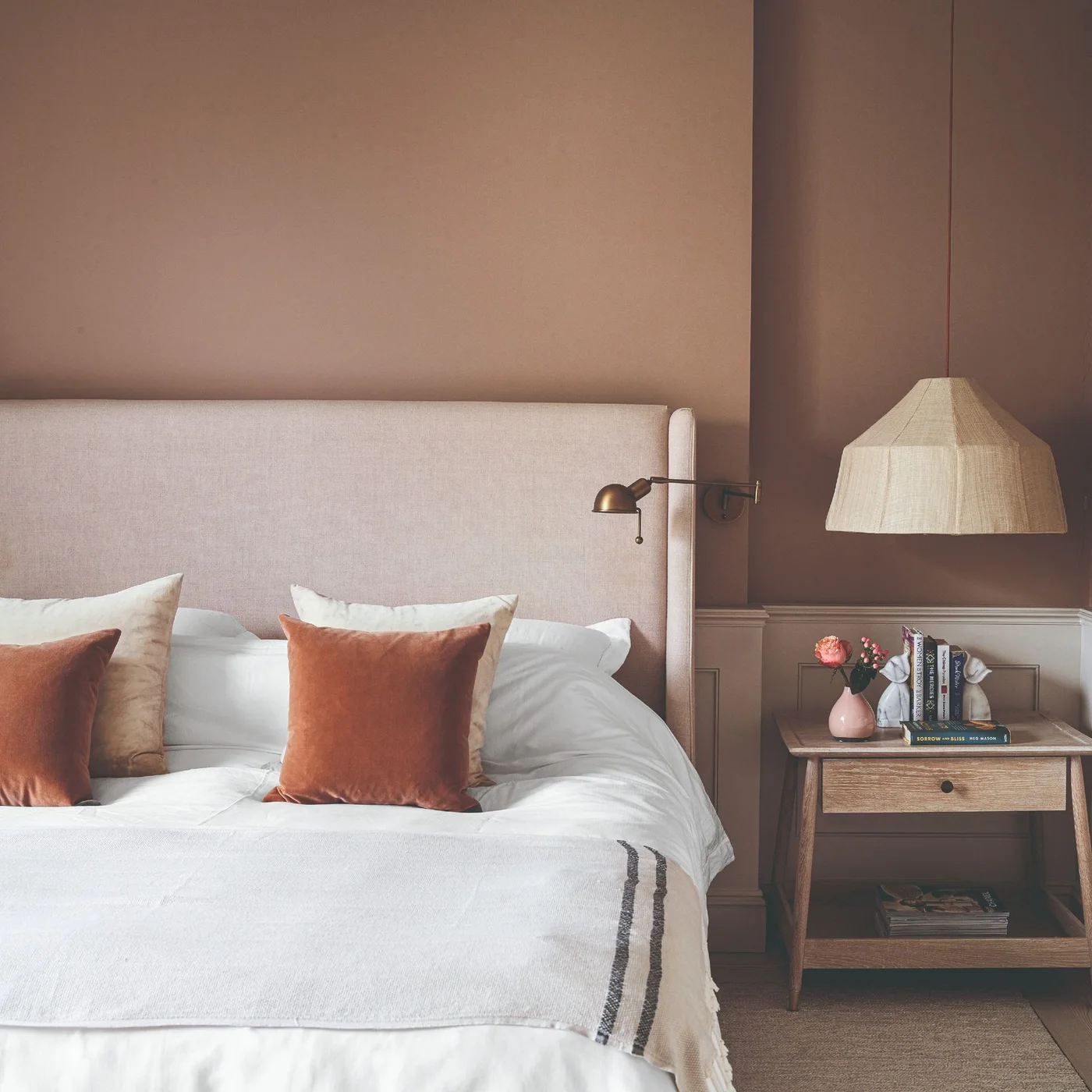
Choose a Brown with a Rosy Undertone
 SaveSupport Non AI Creator
Image credit: Future PLC/Mary Wadsworth
The walls have a muted reddish-brown tone that connects naturally with the rust cushions. A pale headboard and white bedding make a clear light center, while the lower wall paneling and wooden table introduce gentler brown notes instead of another strong accent color.
Compare a rosy brown with your existing flooring before painting. If both lean strongly red, a cream fabric sample can help you judge the balance. Keep the bedside surface useful by leaving room beside the books and flowers for the things you actually reach for.
IDEA 03 / 20
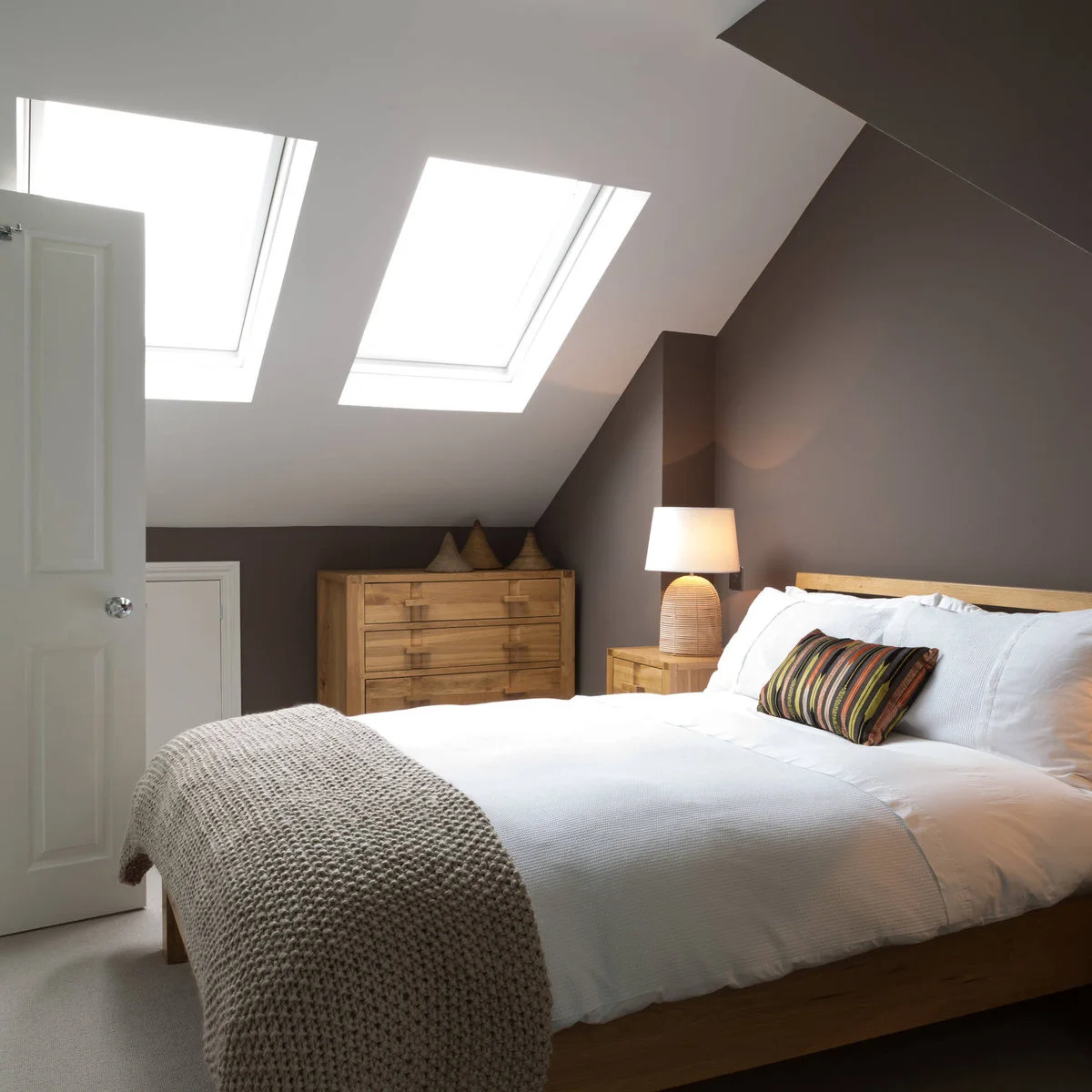
Keep a Sloping Ceiling Light Above Brown Walls
 SaveSupport Non AI Creator
Image credit: Project: Amanda Neilson Interiors (via Houzz)
Brown covers the upright walls while the sloping ceiling remains white, making the roof shape easy to read. The wooden bed and dresser add warmer brown tones, and white bedding connects the furniture to the bright roof windows rather than adding another dark layer.
Mark the point where the ceiling slope begins before deciding where the wall color should stop. Test brown on both the window side and the shaded side of the room. Keep taller furniture and the route beside the bed where you can stand comfortably.
IDEA 04 / 20
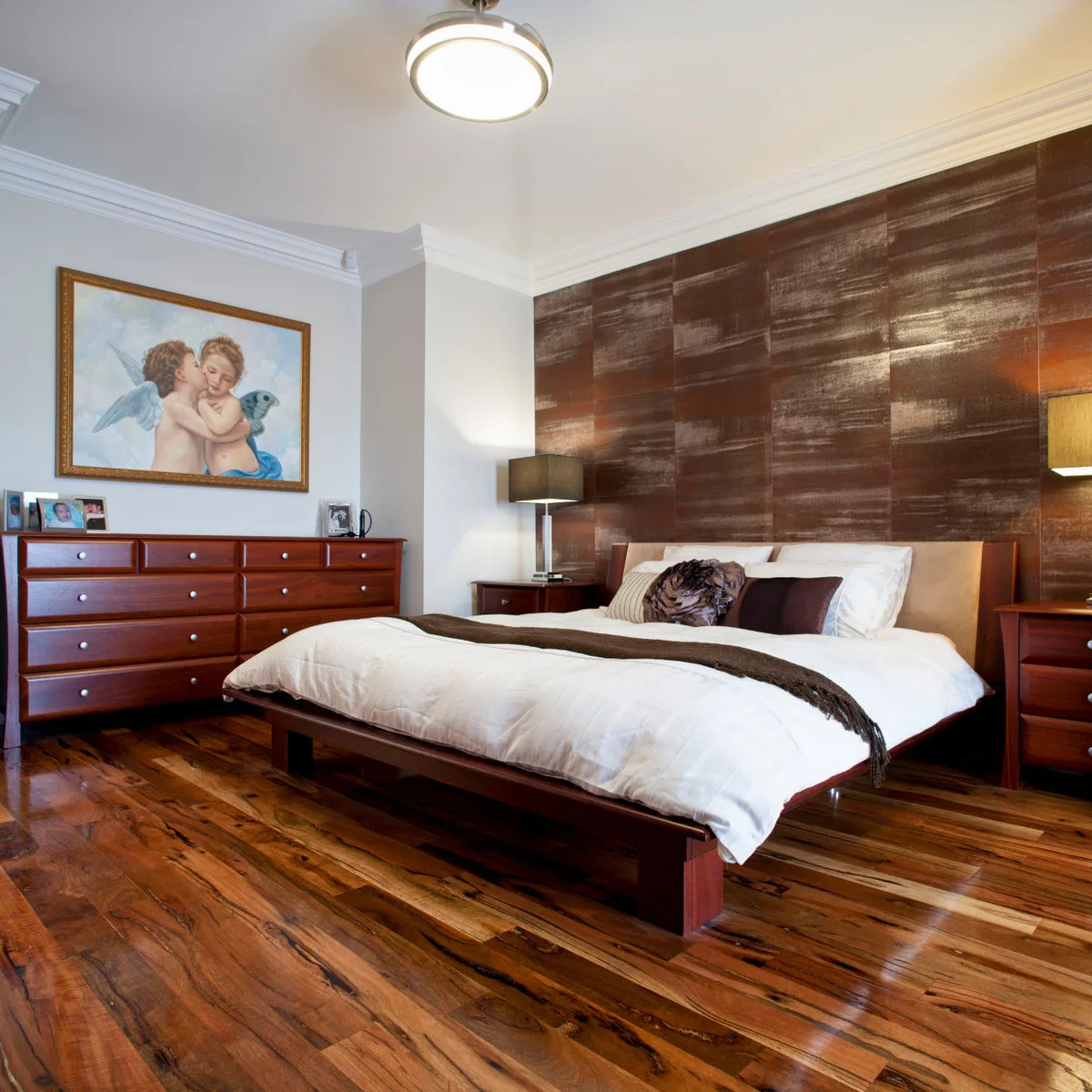
Use a Reflective Brown Feature Wall
 SaveSupport Non AI Creator
Image credit: Project: Inspire Your Space (via Houzz)
The brown feature wall has a reflective, brushed-looking pattern that changes across the surface. White bedding creates a broad quiet area in front of it, while reddish-brown furniture and flooring add warmth. Pale walls around the feature keep the room from becoming uniformly dark.
Check a wallcovering sample under your bedside lamps before ordering a full wall. Reflective finishes can emphasize unevenness and glare, so preparation and light placement matter. Keep the bedding plain enough that the wall’s texture remains the main detail from the doorway.
IDEA 05 / 20
Give Brown Walls a Pale Upholstered Center
 SaveSupport Non AI Creator
Image credit: Project: Living in Space (via Houzz)
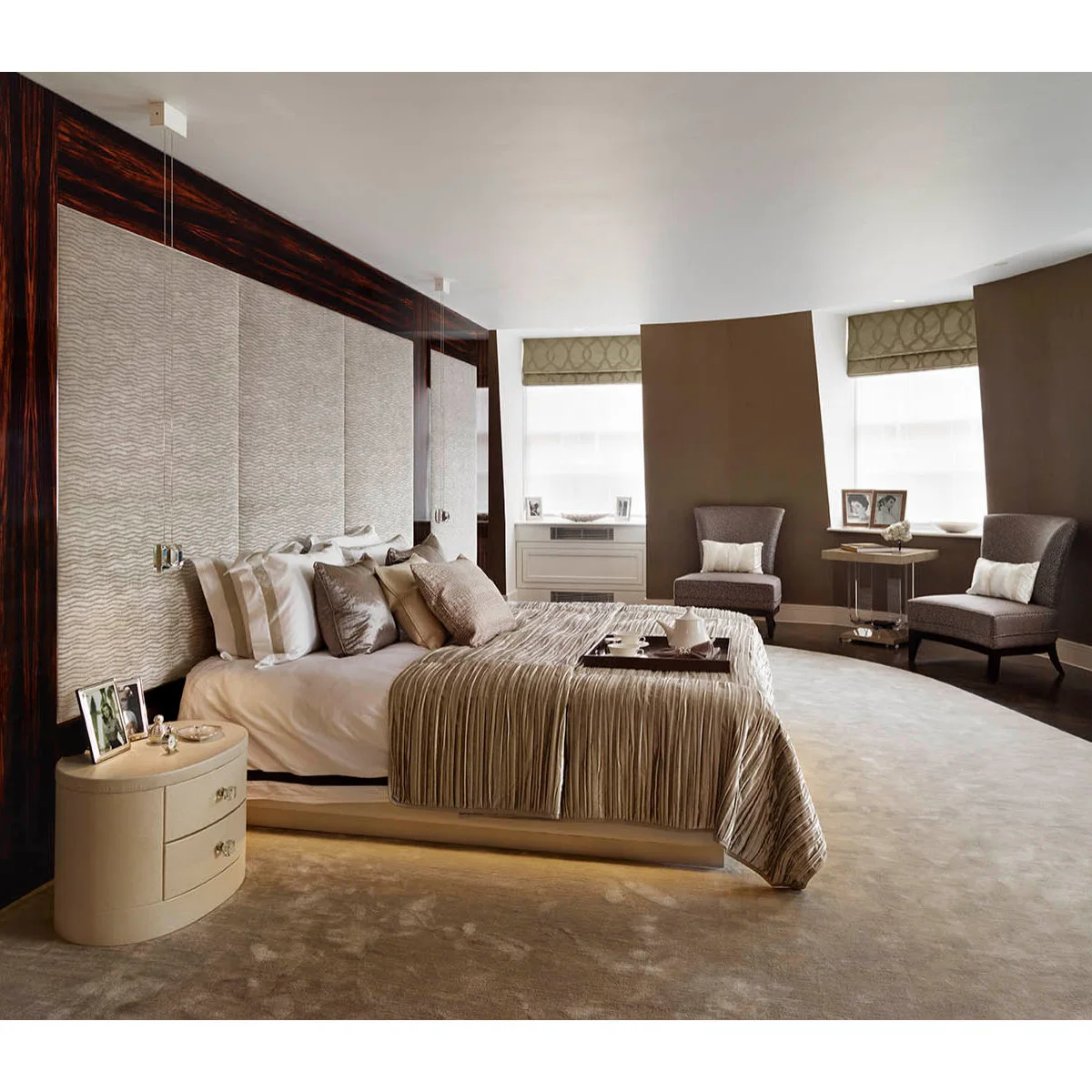
Brown wall sections surround the windows, while a wide pale upholstered headboard makes the bed a lighter center. The striped cover introduces several related neutral tones, and the two chairs repeat the brown palette across the room without adding a separate bright color.
A broad headboard can be visually substantial even in a light fabric. Measure it against bedside tables and light switches before ordering. Use a stripe with a manageable scale, then check whether its care instructions fit how often you expect to wash the bed cover.
PART 02
Use wood beyond the floor
IDEA 06 / 20
Repeat Brown Paneling Across Two Zones
 SaveSupport Non AI Creator
Image credit: Project: Altura Architects (via Houzz)
Horizontal brown panels appear both behind the bed and above the dresser, linking two separate parts of the room. Gray cabinetry and white bedding stop the wood from taking over every surface. Slim pendant lighting leaves more of the bedside table available for everyday objects.
Repeat the same panel direction if you want separated areas to feel related. Plan lighting and wiring before any cladding is installed, and keep fittings accessible for maintenance. A wood sample beside your existing gray furniture will show whether the combination feels warm or unexpectedly muddy.
IDEA 07 / 20
Layer Two Wood Textures Behind the Bed
 SaveSupport Non AI Creator
Image credit: Bert & May / Simon Brown
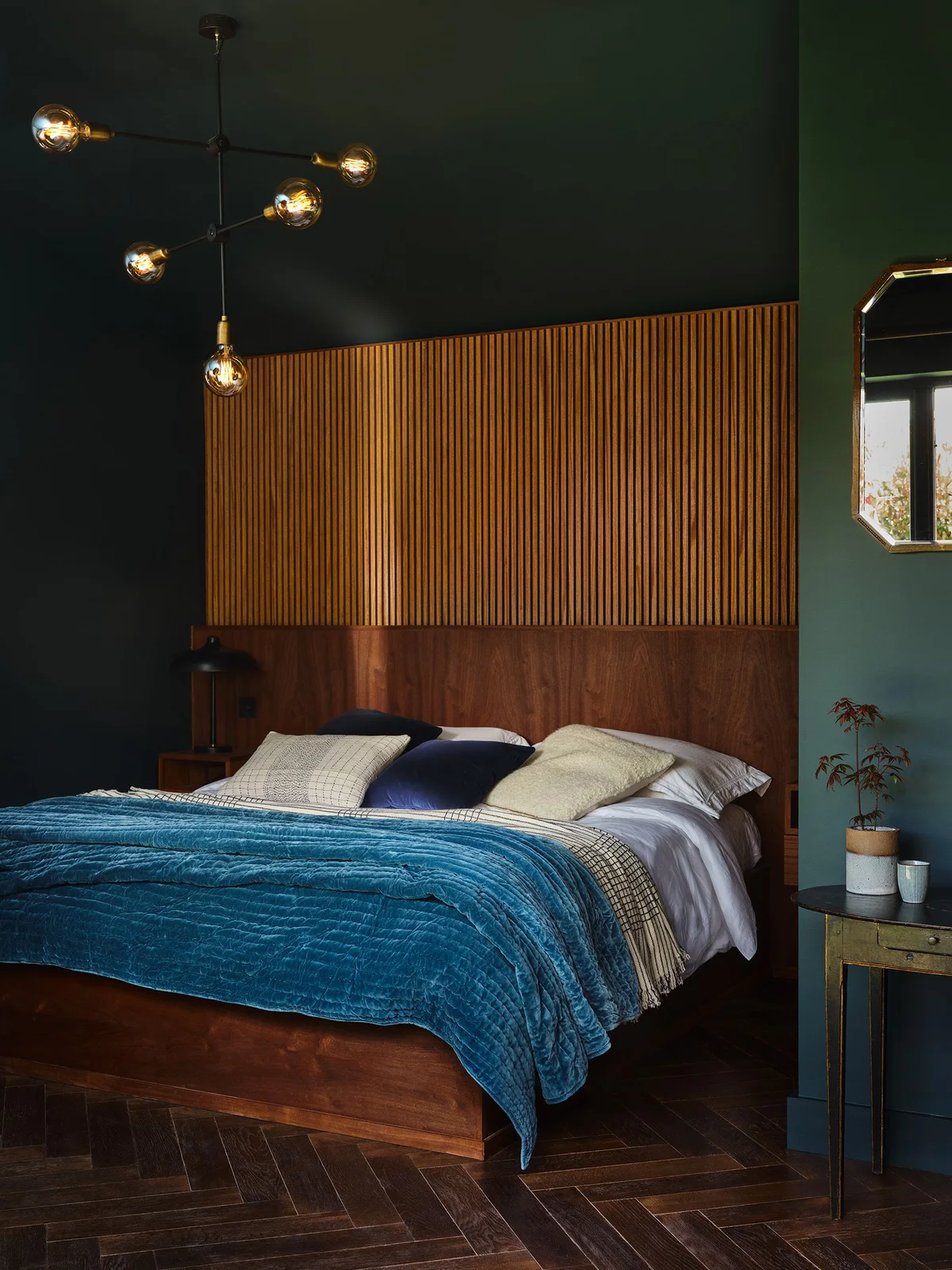
The broad brown headboard and narrow vertical slats create two different wood textures on the same wall. Dark green surrounds them, while a blue quilt introduces another cool color. Pale pillows provide a break between the brown furniture and the stronger colored fabrics.
Use one wood tone as the main reference and let changes in texture provide variety. Slats collect dust along their edges, so consider how you will clean them before covering a large area. Keep the bedside light reachable without leaning across decorative pillows.
IDEA 08 / 20
Warm a Pale Room with a Brown Ceiling
 SaveSupport Non AI Creator
Image credit: Project: Streeter Custom Builder (via Houzz)
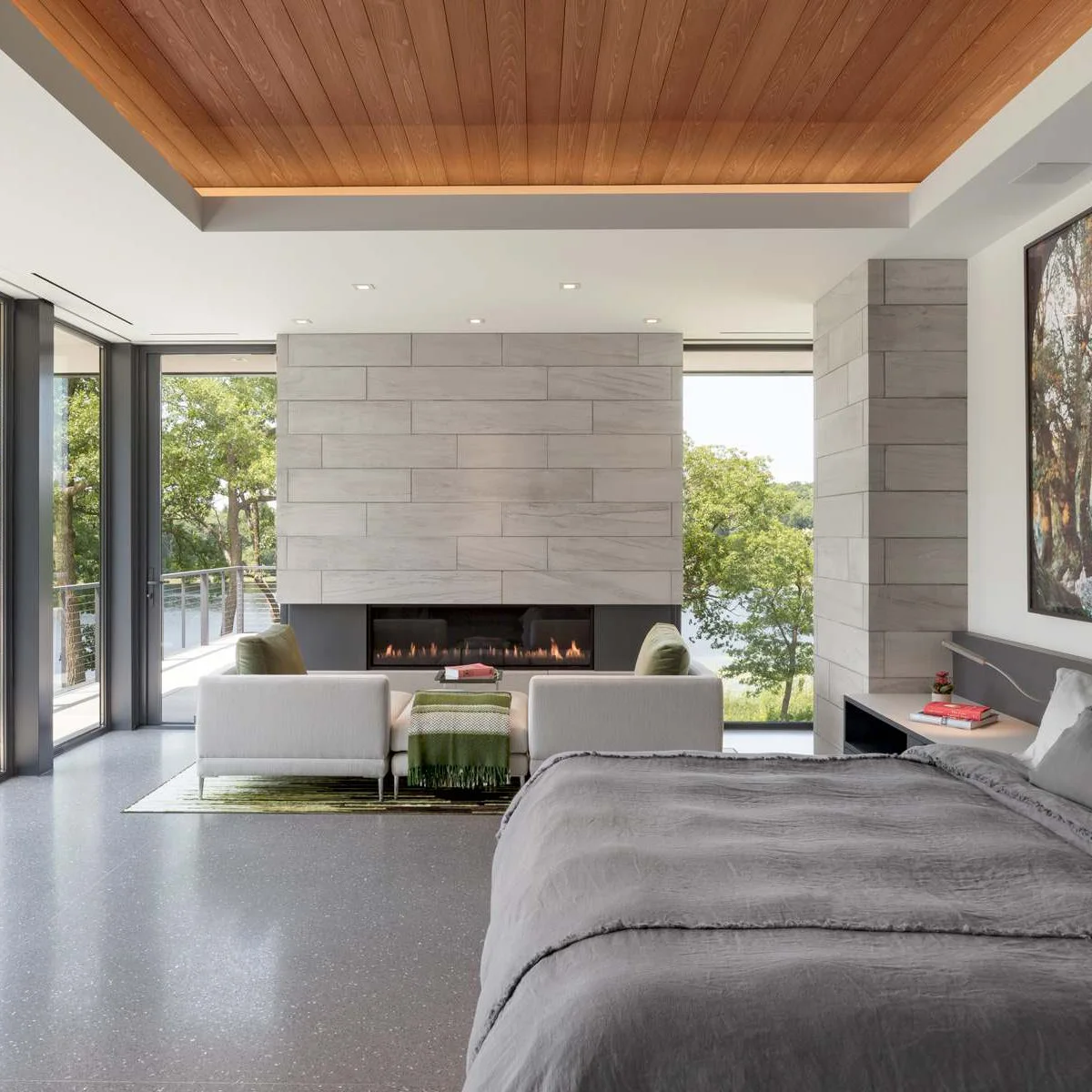
Brown is concentrated overhead in the large wood-paneled ceiling inset. The surrounding ceiling, fireplace wall and furniture stay pale, so the upper surface becomes the room’s warm feature. Gray bedding and green accents support that contrast without introducing several competing wood finishes.
An overhead wood surface is a larger commitment than a bedside table or throw. First compare samples from the bed and doorway, where you will see the ceiling most often. Have any ceiling installation assessed for suitable support and keep vents, lighting and service access clear.
IDEA 09 / 20
Pair Brown Trim with Ochre and Olive
 SaveSupport Non AI Creator
Image credit: Project: David Heide Design Studio (via Houzz)
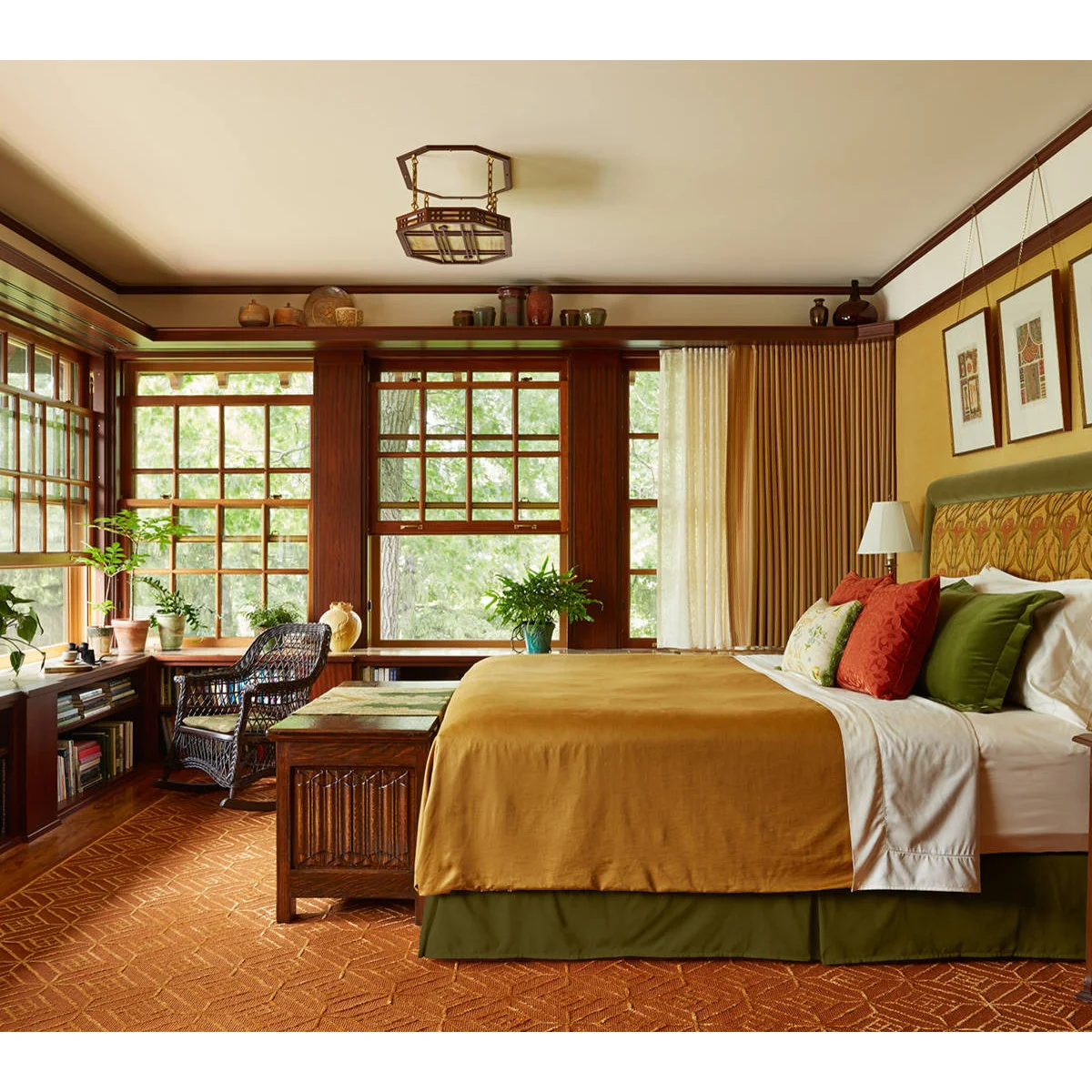
The broad brown window trim establishes a warm framework around the room. Ochre bedding, an olive bed skirt and red accent pillows build on that warmth, while the wooden chest repeats brown close to the bed. Pale upper walls keep the combination from feeling enclosed.
Choose one main textile color before adding smaller accents. Ochre and olive can both work with brown, but samples help you avoid an overly similar mix of muddy tones. Keep the chest far enough from the bed to open it and walk past comfortably.
IDEA 10 / 20
Let Built-In Beds Carry the Brown Palette
 SaveSupport Non AI Creator
Image credit: Project: Zone 4 Architects, LLC (via Houzz)
The built-in beds concentrate brown across frames, backs and storage drawers, so the walls do not need another strong color. White bedding separates each sleeping space from the surrounding wood. The repeated horizontal rails and drawer fronts make the large installation feel orderly.
Treat a built-in bunk arrangement as a properly designed sleeping structure rather than a decorative woodworking project. Check appropriate guardrails, access, mattress limits and clearances with a qualified installer. Keep bedding uncomplicated so it is practical to make the upper beds and use the drawers below.
PART 03
Build color with textiles and furniture
IDEA 11 / 20
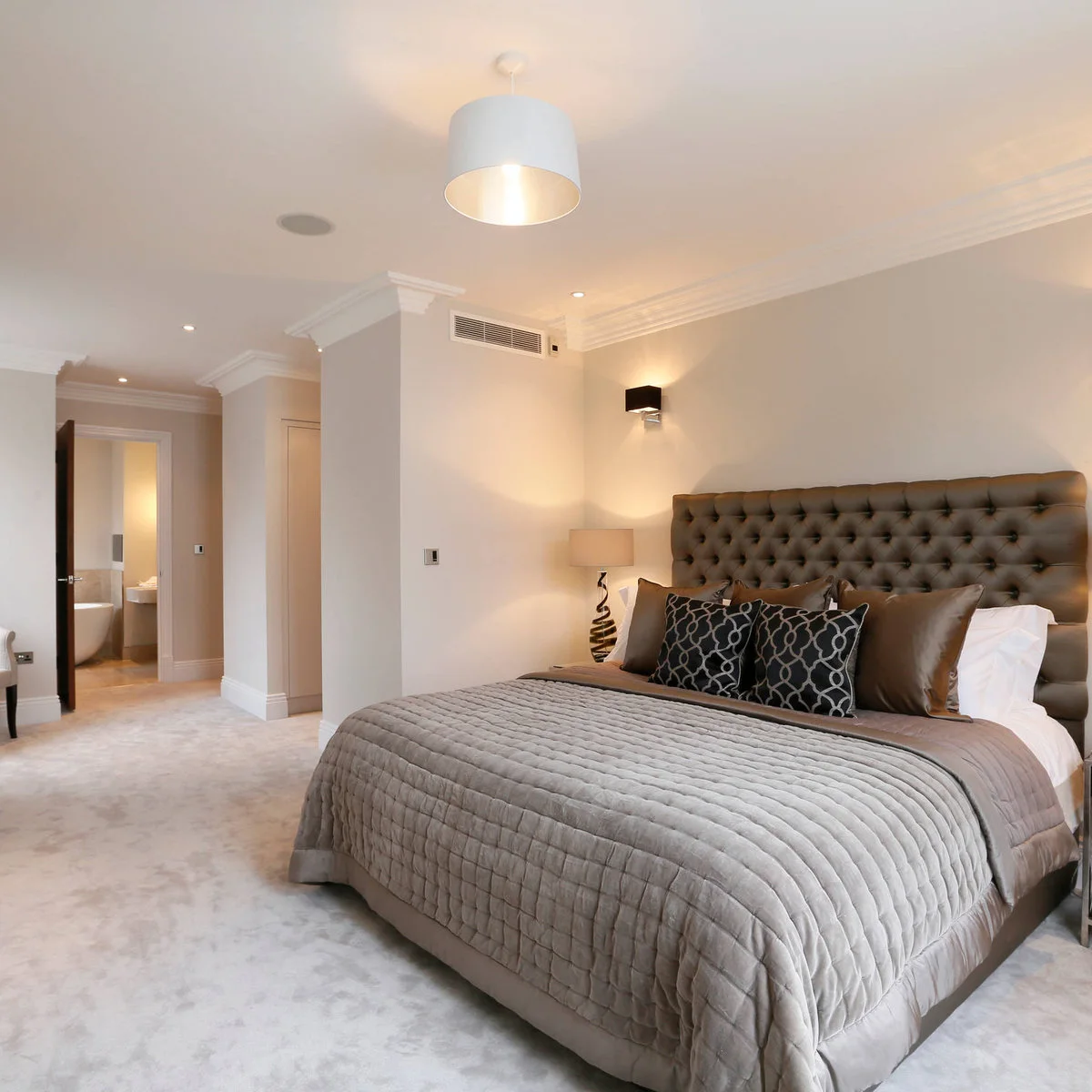
Try Brown Upholstery Against Cream Walls
 SaveSupport Non AI Creator
Image credit: Project: Hartley Homes (via Houzz)
The brown tufted headboard introduces depth against cream walls without requiring a dark painted backdrop. Brown cushions repeat it on the bed, while the gray quilt offers a cooler layer across the foreground. White pillows keep the transition between upholstery and bedding distinct.
Check the headboard fabric or surface care instructions before buying; the photograph alone cannot establish what it is made from. If you keep gray bedding, compare it with the brown sample in evening light as well as daylight to avoid an unexpectedly dull combination.
IDEA 12 / 20
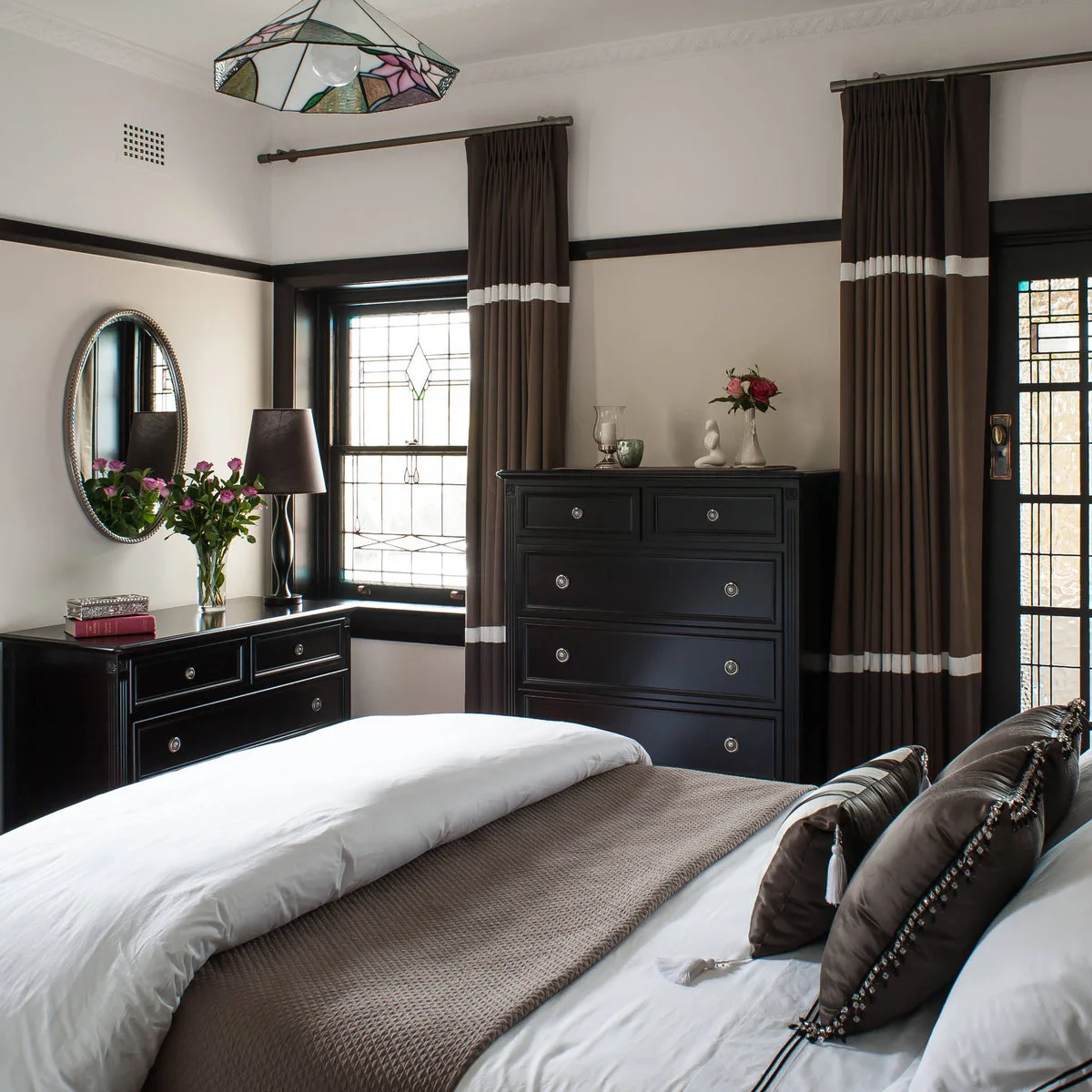
Repeat Brown in Curtains and a Bed Runner
 SaveSupport Non AI Creator
Image credit: Project: Jodie Carter Design (via Houzz)
Brown curtains draw tall vertical lines beside the windows, with narrow light bands interrupting their length. The bed runner and cushions repeat brown at a lower level. Pale walls and white bedding give those darker pieces enough separation to remain individually visible.
Curtains can introduce a large amount of brown without changing the walls. Order a fabric sample and check its weight, lining and stack-back space before choosing a pole. A matching runner is optional; repeating the general tone can work without using identical fabric everywhere.
IDEA 13 / 20
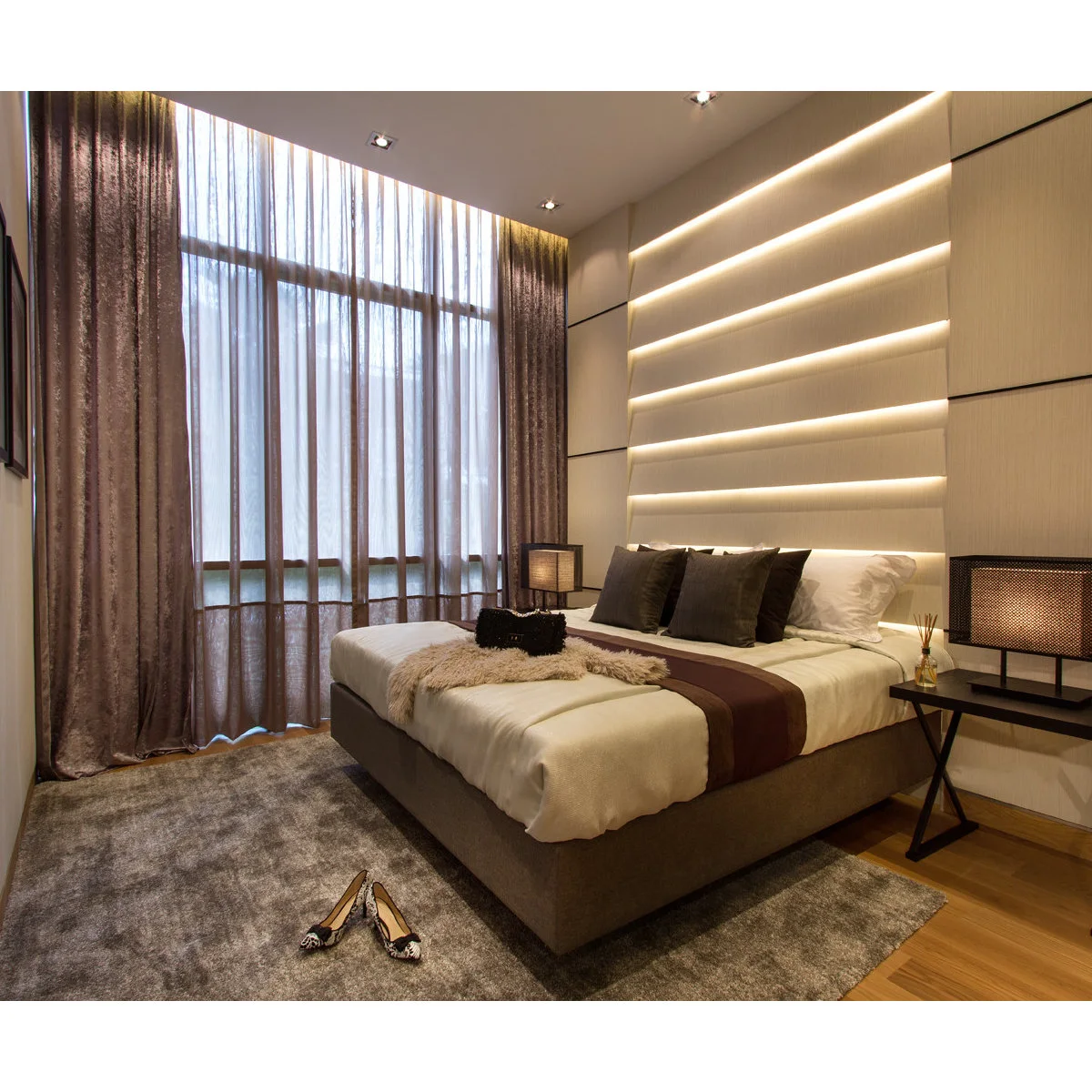
Soften Brown Fabrics with Sheer Curtains
 SaveSupport Non AI Creator
Source: www.houzz.co.uk
Brown side curtains and a brown bed runner frame a much lighter center. The sheer curtain allows the window to remain visually broad, while horizontal lighting emphasizes the pale headboard wall. Small dark lamps repeat the deeper accents at either side of the bed.
Layered curtains need enough track space to open smoothly without bunching into the bed area. Decide how much privacy and darkness you need before choosing the sheer. Keep decorative lighting separate from reading lights so the room remains useful when you want a softer evening setting.
IDEA 14 / 20
Build a Quiet Palette from Related Browns
 SaveSupport Non AI Creator
Source: www.houzz.com
Several related brown and brown-gray tones appear in the wall, upholstered bed and rounded chair. The striped rug changes the texture underfoot without bringing in a bright color. A lighter wooden bedside table and lamp shade keep the small corner from becoming one undifferentiated dark mass.
When using closely related colors, vary texture deliberately and compare large samples together. Smooth, woven and patterned surfaces will catch light differently. Leave room to pull the chair out and keep dried branches or other tall accessories clear of the route around the bed.
IDEA 15 / 20
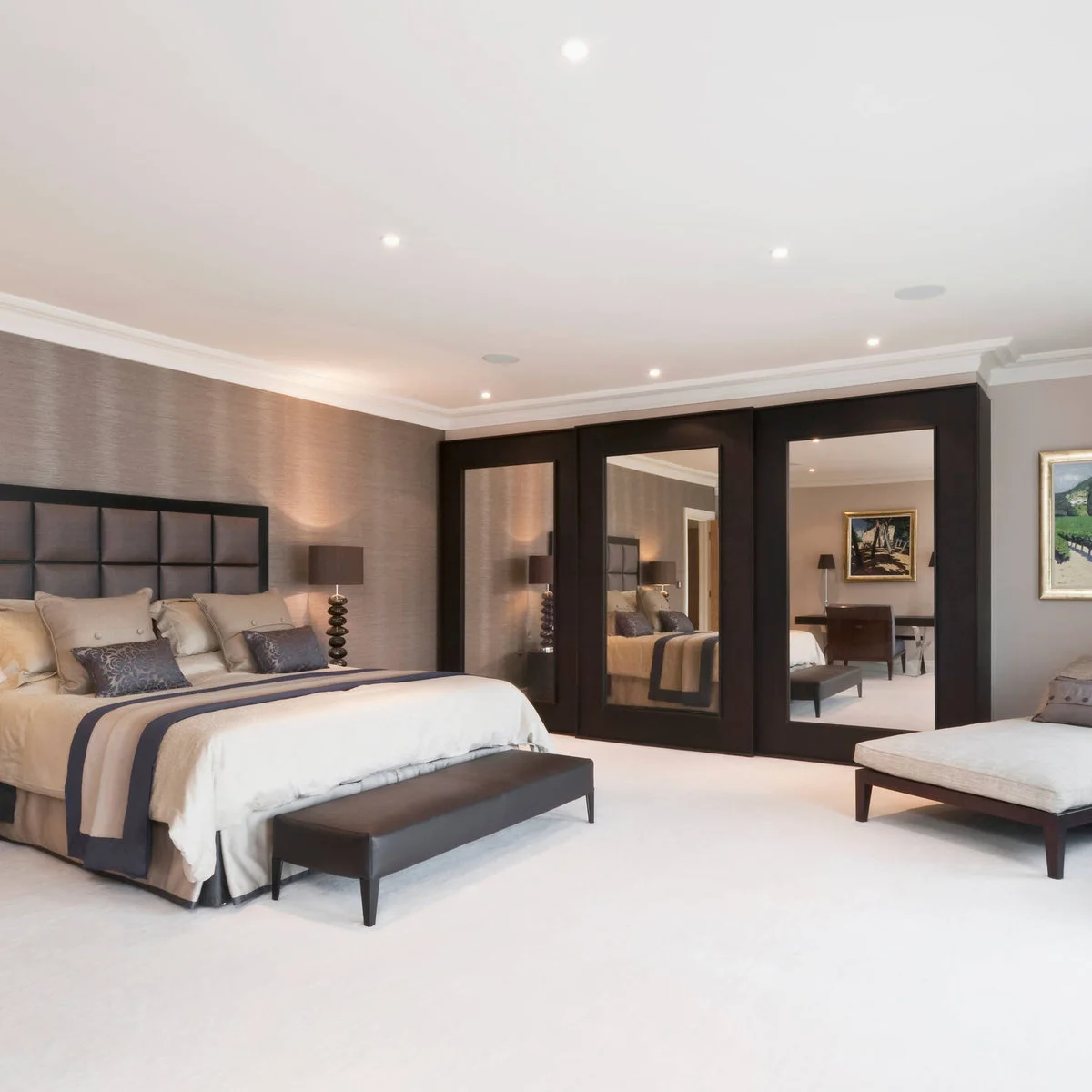
Use Dark Brown Wardrobes as a Strong Outline
 SaveSupport Non AI Creator
Image credit: Project: Alexandra Dixon Interiors (via Houzz)
Dark brown wardrobe frames create a strong outline around the mirrored doors. The mirrors repeat the lighter bedding and ceiling, so the storage wall is less visually solid than plain dark doors would be. A low brown bench carries the same depth toward the foot of the bed.
Consider what a mirror will reflect from your usual resting position before choosing an entire mirrored wall. Dark frames also show dust along horizontal edges, so allow cleaning access. Check the full opening or sliding path of the wardrobe before placing a bench nearby.
PART 04
Balance the room around the brown
IDEA 16 / 20
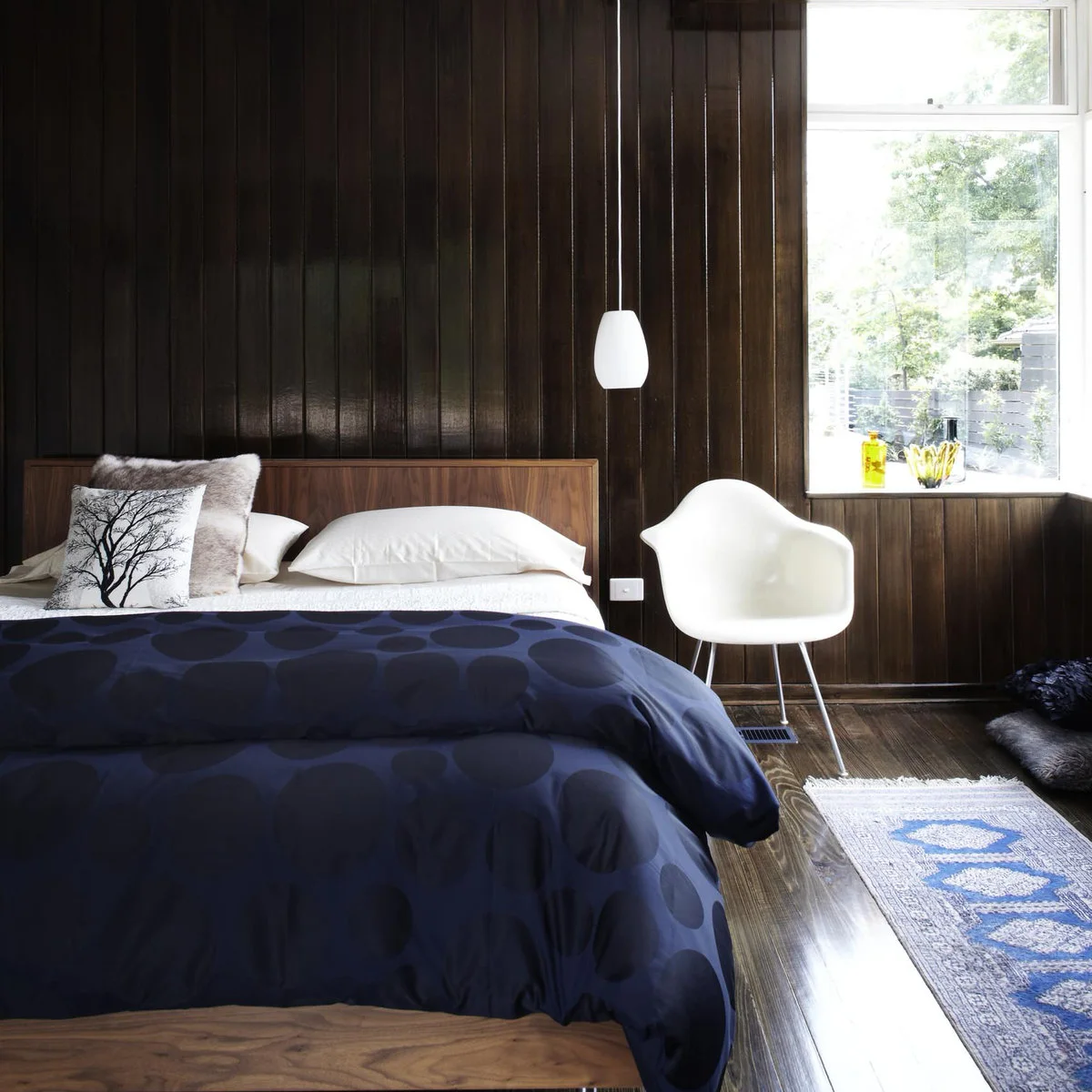
Cool Dark Brown Panels with Blue Bedding
 SaveSupport Non AI Creator
Image credit: Project: Sharyn Cairns (via Houzz)
The dark brown wall panels and wooden headboard establish a substantial backdrop. Blue bedding gives that warmth a cooler partner, while the white chair and pendant create distinct light shapes near the window. A smaller blue-patterned rug repeats the textile color on the floor.
Choose the blue after comparing it with your particular brown finish; reddish wood and cooler brown panels may need different companions. Keep one light object near a dark wall to preserve contrast. Avoid placing loose rugs across a floor vent or in the path of a chair.
IDEA 17 / 20
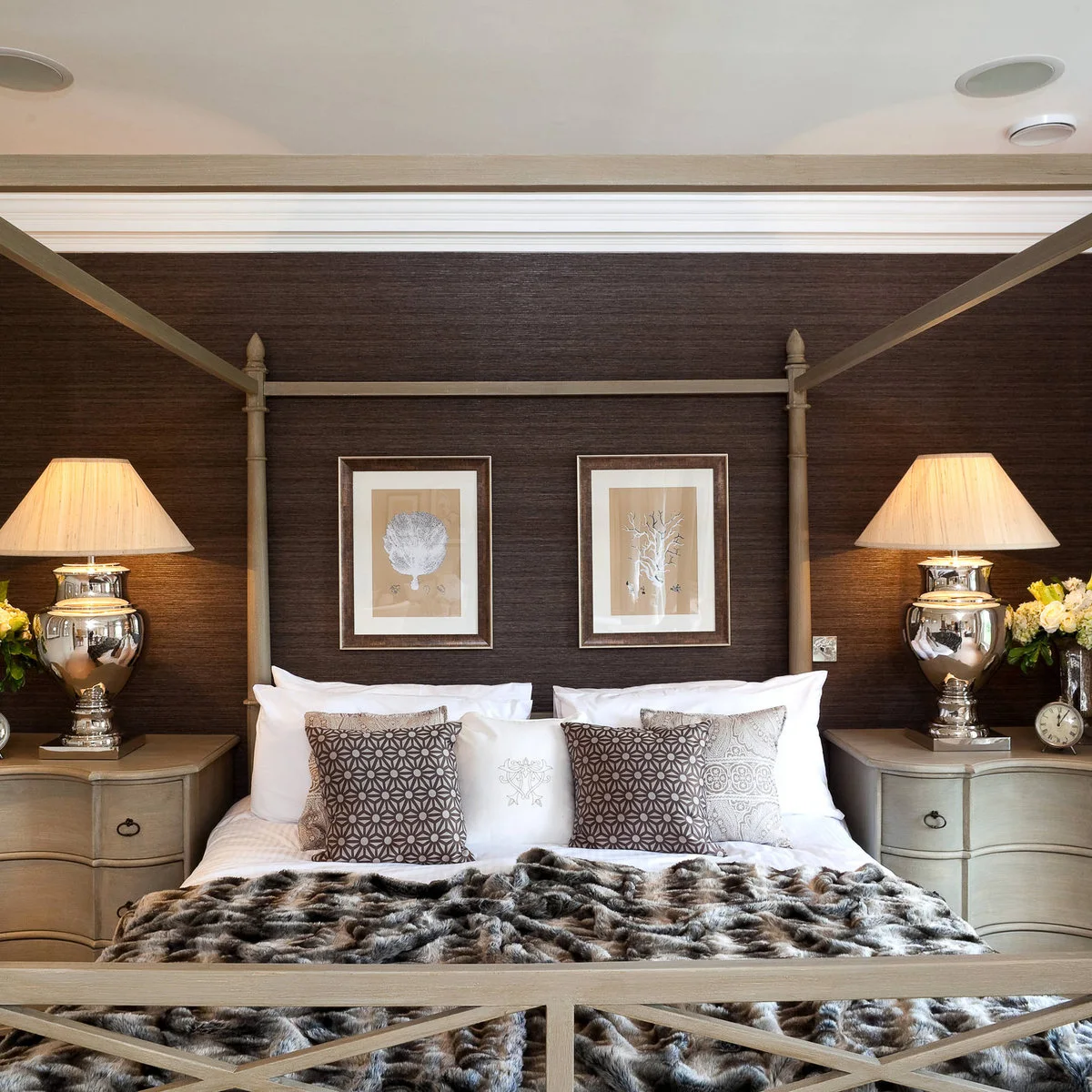
Add Pale Furniture to a Cocoa Backdrop
 SaveSupport Non AI Creator
Image credit: Project: Alexander James Interiors (via Houzz)
The cocoa-colored textured wall makes the pale four-poster frame easy to see. Light bedside chests and reflective lamps repeat that contrast symmetrically, while patterned cushions and a textured throw add smaller changes in tone. Brown remains the background rather than the color of every piece.
A pale frame is useful when dark walls would otherwise swallow the outline of the bed. Check that large lamps leave enough usable table space and do not collide with the posts. Choose a textured throw by its care needs rather than assuming a material from appearance alone.
IDEA 18 / 20
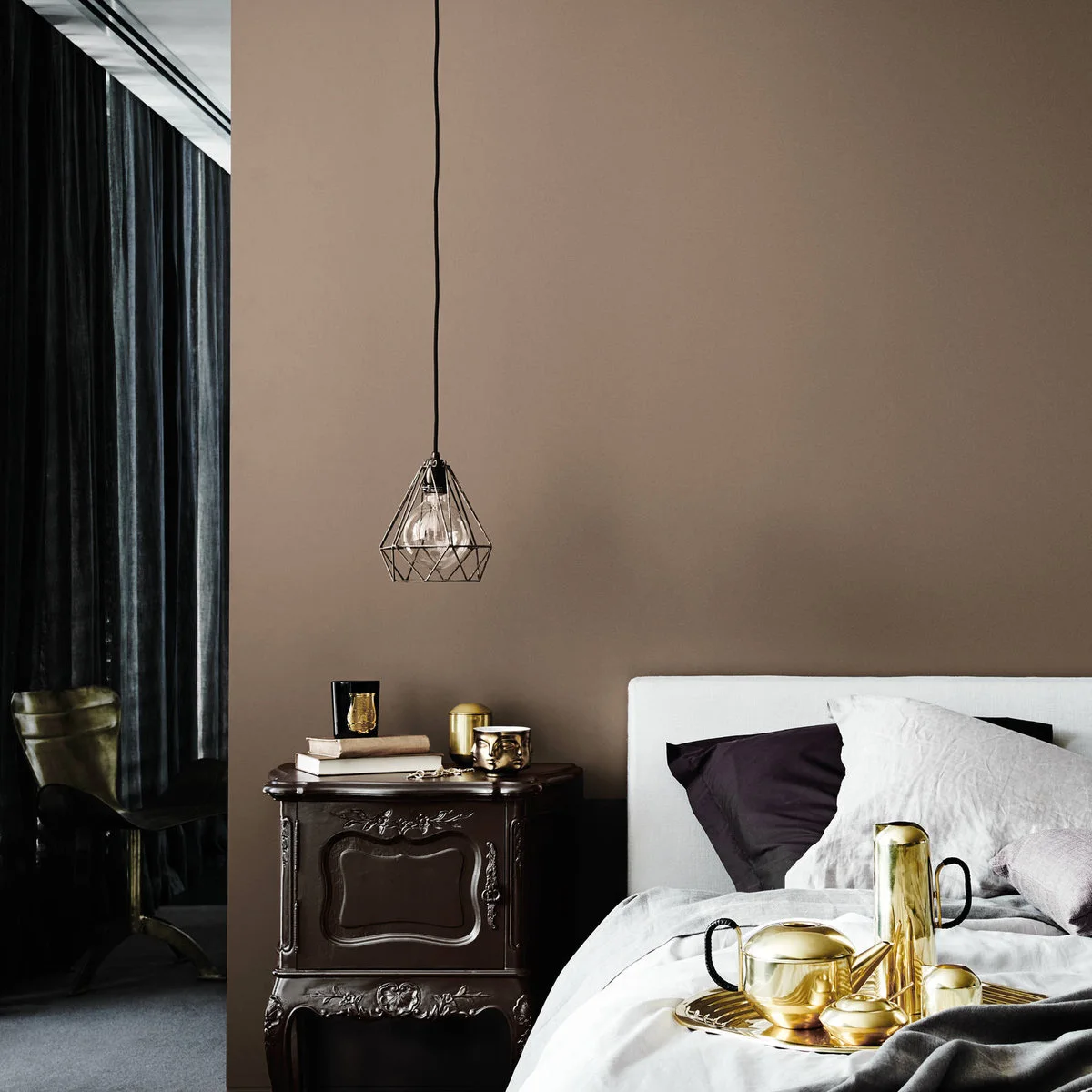
Mix a Brown Wall with a Dark Vintage Chest
 SaveSupport Non AI Creator
Image credit: Project: Dulux Paint (via Houzz)
The muted brown wall sits behind a much darker carved bedside chest. A white headboard and white pillows create a clean break beside it, while small gold-colored accessories add highlights. The wire pendant keeps its outline light compared with the substantial furniture below.
An older bedside chest can work without matching the bed, provided its height and top surface suit daily use. Check drawers and the condition of the finish before placing drinks on it. Avoid filling the top with accessories that leave no room for a book or lamp control.
IDEA 19 / 20
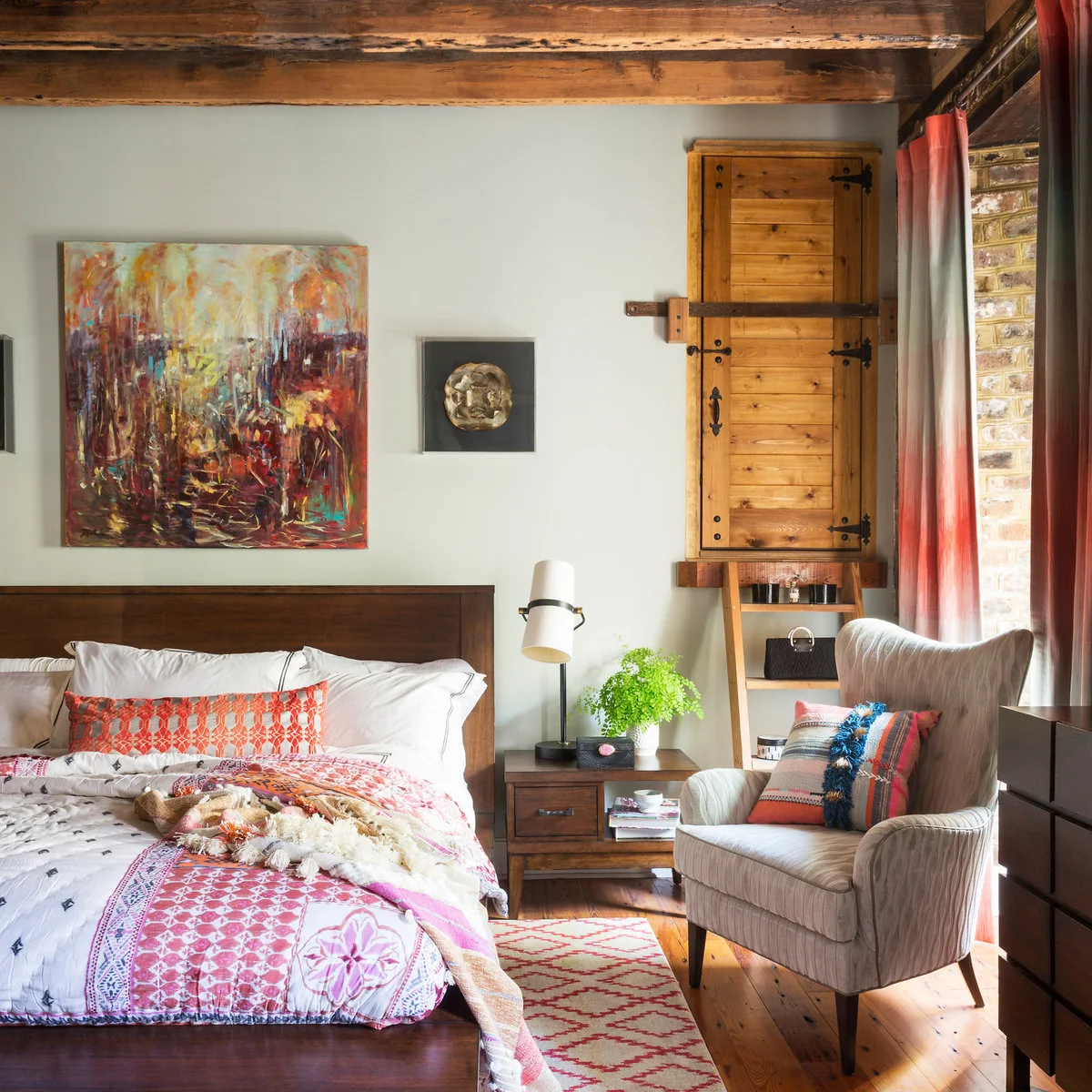
Use Coral to Brighten Brown Architectural Wood
 SaveSupport Non AI Creator
Image credit: Project: MICHAEL MITCHELL (via Houzz)
Brown beams, a wooden headboard and a small bedside cabinet give the room a warm framework. Coral and pink textiles bring liveliness to the bed, while white bedding and a pale armchair keep those colors from feeling crowded. The abstract artwork repeats several of the textile tones.
Keep existing wood visible when it is the feature you want to emphasize, then use removable textiles to adjust the mood. Choose one main accent family before adding patterned pillows. Leave the chair accessible for sitting rather than using it only as a place to store extra bedding.
IDEA 20 / 20
Connect Brown Trim with a Tan Coverlet
 SaveSupport Non AI Creator
Image credit: Project: Priestley + Associates Architecture (via Houzz)
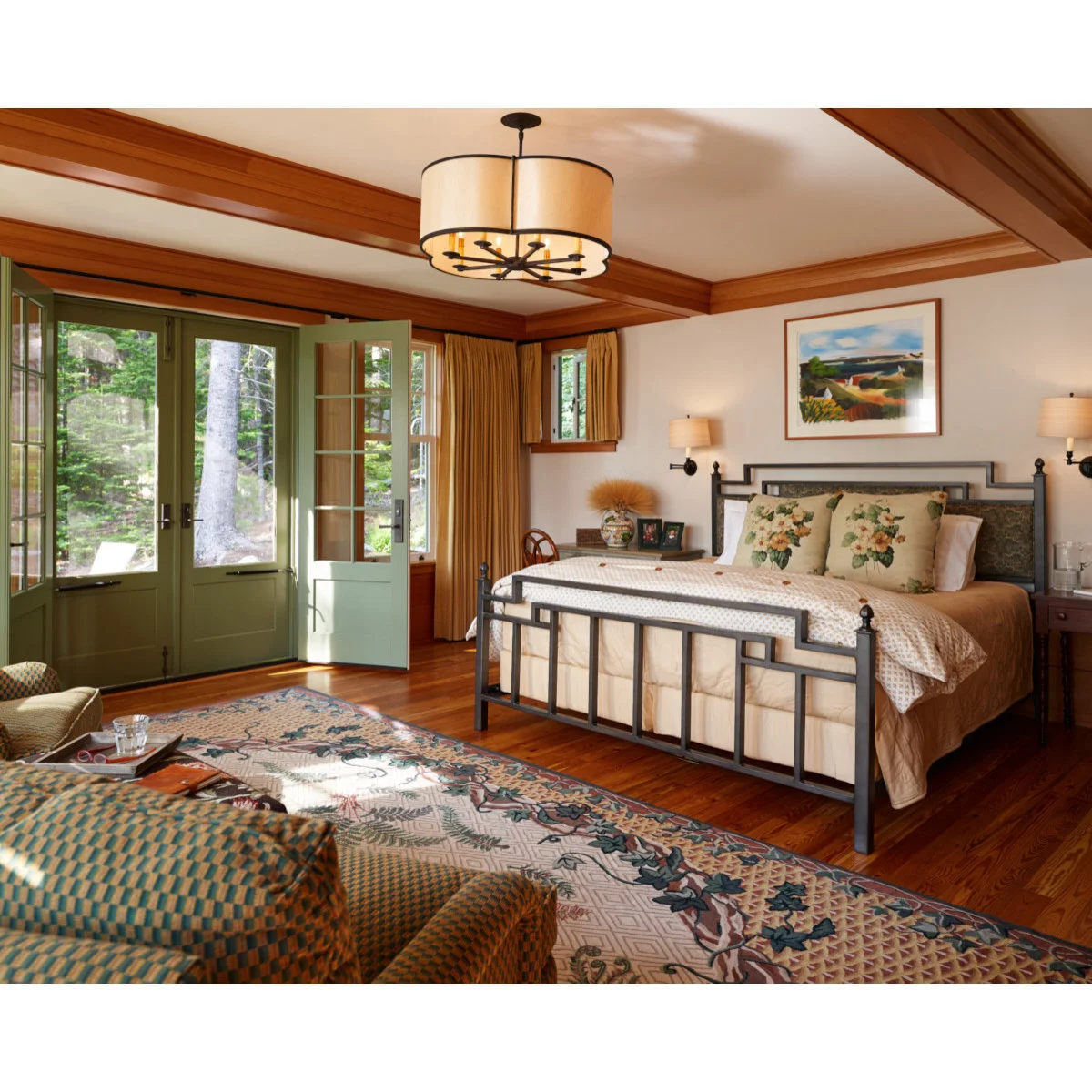
Brown ceiling beams and window trim create a clear perimeter around the room, with a tan coverlet bringing that warmth onto the bed. Green doors and floral pillows add color without replacing the brown framework. The pale ceiling leaves a lighter surface between the substantial beams.
Use the existing trim as your starting point instead of buying a full matching furniture set. A tan coverlet can connect the architecture to the bed while remaining easy to change. Compare greens against the wood in daylight, and keep the door swing free of chairs and loose textiles.
BRING IT ALL TOGETHER
Decide how much brown the room needs
Choose one substantial brown surface first, whether that is the wall, the curtains, a bed or architectural wood. Bring in a lighter partner before adding more dark pieces; the contrast is what makes each finish easy to appreciate.
Then check the daily details: reachable lighting, clear drawer fronts and enough space to move around the bed. A brown palette feels more comfortable when the room works well as well as looking coordinated.