A bedroom for two works best when it supports both people’s habits. Start with bedtime, reading, getting dressed and the things each person needs within reach. Matching bedside tables can look calm, but equal usefulness matters more than identical furniture.
These photographed bedrooms offer different ways to arrange storage, seating and light. They are examples to adapt, not evidence of how the occupants live. Check your own room with doors and drawers open, then choose the decorative details together.
PART 01
Give both sides of the bed useful space
IDEA 01 / 20
Give Two People Somewhere to Sit
 SaveSupport Non AI Creator
Image credit: Project: AVID Associates LLC (via Houzz)
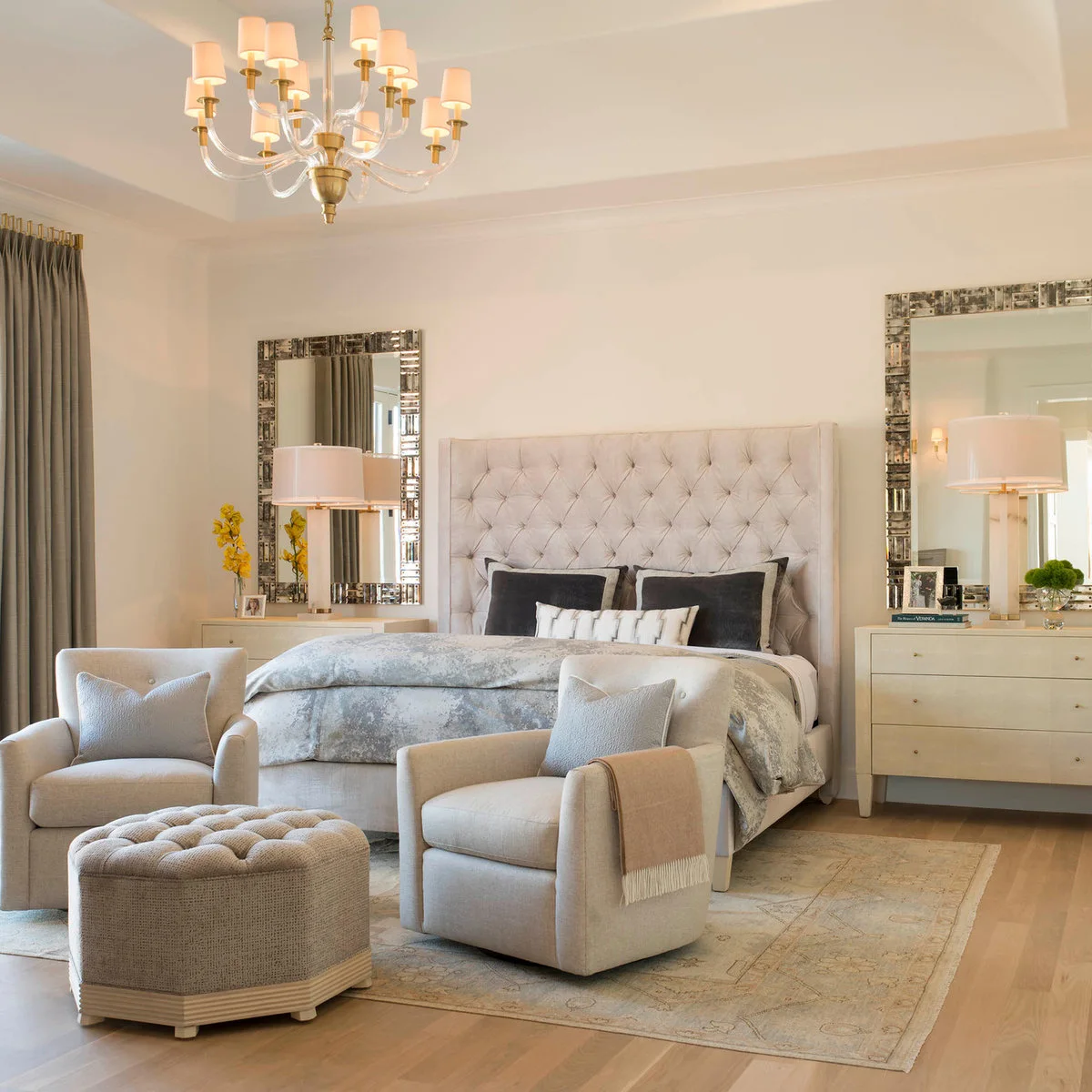
Two chairs create a small sitting area separate from the bed, while matching bedside chests give each side its own surface. Pale upholstery connects the chairs with the headboard. The ottoman holds the seating group together without adding another tall object in front of the bed.
Add a sitting area only after both bedside routes are comfortable. Test whether the chairs have a useful purpose for your routines, such as reading or talking before bed. Keep the ottoman easy to move, and leave enough clearance for drawers and the main door. If a narrow table suits your bedroom better than another chair, these console table decor ideas show restrained arrangements with room for everyday objects.
IDEA 02 / 20
Keep Everyday Items in Bedside Drawers
 SaveSupport Non AI Creator
Image credit: Project: Corynne Pless (via Houzz)
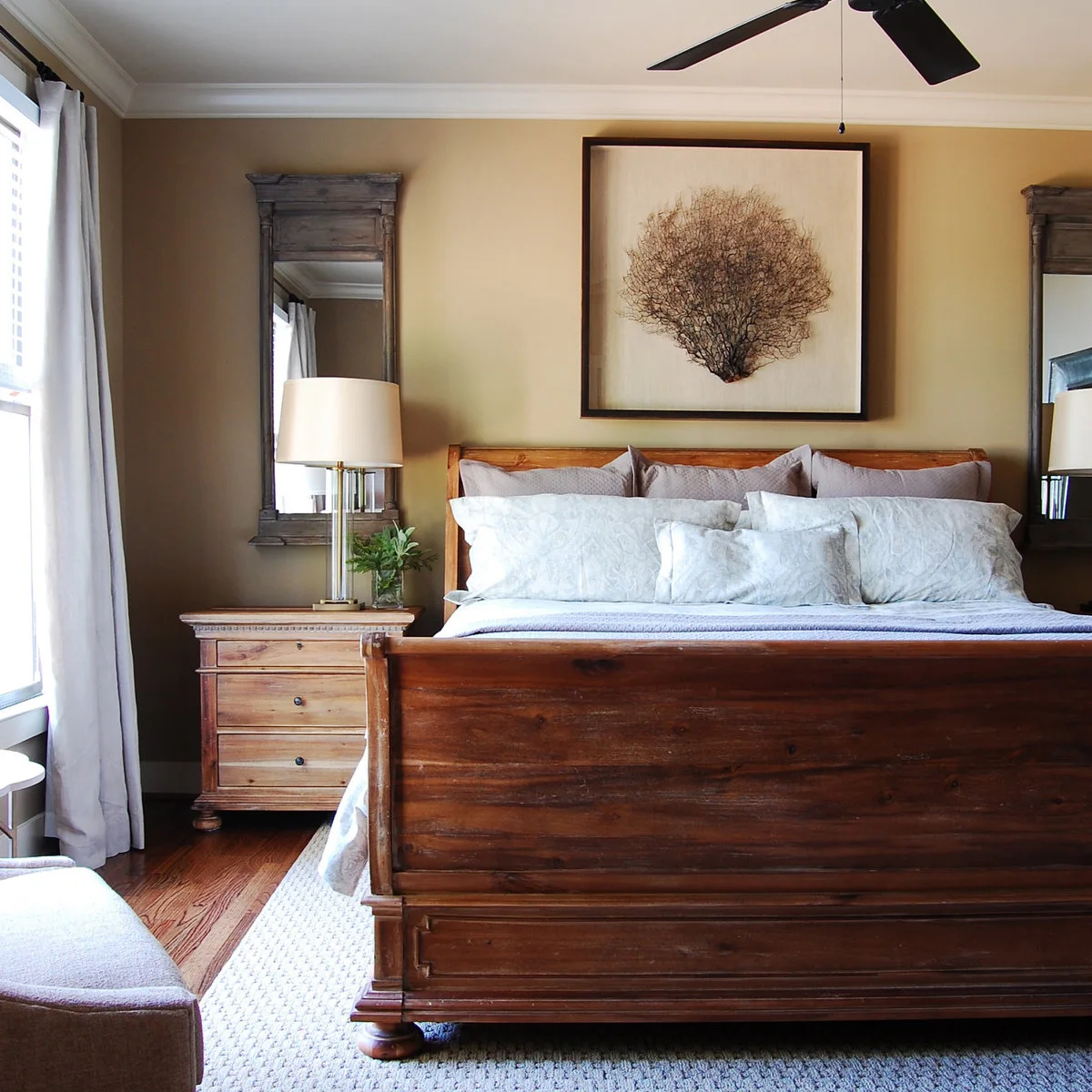
Drawer chests beside the wooden bed offer more enclosed storage than a small occasional table. The mirrors and lamps repeat on either side, giving the wall a balanced arrangement. Pale bedding separates the dark bed frame from the warmer wall and nearby wood furniture.
Decide what each person actually stores beside the bed before choosing the drawer count. Frequently used items should be reachable without stretching across a lamp. Leave room to open the drawers fully, and keep the top surface available for essentials rather than treating it entirely as display space.
IDEA 03 / 20
Put a Dressing Mirror Away from the Pillow
 SaveSupport Non AI Creator
Image credit: Project: O’Hara Interiors (via Houzz)
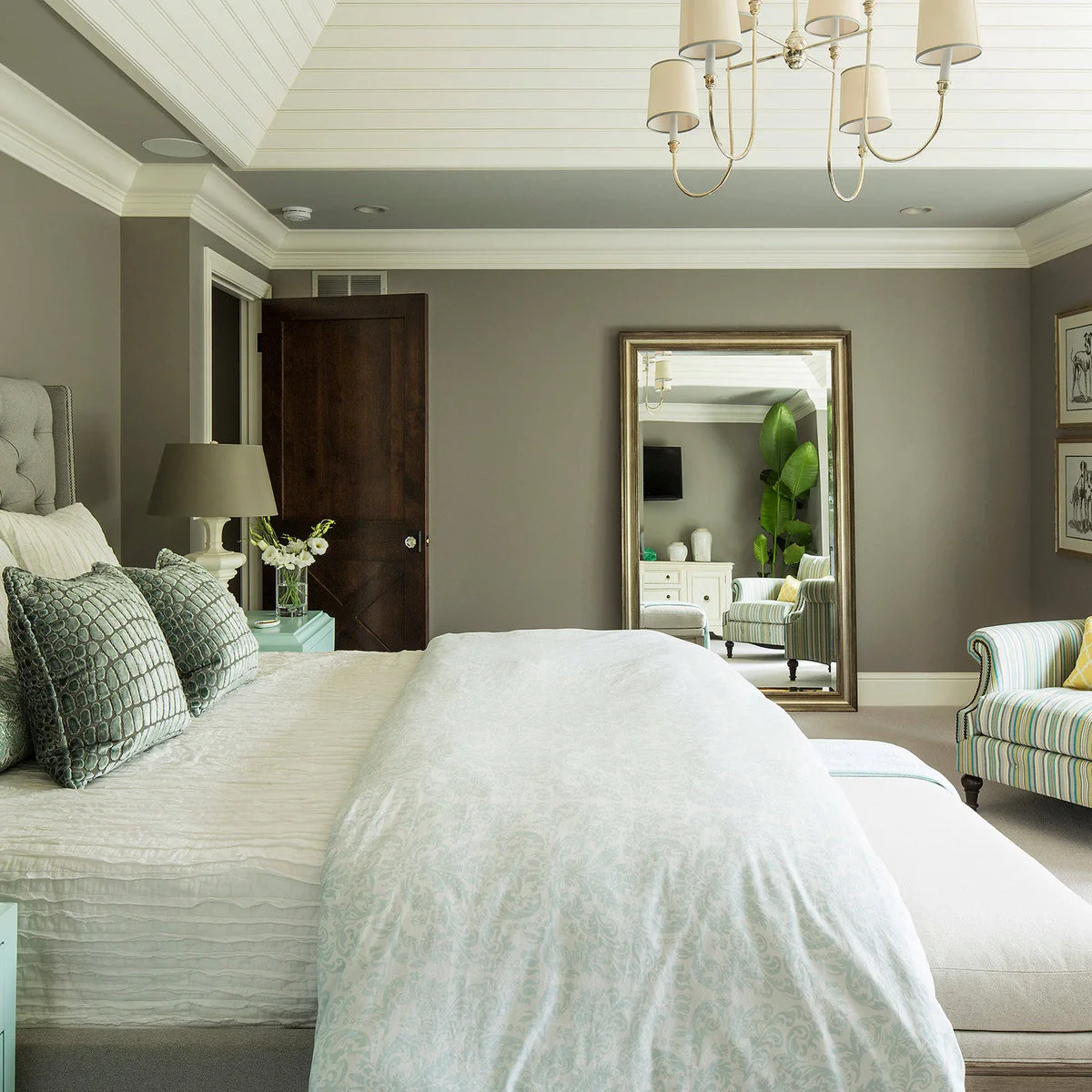
The tall mirror creates a dressing position away from the head of the bed. A striped chair provides another place to sit, while the mint chest adds a softer color beside the pillows. Most of the visible floor remains open between the sleeping and dressing areas.
Secure a large mirror according to its installation requirements rather than copying a casually leaning arrangement. Check the route around it while someone is getting dressed. Keeping dressing activity away from the bedside can help two people share the room when their morning schedules differ.
IDEA 04 / 20
Choose Storage That Suits Both Bedside Habits
 SaveSupport Non AI Creator
Image credit: Project: EDYTA & CO. INTERIOR DESIGN (via Houzz)
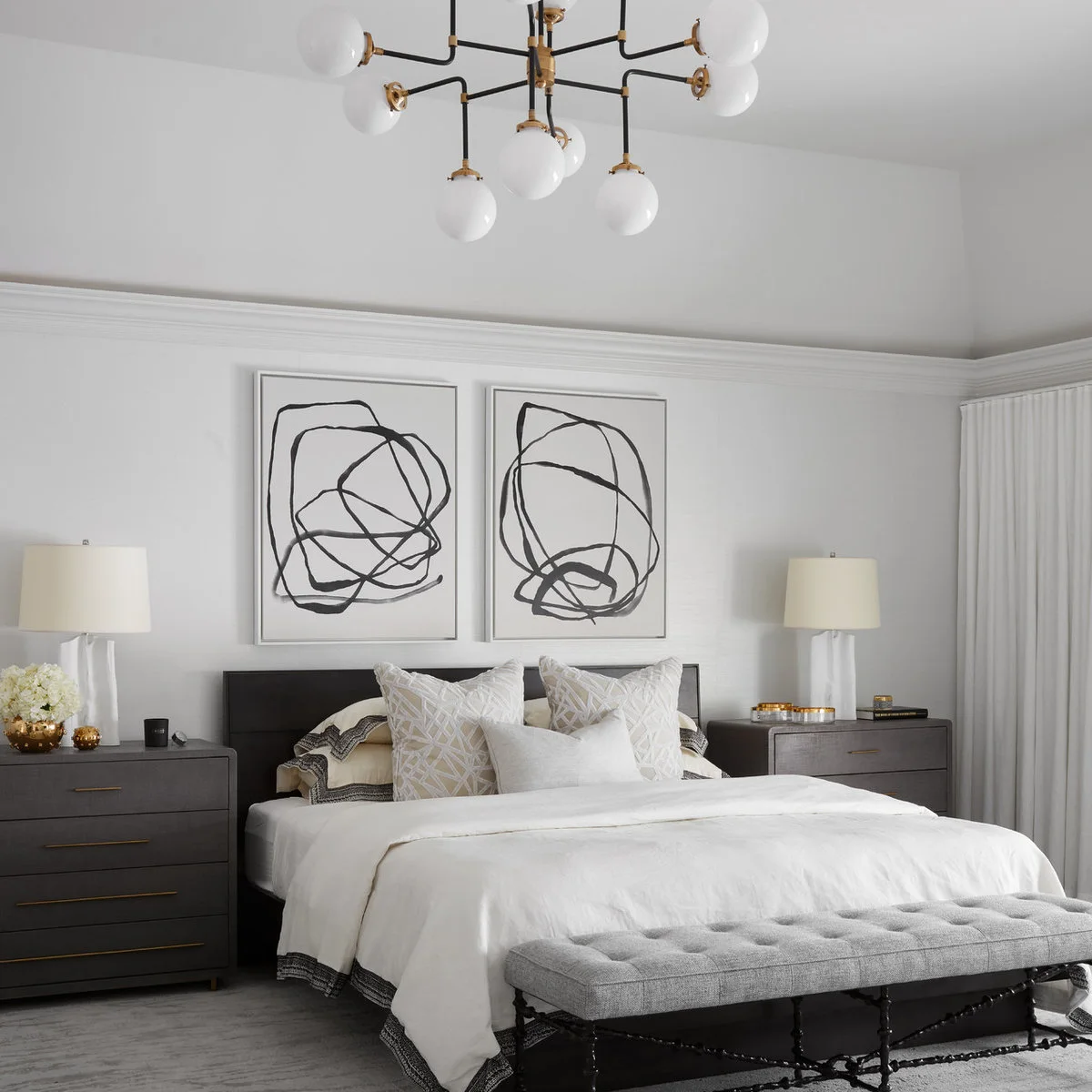
Wide drawer chests give both sides of this bed substantial storage. Their dark finish connects with the headboard and the black lines in the artwork. Pale lamps and bedding keep the larger storage pieces from making the whole wall feel uniformly dark.
Equal-sized chests do not require identical contents. Divide storage around each person’s needs, keeping shared items in an agreed place. Check the bench position with drawers open and someone walking past the bed; an attractive foot-of-bed piece should not make ordinary movements more awkward.
IDEA 05 / 20
Agree on a Quiet Background Color
 SaveSupport Non AI Creator
Image credit: Project: Neela Woodard Design, LLC (via Houzz)
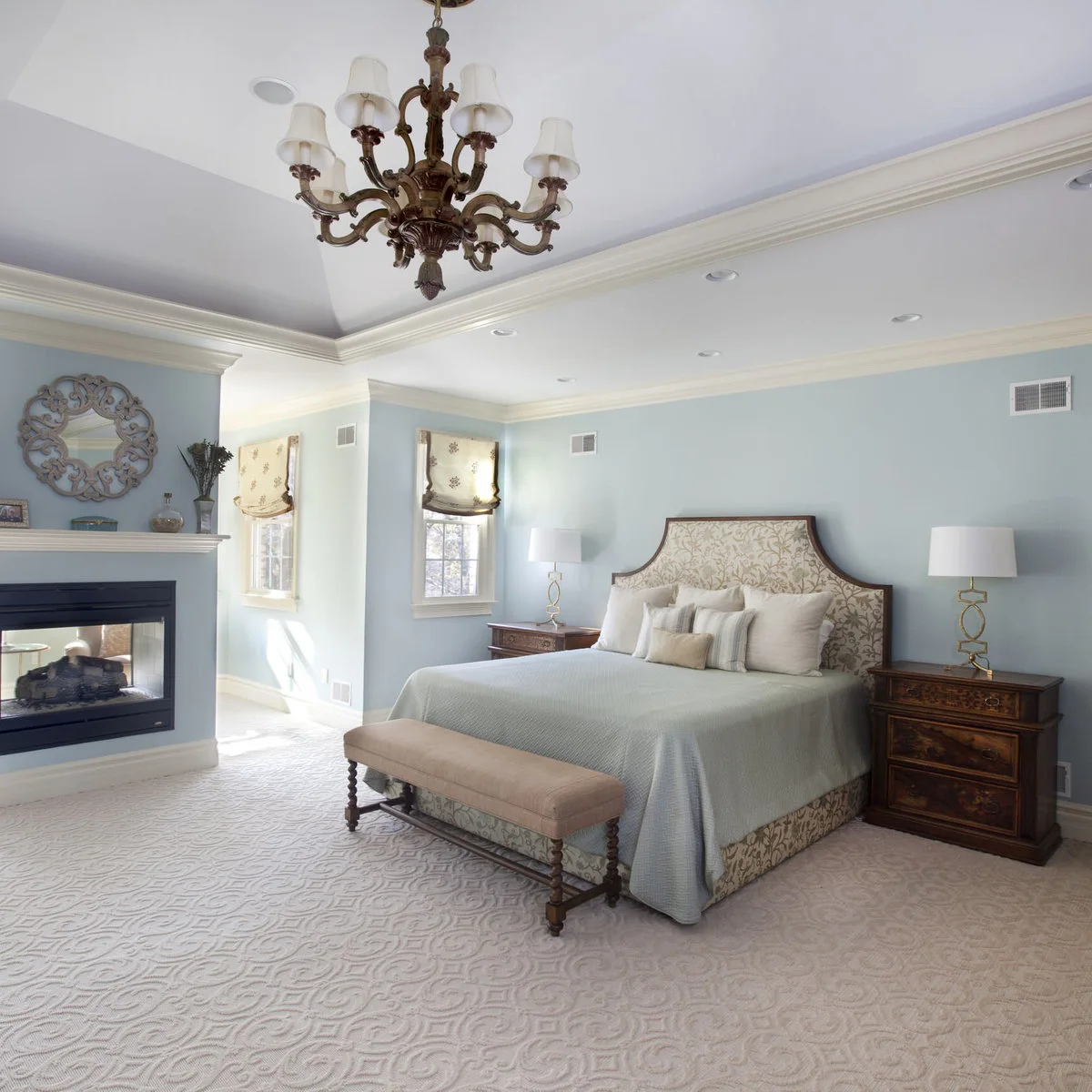
Pale blue walls provide a shared background for the patterned headboard and darker wooden chests. The two lamps repeat the same light shape above the bedside storage. A neutral bench and restrained bedding keep the larger decorative pattern concentrated behind the pillows.
Compare a few relaxing bedroom paint colors together before committing to a complete scheme. Look at the samples in daylight and under your evening lamps. Agree on the room’s overall mood first, then use smaller textiles to accommodate different preferences without buying two competing furniture schemes.
PART 02
Balance light and personal belongings
IDEA 06 / 20
Make Decorative Pillows Easy to Put Away
 SaveSupport Non AI Creator
Image credit: Project: Susan Glick Interiors (via Houzz)
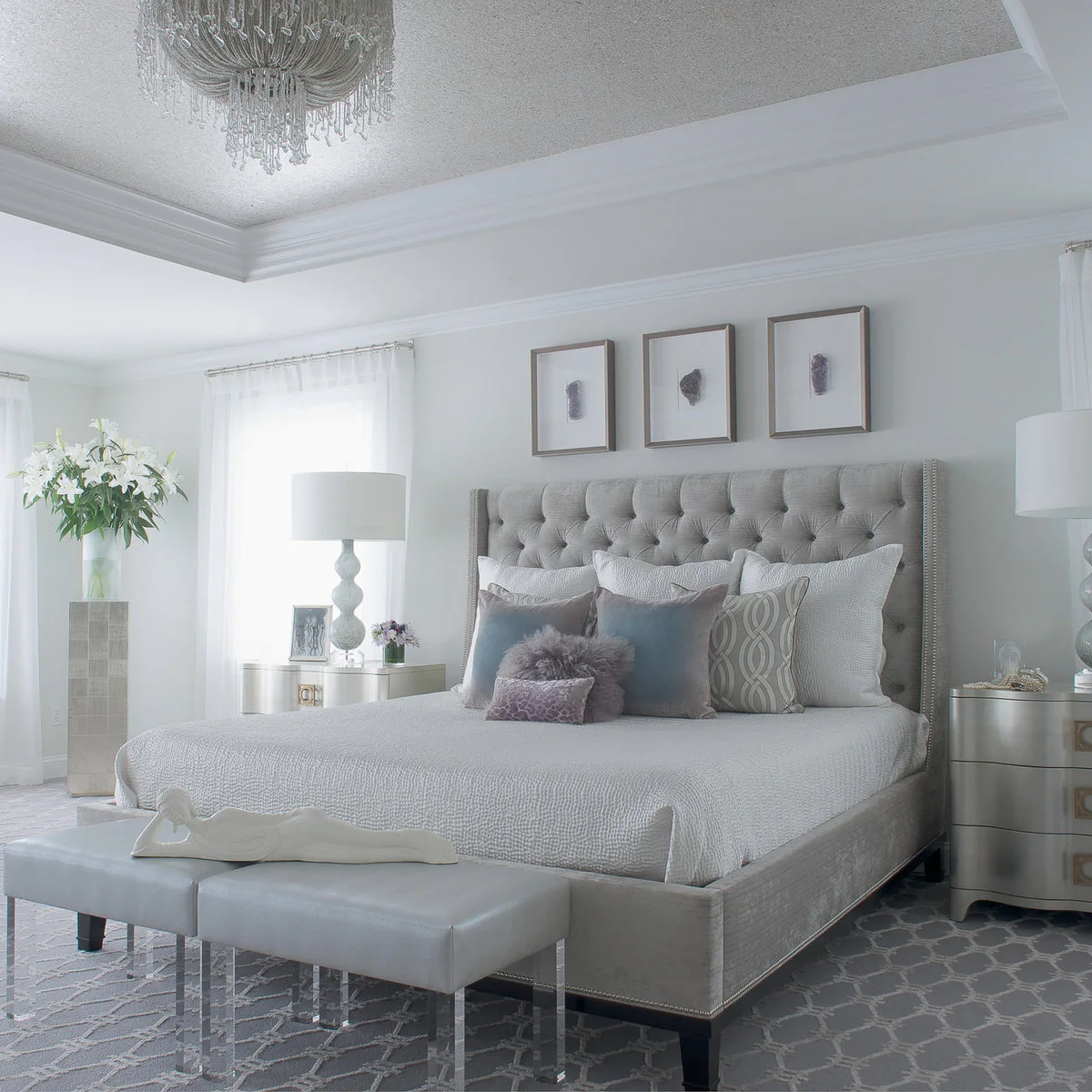
Decorative pillows bring several gray textures to this bed, with a small touch of lilac in the middle. Curved bedside chests soften the larger rectangular headboard. Two small stools at the foot add flexible surfaces without the visual weight of a single long upholstered bench.
Decide where decorative pillows will go every night before buying a large set. A smaller arrangement that both people can reset is easier to live with. Stools need an intended purpose too, and should not obstruct the route around the bed or become permanent clothing storage.
IDEA 07 / 20
Leave a Real Landing Place Beside the Lamp
 SaveSupport Non AI Creator
Image credit: Project: Borden Interiors & Associates (via Houzz)
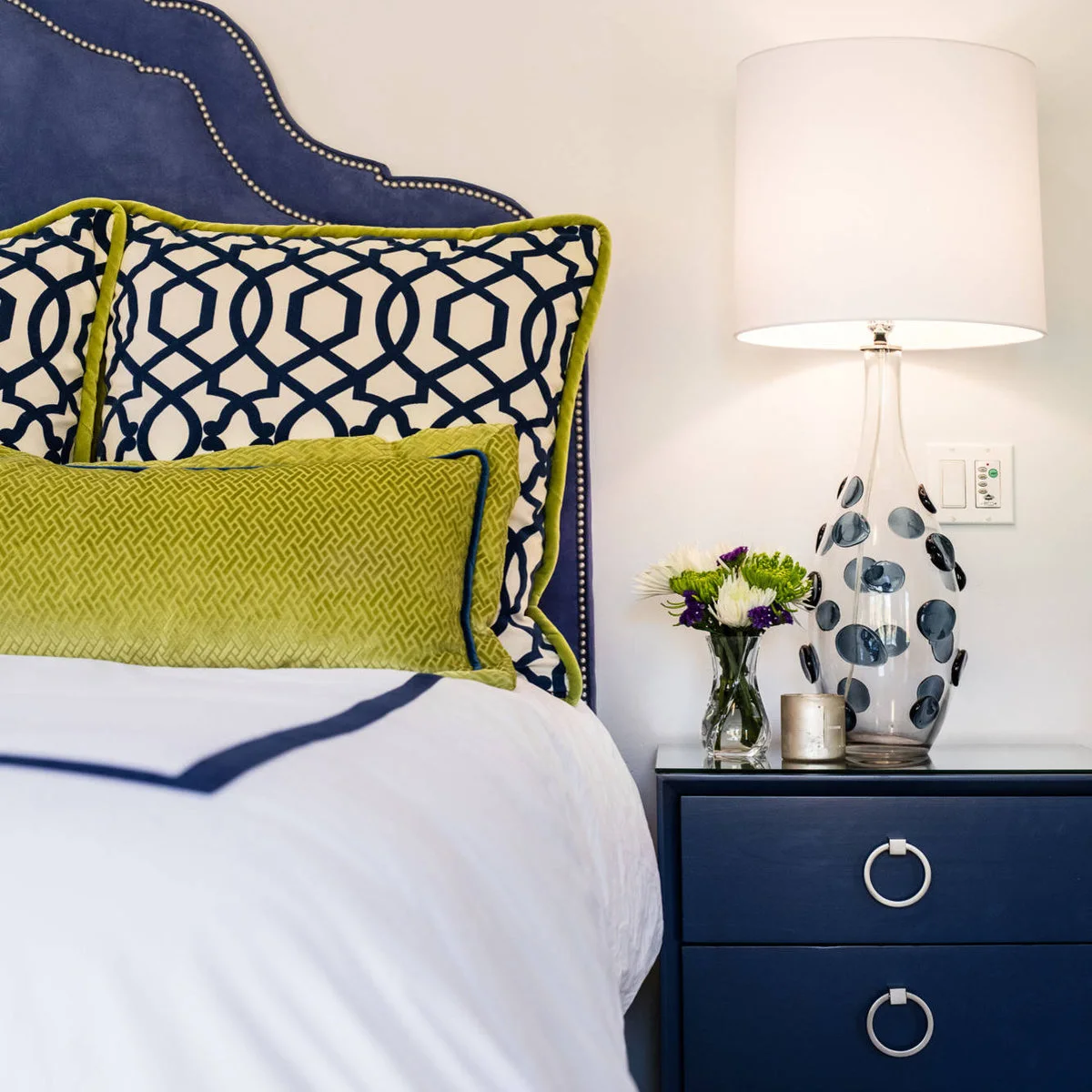
This close view shows how a bedside lamp can occupy much of a useful surface. The blue chest repeats the headboard color, while green-edged pillows introduce another accent. A small vase and candle add decoration, but leave limited clear space beside the lamp base.
Plan each bedside for the objects that arrive there every night: glasses, a book, water or a phone. Reduce display items if they compete for that space. Use a stable, reachable lamp and keep charging cords arranged so they cannot be pulled across the bed.
IDEA 08 / 20
Hang Lighting Above Clear Bedside Surfaces
 SaveSupport Non AI Creator
Image credit: Project: Robeson Design (via Houzz)
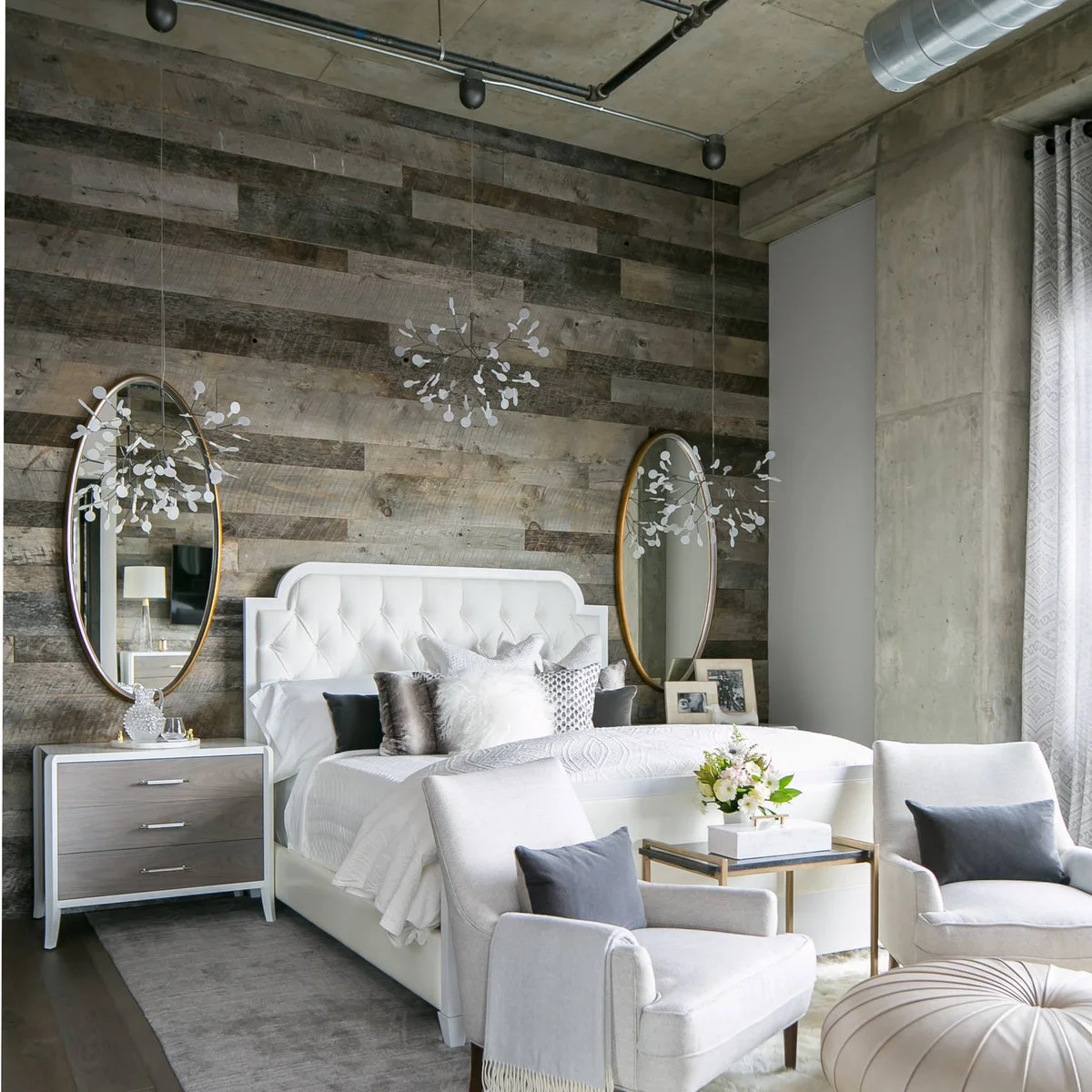
Pendant lights sit above the bedside chests rather than occupying their tops. The oval mirrors repeat their position, while the wood-clad wall brings texture behind the pale bed. A pair of chairs in front creates another small activity area within the larger bedroom.
Check pendant height from both a lying and sitting position, including the space needed to reach the drawers. Separate controls can be helpful, but their locations need planning before installation. Ask an electrician to assess the proposed fittings and keep cords or suspended details away from everyday movement.
IDEA 09 / 20
Keep a Window Seat Separate from the Bed
 SaveSupport Non AI Creator
Image credit: Project: O’Hara Interiors (via Houzz)
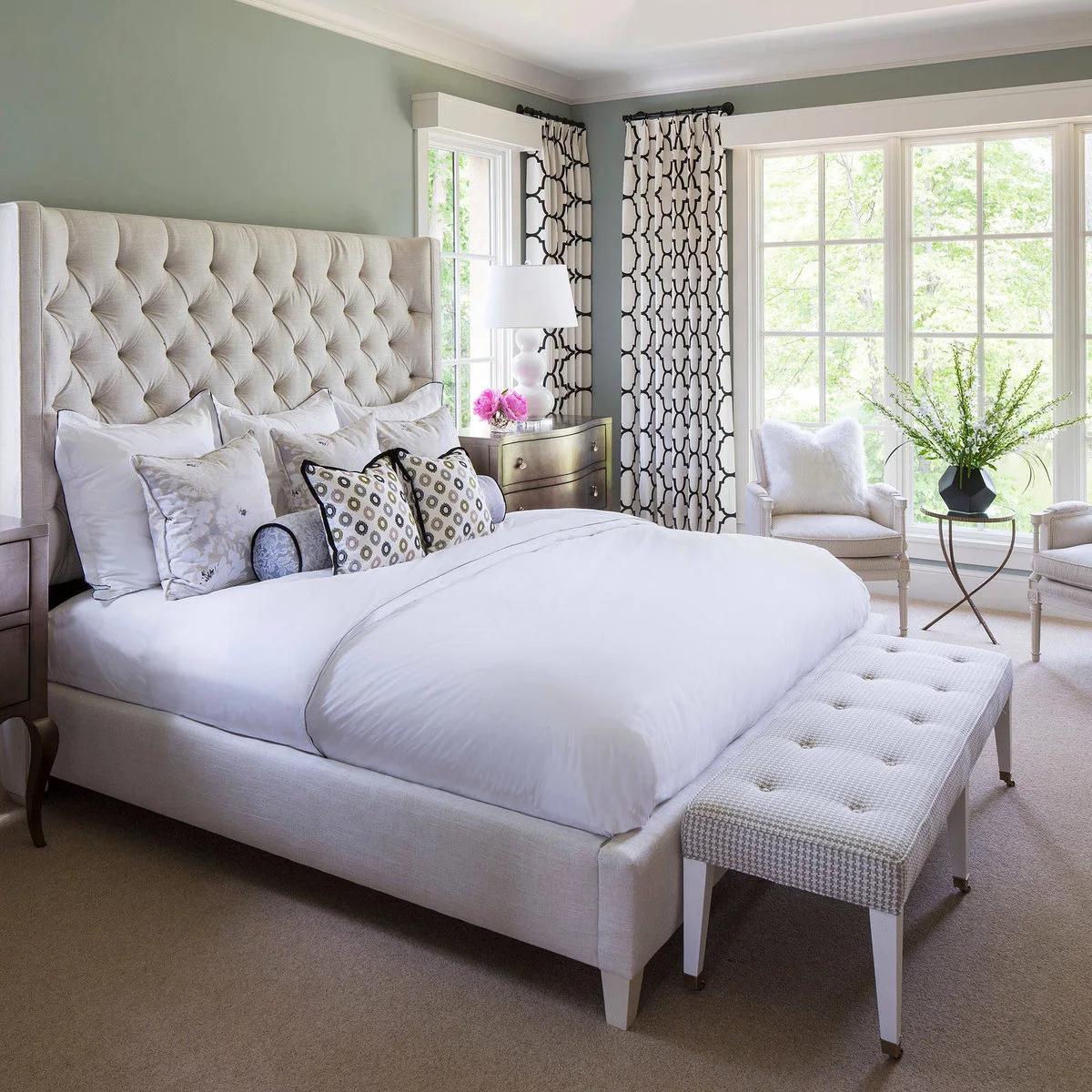
The two chairs at the window create a second place to sit without using the bed as the only comfortable surface. Patterned curtains frame that corner, while the bed and bench remain mostly pale. A small round table serves the chairs without adding a full desk.
A separate sitting corner can support different routines, but test how much floor it leaves around the bed. Choose a table that both seats can reach. If one person reads there while the other rests, assess the lamp position and light spill rather than relying on the room’s daytime brightness.
IDEA 10 / 20
Keep a Compact Bedside Arrangement Open
 SaveSupport Non AI Creator
Image credit: Project: Christen Ales Interiors (via Houzz)
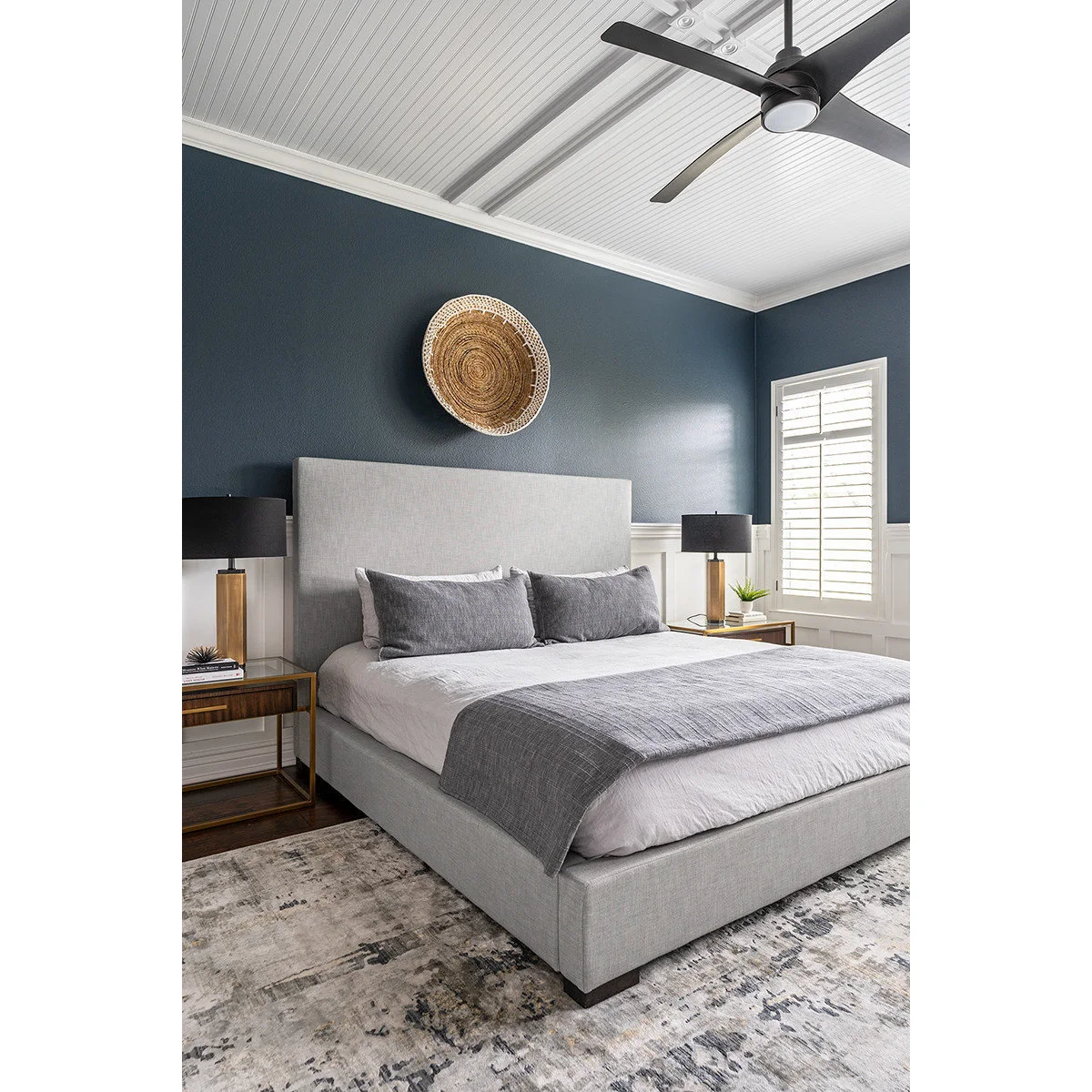
The slim nightstands leave visible space below their drawers, making the bedside arrangement feel less bulky. Black lamp shades repeat on either side of the gray bed. Dark blue upper walls contrast with the white paneling, while the simple bedding leaves the room’s geometry easy to read.
Compare drawer capacity with your actual bedside belongings before choosing an open frame. Keep the lower space useful for cleaning rather than filling it with loose chargers and bags. Agree on a place for each person’s essentials so a visually light arrangement remains practical after the first week.
PART 03
Make room for different routines
IDEA 11 / 20
Use Art to Connect Different Color Preferences
 SaveSupport Non AI Creator
Image credit: Project: Tina Ramchandani Creative (via Houzz)
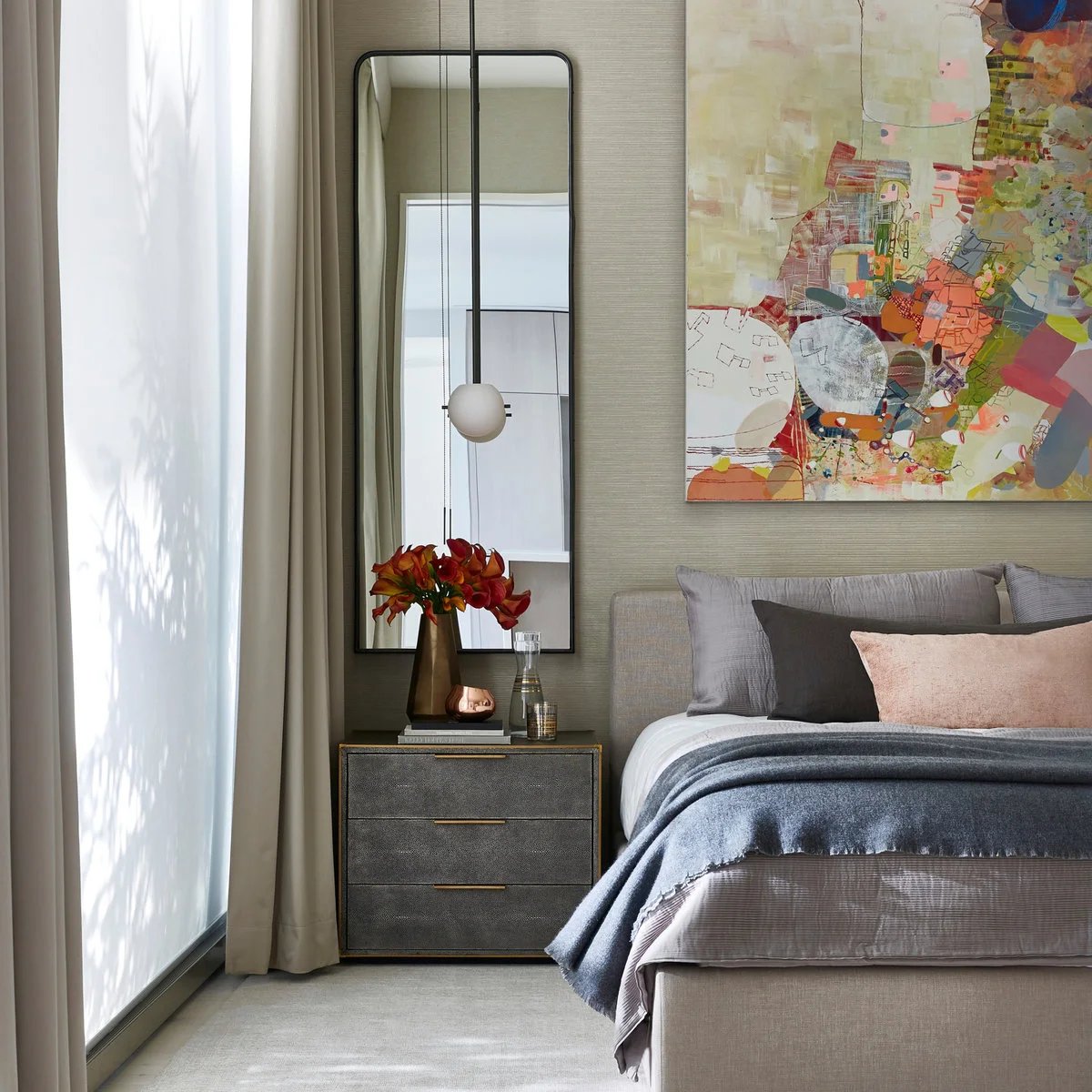
The artwork introduces several colors above otherwise restrained gray bedding and furniture. A narrow mirror and small globe pendant add vertical shapes beside the bed. The chest provides enclosed storage, while the plain curtain keeps the window side quieter than the artwork.
A shared artwork can connect different color preferences without requiring every textile to match it. Choose a piece you both enjoy and plan its secure fixing. For other arrangements, these above-bed decor ideas show ways to leave enough visual space around the headboard and neighboring lights.
IDEA 12 / 20
Keep Bedside Shelves Separate from Drawers
 SaveSupport Non AI Creator
Image credit: Project: Emily Sidoti Photography (via Houzz)
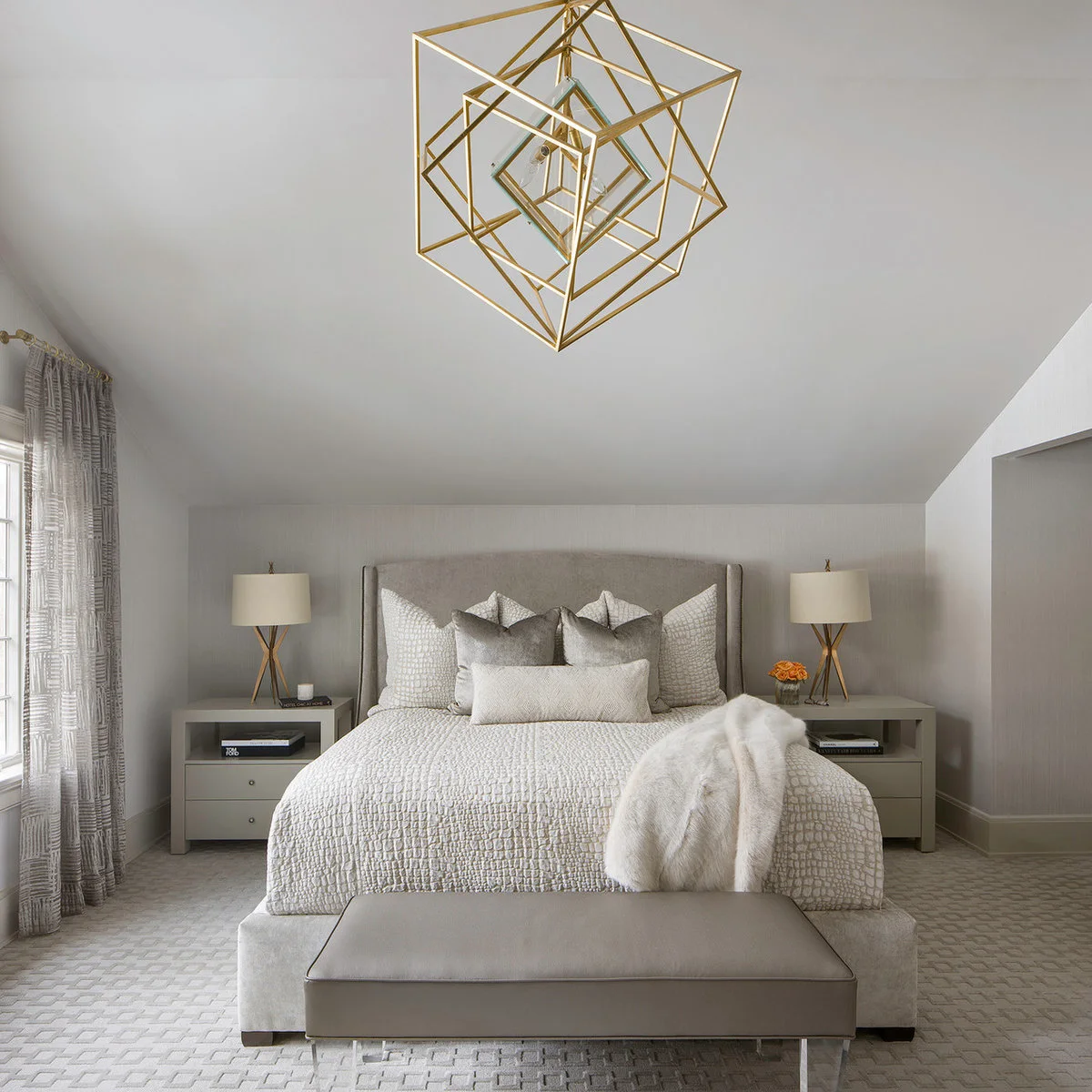
Each nightstand offers an open shelf above enclosed drawers, allowing a book to stay visible while smaller items are put away. The matching lamps create balance beneath the sloping ceiling. Pale bedding and a narrow bench keep the rest of the arrangement relatively quiet.
Use the open shelves for a small number of current items rather than an overflow of everything in the drawers. Check lamp height where the ceiling slopes and ensure each switch is reachable. Keep the bench only if both people can still move comfortably around the foot of the bed.
IDEA 13 / 20
Let the Two Sides Serve Different Tasks
 SaveSupport Non AI Creator
Image credit: Project: Pineapple House Interior Design (via Houzz)
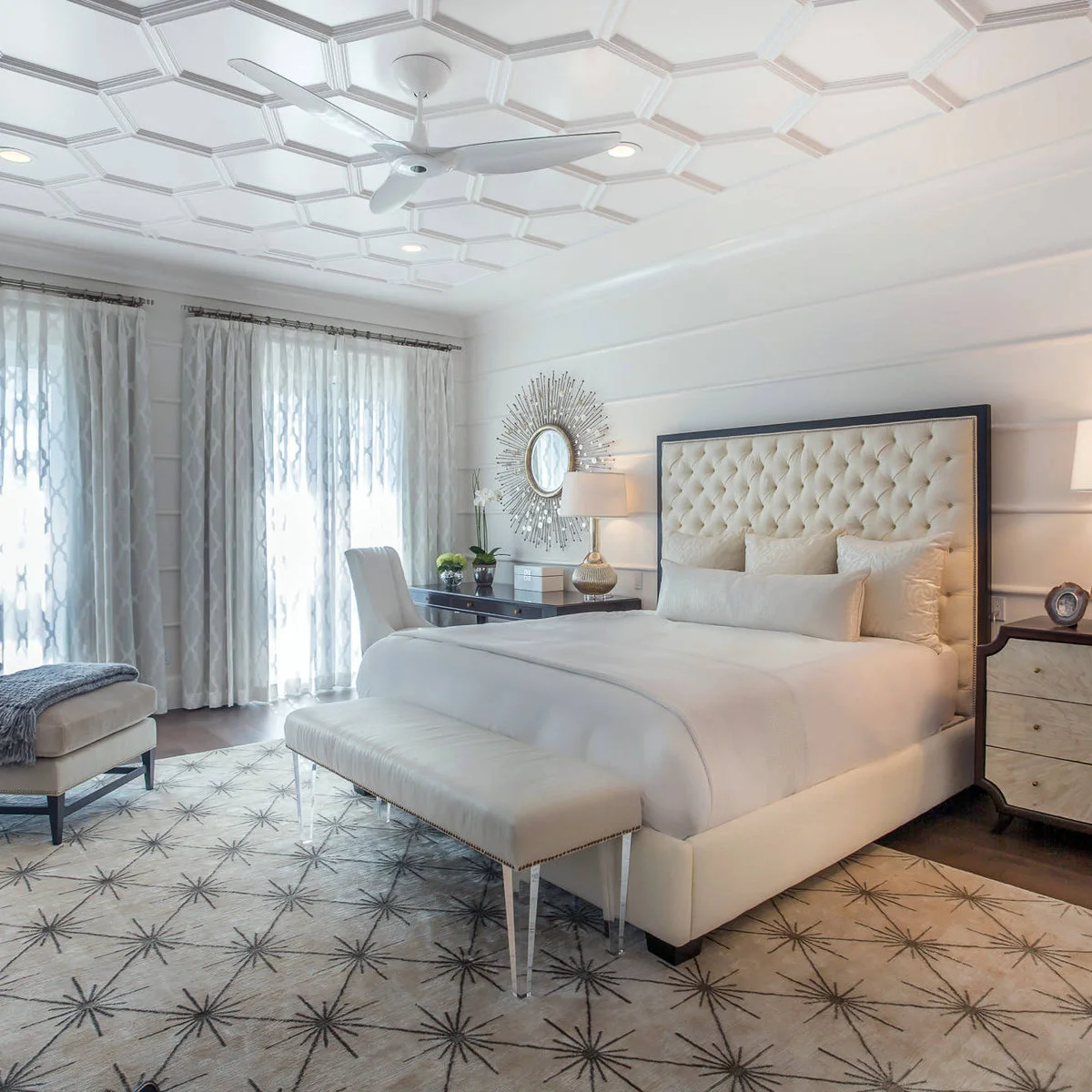
One side of this bed has a longer desk with a chair, while the other uses a conventional drawer chest. Similar lamp shapes connect the unequal pieces. Pale bedding and repeated trim keep the wall coherent even though the furniture supports different activities.
Asymmetry can be useful when one person needs a dressing surface and the other wants more drawers. Compare top heights and lamp positions rather than forcing identical furniture. Leave space to pull out the chair without blocking the bed, and agree when a brighter dressing light will be used.
IDEA 14 / 20
Build Storage Around a Clearly Sized Bed
 SaveSupport Non AI Creator
Image credit: Project: Normandy Remodeling (via Houzz)
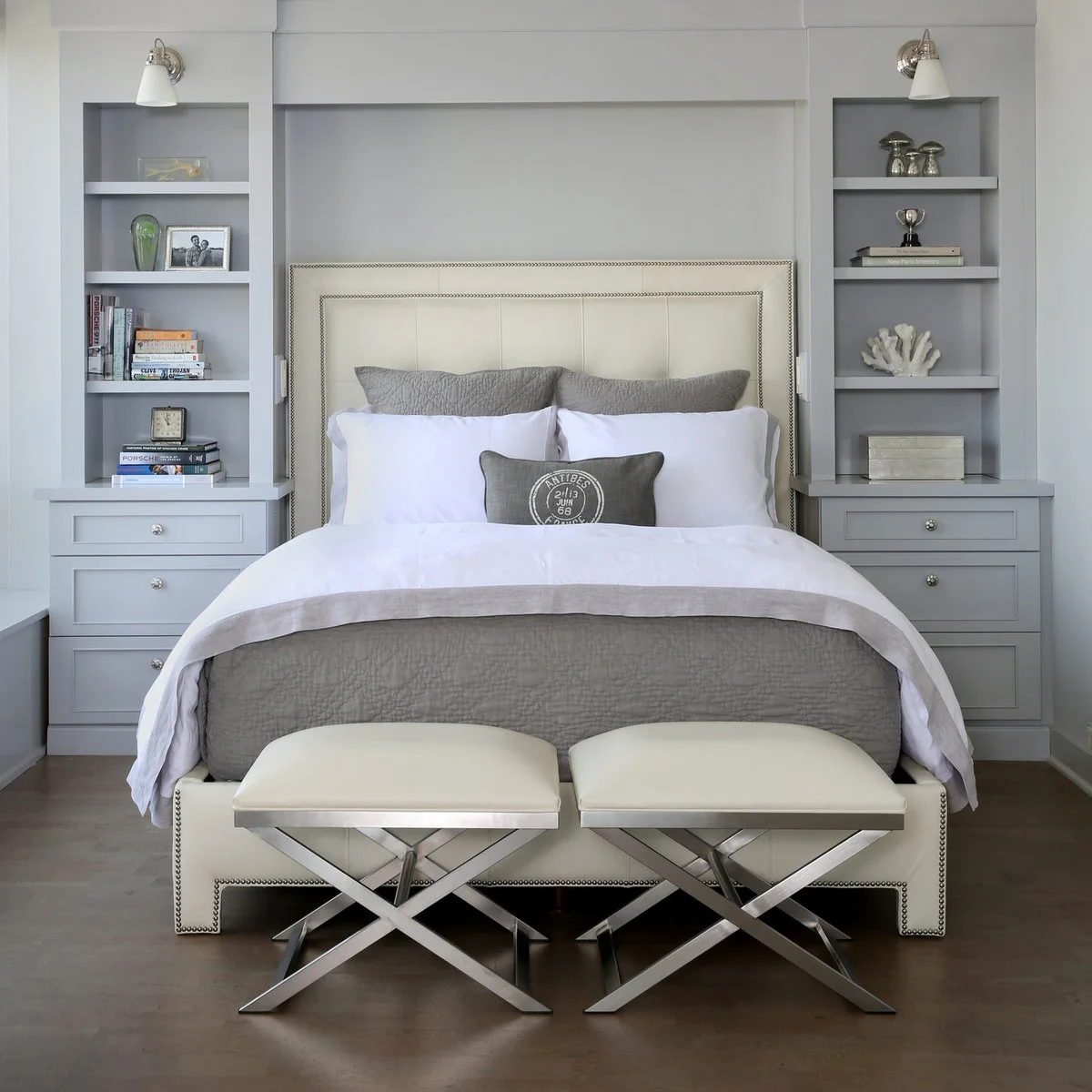
The fitted units give each side of the bed its own drawers and shelves. Wall lights sit above the shelving instead of taking up the bedside surface. The pale headboard fits neatly between the storage, while two small stools add separate movable places to sit.
Plan fitted storage around the actual bed and any likely future replacement, not just the mattress width. Include access for sockets, cleaning and light controls. Leave display shelves sparse enough that items cannot be easily knocked toward the pillows, and keep heavier belongings in lower enclosed storage.
IDEA 15 / 20
Protect the Routes Around the Bed
 SaveSupport Non AI Creator
Image credit: Project: Rosewood Custom Builders (via Houzz)
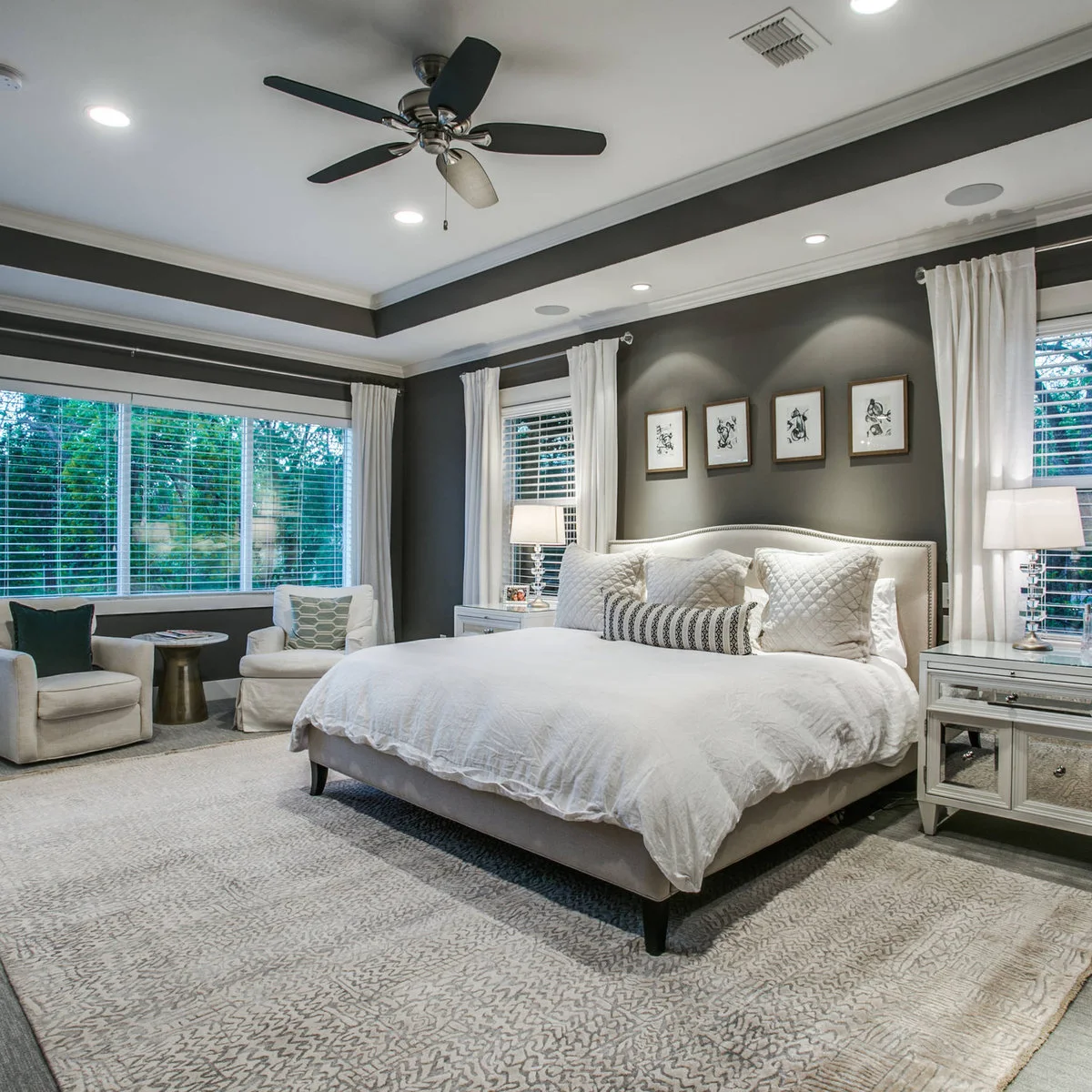
The photograph leaves clear floor around the bed, with the chair pair tucked into the window corner. White bedding and curtains contrast with the darker walls. The bedside chests remain distinct pieces rather than extending into a continuous fitted wall.
Measure the walking routes before adding a larger bed or extra bench. Check the room with wardrobe doors, bedside drawers and the entry door open. Two people should be able to use their sides without routinely moving the other person’s furniture or stepping around a narrow obstruction.
PART 04
Keep the shared room easy to reset
IDEA 16 / 20
Offer an Alcove for a Different Bedtime
 SaveSupport Non AI Creator
Image credit: Project: Monarch Development and Design (via Houzz)
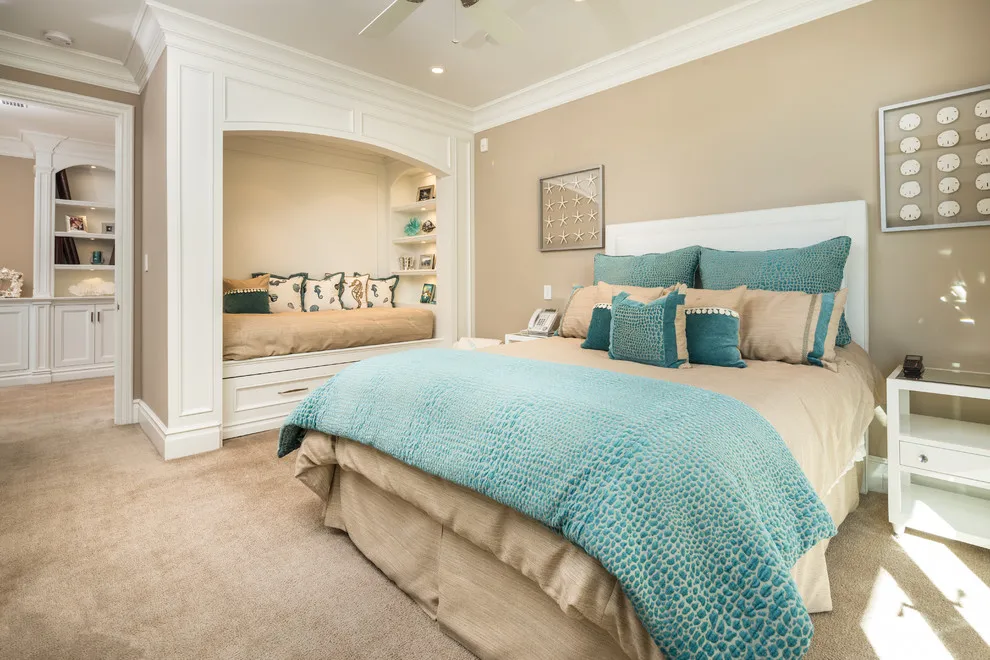
A cushioned alcove creates another place to sit within this bedroom without putting a chair beside the main bed. Its shelves keep books close to the seat. Turquoise pillows connect the alcove with the bed, while pale joinery keeps the two areas visually related.
An alternate seat can help when one person wants to read for a little longer, but light and noise still travel. Test a suitable task light and decide where reading materials will live. Keep the alcove’s seat support and shelves properly designed, rather than treating decorative joinery as automatically load-bearing.
IDEA 17 / 20
Pair Bedside Lights with Shared Wardrobe Storage
 SaveSupport Non AI Creator
Image credit: Project: Resolution: 4 Architecture (via Houzz)
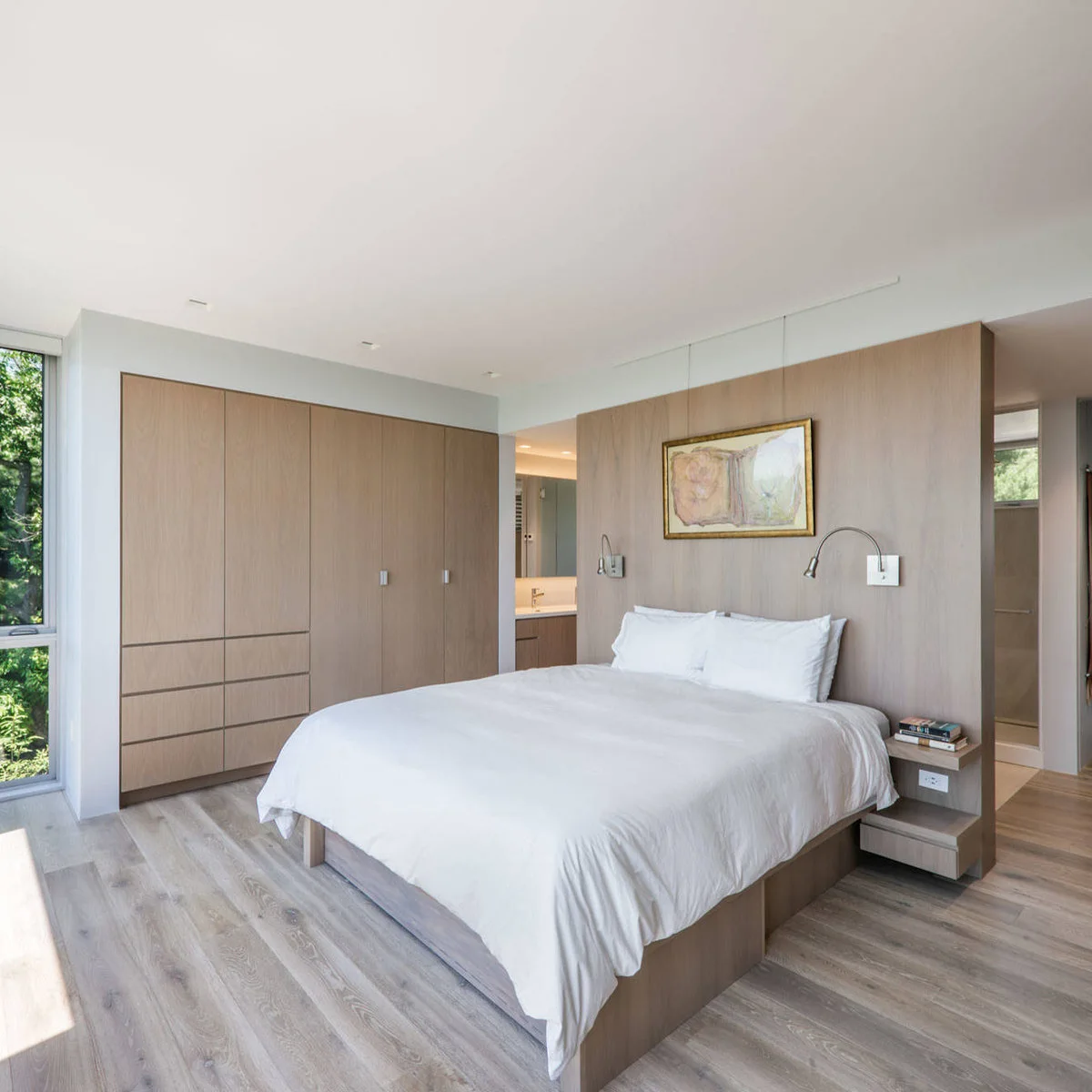
Two adjustable lights sit on the wood bed wall, with small shelves below for essentials. A broad wardrobe occupies the adjoining wall rather than crowding the bed with separate dressers. Plain white bedding allows the repeated wood surfaces to remain the room’s main finish.
Divide wardrobe space according to the clothes and routines of both people, including hanging lengths and drawer use. Check door movement against the bedside shelves. Test the reading lights from both pillows so the chosen beam helps the reader without shining unnecessarily across the other half of the bed.
IDEA 18 / 20
Use Under-Bed Storage Without Blocking Access
 SaveSupport Non AI Creator
Image credit: Project: John Thayer Cabinetmakers, LLC (via Houzz)
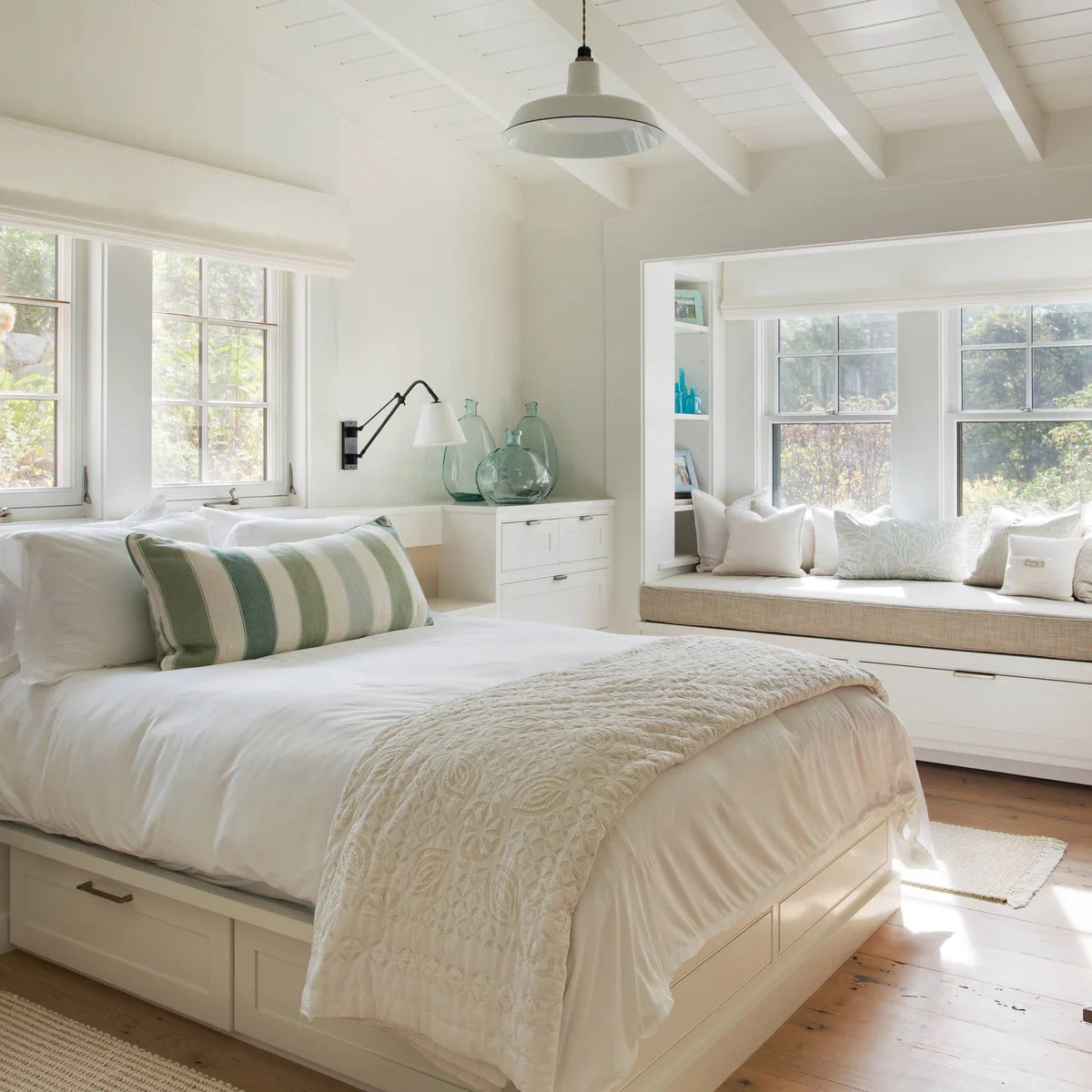
Drawers beneath the bed add storage without introducing another freestanding chest. The nearby window bench repeats the white joinery and pale cushion palette. A wall-mounted reading light leaves the bedside cabinet top available, while a striped pillow adds one stronger pattern.
Under-bed drawers need clear space to open fully, so measure their travel before placing rugs or chairs nearby. Agree which items belong there and how often they will be accessed. Avoid overfilling drawers so the storage remains easy for either person to use and close.
IDEA 19 / 20
Keep Reading Lights Within Individual Reach
 SaveSupport Non AI Creator
Image credit: Project: Ragsdale Design & Remodeling (via Houzz)
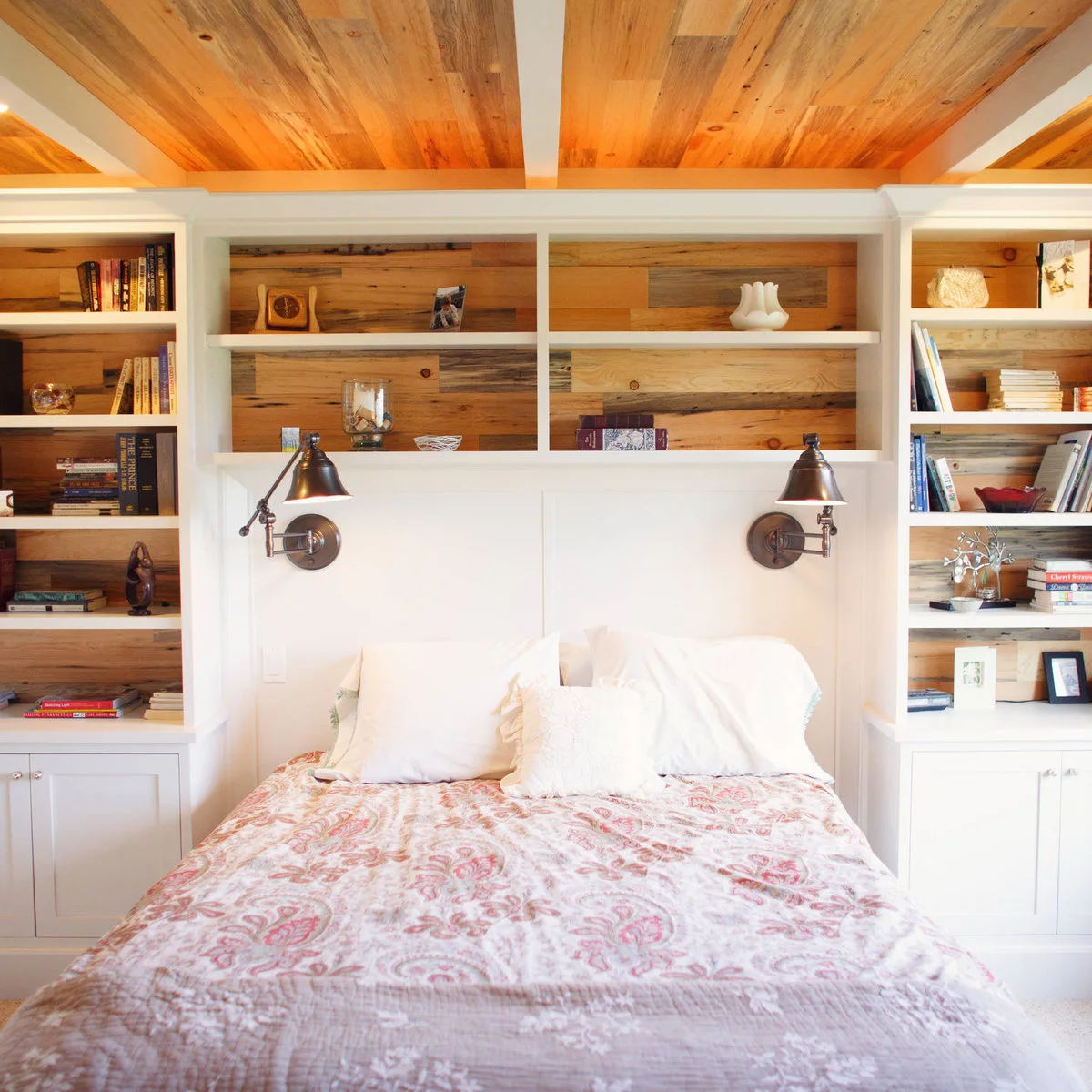
The two wall lights sit within easy visual reach of the separate sides of the bed. White shelves frame the headboard, while wood backing and the ceiling add warmth. Books and small objects remain mostly to the sides rather than forming a dense display directly above the pillows.
Test the light beam and switch position while sitting against the actual pillows. Separate lights are most useful when each can be adjusted without reaching across the other person. Keep shelving securely installed and avoid placing heavy or unstable display objects where they could fall onto the bed.
IDEA 20 / 20
Separate Getting Ready from the Bedside
 SaveSupport Non AI Creator
Image credit: Project: Julie Schuster Design Studio (via Houzz)
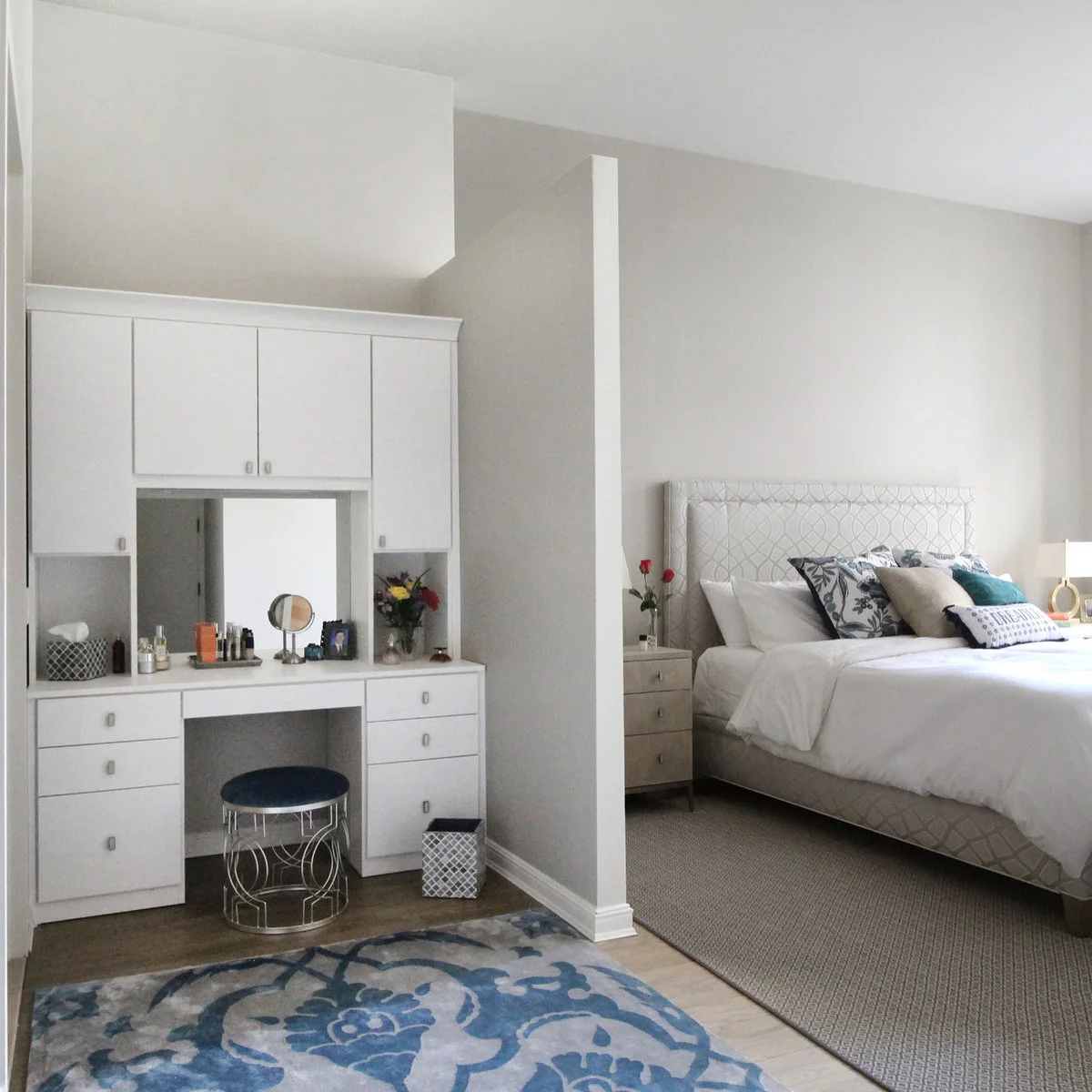
A shallow partition gives the dressing table its own recess beside the sleeping area. Drawers and an overhead cupboard gather smaller belongings around the mirror. The stool tucks below the surface, leaving the floor clearer when the dressing space is not being used.
Plan the dressing area for the person who uses it without turning the main bedside route into a queue. Check chair clearance and drawer access at the same time. Keep daily products in a manageable group, and choose lighting that makes getting ready practical without unnecessarily brightening the whole room.
BRING IT ALL TOGETHER
Plan around two real sets of habits
Agree on the practical needs before choosing a complete furniture set. List what belongs at each bedside, where clothes will go and whether either person needs a separate place to read or get ready. Try the arrangement with existing furniture where possible.
Choose controls, lighting and storage that can be used without crossing the other person’s space. Then settle on a shared palette, leaving room for individual books, pictures or small objects. The room should be easy for both people to use and maintain.