A bay window gives a room an extra pocket of floor space, but its angled walls can make ordinary furniture awkward. Choose what you want to do there first: read, eat, work or simply enjoy the light. Then decide whether fitted seating or movable furniture makes that activity easier.
These photographs include angular bays, box bays and curved bow windows. Their shapes differ, so measure your own recess rather than copying a seat or curtain arrangement exactly. Keep opening windows, heating outlets and the route through the room accessible.
PART 01
Make the seat comfortable and useful
IDEA 01 / 20
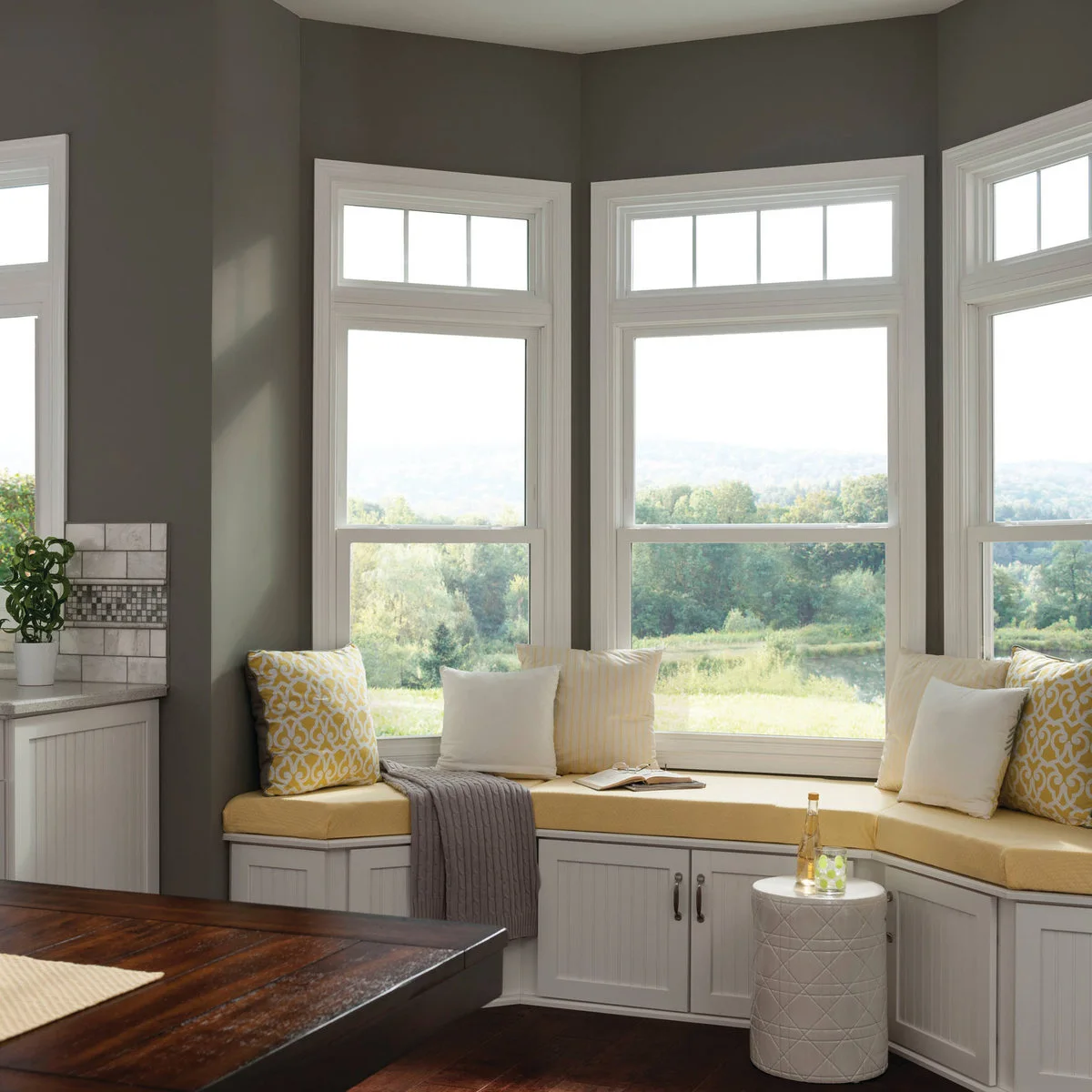
Warm a White Storage Seat with Yellow
 SaveSupport Non AI Creator
Image credit: Project: Window World (via Houzz)
A yellow seat pad makes the white cabinetry feel warmer without covering the window frames. The cushions follow the changing angle of the recess, while white pillows keep the arrangement light. A small round table provides a place for a drink without occupying the whole bay.
Measure the seat as separate sections where the angles change, and decide how the covers will come off for washing. Keep loose pillows away from window handles. A compact side table is useful here, but it still needs to leave space for someone to sit down and stand up. For a larger window-lined sitting space, these enclosed porch and sunroom ideas explore movable seating and comfortable routes.
IDEA 02 / 20
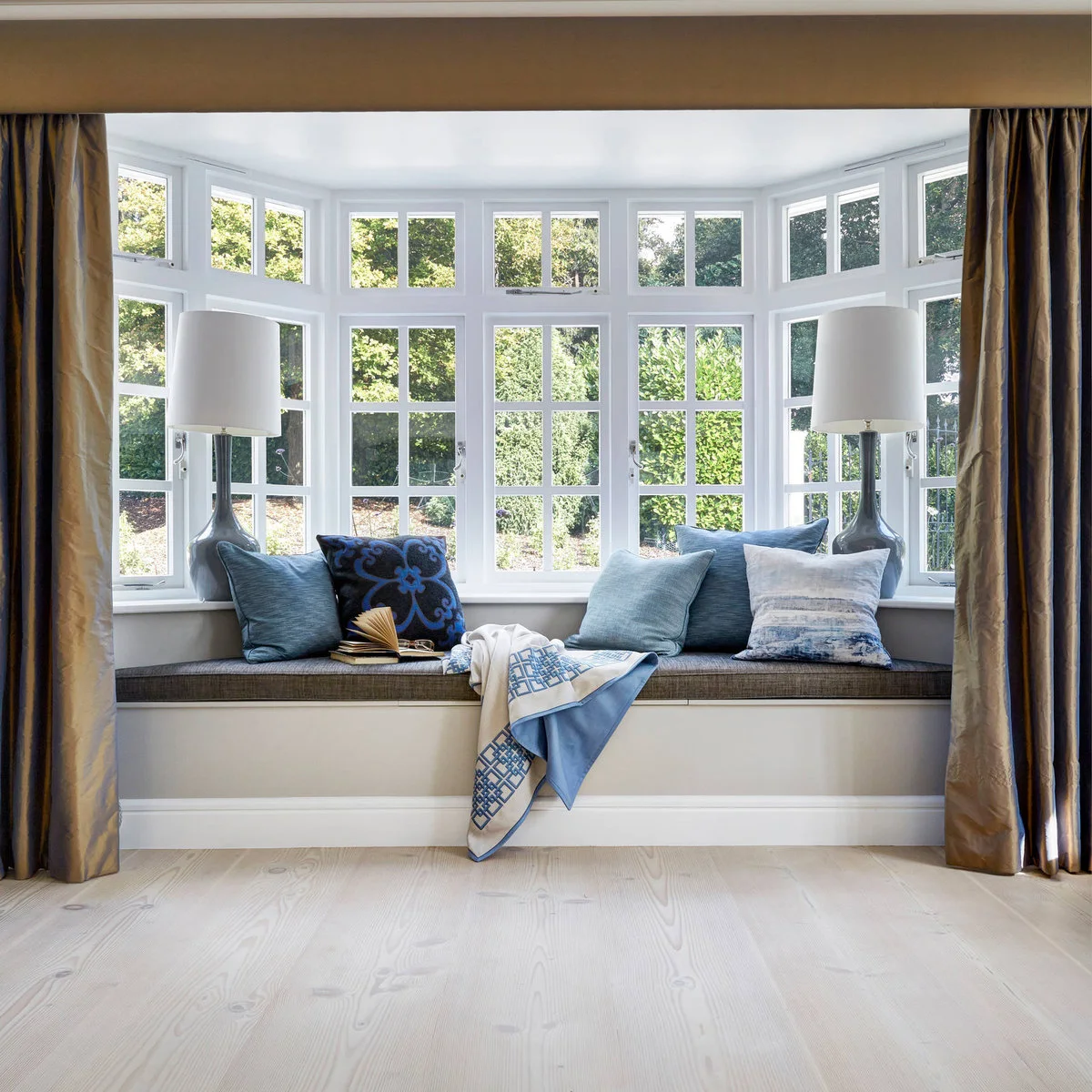
Frame a Blue Reading Seat with Curtains
 SaveSupport Non AI Creator
Image credit: Project: Sigmar (via Houzz)
Long curtains frame the entrance to this bay rather than dividing the individual window panels. Blue pillows gather around a gray seat cushion, with a lamp at each end. The pale floor and white joinery keep the darker textiles from making the recess feel enclosed.
Check where the curtains stack when open so they do not cover more glass than you intended. Keep lamp cords clear of the seat and choose stable bases. For a compact room, these small living room ideas can help you judge whether the recess needs additional furniture at all.
IDEA 03 / 20
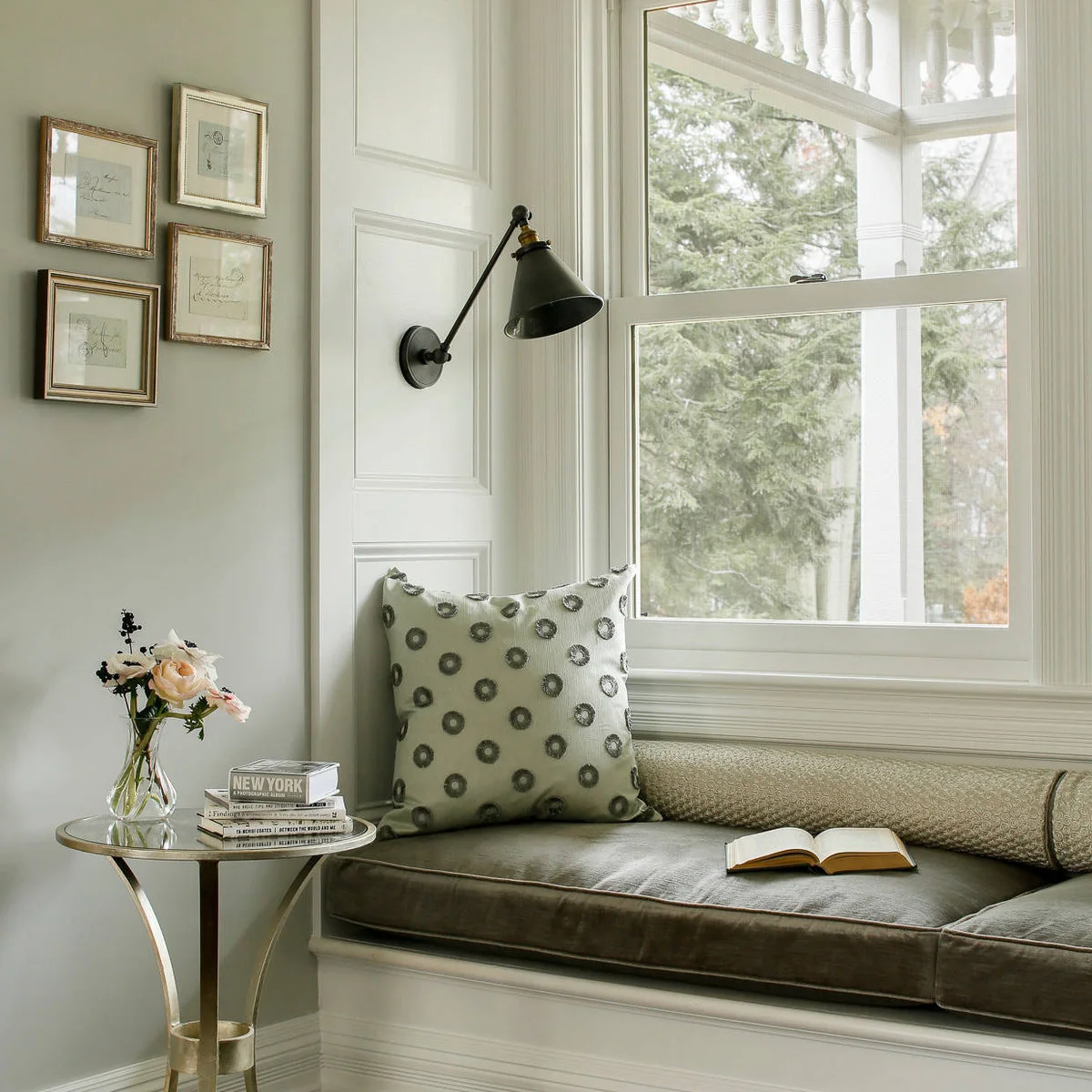
Bring Reading Light to the Seat
 SaveSupport Non AI Creator
Image credit: Project: Hudson Home (via Houzz)
An adjustable wall lamp brings a second source of light to this upholstered seat when daylight fades. The dark cushion contrasts with the pale paneled wall, and a cylindrical bolster supports one end. A nearby table holds books and flowers without filling the sitting surface.
Test the lamp position while seated, including the space above your head when you stand. Electrical work and suitable fixings need proper planning. Choose a cushion cover that can cope with regular use, and leave the window ledge reachable for dusting and opening the sash.
IDEA 04 / 20
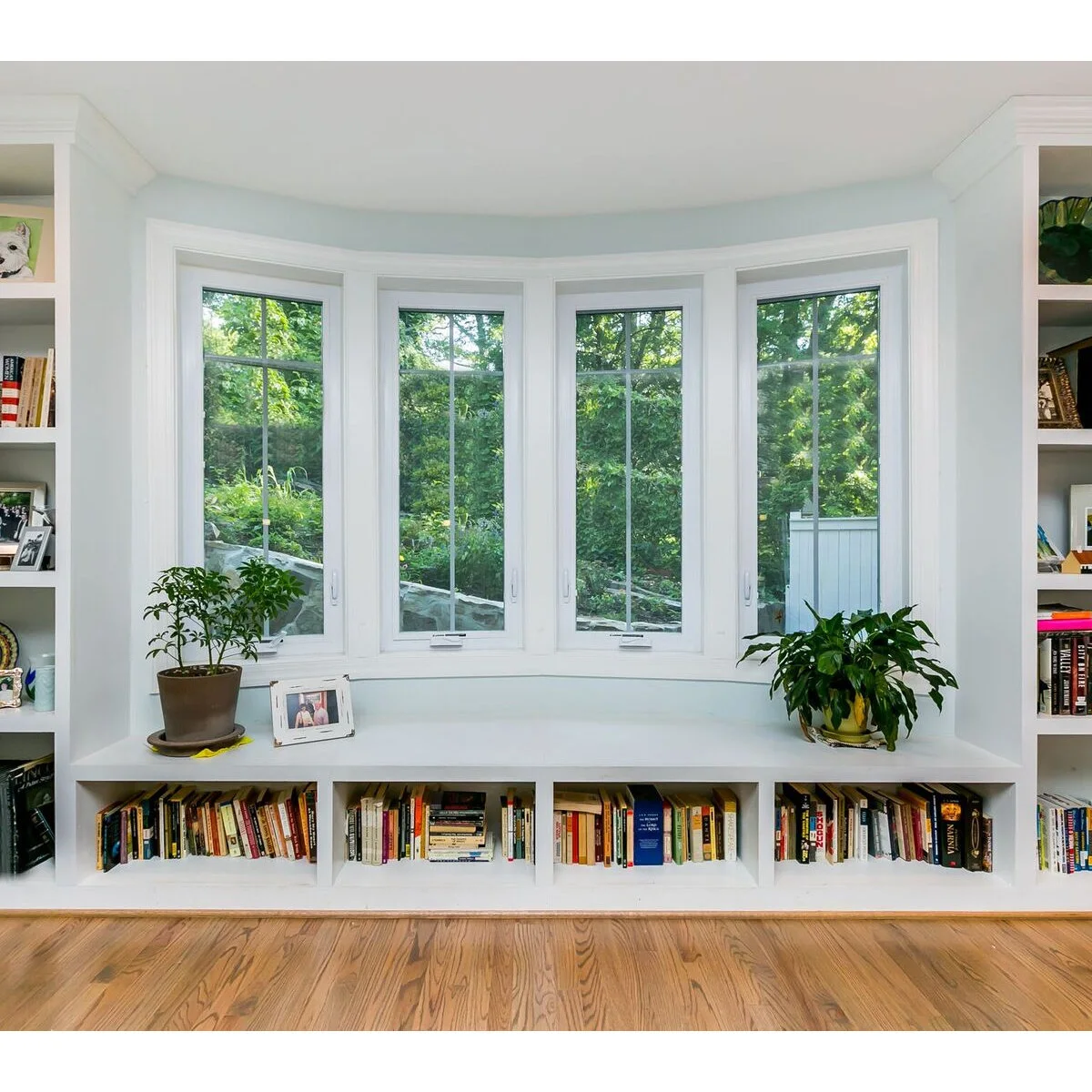
Leave a Bow-Window Ledge Open for Books
 SaveSupport Non AI Creator
Image credit: Project: Timberlake Design Build (via Houzz)
Open cubbies turn the lower part of this curved window arrangement into a small library. The broad ledge above holds two plants and a photograph rather than a full cushion. Keeping most of that surface clear lets the window’s repeated white frames remain the main detail.
Use the ledge for display only unless its construction is suitable for seating. Group books so they can be removed easily for cleaning, and protect the surface beneath pots. Check how much sun reaches the shelves before placing treasured books or photographs directly in its path.
IDEA 05 / 20
Repeat a Soft Color Around a Curved Bay
 SaveSupport Non AI Creator
Image credit: Project: Hamilburg Interiors (via Houzz)
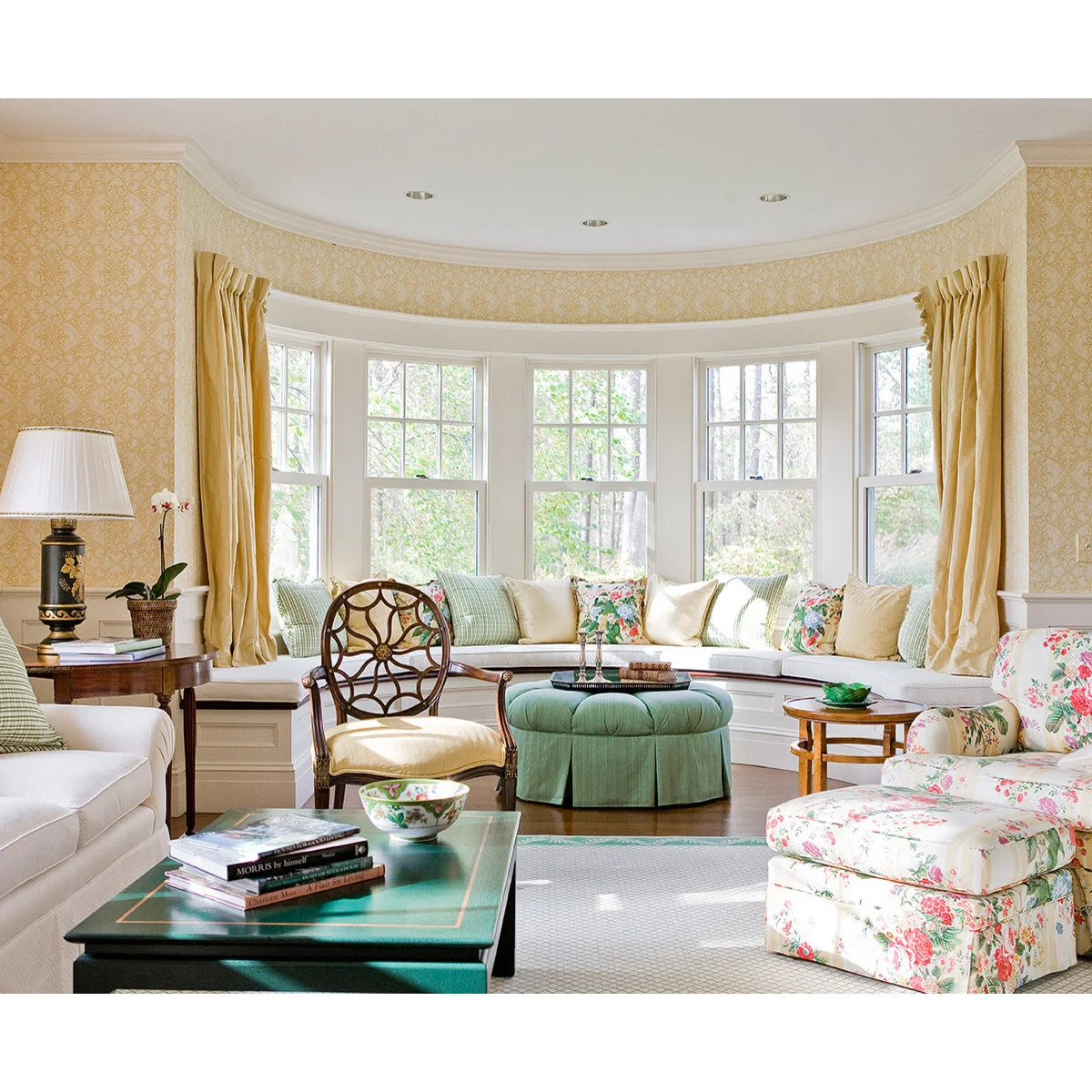
Pale green cushions run around the curved seat and connect it with the round ottoman in front. Yellow curtains and patterned walls provide a warmer surround. The nearby chairs repeat the floral and green palette, making the bay part of the seating group rather than a separate corner.
Choose one shared color before mixing several floral patterns. Compare the fabrics together in daylight so the greens and yellows feel compatible. Leave room around the ottoman for people to reach the window seat, and avoid arranging chairs so closely that the fitted seating becomes difficult to use.
PART 02
Connect the bay with the room
IDEA 06 / 20
Keep a Strong View Above a Low Seat
 SaveSupport Non AI Creator
Image credit: Project: Kotzen Interiors, LLP (via Houzz)
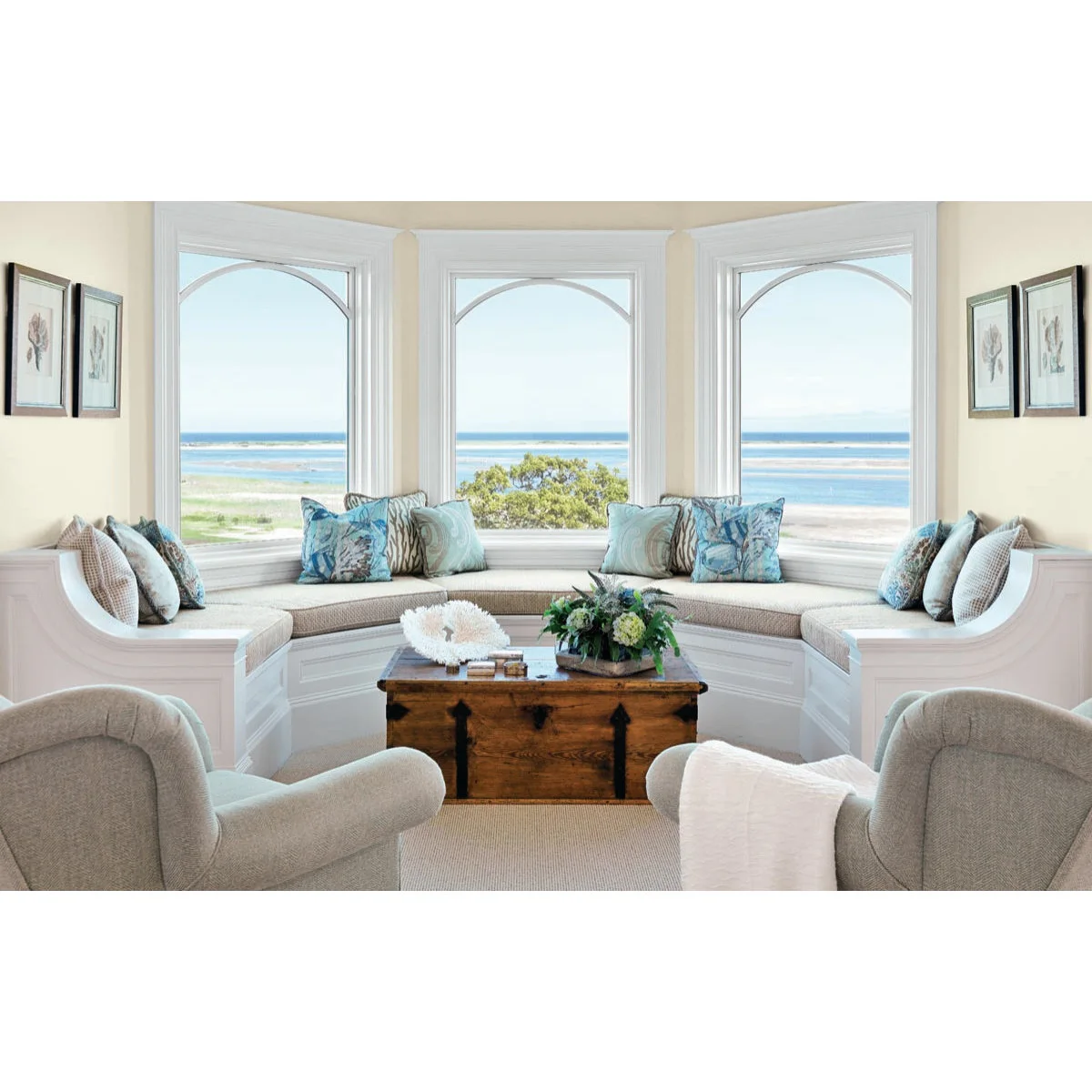
The low seat follows the bay beneath three arched-top windows, leaving the upper glazing open. Blue pillows echo the view without covering much of it. A wooden trunk adds a warmer, heavier shape between the fitted seat and the pale armchairs in the foreground.
Judge any central table by how easily people can pass it, not just by its storage capacity. If a trunk opens upward, allow space for the lid and keep it clear when in use. Use a modest number of pillows so the window seat remains a place to sit.
IDEA 07 / 20
Fit a Dining Table into the Angled Seat
 SaveSupport Non AI Creator
Image credit: Project: Bennett Lerner Interiors (via Houzz)
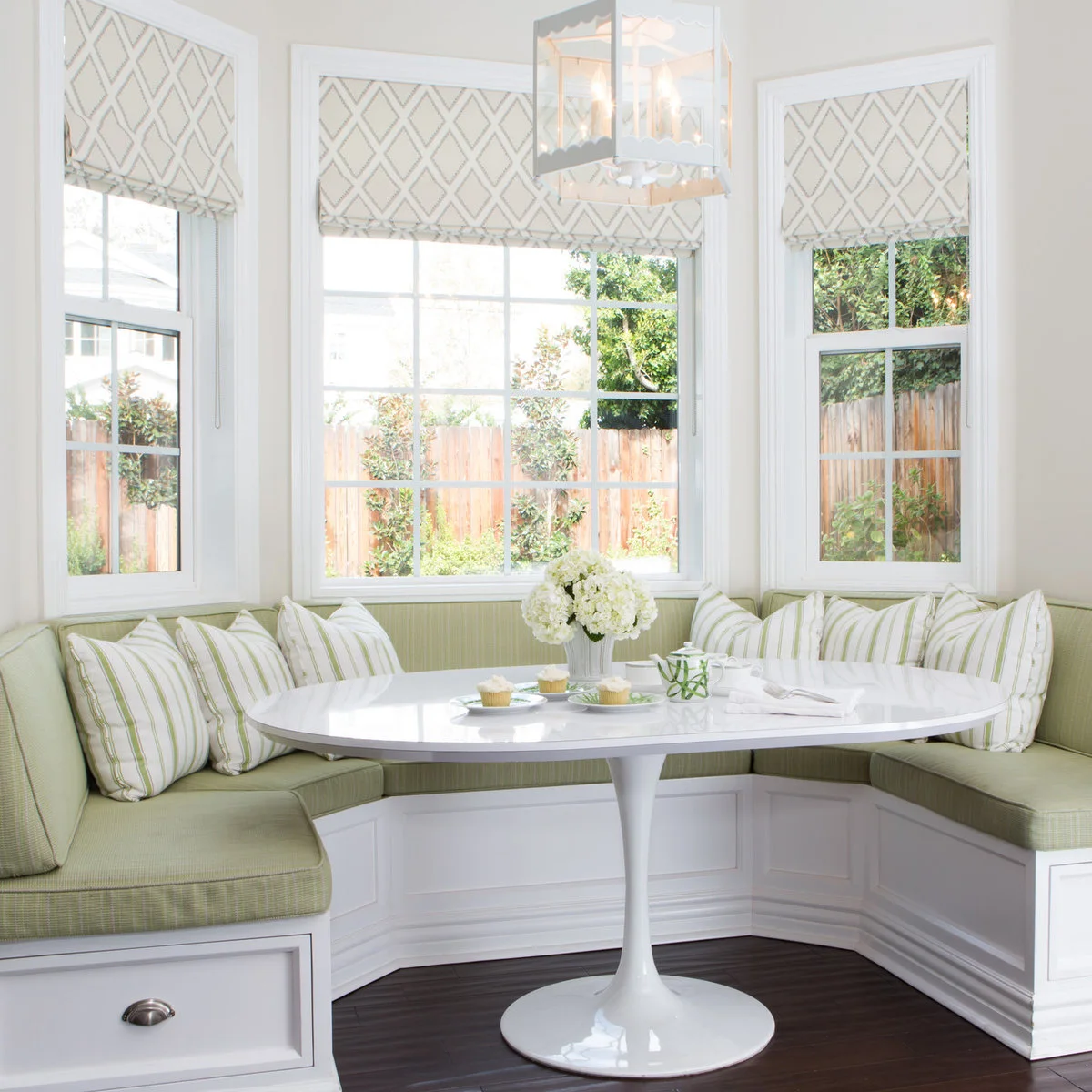
A white pedestal table sits within the green banquette, letting the fitted seat follow the angles of the bay. Striped pillows repeat the upholstery color, while geometric blinds give each window its own neat outline. Drawer fronts beneath the cushion add another practical layer.
Check the relationship between table height, seat height and cushion thickness before ordering either piece. People at the ends need a workable route out. Keep daily storage in drawers that can open with the table in place, and choose upholstery that suits the likelihood of crumbs and spills.
IDEA 08 / 20
Use Colorful Pillows Against Simple Blinds
 SaveSupport Non AI Creator
Source: www.houzz.com
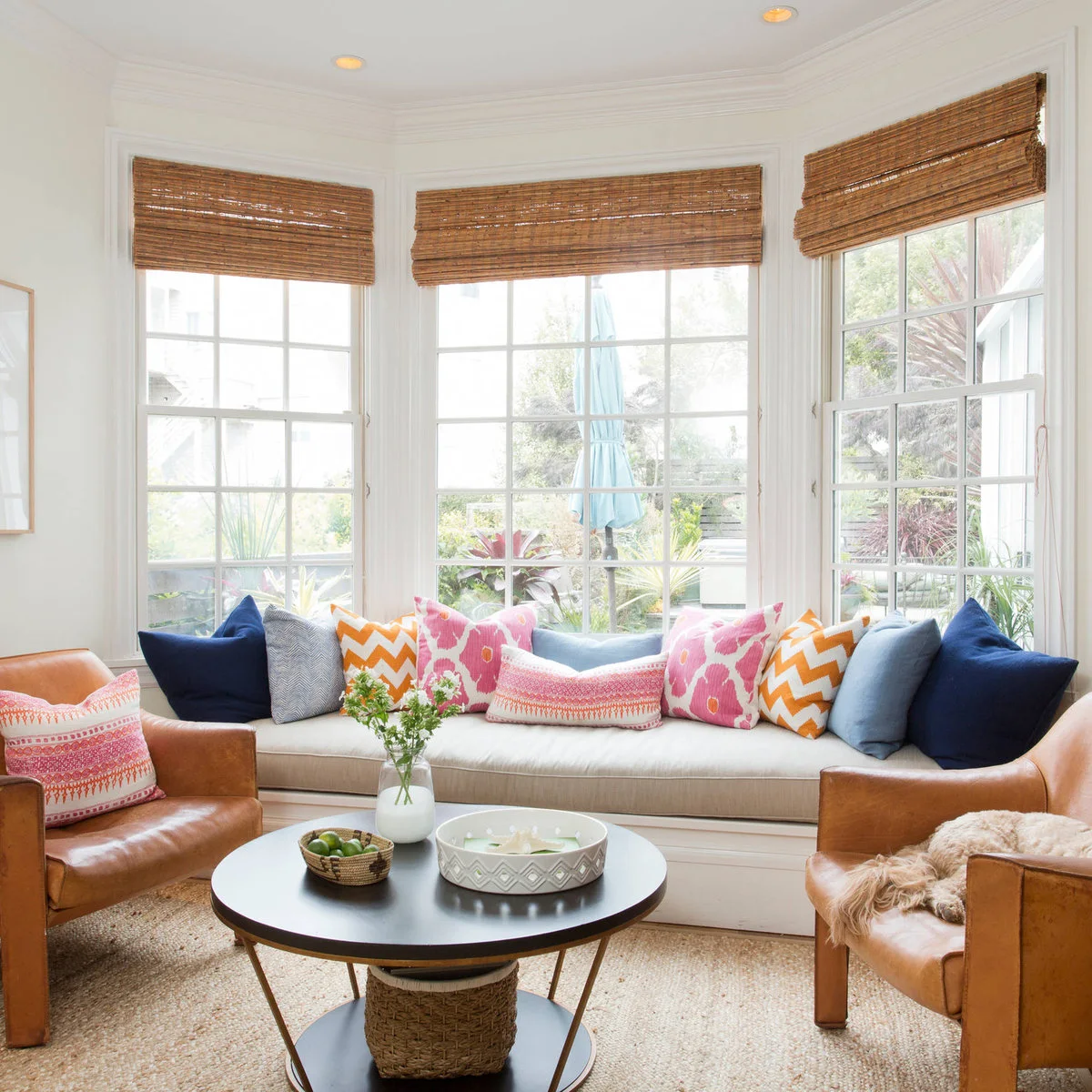
Bright pillows bring pink, orange and several blues to an otherwise pale window seat. The woven blinds add a quieter texture above, and brown armchairs repeat their warmth. The round coffee table helps the fitted seat join the rest of the conversation area.
Let one surface stay calm when the cushions have several strong patterns. Try the arrangement with fewer pillows first, checking where a seated person’s back will rest. Match the window covering to privacy and glare needs rather than assuming its woven appearance means it will block evening views.
IDEA 09 / 20
Keep a Box Bay Visually Light
 SaveSupport Non AI Creator
Image credit: Project: Build Prestige Homes Pty Ltd (via Houzz)
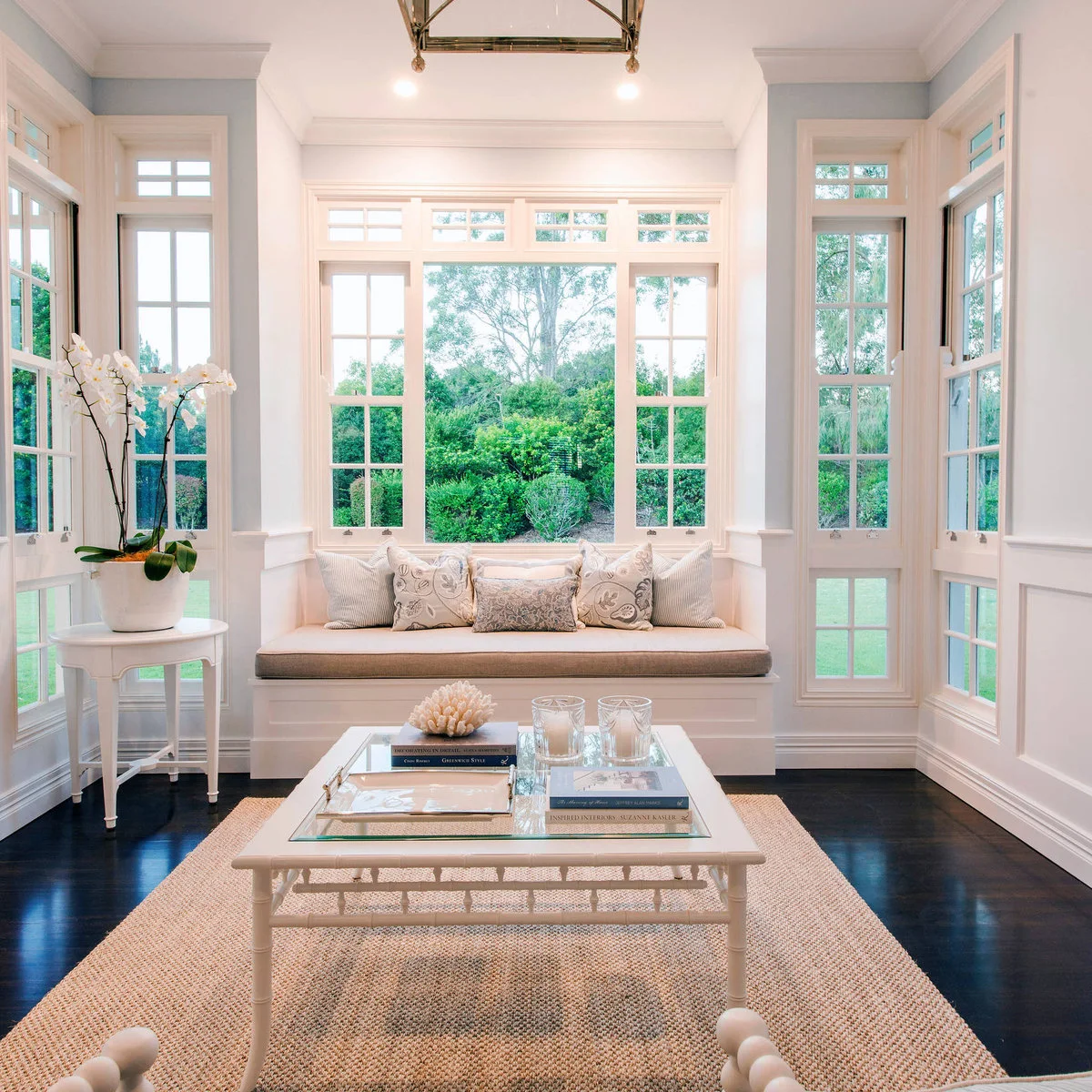
A short upholstered seat occupies the central part of this bright box bay. Tall glazing on either side extends the view down toward the floor, while the glass coffee table keeps the middle of the room visually open. The mostly pale textiles leave the window divisions clearly visible.
Keep the approach to side doors clear and check their opening arcs before positioning tables. Glass furniture needs regular cleaning and visible edges, especially on a busy route. A restrained cushion palette works well when the architecture already contains many small panes and trim details.
IDEA 10 / 20
Echo Blue Cushions in Nearby Accessories
 SaveSupport Non AI Creator
Source: houzz.com
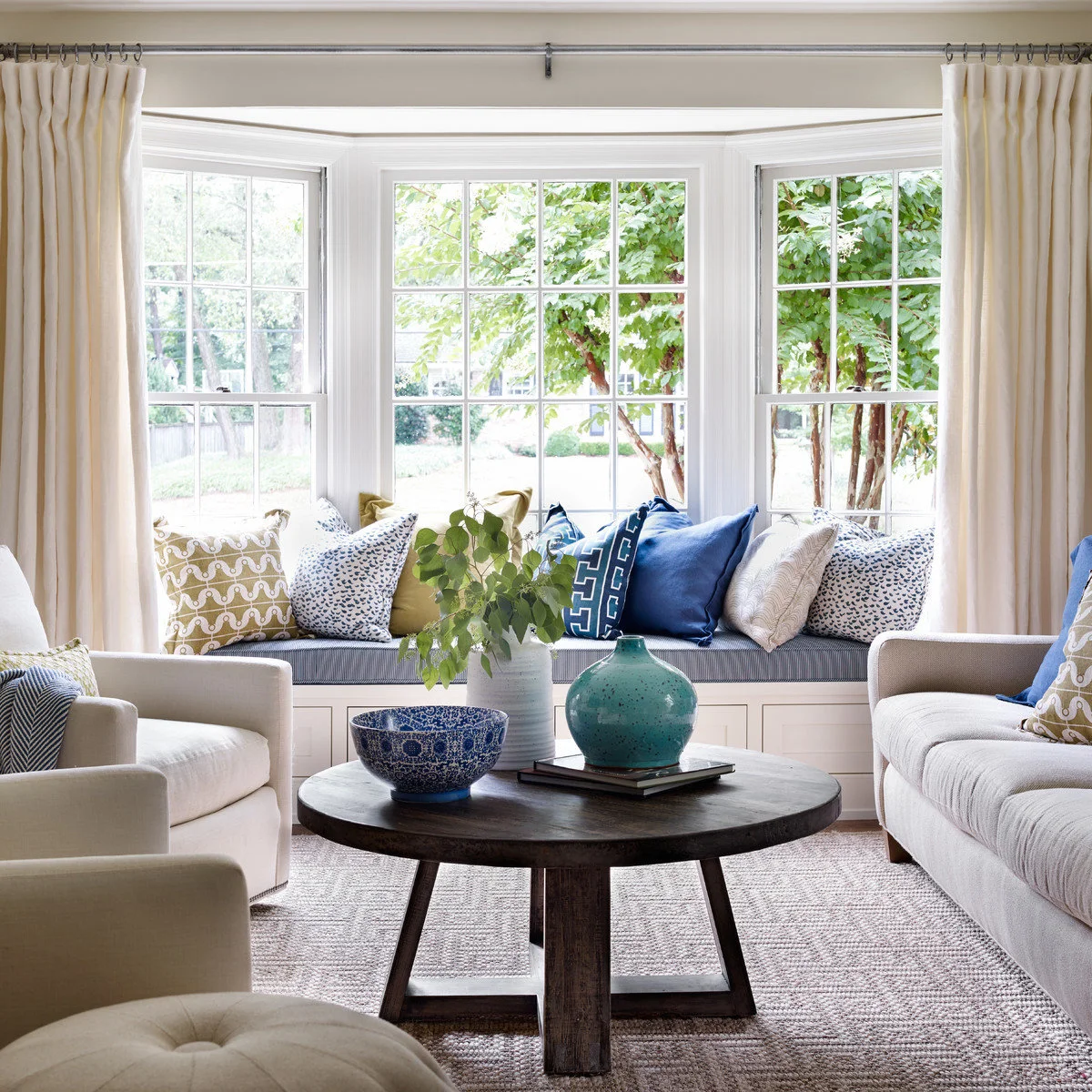
Blue appears in the seat cushion, patterned pillows and the bowl on the coffee table, linking the bay to the main seating group. Pale curtains soften its outer edges. Green pillows and a turquoise vase introduce related colors without making every object match exactly.
Choose a few places to repeat the accent instead of buying every accessory in the same shade. Keep the larger upholstery quieter if the pillows are varied. Test the room from the doorway: the bay should feel connected to the chairs without disappearing behind a crowded coffee table.
PART 03
Plan storage and everyday access
IDEA 11 / 20
Make a Narrow Bay a Small Retreat
 SaveSupport Non AI Creator
Image credit: Project: Rittenhouse Builders (via Houzz)
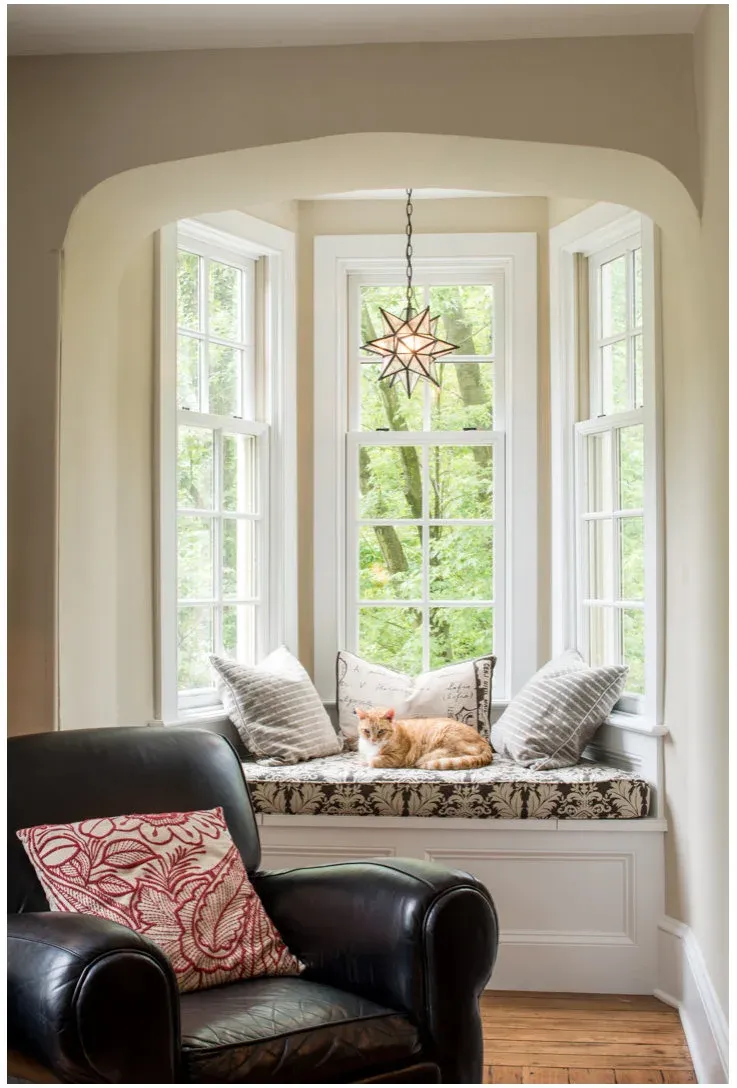
A patterned cushion fills this narrow three-sided recess, with just a few pillows behind the cat. The star-shaped pendant emphasizes the height of the opening. A nearby armchair shows how the small seat can complement a larger room without needing a table inside the bay.
Keep a narrow recess simple enough to get into comfortably. If pets use it regularly, choose removable covers and check the fabric for snagging. Do not let cushions obstruct window controls, and keep blind cords and any hanging fittings safely out of reach.
IDEA 12 / 20
Use Dark Cabinetry to Define the Base
 SaveSupport Non AI Creator
Image credit: Project: Reliance Design Build (via Houzz)
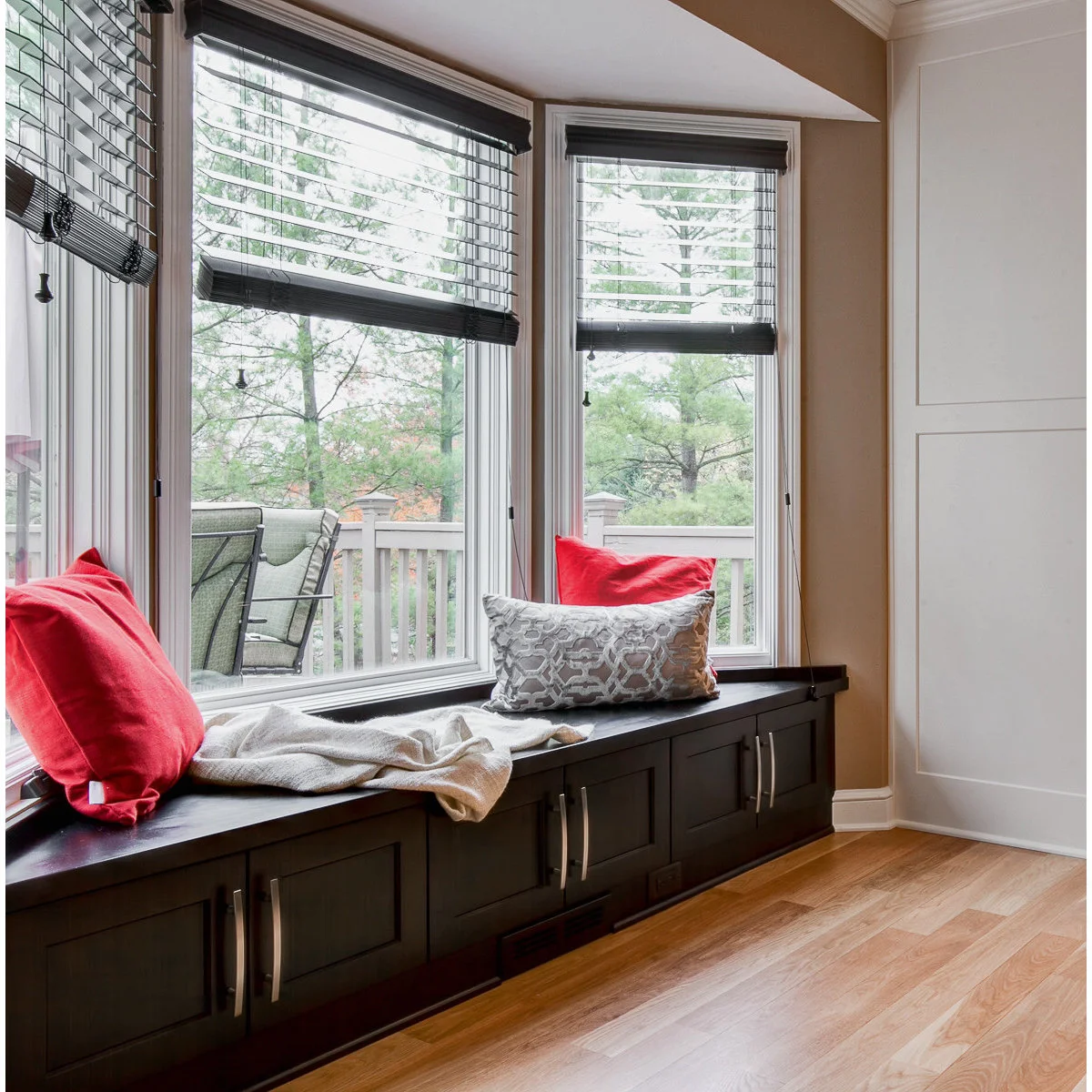
Dark cabinet doors give this bay a strong horizontal base beneath the white window frames. Red pillows provide a small, concentrated contrast, while a pale throw softens the bare seat surface. Black slatted blinds repeat the darker color higher up without covering the full view.
Check that cabinet doors can open without colliding with nearby furniture. Any visible grille or heating outlet needs appropriate clearance; fitted storage must not simply cover it. A dark seat can show dust and marks readily, so compare finish samples and cleaning guidance before choosing the final surface.
IDEA 13 / 20
Give a Bedroom Bay Its Own Quiet Seat
 SaveSupport Non AI Creator
Image credit: Project: Ana Williamson (via Houzz)
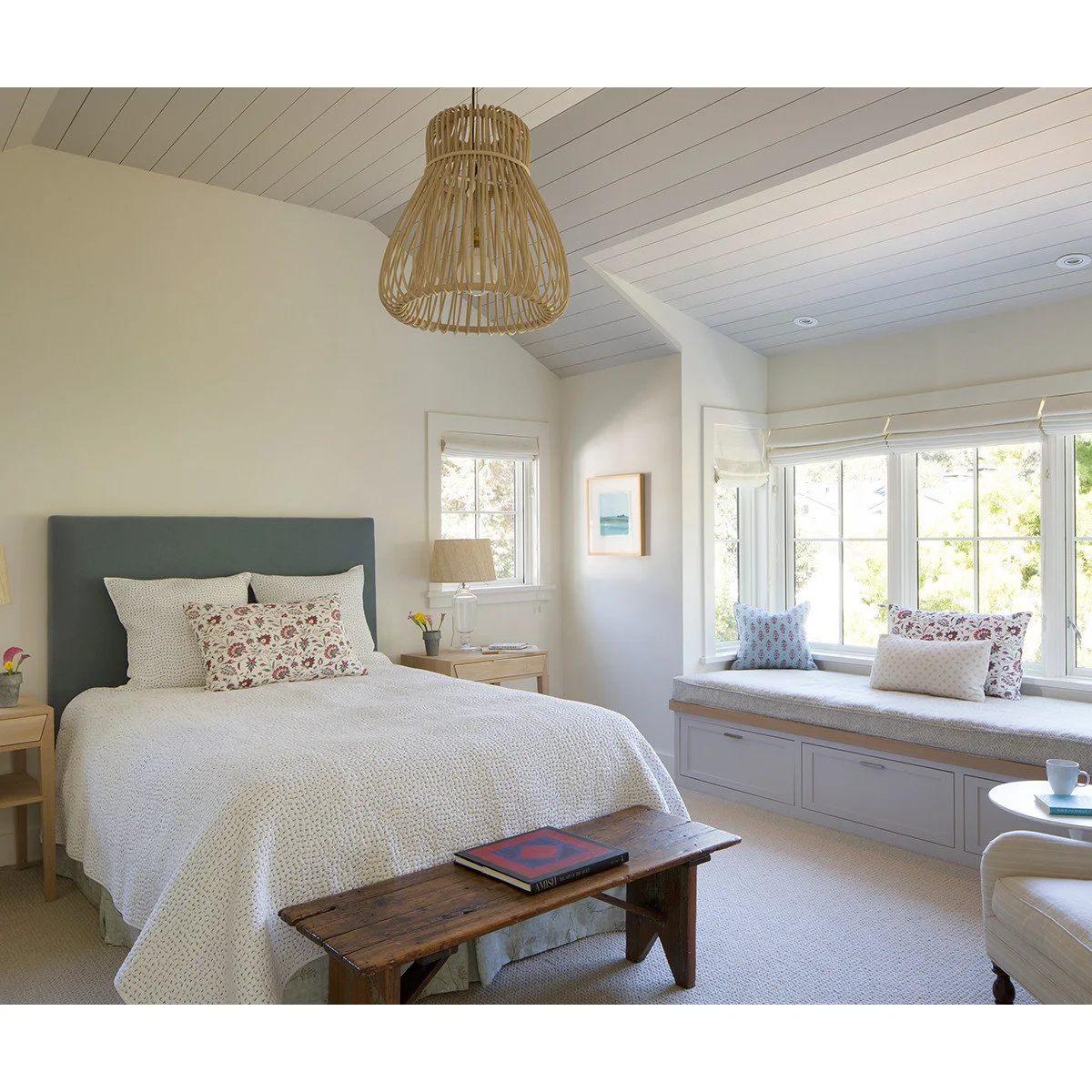
The window seat offers a second place to pause beside this bed, with drawers beneath and only a few patterned pillows above. Its gray cushion stays quieter than the blue headboard. The wooden bench at the foot of the bed adds warmth without repeating the fitted joinery.
Think about which activity the window seat adds that the bed does not already provide. It might be a place to dress or read, but it still needs comfortable access. Keep drawer contents suited to the room and avoid blocking the route between the bed, seat and curtains.
IDEA 14 / 20
Combine Open Shelves with Closed Cupboards
 SaveSupport Non AI Creator
Image credit: Project: HOBBS INC (via Houzz)
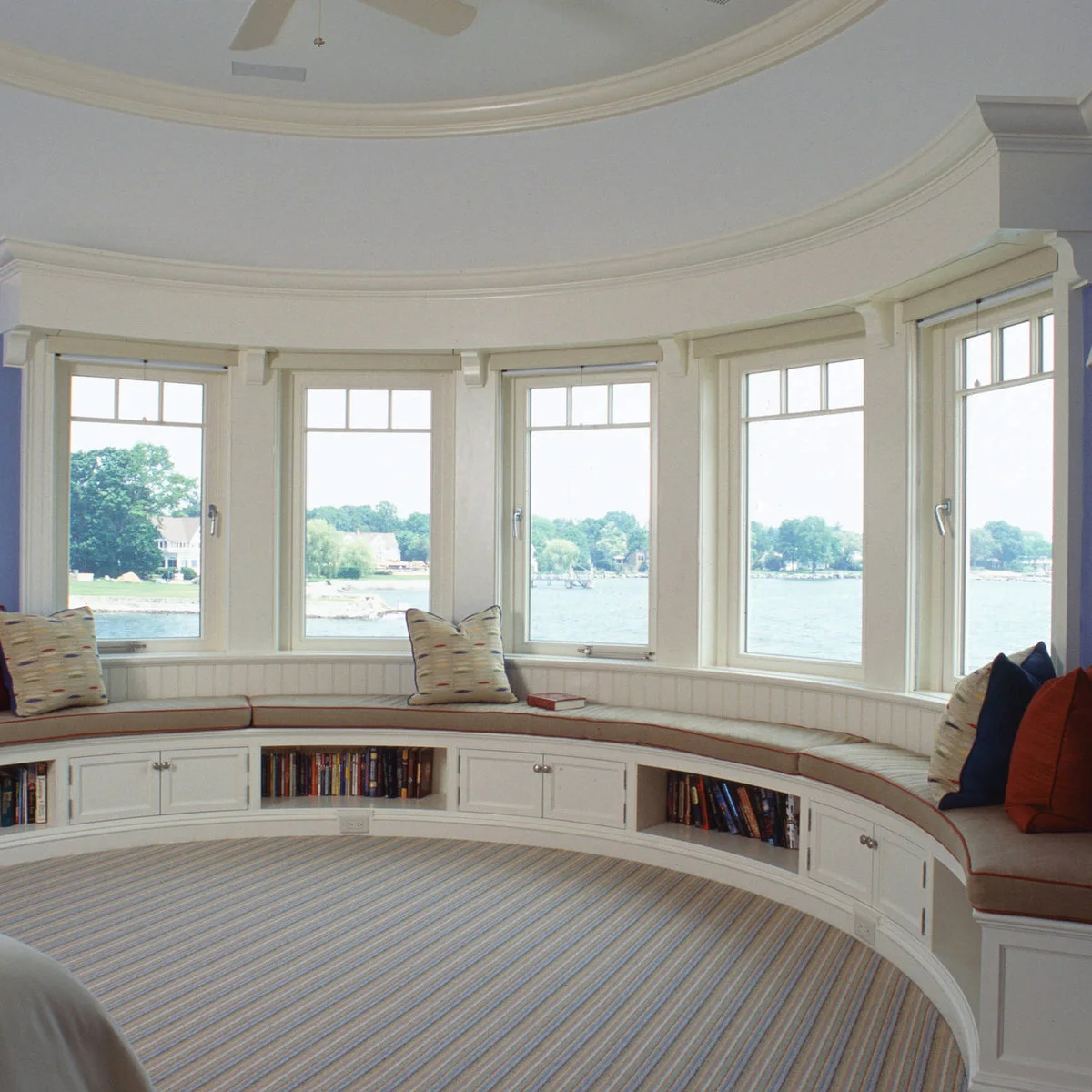
Open book sections alternate with closed cupboards below this long curved seat. Cream cushions follow the window line, with colored piping adding a fine outline. The sparse pillows and broad floor area keep the curve legible instead of turning it into a dense ring of upholstery.
Use open sections for books you reach often and closed doors for less tidy belongings. Make sure the seat support and cabinet construction are designed together. Curved cushions can require custom work, so check templates, seams and cover removal before commissioning the upholstery.
IDEA 15 / 20
Give a Child’s Bay Flexible Color
 SaveSupport Non AI Creator
Image credit: Project: Clean Design (via Houzz)
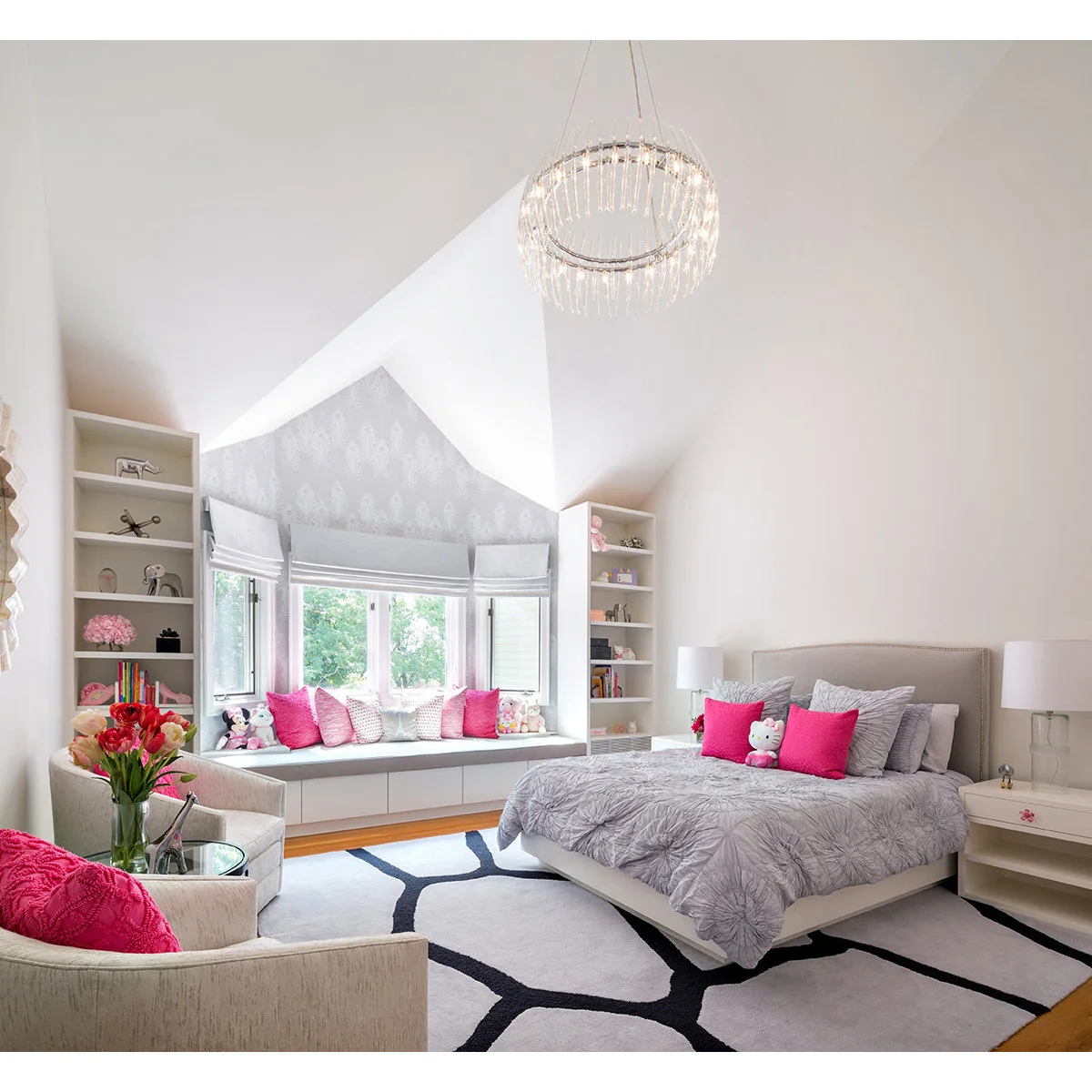
Pink pillows bring color to the gray window seat without changing the white built-in base. Shelves stand on either side of the recess, and the bedding repeats the gray and pink combination. The fitted seat adds another usable surface while the main floor remains largely open.
Keep the permanent joinery adaptable as preferences change, using washable textiles for the strongest colors. Secure tall storage appropriately and avoid placing climbable arrangements against unsafe openings. The window seat should remain easy to clear rather than becoming a permanent pile of toys and decorative cushions.
PART 04
Give the recess a clear purpose
IDEA 16 / 20
Give a Landing Bay Room to Breathe
 SaveSupport Non AI Creator
Image credit: Project: Rosenberg Kolb Architects (via Houzz)
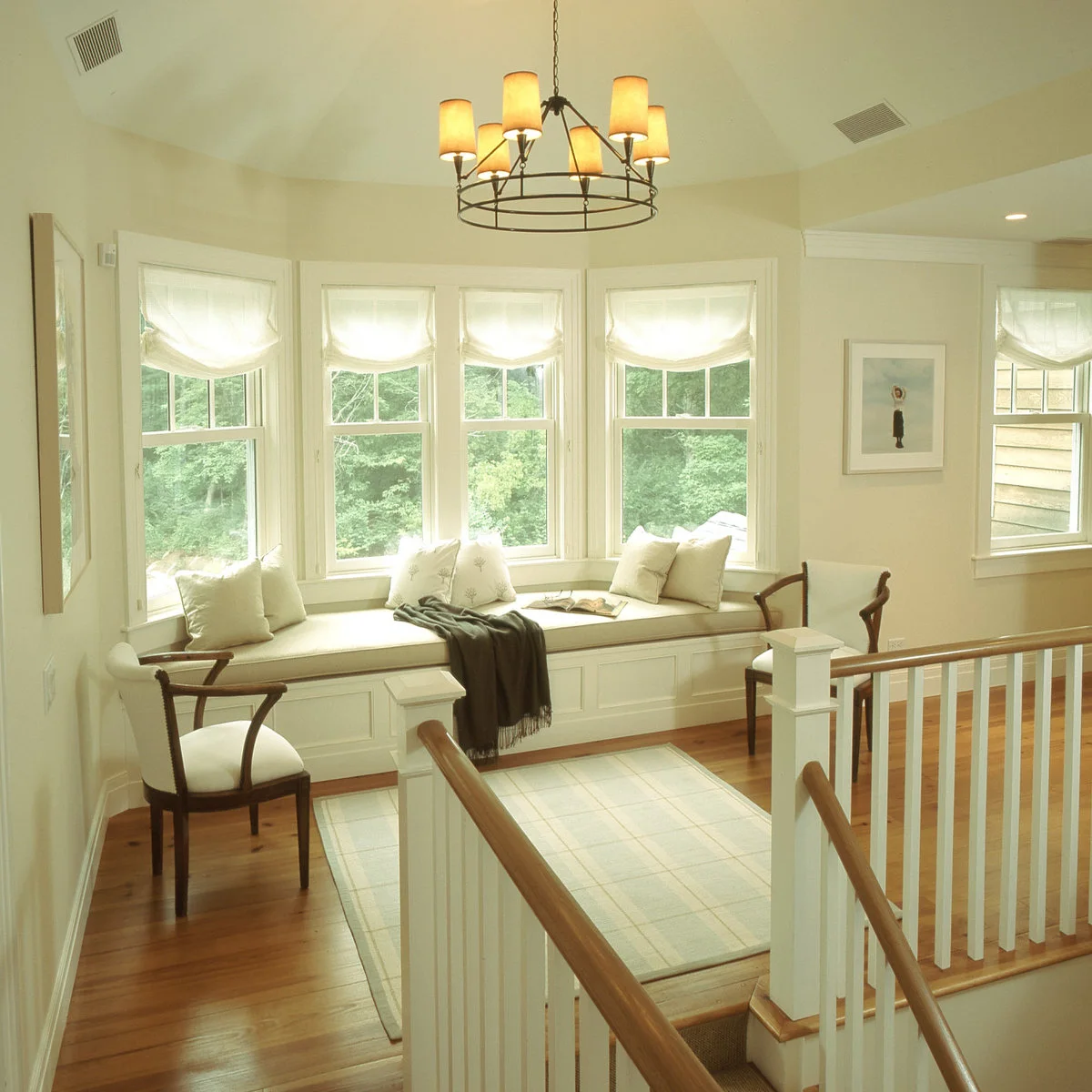
The bay gives this landing a clear destination beyond the stair rail. A long pale seat follows the windows, with two wooden chairs positioned at the ends of the rug. The sparse arrangement makes the recess feel usable while preserving the open floor in front.
Treat a landing as circulation space first. Test the route from every nearby doorway and keep furniture away from stair access. Use secure window coverings and stable seating, and resist adding a large central table where it would narrow the path through this shared part of the home.
IDEA 17 / 20
Choose a Pedestal for a Deep Dining Nook
 SaveSupport Non AI Creator
Image credit: Project: Brooke Wagner Design (via Houzz)
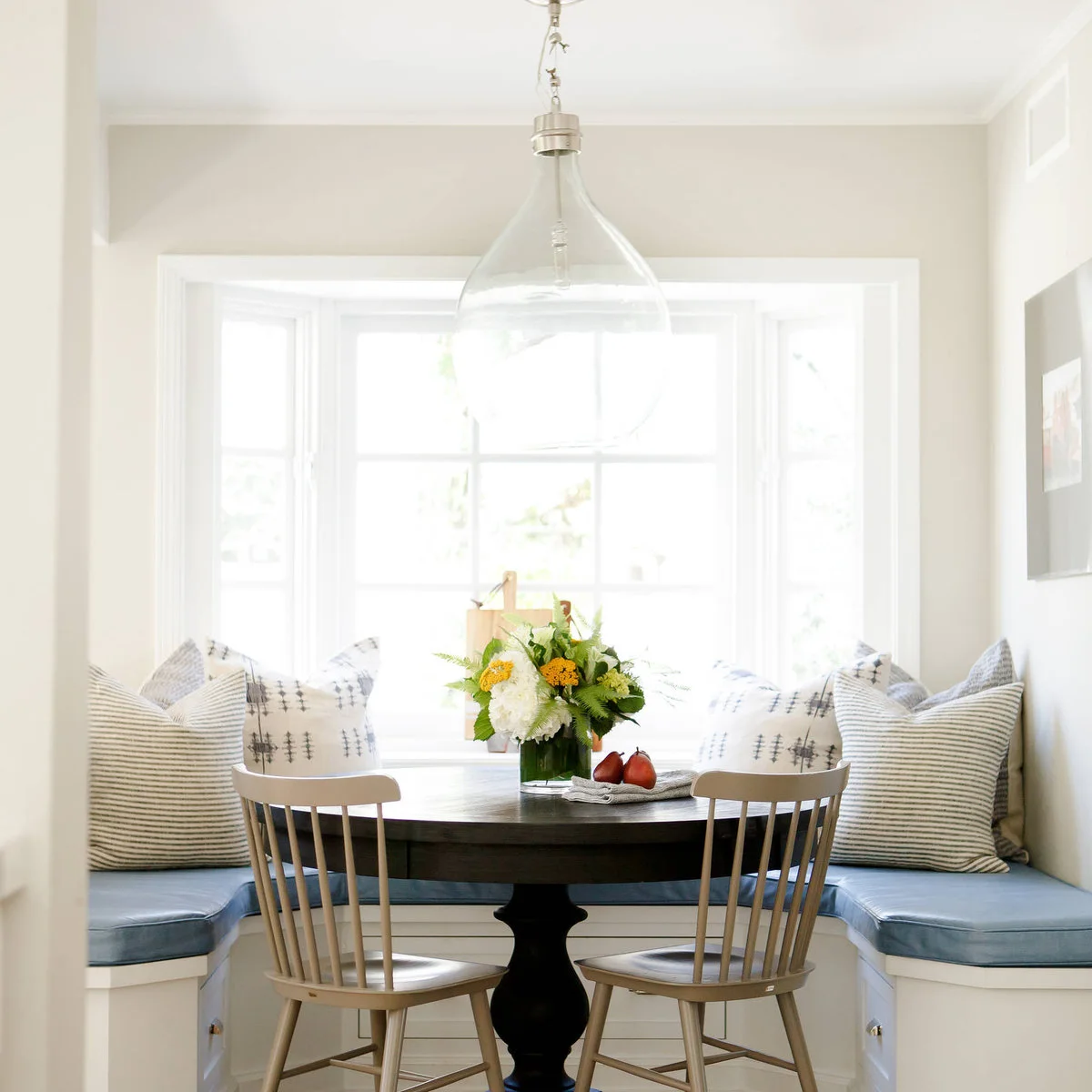
A dark pedestal table anchors the deep banquette without adding legs at every corner. Blue seat cushions separate the white base from the striped pillows. Two movable chairs complete the open side, so the fitted nook can work with the larger room rather than closing it off.
Try the table with the intended number of people before committing to a deep banquette. Reaching the back seats should not require moving every chair. Keep the centerpiece low enough for conversation and choose cushion covers that can be removed when drinks or food spill.
IDEA 18 / 20
Use Movable Dining Chairs in a Broad Bow
 SaveSupport Non AI Creator
Source: www.houzz.com
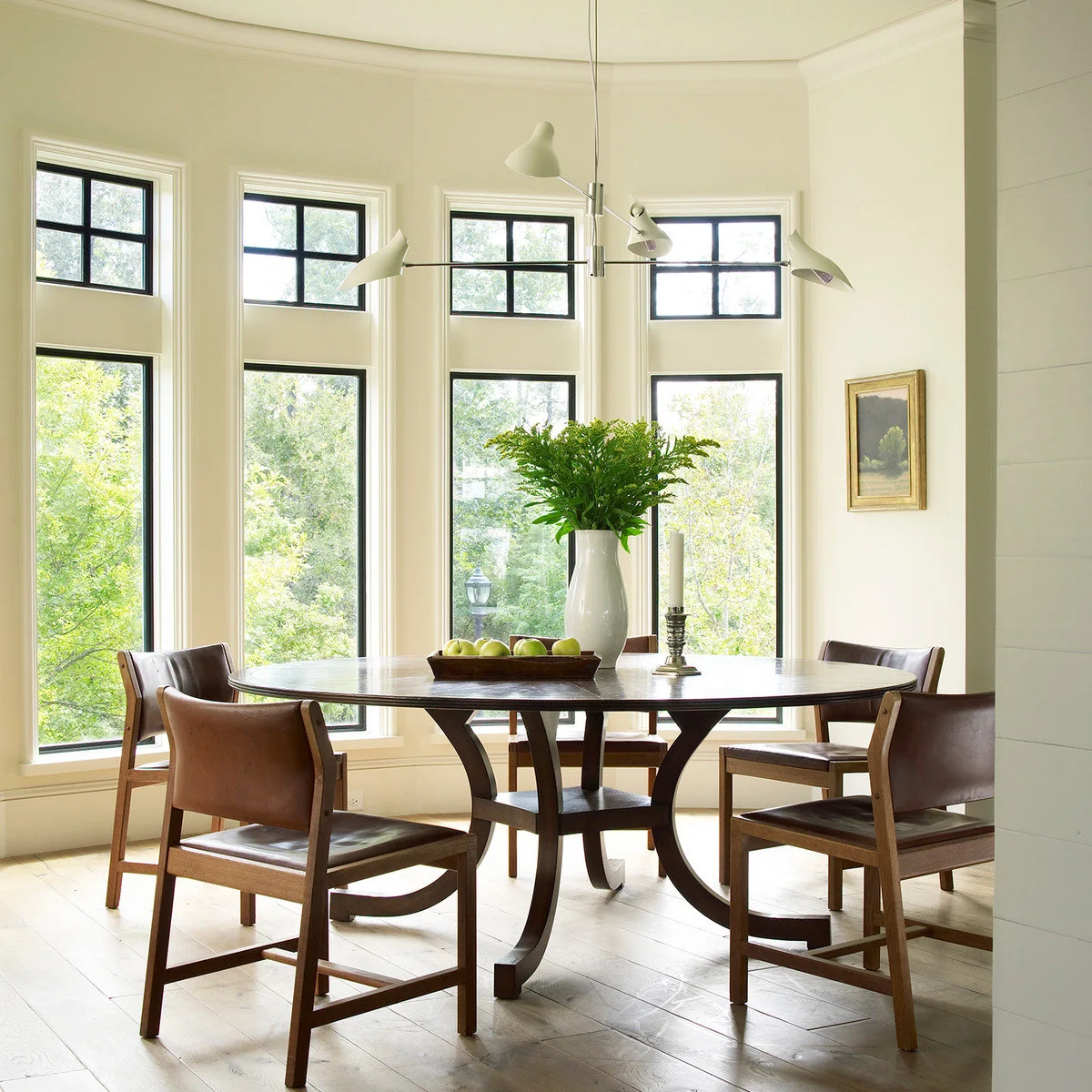
This broad curved window area uses a freestanding table rather than a built-in seat. Brown chairs bring warm color against the pale walls and floor, while the dark window outlines repeat the table’s stronger edge. The furniture leaves the architecture visible around and below it.
Movable chairs make it easier to change the room later, but they need space to pull back. Measure the usable floor inside the curve rather than its widest wall dimension. Keep access to handles and cleaning areas in mind, particularly where the chairs sit close to the glazing.
IDEA 19 / 20
Place a Small Desk Inside the Bay
 SaveSupport Non AI Creator
Source: www.houzz.com
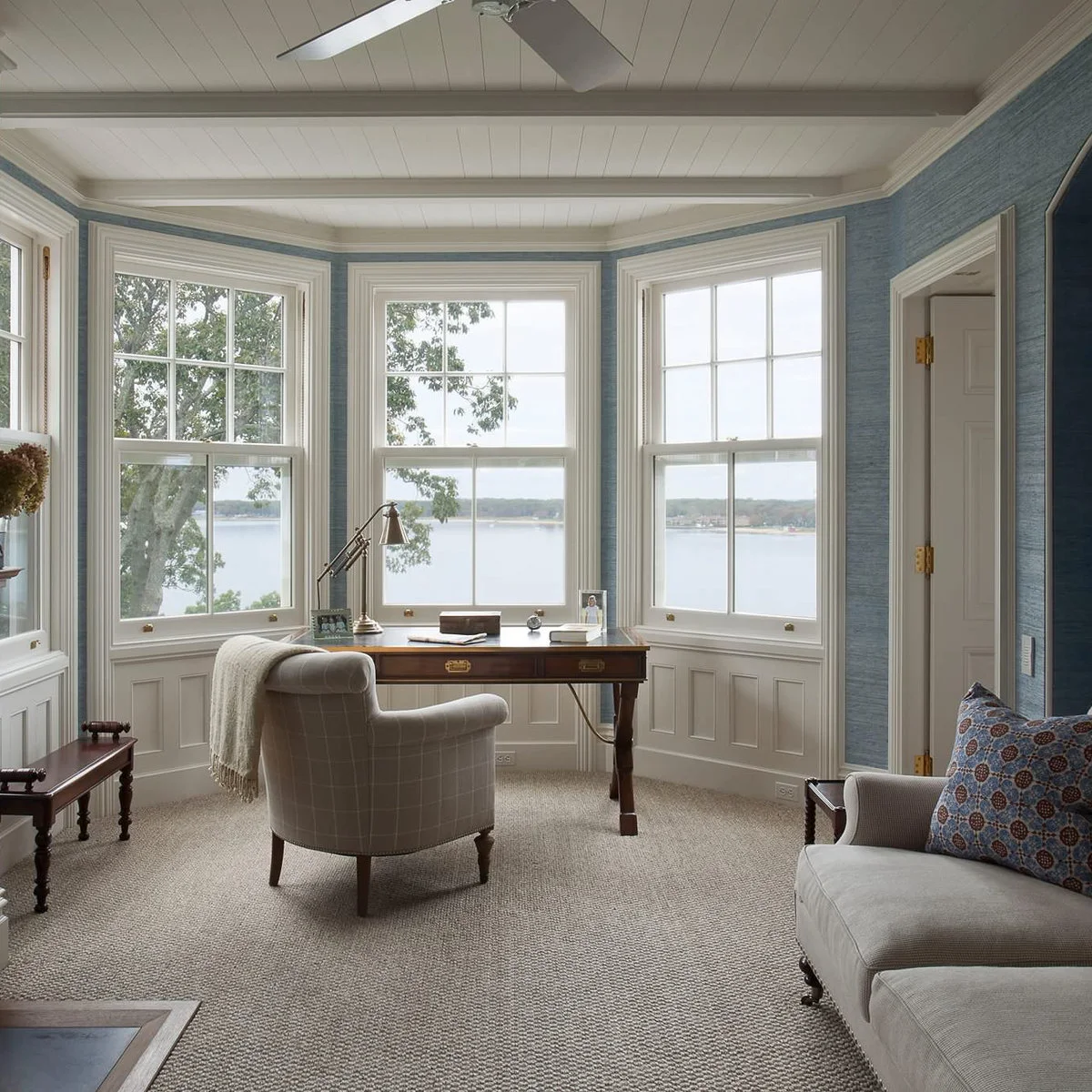
A modest wooden desk occupies the center of this bay, leaving the angled side windows visible. The upholstered chair makes the workspace feel related to the room’s other seating. A small task lamp adds focused light without introducing a tall piece of furniture in front of the view.
Check screen glare at the hours you actually work before choosing the desk orientation. A pleasant view does not guarantee a comfortable monitor position. Plan cable routes away from foot traffic, and compare the chair’s support and height with your work routine rather than choosing it only for appearance.
IDEA 20 / 20
Try Two Chairs Instead of a Fitted Bench
 SaveSupport Non AI Creator
Image credit: Project: Susan Fisher Photography (via Houzz)
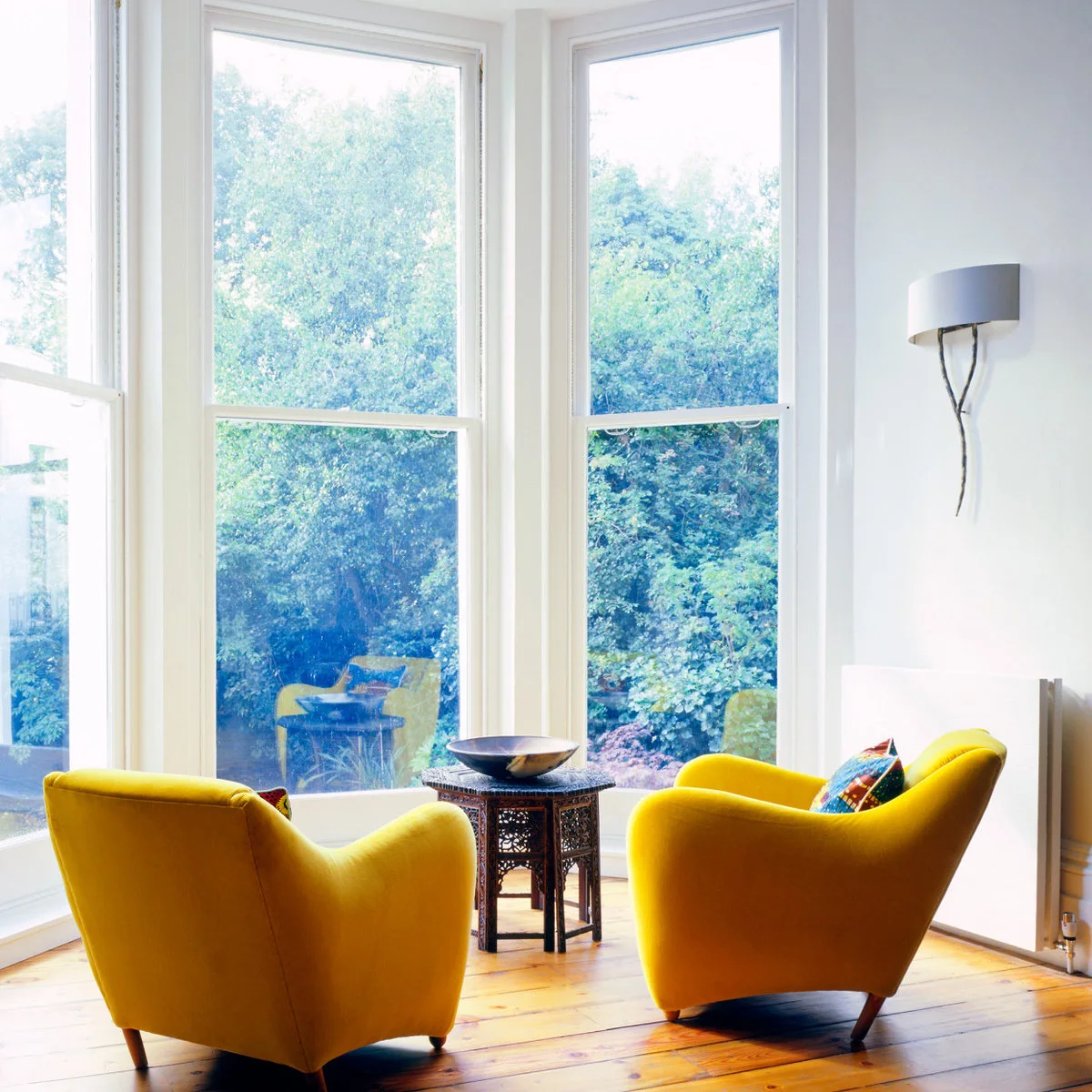
Two yellow armchairs give this bay a clear social purpose without any fitted cabinetry. Their rounded backs contrast with the tall straight window frames, while a small dark table sits between them. The open area around the chairs keeps the recess from feeling completely occupied.
Try movable chairs before ordering a custom bench, especially if you are unsure how the bay will be used. Check the depth of each chair when someone is seated. Leave enough space for cleaning and radiator access, and choose fabric with the room’s strong daylight in mind.
BRING IT ALL TOGETHER
Start with the activity, then measure
A beautiful bay is easier to use when its furniture supports a real habit. Test a reading chair, dining position or desk with temporary furniture before committing to fitted cabinetry. Walk around the arrangement and operate every window.
Match cushions and window coverings to the light, privacy and cleaning needs of that particular recess. Leave room to remove covers, reach handles and service heating. A little unfilled space often makes the architecture more noticeable than another layer of decoration.