A console table can make an entrance feel settled, give a sofa a useful backing surface or turn a blank wall into a place for favorite objects. The strongest arrangements begin with what the table needs to do, then add a few pieces with enough room around them.
These photographs show different balances of light, art, mirrors and storage. Notice the scale of each piece, the clear surface left for daily use and the space beneath the table. Adapt the arrangement to your walkway, door movement and household rather than reproducing every object in the picture.
PART 01
Start with the table and wall
IDEA 01 / 20
Keep a Narrow Wood Console Simple
 SaveSupport Non AI Creator
Image credit: Project: WO Designs (via Houzz)
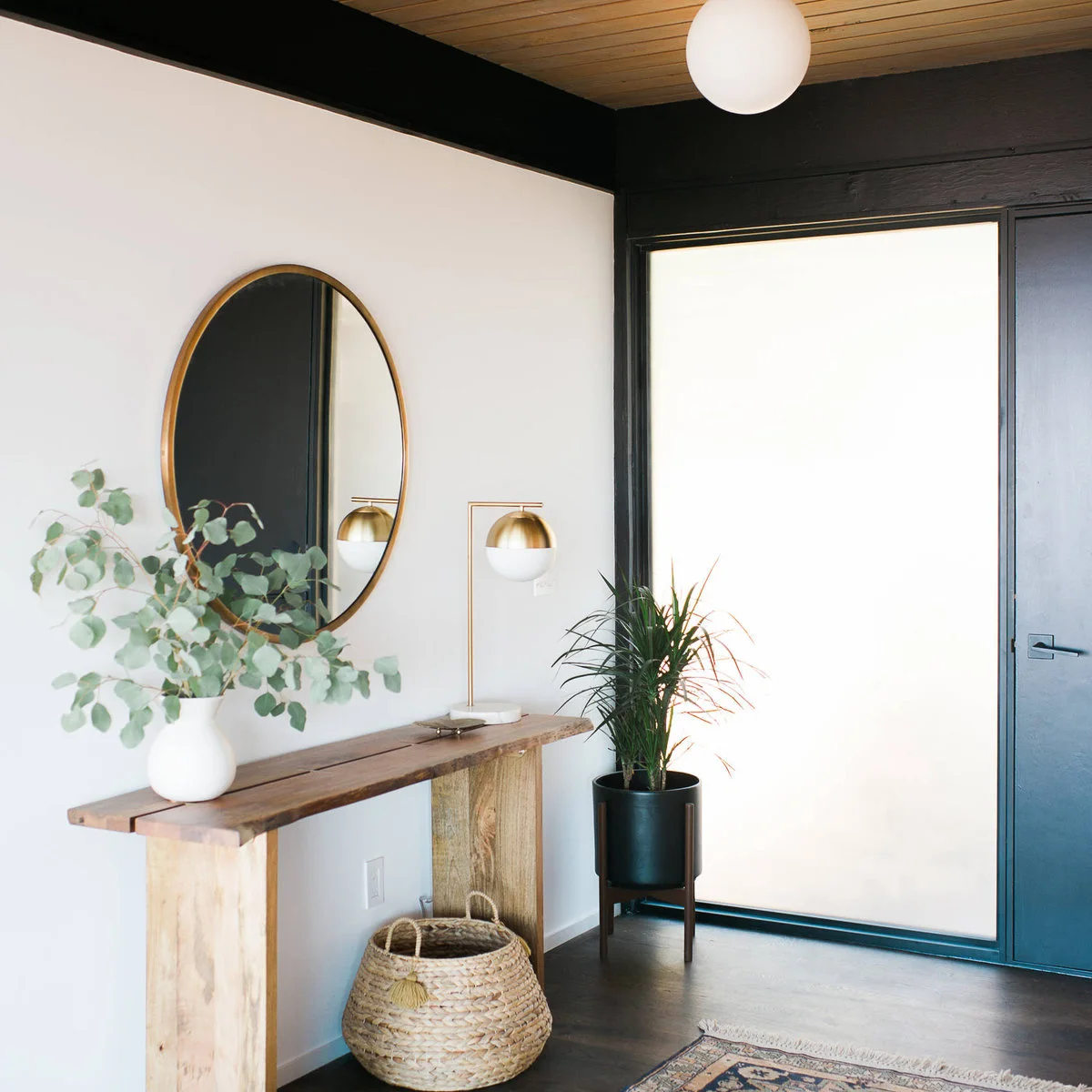
The narrow wood console carries only a few pieces: a small lamp, a white vase and a shallow dish. An oval mirror gives the wall a softer outline, while the basket below adds texture. The surrounding pale wall lets the wood grain remain an important part of the arrangement.
Leave a usable section of the tabletop for keys or another everyday item rather than copying only the decorative grouping. These Japandi entryway ideas explore similarly restrained combinations. Keep the basket within the table’s footprint and check that the lamp cable stays clear of the walking route. If the table needs to support regular work instead, these living room office combo ideas consider chair space, equipment and cables.
IDEA 02 / 20
Let a Sculptural Table Need Fewer Objects
 SaveSupport Non AI Creator
Image credit: Project: Signature Design Studio (via Houzz)
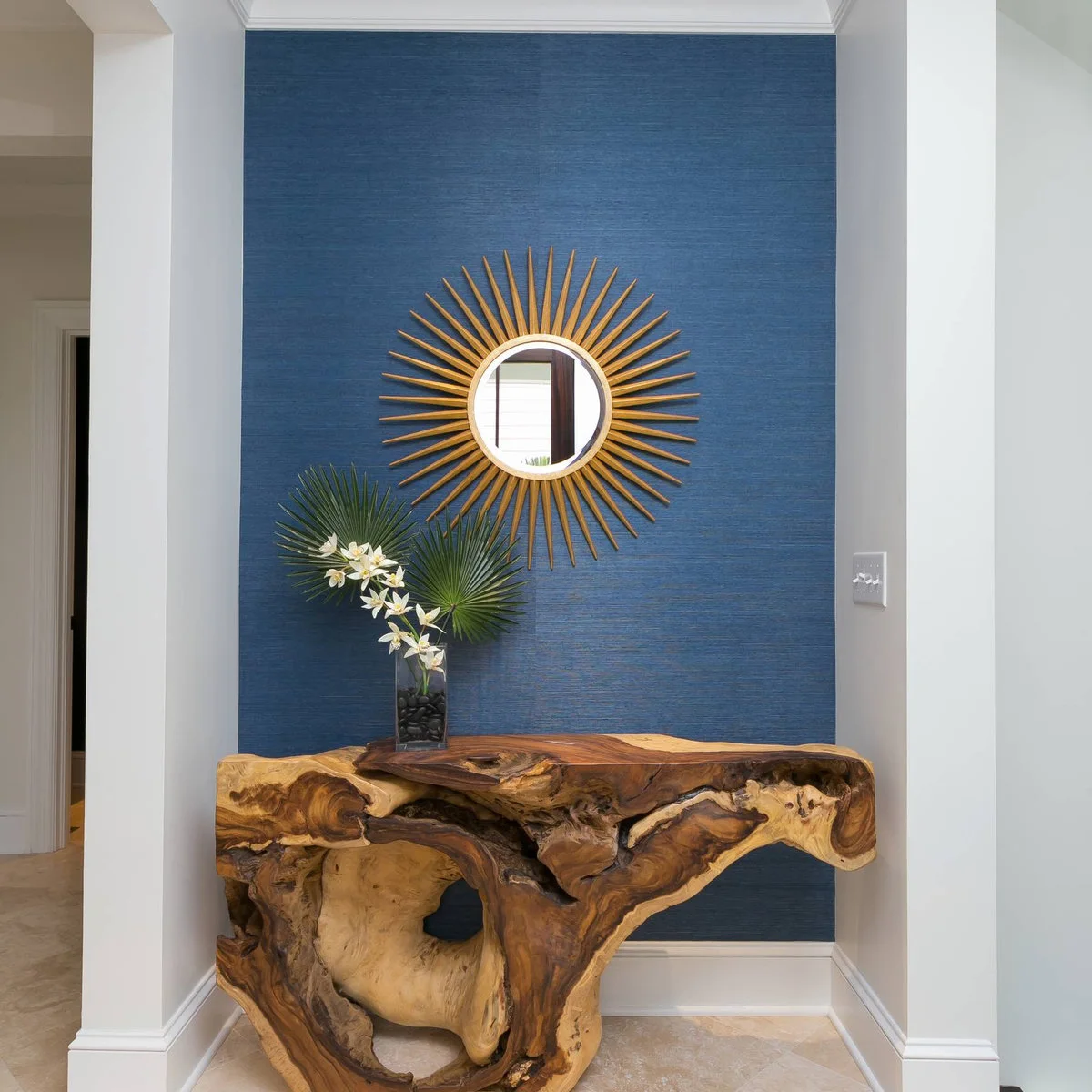
The sculptural wood base already supplies strong movement and texture, so the surface holds just one tall arrangement. A gold-colored sunburst mirror provides a separate focal point above. The blue wall gives both pieces a clear background without needing several smaller pictures around them.
When the table itself has an expressive shape, leave more space around the accessories. Check the stability and loading guidance for the actual piece before adding a heavy vase. Choose a secure, watertight container and keep branches within a comfortable outline rather than letting them catch people passing through the entrance.
IDEA 03 / 20
Echo Curves Without Adding More Ornaments
 SaveSupport Non AI Creator
Image credit: Project: Z Interior Decorations Inc. (via Houzz)
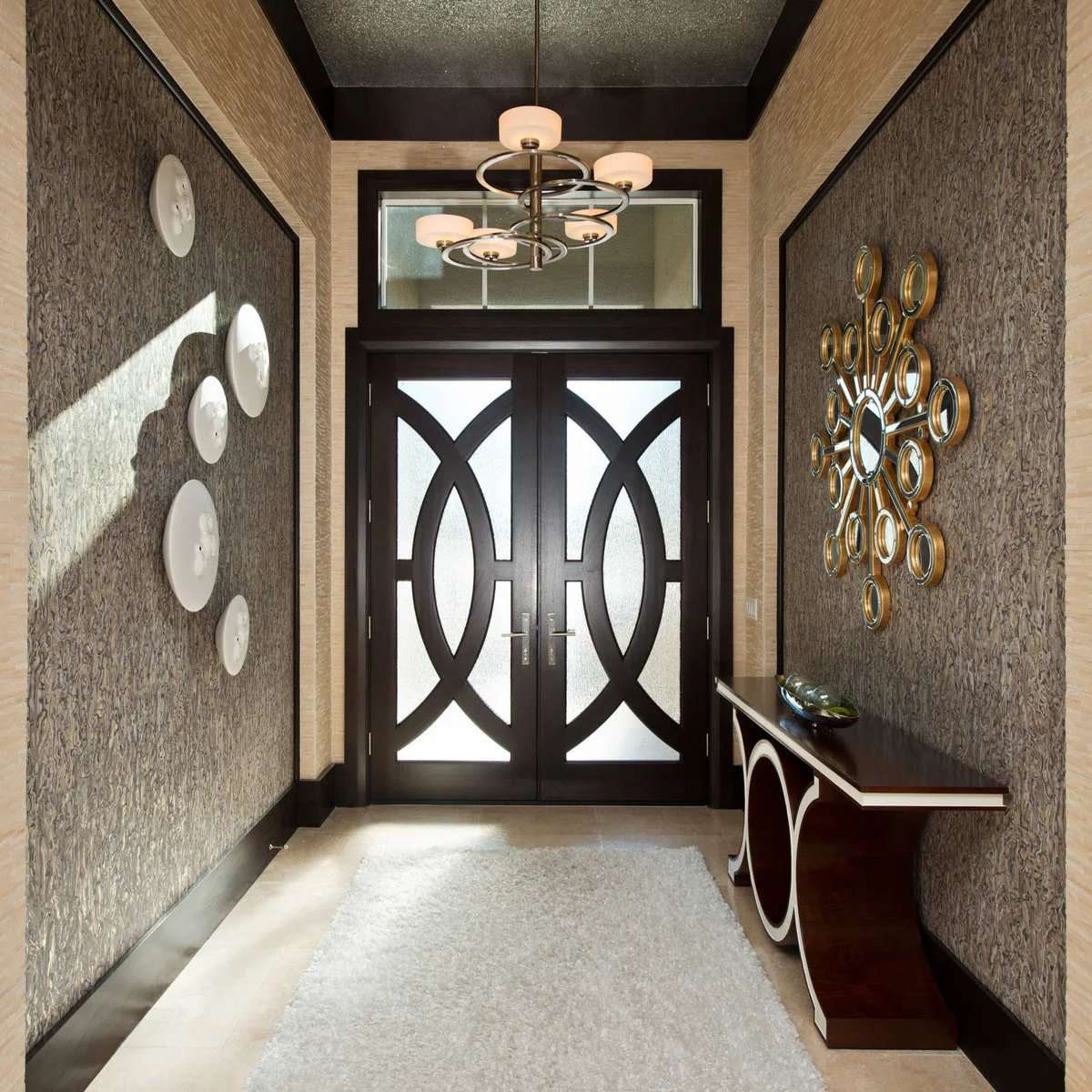
Curves repeat in the console base, the small mirror grouping and the entrance doors. A single shallow bowl leaves most of the tabletop open. The patterned wall provides enough texture that the console does not need a dense arrangement of books, vases or matching lamps.
Repeat a shape selectively rather than adding another curved object to every surface. Check the table’s projection at the narrowest part of the route and leave the door movement clear. A decorative bowl can become a practical landing place if its position is convenient for the things you carry through the entrance.
IDEA 04 / 20
Use One Large Artwork Above a Compact Table
 SaveSupport Non AI Creator
Image credit: Project: ilumus, llc. (via Houzz)
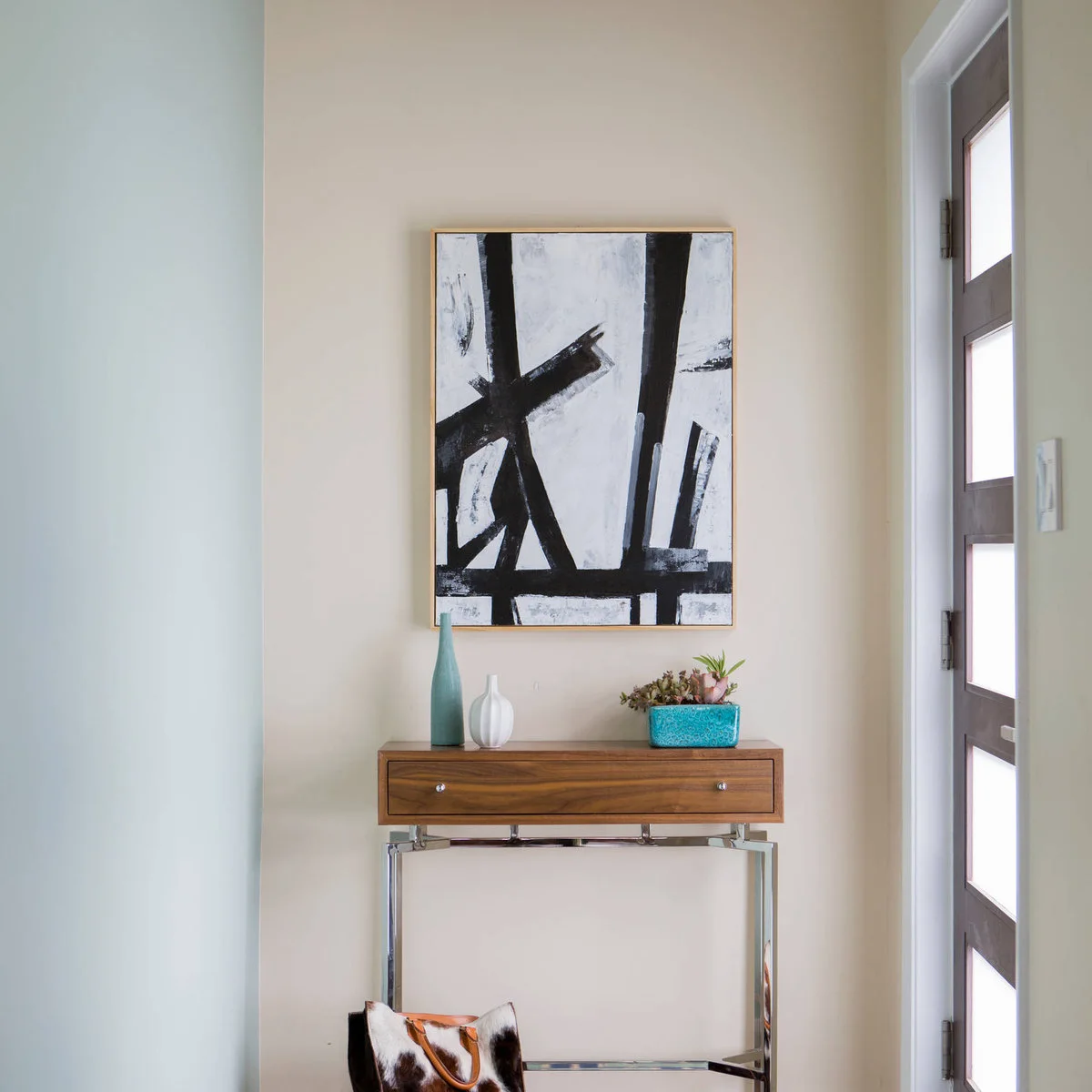
The large artwork gives the compact console a clear presence on the wall. Fine metal legs keep the lower area light, while the wood drawer front adds warmth. A few blue-and-white vessels introduce color at table height without trying to compete with the scale of the picture.
Compare artwork and table proportions from across the room before hanging the frame. Keep the fixing appropriate for its weight and the wall. A compact drawer can hold everyday essentials, but avoid adding large display objects that cover the handle or make the remaining surface difficult to use.
IDEA 05 / 20
Pair a Solid Table with Just Flowers and a Bowl
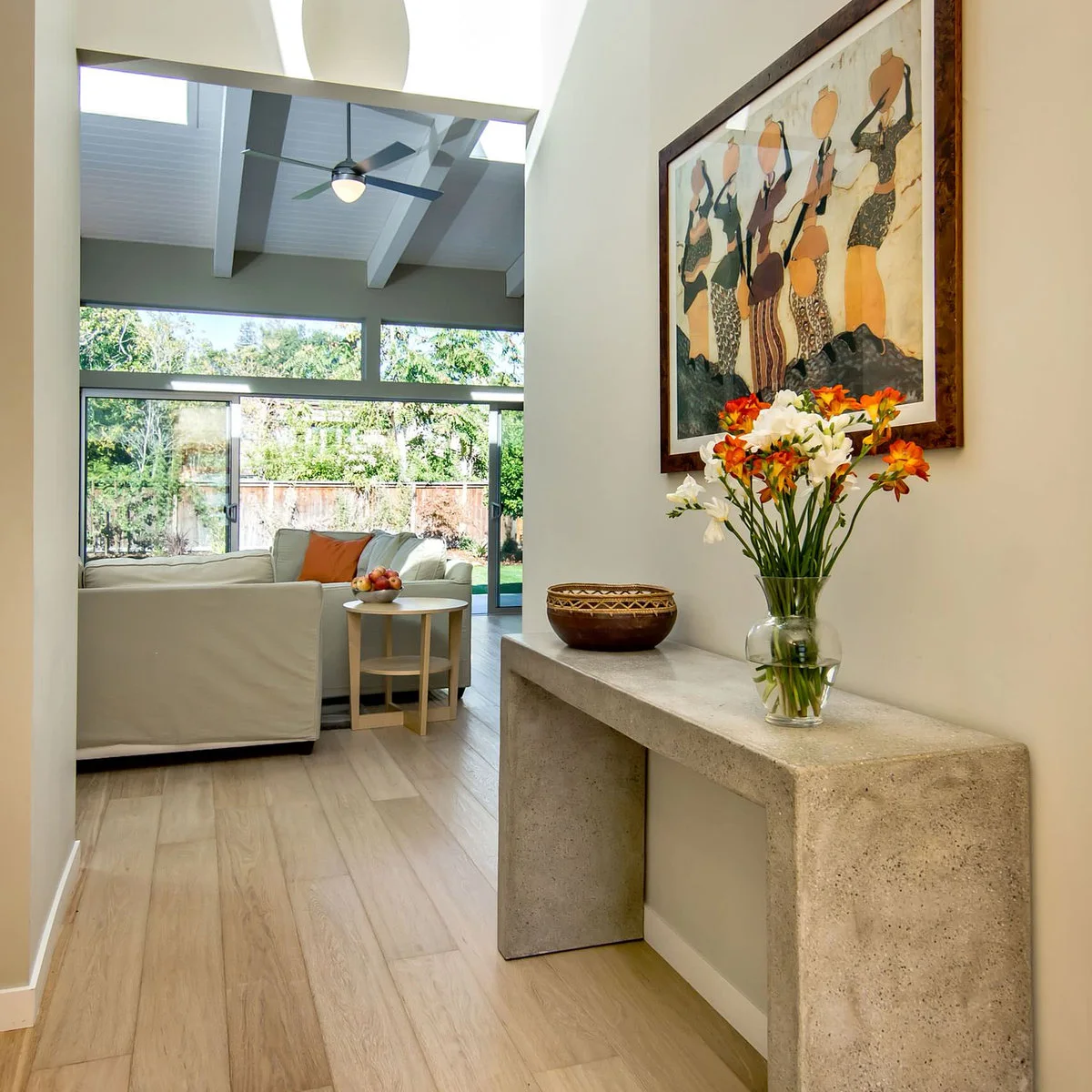 SaveSupport Non AI Creator
Image credit: Project: Bill Fry Construction - Wm. H. Fry Const. Co. (via Houzz)
The pale solid table provides a quiet base for a flower vase and a patterned bowl. Their colors relate to the artwork above and to the room beyond. With no lower shelf to fill, the open space beneath the top keeps the narrow passage visually straightforward.
Use a limited arrangement when the console sits on a route between rooms. Protect the surface from water and choose a vase that is stable enough for its stems. Keep the bowl reachable and the table corners clear of bags or clothing that could catch when people pass.
PART 02
Give light and everyday objects a place
IDEA 06 / 20
Frame a Practical Center with Matching Lamps
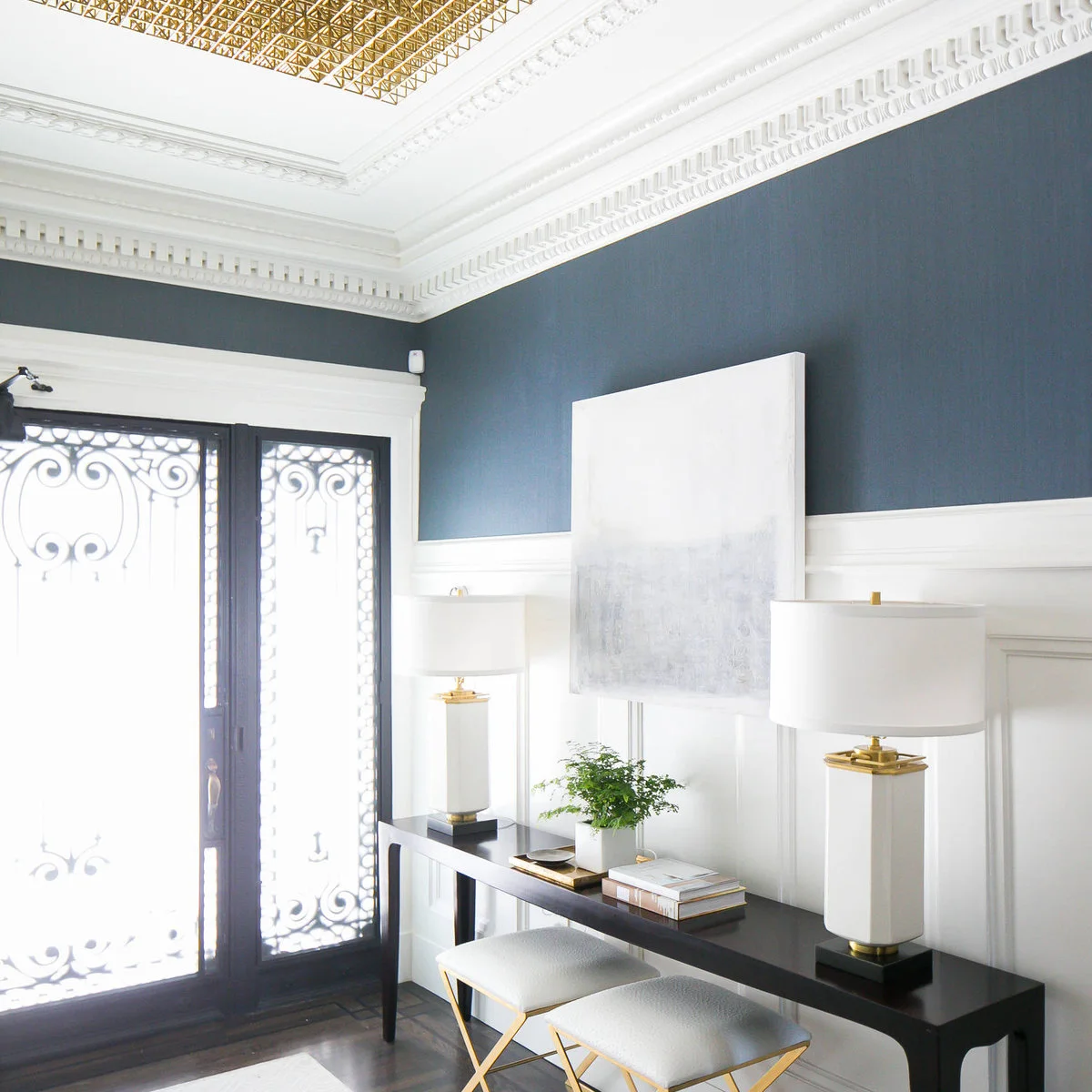 SaveSupport Non AI Creator
Image credit: Project: Brooke Wagner Design (via Houzz)
Matching lamps define the ends of the long console, leaving the center for a plant, books and a small tray. Their pale shades connect with the wall paneling. Two stools fit beneath the table, adding another use without occupying the main floor area when they are put away.
Check that both shades sit fully within the tabletop and do not obstruct doors or nearby switches. Plan the cables before pushing the table against the wall. Keep the central tray available for actual use, and confirm that the stools can be pulled out without colliding with the entrance route.
IDEA 07 / 20
Free the Surface by Using Hanging Lights
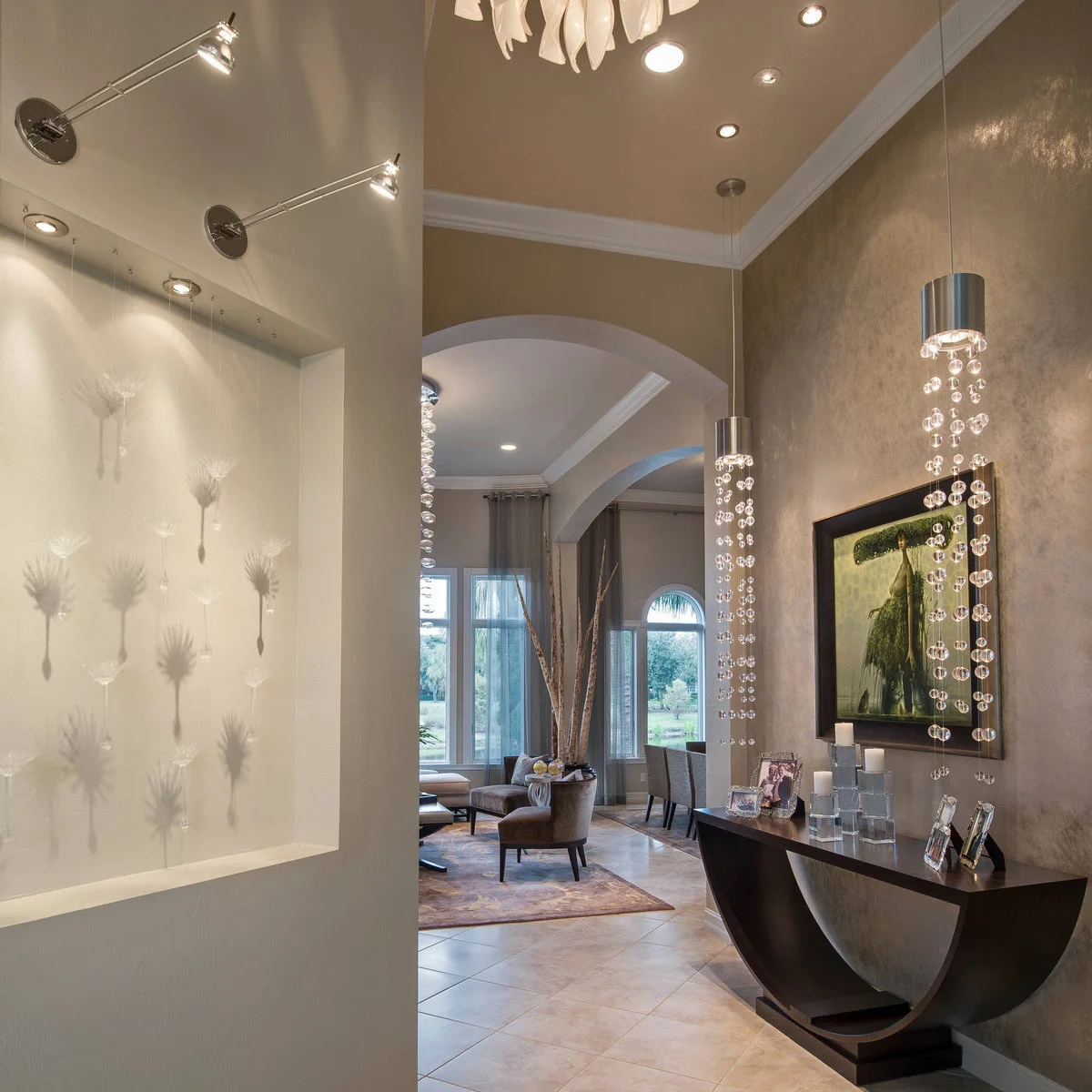 SaveSupport Non AI Creator
Image credit: Project: Barbara Rooch Interior Environments, Inc. (via Houzz)
Suspended decorative lights bring sparkle above the console without needing lamp bases on the top. Framed photographs and a small group of tall objects occupy the surface below. The table’s curved base remains visible, giving the lower arrangement a clear shape rather than another layer of storage.
Plan the lights as a proper installation with suitable height and service access. Keep them clear of moving people and nearby doors. On the tabletop, group personal photographs so they remain easy to dust, and reserve a clear landing place rather than spreading small frames across the entire length.
IDEA 08 / 20
Balance a Lamp with a Small Group of Objects
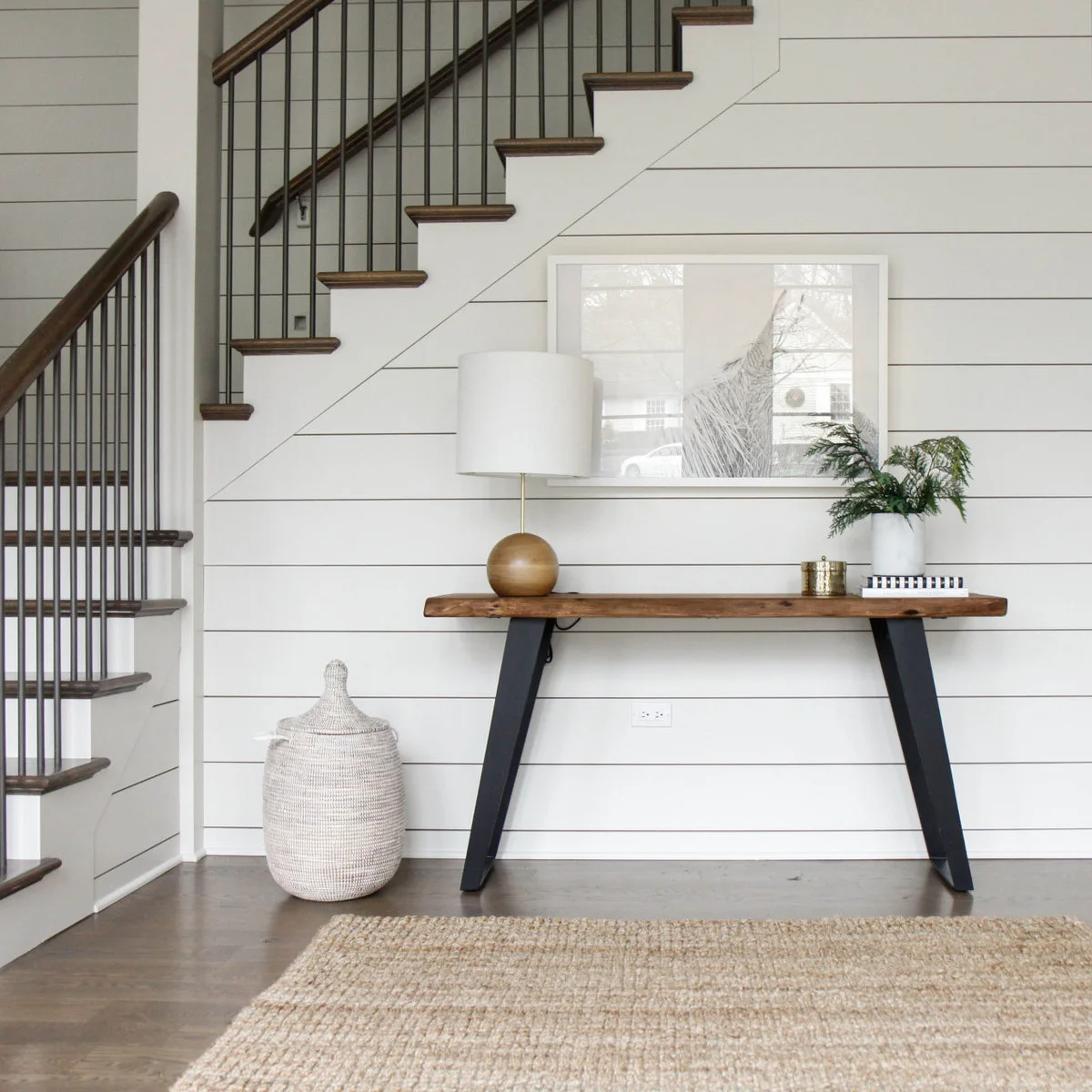 SaveSupport Non AI Creator
Source: www.houzz.com
The rounded lamp gives one end of the console height, while books and greenery balance the opposite side at a lower level. One framed print unifies the wall above. The table’s dark angled legs and pale horizontal paneling supply enough structure that the remaining objects can stay simple.
Check the lamp height with the artwork and the sloping stair line before fixing the frame. These classic entryway ideas offer other ways to arrange traditional architectural details. Keep the table away from the stair route and leave vents, switches and outlets accessible rather than hiding them behind a basket or plant.
IDEA 09 / 20
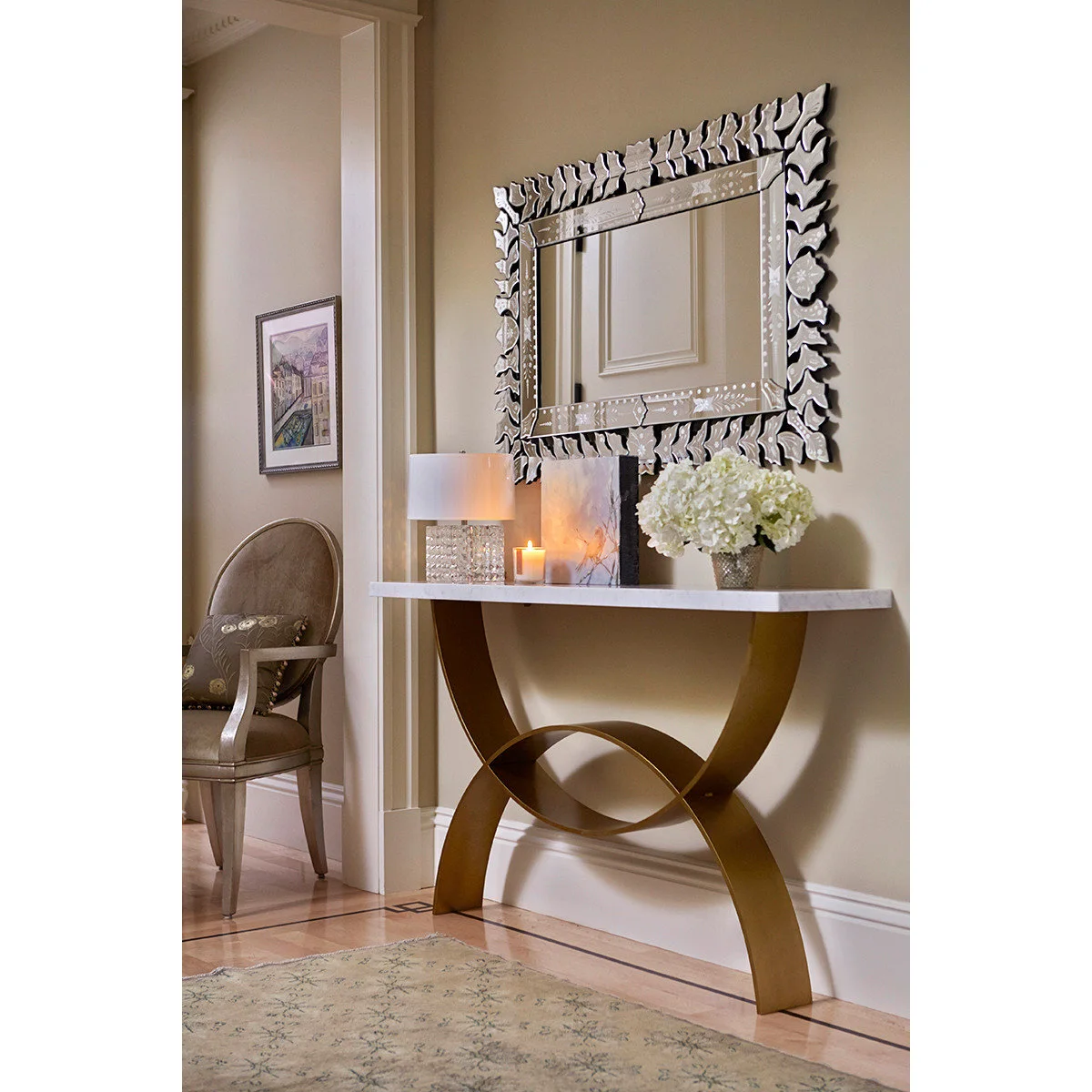
Let an Ornate Mirror Be the Detailed Piece
 SaveSupport Non AI Creator
Image credit: Project: Maquette Interior Design (via Houzz)
The ornate mirror gives the wall most of its decoration, while the console repeats a broad curve in its base. A small lamp and white flowers remain lower and simpler. Pale surfaces keep the grouping connected even though the mirror, table and accessories have different textures.
Leave enough space around an ornate frame to see its outline rather than covering it with tall stems. Secure it appropriately instead of depending on the tabletop for support. If you want a candle-like glow near flowers or books, use a flameless option and keep the surface easy to clear for cleaning.
IDEA 10 / 20
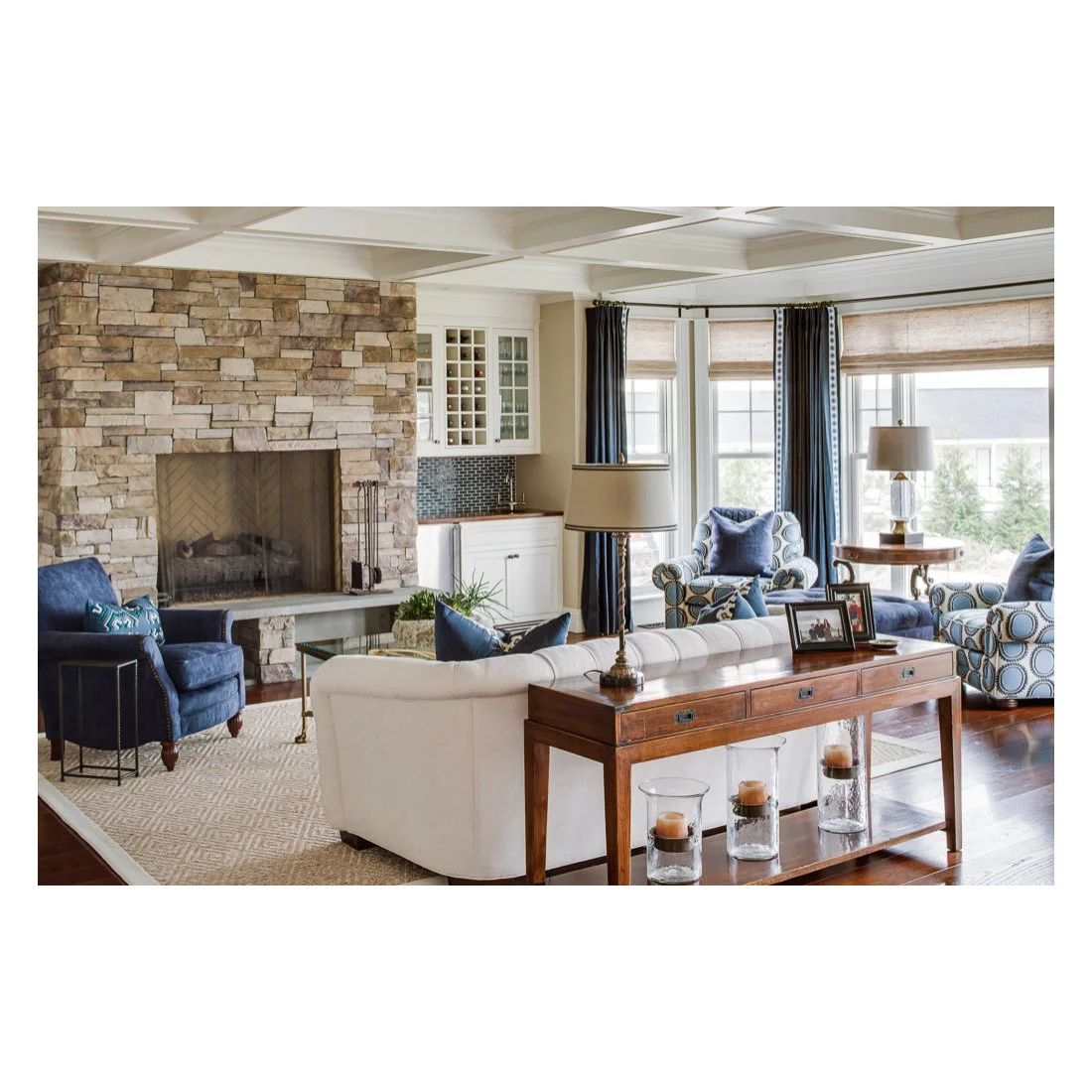
Give the Sofa Back a Useful Landing Surface
 SaveSupport Non AI Creator
Image credit: Project: JS Interiors LLC (via Houzz)
The console follows the back of the sofa, providing a useful surface outside the central seating group. A lamp lights the room from this edge, while framed photographs add a personal detail. Three glass holders repeat along the lower shelf, keeping the under-table arrangement orderly.
Check the console height against the sofa so objects are comfortable to reach without being easily knocked over. Contain the lamp cable away from feet and cleaning equipment. For a lower shelf near upholstery, flameless lights are a more manageable choice than leaving open flames where fabric or passing people could come close.
PART 03
Build a few considered layers
IDEA 11 / 20
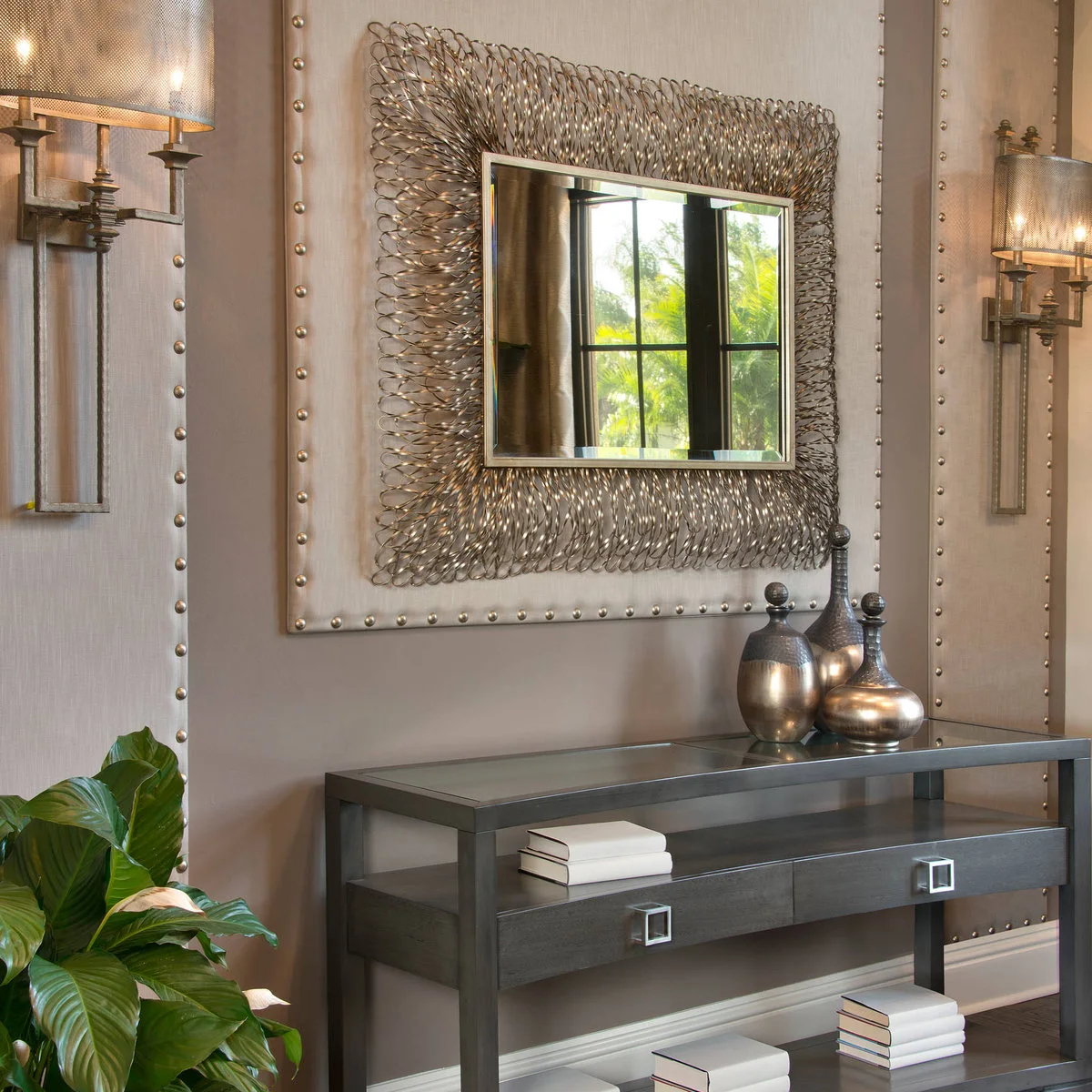
Group Similar Vessels at One End
 SaveSupport Non AI Creator
Image credit: Project: Norris Furniture & Interiors (via Houzz)
Three related vessels form one compact group at the end of the console rather than spreading evenly across the top. The textured mirror and wall fittings provide the finer detail above. Simple book stacks on the lower levels keep the arrangement connected without repeating the same objects on every shelf.
Leave a clear landing area on the top, especially if this table is near the entrance. Choose decorative pieces you can move easily for dusting and keep heavier objects on stable, supported surfaces. Check the table’s load guidance before treating an open shelf as unlimited storage for books.
IDEA 12 / 20
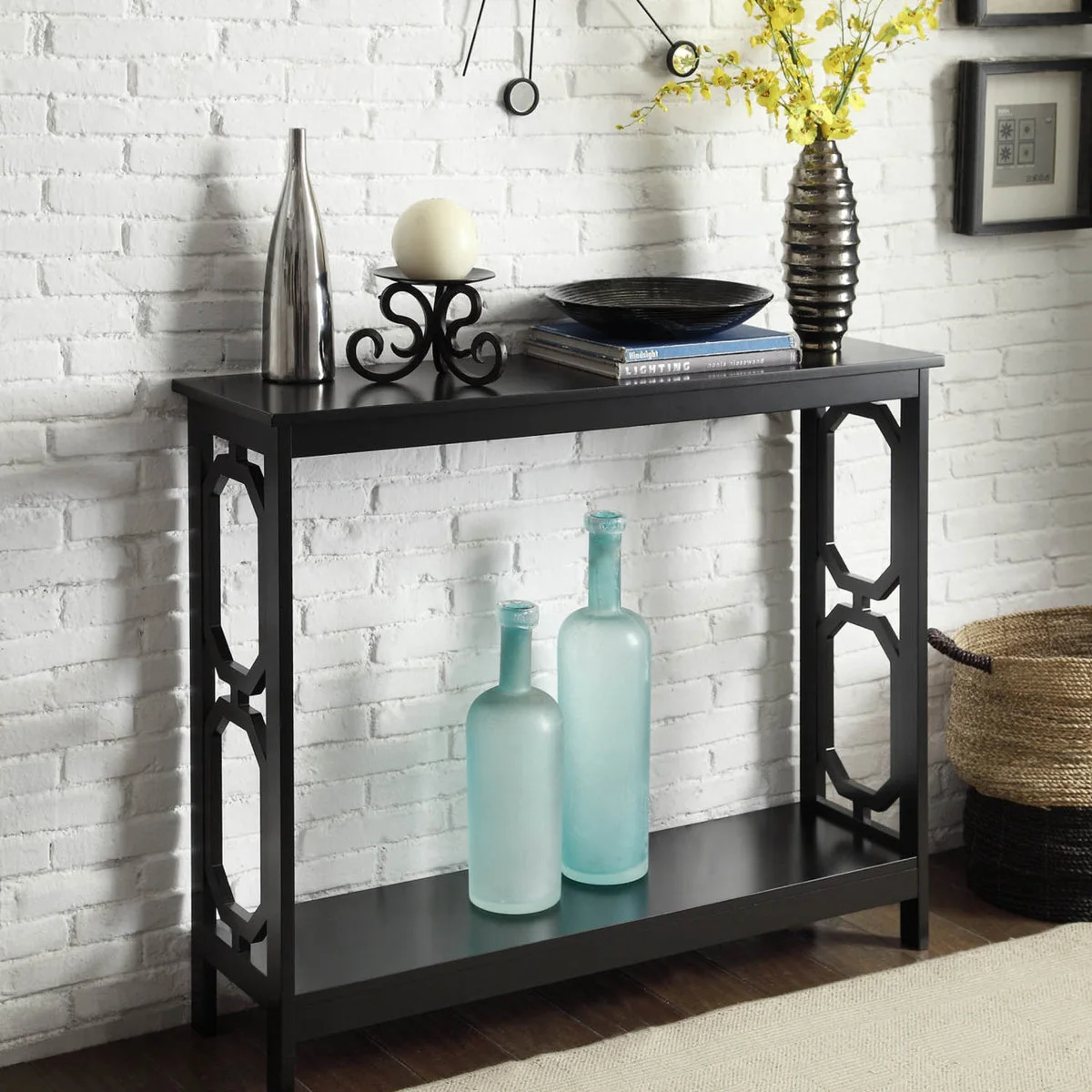
Use Different Heights Within One Dark Palette
 SaveSupport Non AI Creator
Image credit: Project: Convenience Concepts (via Houzz)
The dark tabletop pieces vary in height but share a restrained palette against the white brick. A shallow bowl rests above a short book stack, while a taller flower vase marks the opposite end. Pale blue bottles introduce a quieter color on the lower shelf without covering its whole length.
Keep the different heights useful rather than adding risers beneath every object. A bowl intended for keys should remain stable and easy to reach. Protect the table from wet stems and containers, and choose a flameless light if you want the appearance of a candle near books or other decorative pieces.
IDEA 13 / 20
Contain Small Collectibles in a Tray
 SaveSupport Non AI Creator
Image credit: Project: Soko Design (via Houzz)
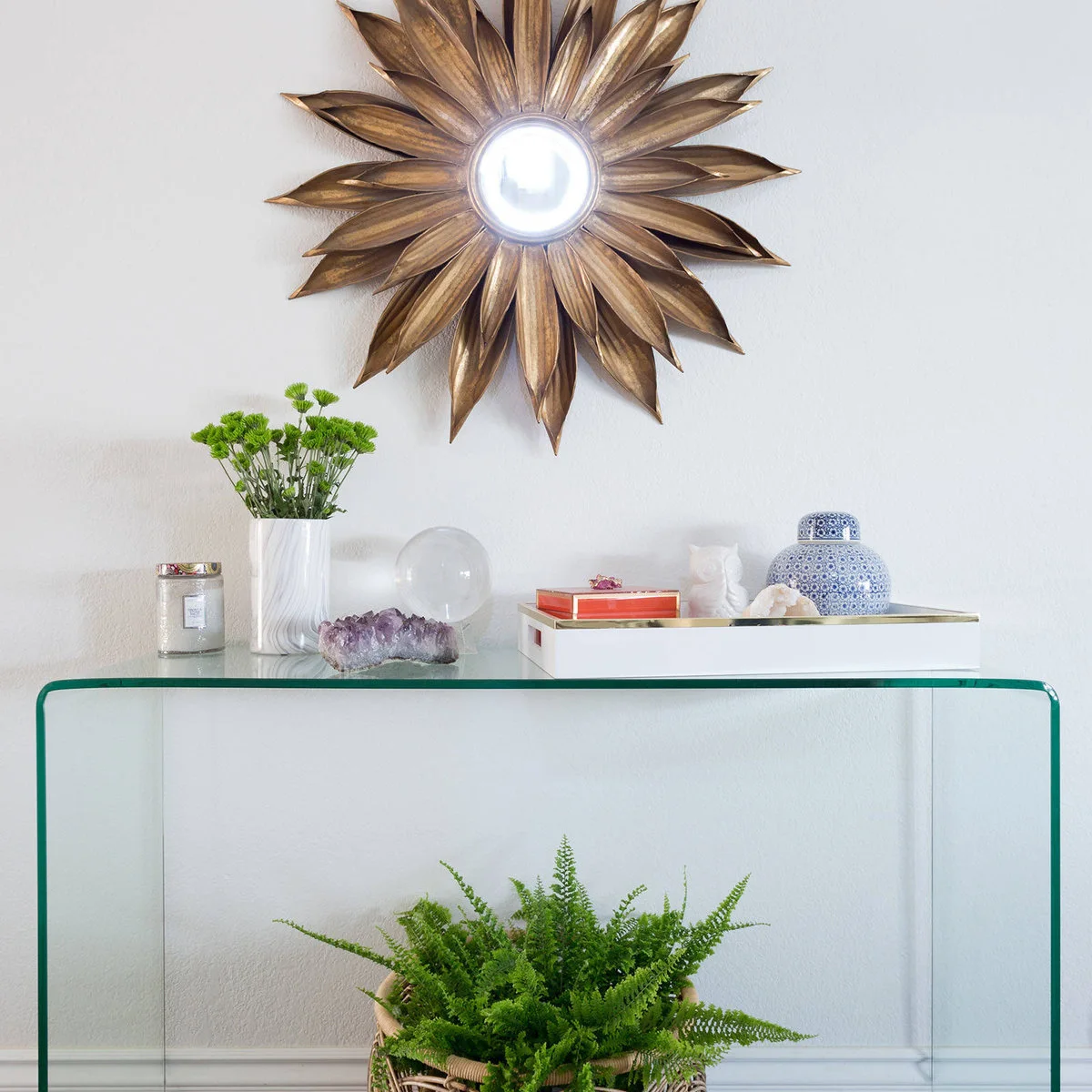
The tray gathers the smaller collectibles into one defined area on the clear console. A flower vase provides height at the other end, while the sunburst mirror gives the wall a stronger outline. The fern below adds a separate soft shape without needing a second row of tabletop ornaments.
Use a tray that fits comfortably rather than covering most of the surface. Check the console’s load limit and protect it from scratches, water and unsuitable cleaners. A plant below still needs the right light and an accessible watering routine, with a container that keeps moisture away from the floor.
IDEA 14 / 20
Align a Small Console with a Grid of Prints
 SaveSupport Non AI Creator
Image credit: Project: TY LARKINS INTERIORS (via Houzz)
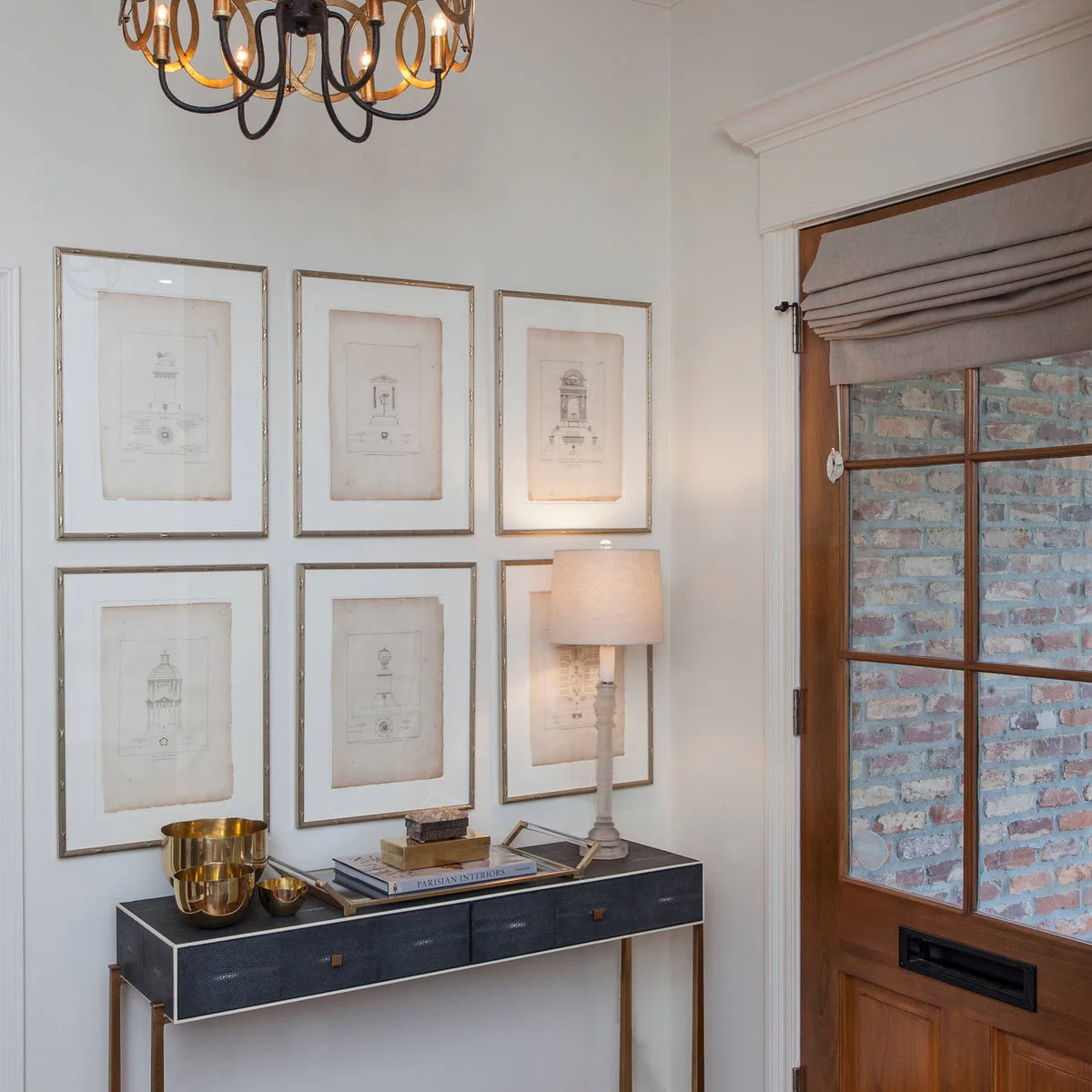
Six evenly spaced prints create a larger wall arrangement above the narrow table. A slim lamp occupies one end, while nested bowls and a small stack of books fill the opposite side. The pale artwork keeps the grouping light even though the drawer fronts are darker.
Lay out the whole picture grid before making fixings so the spacing works with the table and nearby doorway. Keep the lamp within the tabletop and the cable safely routed. Use one of the bowls for small daily items if helpful, rather than letting keys accumulate across the book covers.
IDEA 15 / 20
Use a Half-Round Shape Beside the Stairs
 SaveSupport Non AI Creator
Image credit: Project: Dorye Brown Interiors (via Houzz)
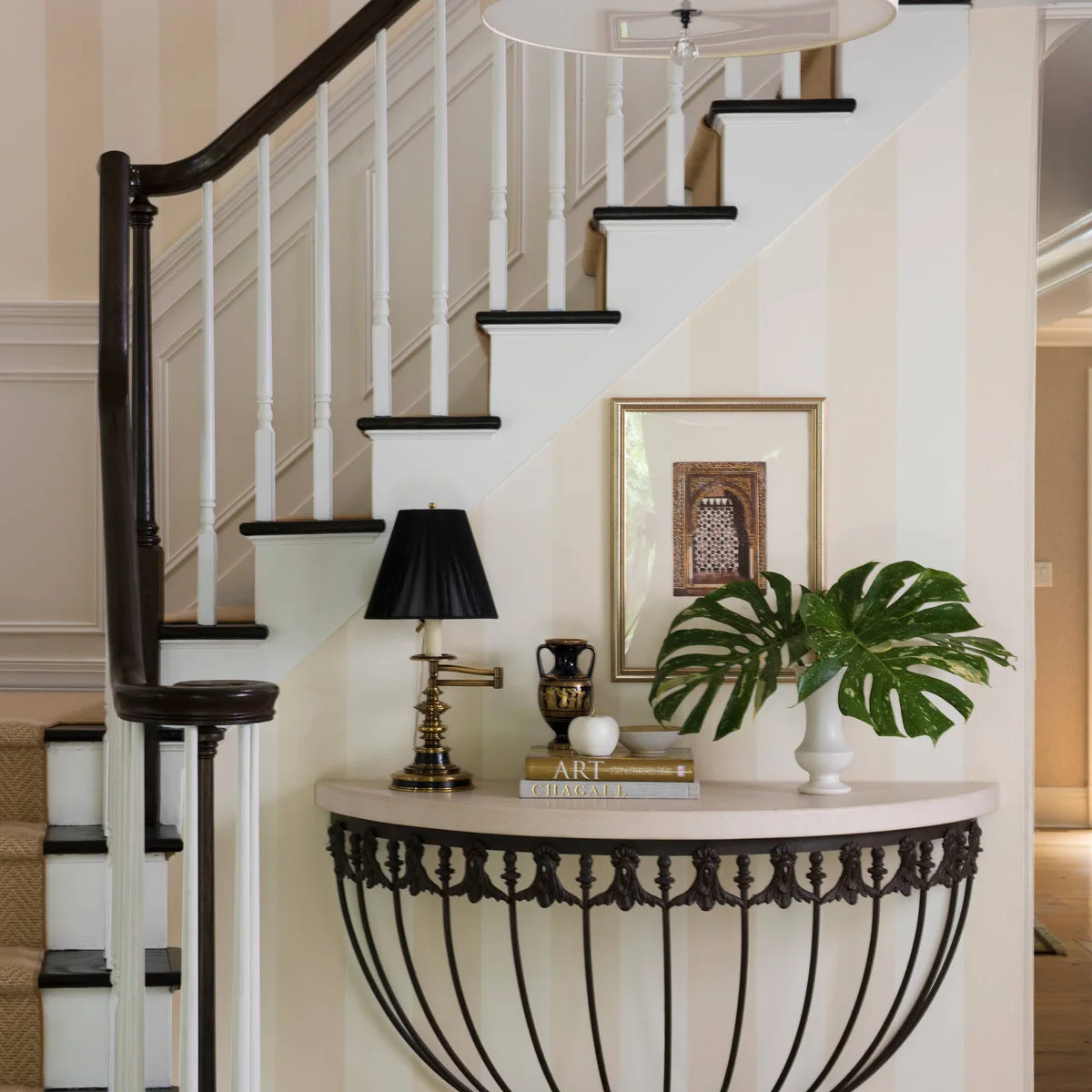
The half-round top softens the edge beside the stairs, while its open curved base leaves much of the floor visible. A dark lampshade relates to the stair handrail. Books and a white vase provide lower and taller shapes without covering the framed picture behind them completely.
Check the full depth of a curved console rather than assuming rounded edges automatically make it suitable for a narrow route. Keep broad leaves clear of people using the stairs. Choose a stable vase and leave the lamp switch reachable without having to move the entire arrangement.
PART 04
Make the lower space useful
IDEA 16 / 20
Add Color Beneath a Clear Console
 SaveSupport Non AI Creator
Image credit: Project: JOURNEY HOME INTERIORS (via Houzz)
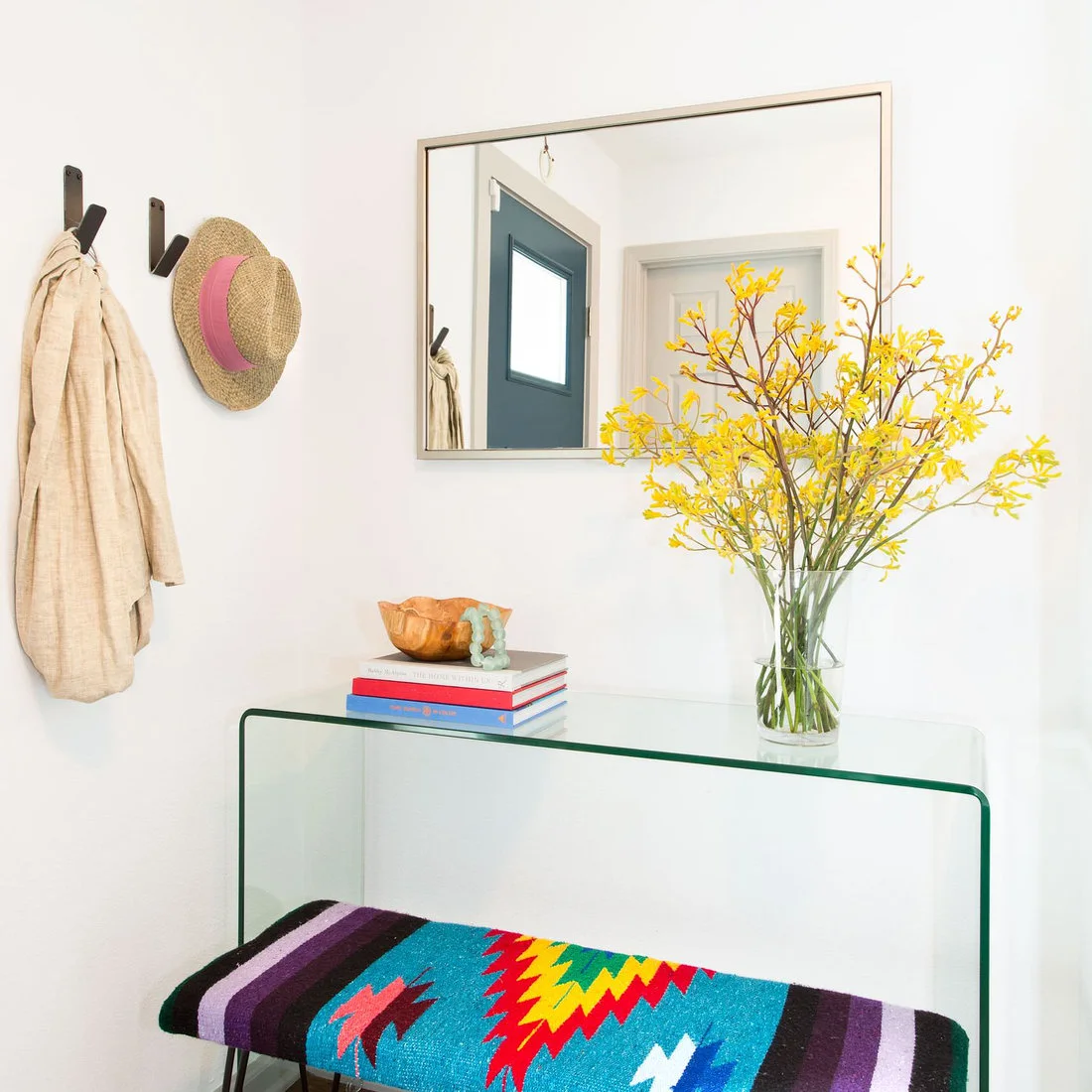
The clear console leaves the colorful bench visible beneath it, making the lower piece part of the arrangement. Yellow flowers echo the bench’s brighter tones. Nearby hooks give a hat and coat their own place, so they do not have to land on the decorative surface.
Measure the bench and table together so the seat stores fully without narrowing the walkway. Keep the vase stable and protect the top from water. Give the hooks enough clear space for hanging items to remain usable, rather than allowing sleeves or bags to pull against the flowers when someone arrives.
IDEA 17 / 20
Gather Useful Objects on Two Levels
 SaveSupport Non AI Creator
Image credit: Project: Kate Jackson Design (via Houzz)
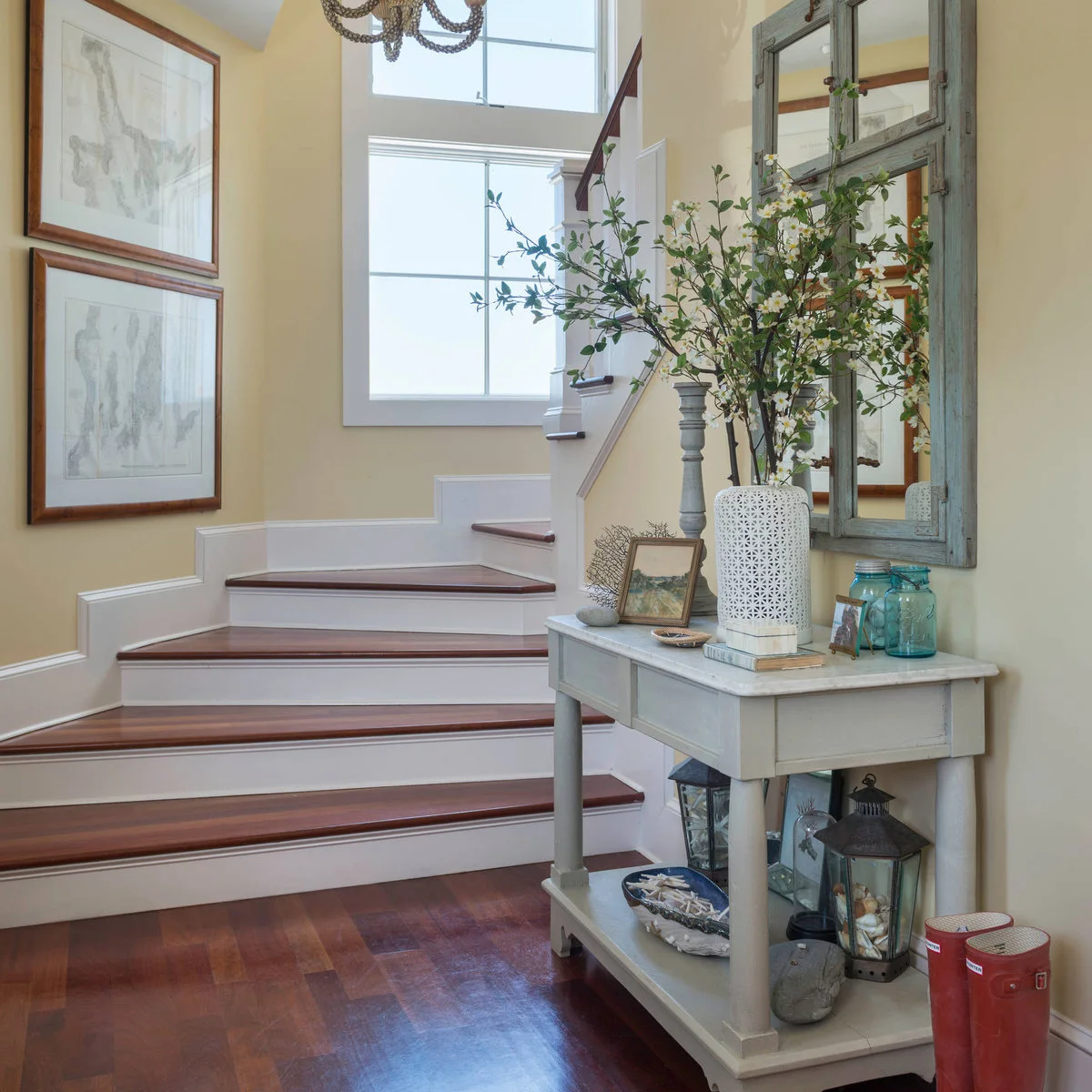
The upper surface carries the taller vase and a few smaller framed pieces, while lanterns and bowls occupy the lower shelf. Pale finishes connect the table and mirror with the staircase trim. Blue glass adds a small repeated color without changing the room’s broader warm palette.
Assign each shelf a purpose so the arrangement does not become a collection of everything that has no other home. These farmhouse entryway table decor ideas offer other practical combinations. Keep the taller vase from projecting into the stair route, and use flameless lights in lower lanterns near passing feet or stored objects.
IDEA 18 / 20
Tuck One Patterned Stool Under a Clear Table
 SaveSupport Non AI Creator
Image credit: Project: Meghan Shadrick Interiors (via Houzz)
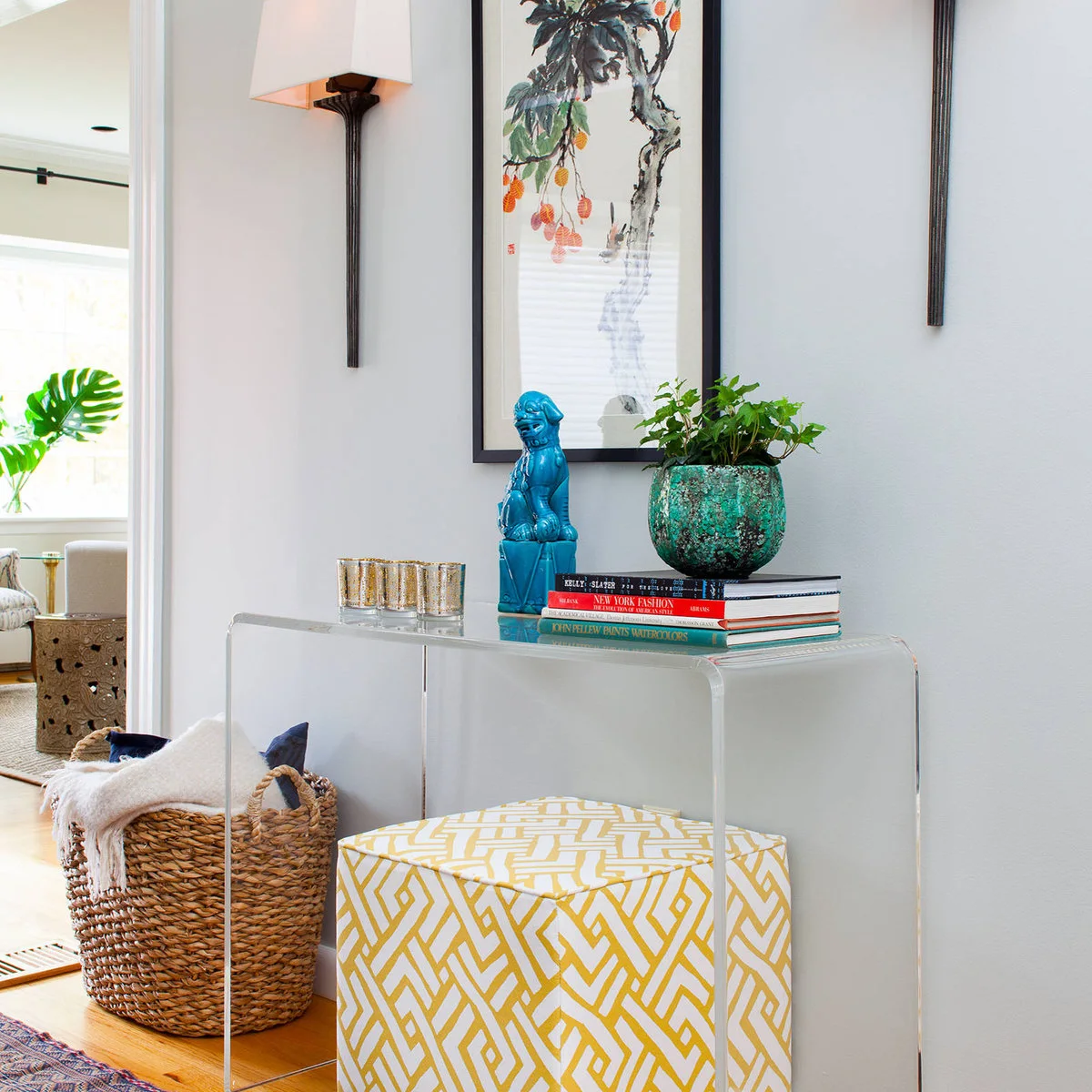
The clear table allows the patterned stool to remain visible, giving the arrangement color below the top. Books and a planter form a compact group at one end. A blue decorative figure adds another vertical shape, while the framed artwork gives the wall a more stable outline above.
Keep enough room beneath the console to remove the stool without lifting or nudging the table. Check the surface’s loading and cleaning guidance, and protect it from planter moisture. Leave a practical landing area for everyday items instead of allowing the display to spread across every remaining inch.
IDEA 19 / 20
Use Two Small Seats Instead of One Large Basket
 SaveSupport Non AI Creator
Image credit: Project: JOURNEY HOME INTERIORS (via Houzz)
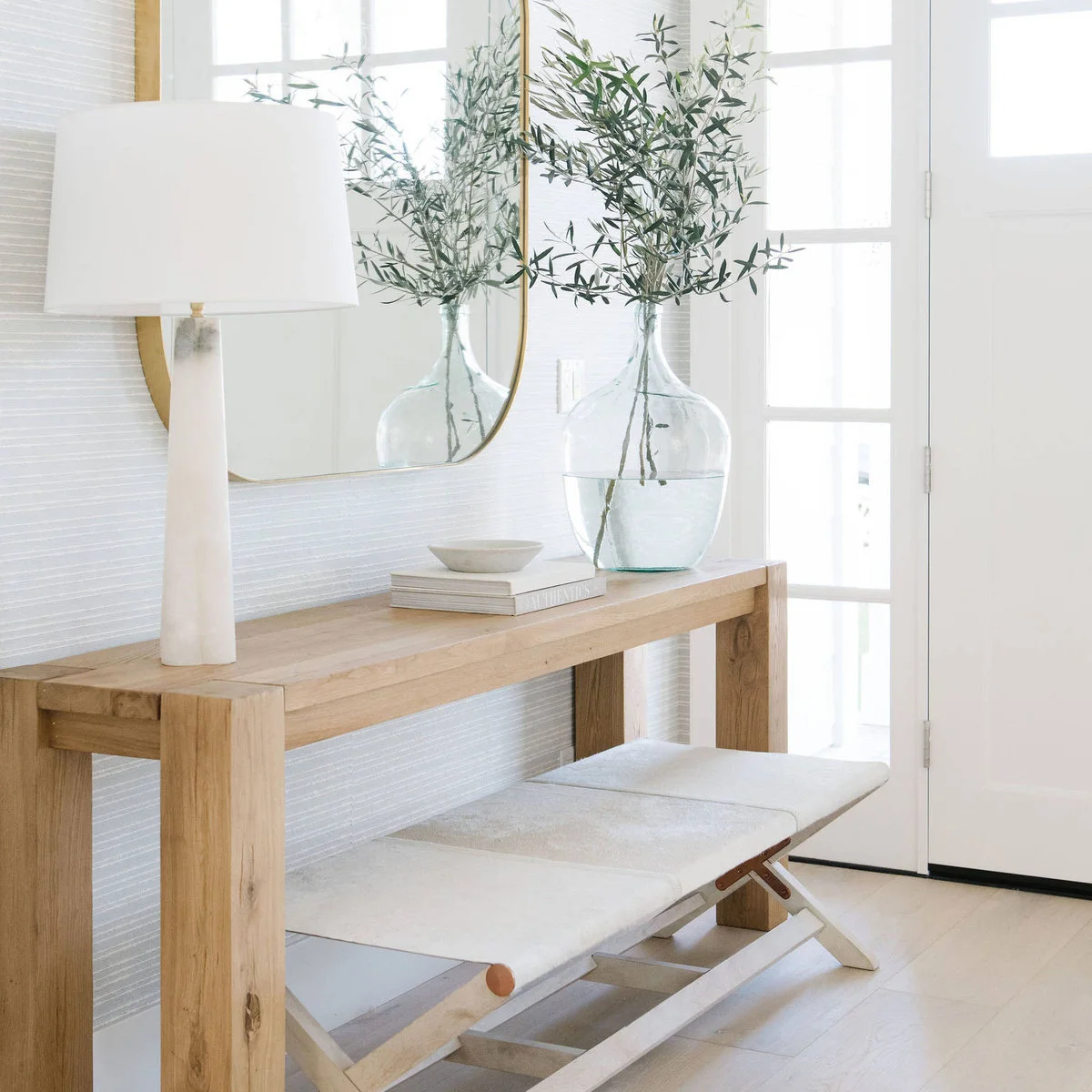
Two small seats fit beneath the wood console, keeping the open lower area useful without adding a large cabinet. The tall white lamp balances the broad vase of branches. Pale finishes connect the pieces, while the large rounded mirror repeats the softer shape of the vase above.
Confirm that the seats are suitable and stable for their intended use, not just decorative pieces of the right size. Leave room to remove them comfortably. Keep branches away from the door and protect the wood from water; a large filled vase also needs a surface designed to support its weight.
IDEA 20 / 20
Repeat a Bright Accent in the Seats Below
 SaveSupport Non AI Creator
Image credit: Project: Heather Ryder Design (via Houzz)
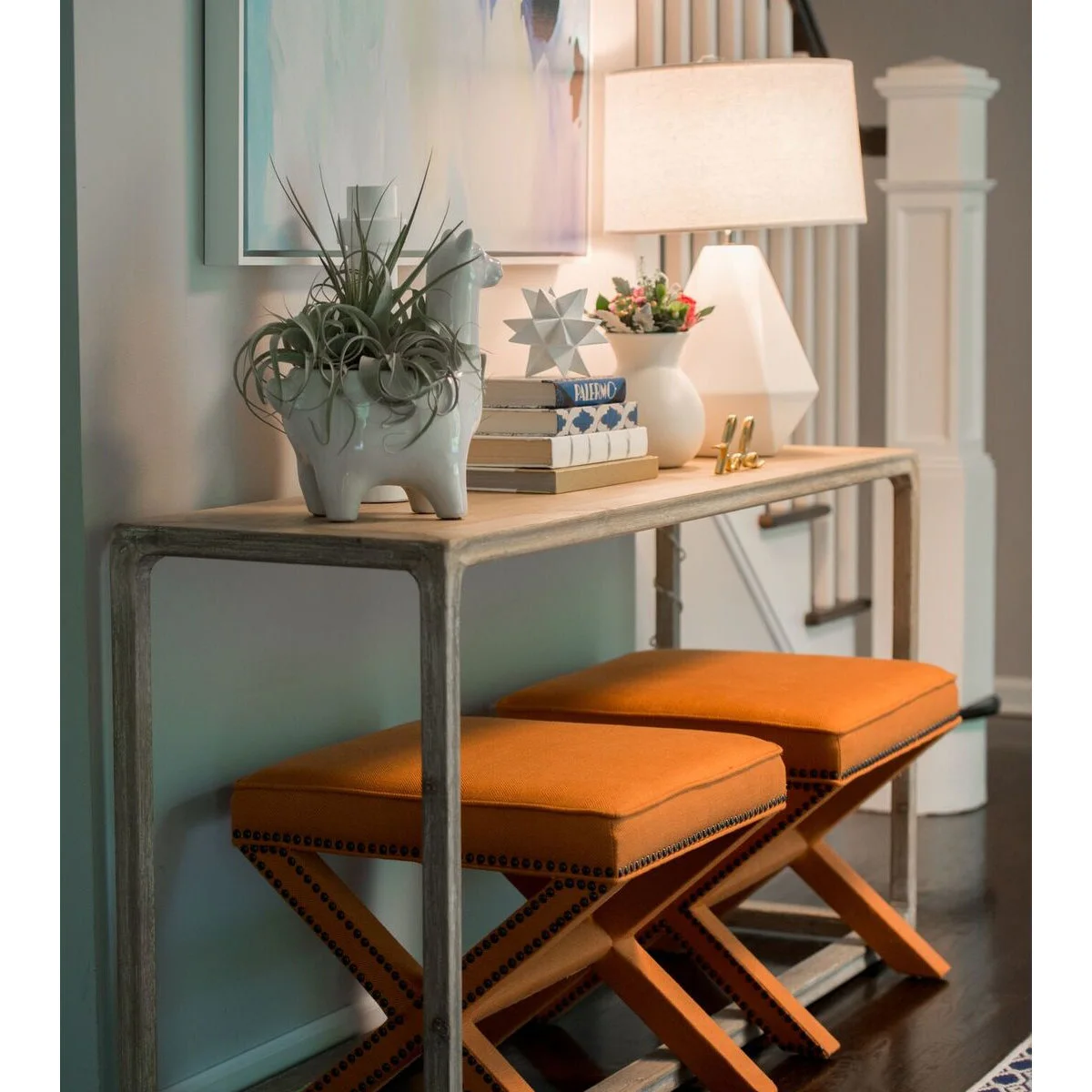
The orange seats provide a strong color at floor level, while the tabletop arrangement stays mostly pale. Books create a lower layer beneath a small geometric object, and the lamp supplies the main height. The open table frame keeps the two stools visible rather than enclosing them behind doors.
Use the bright accent where it can be enjoyed without spreading the same color through every accessory. Test that the stools fit fully and can be pulled out safely. Keep the plant container watertight, the books easy to move for cleaning and the lamp cable contained behind the console.
BRING IT ALL TOGETHER
Leave a place for the things that arrive with you
Start with a table that fits the available depth without narrowing the route through the room. Secure furniture and wall pieces as required, then choose one larger anchor such as a mirror, artwork or lamp. Add smaller objects only after that relationship feels comfortable.
Keep a usable place for keys, a bag or the items you handle every day. Contain loose objects in a tray and avoid filling the lower space with fragile pieces where people or pets will brush past. Review the arrangement in normal evening light, not only in bright daylight.