Barbie storage works best when the dolls, clothes and little accessories have different homes. A deep box that fits a toy horse may swallow every tiny shoe; a divided tray that makes shoes easy to find will not accommodate the horse. Start by sorting the collection into sizes you can actually store.
These photographed systems include Barbie collections and other fashion dolls that share similar storage needs. Choose a few ideas that suit how your household plays or collects, rather than combining every organizer. Check toy age guidance, keep small pieces away from younger children and secure storage furniture as its maker requires.
PART 01
Make favorite dolls easy to choose
IDEA 01 / 16
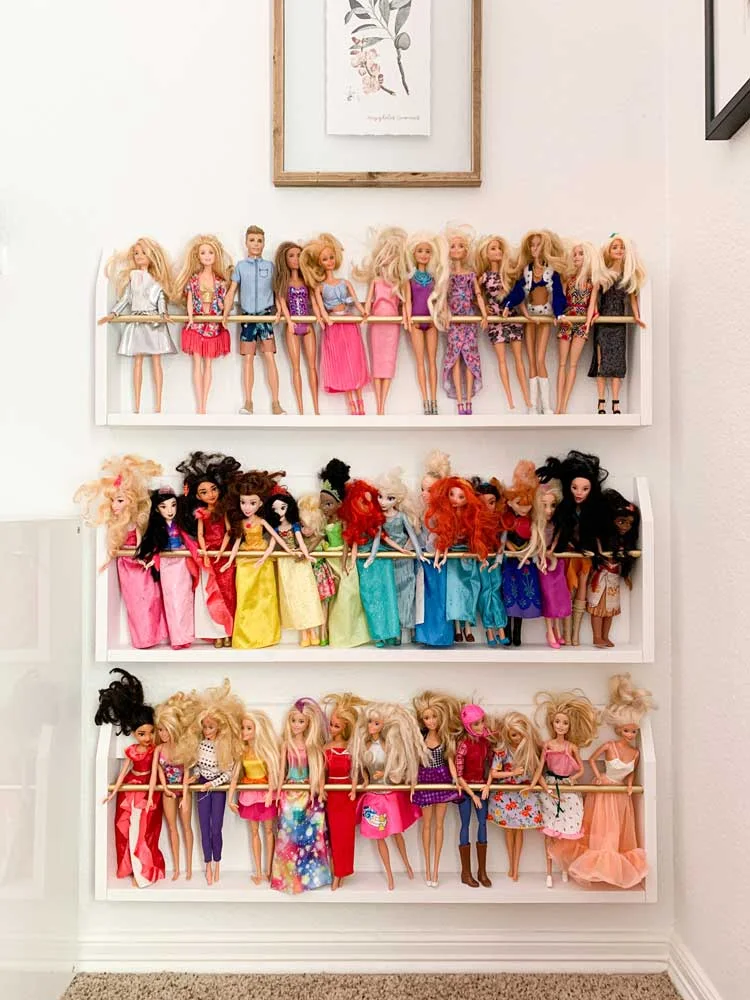
Line Up Dolls on Shallow Wall Racks
 SaveSupport Non AI Creator
Image credit: Stacy’s Savings
Three shallow white racks turn the wall into a place to choose a doll at a glance. Gold-colored bars hold the collection in rows without covering the faces or most of the outfits. Keeping the dolls upright also prevents a deep pile from hiding the favorites underneath.
Check the rack depth and the position of its retaining bar against your tallest and shortest dolls. Fix each rack for the wall type and expected load, using the maker’s instructions. Place everyday favorites within comfortable reach so the display does not encourage climbing on nearby furniture.
IDEA 02 / 16
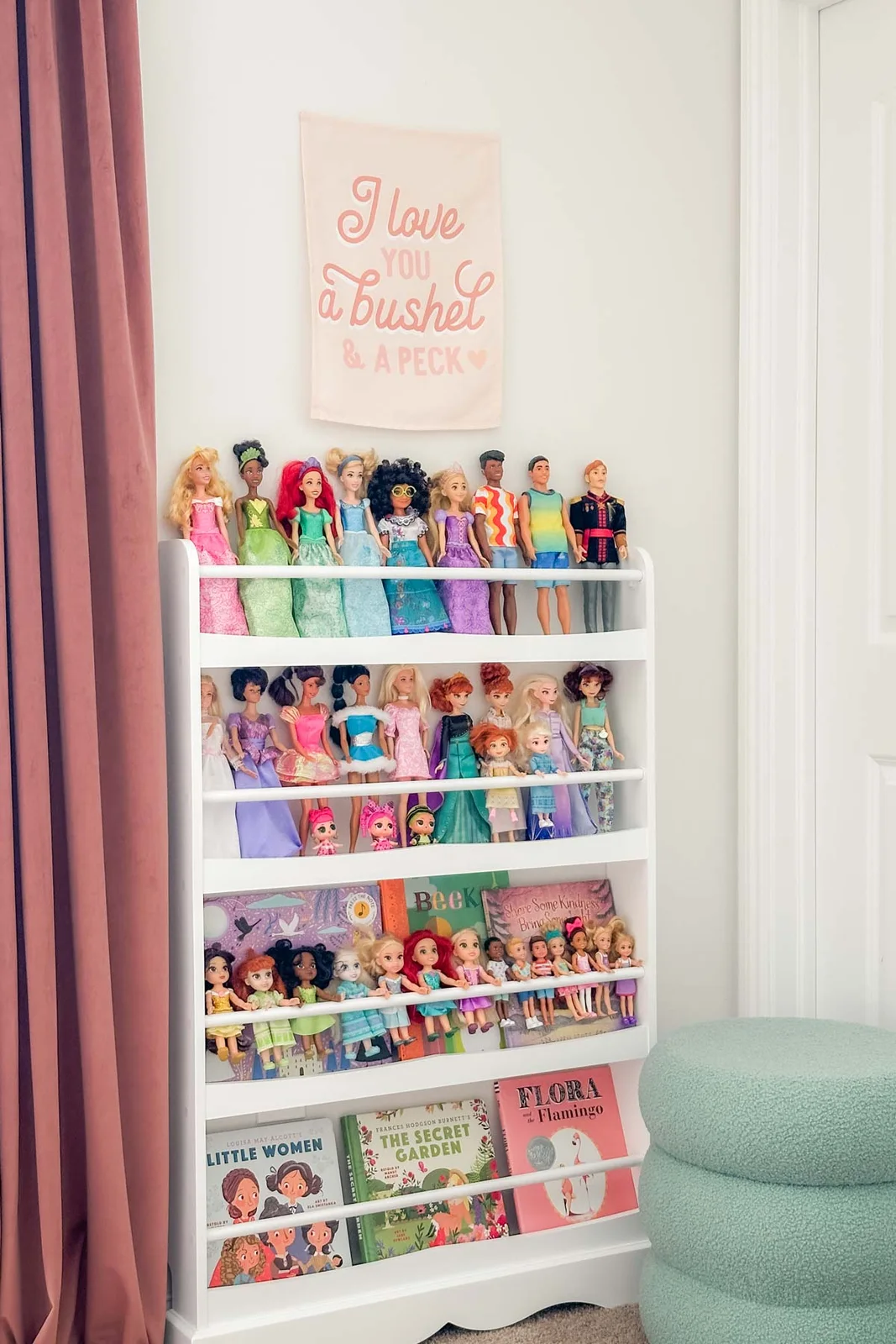
Share a Book Rack with Favorite Characters
 SaveSupport Non AI Creator
Image credit: Caitlin Marie Design
A forward-facing book rack carries dolls on its upper levels and picture books below. Smaller characters occupy another row rather than disappearing behind the taller figures. The white frame gives this mixed collection one clear home beside the soft mint ottoman and pink curtain.
Try an existing book rack before buying a dedicated doll display, provided its shelves and bars hold the toys securely. Keep enough space to remove one figure without pulling out several others. Secure the rack as required, and leave curtain fabric clear of the items children reach for. For collections beyond dolls, our kids’ toy organization ideas compare baskets, shelves and portable containers for different kinds of play.
IDEA 03 / 16
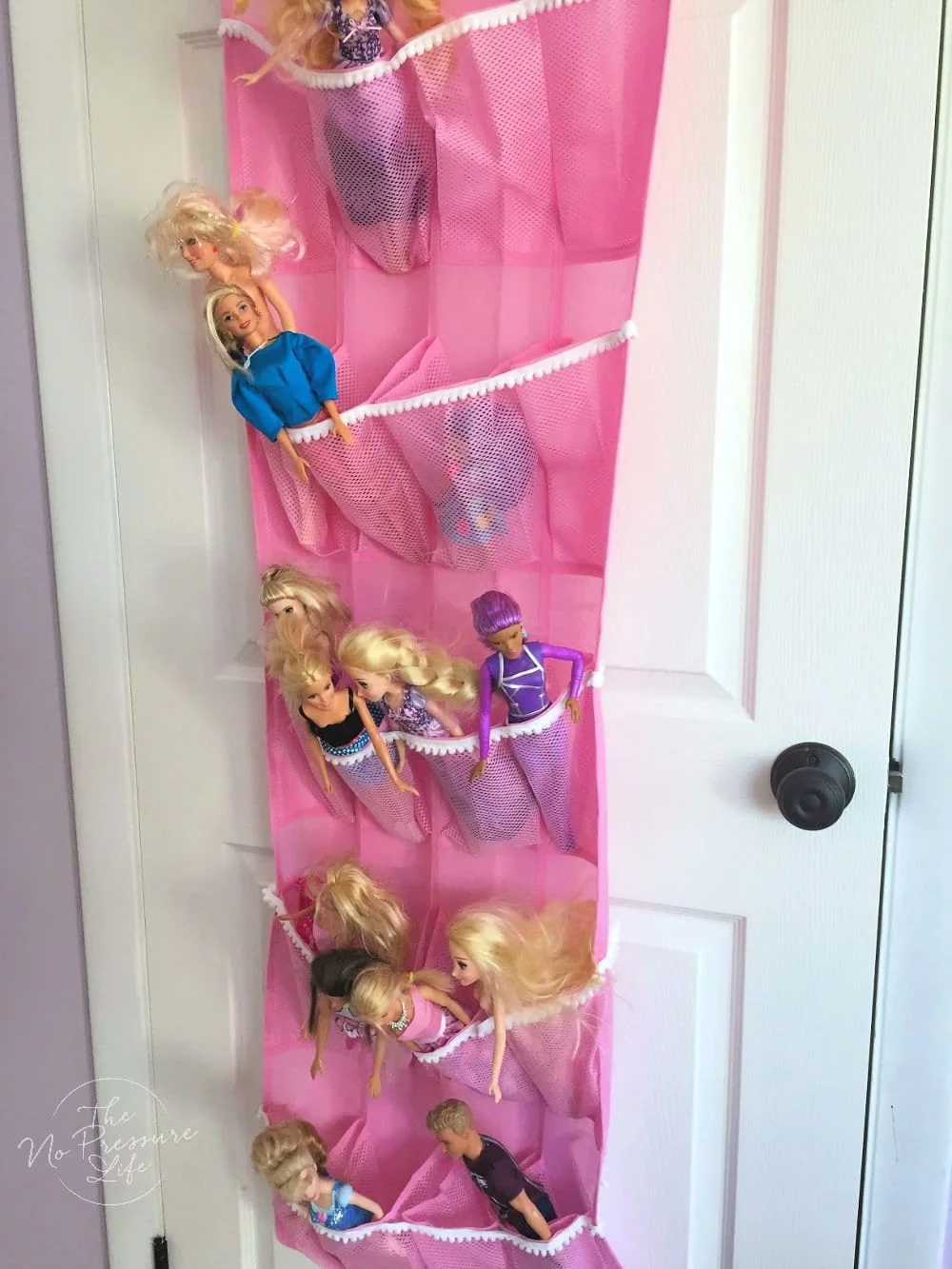
Use Door Pockets for a Small Doll Collection
 SaveSupport Non AI Creator
Image credit: The No Pressure Life
Pink mesh pockets hold a handful of dolls against a white door. Their heads remain visible above the openings, so choosing one does not mean emptying a storage box. This uses an otherwise narrow vertical surface while keeping the floor free of another piece of furniture.
In a small bedroom, check that the door still opens, closes and latches normally with the organizer attached. Use the specified mounting method and avoid overfilling pockets. Reserve reachable rows for daily play rather than expecting a child to stretch or stand on something to reach the top.
IDEA 04 / 16
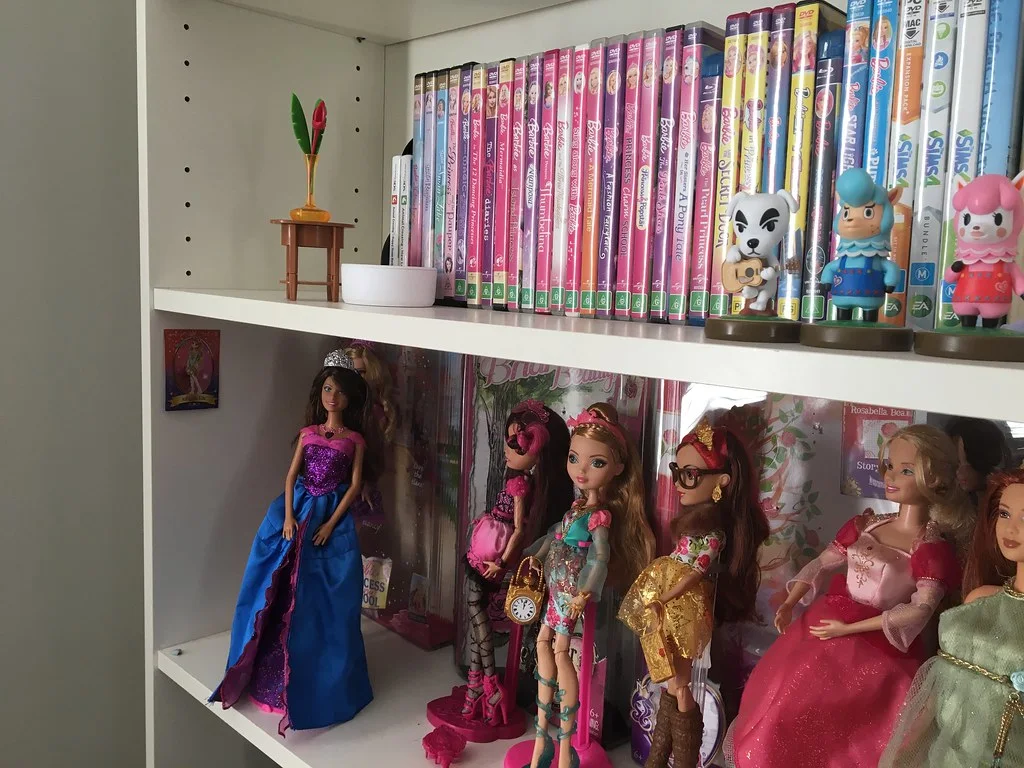
Reserve a Shelf for Dolls Kept on Display
 SaveSupport Non AI Creator
Image credit: Adventures in Barbie Collecting
Boxed dolls form a backdrop to unboxed figures on this white shelf, with a row of Barbie DVDs above. This is a collection display rather than a quick-drop play bin. The dolls and their packaging can be seen together without mixing them into clothing or accessory storage.
Separate display pieces from toys used for energetic daily play. Leave room around delicate outfits and stands, and avoid cramming boxes behind objects that must be moved regularly. Follow the furniture’s anchoring guidance, and consider light exposure and dust when choosing where a valued collection will live.
PART 02
Give clothes and accessories their own places
IDEA 05 / 16
Keep Everyday Dress-Up Pieces in One Open Bin
 SaveSupport Non AI Creator
Image credit: Caitlin Marie Design
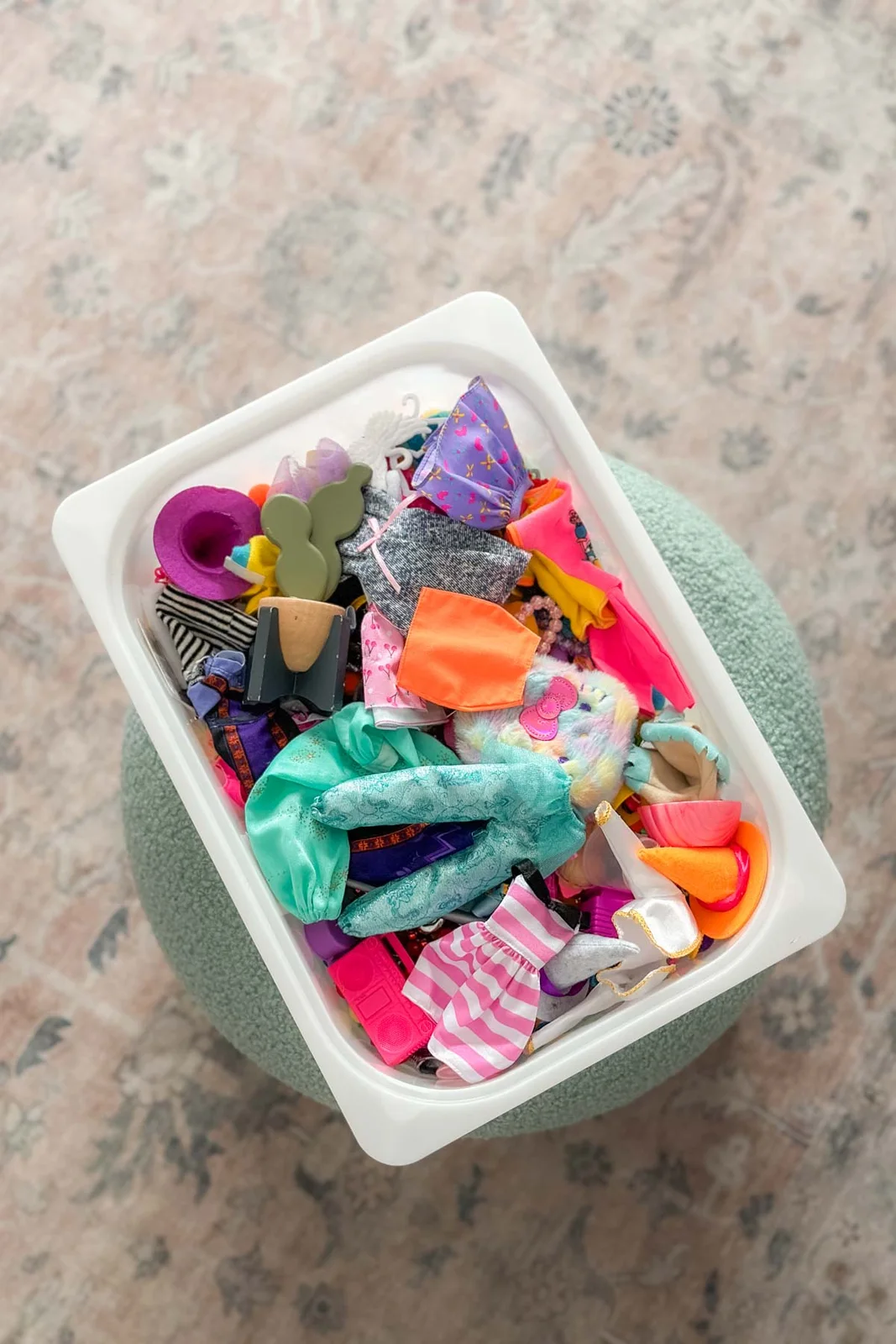
Colorful dresses, miniature hats and bags share a simple white bin. This broad category is useful for a modest dress-up collection because everything comes out together for choosing outfits. The open top makes returning loose fabric pieces straightforward without needing to fold them into tiny compartments.
Keep the bin shallow enough to search without spilling the whole collection. Move shoes and other very small items into a separate container if they become difficult to find beneath the clothes. A single dress-up bin works best when it holds a manageable selection rather than every accessory ever collected.
IDEA 06 / 16
Divide a Clothing Bin with Removable Inserts
 SaveSupport Non AI Creator
Image credit: Adventures in Barbie Collecting
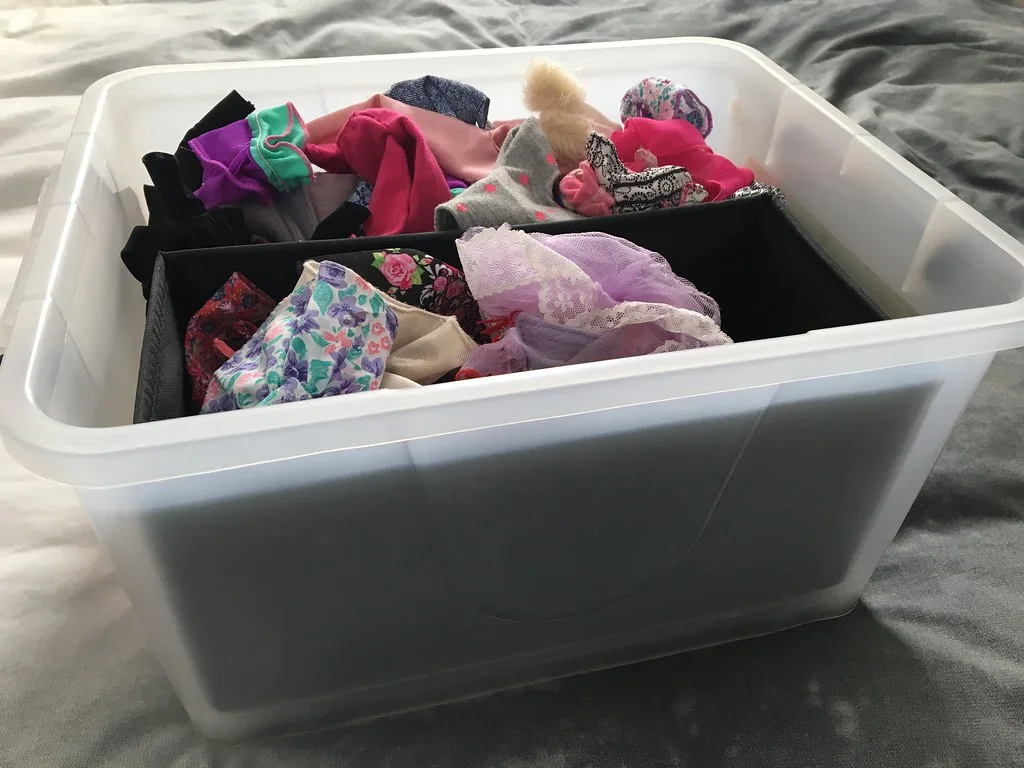
Black rectangular inserts split this clear tub into smaller clothing sections. Soft doll outfits remain in a broad container, but the dividers stop the entire wardrobe from becoming one tangled pile. The contrast between the dark inserts and colorful fabric also makes the individual sections easier to identify.
Choose inserts that sit flat and can be lifted out without catching ribbons or straps. Sort by categories that are useful to the person playing, such as tops and dresses, rather than a complicated catalog. Leave a little space above each section so the lid can close without crushing trim.
IDEA 07 / 16
Give Tiny Shoes and Bags Shallow Compartments
 SaveSupport Non AI Creator
Image credit: Adventures in Barbie Collecting
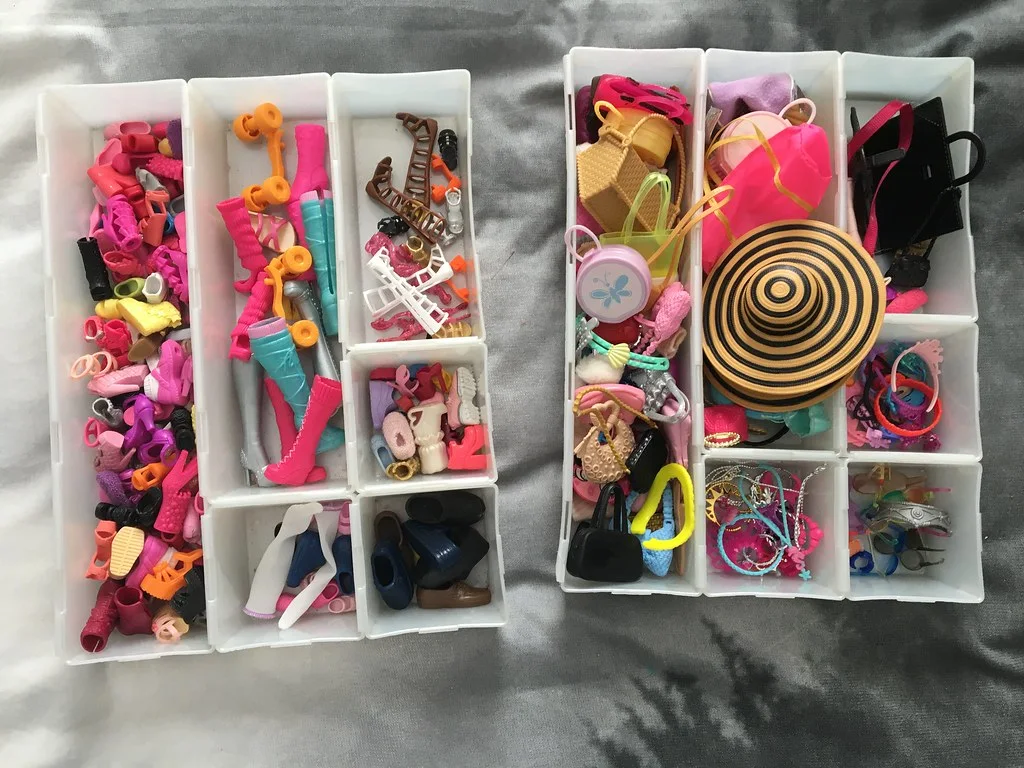
Two white trays separate shoes and boots from bags, hats and jewelry. Long compartments suit taller boots, while shorter sections contain small accessories that would vanish in a deep box. Seeing the contents from above makes it easier to find a matching pair or a particular bag.
Test compartment lengths with the actual accessories before buying a tray. A favorite hat may need more room than several pairs of shoes combined. Keep the tray level when carrying it, and store it where younger children cannot access the small parts; the dividers do not make those pieces age-appropriate.
IDEA 08 / 16
Use a Lidded Divider Box for Outfit Groups
 SaveSupport Non AI Creator
Image credit: Adventures in Barbie Collecting
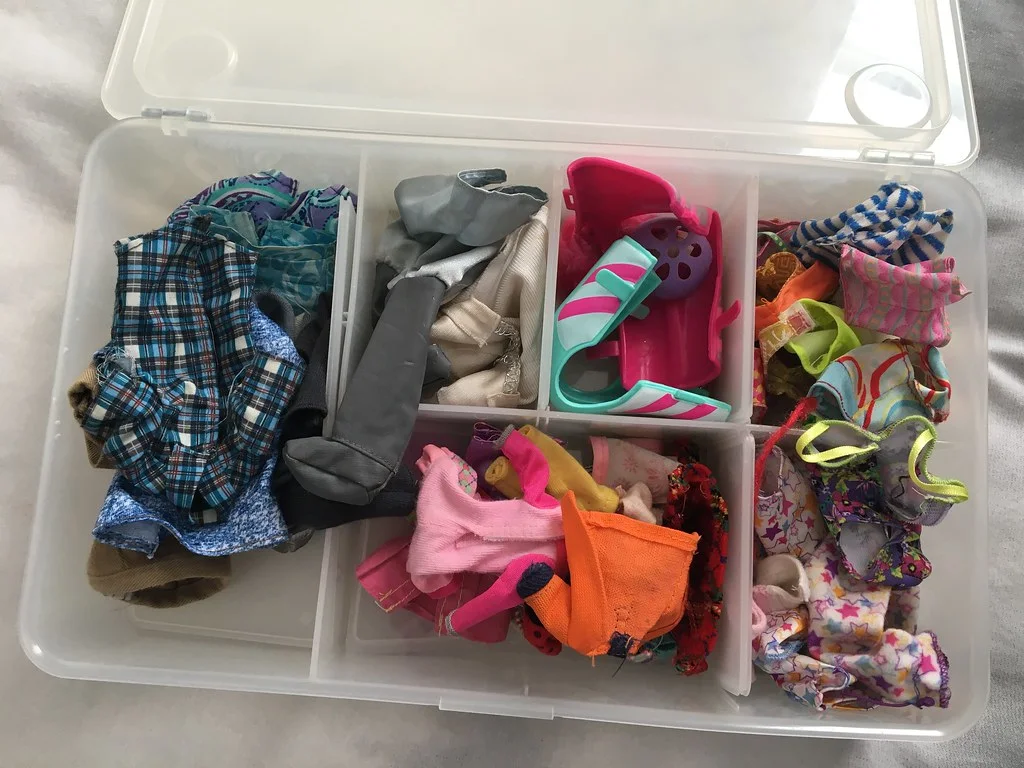
The open lid reveals separate sections for different groups of clothing and accessories. Long fabric pieces have a larger compartment, while smaller garments occupy the right-hand sections. Unlike an open tray, this arrangement can close when play finishes, provided nothing protrudes above the dividers.
Use only a few clothing groups and adjust the dividers as the wardrobe changes. Check the hinges and latch are comfortable for the intended user. Do not force a lid down over fabric or thin plastic accessories; reduce the contents or move bulky outfits into a deeper clothing bin.
PART 03
Pack small collections for easy cleanup
IDEA 09 / 16
Pack a Fold-Out Case for Visits
 SaveSupport Non AI Creator
Image credit: Caitlin Marie Design
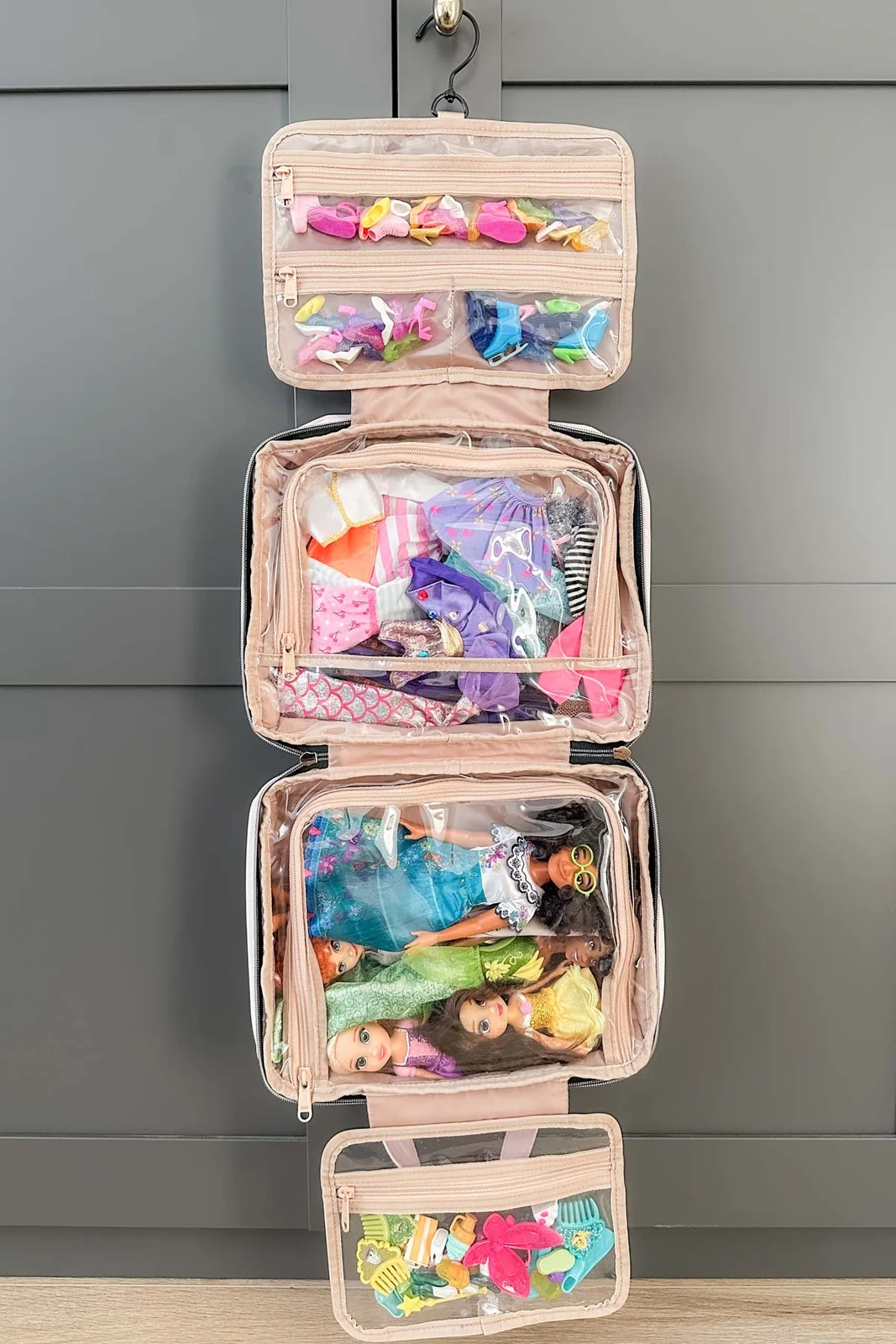
A pink fold-out case gives shoes, clothes, dolls and brushes separate clear-fronted sections. The small pieces occupy the narrow zipped pockets, while the dolls sit in a larger compartment below the clothes. When open, the whole play kit can be understood without tipping it onto the floor.
Limit the travel selection to what the case holds comfortably and check that all zips close without catching hair. Count favorite pieces before leaving and again when packing up. Hanging storage should use a suitable hook; at a friend’s home, laying the case flat may be the simpler option.
IDEA 10 / 16
Slide a Shallow Doll Bin beneath the Bed
 SaveSupport Non AI Creator
Image credit: Caitlin Marie Design
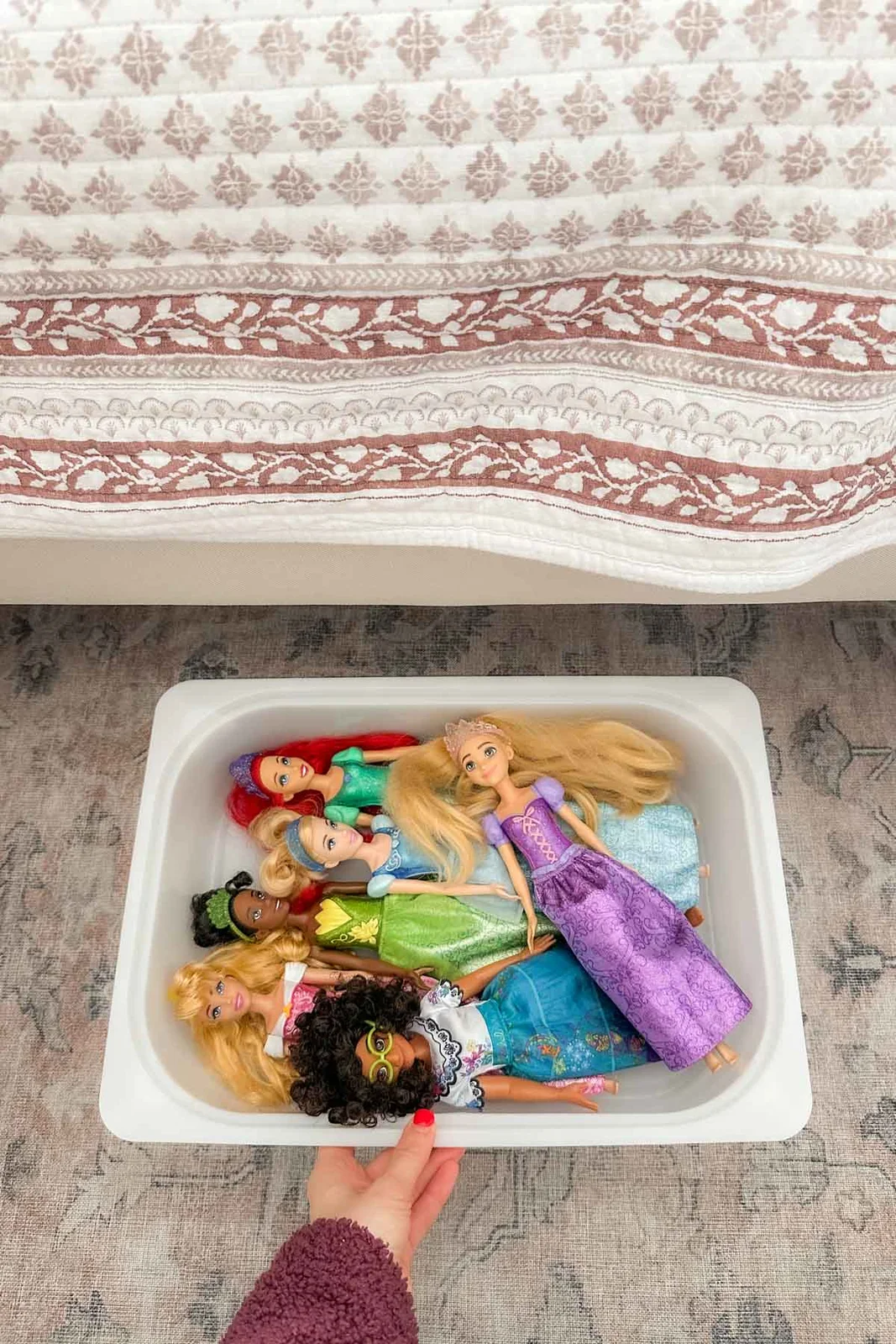
A shallow white bin holds several dressed dolls beside the bed. The broad footprint lets them lie across the container instead of being pushed upright into a narrow box. Under-bed storage makes a small play collection available without requiring an additional cabinet along the wall.
Measure the available gap with the bedding in place, whether you have a standard bed or a daybed. Check that the bin slides freely and can be pulled out without catching fingers or hair. Keep its contents light enough for the person using it, and clean underneath the bed regularly.
IDEA 11 / 16
Zip Loose Clothes into a Labeled Pouch
 SaveSupport Non AI Creator
Image credit: Arin Solange
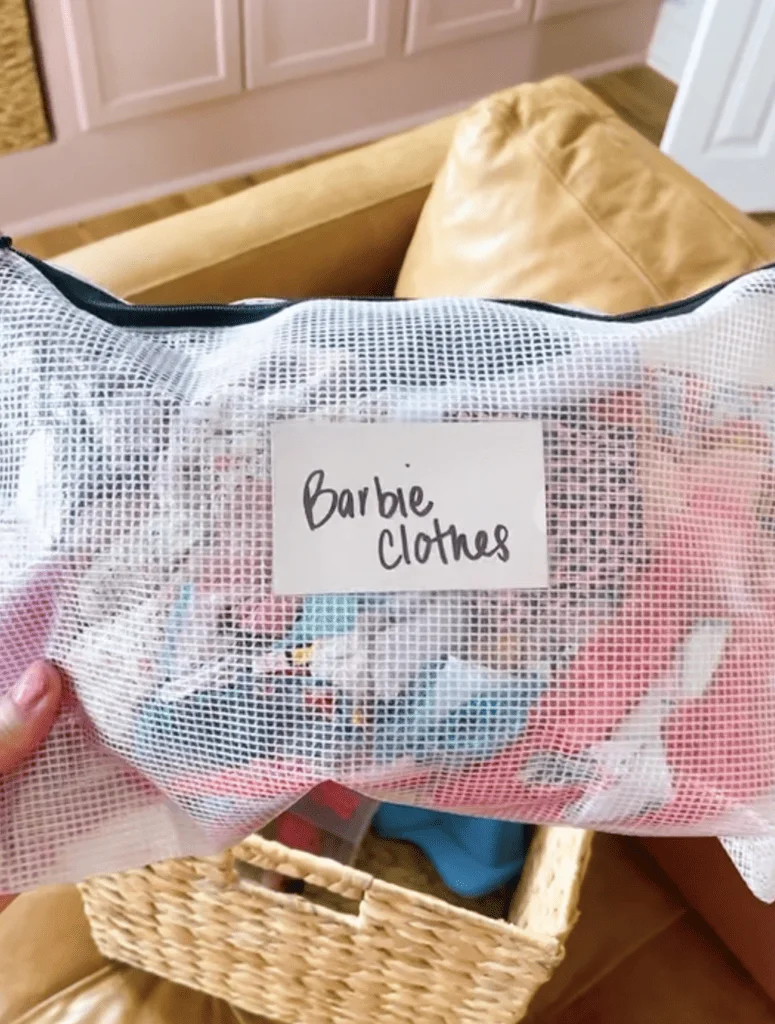
A handwritten label identifies this mesh pouch as the home for Barbie clothes. The translucent sides reveal the colorful fabric while the zip keeps loose garments together. This works as a removable category inside a larger basket or drawer, rather than another container that needs its own shelf.
Choose a pouch large enough to search through without pushing the zip against seams or decorative trim. Use a clear label or a simple picture that the user recognizes. Keep this as clothing storage rather than mixing in hard accessories that could snag fabric or disappear between folded pieces.
IDEA 12 / 16
Open a Craft Box into a Portable Play Station
 SaveSupport Non AI Creator
Image credit: The No Pressure Life
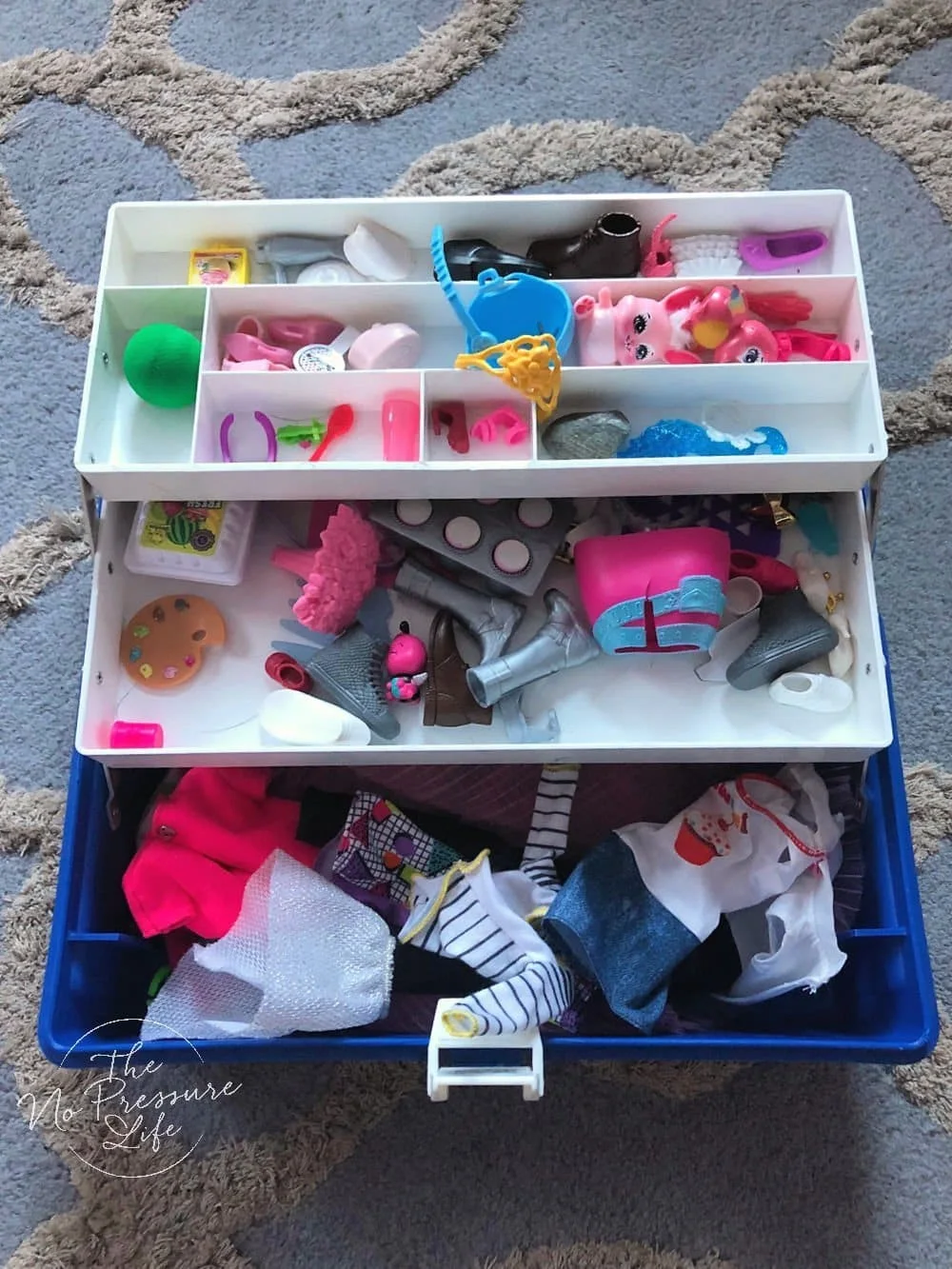
White trays unfold above the base of this blue storage box. The upper compartments hold small accessories, while clothes occupy the deeper bottom section. Opening the case gives several storage levels at once, so a modest collection can travel to the play area in a single container.
Check the moving joints and latches before choosing a box for a child, and place it on a stable surface before opening the trays. Keep heavier items in the base. Leave room to close the sections smoothly rather than forcing delicate accessories into spaces that are too shallow.
PART 04
Organize larger pieces and growing collections
IDEA 13 / 16
Choose a Narrow Drawer Cart for Mixed Sizes
 SaveSupport Non AI Creator
Image credit: Arin Solange
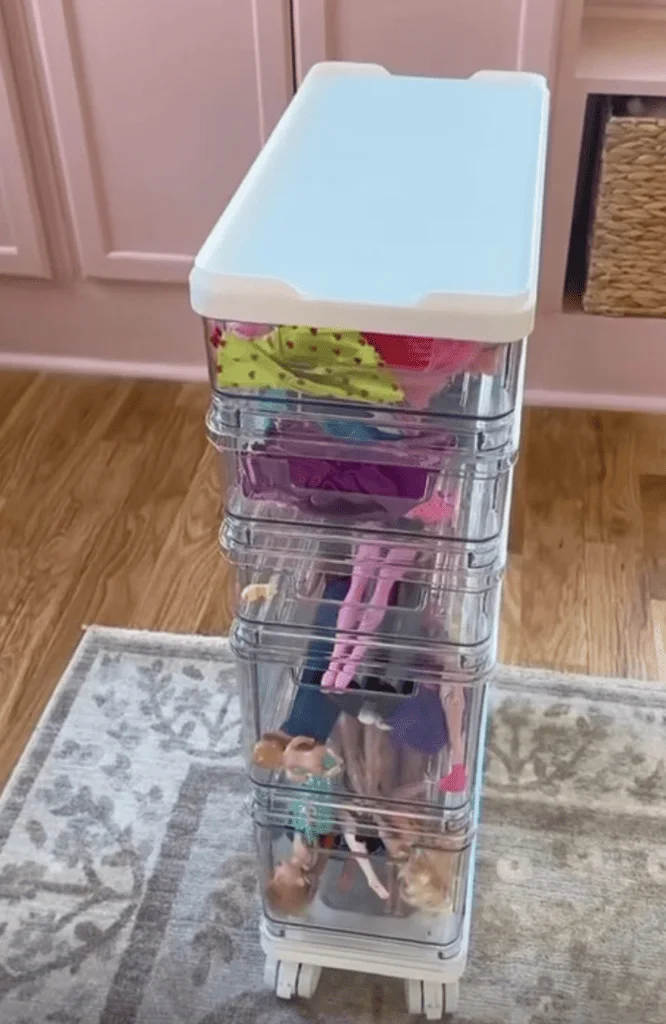
The narrow cart combines shallow upper drawers with deeper compartments below. Small furniture and accessories occupy the upper levels, while dolls fit in the larger lower drawers. Clear fronts let the user see where things belong without opening every drawer in search of one item.
Check internal dimensions rather than judging storage by its outer height. A slim cart may suit a small collection but still be too narrow for larger dolls or furniture. Follow its load and stability instructions, keep heavier contents low, and park it where opened drawers do not block a walkway.
IDEA 14 / 16
Label Drawers beside the Dollhouse
 SaveSupport Non AI Creator
Image credit: The No Pressure Life
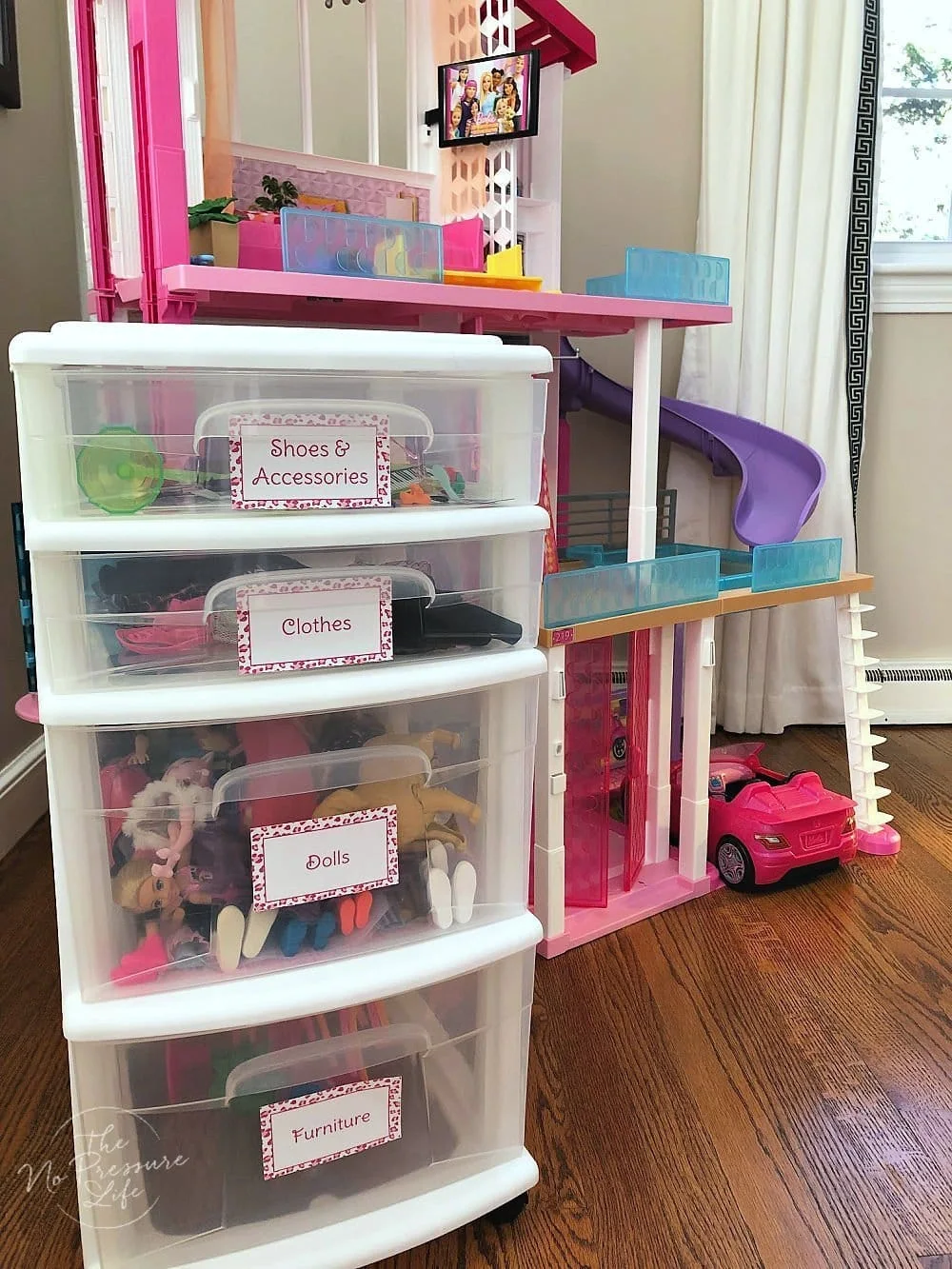
Four labeled drawers stand next to the pink dollhouse, separating shoes and accessories, clothes, dolls and furniture. The larger lower drawers suit the bulkier categories. Keeping storage beside the play setting reduces the distance between using a piece and returning it to the right place.
Apply the same principle to other playroom storage: use labels that describe the contents and match drawer size to the category. Leave space in front for drawers to open and close fully. Secure or stabilize the unit as directed, and keep the house’s play area clear of open drawers.
IDEA 15 / 16
Save a Broad Bin for Horses and Bulky Furniture
 SaveSupport Non AI Creator
Image credit: The No Pressure Life
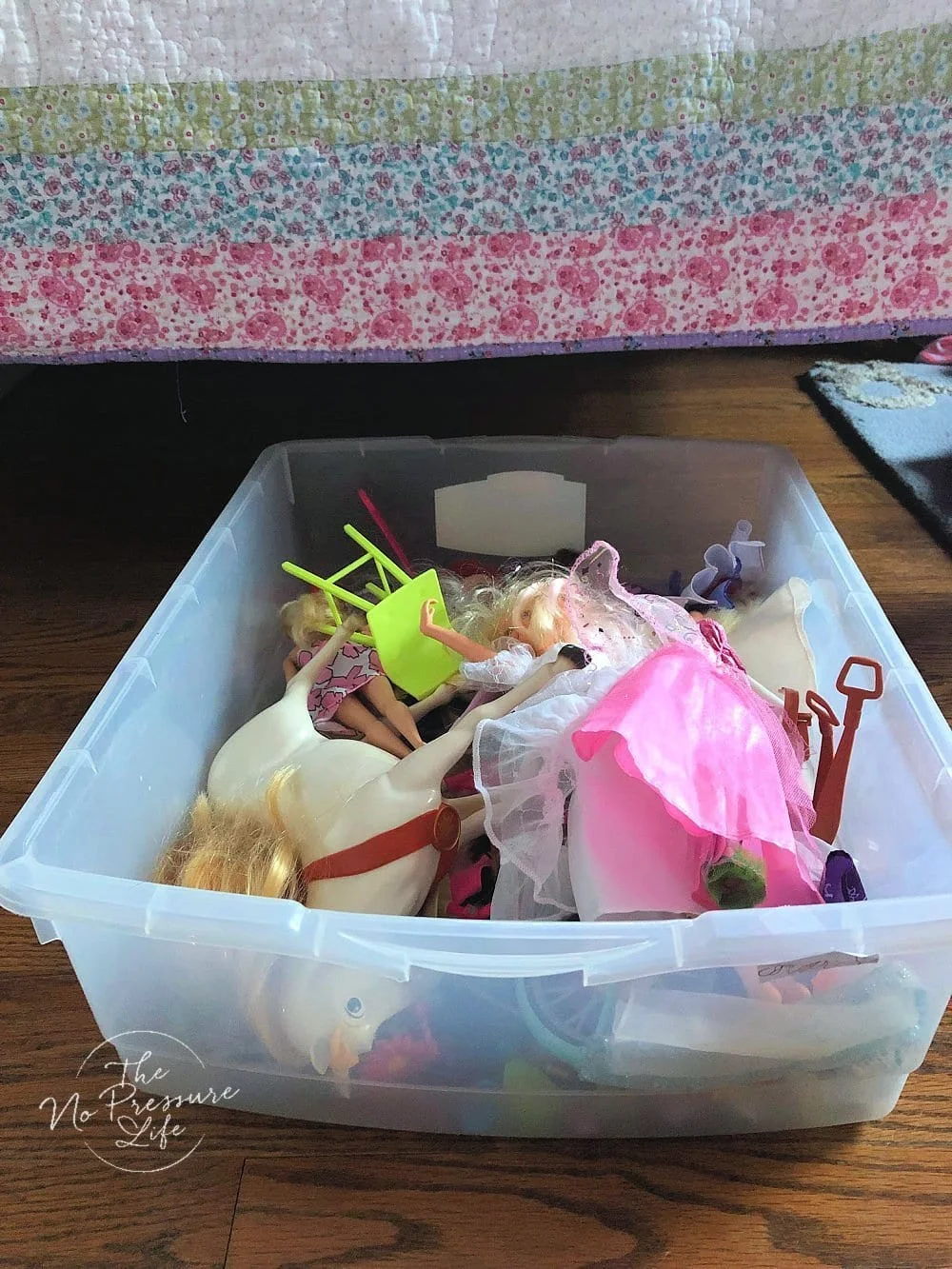
Toy horses and larger furniture occupy a broad clear bin beneath the bed edge. These awkward shapes need a different container from tiny shoes or folded clothing. The clear sides help reveal the contents, although the mixed pieces show why a generous footprint is more useful than extra height.
Lift out bulky toys before searching for anything underneath, and avoid forcing fragile legs or furniture parts under the rim. Keep small accessories in their own tray so they do not collect at the bottom. A separate doll bin may also help if hair repeatedly catches on the larger pieces.
IDEA 16 / 16
Sort a Large Wardrobe into Visible Drawers
 SaveSupport Non AI Creator
Image credit: Kreate Blog
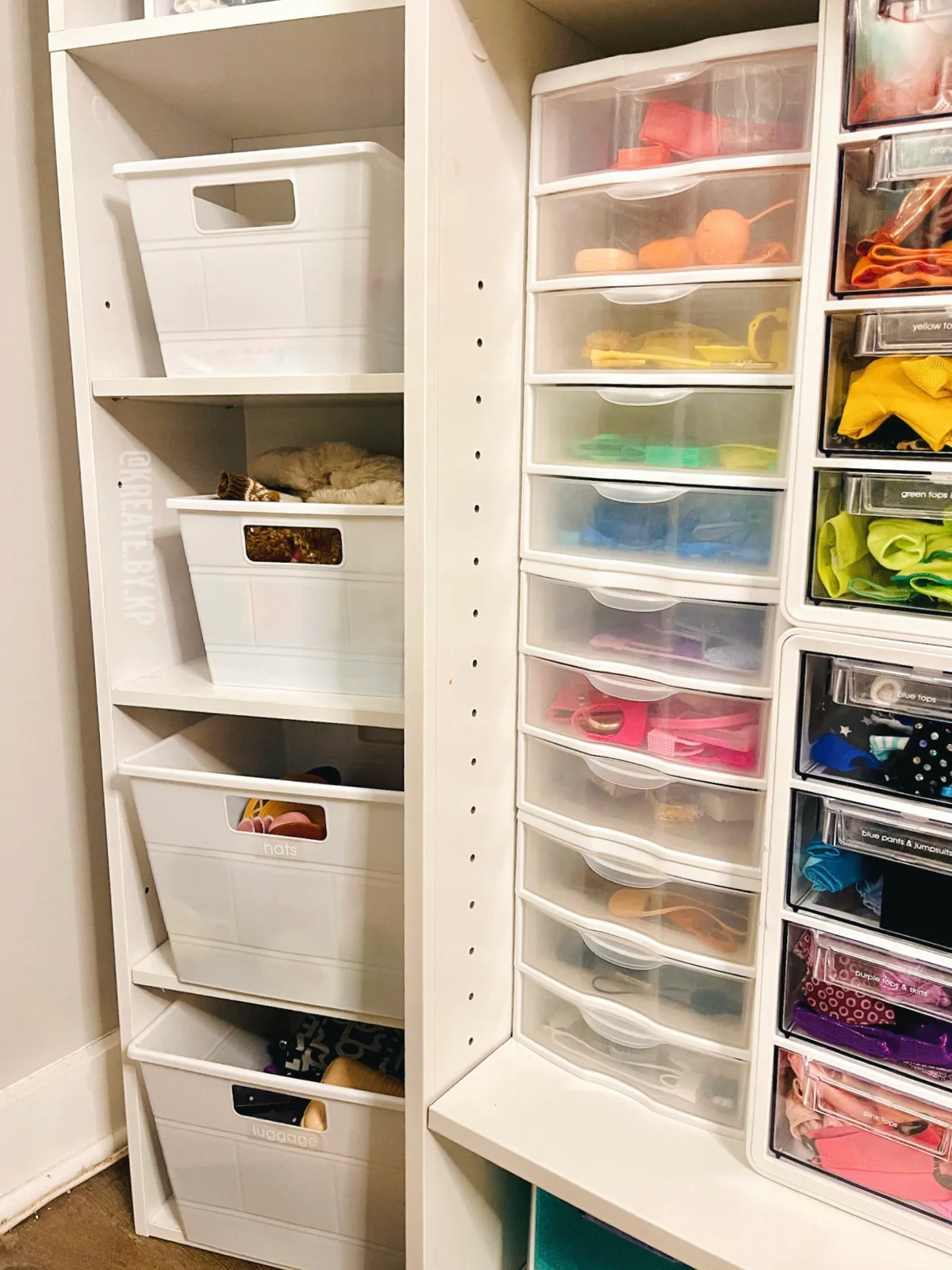
This larger collection uses white bins for hats and luggage beside many shallow drawers of clothing and accessories. Color groups make the small wardrobe easy to scan, while larger items have their own broader containers. The shelving holds the organizers together rather than scattering individual boxes around the room.
Use detailed sorting only when the size of the collection justifies the upkeep. Measure shelf openings, drawer clearance and the largest accessories before adding units. Keep frequently used categories within reach, anchor furniture as required and leave some spare capacity so a new outfit does not immediately undo the system.
BRING IT ALL TOGETHER
Build the system around the pieces you already own
Sort the toys before buying storage. Check the longest doll, bulkiest vehicle and smallest accessories against the compartments you are considering. Use a shallow container for things that disappear at the bottom, and reserve broad bins for objects that genuinely need that space.
Try the arrangement through several play sessions. If cleanup requires an adult to fold every dress or balance every doll, simplify the categories. Leave a little spare capacity, clean organizers according to their instructions and review broken or outgrown pieces before adding another tower of drawers.