A Scandi-inspired playroom starts with furniture children can use and a floor they can actually play on. Pale walls, simple wood shapes and straightforward storage create a flexible base. Toys, books and children’s artwork can provide plenty of color without a fixed decorative theme.
These photographs include dedicated playrooms and smaller activity corners within shared rooms. Look at how storage, seats and tables fit together before copying a palette. Keep furniture securely installed, choose age-appropriate supplies and leave a clear route through the space as projects grow and change.
PART 01
Start With Useful, Reachable Storage
IDEA 01 / 20
Start With a Child-Size Table and Reachable Storage
 SaveSupport Non AI Creator
Source: Regan Wood Photography via Houzz
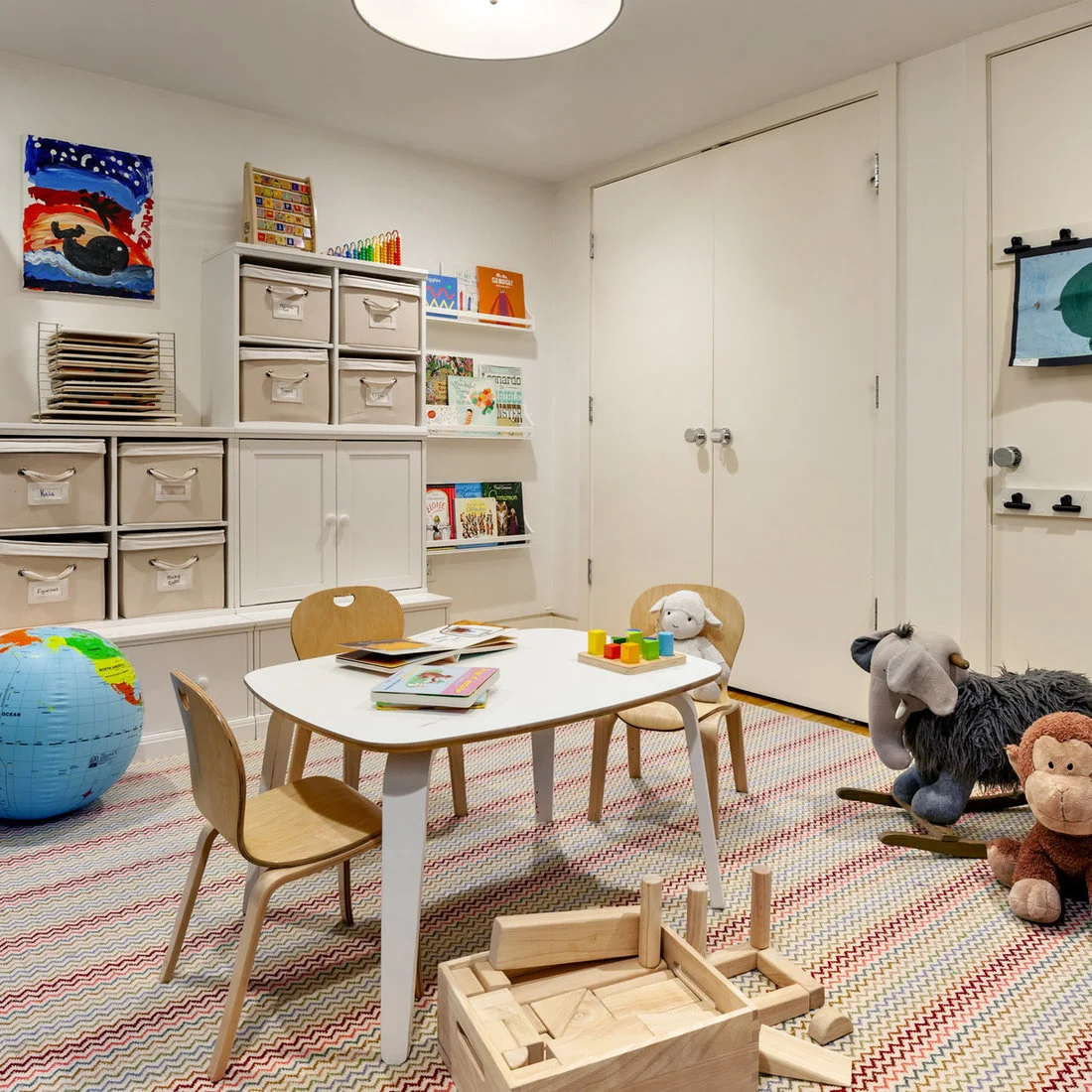
The small table and curved wood chairs give this white room a clear working center. Fabric bins organize the perimeter, while narrow book ledges show the covers. Color comes mainly from toys, artwork and the rug, leaving the larger furniture simple enough to use as interests change.
Choose the chair and table together so feet and forearms can rest comfortably during drawing or puzzles. Use pictures alongside labels when children cannot yet read. Secure storage according to its instructions, and keep the floor route clear when a building project spreads beyond the table. For fashion dolls and their smaller accessories, Barbie storage ideas offer more specific sorting options than a general toy bin.
IDEA 02 / 20
Make a Low Storage Run Do Double Duty
 SaveSupport Non AI Creator
Image credit: Photo: Dylan Chandler. From: m monroe design
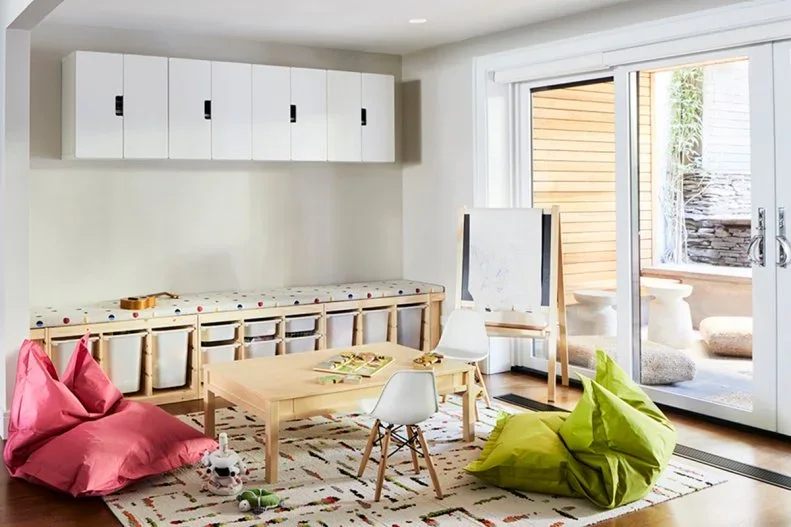
A long cushioned top turns the low toy storage into extra seating, while higher white cupboards hold the less accessible supplies. The small wood table stays separate from the bench. Bright beanbags add movable floor seats without changing the otherwise pale walls, cabinet fronts and open center.
Match bin weight to the child who will carry it rather than filling each container to capacity. High cupboards are for adult access; they should not encourage climbing. Leave enough space beside the table for a seated child and a clear route to the garden doors.
IDEA 03 / 20
Use One Dark Wall to Frame Simple White Furniture
 SaveSupport Non AI Creator
Source: Regan Wood Photography via Houzz
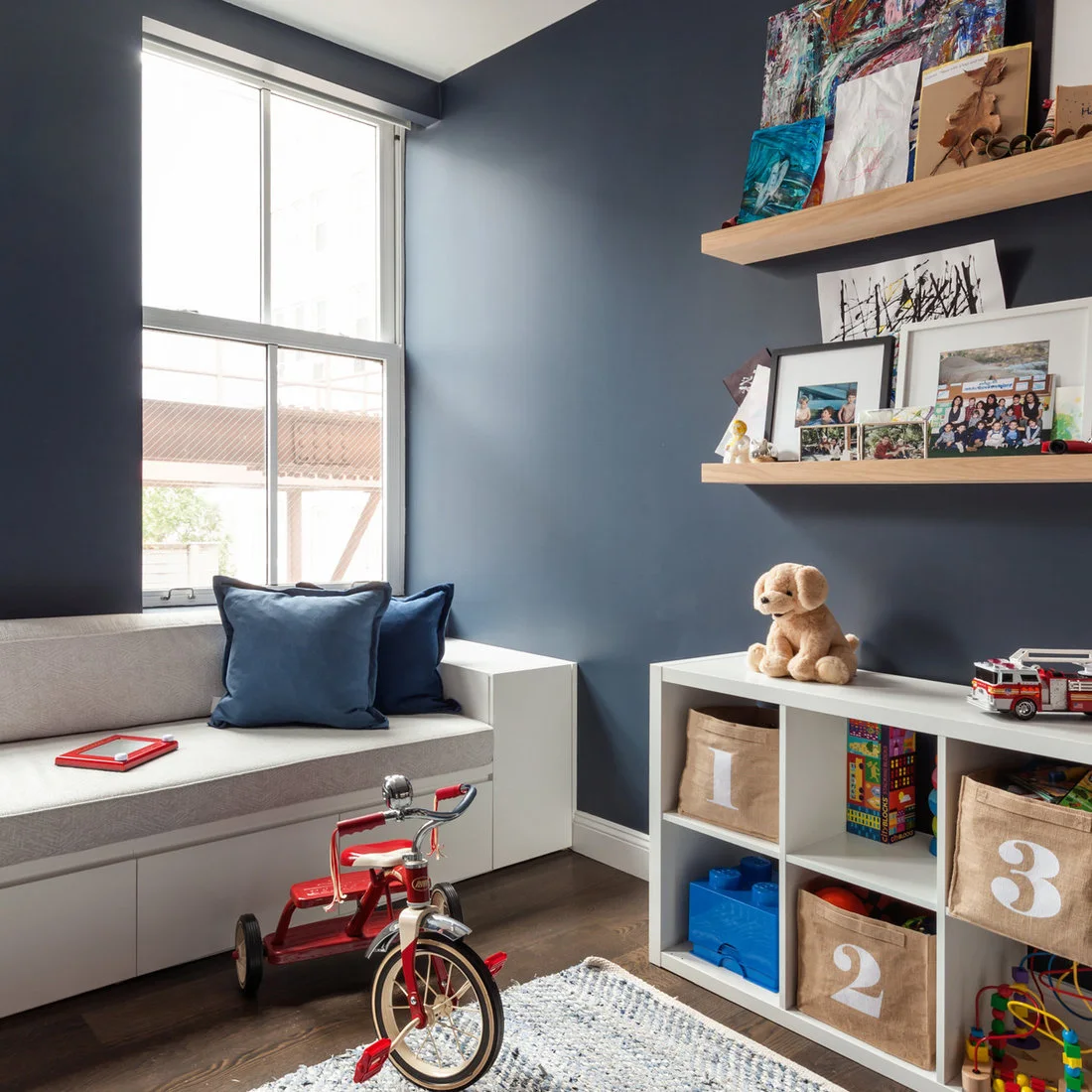
The blue walls provide contrast around plain white storage and a gray window seat. Numbered bins give each group of toys an identifiable home, while wood ledges hold pictures above. The red tricycle supplies a strong accent without needing another large area of bright paint.
Numbers work best when everyone knows which category belongs in each bin; add a small picture if that is more useful. Keep ride-on toys parked away from the walking route. Window seating also needs a review of window stops, blind cords and nearby climbing opportunities before regular use.
IDEA 04 / 20
Turn a Cabinet Door Into a Drawing Surface
 SaveSupport Non AI Creator
Image credit: Photo: Rebecca Zajac. From: Rebecca Zajac
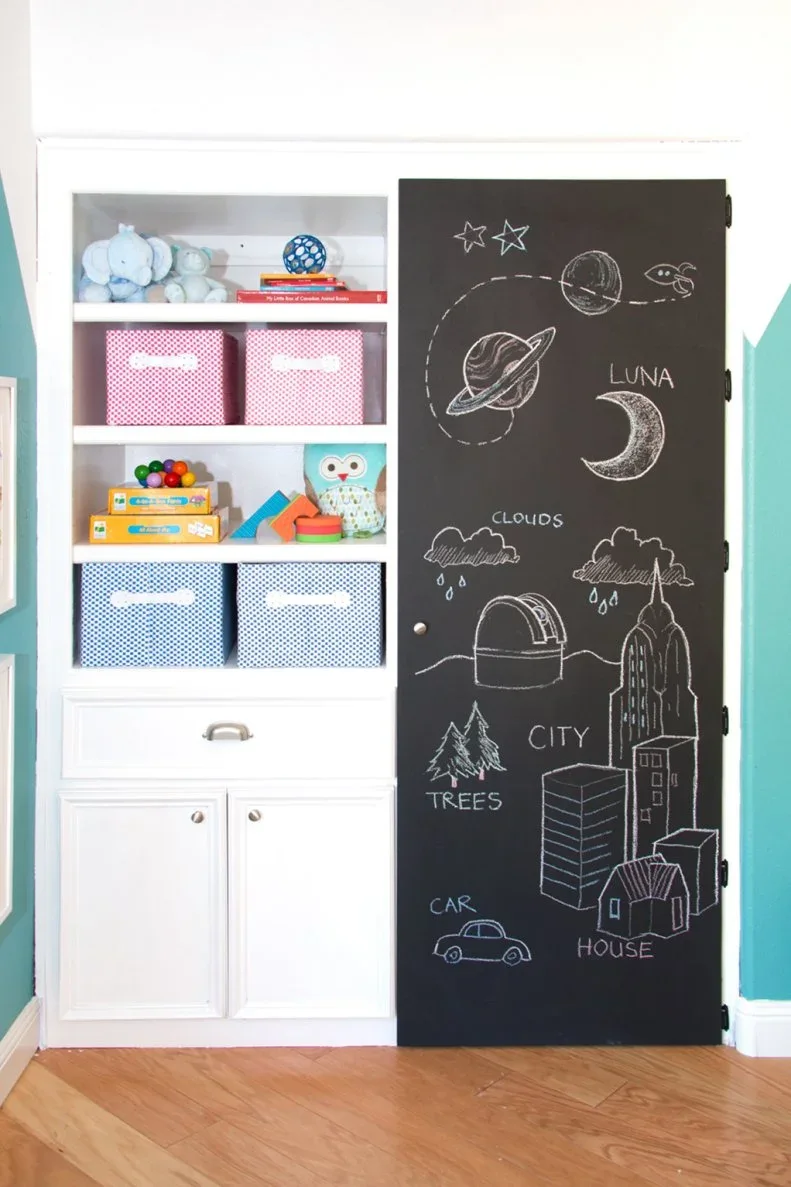
The black drawing door gives a white storage wall an active purpose. Open shelves keep selected toys visible, while patterned bins collect smaller pieces. Closed lower doors hide the remaining supplies, so the whole wall does not depend on arranging every toy attractively after each play session.
Check that the chosen coating suits the door surface and allow its full curing time before use. Place chalk and cleaning cloths within appropriate supervised reach. Keep hinges and handles easy to operate, and show children how to draw without pushing or leaning on an open door.
IDEA 05 / 20
Give Reading Its Own Bright Corner
 SaveSupport Non AI Creator
Source: Smart Playrooms via Houzz
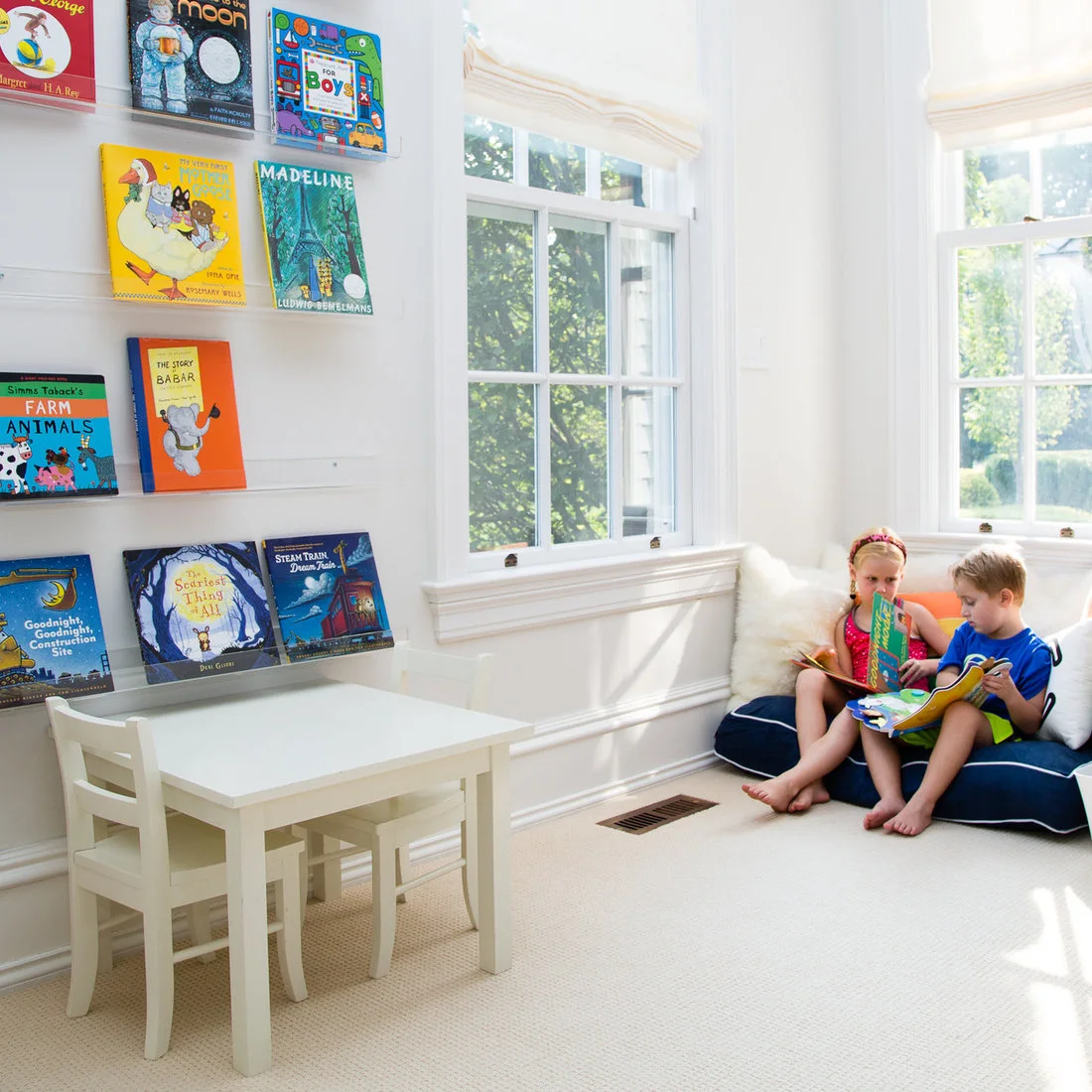
The blue floor cushions provide a reading place beside the windows, away from the small white table. Face-out ledges make the book covers easy to browse. White walls and furniture allow the books to supply color, keeping the corner lively without adding unrelated decorations.
Put the most frequently chosen books on the lowest ledges, with heavier volumes supported securely. Check cushion covers for washing instructions and keep floor vents open. Position reading seats away from accessible blind cords, and provide a separate light for evenings rather than relying only on the windows.
PART 02
Give Different Activities a Practical Place
IDEA 06 / 20
Use an Alcove Without Blocking the Hall
 SaveSupport Non AI Creator
Image credit: Photo: StudiObuell | Garett Buell
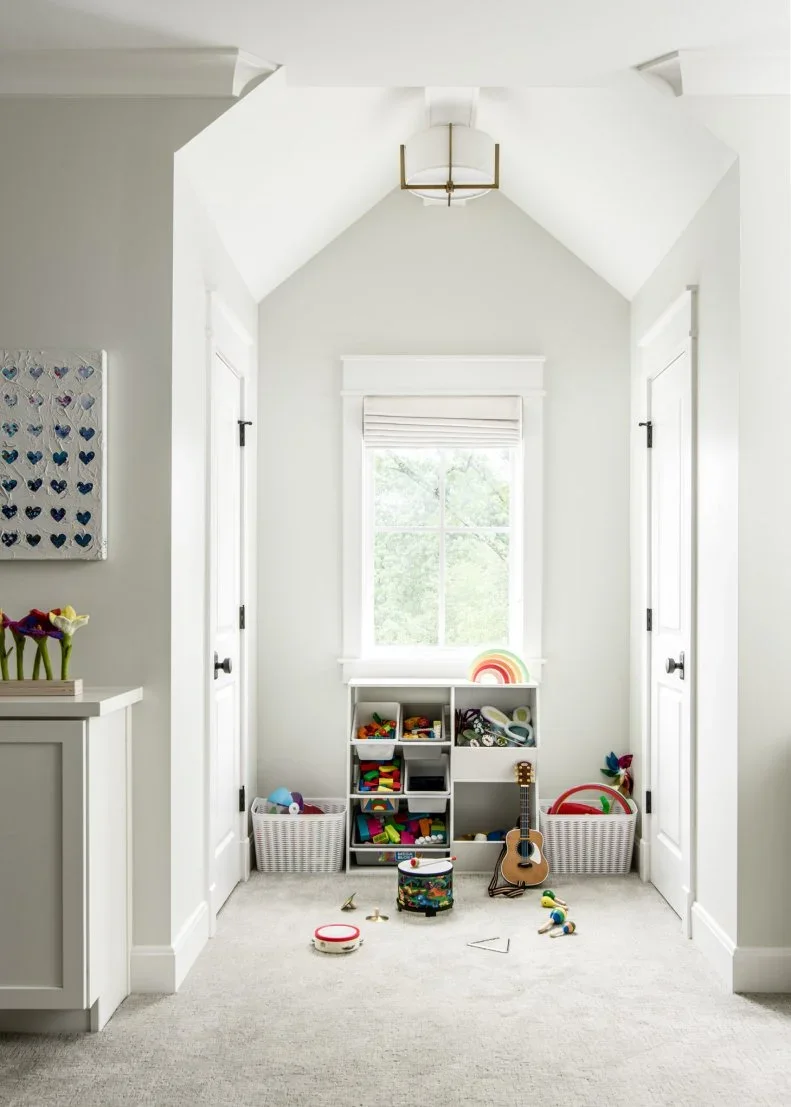
The low shelf fits beneath the window without taking over the white alcove. Baskets hold larger pieces at either side, while small toys occupy separate compartments. The sloping ceiling remains plain, allowing this modest area to feel like a useful play stop rather than a crowded storage overflow.
A shared passage needs a reliable clear route between its doors, even when toys are out. Choose a limited collection that can be put away quickly and store the rest elsewhere. Avoid tall stacks beneath the window, and check that opened doors will not strike furniture or seated children.
IDEA 07 / 20
Frame a Quiet Bench With Toy Shelves
 SaveSupport Non AI Creator
Image credit: Photo: Rebecca Zajac. From: Rebecca Zajac
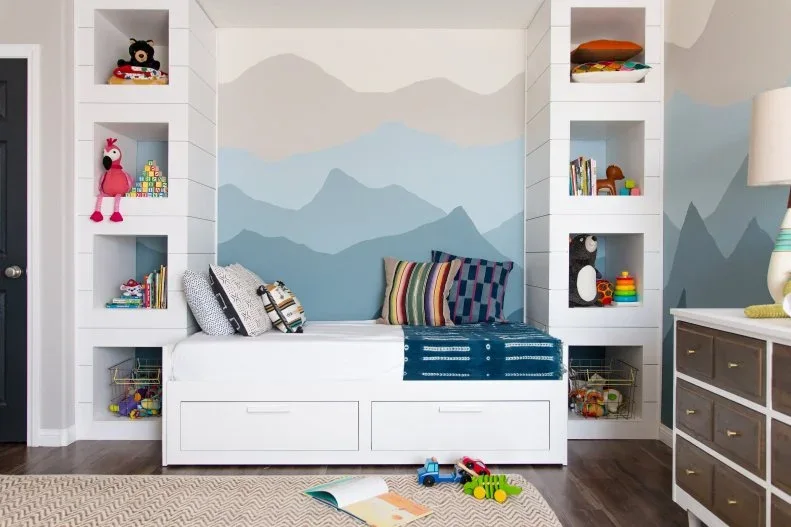
A low bench makes the middle of this storage wall useful for sitting as well as putting toys away. The pale mountain shapes soften the white cabinetry without adding objects to the floor. Open shelves provide distinct spaces for books and larger toys on either side.
Keep the bench usable by limiting cushions and leaving room to sit beside a child. Check drawer operation for trapped fingers and follow anchoring instructions for the surrounding units. A simple painted backdrop can carry the theme while toys change; the furniture need not be replaced to match every interest.
IDEA 08 / 20
Fit a Small Craft Table Against a Bench
 SaveSupport Non AI Creator
Source: Studio LW via Houzz
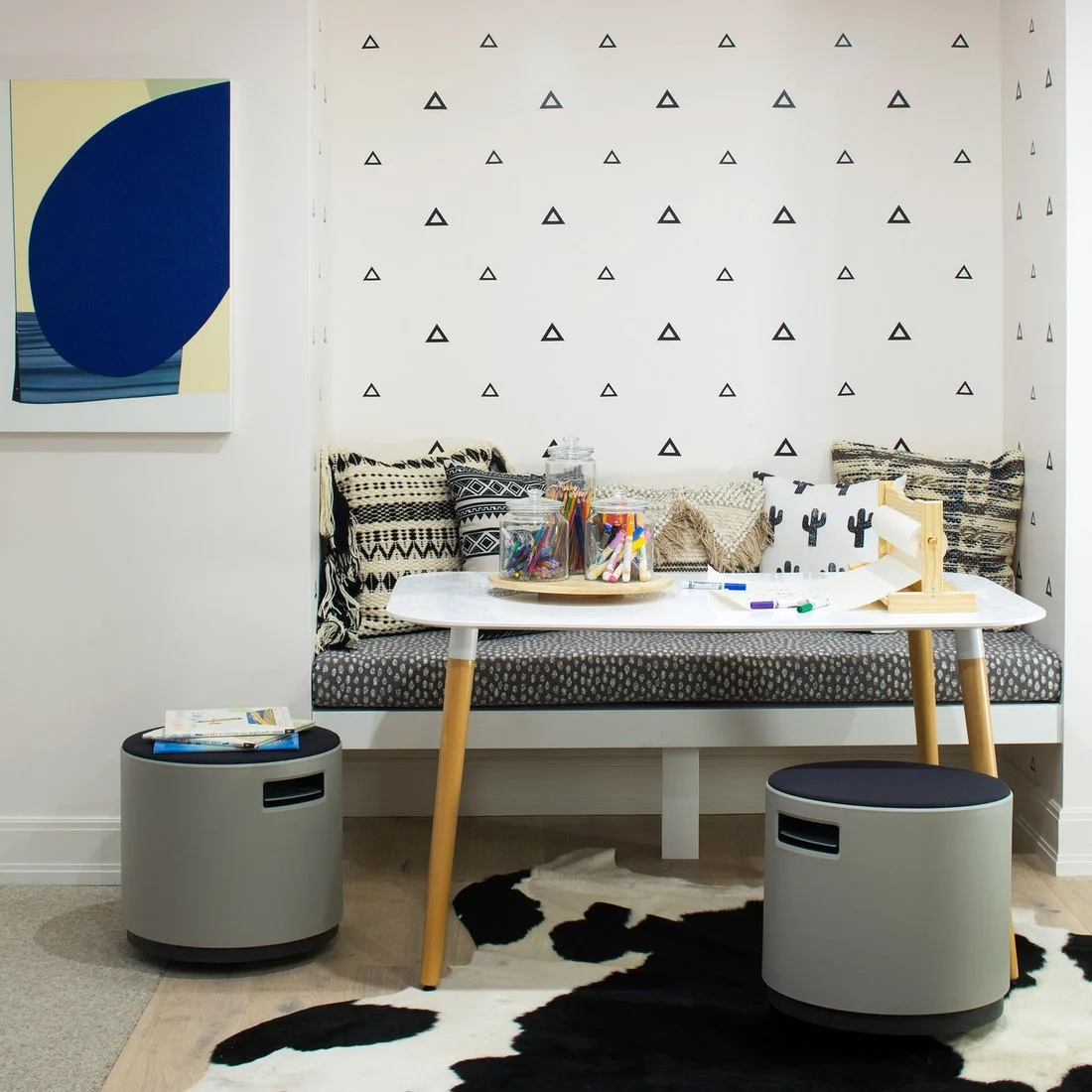
The bench uses the wall edge for seating, leaving the small table accessible from the room. Gray stools provide additional seats and storage, while a paper roll marks the table as a making space. Fine triangle motifs give the white wall a pattern without competing with the colorful supplies.
Check the table and bench heights together before fixing either in place. Keep scissors, small craft pieces and other age-sensitive materials in adult-controlled storage. Use stable, unbreakable supply containers where needed, and protect the surface with a removable mat that can be cleared when the table has another purpose.
IDEA 09 / 20
Put Building and Drawing Tools on the Wall
 SaveSupport Non AI Creator
Image credit: Photo: Denise Davies Smart D2 Playrooms. From: D2 Interieurs
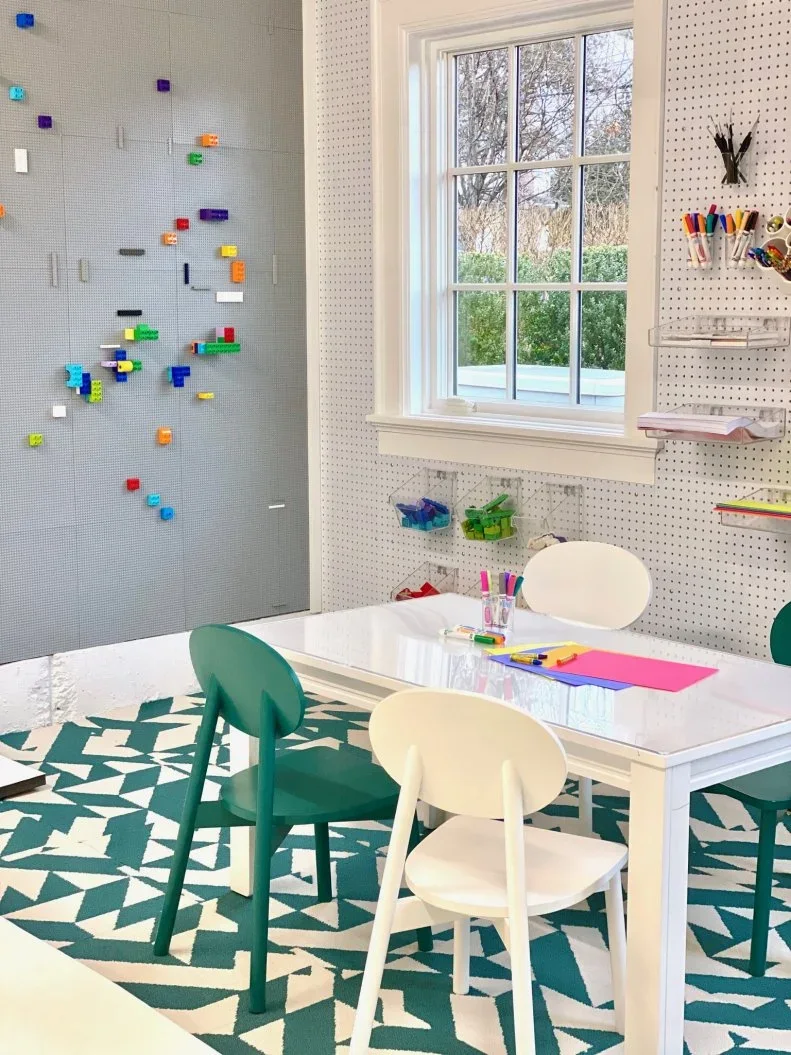
Vertical storage puts the making tools beside the table instead of covering its surface. The gray block wall provides a separate building area, while clear containers show where loose pieces belong. Green chairs and the rug repeat one color against the white furniture and pegboard.
Check wall fixings and the weight rating of every shelf, cup and hook before loading the system. Keep sharp tools and small parts appropriate to the children using the room. Our small home office ideas offer other compact work-surface arrangements, but use child-appropriate furniture heights for this setting.
IDEA 10 / 20
Keep Movable Worktables Clear of the Main Route
 SaveSupport Non AI Creator
Source: Fabrikate Mini! via Houzz
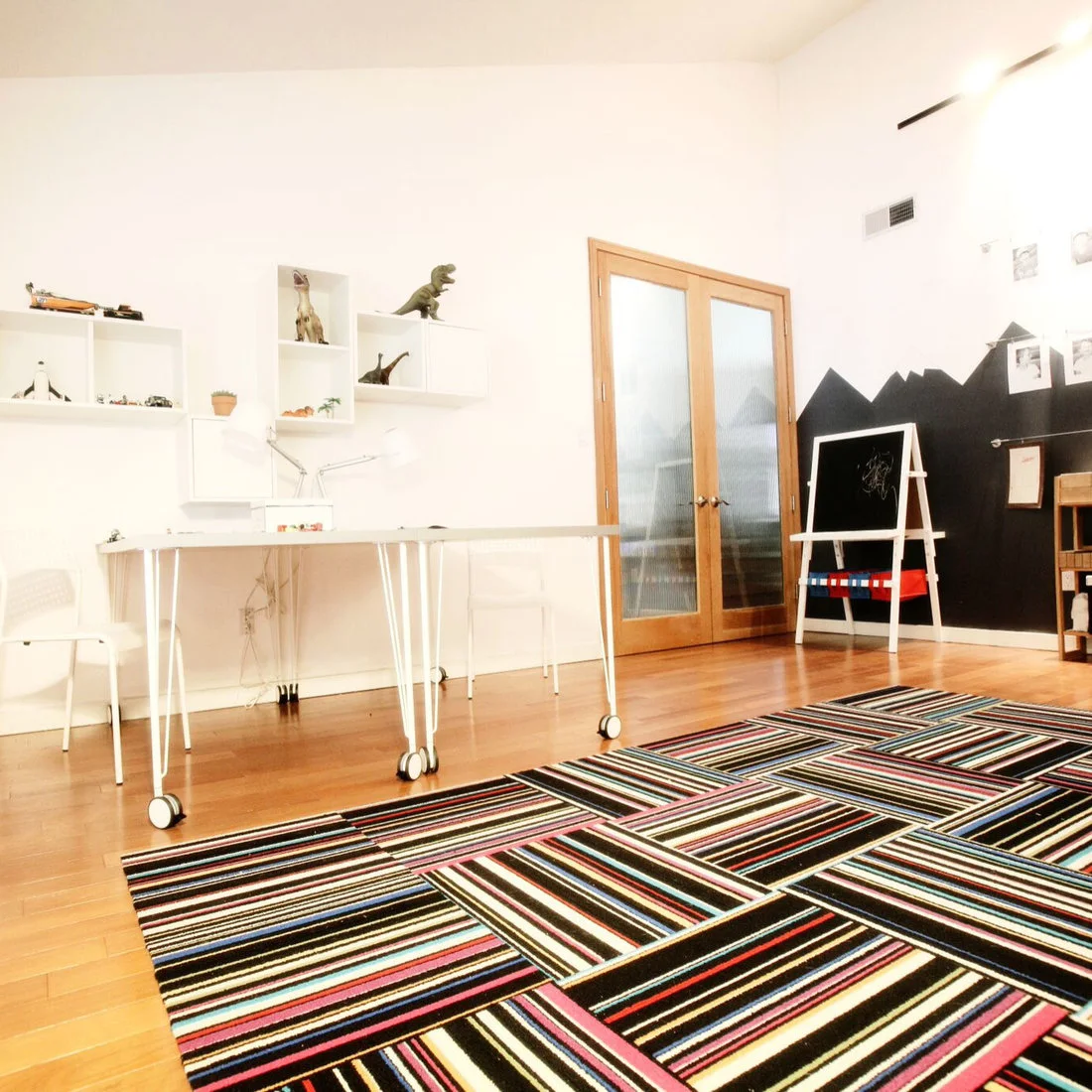
Two slim white tables can serve separate projects while leaving the center of the room open. The black mountain outline gives the drawing wall a clear boundary. Wood flooring and the door frame warm the pale shell, with the striped rug marking the larger floor-play area.
Use furniture intended for the activity and lockable casters where the design requires them; rolling tables should not become climbing equipment. Plan a stable place for wet artwork to dry. Keep the door approach open, and avoid placing heavy display objects where movement or play could knock them down.
PART 03
Make Small and Shared Spaces Work
IDEA 11 / 20
Separate Quiet Desk Work From Floor Play
 SaveSupport Non AI Creator
Image credit: Photo: Scott Hargis Photo. From: Regan Baker
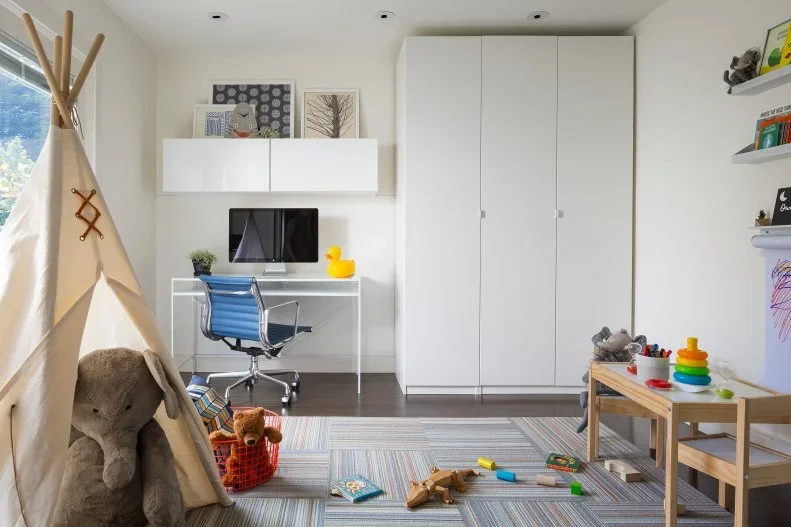
Tall plain cupboards put much of the storage behind closed doors. A full-size desk occupies one wall, while a lower wood table serves a different activity nearby. The pale tent gives the room a smaller retreat without filling the center with another large piece of furniture.
Shared adult and child spaces need clear rules for computer equipment, cables and supplies. Keep the desk chair from becoming a climbing aid to upper cupboards. Leave room to open the tall doors fully, and provide separate containers so a child’s project does not have to be cleared every time the desk is used.
IDEA 12 / 20
Add Color to a Single Storage Piece
 SaveSupport Non AI Creator
Image credit: Photo: Regan Wood Photography . From: Claire Paquin
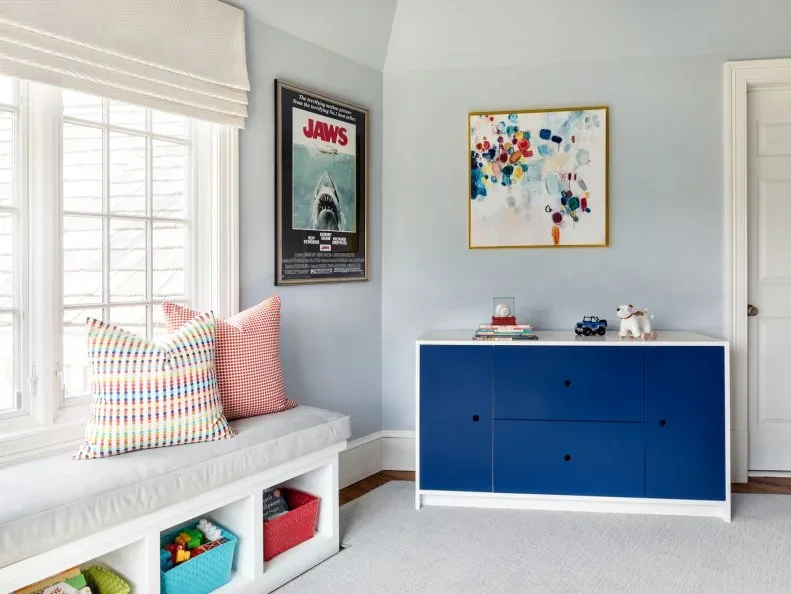
Blue cabinet fronts introduce color within a simple white frame. The window bench supplies seating and a second kind of storage, with open spaces for bright bins. Pale walls keep the two pieces visually connected even though one conceals toys and the other leaves containers visible.
Sort frequently used toys into the open bins and reserve the cabinet for categories that benefit from a closed door. Check that drawers do not pull out into a busy route. Use a finish that can tolerate regular wiping around handles, where small hands are likely to leave marks.
IDEA 13 / 20
Leave Space for a Changeable Story Wall
 SaveSupport Non AI Creator
Image credit: Photo: Brian Patrick Flynn
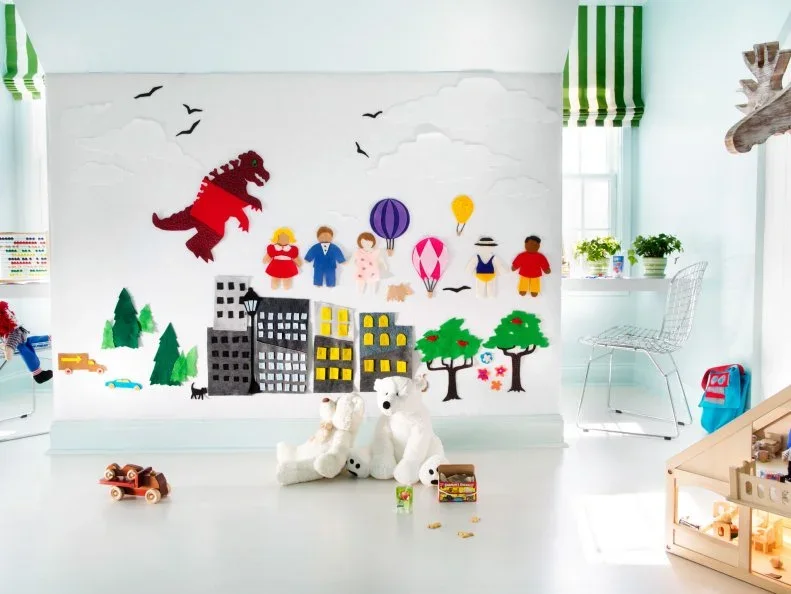
The large felt scene uses a clear wall for changing stories instead of permanent shelves. White walls and flooring keep the colorful figures easy to see. Green striped shades repeat a cheerful accent, while the dollhouse occupies the side rather than competing with the central activity.
Mount the backing securely and keep loose pieces suitable for the children’s ages and habits. A shallow tray near the wall gives removed characters a place to go. Preserve a clear floor area in front so children can rearrange the scene without reaching across other toys or furniture.
IDEA 14 / 20
Mix Low Book Storage With a Comfortable Floor Seat
 SaveSupport Non AI Creator
Image credit: Photo: North Fork Design Company. From: North Fork Design Co.
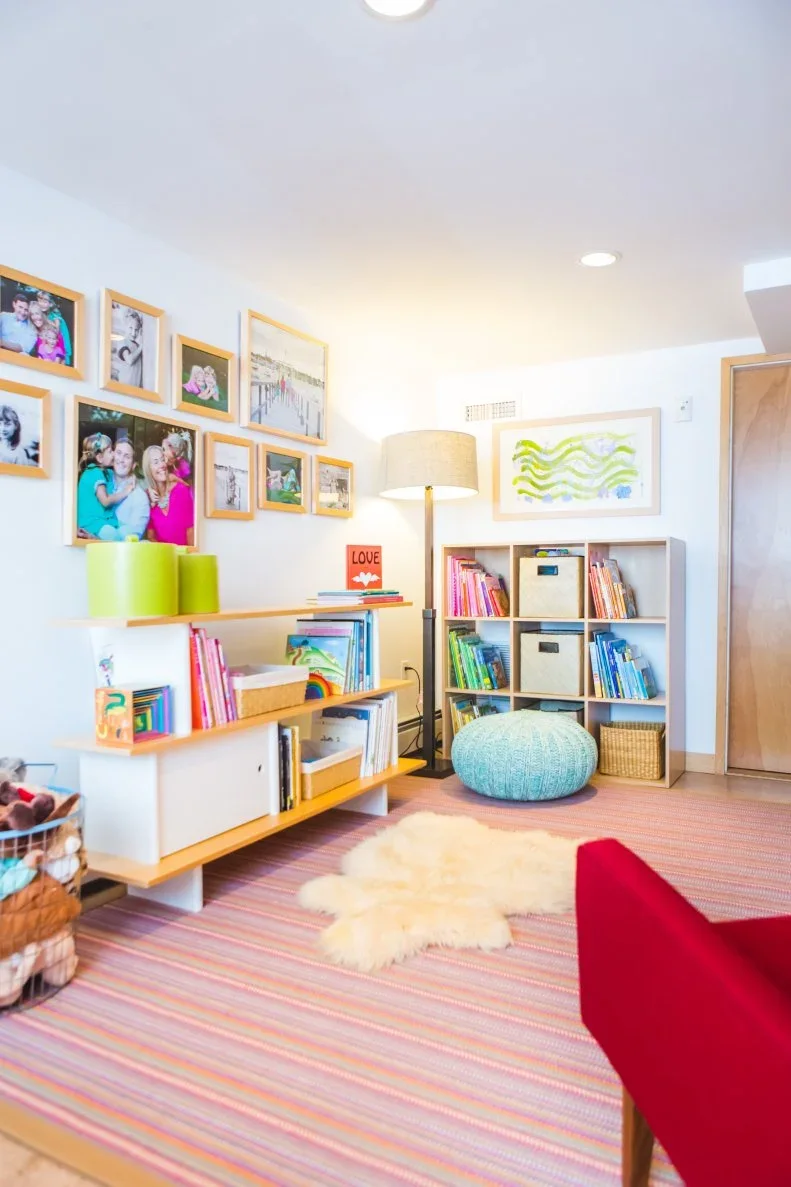
Two different shelf types work together because their pale fronts and wood edges stay restrained. Open compartments hold books upright while bins collect less orderly pieces. A small floor seat and striped rug make the corner feel usable, with family photographs adding personality above the storage.
Arrange books so they can be removed without pulling down an unstable pile. Leave space for a child to carry a bin past the floor seat. Secure the storage and frames appropriately, and keep freestanding lamps and their cords beyond the reach of active floor play.
IDEA 15 / 20
Make a Monochrome Play Corner Feel Warm
 SaveSupport Non AI Creator
Image credit: Photo: Marco Ricca. From: Sissy + Marley
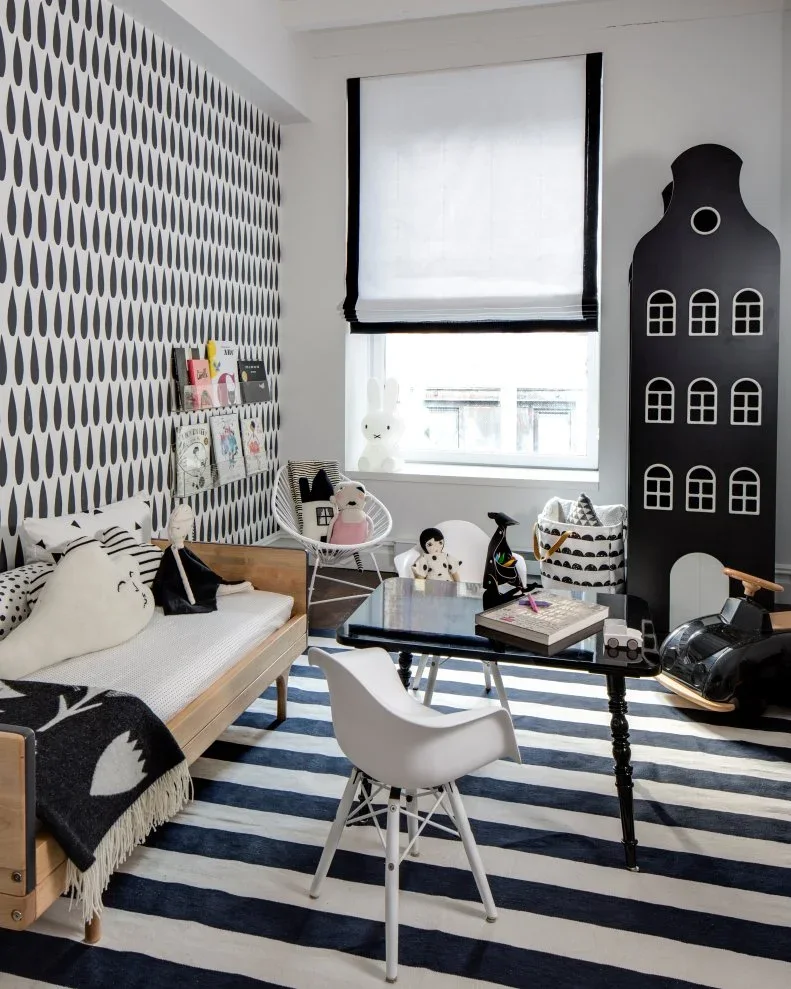
The repeated black-and-white patterns give this corner a strong identity without introducing many colors. A wood-framed daybed softens the contrast and supplies a longer seat. The low table and small chair create a play surface, showing how an activity corner can share a bedroom footprint.
Choose one dominant pattern and give the neighboring surfaces a quieter role if the full combination feels busy at home. Check the stability of a tall freestanding board and secure it as directed. Keep enough space around the table to reach the bed without stepping over toys.
PART 04
Finish With Comfortable, Personal Corners
IDEA 16 / 20
Use Book Covers as the Color in a Reading Nook
 SaveSupport Non AI Creator
Source: Alisa Shakarian via Houzz
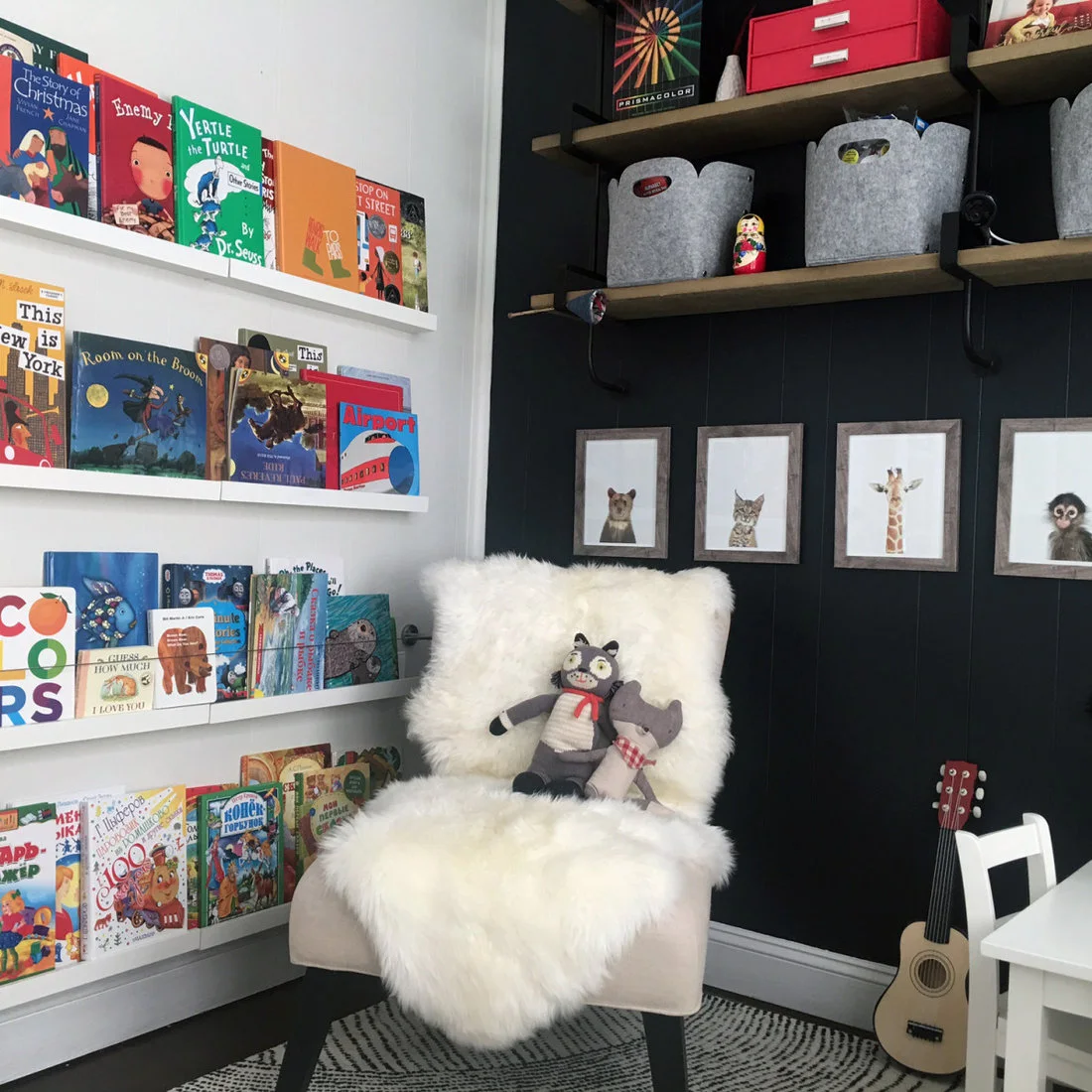
Colorful book covers brighten the white ledges, while the black wall gives the chair a contrasting background. Gray bins on wood shelves supply additional storage without another busy pattern. Small animal pictures stay within a narrow row, keeping the reading seat as the corner’s main destination.
Choose a seat covering that suits spills and regular cleaning rather than judging softness from a photograph alone. Put current books within easy reach and rotate the selection when the ledges become crowded. Fix upper shelves securely, and keep stored items light enough for safe adult handling.
IDEA 17 / 20
Keep a Shared Bedroom Play Area Open
 SaveSupport Non AI Creator
Source: www.houzz.com
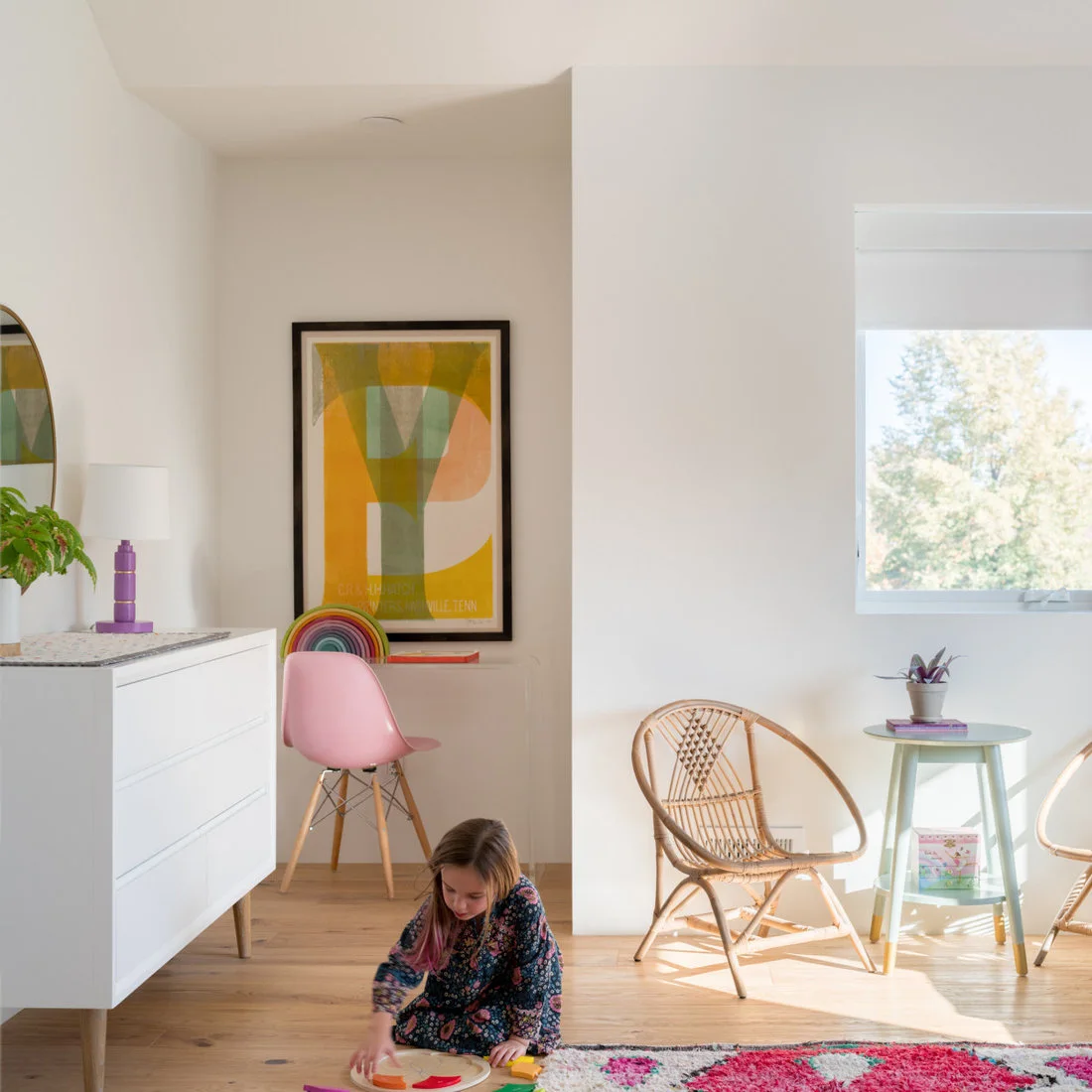
The pale furniture leaves the wood floor open for a puzzle or small building project. A round table creates a second activity spot beside the window, while the pink desk chair supplies one bright accent. The arrangement shows a play area fitting into a room with other everyday functions.
Keep a defined place for loose pieces so they can be collected before bedtime or cleaning. Anchor dressers and other storage as instructed, even when their fronts look simple and stable. Make sure chairs can move without catching the rug edge or obstructing access to drawers.
IDEA 18 / 20
Create a Small Retreat With a Play Tent
 SaveSupport Non AI Creator
Image credit: Photo: Catherine Truman. From: Kendall Simmons
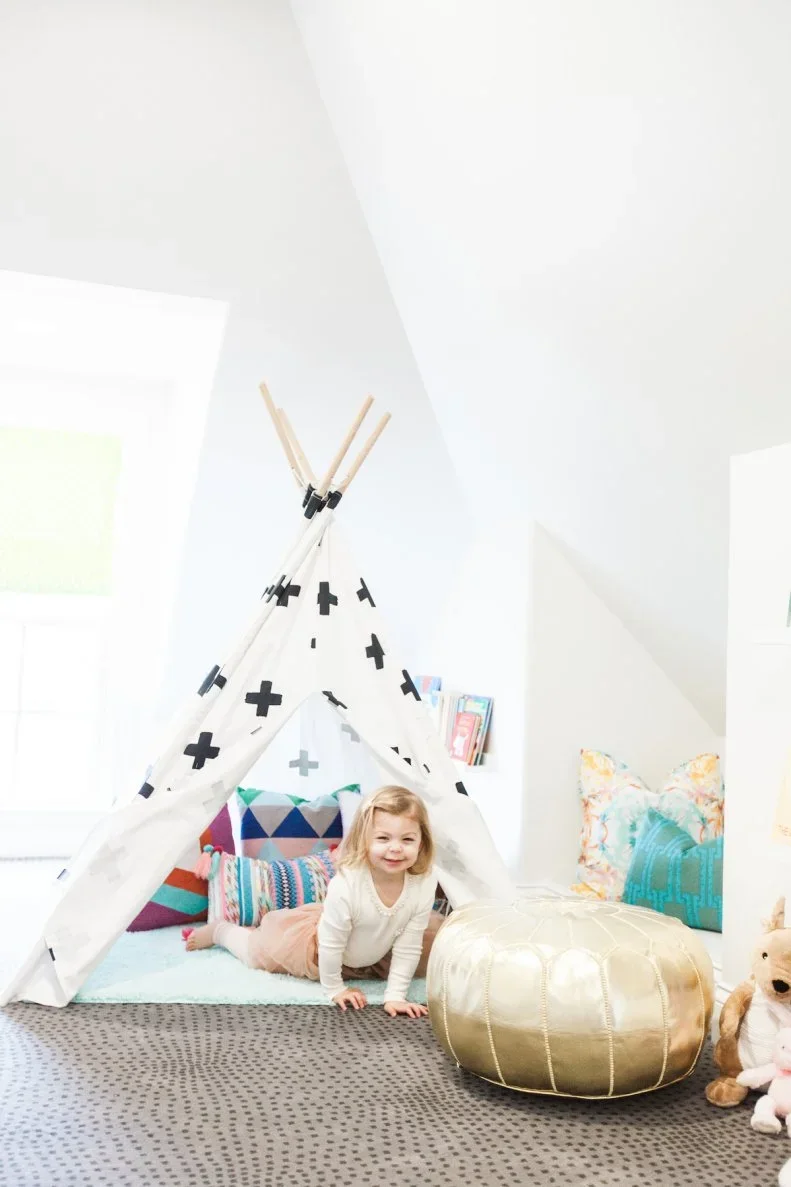
A small tent creates an enclosed feeling within the larger bright room. Black crosses keep its fabric simple, while cushions supply the color inside. The floor pad marks the sitting area, and the separate round pouffe provides another low seat without building a fixed structure.
Use a play tent intended for the child’s age and assemble its frame and fastenings exactly as directed. Keep it away from heaters, cords and busy walkways. Choose washable floor coverings, inspect the supports regularly, and put it away when the space is needed for more active play.
IDEA 19 / 20
Keep Toys Beside the Hall Rather Than Across It
 SaveSupport Non AI Creator
Source: NB Design Group, Inc via Houzz
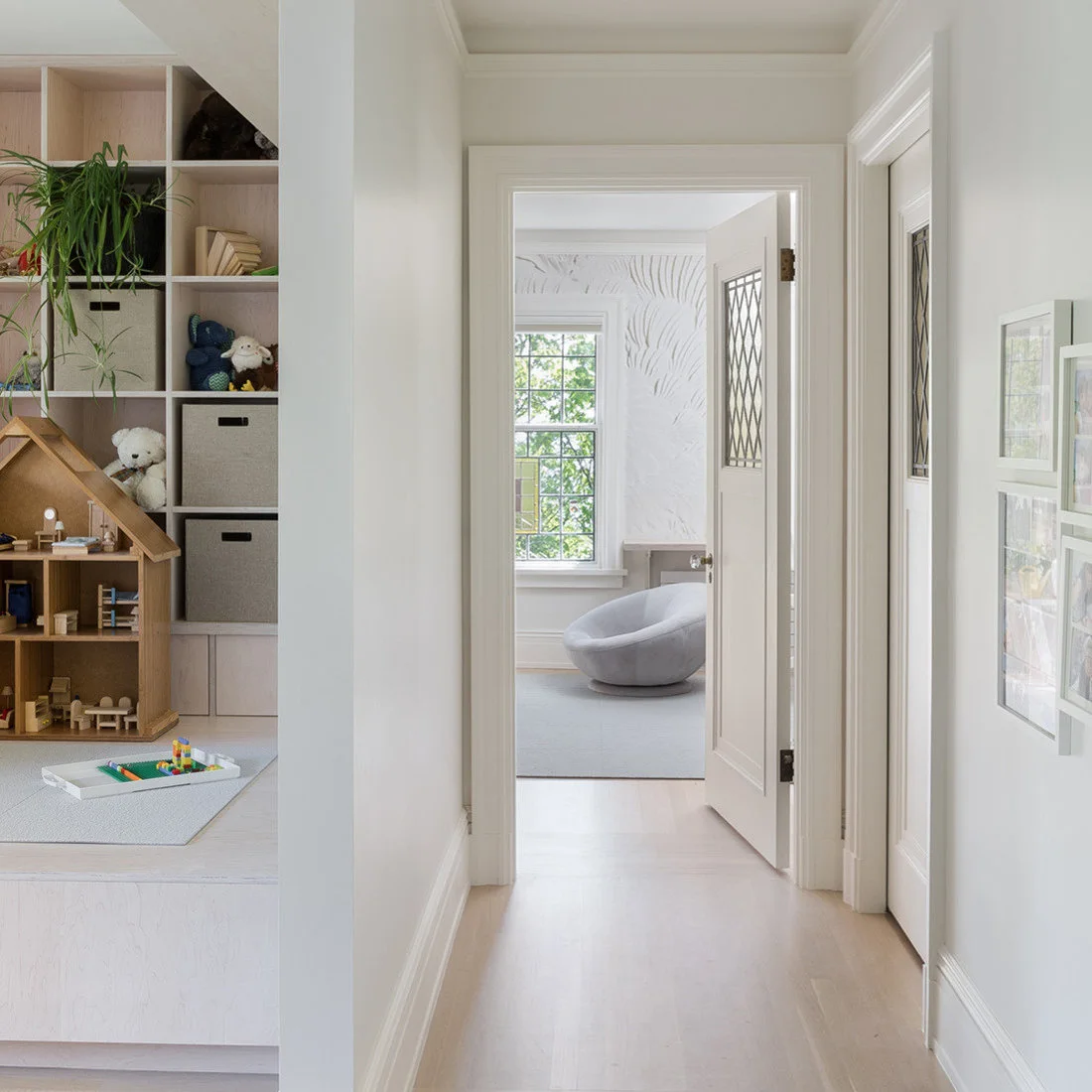
The storage and dollhouse sit inside the room edge while the hall remains open. Fabric bins repeat a quiet neutral color, allowing the wood toy house to stand out. A shallow tray gathers small building pieces, giving floor play a boundary without adding a raised platform.
Mark a realistic stopping point for toys before they spill into a shared route. A tray should be easy for an adult to lift and put away without tipping its contents. Anchor the tall storage, keep heavy items low, and remove trailing plants or other reachable objects if they invite pulling.
IDEA 20 / 20
Let Children’s Art Finish a Family Game Corner
 SaveSupport Non AI Creator
Source: Studio LW via Houzz
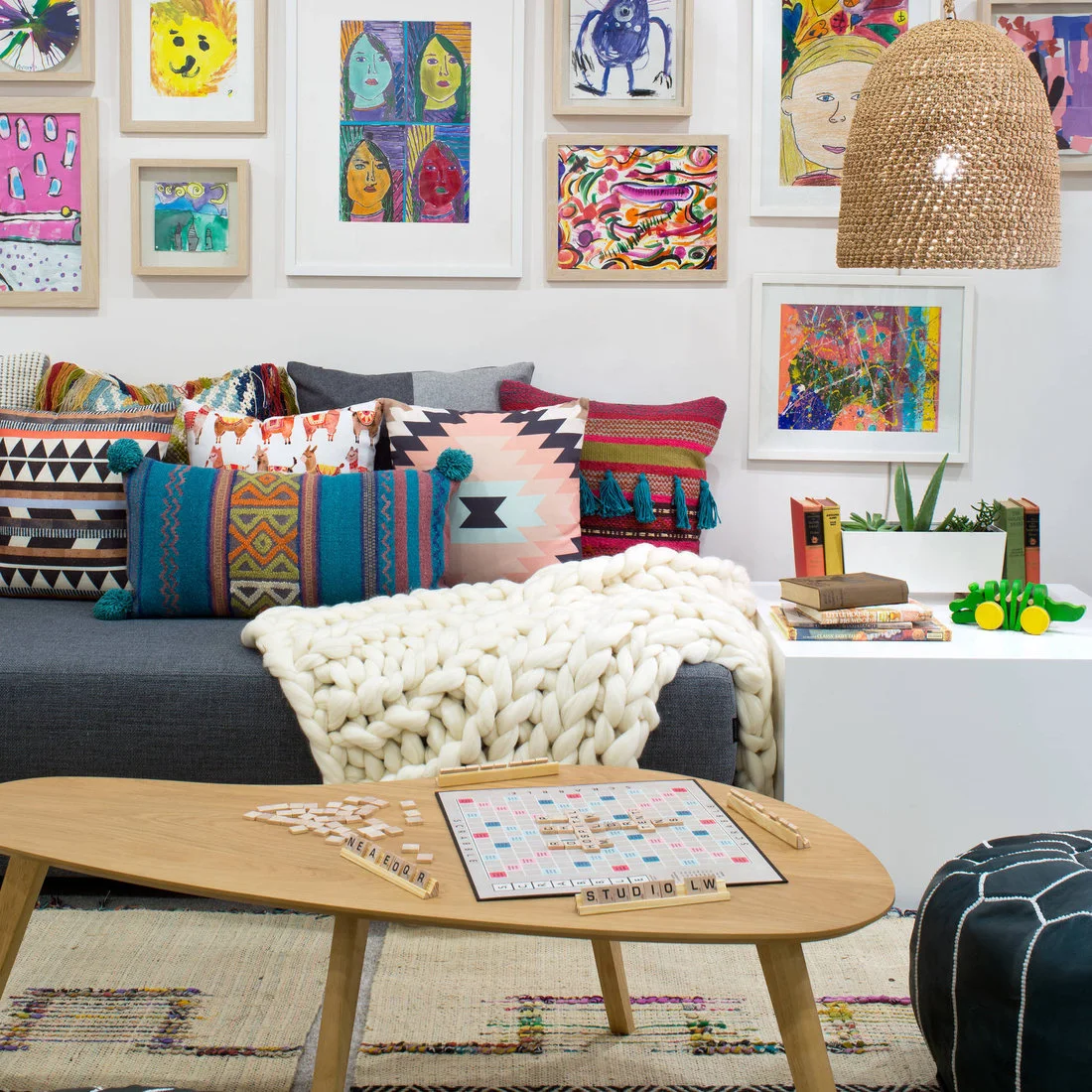
The gray bench and low wood table form a simple foundation for much livelier cushions and artwork. Framed children’s pictures make the wall personal rather than requiring a purchased theme. The board game shows this corner serving older children and adults as well as casual floor play.
Keep the table clear enough to leave a game in progress without balancing pieces on cushions. For a calmer version, reduce the number of patterned textiles while retaining the art. Our above couch wall decor ideas offer other hanging arrangements; use secure, suitable fixings above an active seating area.
BRING IT ALL TOGETHER
Choose the Everyday Arrangement First
Begin with the toys and activities used most often, then give each a reachable home. Low bins, a useful table and an open floor area usually do more than another decorative feature. Keep adult-controlled supplies separate, and reassess furniture heights and storage as children grow.
A pale background does not require a colorless childhood. Let books, drawings and a few favorite textiles make the room personal. Choose finishes you can clean, keep doorways accessible and follow the installation and age guidance for every piece rather than assuming a photographed arrangement is suitable for every family.