Toy organization starts with how a child chooses and puts away a toy. A deep basket can work for stuffed animals, but the same basket makes puzzle pieces and little vehicles hard to find. Sort by size and activity before deciding how many containers the room needs.
These sixteen photographed arrangements show storage for several kinds of play, including blocks, books, soft toys and creative supplies. Use a manageable number of categories, keep age-inappropriate small parts separate and follow furniture anchoring guidance. The aim is a system your household can reset after play, rather than a display that only works when nobody touches it.
PART 01
Sort the collection
IDEA 01 / 16
Mix Open Shelves With Containers for Small Parts
 SaveSupport Non AI Creator
Image credit: Future PLC/Tim Young
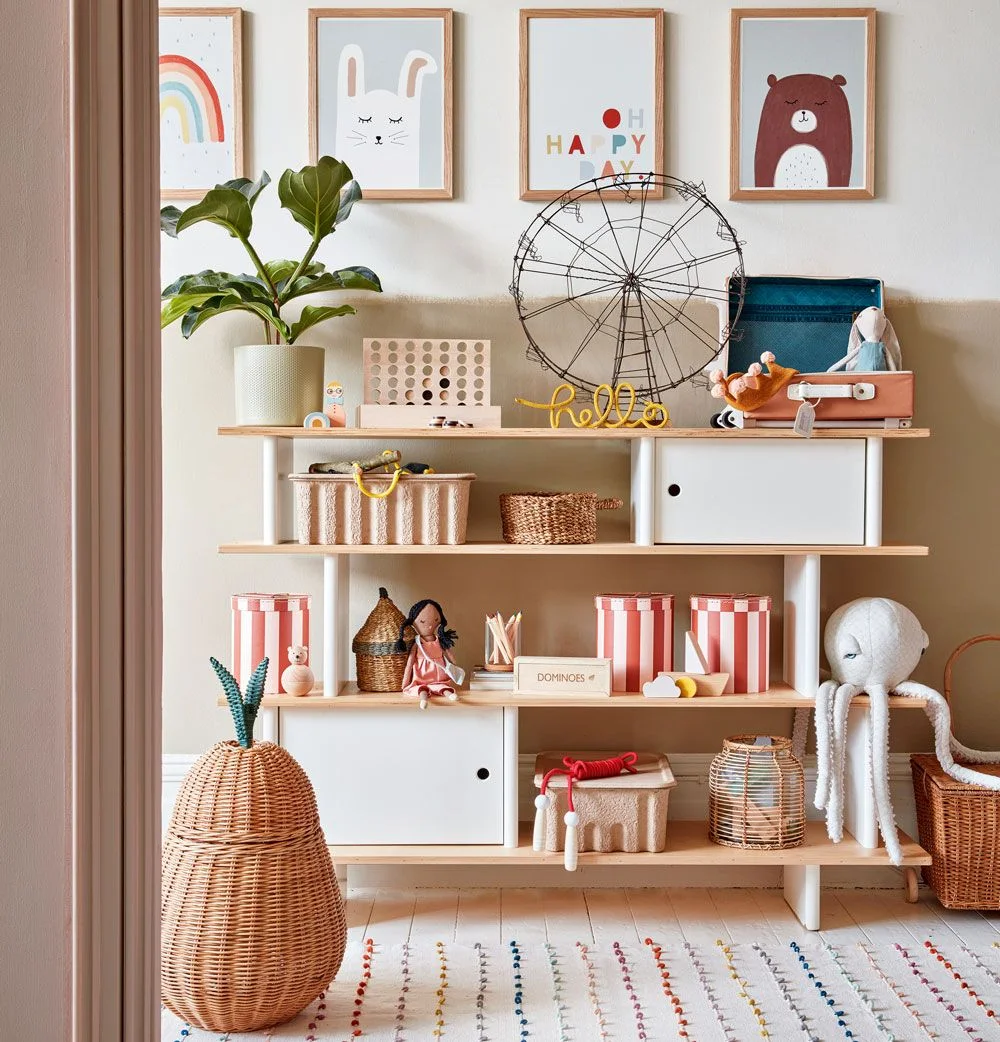
Open shelves mix with white sliding compartments, baskets and striped tins in this low storage unit. Larger toys remain visible while smaller loose pieces have their own containers. The floor basket provides a separate home for bulky items, so the shelving does not need to accommodate every toy at the same scale.
Start with a few categories that are easy to tell apart, such as games, building pieces and soft toys. Label closed tins with words or pictures so cleanup does not become a guessing game. For a collection of dolls and tiny outfits, our Barbie storage ideas show more specific ways to separate those small accessories.
IDEA 02 / 16
Give Each Activity a Shallow Shelf or Tray
 SaveSupport Non AI Creator
Image credit: string furniture
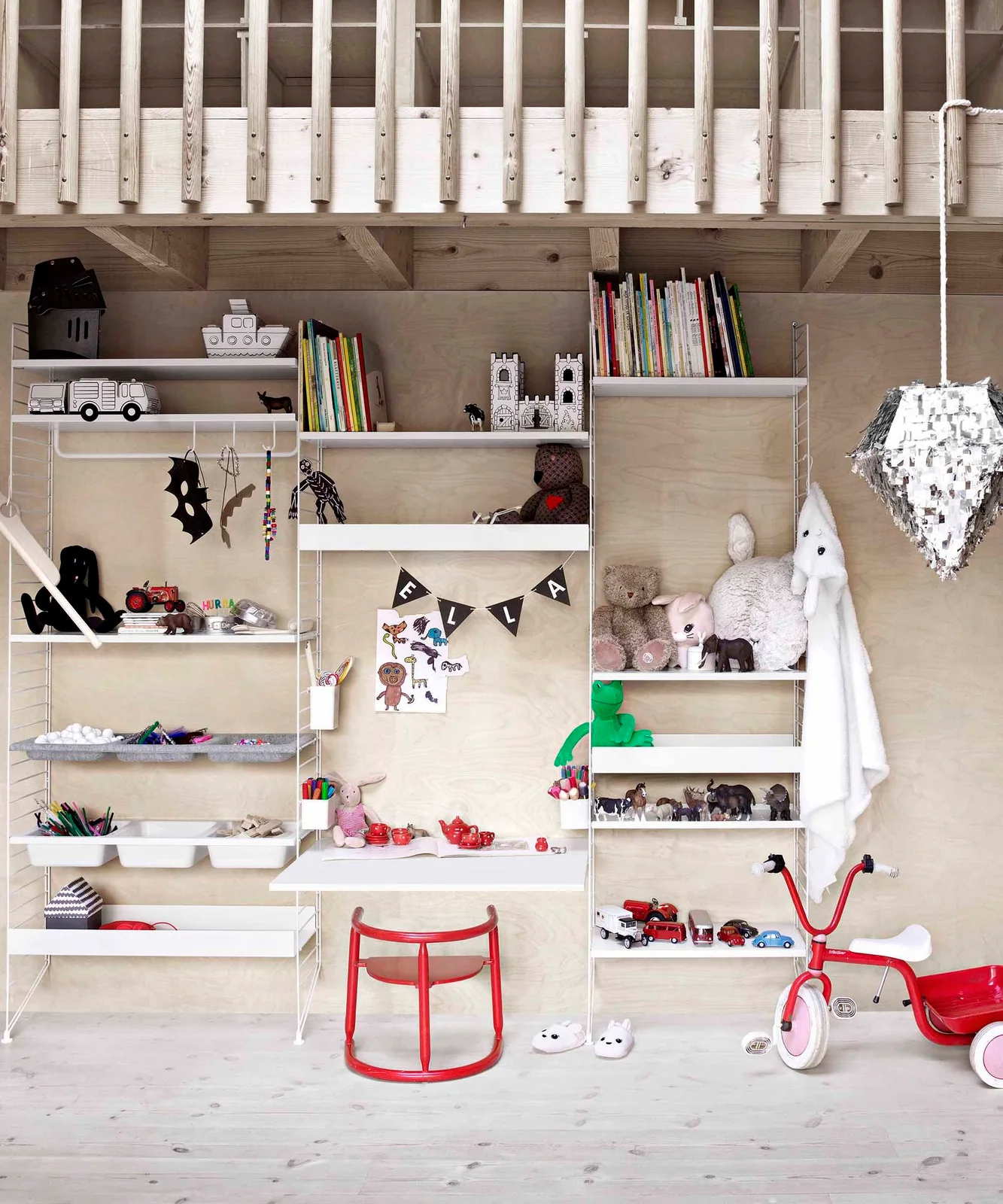
Shallow shelves hold books, small animals and toy vehicles above a small work surface. Trays and cups keep creative materials near the activity rather than mixing them into the soft toys. The arrangement makes several categories visible at once, with an individual landing place for each group.
Keep the frequently used trays at an accessible height and reserve high shelves for adult-managed items. Check the wall system’s fixing and load instructions before filling it. In compact rooms, our small bedroom ideas can help you balance toy storage with the floor space needed to open drawers and move around a bed.
IDEA 03 / 16
Leave a Low Basket for Everyday Soft Toys
 SaveSupport Non AI Creator
Image credit: Cohesively Curated Interiors/Carina Skrobeck
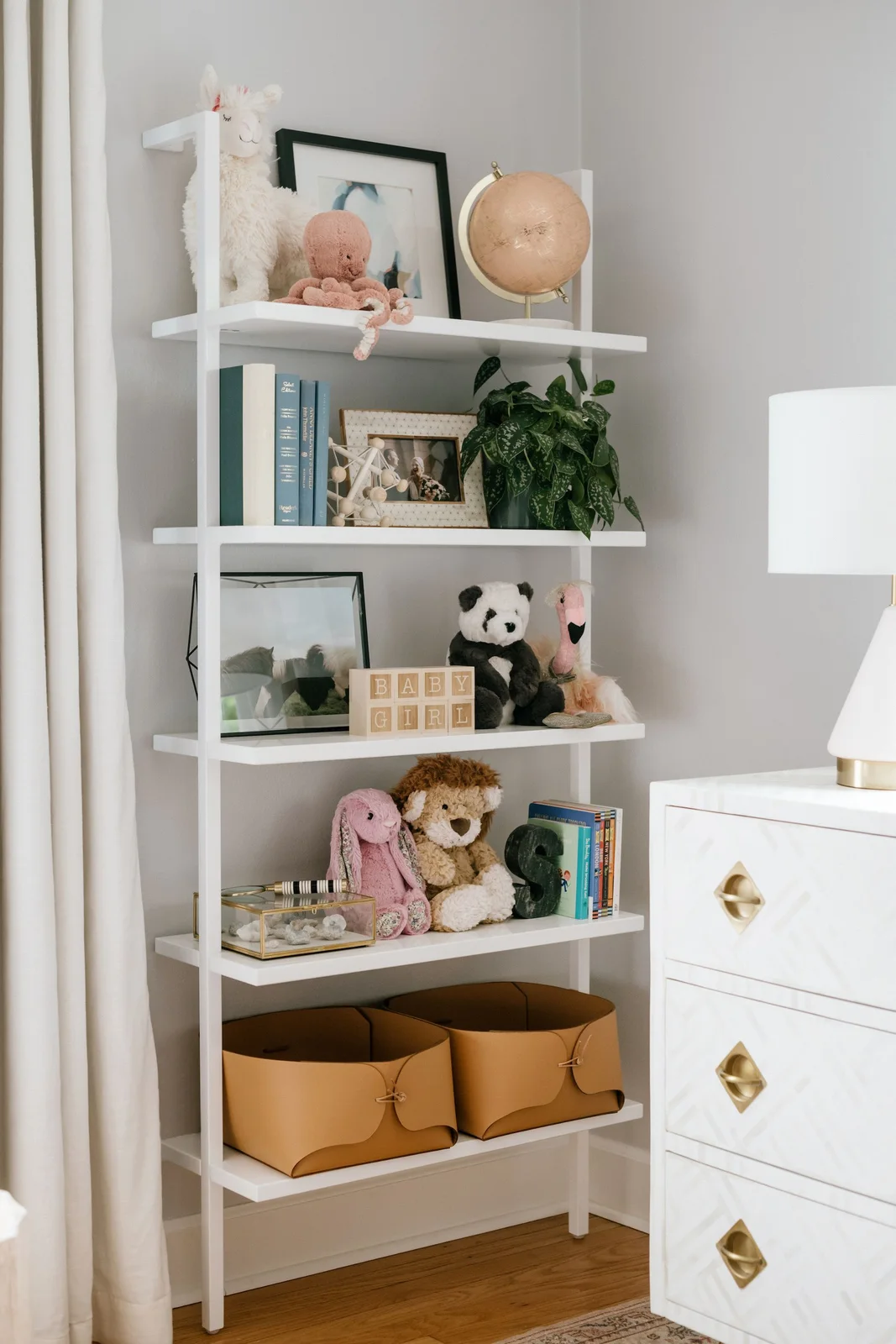
Stuffed animals sit among books and framed pictures on these white shelves, with two tan baskets at the lowest level. The low containers can hold a changing collection while a smaller selection stays on display. Different shelf heights make the arrangement useful for both tall books and softer, irregular shapes.
Keep the lowest baskets light enough for their user to move comfortably. Decorative glass objects and framed pieces may belong higher up or elsewhere when young children use the shelving. Follow the maker’s anchoring instructions, and avoid filling a shelf so tightly that reaching for a toy knocks another object onto the floor.
IDEA 04 / 16
Use Color-Coded Crates for Soft Toys and Books
 SaveSupport Non AI Creator
Image credit: Future PLC / Kasia Fiszer
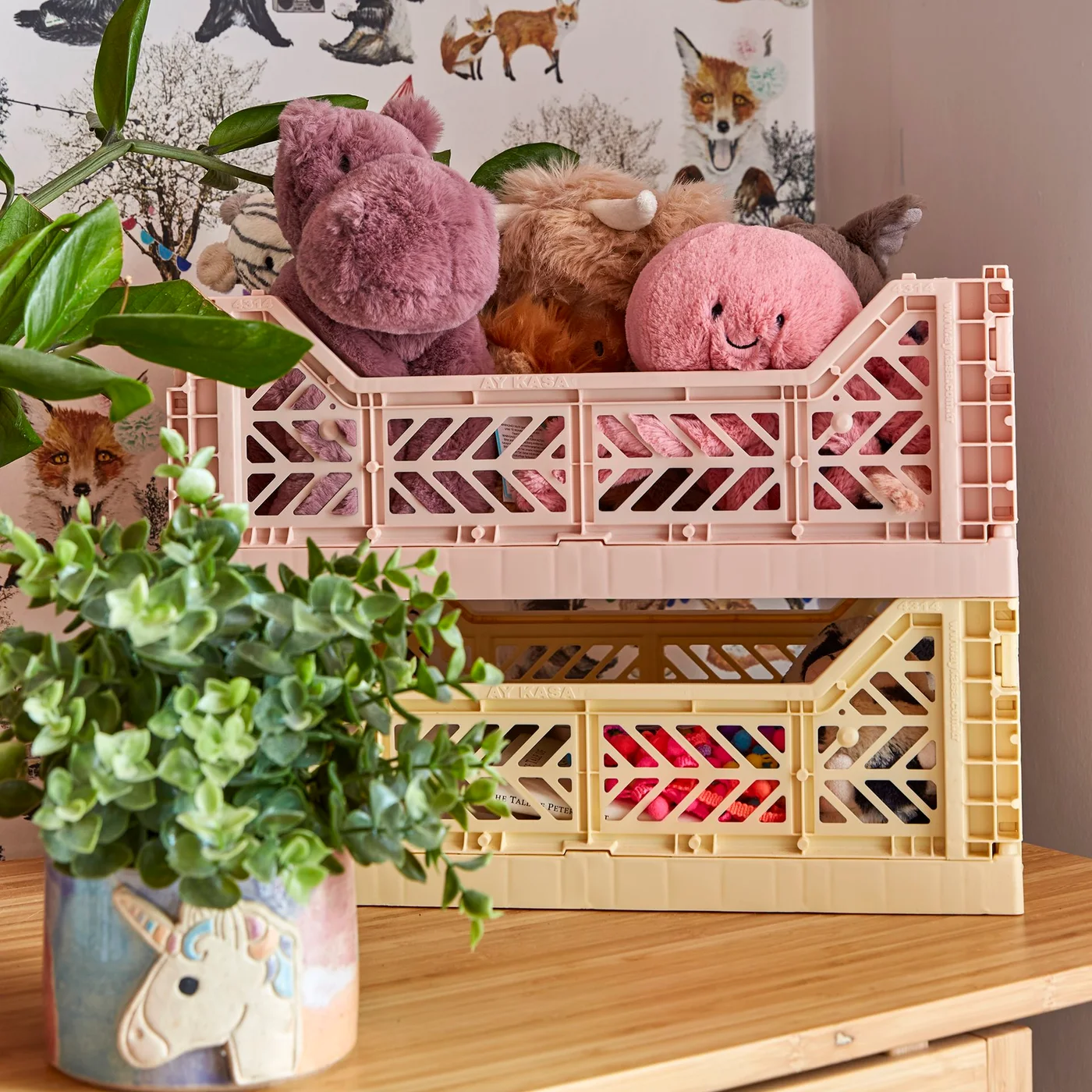
A pink crate gathers stuffed animals above a yellow crate holding more soft toys and a book. The two colors give each container a clear identity, even though neither needs to be reserved for one particular toy type. Open sides make some contents visible without emptying the whole box during a quick search.
Choose crates intended for the way you will use them and follow their loading and stacking guidance. Leave enough open space to lift out a favorite toy without pulling the whole container forward. Check folding latches for pinch points, and avoid placing a stack where a child could use it to climb onto furniture.
PART 02
Organize smaller pieces
IDEA 05 / 16
Put a Removable Bin Beside Books
 SaveSupport Non AI Creator
Image credit: Future PLC/Joanna Henderson
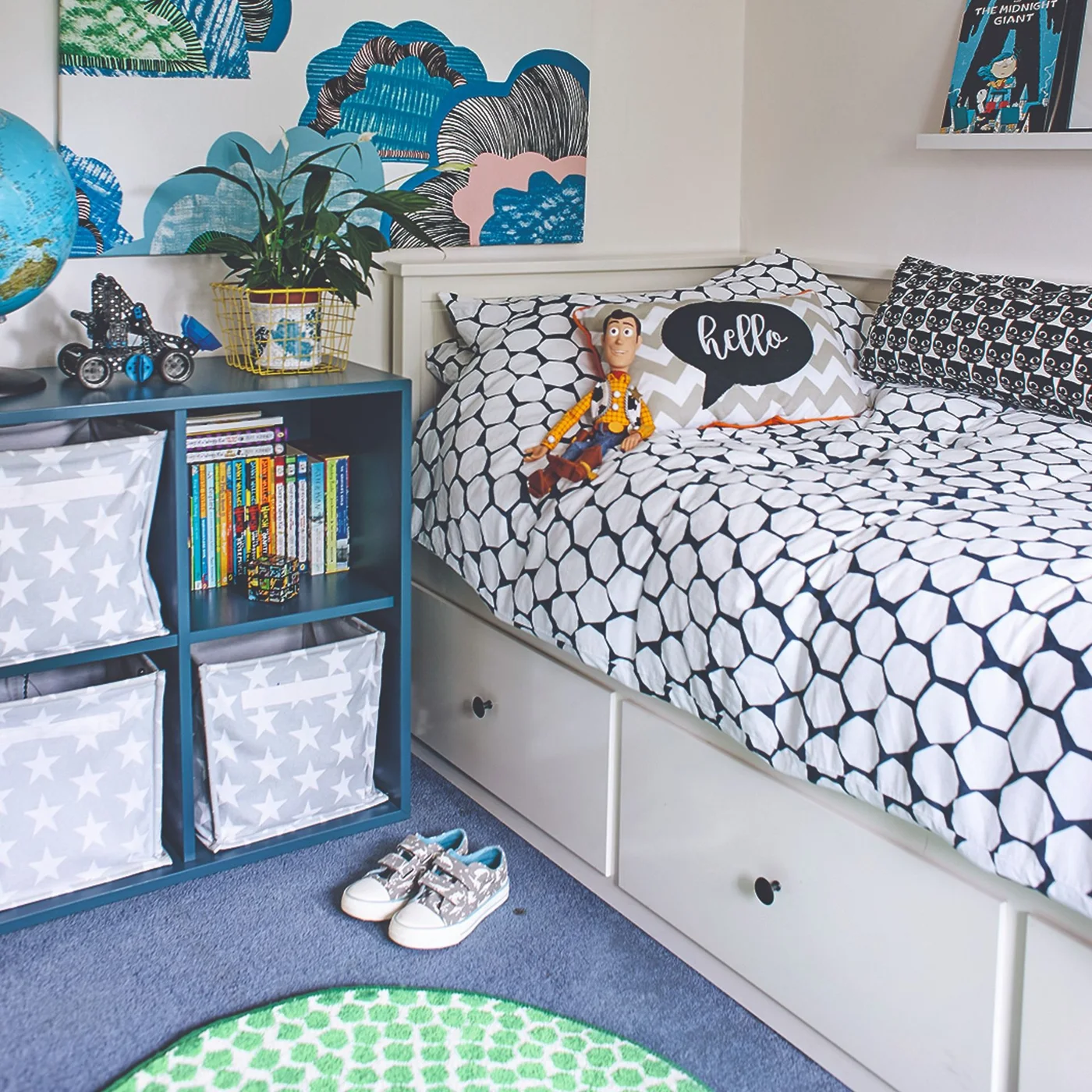
Star-patterned fabric bins occupy most of this blue cube shelf, while one compartment keeps books upright and visible. The arrangement gives the bedside area a mix of hidden and open storage. Keeping the books out of the bins reduces the need to empty a container just to choose a bedtime story.
Use one broad toy category per fabric bin and keep a little space at the top for easy returns. Measure the cube opening before buying replacements, including the height of any handle. Leave the bed’s lower drawers room to open so one storage improvement does not make another part of the room awkward to use.
IDEA 06 / 16
Give Favorite Vehicles a Small Display Shelf
 SaveSupport Non AI Creator
Image credit: Future PLC / David Brittain
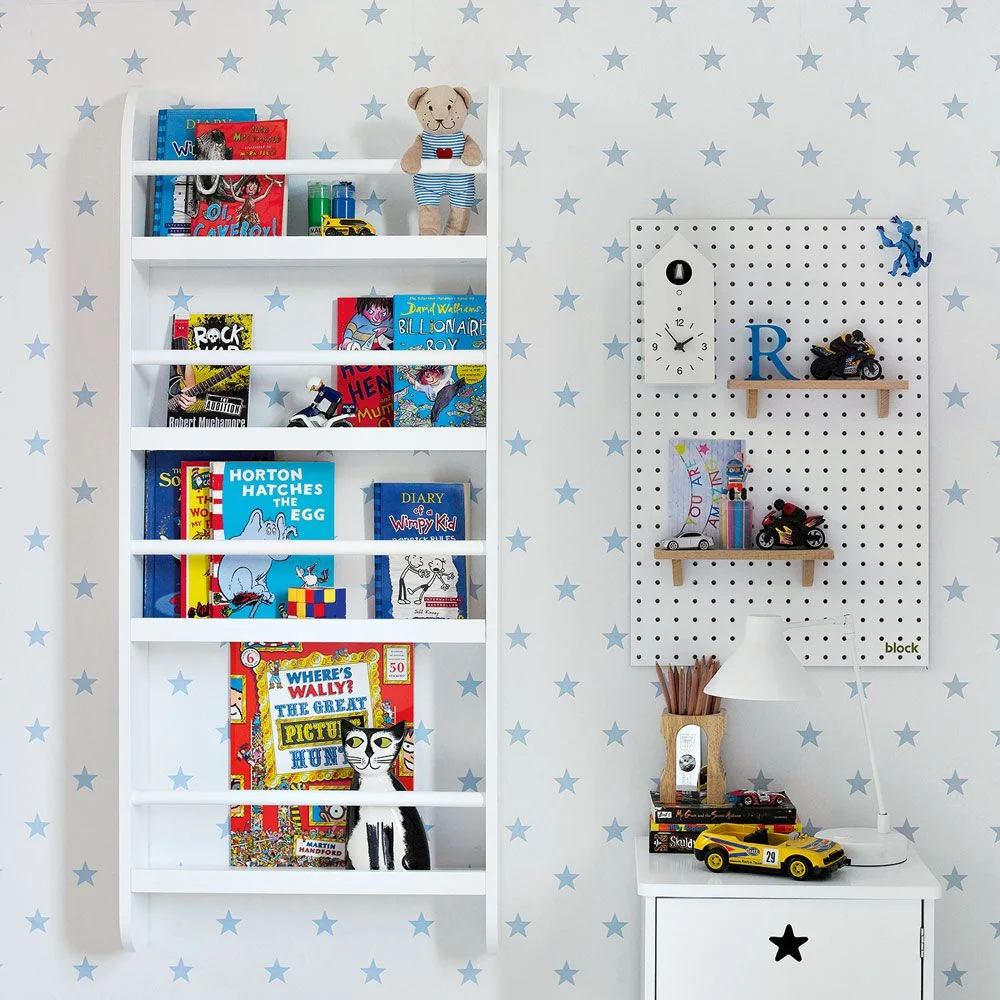
A front-facing book rack sits beside a pegboard with small shelves holding toy vehicles. Books and cars occupy different wall sections, making it easier to choose an activity without searching through a mixed box. The compact cabinet below provides another surface, while the visible collection remains deliberately limited.
Display only the favorites that fit without crowding, and keep the rest in an accessible labeled container. Wall shelves need suitable fixings and should not encourage climbing. Leave the desk or cabinet surface usable instead of covering it with the whole collection, and keep small vehicles away from children below their recommended age.
IDEA 07 / 16
Keep Adult Craft Supplies Separate From Toys
 SaveSupport Non AI Creator
Image credit: Future PLC/Lizzie Orme
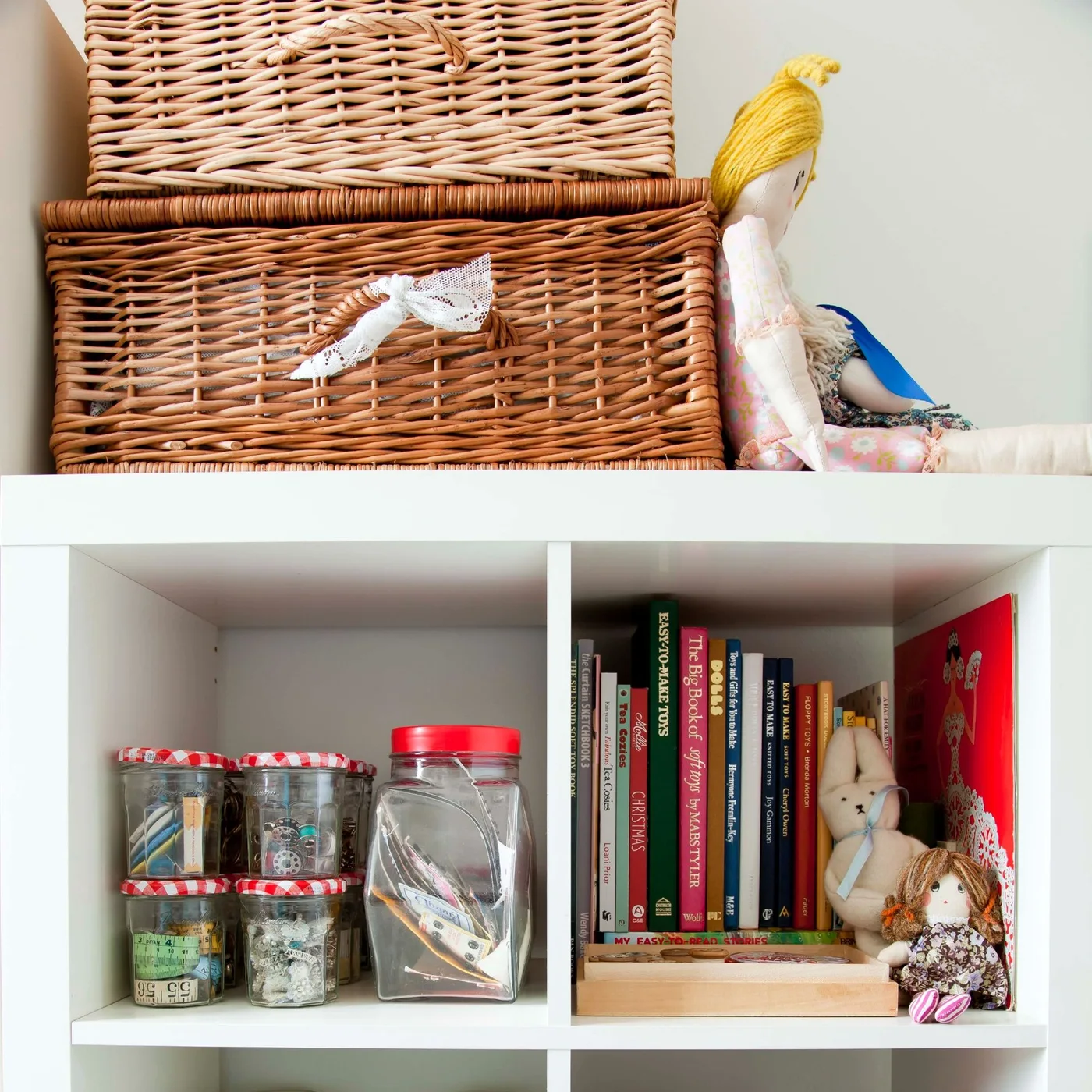
Wicker baskets, dolls and books share these white cubbies, while small jars group craft and sewing supplies. The containers show how differently sized objects can be separated within one unit. They also make an important distinction visible: an adult’s creative materials need different access rules from toys a child can choose independently.
Use nonbreakable containers for children’s accessible collections, and store needles, sharp tools and other hazardous supplies securely elsewhere. A transparent jar is useful for seeing contents, but it is not automatically appropriate toy storage. Keep the lower cubbies for suitable play items and avoid treating every attractive container in a photograph as interchangeable.
IDEA 08 / 16
Use a Large Soft Container for Bulky Toys
 SaveSupport Non AI Creator
Image credit: ChildHome at Next
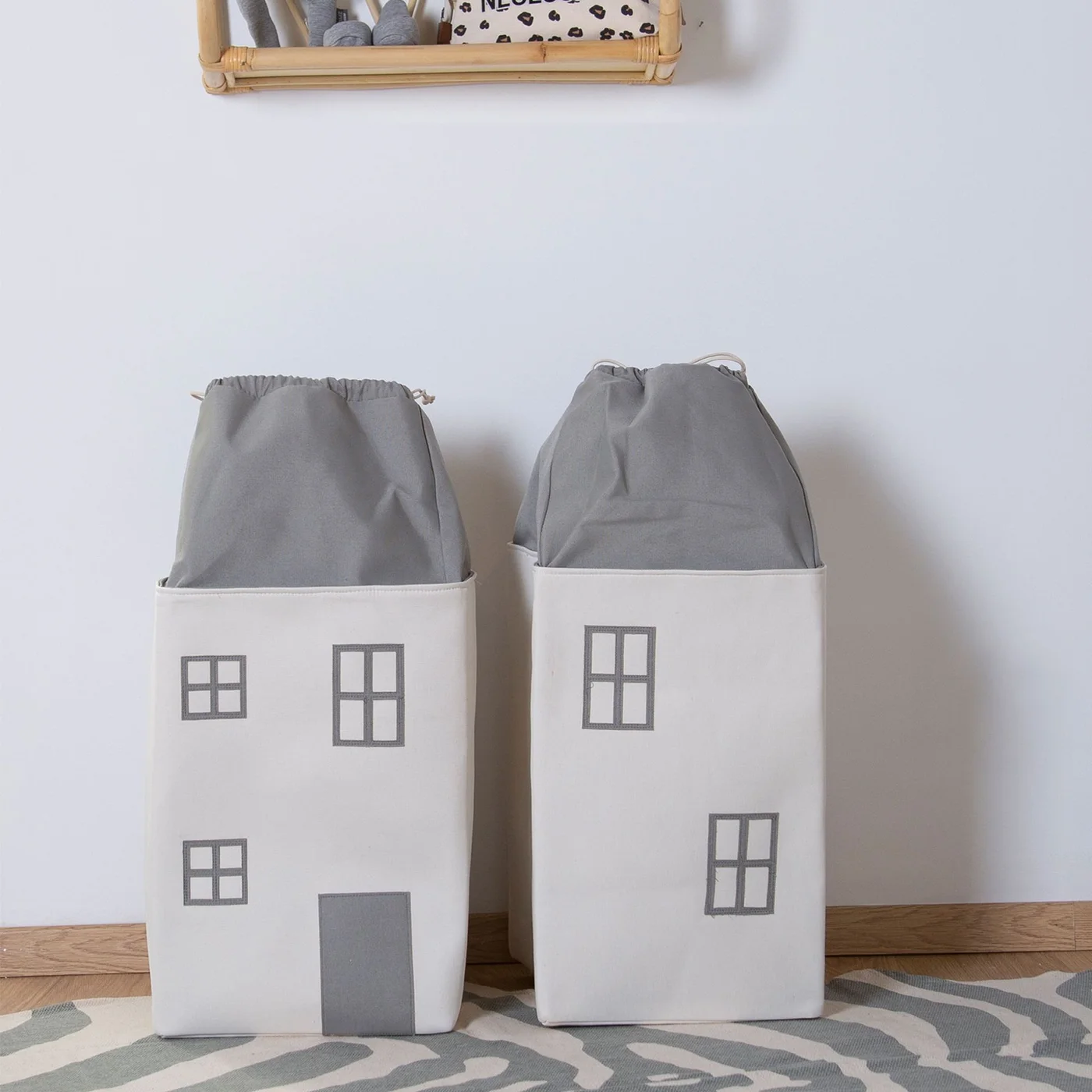
These tall fabric containers use house-shaped fronts and gray drawstring tops to conceal a bulky load. Their simple shape suits items that do not need individual compartments, such as a modest collection of large soft toys. They take a different approach from small trays, prioritizing quick gathering over detailed sorting.
Check the container’s intended use and any cord-related age guidance before placing it within a child’s reach. Do not assume it is a play tent or something to climb inside. Use a separate shallow container for tiny accessories, which will be difficult to find at the bottom of a tall soft-sided bag.
PART 03
Use useful wall storage
IDEA 09 / 16
Keep Building Pieces Beside Their Work Surface
 SaveSupport Non AI Creator
Image credit: Future PLC/Lizzie Orme
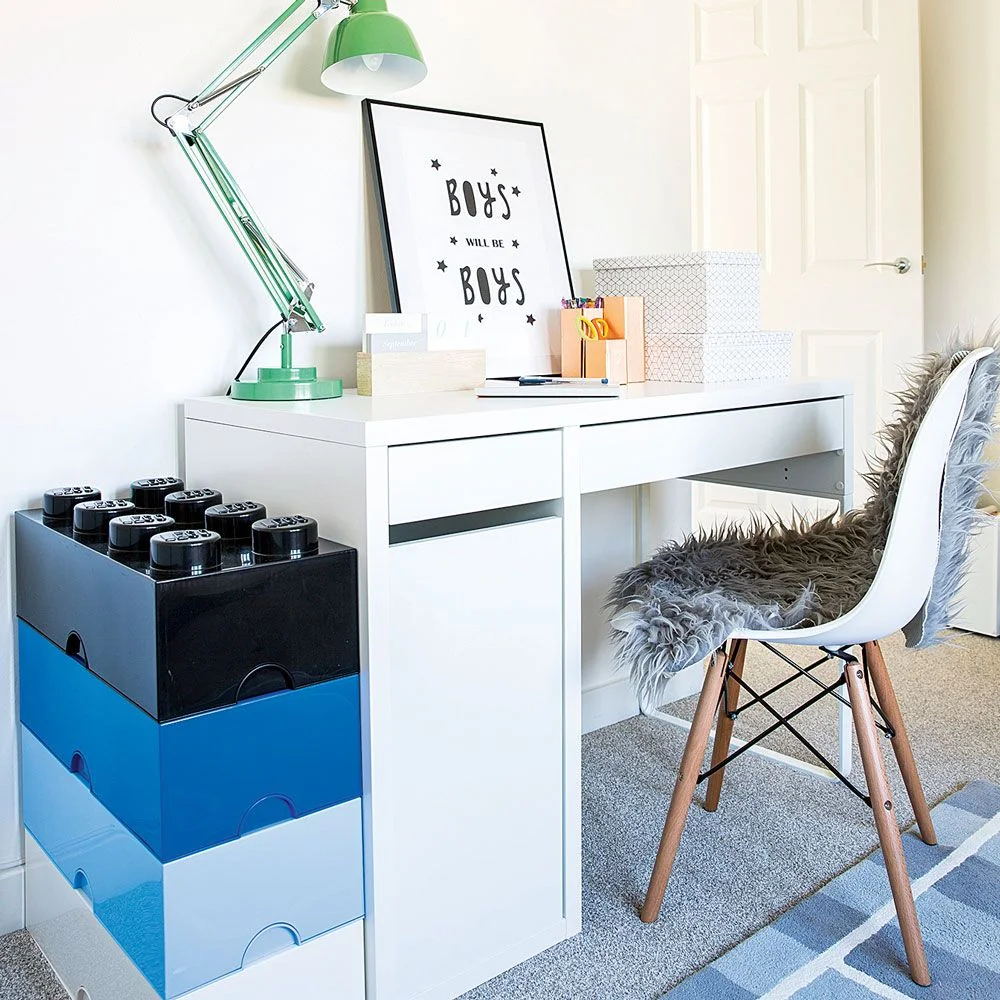
Blue and black storage boxes stand beside a white desk, placing a building collection near a useful surface. Their large block-like fronts make the purpose easy to recognize. Keeping the containers beside the desk rather than underneath the chair preserves space for a child to sit and work comfortably.
Check the actual internal capacity before sorting pieces, because the decorative shape may use some of the space. Keep the stack within its manufacturer’s recommended height and make each box manageable to lift. Reserve the desktop for the current project, with a separate shallow tray for unfinished pieces that should survive the next cleanup.
IDEA 10 / 16
Hang a Small Basket for Each Toy Group
 SaveSupport Non AI Creator
Image credit: Future PLC/Joanna Henderson
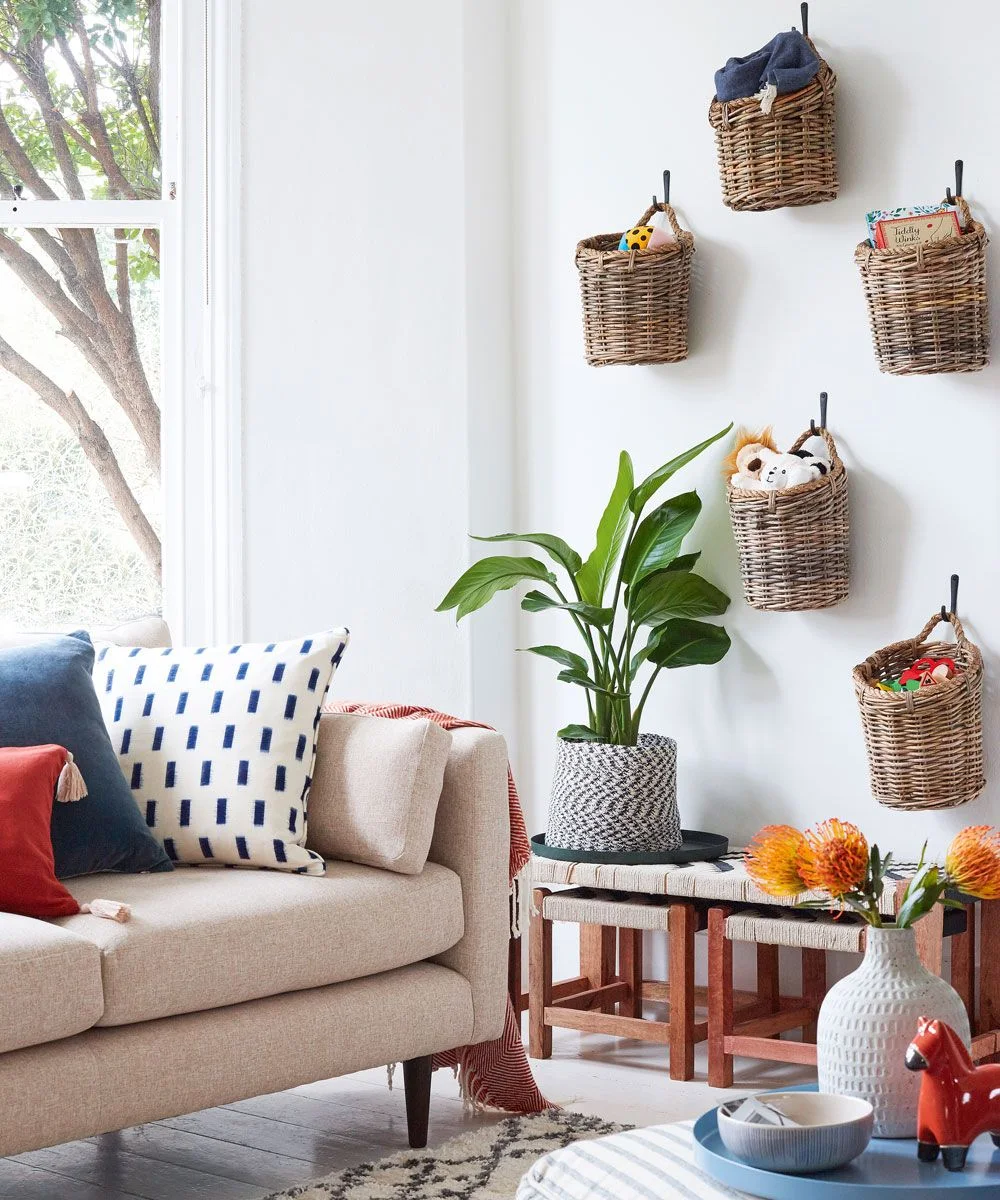
Several woven baskets hang individually from wall hooks, each holding a small collection of books, toys or soft animals. The separate baskets divide a shared room’s playthings without adding a large cabinet. Because the openings remain visible, the arrangement provides a quick reminder of where each group belongs.
Use fixings appropriate to the wall and the filled basket weight, and position them so they do not become climbing steps. Keep heavy or hard toys in lower stable storage. In a shared room, limit the number of baskets to the collection that is actually used there and return overflow to its main storage location.
IDEA 11 / 16
Display a Few Favorites Above Closed Drawers
 SaveSupport Non AI Creator
Image credit: Future PLC/Colin Poole
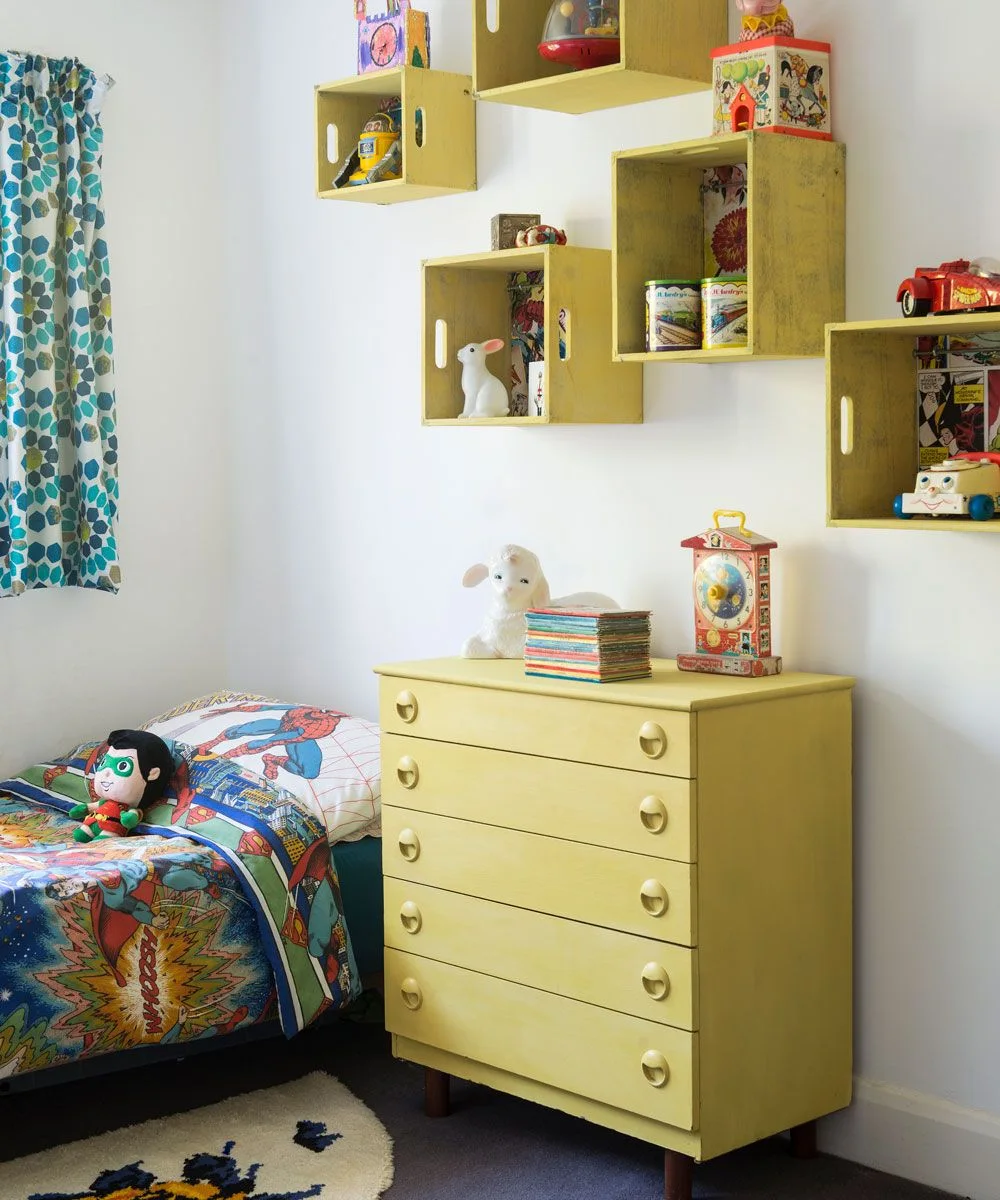
Yellow wall crates display a small collection above a matching chest of drawers. A toy car and robot remain visible, while the drawers offer a separate kind of storage below. The repeated color brings the pieces together without requiring the whole toy collection to become part of the display.
Reserve high crates for objects that an adult retrieves, and use reachable lower storage for everyday play. Check the chest’s anchoring and drawer-stop requirements. Add dividers only where loose pieces would otherwise mix together, leaving enough room for children to return larger toys without having to arrange them precisely.
IDEA 12 / 16
Gather Traveling Toys in a Wheeled Box
 SaveSupport Non AI Creator
Image credit: Future PLC/Joanna Henderson
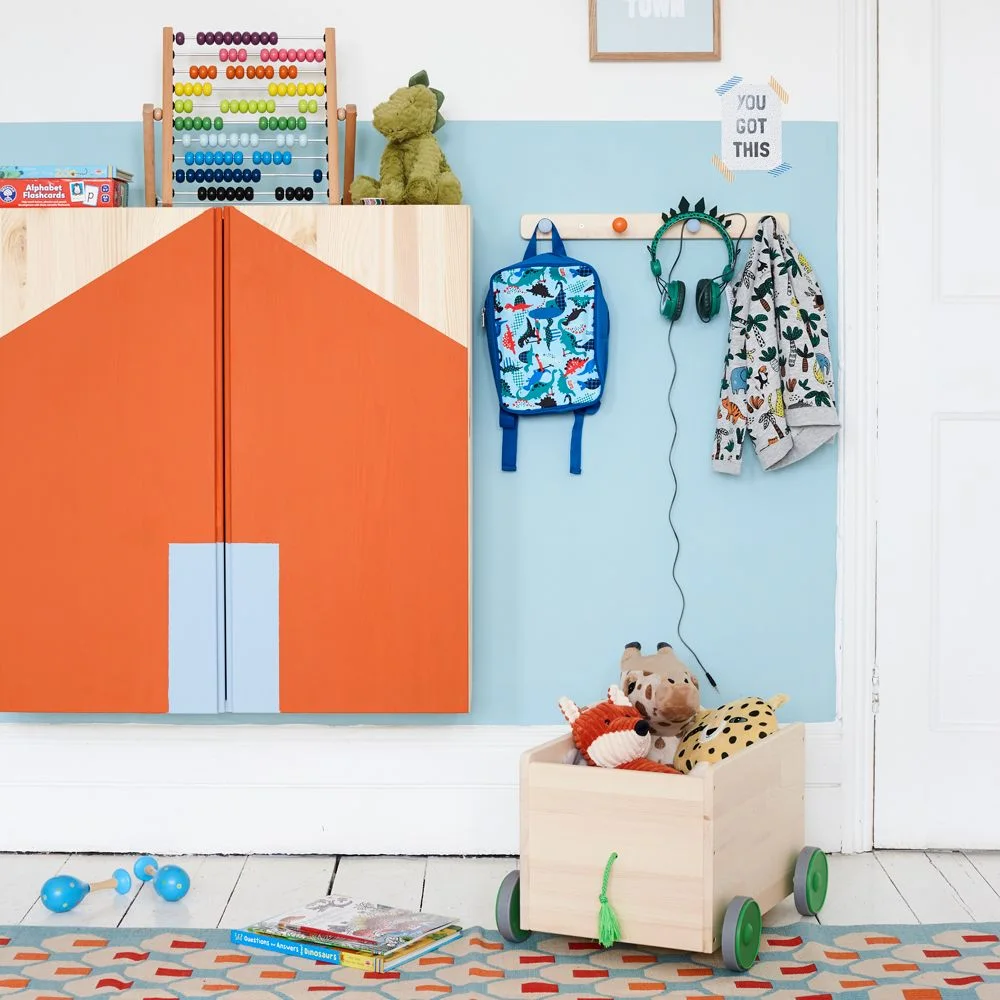
A wood cart with green wheels holds soft animals beneath a row of wall hooks. The open top makes its contents easy to see and return, while the wheels allow the collection to move as one group. The cupboard above provides a fixed storage area for items that do not need to travel.
Choose a cart intended for the child’s age and floor surface, and check wheel movement before filling it. Keep it out of doorways and stairs, and follow any handle or cord guidance. A portable toy container works best with a parking place, so it does not become another object left across the room after play.
PART 04
Make returns easier
IDEA 13 / 16
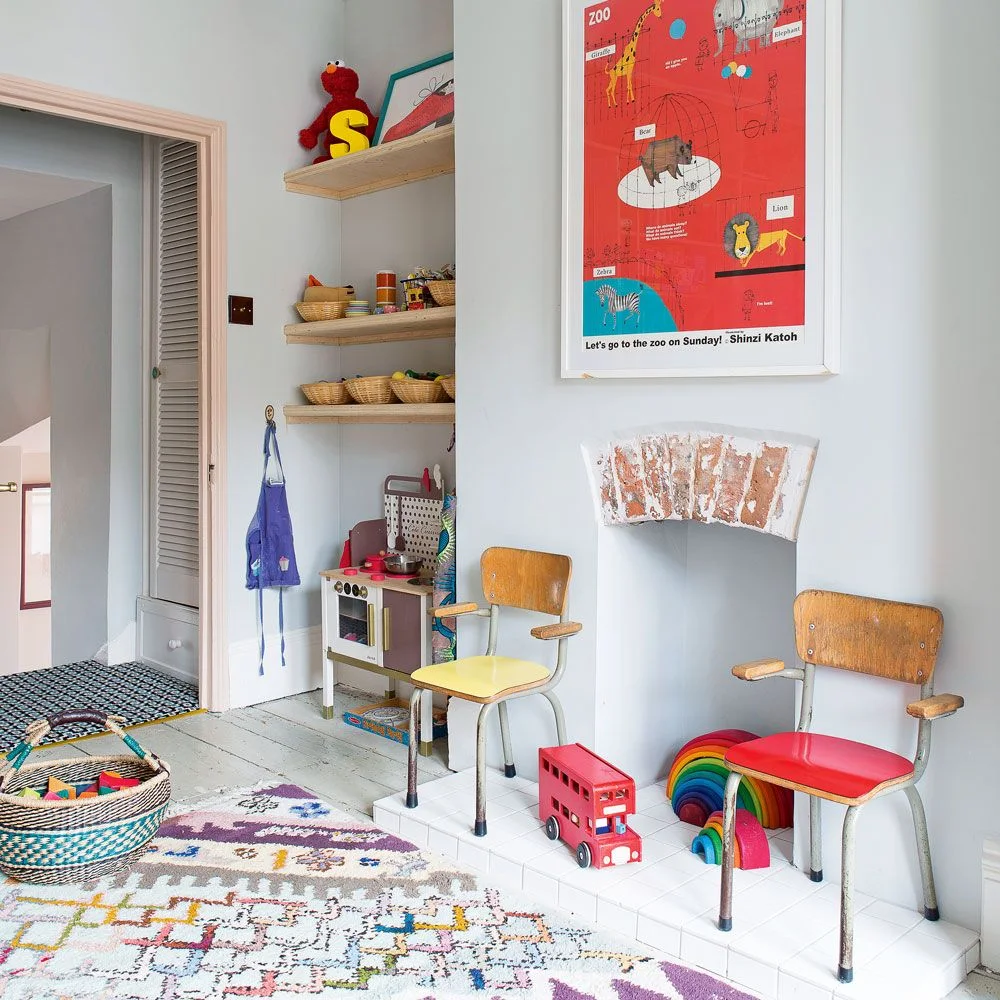
Keep Pretend-Play Supplies Above Their Station
 SaveSupport Non AI Creator
Image credit: Future
Small baskets and toy food sit on shelves above this play kitchen, grouping the accessories around the activity they support. The surrounding room still has open floor space rather than a scattered row of storage boxes. A single basket nearby can gather larger pieces that do not fit the shallow shelves.
Keep only suitable lightweight items within a child’s reach and secure shelving properly. Avoid letting high accessories encourage climbing on the play kitchen. Sort the little utensils and food by broad type if that helps cleanup, but do not divide them so finely that putting away a simple pretend meal becomes a lengthy sorting task.
IDEA 14 / 16
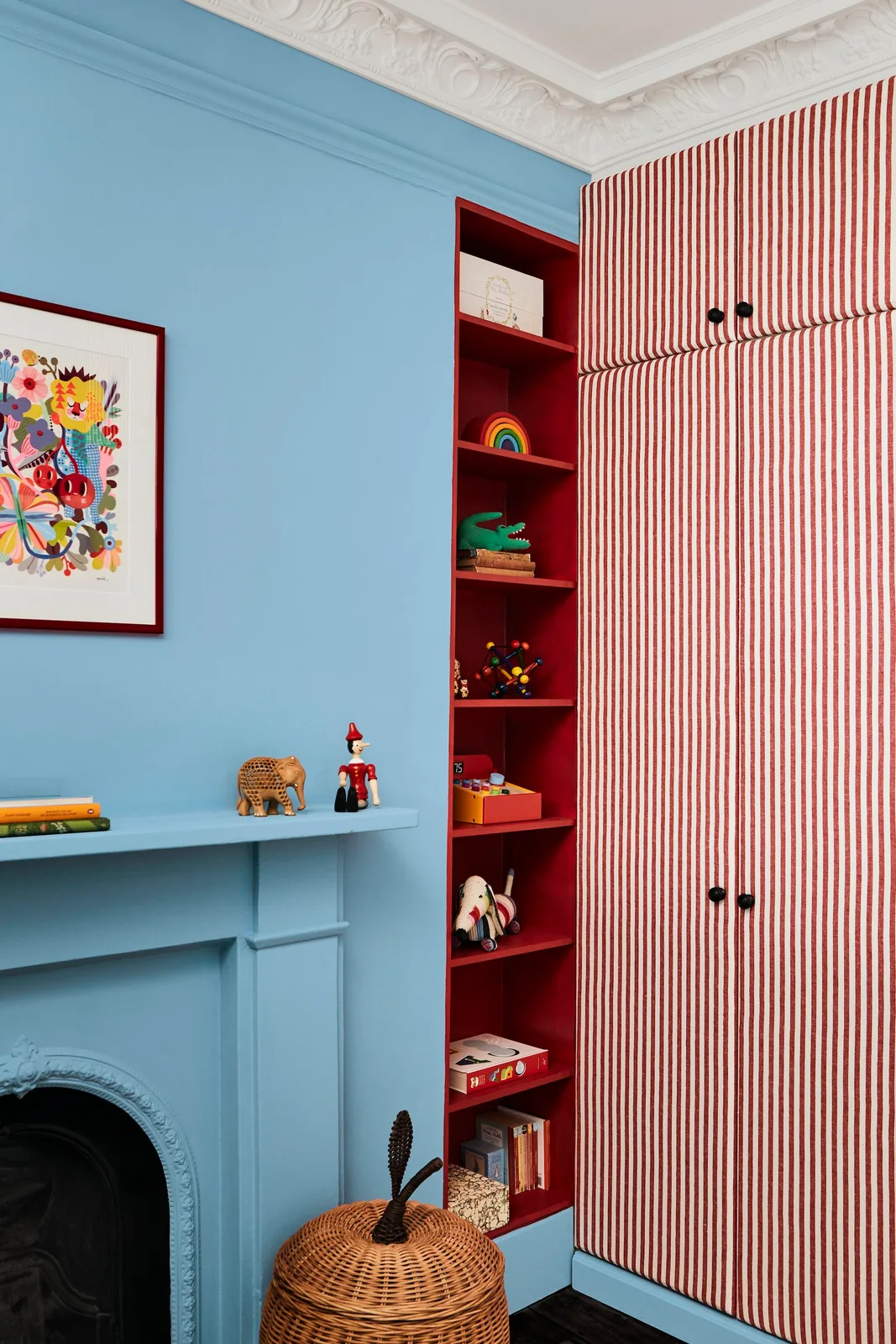
Use a Narrow Gap for a Rotating Toy Selection
 SaveSupport Non AI Creator
Image credit: Mylands
A narrow red shelving column sits beside striped wardrobe doors, holding a small selection of toys and books. Each level has enough space to distinguish the objects rather than presenting a tightly packed collection. The slim opening makes use of a cabinet edge that might otherwise remain decorative filler.
Keep a limited selection here and store the remaining collection elsewhere so toys can be swapped as interests change. Lower shelves should hold the items children can safely reach. Check how doors and handles move beside the display, and avoid placing delicate toys where they could be caught when the wardrobe is opened.
IDEA 15 / 16
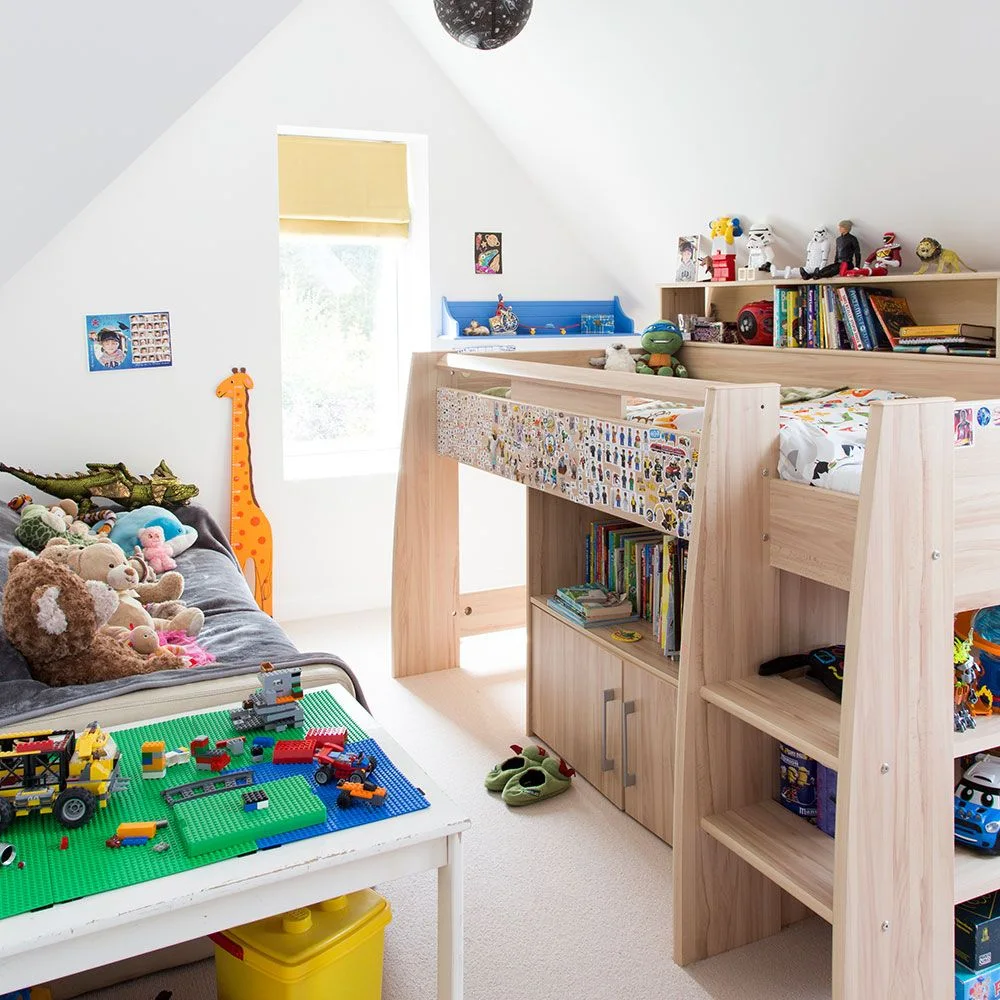
Combine Bedside Storage With a Building Area
 SaveSupport Non AI Creator
Image credit: Future
Books, figures and vehicles occupy shelves built around this raised bed, while a nearby table holds construction projects. The arrangement separates the place where toys are stored from the surface where they are being used. Soft animals have another resting area, reducing the pressure to fit everything into the shelving.
Follow the bed maker’s age, access and guardrail requirements rather than copying a raised arrangement on appearance alone. Keep ladders and walkways clear of loose pieces. Use accessible containers for the active building collection, and choose a stopping point for unfinished projects so the table remains useful when the next activity begins.
IDEA 16 / 16
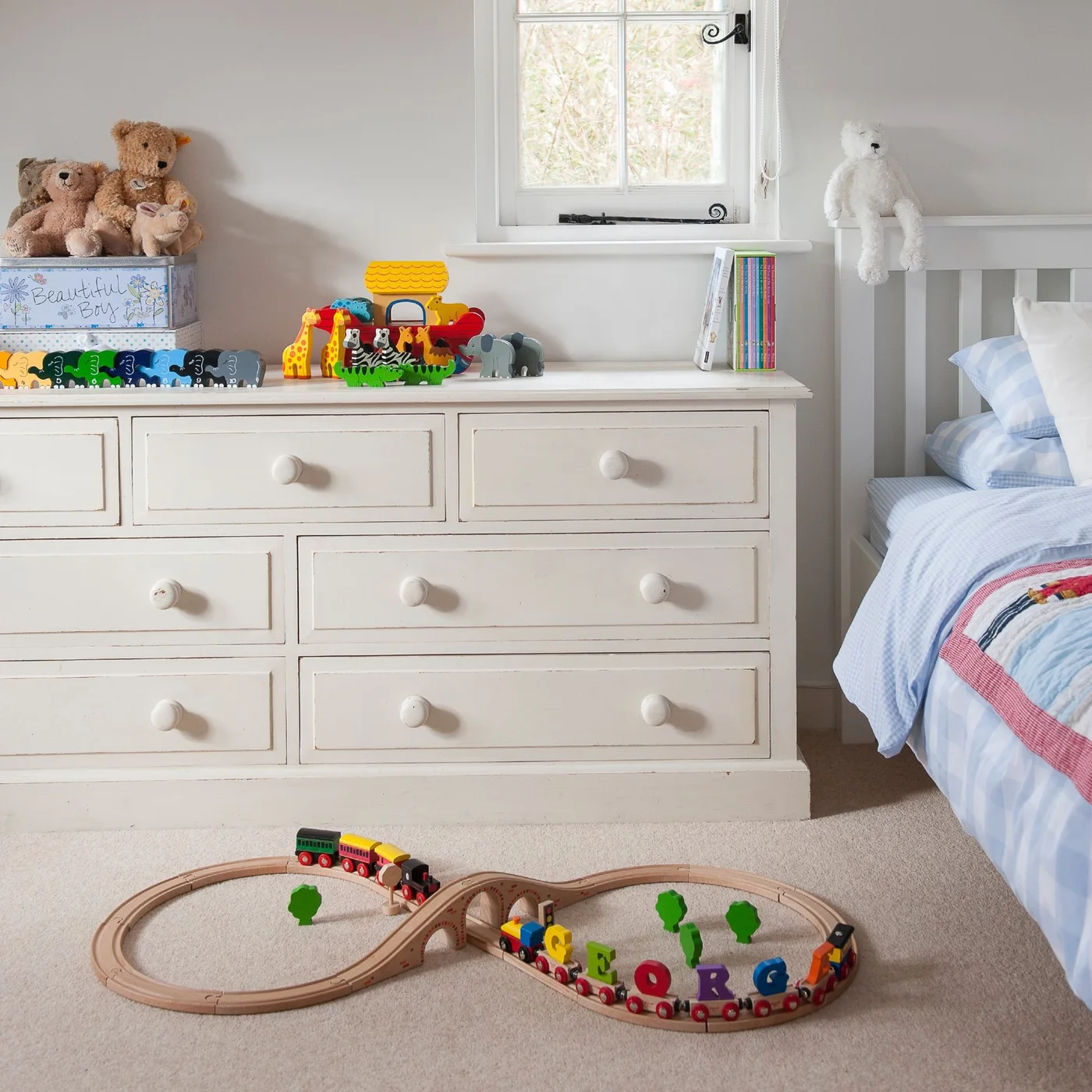
Give a Complete Set Its Own Clear Surface
 SaveSupport Non AI Creator
Image credit: Future PLC/David Merewether
A toy ark and its animal figures share the top of this wide dresser, with books and soft toys grouped at either end. Keeping the set together makes it easier to see missing pieces before they disappear into unrelated storage. The closed drawers below remain visually separate from the displayed collection.
Leave room to lift the main toy without knocking over its accessories, and keep only a set that fits comfortably. Confirm the furniture is secured as required and avoid using the dresser as a climbing route. A nearby shallow box can gather the pieces after play if arranging every animal on display becomes too much work.
BRING IT ALL TOGETHER
Keep the storage easier than the cleanup
Choose one home for each broad toy group, then show children how to return it. A few clear categories are often easier to maintain than many tiny compartments. Keep favorites accessible and review unused collections before adding another basket or cabinet.
Watch a normal cleanup and change the parts that cause frustration. A bin that is too heavy, a lid that is awkward or a shelf that requires climbing will not help a child tidy independently. Store hazardous creative supplies securely and keep routes through the room clear.