A vegetable garden is easier to look after when you can reach the plants, bring in water and move a basket or wheelbarrow between the beds. Decide where those everyday tasks will happen before choosing decorative edging or adding more planting space.
These gardens offer different layouts rather than a single growing recipe. Check your site’s sunlight, soil and drainage, then choose crops and planting dates using guidance for your region. Start at a scale you can maintain and expand after seeing how the first growing area works.
PART 01
Make the layout easy to use
IDEA 01 / 20
Divide the Plot with a Straight Main Path
 SaveSupport Non AI Creator
Image credit: Project: CBA Landscape Architects, LLC (via Houzz)
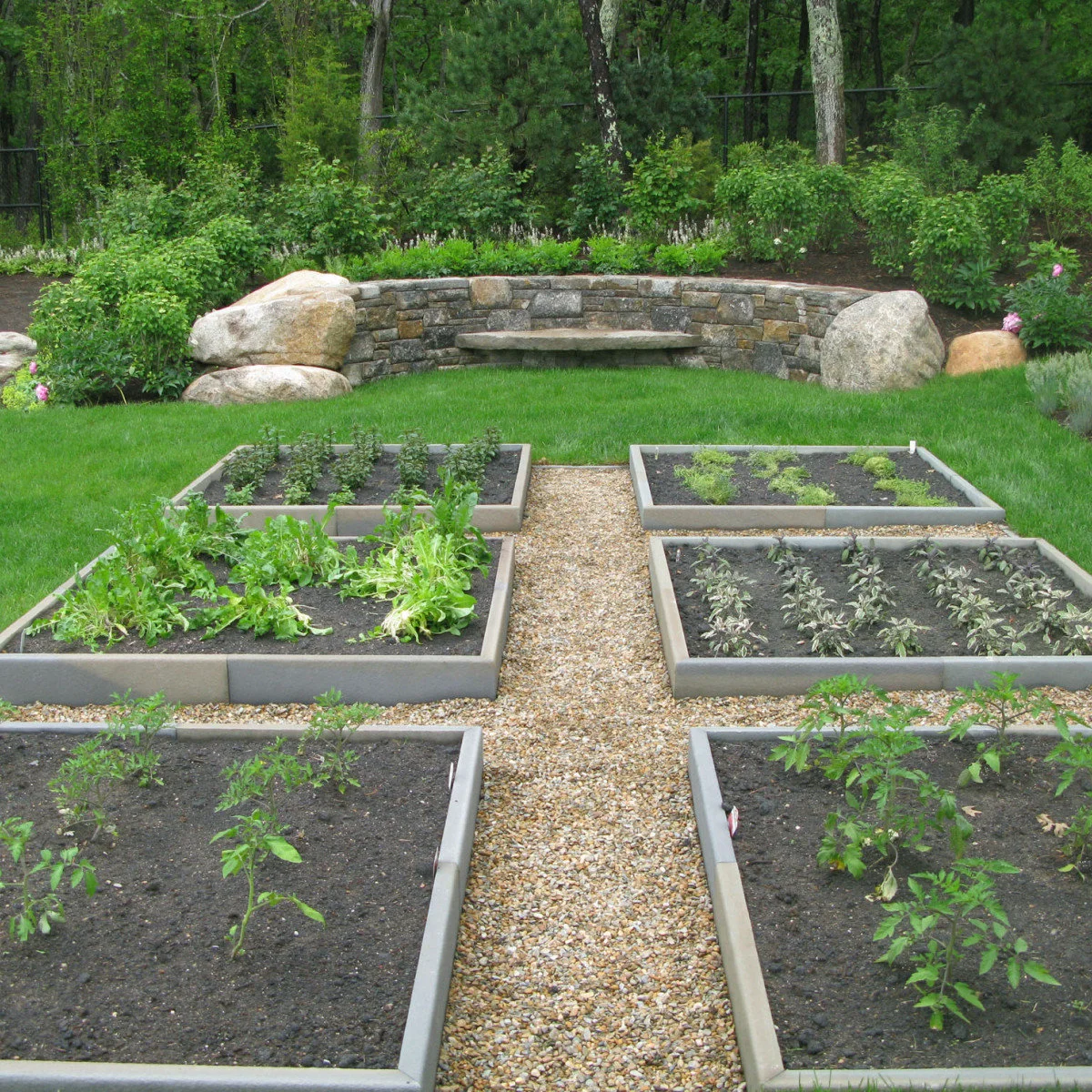
A straight gravel path separates the low beds into two orderly groups and leads toward a stone bench. Smaller gaps between the rectangles make the planting areas individually accessible. The low borders define the soil without turning every bed into a tall box.
Set out the path before filling the beds, then test it with the basket, kneeling pad or wheelbarrow you will use. Keep bed widths within your reach from the edges. For other surfaces and route layouts, compare these backyard walkway ideas before committing to gravel.
IDEA 02 / 20
Use Diagonal Paths to Reach Wide Sections
 SaveSupport Non AI Creator
Image credit: Project: River Valley Landscapes (via Houzz)
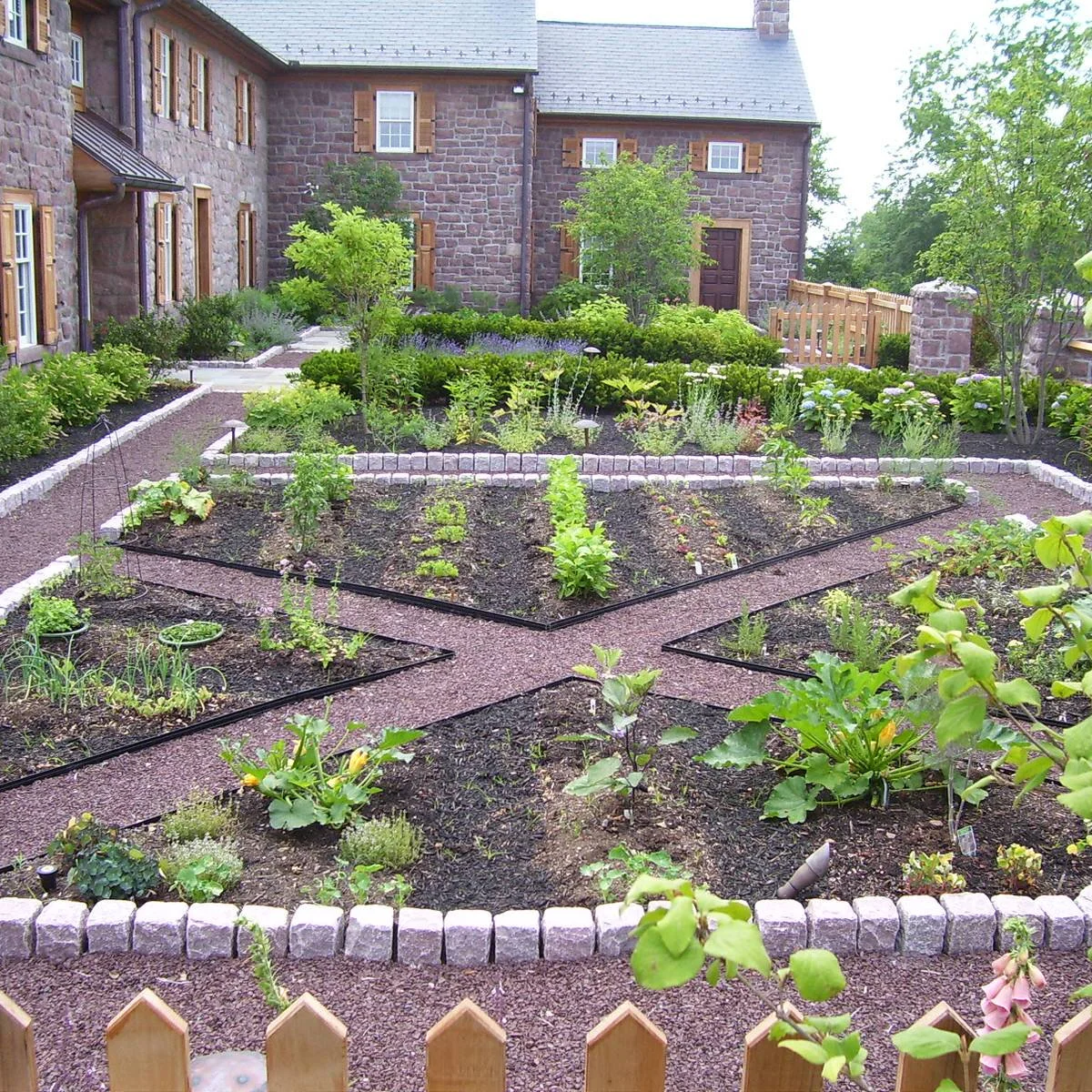
Diagonal paths divide the vegetable plot into smaller shapes, allowing access from more than one direction. Low edging separates the growing soil from the reddish gravel. Rows of young plants keep the angled sections readable while the larger garden surrounds remain more ornamental.
Draw the reachable planting areas as well as the path lines when planning an angled layout. Decorative triangles can leave awkward corners if they are too deep to reach. Leave a useful main route for bringing in soil and taking out plant debris at the end of the season.
IDEA 03 / 20
Keep Salad Beds Narrow and Clearly Defined
 SaveSupport Non AI Creator
Image credit: Project: Maher & Greenwald Fine Gardens (via Houzz)
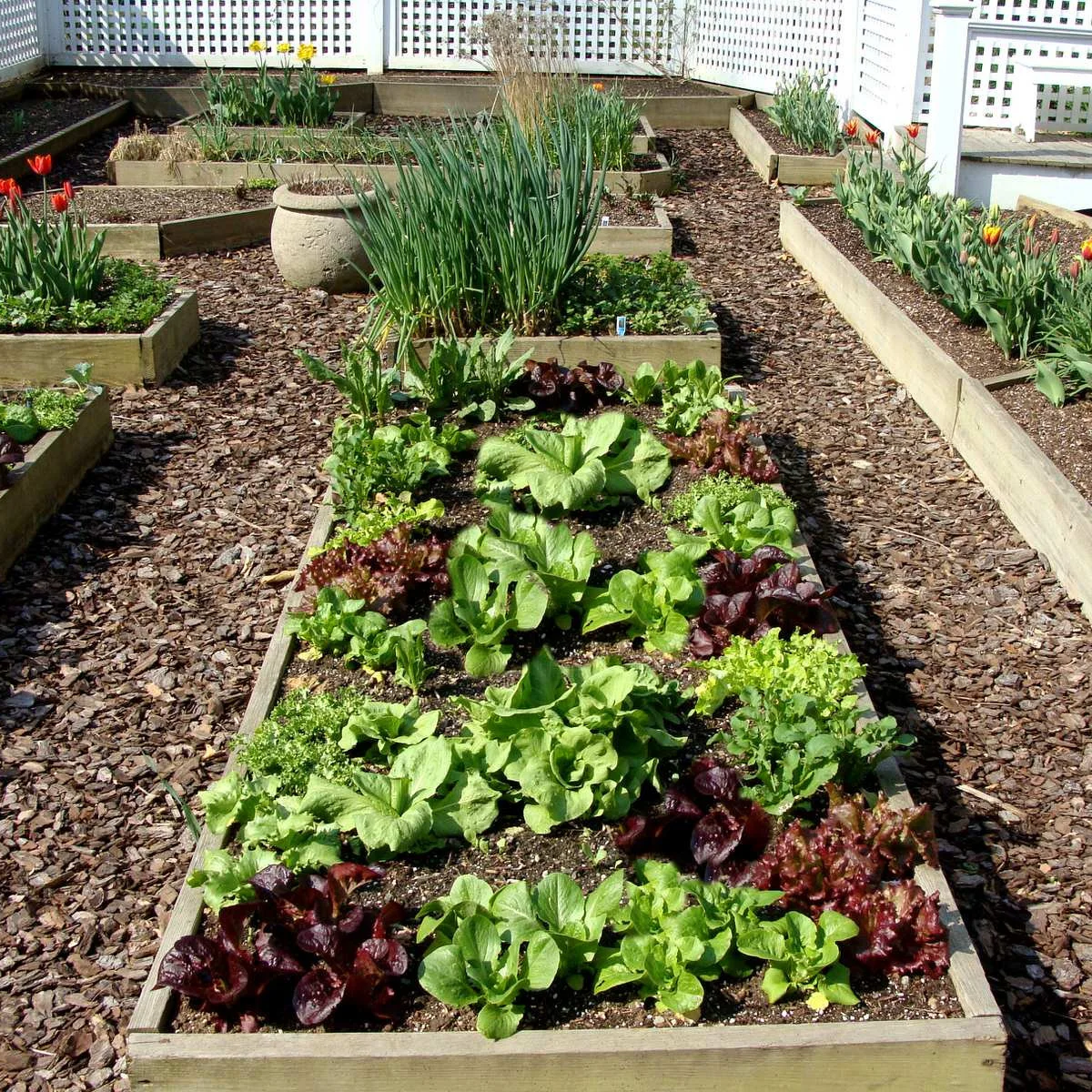
Green and burgundy leaves make the central bed visually varied, with narrow timber edges keeping the growing area distinct from the bark paths. Other beds repeat the same simple construction. The arrangement looks decorative because of the plants themselves rather than additional ornaments between them.
Choose varieties and spacing from the seed packet or local growing guidance, allowing for mature size rather than copying a crowded photograph. Leave access along both sides for harvesting. Keep a record of sowing dates so you can compare what worked instead of relying on memory next season.
IDEA 04 / 20
Make the Main Route a Permanent Surface
 SaveSupport Non AI Creator
Image credit: Project: Dear Garden Associates, Inc. (via Houzz)
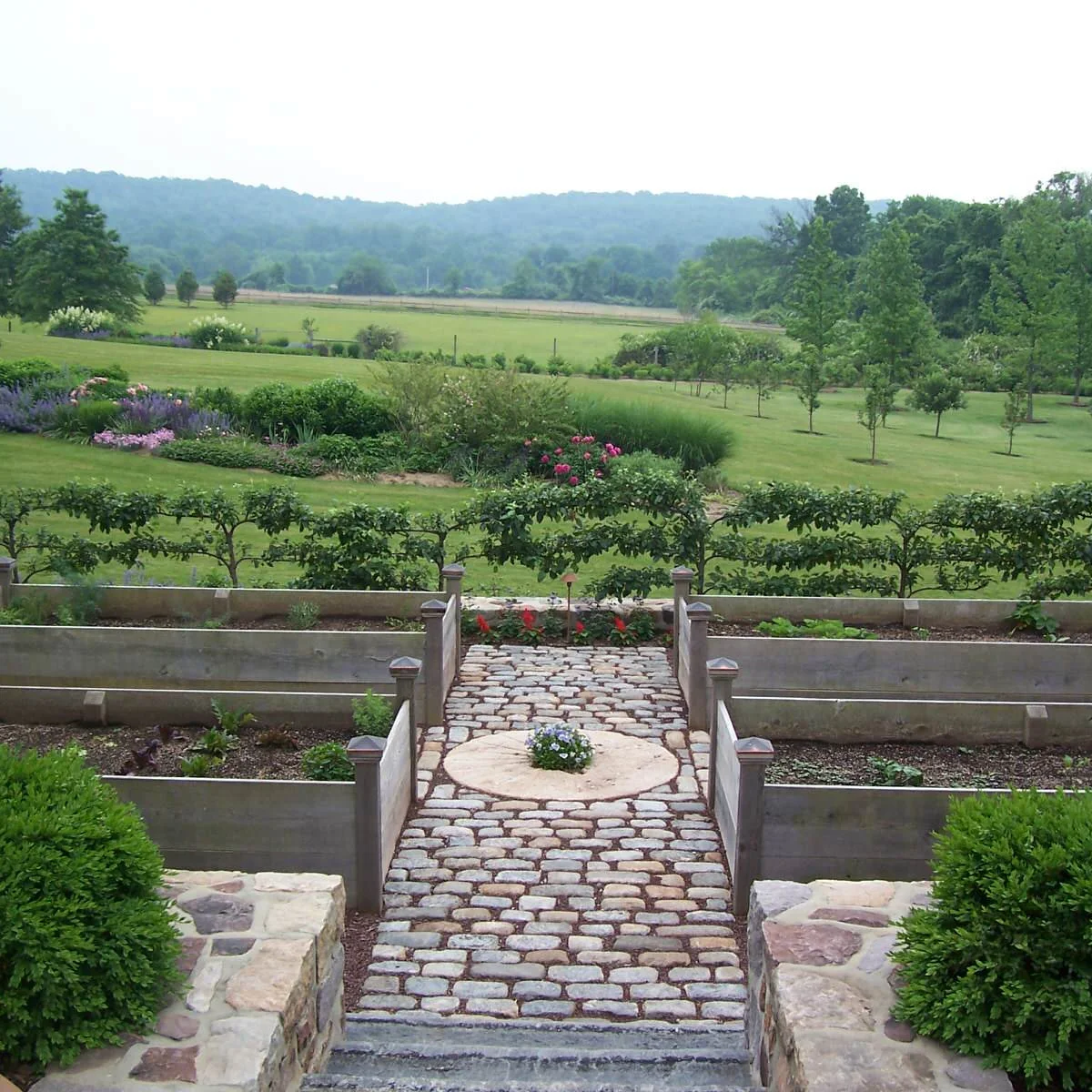
A cobbled path runs between the raised beds, with a circular inset adding interest at its center. The firm route contrasts with the growing soil and leads toward a trained fruit-tree boundary. Low timber walls keep the bed edges clearly separate from the walking surface.
A permanent path deserves careful planning because changing it later is disruptive. Check drainage, footing and the way equipment will move across it before installation. Keep the center free of pots or ornaments that narrow the useful route, even when a focal point looks attractive in a photograph.
IDEA 05 / 20
Plan Enclosure and Access Together
 SaveSupport Non AI Creator
Image credit: Project: Landsburg Landscape Nursery (via Houzz)
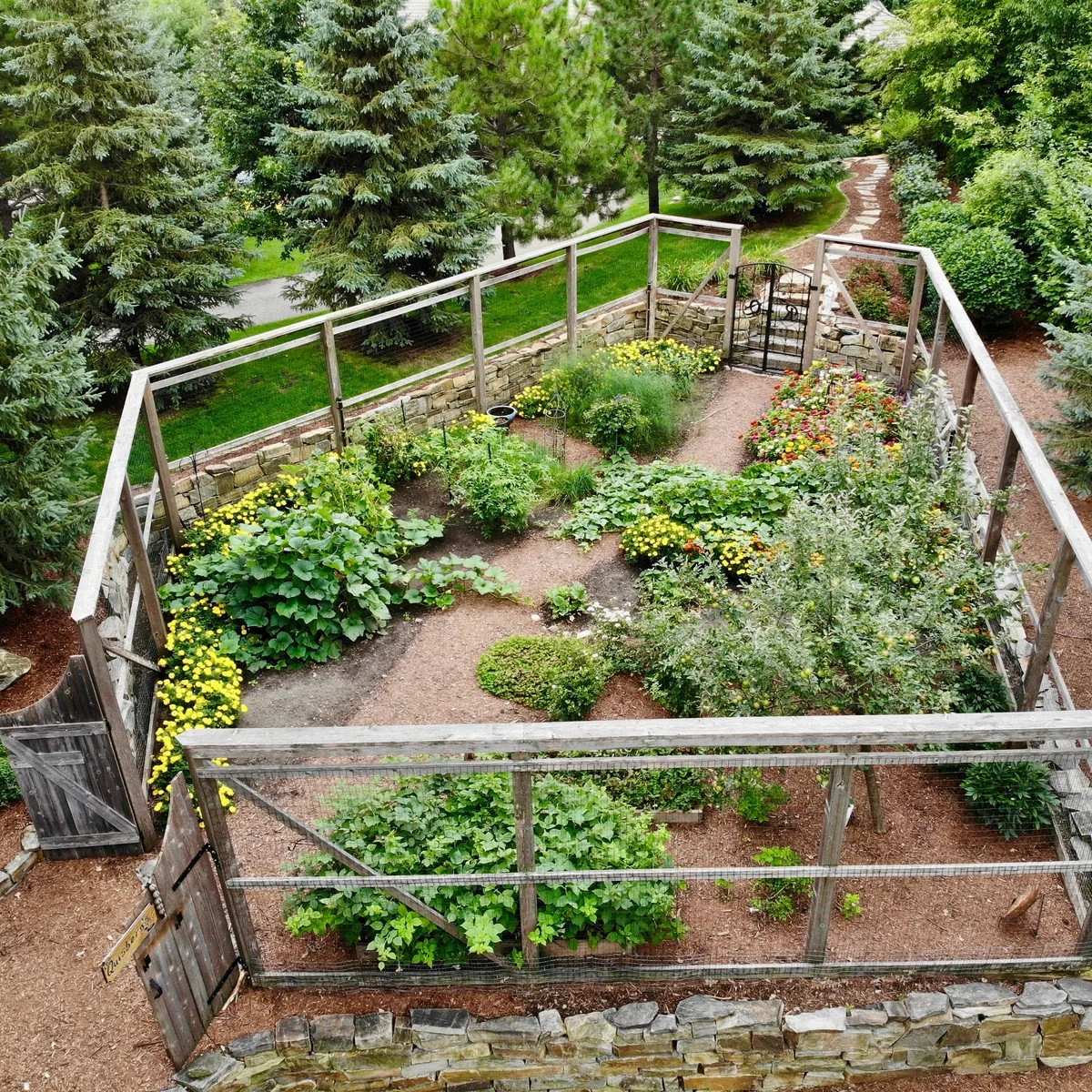
Mesh panels sit within a timber frame around the vegetable plot, with gates providing access from two sides. Broad paths divide the mixed planting inside. The enclosure reads as part of the garden layout rather than a fence added after the beds have already filled the space.
Identify the animals you need to exclude before choosing mesh size, fence height and gate details. A photograph cannot establish whether a barrier will work in your yard. Keep gate openings wide enough for routine equipment and check that mature plants will not prevent them from closing.
PART 02
Give crops suitable support
IDEA 06 / 20
Give Climbing Crops a Separate Support Line
 SaveSupport Non AI Creator
Image credit: Project: Edger Landscape Design (via Houzz)
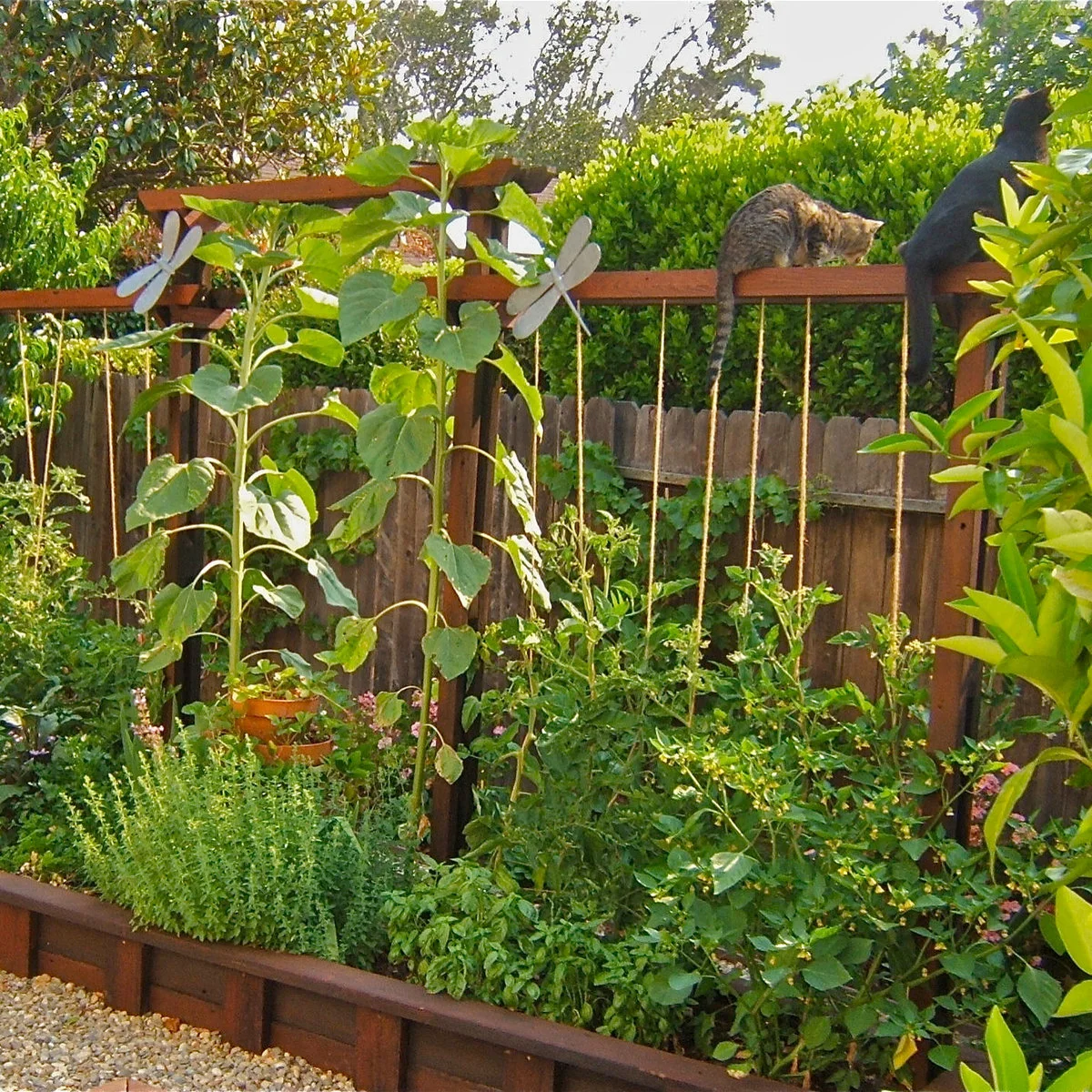
Vertical strings hang from a horizontal rail above the narrow bed, creating separate climbing lines beside the fence. Taller plants occupy the back while lower growth fills the front edge. The support makes the growing direction clear without spreading a large freestanding frame across the path.
Match the support to the crop and its mature weight, using durable fixings and ties that do not cut into stems. Install it before growth becomes difficult to move. Keep access behind or beside the plants where possible so training and harvesting do not require reaching through tangled foliage.
IDEA 07 / 20
Install Cages While Plants Are Still Small
 SaveSupport Non AI Creator
Image credit: Project: Eden Condensed (via Houzz)
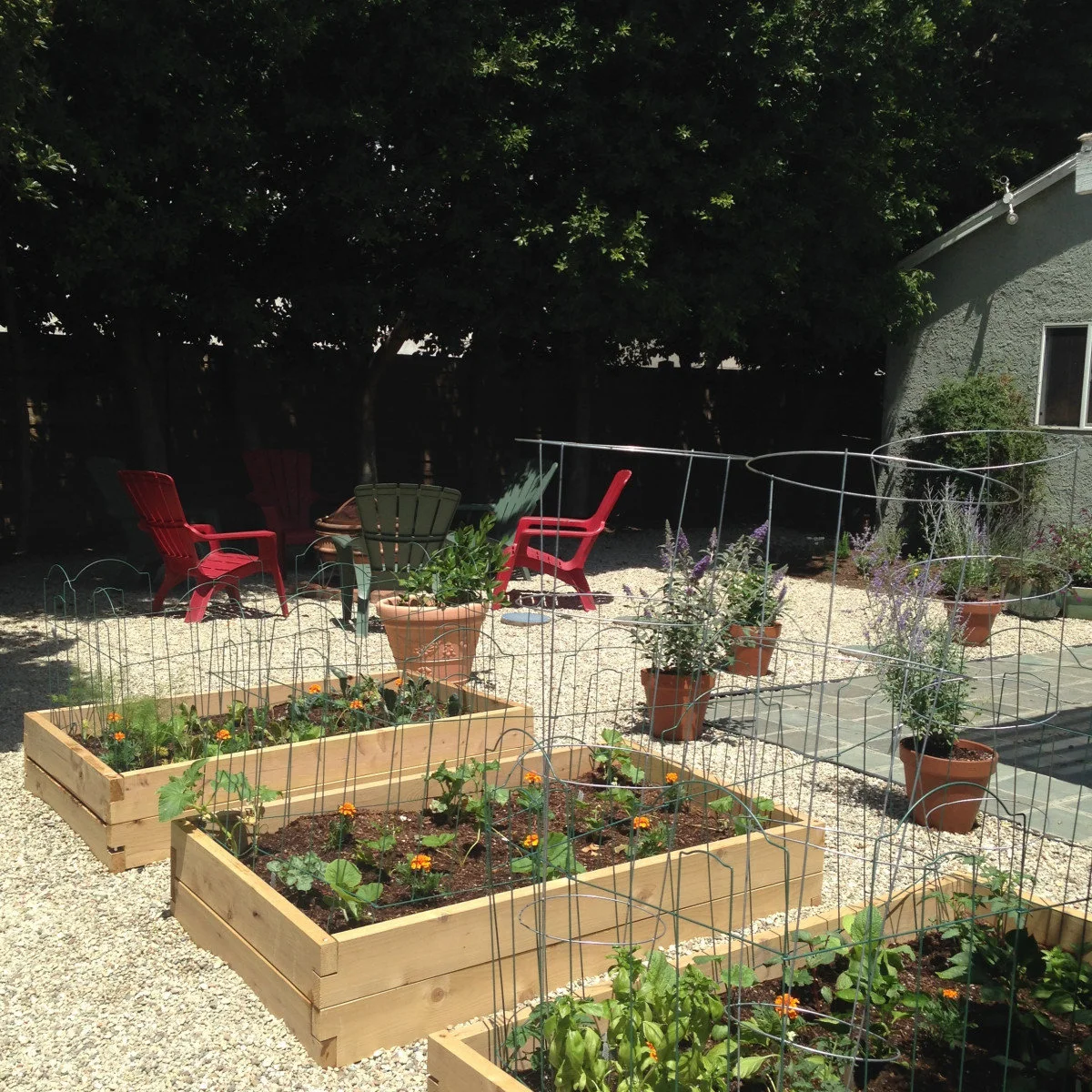
Wire cages are already in place above the young plants, showing how much structure the beds will hold later in the season. Small flowers occupy some corners. The gravel surrounds connect the growing area with a separate group of chairs, leaving room to move between the boxes.
Choose supports for the crop you intend to grow rather than buying one cage style for every plant. Fit them early to avoid pushing supports through established roots later. Keep the cages within the bed outline so projecting wires do not catch clothing along the path.
IDEA 08 / 20
Make a Growing Arch Part of the Route
 SaveSupport Non AI Creator
Image credit: Project: Melanie Jackson Garden Design (via Houzz)
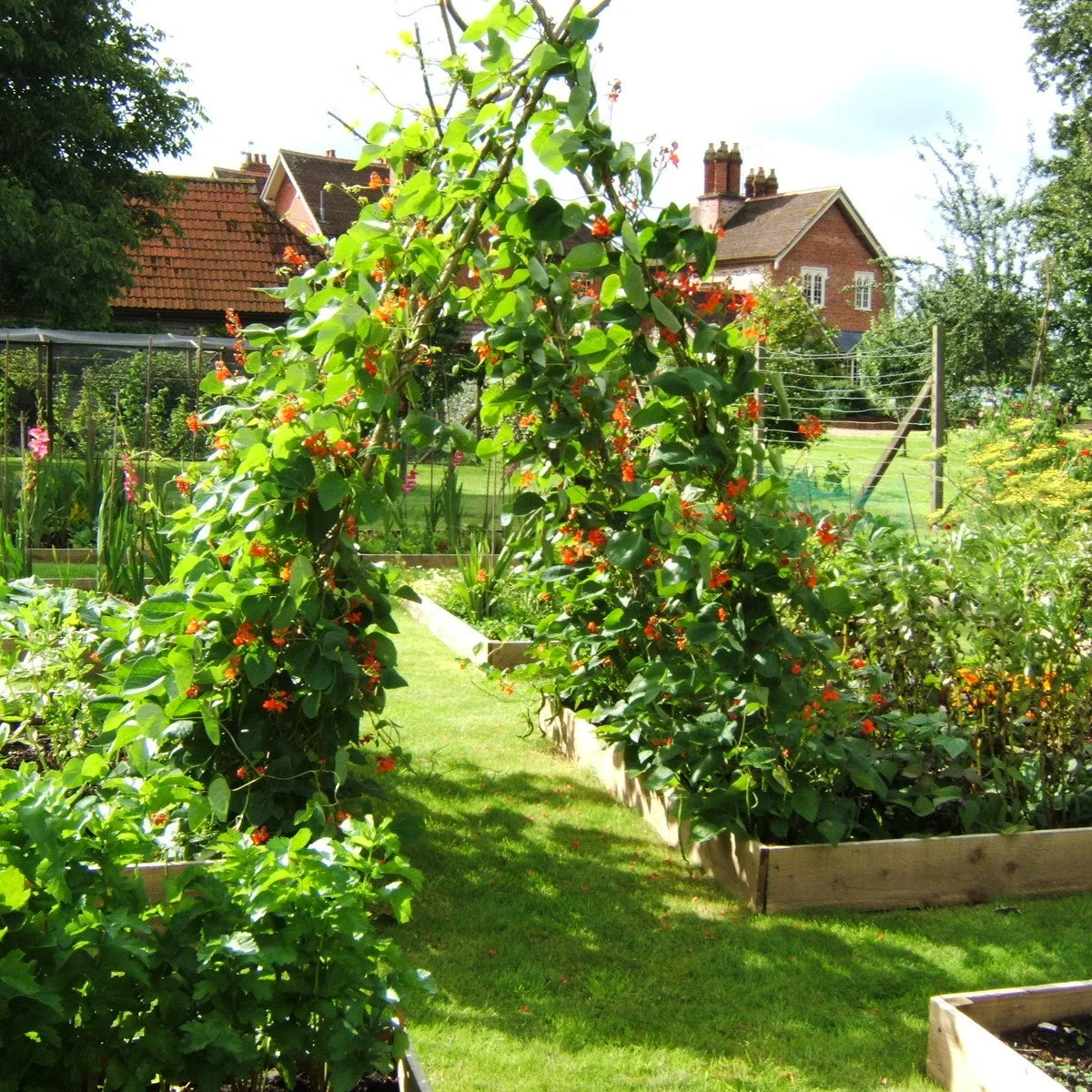
A leafy arch crosses the grass path between the beds, turning the route through the vegetable patch into a feature. Orange-red flowers add color high above the low timber edges. The open center still provides a clear passage beneath the growth.
Allow extra clearance for foliage and hanging crops when choosing an arch, not just enough space for the bare frame. Secure it for the expected weight and weather exposure. Keep the lower growth trained away from the path so harvesting does not gradually turn the arch into an obstacle.
IDEA 09 / 20
Use Tall Supports to Organize a Tiered Plot
 SaveSupport Non AI Creator
Image credit: Project: Paul Hendershot Design, Inc. (via Houzz)
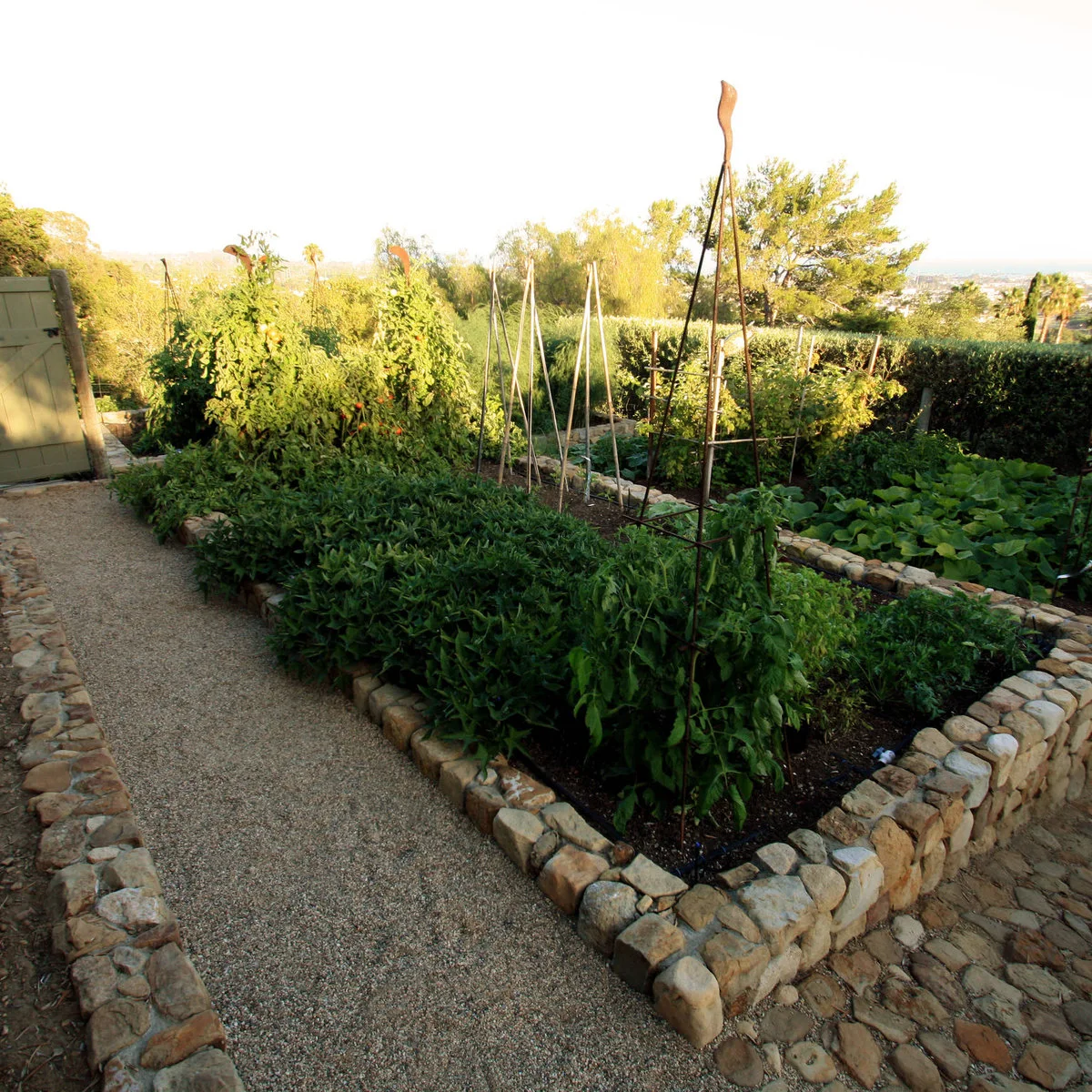
Tall tapered supports mark the vegetable beds above the stone edging, making the different growing sections easy to distinguish. The gravel route follows the edge of the plot. A clipped hedge gives the varied leaves and support shapes a consistent background.
Check how each support will affect light on the surrounding plants before fixing it in place. Leave enough room to reach the crop as it fills out. If the ground changes level, plan comfortable footing along the route rather than treating the wall height as a substitute for access.
IDEA 10 / 20
Keep Trained Fruit Trees at the Perimeter
 SaveSupport Non AI Creator
Image credit: Project: Offshoots, Inc. (via Houzz)
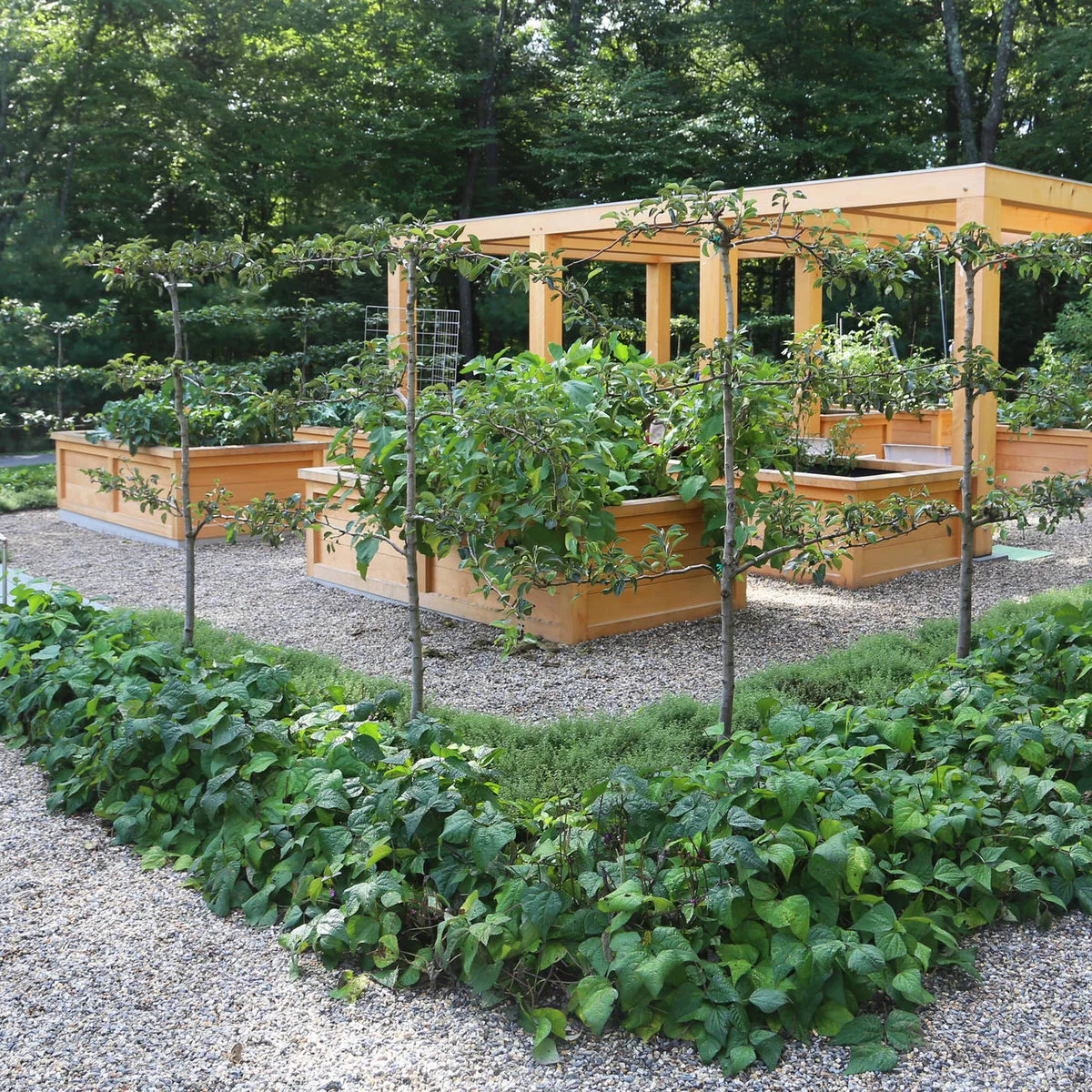
Trained pear trees form a light perimeter around the raised vegetable beds, with horizontal branches preserving views into the plot. The timber pergola repeats the straight lines of the boxes. Gravel paths and clipped low planting give the productive area a formal framework.
Treat trained fruit as a separate long-term project with its own pruning, support and watering needs. Position trees so their developing canopy does not take over the light needed by vegetables. Start with fewer beds if maintaining both fruit and annual crops would exceed your available time.
PART 03
Choose beds for the space
IDEA 11 / 20
Separate Tall Rows from Lower Crops
 SaveSupport Non AI Creator
Image credit: Project: Montgomery Robbins, Inc. (via Houzz)
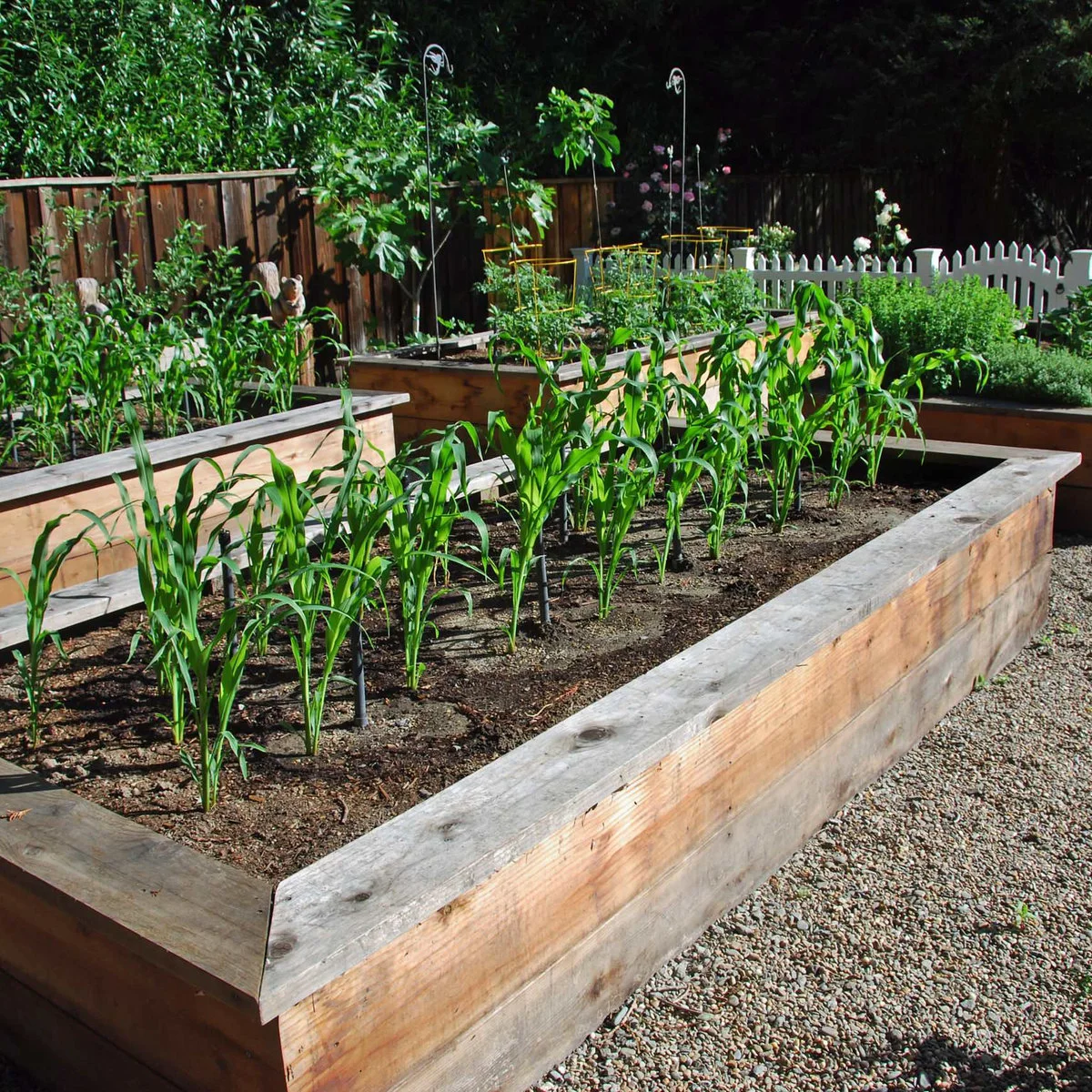
Tall narrow leaves rise from orderly rows in the foreground bed, while cages and lower planting occupy separate beds behind it. Broad wooden caps outline each box. The division makes it easier to see which areas will become tall and which will remain lower.
Plan with mature plant height and spread rather than the size of young starts. Put tall crops where they will not unnecessarily shade shorter ones, accounting for your site’s sun direction. Use crop-specific spacing guidance; visible gaps in an early photograph do not reveal the final planting density.
IDEA 12 / 20
Leave Room for Broad Leaves to Expand
 SaveSupport Non AI Creator
Image credit: Project: Vitus Mataré & Associates, Inc. (via Houzz)
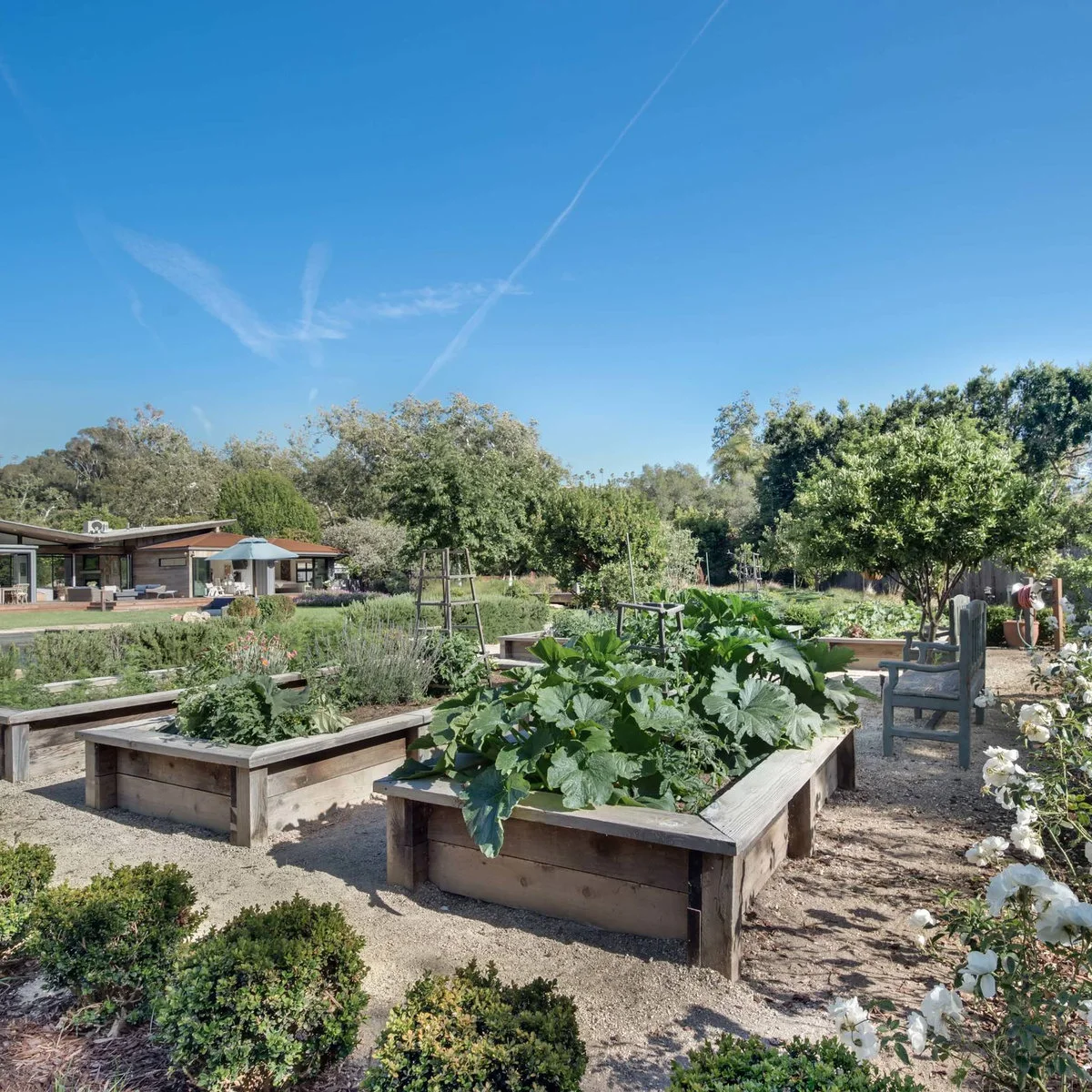
Broad leaves spread across the foreground bed, showing how quickly a small plant can occupy a substantial area. The surrounding gravel paths remain separate from the foliage, with a chair placed beyond the bed. Other boxes carry smaller plants and upright supports.
Check the expected spread before planting more than one large crop in a small bed. Keep the main access route outside the space the leaves will need. Monitor growth through the season and train suitable plants as recommended rather than repeatedly cutting healthy foliage to recover a walkway.
IDEA 13 / 20
Give Long-Lived Plants Their Own Section
 SaveSupport Non AI Creator
Image credit: Project: JPS Landscape Design (via Houzz)
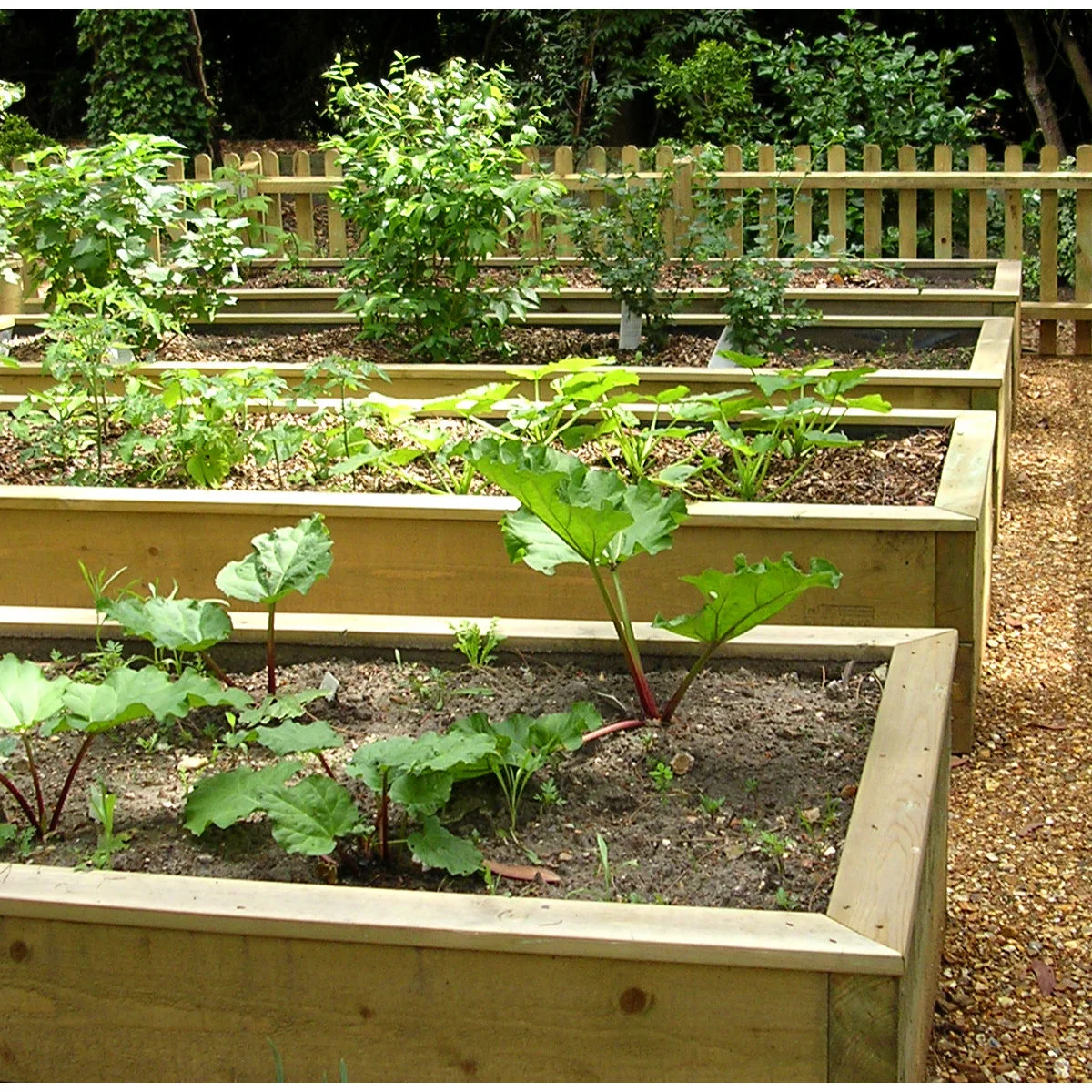
Large red-stemmed leaves occupy the front bed while smaller plants and upright growth sit in separate beds behind. The repeated boxes make these different plant shapes feel organized. A low picket fence gives the growing area a clear boundary without hiding the beds.
If you include perennial crops, give them a dedicated place that will not interrupt the annual planting plan. Check their mature size and care needs before choosing neighboring vegetables. Keep labels and a simple bed map so permanent plants remain accounted for when you clear or renew nearby sections.
IDEA 14 / 20
Use Taller Boxes When the Extra Height Helps
 SaveSupport Non AI Creator
Image credit: Project: Côté jardin et clôtures (via Houzz)
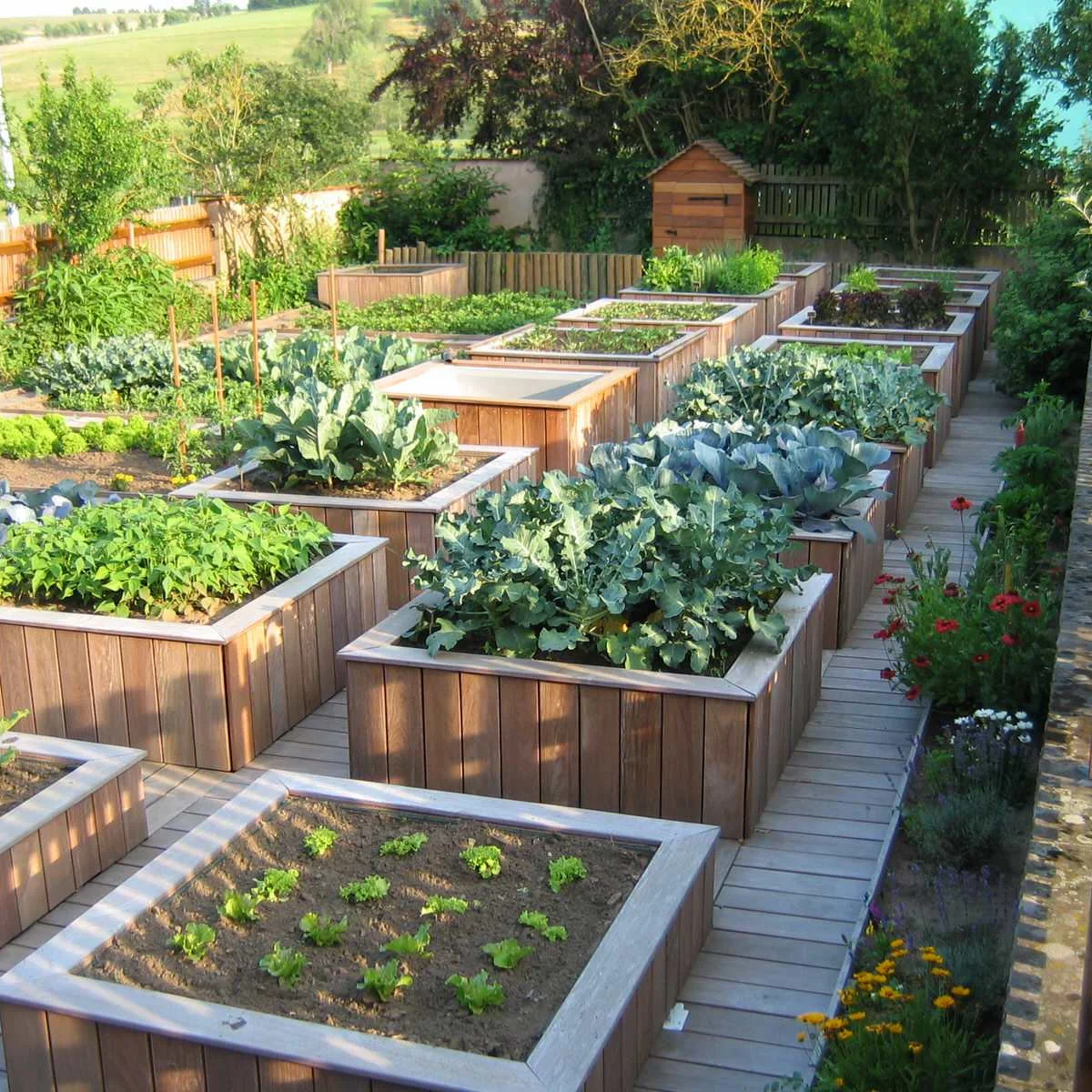
Tall square boxes place much of the foliage closer to standing height, with boardwalk paths running between them. Repeated pale caps give the row a consistent outline. A separate flower border softens the edge without taking over the soil reserved for vegetables.
Test a proposed height and width with a temporary mock-up before building several boxes. Extra height also means more material and growing medium, so calculate the full project rather than just the frame. Raised soil can dry faster than surrounding ground; plan convenient watering from the beginning.
IDEA 15 / 20
Fit Angled Beds to a Defined Corner
 SaveSupport Non AI Creator
Image credit: Project: Pro Care Horticultural Services (via Houzz)
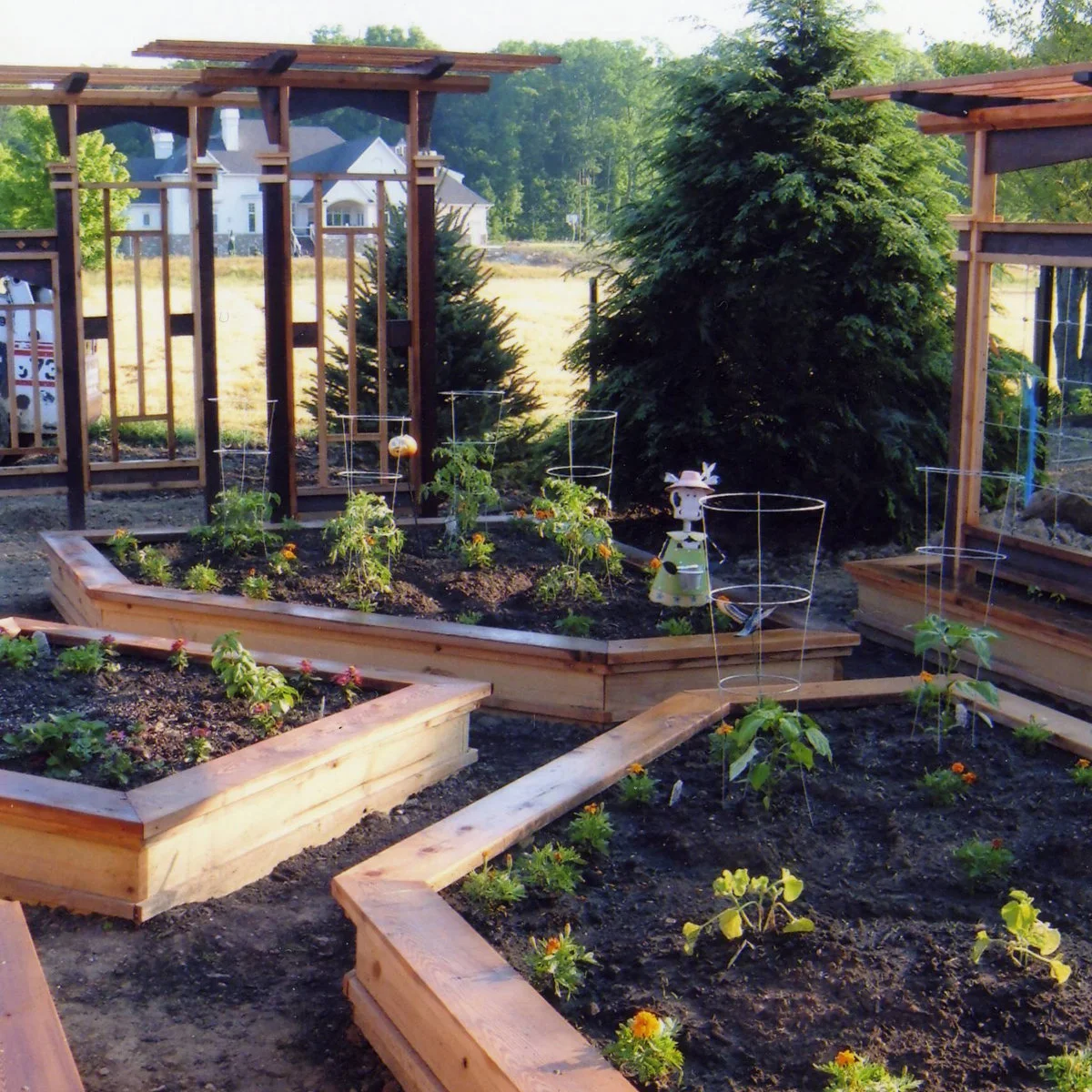
Angled ends give these timber beds a different outline from a standard rectangle, while tall trellis panels define the corner behind them. Small plants and wire cages leave the layout easy to see. Open gaps between the beds provide routes into the growing area.
Use angled construction only when it improves access or fits the site more comfortably. Mark the inside corners at full scale to check that they can be reached. Keep the trellis placement flexible enough to suit the intended crops, rather than assuming every background panel must carry climbing plants.
PART 04
Make the garden part of everyday life
IDEA 16 / 20
Give Flowers a Deliberate Share of the Bed
 SaveSupport Non AI Creator
Image credit: Project: Dear Garden Associates, Inc. (via Houzz)
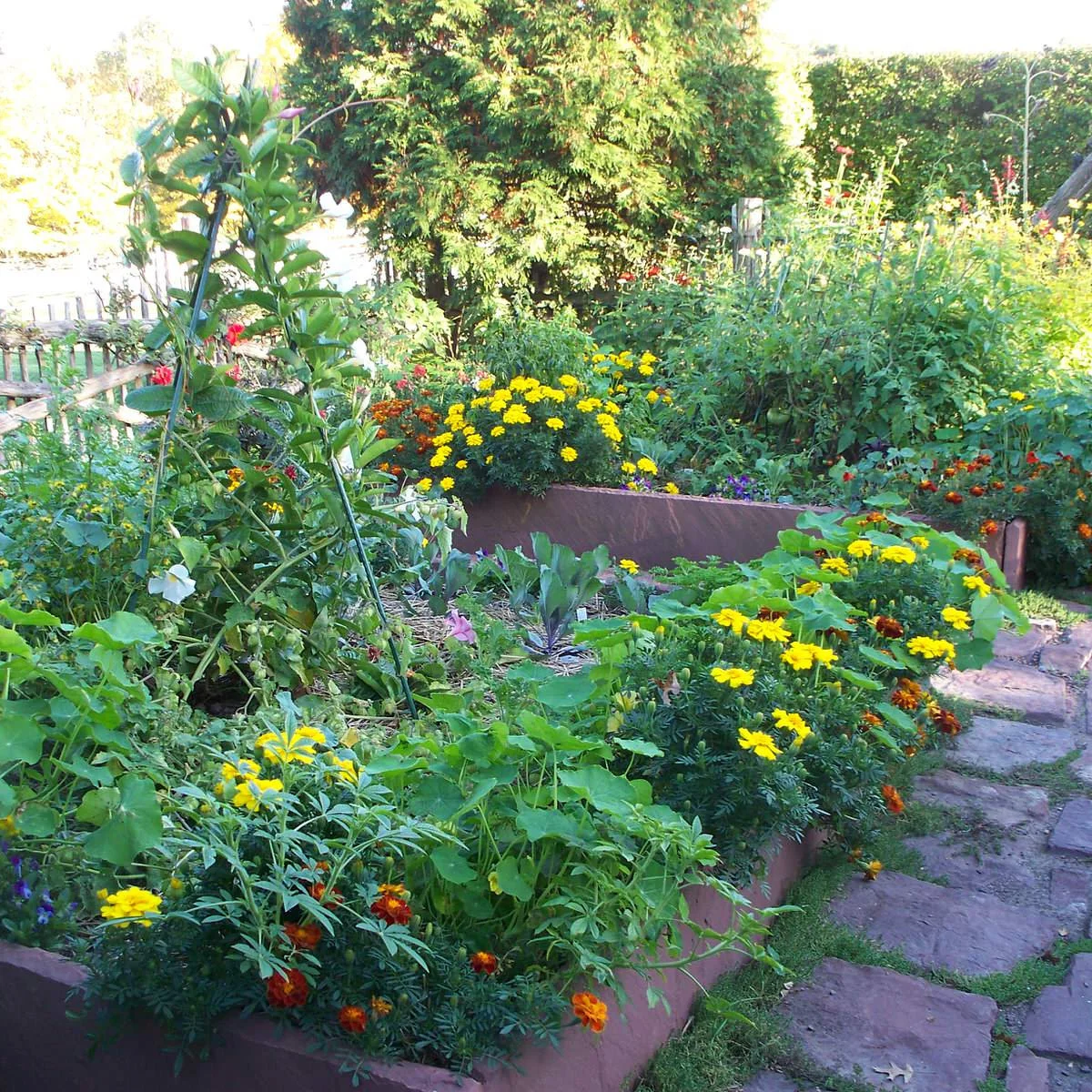
Yellow and orange flowers spill around leafy crops and upright supports, giving the vegetable area the character of a mixed border. Stone edging separates the planting from the path. The combination is rich in color, but the flowers take up real growing and maintenance space.
Decide how much room you want for flowers before planting, and keep the food crops’ light and spacing needs in view. Do not assume a flower will solve a pest problem simply because it is nearby. Maintain a clear route through the garden as the mixed planting fills out.
IDEA 17 / 20
Keep Movable Herb Pots Beside the Beds
 SaveSupport Non AI Creator
Image credit: Project: Joanne Winn Garden Design (via Houzz)
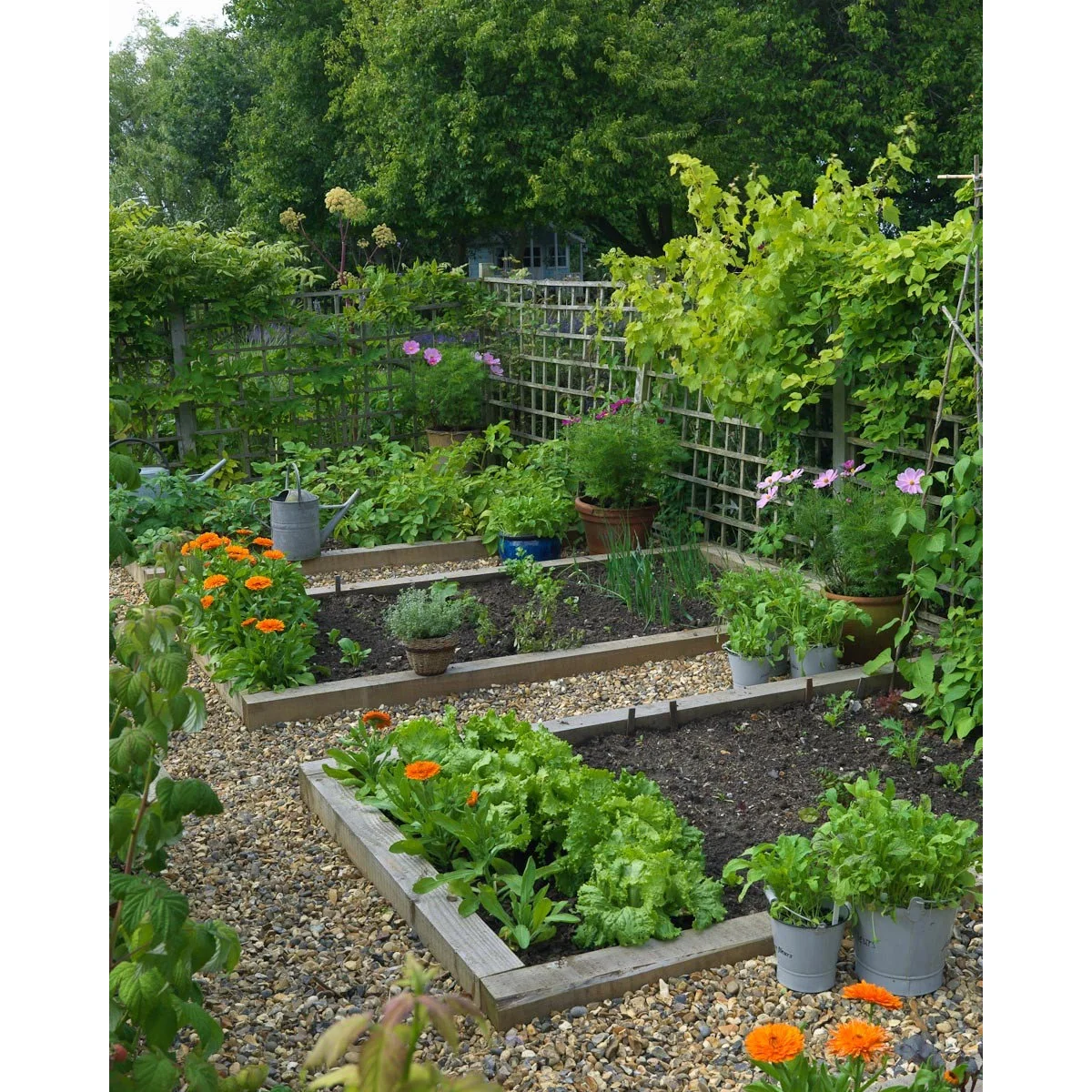
Small herb pots sit beside the low beds, bringing extra containers into the growing area without changing the bed outlines. Lettuce and orange flowers fill the foreground, while trellis separates the patch from the rest of the garden. Gravel keeps the spaces between these elements visually connected.
Place pots where they will not narrow the route or be hidden by expanding foliage. Containers need their own drainage and watering attention, even when they sit next to a well-watered bed. For a smaller enclosed setting, these small courtyard ideas offer other ways to organize pots and paths.
IDEA 18 / 20
Choose Covers You Can Open for Harvesting
 SaveSupport Non AI Creator
Image credit: Project: Luci.D Interiors (via Houzz)
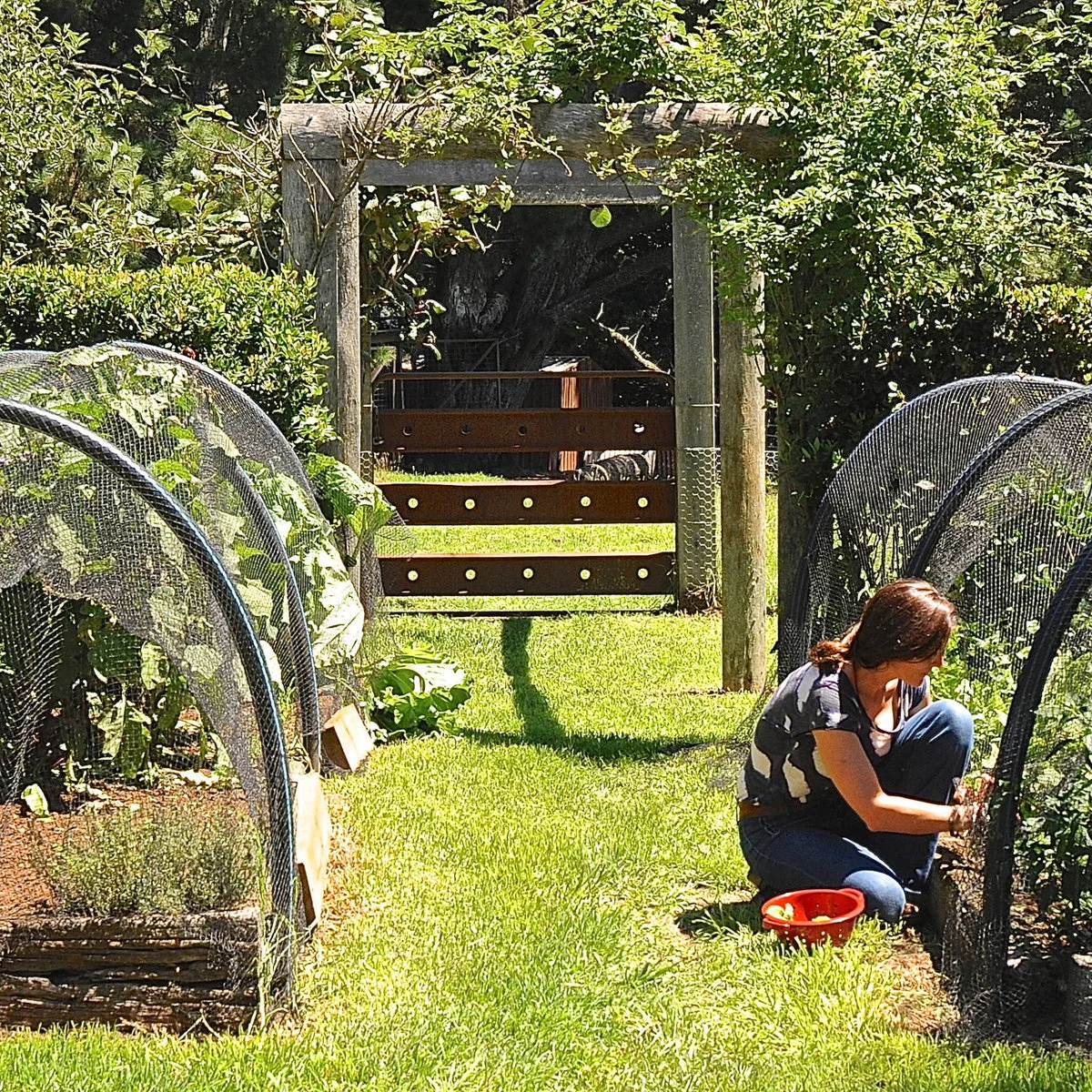
Curved supports hold mesh above the beds, with the gardener able to reach the plants from the grass path. A timber gate marks the far end of the route. The covers have enough height to contain substantial growth without resting directly on every leaf.
Choose a cover for the pest or purpose you have identified, and work out how it opens before filling the bed. Some crops need pollinator access at flowering, so follow crop-specific guidance. Keep mesh taut and maintained, checking it regularly rather than leaving loose material around the garden.
IDEA 19 / 20
Check Shade Around Existing Fruit Trees
 SaveSupport Non AI Creator
Image credit: Project: Kate Eyre Garden Design (via Houzz)
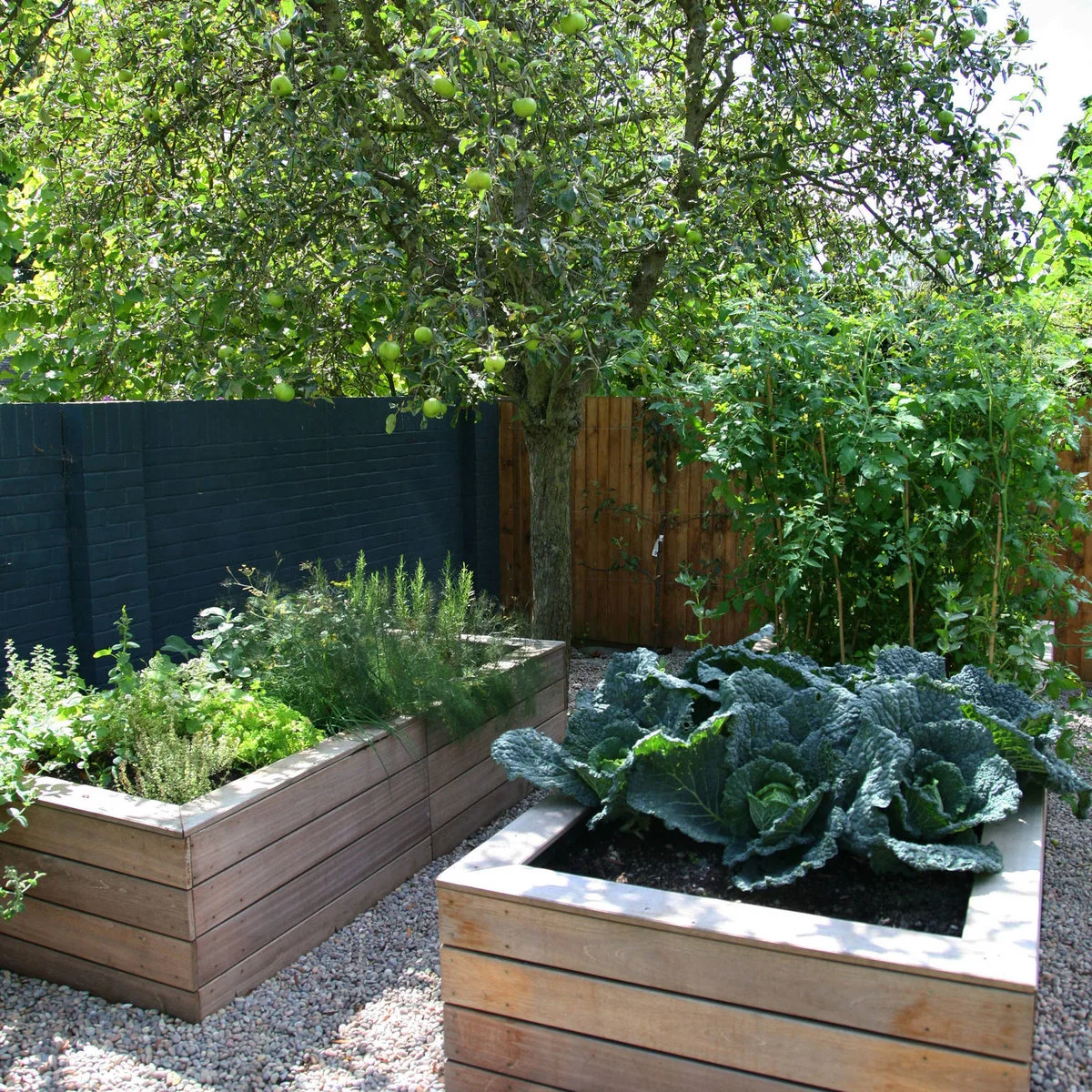
A fruiting tree rises beside the vegetable boxes, with dappled light crossing the broad dark leaves and herb-like growth. The raised edges separate the crops from the gravel route. The compact layout uses the available corner while making the tree an unavoidable part of the plan.
Observe sunlight at several times of day and again as the tree leafs out. Match crops to the light the site actually receives instead of expecting every vegetable to perform equally. Keep bed construction and digging away from important tree roots, getting site-specific advice when the layout is tight.
IDEA 20 / 20
Reserve a Compact Area for Covers and Starts
 SaveSupport Non AI Creator
Image credit: Project: Jenny Bloom Garden Design (via Houzz)
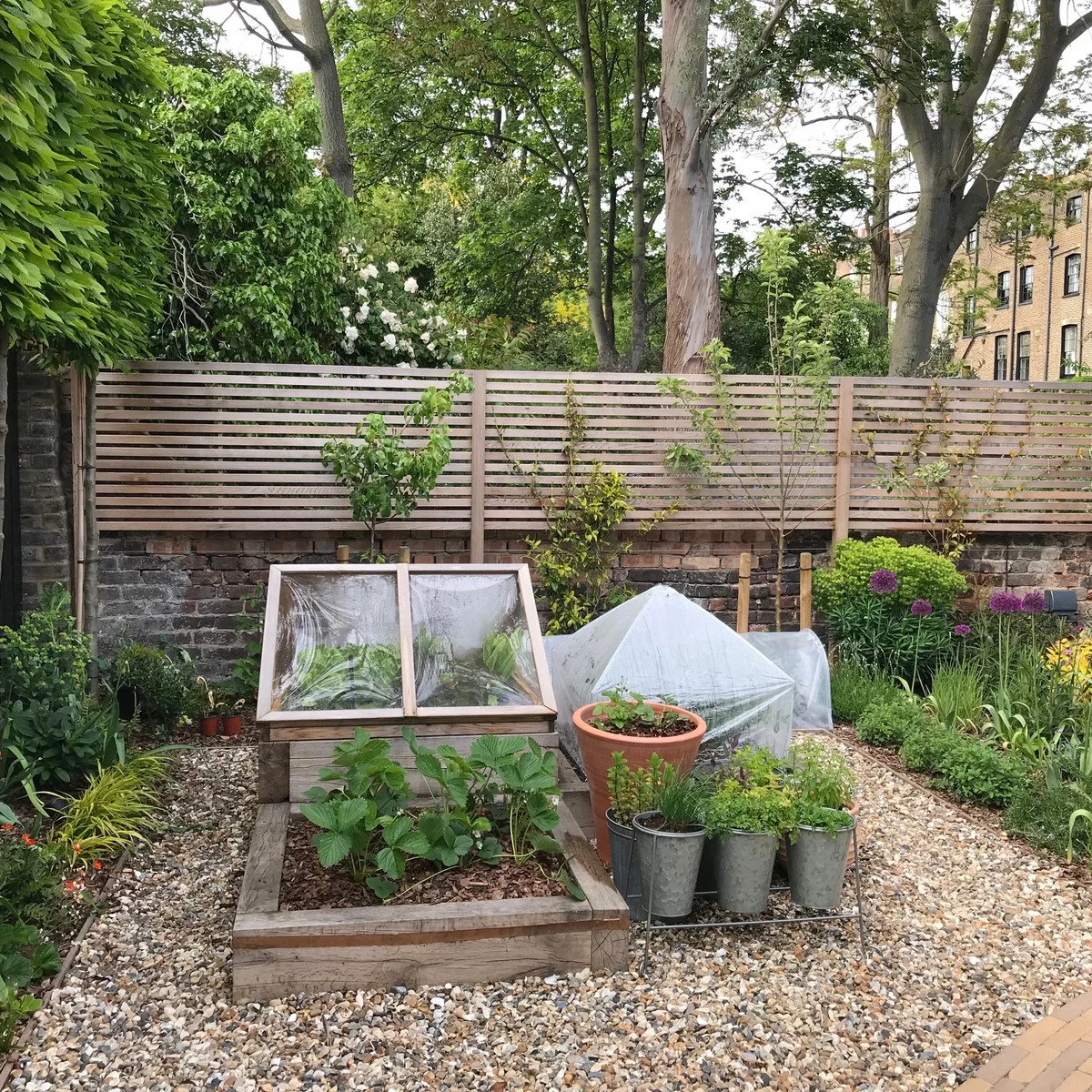
A sloped clear cover and a separate mesh frame give this compact growing area different protected sections. Small pots occupy a nearby stand, while the gravel leaves access around the boxes. The arrangement shows how a modest garden can have several growing functions without becoming one large bed.
Make room to open, ventilate and remove covers comfortably, following the product and crop requirements. Check conditions under clear covers regularly because enclosed spaces can heat quickly. Keep supplies organized nearby, and compare these small cottage garden ideas if you want the productive corner to blend with ornamental planting.
BRING IT ALL TOGETHER
Start with access, then add growing space
A few reachable beds with convenient water are a better starting point than a large plot that becomes difficult to weed or harvest. Mark out paths and mature plant sizes before building, then adjust the plan while changes are still easy.
Keep a simple record of planting dates, varieties and results. Use soil testing and local extension advice to guide amendments and crop choices, and expand only after you know which parts of the layout are working for you.