A sideboard often has two jobs: storing things and giving a room a place for a personal display. The most useful arrangements respect both. Before buying more objects, decide whether the top also needs to hold drinks, a serving platter or a lamp used every evening.
These 15 examples range from freestanding cabinets to an open buffet, a narrow console and fitted storage. Look at the height of each group, the space between objects and how the display relates to the furniture. Copy a useful principle rather than collecting every accessory shown.
PART 01
Start with useful groups and a clear focal point
IDEA 01 / 15
Build a Botanical Group with Different Heights
 SaveSupport Non AI Creator
Image credit: Future PLC/Simon Whitmore
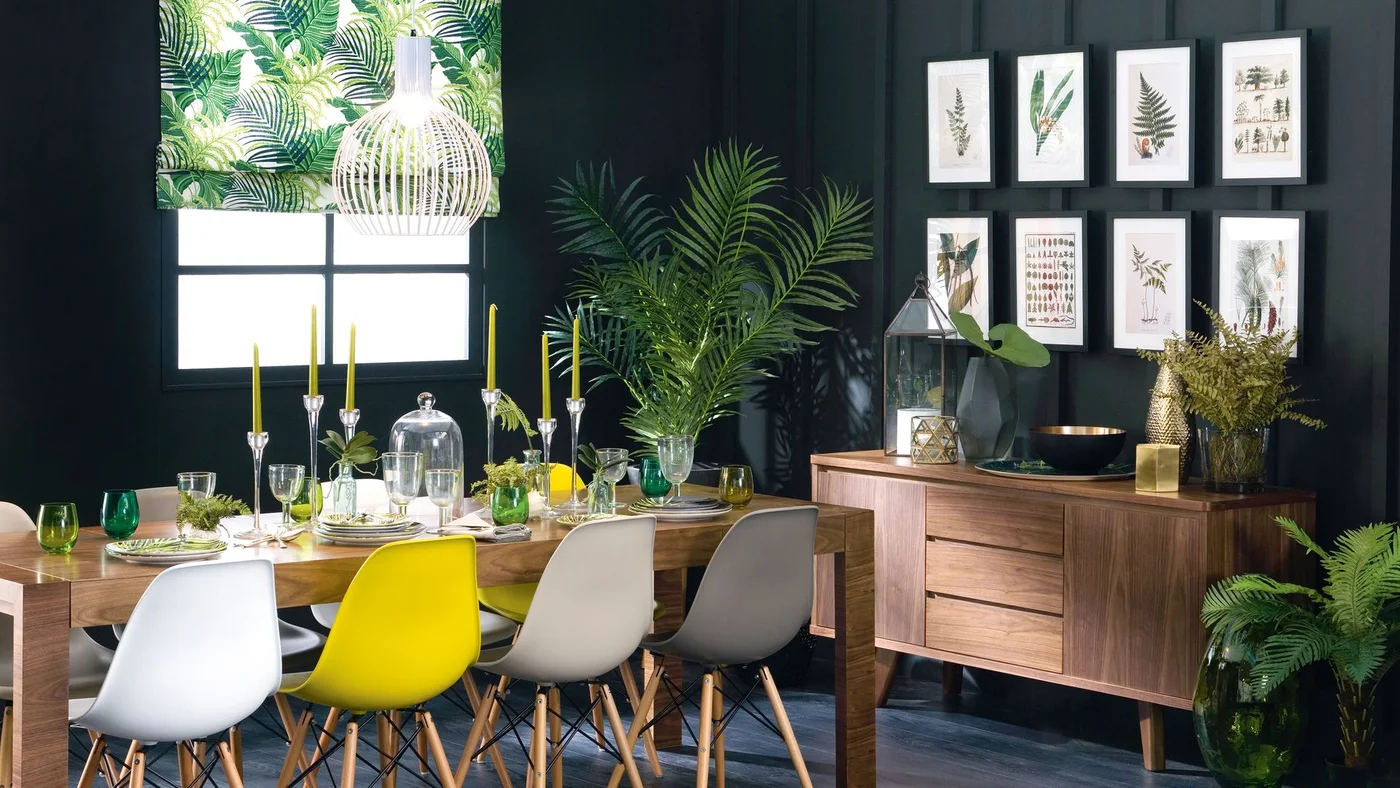
Botanical prints connect the sideboard display to the foliage beside the window. The lantern and faceted vase form a taller group at one end, while the low black bowl gives the eye a resting place. Warm wood remains visible between the objects rather than disappearing beneath a continuous row of accessories.
Start with one tall object and one low vessel, then view them from the dining seats before adding more. A lantern does not need a lit candle to contribute shape. Protect the top from water beneath arrangements, and leave enough free surface to put down a serving dish without first dismantling the display.
IDEA 02 / 15
Repeat One Color Across a Serving Display
 SaveSupport Non AI Creator
Image credit: Future PLC/Dominic Blackmore
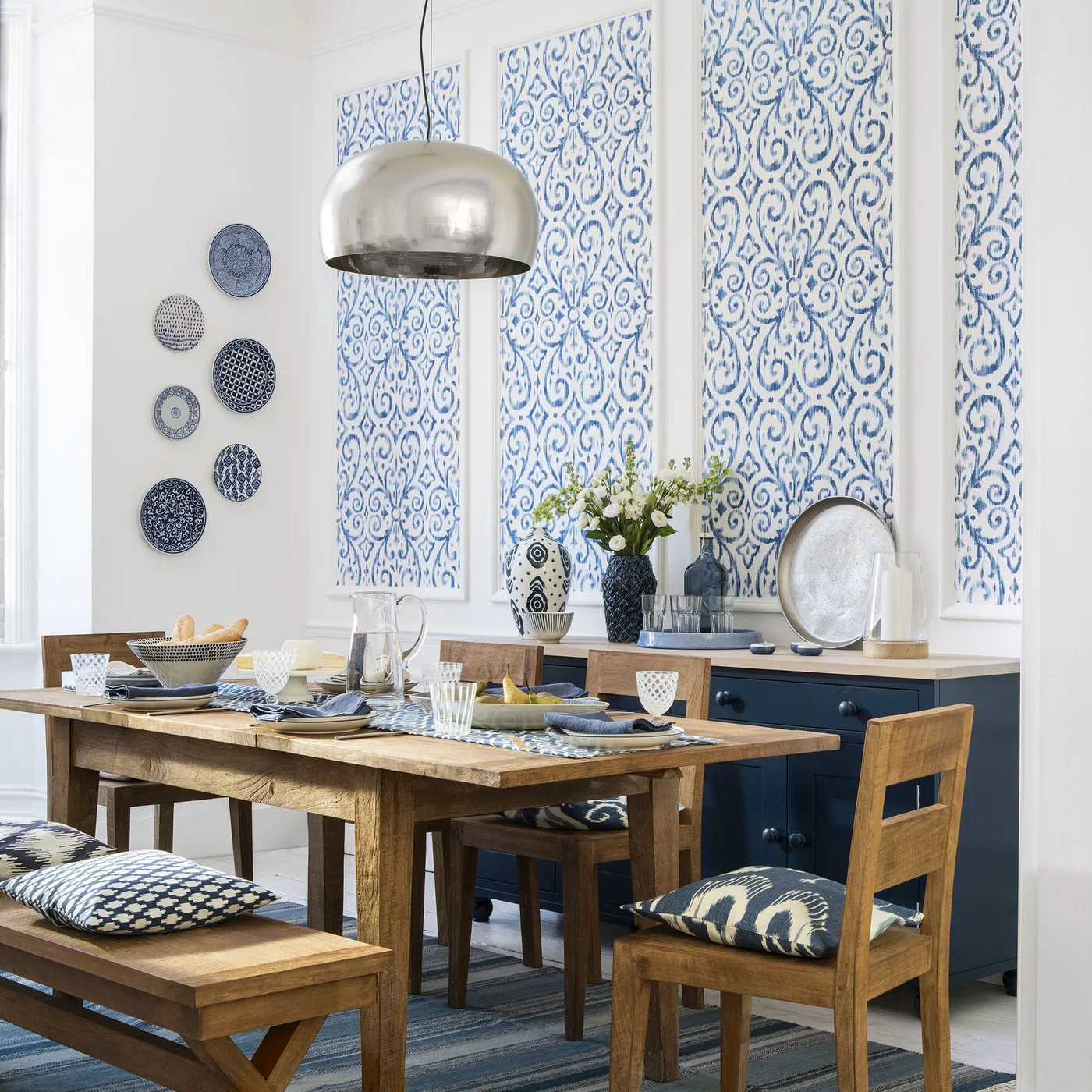
The blue-and-white palette runs through the wall panels, vessels and seat cushions, tying a busy dining room together. A tray groups the drinking glasses, while the large leaning platter supplies a different shape behind the smaller pieces. The pale sideboard top separates these blue objects from the dark cabinet below.
Use a plate stand suitable for the platter rather than relying on the wall to keep it upright. Keep frequently used glassware on a tray that can be lifted with both hands. Our navy dining room ideas offer other ways to balance blue with wood; a clear section of countertop is still useful when guests arrive.
IDEA 03 / 15
Make a Table Lamp the Main Accent
 SaveSupport Non AI Creator
Image credit: Future PLC
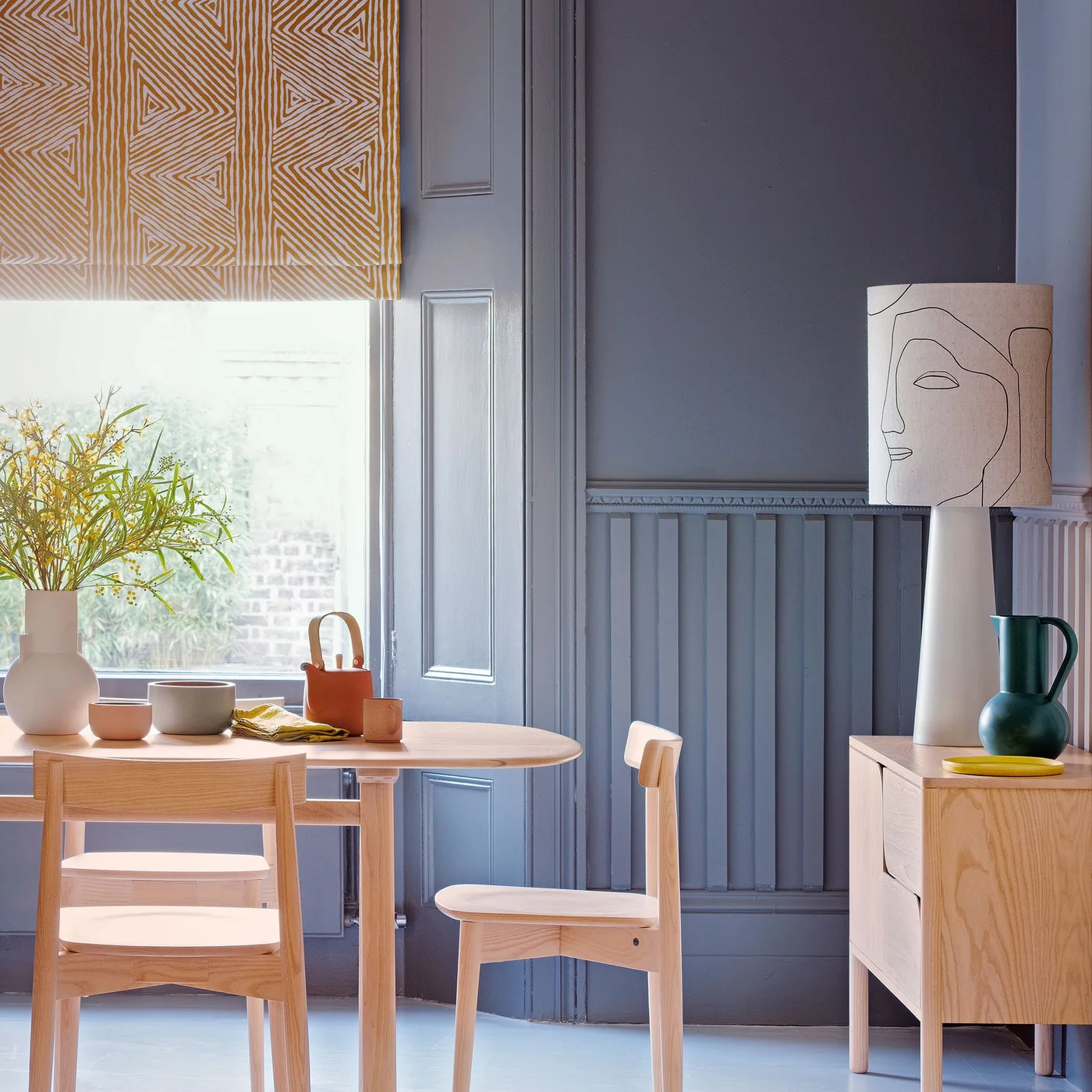
The oversized lamp supplies most of the decoration on this compact sideboard. Its pale shade stands out against the gray wall, while a green pitcher and yellow dish add a small concentrated color group beside it. With only a few objects, the curved furniture edges and visible wood grain remain part of the composition.
Check the lamp base, shade width and cord route together before buying. A shade that fits on the cabinet can still obstruct someone walking past it. Place a lamp near an accessible outlet, keep its cable away from door hinges, and leave a usable landing area if the sideboard also stores dining essentials.
IDEA 04 / 15
Let a Gallery Wall Carry Most of the Pattern
 SaveSupport Non AI Creator
Image credit: Future PLC/Dominic Blackmore
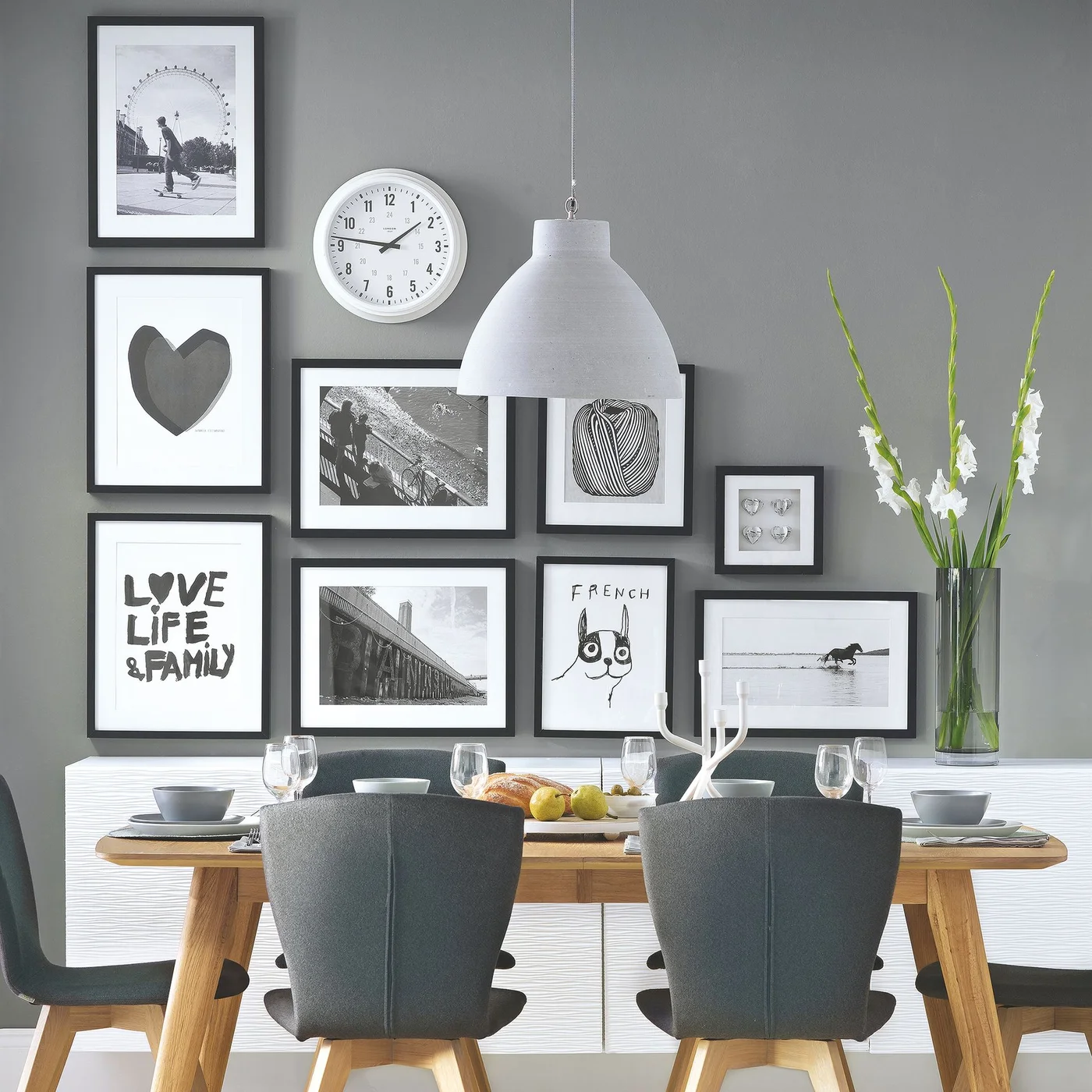
The gallery wall has many frames and images, so the sideboard surface stays comparatively quiet. A tall clear vase gives the right-hand end some height without adding another opaque block. White flowers relate to the white cabinet, while black frames repeat the darker tones in the dining chairs and keep the wall arrangement coherent.
Lay out the frames before drilling, allowing for the cabinet and for seated views from the table. Choose a stable vase that will not be easily knocked when a chair moves backward. Keep the cabinet top clear enough for its everyday role, and wipe away moisture beneath flowers before it can mark the finish.
PART 02
Keep everyday dishes and drinks within reach
IDEA 05 / 15
Use a Small Gold Accent to Warm Dark Furniture
 SaveSupport Non AI Creator
Image credit: Future PLC/Dominic Blackmore
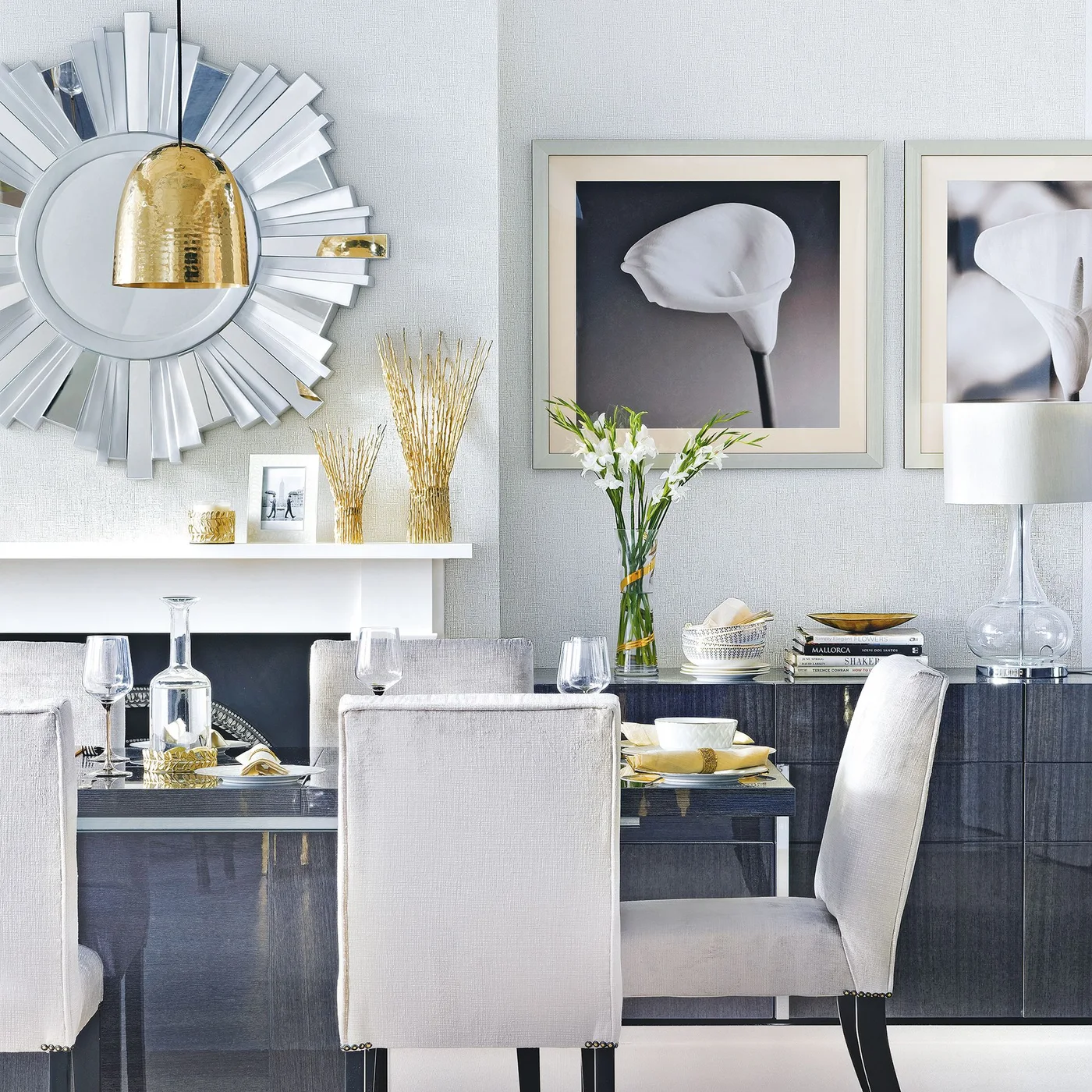
The dark cabinet and table are softened by pale chairs, white flowers and a transparent lamp base. Gold appears in a small dish and nearby lighting, providing warmth without covering the furniture with metallic objects. Stacked dishes make the sideboard look connected to dining rather than functioning only as a place for ornaments.
Keep stacks shallow enough to lift comfortably, especially when the table limits access to the cabinet. A tray or felt pads can protect the surface, but check the finish supplier's care advice first. Glossy dark furniture shows fingerprints readily, so use a few movable groups instead of many individual objects that complicate cleaning.
IDEA 06 / 15
Display the Dishes You Actually Use
 SaveSupport Non AI Creator
Image credit: Future PLC/Dominic Blackmore
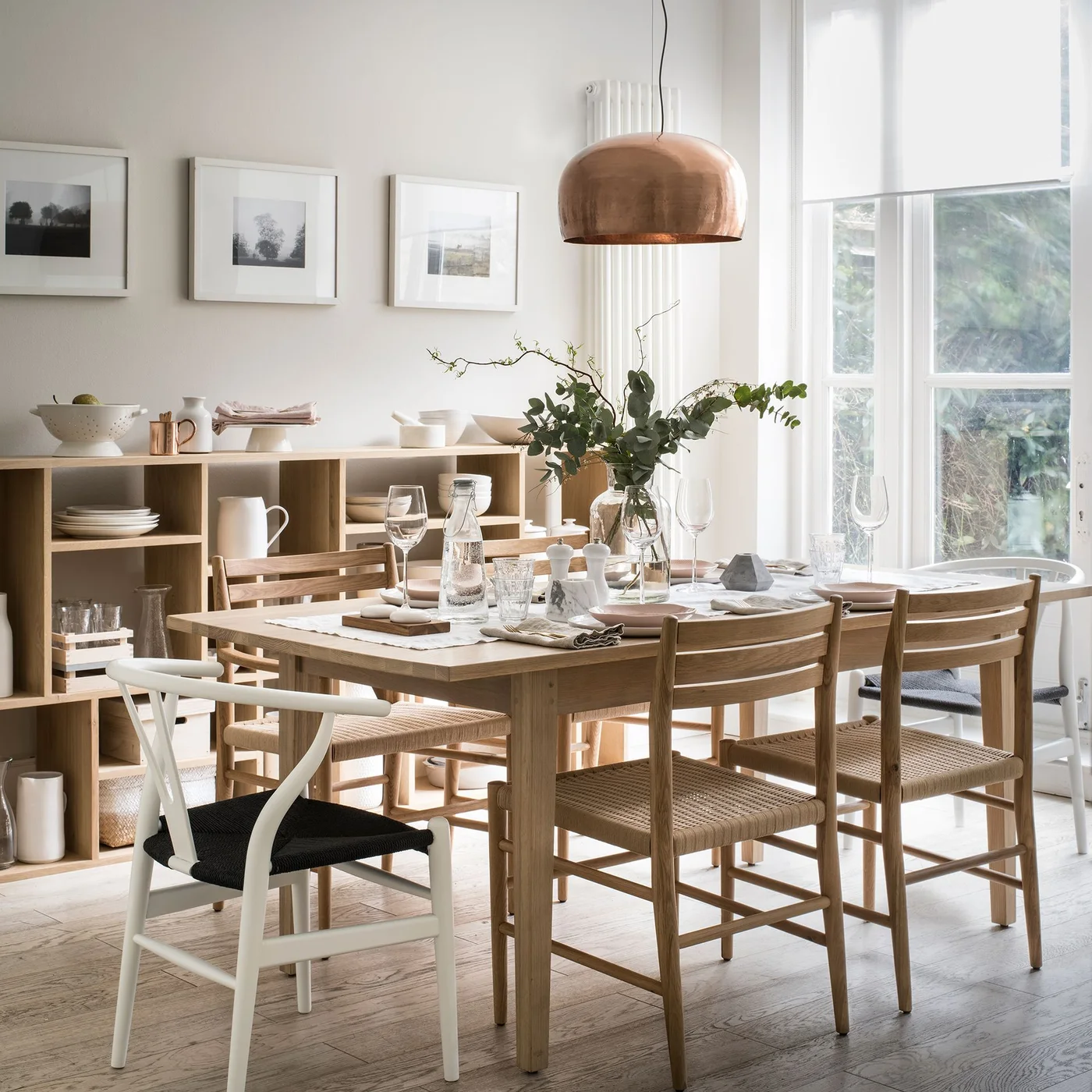
This open buffet makes everyday white dishes part of the room. Similar pieces are grouped together, with plates stacked horizontally and taller pitchers occupying the deeper-looking compartments. Pale wood links the storage to the dining table, while a few objects on top keep the open shelves from becoming the only point of interest.
Open storage trades immediate access for more dusting. Reserve the easiest shelves for dishes used regularly, check shelf load limits and keep heavier stacks low. If you prefer concealed storage, sideboard with shelves above ideas show other combinations. Leave room to lift a stack without catching the shelf above or the chair behind you.
IDEA 07 / 15
Turn a Narrow Console into a Drinks Station
 SaveSupport Non AI Creator
Image credit: Future PLC/Dominic Blackmore
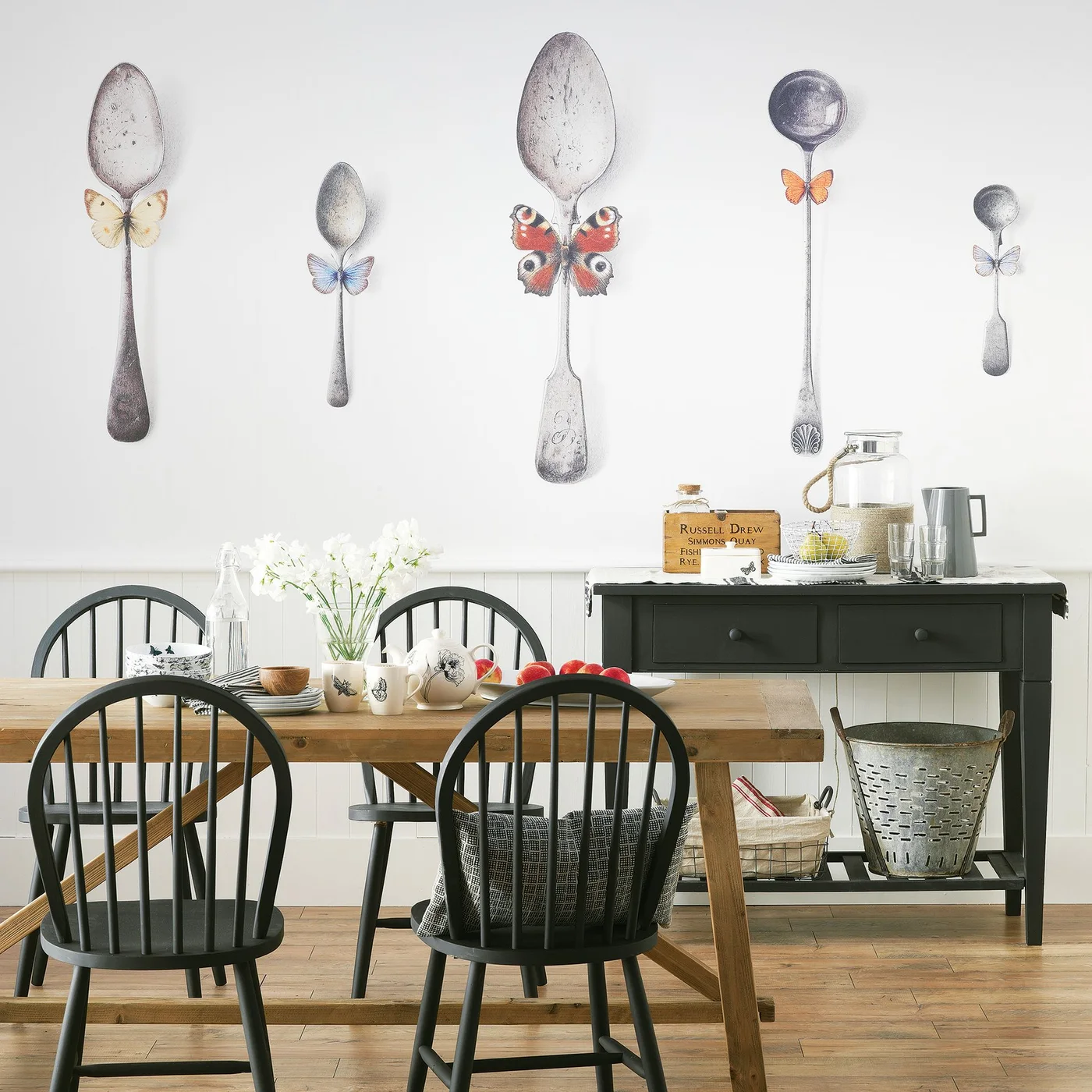
A narrow console takes the serving role where a deep sideboard would occupy too much room. The large drink jar and glasses sit together, while baskets use the open lower shelf for less decorative supplies. Its black finish repeats the dining chairs, making the slim piece feel connected to the table despite its different form.
Check the furniture's load capacity before putting a filled dispenser on it; water adds weight quickly. Use a waterproof tray beneath the tap and leave space for a glass below it. Keep the dispenser away from the front edge, and store spare napkins where they remain dry if a guest spills a drink.
PART 03
Balance lamps, color and detailed furniture
IDEA 08 / 15
Mix a Collected Display with One Repeated Motif
 SaveSupport Non AI Creator
Source: www.goldmallardhome.com
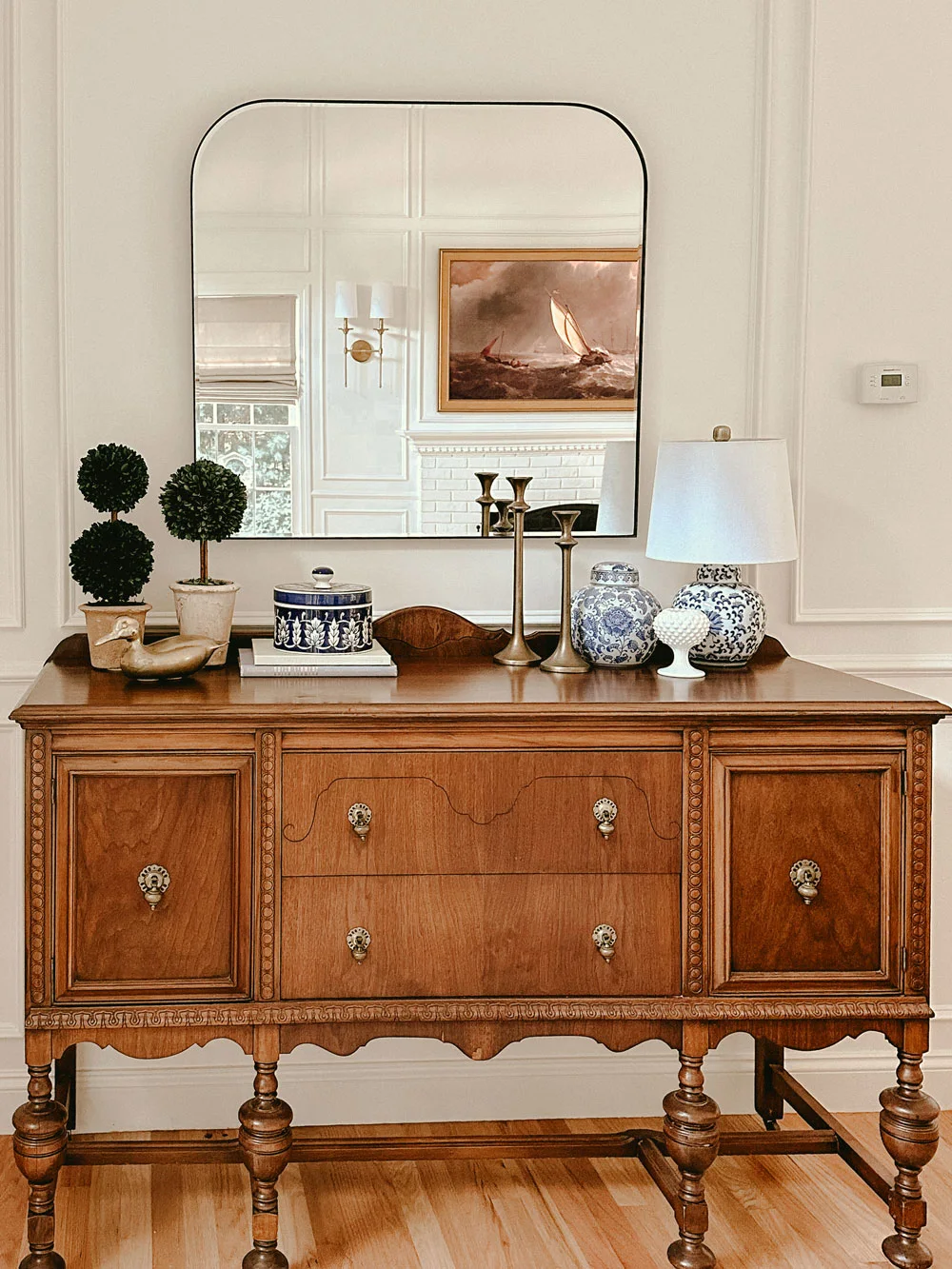
Blue-and-white ceramics link the lamp, lidded jar and smaller vessel without making them identical. Rounded green shapes soften the carved furniture, while slender candlesticks vary the height near the center. The display feels collected because the objects differ in scale and outline, yet a limited palette keeps them from competing with the detailed cabinet.
Arrange the tallest pieces first and leave gaps where the wood top can show. You do not need live plants to use rounded greenery as a shape, and any real plant needs a watertight inner container. If candles are lit, move them to a safe clear position rather than treating their photographed placement as a lighting instruction.
IDEA 09 / 15
Leave the Center Clear Between Two Groups
 SaveSupport Non AI Creator
Source: www.goldmallardhome.com
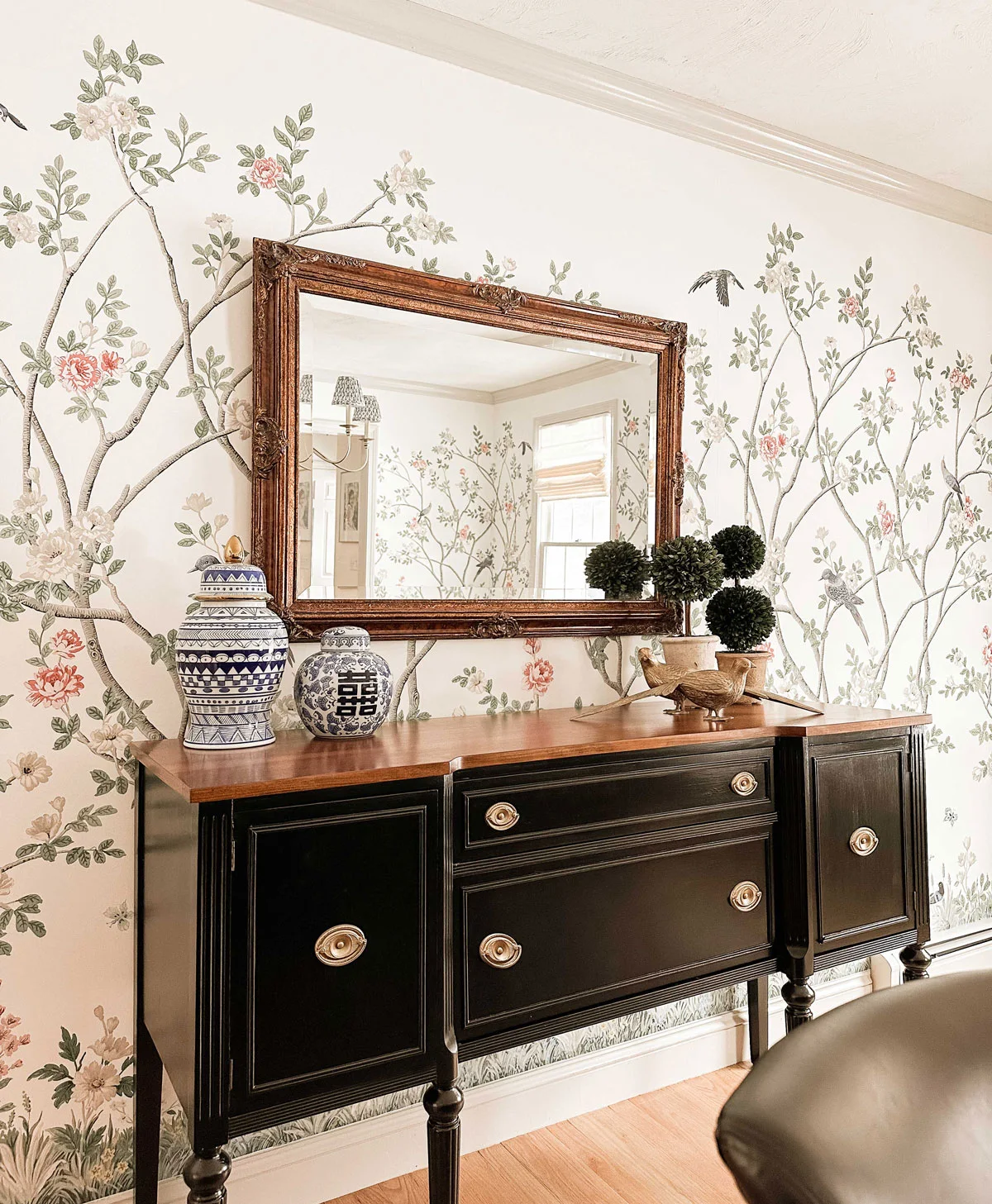
Two groups occupy the ends of this sideboard, leaving the center visibly open. The jars form a taller cluster at the left, while the greenery and bird ornament make a lower, broader group at the right. The open strip between them lets the warm top stand out against the dark fronts and detailed wallpaper.
This approach works well when the sideboard is used for serving because the empty middle can receive a tray. Check the depth of any ornament before placing it near the front edge. Our sideboard with mirror ideas explore the wall arrangement further; keep delicate objects away from the path of people reaching for drawers.
IDEA 10 / 15
Pair Lamps Around a Low Glassware Group
 SaveSupport Non AI Creator
Image credit: Erika Bonnell Interiors/Stacy Zarin Goldberg
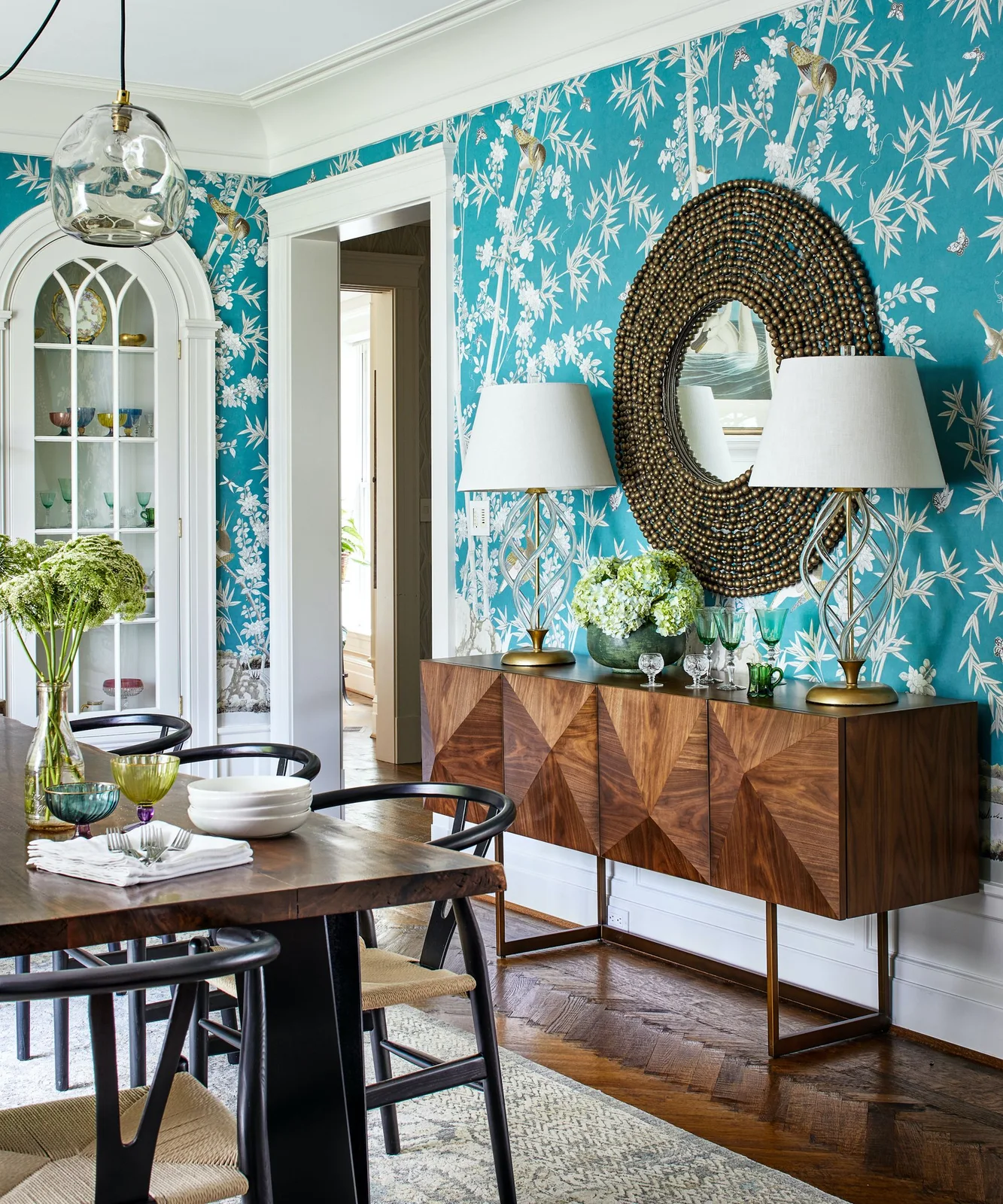
Matching lamps establish a clear pair at the ends of this long sideboard. Lower glasses and a rounded flower arrangement occupy the center without blocking the mirror behind them. The cabinet fronts and wallpaper already have strong patterns, so the repeated pale shades bring some order to the many textures and colors.
Check that both lamps can be connected without cables crossing drawer openings or a walking route. Their bases should leave enough space for a tray between them. Use the central group as a practical starting point rather than filling every gap; glassware that is used often will need to be easy to lift and put back.
IDEA 11 / 15
Keep Objects Small When the Cabinet Is Sculptural
 SaveSupport Non AI Creator
Image credit: Hamptons International
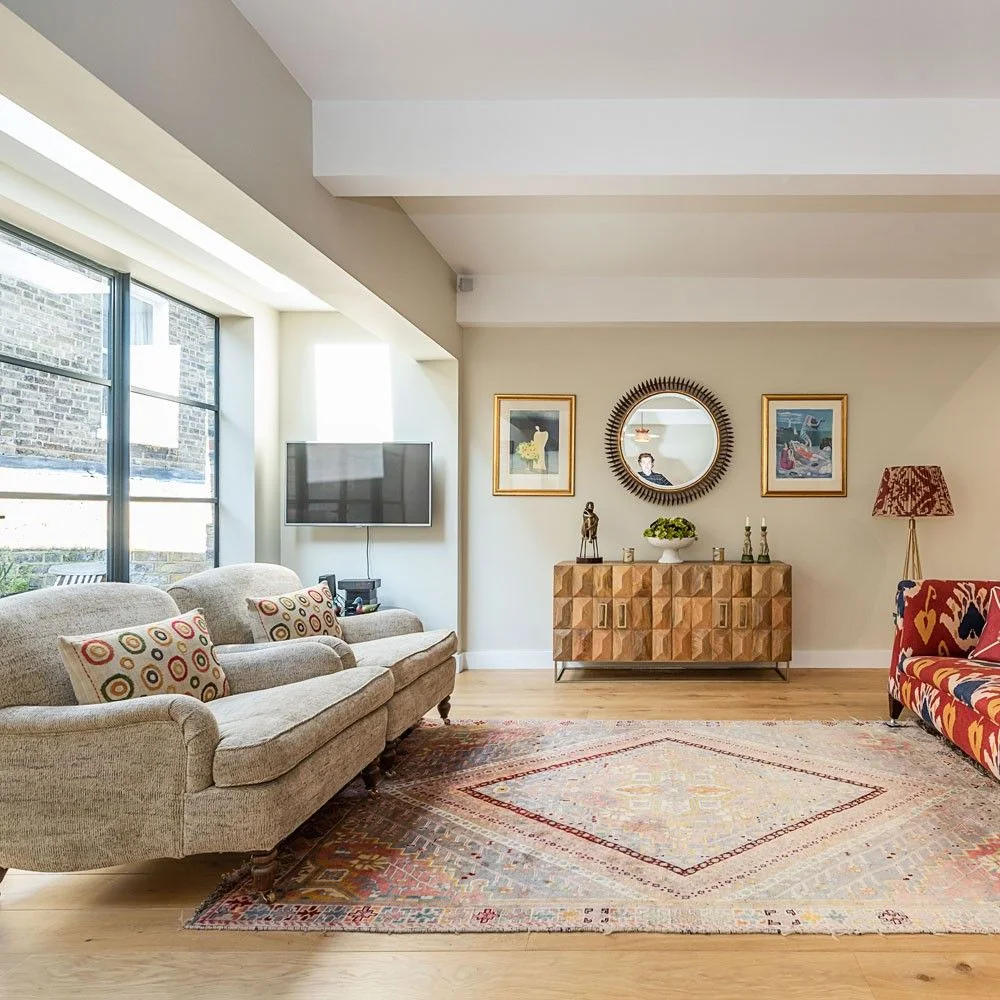
The raised geometric fronts are the strongest feature of this sideboard, so its objects remain relatively small. A white bowl creates a light central shape, with slender pieces toward the ends. The framed pictures and round mirror extend the arrangement upward, allowing the cabinet top to stay uncluttered in a room with patterned seating.
Choose objects that complement the cabinet's outline rather than hiding its top edge. Look at the arrangement from the sofa, where small pieces may merge into the background. Avoid unstable towers of books or ornaments, and keep enough clearance in front for doors to open without moving nearby chairs each time storage is needed.
PART 04
Leave room around shelves and taller objects
IDEA 12 / 15
Use Empty Space as Part of a Shelf Display
 SaveSupport Non AI Creator
Image credit: Lozi Designs
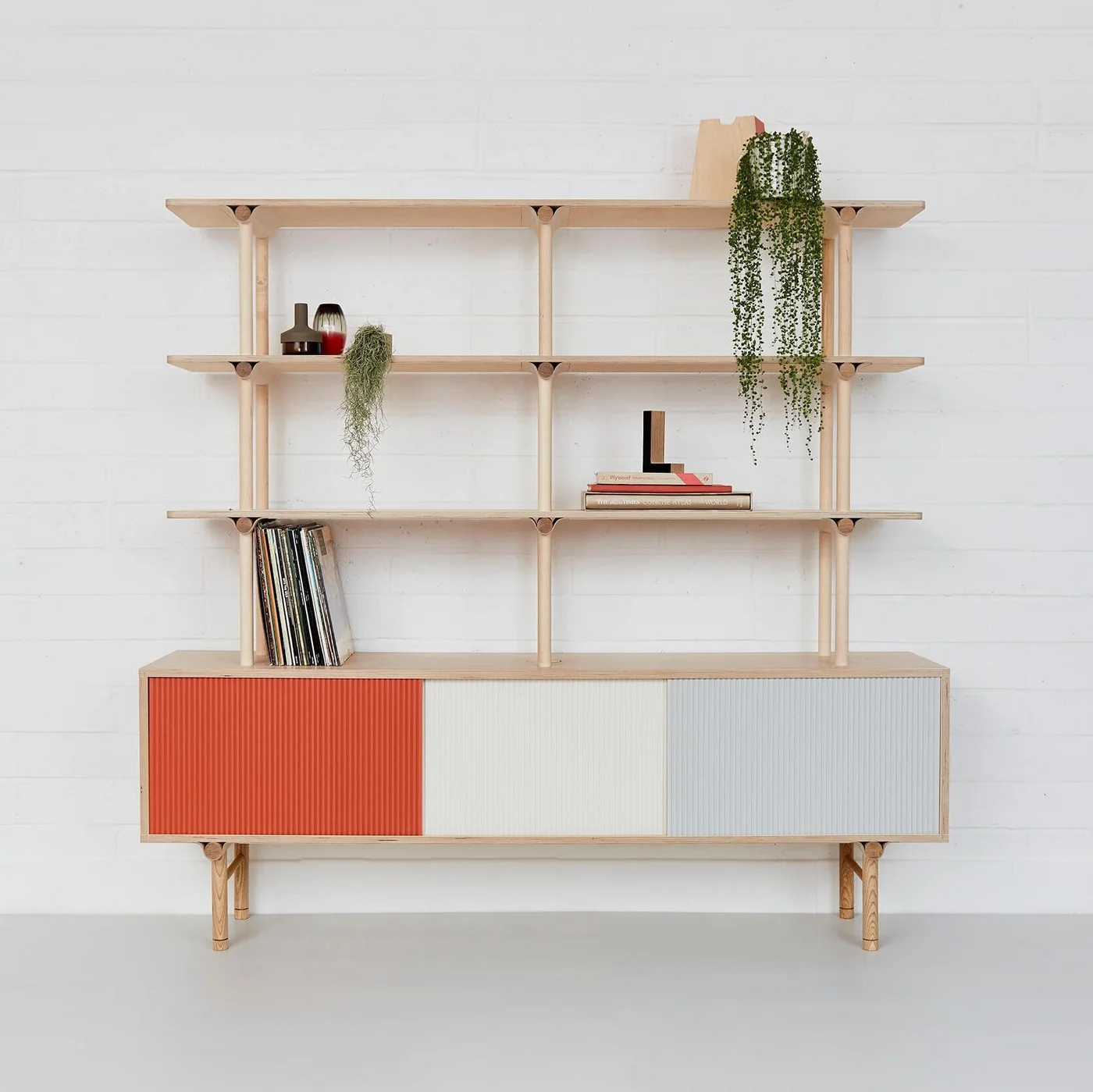
Widely spaced books, records and vessels allow the framework of this sideboard-and-shelf unit to remain visible. Trailing plants introduce a softer line against the horizontal shelves, while the orange door supplies a strong color accent below. Most of the countertop stays empty, balancing the taller display rather than becoming a second densely arranged shelf.
Keep records upright with suitable support and follow shelf loading guidance. Plants need watertight containers and enough room to remove them for watering without dripping onto books or the cabinet. If a long trail enters a door opening, trim or redirect it. A restrained display also makes dusting the open framework less laborious.
IDEA 13 / 15
Let a Textured Cabinet Need Fewer Accessories
 SaveSupport Non AI Creator
Image credit: Photo: Life Created. From: Kirsten Holmstedt
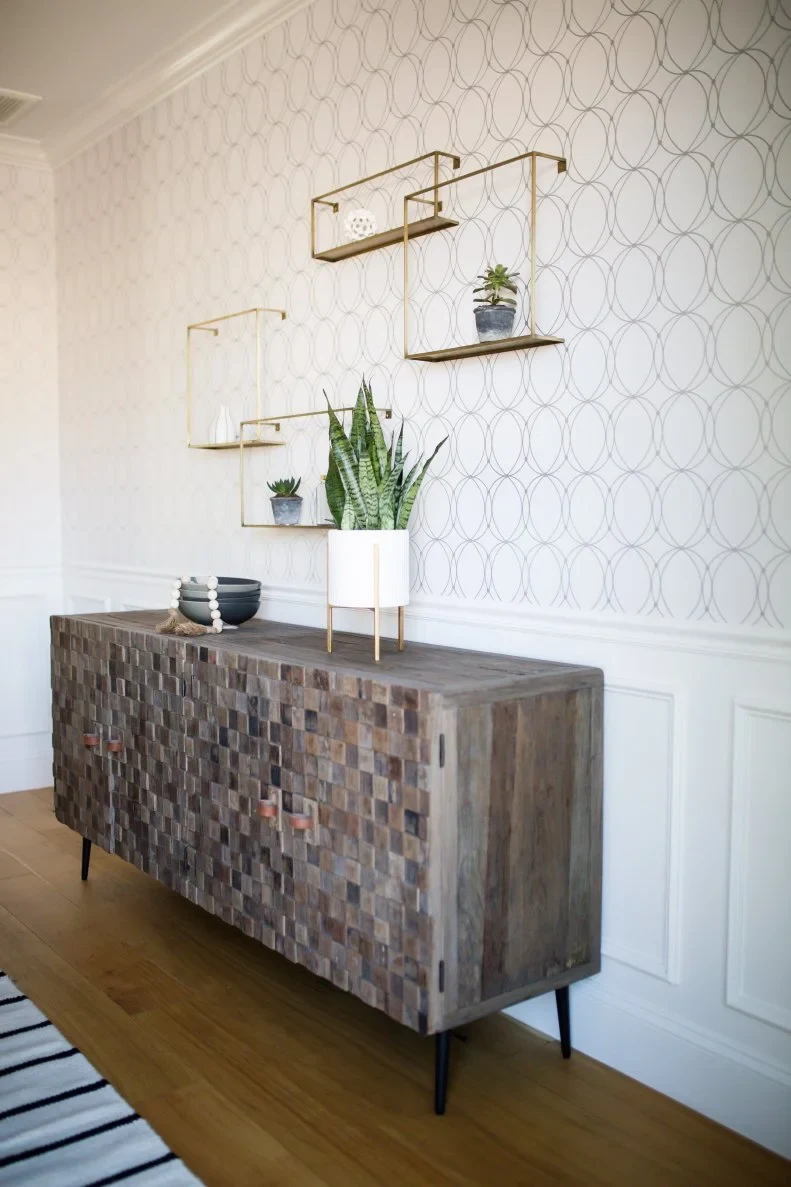
The block-like cabinet fronts supply substantial texture, so just two groups sit on the top. A raised white planter makes one vertical accent, while the dark bowl remains low. Thin gold-colored shelves above add outline rather than visual weight, and their small plants relate to the larger greenery below without filling every shelf.
Check that a planter stand sits flat and cannot rock when a cabinet door closes. Use a sealed inner pot and remove it for watering. Decorative beads or other small objects are optional; leave them out where children or pets could reach them. Keep the front edge clear so the textured doors remain the main feature.
IDEA 14 / 15
Place One Tall Arrangement Off Center
 SaveSupport Non AI Creator
Image credit: Malcolm Brown
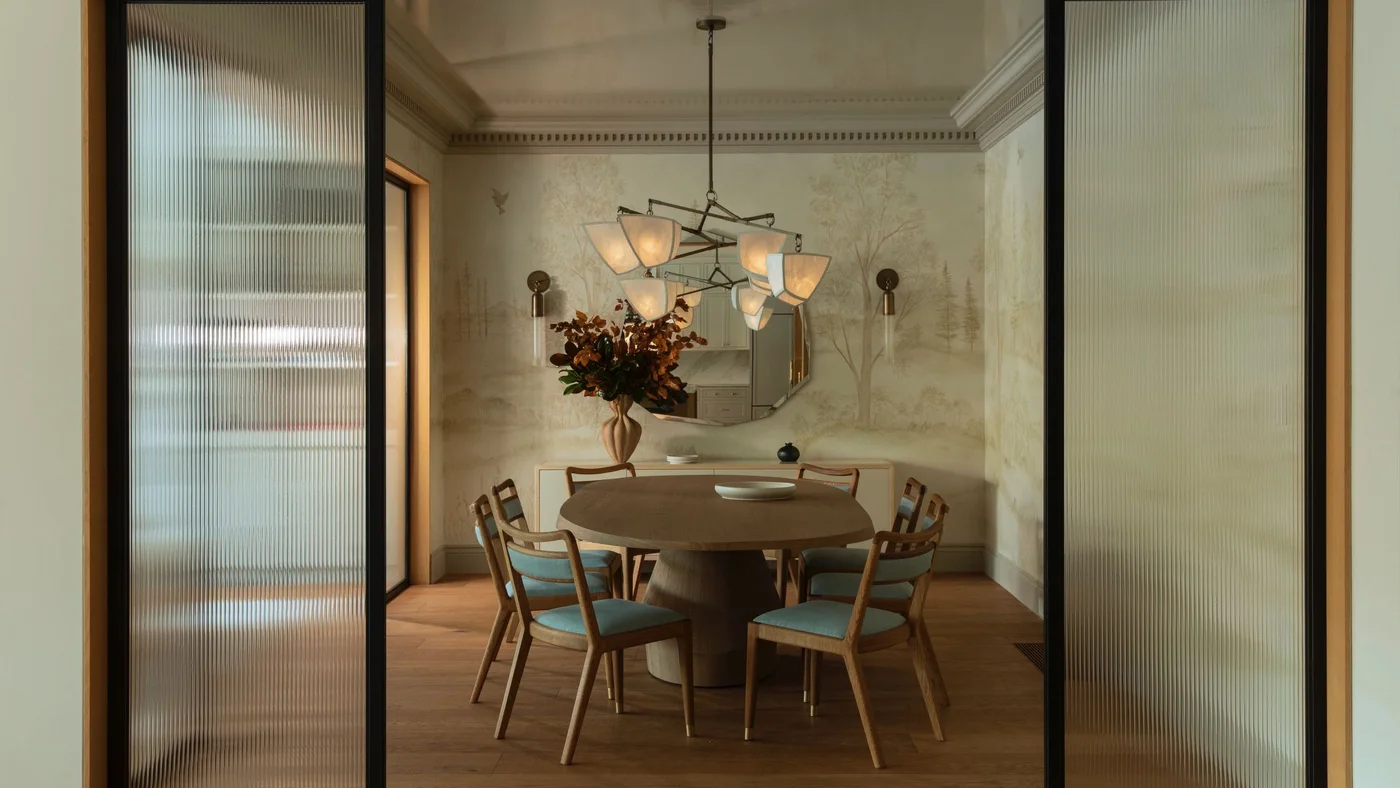
A tall arrangement occupies one end of this pale sideboard, while smaller pieces leave the opposite side quieter. From the doorway, the uneven heights create interest without competing with the central ceiling light. The cabinet stays visually light against the mural-like wall, helping the dining table remain the room's dominant piece of furniture.
Judge height from the doorway and from a seated position, not only while standing at the cabinet. Branches should not enter a circulation route or brush a light fitting. Use a heavy enough container for the stems, protect the top from water, and retain clear space for anything that must be set down during a meal.
IDEA 15 / 15
Group a Drinks Tray on a Fitted Cabinet
 SaveSupport Non AI Creator
Image credit: Albion Nord
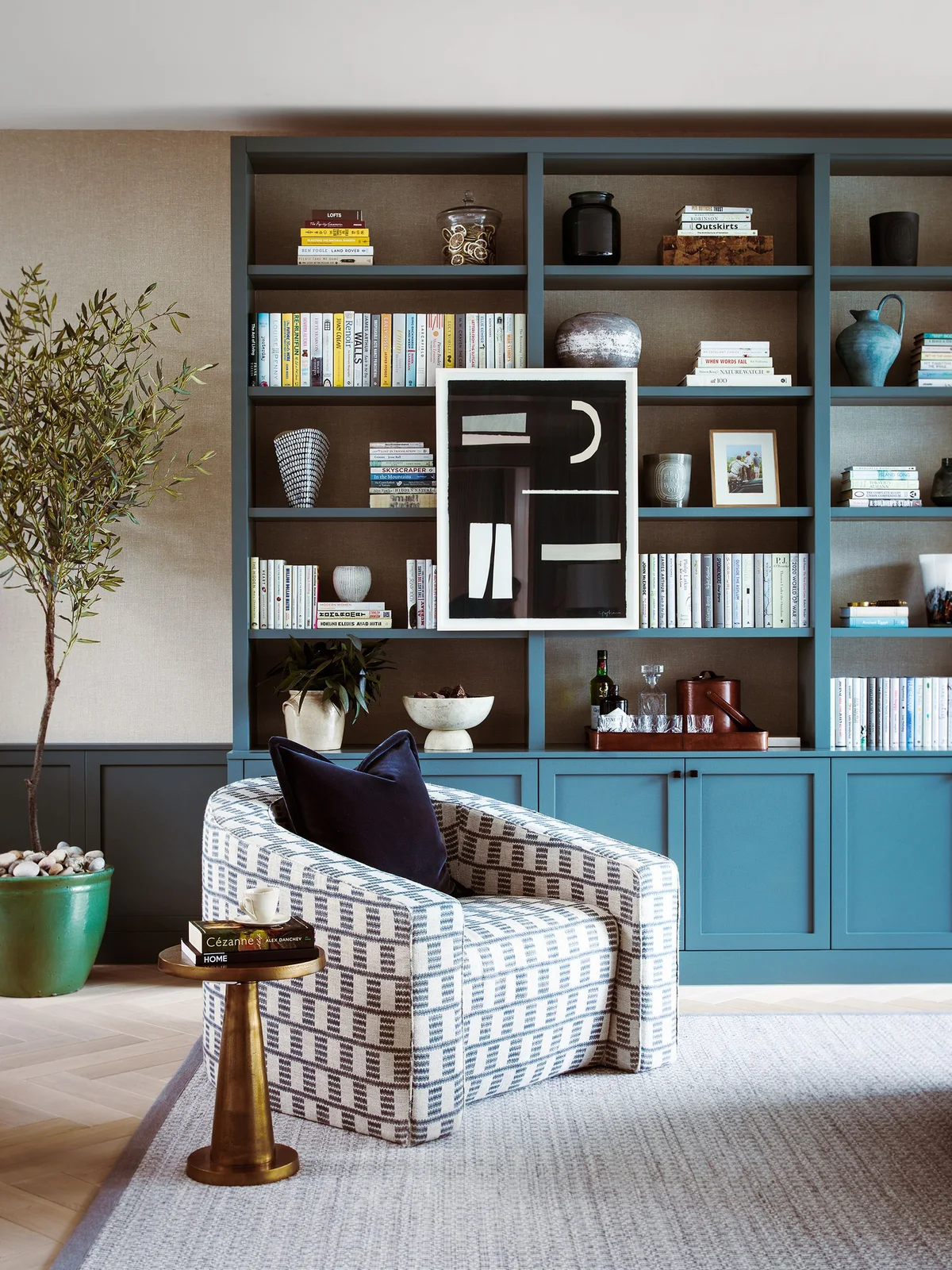
A fitted cabinet can take the same styling approach as a freestanding sideboard. Here the drinks tray is a distinct group at one side, balanced by a pale bowl and plant at the other. The books and large artwork carry most of the pattern above, leaving the cabinet surface as a calmer horizontal band.
Keep a drinks tray far enough from the edge that reaching past it will not catch glassware. Choose a tray with a base that suits the cabinet finish and lift it regularly to check for spills. If storage doors open beneath the display, leave their handles easy to reach and keep trailing foliage away from the hinges.
BRING IT ALL TOGETHER
Make the display easy to live with
Remove everything first, then return the items that perform a job or mean something to you. Place taller objects toward the back, build one or two small groups and leave a useful landing area. A lamp, tray or bowl can provide structure without requiring a fully matched collection.
Check drawer access, chair movement, outlet positions and the weight of anything filled with water. Protect the top according to its actual finish and lift objects regularly when cleaning. A display that needs constant rearranging to use the furniture probably needs fewer pieces.