Navy can wrap a dining room in deep color or appear more selectively in curtains, a bench or a useful sideboard. The best choice depends on the light, the furniture you want to keep and how the room connects to the kitchen or living area.
These real photographed rooms show several ways to work with navy without making every surface identical. Some pair dark walls with white trim; others introduce the color through fabric or storage. Look at the visible arrangement, then consider cleaning, chair movement and evening lighting before borrowing the idea.
PART 01
Choose the wall treatment and contrast
IDEA 01 / 15
Keep the Ceiling Pale above Navy Walls
 SaveSupport Non AI Creator
Image credit: Sims Hilditch
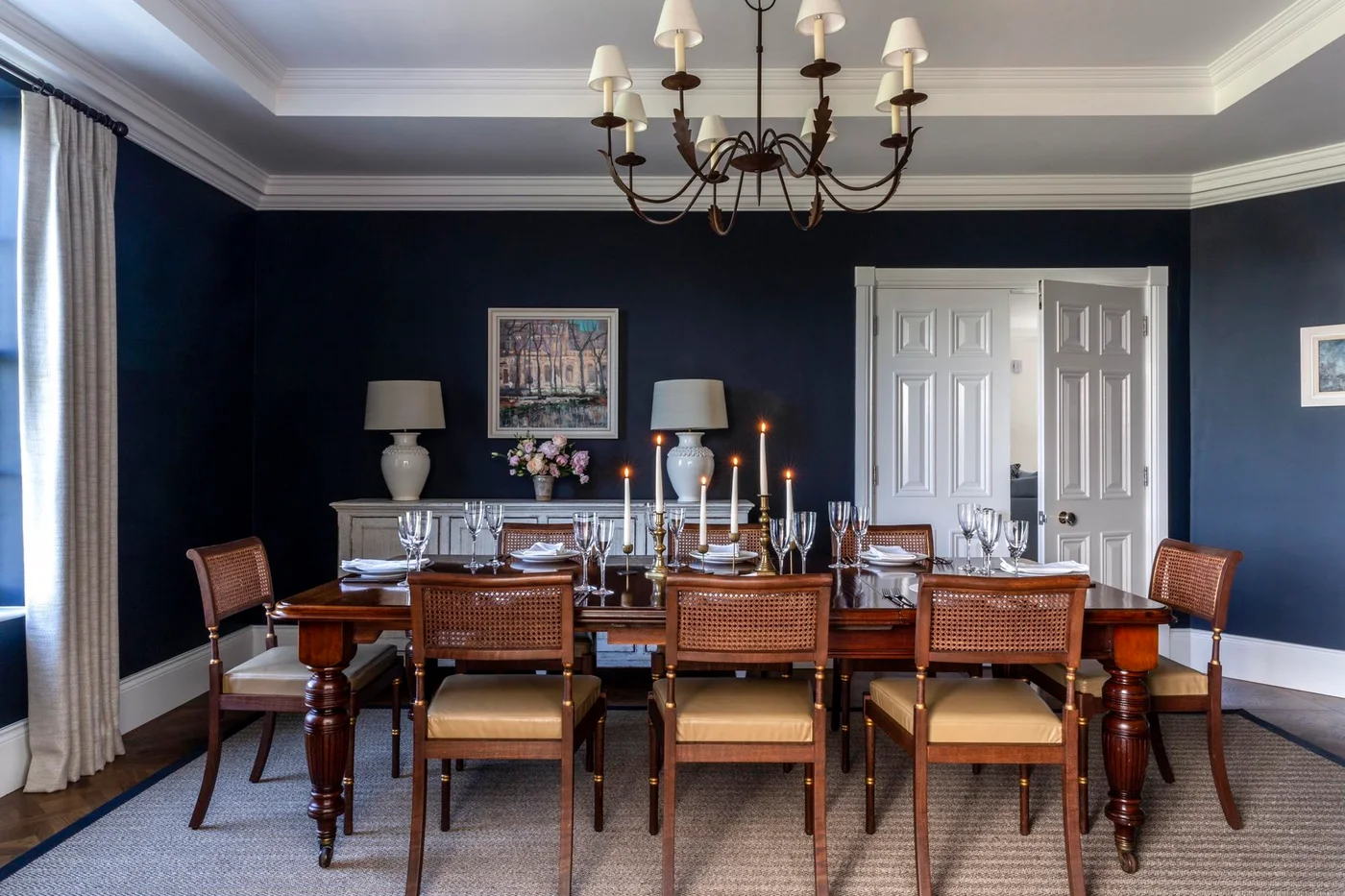
Deep navy walls give the warm timber table and woven chair backs a clear outline. The pale ceiling, cornice and open double doors keep lighter areas around that dark enclosure. Matching lamps on the sideboard add another layer of light at a lower level than the chandelier.
Try your navy sample beside existing white trim before painting the whole room. Some whites look noticeably warmer against dark blue. Check the table with the chairs pulled out, and choose a rug large enough for their normal movement rather than judging its fit with every chair tucked away.
IDEA 02 / 15
Use Navy as the Background to Botanical Pattern
 SaveSupport Non AI Creator
Image credit: Future
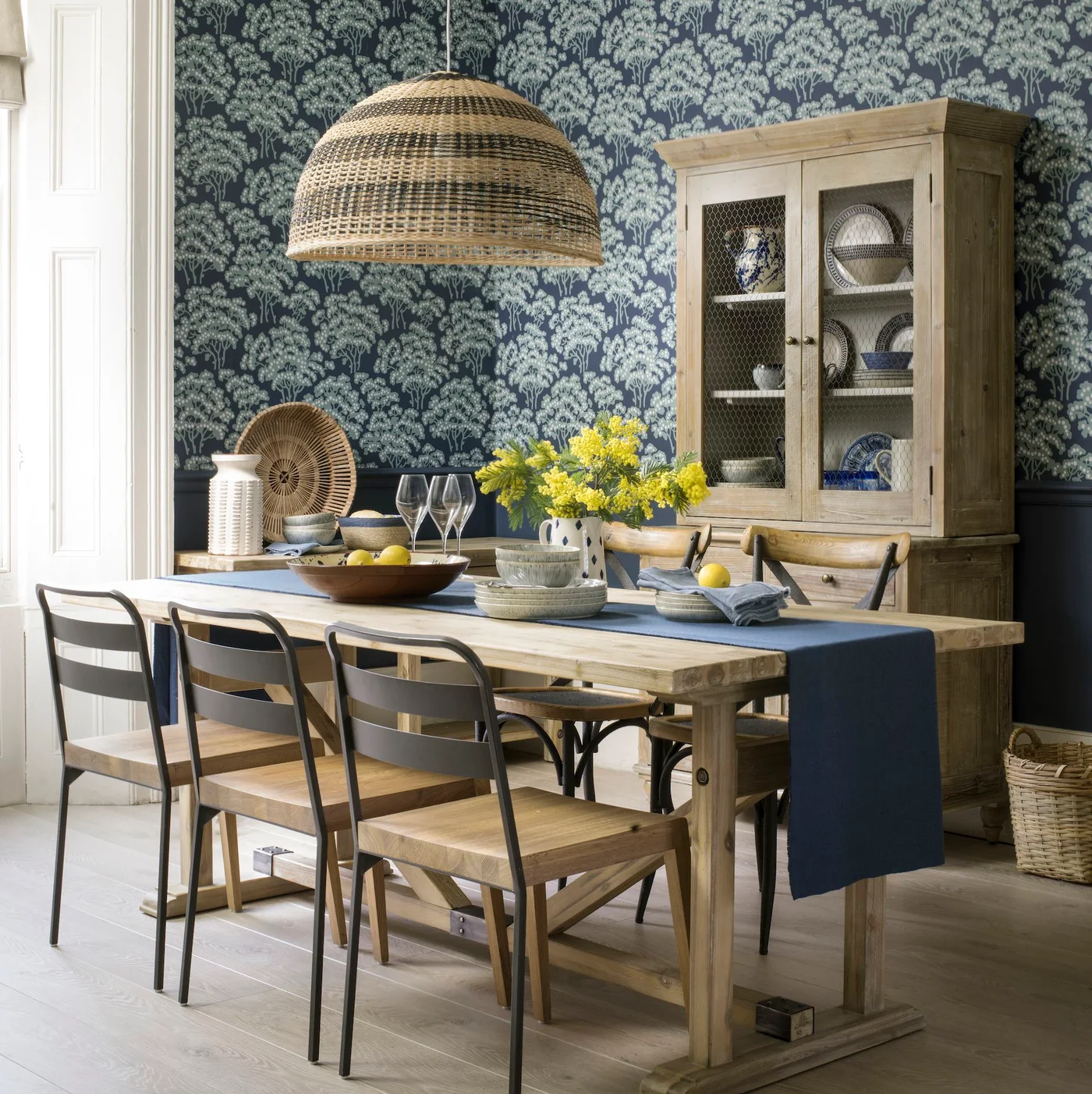
The navy background makes the pale branching wallpaper pattern readable without turning the whole wall into a flat block of color. A timber dresser and table repeat warmer tones beneath it. The woven pendant provides a larger, simpler shape above the smaller leaves and tableware.
Order a wallpaper sample large enough to show its repeat and compare it behind the furniture you intend to keep. Our dining room accent wall ideas offer other approaches to a patterned backdrop. Leave space to open the dresser and reach its upper shelves without moving the dining table each time.
IDEA 03 / 15
Let a Leaf Mural Break Up a Dark Wall
 SaveSupport Non AI Creator
Image credit: Adam Macchia
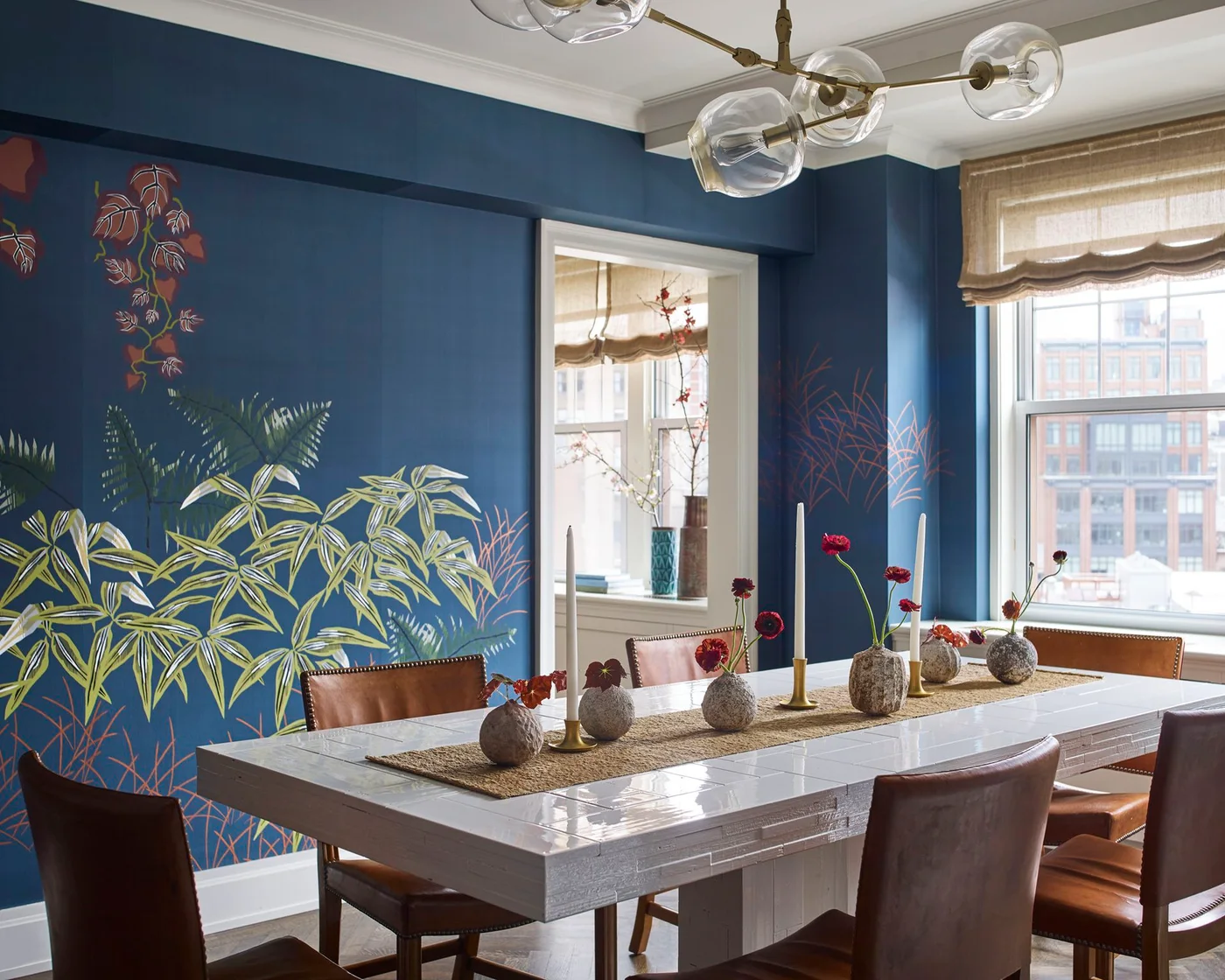
Leaves spread across the navy wall at different heights, so the room has a dark backdrop without losing movement. The white doorway and ceiling frame the mural, while the pale tiled table brings another light surface into the center. Brown chairs connect with the warmer branches in the pattern.
Check a mural layout against your doorway and window positions before ordering; an important part of the drawing may otherwise disappear behind furniture. Keep the table display low enough for conversation. For a tiled tabletop, inspect joints and edges when considering how easily everyday spills and crumbs can be cleaned.
IDEA 04 / 15
Lift a Navy Wall with Yellow Chair Seats
 SaveSupport Non AI Creator
Image credit: Future
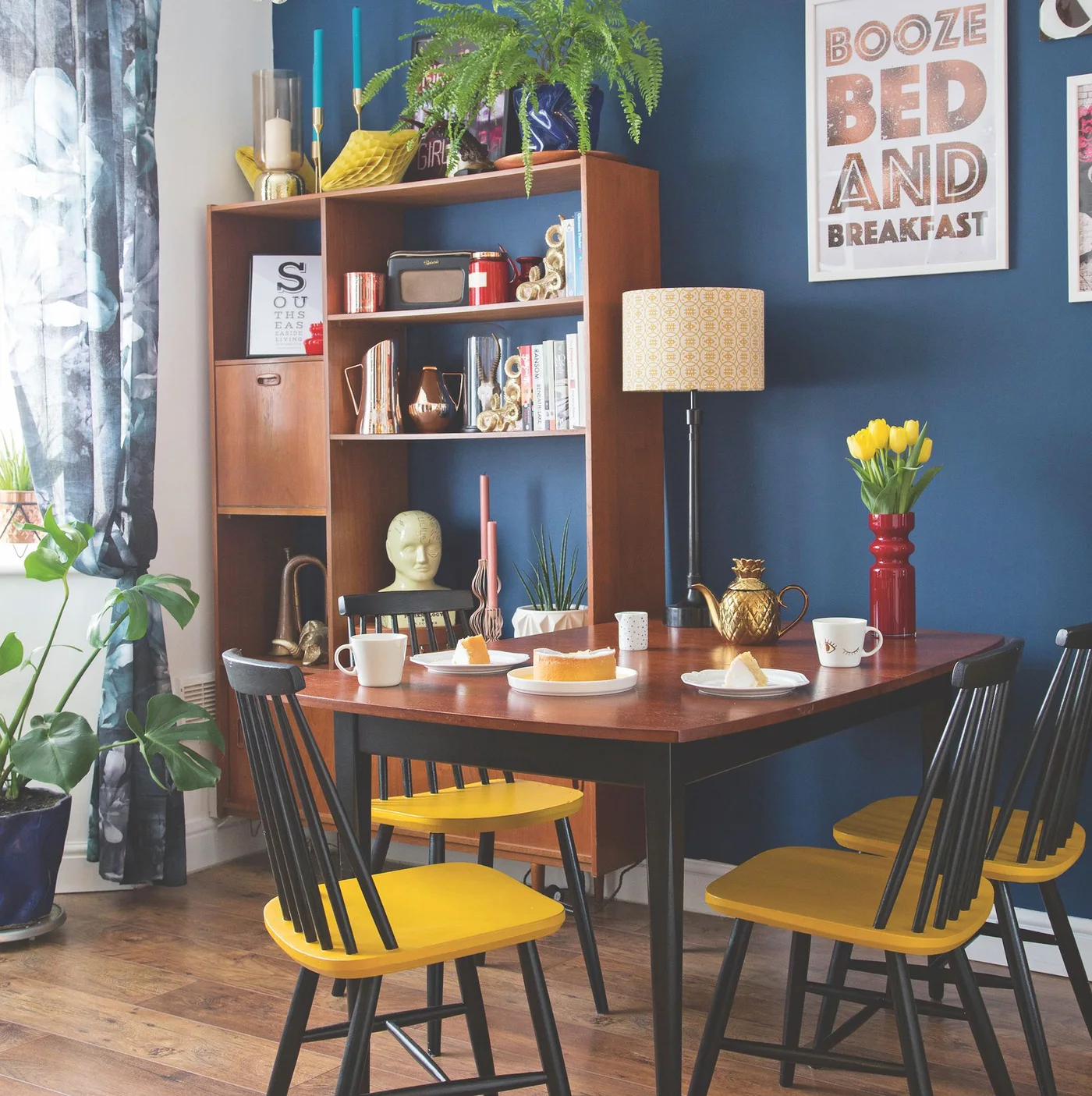
Yellow chair seats and flowers give this deep blue dining corner a brighter accent close to the table. Black chair backs remain visually separate from the warm timber cabinet. Books, a lamp and framed pictures make the wall feel collected without requiring all the furniture to match.
Try a small yellow accent before committing to several painted chairs. If repainting seats, choose a finish suitable for furniture and follow its preparation and curing instructions. Keep tall greenery on the cabinet rather than directly between diners, and leave access to the everyday dishes and books stored behind it.
PART 02
Work with ceilings, paneling and wall features
IDEA 05 / 15
Carry Deep Blue across Walls and Ceiling
 SaveSupport Non AI Creator
Image credit: Yond Interiors / Photography Malissa Mabey
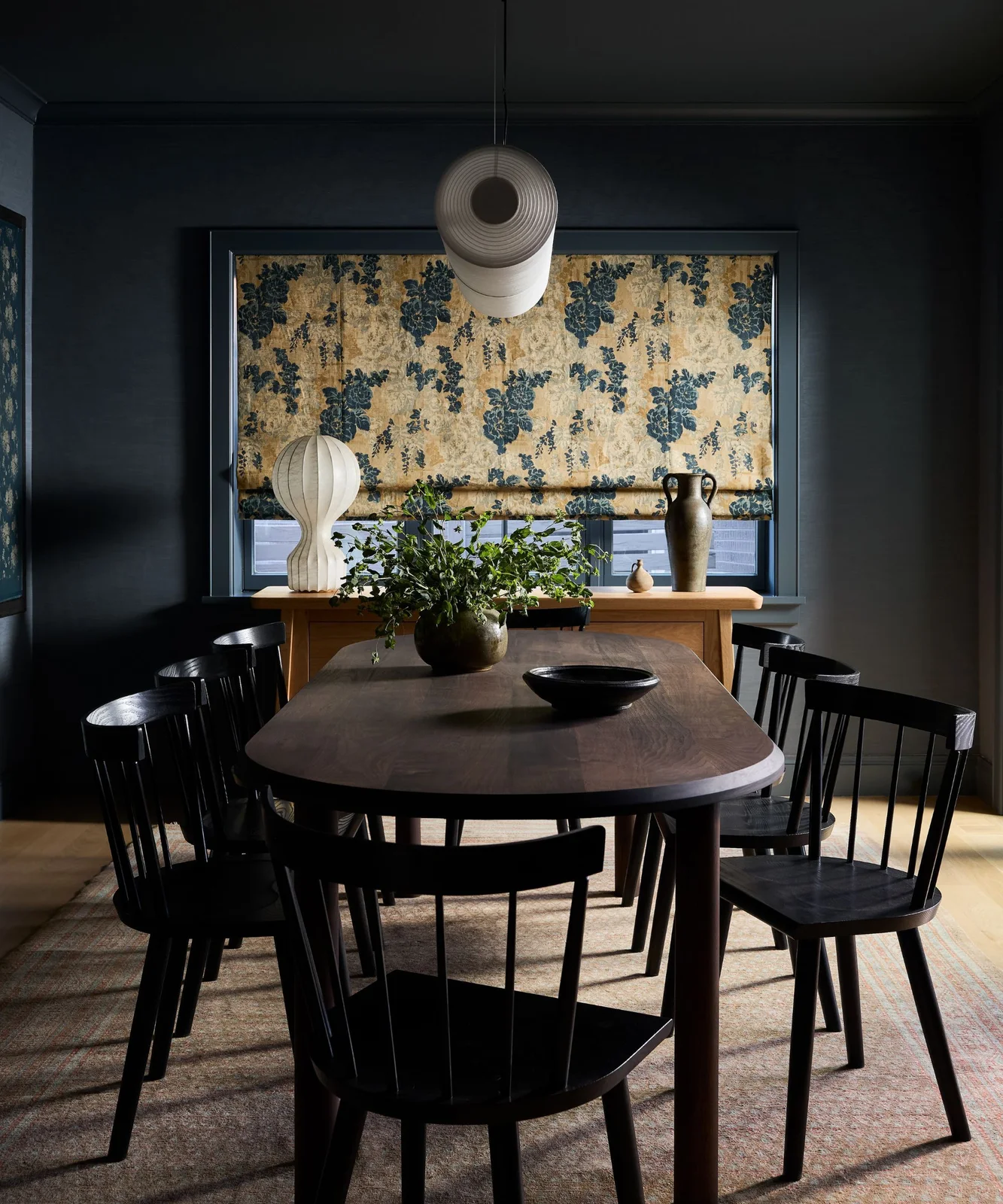
The matching walls and ceiling make the window blind and pale sculptural pendant stand out. Blue flowers within the yellow blind connect its pattern to the surrounding paint. A warm timber sideboard and table introduce a different tone while the dark chairs keep the seating outlines comparatively quiet.
Test this approach with the lighting you actually use after sunset; a dark ceiling changes how the room feels when daylight disappears. Our moody dining room ideas show other ways to balance deeper colors. Choose lighting that serves the table and storage areas, rather than relying on one bright ceiling bulb.
IDEA 06 / 15
Frame Navy Ceiling Panels with White Beams
 SaveSupport Non AI Creator
Image credit: Photo: Regan Baker Design. From: Regan Baker
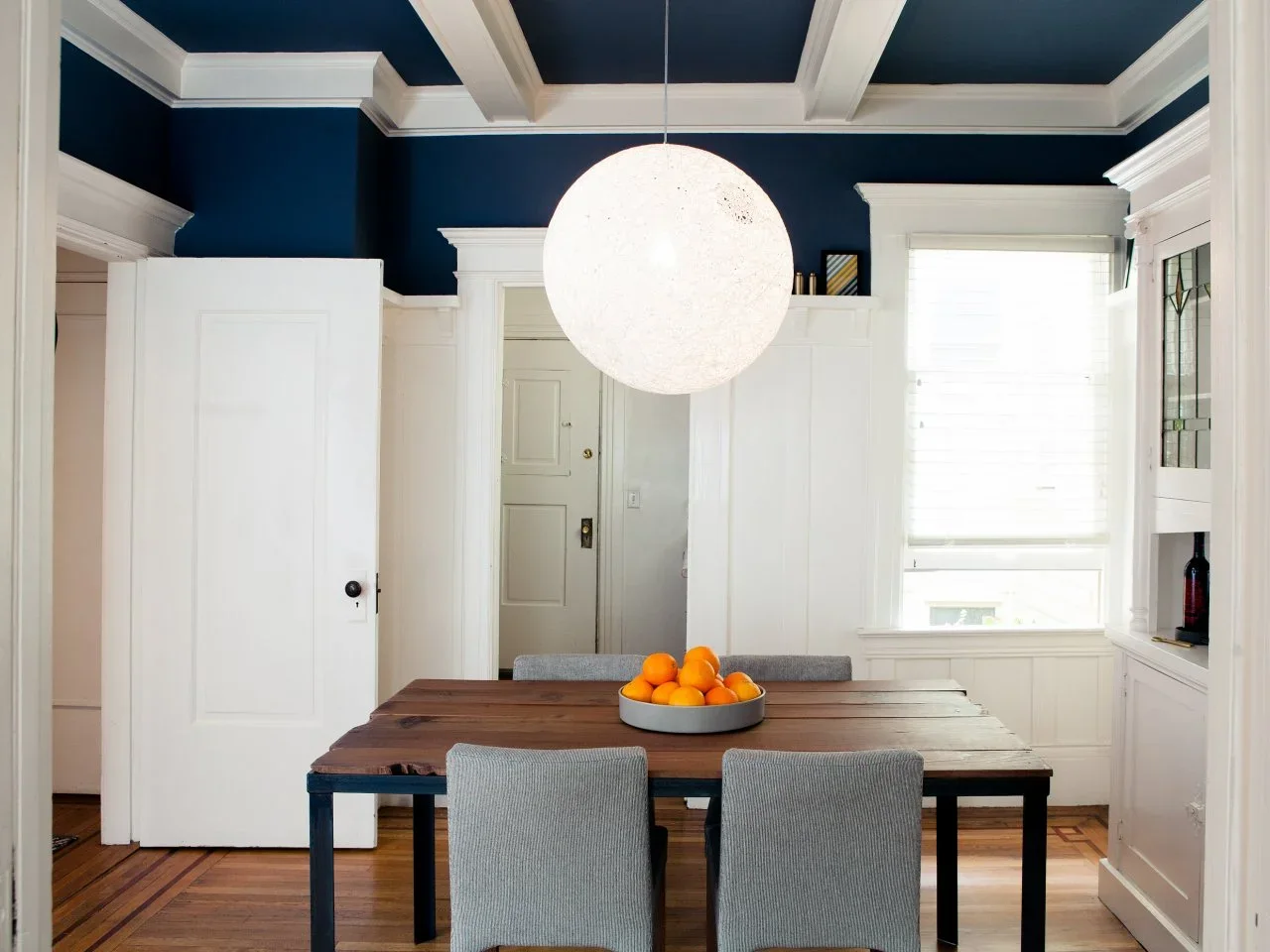
White beams divide the navy ceiling into clearly defined panels. White wainscoting and substantial door trim repeat that contrast lower down, allowing the dark paint to emphasize the existing architecture. The large pale globe gives the timber table a strong center without adding a complicated lighting silhouette.
Plan paint boundaries around the actual moldings instead of choosing an arbitrary line across them. Check how a dark upper wall meets neighboring rooms through open doors. Before selecting a large globe, compare its dimensions with the table and circulation route, and arrange installation so it does not obstruct normal sightlines.
IDEA 07 / 15
Combine Navy Upper Walls with White Paneling
 SaveSupport Non AI Creator
Image credit: Photo: Jim Tschetter, IC36O Images. From: Linc Thelen Design
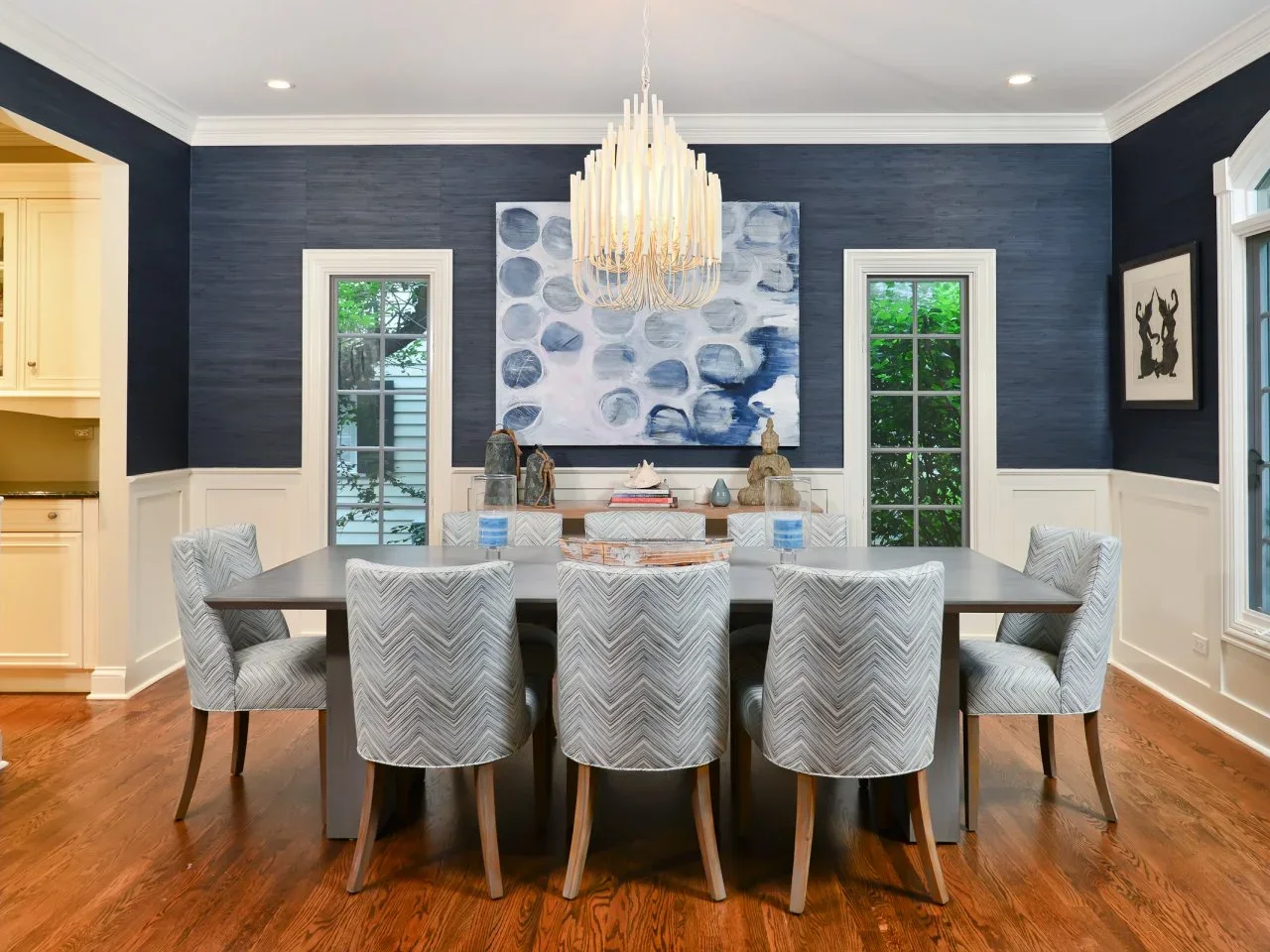
The white lower paneling creates a lighter band behind the chairs while the textured navy wall holds the large abstract picture. Pale patterned upholstery repeats some of the artwork’s quieter tones. The long chandelier supplies a brighter vertical feature between the white ceiling and gray table.
Compare textured wall covering with a painted sample before deciding how much surface detail the room needs. Around dining chairs, consider how lower walls will tolerate scuffs and cleaning. Check care instructions for both upholstery and wall covering, particularly if the room will be used for family meals rather than occasional entertaining.
IDEA 08 / 15
Warm a Plain Navy Wall with a Textured Mirror
 SaveSupport Non AI Creator
Image credit: Photo: Chipper Hatter. From: Corine Maggio
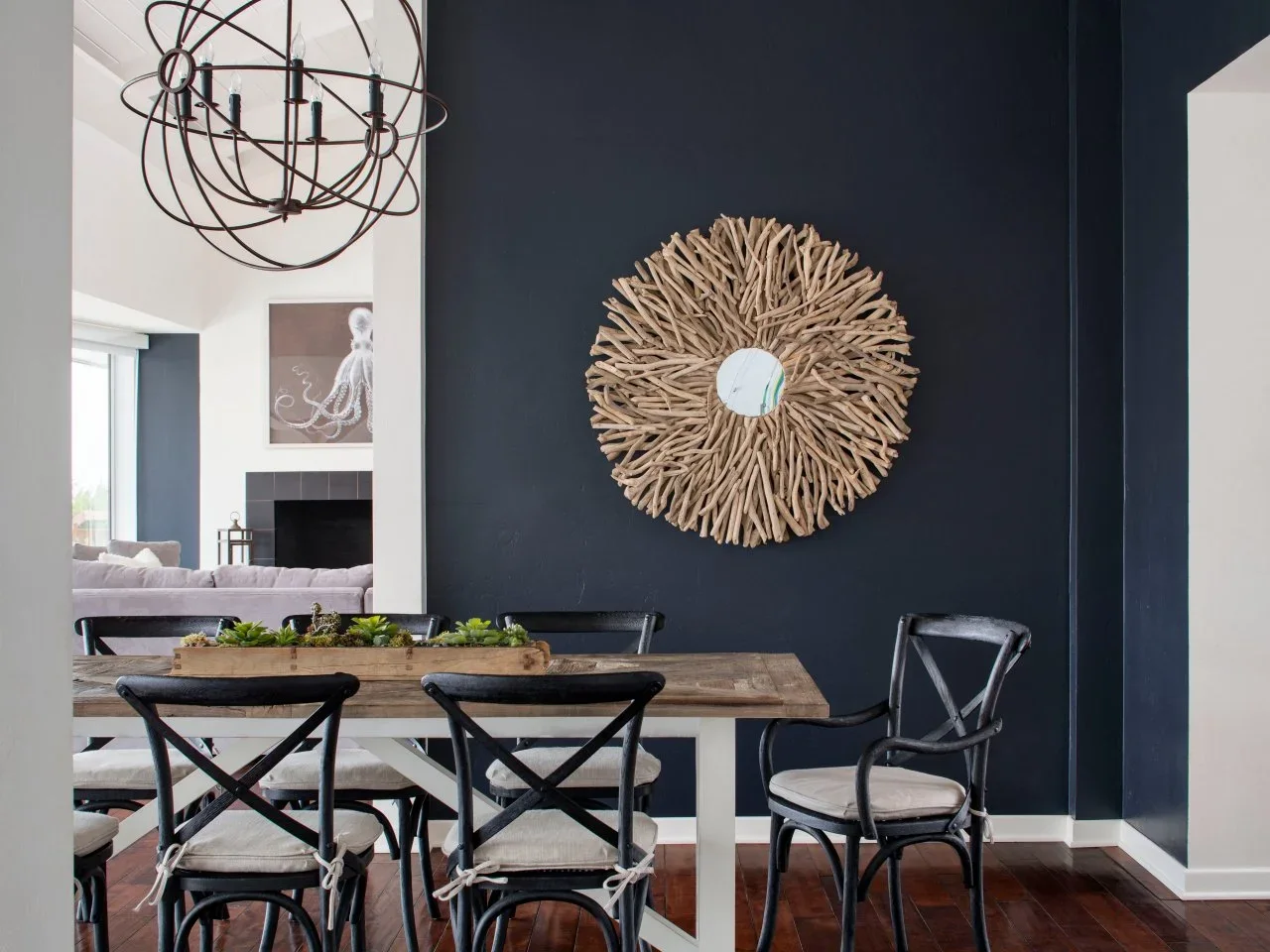
A broad textured mirror creates a warm focal point against the plain navy wall. Its irregular frame contrasts with the straight table edge and crossed chair backs. White trim and the adjoining pale room keep the dark wall connected to the rest of this open dining area.
Check the reflected view before settling the mirror’s height, and use fixings suitable for its weight and the wall construction. The dining room mirror ideas include other positions to compare. Choose removable seat pads that can be cleaned as instructed, and keep their ties clear of moving chair legs.
PART 03
Add pattern and useful navy storage
IDEA 09 / 15
Use a Navy Geometric Repeat behind a Bench
 SaveSupport Non AI Creator
Image credit: Photo: David Tsay. From: HGTV Magazine
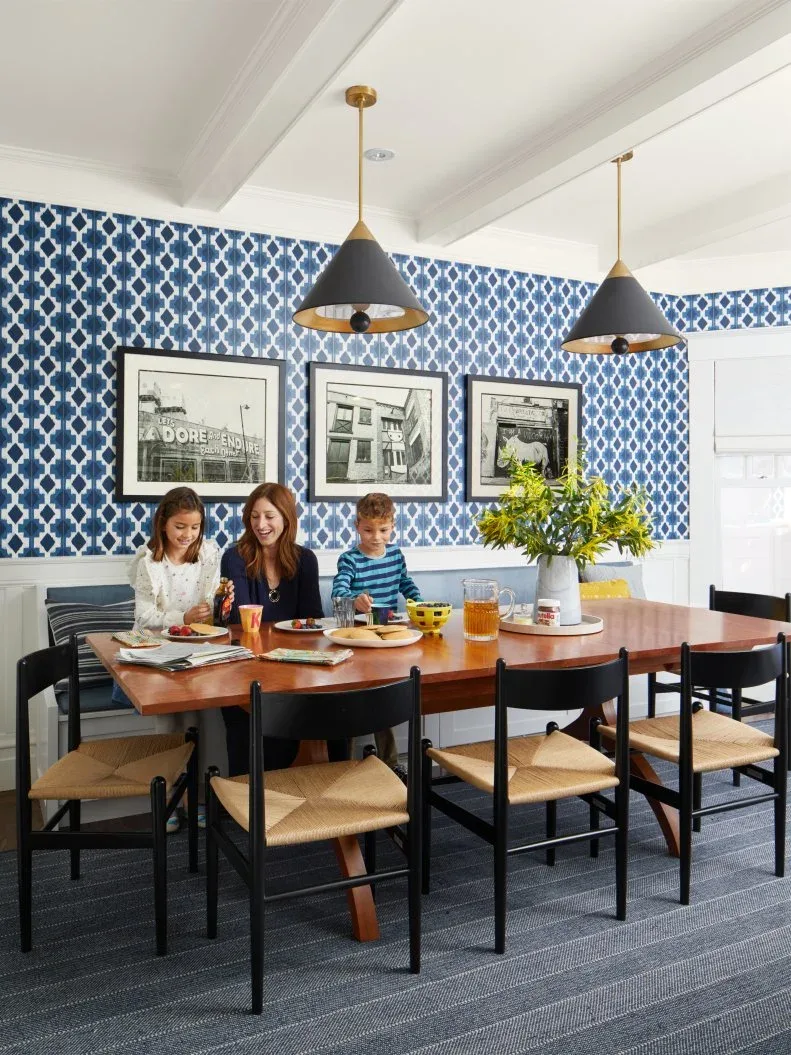
The navy-and-white repeat gives the bench wall a clear identity while the white lower section prevents the pattern from reaching every surface. Three similarly framed photographs create a second, larger rhythm. Dark chairs and pendant shades connect with the strongest outlines in the wallpaper.
Measure the bench position before arranging the framed group so the pictures relate to the occupied seating area. Allow a practical route into the bench from at least one end. Use a tabletop and seating finish that suits regular cleaning, and keep hanging hardware secure where people will sit beneath it.
IDEA 10 / 15
Introduce Navy through a Sideboard
 SaveSupport Non AI Creator
Image credit: Future
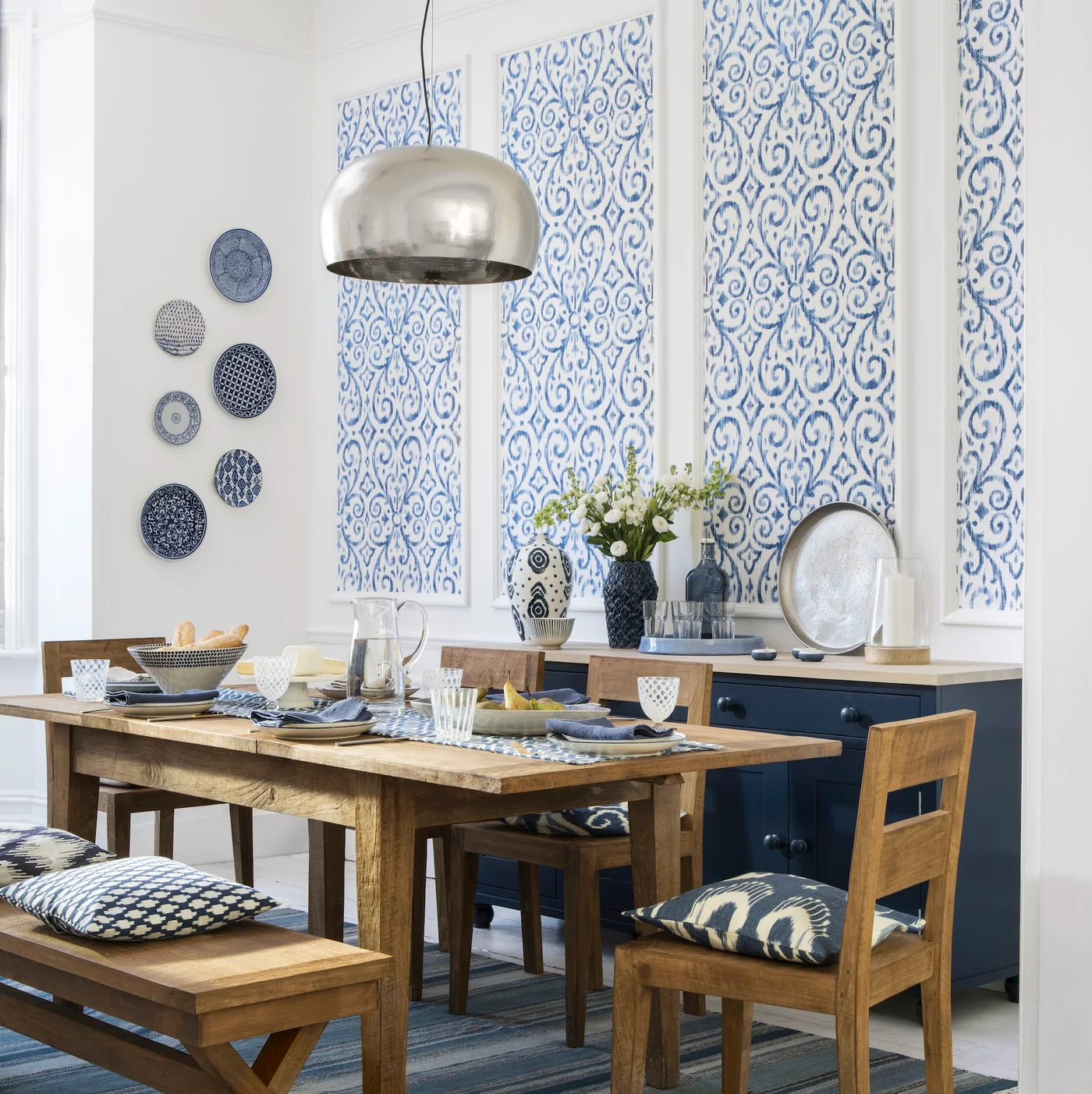
The navy sideboard anchors this otherwise pale dining room. Blue-and-white pattern appears in separate wall panels and seat cushions, spreading the color without covering every wall. The timber table and chairs add warmth, while the pale sideboard top gives glassware and flowers a clear surface.
If the walls already work well, try navy on a storage piece before repainting the room. Check drawer clearance behind pulled-out chairs, and choose storage for the dishes you actually use. Keep frequently handled glassware within easy reach and protect the cabinet top beneath vases that may drip after filling.
IDEA 11 / 15
Connect Dining Storage to a Navy Kitchen
 SaveSupport Non AI Creator
Image credit: Photo: Chase Daniel, Tyler Rush, Trisha Shepard. From: Hugh Jefferson Randolph Architects
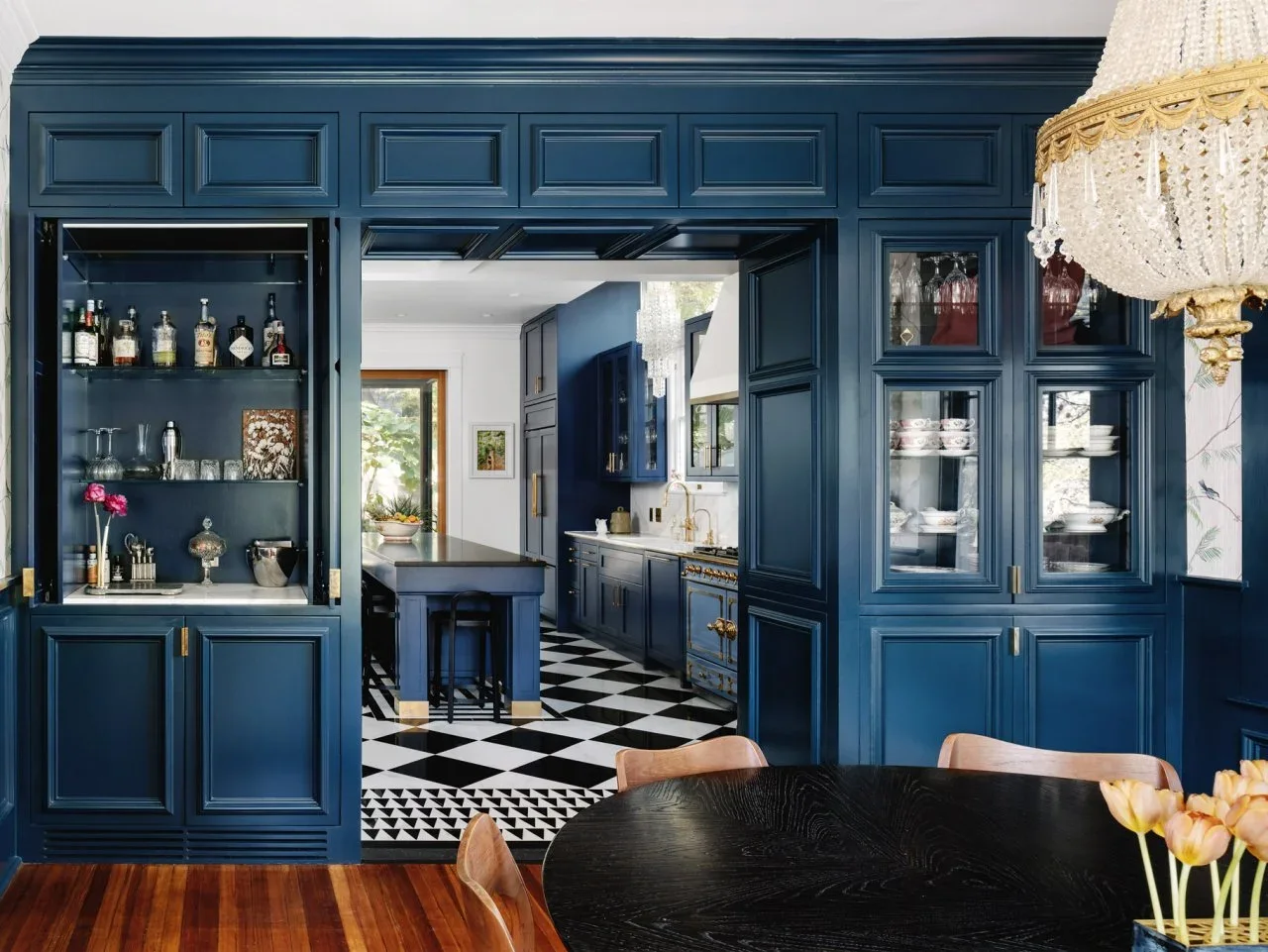
The blue built-ins continue around the doorway, connecting dining storage with the kitchen beyond. Glass-front sections display dishes while closed cupboards provide quieter storage below. A dark round table and timber chair backs remain distinct from the cabinetry, so the room does not become one uninterrupted blue surface.
Plan cabinet compartments around your largest serving pieces before choosing the decorative door layout. Keep a usable landing area for dishes and check door swings beside dining chairs. If fitting lighting inside glazed cupboards, consider reflections from seated eye level and leave access for cleaning the shelves and replacing components.
PART 04
Bring navy into window treatments and seating
IDEA 12 / 15
Try a Navy Blind with Softer Blue-Gray Walls
 SaveSupport Non AI Creator
Image credit: John Lewis & Partners
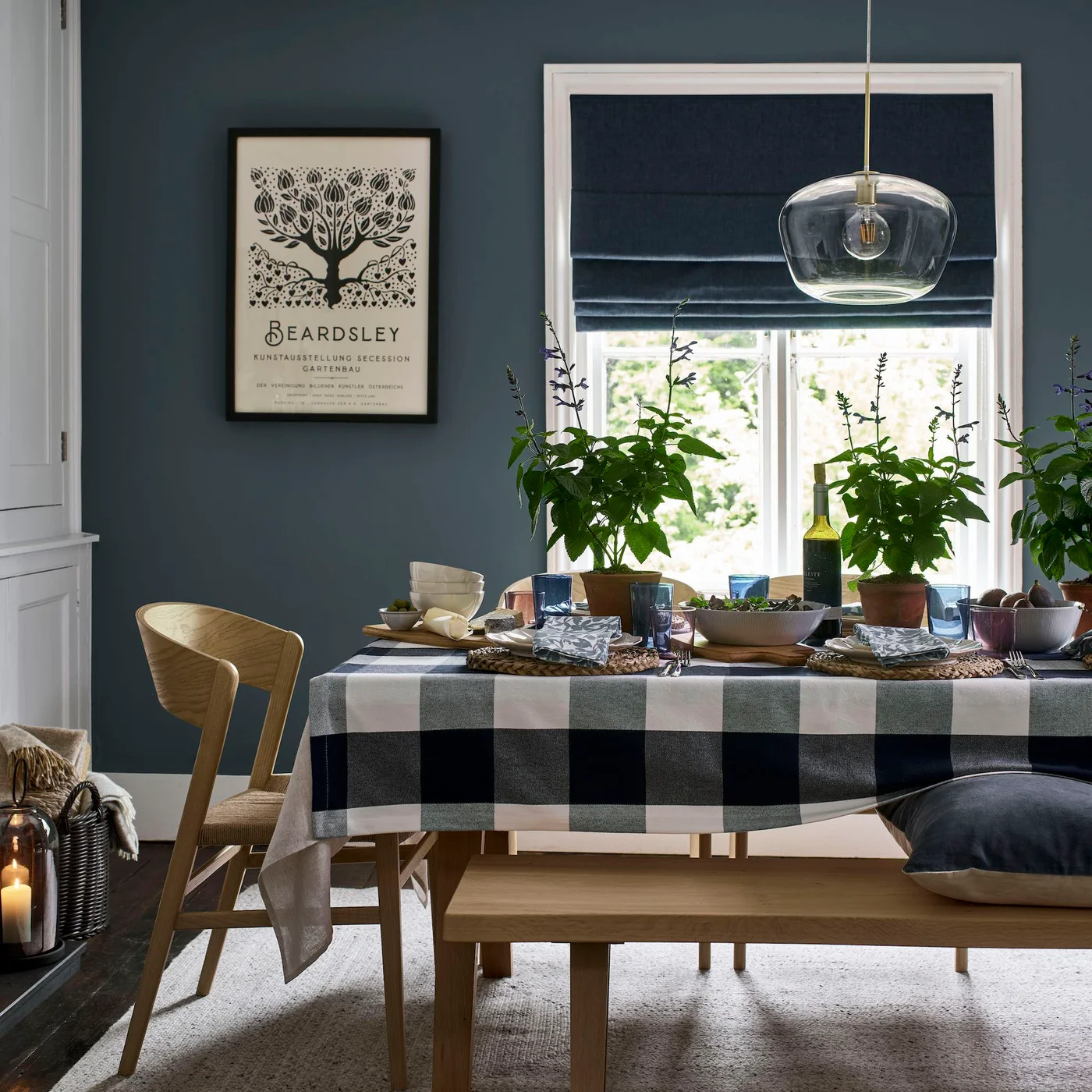
The navy blind introduces the darkest blue at the window while the walls stay softer and grayer. A large checked cloth gives the table a bolder pattern than the plain surrounding paint. The clear pendant keeps a view through the room, and timber seating warms the lower part of the arrangement.
Compare blind fabric in daylight and with your lamps switched on; a dark textile can read differently from a painted sample. Check the blind’s cleaning instructions and use an appropriate cord-safe operating system. Leave the window handle accessible, and choose a tablecloth length that will not catch beneath chairs or diners’ feet.
IDEA 13 / 15
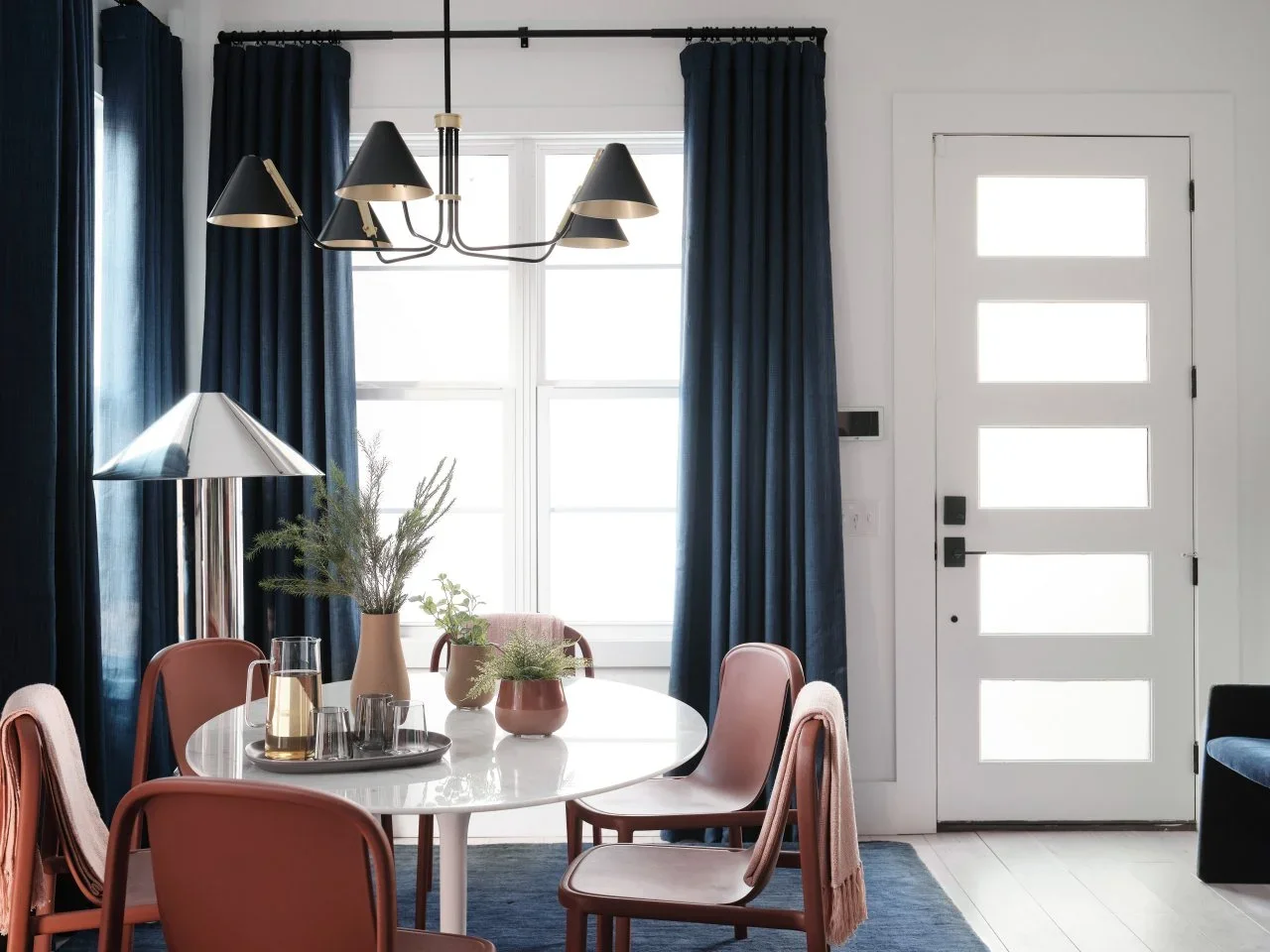
Use Navy Curtains to Define a Pale Dining Area
 SaveSupport Non AI Creator
Image credit: Photo: JOSEPH BRADSHAW
Navy curtains create tall bands of color around the windows while the white walls and round table keep this dining area bright. A blue rug repeats the darker color beneath pink chairs. The black chandelier shades add smaller dark shapes without making the furniture itself heavy.
Check curtain stacking space and the nearby entrance door before choosing the rod length. Fabric should clear moving doors and avoid dragging where shoes pass. For a dining rug, assess cleaning and chair movement together; a beautiful weave becomes frustrating if chair legs catch whenever someone sits down.
IDEA 14 / 15
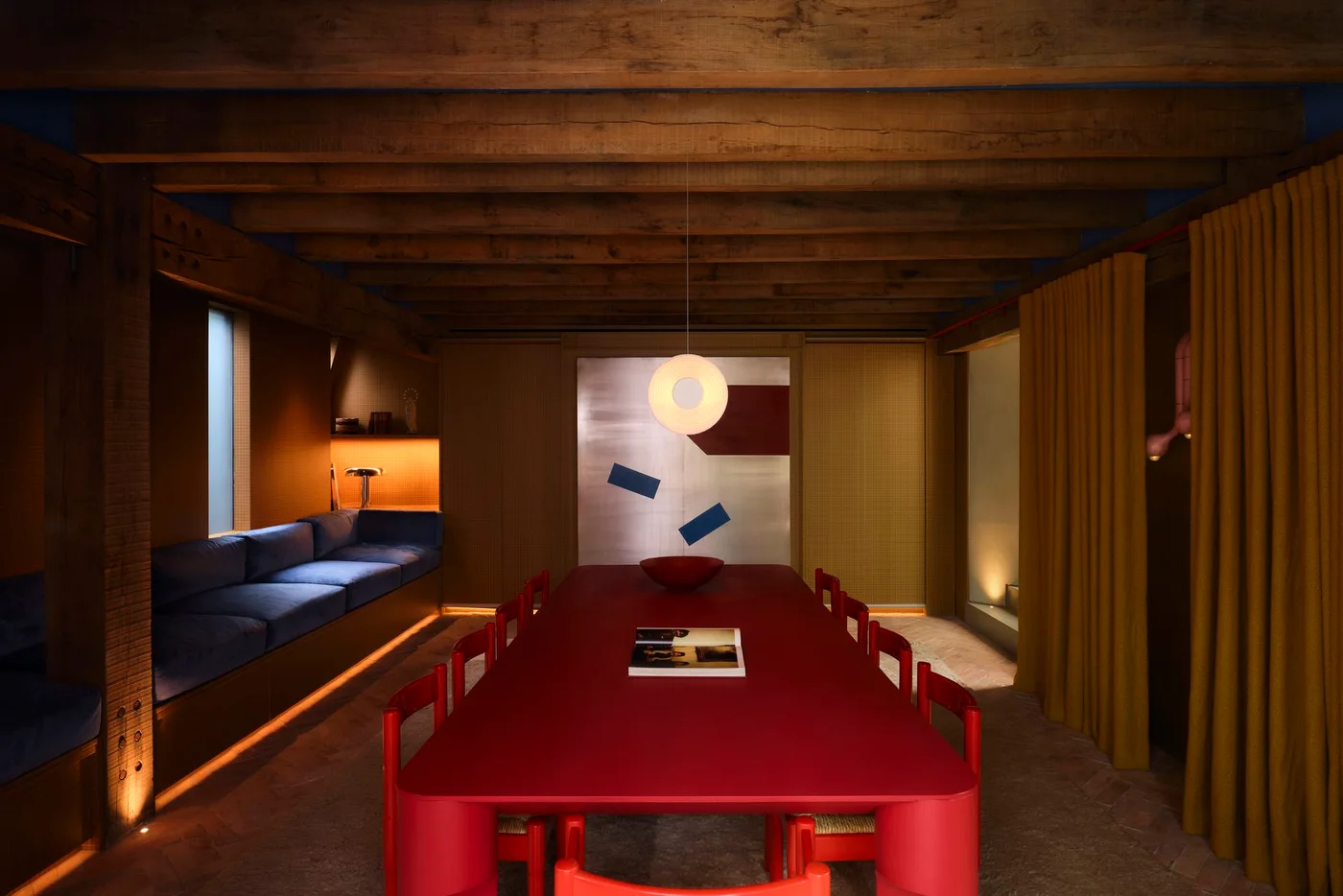
Balance a Red Table with a Navy Bench
 SaveSupport Non AI Creator
Image credit: Oliver Lyttelton
The navy bench supplies a cool, dark band along one side of this warm dining room. A red table and chairs form the stronger central color, while timber beams and lower wall lighting give the room a sheltered feel. The bench adds upholstery without repeating it on every chair.
Before building a long bench, check the relationship between seat height, tabletop height and legroom using the actual furniture dimensions. Specify upholstery suited to food spills and frequent use. Removable covers or accessible cushions can simplify cleaning, and an open end makes it easier for guests to reach the inner seats.
IDEA 15 / 15
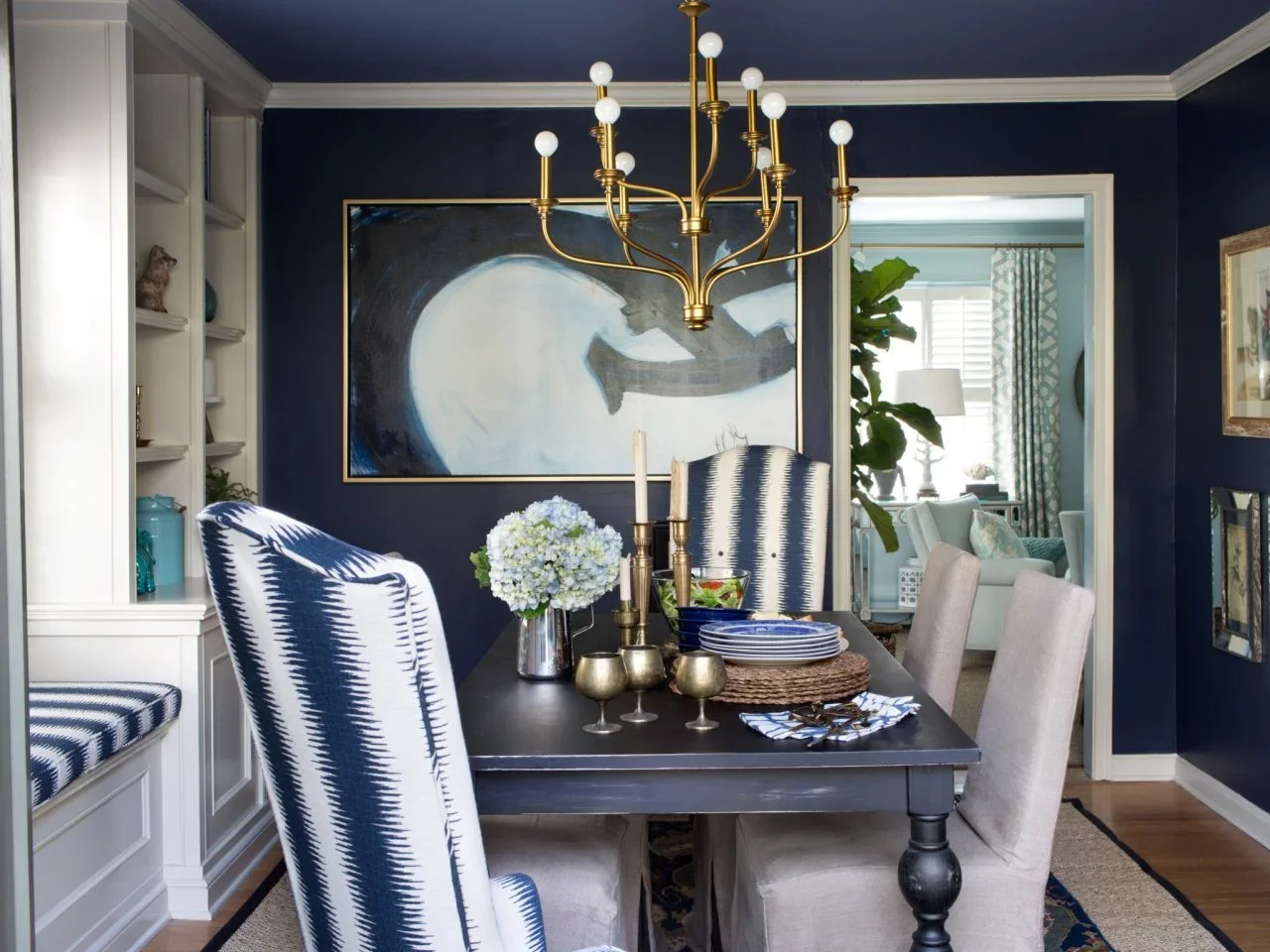
Mix Navy Patterned End Chairs with Plain Seats
 SaveSupport Non AI Creator
Image credit: From: Brian Patrick Flynn
Patterned end chairs repeat navy at the table while pale side chairs soften the larger dark walls. White built-in storage and a broad abstract picture create lighter areas around the seating. The gold-colored chandelier adds a warmer outline, connecting with the smaller candleholders and tableware below.
Compare seat heights and arm clearance when combining different chair styles. Upholstery need not match, but everyone should sit comfortably at the same table. Test fabric samples beside the wall paint and choose care requirements that suit everyday meals; removable covers may be more practical than difficult-to-clean decorative fabric.
BRING IT ALL TOGETHER
Test navy in the room you actually use
Compare paint and fabric samples beside the flooring, white trim and furniture you plan to keep. Check them in daylight and under evening lighting. A navy wall, a pair of curtains and a painted cabinet each occupy different amounts of the view, so choose the scale of change deliberately.
Keep practical details close to the color decision: chairs need room to move, cupboards need to open and dining fabrics need a realistic cleaning plan. Let a few warmer or paler surfaces provide contrast instead of buying a matching blue version of every object.