Deep green, teal, navy and warmer enclosed palettes can give a dining room depth while leaving the table comfortable to use. These photographed arrangements compare full rooms with practical lighting and storage details, focusing on chair access, serving space and the way darker backgrounds sit beside lighter furniture.
A green-paneled room appears in separate views of its table, sideboard, centerpiece and game shelf; a warm dining den shows its seating and two lighting details. These are different functions within the same homes. Check actual finishes, fitting instructions and furniture sizes before adapting any arrangement, keeping evening light as useful as the daytime view.
PART 01
Choose deeper backgrounds with useful table contrast
IDEA 01 / 20
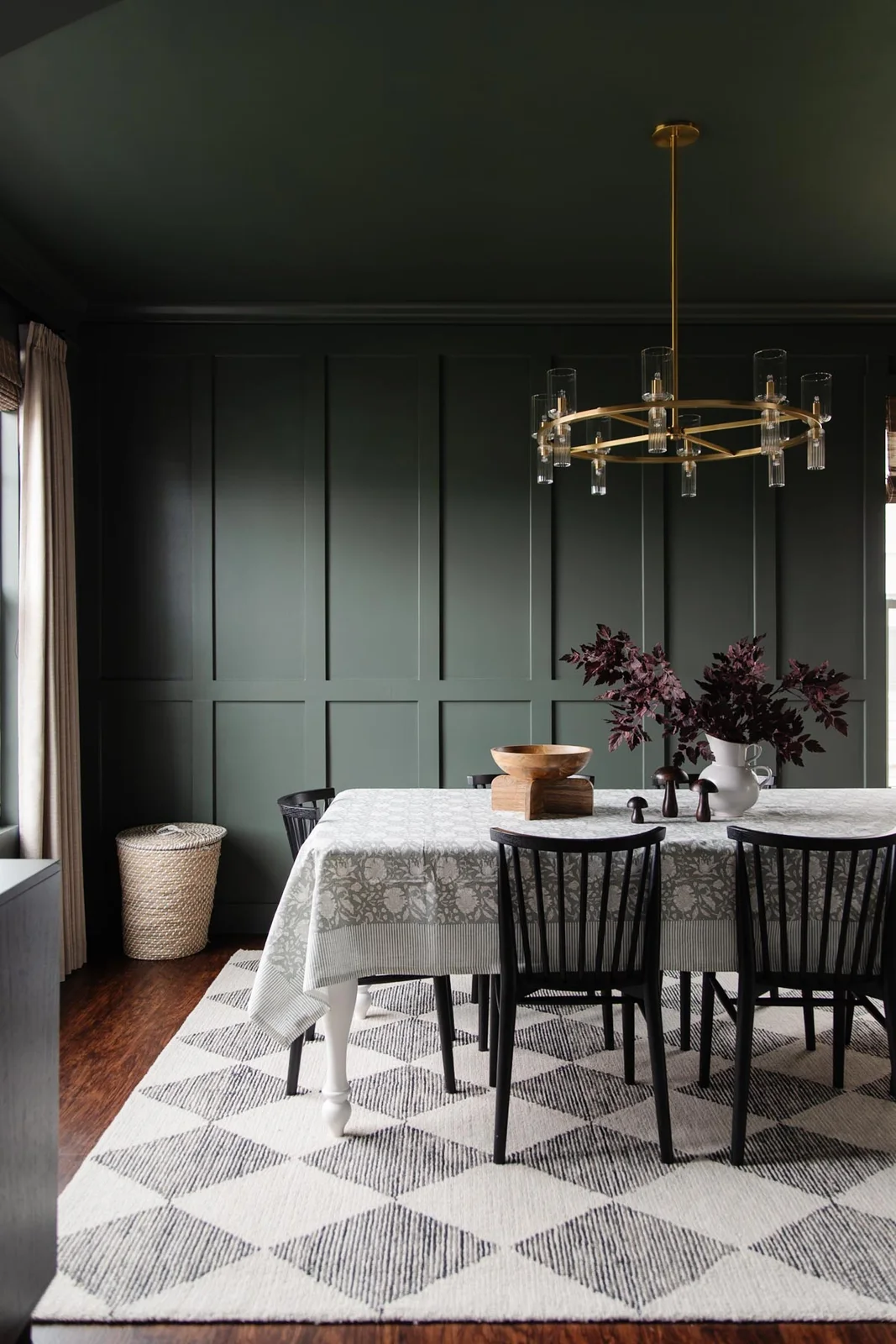
Balance Deep Green with a Pale Tablecloth
 SaveSupport Non AI Creator
Source: caitlinmariedesign.com
The deep green ceiling extends the wall color above the table, while the pale cloth and rug keep the dining group separate below. Black spindle chairs introduce narrower dark outlines. A circular light adds a warmer shape overhead without another strong wall pattern competing with the painted paneling.
Compare cloth and rug samples together before combining two repeats. Keep the rug flat and large enough for chair movement, checking it with chairs pulled out. Green dining room ideas offer other ways to balance this palette when keeping the ceiling pale would suit the room’s available light better.
IDEA 02 / 20
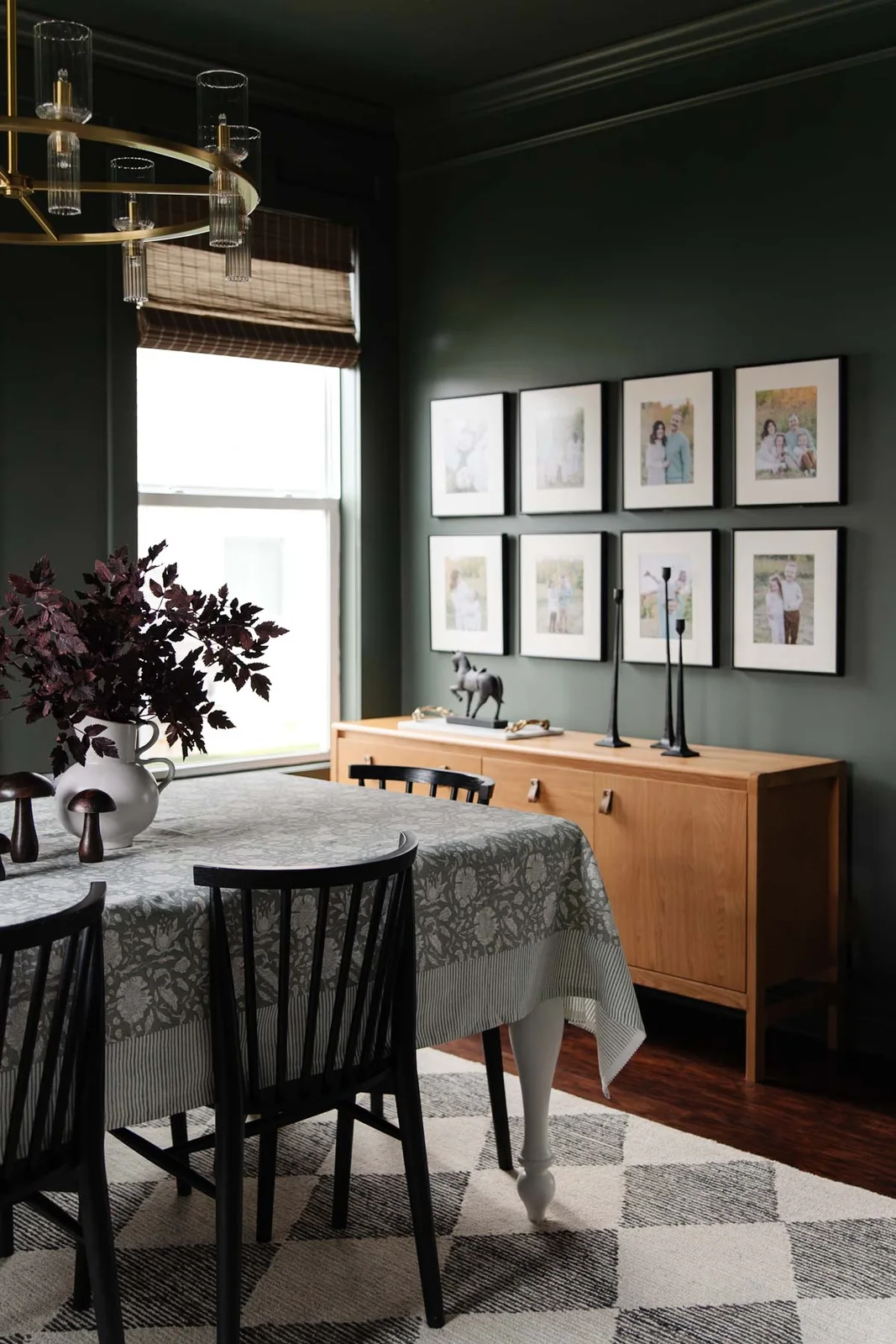
Give the Dark Room a Warm Sideboard
 SaveSupport Non AI Creator
Source: caitlinmariedesign.com
The sideboard supplies a warmer horizontal surface against the deep green wall. Eight framed photographs concentrate the decoration above it in a regular arrangement. The black chairs and pale tablecloth remain separate in front, so storage and personal display share one wall without covering the dining table itself.
Check door and drawer access with the nearest chair occupied before choosing the sideboard depth. Keep its top useful for serving rather than filling every edge. Dining room sideboard ideas compare other storage arrangements, helping you choose between concealed dishes and display space around the things actually used for meals.
IDEA 03 / 20
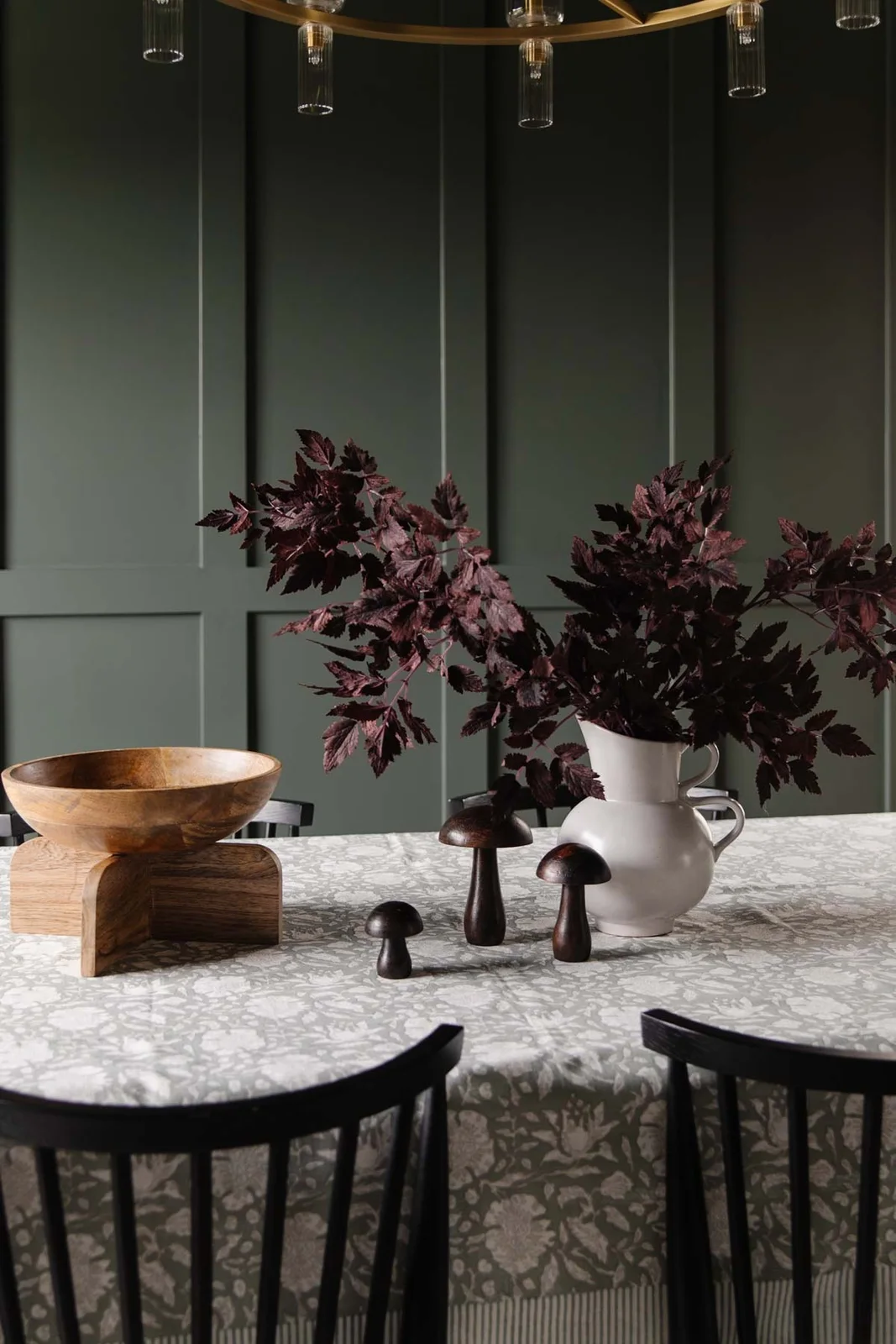
Keep a Dark Centerpiece Easy to Move
 SaveSupport Non AI Creator
Source: caitlinmariedesign.com
The burgundy branches create a deeper accent against the pale cloth and white pitchers. A wooden bowl adds a warmer low shape beside them, while smaller dark ornaments repeat the chairs’ color. The green paneling stays visible behind the arrangement rather than being hidden by additional wall decoration.
Check sightlines from seated positions and move taller branches when they obstruct conversation. Keep serving space available before adding ornaments. A tray or fewer smaller objects can make clearing the table easier, and the cloth’s actual washing guidance should influence whether it suits frequent meals or occasional gatherings.
IDEA 04 / 20
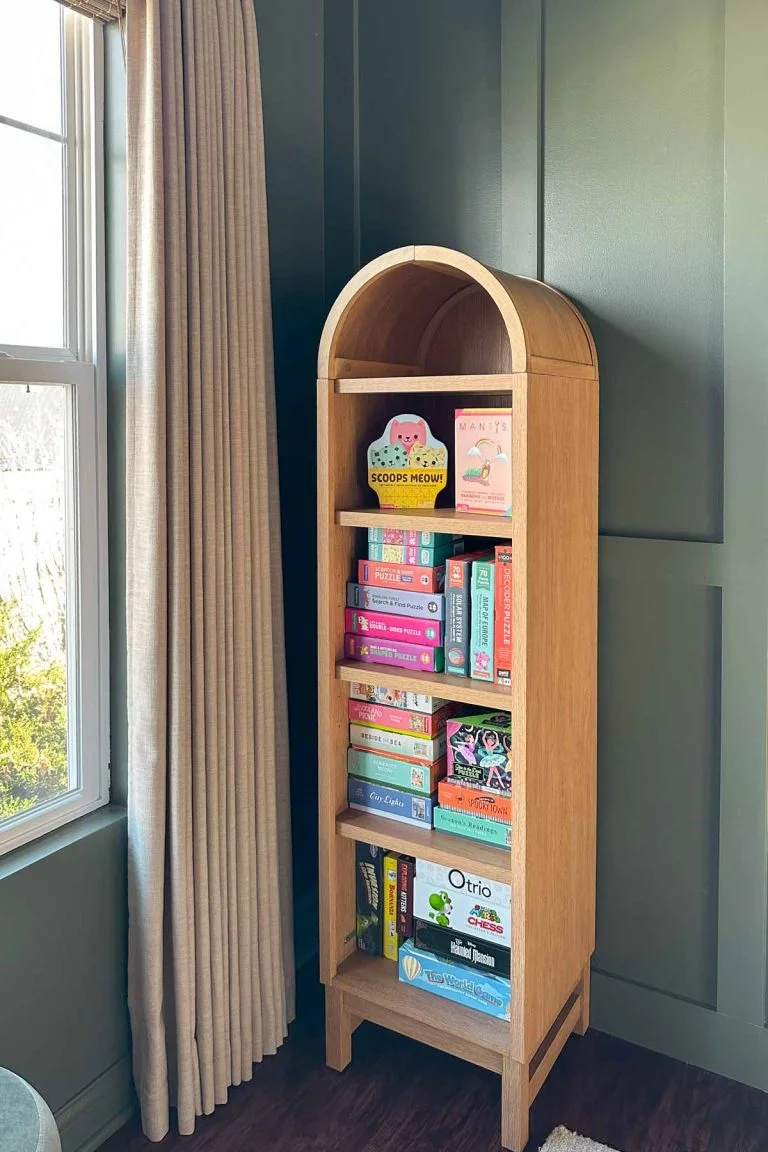
Use a Narrow Shelf for Games Between Meals
 SaveSupport Non AI Creator
Source: caitlinmariedesign.com
The arched shelving introduces a warmer vertical shape beside the darker paneled wall. Books and game boxes occupy the open compartments rather than another set of decorative vessels. Its position near the window leaves the dining room with a separate activity-storage area that can support use between meals.
Choose shelves that fit the actual boxes without tight stacks, keeping frequently used games easy to lift. Anchor the unit according to its instructions and preserve curtain movement. Leave a practical route to the window; narrower storage can be useful only if it does not turn that access into an awkward corner.
IDEA 05 / 20
Pair Olive Walls with a Long Warm Table
 SaveSupport Non AI Creator
Image credit: Christopher Horwood. Design: Studio Squire
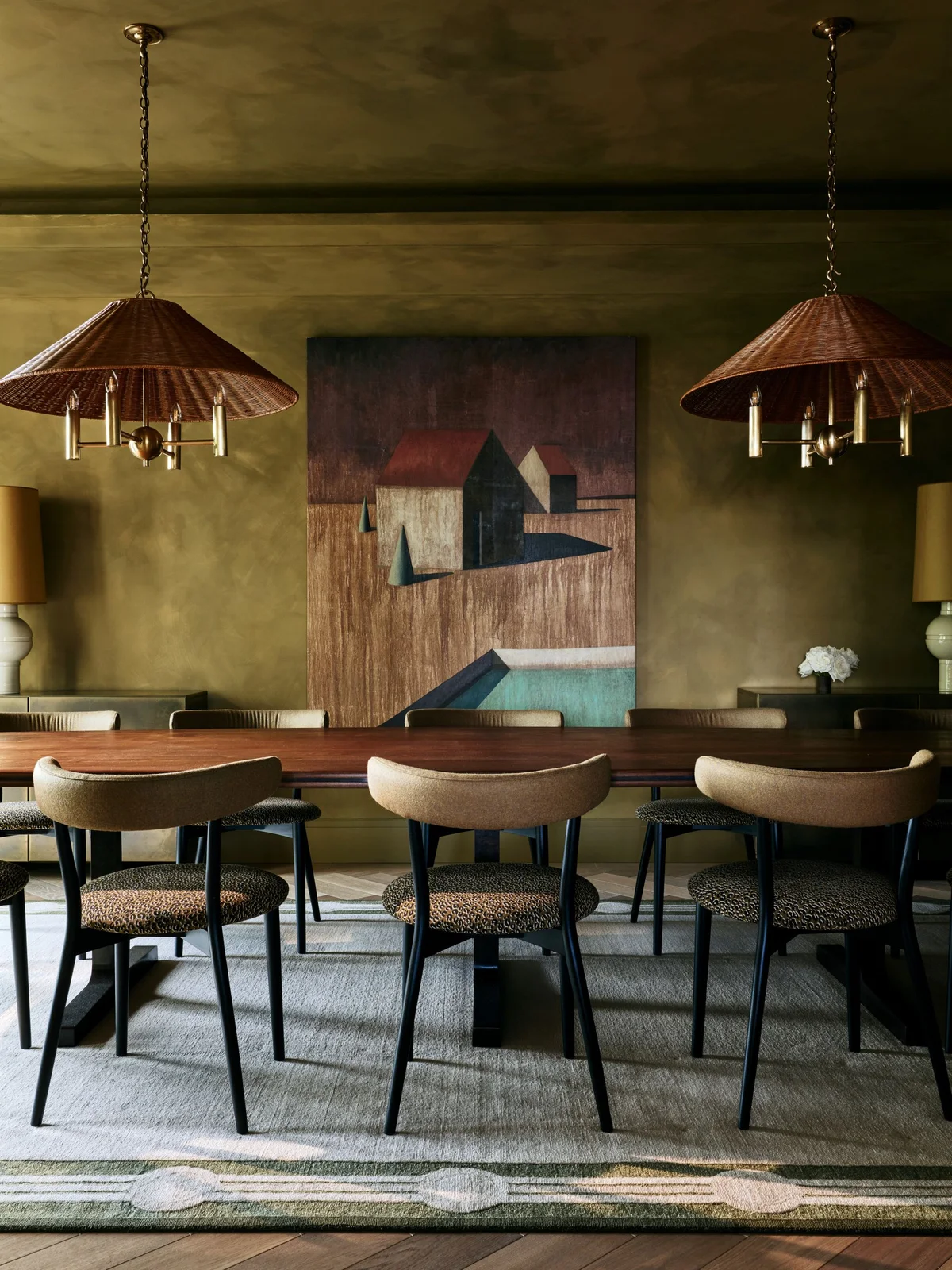
The olive-toned walls and ceiling create a connected deeper background around the long table. Curved chairs soften the furniture outlines below two broad hanging lights. A large geometric artwork supplies a single strong wall detail, with its warmer and darker patches relating to the table and surrounding palette.
Check how the pendants distribute light along the whole tabletop instead of judging them only from the doorway. Compare chair width with the number of places needed. Keep the artwork securely mounted, and follow the actual wall finish’s care instructions rather than assuming the photographed surface identifies a particular plaster or paint technique.
PART 02
Contain pattern around practical furniture
IDEA 06 / 20
Let Alcove Storage Share the Dark Wall Color
 SaveSupport Non AI Creator
Image credit: Cave Interiors
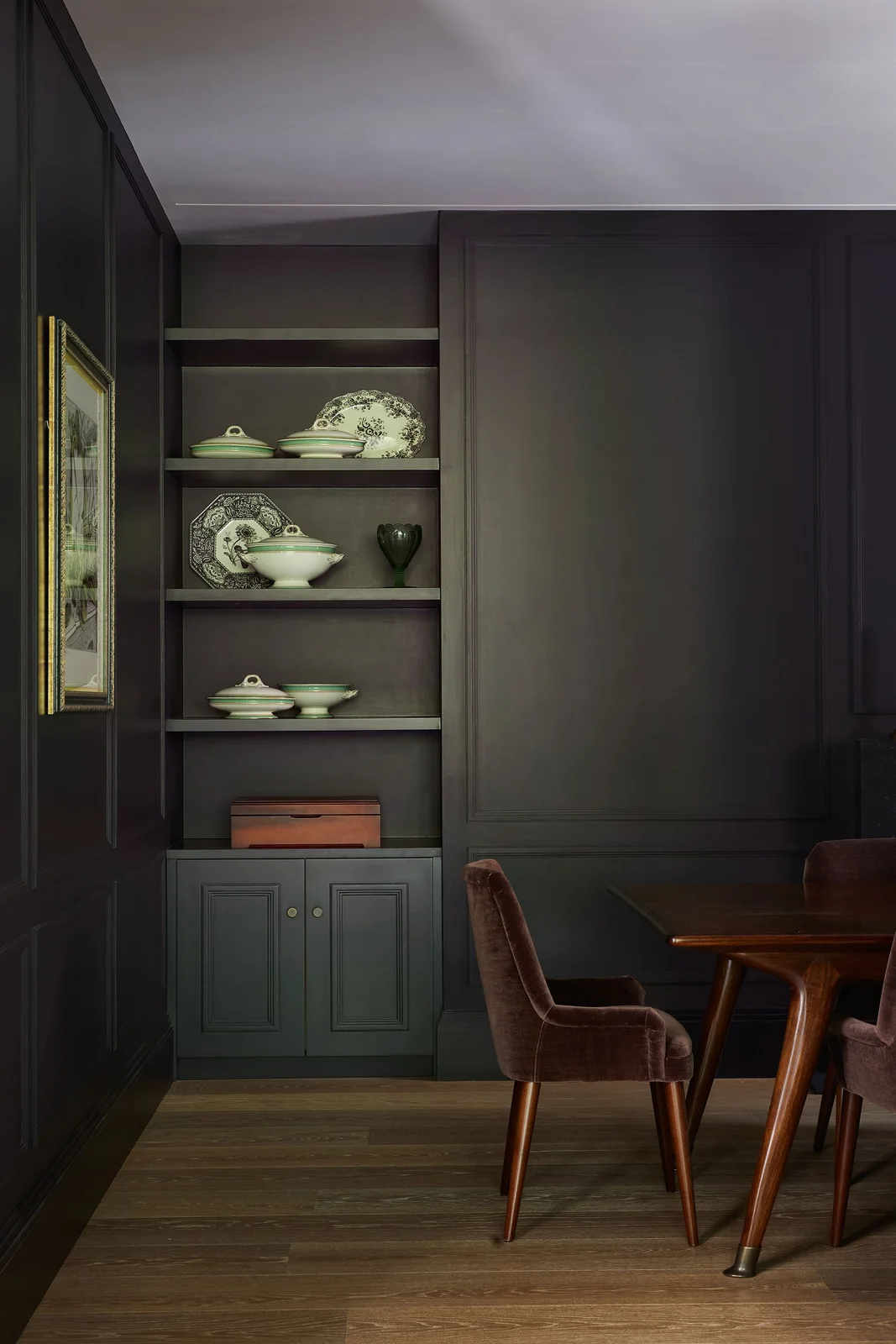
The shelving and lower cupboards share the surrounding dark wall color, leaving the pale dishes more visible within the alcove. Open upper shelves keep a few serving pieces on display. A brown chair and the edge of a wooden table supply warmer furniture outlines beside the deeper storage wall.
Plan shelf heights around the dishes you actually need to lift, with heavier pieces lower and easier to reach. Keep closed storage for items that do not suit open display. Dining room built-ins compare other alcove arrangements when you need practical serving storage without making every wall a collection of exposed dishes.
IDEA 07 / 20
Contain Floral Pattern Above the Table
 SaveSupport Non AI Creator
Image credit: Architecture in Formation
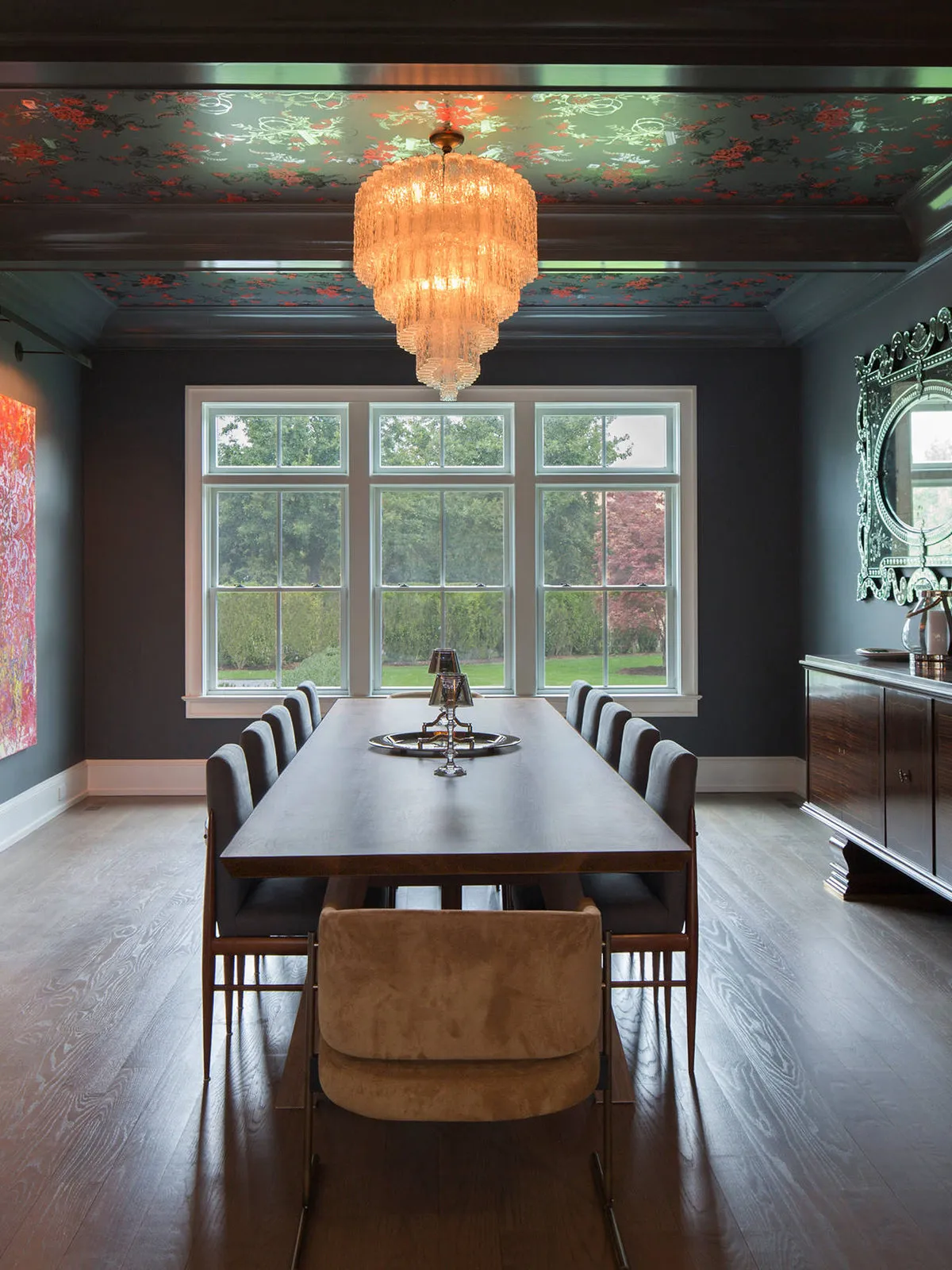
The floral ceiling panels concentrate the strongest pattern overhead within darker framing. A warm-colored chandelier forms a separate hanging shape above the long table. The chairs and sideboard supply useful furniture below, with the mirror adding a smaller reflective detail against the room’s deeper surrounding walls.
Compare ceiling samples from seated height before choosing a busy repeat. Check light distribution at both ends of the table and preserve access to the sideboard. Dining room wallpaper ideas offer other places to contain a pattern if overhead decoration would make your own room feel too visually crowded.
IDEA 08 / 20
Keep Pale Furniture Against Blue-Gray Paneling
 SaveSupport Non AI Creator
Image credit: Future PLC/Dominic Blackmore
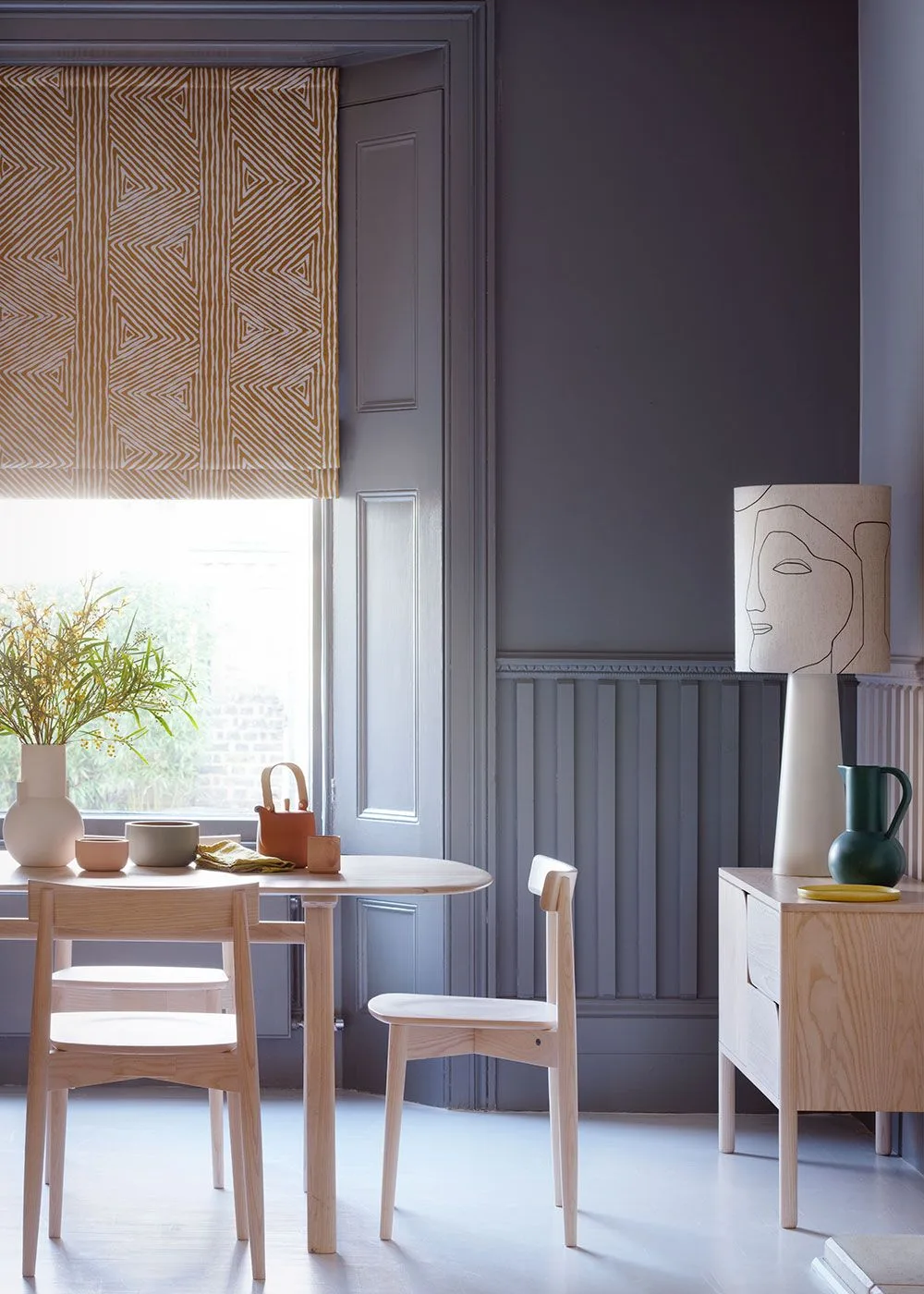
The deeper blue-gray wall gives the pale table and chair backs clearer outlines beside the window. Paneling adds quieter lines beneath the blind’s stronger geometric pattern. A light drawer chest keeps storage within the warmer furniture group, rather than introducing another large dark piece beside the table.
Check the table’s usable edge and chair movement before copying this compact arrangement. Keep blind controls accessible and choose storage that leaves the window route clear. Test the wall color beside your actual wood finish, since pale furniture and darker paint can separate differently under changing daylight and evening lamps.
IDEA 09 / 20
Use Teal Across the Wall and Table Layer
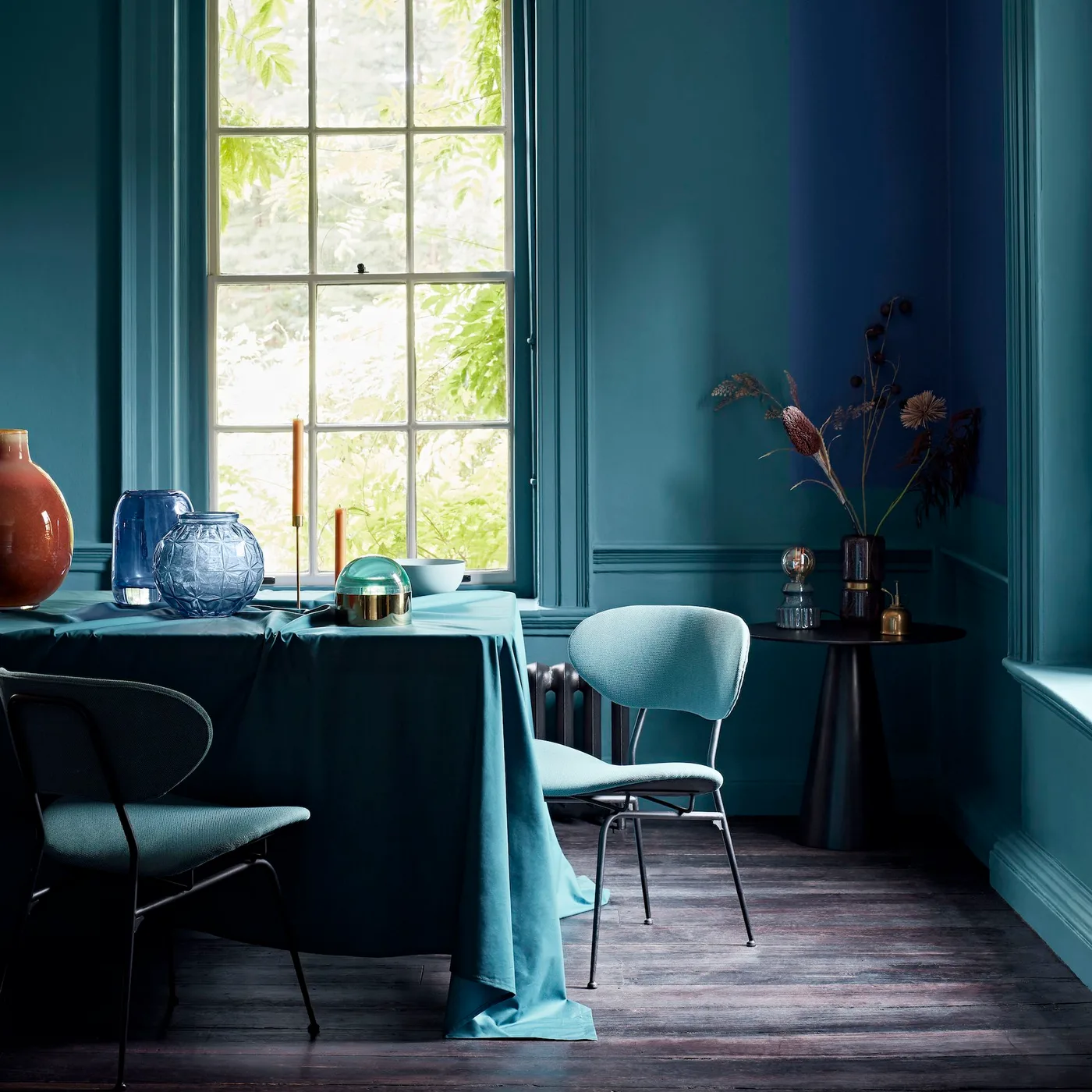 SaveSupport Non AI Creator
Image credit: Crown
The teal cloth connects the table with the larger deep wall color. Pale blue chairs introduce a lighter layer around that darker center, while colored vessels supply smaller accents close to the tabletop. The window gives the photographed room a separate brighter vertical area within the extended teal palette.
Check the cloth’s drop against chair movement and keep tabletop objects easy to relocate for meals. Use lighting that suits actual dining after daylight fades. Choose flameless candles where open flames would sit near foliage or fabric, and keep the window reachable instead of extending the table into its access route.
IDEA 10 / 20
Use Dark Lower Walls to Frame Green Chairs
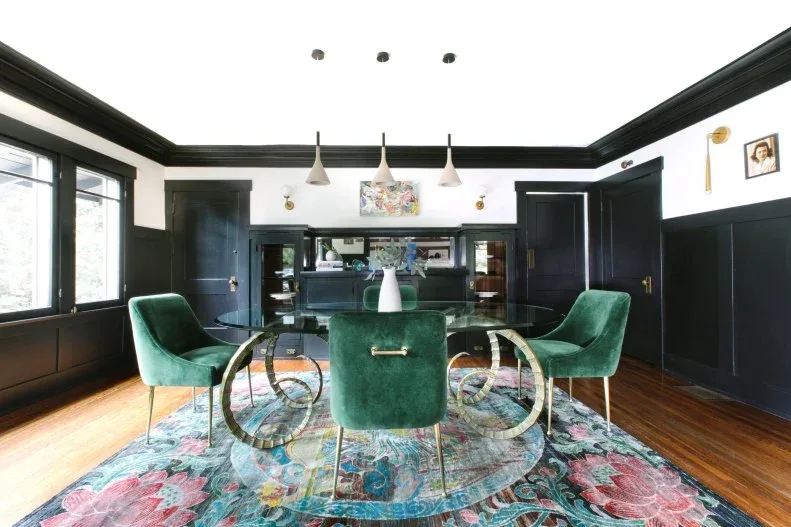 SaveSupport Non AI Creator
Image credit: Photo: Caitlin Murray. From: Caitlin Murray
The dark lower walls connect the room’s storage and doorway outlines while the pale upper walls remain separate above. Green chairs provide the dining group’s strongest furniture color. The glass tabletop leaves more of the rug visible below three pale pendants, so the darker perimeter frames several lighter central surfaces.
Check the table edge and cleaning routine before choosing glass for everyday meals. Compare rug colors with the chair fabric in person and leave room for pulling each seat out. Dining room glass table ideas discuss other arrangements when seeing the floor pattern through the tabletop is part of the appeal.
PART 03
Plan storage and separate light for different uses
IDEA 11 / 20
Keep Dark Green Storage Around a Simple Table
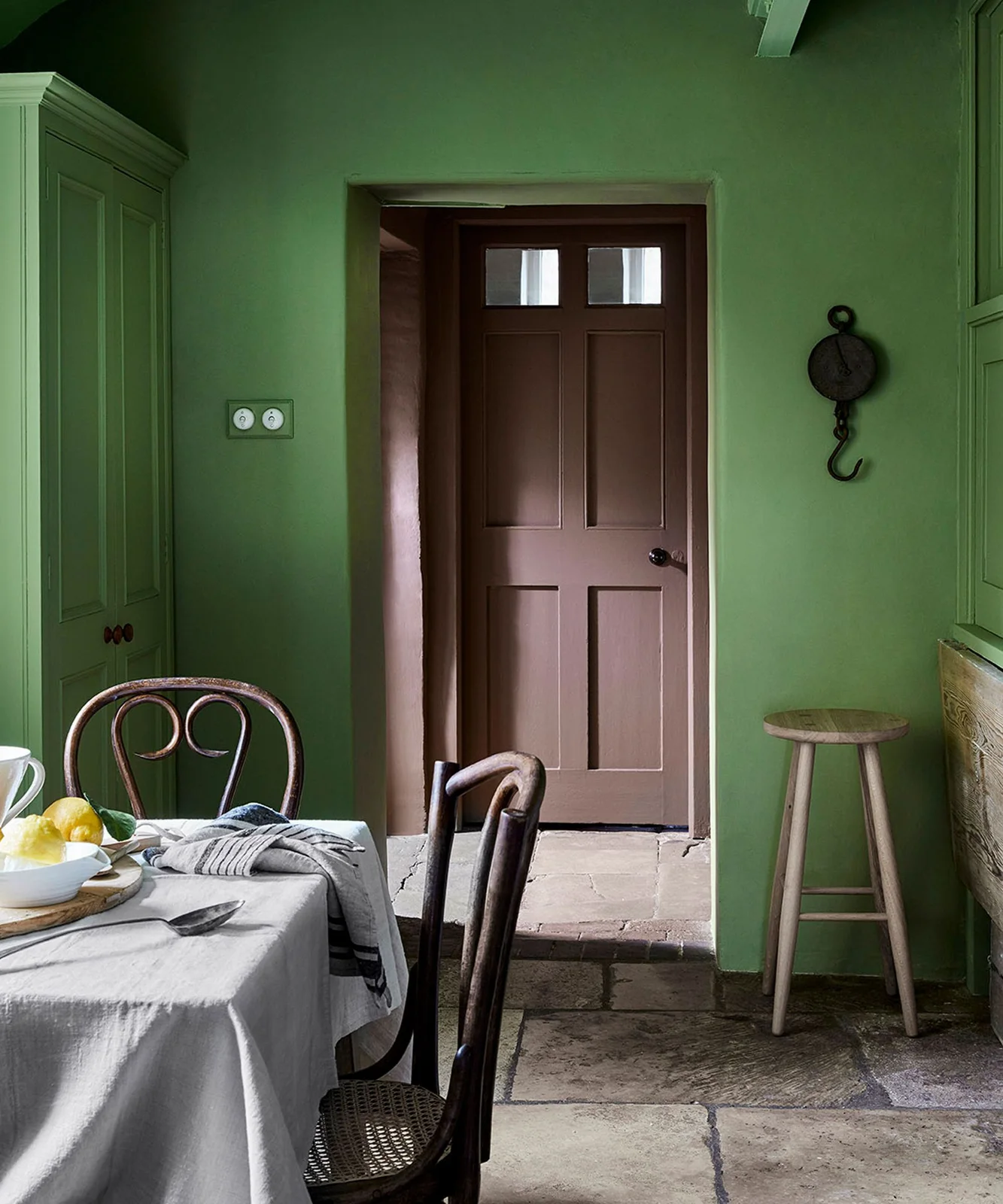 SaveSupport Non AI Creator
Image credit: Little Greene
The green storage and wall keep the surrounding room within a connected deeper palette. A brown door and wooden stool add warmer smaller areas rather than a second painted accent. The pale tablecloth gives the dining surface a clearer outline beside the dark curved chair backs in the foreground.
Keep the stool outside the doorway route and check cupboard movement with the table in place. Choose a cloth that can be cleared and washed easily for the way you eat. Plan reachable everyday storage separately from upper display space, avoiding extra freestanding furniture when the painted cupboards already meet the room’s needs.
IDEA 12 / 20
Keep a Deep Dining Den Connected to Seating
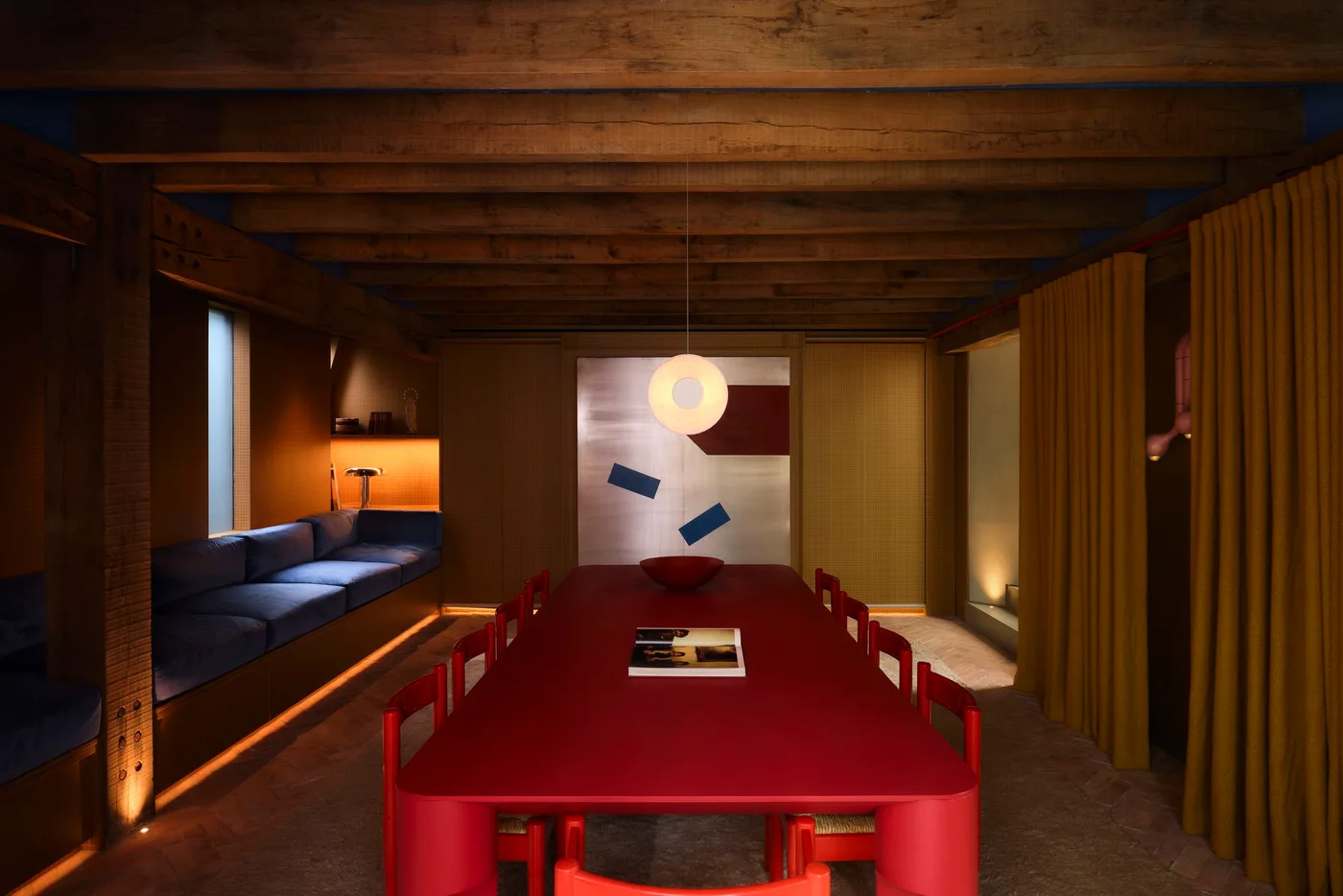 SaveSupport Non AI Creator
Image credit: Oliver Lyttelton
The red table establishes one concentrated furniture color within the darker warm room. Navy seating runs along the side rather than adding another freestanding group. Exposed beams create overhead lines, while the yellow curtain introduces a softer vertical surface at the edge of this more enclosed dining arrangement.
Check seated comfort and the route between table and bench before choosing combined dining and lounge use. Keep the curtain clear of the chairs when it moves. Plan light for meals as well as quieter sitting, with reachable controls rather than relying on the photographed dimness to establish everyday practicality.
IDEA 13 / 20
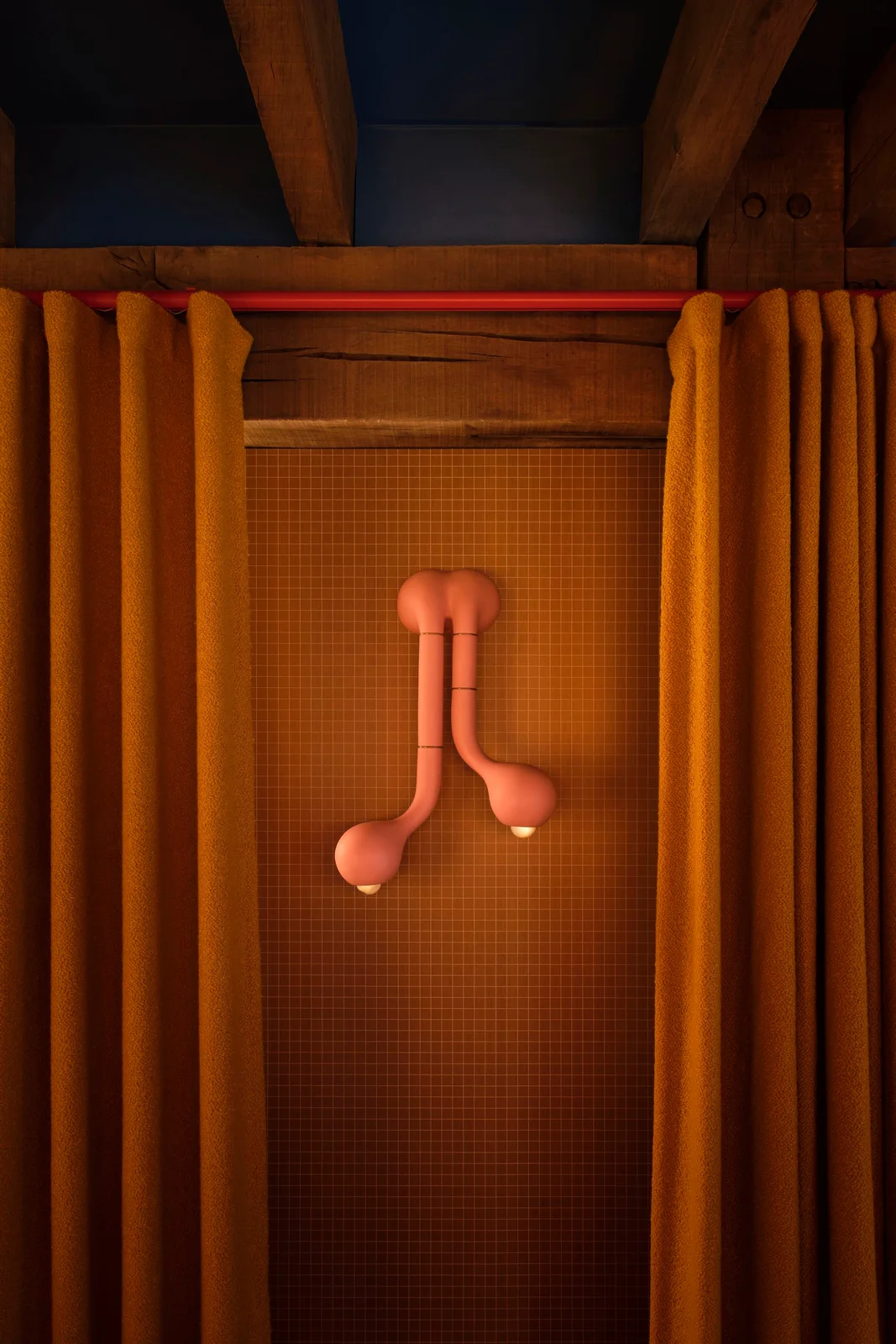
Add a Distinctive Wall Light Beside Curtains
 SaveSupport Non AI Creator
Image credit: Oliver Lyttelton
The pink fitting provides a smaller curved detail against the warm tiled wall. Yellow curtains and the red rail connect with the room’s stronger surrounding colors without another large piece of furniture. The visible beams supply a separate darker structure overhead, keeping the wall light within a more layered background.
Choose a fitting around suitable installation, accessible controls and clearance from moving fabric. Check its light output rather than assuming an unusual shape will illuminate the dining table adequately. Keep decorative wall lighting separate from the task of lighting meals, following the actual product’s instructions for positioning and care.
IDEA 14 / 20
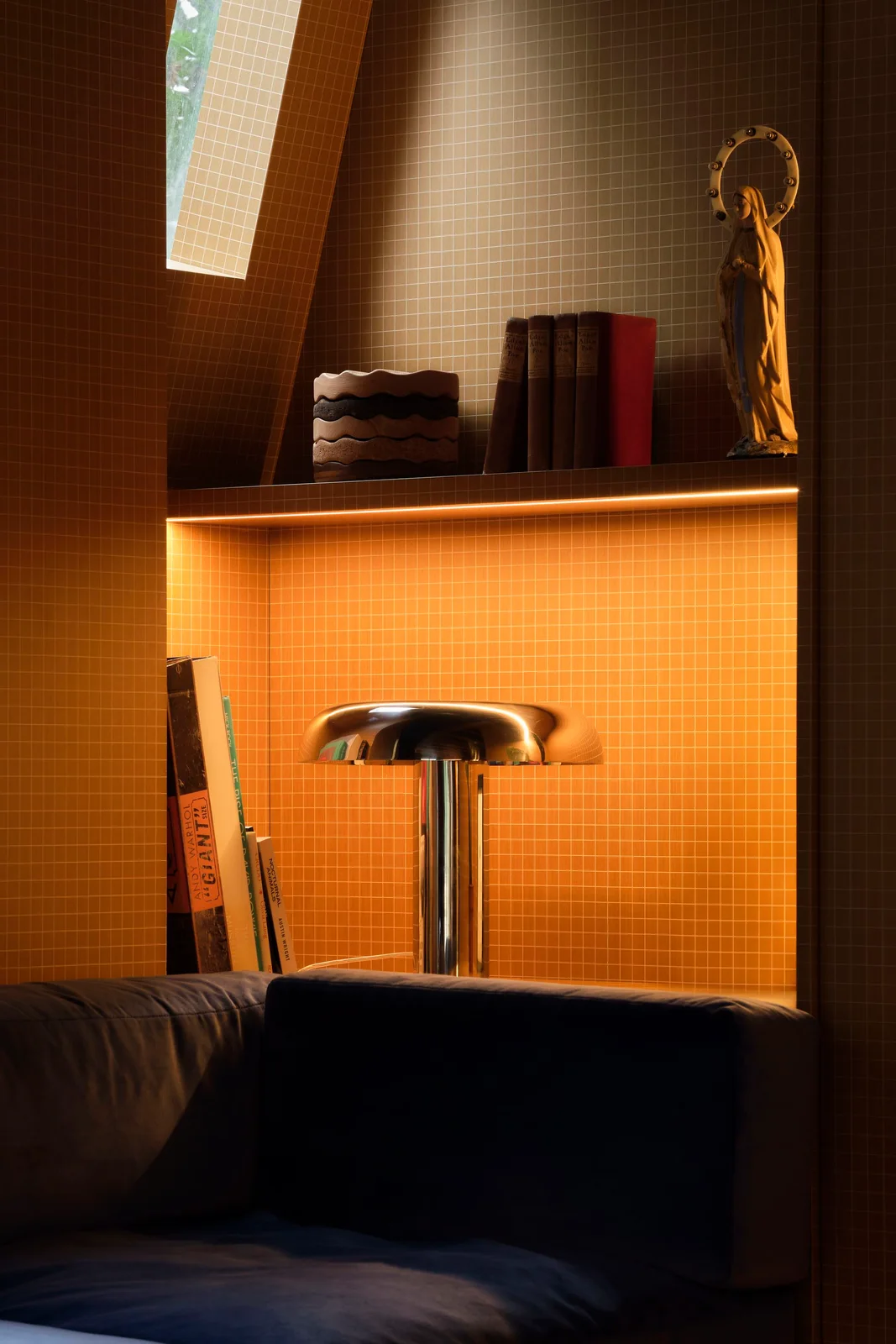
Light a Side Bench Independently
 SaveSupport Non AI Creator
Image credit: Oliver Lyttelton
The navy seat introduces a darker upholstered layer below the warmer tiled wall. An illuminated shelf and the reflective table lamp supply separate light points around the books. The storage is concentrated beside the sitting position rather than becoming another collection on the dining table elsewhere in the room.
Check shelf access from the bench and keep displayed objects stable where people sit nearby. Choose compatible lighting and follow installation instructions, leaving cables away from cushions and movement. A separate lamp can support reading between meals, but the dining surface still needs its own useful illumination when the room is in use.
IDEA 15 / 20
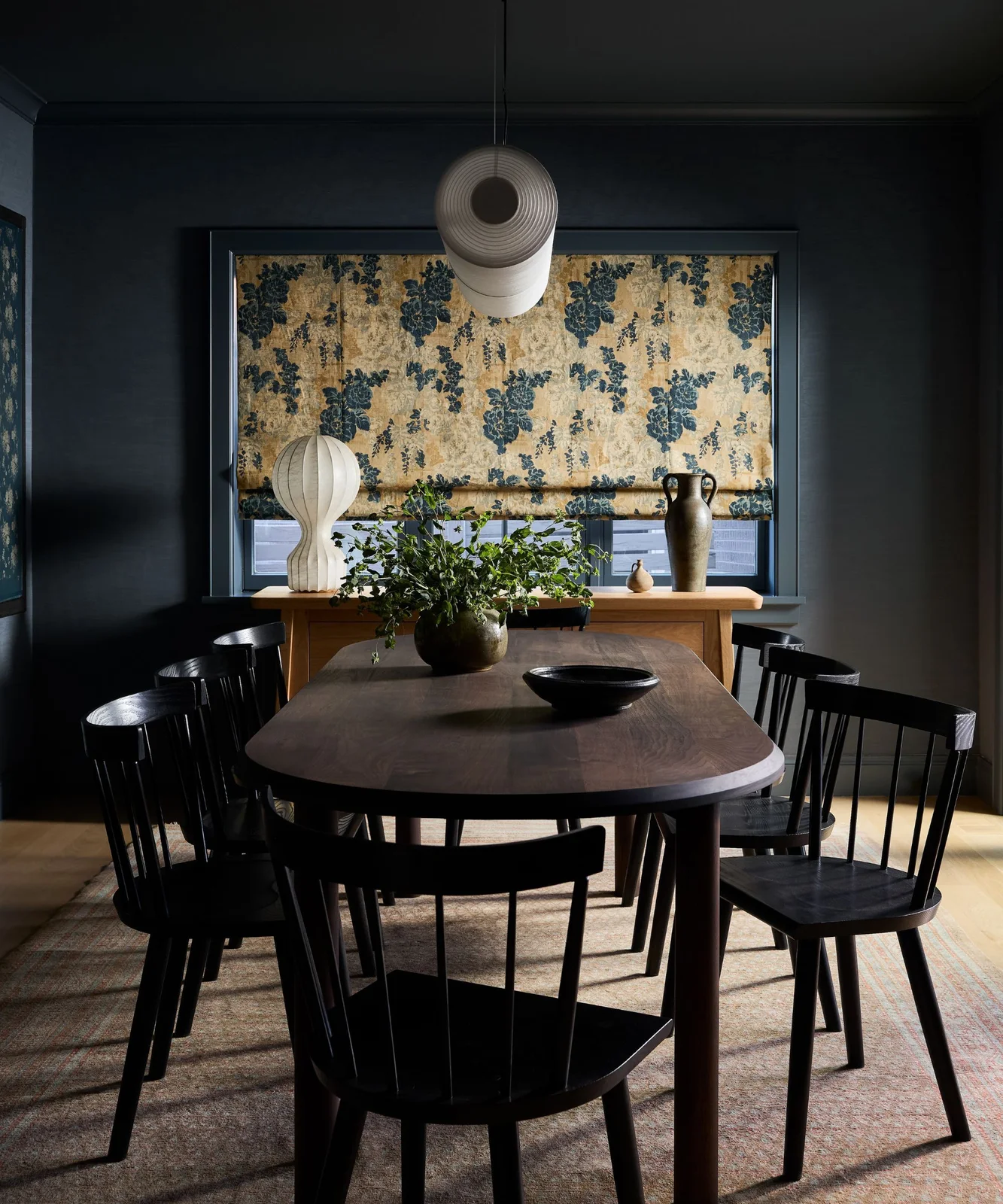
Give Deep Blue a Patterned Window Layer
 SaveSupport Non AI Creator
Image credit: Yond Interiors / Photography Malissa Mabey
The deep blue ceiling extends the darker background over the dining group. A floral blind introduces warmer patterned patches at the window, while the wooden table supplies another warmer surface below. The pale hanging light adds a distinct curved shape without repeating the blind’s detailed floral arrangement.
Compare the blind fabric with the wall sample under evening light as well as daylight. Check that the fitting lights the tabletop adequately and leaves comfortable sightlines. Keep window controls reachable, choosing a simpler table layer when the window already supplies the room’s largest decorative pattern.
PART 04
Keep darker rooms comfortable for meals
IDEA 16 / 20
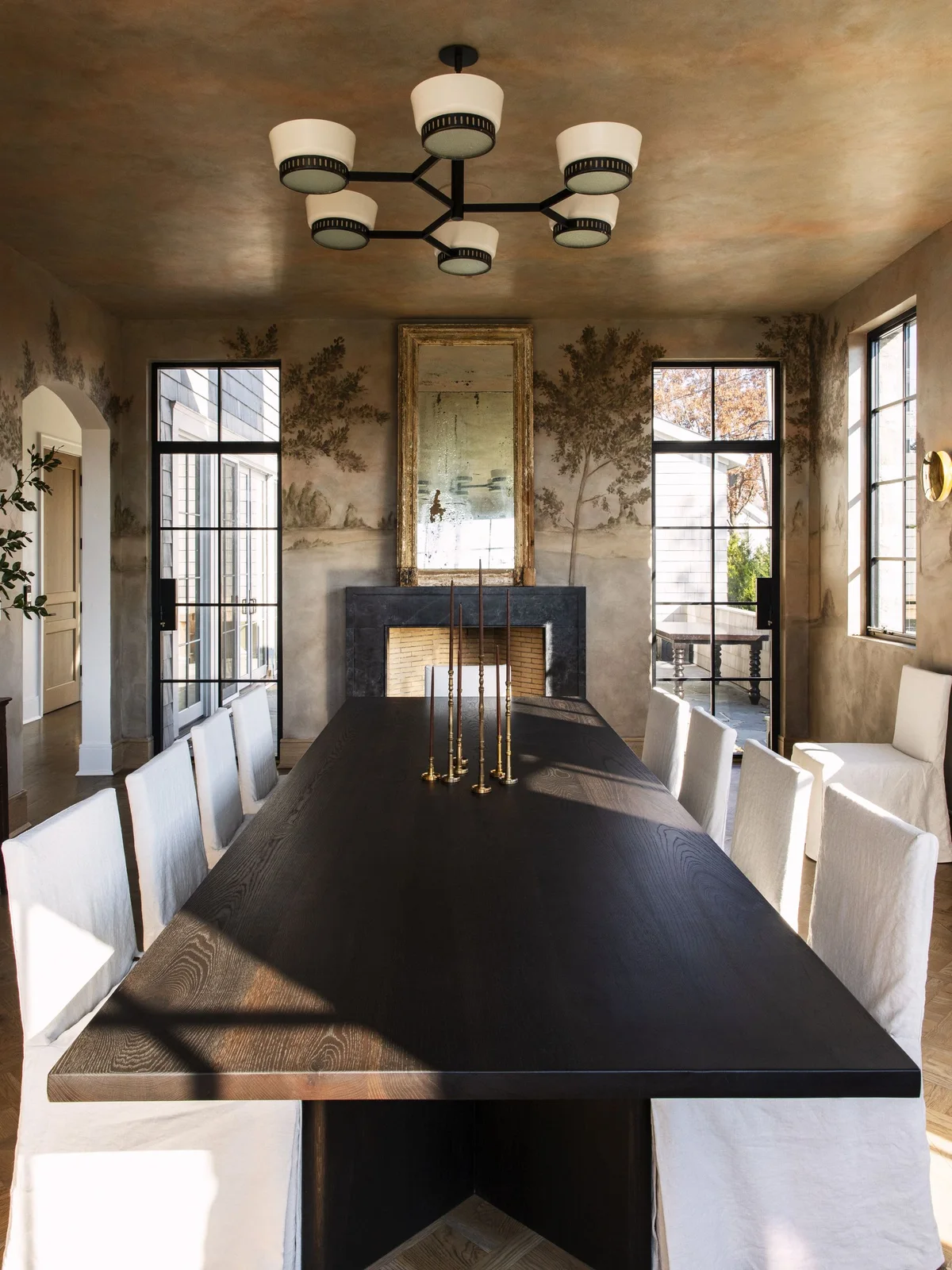
Balance a Dark Table with Pale Upholstered Chairs
 SaveSupport Non AI Creator
Image credit: Jake Arnold
The long dark tabletop provides the room’s strongest horizontal furniture surface. Pale upholstered chairs separate it from the warmer scenic walls around the room. A tall mirror adds a narrower reflective area above the fireplace, while the ceiling fitting distributes several smaller shades along the dining group.
Check chair width and access at the table ends before selecting a long arrangement. Keep decorations and seating away from an operating fireplace according to its actual installation requirements. Choose upholstery around real cleaning guidance, and compare the mirror’s reflection from seated positions before making it the main wall detail.
IDEA 17 / 20
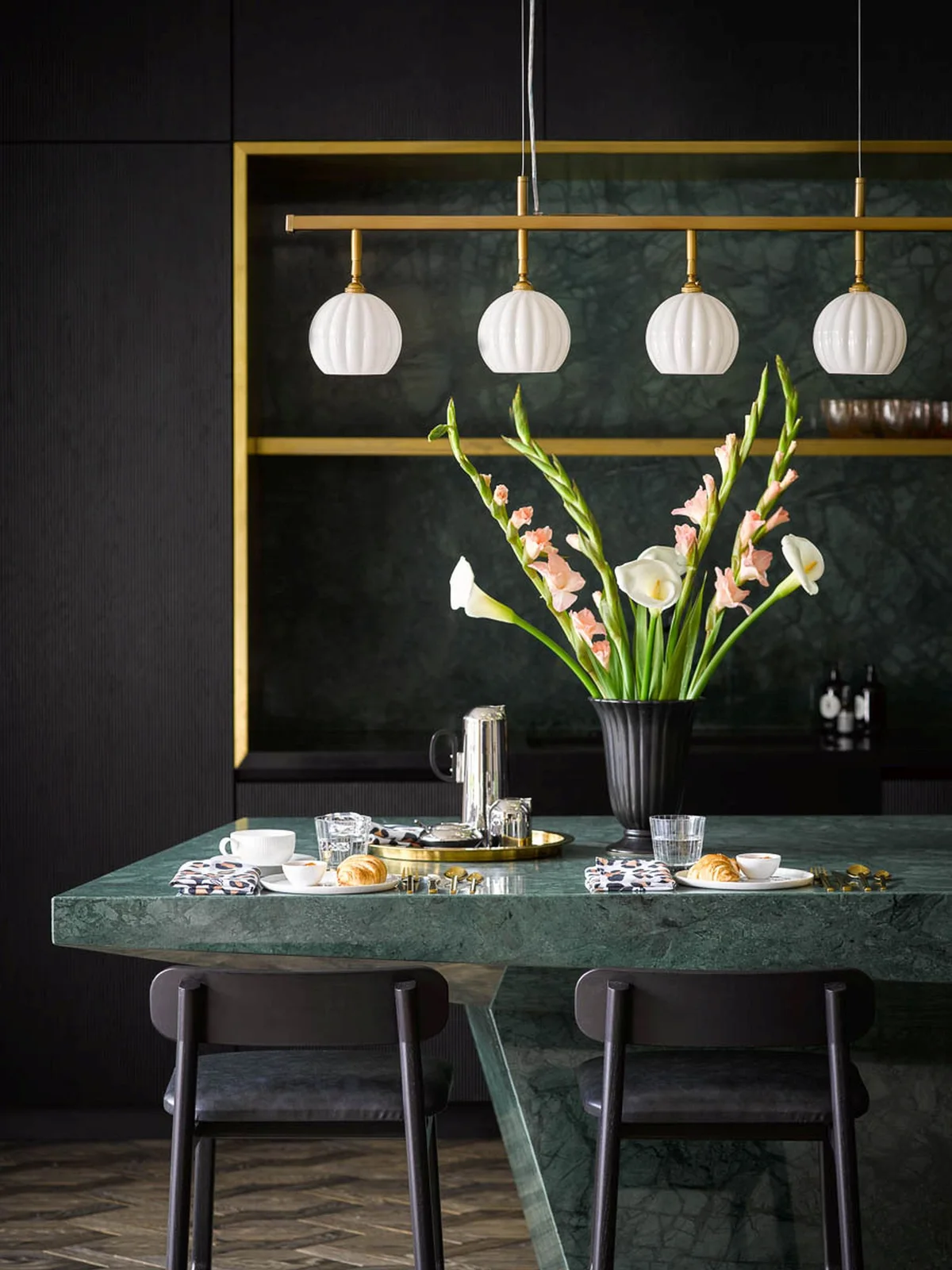
Spread Pale Pendant Shades Along a Dark Table
 SaveSupport Non AI Creator
Image credit: Pooky
The row of pale shades supplies repeated brighter shapes above the deeper table and surrounding wall. Green veining introduces variation within the tabletop, with the dark chair frames keeping the seating quieter below. Warm-colored shelf edges repeat the pendant support’s tone without extending that color across the whole room.
Plan the fitting around the actual table length and light needed at each place. Check bulb and dimmer compatibility using product instructions. Select tabletop care from its confirmed material and finish rather than the photograph, keeping flowers low or removable when a tall arrangement blocks conversation across the table.
IDEA 18 / 20
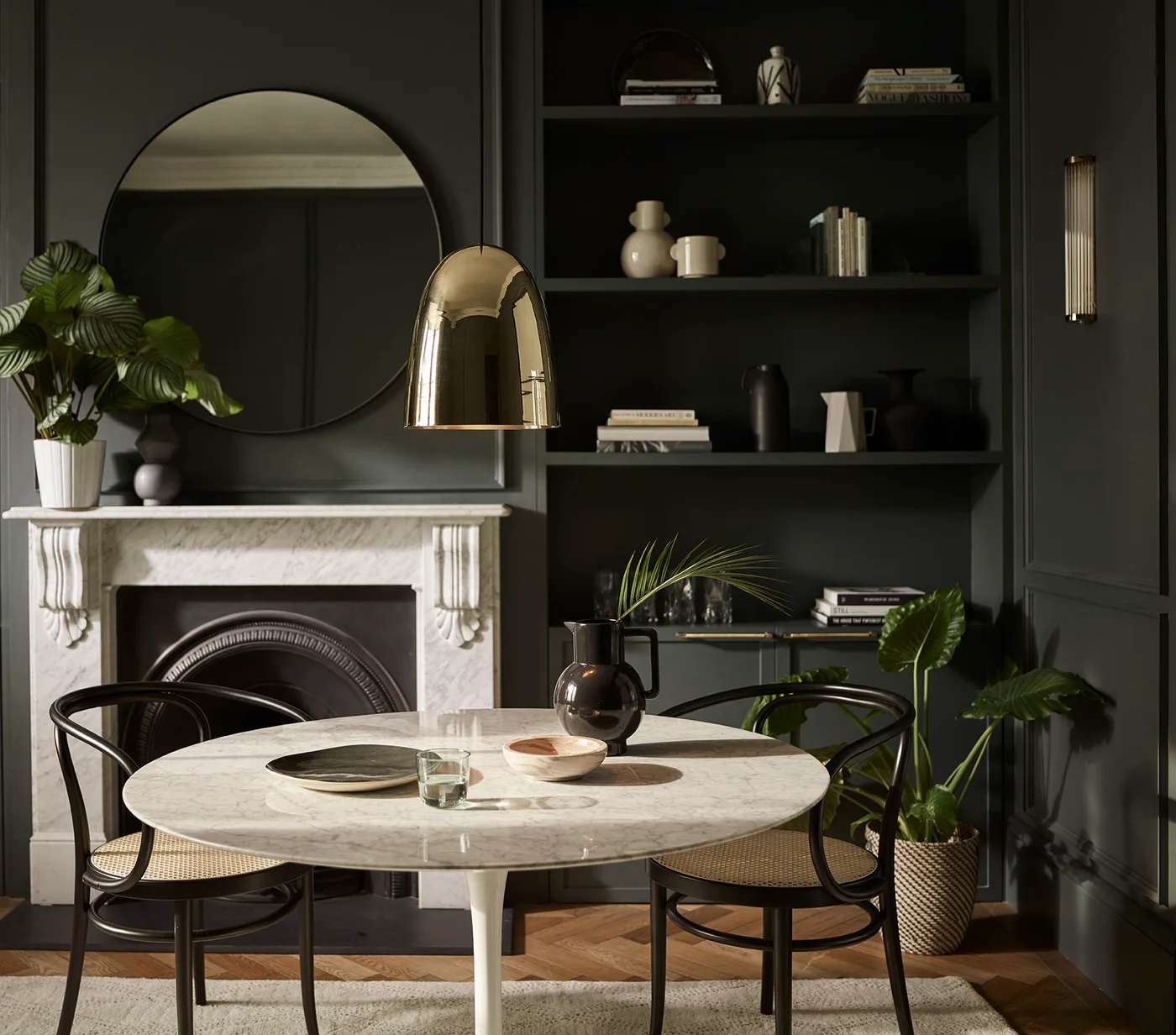
Keep a Small Pale Table Within Dark Shelving
 SaveSupport Non AI Creator
Image credit: Original BTC
The pale round table separates the dining position from the deeper shelving behind it. Dark chair outlines connect with that background while leaving the smaller table surface visible. A pale fireplace surround and round mirror introduce two further lighter shapes, with the pendant adding a warmer curved detail overhead.
Check movement around the table with every chair pulled back, preserving access to lower cupboards. Keep seating clear of an operating fireplace according to its requirements. Use fewer shelf objects when the room already holds a mirror, plants and pendant, selecting the table’s size for meals rather than decorative symmetry alone.
IDEA 19 / 20
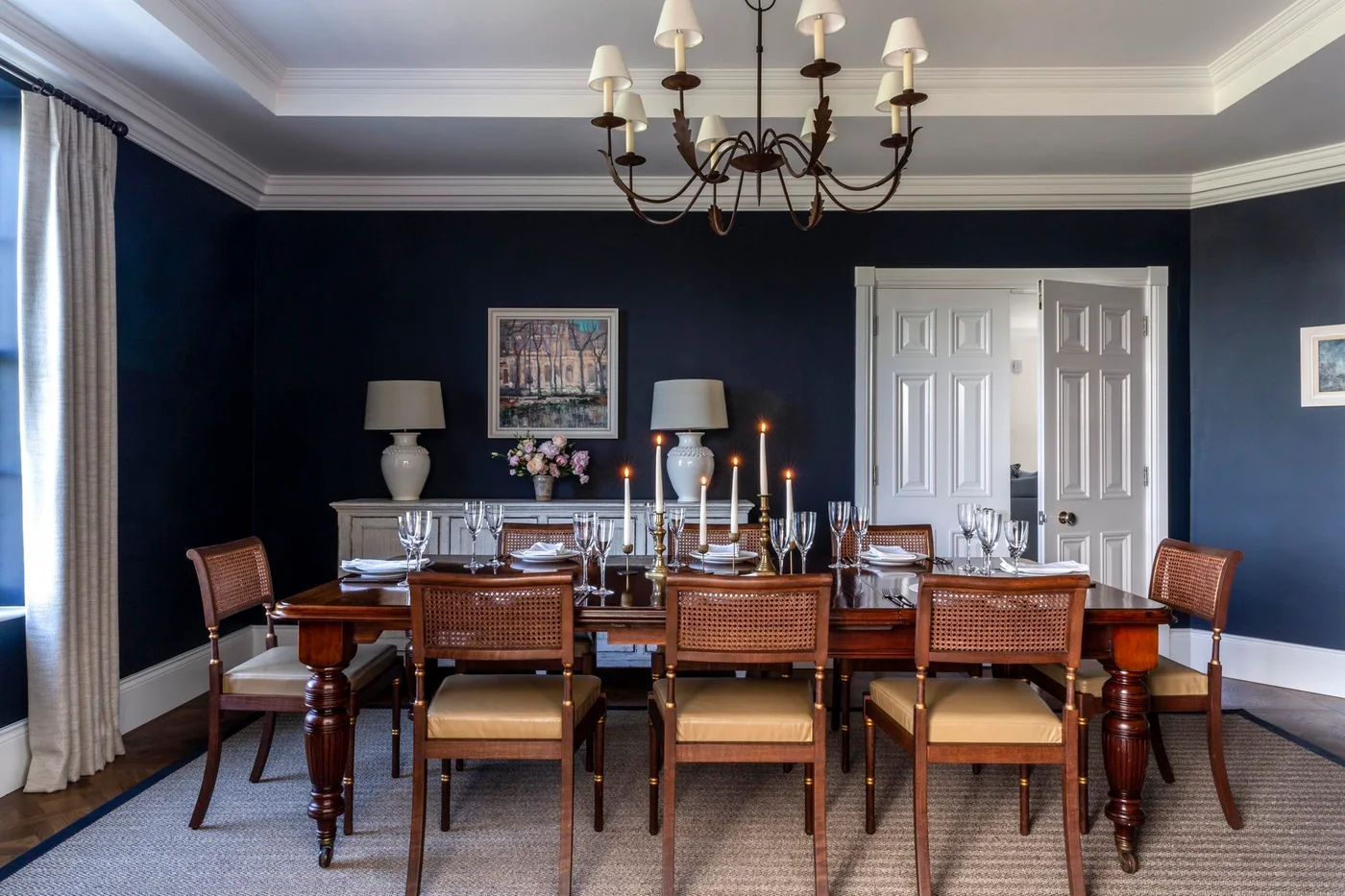
Keep Navy Walls Around Warm Dining Furniture
 SaveSupport Non AI Creator
Image credit: Sims Hilditch
The navy walls provide deeper color around the warmer table and chair frames. White double doors, curtains and ceiling leave several larger surfaces lighter. A sideboard behind the table carries two lamps, creating smaller light points separate from the central chandelier and the candles arranged on the tabletop.
Check door movement behind the dining chairs and keep the sideboard reachable during meals. Test the wall color beside the actual chair finish under evening lamps. Reduce tabletop candles when serving space is limited, choosing flameless options where open flames would sit near flowers, fabrics or frequently moving hands.
IDEA 20 / 20
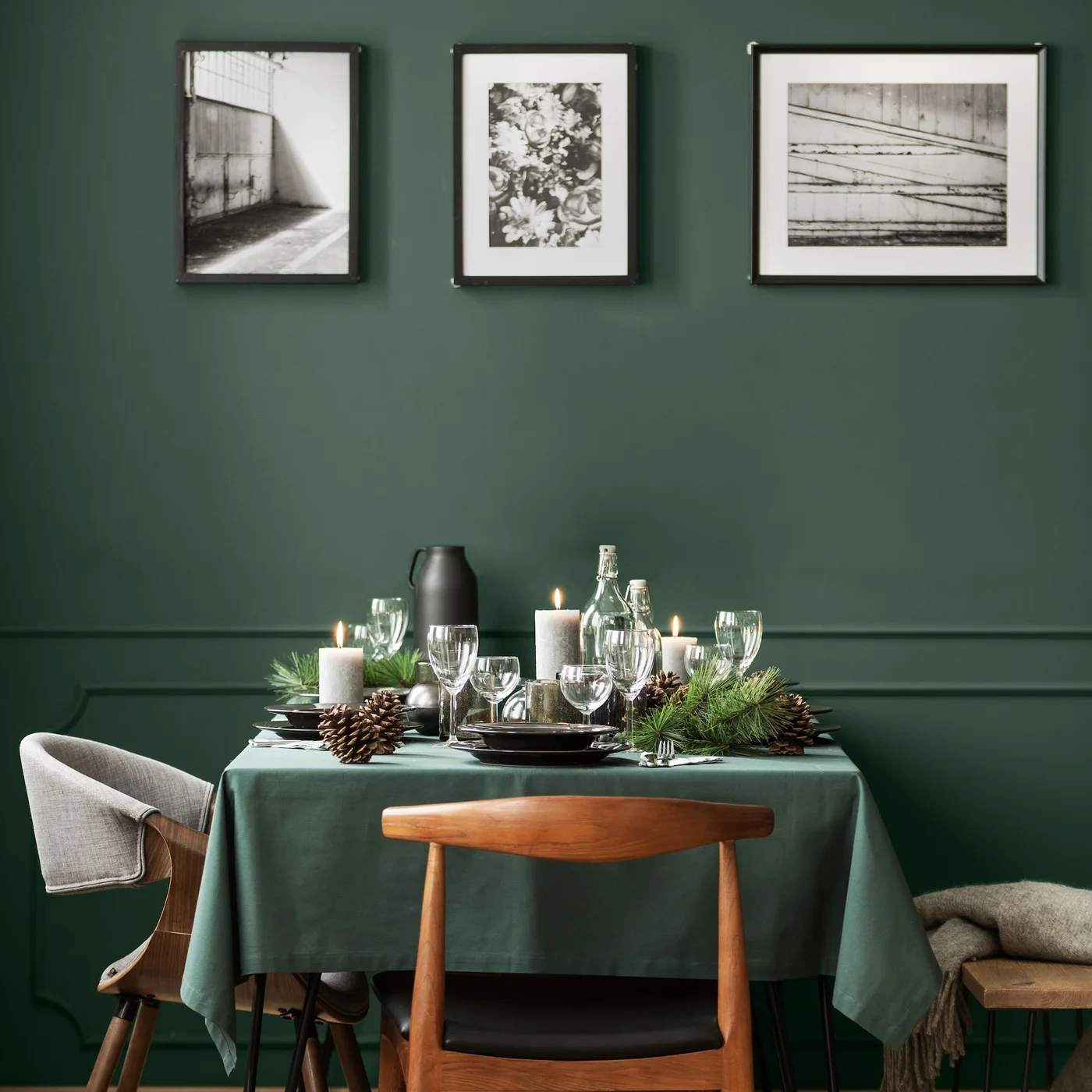
Keep a Seasonal Table Connected to Deep Green
 SaveSupport Non AI Creator
Image credit: Colourtrend
The green cloth connects the table with the painted background instead of introducing another large accent color. Mixed chairs add warmer wood and paler upholstery around that central group. Pine greenery and cones make this a seasonal setting, while the three framed pictures remain a quieter year-round wall arrangement.
Keep seasonal foliage easy to remove before serving and preserve clear sightlines between diners. Use flameless candles when greenery or fabric would sit close to open flames. Compare chair heights for comfortable meals, leaving enough table edge available for everyday place settings once the decorative layers are cleared away.
BRING IT ALL TOGETHER
Plan the table before adding more layers
Start with chair movement, serving space and light that reaches every place. Then compare the wall color with furniture and window samples under your actual lamps. A pale cloth, warm table or lighter ceiling can provide useful separation without removing the deeper background that attracted you to the room.
Choose storage around the dishes and activities the room supports. Keep tall centerpieces removable, shelves manageable and doors accessible. Follow actual furniture and lighting instructions, reducing decorative layers when they make clearing the table or sitting comfortably more difficult.