A glass dining table lets you see more of the chairs, rug and table base, giving familiar furniture a different presence in the room. It can work with bright seating, warm wood or pale upholstery, but the transparent surface still needs a comfortable layout and a practical cleaning routine.
These rooms show several ways to use clear, dark and colored glass surfaces. Look at the support beneath the table as carefully as the top: chair clearance, legroom, visible edges and nearby doors all affect how comfortably the arrangement works during a meal.
PART 01
Choose a Shape and Visible Base
IDEA 01 / 16
Pair a Round Top With Curved Chairs
 SaveSupport Non AI Creator
Source: dkorinteriors.com
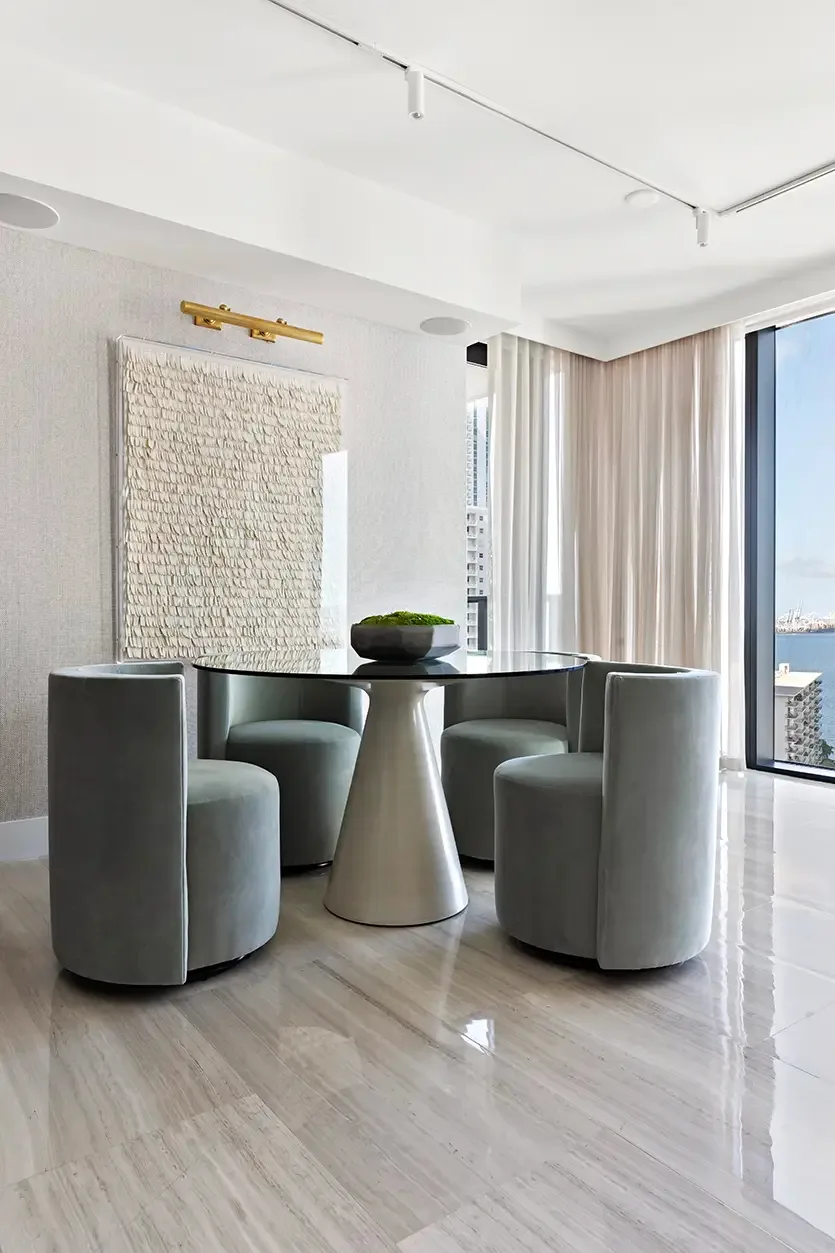
A round dark glass top rests on a pale pedestal between four curved gray chairs. The chairs create a substantial upholstered ring, while the slender tabletop leaves the base easy to see. Pale curtains, a textured artwork and simple ceiling lights keep the background quiet, letting the rounded furniture shapes define this compact dining area beside the window without a large centerpiece.
Try the chair and table together before committing to an arrangement this closely fitted. Curved chair backs can look neat around a circle yet take up considerable space when pulled out. Check that knees fit comfortably around the pedestal and that the seats can move without touching the glazing. Keep the centerpiece low, leaving clear space for dishes around its base.
IDEA 02 / 16
Make a Sculptural Wood Base Visible
 SaveSupport Non AI Creator
Source: dkorinteriors.com
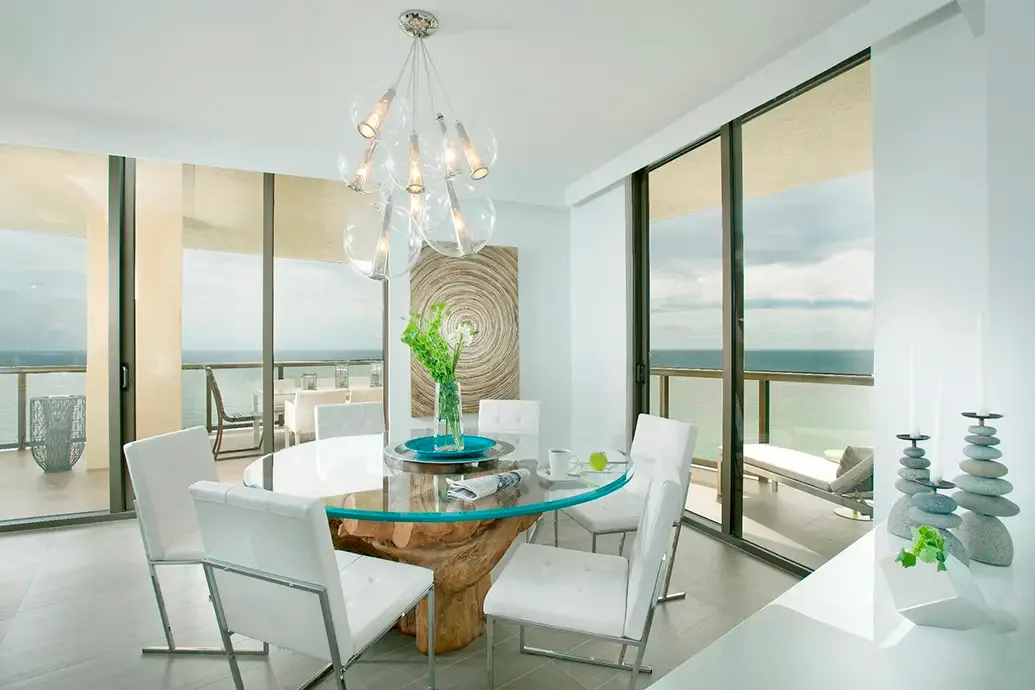
A round clear top reveals the sculptural wood-toned base beneath it, turning the table support into the room’s most noticeable detail. White chairs and a white rug keep the surrounding furniture light, while the turquoise tabletop edge echoes the tray above. Tall windows frame the dining group, and the transparent surface allows the shape of the base to remain visible from several seats.
A distinctive base deserves to be checked for comfort as carefully as appearance. Sit in each chair position and make sure feet and knees have room around the projecting form. Keep decoration modest so the table does not acquire a second competing centerpiece. Clean both the upper surface and the visible underside, following the table supplier guidance for the glass and its supporting base.
IDEA 03 / 16
Balance a Clear Top With Deep Blue Seating
 SaveSupport Non AI Creator
Image credit: Photo: CONTENT Architecture. From: CONTENT Architecture
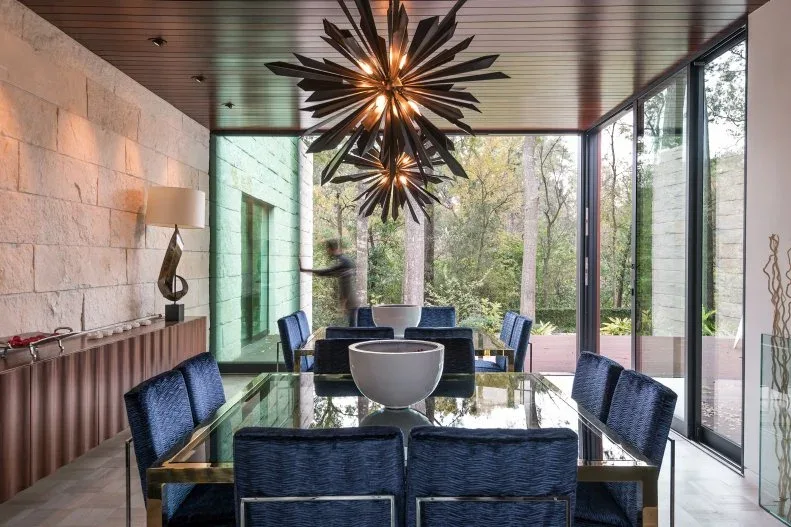
Deep blue chairs give this rectangular glass table a strong outline, even against large windows and a richly textured wall. The clear top shows the floor and chair positions beneath, while the slim warm-toned frame connects with the ceiling and sideboard. Two starburst lights add another layer above the table, so a single large bowl keeps the surface from becoming visually crowded.
Use solid chair color to define a clear table in a room with many reflective surfaces. Check the table edge against the surrounding floor and light at different times of day so it remains easy to notice. A simple bowl can be moved for meals, leaving the central serving space free. Check that the chairs stay on the rug when pulled back if you add one beneath.
IDEA 04 / 16
Keep the Garden View Open Through the Table
 SaveSupport Non AI Creator
Source: dkorinteriors.com
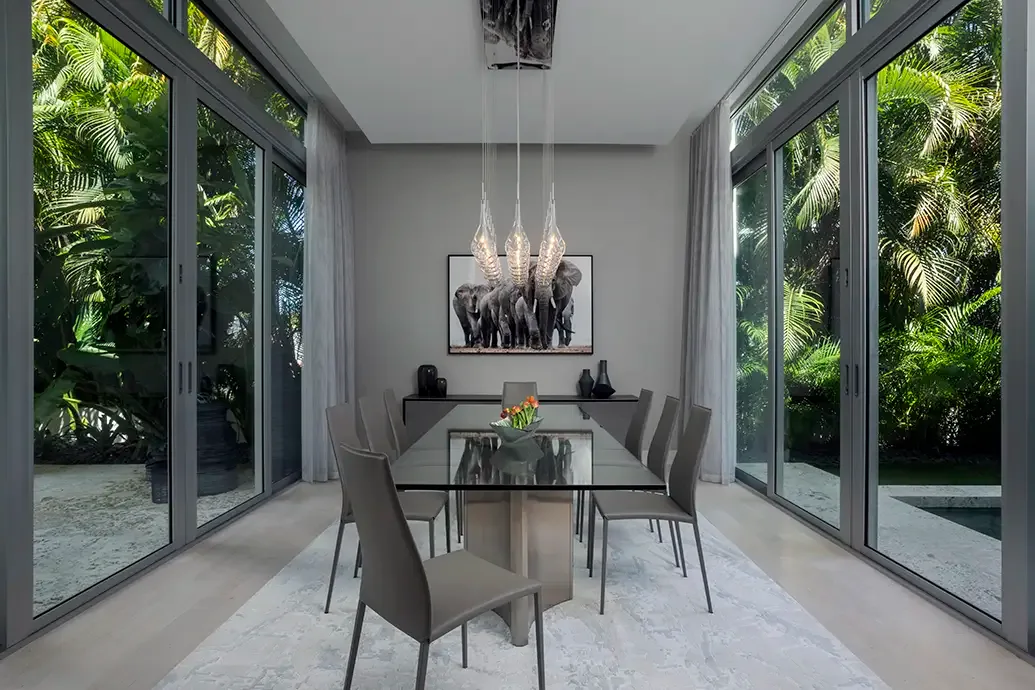
A clear rectangular tabletop sits between two walls of full-height windows, with gray chairs and a pale rug defining the dining zone below. The greenery outside supplies most of the color, while a small flower arrangement adds a restrained detail indoors. The table’s transparent plane keeps the view of the floor and supporting furniture open in an already narrow, window-lined room.
Plan chair clearance on both window sides before choosing the table length. A transparent top changes the visual weight, but it does not reduce the space needed to sit, stand and walk past. Use window coverings if direct light creates uncomfortable glare during meals. Keep the centerpiece low enough for conversation, and choose a rug that supports the chairs in their normal pulled-out positions.
PART 02
Balance Transparency With Warmth
IDEA 05 / 16
Let White Seating Frame a Long Clear Table
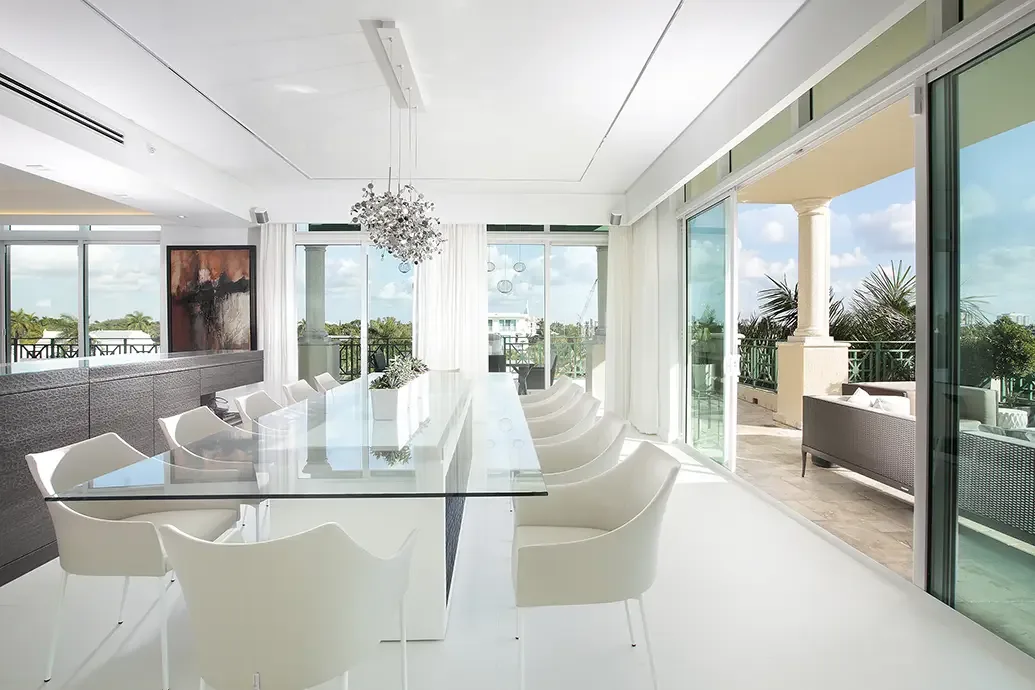 SaveSupport Non AI Creator
Source: dkorinteriors.com
White chairs form a repeated border around a long clear tabletop on a pale central base. The room’s white floor and curtains keep the composition bright, while a darker sideboard supplies contrast at the wall. Tall sliding doors bring the outdoor setting into view, and the transparent tabletop allows the central support and surrounding chair shapes to remain visible rather than merging into one solid block.
A long table needs a clear serving route at each end as well as space behind the chairs. Check those routes with doors open and closed, particularly if meals sometimes move outside. Keep one end of the table free for landing serving dishes. Pale upholstery and clear glass both show everyday marks, so choose cleaning methods you can comfortably include in your normal routine.
IDEA 06 / 16
Add a Clear Table to a Colorful Breakfast Room
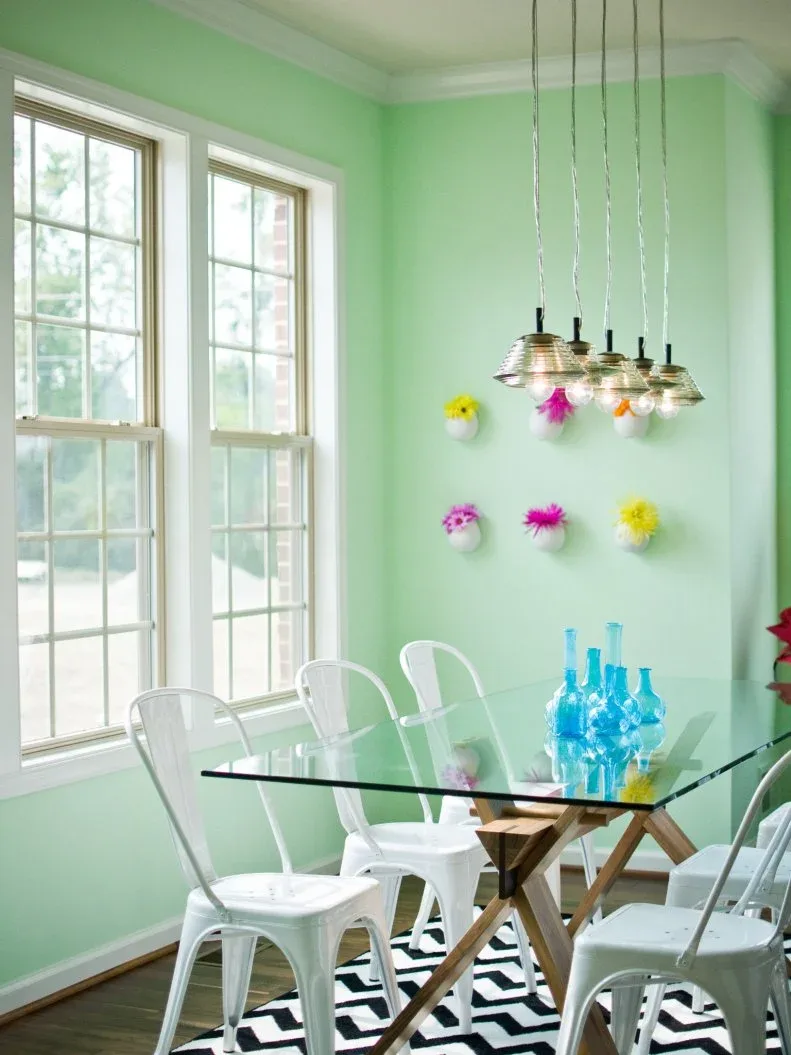 SaveSupport Non AI Creator
Image credit: Photo: Darren S Higgins ©. From: Darlene Molnar
A clear glass table stands on a crossed wood-toned base in a breakfast area with mint-green walls. White chairs keep the seating consistent, while blue bottles and small wall-mounted flower displays add sharper color. The black and white zigzag rug remains visible through the surface, making the floor pattern part of the table arrangement rather than hiding it beneath a solid tabletop.
When the rug and wall already carry strong detail, keep the everyday table setting simple. A few bottles can supply decoration between meals, but move them to a nearby surface when you need room for food. Check whether the crossed base interferes with chair legs or feet. Use protective table mats suited to the glass surface, and avoid dragging rough-bottomed containers across it.
IDEA 07 / 16
Warm Glass With Woven Seats and a Pendant
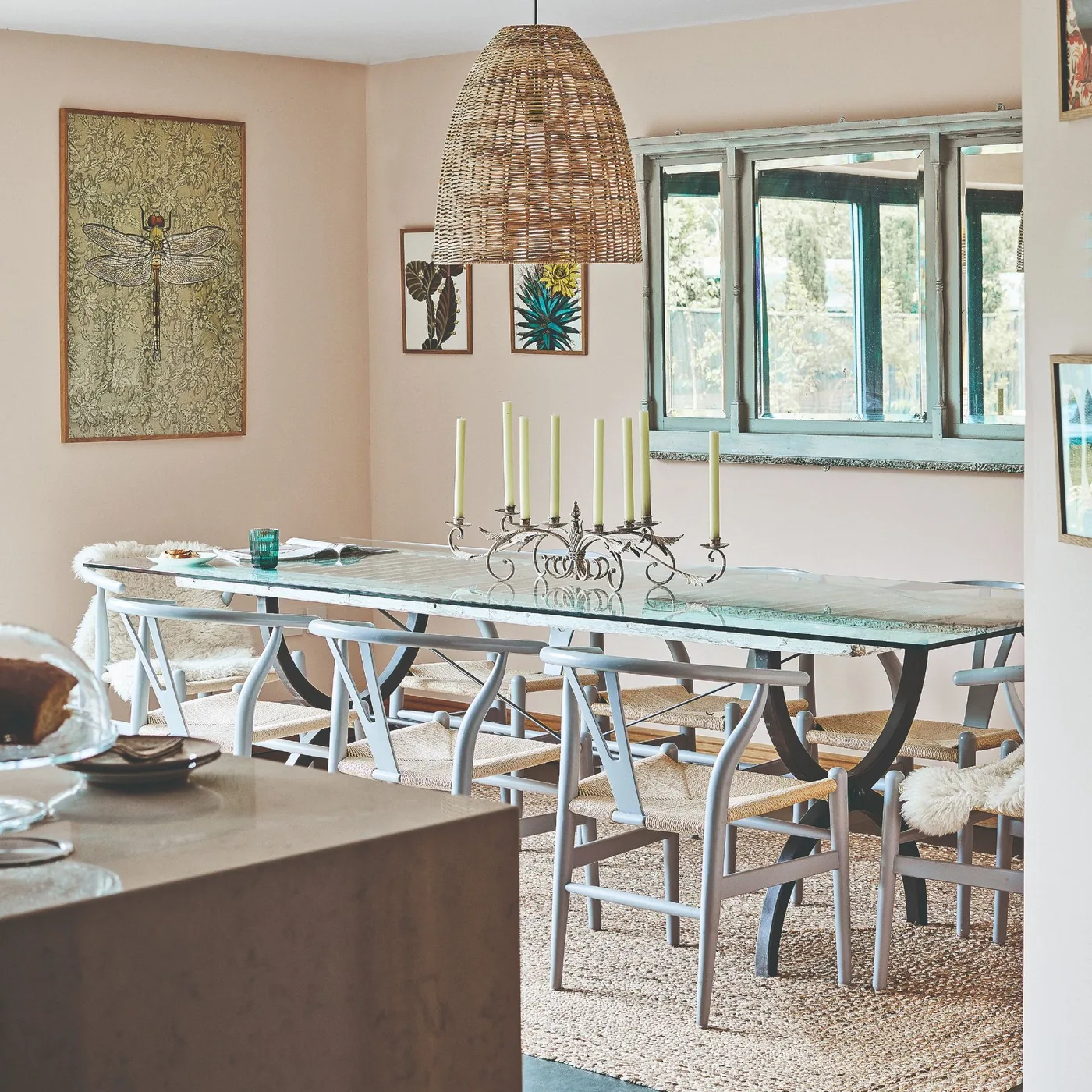 SaveSupport Non AI Creator
Image credit: Future PLC/Brent Darby
The long glass-topped table in this peach-colored room is surrounded by pale chairs with woven seats. A large woven pendant adds texture above, while the clear tabletop lets the curved supports and rug remain visible below. Framed artwork and the broad window surround bring more detail to the walls, showing how a glass table can belong in a relaxed room with warm, layered finishes.
Use texture around the table if a clear surface feels too stark in your room. Woven seats, a rug and a pendant can supply warmth without covering the whole top with a tablecloth. Check that the pendant does not block sightlines and that the rug accommodates pulled-out chairs. Move tall candle arrangements out of the way for conversation, and use appropriate protection beneath candleholders and serving dishes.
IDEA 08 / 16
Make Bright Chairs the Main Color Accent
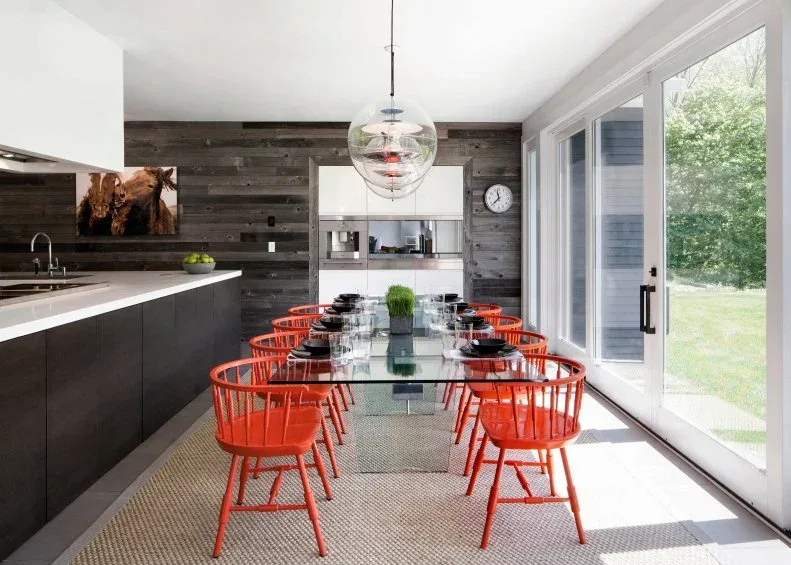 SaveSupport Non AI Creator
Image credit: Photo: Decor Aid. From: Decor Aid
Orange spindle-back chairs become the main color accent around a clear rectangular table beside dark kitchen cabinetry. The see-through surface leaves the chair shapes easy to read, while a pale rug separates the dining group from the floor. Clear pendant shades and the large sliding doors repeat the transparency above and beside the table, keeping the strong wall and chair colors from feeling too heavy together.
Choose one confident chair color when you want a glass table to act as a quieter background. Test how the chairs slide beneath the table and leave enough room for the kitchen cabinets and exterior doors to operate. Simple tableware can keep a full setting from competing with the seats. Check the edge and corners while walking through the kitchen-to-door route, especially when carrying a tray.
PART 03
Add Color and Contrast
IDEA 09 / 16
Repeat Warm Chair Color in Nearby Artwork
 SaveSupport Non AI Creator
Source: dkorinteriors.com
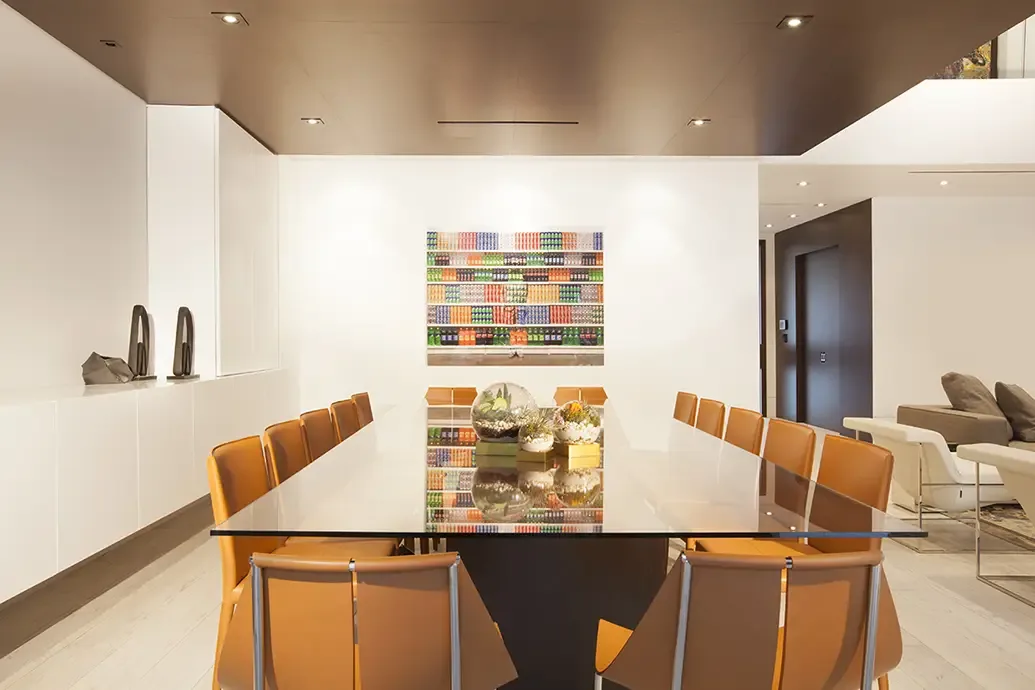
Orange chairs line a dark glass tabletop beneath a warm brown ceiling. A colorful framed artwork repeats smaller patches of the chair color, while the table’s angular dark base gives the transparent surface a substantial anchor. Pale walls and a long white storage area balance the darker upper half of the room, leaving the dining group bold without needing lots of extra tabletop decoration.
Connect colorful seating to one nearby artwork or accessory rather than repeating the same shade everywhere. A dark glass top can look dramatic, but fingerprints and reflected objects may be noticeable, so assess a sample in ordinary room light. Check that the central base gives each diner adequate legroom. Keep the table setting simple enough that the chairs and artwork remain the main points of interest.
IDEA 10 / 16
Use Blue Glass as the Accent Piece
 SaveSupport Non AI Creator
Image credit: Photo: Caitlin McCarthy Design. From: Caitlin McCarthy Designs
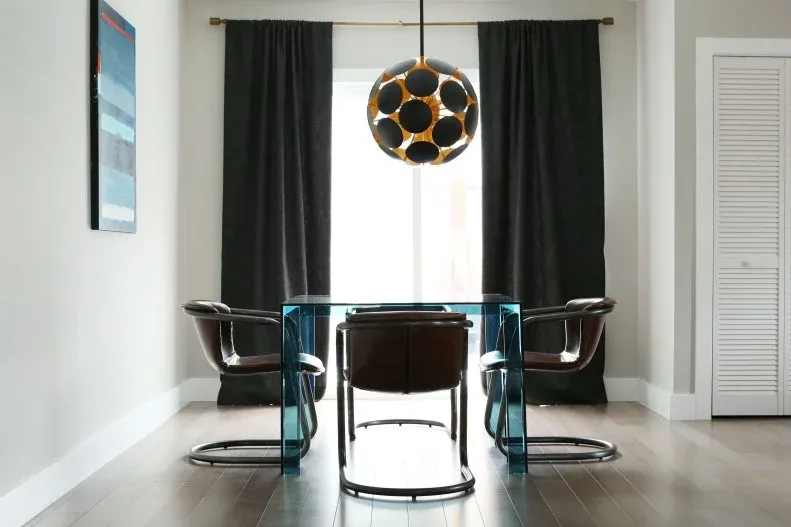
A blue glass table brings color to a white dining corner furnished with dark chairs and curtains. Its broad transparent sides are visible beneath the top, giving it a more sculptural presence than a thin glass surface on ordinary legs. A black and gold-toned pendant adds a contrasting shape above, while the pale floor and plain walls give the colored table room to stand out.
Treat colored glass as a major furniture accent when choosing the rest of the palette. Dark seating can outline the top, but check that chairs can tuck between the broad supports without knocking them. Leave a clear walking route around the table sides. Before buying, ask the supplier about construction, care and replacement options rather than assuming a sculptural glass design behaves like a standard dining table.
IDEA 11 / 16
Echo a Dark Top With Pale Upholstered Chairs
 SaveSupport Non AI Creator
Source: dkorinteriors.com
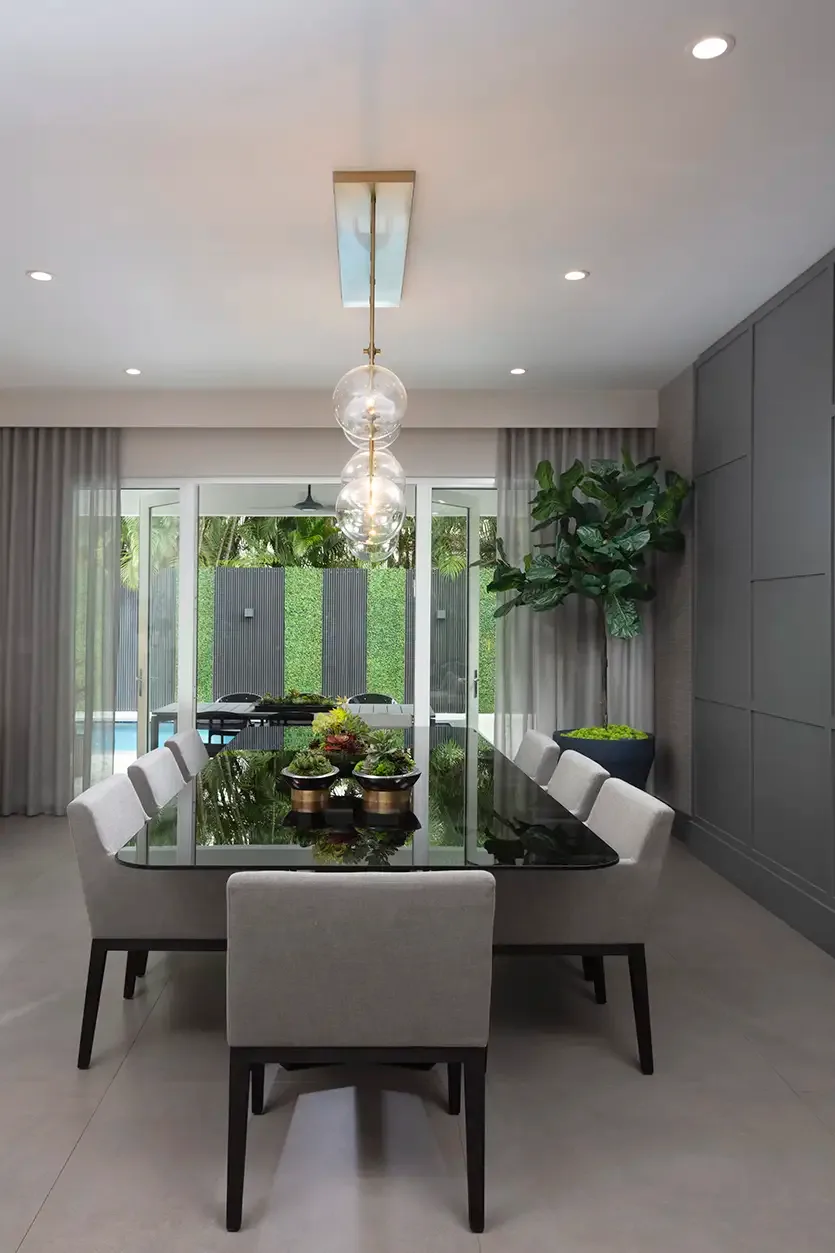
Pale upholstered chairs outline a dark glass table beneath a vertical group of clear globe pendants. The tabletop reflects the small center arrangement and the glazing beyond, while a gray paneled wall gives the room a defined side boundary. The soft chair seats provide contrast to the hard reflective surface, so the room feels layered even though its main colors remain gray, white and black.
Pairing glass with upholstered chairs can make the dining area feel comfortable, but compare their heights and depths before choosing either piece. Check that chair backs and table corners leave a useful route beside the paneled wall. Keep the center arrangement compact and easy to lift away. Test the pendant light at evening brightness, since a dark reflective tabletop may show each light source clearly.
IDEA 12 / 16
Keep a Glass Top Light Against Dark Cabinetry
 SaveSupport Non AI Creator
Image credit: From: Patrick Baglino, Jr.
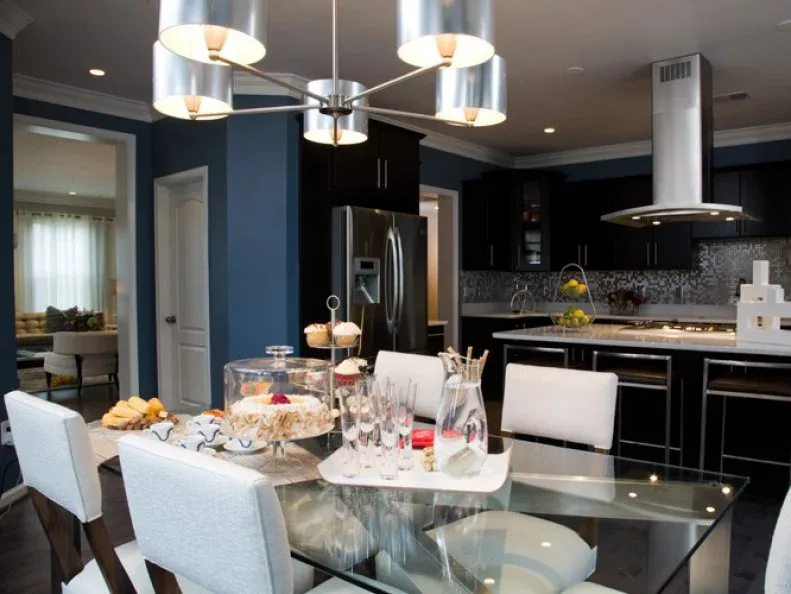
A clear rectangular tabletop gives this blue-walled kitchen a lighter dining surface beside black cabinetry. Pale chairs outline the seating positions, and a light-colored tray gathers the glasses and pitcher into one manageable group. The open view through the tabletop leaves the chair legs and floor visible, while the substantial metal-toned light overhead helps define the eating area within the shared kitchen.
Use a tray when the table doubles as a place to prepare or serve drinks, checking its underside so it will not scratch the glass. Keep everyday settings modest enough that the table can be cleared quickly for a meal. Leave room for cabinet doors and kitchen traffic behind the chairs. Follow the table maker’s guidance for heat protection, cleaning products and any joints or supports beneath the top.
PART 04
Make the Whole Arrangement Work
IDEA 13 / 16
Use a Glass Top to Keep Bench Seating Visible
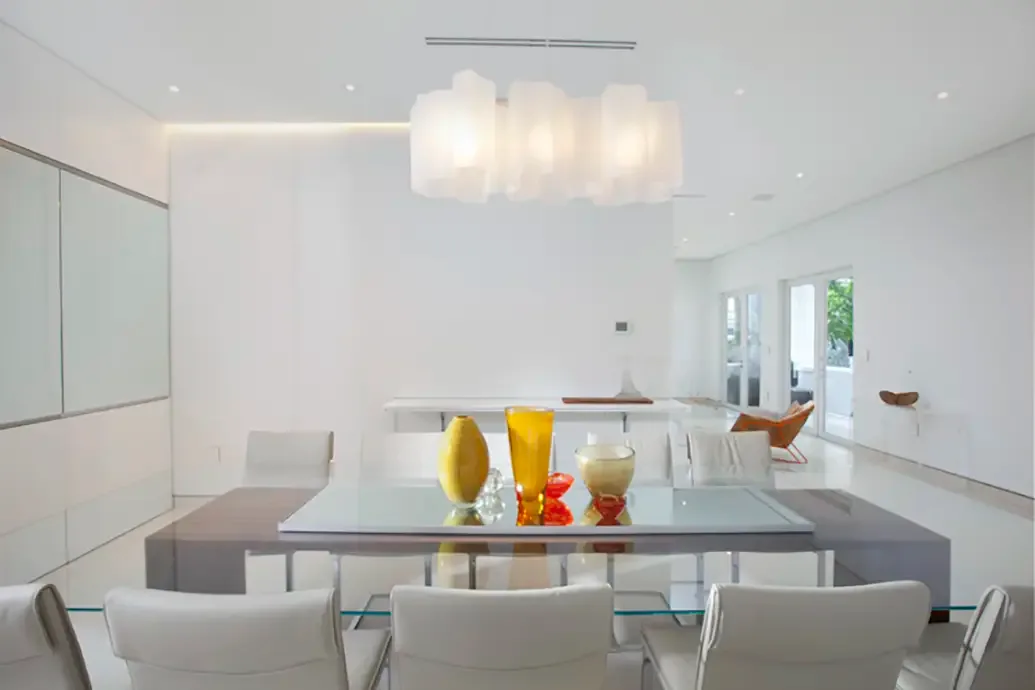 SaveSupport Non AI Creator
Source: dkorinteriors.com
A clear glass top sits between white chairs and gray benches in a largely pale dining room. The transparent surface makes the mixed seating arrangement visible, rather than hiding the benches beneath a broad solid top. Bright yellow and orange vessels provide a small central color group, while the long light fixture follows the rectangular table shape and keeps the rest of the room understated.
Combining benches and chairs is useful only when both work comfortably with the table support. Check the space needed to slide onto the bench and make sure its length fits between any legs or braces. Keep decorative vessels on a protective surface that is suitable for the glass. Move them before serving a shared meal so each person can reach dishes without leaning around the centerpiece.
IDEA 14 / 16
Reveal a Wood Center Beneath a Clear Surface
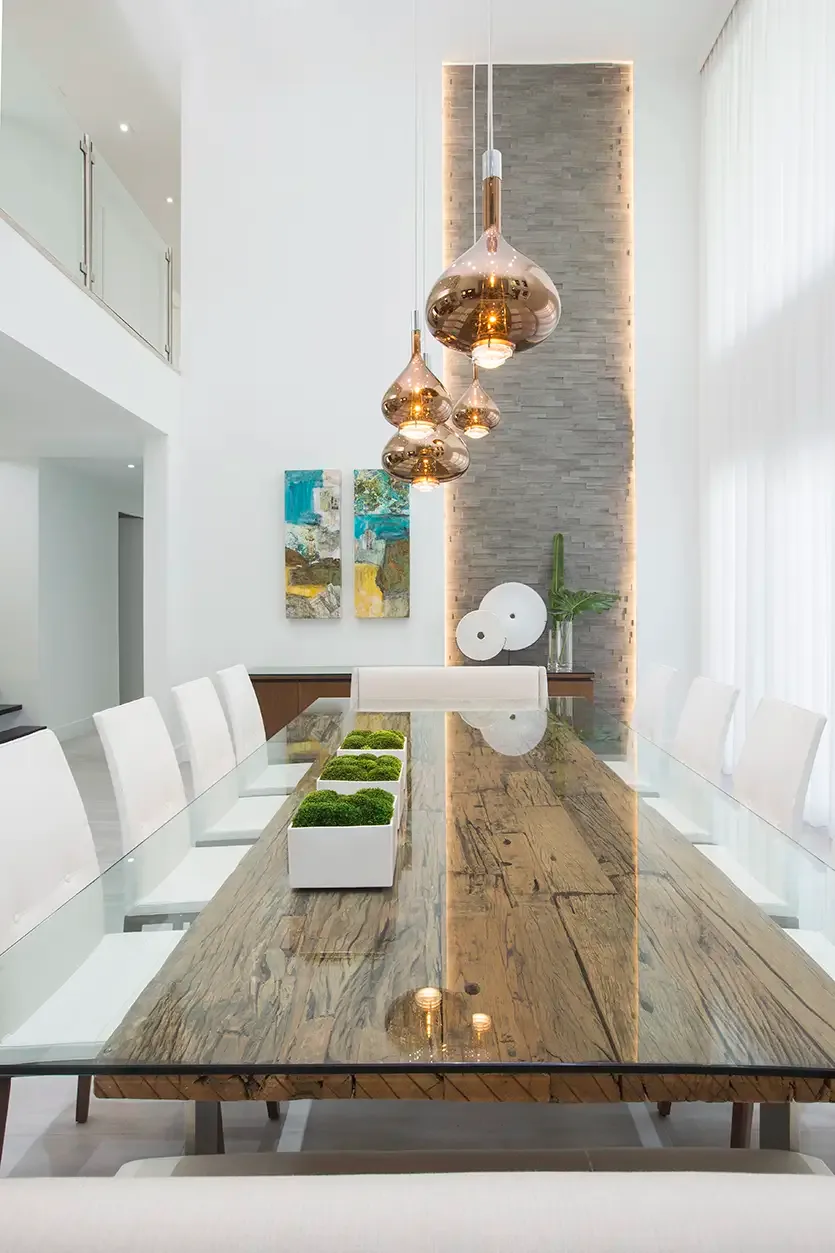 SaveSupport Non AI Creator
Source: dkorinteriors.com
A long clear surface exposes a broad textured wood-toned center beneath it, combining the appearance of a glass tabletop with a substantial warm feature. White chairs keep the sides light, and warm metallic pendants repeat the center’s color above. The glass extends beyond the visible wood, so its edge and the supporting arrangement remain important parts of the table rather than disappearing into the background.
With a layered tabletop like this, ask how the glass is supported and how the surfaces underneath can be cleaned. Avoid assuming that the visible wood alone establishes the table’s strength or stability. Check the glass overhang from each chair position and leave it clear of the walking route. Use low tabletop decoration so the exposed center and hanging lights remain easy to appreciate.
IDEA 15 / 16
Let a Colorful Base Show Through the Top
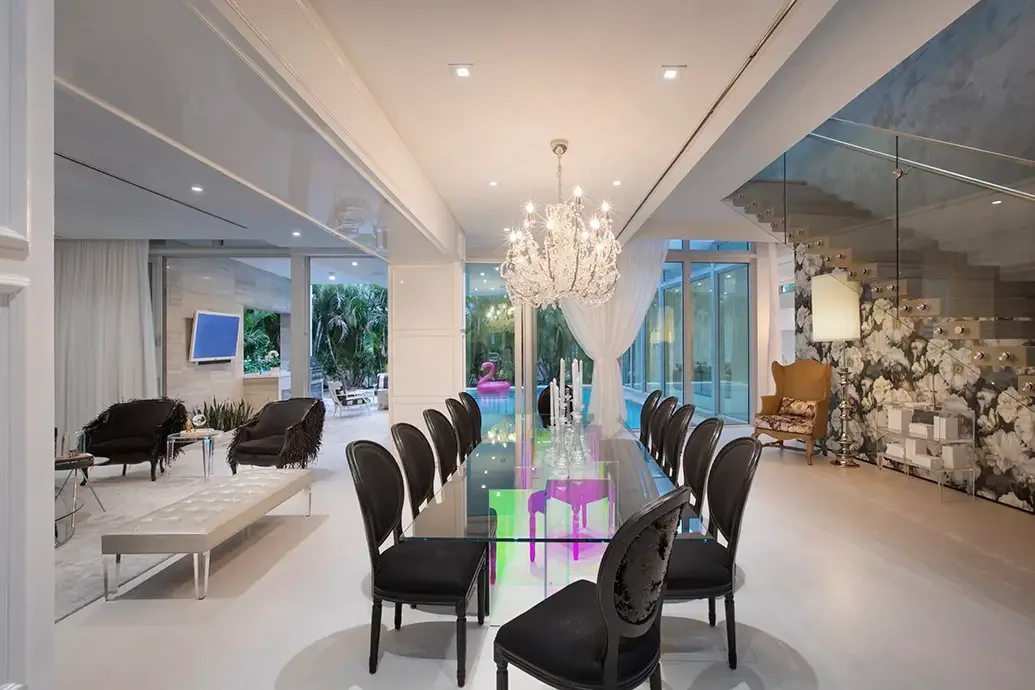 SaveSupport Non AI Creator
Source: dkorinteriors.com
Brightly colored supports show through a long clear dining tabletop, creating an unexpected focal point beneath the place where meals are served. Dark oval-back chairs give the dining group a repeated outline, and a hanging light adds sparkle above. The surrounding open room contains several other seating areas, but the transparent table and concentrated color below help make this dining zone recognizable on its own.
Choose a visible base you enjoy from a seated position as well as across the room. Check that its supports do not crowd knees or prevent the chairs from fitting evenly along the sides. In a shared living and dining space, preserve the route around the table ends. Keep decoration above restrained so the colored structure underneath remains a deliberate feature rather than one of many competing accents.
IDEA 16 / 16
Frame Glass With Gray Seats and Warm Trim
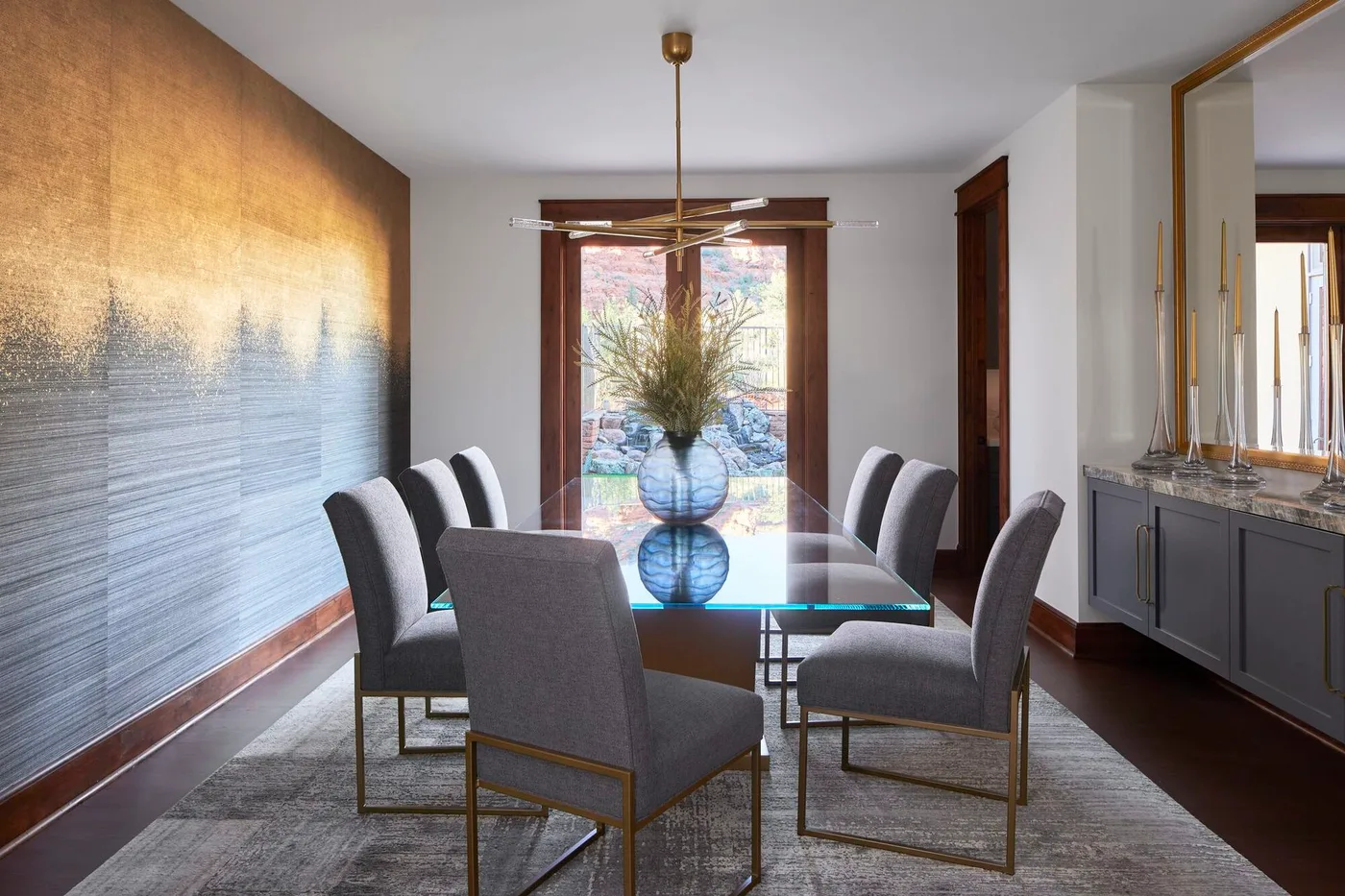 SaveSupport Non AI Creator
Image credit: Laura Moss. Design: Stephanie Larsen
Gray upholstered chairs frame a clear rectangular tabletop in a room with warm wood trim and a large textured wall feature. A pale rug defines the seating group, and the mirror above the sideboard adds another reflective surface nearby. The glass lets the chair positions and rug remain visible beneath the center arrangement, making a fairly full dining room feel visually less blocked at table height.
When glass sits near a mirror, check the room from each chair to see whether reflected lighting or views become distracting. Keep the table center low enough for conversation and the sideboard available for extra serving dishes. Confirm that the rug extends far enough for pulled-out chairs. Regular cleaning of the tabletop and its underside helps preserve the clear view that makes this arrangement work.
BRING IT ALL TOGETHER
Check the Table From Every Seat
Glass changes how a table looks, but it does not remove the need for good spacing. Sit at each position, pull the chairs out, open nearby doors and check the route used to carry dishes. Pay attention to projecting corners, broad supports and the space beneath the surface.
Choose a table whose care requirements suit your routine. Use the supplier’s advice for cleaning and heat protection, protect the surface from rough objects, and make sure you can reach the underside. Keep the center arrangement easy to move so the table stays useful for everyday meals.