A dining room sideboard can hold tableware, provide a landing place for serving dishes and give a bare wall a useful purpose. The right piece depends on what you store and how comfortably people can move between the cabinet and the dining chairs.
These twenty photographs show long cabinets, compact storage pieces, glazed fronts and built-in serving surfaces. Compare the visible arrangement with your own room, then check internal dimensions, door clearance and care instructions before choosing a piece.
PART 01
Choose a Shape That Fits the Dining Area
IDEA 01 / 20
Layer a Round Backdrop Above Glazed Doors
 SaveSupport Non AI Creator
Image credit: Neptune
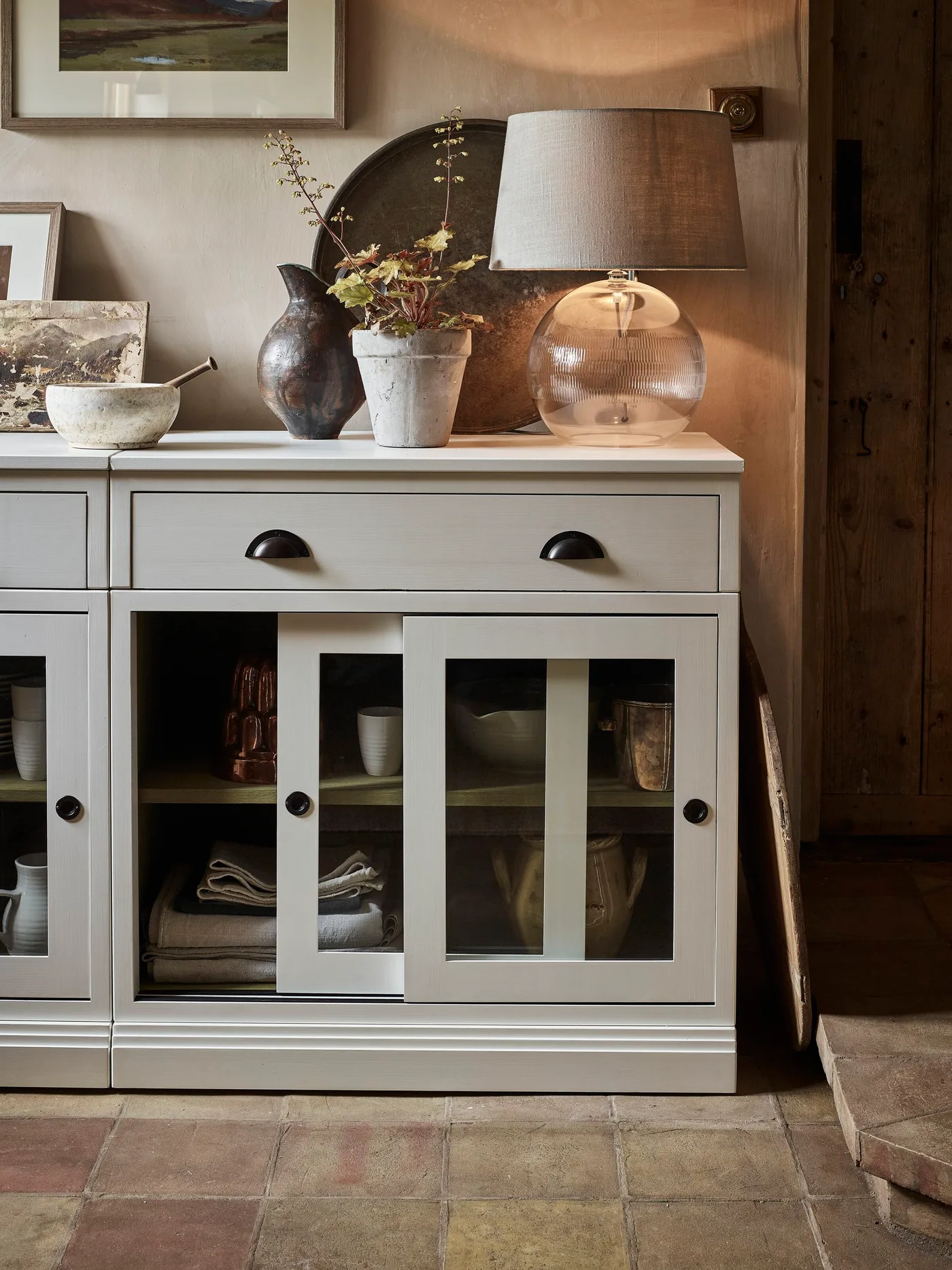
A dark round backdrop rises behind a gray sideboard with glazed doors, giving the smaller bowls and vases a clear frame. The table lamp occupies one end rather than the center, so the display has different heights. Visible pieces behind the glass add another layer, while the cabinet’s restrained color lets the shapes above it carry the arrangement.
Keep a working patch of cabinet top available before adding a large backdrop. Secure leaning objects appropriately and check that the lamp cable reaches its socket without crossing a walking route. Glazed doors make the contents part of the display, so group tableware inside and leave enough room to remove pieces without knocking neighboring stacks. Clean both sides of the glass regularly.
IDEA 02 / 20
Repeat Strong Shapes With a Black Sideboard
 SaveSupport Non AI Creator
Image credit: Arteriors
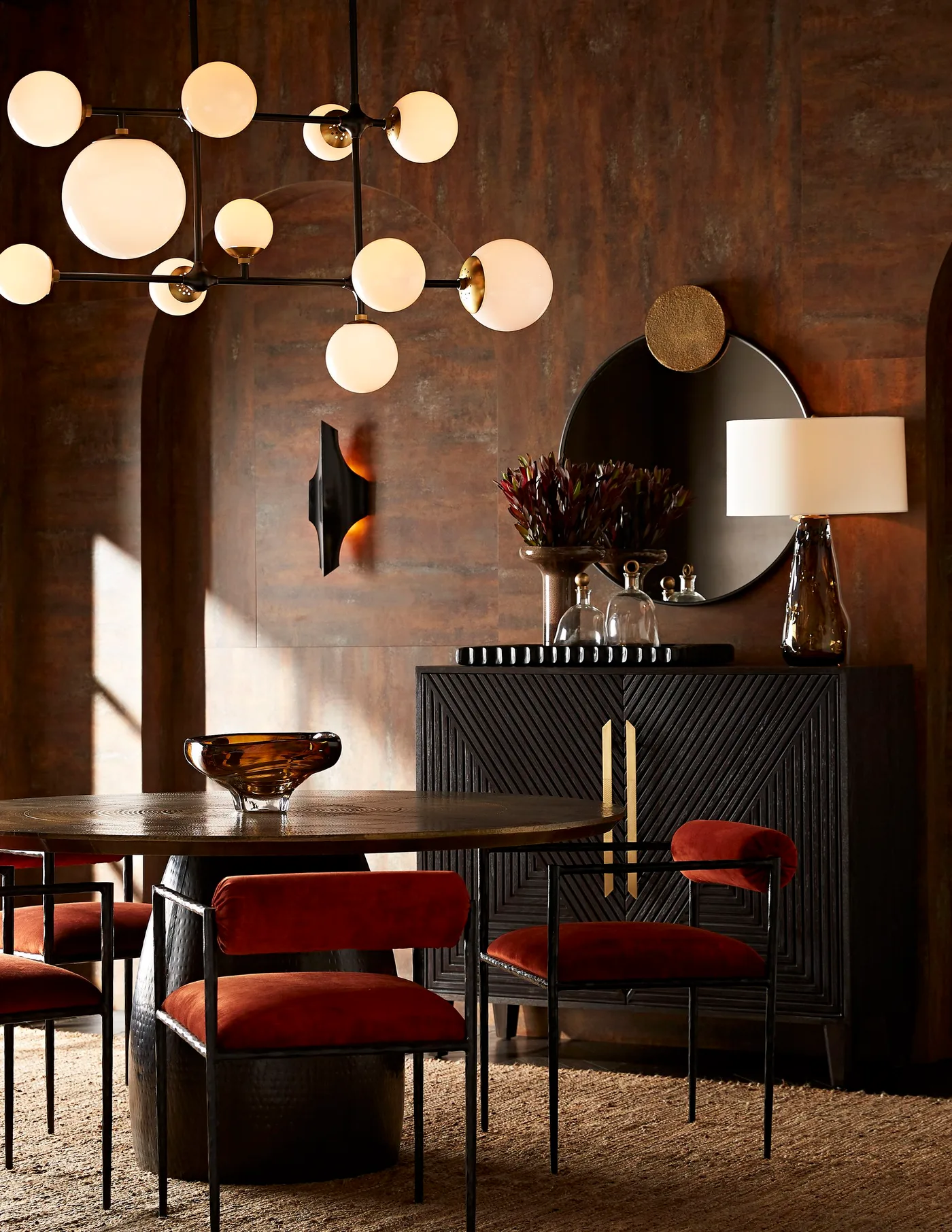
Diagonal ribbing and gold handles give this black sideboard a strong pattern beneath a round mirror. Red chairs and a dark round table bring the same room a lively dining center, while the warm brown wall softens the cabinet’s outline. Tall branches continue the display upward without concealing the mirror completely, making the storage wall feel deliberately composed.
A patterned cabinet front needs space around it to remain readable. Check door movement beside pulled-back chairs before choosing a cabinet this close to the table. Keep branches stable in a suitable vessel and avoid placing delicate stems where diners brush past them. Use the cabinet’s own care guidance for the grooves and handles; an elaborate front takes longer to dust than a flat one.
IDEA 03 / 20
Keep a Long Pale Sideboard Visually Quiet
 SaveSupport Non AI Creator
Image credit: Natalia Miyar
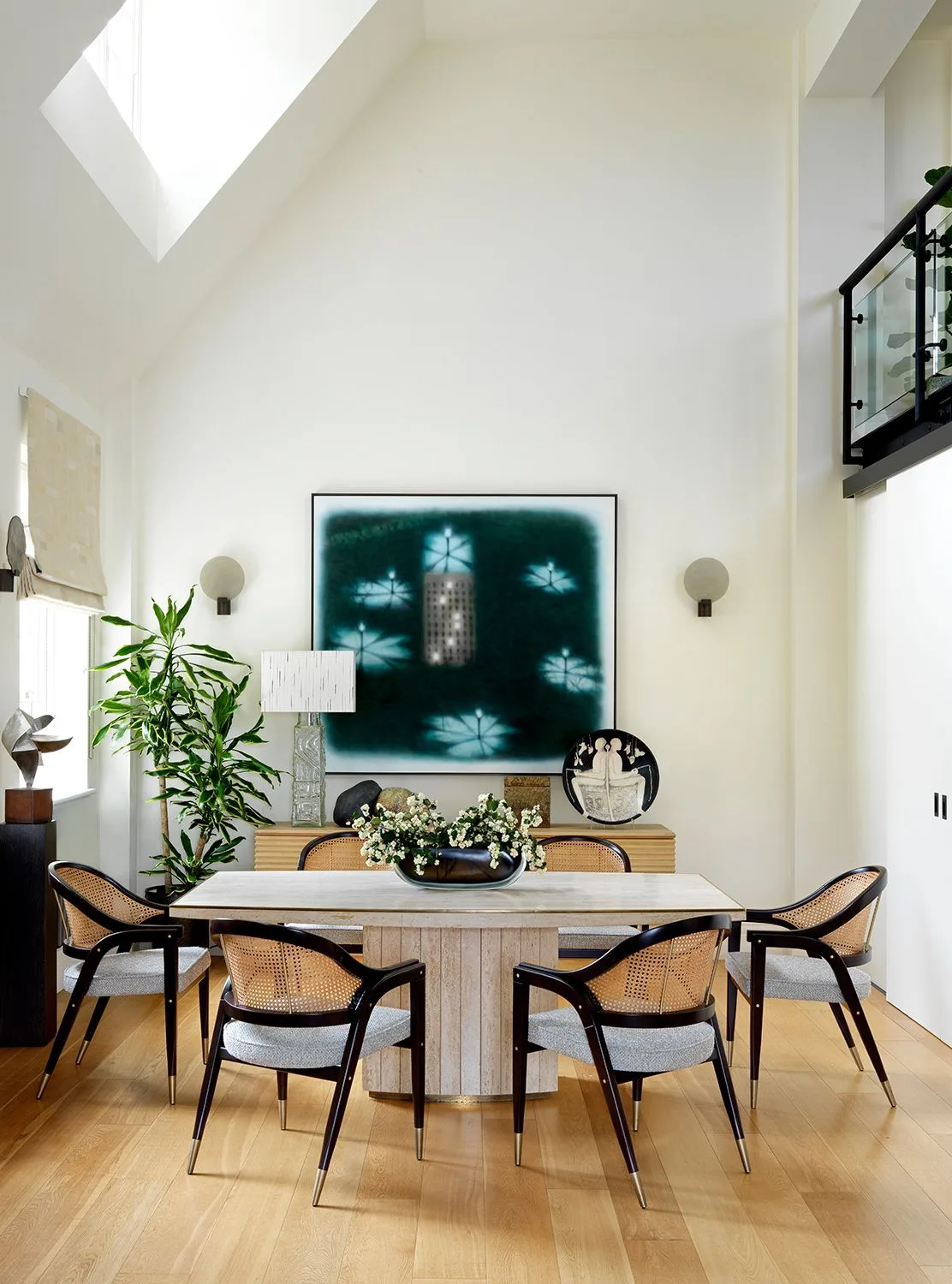
A long pale wood sideboard sits beneath teal artwork behind a pale dining table. Vertical lines on its doors add texture without a dark outline, while the curved black woven chairs bring stronger contrast into the foreground. The cabinet remains low within the tall room, allowing the artwork and open space above to carry the height rather than adding another bulky storage piece.
Measure the full wall and the route behind occupied chairs before selecting a long cabinet. Its quiet color does not reduce the clearance it needs. Leave enough space to open every door, and decide whether the top will hold serving pieces or a permanent display. A mostly clear top is easier to wipe and makes a long storage wall useful during a meal.
IDEA 04 / 20
Give a Compact Sideboard a Confident Color
 SaveSupport Non AI Creator
Image credit: Neptune
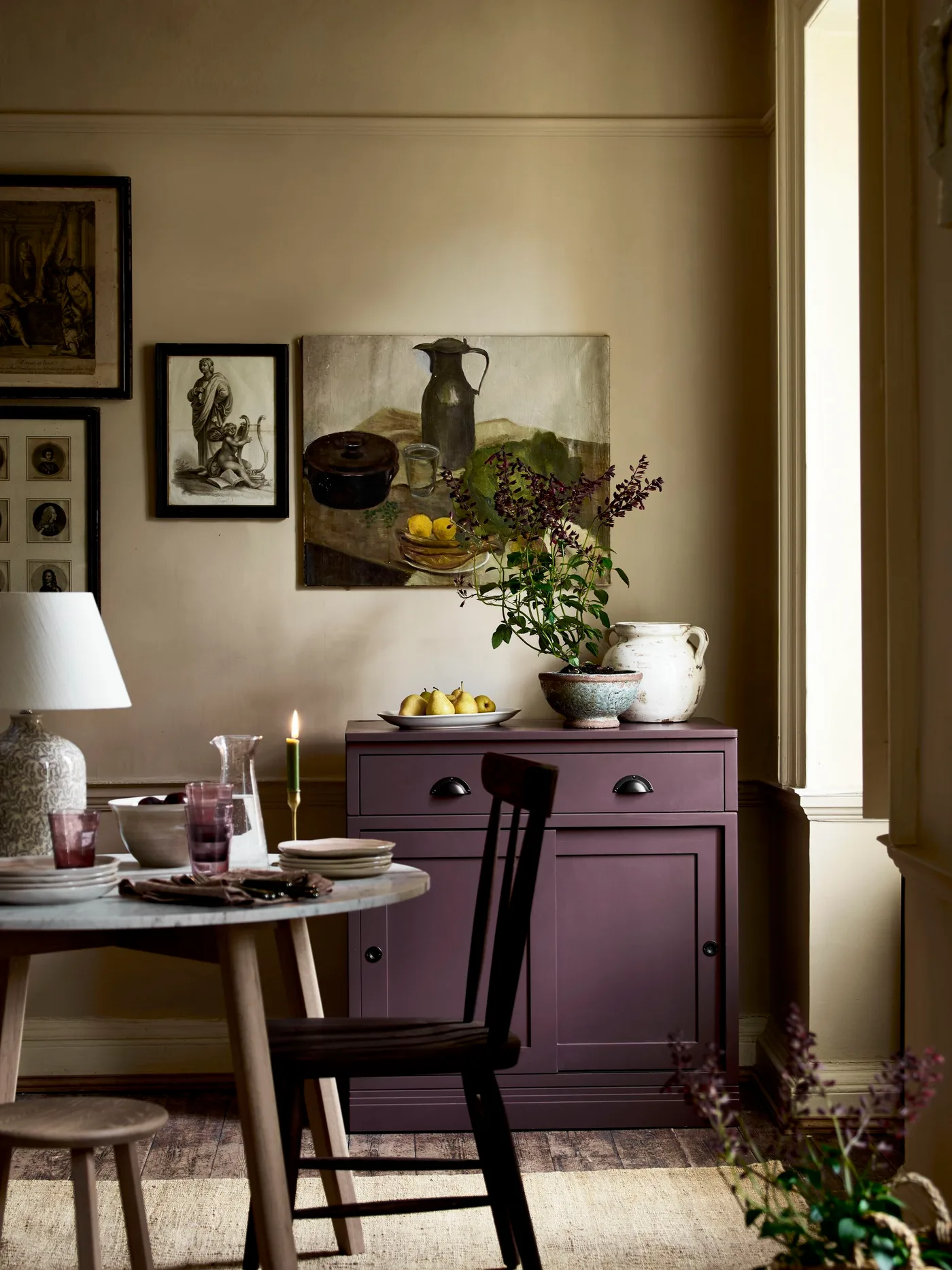
A small purple cabinet brings a concentrated patch of color beside a pale round dining table. Its drawer and cupboard offer different storage options, while grouped pictures and a jug of flowers extend the arrangement above. The cabinet’s compact width lets the wall display feel generous without requiring a long furniture piece, making this a useful reference for a tighter dining corner.
List what must fit inside before choosing a small cabinet for its color. Check plate diameter, folded linen depth and drawer access rather than assuming all dining supplies will fit. Leave the doors usable with someone seated nearby, and keep flower water away from picture frames and the finish. A compact cabinet works best when its contents are edited around the meals you actually serve.
IDEA 05 / 20
Lift Ribbed Storage on Slender Legs
 SaveSupport Non AI Creator
Image credit: Kristin Karch Photography/The Misfit House
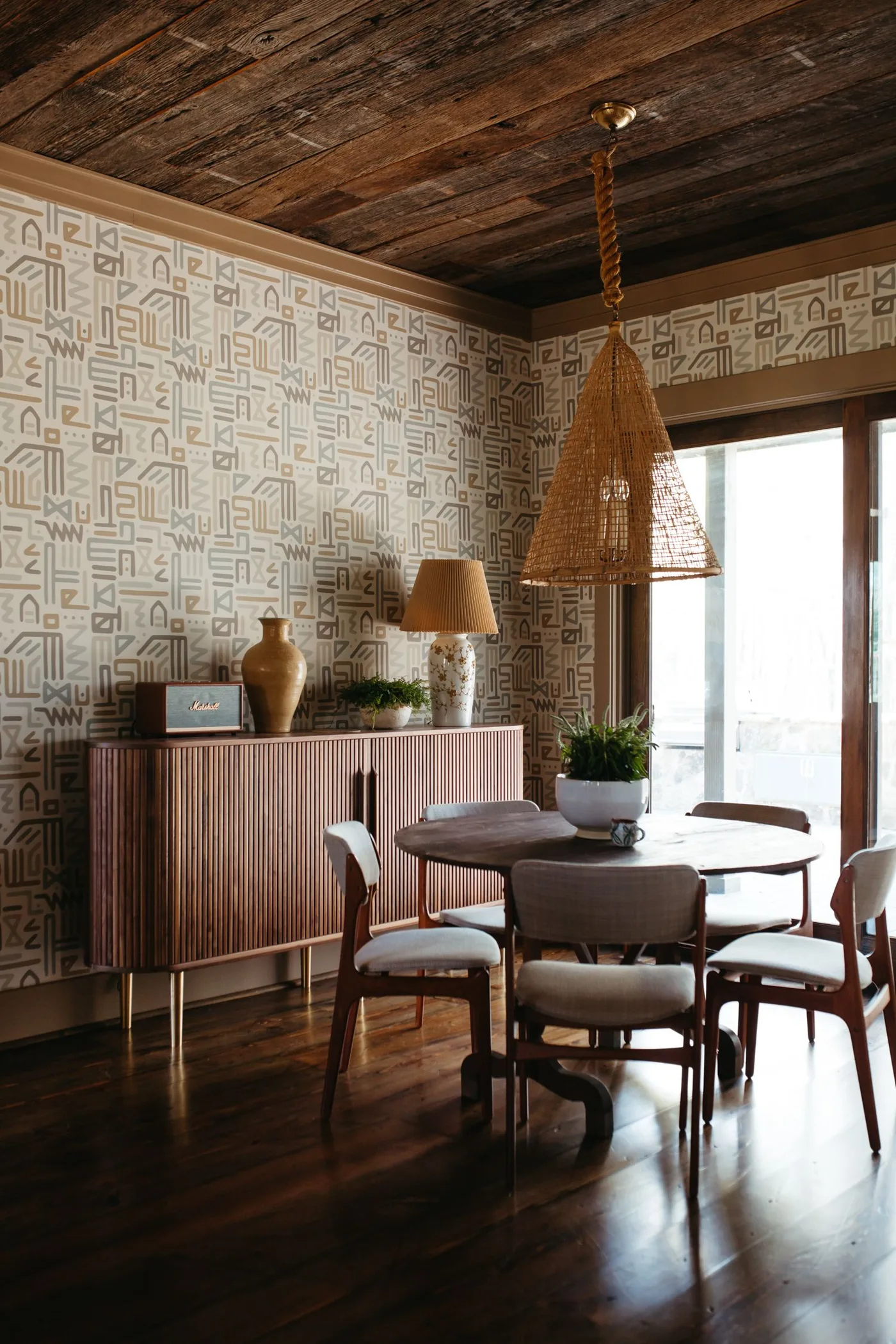
A wood sideboard with ribbed fronts stands on slender legs beside a dark round dining table. The open space underneath lightens its silhouette against the patterned wall, while the woven pendant repeats the room’s warm tones overhead. The cabinet supplies a straight storage edge beside the circular table, giving the dining group a useful contrast without adding another heavy base at floor level.
Check the leg arrangement and the manufacturer’s stability instructions before filling a raised cabinet. Allow room to clean underneath, and keep loose objects from collecting where they become difficult to reach. Ribbed fronts can retain dust between their lines, so use suitable cleaning tools for the actual finish. Preserve enough space for chairs to move without striking the cabinet legs or doors.
PART 02
Connect Useful Storage With the Wall Display
IDEA 06 / 20
Let Blue Wallpaper Frame a Wood Sideboard
 SaveSupport Non AI Creator
Image credit: Murphy Deesign
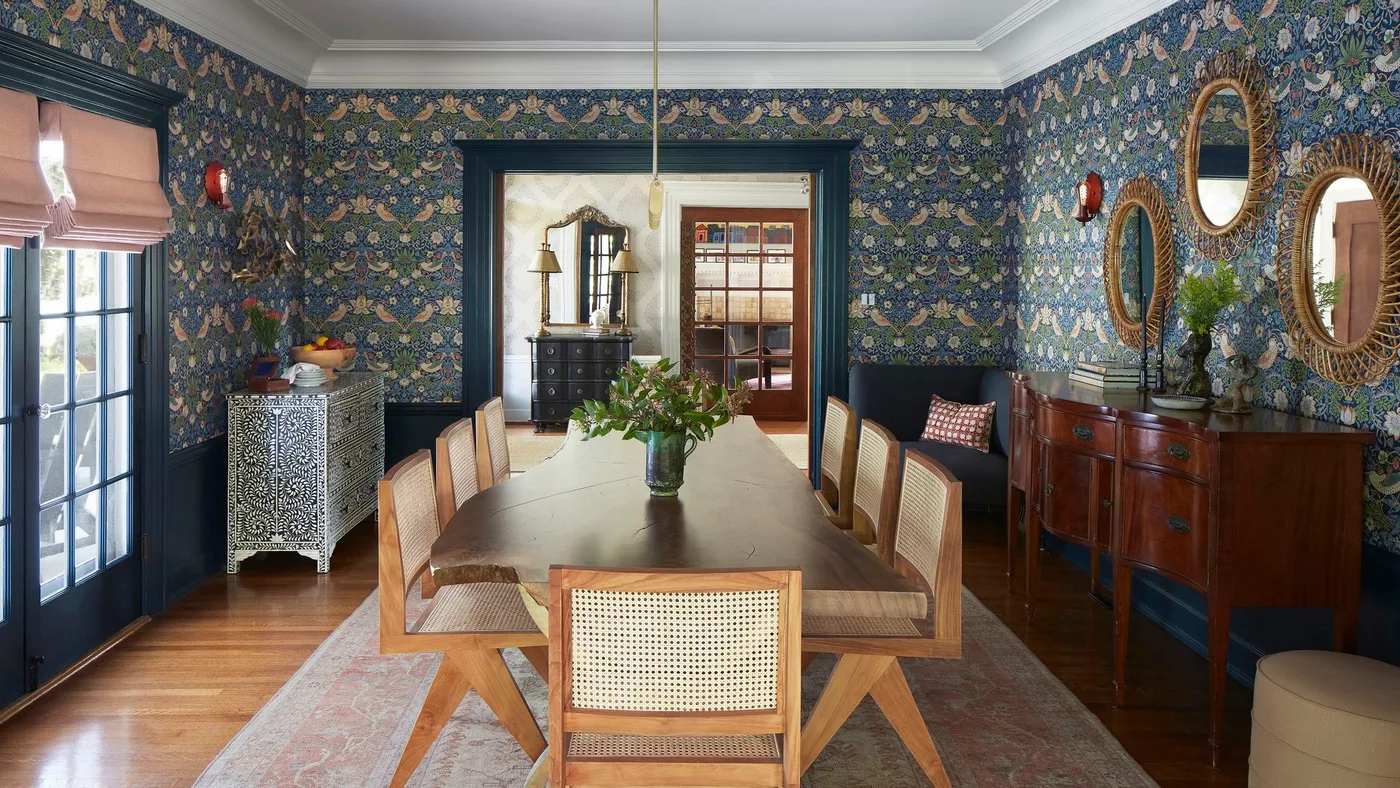
A wood sideboard stands against blue floral wallpaper beneath three oval mirrors. The mirrors break up the patterned wall without covering it, while the slim cabinet legs keep the lower part of the arrangement open. A pale wood table and woven dining chair continue the warm tones nearby, giving the storage wall a connection to the eating area rather than an isolated decorative role.
Set out mirror positions with the cabinet in place so the group reads as one arrangement. Confirm appropriate wall fixings and check what each mirror reflects from the seats. Keep the cabinet top useful for setting down a serving dish, especially in a smaller room. Protect the wallpaper from splashes around plants or vases, and follow its cleaning guidance instead of treating it like a washable countertop.
IDEA 07 / 20
Use a Narrow Cabinet When Wall Width Is Limited
 SaveSupport Non AI Creator
Image credit: Arteriors
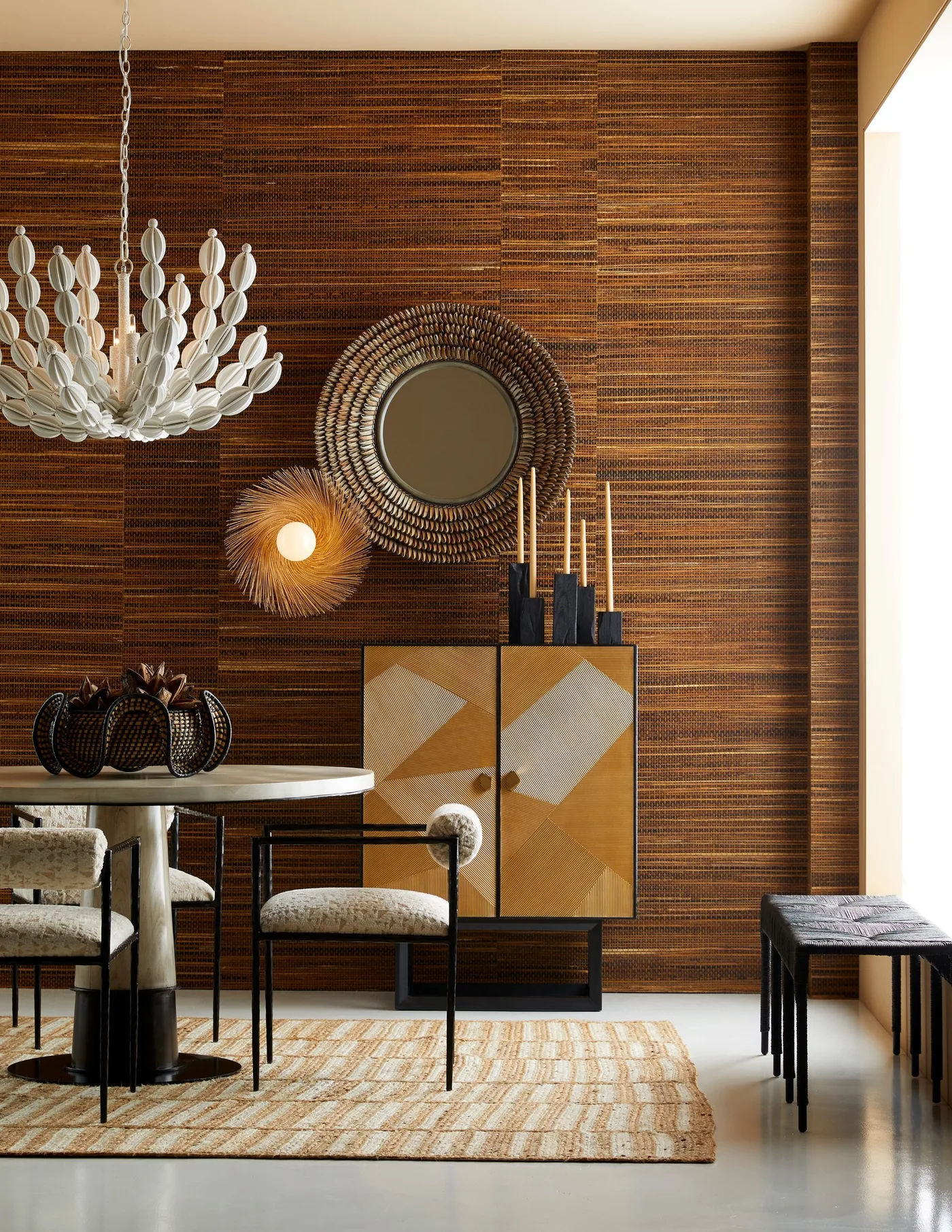
Geometric wood doors sit within a black frame on a narrow dining storage cabinet. A circular mirror and pale branch-shaped light introduce softer outlines around the patterned wall and dark chair frames. This cabinet is taller and narrower than a long sideboard, showing a different way to provide closed storage when a broad furniture piece would overwhelm the available wall.
Choose a narrow cabinet around both its internal capacity and its stability requirements. Keep heavier serving pieces in lower compartments, and secure the furniture as instructed. Check that doors can open without touching the table or chair backs. A taller top may be less comfortable for serving, so reserve it for a modest display and use another reachable surface for dishes during meals.
IDEA 08 / 20
Balance Dark Glazed Storage With Large Artwork
 SaveSupport Non AI Creator
Image credit: Tiffany Leigh Design/Lauren Miller
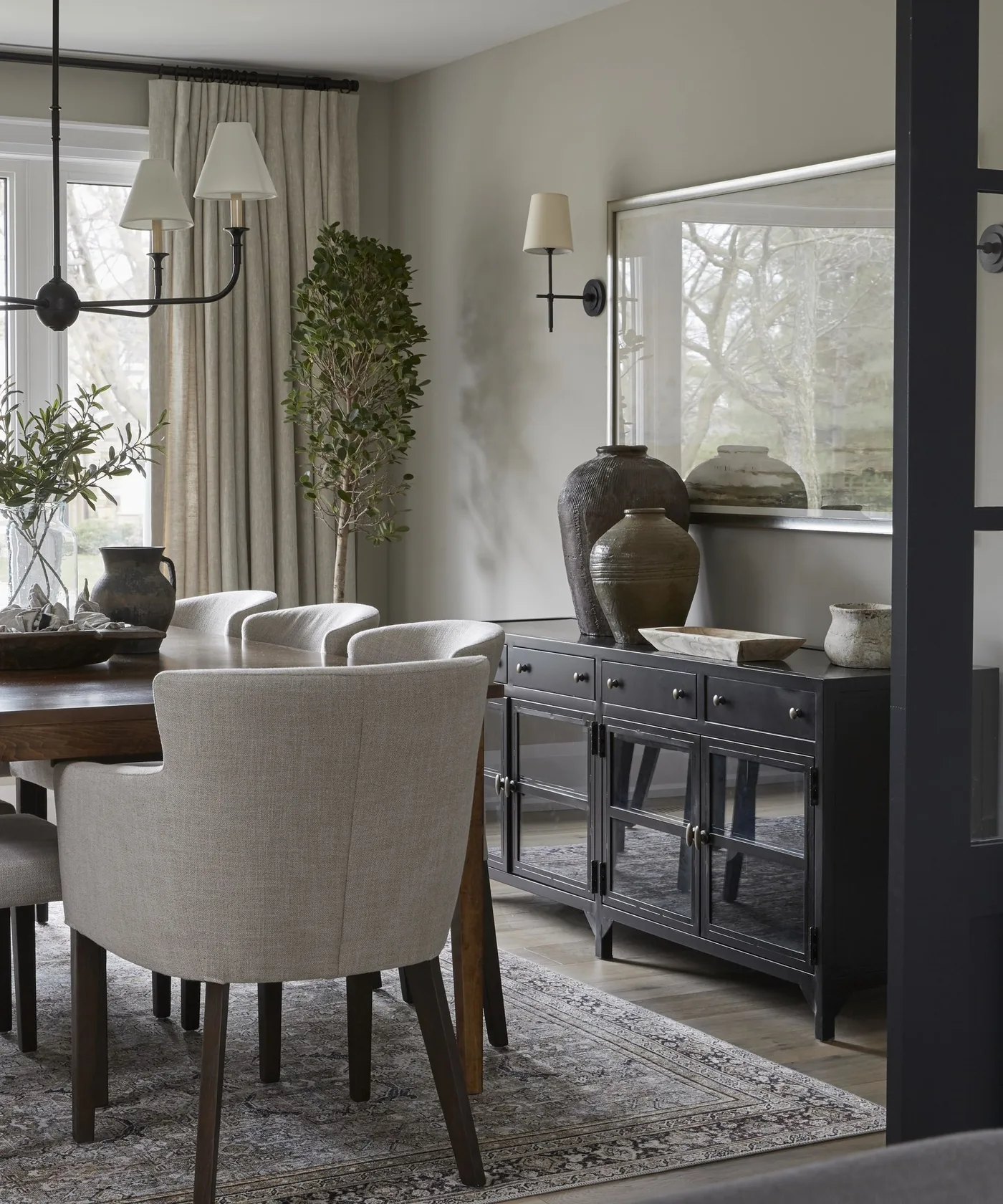
A dark glazed sideboard anchors a wall beneath wide artwork, with green plants adding softer shapes at its edges. The wood dining table and neutral chairs keep the eating area warmer than the cabinet’s dark frame. Glass-fronted sections and drawers divide the storage into visible and concealed areas, allowing the furniture to hold practical supplies while also contributing to the room’s display.
Use the glazed sections for items that can stay orderly and the drawers for smaller pieces that are awkward to arrange. Check the drawer depth for linens and cutlery organizers before buying. Leave space to water plants without splashing artwork or cabinet contents. Keep the route behind dining chairs clear enough to open the storage comfortably, and avoid overcrowding the top with objects that impede serving.
IDEA 09 / 20
Pair a Carved Sideboard With Pale Blue Chairs
 SaveSupport Non AI Creator
Image credit: Photo: Parks Realty, a member of Luxury Portfolio International. From: Parks Realty and Luxury Portfolio International®
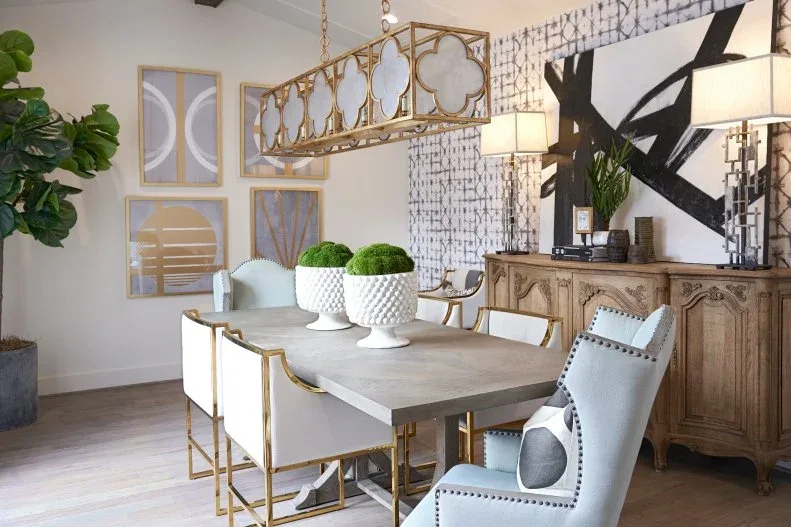
A carved wood sideboard adds detailed texture beneath large artwork and two lamps. Pale blue chairs and a gray dining table give the room a cooler foreground, while geometric wallpaper continues the pattern on the wall. The lamps organize the cabinet top into two ends, leaving the artwork a clear position between them rather than spreading small decorations evenly across the entire surface.
Allow enough space between lamps to set down a tray if the cabinet will serve meals. Plan sockets so cables remain behind the furniture, and confirm the lamps do not obstruct the picture. Carved details collect dust in recesses, so check finish-safe cleaning methods before choosing an intricate front. Test door access with chairs pulled back; decorative appeal should not make everyday storage difficult to use.
IDEA 10 / 20
Outline a Dark Sideboard With Lighter Detail
 SaveSupport Non AI Creator
Image credit: Photo: Mali Azima. From: Minhnuyet Hardy
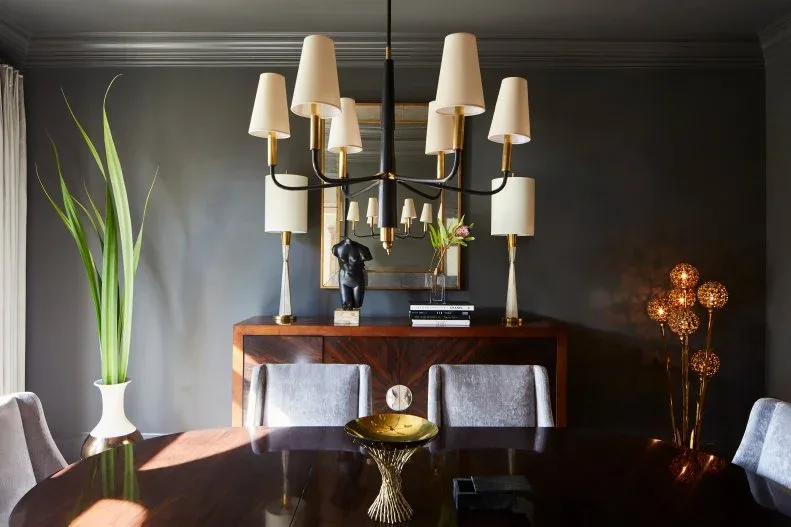
Lighter angular borders outline a dark wood sideboard beneath a rectangular mirror and two pale lamps. The lamp shades bring brightness to the gray wall, connecting the cabinet display with the shaded chandelier above the dark dining table and gray chairs. The repeated cabinet shapes supply enough detail that the surface display can stay simple, with the mirror carrying the main wall arrangement.
Check the cabinet’s door swing and handle projection against the dining chairs before positioning it. Plan lamp sockets so cables remain behind the furniture and leave space between the bases for serving. Avoid resting damp dishes directly on the top. Use suitable surface protection and the actual furniture care guidance to preserve the contrasting finishes, particularly where the lighter border meets the darker front.
PART 03
Work With the Room’s Layout and Colors
IDEA 11 / 20
Float White Storage Beneath a Broad Picture
 SaveSupport Non AI Creator
Image credit: From: Tara Benet
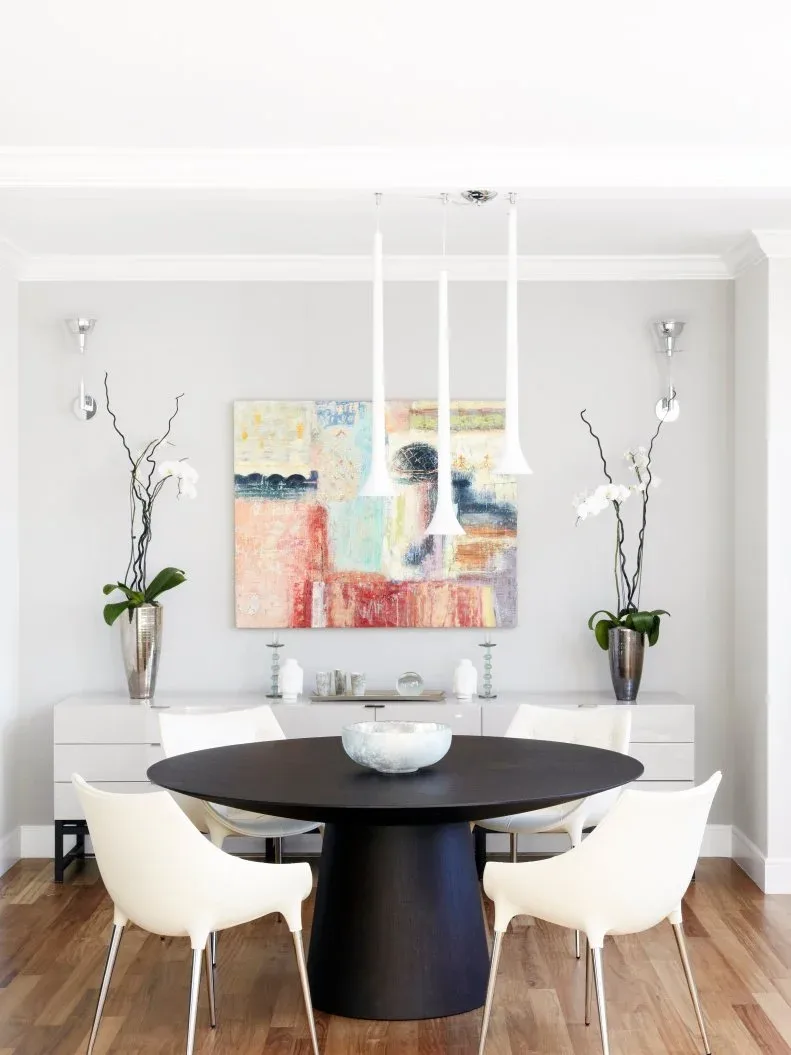
A white suspended cabinet runs beneath broad abstract artwork behind a black round table and white chairs. The space below the cabinet keeps its base from forming another solid block at floor level. Pale walls, white pendants and orchid displays continue the light background, while the dark table creates a distinct dining center in front of the storage wall.
A suspended cabinet needs support appropriate to the wall and its loaded weight. Have the fixing method checked before installation rather than judging capacity from appearance. Plan the height around comfortable access and the items inside, and leave a clear route for opening doors behind occupied chairs. Keep plant containers protected against leaks, and preserve access underneath for cleaning instead of turning that space into overflow storage.
IDEA 12 / 20
Extend a Serving Cabinet Toward a Work Area
 SaveSupport Non AI Creator
Image credit: Photo: Ty Cole. From: James Wagman Architect
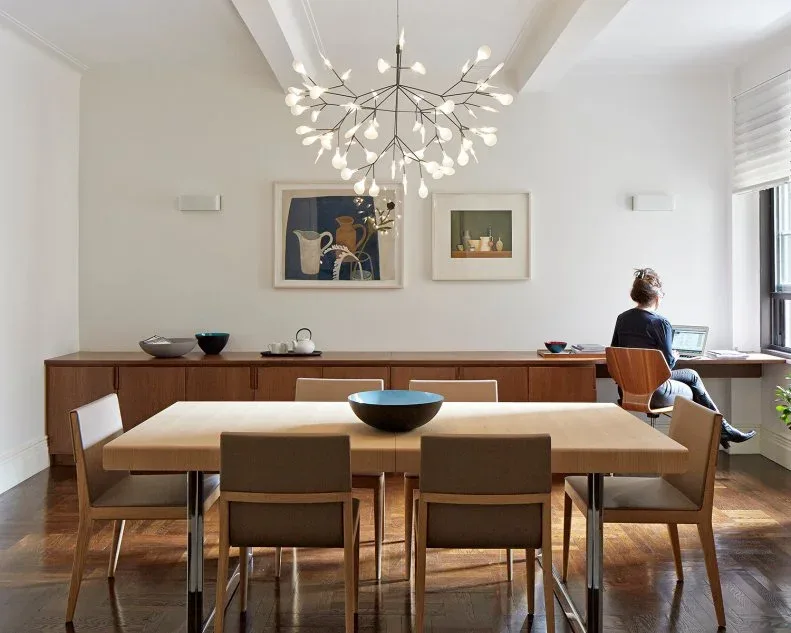
A long wood cabinet runs along the dining wall and continues toward a work area at the far end. A pale table and cream chairs keep the foreground light, while framed pictures and a branching overhead light add detail above. This built-in serving surface shares its wall with another use, showing how dining storage can connect with a desk without placing work supplies on the eating table.
Give dining supplies and work materials separate compartments even when the cabinetry is continuous. Check comfortable desk clearance independently of the cabinet’s serving height, and keep cables out of the chair route. Leave a clear portion of the surface for setting down dishes. Before commissioning a long run, confirm door access, socket positions and the support needed for the actual contents of each section.
IDEA 13 / 20
Echo Ribbed Doors With Warm Metal Accents
 SaveSupport Non AI Creator
Image credit: Photo: Adam Albright. From: HGTV Magazine
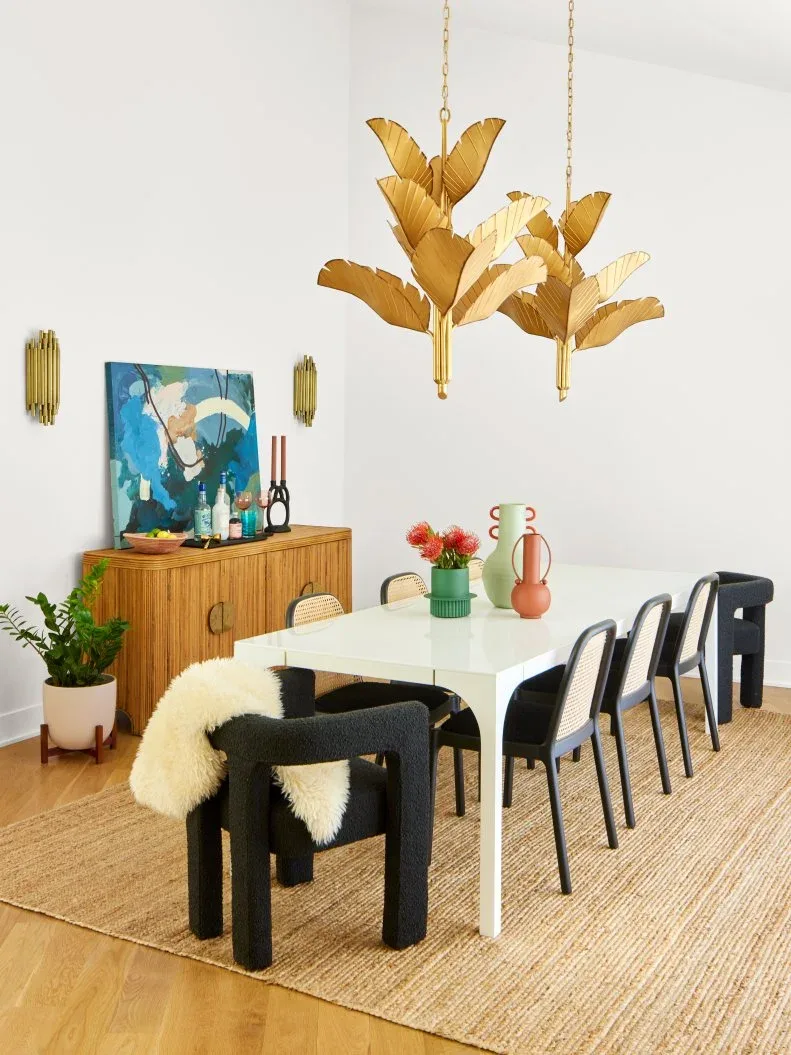
Vertical ribbing and round gold pulls give a wood sideboard a warm, textured front. Teal artwork and two gold wall lights organize the wall above, while a gold leaf-shaped pendant repeats the accent over the pale table and black chairs. The sideboard remains a clear horizontal piece within a room containing several decorative details, helping the storage wall feel connected to the dining group.
Coordinate the overall arrangement before adding another decorative object to the top. Wall lights need suitable electrical installation and should not interfere with picture placement or cabinet access. Leave serving space between the objects you keep on display. Check how the ribbed finish is cleaned, and protect the top from wet vases or hot dishes using products suited to the furniture’s actual finish.
IDEA 14 / 20
Bring Teal Storage Into a Colorful Dining Room
 SaveSupport Non AI Creator
Image credit: Photo: Lisa Romerein. From: HGTV Magazine
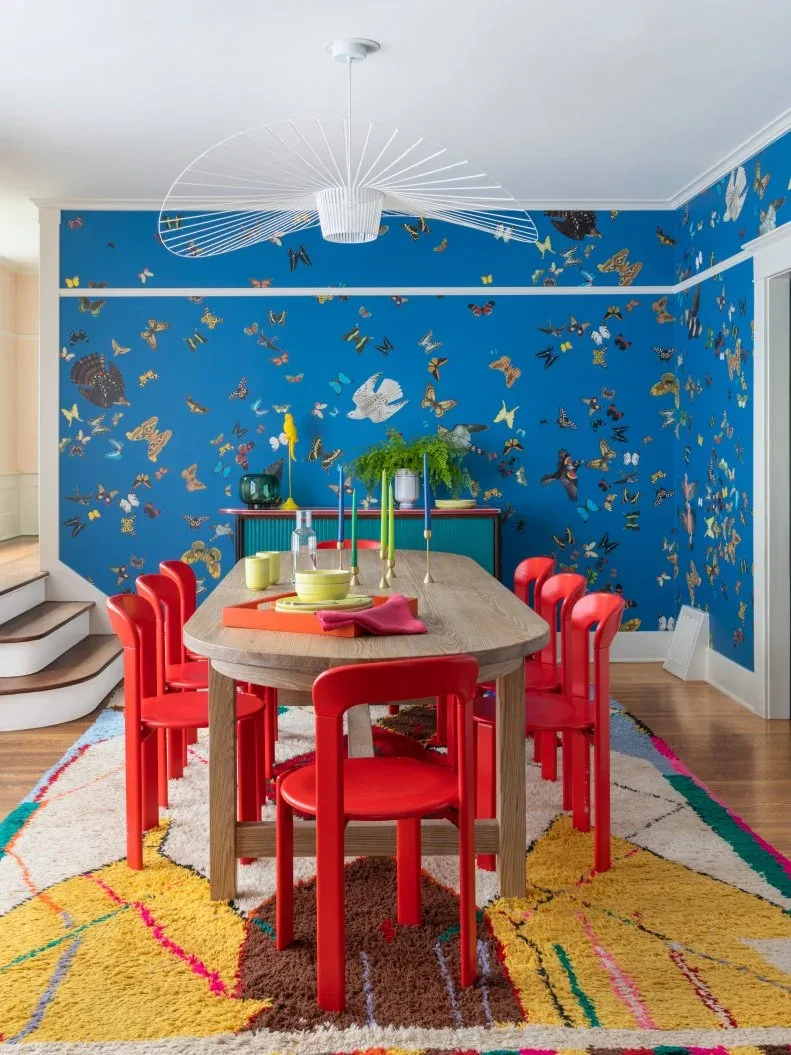
A teal sideboard with a contrasting red top sits behind an oval wood table and red chairs. Bright blue wallpaper and a colorful rug give the dining room several strong color areas, while the low cabinet keeps the storage wall from gaining another tall feature. Only part of its front is visible behind the dining group, but the teal finish clearly joins the room’s lively palette.
In a colorful room, decide which cabinet color should connect with an existing feature rather than adding an unrelated accent. Check its full dimensions in person, since the dining table obscures part of this example. Preserve access behind the chairs and keep the top clear enough for serving. A colored working surface still needs appropriate protection from spills and heat; its color does not establish durability.
IDEA 15 / 20
Use a Coral Sideboard at the Room’s Edge
 SaveSupport Non AI Creator
Image credit: Photo: David Tsay; Styled By: Liz Strong. From: HGTV Magazine
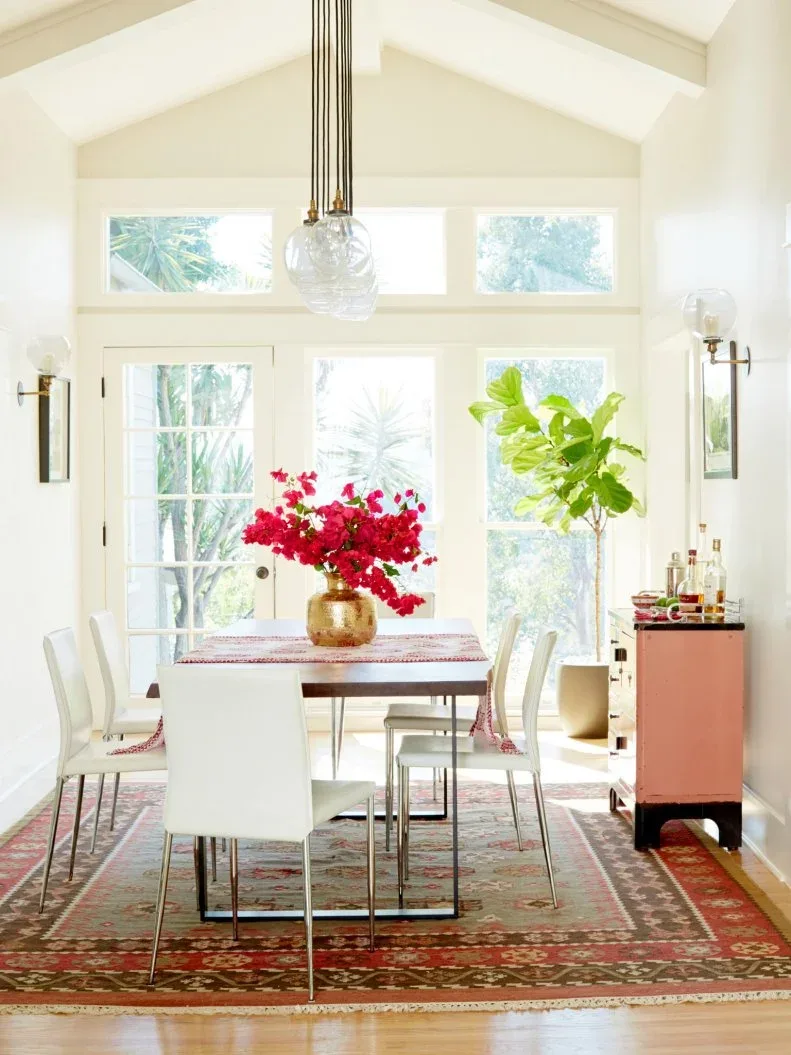
A coral sideboard sits at the edge of a bright dining room beside a wood table and white chairs. Viewed from its end, the cabinet contributes a concentrated warm color without dominating the whole wall in this photograph. The red patterned rug repeats that warmth beneath the dining group, linking the storage piece to the seating rather than leaving it as a separate accent.
Check the cabinet’s complete front and internal arrangement before selecting a similar piece; an end view cannot show every storage compartment. Measure its depth against the route beside occupied chairs, especially where the cabinet projects into the room. Keep the top available for a tray or small display, and use finish-appropriate protection when placing flowers, drinks or serving dishes on a painted surface.
PART 04
Give the Storage Wall a Clear Finish
IDEA 16 / 20
Anchor a Gallery Wall With a Dark Sideboard
 SaveSupport Non AI Creator
Image credit: Photo: Meghan Beierle O'Brien. From: HGTV Magazine
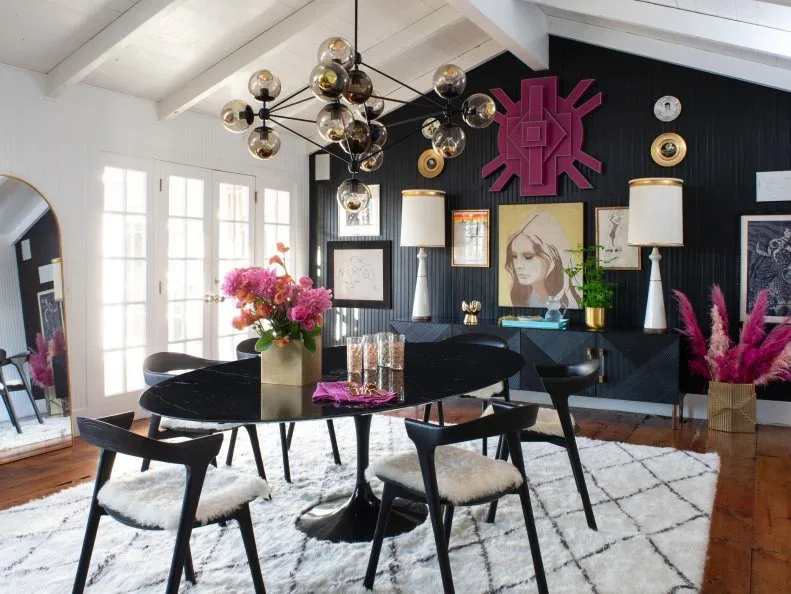
A black sideboard with diamond-patterned fronts anchors a dense gallery wall in a dark dining room. Two pale lamps give the cabinet ends a clear position beneath the many picture frames, while pink flowers bring a smaller bright accent near the table. The dark cabinet joins the table and chairs in color, allowing the artwork and lamp shades to stand out above it.
Lay out the gallery around the cabinet and lamps before hanging frames. Leave enough room to use the cabinet top without bumping low pictures, and check that electrical cables remain behind the furniture. Keep the display stable and drawers accessible. Dust patterned cabinet fronts with a suitable tool, and allow space to clean behind lamps rather than packing every remaining gap with decorative pieces.
IDEA 17 / 20
Repeat Traditional Detail Across the Storage Wall
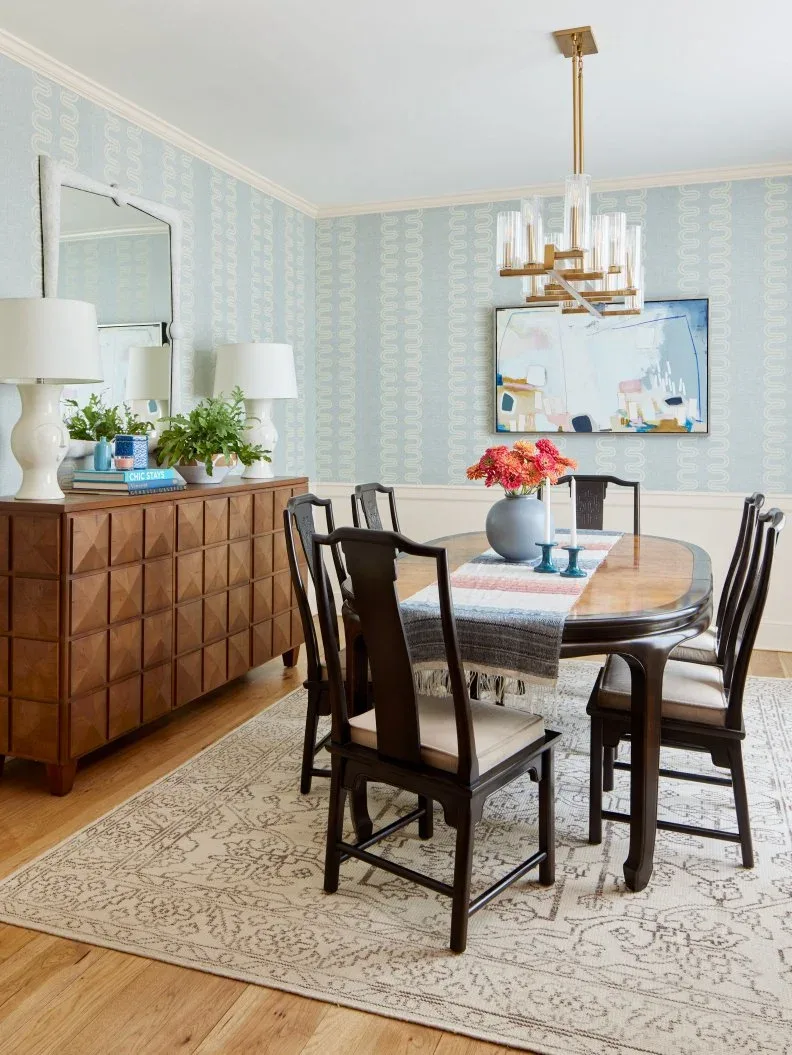 SaveSupport Non AI Creator
Image credit: Photo: Adam Albright. From: HGTV Magazine
Square relief details cover the front of a wood sideboard beneath a mirror and two white lamps. Pale blue patterned wallpaper lightens the background around a dark oval table and traditional dining chairs. The sideboard’s repeated blocks supply a strong rhythm at the wall, while the lamps create a balanced top display that leaves the mirror visible between them.
An intricate cabinet front can work with patterned wallpaper when the main shapes remain easy to distinguish. Check the door and drawer layout behind the decorative panels before judging how useful the piece will be. Leave access for lamp cables and cleaning, and protect the top when serving. Test chair clearance with the dining group in everyday positions rather than measuring only an empty room.
IDEA 18 / 20
Repeat a Warm Edge in a Teal Dining Room
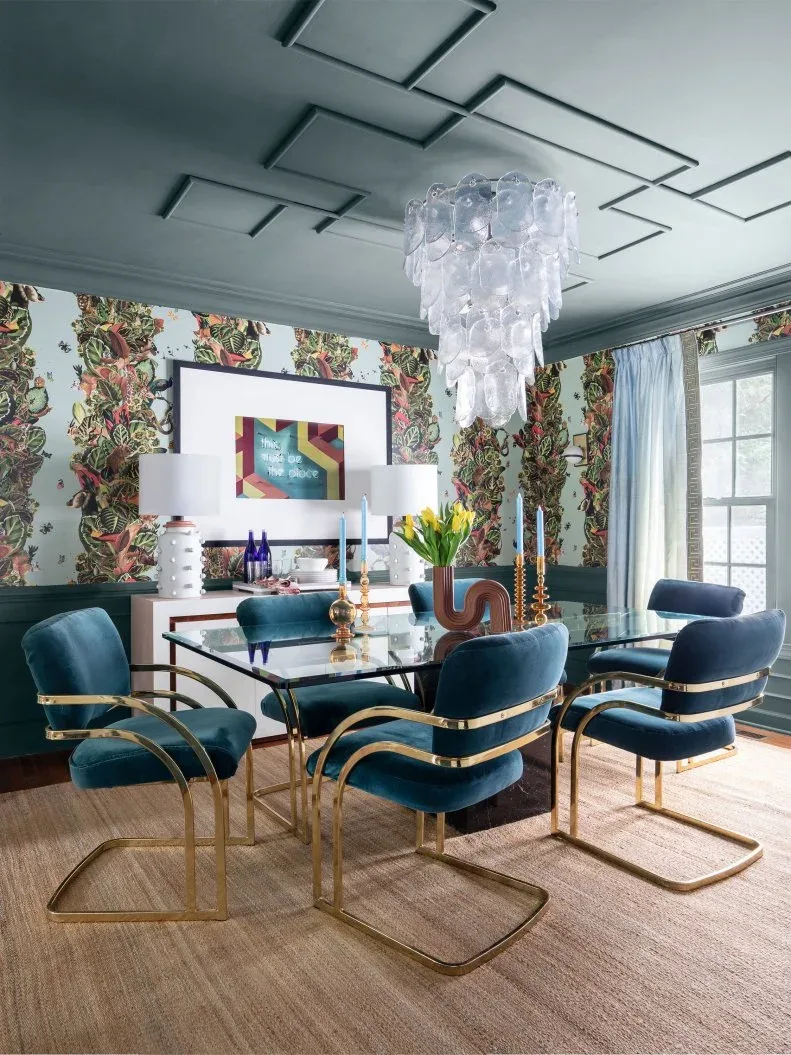 SaveSupport Non AI Creator
Image credit: Photo: Lisa Romerein. From: HGTV Magazine
A white sideboard with warm pink edging sits beneath artwork and two white lamps in a dining room with teal chairs. Botanical wallpaper and a teal ceiling surround the glass table, giving the room a strongly colored envelope. The slim warm outline adds a smaller accent at the cabinet rather than covering another large surface, while the white doors keep its front easy to read.
Use a narrow accent to connect a cabinet with existing colors when a fully colored piece would compete with the room. Confirm the furniture’s finish before cleaning or repainting trim. Keep the lamp arrangement clear of door movement and leave serving space between display pieces. Glass tabletops and pale cabinet surfaces both show marks, so plan simple wipe-down access without having to move a crowded collection of objects.
IDEA 19 / 20
Warm a Pale Sideboard With Wood and Green Lamps
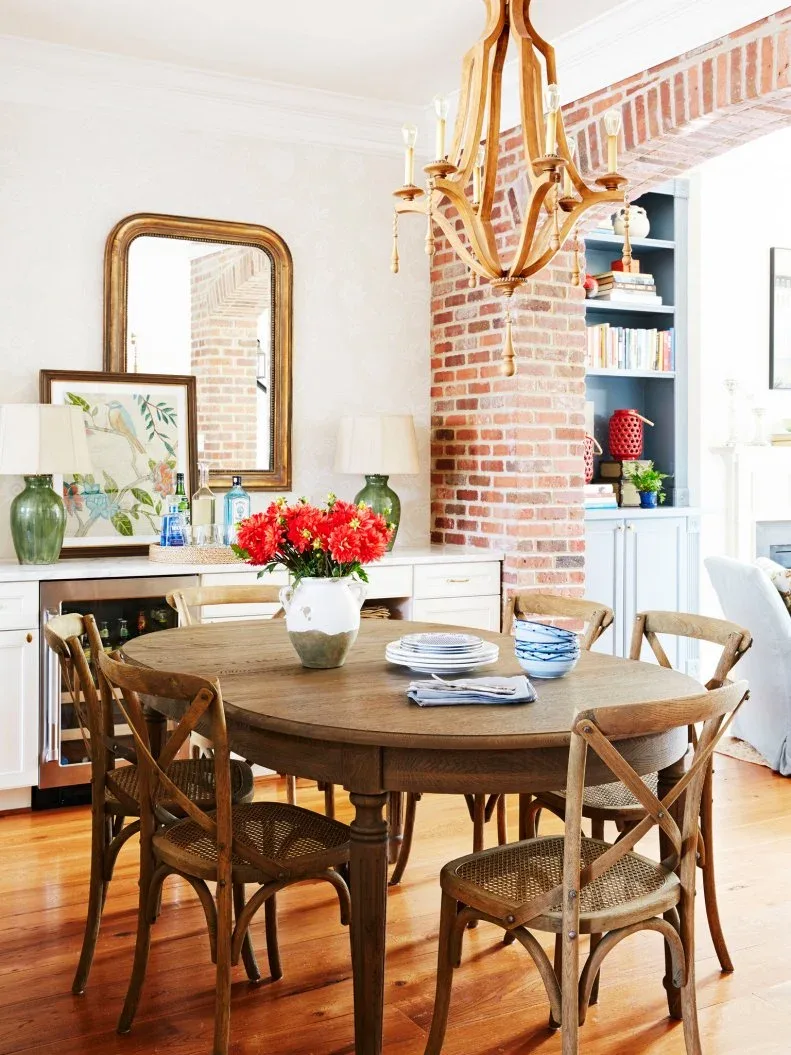 SaveSupport Non AI Creator
Image credit: Photo: David A. Land (styled by Charlotte Safavi). From: HGTV Magazine
A pale sideboard within a wood frame sits beneath a gilded mirror and two green lamps near a brick arch. The round wood table and cross-back woven chairs carry the warm furniture tones into the foreground. The pale cabinet front prevents the storage wall from becoming another dark block, while the green lamps give its simple top a distinct pair of accents.
Check the path through the arch before deciding how far the cabinet can project into the room. Leave room to open its doors and move chairs without narrowing that route. Plan safe cable access for both lamps and secure the mirror appropriately. Keep the cabinet top useful for serving, and use protective bases under lamps or vessels where the furniture’s care instructions call for them.
IDEA 20 / 20
Keep Baskets Behind Glazed Dining Storage
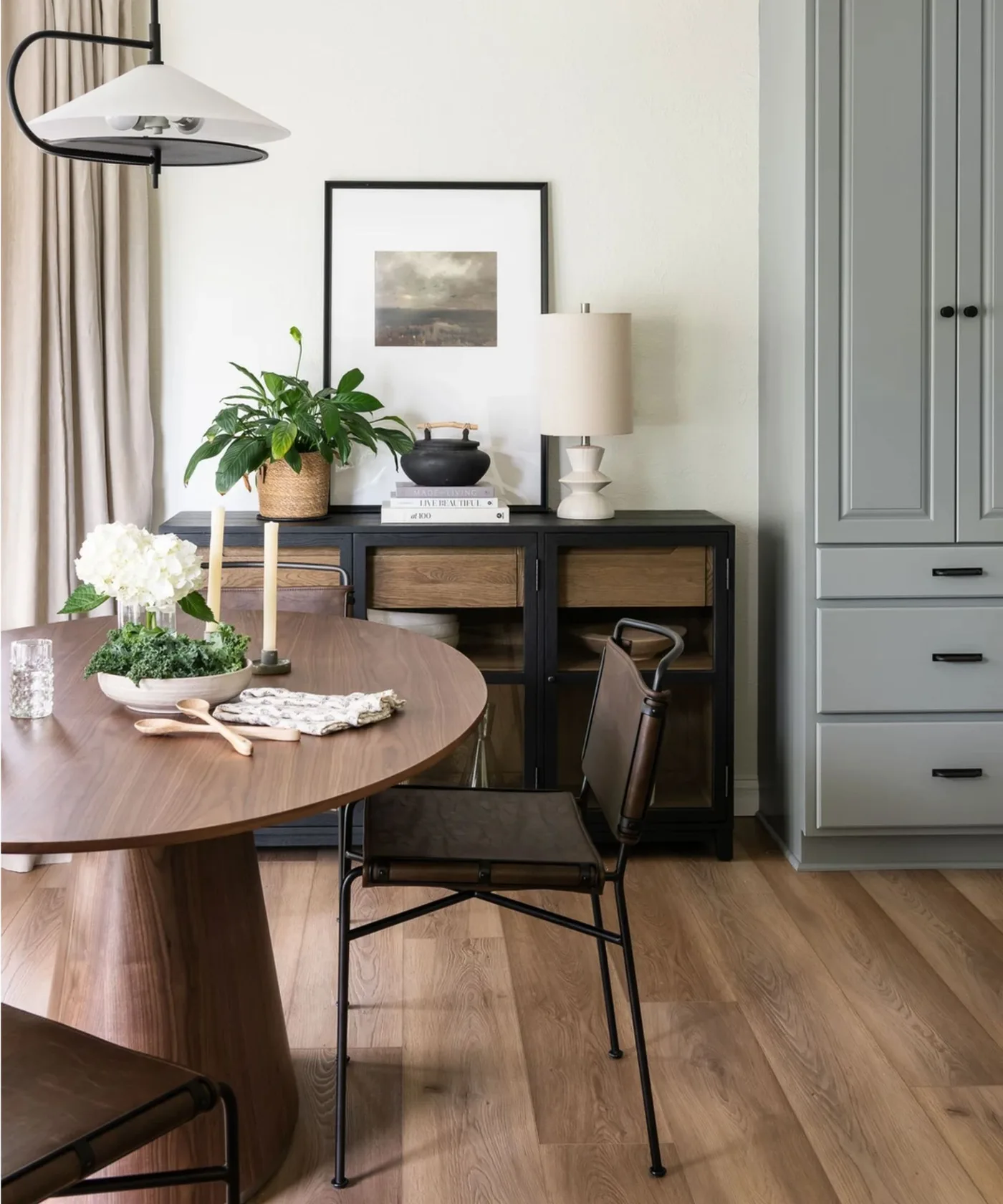 SaveSupport Non AI Creator
Image credit: White Cliff Studios
Woven baskets occupy the upper compartments of a black glazed dining cabinet beside a brown table. Cups sit on the lower shelf behind the glass, with a lamp, framed picture and plant arranged above. A taller gray cupboard at the side provides a different storage scale, allowing the lower cabinet to serve as a display and landing surface within the dining area.
Choose baskets that fit the actual shelf openings and can be lifted out without scraping the door frame. Use them for smaller dining supplies while keeping cups accessible below. Check shelf capacity before adding heavy tableware, and keep plant water contained. Leave lamp cables behind the cabinet and confirm that both storage pieces remain accessible when chairs are pulled away from the dining table.
BRING IT ALL TOGETHER
Measure Access as Carefully as Storage
Start with the dishes, linens and serving pieces the cabinet must hold. Check internal shelf dimensions and drawer depth, then test door clearance with dining chairs in their everyday positions. A long cabinet is only useful when its contents remain easy to reach.
Decide which portion of the top will remain available for serving before arranging lamps, pictures or plants. Confirm stability, wall support where needed and finish care. Keep electrical cables out of walking routes and protect the surface from moisture or heat according to its instructions.