A sideboard with shelves above can combine useful closed storage with room for books, dishes and objects you enjoy seeing. The arrangement works best when the cabinet top remains usable and the shelves fit the items you actually own.
These photographs include separate cabinets and wall shelves, dressers with integrated upper sections, and fitted living-room alternatives. Compare the overall proportions as well as the details: door movement, shelf loads, cleaning access and the space left for a lamp or serving tray.
PART 01
Pair cabinets with open shelves
IDEA 01 / 15
Fit Timber Shelves inside a Cabinet Alcove
 SaveSupport Non AI Creator
Image credit: Future PLC / Anna Stathaki
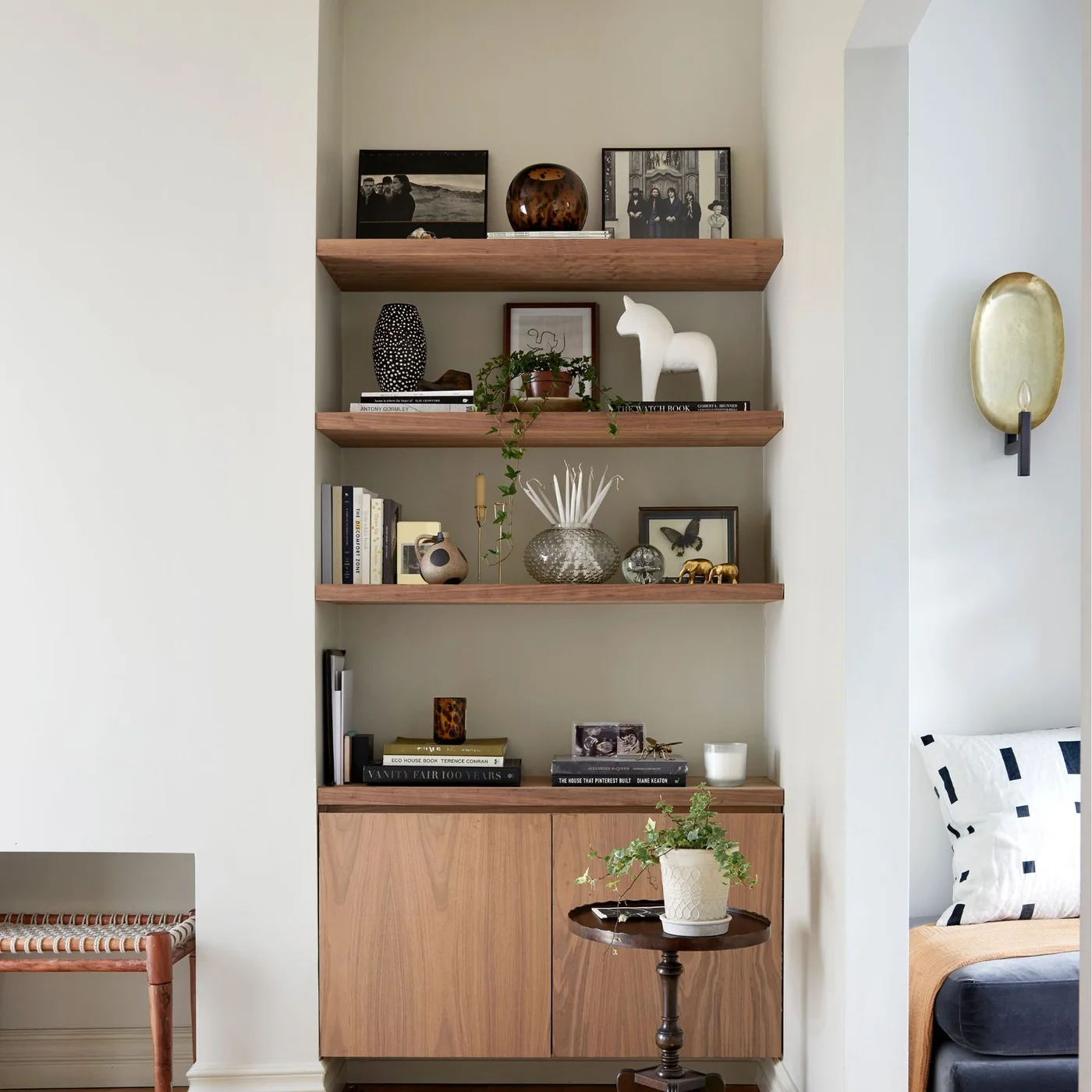
The shelves and lower cabinet share a warm timber finish, making the narrow alcove read as one arrangement. Books, photographs and a white horse ornament provide different heights without filling every gap. The recessed position keeps the display within the wall rather than projecting far into the adjoining seating area.
Measure the objects you actually want to display before fixing shelf positions. Leave enough room to lift a frame or book without scraping the shelf above. If you prefer a freestanding piece, our modern sideboard ideas offer other cabinet shapes; the wall shelves can still take their width and finish from the cabinet below.
IDEA 02 / 15
Try Small Box Shelves above a Textured Sideboard
 SaveSupport Non AI Creator
Image credit: Photo: Life Created. From: Kirsten Holmstedt
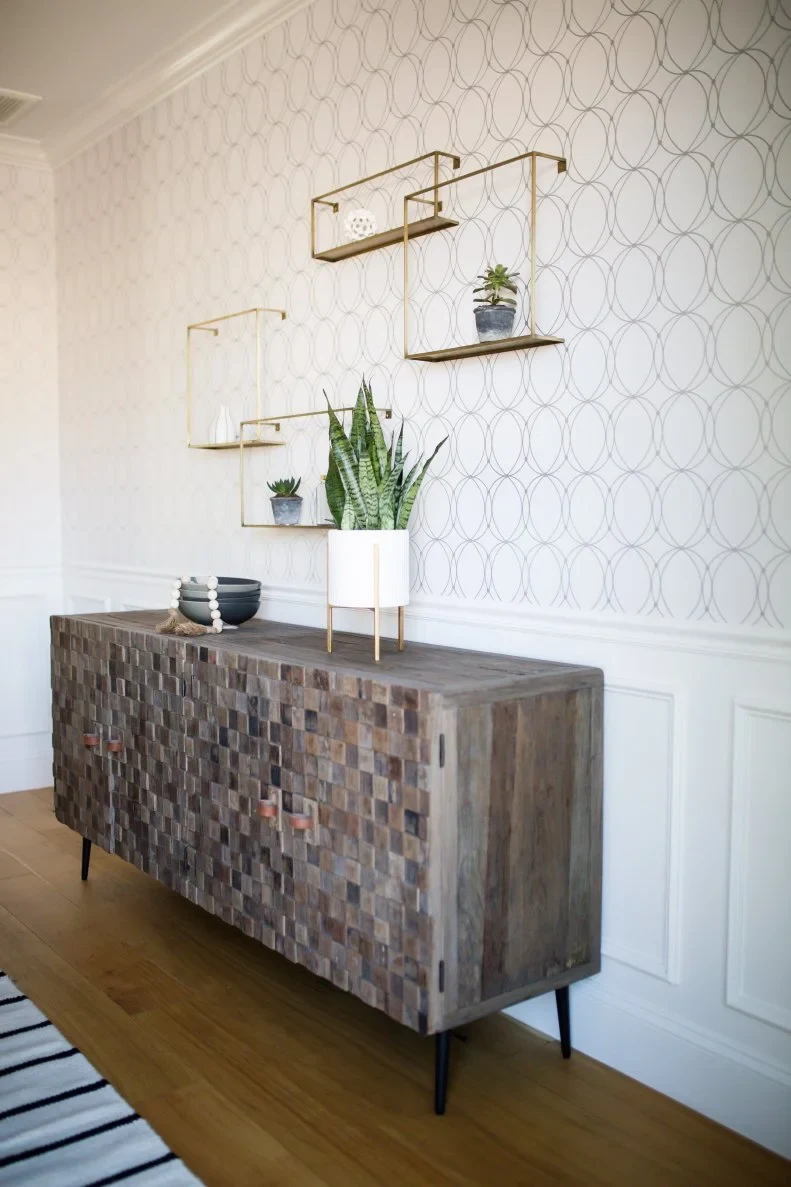
Separate open boxes create a lighter display than a solid bank of shelving above this substantial sideboard. Their thin gold-colored outlines stand apart from the looping wallpaper pattern. Small plants occupy just a few compartments, while the cabinet’s block-patterned front supplies most of the texture nearer the floor.
Lay out the whole group on paper before drilling, including the space between boxes and the sideboard top. Check each fixing for the wall construction and intended load. Use watertight plant containers, remove pots for watering and avoid trailing growth that will catch when cupboard doors open or people pass.
IDEA 03 / 15
Leave Room for Art beneath a Long Shelf
 SaveSupport Non AI Creator
Image credit: From: Urbanology Designs
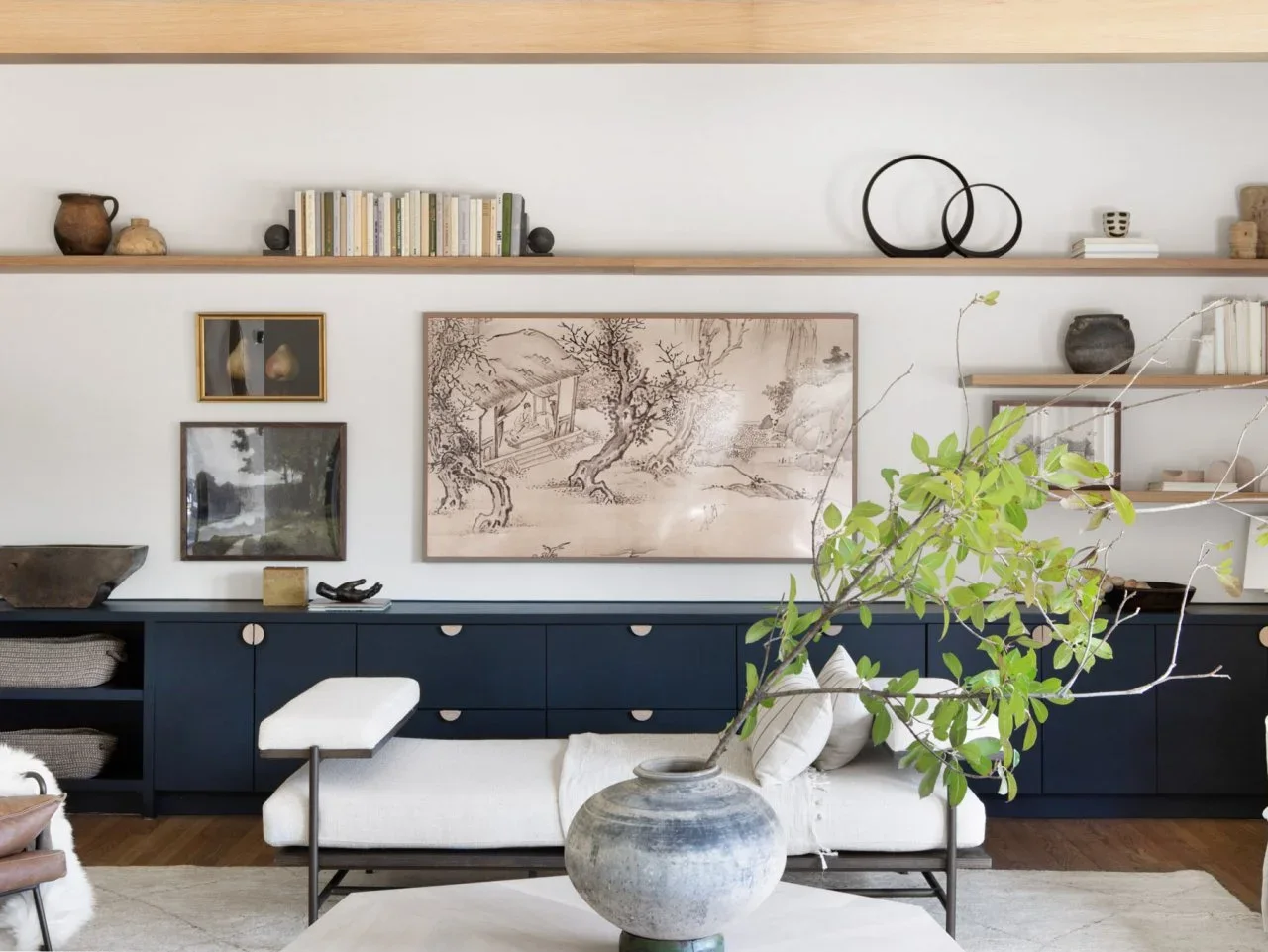
The long upper shelf follows the broad run of navy cupboards, while shorter shelves gather at one end. Framed art fills the generous wall space between them instead of competing for a place on every shelf. The pale seating makes the dark storage visible as a continuous band across the room.
Plan the cabinet top as a usable surface before deciding how low the first shelf should sit. A large picture, lamp or serving dish may need more clearance than small ornaments. Check access behind seating, and avoid placing a chair so close that you have to move it whenever you open a cupboard.
IDEA 04 / 15
Choose a Sideboard with Its Own Shelving Frame
 SaveSupport Non AI Creator
Image credit: Lozi Designs
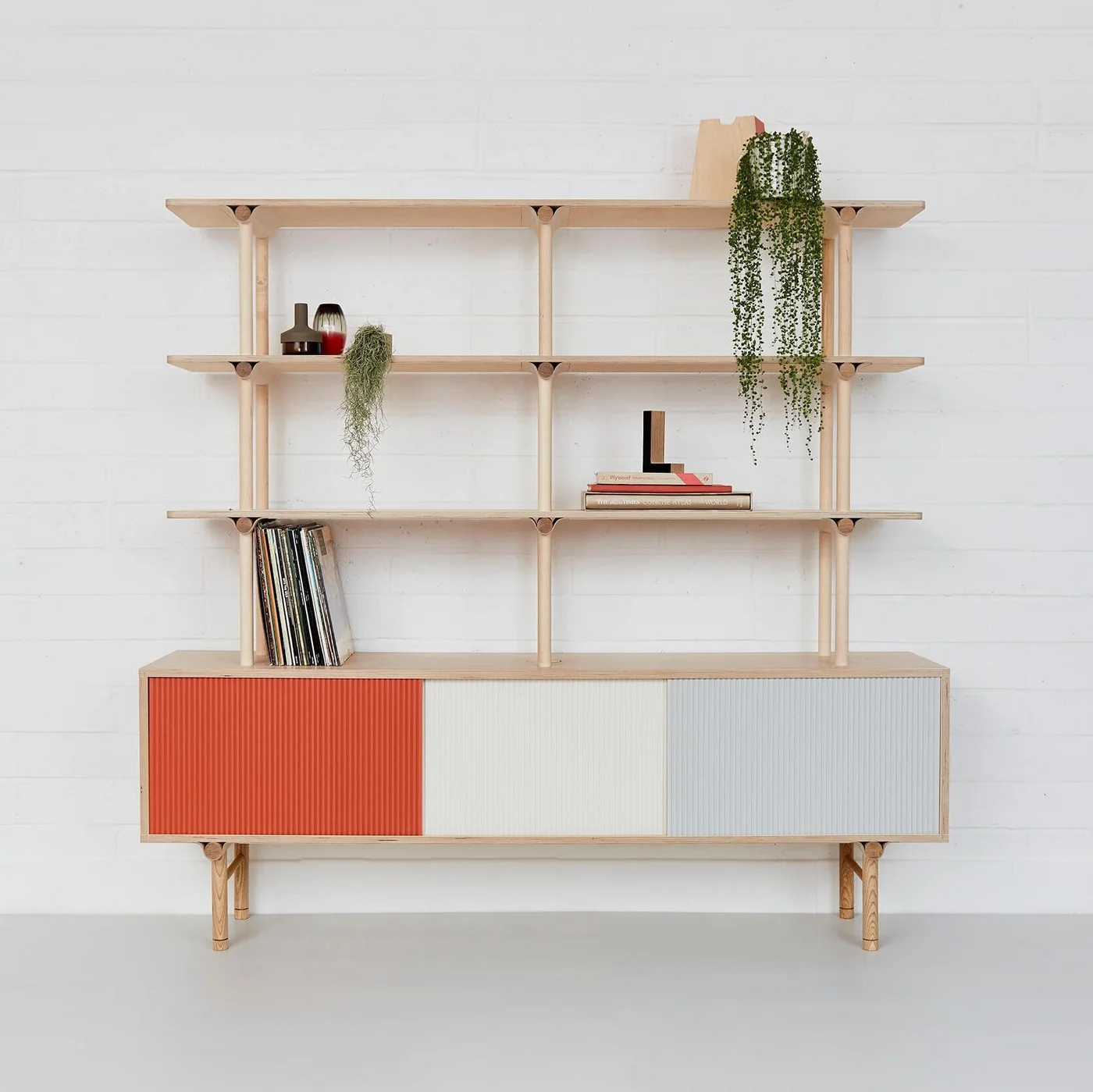
This Lozi unit combines closed storage and open shelving in one freestanding furniture arrangement. Orange, white and gray doors give the base distinct sections, while slender supports keep the shelves above visually open. Records occupy one lower opening, with a few books and plants leaving much of the upper surface clear.
Check the maker’s stability and anchoring instructions even when the shelves form part of the furniture. Confirm usable internal storage, shelf loads and the space needed to slide or open each door. For records or other heavy collections, ask which compartments are intended to carry them rather than assuming every shelf has the same capacity.
PART 02
Consider dressers and fitted dining storage
IDEA 05 / 15
Use a Dresser for Shelves and Storage Together
 SaveSupport Non AI Creator
Image credit: Future PLC/Dominic Blackmore
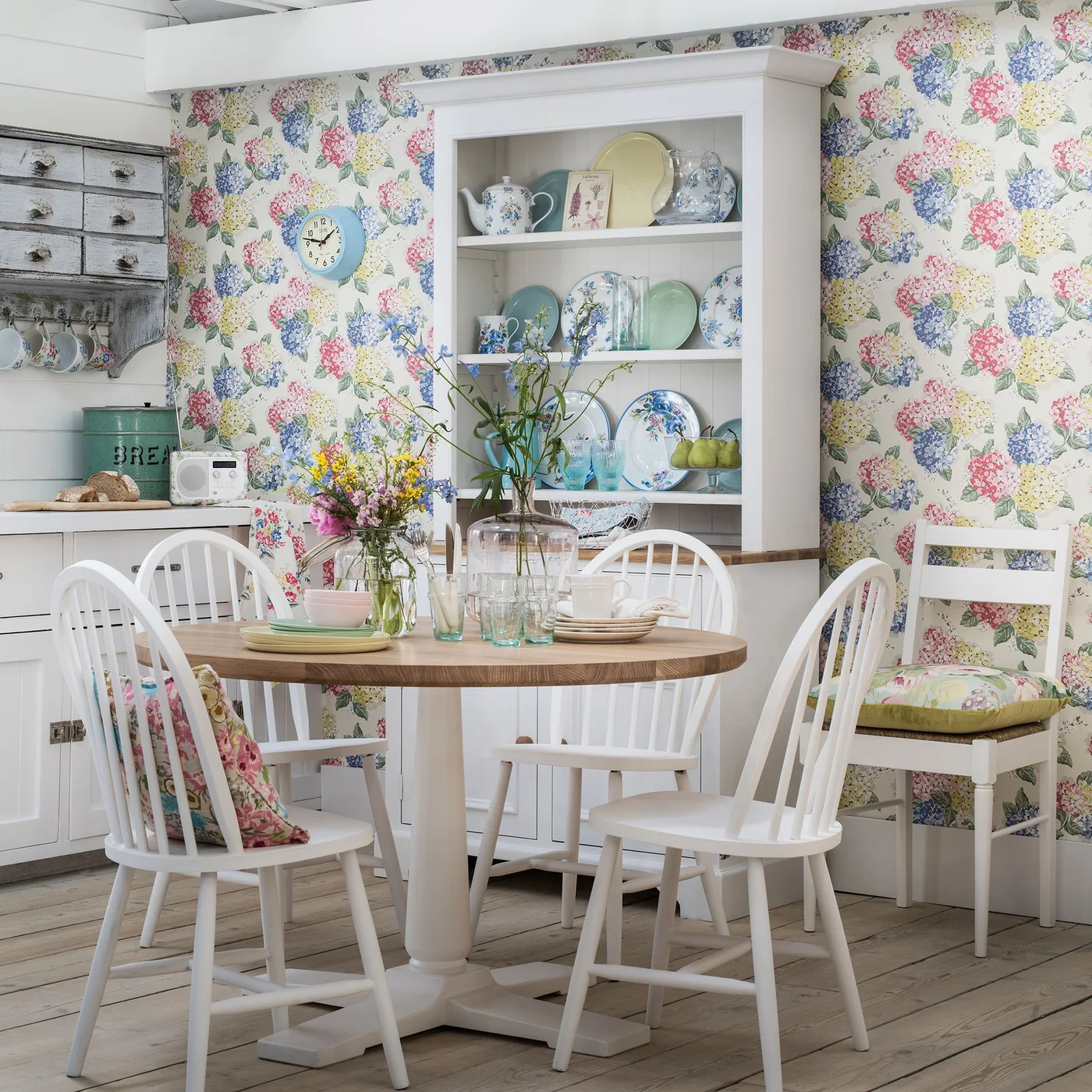
A dresser offers the sideboard-and-shelves arrangement as a single piece, with a framed upper display above closed storage. Here, pale and floral dishes stand out against the white backing without fighting the surrounding wallpaper. The timber counter separates the display from the lower cupboard doors and echoes the dining tabletop.
Check dresser depth against the table with chairs pulled out, not only tucked in. Display plates with appropriate supports and keep frequently used dishes where they can be reached comfortably. If you already own a sideboard, a separate plate rack can suggest this effect, provided its fixings and load rating suit the wall.
IDEA 06 / 15
Mix Open Compartments with a Closed Dresser Base
 SaveSupport Non AI Creator
Image credit: Neptune
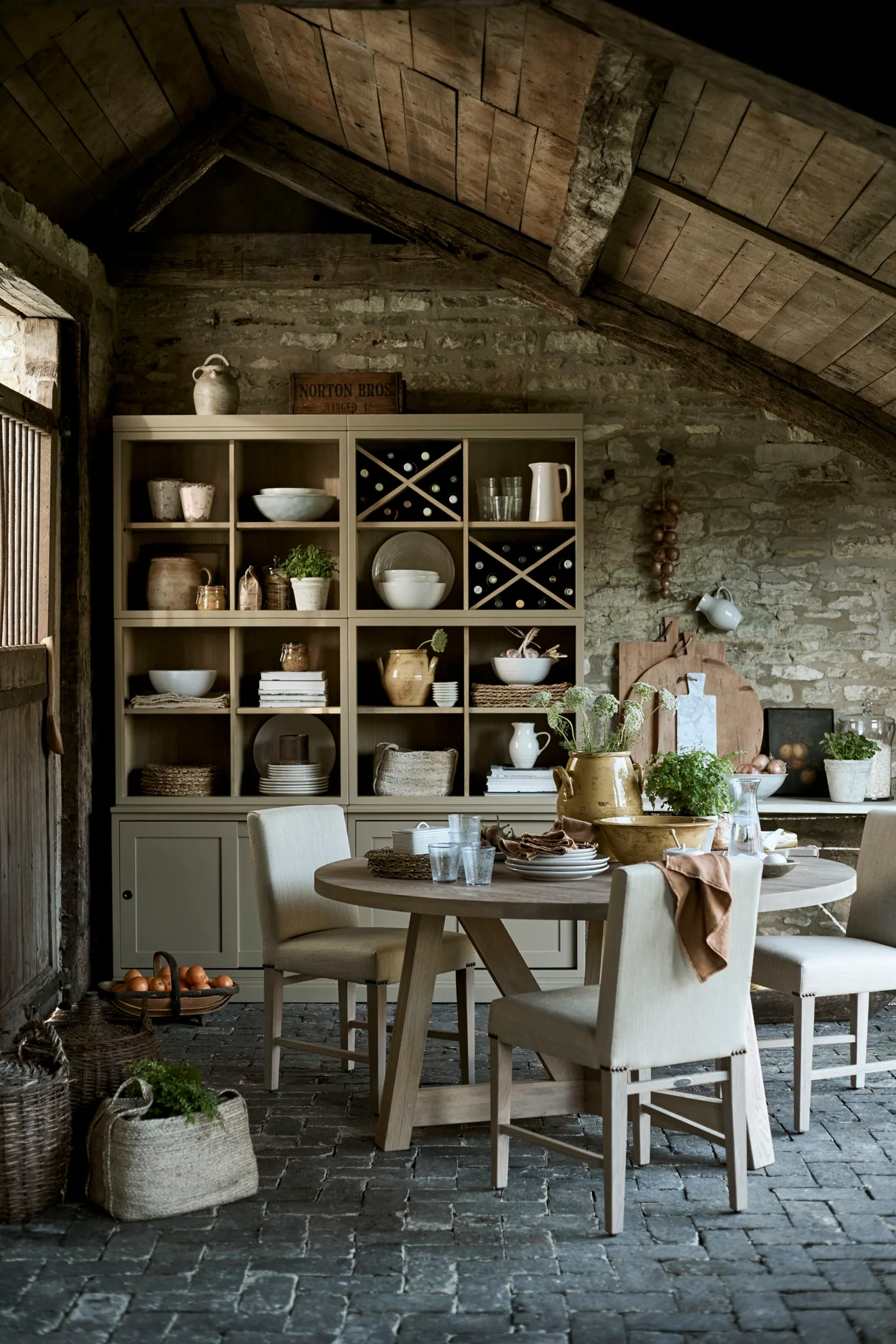
The upper compartments divide bowls, glasses, baskets and bottles into smaller groups above the dresser’s closed base. Its muted finish sits quietly against the rough wall, while pale dishes remain easy to see. This is a dresser alternative to separate wall shelves, with the same useful division between display and concealed storage.
Decide what belongs in open view before ordering a similar upper section. Bottle compartments are less flexible than adjustable shelves, and baskets need enough clearance to lift out easily. Keep fragile pieces away from edges, and check that tall furniture can be secured using the manufacturer’s recommended method for your wall.
IDEA 07 / 15
Make Fitted Dining Storage a Dish Display
 SaveSupport Non AI Creator
Image credit: Photo: Victoria Pearson, Builder: Brian Glenn Construction, Architect: Jeremy Oury at Kibo Architects, Design by Lonni Paul. From: Lonni Paul
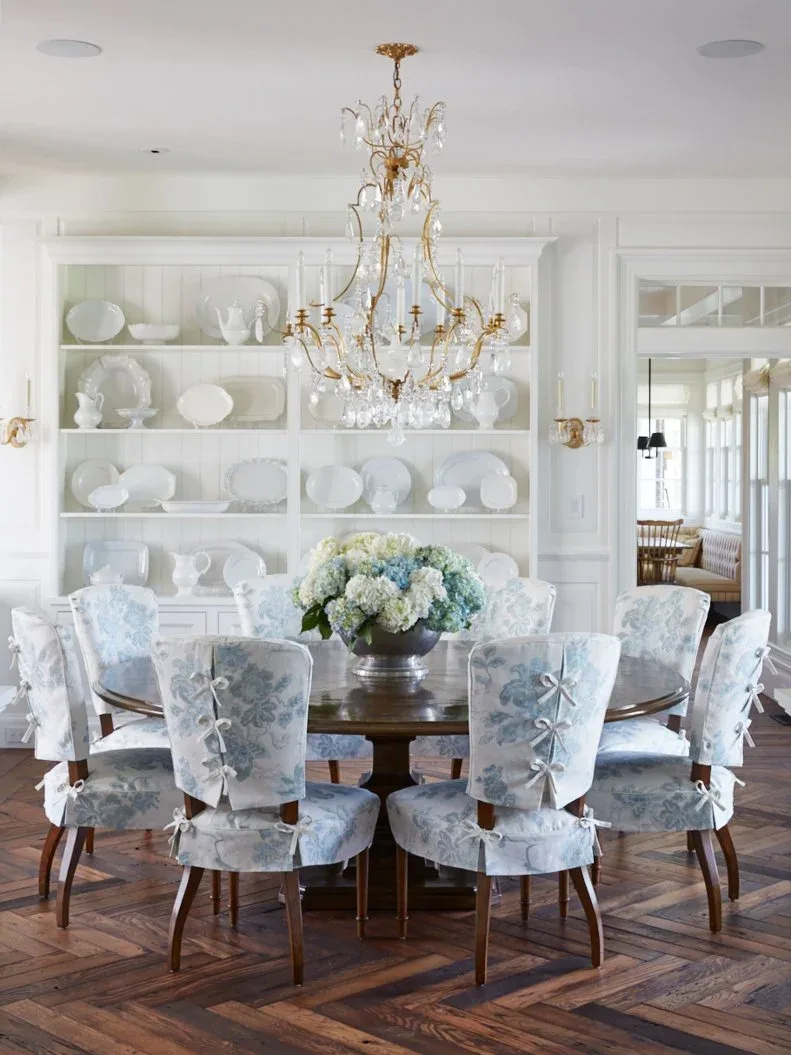
A broad fitted dresser fills the back wall with pale serving dishes while the lower cupboards hide less decorative items. White framing connects the shelves with the room’s paneling. The dark table gives the center of the room a stronger outline, so the large display does not become its only focal point.
Our dining room sideboard ideas can help compare fitted storage with a movable cabinet. For a dish display, measure the largest platter and check shelf depth as well as height. Leave room to reach behind the dining chairs, and use secure plate stands rather than relying on a shallow ledge to support a heavy piece.
IDEA 08 / 15
Pair Thick Shelves with a Quiet Cabinet Base
 SaveSupport Non AI Creator
Image credit: Photo: Mackenzie Merrill Photography. From: Amy Leferink
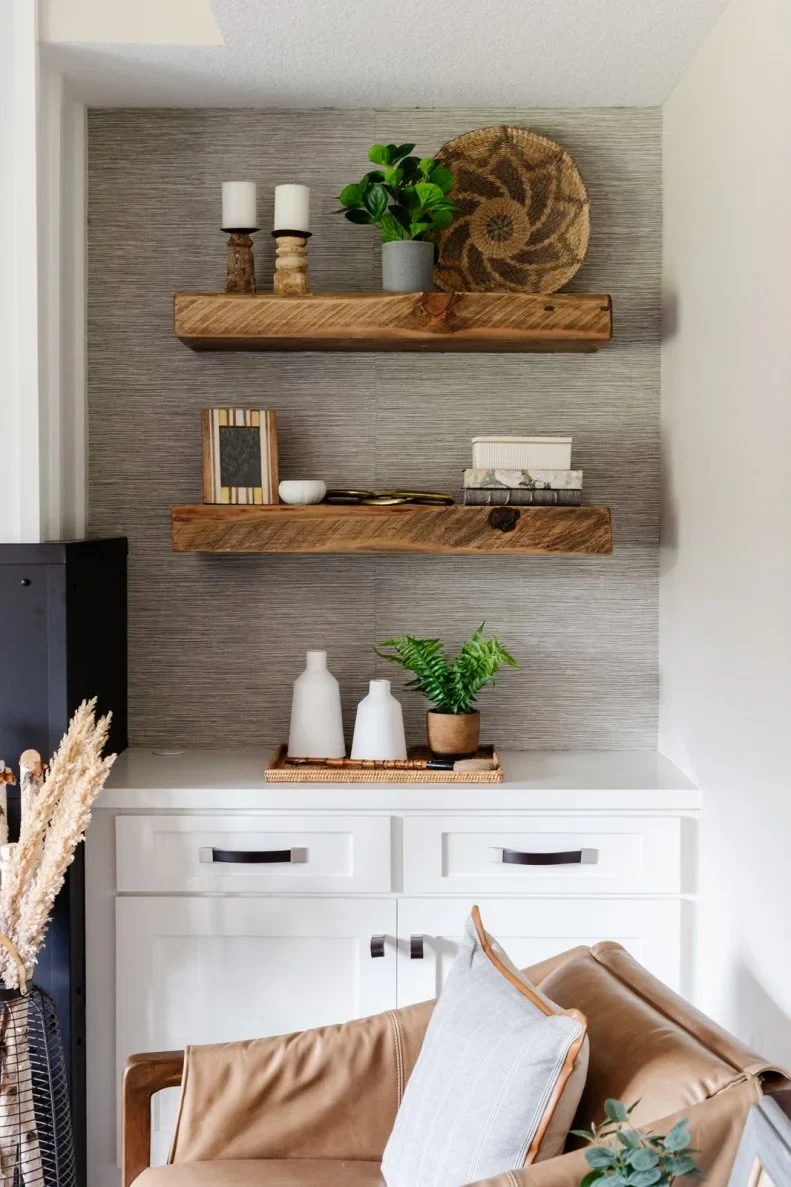
Two substantial timber shelves make a warm contrast with the white drawers and doors below. The gray backing joins them visually without matching either finish exactly. A framed photograph and small groups of objects keep the display personal, while the cabinet top retains a separate tray for smaller everyday items.
Use the alcove’s actual measurements when ordering shelves; walls are not always perfectly square. Allow for the tallest object on the cabinet top and make sure drawers can open past nearby furniture. A tray can simplify cleaning, but lift it regularly so moisture or grit does not sit unnoticed underneath.
PART 03
Plan color and everyday display
IDEA 09 / 15
Match Alcove Shelves to the Wall Color
 SaveSupport Non AI Creator
Image credit: Boz Gagovski. Design: Laura Stephens
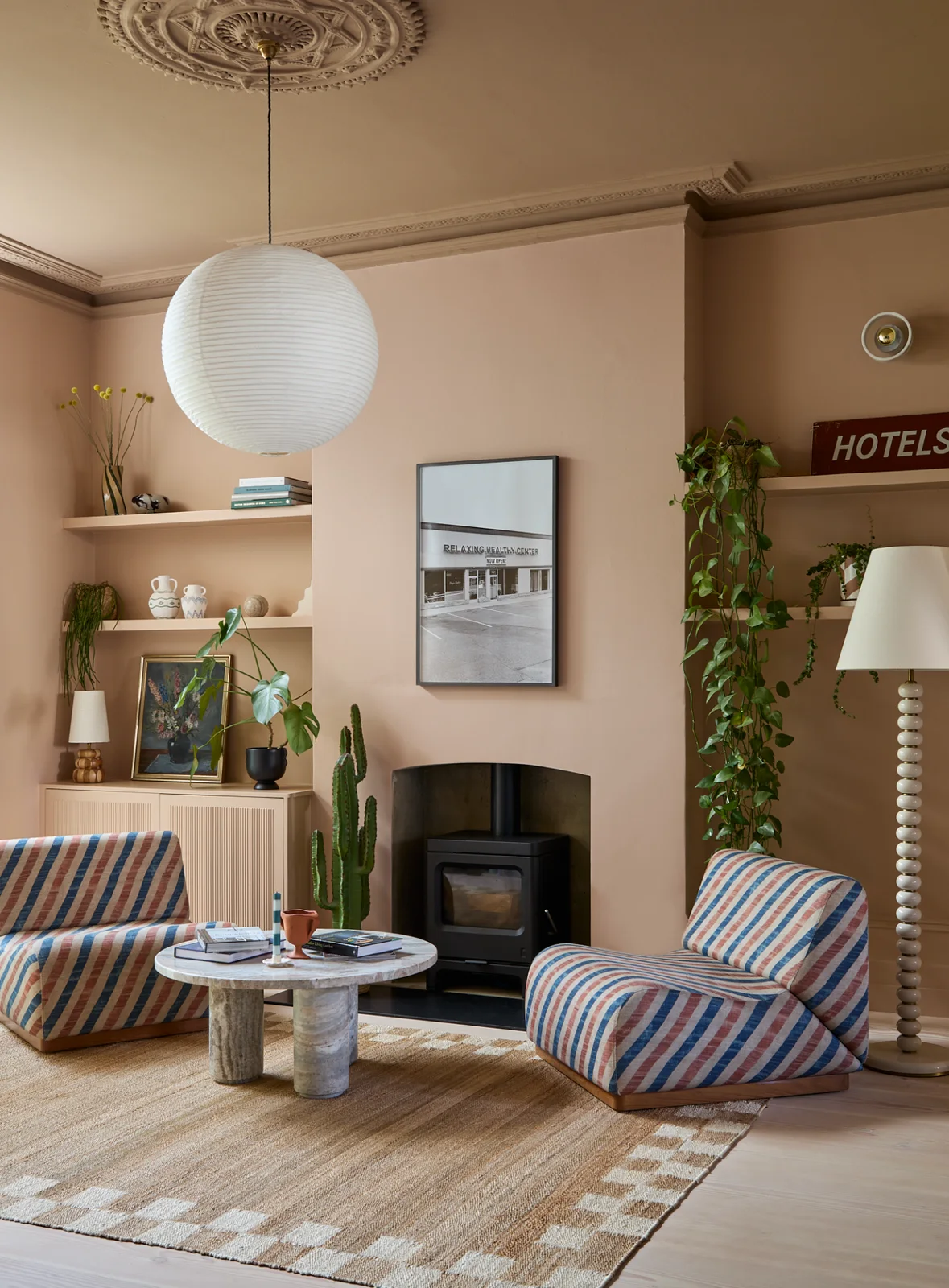
Matching the shelves, wall and cabinet fronts gives these alcoves a continuous peach backdrop. Lamps, plants and pictures add variety without requiring different colors for the storage itself. The shelving stays within the recesses beside the fireplace, leaving the central chimney breast clear for a single framed photograph.
Choose the paint finish around expected wear, especially on frequently touched cabinet doors. Keep plants and lamp cables clear of the stove or fireplace’s required safety distances; those distances depend on the appliance and installation. Check the route to an outlet before styling, and water plants away from painted shelves and electrical fittings.
IDEA 10 / 15
Combine Unequal Shelf Lengths with a Low Cabinet
 SaveSupport Non AI Creator
Image credit: Kitesgrove
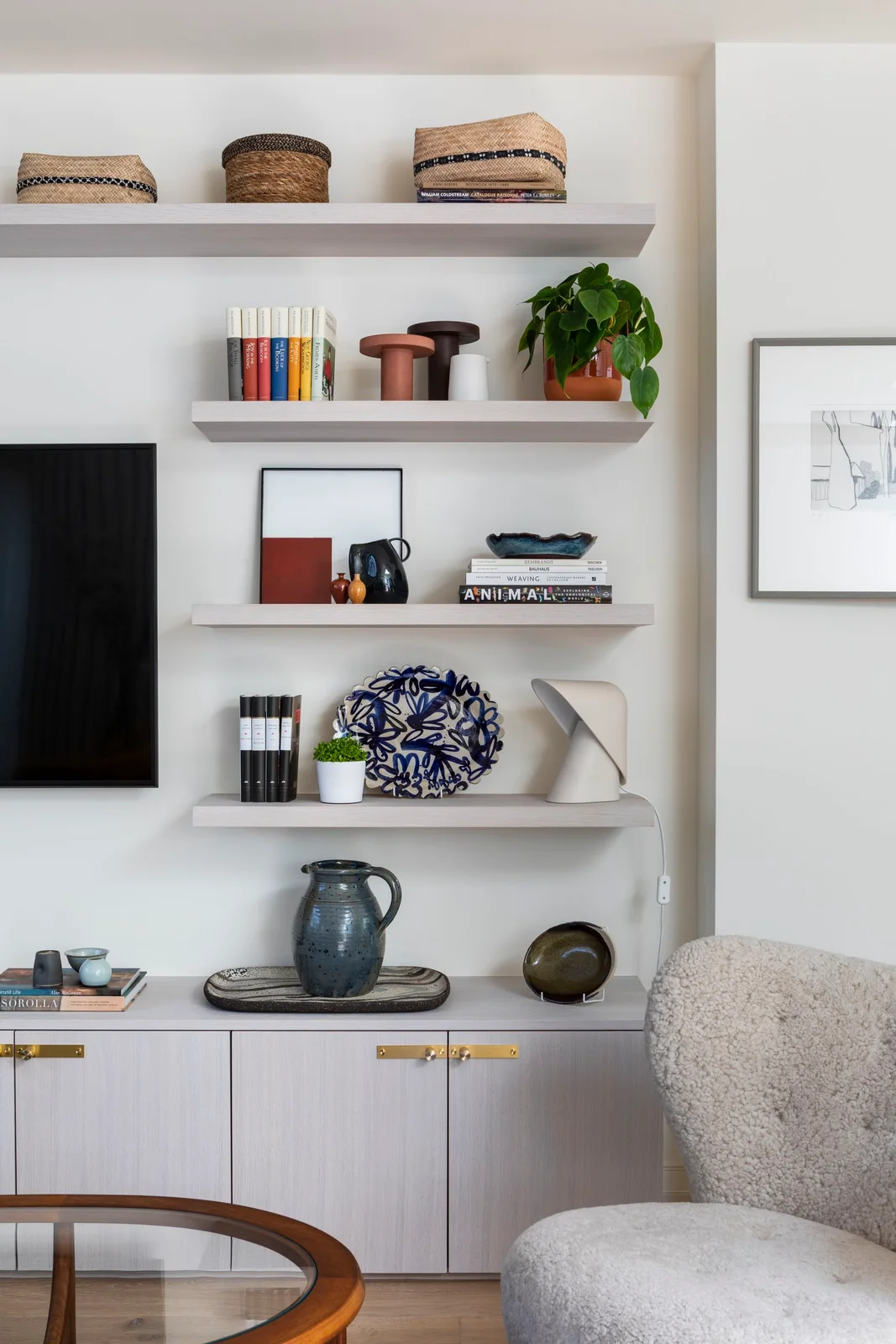
Unequal shelf lengths leave larger open areas around the books, sculptural lamp and patterned plate. The low cabinet anchors the arrangement beneath them, with a tray and pitcher on its top. Repeating the pale finish reduces visual separation between the shelves and cupboard fronts while the objects supply stronger colors.
Map the shelf ends against the cabinet and television before installation. Keep enough space to clean around the screen and lift tall objects off their supports. Protect the top beneath pitchers or plant pots, and arrange lamp wiring so it cannot be pulled across a door or trapped behind a hinge.
IDEA 11 / 15
Reserve One Shelf for a Drinks Tray
 SaveSupport Non AI Creator
Image credit: Albion Nord
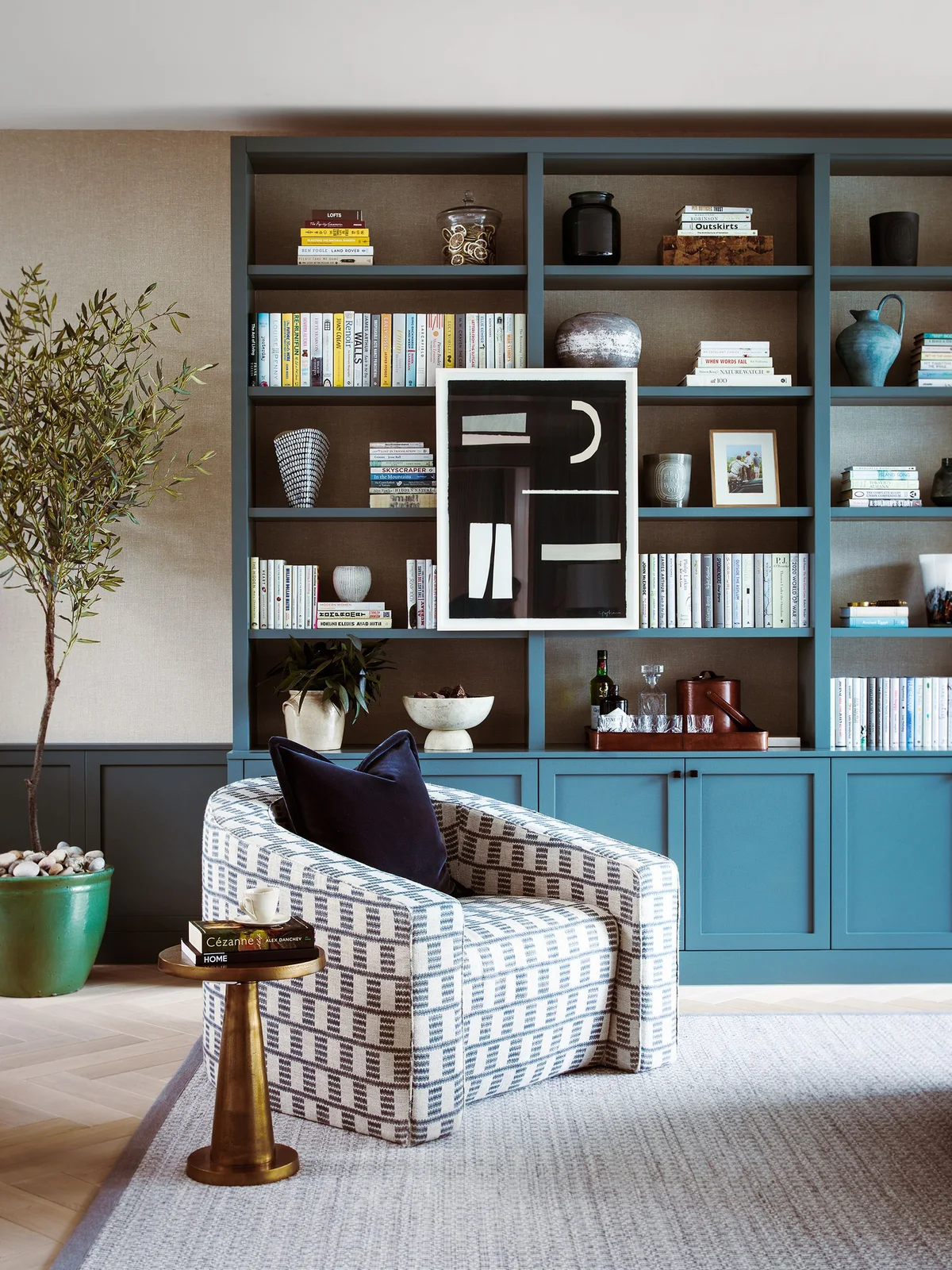
Blue framing brings the open shelves and closed lower cupboards together as a fitted storage wall. Books mix with larger vessels, while one framed artwork overlaps the shelf grid. A drinks tray occupies a lower open section, placing glassware close to the cupboard top rather than scattering it across several levels.
If you use a shelf for drinks, check its load rating with full bottles and glassware included. Keep alcohol secured where children may reach it, and use a protective tray for drips. Hanging art across shelving needs a proper fixing method; a frame should not depend on books or loose objects to remain upright.
IDEA 12 / 15
Add Drawers beneath a Full Book Display
 SaveSupport Non AI Creator
Image credit: James Merrell / Future
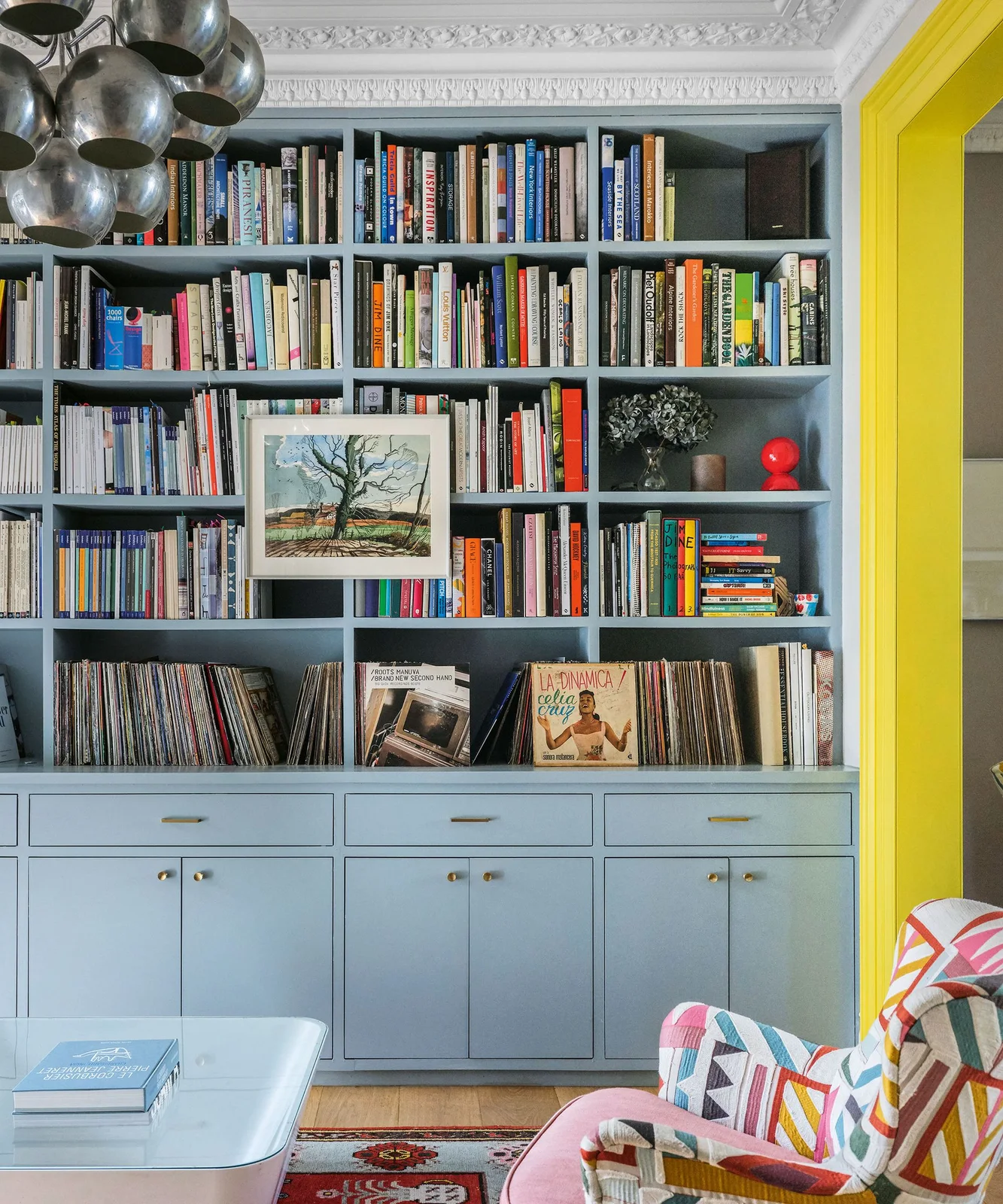
The lower drawers and cupboards give this full-wall display a practical base beneath rows of books and records. A single blue finish unifies the storage, while the bright doorway provides a separate edge of color. The central picture interrupts the book grid and introduces a larger shape among the many narrow spines.
Choose adjustable shelf heights around your actual books and record sleeves, then confirm the structure is rated for their combined weight. Drawers are useful for small accessories that disappear in deep cupboards. Leave access to their handles and check the cabinet depth against nearby seating before extending storage across an entire wall.
PART 04
Adapt the arrangement to drinks and media
IDEA 13 / 15
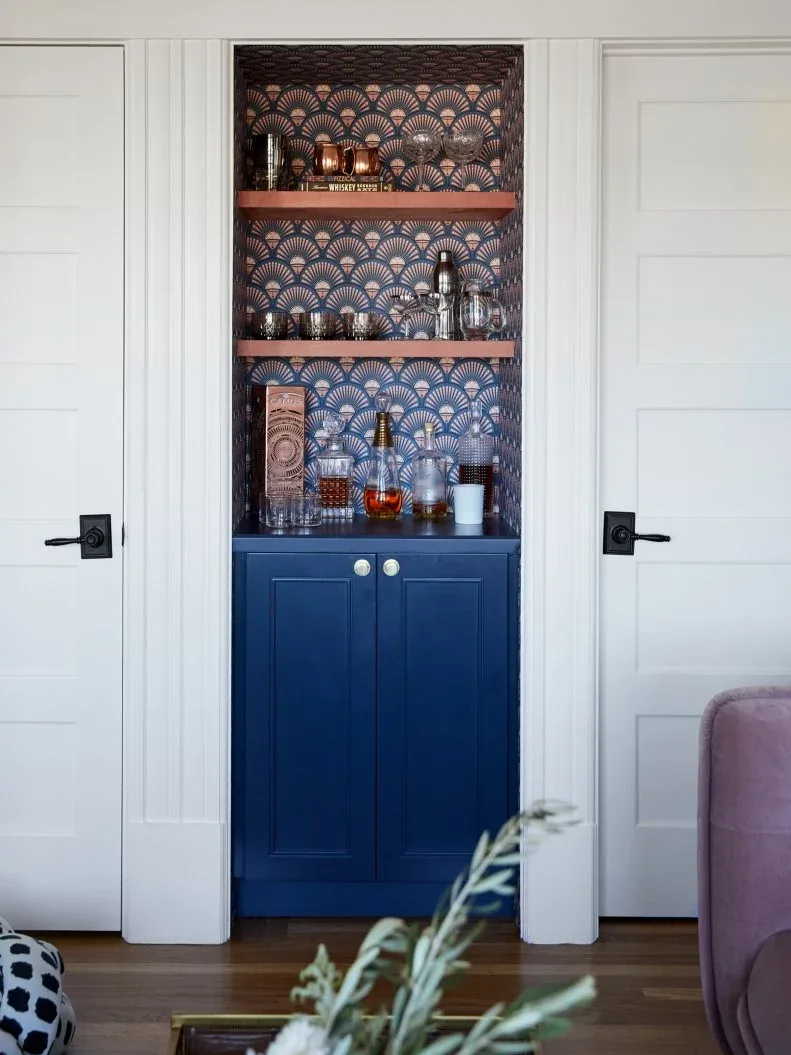
Turn a Narrow Recess into a Drinks Sideboard
 SaveSupport Non AI Creator
Image credit: Photo: John Merkl. From: Studio Heimat
This narrow built-in cabinet acts as a compact drinks sideboard between two doors. Open timber shelves take the glasses above it, leaving the cabinet top for a few bottles and a tray. Patterned wallpaper makes the shallow recess distinct while the surrounding white trim gives the arrangement a clear boundary.
Measure both door swings before adding shelving or a projecting counter in a passage. Keep glassware within comfortable reach and confirm the shelves are suitable for the load. A drinks cabinet is a specific use of this arrangement, so prioritize secure bottle storage and a surface that can be wiped after spills.
IDEA 14 / 15
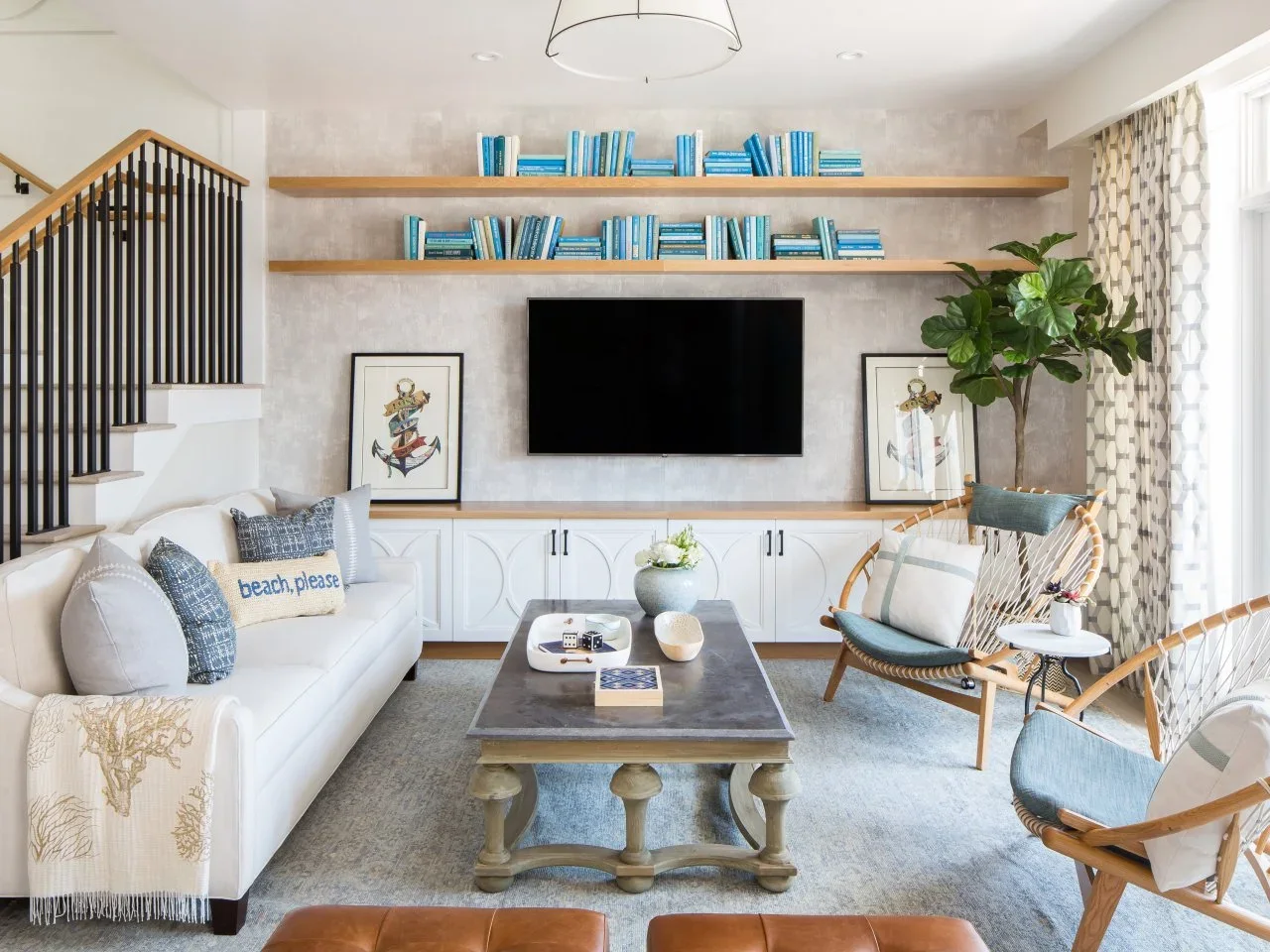
Continue a Sideboard-Style Base beneath the Television
 SaveSupport Non AI Creator
Image credit: Photo: Ryan Garvin. From: Jennifer Mehditash
A sideboard-style cupboard base stretches beneath the television, with long timber shelves repeating the counter’s warm edge. Blue books make a continuous band above the screen, while framed anchor pictures occupy the lower wall. This fitted media arrangement shows how closed storage and display can share a living-room wall.
Plan ventilation and cable access for the equipment you will store inside the cupboards. Check the television’s mounting and viewing height separately from shelf spacing. If adding books above a screen, use suitably rated shelves and fixings, and keep access for dusting so the display remains manageable after the room is in daily use.
IDEA 15 / 15
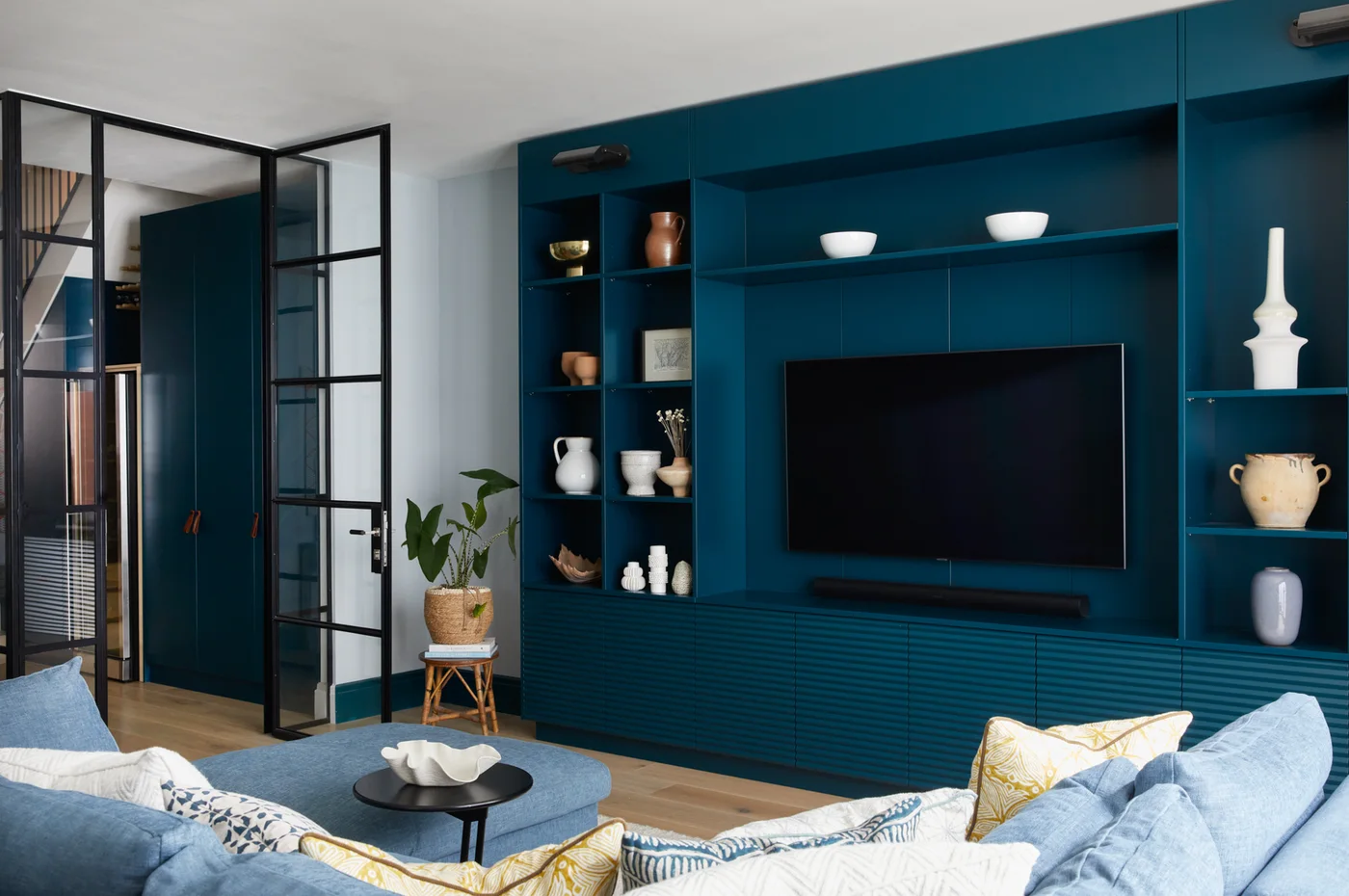
Use a Dark Frame for a Complete Storage Wall
 SaveSupport Non AI Creator
Image credit: Helen Cathcart. Design: Pringle & Pringle
The deep blue finish joins the lower cupboards, television backing and open shelves into one wall of storage. Pale ceramics stand out in the smaller openings, while the ridged cabinet fronts add texture below. Unlike a separate sideboard, this fitted media solution can accommodate a screen within the display itself.
Compare a full fitted wall with a freestanding cabinet before committing to the larger installation. Our TV wall ideas show other ways to balance a screen and storage. Preserve access to wiring, ventilation and moving door panels, and choose shelf positions around the objects you own rather than filling every opening with new purchases.
BRING IT ALL TOGETHER
Start with storage, then plan the display
List what needs to go behind doors and what you want on show before buying shelves. Measure your largest dishes, books and frames, and retain a clear surface on the cabinet for its everyday job. A lamp or tray needs space even after the display is finished.
Check the wall construction, furniture anchoring instructions and shelf load ratings before installation. Compare the arrangement with nearby chairs, doors and outlets. A quieter display that is easy to reach and clean will usually serve you better than a crowded set of shelves.