A modern sideboard can keep daily storage useful while giving a dining room, living area or entrance one defined furniture surface. These photographs show straight cabinets, smaller painted pieces and different front textures, with one low open-storage alternative. Closer views show plate and cutlery organization, and some display details belong to a cabinet also shown in a fuller view.
Start with the belongings to be stored and the room’s route when doors, drawers and dining chairs are in use. Then choose the top’s job: a serving area, drinks tray, lamp position or limited decorative group. A room-wide photograph can explain furniture placement, but check the actual cabinet’s capacity, construction and care requirements before buying a similar piece.
PART 01
Compare wood, color and repeated front details
IDEA 01 / 20
Give a Wood Sideboard a Finer Repeated Front
 SaveSupport Non AI Creator
Image credit: Future / Jan Baldwin
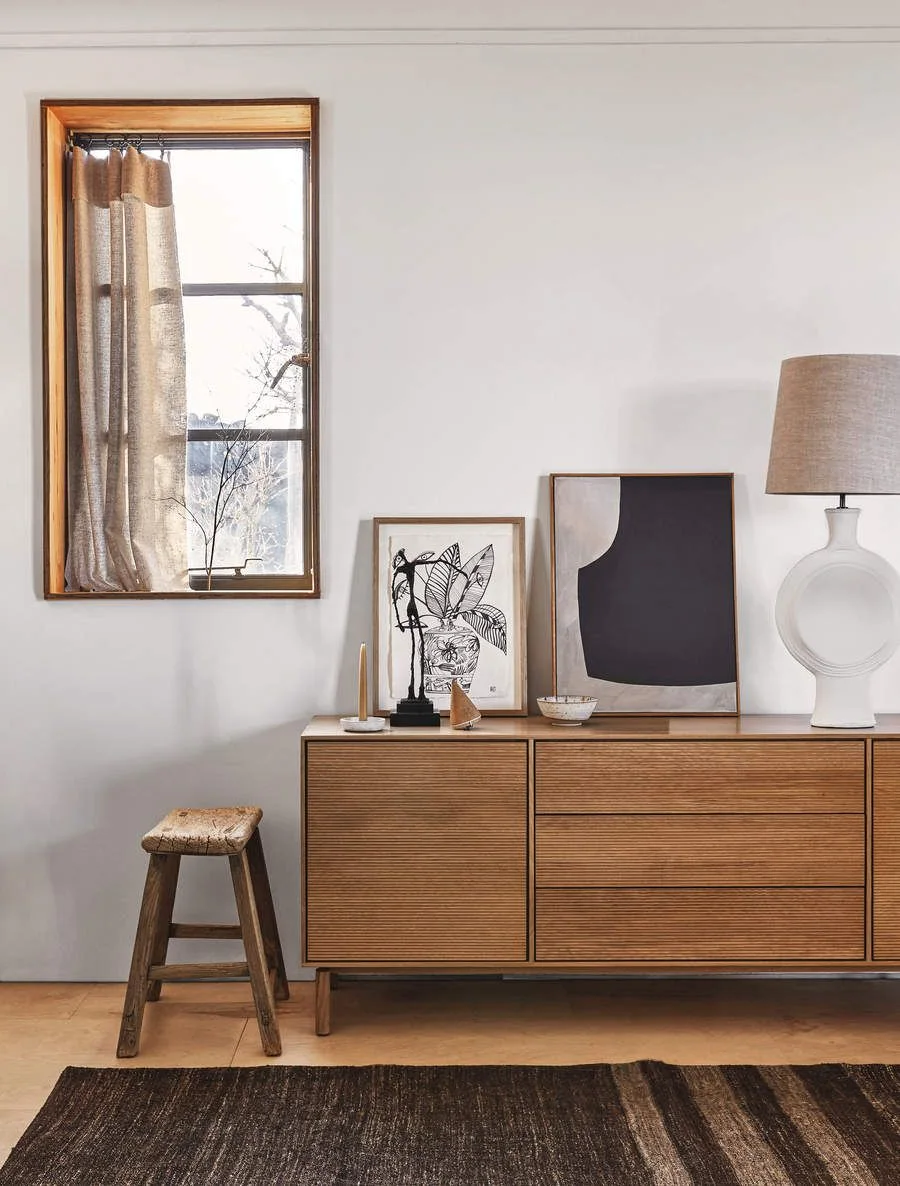
The finer repeated lines give the wood fronts detail without another painted door pattern. Two leaning pictures introduce larger separate shapes above the low cabinet, with a white lamp supplying a lighter rounded outline at the side. The window trim repeats the warmer wood color around the clearer pale wall.
Check the cabinet’s actual drawer and door arrangement before choosing it for its ridged appearance. Keep the pictures securely supported rather than depending on an unprotected lean, and leave lamp cables accessible for cleaning. Follow the specified finish’s care guidance for the grooves, reducing surface objects when they would hide the cabinet’s main detail or displace useful landing space.
IDEA 02 / 20
Keep a Straight Wood Cabinet Beside Stronger Color
 SaveSupport Non AI Creator
Image credit: Sarah Kaye Representation Ltd
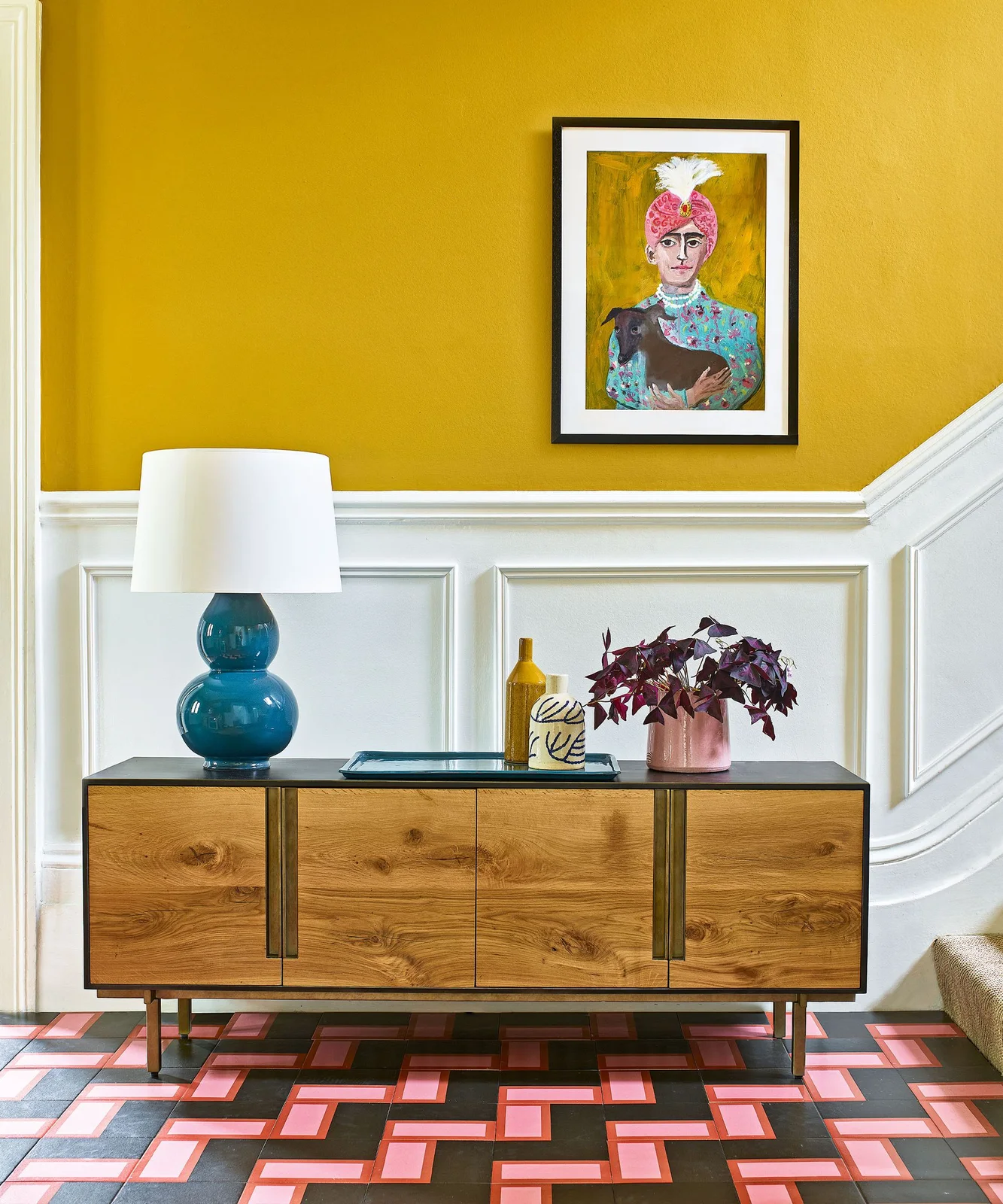
The straight wood cabinet supplies a quieter storage shape between the stronger wall and floor colors. Its dark top gives the furniture one clear upper edge, while longer gold-colored handles repeat a narrower vertical detail on the fronts. A blue lamp adds a smaller rounded accent without changing the whole cabinet’s warmer finish.
Check the cabinet depth against the stair and hallway route before adding a wider piece. Keep frequently used belongings in reachable compartments and leave the top useful for everyday landing needs. Choose fewer extra patterns when the floor already supplies a strong repeat, protecting the actual top finish beneath plant pots and any items brought in from outside.
IDEA 03 / 20
Let Stronger Wood Grain Remain Visible
 SaveSupport Non AI Creator
Image credit: Divine Savages
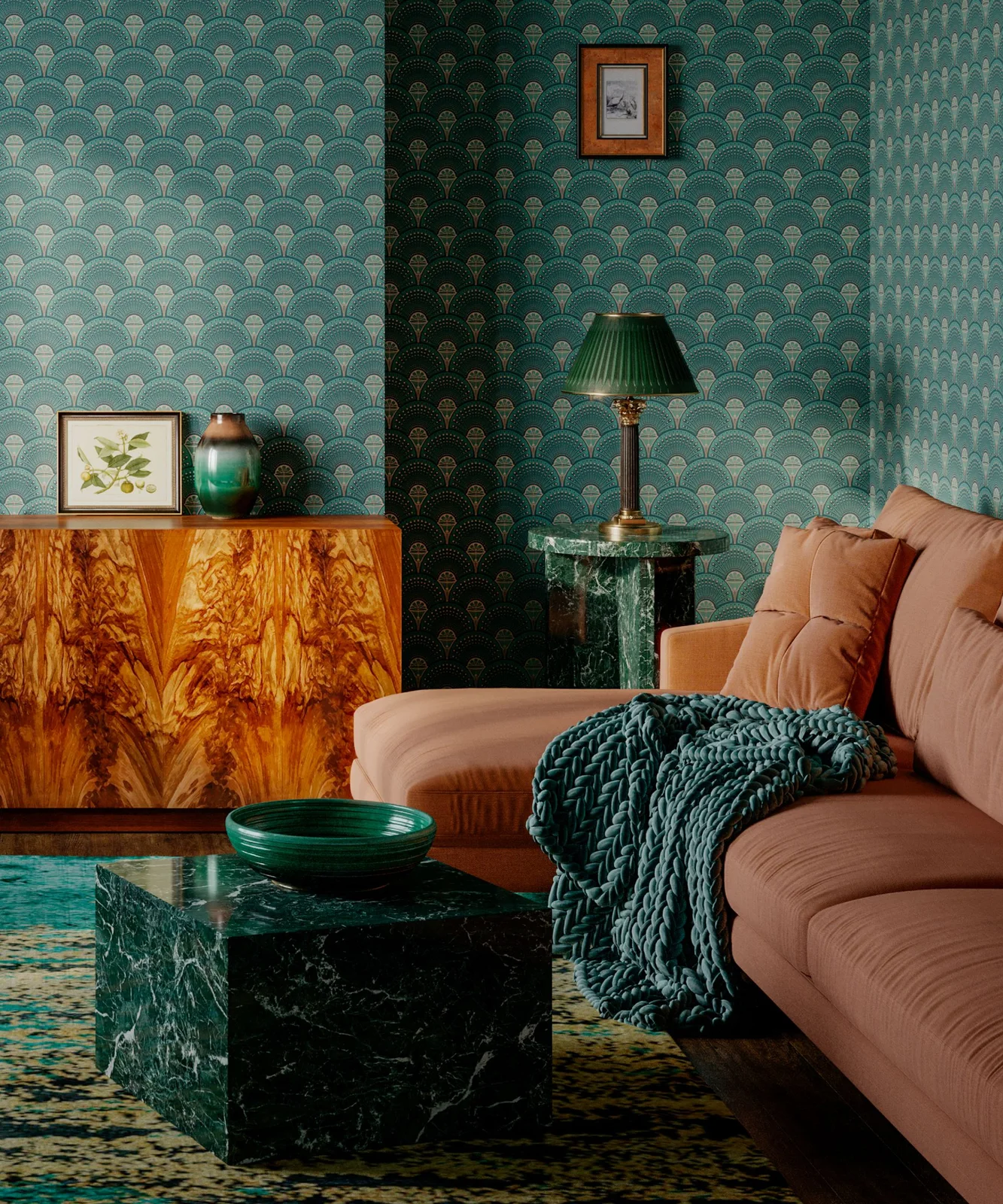
The stronger golden-brown grain gives the sideboard its own larger pattern beside the wallpaper. Its straighter low outline keeps that detail distinct from the softer peach sofa and darker table shapes. Only a few objects sit above the cabinet, leaving the front visible within the richer surrounding room.
Ask about the actual veneer or surface construction and care guidance before choosing a similarly pronounced grain. A larger finish sample helps judge how the pattern will sit beside wallpaper. Keep the cabinet’s useful storage role clear, leaving door movement and the route beside the sofa unobstructed rather than adding more objects around an already detailed furniture front.
IDEA 04 / 20
Contain Drinks Supplies on One Removable Tray
 SaveSupport Non AI Creator
Image credit: Design by Emily Henderson, Photo by Ryan Liebe
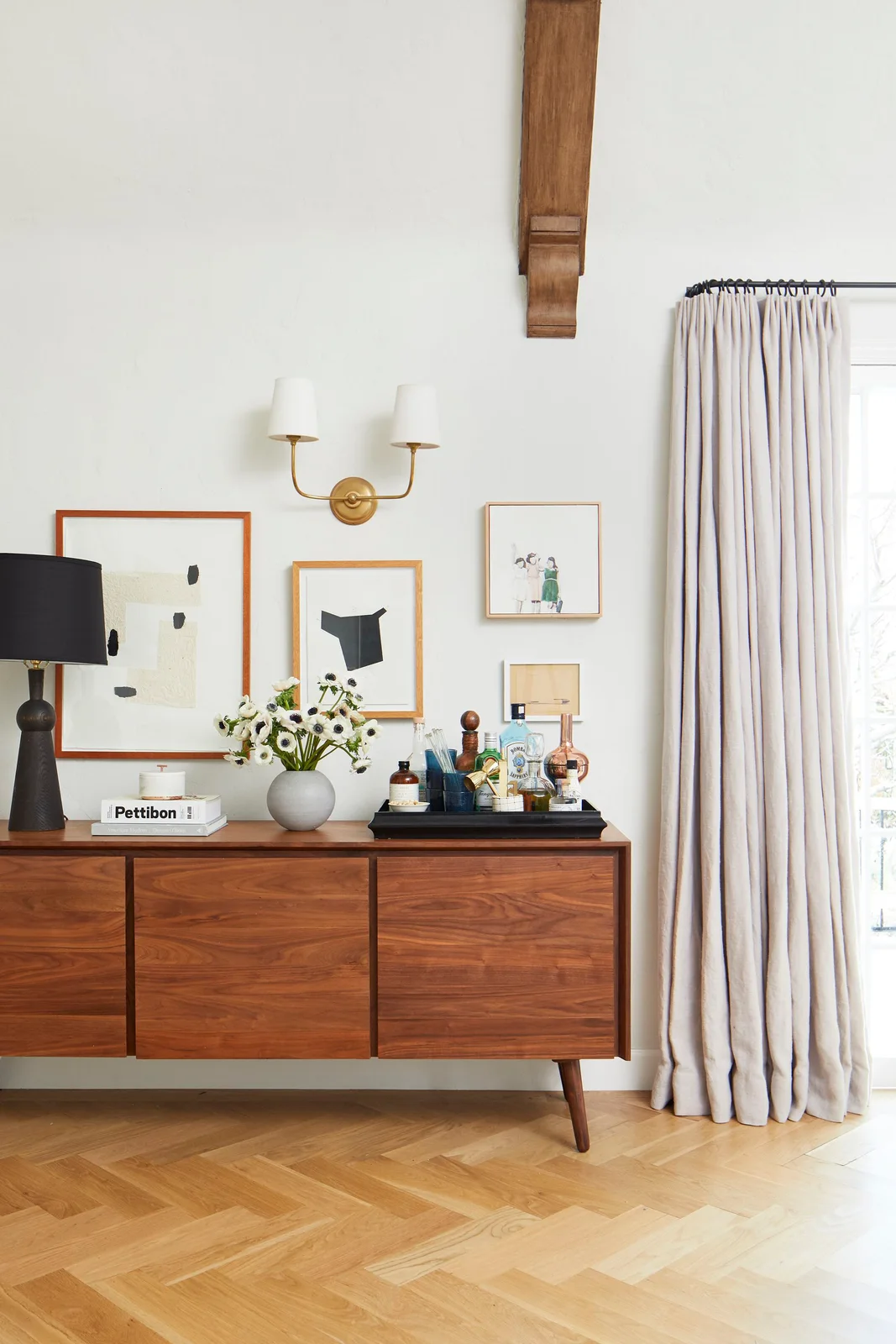
The wood cabinet gives the wall one warmer lower storage group beneath the separate framed pictures. A black lamp supplies a taller darker shape at the side, with the drinks tray keeping smaller bottles gathered together. The pale curtains repeat the lighter background rather than adding another larger furniture color.
Use a tray suited to the actual weight and items, keeping wet bottles and glasses protected from the cabinet surface. Dining room sideboard ideas compare other serving arrangements. Leave enough clear top for preparing a drink or setting down dishes, securing the pictures appropriately and keeping frequently used glasses reachable without crowding them behind the taller lamp.
IDEA 05 / 20
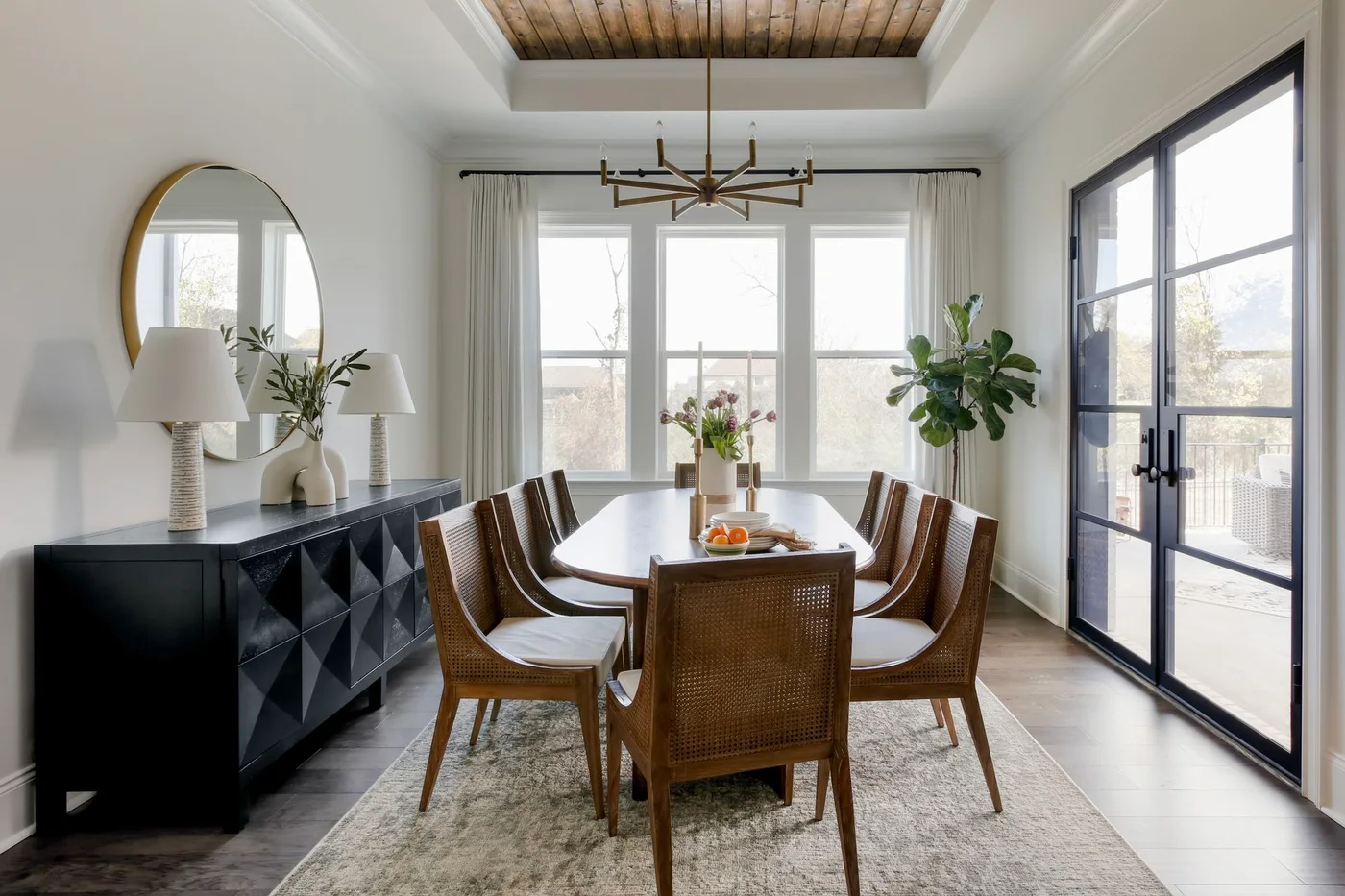
Use Geometric Doors Beside Plainer Dining Furniture
 SaveSupport Non AI Creator
Image credit: Courtesy of Kathy Kuo Home
The faceted door pattern gives the dark cabinet a stronger geometric detail along the dining wall. A round mirror provides a separate curved outline above it, while the two pale lamps leave lighter shapes at the ends. Wood chairs and the table introduce warmer surrounding furniture without repeating the cabinet’s patterned fronts.
Check door movement with dining chairs pulled out before choosing a deeper sideboard. Keep lamps and displayed vessels stable, leaving a useful central serving area when the cabinet will support meals. Compare finish samples with the actual light because deeper facets can cast stronger shadows and may require more detailed cleaning than flat doors.
PART 02
Choose useful forms for different rooms
IDEA 06 / 20
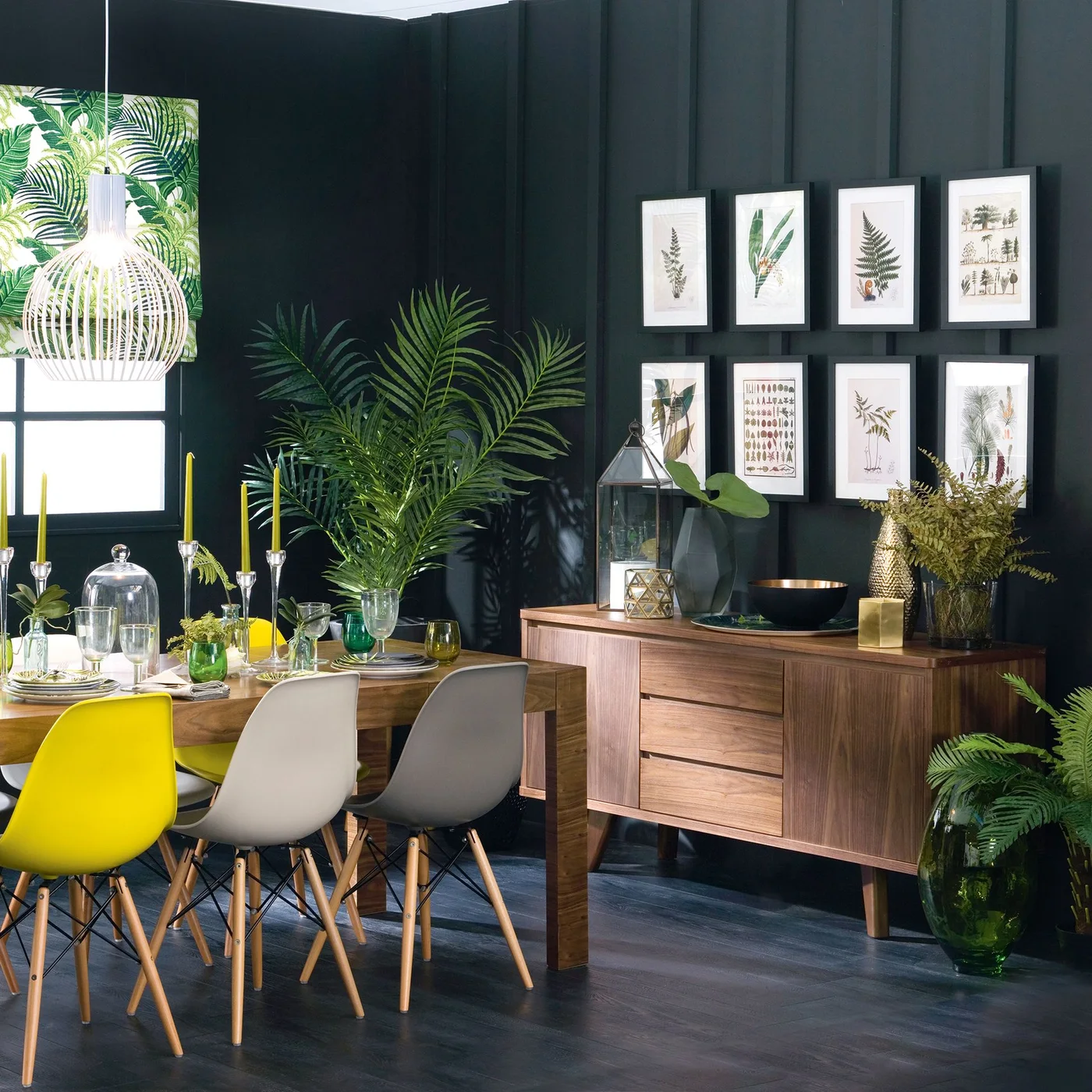
Keep Wood Drawers Distinct Against a Dark Wall
 SaveSupport Non AI Creator
Image credit: Future PLC/Simon Whitmore
The warmer wood cabinet remains visible against the darker wall behind it. Horizontal drawer lines give one section a smaller repeated detail, while the cupboard front supplies a larger quieter surface beside them. Botanical pictures and plants connect the upper display without changing the sideboard’s simpler furniture outline.
Divide storage by the items you use rather than putting all smaller supplies into the same drawer. Keep plant drainage protected and leave room to set down serving dishes between the displayed objects. Choose a limited picture arrangement when wall decoration begins to hide the cabinet’s role, checking the route behind occupied dining chairs before positioning pots near its doors.
IDEA 07 / 20
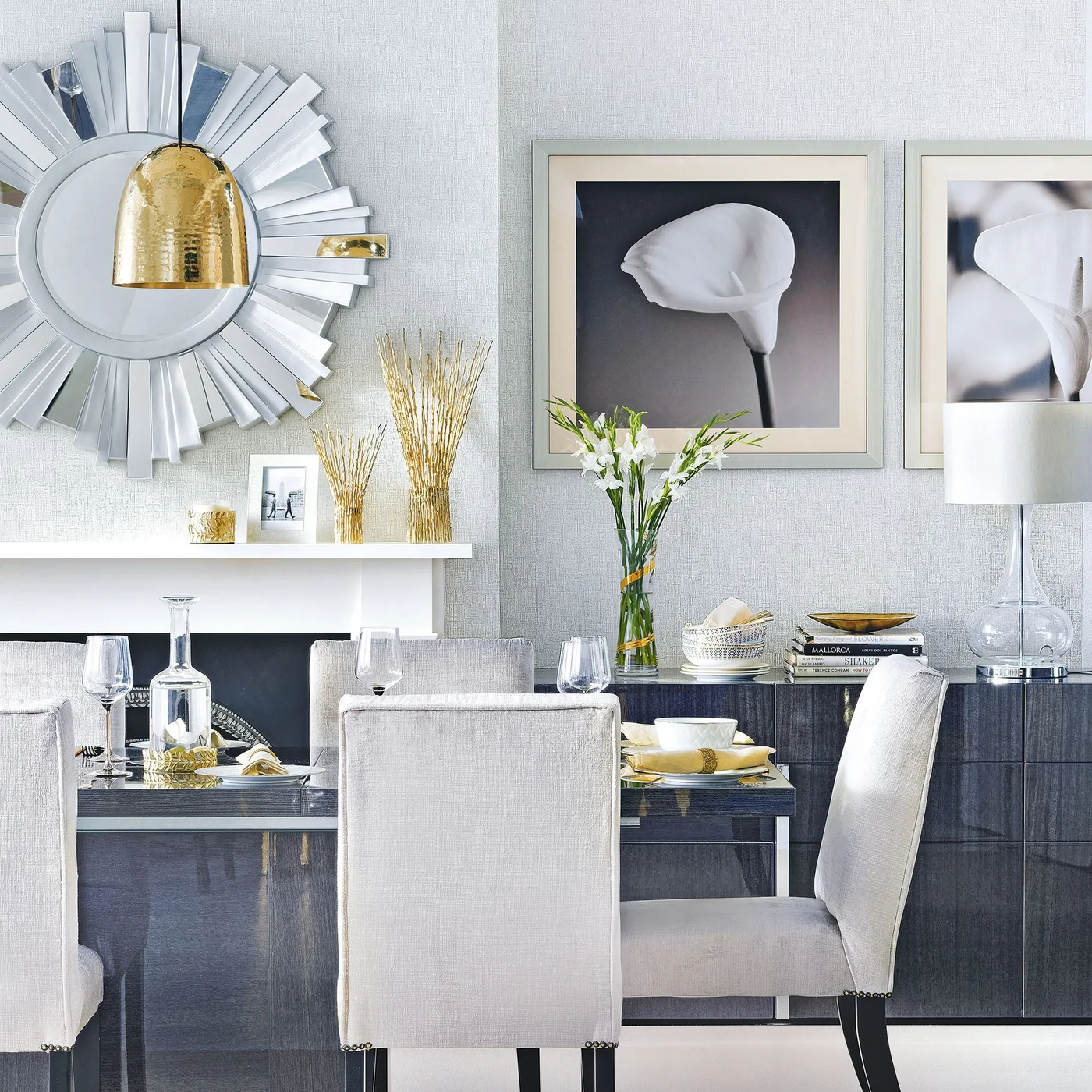
Use a Deeper Sideboard Below Pale Upholstery
 SaveSupport Non AI Creator
Image credit: Future PLC/Dominic Blackmore
The darker reflective cabinet supplies a lower contrast beneath the paler chairs and wall. Framed floral pictures provide the larger upper shapes, with a clear lamp adding another lighter outline at one end. The room-wide view shows the sideboard’s relationship to the dining furniture rather than revealing every storage compartment.
Check the actual cabinet fronts and capacity separately before choosing a similar finish. Reflective surfaces may need more frequent attention around touch points, so compare their care requirements with daily use. Keep the lamp cable and picture mounting secure, leaving access behind the dining chairs when the sideboard must be opened or cleared during a meal.
IDEA 08 / 20
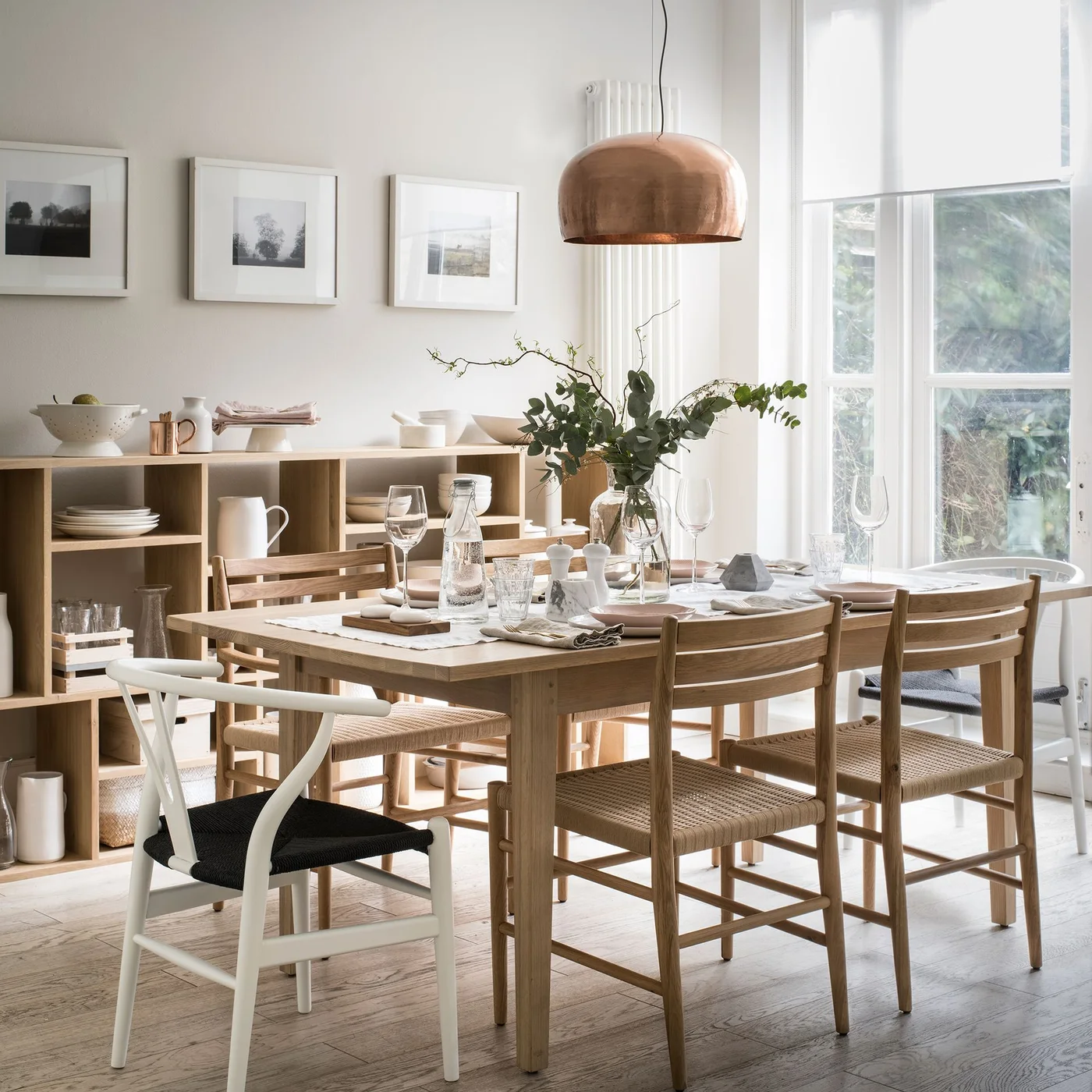
Choose Low Open Storage When Dishes Stay in Use
 SaveSupport Non AI Creator
Image credit: Future PLC/Dominic Blackmore
The low open shelving offers an alternative to a closed sideboard along the dining wall. Its repeated compartments keep different dish shapes visible, while the table and chairs repeat the warmer wood surfaces. A pale background leaves the stored pieces clearer without another stronger cabinet color or patterned front.
Choose open storage only when the dishes remain manageable and are used or cleaned regularly. Dining room storage ideas compare other open and closed arrangements. Anchor the unit appropriately and place heavier pieces lower, checking plate stacks for easy removal; a closed cabinet may work better when dust or a larger collection would make the open compartments harder to maintain.
IDEA 09 / 20
Give a Smaller Painted Cabinet One Connected Color
 SaveSupport Non AI Creator
Image credit: Credit: Chinasa Cooper
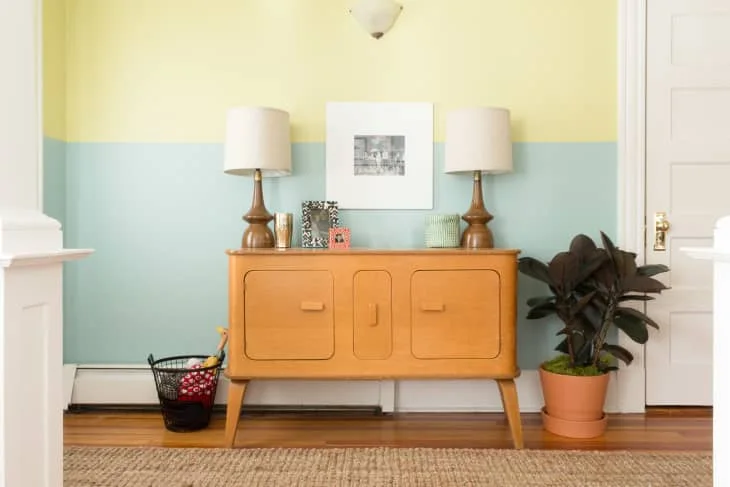
The orange finish keeps the smaller cabinet visually connected across its doors and rounded front details. Two lamps repeat their shapes at the ends, leaving a framed picture centered between them. The two-tone wall supplies another larger color division behind the straighter cabinet outline and angled legs.
Check the cabinet’s internal dimensions and access against the belongings you expect it to hold, rather than assuming a smaller piece will replace larger dining storage. Keep lamps stable and cables routed away from the door movement. Protect the top beneath the plant and leave the nearby room door clear, using the stronger painted finish as the main furniture accent.
IDEA 10 / 20
Use Sliding Fronts Below a Limited Artwork Group
 SaveSupport Non AI Creator
Source: www.papernstitchblog.com
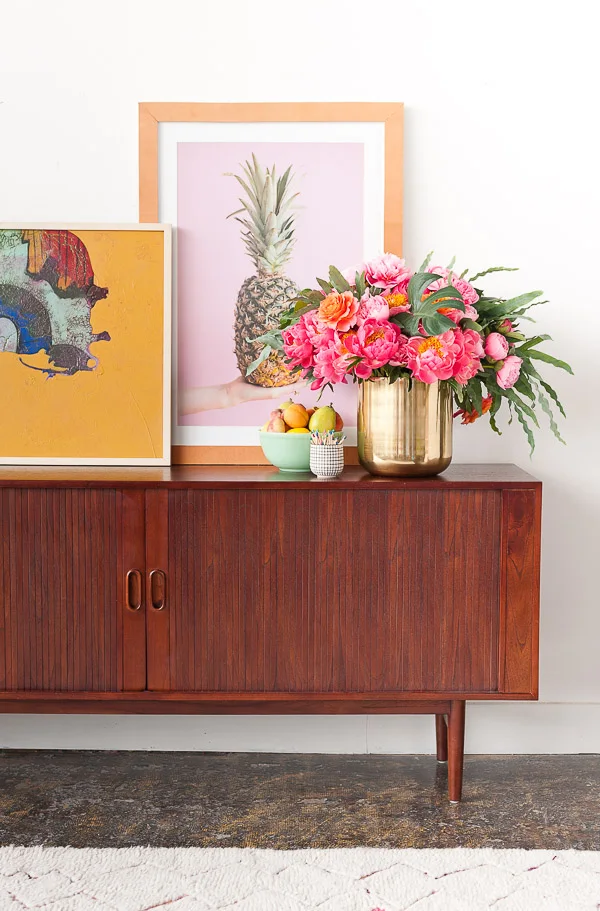
The ridged fronts give the cabinet a finer repeated texture below the larger colorful pictures. Small oval pulls keep the door detail contained without longer projecting handles. A gold-colored vessel supplies a rounded upper shape, with the pale wall leaving the wood cabinet clearly visible beneath the brighter display.
Check sliding-door travel and access to each compartment before choosing this arrangement for a narrower room. Keep artwork securely supported and protect the top beneath flowers or drinks. Use the upper display only where it leaves enough working surface for the cabinet’s daily job, choosing fewer objects if you regularly need the sideboard for serving or sorting supplies.
PART 03
Keep storage and smaller displays manageable
IDEA 11 / 20
Separate Plate Stacks from Drinking Glasses
 SaveSupport Non AI Creator
Source: www.papernstitchblog.com
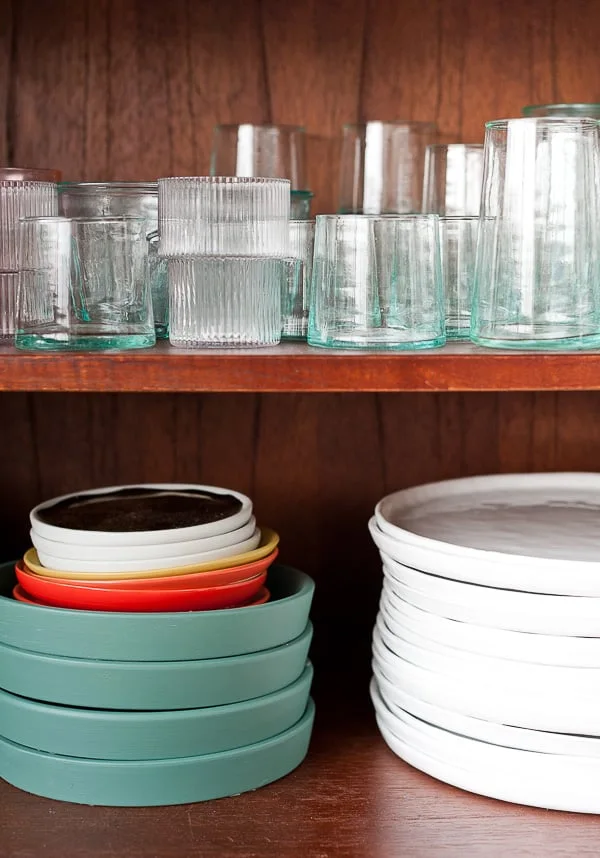
This closer view shows how a sideboard can separate glasses from stacked plates within one cabinet. The glasses remain upright on the upper shelf, with dishes grouped by shape below. The wood interior provides a clearer storage background without dividers that would consume the whole compartment.
Check shelf adjustment and load guidance for the actual cabinet rather than copying the photographed stack heights. Keep heavy dishes lower and leave room to lift a glass without reaching through crowded rows. Store pieces clean and dry, grouping everyday dishes where they are easiest to remove while keeping more fragile or less-used items separately protected.
IDEA 12 / 20
Give Cutlery a Dedicated Shallow Drawer
 SaveSupport Non AI Creator
Source: www.papernstitchblog.com
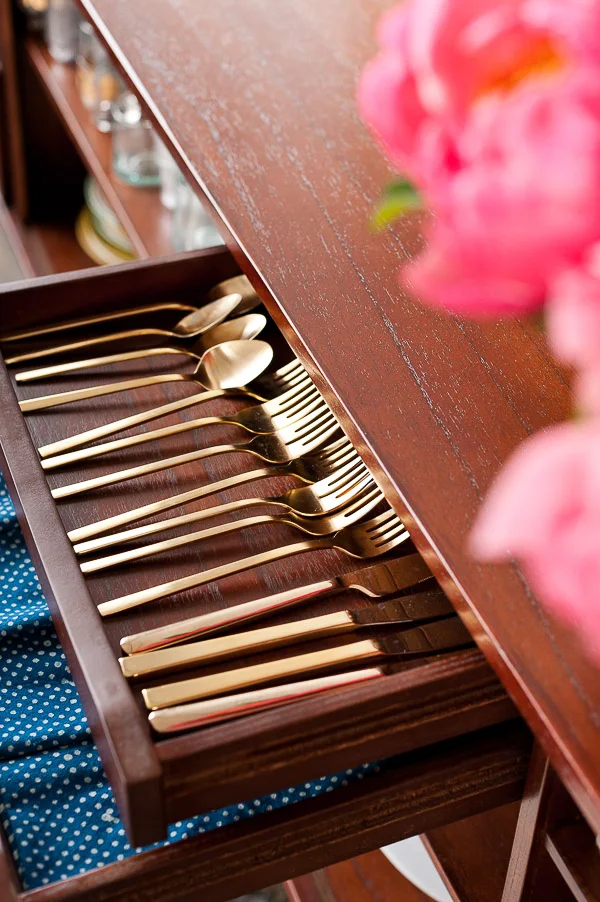
The shallow drawer gives cutlery a separate storage position instead of mixing it with plates and glasses. Individual pieces are grouped in clearer rows below the cabinet top. The surrounding wood remains visible between them, showing a drawer organization detail rather than a whole sideboard layout.
Use an organizer suited to the drawer and the actual cutlery, keeping pieces clean and fully dry before storage. Check the drawer’s travel and weight capacity rather than packing it to the photographed edges. Leave handles easy to reach and keep sharp or small items appropriately secured when children can access the cabinet.
IDEA 13 / 20
Put Pale Door Panels Within a Darker Straight Frame
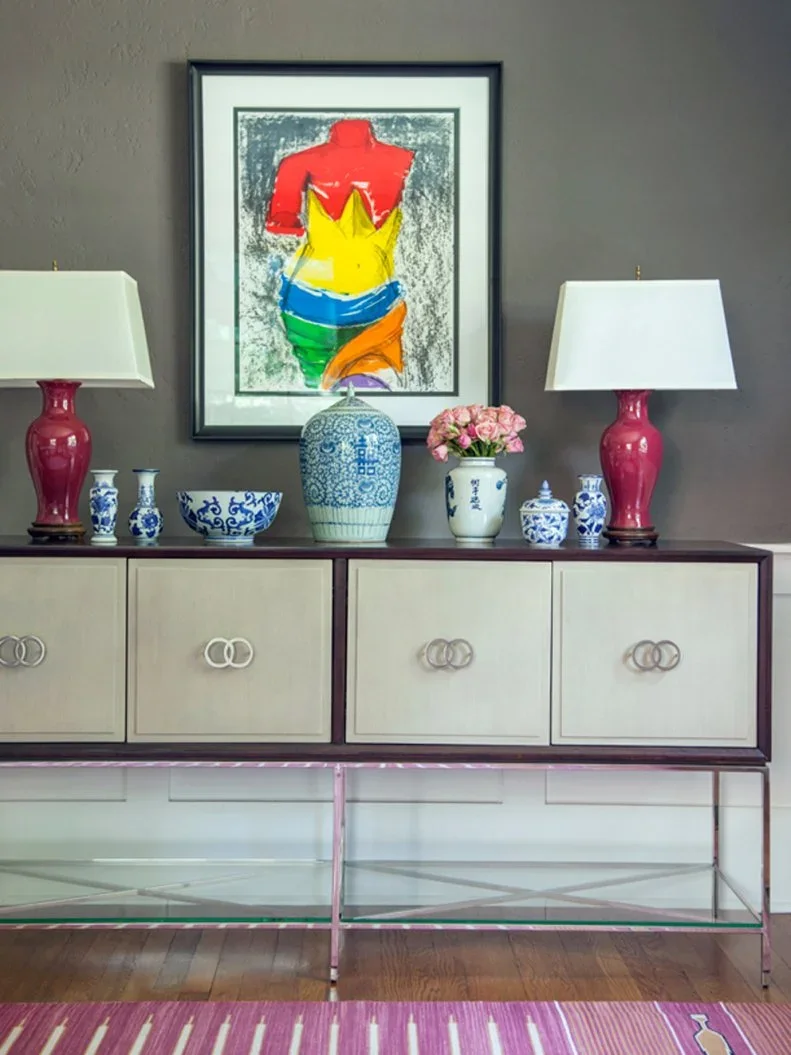 SaveSupport Non AI Creator
Image credit: From: Naomi Stein
The pale panels interrupt the darker frame with four clearer storage fronts. Smaller loop-shaped pulls repeat their curved outlines below the more colorful display. Two pink lamps define the upper ends, while the larger artwork gives the center a separate vertical shape above the lower cabinet.
Check the door clearance and actual compartment arrangement before choosing a cabinet for its contrasting panels. Keep lamp bases stable and leave a clear serving position between them when the sideboard supports meals. A limited group of vessels can repeat the artwork’s colors without filling every part of the top, making the surface easier to clear and clean.
IDEA 14 / 20
Keep a Dark Sideboard Clear of the Stair Route
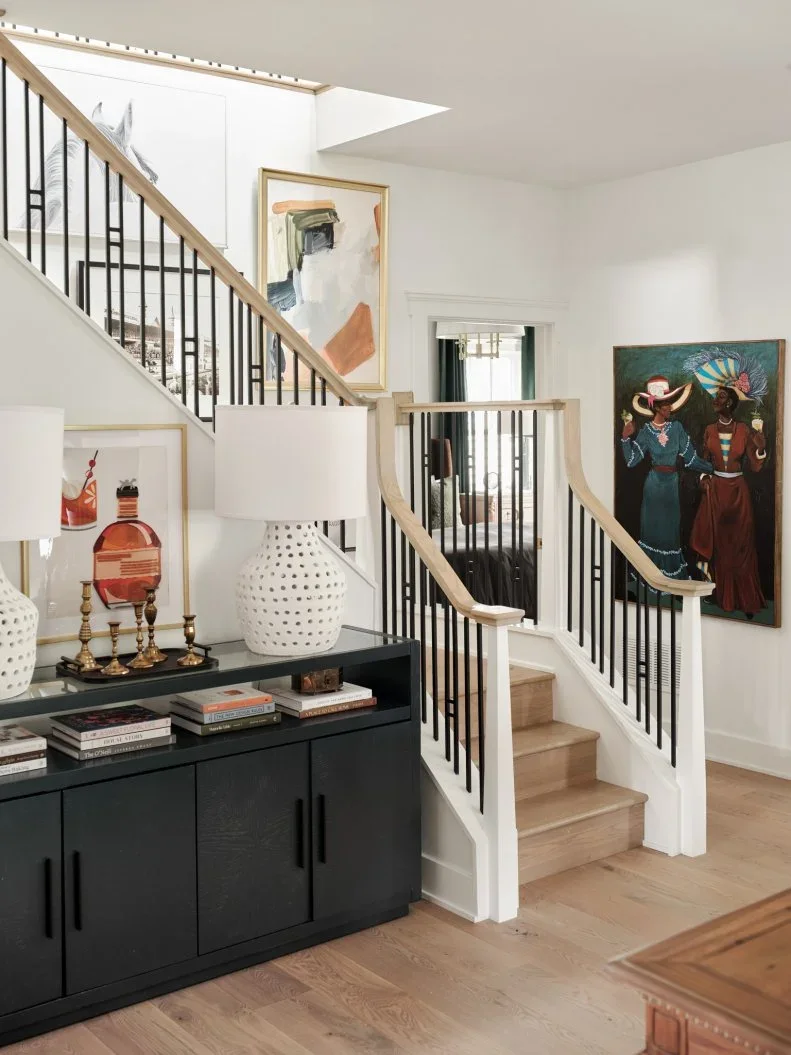 SaveSupport Non AI Creator
Image credit: Photo: Joseph Bradshaw
The darker cabinet gives the area below the stairs one contained storage group. Its open upper shelf keeps books visible separately from the closed lower doors, with two pale lamps creating lighter end shapes above it. The stair rail supplies repeated narrower lines beside the plainer cupboard fronts.
Check the stair approach and lower door movement before choosing a cabinet for this position. Keep books organized within reachable shelf sections and route lamp cables away from passing feet. Modern farmhouse entryway ideas compare other useful storage near arrival routes, helping you judge whether a sideboard can support daily belongings without narrowing access to the stairs.
IDEA 15 / 20
Keep the Top Display on One Removable Tray
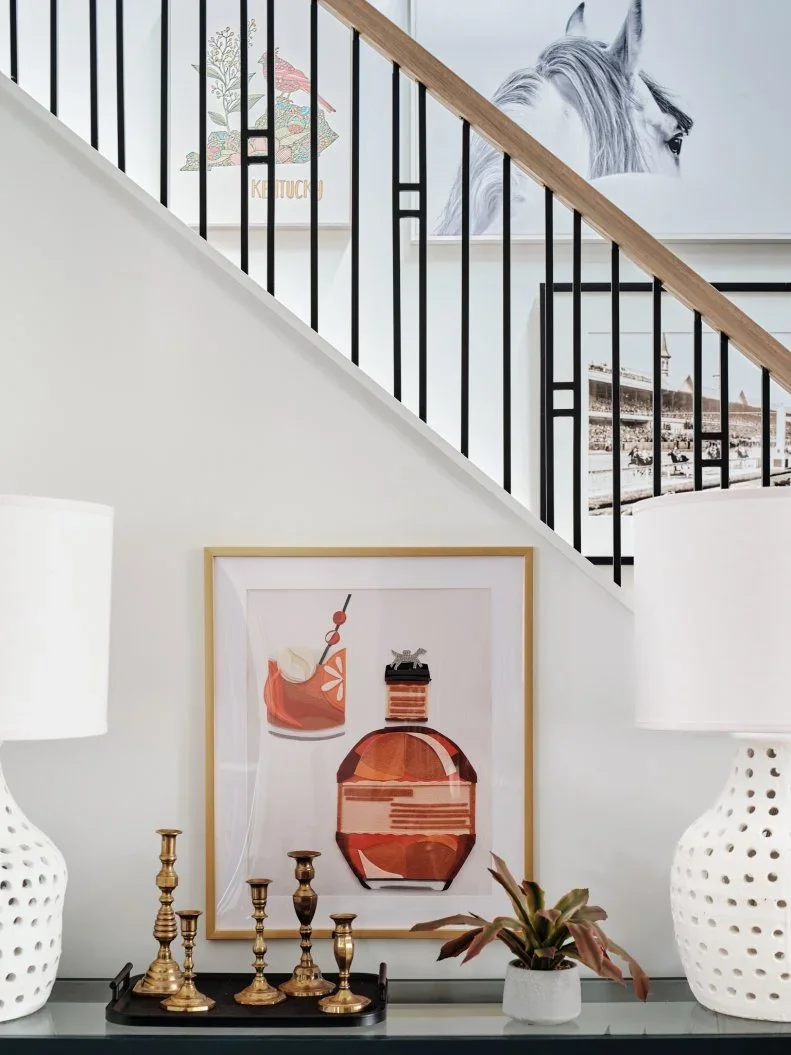 SaveSupport Non AI Creator
Image credit: Photo: Joseph Bradshaw
The tray gathers smaller candleholders and the plant into one bounded display between the lamps. Gold-colored finishes repeat a contained warmer accent, with the darker cabinet supplying a quieter base below them. The framed artwork gives the center another separate shape without spreading small ornaments across the full top.
Treat this as a display detail from the preceding stair-side cabinet rather than another complete furniture arrangement. Use flameless candles near artwork, plants or other combustible objects and protect the surface beneath the pot. Check the tray’s load and grip before moving it, leaving clear landing space when the sideboard is used for serving or everyday belongings.
PART 04
Connect sideboards with seating and artwork
IDEA 16 / 20
Keep a Wood Sideboard Beside Stronger Dining Pattern
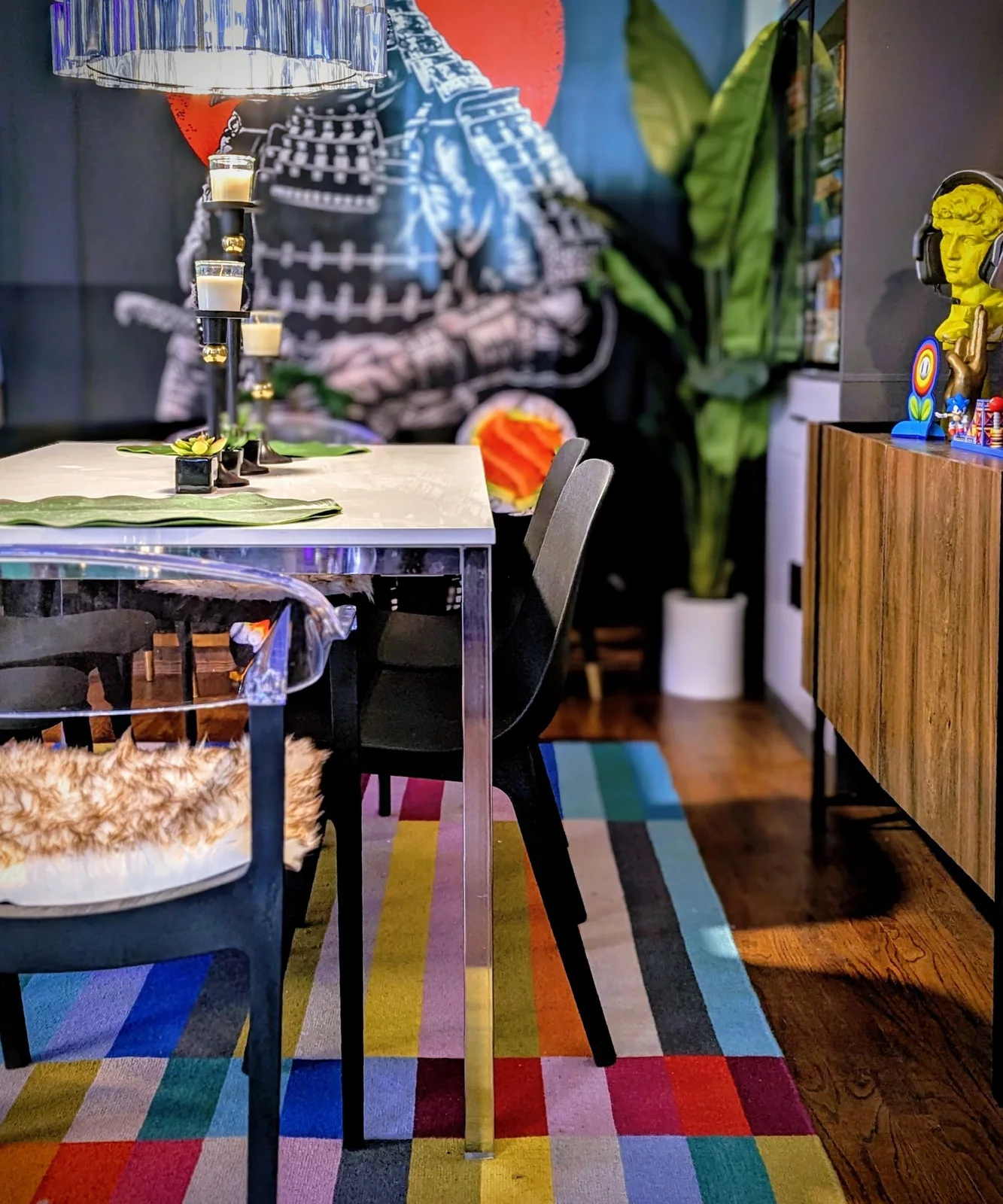 SaveSupport Non AI Creator
Image credit: Foster Decor Interiors / Jasmine Gonzalez Photography
The wood fronts give the sideboard a warmer clearer surface beside the room’s stronger rug pattern. Darker legs connect with the dining chairs without repeating every stripe or color. The closer room view shows part of the cabinet beside the table, making furniture spacing more visible than the full storage interior.
Check the actual sideboard depth and door movement with the nearest chair occupied, preserving a route between both furniture pieces. Keep decorative objects secure on the top and reduce them when serving space is needed. Follow the specified cabinet finish’s care instructions and protect reflective table surfaces separately, rather than assuming adjacent furniture can use the same cleaner.
IDEA 17 / 20
Join Wood Fronts to a Lighter Upper Edge
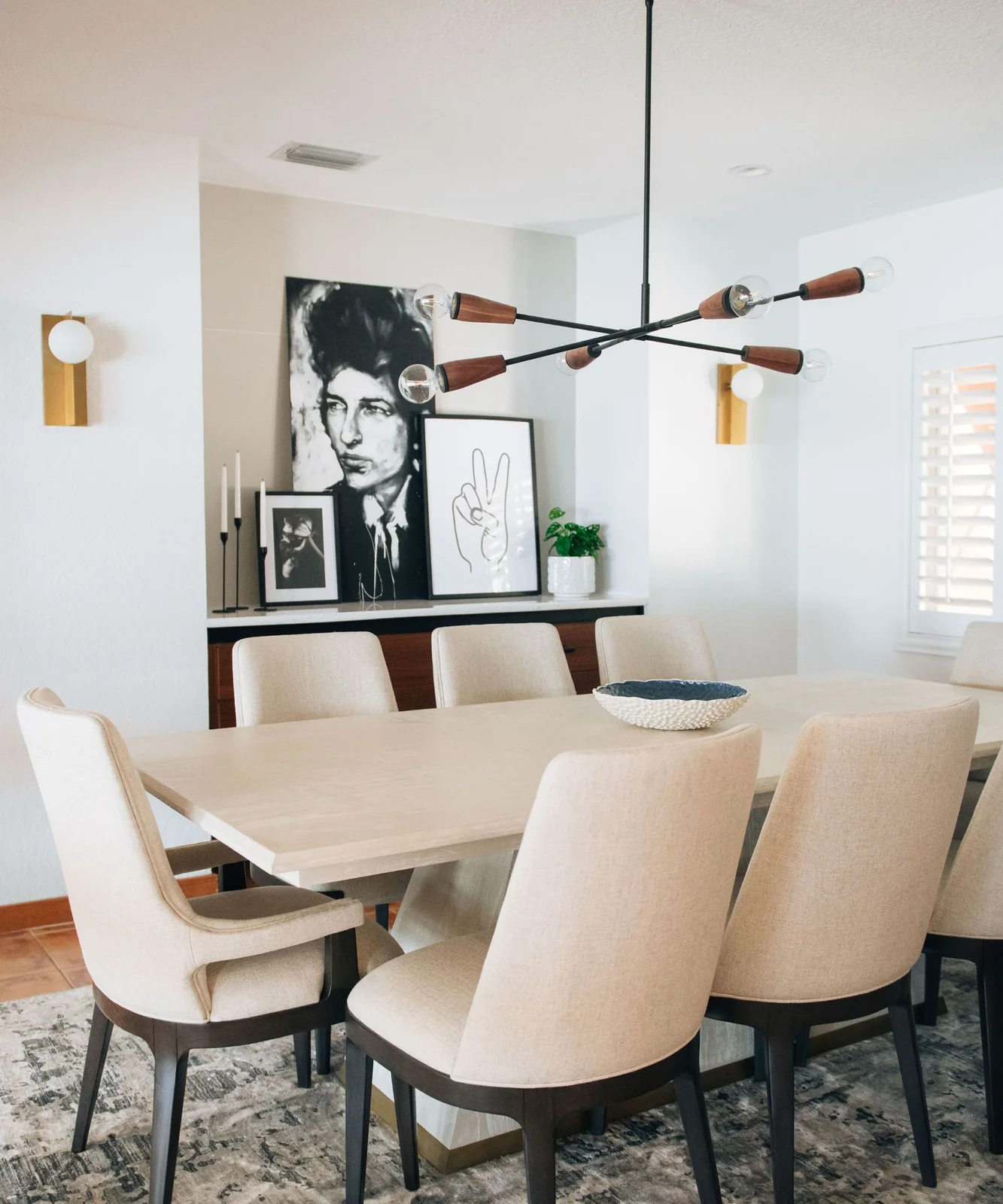 SaveSupport Non AI Creator
Image credit: R. Nickson Interiors
The wood sideboard fronts add a warmer lower surface behind the paler dining furniture. A lighter upper edge keeps the cabinet connected with the table and nearby wall, while black-and-white pictures provide the larger upper contrast. Smaller vessels remain grouped rather than covering the whole visible ledge.
Check how far the dining chairs move back before choosing the cabinet’s position. Keep leaning pictures properly supported and protect the top beneath plants or candleholders, using flameless candles when displays are close together. Mid-century modern dining room ideas compare other wood storage and seating combinations, useful when deciding which finishes should connect without making every piece identical.
IDEA 18 / 20
Use a Ridged Sideboard Beneath Larger Artwork
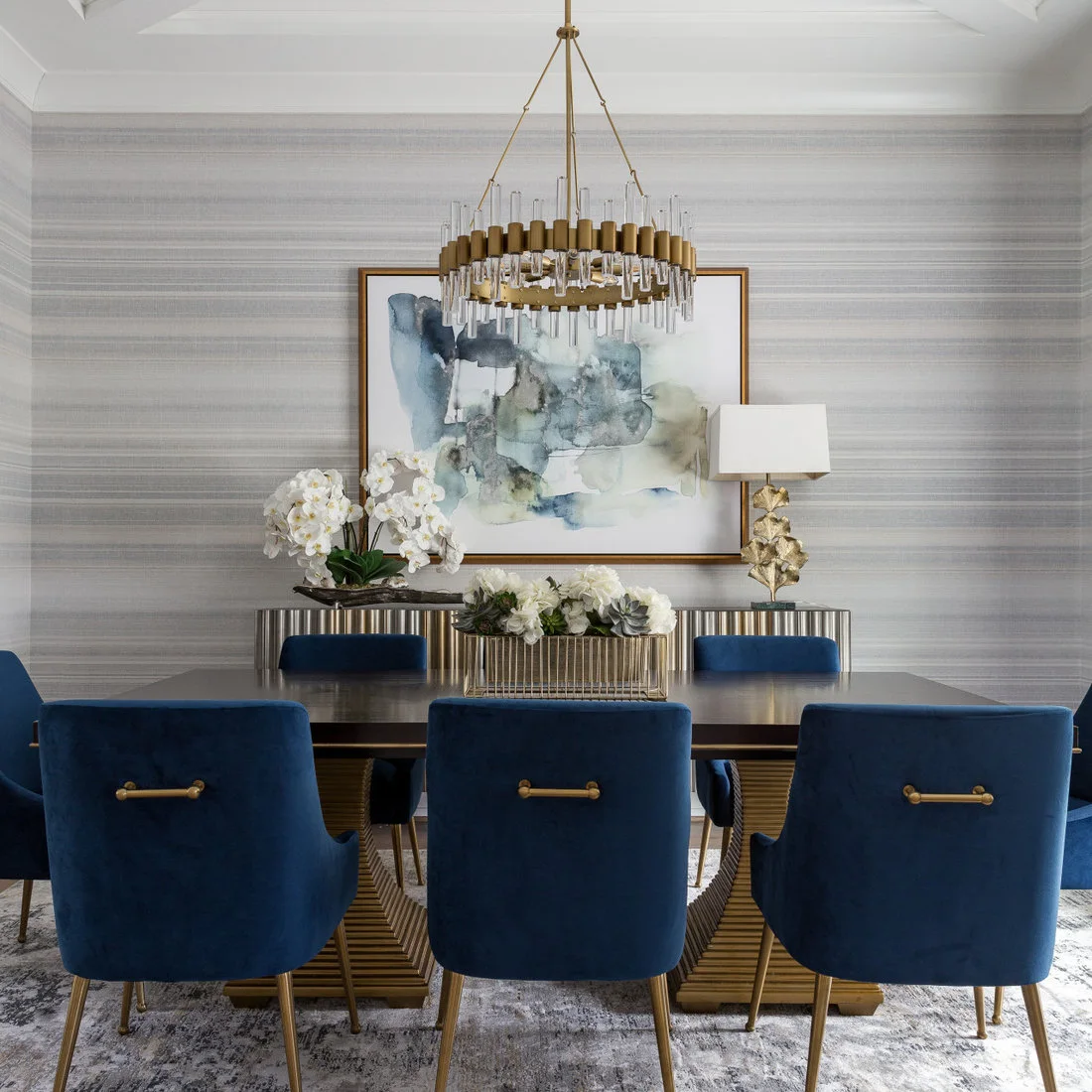 SaveSupport Non AI Creator
Source: www.houzz.com
The repeated ridges give the sideboard a finer lower texture beneath the broader artwork. Blue chairs repeat the picture’s cooler tones, while the pale lamp adds a lighter shape at one end. The dining-room view shows the cabinet’s upper face and placement rather than a clear view of every lower compartment.
Inspect the actual furniture construction and storage access before choosing a similarly reflective or ridged finish. Check its cleaning requirements around grooves and handles, leaving room behind occupied chairs to reach it comfortably. Keep the artwork securely mounted and use fewer smaller objects when both the cabinet front and picture already supply substantial detail.
IDEA 19 / 20
Keep a Dark Cabinet Below One Stronger Picture
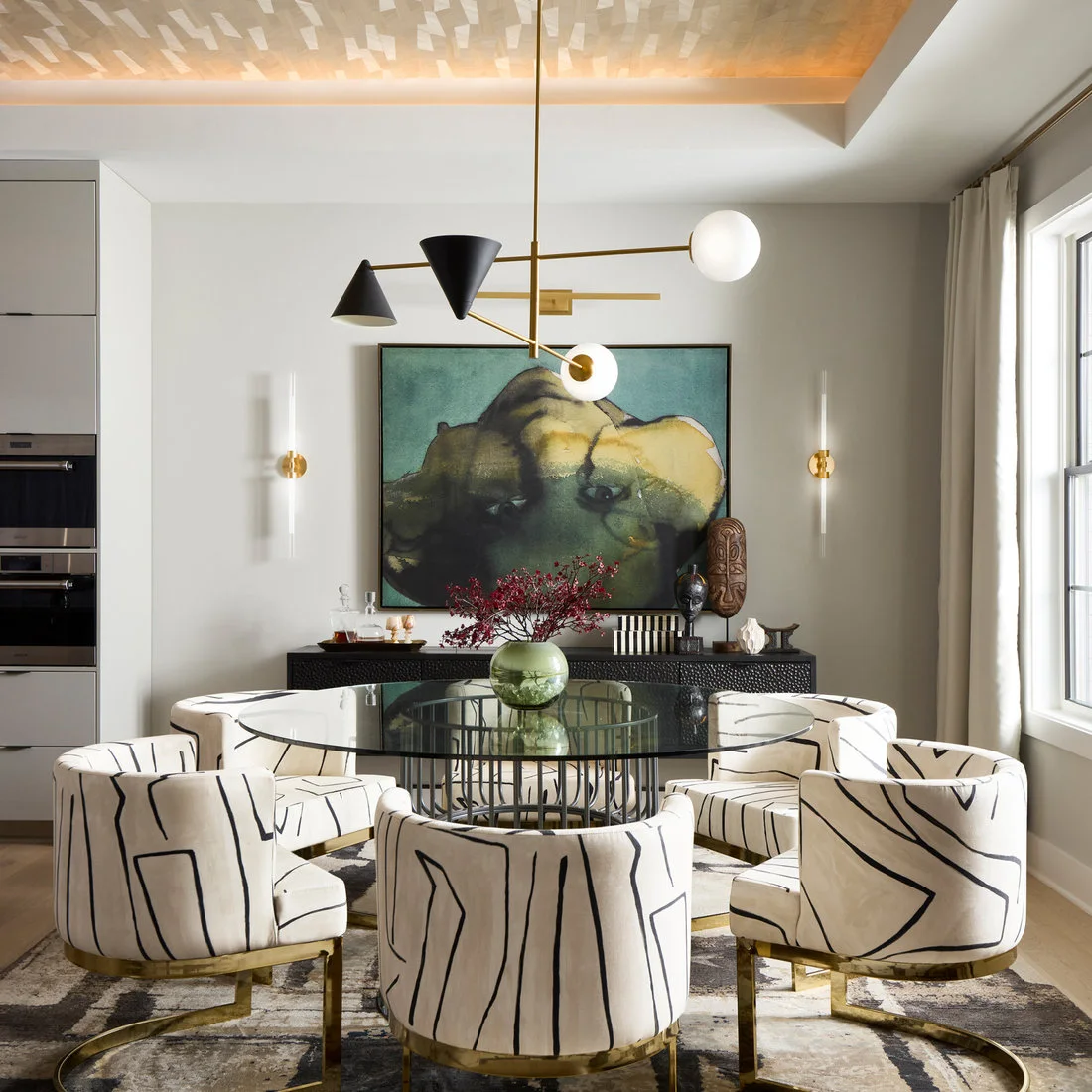 SaveSupport Non AI Creator
Source: www.houzz.com
The dark cabinet supplies a quieter lower band beneath the larger green-toned picture. Pale patterned chairs give the dining group another distinct texture without changing the sideboard’s deeper color. The glass table leaves part of the cabinet visible through the center, showing its relationship to the seating rather than its full internal storage.
Measure the actual cabinet and chair clearance before borrowing the arrangement, testing access with the nearest seats occupied. Keep the sideboard top useful for serving and choose secure artwork mounting above it. Limit smaller ornaments when the picture and chairs already provide stronger patterns, checking the cabinet’s capacity independently of the room-wide photograph.
IDEA 20 / 20
Keep a Pale Sideboard Useful in a Living Room
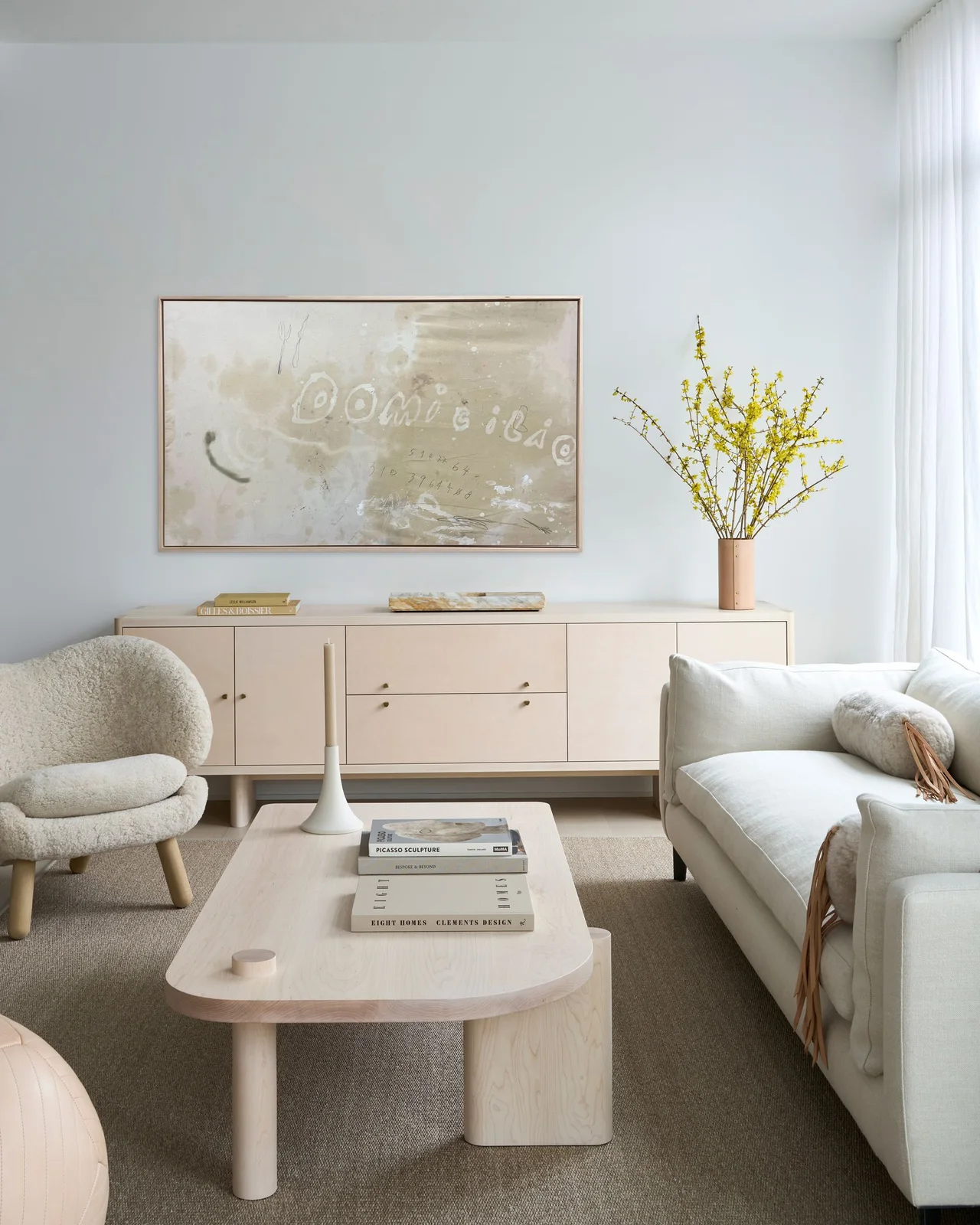 SaveSupport Non AI Creator
Image credit: Marco Ricca. Design: SISSY+MARLEY Interiors
The pale sideboard gives the living room one connected lower storage group beneath the larger picture. Doors and drawers offer visibly different access positions without several separate furniture pieces. A few small objects remain above it, leaving much of the top clear beside the lighter sofa and chair.
Choose the compartments for the supplies actually used near the seating, keeping everyday belongings reachable without blocking the sideboard with another table. Modern minimalist living room ideas compare other restrained storage groups. Secure the artwork appropriately and protect the surface beneath the vase, leaving clear landing space for items that need to be set down during daily use.
BRING IT ALL TOGETHER
Give the sideboard one clear everyday job
Choose storage compartments for the dishes, textiles or living-room belongings used regularly, checking door and drawer movement in the actual room. Keep heavier items lower and frequently used supplies reachable, securing furniture as appropriate. A slimmer cabinet or fewer nearby chairs may be more useful than adding storage that cannot be opened comfortably.
Keep the top available for its main job before adding lamps, pictures or plants. Use trays and surface protection where appropriate, mounting artwork securely and choosing flameless candles near displays. Follow the actual finish’s cleaning guidance, reducing objects when they hide useful storage, complicate maintenance or make serving unnecessarily awkward.