A sideboard and mirror work best when you consider the furniture, the wall and the reflected view together. The mirror can balance a long cabinet, soften angular doors or give an existing storage piece a clearer place in the room. Its position matters as much as the frame.
These photographed arrangements include dining rooms, living areas and compact entrance storage. Most place a mirror above the cabinet, while one uses a secured floor mirror beside it. Look at the visible proportions and reflections, then check storage needs, door clearance and wall fixings before choosing a similar combination.
PART 01
Relate the mirror frame to the furniture
IDEA 01 / 15
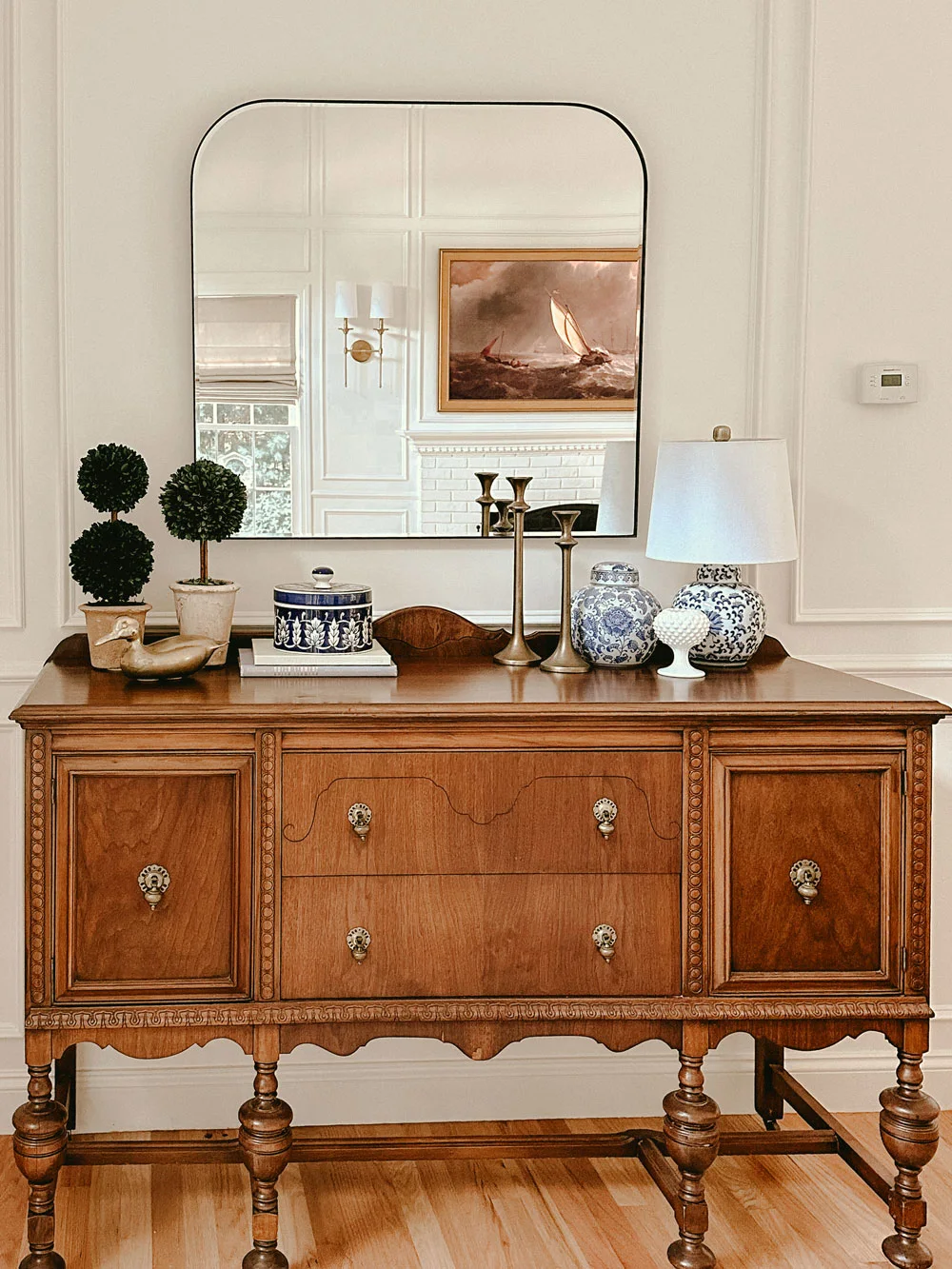
Pair Detailed Timber with a Thin Mirror Frame
 SaveSupport Non AI Creator
Source: www.goldmallardhome.com
The sideboard has turned legs, carved edging and patterned hardware, so the thin mirror frame gives those details a quieter backdrop. Rounded upper corners soften the mirror’s broad outline. Blue-and-white vessels, a lamp and clipped green shapes connect the two sides without making the display perfectly symmetrical.
Measure the visible wall area above the sideboard before choosing a broad mirror. Check its reflection from the doorway as well as from nearby seating. Keep enough clear surface for everyday use, and use wall fixings specified for the mirror’s weight and the actual wall construction.
IDEA 02 / 15
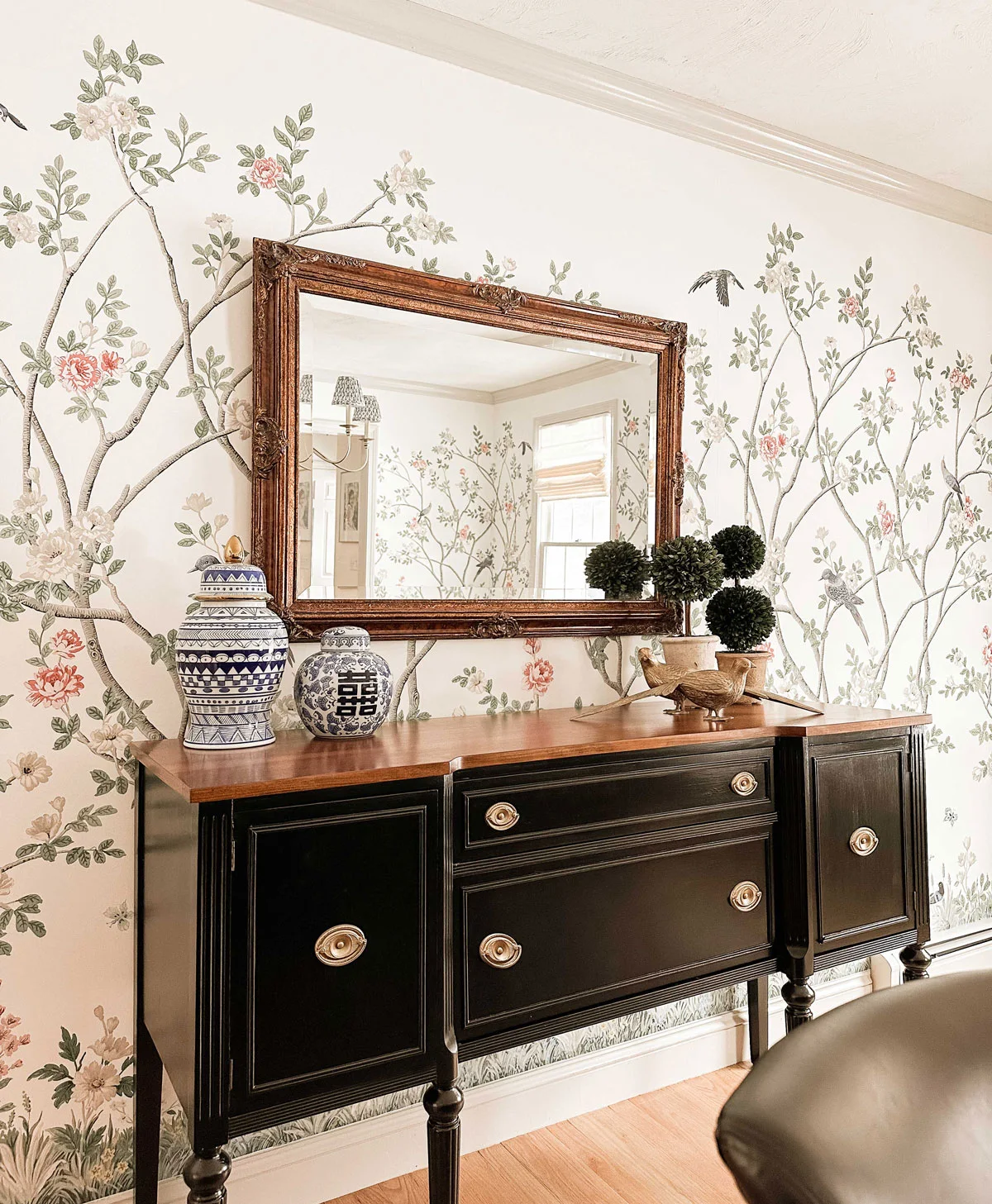
Use a Rectangular Mirror within Floral Wallpaper
 SaveSupport Non AI Creator
Source: www.goldmallardhome.com
The mirror creates a clear rectangular pause within the branching wallpaper pattern. Its warm frame relates to the timber top, while the dark sideboard fronts give the pale wall a firmer base. Blue-and-white vessels sit to one side and clipped greenery balances them on the other.
Try the frame color beside both the wallpaper and furniture before buying. A detailed frame can work with pattern when its outline remains easy to read. Keep taller objects near the sides if you want a useful central reflection, and protect the sideboard top beneath pots or vessels that may hold water.
IDEA 03 / 15
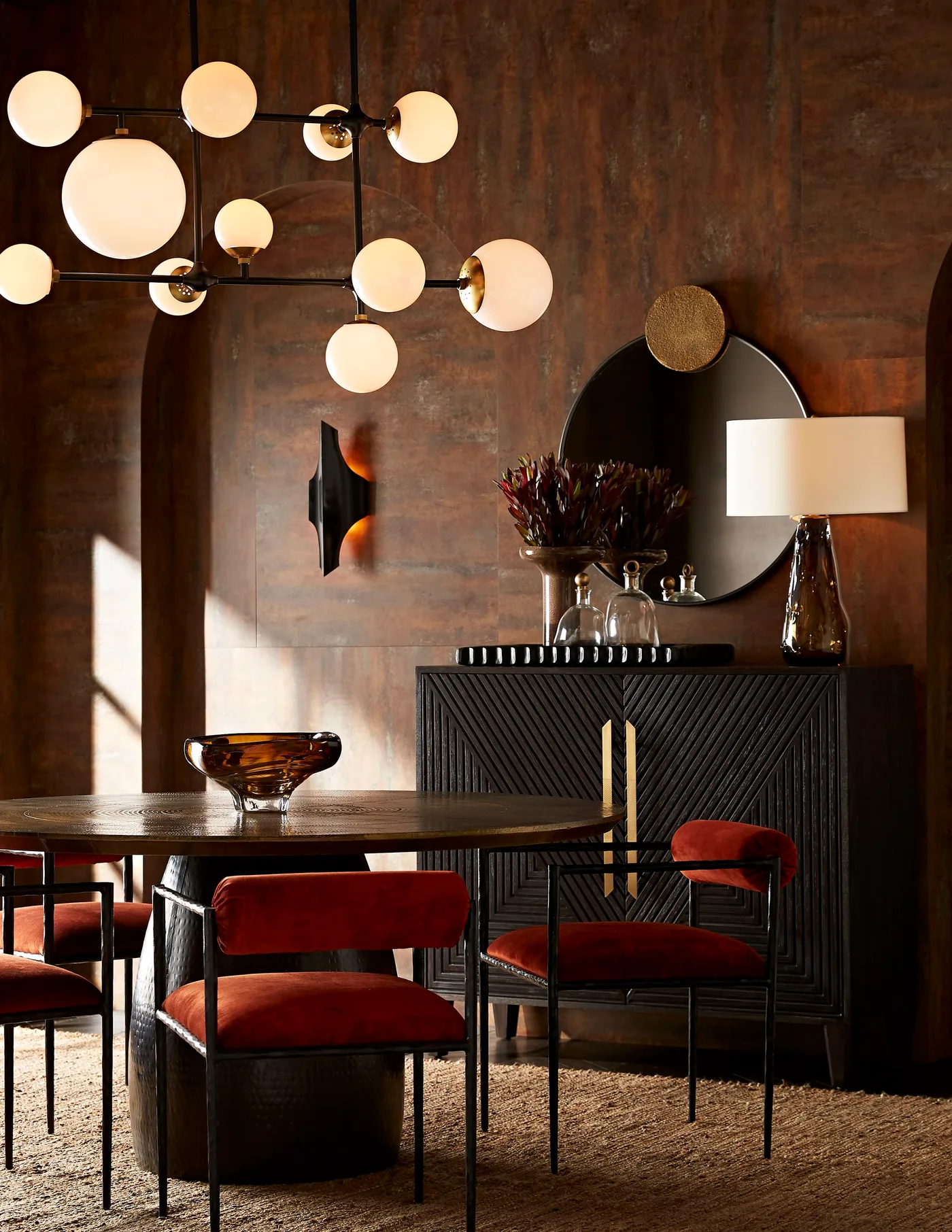
Soften a Ribbed Sideboard with a Round Mirror
 SaveSupport Non AI Creator
Image credit: Arteriors
The round mirror breaks up the angled lines on the sideboard fronts and the straight metal handles. Its slim outline keeps the textured cabinet in focus. A pale lamp shade and glass vessels stand in front of the mirror, adding lighter areas against the warm brown wall.
Compare the mirror’s diameter with the width of the cabinet rather than filling the entire available wall automatically. Our modern sideboard ideas show more ways to choose a strong furniture front. Keep the lamp cable managed behind the cabinet and check the reflected bulb position from seated eye level.
IDEA 04 / 15
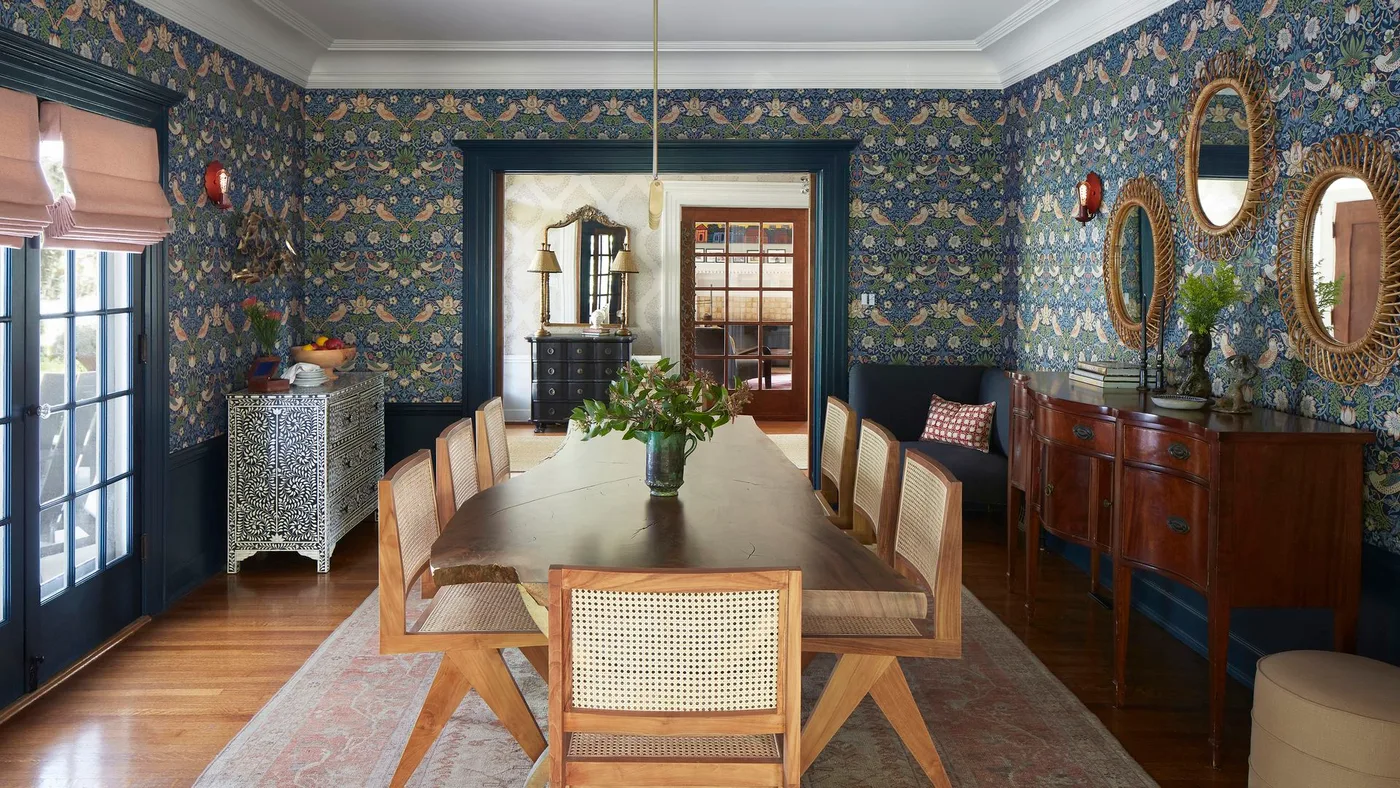
Group Three Oval Mirrors over a Long Sideboard
 SaveSupport Non AI Creator
Image credit: Murphy Deesign
Three oval mirrors spread the wall display across the long sideboard without creating one large uninterrupted reflective surface. Their textured frames stand apart from the smaller wallpaper pattern. The curved sideboard front and warm timber color give the group a related softness at furniture height.
Lay out a paper template for each mirror before drilling and judge the whole group from across the room. Keep the gaps deliberate while checking that every fixing meets the product’s requirements. A few low objects on the cabinet leave the separate oval shapes readable instead of covering their lower edges.
PART 02
Balance mirrors with lighting and the reflected view
IDEA 05 / 15
Center a Wide Mirror between Paired Lamps
 SaveSupport Non AI Creator
Image credit: Fentiman Design
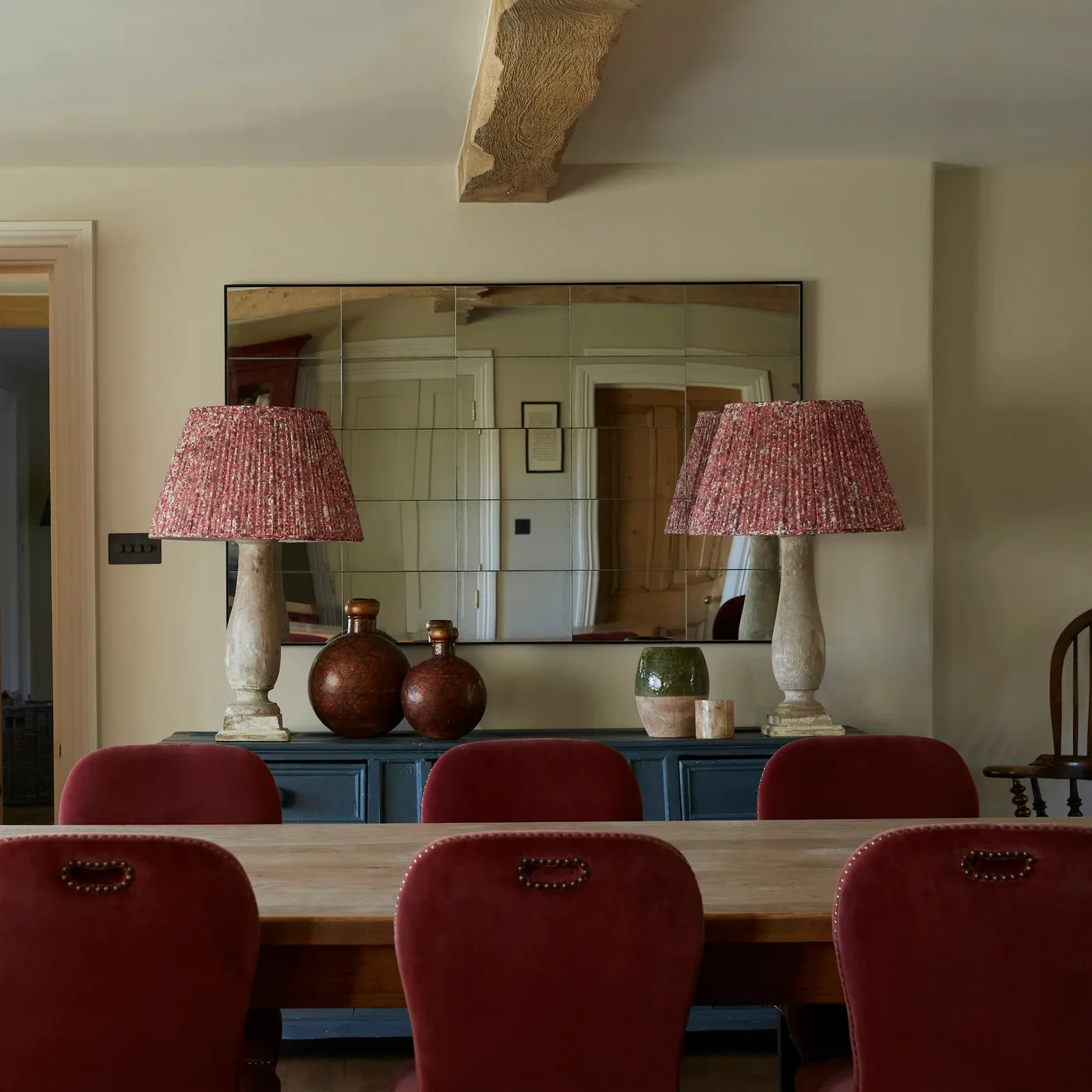
The wide mirror connects the two lamps above the blue cabinet and repeats the length of the dining table in front. Its visible grid adds detail without another painted pattern. Red shades and upholstered chairs repeat the warm accent color at different heights around the darker sideboard.
Check the mirror’s reflection with both lamps switched on before finalizing their positions. Reflected shades can be attractive, but a bright bare bulb may be uncomfortable from a chair. Allow space to reach the lamp switches and clean the glass without lifting a heavy arrangement each time.
IDEA 06 / 15
Make a Textured Round Frame the Main Wall Feature
 SaveSupport Non AI Creator
Image credit: Erika Bonnell Interiors/Stacy Zarin Goldberg
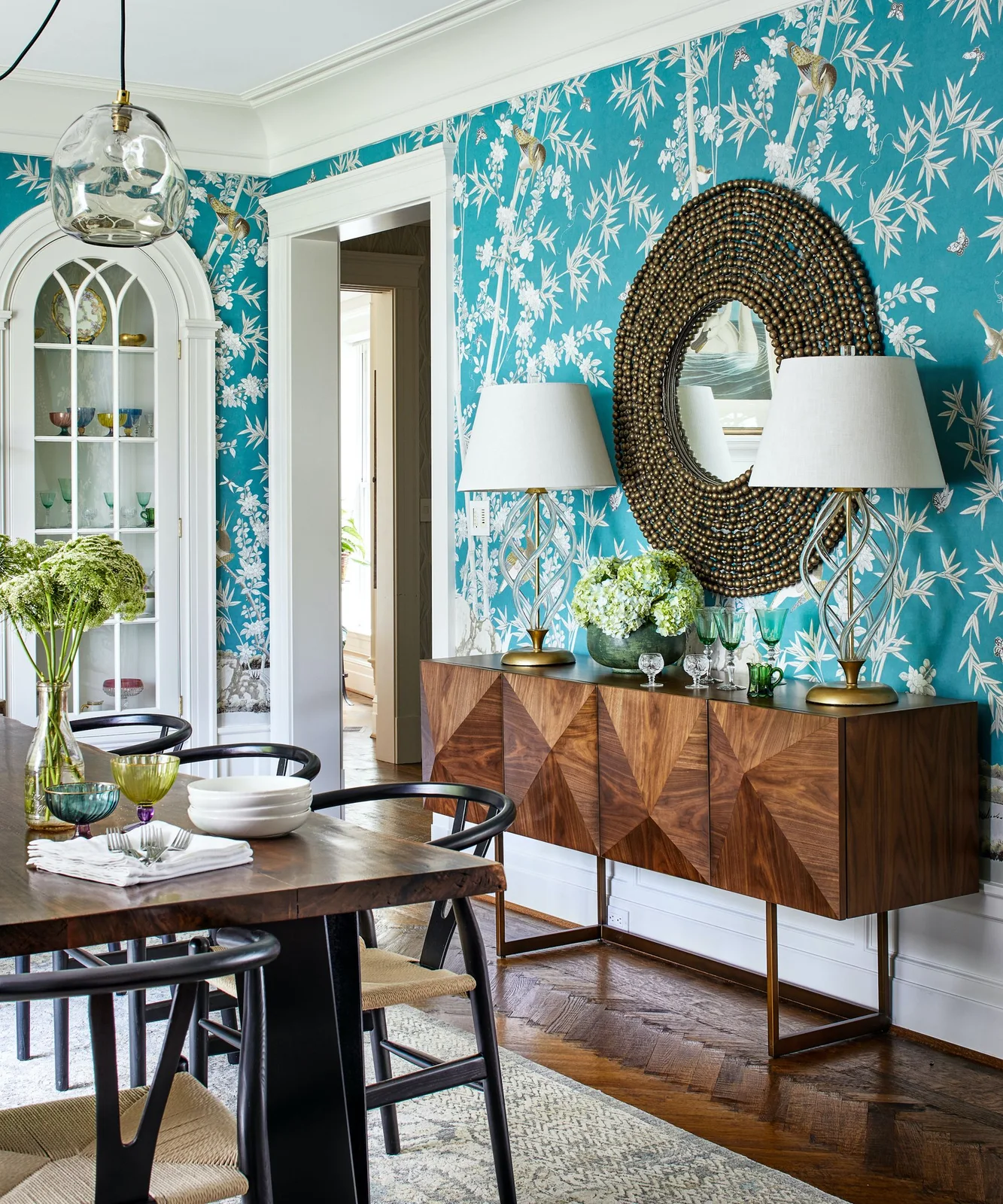
The mirror’s broad textured frame gives it enough presence to stand out against the turquoise wallpaper. Two pale lamp shades form a quieter pair below it. Angular timber door fronts bring another strong pattern, but the sideboard top remains grouped around a limited collection of glassware and flowers.
Compare the frame’s depth as well as its width when choosing a similar mirror. A substantial frame may need a different fixing approach from a thin one. Use the sideboard’s actual storage capacity to guide the furniture choice, and leave a clear area where dishes can be set down when entertaining.
IDEA 07 / 15
Let a Round Mirror Interrupt a Scenic Wall
 SaveSupport Non AI Creator
Image credit: Malcolm Brown
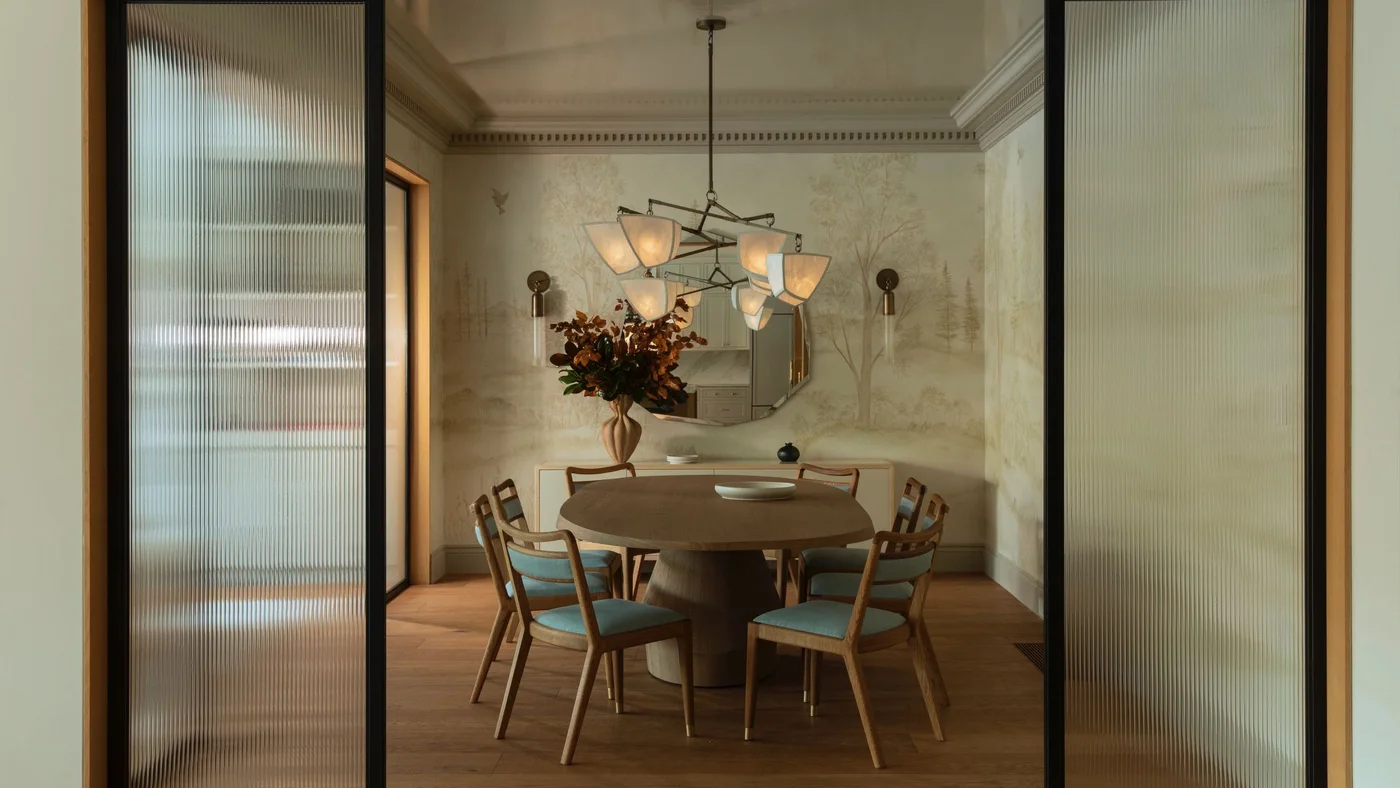
The round mirror interrupts the scenic wall covering without hiding it behind a solid picture. A pale sideboard keeps the lower wall quieter, and the two wall lights frame the reflective area. The round dining table repeats the curved outline nearer the center of the room.
Check the view into the mirror from the usual entrance; here, the reflected kitchen becomes part of the dining room composition. Plan wall lighting and mirror placement together so fittings do not conflict. Keep tall flowers toward one side if the reflection should remain visible from the table.
IDEA 08 / 15
Adapt a Drawer Cabinet as a Compact Drinks Sideboard
 SaveSupport Non AI Creator
Image credit: Future PLC/Simon Whitmore
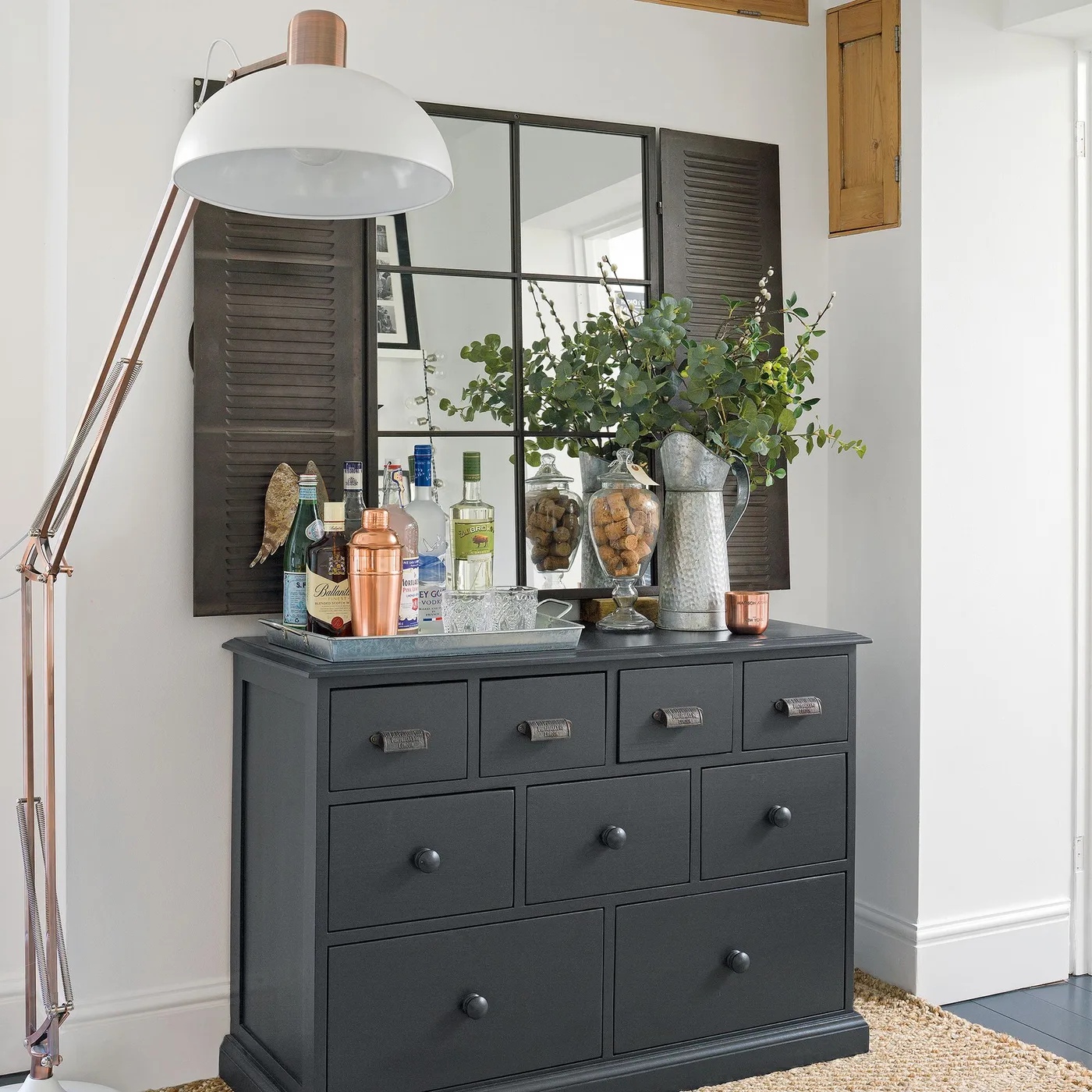
A drawer cabinet takes on the role of a compact drinks sideboard in this corner. The shutter-like side panels give the mirror a wider presence than its central glass alone. A tray gathers bottles together, while the large floor lamp supplies light without using more of the cabinet top.
Check that the drawers can store the things you need before using a chest in place of a sideboard. Our dining room sideboard ideas compare other storage arrangements. Use a tray appropriate for spills, keep glassware stable, and position the floor lamp so its base and cable do not obstruct access.
PART 03
Work with cabinet detail and existing walls
IDEA 09 / 15
Repeat Warm Borders around a Dark Sideboard
 SaveSupport Non AI Creator
Image credit: Photo: Mali Azima. From: Minhnuyet Hardy
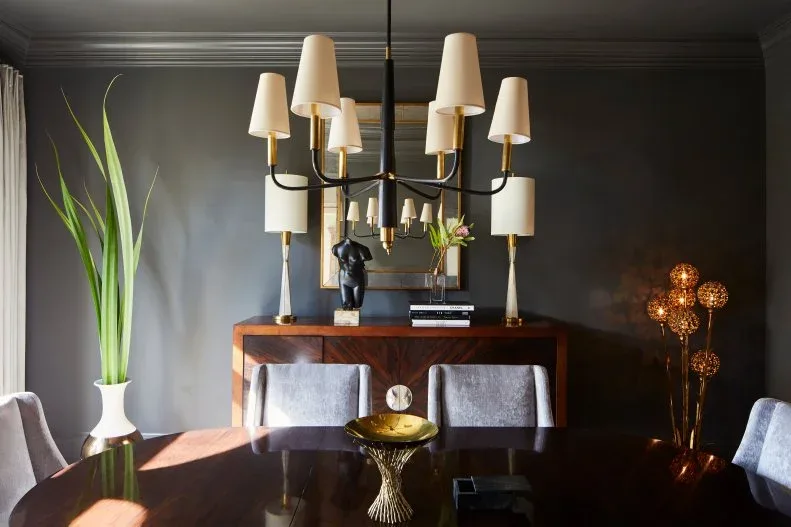
Lighter timber borders outline the sideboard against the dark wall, while the mirror adds a second warm-edged rectangle above. The paired lamps give the arrangement a balanced structure. Their pale shades relate to the chandelier shades, connecting the cabinet display with the rest of the room.
Try the cabinet and mirror finishes together in the actual room light, because dark walls can change how warm a frame appears. Mark out the cabinet doors’ opening space behind the dining chairs. Keep the lamps far enough apart to leave a useful central area without crowding objects against the frame.
IDEA 10 / 15
Balance Geometric Doors with a Pale Framed Mirror
 SaveSupport Non AI Creator
Image credit: Photo: Adam Albright. From: HGTV Magazine
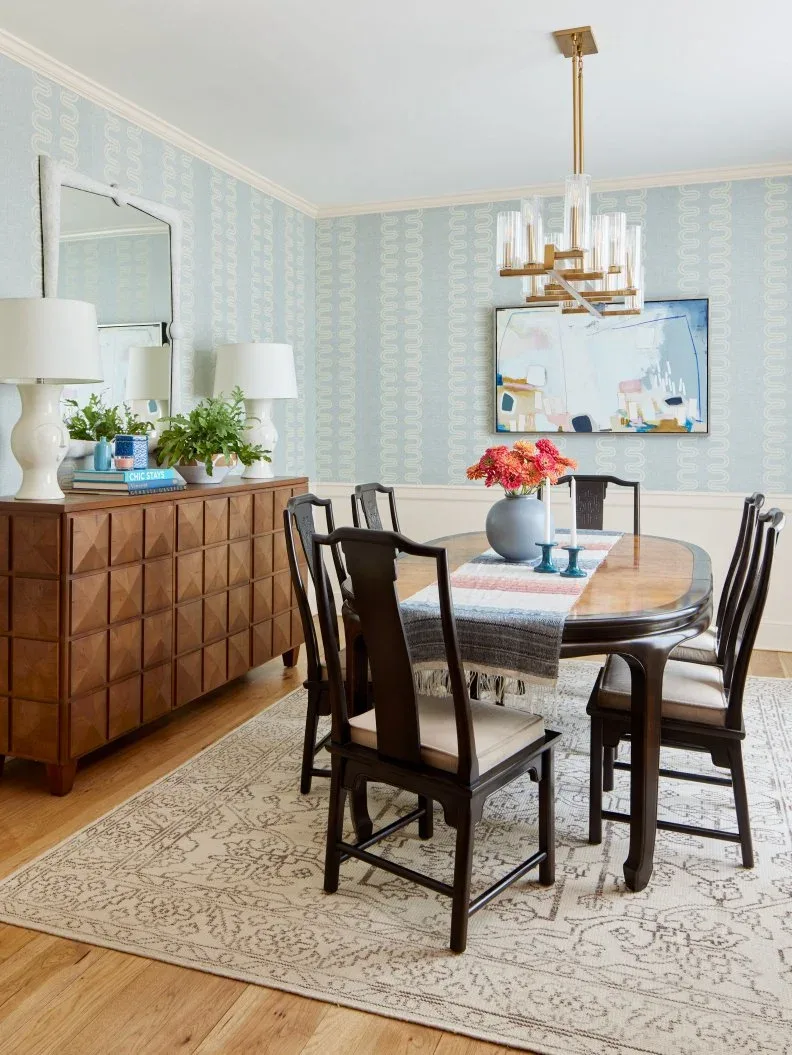
The sideboard’s repeating square relief creates substantial texture below a comparatively plain mirror. Its pale frame and the white lamps keep the upper arrangement lighter than the timber doors. Small plants and books fill only part of the top, leaving the larger furniture pattern visible.
Consider how the door relief will be cleaned and how the handles feel before selecting a similar cabinet. Use the mirror and lamps to balance the furniture instead of adding another geometric object to every gap. Check the lamp shades’ overall width so they fit comfortably within the cabinet’s usable length.
IDEA 11 / 15
Use an Arched Mirror against Exposed Brick
 SaveSupport Non AI Creator
Image credit: Marcell Puzsar - brightroomSF Studio
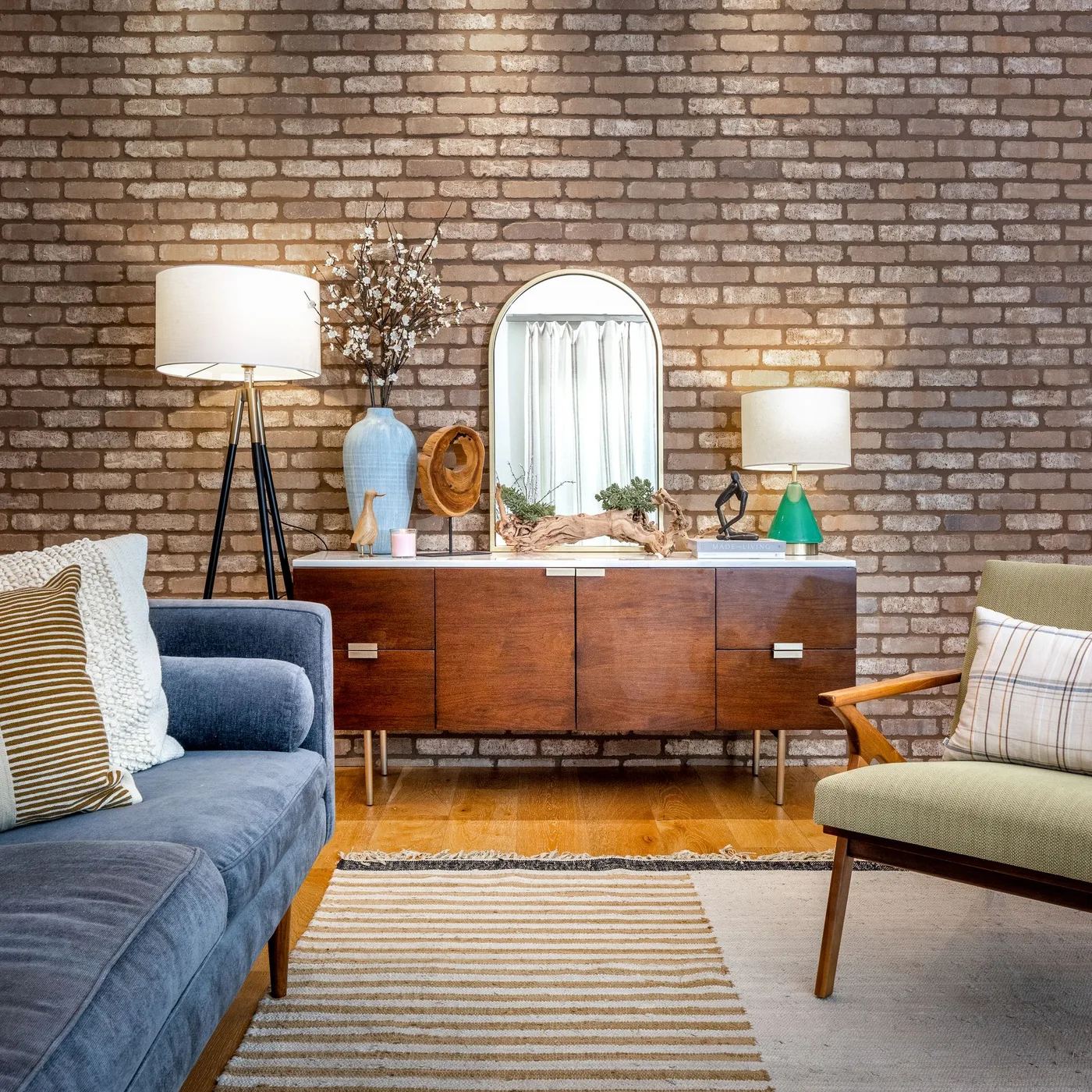
The arch gives the mirror a clear outline against the irregular brickwork. A pale sideboard top separates the warm timber fronts from the darker brick colors. A blue vase and green lamp repeat colors found in the nearby seating, allowing the cabinet display to connect with the living area.
Confirm the correct fixing method for the wall rather than treating brick and plasterboard alike. Our earthy living room ideas explore other ways to work with warmer surfaces. Keep tall branches from covering the entire reflection, and use protective pads beneath heavier objects to avoid marking the cabinet top.
IDEA 12 / 15
Choose a Tall Oval for a Compact Cabinet
 SaveSupport Non AI Creator
Image credit: @mishkashoe
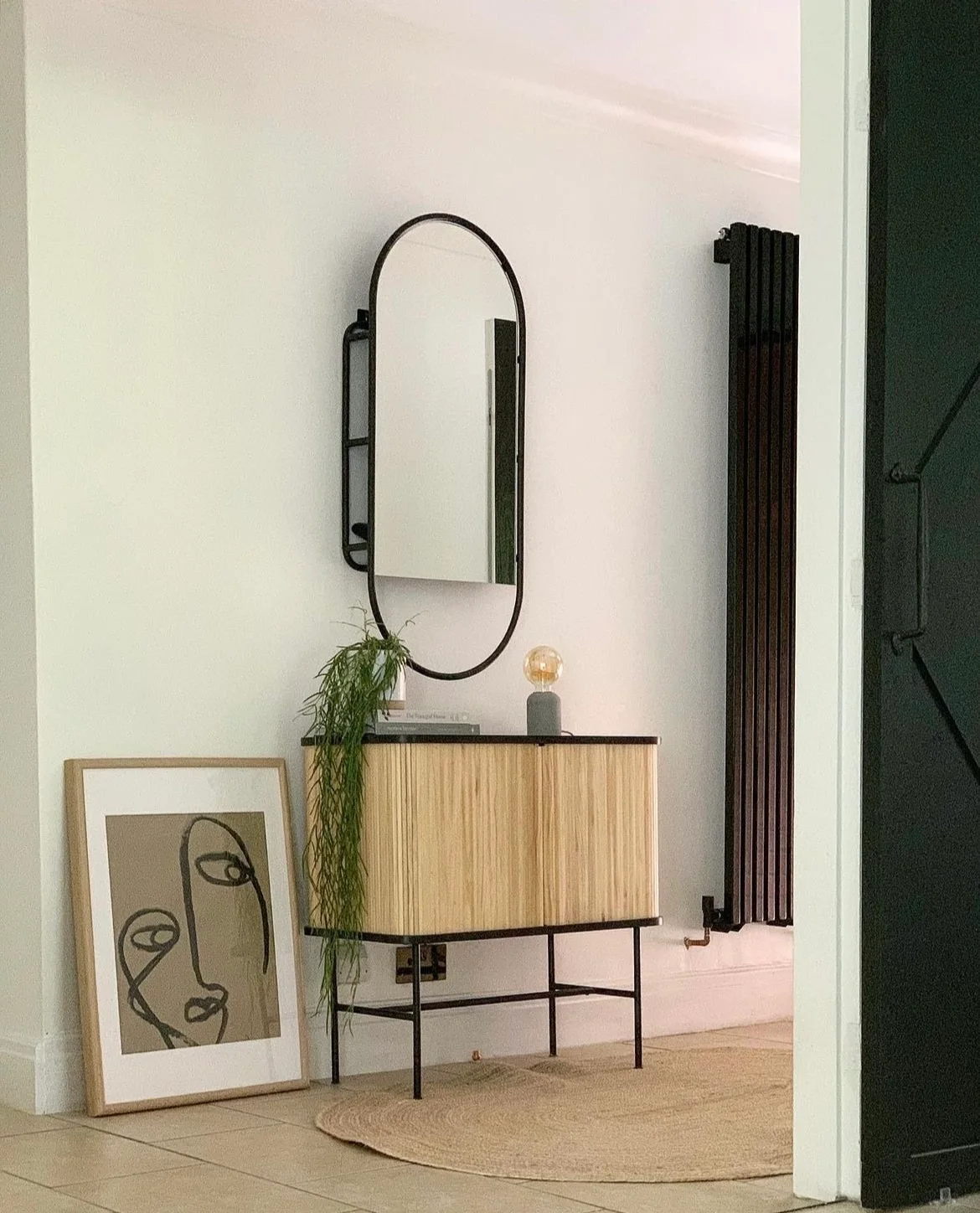
The tall oval mirror brings height above a compact cabinet without extending far into the adjoining wall space. Dark edging on the mirror relates to the cabinet’s legs and top. Fine vertical reeding supplies texture below, while the trailing plant introduces a less regular outline at one side.
Measure the route past a compact cabinet with its doors open, especially near an entrance or radiator. Check the furniture’s required distance from heat sources and anchor it as instructed. Use a pot and saucer that protect the top, and keep trailing stems clear of the door-opening path.
PART 04
Try different positions and wall groupings
IDEA 13 / 15
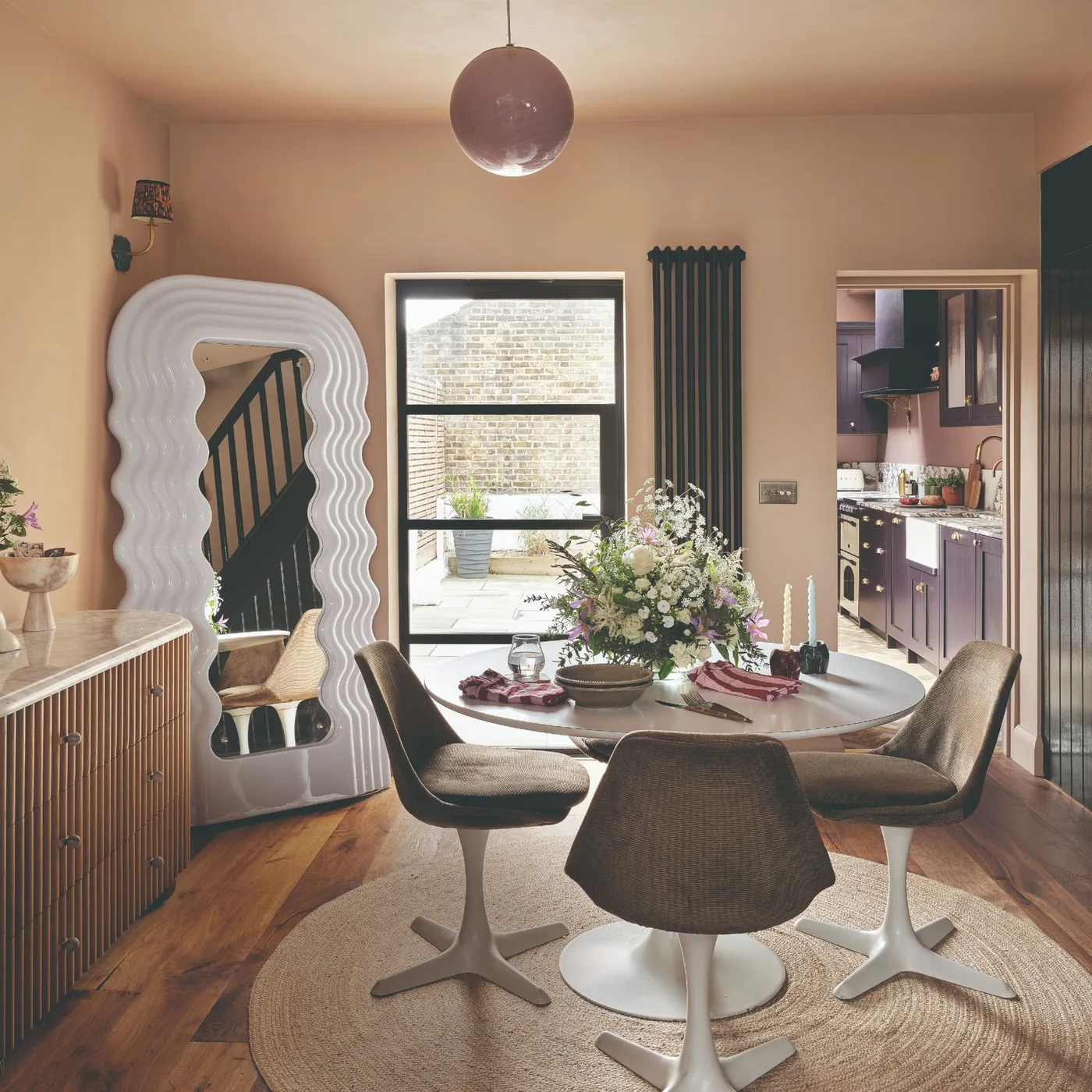
Place a Floor Mirror beside a Sideboard
 SaveSupport Non AI Creator
Image credit: Future PLC/Chris Snook
A floor mirror beside the sideboard provides a different arrangement from hanging glass directly above it. The wavy white frame supplies the strongest decorative outline, while the timber cabinet contributes finer vertical lines. The pale table top repeats white lower in the room without copying the mirror’s shape.
Choose a floor mirror designed for the intended placement and secure it according to its anti-tip instructions. Leave room for the nearby chair and cabinet drawers to move. Check the reflected staircase or doorway from normal viewing positions, and avoid placing the mirror where a door could strike its frame.
IDEA 14 / 15
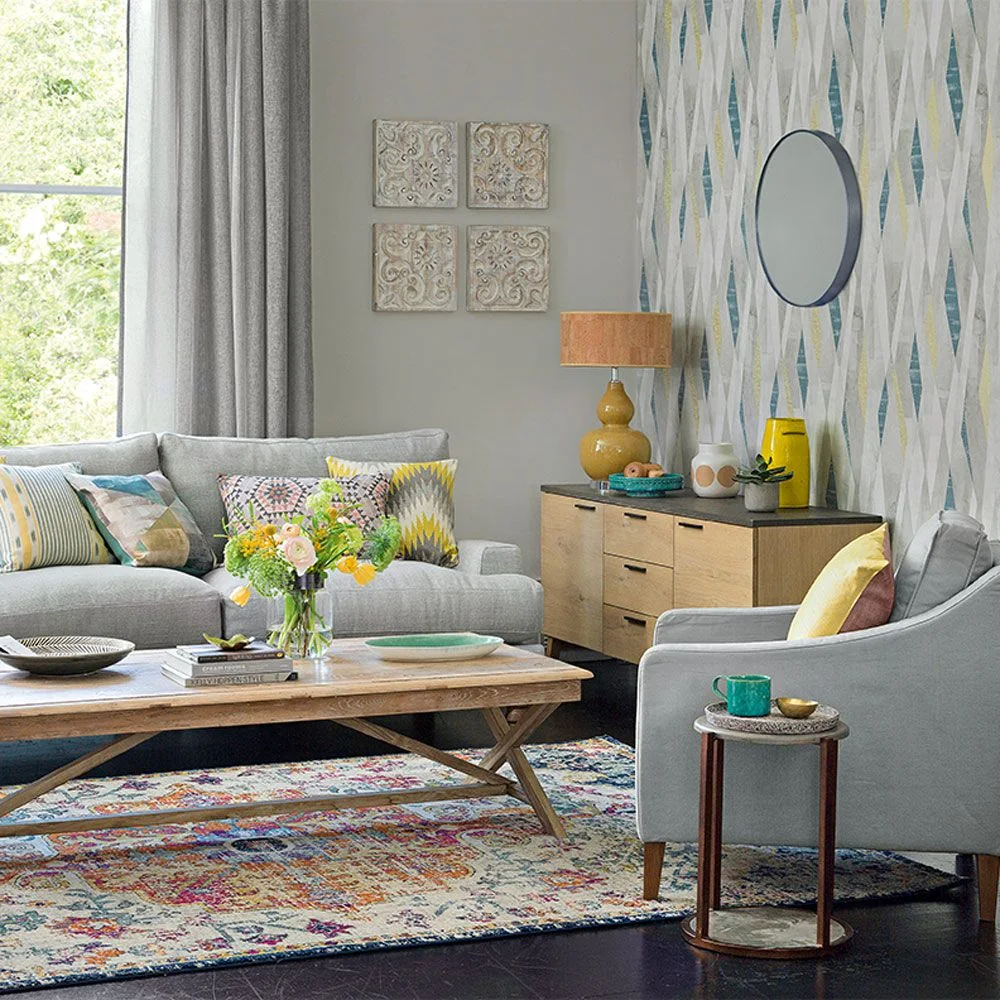
Keep the Mirror Simple above Patterned Wallpaper
 SaveSupport Non AI Creator
Image credit: Future PLC/Tim Young
The mirror’s plain circular outline contrasts with the pointed shapes in the wallpaper. A pale timber sideboard provides closed storage below without repeating that wall pattern. Yellow vessels and a lamp pick up smaller warm accents in the cushions and rug, connecting the cabinet to the seating group.
When the wall is already busy, compare a simple frame before choosing an ornate one. Keep the cabinet top practical for the items used in that room, and group smaller decorations so they can be moved for cleaning. Check the mirror’s height from the sofa as well as while standing beside it.
IDEA 15 / 15
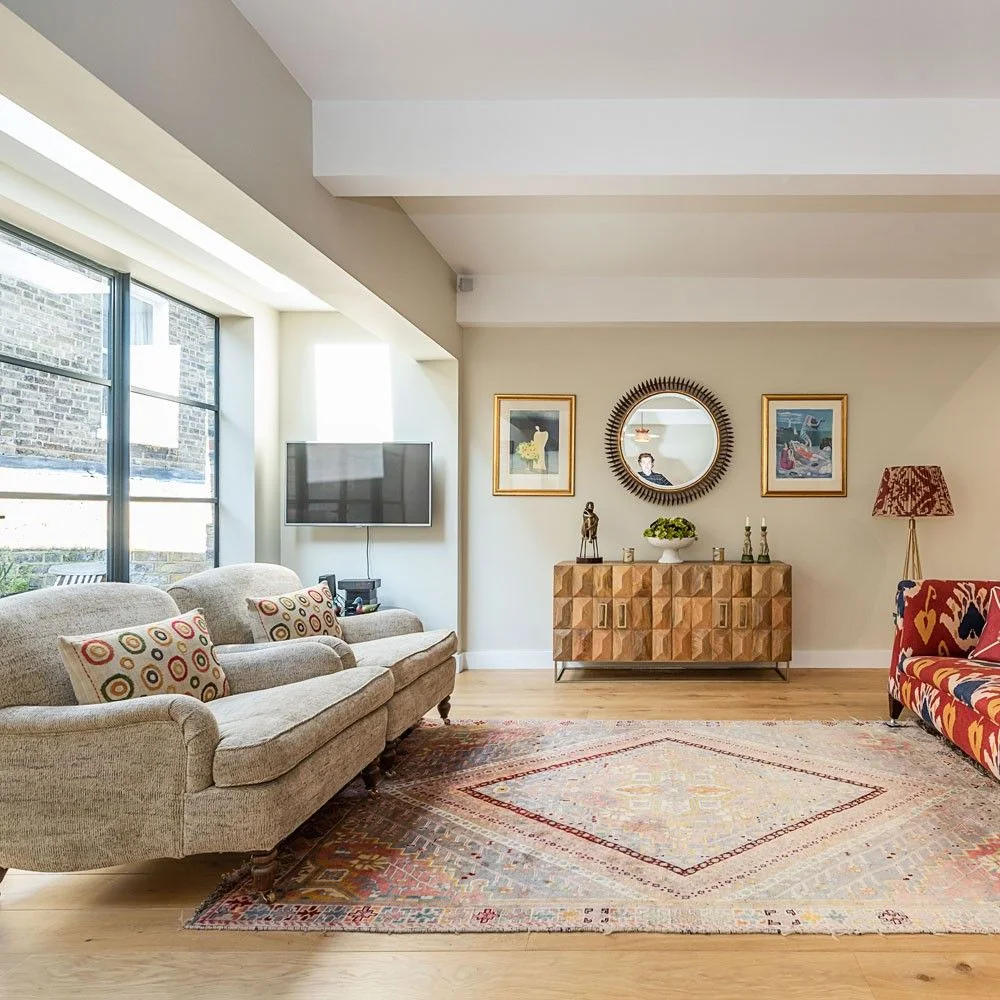
Flank a Round Mirror with Two Pictures
 SaveSupport Non AI Creator
Image credit: Hamptons International
Two pictures give the round mirror a wider wall arrangement above the sideboard. The warm frames relate to the timber fronts, while the pale wall leaves clear space around each outline. A few smaller objects on the cabinet keep the wall group more prominent than the tabletop display.
Arrange paper templates for all three wall pieces before fixing them, checking the group’s relationship to the cabinet rather than the entire wall alone. Leave a usable area on top for daily belongings. If the mirror reflects a television or a bright window, adjust its position before drilling the final holes.
BRING IT ALL TOGETHER
Plan the reflection as carefully as the frame
Choose storage that holds what the room needs before deciding the final mirror size. Measure with doors and drawers open, and check the reflected view from the doorway, table or sofa. A pleasing arrangement should remain useful when the room is occupied.
Use the mirror manufacturer’s fixing instructions and suitable wall hardware. Keep lighting comfortable in reflection and protect the cabinet top beneath plants, drinks and heavy vessels. A smaller, well-positioned display can be easier to live with than filling every part of the surface.