A Scandi-inspired dining room starts with furniture that is comfortable to use and simple enough to live with. Warm wood, good light and useful storage can make the room welcoming without turning every surface into a display. There is room for color, collected chairs and personal pictures within that approach.
These photographed dining areas include separate rooms, compact breakfast corners and kitchen-diners. Compare the way each table relates to its seats, walls and walking routes. A calm palette is helpful, but the layout must still work when everyone is seated and the kitchen is in use.
PART 01
Start With Simple and Useful Furniture
IDEA 01 / 20
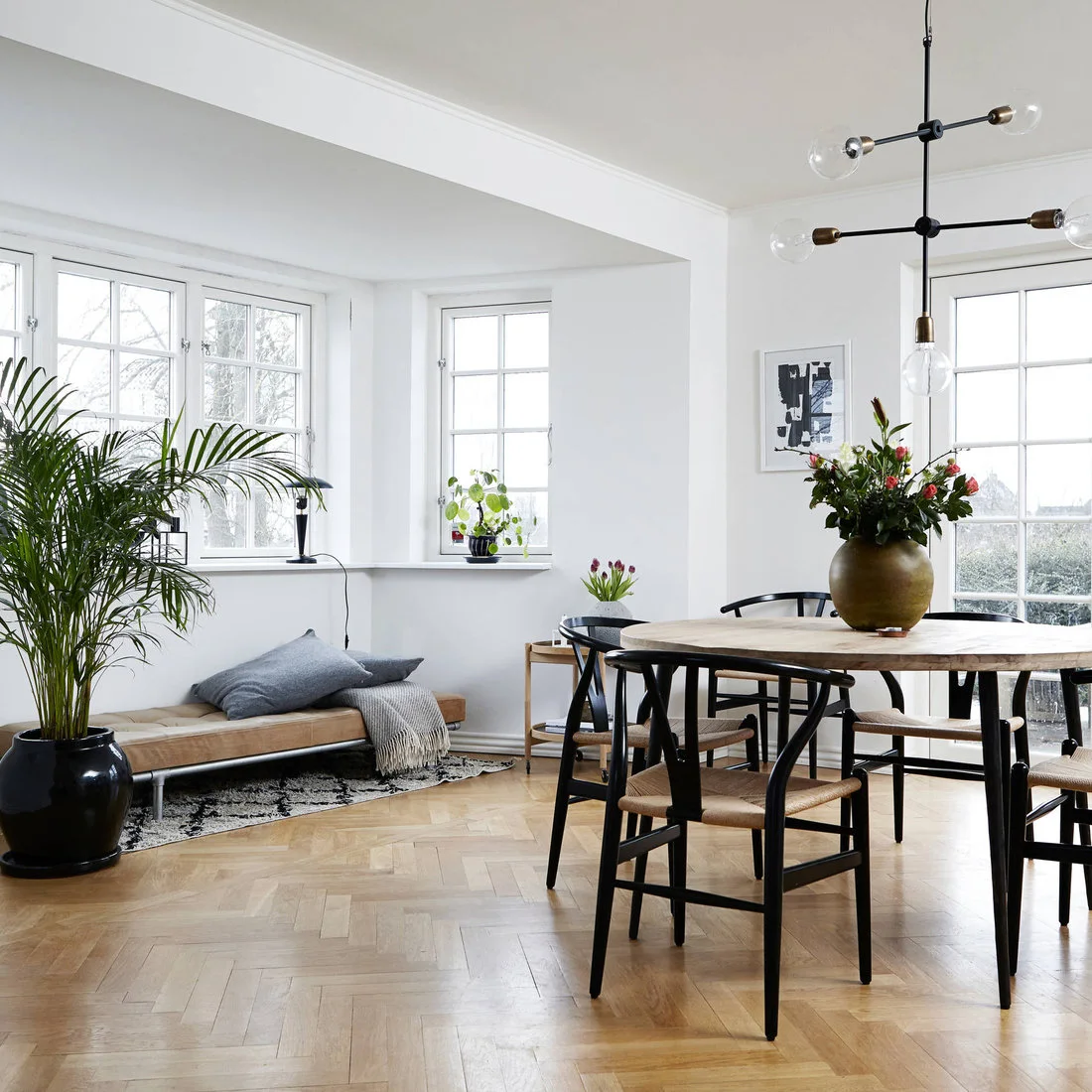
Combine a Round Wood Table With Dark Chairs
 SaveSupport Non AI Creator
Source: www.houzz.com.au
The round tabletop softens the corner of the room, while black chairs give its pale wood a clear outline. White walls and generous window space keep the furniture from feeling heavy. A separate low bench creates a quieter place to sit beyond the meal area.
Try the table with all chairs pulled out before deciding it fits. A round shape can help movement, but the occupied seating still needs room. Keep plants and extra seating outside the dining route, and choose a table base that does not compete with people’s feet.
IDEA 02 / 20
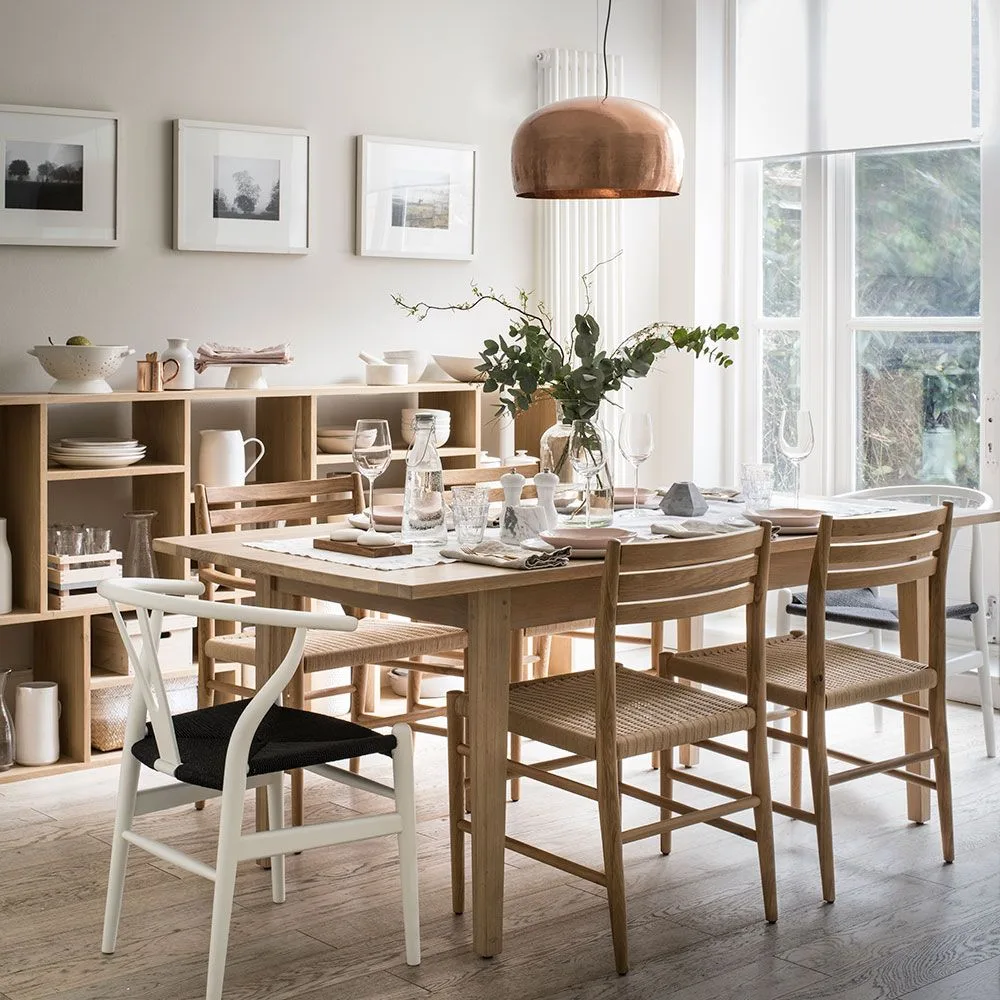
Warm Pale Furniture With One Metal Pendant
 SaveSupport Non AI Creator
Image credit: Future PLC/Dominic Blackmore
The warm pendant introduces a different surface without interrupting the room’s simple palette. Wood furniture and woven seats repeat a natural texture below it, while the open shelf keeps daily dishes close. White walls allow the table and light to remain the main elements.
Check the shade’s size against the table and the view across it when seated. A reflective finish may need regular dusting and wiping. Dining room lighting ideas can help you compare a single broad shade with several smaller fittings before an electrician positions the ceiling connection.
IDEA 03 / 20
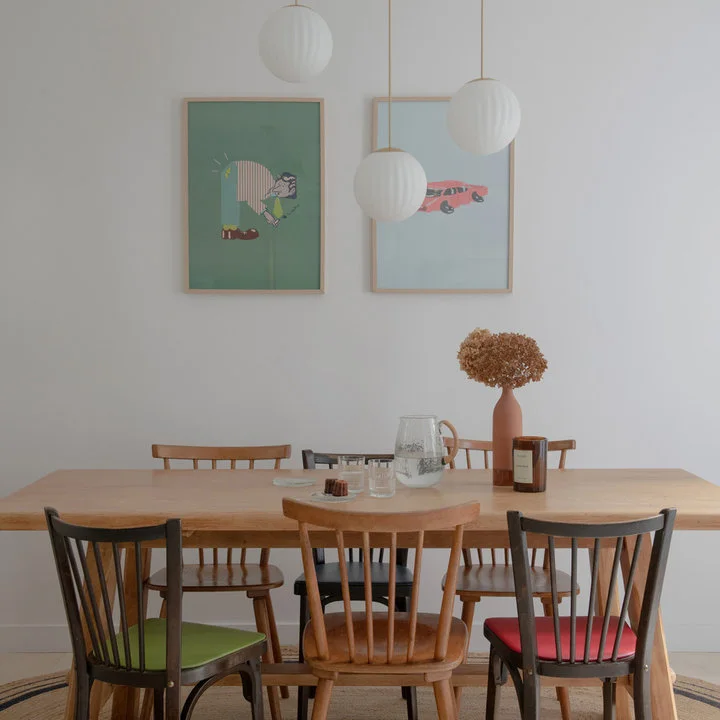
Keep Mixed Chairs Connected by Shape
 SaveSupport Non AI Creator
Source: www.houzz.com.au
The chairs differ in color, but their open backs and similar proportions help them work as a group. Small colored seat pads add interest below a restrained wood tabletop. Three rounded white lights and a pair of framed prints keep the wall above the table light.
When combining secondhand chairs, compare seat heights, stability and how each one tucks beneath the table. Similar silhouettes can connect a mixture more effectively than identical paint. Keep cushions securely in place and choose covers that can be cleaned after everyday meals rather than only looking good in a photograph.
IDEA 04 / 20
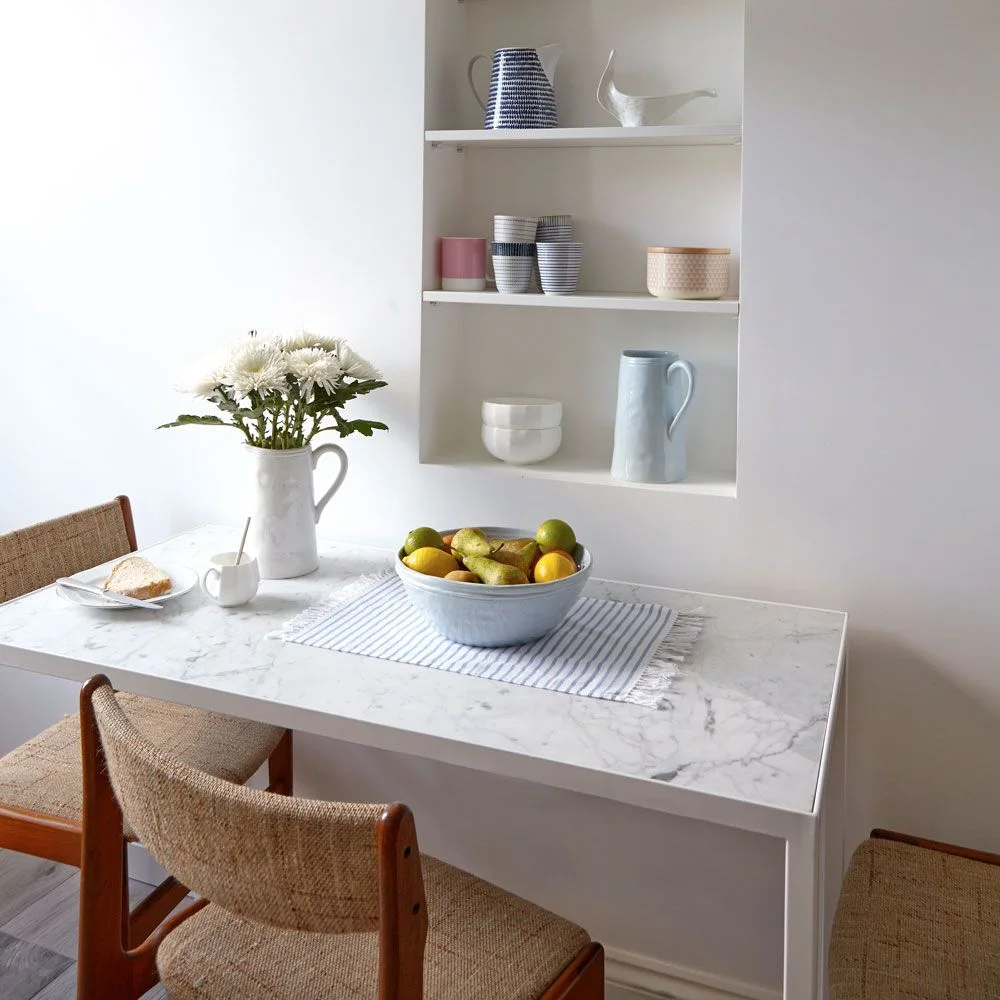
Give a Small Table Useful Recessed Storage
 SaveSupport Non AI Creator
Image credit: Future PLC/David Parmiter
The recessed shelving stores dishes without pushing a deep cabinet into the dining area. Pale surfaces make the small table feel integrated with the wall, while woven chair backs introduce texture. A few colored cups add variation in items that already have an everyday purpose.
Use reachable shelves for the dishes you use most and keep heavier items lower down. A wall recess should be assessed before alteration rather than cut wherever storage seems useful. Protect the table from spills according to its actual surface, and avoid overfilling shelves beside the eating position.
PART 02
Make Built-In Seating Comfortable
IDEA 05 / 20
Make a Compact Bench Feel Comfortable
 SaveSupport Non AI Creator
Source: www.houzz.com.au
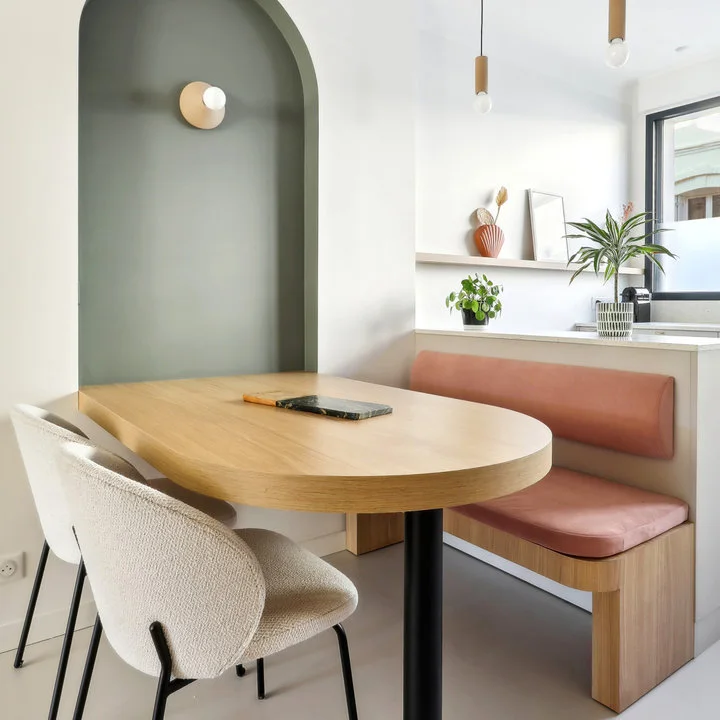
The pink bench gives this small dining area a soft backdrop without darkening the room. Its wood base repeats the table, while the green recess adds a second muted color. Rounded table corners and pale chairs keep the small arrangement visually gentle.
Choose a table base that allows diners to move along the bench without bumping their knees. Check cushion depth together with table height rather than judging each piece separately. A fixed bench makes sense only when its seating can be entered comfortably and its upholstery suits regular meals.
IDEA 06 / 20
Bring a Corner Bench Into the Kitchen
 SaveSupport Non AI Creator
Source: www.houzz.com.au
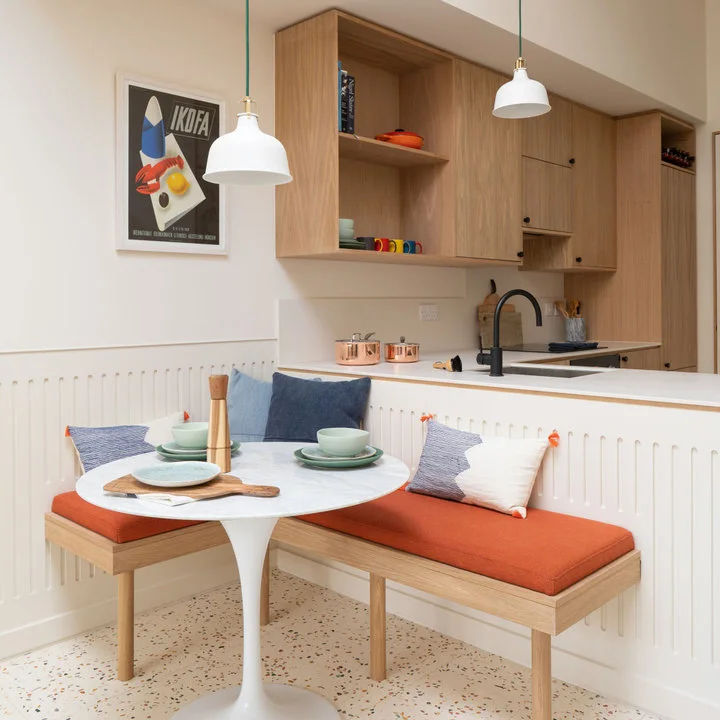
The corner bench creates an eating place along the kitchen’s edge, leaving the central work area separate. Its orange cushions provide a strong but contained color accent. White paneling, a pale tabletop and simple hanging shades prevent the wood cabinets and bench from feeling too dense.
Mark out the table and occupied seats before fitting a bench in a kitchen. The cooking route and appliance doors need to stay usable. Choose a washable cushion cover or a practical upholstery finish, and leave access around the table base for cleaning beneath the fixed seating.
IDEA 07 / 20
Let a Banquette Carry the Color
 SaveSupport Non AI Creator
Source: www.houzz.com.au
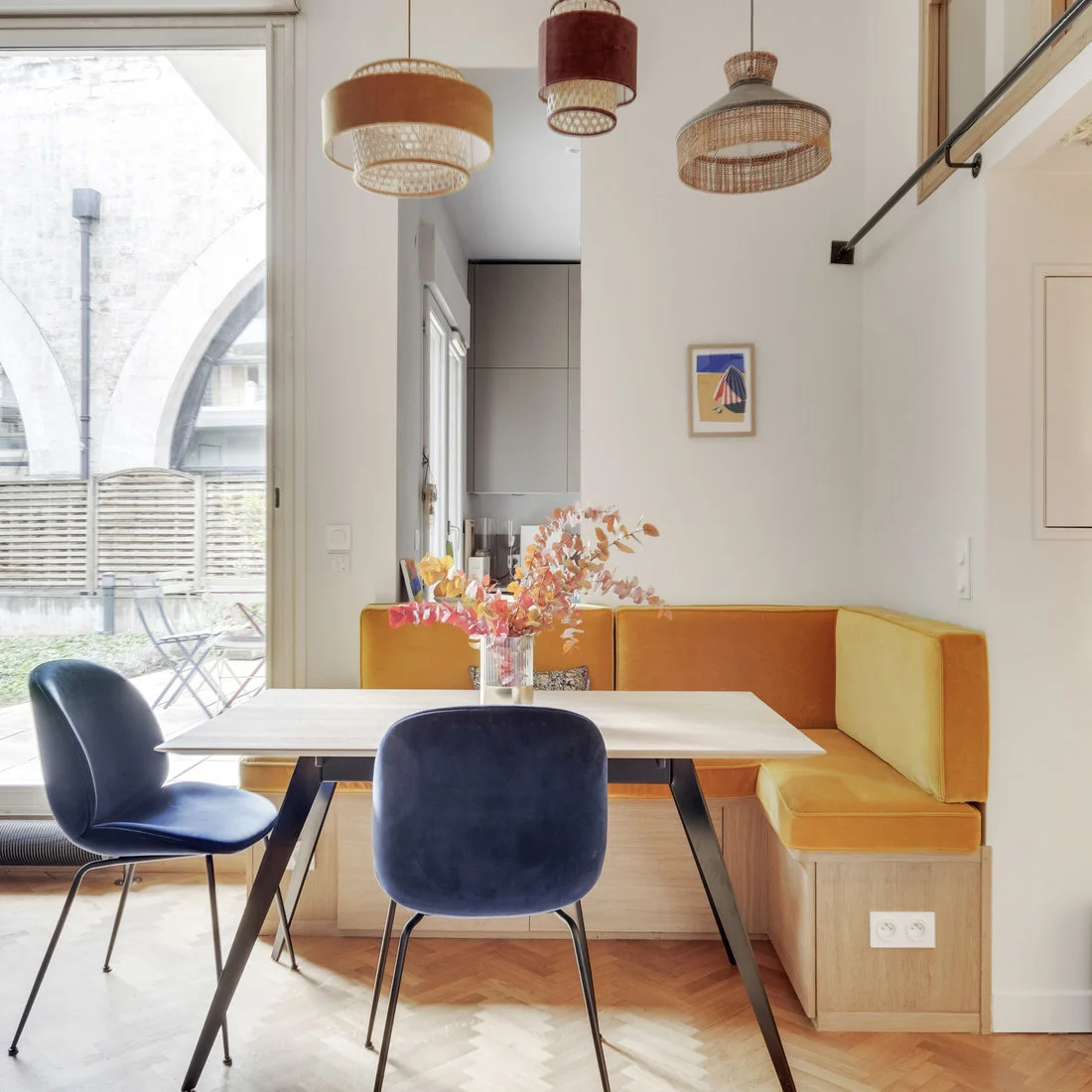
The mustard upholstery defines this dining corner while the pale table and wood bench base keep the surrounding space light. Navy chairs provide a darker counterpoint on the open side. The varied woven shades share texture even though their shapes and colors differ.
Keep a strong upholstery color on one main piece if you want the room to remain easy to update. Compare fabric care instructions before committing to fixed seating. Test the bench ends and chair movement, especially where the dining area sits beside a door to an outdoor space.
IDEA 08 / 20
Soften Straight Cabinetry With a Curved Bench
 SaveSupport Non AI Creator
Image credit: Storie Collective/Unique Kitchens & Baths/Stacy Zarin Goldberg Photography
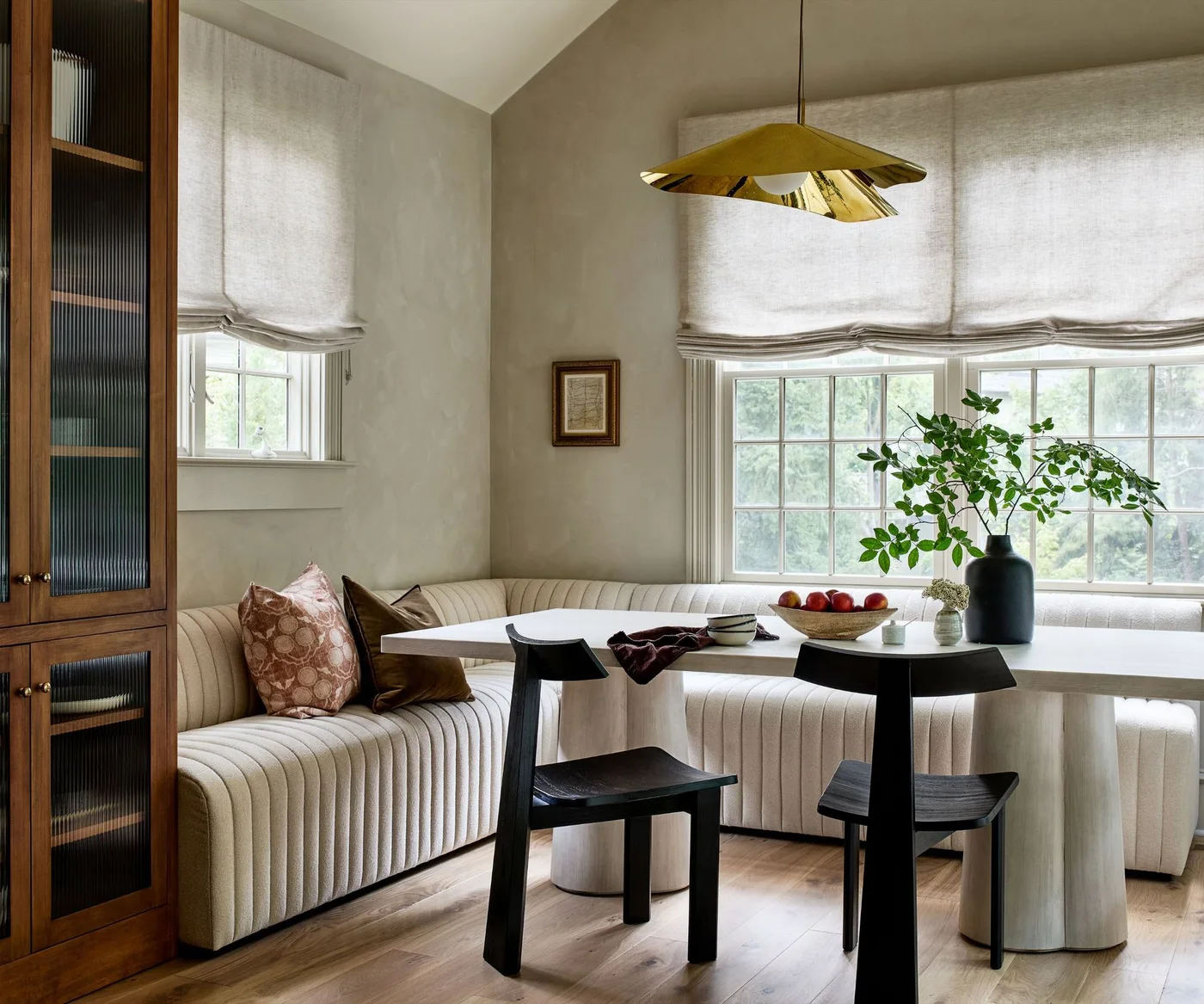
The curved upholstery gives the dining corner a comfortable outline beside the tall straight cabinet. A pale oval table keeps the center light, while dark chairs add contrast without another large block of color. Soft blinds repeat the bench’s muted tone around the windows.
A padded bench needs enough table clearance for diners to sit naturally without leaning forward. Check that removable cushions or covers can be cleaned. Japandi dining room ideas offer related ways to balance simple furniture and tactile finishes, especially when you prefer a quiet palette over bright accents.
PART 03
Add Color With Clear Boundaries
IDEA 09 / 20
Define the Dining Wall With a Painted Shape
 SaveSupport Non AI Creator
Source: www.houzz.com.au
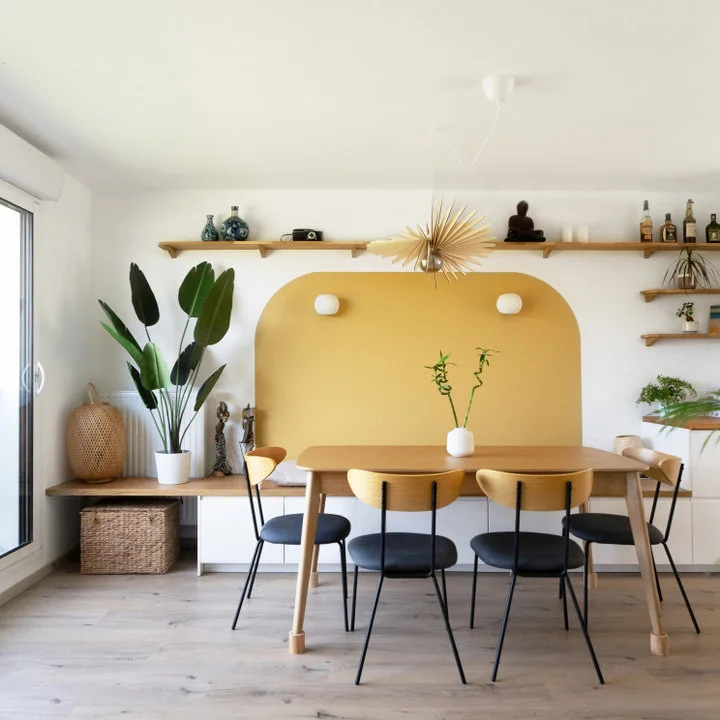
The rounded paint shape gives the table a clear backdrop without covering the whole room in strong color. Wood chairs and a matching table keep the furniture straightforward. The long shelf draws the eye horizontally, connecting the dining position with the storage and plants beside it.
Test a large paint sample before deciding where the shape should begin and end. Keep the shape related to the table’s final position rather than painting first and arranging later. Secure the shelf properly and leave space above seated heads instead of treating every part of the wall as display storage.
IDEA 10 / 20
Repeat a Gentle Curve Behind a Round Table
 SaveSupport Non AI Creator
Source: www.houzz.com.au
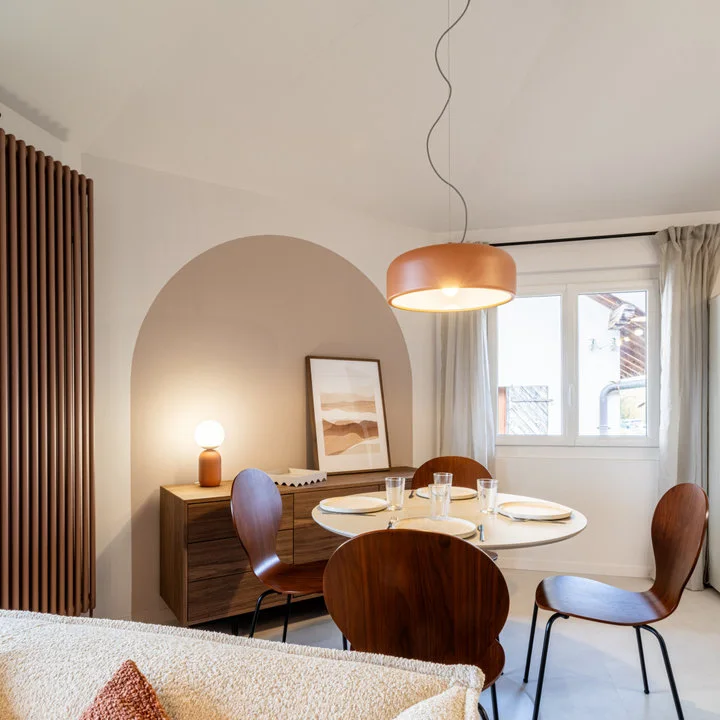
The painted arch echoes the round table and curved chair backs, making a small group of ordinary pieces feel connected. A low sideboard adds useful storage without blocking the pale wall. The warm pendant and small lamp introduce light at two different levels.
Choose the sideboard depth with the occupied dining chairs in mind. Rounded furniture can soften a corner, but it does not remove the need for a clear route. Keep table lighting comfortable for conversation, and use a few objects on the cabinet rather than crowding the whole surface.
IDEA 11 / 20
Use Striped Upholstery to Animate a Pale Kitchen
 SaveSupport Non AI Creator
Source: www.houzz.com.au
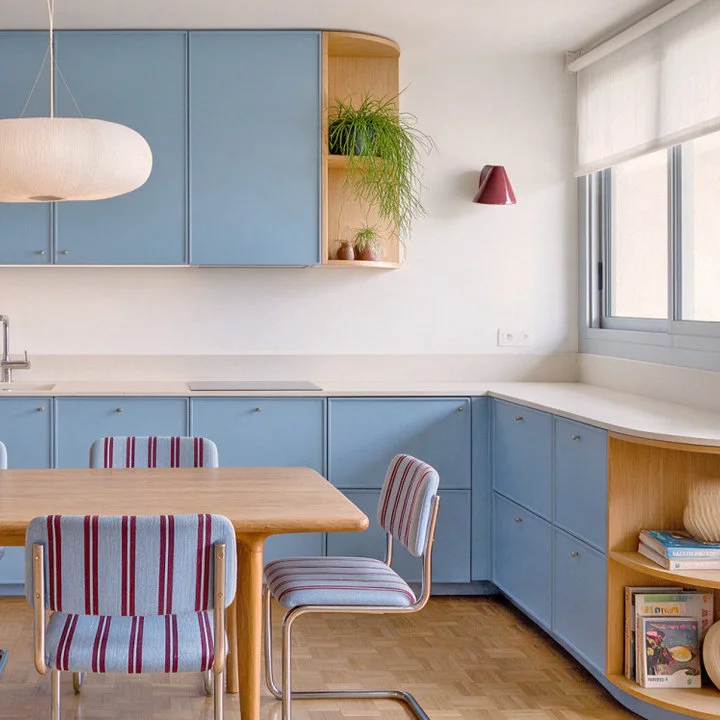
The striped chairs add rhythm to a kitchen-diner that otherwise uses broad plain cabinet fronts. Their wood frames connect with the table and curved open shelving. Pale blue introduces color across a large area without requiring patterned walls or a heavily decorated tabletop.
Patterned chairs are a useful smaller commitment if you like color but want to keep fitted cabinetry simple. Check upholstery cleaning instructions and chair comfort before choosing a stripe. Kitchen dining room combinations show other ways to give meals their own place without obstructing the working kitchen.
IDEA 12 / 20
Contain a Busy Picture Collection Above Simple Furniture
 SaveSupport Non AI Creator
Source: www.houzz.com.au
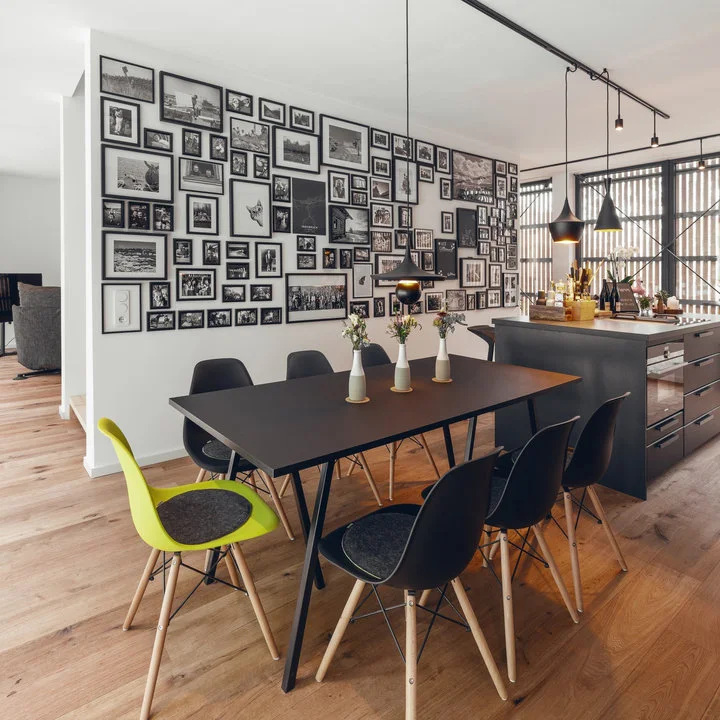
The many framed pictures give this room personality, while a dark table and restrained chair group keep the lower half simple. A single bright chair adds a playful interruption. Wood flooring softens the black outlines, and small table vases avoid competing with the wall.
Arrange a large picture collection on paper or on the floor before hanging it. Repeated frame color can connect different image sizes without making them identical. Leave the tabletop useful for meals, and make sure chairs remain clear of the kitchen island when both areas are occupied.
PART 04
Make the Finishing Details Useful
IDEA 13 / 20
Let Rounded Lighting Soften Wood Paneling
 SaveSupport Non AI Creator
Source: www.houzz.com.au
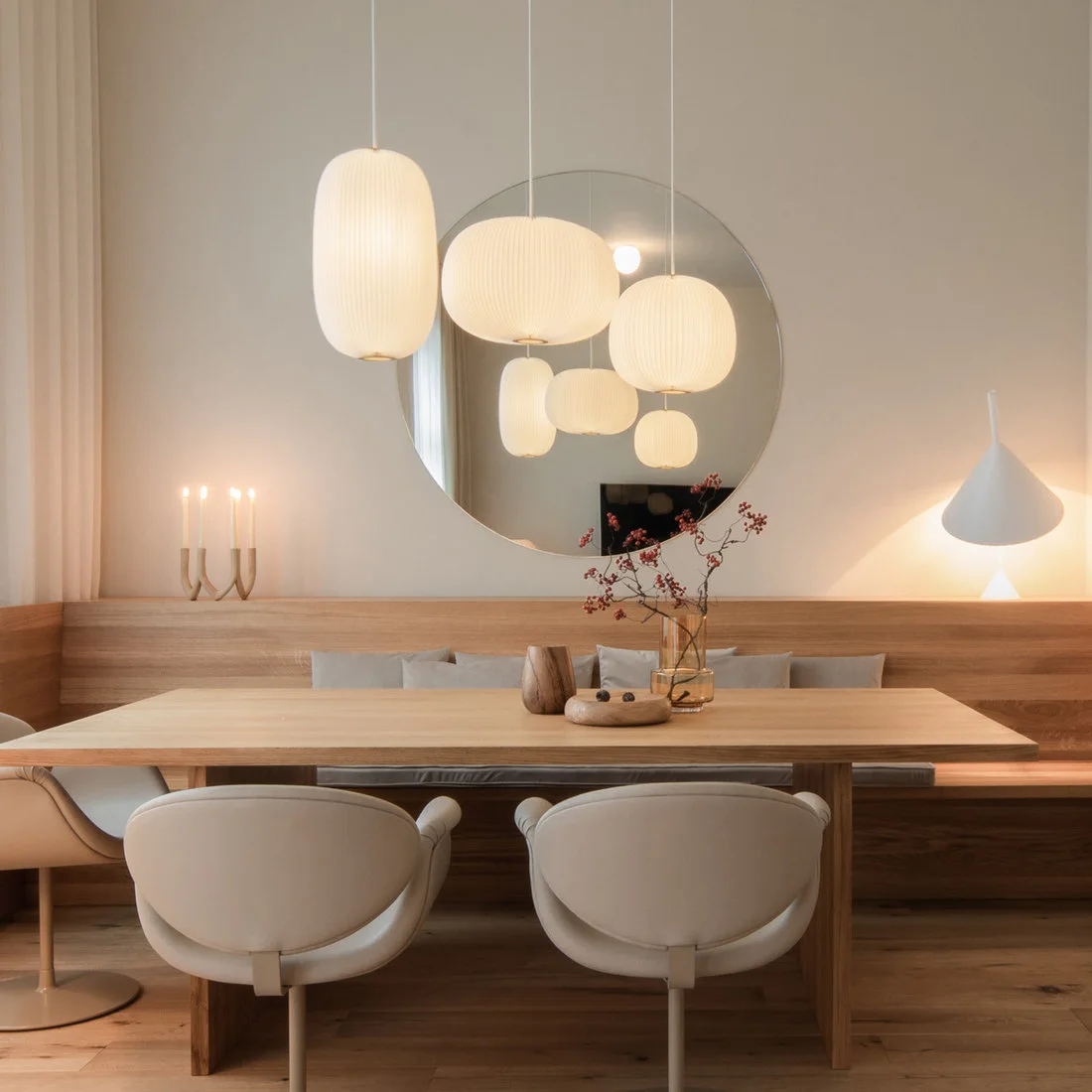
The white shades give the wood-lined dining corner a soft upper layer. Their reflections in the round mirror add depth, while pale chairs and bench cushions keep the table from becoming part of one uninterrupted timber block. A small display leaves the tabletop largely available.
Mirrors can reflect pendant glare as well as light, so check the view from each seat before fixing their positions. Choose lighting with comfortable output for meals. Keep the bench cushion secure, and consider how you will clean along its junction with the wood backing.
IDEA 14 / 20
Keep Furniture Simple Under an Interesting Ceiling
 SaveSupport Non AI Creator
Source: www.houzz.com.au
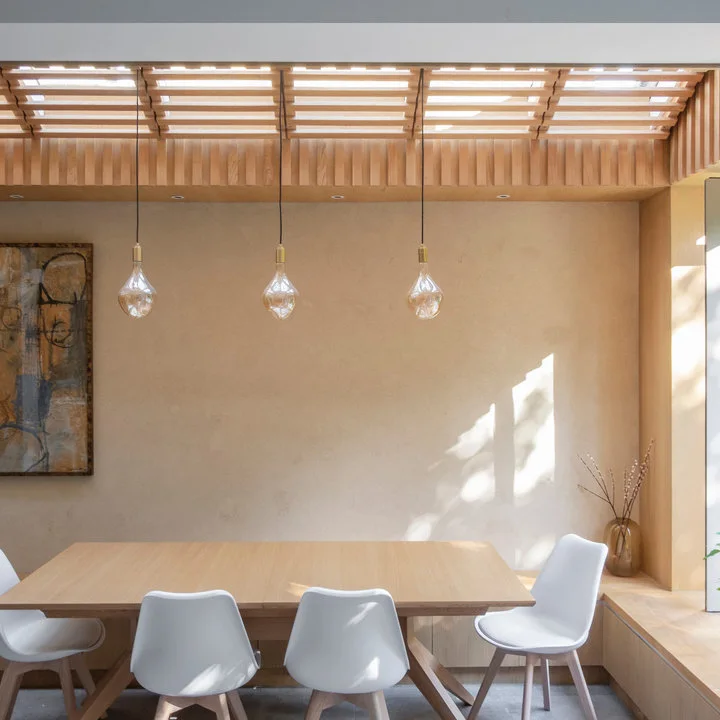
The slatted overhead structure creates enough pattern that the dining furniture can stay very simple. Pale wood and white chairs keep the center bright, and small clear lights preserve the ceiling view. The low seat beside the glazing gives the edge of the room another practical use.
Borrow the restrained furniture palette even if your room has an ordinary ceiling. Structural glazing and shading need professional design for weather, glare and temperature. Position the table around the usable floor and door routes, with a clear distinction between everyday dining seats and occasional window seating.
IDEA 15 / 20
Preserve Light With a Glazed Room Divider
 SaveSupport Non AI Creator
Source: www.houzz.com.au
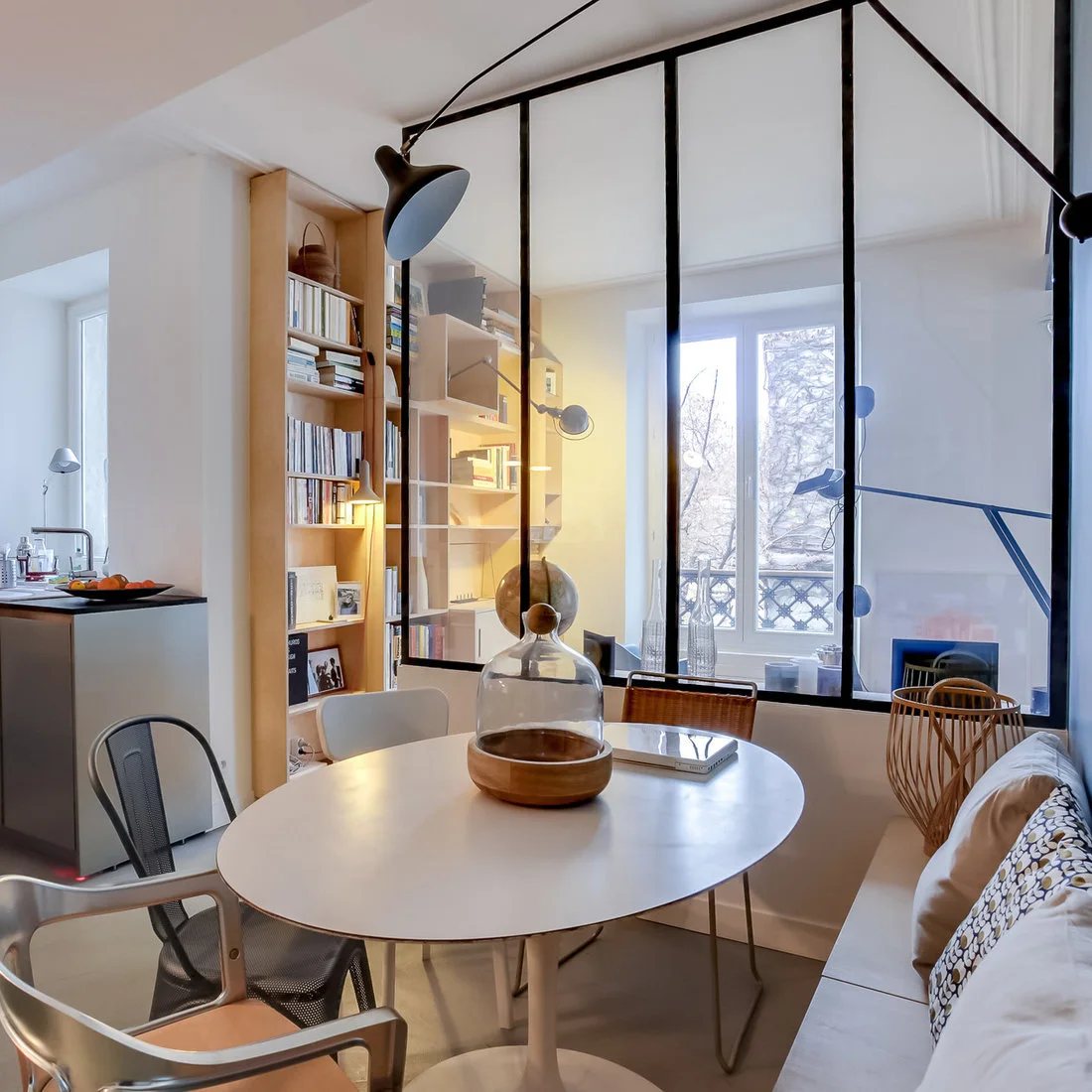
The glazed partition divides the adjoining room while allowing daylight to pass through. Black framing and a long adjustable lamp give the pale dining corner definition. A round tabletop sits comfortably between the bench and loose chairs without introducing a strong directional edge.
A glazed divider needs suitable safety glazing and a door arrangement that works with the table. Do not place a dining chair inside the opening sweep. Keep the lamp out of head space and compare reflections at night, when glass can feel more visually prominent than it does during the day.
IDEA 16 / 20
Use an Oval Table in a Bright Apartment
 SaveSupport Non AI Creator
Source: www.houzz.com.au
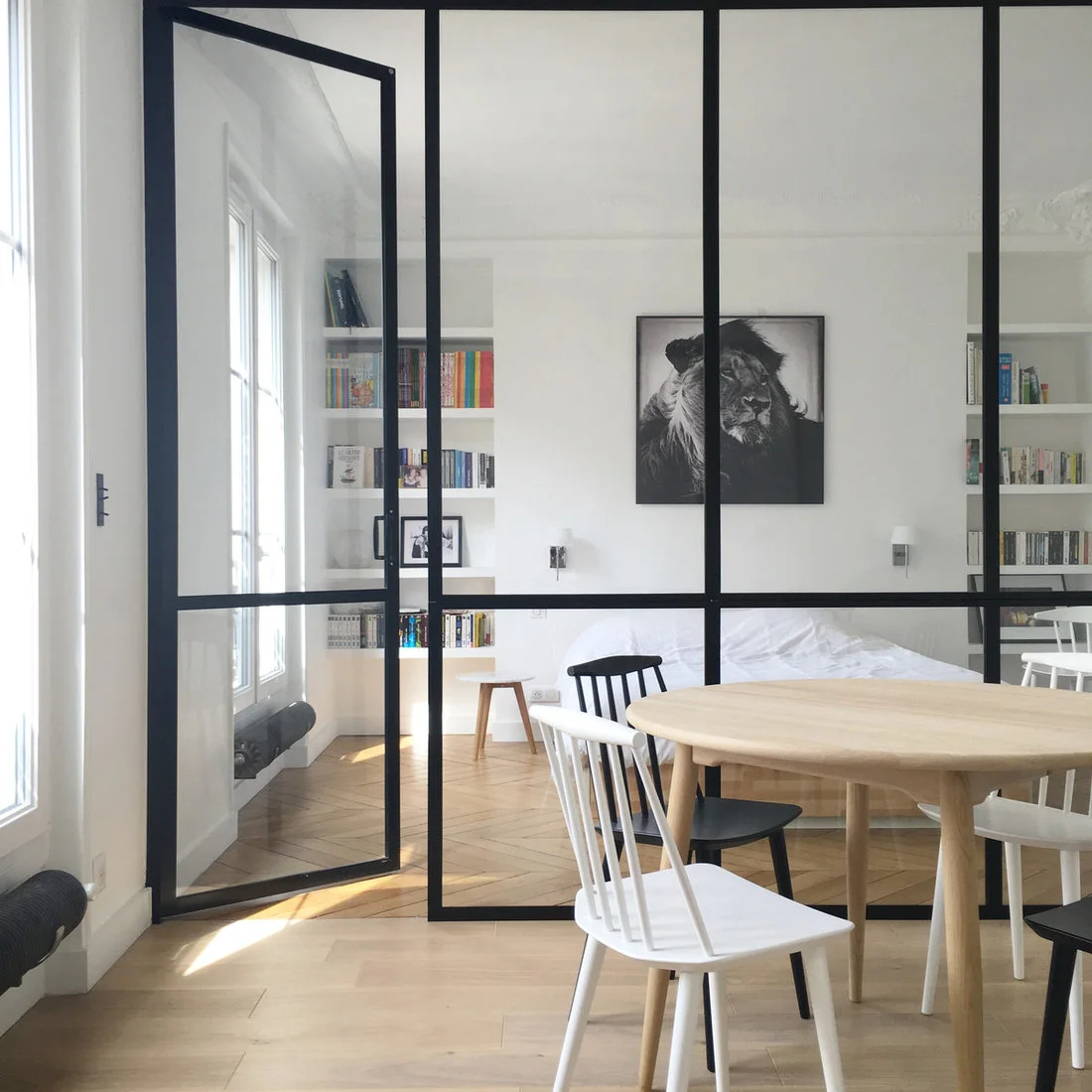
The oval table brings a softer shape into a room divided by strong rectangular glazing. Black-and-white chairs repeat the partition’s contrast, while pale flooring keeps the shared space bright. The minimal table display allows the different room functions to remain readable rather than visually tangled.
In a compact apartment, allow enough room for both occupied chairs and access to the adjoining space. Glass provides visual connection rather than privacy, so consider what the room beyond needs. A simple table shape is useful only when its leg positions work with the chairs you already own.
IDEA 17 / 20
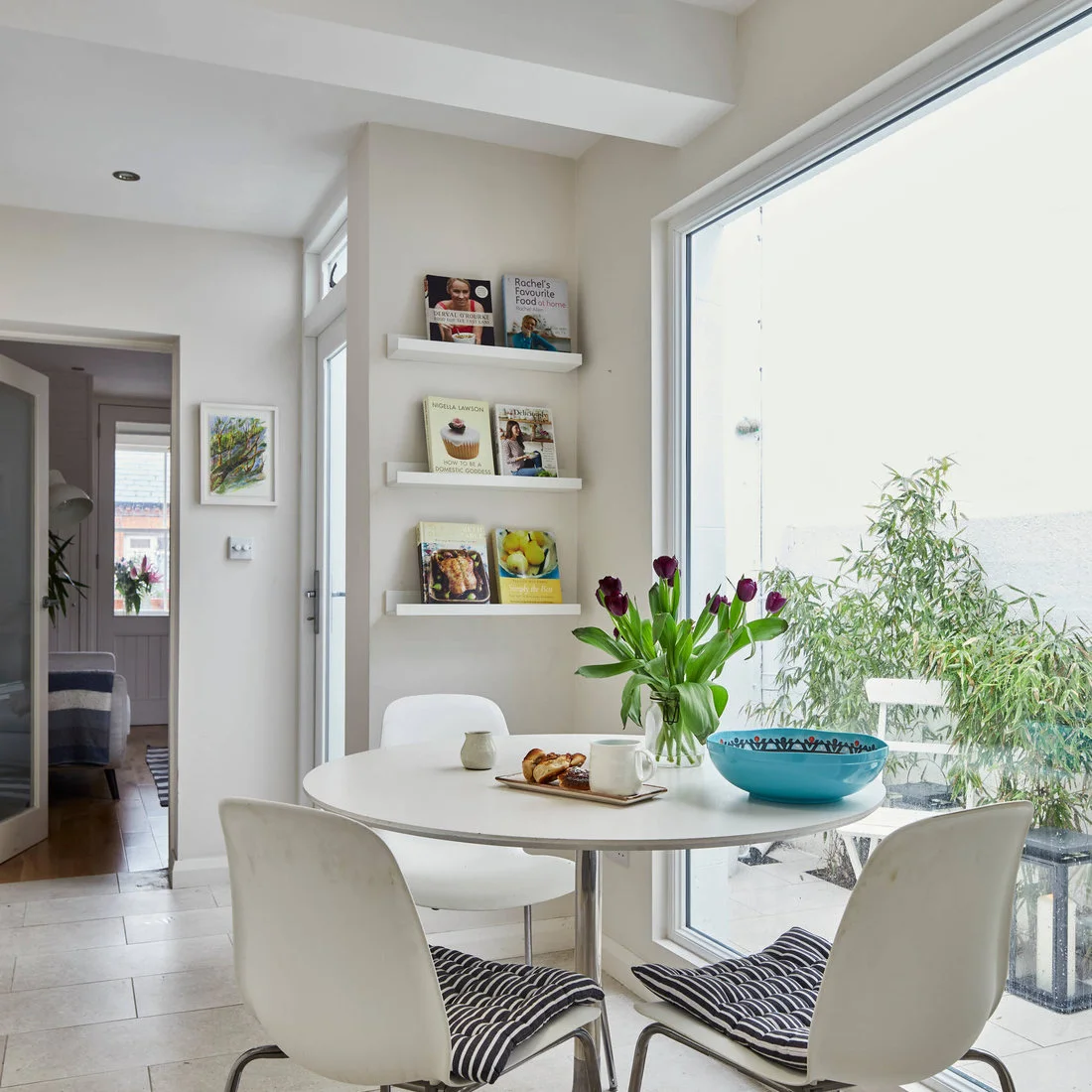
Put a Small Round Table Beside the Window
 SaveSupport Non AI Creator
Source: www.houzz.com.au
The small table uses a bright corner without filling the window wall with cabinetry. White chairs keep the furniture light, while a few patterned cushions provide contrast. Narrow ledges store cookbooks face forward, turning useful kitchen reading into a modest wall display.
Check that the chairs do not press against glazing or trap curtains when occupied. Window-side seating may need glare control at certain times of day. Keep the display ledges secure and away from the main walking route, and move taller flowers during meals if they interrupt conversation.
IDEA 18 / 20
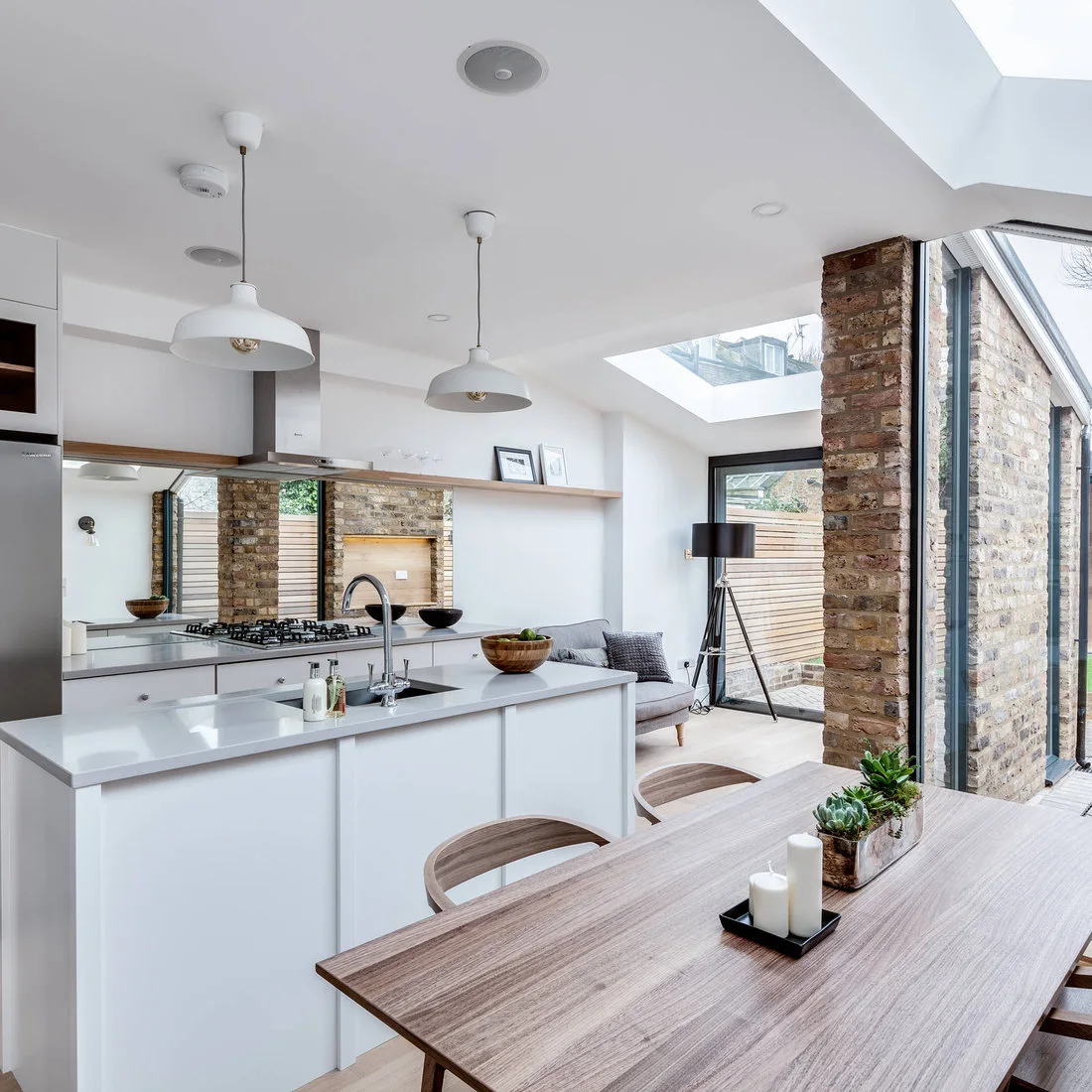
Connect a Wood Dining Table to a White Kitchen
 SaveSupport Non AI Creator
Source: www.houzz.com.au
The dining furniture adds warmth to the clean white kitchen, while the brick piers introduce texture along the glazed wall. Rooflights and broad doors bring light across both functions. A low central arrangement leaves most of the tabletop available for serving and conversation.
Keep the table far enough from the island that dining chairs and kitchen tasks can coexist. Measure the route to the outdoor doors with chairs pulled out. If the table also serves for work, choose lighting and nearby storage that make it easy to clear the surface before dinner.
IDEA 19 / 20
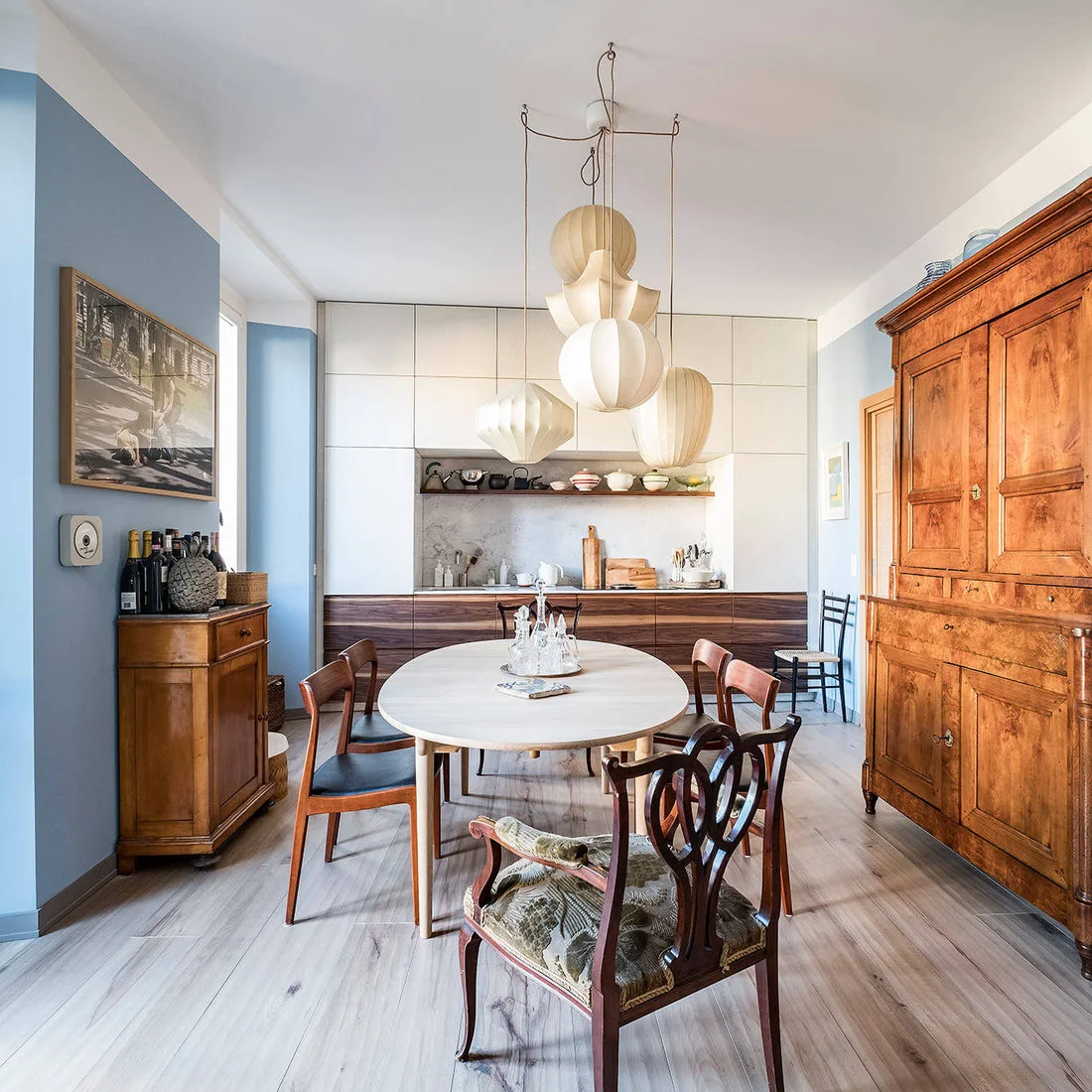
Keep Older Wood Pieces Beside Simpler Shapes
 SaveSupport Non AI Creator
Source: www.houzz.com.au
The plain oval table gives several older wood pieces room to coexist without making the whole room formal. Pale lighting and walls lighten their darker tones, while blue wall sections add a quiet color change. The mix shows how a simple dining area can accommodate furniture collected over time.
Keep the largest older pieces where their doors can open without moving dining chairs. Mixed wood tones need not match exactly, but balance their visual weight across the room. Check each chair for sound joints and comfortable proportions rather than choosing a set solely for its patina.
IDEA 20 / 20
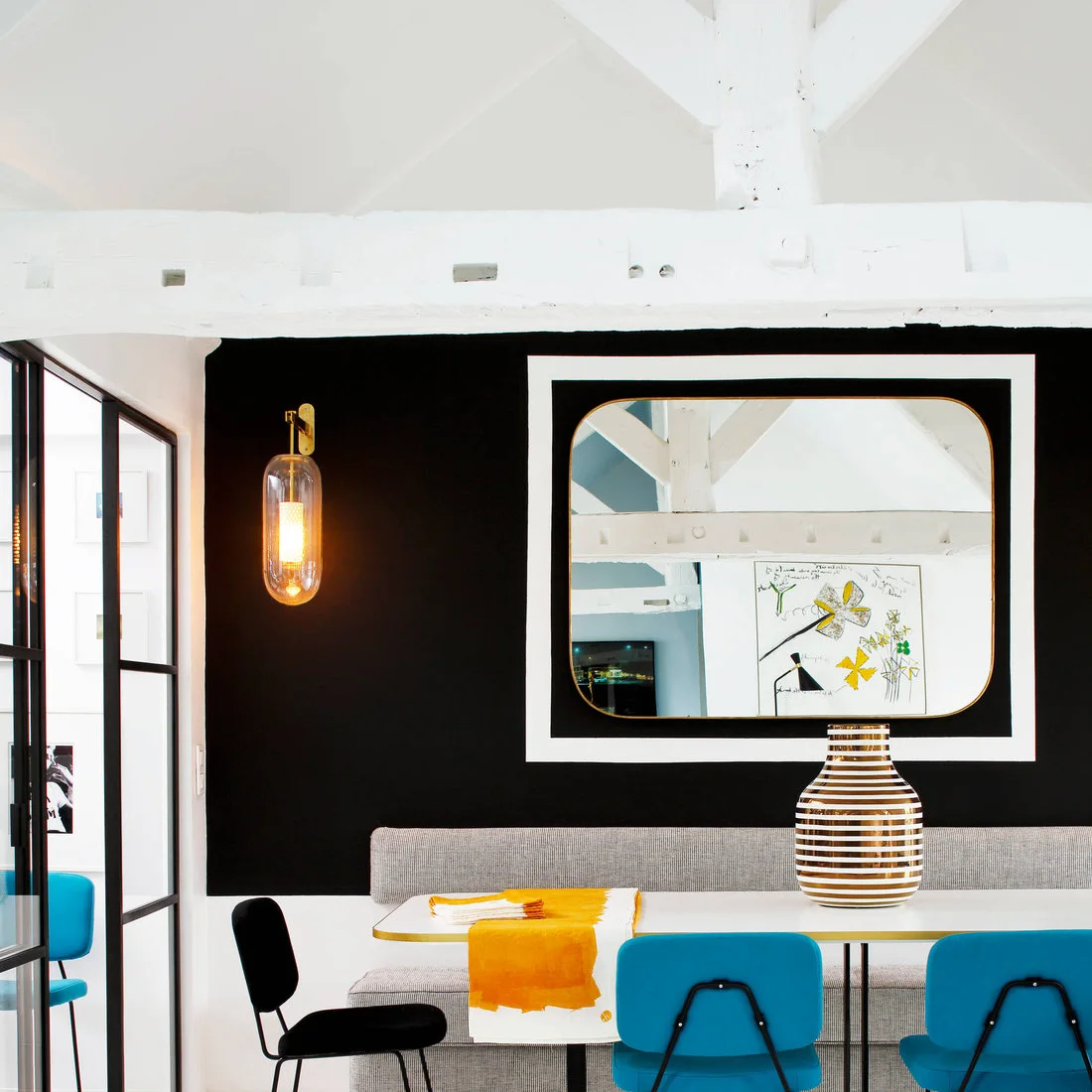
Use a Dark Backdrop Without Losing Light
 SaveSupport Non AI Creator
Source: www.houzz.com.au
The black wall gives the pale table a crisp outline, while the broad mirror reflects the bright room around it. Blue chairs and a yellow textile add concentrated color. White ceiling beams and the light bench keep the dining corner from becoming uniformly dark.
Test dark paint against the daylight your room actually receives. Keep adjacent finishes lighter if you want a strong backdrop without a heavy enclosure. Position the mirror to reflect a view you enjoy from the table, and choose banquette fabric for comfortable daily use rather than appearance alone.
BRING IT ALL TOGETHER
Make the Everyday Layout the Starting Point
Test the table with its chairs in use before buying extra furniture. A round or oval top can soften a small room, but chair movement, table legs and nearby doors determine how comfortably it works. Add a bench only when people can enter and leave it easily.
Build the room around a few connected finishes, then add personality through useful dishes, art, cushions or a single painted area. Keep serving space available and make lighting comfortable at the table. The room should be easy to settle into rather than dependent on a perfectly arranged display.