A Japandi-inspired dining room can pair simpler furniture with warm wooden surfaces, woven textures and quieter colors. Start with comfortable seating and a table that leaves room for people to move. The arrangement should support ordinary meals as well as the occasions when you want to dress it up.
These photographs compare rectangular and round tables, benches, lighter window-side corners and darker furniture. Use each room for the particular feature that suits your home; you do not need to reproduce every accessory. Check chair clearance, storage access and care instructions before adding the final lighting and fabric layers.
PART 01
Start with warm tables and comfortable seating
IDEA 01 / 19
Pair a Strong Wooden Table with a Softer Light
 SaveSupport Non AI Creator
Source: livingetc.com
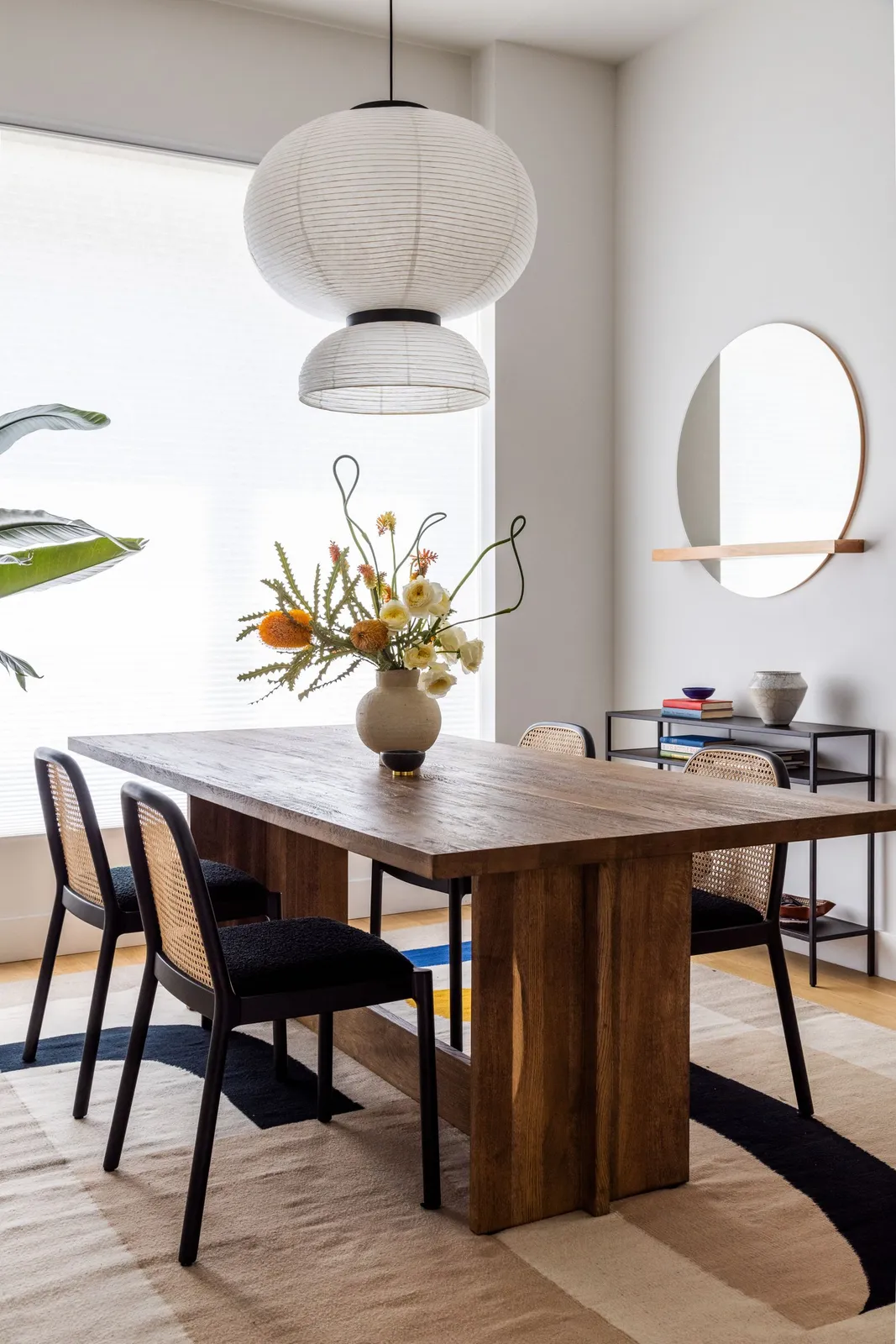
The broad wooden tabletop and substantial legs give this room its clearest warm surface. Dark chair frames introduce contrast, while their woven backs leave some of the background visible. A large pale pendant supplies a softer outline above the table, and the oval mirror repeats that rounded detail nearby.
Try a chair at the table before buying the full set, checking its knee space against the substantial base. Keep the pendant clear of seated sightlines and choose its light output for meals as well as its shape. Boho dining room ideas compare more woven seating when you prefer a more layered variation.
IDEA 02 / 19
Keep a Window-Side Dining Area Open
 SaveSupport Non AI Creator
Image credit: Bruce Damonte. Styling by Logan Sommers
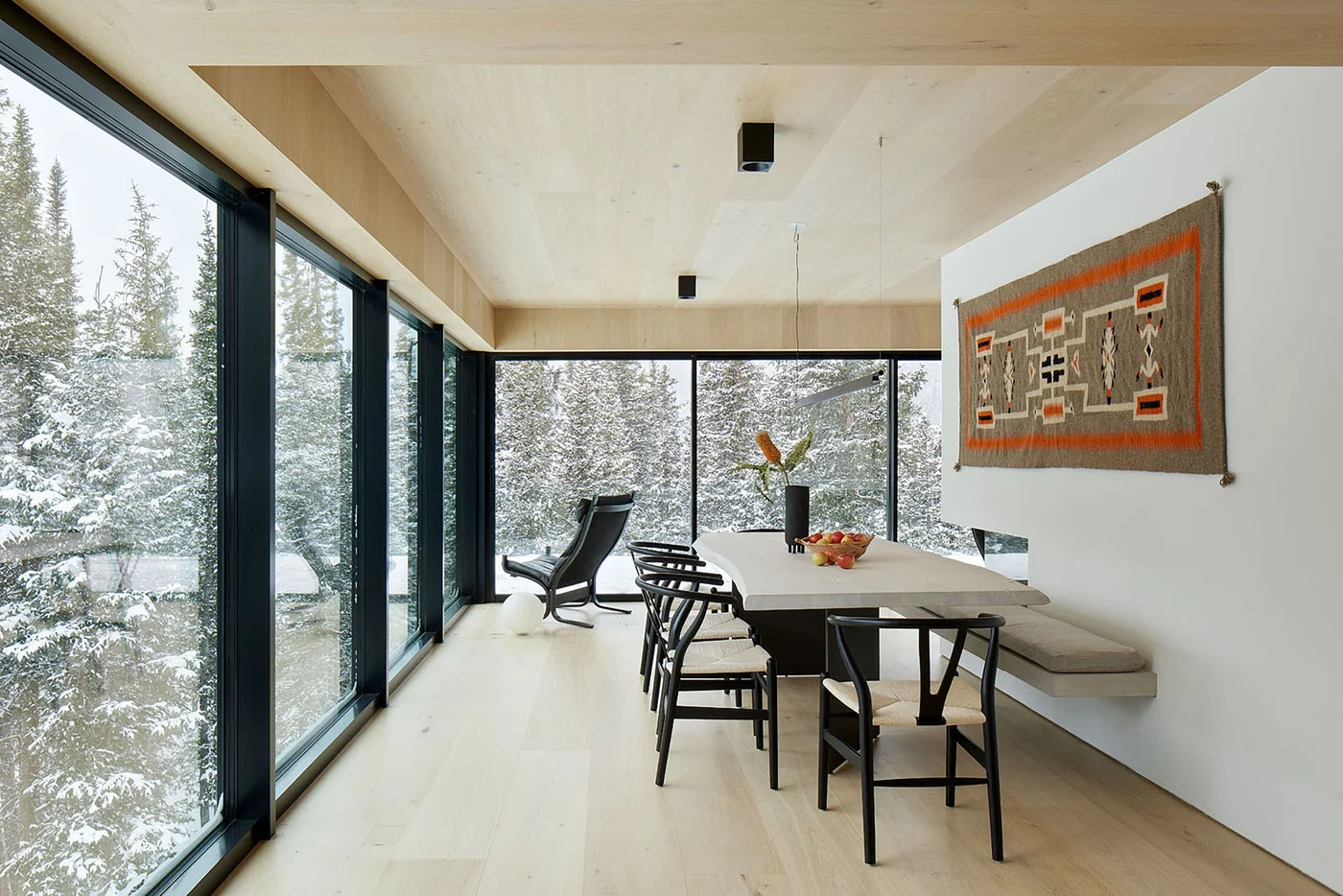
The pale table sits between dark wooden chairs and a cushioned bench along the wall. Broad windows give the arrangement a clear connection to the outdoor view. Wooden ceiling and floor surfaces provide a continuous warmer background, while the woven wall hanging adds one contained area of color.
Check the space behind occupied chairs against the route along your own windows before choosing a similar layout. Keep window controls and any heating accessible rather than treating the glass as a fixed backdrop. A bench can reduce separate furniture pieces, but test how easily each person can enter and leave their seat.
IDEA 03 / 19
Let a Paper-Style Pendant Define a Small Table
 SaveSupport Non AI Creator
Source: livingetc.com
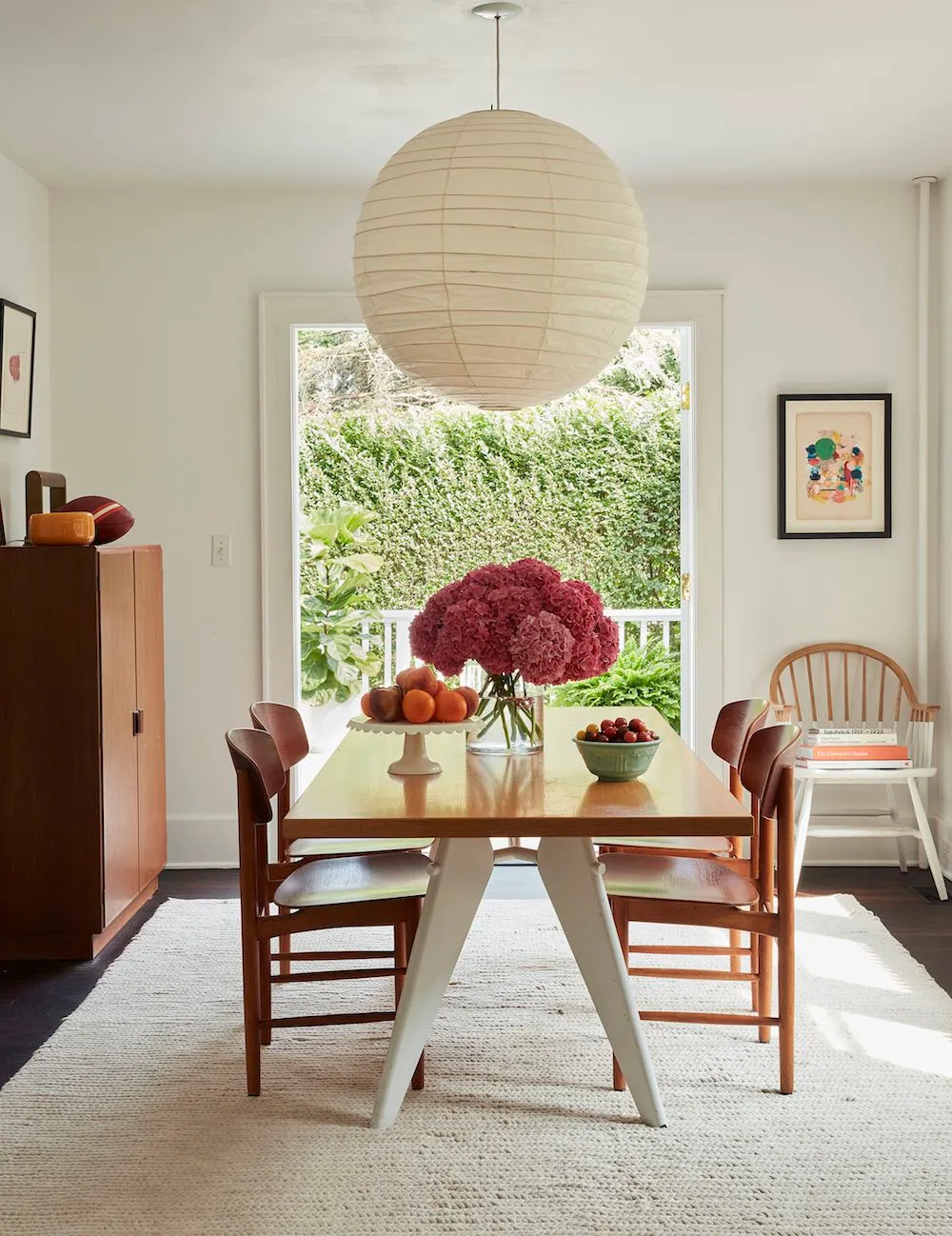
The round pale pendant marks out the dining area above a relatively small rectangular table. Brown chairs and the nearby cabinet repeat warmer finishes at different heights. Most surrounding surfaces stay pale, leaving the flower arrangement and smaller framed picture to provide the room’s more noticeable color.
Measure the table with chairs pulled out and occupied before deciding how much floor area the arrangement needs. Choose a light fitting rated for the bulb you intend to use, following its installation guidance. Keep the cabinet convenient to open without moving a chair each time you need plates or other supplies.
IDEA 04 / 19
Balance Pale Chairs with a Darker Table Frame
 SaveSupport Non AI Creator
Image credit: Common Good Interiors
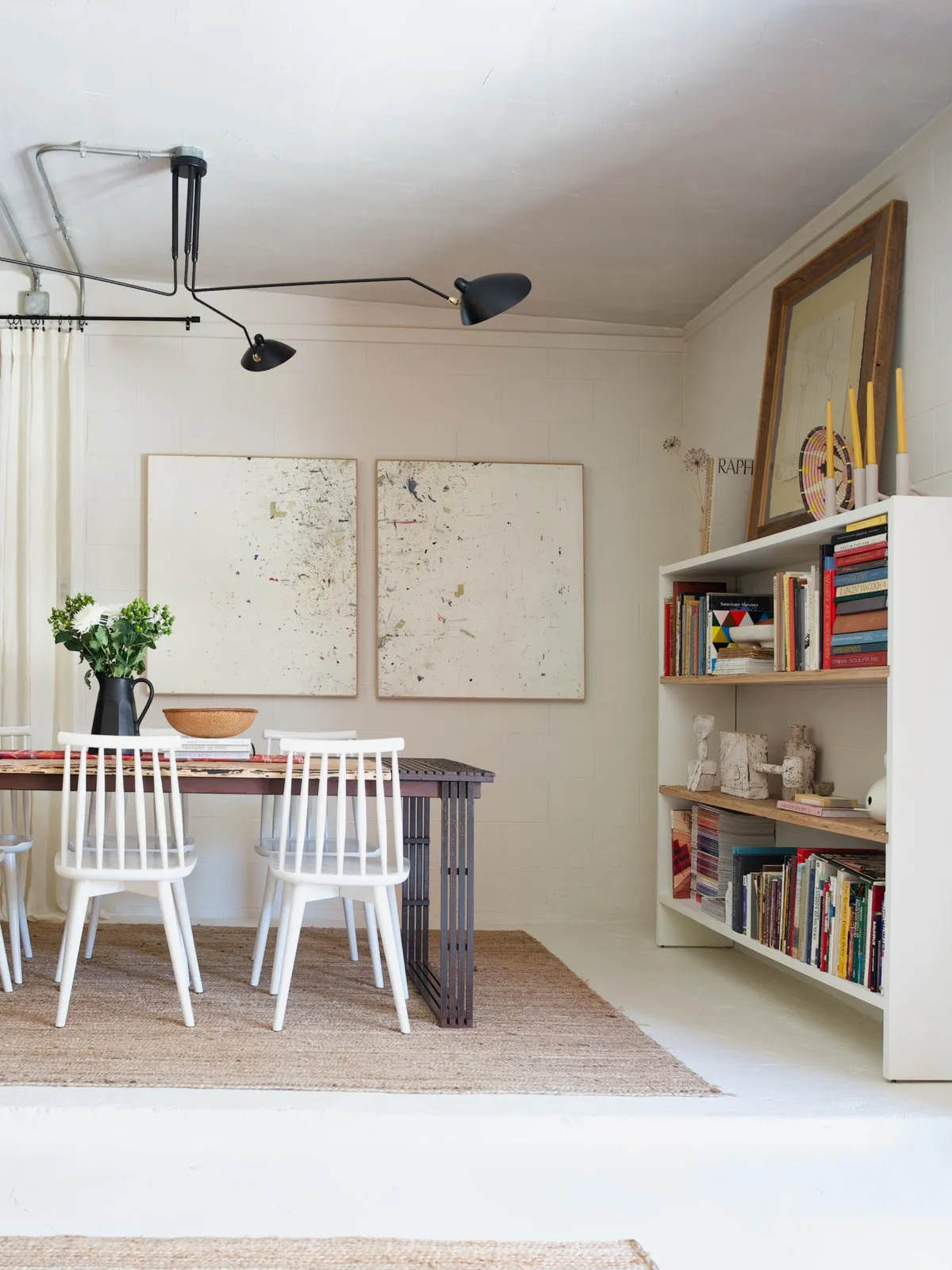
White spindle chairs keep their repeated outlines lighter against the dark table frame. Two pale pictures add detail without filling the wall with several competing colors. The rug introduces texture beneath the furniture, while the nearby bookcase gives everyday belongings a defined place beside the dining area.
Try the rug with a chair fully drawn back so its edge does not catch beneath the legs during meals. Keep the bookshelf organized around the things you actually reach for, leaving space to remove larger books or bowls. Home library room ideas compare storage arrangements when reading and dining share a room.
IDEA 05 / 19
Use a Bench to Shape a Quiet Dining Nook
 SaveSupport Non AI Creator
Image credit: Mackenzie Collier Interiors
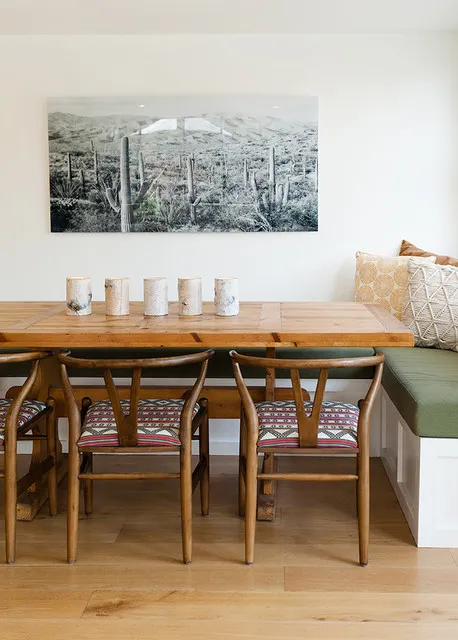
The cushioned corner bench gives the dining nook a continuous seating edge. Curved wooden chairs face it across the warm tabletop, introducing separate softer outlines. A wide monochrome photograph provides one clear wall detail above the arrangement rather than a collection of smaller framed pieces.
Check the bench seat and table heights together, including the thickness of the cushions you expect to use. Leave an easy way for people at the corner to get out during meals. Choose removable or cleanable covers where possible, and avoid adding more cushions than the seating can comfortably accommodate.
PART 02
Compare quieter colors and useful storage
IDEA 06 / 19
Connect Pale Wood with Muted Green Walls
 SaveSupport Non AI Creator
Image credit: Future PLC
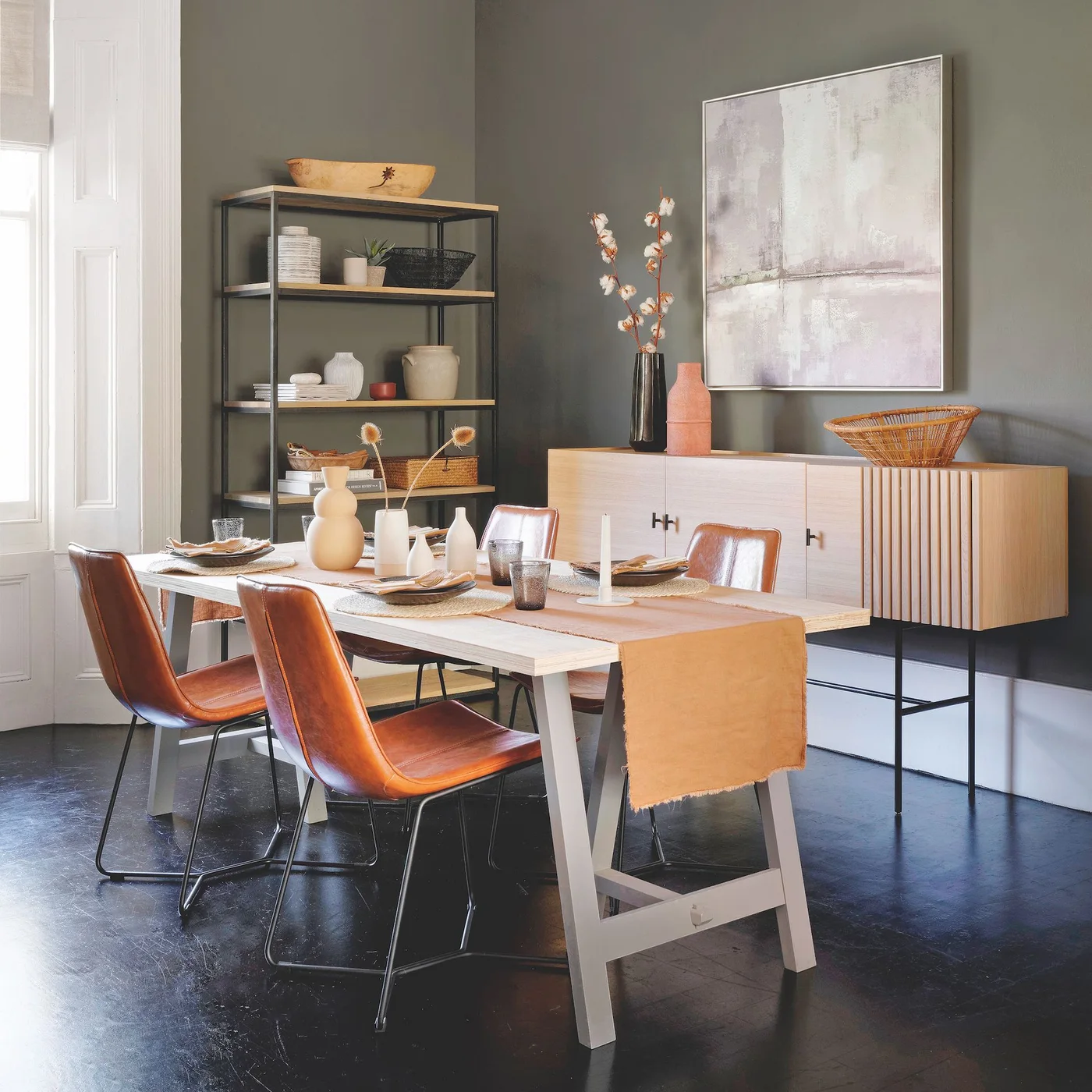
Muted green walls form a quieter background for the pale wooden table and sideboard. The brown chairs introduce a warmer contrast at seat level. Open shelves hold a smaller group of tableware, while the sideboard offers a less exposed place for other belongings beneath the framed abstract picture.
Decide which items deserve open storage and which are better behind doors before choosing a cabinet and shelf combination. Leave practical tabletop space around decorative vessels for actual place settings. Green dining room ideas show more ways to compare a green wall sample with the furniture and daylight in your room.
IDEA 07 / 19
Repeat Wood Across Chairs, Table and Bench
 SaveSupport Non AI Creator
Image credit: Crown Paints
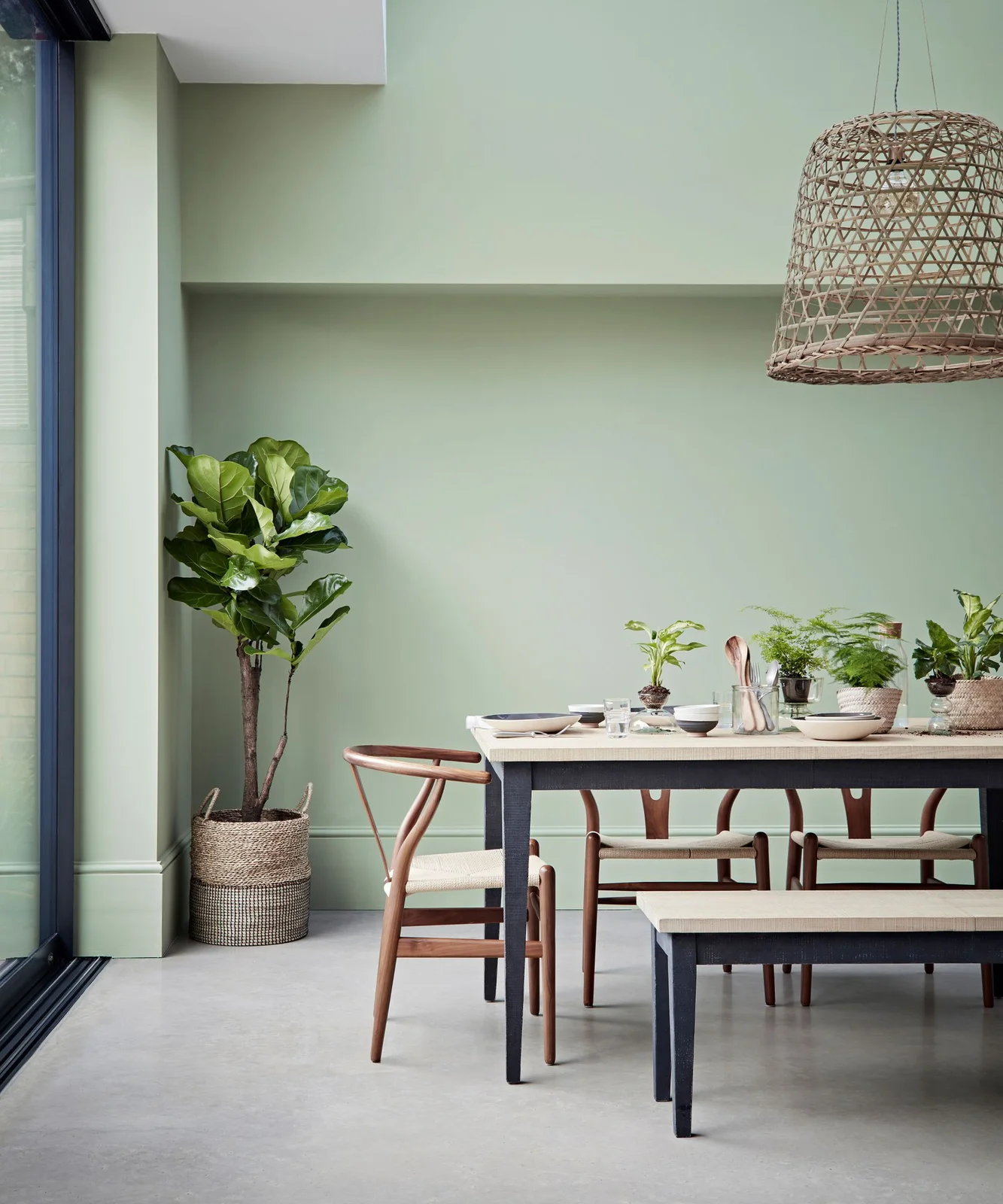
The table, chairs and bench repeat warm wooden tones without using identical outlines. Dark table legs separate the lighter top from the floor, while pale green walls keep the background relatively soft. The woven pendant adds another texture above the seating without introducing a strong new color.
Compare the bench with the table legs before ordering so diners can sit without their knees pressed against the base. Keep enough room to step around its ends, particularly near glazing. Choose a pendant shade you can clean conveniently, and keep plants positioned where watering does not disturb occupied seats.
IDEA 08 / 19
Try a Muted Green Table with Woven Seating
 SaveSupport Non AI Creator
Image credit: One Represents Ltd
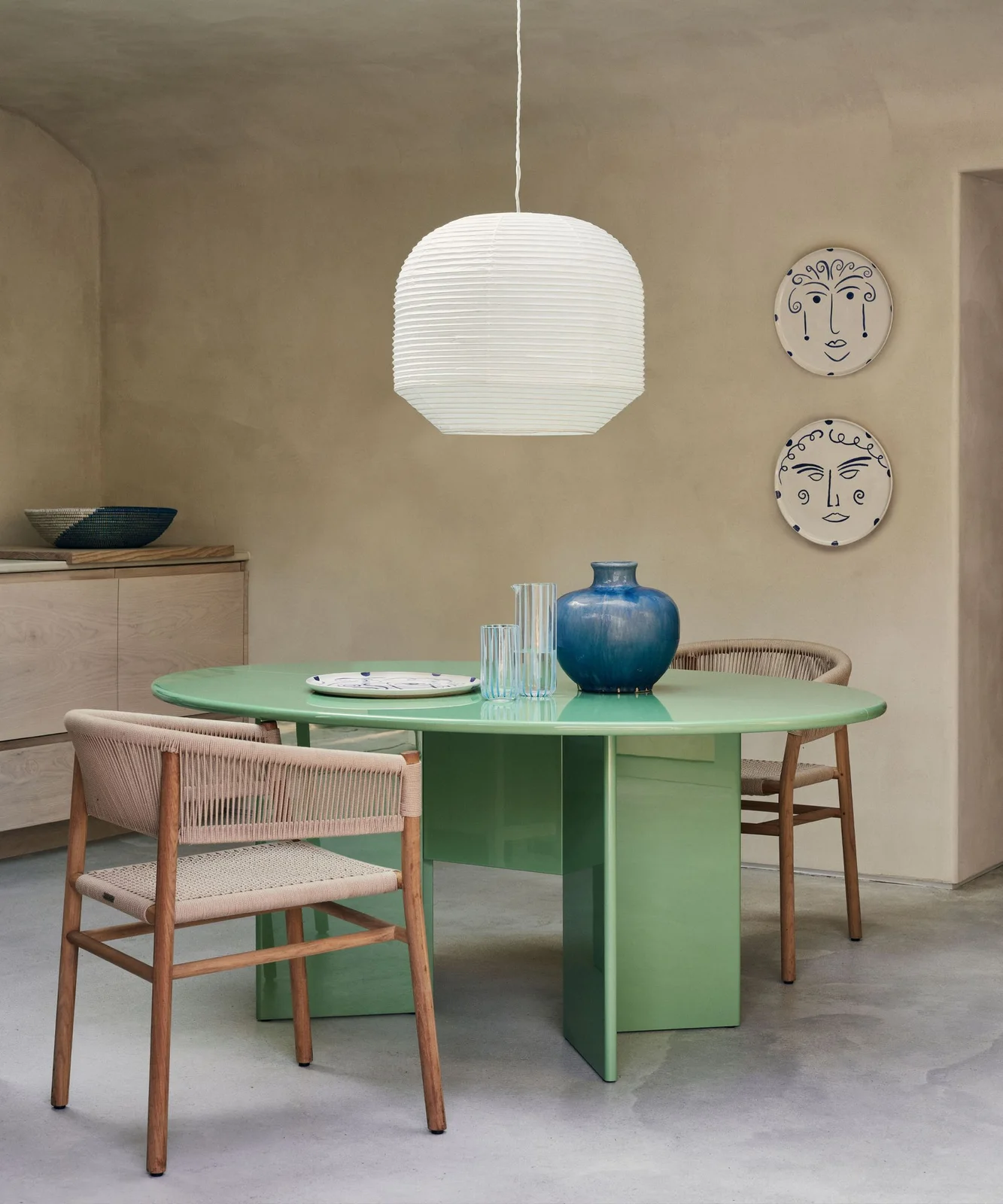
The green tabletop supplies most of the room’s color in one rounded area. Wooden chairs with woven seats add warmer smaller surfaces around it. Pale cabinets and warm neutral walls stay quieter behind the furniture, while the white pendant keeps the overhead detail separate from the table’s stronger tone.
Check a pedestal table’s base as carefully as its top, testing foot room and how close each chair can move in. Compare the green with wall and cabinet samples before choosing a painted finish. Follow its cleaning instructions and use appropriate protection for hot dishes rather than assuming a painted surface tolerates every spill.
IDEA 09 / 19
Combine a Dark Table with Simple Pale Vessels
 SaveSupport Non AI Creator
Image credit: Little Greene
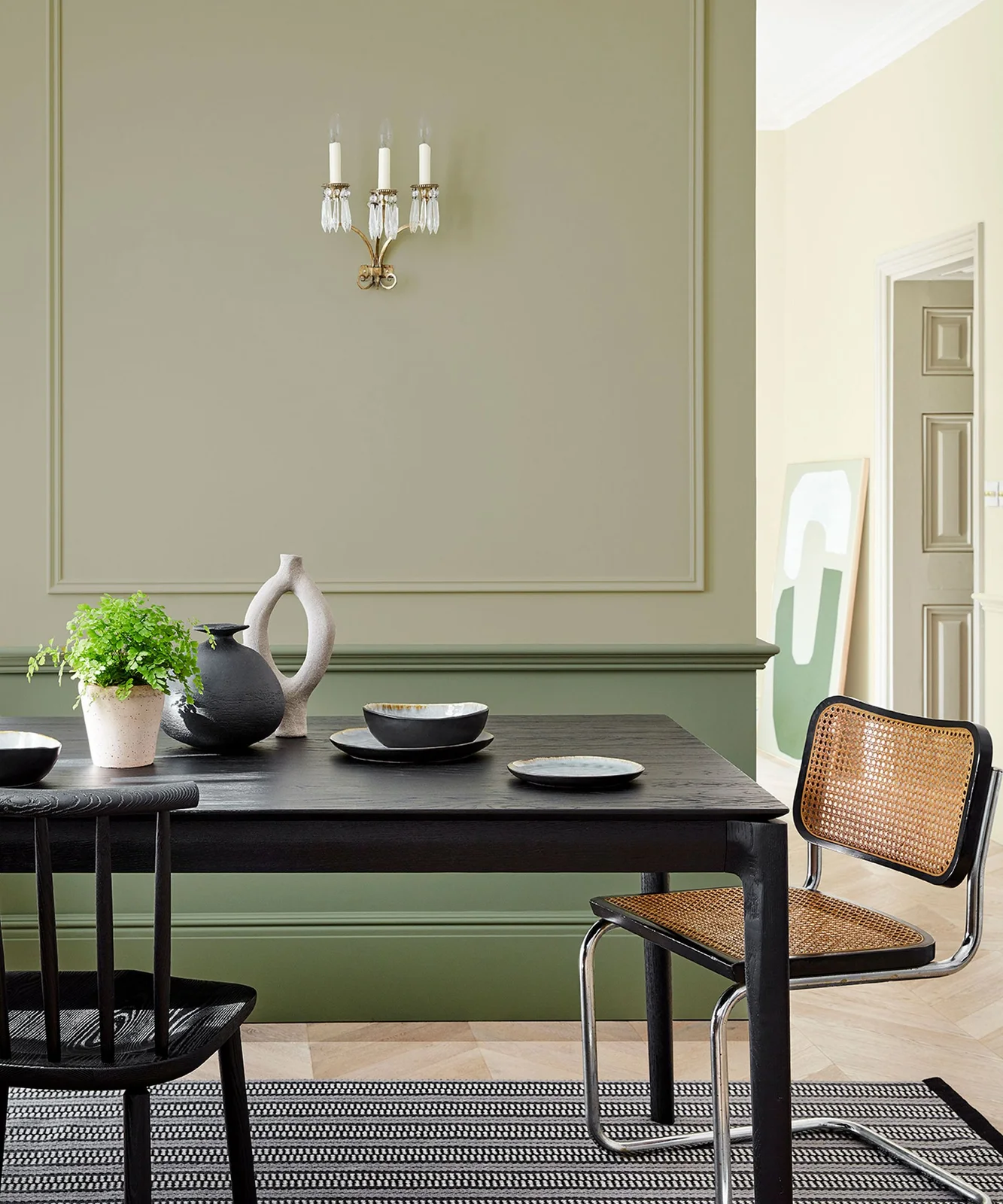
The dark table gives the pale vessels and smaller plant a clearer background. A woven-seat chair introduces warmth beside the darker tabletop. Two muted green wall colors create a gentle separation behind the furniture, while a narrow line of trim keeps the change in color defined.
Keep a usable part of the tabletop clear when arranging vessels, and store serving pieces within easy reach. Check whether the chair’s seat is comfortable for the time you usually spend at meals. Dark surfaces can show dust and marks differently from pale ones, so compare the actual finish’s care instructions before choosing.
IDEA 10 / 19
Choose One Warm, Compact Dining Arrangement
 SaveSupport Non AI Creator
Source: www.ikea.com
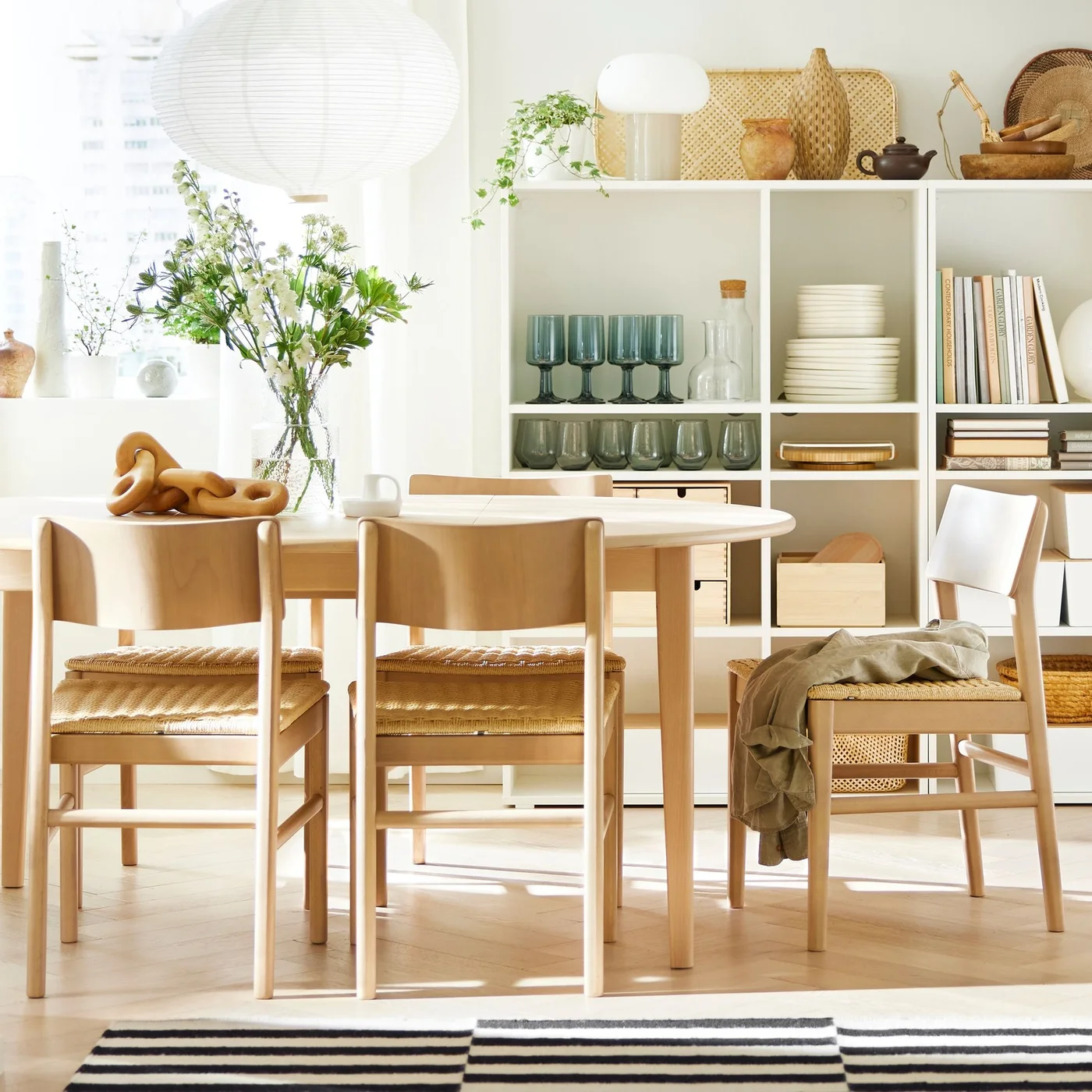
The round table and pale chairs create a compact group beneath the white pendant. Woven seats add a more textured surface among the plain wooden outlines. White cubby shelves give glassware, plates and baskets separate compartments, while the striped rug introduces a stronger pattern at floor level.
Plan shelf compartments around the plates and storage baskets you already own instead of filling every opening with decorative objects. Keep heavier everyday items convenient to reach and follow furniture anchoring guidance. Check chair movement near the rug edge so the compact arrangement remains easy to use when every seat is occupied.
PART 03
Add softer lighting and manageable textures
IDEA 11 / 19
Use Dark Spindle Chairs Around a Pale Table
 SaveSupport Non AI Creator
Image credit: Future PLC/Adam Carter
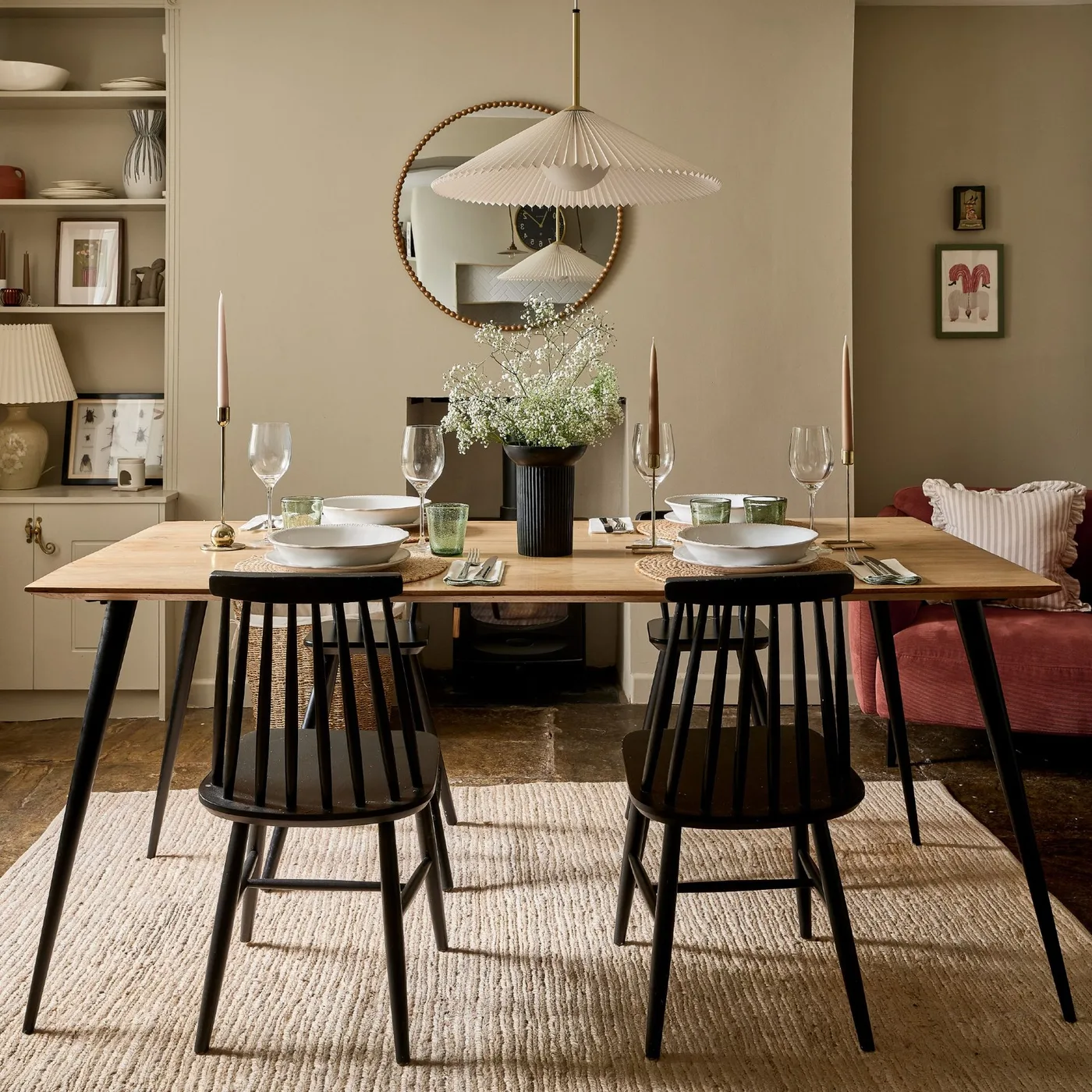
Black spindle chairs bring a repeated darker outline around the lighter wooden table. The pale pleated pendant adds texture overhead without introducing another strong color. A round mirror reflects the lamp and surrounding wall, while the smaller flower arrangement gives the set table a softer center.
Test whether the chair backs and seats suit longer meals rather than choosing them solely for their silhouette. Keep flower arrangements below conversational sightlines when the table is in use. Choose a pendant position from the actual table center, and check glare while seated before settling on the final bulb and hanging height.
IDEA 12 / 19
Warm a Round Table with Peach and Texture
 SaveSupport Non AI Creator
Image credit: Future PLC/Carolyn Barber
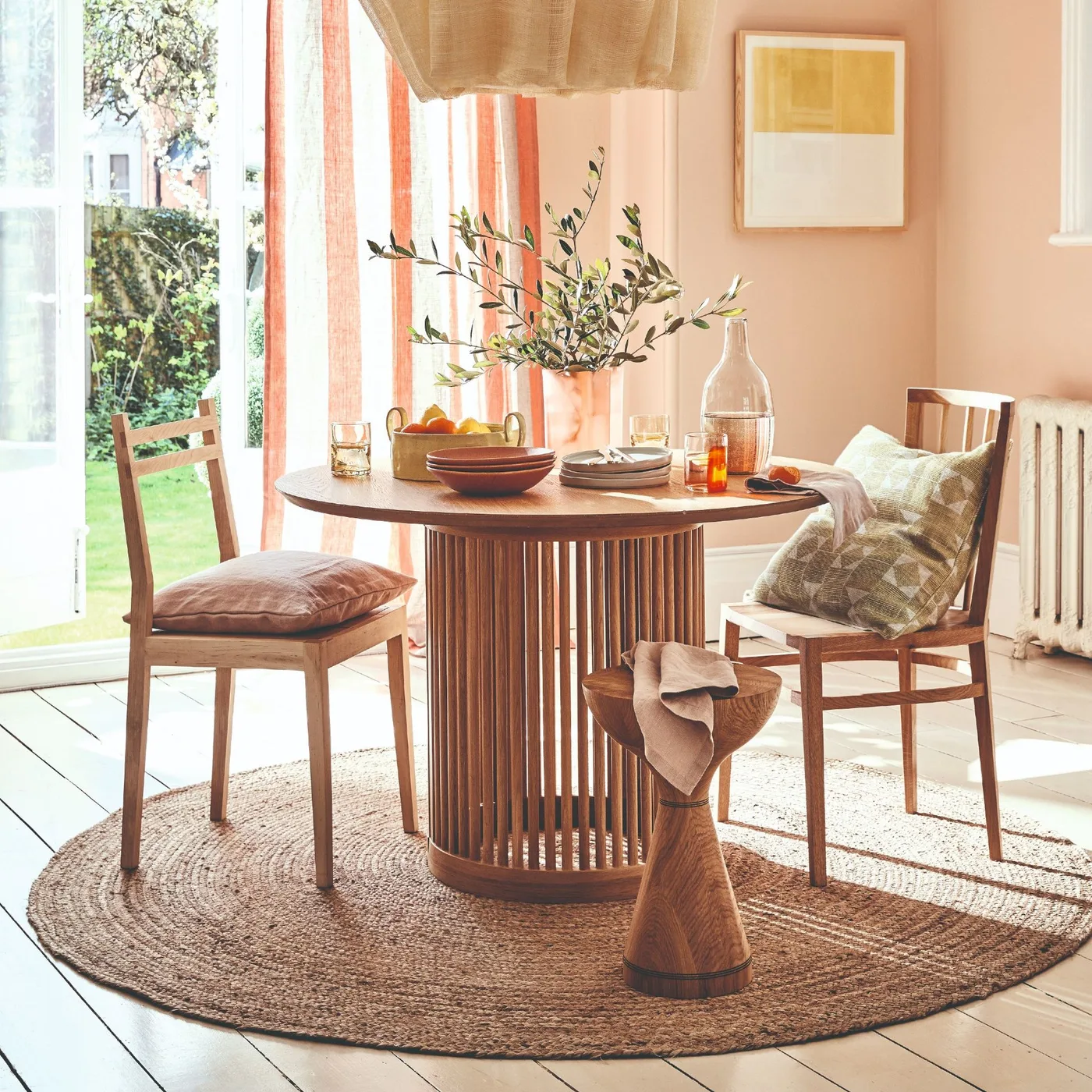
The round table repeats its curved outline in the rug beneath it. A slatted base gives the furniture one stronger texture against the warmer peach wall. Wooden chairs keep the seating related to the tabletop, while the curtains add a contained vertical pattern beside the glazed opening.
Try a sample of the wall color next to the curtains under daylight and evening light before painting the full room. Check the table base for comfortable knee and foot space around each chair. Keep the rug flat and large enough for chair movement, choosing a weave that suits the cleaning you expect after meals.
IDEA 13 / 19
Make a Cushioned Bench Useful for Daily Meals
 SaveSupport Non AI Creator
Image credit: Future PLC/David Woolley
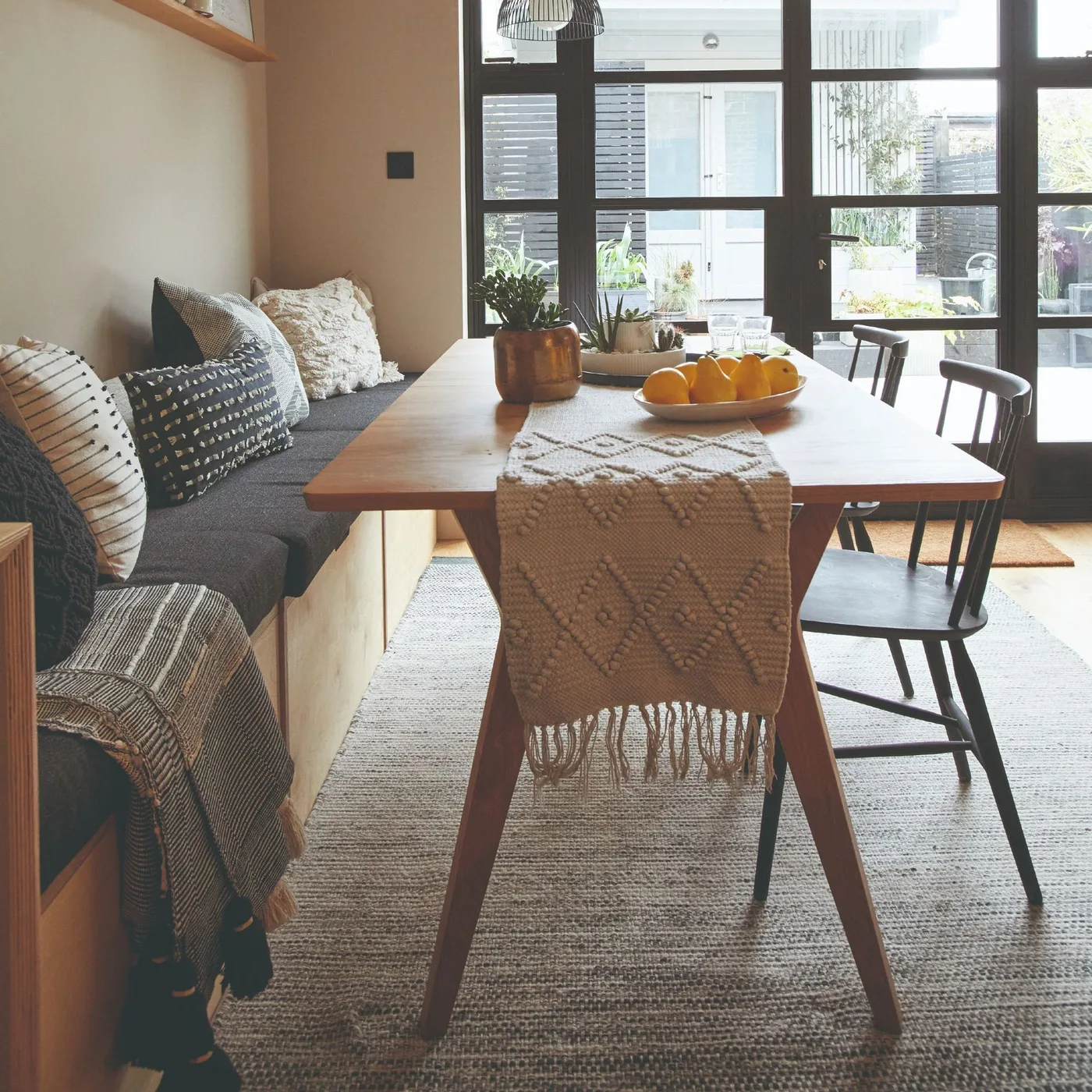
A gray cushioned bench gives one side of the table a softer seating surface, while dark spindle chairs provide separate places opposite. The textured runner introduces detail across the mostly plain wooden top. Broad dark-framed windows repeat the chairs’ darker outlines behind the smaller plant arrangement.
Choose a runner that leaves comfortable space for plates and serving dishes, removing it when it makes cleaning harder. Check bench upholstery for the care routine you are willing to follow. Cozy dining room ideas compare more textured arrangements when you want warm surfaces without losing useful seating or storage space.
IDEA 14 / 19
Keep a Shared Dining Corner Pale and Simple
 SaveSupport Non AI Creator
Image credit: Future PLC/Katie Lee
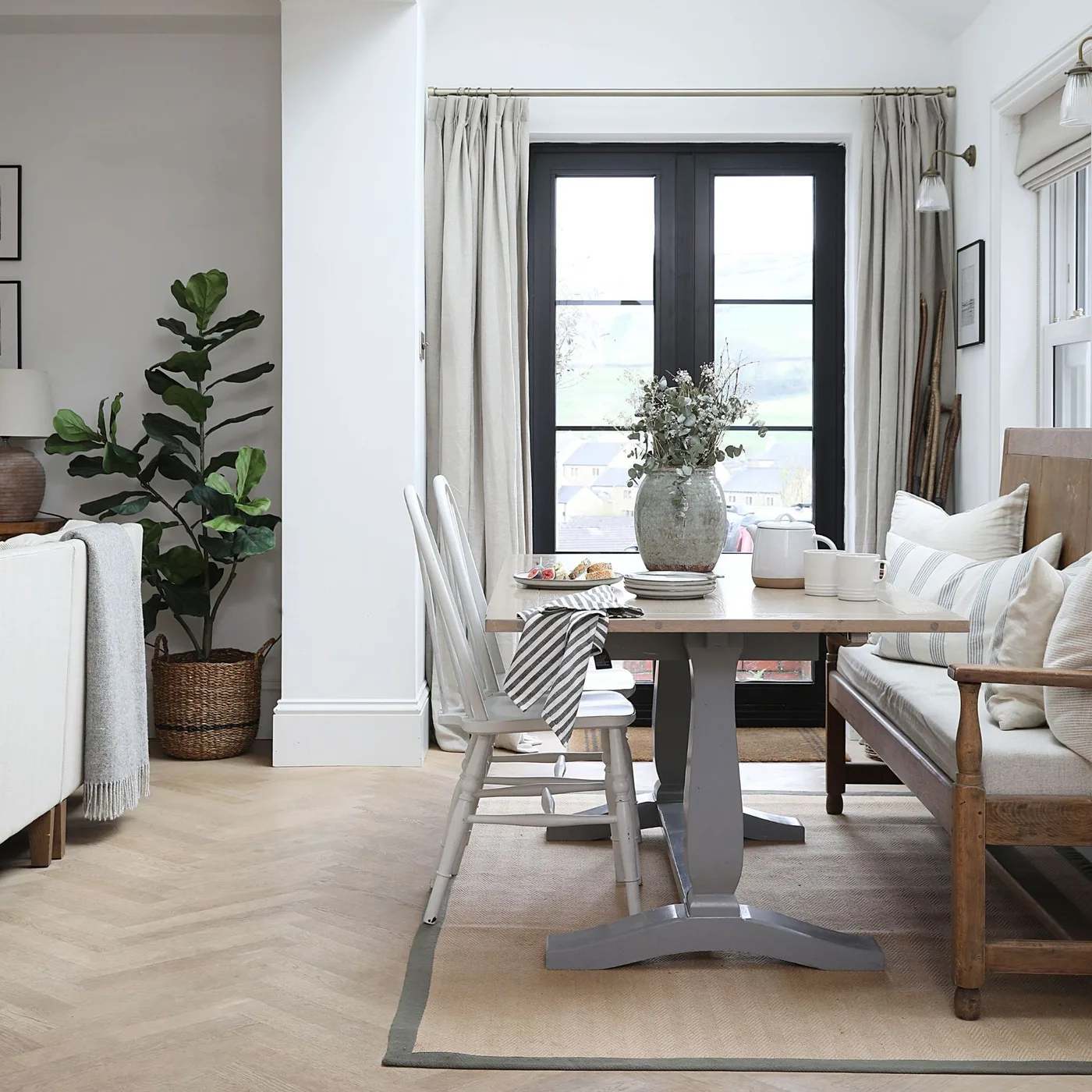
The pale chairs and cushioned wooden bench keep the dining corner close to the surrounding lighter walls. A wood tabletop introduces a warmer surface without another strong color. Dark-framed glazed doors define the far edge of the area, while the curtains add a softer fabric layer around that opening.
Check the full route between the dining furniture and neighboring living seats before choosing a bench for a shared room. Leave the doors and curtain edges clear of occupied chairs. Use a restrained number of cushions so the bench still has practical seating space, and provide somewhere to set them when cleaning.
IDEA 15 / 19
Soften a Small Table with a Plain Cloth
 SaveSupport Non AI Creator
Image credit: Future PLC/Katie Lee
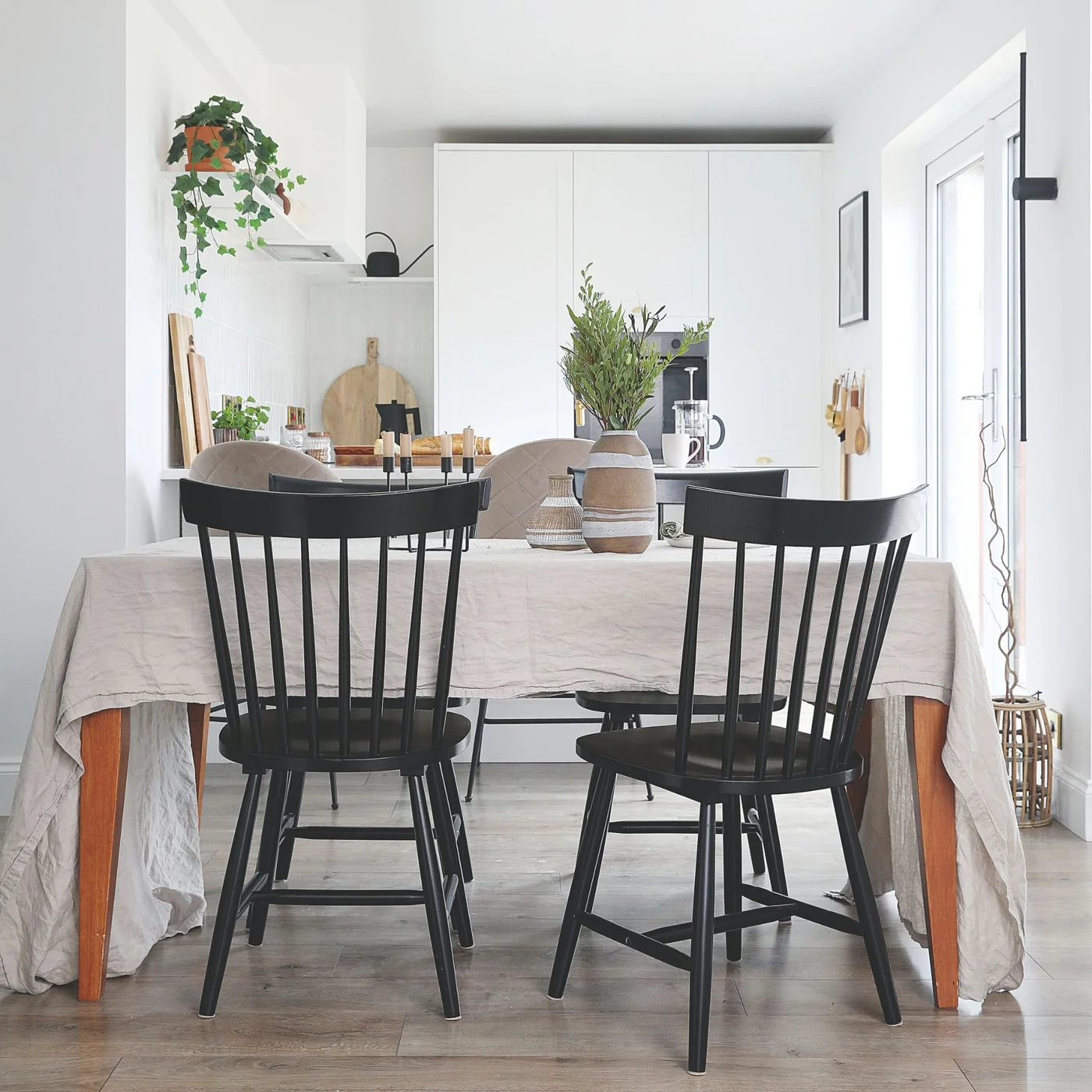
The plain pale cloth softens the table’s rectangular surface without hiding its warmer legs completely. Black spindle chairs provide contrast against the lighter kitchen cabinets. A small pale vase and limited tabletop accessories keep the arrangement focused on the seating and everyday meal space.
Choose a cloth length that stays clear of laps and chair movement, checking washing instructions before making it an everyday layer. Keep the nearest kitchen cupboard and cooking route accessible when the table is occupied. Minimalist kitchen ideas offer more layouts for comparing dining furniture with the workspace you need around it.
PART 04
Keep round tables and window-side corners practical
IDEA 16 / 19
Compare a Curved Bench with a Round Table
 SaveSupport Non AI Creator
Image credit: Future PLC/BRENT DARBY
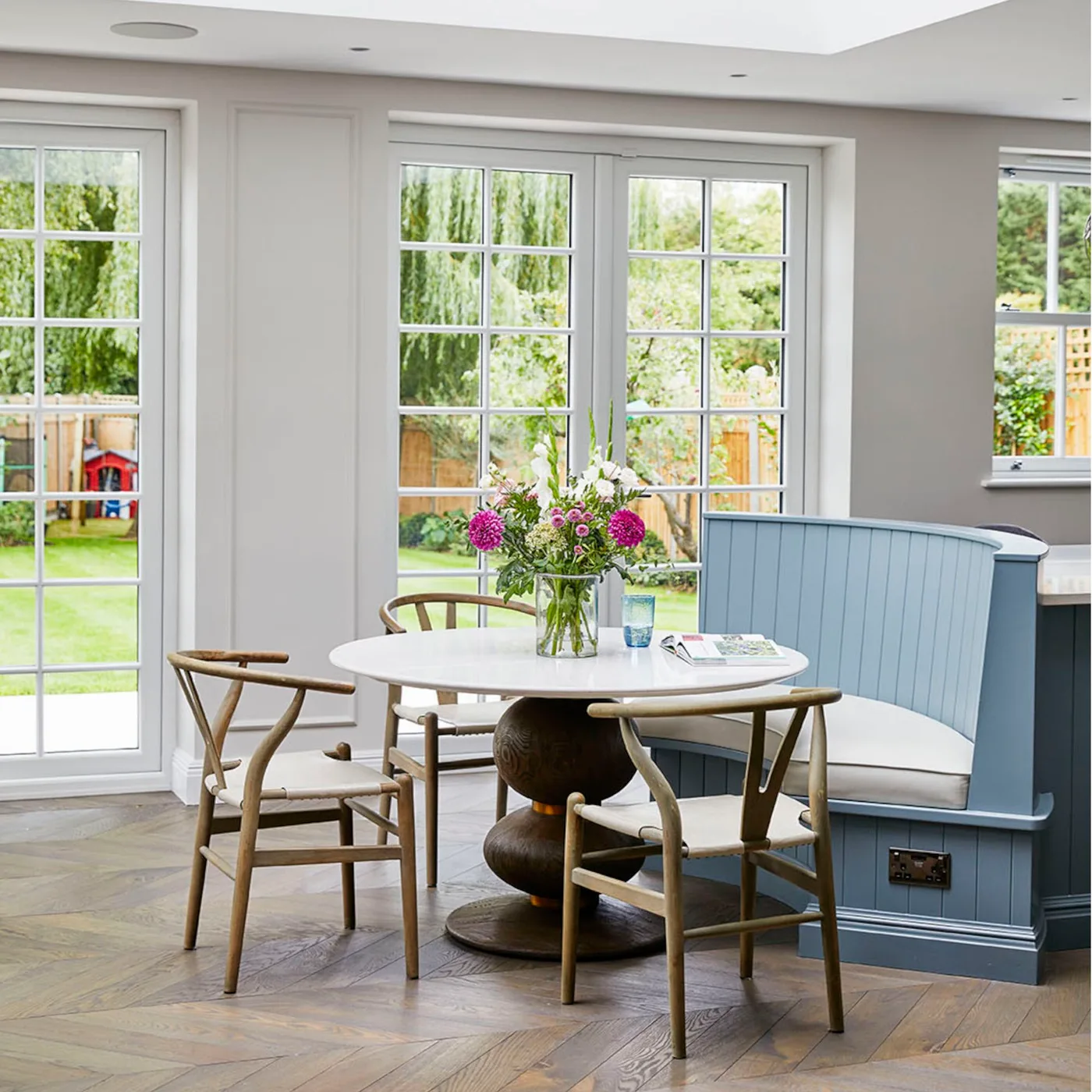
The curved bench follows the rounded table edge, making the two larger furniture pieces feel connected. Wooden chairs add warmer separate outlines opposite the pale blue seating. The sculptural dark table base gives the room one stronger form, while the wide glazed area keeps the surrounding background bright.
Check seating reach all around a curved bench before committing to a fitted design, particularly at its ends. Test the table base with people seated so its shape does not reduce useful foot space. Choose cushions or upholstery around maintenance needs, and leave the door route clear when chairs are drawn back.
IDEA 17 / 19
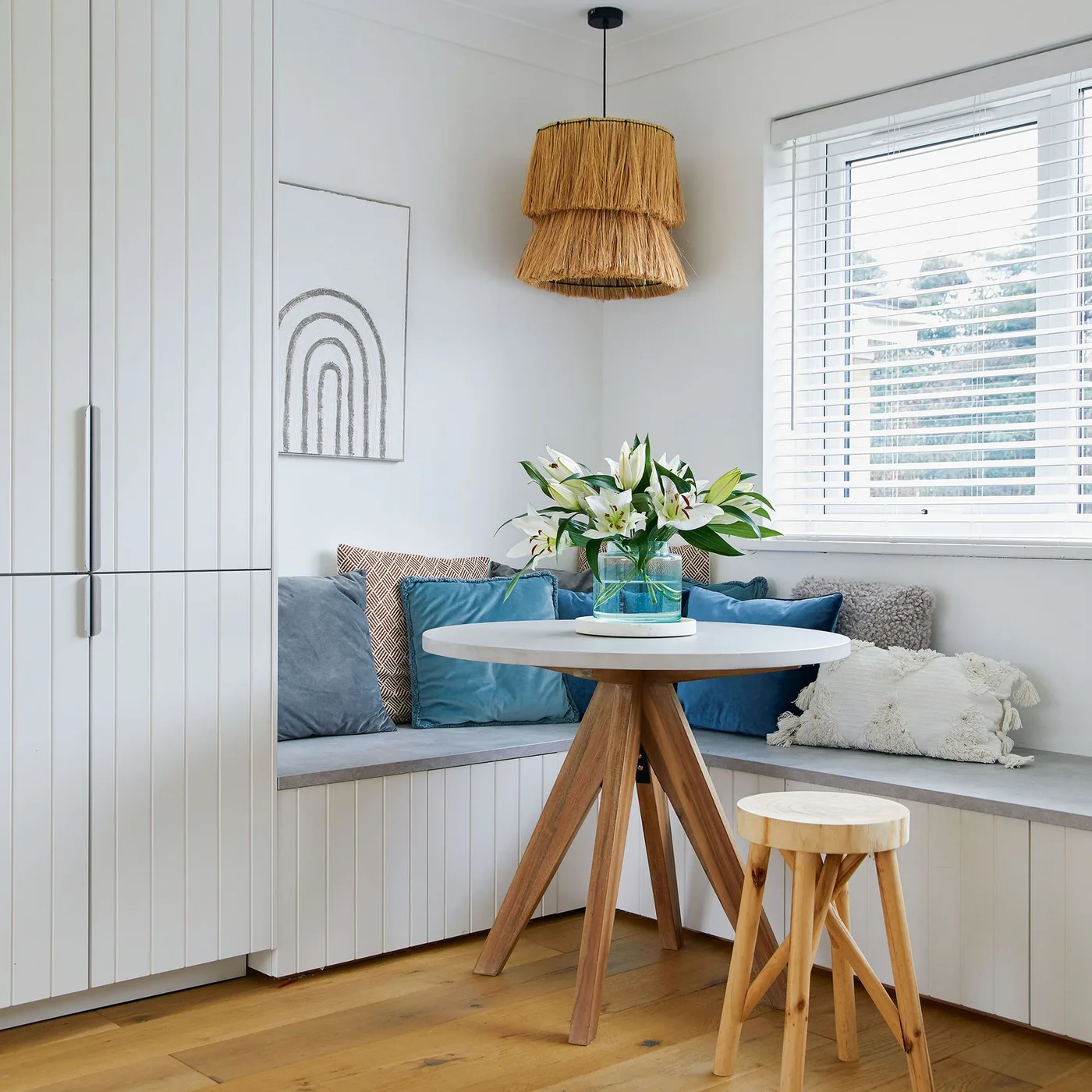
Fit a Small Table Around Useful Corner Seating
 SaveSupport Non AI Creator
Image credit: Future PLC/Katie Jane Watson
The corner bench uses two wall edges around a small round table. Wooden table legs and the stool introduce warmer smaller surfaces beside the pale cabinetry. Blue and gray cushions give the seat softer color, while the textured pendant creates a separate detail above the dining space.
Test access to the corner seats before choosing this arrangement, leaving room to move the stool without blocking the approach. Keep cushions to a manageable number so they do not reduce the bench depth too much. If cupboards share the wall, check their handles and doors with the table in its final position.
IDEA 18 / 19
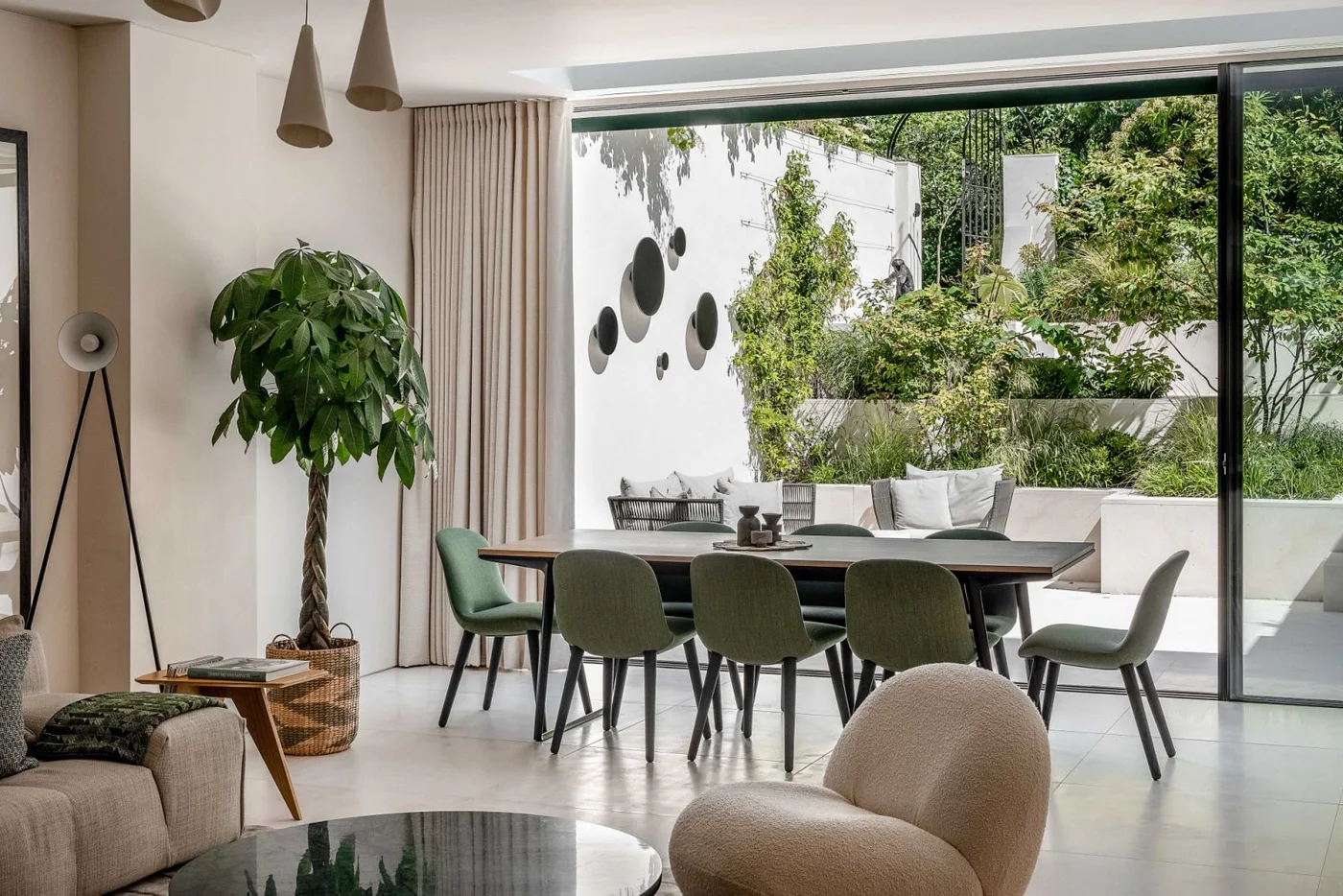
Connect Muted Chairs to a Garden-Facing Table
 SaveSupport Non AI Creator
Image credit: Taran Wilkhu; design by De Rosee Sa
Muted green chairs connect the dining furniture to the leafy view beyond the broad glazing. Narrow cone-shaped pendants repeat smaller outlines over the long table, while tall curtains add a continuous softer edge. The nearby plant supplies another natural shape without covering the tabletop with several arrangements.
Choose the table length from the space available with every chair occupied, including the route toward the glazing. Plan curtain operation and lighting controls so diners do not have to move furniture to reach them. Keep plant care practical, allowing space to water and turn the pot without disturbing the dining group.
IDEA 19 / 19
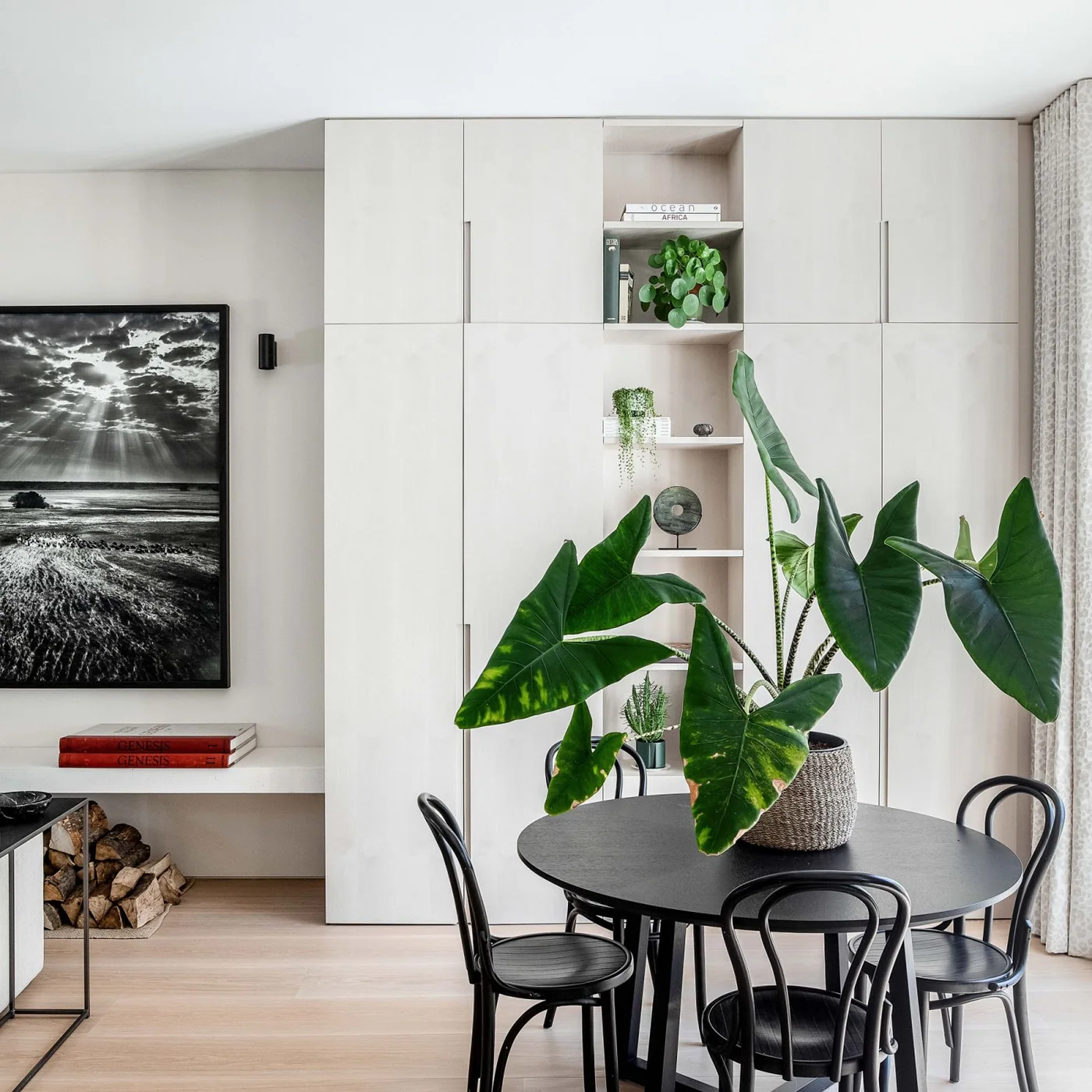
Give a Round Dark Table a Defined Place
 SaveSupport Non AI Creator
Image credit: Taran Wilkhu; design by De Rosee Sa
The round dark table and curved chairs create a clear dining group against the pale built-in cabinets. The wooden floor introduces warmth beneath their darker outlines. A large leafy plant provides the strongest organic shape near the seating, while the framed photograph adds a separate wall detail beside the storage.
Keep access to the cabinet doors clear with the chairs occupied, checking the full movement of each handle or hinge. Choose a smaller plant if the leaves intrude into diners’ space or make the surface harder to use. Dining room storage ideas compare ways to arrange tableware close to seating without filling the tabletop.
BRING IT ALL TOGETHER
Choose the arrangement before its finishing details
Begin with the table size and seating your household needs, checking the space with chairs drawn out. Wood, muted colors and woven textures can make simpler furniture feel warmer, but they work best when cupboards, windows and walking routes remain easy to use.
Add one or two stronger details once the layout works: a softer pendant, a textured runner or a quiet wall color. Keep accessories easy to move for meals and choose surfaces around your cleaning routine. A comfortable room can retain personality without needing every photograph’s furniture or decoration.