Scandi boho kitchens combine an orderly base with texture and personal detail. Simple cabinet shapes, useful storage and clear counters give the room structure; woven seats, wood, plants, art and a limited mix of pattern make it feel more relaxed.
These photographed kitchens show both quieter and more colorful versions of that balance. You do not need every detail from one room. Start with the cabinet layout you already have, then choose a practical texture or small color change that makes daily cooking and gathering more enjoyable.
PART 01
Start With a Calm and Natural Base
IDEA 01 / 20
Begin With Wood and Woven Texture
 SaveSupport Non AI Creator
Image credit: Future
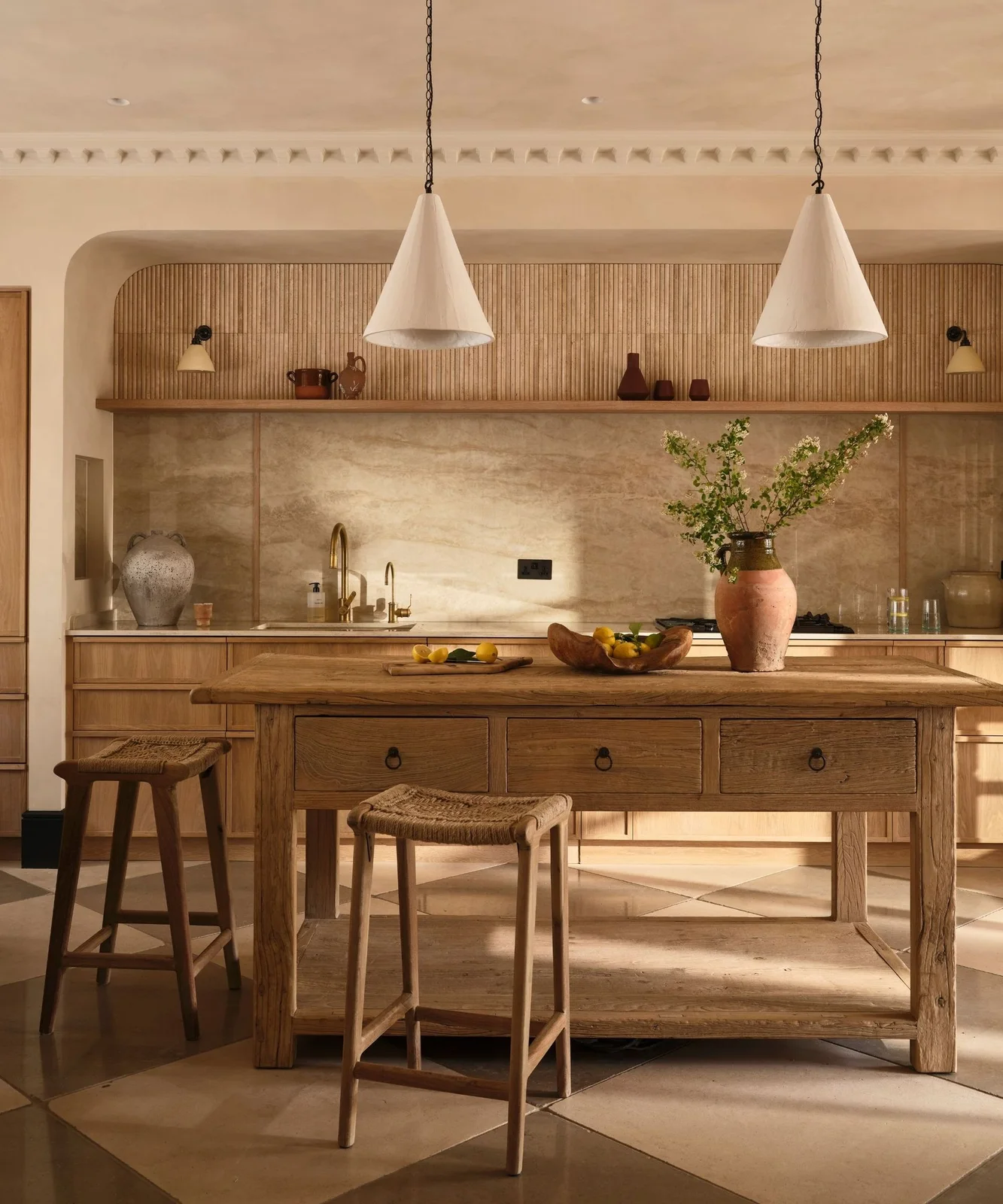
A wooden island and woven stools make this kitchen feel warm without a strong color scheme. Pale pendant shades and the quiet backsplash keep the larger surfaces calm, while the ribbed upper wall adds another texture that does not depend on a busy print.
Start with one useful textured piece, such as a stool or wooden preparation table, before adding more decorative layers. Keep enough counter space available for cooking. Scandi kitchen ideas offer more simple layouts if you want this natural warmth with a particularly restrained arrangement.
IDEA 02 / 20
Let One Woven Chair Soften the Island
 SaveSupport Non AI Creator
Image credit: Alexander Collins
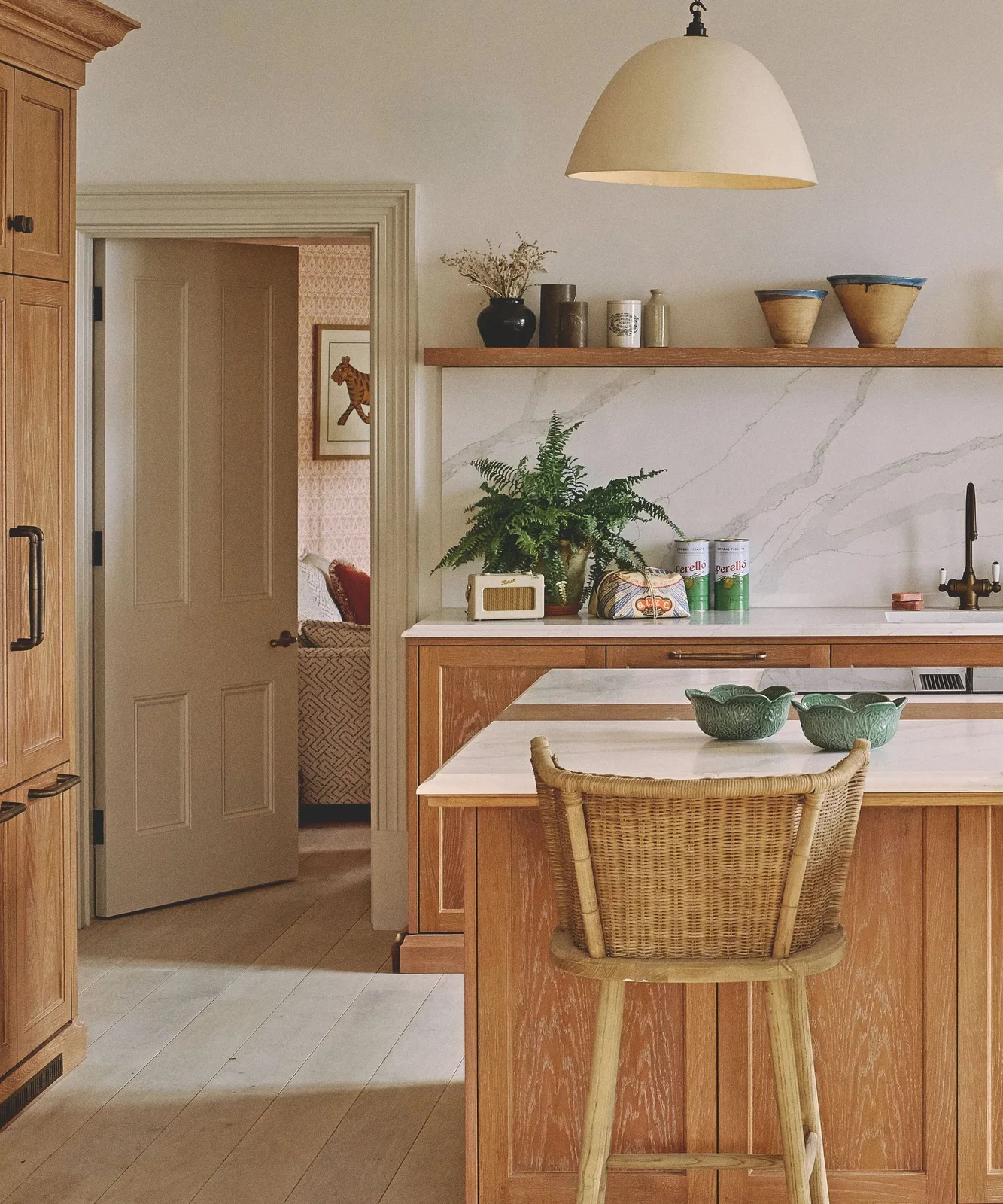
A woven backed stool adds a softer outline beside the timber island and cabinets. The pale backsplash keeps the room light, while a few pots on the long shelf and a fern near the sink give the otherwise orderly arrangement a more relaxed character.
A single woven piece can be enough when the kitchen already contains substantial timber. Test the stool’s back support and footrest, then check how far it projects when occupied. Keep plants on protective trays and move them away from any place routinely used for chopping or hot pans.
IDEA 03 / 20
Keep a Small Display Beside the Window
 SaveSupport Non AI Creator
Image credit: Photo: Alice Gao
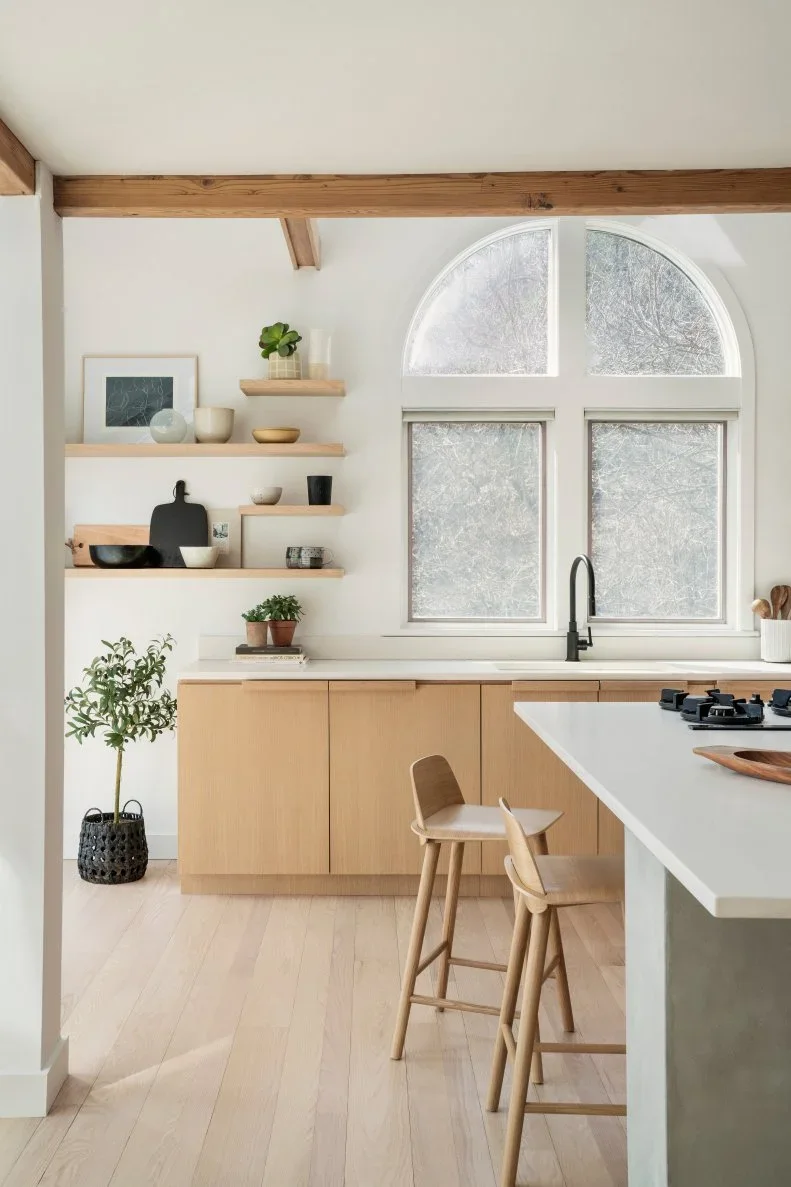
Pale wooden cupboards, light counters and simple stools give this kitchen a clear, uncluttered base. Small shelves beside the arched window hold bowls, a picture and greenery, adding personal detail without covering the entire wall in objects.
Build a display around a few things you use or enjoy rather than filling every shelf. Leave handles and blinds accessible. If the island holds cooking equipment, plan suitable clearances and extraction separately; the appealing shelf arrangement should never determine where hot pans need to go.
IDEA 04 / 20
Warm Gray Cabinets With Plants and Baskets
 SaveSupport Non AI Creator
Image credit: Future
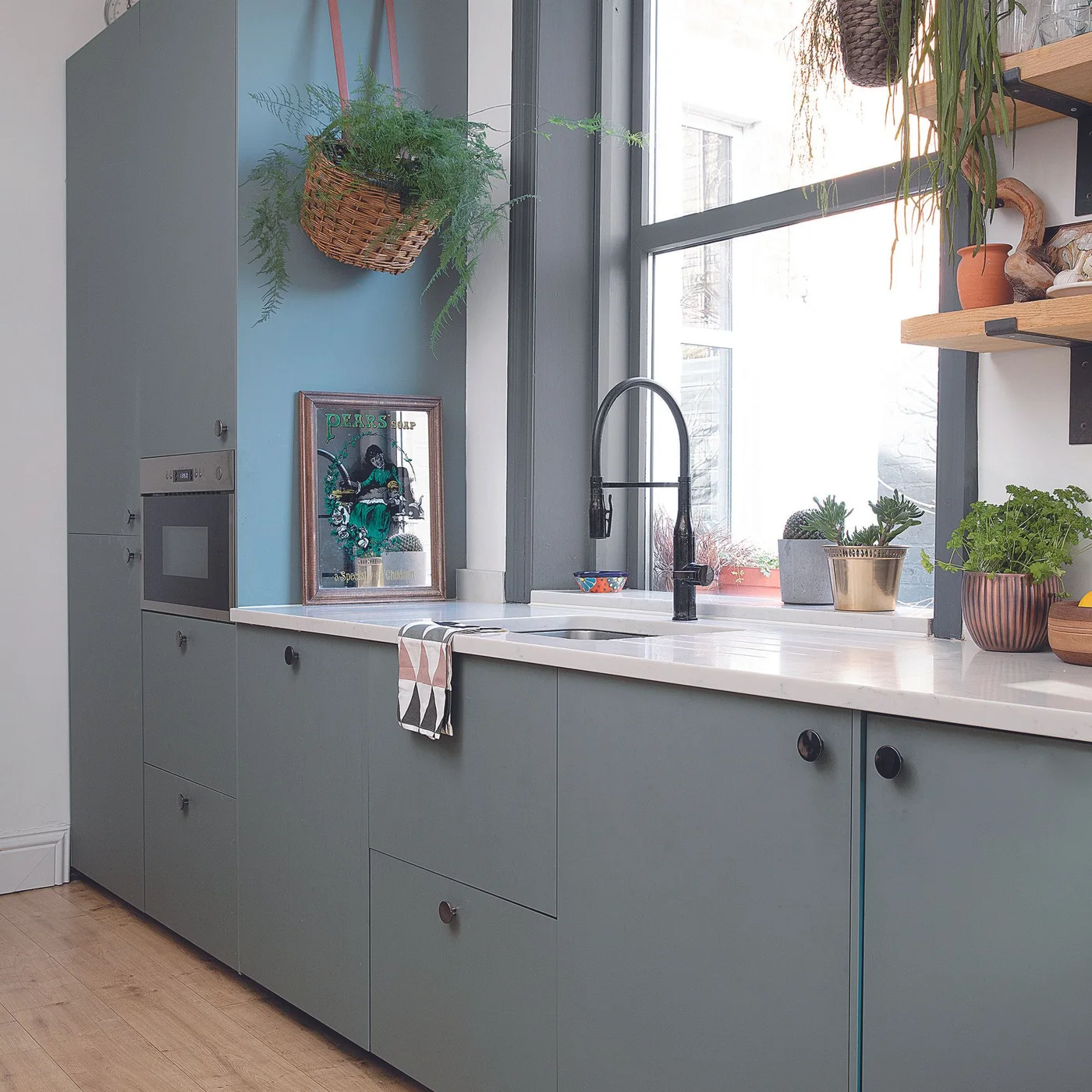
Flat gray cabinet fronts provide a calm base beneath this bright kitchen window. Woven hanging planters, a few smaller pots and wooden shelves add texture and greenery, while the patterned towel introduces a manageable amount of color next to the sink.
Plants work best where they are easy to water and do not block the window. Use secure hooks and protect surfaces beneath hanging pots from drips. Start with a small number you can maintain; a kitchen should not lose its useful landing space to an expanding plant collection.
IDEA 05 / 20
Pair Soft Seats With a Simple Wooden Island
 SaveSupport Non AI Creator
Image credit: Cult Furniture
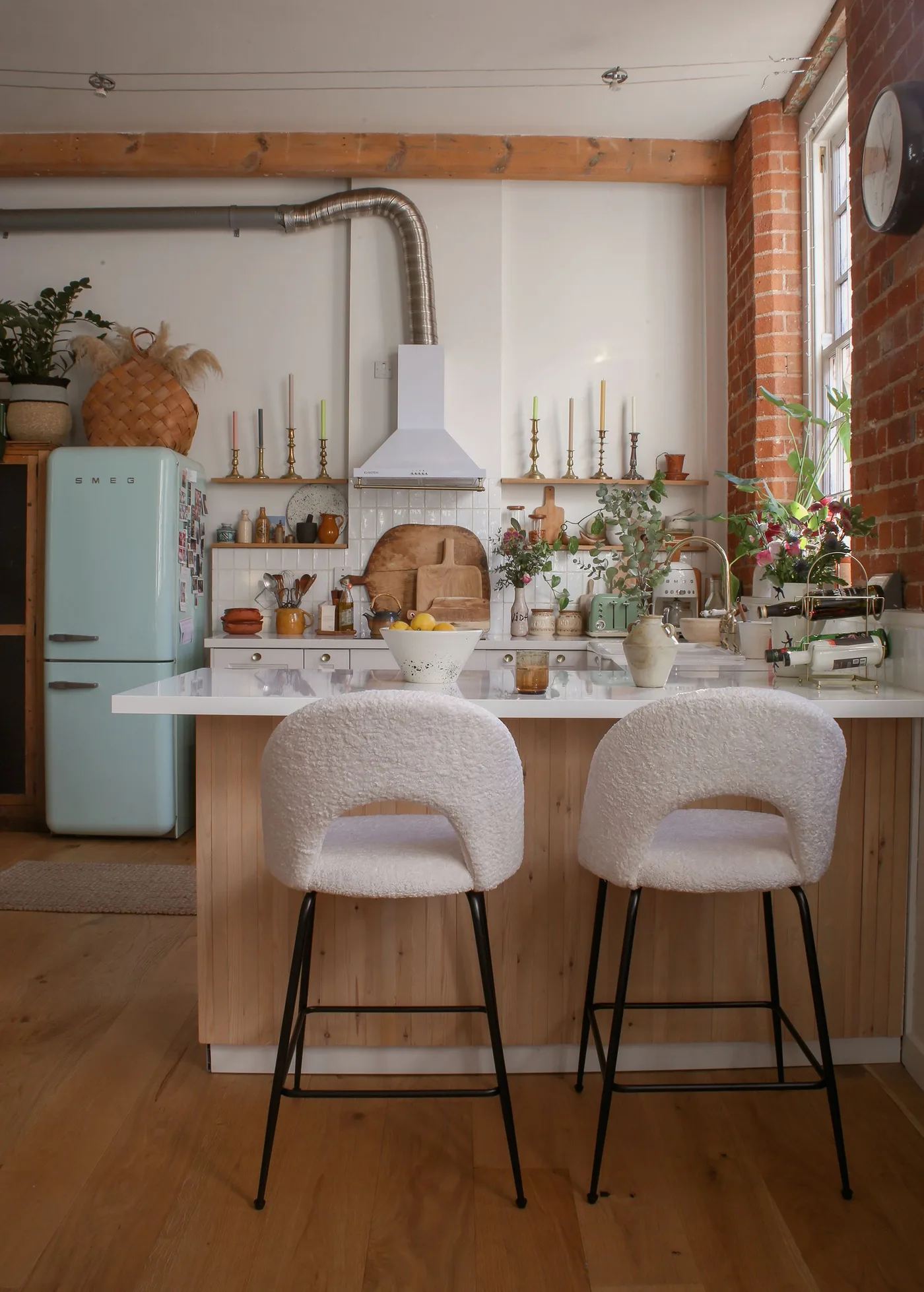
The simple wooden island and white counter give two pale rounded stools a quiet setting. A mint refrigerator adds color beside exposed brick, while small ceramics and wooden boards make the room feel lived in without requiring patterned cabinet fronts.
Soft stools can make a casual meal more comfortable, but check fabric cleaning guidance before placing them near preparation areas. Keep decorative pieces grouped away from the cooking zone. A few useful objects often create the relaxed effect more convincingly than covering every counter with accessories.
PART 02
Add a Collected Layer Without Losing Space
IDEA 06 / 20
Use a Runner to Give a White Galley Character
 SaveSupport Non AI Creator
Image credit: Photo: Genevieve Garruppo
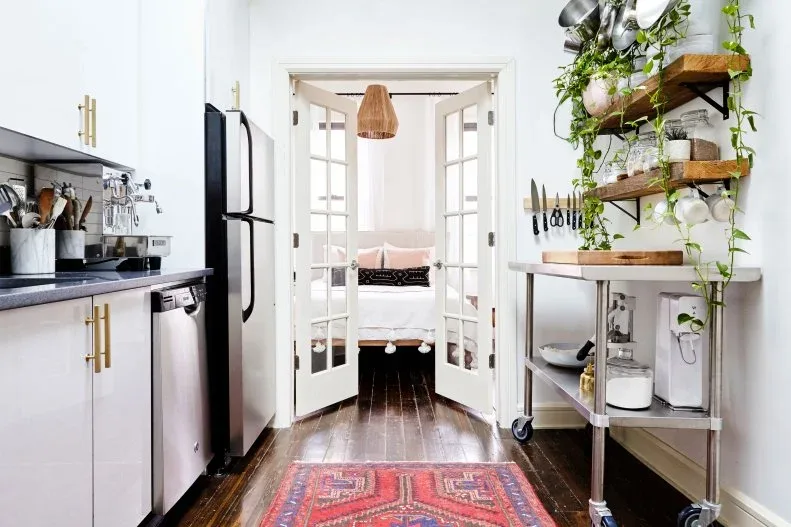
A red patterned runner adds warmth down the center of this white galley. Timber shelves and trailing plants soften the side wall, while the metal cart supplies extra preparation and storage space without looking like a heavy fitted cabinet.
Choose a runner that lies flat, cleans easily and allows appliance doors to open fully. Keep the cart stable during preparation and leave a clear route through the kitchen. Lift trailing stems away from knives, switches and places where people brush past with hot dishes.
IDEA 07 / 20
Choose One Playful Appliance Color
 SaveSupport Non AI Creator
Image credit: Photo: Joey Puterbaugh. From: Kim Lewis Designs
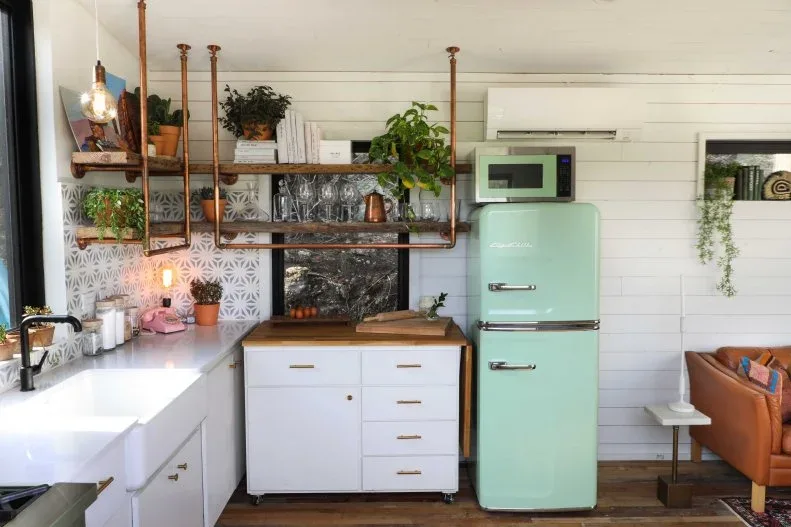
The mint refrigerator supplies the clearest color in this compact white kitchen. Copper colored shelf supports, patterned tiles and wooden counters introduce character around it, while the simple cabinet fronts keep the different details from becoming visually tangled.
An appliance color is a longer commitment than a cushion or tea towel, so compare a finish sample with the room’s light before ordering. Check capacity and ventilation requirements first. Keep the surrounding display compact enough that the appliance can be opened, cleaned and eventually replaced.
IDEA 08 / 20
Give Plain Cabinets an Artful Shelf
 SaveSupport Non AI Creator
Image credit: Photo: Tomas Espinoza
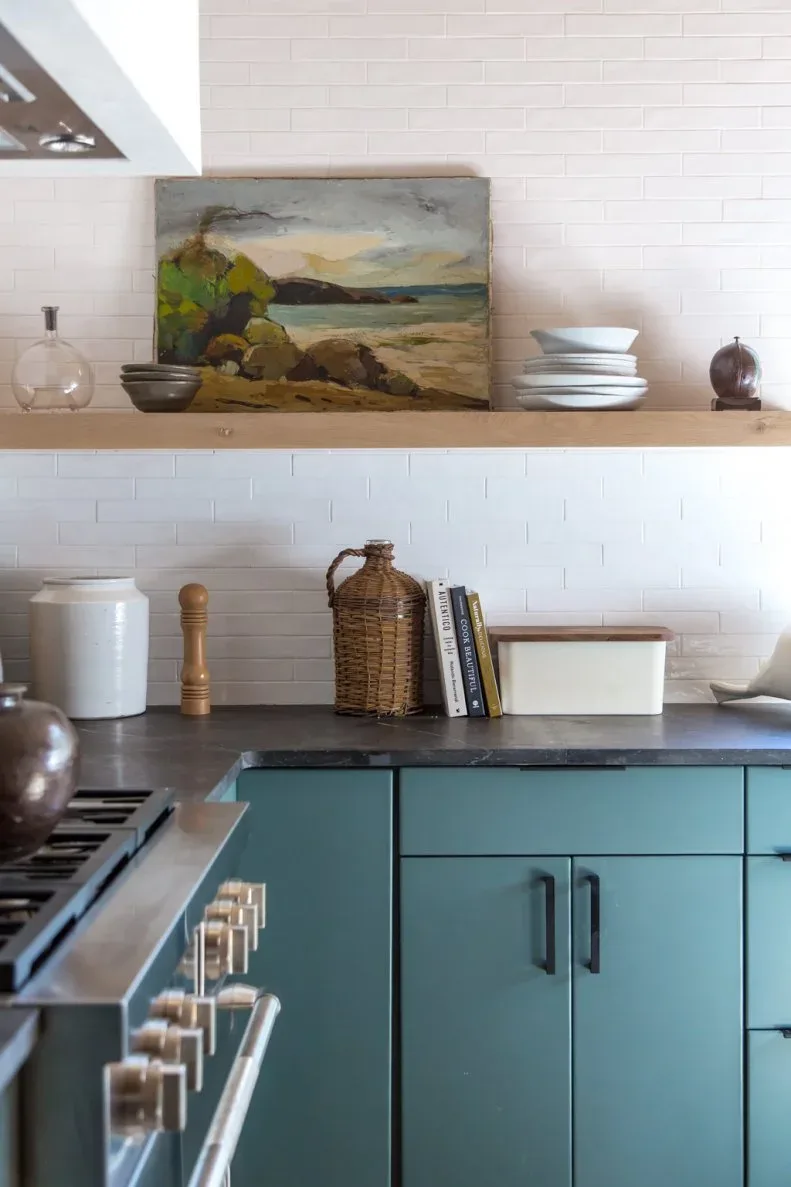
Teal flat fronted cabinets give this kitchen corner a simple shape beneath the white tile. A timber shelf holds a landscape picture and everyday dishes, adding a collected feeling without needing an elaborate backsplash or decorative molding around the whole room.
Choose kitchen artwork for its position as well as its appearance. Keep valuable or delicate pieces away from steam and cooking spray, and secure anything above a work surface. Stack frequently used dishes where they remain easy to reach without leaning across the range.
IDEA 09 / 20
Group Colorful Objects on a Removable Tray
 SaveSupport Non AI Creator
Image credit: Photo: Patrick Cline
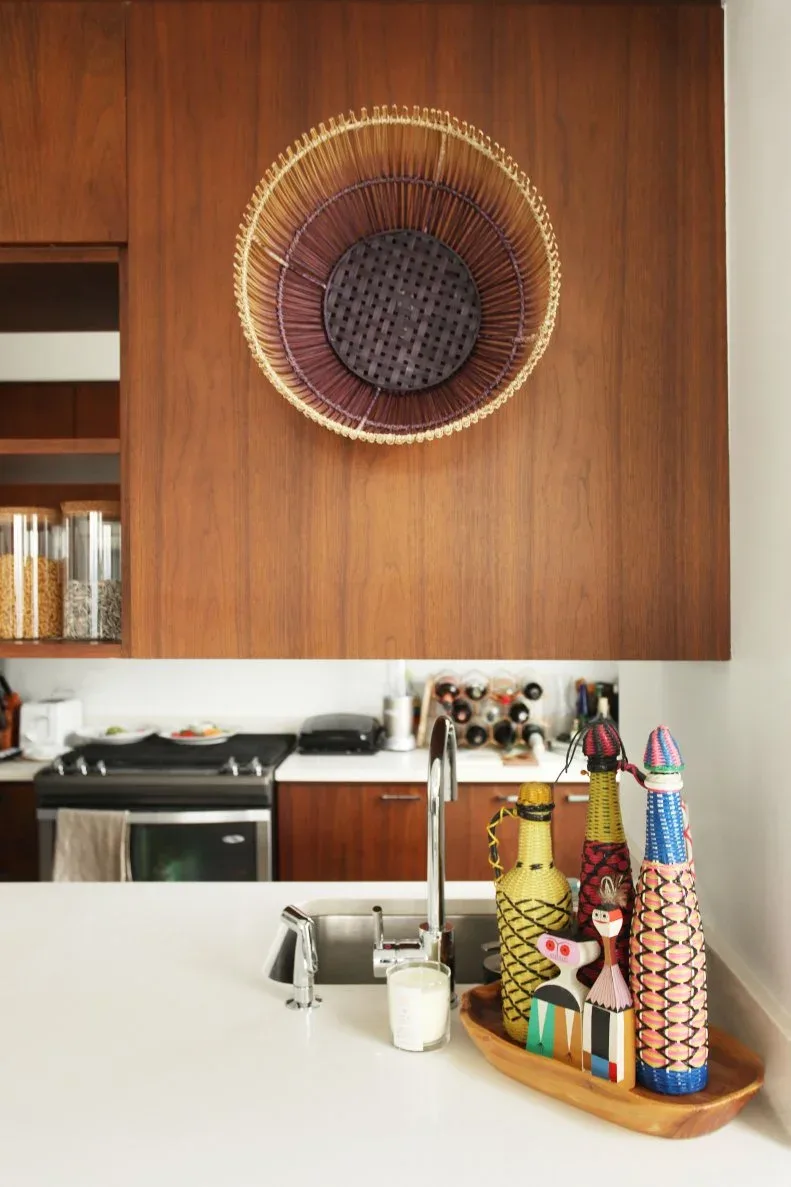
The circular woven decoration breaks up a broad, plain wooden cabinet surface. Colorful patterned bottles gather on a single tray by the sink, giving the kitchen a playful detail while most of the surrounding counter stays white and comparatively simple.
A tray makes a small collection easier to move when you need to clean or prepare food. Keep it outside the main splash zone, and avoid blocking a cabinet door with wall decoration. Choose objects for their personal value rather than adding a large assortment just to fill space.
IDEA 10 / 20
Mix Quiet Cabinet Shapes With Collected Crockery
 SaveSupport Non AI Creator
Image credit: Cortney Bishop Designs/Katie Charlotte Photography
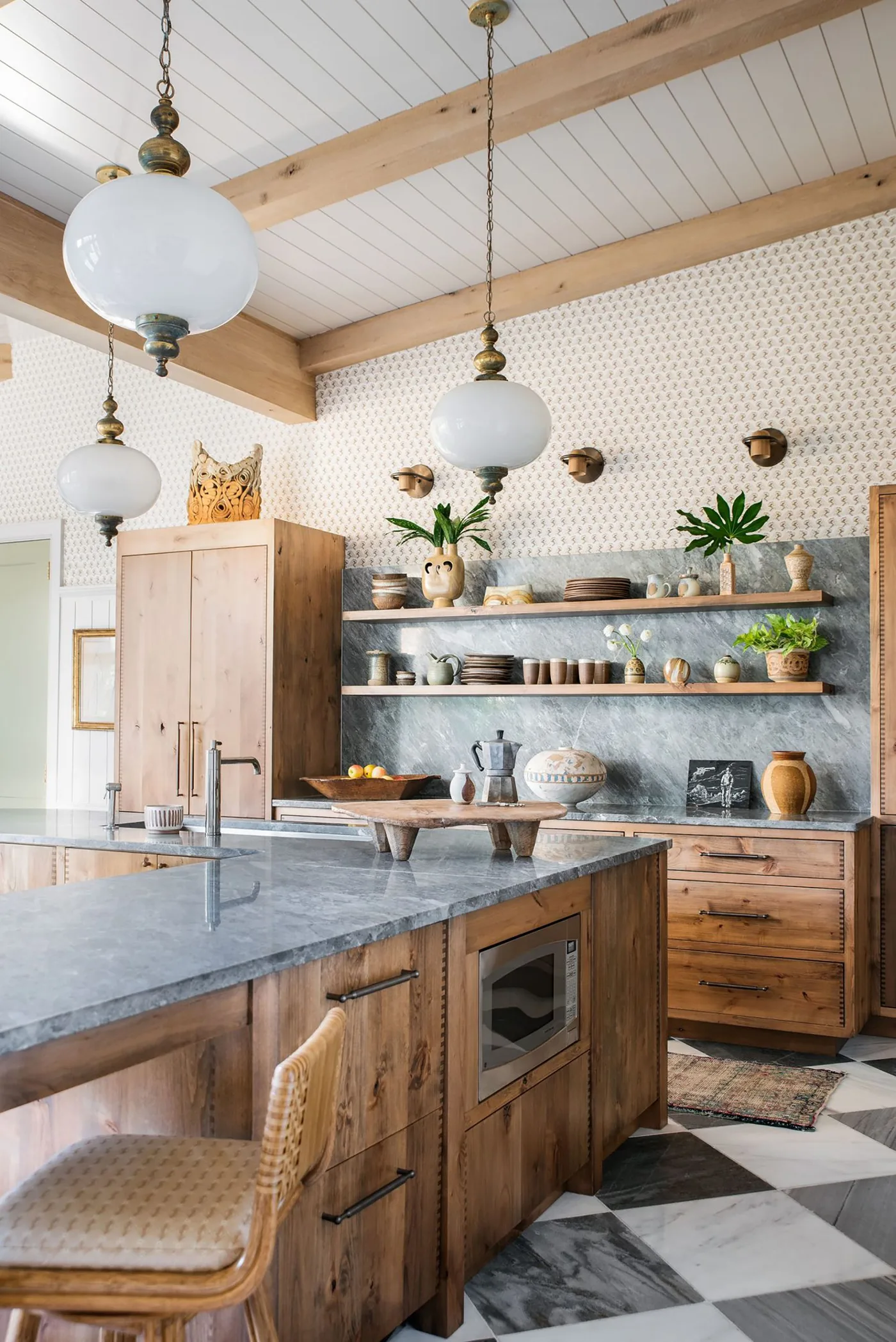
Straightforward wooden cabinets provide a steady base for a more collected mix of plates, pots and small decorative pieces. Globe pendants soften the exposed beams, while the checkerboard floor introduces a larger graphic pattern below the quieter cabinet fronts.
When the floor already has a strong pattern, keep dish colors related and avoid another busy print at the same scale. Group useful crockery on reachable shelves. Limit high display pieces to secure, lighter objects that can be removed for cleaning without awkward balancing.
PART 03
Find a Manageable Amount of Pattern
IDEA 11 / 20
Use One Graphic Backsplash With Pale Cupboards
 SaveSupport Non AI Creator
Image credit: Photo: John Merkl. From: Studio Heimat
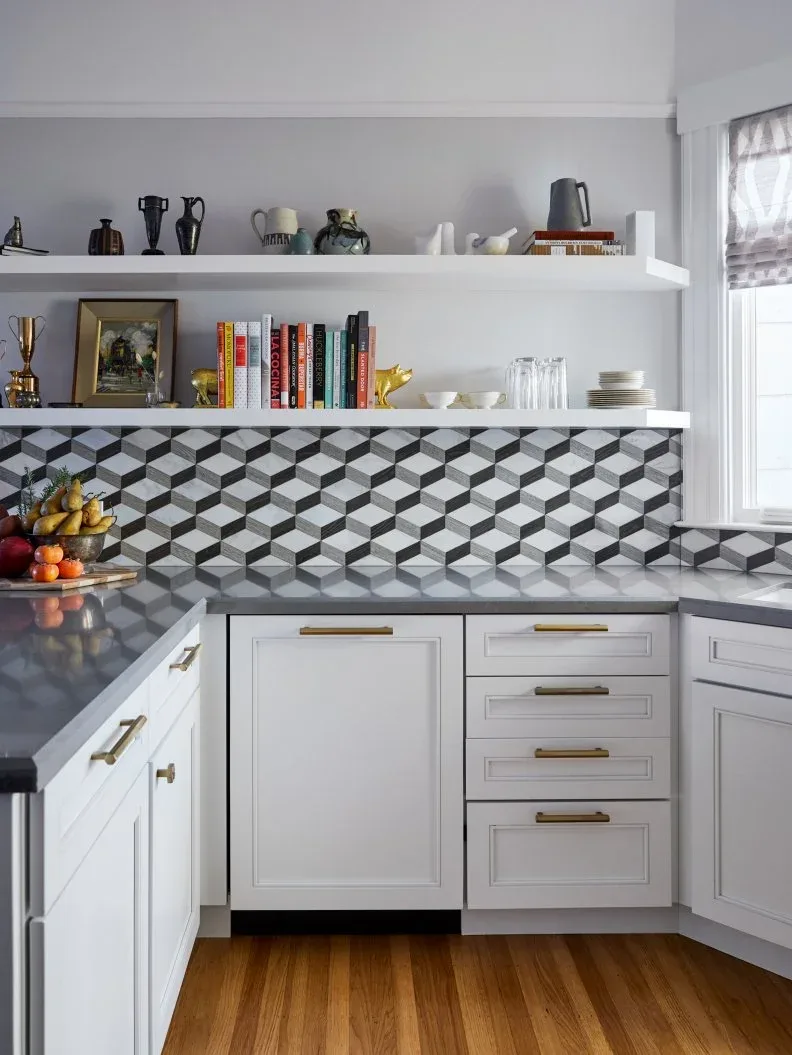
A geometric backsplash gives this pale kitchen a graphic focal point. White shelves and cabinet fronts keep the rest simple, while books, small ceramics and a framed picture make the shelving feel personal rather than like a uniform set of display pieces.
Keep the shelf arrangement looser when the tile below is strongly patterned. Leave some gaps around books and pitchers instead of lining up every object edge to edge. Ask about tile and grout cleaning around the cooking area, and keep paper items away from steam and heat.
IDEA 12 / 20
Try Dark Paint Behind Natural Wood Shelves
 SaveSupport Non AI Creator
Image credit: Photo: Stephanie Diani
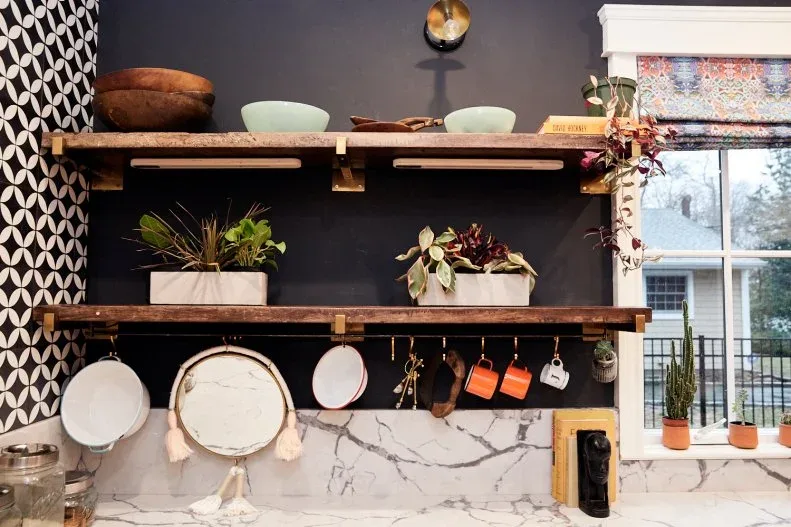
The dark wall lets the wooden shelves and pale dishes stand out clearly. A few plants and hanging mugs make the storage useful and relaxed, while the patterned blind adds color in a contained area rather than across all of the cabinet fronts.
Dark paint can make a shelf wall feel intimate, but test how well everyday items remain visible at night. Add practical task lighting below the shelves if needed. Use hooks suited to the mug weight and keep delicate pieces away from areas where they will be knocked during washing up.
IDEA 13 / 20
Make a Bright Window a Small Plant Corner
 SaveSupport Non AI Creator
Image credit: Photo: Dabito
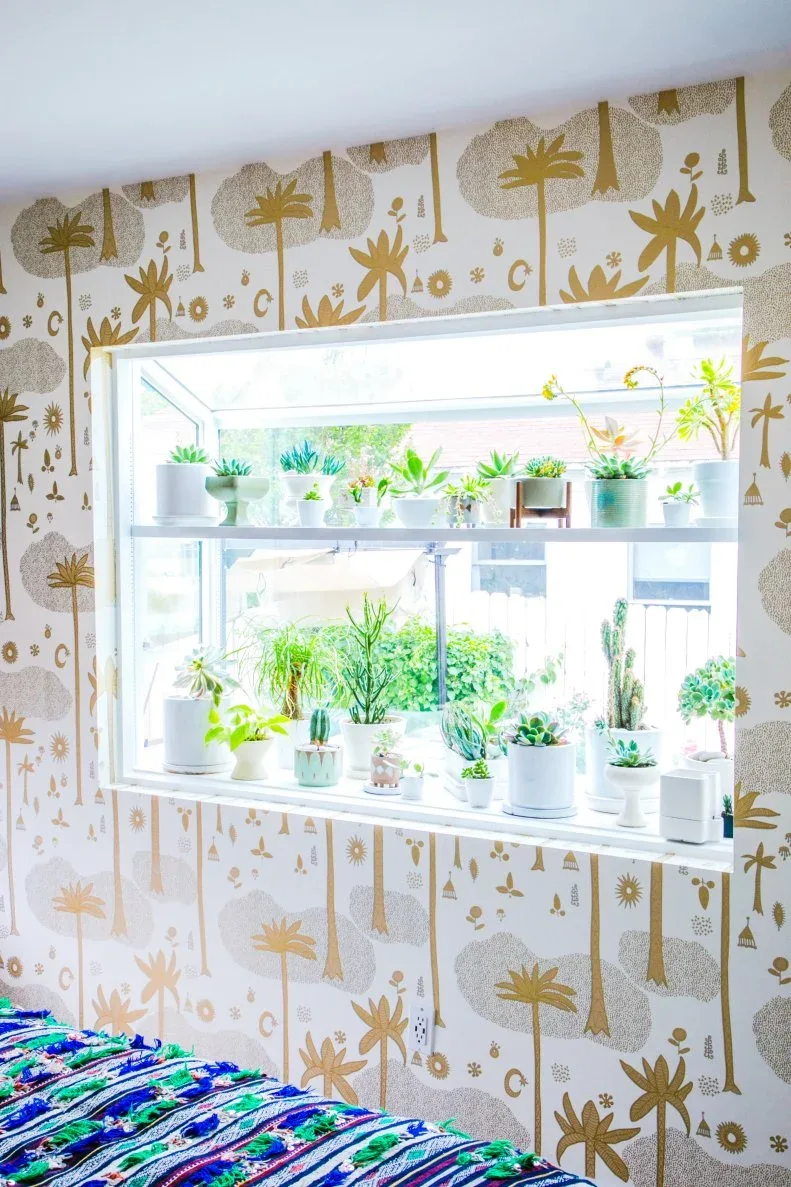
Rows of small plant pots make this projecting window feel like a little garden corner. Yellow botanical wallpaper repeats the leafy theme around it, while pale pots and white window framing keep the arrangement bright despite the many separate plants.
Choose plants for the window’s actual light and temperature rather than assuming every species enjoys direct sun. Use trays to protect the sill and leave access for opening and cleaning. If the collection starts to shade the room, move some pots elsewhere instead of adding another shelf.
IDEA 14 / 20
Add a Woven Table Layer to a Simple Eat In Kitchen
 SaveSupport Non AI Creator
Image credit: Photo: Ace Misiunas, Jessica Bodas . From: Natalie Myers
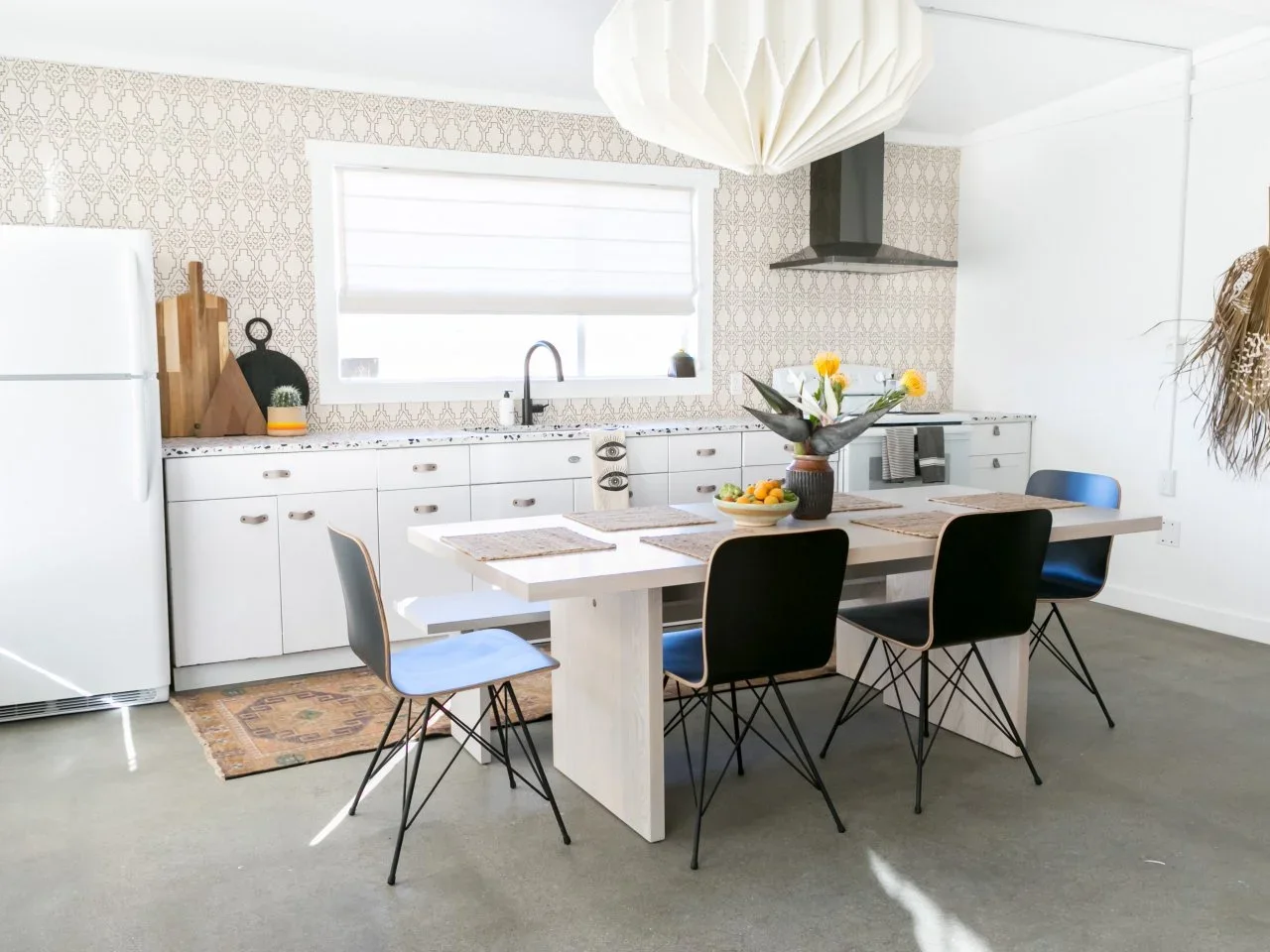
The white table and cabinet fronts give this eat in kitchen a simple framework. Woven placemats, a small patterned rug and gentle wall pattern add texture around the dark chairs, while the sculptural pale pendant keeps the center from feeling overly formal.
Tabletop texture is an easy starting point if you are keeping the existing kitchen. Choose placemats that wipe clean and store flat. Keep the central arrangement low enough for conversation, and leave chairs enough room to pull back without interrupting the route to the sink.
IDEA 15 / 20
Use Soft Green to Break Up Warm Wood
 SaveSupport Non AI Creator
Image credit: Photo: Adam Albright. From: HGTV Magazine
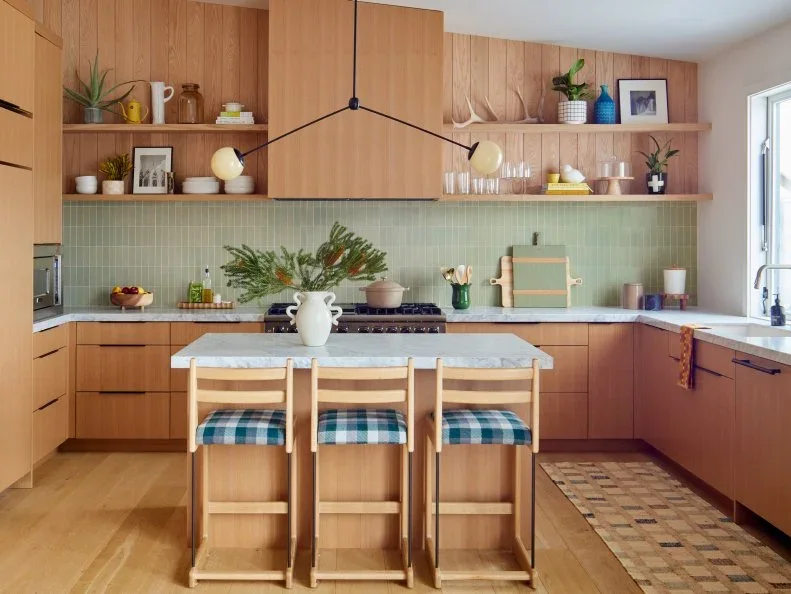
Soft green vertical tiles interrupt the warm wood cabinet run without introducing a harsh contrast. Checked stool cushions add a smaller, informal pattern, and the open shelves give ordinary glasses and dishes a place within the otherwise straightforward layout.
Use the backsplash as the main color, then repeat a little of it in washable textiles. Check cushion ties and cleaning instructions for seats used daily. White oak kitchen cabinet ideas show more ways to balance visible grain with lighter counters and simple wall finishes.
PART 04
Choose the Color and Texture Balance You Enjoy
IDEA 16 / 20
Keep Woven Stools Light Against a White Island
 SaveSupport Non AI Creator
Image credit: Photo: Julie Soefer. From: Marie Flanigan Interiors
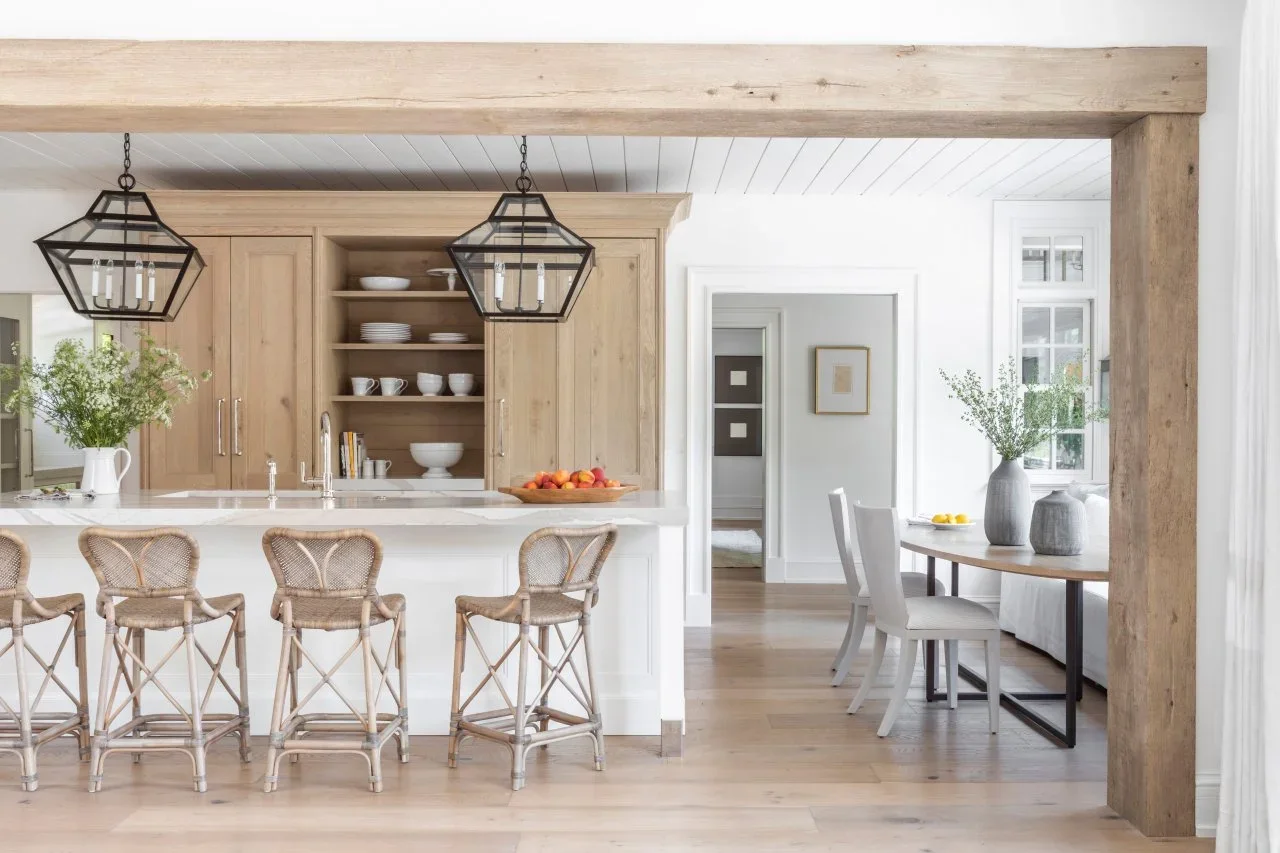
Woven backed stools introduce texture in front of the broad white island without making the seating feel solid or heavy. Pale timber cupboards frame a central run of open shelves, while light walls and flooring allow the varied materials to stay within a quiet palette.
A woven back can be visually light but still needs comfortable support. Test the seat at the correct counter height and check how easily crumbs come out of the weave. Keep open shelving for dishes you handle often rather than packaging that makes the room feel visually busy.
IDEA 17 / 20
Use Ribbed Glass for a Quieter Display
 SaveSupport Non AI Creator
Image credit: Studio Duggan
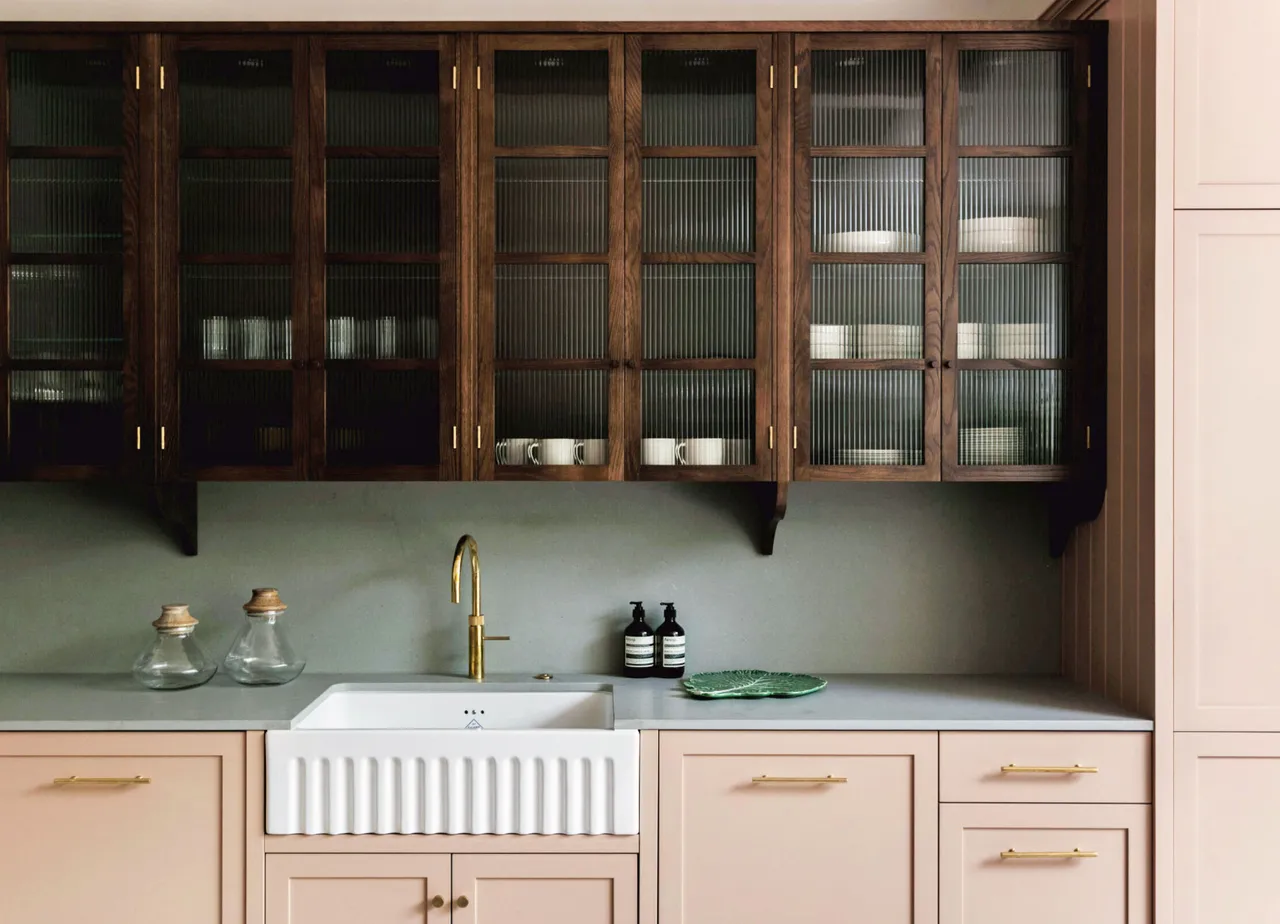
Ribbed glass softens the view of the dishes inside these dark timber upper cupboards. Blush lower cabinets lighten the arrangement below, while the plain backsplash and white sink keep the contrast focused on material and color rather than extra decoration.
Textured glass can make visible storage feel less fussy, but it does not hide every outline. Group dishes by size and leave room between stacks. View the glass under evening lighting before ordering, since reflections can make the display appear quite different after sunset.
IDEA 18 / 20
Put a Warm Color on One Island
 SaveSupport Non AI Creator
Image credit: deVOL Kitchens
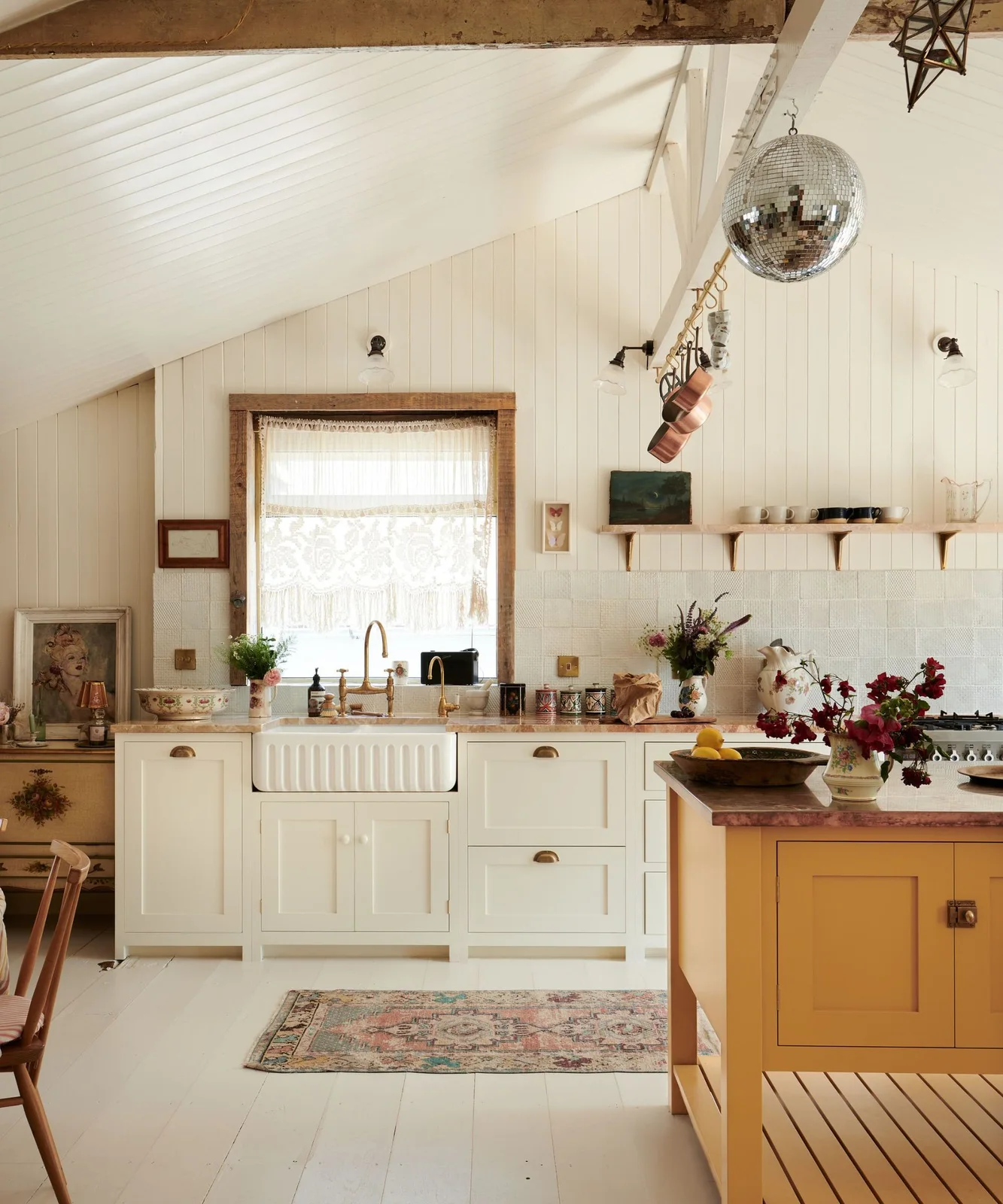
The yellow island gives this mostly white kitchen a warm center. A small patterned rug, loose flowers and an old looking drawer chest add a collected layer, while the pale boarded ceiling keeps the higher part of the room comparatively quiet.
A colored island can change the mood without repainting the entire kitchen. Check the color beside the worktop and floor in both daylight and lamplight. Keep freestanding rugs secure and leave the island top available for useful work rather than a permanent arrangement of vases.
IDEA 19 / 20
Connect Cooking and Dining With Repeated Texture
 SaveSupport Non AI Creator
Image credit: Ella Moore
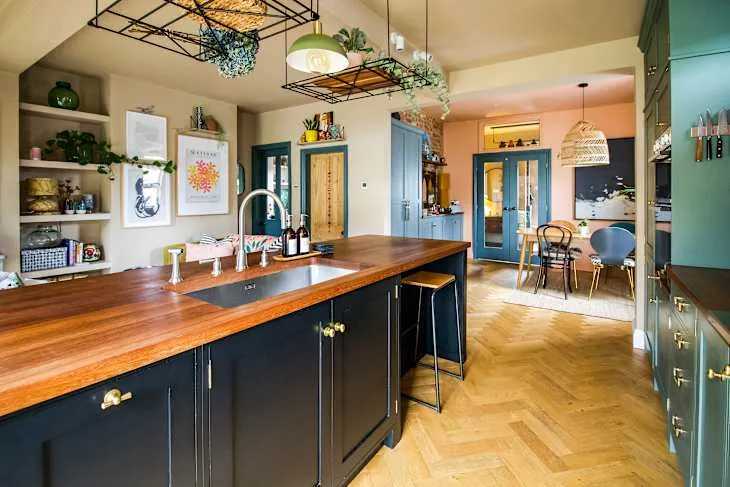
The long wooden island leads toward a dining corner with woven lighting, connecting the two spaces through texture. Blue green cupboards and dark island fronts give the room a consistent framework, while personal pictures and open shelves make it feel relaxed rather than uniformly fitted.
Repeat one or two materials across cooking and dining instead of matching every chair and cupboard. Keep the walking route clear when stools are occupied. Boho farmhouse kitchen ideas offer more relaxed combinations if you want to lean further into mixed furniture and visible collections.
IDEA 20 / 20
Limit a Bold Tile Color to One Working Wall
 SaveSupport Non AI Creator
Image credit: Ella Moore
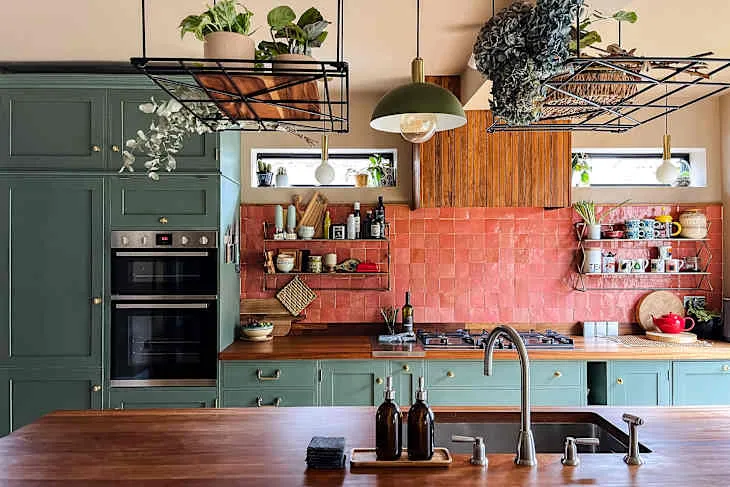
A salmon pink tile backsplash supplies the boldest color in this kitchen, balanced by green cabinet fronts and warm wooden counters. The timber hood trim connects those surfaces, while suspended plants introduce a softer layer above the straightforward storage runs.
Treat a bold tile wall as the main decorative statement and keep neighboring objects selective. Plants and suspended racks need secure supports, easy watering access and separation from cooking heat. A simpler version uses the same pink and green relationship in textiles or pottery instead of a full wall.
BRING IT ALL TOGETHER
Make the Personal Details Useful
Choose the clearest working surfaces first, then add the texture that the room needs. Woven stools, a wooden shelf or a plant corner can soften a plain kitchen without requiring a new set of cabinets or more objects on every counter.
Let your cleaning habits guide open storage and textiles. Keep the things you handle often within easy reach, protect surfaces beneath plants and leave preparation areas clear. The room will feel more relaxed when its character supports the way you actually use it.