Rustic kitchens work best when warmth and practicality are planned together. Wood, stone, weathered finishes and older furniture can give the room character, but the sink, cooking area, storage and places to sit still need to function comfortably.
These photographed kitchens show a wide range of approaches, from a compact timber room with a small preparation stand to larger kitchens with a dining table or island. Borrow the material relationships and useful details that fit your room instead of assuming that rustic style requires a large renovation.
PART 01
Build Warmth Into the Main Surfaces
IDEA 01 / 20
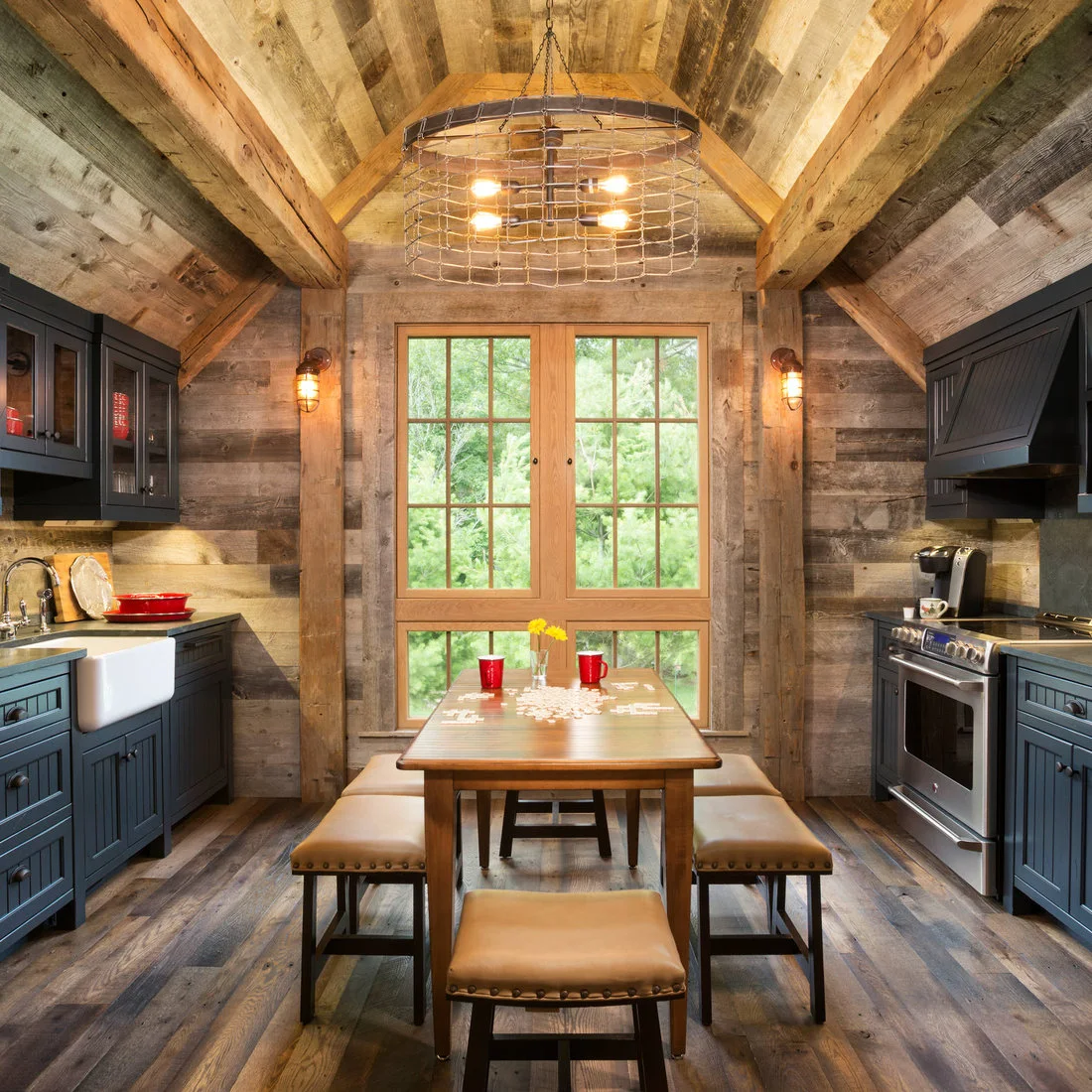
Put a Table at the Heart of a Timber Kitchen
 SaveSupport Non AI Creator
Source: John Kraemer & Sons via Houzz
A dining table and padded benches make this timber kitchen feel like a room to gather in. Dark cabinets provide a clear edge beneath the weathered boards, while the large window brightens the center and gives the simple table a pleasant outlook.
A table can feel friendlier than a fixed island when you mainly want somewhere to eat and talk. Allow for benches to slide out and check appliance doors with people seated. For a brighter cabinet balance, white classic kitchen ideas offer useful alternatives to a fully timber setting.
IDEA 02 / 20
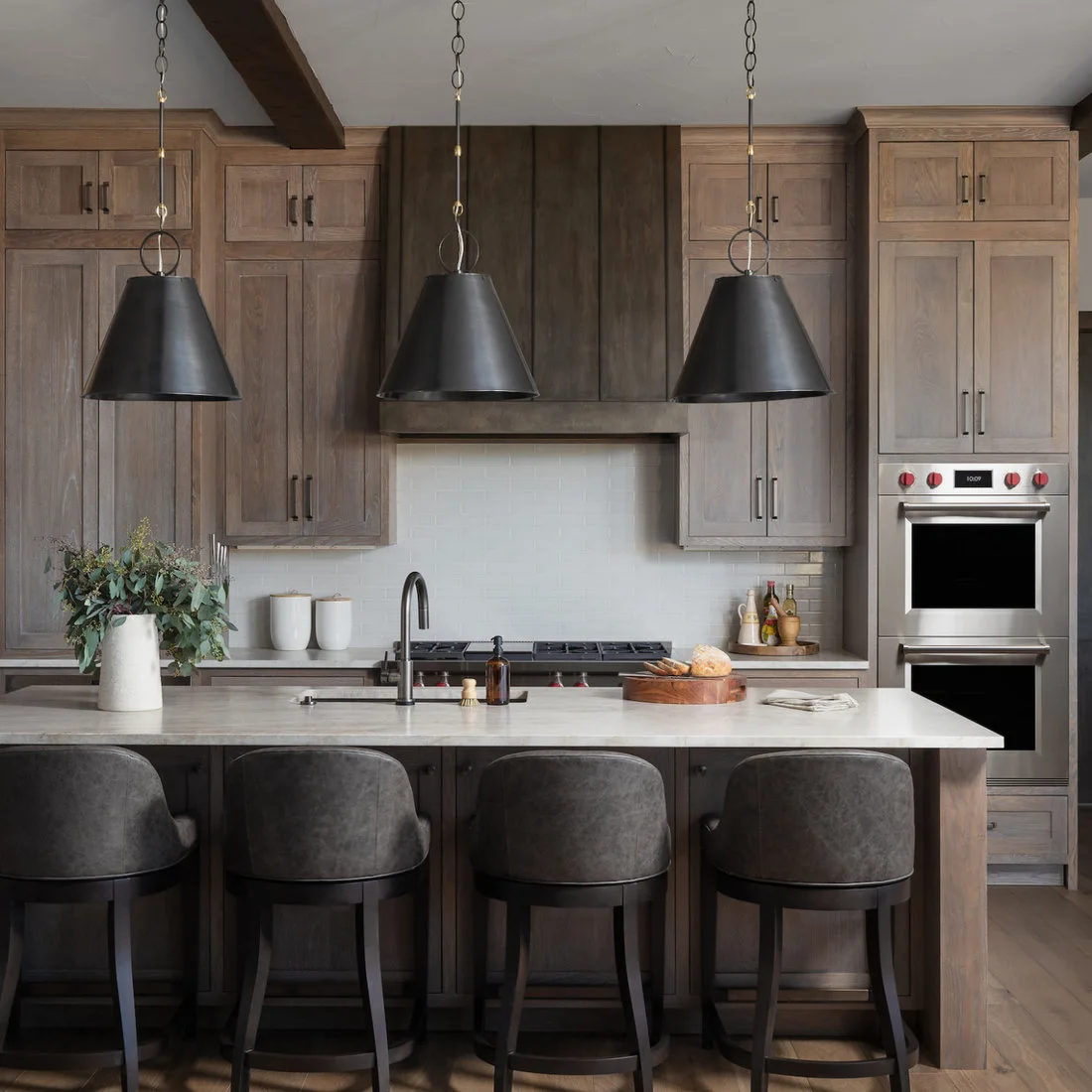
Balance Wood Cabinets With a Pale Worktop
 SaveSupport Non AI Creator
Source: Ashleigh Weatherill Interior Design via Houzz
The pale island top gives this wall of wood cabinets a lighter foreground. Black pendants and dark upholstered stools echo the deeper hood color, creating a clear framework while leaving the cabinet grain visible rather than competing with it through extra pattern.
Choose a worktop sample beside the actual cabinet finish, not a photograph of it. A broad pale surface can brighten darker timber, but ask about stains and heat before committing. Make sure pendant placement lights the work area without blocking conversation across the island.
IDEA 03 / 20
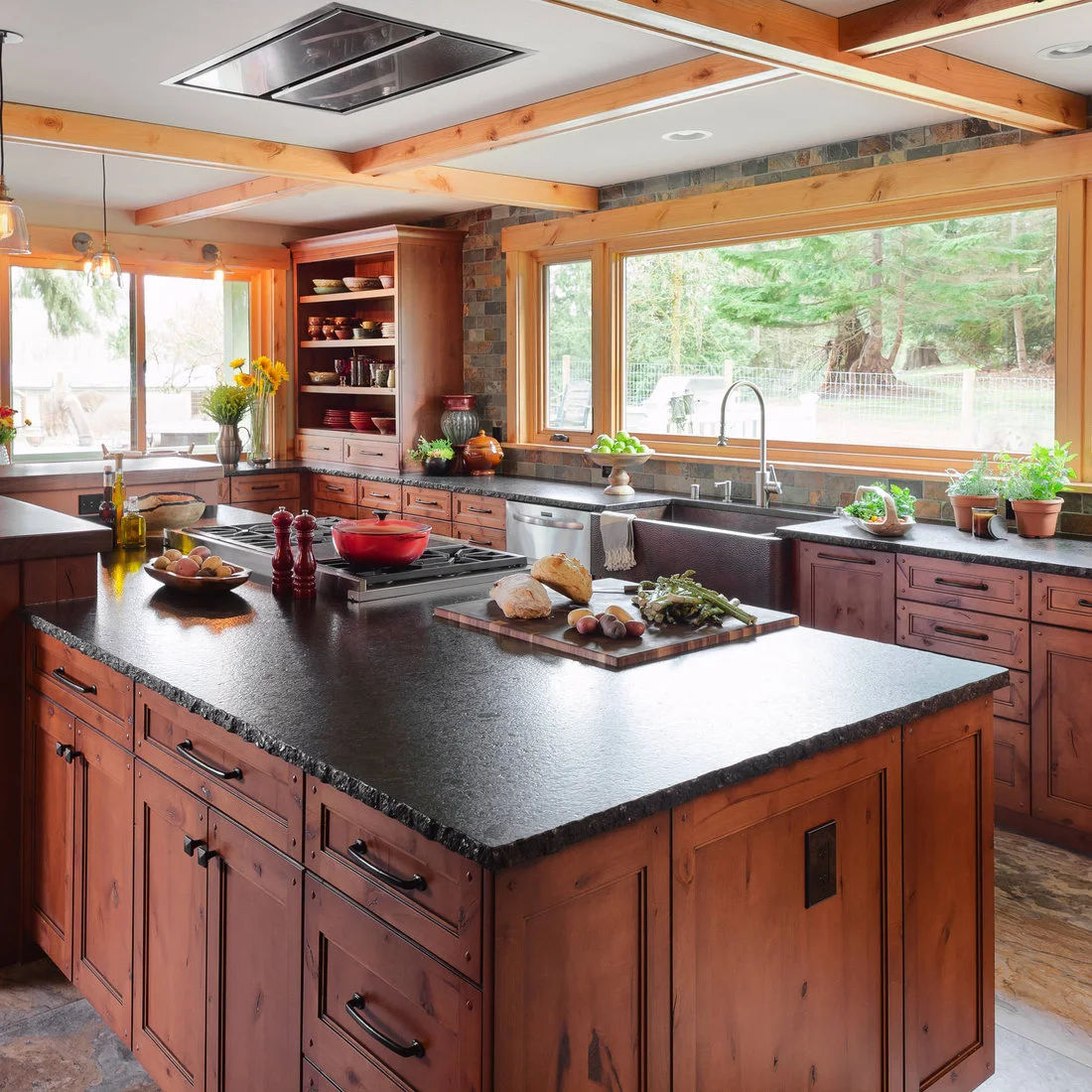
Keep Everyday Work Beside the Window
 SaveSupport Non AI Creator
Source: Sheila Mayden Interiors via Houzz
A broad sink window and corner shelves make this warm timber kitchen feel connected to the garden. Dark worktops give the cabinet fronts a crisp boundary, while the island holds the cooktop and a separate patch of preparation space nearby.
Plan where food moves between the sink, preparation surface and cooking area before copying an island arrangement. A cooktop also needs suitable extraction and protected space around hot pans. Keep herb pots on trays and leave window handles reachable above the sink.
IDEA 04 / 20
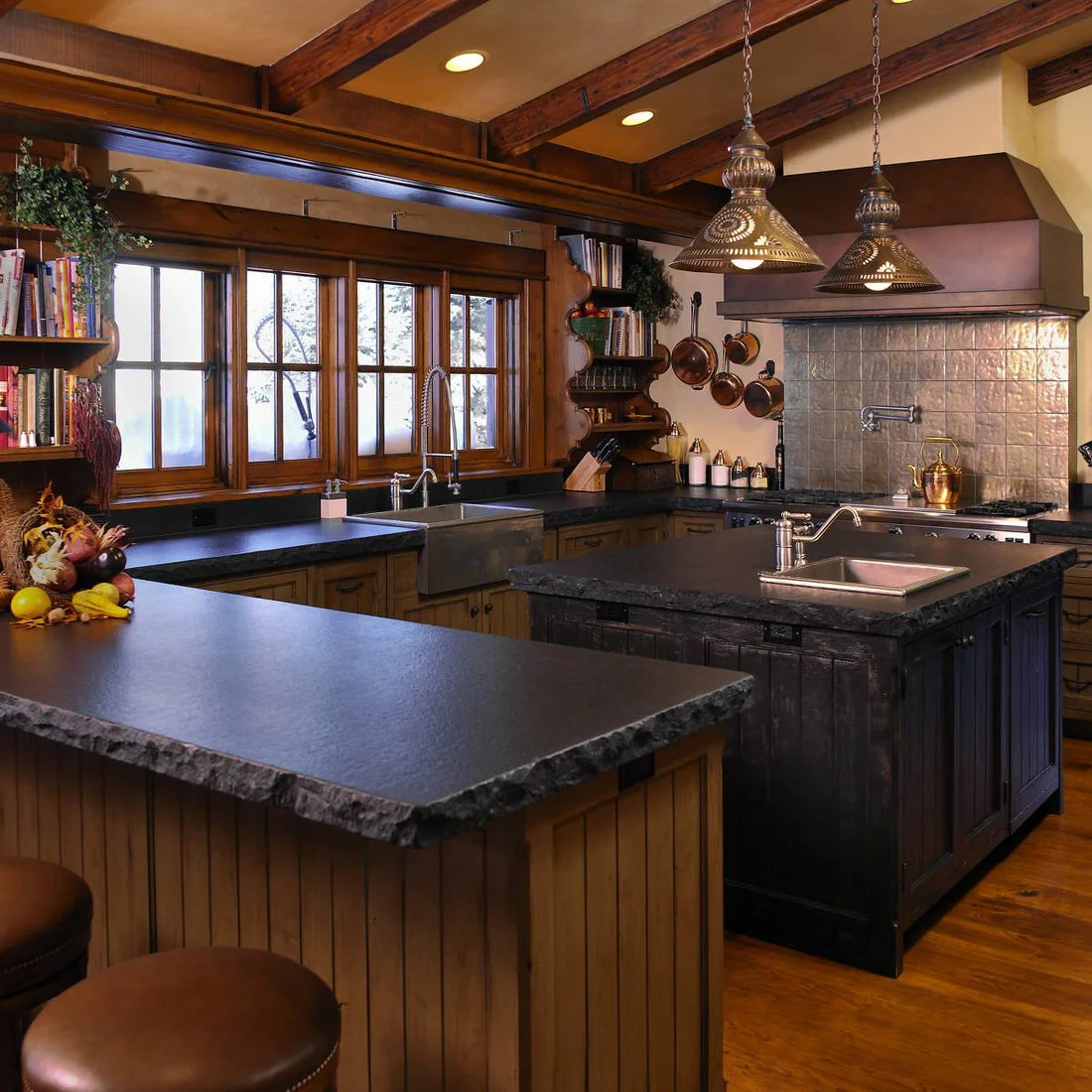
Add Character Through Metal Details
 SaveSupport Non AI Creator
Source: Damian Farrell Design Group via Houzz
Pierced pendant shades, hanging pans and a substantial hood add metal detail to this timber kitchen. Dark counters and an island keep the room grounded, while small shelves beside the window hold cookbooks without taking over the main preparation surfaces.
Display pans you use often if you are happy to wipe them down regularly. Anything stored near cooking can collect grease, so keep the collection manageable. Check the light through perforated shades in person; decorative shadows can be attractive but should not replace clear task lighting.
IDEA 05 / 20
Leave Some Everyday Crockery on Open Shelves
 SaveSupport Non AI Creator
Source: Everingham Design via Houzz
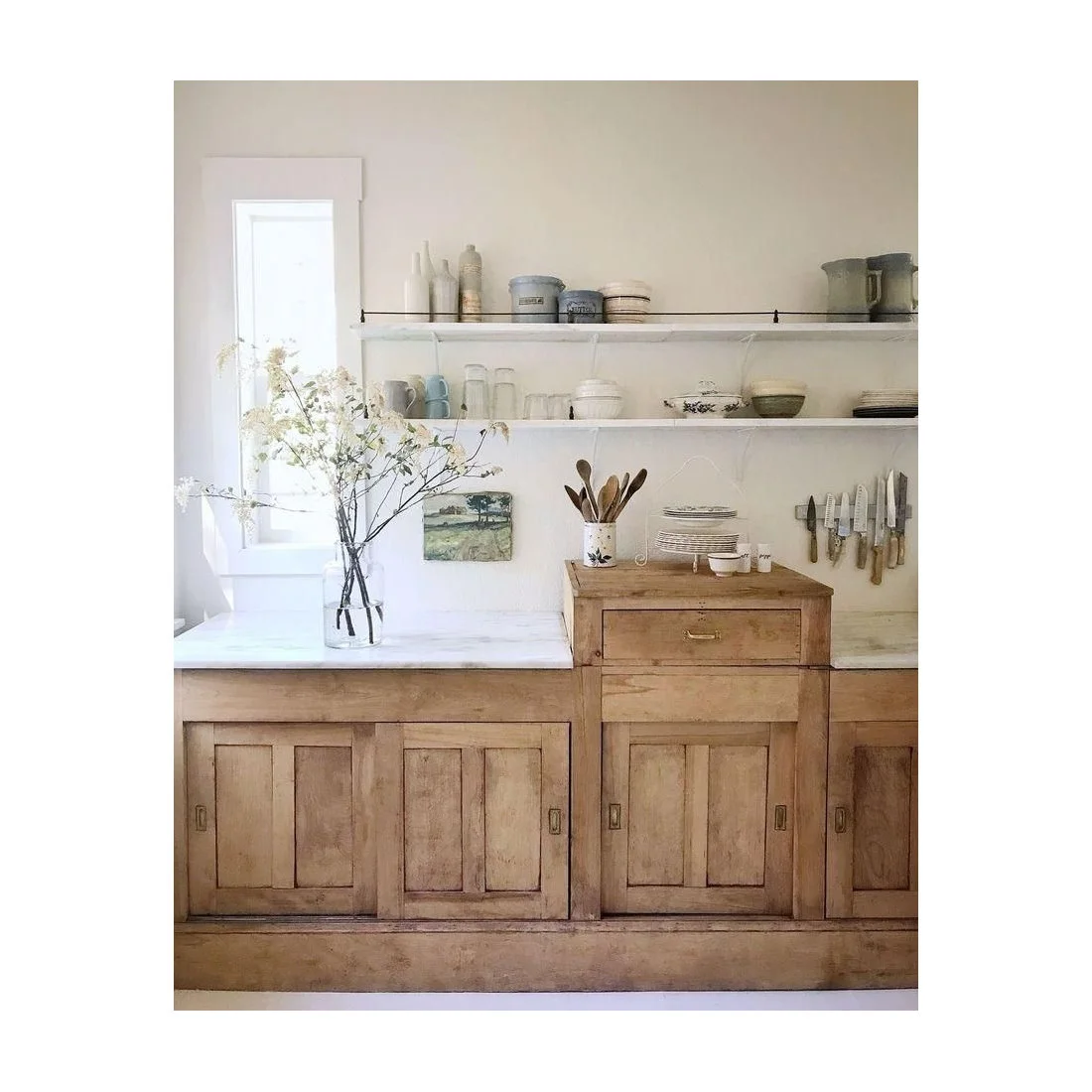
Worn wooden cupboards provide the rustic character in this simple kitchen, while white shelves and pale counters keep the upper half light. Everyday crockery gives the shelves purpose, and the slightly uneven cabinet tones make the arrangement feel less like a matched furniture set.
Use open shelving for dishes that are washed frequently rather than rarely handled ornaments. Check shelf depth and fixings for the weight of stacked plates. Knives need secure storage suited to the household, especially where a visible magnetic rack would be within a child’s reach.
PART 02
Balance Timber With Light and Contrast
IDEA 06 / 20
Use White Glass Fronts to Lift Dark Timber
 SaveSupport Non AI Creator
Source: Raw Urth Designs via Houzz
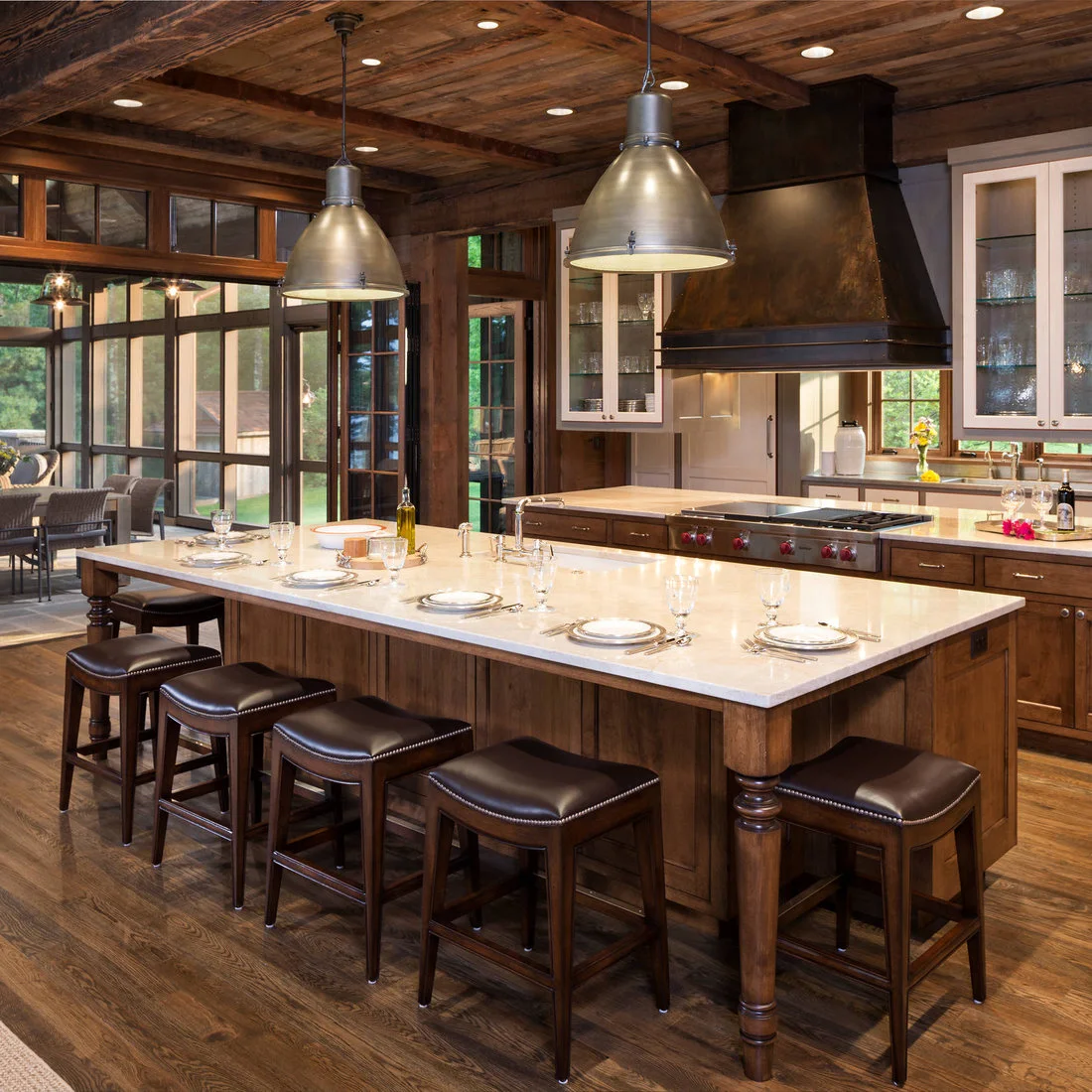
White glass front cabinets introduce a lighter band into this kitchen’s dark timber shell. The pale island counter reinforces that relief, while the large hood and broad metal pendants make the cooking and gathering areas feel substantial enough for the room.
Glazed doors work best when the contents are easy to keep orderly. Reserve them for matching glasses or everyday dishes and use solid fronts for mixed packaging. Check the island overhang and stool heights together so people can sit comfortably without crowding the working side.
IDEA 07 / 20
Give Simple Timber Doors Dark Outlines
 SaveSupport Non AI Creator
Source: WINN Design+Build via Houzz
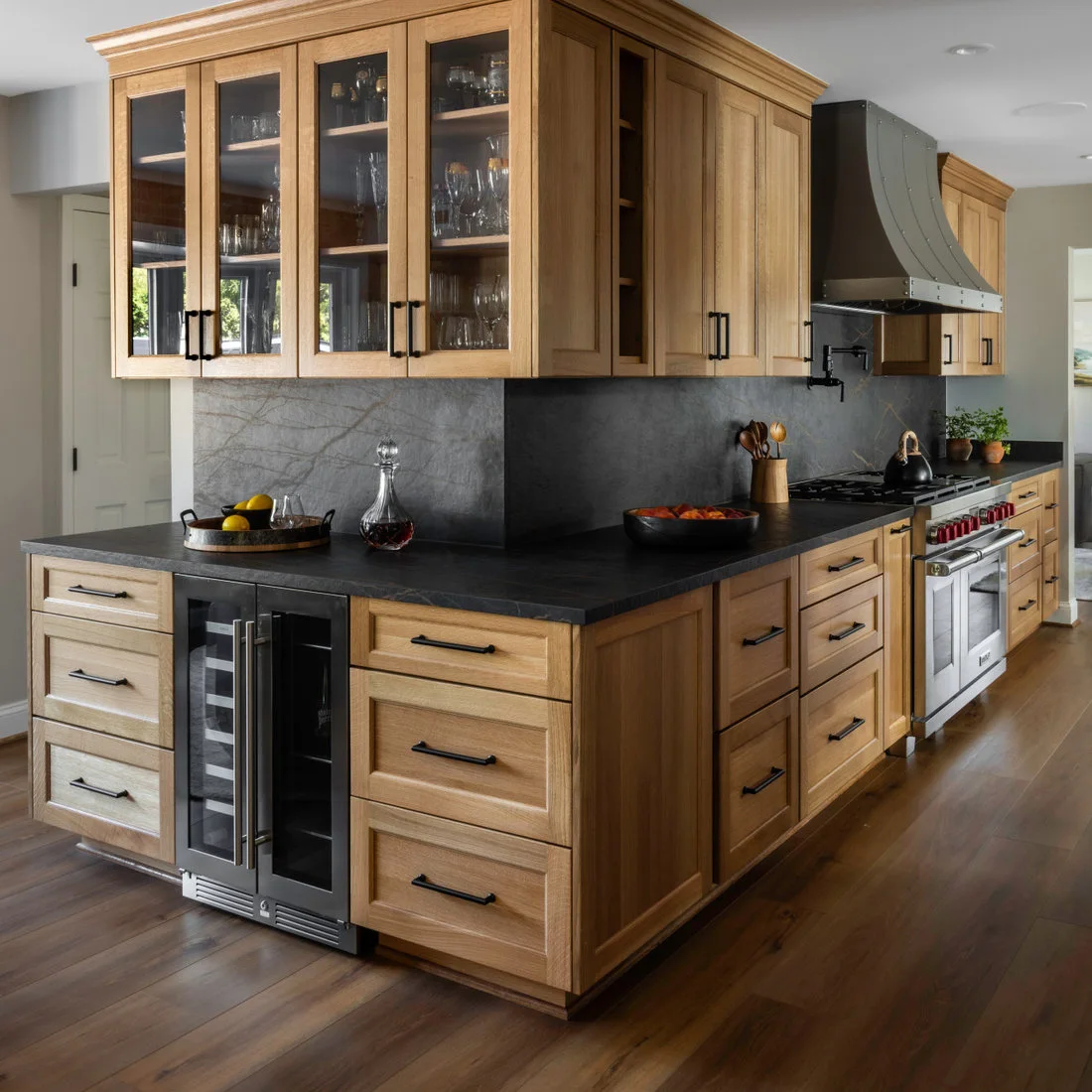
Dark handles, counters and a curved hood give these light timber cabinets a more defined outline. The glass front corner cupboard creates display space above a small drinks fridge, while the main cooking run stays practical and comparatively uncluttered.
A restrained set of dark finishes can make timber doors look more deliberate without adding another wood tone. Try a handle sample on the actual door before ordering the full set. Leave enough clearance around the drinks fridge for the manufacturer’s ventilation and door opening requirements.
IDEA 08 / 20
Make a Small Island Feel Like Furniture
 SaveSupport Non AI Creator
Source: Kristin Petro Interiors, Inc. via Houzz
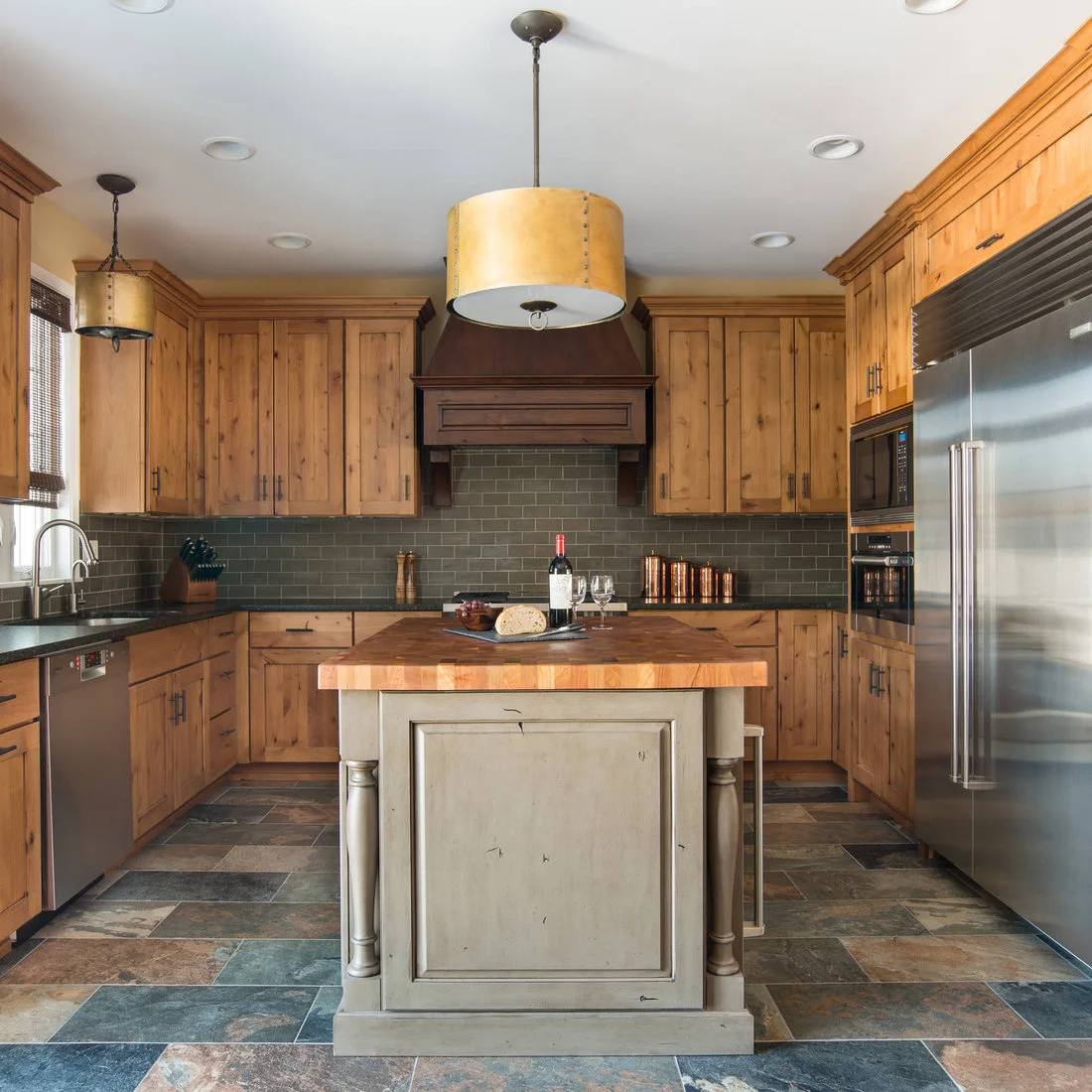
The small painted island stands apart from the surrounding timber cabinets like a freestanding furniture piece. Its wooden top relates to the cabinet warmth, while the gray green backsplash connects it to the varied colors in the tiled floor.
A compact island can provide useful preparation space without a long seating overhang. Tape its footprint on the floor and test dishwasher and oven doors before committing. Ask how to maintain a timber work surface around water, and wipe spills promptly rather than leaving the top wet.
IDEA 09 / 20
Keep the Backsplash Quiet Beside Strong Grain
 SaveSupport Non AI Creator
Source: Haste Woodcraft via Houzz
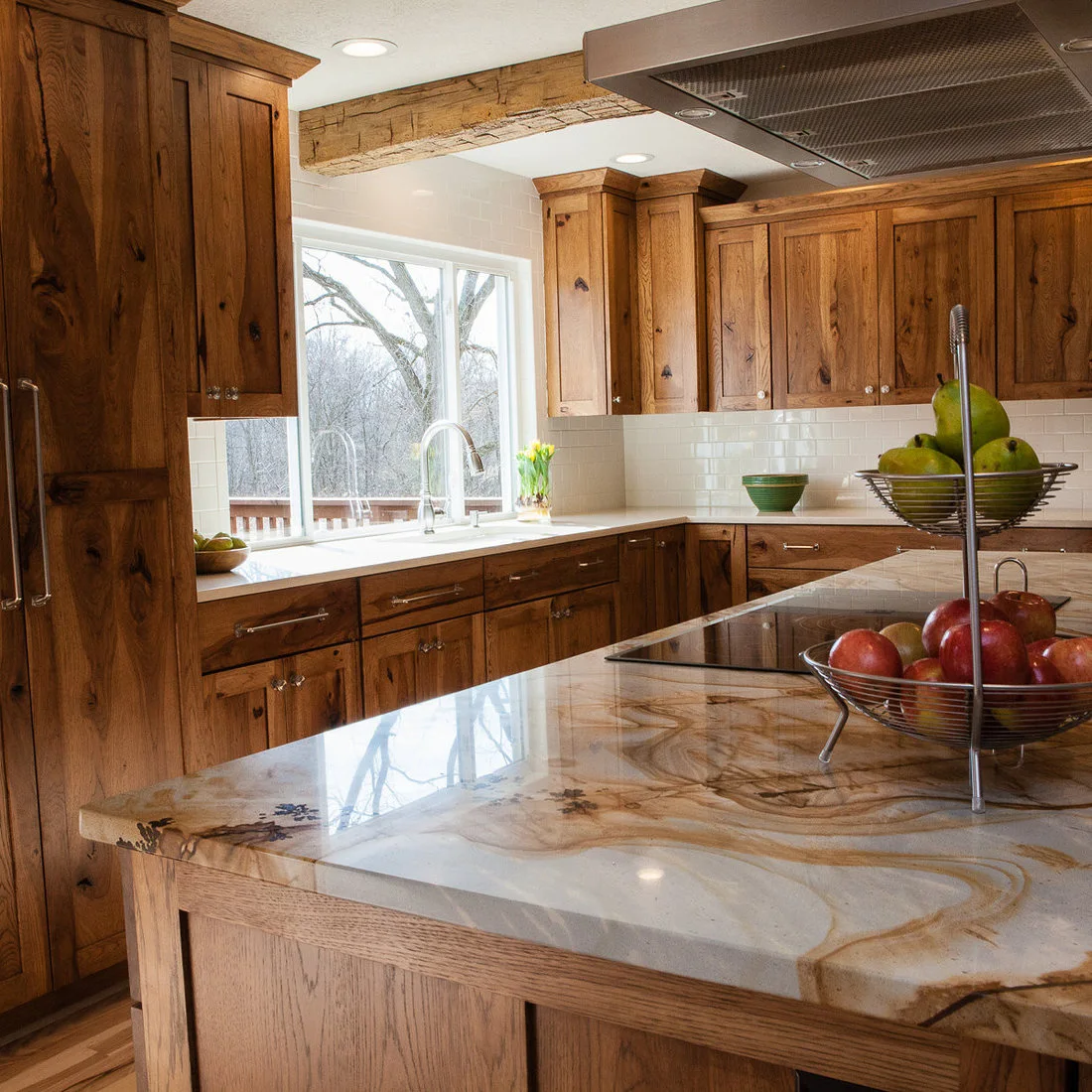
White tile provides a quiet background between the timber cabinets and the dramatically patterned island counter. The pale sink run also brings light around the window, allowing the wood grain to remain a feature without every surface competing for attention.
If your counter has strong movement, keep neighboring tile simple in color and shape. View large samples together, since a small swatch may hide the overall pattern. Worktop materials have different care needs, so confirm sealing, stain and heat guidance rather than judging durability from appearance.
IDEA 10 / 20
Pair Flat Fronts With Rougher Surroundings
 SaveSupport Non AI Creator
Source: Reid Smith Architects via Houzz
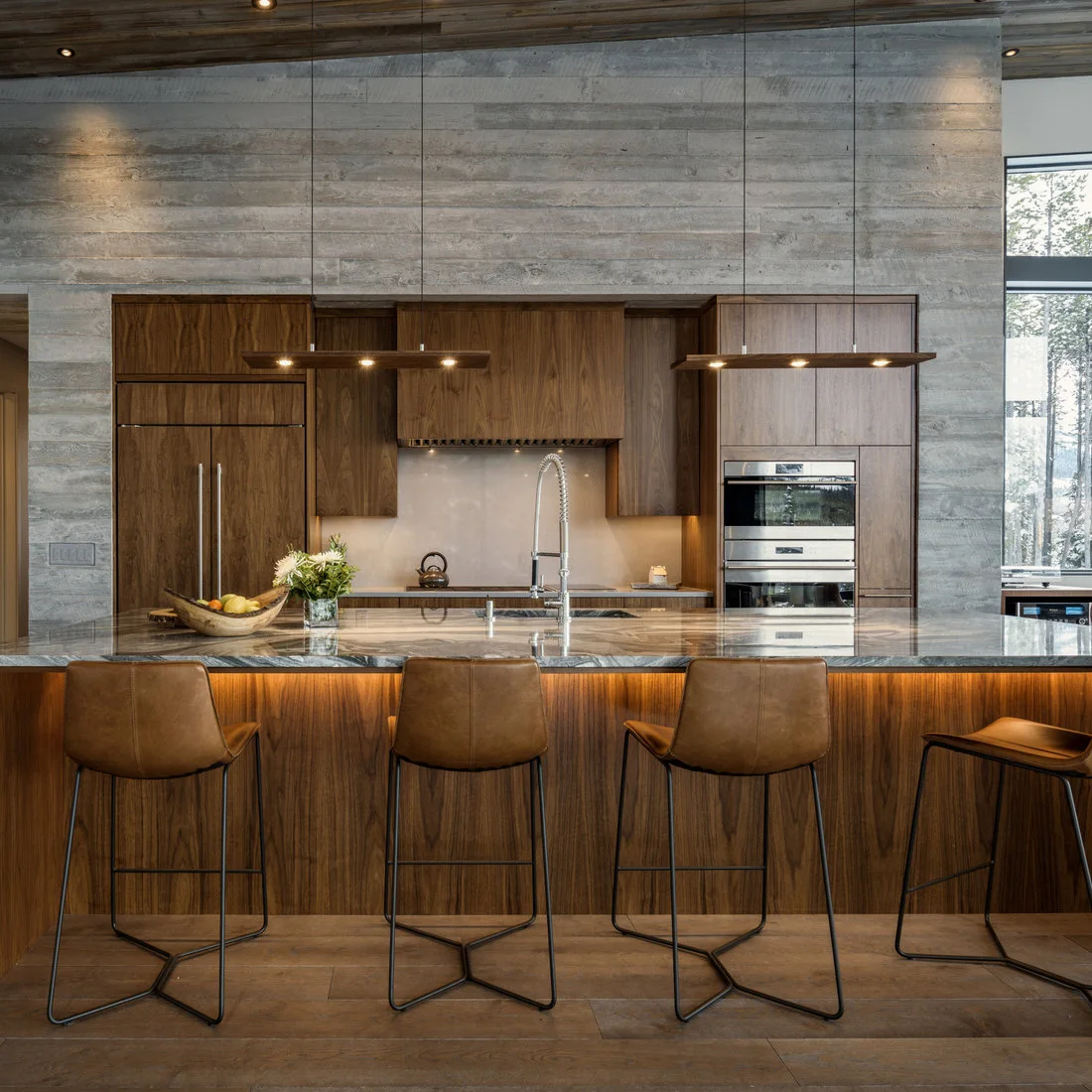
Flat wooden cabinet fronts give this kitchen a modern center within a strongly textured gray surround. Slim pendants and narrow stool frames keep the long island from feeling too heavy, while the warm lighting underneath makes the wood grain easier to appreciate.
You can combine rustic texture with simple cabinet geometry rather than choosing ornate doors. Keep lighting accessible for future maintenance and check for glare from a seated position. A textured wall needs a realistic cleaning plan, particularly if it continues into a cooking or splash zone.
PART 03
Make Everyday Work Easier
IDEA 11 / 20
Choose One Warm Metal Focal Point
 SaveSupport Non AI Creator
Source: Durham Designs & Consulting, LLC via Houzz
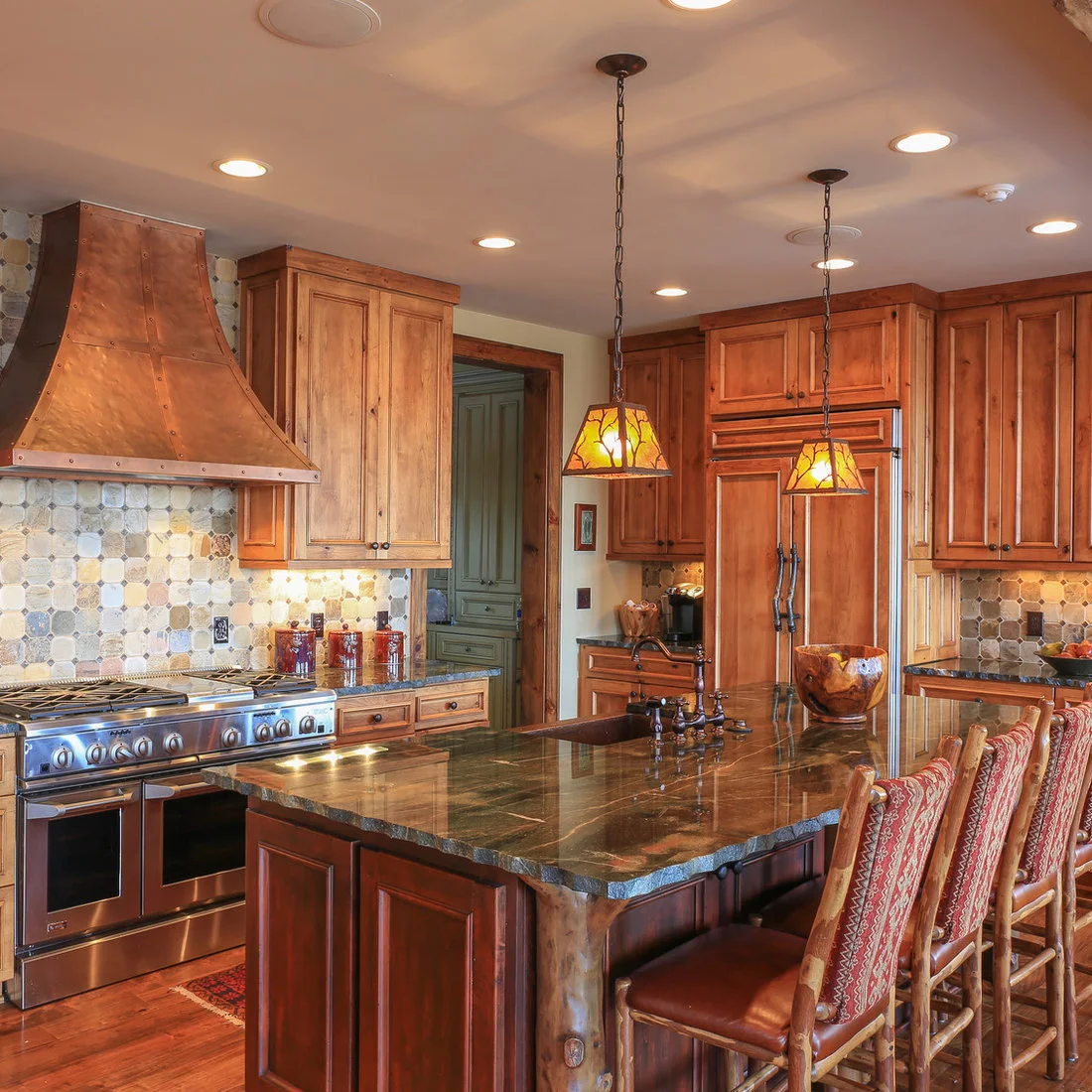
The warm metal hood is the main focal point in this richly colored kitchen. Patterned backsplash tiles, wooden cabinets and colored glass pendants share its warm palette, while the dark island counter prevents the whole room from becoming a single orange tone.
A decorative hood still needs extraction sized for the cooking arrangement and a finish you can maintain. Ask whether the metal is intended to patinate or stay polished. Keep counter accessories limited when the backsplash, pendants and upholstery already introduce several separate patterns.
IDEA 12 / 20
Use Timber Stools to Warm White Cabinets
 SaveSupport Non AI Creator
Source: Living Stone Design + Build via Houzz
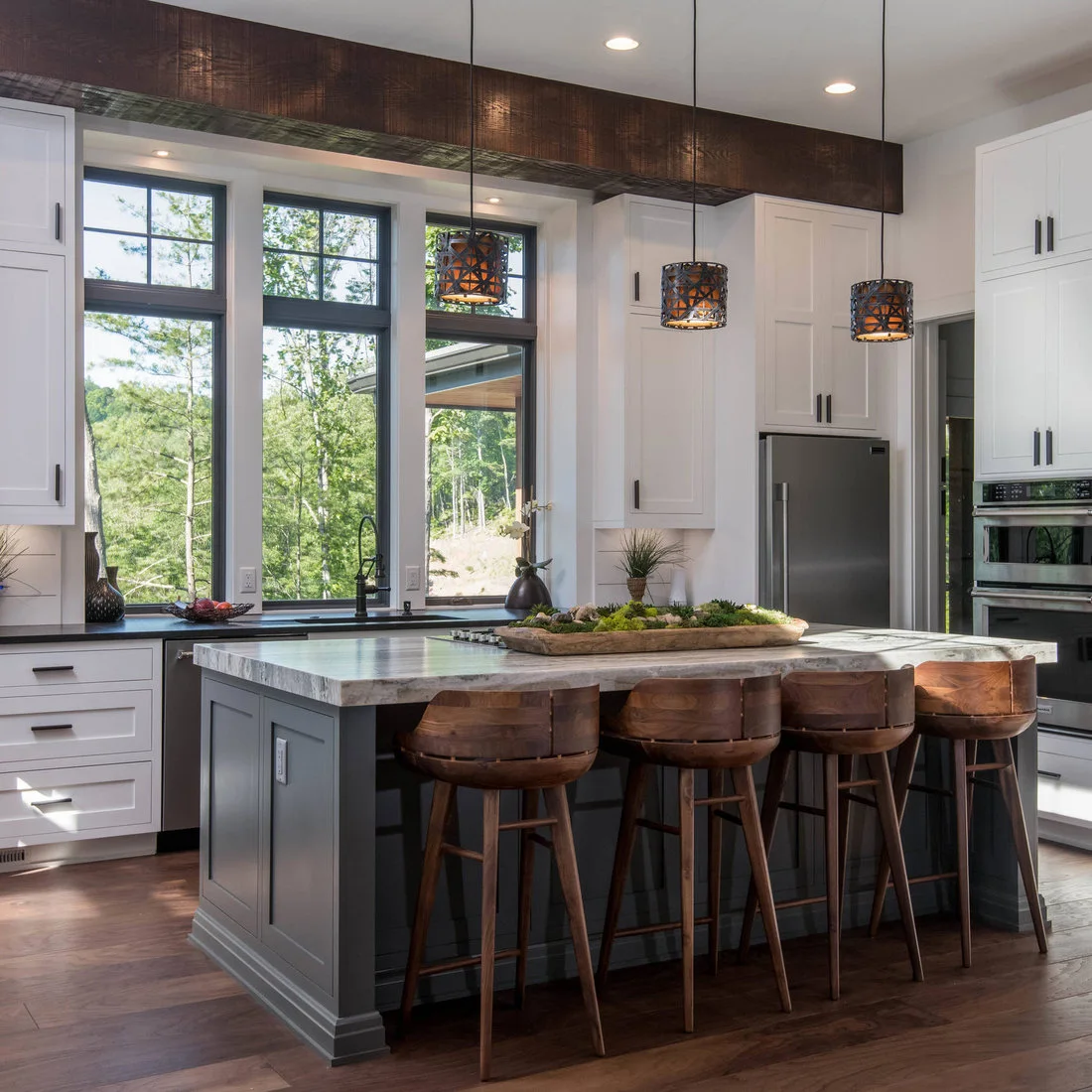
Wooden stools and a dark overhead beam warm this white kitchen without requiring timber doors on every cabinet. The gray island gives the seating area its own identity, while small patterned pendants add detail above the broad, pale counter.
Stools are a manageable way to introduce wood into an existing painted kitchen. Check the seat height, footrest and knee space with your counter before buying. Keep a low centerpiece movable so the island can switch between preparation, serving and casual meals.
IDEA 13 / 20
Keep a Narrow Rustic Kitchen Flexible
 SaveSupport Non AI Creator
Source: Studio Schicketanz via Houzz
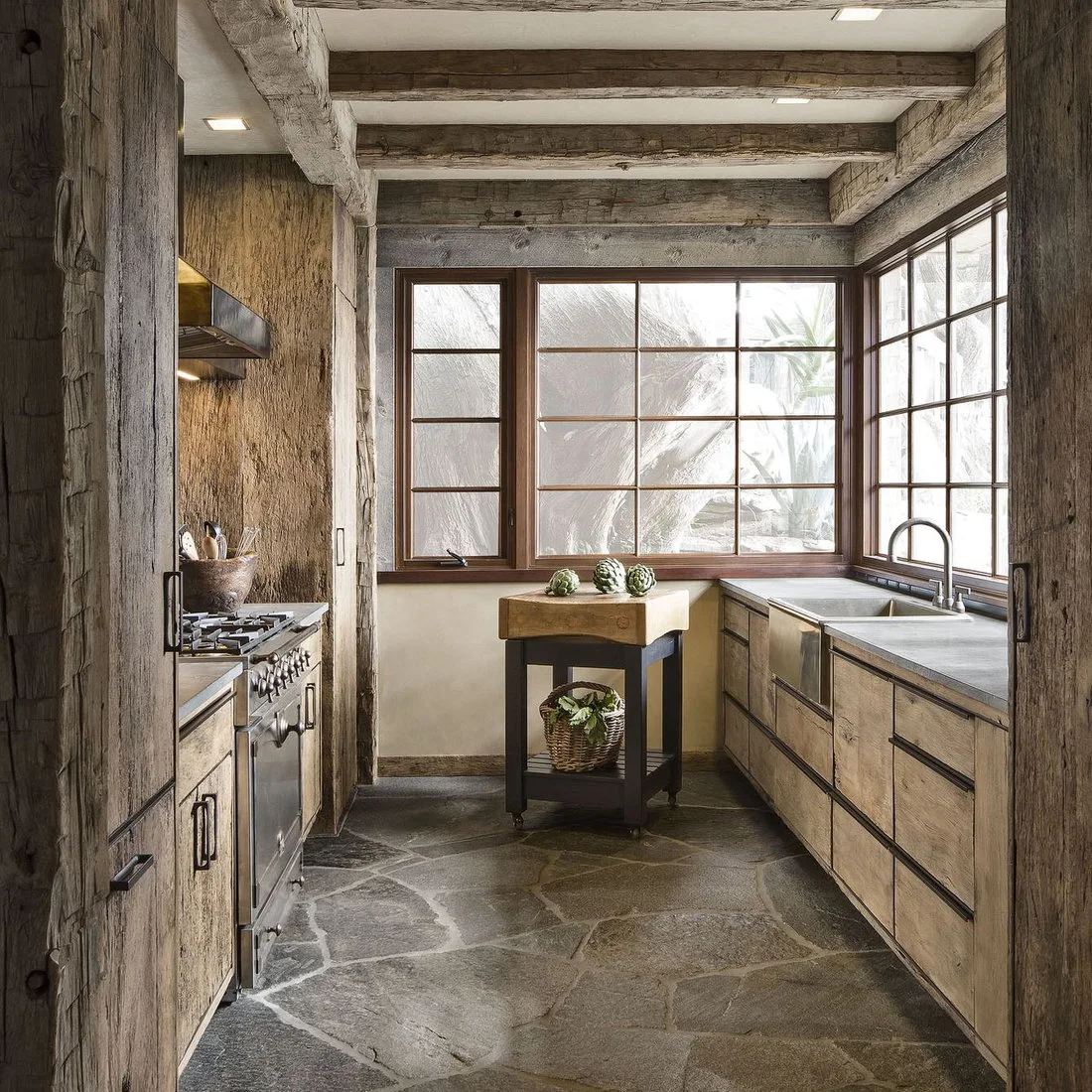
A small butcher block stand adds preparation space without concealing the corner windows in this compact kitchen. Timber drawers, rougher wall surfaces and the irregular stone floor provide plenty of rustic texture, so the central piece stays simple and narrow.
A movable preparation stand can be easier to live with than a permanent island in a tight room. Check that its feet or castors sit securely on an uneven floor. Leave enough space to open the oven and lower cabinets without shifting the stand every time.
IDEA 14 / 20
Add Open Book Storage at an Island End
 SaveSupport Non AI Creator
Source: 3north via Houzz
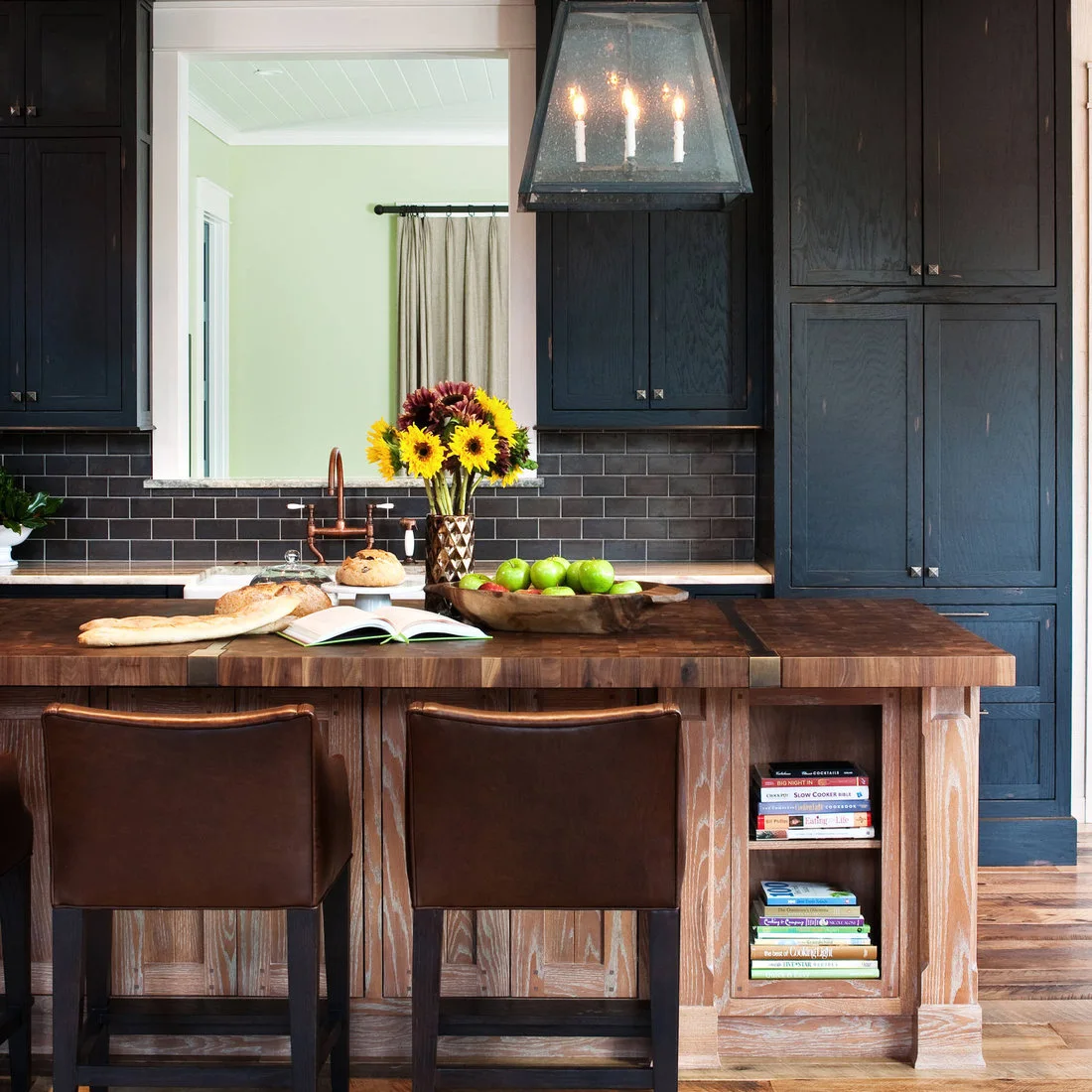
The end of this timber island includes a small open shelf for cookbooks, making use of a surface that might otherwise be plain paneling. Dark blue cabinets and a gray backsplash give the wood top a strong but calm background.
Put book storage at the dry end of an island, away from sink splashes and cooking spray. Check shelf height against the books you own rather than leaving an awkward gap. Navy blue kitchen cabinets show more ways to balance dark painted doors with warm wood.
IDEA 15 / 20
Lay a Runner Through a Long Working Aisle
 SaveSupport Non AI Creator
Source: Dwell Interiors, LLC via Houzz
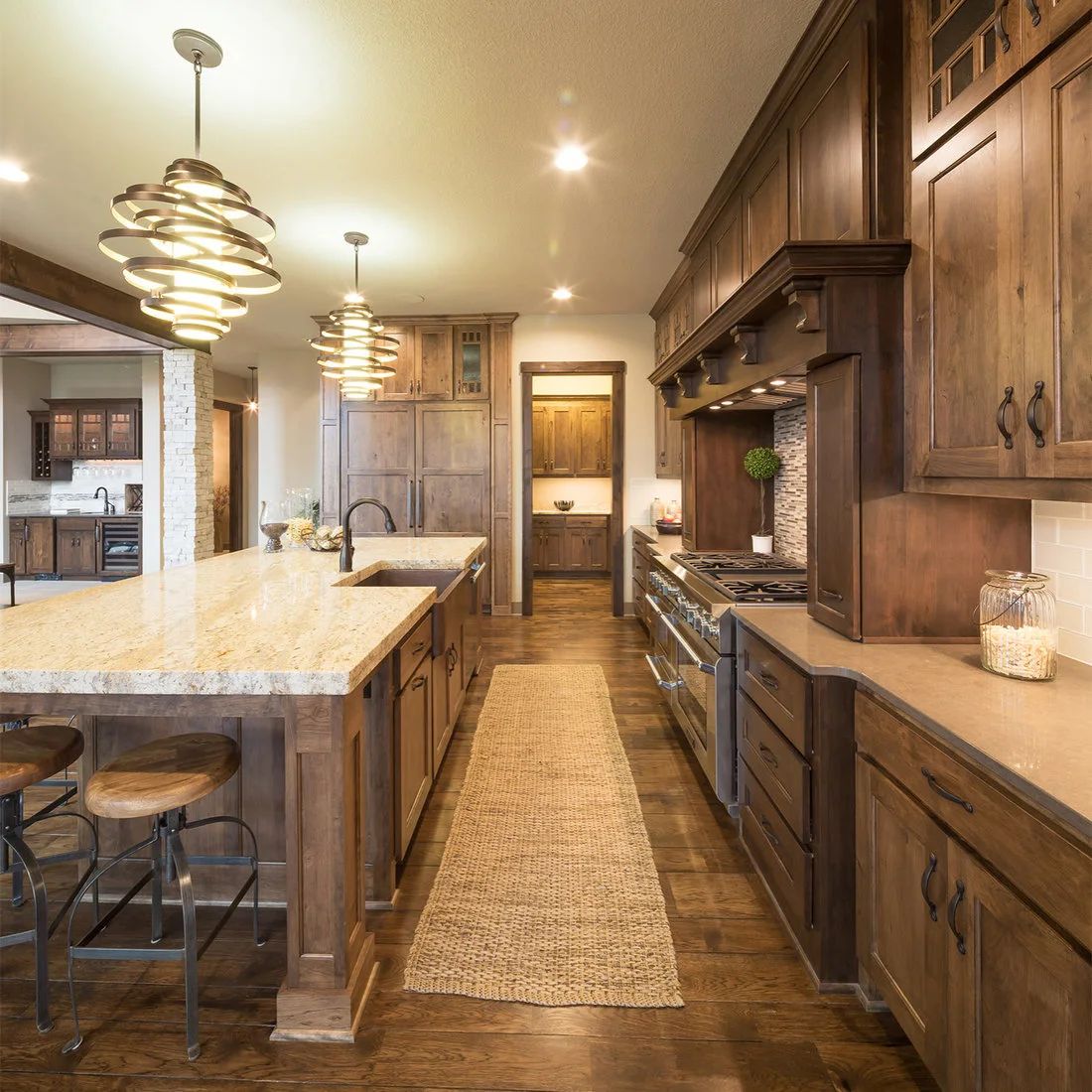
A woven runner softens the long aisle between these timber cabinets and the island. Pale counters provide relief from the wood fronts, while the repeated ceiling pendants and open passage at the end give the working route a clear direction.
Choose a low pile runner with a secure backing and enough clearance for appliance doors. In a cooking aisle, easy cleaning matters more than a delicate weave. Keep the rug’s edges flat and lift it regularly to remove crumbs and moisture from the floor beneath.
PART 04
Leave Room to Cook and Gather
IDEA 16 / 20
Repeat Timber Without Matching Every Surface
 SaveSupport Non AI Creator
Source: KohlMark Architects and Builders via Houzz
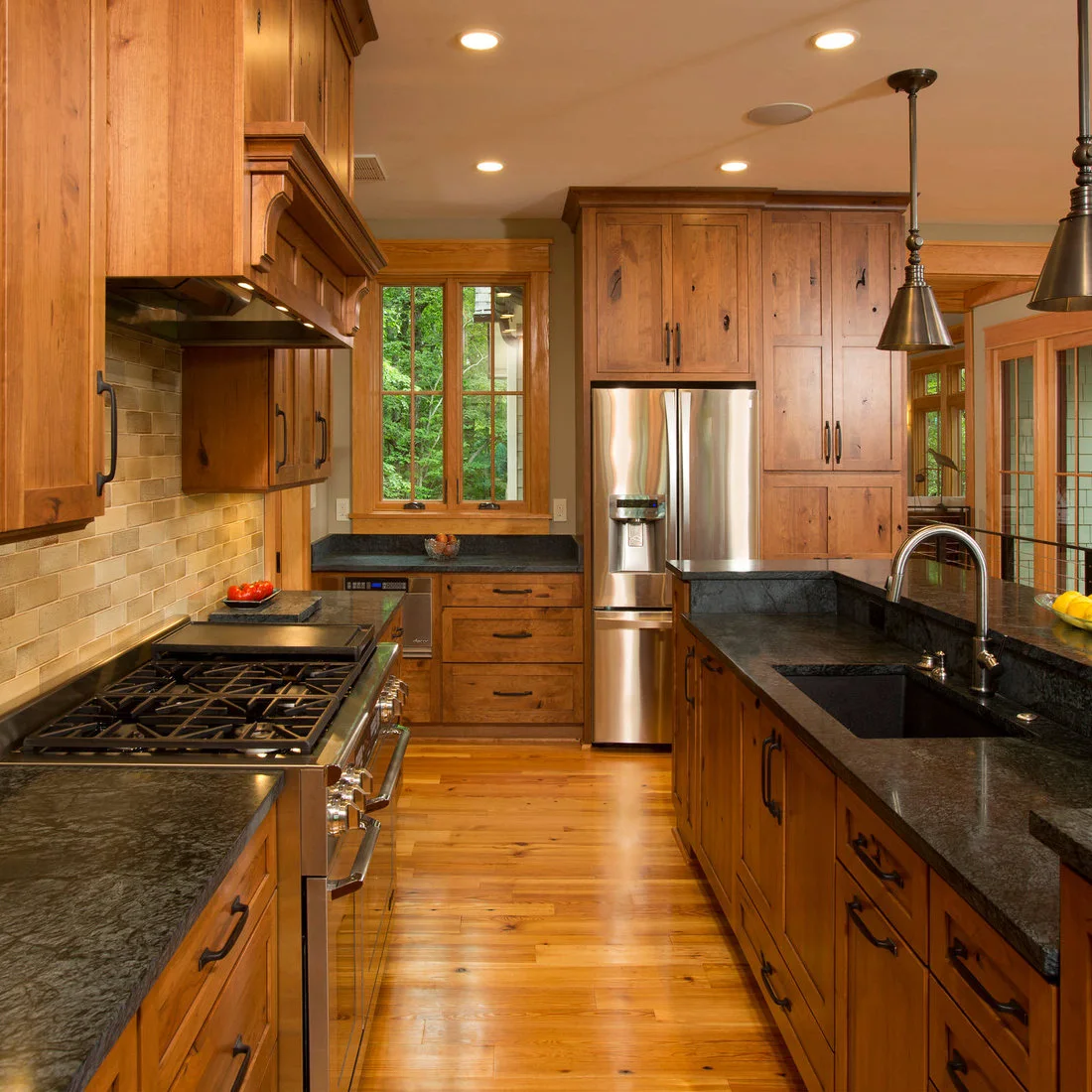
Warm wood appears in the cabinet fronts, floor and window trim, while the dark counters separate those surfaces. Pale tiles behind the range create a lighter working backdrop, and the simple metal pendants avoid adding another heavily patterned element overhead.
Use finish samples together when several timber surfaces meet. They can relate without being identical, but check undertones in the room’s daylight. Keep a practical landing space near the fridge and range so a visually continuous run of cabinets still supports everyday cooking.
IDEA 17 / 20
Concentrate Pattern Behind the Cooking Area
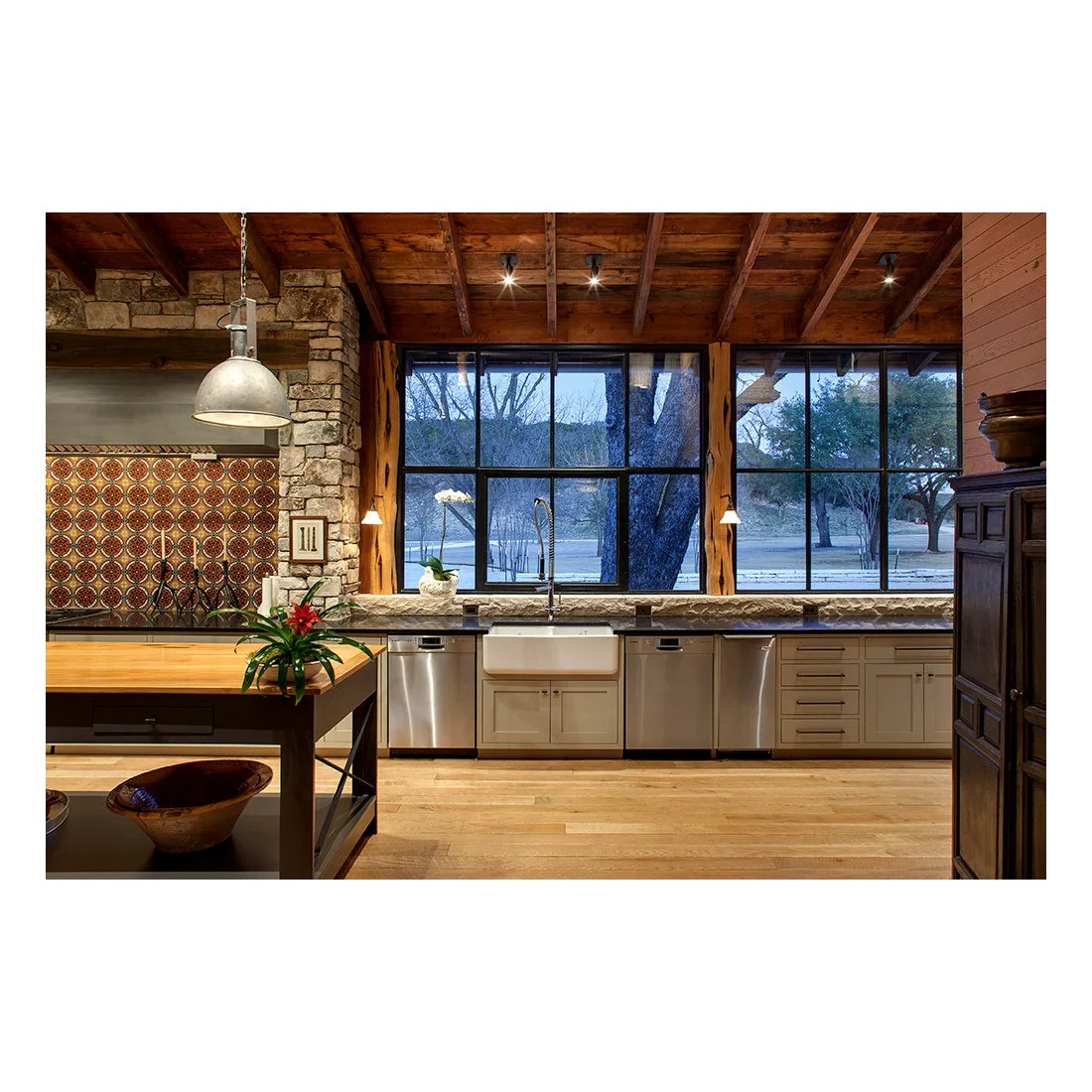 SaveSupport Non AI Creator
Source: Rehme Steel Windows & Doors via Houzz
Patterned tiles are concentrated behind the cooking area, while the wide window keeps the sink run simpler. Stone surrounds and exposed timber beams supply rougher texture, and the apron front sink adds a clear pale shape beneath the dark window grid.
Give patterned tile a defined stopping point so it feels intentional rather than spreading into every surface. Ask how grout and tile should be cleaned around grease. Keep the adjacent window ledge useful for a few objects, leaving space to reach handles and wipe down the sill.
IDEA 18 / 20
Use Different Worktops for Different Jobs
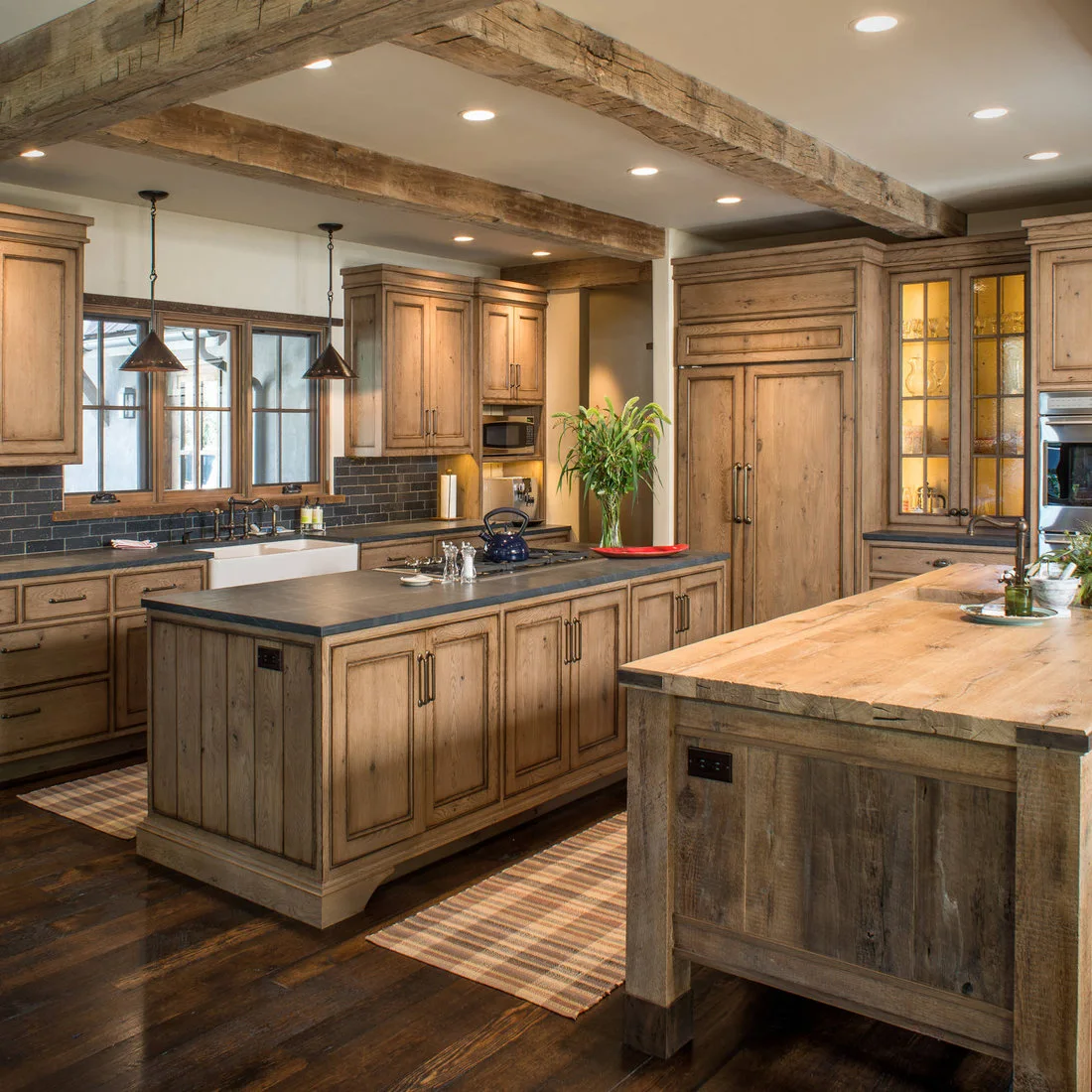 SaveSupport Non AI Creator
Source: Miller-Roodell Architects Ltd via Houzz
Two timber islands create different working surfaces within this large kitchen. One has a dark top and built in cooking area, while the nearer island has a broad wood surface; pale walls and rough overhead beams connect both to the surrounding cabinet fronts.
Two islands require generous circulation and a clear reason for each surface. In a smaller room, borrow the contrast through a removable chopping board instead. Check maintenance and hot pan guidance separately for each top so the attractive difference remains practical in daily use.
IDEA 19 / 20
Let a Rustic Dining Table Do the Decorating
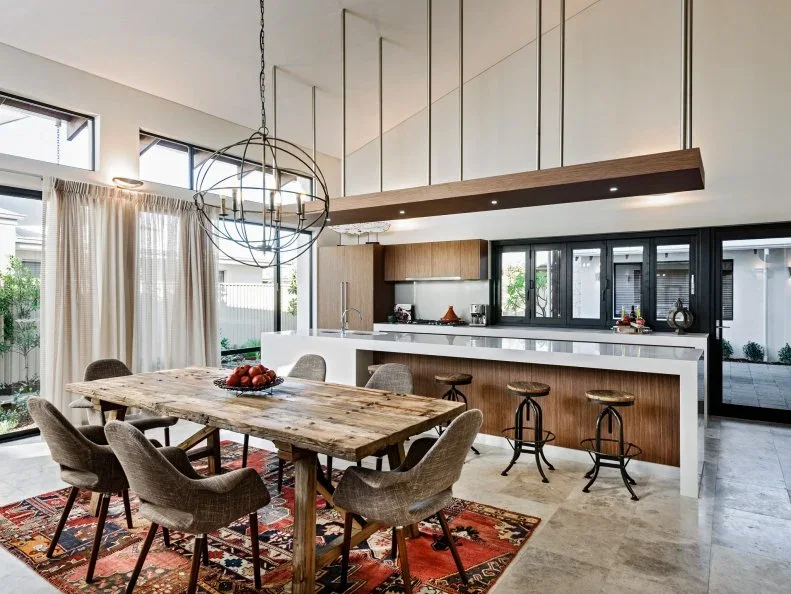 SaveSupport Non AI Creator
Image credit: Photo: Jodie Cooper, Jodie Cooper Design; Photo by D-Max Photographers
A rough timber dining table and patterned rug bring rustic character to this otherwise clean lined kitchen. Woven chairs soften the table’s edges, while the pale island and simple cabinetry keep the cooking area visually quieter than the place where people gather.
A textured dining table can provide enough rustic character in an open room. Check its surface for splinters and use placemats where cups might rock on uneven boards. Choose dining chairs for comfort first, and keep a rug clear of routes where spills or chair movement would become frustrating.
IDEA 20 / 20
Balance Exposed Beams With White Cabinetry
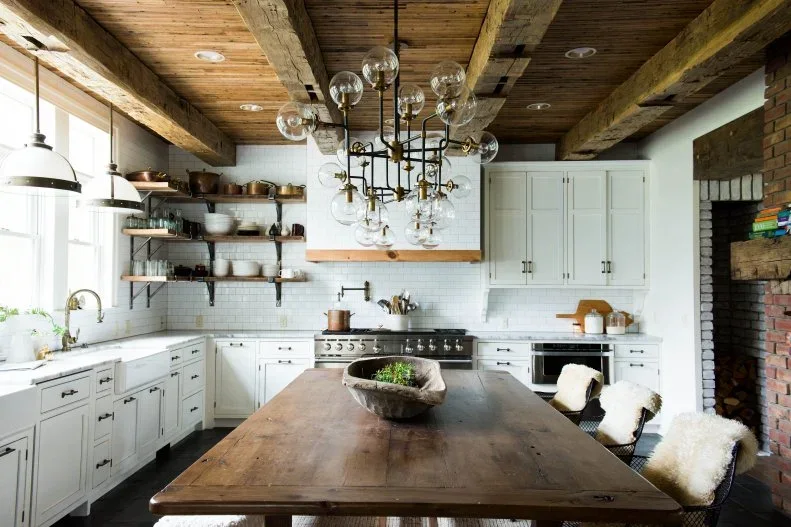 SaveSupport Non AI Creator
Image credit: Photo: Alexandra Ribar. From: Leanne Ford
White cabinet fronts brighten this kitchen beneath a ceiling of exposed beams and boards. The broad wooden table makes the center feel welcoming, while open shelves and a visible brick section add texture without requiring more dark cupboards around the perimeter.
Keep open shelves for pieces you reach for often, and leave the main counter available for preparation. A large table needs enough room for chairs as well as walking space. Boho farmhouse kitchen ideas offer more ways to add relaxed texture around simple painted cabinets.
BRING IT ALL TOGETHER
Choose Character That Fits Your Routine
Start with the surfaces you touch every day. Check worktop care, cabinet access, extraction and lighting before choosing extra decorative layers. A rustic kitchen should feel easier to use, rather than demanding delicate treatment whenever somebody cooks.
Use one or two substantial textured elements to establish the room, then create relief with pale counters, painted cabinets or simple tiles. A good table, a useful shelf or a small wooden preparation stand can add character without filling every corner.