Rustic bedrooms feel most inviting when rougher surfaces have a comfortable counterpart. Timber boards, substantial beams and stone can provide character, while a good bed, reachable lights and soft bedding make the room a place you want to spend time.
These rooms range from simple bedrooms with a single board wall to more substantial cabin settings. Look for an idea that solves something in your own room, whether that is softening dark timber, using a low roofline or adding a comfortable seat without blocking the bed.
PART 01
Balance Timber With Softer Surfaces
IDEA 01 / 20
Break Up Timber With Muted Green
 SaveSupport Non AI Creator
Source: www.houzz.com
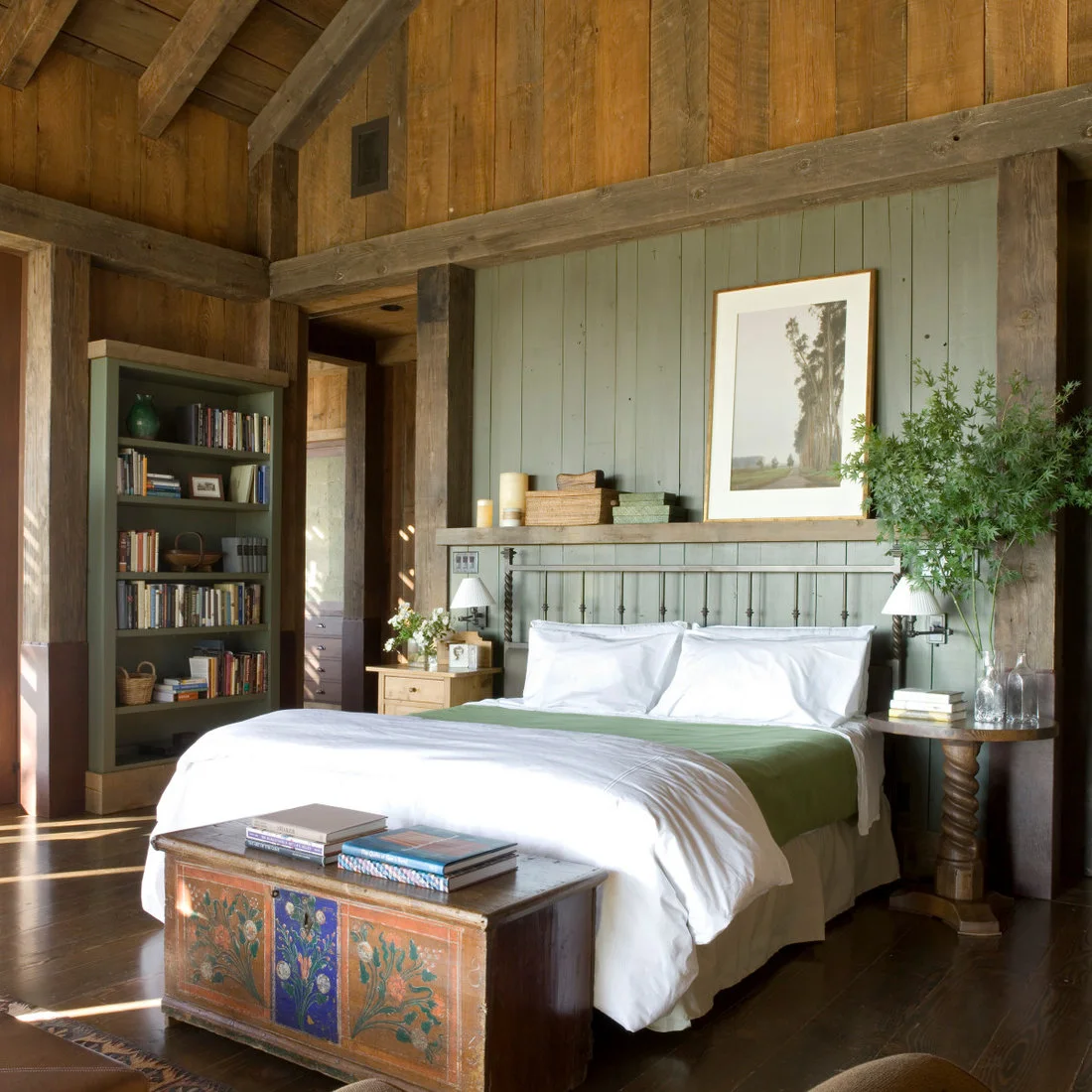
Muted green boards give this timber bedroom a gentler backdrop behind the dark metal bed. White bedding lifts the center of the room, while the painted chest and mixed bedside furniture add individual character without covering the surrounding structural wood.
Use a painted section to relieve a room already rich in timber grain. Sample greens beside the existing wood because orange and gray undertones change their appearance. For a smaller, softer interpretation, rustic cottage bedroom ideas show how painted furniture can do the same job. For a stronger ranch-inspired direction, our Western bedroom ideas compare horse artwork, graphic blankets and warm wood furniture.
IDEA 02 / 20
Keep Bedding Quiet Beneath a Timber Roof
 SaveSupport Non AI Creator
Source: Kelly & Stone Architects via Houzz
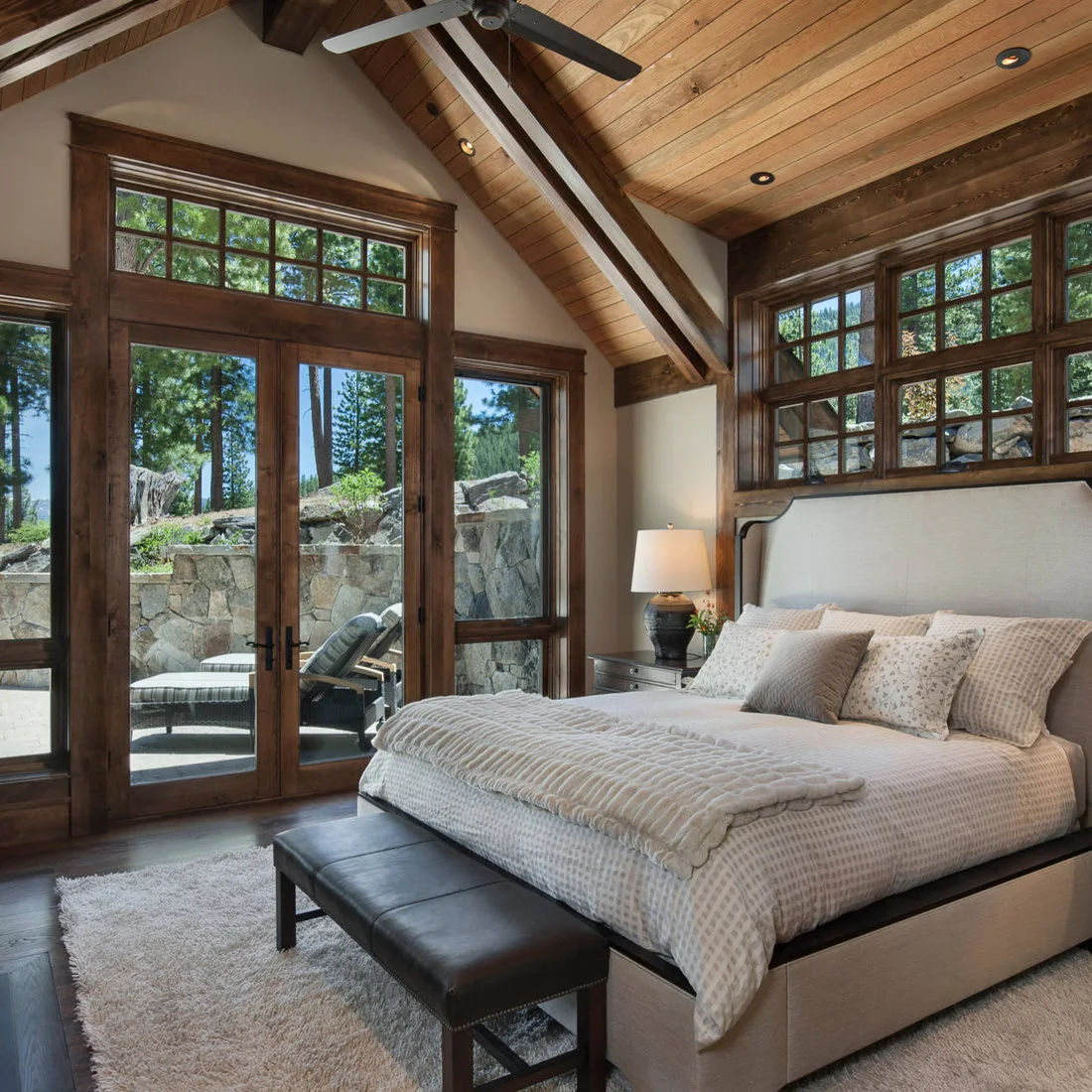
The timber roof and substantial window frames provide most of the pattern in this bedroom. Pale bedding and an upholstered headboard make a quieter layer below them, while a dark bench repeats the deeper tone of the floor and roof structure.
When the ceiling is visually busy, start with bedding in one light color and vary its texture instead of its print. Check the gap around a footboard bench with the doors open. A handsome extra seat is less useful if it narrows the route to the outside.
IDEA 03 / 20
Add Depth With a Dark Painted Wall
 SaveSupport Non AI Creator
Source: Lands End Development - Designers & Builders via Houzz
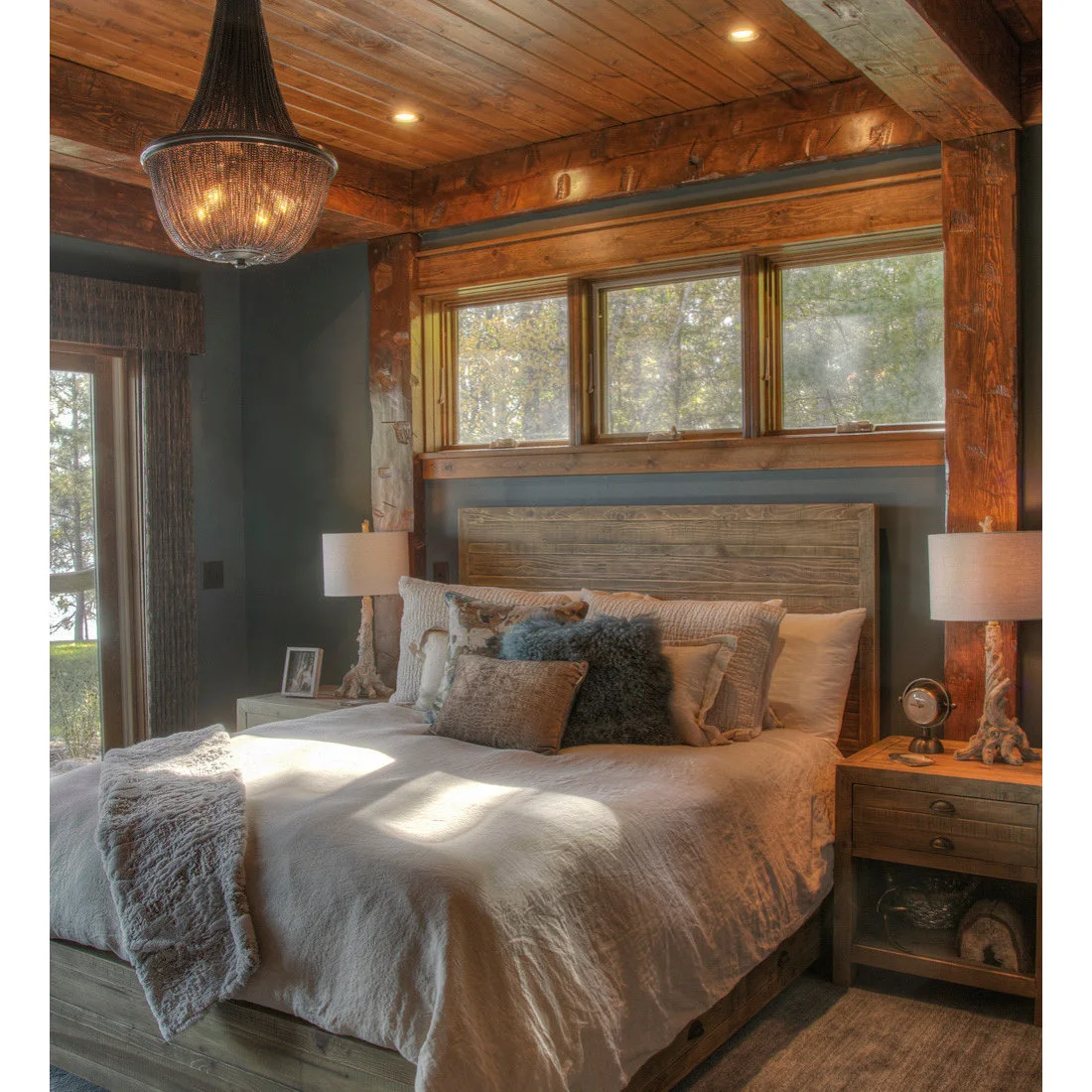
Blue gray paint sets the timber headboard apart from the wood ceiling and window surround. The bed stays softly colored, with a darker cushion and textured throw providing depth rather than a large decorative print across the whole sleeping area.
A dark wall can make warm timber look richer, but test it under the bedside lamps as well as daylight. Keep lamp shades light enough to spread useful illumination. Choose a washable throw if it will be the layer you handle most often.
IDEA 04 / 20
Mix a Spindle Bed With Plain Walls
 SaveSupport Non AI Creator
Source: Regarding Design via Houzz
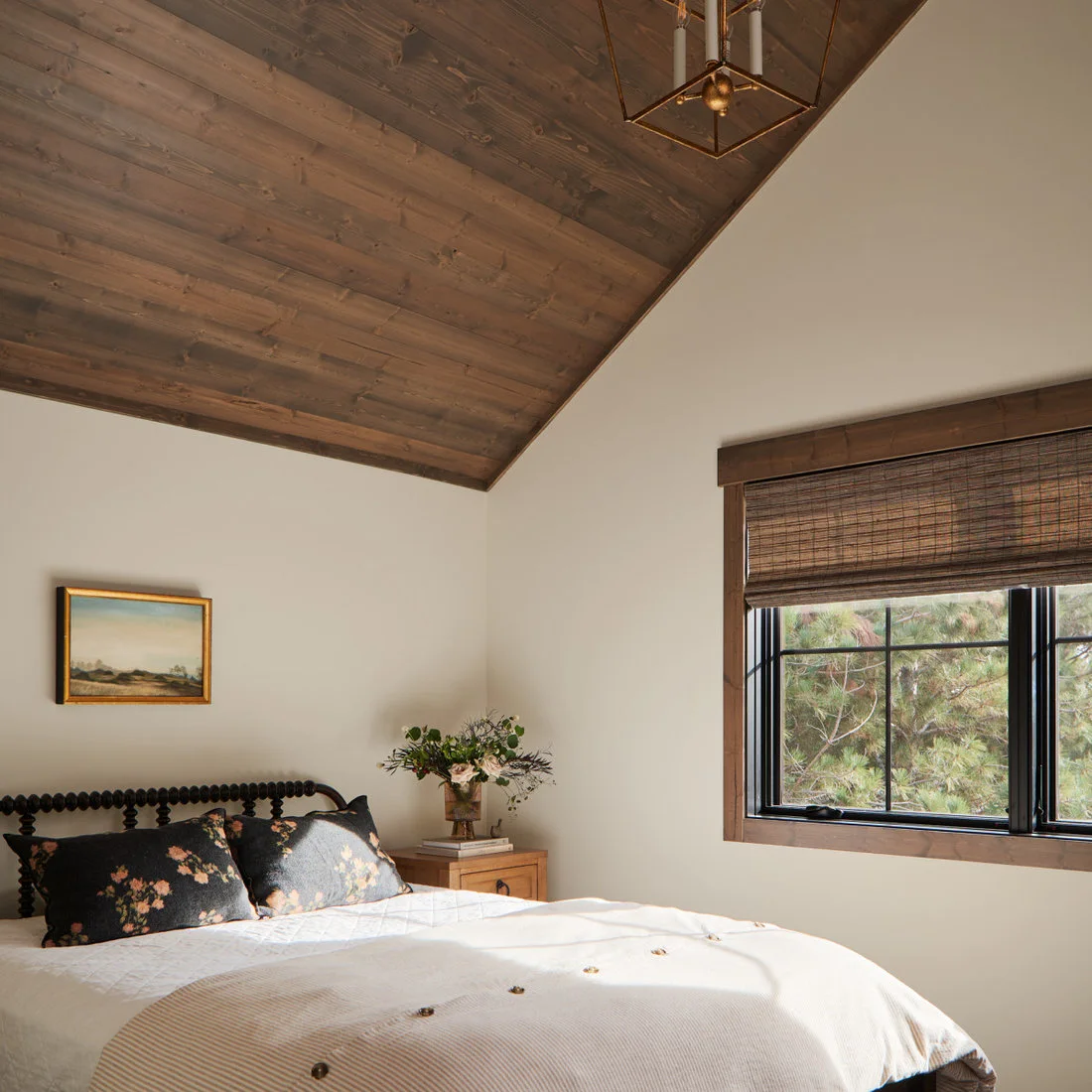
A dark spindle bed gives this otherwise simple bedroom a delicate outline. The timber ceiling and woven shade supply rustic texture, while pale walls, a mostly white quilt and a small landscape picture keep the space feeling open and calm.
Choose one patterned fabric if you want the furniture shape to remain visible. Floral cushions can be easier to change than an entire printed duvet. Leave enough of the bedside surface clear for a book and drink, rather than filling it with decorative objects.
IDEA 05 / 20
Give a Modern Bed a Rustic Setting
 SaveSupport Non AI Creator
Source: Eldorado Stone via Houzz
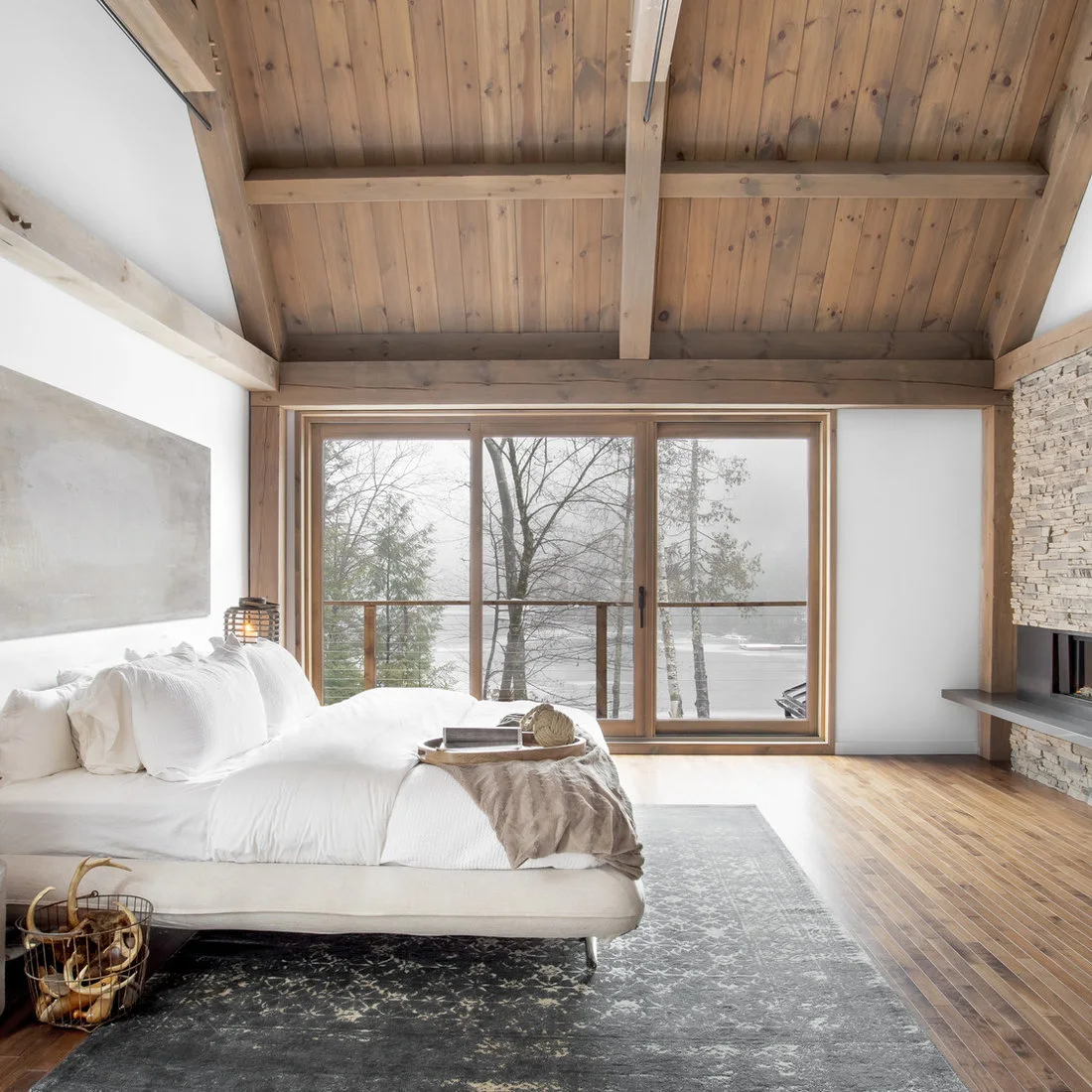
The low pale bed and dark rug make a clean, modern center beneath the exposed timber ceiling. A stone fireplace adds rough texture at the side, and the wide glazed doors give the room a strong view without a crowded window treatment.
A simple bed frame works well when timber and stone already carry the room. Check the rug extends where your feet land on getting up. Have fireplace use and furniture clearances assessed separately; the spacing in a photograph cannot establish what is safe in your room.
PART 02
Choose the Room’s Main Feature
IDEA 06 / 20
Use a Slim Four Poster in a Tall Room
 SaveSupport Non AI Creator
Source: www.houzz.com
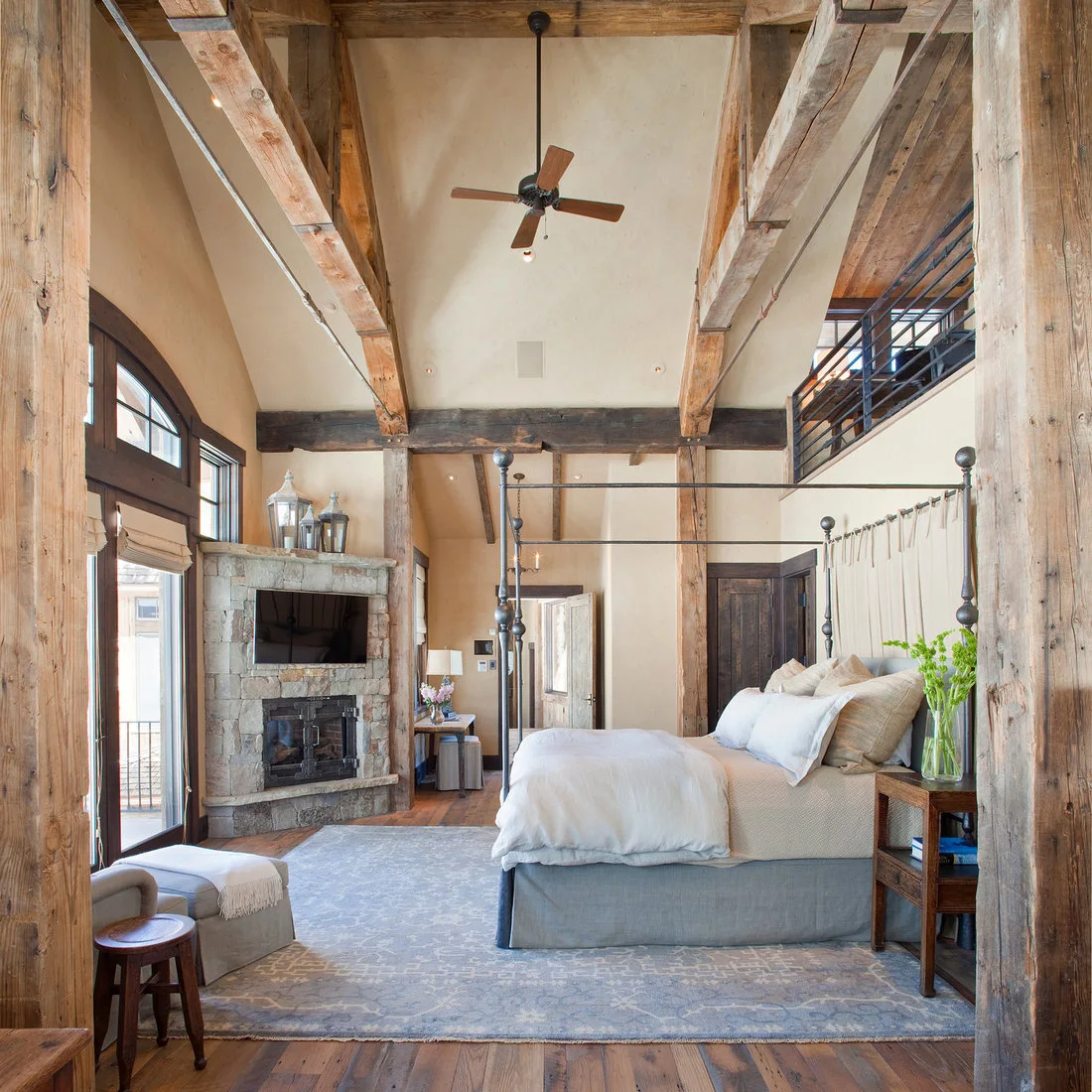
The slender four poster marks out the bed within a high, timber framed room. Its dark lines echo the railing above, while pale bedding and a light rug keep the large stone fireplace and rough posts from making the bedroom feel excessively heavy.
A four poster needs room around its frame as well as above the mattress. Check ceiling fans, lights and door routes before ordering. Leave the canopy bare if fabric would complicate cleaning or come close to a heat source, and maintain the fireplace’s specified clearance.
IDEA 07 / 20
Let Stone Form the Main Backdrop
 SaveSupport Non AI Creator
Source: Zone 4 Architects, LLC via Houzz
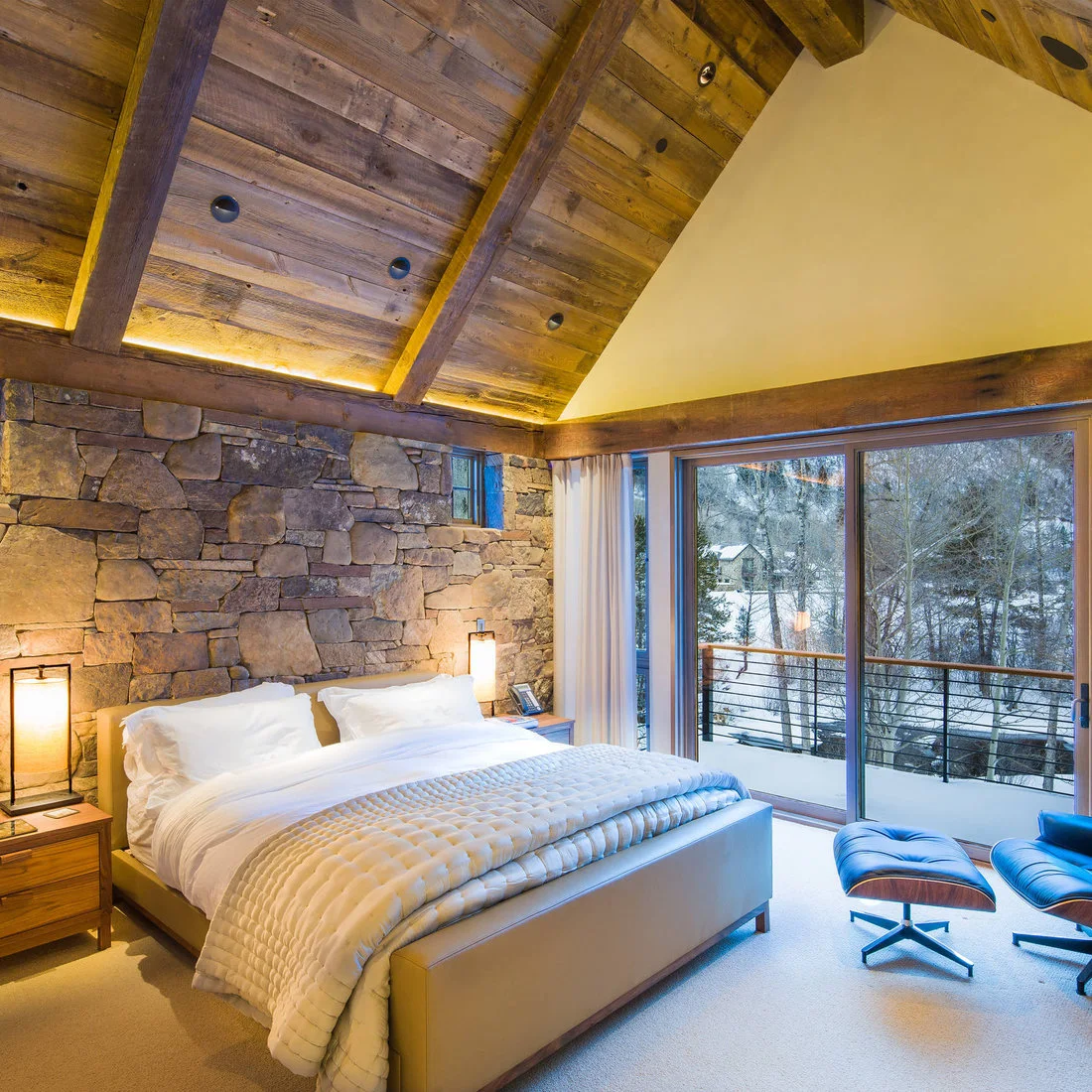
A rough stone wall gives this bedroom a strong focal point without a separate decorative headboard. Pale bedding, matching bedside lamps and simple drawers create an orderly foreground, while the timber ceiling brings another warm surface above the bed.
Keep bedding and bedside objects simple when a stone wall has this much variation. Dust can collect on projecting ledges, so consider access for cleaning before choosing a similar treatment. A softer upholstered headboard can still be useful if you regularly sit up to read.
IDEA 08 / 20
Repeat a Small Accent Color Around the Room
 SaveSupport Non AI Creator
Source: Morgan-Keefe Builders, Inc. via Houzz
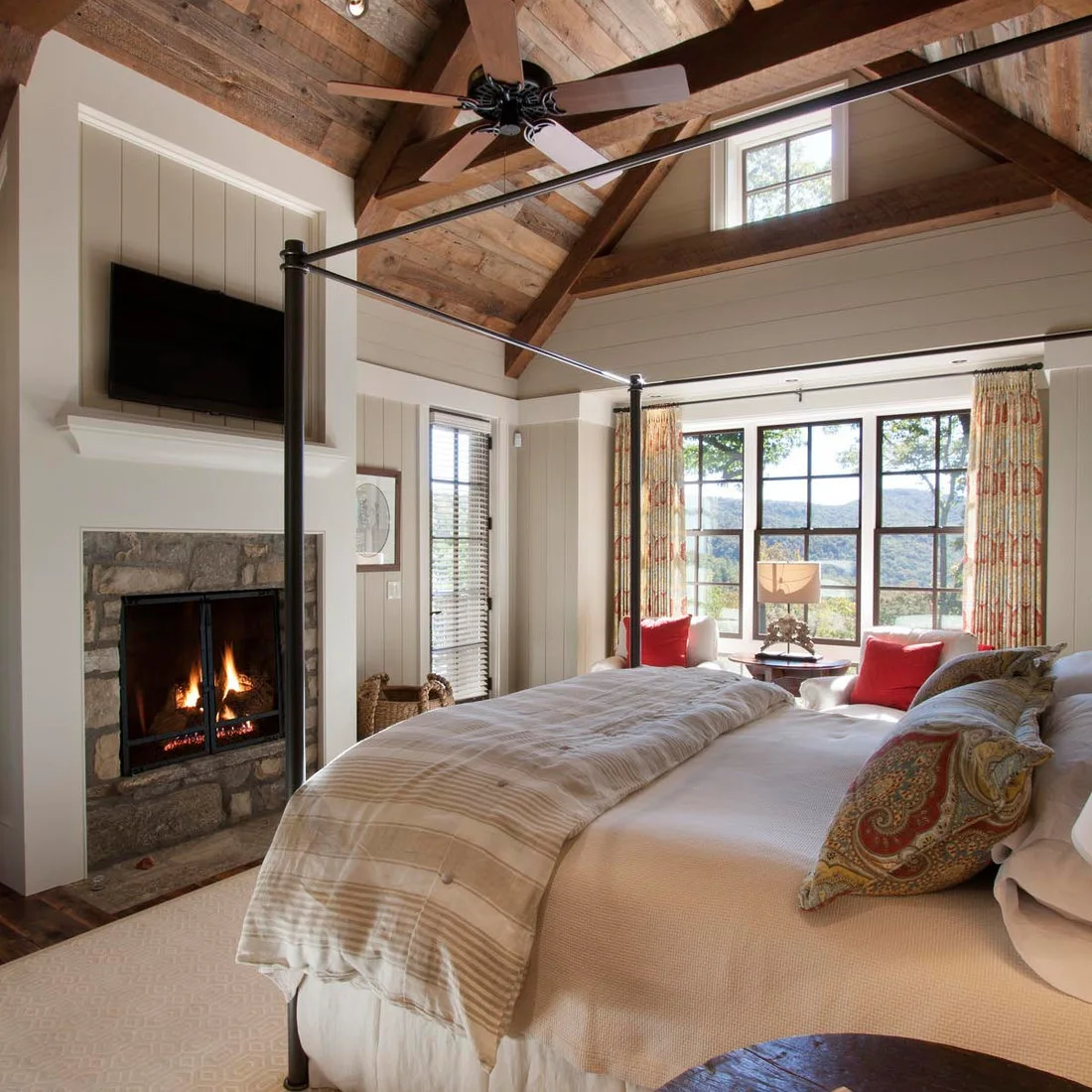
Red appears in the window cushions and in the patterned cushion on the bed, connecting opposite sides of this room. White paneling gives the exposed roof timbers a brighter setting, and the narrow four poster adds definition without a solid, bulky enclosure.
Repeat an accent in two or three places rather than matching every textile. A small amount of red can feel lively against pale bedding. Make sure curtains close freely and keep all soft furnishings outside the fireplace’s required clearance if the room has a working fire.
IDEA 09 / 20
Frame a Small Bed With Weathered Boards
 SaveSupport Non AI Creator
Source: dwelling via Houzz
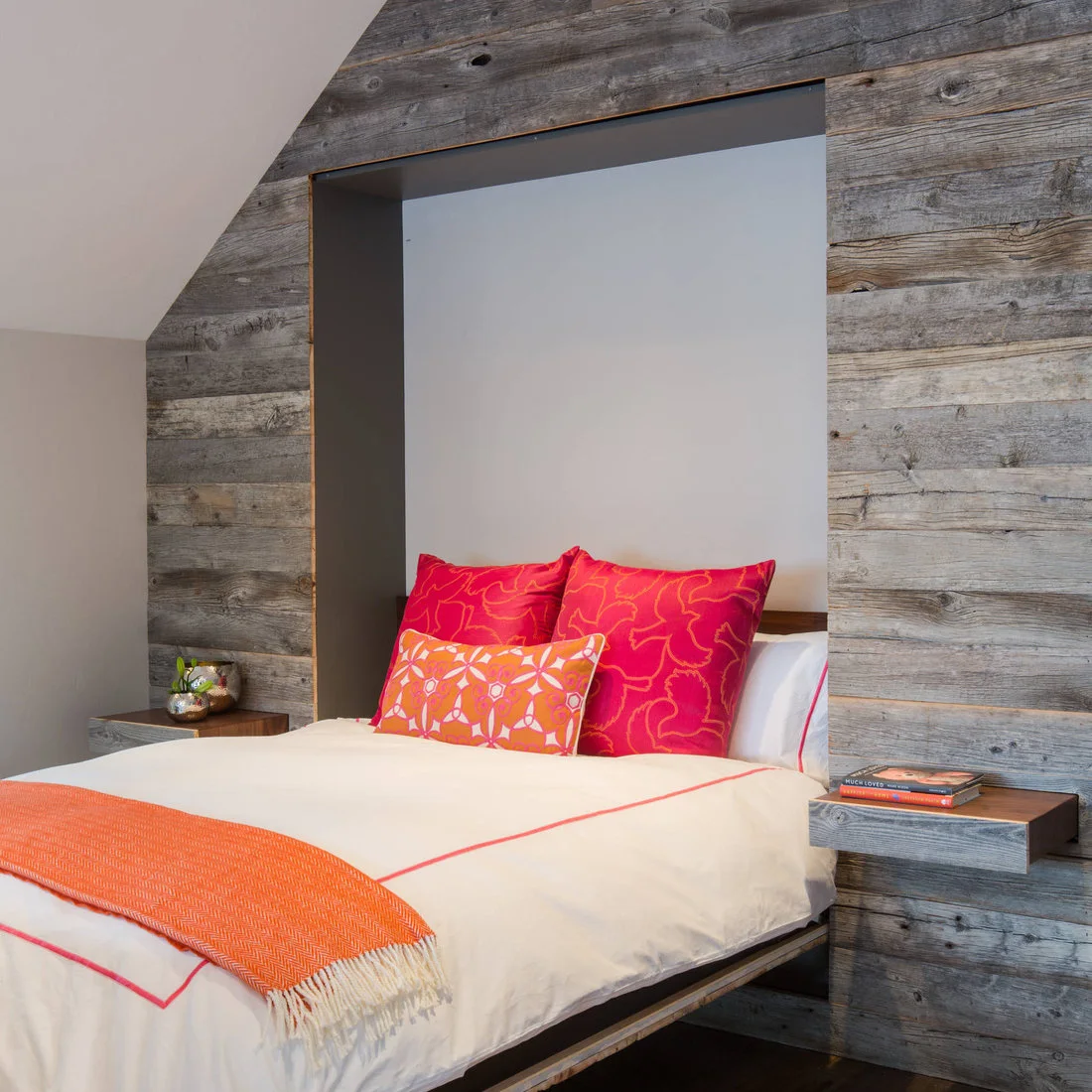
Gray weathered boards frame the recessed head of this bed and continue into small bedside ledges. Bright pink cushions and an orange throw bring warmth to the restrained wood, while the sloping wall gives the little sleeping area a sheltered shape.
Use strong textile color when you want an inexpensive change against a fixed timber backdrop. Size bedside ledges for the items you actually keep there and round off any sharp corners. Check sitting headroom carefully when fitting a bed into an alcove beneath a sloping roof.
IDEA 10 / 20
Balance Rough Boards With One Dressy Light
 SaveSupport Non AI Creator
Source: Joan Heaton Architects via Houzz
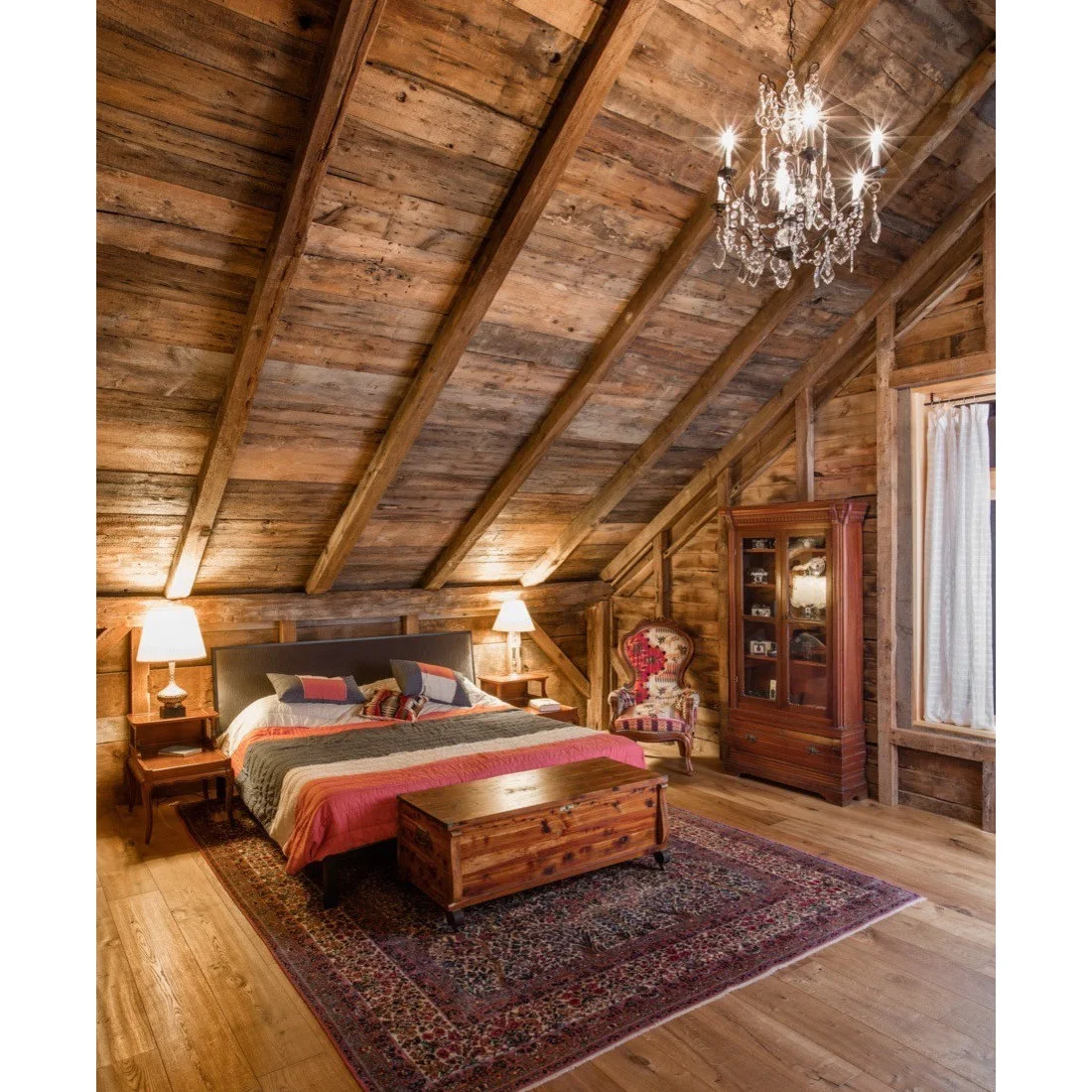
A sparkling chandelier introduces a dressier note beneath this rough boarded roof. The patterned rug and colorful quilt make the bed feel collected, while a wooden chest, old fashioned chair and glazed cabinet reinforce the room’s informal, layered character.
One decorative light can provide enough contrast against rustic walls. Check its lowest point against the walking route and plan how you will clean it. Keep the rug flat under the chest, and leave the chest lid accessible if you intend to use the storage daily.
PART 03
Make Character Work With Comfort
IDEA 11 / 20
Keep Warm Textiles Clear of the Hearth
 SaveSupport Non AI Creator
Source: Yellowstone Traditions via Houzz
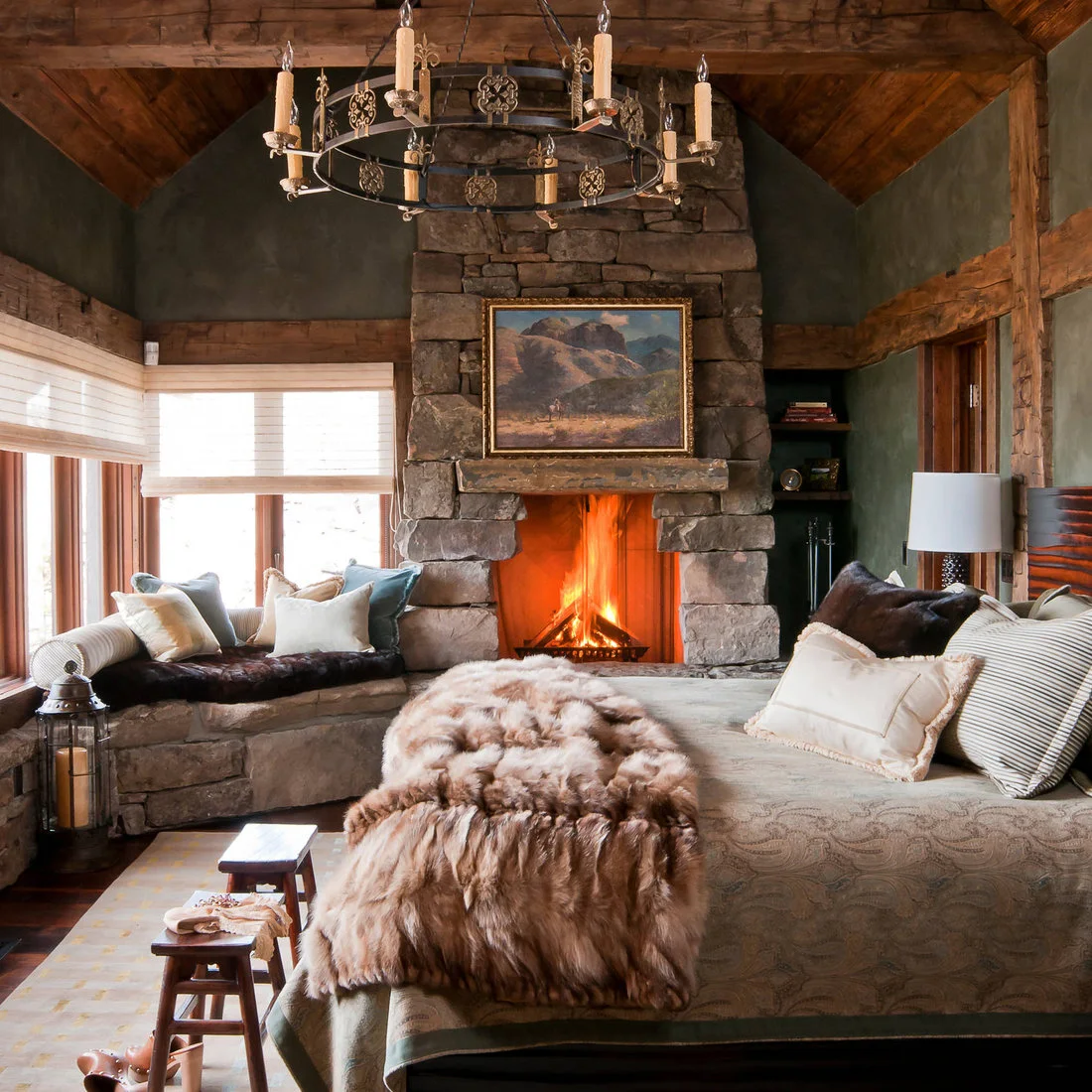
The stone fireplace, dark ceiling timber and green walls make this bedroom feel enclosed and substantial. A pale bedcover and large textured throw soften that setting, while the window bench adds a separate place to sit beside the daylight.
Borrow the combination of rough stone and soft textiles, but do not copy the photograph’s spacing as installation guidance. A working fire needs clearances and protection specified for that appliance. Keep loose throws, cushions and rugs safely outside the heat zone, including when bedding slips during use.
IDEA 12 / 20
Use a Mirrored Sliding Door for Contrast
 SaveSupport Non AI Creator
Source: Ezra Lee Design+Build via Houzz
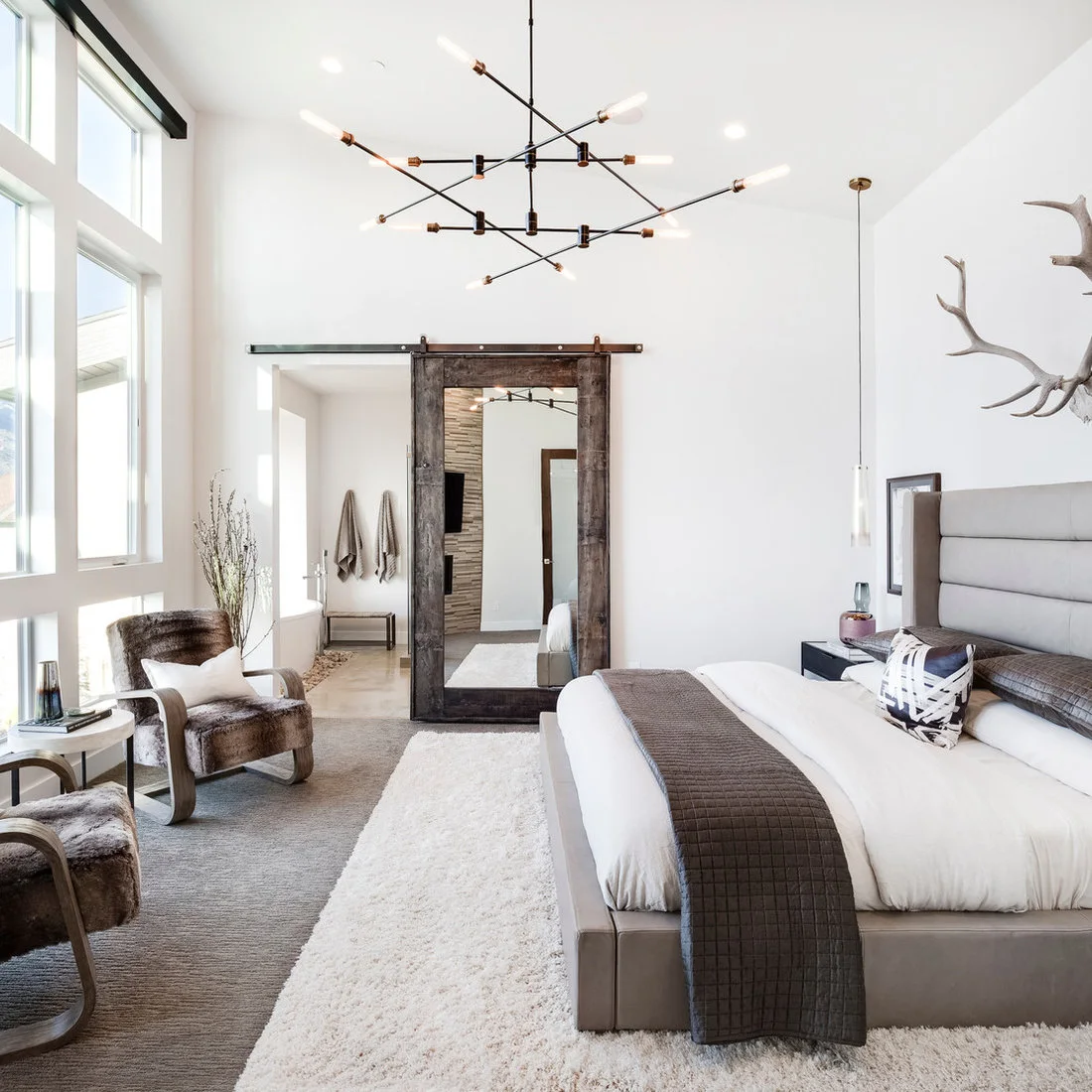
The weathered frame of the mirrored sliding door adds rustic character to this bright white bedroom. A padded headboard and pale rug make the bed feel comfortable, while the slim, branching ceiling light supplies a contrasting shape without more heavy timber furniture.
A mirror can return useful light, but test what it reflects from the bed before fixing its position. A sliding door also needs a clear track and unobstructed wall space. Inspect handles, stops and privacy gaps rather than choosing the door on appearance alone.
IDEA 13 / 20
Make Space for a Small Window Sofa
 SaveSupport Non AI Creator
Source: SANDBOX via Houzz
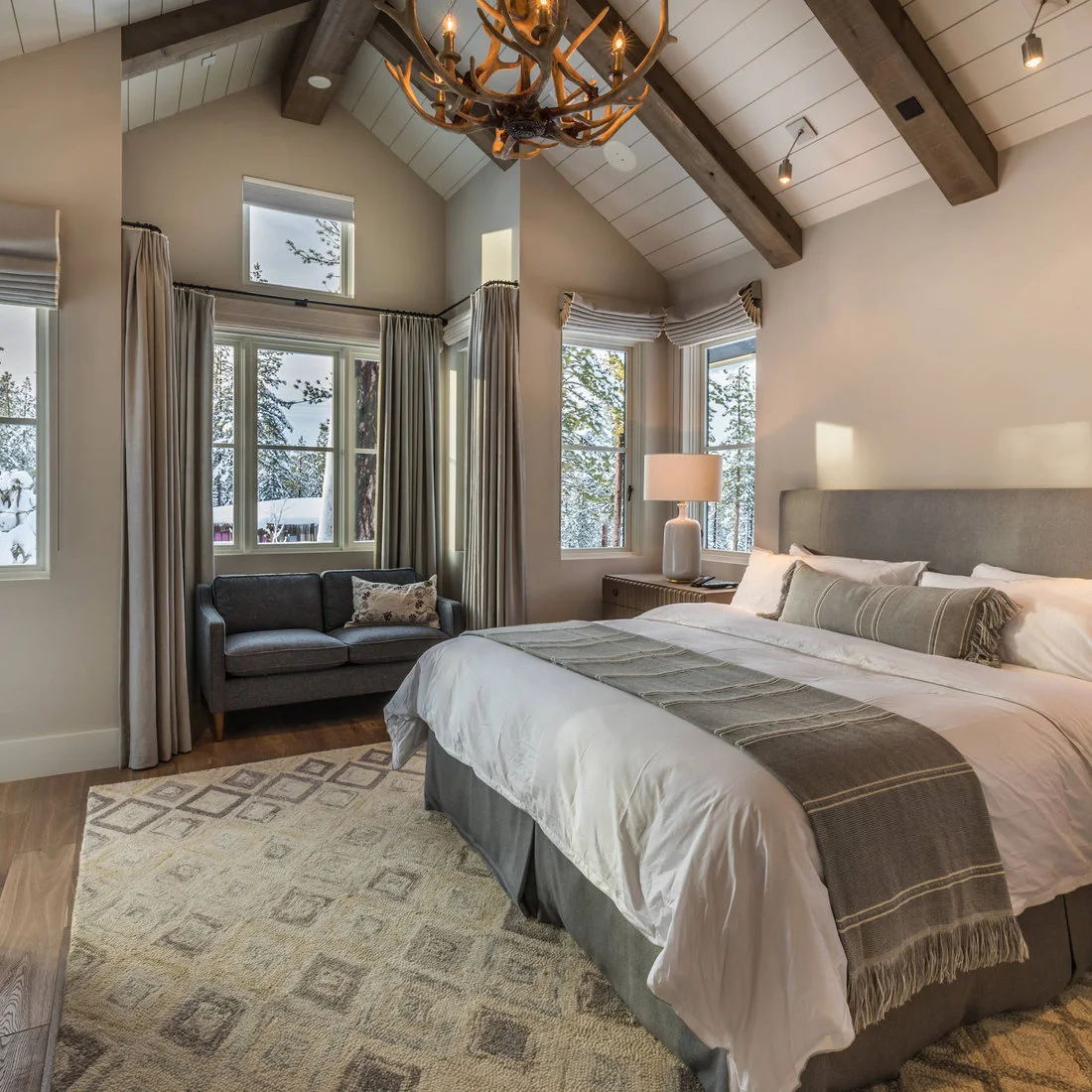
A small gray sofa uses the window corner without adding another large wooden piece. White ceiling boards brighten the space between the dark beams, while the gray bed, long curtains and softly patterned rug make the room feel consistent from one end to the other.
Choose a bedroom sofa only after leaving comfortable routes beside the bed and curtains. A compact two seater can be useful for reading or getting dressed, but avoid letting it become clothes storage. Place a reachable lamp nearby if the corner will be used after dark.
IDEA 14 / 20
Add Rustic Texture to a Conventional Bedroom
 SaveSupport Non AI Creator
Source: Dwell Interiors, LLC via Houzz
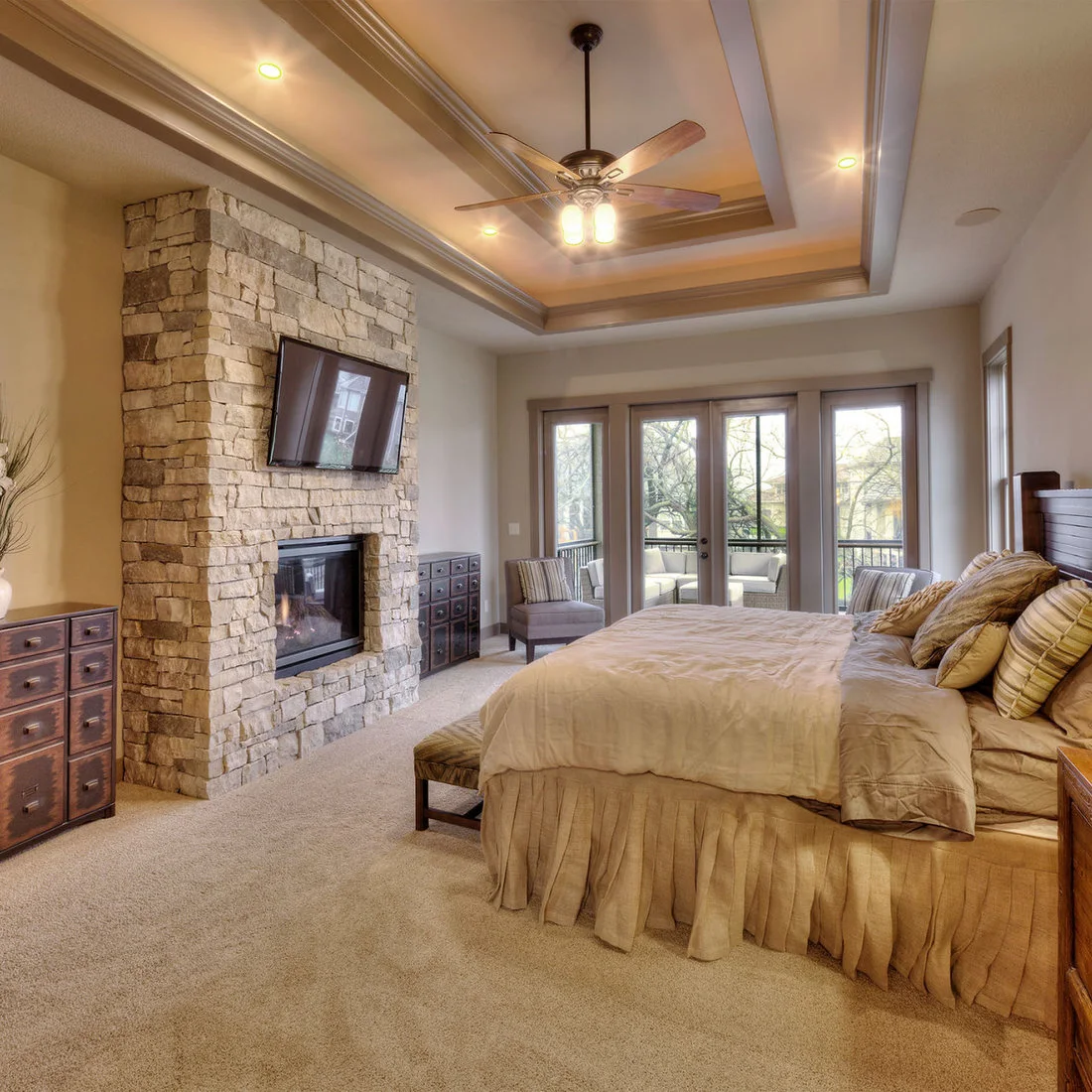
A tall stone fireplace gives this otherwise conventional bedroom a clear rustic feature. The neutral bedcover, timber bed and small chairs keep the rest of the room familiar, showing how one textured architectural element can change the character without a fully boarded ceiling.
If a bedroom already works well, introduce rustic texture selectively rather than replacing everything. A timber chest or woven blind may be enough. For any fireplace alteration, check installation and ventilation requirements; placing a television above a fire also needs appliance specific heat guidance.
IDEA 15 / 20
Use Low Beds Beneath a Steep Roof
 SaveSupport Non AI Creator
Source: Benson Builders LLC via Houzz
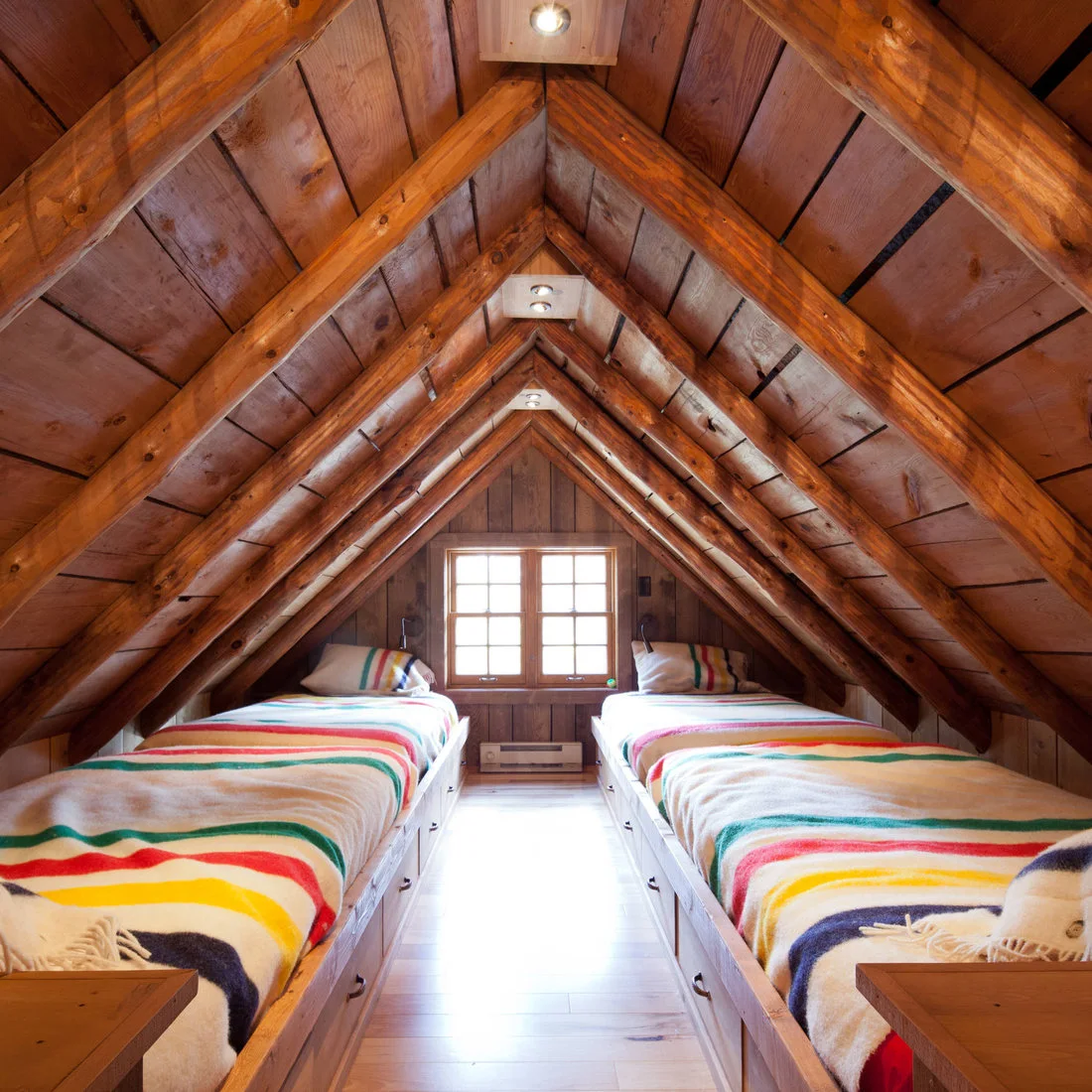
Two low beds follow the long edges of this steeply pitched timber room. Striped blankets add cheerful color against the warm boards, while drawers built into the bases provide storage without putting tall furniture into the limited space under the roof.
Check usable headroom for getting into bed as well as walking down the center. Underbed drawers need space to open fully. For a sleeping attic, confirm the room’s access, ventilation and escape arrangements before treating a decorative photograph as proof that the layout is suitable.
PART 04
Plan Useful Beds and Quiet Corners
IDEA 16 / 20
Give Each Sleeping Place Its Own Light
 SaveSupport Non AI Creator
Source: Reitz Builders via Houzz
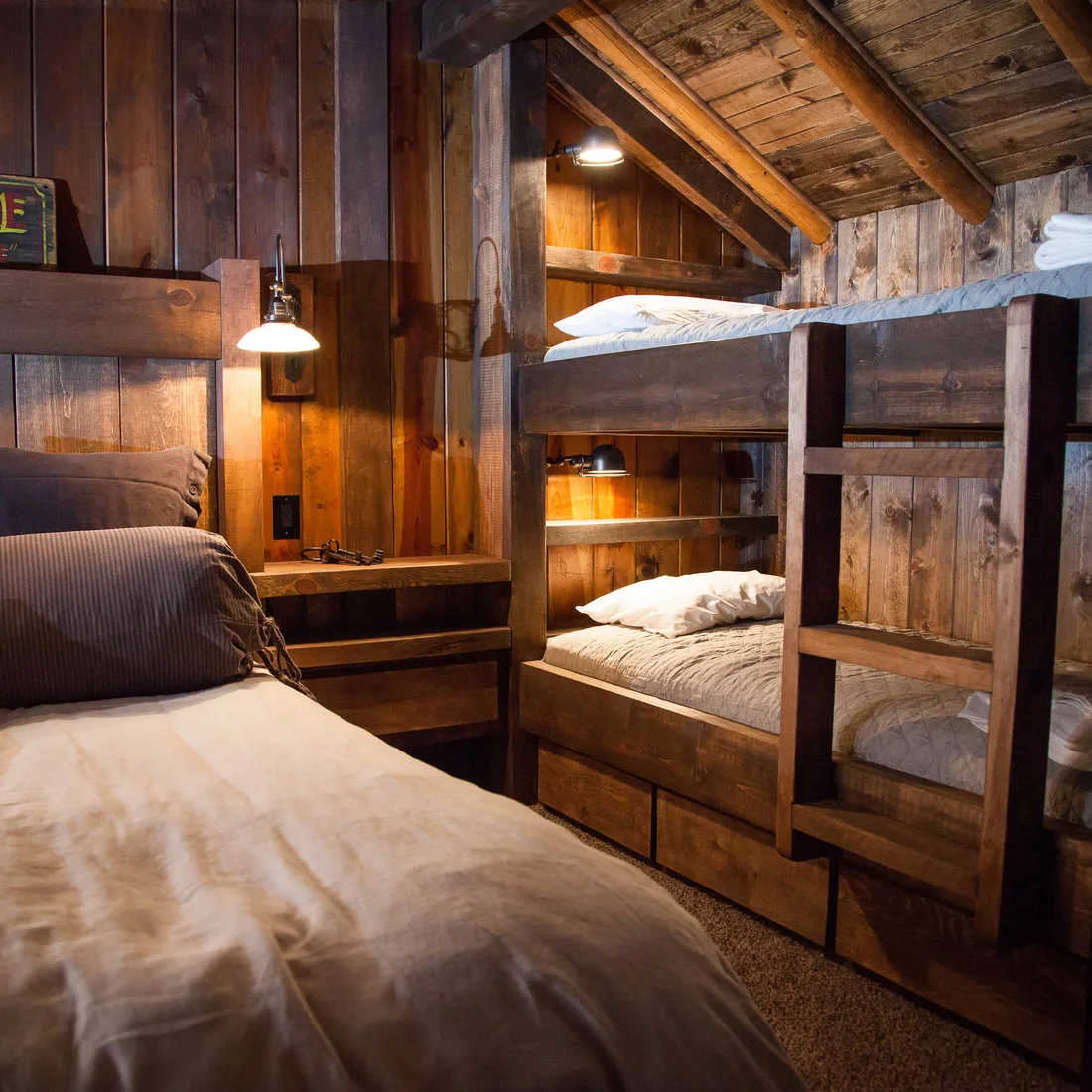
Dark boards and thick bed frames create a strong cabin atmosphere in this shared room. Separate wall lamps give each sleeping place a more personal feel, while narrow shelves offer a place for small belongings without adding freestanding tables to the tight floor area.
Individual lighting is worth borrowing, but raised beds need properly designed access and compliant guardrails. Do not reproduce bunk details from a photograph alone. Ask a qualified supplier to assess mattress height, rail openings and the intended sleepers, and keep lamp cords away from beds.
IDEA 17 / 20
Soften Built In Beds With Painted Paneling
 SaveSupport Non AI Creator
Source: Morgan-Keefe Builders, Inc. via Houzz
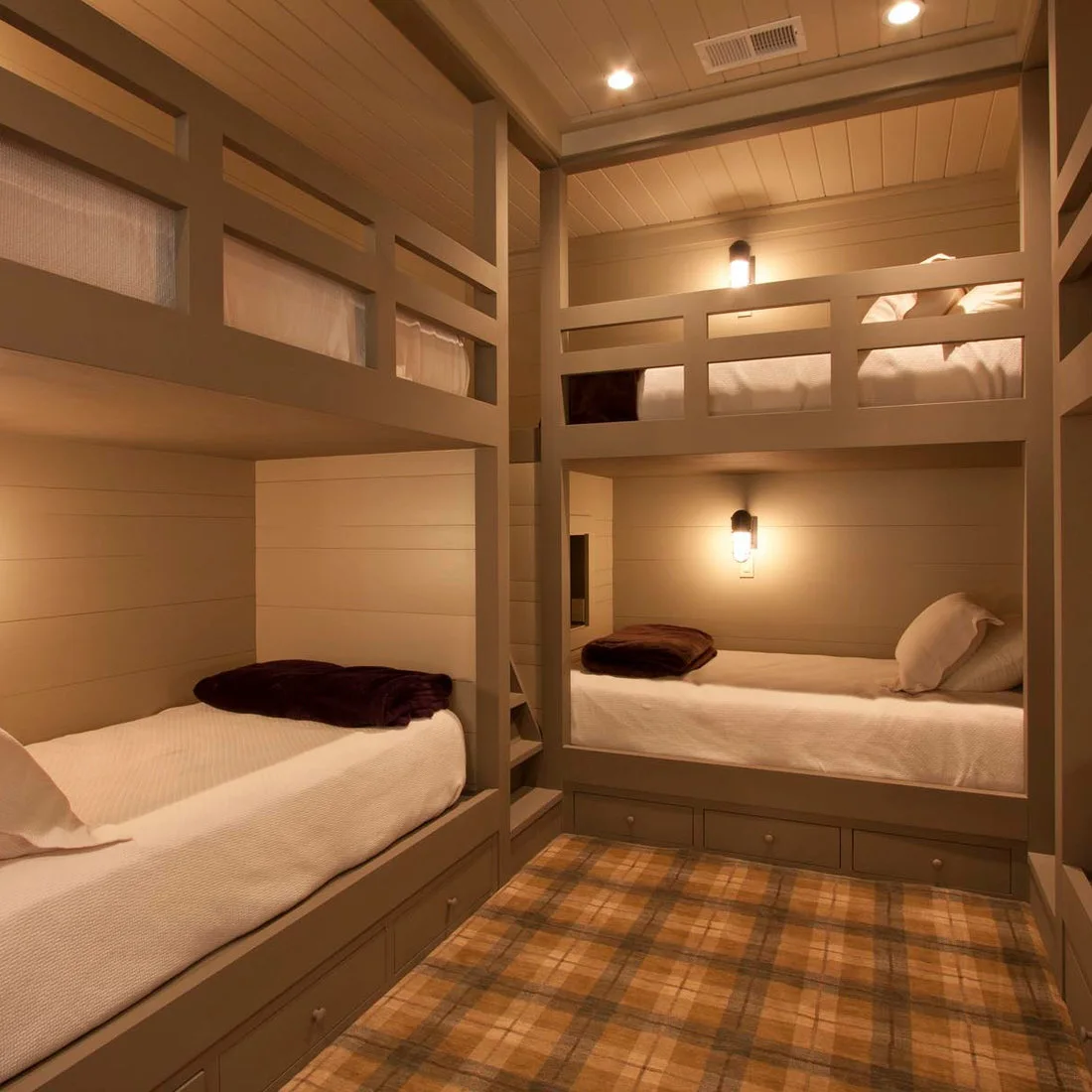
Painted paneling gives this shared sleeping room a softer appearance than dark timber boards would. Individual lights and underbed drawers make each sleeping place feel considered, while the checked carpet adds pattern without a stack of decorative cushions on every bed.
Built in bunks need professional planning for structure, guardrails, access and ventilation; their appearance is only one part of the decision. Choose bedding that is manageable to change in the available space. Keep drawers operable without blocking the ladder or the route to the door.
IDEA 18 / 20
Try Bright Painted Bed Niches
 SaveSupport Non AI Creator
Source: Tim Kulin Cabinetry & Mountain Aspen Granite via Houzz
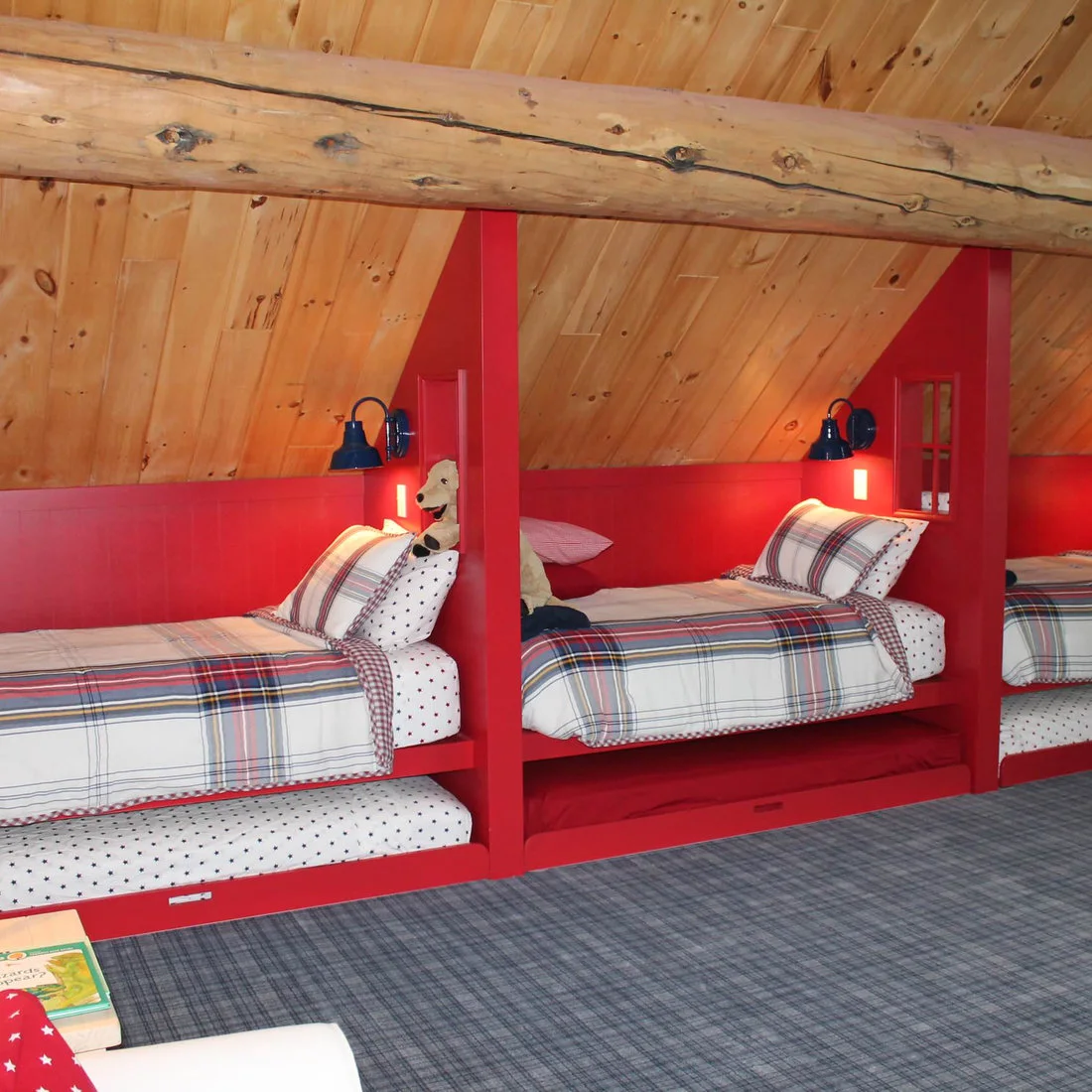
Bright red bed niches give this timber lined shared bedroom a cheerful identity. Checked quilts repeat the red in smaller amounts, while dark blue wall lamps add contrast. Pull out beds beneath the main mattresses make the base of the arrangement work harder.
Choose the layout for the number of people who will actually sleep here, including when trundles are open. Check headroom, easy exit routes and access to each light. A bold painted structure looks most coherent when the bedding uses a limited, repeated group of colors.
IDEA 19 / 20
Keep a Board Wall Light With White Bedding
 SaveSupport Non AI Creator
Image credit: Kathryn Bacalis
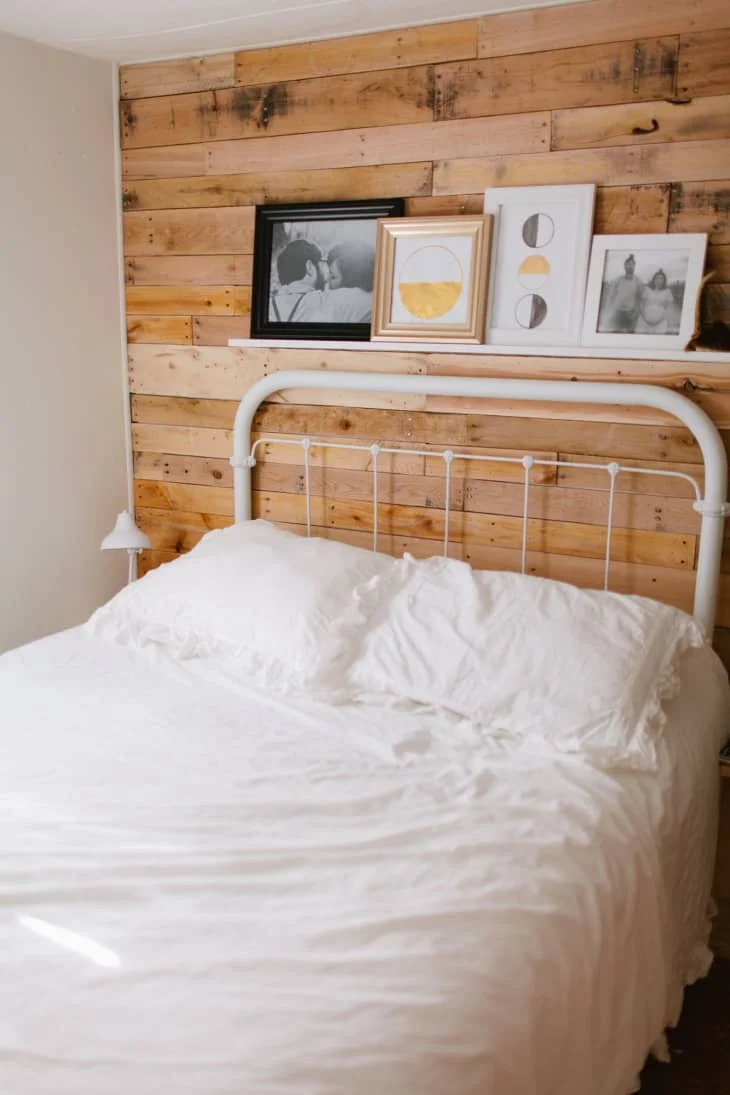
Horizontal boards give this small bedroom warmth behind a simple white metal bed. Plain white bedding keeps the timber grain in focus, and a narrow picture ledge introduces personal photographs and small prints without adding a heavy cabinet beside the sleeping space.
A board wall should be smooth enough to avoid splinters where bedding or hands touch it. Secure pictures above the bed instead of relying on a shallow ledge alone. Bedrooms with paneling offer more ways to choose a board direction and balance it with painted walls.
IDEA 20 / 20
Finish With a Useful Window Seat
 SaveSupport Non AI Creator
Source: Michael Rex Architects via Houzz
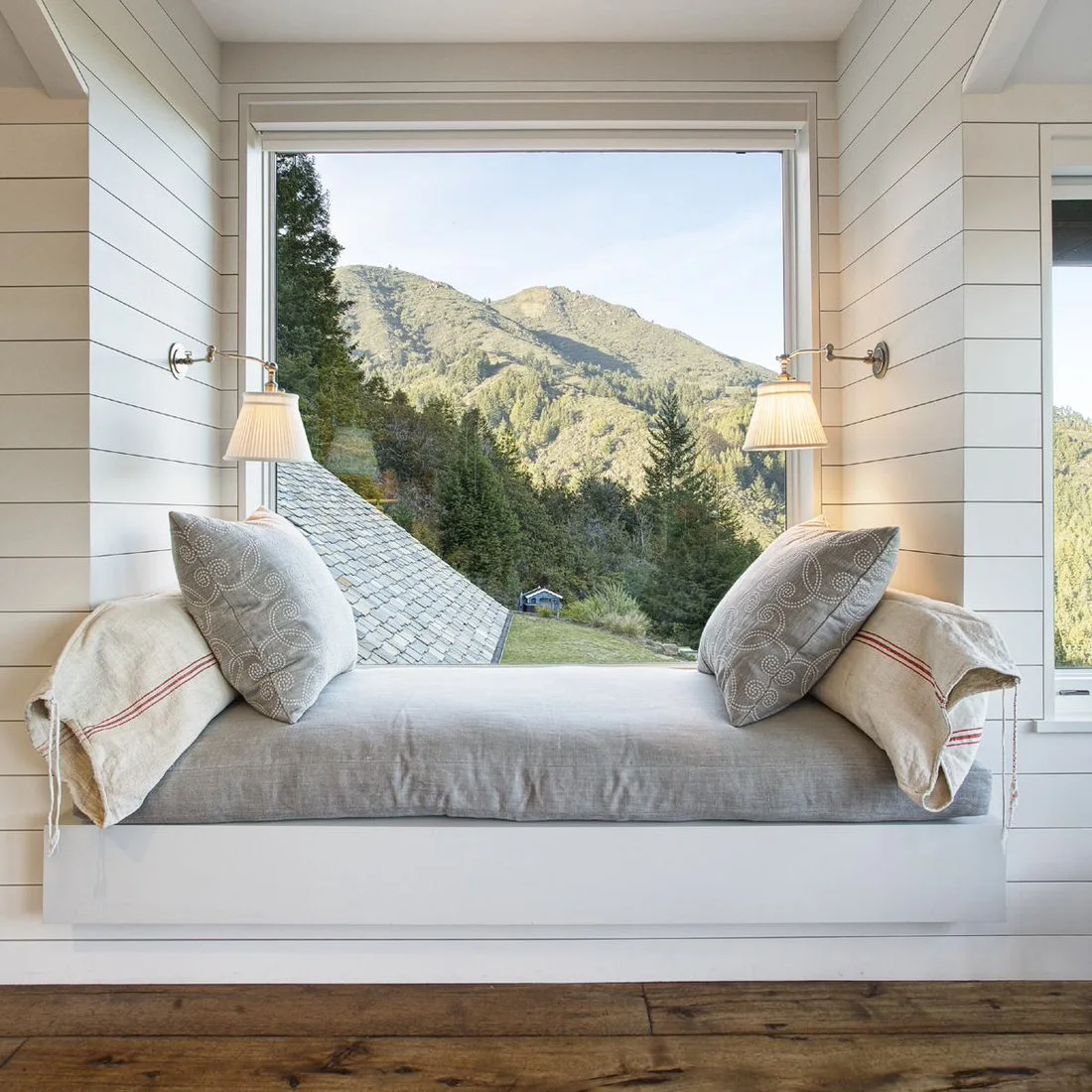
White boarded walls frame this deep window seat, keeping attention on the view rather than a busy fabric. A pale cushion and loose pillows give the nook softness, while swing arm lamps make it more useful when daylight fades.
Check seat depth and back support before commissioning a similar nook. A removable cushion cover is helpful where people sit with shoes or drinks. Keep window handles reachable and choose shading if glare or privacy would otherwise prevent you using the seat comfortably.
BRING IT ALL TOGETHER
Make the Room Comfortable Before Adding More Texture
Start with the bed position, storage and evening lighting. Keep enough room to reach curtains and open drawers, then decide where rustic texture will be most useful. A single board wall or wooden chest can do plenty in a modest bedroom.
Balance surfaces you cannot easily change with fabrics you can clean and replace. Pale bedding helps dark timber feel lighter, while a muted wall color can separate a wooden headboard from the surrounding structure. Let the room’s daily use guide the final decorative details.