A Scandi-inspired bedroom can be pale or dark, but its useful decisions are much the same: a comfortable bed, reachable storage, good bedside light and enough clear space to move. Wood details and soft textiles add warmth without requiring every surface to hold a decoration.
These rooms show different ways to keep the arrangement simple, from small bedside shelves to a full book wall. Use the photographs to judge proportion and color together, then check the actual measurements and care requirements at home. A quiet appearance should still support the way you dress, read and sleep.
PART 01
Start With a Warm, Simple Bed Wall
IDEA 01 / 16
Unify the Bed Wall With Pale Wood Slats
 SaveSupport Non AI Creator
Image credit: Ballon Studio / AubriePick
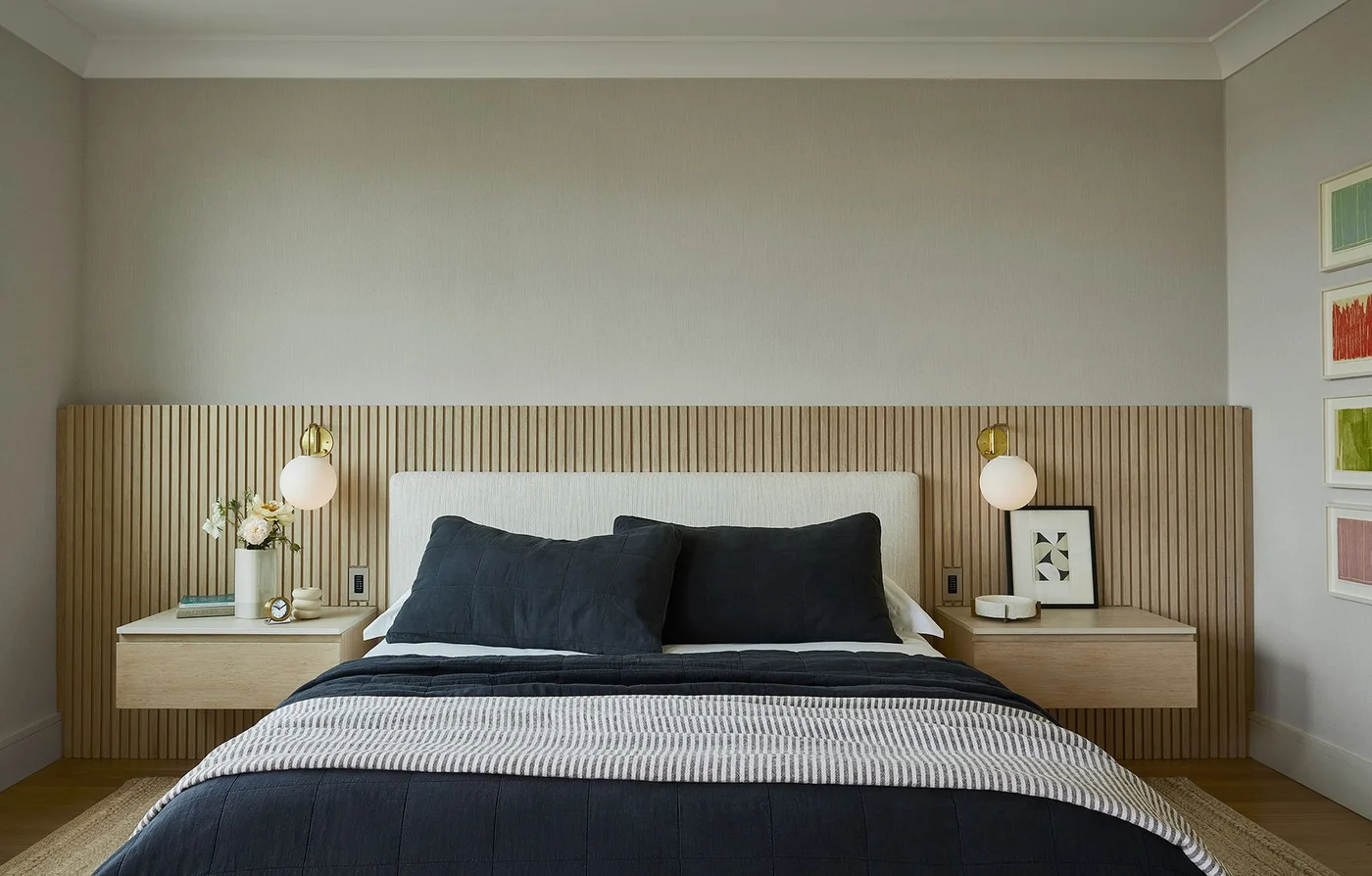
The wood slats connect the bed and both drawer tables into one broad arrangement. Round lights interrupt the repeated vertical lines without adding a busy pattern. Dark blue bedding gives the pale wall a clear foreground, while a narrow striped throw adds texture within the same restrained palette.
Plan the bed width, outlet positions and comfortable drawer height before setting out the wall treatment. Ask how dust can be removed between the slats. Compare our bedroom paneling ideas for other arrangements, and use a finish that will tolerate cleaning around the bedside switches and surfaces.
IDEA 02 / 16
Keep Wood Details Warm and Uncomplicated
 SaveSupport Non AI Creator
Image credit: Prospect Refuge Studio
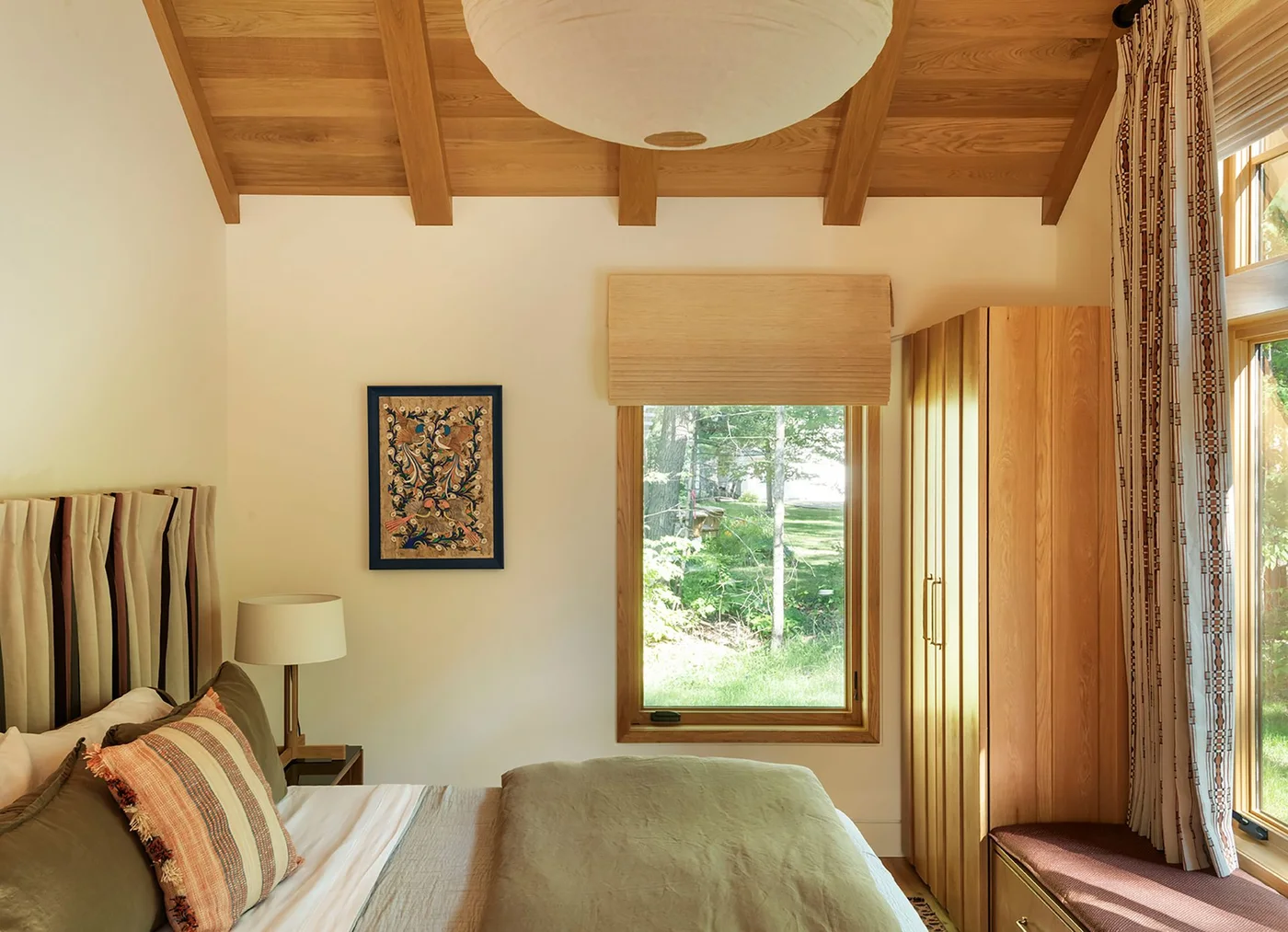
The ceiling, window frame and cupboard repeat warm wood tones around a mostly pale room. Green bedding supplies a quiet color change, while a small picture adds detail without filling the wall. The built-in window seat gives the bedroom another useful place to pause besides the bed.
Compare wood samples together in the room rather than trying to match every piece from separate photographs. Keep cupboard doors and window hardware reachable when adding a seat. Where timber already covers the ceiling, a plain wall and simple bedcover can prevent the room from feeling visually crowded.
IDEA 03 / 16
Use a Narrow Stripe Beside Plain Furniture
 SaveSupport Non AI Creator
Image credit: Nordic Knots
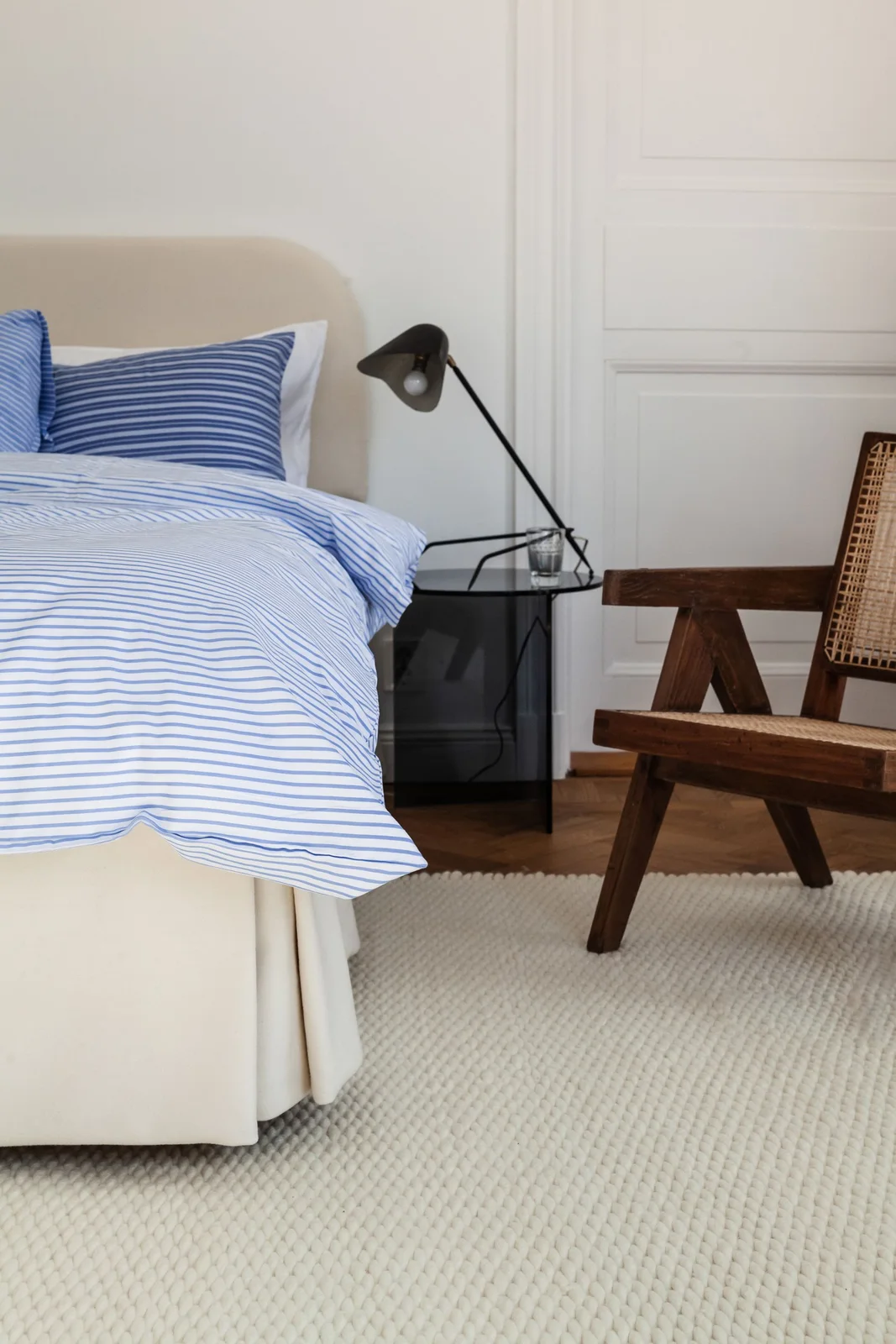
Fine blue stripes provide pattern without changing the simple outline of the bed. A dark bedside table and angled lamp give the pale bedding a sharper edge. The wood chair and textured rug introduce warmth, with enough variation that the room does not depend on decorative clutter.
Check the stripe scale against the actual size of the bed; a small fabric sample can look very different when repeated across a duvet. Keep enough bedside surface for a drink and reading essentials. Test the rug under a bare foot and confirm its cleaning needs before choosing it.
IDEA 04 / 16
Pair a Dark Wall With a Characterful Wood Cabinet
 SaveSupport Non AI Creator
Image credit: Bespoke Only
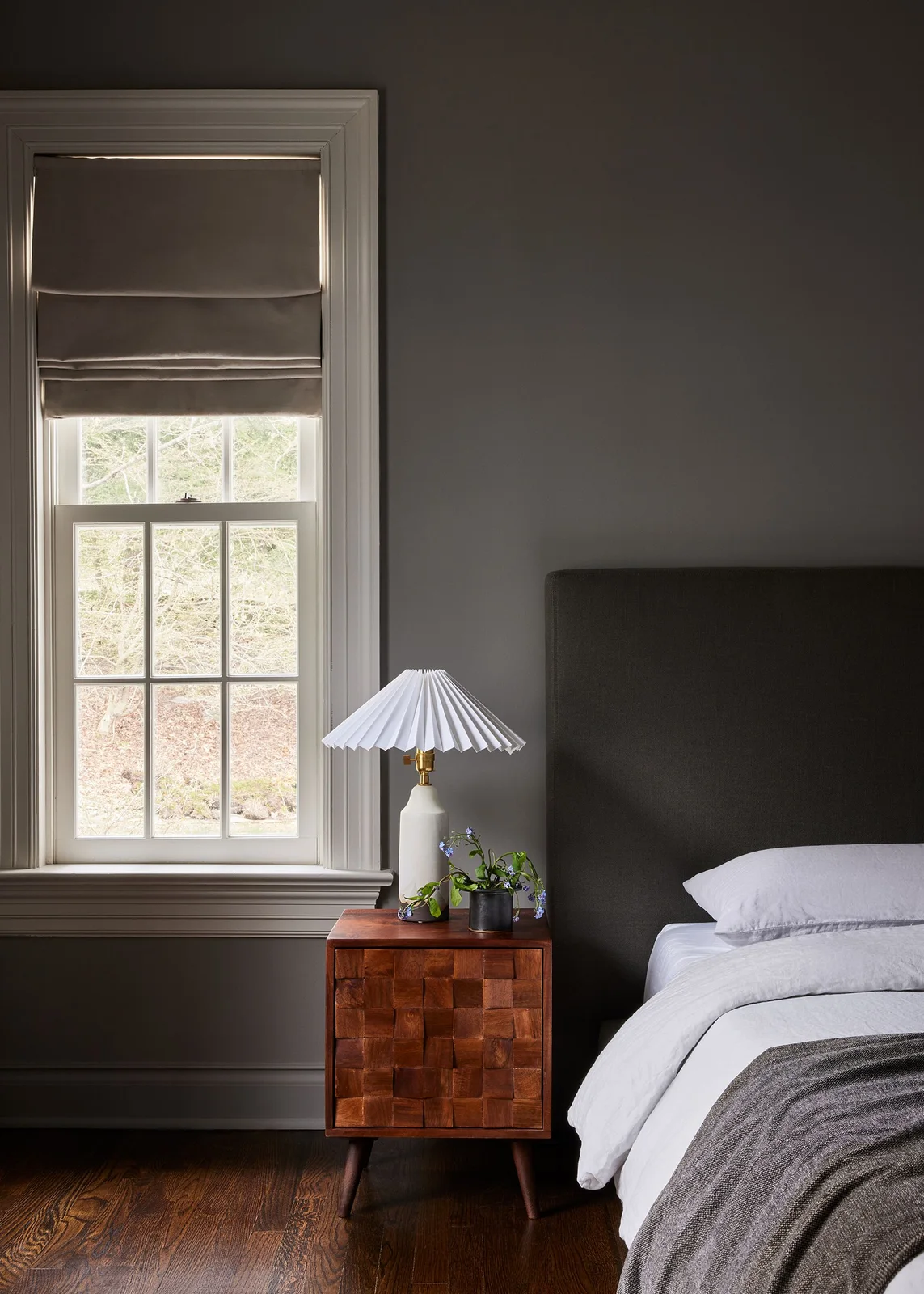
The dark wall makes the pale bedding and pleated shade easy to see. A small wood cabinet brings warmth and a textured front into an otherwise restrained corner. Its compact footprint leaves the window edge visible, showing how a darker bedroom can still feel deliberate and uncomplicated.
Paint a generous sample and look at it in both daylight and lamplight before committing to the darker tone. Check that the cabinet can hold the lamp securely with space left for everyday items. Choose a shade that softens the light without putting the bulb directly in your line of sight.
IDEA 05 / 16
Build Small Storage Into the Wall
 SaveSupport Non AI Creator
Image credit: Renee Kemps
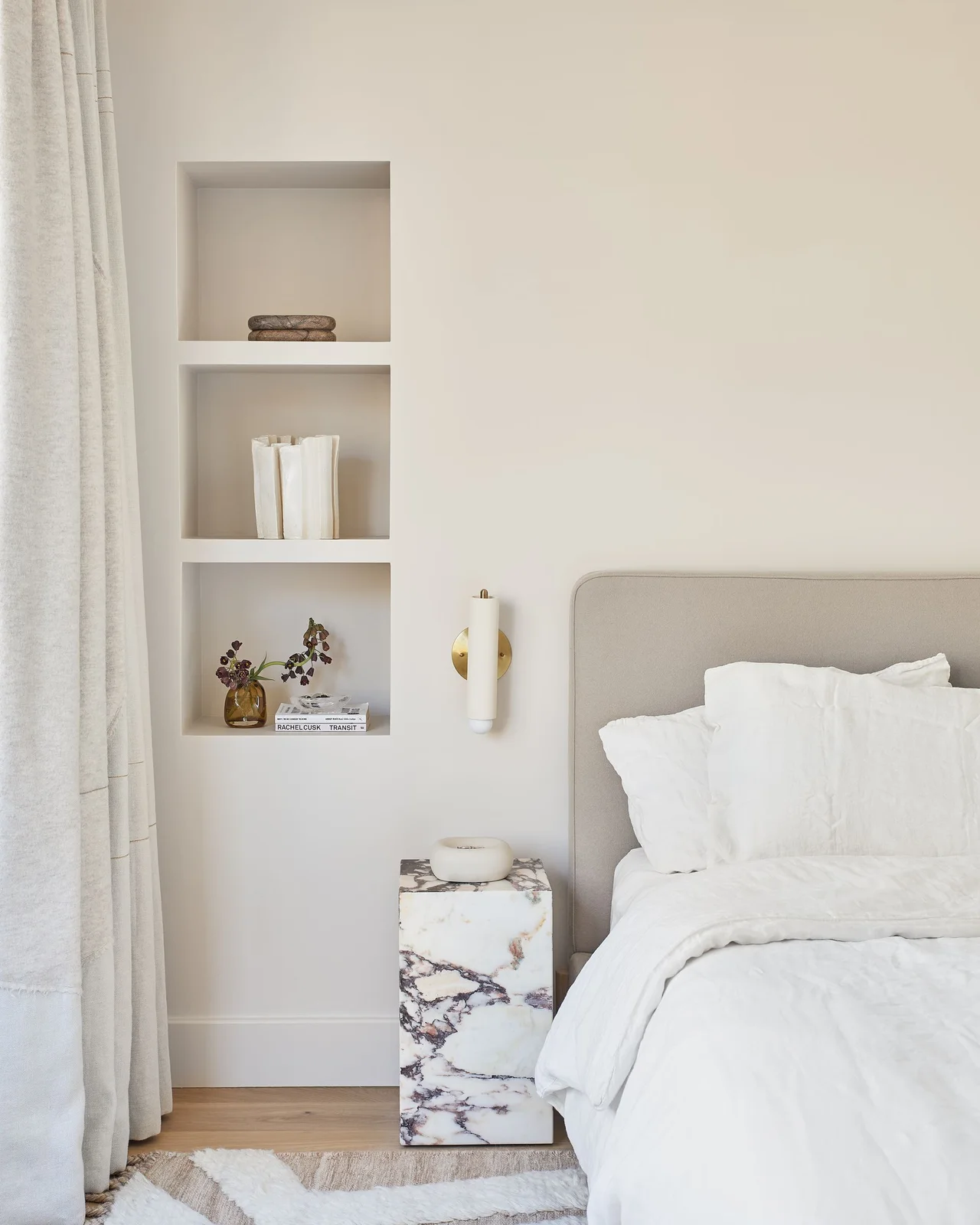
Recessed niches provide a few display places without projecting a shelf into the bedside passage. The pale upholstery and wall color stay close, leaving the veined bedside block as the strongest pattern. A slim wall light frees the small top surface for essentials rather than a lamp base.
Check what is inside a wall before planning recesses; structure, insulation and services may make a surface-mounted alternative more sensible. Size each niche for objects you actually intend to use. Keep the bedside top reachable from the mattress, and choose a surface finish that suits water rings and routine cleaning.
PART 02
Fit Storage and Color to the Room
IDEA 06 / 16
Let a Pale Rug Define the Sleeping Area
 SaveSupport Non AI Creator
Image credit: Nordic Knots
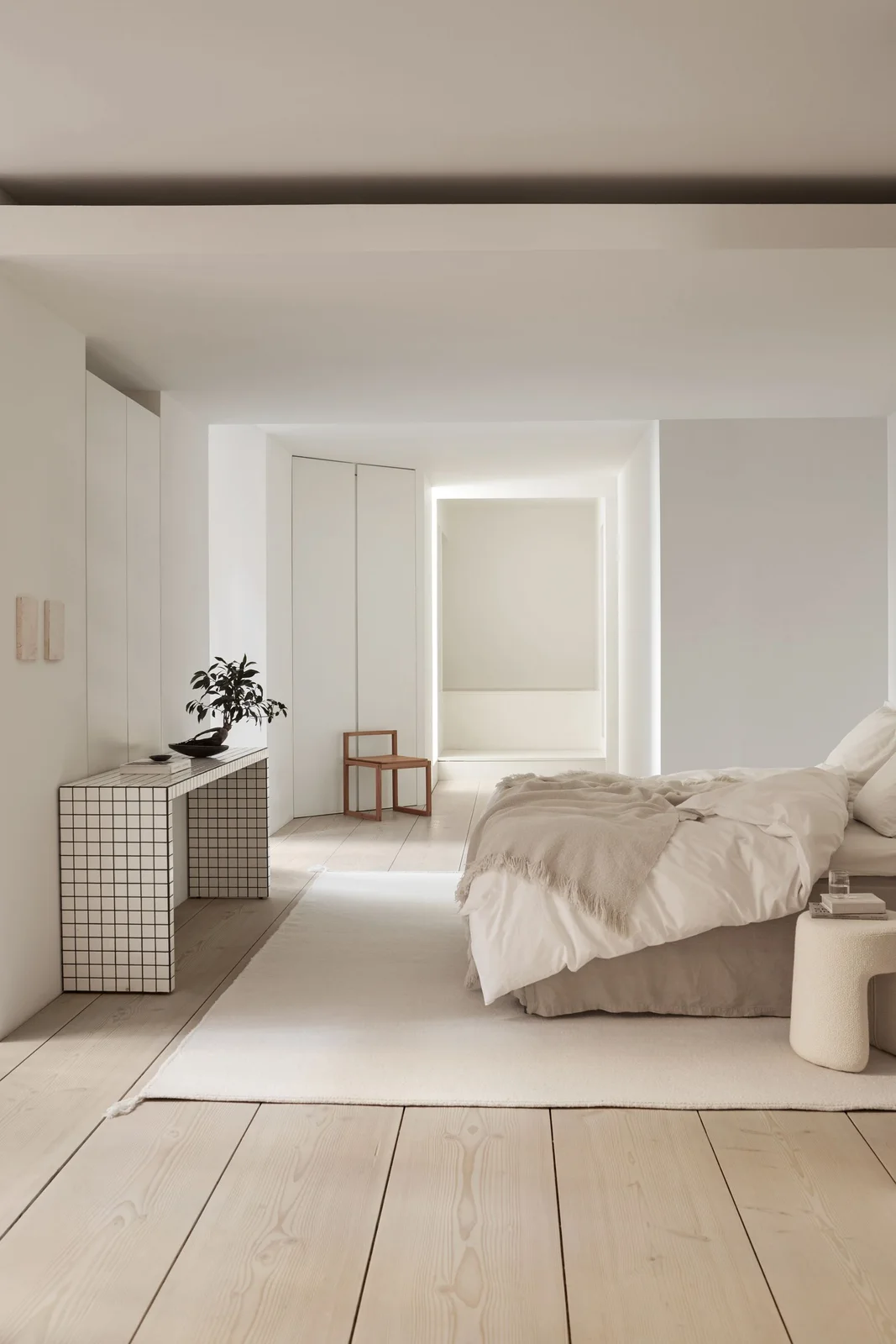
The large pale rug gives the bed a defined area within the room’s white surfaces. Broad floorboards remain visible around the edge, adding gentle grain and direction. A small wood chair and the console’s dark tile grid introduce contrast without requiring a stronger wall color.
Measure the rug with the bed in its intended position so the useful stepping areas are covered. Check that cupboard doors still open freely over the pile. Our minimalist bedroom ideas show other restrained layouts; choose storage capacity around your belongings before deciding that fewer visible pieces will be enough.
IDEA 07 / 16
Use a Dark Timber Ceiling With Lighter Walls
 SaveSupport Non AI Creator
Image credit: Bespoke Only
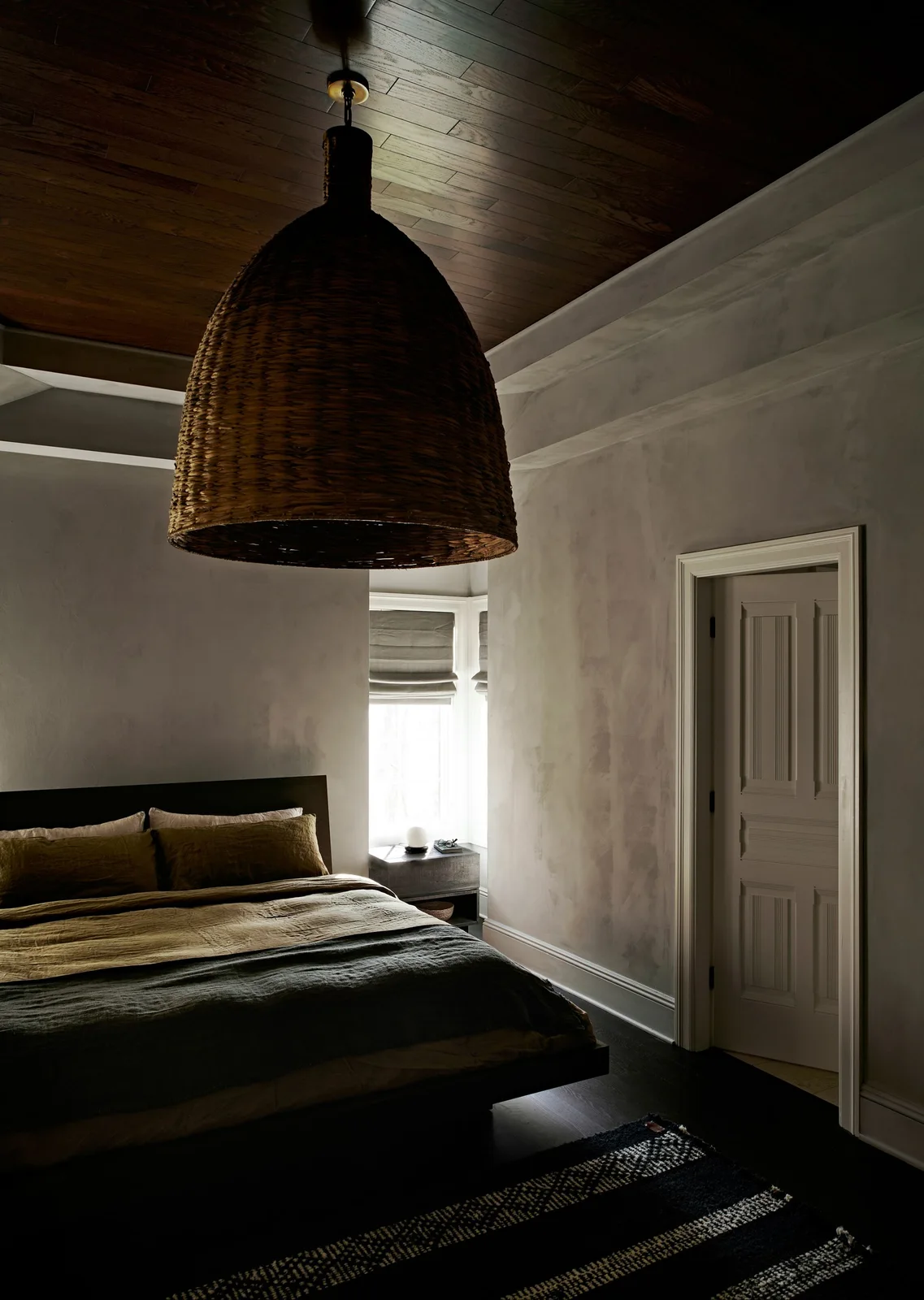
The dark timber ceiling gives this bedroom a more enclosed mood while the walls remain lighter. A broad woven shade adds a second texture rather than another bright color. The low bed keeps the main outline simple, allowing the ceiling grain and wall finish to carry much of the character.
A large shade needs enough head clearance and the correct lamp rating; check both before choosing it for a lower room. Use separate bedside lighting if the pendant does not reach the reading area. Test dark finishes in the actual light, especially when the window is small.
IDEA 08 / 16
Give Books a Deliberate Storage Wall
 SaveSupport Non AI Creator
Image credit: Ashe Leandro / 1stDibs 50 / Adrian Gaut
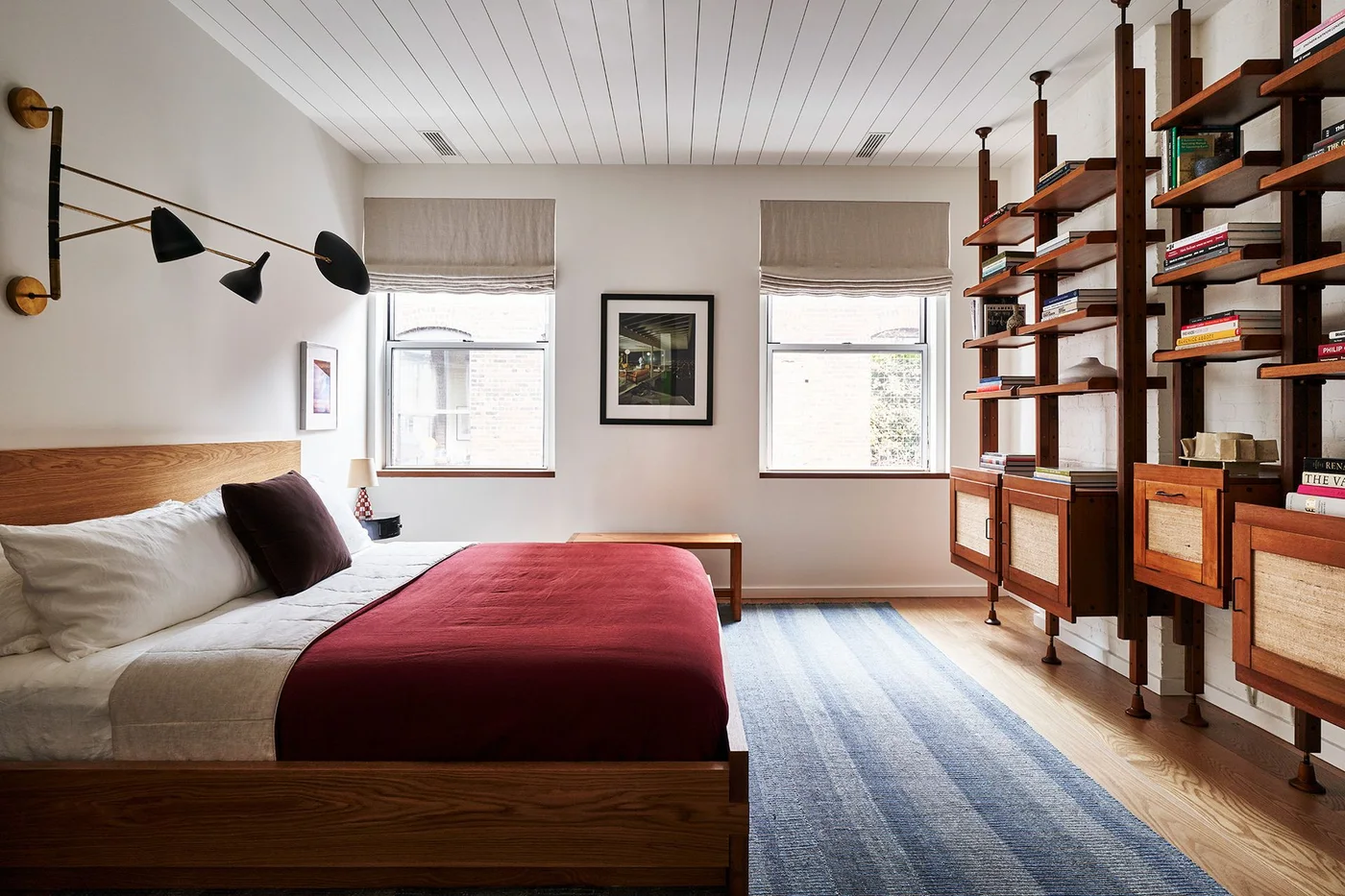
The tall shelving gives books and storage boxes one organized wall opposite the bed. A plain wood frame echoes its warm tones, while the red cover adds one clear accent. Pale window shades and a white boarded ceiling keep the upper room relatively quiet beside the book collection.
Keep a comfortable passage between the bed and storage, including space to open any cabinet doors. Fix shelving for its intended load and place heavier volumes where they can be handled safely. A simple bedcover is useful here because the spines already provide plenty of small color changes.
PART 03
Make the Bedside Details Useful
IDEA 09 / 16
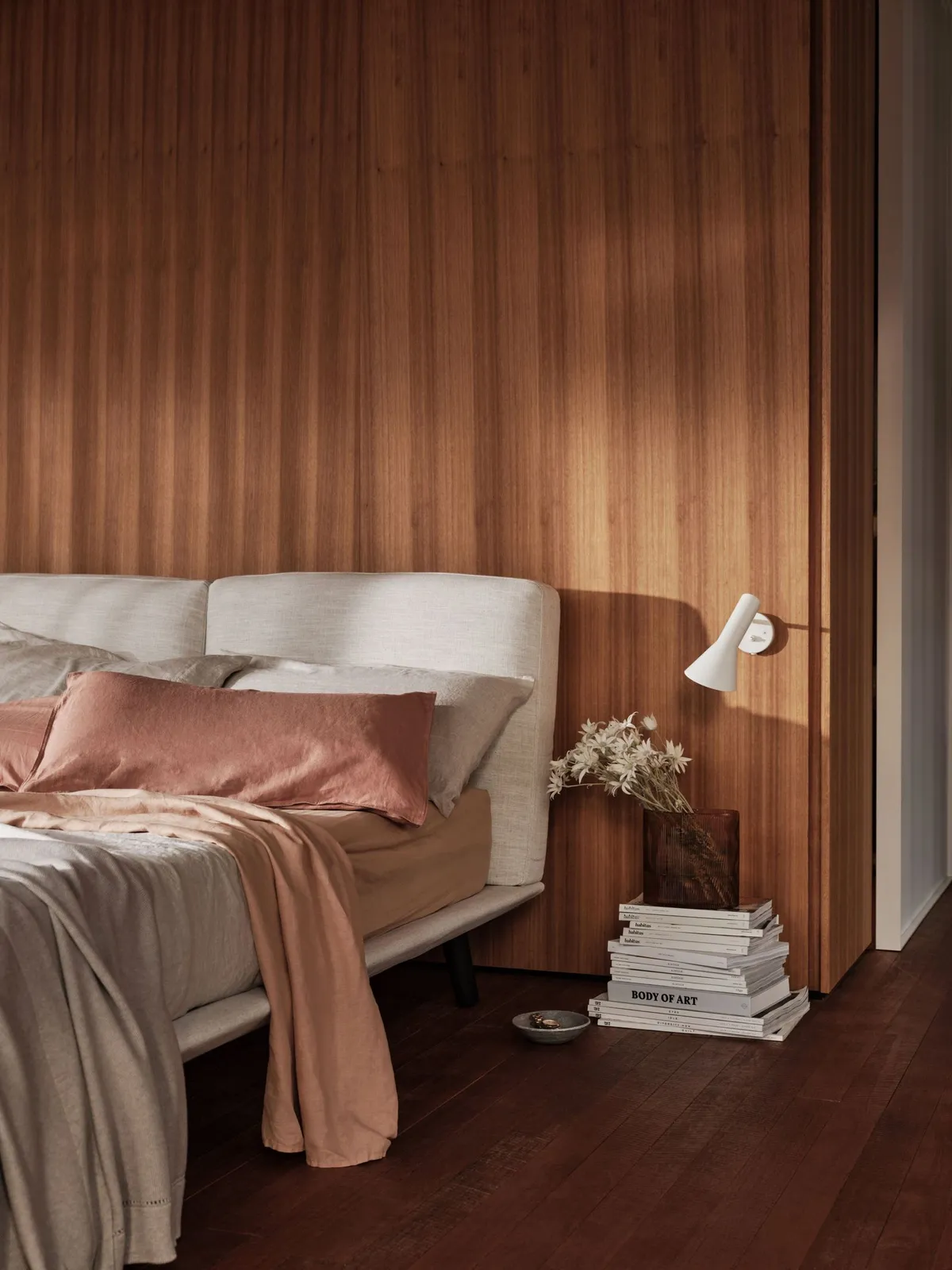
Warm Plain Bedding With a Wood Backdrop
 SaveSupport Non AI Creator
Image credit: KING
The vertical wood panels provide most of the warmth in this otherwise simple bedside corner. Muted pink bedding sits close to the pale upholstery rather than creating a sharp contrast. A small white wall light leaves the foreground open, so the grain remains the main decorative surface.
Use a proper shelf or bedside table for the items you need daily instead of relying on a floor stack to support a vase. Check the panel finish for cleaning and scuff resistance. Position a reading light from the seated pillow height so it illuminates the page without shining directly into your eyes.
IDEA 10 / 16
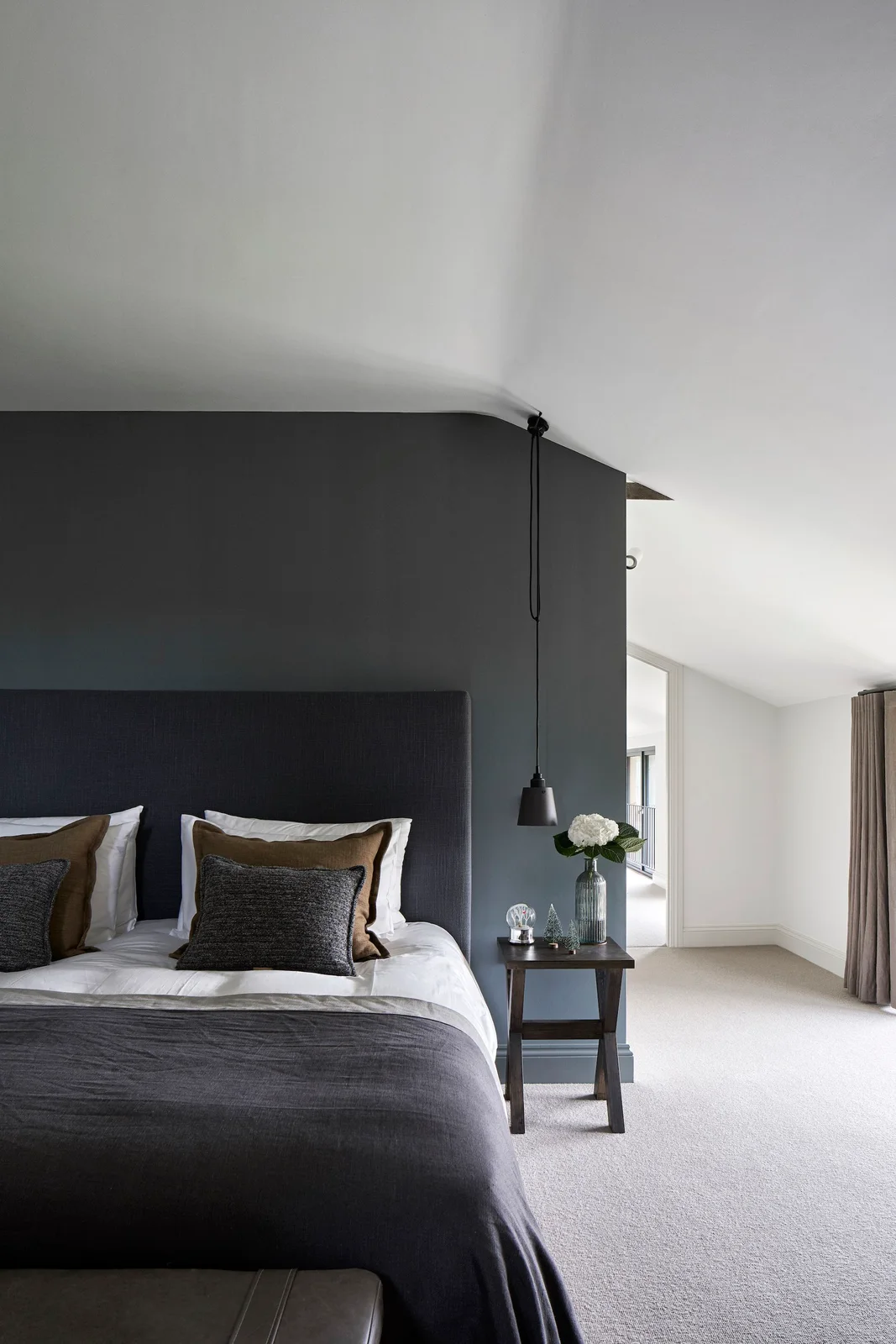
Balance a Charcoal Bed Wall With an Open Side
 SaveSupport Non AI Creator
Image credit: Future
The charcoal wall gives the bed a clear background, while the pale ceiling and side passage keep the rest of the room lighter. A small wood table warms the bedside edge. The hanging light avoids using its top for a lamp base, leaving a simple place for essentials.
Work out pendant position with the bed and table already measured; it should not hang in the route used to get in and out of bed. Keep the cable arrangement deliberate and professionally installed where required. Limit bedside objects if you want the darker wall to remain the strongest feature.
IDEA 11 / 16
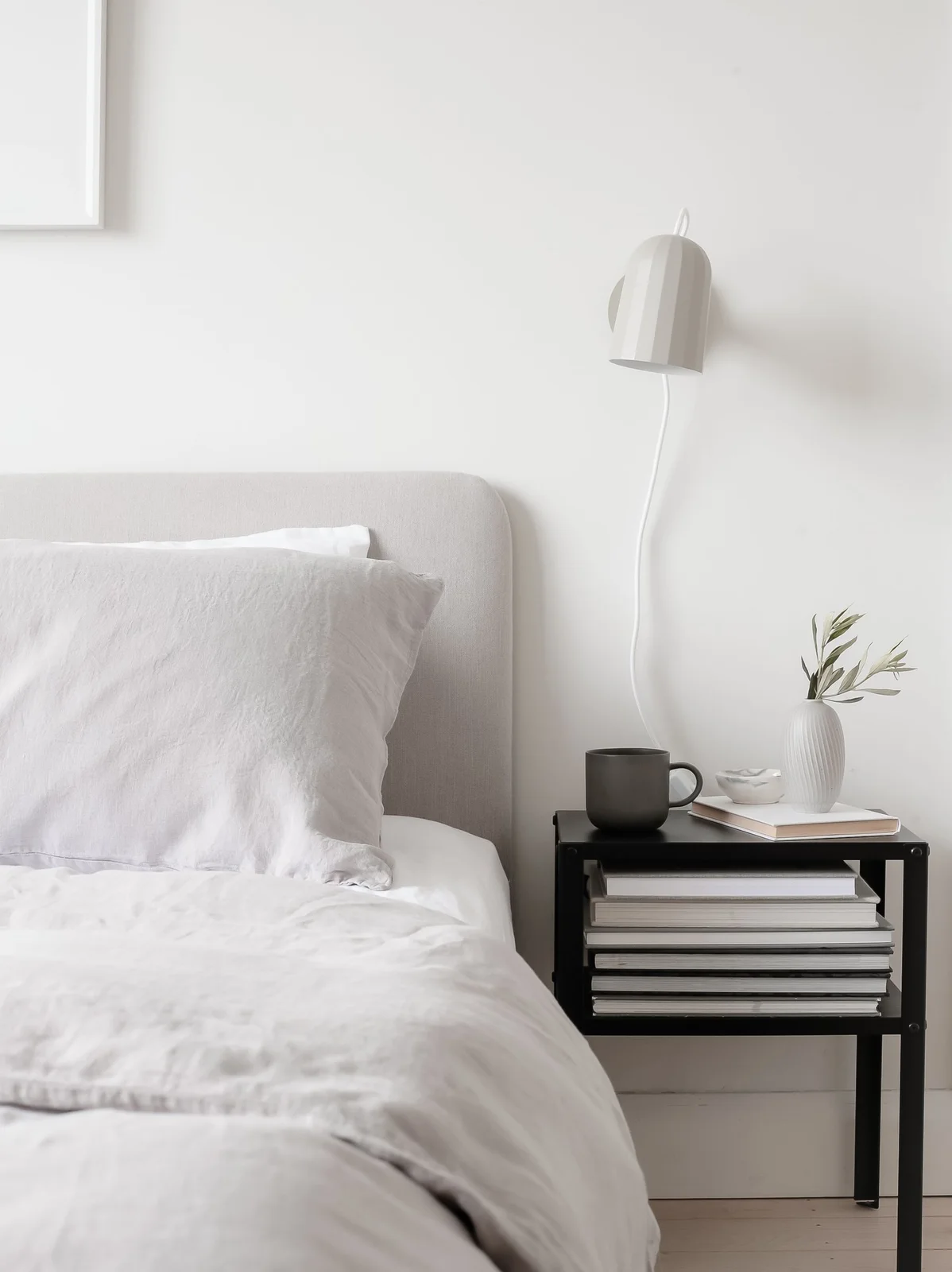
Use a Small Open Table for Bedside Essentials
 SaveSupport Non AI Creator
Image credit: Scooms
The small black table draws a clear outline against the white bedding. Its lower opening holds books, leaving a separate top for a few everyday objects. A wall-mounted light keeps the lamp footprint off the table, making a modest piece more useful beside the bed.
Choose the table height from the mattress rather than from its appearance beside a different bed. Leave enough top space for a drink without balancing it on a book. Check that the open shelf is easy to clean, and manage the light cord so it does not catch when bedding moves.
IDEA 12 / 16
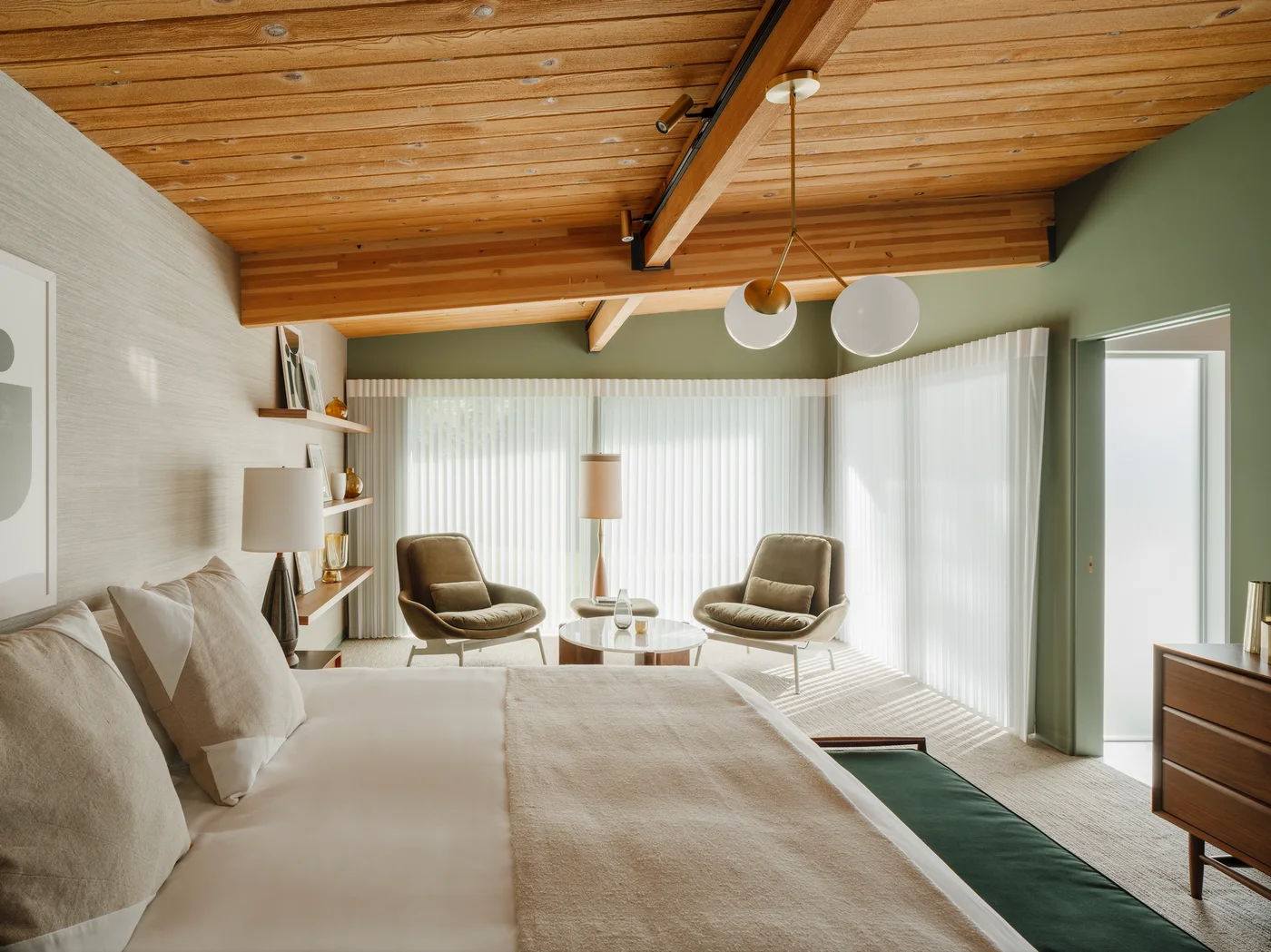
Repeat Soft Green Around a Wood Ceiling
 SaveSupport Non AI Creator
Image credit: Lance Gerber. Design: Michelle Boudreau Design
Soft green walls connect the bedroom with the warm wood overhead without matching it exactly. Light curtains wrap the corner windows, giving the seating area a consistent background. The two rounded chairs make a distinct place to sit, while pale bedding keeps the foreground relatively simple.
Only add a sitting area if it leaves a comfortable route around the bed and to storage. Use the curtain arrangement for daytime softness, then consider a separate privacy or darkening layer if needed. Choose chair sizes that suit actual use rather than filling the corner with an oversized pair.
PART 04
Finish With Soft Color and Clear Space
IDEA 13 / 16
Soften Painted Boards With a Small Color Accent
 SaveSupport Non AI Creator
Image credit: Farrow & Ball
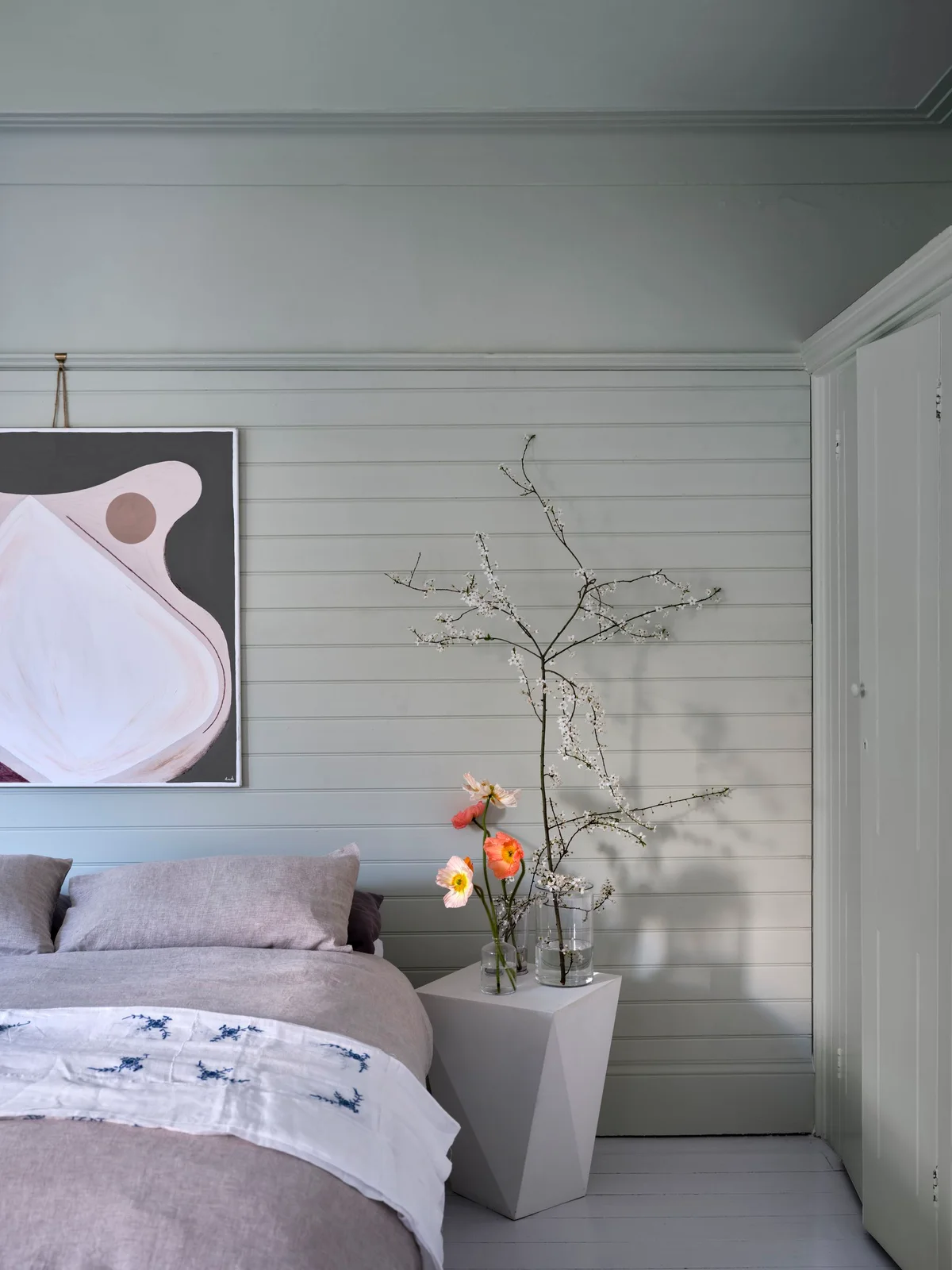
The horizontal boards add a gentle repeated line to the muted wall. Pale bedding and a small white table keep the corner light, while the picture and cut flowers supply a limited change in color. The arrangement feels personal without needing a large group of ornaments beside the pillow.
Keep tall branches out of the path used to reach the bedside surface; a smaller arrangement may be more practical than the photographed scale. Use a stable vase and protect the finish beneath it. Check board joints and painted edges when cleaning, especially in a room that attracts dust.
IDEA 14 / 16
Choose One Bright Bedside Accent
 SaveSupport Non AI Creator
Image credit: Future PLC/Dominic Blackmore
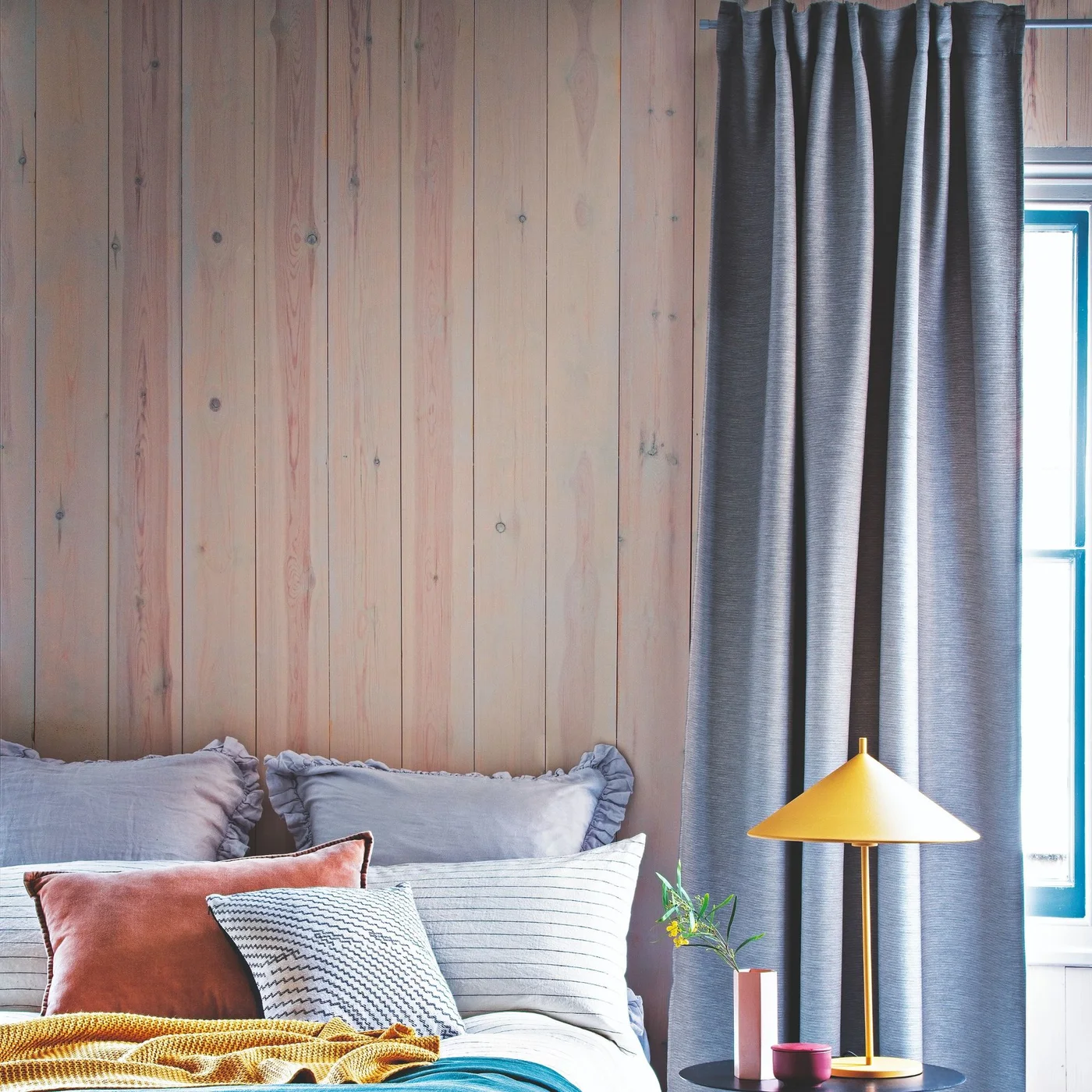
The yellow lamp creates a clear accent within the gray curtains and pale wood wall. Fine cushion patterns add detail at a smaller scale, while the larger surfaces remain fairly quiet. The round table gives the lamp its own simple outline rather than adding another substantial storage block.
If the full cushion mix feels busy, keep the lamp and reduce the textiles to one plain cover and one pattern. Check that the table is large and stable enough for the lamp base. Leave curtain fabric clear of the fitting, following the lamp’s specified spacing and bulb guidance.
IDEA 15 / 16
Free the Floor With Small Bedside Shelves
 SaveSupport Non AI Creator
Image credit: Future PLC/Douglas Gibb
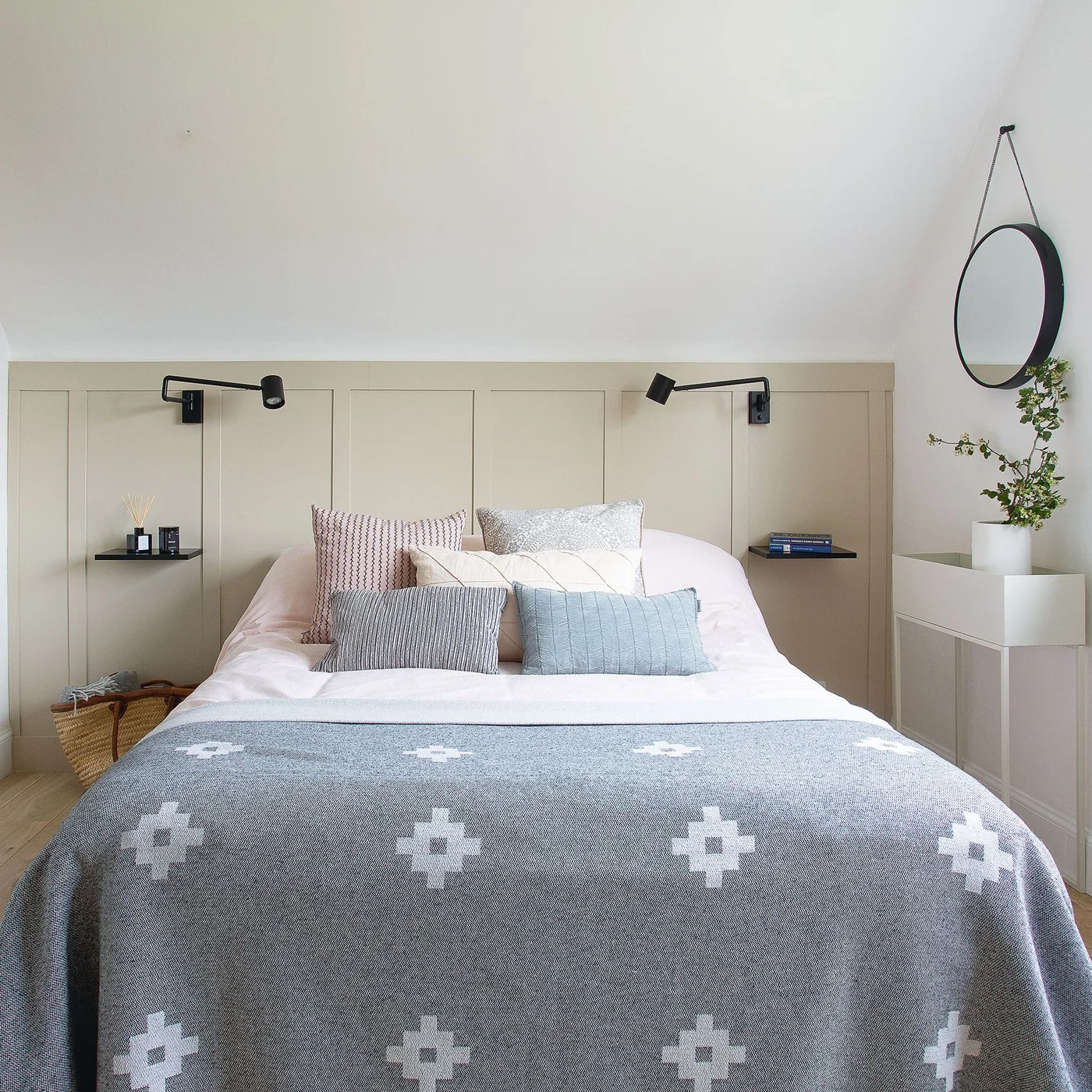
Small black shelves provide just enough bedside surface without standing furniture below. The matching reading lights make the two sides feel connected, while pale paneling gives the bed a broad background. Soft cushion colors prevent the black details from turning the room into a strict monochrome scheme.
Mark shelf and light positions while sitting in bed, checking comfortable reach on both sides. Confirm the wall construction and fixings for the intended load. Our small bedroom decor ideas include other ways to preserve floor space; retain additional closed storage elsewhere if these shelves cannot hold your nightly essentials.
IDEA 16 / 16
Mix Simple Wood Furniture With Soft Pink
 SaveSupport Non AI Creator
Image credit: Future PLC / Nathalie Priem
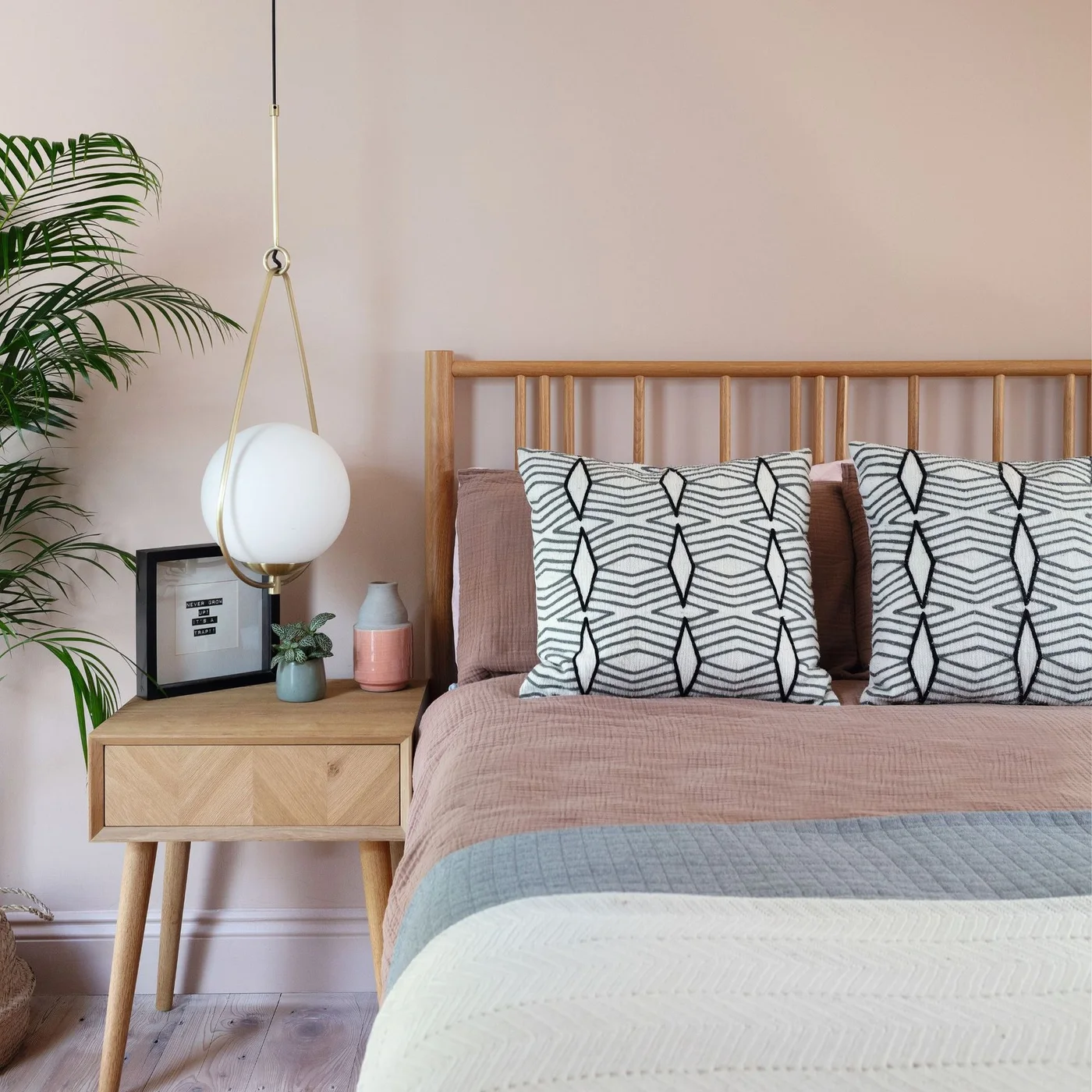
The spindle headboard and small drawer table repeat warm wood tones against soft pink. Geometric cushions bring contrast within a limited black-and-white pattern. A hanging globe light makes a rounded counterpoint to the straight furniture, with the plant filling the far edge rather than the bedside top.
Use one bold textile pattern if you want a calm room with a little contrast. Check pendant height and reach before installation, and leave room for the drawer to open fully. Give the plant enough light and a protected watering setup so nearby wood surfaces are not repeatedly splashed.
BRING IT ALL TOGETHER
Keep the Calm Arrangement Useful
Measure the bed and storage together before choosing smaller decorative details. A drawer chest, small shelf or comfortable chair should earn its place through everyday use. Plan reading light from the pillow position and keep the main route clear even when drawers and cupboard doors are open.
Build the palette from a few finishes you enjoy living with, then add texture through bedding and window treatments. Pale paint is one option, not a requirement. Look at samples in changing light, choose care routines you can manage and give personal photographs or books a deliberate place rather than removing every sign of life.