Pastel bedrooms can be colorful without covering every surface in pink. Pale blue bedding, a mint wall or a lavender cushion can establish a softer palette while allowing existing wood furniture and white linens to stay. The amount of color matters as much as the shade itself.
These photographed rooms offer different starting points, from patterned walls to small changes in bedding. Look at how the colors repeat and where they stop. Compare fabric and paint samples in your own daylight and evening lighting, because the same pastel can appear cooler, grayer or brighter in another room.
PART 01
Start with a Soft Background
IDEA 01 / 20
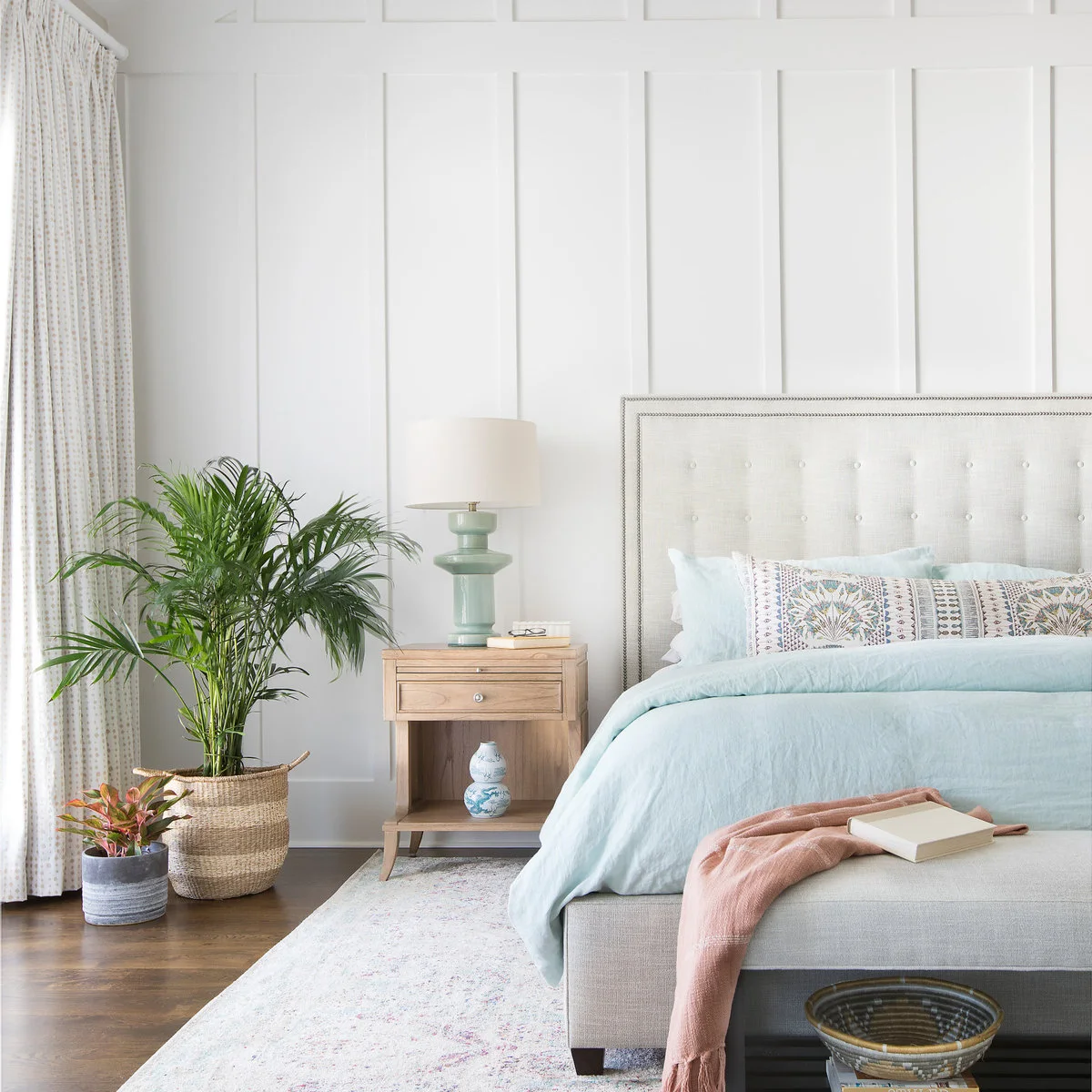
Mix Blush Bedding with a Mint Bedside Lamp
 SaveSupport Non AI Creator
Image credit: Project: Wendy Mauro Design (via Houzz)
Pale blue bedding and a blush throw sit against a cream upholstered headboard and white paneled wall. The mint lamp introduces a third soft color without covering another large surface. A wood bedside table and a basket beside the bed give the pale arrangement warmer outlines.
Start with the bedding color you already enjoy, then test a second shade in a washable throw. Keep enough plain white or cream between them to distinguish the colors. Choose a lamp for useful bedside light first, checking that its shade does not crowd the space needed for water and a book. These feminine bedroom ideas pair soft palettes with shaped furniture, practical bedside storage and comfortable lighting.
IDEA 02 / 20
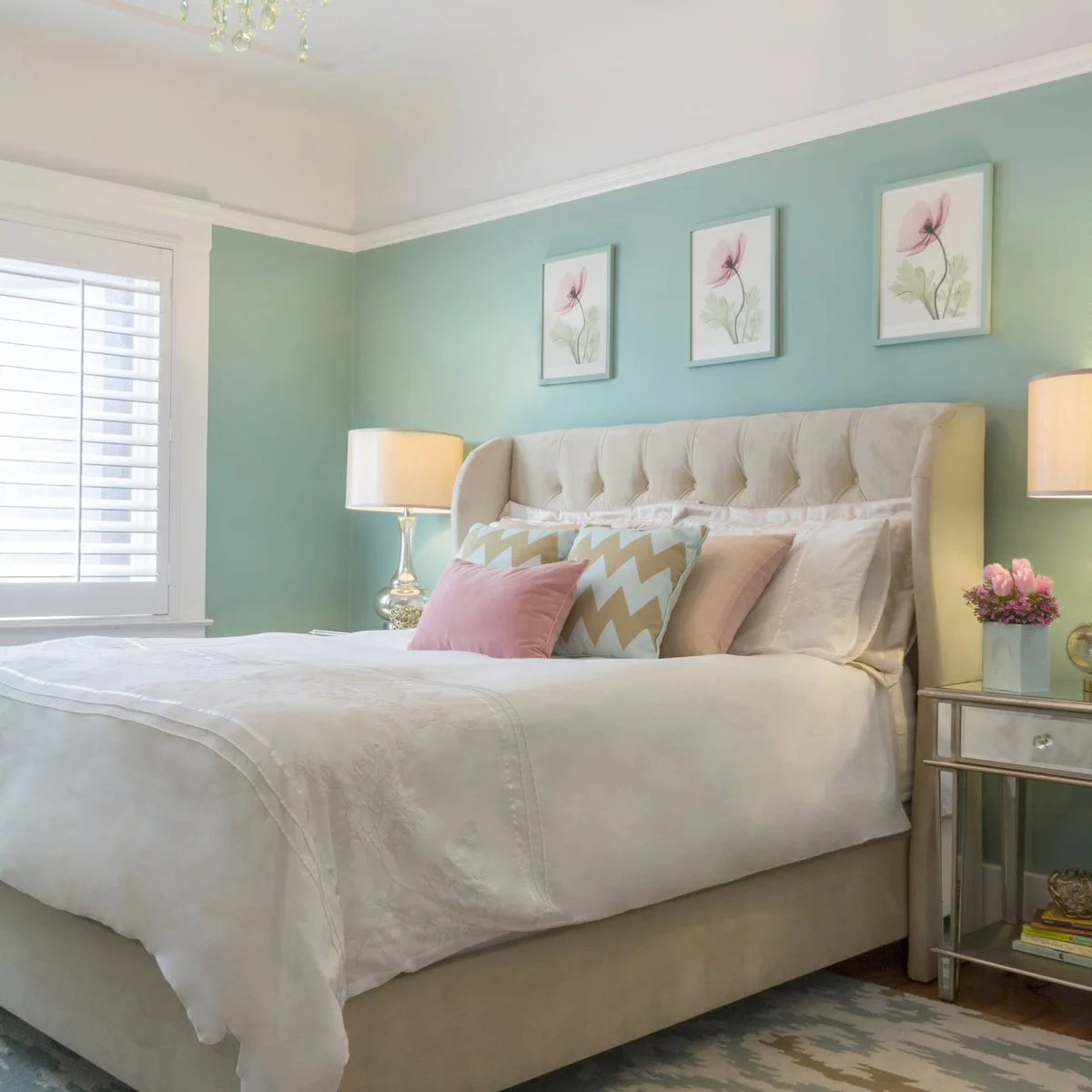
Set Pink Prints against a Mint Wall
 SaveSupport Non AI Creator
Image credit: Project: Miss Alice Designs (via Houzz)
A mint wall provides a cool background for a cream tufted headboard and pink patterned cushions. Three pink botanical prints repeat the cushion color higher on the wall. The white bedding leaves a broad quiet area between the patterned accessories and the decorative detail of the headboard.
Choose a print arrangement that fits the width of your headboard rather than spreading pictures across the whole wall. Compare the pink in the artwork with a fabric sample before buying cushions. If both contain pattern, vary their scale so their shapes remain readable from the doorway.
IDEA 03 / 20
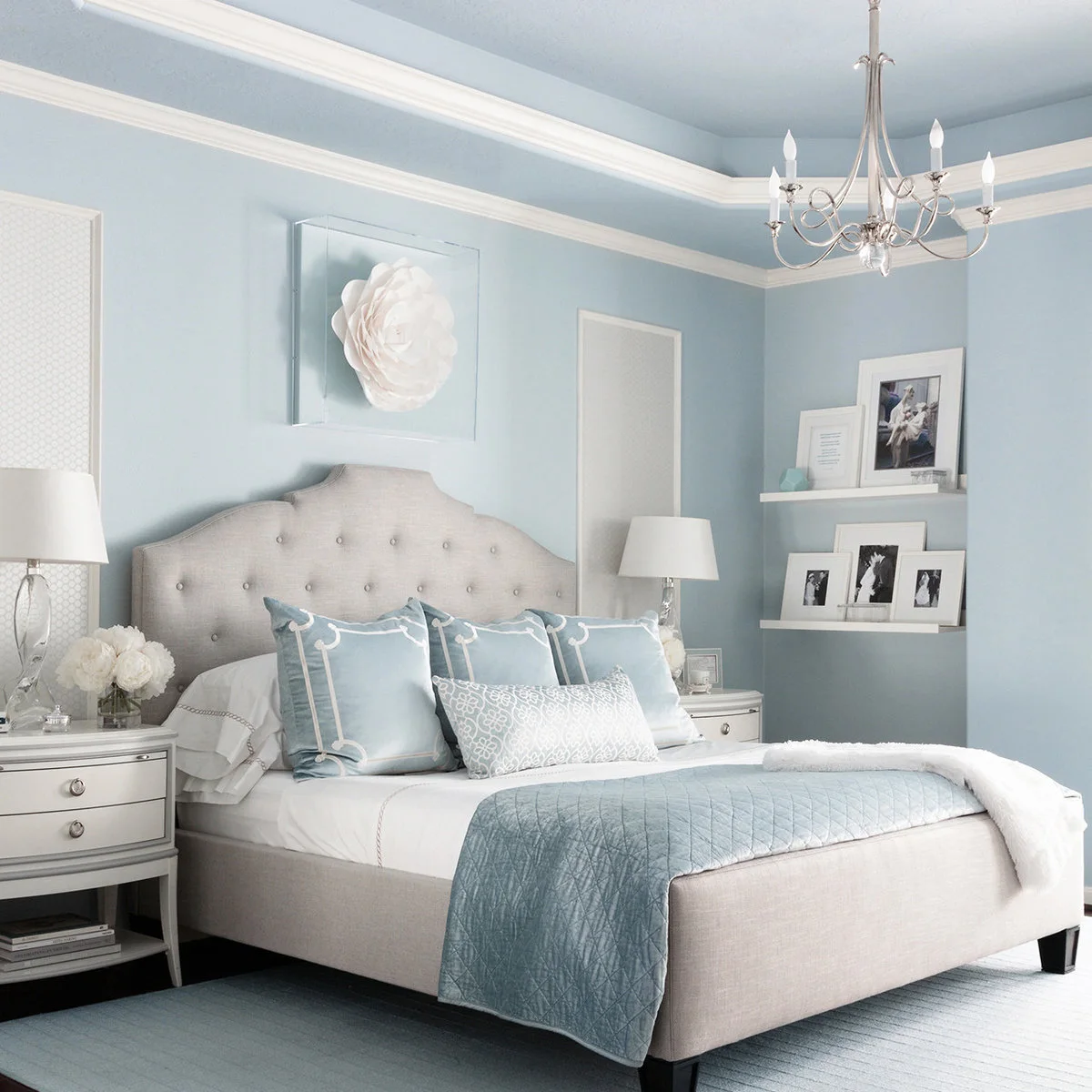
Frame Powder Blue Walls with White Trim
 SaveSupport Non AI Creator
Image credit: Project: Marker Girl Home (via Houzz)
Powder blue walls sit between white trim and a cream tufted bed. Blue cushions and a folded runner carry the wall color onto the bedding, while the white picture ledges add horizontal lines. The room uses a limited palette, allowing the upholstery and wall details to remain distinct.
Keep ledges shallow enough for the intended pictures and mount them securely with fixings suited to the wall. Check their position against the headboard before drilling. For a related approach with less color, grey bedroom ideas show how quieter walls can still work with varied upholstery and bedding textures.
IDEA 04 / 20
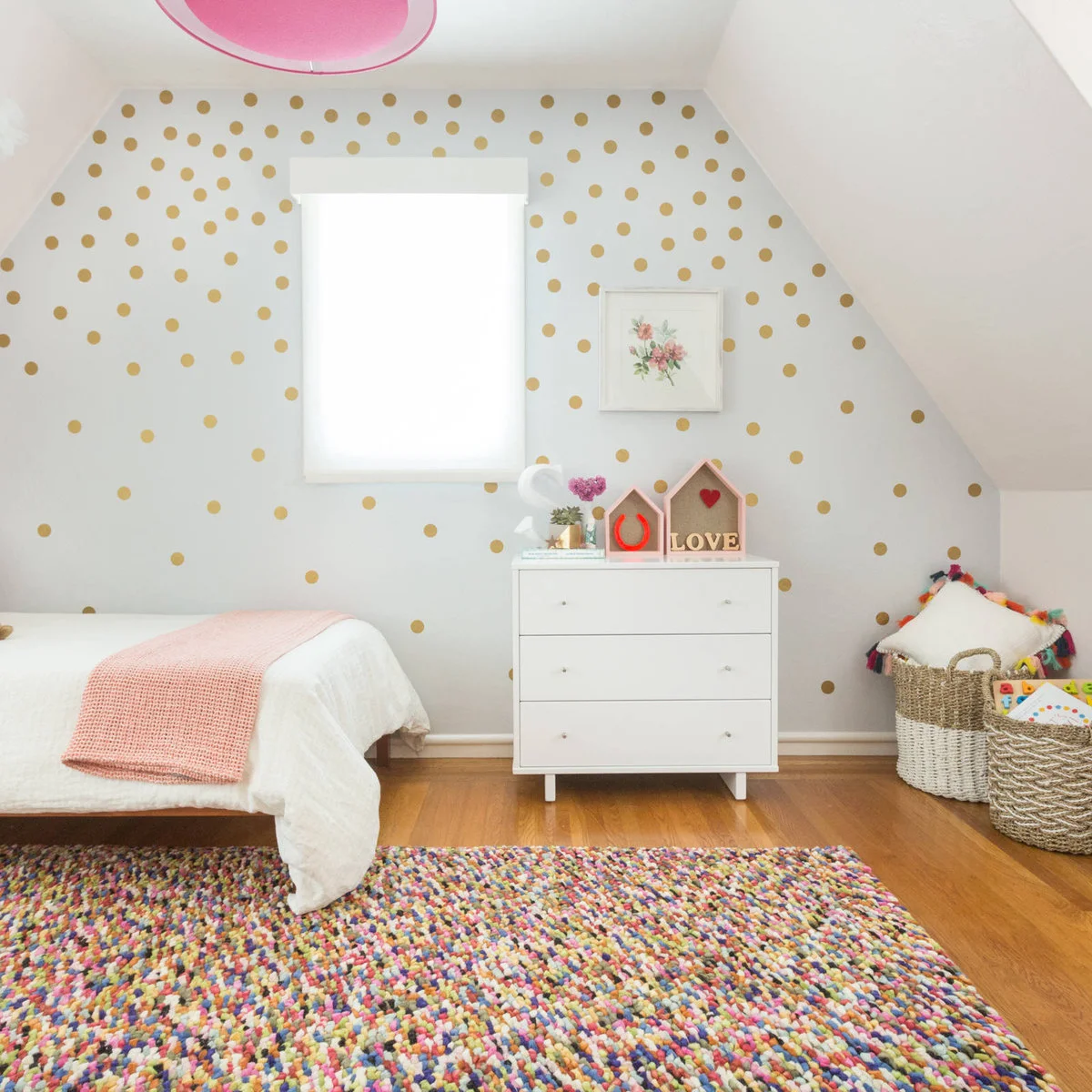
Use Blush under a Sloping Ceiling
 SaveSupport Non AI Creator
Image credit: Project: SEN Creative (via Houzz)
Pale pink follows the roof slope above a white bed in this compact bedroom. A pink throw repeats the wall color, while a multicolored rug adds smaller contrasting shapes below. The white chest and bed frame keep the furniture connected without requiring every accessory to match.
Check headroom where you sit up and stand beside the bed before copying a layout under a slope. Keep frequently used drawers where they can open fully. A single wall color can simplify awkward angles; let a rug or bedcover provide variety instead of outlining every change in the ceiling.
IDEA 05 / 20
Pair Pale Green Walls with Cream Bedding
 SaveSupport Non AI Creator
Image credit: Project: Phoebe Howard (via Houzz)
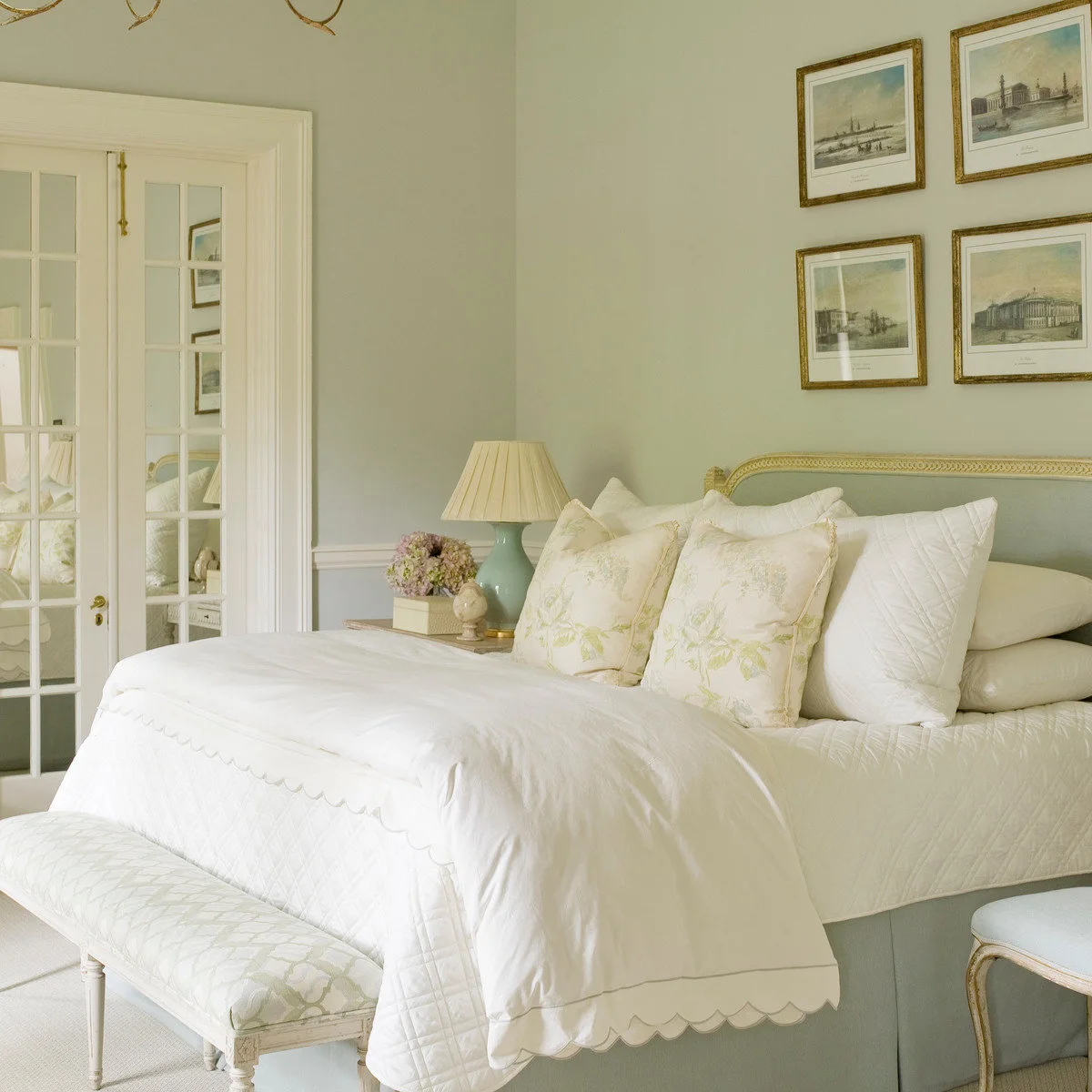
Pale green walls surround cream bedding with a scalloped edge and lightly patterned cushions. A mint bedside lamp repeats the wall color in a smaller object. Framed prints and an upholstered bench add detail while staying close to the soft green, cream and warm frame colors.
Compare the green paint with the room’s existing white trim before committing. A cream that looks gentle beside one green may seem yellow beside another. Choose bedding with care instructions you can follow, especially when decorative edges or textured covers need more attention than a plain machine-washable set.
PART 02
Build Color through Bedding
IDEA 06 / 20
Layer Pale Blue Patterns on a Neutral Bed
 SaveSupport Non AI Creator
Image credit: Project: Casabella Interiors (via Houzz)
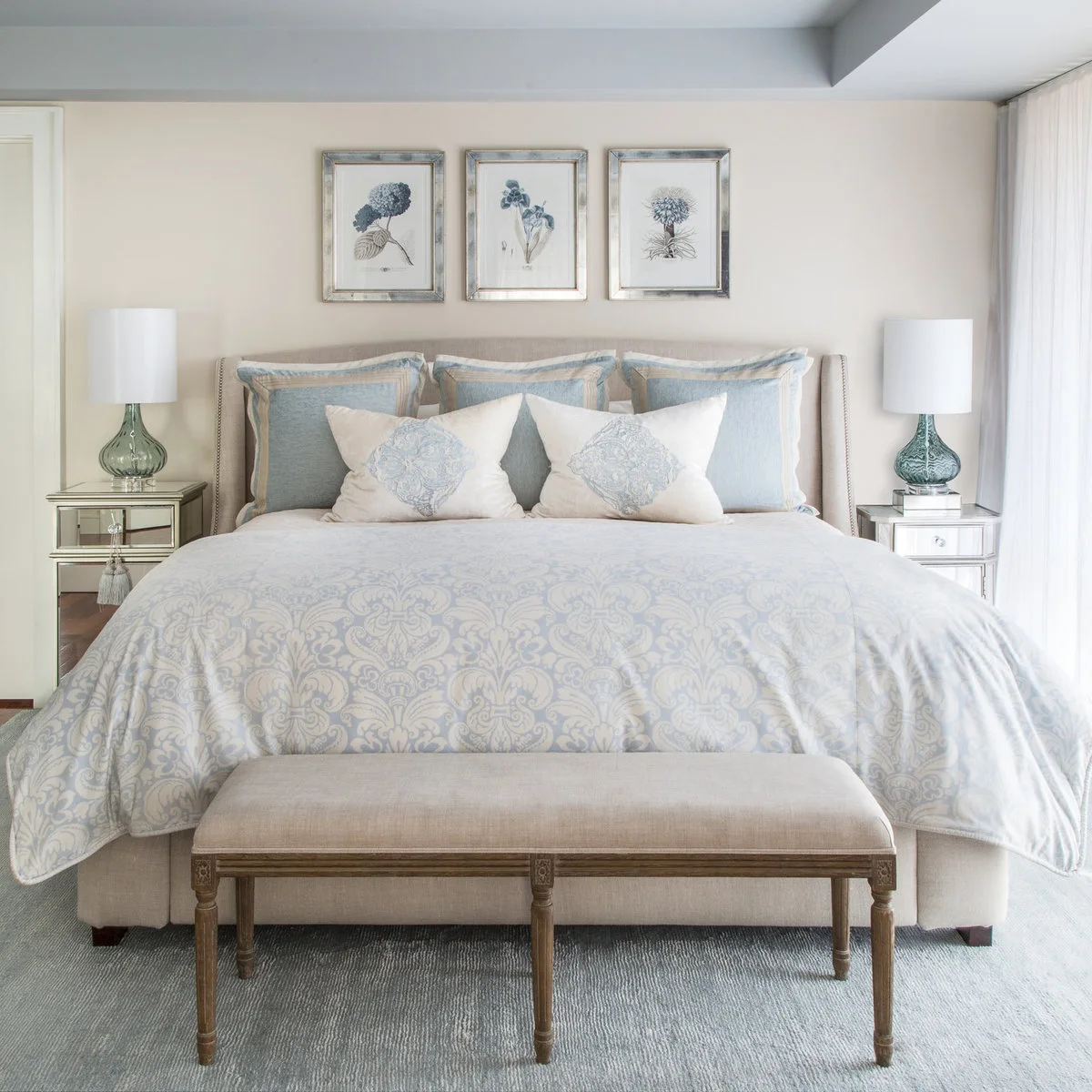
Pale blue appears in the pillows and the repeating pattern across this bedcover. The neutral upholstered bed and bench give those patterns a quieter frame. Blue-green lamps and three botanical pictures continue the color above the bedding, while mirrored bedside cabinets add small reflective surfaces.
Vary the size of the bedding patterns rather than buying several equally busy prints. Keep one plain layer available so you can simplify the bed when needed. Mirrored cabinets show fingerprints readily, so choose them only if the extra wiping fits your routine and their drawers provide useful bedside storage.
IDEA 07 / 20
Use Quilted Blue Bedding for Subtle Color
 SaveSupport Non AI Creator
Source: houzz.com
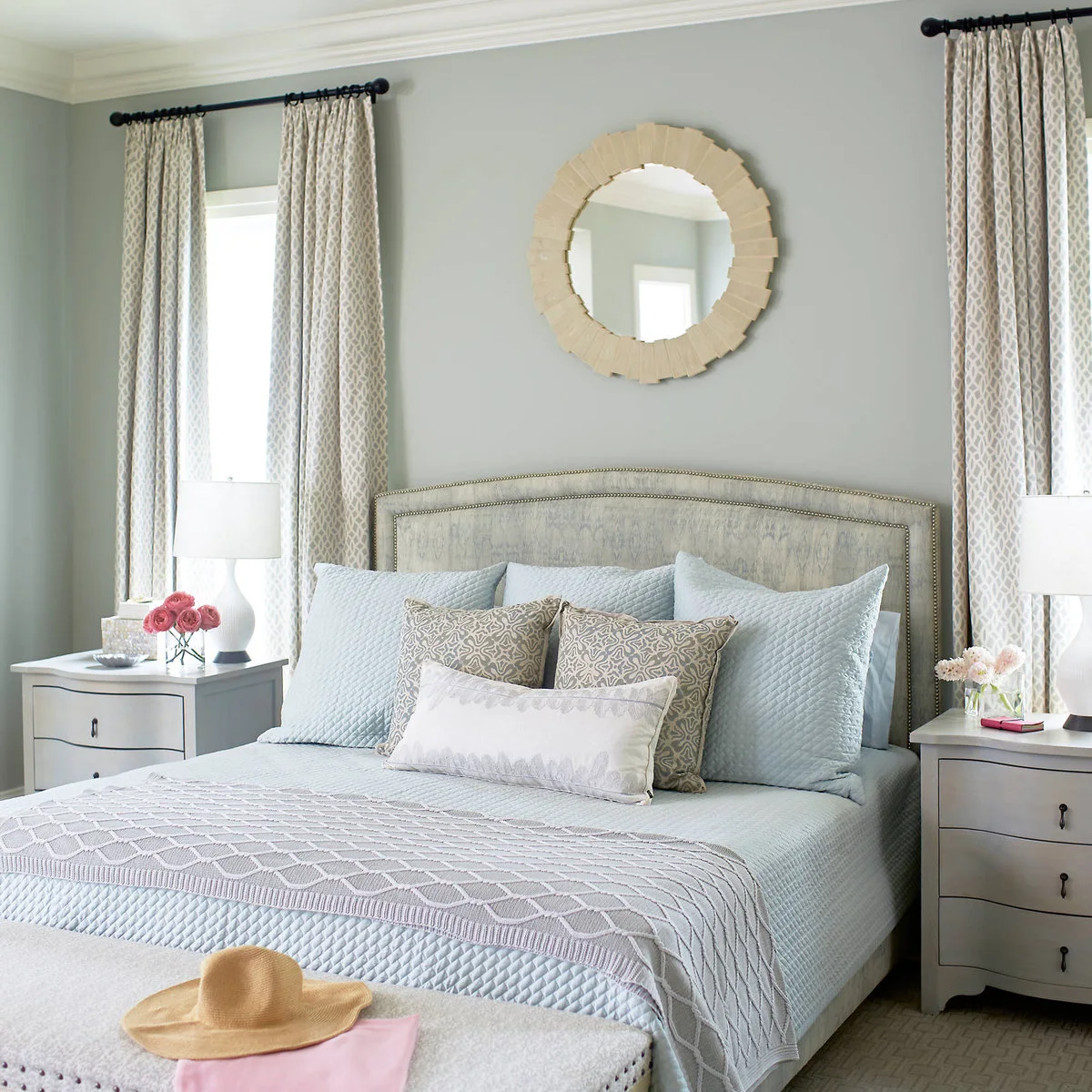
Pale blue quilted bedding adds color through a large but low-contrast surface. The headboard, curtains and smaller cushions carry finer patterns in similar muted tones. A round mirror breaks up the rectangular lines above the bed, and the light bedside cabinets keep the corners visually quiet.
Compare quilt weight as well as color when choosing the main bedcover. A decorative layer should be easy to fold back when the room is warm. Keep some bedside surface clear around the lamps, and position mirrors for a useful reflection rather than allowing bright window glare to dominate the bed.
IDEA 08 / 20
Warm Mint Bedding with a Wood Headboard
 SaveSupport Non AI Creator
Image credit: Project: Our Town Plans (via Houzz)
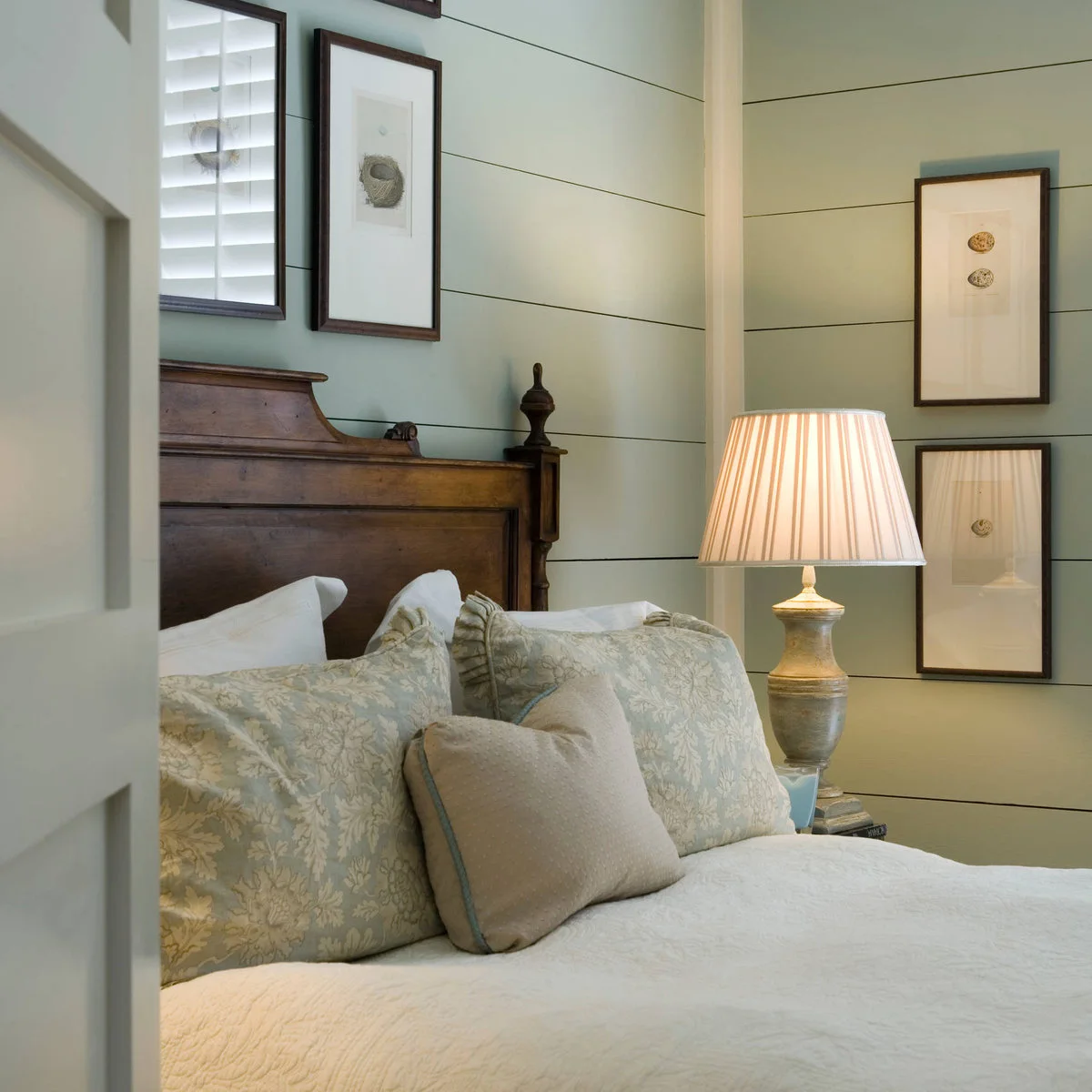
A wood headboard sits against pale sage horizontal boards, with mint floral pillows and a cream quilt on the bed. The darker headboard separates the pale wall from the bedding. Striped lampshades and framed prints introduce additional detail without changing the main green and cream color relationship.
Keep the wood furniture that already works before planning a complete replacement. Try a pillow cover and paint sample together to see whether their greens relate. If you enjoy mixed older furniture, vintage bedroom ideas offer further ways to connect existing pieces through bedding and a limited wall palette.
IDEA 09 / 20
Try Butter Yellow in One Bedding Layer
 SaveSupport Non AI Creator
Image credit: Project: Jan Jones LLC (via Houzz)
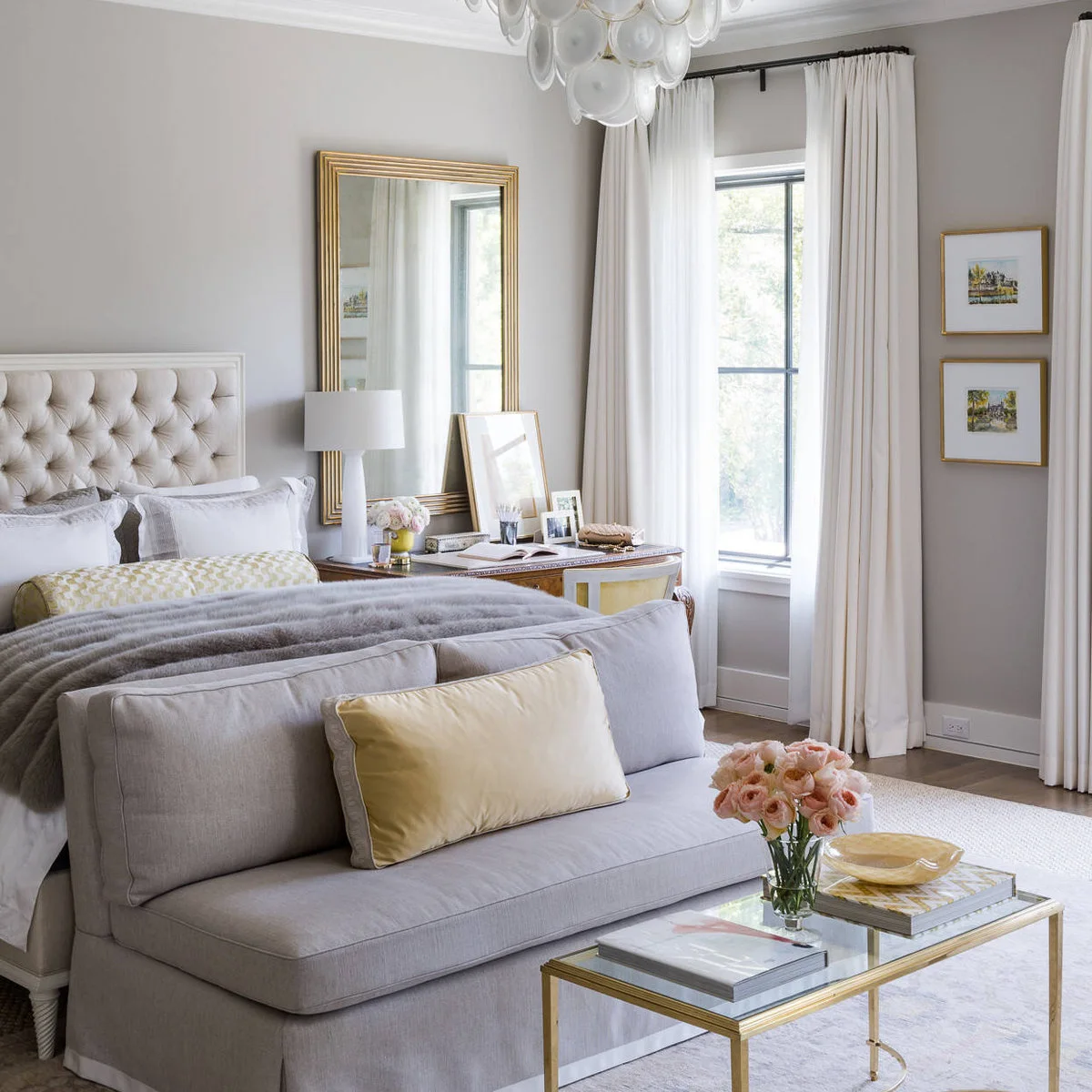
Pale butter-yellow cushions and a bolster add a small warm note to a largely cream and gray bedroom. The gold-framed mirror echoes that warmth above the bed. Gray seating at the foot creates a cooler boundary, keeping the yellow as a measured accent rather than a full-room commitment.
Try this approach with removable covers before considering yellow walls. Compare them with the cream bedding in both daylight and lamplight, since closely related light colors can merge. Keep the number of cushions manageable so making the bed does not require finding storage for a large decorative pile every night.
IDEA 10 / 20
Soften a Canopy Bed with Pale Pink
 SaveSupport Non AI Creator
Image credit: Project: Phoebe Howard (via Houzz)
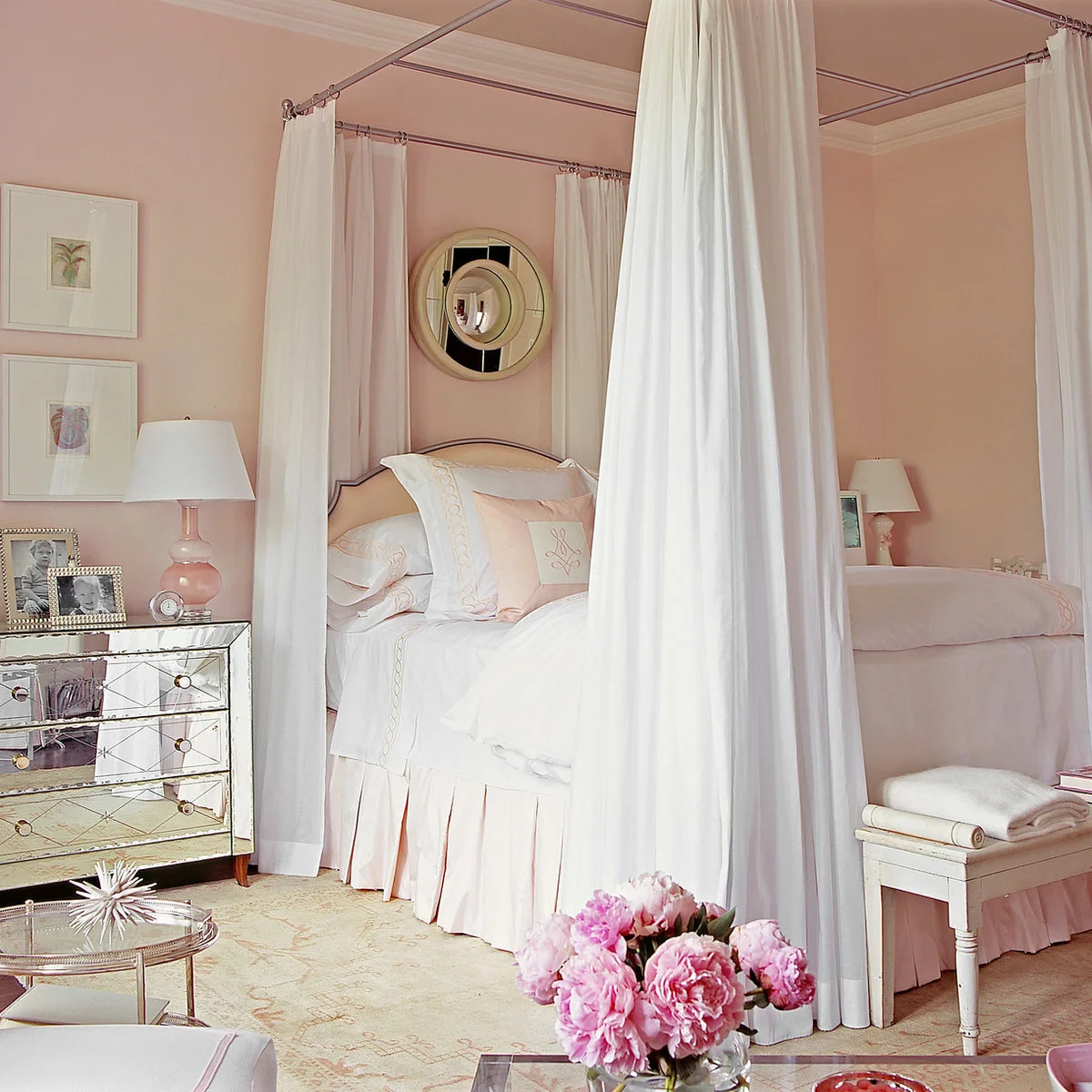
Pale pink surrounds a canopy bed dressed with white curtains and bedding. The mirrored bedside chest and round gold-framed mirror give the soft room firmer edges. Pink detailing ties the canopy area to the walls, while the broad white surfaces keep the pink from occupying every layer.
Check curtain length and movement before adding fabric to a bed frame. Keep it clear of lamps, heaters and the route around the mattress. Choose washable fabric where possible, and allow for removing and rehanging it when cleaning; the extra softness comes with more upkeep than an uncovered bed frame.
PART 03
Give Pale Colors Some Contrast
IDEA 11 / 20
Balance Blush Curtains with Charcoal Walls
 SaveSupport Non AI Creator
Source: houzz.com
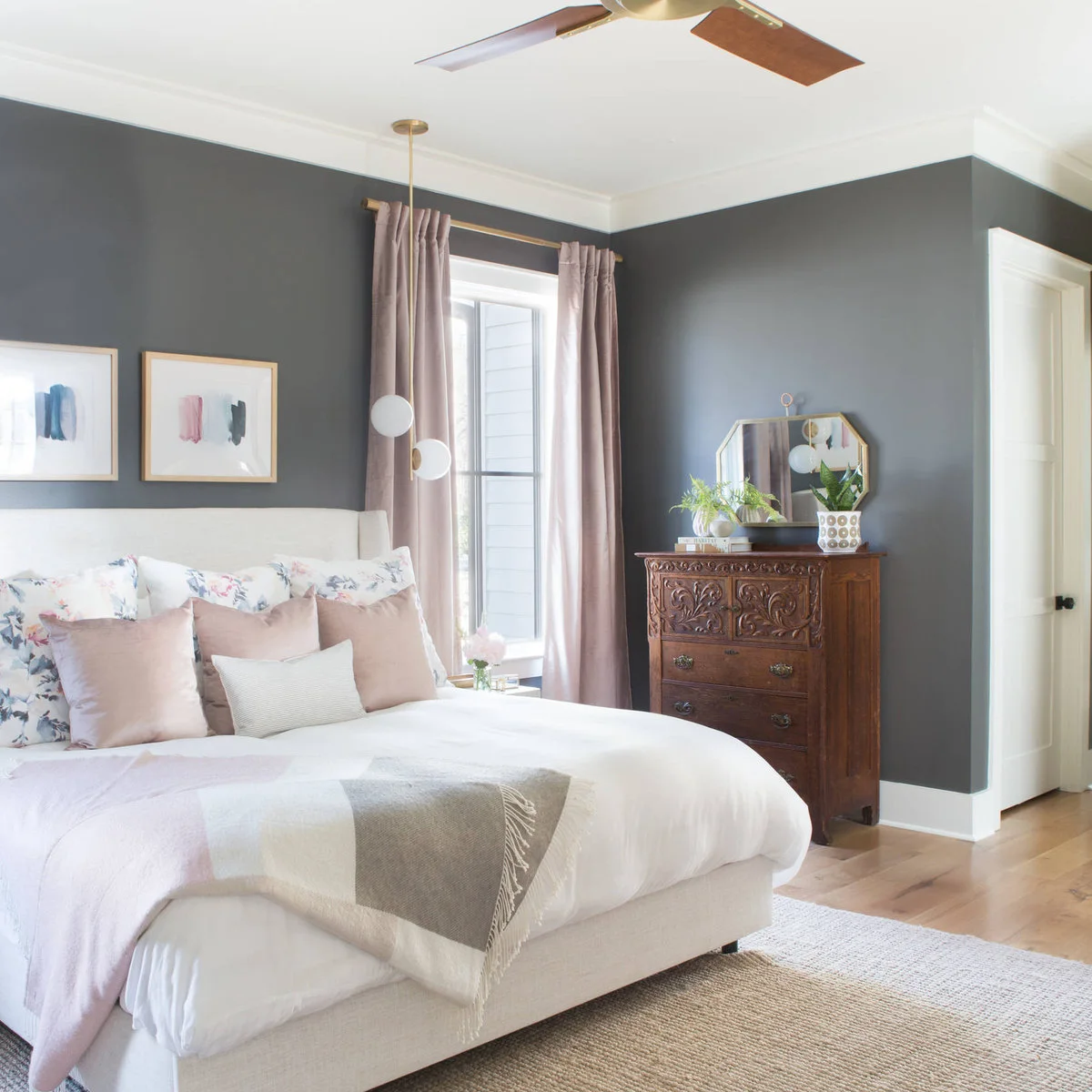
Blush curtains and cushions soften charcoal walls in this bedroom. Floral pillows include pale blue and pink, connecting the plain fabrics without matching them exactly. A carved wood chest brings a substantial older piece into the scheme, with a small mirror above it reflecting the lighter window area.
Use the pale color in a broad fabric surface if the existing walls are dark. Test curtain samples against the wall and bedding before ordering, checking their appearance when lit from behind. Preserve enough usable space beside the bed and chest so the color scheme supports a practical arrangement rather than crowding it.
IDEA 12 / 20
Give a Pink Wall a Navy Anchor
 SaveSupport Non AI Creator
Image credit: Project: Hayneedle (via Houzz)
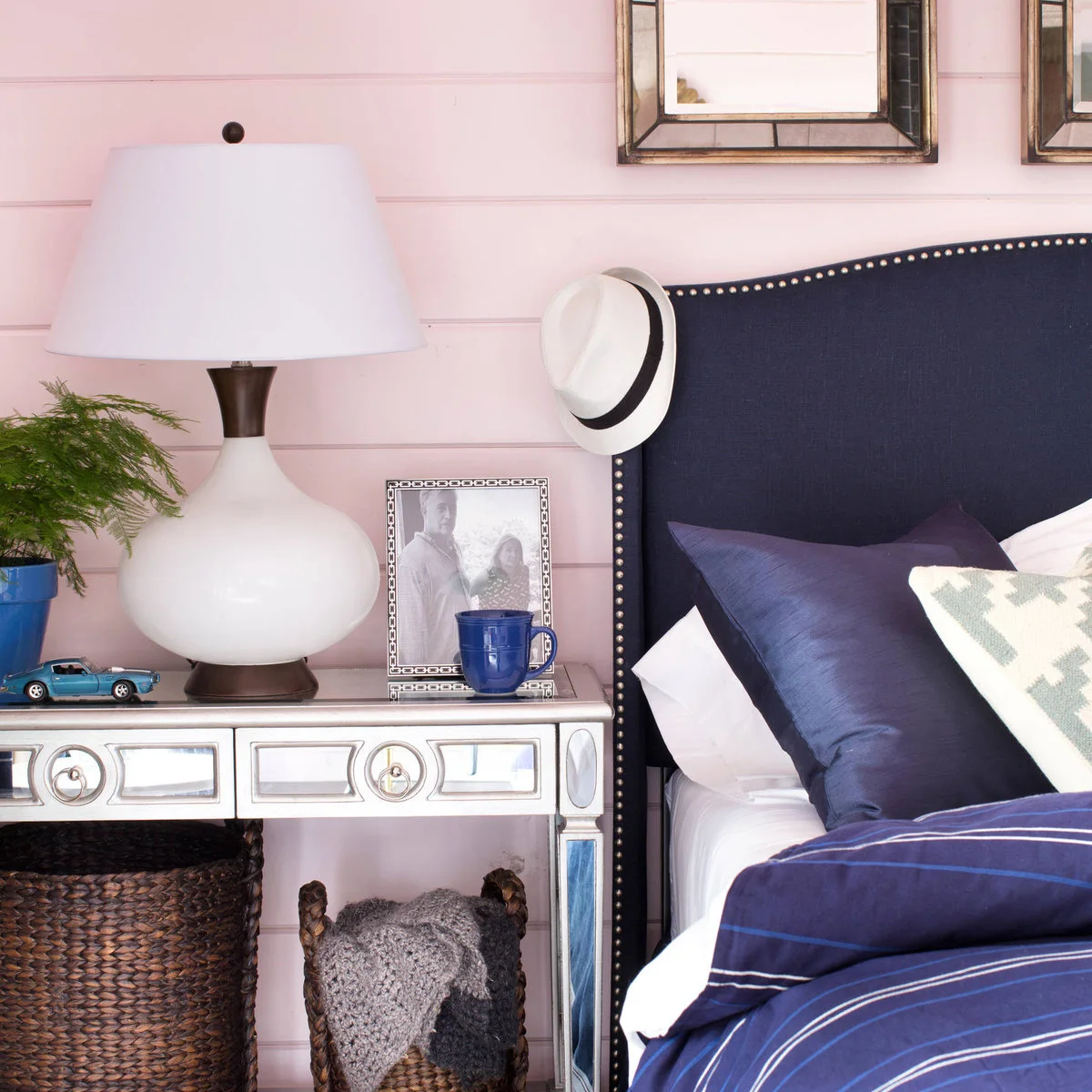
A pale pink paneled wall sits behind a navy headboard and blue bedding. The dark headboard gives the pink a clear edge, while the white lamp and bedding create a lighter middle layer. A mirrored bedside table holds small personal objects and baskets below rather than another large block of color.
Use navy in one substantial piece if an entirely pale room feels too delicate for your taste. Keep the neighboring pastel broad and simple so the contrast is easy to read. Leave the lamp and everyday essentials enough room, moving decorative objects elsewhere when the table becomes difficult to use.
IDEA 13 / 20
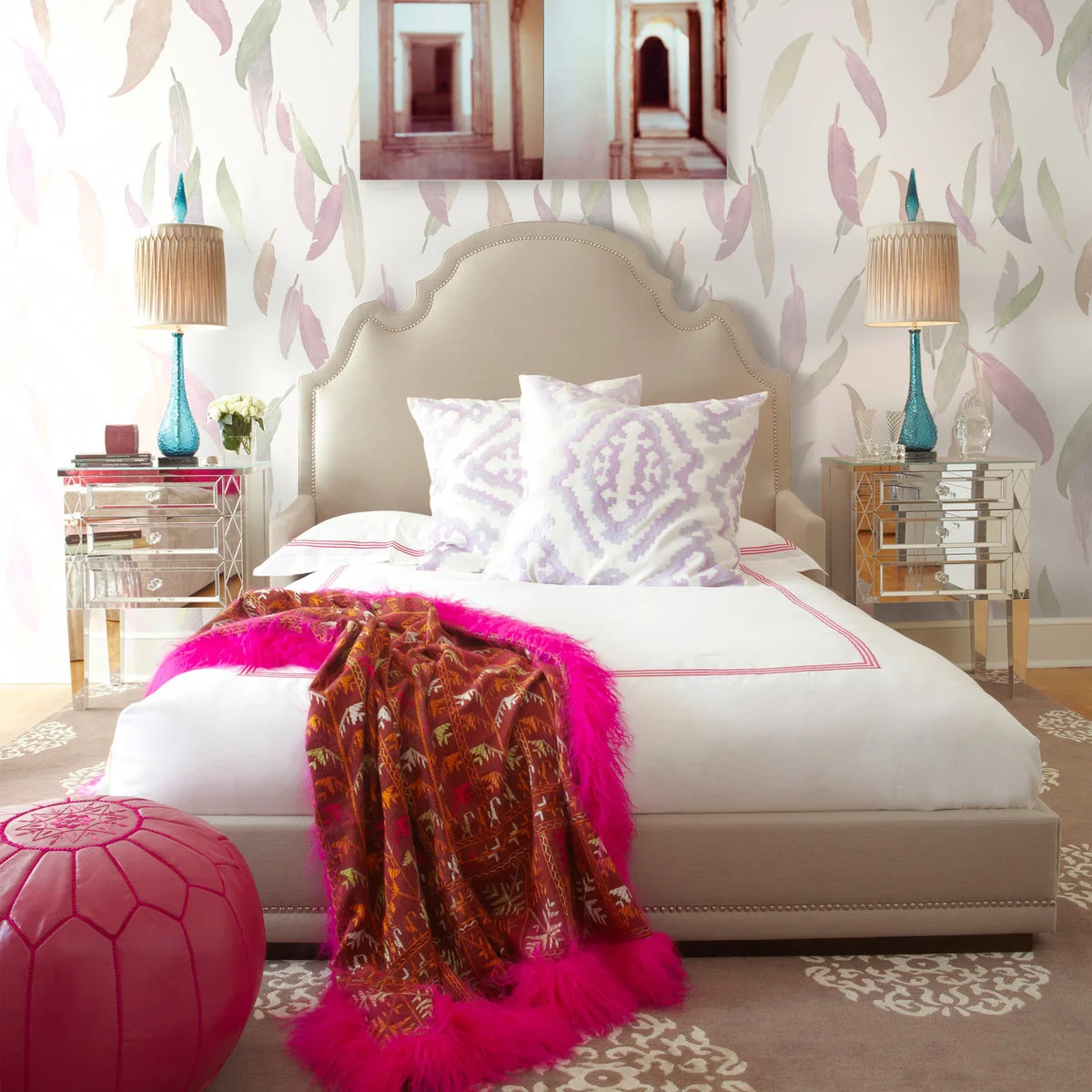
Set Lavender Cushions against a Soft Leaf Pattern
 SaveSupport Non AI Creator
Image credit: Project: Brett Design (via Houzz)
A pale leaf pattern covers the wall behind a neutral headboard. Lavender patterned cushions sit between turquoise lamps, while a bright pink throw adds a stronger note below. The wall remains much softer than the accessories, giving the room a pastel background with deliberate points of contrast.
Choose the wallpaper before the smaller cushions if it will cover the main wall. Pull a few of its colors into the bed rather than introducing a new shade with every accessory. Let one or two pieces carry the strongest color so the pale pattern remains visible instead of becoming background noise.
IDEA 14 / 20
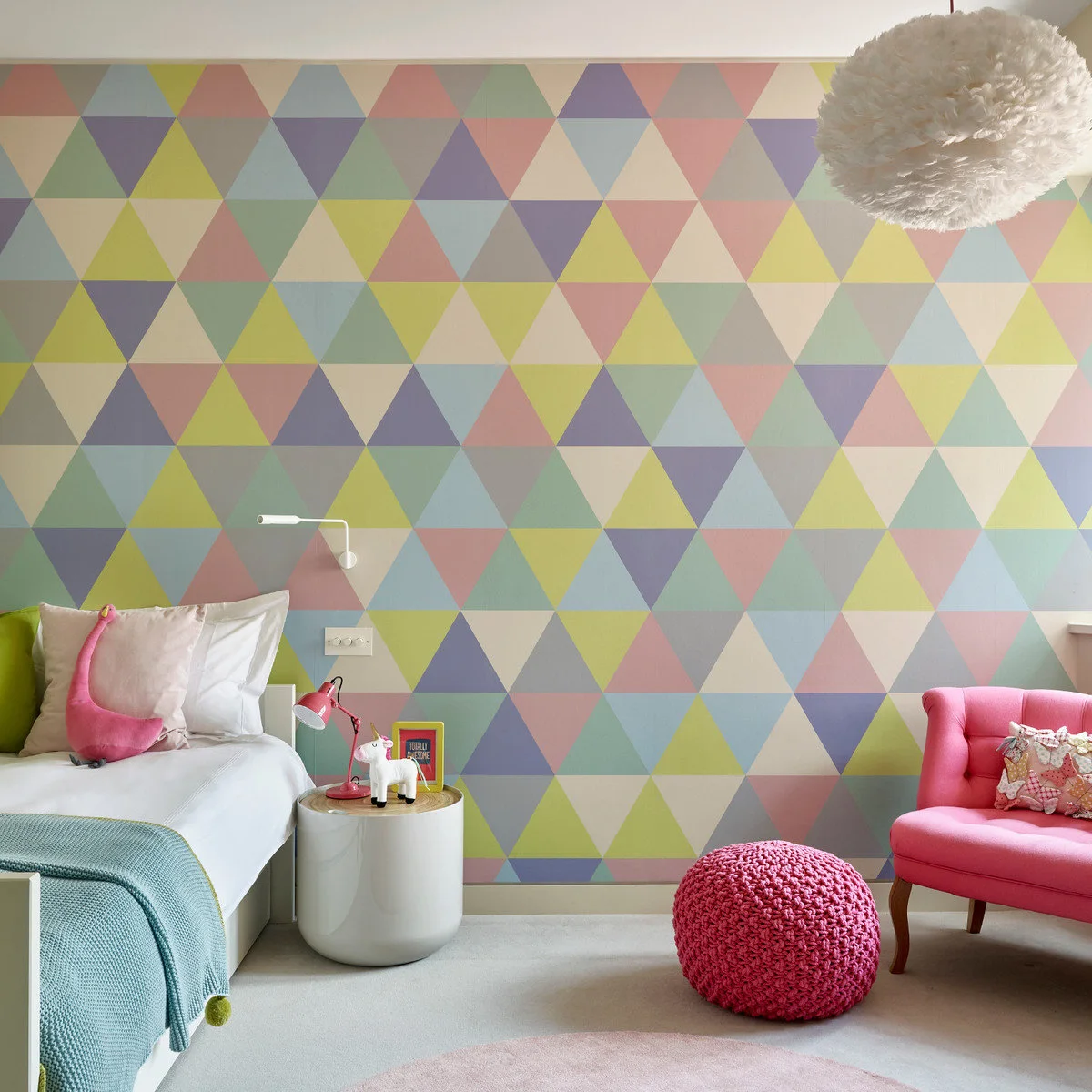
Combine Pastel Geometry with Brighter Accents
 SaveSupport Non AI Creator
Image credit: Project: LEIVARS (via Houzz)
Pastel triangles in pink, mint, yellow, blue and lavender form a geometric background for a white bed. A teal throw and brighter pink seating bring stronger versions of those colors into the room. The plain white furniture gives the many small wall shapes enough uninterrupted space to remain legible.
Plan the shape sizes on paper before marking a wall, and test how the colors look side by side. Keep the furniture palette simpler than the painted pattern. Choose one useful chair or pouf before adding more accent pieces, leaving a clear route between the bed, storage and door.
IDEA 15 / 20
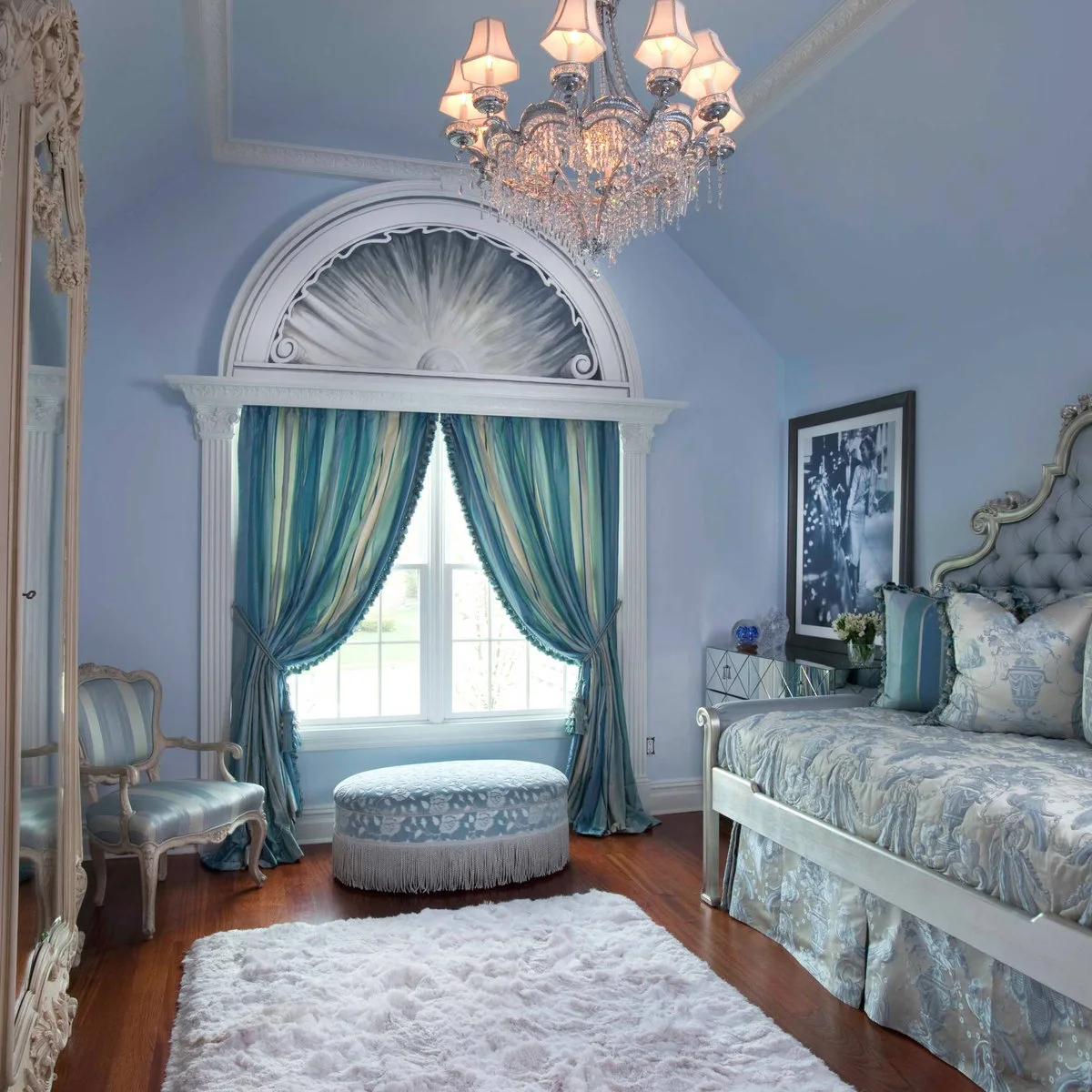
Carry Pale Blue onto an Ornate Ceiling
 SaveSupport Non AI Creator
Image credit: Project: Evelyn M. Designs (via Houzz)
Pale blue continues over the walls and ceiling in this ornate bedroom. Blue-green curtains frame the tall window, and a patterned daybed repeats the cool colors below. White architectural detailing and the pale rug separate the room’s many decorative outlines without requiring a different color on every surface.
Compare ceiling and wall samples in their actual positions; overhead light can change the apparent shade. Keep curtain operation straightforward even with a layered treatment. If the room already has elaborate trim or furniture, choose additional accessories sparingly so cleaning and everyday movement remain manageable around the decorative pieces.
PART 04
Make the Smaller Details Work
IDEA 16 / 20
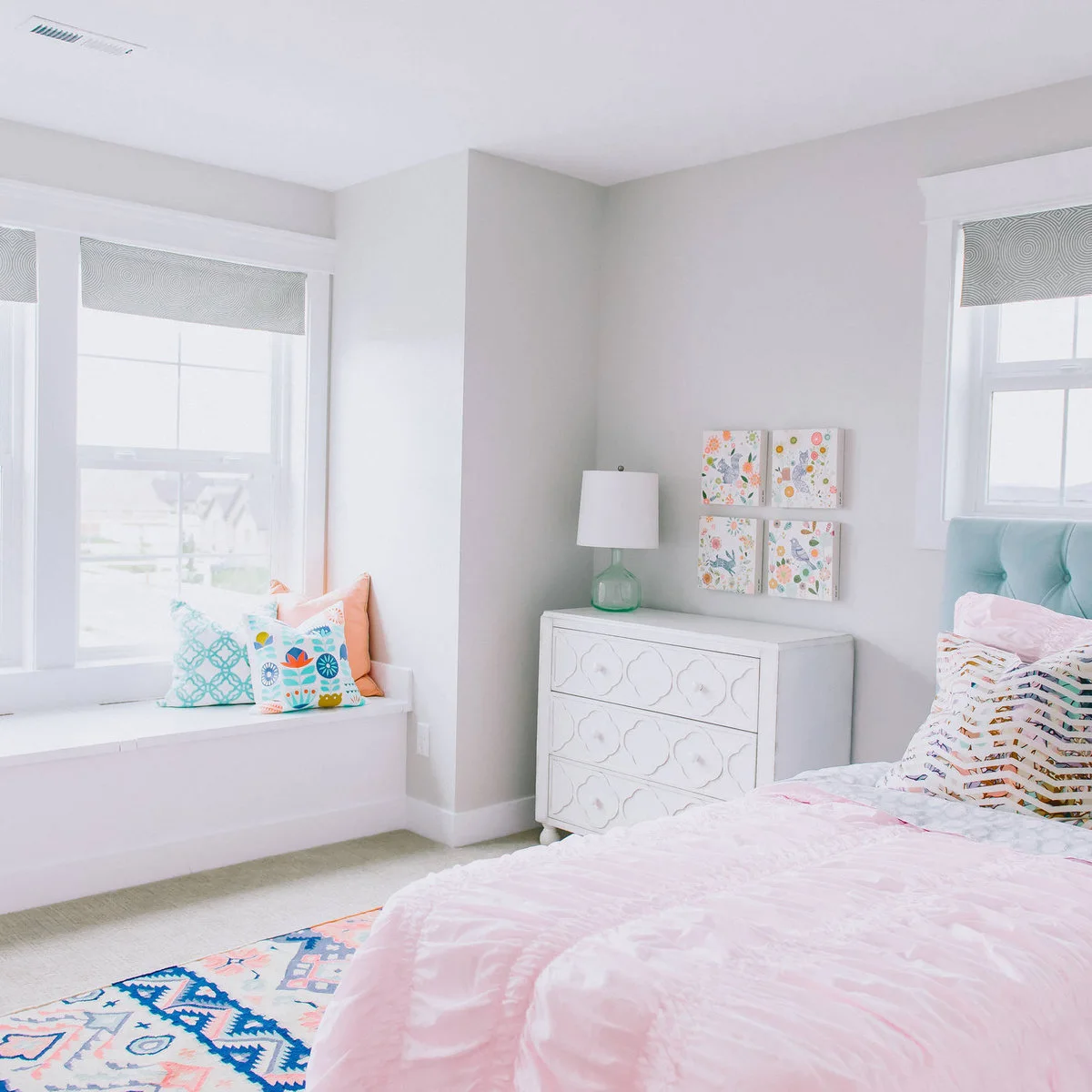
Repeat Pale Aqua between the Bed and Window Seat
 SaveSupport Non AI Creator
Image credit: Project: Four Chairs Furniture (via Houzz)
A pale aqua tufted headboard introduces cool color behind pink bedding. The window bench carries a mixture of peach and aqua cushions, joining the two areas without using identical fabric everywhere. Four small floral pictures add a compact grouping above the bed rather than covering the whole wall.
Treat the window seat as a useful place to sit before adding decorative cushions. Keep its opening, drawers or nearby window handles accessible. Repeat two fabric colors between bed and bench, then use a plain cover on the larger seat surface so the arrangement is easier to refresh and maintain.
IDEA 17 / 20
Echo Bed Colors in a Window Nook
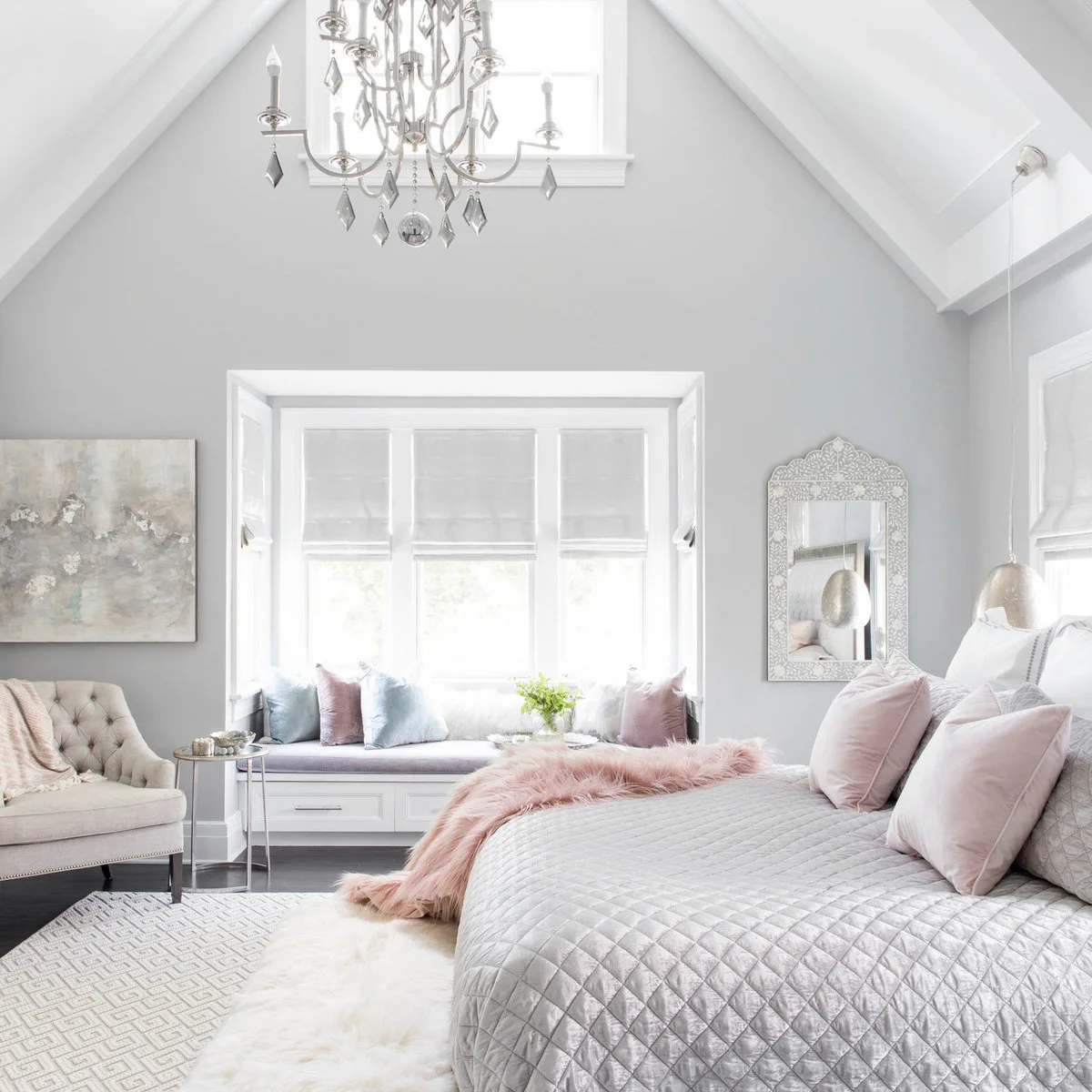 SaveSupport Non AI Creator
Image credit: Project: Michael Robert Construction (via Houzz)
Blush pillows and a textured pink throw stand out against a pale gray bedcover. The window nook repeats pink alongside soft blue cushions, creating a second seating area within the same palette. White trim outlines the recess and roof angles, keeping those architectural shapes separate from the fabrics.
Choose a washable seat cover if the nook will be used daily. Keep enough cushion-free space to sit comfortably, and check that blinds remain easy to reach. The throw supplies most of the bed’s texture here; a flatter, simpler alternative may be more practical if shedding fibers or frequent laundering would be inconvenient.
IDEA 18 / 20
Let Mint Walls Surround Mostly Cream Furniture
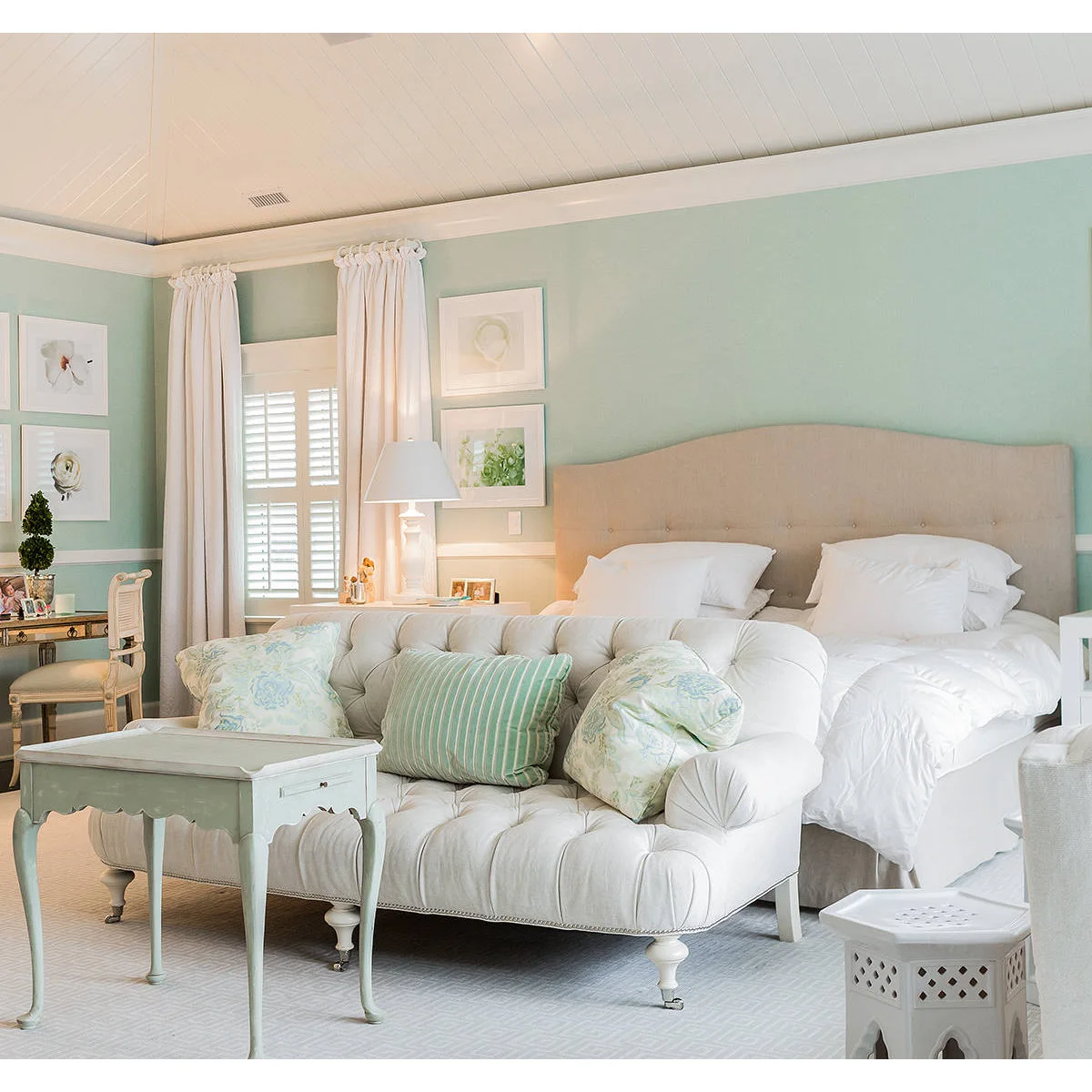 SaveSupport Non AI Creator
Image credit: Project: Brookes + Hill Custom Builders (via Houzz)
Pale mint walls surround cream curtains, bedding and a sofa placed at the foot of the bed. A mint side table repeats the wall color nearer the seating. The large cream surfaces make the green feel like a room-wide background rather than a collection of small unrelated decorations.
Measure the route around a foot-of-bed sofa with the furniture pulled into its intended position. Keep it only if it offers useful seating without obstructing drawers or walking space. A smaller bench or chair can preserve the same pale color relationship when the room cannot comfortably accommodate a full sofa.
IDEA 19 / 20
Bring Pastels into a Bedroom with a Hanging Chair
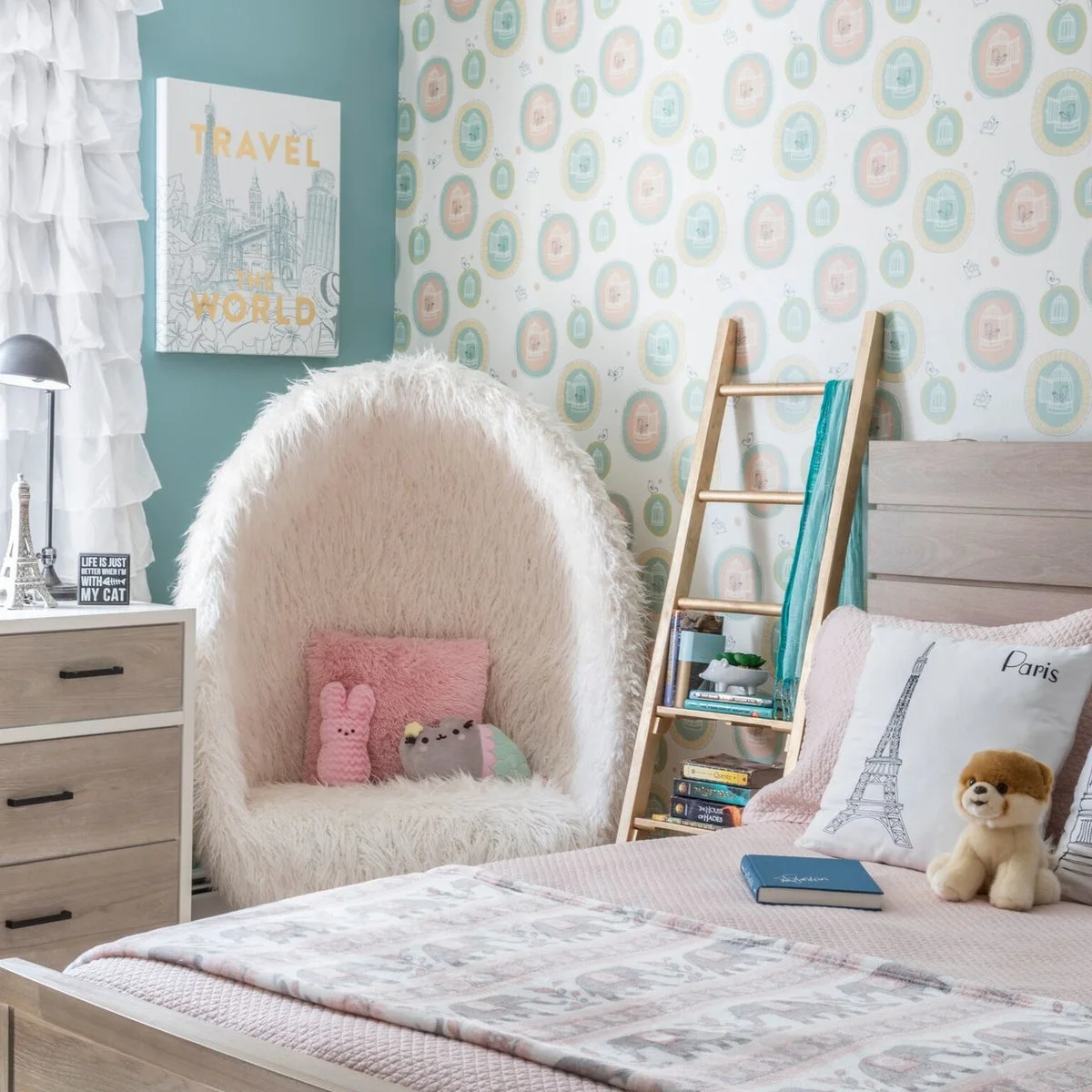 SaveSupport Non AI Creator
Image credit: Project: Jennifer Scully Designs (via Houzz)
Pale pink bedding sits against a light teal wall, with a white egg-shaped chair adding a separate place to lounge. A pink chair cushion repeats the bed color. The patterned wall area and ladder storage give this bedroom more variation while the large furniture pieces remain relatively pale.
Check the chair’s installation and load requirements before choosing its location; a photograph cannot establish that a particular ceiling or support is suitable. Keep its movement clear of walls and the bed. For another way to arrange a compact room around sleeping and seating, small bedroom ideas explore furniture choices with usable circulation.
IDEA 20 / 20
Use a Pastel Rainbow as the Main Wall Feature
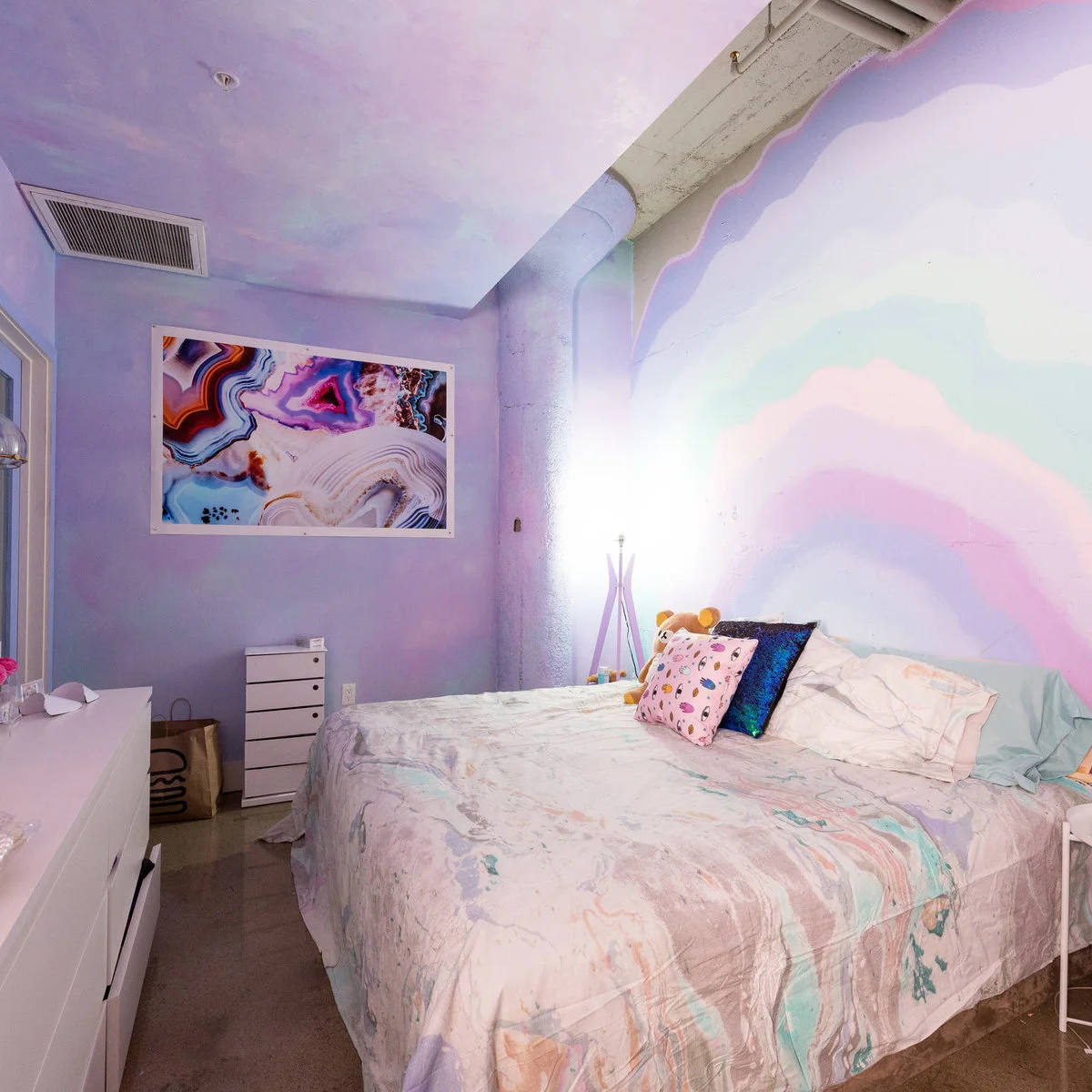 SaveSupport Non AI Creator
Image credit: Project: Joybird (via Houzz)
A broad pastel rainbow curves across a lavender wall behind white bedroom furniture. The marbled bedding picks up several colors without repeating the exact wall shapes. Because the rainbow already provides a large visual feature, the white furniture helps keep the room from becoming crowded with competing colored outlines.
Choose the wall colors together and keep their strength similar if you want a soft result. Let bedding be the easier layer to change as tastes shift. Maintain clear access to storage and keep useful surfaces available; a colorful wall can supply the decoration without requiring extra objects on every tabletop.
BRING IT ALL TOGETHER
Choose One Main Pastel and Repeat It Simply
Pick the largest surface you want to change first: walls, bedding or curtains. Compare that color with furniture you intend to keep before choosing the next shade. A darker headboard or wood chest can help pale colors stand apart without requiring an entirely new bedroom suite.
Keep the finishing layers useful. Washable covers, reachable window controls and a comfortable route around the bed matter after the colors are chosen. Repeat a pastel in two or three places, then stop to judge the room before buying more accessories.