Grey bedrooms can look soft and airy or deep and enclosed depending on where the color sits. The wall, bed, curtains and floor each cover different amounts of space, so one grey paint sample cannot tell you how the finished room will feel.
These rooms use grey in different ways, from a charcoal backdrop to bedding in a largely pale space. Compare the contrast, texture and lighting that you can actually see, then test your chosen colors beside the furniture and flooring you already own.
PART 01
Choose How Deep the Grey Should Go
IDEA 01 / 20
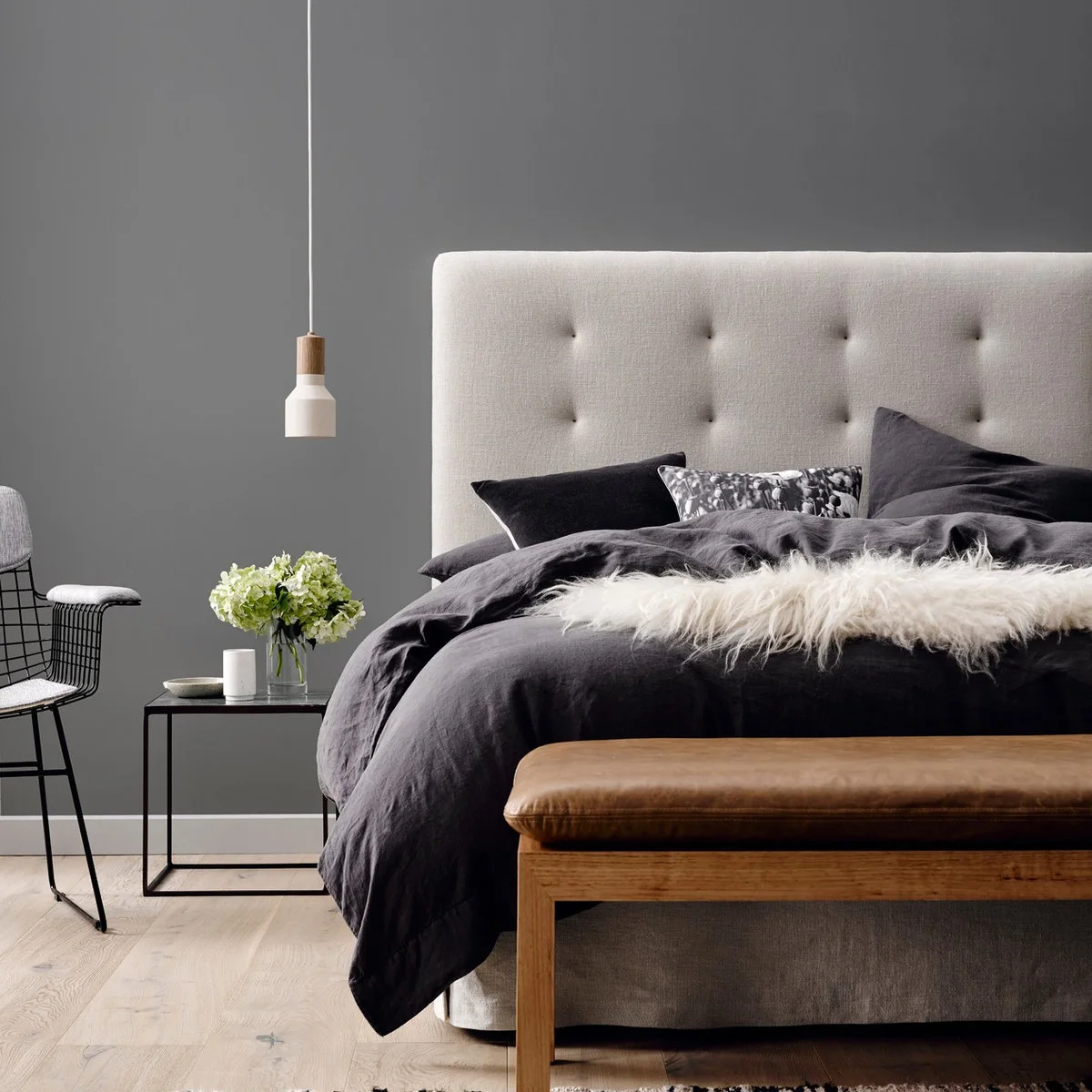
Pair a Plain Grey Wall with Dark Bedding
 SaveSupport Non AI Creator
Image credit: Project: Wall2Wall Interiors, LLC (via Houzz)
A plain grey wall gives this pale tufted headboard a clear outline, while darker bedding adds depth below. The wood bench introduces a warmer tone at the foot of the bed. A small hanging light leaves the bedside surface available without another large lamp base.
Begin with a few separated shades rather than trying to match every grey exactly. Compare the bedding and wall in daylight and with the evening light on, since their undertones may read differently. Check the care instructions for textured throws before making them part of the daily bedding routine. For a softer color addition to gray, pastel bedroom ideas show pale blue, mint and blush alongside neutral furniture. For a warmer accent alongside gray, explore these pink bedroom ideas before choosing bedding or upholstery.
IDEA 02 / 20
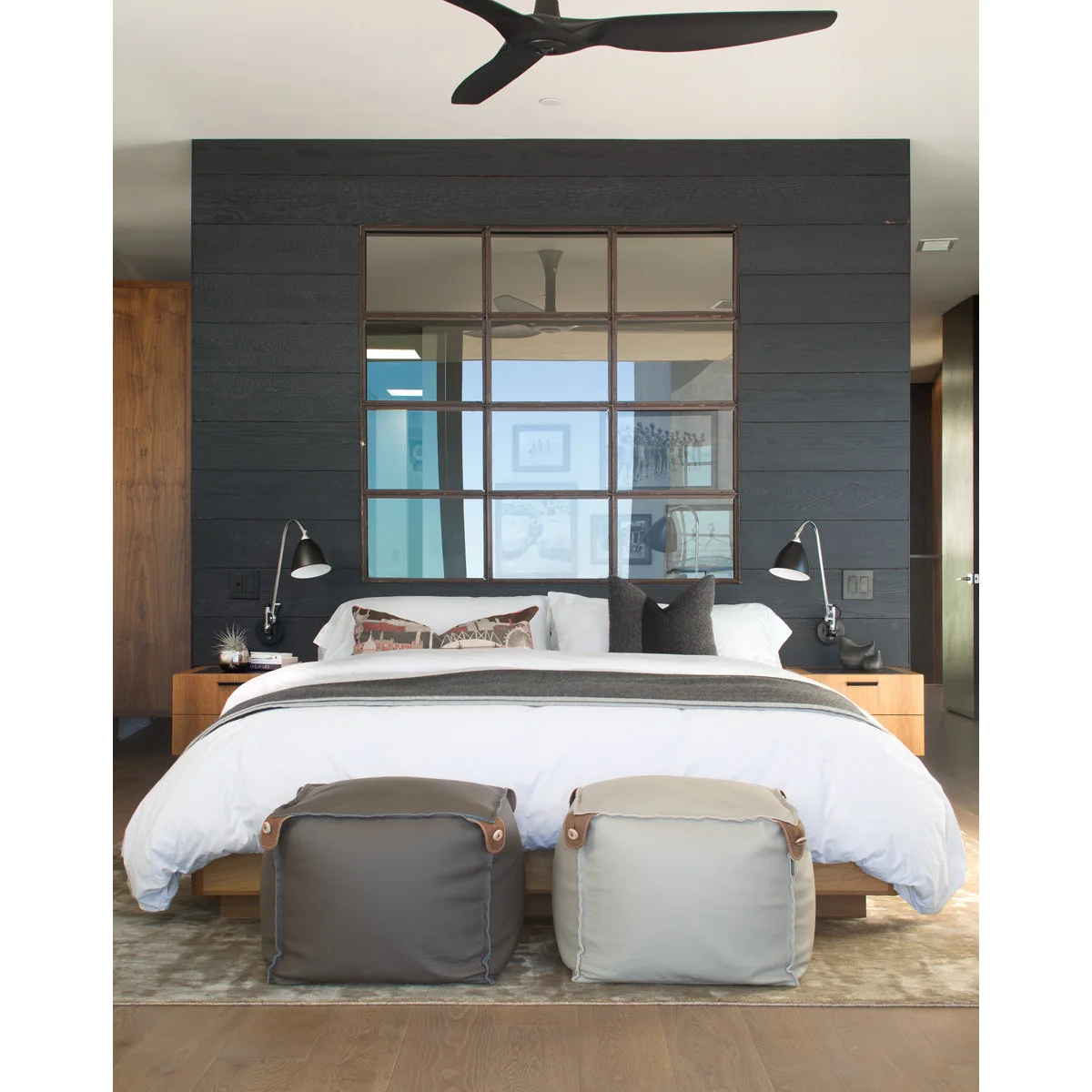
Use Charcoal Boards as a Defined Backdrop
 SaveSupport Non AI Creator
Image credit: Project: Dawson Design Group (via Houzz)
Charcoal horizontal boards form a defined backdrop behind this bed. A large gridded mirror adds another shape above the white bedding, while wood bedside cabinets lighten the lower edge. Two grey floor cushions repeat the wall color without making the duvet equally dark.
Keep a dark feature wall bounded by a clear architectural edge so it feels intentional. Measure the mirror with the bed and lamps before fixing it securely. For other treatments, compare bedrooms with paneling and choose a profile that works with your own headboard rather than copying the paint alone.
IDEA 03 / 20
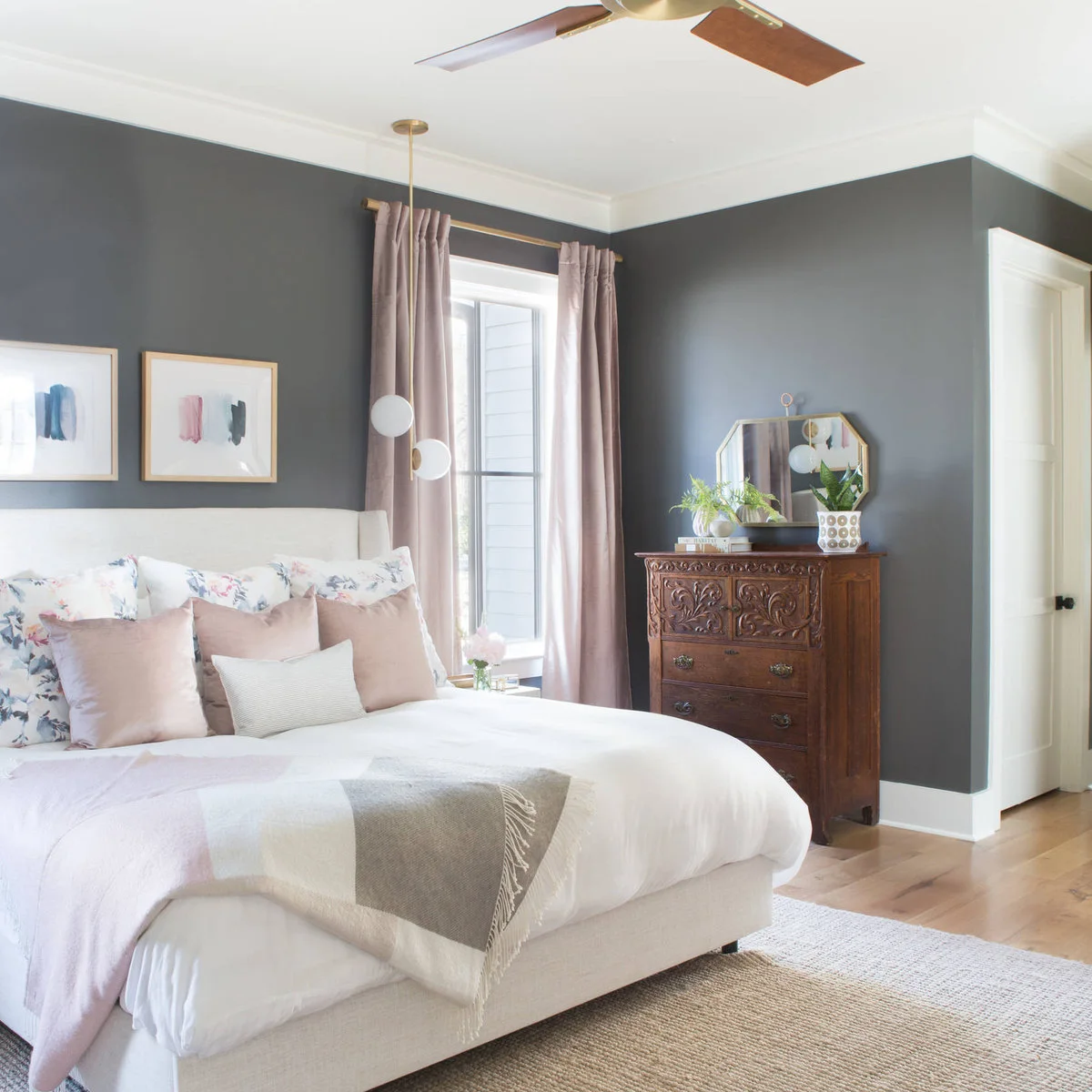
Soften Deep Grey with Muted Pink
 SaveSupport Non AI Creator
Source: houzz.com
Deep grey walls surround the white bed in this room, with muted pink curtains and pillows softening the contrast. A carved wood chest adds a different texture beside the window. The color appears in a few large textile pieces rather than many scattered ornaments.
Try the pink fabric against the grey sample before buying full curtains; a warmer or cooler shade can change the balance considerably. Keep the bedding simple if both fabric and furniture have detail. Leave the chest top useful for everyday items rather than covering it with pieces that need constant rearranging.
IDEA 04 / 20
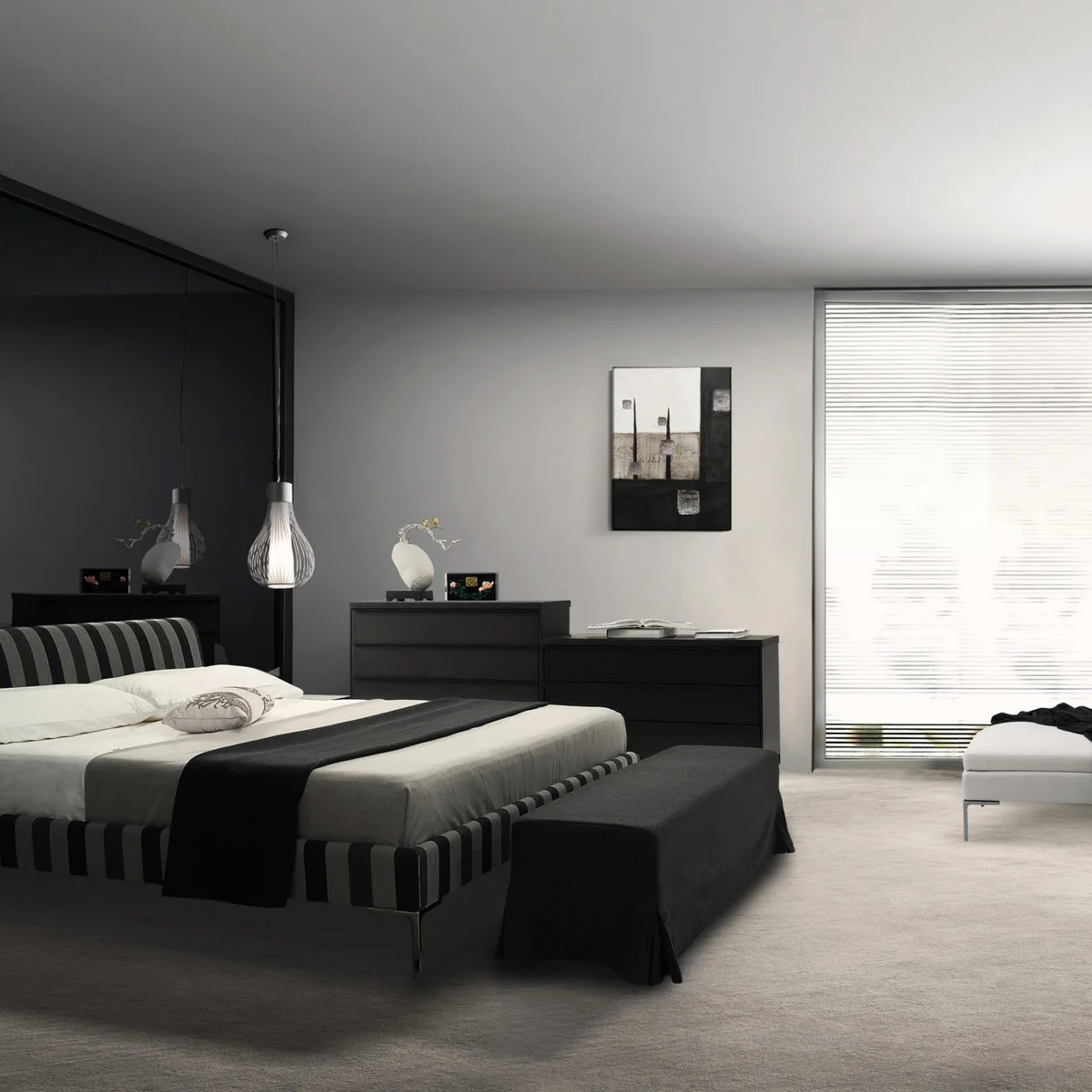
Let Dark Furniture Carry the Strongest Contrast
 SaveSupport Non AI Creator
Image credit: Project: WOLFHOME (via Houzz)
Dark striped upholstery gives the bed a strong outline in this grey room. Low black cabinets repeat the dark tone, while the pale carpet and lighter wall keep the whole arrangement from reading as one block. Hanging bedside lights leave the cabinet tops comparatively clear.
Choose one dominant pattern and let nearby furniture stay quieter. Check that bedside controls and storage can be reached comfortably from the pillows. If you prefer monochrome bedroom ideas, use distinct light and dark values so the bed, wall and floor remain readable without depending on bright accent colors.
IDEA 05 / 20
Carry Charcoal onto a Sloping Ceiling
 SaveSupport Non AI Creator
Image credit: Project: John Kraemer & Sons (via Houzz)
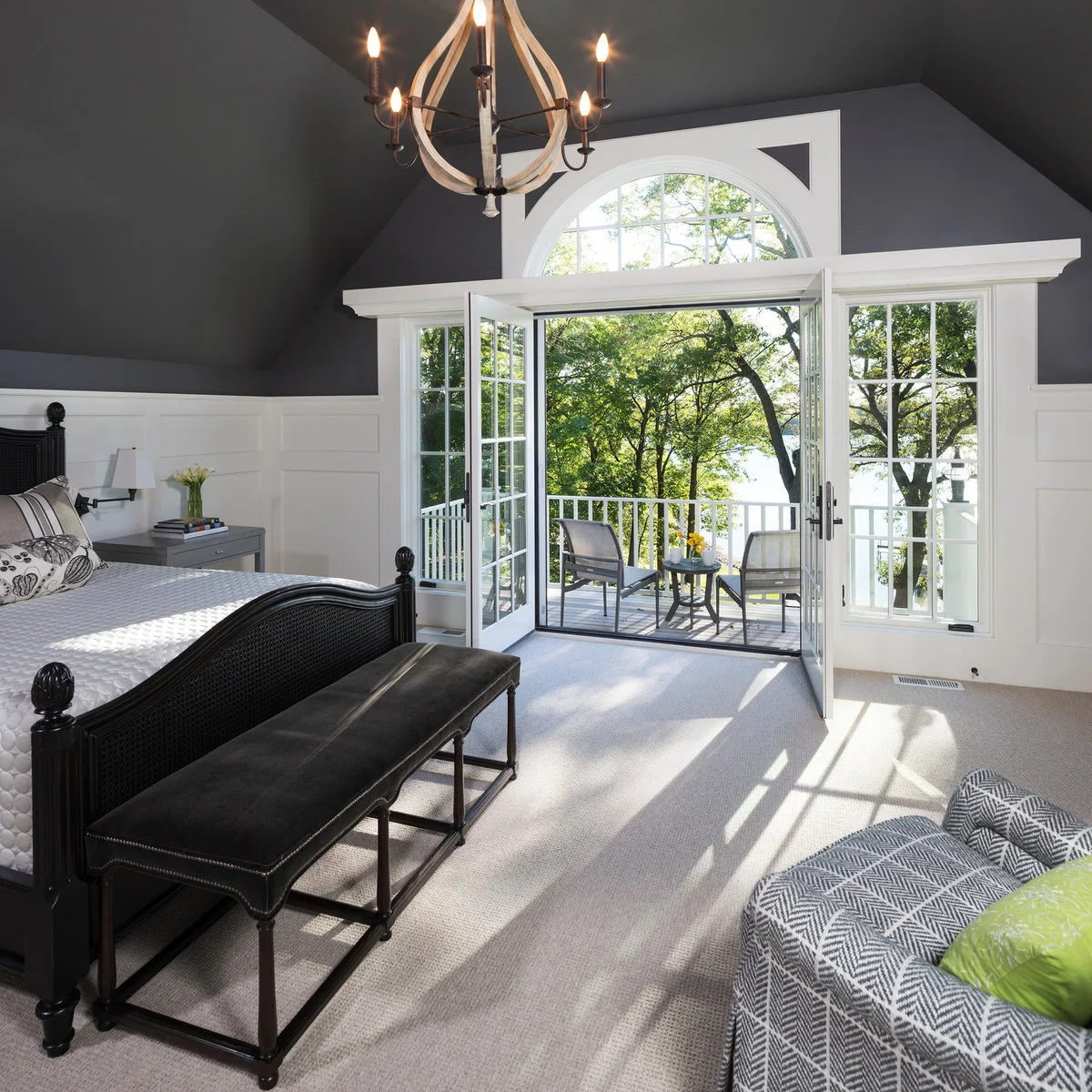
Charcoal extends across the upper walls and sloping ceiling in this bedroom. White lower panels and wide door trim create a bright band beneath it, while a dark bed and bench repeat the deeper tone. The large glazed opening supplies a strong source of daylight.
Test a ceiling sample from the bed as well as the doorway before committing to a deep color overhead. Preserve useful light at the bedside instead of relying only on a central fixture. Dark upper surfaces can feel enclosing in a room with less daylight, so compare the effect at night.
PART 02
Balance Grey with Light Surfaces
IDEA 06 / 20
Use White Brick to Break Up Dark Walls
 SaveSupport Non AI Creator
Image credit: Project: Zieba Builders, Inc. (via Houzz)
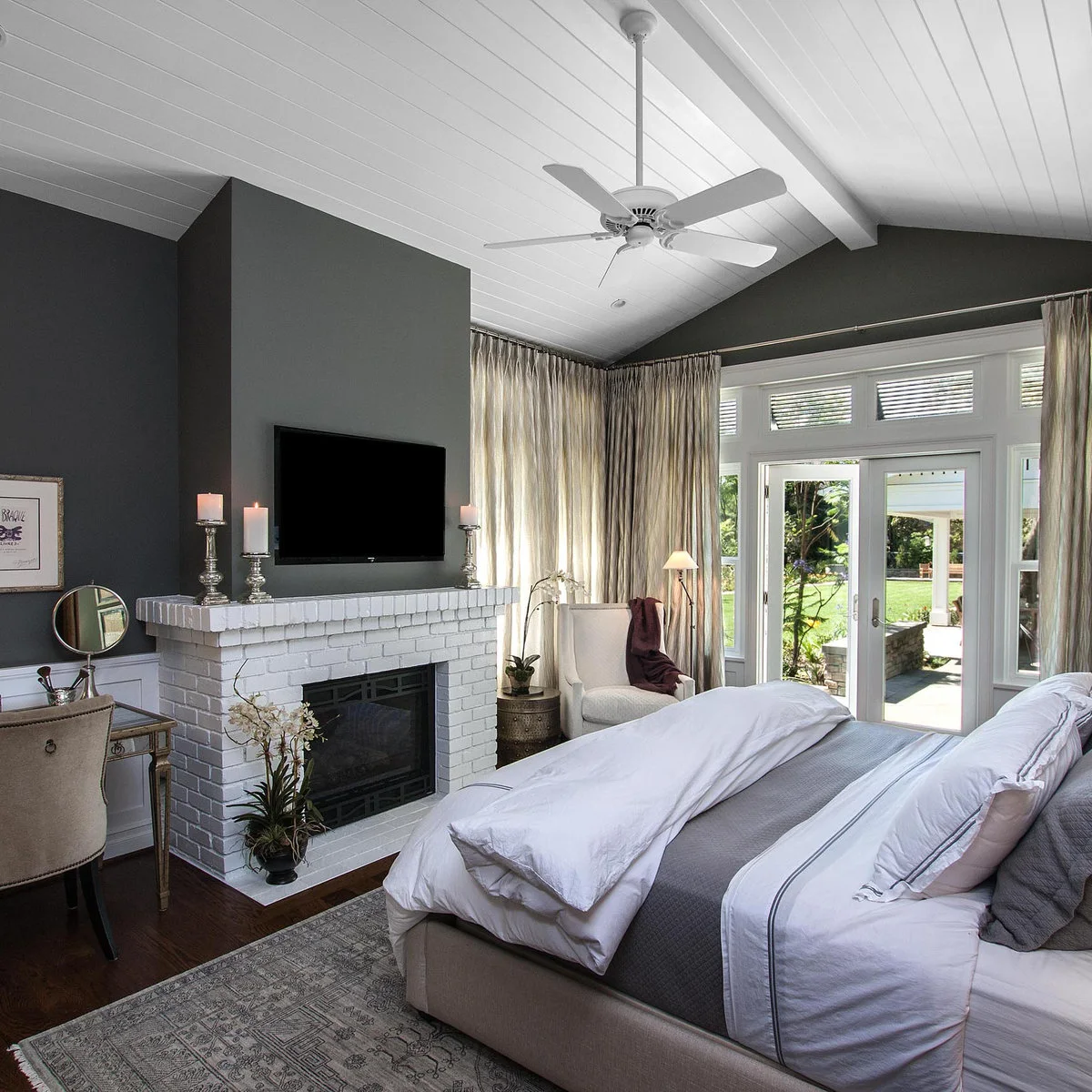
Grey walls surround a white brick fireplace in this bedroom, with pale bedding and curtains adding more light surfaces. The brick texture remains visible even though it shares the trim color. A light chair beside the glazed doors gives the darker wall a softer neighboring shape.
Keep the fireplace clearances and installation requirements separate from decorative decisions. If painting existing brick, check the surface condition and use a suitable product rather than assuming any wall paint will work. Match the scale of curtains and bedding to the room so the grey has enough breathing space around it.
IDEA 07 / 20
Frame a White Bed with a Mid-Tone Grey Wall
 SaveSupport Non AI Creator
Image credit: Project: Granoff Architects (via Houzz)
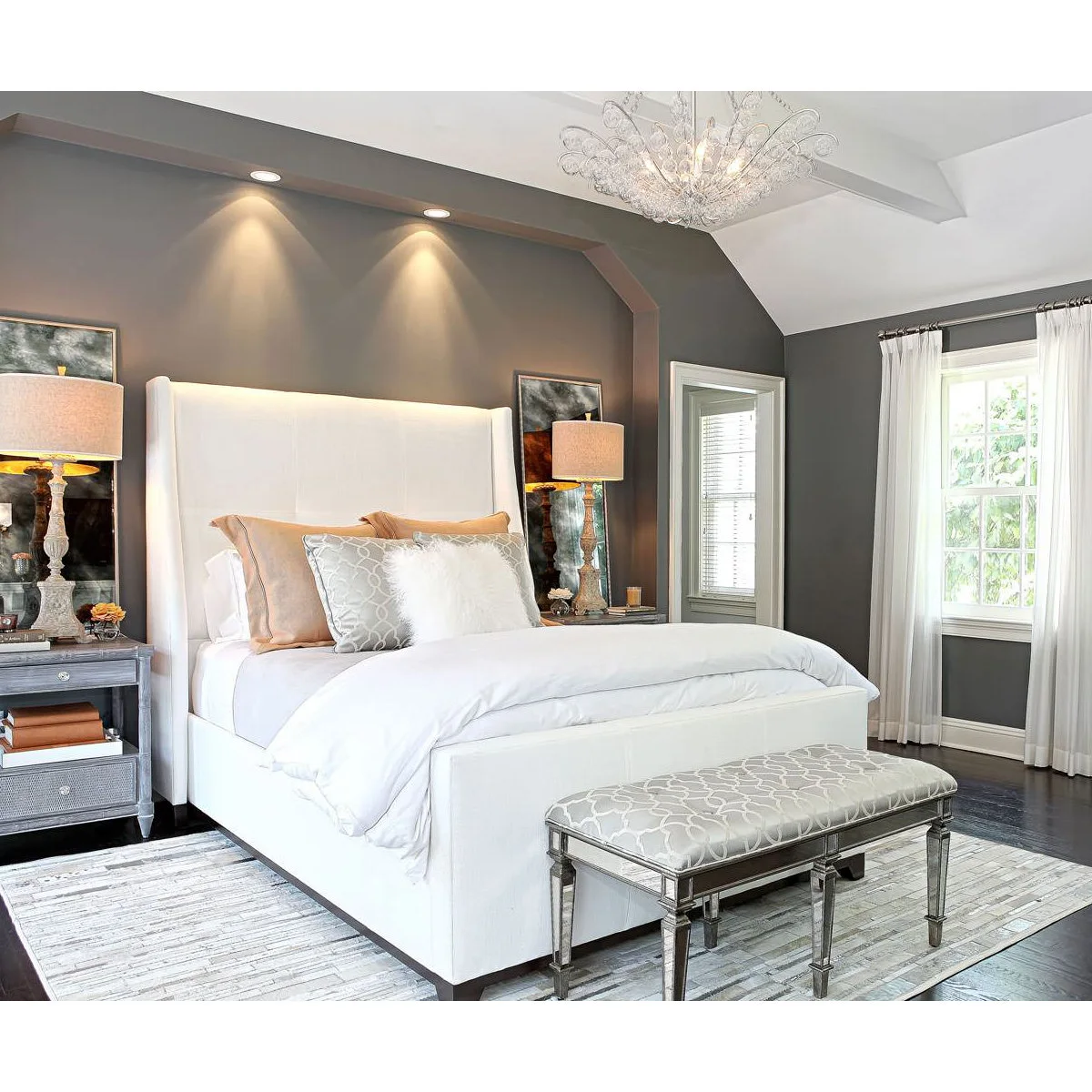
A tall white bed stands against the mid-tone grey wall in this room. Matching lamps and mirrored panels flank the headboard, while a patterned bench repeats softer greys at the foot. The white ceiling keeps the deeper color concentrated around the bed rather than overhead.
Plan the headboard, bedside furniture and wall fittings together before deciding the width of a feature area. Keep switches reachable after the bed is installed. A patterned bedroom bench can add useful seating, but leave enough walking room around its corners instead of filling the remaining floor automatically.
IDEA 08 / 20
Keep the Lower Half of the Room Pale
 SaveSupport Non AI Creator
Image credit: Project: Styling Spaces Nashville (via Houzz)
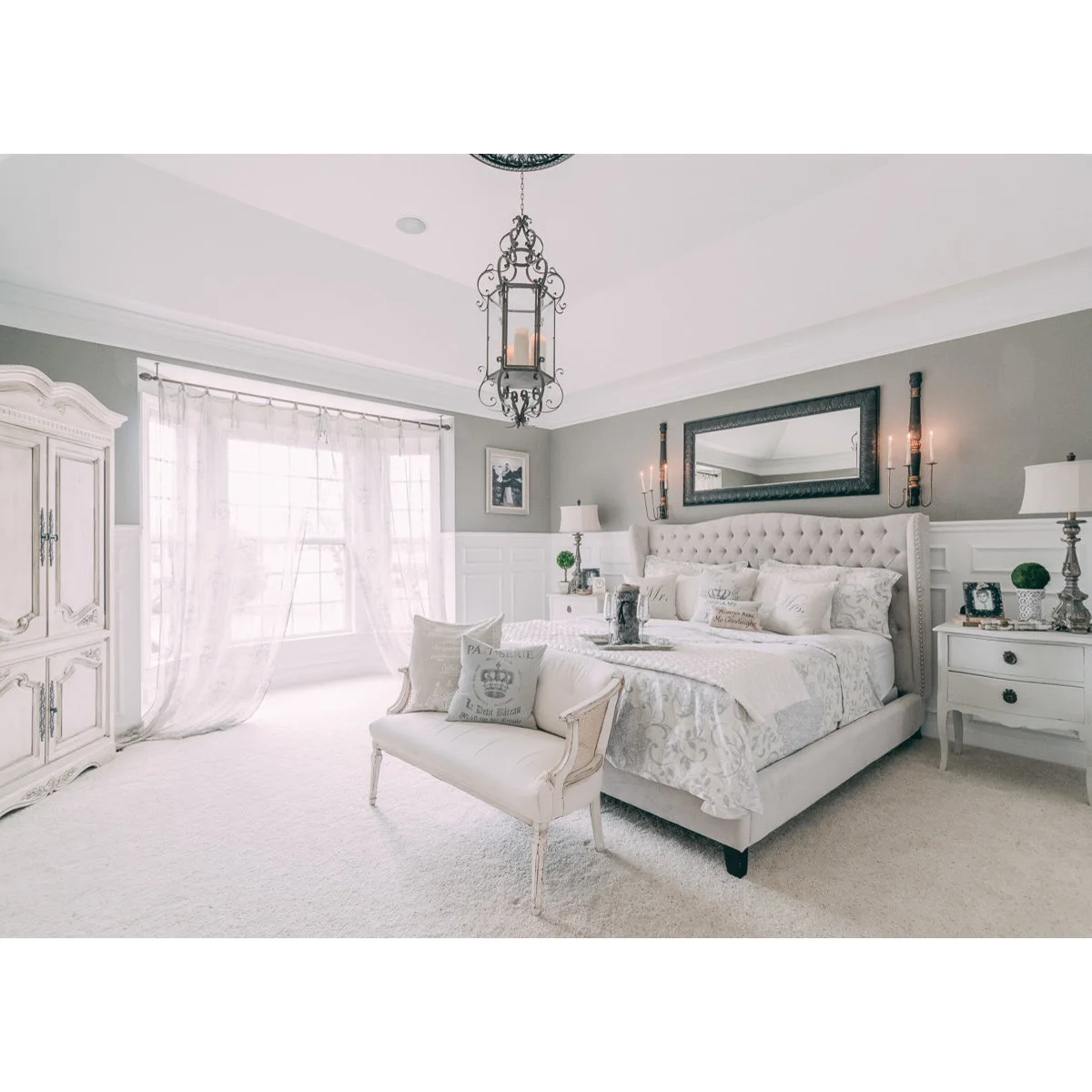
Grey covers the upper wall in this bedroom, while white lower panels, furniture and bedding keep the lower half pale. A dark-framed mirror adds a focused contrast above the headboard. The sheer curtains allow the window to remain a light element within the arrangement.
Set the grey and white boundary around the actual windows and furniture rather than choosing a height in isolation. Check how much of the lower paneling remains visible behind the headboard. If the room needs darkness for sleeping, provide an effective blind or curtain layer behind the decorative sheers.
IDEA 09 / 20
Put Pale Grey Above Simple White Panels
 SaveSupport Non AI Creator
Image credit: Project: Glas Associates (via Houzz)
Pale grey upper walls sit above simple white lower panels in this bedroom. A wood nightstand and dark blue cushion add a few contrasting tones without making the pale backdrop busy. The wood ceiling supplies warmth above the otherwise light wall and bedding.
Use the room’s existing wood finish as part of the palette when testing a grey. A sample that looks neutral on a screen may appear blue or green beside it. Keep the lower panels and trim coordinated, and choose window coverings that provide the privacy and light control the room actually needs.
IDEA 10 / 20
Let Blue Bedding Stand Out Against Grey
 SaveSupport Non AI Creator
Image credit: Project: Colleen Gahry-Robb for Ethan Allen Auburn Hills,MI (via Houzz)
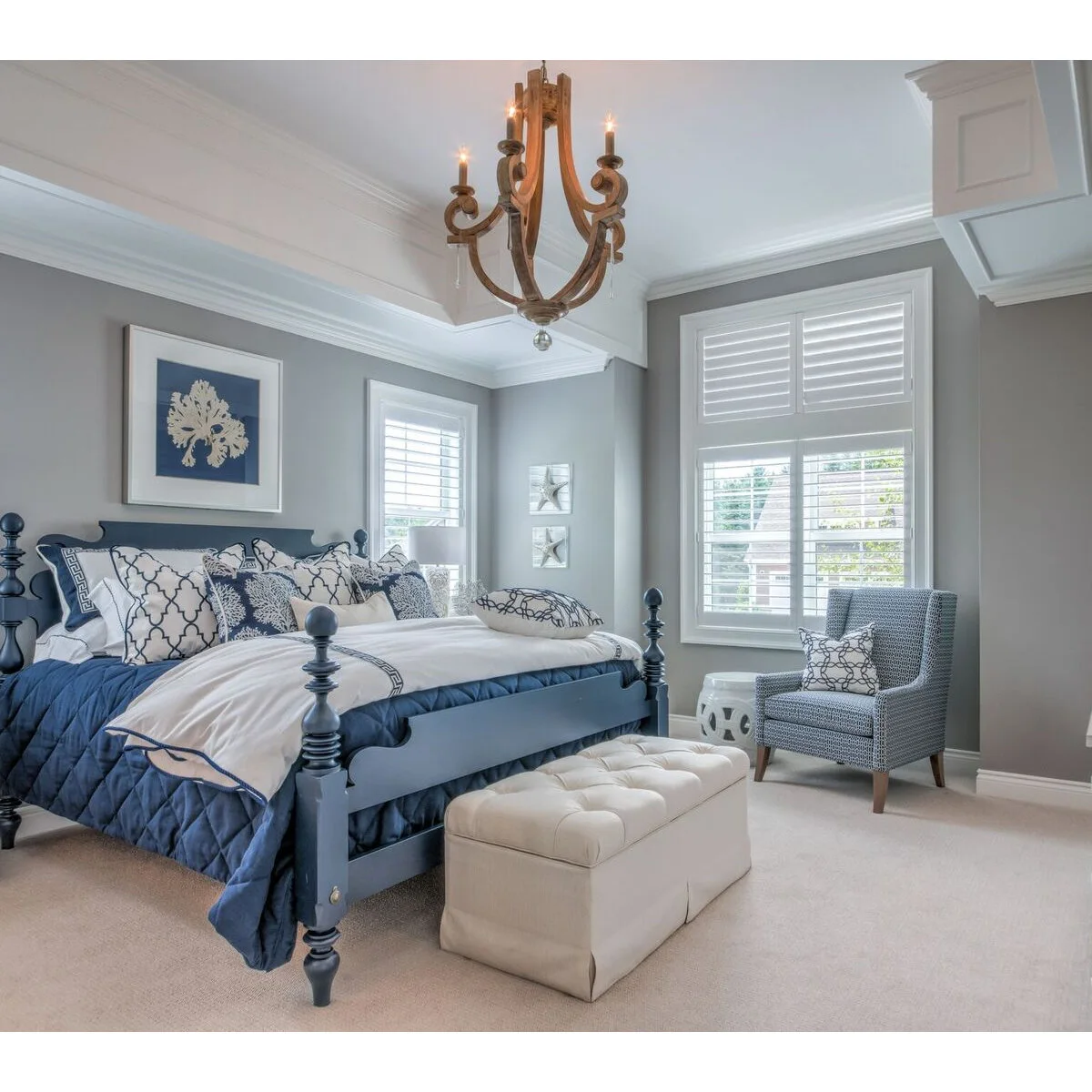
Grey walls provide a quiet background for the blue bed frame and patterned bedding in this room. White shutters and ceiling trim define the windows, while a pale upholstered seat offers a lighter shape at the foot. The grey allows the blue to remain the strongest color.
Limit additional accent colors if the bedding already mixes several patterns. Compare a pillow or fabric sample with the wall before choosing paint for the whole room. Keep window access and the route around the bed open, especially when adding a seat that looks compact in a photograph.
PART 03
Use Texture to Separate Similar Tones
IDEA 11 / 20
Balance Grey Upholstery with a Wood Ceiling
 SaveSupport Non AI Creator
Image credit: Project: Scott Wilson Architect, LLC (via Houzz)
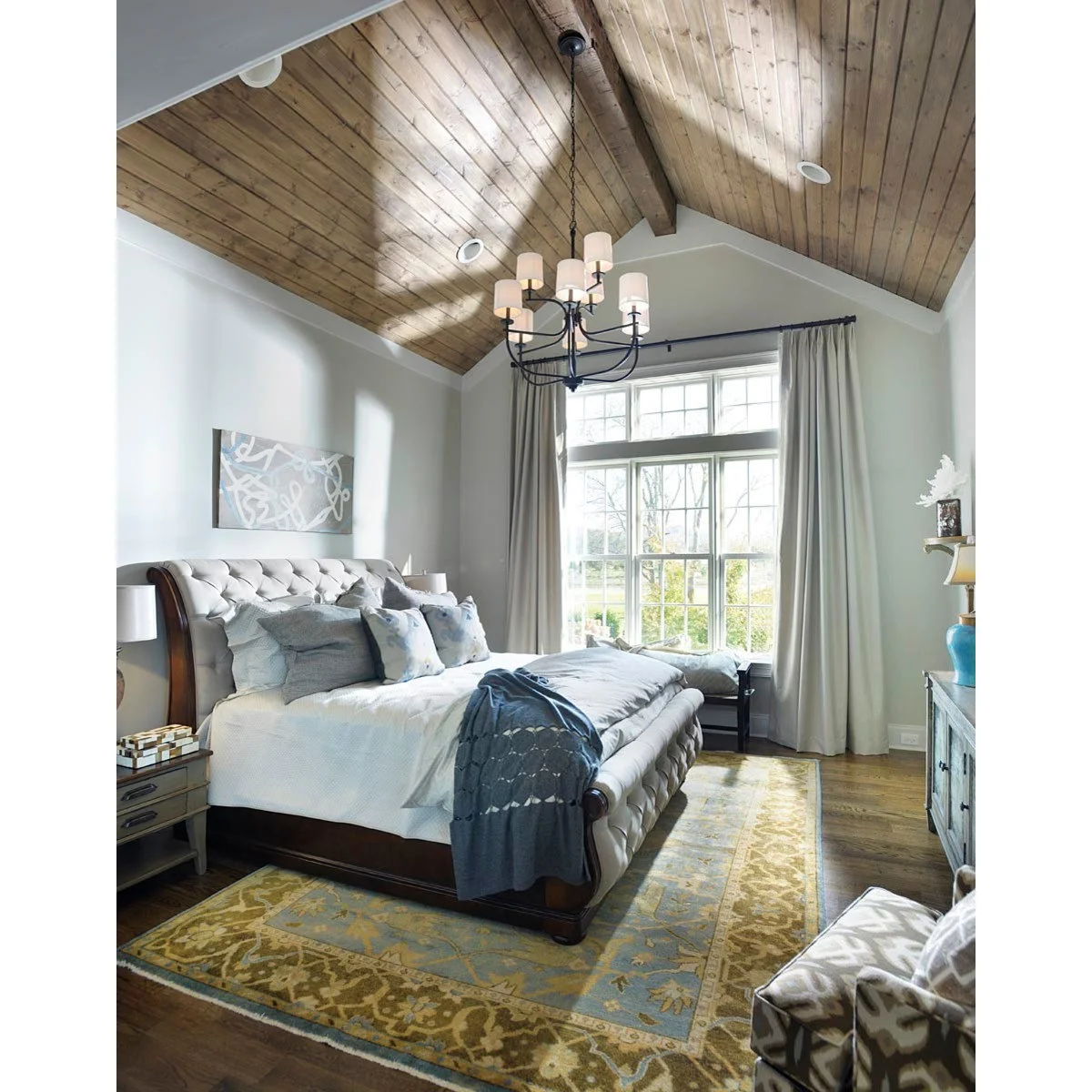
Grey upholstery on the bed and pale grey walls sit beneath a wood-planked vaulted ceiling. The wood grain gives the room warmth, while the rug adds a softer pattern below. Light curtains frame the tall window without introducing another strong wall color around it.
Choose the main grey fabric beside the wood finish rather than buying each independently. Texture can separate similar tones, but heavily tufted upholstery needs regular cleaning along its seams. Check that the rug extends usefully beside the bed and does not create a thick edge in a narrow walking route.
IDEA 12 / 20
Repeat Grey Through Quilting and Small Patterns
 SaveSupport Non AI Creator
Image credit: Project: k+co LIVING - Interiors by Karen B Wolf (via Houzz)
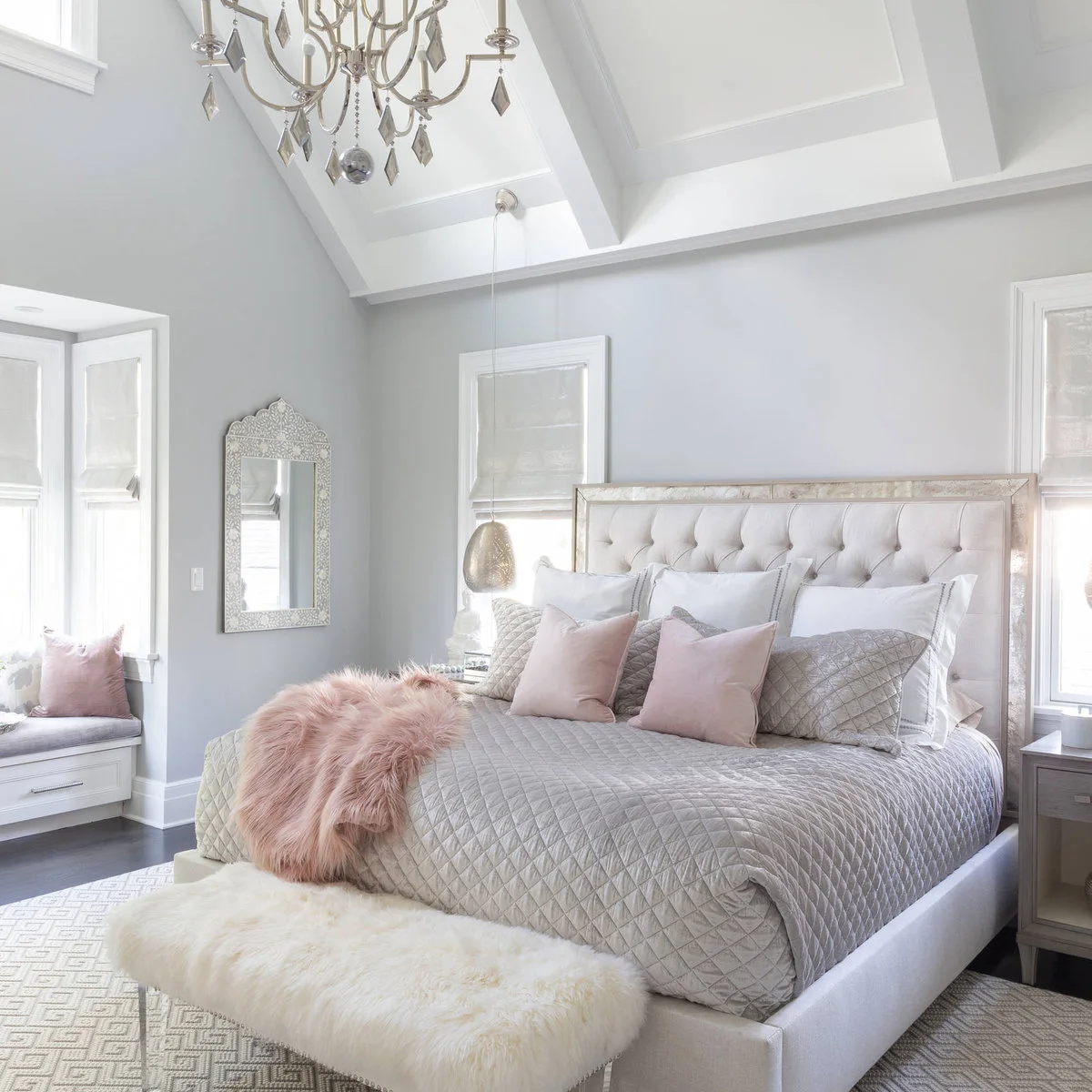
A quilted grey coverlet gives this pale bedroom texture without a large printed motif. Pink cushions and a soft throw add a warmer accent, while grey patterned pillows repeat the main color at a smaller scale. A light bench keeps the foot of the bed visually gentle.
Use different textures when several surfaces share a similar color, but keep the care routine realistic. Check whether the coverlet and cushion covers can be cleaned as often as you need. Leave space to pull bedding free around the bench so making the bed does not become unnecessarily awkward.
IDEA 13 / 20
Use a Textured Grey Wall Beside Plain Curtains
 SaveSupport Non AI Creator
Image credit: Project: Douglas C. Wright Architects (via Houzz)
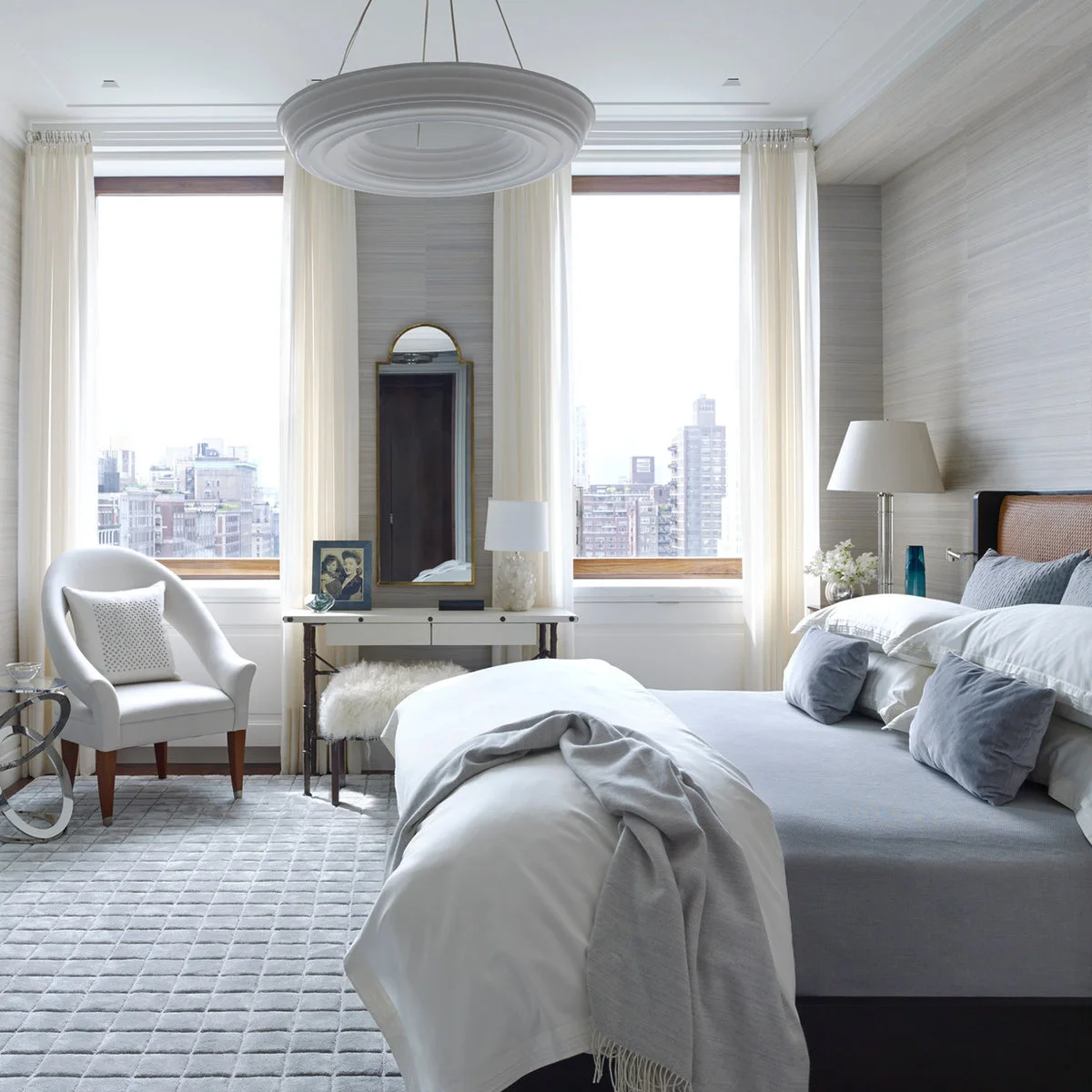
A fine horizontal texture gives the grey walls detail in this bedroom. Plain pale curtains remain quieter beside it, while grey bedding carries the color onto the bed. A narrow dressing table and mirror fit between the windows without requiring another large cabinet across the room.
See a generous wallcovering sample at the distance you will normally view it, since fine texture can look different up close. Keep curtain fabric simple if the wall already has a visible weave or stripe. Check dressing-table depth with the stool pulled out before treating the window gap as spare space.
IDEA 14 / 20
Choose a Soft Grey Floral Background
 SaveSupport Non AI Creator
Image credit: Project: Rock Paper Hammer (via Houzz)
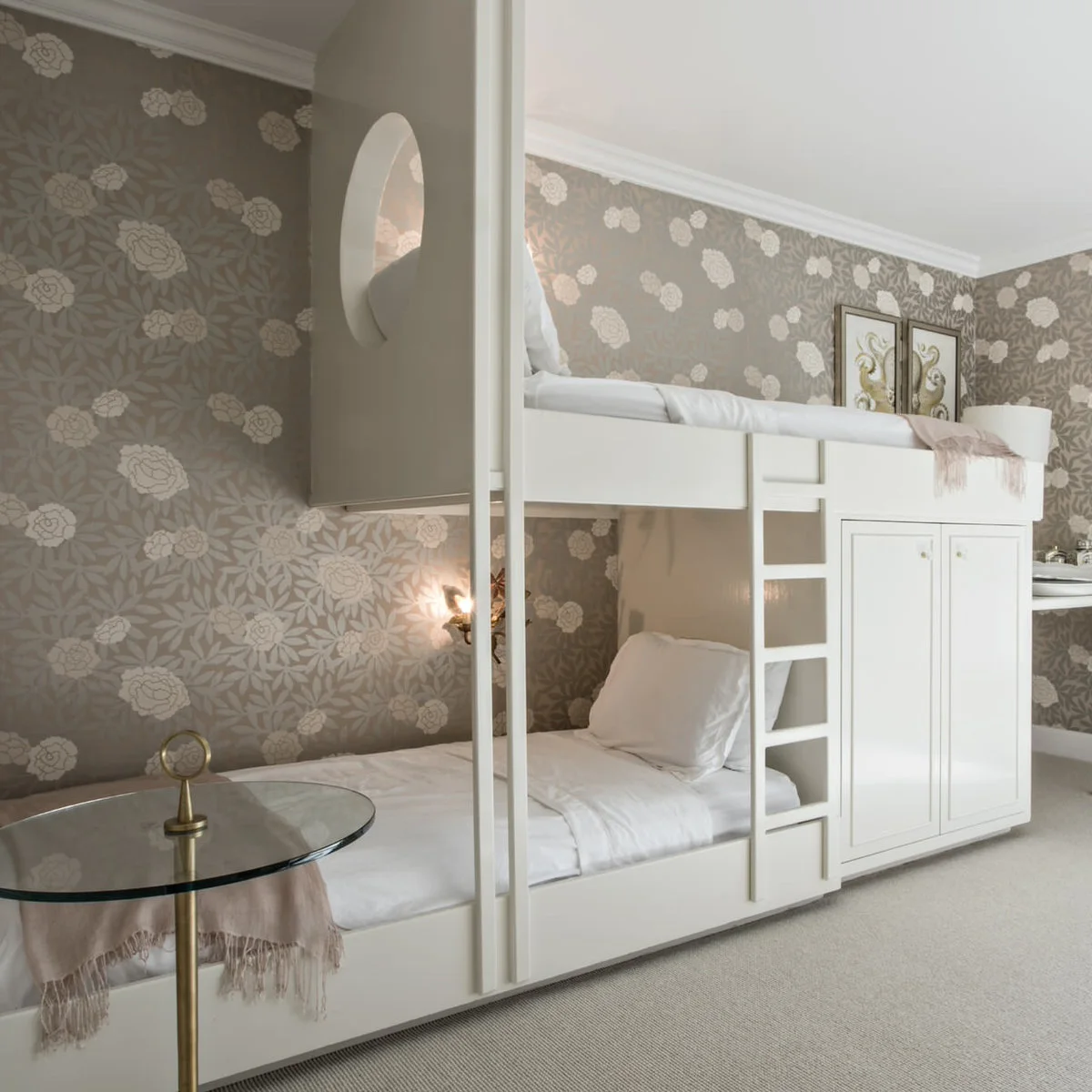
Grey floral wallpaper surrounds the white built-in beds in this room, creating a softer alternative to a solid dark wall. The white bed frames and bedding keep the large furniture shapes clear. Repeating the wallpaper around the corner makes the pattern feel like a continuous background.
Use plain bedding where a wall pattern already covers a large area. In a room with bunks, choose a compliant bed system and follow its age, guardrail and mattress requirements independently of the decoration. Check wallpaper joins and cleaning suitability before selecting a pattern that will sit close to frequently touched surfaces.
IDEA 15 / 20
Add Small Warm Accents to Grey Bedding
 SaveSupport Non AI Creator
Image credit: Project: Kristina Wolf Design (via Houzz)
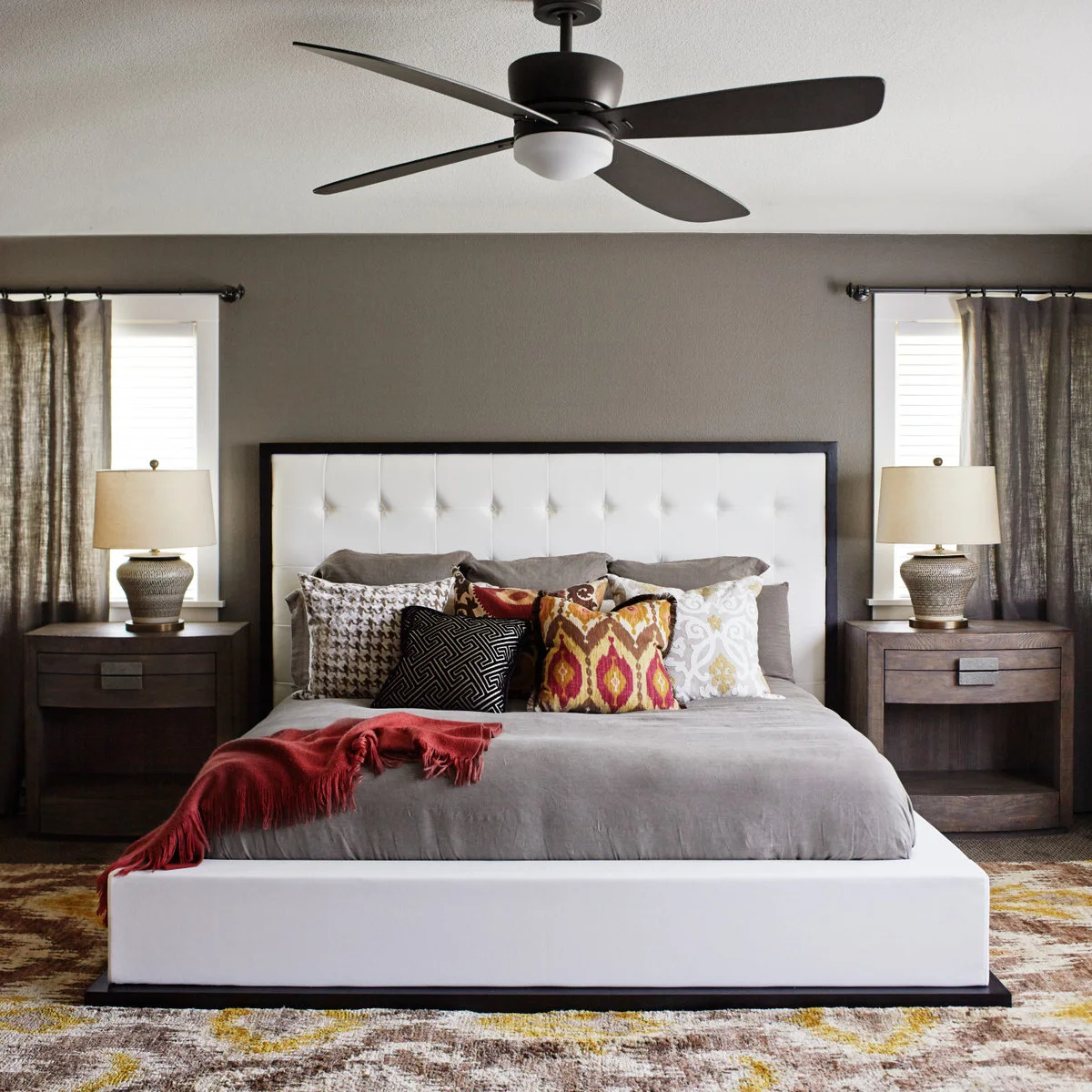
Grey bedding connects the white headboard with the darker curtains and nightstands in this room. Patterned cushions introduce several small colors, while a red throw supplies a warmer accent at one corner. The main bedding remains plain, giving the stronger details a quiet surface around them.
Start with one accent textile and repeat only a small part of its palette elsewhere. Keep spare pillows limited to what you are willing to move each evening. Compare bedside lamp shades with the curtain fabric so the light remains useful rather than being absorbed by several dark surfaces close together.
PART 04
Make the Everyday Details Work
IDEA 16 / 20
Match Soft Grey Upholstery to a Pale Wall
 SaveSupport Non AI Creator
Image credit: Project: Artistic Interior Design/Amy N. Lee, ASID (via Houzz)
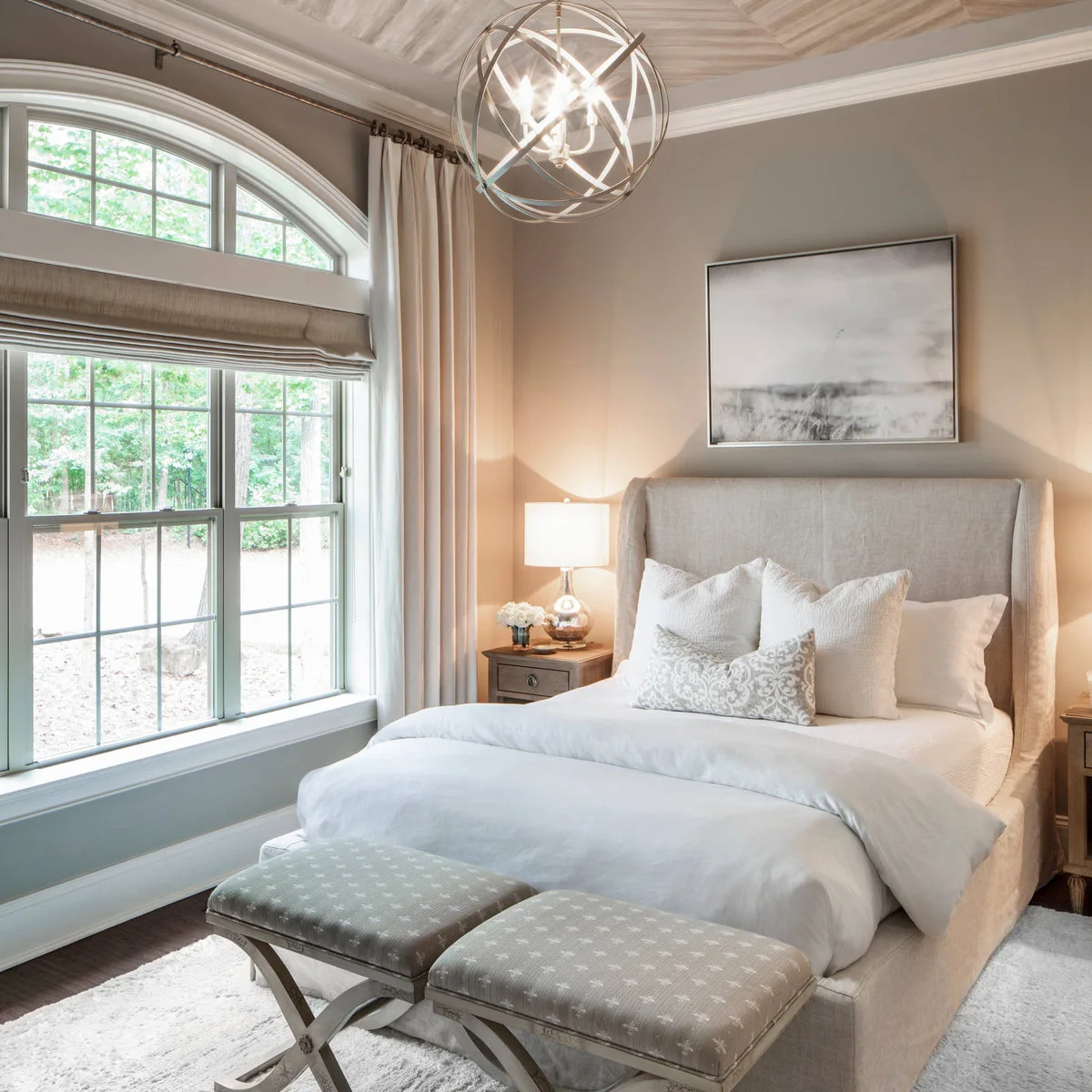
Soft grey upholstery gives the bed a slightly deeper tone than the pale wall behind it. A large window, light curtains and white bedding keep the arrangement bright, while two small stools add a lower repeated shape. The room relies on subtle differences rather than a strong accent wall.
Test pale greys beside white bedding to see their undertones clearly. If the shades become indistinguishable, add contrast through a lamp, frame or bedside cabinet instead of buying more matching fabric. Check the stools leave enough clearance for bedding and movement, and keep them useful rather than collecting folded clothes.
IDEA 17 / 20
Use Grey to Quiet a Wall of Wardrobes
 SaveSupport Non AI Creator
Image credit: Project: Ashley Rohe; Custom Homes and Design (via Houzz)
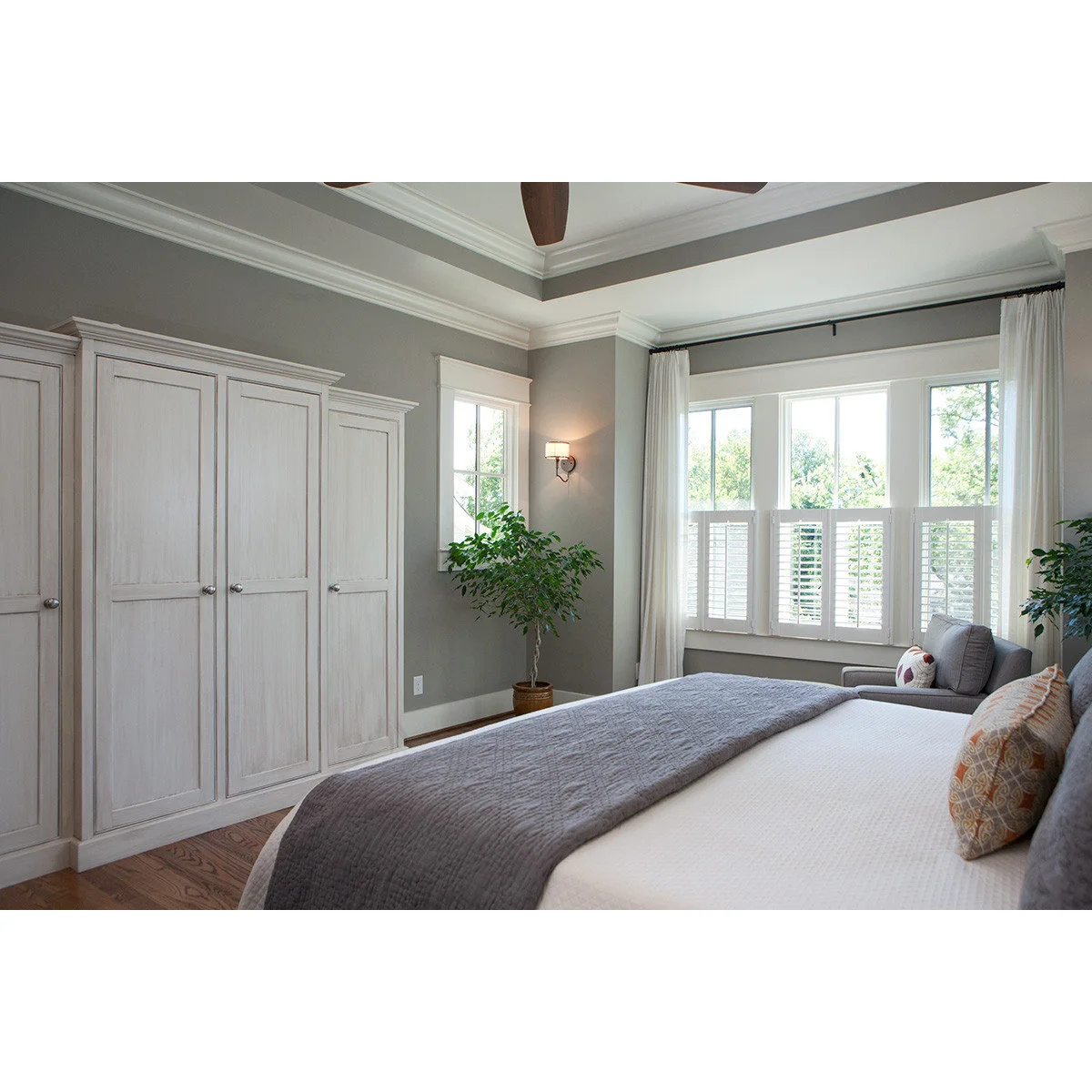
Grey walls sit beside a long bank of pale wardrobe doors in this bedroom. White bedding and a grey throw repeat the same restrained palette, while the wood floor provides warmth. The wardrobe fronts remain simple, leaving the room’s contrast to the larger wall and bed surfaces.
Compare wall paint with the existing wardrobe finish before making the room uniformly grey. A slight difference can help the storage remain distinct without outlining every door. Keep handles accessible and check doors open fully beside the bed, particularly if you plan to add a larger chair near the window.
IDEA 18 / 20
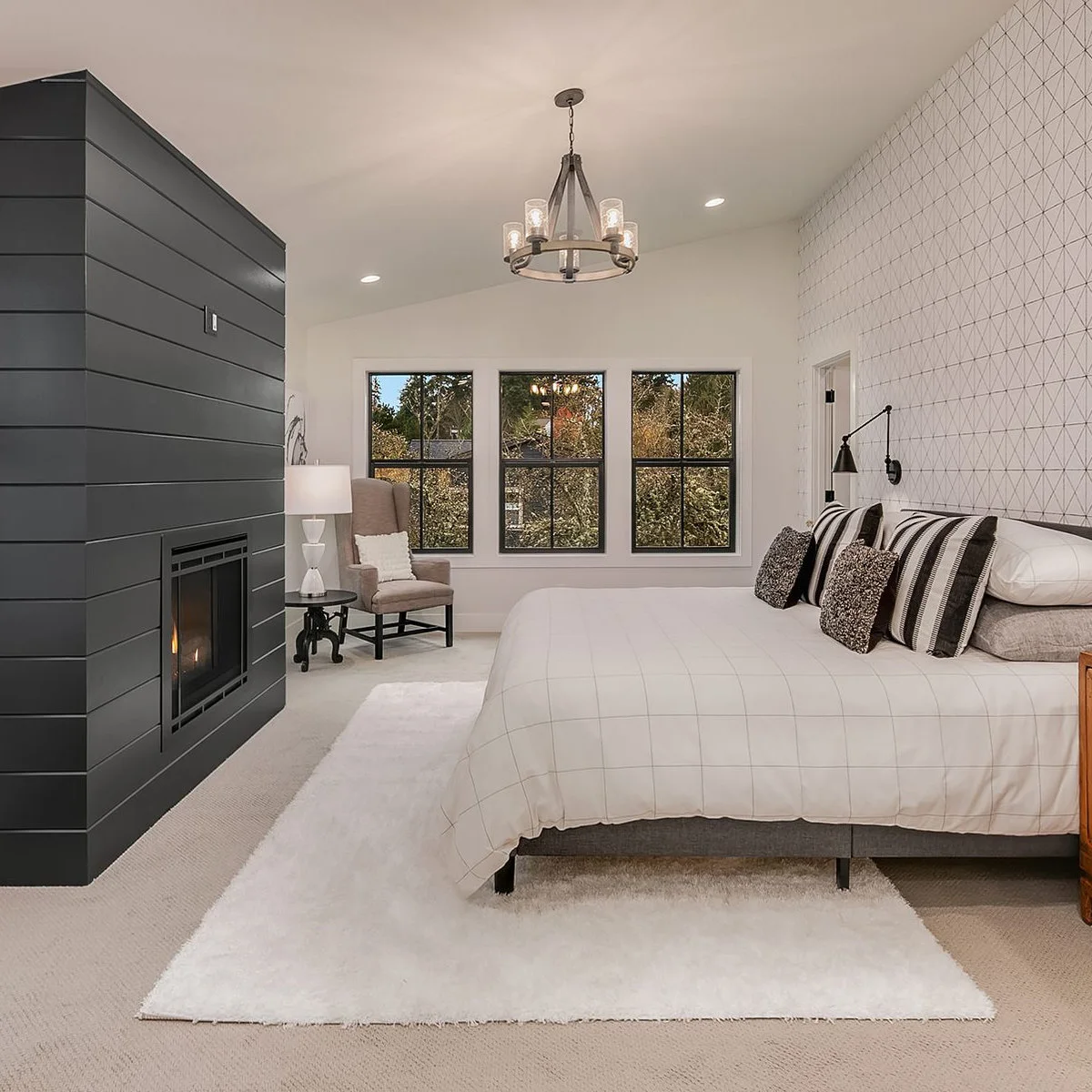
Keep a Charcoal Fireplace Separate from Pattern
 SaveSupport Non AI Creator
Image credit: Project: Enfort Homes (via Houzz)
Charcoal boards give the fireplace wall a strong shape opposite this bed. Fine geometric wallpaper adds a lighter pattern behind the pillows, while white bedding joins the two sides of the room. The contrast keeps the darker surface focused on one architectural element.
Avoid making both walls equally busy when the bed faces a prominent fireplace. Check the fireplace surround and adjacent finishes against the actual installation requirements. If you want a similar bedroom accent wall, choose the view that matters most from the doorway before deciding which surface receives the stronger treatment.
IDEA 19 / 20
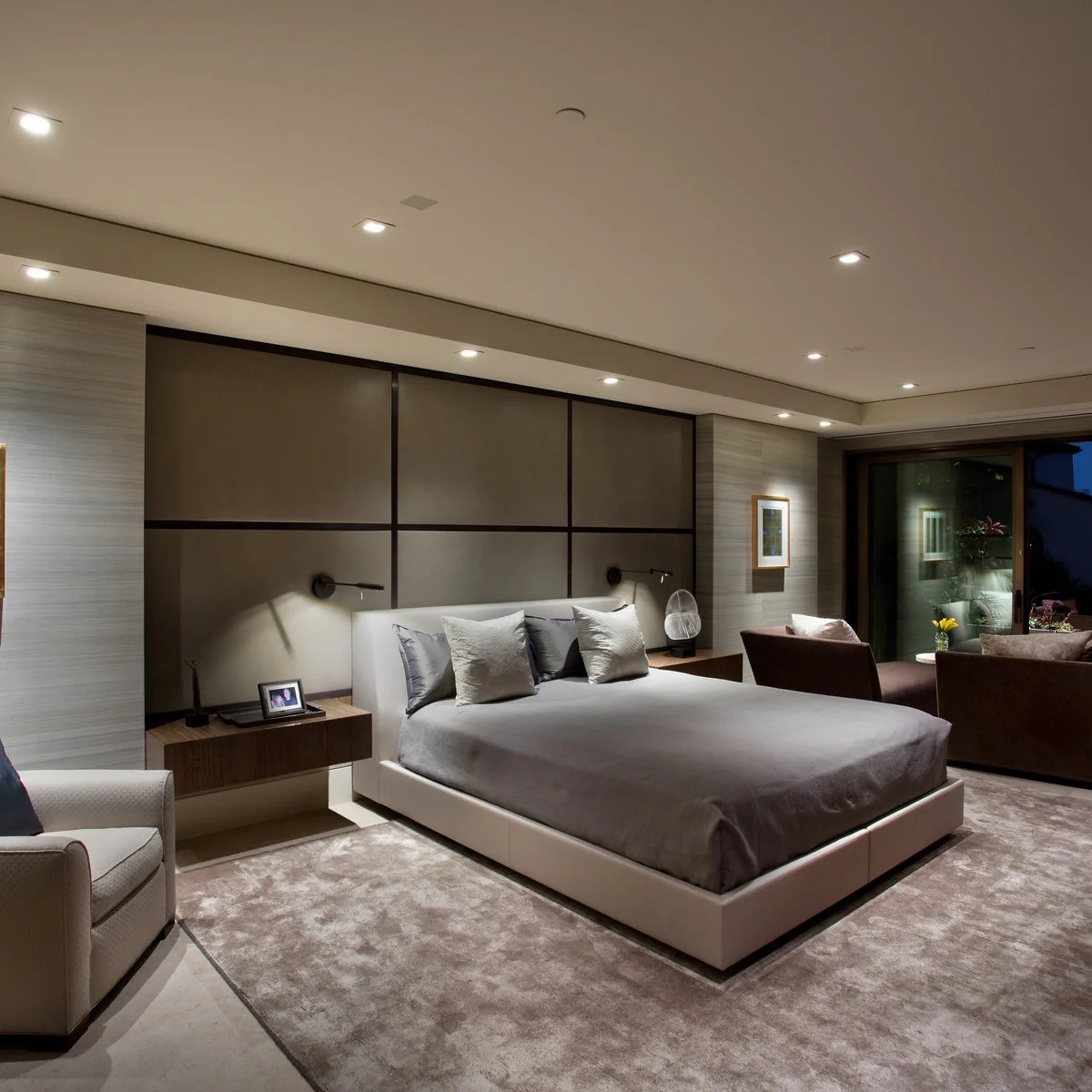
Layer Grey Bedding with Warm Evening Light
 SaveSupport Non AI Creator
Image credit: Project: Kirk Saunders Architect (via Houzz)
Grey bedding forms the center of this bedroom, surrounded by a broad framed headboard wall and wood bedside cabinets. Several smaller lights illuminate the bed area rather than relying on a single bright ceiling fixture. The warmer light changes how the grey surfaces appear in the evening.
Test grey samples under the lamps you plan to keep, not only in daylight. Use separately controlled bedside lighting for reading so the whole room does not need to be brightly lit. Keep fittings accessible and choose a layout that avoids glare from the pillows when you are lying down.
IDEA 20 / 20
Use Built-In Storage Around a Grey Headboard
 SaveSupport Non AI Creator
Image credit: Project: Linden Kitchen and Bath (via Houzz)
A dark grey tufted headboard sits between pale built-in shelves and drawers in this bedroom. Warm shelf lighting makes the surrounding storage a separate layer, while white bedding keeps the bed easy to read. Horizontal wall boards provide detail without requiring another color behind the headboard.
Plan everyday storage before filling the shelves with decorative pieces. Keep a reachable place for water, a book and charging, with cables managed away from bedding. Compare bedroom nightstand ideas if full built-ins would make the bed difficult to change later; freestanding storage can offer more flexibility.
BRING IT ALL TOGETHER
Judge Grey Beside the Pieces You Will Keep
Start with the flooring, bed and curtains that will remain in the room, then test a few greys beside them. Compare the sample from the doorway and from bed level, with both daylight and your normal evening lights.
Choose where the strongest contrast belongs and let the other surfaces support it. A pale bed against charcoal, grey bedding in a white room or a textured wall with plain curtains can each work; useful storage and comfortable lighting should guide the final choices.