A feminine bedroom can be soft and expressive without relying on pink everywhere. Curved furniture, quiet floral patterns, warm light and a few reflective details can create the feeling in many different palettes. Choose the elements you enjoy and keep the room comfortable for sleeping, dressing and moving around.
These bedrooms range from restrained modern arrangements to more romantic traditional rooms. The useful part is how the colors, shapes and everyday pieces work together. Adapt a detail at a time, checking care instructions and clearances rather than copying an entire photographed room regardless of your own routine.
PART 01
Build a Soft Palette with Some Contrast
IDEA 01 / 20
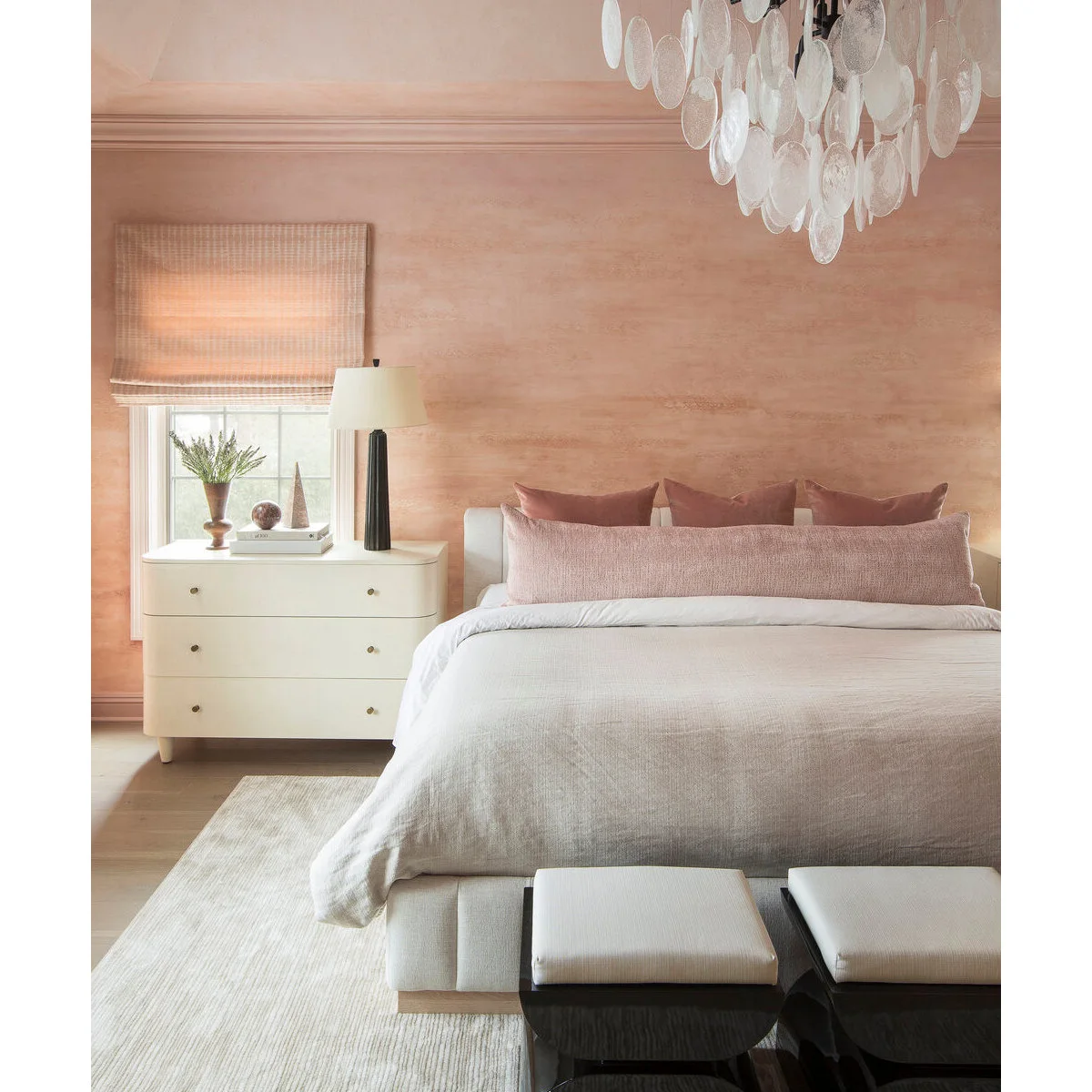
Pair Peach Walls with Quiet Bedding
 SaveSupport Non AI Creator
Image credit: Project: Jessie D Miller Interior Design (via Houzz)
Peach walls surround a pale upholstered bed, while the white bedding keeps the center of the room calm. A long pink cushion adds a softer line across the pillows. The rounded bedside chest repeats that gentleness without needing a large collection of decorative objects.
Test a warm wall color in daylight and evening light before painting the whole room. Keep the largest bedding pieces simple if you want the walls to lead. Choose a bedside chest for its reachable height and useful storage, then leave enough top space for the items you use at night.
IDEA 02 / 20
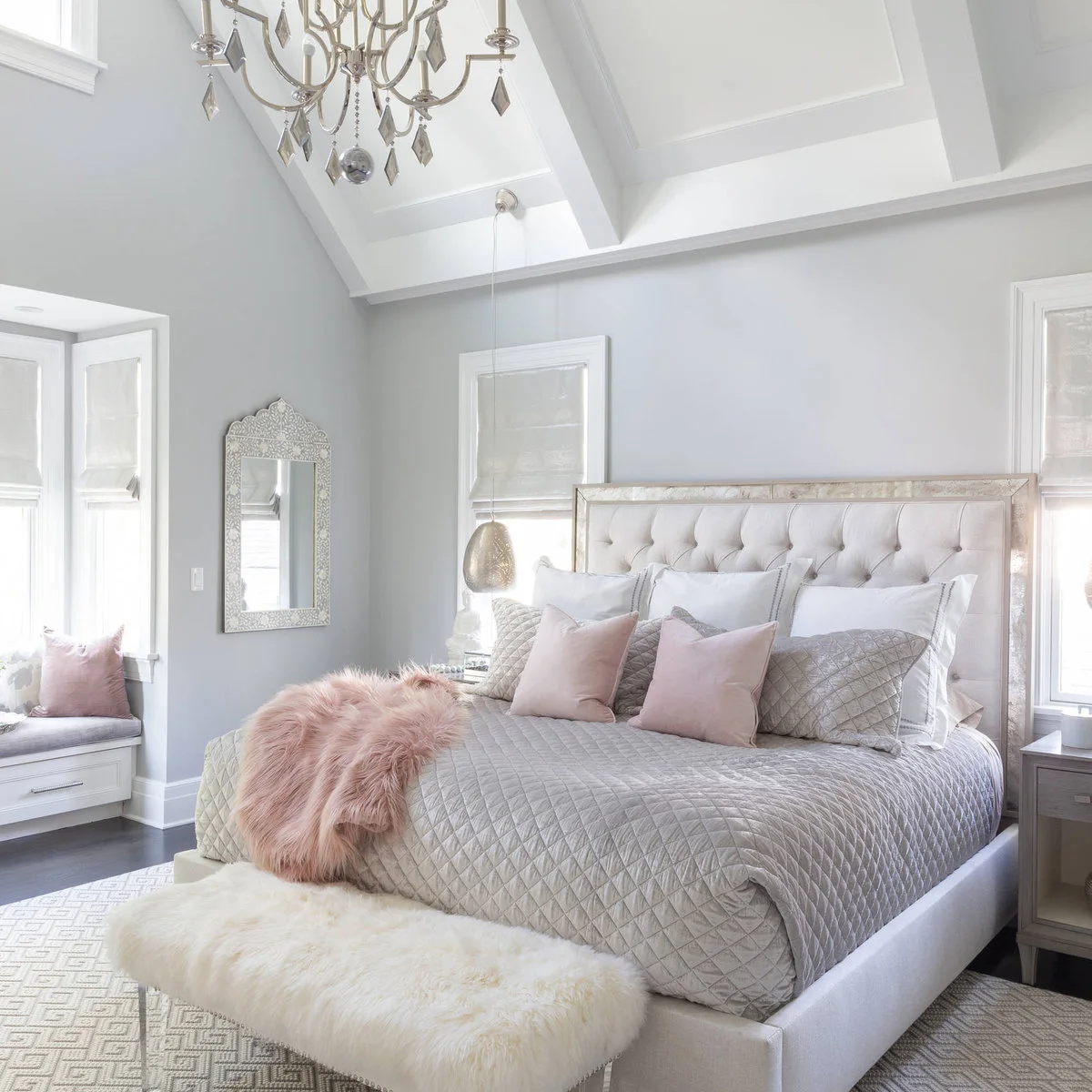
Use Pink as an Accent in a Gray Room
 SaveSupport Non AI Creator
Image credit: Project: k+co LIVING - Interiors by Karen B Wolf (via Houzz)
Pink cushions and a fluffy pink throw warm the gray bedding without taking over the room. A tufted headboard and a pale bench add softer surfaces, while the cool wall color keeps the background consistent. The window seat repeats the pink accent at another point in the room.
Small accents are easier to change than a full set of pink furniture. Choose washable or easily maintained pieces around how you use the bed. Grey bedroom ideas offer more ways to build a quiet base, then add a limited accent color without making every textile match.
IDEA 03 / 20
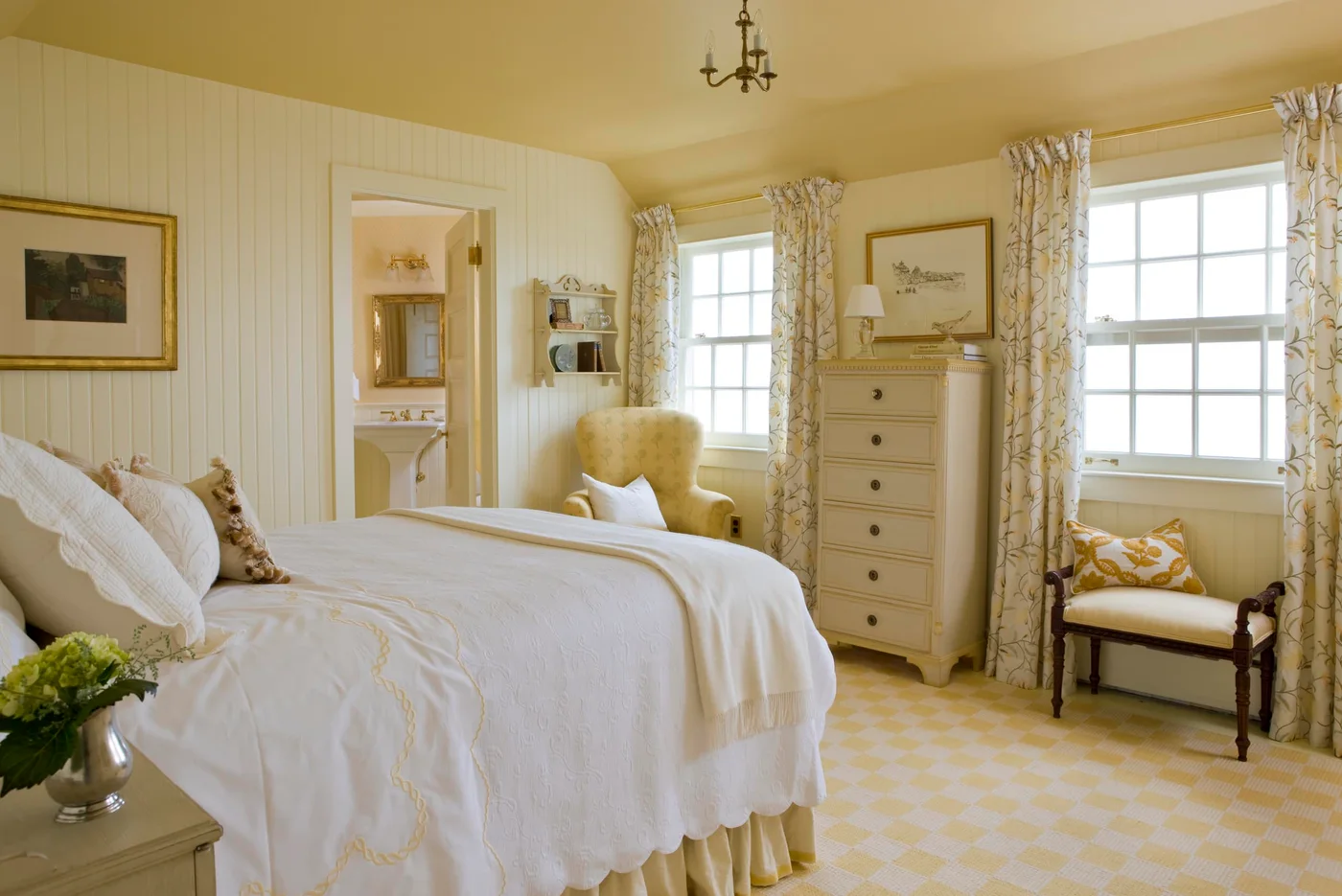
Try Cream and Yellow for a Gentler Palette
 SaveSupport Non AI Creator
Source: www.houzz.com
Cream walls and yellow accents give this bedroom a soft appearance without pink. Floral curtains frame the windows, and a tall chest fills the gap between them. White bedding keeps the bed visually light, while two different chairs add places to sit around the edges.
Use one restrained color across a few separate pieces to connect the room. Check that extra seating earns its space and does not restrict drawers or window access. A tall chest can provide storage in a narrower footprint, but it still needs suitable anchoring and comfortable room to open its drawers.
IDEA 04 / 20
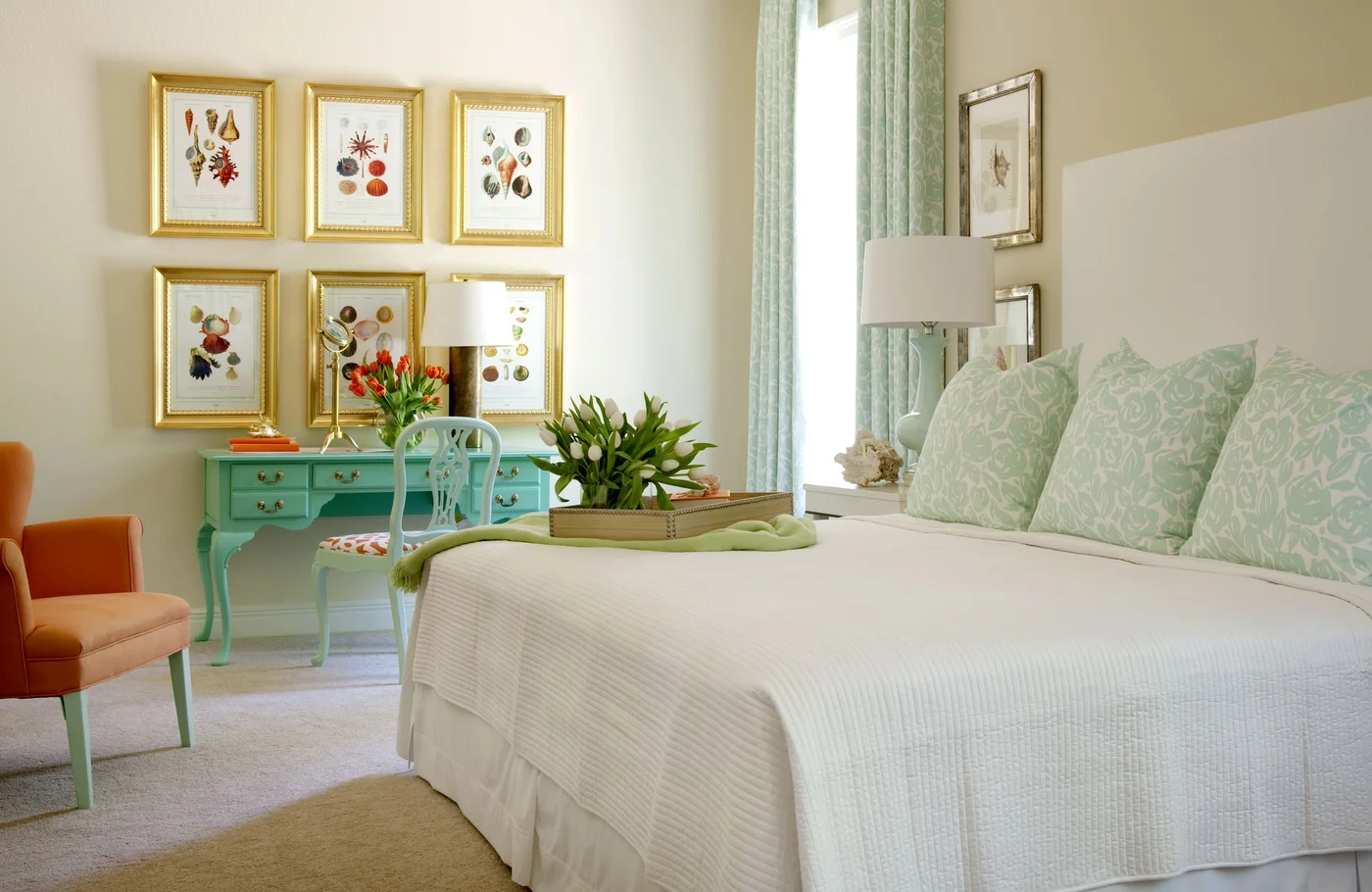
Mix a Painted Desk with Pale Patterned Textiles
 SaveSupport Non AI Creator
Source: www.houzz.com
A turquoise writing desk introduces a clear color accent beside the pale green patterned pillows and curtains. Gold-colored picture frames give the wall a repeated outline, while an orange chair adds a warmer note. White bedding leaves these smaller colors room to stand out.
Choose a limited set of colors and repeat them in different amounts rather than giving each piece equal emphasis. If the desk doubles as a dressing surface, keep supplies in a movable tray. Check the chair position against the bed route before adding a separate work or getting-ready area.
IDEA 05 / 20
Balance Large Florals with Plain Bedding
 SaveSupport Non AI Creator
Image credit: Project: Post 31 Interiors (via Houzz)
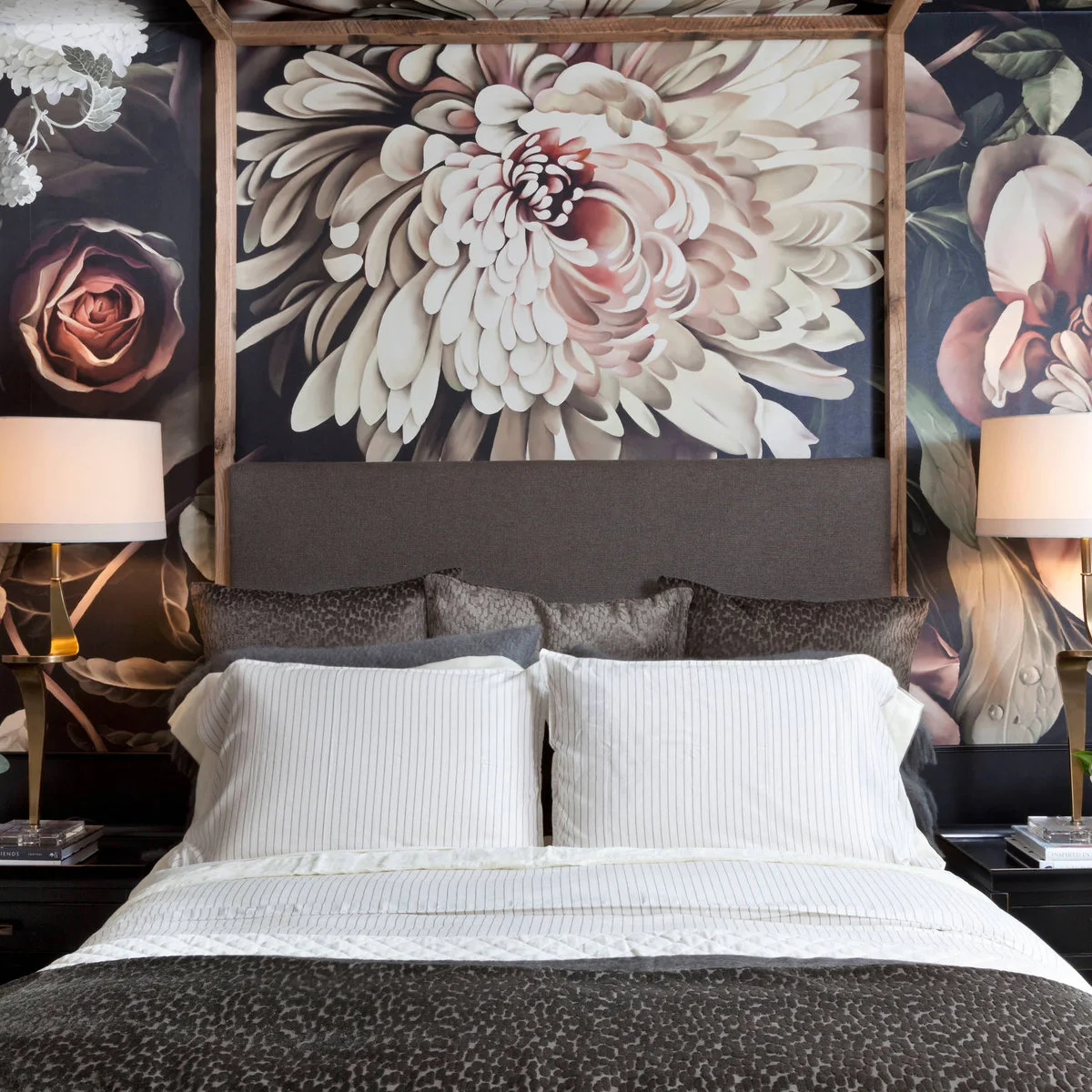
Oversized flowers fill the wall behind this gray headboard, creating the strongest pattern in the room. The striped white pillows and pale cover leave a quieter area in front. Matching lamps and dark bedside tables provide a clear structure around the floral background.
A large floral wall can carry the whole room, so you may need fewer patterns elsewhere. Compare the flower scale with the size of the headboard before ordering. Floral bedroom wallpaper ideas can help you consider how much of a pattern will remain visible once the bed and bedside furniture are in place.
PART 02
Choose Shapes That Give the Room Character
IDEA 06 / 20
Choose a Shaped Headboard as the Main Detail
 SaveSupport Non AI Creator
Image credit: Project: Home Design & Decor Magazine (via Houzz)
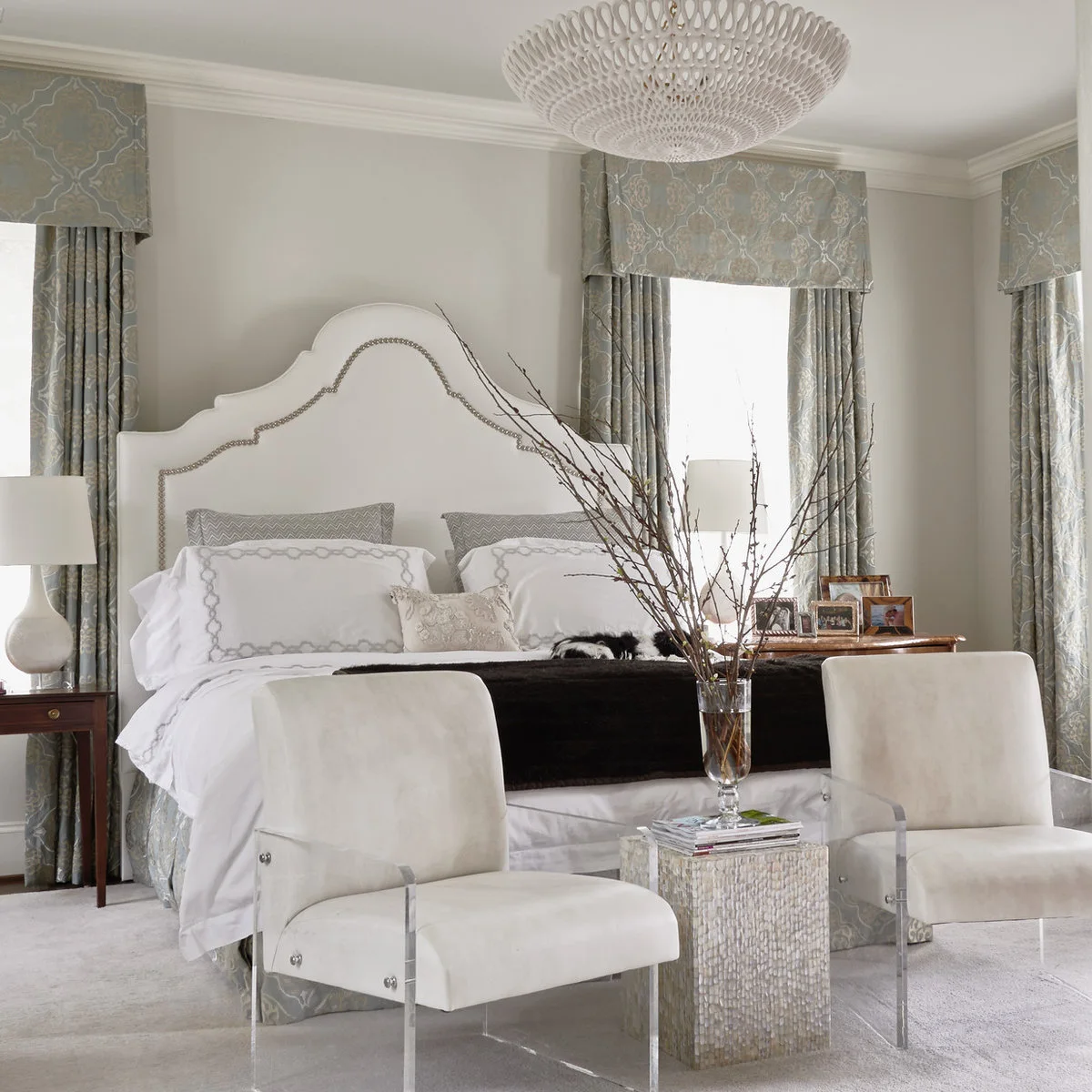
The high curved headboard gives this pale bedroom its main outline. Patterned curtains repeat softer curves around the windows, while two cream chairs add a sitting area at the foot of the bed. Most other surfaces stay within a restrained white and gray palette.
A shaped headboard can add character without needing more wall decoration. Measure its full width and height against windows and bedside lights before buying. Check the space occupied by any foot-of-bed chairs when someone is seated; a comfortable bed route matters more than reproducing a symmetrical photograph.
IDEA 07 / 20
Keep a Four-Poster Frame Open and Uncluttered
 SaveSupport Non AI Creator
Image credit: Project: Tiffany McKinzie Interior Design (via Houzz)
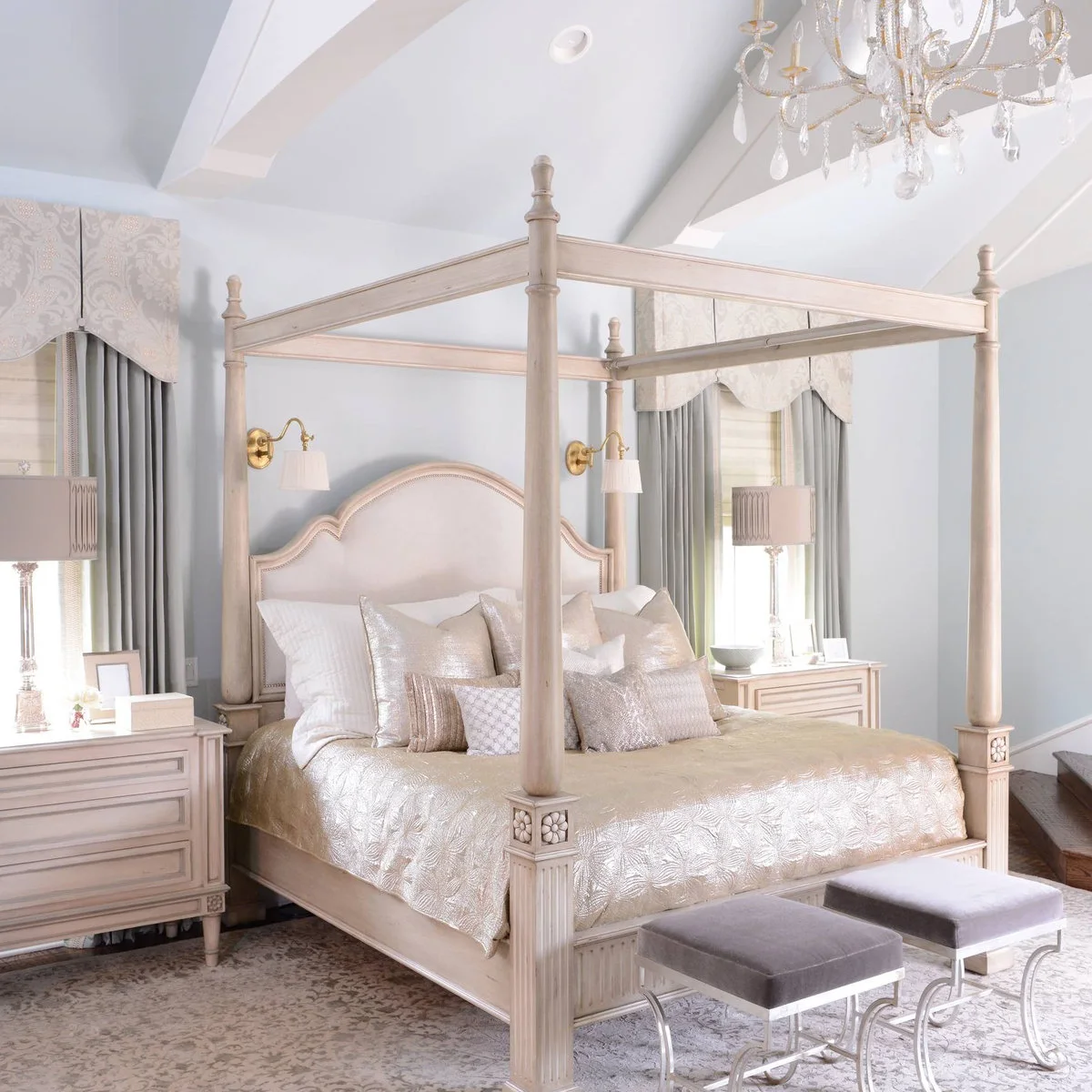
A pale four-poster frame surrounds the curved headboard without heavy curtains. Wall lamps sit inside the frame’s outline, while two small stools provide a low finishing detail at the foot. The light finishes let the bed structure remain visible without making the room feel densely filled.
Check the posts against ceiling fittings, window treatments and the route around the bed. An open frame can still feel substantial in a small room. Avoid hanging fabric or accessories close to lights, and make sure the bedside lamps remain easy to reach from the actual sleeping position.
IDEA 08 / 20
Pair Curved Furniture with Exposed Wood Beams
 SaveSupport Non AI Creator
Image credit: Project: Alicia Zupan Designs (via Houzz)
The curved bed and tufted bench soften the strong lines of the exposed ceiling beams. A tall framed mirror repeats the more decorative furniture outlines, while muted patterned pillows connect the bed with the curtains. The room balances structure and softness without relying on a bright color.
Keep a few substantial shapes as the focus rather than adding carved detail to every small object. Check the bench depth against your walking route. A tall mirror needs appropriate secure mounting or anchoring, especially beside a door or a route used while carrying bedding and laundry.
IDEA 09 / 20
Repeat Rounded Lines in the Bed and Storage
 SaveSupport Non AI Creator
Image credit: Project: Suzanne Nichols Design Group, Inc. (via Houzz)
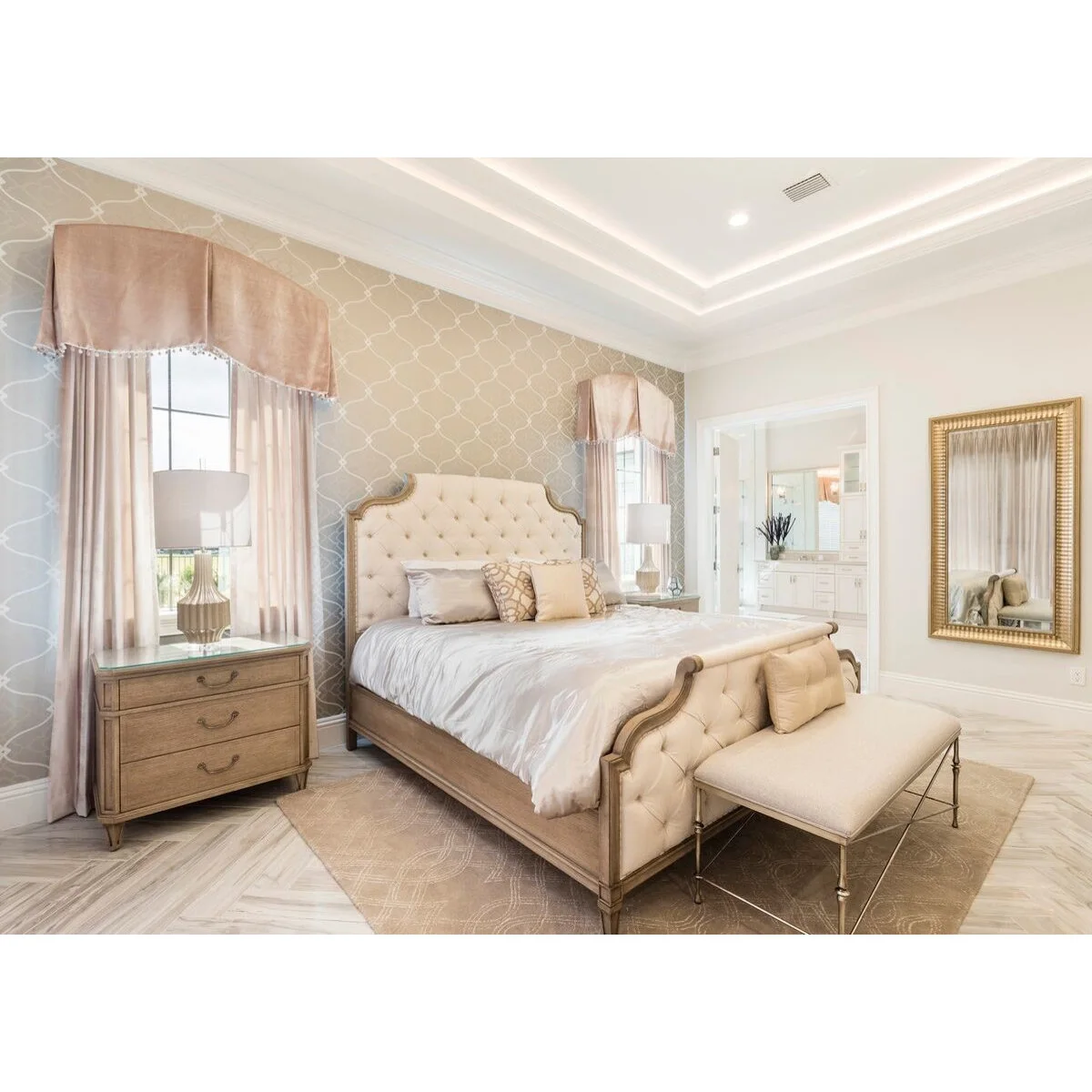
The curved tufted headboard relates to the rounded front of the bedside chest. Pale curtains and a light patterned wall keep the room within a quiet palette, while the upholstered footboard gives the bed another soft edge. A slim bench sits just beyond it.
Rounded furniture can make a room feel gentler, but its full footprint still needs measuring. Include projecting drawer fronts, handles and bed corners when checking the route. Choose storage that fits your belongings rather than matching every finish, and keep the area between the bed and bench easy to clean.
IDEA 10 / 20
Use Decorative Panels behind a Simple Bed
 SaveSupport Non AI Creator
Image credit: Project: Outrageous Interiors (via Houzz)
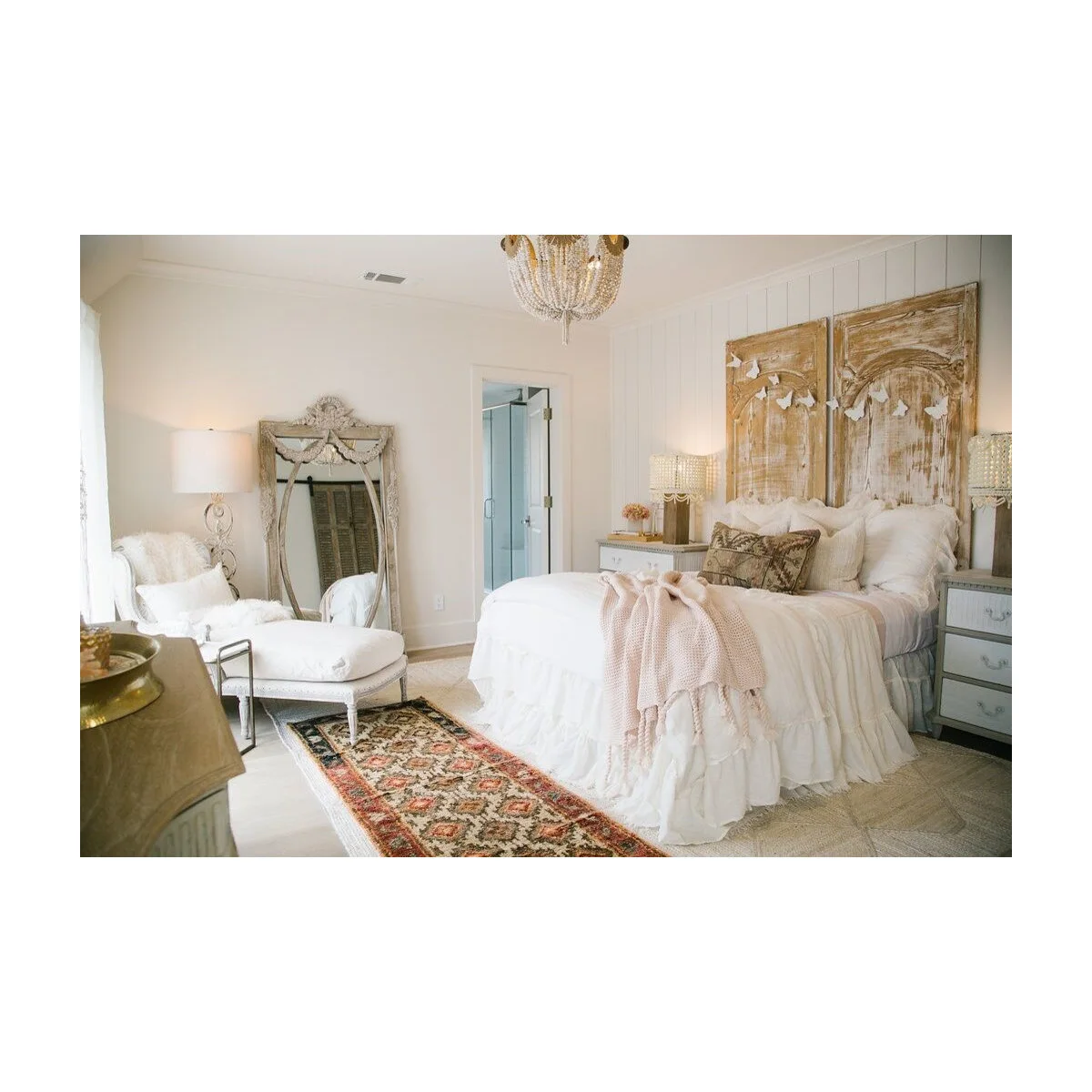
Two decorative panels create a tall backdrop behind this white bed. Their worn-looking finish contrasts with the soft bedding and pale pink throw. A chair and footstool provide another place to sit, while the patterned rug adds color near the floor.
Decorative panels need secure installation suitable for their weight and the wall behind the bed. Do not rely on leaning pieces where they could fall into the sleeping area. Keep the bedding simpler when the backdrop already has strong texture, and choose furniture finishes for their actual condition and care needs.
PART 03
Layer Pattern and Texture Thoughtfully
IDEA 11 / 20
Layer Small Patterns within One Muted Color Family
 SaveSupport Non AI Creator
Image credit: Project: Steinhafels (via Houzz)
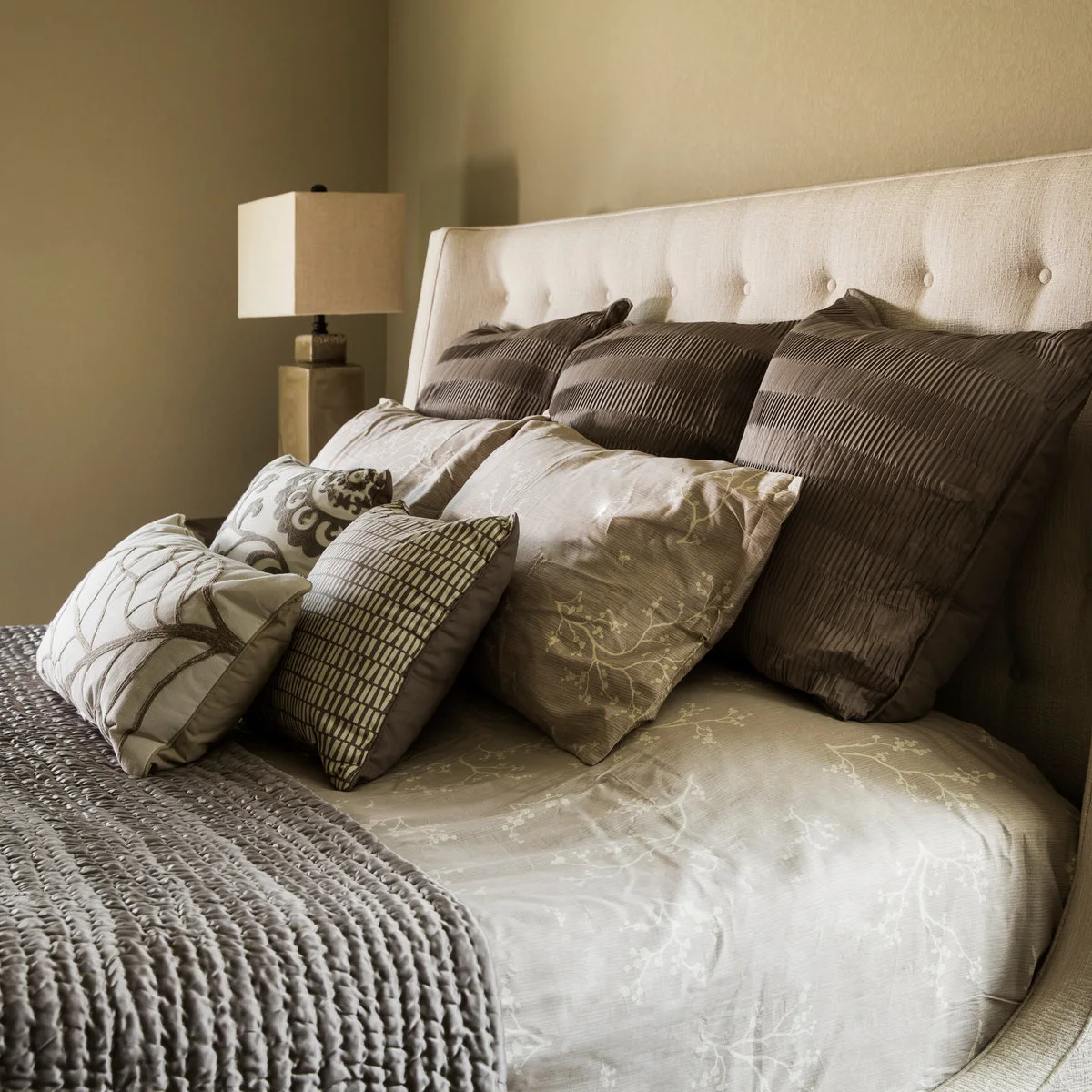
Brown pillows, muted floral bedding and a textured throw create variation within a narrow color family. The plain cream headboard gives those smaller patterns a quiet background. The arrangement gets its softness from surface texture and gradual changes in tone rather than a single bright accent.
Start with the bedding you find comfortable, then add only the decorative pieces you are willing to move each night. Compare care labels before mixing covers and throws that need different cleaning routines. A small collection of compatible fabrics is easier to maintain than a large pillow display with no practical storage.
IDEA 12 / 20
Keep a Soft Wall Pattern behind a Plain Headboard
 SaveSupport Non AI Creator
Image credit: Project: GeorgieRose Interior Design (via Houzz)
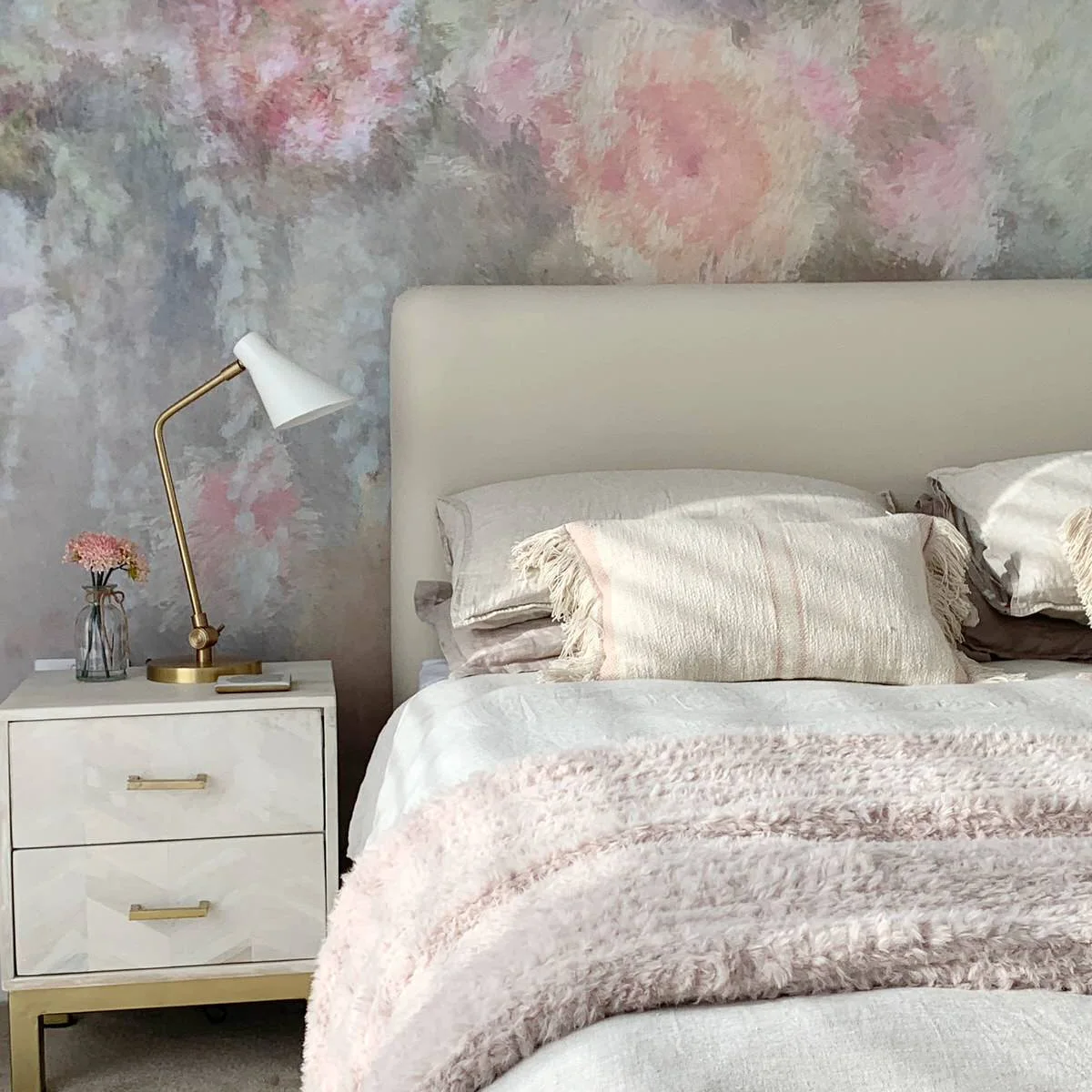
A softly mottled wall adds pink and blue behind the plain cream headboard. Pale bedding and a textured pink throw repeat the gentle palette, while a small adjustable lamp provides a more defined shape. The white bedside drawers keep storage visually connected to the bed.
When the wall has several colors, pick one or two for the textiles rather than repeating every shade. Keep the lamp and nightstand useful, with a clear place for a book or glasses. Pastel bedroom ideas offer other combinations that use soft color without covering every surface in pattern.
IDEA 13 / 20
Put the Stronger Pattern on a Bench
 SaveSupport Non AI Creator
Source: www.houzz.com
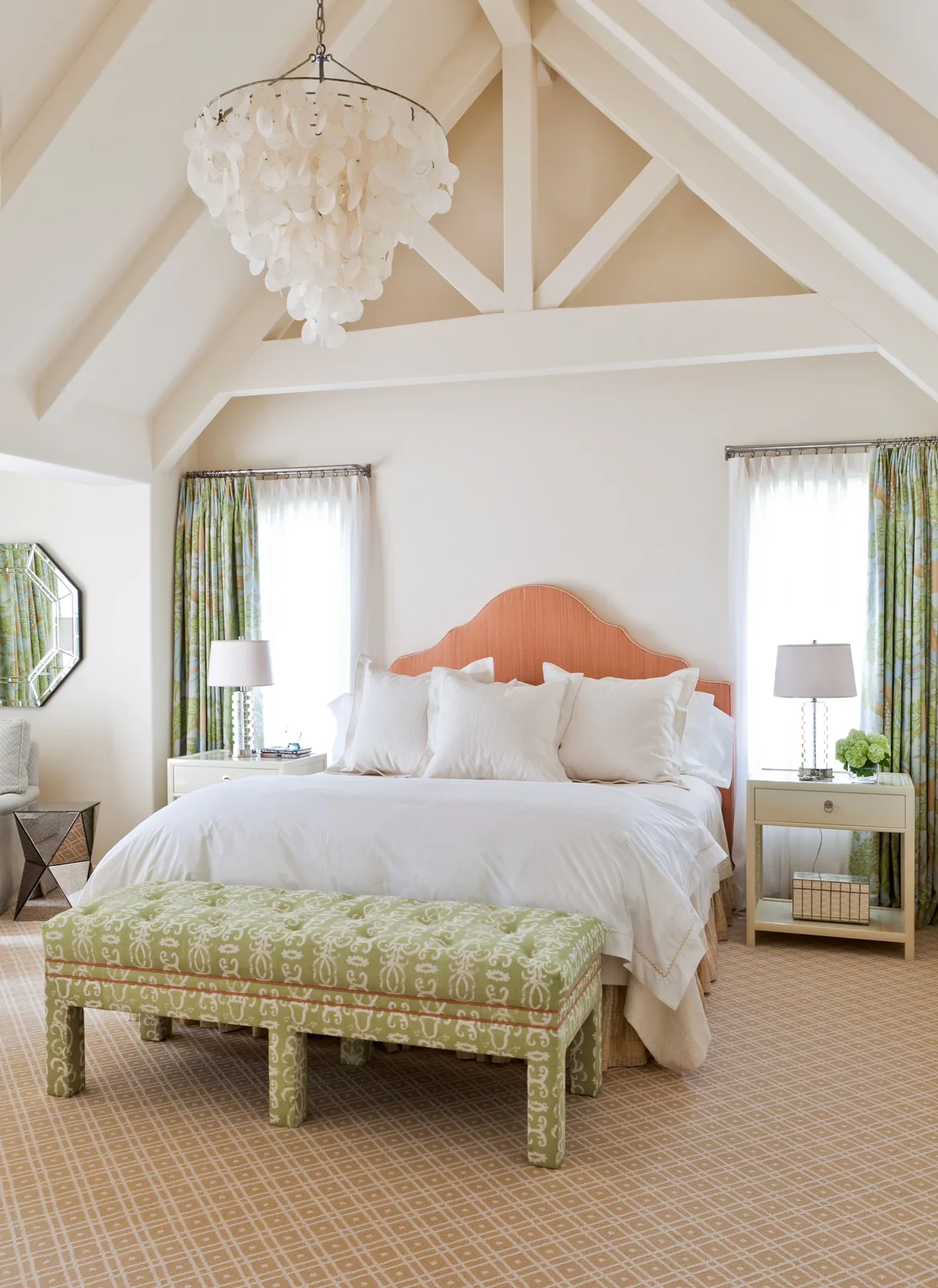
The green patterned bench gives the foot of this white bed a distinct accent. A coral headboard introduces another soft color, while the curtains repeat lighter green notes at the windows. The plain bedding prevents the separate patterns and colors from competing across the largest surface.
A bench is a manageable place for pattern if you want to keep the bed calmer. Check its depth and height before buying, including room to bend and change the bedding. Choose upholstery for the wear it will receive, and avoid using the bench as permanent overflow storage that blocks access.
IDEA 14 / 20
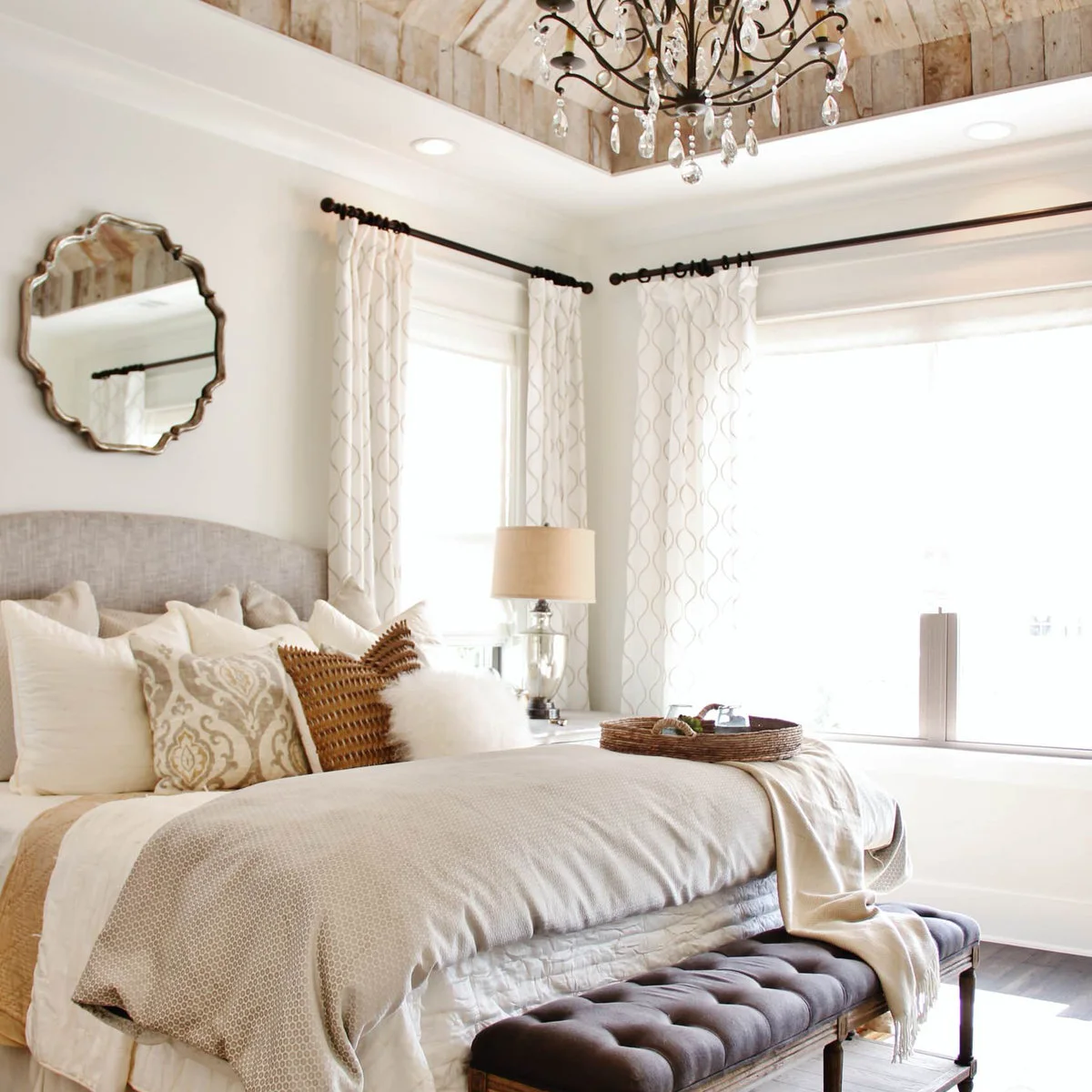
Add Texture with a Tufted Foot-of-Bed Bench
 SaveSupport Non AI Creator
Image credit: Project: Landmark Homes of Tennessee (via Houzz)
A dark tufted bench provides a stronger contrast beneath the pale bed in this room. The curved headboard and lightly patterned curtains keep the surrounding lines softer. A woven tray and small textile details add variation without needing several different colors.
Tufting and deep seams can collect dust, so choose a surface you can maintain easily. Measure the bench against the bed and walking route rather than choosing it from appearance alone. Keep enough space to make the bed comfortably, and move trays before sitting or using the bench for dressing.
IDEA 15 / 20
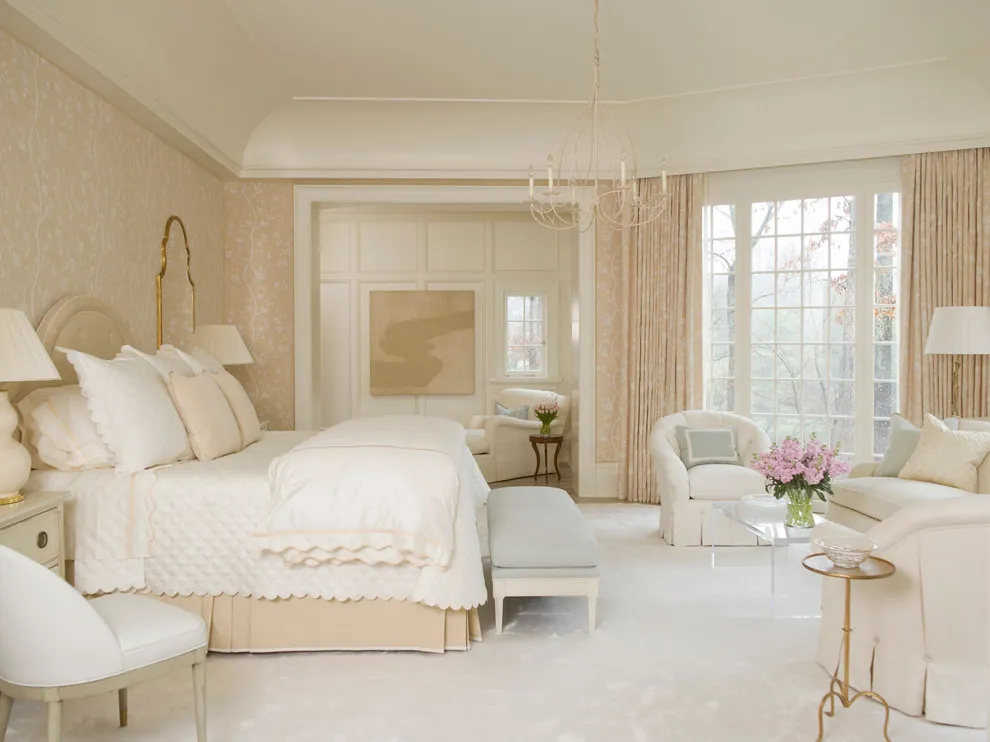
Use Scalloped Bedding as a Small Decorative Detail
 SaveSupport Non AI Creator
Image credit: Project: Phoebe Howard (via Houzz)
Scalloped edges give this white bedding a decorative outline without a bold print. Cream curtains and pale furniture keep the room consistent, while a soft bench repeats the bedding’s gentle appearance. A small sitting group occupies the window side of the room.
Detailed edges need care that suits their construction, especially if the bedding is washed frequently. Begin with one decorative layer instead of making every pillow and cover equally elaborate. Keep any extra seating separate from the route around the bed, and choose the number of pieces around the room you actually have.
PART 04
Make the Finishing Details Useful
IDEA 16 / 20
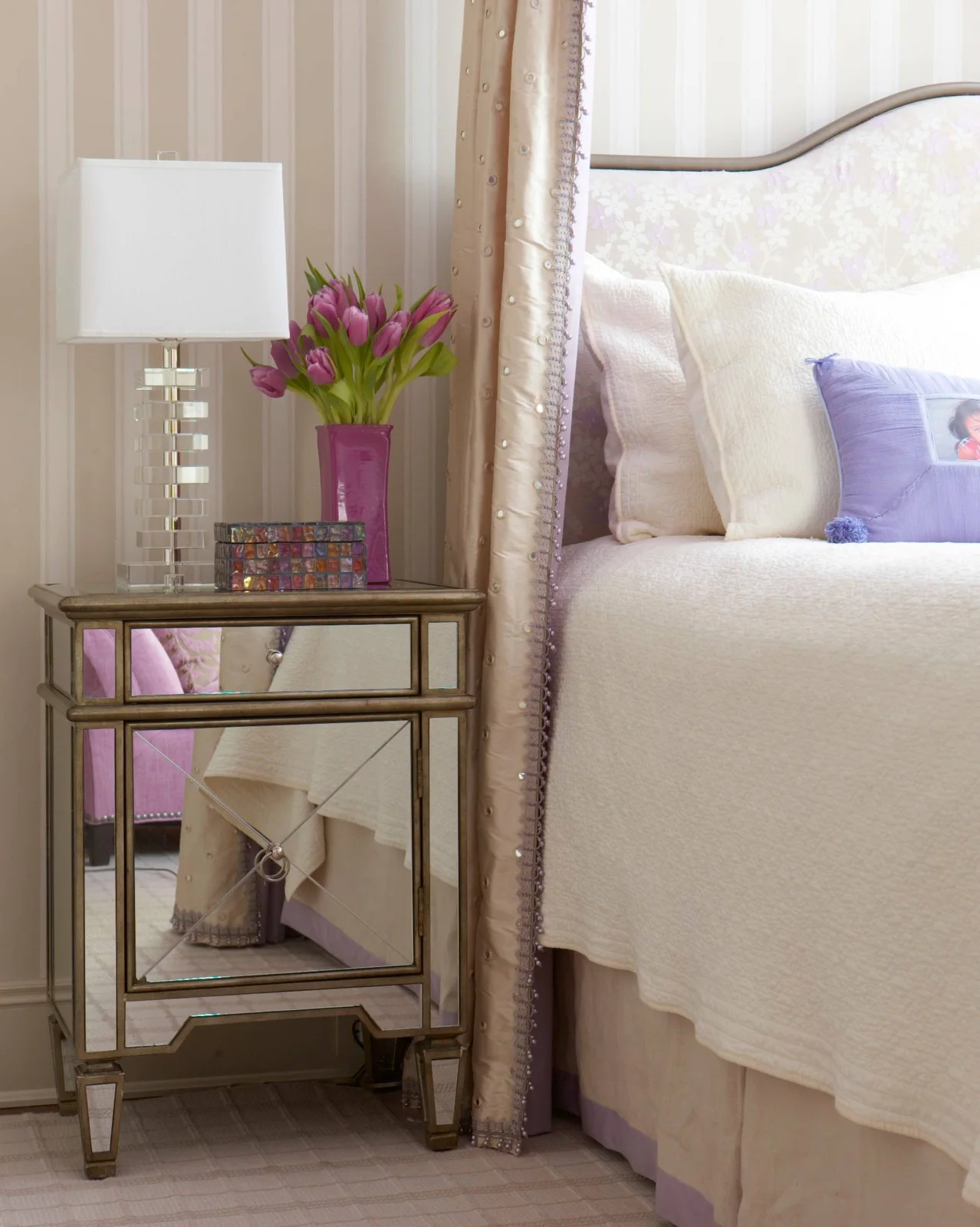
Use a Mirrored Nightstand as a Limited Accent
 SaveSupport Non AI Creator
Source: www.houzz.com
A mirrored cabinet adds reflection beside this pale upholstered bed. The clear stacked lamp keeps another visually light shape on top, while purple tulips introduce a concentrated color accent. The curtain and bed fabrics provide softer surfaces around the reflective edges.
A mirrored nightstand shows fingerprints and needs care around its edges, so check whether it suits daily use. Leave room for the items you reach for at night instead of filling the top with decoration. Keep flowers stable and away from electrical fittings, and wipe up water before it reaches cabinet joints.
IDEA 17 / 20
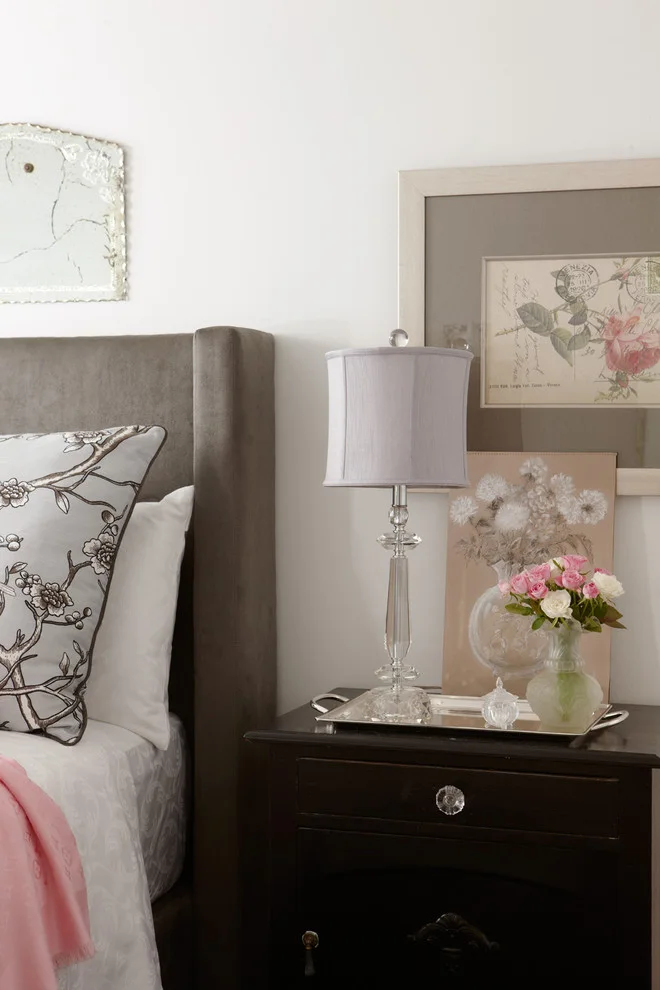
Group Small Bedside Items on a Tray
 SaveSupport Non AI Creator
Source: www.houzz.com
A tray groups the lamp and small objects on this dark bedside cabinet. The gray headboard and floral pillow create a quieter background, while pale flowers and pink bedding soften the darker furniture. The bedside arrangement has several details but keeps them within a defined area.
Use a tray only if it leaves enough reachable space for your own nighttime essentials. Check that it sits securely and does not overhang the cabinet. A small lamp should provide useful light as well as a decorative shape, and fresh flowers need a stable vessel away from the lamp’s cable and switch.
IDEA 18 / 20
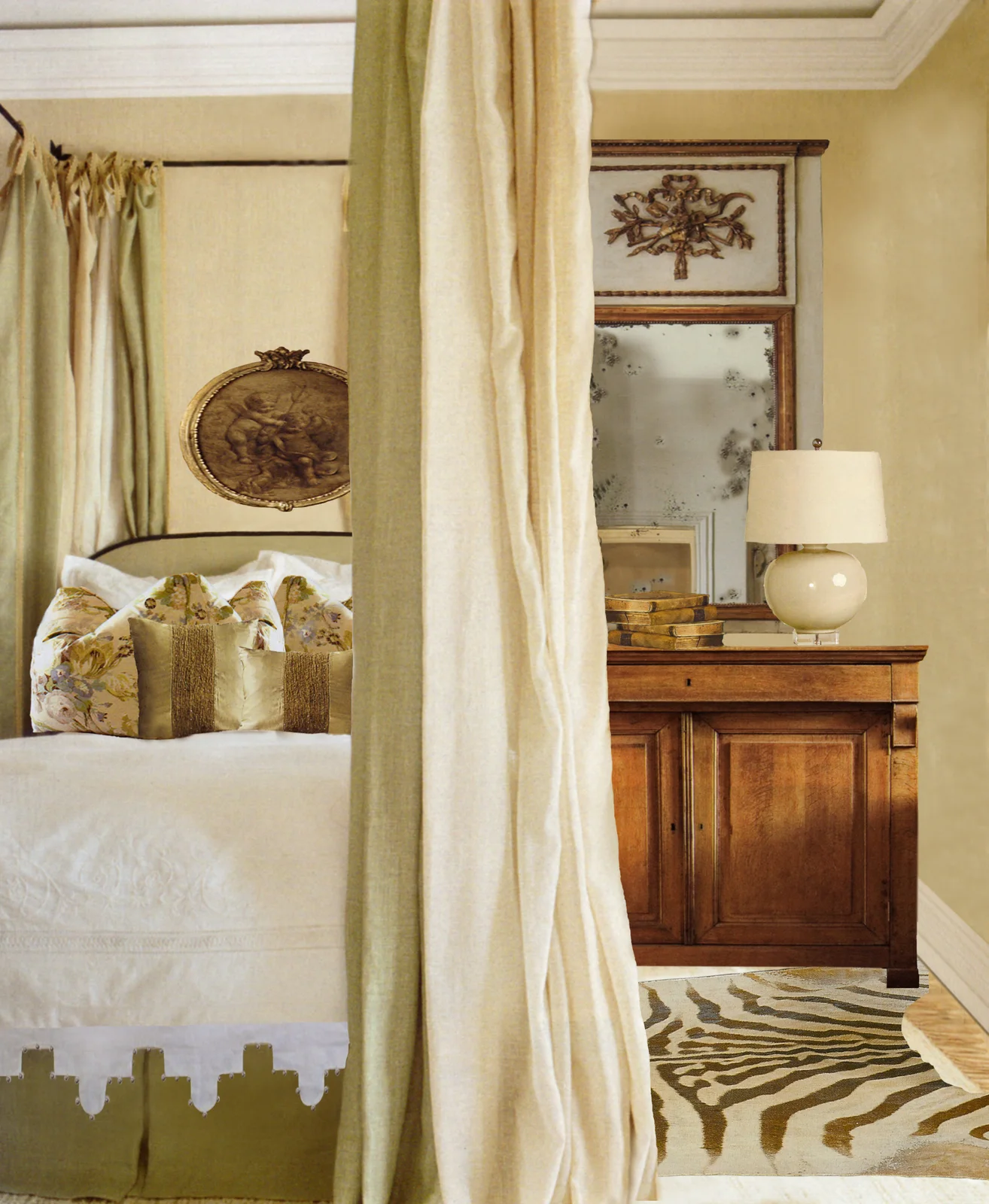
Let a Wood Bedside Cabinet Warm Pale Fabrics
 SaveSupport Non AI Creator
Source: www.houzz.com
A wood cabinet brings warmth beside the pale canopy curtains and floral cushions in this bedroom. The cabinet’s broad top holds a lamp and a small stack of books. A decorative mirror adds height behind it, while the light fabrics keep the sleeping area visually soft.
A bedside cabinet does not have to match the bed to feel connected. Compare its height with the mattress and keep the lamp switch within comfortable reach. Secure heavy mirrors appropriately, and leave canopy fabric clear of lighting and other heat sources rather than letting it drape over useful surfaces.
IDEA 19 / 20
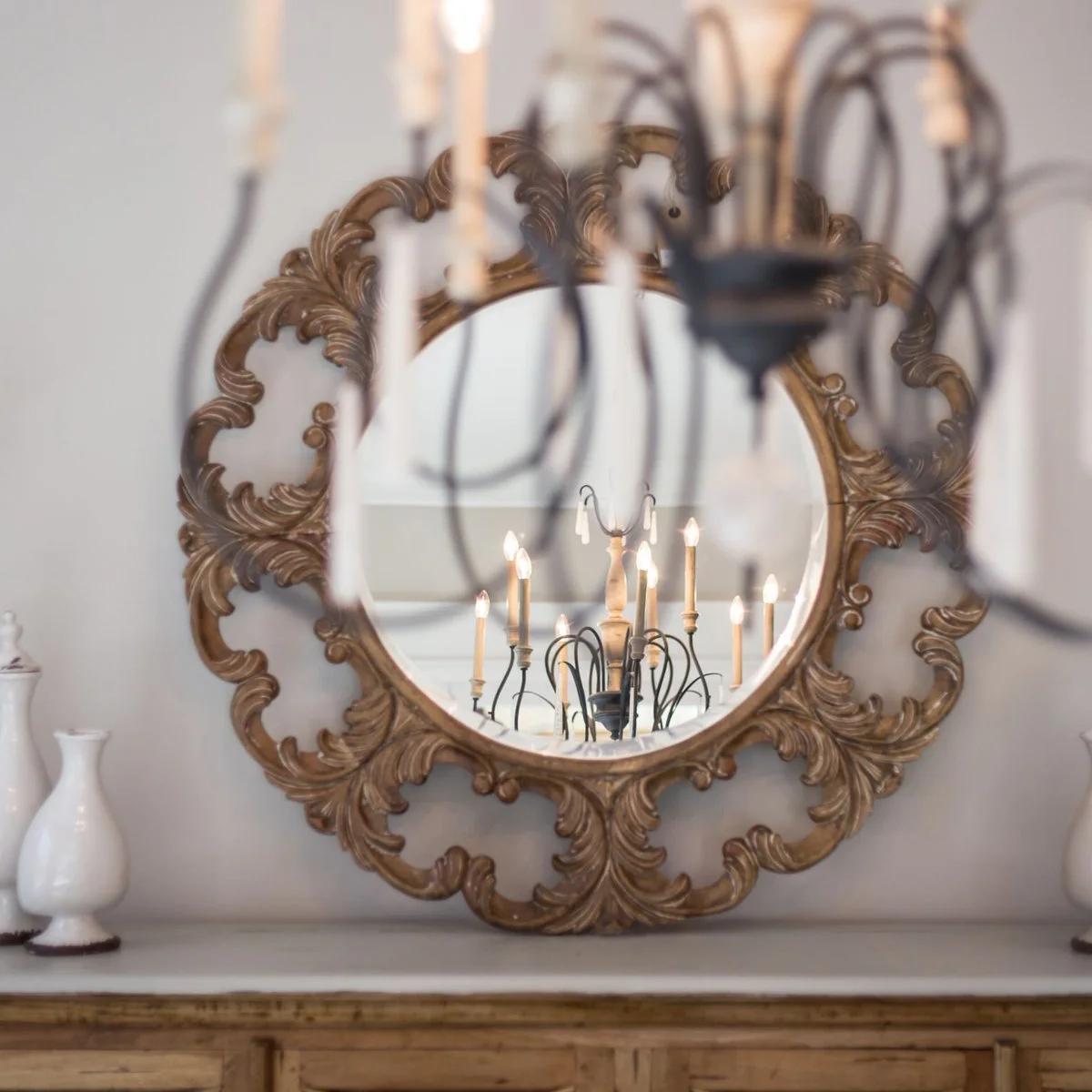
Choose One Decorative Mirror for a Quiet Wall
 SaveSupport Non AI Creator
Image credit: Project: E S Johnson Builders, LLC (via Houzz)
An ornate round mirror provides the main detail on this quiet wall. Its gold-colored scrollwork contrasts with the pale cabinet and reflects the chandelier, adding another layer of light and shape. A few white objects keep the cabinet top restrained beside the more elaborate frame.
Before positioning a mirror, check what it reflects from the bed and the doorway. Bright lamps or direct daylight can become distracting at certain angles. Use suitable fixings for the mirror’s actual weight, and keep nearby objects simple if the frame already supplies most of the room’s decorative detail.
IDEA 20 / 20
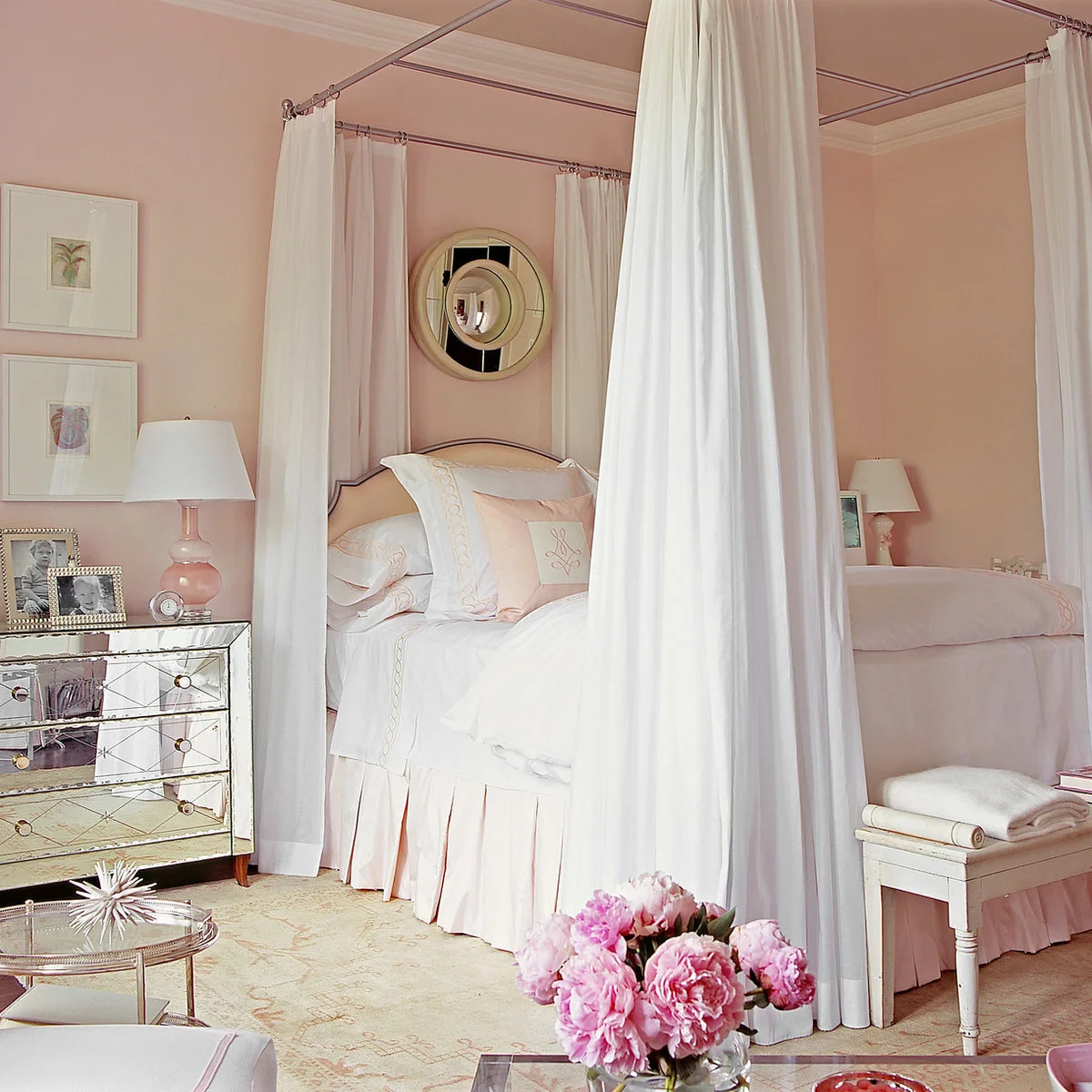
Keep Canopy Curtains Light and Easily Managed
 SaveSupport Non AI Creator
Image credit: Project: Phoebe Howard (via Houzz)
White canopy curtains frame the bed against soft pink walls, creating a more enclosed sleeping area without dark fabric. Mirrored drawers add a reflective contrast beside the pale bedding. The fabric hangs in simple panels, leaving the room’s other details visible through the open sides.
Canopy fabric adds another item to remove, wash and keep clear of lights, so consider the upkeep before installing it. Check the frame and hardware for suitable support. Keep panels away from bedside lamps and walking routes, and choose an open frame alone if fabric would make the room harder to use.
BRING IT ALL TOGETHER
Keep Softness Comfortable to Live With
Choose a small group of details that matter to you: a curved headboard, gentle wall color, patterned curtains or a useful reflective bedside piece. Let the other surfaces stay quieter. A feminine bedroom can feel personal without asking every object to be decorative.
Check the bed route, bedside reach and cleaning routine before adding more layers. Comfortable bedding, accessible storage and useful light are the foundation. When those work, a few well-chosen shapes and textiles can give the room character without making it difficult to maintain.