Floral bedroom wallpaper can be quiet and airy, dark and enveloping, or bright enough to become the room’s main feature. The effect depends on the spaces between the flowers, the background color and how much of the wall remains visible around your furniture. A photograph is a useful starting point, but a generous sample in your own room is essential.
These twenty bedrooms show different ways to combine flowers with bedding, headboards, lamps and adjoining walls. Use the details that suit your room rather than copying every accessory. Before buying, check the supplier’s installation and care guidance, calculate the repeat allowance and decide which surfaces should stay plain.
PART 01
Find the Right Scale and Contrast
IDEA 01 / 20
Use Small Sprigs With a Bright Bedside Table
 SaveSupport Non AI Creator
Image credit: Polly Wreford
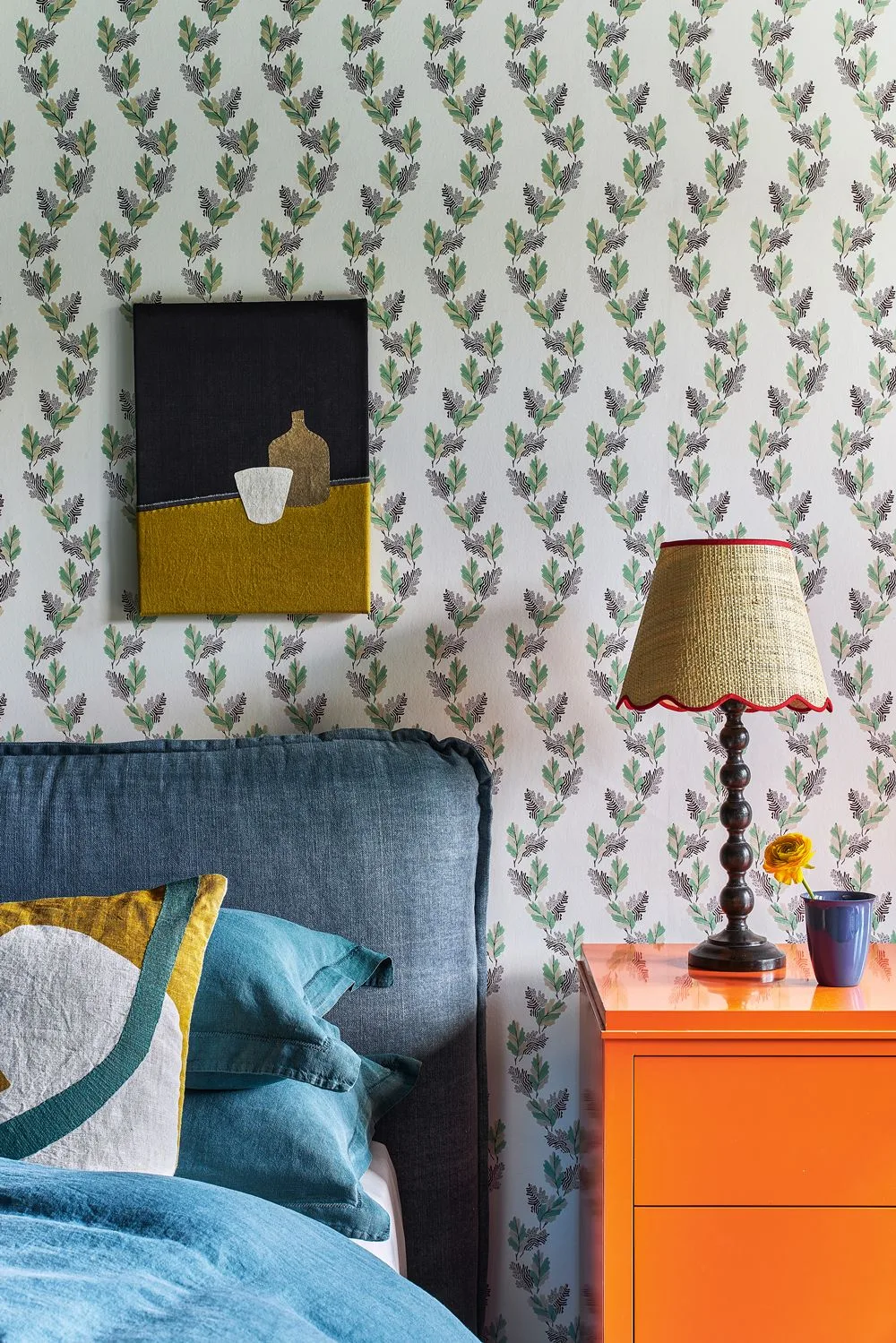
Small upright flower sprigs repeat across a white background, leaving generous pale spaces between the motifs. The blue headboard and bedding create a cooler block of color below, while an orange bedside cabinet makes the corner lively. A lamp with a scalloped shade adds another shaped detail without covering much of the wallpaper. The flowers stay readable because the furniture uses mostly solid colors.
Consider a spaced sprig pattern when you want flowers without an all-over mass of foliage. Compare a wallpaper sample beside your largest upholstered piece before choosing the cabinet color; here, blue and orange provide stronger accents than the paper itself. Leave space around the lamp base for everyday items, and avoid adding lots of small framed pictures between the repeating stems.
IDEA 02 / 20
Balance Dense Green Florals With White Bedding
 SaveSupport Non AI Creator
Image credit: Stacy Zarin Goldberg
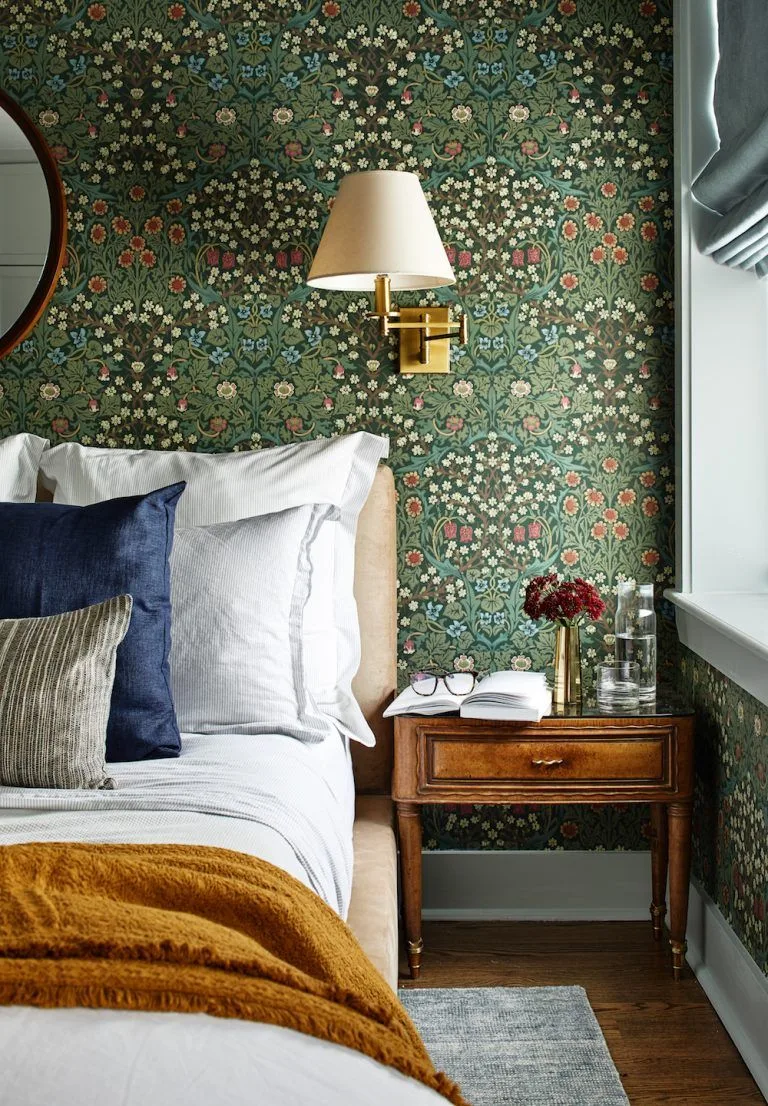
A densely patterned green wallpaper fills the bedside wall with small flowers and curling foliage. White pillows and a pale duvet interrupt that busy surface, while navy and mustard textiles give the bed a few deeper accents. The cream shaded wall light sits in front of the pattern, and the narrow wooden table brings a simpler outline into the corner.
When a flower print is this detailed, start with plain bedding so you can see whether the wall feels restful at night. A light lampshade creates a useful break in the pattern near reading height. Check that a sample remains attractive under your actual bedside bulb, since a dark background can look quite different after daylight fades. Keep tabletop accessories in a compact group.
IDEA 03 / 20
Make Large Yellow Flowers Feel Light
 SaveSupport Non AI Creator
Image credit: Photography by Suzanna Scott
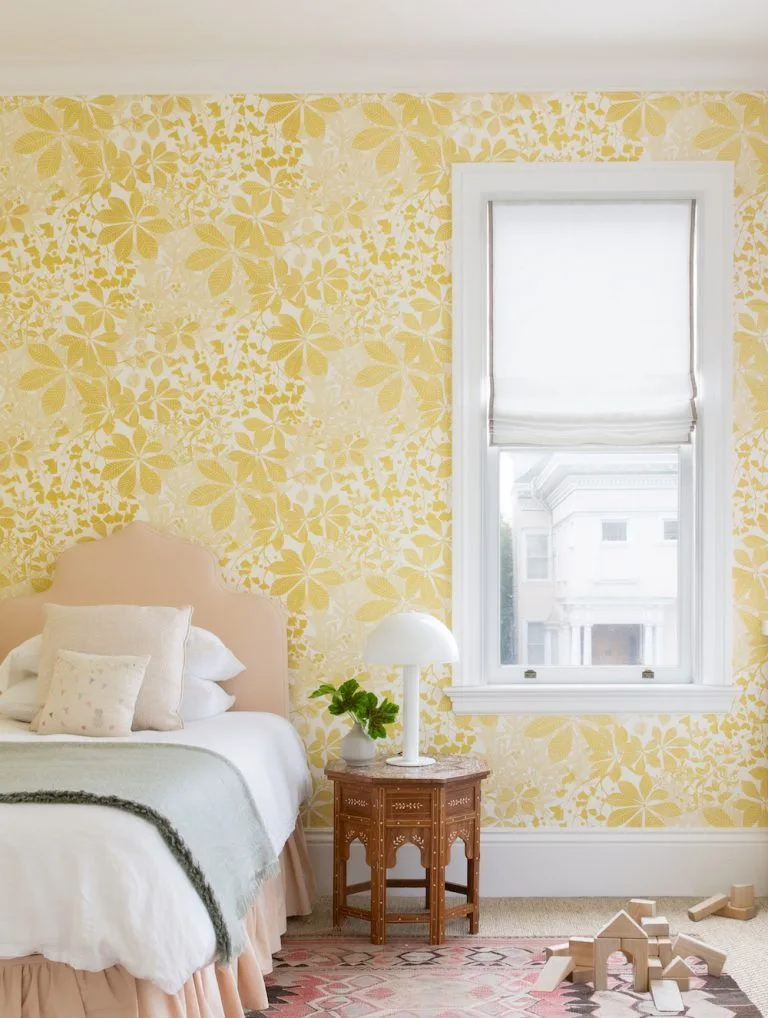
Large yellow flower shapes stretch across the wall around a tall window, with a pale background keeping the room bright. The headboard and bed coverings are much quieter, so the wallpaper supplies most of the movement. A white dome lamp, a small wooden table and toys on the floor give this bedroom a relaxed, playful character rather than a formal arrangement.
Try a generous floral scale in a younger family member’s room when you want the walls to carry the theme as tastes change. Keep the curtains or blind relatively simple so the window does not compete with the flowers. Lay out a sample repeat before ordering: a large motif can be awkwardly cut by a window opening or land mostly behind the headboard.
IDEA 04 / 20
Keep Tiny Blooms Cozy Under a Sloped Roof
 SaveSupport Non AI Creator
Image credit: Little Greene
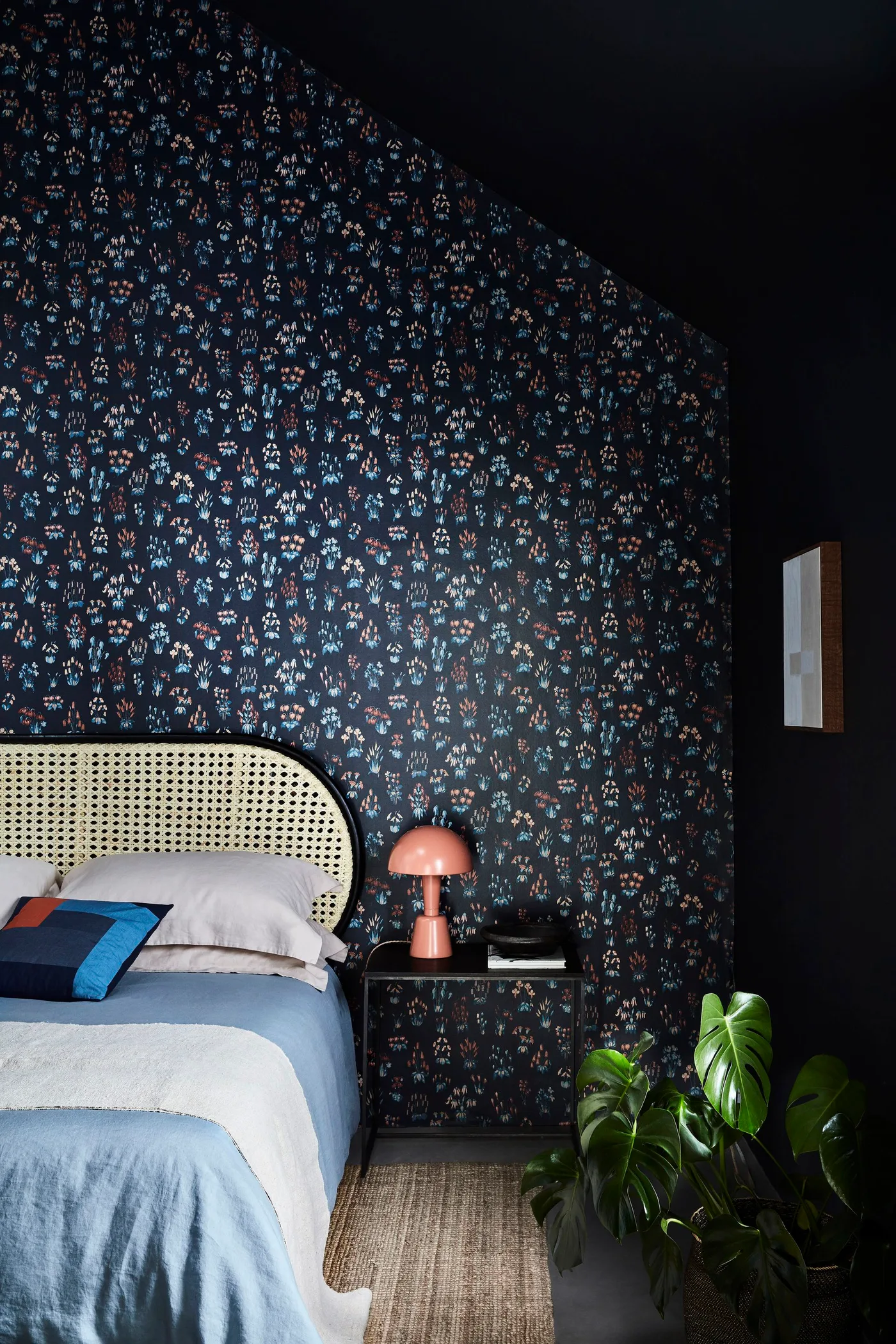
Tiny colored blooms cover a dark wallpaper behind the curved cane headboard. The ceiling slope and adjoining wall are also dark, making the bed feel tucked into a small alcove. Pale pillows, blue bedcovers and a coral bedside lamp provide clear points of contrast. The flower pattern is fine enough to read as a textured backdrop from across the room.
Use a small print when a low or sloping wall would cut larger flowers into distracting fragments. Test the dark background over a broad area, because the same paper may feel cozy beside a lamp and much heavier in an unlit corner. Pale bedding helps define the bed edge. Plan a clear route around any floor plant rather than filling the remaining corner merely for decoration.
IDEA 05 / 20
Let a Monochrome Blossom Mural Stand Alone
 SaveSupport Non AI Creator
Image credit: Emma Green Designs
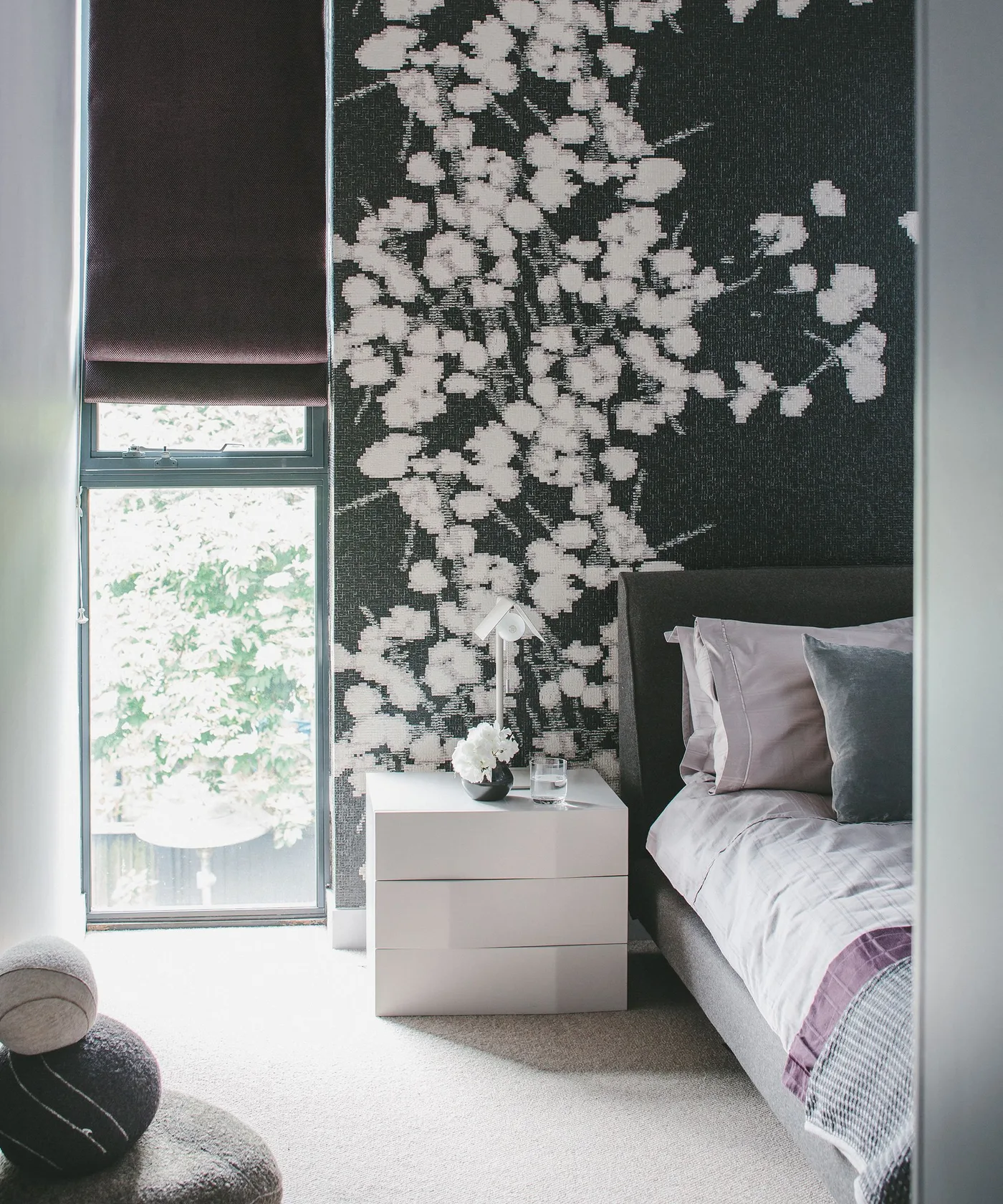
White blossoms trail across a dark wall mural beside a floor-to-ceiling window. The pale bedside chest and soft bedding repeat the flowers’ light tones, while the dark headboard connects with the background. The composition has much more open space than a regular floral repeat. Its branches therefore become the principal artwork in this part of the room.
Choose the position of a mural using a wall elevation that includes the bed, sockets and window. A branch that looks balanced on a sample image can disappear behind furniture once installed. Keep extra artwork modest so the blossom composition stays legible. Ask the supplier how the panels are ordered and how much trimming allowance is required before calculating what to buy.
PART 02
Carry Flowers Around the Room
IDEA 06 / 20
Carry a Delicate Floral Into the Window Seat
 SaveSupport Non AI Creator
Image credit: Penny Morrison
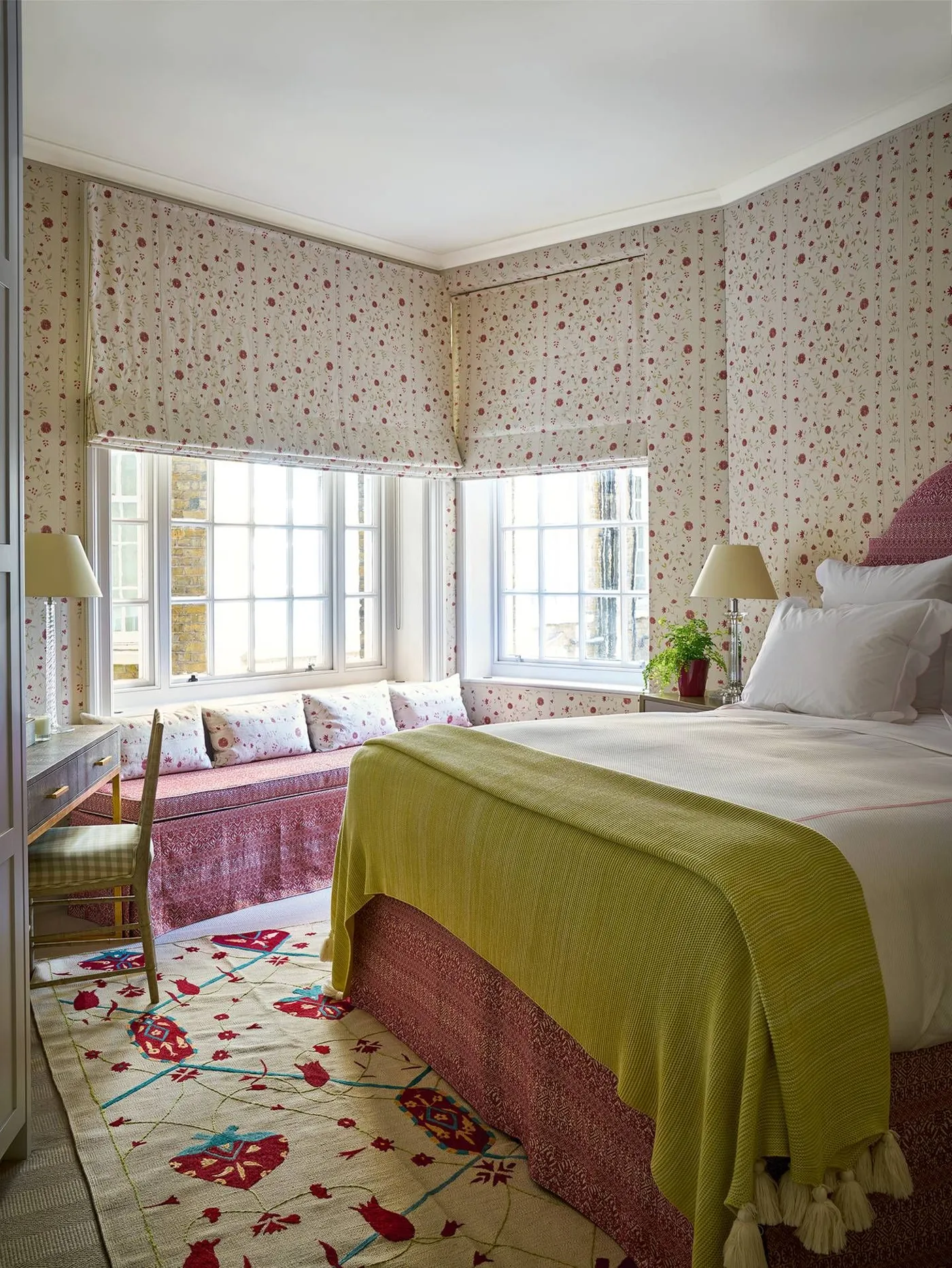
A fine pink flower print wraps the window corner and continues onto the blinds. Pink seat cushions and the upholstered bed base make the repeated pattern feel connected, while a green coverlet provides a broad, plain counterpoint. The window seat, dressing table and bed share the same decorative background, so this room feels coordinated even though it serves several different activities.
Matching paper and fabric works best when you examine both samples together; similar names do not guarantee identical color or scale. A plain coverlet prevents the bed from becoming another field of tiny flowers. Check that the blinds can operate freely above the window seat, and choose cushion covers that suit daily use. The patterned surfaces should support a comfortable routine as well as a coordinated appearance.
IDEA 07 / 20
Pair Stylized Pink Flowers With Simple Artwork
 SaveSupport Non AI Creator
Image credit: Molly Mahon
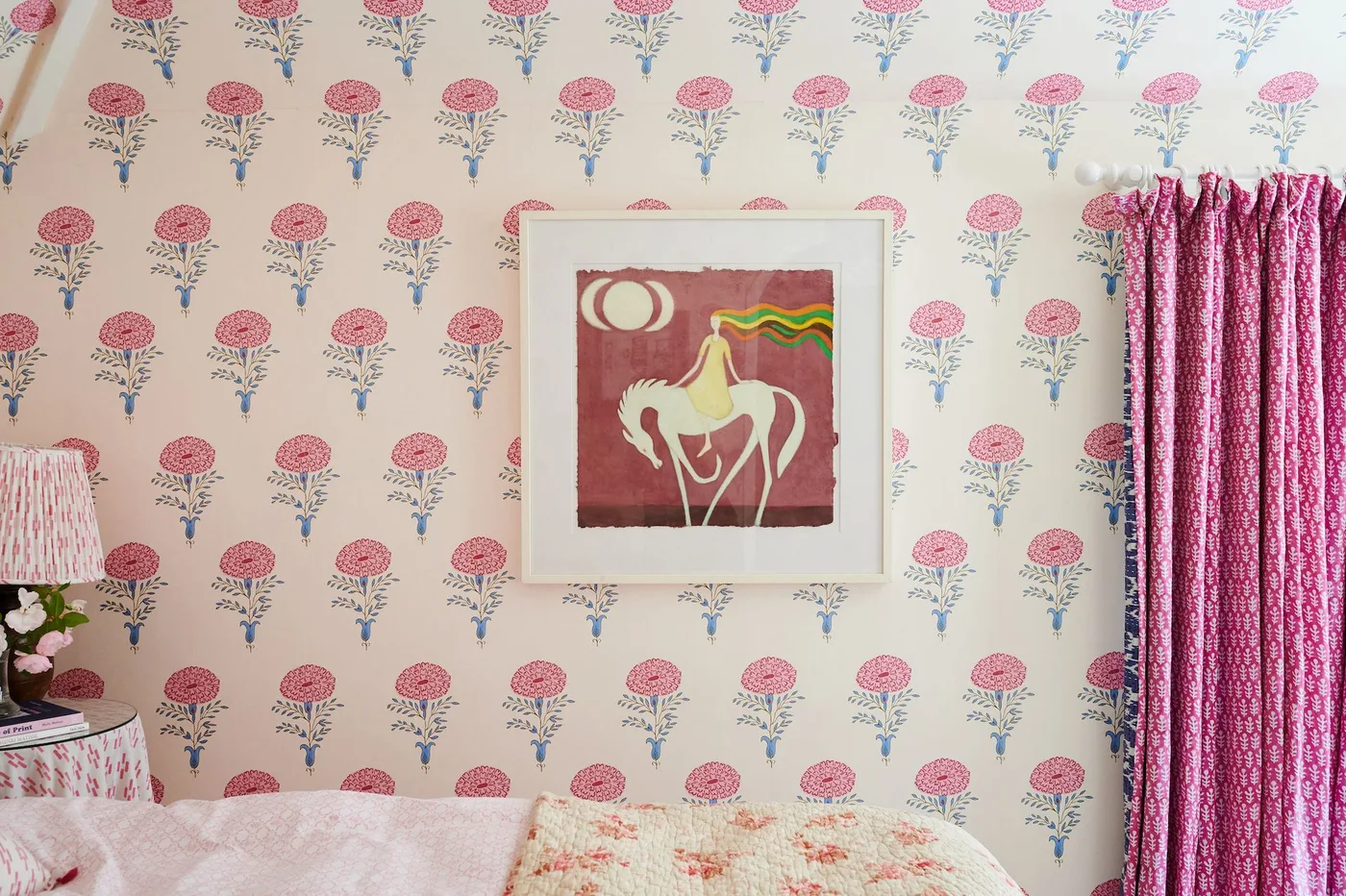
Rows of pink flowers with blue stems make a crisp, orderly pattern on a cream wall. A framed horse picture introduces a different subject above the bed, while gathered pink curtains repeat the blooms’ color. The flowers are stylized rather than lifelike, which gives the wall a cheerful graphic quality. Pale bedding leaves the repeated shapes easy to follow.
An orderly floral repeat can work with artwork if the picture has a clear silhouette and a limited palette. Place the frame on the wall before deciding exactly where a prominent flower will fall around it. Echo one wallpaper color in the curtains instead of trying to match every detail. A plain curtain alternative would make this combination quieter if the repeated pink feels too strong.
IDEA 08 / 20
Give a Traditional Floral Room Quiet Bedding
 SaveSupport Non AI Creator
Image credit: Future
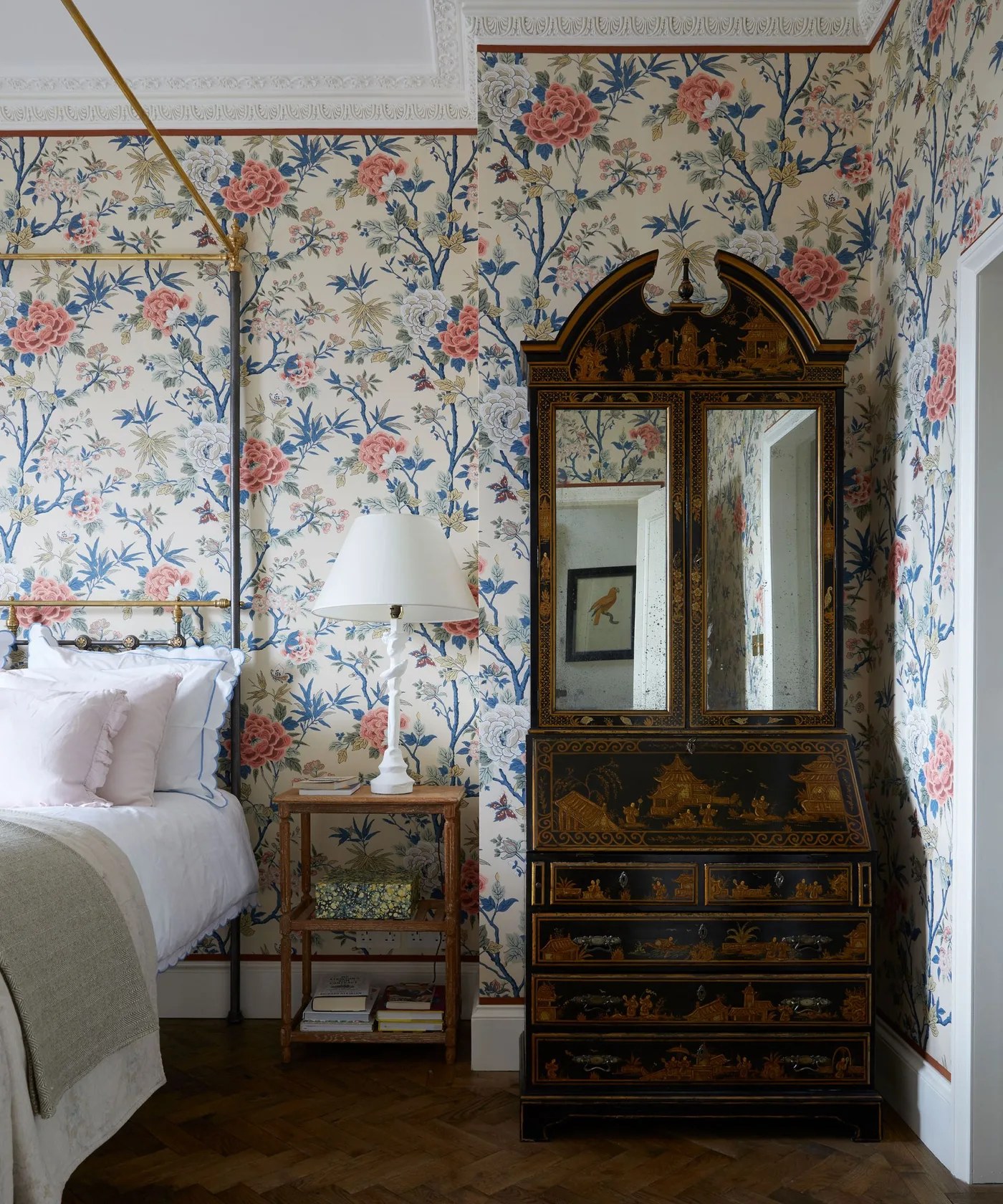
Pink blooms and blue leaves spread across cream wallpaper beside a slender four-poster bed. The tall decorative cabinet has a much darker finish, providing contrast with the paper’s pale ground. White bedding and a plain lampshade leave breathing room between the ornate furniture and the repeated flowers. The narrow bedside table keeps more of the wall visible at floor level.
When existing furniture has elaborate decoration, compare floral samples against the cabinet rather than choosing a print in isolation. The background color matters as much as the flowers because it determines how strongly dark furniture stands out. Simple bedding can soften the combined detail. Check the bedside table’s usable surface and drawer access before copying a particularly slender arrangement from a photograph.
IDEA 09 / 20
Wrap Slopes and Ceilings in a Fine Floral
 SaveSupport Non AI Creator
Image credit: Emily Minton Redfield
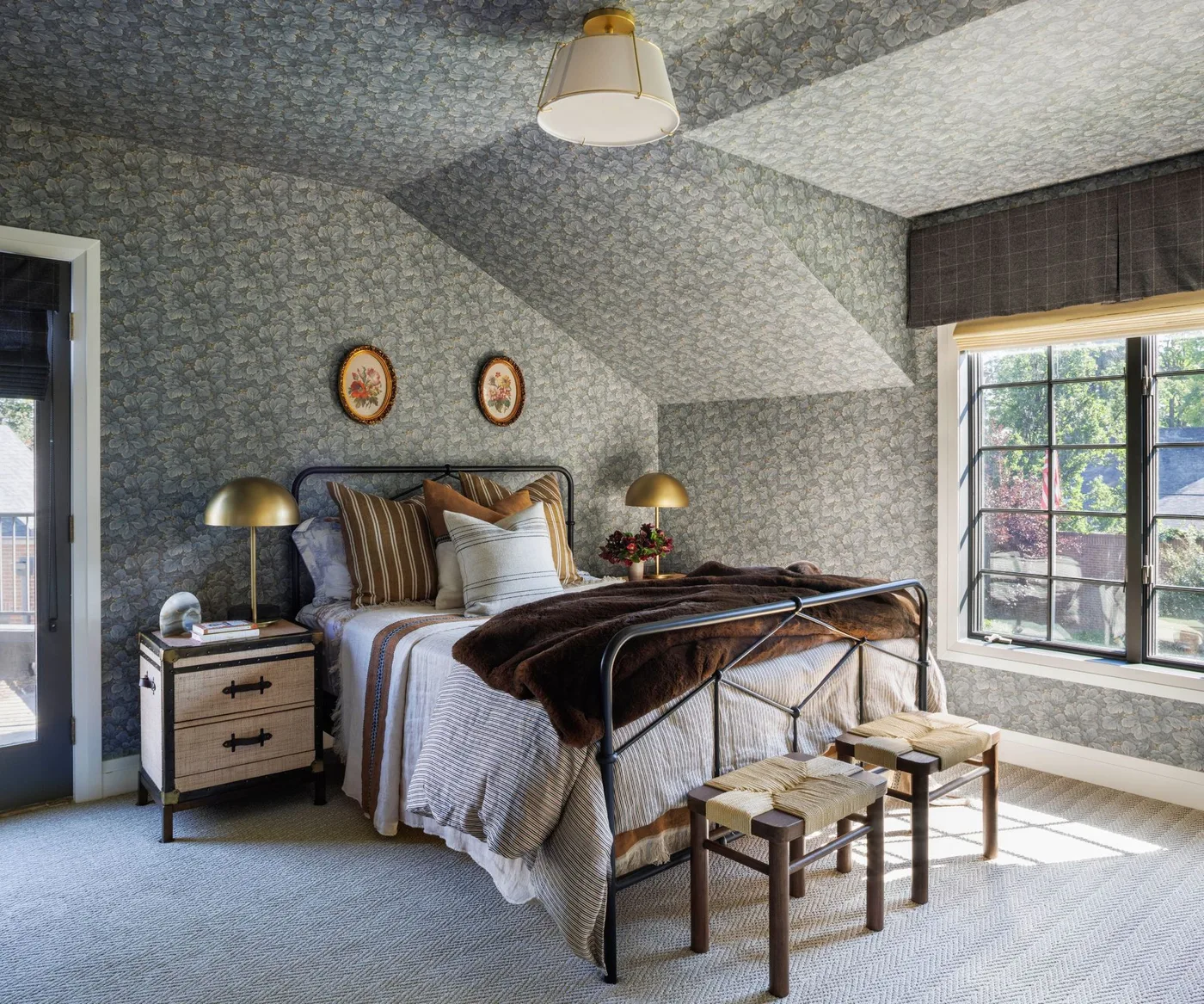
A fine gray flower pattern runs across the walls, roof slopes and ceiling, making the changing angles feel continuous. The dark bed frame and restrained bedside furniture create clearer lines against that patterned envelope. Two small stools sit at the foot of the bed, while pale bedcovers keep the center of the room lighter. The wallpaper becomes atmosphere rather than a single accent wall.
Wrapping a ceiling increases the surface to cover and makes alignment at corners more noticeable. Work through the repeat with an installer before buying, especially around slopes and ceiling fittings. Keep the largest fabrics relatively simple so the room has a visual resting place. Consider whether stools at the bed foot leave enough circulation for your room, rather than assuming the photographed arrangement will fit.
IDEA 10 / 20
Warm Brown Florals With a Plain Pink Bedcover
 SaveSupport Non AI Creator
Image credit: Nicole Fisher / Photography Kate S. Jordan
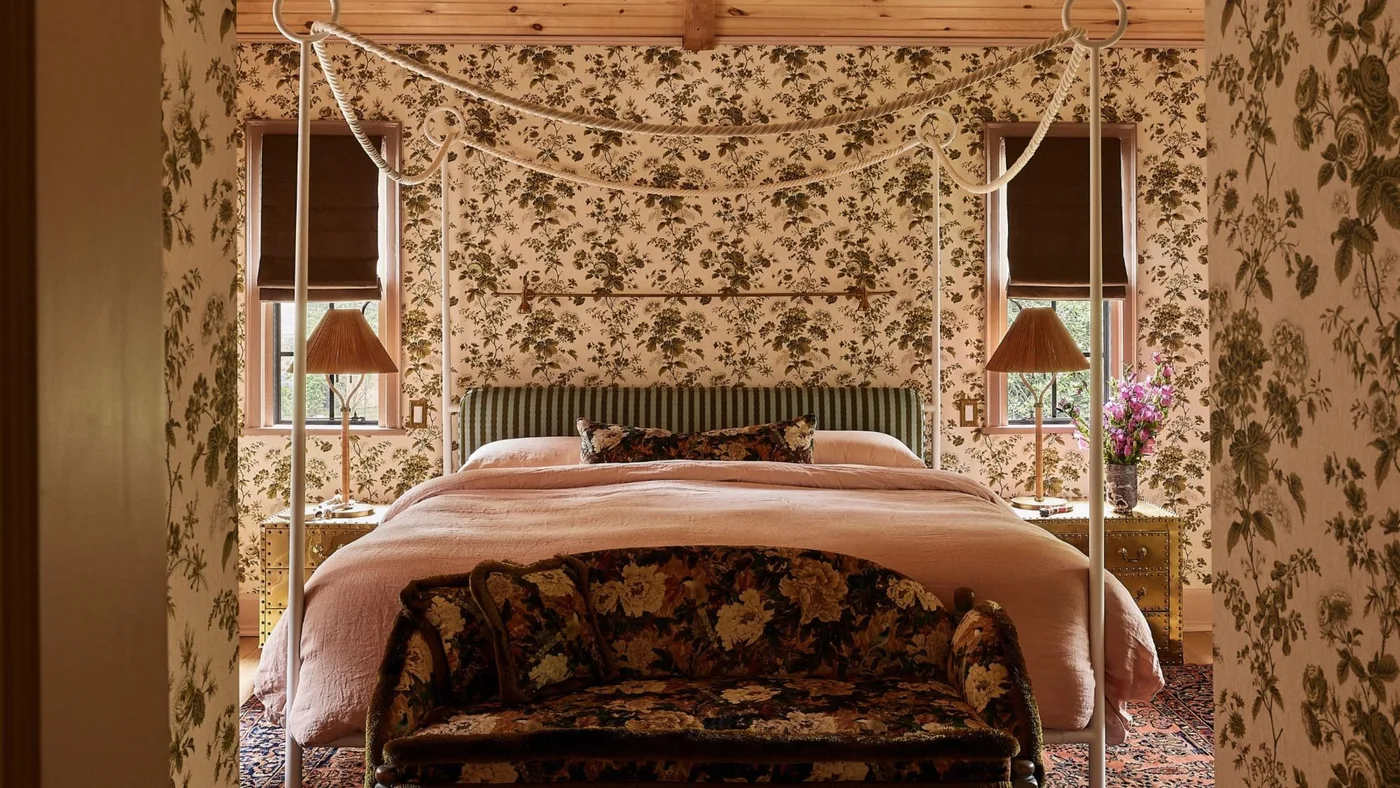
Brown flowering branches repeat around a canopy bed beneath a warm wood ceiling. A plain pink bedcover softens the darker pattern, while the striped headboard offers a second, more regular motif. The wallpaper continues around the paired windows, keeping the room’s walls connected. The floral sofa at the bed foot adds another layer, but the main bedcover remains a broad area of calm color.
If you combine florals with stripes, compare their scale from the distance at which you enter the room. A small stripe can read quietly while large flowers remain the main feature. Start with fewer patterned furnishings than this richly layered example if you prefer a calmer bedroom. Map the wall repeat around both windows and the headboard so prominent stems do not end in awkward fragments.
PART 03
Balance Florals With Furniture and Trim
IDEA 11 / 20
Use Pale Floral Sprigs Above Paneling
 SaveSupport Non AI Creator
Image credit: Divine Savages
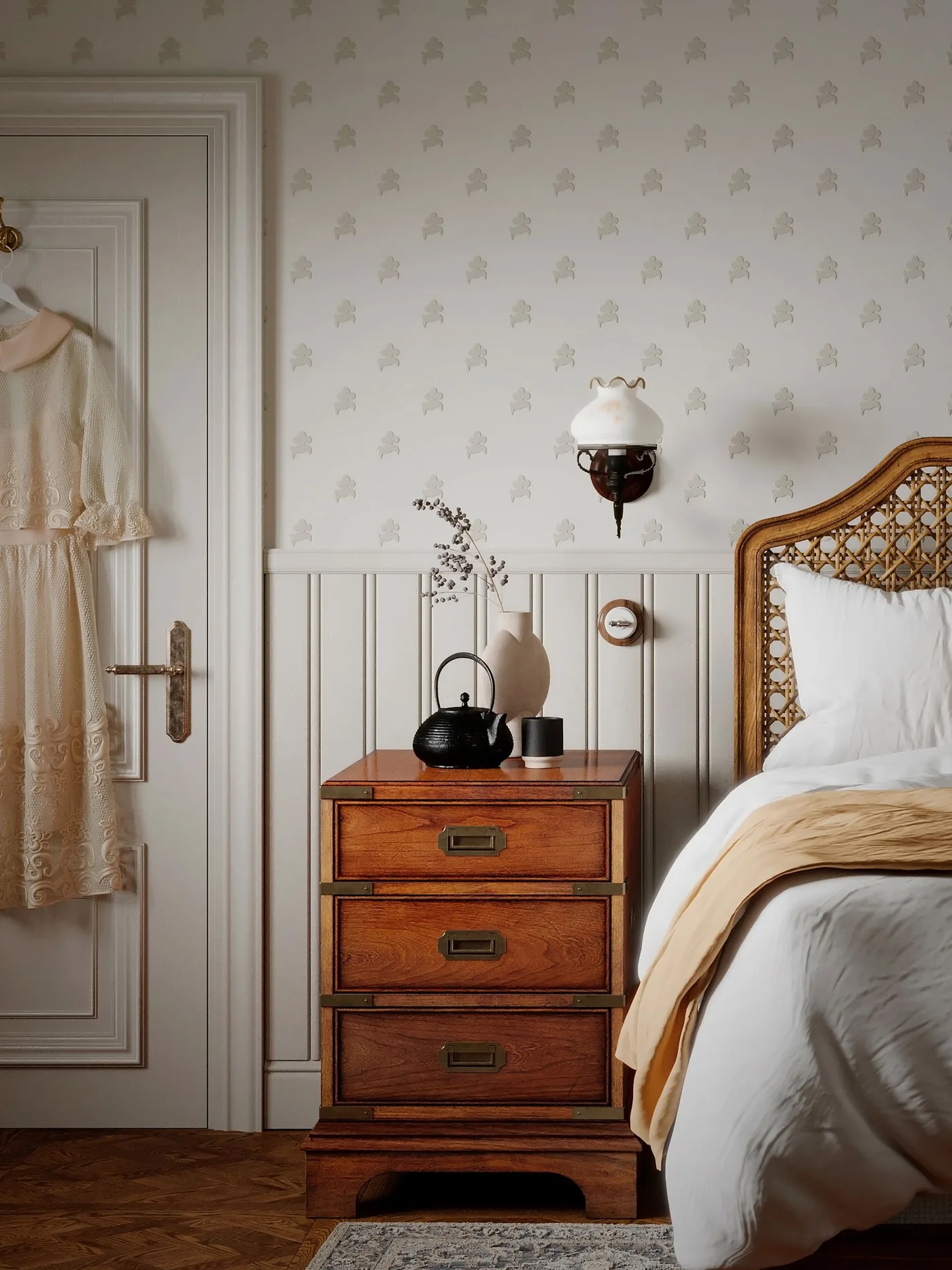
Pale sprigs sit on a cream wallpaper above a lower section of vertical paneling. A cane headboard and warm wooden chest add detail through their shape and texture without introducing bright colors. The flowers remain subtle, and the lower wall gives the room a clear horizontal division. A small shaded wall light leaves the bedside chest available for a few everyday objects.
This is a useful arrangement when you like flowers but want a mostly neutral bedroom. Put the paper sample beside the painted paneling to check that their undertones agree in both daylight and lamplight. Decide the paneling height in relation to the headboard, switches and window sills. Avoid leaving an awkward narrow strip of pattern above a very tall headboard merely to match another room’s proportions.
IDEA 12 / 20
Echo Floral Blue in a Bedside Lamp
 SaveSupport Non AI Creator
Image credit: Madeaux
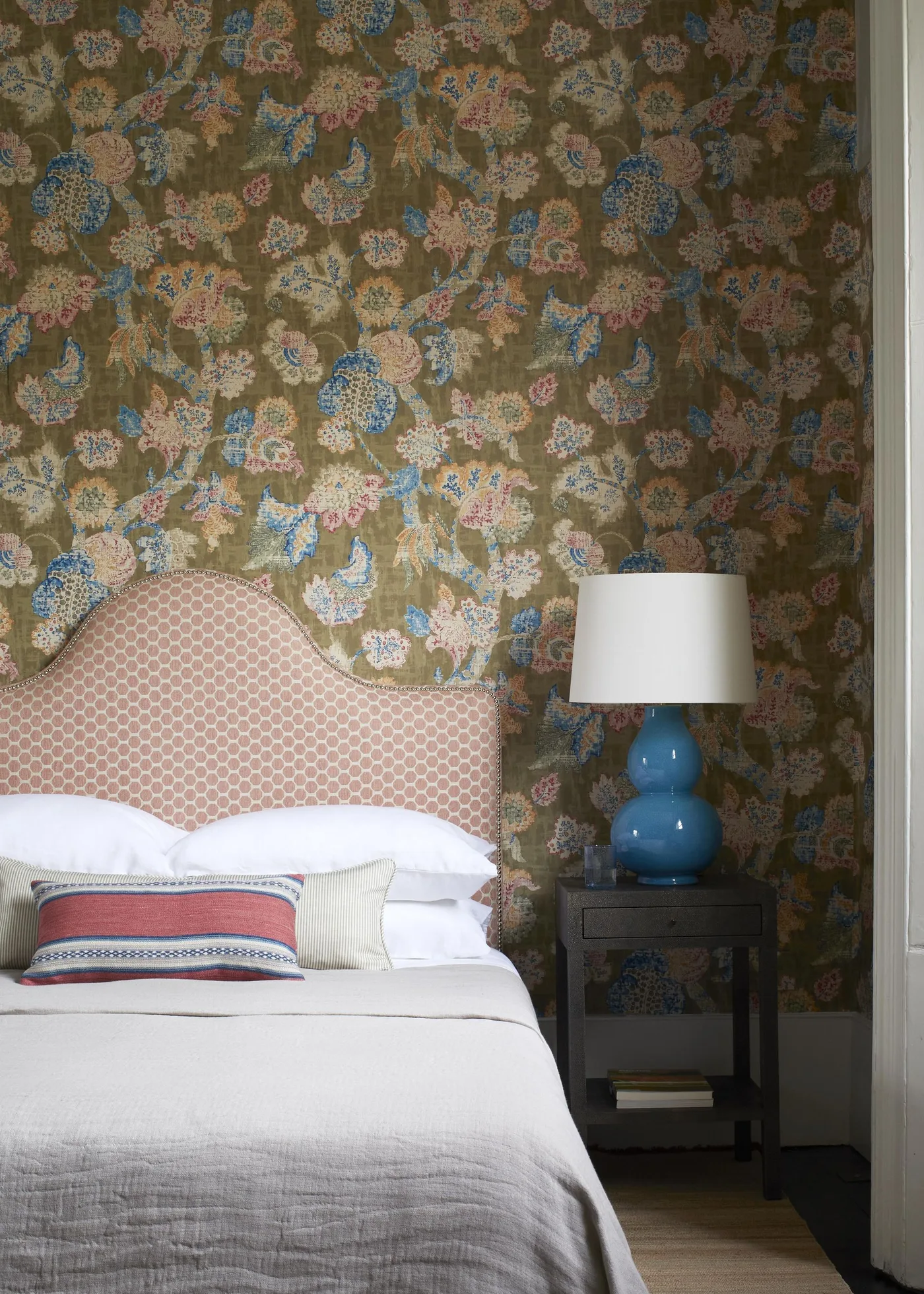
Muted flowers in blue, pink and cream cover a darker, earthy background behind a softly curved pink headboard. The bright blue bedside lamp repeats a color from the print at a larger scale. Its plain white shade and the white bedding lighten the center of the composition. The combination feels layered because the headboard pattern is finer and more regular than the wallpaper.
Pull an accent from a small part of the flower print when the main background would feel too heavy on furniture. A lamp is a manageable place to try that color before buying a larger piece. Compare upholstery and wallpaper samples at their actual scale rather than through tiny swatches alone. If the combination feels crowded, switch the headboard fabric to a solid version of the same pink.
IDEA 13 / 20
Frame Flowering Branches With Dark Trim
 SaveSupport Non AI Creator
Image credit: Little Greene
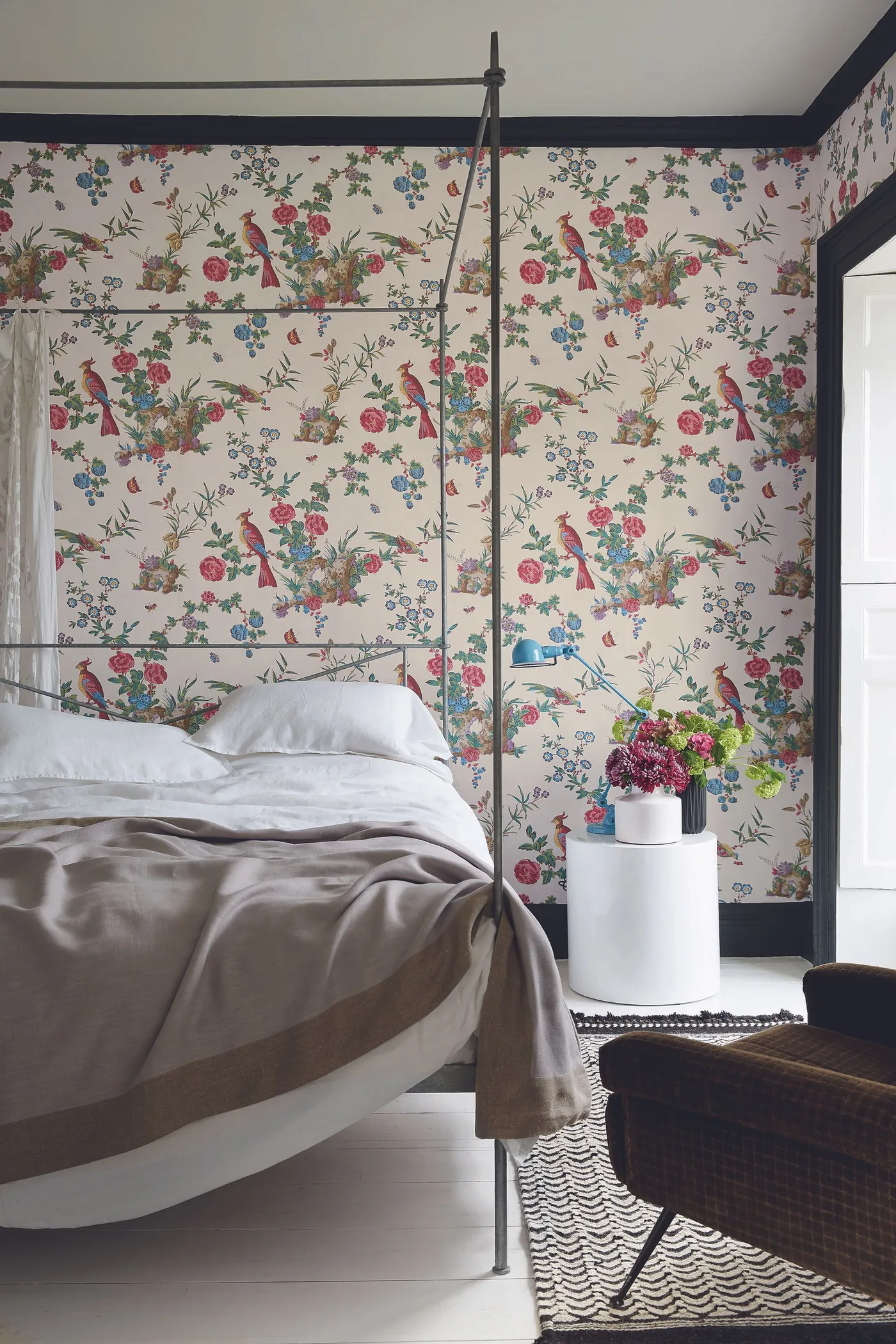
Flowers and birds spread across a pale background beside a dark four-poster bed. Dark trim around the ceiling and window creates a strong boundary for the airy pattern, and the bed’s narrow rails continue those lines into the room. The bedding is restrained, while a small bunch of flowers on a rounded bedside table echoes the wall’s botanical subject without obscuring it.
Test a dark trim color on a small section before committing to the entire room. It can make a pale floral sharper, but it also emphasizes every edge, so preparation and a neat finish matter. Keep bedding mostly plain when the paper includes both flowers and birds. Check the four-poster’s relationship to the ceiling and doorways rather than selecting a bed solely for its outline in this photograph.
IDEA 14 / 20
Repeat a Floral on the Bed With a Plain Divider
 SaveSupport Non AI Creator
Image credit: Future PLC/Katie Lee
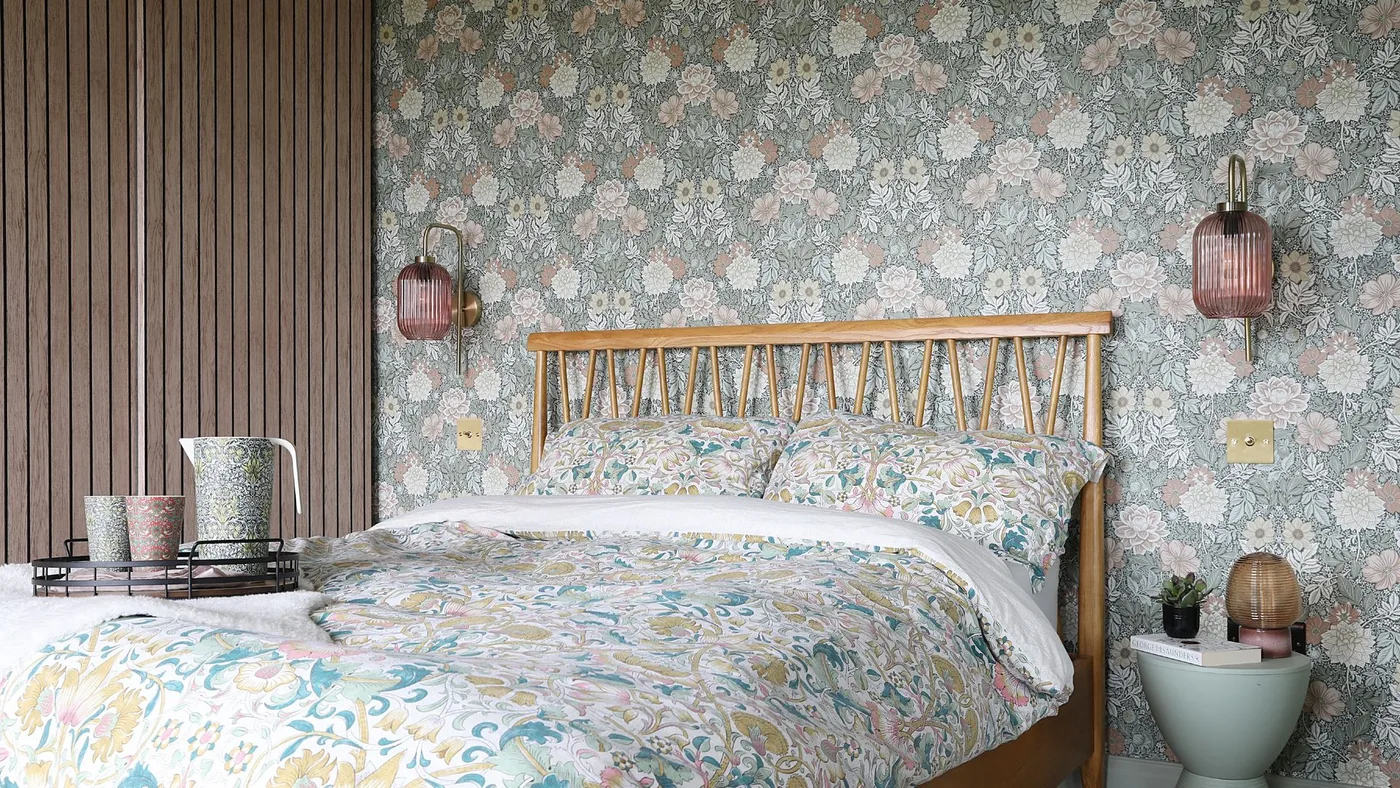
Muted floral wallpaper fills the wall behind a wooden spindle bed, and the bedding carries a related botanical pattern. A plain wall of vertical wood slats interrupts the flowers at one side, giving the room another rhythm. Pink wall lights repeat a small accent from the print. The light bedding background stops the coordinated paper and fabric from becoming one dark mass.
If you repeat a floral on the bed, leave at least one substantial surface simpler. That might be an adjoining painted wall rather than wood slats. Compare the two prints together to see whether their colors support one another or merely look similar online. Wall lights can reduce bedside clutter, but plan their height and switching around your actual bed and reading position before installing them.
IDEA 15 / 20
Soften Mixed Florals With Peach Walls
 SaveSupport Non AI Creator
Image credit: Future PLC/Caroline Mardon
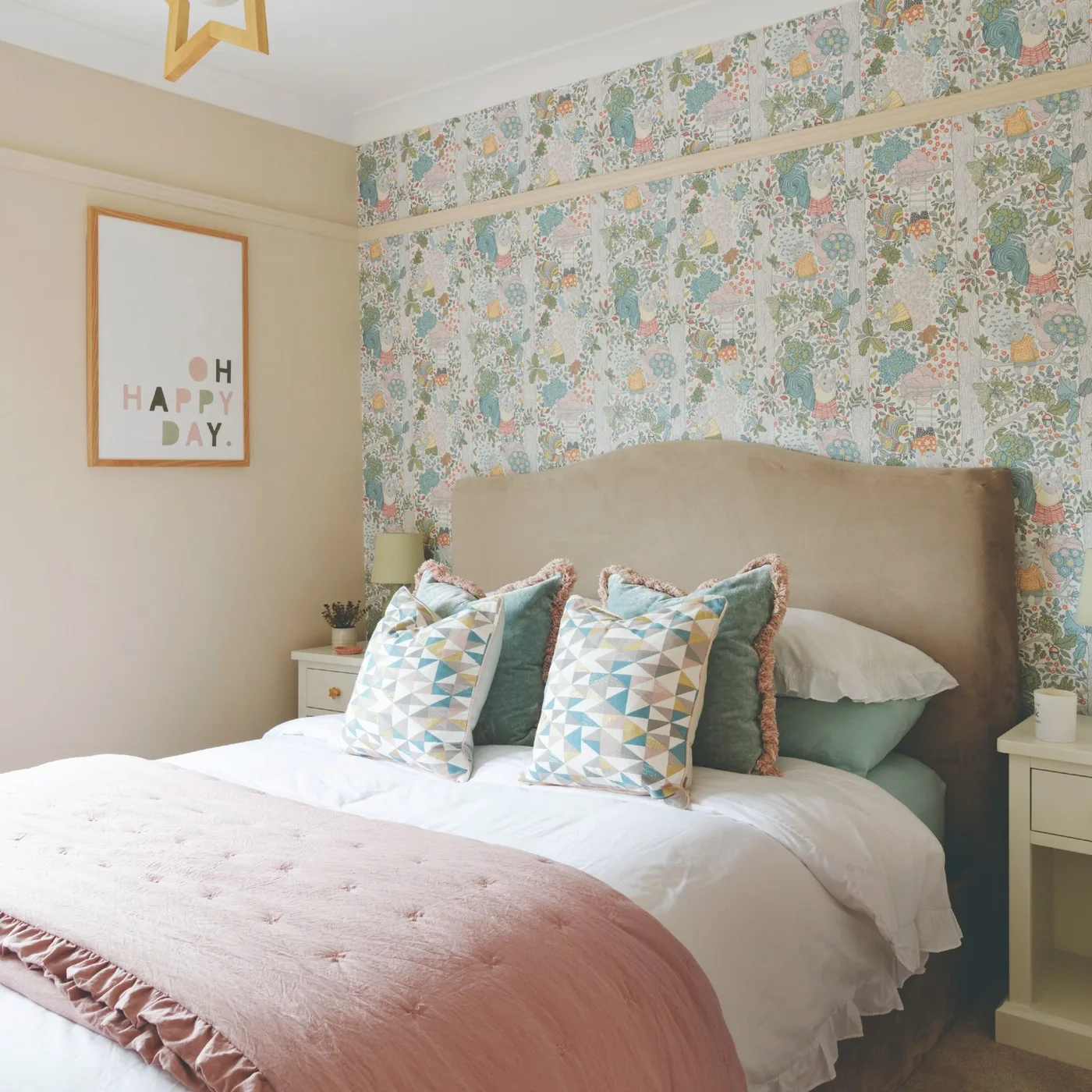
A pastel floral feature wall sits behind a curved beige headboard, with a peach wall bringing a quieter color to the side. Geometric cushions add another pattern on the bed, while the duvet remains white. A pink throw gathers the warmer accents together. The wallpaper is detailed, but its pale ground and soft colors prevent it from dominating the entire room.
Choose the adjoining paint using a wallpaper sample in the room, rather than matching a flower through a screen. A muted background tone is often easier to live with than the brightest petal color. When mixing geometric cushions with florals, keep their colors related and their scale distinct. Start with a smaller cushion group if you want fewer items to remove from the bed each evening.
PART 04
Build a Personal Color and Pattern Mix
IDEA 16 / 20
Set Dark Flowers Above a Pale Headboard Wall
 SaveSupport Non AI Creator
Image credit: Future PLC/ Dominic Blackmore
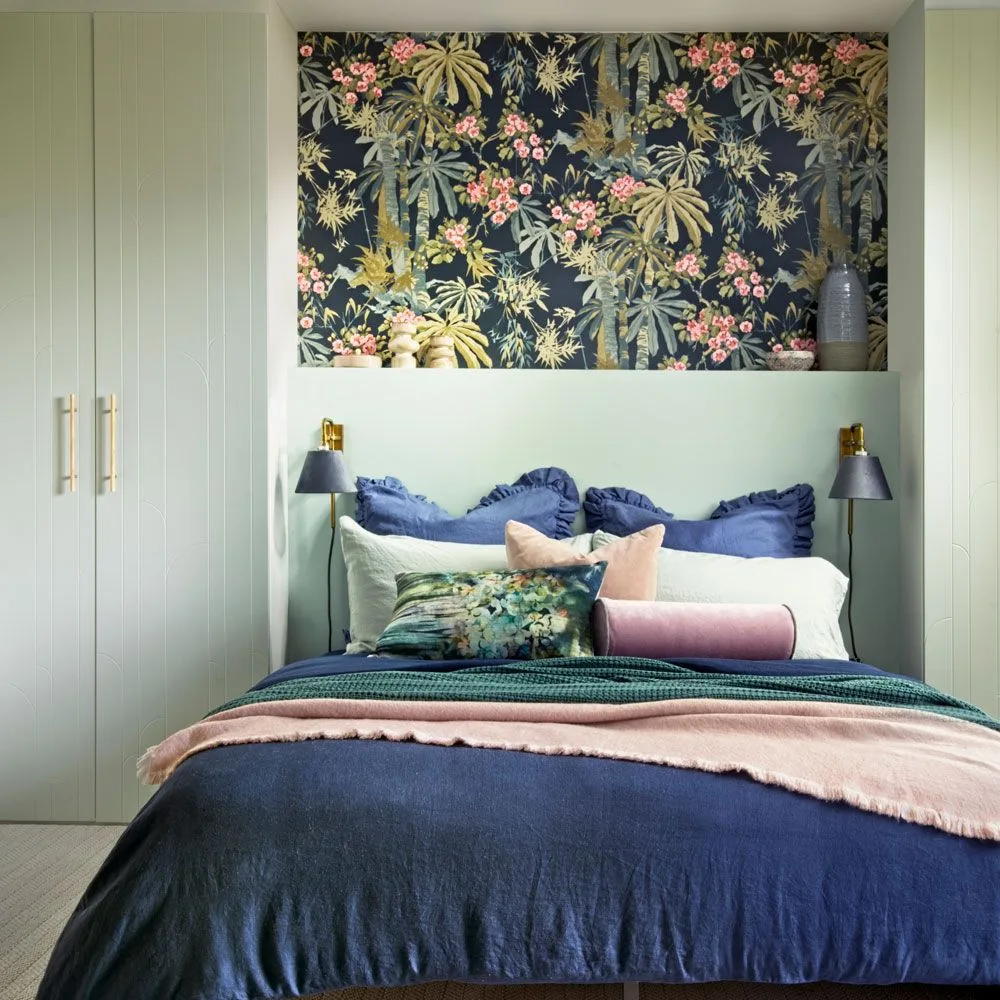
Dark floral wallpaper fills the upper recess above a pale mint headboard wall. Pink flowers and pale foliage stand out clearly against its deep background, while the surrounding paneling keeps the pattern contained. Navy pillows and bedding reinforce the darker tones, with pink cushions and a throw lifting the bed. Two compact wall lights sit below the most detailed part of the print.
An inset area can be a good place to try a dark floral without covering every wall. Work out where the print will stop and whether the lower section needs a protective finish near pillows. Keep the lights positioned for reading rather than simply symmetrical decoration. Check that there is still room for charging cables and bedside essentials when a ledge or recess replaces conventional bedside tables.
IDEA 17 / 20
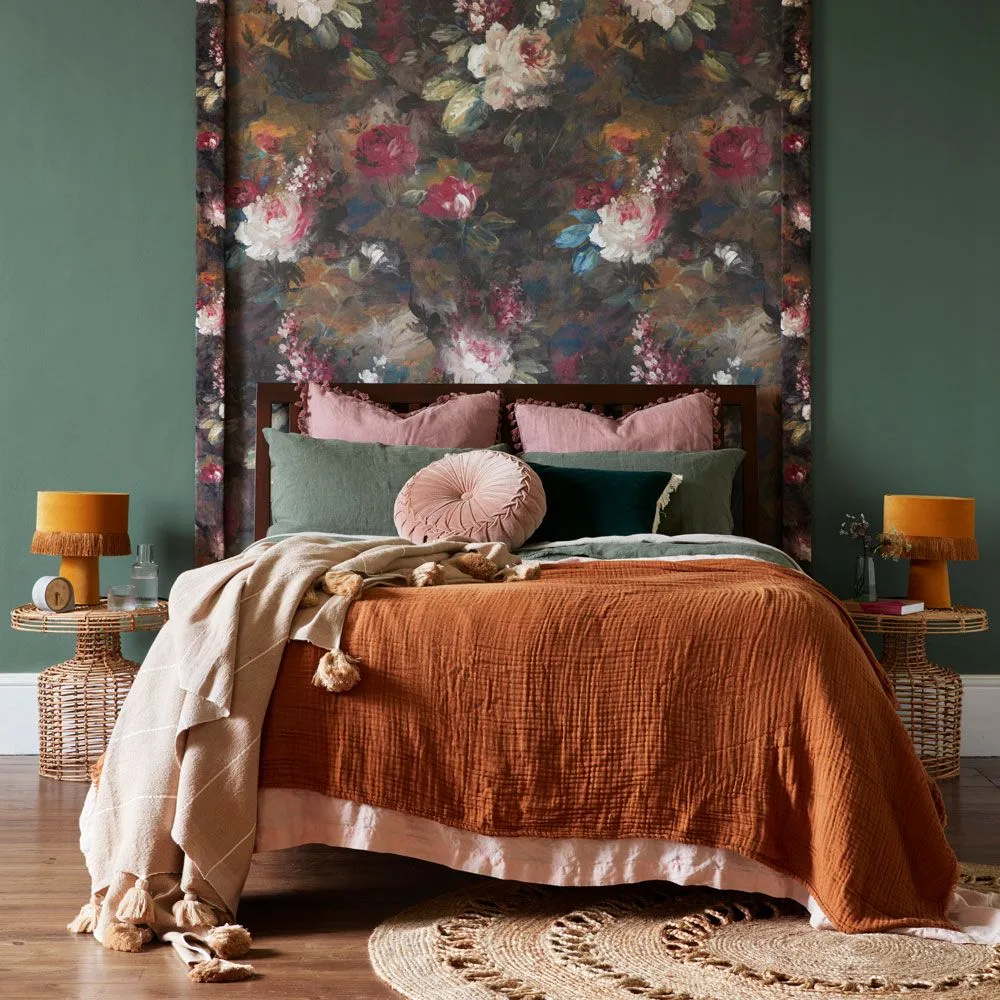
Let Oversized Blooms Bridge Green and Pink
 SaveSupport Non AI Creator
Image credit: Future PLC/ Tim Young
Large pale and pink blooms rise behind the bed, framed by green painted walls on either side. Pink cushions link to the flowers, while an orange coverlet and matching warm-toned lamps make the palette richer. A round woven rug and small basket-like bedside tables add quieter texture below. The full-height floral section creates a strong central backdrop for the headboard.
Lay out a large floral pattern before installation so the best blooms remain visible above the bed. Use an adjoining paint sample to decide how dark you want the overall corner to feel. This example includes several warm accents; keeping the coverlet or lamps neutral would reduce that intensity. Check that any small woven bedside table offers a stable surface for a lamp and a drinking glass.
IDEA 18 / 20
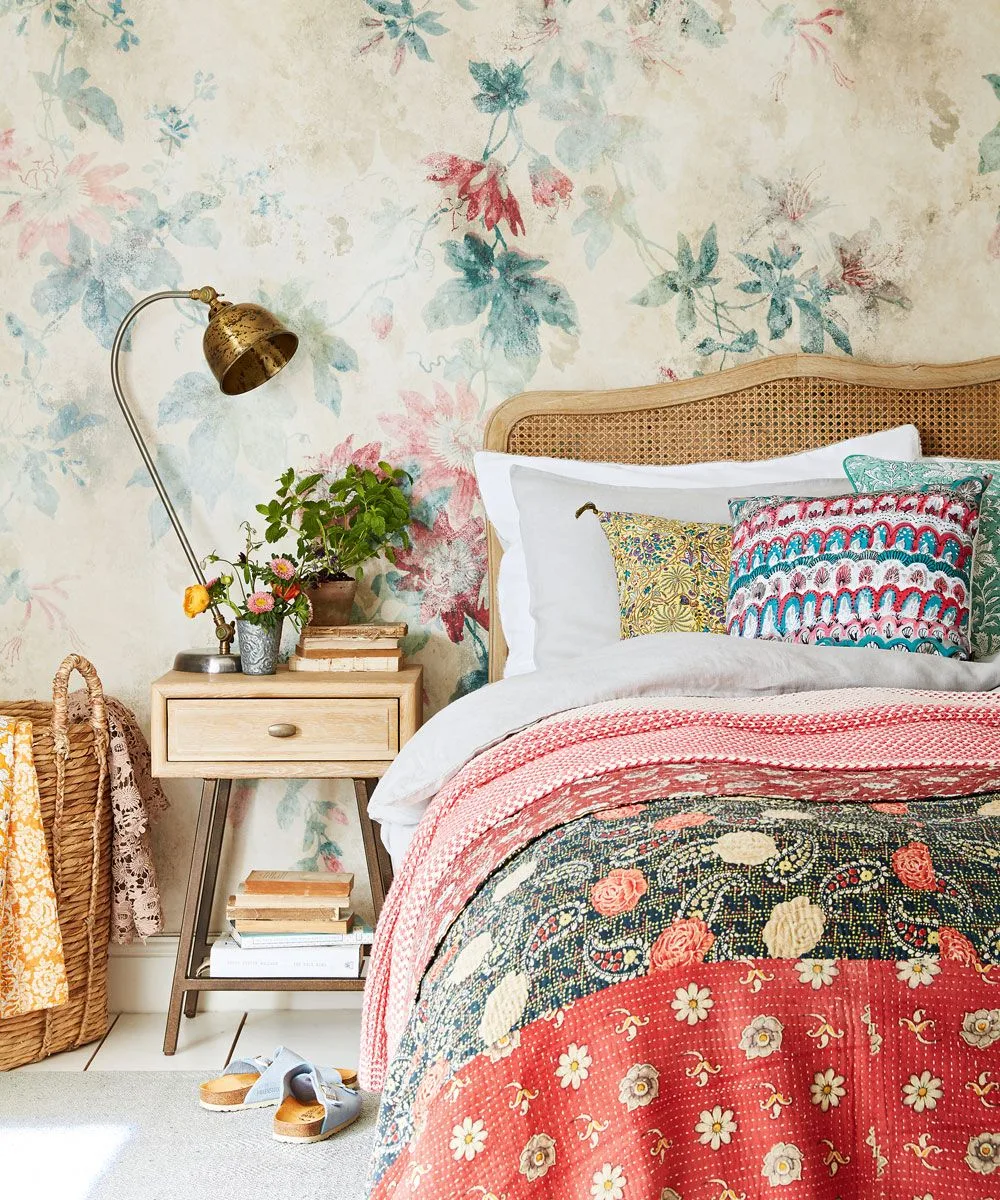
Mix Soft Painted Flowers With a Collected Bed
 SaveSupport Non AI Creator
Image credit: Future PLC/ Mark Scott
Softly colored pink and blue flowers spread across a pale wall behind a cane headboard. The bed layers several stronger patterns, including red and dark floral quilts, while a curved reading lamp introduces a simpler metal outline. Pale pillows separate the headboard from the busier fabrics. The wall’s gentle colors give this collected combination room to feel varied rather than rigidly matched.
Use a pale floral wall as a bridge between fabrics you already own, but compare the prints together before adding another quilt. Shared colors can connect different patterns without making them identical. Keep a few plain pillow covers available if the layers become too busy. Plan the lamp’s reach and cable route so you can read comfortably without crowding the bedside books and flowers.
IDEA 19 / 20
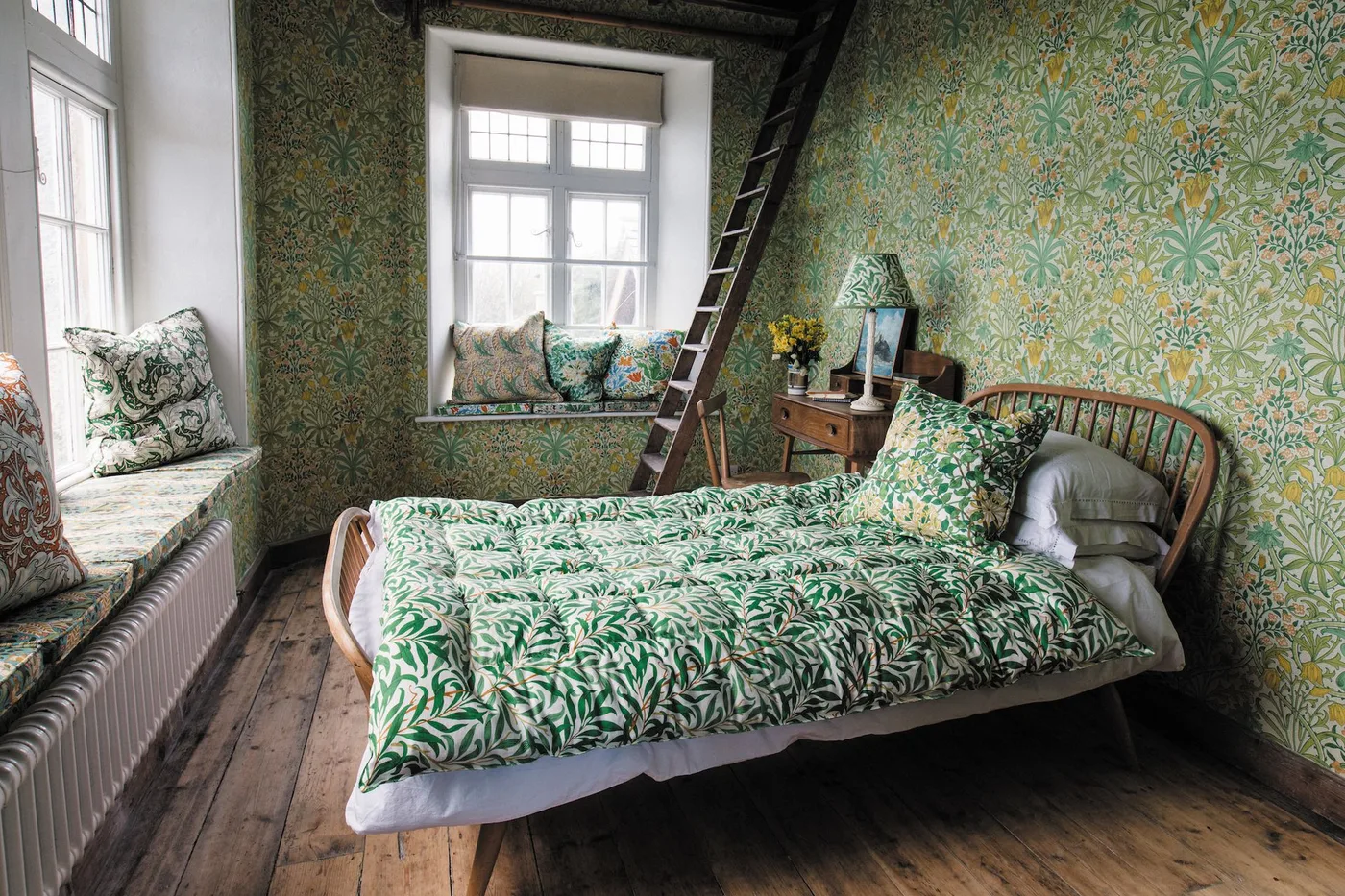
Make Green Floral Walls Feel Enveloping
 SaveSupport Non AI Creator
Image credit: Ben Pentreath for Morris & Co.
Green and yellow floral wallpaper covers the walls around a wooden bed and a cushioned window seat. Green botanical bedding repeats the garden palette at a different scale, while plain gray pillows give the headboard a break. The dark floor, ladder and furniture make distinct lines against the paper. Both the sleeping area and the window seating feel part of the same patterned room.
Whole-room florals need careful planning around corners, windows and built-in seating. Keep a broad sample on more than one wall to see how the colors shift through the day. Choose some plain cushions before adding multiple patterned fabrics so the room has a quieter place to rest your eye. Leave access to the window controls and avoid letting seat cushions interfere with opening or ventilation.
IDEA 20 / 20
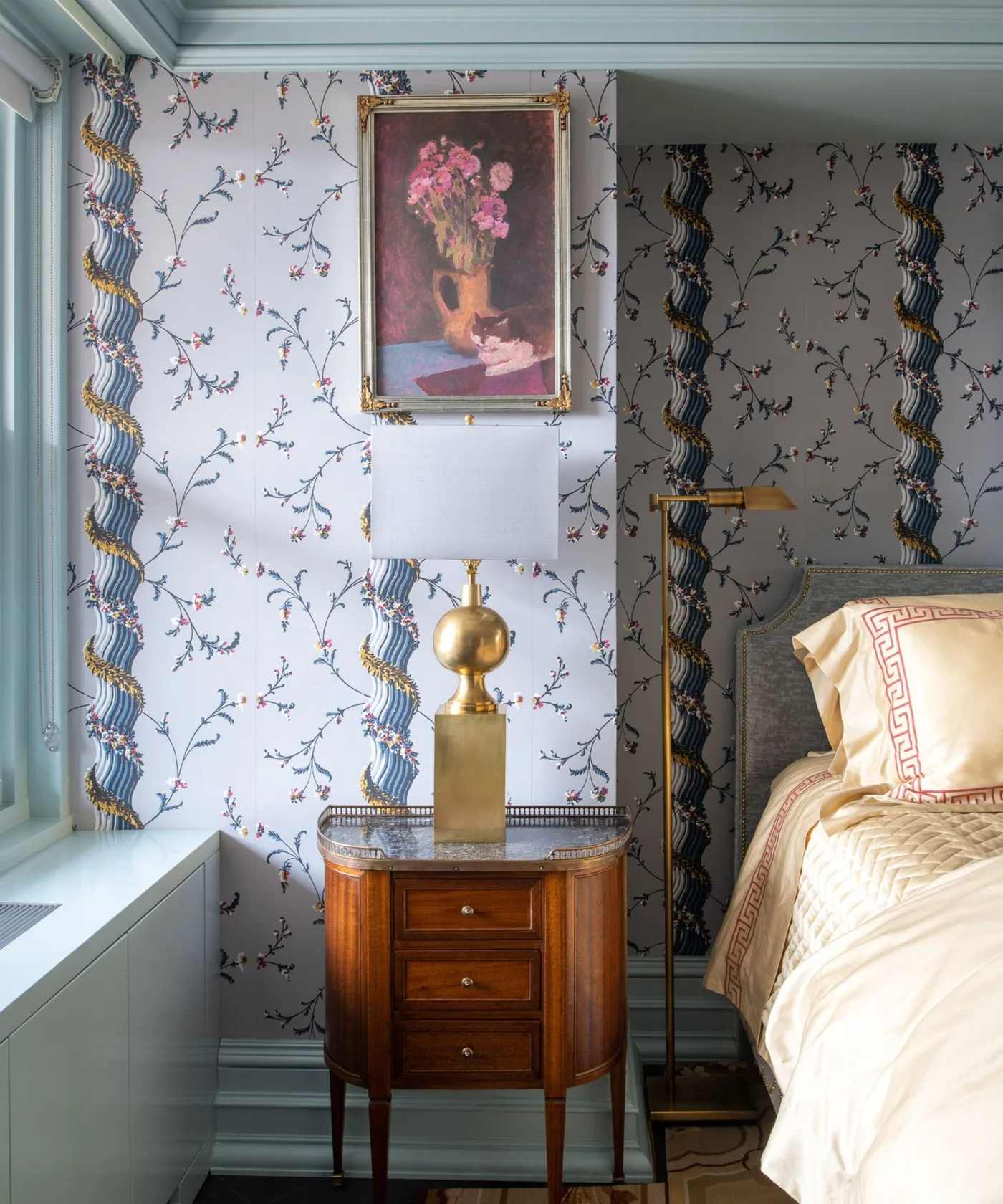
Connect Flowering Wallpaper to Blue Woodwork
 SaveSupport Non AI Creator
Image credit: James Yarosh Associates / Photography Patricia Burke
Delicate flowering stems cover a pale blue wallpaper with more decorative vertical bands running through the repeat. The nearby window trim and ceiling molding carry the blue outward into the architecture. A gold-toned lamp and framed flower painting add warmer points of contrast. Only the edge of the bed is visible here, showing how a decorated bedside corner can tie into the larger room.
Use the wallpaper background as a starting point for trim color, then test the paint beside a sample in changing light. Repeating a soft blue on the woodwork can feel more connected than leaving every edge white. Keep artwork clearly separate from the wallpaper pattern with an appropriate frame. Plan the position of decorative vertical bands around windows and corners before cutting the first wallpaper drop.
BRING IT ALL TOGETHER
Choose the Flowers Around Your Everyday Room
Begin with the print scale and background color, then consider what the bed will hide. A spaced sprig, a dense repeat and a large mural behave differently around a tall headboard or a low ceiling. Compare samples with existing furniture and your nighttime lighting before settling on a palette.
Plan the practical details before decorating: wall preparation, pattern matching, socket positions, bedside lighting and the supplier’s cleaning instructions. Keep a record of the paper reference and any leftover roll for future repairs. The best arrangement is one that feels comfortable when the bed is unmade and the room is being used.