A useful linen closet lets you replace a towel or change a bed without disturbing everything around it. Start by separating bath towels, sheet sets, spare pillows and blankets. Then compare the folded sizes with the shelves you already have before buying matching containers.
These eighteen photographs show everyday closets, fitted cabinets and freestanding cupboards with different approaches to linen storage. Choose the arrangement that suits your household, keeping clean textiles dry and separate from leaking toiletries or cleaning products. You do not need a large collection of spare bedding to make a small cupboard work well.
PART 01
Sort everyday linens
IDEA 01 / 18
Label Bedding by the Room It Belongs In
 SaveSupport Non AI Creator
Image credit: Future PLC/Joanna Henderson
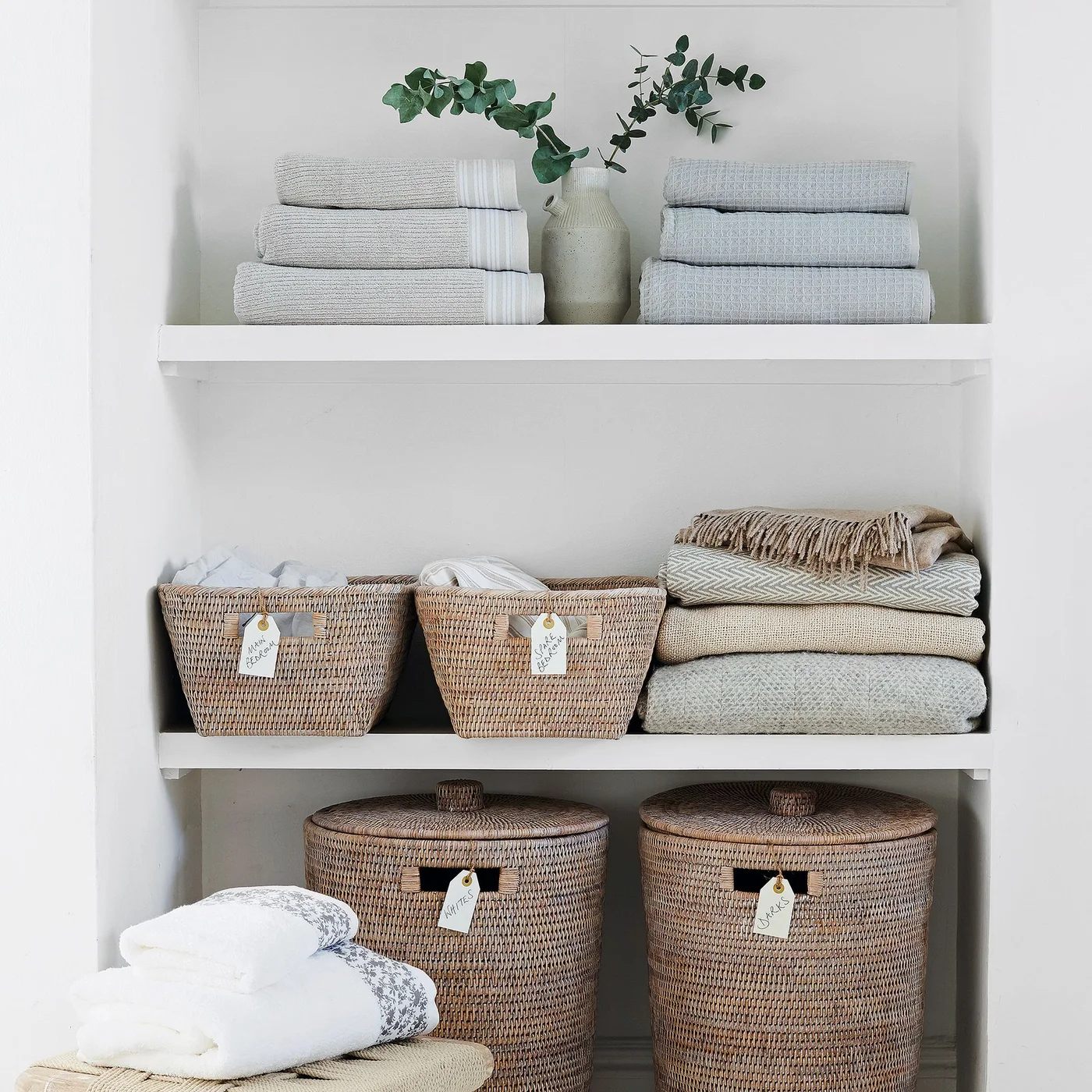
Two small woven baskets identify bedding for different bedrooms, while folded blankets occupy the space alongside them. Larger round baskets sit below. The mixture of open stacks and contained sets gives each type of textile a different home, so finding a spare sheet does not require unfolding several similar bundles.
Use room names when beds have similar sizes, or label by mattress size when bedding moves between rooms. Test the basket with a complete freshly laundered set inside before buying several. Leave space to lift it clear of the shelf, and keep laundry waiting to be washed separate from the clean stock.
IDEA 02 / 18
Give Small Supplies Their Own Basket
 SaveSupport Non AI Creator
Image credit: Organized Living
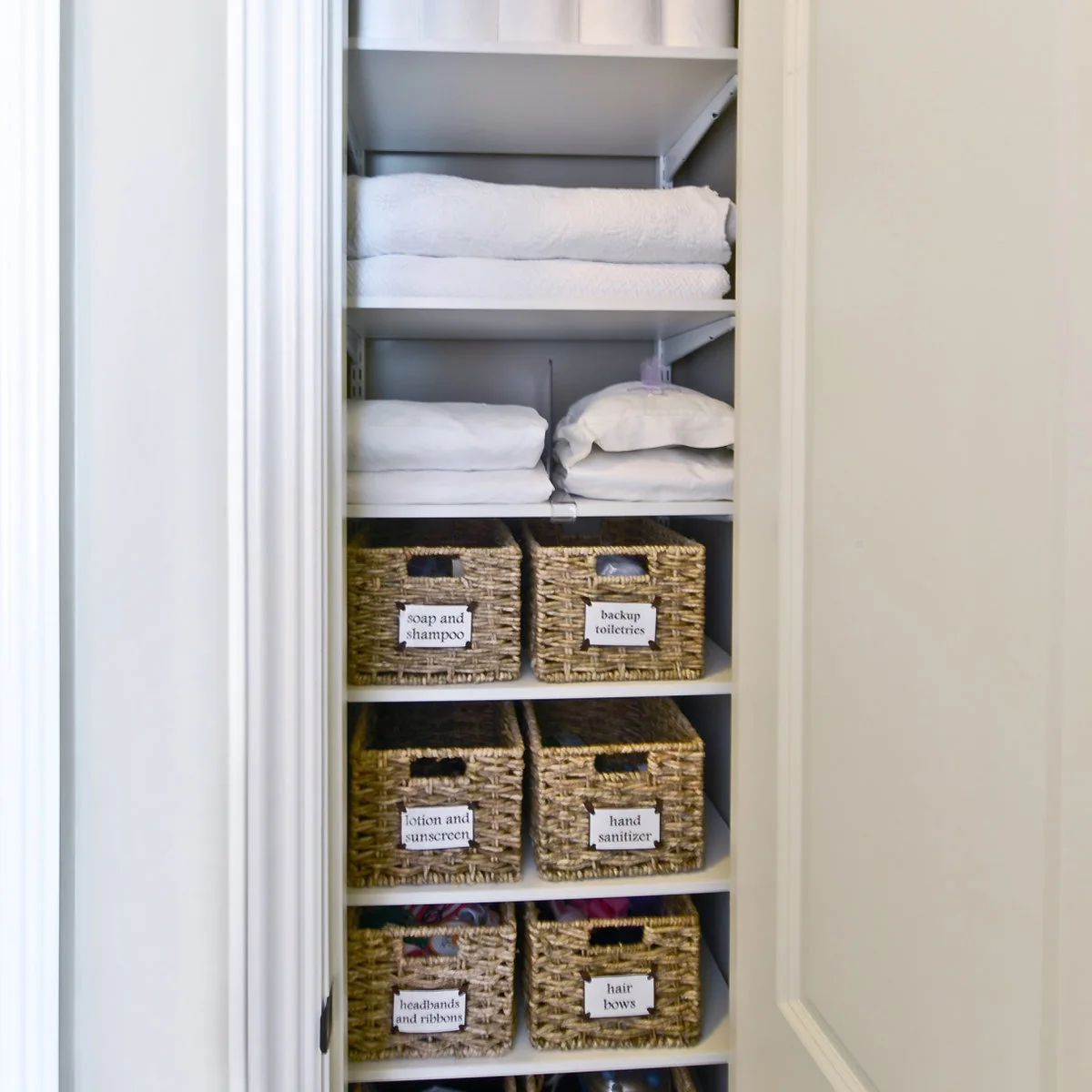
White towels occupy the upper shelves of this narrow closet, while small supplies are divided among labeled baskets below. The separate containers stop bottles and accessories from spreading into the linen stacks. A consistent basket shape also makes the shallow shelves easier to scan when the door is only partly open.
Keep the linen shelf at the height you use most comfortably, rather than automatically copying the top-shelf position. Place potentially leaking toiletries in a washable liner or tray inside the basket. Labels should describe categories that your household actually uses, and hazardous supplies need a secure location beyond a child’s reach.
IDEA 03 / 18
Separate Travel Supplies From Full-Size Towels
 SaveSupport Non AI Creator
Source: www.houzz.com
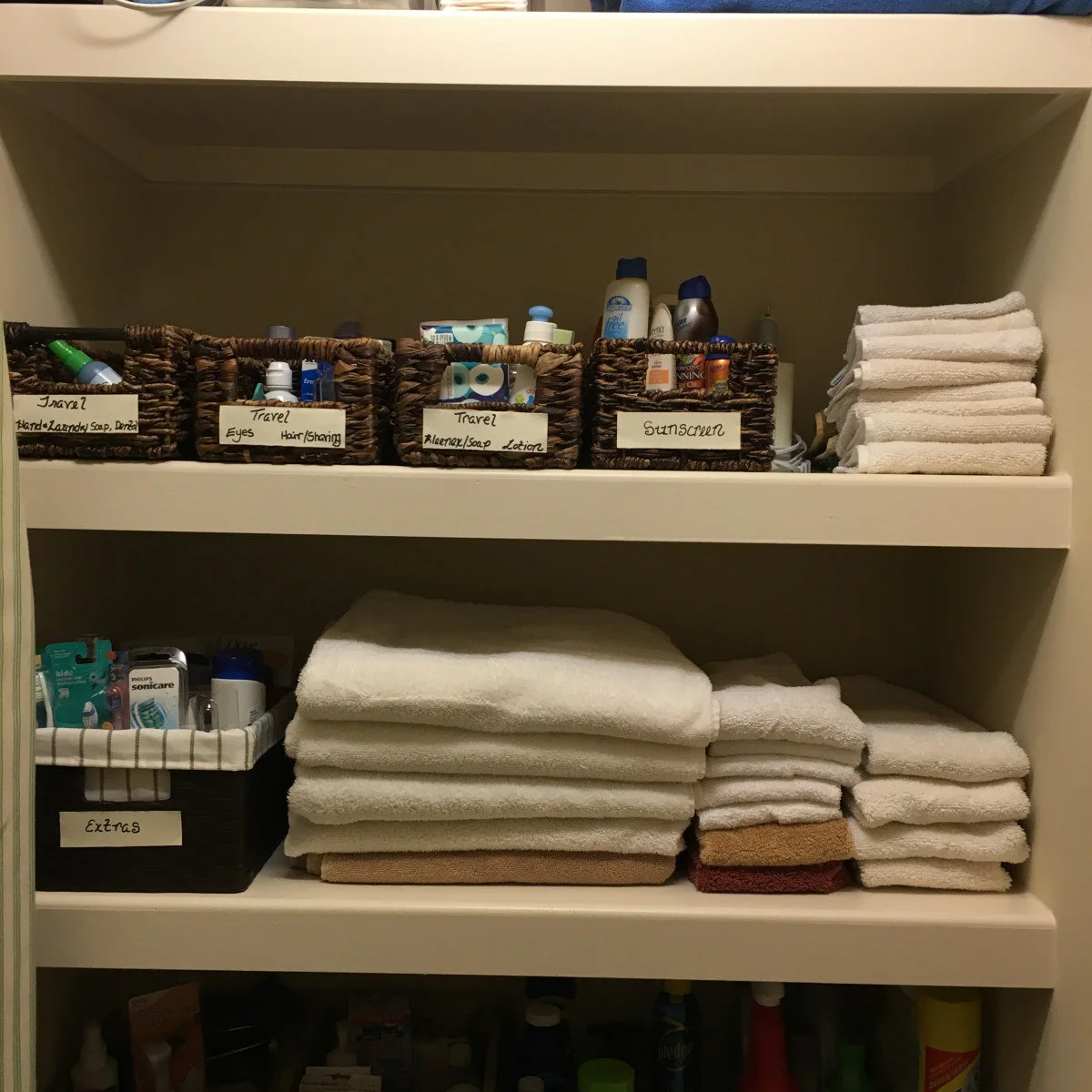
Small baskets group travel products along the upper shelf, leaving broad open space for folded towels underneath. The towels are divided into separate piles rather than compressed into one tall stack. This is a practical distinction when a household needs both a bathroom restock area and somewhere to prepare an overnight bag.
Keep only the travel products you expect to use and review them before replenishing the baskets. For towels, choose a folding width that fits the shelf without hanging over the edge. Place the oldest clean towels on top when you restock, and remove a whole small stack if reaching into the back would topple it.
IDEA 04 / 18
Set Shelf Heights Around Folded Textiles
 SaveSupport Non AI Creator
Image credit: CLOSET ENGINEERS
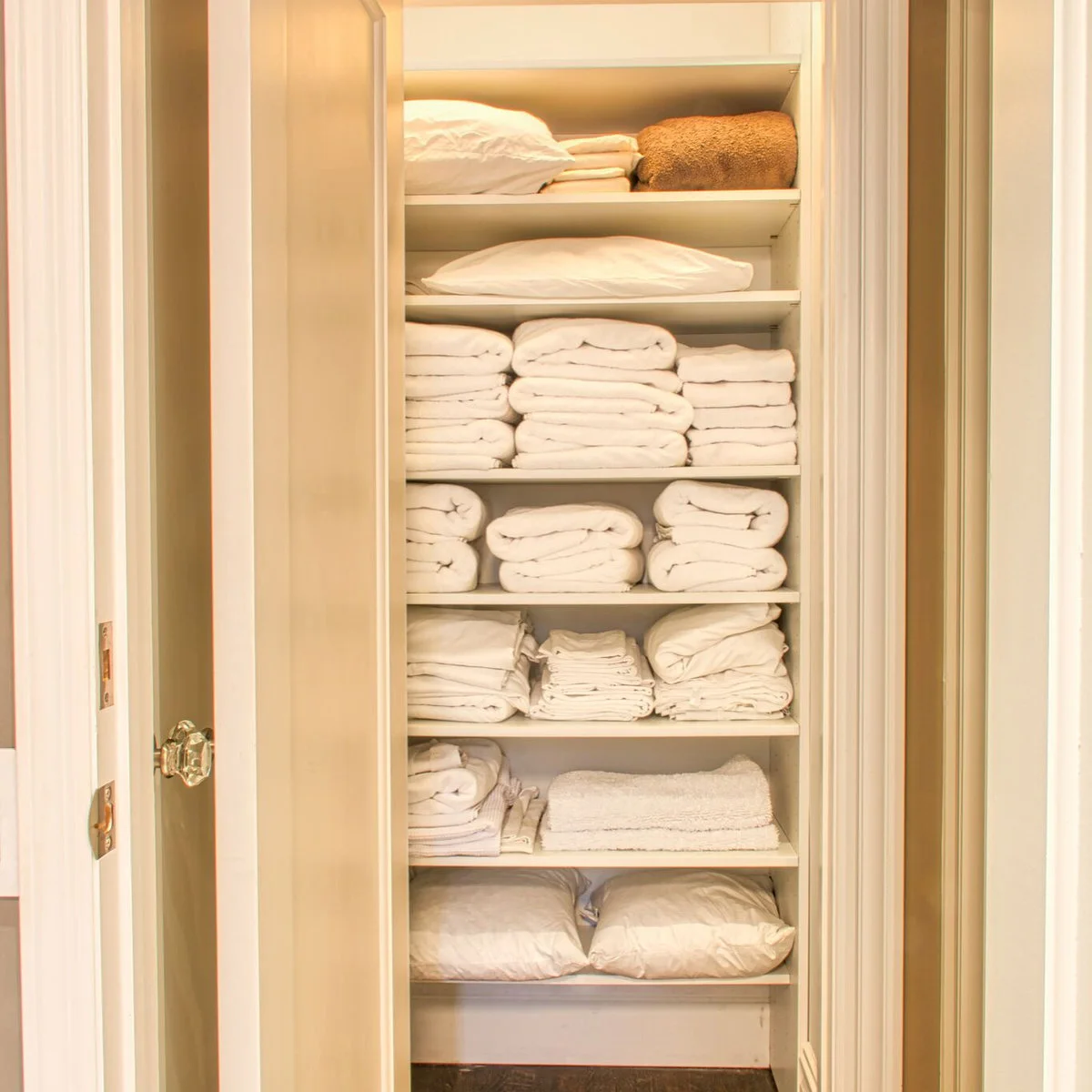
Closely spaced shelves divide this slim cupboard into several manageable levels. Towels occupy the central shelves, with flatter folded linens below and pillows using deeper openings. There are no decorative containers taking space away from the textiles, so the layout relies on consistent folding and clear separation between categories.
Measure a normal stack before moving adjustable shelves, and preserve enough clearance for your hand above it. Pillows need more depth than folded sheets, so avoid forcing every opening to the same height. If the cupboard shares a utility area, our laundry room ideas show how sorting and folding space can support the same weekly routine.
IDEA 05 / 18
Pull Flat Linens Forward on Shallow Trays
 SaveSupport Non AI Creator
Image credit: Kathryn Scott
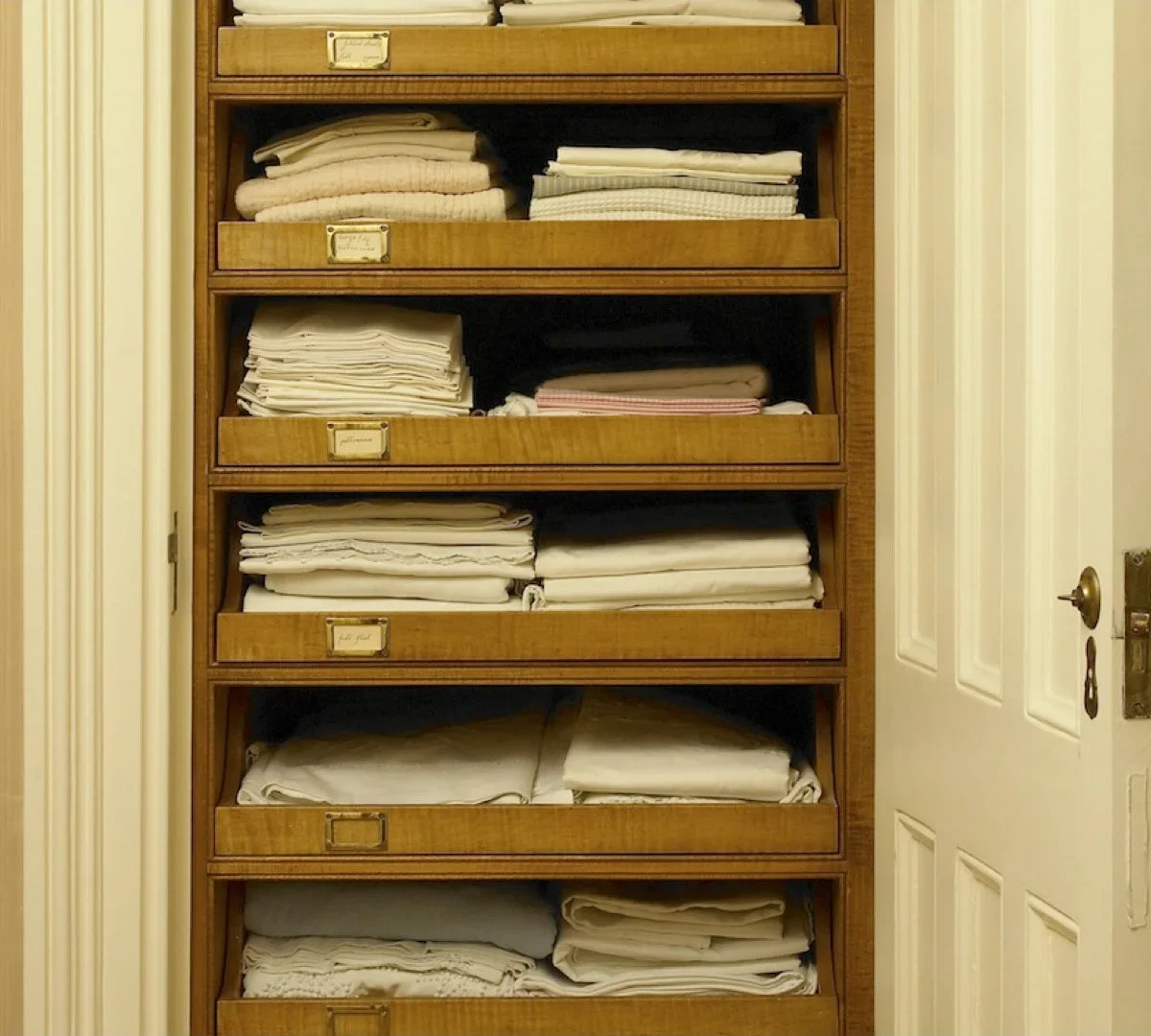
This wooden cupboard uses shallow trays with label holders across their fronts. Folded sheets and towels sit in low stacks, making the contents visible without opening a deep drawer. The arrangement is particularly useful for similar pale linens that would otherwise disappear behind one another on a fixed shelf.
A pullout needs a clear route in front of the cupboard and enough door opening for its full travel. Confirm the runner capacity before storing dense stacks of textiles. Use the labels for bed sizes or item types, and keep folded edges inside the tray so fabric does not snag as it closes.
PART 02
Improve shelf access
IDEA 06 / 18
Combine Side Shelves With Central Baskets
 SaveSupport Non AI Creator
Image credit: After Paint, LLC
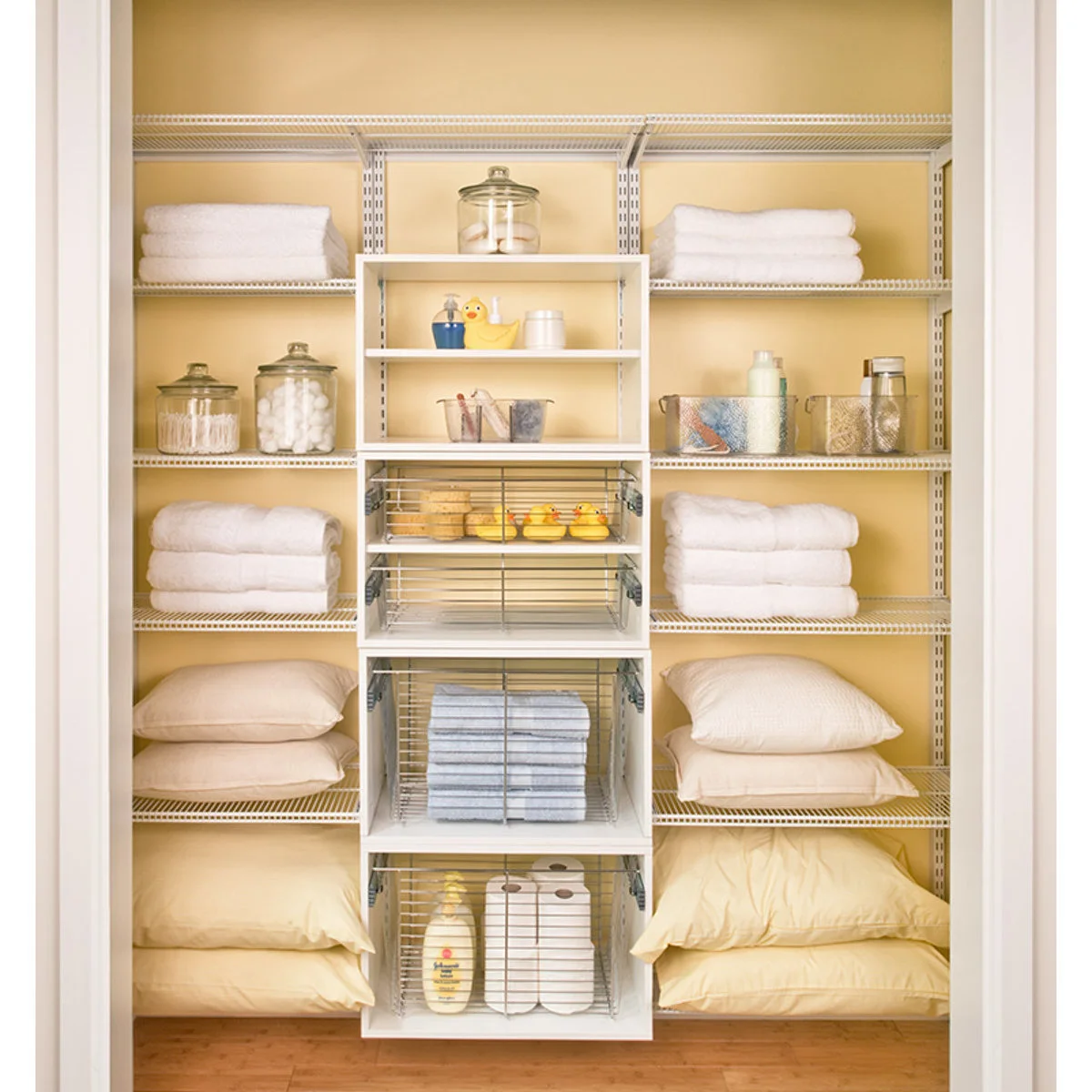
Folded towels and pillows fill the side shelves while a central column of wire baskets contains smaller bathroom supplies. The different shelf heights give bulky pillows more room than hand towels need. Open construction makes the contents easy to see, although small items still need a container so they do not fall through.
Choose the basket spacing around actual items rather than a symmetrical display. Small cloths may need a removable liner, while bottles should stand on a stable washable base. Keep frequently used towels in the easiest side opening and check that extended baskets will not catch a passing person or block the closet doorway.
IDEA 07 / 18
Use Color to Identify Household Linen Groups
 SaveSupport Non AI Creator
Image credit: Tia Shackelford Interiors
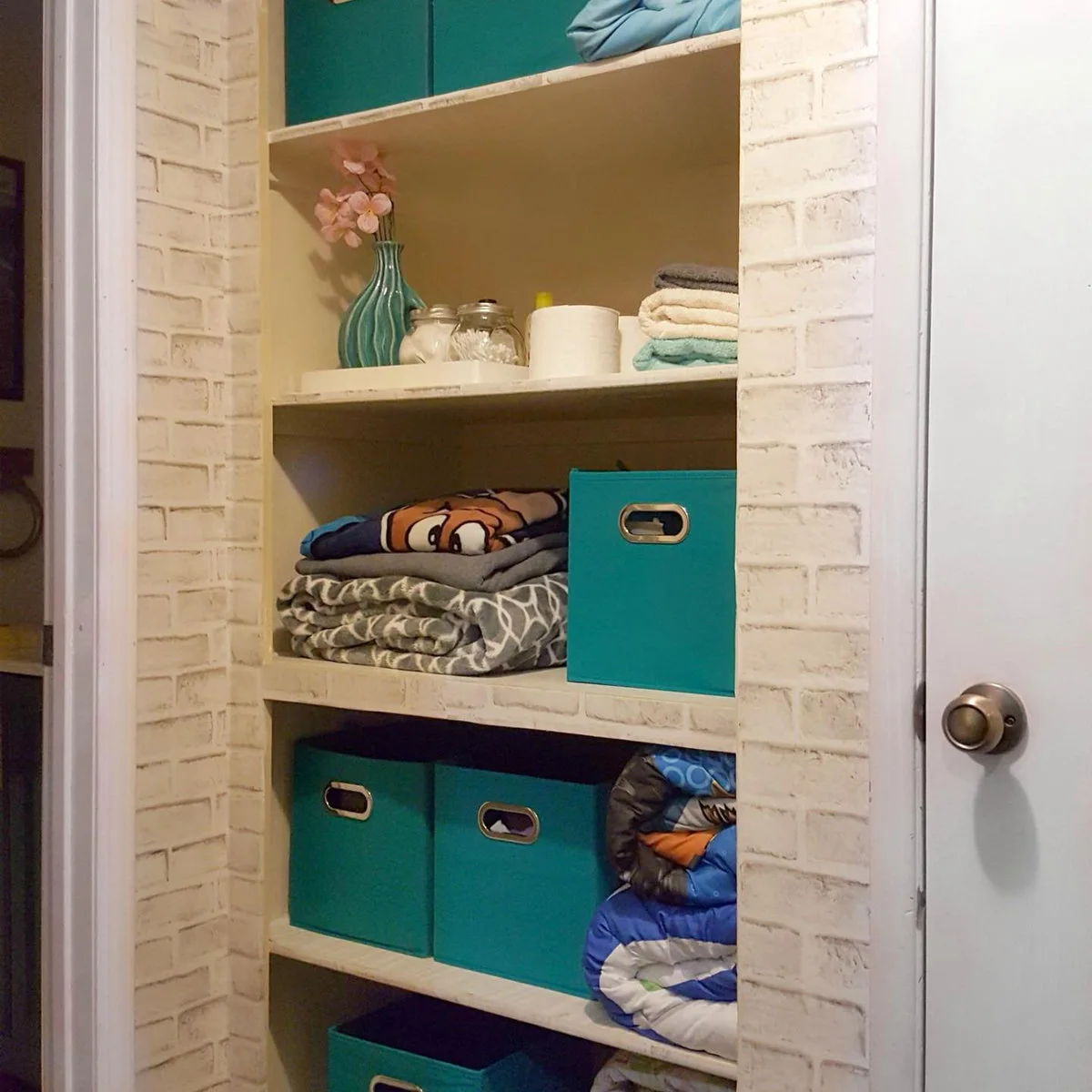
Turquoise bins repeat through this cupboard, sitting beside folded towels and patterned bedding. Their color gives the collection a clear visual order even though the stored textiles have different prints. The open piles show what is ready to use, while the bins can contain smaller items that are awkward to stack.
Assign each bin a clear purpose and add a label if color alone will not help everyone. Avoid stuffing the boxes until their sides bulge, because that makes removal harder. Keep heavier bedding on an accessible shelf and make sure the folding depth lets the closet door close without pressing against clean fabric.
IDEA 08 / 18
Bring Bed Linens Out From Behind Deep Doors
 SaveSupport Non AI Creator
Image credit: College City Design Build
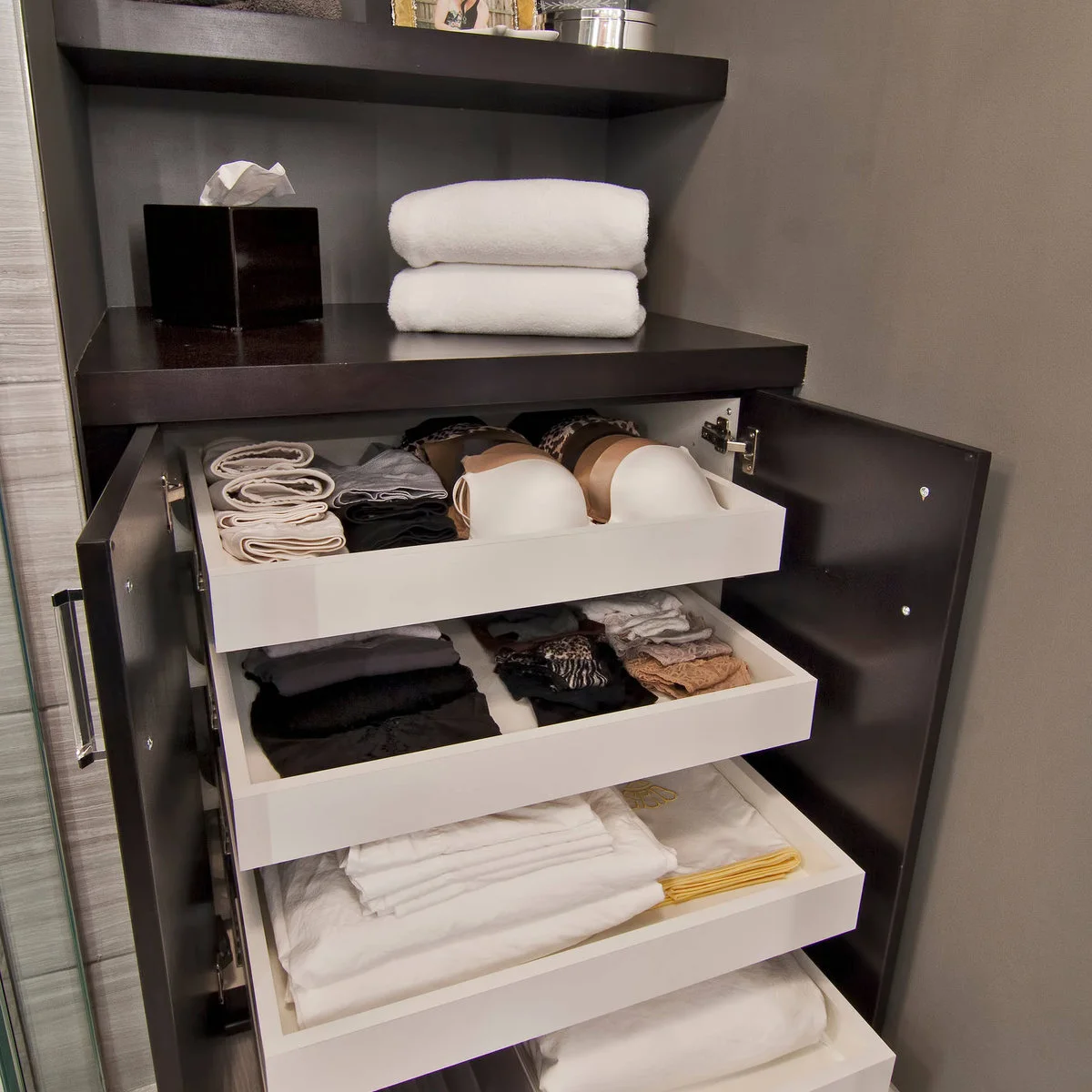
White pullout trays reveal the contents of this dark cabinet, with folded bed linens visible on the lower levels. Smaller clothing occupies the trays above, and a separate shelf holds towels. Each tray acts as a defined category, keeping a mixed bedroom cabinet from becoming a single deep pile.
Reserve complete lower trays for bedding if the cabinet serves several purposes, and label similar white sheets by size. Check that the open doors and handles allow each tray to extend fully. Our small bathroom storage ideas offer more examples of using accessible lower compartments where a tall linen cupboard will not fit.
IDEA 09 / 18
Create a Clear Boundary in a Shared Utility Cupboard
 SaveSupport Non AI Creator
Image credit: transFORM Home
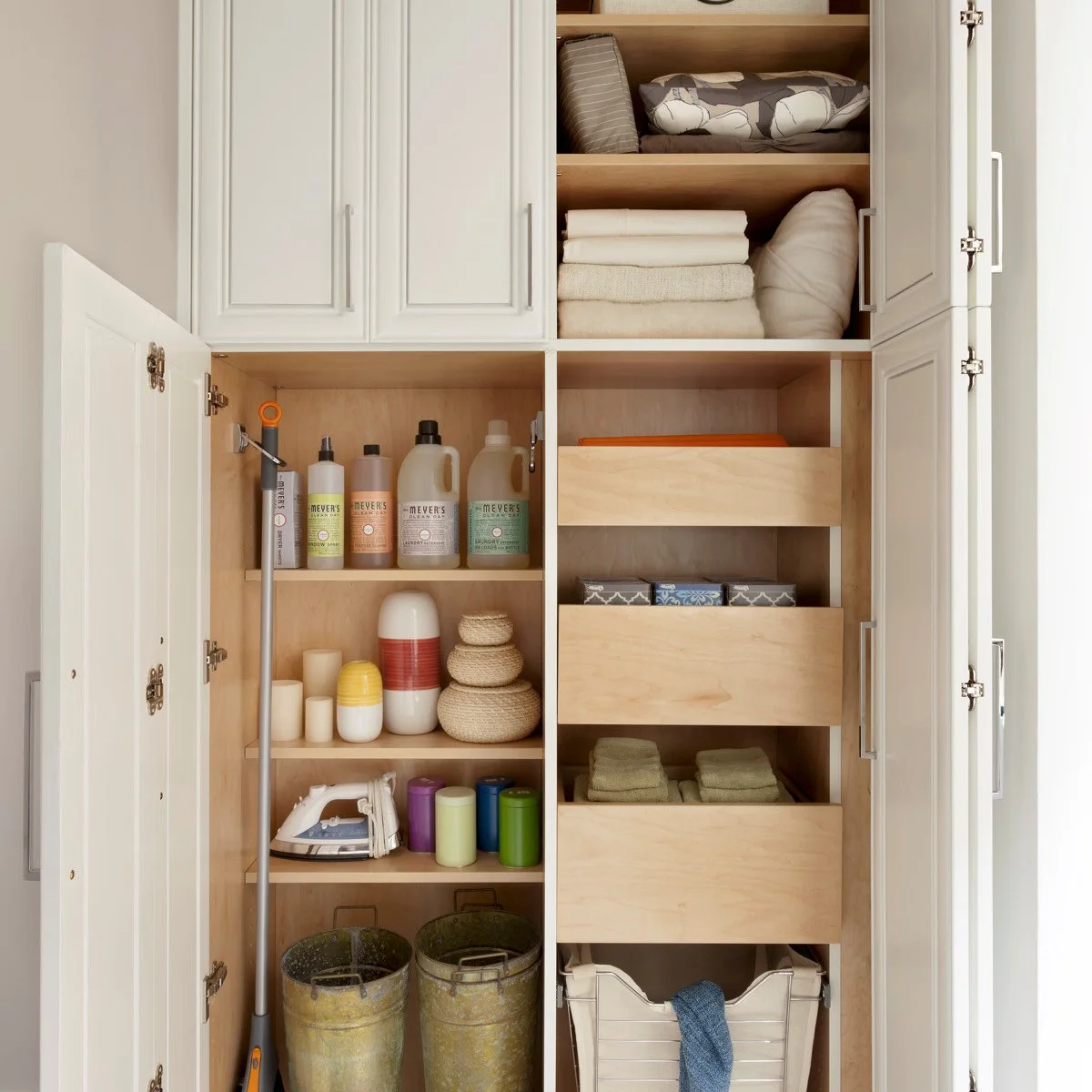
This cabinet divides utility supplies and textiles into two vertical sections. Towels and pillows occupy the upper right, while pullout boxes and a fabric hamper use the space below. The left side holds bottles and an iron, showing why mixed storage needs a deliberate boundary rather than simply filling every available shelf.
Prefer a separate secure cabinet for cleaning chemicals, especially in a home with children. If a utility cupboard must be shared, keep products in labeled original containers and protect textiles from leaks. Let an iron cool completely before putting it away, and keep its cord from tangling around pullout drawers or folded fabric.
IDEA 10 / 18
Keep Open Towels Between Contained Storage Zones
 SaveSupport Non AI Creator
Image credit: Liven Design
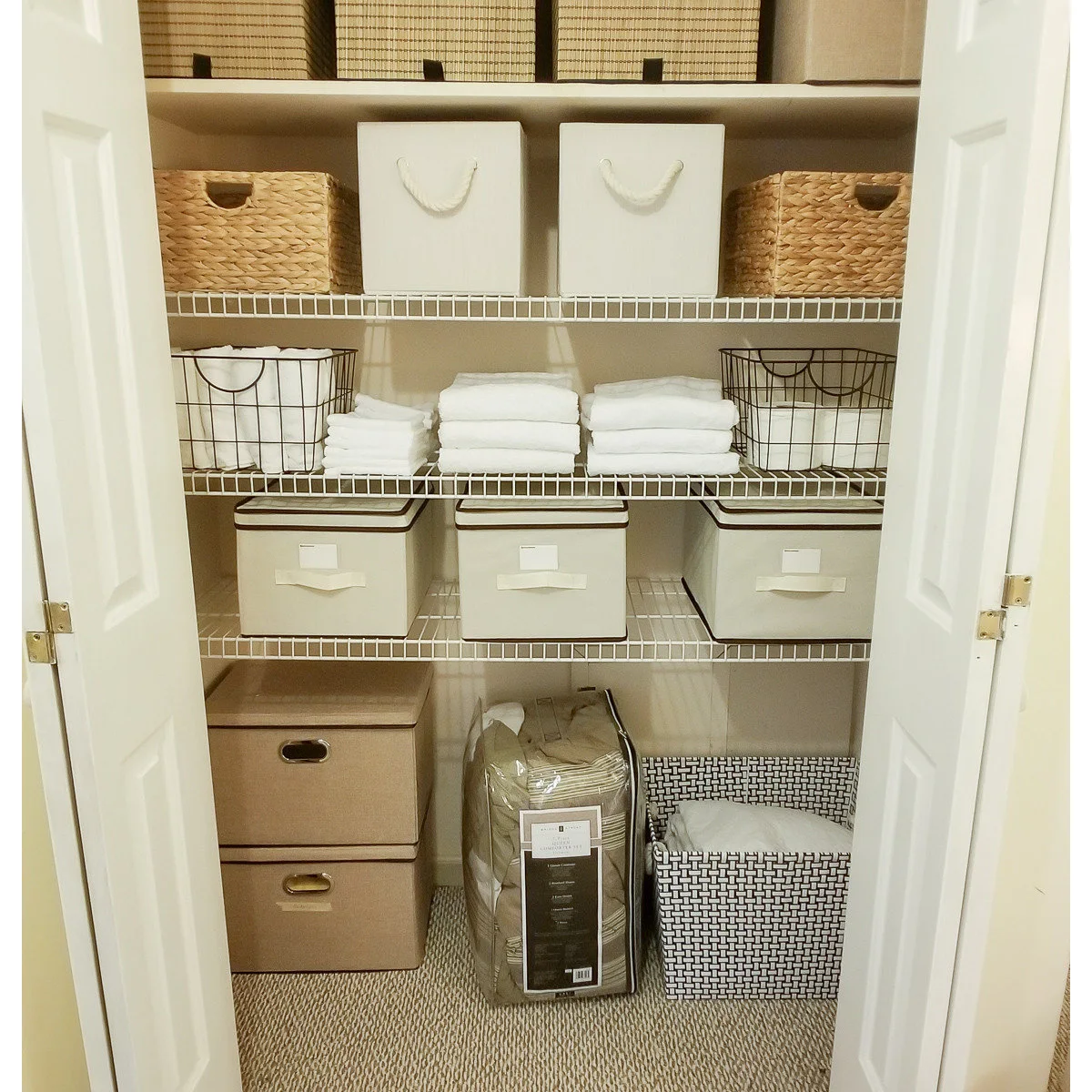
Open towel stacks occupy the middle of this closet, with woven baskets and pale storage boxes surrounding them. Bulky spare bedding sits at the bottom. The towels remain visible and easy to lift, while smaller or less frequently handled items have containers that stop loose pieces from spreading across the wire shelves.
Do not assume that every upper box should be full. Lightweight spare cases are easier to lower safely than a dense load of towels. Check that box bases sit firmly on the wire spacing, and keep the floor-level bedding in a suitable clean cover so it is not brushed by shoes or the closet door.
PART 03
Separate mixed storage
IDEA 11 / 18
Use an Older Cupboard for a Small Linen Collection
 SaveSupport Non AI Creator
Image credit: Future
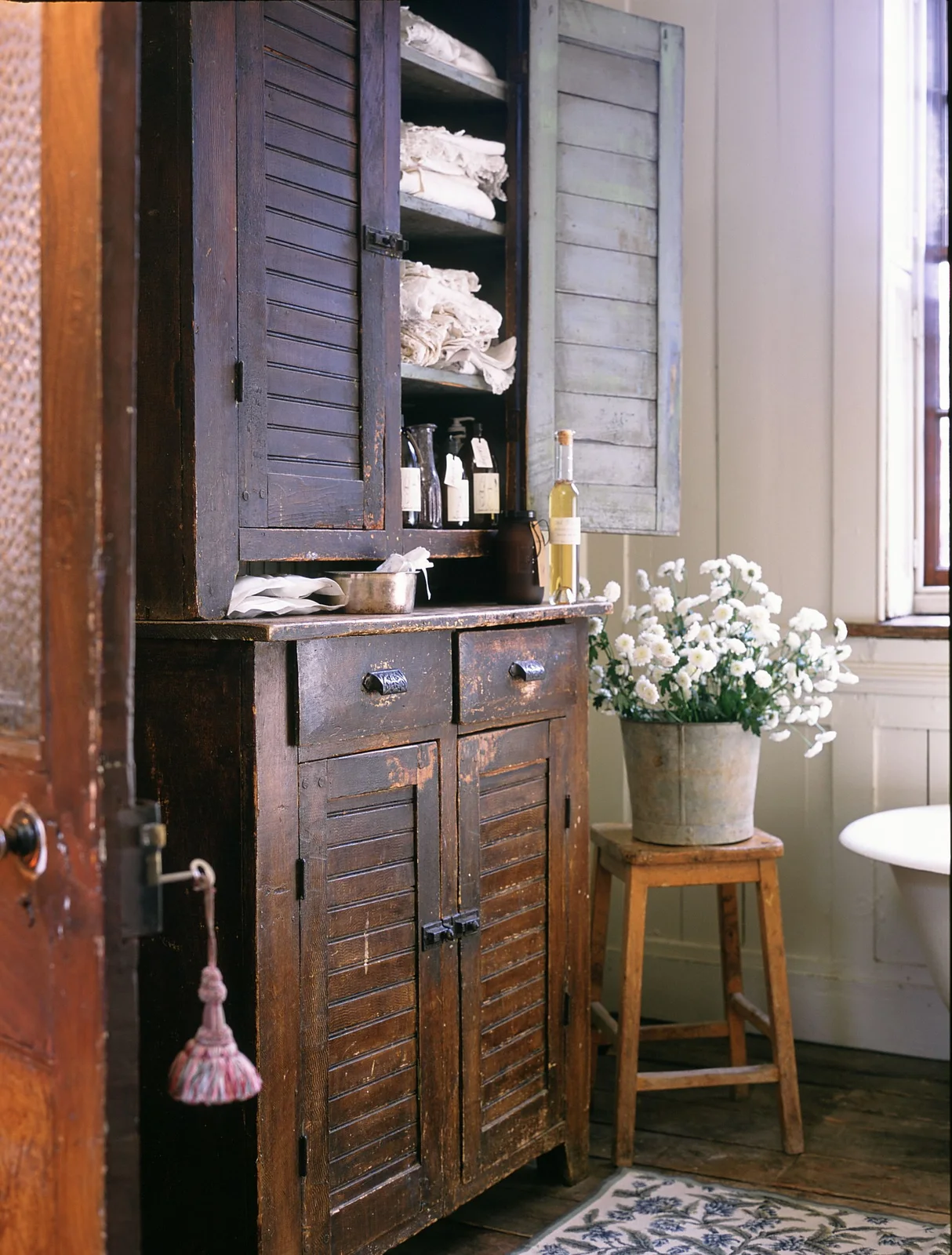
Pale folded linens stand out against the dark interior of this older cupboard. The shelves above the counter hold a modest collection rather than a tightly packed reserve. Closed lower doors offer a different kind of storage, allowing the upper section to stay focused on the textiles used most often.
Check an older cupboard for rough edges, unstable shelves and lingering odors before adding linens. A removable washable shelf liner can protect fabric without hiding problems in the cabinet. Keep bottles upright in a separate tray, and avoid placing a damp vase or freshly watered plant where moisture could reach the stored cloth.
IDEA 12 / 18
Turn a Freestanding Armoire Into Linen Storage
 SaveSupport Non AI Creator
Image credit: Purlfrost
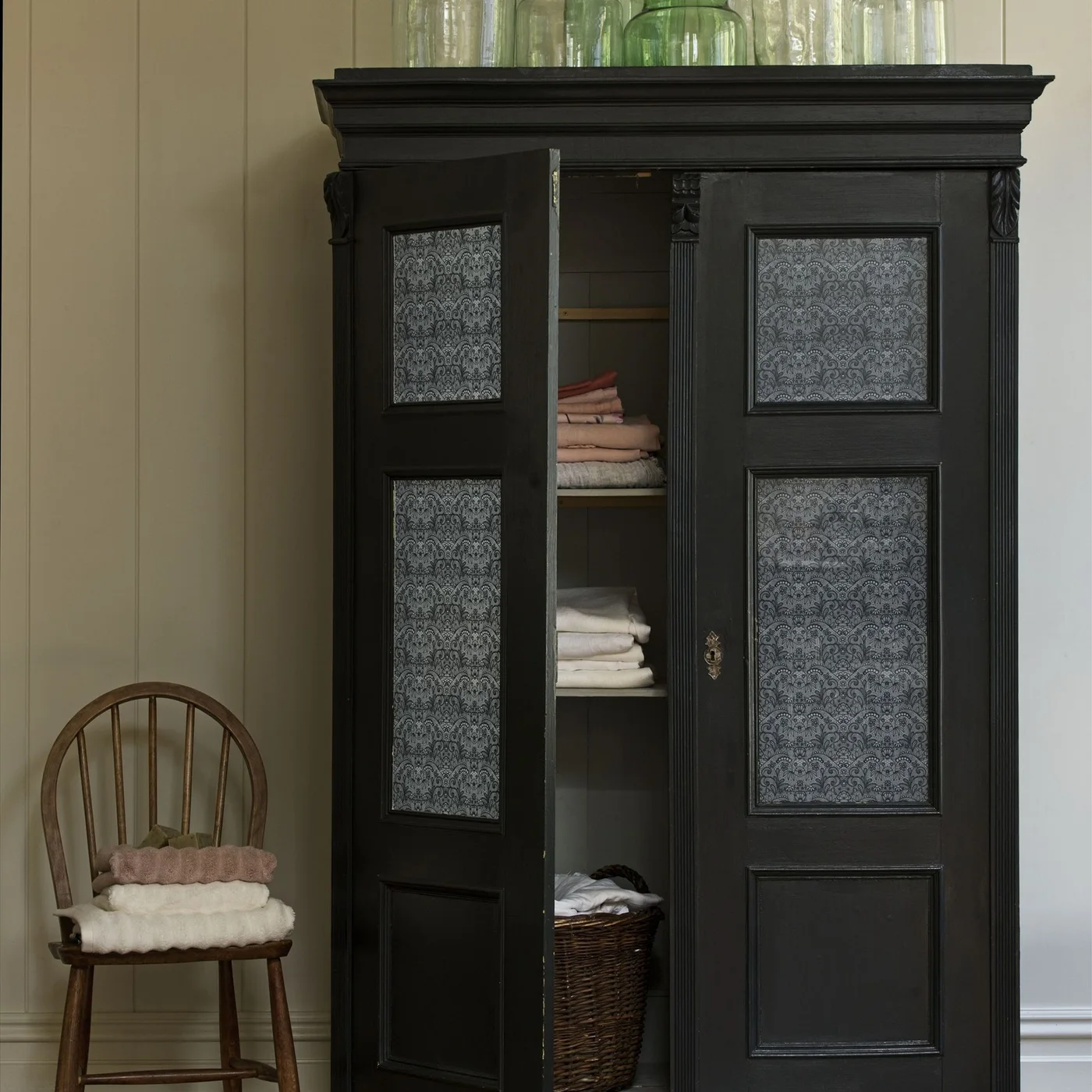
Patterned door panels give this dark armoire a furniture-like presence, while the open section reveals folded towels and linens. A large woven basket fits lower in the cupboard. It shows how linen storage can sit in a bedroom or hallway when there is no dedicated built-in closet.
Check the internal shelf depth with your folded bedding before choosing a cabinet. Follow the furniture maker’s anchoring requirements, and make sure the doors open without hitting a bed or chair. Keep the top surface dry and review the collection regularly so a useful cupboard does not become overflow storage for unrelated belongings.
IDEA 13 / 18
Use the Back of the Door for Light Accessories
 SaveSupport Non AI Creator
Image credit: Future PLC/Andrew Woods
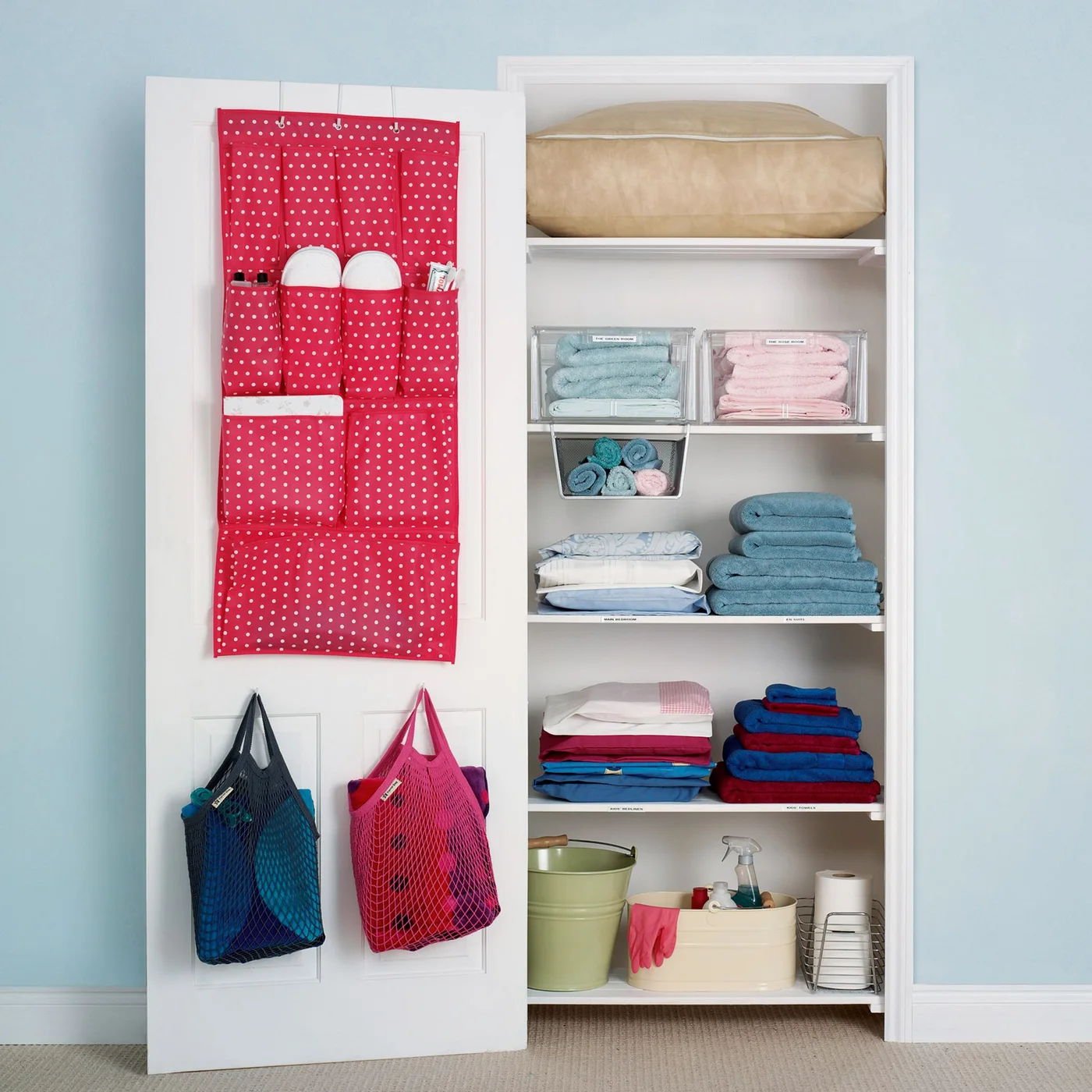
A red pocket organizer uses the inside of the door, leaving the shelves for towels, sheets and a large pillow. Different linen groups occupy separate levels, with small labels along the shelf edges. The door storage adds capacity for light accessories without reducing the width available for folded textiles.
Close the door slowly after filling the pockets to check for collisions with the shelf fronts. Keep heavy bottles and sharp tools out of a soft hanging organizer. If cleaning products share the lowest level, secure them appropriately and protect linens above from spills during removal rather than treating the photograph as a storage-safety prescription.
IDEA 14 / 18
Soften a Visible Linen Cupboard With Textured Glass
 SaveSupport Non AI Creator
Image credit: Robeson Design
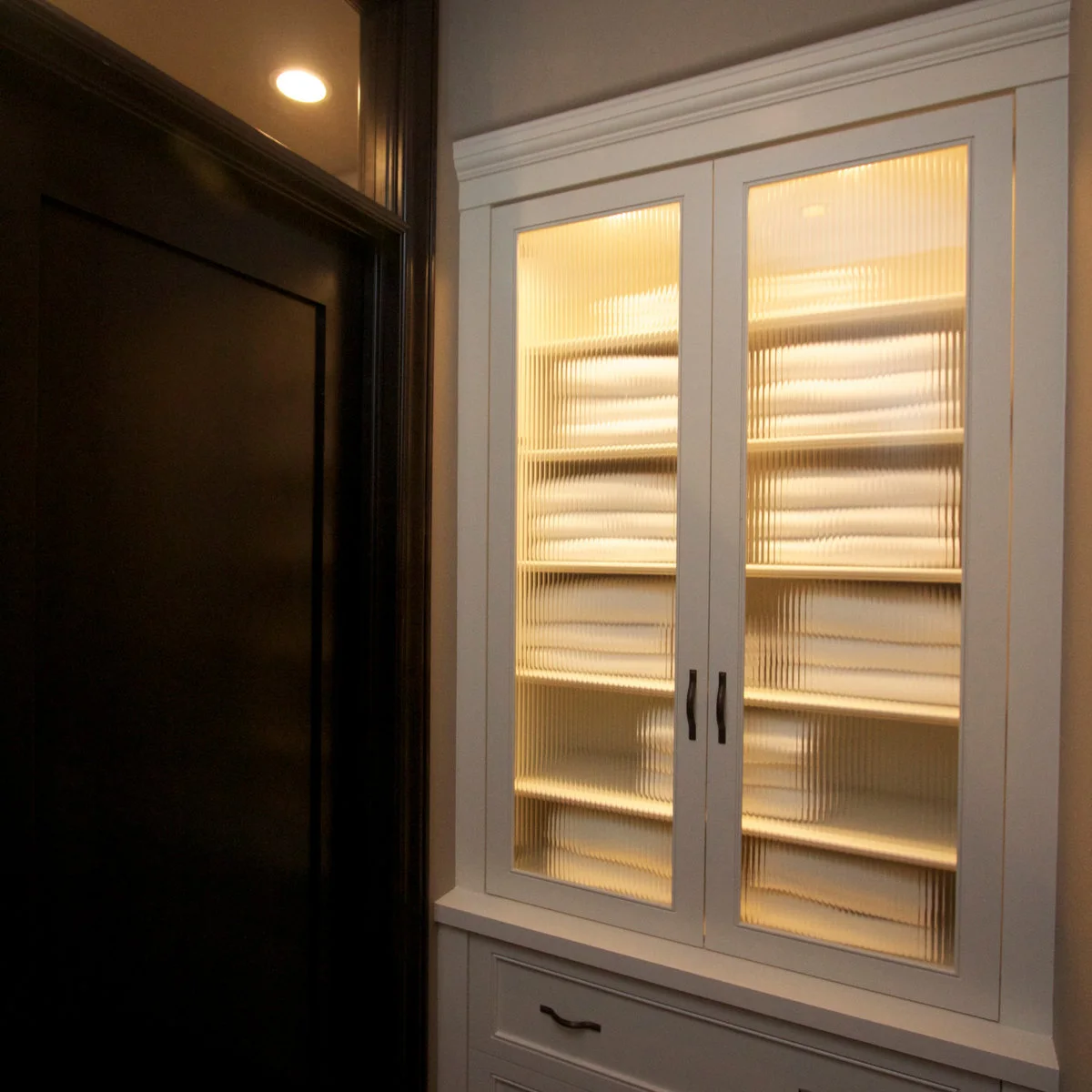
Ribbed glass softens the view of the pale towel stacks in this white cabinet. The upper doors provide a partial view of the contents, while drawers occupy the lower section. This approach can suit a hallway where a linen cupboard is always visible but fully open shelves would feel too busy.
Textured glass still reveals changes in color and the outline of crowded shelves. Keep categories separated and leave space around the stacks rather than relying on the door to conceal disorder. Make sure any cabinet lighting is suitable for enclosed storage and does not place hot fittings against towels or bedding.
IDEA 15 / 18
Hang Flat Textiles Beside Folded Towels
 SaveSupport Non AI Creator
Image credit: Valet Custom Cabinets & Closets
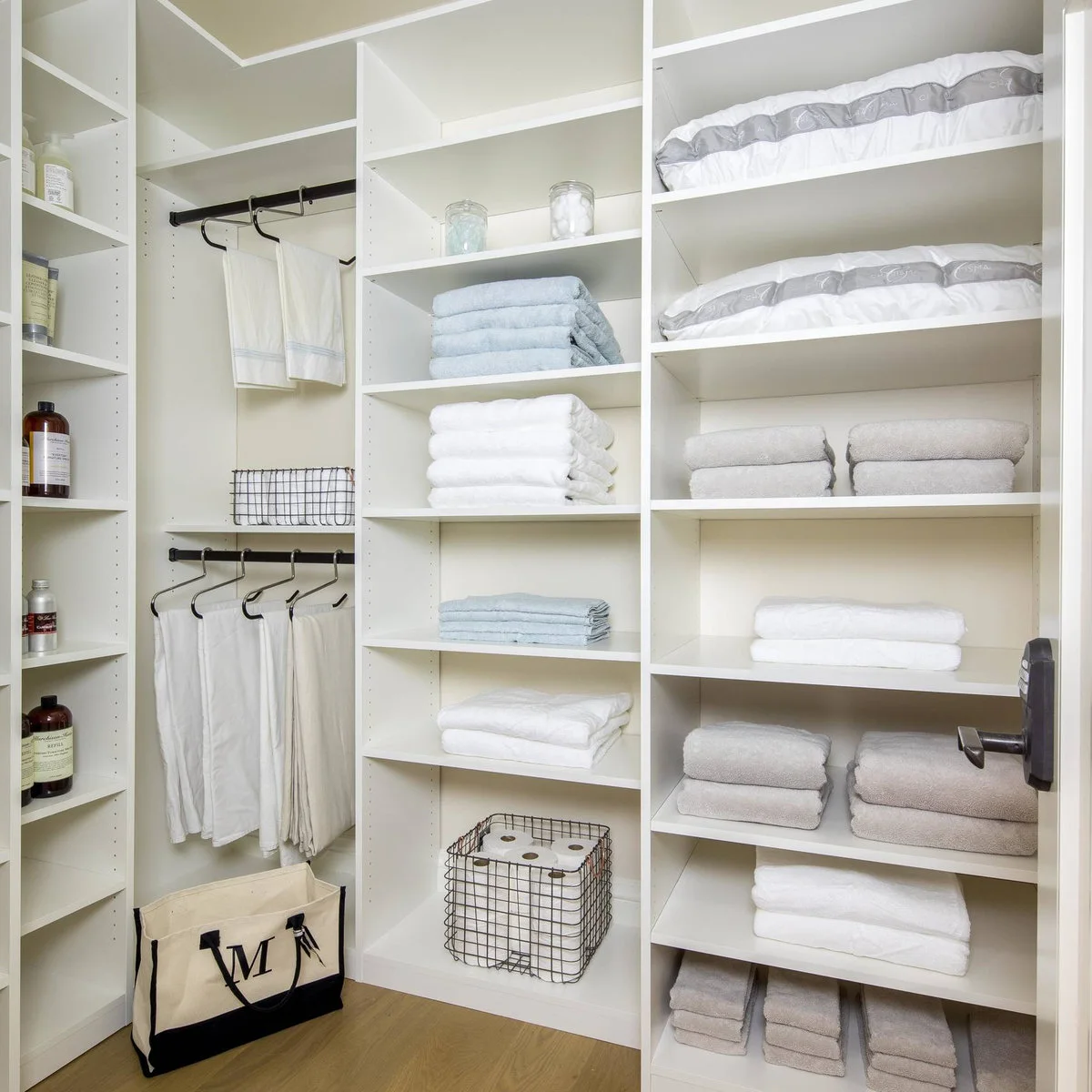
Two short hanging rods sit alongside shelves of towels and pillows in this walk-in linen space. Flat pale textiles hang separately instead of joining the folded stacks. The layout gives items with different storage needs their own area while keeping the main towel shelves at convenient, visible heights.
Choose suitable hangers for the textiles you actually want to suspend, and keep them fully dry before storage. Our walk-in closet ideas compare hanging and shelf arrangements that can help plan a shared dressing and linen area. Leave enough room to remove a hanger without brushing against nearby bottles or dragging fabric across the floor.
PART 04
Choose a suitable cupboard
IDEA 16 / 18
Reserve Lower Drawers for Bedding Sets
 SaveSupport Non AI Creator
Image credit: Lewis Designs Custom Cabinetry
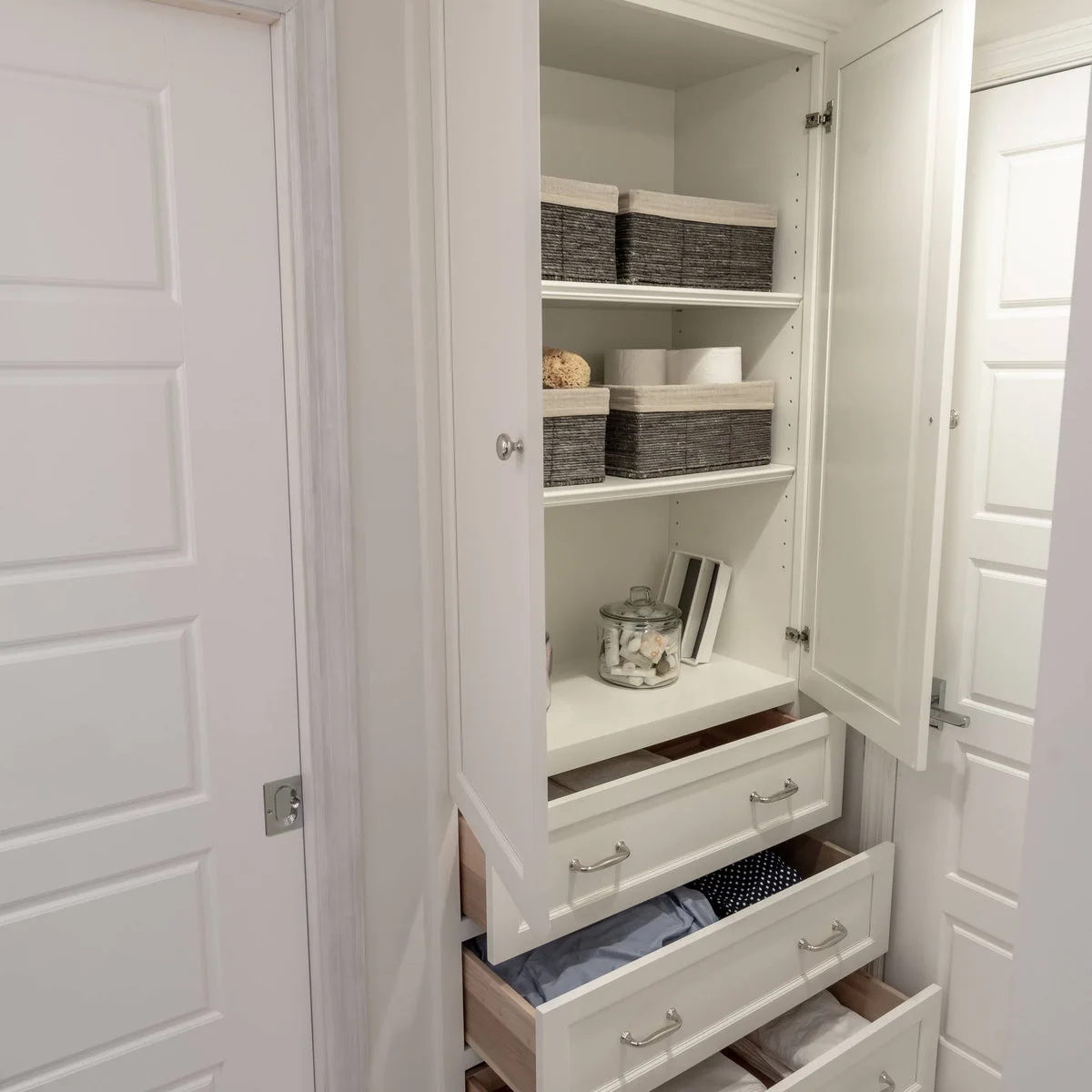
Lined baskets fill the upper shelves of this narrow cabinet, while open drawers reveal linens below. The drawer fronts let the cabinet look orderly when closed, but the separate levels still give the bedding distinct homes. A small counter-height shelf remains available between the enclosed and basket storage.
Fold bedding to the drawer depth and keep complete sets together so changing a bed does not require opening several drawers. Check that drawer corners clear nearby doors and trim. Do not pack fabric above the drawer sides, where it can catch on the cabinet frame and make a shallow drawer difficult to close.
IDEA 17 / 18
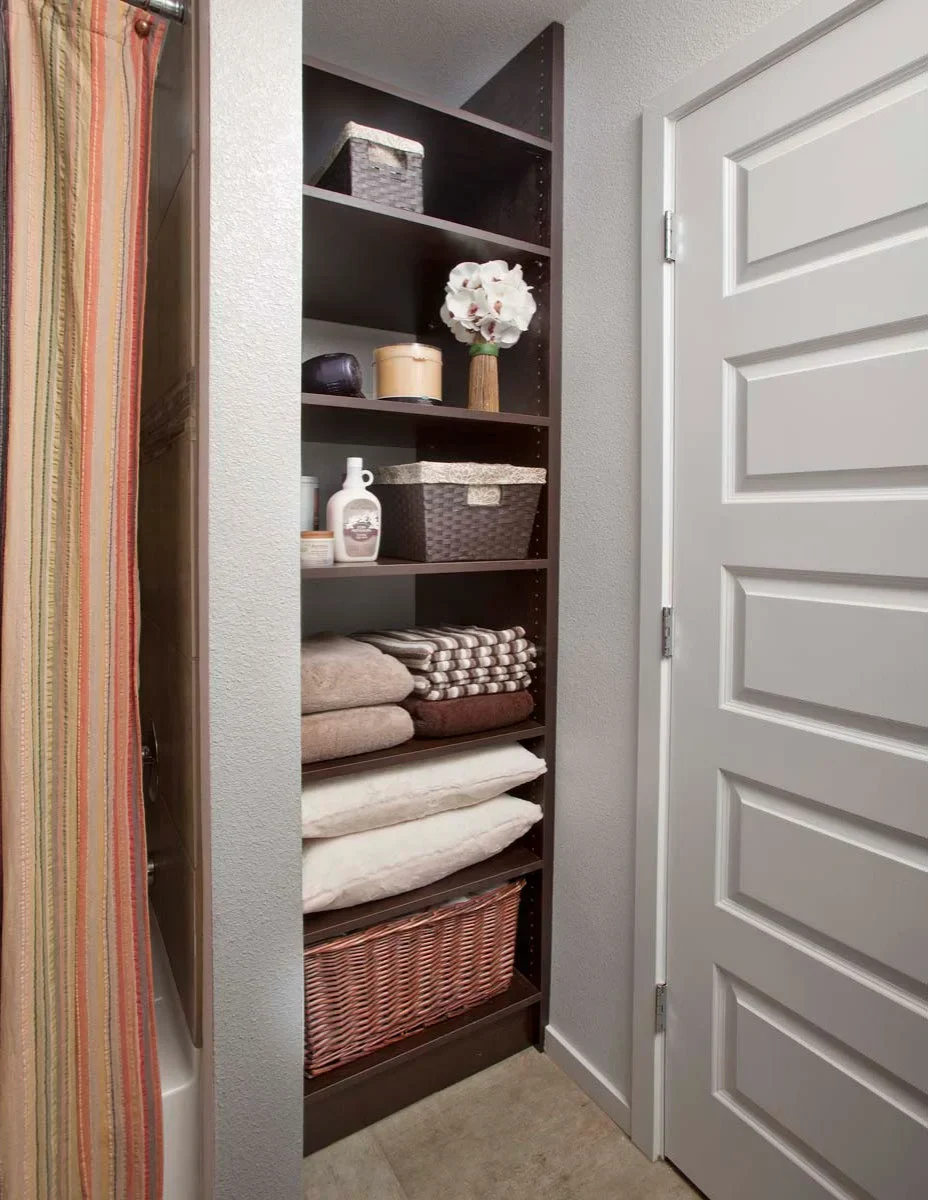
Keep the Lowest Shelf for a Removable Linen Basket
 SaveSupport Non AI Creator
Image credit: Closets of Tulsa
A large woven basket occupies the lowest shelf of this slim dark cupboard, below spare pillows and folded towels. The basket gives the bottom opening a defined purpose while keeping textiles lifted off the floor. Higher shelves contain smaller supplies, leaving the broad lower space for a bulkier load.
Use the basket for a clear category such as spare blankets, and test its weight before filling it completely. Check that handles and rough woven edges do not catch delicate pillowcases. Keep enough clearance to pull it straight out, especially where the open cupboard door already narrows the route beside the storage.
IDEA 18 / 18
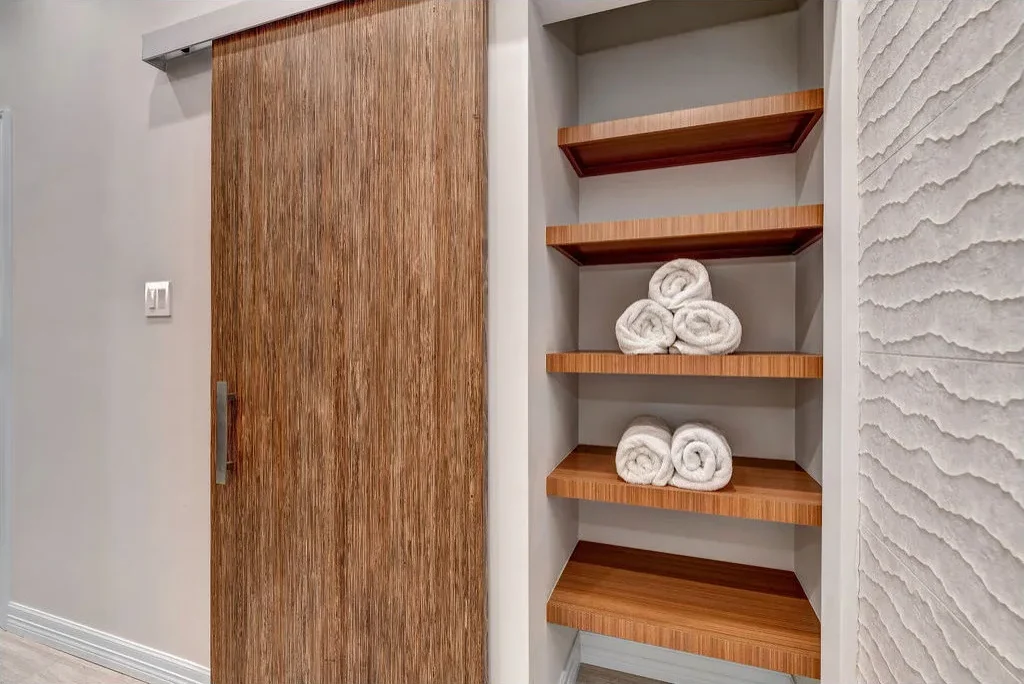
Choose Sliding Access Where Doors Would Obstruct
 SaveSupport Non AI Creator
Image credit: Megan Bailey Interiors
Rolled white towels sit on slim wood shelves beside a sliding door. The door moves along the wall instead of swinging into the room, keeping the front of the recess accessible. The deliberately small towel collection makes the depth and spacing of each shelf easy to understand.
A sliding door needs free wall space along its travel and suitable hardware for its weight. Before changing a hinged cupboard, check that the door can uncover the opening you need rather than permanently hiding half the shelves. Roll towels only if that shape fits your cupboard and routine better than a flat fold.
BRING IT ALL TOGETHER
Organize the next linen change first
Put your most frequently used towels and sheets where they can be removed without lifting a heavy stack. Keep sets together, label similar sizes and leave enough room to return freshly washed items. A small gap around a stack is useful working space, not wasted capacity.
Check the cupboard after a normal wash day. If containers are too heavy or spare blankets push the doors open, reduce the amount stored or change the shelf spacing. Store only fully dry textiles, and clean the shelves before returning them.